ARAB AND WORLD

Sun 05 Nov 2023 7:20 pm - Jerusalem Time

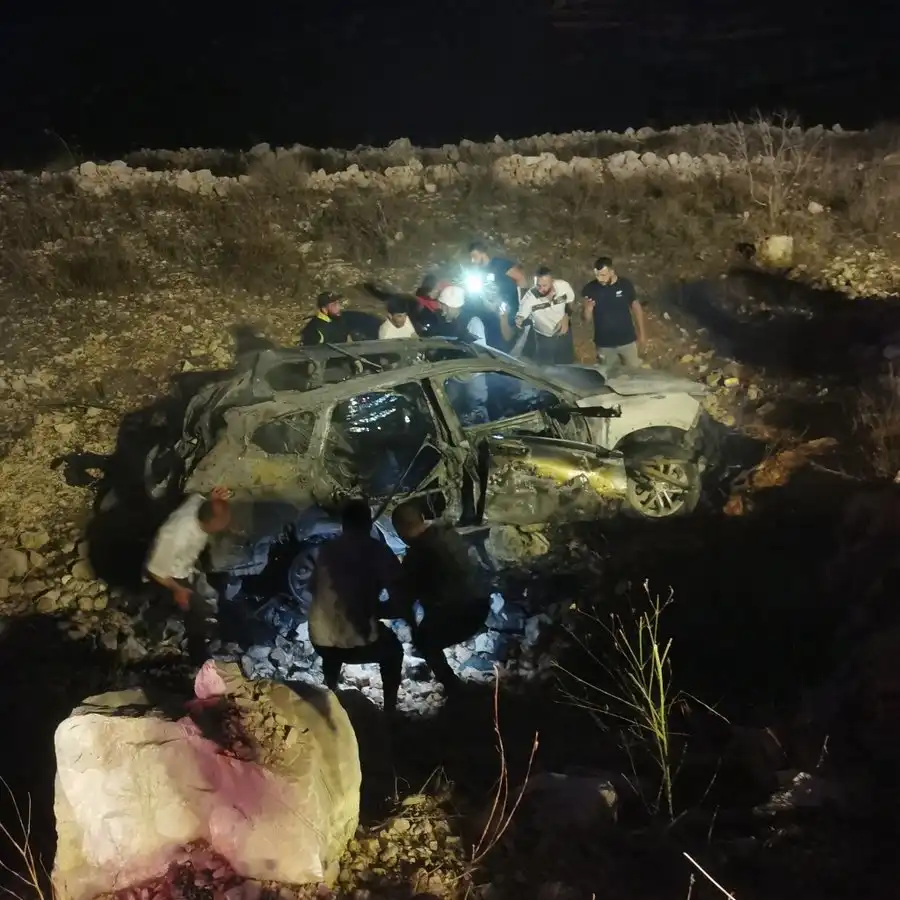
Lebanon: New toll from the Ainatha massacre: 4 martyrs, including 3 children

Israeli forces committed a massacre this evening, when their drones targeted a civilian car on the Ainatha-Aitaroun road in the Bint Jbeil district, according to what a “Lebanon 24” delegate reported.

In the details, two cars were driving behind each other, the first driven by journalist Samir Abdel Hussein Ayoub (a correspondent for a Russian channel and from the town of Ainatha), and behind him was a CRV driven by citizen Hoda Abdel Nabi Hegazy (niece of journalist Samir Ayoub), accompanied by her mother and three children, when they were subjected to a raid. From an enemy march, the CRV was directly hit and overturned on the side of the road and burst into flames.


The raid led to the death of Samira Abdel Hussein Ayoub (sister of journalist Samir Ayoub), and her siblings, Rimas Mahmoud Shor (14 years old), Talin Mahmoud Shor (12 years old), and Layan Mahmoud Shor (10 years old), and their mother Hoda Ayoub, who was wounded. Her brother, journalist Samir Ayoub.

Ambulances belonging to the Al-Resala Scouts transported the wounded and the bodies to Salah Ghandour Hospital in Bint Jbeil.


Reuters quoted Lebanese security sources as saying that at least three people were killed during this strike.

PALESTINE

Sun 05 Nov 2023 6:42 pm - Jerusalem Time

Israeli settlers install a fifth mobile home in Bethlehem

Today, Sunday, settlers set up a mobile home “caravan” in the Tuqua Wilderness, southeast of Bethlehem.


The director of the Office of the Wall and Settlement Resistance Commission in Bethlehem, Hassan Barijiyah, reported that a group of settlers set up a “caravan” in the “Danyan” area, bringing the total number of caravans installed to five caravans, with the aim of establishing a settlement outpost.


Brijiyeh added that the settlers, under the protection of the occupation forces, are exploiting the current circumstances as a result of the aggression on the Gaza Strip since the seventh of this month, to impose illegal facts on the land, especially since it is private land.


It is noteworthy that the settlers shortly before closed the road leading to the wilderness in front of the citizens, assaulted them and seized their tents.

ARAB AND WORLD

Sun 05 Nov 2023 6:12 pm - Jerusalem Time

Pope Francis: I appeal to you in the name of God to declare a ceasefire in Gaza

The Pope of the Vatican issued an urgent appeal to stop the war in the Gaza Strip, calling for the provision of humanitarian aid and assistance to the injured in order to alleviate the “very dangerous” situation.


Today, Sunday, Pope Francesco said to a crowd in St. Peter's Square after the Angelus prayer, "I continue to think about the dangerous situation in Palestine and Israel, where many people lost their lives... I appeal to you in the name of God to stop and declare a ceasefire."


He added, "I hope that all measures will be taken to avoid escalation of the conflict, that the wounded will be helped, and that aid will reach the residents of Gaza, where the humanitarian situation is very serious."


The Pope renewed his calls for a ceasefire and the release of detainees held by the Islamic Resistance Movement (Hamas) following the Al-Aqsa Flood operation on October 7, with a focus on children who he said “must return to their families.”


"Let's think about the children, all the children involved in this war, in Ukraine and other conflicts: in this way their future is being killed," he added.


Humanitarian corridors: Pope Francesco called for the opening of humanitarian corridors, and said that the two-state solution is necessary to end the war between Israel and Hamas.


The Pope has previously called several times for an end to the fighting, the release of detainees, and the delivery of humanitarian aid to Gaza.


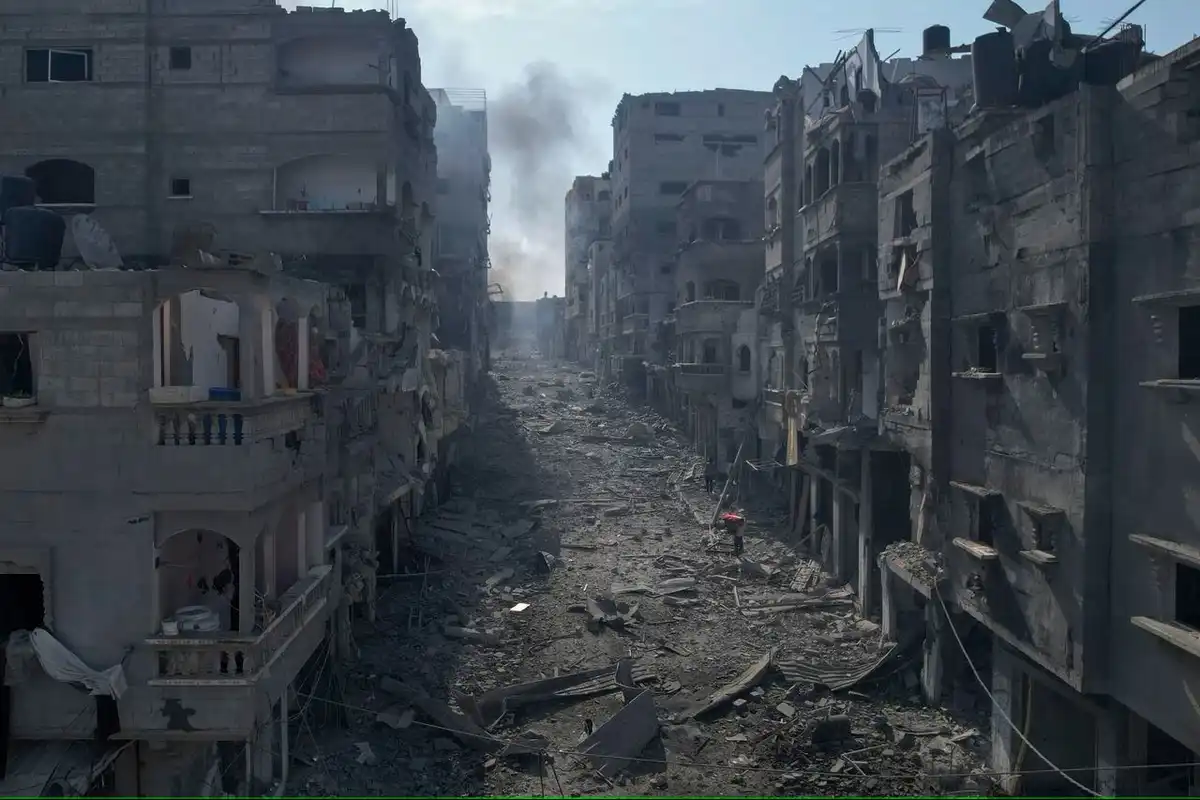
The Israeli army is waging a devastating war on Gaza for the 30th day, after the “Al-Aqsa Flood” operation. About 9,770 Palestinians were killed, including 4,800 children and 2,550 women, and more than 24,000 others were injured. In the West Bank, 151 Palestinians were killed and 2,080 were arrested, according to official Palestinian sources.

OPINIONS

Sun 05 Nov 2023 6:01 pm - Jerusalem Time

Were the Palestinians frustrated by Nasrallah's speech?

Aljazeera. Net

Aljazeera. Net

Opinion Writer

Ramallah - Palestinian opinions were divided regarding the speech of Hezbollah Secretary General Hassan Nasrallah yesterday, Friday, between supporters who saw in it a message of open support for the resistance, and others who described it as “constructive and out of time,” while analysts described it as a realistic speech to the extent possible for the party and in light of Lebanon’s internal circumstances and American threats to the region.


Despite the internet and electricity outages in the Gaza Strip, there was great interest in following the speech of the Secretary-General of Hezbollah on local radio stations arriving from the West Bank, according to what was reported by political science professor Mustafa Ibrahim, who and his family were displaced from Gaza City to Rafah in the south due to the bombing.


Ibrahim spoke to Al Jazeera Net about the amount of frustration felt by the Palestinians around him after the speech. He added, "I noticed the amount of anger here compared to the amount of expectations," and his statement reflects what most of the comments of the Palestinians were like, who felt let down and frustrated by Nasrallah's speech, after great expectations that reached the point of announcing a clear decision by the party to enter the war.


But on the other hand, Ibrahim added, “On the political level, I find it an acceptable speech at this stage of the war, especially in light of Nasrallah’s assertion that options are open in the future.” He added, "Hezbollah's occupation on the northern front is an important part of this war, which may extend for a long time. This has constituted a burden on Israel, which is trying to isolate Gaza from its surroundings and focus its aggression on it."


What was expected?

A quick review of a number of posts on social media, many Palestinians expected an “all-out war” with long-term bombardment against Israeli targets from Lebanon, while questions were raised after the speech about why Nasrallah refrained from taking this step.


Political analyst Nihad Abu Ghosh says that most Palestinians expected something identical to what happened on October 7, and that the speech would coincide with the bombing of Israeli targets, but “apart from wishful thinking, the speech was realistic and political, and Hezbollah cannot do more than that at the current stage.” 


According to Abu Ghosh, “waiting for a miracle to stop the killing in the Gaza Strip has caused the Palestinians to lose the ability to read the scene politically and focus on important points mentioned in the statement, such as emphasizing support for the Palestinian resistance as an integral part of the axis of resistance, and leaving the options open, in a clear threatening message to Israel.”


Abu Ghosh considered that the high level of expectations was due to the Palestinians feeling let down by the position of the Palestinian Authority, wondering why they did not “hold this responsibility to the Palestinian leadership, which has not provided anything so far.”


Political science professor Ayman Youssef agrees with what analyst Abu Ghosh said, saying that the scale of expectations were very high, in light of the disappointment of the Palestinian leadership, whose only speech was limited to emphasizing the role of popular resistance, despite the continuous bombing and the continued occurrence of massacres in the Gaza Strip.


Youssef considered that the most important reason for the high ceiling of expectations is the Palestinians’ link between their resistance and the so-called “axis of resistance,” which Nasrallah confirmed in his speech by talking about training and supporting Palestinian resistance factions, considering this an important part of the party’s role, amid long-term expectations. This war.


What prevents entry into war?

Academic Youssef considered that the scenarios built by the Palestinians expected Hamas and Islamic Jihad fighters to move from Lebanon, but he considered them “emotional expectations” that are not subject to the logic of politics. He said, "The decision is not in Nasrallah's hands. Lebanon cannot tolerate confrontation and destruction at the present time, and Hezbollah knows very well that the internal conditions are not prepared for war, which is what made him devote most of the speech to the internal popular base in Lebanon."


As for the Director General of the Palestinian Center for Policy Research and Strategic Studies (Masarat), Hani Al-Masry, he believed that any war that could break out now would have the price of changing the entire face of the region, which is something that neither Lebanon nor other countries can currently bear.


In an interview with Al Jazeera Net, Al-Masry considered that what was stated in Nasrallah’s speech “could establish a new phase in the region, as the speech focused on movement on the northern front, which could develop according to the course of the battles, or calm down if the aggression stopped,” and he continued, saying, “Nasrallah did not announce his entry into the war, but he did not close the door either.”


Analysts - including Al-Masry - agree that Hezbollah is not currently ready to enter a comprehensive war, but on the other hand, they do not rule out any change in the next stage, according to the changes imposed by the aggression on the Gaza Strip and the battles there and on the Lebanese border front.


Al-Masry also believes that the party has a major role at this stage without entering the war, and that the speech carried clear and direct messages to Israel, which it will take into consideration in any decision to expand the war.


He added, "Hezbollah constitutes a rear protection for the resistance, and with it the entire resistance axis. We can be certain that had it not been for that, we would have witnessed a new Nakba and the direct deportation of Palestinians from the Gaza Strip." 


But what Nasrallah is accused of, according to Al-Masry, “is not clarifying this role directly, and leaving it within the implicit meaning of the speech.”


OPINIONS

Sun 05 Nov 2023 5:45 pm - Jerusalem Time

Sunday Times: Has Israel set itself an impossible military mission?

Aljazeera. Net/Michael Clarke

Aljazeera. Net/Michael Clarke

Opinion Writer

Michael Clarke, professor of defense studies at King's College London, says that the Israeli military goal in the Gaza war, "Hamas must be destroyed," which its politicians and leaders constantly repeat, has become a national slogan that faces enormous obstacles.


Clark emphasized - in an article in the Sunday Times newspaper, in which he talked about the challenges faced by Israel's attempt to destroy the Islamic Resistance Movement "Hamas" - that the Israeli army will either have to reformulate its goal, "Hamas must be destroyed," or think of ways to achieve it that do not lead to annihilate the population of Gaza.


He explained that Israel can defeat Hamas, but destroying it will be a different matter, and this challenge is likely to increase as the Israeli campaign continues.


Israel cannot

The defense studies professor added that the most important strategic decision taken by any government is the first decision. Israel has taken action, and the broader consequences will come in due course. It will have to make a second crucial strategic decision when it looks to southern Gaza.


Clark said that "destroying Hamas" amid a stressed and suffering civilian population would require unique thinking. In such circumstances, most of the leaders of the ancient world would resort to direct massacre, but contemporary military leaders cannot do that because this war will trigger political events that Israel will find difficult to control, and it will find itself forced to develop new methods of urban warfare and combating “insurgency” if it wants. "Destroying" Hamas among this population.


An unprecedented situation

Clark pointed out that the area of the Gaza Strip, which is 360 square kilometers, makes it very small, yet 2.3 million people are trapped inside it without the possibility of escape. He said that there are no examples in modern history - neither Mosul, nor Fallujah, nor Mariupol in Ukraine, nor Grozny in Chechnya, nor Kandahar in Afghanistan, nor Saigon in Vietnam or Phnom Penh in Cambodia - provide similar situations from the battlefield. There is very little opportunity for civilians to escape, if they choose, before a superior military force attacks.


Even Berlin in 1945 gave German civilians some opportunities to escape west and throw themselves at the mercy of American and British forces rather than confront the advancing Russians.


The defense studies professor emphasized that the Palestinians in Gaza have no chance of escape, and since more than half of the northern population has bypassed the Gaza Valley, Israel will have to confront the southern battlefield, which has a population of about 1.8 million people with a density approaching 10,000 people per square kilometer.


Unless it's done quickly

Clark concluded his article by saying, “If Hamas must be destroyed, this is not possible unless it is done quickly,” adding that what complicates Israel’s position is that the Lebanese Hezbollah will enter into a direct confrontation with Israel, and if Hamas survives in any tangible way, it will win. It has a good opportunity to witness the broader war against Israel that it may have hoped to spark when it launched its attack on October 7th.

ARAB AND WORLD

Sun 05 Nov 2023 5:44 pm - Jerusalem Time

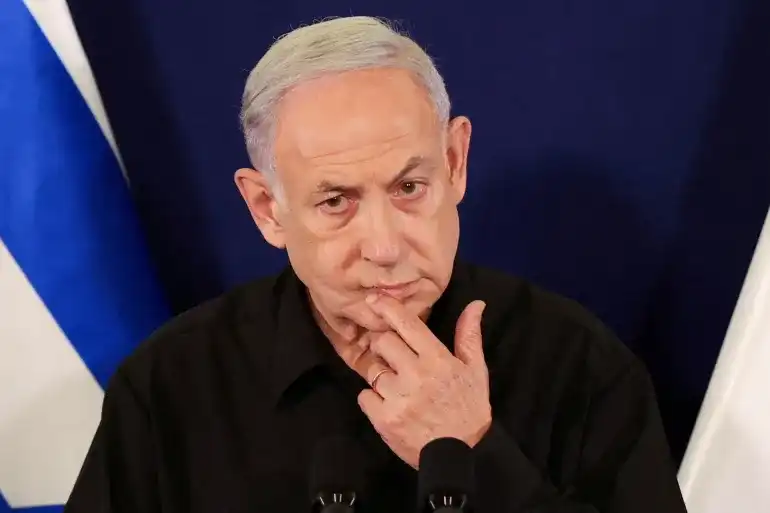
Netanyahu: We will not cease fire without the return of the kidnapped Israelis

Israeli Prime Minister Benjamin Netanyahu said on Sunday that there will be no ceasefire in Gaza without the return of Israeli prisoners held by Hamas in the Strip since last October 7.


“I want you to know that there is one thing we will not do: there will be no ceasefire without the return of our kidnappers,” Netanyahu said during a visit to Ramon Air Base.


He added, according to his office, in a written statement, “To both our enemies and our friends.


We will continue until we defeat them (Hamas). We have no alternative."

Last night, many Israelis demonstrated in front of Netanyahu's headquarters and demanded his resignation, blaming him for the failure of the occupation army in the face of the Palestinian resistance.


Some of them said that Netanyahu remaining in power poses a danger to Israel. It is noteworthy that on the seventh of last October, the Izz al-Din al-Qassam Brigades - the military arm of the Islamic Resistance Movement (Hamas) - and other Palestinian resistance factions launched the “Al-Aqsa Flood” operation against the occupation. The Israeli attack has so far killed more than 1,542 Israelis and injured 5,431 of them.


The Palestinian resistance also captured 240 Israelis, and announced that it wanted to exchange them for more than 6,000 prisoners in occupation prisons. Israel continues its aggression against Gaza, bombing homes, schools, hospitals, and mosques, which led to the martyrdom of more than 9,770 Palestinians, most of them women and children, in addition to wounding 24,000 and destroying neighborhoods. In its entirety and displacing most of the population.


For more than a week, Israel has been carrying out a ground operation in the besieged sector, but it has suffered painful losses at the hands of resistance elements, with more than 30 of its officers killed and 260 wounded evacuated from the field.


Source: Al Jazeera + agencies

PALESTINE

Sun 05 Nov 2023 5:24 pm - Jerusalem Time

A provocative march by Israeli settlers south of Nablus

Dozens of settlers, protected by Israeli armed forces, participated this Sunday evening in a provocative march near the town of Qabalan, south of Nablus.


Local sources reported that dozens of Israeli settlers set off from the “Rahalim” settlement established on citizens’ lands south of Nablus, raising Israeli flags towards the entrance to the town of Qablan, with protection from Israeli army.

OPINIONS

Sun 05 Nov 2023 5:22 pm - Jerusalem Time

Can America and Israel replace Hamas' rule in Gaza?

Al Jazeera Net

Al Jazeera Net

Opinion Writer

Ramallah - Since the start of the Israeli aggression on the Gaza Strip on October 7, there have been repeated Israeli and American statements about ending the rule of the Hamas movement in the Strip, as a primary goal of the war.


The White House announced last Wednesday that Washington is working with its partners in the region “to explore what governance in Gaza should look like in the future,” while the US State Department said, “We have made clear that Hamas cannot continue to rule and manage Gaza.”


Since 2007, the Palestinians have been living under a division in which Hamas runs the Gaza Strip, while the West Bank is run by a government formed by the Fatah movement.


In light of the projects proposed, to what extent are Hamas's alternatives in Gaza feasible? Is it possible to end the movement’s rule in the Gaza Strip? To what extent can the Palestinian Authority or Arab parties be an alternative to it in managing the sector in the future?


To answer these questions, Al Jazeera Net spoke to 3 political experts in the West Bank. Their opinions agreed that the American and Israeli aspirations were based on one scenario, which is that the war would end with the defeat of Hamas, and ruled out any other scenarios, and this has nothing to do with reality.


Other scenarios

According to Hani Al-Masry, director of the Palestinian Center for Policy Research and Strategic Studies (Masarat), talking about an alternative administration for Hamas in Gaza “is part of the war, as it is rumored that there is only one scenario, which is the defeat of Hamas and the Palestinian resistance, and in return any human being, expert or non-expert, knows that there are several scenarios for the course of the war.”


Al-Masry rules out the supposed scenario of defeating Hamas, wondering, "How can a popular movement be defeated that gained very large support after October 7, not only Palestinian, but also Arab and international support?"


Even if the unlikely scenario of “defeating the resistance” is accepted, “solutions such as a temporary administration, Arab and international forces, the return of power, or displacement are not easy to implement.”


As for the Palestinian Authority, Al-Masry believes that it is difficult to accept a return to Gaza “on the back of an Israeli tank,” adding, “It is also not easy for Israel to agree to its return, even though it is American’s preference, because what Israel wants is to re-change and rehabilitate the entire authority.”


If the authority accepts - and it is also excluded - Al-Masry says, "It will not be a representative of any Palestinian, but rather a traitor and an agent, and this applies to any other figures that the Americans and Israelis think about, because if they agree, they will be part of the Israeli-American project."


The director of the Masarat Center rules out that the Arab countries, especially Egypt and Jordan, will agree to any alternatives to managing Gaza in the current situation, “but if defeat occurs, they will agree on the basis of saving what can be saved, and here the people of Gaza will refuse to be ruled by people who do not represent them.”


Regarding his vision for the end of the current battle, Al-Masry tends to “a formula of neither victor nor loser, which allows each party to claim that it has achieved victory, because defeating either party in the military sense is impossible, and in this case the resistance is the victor, because it did not enable the other party to achieve its goals.” ".


In this case, the political analyst says, “Hamas will emerge weaker militarily but stronger politically,” meaning that “the effects of October 7 (the Al-Aqsa flood) are a strategic victory, regardless of the results of the current war, and after it, it will not be possible to ignore the Palestinian people and their cause, but rather think about how to give the Palestinians their rights.” Otherwise, things will deteriorate sooner or later.”


Conditional acceptance

For his part, Professor of Media at An-Najah National University, Dr. Farid Abu Dhair, wonders about the extent to which Israel can go in the war, “especially if losses and internal crises continue.”


The speaker does not rule out that the occupation will resort, within weeks, to negotiated or diplomatic means for a ceasefire with conditions, "and therefore the idea of an Arab or international administration in Gaza may be raised, and this means surrender."


Farid Abu Dhair wondered about the extent of Hamas’ readiness to surrender and hand over Gaza to an Arab or Palestinian body under an international framework? He answered, "Absolutely not, because it set clear and specific goals for this operation, which are stopping the raids on Al-Aqsa Mosque, the issue of prisoners, and the siege on Gaza and the West Bank."


Abu Dhair does not rule out the possibility of collusion, and perhaps Arab and regional acceptance of the proposed projects. “I am not surprised. Indeed, Arab officials may have called for the end of Hamas, since the Palestinian situation has become inspiring since the Stone Intifada and an incentive to take action against injustice.”


As for the hypothesis of the Palestinian Authority accepting the administration of Gaza, the media academic says that this is possible “according to its vision of preserving the interest of the Palestinian people, saving their blood, and striving to achieve goals peacefully without bloodshed.”


The same spokesman continues, "Yes, the authority may accept to stop bloodshed and build the Gaza Strip, with Arab, European, American, and Israeli blessings behind the scenes, but within the horizon of a political solution and Palestinian national consensus, and there is sufficient factional flexibility in this regard."


In the context of his analysis, Abu Dhair believes that the next stage will witness a Palestinian agreement on a solution based on a state within the 1967 borders with East Jerusalem as its capital, “and this is an option acceptable to Hamas, the Palestinian Authority, and the Arab countries, including the normalized countries.”


After October 7, Abu Dhair sees a change in the international mood, including the European and American ones, and even within the occupying state, regarding the reasons for what happened on this day, “because the conversation is no longer Israel’s security, but rather its existence.”


Psychological

Not far from my opinion, Al-Masry and Abu Dhair, the political analyst and director of Al-Quds Open University in Bethlehem, Dr. Asaad Al-Aweiwi, does not see “the possibility of ending the Hamas movement and thus its rule.”


Al-Aweiwi adds that Hamas is “a national liberation movement firmly rooted in the conscience of the Palestinian people and an integral part of it, and it is not a tunnel or a building to be eliminated.”


Asaad Al-Awawi commented that the owners of the alternative administration project "are anticipating events, as the outcomes of the battle will settle matters, and neither the United States, Israel, nor Western powers can end the spirit of resistance among the Palestinian people, or install an administration for the Gaza Strip."


Regarding the American statements, Al-Aweiwi believes that they are part of the psychological war on the Palestinian people, and are not taken for granted, and that they are merely an attempt to defend its eroding interests in the region, adding that the United States decides alone in light of a multipolar world.


Al-Aweiwi ruled out "the involvement of any Arab country in the issue of managing Gaza after this blood that was shed and the sacrifices. The only legitimacy is for those who defend the Palestinian people and who offer blood and lives, and governance must be agreed upon by the Palestinians."


The Palestinian analyst also rules out the Authority being drawn into the box of American and Israeli projects, and does not believe that anyone in the Palestinian people would accept to go on the back of an American-Israeli tank to rule, nor would the Fatah movement accept that either.


The same analyst points out that regional powers that have interests with the resistance “are beginning to show strong positions,” pointing to the recent visit of the Hamas delegation to Russia. “Russia has a developed position that is more biased toward the Palestinian people, their cause, and their freedom than ever before.”


Al-Awewi stated that Russia and China are speaking strongly about the aftermath of the war and the necessity of ending the occupation and establishing a Palestinian state, considering that this scene comes as a result of the great sacrifices of the Palestinian people, and the convergence of the positions of its political forces to establish a state in accordance with the resolutions of international legitimacy.


Source: Al Jazeera

PALESTINE

Sun 05 Nov 2023 5:03 pm - Jerusalem Time

30 days of Israeli war on Gaza Ministry of Health: Death toll has risen to 9,770+

The Ministry of Health in Gaza announced today that the death toll has risen to 9,770 dead since the beginning of the Israeli aggression, and confirmed that 70% of the victims of the aggression are women and children, noting that during the past hours Israel has committed 10 major massacres that claimed lives.


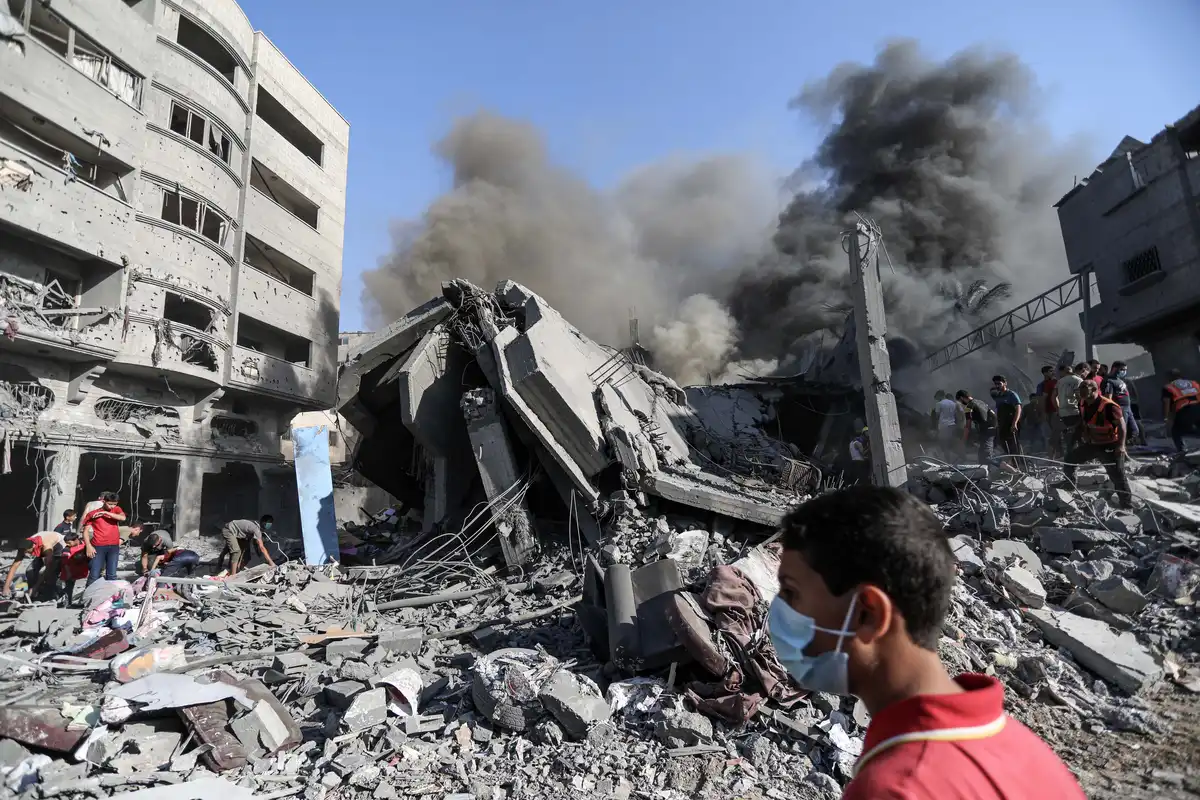
Israeli aircraft continued to bomb civilians in the Gaza Strip, and as the war entered its 30th day, while the Ministry of Health in Gaza announced that Israel had committed 24 massacres during the past hours, resulting in the martyrdom of 243 Palestinians.


The Ministry of Health announced that the number of dead of the ongoing Israeli aggression on the Gaza Strip rose to 9,770 dead, including 4,800 children and 2,550 women, and the number of wounded reached 24,808. The Ministry’s spokesman, Ashraf Al-Qudra, confirmed that 70% of the victims of the Israeli aggression are women and children, and that The Ministry received 2,660 reports of missing persons, including 1,270 children.


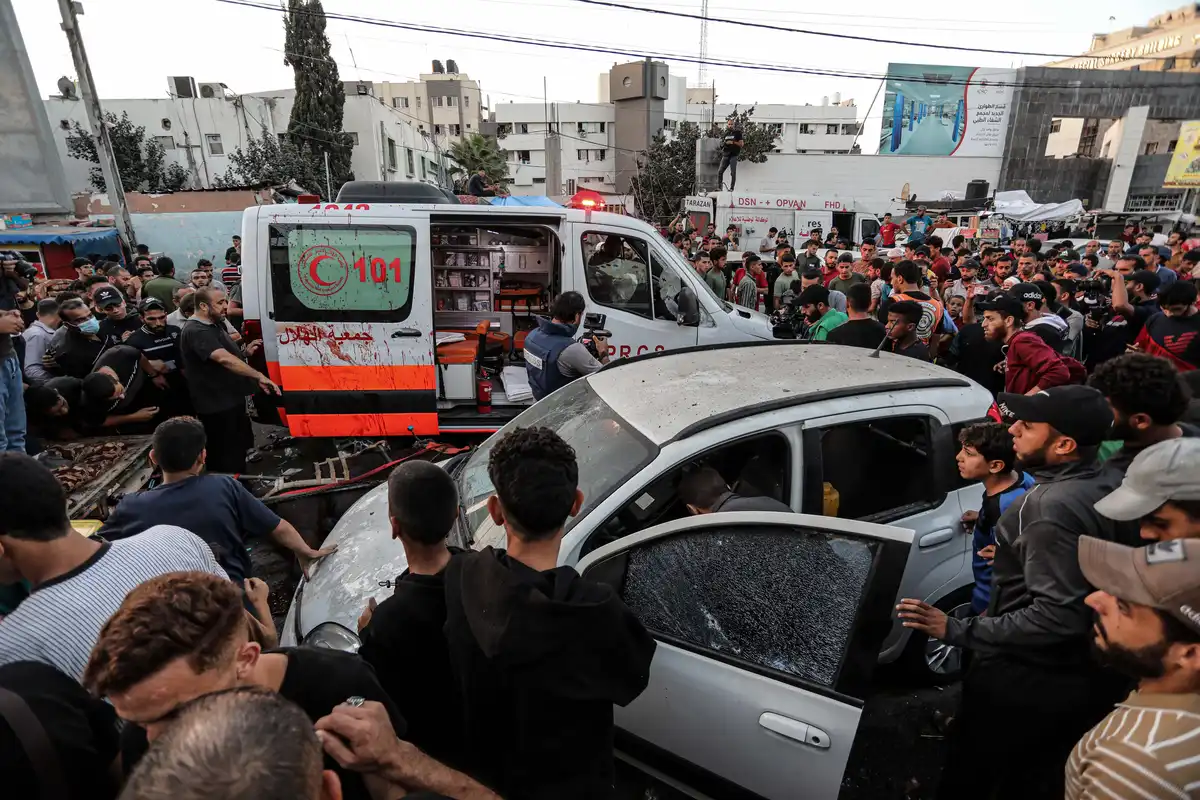
Al-Qudra reported, "175 health personnel were killed, and 31 ambulances were destroyed and put out of service as a result of the Israeli aggression." He said, "Israel targeted more than 110 health institutions, which led to 16 hospitals being out of service and 32 primary care centers due to Israeli targeting and fuel exhaustion." Al-Qudra stated that "Gaza's hospitals are completely unable to provide any health service to thousands of wounded and sick people due to the cutting of medical supplies and fuel."


He continued, "The health system is facing critical hours where medical teams are holding their breath, as they work on secondary generators in Gaza and the north, as the fuel for the generators is almost running out." Al-Qudra appealed to all parties "to provide safe passage and the urgent flow of humanitarian and medical aid, fuel and medical delegations to Gaza." Al-Qudra explained, "There are no safe corridors in the Gaza Strip, which is a lie, and the occupation is using them to attack our people." He said, "There are hundreds of victims, who were forced by Israeli army to flee from northern Gaza to its south. There are a large number of victims and the bodies of martyrs on the ground, and ambulances have not yet been able to recover them." He added, "We confirm that for the third day in a row we were unable to transport the wounded to Egyptian hospitals." Because of the Israeli bombing.” He added, "Israeli army deliberately targets ambulances and prevents them from transporting the wounded to the Egyptian border."


At the level of the ground operation, it continues to confront Israeli attempts to advance along the fighting axes, announcing from time to time the loss of life and equipment among the ranks of the occupation army.


The Israeli army announced that 30 soldiers were killed and more than 250 others were injured since the beginning of the ground operation in Gaza on October 27.

ARAB AND WORLD

Sun 05 Nov 2023 4:47 pm - Jerusalem Time

Iranian Defense Minister: America will be harmed if it does not stop the war in Gaza

On Sunday, the Iranian Tasnim News Agency quoted Defense Minister Mohammad Reza Ashtiani as saying that the United States would be severely harmed if it did not implement a ceasefire in the Gaza Strip.


Ashtiani advised the Americans, saying that they must stop the war immediately, otherwise they would be exposed to severe harm, without adding further details.


Iran considers the United States militarily involved in the war on Gaza as a result of its unconditional support for Israel following the Al-Aqsa Flood operation on October 7th.


On October 24, Iranian Foreign Minister Hossein Amir Abdollahian revealed that Tehran had received two letters from Washington stating that it did not intend to expand the circle of war, and was calling on Tehran to exercise restraint.


Abdullahian said at the time that his country was not seeking to expand the cycle of war in the region, but that continuing to kill women and children would lead to the impatience of the resistance forces and the peoples of the region.


Iran denied its participation in Operation Al-Aqsa Flood, and US Secretary of State Anthony Blinken said that he saw no evidence that Iran was behind the attack launched by the Al-Qassam Brigades of the Islamic Resistance Movement (Hamas) on Israel, despite the existence of relations between Hamas and Tehran, as he put it.


Source: Al Jazeera + Reuters

PALESTINE

Sun 05 Nov 2023 4:33 pm - Jerusalem Time

Where China stands on the Israel-Gaza war and what it stands to gain

By Christian Shepherd and Lyric Li


Chinese leader Xi Jinping on Oct. 18 called for an immediate cease-fire in the Israel-Gaza war. Making his first remarks since the conflict began, Xi said during a meeting in Beijing with Egyptian Prime Minister Mostafa Madbouly that the establishment of “an independent state of Palestine” through a two-state solution was the “fundamental way out of” the conflict. A few hours later, China expressed its “deep disappointment” with the United States for vetoing a U.N. Security Council resolution calling for a humanitarian pause in the fighting. 

It was a neat encapsulation of how Beijing is trying to promote two key diplomatic aims: Bolstering its status as a champion of developing countries at the same time it is positioning itself as a superpower to rival the United States in a multipolar world, with some notable support. The previous day, Xi hosted Russian President Vladimir Putin in Beijing. Both have made a point of diverging from the Western-led support for Israel after the attacks. 


Since the Oct. 7 attacks on Israel by Hamas, the Palestinian militant group that controls the Gaza Strip, China has been unusually ready to offer itself up as peacemaker. With Russia’s war in Ukraine, Beijing stood back for a year before releasing a proposal for a political settlement. Now, it has launched a diplomatic blitz within days of the attacks, describing itself as a “friend to both Israel and Palestine.” Chinese Foreign Minister Wang Yi swiftly called for an “international peace conference” to reach a solution to the Israel-Hamas conflict, and Beijing last week dispatched a senior diplomat to the Middle East. Zhai Jun, China’s special representative to the Middle East, promised to “conduct impartial conciliation and mediation.” Despite Beijing’s own long-standing concerns about terrorism, China has refrained in official statements from using that terminology when describing Hamas’s attacks. 

In another contrast with the United States and its allies, China has said that Israeli retaliatory strikes on Gaza went beyond what was acceptable under international humanitarian law. 


What is the history of China’s relations with Israel and the Palestinians? 


After a brief effort to establish relations with Israel in the early years after the establishment of the People’s Republic of China in 1949, China openly sided with the Palestinians and Arab nations in the mid-1960s, when Mao Zedong’s government provided weapons and promises of unwavering support to Palestinian fighters. After Mao’s death in 1976, China began opening up to the world and softened its position. It normalized relations with Israel in 1992, beginning a period of trying to keep good relations with both sides of the conflict. Chinese diplomats would draw up proposals and call for talks but they rarely got stuck in negotiations, in line with Beijing’s claimed principle of “noninterference” in other countries’ affairs. Under Xi, who rose to lead China in 2012, that policy has gradually given way to efforts to court Arab nations and offers to mediate between Israel and the Palestinians as China’s economic footprint in the Middle East has grown. 

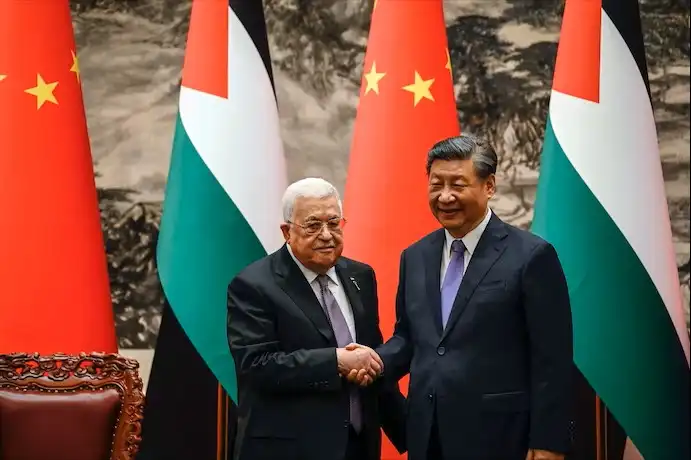
The president of the Palestinian Authority, Mahmoud Abbas, signed a strategic partnership with Xi in June. In exchange for Chinese aid, Abbas declared that China’s security crackdown on mostly Muslim Uyghurs has “nothing to do with human rights” and is about “excising extremism.” 


What has China said in response to the Oct. 7 attacks on Israel? 


Chinese officials have yet to directly condemn Hamas for the rampage, in which the militants massacred at least 1,400 people and abducted nearly 200, according to Israeli authorities. 

In fact, officials have avoided even mentioning the militant group that runs Gaza and instead have said that they oppose harm to civilians in what they term the “Israel-Palestine conflict.” (At least 9,061 have been killed in Gaza since the start of the war, according to the Gaza Health Ministry.) 

Their criticism of Israel, however, has been far more direct. Wang denounced Israel for “going beyond self-defense” and called for an end to “collective punishment of the Gazan people.” China’s top diplomat has also intensified rhetoric around Beijing’s preferred outcome of a two-state solution. “The Jewish nation is no longer homeless in the world, but when will the Palestinian nation return to its home?” he said in October. “The injustice to Palestine has dragged on for over half a century. The sufferings that plagued generations must not continue.” 


What is China’s interest in the Israel-Gaza war?


For decades, China stayed well away from the intractable conflicts of the Middle East, but that has changed in recent years. Beijing has tried to match its economic influence with growing political clout. That shift is partially to protect Chinese business interests but also to secure support from Arab nations for China’s efforts to reshape the world order in its favor.“ The fact that Palestine is such an emotional and hot-button political issue for the Middle East means that when China offers rhetorical support to Palestine, they’re going to speak not just to the Palestinians, but also to those other Arab countries that want to see a great power support them on this issue,” said Jonathan Fulton, a nonresident fellow at the Atlantic Council, a think tank. China has promised to send food, medicines and other humanitarian aid to Gaza through the United Nations, without giving a breakdown of what it has provided. 


How have Israel and the Palestinians responded to Beijing’s overtures? 


Beijing may have far greater economic interest in maintaining good relations with Israel, but it has long sided with the Palestinians, part of a broader stance of support for those in formerly colonized lands against perceived Western oppression. 

Israel has largely rebuffed China’s efforts to present itself as an impartial broker. “When people are being murdered, slaughtered in the streets, this is not the time to call for a two-state solution,” Yuval Waks, a senior official at the Israeli Embassy in Beijing, told reporters on Oct. 8, the day after the Hamas attacks. While Israel remains skeptical, the Palestinians have been receptive to Chinese involvement. “Palestine trusts China” and welcomes its constructive involvement in talks, Palestinian Authority Deputy Foreign Minister Amal Jadou told China’s special representative, Zhai, in a phone call earlier in October. 


Can Beijing do anything to stop the fighting?


Beijing’s readiness to speak out and actively push for a resolution to the conflict reflects new confidence in its ability to resolve regional disputes. Beijing helped put the finishing touches on an agreement under which Iran and Saudi Arabia agreed to reestablish diplomatic relations. 

The foreign minister at the time, Qin Gang, then offered to host a new round of peace talks between Israel and the Palestinians. Beyond the Iran-Saudi deal, however, Beijing’s rising interest in playing global peacemaker has had limited success. Its proposal for a peaceful settlement of the Ukraine war has gained little traction, not least because Ukraine doesn’t see it as impartial. 

The sudden disappearance of Qin and his subsequent removal from his position as foreign minister hasn’t helped spread Beijing’s intended message of stability. China’s Foreign Ministry has declined to comment on whether it will use its influence over Iran to try to restrain Hamas, and it has little experience working directly with the militant group. How does this play into China’s broader geopolitical aims? For China, the crisis is a chance to establish itself as a dealmaker in the Middle East, win ground from the United States in an area in which Beijing lacks experience, and strengthen partnerships with Russia and across the Arab world. China’s calculation might change if the fighting spreads, analysts said, but for now it appears to consider the current flare-up of violence an opportunity to strengthen its influence in the region relative to the United States. “ The way that this is playing out is not necessarily a bad thing for Beijing,” Fulton said. “If it remains a Hamas-Israel conflict, China can offer rhetorical support for the Palestinians, criticize Israel, score points on the U.S. 


while they do so, and it’s not going to affect their greater strategic interests in the region.” What informs China’s views of Israel and Hamas? To explain China’s position toward Hamas militants, Zhu Weilie, a veteran Chinese scholar of the Middle East, reaches back to the 2006 Palestinian legislative election, when the militant organization won a majority. “Hamas has its radical side, but it’s a legitimate organization in Palestine and is recognized by Arab countries,” said Zhu, a professor at Shanghai International Studies University. “It’s not up to foreigners or other countries to define it as a terrorist group.”

ARAB AND WORLD

Sun 05 Nov 2023 4:22 pm - Jerusalem Time

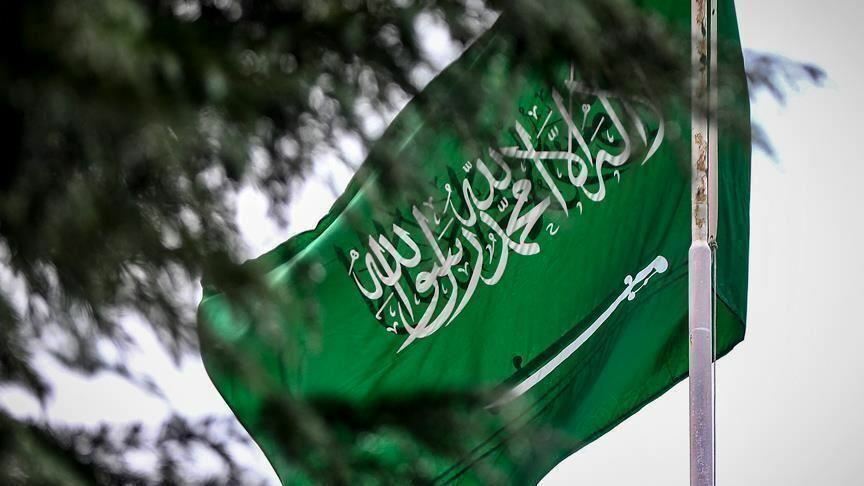
Saudi Arabia condemns the statements of an Israeli minister regarding dropping a nuclear bomb on the Gaza Strip

The Kingdom of Saudi Arabia condemned, in the strongest terms, the extremist statements issued by a minister in the Israeli government regarding dropping a nuclear bomb on the besieged Gaza Strip, which demonstrate the penetration of extremism and brutality among members of the Israeli government.


The Saudi Ministry of Foreign Affairs said in a statement today, Sunday, that not dismissing the minister immediately from the government and merely freezing his membership reflects the height of disdain for all human, moral, religious and legal standards and values of the Israeli government.

PALESTINE

Sun 05 Nov 2023 4:00 pm - Jerusalem Time

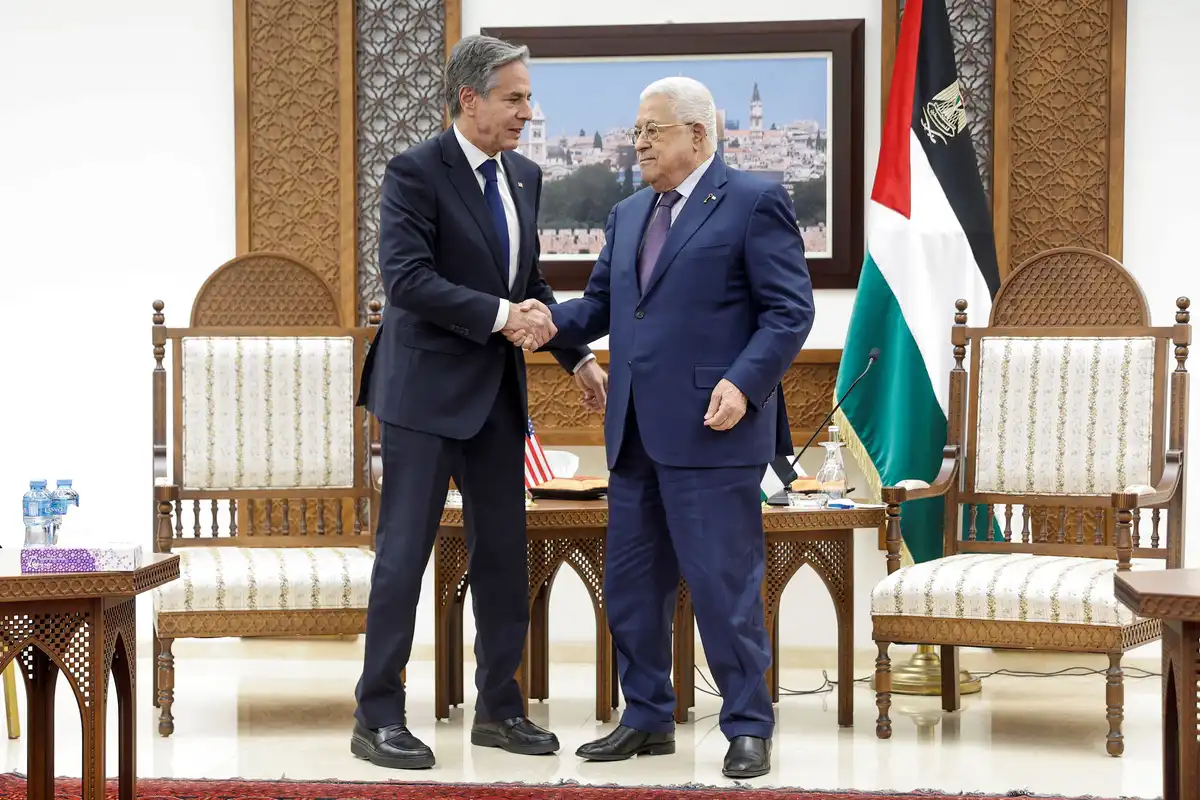
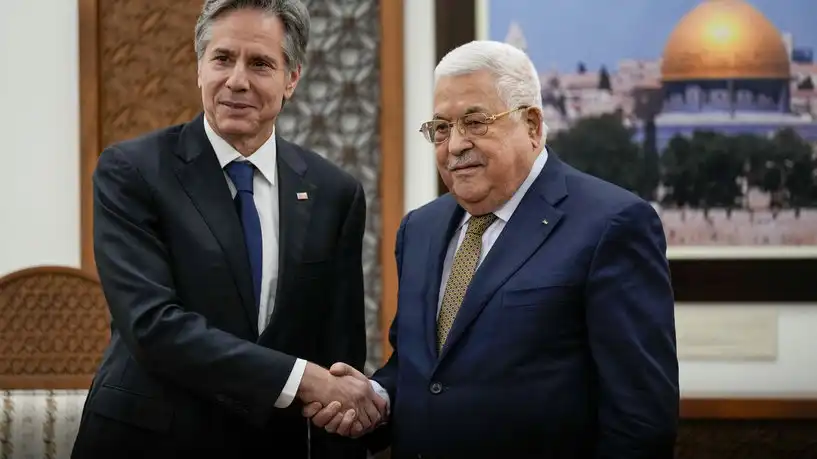
Blinken after meeting with Abbas: We reject the forced displacement of Palestinians

US Secretary of State, Anthony Blinken, affirmed on Sunday Washington's rejection of forcefully displacing Palestinians from their areas, stressing that the United States is committed to working to achieve the aspirations of the Palestinians to establish their state.


“Promoting dignity and security”

He also affirmed the United States' commitment to promoting dignity and security for Palestinians and Israelis alike, and condemned "extremist violence" against Palestinians in the West Bank.


While he stressed that Washington is committed to providing humanitarian aid and resuming basic services in Gaza.


Abu Mazen's demands

For his part, the official spokesman for the Palestinian presidency, Nabil Abu Rudeina, said on Sunday that President Mahmoud Abbas informed US Secretary of State Anthony Blinken in Ramallah that there must be an immediate ceasefire and allow humanitarian aid to enter the residents of the Gaza Strip.


"genocidal war"

The Palestinian President described the war launched by Israel on the Gaza Strip since October 7 as a "genocidal war."

Abbas said, "There are no words to describe the war of genocide and destruction to which our Palestinian people are being subjected in Gaza at the hands of the Israeli war machine, without regard to the rules of international law."


Meeting in Ramallah

Blinken arrived in Ramallah on Sunday on an unannounced visit and met with Palestinian President Mahmoud Abbas, as part of a tour of the Middle East amid escalating tensions due to the war between Israel and Hamas.


Blinken and Abbas met in the West Bank city of Ramallah, as part of Blinken's second tour in the region and the third in which he accompanied Biden since Hamas fighters launched a surprise attack on southern Israel on October 7, killing 1,400 people and taking more than 240 hostage.


Amman meeting

It is noteworthy that the foreign ministers of Saudi Arabia, Egypt, Jordan, the Emirates, Qatar and Palestine held a coordination meeting, on Saturday, with the US Secretary of State in the Jordanian capital, Amman, in the context of targeted Arab efforts to reach an end to the Israeli war on Gaza and the humanitarian catastrophe it is causing.


While Israel continues air strikes that Gaza health officials say have killed nearly 9,500 Palestinians, Blinken rejected calls for a ceasefire from Arab officials on Saturday after he unsuccessfully appealed to Israel for more limited periods of cessation of fighting the day before.

PALESTINE

Sun 05 Nov 2023 3:58 pm - Jerusalem Time

Abbas sets a "condition" for the return of the Palestinian Authority to the Gaza Strip

During his meeting with US Secretary of State, Anthony Blinken, on Sunday, Palestinian President Mahmoud Abbas linked the return of the Palestinian Authority to administering the Gaza Strip to a “comprehensive political solution” to the conflict.


Abbas, who met with Blinken for the second time since October 7, said: “The Gaza Strip is an integral part of the State of Palestine, and we will bear our full responsibilities within the framework of a comprehensive political solution on both the West Bank, including East Jerusalem, and the Gaza Strip.”


As Israeli forces intensify their attack on the Gaza Strip, diplomats in the United States and the United Nations are beginning to evaluate options, “What next?” If Israel manages to overthrow the movement that runs the Strip, the challenges they face in this regard are huge.


Reuters quoted an informed source as saying that these discussions include options such as deploying multinational forces after the end of the latest escalation in the conflict in Gaza and forming a temporary administration led by Palestinians, but they exclude politicians affiliated with Hamas, granting a temporary role to fill the vacuum in security and administration to neighboring Arab countries, and temporary supervision from United Nations on the sector.


Another American source described the process as still being informally “in the process of brainstorming ideas.”

ARAB AND WORLD

Sun 05 Nov 2023 2:18 pm - Jerusalem Time

Qatar Red Crescent denounces the targeting of medical facilities in Gaza

The Qatari Red Crescent issued an official statement denouncing the deliberate targeting of medical facilities in the Gaza Strip, after the Al-Quds Hospital affiliated with the Palestinian Red Crescent, as well as Al-Shifa Hospital and the Indonesian Hospital, were subjected to a missile attack near them, which resulted in the fall of dozens of martyrs, wounded and wounded, in blatant violation of international law. Humanitarian and Geneva Conventions.


The Qatari Red Crescent also renewed its condemnation of targeting ambulances that carry out their medical and humanitarian duty in transporting the wounded and injured, stressing that all medical and relief teams and facilities, ambulances, and paramedics who carry the Red Crescent or Red Cross emblem are not a target.

PALESTINE

Sun 05 Nov 2023 1:37 pm - Jerusalem Time

International organization: The Israeli war of starvation reaches its peak in Gaza

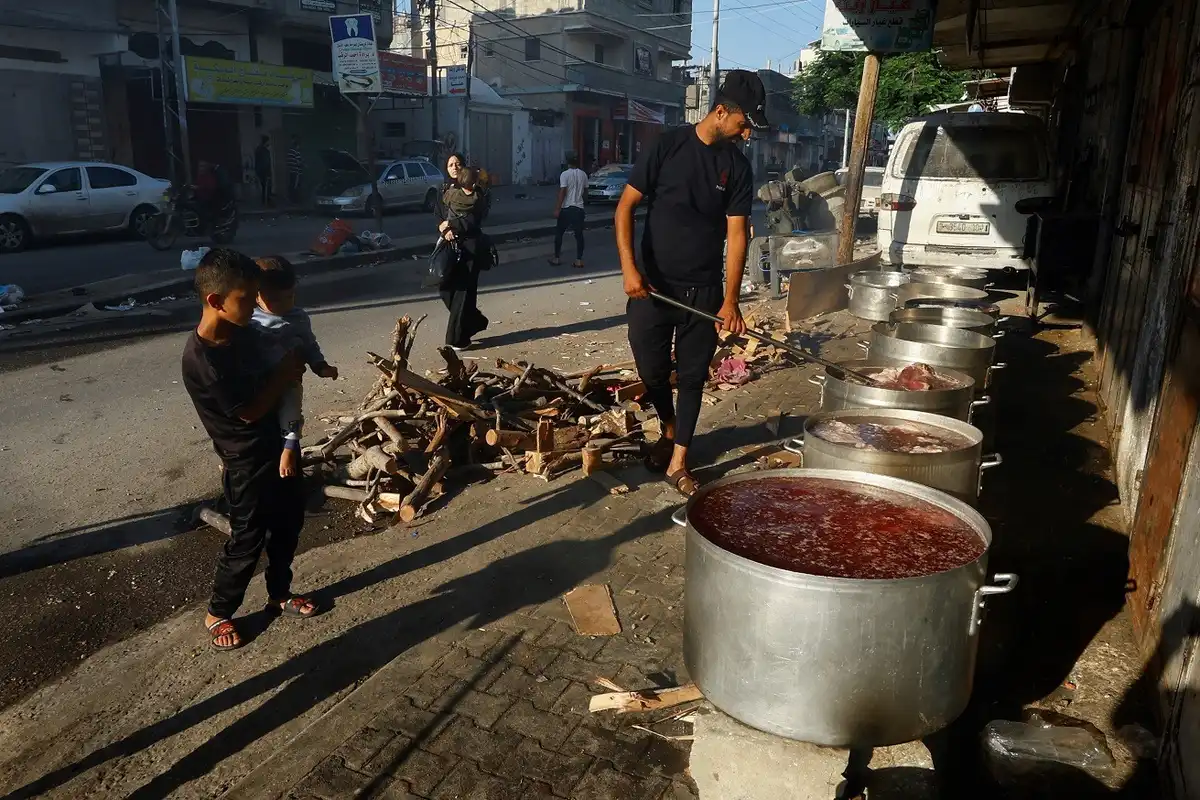
The Euro-Mediterranean Human Rights Observatory said that Israel has sharply escalated in recent hours the war of starvation it is waging against civilians in the Gaza Strip to exacerbate the living situation, which has reached catastrophic levels, as a tool of subjugation as part of its ongoing war for the fifth week in a row.


The Euro-Mediterranean Observatory highlighted - in a statement on Sunday - that the Israeli war of starvation has taken extremely dangerous turns, including cutting off all food supplies and bombing and destroying bakeries, factories, food stores, water stations and tanks.

It pointed out that Israel has deliberately, in recent hours, focused its attacks on targeting electrical generators and solar energy units on which commercial establishments, restaurants, and civilian institutions depend to maintain the minimum possible level of operation.


It also warned that Israel's attacks included the destruction of the agricultural area east of Gaza, flour stores, and fishermen's boats, as well as supply centers for relief organizations, especially the United Nations Relief and Works Agency for Palestine Refugees (UNRWA), the largest source of humanitarian aid in the Strip.


Euro-Med warned of an imminent explosion in child deaths in Gaza if the world does not act quickly, as Gaza recorded during the past two days a staggering increase in the number of children with acute malnutrition who need to receive medical care.

While it is believed that malnutrition affected 70% of the children in the Gaza Strip with anemia and weak immunity before the ongoing Israeli war, the Or-Med Monitor estimates that the aforementioned number has risen to more than 90% due to the unprecedented Israeli policy.


It highlighted that children, especially newborns, and women in Gaza are disproportionately bearing the repercussions of Israel’s war, as 52,500 infants in Gaza currently face the risk of death, hunger, dehydration, and the dangers of overcrowding, at a time when there are about 55,000 pregnant women in Gaza, including 5,500 thousand births expected this month.


It said: Israel's attacks, the disruption of damaged or non-functioning health facilities, the massive levels of displacement, and the collapse of food, water and electricity supplies, severely threaten mothers and newborn babies.


It added that the risks of malnutrition were extremely high among pregnant women, which had a significant impact on children's survival and development, and as access to food and water worsened, mothers struggled to feed and care for their families, increasing the risks of malnutrition, illness and death.


In parallel, Euro-Med highlighted that only about 2% of aid and food supplies have so far been allowed by Israel to enter the Gaza Strip through the Rafah crossing with Egypt, at a time when it ignores calls from international organizations for the necessity of bringing in food, water, fuel and other necessities without restrictions.


Although a limited amount of food aid was allowed to enter, no commercial food imports were delivered, leaving the Gaza Strip's population of approximately 2.3 million people in dire need of food while imposing a collective punishment approach on them.


It pointed out that the limited food supplies entering from Egypt are being distributed primarily to displaced people and host families in the southern Gaza Strip, with only flour provided for bakeries, while preventing any food supplies from reaching Gaza City and its north.


The World Food Program estimates that current stocks of basic food commodities will be sufficient for a maximum of four days before they run out completely, at a time when trade has been paralyzed by widespread destruction, insecurity, and fuel shortages.


Euro-Med highlighted that obtaining bread in the Gaza Strip has become an existential challenge, as the only mill operating in Gaza is still unable to grind wheat due to the lack of electricity and fuel. 11 bakeries have been bombed and destroyed since October 7, and those still operating face severe challenges due to shortages of necessities such as flour and fuel.


Only one bakery contracted by the World Food Program provided bread intermittently to shelters, depending on the availability of flour and fuel, while residents queued for long hours at bakeries and were exposed to Israeli air strikes to obtain a few loaves of bread.


Euro-Med warned that the distribution of food aid to the displaced in northern Gaza has stopped almost completely over the past few days, following the intensification of ground operations by the Israeli army, threatening widespread famine, the price of which will be paid by children in particular.


Besides, access to basic foodstuffs such as flour, oil and sugar in some of the warehouses that were not destroyed is a huge challenge due to fuel shortages, damaged roads and risks resulting from air strikes.


In addition, the power outage crisis disrupted food supplies by affecting cooling and irrigation of crops, while more than 15,000 farmers lost their crop production, about 10,000 livestock keepers were unable to obtain sufficient feed, and many lost their animals.


In parallel, it is estimated that less than three liters of clean water per person is now available out of a minimum of 15 liters per day necessary for people in the most severe humanitarian emergencies.


Euro-Med said: The stock of bottled water is running out, and the cost of bottled water has already risen to the point where it has become beyond the reach of an average family in Gaza, with prices rising five-fold in some places due to the severe shortage.


It warned that in recent hours, Israel has deliberately bombed water wells and tanks and harmed the services it provides, the most recent of which was the destruction of the water well and Tal al-Zaatar tank in the northern Gaza Strip, which feed more than 70,000 people.


The Palestinian Water Authority says that water production in Gaza is now only 5% of its total normal production, and is expected to decline further, unless water and sanitation facilities are supplied with electricity or fuel to resume their activity.


Hundreds of thousands of residents of Gaza City and its north face a severe water shortage, raising fears of drought and water-borne diseases due to water consumption from unsafe sources, after most water facilities stopped in the aforementioned areas, where residents rely on a minimum of private wells and purification stations and consume... Unsafe water from agricultural wells.


Euro-Med recalled that international humanitarian law strictly prohibits the use of starvation as a means of war, and that as the occupying power in Gaza, Israel is obligated, according to international humanitarian law, to provide for the needs of the people of Gaza and protect them.


In this regard, he called for decisive international action to impose a ceasefire in the Gaza Strip and prevent further deterioration of the situation in civilian lives by providing fair and unrestricted access to basic and relief materials to the entire Gaza Strip, and making necessary supplies of food, water, medical supplies and fuel to meet the needs of the population.


PALESTINE

Sun 05 Nov 2023 1:31 pm - Jerusalem Time

Israeli attacks on citizens in the West Bank

Today, Sunday, Israeli occupation forces attacked farmers while they were picking olives, arrested one of them, and smashed the windows of a number of citizens’ vehicles in Nablus and Beit Jala.


In Nablus, a number of occupation foot soldiers attacked farmers in the southern area of the village of Qasra while picking olives, threw the fruits on the ground, beat them, and arrested the young man, Muhammad Ziad Odeh.


In Beit Jala, the occupation forces attacked a group of citizens' vehicles that were parked on the street near the Arab Rehabilitation Society Hospital, which led to the shattering of the glass.


It is noteworthy that the occupation forces have been closing the road near the Arab Society with earth mounds, since the 7th of last month.

PALESTINE

Sun 05 Nov 2023 1:27 pm - Jerusalem Time

Red Cross: The humanitarian situation in the Gaza Strip is catastrophic and getting worse every moment

The International Committee of the Red Cross said today (Sunday) that the humanitarian situation in the Gaza Strip is catastrophic and is getting worse every moment.


The committee added in a statement, a copy of which was received by Xinhua News Agency, that civilians in the Gaza Strip are bearing the heavy humanitarian cost, especially women and children, pointing out that the situation is catastrophic and is getting worse every moment.


The committee noted that what we see in Gaza has not been seen since our permanent presence in 1967, explaining that the destruction included water and wastewater infrastructure, with most of them out of service, which indicates an environmental disaster.


The International Committee said that obtaining a drop of clean drinking water or a loaf of bread in Gaza has become a dangerous journey that lasts for hours.


The committee confirmed that half of the population of the Gaza Strip was displaced to the south in light of the absence of the basic necessities of life, in addition to the dispersion of families and mothers distributing their children to displacement centers to increase their chance of survival.


Regarding the health situation, the International Committee said that Gaza's hospitals are on the verge of complete collapse, while doctors are exhausted, in addition to a scarcity of medical supplies and fuel.


The committee explained that surgeries are carried out without anesthesia and in hospital roads, calling for the need to protect hospitals, medical staff and ambulances, and for them to be life-saving places and a safe haven for those displaced there and not to be transformed into arenas of destruction and death.


The International Committee called for the necessity of protecting those who voluntarily decided to remain in their homes, and that the parties must respect and avoid civilian casualties.


It confirmed that her teams are still present inside Gaza and are doing their best to respond, noting that the surgical team specialized in war surgery that entered Gaza through the International Committee has begun its work alongside Palestinian doctors in the hospitals of the Strip.


The committee announced that it was able to bring enough medical supplies to treat 5,000 war-wounded people, and drinking water purification tablets sufficient to purify 50,000 liters of water, noting that this is a glimmer of hope, but it is far from sufficient to meet the needs.


It said that there are 60 tons of aid standing at the nearest point of the Egyptian Rafah crossing, waiting to enter the Gaza Strip in cooperation with the Egyptian Red Crescent and the Palestinian Red Crescent, calling for the necessity of stopping the escalation to prevent further human suffering and allowing the flow of medical supplies and humanitarian aid to the Gaza Strip, and granting humanitarian work crews. The International Committee and the Palestinian Red Crescent have a safe space for movement and humanitarian response, and the world must not tolerate this abject failure.


The government media office in Gaza announced last night that the death toll of Palestinians had risen to 9,500 as a result of Israel's continuing attacks on the Strip, including 3,900 children and 2,509 women, while more than 24,000 others were injured.

ARAB AND WORLD

Sun 05 Nov 2023 1:14 pm - Jerusalem Time

Hebrew Newspaper: The war with Hamas will cost Israel more than $50 billion

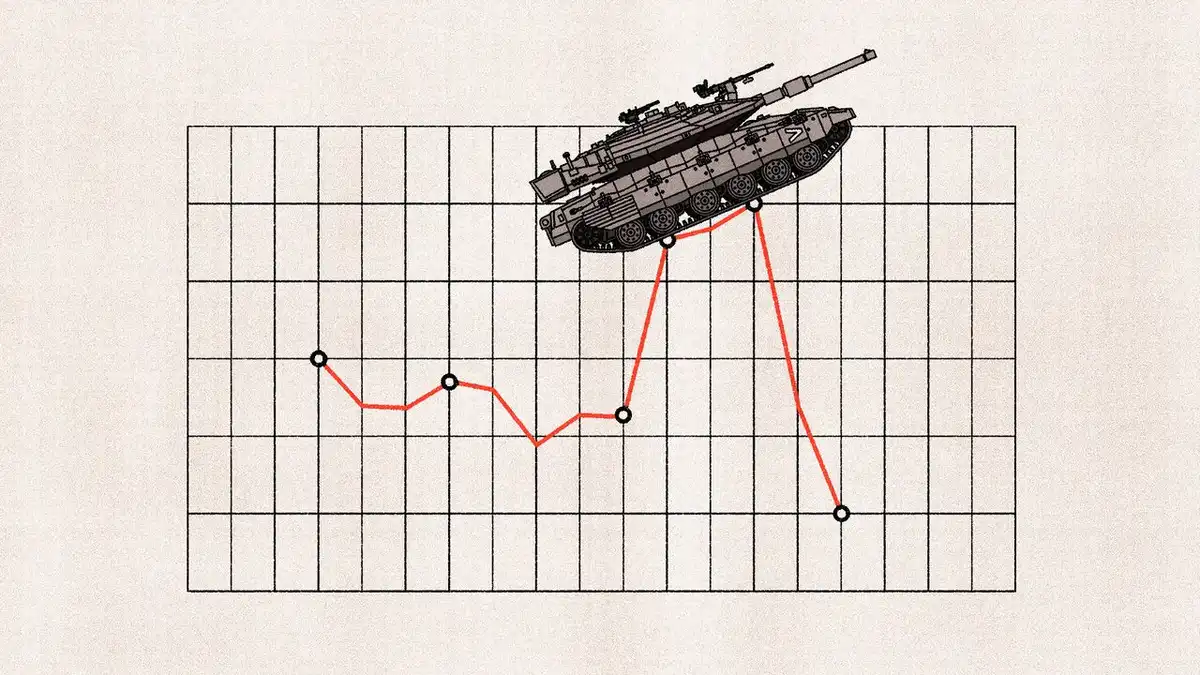
The Israeli economic newspaper Calcalist reported on Sunday, citing preliminary figures from the Ministry of Finance, that the cost of the war that Israel is waging in the Gaza Strip will reach up to 200 billion shekels ($51 billion).


The newspaper said that the estimate of the costs, which is equivalent to 10 percent of the gross domestic product, is based on the possibility of the war continuing from 8 to 12 months, with the matter limited to Gaza without the full participation of Hezbollah, Iran, or Yemen, as well as on the basis of a quick return. About 350,000 Israelis who have been conscripted into the reserve forces will soon start working.


Calcalist added that half the cost will be in defense expenditures, which amount to about one billion shekels per day. The cost of revenue losses will range between another 40 and 60 billion shekels, in addition to between 17 and 20 billion shekels that Israel will incur in the form of compensation for companies, and from 10 to 20 billion shekels for rehabilitation.


Finance Minister Bezalel Smotrich had said earlier that the Israeli government was preparing an economic aid package for those affected by the Palestinian attacks, which would be “larger and broader” than it was during the “Covid-19” pandemic.


Prime Minister Benjamin Netanyahu said on Thursday that Israel was committed to helping all those affected.


He added: “My directives are clear... open the taps and direct the money to whoever needs it,” without mentioning numbers. He added: “Just like we did during the Covid crisis. In the past decade, we have built a very strong economy here, and even if the war imposes economic losses on us, as it does now, we will pay them without hesitation.


Following the outbreak of the war, Standard & Poor's lowered its expectations for Israel's rating to "negative," while Moody's and Fitch placed Israel's ratings under review for the possibility of a downgrade.


PALESTINE

Sun 05 Nov 2023 1:02 pm - Jerusalem Time

Evacuation operations from Gaza have been suspended since yesterday after an Israeli strike on ambulances

Two Egyptian security sources and a third medical source told Reuters that evacuations of injured residents of the Gaza Strip and holders of foreign passports through the Fah crossing to Egypt have been suspended since Saturday.


A security source and a medical source explained that the suspension of evacuations came after an Israeli strike on Friday on ambulances in Gaza that were being used to transport the injured.


The Rafah crossing leading to the Sinai Peninsula in Egypt is the only exit port into Gaza that is not controlled by Israel.


Two of the sources said that aid trucks were still able to enter Gaza.

ARAB AND WORLD

Sun 05 Nov 2023 12:03 pm - Jerusalem Time

France will hold a conference called for by the Palestinian Authority, but Israel was not invited

The French Foreign Ministry stated that “participating countries such as Egypt, Jordan, the Gulf states and the Palestinian Authority will be invited to attend. But Israel will not be invited.”


Next Thursday (November 9), France will hold an international conference on humanitarian aid to Gaza. The conference is being held as part of the "Peace Forum" in Paris, which will continue throughout the weekend. French President Emmanuel Macron said, "The war on terrorism does not justify sacrificing civilians in the ongoing operations in Gaza."


The French Foreign Ministry stated, "Partner countries in the Middle East such as Egypt, Jordan, the Gulf states and the Arab League will be invited to attend the conference. The Palestinian Authority will be invited - but not Israel." European Union countries and G20 powers, with the exception of Russia, were also invited.


The participants will be alongside United Nations agencies and non-governmental organizations at the level of heads of state and government and foreign ministers. The first part of the committee will deal with aid in the areas of food, medicine, fuel and electricity, while ensuring that the aid does not reach the Hamas organization. The second part includes promises of new donations and a discussion of establishing Humanitarian corridors to transport aid and evacuate the wounded in the Gaza Strip.


PALESTINE

Sun 05 Nov 2023 11:48 am - Jerusalem Time

Blinken arrives in Ramallah and meets with President Abbas

US Secretary of State, Anthony Blinken, arrived on Sunday in Ramallah to meet with President Mahmoud Abbas, in the midst of the ongoing war between Israel and Hamas, which controls the Gaza Strip.


Al-Hurra TV said, “Blinken began his meeting with Abbas in Ramallah in the West Bank,” without further details being available.


This is the US Secretary of State's second tour in the Middle East since October 7, and the trip also includes a visit to Turkey.


On Saturday, Blinken met in the Jordanian capital, Amman, with Arab foreign ministers, who urged Washington to "persuade Israel to agree to a ceasefire."


But Blinken rejected the idea, saying that this “would only allow Hamas to regroup and repeat the attack on Israel,” similar to what happened on October 7th.


Washington proposed a truce to allow humanitarian aid to enter and leave the densely populated Gaza Strip. Israeli Prime Minister Benjamin Netanyahu rejected this when he met with Blinken on Friday in Tel Aviv.


PALESTINE

Sun 05 Nov 2023 11:44 am - Jerusalem Time

The Palestinian Authority refuses to receive the clearance funds after deducting the Gaza allocations

A Palestinian official revealed to Al-Sharq TV that the Palestinian Authority refused to receive customs transfers after the Israeli government cut the Gaza Strip’s share.


The Palestinian Authority in Gaza pays about $120 million a month in salaries for its employees and retirees, health and education expenses, and others.


In its last meeting, the Israeli government decided to deduct everything the Palestinian Authority pays in Gaza, in addition to deducting the value of what it pays to the families of martyrs and prisoners.


The customs transfers that Israel collects on Palestinian imports constitute more than 70% of the Palestinian government’s budget.


The official said that cutting government allocations to the Gaza Strip entails a great political risk of completely separating the Strip from the West Bank, which we will never accept.


He said that President Mahmoud Abbas will raise the issue of financial cuts and Israeli measures towards the Gaza Strip in his discussions with US Secretary of State Anthony Blinken today, Sunday, in Ramallah.


Blinken will arrive in Ramallah on Sunday morning, after his visit to the Jordanian capital, Amman, during which he met with representatives of six Arab countries that asked him to stop the war in Gaza: Egypt, Saudi Arabia, Jordan, the Emirates, Qatar and Palestine.


The Palestinian official said that President Abbas will demand serious American intervention to stop the massacres of civilians in Gaza and stop Israeli measures aimed at separating the Gaza Strip from the West Bank.


Israel had announced that it would completely separate Gaza from the country after the war, close all crossings with it, and surround it with an advanced security system.


The Israeli financial cuts led to the government's inability to pay the salaries of its employees in both the West Bank and Gaza Strip.

PALESTINE

Sun 05 Nov 2023 11:35 am - Jerusalem Time

Newspaper: Hamas possesses lethal weapons and advanced field capabilities

The American Wall Street Journal said that the Hamas movement has become more sophisticated and its fighters more powerful than the last time Israel invaded the Gaza Strip nearly a decade ago where “Israel crushed an unparalleled Hamas fighting force, destroyed tunnel systems and closed smuggling routes, costing the Islamist group Hamas two-thirds of its missiles by the time Israel withdrew.”


And now, according to the newspaper, “as Israel intensifies its new invasion, it faces a more powerful enemy that has rebuilt its arsenal with the help of Iran. Since the start of the operation on October 27, Hamas has attacked the Israeli army with drones loaded with explosives, anti-tank missiles and high-impact rockets, which are types of weapons that transformed the battlefield in Ukraine."


The newspaper notes that, “With 26 people killed in a week of the operation, Israelis are dying at a rate more than double the rate in 2014, when 67 people lost their lives during a seven-week campaign.”


The newspaper claims that at the heart of Hamas' ability to respond to the invasion lies the group's long-standing relationship with Iran, which has continued to support Palestinian resistance fighters with money and technical expertise, "as in the months preceding the October 7 attack, hundreds of Hamas members went to Iran for military training."


The newspaper attributed to Avi Melamed, a former Israeli intelligence official, that while he expects Israel to eventually win, the advanced arsenal means that Israel will have to prepare for a long-term conflict. Melamed said: “Hamas is a major military force thanks to Iran. They are well armed.”


Hamas used the experience to develop local skills in weapons manufacturing and collect weapons from materials available in the Gaza Strip, despite the Israeli and Egyptian siege of the Strip, which are the weapons it now uses to fight the Israeli army.


Some analysts say that even if Israel manages to deplete Hamas's military capabilities, the destruction wrought to achieve that goal could lead to a long-term insurgency once the campaign ends.


The United States has fought several wars against armed groups, including Al-Qaeda and the Taliban, but has faced long and stubborn insurgencies. Analysts say that eliminating Hamas may be more difficult.


The Wall Street Journal attributed Dan Byman, a senior fellow and expert on counterterrorism at the Center for Strategic and International Studies, to say: “Hamas has very deep roots, and this is different from Al-Qaeda, which was smaller.”


“Even if the defeat of Hamas deters Palestinians from joining the group, the Israeli attack will fuel anger among Palestinians, who may join other armed groups. Israel has given no indication of what comes after the military operation. It is likely that it will not maintain a presence of ground forces permanently stationed in the Strip, and no settler communities seemed willing to live there,” Byman said. “The most important thing is that even the United States had tangible support from the population who were willing to work with the United States; “A lot of Iraqis and Afghans work with them, but there are no Palestinians eager to work with the Israelis in Gaza.”


The newspaper quotes Marwan Abdel-Al, a senior official in the Popular Front for the Liberation of Palestine, a secular armed group based in Syria with operations in Lebanon, Gaza and the West Bank, as saying in an interview in Lebanon, “Hamas and its allies are better equipped to respond to an Israeli ground invasion than any other time before".


“Today, it's very different from 2014,” he said, pointing to drones, as well as the type of advanced guerrilla tactics developed by Iran's Islamic Revolutionary Guard Corps and Russia's Wagner Group.


The Front said it participated in the October 7 attacks, and that it continues to fire rockets at Israel from Gaza.


Abdel-Al warned that Israel would get trapped in quagmire, as Germany did in Russia during World War II or the United States in Vietnam. “The guys are there, on the ground, ready,” he said.


Hamas has been manufacturing rockets for more than two decades. The first generation of Qassam rockets, cheap sugar-powered rockets that Hamas began producing during the Palestinian uprising known as the Second Intifada, around 2001, had a range of 2 to 3 miles. The third generation, the Qassam 3 missiles, has a range of about 10 miles. Now, Hamas has offered missiles with a range of up to 150 miles, covering essentially all of Israel.


The newspaper claims, “In the past, Iran produced missiles in Sudan and smuggled them into Gaza through tunnels from Sinai with the help of Egyptian Bedouins. This has largely stopped now, since Egypt flooded the tunnels and Sudan began rapprochement with Israel and distance itself from Iran. Instead, Hamas and Islamic Jihad have moved to local production and are manufacturing explosives and weapons from raw materials, according to analysts.


Back in 2014, Hamas relied mostly on Soviet-era projectiles without a guidance system, most dating back to 1969.
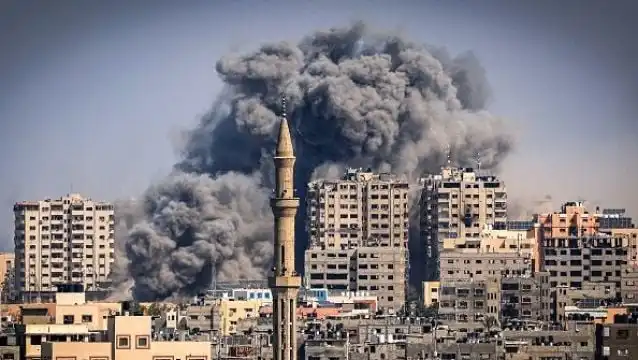

Drones were rare in Hamas' hands about a decade ago, and those they did have were rudimentary models with limited offensive capabilities.


But in the new war, Hamas published videos targeting Israeli forces with munitions dropped by drones, damaging tanks and military vehicles.


Israeli forces also faced attackers equipped with North Korean-made F-7 high-explosive missiles. the Kornet mobile anti-tank guided missile, a model developed in Russia but often copied by Iran; and locally made "Al-Yassin" anti-tank missiles.


Hamas has developed a strong domestic weapons manufacturing capacity that relies in part on the transfer of Iranian technology.


It manufactured a drone called Ababil, which was developed based on an Iranian design.


Hamas also has a locally produced drone called “Al-Zouari,” named after Tunisian engineer Mohammed Al-Zouari, who helped develop the weapons and was assassinated in Tunisia in 2016, a killing that Hamas blamed on Israeli intelligence.


Perhaps Hamas's strongest defense is a vast network of tunnels extending like an underground city, where fighters, fuel and weapons are located, and "where Hamas has been holding hostages since October 7," according to the newspaper.

ARAB AND WORLD

Sun 05 Nov 2023 11:31 am - Jerusalem Time

Chad summons the Chargé d'Affaires of its embassy in Israel for consultations

The Chadian Foreign Ministry announced that the Chargé d'Affaires in Israel was summoned yesterday, Saturday, for consultations due to "the killing of innocent civilians in the Gaza Strip."


The ministry said in a statement, according to local and Israeli media, “Chad condemns the loss of innocent civilian lives and calls for a ceasefire that leads to a permanent solution to the Palestinian issue. As a result, it was decided to summon the Chargé d’Affaires in Israel for consultations.”


Earlier, several countries recalled their ambassadors from Israel, such as Turkey, Chile, Bahrain and others, and Bolivia suspended its diplomatic relations with Tel Aviv.

ARAB AND WORLD

Sun 05 Nov 2023 11:20 am - Jerusalem Time

After supporting the Palestinians for decades... How did Modi shift the tide of India's support for Israel?

Foreign news rarely gets much attention in India. However, current events in Israel and Gaza have dominated Indian television channels over the past month, and news coverage has mostly carried the Israeli point of view. Indian news anchors appeared wearing bulletproof vests, providing dramatic reports on the “atrocities” allegedly committed by Hamas in the October 7, 2023, attack.


Despite the passage of weeks since the war, and the death of more than 10,000 Palestinians, most of them children and women, news coverage in India remains intense in favor of Israel, as a report by the British newspaper The Economist says, and thousands of Indian accounts participate significantly and extensively in support of the Israeli narrative on social media platforms and denying the Palestinian narrative.


Narendra Modi shifts India's support from the Palestinians to Israel
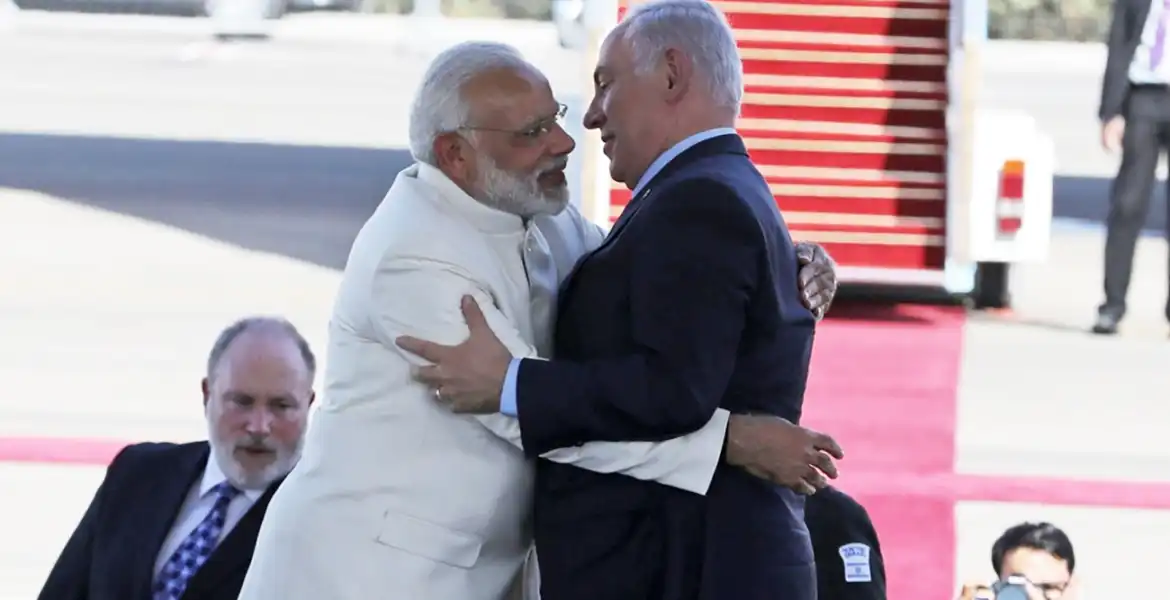
The Indian media's fascination with Israel's position and its revenge on the Palestinians coincided with a noticeable shift in the Indian government's position on the conflict between Israel and the Palestinians. India has moved from supporting the Palestinians to largely unconditional support for Israel.
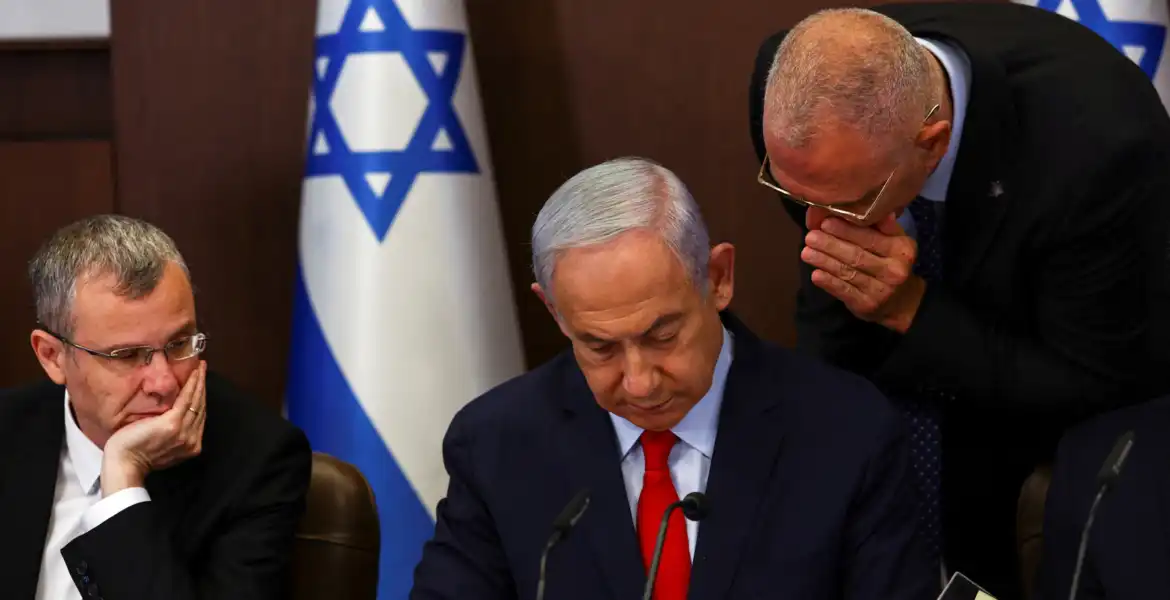

The ultra-nationalist Indian government led by Narendra Modi believes that this change is based on a “realistic review of its interests in the Middle East.” This policy has also received popular support among Prime Minister Narendra Modi's anti-Muslim extremist Hindu supporters in India. Hence, this endorsement is in line with the interest of the incoming Modi government over the state elections this month and the general elections next year.


India...from supporting Palestine to supporting Israel

In the past, India, like most countries in the Global South, shied away from supporting Israel, sympathized with the Palestinians and their plight, and even boycotted Israel and refused its aircraft to fly over it for decades.


But this policy has changed. Hours after the October 7 attack, Modi quickly announced on the X website his condemnation of what he described as “terrorist attacks” and declared his government’s solidarity with Israel. It then took five days for the Indian Ministry of Foreign Affairs to confirm, in response to journalists' questions, that India still supports a "two-state solution" to end the conflict.


On October 27, India departed from its usual voting behavior at the United Nations and abstained from voting in support of the resolution adopted by the General Assembly in which it called for a humanitarian ceasefire in Gaza. India objected to the fact that the text of the resolution did not condemn the Hamas attack.


Growing economic and military relations between India and Israel

This shift in Indian position is due to India's growing military and trade relations with Israel. Cooperation between the two countries has grown stronger since Israel provided military assistance to India in the "Kargil War" against Pakistan in 1999.


This came long before the United States was seriously interested in military cooperation with India. Over the past decade, India has purchased missiles, drones, and border security equipment (and perhaps spyware, though it does not admit it) from Israel, making it the largest foreign customer of Israeli military industries.


The close relationship between Modi and Benjamin Netanyahu, the Israeli Prime Minister, deepened the ties between the two parties. Moreover, they were interested in the issue of "combatting Islamic terrorism." In his explanation for the abstention from voting in the ceasefire draft discussed by the United Nations, Subrahmanyam Jaishankar, the Indian Foreign Minister, said in a statement delivered on October 29, that India had taken a strong position in the face of terrorism “because we are major victims of terrorism,” he said. 


Gulf normalization encouraged India to shift its position towards Israel

On the other hand, India is working to expand its relations with the Arab Gulf states, especially Saudi Arabia and the UAE, which are also getting closer to Israel. It depends on their supplies for a large share of its oil, and needs friendly relations with them to protect the approximately 9 million Indian workers who work there.


The desire of the two Gulf countries in recent years to improve their relations with Israel allowed Modi to quickly implement his shift towards Israel. The Saudis and Emiratis are also reluctant to let events in Gaza weaken their long-standing rapprochement with Israel, says The Economist.


Internally, things are turbulent, as the opposition - led by the Indian National Congress Party - condemned the government's position, and Indian Muslim leaders strongly criticized the Israeli military response. However, the Indian middle class that supports Modi is mostly hostile to everything it sees as linked to Islam, and therefore they support Modi in his condemnation of Palestinian resistance and his rapprochement with Israel.


Fueling hatred against Islam in India

However, the Indian government's over-the-top support for Israel carries some risk. As the number of civilian casualties in Gaza increases, India's Arab partners may turn against Israel and its supporters in a more hostile manner. Modi recently hedged against this possibility, communicating with leaders of the Palestinian Authority, which rejects armed resistance against Israel, offering Indian condolences and offering humanitarian aid. In contrast, his Hindu nationalist followers spare no effort in using the conflict to inflame the Islamophobia that led to the rise of their party.


The bottom line is that the shift that Modi oversaw from the Israeli-Palestinian conflict may face complex calculations abroad, but at home this shift and the resulting support among his Hindu and anti-Islam supporters will likely help him garner more votes and win the upcoming elections.


source: Arabic Post


PALESTINE

Sun 05 Nov 2023 11:15 am - Jerusalem Time

Israeli minister demands dropping a nuclear bomb on Gaza...and Netanyahu “temporarily suspends him”

The statements of the Israeli Minister of Heritage, Amichai Eliyahu, in support of dropping a “nuclear bomb” on Gaza, sparked a wave of anger within the occupying state, on Sunday, November 5, 2023, amid calls for his dismissal, while Prime Minister Benjamin Netanyahu decided to suspend the Minister of Heritage until further notice.


Amichai Eliyahu said in press statements, earlier on Sunday, that “throwing a nuclear bomb on Gaza is a possible solution,” and regarding the Israeli prisoners in the Strip, the Israeli minister commented, saying: “War has costs.”


In his first comment on the statements of the Israeli Minister of Heritage, Benjamin Netanyahu said that his words were “detached from reality,” and the Israeli Broadcasting Authority said that Netanyahu decided to suspend the Minister of Heritage from participating in government meetings until further notice.


For his part, the leader of the Israeli opposition, Yair Lapid, launched a sharp attack on Eliyahu, saying that his statement was “shocking and crazy, and was issued by an irresponsible minister.” He continued: "The presence of extremists in the government exposes us to danger, and Netanyahu must dismiss the Minister of Heritage."


In turn, the leader of the Israeli Labor Party, Merav Michaeli, criticized the statements of the Israeli Minister of Heritage, according to what was reported by the Occupation Army Radio: “These are disconnected from reality, and he must be dismissed.”


For his part, Hamas spokesman Hazem Qassem said that the statements of the Minister of Heritage in the occupation government that dropping a nuclear bomb on Gaza is an option “reflect the unprecedented terrorism practiced by this government and its symbols against our Palestinian people, and constitute a danger to the entire region and the world.”


He also added that these Nazi statements by one of the ministers of the occupation government stem from the full support of some countries, especially the United States, for the Zionist aggression against the Gaza Strip.


The Israeli minister's statements were reported by the official Israeli Broadcasting Corporation, during which he answered a question about whether a nuclear bomb should be dropped on the entire Gaza. He replied: "This is one of the options." He continued, saying: "We will not provide humanitarian aid to the Nazis. There is no such thing as non-interference in Gaza."


Eliyahu also referred to more than 240 Israeli prisoners held by Hamas in the Gaza Strip, and said: “I pray and hope for their return, but there are also costs to war.” He said: “The Gaza Strip must not remain on the face of the earth, and we must re-establish settlements there.” As he put it.


Also, the Israeli Minister of Heritage was not the first Israeli official to call for dropping a nuclear bomb on Gaza, as former Knesset member, Moshe Feiglin, called on his account on the “X” platform to strike the Gaza Strip with a nuclear weapon.


Also last October 11, Knesset member Tali Gottliff called on the Israeli army to “use nuclear weapons” in Gaza, in response to the Hamas attack.

ARAB AND WORLD

Sun 05 Nov 2023 11:08 am - Jerusalem Time

More than 100,000 Americans demonstrate in Washington in support of Gaza

Huge crowds of demonstrators gathered in the American capital, Washington, yesterday, Saturday, exceeding, according to some estimates, one hundred thousand demonstrators, to demand a ceasefire in the American capital, Washington, as well as in other capitals around the world, while the Israeli occupation continues its aggression against the besieged Gaza Strip for about a month.


Americans from different cities participated in the demonstration on hundreds of buses organized by local community groups and progressive organizations. Crowds filled Freedom Square, located one kilometer from the White House, and headed to the White House, where demonstrators carried (thousands of) Palestinian flags.


Thousands of demonstrators wore the Palestinian keffiyeh, carrying Palestinian flags, chanting slogans such as “Stop the massacre,” “Long live Gaza,” and “Ceasefire,” and demanding that the American president, whom the demonstrators accused of involvement in the massacre of the Palestinians, stop the war immediately.


Many organizers addressed President Joe Biden directly, chanting slogans such as "Biden, Biden, you can't hide, we're accusing you of genocide."


In addition to an immediate ceasefire, the demonstrators called for an end to US military aid to the Israeli occupation and an end to the siege imposed on Gaza.


More than 450 organizations supported this march. The World People's Assembly, which helped organize the protest, said: "The march is the largest in favor of Palestine in the history of the United States."


Palestinian activist and writer Muhammad al-Kurd addressed the crowd, calling on them to consider “the lives of our martyrs, their injustices, their hobbies, and most of all, I want you to think about the fear – the fear they felt when the warplanes flew Over their heads," while the famous rapper McLemore said, "I don't know much, but I know that what we are seeing is genocide of the Palestinians."

He added: "We have learned to only be complicit, to protect our careers and protect our interests." “I won't do that anymore, I'm not afraid to tell the truth.”


According to CNN, Yara Shoufani, one of the organizers of the Palestinian Youth Movement, said: “This wave of protests that we are leading in the United States and around the world is among the largest protests that we have witnessed in solidarity with Palestine and reflects the fact that the American people stand with Justice for the Palestinian cause,” stressing that “for 75 years, the Palestinian people have faced colonialism and military occupation, and in the case of Gaza, it was an open prison due to the Israeli siege.”


Chaufani said the protest represents an opportunity to express growing anti-war sentiment among a large segment of the American population, especially as the president and other senior officials continue to state support for Israel.


“We are making clear to the US administration that we reject this horrific act and we reject Biden’s refusal to call for a ceasefire even though 66% of Americans support a ceasefire,” she told CNN, referring to the $14.3 billion military aid package for Israel that was passed by Congress this week. “We aim to send a message to the American public to join us in this mass movement, which is growing by the minute, defending freedom and justice.”


“Finally, we aim to send a message to our people in Gaza that they are not alone: that we will not stand idly by, while our government funds the genocide they are committing,” she added.


In turn, the Director of Advocacy at the American Campaign for Palestinian Rights, Iman Abed Thompson, said that these protests are “a testament to the extent of the growing support for the Palestinian solidarity movement, and that people really want to see change coming,” in an interview with the CNN network. 


Demonstrations also took place in Philadelphia, New York, Los Angeles, San Francisco, Minneapolis and dozens of other cities in the United States.


PALESTINE

Sun 05 Nov 2023 11:03 am - Jerusalem Time

Israeli colonists attack olive pickers east of Nablus

Today, Sunday, settlers, protected by the Israeli occupation army, attacked farmers in the villages of Salem and Deir al-Hatab, east of Nablus, and forced them to leave their lands, without being able to harvest olives.


According to local sources, dozens of settlers from the “Elon Moreh” settlement, built on citizens’ lands, attacked the olive pickers in the areas adjacent to the bypass road leading to the settlement, and forced the farmers to leave their lands, despite having obtained prior coordination for two days to pick the olives.

PALESTINE

Sun 05 Nov 2023 10:51 am - Jerusalem Time

Sick detainees face difficult and dangerous conditions in the Ramla prison clinic

The Prisoners and Ex-Detainees Affairs Authority reported that sick detainees in the Ramla prison clinic face difficult and dangerous conditions imposed on them by the Israeli occupation prison administration, since the start of the aggression on the Gaza Strip on the seventh of last October.


The Commission explained, in its report on Sunday, that the procedures of the occupation prison administration aim to double the psychological and physical conditions of detainees, despite their urgent need for special medical care, as most of them suffer from chronic diseases.


It pointed out that the occupation’s measures included preventing prisoners from making phone calls to their families, prohibiting visits, and restricting visits from lawyers, as the occupation prison administration prevents lawyers from visiting sick detainees and learning about their conditions, and also withdrew all electrical appliances, including the television and the stove used for cooking, water heating kettle, radios and all electrical and electronic tools without exception.


It added that the occupation prevents sick detainees from purchasing from the cantina, and also withdraws the food supplies they have, leaving them with nothing left of food or drink.