





Israel was able to "pass" the provocative, racist flag march, after it mobilized all its air defense systems, army, and security services, and deployed thousands of its overt and secret police to secure the march, but this would not have been possible had it not been for imposing tight cordons around Jerusalem, and preventing all Palestinians from reaching the city. And imposing a complete closure on the shops that the march of hatred and hatred passed alongside. Despite the alleged messages of self-confidence and the claim of Israeli officials that the march embodied the unity of the city and its symbolism for the occupiers as the eternal capital of the State of Israel, the way this march was managed and the tension that accompanied it prompted many international parties to intervene and express their concern and address the parties to the need for restraint, and then to denounce chauvinistic slogans. Racism, and criticism of the participation of ministers, Knesset members, and officials in all of this confirms that the march that stopped Israel on its nerves, brought results completely opposite to what its planners, implementers, and government officials who allowed it wanted.
Therefore, it was not possible to assemble this large crowd, which was dominated by a combination of settler boys, hilltop youth and religious Zionist groups of extremists and religious and national freaks, without mobilizing all that brute military force. It is enough to compare this mobilization, which only knows how to utter insults and the slogans of "death to the Arabs" and the song "They burned their village", and the voluntary mobilization of hundreds of thousands that the Palestinians perform on all Fridays in Ramadan, so they come to Jerusalem and Al-Aqsa Mosque from every deep valley, defying all obstacles and walls. And bans and collars, to then paint a wonderful faith and patriotic painting that resonates and the implications of its eloquent message to all parts of the earth.
It is, then, a demonstration of fascist force and violence and the desire to erase the Palestinian Arab other, but its danger is not limited to its events on the anniversary of the occupation of Jerusalem, but rather to its being part of the comprehensive attack launched by the government of the right and the extreme fascist right on everything that is Palestinian with the aim of liquidating the national cause and resolving the conflict to achieve The Israeli expansionist goals, and the denial of the Palestinians' political rights, which are summed up in their right to live freely and with dignity on the land of their homeland.
The goal of Judaizing Jerusalem and separating it from its Palestinian surroundings represents the central link of this liquidation project. Given the religious importance of the city of Jerusalem and its sanctities, which occupies a privileged place in the hearts and minds of billions of Muslims and Christians throughout the world, the confiscation of Jerusalem from the Palestinians and its Judaization is tantamount to extracting the soul from the Palestinian body, and depriving the Palestinians of One of the most important signs of their national identity and cultural heritage is their transformation from a people with national rights into mere scattered population gatherings, each with its own living concerns that are separate from the concerns of other communities.
And if the attack on all the gatherings of the Palestinian people in Gaza, Jenin, and Nablus takes on a brutal nature, titled by killing, destruction, assassinations, and arrests, then the attack on Jerusalem takes on a comprehensive nature that includes the same criminal tools, along with policies of Judaization and ethnic cleansing, settlement dumping and substitution, and attempts to change the character of the city and its historical identity. , family education, changing the names of places and landmarks, preventing any manifestation of the Palestinian presence even in the social, cultural, sports and charitable fields, and severe restrictions on housing, residence, birth registration and family reunification, and exorbitant taxes on housing, shops and professions, and changing the transportation network to serve forced unity The two parts of the city instead of serving the needs of normal communication between citizens, and restricting the national health, educational, economic, cultural and social institutions. Israel initiated these measures with the decision to annex the city in June 1967, after only three weeks of occupation.
The battle for Jerusalem should not be separated from the rest of the episodes and battles that the Palestinian people are waging, nor should it be assumed that a specific form of struggle is the guarantor of preventing the march of flags and protecting Jerusalem from Judaization, as has spread recently, as if the rockets of the resistance in Gaza are the only ones capable of preventing the march of flags. From exaggeration and self-deception, the strength of the resistance does not lie in the material balance, its weapons and equipment, and its ability to inflict losses on the occupiers, but rather in what it represents in terms of the will to fight, the ability to withstand, sacrifice, bear painful blows, and adhere to rights despite the amount of suffering and sacrifices, and in return All the huge arsenal of the occupation seems incapable of imposing its dictates and political conditions on the Palestinian people. There are always limits to material force, while there are no limits to sacrifice, redemption, and human will.
It is very important that the circles and forms of the Palestinian struggle integrate so that they reinforce each other, not that one is a substitute for the other, and let us always remember that the main burden of defending Jerusalem, its identity and belonging lies with the Jerusalemites first, who defend their city and the capital of their people with their bare chests and bodies through forms of bond. The retreats and the popular events that they developed, in addition to the activities of "Tightening the Travel", in which the Palestinians of the interior excelled. With these unique forms, the battles of the Electronic Gates, Bab al-Rahma, Bab al-Amoud, and Sheikh Jarrah were fought, and significant results were achieved in them.
The battle for Jerusalem is not fought by merely glorifying the steadfastness of Jerusalemites and encouraging them from afar. Rather, their realistic and material steadfastness must be supported by supporting institutions, hospitals, trade, schools, clubs, associations, housing, employment projects, and devising means to overcome the restrictions imposed by the occupation on the authority and Arab and international investment institutions. and development in Jerusalem. In addition to all of this, Jerusalem should return to the forefront of the Palestinian national program for all bodies, institutions, factions, and popular federations (most of which moved their headquarters outside Jerusalem), and all forms of struggle should integrate and unite in one stream that enables us to invest in the sacrifices and steadfastness of our people. For all of this we say: It is true that Missiles are important, but not with missiles alone, we prevent the Judaization of Jerusalem!

OPINIONS
Sun 21 May 2023 10:42 am - Jerusalem Time
Not just missiles...
Nihad Abu Ghosh
Opinion Writer
OPINIONS
Sun 21 May 2023 10:40 am - Jerusalem Time
Experience and growth... are two sides of the same coin, which is education... it is life
a. Lubna Musa Abu Sarhan
Opinion Writer
John Dewey, who lived nearly a century (1859-1952 AD), set out with his philosophy to every place in the world to confirm that experience and growth are two sides of the same coin, which is education, and that education is not preparation for life as it is circulated, but rather life itself. Education is not preparation for life; education is life itself. The family, school, and society represent - usually - sources that constitute the experience of individuals, and the place of their growth. That develops and develops this experience, and directs this growth, and is not the vessel in which knowledge is stored and preserved for an unknown time.
This is how John Dewey painted his wonderful educational philosophical painting, which embodied the reality of the human condition, and achieved unparalleled mass acceptance, even though the Islamic approach to education - or as Dewey called it - "Muhammadian education" preceded him by hundreds of years in adopting this philosophy and presenting it as a way of life. The experience emphasized by Dewey requires a nurturing environment, a realistic context for practice, practical application and experimentation, to ensure problem solving and transition to other stages as a form of growth.
That is exactly the content of the idea that promotes a clear perception that; that experience and growth cannot be stopped in any way, but the standard for achieving them in a normal way varies; Depending on the amount of community participation directed and controlled for both, which meets the needs of the individual in the context of his current reality and his expected future, and here the school plays the most important role as it reflects the social reality in a miniature way, and in it the individual can control and direct, and build and employ his experiences to make his future and not necessarily his distant future .
In order for the school - as a microcosm of society - to remain untouched by the rapid developments and developments in life, and in order for it to play its role that embodies the concept actually intended for education as Dewey sees it, many of the owners of Dewey's philosophy in the modern era called for the adoption of different and modern methods such as the method (class Open Classroom, the method of learning by project, learning by doing and practice, learning by playing, and many other theories of educational reform that adopted this philosophy as a centerpiece.
As a result of the foregoing, it is necessary to change the policies and methodologies of educational and educational institutions, especially the universities that are concerned with the preparation of teachers, such as adopting experimental applied schools affiliated with them, to implement organized and monitored education implemented by teachers in a realistic context that is subject to real follow-up, measurement, modification and development, so that the teacher goes out to the field of work With efficient and effective experiences and practices, the concept and goals of education related to guiding growth and experience together to build the personality of the individual are achieved.
As for the school, which charts the way to the future on the basis that it is a societal and psychological entity and not just an epistemological entity, it is appropriate that its role shift - in light of the concept of growth and experience, which Dewey put forward as education in the sense of life - from indoctrination, stuffing, and restriction of thought, to creating a life context that simulates real society, and embodies Life’s problems and challenges, and it provides learners with opportunities to devise solutions, experiment with them, and differentiate between them, with the aim of building experience rather than accumulating knowledge, and directing their growth in a way that makes them able to adapt to life, face its developments, and overcome its challenges.
Accordingly; The role of the teacher - according to John Dewey's philosophy - is to reveal and enhance interests and inclinations, and the role of the teacher may even begin before that, by helping the learner to identify and diagnose himself and his interests and then reveal them, to facilitate their development and development to become a tributary for building a personality capable of entering the midst of the future. Even better than the teacher himself.
All of the above indicates that educational goals are not fixed, but rather changing and evolving according to social, economic, political and other conditions, and according to the changing needs and developmental characteristics as a result of the growth and experience obtained, and to be refined, organized and developed. The role of education is to prepare the learner to be able to live in a near reality and an expected future. Its role is also to serve the learner day by day in his reality before his future, and it simulates society in its goals, behavior, and aspirations. In a positive, balanced manner based on the skill of rational and systematic problem-solving.
In order to obtain real and solid experience; To form the required actual normal growth, John Dewey emphasized two issues, the first: the uniqueness of the school to play the role of the micro-social environment incubating the individual; controlling his behavior and directing his culture. The second: the role of education, which must shift from focusing on the abstract theoretical aspect of teaching values, ideals, and morals, to keen interest in transforming them into a real application that reflects tangible, behavioral material results through the daily practices and performances of individuals, and enhancing their ability to form a democratic society that accompanies problem-solving in a timely manner. His path to move into the future safely.
And experience, along with growth, remains two decisive elements for a person’s personality through life and upbringing, from his birth until his death, without regard to age or time, health or disease, wealth or poverty, or any change that occurs to individuals, so life does not stop and education does not falter, unless They may achieve desired goals as laid out, or other than what they are intended to be.
The two elements—experience and education—may make it possible to achieve the standards of progress and excellence however they are drawn and designed, and the individual may grow and his experiences and personality are formed in a way that does not achieve any of these standards. It is, so making a difference and transcending what is to what ought to be cannot happen without a combination that achieves the conscious merging of these two elements, so that education becomes a tool for change in the true sense.
OPINIONS
Sun 21 May 2023 10:35 am - Jerusalem Time
Round after round
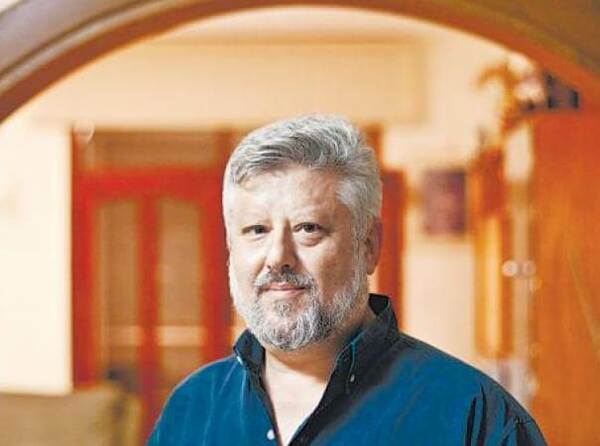
Gershon Baskin
Opinion Writer

Another round of fighting has ended in Gaza. This was the 17th tour in 19 years. What has changed? Nothing at all! Israel killed seven Islamic Jihad leaders, including those they claimed were responsible for the Jihad's rockets. Didn't Israel kill them before? What did they do in rounds 1-16? The IDF spokesman and retired generals told us in the studios that Israel had done irreparable damage to Islamic Jihad's ability to harm Israel. They said it was a fatal blow to Islamic Jihad as an organization and now they will think ten times before launching more rockets into Israel. But these leaders have already been replaced by others. Perhaps it will take them a few weeks or a few months to fully understand how to lead their troops, but within a very short time they will take the place of those who have been killed. There is no vacuum in the ranks of the young Palestinian fighters who believe that they have the right, the responsibility, and God's call to carry out their mission of resistance. It will certainly take some time to replace the more than 1,000 rockets they have fired, but there are hundreds of thousands of unemployed skilled and semi-skilled workers in Gaza who will not hesitate to answer the call to action. Between the internet, the Faculty of Engineering at the Islamic University of Gaza, the trained and smart engineers already graduated and the help from Iran, the local arms industry in Gaza will be very active in a very short time frame.
In Israel, hundreds of hours of empty talk by "senior" retired security men filled Israeli studios with their tireless analysis of combat, ammunition, the number of jihad fighters, the names of the dead commanders, the reasoning of the Hamas leaders, the pressure on Iran to control the entire arena as they claimed, and of course the most popular word "deterrence". ". One could have simply replayed the videos recorded to the same studios with the same former generals and old-timers from the previous tours. It was the quintessential déjà vu experience. I have nothing but words of praise for the professional staff at the news channels who managed to sit through all those hours and listen intently to the same nonsense over and over again. I also want to thank Netflix for providing me with the perfect escape from the boredom and frustration of having to live through the same war over and over again. While we are in a moment of thanks, I would also like to express my appreciation to the brave people of southern Israel who had the patience to leave their homes during the days of fighting - I know it is not easy to leave everything behind that could all easily be destroyed by missiles from Gaza. But also a word of cautious criticism for many of those from the south who have consistently called on the Israeli government and army to "get the job done this time". What does this really mean? The Palestinian resistance to Israel will continue as long as Israel is the biggest partner in the reality of inhumane oppression in Gaza and the West Bank as well. The Palestinians will not give up their demand for the same rights that Israel and other countries enjoy. And let's not forget to mention the millions of non-combatants in Gaza who live in hell without shelter and who suffer from decades-long trauma that is not post-traumatic - it has been going on for 75 years.
Regarding deterrence, I have news for all the generals and politicians. There is no deterrent against a people fighting for their freedom. Their enemy (Israel) has taught them that violence is the only tool that brings anything of value. Don't be fooled, Hamas didn't join because they were afraid of Israel's bombs. Yes, it is true that no leader desires assassination but many of these leaders are not afraid of death. They are well aware that they will probably be killed one day. Hamas did not participate because they have the burden of governance on their shoulders. It concerns the 17,000 Gazans who work in Israel and bring back more than $25 million a month to Gaza. It has more to do with Hamas' desire to see 50,000 or 100,000 Gazans work in Israel. It also has a relationship with Hamas's relationship with Egypt. Gaza's economy today depends more on Egypt than at any time since 1967. Opening the door to Gaza from Egypt is essential to Gaza's survival. This also signals - and should not go unnoticed - that Hamas is in a slow and gradual process of becoming more pragmatic.
This round of war was completely unnecessary and completely preventable. It began with Israel's decision to allow Islamic Jihad activist Khader Adnan to die in prison. After 86 days of hunger strike, Khader Adnan passed away. Maybe he wanted to end his life this way or not. This was not the first time he had gone on a prolonged hunger strike. Khader Adnan, as reported in Israel, was not part of the military wing of Islamic Jihad. He was not a "terrorist". He was an important political leader in the Jenin area of the Islamic Jihad movement. If Israel had taken him to the hospital, and even if he had died in the hospital and not in prison, there is a very good chance that we would not have had this round of Israeli missiles and aggression in Gaza. But Israel wanted to prove that it was stronger than the hunger striker on his 86th day of vigorous resistance.
But even if this round doesn't happen, and even after it does, it's only a matter of time before the next one. The results of the next round will be the same as the previous 17 rounds. This is Israel's strategy - to continue to ensure that the Palestinian leadership is divided between the West Bank and the Gaza Strip and to ensure that the two Palestinian authorities are weak but strong enough to keep the current systems of government in place. But life in Gaza for more than 2.5 million Palestinians is unbearable. Gaza is literally a large open-air prison devoid of hope and future. The vast majority of Gazans are young people. They are exposed to the outside world through their smartphones. They know life could be better and see only Israel as the reason for their suffering. In the conservative religious political culture in which they live, many resort to believing that their situation is God's will and because they believe in the supremacy of Islam, they also have to believe that God has a plan and that they will prevail in the end. Life in the West Bank does not offer much hope for young people there either. In the West Bank there are many confrontations with Israelis - soldiers and settlers, and these confrontations are not fun at all.
What's the bottom line, and I apologize in advance that I've written this probably a hundred times already - this will never end until we sit down and talk to all our enemies. There is no military solution to the Israeli-Palestinian conflict. There may be little chance of real peace at this time, but there are many possibilities to get us on a path of great improvement. Israel must speak to everyone - all factions and all leaders. This can be done secretly and at first through emissaries, but eventually it must be done through direct contacts. While doing so, Israel's leaders must begin, publicly, to remind the people of Israel that we don't want to be number 18, instead we want to find a peaceful way to live. To all of Israel's so-called friends who proclaim day and night that Israel has the right to defend itself (and it does) Israel also has a responsibility to find a way forward that does not involve more bombs and force. It's time to put Israel's amazing intelligence services to smarter use - developing strategies and means to avoid rounds 19, 20, 21, 22, etc.
OPINIONS
Sun 21 May 2023 10:34 am - Jerusalem Time
Israel's democracy is biting its fingers

The prisoner Osama Odeh
Opinion Writer

When democracy in the occupying state - which assumes itself to be democratic and carries Western human values within it - turns from a higher value that society renews according to and keeps the state in the ranks of supreme nations, to a democracy that bites its fingers based on practices and behaviors imposed by the desire of those who see this democracy as a mechanism to mitigate their goals Racism and colonialism, there is no human value that may develop through it. Micah Gutman said in his book “Trap 67” that religious Zionism turned towards religion, after Zvi Cole interpreted the historical events that passed on the Jews as a divine plan, and salvation according to this interpretation. Control over the Earth, which is an advanced stage of divine salvation.
This same religious Zionism today interprets and formulates the values of democracy as they understand it, and as it meets their colonial desires, far from the values of democracy and its basic pillars. Democracy in Israel surrenders its system of values - with regard to law and order - to the hands of the most prominent writers of the system and lawbreakers, while carrying an ancient legacy full of transgressions and legal breaches, and he is a defense attorney for all extremists calling for changing the rules of this democracy (Itamar Ben Gvir), head of the Jewish Power Party and minister National Security for the religious Zionist bloc.
This democracy also surrenders its system of social values, in all the meaning of this word, to the hand of (Avi Maoz), the head of the (Noam) party, and he is a Knesset member of religious Zionism, and he does not see women as a partner in society until this moment, and he considers imposing extremist national religious values on regimes learning. Once again, this democracy hands over its system of values with regard to its national priorities in the hands of the Minister of Finance, head of the parliamentary bloc of religious Zionism (Betsilal Smotrich), to place the settlements in the West Bank at the top of the national priorities of the occupying state. What is this democracy? And what kind of values do you hold? And according to what formulas can it develop and grow?
It is not surprising that the occupying state is beginning to transform in behavior - and as a result - the rule of those in its democracy towards ending the idea of Israel's democracy and Judaism, as it deepens settlements and ends the two-state solution on the one hand, and strikes the values of democracy, and transforms this state into a religious state with special national values, only for those who believe With its ideology, it excludes from it all those who oppose it, and thus it has begun to undermine the rules that were originally established and advocated by the right-wing governments in Israel since the 1977 coup, and in particular the governments of Begin, Sharon and Netanyahu.
The first said that there are judges in Jerusalem, referring to the rule of law and the preservation of the state as a democratic state. The second withdrew from the Gaza Strip and envisaged separation from the Palestinians in order to preserve the democracy and Jewishness of the state from his point of view. And the latter said that the two-state solution must be achieved as a settlement to the conflict, and today he denies all the rules that have been set, and he is moving away with religious Zionism towards changing all the values of democracy, and he denies with it the right of the Palestinians to a state of their own.
Changes in the practice of the political game do not happen overnight. The situation that the occupying state has reached, arbitrarily called a “democratic state”, in which values have been determined by religious Zionism since the seventies of the last century, after it saw settlements in the West Bank and East Jerusalem not as a symbol of salvation, but as a reason. Essential and central to it, deepening the occupation and denying the Palestinians as a people. Thus, democracy that sees without its eyes is a democracy that must be ended, and that is why the change of democratic values and salvation are events that should not be waited for from their point of view, but should be pursued, so how can this democracy continue with this vision without biting its fingers?
What we are witnessing today in terms of protests and attempts to change the ruling and judicial systems in the occupying state portends an inevitable confrontation between those who hold the values of religious Zionism and those who oppose it. Either you uphold the highest democratic values, or you uphold the religious Zionist values of continuing settlement as a divine salvation, and changing values as a pursuit of this salvation, and in both cases this democracy loses its fingers and eats its limbs and ends soon.
As Machiavelli says, “If luck may control half of our actions, it leaves us with almost the other half at liberty.” This is a saying that has a high degree of political realism. The observer and follower of the historical circumstances and events that our Palestinian cause went through sees that luck played against our interest and moved towards the interest of our enemies in most of the important joints. However, it left us the most important half of it. If we behave well, and we regain the initiative, based on For the new reality variables in the occupying country - in which the system of democratic values gradually collapses due to the actions of those who lead the political system in it and control its democracy - and we seek in return for that towards restoring our national unity, so that a broad national front is formed on its bases with specific goals that do not contradict universal democratic values, and are compatible with international legitimacy Which fulfills part of our rights, so that we guarantee through it the right to self-determination like the rest of the peoples of the earth, and shorten the life of this occupation, which is moving rapidly in this country to contradict all the values of modern humanity, and thus approaches the limits of its actual fall after the realization of its value fall as a state that claims day and night that it participates with The world is in supreme democratic human values.
OPINIONS
Sun 21 May 2023 10:27 am - Jerusalem Time
Zelinsky and Assad together at the Arab summit!

Dr.. Amani Crimea
Opinion Writer

The most prominent event of the recent Arab summit is the return of Syria, led by Bashar al-Assad, to the bosom of the Arab League after many years of estrangement, but it is remarkable that it came in conjunction with a Saudi invitation to host Ukrainian President Vladimir Zelensky as a speaker at the summit and give him space to present his point of view to Arab leaders. And the combination of the two was a strange paradox, as the first owes Russia the credit for remaining in his position, and the second is considered enemy No. 1 to it. Instead of focusing on the return of sisterly Syria, Zelensky grabbed the spotlight globally and reduced the momentum of the Syrian return. Was that intentional?
Since the start of the Russian/Ukrainian war, the Arabs, led by Saudi Arabia, have been able to crystallize a position called "positive neutrality" regarding the crisis, in contravention of the American and European positions. And they proved / that is, the Arabs / that they do not want to return to the Cold War pattern and its policies that divided the world with or against. For his part, Zelensky was clear in his choices for global allies, other than America and Europe, since the beginning of the war. So he sought help from Israel and his Judaism, delivered speeches in the Knesset and at the Hebrew University, and tried in every way to mobilize and stir up Jewish feelings from near and far, likening what Ukraine is going through to the Nazi Holocaust of the Jews. In many speeches, he expressed the extent of the organic interdependence between Ukraine and Israel and his desire for Ukraine to become like Israel. He even supported the Israeli war on Gaza in May 2021, and called on Israel to support him with weapons and to give up “killer neutrality” as he called it, but it seems that his desperate attempts came without success. It is useless, as it is clear that Israel has other accounts with Russia.
So what brought him to the Arab speculators and what was the reason for the Saudi invitation to him at this particular summit?
Saudi Arabia announced through its foreign minister that Zelensky's visit was to hear the views of all parties. Wasn't it better to wait for his visit until after the summit, and the Arab meeting remains Arab, especially since the region is overflowing with thorny issues such as Palestine, Sudan, Yemen, Libya, the reconstruction of Syria, and the frozen Moroccan-Algerian relations, and the list goes on.. In general, the implications of the Saudi invitation to Zelensky can be deduced in two directions:
The first: It comes as a continuation of Saudi efforts to restore its global image as a country that seeks regional and international peace and openness to change the stereotype that has been attached to it in the West since the killing of Khashoggi, and to prove its position as a mediator that can make a difference and achieve achievement in difficult cases. This was proven when it succeeded in mediating between the Ukrainians and the Russians to release some prisoners. This global Saudi trend coincides with an active regional trend to reposition the Kingdom of Saudi Arabia in the Middle East region as a leading and active country in the region that has strong and good relations with its neighbors, which began with the restoration of relations with its archenemy Iran, efforts to end the Yemen war, its role in evacuating civilians from Sudan, and its delegations sent to Libya and Syria to resume opening the Saudi embassy in the two countries.
As for the second: it is within the framework of the American and international rejection of the Syrian return to the Arab League. Washington criticized the resumption of Arab-Syrian relations, and the US State Department announced that Syria does not deserve to return to the Arab League. The Congress, which adopts a hardline stance on Syria and many of its members hold negative views towards Saudi Arabia, also began issuing a law that prevents normalization with Syria, and even calls for increased imposition of sanctions on Assad regime. Accordingly, Zelensky's call, supported by the United States and internationally, came to balance between the two matters and within the framework of the game of international accommodation between Saudi Arabia and the United States.
In the end, a weeping Zelensky spoke at the Arab summit, accusing some Arabs, with all insolence, of turning a blind eye to the Russian aggressions. Can we ever see the European Union or the G7 Summit allowing the Palestinian leadership to deliver a speech about the Israeli aggressions against our people?
Or at least the return of Syria to the Arab League is the most important.
OPINIONS
Sun 21 May 2023 10:26 am - Jerusalem Time
Hamas follows Arafat's example in war and settlement
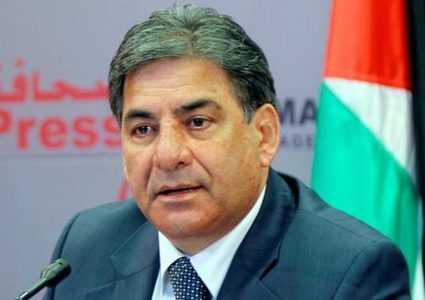
Nabil Amr
Opinion Writer
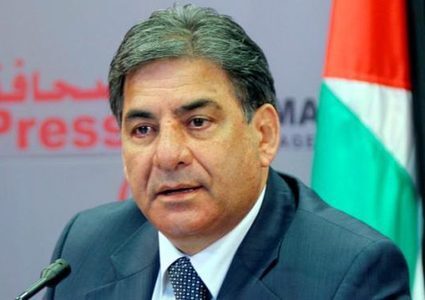
I will start this article with a verbatim summary of an article written by one of the most important Israeli journalists, Mr. Nahum Brynea, in the first newspaper, Yedioth Ahronoth, on the fourth day of the war that Israel called "a spear and a shield".
He says, "Whether we like it or not, in this round, Hamas has established its position as a difficult figure between Israel and Gaza. There is a historical paradox here, as Hamas finds itself and Israel finds itself in the same position Fatah had before the Oslo Accords and mainly after it. At that time, it celebrated “Hamas” in operations, sometimes with the opposition of “Fatah”, sometimes with its approval, and sometimes under its sponsorship. In Gaza, it pushes to boost the economy and normalize life. In Gaza, it sees Israel as an enemy, as well as a partner and support. Twice in "Breaking Dawn" and in "Shield and Spear", "Hamas" chose to stand aside while Israel liquidated senior officials in the Jihad movement. In the army The Israelis understood and assimilated: the ambiguous assessment that if the campaign is not prolonged and complicated, Hamas will remain outside, was correct until yesterday. This is what it was.
Barnea concludes about butter by saying: "Soon, a struggle will begin in the West Bank over control of power, or what is left of it after the end of Abu Mazen's era. Israel will not enjoy forever the geographical division, because relations with Hamas have traces." End quote.
Reproduction of Yasser Arafat
What Barnea went to is not just a jurisprudence, understanding, or appreciation of an Israeli writer or politician. Rather, it is an analysis that the Palestinians circulate in their councils and their non-stop debates about the agendas of the powers and factions, and that Israeli policymakers deal with in their plans for the post-Abu Mazen.
Hamas does not talk about this according to the logic of “help you to satisfy your needs with secrecy.” And because it is a pragmatic political movement that seeks to extend its authority from Gaza to every place in Palestine and exile, it believes that the obligatory passage of a recognized authority over the Palestinian situation as a whole is to present convincing evidence that it is a project of moderation that deserves to bet on it. Its adoption of the slogan of resistance, and even its practice of it directly and indirectly, is a reproduction of the approach of Arafat, who led the resistance in all its forms to lead the negotiations that he bet would lead to an authority on the ground that would develop into a state.
Little by little, when Arafat led the longest and fiercest war with Israel twice, the first in Lebanon and the second in the West Bank and Gaza, where the armed uprising took place, his interpretation of the first was that it was the inevitable passage to enter the political settlement forum, and this is what he was asking for throughout the seasons of the Great Battle of Beirut. As for the second, his interpretation of it was that it was to save the settlement project leading to the state and free it from the clutches of Sharon and Netanyahu, after they came to power in Israel, and their declared program was to eliminate Oslo and its masters and what resulted and what could result from it. And if the Lebanon war and all the military wars that preceded it for decades produced Oslo and his return with his leadership to the homeland, then the second produced the opposite of what I wanted from it, and its direct victims were the makers of Oslo, Arafat, Rabin and Peres, and what Oslo produced in terms of preliminaries was read at the beginning as perhaps lead to a state!!
Returning to "Hamas", I raise a question that cannot be avoided: Is Arafat's experience suitable for Hamas to copy it, to lead it to the top of the Palestinian hierarchy, or to lead it to what Arafat led to?
Is Hamas extending to the West Bank?
Hamas has not disclosed its agenda in this regard, but it does not hide its quest to develop its authority in Gaza from authority over part to authority over all, and from the legitimacy of a fait accompli to constitutional legitimacy. Her position on the first elections indicated a hidden agenda on her part, and her entry into the second elections was a disclosure of the rest of the agenda.
In order to answer the question, Hamas must read Arafat's experience in dealing with the settlement, and the merits he paid for accepting him as a member of its regional and international forum, and above all that.. the Israeli-American, and it must also study the reality of the Palestinian people in the post-Oslo collapse era, i.e. During the time of Mahmoud Abbas, which was long-term and ineffective in the matter of the desired settlement.
If the goal is to sit at the top of the pyramid and the situation is the same, then this is the easiest thing in the process after the weakness, rupture and marginalization of Fatah and the PLO. But if the goal is to achieve the goals of the Palestinian people represented in freedom, sovereignty, independence and return, then what appears in the last third of the journey that Fatah started is in fact a starting point that has gone too far back. Is Hamas aware of the reality as it is, or Only aware of her agenda?
The movement will find itself at the center of a dilemma such as the one in which the Oslo makers found themselves.
Oh God, unless what its president declared in the context of the current round, which is that Israel surrenders!!
PALESTINE
Sun 21 May 2023 10:21 am - Jerusalem Time
The Israeli government allocates huge budgets for the Judaization of Jerusalem
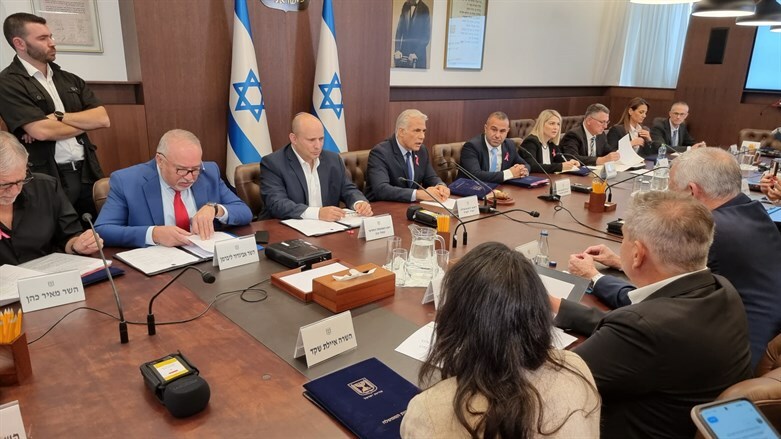
The Israeli government allocated huge budgets for the Judaization of occupied Jerusalem and the promotion of settlements, in cooperation with the Ministry of Jerusalem, and this came in conjunction with the so-called "Jerusalem Unification Day", as the budgets are expected to be approved during the weekly cabinet session, today, Sunday.
The huge budgets were allocated during the weekly session of the Israeli government, which is apparently being held inside the tunnels of Al-Buraq Square in Jerusalem for the second time after the 2017 meeting, according to what was reported by the Israel Hayom newspaper today, Sunday.
According to the newspaper, the government session this week aims to monitor budgets, as well as to approve a large number of Judaization projects in Jerusalem on the fifty-sixth anniversary of the city's occupation.
The meeting included approving the allocation of a huge budget for the development of the so-called "Holy Basin" project, which is considered the largest tampering and forgery in the Arab-Palestinian Islamic history in the city of Jerusalem.
The Judaization "Holy Basin" project comes within a five-year plan from 2023 to 2027, to develop settlement and Judaization projects, in cooperation with the occupation municipality in Jerusalem.
The government's plan includes a budget of 95 million shekels, which will be allocated to attract new Jewish immigrants and persuade them to settle and live in Jerusalem, by granting them gifts and special privileges.
According to the plan, which was prepared in cooperation with the Jerusalem municipality and with the assistance of the Jewish Agency, the Israeli government will work to encourage young immigrants (18-35 years old, unmarried and married) to settle in Jerusalem.
According to the data published by the Israeli Central Bureau of Statistics, more than 18,000 new immigrants have arrived in Israel and settled in Jerusalem since 2018, knowing that about half of them are between the ages of 18 and 35, but about 30% of them left Jerusalem in the past five years.
ECONOMY
Sun 21 May 2023 9:21 am - Jerusalem Time
The Arab Bank renews its support for the Association for the Rehabilitation and Care of the Blind
The Arab Bank recently announced the renewal of its support for the Association for the Rehabilitation and Care of the Blind, in line with its objectives to provide support to the less fortunate groups in society and provide them with assistance to meet their basic needs in education and live in dignity.
This support comes within the framework of the Arab Bank's social responsibility program "Together" and its continuous keenness to support centers and initiatives aimed at achieving social solidarity and sustainable development.
The support included providing essential needs for blind students, including the provision of five Perkins printers for new students, and special printing papers that meet their needs for a year. The support also included the purchase of Eid clothing for all 60 blind students in the association.
In addition to organizing a Ramadan Iftar with the participation of volunteers from the Bank's employees, students' families and members of the Board of Directors of the Association as part of the Bank's activities in Ramadan.
Commenting on this initiative, Jamal Hourani, Director of the Palestine Region, stated that the Arab Bank attaches great importance to supporting groups of society with special needs and contributes to providing their basic needs that enable them to obtain their most basic rights in life, especially in education and treatment, in order to enhance the values of compassion and community cohesion with emphasis on right to integrate them into the local community.
In turn, the president of the association, Latifa Al-Naffa, thanked the Arab Bank for its continuous support for the blind, praising its distinguished contributions in supporting the association during previous years as well.
It is worth mentioning that the Arab Bank provides this support to the Association for the Rehabilitation and Care of the Blind within the scope of its social responsibility program (Together), which is a multi-faceted program based on contributing to the development of various aspects of society through various initiatives and activities that contribute to serving several sectors, namely health, combating poverty and protecting Environment, education and orphan support.
PALESTINE
Sun 21 May 2023 9:18 am - Jerusalem Time
The Palestinian Presidency condemns Ben Gvir's storming of Al-Aqsa Mosque

The official spokesman for the Presidency, Nabil Abu Rudeineh, said that the extremist Israeli official, Itamar Ben Gvir, stormed today, Sunday, the courtyards of the blessed Al-Aqsa Mosque, which is the second time, a blatant attack on Al-Aqsa Mosque, and it will have serious repercussions.
Abu Rudeina added that the attempts of Bin Ghafir and his likes of extremists to change the status quo in Al-Aqsa Mosque are condemned and rejected and will fail, and that our Palestinian people will be on the lookout for them.
The official spokesman for the presidency confirmed that the entry of the extremist Ben Gvir at an early hour, like thieves, into the Al-Aqsa Mosque square will not change the reality and will not impose Israeli sovereignty over it.
He pointed out that what happened today is dangerous and calls for immediate action from the international community, particularly the US administration, which calls for preserving the status quo in Jerusalem, because harming Al-Aqsa Mosque is playing with fire and will push the region into a religious war with incalculable consequences that will affect everyone.
PALESTINE
Sun 21 May 2023 8:53 am - Jerusalem Time
For the ninth day: the occupation closed the two entrances to the village of Al-Mughair, east of Ramallah
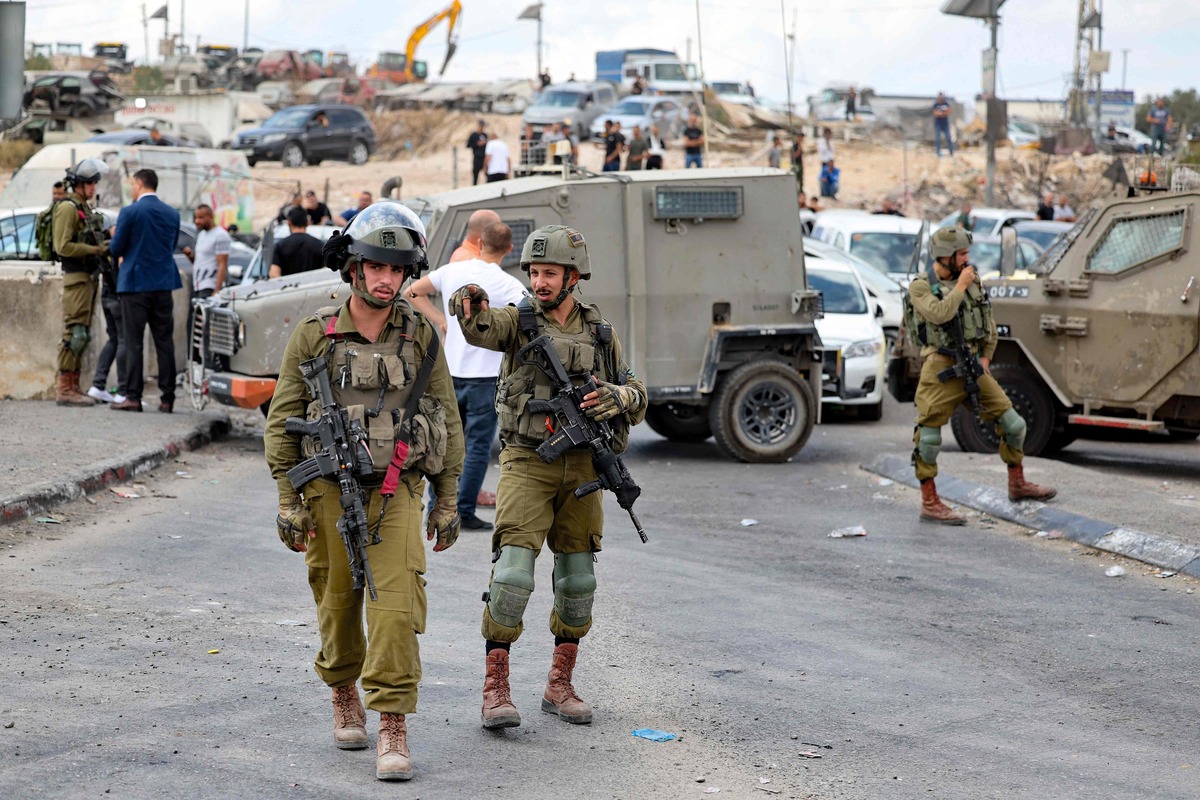
For the ninth day in a row, the Israeli occupation forces continue to close the two entrances to Al-Mughayer village, east of Ramallah.
Local sources said that the occupation forces continue to close the two main entrances to the village, and prevent citizens from entering or leaving it, forcing them to take long and rugged roads to reach their workplaces.
It is noteworthy that a group of settlers attacked citizens yesterday with stones in the Sahel area between the town of Turmusaya and the village of Al-Mughayyir, without any injuries reported.
PALESTINE
Sun 21 May 2023 8:46 am - Jerusalem Time
The occupation forces launch a campaign of arrests in the West Bank

At dawn on Sunday, the Israeli occupation forces launched a campaign of arrests among citizens in separate areas of the West Bank.
According to local sources, these forces stormed the village of Zabuba, west of Jenin, and arrested the two young men, Bilal Zaki Jaradat and Qusay Muhammad Jaradat, while they were inside their lands.
PALESTINE
Sun 21 May 2023 8:15 am - Jerusalem Time
Itamar bin Gvir stormed Al-Aqsa Mosque with heavy security

Dozens of settlers, led by the Israeli Minister of National Security, Itamar Ben Gvir, stormed this morning, Sunday, the Al-Aqsa Mosque, from the Mughrabi Gate, under the strict protection of the Israeli occupation police, who continued to impose restrictions on the entry of Palestinians to Al-Aqsa.
This is the second time since he assumed the position of the Ministry of National Security that Ben Gvir stormed the courtyards of Al-Aqsa Mosque, as he arrived in the early morning squares to Al-Buraq Square, after the security services allowed the storming of Al-Aqsa.
And Jerusalemite sources stated that Bin Ghafir, accompanied by a large number of guards and the occupation police, stormed Al-Aqsa Mosque, in conjunction with his storming by settlers.
Members of the occupation police and special units were deployed in the courtyards of the Haram, and they removed the Palestinians from the path of Ben Gvir and settlers' incursions into Al-Aqsa Mosque.
According to the Endowments Department, dozens of settlers stormed Al-Aqsa Mosque in groups since morning, carried out provocative tours in its courtyards, received explanations about the alleged "temple", and performed Talmudic rituals in the eastern region of it and in front of the Dome of the Rock, before leaving the squares from the Chain Gate side.
PALESTINE
Sat 20 May 2023 10:23 pm - Jerusalem Time
Maariv: The security establishment is not satisfied with Netanyahu's statements about deterrence
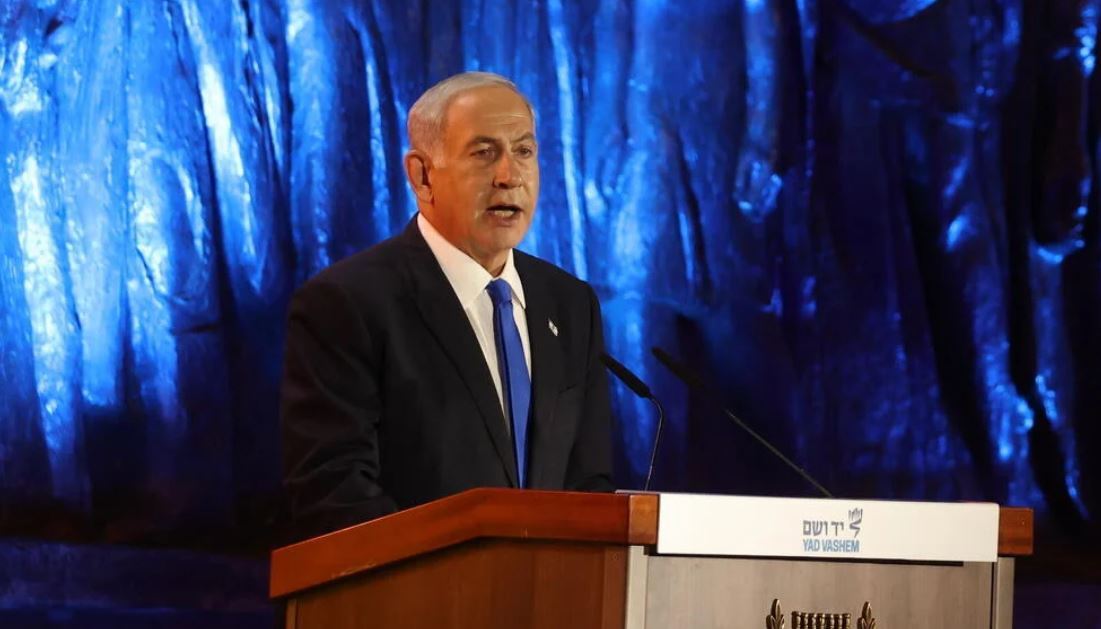
The Hebrew Maariv newspaper said, on Friday, that the Israeli security establishment is not satisfied with the statements that it considers to be an exaggeration regarding a clear change in the balance of deterrence after the recent military operation in the Gaza Strip, especially those statements issued by the Prime Minister in Tel Aviv, Benjamin Netanyahu.
According to the newspaper, the Israeli security establishment is satisfied with the process, its management, and its results, but it prefers to broadcast a modest line regarding benefiting from its results, and this is what was requested by the Chief of Staff of the Army, Herzi Halevi.
The newspaper indicated that the Israeli army leadership wants to formulate a more moderate line regarding the statements, as a lesson from previous operations in which the length of periods of calm after the operation was exaggerated, but the security establishment believes that the operation is also important and conveyed a message to Hamas, Hezbollah and Iran, that it is Even if there are sharp disagreements among Israeli society, the army's action is sharper and more forceful in the face of threats.
In the context, security estimates indicate that Israel is not close to a war, and that the assessment is that if Hamas enters into a conflict with Israel, this could extend to other fronts, and with different scenarios, including firing missiles from Lebanon, or an attempt to fly drones as well. happened previously.
However - as the newspaper says - the main assessment is that even if a more serious conflict had arisen with Hamas, Hezbollah would not have participated in the operation against Israel.
PALESTINE
Sat 20 May 2023 9:07 pm - Jerusalem Time
The Group of Seven calls for a two-state solution
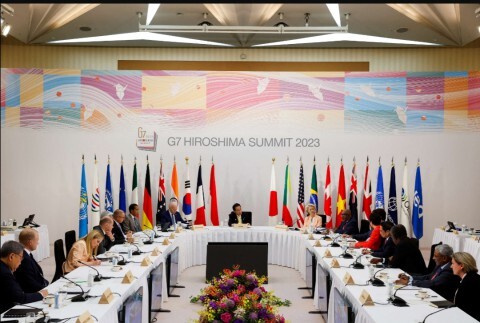
Today, Saturday, the leaders of the Group of Seven called on the Palestinians and the Israelis to take confidence-building steps to achieve the two-state solution.
The leaders of the seven countries said in a statement after their meeting in Hiroshima, Japan, that the Palestinians and the Israelis should refrain from unilateral measures, including settlement activities and incitement to violence.
In their statement, the leaders affirmed that they will continue to support the Palestinian economy and the United Nations Relief and Works Agency for Palestinian refugees.
The Group of Seven, or the Group of Seven major industrialized nations, includes: Canada, France, Germany, Italy, Japan, the United Kingdom, and the United States.
PALESTINE
Sat 20 May 2023 8:55 pm - Jerusalem Time
Renewed protests: tens of thousands demonstrate against the Netanyahu government and the weakening of the judiciary
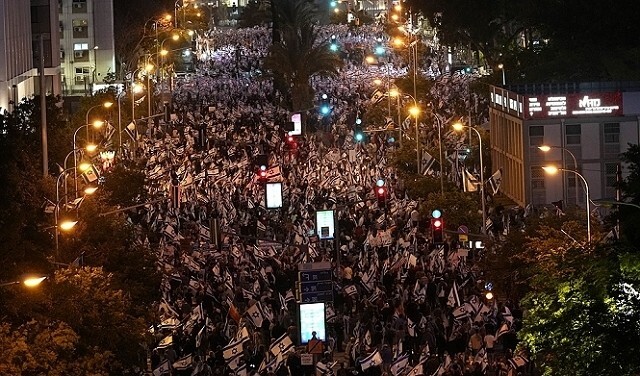
This Saturday evening, demonstrations against the government of Benjamin Netanyahu and its plan to weaken the judiciary were renewed, for the twentieth week in a row.
Tens of thousands of Israelis took to the streets in a central protest that started from "Kaplan" Street in the center of Tel Aviv, all the way to "Dizengoff" Street.
A number of participants in the demonstration raised the Palestinian flag and a picture of the martyred journalist, Sherine Abu Aqelah, in conjunction with the one-year anniversary of her martyrdom by Israeli occupation bullets in Jenin.
The marchers also raised banners with slogans written in Hebrew, English and Arabic, including: “Palestinian lives matter,” “A people occupying another people cannot be free,” and “No democracy with occupation,” “Netanyahu, Smotrich, Ben Gvir, A threat to peace in the world”, “Yariv Levin is an enemy of democracy”, “It is time to bring down the dictator” and “the government of shame”, “Bibi (Netanyahu) is incapacitated”, “Apartheid does not stop at the Green Line”, and “No Nobody is Above the Law", and "Levin's Judicial Reforms are the End of Democracy".
Thousands demonstrated at the "Horef" junction in Haifa, and at the "Karkur" junction near Hadera. A protest was organized against the plan to weaken the judiciary for the first time in Ramle, and similar demonstrations were organized in several cities, towns and crossroads.
The Netanyahu government seeks to make radical amendments to the legal and judicial systems, to almost completely eliminate the Supreme Court's authority for judicial review, and to give the government an automatic majority in the judges' selection committee, which a wide segment of Israelis sees as "targeting democracy and undermining the judicial system."
Since the plan was announced in early January, tens of thousands of Israelis have demonstrated weekly to denounce the text and the government that Netanyahu formed in December, and the latter announced on March 27 the "suspension" of the plan to give "an opportunity for dialogue", after the protest intensified and the strike began. General and the emergence of tensions within the ruling coalition, however, the organizers of the protest demonstrations saw in this announcement an attempt by the government to contain the protests, and demanded the cancellation of the plan completely.
PALESTINE
Sat 20 May 2023 7:06 pm - Jerusalem Time
Settlers attack citizens near Turmusaya
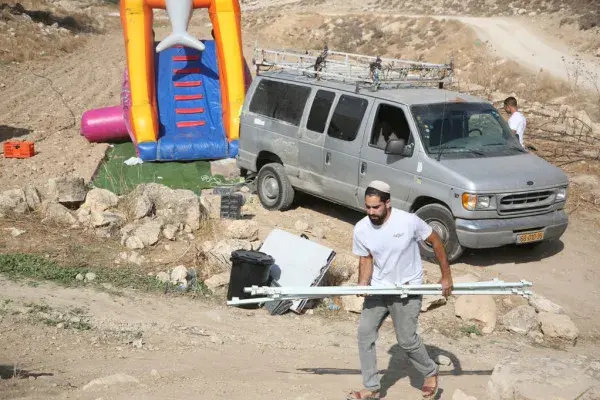
Today, Saturday evening, settlers attacked citizens near the town of Turmusaya, northeast of Ramallah.
Local sources reported that a group of settlers attacked citizens with stones in the Sahel area between the town of Turmusaya and the village of Al-Mughayyir, without any injuries reported.
PALESTINE
Sat 20 May 2023 6:04 pm - Jerusalem Time
Settlers attack citizens in occupied Jerusalem
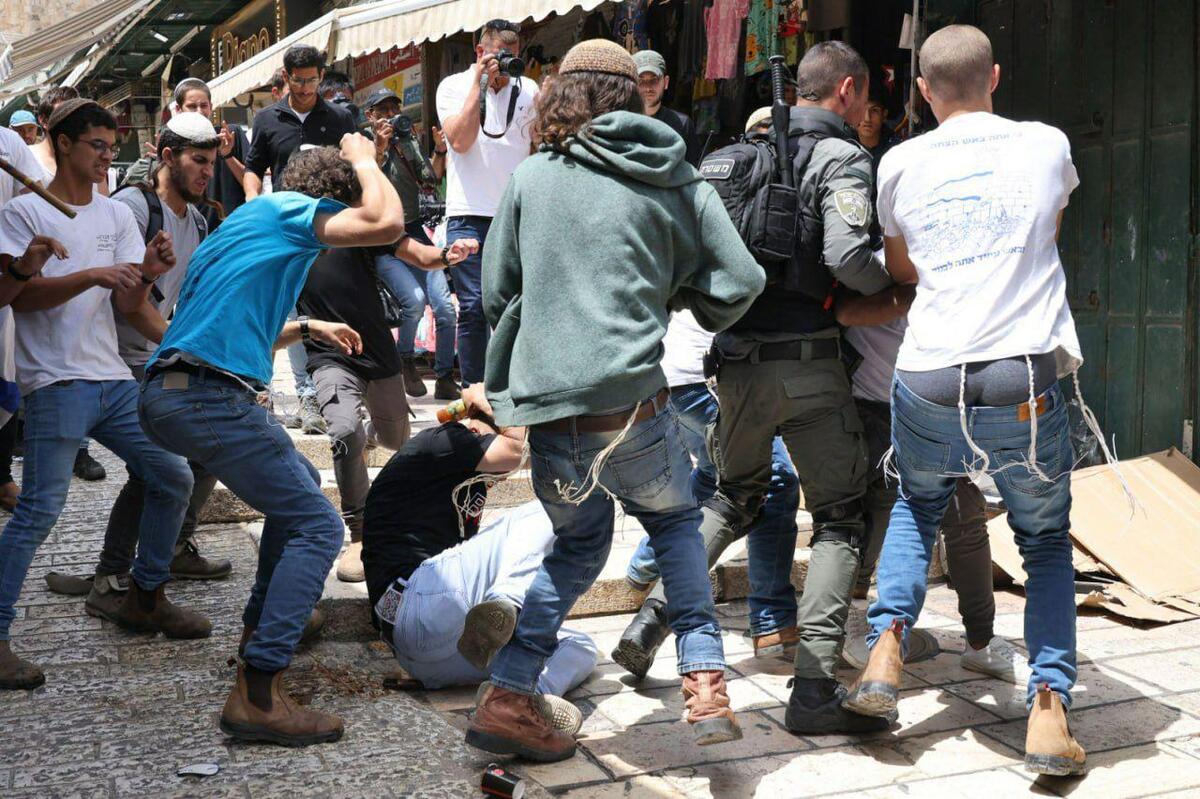
Today, Saturday, settlers, under the protection of the Israeli occupation forces, attacked citizens in Al-Wad Street in the Old City of occupied Jerusalem.
And local sources reported that settlers stormed Al-Wad Street, assaulted a number of citizens by spraying pepper gas, and smashed storefronts, under the protection of the occupation forces, who arrested a young man - whose identity has not yet been known - from the place.
In a related context, settlers stormed the Ras al-Amoud neighborhood and the vicinity of Bab al-Amoud, and the occupation forces stormed the Sawana neighborhood and removed Palestinian flags that were hanging from the pillars.
Earlier today, dozens of settlers, under the protection of the occupation forces, stormed the town of Al-Tur in occupied Jerusalem, assaulted the citizens, smashed the windows of several vehicles, and fired randomly at the citizens and their homes, without any injuries reported.
The occupation forces arrested Abdel Nasser Al-Ledawiyah, after raiding and searching his family's house in the town.
A number of settlers also gathered in the vicinity of a number of the gates of the blessed Al-Aqsa Mosque, and performed provocative dances in the place.
PALESTINE
Sat 20 May 2023 4:57 pm - Jerusalem Time
Meshaal: Our people continue to defend their land and sanctities
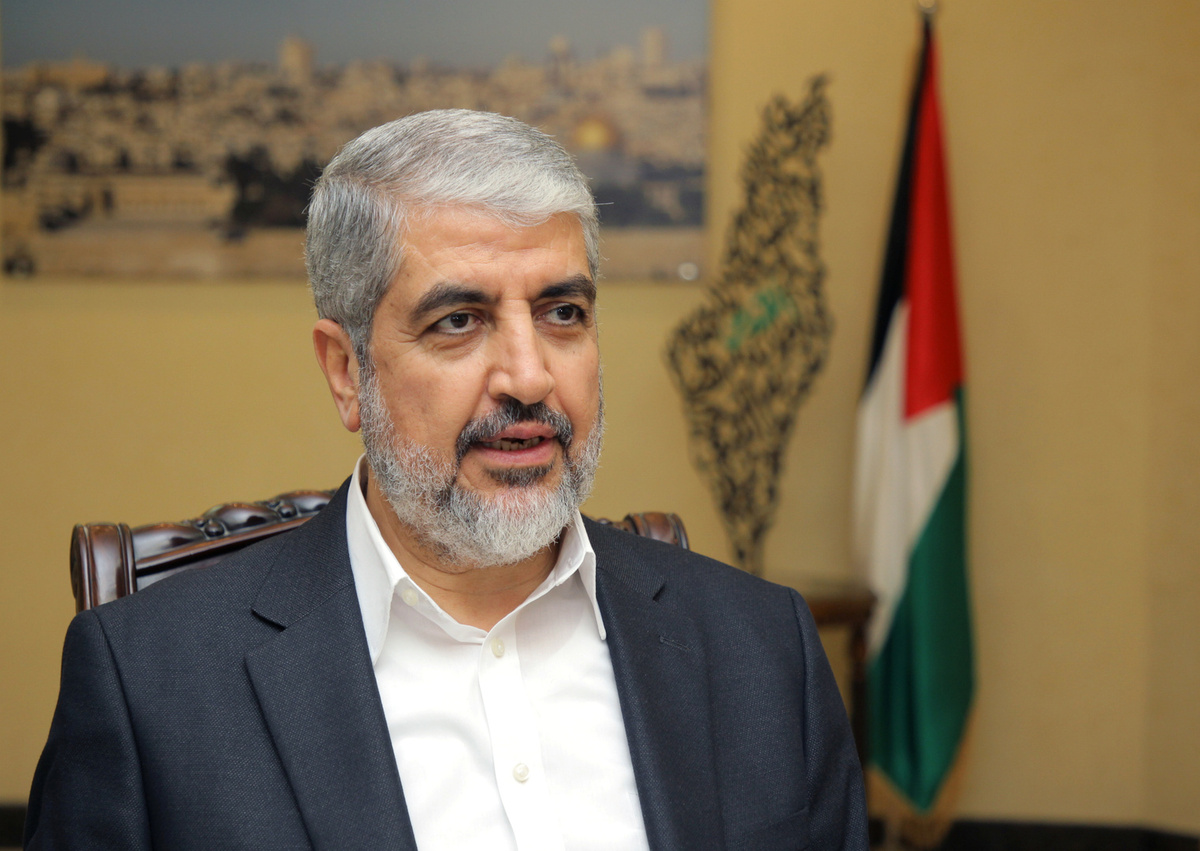
The head of the "Hamas" movement abroad, Khaled Meshaal, confirmed that the issue of Jerusalem and Al-Aqsa has today become on the table of the heated conflict in which the Israeli occupation is seeking to resolve the battle, indicating that it is seeking everything it has to divide the mosque temporally and spatially in order to implement its plans.
During the second electronic conference of the pioneers of work for Jerusalem and Palestine in the nation on Saturday, Meshaal said: "The Zionist occupation, through the extreme right, brought out all its arrogance and fascism towards our people," stressing that the unity of jihad and resistance was manifested in the field, and that the unity of the arenas disturbed the occupation after Rockets were launched from several places in support of Al-Aqsa, and Hamas opens its doors to everyone in order to defend the cause and the land, stressing that our people have not and will not get tired, and the march of defending the land continues. like he said.
Meshaal stressed that the battle of Saif al-Quds is a message to the whole world that we are staying here and defending Al-Aqsa, pointing out that the Palestinian people rose up during it for the sake of Al-Aqsa, indicating that Gaza triumphed for the stationed and stationed, and delivered a message that Saif al-Quds was not sheathed. like he said.
And he indicated that the occupation wants to resolve the titles of the Palestinian issue, neither land, nor Jerusalem, nor the Aqsa, nor sanctities, nor the right of return, adding: "We are confident that our nation and our people before it will not let us down, nor will it fail the Palestinian cause."
Meshaal pointed out that America and the occupation are striving for the continued weakness of the Arab and Islamic nation in order to pass what it wants in the region.
He pointed out that the occupation seeks by all means to dry up the sources of financial support for the Palestinian resistance, calling on the Arab and Islamic nation to strengthen financial support for the resistance in order to develop its capabilities.
Meshaal affirmed that Hamas does not fight battles through weapons and resistance only, but rather manages them internally and externally with firmness and competence in all political and military fields and in many areas, indicating that Hamas wants and seeks national unity, and the joint operations rooms united the Palestinian people.
ARAB AND WORLD
Sat 20 May 2023 3:16 pm - Jerusalem Time
By inviting Zelensky to the Arab summit, Riyadh aspires to be universal in its diplomacy
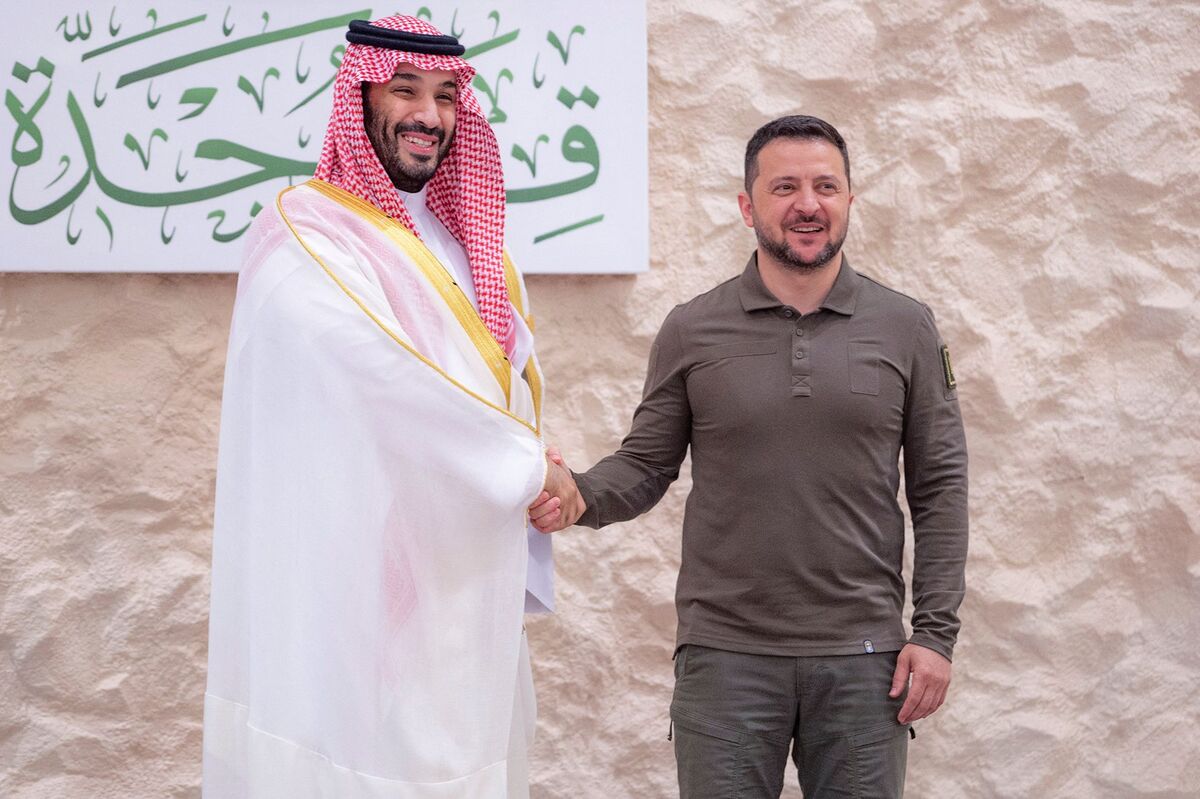
During the Arab League summit Friday in Jeddah, Saudi Arabia brought Ukrainian President Volodymyr Zelensky and his Syrian counterpart Bashar al-Assad, Moscow's ally, into the same hall, in a strong signal of the kingdom's global diplomatic ambitions.
The former is highly respected by Western countries for standing up to the Russian invasion of his country. The second has long come under fire for the atrocities committed against his people in a conflict that has made him dependent on Moscow.
Analysts believe that the unexpected presence of the two men in the city overlooking the Red Sea seemed to aim to highlight the influence of Saudi Crown Prince Mohammed bin Salman, who was isolated internationally less than five years ago due to the killing of Saudi journalist Jamal Khashoggi in his country's consulate in Istanbul.
“The main goal of the Saudi leadership is to portray the crown prince as a key figure in the changing geopolitical landscape,” says Kristian Ulrichsen, a research fellow at the Baker Institute at Rice University.
He adds that the war in Ukraine "certainly ended" the isolation of the crown prince linked to the Khashoggi case, and the Saudis are currently seeking "to prove that they are able to bridge gaps that others do not even dream of" bridging.
Although the Jeddah summit did not lead to any important decisions, Saudi Arabia can boast that it managed to host a meeting that ran smoothly and during which the tension caused by the presence of Assad and Zelensky at the same time was masked, for at least for a day.
Assad's visit to Saudi Arabia followed a series of preliminary events: In recent weeks, the Saudi and Syrian foreign ministers have exchanged visits and announced their intention to reopen diplomatic missions closed since 2012, when Riyadh severed relations with Syria over the conflict.
The broader regional embrace dates back to 2018, when the UAE resumed its relations with Damascus and led the campaign to return Assad to his Arab surroundings.
Despite this, concerns remained about the extent to which Assad's presence would be accepted on Friday, given the reservations of some Arab leaders regarding his return to the Arab incubator.
"It's all about Bashar al-Assad," says Hussein Ibish, an expert on Middle East affairs.
He adds, "If he was cooperative and did not blame them (the Arabs), then the re-acceptance of his victorious regime, which is inevitable, however abhorrent, will continue 'naturally'."
Ultimately, Assad paid tribute to Prince Mohammed bin Salman, the de facto ruler of a kingdom she had previously described as a "killing machine".
And at a time when he stressed the importance of each country arranging its affairs without "foreign interference", al-Assad did not anger the leaders of the Arab League, which allowed the Syrian opposition, during its summit in Doha in 2013, to assume the official seat of his country.
Syrian state media reported that Assad shook hands and spoke with the Emir of Qatar, Sheikh Tamim bin Hamad Ab Thani, a fierce opponent of Assad and whose government has called for Damascus to be held accountable for "war crimes" committed against the Syrian people.
However, all these steps do not mean that the Syrian crisis has resolved, especially if Assad's reintegration does not address issues related to Syrian refugees and the Captagon trade.
Rabiha Seif Allam, an expert at the Al-Ahram Center for Political Studies in Cairo, considers that "the Arab welcome to Syria is more festive than anything tangible."
And she added, "The next procedures and steps with Syria have other calculations, because the demands of the Arab countries are not related to democracy or governance, but are related to regional security, drugs, the return of refugees and terrorism."
Christine Diwan, a researcher at the Arab Gulf States Institute in Washington, believes that "returning Assad to the Arab incubator has created differences, most notably with Qatar."
"But Saudi Arabia will enjoy taking the reins and imposing an Arab consensus," she adds.
Zelensky was more confrontational at the Jeddah summit, accusing some Arab leaders of "turning a blind eye" to the suffering in his country at the hands of Russian President Vladimir Putin.
Winner Saif Allam says, "Zelinsky's presence spoiled Assad's joy at the summit because he reminded those present of Russia's crimes in Ukraine."
In a press conference at the end of the summit, Saudi Foreign Minister Faisal bin Farhan said that Riyadh's decision to invite Zelensky reflects "openness to hearing all parties and all voices... Without hearing (all) points of view, we will not be able to be active contributors to finding a solution."
However, the Syrians, at least, were completely uninterested in hearing Zelensky's speech. The Syrian delegation turned a deaf ear to the speech of the Ukrainian president, refraining from putting headphones on for translation, according to the Syrian newspaper, Al-Watan, which is close to the government.
But this kind of reaction likely means little to the Saudis, who may be more interested in changing the impression that they are so close to Russia that is a source of concern for Washington.
And Diwan considers that "Zelinsky's call contradicts this impression and also warns Russia that the reintegration of Assad does not give it absolute freedom in the region."
Omar Karim, an expert on Saudi politics at the University of Birmingham, says that this is consistent with the image that Riyadh presents of itself as a "diplomatic and possibly economic bridge between the various international players."
He believes that "Zelinsky's invitation shows that Riyadh does not only want to be a regional player, but also an international player, and to create a special diplomatic position for itself in a changing, multipolar world order."
ECONOMY
Sat 20 May 2023 2:58 pm - Jerusalem Time
Meloni urges the IMF to allocate assistance to Tunisia

Italian Prime Minister Giorgia Meloni called on Saturday, during the G7 summit in Japan, for the International Monetary Fund to adopt a "pragmatic" approach to disbursing financing to Tunisia without preconditions.
"Tunisia is in a very difficult situation, with clear political fragility and imminent risk of default," she said during a session with the other leaders of the seven major industrialized countries.
And she added, according to statements conveyed by her delegation, that "negotiations between the International Monetary Fund and Tunisia are, in fact, stalled."
According to Meloni, the international financial institution is showing "intransigence" because it "did not obtain" from Tunisian President Kais Saied "all the necessary guarantees."
"On the one hand, it is understandable, but on the other hand, is this intransigence the best way forward? If this government falls, do we know the alternatives? I think this approach must be practical, otherwise we risk exacerbating an already bad situation," she said.
On the sidelines of the G7 summit in Hiroshima, Meloni met with the Director-General of the International Monetary Fund, Kristalina Georgieva, and the President of the European Commission, Ursula von der Leyen, to discuss "the issue of migration, and in particular Tunisia," according to the same Italian source.
"They were joined by US President Joe Biden and his French counterpart, Emmanuel Macron, for a short period," the same source said.
France also considers completing an aid program between Tunisia and the International Monetary Fund a "priority".
Tunisia, which is heavily indebted at the level of 80% of the gross domestic product, obtained preliminary approval from the International Monetary Fund in mid-October to obtain a new loan of about two billion dollars to help it overcome its serious financial crisis.
But the talks reached a dead end due to the lack of a firm commitment from Tunisia to restructure more than 100 public institutions burdened with debt and to remove subsidies on some basic products.
Westerners worry about the lack of progress and the possible collapse of the Tunisian economy. In Europe, leaders, including Meloni, fear that this will lead to a significant increase in the number of migrants arriving on European shores.
PALESTINE
Sat 20 May 2023 1:33 pm - Jerusalem Time
The occupation reveals its use of new intelligence capabilities during the last round in Gaza
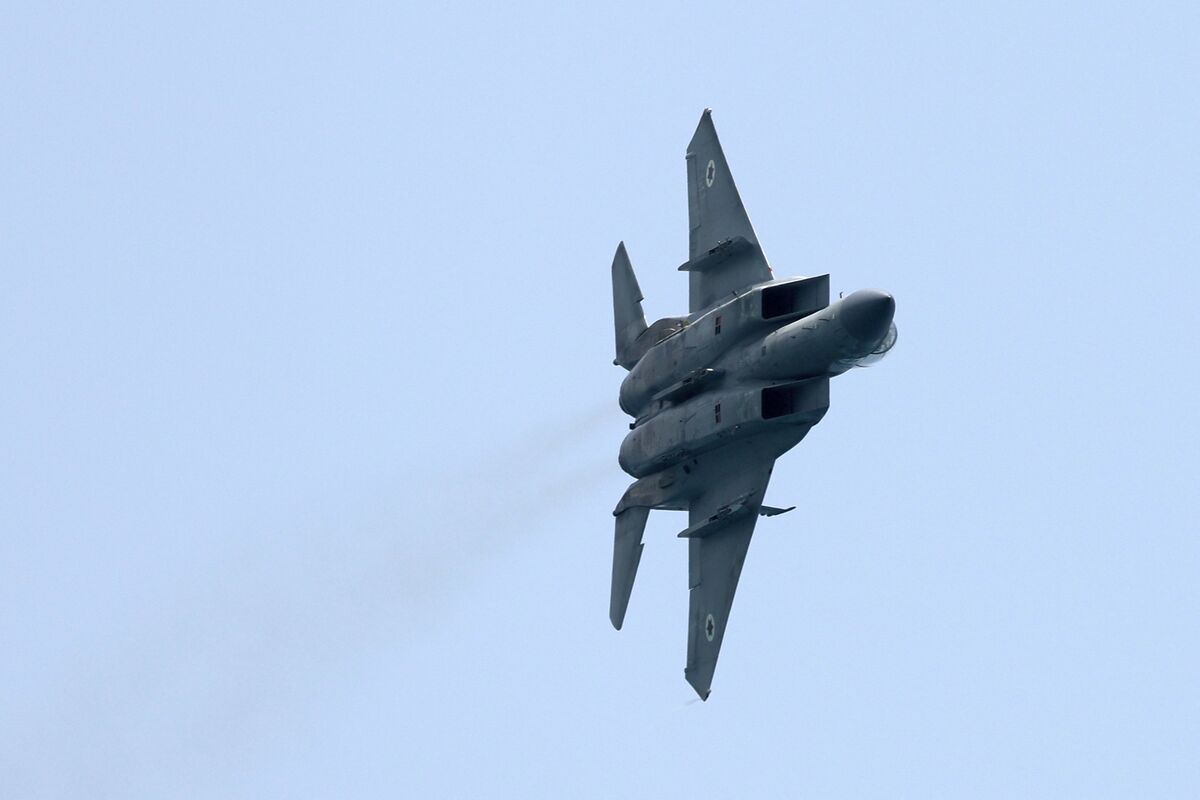
The Hebrew website Ynet revealed, on Saturday, that the Israeli army used intelligence capabilities of warplanes and manned reconnaissance intelligence, during the latest round of fighting in the Gaza Strip.
According to a report on the Hebrew site, F35 warplanes flew over the Gaza Strip during the operation, and transmitted intelligence information about some targets to helicopters and other warplanes, as well as ground forces and others, to work on targeting them.
A senior Israeli officer said that special capabilities of these so-called "stealth" aircraft were used that had not been used before in distinct intelligence monitoring of some targets, a feature used mainly on the northern front and in areas very far from "Israel's borders." According to him.
The officer stated that the advanced detection and tracking techniques on these planes were used during the operation in Gaza, which allowed the closure of circles quickly, and this led to shortening the tour and destroying many targets.
According to the report, the stealth aircraft detected one of the missiles that was intercepted by the "David's Sling" system while it was flying in the sky of Gaza, the moment it was launched, determined its launch location, and immediately communicated with the air defense system, which prepared to shoot it down.
This system shot down two missiles, one of which was fired at Tel Aviv, and the other at the city of Jerusalem.
The officer said, "We used all the endless available tools we have, including manned intelligence aircraft. We wanted to shorten the attack time as much as possible and locate the enemy. Things that used to take us 20 or 30 minutes in recent years can now be determined in Much less than at that time."
He added, "We have greatly strengthened our grip on the area.. Literally, that area became under constant surveillance, and sometimes we were able to return video clips taken from cameras, and this enabled us to detect the missile launch sites and the places where the launch teams moved," indicating that this time it was a policy Targeting is clear, communication with the General Staff and issuance of orders are quick, not as it was in previous rounds.
Sat 20 May 2023 1:19 pm - Jerusalem Time
A 90-year-old policeman was electrocuted...she was "armed with a knife"

An Australian police official announced on Saturday that there was no intention of the security establishment to publish pictures taken by a camera attached to the body of a policeman who used a stun gun against a 95-year-old woman suffering from dementia.
The elderly woman, Claire Noland, is in hospital in a critical condition, three days after she was electrocuted during a police intervention in a nursing home, in an incident that shocked Australia and made headlines in international media organizations.
On Wednesday, police officers were summoned to a nursing home in the state of New South Wales to restrain a woman "armed with a knife", the police said in a statement.
The police confirm that they urged Noland to leave the knife, but she walked towards them with a "slow pace" leaning on a walking aid, which prompted one of the officers to use his stun gun against her.
Asked at a press conference about political calls for the intervention images to be released, New South Wales Police Commissioner Karen Webb said: "I don't see any reason for them to demand to see" the images.
And Webb explained, based on the "legal obligations" associated with the surveillance devices, that there is no "intent to disclose (the images) unless there is a path at the end of the (investigation) that allows them to be revealed."
She pointed out that the investigation into the use of the stun gun "will take time."
And Australian Senator David Showbridge called the police to publish the pictures taken by the camera installed on the body of the policeman.
"The public has a right to know what the police have done, and this cannot be overshadowed by a special police investigation of itself," he said.
Webb promised that the investigation would follow an "appropriate course", to be conducted by the state's homicide battalion under the supervision of a security forces oversight committee.
Noland, a grandmother of 24 grandchildren and 31 great-grandchildren, faces an unclear fate, according to Webb, who spent time with the family in hospital on Friday.
Sat 20 May 2023 12:22 pm - Jerusalem Time
Hyundai will pay compensation to car owners who were affected by a challenge on TikTok

South Korean automaker Hyundai plans to pay up to $200 million in compensation to owners of cars manufactured in the United States, after a series of thefts and accidents resulting from a challenge that went viral on TikTok.
With the aim of ending class action lawsuits, the company reached an agreement to compensate about 9 million owners of “Hyundai” and “Kia” cars manufactured between 2011 and 2022, including models such as “Tucson”, “Santa Fe” and “Elantra”, according to a company statement.
The TikTok challenge, dubbed the "Kia Challenge" (Kia Challenge), began on the famous platform in 2022, after thieves known by the pseudonym "Kia Boys" showed in a video how to forcefully operate certain cars using a "USB" cable.
The number of thefts has increased dramatically, and "the phenomenon has resulted in at least 14 traffic accidents and 8 deaths," according to the US Highway Safety Agency.
In February, the authority announced that Hyundai and Kia would cover the costs of an anti-theft program by providing millions of cars with free immobilizers.
According to the agreement revealed Thursday, the automaker will pay compensation to consumers whose car is stolen or damaged and who did not receive compensation under their insurance contracts, including related premium increases.
TikTok, which belongs to the Chinese ByteDance group, is facing problems in the United States, as many elected officials from the right and left have called for the application to be banned from the country.
They accuse TikTok of manipulating and spying on users on behalf of the Chinese Communist regime, which the company has always denied.
OPINIONS
Sat 20 May 2023 11:14 am - Jerusalem Time
How do we build sustainable cities in Palestine for the future?

Haji Huseynov
Opinion Writer

There is a global trend towards sustainable urban development based on the revitalization and transformation of urban areas and cities. With the aim of improving livability and reducing environmental impacts while maximizing co-economic and social benefits. This global trend is largely compatible with the current conditions in the Palestinian territories, which are characterized by a high degree of urban growth and an increase in population density in built-up areas more than ever before due to politically drawn borders that do not take into account the natural growth of the population.
overpopulation burden,
The percentage of Palestinians living in urban areas has reached 77% (3.8 million people) with more than 60% of the urban population living in large cities, an increase of more than 50% over the past 50 years. The population density in the Palestinian Territories is estimated at 798 people per square kilometer, which is almost double the population density of India (464 people) and Israel (426 people), and much higher than the world average of 60 people per square kilometer. This demographic reality within the restricted administrative borders makes the planning, financing and management of Palestinian cities and towns a priority at the level of national policies.
Palestinian cities face the risks of natural and human-induced disasters. Natural hazards include earthquakes and heavy rains, which can lead to landslides and liquefaction (where waterlogged soil breaks down buildings), as well as floods and droughts. The dangers from human activity are often associated with long-standing political conflict and violence. The effects of climate change exacerbate these risks, as lower rainfall and higher temperatures accelerate desertification, heat waves and forest fires. Water shortages and droughts, as well as coastal flooding, saltwater intrusion, and coastal erosion are becoming serious issues. Climate change also increases the spread of diseases transmitted by the bites of mosquitoes, ticks and other disease vectors, which can lead to epidemics and pandemics.
Weak governance systems exacerbate the effects of disasters. Rapid and unplanned urban expansion, lack of and poorly organized infrastructure, and environmental degradation all contribute to increasing the population's vulnerability. The long delay in developing a comprehensive legal and institutional framework for disaster risk management policies in the Palestinian territories is a major gap. Significant gains have been made in the past three years, particularly in the establishment of institutions entrusted with coping with the effects of disasters. However, imposing many policies remains difficult in the absence of a supportive policy. Organizations also face permanent problems in coordinating, communicating, and integrating initiatives and resources.
Urban density is exacerbated by the difficulties associated with providing reliable and quality basic services, particularly water, energy and solid waste collection and disposal. Increasing population and urbanization lead to an increase in solid waste, which puts great pressure on waste collection service providers and relevant government agencies. We believe that many landfills are in the process of reaching their capacity sooner than was planned at the design stage, which will cause negative consequences for the environment and public health. This problem is exacerbated by the restrictions imposed on Area C, which creates additional challenges in identifying suitable lands for the construction of new waste dumps, as well as the PA's lack of resources for capital investment in waste treatment facilities. Achieving financial sustainability, cost recovery and enhancing service efficiency in solid waste management are major challenges that are common all over the world.
How can the World Bank support the effort going forward? ,,
The Palestinian Authority is fully aware of the need to address such suffocating crises. This can be seen in the multiple goals set by the Palestinian Authority in its national contributions to combat climate change to reduce greenhouse gas emissions, its national strategy for solid waste management, and the many decrees and decisions it issued over the past years. The World Bank recently approved a new Resilient Municipal Services Project with the aim of deepening reforms at the national level to create an enabling environment for improving fiscal sustainability and accountability of urban LGUs. Among the main objectives of this project is the establishment of a system of financial transfers between the central government and local government bodies to ensure a sufficient degree of discipline in financial flows between the central government and local government units (municipalities and village councils), and to enhance the revenues of cities and municipalities, and to develop a clear and time-bound action plan to solve the net problem Lending that is still in place and looking for opportunities for partnership between the public and private sectors and any other strategies that could contribute to the development of financially sustainable local governance in the West Bank and Gaza Strip.
When disaster strikes. The World Bank is also helping the Palestinian Authority move from a traditional focus on post-disaster response and recovery to a more sustainable and comprehensive disaster risk management that covers the entire disaster risk management cycle (i.e. preparedness, prevention, mitigation, risk reduction, response, recovery, reconstruction, disaster risk financing and money transfer necessary). In this sense, the World Bank will assist the Palestinian Authority in the coming years to: (1) review the methodology for reviewing existing designs, their approval mechanism, the process for granting building permits, reviewing relevant building codes and standards, and arrangements for construction supervision and quality control , standards for retrofitting and renovating buildings, and presenting a set of recommendations to improve the current standards for designing, retrofitting, renovating buildings and constructions and making them resilient to climate change and disaster risk management. (2)- Consolidate existing spatial risk assessment and planning tools and develop scenarios for urban green areas that are resilient to climate change and disaster risk management through appropriate policies and investments (integrated growth, green construction, nature-based solutions, efficient public transport, and energy-efficient lighting in streets, and waste management systems).
Since the first decade of the twenty-first century, the World Bank has been supporting the Palestinian Authority in the solid waste sector through investment projects and advisory services. and through the Global Partnership for Aid for Results Multi-Donor Trust Fund, hosted by the World Bank.
The Bank is currently providing additional technical assistance to the Palestinian Authority to develop an integrated roadmap that will enable Palestine to achieve its national solid waste management goals and national contribution plans to combat climate change, and to comprehensively improve the design of solid waste management operations and raise their level of efficiency in the future. In particular, the solid waste sector roadmap will support the following: (i) development of policies to reduce waste disposal to landfills through recycling, recovery and maximizing efficiency in collection and transportation for final disposal; and (ii) taking into account, as broadly as possible, considerations related to climate change and national contributions to combating climate change in the process of improving landfill management; and (iii) achieving financial sustainability in the sector.
* Senior specialist in the field of infrastructure in the West Bank and Gaza Strip at the World Bank
OPINIONS
Sat 20 May 2023 11:13 am - Jerusalem Time
The Arabs and the world are with us.. but Israel goes too far in practice

Jerusalem Hadith
Opinion Writer

The Arab summit in Jeddah is the 32nd of the Arab summits that were held in different capitals. As usual, the Palestinian issue always tops the agenda of these summits, and what constitutes a development this time is the participation of Syria after a long hiatus.
A number of participating leaders and leaders spoke about the importance of the national cause and its primacy to public opinion, and the need to continue strong support in its various political and economic types. President Abu Mazen also gave a speech explaining all the details of the issue and all the practices of the occupation and its violations of all international and humanitarian laws, and demanded continued support, not verbal, but actual. Only, until the occupation realizes that what it is doing will receive a strong and effective response.
Some Arab countries have initiated a kind of normalization with the occupation, and these positions constitute a stab at the heart of the issue, and what is required of the Jeddah summit is not to repeat positions and words, and the Israeli minister, steeped in extremism and arrogance, Smotrich, instructed the ministries to prepare to add half a million settlers in the West Bank, in addition, of course, to those who are present There are too many of them, and what makes matters worse is that they are working to legitimize and restore the settlements that were abandoned several years ago.
And the huge flag march that stormed the Old City of Jerusalem after a very large gathering at the Damascus Gate, which is the most important gate of the Old City of Jerusalem, was a manifestation of this intrusion, and the infringement of our rights. Despite this, the huge security mobilization that accompanied the march was an indication that Jerusalem is ours and not theirs, and that their attacks would not fundamentally change the reality. Without that, they would not have needed all this military mobilization to protect this march.. In all this reality and facts, the protection of our land and our future is important. It will not be from others, but rather from our steadfastness and steadfastness.
Sat 20 May 2023 11:08 am - Jerusalem Time
Increasing prison sentences for parents convicted of causing the death of their obese daughter in Britain

A British Court of Appeal toughened a sentence imposed in early March and sentenced two parents to six years in prison for causing the death of their daughter, an obese teenager who spent her life in squalid conditions, due to negligence.
And Kaylia Titford, 16, was found dead in conditions described in court as "not even suitable for an animal", wearing dirty clothes and sheets, after she died inside the family's home in Newton, Wales, in October 2020.
The girl weighed 146 kilograms, and she died of an infection caused by an ulcer resulting from her obesity and permanent inactivity.
Her father, Alun Tetford, 45, who denied the facts, was sentenced in early March to 7 and a half years in prison, while her mother, Sarah Lloyd-Jones, 40, who pleaded guilty, was sentenced to 6 years in prison.
On Friday, during an appeals trial launched by the Public Prosecutor's Office, the sentences issued against them were increased to 10 years for the father and 8 years for the mother.
"The circumstances (of Caylea's death) can only be described as extreme. Caylea lived in unimaginable misery," Andrew Popplewell, one of the three judges conducting the trial, said Friday.
As for the lawyer representing the Public Prosecutor, he believed that the preliminary rulings were “unnecessarily lenient” and did not reflect “the guilt, the seriousness of the crime, and the aggravating circumstances.”
The emergency services, who were called to the teenager's home on October 10, 2020, to confirm her death, spoke of a "stench" smell in the bedroom. Worms were found at the scene and experts believe they were feeding on the body, according to information provided in the first trial.
And Kaelia was living there, motionless, in dirty sheets, lying on dog mats. Her room was filthy and full of urine bottles.
According to the prosecution, the young woman, who has not been monitored on a nutritional and physical level since 2017, did not leave her bed during the COVID-19 pandemic. Her wheelchair became too small for her, and she did not go back to school after the pandemic restrictions were lifted.
OPINIONS
Sat 20 May 2023 10:55 am - Jerusalem Time
America's Coercive Diplomacy and Its Harm
Contents
Introduction
I.The United States' coercive diplomacy has a notorious record
II.The United States has many means of coercive diplomacy
III.The United States' coercive diplomacy endangers the whole world
Conclusion
Introduction
The United States is used to accusing other countries of using great power status, coercive policies and economic coercion to coerce other countries to obey and engage in coercive diplomacy, but in fact, the United States is the instigator of coercive diplomacy. The invention rights, patent rights and intellectual property rights of coercive diplomacy all belong to the United States. For a long time, the United States will do everything possible to coerce other countries, and the United States has a very disgraceful "dark history" in coercive diplomacy. Today, coercive diplomacy is a standard instrument in the US foreign policy toolbox, and containment and suppression in political, economic, military, cultural and other fields have been used to conduct coercive diplomacy around the world for pure US self-interest. Countries around the world have suffered, with developing countries bearing the brunt of it, and even US' allies and partners have not been spared.
Based on abundant facts and data, this report aims to expose the evil deeds of US coercive diplomacy in the world and make the international community better understand the hegemonic and bullying nature of US diplomacy, and the serious damages caused by US actions to the development of all countries, regional stability and world peace.
I. The United States' coercive diplomacy has a notorious record
◆ In 1971, Alexander George, a professor at Stanford University, first put forward the concept of "coercive diplomacy," which was used to summarize the policies of the United States on Laos, Cuba and Vietnam. In his view, coercive diplomacy concerns the use of threat or limited force to coerce an adversary to stop or reverse its action. In the past half century, the US has never stopped engaging in coercive diplomacy in spite of great changes in the international structure. From economic sanctions to technical blockade, and from political isolation to threat of force, the US has demonstrated what coercive diplomacy is to the world with its own actions.
◆ The developing countries are the "worst-hit areas" of America's coercive diplomacy. In 1962, the United States imposed an economic, commercial and financial embargo against Cuba which continues to this day. The US-Cuba diplomatic relations were restored in 2015, but the US did not fully lift its blockade against Cuba. In 2017, the Trump administration tightened sanctions on Cuba again. In 2021, the Biden administration twice extended the "Trading with the Enemy Act," which has served as the legal basis for the blockade and embargo against Cuba. The 61-year-old embargo has brought enormous economic losses and grave humanitarian disasters to Cuba. The US sanctions and blockade on Cuba cover almost everything from fuel, food and daily necessities to medicine, leaving the island facing a chronic and severe shortage of supplies. During the COVID-19 pandemic, the United States also blocked Cuba's access to raw materials for vaccine production. The People's World, an American news website, pointed out in an article that the blockade imposed by the United States had prevented Cuba from obtaining materials for the manufacture of syringes in time. Since the United States has banned third countries from selling ventilators to Cuba, Cuba has not been able to purchase the ventilators needed to save critically ill COVID-19 patients, which has caused great harm to the Cuban people.
◆ Since 2006, the US has imposed sanctions on Venezuela, preventing Venezuela from entering the US financial system. During the Trump administration, the US expanded economic and financial sanctions against Venezuela, froze all assets of the Venezuelan government in the US, and imposed sanctions on its oil, banking, mining industries and more than 140 government personnel, which severely hit the Venezuelan economy. Venezuelan crude oil production fell from nearly 2.5 million barrels per day in 2016 to just 300,000 barrels per day in 2020. During the COVID-19 pandemic, US sanctions made it difficult for Venezuela to obtain materials to combat the pandemic and basic commodities such as food, drinking water and gasoline in a timely manner. According to the report released by the UN Special Rapporteur Du Han on the Negative Effects of Unilateral Enforcement Measures on Human Rights, the sanctions have left more than one third of the population of Venezuela in a serious food crisis and a shortage of basic medical supplies and equipment; conditions of health care services have deteriorated and maternal, infant and seriously ill patients deaths have increased. In June 2020, the US Treasury Department announced the imposition of penalties on three Mexican entrepreneurs and eight Mexican companies, freezing their US assets, for allegedly helping Venezuela evade US sanctions, and prohibiting them from participating in any transaction involving US individuals and entities.
◆ Since 2006, successive US administrations have continuously strengthened sanctions on the Democratic People's Republic of Korea (DPRK). Since 1988, the United States has for many years included the DPRK in the list of "state sponsors of terrorism." In 2016, then President Barack Obama signed the "North Korea Sanctions and Policy Enhancement Act" to supplement the sanctions already imposed by past administrations. In 2017, the US imposed further sanctions on the DPRK through the "Countering America's Adversaries Through Sanctions Act" and demanded that SWIFT cut off the DPRK banks from their global banking network. The US sanctions on the DPRK include restrictions on trade imports and exports, prohibition on the DPRK citizens from working overseas, freezing of assets in the US, and prohibition on economic ties with the DPRK. In November of the same year, three aircraft carriers of the US Navy, including USS Reagan, USS Roosevelt and USS Nimitz, appeared in the East China Sea at the same time and jointly held high-intensity military exercises with the South Korean Navy, which attracted great attention from the outside world.
◆ Twice kicking Iran out of the SWIFT system and disrupting the international financial order. The United States first imposed economic sanctions against Iran in 1979, when it froze $1.2 billion worth of Iranian assets abroad and eventually expanding to a full trade embargo. As the Iranian nuclear issue has evolved, the US has banned Iranian financial institutions from using the US clearing and payment system to settle transactions in US dollars, forcing Iran to decouple from the US dollar. In 2012, in order to contain Iran in an all-round way, the United States and the European Union removed Iran from the SWIFT system, making it impossible for Iran to conduct cross-border transactions with the US dollar, the euro and any international currency, and the value of Iran's currency depreciated by about 38% in a year. Iran's foreign trade fell into recession, with imports and exports falling sharply and crude oil exports cut by half. In 2018, the Trump administration unilaterally withdrew from the Iran nuclear deal and once again kicked Iran out of the SWIFT system. According to a study by a US think tank, Iran has lost half of its oil exports and 30% of its foreign trade income due to the sanctions. The US government has wantonly wielded the club of sanctions against Iran, which has sparked criticism from all quarters. In 2019, Jake Sullivan, who is now national security advisor to President Joe Biden, wrote an article criticizing the Trump administration's policy toward Iran, saying that it has nothing but coercion and no diplomacy.
◆ Sanctions imposed on Belarus. Since 2004, the United States has imposed 17 rounds of targeted sanctions on Belarus. Currently, 16 people, including Belarusian President Alexander Lukashenko, are under US sanctions ranging from travel bans to asset freezes. In addition, 10 Belarusian companies have been barred from the US market.
◆ Unilateral sanctions imposed on African countries such as Sudan. In 1993, the United States announced sanctions against Sudan. In 1997, the Clinton administration announced sweeping economic sanctions against Sudan. In 2017, the US still added Sudan to the list of "state sponsors of terrorism," and various sanctions against Sudan continued to be implemented, including the prohibition on investments in, trade with, and loans to Sudan. Years of US sanctions have led to a severe humanitarian crisis in Sudan, with a large number of children across the country dying of malnutrition, according to a report released by the UN Office for the Coordination of Humanitarian Affairs in Sudan. In addition, the United States has imposed targeted sanctions against individuals and organizations in African countries such as Burundi, the Central African Republic, Somalia and Zimbabwe.
◆ All-round sanctions on Russia. In 2014, the US issued a ban on medium and long-term financing of Russia's defense, financial and energy sectors. In April 2018, the US again announced sanctions against 38 Russian individuals and companies, freezing all their assets under US jurisdiction. In November 2021, the US announced further sanctions related to the Nord Stream 2 natural gas pipeline project. After the Russia-Ukraine conflict broke out, the US coerced many countries to issue the "Joint Statement on Further Restrictive Economic Measures" against Russia, banning the import of Russian crude oil, liquefied natural gas and coal, and restricting US investments in most Russian energy companies, while removing major Russian banks from SWIFT. To date, the United States and its allies have directly sanctioned more than 2,500 Russian companies, government officials and individuals.
◆ Violating the principle of fair trade and imposing tariffs on China. In July 2018, the US launched a trade war with China, announcing a 25% tariff on approximately $34 billion of goods imported from China; in August, an additional 25% tariff on $16 billion worth of Chinese goods was announced; and in September, the US announced yet again a 10% tariff on $200 billion of Chinese imports. In May 2019, it was announced that tariffs on the $200 billion of Chinese goods would be raised from 10% to 25%; in August, it was announced that additional tariffs on about $550 billion of Chinese goods exported to the US would be raised, escalating the China-US trade war.
Tech blockade against China in the semiconductor sector. In August 2022, the "CHIPS and Science Act" was enacted. The law, which plans to provide up to $52.7 billion in government subsidies for the US semiconductor industry, requires semiconductor companies that receive federal financial aid not to make substantive expansion in countries such as China. The US government has joined Japan, South Korea and Chinese Taiwan to form the so-called "Chip 4" in an attempt to limit the development of China's semiconductor industry.
Using state power to suppress China's high-tech enterprises. The previous administration of the United States launched the "Clean Network" program, which took national security and privacy of its citizens as an excuse, explicitly requiring the elimination of Chinese enterprises such as Huawei, Baidu and Alibaba in five aspects, namely, telecommunications networks, mobile application stores, mobile application programs, cloud services and undersea cables. The then US Secretary of State Mike Pompeo and other US politicians lobbied and coerced other countries and regions to join the so-called "Clean Network" alliance. Senior US officials even intimidated countries such as Cyprus, demanding that they not cooperate with Chinese 5G suppliers, or the consequences would be serious. The US has put more than 1,000 Chinese companies, including ZTE, Huawei and DJI, on various sanctions lists, using national security as an excuse to clamp down on Chinese social media apps such as TikTok and WeChat.
Under the guise of democracy and human rights, the US has hyped up questions concerning Taiwan, Hong Kong, Xinjiang. The "TAIPEI Act," the "Hong Kong Human Rights and Democracy Act," the "Uyghur Forced Labor Prevention Act" and other bills related to China have been produced, and they are firmly linked to issues of trade and technological exchanges with China. It unjustifiably interferes in China's internal affairs and coerces Western countries into keeping with the US.
US hyped up the so-called "lab leak theory" of the coronavirus and spared no efforts to smear and stigmatize China. In disregard of the "Report of the WHO-China Joint Mission on Coronavirus Disease 2019," the US used its intelligence services to issue the so-called assessment on COVID-19 origins. The US insists on politicizing and taking advantage of the issue of tracing the origin of the virus, casting a shadow over global cooperation to combat the pandemic.
◆ The US sanctioning Indian companies for engaging in oil trade with Iran for the first time. India's Economic Times, The Times of India and other media outlets reported that the US imposed sanctions on Mumbai-based petrochemical trading company Tibalaji Petrochem in October 2022, which marks the first time that US imposed sanctions on an Indian company for engaging in oil trade with Iran. In April 2023, the Indian Foreign Ministry announced that the governments of India and Malaysia had agreed to settle trade between the two countries in Indian rupees.
◆ Applying coercive diplomacy with allies with no mercy. In the 1980s, Japan's GDP was half that of the US. In order to eliminate Japan's economic threat, the United States forced Japan to sign the "Plaza Accord" in 1985, forcing the yen to appreciate, which led to the rapid expansion of Japan's domestic economic bubble, the collapse of the real estate bubble and the long-term stagnation of the Japanese economy.
In 1986, in response to the rise of Japan's semiconductor industry, the US forced Japan to sign the "US-Japan Semiconductor Agreement," initiated a "Section 301 Investigation" against Japan, and imposed trade sanctions on a variety of Japanese products such as semiconductors and computers, which undermined the competitiveness and potential of Japan's semiconductor industry, seeing its market share fall from 50% of the global market to about 10% in 2019.
◆ Dismembering Alstom by means of "economic hostages." In 2013, the US used the "Foreign Corrupt Practices Act" to arrest Frederic Pierucci, an Alstom executive, and coaxed him to enter into a plea agreement in order to obtain more evidence and information against Alstom. By 2014, to pressure Alstom, US authorities had arrested at least three more of Pierucci's former colleagues, using "economic hostages" as bargaining chips. Under lobbying and pressure, Alstom had to accept an acquisition bid from General Electric of the US in 2015. In its review, The Economist said the US Department of Justice investigation had distorted the process by which Alstom sold assets, creating an advantage for potential US buyers.
◆ Wielding the tariff club at Europe and interfering in market competition. In 2018, the US government used Section 232 of the "Trade Expansion Act of 1962" to impose tariffs of up to 25% and 10% on steel and aluminum products respectively in several countries and regions, including the EU, purportedly on the grounds of safeguarding national security. In January 2021, to improve Boeing's competitive advantage, the US Customs and Border Protection announced tariffs of up to 15% on imports from France and Germany, including aircraft parts, involving a total value of $7.5 billion.
◆ In recent years, the US has targeted its coercive measures on the semiconductor industry, "extorting" confidential data from many chip companies in the world and maintaining US dominance in the semiconductor industry. In September 2021, the US Department of Commerce issued a notice requiring companies in the semiconductor supply chain to provide relevant information "voluntarily" within 45 days, including 26 core items of data such as inventory, production capacity, supply cycle and customer information. In an interview with Reuters, US Secretary of Commerce Gina Raimondo said that if the companies refused, instruments such as the "Defense Production Act" would be used to get them to provide the data. Data from US government website shows that under pressure from the US, as of November 2021, more than 70 companies, including TSMC, UMC, Samsung, SK hynix and Japan's Sony Semiconductor, have submitted information related to the semiconductor supply chain to the US Department of Commerce.
◆ In addition to the economic and financial sanctions, the US is also good at interfering, either directly or indirectly, in the internal affairs of other countries by supporting proxy wars, inciting civil wars, providing weapons and ammunition, and training anti-government forces, etc., to counter "disobedient" countries and regions. Since the 20th century, under the banner of "democracy" and "freedom," the United States has promoted the "Neo-Monroe Doctrine" in Latin America, provoked "color revolutions" in Eurasia, and planned the "Arab Spring" in West Asia and North Africa, engaging in "peaceful evolution" in various parts of the world, wantonly engaging in hegemonic bullying and sending out a clear message that whoever follows it will survive and whoever defies it shall perish.
Since 2003, the US has played a hand in the "Rose Revolution" in Georgia, the "Orange Revolution" in Ukraine and the "Tulip Revolution" in Kyrgyzstan. The Financial Times reported that agencies such as the US National Endowment for Democracy and the US Agency for International Development have been instrumental in driving domestic protests in other countries. The main and immediate cause of the color revolution is to safeguard US interests such as strategic expansion and energy security, according to a British Open Democracy Network article.
◆ According to the American scholar Lindsey A. O'Rourke's "Covert Regime Change: America's Secret Cold War," the United States carried out 64 covert regime change operations and six overt operations from 1947 to 1989. During the 1994 Haitian crisis, the US forced Haiti's military government to abandon power through a small-scale invasion. The administration at the time hailed the action as a model of coercive diplomacy. In 2003, the Bush administration listed 30.3 billion US dollars in additional military spending for coercive diplomacy. The US, despite being so angry about outside interference, is the expert in it, The Guardian said.
II. The United States has many means of coercive diplomacy
◆ The hegemony of US dollar is an important foundation for US economic coercion. The "petrodollar," the "one-vote veto power" of the United States in the International Monetary Fund and the World Bank, and the bilateral currency swap led by the Federal Reserve are all concrete manifestations of the hegemony of the US dollar. As an international settlement currency, the US dollar accounts for the majority of global trade and investment, enabling the US to pass domestic economic problems onto other countries through export inflation and trade deficits. The U.S. controls the pricing power of major global commodities and resources and can influence the economies and finances of other countries by controlling the exchange rate and interest rate of the US dollar. As a currency of international sanctions, the US dollar occupies a central position in the global financial system, enabling the US to cut off other countries' dollar supply and trading channels and impose pressure and sanction on other countries by restricting the channels of financing and transaction remittance. Freezing property, imposing huge fines and refusing financial services are all the usual tricks of the US to impose economic blockade and financial sanctions on other countries by taking advantage of the US dollar hegemony.
Trade control is an important means of US economic coercion. The United States has various forms of trade control, including sanctions, restrictions on imports and exports, imposition of tariffs, elimination of subsidies and quotas, and has set up a variety of trade control lists to fit different purposes and targets, including lists of specially designated nationals, lists of entities, unverified lists, lists of military end users, and lists of industry sanctions. The US often wantonly imposes tariff in disregard of international law and international trade rules, forcing other countries to engage in unequal trade negotiations with it. In recent years, the US has frequently restricted investment in telecommunications, semiconductor, artificial intelligence and other emerging technologies sectors on the grounds of "endangering national security," and included foreign entities or individuals in the entity list of export control, restricting their purchase of US technologies. Through the signing of executive orders, the US puts mandatory stops on foreign enterprises' operations in the US or prohibits US entities or individuals from trading with foreign enterprises, imposing technological sanctions on other countries, thus seriously undermining the international economic and trade order and the process of economic globalization.
"Long-arm jurisdiction" is another commonly used means of US economic coercion. The US has enacted such domestic laws as the "Foreign Corrupt Practices Act," the "Trading with the Enemy Act," the "Countering America's Adversaries Through Sanctions Act," the "International Emergency Economic Powers Act," and the "Export Control Act," and cooked up a series of executive orders, directly imposing sanctions on specific countries, organizations or individuals. The US arbitrarily expands the jurisdiction of its domestic law, while applying ambiguous rules such as the "minimum contact principle" and the "effectiveness principle," abusing domestic channels of judicial action to engage in "long-arm jurisdiction" with foreign entities and individuals.
◆ The promotion of the so-called democracy and human rights is a common trick of the US to carry out political coercion and interfere in the internal affairs of other countries. The United States has long promoted "American values" worldwide, played up "democracy versus authoritarianism," wantonly interfered in the internal affairs of other countries, and attempted to shape other countries and world order with its own values and political system. They even interfere with and subvert the legitimate government of other countries in order to weaken rivals, pass on crisis, create chaos, and undermine stability.
The targets of US political coercion are all-encompassing. Be it an adversary or an ally, a developed or a developing country, a large corporation or a small organization, coercion is always the option for the US, as long as the US considers it profitable and the targets won't bend to the will of the US. The US, under the banner of "promoting democracy," carried out the "Neo-Monroe Doctrine" in Latin America, provoked the "color revolution" in Eurasia, and planned the "Arab Spring" in West Asia and North Africa.
US political coercion measures form an endless stream. The US uses its military bases, diplomatic agencies, intelligence agencies, non-governmental organizations, media organizations and other channels and resources according to different targets and situations-collecting information, exerting influence, creating public opinions, manipulating elections, supporting opposition parties, etc. to publicly and secretly, directly and indirectly, interfere in the internal affairs of other countries.
◆ A powerful military supports US in coercive diplomacy. The United States frequently utilize military coercion and wanton use of force in international relations. In recent years, the average annual military budget of the United States has exceeded $700 billion, accounting for 40% of the world's total and exceeding the sum of the next 15 countries combined. The US is the world's largest arms exporter, and it often relies on arms trafficking to boost revenue and provoke regional conflicts. US military facilities and personnel are located in all corners and key areas of the globe. According to a 2020 report on US overseas military bases, the US has more than 800 military bases around the world, with 173,000 people deployed in 159 countries across Europe, Asia, the Middle East and beyond.
The US frequently uses military force to initiate or participate in wars and conflicts of all sizes and forms. Between 1776 and 2019, the US conducted nearly 400 military interventions worldwide, half of which occurred between 1950 and 2019, according to the Tufts University report, "Introducing the Military Intervention Project: A New Dataset on US Military Interventions." After World War II, major wars initiated or launched by the US include the Korean War, the Vietnam War, the Gulf War, the Kosovo War, the Afghan War, the Iraq War, the Libyan War and the Syrian War. Proxy wars are a common form of US military interventions, with countries such as Ukraine, Iraq, Afghanistan, Libya, Syria, Pakistan and Yemen suffering. According to the "Cost of War" project data of the Watson Institute at Brown University, conservative estimates show that the total number of military and civilian deaths caused by the US wars in the "post-9/11 era" is as high as 929,000, with at least 38 million people displaced.
◆ The soft powers of culture and science and technology are the covert means for the US to engage in ideological infiltration and coercive diplomacy. The US-led Western media and international social media have forcefully propped up and supported US coercive diplomacy. The US pursues double standards on freedom of the press and uses various means to smear and suppress foreign media outlets. The US abused its cultural hegemony, invested heavily in the media sector, supported its infiltration of ideas into other countries, and carried out inflammatory propaganda. Moreover, the US is used to fabricating false information to attack other countries, and peddling misleading public opinion globally using a purposefully built industrial chain.
The United States uses its cultural products to promote American values. Hollywood films account for more than 70% of the world's market share. The values and lifestyle of the US are closely linked to its films and television programs, publications, media content, and programs of government-funded nonprofit cultural institutions, shaping a space for public opinion that sustains American cultural hegemony. It has seriously eroded the independence of other cultures and the diversity of world cultures.
US intelligence agencies have established a large number of "infiltration organizations" around the world. Various foundations and non-governmental organizations have become "middlemen" in exporting American values and "pioneers" in cultural infiltration. The National Endowment for Democracy, the Congress for Cultural Freedom and other American "infiltration organizations" and institutions have promoted American cultural and political views to other countries through financial support, training, publication and conference, to export American values and ideology to the world, and to pursue cultural hegemony.
III. The United States' coercive diplomacy endangers the whole world
◆ Distorting the underlying theme of our times of peace and development. Peace and development, as the theme of our times, are the common cause for people of all countries around the world. The pursuit of peace is the eternal ideal and wish of mankind, and economic globalization is the realistic precondition of world peace. However, in recent years, under the guidance of the concept of "America First," US hegemony, unilateralism, protectionism, isolationism and nationalism has become increasingly fierce. The US, taking its own interests first, disregards the urgent needs of all countries in the world for peace and development. It is keen to manipulate ideological issues, engage in zero-sum games, and set up various geographical "small cliques." The US coercive diplomacy has cast a shadow over the cause of global peace and development by instigating "color revolutions" in the world, pouring oil over fire and seeking interests from geopolitical struggles.
◆ Disrupting the process of economic globalization and regional economic integration. Increasingly engaging in economic coercion around the world, the US has seriously undermined economic globalization and regional economic integration, resulting in the artificial segmentation and further fragmentation of the world economy. This has seriously reversed the course of economic globalization. In order to maintain its hegemony, the US is withdrawing from the pattern of global cooperation formed after World War II and has actually become the biggest disruptor of the rules of globalization. The WTO was almost paralyzed by US inaction, and the trend of global trade and investment liberalization and integration was blocked and undermined by the US. The US economic coercion has not only undermined global supply chains and industrial chains based on factor endowments and comparative advantages, reducing labor productivity, but also raised regional and even global production costs and hindered the process of regional economic integration.
◆ Hindering the development of emerging economies and developing countries represented by the BRICS countries. The economic sanctions and blockade imposed by the United States on developing countries such as Venezuela, Cuba, Myanmar and Syria have directly interrupted the sustainable development process of these countries. In these countries, the vast majority of the 17 goals of the United Nations 2030 Agenda for Sustainable Development, including the eradication of all forms of poverty throughout the world, the eradication of hunger, the realization of sustainable economic growth, sustainable industrialization, the reduction of inequality within and between countries, and sustainable cities and human settlements have been put out of reach by US coercion, and the cause of global development has repeatedly been frustrated. Economic sanctions imposed by the US on the BRICS countries, namely, China, Russia, India, Brazil and South Africa and emerging markets such as Argentina, Mexico and Turkey have severely harmed their economic interests.
◆ Intensifying division and antagonism in the international community. In order to maintain its global hegemony and contain the development of other countries, the US is keen to force other countries to join the "democratic alliance" by means of drawing ideological lines and imposing tariffs. Using the Ukraine crisis, the US rallies the European Union and other developed countries to join in on the sanctions against Russia, and coerces developing countries to take sides. It coerces European allies to join the US in continuing to impose sanctions on Iran, which has severely affected the livelihood and economic development of Iran. What the US has done has intensified the antagonism in the international community and raised the risk of the world falling into a new Cold War.
Conclusion
The United States is the inventor and master of coercive diplomacy. For a long time, the US, through various rogue means such as economic blockade, unilateral sanctions, military threats, political isolation, and technical blockade, has presented textbook cases of coercive diplomacy to the world. As US scholars have pointed out, the essence of US coercive diplomacy lies in the idea that "you are either with us or against us. The US should lead, and its allies should follow, and the countries that oppose the supremacy of the US will suffer."
Shrugging off the fact that the US itself has engaged in coercive diplomacy everywhere, the US, out of political self-interest, readily tags China and other countries with the label of coercive diplomacy. It needs to be pointed out that an important tradition in China's diplomacy is to uphold the equality of all countries large and small, and never to divide the world into different groups or engage in the practice of coercion and bullying. Moreover, China has always taken a clear-cut stand against hegemony, unilateralism and coercive diplomacy. China never threatens other countries with force. China never forms military coalition or exports ideology. China never makes provocations at others' doorstep or reaches its hands into others' homes. China never wages trade wars or groundlessly hobbles foreign companies. To slander China for engaging in the so-called coercive diplomacy is obviously just making trumped-up charges.
The international community can easily tell who is engaging in coercive diplomacy and who is coercing the whole world. Those who engage in coercion, sanctions, bullying, suppressing other countries and bringing chaos to the world, will eventually hurt themselves. The United States should address its old habit of wanton coercive diplomacy and return a just and rational international order to the world.
PALESTINE
Sat 20 May 2023 10:50 am - Jerusalem Time
1,700 new settlement units in "Ramot"
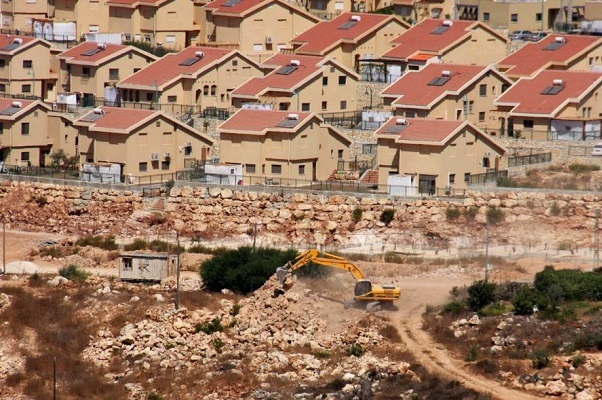
The so-called Israeli Local Committee for Planning and Building in Occupied Jerusalem approved the deposit of two plans with the District Committee, the slopes of Shorek, which constitute a new residential area east of the "Ramot" settlement, whose population today is about fifty thousand.
Two private companies presented the plans, in cooperation with the Jerusalem Municipality, and they include the construction of 1,700 housing units in buildings with a height of 12 floors, commercial areas, public institutions, and parks.
The Jerusalem municipality said: "The two projects are being built within the framework of the master plan 2000 and as a continuation of the master plan prepared by the municipality. The two plans form an extension along Ramot and extend it to the east."
OPINIONS
Sat 20 May 2023 10:48 am - Jerusalem Time
It wasn't suicide
Dr. Samah Jabr
Opinion Writer
Eddie Cohen - the Israeli journalist - is trying to ward off the responsibility of killing Sheikh Khader Adnan from the ruling authorities in his country, by describing his heartbreaking death as suicide, while some skeptics among our people picked up on this accusation and repeated it, perhaps to ward off the accusation of inaction.
What is known about Adnan is his speech full of hope, courage, altruism, sacrifice, and his bearing of responsibility towards the families of prisoners and martyrs. These qualities contradict risk factors and warning signs for people with suicidal tendencies. Whoever meets Adnan once, respects him for life. It left a great positive impact on myself, on the "Beyond the Fronts" team, and on the viewers of the film, whose theme revolves around the resistance and steadfastness of the Palestinians. His presence in the film was on the occasion of the article I wrote, "Man does not live by bread alone," as his interview was in the hospital, where he was recovering after wresting his freedom from prison thanks to his hunger strike in 2015.
Those who are not aware of the levels of psychological oppression and subjugation attempts to which the Palestinian prisoner is subjected, especially the administrative prisoner who does not know a reason or an end to his captivity, do not understand the option of hunger strike as a form of resistance and a final attempt to wrestle the jailer. Some may consider this option a form of psychological extremism or an attempt to commit suicide. The hunger strike has been used as a tool of resistance in many historical movements and events, the most famous of which is its use by the Indian independence leader Mahatma Gandhi, who carried out several hunger strikes to express his objection to the policies of the British occupation in India, and it has also been used in recent years as a tool to demand political rights and freedoms in some countries.
Adnan is well versed in the issue of hunger strikes. I once heard him talk about the reasons that prompted him to go on strike, and how to prepare himself for the strike. He also explained how the strike constitutes a tool of pressure on Israel, embarrasses it, and exposes its arbitrariness and tyranny to the world.
Dr. Lina Qassem, the head of the "Physicians for Human Rights" in the occupied Palestinian territory, who supervised Adnan's case, stated that he refused to break the strike, but agreed to be resuscitated if he lost consciousness, because he was not concerned with death, but with freedom, which is his main demand. He also insisted that pressure be taken to transfer him to a civilian hospital, which confirms that any talk of committing suicide is pure slander. Suicide is the killing of a person with intention and intent, but Adnan's intent is liberation. On the other hand, Adnan's doctor explained that we must pay attention to the hypothesis of force-feeding as one of the reasons that led to his death, especially since he explained to her on the 80th day of the strike that the doctors and jailers in the Ramla prison clinic had talked to him more than once about the option of force-feeding, which contradicts Completely with the Malta Declaration approved by the International Federation of Doctors in 1991, as it clearly defines instructions for dealing with hunger strikes, as it indicated that force-feeding is unacceptable and absolutely unacceptable from a moral point of view.
The Israeli judiciary, which procrastinated and procrastinated in his case, and the Prison Authority, which did not put him in the hospital so that he could be saved when his health was delayed, and the absence of the unanimous national backer to support him. Everyone who asks: Did Adnan commit suicide? The answer is: It was not suicide, rather he was deliberately killed, and we consider him a martyr with God, and we do not commend anyone before God. Khader Adnan will remain a shining star that lights up the darkness of occupied Palestine, like Sherine Abu Aqleh and other free Palestinians.
ARAB AND WORLD
Sat 20 May 2023 10:43 am - Jerusalem Time
Israeli fear of the impact of the legitimacy of the Assad regime on its operations
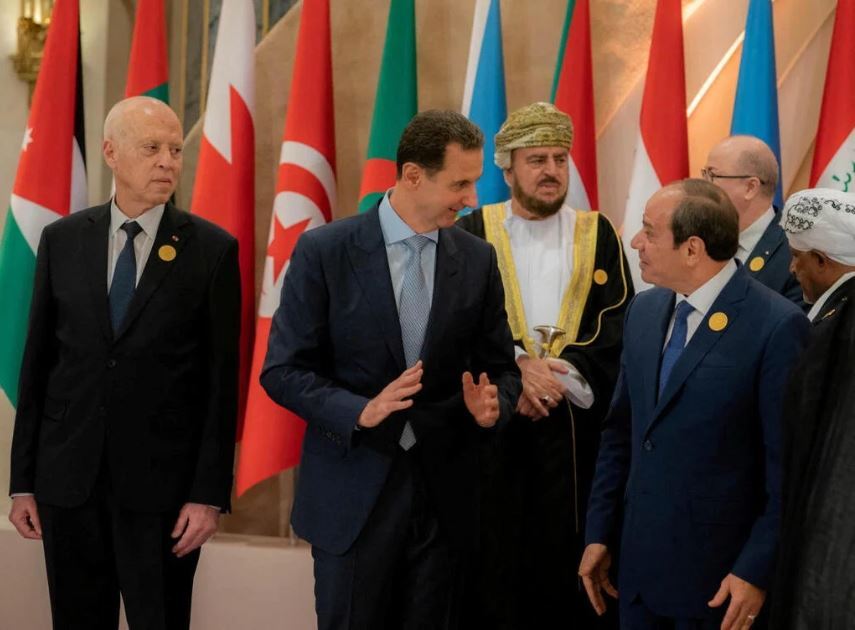
The Israeli security system has expressed its fear of the impact of the return of the Syrian regime and its president, Bashar al-Assad, to the Arab League, and its gaining Arab legitimacy after it was isolated for years, on its operations in Syria.
According to the Hebrew website Ynet, the Israeli Minister of Defense, Yoav Gallant, last week held an evaluation session with the participation of senior officials from the security system, to discuss the return of the Assad regime to the Arab League and an attempt to grant it legitimacy.
According to the site, Gallant expressed his surprise at this step "after the crimes committed by the Assad regime," he said.
What is currently causing concern to Israel is that the return of Assad will prevent or reduce its attacks against targets in Syria, but some parties in the security system confirmed that the attacks will continue.
And the site indicated that Israel conveyed a message to the international community confirming the continuation of its operations to combat "terrorism".
Some Israeli security circles believe that changes in the region, including the Saudi rapprochement with Iran, as well as Syria with Turkey, may prevent the development of other fronts against Tel Aviv from Yemen, and may push the Assad regime to reduce the activities of Hezbollah and Iran in its country, but this depends on assessing the situation in the future. near.