ARAB AND WORLD

Mon 15 Jan 2024 11:46 am - Jerusalem Time

China urges larger-scale Gaza peace conference as conflict escalates

China's Foreign Minister Wang Yi called for a larger, more authoritative Israeli-Palestinian peace conference and a timetable to implement a two-state solution as the Gaza conflict escalated and the Red Sea became a new flash point.

Speaking to reporters after talks with Egyptian Foreign Minister Sameh Shoukry in Cairo on Sunday, Wang said the international community should "listen" carefully to the legitimate concerns in the Middle East.


"China calls for the convening of a larger-scale, more authoritative and more effective international peace conference, the formulation of a specific timetable and road map for the implementation of the 'two-state solution', and support for the prompt resumption of Israel-Palestinian peace talks," Wang said.


A Chinese foreign ministry spokesperson said on Monday that the road map needed to be "binding". "As for the timing and venue of the conference and where it will be hosted, I think it needs to be determined by all parties through consultation," Mao Ning said at a regular news conference in Beijing."China also welcomes the active role of the United Nations in this regard," she said.

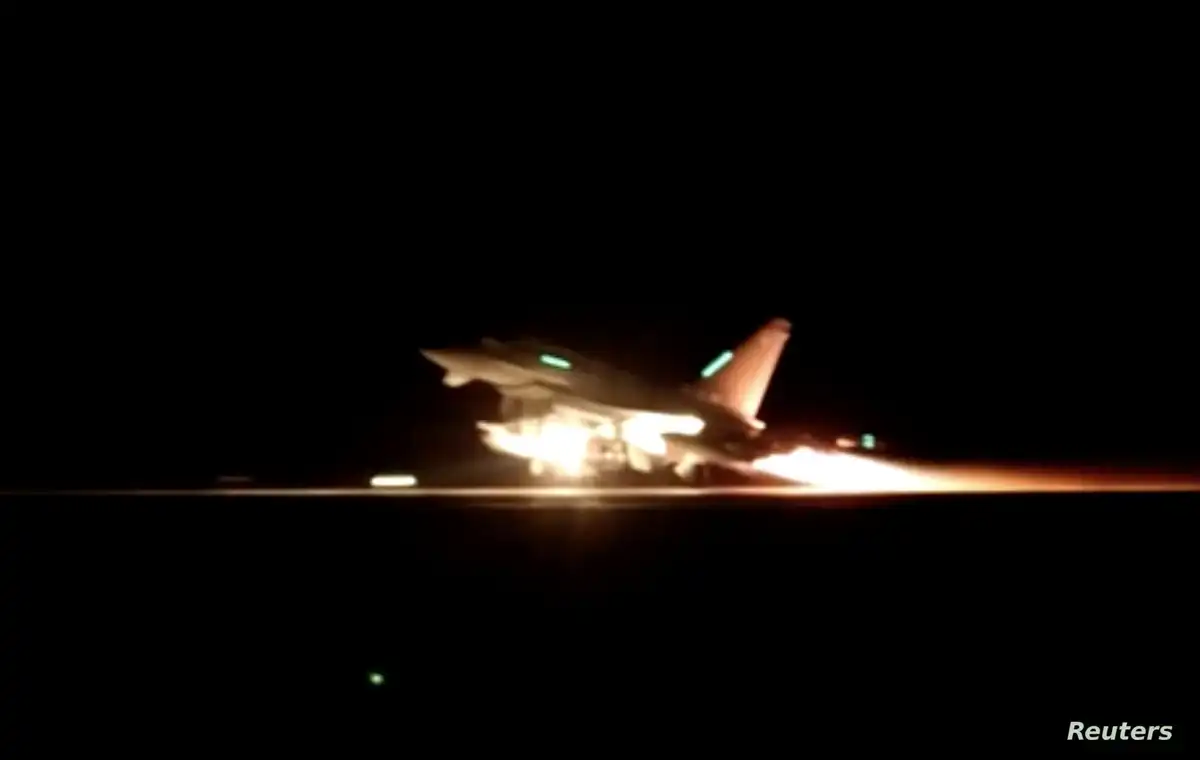
Last week, the United States and Britain launched strikes against Houthi targets in Yemen after the group attacked ships in the Red Sea. 

The Houthis said their attacks are a show of support for Palestinians and Hamas, the Islamist group that controls Gaza.


The Red Sea attacks have forced commercial ships to take a longer, costlier route around Africa, stoking concern about inflation and supply chain disruptions. They are also bringing the Gaza crisis much closer to China's investments in the Suez Canal east of Cairo.

China avoids being a direct party in any military conflicts, but says it is keen to raise its "international influence, appeal and power" to shape events through diplomacy.

Last week, Wang said President Xi Jinping had "in-depth communication" with the leaders of Saudi Arabia and Iran to persuade the Middle East powers to let go of past grievances, and their restoration of ties in 2023 had set off a "wave of reconciliation" across the Middle East.

Wang is currently travelling through Egypt, Tunisia, Togo and the Ivory Coast until Thursday.

China's top diplomat also held talks on Sunday with the Secretary-General of the Arab League on the Gaza conflict and expressed concerns over the Red Sea."Influential countries, in particular, need to play an objective, impartial and constructive role in this regard," the two diplomats said in a joint statement released on Monday by the Chinese foreign ministry.


OPINIONS

Mon 15 Jan 2024 11:10 am - Jerusalem Time

Israel’s war in Gaza isn’t genocide, but is it proportionate?

Washington Post

Washington Post

Opinion Writer

By Fareed Zakaria

It is now almost three months since Benjamin Netanyahu’s government launched its ground invasion of Gaza, and it is time to ask some hard questions: Has it been proportional to the damage that Hamas inflicted on Israel? Has the Israeli military been careful to avoid civilian casualties? Was there another path?

I write this as a supporter of Israel, a country that I believe has been a remarkable success in an environment that was for decades deeply hostile toward it — and where some countries, such as Iran, remain opposed to its very existence. I am also dismayed and appalled by the rise of antisemitism across the world, which is a powerful reminder as to why Israel was founded.

This week, hearings at the International Court of Justice began to determine whether Israel’s government is committing genocide against Palestinians in Gaza. I think the charge is invalid; there is no systematic effort to exterminate Gaza’s population. (If there were, given the vast disparity in power, Israel would surely have killed many more than 23,000 people, though that number is, of course, still staggeringly high. The death toll figure comes from the Hamas-run Health Ministry in Gaza.) Genocide is an incendiary accusation that should not be used loosely. Nevertheless, during these hearings, some deeply troubling facts might emerge about Israel’s bombing campaign.


Israel suffered a brutal terrorist attack on Oct. 7 and had a right to respond forcefully. But consider what it has done in a small territory housing 2.2 million people, half of whom are children and of which, by Israel’s own estimate before the war, only 30,000 are Hamas fighters.

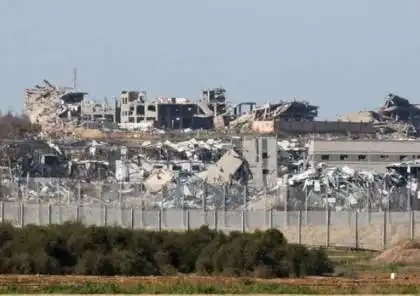
A Wall Street Journal analysis of Israel’s bombing campaign notes that by mid-December, “nearly 70 percent of Gaza’s 439,000 homes and about half of its buildings have been damaged or destroyed. … Much of the water, electrical, communications and healthcare infrastructure that made Gaza function is beyond repair.” Of Gaza’s 36 hospitals, only eight can still accept patients. U.N. monitors report that more than two-thirds of all school buildings have been damaged, as have several churches and more than 100 mosques.

The Associated Press reports that according to experts, in roughly two months, Israel caused more destruction in Gaza than the battle for Aleppo in Syria or the razing of Mariupol in Ukraine, and killed more civilians than the United States and its allies did in a three-year campaign against the Islamic State. Proportionally, Israel’s campaign has exceeded the destruction of the Allied bombings of Germany in World War II and, as the University of Chicago’s Robert Pape notes, “is one of the most intense civilian punishment campaigns in history.”

CNN reported in mid-December that U.S. intelligence estimated that 40 to 45 percent of the 29,000 bombs Israel had dropped were unguided, prone to cause greater collateral damage. Indeed, an Israeli rear admiral acknowledged before the ground invasion began that while the Israel Defense Forces was “balancing accuracy … right now, we’re focused on what causes maximum damage.” Netanyahu, Israel’s prime minister, has invoked the biblical story of Amalek, in which God tells the Israelites to kill every man, woman and child, destroy all property — even kill every animal — in retaliation for a surprise attack.

The Committee to Protect Journalists reports that “more journalists have been killed in the first 10 weeks of the Israel-Gaza war than have ever been killed in a single country over an entire year.” The United Nations reports that more U.N. aid workers have been killed in Gaza than in any other conflict over the 78 years of the organization. It’s possible that some of these numbers are misleading. But are all of them, coming from various sources, wrong?

This military campaign is being perpetrated by a deeply unpopular government in Jerusalem that is trying to salvage its reputation. Polls since the start of this conflict have shown that most of the public has lost faith in Netanyahu. A poll released last week found that only 15 percent of those surveyed wanted Netanyahu to keep his job after the war. An earlier poll found that 69 percent wanted elections as soon as the war ends. It is awkward to note this, but Netanyahu has every incentive to keep the military campaign going in the hope that his day of reckoning can be postponed, if not put off indefinitely. Having bungled the strategy toward Hamas before the war, he is trying to use maximum force now as political compensation.

Israel is a democracy and an open society, and precisely because of that it will one day have to ask itself whether it acted appropriately in the heat of its anger and sorrow after Oct. 7. Friends of Israel should help it ask those questions now, so that it does not look back on this episode with shame and regret.

OPINIONS

Mon 15 Jan 2024 11:02 am - Jerusalem Time

The Things We Disagree on About Gaza

New York Times

New York Times

Opinion Writer

By Nicholas Kristof

I’ve been very critical of Israel’s counterattack on Gaza, which appears to have killed a woman or child about once every eight minutes for the past three months. Many of my readers and friends disagree with these columns and are pained by what they see as my unfairness toward Israel.

Too often, opinionated people bypass the most compelling arguments on the other side. Let me instead try to confront head-on the kinds of criticism I’ve received:

Israel was attacked. Children were butchered. Women were raped. So why are you criticizing Israel rather than the Hamas terrorists who started this war?

That’s a fair question. Yes, Hamas started this war with its brutal attack on civilians, and it has been indifferent to Palestinian lives. As someone who has reported regularly from Gaza over the years, I’m aghast at the admiration some American leftists show for an organization as cruel, misogynistic and economically incompetent as Hamas; it’s an echo of the left’s appalling admiration for Mao a half-century ago.

Israel was understandably shattered by what happened on Oct. 7, and I appreciate that trauma and share that sadness. But Hamas’s indifference to human life must never be an excuse for us to become indifferent. It’s too late to save those massacred on Oct. 7, but we can still try to reduce the toll in Gaza this month and this year.

I’m also aware that my tax dollars have helped underwrite the bombings that have ended up killing and maiming children in Gaza — the world’s most dangerous place to be a child, according to UNICEF — and this American complicity creates its own moral responsibility to speak out.

What do you expect Israel, or any country, to do after such a barbaric attack? It’s tragic how many Palestinian civilians have died, but what could Israel possibly do but hit back?

I think it’s a fallacy that the Israeli military has a binary choice: either to level Gaza or to do nothing. I’d like to see Israel dial way back on what is always a continuum.

For example, Israel had dropped 29,000 bombs, munitions and shells by mid-December, while the United States dropped 3,678 munitions in Iraq between 2004 and 2010, according to The Wall Street Journal.

The Biden administration itself has repeatedly answered the question of what Israel should do. It sent military leaders to Jerusalem to offer advice and it regularly counseled using greater efforts to spare civilians — instead of Israel’s pattern of what President Biden termed “indiscriminate bombing.”


You call for restraint — but what restraint did America show in Hiroshima or in Dresden? Why do you now insist that Israel behave by very different rules?

Yes, I live in a glass house. And, yes, I want Israel to play by different rules. It was revulsion at the horrors of World War II, including those in Hiroshima and Dresden, that helped lead to the 1949 Geneva Conventions creating rules of war to protect civilians from such mass slaughter.

In any case, two academic researchers using satellite imagery have found that at least 68 percent of buildings in northern Gaza have been damaged, which according to The Financial Times is a higher proportion than were damaged in Dresden.

The killing in Gaza is very sad, but we can’t stop halfway. We have to eradicate Hamas and re-establish deterrence. That’s the only path to ensure security for Israel.

Let me push back: Does leveling parts of Gaza truly make Israel more secure? As Defense Secretary Lloyd Austin has suggested, large-scale killing of civilians can result in a tactical victory but strategic defeat.

Wars have a quite imperfect record of achieving their aims: Going into Vietnam, Afghanistan and Iraq did not enhance American security, and Israel’s 1982 invasion of Lebanon did not boost Israeli security.

The longer this war goes on, the greater the risk of a conflagration involving Israel and Lebanon, an uprising in the West Bank, a greater crisis in the Red Sea or even a war with Iran. None of that would make Israel or anyone else more secure.

That’s one of my prime concerns about this war: To me, it’s not clear that the enormous bloodshed, public health crisis and risk of famine actually advance security, or that Israel has a workable plan for what follows the fighting.

More than 100 hostages are still held by Hamas, and they may be suffering unimaginable abuse. The war must continue until we get them back.

Negotiation and exchanges have done a much better job liberating hostages than bombardment. So far Israeli troops have killed more hostages than they have freed (one, at the beginning of the war).

If Hamas had organized an attack on America comparable to the one on Oct. 7, Americans wouldn’t be preaching restraint. The United States would be invading Gaza.

Yes, perhaps. Indeed, we did something similar after Sept. 11, 2001, in both Afghanistan and Iraq. I write my columns today about the Israeli war in Gaza in the same spirit in which I wrote innumerable columns two decades ago warning against invading Iraq. Sadly, Prime Minister Benjamin Netanyahu seems to be repeating in Gaza the mistakes America made after Sept. 11. (Except that Israel appears to have killed far more Gazan women and children in three months than were killed in the entire first year of the war in Iraq.)

The attack on Oct. 7 was particularly savage, and no doubt my perspective would be different if I had been on the receiving end. But I believe that in the aftermath of a terror attack, we must guard against the way fear makes us lose our bearings so we despise and demonize the other.

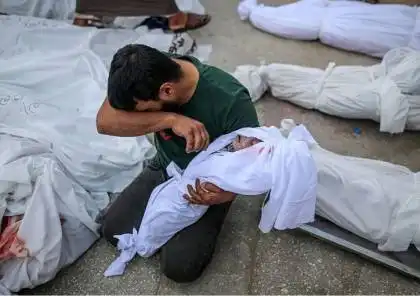
Some Gazans tortured, raped and murdered Israeli citizens on Oct. 7 because they saw the world through a bigoted prism and stereotyped and dehumanized Jews. We should not reciprocate with our own version of collective guilt that leaves vast numbers of Gazan children wrapped in tiny shrouds.

ARAB AND WORLD

Mon 15 Jan 2024 8:54 am - Jerusalem Time

Germany intervenes as a third party between Israel and South Africa before ICJ.. What does this mean?

Germany announced that it will intervene as a third party before the International Court of Justice in the case brought against Israel by South Africa on charges of committing genocide in Gaza.


Government spokesman Stephen Hebstreit said in a statement that Germany “intends to intervene as a third party in the main hearing,” indicating that Berlin will intervene in the main case against Israel, which may take years for the court to issue a decision on.


Article 63 of the Court's Statute allows States to request clarification on the use of a multilateral agreement. The move allows Germany to present its case to the court that Israel did not violate the Genocide Convention and did not commit or intend to commit genocide.


Since Germany does not claim to be legally affected in the case, it does not need permission from the International Court of Justice to intervene as a third party. As a signatory to the 1948 Genocide Convention, it is entitled to present its arguments on the issue.


According to the Times of Israel website, it does not appear that the German move will affect the court proceedings this week, which are scheduled to be discussed in the hearings in which South Africa requested a temporary injunction to force Israel to implement the ceasefire. A decision on this issue is expected within one month.


The procedure for third-party intervention before the International Court of Justice stipulated in Articles 62 and 63 was not sufficiently exploited earlier, but the situation later changed significantly, as three recent cases before the Court included third-party intervention, the first between Tunisia and Libya, where Malta submitted a request. Intervention; Between Libya and Malta, Italy requested intervention, and recently, El Salvador requested intervention in the issue between Nicaragua and the United States.


Yesterday, Friday, Turkish President Recep Tayyip Erdogan said that his country had presented evidence - much of it visual - to the court, sufficient to convict Israel of genocide crimes, in the lawsuit that many countries announced their support.


For his part, Hebstreit said: “In light of German history and the crimes against humanity committed in the Holocaust, the German government is particularly committed to the Genocide Convention that was signed in 1948 in the wake of the Holocaust.”


He added that the agreement represents a “central instrument” under international law to prevent another Holocaust, and for this reason, “we stand firmly against political exploitation” of the agreement.


The spokesman expressed the German government's "decisive and explicit rejection of the accusations directed against Israel before the International Court of Justice of committing genocide," considering that "this accusation is baseless."


For his part, Prime Minister Benjamin Netanyahu thanked German Chancellor Olaf Schulz for Berlin's decision, saying: "Your position and Germany's position on the side of the truth moves all citizens of Israel."


Netanyahu added: “The blood libel, full of hypocrisy and hatred, should not be allowed to prevail over the moral principles shared between our two countries and the entire civilized world.”


PALESTINE

Mon 15 Jan 2024 8:48 am - Jerusalem Time

West Bank: Israeli forces storm An-Najah University and arrests 20 students

Members of the Student Council and representatives of some student blocs have been organizing a sit-in in front of the university administration building on the old campus for 26 days, to collect several demands related to facilitations in paying university tuition and other administrative and academic facilities, taking into account the current circumstances.


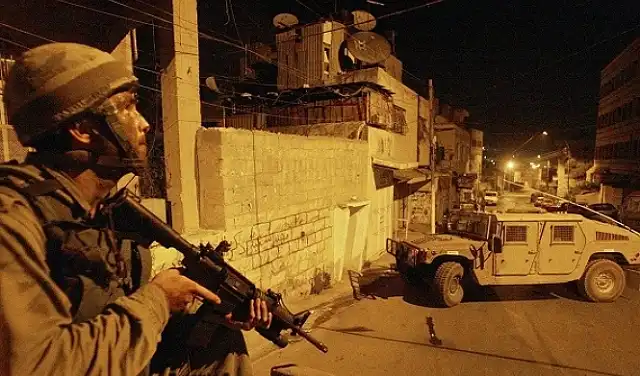
At dawn on Monday, Israeli forces stormed the old campus of An-Najah National University in the city of Nablus in the occupied West Bank, and arrested a number of students protesting inside, including the head of the Student Union Council.


The occupation forces stormed the city of Nablus from several fronts, surrounded the old campus of An-Najah University and deployed snipers on neighboring buildings, before storming the campus with their soldiers and vehicles.


The occupation forces carried out searches inside the university campus buildings and on their roofs, according to video clips circulated on social media.


The occupation army arrests all students protesting inside Al-Najah University in Nablus

The Student Council confirmed in a brief statement that the Israeli forces arrested all students protesting within the university walls, including the Chairman of the Student Union Council, Muhammad Salama.


It was not clear how many students the occupation arrested from inside the university campus, while local sources confirmed the presence of about 20 students inside the campus before it was stormed.


It is noteworthy that this is the first time that the occupation forces have stormed the Al-Najah University campus in decades.


ARAB AND WORLD

Mon 15 Jan 2024 8:44 am - Jerusalem Time

US presents a plan linking reconstruction of Gaza and normalization between Israel and Saudi Arabia

US President Joe Biden's senior advisor for Middle East affairs, Bert McGurk, presented a controversial plan linking the post-war reconstruction of the Gaza Strip to normalization between Israel and Saudi Arabia.

According to McGurk, the plan will serve as an incentive for the reconstruction of Gaza, in which Saudi Arabia and other Gulf countries will participate.


McGurk reviewed the plan in recent weeks with security officials, including a timetable of about 90 days for what he claims will happen in the Gaza Strip after the war ends.

The US official claimed that it is possible to achieve “stability” in the war-devastated areas if the United States, Israel and Saudi Arabia launch a diplomatic effort to sign the normalization agreement.

He also stated that the plan would be used as an incentive for the reconstruction of the Strip by rich countries while at the same time exerting pressure on the Palestinians and Israel.

US administration officials expressed concerns that this plan would cause instability in the region.

An American official familiar with the details said, “The plan misses the main point,” noting that the plan, which was reviewed as a top-secret document presented to senior security officials in Washington, also acknowledged that President Biden will arrive in the region during the coming months as part of what he called the “Victory Tour.” 

He stated that Biden would take credit for achieving the normalization agreement between Israel and Saudi Arabia “in response to the pain of Gaza,” according to the report.

Another American official addressed the plan and said, “I am not sure that this is realistic now,” but indicated that there is a strong Saudi desire to participate in an agreement.

The proposed plan indicates that Palestinian leaders will agree to form a new government in both Gaza and the West Bank, and will agree to reduce criticism directed at Israel, while Israel will have limited influence in the Gaza Strip.

ARAB AND WORLD

Mon 15 Jan 2024 8:29 am - Jerusalem Time

Israeli Minister of Security warns of the combustion of the West Bank: The presence of a strong Palestinian authority is an Israeli security interest

The Israeli Minister of Security, Yoav Galant, warned this evening, Sunday, of the escalation of the security situation in the West Bank against the backdrop of the devastating war that the occupation has been waging against the Gaza Strip for 100 days, as well as in light of the Israeli government’s policies related to preventing the entry of workers from the West Bank to work in Israel and withholding clearing money from the Palestinian National Authority.


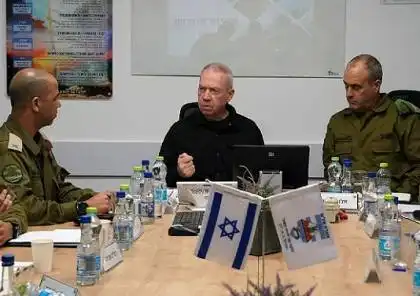
Galant said, following an assessment of the security situation at the headquarters of the “Judea and Samaria” Division (West Bank) of the occupation army, according to what was stated in a statement issued by the Ministry of Occupation Security, that the presence of “a strong Palestinian authority is an Israeli security interest,” stressing the need for caution. The war on Gaza could lead to an escalation of operations against the occupation forces throughout the West Bank.


In light of the intransigence of the partners of the Israeli Prime Minister, Benjamin Netanyahu, from the “Religious Zionism” movement in the government coalition, and their refusal to allow the entry of Palestinian workers from the occupied West Bank to work in Israel, as well as their refusal to transfer clearing funds to the Palestinian Authority without deducting the funds allocated to the besieged Gaza Strip, Gallant passed political messages.


Against the backdrop of security warnings issued by the Israeli army and the General Security Agency (Shin Bet), about the possibility of an imminent security escalation in the West Bank, Galant said: “Hamas is trying to connect Gaza with Judea and Samaria (the West Bank) and ignite a fire in the region. We must prevent that in any way.” "This may harm the achievement of the war's objectives."


The statement stated that Galant assessed the situation in the “Judea and Samaria” division, with the participation of the Commander of the Central Command, Yehuda Fuchs, the Division Commander, Yaki Dolf, and the commanders of the military divisions operating in the region, and listened to “a review of the intensive activities carried out by the security forces against hotbeds of terrorism ( According to his expression) in refugee camps, and operational efforts to protect the settlements.”


Galant claimed that the forces are working to "eliminate terrorism," referring to the resistance groups in the West Bank that have been subjected to an unprecedented Israeli escalation since the second intifada, which, since October 7, has resulted in the death of 350 Palestinians and the injury of about 4,000, including 593 children, and claimed that Israel avoids “harming civilians.”

He continued, "Hamas's goal in Gaza is to set fire to Judea and Samaria, and if possible, to the Temple Mount (the Holy Mosque) as well, in order to be liberated from the suffocating grip of the Israeli army. This is the story. The army is suffocating them. They built on the Iranians" and Hezbollah, and they built on exhausting Israeli society, and they also built on a dispute with the Americans. None of this benefits them.”


He considered that “what remains for them is to try to move other things, what is the most central thing? Trying to do something that would ignite the situation in Judea and Samaria and the Temple Mount, and in this aspect, I say again, your duty is to prepare for war, "Equip the forces, collect all relevant intelligence and remain on alert."


He claimed that settlers in the occupied West Bank “are showing responsibility,” and added, “The volume of violent incidents is decreasing significantly, and as I deal with this (violence) in other areas, the settlers’ participation in this matter (violence) is only partial. Violence is not an attribute ( In general) characterize the settlement.

ARAB AND WORLD

Mon 15 Jan 2024 8:22 am - Jerusalem Time

Israeli writer: If it is not genocide in Gaza, what is it?

An Israeli writer mocked the defense of the lawyers appointed by Israel to defend it at the International Court of Justice in The Hague against the charge of genocide brought by South Africa.


Writer Gideon Levy said in Haaretz: “What name can the mass killing that continues indiscriminately and uncontrollably, with dimensions that are difficult to imagine (in Gaza) be called? How can we name a situation in which children are dying on the ground in hospitals, where many of them have no life left?” Does anyone in the world, the starving elderly, flee to escape from the horror of the bombing that does not stop anywhere? Do the 2.3 million people, most of whom are destitute and homeless refugees, hungry, thirsty, sick, disabled and injured, care if what happened is called genocide or not? Will this legal definition change their fate?


He added: "In Israel, they will breathe a sigh of relief if the court rejects this lawsuit, and for them, if this is not considered genocide, our consciences will be at ease again. If they say in The Hague that this is not genocide, then once again we will become the most moral in the world."


Levy attacked the Israeli media, and considered that it had deteriorated to an unprecedented low in this war, especially during its coverage of the International Tribunal.


Regarding the pleadings in court, Levy said that when he heard Israel’s lawyers say that only Hamas is guilty, and that Israel has no role or part in that, he added, “To say this to a very high-ranking international institution means questioning the intelligence of its judges and insulting them.”


He continued to say: “What can be done with the statements of the head of the Israeli defense staff, Professor Malcolm Shaw, who said that “Israel’s actions are balanced, and are directed only against armed forces”? Perhaps the fact that Shaw is not Israeli is the source of this conclusion; and perhaps that is what they told him in The Israeli army spokesman’s office, but the truth is, what will it be about? Adding: If this is balance, what will imbalance look like? Hiroshima?

Source: Sama News

ARAB AND WORLD

Mon 15 Jan 2024 8:13 am - Jerusalem Time

Israeli historian Pappé: 5 indicators of the beginning of the end of the Zionist project

The well-known Israeli historian, Professor Ilan Pappé, saw that there were indications of the end of the Zionist project, calling on the “Palestinian Liberation Movement” to prepare to fill the void so that a long period of chaos would not prevail, as happened in Syria and other countries in the Arab world and North Africa.


Under the title: “The beginning of the end of the Zionist project,” historian Pappe said, during a symposium held on Saturday in the city of Haifa in the Palestinian interior, that the beginning of the end of this project is “a long and dangerous phase, and we will not talk about the near future, unfortunately, but rather about the distant future, but “We must be ready for that,” expressing his optimism that “we are at the beginning of the end of the Zionist project.” “We must be part of the efforts to shorten this period,” he said.


The Israeli historian, professor of the Faculty of Social Sciences and International Studies at the British University of Exeter, and director of the European Center for Palestine Studies, pointed to five indicators of the beginning of the end of the Zionist project, according to his belief:


The first is “the Jewish civil war that we witnessed before last October 7, between the secular camp and the religious camp in the Jewish community in Israel.” He said that the secular society, most of which is European Jewry, seeks an open, liberal life, while it is willing to continue oppressing the Palestinians, even if it is willing to give up parts of the occupied territories in the West Bank and Gaza Strip. The opposite trend is represented by the “Jewish State.” It grew up in the settlements established in the West Bank, and aspires to transform Israel into a racist Jewish religious state, pointing out that these two camps “will witness wars in the future, because “the cement that holds the two together is the security threat,” but even this does not seem to be working anymore, and it "Fails before our eyes."


The second indicator, according to Pappé, is the unprecedented support for the Palestinian cause in the world and the willingness of most of those involved in the solidarity movement to adopt the anti-apartheid model that helped bring down this regime in South Africa, referring in this context to the Boycott and Divestment of Israel (BDS) movement. .

He said: “This is very important. In addition to the framing of Israel as an apartheid state by respected NGOs such as Amnesty International, Human Rights Watch, and B’Tselem” I see that we are entering a new period with shifting pressure from society to governments.


The third indicator is related to the economic factor, as Pappe believes that it “includes the highest gap between those who have and those who do not have... Hardly anyone can buy a house, and every year many find themselves below the poverty line.” He added: "Despite the huge spending on the war after October 7, and despite the support of the United States, there is a bleak vision for the future of the economic solidity of the State of Israel."


The fourth indicator, according to the same historian, is “the army’s inability to protect the Jewish community in the south and north.” He said in this context, “There are 120,000 refugees displaced from the north, all of them Jews in the Galilee, and there are not any Palestinian refugee among them (..) After October 7, the government failed to provide assistance to the families of the dead and wounded.”

The final indicator is the attitude of the new generation of Jews, including in the United States of America, which is in contrast to previous generations, “which, even while criticizing Israel, believed that this country was insurance against another Holocaust or waves of anti-Semitism.” He said: "This assumption is no longer supported by many of the younger generation of Jews. Quite a few of them are already active in the solidarity movement with the Palestinians. This generation leaves Christian fundamentalists as the main basis for the pro-Israel lobby in the future, and not a solid basis for international legitimacy."

Source: Sama News

ARAB AND WORLD

Mon 15 Jan 2024 8:02 am - Jerusalem Time

“We lie to ourselves.” Eisenkot demands that Netanyahu make a big deal with Hamas

A number of Israeli media outlets reported, on Sunday, January 14, 2024, that the war cabinet observer, Minister Gadi Eisenkot, considered that Israel’s leaders were “lying to themselves,” and that they must be wise before it is too late.


According to the Israeli newspaper “times of Israel”, Eisenkot, whose son and nephew were killed during the war in the Gaza Strip, addressed other members of the government directly, in which he said: “We must stop lying to ourselves and show courage.”


He also urged the government to make a deal with the Palestinian resistance in Gaza, and said in this regard: “A big deal must be reached that will return the hostages to the homeland. Time is running out, and every day that passes puts their lives in danger.”


This statement comes at a time when a group of reports reported that Israeli Prime Minister, Benjamin Netanyahu, and Defense Minister, Yoav Galant, reiterated that they believe that only additional military pressure “will lead to such a deal.”


Eisenkot’s statement coincided with the Al-Qassam Brigades, the military wing of the Hamas movement, sending a message on Sunday evening to the families of Israeli prisoners held by the movement, in which it said: “Wait for us... tomorrow we will tell you their fate. Your government is lying.”


Al-Qassam published a video clip of a number of prisoners sending letters to the Israeli government demanding that the war be stopped and that they be returned to their families. Al-Qassam wrote at the end of the attached video that it posted on its account on the Telegram platform: “Wait for us.. Tomorrow we will inform you of their fate.” “Your government is lying.” There was no immediate comment from the Israeli side on what was issued by the “Al-Qassam Brigades.”


In a related context, Major General in the Israeli army, Yitzhak Barek, said that it is possible that there will be tens of thousands of deaths among the ranks of the army if the political leadership insists on continuing the war on the Gaza Strip, calling on the War Council to deal realistically with this fact. He also called on it to “make a change.”


According to a report by the Israeli newspaper Maariv, on Sunday, during his participation in a program on the Israeli radio station 103FM, Barek said: “We are facing two very difficult dilemmas: Is it possible to enter and deal with Hamas on the ground inside the refugee camps crowded with millions of refugees?” It seems to me that there is a very difficult problem. “I think everyone understands that.”


He added: “Secondly, do you want to go fight there? This means thousands of deaths, perhaps tens of thousands of deaths. “The world won’t let us, and I don’t think we want to be in this situation either.”


Then Barek added: “If we continue the same battle tactics that we are doing now inside Khan Yunis and in the central camps, with all the caution that is taken, which still makes us lose one or two soldiers a day, this means that the price in six months will be high if we continue in the current way.” In my opinion, including more than half a year in order to free the kidnapped people alive “It will not matter.”


Likewise, Barek said: “There will be many victims... In order not to reach that point and save the victims and perhaps improve the chances of freeing the kidnapped people, we need change.”


Then he added: “The real problems must be presented to everyone who sits in the government, and not run away from them.” Don't say that we will win and achieve everything in the end. Let us be realistic, examine every situation and adapt to the situation.”


It is noteworthy that the Israeli occupation army had announced, on Saturday, January 13, 2024, the killing of a reserve officer in its ranks, during battles in the central Gaza Strip, bringing the death toll to 521 since October 7, 2023.


ARAB AND WORLD

Mon 15 Jan 2024 7:59 am - Jerusalem Time

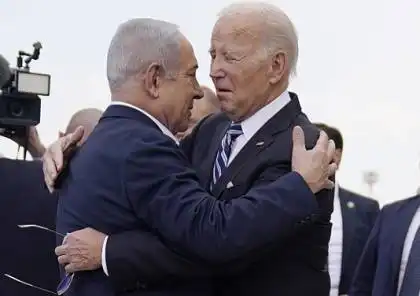
Hebrew media: A break between Netanyahu and Biden for this reason...

The rift between Israeli Prime Minister Benjamin Netanyahu and US President Joe Biden has worsened.


At the beginning of the war, Netanyahu and Biden seemed to show relative closeness and coordination in positions, but now three weeks have passed without them speaking to each other, and this is against the backdrop of the dispute over the transfer of clearing funds to the Palestinian Authority, according to the Hebrew Channel 13.


Biden asked Netanyahu to transfer the funds to the Palestinian Authority in a normal way, but under pressure from Finance Minister Bezalel Smotrich, the Prime Minister rejected this step, and searched for a mechanism through which the funds could be transferred to Palestinian Authority officials in the Gaza Strip. Without going through the Palestinian Authority, and despite trying, no such mechanism was found, and Biden continued to criticize Netanyahu.


As the crisis worsens, Biden is not yet close to interfering in arms shipments that the United States is sending to Israel, which it desperately needs, but this could certainly continue.


At the same time, there is another need for the Americans in the diplomatic arena, with the start of Israel's trial at the International Court of Justice in The Hague, according to the report.

PALESTINE

Sun 14 Jan 2024 9:18 pm - Jerusalem Time

Updated: Two Palestinian teenagers were killed by Israeli soldiers at the northern entrance to Ramallah

Two children were killed by Israeli occupation forces yesterday, Sunday evening, at the northern entrance to the city of Al-Bireh.


The Ministry of Health reported that the child Suleiman Muhammad Suleiman Kanaan (17 years old) arrived dead at the Istishari Arab Hospital as a result of being shot in the heart by live bullets at the northern entrance to Al-Bireh, adding that the General Authority for Civil Affairs informed it of the death of a second child, Khaled Amer Hamidat (16 years old). He was injured by occupation bullets at the northern entrance to Al-Bireh, and the occupation authorities are still holding his body.


With the death of the two children, Kanaan and Hamidat, the number of killed today in the West Bank rises to five Palestinians.

PALESTINE

Sun 14 Jan 2024 8:59 pm - Jerusalem Time

100 days of war on Gaza: 112 journalist killed

The Palestinian Journalists Syndicate confirmed that the Israeli army continues to target Palestinian journalists for the purpose of killing, in light of its attempt to kill the truth in the context of the genocide to which the Palestinian people in general and our people in the Gaza Strip in particular are exposed.


The union explained, in a statement, this evening, Sunday, that according to the monitoring of the union’s Freedoms Committee, on the 100th day of the aggression on the Gaza Strip, and with the rise of our colleague, Al-Ghad Al-Arabi channel photographer Yazan Zweidi, the number of killed has reached 112journalist, including 14 female colleagues.


It pointed out that, in light of the scale of the terrifying and ferocious attack on the Palestinian journalistic situation, journalists in the Gaza Strip are living in extremely complex and difficult conditions that are at risk of death, not only for themselves but also for their families, of whom Israel has killed hundreds.


The union warned against the attempts of Israel and its arms to falsify, adapt and fabricate charges against journalists, with false accusations for the purpose of justifying murder and to challenge in the future any international judicial prosecution to hold them accountable for these crimes, stressing the continuation of pursuing politicians and officers of the occupation in all available forums, so that they do not escape punishment.

PALESTINE

Sun 14 Jan 2024 8:55 pm - Jerusalem Time

Hamas: The fate of many Israeli prisoners is unknown

Al-Qassam Brigades spokesman, Abu Ubaida, said "The fate of many prisoners has become unknown during the past weeks," adding: "Most likely many prisoners have been killed, and the enemy bears responsibility for their fate."


He stressed that "the enemy failed to achieve its goals or free any of our captives," stressing that "any talk other than stopping the aggression against our people has no value."


PALESTINE

Sun 14 Jan 2024 7:53 pm - Jerusalem Time

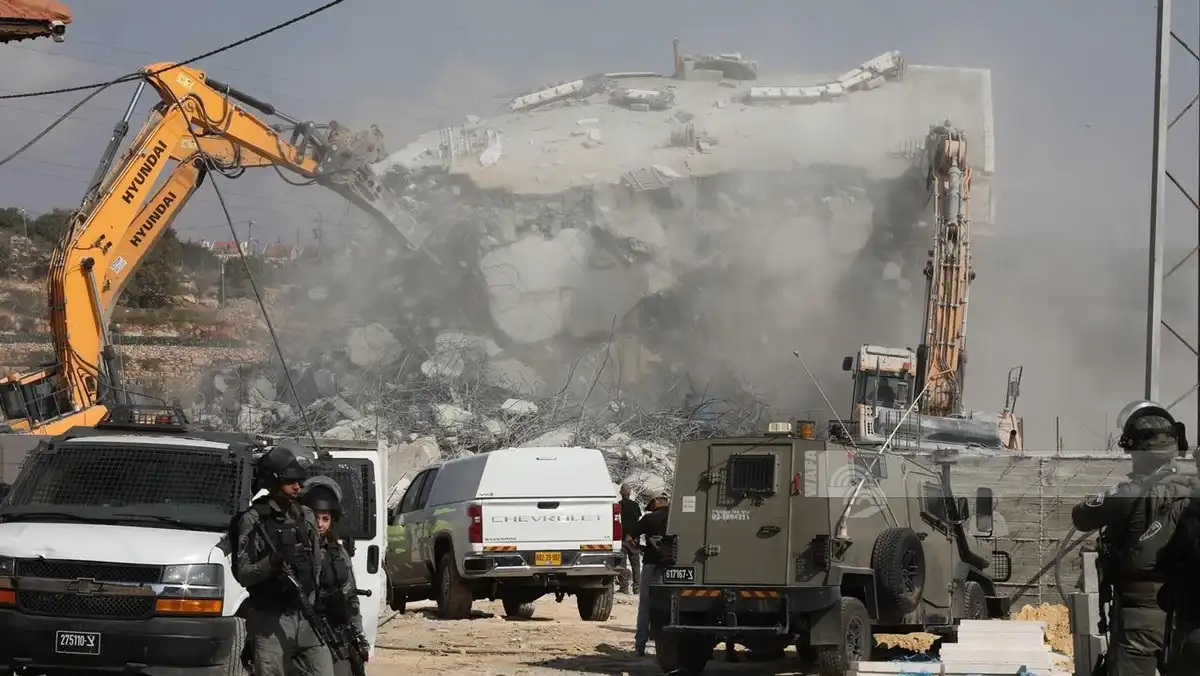
Jerusalem: Israeli authorities notify to completely and partially demolish 200 facilities and homes in the Old City

Today, Sunday, the Israeli forces notified of the complete or partial demolition of about 200 facilities, houses, and rooms in the Old City of occupied Jerusalem.


Local sources said that Israeli forces notified of the complete demolition of some homes, and others of partial demolition, including rooms, stairs, and any additions to the homes that were added before 2015.


It added that Israeli forces gave the owners of the threatened facilities and homes varying periods of time to demolish their homes with their own hands, otherwise they will be demolished by Israeli municipality crews and heavy financial fines will be imposed in return.


It is noteworthy that the area of the Old City does not exceed one square kilometer only, and it is inhabited by approximately 35 thousand Palestinian citizens, and since the seventh of last October it has been subjected to a comprehensive siege.


According to the Jerusalem Governorate’s annual report on the crimes and violations of the Israeli occupation in the occupied capital during the year 2023, the number of demolition operations in the Jerusalem Governorate reached 316, of which 79 were forced self-demolitions, in addition to 40 bulldozing operations. The Israeli authorities also handed over 263  demolition decisions during the same year. 


According to the same report, during the year 2023, the  demolition authorities approved 29 colonial projects in the Jerusalem Governorate.

ARAB AND WORLD

Sun 14 Jan 2024 5:47 pm - Jerusalem Time

“100 days of isolation”... from the struggle between arrogance and resistance

The war on Gaza has reached its 100th day, and despite the fire, destruction and mass killing, it has not achieved its declared goals. In Israel, its politicians are trying to escape forward by seeking to strengthen the patience of the Israelis, and waiting for a victory about which their doubts are increasing, while the families of detainees inside the Gaza Strip are escalating their protests and continuing a demonstration in Tel Aviv that began in the evening Yesterday, and will continue until Sunday evening.


“100 days of isolation” that Israel experienced at the level of people and public opinion in the world supporting the Palestinians, their narrative, and their rights, in exchange for most Western governments siding with it, culminating in Germany’s announcement of its official accession to Israel in the confrontation with South Africa.


Today is 100 days of declared and hidden bleeding in Israel. So far, the military spokesman admits that about 180 Israeli soldiers have been killed since the ground incursion on October 27 (and more than 500 soldiers have been killed since the “Al-Aqsa Flood”), and he also admits that about 2,000 wounded soldiers have been wounded. However, Many Israeli civilian sources reveal that the number of wounded is six times the announced number, and at least 2,000 soldiers have become officially disabled since the start of the war.


It is “100 days of shock.” 

Even though more than three months have passed since October 7, large Israeli circles are still expressing their shock at that “imaginary” day, and their awareness of an event similar to October 6, 1973, and even more dangerous.


The depth of the shock is evident in what Ben Dror Yemini, an Israeli political commentator, said on Friday that October 7 was the deadliest strike in the history of Jewish settlement, and since then a war has been taking place that is the most frustrating of Israel’s wars since its establishment, noting that the atmosphere is heavy with a feeling of double bitterness. Tactically and strategically. He points to several factors behind this general mood prevailing in Israel today: “First, most of the kidnapped people are still in the hands of terrorist organizations and are suffering there, and some of them are wounded, and it is not clear how many of them will remain alive. Secondly, the army did not put its hands on Hamas leaders. Third, the launching of missiles continues, and fourth, the situation in the north is very dangerous facing an enemy with greater military capabilities. Fifthly, the Houthis, who were treated with disdain and ridicule, threaten Israel's southern gateway. Sixth, hundreds of thousands of Israelis in the south and north have been displaced for months, and there is no end at the end of the tunnel.”


At the same time, Yamini joined many Israeli attempts to maintain morale. He also said, “The high level of bitterness is unjustified. Despite all the obstacles, our army, which is fighting an enemy inside tunnels and inside populated areas, is doing a great job.” Therefore, we need patience, and even long patience, because there is no shortening the path.”


100 days of anticipation

Ben-Dror Yamini is not alone in realizing the fact that “moral capital” is evaporating with time, that the Israelis’ wait has become long, that their patience is beginning to diminish, and that their skepticism about the feasibility of the war is growing, and therefore attempts to strengthen support and encouragement continue by official and media bodies. This comes against the backdrop of 100 days of waiting and doubt. Despite the loud rhetoric about achieving and accumulating victories, the Israelis are aware that the war has been prolonged, and it is between a state that has devoted most of its budgets, for years, to security and the army, and Palestinian factions trapped inside geographic “sardine cans,” and they wonder: If we have achieved all these victories, why do the Palestinians continue to resist!


Coinciding with this anniversary, and against the backdrop of these doubts, the head of the occupation government, Benjamin Netanyahu, appeared again, in a press conference, alone without Gantz and Gallant, trying to restore the Israelis’ shattering confidence and rally their support to continue the war. He said many things, repeating his well-known slogan: “We are on the way.” To win. “I know there are those who doubt that, but I am not with them.” However, only 56% of Israelis believe that Israel is capable of achieving victory, and they doubt how clean Netanyahu’s calculations are, and free of strange considerations related to his desire to prolong the life of his government by prolonging the war on Gaza, and perhaps with Hezbollah, according to the “Yedioth Ahronoth” poll, today.


100 days of doubt

He was preceded, in a separate press conference, by army commander Herzi Halevy, who warned against trying to stop the war in order to recover the kidnapped people, claiming that military pressure on “Hamas” was the way to recover them.


Halevy and the rest of the army commanders concerned with continuing the war to erase the shame that befell them, after October 7, have been sending, in the last month, clear messages (leaks and through close military analysts) of the necessity of defining the goals of continuing the war, and determining the features of the next day of the war, so that it does not turn into a stagnation in the place and exhaustion.


At this stage, a large number of Israeli military analysts agree with the call to make the recovery of the kidnapped and prisoners a first priority, at the price of stopping the war, compared to a small number of these analysts who continue to support the idea of continuing the war in search of a clear resolution, including Avi Sakharov, who says, today In Yedioth Ahronoth newspaper, “Ceasing the war and withdrawing in exchange for liberating the kidnapped people and maintaining Hamas’ authority will unintentionally perpetuate Hamas’ victory on October 7 and pave the way for more such attacks.”


In his press conference, Netanyahu indicated that the war would not end without “bridging the gap in the south of the Gaza Strip,” because keeping the Salah al-Din axis (Philadelphia) and the Rafah crossing in the hands of “Hamas” means keeping the door open for weapons smuggling, but he did not answer the question of how this would be done on the ground. .


Currently, the occupation army continues to redeploy in a different manner due to American pressure, and in search of reducing the extent of its losses, so it moves slowly and cautiously in the southern Gaza Strip, especially since Israeli detainees are present there, according to Israeli estimates.


On the other hand, Israeli observers doubt the possibility of completing the occupation of all of the southern Gaza Strip, given the presence of a large number of Gazan refugees spread there, and given the danger posed by allowing them to return to the north, because this will allow Hamas to increase its forces there by infiltrating among civilians, according to what Roui Sharon military commentator on Hebrew Radio confirms, on Sunday. Roy Sharon points out that the dilemma is big, which is that the Israeli leadership is talking about this openly, but on the ground it is not known how this will happen, noting the sensitivity of the issue in terms of embarrassing Egypt, if it allows Israel to control the border with the Gaza Strip. He adds: “The situation is complicated, and this seems an impossible task. Will Egypt accept the Israeli dictation?”


100 days of conflict between two declared goals

In Tel Aviv, an unprecedented demonstration continues in these hours. It began yesterday evening and continues until this evening without interruption, under the title: “Let us return the kidnapped now,” and “We do not want a new 136 Ron Arad.”


On this symbolic day, the voice of the families of the detainees and their increasing numbers of supporters in the Israeli street has become more intense and stronger as they demand an end to the war, so that their relatives can be restored, in contrast to the position of the ruling establishment, which practically sacrificed them in exchange for “Israel’s highest interest, the restoration of prestige, the power of deterrence, and revenge.” These people have been silenced and deceived, since the first day of the war, with the official claim that the ground incursion brought Israel closer to achieving both goals: destroying “Hamas” and recovering the detainees. Today, they have become categorically aware that the opposite is true, and that the continuation of the war does not return detainees, but rather kills them. Only one female soldier was recovered, and the rest were released thanks to negotiations. “Let us get the detainees back before it is too late, and later we will have all the time to renew the war and settle the score with Hamas.” This is the saying of the families of the detainees, along with an increasing number of Israelis, as is reflected in the participation of tens of thousands of demonstrators in Tel Aviv holding up pictures of the kidnapped in the rain and despite the  stormy weather.


In its editorial, Haaretz newspaper calls, on their behalf, for the immediate return of the kidnapped people, stressing that the government is not authorized to leave them to their fate. She continued, recalling the fate of the Israeli air navigator missing since the First Lebanon War: “We do not want a new 136 Ron Arad.”


Today, Sunday afternoon, work inside Israel will be suspended for ninety minutes, coinciding with the organization of protests across the country in support of the families of detainees.


100 days deferred split

Today also marks 100 days of questioning the fate of the internal unity brought about by the war, after a major division and rift among the Israelis that exploded on days like this in 2023, with Netanyahu’s sixth government undertaking “judicial reforms” that opponents considered a “coup against the regime.”

Despite the momentous event, on October 7, and the war and its losses, it is clear today that the internal bleeding has not stopped inside Israel, for two fundamental reasons. The first is that the differences and differences are deep and too great to be healed by war, and the second is the belief of each of the two camps that the other party bears responsibility for the shame of October 7th: The opposition sees what happened as a strategic failure as a result of a failed strategy led by Netanyahu to buy Gaza’s silence with money and manage the conflict with it, while the ruling coalition sees that the failure is only intelligence, for which the security establishment bears responsibility, not the political level, and the latter’s attempt to evade accountability and responsibility continues to pour oil on the fire of disagreements. Just as the Palestinian resistance’s steadfastness for 100 days, and its success in exacting a painful price from the Israelis, amid questions about the government’s eligibility and ability to manage the war, in addition to doubt about the integrity of its priorities and the cleanliness of its accounts, makes the faltering internal unity worse.


A poll published by Yedioth Ahronoth reflects this bleeding wound, as 75% of respondents say that the feeling of unity has been strengthened, while 58% of them believe that division will return immediately after the end of the war, while only 61% are confident that Israel will win this war, and these are low percentages compared to previous polls, and this is an expected result in light of the simple, stark fact that the war has been going on for 100 days. 


The President of Israel, Isaac Herzog, realizes the danger of continuing internal bleeding, and is trying again to contribute to healing and stopping it. In an article published today in Hebrew newspapers, entitled: “Our spirit will triumph,” he asserts that the leadership is being tested by preserving the unity of the people and avoiding political campaigns (a veiled reference to the sectarian tendencies of Netanyahu and his group). He added, trying to urge the Israelis to adhere to unity at all costs: “Our enemy thought that on October 7th he would weaken us and deepen the division between us, but our spirit refuses to be broken.”


He was followed by former Education Minister Shai Biron, who said, in an article published by “Yedioth Ahronoth” today: “We do not want to return to October 6th, calling for working together and searching for what is inclusive.”


100 days in hell

Perhaps the people of Gaza today do not remember the 100 days of war against them, because the intensity of the bombing and brutal killing made them lose the ability to distinguish between day and night and days. They bandage their wounds with patience in the face of killing, wounds, hunger, thirst, deprivation, and the traumas of their children and the elderly. 60,000 wounded so far, 22,000 dead, an unknown number of missing persons, and hundreds of thousands of refugees, some of whom are drowning in the mud of winter and spending the night in the rubble, in the open, which raises the question of whether Hamas had estimated in advance that this price would be a “nakba" again will the people of Gaza pay it alone, in exchange for the “flood of Al-Aqsa”, for the liberation of all Palestinians, and for an independent state for them?


In any case, Israel will emerge a loser from this confusing confrontation for it. But can it be said that the Palestinians, despite their patience and steadfast resistance that astonished the world and surprised the occupation, and still is, have won, and the Gaza Strip has been reduced to rubble? An unprecedented war, since the Nakba, between a state full of soldiers, and a besieged Palestinian faction that decided to try to break the siege, undermine the prestige of the occupying state, and punish it for its continued violations. 100 days ago, Israel pretended to be waging a defensive moral war, and its press was militancy, more than any previous war, claiming that it was a war of good people against bad people.


But some Israeli voices, tweeting away from the herd, are clear and decisive, and the most prominent and loudest of them, today, Sunday, is the journalist Gideon Levy, who wonders in his article: “If this is not genocide in Gaza, then what is it?”


Levy asks the question of the knower: “What do we call the mass killing that has continued until this moment indiscriminately, and in numbers that are difficult to imagine?” What do we call a situation in which a large number of children die, while they are in their final stages, lying on hospital floors, and elderly people suffering from hunger and thirst? How do we call two million displaced, bleeding and sick people facing hunger and thirst? What is important about the judicial description of their miserable situation at the International Court of Justice?


Levy concludes, in a brave article, by saying sarcastically: “What is important is what the Israelis are committing against the Palestinians. Israel will breathe a sigh of relief if Hague rejects South Africa’s lawsuit. If the lawsuit is rejected, the conscience of the Israelis will be relieved!”

He was followed by his fellow journalist, Amira Hass, who recalled the lie of the Israeli military spokesman justifying the killing of journalists Hamza Wael Al-Dahdouh and Mustafa Thuraya. This is an opportunity to remember that the war of extermination has so far affected 100 Palestinian journalists. Are all of them “terrorists” belonging to “Hamas” and “Jihad”? 


100 days of silence

In the face of popular demonstrations in the streets of Western cities, the Arab countries, in their overwhelming majority, remained silent, or resorted to gossip and verbal taxes, and perhaps what was hidden was greater for some of them, in exchange for the military “terror” of “Hezbollah” from Lebanon and the Houthis from Yemen.


In general, the voice of Arabs and Muslims remains less strong with the sound of protests in Western capitals, and this is what drives the madness of Israel, in which many have asked: “What has South Africa and our money to do what no Arab country has done, while it is five thousand miles away from us?”

Source: Sama News 

PALESTINE

Sun 14 Jan 2024 5:40 pm - Jerusalem Time

Wall Street Journal: After 100 days, Gaza has reshaped global politics and disrupted international trade

The Wall Street Journal published a report prepared by Rory Jones in which he said that, after 100 days, the war in Gaza has turned into an intractable conflict that threatens to spread beyond Gaza and obstruct global trade. The war moved from a “brutal” attack by “Hamas” to fierce Israeli revenge with no prospect of an end.


This war, which is considered the most important geopolitical event of the current century, killed more than 23,000 Palestinians, most of them women and children, and completely or partially destroyed 70% of Gaza’s 439,000 homes.


Jones added that the United States was quick to come to Israel's aid in the war in a way that put Joe Biden's foreign policy under scrutiny. The dispute and Biden's supportive stance have resonated deeply in US domestic politics and led to demonstrations on college campuses, which have added fuel to the culture war at a time when the president faces a contentious re-election campaign.


Sanam Wakil: “Although the region is humming” with the American song, “this idea of marginalizing the Palestinian issue is a mirage.”


The war forced the United States to focus on the Middle East, after years of redirecting diplomacy and military resources to confront the rise of China, and diverted US attention from providing support to Ukraine.


The conflict mixed the cards and priorities of American policy. Before the attacks, Washington was focusing its efforts in the region on normalization, especially between Saudi Arabia and Israel, with the aim of restructuring security alliances in the region and containing Iran. All this has stopped, and it is not known when it will resume again.


The question now revolves around settling the Israeli-Palestinian conflict, which Israel and the international community have ignored, but which has become at the center of international diplomacy, even though the path to a two-state solution has become more difficult and thorny than before.


Sanam Wakil, deputy director of the Middle East and North Africa Program, says: “Although the region is humming” with the American song, “this idea of marginalizing the Palestinian issue is a mirage.”

The newspaper says that when Israel decides to end the war, this will have an impact on several fronts, including its security, and in the long term.


Away from the battlefield in Gaza, the United States is working to contain Iran, which supports Hamas and its allies, including the Lebanese Hezbollah and the Houthis in Yemen. The fragile truce that was the center of the Saudi-Iranian rapprochement last year has become at risk.


The raids launched by the United States and its allies against the Houthis in Yemen in response to attacks against shipping in the Red Sea are an expensive journey, and have shaken the prices of goods linked to their flow through the sea.


The newspaper quoted Hugh Lovatt of the European Council on Foreign Relations: “When the war spreads outside Gaza and outside Israel to the region, which is what is happening now... then global repercussions occur.”


The newspaper comments that the raids increased the level of involvement of the United States, which deployed battleships in the region, in the first days of the Gaza war, to deter “Hezbollah” from targeting Israel. The United States provided Israel with massive bunker-busting bombs, along with tens of thousands of weapons and artillery shells, helping it overthrow Hamas in Gaza. Secretary of State Anthony Blinken has made four tours in the region since October 7 to prevent the spread of war there.


The conflict led to demonstrations in the West in support of both parties, in support of the Palestinians and denouncing Israel, and others against the spread of anti-Semitism. The tension led to the resignation of the presidents of Harvard and Pennsylvania universities. On Thursday, South Africa filed a case against Israel before the International Court of Justice in The Hague, accusing it of committing genocide.


Israel rejected the accusations, accusing South Africa of supporting Hamas, which it says calls for its extermination.


Israeli Prime Minister Benjamin Netanyahu defined the war's goals as destroying Hamas and liberating the hostages it had taken. However, the war turned into a bloody operation that revealed the limitations of Israel's military capabilities and Hamas' advanced ground defenses. Israel killed thousands of Hamas fighters and weakened its military capabilities, but it did not achieve any of the goals it set at the beginning of the war. The Israeli army is still searching to destroy the tunnels and kill Hamas leaders, such as Yahya Sinwar.


Tens of thousands in the north are still far from their homes, which they were evacuated from due to clashes with Hezbollah. Despite Israel’s talk, in the fourth month, of a shift in the course of the war to a targeted, less intense phase, it “is still continuing,” says Uzi Arad, the Israeli National Security Advisor between 2009 and 2011, adding that “there are existing risks of escalation.” .


The efforts revealed the difficulty of confronting Iran, which supported Hamas and trained its fighters before the October attack.


Israel deployed thousands of soldiers in the north to confront Hezbollah. Ghassan Al-Khatib, a lecturer at Birzeit University in the West Bank, says: “It is clear that what happened shook the regional balance of power against Israel and the United States,” and “After three months, Israel was unable to defeat one of Iran’s agents.”

Analysts say that Israel may kill Hamas leaders and thousands of its fighters, but rescuing the hostages will be difficult. Israel faces difficulty in achieving its military goals in the south, after it displaced most of the residents of northern and central Gaza.

Currently, Hamas leaders are divided over what the movement can achieve from the war. They believe that they achieved a victory with the October 7 attacks, and caused a security and military blow to Israel, by securing their leadership after the Israeli invasion. The important question is whether Hamas is able to use its remaining hostages to free Palestinian prisoners in Israeli prisons, which is Sinwar’s goal, or whether it remains in power inside Gaza and an influential force in Palestinian politics.


Even if Israel crushes Hamas, it is not clear who will manage Gaza, or finance the reconstruction of the devastation it will leave behind.


Influential Arab countries, such as Egypt, believe that Hamas must play a role, and the war has increased its position and popularity vis-à-vis the National Authority.


Achieving any of these goals will be difficult, after Arab countries’ relations with the United States became strained, given the latter’s unconditional support for Israel.


 It also undermines America's support in the Global South, as its countries have refused to support American efforts in Ukraine when it continues to support the occupation of the Palestinians. Lovatt says: “From what Beijing and Moscow see, watching the United States waste its resources on supporting Israel is not a bad thing,” and “in the end, China and Russia prevail.”

Source: Sama News



ARAB AND WORLD

Sun 14 Jan 2024 5:36 pm - Jerusalem Time

Axios: The Biden administration is frustrated with Netanyahu for rejecting requests related to war on Gaza

The Axios news website, citing American officials, reported on Sunday, January 14, 2023, that President Joe Biden and senior American officials are frustrated with Prime Minister Benjamin Netanyahu, for rejecting requests from Washington related to the war on Gaza.

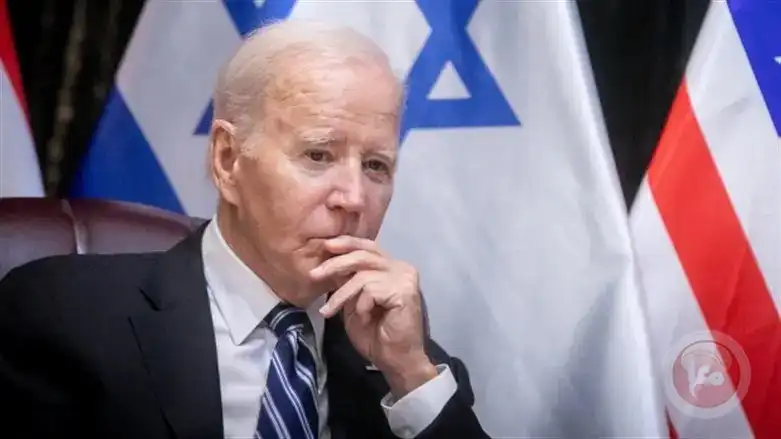
The American website indicated that there is increasing evidence that Biden is beginning to lose his patience with the Israeli official, stressing that the American administration is concerned that Israel will not adhere to its schedule for moving to less severe operations in Gaza.


He also added that US Secretary of State Anthony Blinken's recent visit to Israel exacerbated frustration within the White House and within the ministry.


“Israel’s plan is a dream that cannot be achieved.”

The website confirmed that Blinken made it clear to Netanyahu and the War Cabinet that Israel’s plan for the next day is a dream that cannot be achieved.


The website revealed that Biden had not spoken with Netanyahu for 20 days, after a tense last call between them, as the US President then ended the call in a rude manner, and in the same call the Israeli Prime Minister had rejected Biden’s request that Israel release the Palestinian tax revenues it is withholding.


Despite the White House’s attempt to reduce the extent of these tensions between the two leaders, an American official confirmed that “there is tremendous frustration with the Biden administration.”


  “Next day” plans

According to the site, Biden and his advisors feel that Israel is not doing enough to allow humanitarian aid into Gaza, and they are also frustrated by Netanyahu’s unwillingness to seriously discuss plans for the “next day” of the war, and his rejection of the American plan to reform the Palestinian Authority so that it has a role in Gaza strip.


US officials are increasingly concerned that Israel will not meet its timetable for moving to low-intensity operations in Gaza by the end of January.


According to American officials who spoke to the site, the visit of US Secretary of State Anthony Blinken to Israel last week exacerbated frustration within the White House and State Department with Netanyahu.


Blinken, who visited several Arab countries before heading to Israel, had told Israeli officials that “the Arab countries will not save them” in rebuilding and managing Gaza if Israel does not allow the Palestinian Authority to manage the Strip.


Sources familiar with the US Secretary of State’s talks with Israel revealed that “it has become clear to Blinken that Netanyahu’s refusal to release Palestinian tax revenues hinders American efforts to push for reforms in the Palestinian Authority.”


The sources said that Palestinian President Mahmoud Abbas informed Blinken that he was ready to form a new government, but stressed that it would not be able to work without money, and that tax revenues constitute a large part of the budget.

PALESTINE

Sun 14 Jan 2024 4:23 pm - Jerusalem Time

West Bank: Three Palestinians killed, including a boy by Israeli forces

The Red Crescent Society reported that two young Palestinians were killed by Israeli forces today, Sunday, near the town of Sa'ir, northeast of Hebron.


The Ministry of Health announced that the General Authority for Civil Affairs informed it of the death of the young man, Ahmed Musa Muhammad Jabareen, and the young man, Jalal Issa Muhammad Jabareen, by occupation bullets near Sa’ir.


The teenager Louay Al-Sufi was also killed by Israeli forces during confrontations that broke out in the Ain Al-Sultan camp in the city of Jericho, after Israeli forces stormed it, according to what Palestinian sources reported.

PALESTINE

Sun 14 Jan 2024 3:04 pm - Jerusalem Time

"Prisoner's Club": Israel arrested 5,875 Palestinians in 100 days in the West Bank

The Palestinian Prisoners' Club said on Sunday that the Israeli army arrested about 5,875 Palestinians, including 355 children and 200 women, in the West Bank within 100 days.


The club reported in a statement, “Over the course of 100 days of aggression and genocide in Gaza, Israeli army arrested at least 5,875 citizens of the West Bank,” noting that the tally includes those who were arrested and kept in detention or released later.


It stated that the arrest campaigns affected all groups, “including women and children, as the number of women who were arrested reached about 200, while the number of arrests among children by the end of last December exceeded 355 children.”


The Prisoner's Club continued, "The level of crimes, since last October 7, has taken an upward trend in terms of the level of brutality and the horrific and terrifying details reflected in the testimonies of detainees and their families."


It added, "Among the most prominent crimes is the crime of torture, abuse, and severe beatings, and threatening to shoot them directly, and field investigation with them, and threats of rape, and the use of police dogs, and the use of citizens as human shields and hostages."


It pointed to more than 2,856 administrative detention orders after October 7, "as the number of administrative detainees in the Israeli prisons reached more than 3,290, which is the highest percentage since the years of the 1987 uprising."


Administrative detention is a detention decision by Israeli military order on the grounds of a security threat, without an indictment, and it extends to 6 months, which can be extended.


Inside the prisons, the Prisoners' Club said, "The Israeli prison administration continues to implement systematic crimes and policies against prisoners and detainees, and impose double isolation on them, after stripping them of all their belongings (...) as these crimes led to the martyrdom of 7 prisoners in the Israeli prisons."


Regarding Gaza detainees, the club said, “Israel continues to carry out the crime of enforced disappearance against them, and after 100 days, Israel refuses to reveal any data regarding the fate of Gaza detainees, their exact numbers, or their places of detention.”


The total number of prisoners in Israeli prisons is 8,800, as documented by the club until the end of December 2023.


PALESTINE

Sun 14 Jan 2024 2:41 pm - Jerusalem Time

100 days of war... about 24 thousand killed in Gaza

On the 100th day of the war on Gaza, the Ministry of Health in the Gaza Strip said that the Israeli forces committed 11 massacres that claimed the lives of 125 persons during the past 24 hours. It also announced that the number of victims of the aggression had risen to 23,968 dead, in addition to 60,582 wounded.


The Ministry of Health in the Gaza Strip said that the Israeli forces committed 11 massacres that claimed the lives of 125 persons during the past 24 hours.


The Ministry also announced that the number of victims of the Israeli aggression had risen to 23,968 killed and 60,582 wounded.


Israeli forces prevented ambulance and rescue teams from reaching Al-Maghazi camp in the central Gaza Strip, while Israeli artillery bombed the southern areas of Gaza City.


PALESTINE

Sun 14 Jan 2024 1:54 pm - Jerusalem Time

Euro-Med Observatory: 100,000 casualties in 100 days of war on Gaza

On Sunday, the Euro-Mediterranean Human Rights Observatory revealed shocking numbers resulting from 100 days of the ongoing Israeli war on the Gaza Strip, noting that “100,000 Palestinians were killed and injured.”


The Observatory said in a statement, “There are 100,000 Palestinians killed, wounded and missing on the 100th day of the Israeli genocide against the Gaza Strip.”


It added, "Israel committed horrific war crimes that killed an average of 1,000 Palestinians from the Gaza Strip every day, in the bloodiest statistic in the modern history of wars."


It continued, "About 92% of the victims in Gaza were civilians, including 12,345 children, 6,471 women, 295 health workers, 41 civil defense members, and 113 journalists."


According to the Observatory, “two million and 955 thousand Palestinians were forcibly displaced from their homes and residential areas in the Gaza Strip, without the availability of safe shelter for them, meaning 85% of the total population.”


It accused Israel of "deliberately destroying and causing serious damage to infrastructure facilities in the Gaza Strip, and making it an uninhabitable area for residents."


The Observatory stated that "its attacks did not exclude health facilities, schools, mosques and churches."


By today, Sunday, the bloody war on the Gaza Strip will complete 100 days, after it had begun on October 7, 2023, amid a state of Palestinian and international anticipation for achieving “international justice and punishing Israel for its crimes.”


As of yesterday, Saturday, the Israeli war on Gaza had left 23,843 killed and 60,317 injured, according to the Gaza Strip authorities and the United Nations.

ARAB AND WORLD

Sun 14 Jan 2024 1:23 pm - Jerusalem Time

New York Times: The inevitable danger of US raids on Yemen

The New York Times published an article by a researcher in security affairs, in which he discussed the risks and ambiguity surrounding the American and British military strikes in Yemen and the goal behind them.


The director of the Defense and Security Program at the Middle East Institute, Bilal Youssef Saab, considered that the United States, by striking targets of the Ansar Allah (Houthi) group in Yemen and its Iranian supporters, sent a “stinging” message that it had abandoned the defense-only position in the Red Sea that it had long adopted. It is determined to stop this group's attacks on commercial ships in territorial waters.


He said it was unclear whether this strategy would succeed, given the intransigence of the Houthis, who would benefit from any fighting with the United States. He added that a clash of this kind would enhance their ability to prove their credibility to their American enemies, and divert attention from their “ugly” management of the affairs of the northwestern regions of Yemen and the capital, Sana’a.


However, the author of the article believes that the United States is required to act given the growing threat the Houthis pose to freedom of trade and navigation in the Red Sea, which is a major global shipping lane and of fundamental importance to Washington in the region.


US President Joe Biden expressed his readiness "to implement further measures to protect our people and the free flow of international trade as necessary."


The writer believes that if Biden adheres to this new “tough” approach, provides American forces in the region with the mandate and resources they need, and links any further use of force with diplomatic efforts to end the disastrous war between Israel and the Palestinian Islamic Resistance Movement (Hamas), his chances of curbing the Houthis will improve. getting better.


After the Al-Aqsa Flood operation on October 7, 2023 and Israel's declaration of war, the Houthis vowed to launch attacks aimed at stopping Israeli ships or other ships carrying goods to "occupied Palestinian ports" to show solidarity with the Palestinians in Gaza.


Since last October 17, the Houthis have attacked or harassed at least 27 ships in international shipping lanes.


On January 11, the United States and some of its allies responded by striking more than 60 targets in Yemen, including Houthi radar systems, air defense systems, and storage and launch sites. The United States carried out another round of strikes against the Houthis on Friday.


The writer pointed out in his article that the risks and doubts surrounding the American and British attacks in Yemen are clear.


Iranian support

The Houthis - who were removed by the US State Department from the list of foreign terrorist organizations in February 2021 with the aim of facilitating the transfer of humanitarian aid to parts of Yemen under their control - had announced that they would take revenge.


Announcing this group - in the opinion of the author of the article - may lead to an escalation that Washington strongly desires to avoid, which is evident from the multiple visits of US Secretary of State Anthony Blinken to the region recently.


The author of the article claims that without the "generous" support that the Houthis receive from Iran in the form of money, training, and intelligence information, this group would have lost its ability to cause severe harm to navigation in the region.


However, even if Iran stops its support for the Houthis, this will not prevent them from using the weapons they already have, which is a significant matter, according to the article, the author of which adds that they can also “theoretically” stand alone given their control of the state’s revenues and resources.


In light of these risks - the author continues - the United States has no choice but to respond to the Houthi aggression, which "the more intransigence and recklessness they show, the broader the international consensus to confront them."

ARAB AND WORLD

Sun 14 Jan 2024 11:41 am - Jerusalem Time

Lebanon/Israel conflict: “Netanyahu’s strategy consists of pushing Hezbollah and Iran into error to justify Israeli military intervention,”

As a Hamas official, Saleh el- Arouri, was assassinated in the suburbs of Beirut, the risk of an extension of the conflict between Israel and Hamas has never been closer. 

Decryption with Pierre Razoux, academic director of the Mediterranean Foundation for Strategic Studies (FMES) and author of Tsahal, history of the Israeli army (Perrin)


By Henri Clavier

After the strike against Saleh el-Arouri in the suburbs of Beirut by the Israeli army, should we fear an escalation and a conflagration in the region?


The risks of tension and escalation are higher today than at the start of the war. We see that Benjamin Netanyahu and his supporters are tempted to take advantage of the situation to weaken Hezbollah. In addition to Saleh el-Arouri, four Hezbollah executives were killed by the Israeli strike and an Iranian general was assassinated in Damascus the previous week. For Benjamin Netanyahu, pushing Hezbollah to get involved in the conflict could make it possible to permanently weaken one of the main threats to Israel and prolong the war. The Israeli Prime Minister knows well that when the war is over he risks being targeted by a commission of inquiry, losing the support of the Knesset, having to leave power and facing new legal proceedings.



With this assassination, has the Israeli army crossed Hezbollah’s red lines?


Netanyahu's strategy consists precisely of moving closer to this red line and pushing Hezbollah and Iran to the fault to justify a massive Israeli military intervention against Hezbollah. For Tehran, the red line would be crossed in the event of a strike on Iranian soil; Israeli air force incursions into Syria or Lebanon will not be enough to plunge Iran into the conflict, unless Israel massively attacks Hezbollah's vital infrastructure north of the Litani River, which is not yet the case. Benjamin Netanyahu wants to take advantage of his advantage and push Iran and Hezbollah to cross the Israeli red lines which are the firing of missiles towards the major cities of Israel and the infiltration of opposing commandos into Israeli territory, which goes beyond the framework current very limited fighting on the southern border of Lebanon.


Do Iran and Hezbollah have an interest in an intensification of the conflict?


Not really, and Iranian Supreme Leader Ali Khamenei has called on Hezbollah and the Revolutionary Guards to be patient and not give in to the temptation of direct reprisals that could take the conflict to a new dimension. Hezbollah leader Hassan Nasrallah has also been cautious since the start of the conflict and does not wish to expand the fighting. The red line is still far from being crossed on the side of Hezbollah to the extent that even in the event of targeted assassinations on other members of Sunni militias (such as Islamic Jihad) or Shiite militias other than Hezbollah, they will not should not be enough for Hezbollah to cross Israeli red lines. Furthermore, without targeting large Israeli cities, Hezbollah, which has an arsenal six to eight times greater than that of Hamas (before October 7, 2023), could target strategic infrastructure such as the offshore gas platforms of the Katlan, Tamar and Tamar fields. and Leviathan. This could have a major political and economic cost for Israel, without directly attacking the Israeli population. Finally, Iran has already fulfilled most of its strategic objectives since October 7 by succeeding in stopping the normalization of diplomatic relations initiated by Israel with Arab countries and in particular Saudi Arabia.


Does the Israeli government not risk cutting itself off from the support of the United States in the event of new strikes in Lebanon?


For the United States, targeted assassinations in Lebanon are at the limit of what it can accept, as long as they are not likely to provoke regional escalation of the conflict. The question is whether they were consulted in advance regarding the strike in the suburbs of Beirut.


Can we imagine a situation in which the IDF would launch an invasion of Lebanon?


The whole question will be to know what the balance of power is within the Israeli government if this situation arises. Part of Israeli opinion is aware that the Jewish State must deal with its neighborhood and also knows that Israeli ground interventions in Lebanon have always been difficult for the IDF. This would mean taking the risk of entering into a war of harassment with daily deaths in the army and an even more degraded image of Israel on the international scene. And on the other hand, part of Israeli public opinion considers that their country is engaged in an existential war and that this is the moment to permanently weaken Hezbollah, whatever the risks involved.

Source: Public Senat


ARAB AND WORLD

Sun 14 Jan 2024 11:28 am - Jerusalem Time

US government employees plan to strike over Biden's war on Gaza policies

Federal employees in about 20 US agencies and departments plan to stop working next Tuesday in protest against the way the administration of US President Joe Biden is handling the Israeli war in Gaza, according to the independent Al-Monitor website.


A group calling itself the "United Federal Union for Peace" consists of dozens of government employees who will go on strike on a day they called the "day of mourning" for the 100th day since the Israeli attack in the Gaza Strip. Those organizing the event expected hundreds to join the strike.


One of the strike organizers said that their initiative “came from a collective desire to do everything possible to influence the Biden administration’s policy on this issue,” according to the website.

ARAB AND WORLD

Sun 14 Jan 2024 11:27 am - Jerusalem Time

The President of Namibia denounces Germany's support for "Israel" with "International Justice"

On Saturday evening, the President of Namibia, Haji Geingob, appealed to the German government to reconsider its decision, which he described as “unsuccessful,” to intervene as a third party to defend and support the acts of genocide committed by “Israel” in the Gaza Strip, before the International Court of Justice.


Geingob issued a statement in which he rejected Germany's intention to support "Israel" in refusing to commit genocide in the Gaza Strip.


He stressed that Germany committed the first genocide in the twentieth century on the soil of Namibia in the period from 1904 to 1908, where tens of thousands of innocent Namibians died in the most brutal and horrific conditions.


He added: "The German government is still failing to fully atone for the genocide it committed on the soil of Namibia."


Geingob expressed his deep concern about the decision announced by the government of the Federal Republic of Germany to reject the moral rebuke presented by South Africa before the International Court of Justice that “Israel” is committing the crime of genocide against the Palestinians in Gaza, and described the decision as “horrific.”


Geingob stated in his statement: “Worryingly, the German government ignored the deaths of more than 23,000 Palestinians in Gaza and the horrific United Nations reports that highlighted the internal displacement of 85% of civilians in Gaza amid a severe shortage of food and basic services. The German government chose to defend in the International Court "The government of Israel's heinous acts of genocide against innocent civilians in Gaza and the occupied Palestinian territories."


President Gegeube noted that Germany could not morally express its commitment to the UN Convention on the Prevention of Genocide, including atonement for the genocide in Namibia, while supporting the equivalent of the Holocaust and extermination in Gaza.


He pointed out that various international organizations, such as Human Rights Watch, have horrifyingly concluded that “Israel” is committing war crimes in Gaza.


He stressed that Namibia rejects Germany's support for racist "Israel" in the case of genocide practiced against innocent civilians in Gaza.


President Geingob also reiterated his call, made on December 31, 2023, that no person who loves peace can ignore the massacre launched by “Israel” against the Palestinians in Gaza.

ARAB AND WORLD

Sun 14 Jan 2024 11:25 am - Jerusalem Time

Israel: A massive demonstration in Haifa to demand Netanyahu's departure

Thousands of Israelis took to the streets of Haifa, demanding the resignation of Prime Minister Benjamin Netanyahu and holding early elections to choose his replacement, according to the Times of Israel.


The newspaper wrote, "Thousands of demonstrators in Haifa are demanding early elections for the position of prime minister."


The demonstration was organized by the Popular Left Group, and it is reported that some demonstrators are planning to head towards the city of Caesarea to continue their protest in front of Netanyahu’s house.


Earlier, Netanyahu refused to take responsibility for his security failure and said: “We will answer all the questions, but let us focus on victory.”


Netanyahu stressed that the war in the Gaza Strip cost Israel a heavy price and loss of life among the ranks of the army.


He added, "War has its price, which is a heavy price in terms of the lives of our soldiers, and we will do everything to preserve their lives." But there is one thing we will not do, which is to stop the war before achieving victory.”

ARAB AND WORLD

Sun 14 Jan 2024 11:21 am - Jerusalem Time

Britain: We reject the resettlement of Palestinians outside the Gaza Strip

The British Foreign Office said that the United Kingdom rejects any proposal to resettle Palestinians outside the Gaza Strip.


Britain called on Israel to protect Palestinian civilians and the cessation of all settlement activity.


The Foreign Ministry statement said, "We are concerned about the increase in settler violence in the West Bank since October 7."

OPINIONS

Sun 14 Jan 2024 11:11 am - Jerusalem Time

War on Gaza: The West's military action against the Houthis is doomed to fail

Middle East Eye

Middle East Eye

Opinion Writer

By Richard Burden


Attacks on Red Sea shipping will continue until the US and UK help remove Houthi justifications for them by demanding an Israel-Hamas ceasefire

With more than 68 ships per day passing through the Suez Canal, carrying 12 percent of all goods traded in the world, it has been impossible for the international community to ignore the escalating attacks on merchant shipping in the Red Sea that Yemen's Houthis have launched over the past two months.

In that context, the decision of the US and the UK to take military action against Houthi bases in Yemen was widely predicted.

But what is the strategy behind that action? Will it stop the attacks on shipping, and will it help or hinder stated US objectives of preventing a regional escalation of the war that is devastating Gaza?

Firstly, nobody should be under any illusions about what the Houthis are like. The families of the 150,000 people killed in Yemen’s civil war can attest to their brutality.

More than 227,000 Yemenis have also died from famine and lack of healthcare during the war. The humanitarian crisis continues to this day, with poverty still at grotesque levels. The fact that public-sector workers in Houthi-controlled areas have not been paid for over seven years also underlines how ordinary Yemenis experience the reality of Houthi rule.


In claiming that their actions in the Red Sea are acts of solidarity with Palestinians under siege, there is little doubt that the Houthis are trying to gain legitimacy in the Arab world and to shore up a flagging reputation at home by diverting attention elsewhere.


Their actions also play a useful role in the regional power-play of their main ally, Iran.

All the signs are that this week's US and UK air strikes on Yemen will only further feed these agendas.


Houthis vow retaliation

Yes, the US and UK have the military capability to hit Houthi bases hard and to carry on shooting out of the sky any drones or missiles that continue to get through to attack ships in the Red Sea. But will they be able to eliminate the capacity of the Houthis to carry on firing? 


It is already clear that they will not. The Houthis have already vowed to retaliate and launched a further missile attack near the Red Sea within hours of US and UK aircraft returning to their bases.

Remember, thousands of Saudi air strikes were unable to militarily destroy the Houthis throughout Yemen's long-running civil war.


Why should the far more limited air strikes carried out by US and UK forces this week prove any more effective, particularly when the Houthis will still be able to rely on Iran to resupply them with what they need to continue their attacks one way or another?


So, even in military terms, there is a big question mark over whether the US and UK stand any realistic chance of achieving their stated objectives.

But the real danger is far wider than this. 

Bluntly, to people across the Middle East and beyond, this week's action by the US and UK reeks of double standards.


Even if people in the region were previously skeptical of the Houthis' claim to be guardians of the Palestinians, now they will ask how western powers can justify taking military action in an act of solidarity with a people under siege when trade is disrupted, yet accept no accountability for their own actions in solidarity with the state conducting the siege.


US support of Israel may not disrupt shipping lanes, but the armaments America has supplied have directly contributed to the deaths of more than 23,000 people in Gaza so far.


For UK and US political leaders now to claim that they had to take action against the Houthis to protect the lives of civilians aboard merchant ships in the Red Sea will seem like rank hypocrisy when they are prepared to allow the continued killing of so many thousands of Palestinian civilians, many of them children, in their own homes a few hundred miles to the north.


The anger this generates across the Middle East is real and it is growing, allowing the Houthis to acquire a perceived legitimacy they don't deserve.

All this, combined with ongoing clashes on Israel's northern border and the possibility of more Israeli assassinations of Hamas or Hezbollah leaders deep inside Lebanon, not only increases the risk of regional escalation, it increases the danger of a new wave of terrorist attacks beyond the Middle East.


Mantra demanding 'action'

Clearly, the attacks in the Red Sea cannot be ignored. The US, UK and other naval powers have a responsibility to protect shipping, including shooting down missiles that are fired and repelling Houthi attempts to board vessels.

Of course, that cannot be the end of the story. Sooner or later a Houthi missile could get through and lives could be lost.

But this current action by the US and UK has all the hallmarks of policy driven more by the mantra that "something must be done" than by clear strategic thinking about what that "something" should be.


The action by the US and UK has all the hallmarks of a policy driven more by the mantra that 'something must be done' than by clear strategic thinking about what that 'something' should be


All the signs are that, even if scores of Houthi military bases have been seriously degraded this week, the attacks on shipping will continue. When they do, will the US and the UK really want to escalate their tit-for-tat retaliation to the point of all-out war on Houthi-controlled areas of Yemen, with all the geopolitical risks that would involve?


The way to bring the attacks in the Red Sea to an end is to remove the pretext the Houthis use to carry them out and gain domestic and regional legitimacy for themselves.


It means tackling causes, not just symptoms. Central to that must be a willingness by western leaders to end their double standards over Israel and Palestine. It requires demonstrable pressure, most importantly by the US and its allies, to achieve a permanent bilateral ceasefire between Hamas and Israel to end the bloodshed and secure the release of hostages.

That pressure has to be real - no more diplomatic hand-wringing over the level of civilian casualties that the Netanyahu government chooses to ignore.

Ending the double standards also has to mean consistency in the application of international law.

Yes, that includes holding to account those who attack ships in the Red Sea. It also means calling out war crimes in Israel and Palestine no less explicitly than in Ukraine. And it means requiring compliance with whatever the International Court of Justice may rule on South Africa's application under the Genocide Convention for an injunction to halt Israel's onslaught on Gaza.


International law is meant to be universal. It is beyond time that western political leaders treated it as such.

Doing so is strategically the right thing to do. It is also morally the right thing to do.


ARAB AND WORLD

Sun 14 Jan 2024 10:42 am - Jerusalem Time

Arab Public Opinion on Israeli War on Gaza: 67% of respondents say the military operation carried out by Hamas was a legitimate

The Arab Center for Research and Policy Studies announced the results of the public opinion poll regarding the Israeli war on Gaza on Wednesday 10 January 2024. The poll was carried out on a sample of 8000 respondents (men and women) from 16 Arab countries. 

The survey questions were selected to determine the opinions of citizens in the Arab region on important topics related to the Israeli war on Gaza.


The results of the survey demonstrate the locality of the war as felt by Arab public opinion, with 97% of respondents expressing psychological stress (to varying degrees) as a result of the war on Gaza. 84% expressed a sense of great psychological stress.

About 80% of respondents reported that they regularly follow news of the war, compared to 7% who said that they do not follow it, a further indication that the Arab public sees this war as a local event. To access the news 54% of respondents relied on television, compared to 43% who relied on the internet.


It is noteworthy that the results highlighted that Arab public opinion does not believe that the military operation carried out by Hamas on 7 October 2023 was in pursuit of a foreign agenda. 35% of respondents considered that the most important reason for the operation was the continued Israeli occupation of the Palestinian territories, while 24% attributed it mostly to defense against Israel’s targeting of Al-Aqsa Mosque, and 8% saw it as a result of the ongoing siege of the Gaza Strip. 


While 67% of respondents reported that the military operation carried out by Hamas was a legitimate resistance operation, 19% reported that it was a somewhat flawed but legitimate resistance operation, and 3% said that it was a legitimate resistance operation that involved heinous or criminal acts, while 5% said it was an illegitimate operation.


The results showed that there is an Arab consensus of 92% expressing solidarity with the citizens of the Arab region with the Palestinian people in Gaza. While 69% of respondents expressed their solidarity with Palestinians and support for Hamas, 23% expressed solidarity with Palestinians despite opposing Hamas, and 1% expressed a lack of solidarity with the Palestinians.


The majority of respondents rejected comparisons between Hamas and ISIS made by predominately Israeli and Western politicians and media personalities.

When asked about the responses of regional and international powers to Israel’s war on Gaza, 94% considered the US position negatively, with 82% considering it very bad. In the same context, 79%, 78%, and 75% of respondents viewed positions of France, the UK, and Germany negatively. Opinion was split over the positions of Iran, Turkey, Russia, and China. While (48%, 47%, 41%, 40%, respectively) considered them positively (37%, 40%, 42%, 38%, respectively).In the same context, 76% of respondents reported that their position toward the United States following the Israeli war on Gaza had become more negative, indicating that the Arab public has lost confidence in the US. 


Furthermore, respondents demonstrated a near consensus (81%) in their belief that the US government is not serious about working to establish a Palestinian state in the 1967 occupied territories (The West Bank, Jerusalem, and Gaza).About 77% of respondents named the United States and Israel as the biggest threat to the security and stability of the region. While 51% saw the United States as the most threatening, 26% considered the biggest threat to be Israel. While 82% of respondents reported that US media coverage of the war was biased towards Israel, only 7% saw it as neutral.

Arab public opinion sees the Palestinian Cause as an Arab issue, and not exclusively a Palestinian issue. A consensus of 92% believe that the Palestinian question concerns all Arabs and not just the Palestinians. 

On the other hand, 6% said that it concerns the Palestinians alone and they alone must work to solve it. It is worth noting that this percentage is the highest recorded since polling began in 2011, rising from 76% at the end of 2022, to 92% this year. Some countries recorded significant increases. In Morocco, it rose from 59% in 2022 to 95%, in Egypt from 75% to 94%, in Sudan from 68% to 91%, and in Saudi Arabia from 69% to 95%, a statistically significant increase that represents a fundamental shift in the opinions of the citizens of these countries.

Arab public opinion is almost unanimous in rejecting recognition of Israel, at a rate of 89%, up from 84% in 2022, compared to only 4% who support its recognition. Of particular note is the increase in the percentage of those who rejected recognition of Israel in Saudi Arabia from 38% in the 2022 poll to 68% in this survey. 


Such a statistically significant increase also applies to other countries such as Morocco, where the percentage rose from 67% to 78%, and Sudan, where it increased from 72% to 81%.When asked about their opinions on what measures Arab governments should take in order to stop the war in Gaza, 36% of respondents stated that Arab governments should suspend all relations or normalization processes with Israel, while 14% of them stated that aid and support should be brought into Gaza without Israeli approval, and 11% said that the Arab governments should use oil as a weapon to assert pressure on Israel and its supporters.

There is a near consensus among Palestinian respondents from the West Bank (including Jerusalem), around 95%, that safety and freedom of movement between the governorates and cities of the West Bank and their sense of security and personal safety have been affected negatively since 7 October 2023.A further 60% of Palestinian respondents in the West Bank said that they had been subjected to or were witnesses to raids by the occupation army forces, while 44% said that they were subjected to arrest or interrogation by the Israeli army, and 22% reported that they were subjected to harassment by settlers.


This survey is the first of its kind to gauge public opinion on the topic across the Arab region. The field work was conducted from 12 December 2023 to 5 January 2024 in Mauritania, Morocco, Algeria, Tunisia, Libya, Egypt, Sudan, Yemen, Oman, Qatar, Kuwait, Saudi Arabia, Iraq, Jordan, Lebanon, and the West Bank, Palestine (including Jerusalem). 


The surveyed communities represent 95% of the population of the Arab region and its far-flung regions. 

The sample in each of the aforementioned communities was 500 men and women, drawn according to cluster and self-weighted sampling methods to ensure that every individual in each country had an equal probability of appearing in the sample.

** You can download the full survey report here arab-opinion-war-on-gaza-full-report-en.pdf

arab-opinion-war-on-gaza-full-report-en.pdf

* Read the press release detailing the main findings of the poll here. 22arab-opinion-war-on-gaza-press-release-en.pdf

22arab-opinion-war-on-gaza-press-release-en.pdf