PALESTINE

Thu 14 May 2026 3:41 pm - Jerusalem Time

A delegation from the National and Civil Action Commission and the Jerusalem Chamber of Commerce meets with the Omani Ambassador in Ramallah

Ramallah - "Al-Quds" Dot Com - By Ahmed Jalajel - A delegation from the Jerusalem National and Civil Action Commission and the Jerusalem Chamber of Commerce met with His Excellency the Omani Ambassador in Ramallah, Abdullah bin Omar bin Salem Al-Haddad, and the embassy staff. Speakers from the Commission and the Chamber of Commerce unanimously expressed their high gratitude and appreciation for the Omani role in supporting our people and our Palestinian cause, politically, media-wise, financially, and relief-wise, and within the framework of cultural and heritage exchange. The delegation also provided a detailed and in-depth explanation of the Israeli violations in the city of Jerusalem, and the comprehensive war waged against Jerusalemites in all fields and arenas, targeting people, stones, trees, and Islamic and Christian holy sites, foremost among them Al-Aqsa Mosque and the Church of the Holy Sepulchre. The delegation warned that there are serious Judaization risks coming to Al-Aqsa, especially in light of calls by Talmudic and Torah groups, supported by the occupation government, to storm Al-Aqsa and raise Israeli flags in its courtyards on the anniversary of what is known as the unification of Jerusalem, coinciding with the 78th anniversary of the Nakba of our Palestinian people.

The delegation called on the Omani government to support and assist the commercial and economic movement in the city of Jerusalem, and to adopt projects that would serve traders and strengthen their steadfastness in the Old City, such as the solar energy project and other projects that leave a distinctive Omani impact and footprint in supporting our people in the city. Finally, the delegation thanked the Ambassador and the embassy staff for their warm reception and for working to enhance future communication and cooperation.

PALESTINE

Thu 14 May 2026 3:41 pm - Jerusalem Time

Escalation in Jerusalem and the West Bank: Al-Aqsa Incursions and an Arrest Campaign Targeting Associations and Doctors

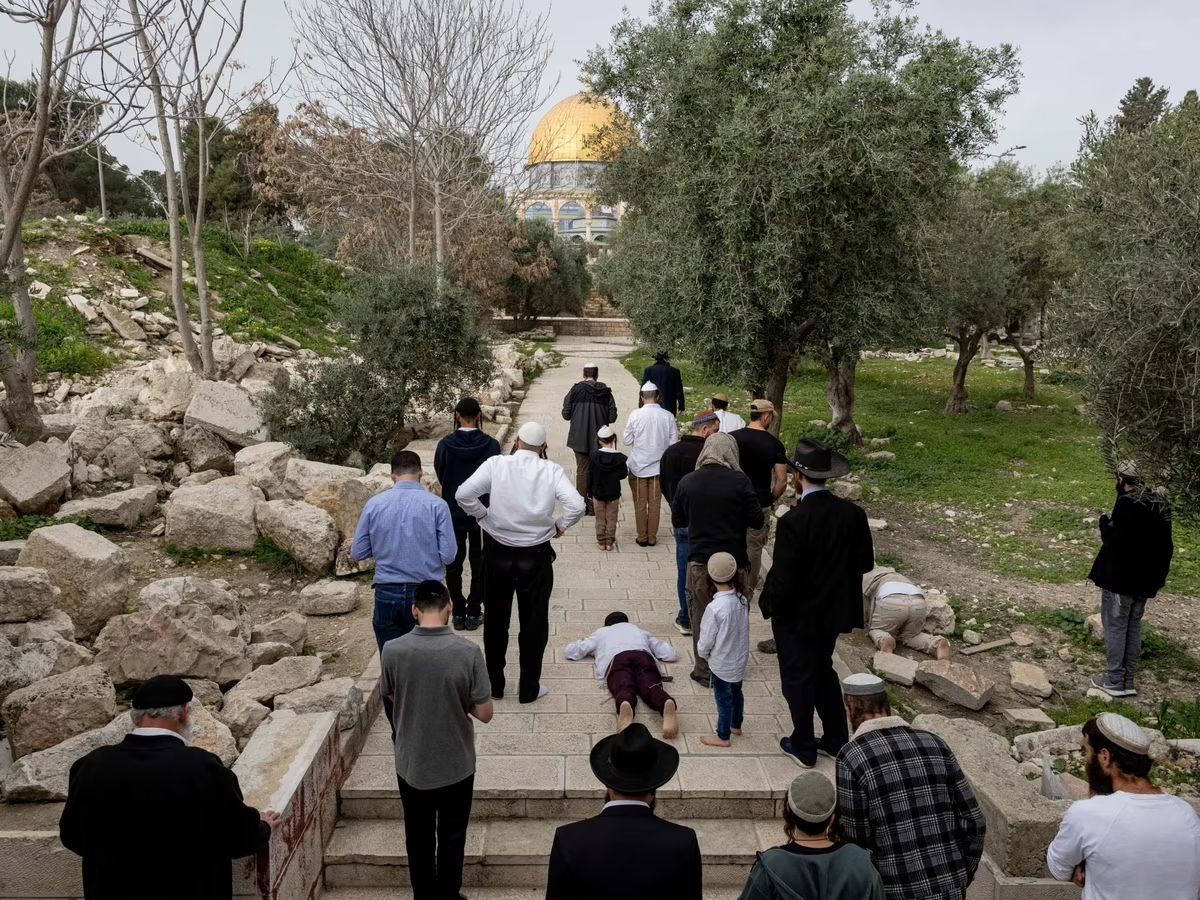
Groups of settlers stormed the courtyards of the blessed Al-Aqsa Mosque in occupied Jerusalem on Thursday morning, where they conducted provocative tours and performed Talmudic rituals under tight security from the occupation forces. These incursions come amidst official warnings issued by the Jerusalem Governorate about plans led by the alleged 'Temple organizations,' aiming to impose a new reality and expand the scope of violations during upcoming occasions, especially what is called 'Jerusalem Unification Day.'

In a related context, Israeli occupation forces launched a wide-ranging raid campaign in various governorates of the West Bank, focusing on Nablus city where the 'Madaed' charitable association was stormed and closed. The forces tampered with the association's contents and confiscated some of its belongings before issuing a decision to close it, claiming it provided services to entities described by the occupation authorities as 'illegal,' without providing clear evidence for these allegations.

Military operations at dawn today included the cities of Hebron, Bethlehem, Salfit, and Qalqilya, where local sources reported the arrest of a number of citizens, including two doctors from the town of Tafuh, west of Hebron, after their homes were raided and thoroughly searched. These arrests fall within the ongoing field escalation policy adopted by Israeli forces in West Bank cities and towns for several months, leading to an increase in security tension.

Regarding settler attacks in pastoral areas, the human rights organization 'Al-Baydar' revealed a forced displacement crime targeting a Bedouin family of seven in the area west of Al-Auja village, north of Jericho. Sources explained that continuous pressure, physical assaults, and intimidation by settlers forced the family to forcibly relocate towards the northern Jordan Valley, as part of the occupation's efforts to empty areas classified as 'C' of their original inhabitants.

International reports indicate the seriousness of the humanitarian situation in the West Bank, where UNICEF noted that the escalating pace of violence since the beginning of 2025 has led to the martyrdom of approximately one Palestinian child weekly. This field reality reflects the extent of violations faced by Palestinians, amidst the ongoing war on the Gaza Strip and the intensification of military and settlement operations in all occupied territories.

Jerusalem Governorate warns of an escalation led by Temple organizations in cooperation with the occupation government to change the historical and legal status of Al-Aqsa Mosque.

PALESTINE

Thu 14 May 2026 3:41 pm - Jerusalem Time

Houla, Lebanon: A Memory of Massacres Extending from the 1948 Nakba to the Current Aggression

The scenes coming from the border town of Houla in the Marjayoun district bring back bloody chapters that have not left the memory of South Lebanon for decades. The systematic destruction witnessed in the town today seems to be a continuation of a series that began in 1948, when Zionist gangs committed a horrific massacre against its residents and land.

Houla is located in a sensitive strategic position within what is known as the 'Galilee Finger,' south of the Litani River and adjacent to the occupied Palestinian border. Its area is about 16 square kilometers, and it is bordered by the villages of Markaba, Tallousa, and Mays al-Jabal, which has always placed it on the front line against Israeli ambitions.

The roots of the tragedy date back to May 1948, when Zionist gangs infiltrated and killed three men from the town, prompting the Arab Liberation Army to intervene and establish a presence there. However, the withdrawal of Arab forces in October of the same year opened the door to a humanitarian catastrophe that years have not erased.

On October 31, 1948, the attackers used deception to enter the town, wearing kuffiyehs and agals to make the residents believe they were from the Arab Liberation Army. The residents welcomed them, thinking they were alternative Arab forces, but the attackers soon revealed their identity and began a widespread arrest campaign that included 85 people.

The arrested young and elderly men were taken to three houses in the town, where they were executed in cold blood while unarmed and with their hands raised. The occupation did not stop at killing; it also blew up the houses over the bodies of the victims, in a brutal scene that embodies the policy of extermination adopted by the Zionist gangs at the time.

Accounts vary regarding the final number of martyrs, but local estimates indicate that between 70 and 80 martyrs fell in that massacre. The town commemorated their memory with a memorial bearing the names of about 100 martyrs, including women and children who died in various attacks targeting the village.

Historical documents highlighted the name of Shmuel Lahis, a company commander in the Carmeli Brigade, as directly responsible for this crime. Although he was the only soldier tried for killing Arabs during the Nakba, the Israeli judiciary reduced his sentence to one year, then released him with a swift pardon.

The stark irony in Lahis's story was his subsequent career path, where he was appointed Director-General of the Jewish Agency. This honoring of a war criminal reflects the Israeli approach of reintegrating killers into high positions, instead of holding them accountable for documented crimes against Lebanese and Palestinian civilians.

Houla suffered from direct occupation that lasted from 1978 until liberation in 2000, a period that witnessed intense repressive practices. The systematic killing, arrest, and displacement forced the majority of the town's youth into forced displacement, seeking lost safety under the weight of Israeli military control.

In the recent aggression that began in October 2024, Israel returned to using more lethal means to destroy what remained of life in Houla. International human rights sources documented widespread destruction affecting thousands of residential and agricultural facilities in the border villages, in a clear attempt to turn them into uninhabitable areas.

Field sources reported that the occupation army is currently destroying entire neighborhoods in the town, which brings back memories of the first displacement in 1948. At that time, the people of Houla took refuge in the Dbayeh area east of Beirut and lived in tin shacks, before returning after the armistice agreement in March 1949.

Houla's history is a record full of steadfastness and pain, as the occupation repeatedly demolished its homes, and each time the residents rebuilt. Today, the town's residents find themselves displaced once again in displacement centers, awaiting the moment of return to their land, which has never stopped offering martyrs.

The massacre, which occurred one day after the 'Salha' massacre in the seven villages, remained etched in the collective memory of the people of the South. Names like Zainab Younes, Amna Hammoud, and the child Yahya Qassem remain living testimonies to the brutality of the crimes committed by the 'Haganah' gangs led by Menachem Begin.

What is happening today in Houla is not just a fleeting military confrontation, but a new chapter in the struggle for existence on the Lebanese-Palestinian border. Israel is trying, through its 'scorched earth' policy, to erase the geographical memory of the village, but history proves that Houla always rises from the ashes.

The criminal Shmuel Lahis, responsible for the execution of dozens in Houla, was later rewarded with his appointment as Director-General of the Jewish Agency after a sham one-year prison sentence.

ARAB AND WORLD

Thu 14 May 2026 3:40 pm - Jerusalem Time

Intelligence Report Warns: China Reaps Benefits from US War on Iran, Bolsters Geopolitical Superiority

A high-level US security assessment, circulated concurrently with President Donald Trump's visit to Beijing, revealed alarming data regarding China's exploitation of the ongoing military confrontation with Iran. US officials familiar with the analysis explained that Beijing successfully leveraged the war to enhance its superiority over the United States in military, economic, and diplomatic spheres, benefiting from Washington's preoccupation in the Middle East.

The report, prepared by the Intelligence Directorate of the Joint Chiefs of Staff, used the 'DIME' framework to assess Chinese power across four key axes. The assessment indicated that Beijing skillfully employed diplomatic, informational, military, and economic tools to undermine US influence, at a time when the Pentagon faces increasing logistical and strategic challenges due to the prolonged conflict.

Since the outbreak of military operations launched by the United States and the occupying state against Iran in late February, China has emerged as an alternative arms supplier. Beijing has sold defense systems to Washington's traditional allies in the Gulf region, who seek to protect their bases and oil facilities from intense Iranian missile and drone attacks.

Economically, Beijing exploited the global energy crisis resulting from the closure of the Strait of Hormuz, through which one-fifth of global oil production passes. China provided technological and energy assistance to many countries struggling to meet their needs, taking advantage of the absence of the usual US leadership role in managing global fuel and gas supply shortages.

The intelligence report warned that the war has depleted massive stockpiles of advanced US munitions, which were earmarked for a potential confrontation in the Pacific region. This severe shortage raises serious concerns among Washington's allies in Taiwan, Japan, and South Korea about the US military's ability to intervene quickly should Beijing decide to take military action against Taiwan.

The war also provided a golden opportunity for the Chinese military to observe modern US combat methods and test the effectiveness of Western weapons in the field. According to informed sources, Beijing is currently studying the shortcomings that appeared in US military performance to develop its future operational plans and enhance its defensive and offensive capabilities based on these lessons.

Diplomatically, China adopted rhetoric describing the war as 'illegitimate,' exploiting global public criticism of military operations to enhance its image as a responsible power. Through this approach, Beijing sought to undermine US claims of leading a rules-based international order, describing Washington as a reckless power drawn into endless bloody conflicts.

In an official reaction, Pentagon spokesman Sean Parnell denied the validity of these conclusions, considering claims of a shift in the global balance of power in China's favor to be 'completely false.' Parnell affirmed that the United States still maintains its qualitative and quantitative superiority, despite the challenges posed by the current confrontation in the Middle East.

For her part, White House spokeswoman Olivia Wells stated that US forces succeeded in destroying the bulk of Iran's military capabilities in record time. She added that the naval blockade currently imposed is one of the most successful operations in history, aiming to dry up the Iranian regime's funding sources and force it to comply with international demands.

In contrast, the Chinese Embassy in Washington affirmed that its priority is to prevent renewed fighting and work to de-escalate the volatile situation. A spokeswoman for the embassy said that Beijing rejects exploiting the situation to tarnish the reputation of nations, emphasizing her country's commitment to promoting global peace away from alliance politics and military incitement.

Security experts, such as Jacob Stokes, believe that the current timing of the disclosure of this information is highly sensitive given Trump's visit to Beijing. The visit aims to reset relations between the two largest economies, but it comes amid a decline in Trump's global standing due to the severe damage to the global economy caused by the war and the disruption of energy supplies.

Despite Trump's assurances before leaving Washington that he does not need Beijing's help to end the war, the reality on the ground indicates otherwise. China has become the second most fortified country against energy crises after the United States, thanks to its massive investments in renewable energy and its oil reserves, which gives it strong leverage in negotiations.

Analyst Ryan Hass points out that Beijing is not exercising 'benevolence' in providing energy solutions to Thailand, the Philippines, and Australia, but rather sowing discord between Washington and its partners. The gap left by the US administration in managing the current energy crisis has allowed China to present itself as a reliable provider of technological solutions and alternative fuels in the long term.

In conclusion, the shortage of munitions and US defense industrial capacity remains the biggest concern facing planners in Washington. The high cost of interceptor missiles and the long time required to replace them put US military readiness to the test, which reinforces China's geopolitical position as it quietly observes the scene and awaits the opportune moment to impose a new reality.

The war on Iran significantly improves China's geopolitical standing and portrays Washington as a power mired in costly conflicts.

PALESTINE

Thu 14 May 2026 3:40 pm - Jerusalem Time

US Judiciary Halts Sanctions Imposed on UN Rapporteur Francesca Albanese

The US federal judiciary has issued a decision to suspend the sanctions that the US administration had imposed last year on Francesca Albanese, the United Nations Special Rapporteur on the situation of human rights in the occupied Palestinian territories. This judicial step brings renewed attention to the escalating controversy surrounding the limits of freedom of expression and the political pressures exerted by Washington regarding the ongoing war in the Gaza Strip.

The United States had taken punitive measures against Albanese in July 2025, following her bold statements criticizing US support for Israel. The justifications for the sanctions also included her recommendation to the International Criminal Court to issue international arrest warrants against Israeli Prime Minister Benjamin Netanyahu on charges related to war crimes.

In the details of the judicial ruling, Federal Judge Richard Leon issued a temporary injunction preventing the implementation of these sanctions, noting in his reasoning that upholding freedom of expression is a fundamental pillar that serves the public interest. This decision reflects the legal and political tension within American institutions regarding how to deal with international figures who criticize Washington's foreign policies.

For his part, US Secretary of State Marco Rubio had previously expressed strong displeasure with Albanese's reports, in which she accused the Israeli occupation authorities of committing acts amounting to genocide against Palestinians. The US administration at the time considered that the UN rapporteur's positions exceeded the limits of her mandate and harmed strategic relations in the region.

Following the judicial decision, Francesca Albanese expressed her welcome of this step, which she considered a victory for justice, as she had previously affirmed that the sanctions aimed to undermine her international mission. Albanese posted a message of thanks on her official 'X' account to everyone who supported her in facing these pressures, affirming her continued commitment to performing her professional duty.

Albanese, an Italian lawyer, has held her position by mandate of the UN Human Rights Council since 2022, where her mission focuses on documenting violations in the occupied territories. Although she does not officially speak on behalf of the international organization as a whole, her reports resonate widely and have a significant impact in global legal and human rights forums.

The UN official has revealed on several occasions that she has been subjected to a series of direct threats and harassment as a result of her firm stances on the Israeli war on Gaza. She considered that these attempts primarily aim to intimidate human rights defenders and prevent the facts related to Palestinian suffering from reaching global public opinion.

Judge Leon's decision reopens the door to in-depth legal discussions about the legality of using economic and political sanctions as a tool to silence international human rights voices. It also puts the US administration in an awkward position before human rights organizations that demand the guarantee of the independence of international investigators and their protection from direct political targeting.

Protecting freedom of expression always serves the public interest.

PALESTINE

Thu 14 May 2026 3:40 pm - Jerusalem Time

Hundreds of settlers storm Al-Aqsa, occupation imposes strict restrictions on worshippers

The blessed Al-Aqsa Mosque in the occupied city of Jerusalem witnessed a wave of extensive incursions this Thursday morning, carried out by hundreds of Israeli settlers under heavy protection from occupation forces. Among the intruders were Knesset member Ariel Kallner and the extremist rabbi Yehuda Glick, who performed Talmudic and provocative rituals in the mosque's courtyards.

Sources from the Jerusalem Governorate reported that the occupation authorities imposed strict military measures at the mosque's gates, including severely restricting the entry of Palestinian worshippers. These measures aim to empty the mosque of its rightful occupants to secure routes for the settlers, who have intensified their presence since the early morning hours.

Sources in the Islamic Endowments Department stated that approximately 422 settlers stormed the mosque during the first three hours of the morning tours alone. These actions come in response to calls launched by extremist settler groups on the occasion of what they call the 'Hebrew anniversary of the occupation of Jerusalem'.

In the context of field restrictions, the occupation police prevented men under the age of 60 and women under the age of 50 from entering Al-Aqsa since dawn prayers. The forces also assaulted by pushing and beating a number of male and female steadfast worshippers who tried to be present at the outer gates of the mosque.

Occupation forces forced employees of the Endowments Department and students of the Sharia school, who are taking their final exams, to remain confined inside the covered prayer halls and administrative buildings. These measures prevented any Palestinian presence in the open courtyards, turning the mosque into a military barracks for the benefit of the intruders.

In the Old City, a state of commercial paralysis prevailed after occupation forces compelled shop owners to close their doors all day. This step comes to secure the route of the provocative 'Flag March' scheduled for this evening, in which thousands of settlers are expected to participate.

Minister of the Negev and Galilee, Yitzhak Wasserlauf, a member of the extremist 'Jewish Power' party, had stormed Al-Aqsa Mosque on Wednesday evening in preparation for these events. This official participation by ministers and Knesset members reflects direct Israeli government support for changing the status quo in the holy sites.

Media estimates indicate that about 50,000 settlers will participate in the Flag March, which will tour Palestinian neighborhoods in East Jerusalem. This march is usually accompanied by racist anti-Arab chants and physical assaults on the property and residents of the holy city.

Regarding violations in the West Bank, human rights reports indicated the displacement of a Bedouin family of 7 from the Auja area north of Jericho due to repeated settler attacks. These events coincide with an arrest campaign that targeted two doctors from the town of Taffouh and raids in several cities in the West Bank.

In Nablus, the occupation authorities closed the 'Maded' charity association, claiming it provided services to illegal entities, as part of the crackdown on civil work. These practices continue amidst an escalating pace of violence targeting Palestinian civilians in various governorates.

For its part, UNICEF warned of the seriousness of the field situation, noting that a Palestinian child is killed weekly in the West Bank since the beginning of 2025. These statistics confirm the extent of the systematic targeting of the Palestinian people in the absence of international accountability.

Occupation forces forced worshippers, Waqf employees, and Sharia school students to remain inside the covered prayer halls to clear the courtyards for the intruders.

OPINIONS

Thu 14 May 2026 3:40 pm - Jerusalem Time

"Fatah" Between the First Shot... and the Last Bullet!

Dr. Ibrahim Melhem

Editor-in-Chief

The least that can be said is that "Fatah" today goes to its eighth conference amidst unprecedented existential challenges, which impose duties on the conferees commensurate with these challenges. The race today is for burdens, not gains. Before the ambitious and greedy, and those whose hearts and pockets have been won over, there are major tasks that cannot be solved by slogans, eloquent promises, or statements. Their test will not exceed a few days, when those who emerge from the ballot boxes find themselves facing mountains of tasks, responsibilities, and unanswered questions.Protecting the dignity of the families of martyrs, wounded, and prisoners, rescuing them from the scourge of hunger, destitution, and harsh living conditions, and helping people in refugee camps, villages, and towns ravaged by the claws of settlement in the West Bank, and responding to the concerns and pains of people in Gaza, should be at the forefront of the programs of those competing to serve their people. Slogans are worthless if not accompanied by actions; for life is the strongest weapon in confronting an enemy that practices genocide and displacement, and undermines the foundations of the state by imposing harsh realities that create an expelling environment, emptying the land of its owners.Today, "Fatah" is most in need of those who possess keen insight and sharp foresight. The purpose of holding the conference is not to replace names with names, but rather it is a station for evaluation and correction, mending the cracks in the surfaces, and injecting new blood into the veins of the movement, which is deeply rooted in struggle, making it capable of continuing to run on the path of the early pioneers who carried it on their shoulders in its early beginnings.Fatah cannot regain its role unless the Eighth Conference is a starting point for comprehensive national unity, ending the division, and establishing a genuine partnership in which the movement lays down its burden, so that all national factions can have the honor of holding its end to carry the stone of the Palestine Liberation Organization, the legitimate and sole representative of the Palestinian people.Fatah, as the locomotive of the struggle and the focus of hopes, must and can take the initiative to compensate for shortcomings and make up for what has been missed; through conducting reviews, correcting paths, rectifying policy deviations, restoring eroded trust in the movement's bodies and institutions, and addressing disputes among comrades. It is not enough for Fatah to be the owner of the first shot, but rather to be a shield that wards off the last bullet from its people.

ARAB AND WORLD

Thu 14 May 2026 3:40 pm - Jerusalem Time

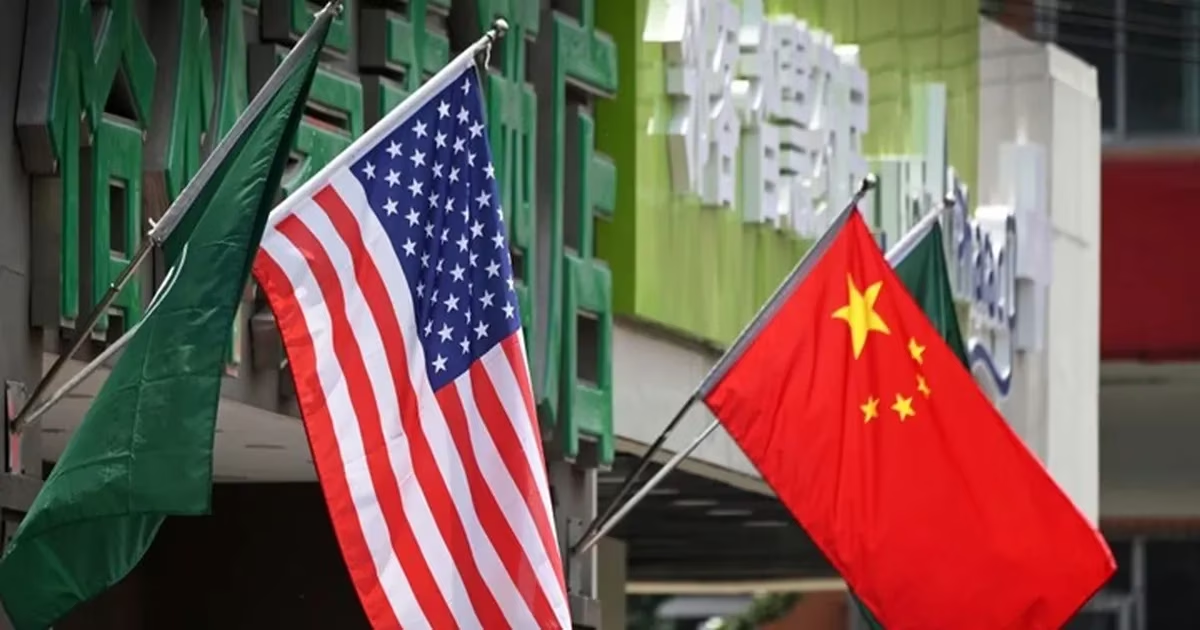
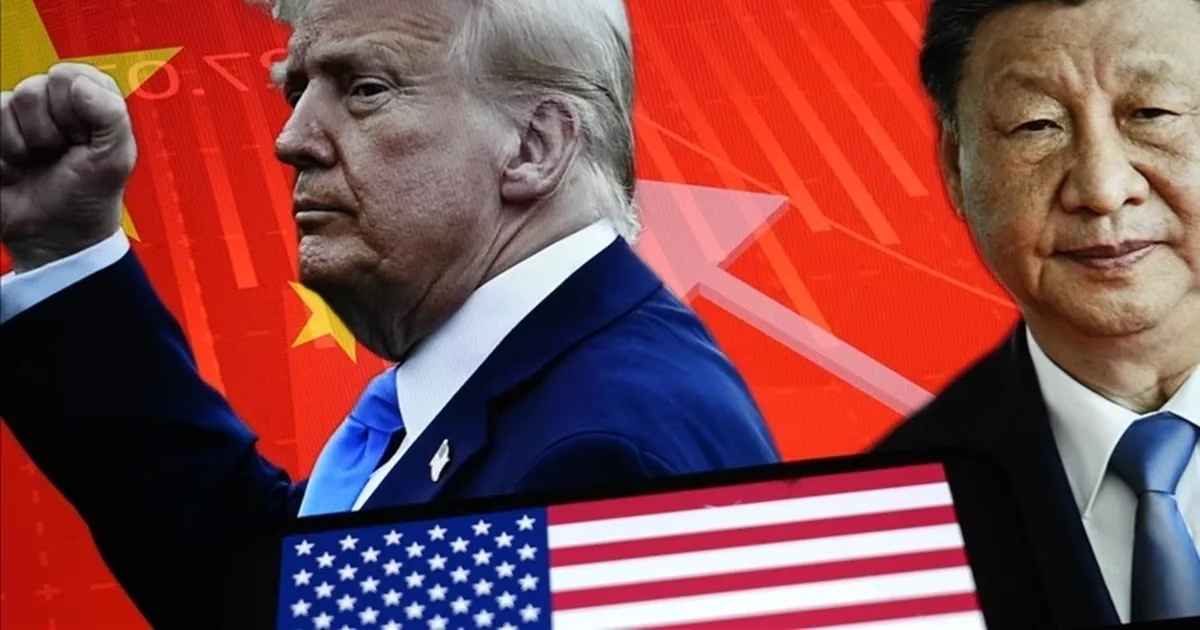
Beijing Summit: Trump and Xi Discuss 'Trade Truce' and China Warns of Conflict Over Taiwan

Chinese President Xi Jinping began his meeting with his American counterpart Donald Trump in Beijing by affirming that trade talks between the two superpowers are making tangible progress. Xi clarified during the two-day summit that cooperation is the only way to achieve the interests of both parties, while warning that confrontation would lead to severe damage affecting everyone.

In a firm message, the Chinese President stressed that the issue of Taiwan island represents the most sensitive and important matter in bilateral relations. He warned that any mishandling of this issue or continued military support for the island could push relations towards a very dangerous path, indicating the possibility of a direct clash if Beijing's red lines are not respected.

For his part, US President Donald Trump praised his Chinese counterpart, describing him as a 'great leader,' and suggesting that this summit could be classified as the most important diplomatic event in modern history. Trump expressed optimism about the anticipated results, despite the political and economic pressures facing his administration in Washington due to complex domestic and foreign issues.

The opening session saw a notable presence of US tech giants, as Trump was accompanied by Elon Musk, Jensen Huang, and Tim Cook. Musk described the initial atmosphere of the discussions as 'wonderful,' reflecting the American business sector's desire to end the state of trade tension and open new horizons for investment in the massive Chinese market.

This summit comes as a continuation of preliminary discussions held in South Korea, where sources reported that economic teams reached balanced initial understandings. Both sides aim from this round to solidify the trade truce agreed upon last October, and prevent the global economy from sliding into a new tariff war.

During his visit, President Trump seeks to push for 'full openness' for American industry within China, in an attempt to reduce the chronic trade deficit. Washington particularly looks forward to concluding massive deals including Boeing aircraft, energy products, and agricultural goods, which are top priorities on Trump's economic agenda.

In contrast, Beijing prioritizes easing strict US restrictions on the export of advanced electronic chip technology and semiconductors. China believes these restrictions hinder its technological development and demands fair treatment for its companies in global markets in exchange for the continued flow of rare earth metals to American factories.

After the first official session concluded, the two leaders made a symbolic visit to the historic Temple of Heaven in Beijing, a step aimed at demonstrating their personal rapprochement. Trump expressed his admiration for China's historical landmarks, while observers considered these protocol tours to reflect Beijing's desire to win over the US President and soften the tone of his escalating rhetoric.

Political analysts believe that the balance of power has shifted since Trump's previous visit, with the United States now recognizing China's status as an equivalent great power. Experts noted that the term 'Group of Two' (G2) has reappeared, reflecting a new international reality that requires direct coordination between Washington and Beijing to manage global crises.

On the geopolitical front, Trump is expected to ask Xi Jinping to pressure Iran to reach an agreement that ends the current conflict in the Middle East. Washington bets that damage to Chinese commercial interests in the Gulf might push Beijing to play a mediating role, despite analysts' doubts about China's willingness to abandon the strategic card of Iran.

The US administration faces a legal challenge domestically, as courts have limited the President's powers to unilaterally impose tariffs. This situation puts Trump under pressure to negotiate for quick gains before the midterm congressional elections, especially with rising inflation rates resulting from international tensions.

Regarding the Taiwan issue, the estimated $14 billion US arms deal remains a stumbling block to full normalization of relations. Washington adheres to its legal commitment to arm the island for self-defense, which Beijing considers blatant interference in its internal affairs and a threat to its non-negotiable national sovereignty.

Discussions are expected to expand to include frameworks for cooperation in artificial intelligence and setting international standards for its use in military and civilian fields. Both parties seek to avoid a technological arms race that could destabilize global stability, while maintaining their respective technological superiority in this vital area.

The visit concludes with setting a timeline for an anticipated visit by President Xi Jinping to the United States later this year. This visit will be his first since Trump's return to the White House, signaling a new phase of intensive diplomacy between the world's two largest economies.

When we cooperate, both sides benefit, and when we confront, both sides suffer.

OPINIONS

Thu 14 May 2026 9:03 am - Jerusalem Time

Abdul Rahman Al-Sayyed After Zohran Mamdani: How Palestine Became Part of American Political Transformation?

Washington – Said Arikat – 14/5/2026

News Analysis

The name of Abdul Rahman Mohamed El-Sayed (Abdul El-Sayed), a progressive politician of Egyptian descent from Michigan, has emerged as one of the most rising figures within the American Democratic Party, after polls showed him leading in the primary race for Senator Gary Peters' seat in the Senate. According to a poll published on May 11, El-Sayed is ten points ahead of his opponent, Representative Haley Stevens, and also tops the average of "Real Clear Politics" polls. If he wins the election, he will become the first Muslim to be elected as a member of the US Senate, and one of the most prominent Arab-American voices advocating for Palestinian rights within the political establishment in Washington.

El-Sayed, 41, a distinguished physician in Michigan (and also an assistant professor in the Department of Epidemiology at Columbia University), carries a broad progressive platform that includes universal healthcare, criminal justice reform, and a complete ban on sending weapons to Israel. These positions were, until recently, considered highly marginal within traditional American politics. However, his rise comes at a different political moment, where public anger over the Israeli war on Gaza is expanding, and the power of the progressive current within the Democratic Party is increasing, especially among youth, unions, and student movements.

In this context, Zohran Mamdani's victory in the New York City mayoral election in 2025 appeared to be a pivotal moment in contemporary American politics, as it proved that a candidate clearly supportive of Palestinian rights could achieve a significant electoral victory in one of America's most important cities. This victory opened the door for a new wave of progressive candidates who place the Palestinian issue at the heart of their political discourse, after many long years during which criticizing Israel was seen as a political risk that could end the future of any candidate within the Democratic Party.

Observers believe that El-Sayed's rise is not only linked to shifts in public opinion after the war on Gaza, but also to the deep political and social legacy of Detroit and its suburbs, where alliances between Arab Americans, labor movements, and progressive Black movements have formed over decades. Since the 1960s, radical Black organizations adopted positions supportive of Palestinians as part of their anti-global colonialism vision, while Arab-American activists, including Lebanese-American lawyer Abdeen Jabara, contributed to building political and academic institutions that supported the Palestinian cause and linked it to social justice issues within the United States.

It is worth noting that one of the pivotal moments in this history was in 1973, when about two thousand auto workers in Detroit went on strike to protest the American auto workers' union leadership's relations with Israel. The strike was then led by the "Arab Workers' Caucus," which later continued its campaigns to push unions to divest from Israel, a step that preceded by decades the boycott and divestment movement known today as "BDS." Activists believe that this historical background explains why Michigan has today become an advanced center for pro-Palestinian political activism within the Democratic Party.

El-Sayed's rise reveals a profound change within the American political mood, transcending the boundaries of traditional elections. The war on Gaza has prompted an increasing number of young people and progressive voters to reconsider the American-Israeli relationship, after images of destruction and killing began reaching them daily through social media, far from the traditional official narrative. Therefore, talking about Palestinian rights has become less politically sensitive than it was in previous decades, while demands to stop arming Israel have gained increasing legitimacy within progressive, union, and student circles, especially among new generations who view the conflict from the perspective of human rights and international justice, not solely geopolitical calculations.

Michigan's experience reflects a political and social specificity rarely given attention in traditional American media. The Palestinian issue there was not only shaped as an issue of Arab or religious identity, but as a result of decades of joint work between Arab Americans, labor movements, and Black movements. This legacy created a political discourse that links economic justice, anti-racism, and rejection of foreign wars. Therefore, the support El-Sayed enjoys within unions and progressive organizations is not solely linked to his Arab background, but to his ability to represent a broader current that believes American foreign policy must also be subject to standards of justice and human rights.

The growing pro-Palestinian current within the Democratic Party represents a strategic challenge to the traditional political establishment in Washington, which for decades treated support for Israel as an unquestionable constant. However, demographic and cultural shifts within the United States have begun to impose new equations, especially with the rise of a generation more critical of wars and more sensitive to issues of discrimination and occupation. If figures like El-Sayed and Mamdani succeed in achieving additional electoral breakthroughs, Democratic leaders may find themselves forced to reformulate their discourse towards the Middle East, reflecting the changing public mood within the party's electoral base in the coming years, gradually but effectively.

Today, many observers believe that El-Sayed's campaign represents an extension of a historical path led by prominent political and reformist figures, such as the late Reverend Jesse Jackson and current Senator from Vermont, Bernie Sanders, among others. However, it comes at a more sensitive and impactful moment, after Gaza has become a central focus in American political discussion, and after universities, unions, and protest movements have become public pressure platforms on both the Trump administration and Democratic leaders. Furthermore, El-Sayed's recent endorsement by prominent Black and progressive organizations in Detroit indicates the expansion of the alliance supporting him within the state, and that the Palestinian issue is no longer an isolated foreign file, but has become part of the internal American discussion about justice, identity, and the future of American politics itself.

ARAB AND WORLD

Thu 14 May 2026 9:02 am - Jerusalem Time

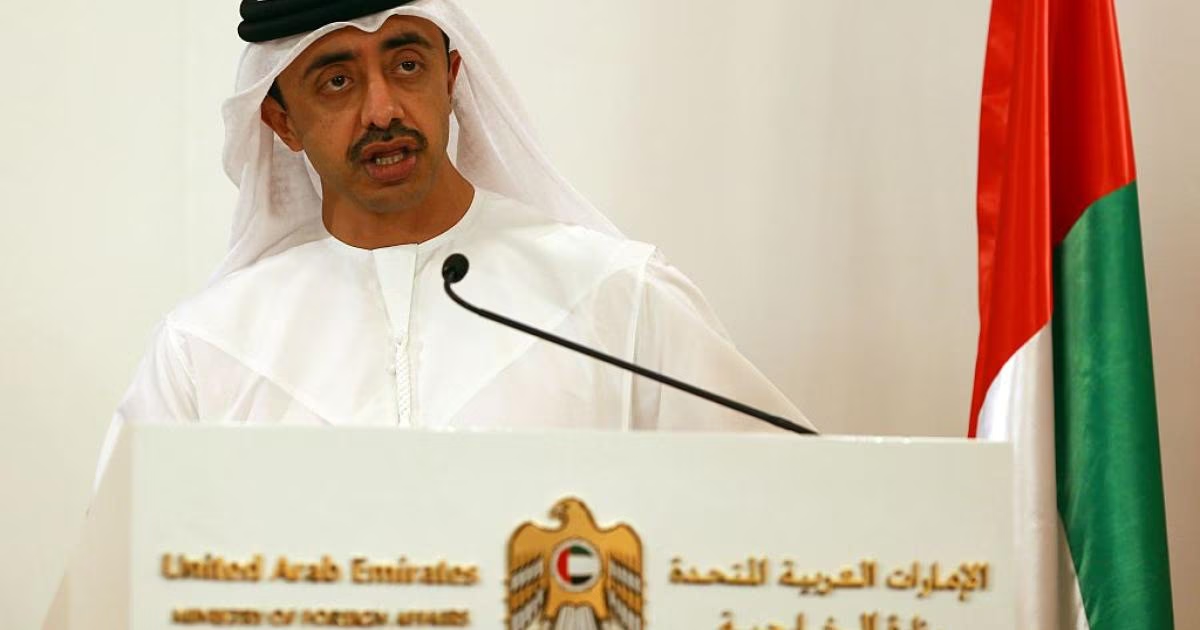
UAE denies Netanyahu's claims of a secret visit to Abu Dhabi during confrontation with Iran

The United Arab Emirates has refuted the Israeli narrative regarding an unannounced visit by Prime Minister Benjamin Netanyahu to the capital Abu Dhabi amidst the recent military escalation with Iran. The UAE Ministry of Foreign Affairs confirmed in an official statement issued today, Thursday, the inaccuracy of the circulating information about this visit, emphasizing that the state has not received any Israeli military delegations on its territory during the past period.

This categorical Emirati denial comes in response to what Netanyahu's office announced on Wednesday, where the latter claimed to have made a 'secret visit' that included a meeting with the Head of State, Sheikh Mohamed bin Zayed Al Nahyan. The Israeli side claimed that these movements took place within the framework of what it described as 'Operation Roaring Lion,' which coincided with direct confrontations between Israel and Iran, describing it as a historical breakthrough in the path of bilateral relations.

The Emirati Ministry of Foreign Affairs clarified in its statement that the state's foreign policy is characterized by transparency, noting that relations with Israel are 'declared relations' and are not managed through secret channels or hidden arrangements. The Ministry also called for not relying on any news related to official visits unless issued by the competent authorities in the UAE, in a clear reference to refuting the narrative issued by the Israeli Prime Minister's office.

In a related context, statements by the US Ambassador to Israel, Mike Huckabee, had sparked widespread controversy after he revealed that Israel had supplied the UAE with 'Iron Dome' air defense systems. Huckabee indicated that Tel Aviv had sent military experts to operate these systems with the aim of protecting Emirati facilities from aerial threats that emerged during the recent confrontation with Tehran, which Abu Dhabi has not confirmed.

The region has witnessed a dangerous escalation since February 28th, following American and Israeli strikes targeting sites within Iranian territory. As a result, the UAE was subjected to a series of missile and drone attacks launched from Iran, which put the security of the region to a difficult test and made the Gulf states a theater for the repercussions of this direct conflict.

The United Arab Emirates is considered a strategic ally of the United States in the region and has made significant strides in normalizing its relations with Israel since the signing of the 'Abraham Accords' in 2020. Despite this diplomatic path, Abu Dhabi is keen to keep its movements within a declared official framework, away from the political exploitation that some Israeli parties try to practice by leaking news of secret visits.

Observers believe that the contradiction between the Emirati and Israeli narratives reflects the sensitivity of the current regional situation, especially in light of the continued mutual threats between Tehran and Tel Aviv. While Netanyahu tries to portray his relations with Arab countries as major security achievements, the UAE insists on regulating the pace of this relationship in a way that serves its national interests without being drawn into undeclared military arrangements that could further complicate the scene.

The UAE's relations with Israel are declared and are not based on secrecy or hidden arrangements, and any claims to the contrary are baseless.

PALESTINE

Thu 14 May 2026 8:36 am - Jerusalem Time

Fiber Optic Drones: Hezbollah's Weapon That Occupation's Defense Systems Failed to Counter

An international press report highlighted the advanced offensive strategy adopted by Hezbollah in its current confrontation with the occupation army, pointing to the increasing reliance on suicide drones operating via fiber optic technology. The report clarified that this new weapon has created a complex security vulnerability in the Israeli defense system, as Tel Aviv's available technology has so far failed to find a radical solution to these drones.

Sources stated that Hezbollah has managed to activate this type of drone to circumvent the 'Iron Dome' system, which the occupation has relied on for many years to counter missiles. These devices are characterized by a very low manufacturing cost, not exceeding a few hundred euros, and are made from commercially available materials. However, they have proven to be highly lethal, causing the death and injury of a number of occupation soldiers in border locations.

Reports quoted researchers at the Israeli Institute for National Security Studies as saying that controlling these drones, which operate with 'First-Person View' (FPV) technology, is extremely simple, with some describing it as easier than video games. The drone relies on a camera that transmits live images to the operator, giving Hezbollah fighters a superior ability to accurately guide them towards sensitive military targets from fortified and safe positions.

The technical secret of these drones lies in their connection to a very thin fiber optic cable, which completely eliminates the need to send or receive any radio signals during flight. This physical link makes it impossible for the occupation's electronic warfare and jamming systems to intercept the drone or divert its path, leading to a state of paralysis in the traditional defense systems deployed along the border.

Estimates derived from Hebrew media sources indicate that Hezbollah has allocated a military unit comprising hundreds of militants specialized exclusively in operating and launching these drones. According to field data, this network has launched approximately 160 suicide drones, including 90 drones operating with fiber optic cables, often launched after precise reconnaissance and monitoring operations of the targeted sites.

Reports indicated that Iran, the primary supporter of the party, has pushed for the widespread use of this weapon in various conflict zones in the region, including its use against American forces in Iraq. With the ongoing escalation in the field, Hezbollah has intensified its use of this technology in response to occupation raids, which has doubled the frustration within the Israeli military establishment due to the inability to confront this growing threat.

The General Staff of the occupation army faces internal accusations of neglecting early warnings that indicated Hezbollah's adoption of military technologies that appeared in the Ukrainian arena. The matter reached direct intervention from Benjamin Netanyahu, who issued strict instructions to security and technical agencies on the necessity of finding a way to end this threat that is daily depleting ground forces.

For their part, military analysts believe that the current attempts by the occupation to counter drones, such as placing fishing nets or metal boxes over vehicles, are primitive and ineffective solutions. Experts confirmed that these drones have shown a high ability to target weak points in advanced 'Merkava' tanks and 'Namer' armored personnel carriers, in addition to the command cabins of massive military bulldozers.

According to statistics issued by the occupation army radio, suicide drones launched from Lebanon were responsible for injuring 37 soldiers out of 39 who fell during a period not exceeding three weeks. These figures confirm the significant field impact of this weapon, whose victims were not limited to regular soldiers but also included contractors and workers in border military installations.

In addition to the military impact, Hezbollah uses these drones as a powerful propaganda and psychological tool against the occupation's internal front, as its media platforms publish videos documenting moments of attack on targets. These clips use the hashtag 'The thread that changes the equation,' referring to the fiber optic cable that connects the drone to its operator and gives it immunity against jamming.

These intensive media campaigns aim to raise morale in the party's supportive environment in Lebanon, which has been suffering from the effects of war and widespread displacement for months. Observers believe that documenting targeting operations with high accuracy contributes to solidifying the image of 'Israeli helplessness' in the face of simple and innovative technologies used by fighters on the northern front.

Although some security experts rule out that these drones alone will lead to a comprehensive strategic change in the balance of power, they acknowledge their transformation into a source of immense annoyance and attrition. These 'fiber optic threads' continue to represent a technical and operational challenge that forces the occupation army to reconsider its entire defense system dedicated to protecting the northern border.

Using these drones is even easier than video games, and they fly without the need for radio signals, making jamming them impossible.

PALESTINE

Thu 14 May 2026 8:36 am - Jerusalem Time

From the 1948 Nakba to the War of Annihilation.. The Story of an Elderly Palestinian Man Whose Life Began in a Tent and Ended in One

The seventy-year-old Palestinian refugee, Izzat Sultan Adwan, summarized the tragedy of successive generations in a concise phrase: 'I was born in a tent, and today I live in a tent.' These words reflect a life journey that began in refugee tents during the 1948 Nakba, leading to the bitter reality of displacement imposed by the ongoing Israeli aggression on the Gaza Strip since October 2023.

Adwan was born in a tent in the Deir al-Balah camp in the central Strip, a camp established by UNRWA to shelter those forcibly displaced from their original villages and towns. His early childhood witnessed deprivation and poverty, while the conversations of the elders in his family always revolved around the inevitability of returning to the village of 'Barbarah' in the Gaza district, which is only a few kilometers away.

After more than seven decades, Adwan now finds himself an old man facing similar conditions to those he was born into, living with his children and grandchildren in dilapidated displacement tents. These tents have become the family's last refuge after fleeing the bombing and crimes committed by the occupation army in its continuous war that claims lives and destroys stone and people.

The seventy-year-old believes that the history of occupation crimes is repeating itself in a more brutal way, as he was forced to set up his new tent in the Al-Mawasi area west of Khan Yunis. This came after he lost his four-story home in the city of Rafah, which he was forced to leave on the eve of the ground invasion of the city in May 2024.

Adwan's family consists of an extended family including 4 sons, 5 daughters, and 17 grandchildren, all of whom lived in apartments within what is known as 'Barbarah Camp' in Rafah. This camp derived its name from their original village destroyed in 1948, with the name remaining a testament to their adherence to identity and land despite decades of long displacement.

The family's memory carries a deep wound from the martyrdom of their fifth son, 'Yasser,' in 2003 during a commando operation against an Israeli settlement, adding a dimension of sacrifice to the journey of refuge. Today, these large families are scattered among adjacent tents in a scene Adwan describes as the 'Second Nakba,' which revives the tragedies of the early ancestors.

In the Al-Mawasi area, where the tents lack the most basic necessities for a dignified life, Izzat and his neighbors live amidst harsh conditions marked by constant fear and hunger. Despite the occupation's complete destruction of Rafah city and preventing residents from returning to it, the dream of return still beats in the heart of this elderly man who refuses to surrender to reality.

Adwan asserts with confidence that the oppression he experiences has doubled his insistence on historical rights, noting that the dream of return has now become 'two dreams.' He dreams first of returning to his home in Rafah, and then the greater return to the village of Barbarah and the usurped homeland from which his ancestors were displaced decades ago.

Adwan reviewed the stages of his life, during which he moved between refugee camps and working abroad, where he received his education in international agency schools and obtained a teacher's diploma from Ramallah. Despite spending 27 years working as a teacher in Saudi Arabia, he chose to return to Gaza to be connected to his land and people despite all material temptations.

The seventy-year-old refugee lived through major wars and historical milestones, from the Tripartite Aggression in 1956 to the defeat of 1967 and the 1973 war, but he describes the current war as the deadliest. He describes what is happening today as a 'renewed Nakba,' given the unprecedented scale of destruction and systematic killings targeting the entire Palestinian existence.

For his part, his son Mohammed Adwan confirms that his father instilled in his children and grandchildren an absolute belief in the inevitability of returning to historical Palestine. Mohammed, who was born abroad and returned to Gaza in the nineties, believes that the destruction of the camps aims to assassinate the symbols of the cause, but he stresses the occupation's failure to erase the collective memory of the younger generations.

The family concludes its story by emphasizing that the policies of killing and destruction will not achieve the occupation's goals of making Palestinians forget their legitimate rights. Izzat Adwan, with his features etched by years of refuge, remains a living witness to a cause that refuses to be forgotten, affirming that Palestinian rights will remain present generation after generation until the return is achieved.

I was born in a tent, and today I live in a tent.. The dream of return has become two dreams: returning to Rafah, and returning to the entire homeland.

PALESTINE

Thu 14 May 2026 8:36 am - Jerusalem Time

At a cost of two million dinars... Launch of the 'Ta'afi' program to support thousands of children in the Gaza Strip

Tkiyet Um Ali announced the launch of a new humanitarian pledge worth two million Jordanian dinars dedicated to implementing the 'Gaza Children's Recovery' program. This multi-intervention project aims to provide comprehensive support to approximately 3,000 children in various areas of the Strip, to confront the harsh repercussions of the ongoing war on educational and food systems.

This relief program is being implemented in cooperation and partnership with the Hashemite Charity Commission and the Palestine Tomorrow Society, in response to the collapse of food security and the prolonged absence from school. Through this initiative, the partners seek to provide a safe environment that ensures children regain their psychological and social balance amidst the current circumstances.

For his part, Samer Balkar, Director General of Tkiyet Um Ali, affirmed that the program represents a practical and integrated response aimed at enhancing children's resilience and restoring their lost sense of security. Balkar pointed out that the institution has been at the forefront of humanitarian intervention since the beginning of the aggression, emphasizing the need for donors to unite to expand the scope of aid to include the largest possible number of affected people.

The program includes the establishment of 15 fully equipped educational units with all health and service facilities, geographically distributed between North Gaza, Gaza City, the Central Governorate, and Khan Yunis. These units will provide educational curricula for students from the first to the tenth grade, with all necessary supplies such as books, stationery, and school uniforms to ensure the continuity of the educational process.

Regarding nutrition, the program is committed to providing 360,000 integrated meals, two meals per day for each student, to improve health and concentration. This step aims to address the severe malnutrition levels suffered by children in the Strip, especially in areas lacking regular access to essential food items.

The project is not limited to children only, but also extends to include 660 mothers of students and 60 male and female teachers, in addition to specialized psychological counseling staff. 720 psychological support sessions and recreational activities will be organized, along with 92 awareness and training sessions for caregivers to enable them to deal with the psychological trauma experienced by families.

The program also focuses on improving infrastructure at implementation sites, by providing safe water, improving sanitation facilities, and using solar energy solutions. These interventions aim to ensure the sustainability of the services provided and create an inclusive learning environment that preserves the dignity of beneficiaries and meets their basic needs amidst the disruption of public services.

The 'Ta'afi' program comes as part of a series of responses launched by Tkiyet Um Ali, which previously included the establishment of temporary shelter units benefiting approximately 1,000 displaced families. The institution affirms its full commitment to international standards of transparency and accountability, by issuing periodic reports and adopting accurate monitoring and evaluation systems to ensure that aid reaches those who deserve it.

Field data indicates a tragic reality in Gaza, where more than 637,000 children lack regular education, while approximately 1.1 million children need urgent protection services. Reports confirm that more than 58,000 children have lost one or both parents, making such programs an urgent necessity to save an entire generation from losing its educational and health future.

Children in Gaza face unprecedented challenges affecting their right to education, health, and protection, and our program aims to provide a practical response that supports their ability to recover.

PALESTINE

Thu 14 May 2026 8:36 am - Jerusalem Time

Federal Documents Expose Falsehood of Trump Administration's Accusations Against Palestinian Activist Mahmoud Khalil

International press reports have revealed exclusive documents from the US Federal Bureau of Investigation (FBI), indicating the closure of an initial investigation targeting Palestinian activist and former Columbia University student Mahmoud Khalil. The documents showed that the Bureau found the accusations against Khalil did not warrant any further legal or security follow-up, placing the official narrative of President Donald Trump's administration in a legal and ethical predicament.

According to details based on public records, the FBI received an anonymous tip on March 6 of last year, alleging Khalil's involvement in inciting violence. Although the investigation into this tip quickly concluded due to the lack of serious claims, US authorities proceeded with severe repressive measures against the Palestinian activist and his family.

Just two days after the tip, agents from Immigration and Customs Enforcement (ICE) raided Khalil's home and arrested him in front of his family, secretly transferring him to a detention center in Louisiana. This action led to Khalil being separated from his wife and infant child for several months, a move human rights advocates described as an attempt to break the will of pro-Palestinian activists in American universities.

Documents obtained by Khalil's legal team indicate that the decision to close the investigation was officially made by March 19, 2025; however, the Trump administration continued to portray him as an imminent threat to national security. This contradiction between intelligence assessments and political decisions reinforces the hypothesis of systematic targeting of students who oppose Israeli policies in the occupied territories.

Observers believe that the timing of the anonymous tip and its coincidence with the arrest campaign constitutes strong circumstantial evidence that the case is purely political, not security-related. Spokespersons for human rights institutes affirmed that Khalil's continued detention despite his exoneration by the FBI reveals a retaliatory approach aimed at intimidating Palestinian voices within the United States and silencing critics of the occupation.

Khalil's case is part of a broader campaign launched by the US administration against a group of students and activists, including Mohsen Al-Mahdawi and Rumaysa Ozturk, under the pretext of protecting foreign policy interests. This campaign relied on vague legal provisions in immigration laws that allow authorities to deport foreigners based on their political stances that may be deemed 'detrimental' to American interests.

In a related context, Secretary of State Marco Rubio's role emerged, as he issued direct orders for Khalil's deportation, reiterating accusations of sympathy with banned groups without providing concrete evidence. The Palestinian activist's legal team considered these statements to reflect a complete adoption of the claims of extremist right-wing groups that had launched extensive smear campaigns against Khalil shortly before his arrest.

Legally, the battle continues in US courts, where Khalil's lawyers are preparing to appeal the decision of the Board of Immigration Appeals, which previously refused to halt the deportation. Khalil is currently pursuing a separate federal case under 'habeas corpus,' a legal procedure that prevents his forced deportation as long as judicial review is ongoing before the competent federal courts.

The document revealed a broader danger; even after the federal investigation found that Khalil did not warrant further investigation, he remained detained for months.

PALESTINE

Thu 14 May 2026 8:35 am - Jerusalem Time

Mladenov Demands Gaza Leadership Step Down, Hamas Warns of Chaos Plan

The High Representative of the Peace Council in Gaza, Nikolay Mladenov, called on the political leadership currently managing the Gaza Strip to step down from the scene, indicating that this step comes in response to the requirements of the twenty-point plan known as the 'Trump Plan'. These statements came after a meeting held by Mladenov with the head of the occupation government, Benjamin Netanyahu, where arrangements for the transitional phase and the proposed new administrative structure for the Strip were discussed.

Mladenov clarified in his statements that the plan offers an opportunity for those who respect the law and fulfill their duties to participate in the new structure, while providing a 'safe passage' to third countries for those who cannot accept this political framework. He affirmed that the proposal does not aim to exclude Hamas as a political movement or party, but rather allows it to contest Palestinian national elections provided it renounces armed action and commits to the peaceful path.

The international official stressed that the disarmament of factions, the dismantling of tunnel networks, and their special military command systems are non-negotiable conditions, considering them essential for enabling the Palestinian Authority to govern. He pointed out that the presence of armed militias outside the state framework hinders any real political or developmental process in the Strip, which requires a complete transfer of security and administrative control.

For its part, the Hamas movement expressed its strong astonishment at these demands, describing them as suspicious attempts to liquidate the Palestinian cause. The movement's spokesman, Hazem Qassem, said that demanding the resignation of the Gaza administration before the entry of the technocrat committee practically means pushing the Strip towards a state of chaos and security breakdown, a goal that the Israeli occupation seeks to achieve by all available means.

The movement reiterated its call for the immediate empowerment of the National Committee for the Administration of Gaza, and to allow it to carry out its duties and provide all necessary needs for its work away from international conditions. Qassem affirmed that the Palestinian people will not accept the imposition of external dictates that affect the structure of the resistance or aim to create an administrative vacuum that serves the interests of the occupation in fragmenting the internal front.

In a related context, Mladenov warned that the reconstruction process of the Gaza Strip would require a full generation given the enormous scale of destruction left by military operations. He explained that there are tens of millions of tons of rubble that need to be removed, in addition to more than a million displaced people who lack permanent shelter, making the task beyond traditional capabilities and requiring many years of continuous work.

Informed sources reported that the meeting between Mladenov and Netanyahu also touched upon the expected Israeli scenarios if Hamas rejects the disarmament proposals. Reports indicated that the absence of a positive response from the movement could lead to the freezing of negotiation rounds in Cairo, putting the future of calm and reconstruction at risk amidst the continued blockade and imposed restrictions.

What is not subject to negotiation is the existence of armed factions or militias with their own military command and control systems, in addition to the transition to Palestinian Authority rule.

PALESTINE

Thu 14 May 2026 8:35 am - Jerusalem Time

Hamas responds to Mladenov: Resistance's weapons linked to ending occupation and establishing a state

The Islamic Resistance Movement (Hamas) expressed its strong disapproval of the recent statements made by Nikolay Mladenov, the coordinator of the 'Peace Council' in Gaza, regarding the future of Palestinian factions' weapons. Basem Naim, a member of the movement's political bureau, affirmed that any discussion about the resistance's military arsenal must be placed in its natural context within a comprehensive national dialogue primarily aimed at ending the occupation.

Mladenov had previously stated that he does not demand the dissolution of Hamas as a political entity, but rather emphasizes the necessity of it abandoning its military wing within any upcoming political settlement. The international coordinator indicated that the movement's transformation into a political party adopting peaceful action would open doors for its participation in general Palestinian elections under the umbrella of the Authority.

The international official stressed in his vision that the continued existence of armed factions or militias possessing independent military structures and tunnel networks is non-negotiable. He considered that the presence of these arsenals in parallel with a transitional Palestinian authority hinders opportunities for permanent stability, demanding the integration of all forces under a single legitimate authority.

In response to these proposals, Hamas warned against the consequences of calling for the current administration in the Gaza Strip to step down before the technocrat committee effectively assumes its duties. The movement clarified that any administrative vacuum at the present time could open the door to a state of chaos and security breakdown that would not serve the Palestinian national interest.

Basem Naim affirmed that the movement has fulfilled all its obligations and taken the necessary practical steps to facilitate the transfer of governance to the established national committee. He pointed out that the core of the crisis does not lie in the internal Palestinian administration, but in the continued existence of the Israeli occupation, which obstructs all paths of development and stability.

The Hamas leader also noted that the movement deals with the negotiation process with seriousness and full responsibility, away from selectivity in its approach. He clarified that Hamas has provided clear and detailed responses to international initiatives, including the provisions of US President Donald Trump's plan, emphasizing that the door to negotiation has never been closed by their side.

Naim accused the Israeli side of direct responsibility for obstructing the implementation of the proposed plans and ignoring the required political entitlements. He criticized the absence of reference to Israeli obstacles in some recent international positions, considering that this reflects a bias that does not serve efforts to reach a just and comprehensive solution to the Palestinian issue.

In conclusion of its statements, Hamas reiterated its logistical and administrative readiness to hand over civil affairs tasks in the Gaza Strip to the national committee. It called on the international community to exert real and serious pressure on the occupation authorities to ensure the committee's entry and commencement of its work without field or political obstacles.

Discussion of the weapons issue should be within a comprehensive national context that ends the occupation and establishes an independent Palestinian state.

PALESTINE

Thu 14 May 2026 8:35 am - Jerusalem Time

Children Without Guilt: Sudanese Women Break the Silence and Keep Their Rape Babies

In the heart of the Sudanese tragedy, stories of women like Nesma, 26, emerge. She decided to keep her child, Yasser, despite him being the product of a horrific gang rape. Nesma recounts how Rapid Support Forces fighters intercepted her bus in Khartoum North, separating women from men and brutally assaulting them, leaving her unconscious until the next morning.

Yasser is one of thousands of children born in similar circumstances during the three years of war that tore Sudan apart. International reports confirm that rape was not merely individual incidents but was used as a systematic tool for domination, destroying the social fabric, and altering the demographic composition in conflict areas, especially in the capital and Darfur region.

Reem Alsalem, the UN Special Rapporteur on Violence Against Women, described these practices as amounting to 'genocide.' She explained that the goal of these crimes is to break the will of local communities and humiliate them by directly and repeatedly targeting the bodies of women and girls.

In the town of Tawila in Darfur, Hayat (20 years old) is experiencing a similar ordeal after being assaulted while fleeing the Zamzam displacement camp. Hayat, cradling her infant, says she wishes him a better future away from the ravages of war she experienced, emphasizing the right of these children to a dignified life despite the harsh circumstances surrounding their arrival.

Salima Ishaq Al-Khalifa, Minister of State for Social Affairs, indicates that the announced figures do not reflect the true horror of the situation. Most victims prefer to remain silent for fear of the 'stigma' imposed by conservative society, leading to a lack of official documentation for a large number of births or unsafe abortions.

For her part, Denise Brown, the UN Humanitarian Coordinator, revealed the presence of hundreds of pregnant girls in one town in Darfur as a result of rape. Brown expressed deep concern that these girls are not seeking medical attention, which exposes their lives and the lives of their fetuses to severe health and psychological risks.

Mothers who chose to keep their children face 'double injustice' from their families and the surrounding community. In many cases, women were ostracized or divorced, while others were forced to raise their children in secret to avoid accusations of complicity with the attacking forces or social marginalization.

The history of sexual violence in Darfur is repeating itself, with current testimonies recalling what the Janjaweed militias committed in the first decade of the third millennium. Today, human rights sources accuse the Rapid Support Forces of using the same tactics against non-Arab ethnic minorities, using the female body as a battleground for settling political and ethnic scores.

Haleema, a 23-year-old woman, recounts the tragedy of being raped three times at different points in her life and displacement. Despite the harshness of her experience, she was able to obtain emergency contraception from Doctors Without Borders the last time, saving her from a third unwanted pregnancy.

In Al Jazirah state, local sources reported that some families completely abandoned their villages to escape the psychological and social trauma associated with rape. Some girls resorted to dangerous abortion attempts using unsupervised medications, which in many cases led to severe bleeding and complications that threatened their lives.

The Sudanese government tried to intervene by easing restrictions on abortion in areas where the army regained control, but ignorance of these decisions and fear of social persecution prevented many from benefiting. Bureaucratic procedures in the civil registry remain an obstacle to these children obtaining official birth certificates.

In Khartoum, Faihaa (30 years old) recounts her suffering with her five-month-old child, feeling a mixture of anger and motherhood towards him. Faihaa says she has to play the role of both father and mother, while memories of the assault by a man in civilian clothes under the protection of a soldier in military uniform haunt her.

UN reports indicate that sexual violence is not limited to one party, although the practices of the Rapid Support Forces appear to be more systematic and widespread. The absence of accountability and oversight within military institutions gives some individuals a sense of impunity, leading to sporadic violations that increase the suffering of civilians.

While the government tries to find alternative families for abandoned children, mothers like Nesma insist on facing the future alone. Nesma refuses to abandon her son Yasser and plans to use her university degree to secure a job that will ensure him a decent life, emphasizing that her child deserves love and care away from his father's crimes.

My son is not guilty, just as it is not my fault. What is his fault that he should not know his mother? I refused for him to suffer childhood traumas or end up in a bad place.

PALESTINE

Thu 14 May 2026 8:35 am - Jerusalem Time

Israeli Massacre in Southern Lebanon and Hezbollah Carries Out Qualitative Ambush Operations Against Occupation Forces

Israeli occupation forces committed new massacres in southern Lebanon, where at least 22 people were martyred, including a large number of children and women, as a result of a series of airstrikes targeting various areas. The Public Health Emergency Operations Center of the Lebanese Ministry of Health reported that the shelling focused on towns in the Nabatieh and Tyre districts, leading to massive property destruction.

In details of the attacks, medical sources confirmed that a raid targeting the town of Arabsalim alone resulted in the martyrdom of 6 people, including three children and two women, while similar raids on the towns of Harouf and Roumine led to the martyrdom of 4 other people. These attacks come amid continuous Israeli escalation that exceeds previous field understandings.

On the ground, Hezbollah announced the implementation of a series of qualitative military operations against the movements of the occupation army in border villages, affirming that these operations come in response to repeated Israeli violations of the ceasefire agreement. Military media published footage documenting the targeting of a 'Merkava' tank with a suicide drone near the Khirbet Al-Manara site, which led to its direct hit.

In an operation described as precise, Hezbollah fighters set up a tight ambush for an Israeli force advancing from the town of Abbasiyah towards Hadatha, where an explosive device was detonated targeting two vehicles and a military bulldozer. The explosion was followed by fierce clashes with machine guns, which prompted Israeli aircraft to intervene to secure the withdrawal of the destroyed vehicles under heavy fire cover.

Hezbollah also indicated that a booby-trapped remote-controlled vehicle, which the occupation army tried to push towards the fighters' positions, was disabled. It was targeted and neutralized before reaching its target. The operations also included shelling gatherings of soldiers in the areas of Bint Jbeil, Ainata, Houla, and Rashaf with rocket salvos and suicide drones, achieving confirmed hits.

On the Israeli side, Prime Minister Benjamin Netanyahu approved a massive budget estimated at about two billion shekels (700 million dollars) for the development of defensive technologies dedicated to confronting the drone threat. This decision came after security reports warned of increasing human and material losses for the Israeli army due to the accuracy of Hezbollah's drones and their ability to penetrate radars.

Media sources reported that Netanyahu held an emergency meeting with security establishment leaders to discuss ways to protect field forces in southern Lebanon, especially after the killing of 4 soldiers and the injury of dozens since the resumption of operations last March. The new plan includes deploying fixed and mobile radar systems along the northern border to enhance interception capabilities.

Politically, diplomatic circles are awaiting the start of two-day Lebanese-American talks in Washington, aimed at finding a formula for a comprehensive agreement that ensures security and stability. The US State Department clarified that these discussions come as a continuation of previous meetings held under presidential patronage, in an attempt to contain the escalating military escalation.

In the context of the humanitarian crisis, the National Council for Scientific Research in Lebanon revealed the extent of the massive destruction inflicted on residential units since the supposed ceasefire came into effect last April. The report confirmed that more than 10,000 residential units were damaged or destroyed, including about 5,386 homes completely razed to the ground by demolition operations and aerial bombardment.

Official Lebanese data indicates that the continuous aggression since early March has led to the displacement of more than 1.6 million people from their villages and cities, most of whom live in difficult humanitarian conditions. Despite the announcement of a previous truce, the occupation army continues its ground incursions and destruction of infrastructure deep inside Lebanese territory under the pretext of striking military targets.

Field confrontations continue amid the occupation's insistence on imposing a new reality in southern Lebanon, while Lebanese forces affirm their adherence to negotiations in parallel with their right to defend their lands. The scene remains open to all possibilities with the continuation of airstrikes that claim civilian lives daily without international deterrence.

The occupation continues its violations of the ceasefire agreement by targeting civilians and systematic demolition operations in border villages.

PALESTINE

Thu 14 May 2026 8:35 am - Jerusalem Time

Occupation vehicles penetrate Beit Lahia project amidst intense gunfire

On Wednesday evening, occupation forces renewed their military operations in areas of the northern Gaza Strip, as a group of military vehicles and bulldozers penetrated deep into the Beit Lahia project. The field movements focused on the "Skafi" area, which witnessed an intense deployment of the invading forces amidst an atmosphere of extreme tension in the area, which already suffers from massive destruction left by previous operations.

Field sources reported that the military incursion coincided with heavy and indiscriminate gunfire targeting residential blocks and citizens' homes, forcing families, especially women and children, to take shelter inside closed rooms amidst a state of extreme fear. The sources indicated that the firing targeted everything moving in the vicinity of the incursion area, completely hindering the movement of civilians.

In a related context, the military bulldozers accompanying the invading force began extensive sabotage operations targeting what remained of the infrastructure in the Skafi area. The bulldozing operations included areas of land, in a move described by observers as an attempt to impose a new field reality and isolate the neighborhoods of the Beit Lahia project from their surroundings, as part of the ongoing policy of tightening restrictions on the residents of the northern Strip.

The invading forces began firing indiscriminately and intensely at citizens' homes, causing panic among the residents.

PALESTINE

Thu 14 May 2026 8:35 am - Jerusalem Time

Deir al-Balah Celebrates the Wedding of 100 Grooms and Brides in a Mass Wedding Amidst the Rubble

In a scene embodying the triumph of the will to live over destruction, the city of Deir al-Balah in the central Gaza Strip hosted a mass wedding for 100 grooms and brides. The ceremony was held at Al-Anan Stadium under the slogan 'Joys Embracing the Sky,' where residents gathered in an atmosphere of joy mixed with defiance, transforming the rubble of war into a platform to declare their commitment to survival and continuity despite the pain left by ongoing military operations.

Sources reported that this ceremony was organized by the 'Ghaith Al-Khair' Foundation, serving as a strong message of steadfastness in the face of challenges whose effects have not ceased despite ceasefire agreements. The grooms lined up in their simple clothes with smiles reflecting a unique Palestinian determination, while ululations and chants echoed in the sky of the city, long accustomed to the sounds of shelling and the smoke of explosions.

This initiative primarily aims to facilitate marriage for Palestinian youth amidst dire economic conditions and rising rates of poverty and unemployment. With thousands of housing units destroyed and many losing their livelihoods, forming a family has become a postponed dream, prompting civil society organizations to intervene and open a window of hope for one hundred young men and women to start their married lives and strengthen the pillars of society.

The celebratory festival included various segments performed by specialized artistic groups, with a notable presence of prominent figures and community members who shared the joy of the newlyweds. The organizers were keen to ensure that the segments adhered to authentic community values and Islamic teachings, while documenting these historical moments to bear witness to the ability of people in Gaza to create joy even in the harshest moments and under the systematic targeting.

For its part, the organizing body affirmed that the project stems from a deep belief in the necessity of protecting the Palestinian family and establishing the principles of social solidarity in the face of unprecedented challenges. The organizers of the ceremony cited religious values that encourage facilitating marriage and aiding the poor, noting that the solidarity of popular and institutional efforts is the only way to confront the occupation's policies that seek to break the morale of civilians.

The 'Ghaith Al-Khair' Foundation continues to provide its relief and development programs targeting marginalized and vulnerable groups in the Gaza Strip, with a focus on psychological and social support. This mass wedding comes as part of a comprehensive vision aimed at empowering the Palestinian individual and building a resilient society, emphasizing that joy in Gaza is not measured by its size but by its ability to survive from amidst the rubble.

This wedding is not just a celebration, but a message of life written by 100 grooms and brides in the face of death, and an affirmation that building a family is a form of resistance.

ARAB AND WORLD

Thu 14 May 2026 8:34 am - Jerusalem Time

Trump in Beijing: Will 'The President's Deals' End the Iran War and Open the Strait of Hormuz?

US President Donald Trump began an official visit to the Chinese capital, Beijing, in a diplomatic move that takes on exceptional importance given the critical timing the world is experiencing. This visit, which started on May 13th and continues until the 15th, comes after an emergency postponement imposed by the outbreak of US-Israeli military confrontations with Iran, making the issue of ending the war and securing waterways at the top of the discussion agenda.

Trump is accompanied on this mission by a high-level delegation that includes an elite group of technology and industrial leaders in the United States, foremost among them Elon Musk, Tim Cook, and Jensen Huang. This gathering of CEOs from giant companies such as 'Nvidia', 'Boeing', and 'Goldman Sachs' aims to enhance the commercial dimension of the visit and seize new investment opportunities in the massive Chinese market.

The US President announced via his 'Truth Social' platform that his first demand from his Chinese counterpart, Xi Jinping, would be complete 'openness' for major American companies. Through this pressure, Trump seeks to enable American innovators to operate freely, especially in light of the regulatory restrictions faced by electronic chip and artificial intelligence companies during the past period.

The issue of the war on Iran and the necessity of reopening the Strait of Hormuz tops the negotiation table, as the closure of the strait has led to severe economic damage affecting the European continent and most countries of the world. Political circles hope that Chinese mediation will succeed in convincing Tehran to conclude a comprehensive agreement that ends the armed conflict and restores stability to global energy supply lines.

This visit is the first by a US president to China in nearly a decade, reflecting the size of the diplomatic gap that both parties are now trying to bridge. In addition to the Iranian file, discussions include thorny issues such as US arms sales to Taiwan, a file that Beijing considers a red line directly affecting its national sovereignty.

Reports from behind the scenes of the summit indicate that Trump is counting on China's need for stable oil flows, as it is the largest importer of Iranian crude, to push for an end to the war. In return, Trump faces internal pressures related to the upcoming midterm elections, where failure to lower energy prices and secure navigation poses a direct threat to the political future of his Republican party.

Despite the economic momentum, expectations remain cautious amid escalating tensions around Taiwan and the transformation of electronic chips and rare earth metals into weapons in the geopolitical struggle for influence. Observers believe that the current battle is not just a trade dispute, but a reshaping of the balance of power in the 21st century between the American and Chinese poles.

On the trade front, both sides seek to extend the temporary truce on tariffs reached last October during meetings in South Korea. This extension aims to avoid a comprehensive trade war that could destabilize the global economy, which is already suffering from the consequences of ongoing military conflicts in the Middle East.

The question remains about the ability of 'dealmaker' Donald Trump to complete a major swap that includes concessions on the Taiwan file in exchange for effective Chinese mediation with Iran. With the volume of trade between the two countries reaching approximately 582 billion dollars, economic interests remain the strongest driver that could push both parties towards a historic settlement that ends the current stalemate.

I will demand from President Xi, a leader of exceptional stature, the openness of China so that these wonderful people can show their magic.

OPINIONS

Thu 14 May 2026 8:34 am - Jerusalem Time

The Year of Conflict and Power Shifts: How Global Conflicts Shape the Future of the Region?

Ramallah - “Alquds ” dot com

Ramallah - “Alquds ” dot com

Opinion Writer

The concept of 'the cosmic year of conflict' in the Islamic vision is a fundamental explanation for the purpose of human existence and the successive movement of history. Conflict is not merely a fleeting clash, but a divine law aimed at purifying souls and distinguishing truth from falsehood. Quranic texts affirm that this worldly life is not a place of submission, but a field for trials, struggle, and continuous elevation.

The greater purpose of this conflict lies in testing human deeds, where the rich are tested by their wealth, the poor by their patience, and the powerful by their wisdom, to ultimately reveal who is best in deeds. According to profound intellectual readings, victory in this field requires adherence to spiritual and Quranic values, along with the necessity of beautiful patience and firm faith to face challenges.

Historically, this year began from the first moments of creation, represented by Iblis's refusal to prostrate to Adam, and then continued through the ages in the struggles of prophets with tyrants, from Moses and Pharaoh to Prophet Muhammad (PBUH) and Quraish. This continuous clash is what builds human history on the basis of scrutiny, and prevents corruption on earth through the conflict of different powers.

In contemporary reality, international conflicts over power and influence are not a new phenomenon, but an extension of that divine law which makes disagreement part of the nature of creation. The sharp contradictions between today's great powers, such as the United States, China, and Russia, open new horizons for understanding how global balances are managed.

The fundamental differences between Washington and Beijing economically and militarily, and between Moscow and European capitals in the Ukrainian field, represent a strategic opportunity for Muslims if they are read correctly. These international contradictions work to fragment dominant powers and occupy them with each other, which may give oppressed peoples space to breathe and liberate themselves.

The Syrian example stands as a living witness to the impact of this conflict; Russia's involvement in the Ukrainian quagmire led to a decline in the momentum of military support for some regimes, which contributed to changing the equations on the ground. This interconnectedness between distant fronts proves that Allah pushes people against each other to revive the earth and empower the righteous in the end.

On the other hand, the United States recognizes the rise of competing powers that threaten its absolute hegemony, especially in technological and economic fields led by China. Therefore, Washington sometimes seeks to rearrange its international alliances, such as NATO, in a way that ensures the exhaustion of both adversaries and allies in side conflicts.

This American strategy closely resembles its stance in World War II, where it waited for the exhaustion of European powers and the defeat of Hitler to intervene at the last moments and impose a new world order. Today, there seems to be a desire to push Russia and Europe towards a long-term clash that weakens both sides and secures American leadership for the next century.

In the context of pressure tools, control over vital waterways such as the Strait of Hormuz and the Suez Canal stands out as winning cards to economically strangle competitors, especially China. Control over the arteries of global trade remains the ultimate goal of great powers to ensure the continued political and economic superiority over the rest of the world.

Faced with these complexities, observers believe that Islamic countries must transcend traditional forms of joint action that have proven to have limited impact in major crises. Relying on condemnation statements and routine meetings is no longer sufficient to confront the geopolitical storms hitting the region and the world.

The call today is towards building a real alliance based on solid military, security, and economic foundations, adopting a 'win-win' logic to strengthen the nation's self-power. This shift requires political will that transcends internal differences and focuses on exploiting international contradictions to elevate the status of Muslims in the new world order.

Building a common defense and economic integration is not just a political option, but a necessity dictated by the laws of history and the year of conflict, which compels the weak to become strong or perish. Exploiting natural resources and a distinguished geographical location represents the cornerstone of any renaissance project that seeks liberation from dependency.

Ultimately, adherence to identity and spiritual values remains the strongest weapon in the battle of consciousness and existence, as beautiful patience and certainty of victory provide motivation to persevere despite difficulties. History does not spare spectators, but sides with those who understand its laws and act according to its requirements with wisdom and competence.

What the world is witnessing in terms of major transformations is an announcement of a new phase of scrutiny, which requires Islamic peoples to be vigilant and prepared for all possibilities. The conflict continues, opportunities are born from the womb of crises, and victory is tied to the forelocks of those who read reality well and act according to divine laws.

And if Allah had not repelled some people by others, the earth would have been corrupted; conflict preserves cosmic balance, reveals the fittest, and eliminates the corrupt to destroy them.

ARAB AND WORLD

Thu 14 May 2026 8:34 am - Jerusalem Time

Beijing Reads 'The Decline of Empire': How China Views a Second Trump Term as a Historic Opportunity?

The scene in the Chinese capital, Beijing, has changed between Donald Trump's first visit in 2017 and the current reality; after the reception focused on showcasing the ancient history of the Forbidden City, today's headlines speak of future Chinese technological dominance. China is now promoting itself as a great power that not only seeks to catch up with the West but is preparing to surpass it in robotics, electric vehicles, and drones.

Analysts close to decision-making circles in Beijing believe that current US policies confirm President Xi Jinping's vision of 'the rise of the East and the decline of the West.' These nationalists believe that the United States under Trump has abandoned its traditional image as a model of progress and institutional security, shattering decades of admiration among the Chinese public.

In a striking report issued by a research institute affiliated with Renmin University, Trump was described as 'an accelerator of America's political deterioration,' as researchers considered his tariff policies and attacks on allies to have weakened Washington from within. The report bore a controversial title, 'Thank You, Trump,' indicating that his hostility towards China united the country and pushed it towards achieving unprecedented strategic independence.

Talk of 'America's decline' is no longer confined to extremist nationalist forums online but has permeated the core of official Chinese political discourse. According to recent studies, the use of terms referring to the decline of American influence in official statements doubled starting in early 2025, reflecting growing confidence among the Chinese leadership.

Chinese propaganda exploits internal American events, such as shooting incidents and sharp political polarization, to portray Western democracy as a failed model. State media has borrowed terms from the gaming world to describe what it calls 'the decline of the American working class,' in an attempt to divert local public opinion away from China's internal economic challenges.

On the social front, educational advisors revealed a sharp decline in the desire of Chinese families to send their children to study at American universities. After the percentage exceeded 80% a decade ago, it has now fallen to less than 45%, as the United States is now viewed as a 'chaotic and unsafe' environment lacking institutional stability.

Academic Huang Jing believes that Trump may find himself forced to make concessions to Beijing in order to achieve quick economic gains that support his electoral position. He explained that Washington's need to sell agricultural products and natural gas to China gives Beijing strong leverage in bilateral negotiations, especially with the approaching midterm elections.

For his part, researcher Wu Xinbo believes that the United States' involvement in military conflicts in the Middle East, specifically tensions with Iran, has drained its negotiating capacity. This American military preoccupation has given Beijing more room to maneuver, as Washington's diplomatic attention is diverted away from the Pacific region.

Analytical reports indicate that Beijing finds dealing with Trump 'as a businessman' much easier than dealing with Democratic administrations that adopt comprehensive containment strategies. While Joe Biden was seen as a structural threat seeking to stifle China's rise, Trump is viewed as someone with whom beneficial trade deals can be reached.

Despite this Chinese optimism about the adversary's decline, Beijing remains cautious about entering into a direct and open confrontation with Washington. Chinese strategists realize that an 'unstable America' could be more volatile and dangerous, potentially threatening the stability of the international trading system on which the Chinese economy vitally depends.

China has taken practical steps to strengthen its influence, including restricting rare earth exports and increasing military activity around Taiwan in response to tariff pressures. Nevertheless, Chinese foreign policy remains governed by the principle of 'active neutrality,' awaiting the outcome of internal interactions within the troubled US administration.

Economist Guiyuan Lin describes the current situation as President Xi Jinping finally getting the 'weak America' he always dreamed of, but at the same time facing the 'volatile America' he feared. Political chaos in Washington is a double-edged sword that could serve Chinese ambition or turn the tables on everyone.

Informed sources reported that the shift in Chinese tone reflects a deep conviction that the international system is undergoing a major transitional phase. Beijing is no longer content with reacting but has begun to formulate new rules of engagement that take advantage of the 'institutional paralysis' afflicting political institutions in the United States.

Ultimately, it seems that the Chinese gamble relies on investing time; the more internal polarization there is in America, the more China's opportunities to present itself as a stable alternative to global leadership are strengthened. The lingering question is Beijing's ability to manage this rise without sliding into a direct military confrontation with a great power that still possesses deadly military fangs.

Only China can save Trump through tangible economic achievements he needs before the elections.

PALESTINE

Thu 14 May 2026 8:34 am - Jerusalem Time

With the participation of 2500 cadres.. Fatah movement launches its eighth conference in Ramallah and the diaspora to elect a new leadership

The Palestinian National Liberation Movement (Fatah) is preparing to launch the work of its eighth general conference next Thursday, in a prominent organizational event that comes after a delay of about five years from its regular schedule. The conference bears the slogan 'Renewed Launch, Freedom, Steadfastness, Independence,' through which Fatah cadres seek to reorganize the internal house and elect new leadership bodies capable of confronting current political and field challenges.

The conference is scheduled to extend over three consecutive days, with President Mahmoud Abbas opening the first session by delivering a comprehensive political speech in Ramallah. The conference primarily aims to elect 18 members to the movement's Central Committee, in addition to selecting 80 members for the Revolutionary Council, which are the bodies that lead decision-making in the largest factions of the Palestine Liberation Organization.

The conference's work is geographically distributed to ensure the participation of cadres in all their locations, with the main hall at the presidential headquarters in Ramallah connected via 'video conference' technology to three other halls. These halls are distributed in the Gaza Strip, the Egyptian capital Cairo, and the Lebanese capital Beirut, to enable members unable to reach the West Bank to exercise their electoral right.

The number of conference members in this session reaches about 2580 members, representing various organizational frameworks, commissions, unions, and student federations. The largest concentration of attendees is in Ramallah with about 1600 members, while 400 members participate from the Gaza Strip, 300 members from Cairo, in addition to 200 members from the Lebanese arena, reflecting the comprehensiveness of the movement's representation.

Informed sources reported that this year's conference features new organizational characteristics, most notably raising the representation of women to reach about 30% in the leadership and elected bodies. A wide space has also been allocated for released prisoners who spent more than twenty years in occupation prisons, in appreciation of their sacrifices and to ensure the representation of their cause at the core of the movement's organizational decision.

The conditions for candidacy for membership in the Revolutionary Council and the Central Committee include that the member must have spent no less than twenty years of continuous work within the movement's frameworks. This condition aims to ensure that competent individuals with sufficient organizational experience are elected, with applications submitted and reviewed by the specialized organizational committee before being presented to conference members for voting.

Regarding the election mechanism, sources clarified that the process will take place under the supervision of an independent committee comprising figures from civil institutions and Palestinian teachers to ensure transparency and integrity. Procedures begin on the first day with verifying the legal quorum and electing the conference presidency, with the second day dedicated to submitting candidacy applications and preparing the final lists of contestants.

The Palestinian street is eagerly awaiting the nominated names, as the released prisoners Zakaria Zubeidi and Tayseer Bardini have officially been nominated for membership in the Central Committee by consensus. Names of young and historical leaders are also being circulated, amidst news of Yasser Abbas, the son of the Palestinian President, intending to run for membership in the Central Committee, which is sparking wide discussions within the movement's circles.

On the political front, the conference is expected to discuss working papers aimed at evaluating the previous stage and drawing lessons from field and political developments since 2016. Discussions will focus on developing the movement's political program to align with the escalation of settlements and occupation projects aimed at resolving the conflict, while emphasizing the movement's vision for the national liberation project.

Observers and political analysts believe that the eighth conference comes at a very sensitive time, as the Palestinian Authority faces international and regional pressure to implement comprehensive reforms. Some believe that the conference's success in producing a young and renewed leadership may contribute to restoring popular trust in the movement, while others fear that the results will be limited to reproducing the current leadership situation.

Among the hot files on the conference table is the 'National Building Program' file, which seeks to separate the struggle role of the Fatah movement from the administration of national authority institutions. This approach aims to protect the movement from the repercussions of daily governmental work, and to focus on its role as a national liberation movement leading the Palestinian project towards independence and statehood.

The executive director of the conference affirmed that specialized committees are currently working on drafting the final recommendations that will be presented to the members for approval on the closing day. He stressed that the Fatah movement has historically been keen on the periodicity of its conferences as a tool for renewing legitimacy, despite all the obstacles imposed by the Israeli occupation or the exceptional circumstances experienced by the Palestinian arena.

The actual voting process will take place on the third day of the conference, with ballot boxes opening in the four halls simultaneously at 10:00 AM. International guests and representatives of Palestinian national action factions will participate in monitoring the process, in addition to delegations from friendly Arab and international parties, which lends an official and international character to this entitlement.

In conclusion, the eighth Fatah conference represents a pivotal station in the history of the movement, which was launched in 1965, as the 2580 members are responsible for shaping the features of the next stage. The elected leadership will have to deal with complex issues including national unity, confronting the war of extermination in Gaza, and countering annexation and displacement policies in the West Bank and occupied Jerusalem.

The conference represents a new challenge for the movement to renew legitimacy and enhance democratic life in a critical political phase for the Palestinian cause.

PALESTINE

Thu 14 May 2026 8:34 am - Jerusalem Time

Martyr and serious injury by occupation bullets in Al-Ram town north of Jerusalem

The Palestinian Red Crescent Society announced on Tuesday evening the death of a Palestinian young man and the serious injury of another, as a result of Israeli occupation forces firing live bullets at them in Al-Ram town, located north of occupied Jerusalem.

Field sources clarified that the occupation forces stationed behind the separation wall directly opened fire at the two young men, targeting vital parts of their bodies, which resulted in the martyrdom of one of them on the spot, while ambulance crews rushed to transport the other injured person to the hospital for urgent treatment in a critical health condition.

A state of severe security tension prevails in Al-Ram town and the vicinity of the separation wall following the incident, as occupation forces have reinforced their military presence in the area, at a time when they continue to target Palestinians near contact areas and the wall in various areas of Jerusalem and the West Bank.

Occupation soldiers stationed behind the wall directly targeted the two young men, leading to the immediate death of one of them.

ARAB AND WORLD

Thu 14 May 2026 8:33 am - Jerusalem Time

Senate confirms Trump's military powers, Vance speaks of progress in Iran file

US Vice President J.D. Vance announced positive indicators in the ongoing negotiations with Iran aimed at ending hostilities between the two parties. Vance stated in press remarks from inside the White House that the administration perceives tangible progress, even though President Donald Trump had rejected the latest proposal from Tehran, describing it as unacceptable.

Specialized agencies in Washington are currently evaluating the results of these talks to ensure their compliance with the strict standards set by President Trump. The Vice President affirmed that the strategic goal remains constant: preventing Iran from acquiring any military nuclear capabilities, while ensuring sufficient international guarantees to prevent Tehran from developing its programs in the future.

In the context of parallel diplomatic moves, US Secretary of State Marco Rubio called on Beijing to exert greater pressure on the Iranian side. Rubio indicated in a media interview that Washington looks forward to a more effective Chinese role, especially regarding Iran's concerning activities in the Arabian Gulf region, to contribute to regional de-escalation.

On the legislative front, the US Senate witnessed a heated political confrontation that ended with the rejection of a resolution calling for the withdrawal of US forces involved in the conflict with Iran. The vote result was very close, with 50 votes against versus 49 votes in favor, reflecting the deep division within Congress regarding the President's military powers.

Most Republicans lined up behind President Trump to ensure that his military movements in the region were not restricted, considering that any retreat could weaken the US negotiating position. In contrast, Democrats led a legislative movement aimed at restoring Congress's authority to declare wars, based on clear constitutional texts regulating the relationship between the executive and legislative branches.

Notably, Republican Senator Lisa Murkowski joined the ranks of the Democrats in the voting session, in a first-of-its-kind move since the outbreak of the conflict. Murkowski justified her position by the lack of sufficient clarity from the US administration regarding the final military objectives and the field situation of forces deployed in conflict areas.

The constitutional point of contention revolves around the War Powers Act, which requires the President to obtain parliamentary authorization within two months of the start of any military operation. Opponents of the White House's policy believe that the continued deployment of forces and the imposition of a naval blockade on Iranian ports require explicit approval from legislators, which the current administration avoids.

For his part, President Donald Trump adopts a different view, stating that the armed conflict has effectively ended with the continuation of the ceasefire that began early this May. The White House uses this legal description to justify not needing to request new authorization from Congress, considering that the current military presence falls under the category of maintaining stability.

However, Democrats reject this interpretation entirely, pointing out that military operations are still ongoing as long as the economic and military blockade continues. Leaders of the opposition party emphasize that exceeding Congress's powers represents a dangerous precedent that threatens the constitutional balance upon which the United States has been built for decades.

These developments come at a sensitive time when the region is awaiting the results of diplomatic efforts, as many international parties seek to avoid a return to full-scale confrontation. The question remains about the US administration's ability to balance continued military pressure with opening new avenues for negotiation that could lead to a sustainable agreement with Tehran.

The US administration sees signs of progress in the talks, but it is still evaluating whether this progress is sufficient to reach the red line set by Trump.

PALESTINE

Wed 13 May 2026 9:34 pm - Jerusalem Time

Palestinian Child Martyred and Hundreds of Livestock Stolen in Widespread Settler Attack in Central West Bank

The Palestinian Ministry of Health announced today, Wednesday, the martyrdom of 16-year-old child Youssef Ali Youssef Kaabneh, as a result of being shot by Israeli occupation forces. The tragic incident occurred near the village of Jaljilya, north of Ramallah, at a time when the area was witnessing violent attacks by groups of settlers.

Medical and local sources reported that ambulance crews dealt with Kaabneh's injury, which was described as very critical, in the chest area, before he succumbed to his wounds. The shooting coincided with coordinated attacks carried out by dozens of armed settlers on citizens' homes in the western area of the villages of Sinjil and Jaljilya.

Sources in the Palestinian Red Crescent stated that the attacks also resulted in four other citizens sustaining injuries of varying degrees, two of whom were shot with live ammunition, while the other two were severely beaten by settlers. All injured were transferred to nearby hospitals for necessary treatment amidst a state of extreme tension that prevailed in the area.

Eyewitnesses confirmed that settlers carried out widespread looting operations under the direct protection of the occupation army, where they managed to steal about 700 head of sheep belonging to local farmers. The theft also affected agricultural equipment and private property, in a clear attempt to restrict the livelihoods of Palestinians in those villages.

In a related context, occupation forces stormed the town of Silat al-Dhahr in the northern West Bank, where they targeted two schools in the town and provocatively lowered the Palestinian flag from one of them. This step comes as part of a series of violations targeting educational institutions and Palestinian national symbols in various West Bank governorates.

On another note, hundreds of settlers stormed the 'Joseph's Tomb' shrine east of Nablus under heavy guard from occupation military vehicles to perform religious rituals. These incursions led to clashes in the surrounding areas, where occupation forces used excessive force to secure the entry and exit of settlers from the site.

Official Palestinian statistics indicate a dangerous escalation in the pace of violence since October 2023, with the number of martyrs in the West Bank reaching 1155. Medical sources also recorded injuries to approximately 11,750 Palestinians, while arrests exceeded 22,000 cases amidst ongoing daily incursions.

Child Youssef Ali Youssef Kaabneh (16 years old) was martyred by occupation bullets near the village of Jaljilya, north of Ramallah.

PALESTINE

Wed 13 May 2026 9:33 pm - Jerusalem Time

Warnings of a Compound Aggression on Al-Aqsa on the Anniversary of Jerusalem's Occupation: Plans to Break the 'Status Quo' on Friday

The occupied city of Jerusalem is anticipating a dangerous escalation by the occupation authorities and alleged Temple organizations on May 14th and 15th. These warnings coincide with the 59th Hebrew anniversary of the occupation of the eastern part of the city, amid fears of imposing historical precedents that affect the identity of the blessed Al-Aqsa Mosque.

The occupation's strategy on this occasion relies on dividing the aggression into two parallel tracks; the first begins with intensive incursions into Al-Aqsa Mosque during the morning and afternoon periods. This track aims to demonstrate what is called 'Israeli sovereignty' by raising flags and performing collective epic prostration rituals within the mosque's courtyards.

The second track is the provocative 'Flag March' which starts from West Jerusalem towards its Old City, reaching the Damascus Gate plaza. This march involves widespread attacks on Jerusalemites and their properties, in an attempt to entrench Zionist hegemony over the historical streets of the holy city.

Field data indicates that the occupation this year seeks to achieve three escalating goals, the first of which is to impose the usual incursion on Thursday as a compensatory alternative for Friday. Settlers aspire to break the record number of infiltrators, which exceeded 2,100 last year, amid tight security protection.

Serious concerns have emerged about the National Security Minister, Itamar Ben-Gvir, storming the covered prayer areas such as the Dome of the Rock or the Qibli Mosque. This potential step comes based on new rabbinical fatwas aimed at enhancing his political standing before the upcoming Israeli elections and undermining the role of Islamic Endowments.

The second goal is an attempt to impose a third evening incursion period starting after the Asr prayer, a demand put forward by dozens of Zionist politicians to the occupation police. This step, if implemented, would extend daily incursion hours to nine hours, permanently entrenching the temporal division of the mosque.

The biggest challenge lies in the third goal, which is an attempt to organize an official incursion by settlers on Friday, something that has not happened since the occupation of Jerusalem in 1967. Through this, the occupation seeks to abolish the specificity of Islamic days and occasions, and to equate 'Islamic right' with Jewish claims in the mosque.

In recent days, there has been intensive political activity within the Zionist right-wing camp, where 22 politicians, including prominent ministers in the Likud party, signed a petition demanding the opening of Al-Aqsa to infiltrators on Friday. The signatories include influential names such as Deputy Prime Minister Yariv Levin and War Minister Israel Katz.

Observers believe that Prime Minister Benjamin Netanyahu's silence regarding these demands reflects his desire to keep the decision in his hands until the last moment for political maneuvering. This behavior is similar to what happened during the Eid al-Adha incursion in 2019, when he reneged on his promises to prevent the incursion and allowed the police to enforce it by force.

For its part, the occupation police announced extensive security arrangements including closing main streets and securing the events of what is called 'Jerusalem Unification Day'. However, the security agencies deliberately remained vague about the arrangements for Friday, which reinforces the hypothesis of preparing for a field surprise targeting worshipers.

The occupation's plans face a fundamental dilemma, which is the expected dense Palestinian presence in the Old City and Al-Aqsa Mosque, especially on Friday. The human presence and steadfastness in the mosque's courtyards have historically proven their ability to thwart division and control plans, as happened in previous uprisings.

These threats evoke the memory of the 'Sword of Jerusalem' battle in 2021, which was launched in response to similar incursion attempts during the blessed month of Ramadan. Jerusalemites affirm that violating the sanctity of Al-Aqsa on Friday represents crossing all red lines that could ignite the situation in all Palestinian territories.

The coincidence of these aggressions with the 78th anniversary of the Nakba adds an existential dimension to the current confrontation in Jerusalem. The Zionist establishment is trying to exploit regional and international circumstances to finally liquidate the issue of Jerusalem, by transforming Al-Aqsa Mosque from a purely Islamic holy site into a shared arena.

The first and last bet remains on the steadfastness of the steadfast and their ability to travel and intensify their presence in the blessed Al-Aqsa Mosque. The cohesion of the popular movement in Jerusalem with support from within and abroad represents the real shield capable of repelling waves of aggression and protecting the city's Arab and Islamic identity.

Steadfastness in Jerusalem and its support by popular movement are the remaining fence to defend Al-Aqsa in the face of historical waves of aggression.

PALESTINE

Wed 13 May 2026 9:33 pm - Jerusalem Time

Mural above the rubble: Gaza celebrates Barcelona star Lamine Yamal for his solidarity stances

Palestinian artists in the Gaza Strip have embodied feelings of gratitude towards the Spanish club Barcelona star, Lamine Yamal, by painting a huge artistic mural on the facades of destroyed buildings. This initiative comes as a message of thanks and appreciation for the solidarity stances shown by the young player towards the Palestinian cause, which resonated widely in international sports circles. The artists chose the ruins of Al-Shati refugee camp to be the stage for this artwork that connects human suffering and international support.

The details of this popular tribute date back to the scene where the rising talent appeared on top of Barcelona's open-top bus during the official celebrations of the La Liga title. Lamine Yamal waved the Palestinian flag in front of thousands of fans in the streets of the Catalan city, in a move that many considered a rare moral courage for a player at his young age. The artists in Gaza merged the features of the young star with the colors of the Palestinian flag, expressing unity of destiny and appreciation for this humanitarian stance.

The organizers of this artwork affirmed that choosing the ruins of buildings destroyed by war carries a deep symbolic meaning of steadfastness and determination to live despite the destruction. The people of the Strip considered that what Yamal did represents great moral support that transcends the boundaries of stadiums, especially in light of the siege and the harsh conditions experienced by the residents. Many citizens flocked to see the mural, which has become a prominent landmark amidst the rubble, praising the player's boldness in expressing his opinion in major forums.

It is worth noting that Lamine Yamal's popularity has witnessed a huge leap in the Palestinian and Arab streets in general, not only because of his exceptional artistic skills with the Catalan club and the Spanish national team, but also for his stances that are described as biased towards human values. This mural is a new link in a series of popular initiatives aimed at honoring sports and cultural figures who use their platforms to shed light on the suffering of the Palestinian people under occupation.

This act represents a strong moral support message for the Palestinian people in light of the current conditions experienced by the Strip.

ARAB AND WORLD

Wed 13 May 2026 9:33 pm - Jerusalem Time

Opening of the China-Arab Partnership Conference within the High-Level Forum for Media and Think Tanks of the Global South in Cairo

CAIRO, May 12, 2026 (Xinhua) -- The China-Arab Partnership Conference, part of the High-Level Forum for Media and Think Tanks of the Global South, kicked off on Tuesday at the headquarters of the League of Arab States in the Egyptian capital, Cairo.

The two-day conference, held under the theme "Gathering Wisdom, Embarking on a New Journey: Building a China-Arab Community with a Shared Future Together," is attended by approximately 250 representatives from about 110 media outlets, think tanks, government institutions, and companies from China and Arab countries, as well as regional and international organizations.

Ahmed Aboul Gheit, Secretary-General of the League of Arab States, stated in his opening speech that the countries of the Global South face a wide range of challenges. He noted that the Global Governance Initiative proposed by Chinese President Xi Jinping has opened up broad prospects for promoting democracy in international relations, narrowing the gap between the North and the South, supporting peaceful solutions to global crises, and building a better future together.

He stressed that Arab and Chinese media and think tanks urgently need to strengthen cooperation, build consensus, establish strong ties between peoples on both sides, and promote a more just and equitable international system.

Aboul Gheit pointed out that holding the conference at the League of Arab States is of great importance, as it will enhance the exchange of experiences between Arab and Chinese media and think tanks, open wider horizons for cooperation, deepen exchanges and mutual learning in ideas and civilizations between the two countries, and make Arab and Chinese media and think tanks an important pillar in strengthening Arab-Chinese friendship.

For his part, Fu Hua, President of Xinhua News Agency, said that thanks to the strategic guidance of President Xi and the leaders of Arab countries, China-Arab relations have entered their best period in history, with steadily deepening mutual strategic trust, continuous expansion of cooperation in multiple fields, and fruitful results in people-to-people and cultural exchanges.

Fu emphasized that media and think tanks play a vital role in supporting friendship and cooperation between China and Arab countries by amplifying voices, providing intellectual insights, and connecting hearts. He stressed that Xinhua News Agency will continue to promote and deeply explain the concept of a community with a shared future for humanity and the four major global initiatives proposed by President Xi, and will fully highlight the vivid practices of China and Arab countries in their practical cooperation journey together. It will also work to improve and enhance cooperation mechanisms between Chinese and Arab media and think tanks, intensify close exchanges through more practical measures, advance exchanges and mutual learning between civilizations, and strengthen human bonds, thereby strongly contributing through media and think tanks to building a China-Arab community with a shared future in the new era.

In his speech, Chinese Ambassador to Egypt Liao Liqiang said that ten years ago, President Xi visited the headquarters of the League of Arab States and delivered an important speech in this hall, in which he presented China's answer to the "Middle East question." He noted that recalling this speech today makes it even more significant and meaningful.

Liao added that the Chinese President recently put forward a four-point proposal on safeguarding and promoting peace and stability in the Middle East, which has been met with widespread support and positive feedback from the international community.

He affirmed that the League of Arab States represents an important platform for promoting solidarity and self-reliance among Arab countries, noting that China-Arab relations span a long and ancient history, and that this year marks the 70th anniversary of the establishment of diplomatic relations between China and Arab countries.

The Chinese Ambassador expressed his belief that this forum will enhance the exchange of experiences in governance between China and Arab countries, and deepen traditional friendship and people-to-people ties between the two sides. He added that the Chinese side is willing to work with Arab friends to continue to revive the spirit of China-Arab friendship, and steadily advance on a promising path towards building a China-Arab community with a higher level of shared future.

Chinese and foreign guests participating in the event affirmed that China and Arab countries, as important members of the Global South, remain committed to promoting peace and development and deepening mutually beneficial cooperation, playing an important role in achieving international justice and fairness and improving global governance.

They added that China-Arab cooperation has become a model for solidarity and common development among developing countries, expressing their hope that media and think tanks in the Global South will promote exchanges and mutual learning between China and Arab countries, build consensus on development, promote more practical results of cooperation, and advance substantive cooperation between Chinese and Arab media and think tanks.

Fu presented Aboul Gheit with an Arabic copy of the book "The Governance of China under Xi Jinping." The opening ceremony also included a China-Arab art exhibition titled "Confluence of Arts: Continuing the Cultural Heritage of the Silk Road Spanning Thousands of Years," as well as an awards ceremony to honor the outstanding contributions made by joint media partners in the Global South.

The conference is held in cooperation between Xinhua News Agency and the League of Arab States. During the event, participants will hold in-depth discussions on topics including peaceful development, diverse narratives, digital innovation, and mutual learning among civilizations. A research report titled "China-Arab Cooperation in the New Era: Achievements, Opportunities, and Prospects" will also be released.