







The scene in the Chinese capital, Beijing, has changed between Donald Trump's first visit in 2017 and the current reality; after the reception focused on showcasing the ancient history of the Forbidden City, today's headlines speak of future Chinese technological dominance. China is now promoting itself as a great power that not only seeks to catch up with the West but is preparing to surpass it in robotics, electric vehicles, and drones.
Analysts close to decision-making circles in Beijing believe that current US policies confirm President Xi Jinping's vision of 'the rise of the East and the decline of the West.' These nationalists believe that the United States under Trump has abandoned its traditional image as a model of progress and institutional security, shattering decades of admiration among the Chinese public.
In a striking report issued by a research institute affiliated with Renmin University, Trump was described as 'an accelerator of America's political deterioration,' as researchers considered his tariff policies and attacks on allies to have weakened Washington from within. The report bore a controversial title, 'Thank You, Trump,' indicating that his hostility towards China united the country and pushed it towards achieving unprecedented strategic independence.
Talk of 'America's decline' is no longer confined to extremist nationalist forums online but has permeated the core of official Chinese political discourse. According to recent studies, the use of terms referring to the decline of American influence in official statements doubled starting in early 2025, reflecting growing confidence among the Chinese leadership.
Chinese propaganda exploits internal American events, such as shooting incidents and sharp political polarization, to portray Western democracy as a failed model. State media has borrowed terms from the gaming world to describe what it calls 'the decline of the American working class,' in an attempt to divert local public opinion away from China's internal economic challenges.
On the social front, educational advisors revealed a sharp decline in the desire of Chinese families to send their children to study at American universities. After the percentage exceeded 80% a decade ago, it has now fallen to less than 45%, as the United States is now viewed as a 'chaotic and unsafe' environment lacking institutional stability.
Academic Huang Jing believes that Trump may find himself forced to make concessions to Beijing in order to achieve quick economic gains that support his electoral position. He explained that Washington's need to sell agricultural products and natural gas to China gives Beijing strong leverage in bilateral negotiations, especially with the approaching midterm elections.
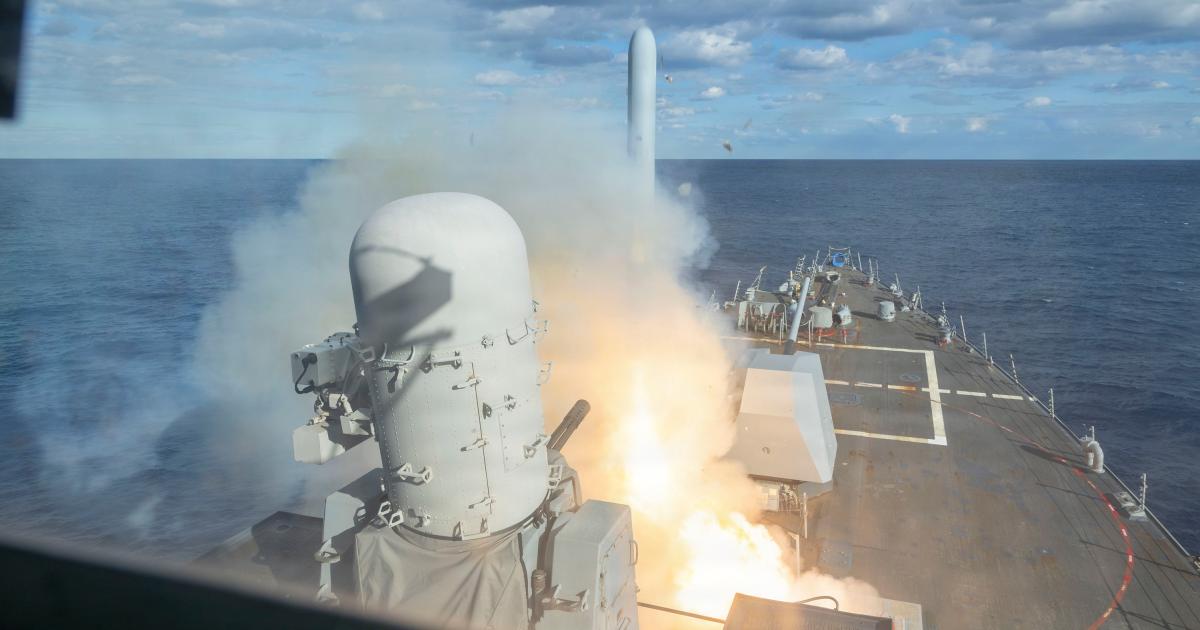
For his part, researcher Wu Xinbo believes that the United States' involvement in military conflicts in the Middle East, specifically tensions with Iran, has drained its negotiating capacity. This American military preoccupation has given Beijing more room to maneuver, as Washington's diplomatic attention is diverted away from the Pacific region.
Analytical reports indicate that Beijing finds dealing with Trump 'as a businessman' much easier than dealing with Democratic administrations that adopt comprehensive containment strategies. While Joe Biden was seen as a structural threat seeking to stifle China's rise, Trump is viewed as someone with whom beneficial trade deals can be reached.
Despite this Chinese optimism about the adversary's decline, Beijing remains cautious about entering into a direct and open confrontation with Washington. Chinese strategists realize that an 'unstable America' could be more volatile and dangerous, potentially threatening the stability of the international trading system on which the Chinese economy vitally depends.
China has taken practical steps to strengthen its influence, including restricting rare earth exports and increasing military activity around Taiwan in response to tariff pressures. Nevertheless, Chinese foreign policy remains governed by the principle of 'active neutrality,' awaiting the outcome of internal interactions within the troubled US administration.
Economist Guiyuan Lin describes the current situation as President Xi Jinping finally getting the 'weak America' he always dreamed of, but at the same time facing the 'volatile America' he feared. Political chaos in Washington is a double-edged sword that could serve Chinese ambition or turn the tables on everyone.
Informed sources reported that the shift in Chinese tone reflects a deep conviction that the international system is undergoing a major transitional phase. Beijing is no longer content with reacting but has begun to formulate new rules of engagement that take advantage of the 'institutional paralysis' afflicting political institutions in the United States.
Ultimately, it seems that the Chinese gamble relies on investing time; the more internal polarization there is in America, the more China's opportunities to present itself as a stable alternative to global leadership are strengthened. The lingering question is Beijing's ability to manage this rise without sliding into a direct military confrontation with a great power that still possesses deadly military fangs.
Only China can save Trump through tangible economic achievements he needs before the elections.
Share your opinion
Beijing Reads 'The Decline of Empire': How China Views a Second Trump Term as a Historic Opportunity?