ARAB AND WORLD

Wed 13 May 2026 9:33 pm - Jerusalem Time

Trump's Middle East Approach: Tactical Truces Fuel a 'No War, No Peace' State

An analytical report published by The New Yorker magazine revealed the complexities of the political and military landscape between the United States and Iran, indicating that obstacles to a lasting agreement have increased since the ceasefire was announced last April. Tehran categorically refuses to reopen the vital Strait of Hormuz to international navigation, stipulating that the Israeli occupation reach a final and comprehensive ceasefire agreement in Lebanon, while insisting on keeping the waterway under its direct control.

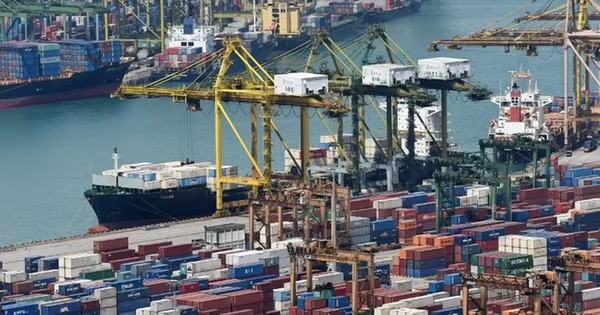
In response to Iranian intransigence, the US administration imposed a strict naval blockade on Iranian ports in an attempt to extract economic concessions that would ensure the flow of global oil. This escalating conflict has led to severe disruptions in global supply chains, with oil prices soaring to record levels of $126 per barrel, exacerbating the international economic crisis despite the military truce holding in its broad outlines.

The escalation on the ground did not stop at the blockade; the Trump administration launched what it called 'Operation Freedom,' a military operation aimed at forcibly securing the passage of commercial ships through the Strait of Hormuz. Tehran responded to this move with missile and drone attacks targeting Washington's allies in the region, including vital energy facilities in the UAE, as well as direct targeting of US Navy vessels.

Military sources reported that US forces destroyed Iranian fast boats and intercepted cruise missiles and drones during the first weeks of the supposed truce. General Dan Kane, Chairman of the Joint Chiefs of Staff, stated that Iran carried out more than ten attacks against US assets and seized container ships, describing these moves as 'low-level' harassment that has not yet escalated into an all-out war.

For his part, US Secretary of Defense Pete Hegseth affirmed that the ceasefire remains in effect despite repeated Iranian violations against US personnel and regional allies. This stance raises the astonishment of international observers who see the continuation of attacks as an indicator of the fragility of agreements concluded by the Trump administration, which lack real security guarantees to prevent the renewal of widespread conflict.

Experts in international conflict resolution believe that Trump's approach relies on 'tactical truces' instead of deep structural solutions, where economic influence and military threats are used to temporarily halt fighting without addressing the root causes of the crisis. This method leads to a situation characterized by 'no war, no peace,' where a major explosion is postponed rather than defused permanently through traditional diplomatic channels.

Unlike previous administrations that relied on armies of professional diplomats and negotiators, Trump's team is led by figures with real estate investment backgrounds such as Jared Kushner and Steve Witkoff. Analysts say this team seeks 'quick wins' and photo opportunities that serve political propaganda, ignoring the historical and psychological complexities of adversaries in the Middle East.

In a related context, Trump boasts the title of 'President of Peace,' claiming to have ended ten wars around the world, including conflicts in the Caucasus, Africa, and Asia. However, facts on the ground indicate that most of these agreements have not led to lasting stability, but rather remained mere freezes of conflicts that are still capable of igniting at any moment due to the absence of comprehensive political solutions.

In the Palestinian arena, observers believe that the 'Twenty-Point Plan' sponsored by Trump between the occupation and Hamas only achieved the release of hostages while postponing fundamental issues. Sources reported that occupation raids have killed hundreds of Palestinians since the agreement was signed, while Gaza continues to suffer from severe division and increasing Israeli military control, which empties the term 'ceasefire' of its meaning.

In Lebanon, the agreement, for which Trump took credit, did not prevent the continuation of military operations, with about 400 killed since last April due to occupation raids. Occupation forces continue to destroy villages in southern Lebanon, while Hezbollah responds by targeting settlements, reinforcing the conviction that these truces are merely a warrior's rest for the repositioning of warring powers.

Reports indicate that Iran views the occupation's repeated violations of truces in Gaza and Lebanon with great suspicion, fearing that it may be the next target of the 'permanent war' strategy. Trita Parsi, an expert on Iranian affairs, believes that Tehran will not accept partial agreements that allow the occupation to shift the weight of the conflict from one front to another, but rather seeks to impose a new security reality that protects its strategic interests.

US diplomacy currently faces what is known as the 'pressure paradox,' where Trump's increasing threats lead to increased defiance by the Iranian regime instead of submission. Iranian Parliament Speaker Mohammad Bagher Ghalibaf expressed this trend by emphasizing that the continuation of the current situation is unacceptable to Washington, hinting that Tehran has not yet used all the cards of power it possesses.

International research centers warn that the absence of institutional diplomatic work and its replacement by 'real estate deal logic' puts the region at risk. While Secretary of State Marco Rubio is absent from field movements, the role of neoconservatives in Washington who push for a comprehensive confrontation and regime change in Iran stands out, which contradicts Trump's promises to end wars.

Ultimately, the gap remains vast between Washington's demands for Iranian nuclear disarmament and the opening of the straits, and Tehran's demands for the lifting of sanctions and security guarantees. As long as the Trump administration continues to use the ceasefire as a 'stick' for pressure rather than a bridge to peace, the chances of a major confrontation remain strong in a fragmented international system.

The Trump administration prioritizes tactical truces over structural change; we suppress symptoms while the disease persists.

PALESTINE

Wed 13 May 2026 9:33 pm - Jerusalem Time

With 54 ships participating... The Fleet of Resilience prepares to sail from Turkey to break the Gaza blockade

The Turkish city of Marmaris, overlooking the Mediterranean Sea, is preparing tomorrow, Thursday, to be the starting point for the 'Global Fleet of Resilience' on a sea voyage aimed at breaking the Israeli blockade imposed on the Gaza Strip. This step comes with wide participation, including 54 ships, among them five ships belonging to the International Freedom Flotilla Coalition, in the largest naval demonstration of its kind in recent years.

Members of the fleet's board of directors announced, during a press conference held in Mugla province, southwestern Turkey, the completion of all logistical and technical preparations for departure. Participants, including activists of various nationalities, affirmed that this initiative comes in response to the continued policies of starvation and slow genocide pursued by the occupation against the residents of the besieged Strip.

For his part, the Palestinian-Spanish activist and fleet member, Saif Abu Kashk, explained that the decision to proceed with this journey came after a deep study of the continuous Israeli violations in the Palestinian territories. Abu Kashk pointed out that the occupation disregards all international laws and human rights, which necessitates an international popular movement to break the isolation imposed on Gaza.

Abu Kashk stressed that the fleet carries more than 500 international solidarity activists who came to express their rejection of the policy of forced displacement and colonialism practiced in both the West Bank and Gaza. He considered the current blockade a war crime that requires immediate intervention to protect civilians and provide their basic needs, which the occupation prevents from reaching them.

In a live testimony to previous violations, Thiago Avila, a member of the fleet's steering committee, revealed harsh details he experienced during a previous attempt to break the blockade. Sources reported that Avila and his colleagues were kidnapped by Israeli forces in international waters after departing from Greece, a move that reflects the occupation's disregard for international sovereignty.

The Brazilian activist recounted details of his detention in Ashkelon Prison, where he was subjected to continuous torture, interrogation, and severe psychological and physical pressure. He explained that he spent about ten days in solitary confinement, confirming that interrogators leveled false accusations of terrorism against him and threatened him with prison sentences of up to a century.

Avila strongly criticized what he described as 'Greek complicity' during previous Israeli attacks at sea, noting that the Greek coast guard did nothing to protect the activists. He added that Greek forces were present during the Israeli navy's attack on the ships but merely watched without intervening to rescue the solidarity activists or their boats.

Despite these threats and risks, international solidarity activists affirmed their determination to sail again, considering that what Palestinians face daily from bombing and destruction far exceeds what activists might be exposed to. They stressed that the Palestinian people deserve freedom and dignity, and that the fleet represents a global message of solidarity to break international silence regarding Gaza's suffering.

This attempt brings to mind the attack launched by the Israeli army last April off the island of Crete, which targeted ships carrying hundreds of participants from 39 countries. That attack resulted in the detention of 21 boats and the arrest of dozens of activists, in an Israeli attempt to quash any naval movement seeking to lift the blockade.

It is worth noting that the Gaza Strip has been suffering from a suffocating blockade since 2007, and humanitarian conditions there have deteriorated to catastrophic levels since the war began in October 2023. Military operations have destroyed infrastructure and displaced more than one and a half million Palestinians, making the arrival of aid convoys and breaking the blockade an urgent necessity to save what can be saved.

We will sail again towards Gaza, and this is historically the largest fleet formation, and we will continue to struggle despite threats of arrest and torture.

ARAB AND WORLD

Wed 13 May 2026 9:32 pm - Jerusalem Time

Washington Negotiations Under Escalation: Israel Imposes Its Terms on Lebanon with Fire

All eyes are on Washington, the American capital, where a new round of direct negotiations between Lebanon and Israel is scheduled to begin on Thursday and Friday. These meetings come in an attempt to achieve a political breakthrough under US sponsorship, amidst a wide gap in priorities between the two parties, with Lebanon focusing on solidifying the truce while Israel insists on the issue of disarming Hezbollah.

Official sources reported that the Lebanese side held intensive contacts with the American administration with the aim of pressuring Tel Aviv to reduce the military escalation. The past hours witnessed a significant expansion in the scope of Israeli targeting and the intensity of raids, reflecting an Israeli desire to exert maximum field pressure before sitting at the negotiating table.

On the ground, reports confirmed that diplomatic efforts have not yet translated into calm, as Israeli aircraft continue to launch their raids in a clear violation of the truce agreement in effect since mid-April. In contrast, Hezbollah continues to carry out military operations against invading Israeli forces, with its drones posing a worrying threat to the occupation's military movements.

The Lebanese side in this round is represented by Simon Karam, while the Israeli delegation is headed by Yehiel Leiter, in what is the third such meeting in the direct negotiation process that resumed after decades of interruption. This round comes at a very sensitive time, as Israel seeks to integrate military and political tracks to extract fundamental concessions from the Lebanese government.

Observers and analysts believe that Israel is adopting a strategy of 'negotiations under fire,' refusing to separate the continuation of military operations from the diplomatic track. This policy aims to impose Israeli dictates on the Lebanese state and Hezbollah, exploiting air superiority and destructive power to force the other party to accept harsh security conditions.

Through this escalation, Benjamin Netanyahu's government seeks to establish a new security equation that allows it to launch attacks inside Lebanon even if a ceasefire agreement is reached. The Israeli government sends messages to its internal audience that it will not stop until Hezbollah's military capabilities are destroyed and what it describes as absolute security for the residents of the northern areas is ensured.

The Israeli delegation is expected to bring radical demands to Washington, foremost among them the actual dismantling of Hezbollah's weapons and the removal of its fighters from border areas. Estimates also indicate that Israel will demand the continued presence of its forces in some Lebanese points until the Lebanese army takes practical steps to disarm, which could spark an internal crisis in Beirut.

In addition to security issues, experts believe that Israel will reopen the file of maritime border agreements and maritime demarcation, as well as issues of gas and oil exploration in the Mediterranean. Netanyahu aims to achieve a 'political and economic achievement' by raising these issues, which can be marketed to Israeli society as part of the gains of the ongoing war.

In a related context, Tel Aviv is cautiously monitoring the results of ongoing talks between Washington and Tehran, betting on their failure to resume a full-scale war on Lebanon. Israeli circles believe that any setback in the regional diplomatic track will give them the green light to return to the pace of comprehensive military operations that preceded the last truce agreement.

Israel seeks to impose an equation based on a ceasefire while retaining the right to launch continuous military attacks on Lebanese territory.

PALESTINE

Wed 13 May 2026 9:32 pm - Jerusalem Time

Occupation converts a home in Silat al-Harithiya into a military barracks and displaces the Jaradat family

Israeli occupation forces have converted the home of Palestinian citizen Bilal Jaradat in the town of Silat al-Harithiya, located west of Jenin city, into a military barracks and a base for their soldiers. This step came after a sudden raid on the house, which ended with the family being forcibly evicted and displaced into the open without any real prior warning.

Local sources reported that the occupation army handed the homeowner a military order for 'seizure for military purposes,' signed by the area's officer. This house is the first residential property to be seized in such a direct manner within the town, raising widespread fears among residents of the expansion of this policy.

Bilal Jaradat recalled the harsh moments of the eviction, noting that a military force raided his home at 5 PM last Tuesday. He explained that the soldiers gave him, his wife, and children only 20 minutes to leave the premises, which prevented them from moving their belongings or essential necessities.

Jaradat pointed out legal manipulation in the military order, as the text included the family's right to object to the eviction, but he later discovered that the time limit for objection had already expired before he received the decision. This action reflects the occupation's policy of imposing a fait accompli and bypassing the superficial legal procedures it sets.

The homeowner described the situation as 'very difficult and sad,' as he currently finds himself standing only dozens of meters from his home without being able to enter it. He confirmed that the soldiers are stationed inside the rooms he built with years of effort, while his family is forced to search for alternative shelter unexpectedly.

The family also observed occupation soldiers carrying out mysterious excavation work around the house, without knowing the true objectives behind these movements. Jaradat stressed that his presence in his home did not pose any security threat, describing what happened as an inhumane act aimed at breaking the will of Palestinians.

This incident comes in the context of ongoing escalation in the town of Silat al-Harithiya, where occupation bulldozers continue to raze vast areas of agricultural land. These operations aim to pave new settlement roads connecting the surrounding settlements, leading to the fragmentation of the town and the confiscation of more citizens' properties.

In another field development, occupation forces raided a boys' school in the town this morning, Wednesday, and removed the Palestinian flag from its building in a provocative move. These raids and incursions occur almost daily, creating a state of constant tension among students and local residents.

Observers believe that what is happening in Silat al-Harithiya, which is about 12 kilometers from Jenin refugee camp, is an extension of the systematic policy of forced displacement in the West Bank. The scene that Bilal Jaradat is experiencing today has been repeated with hundreds of families in the camp and neighboring cities, where safe homes are turned into military points and centers for sniping and surveillance.

My house is that white house over there; currently, they are inside it, and I am a hundred meters away from it, but I cannot reach it because the soldiers are inside.

PALESTINE

Wed 13 May 2026 9:32 pm - Jerusalem Time

Mladenov Announces 'National Committee' Ready to Govern Gaza, Calls for Current Leadership to Step Down

The Executive Director of the Gaza Peace Council, Nikolay Mladenov, confirmed that the National Committee tasked with governing the Strip has completed all its technical and administrative preparations to take over. Mladenov explained in a press conference held in occupied Jerusalem that this committee is now ready to immediately carry out its duties once the appropriate field conditions are met.

The international official issued an explicit call for the current political leadership in the Gaza Strip to step aside, to make way for the formation of an independent and non-political 'technocrat' administration. This step comes within the framework of the twenty-point plan proposed by US President Donald Trump as a way to end the ongoing conflict in the Strip.

Mladenov pointed to a proposed roadmap consisting of 15 points, primarily based on the principle of 'reciprocity' and mutual verification between parties to compensate for the lack of trust. This roadmap links every procedural step from one party to a corresponding step from the other party to ensure seriousness in implementation.

The proposed vision includes a controversial program aimed at the 'voluntary purchase of weapons' from factions, with a conditional amnesty offered to anyone who agrees to surrender their weapons to the new authorities. The plan also grants a 'safe passage' option for political and military leaders who wish to leave the Strip and go to third countries.

Despite acknowledging the resilience of the ceasefire agreement and the achievement of a degree of stability that contributed to the return of detainees, Mladenov described the current situation as 'far from ideal.' He warned against the continuation of field violations that lead to civilian casualties, emphasizing the need to move to a permanent political solution phase.

The Executive Director of the Peace Council stressed that the ultimate goal of these moves is to provide a 'political horizon' for Palestinians that guarantees their right to self-determination and the establishment of an independent state. The plan also aims to reunite the Gaza Strip and the West Bank under the umbrella of a renewed Palestinian Authority capable of fulfilling its obligations.

Regarding the economic aspect, Mladenov revealed a broad international commitment to provide funding totaling 17 billion dollars over the next decade for the reconstruction of what was destroyed by the war. He expected these investments to create tens of thousands of job opportunities for Palestinians during the first year of the plan's implementation.

The future vision also includes the full and regular reopening of the Rafah border crossing to facilitate the movement of individuals and goods without obstacles. The National Committee also seeks to end crises related to 'dual-use' materials such as cement, by establishing a strict security and technical governance system under international and local supervision.

Regarding the future of Hamas, Mladenov clarified that the Council does not demand the movement to disappear from the political scene, but rather it can engage in the electoral process in the future. He stipulated that the movement must abandon armed action, emphasizing that the existence of military arsenals parallel to the official state authority cannot be accepted.

For its part, Hamas responded to these statements by affirming its positive engagement with mediators' proposals to reach fair understandings. However, the movement demanded Mladenov to clearly and explicitly name the parties that obstruct agreements and restrict the access of humanitarian aid to the residents of the Strip.

The movement insisted that starting discussions on the second phase of the agreement first requires obliging the occupation to implement the provisions of the first phase and fully open the crossings. Hamas considered that adherence to what was previously agreed upon is the only and necessary gateway to any future political or administrative solutions in Gaza.

In conclusion of his statements, Mladenov pointed out that all proposed documents and plans are not 'sacred texts' but rather paths subject to amendment and discussion. He confirmed that the current roadmap has already undergone revisions based on meetings with a Hamas delegation in Cairo to ensure that all factional concerns and fears are addressed.

The goal is not just to improve daily conditions, but to give Palestinians in Gaza a real political horizon that leads to self-determination and statehood.

PALESTINE

Wed 13 May 2026 9:32 pm - Jerusalem Time

Netanyahu discusses with 'Peace Council' stalled disarmament file and scenarios of Trump's plan in Gaza

On Wednesday, the Prime Minister of the occupation government, Benjamin Netanyahu, held a meeting in occupied Jerusalem with Nikolai Mladenov, the Executive Director of what is known as the 'Peace Council' for the Gaza Strip. The meeting included the Council's technical staff, where sensitive issues related to the future of the Strip were discussed, although the official statement issued by Netanyahu's office did not disclose details of the direct discussions held behind closed doors.

This meeting is the second of its kind in just two weeks, reflecting intensified diplomatic moves following Mladenov's arrival in the region last Tuesday. These moves come amidst the ongoing aggression on Gaza and deepening political differences over the identity of the party that will manage the Strip in the next phase, especially with negotiations on disarming the resistance reaching a dead end.

Informed sources reported that negotiation rounds in Cairo may not resume soon if the parties do not receive a positive response from Hamas regarding the updated proposals. This stalemate has prompted decision-making circles in Tel Aviv and Washington to consider the possibility of proceeding with the implementation of the 'Twenty Points Plan' proposed by US President Donald Trump, even if the movement does not agree to give up its weapons.

The new American vision proposes transferring control of certain areas in the Gaza Strip to an 'international stabilization force' that would undertake temporary security and administrative tasks. The plan also aims to expand the scope of humanitarian aid delivery to geographical areas described by the occupation as 'free of terrorism,' in an attempt to create a new reality on the ground that bypasses the current administrative structures in the Strip.

The plan also includes a clause stipulating the handover of civil affairs administration in Gaza to a Palestinian technocratic committee, but the occupation authorities continue to place obstacles to approving the names of its members. Concurrently with these discussions, actual procedures began to recruit new police elements under the name of maintaining order, in a step aimed at preparing the ground for an alternative administration away from Palestinian factions.

One of the most controversial points in Trump's plan is the clause that refers to the possibility of the occupation forces withdrawing from specific areas and handing them over to the international force without prior disarmament of Hamas. Reports indicate that this approach faces strong opposition within the ruling coalition in Israel, which insists on liquidating the military capabilities of the resistance as a condition for any partial or complete withdrawal.

In a related context, Michael Eisenberg, Netanyahu's advisor for Gaza affairs, stated that the Peace Council has the authority to enter and control areas within the Strip and use force to disarm if necessary. Although this military option does not explicitly appear in the original texts of the American plan, the statements reflect an Israeli desire to hold international parties responsible for direct confrontation.

For his part, the US Ambassador to the occupation, Mike Huckabee, expressed deep doubts about the success of any international party other than the Israeli army in the mission of disarming Palestinian factions. Huckabee expressed hope that the occupation would avoid international condemnations if it decided to expand its military operations on the ground to achieve its security goals, considering that international guarantees might not be sufficient to protect Israel's security.

On the ground, occupation aircraft continue to launch raids on various areas of the Strip, amidst increasing international warnings of a widespread famine resulting from the tight siege and the closure of vital crossings. Human rights reports confirm that preventing the entry of basic necessities has led to an unprecedented collapse in the humanitarian system, at a time when Israeli security agencies are pressing to reduce aid on the pretext of preventing its access to the resistance.

The Peace Council can enter and control areas in Gaza and disarm Hamas by force if necessary.

PALESTINE

Wed 13 May 2026 9:32 pm - Jerusalem Time

Redrawing the Geopolitical Map: How Israel Seeks to Impose Buffer Zones in Gaza and Lebanon?

Field data and the ongoing Israeli military escalation in the Gaza Strip and the northern front with Lebanon indicate a broader strategic path that goes beyond stated objectives. These moves aim to reshape the border environment, both politically and militarily, by imposing a new geographical reality based on field expansion and the establishment of permanent buffer zones, in parallel with exerting maximum military pressure to extract concessions in negotiation tracks.

In this context, military sources confirmed that Israeli objectives in Lebanon are no longer limited to weakening Hezbollah's military capabilities, but extend to include structural changes in the border region. The sources clarified that the Chief of Staff of the occupation army, Eyal Zamir, explicitly indicated that current operations serve a comprehensive vision to redraw the geopolitical landscape in the region, ensuring long-term security superiority for Israel.

Regarding the Gaza Strip, reports revealed that the buffer zone imposed by the Israeli army has significantly expanded to cover about 59% of the total area of the Strip. With the addition of areas classified as prohibited or highly dangerous, which account for 11%, the occupation authorities now impose their direct control or influence over approximately 65% of the Strip's territory, unprecedentedly reducing the space available to Palestinians.

As for the northern front, the Israeli plan seeks to impose a security belt extending from Ras Naqoura in the west to the Yarmouk Basin and south of Damascus in Syrian territory. Israeli forces are working on the ground to establish this buffer zone by setting up field fortifications and fixed military points, in an attempt to create a new security reality that prevents any future threats from being stationed near the northern border.

Political deliberations in Washington indicate that American-backed Israeli demands focus on two fundamental clauses: the complete disarmament of Hezbollah and reaching a formal peace treaty. The current military escalation serves as a direct pressure tool within the framework of what is known as 'negotiation under fire,' to compel the Lebanese government and political forces to accept harsh conditions that include sovereign and security concessions.

The current Israeli strategy adopts a 'gradual attrition' approach instead of rapid and swift incursions, which past experiences have proven to be costly in terms of human lives and military resources. Through this tactic, Israel seeks to slowly seize land and destroy popular support in border areas, while continuing to build defensive installations that ensure the long-term presence of forces in controlled locations.

In conclusion, it appears that this geopolitical shift has received a green light from the American administration, which aligns with the Israeli vision of the necessity to change the security reality in the region. If diplomatic efforts fail to curb this trend, the region is heading towards the entrenchment of a new reality in which Lebanese and Palestinian geography is fragmented in favor of extended Israeli security belts.

Israel is working to redraw the geopolitical landscape in the region by establishing buffer zones and expanding areas of field control.

PALESTINE

Wed 13 May 2026 9:32 pm - Jerusalem Time

Chief of Staff of the Occupation Army: The battle in Gaza is not over, and we are ready to act on all fronts

The Chief of Staff of the Occupation Army, Eyal Zamir, conducted an extensive field tour in the northern areas of the occupied West Bank on Wednesday, which included a comprehensive security assessment of the field conditions. Zamir was accompanied on this tour by an elite group of military leaders, including the commander of the Central Region, Avi Blot, the coordinator of government operations in the territories, Major General Avraham Halevi, in addition to the Military Advocate General, the head of the Civil Administration, and the commanders of the field brigades in the Samaria and Menashe regions.

During the tour, the Chief of Staff listened to detailed reports from the brigade commanders about the current operational situation in the West Bank, where he expressed his appreciation for what he described as the efforts of the battalions and soldiers in the field. Zamir stressed the importance of close cooperation between the various security agencies to ensure the implementation of military plans, noting that the army operates with a spirit of initiative and attack in all arenas where it is currently present.

Regarding the southern front, Zamir clearly affirmed that the war in the Gaza Strip has not yet ended, despite the decline in the intensity of operations in some areas. He explained that the occupation forces maintain the highest levels of readiness to resume intensive combat activity if necessary, noting that continuous offensive action aims to achieve pre-determined military objectives and prevent any future threats.

On the northern front, the Chief of Staff claimed that the army succeeded in creating a new security reality by continuing the fighting in southern Lebanon and the Litani region. He indicated that operations there focus on destroying infrastructure and thwarting the capabilities of militants, stressing that these movements come within a comprehensive strategy to remove threats from the northern borders and secure the return of settlers to their areas.

Zamir touched on the situation in the West Bank, considering that the region is witnessing a radical change led by the Central Command through intensified offensive and thwarting activities. He claimed that the current period is one of the lowest in terms of the volume of Palestinian operations in recent years, attributing this to what he described as continuous military initiatives and operations targeting refugee camps directly.

At the end of his tour, the Chief of Staff revealed important logistical and military movements, as the 'Nahal' Brigade was transferred from the intensive combat front in Lebanon to the West Bank to carry out new security tasks. He affirmed that this rapid transfer of forces reflects the army's ability to maneuver between different fronts, expressing his confidence that the brigade will achieve field accomplishments in the West Bank similar to what it achieved on other fronts.

The battle in the Gaza Strip is not over yet, and our army is on high alert to resume fighting, defensively and offensively, whenever the need arises.

PALESTINE

Wed 13 May 2026 9:31 pm - Jerusalem Time

Children of Gaza in the Darkness of the Siege: Blindness Haunts Thousands Amidst the Paralysis of the Medical System

The ongoing Israeli war on the Gaza Strip has extinguished the light of sight for thousands of victims, among them the child Al-Baraa, who now lives in complete darkness due to the continuous shelling. Al-Baraa is no longer able to move except with the help of his mother, as his open eyes conceal a bitter reality of darkness that suddenly entered his life, transforming him from a child who saw the light into a new victim of the war machine.

Al-Baraa's mother describes her suffering with words that fail to convey the pain, as she strives to teach her child how to deal with a world he no longer sees, on a journey where every step seems heavier than the last. Although medical diagnosis confirmed that the child suffered complete retinal damage, his family still clings to the hope of obtaining a treatment opportunity abroad to save what can be saved.

Sources reported that vision loss in the Gaza Strip takes on tragic dimensions that go beyond physical injury, as those affected face a collapsed medical reality and a severe shortage of surgical capabilities. The chances of restoring sight diminish day by day due to the deliberate delay in allowing patients to leave the Strip, in addition to the lack of necessary medications to deal with complex cases.

Medical reports documented the suffering of health cadres working in very harsh conditions, as hospitals lack basic surgical tools and essential medical consumables. Field doctors confirmed that obtaining the simplest supplies such as surgical sutures and lenses has become an arduous task, which limits the ability of medical teams to save hundreds of injured people.

In a related context, data from the Palestinian Red Crescent Society indicates a severe crisis in medical evacuation, as only 700 patients have been able to leave the Strip since early last February. In contrast, more than 18,000 injured and sick people are still waiting for their turn on evacuation lists, amidst strict Israeli restrictions that prevent them from accessing appropriate healthcare.

Despite the ceasefire agreement coming into effect last October, the occupation continues to impose a suffocating siege that prevents the entry of agreed-upon quantities of medicines and shelter supplies. This ongoing siege has led to hundreds of additional martyrs and injured, most of whom are women and children who pay the highest price for these policies.

Cases of vision loss represent a radical and harsh transformation in the lives of those affected, especially in an environment that lacks the minimum requirements for social integration or psychological and technical support for the blind. Those affected find themselves in a bitter struggle with a reality imposed by war, where treatment options remain dependent on a long wait and rare, almost negligible travel opportunities.

It is worth noting that the genocidal war launched by Israel on Gaza has left enormous destruction affecting 90% of the civilian infrastructure, and resulted in the martyrdom and injury of hundreds of thousands. Approximately 2.4 million Palestinians currently live in catastrophic conditions, as displaced persons face a severe shortage of food and medicine, which portends an exacerbation of health and humanitarian crises in the besieged Strip.

Vision loss in Gaza is doubly cruel under the weight of an exceptional reality, where treatment obstacles intertwine with a scarcity of capabilities and the complexity of travel.

PALESTINE

Wed 13 May 2026 9:31 pm - Jerusalem Time

Israeli Minister Storms Al-Aqsa Courtyards Amid Calls to Escalate Incursions on Anniversary of Jerusalem's Occupation

This Wednesday morning, Yitzhak Wasserlauf, the Israeli Minister of the Negev and Galilee, stormed the courtyards of the blessed Al-Aqsa Mosque under tight protection from occupation forces. This provocative move comes ahead of the commemoration of the occupation of the eastern part of occupied Jerusalem according to the Hebrew calendar.

During his tour of the mosque, the minister, who belongs to the far-right 'Jewish Power' party, called on the Israeli public to intensify incursions. Wasserlauf described these actions as part of the 'revolution' led by National Security Minister Itamar Ben-Gvir to impose a new reality in the Noble Sanctuary.

These developments coincide with extensive Israeli preparations to commemorate what is called 'Jerusalem Day,' which falls on May 15th. Ironically, this date this year coincides with the Palestinian people's commemoration of the 78th anniversary of the Nakba, threatening to raise the level of tension in the holy city.

In a related context, media sources revealed a letter sent by 22 Israeli officials, including 9 ministers and 13 Knesset members, to the police leadership. The letter demanded that all necessary facilities be provided to enable settlers to carry out large-scale mass incursions into Al-Aqsa Mosque in the coming days.

The far-right organization 'B'yadenu' published the text of the letter, which incites systematic violation of the sanctity of Al-Aqsa Mosque. These organizations work in coordination with government bodies to mobilize the largest possible number of participants in the provocative events planned in the heart of Old Jerusalem.

Estimates indicate that about 50,000 settlers are preparing to participate in the annual 'Flag March' that will parade through the neighborhoods of East Jerusalem tomorrow evening. The march is expected to include racist slogans hostile to Arabs and Muslims, raising fears of field confrontations.

For its part, the Islamic Resistance Movement (Hamas) warned of the repercussions of these incursions, considering them a continuation of the Judaization policy pursued by the occupation government. The movement affirmed in a press statement that these measures will not succeed in changing the Islamic and historical identity of Al-Aqsa Mosque or imposing new equations.

Hamas stressed that the Palestinian people will continue their steadfastness and resilience in the face of the occupation's arrogance and attempts to harm their holy sites. It stated that the resistance is closely monitoring these violations, which disregard all international warnings and calls for restraint.

On the diplomatic front, the State of Qatar expressed its strong condemnation of the Israeli minister's storming of the Al-Aqsa courtyards, describing it as a blatant violation of international law. The Qatari Foreign Ministry affirmed in a statement that these actions constitute a provocation to the feelings of millions of Muslims around the world and fuel the conflict in the region.

Doha called on the international community to assume its legal and moral responsibilities towards protecting Jerusalem and its holy sites from repeated violations. It also reiterated its firm stance in supporting the legitimate rights of the Palestinian people, foremost among them the establishment of their independent state on the 1967 borders with East Jerusalem as its capital.

The Zionist minister's storming of the Al-Aqsa courtyards is a practical translation of the government's policy aimed at Judaizing the city and entrenching incursions as a fait accompli.

ARAB AND WORLD

Wed 13 May 2026 9:02 pm - Jerusalem Time

بدون عنوان 2026-05-13 21:02:03

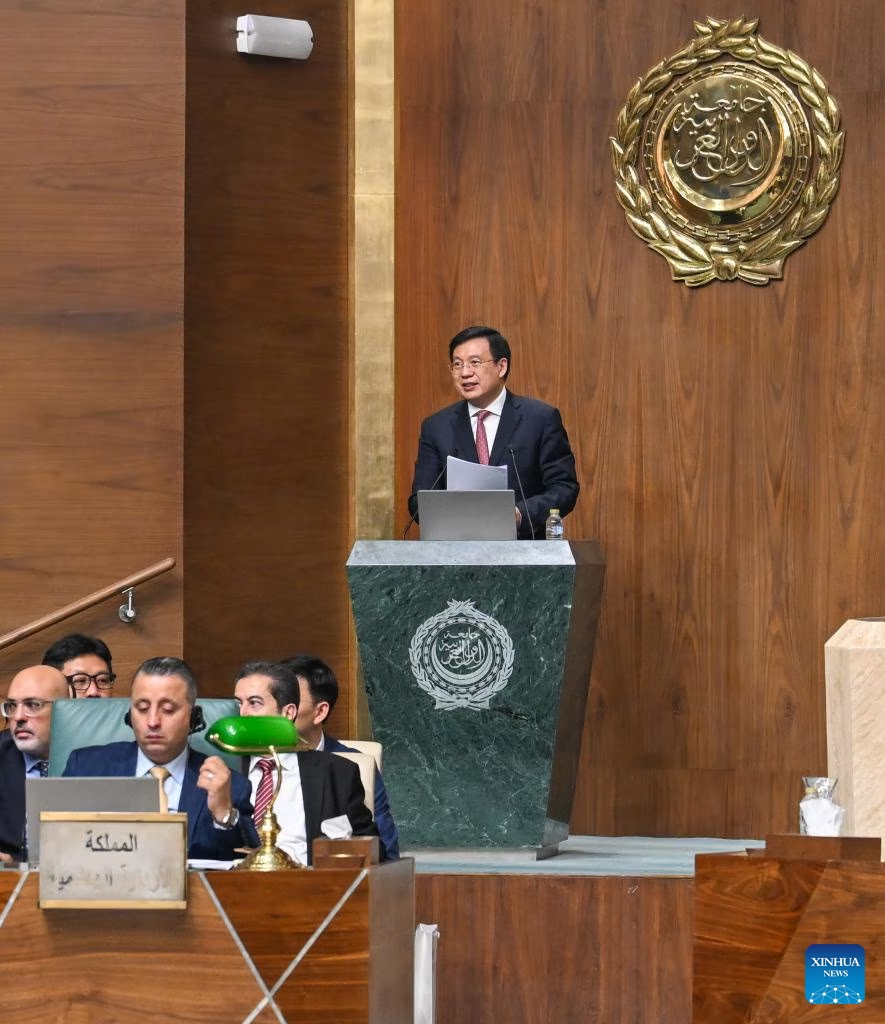
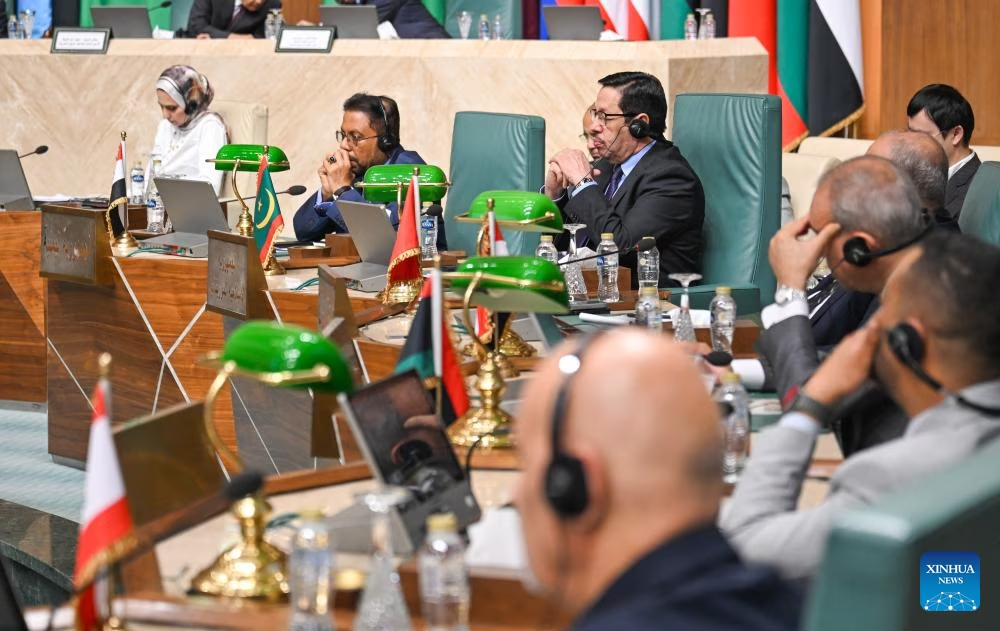
President of Xinhua News Agency Fu Hua speaks at the opening ceremony of the Global South Media and Think Tank Forum Chinese-Arab Partnership Conference at the headquarters of the League of Arab States in Cairo, Egypt, May 12, 2026. The Global South Media and Think Tank Forum Chinese-Arab Partnership Conference opened here on Tuesday. The two-day event, under the theme "Pooling Wisdom, Embarking on a New Journey: Jointly Building a China-Arab Community with a Shared Future," gathers about 250 representatives from around 110 media outlets, think tanks, government institutions, enterprises from China and Arab countries, as well as from international and regional organizations. (Xinhua/Liu Lei)

CAIRO, May 12 (Xinhua) -- The Global South Media and Think Tank Forum Chinese-Arab Partnership Conference opened Tuesday at the headquarters of the League of Arab States in the Egyptian capital of Cairo.

The two-day event, under the theme "Pooling Wisdom, Embarking on a New Journey: Jointly Building a China-Arab Community with a Shared Future," gathers about 250 representatives from around 110 media outlets, think tanks, government institutions, enterprises from China and Arab countries, as well as from international and regional organizations.

In his opening remarks, Ahmed Aboul Gheit, secretary-general of the League of Arab States, said that countries of the Global South are facing a wide range of challenges. The Global Governance Initiative proposed by Chinese President Xi Jinping, he noted, has opened up broad prospects for promoting the democratization of international relations, narrowing the North-South divide, resolving global crises through peaceful means, and building a better future together.

Arab and Chinese media outlets and think tanks urgently need to strengthen cooperation, build consensus, foster strong bonds between the Arab and Chinese peoples, and promote a more just and equitable international order, he stressed.

Holding the Global South Media and Think Tank Forum Chinese-Arab Partnership Conference at the headquarters of the League of Arab States carries important significance, Gheit said, noting that it will promote experience-sharing between Arab and Chinese media outlets and think tanks, open up broader prospects for cooperation, deepen exchanges and mutual learning in ideas and civilizations between the two countries, and make Arab-China media and think tanks an important pillar in strengthening Arab-China friendship.

President of Xinhua News Agency Fu Hua, for his part, said that under the strategic guidance of President Xi and the leaders of Arab states, China-Arab relations have entered their best period in history: strategic mutual trust has been steadily deepened, cooperation across multiple fields has continued to expand, and people-to-people and cultural exchanges have yielded fruitful results.

Media and think tanks play a vital role in China-Arab friendship and cooperation by amplifying voices, contributing intellectual insight, and connecting hearts, Fu said, stressing that Xinhua will continue to promote and explain in depth the idea of a community with a shared future for mankind and the four major global initiatives proposed by President Xi, fully showcase the vivid practice of China and Arab countries walking hand in hand and engaging in pragmatic cooperation, further improve and strengthen cooperation mechanisms between Chinese and Arab media and think tanks, promote closer exchanges through more practical measures, advance exchanges and mutual learning between civilizations and closer people-to-people ties, and contribute media and think-tank strength to building a China-Arab community with a shared future in the new era.

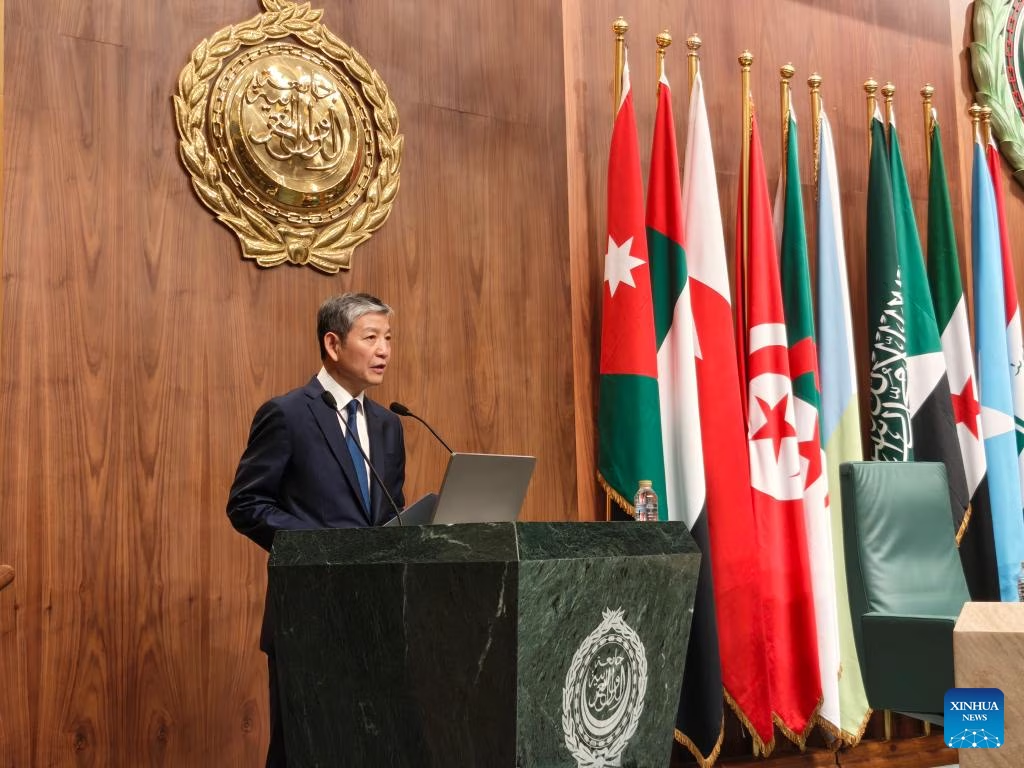
In his address, Chinese Ambassador to Egypt Liao Liqiang said that 10 years ago, President Xi visited the headquarters of the League of Arab States and delivered an important speech in this very hall, offering China's answer to the "Middle East question," stressing that recalling it today makes it all the more instructive.

Not long ago, President Xi put forward a four-point proposal on safeguarding and promoting peace and stability in the Middle East, which has received broad support and a positive response from the international community, Liao added.

The League of Arab States is an important platform for Arab countries to strengthen solidarity and self-reliance, he said, noting China-Arab relations have a long and enduring history, and this year marks the 70th anniversary of the establishment of diplomatic relations between China and Arab states.

The Chinese ambassador expressed his belief that the forum will further promote the exchange of governance experience between China and Arab countries and deepen their traditional friendship and people-to-people bonds. The Chinese side, he said, stands ready to work with Arab friends to carry forward the spirit of China-Arab friendship and stride forward on the bright path toward building a higher-level China-Arab community with a shared future.

Chinese and foreign guests attending the event said that China and Arab countries, as important members of the Global South, have always been committed to promoting peace and development and deepening mutually beneficial cooperation, playing an important role in advancing international fairness and justice and improving global governance.

They added that China-Arab cooperation has become a model of solidarity and common development among developing countries, expressing hope that Global South media outlets and think tanks will further deepen China-Arab exchanges and mutual learning, build consensus on development, promote more practical cooperation outcomes, and advance substantive cooperation between Chinese and Arab media and think tanks.

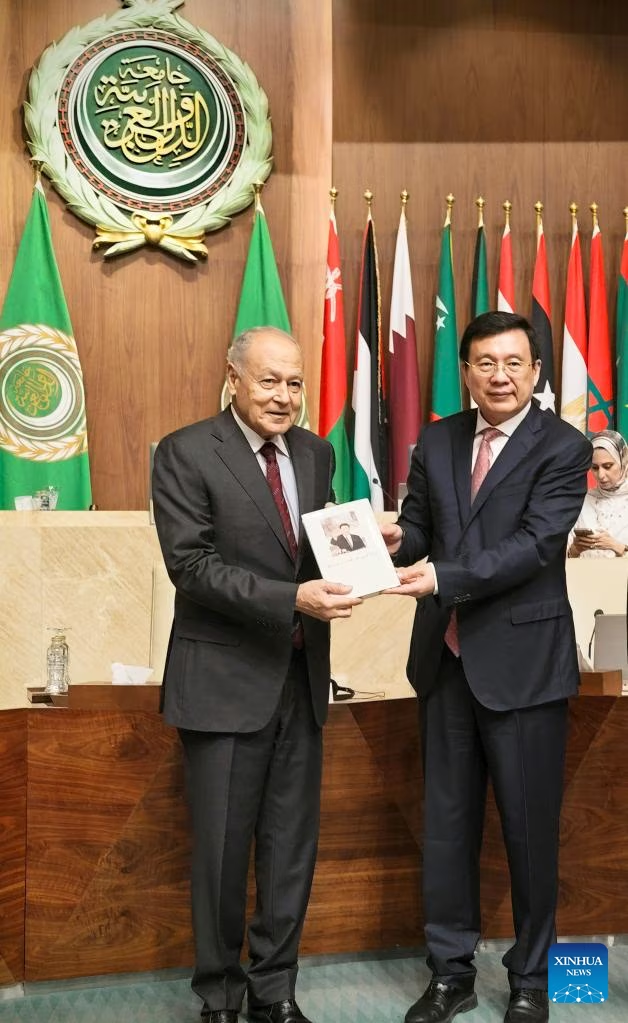
Fu presented Gheit with the Arabic edition of the book China's Governance Under Xi Jinping's Leadership. The opening ceremony also featured a China-Arab art exhibition titled "Art Integration: Across Millennia, the Silk Road Culture Endures," as well as a certificate-awarding ceremony honoring outstanding contributions by Global South joint communication partners.

The conference is co-hosted by Xinhua and the League of Arab States. During the event, participants will conduct in-depth discussions on topics including peaceful development, diverse narratives, digital innovation, and mutual learning among civilizations. A think-tank report titled "Achievements, Opportunities, and Prospects of China-Arab Cooperation in the New Era" will also be released

President of Xinhua News Agency Fu Hua presents Ahmed Aboul Gheit, secretary-general of the League of Arab States, with the Arabic edition of the book China's Governance Under Xi Jinping's Leadership at the headquarters of the League of Arab States in Cairo, Egypt, May 12, 2026. The Global South Media and Think Tank Forum Chinese-Arab Partnership Conference opened here on Tuesday.

The two-day event, under the theme "Pooling Wisdom, Embarking on a New Journey: Jointly Building a China-Arab Community with a Shared Future," gathers about 250 representatives from around 110 media outlets, think tanks, government institutions, enterprises from China and Arab countries, as well as from international and regional organizations. (Xinhua)


Chinese Ambassador to Egypt Liao Liqiang speaks at the opening ceremony of the Global South Media and Think Tank Forum Chinese-Arab Partnership Conference at the headquarters of the League of Arab States in Cairo, Egypt, May 12, 2026. The Global South Media and Think Tank Forum Chinese-Arab Partnership Conference opened here on Tuesday.

The two-day event, under the theme "Pooling Wisdom, Embarking on a New Journey: Jointly Building a China-Arab Community with a Shared Future," gathers about 250 representatives from around 110 media outlets, think tanks, government institutions, enterprises from China and Arab countries, as well as from international and regional organizations. (Chinese Embassy in Egypt/Handout via Xinhua)


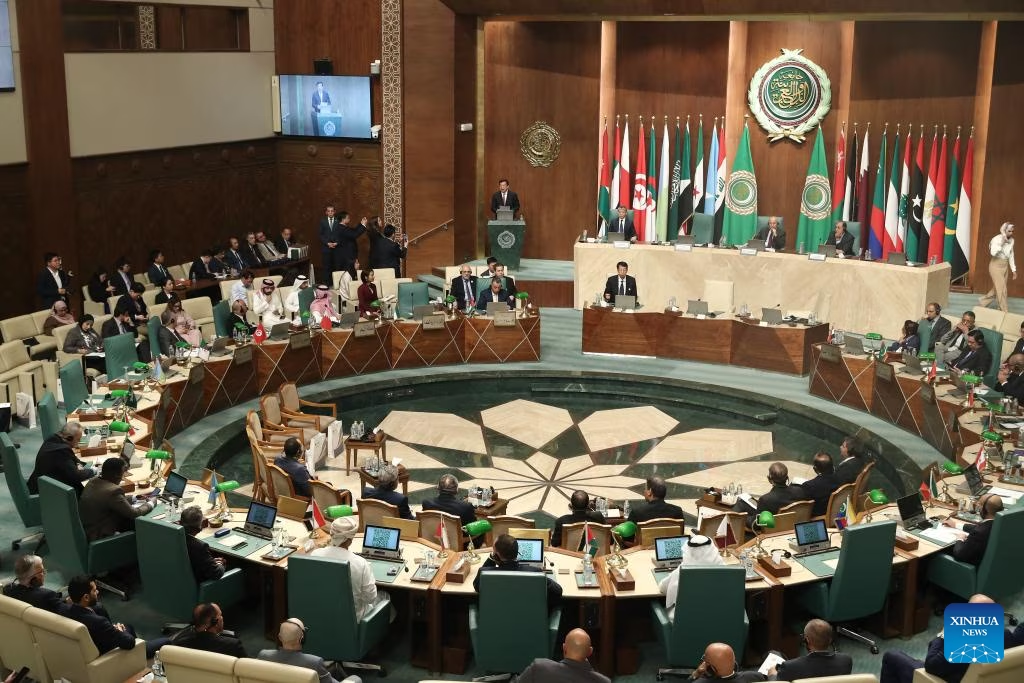
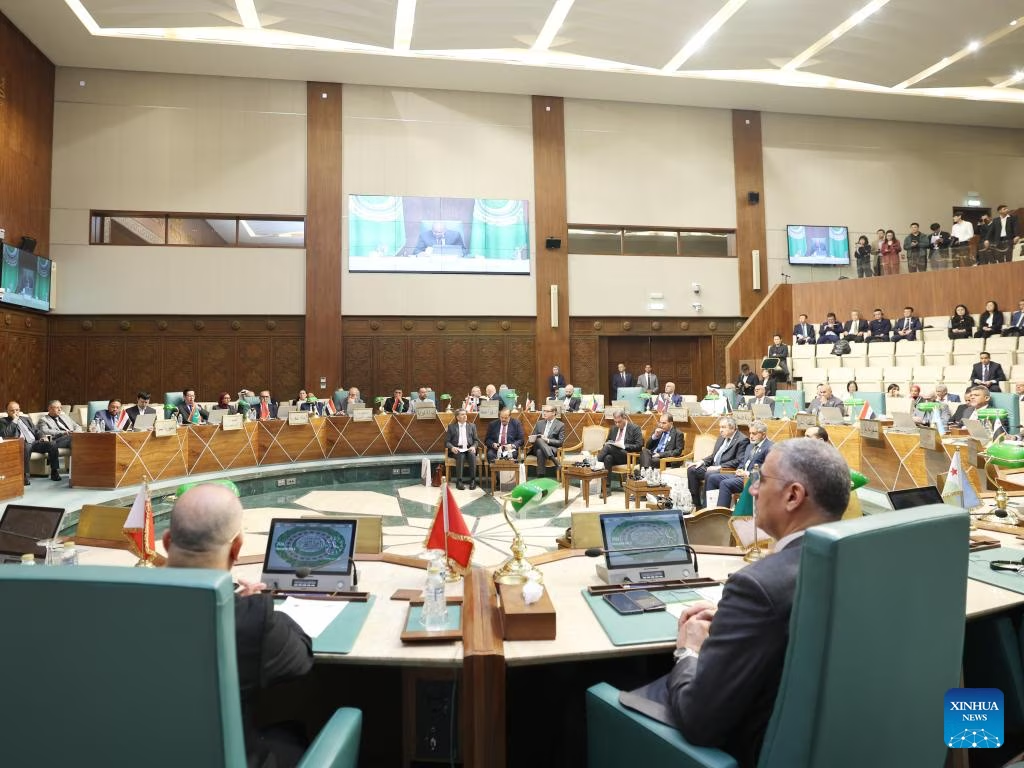
This photo taken on May 12, 2026 shows a scene at the Global South Media and Think Tank Forum Chinese-Arab Partnership Conference at the headquarters of the League of Arab States in Cairo, Egypt. The Global South Media and Think Tank Forum Chinese-Arab Partnership Conference opened here on Tuesday.

The two-day event, under the theme "Pooling Wisdom, Embarking on a New Journey: Jointly Building a China-Arab Community with a Shared Future," gathers about 250 representatives from around 110 media outlets, think tanks, government institutions, enterprises from China and Arab countries, as well as from international and regional organizations. (Xinhua/Chen Junqing)


This photo taken on May 12, 2026 shows a scene at the Global South Media and Think Tank Forum Chinese-Arab Partnership Conference at the headquarters of the League of Arab States in Cairo, Egypt. The Global South Media and Think Tank Forum Chinese-Arab Partnership Conference opened here on Tuesday.

The two-day event, under the theme "Pooling Wisdom, Embarking on a New Journey: Jointly Building a China-Arab Community with a Shared Future," gathers about 250 representatives from around 110 media outlets, think tanks, government institutions, enterprises from China and Arab countries, as well as from international and regional organizations. (Xinhua/Liu Lei)


This photo taken on May 12, 2026 shows a scene at the Global South Media and Think Tank Forum Chinese-Arab Partnership Conference at the headquarters of the League of Arab States in Cairo, Egypt. The Global South Media and Think Tank Forum Chinese-Arab Partnership Conference opened here on Tuesday.

The two-day event, under the theme "Pooling Wisdom, Embarking on a New Journey: Jointly Building a China-Arab Community with a Shared Future," gathers about 250 representatives from around 110 media outlets, think tanks, government institutions, enterprises from China and Arab countries, as well as from international and regional organizations. (Xinhua/Zhang Haobo)


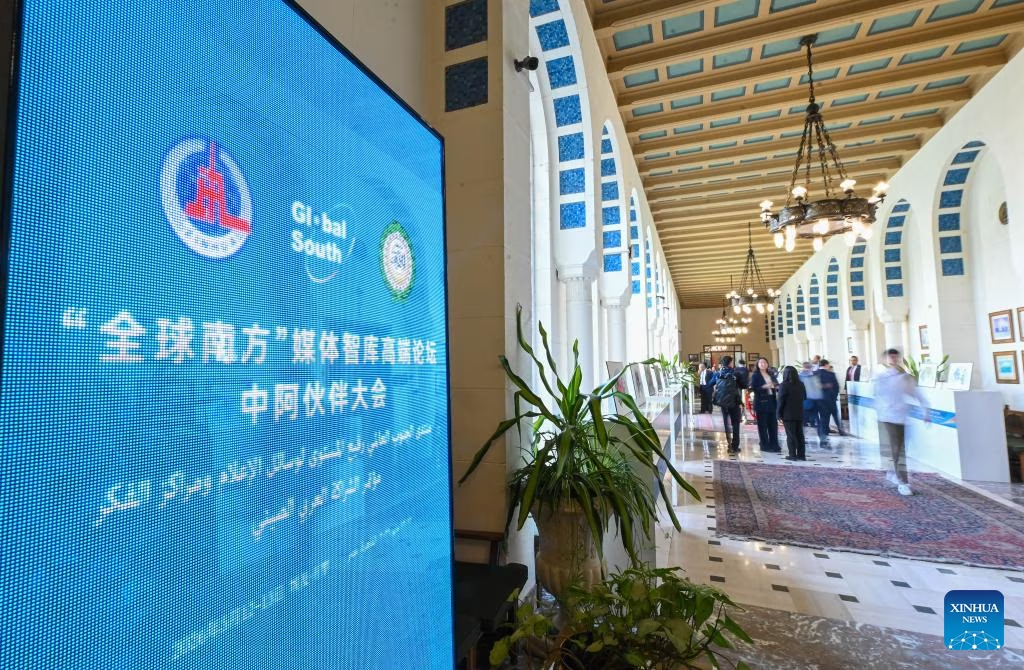
This photo taken on May 12, 2026 shows a digital billboard for the Global South Media and Think Tank Forum Chinese-Arab Partnership Conference at the headquarters of the League of Arab States in Cairo, Egypt. The Global South Media and Think Tank Forum Chinese-Arab Partnership Conference opened here on Tuesday.

The two-day event, under the theme "Pooling Wisdom, Embarking on a New Journey: Jointly Building a China-Arab Community with a Shared Future," gathers about 250 representatives from around 110 media outlets, think tanks, government institutions, enterprises from China and Arab countries, as well as from international and regional organizations. (Xinhua/Liu Lei)


ARAB AND WORLD

Wed 13 May 2026 8:59 pm - Jerusalem Time

Pat Time | What makes a good partner?

What makes a good partner?

"Non-zero-sum game," "mutual trust," "respect of cultural values" 

...At a conference on China-Arab partnership, experts reflect on 70 years of growing ties and fruitful cooperation between China and Arab states.

Produced by Xinhua Global Service


PALESTINE

Wed 13 May 2026 5:45 pm - Jerusalem Time

Sanchez comments on 'Yamal' raising the Palestinian flag: Spain recognized the Palestinian state

Spanish Prime Minister Pedro Sanchez affirmed that his country's position on the Palestinian issue is firm and clear, noting that Spain had previously taken the step of officially recognizing the State of Palestine. This came during a press conference in response to questions about the rising Barcelona club talent, Lamine Yamal, raising the Palestinian flag during the Catalan team's celebrations of the La Liga title.

Sanchez explained that his country's foreign policy balances condemning violence with rejecting the ongoing war waged by the Israeli authorities in the Gaza Strip. He stressed that expressing solidarity with Palestine is consistent with the diplomatic orientations recently adopted by Madrid, in reference to the political support Spain provides for Palestinian rights in international forums.

Young star Lamine Yamal, 18, sparked widespread interaction after appearing carrying the Palestinian flag on top of the open-top team bus that toured the streets of Barcelona celebrating the title, after defeating Real Madrid with two clean goals. The player was subjected to a wide campaign of criticism from Hebrew media, including Channel 12 and Yedioth Ahronoth newspaper, which accused him of exploiting sports platforms to send political messages.

It is worth noting that Yamal, who is of Moroccan origin, had previously faced racist chants, and responded by affirming his pride in his Islamic religion, considering that attempts to mock beliefs reflect ignorance and racism. The statements of the Spanish Prime Minister come to provide political cover for such solidarity positions that have recently been repeated in Spanish stadiums.

Spain recognized the State of Palestine, and from the first moment we condemned the attacks, then we condemned the war being committed in the Gaza Strip.

PALESTINE

Wed 13 May 2026 5:45 pm - Jerusalem Time

Prominent Israeli Historian: What is Happening in Gaza is Genocide and Zionism Has Transformed into a Racist Ideology

In his new book, published in English under the title 'Israel: What Went Wrong?', US-based Israeli historian Professor Omer Bartov concluded that Israel has committed and is committing genocide in the Gaza Strip. Bartov, a researcher specializing in genocide crimes, explained that what he observes within the Strip falls entirely under the definitions of the 1948 United Nations Convention, placing the state in an unprecedented moral, legal, and historical dilemma.

Bartov holds the position of John P. Birkelund Distinguished Professor of European History at Brown University, specializing in the Holocaust and genocide studies, and is considered one of the most cited scholars in this field globally. His conclusion has sparked widespread controversy in academic circles and Jewish communities, especially since he comes from a Zionist background in which he grew up, before reaching the conviction that Zionist ideology has exhausted its purpose and transformed into a tool of oppression.

In an interview with media outlets, Bartov revealed the difficulties he faced in publishing his book in Hebrew within Israel, where publishing houses, including those considered left-leaning, refused to adopt the book at present. He noted that the book will be published in eight international languages, while facing an intellectual blockade in Israeli society that refuses to confront the harsh realities of its army's practices in Gaza.

The historian believes that Zionism as a state ideology has abandoned the possibility of building a normal state for its citizens and has transformed into a military and expansionist system characterized by racism and extreme violence. He warned that the continuation of this approach will turn Israel into a full 'apartheid' state, which will ultimately lead to the emigration of educated elites and the remaining population in an isolated and internationally ostracized state.

Bartov predicted that Israel would lose the support of its most important allies in Europe and the United States, which have begun to see Israeli policies as a threat to their interests rather than a shield. He stressed that this shift is not a product of antisemitism, as some promote, but rather a direct result of Israel's actions that have delegitimized its historical existential arguments.

Regarding the use of the Holocaust in political discourse, Bartov explained that the Holocaust has become the 'glue' that unites Israeli society and is used to justify any military action as an existential threat. He criticized the politicization of this historical event, emphasizing that the response to the Holocaust cannot be to commit another genocide against another people, stressing that this logic cannot stand morally.

Concerning the events of October 7, Bartov described Hamas's actions as a war crime, but at the same time affirmed that armed resistance to occupation and siege is a legitimate act under international law. He compared the Palestinians' pursuit of self-determination to historical resistance movements, considering that Israel failed militarily to eliminate Hamas despite its comprehensive destruction of the Gaza Strip.

The historian sharply criticized the American administration, specifically President Biden and Secretary of State Blinken, considering that they did nothing real to stop the war. He affirmed that Washington had the ability to end the conflict within hours by exerting serious pressure on the Israeli government, but chose silence and participation in the continuation of the catastrophe.

Bartov linked what is happening today to the Nakba of 1948, noting that the current logic in Gaza is ethnic cleansing through systematic destruction. He explained that when attempts to displace the population failed due to a lack of a place for them to flee, the occupation moved to the option of mass killing, which represents the essence of the crime of genocide now being carried out in cold blood.

Bartov revealed his monitoring of the emergence of 'militias' within the Israeli army operating according to messianic and extremist religious orders, far from the traditional military hierarchy. He noted that these units receive prayers and inhumane directives before battles, reflecting the unprecedented infiltration of extremist ideology into the security, police, and Shin Bet agencies in the state's history.

The historian considered that Israeli society is undergoing a radical transformation towards a 'political religion' that blends Zionism with extremist messianic interpretations rooted in Rabbi Kook. This transformation creates a deep rift with Jews around the world, especially in America, who find it increasingly difficult to reconcile their liberal values with supporting a state that openly commits crimes of genocide.

Bartov warned of the danger of turning 'antisemitism' into a political weapon to silence any voice criticizing Israel, emphasizing that this behavior ultimately serves real antisemitism. He noted that student protests in American universities were essentially against the war, and not stemming from religious hatred, despite systematic attempts at distortion they faced.

In conclusion of his vision, Bartov noted that Israel, by its alleged representation of world Jewry, provides the 'best pretext' for the resurgence of racist forces in the West. He warned that future leaders in the United States might cut the close relationship with Israel if it continues to be a moral and political burden, putting the future of its existence in real danger.

It is worth noting that Omer Bartov is the son of the writer Hanoch Bartov, who won the 'Israel Prize,' and he himself participated in the 1973 war as a soldier in the Israeli army. His transition to academic work in the United States since 1989 gave him a broader critical perspective that enabled him to dismantle the myths underlying contemporary Israeli policy in dealing with the Palestinian issue.

It is ironic and tragic that a movement that began as an attempt to liberate Jews from persecution ends as a racist and violent movement.

PALESTINE

Wed 13 May 2026 5:44 pm - Jerusalem Time

The New Occupation Army Commander in the West Bank: Engineer of 'Organized Violence' and the Doctrine of 'Lame Witnesses'

Hebrew press reports have shed light on the new leadership figure of the occupation army in the West Bank, General Avi Blot, describing him as the 'engineer of organized violence'. This interpretation reflects a fundamental shift in the Israeli military approach towards Palestinians in the occupied territories.

Blot is the first military commander for this position to come from a purely settler background, having grown up and received his education in the 'Eli' religious military school known for its extremism. This appointment was not merely a routine administrative procedure, but rather a strategic step aimed at integrating settler ideology into the official military system.

The new commander's vision is based on keeping the cities and villages of the West Bank in a state of constant and continuous friction with the occupation forces. This tactic aims to create daily tension that transforms Palestinian life into an open confrontation arena, without necessarily escalating into an all-out war that could get out of control.

Data indicates that the rates of Palestinian killings under Blot's command have reached record numbers not seen in the West Bank since 1967. Nevertheless, the military leadership attempts to market these operations as 'measured violence' targeting only those it describes as involved through precise and calculated gunfire.

The current occupation strategy relies on vague definitions of the term 'involved', giving soldiers a green light to target any Palestinian. This ambiguity in criteria turns every Palestinian citizen into a potential target, legitimizing field killings under the guise of military discipline.

In addition to military force, the economic factor is employed as a harsh deterrent against the population, with occupation authorities exploiting high unemployment rates. The difficult living conditions push Palestinian workers to risk crossing wall openings, making them easy targets for systematic punitive policies.

Blot invented what can be called the policy of 'lame witnesses', which relies on intentionally injuring Palestinian workers in their lower limbs. The goal is not always direct killing, but rather to leave a permanent disability in the injured person's body to serve as a living deterrent message to anyone who tries to defy occupation orders.

The new military commander seeks to establish the idea that crossing checkpoints or attempting to work without permits is an adventure fraught with physical danger. In this way, the military checkpoint transforms from a mere physical obstacle into a stable psychological idea that regulates Palestinian behavior even in the absence of soldiers.

Sources confirm that the Israeli control system carefully manages violence to portray it to the international community as a 'legitimate' act. The military leadership believes that any deviation from these rules by settlers could threaten this alleged legitimacy and undermine the state's monopoly on force.

To maintain this delicate balance, Blot tries to control the individual initiatives of settlers and prevent their random attacks that could ignite the situation. However, it is noted that he avoids direct confrontation with them for fear of disrupting what is called the 'Jewish supremacy system' within the military establishment.

The military leadership in the West Bank avoids carrying out its legal duties in curbing extremist settlers, justifying this with internal social and political repercussions. In contrast, it doubles the pressure on the Palestinian side to ensure a state of 'forced discipline' under the weight of weapons and intimidation.

Blot believes that the problem with the violence practiced by settlers is not in its essence, but in the fact that it occurs outside the framework of official state administration. He seeks to institutionalize this violence and place it under the supervision of the army to ensure the continuity of control over the land through settlement outposts and farms.

In this context, the military commander transforms into an 'organizer of perfected violence', precisely determining who has the right to use force and under what circumstances. Blot demands full powers to exercise this role without political or legal interventions that might hinder his extremist security vision.

Ultimately, Blot's policy reflects an Israeli desire to erase the distinctions between military dealings in Gaza and the West Bank. This strategy establishes a reality based on structural oppression that blends systematic killing, physical intimidation, and economic blackmail to ensure the subjugation of the Palestinian people.

Blot seeks to draw a clear line between violence practiced by the military establishment in an organized manner and uncontrolled violence that threatens the international legitimacy of the occupation.

PALESTINE

Wed 13 May 2026 5:44 pm - Jerusalem Time

Occupation detains UN Under-Secretary-General at Ben Gurion Airport and subjects him to interrogation

Media sources reported that Israeli occupation authorities on Tuesday morning detained the United Nations Under-Secretary-General for Safety and Security, Gilles Michaud, immediately upon his arrival at Ben Gurion Airport. The detention lasted for approximately 45 minutes, during which he underwent thorough inspection procedures and had his passport confiscated before being moved to a special waiting room.

The high-ranking UN official, a Canadian national, was subjected to intensive interrogation by elements of the Israeli General Security Service 'Shin Bet'. The investigation focused on a previous official visit Michaud made to the Gaza Strip last August, even though that visit had been fully coordinated in advance with the relevant Israeli authorities at the time.

For his part, Gilles Michaud expressed his strong condemnation of these procedures, describing the treatment he received as unprecedented and unusual for an official of his international standing. The UN official affirmed that he had not been subjected to such harassment in any other country he had visited, indicating his intention to cancel a series of official meetings scheduled with Israeli officials in response to this transgression.

In contrast, Israeli sources attempted to justify the incident by claiming a 'mistake in identification', noting that Michaud was released immediately after his details were confirmed. This incident comes amid escalating tension between the United Nations and the occupation authorities, especially with the continued restrictions imposed on international staff working in the occupied Palestinian territories.

These developments coincide with the ongoing catastrophic repercussions of the genocidal war waged by the occupation on the Gaza Strip since October 2023. According to the latest UN data, military operations have resulted in more than 72,000 martyrs and approximately 172,000 injured, most of whom are vulnerable groups such as women and children, amidst massive destruction that has affected most civilian facilities.

Despite a ceasefire agreement in effect since last October, the occupation continues to impose severe restrictions on the entry of humanitarian aid and fuel. International estimates indicate that the extent of infrastructure destruction in the Gaza Strip has reached 90%, requiring a huge reconstruction budget estimated at approximately 70 billion dollars.

What I was subjected to is unusual treatment for a high-ranking UN official, and I have not faced such a procedure in any other country before.

PALESTINE

Wed 13 May 2026 5:44 pm - Jerusalem Time

78 Years Since the Nakba: Shocking Statistics Document Ongoing Displacement and Genocide

The seventy-eighth anniversary of the Palestinian Nakba arrives this year as the Palestinian people face renewed chapters of displacement and destruction. The anniversary coincides with a devastating war of genocide in the Gaza Strip and a dangerous escalation in settlement activity in the West Bank. Observers believe that the current scene reproduces the tragedy of 1948 but with more lethal tools of killing and destruction, placing the Palestinian cause before unprecedented existential challenges.

Official statistical sources reported that the number of Palestinians worldwide reached approximately 15.5 million by the end of 2026, with 7.4 million living in historical Palestine and 8.1 million in the diaspora. Data indicates that about 5.6 million Palestinians reside within the borders of the State of Palestine, distributed between the West Bank and the Gaza Strip, which suffers from a comprehensive siege and destruction.

Returning to the roots of the tragedy, historical figures indicate that the 1948 Nakba resulted in the displacement of approximately 957,000 Palestinians from their cities and villages, out of 1.4 million who lived in 1,300 population centers. The occupation then controlled 774 villages and cities, destroying 531 of them completely to erase the Palestinian presence, and committed more than 70 massacres that claimed the lives of over 15,000 martyrs.

Currently, the Israeli war on the Gaza Strip has caused the largest wave of displacement since the Nakba, with approximately two million Palestinians forced to leave their homes and live in tents and shelters lacking the most basic necessities of life. The suffering was not limited to Gaza but extended to the West Bank, which witnessed the displacement of about 40,000 citizens from northern camps due to continuous military operations and infrastructure destruction.

Regarding settlements, reports revealed a frightening expansion in the West Bank, where the number of settlement sites and military bases reached 645 by the end of 2025. These sites include 151 official settlements and 350 outposts, inhabited by more than 778,000 settlers, with about 42% of them concentrated in the occupied Jerusalem Governorate as part of ongoing Judaization plans.

The occupation authorities continued their land confiscation policy, seizing over 5,571 dunams in 2025 alone through military orders and 'state land' classifications. These confiscations were accompanied by an escalation in settler attacks, which reached 61,000 attacks over the past three years, resulting in the uprooting and bulldozing of more than 81,000 fruit trees, most of them ancient olive trees.

Israel imposes suffocating restrictions on the movement of Palestinians in the West Bank through a complex network of approximately 900 military checkpoints and electronic gates, isolating population centers from each other. These measures prevent farmers from accessing their lands and turn Palestinian cities into open-air prisons, exacerbating the economic and social crisis for the residents.

In the water sector, the occupation authorities control more than 85% of underground water resources and prevent Palestinians from drilling new wells or developing existing ones, while granting abundant water quotas to settlements. This discrimination has had a catastrophic impact on the Gaza Strip, where the daily per capita water share has fallen below 5 liters, far below minimum international standards.

Sources documented massive destruction of infrastructure in the Gaza Strip, where the Israeli war machine completely destroyed more than 102,000 buildings, and 330,000 housing units were damaged. Systematic destruction also targeted mosques, churches, and health and educational facilities, in an attempt to make the Strip uninhabitable and push residents towards forced migration.

In the West Bank and Jerusalem, occupation forces demolished approximately 1,400 structures and buildings in 2025, with East Jerusalem accounting for 258 of these structures. These demolitions are part of a policy of urban constriction on Palestinians versus rapid settlement expansion, reinforcing the existing apartheid system on the ground.

Statistics indicate that the number of martyrs since the start of the war of genocide in October 2023 until April 2026 has exceeded 73,000 martyrs, the heaviest toll in the history of the conflict. Among these martyrs, more than 72,000 were in the Gaza Strip alone, while 1,160 martyrs fell in the West Bank by occupation forces and settlers during the same period.

Data shows that the most vulnerable groups were the primary target of the aggression, with more than 20,000 children and 12,000 women martyred in the Gaza Strip. The attacks also directly targeted professional cadres, leading to the martyrdom of 3,110 medical personnel, civil defense workers, journalists, and education sector employees, in a blatant violation of international laws.

One of the shocking facts reported is that the number of martyrs recorded in the last two years represents more than half of the total number of Palestinian martyrs since the 1948 Nakba. This figure reflects the intensity of fire and the policy of mass killing adopted by the occupation in its recent war, which surpassed the brutality of previous long years of conflict.

In conclusion, the 78th anniversary of the Nakba remains a testament to the resilience of the Palestinian people in the face of attempts at erasure and displacement that have not ceased for decades. Despite the harsh figures and the scale of destruction, Palestinians remain committed to their historical rights, amidst international silence and an inability to stop the war machine that continues to devour land and people.

The number of martyrs recorded since October 2023 represents more than 50 percent of the total Palestinians martyred since the 1948 Nakba.

OPINIONS

Wed 13 May 2026 5:43 pm - Jerusalem Time

Economy First: How Do Markets and Productive Capacities Shape Political Independence Decisions?

Ramallah - “Alquds ” dot com

Ramallah - “Alquds ” dot com

Opinion Writer

In today's fast-paced world, traditional wars are no longer fought solely with cannons and armies; instead, they are waged within the halls of markets and decided by the language of numbers and data. Any discussion of building an independent regional power that overlooks the economic dimension is an incomplete proposition, as true sovereignty is now measured by a state's ability to produce and withstand global financial shocks.

The historical equation that viewed economics as a tool to support politics has changed; today, politics has become merely an extension of economic interests. Major powers exert their influence by controlling supply chains and dominating advanced technology, which inevitably renders a state that does not control its economy incapable of independent political decision-making.
A state's economic sovereignty is determined by three fundamental circles. The first is the production circle, which ensures the minimum necessities for survival, such as food and energy. The goal here is not complete self-sufficiency, but rather to reduce 'chokepoints' that external powers might use to pressure national decisions during critical times.

The second circle is the dependency circle, which raises a strategic question about the nature of a state's fragility in the face of external factors. States that rely on external parties for vital sectors such as technology, finance, or food security will always have their political decisions 'calculated with fear' of reactions from suppliers or financiers.

The influence circle is the third element that completes a state's power. Economic power does not merely seek independence but also aims to influence others. When a state exports its products and invests abroad, it creates a state of interdependence that transforms it from a mere recipient of pressure to a shaper of balance in the international arena.

In the post-globalization era, the economy has transformed into a deadly weapon, surpassing traditional armaments in its impact. Economic sanctions and asset freezes are used as decisive tools of subjugation. Excluding any country from the global financial system or denying it access to advanced technology can cripple its movement without firing a single shot.

Currency remains one of the most dangerous tools in the hands of major powers. A state that does not control its national currency remains hostage to fluctuations over which it has no say. Furthermore, controlling the 'button' of technology, such as electronic chips and software, grants manufacturing nations the ability to disable entire sectors of their adversaries with a single touch.

The economy is always targeted as a first step in any conflict because it represents the fastest point of collapse for any political system. While populations can endure political pressures for long periods, currency collapse, rising food prices, and the halt of production rapidly erode the internal front.

It is essential to distinguish between the illusion of complete self-sufficiency and 'smart relative independence,' which is dictated by today's interconnected world. Smart independence means diversifying trade partners and distributing investment risks, while gradually building internal capacities that prevent critical reliance on a single international party, no matter how powerful it may be.

The power equation for emerging states is embodied in four pillars: production, diversification, resilience, and influence. If one of these elements is imbalanced, relative independence becomes threatened. Production reduces dependency, diversification minimizes risks, and resilience ensures the ability to withstand emergencies.

A fatal mistake some countries make is pursuing high growth rates without building true sovereignty, which results in a fragile economy. Growth that relies entirely on volatile foreign investments or international loans does not build strength; instead, it can increase a state's subservience to external forces and make its decisions hostage to international institutions.

States that understand the rules of the international game always start by building an economic base and then construct their political ambitions upon it. As for states that raise grand political slogans without a solid economy to support them, they always find themselves in a predicament during the first real confrontation with dominant powers.

Research centers, factories, and ports are the real battlegrounds where national sovereignty is forged in the 21st century. Without possessing these tools, any state will negotiate from a position of weakness, no matter how eloquent its political discourse or how strong its declared positions in international forums.

In conclusion, the economy remains the primary arena for the struggle for sovereignty. Whoever controls the market has the power to impose their conditions in a world that respects only the economically strong. Building regional power begins from within, by transforming the economy from a mere service sector into a fundamental pillar of national security.

Sovereignty is made in factories, not in conferences, and those who do not possess the tools of production will always negotiate from a position of weakness.

ARAB AND WORLD

Wed 13 May 2026 5:43 pm - Jerusalem Time

Trump attacks American media with 'treason' and Congress pressures to reveal costs of war on Iran

US President Donald Trump launched a scathing attack on American media outlets, describing their coverage of military tensions with Tehran as 'virtual treason'. Trump accused these outlets of spreading false news that gives the Iranian side undue hope by exaggerating its military capabilities in confronting the United States.

In a post on his 'Truth Social' platform, Trump considered reports praising Iranian military performance to be issued by 'cowardly Americans' who stand against their country's interests. The US President claimed that the Iranian navy had been completely crushed, indicating that about 159 Iranian ships were at the bottom of the sea as a result of military operations.
Trump continued his claims by asserting that the Iranian air force had effectively ceased to exist, and that technological and military leaderships in Tehran no longer had an effective presence. He described the Iranian state as experiencing a comprehensive 'economic disaster', despite not providing concrete evidence to support these assertive statements about the extent of the destruction.

On the domestic policy front, Trump affirmed that the financial crises facing American citizens would not deter him from continuing his military and political pressures against Tehran. He clarified before departing for China that his sole and primary goal is to ensure Iran does not possess nuclear weapons, regardless of the economic consequences for the American domestic situation.

In a related context, the Pentagon is facing increasing pressure from members of Congress who demand full transparency regarding the costs of the ongoing war, which has reached a stalemate. Lawmakers expressed concern about the impact of these exorbitant costs on consumer prices and inflation rates that burden American voters ahead of the midterm elections.

Sources within the Department of Defense revealed that initial estimates for the cost of the war jumped from $25 billion to about $29 billion unexpectedly. Financial observers described previous estimates as 'unrealistically low', raising doubts about the accuracy of the data provided by the administration to Parliament.

Defense Secretary Pete Hegseth refrained from providing satisfactory answers to Congress regarding the details of defense spending within the proposed massive budget of $1.5 trillion. Hegseth and General Dan Kien also refused to provide accurate assessments of what remained of Iran's missile inventory, which further heightened tensions with lawmakers.

Field reports indicate a significant gap between the White House's claims of destroying most of the Iranian arsenal and the reality that shows a large number of weapons remaining intact. This contradiction prompted members of Congress to demand a comprehensive review of the military strategy adopted in the region and its economic viability.

In New Delhi, the US-Israeli war on Iran is expected to dominate the agenda of the meeting of foreign ministers of the 'BRICS' group. This meeting represents a real test of the group's ability to formulate a unified stance on the escalating conflict in the Middle East, especially with the accession of active parties to the group.

Tehran called on the Indian government, which currently chairs the group, to use this international platform to condemn US and Israeli military actions. Iran seeks to build international consensus to pressure for a halt to military operations targeting its infrastructure, defensive, and economic capabilities.

Deep divisions within 'BRICS' between Iran and the UAE are evident, with each party adopting a different vision for the conflict that erupted in late February. Reports of regional countries participating in strikes against Iranian targets further complicate reaching a joint final statement that enjoys the consensus of members.

Diplomatic sources reported that Iranian Foreign Minister Abbas Araghchi will arrive in India to participate in the meetings, with expectations of his Russian counterpart Sergey Lavrov's presence. Ambiguity remains regarding the level of Emirati representation amid direct military tensions with the Iranian side.

India's Ministry of External Affairs acknowledged the difficulty of reaching a consensus given the direct involvement of some group members in the armed conflict. Nevertheless, New Delhi hopes to come up with a diplomatic formula that eases regional tensions and calls for restraint.

These developments come at a sensitive time for the US administration, which is trying to balance its geopolitical ambitions with increasing popular pressure due to the high cost of living. Trump's threat to 'annihilate' the Islamic Republic if no agreement is reached remains a sword hanging over the stalled negotiations.

The only thing that matters when I talk about Iran is that they don't get a nuclear weapon... I'm not thinking about the financial situation of Americans, that's the only thing that motivates me.

ARAB AND WORLD

Wed 13 May 2026 5:43 pm - Jerusalem Time

The Rupture of the Historic Alliance: Riyadh Adopts a Policy of 'Defense Independence' Away from Washington

The historic relationship between Washington and Riyadh is facing one of its most severe diplomatic upheavals in recent decades, with reports indicating a radical shift in Saudi foreign policy towards greater independence. This shift has begun to raise widespread concern within the Trump administration, which has started to perceive a clear Saudi desire to break free from the traditional constraints of the old defense alliance.

US Secretary of State, Marco Rubio, expressed his country's strong displeasure with Riyadh's recent actions, particularly the signing of strategic defense agreements with Ukraine. The core dilemma for Washington is that these agreements were concluded without American consultation, despite the United States historically being the primary guarantor of the Kingdom's security.

In response, the Saudi reply to American criticism was firm yet diplomatic. Riyadh asserted that Washington had failed to provide full protection for the Kingdom against regional threats, specifically drone attacks. Consequently, the Saudi leadership believed it was its sovereign right to enhance its defensive capabilities through cooperation with parties possessing field experience in this type of warfare.

Saudi Crown Prince Mohammed bin Salman clarified that his country would continue on a path that primarily and ultimately protects its national interests. This stance reflects a desire to diversify arms sources and transfer military technology, moving away from dependence on political approvals often imposed by the US administration as preconditions for arms deals.

The roots of the current dispute trace back to statements made by the US President at a rally in late March, which were described as outside diplomatic norms. These statements, which demanded the Saudi leadership to 'improve its behavior,' were met with practical Saudi actions that affected American interests in the geographical, political, and economic sectors.

March 2026 marked a pivotal moment when Ukrainian President Volodymyr Zelensky visited Riyadh to sign a massive military cooperation agreement. This cooperation focuses on anti-drone technology and advanced air defense systems that have proven effective in the Ukrainian field against Iranian-made weapons.

Through this agreement, Saudi Arabia seeks to inject substantial capital into the Ukrainian defense industry, contributing to its rapid development. This approach deprives American military companies of financial flows they considered guaranteed, redirecting them instead towards the European continent.

In a notable field development in early May, tensions escalated after Washington launched a naval mission to protect ships in the Strait of Hormuz without prior coordination with Riyadh. This action prompted Saudi Arabia to take strict measures, including closing its airspace and preventing US forces from using military bases on its territory.

This Saudi move led to the suspension of the American mission just 36 hours after its launch, revealing the extent of the gap in security coordination between the two countries. Sources believe that Riyadh is wary that ill-considered American actions could expose its oil facilities to retaliatory regional strikes.

Economically, experts warn that the lack of coordination in the Gulf region will lead to a state of uncertainty in global energy markets. This disruption directly increases insurance premiums for commercial vessels and pushes oil prices towards record levels, potentially harming the struggling global economy.

Serious concerns also arise regarding the future of the 'petrodollar' system, which has governed global trade for nearly half a century. The Saudi shift towards defense and financial independence could mean the end of the implicit agreement to sell oil exclusively in dollars in exchange for American military protection, threatening the global standing of the US currency.

Riyadh's military ambitions extend to a desire to join the European sixth-generation fighter project (GCAP). This interest confirms that the Kingdom is no longer content with merely purchasing ready-made weapons but seeks to be a partner in developing the latest global defense technologies, away from American dominance.

Political analyses indicate that the current US administration has failed to grasp the reality of a multipolar world, where relationships are no longer managed by arrogance but by mutual interests. Today, Saudi Arabia is building strong partnerships with other international powers like China and demands to be treated as a fully sovereign nation, not a protectorate.

Reports concluded that this rift might not be limited to the relationship with Washington but could extend to other regional alliances. The divergence in positions between Riyadh and Abu Dhabi, which remains closely aligned with American orientations, could lead to a redrawing of the alliance map in the Arabian Gulf region.

The Kingdom is no longer a subordinate state; it builds its international relations based on its pure national interests in a multipolar world.

ARAB AND WORLD

Wed 13 May 2026 5:43 pm - Jerusalem Time

Trump in Beijing: An Exceptional Summit with Xi Jinping to Discuss Iran, Taiwan, and Technology Files

US President Donald Trump arrived in the Chinese capital, Beijing, on Wednesday, marking the beginning of an official visit described as historic, aimed at holding an anticipated summit with his Chinese counterpart, Xi Jinping. This step comes at a time when the international arena is witnessing highly sensitive political and economic complexities, topped by hot issues related to regional security and global trade.

Trump received a wide-ranging official welcome at Beijing airport, signaling the importance the Chinese government attaches to this visit. The US President is accompanied by a high-level delegation that includes leaders of the world's major technology companies, reflecting the American desire to integrate economic interests with high-level diplomatic moves.

Among those present in the accompanying delegation were Elon Musk, head of 'Tesla' and 'SpaceX', Jensen Huang, head of 'Nvidia', and Tim Cook, head of 'Apple'. This massive commercial representation indicates that Washington seeks to establish its companies' presence in the Chinese market despite the existing political tensions between the two superpowers.

This visit is the first by a US president to China since Trump's own visit during his first term in November 2017. This long hiatus gives the current summit exceptional strategic dimensions, especially with the escalation of international conflicts that require direct coordination between Washington and Beijing.

Informed sources reported that the visit is of utmost importance given its timing, coinciding with the escalation of military operations in the Middle East, specifically the war on Iran. The sources clarified that international concerns are growing about the repercussions of this war on the stability of the global economy and vital supply chains.

During his meetings with the Chinese leadership, Trump seeks to obtain direct support to pressure Tehran, with the aim of ensuring continued navigation in the Strait of Hormuz. The US administration realizes that Beijing possesses strong economic and political leverage that can contribute to containing military escalation and preventing the collapse of energy markets.

Unlike the traditional approach in previous summits, Washington this time is not focusing on extracting trade concessions from Beijing as much as it is on security cooperation. Trump is trying to leverage his personal relationship with Xi Jinping to push China towards playing a more effective role in de-escalating regional tensions that threaten common interests.

In addition to the Iranian file, the Taiwan file stands out as one of the most complex issues on the discussion table between the two presidents. Washington views any potential military escalation on the island with great concern, given its pivotal role in the electronic chip industry, on which American technology is entirely dependent.

Sources confirmed that any security disturbance in the Taiwan Strait could lead to paralysis in the global technology sector, especially in the fields of artificial intelligence. For this reason, the American delegation seeks to ensure the stability of the region and avoid any military confrontation that could disrupt the technological progress led by companies such as 'Nvidia' and 'Apple'.

The summit's agenda also includes in-depth discussions on cybersecurity and artificial intelligence, amid reports of American security concerns. Washington fears the possibility of advanced technology being used in security breaches that could affect the information infrastructure in the United States.

Intelligence reports indicated American concern about potential Chinese cooperation with Iran regarding the exchange of sensitive information about military presence in the Middle East. These thorny issues make Trump's mission in Beijing require a delicate balance between the language of economic interests and the necessities of national security.

Ultimately, Trump seeks to establish a long-term trade partnership that transcends the atmosphere of strategic competition that dominated the past decade. The accompanying economic delegation aims to conclude massive agreements that ensure the interests of both parties and open new horizons for technological cooperation in a changing world.

This time, Trump is not heading to China in search of economic concessions, but rather seeks direct Chinese support to pressure Iran and prevent the closure of the Strait of Hormuz.

OPINIONS

Wed 13 May 2026 5:43 pm - Jerusalem Time

Robert Kagan Warns: Washington on the Brink of Defeat in its War on Iran

Washington – Said Arikat – 13/5/2026

News Analysis

In a striking shift within neoconservative circles in the United States, prominent American intellectual and politician Robert Kagan issued an unprecedented warning that Washington is approaching a “total defeat” in its conflict with Iran, considering that the current war could bring about a profound upheaval in the international balance of power, leading to “catastrophic” results not only for the United States, but also for Israel and the entire regional system that has formed under American hegemony since the end of the Cold War.

Kagan, considered one of the most prominent theorists of the neoconservative movement, has never been an advocate for de-escalation or American withdrawal. Over the past three decades, his name has been associated with calls for the use of American military force to assert American influence globally, and he was one of the most prominent supporters of the 2003 invasion of Iraq, and a leading believer in the idea of an “American Century” based on Washington’s absolute military and political superiority. Therefore, the issuance of this sharp warning from a figure like Kagan takes on exceptional significance within the American political establishment itself.

In his article in "The Atlantic" magazine, published on Sunday, May 10, Kagan painted a bleak picture of the trajectory of the war with Iran, considering that the damage to America's standing has become so profound that it is difficult to return to the previous situation. He said that the United States no longer appears as a power capable of imposing its will or ending the conflicts it starts, but rather as a faltering power gradually losing its ability to deter and dominate.

The danger of Kagan's words lies in the fact that they do not come from an opponent of American wars or from an isolationist current, but from one of the most prominent architects of the idea of American hegemony itself. When a man who has contributed for decades to justifying military interventions speaks of an “irreparable defeat,” it reflects a tremor within the American elite regarding Washington's ability to maintain the international order it established after World War II. More importantly, this assessment comes at a moment when the United States is experiencing accumulated political, economic, and military exhaustion, from Ukraine to West Asia, amidst rising global doubts about the limits of American power itself.

Kagan believes that the most dangerous shift is Iran's success in transforming the Strait of Hormuz into a strategic pressure card that has redrawn the balance of power in the region. Instead of the war leading to Tehran's subjugation, Iran – according to his description – has become a pivotal player capable of directly influencing the global economy, energy markets, and international balances.

The researcher points out that this new reality not only strengthens Iran's position but also gives the United States' adversaries, primarily China and Russia, a historic opportunity to expand their influence at Washington's expense. According to Kagan, the war has exposed the limits of American power, showing that the United States is unable to resolve the confrontation or impose its traditional equations through military force alone.

The American intellectual did not hide his pessimism about Washington's ability to regain the initiative, going so far as to compare the current crisis to pivotal moments in American history such as the attack on "Pearl Harbor" (12/7/1945) and the Vietnam War. However, he considered that the difference this time is that the United States may not have the ability for strategic recovery as it did previously.

The comparison between the current crisis and both Vietnam and "Pearl Harbor" reveals the extent of concern within the American establishment that the world is witnessing the beginning of a "post-American hegemony" phase. In the two previous cases, Washington was able to turn setbacks into a re-production of American power, either through victory in World War II or through repositioning after Vietnam. Today, the situation is radically different; the United States faces major international competitors, sharp internal polarization, and a decline in global trust in its leadership. Therefore, many in Washington fear that any major failure against Iran could turn into a historical turning point that accelerates the erosion of American influence globally.

In his remarks, Kagan emphasized that President Donald Trump's options have become very limited, especially regarding reopening the Strait of Hormuz without causing a global economic explosion or inflicting severe damage on Washington's Gulf allies. He went so far as to say that the United States may have exhausted most of the pressure tools it possessed, adding that the scene is approaching a state of strategic "checkmate."

He also stressed that Iran cannot abandon its control over the Strait, because for it, this represents the primary guarantee for deterring the United States and its allies. Kagan questioned, in a tone reflecting a loss of confidence even within American elites: "How reliable is any deal that can be made with Trump?"

This question is not only about Iran but reflects a broader crisis related to the image of the United States itself as an international ally and partner. The war, according to Kagan, has pushed many countries – both friendly and hostile – to recalculate, after it seemed that Washington was no longer able to impose stability or fulfill its strategic commitments as before.

In another interview with PBS (after publishing the article), Kagan expanded his warnings to include Israel, considering that the war could end with extremely dangerous adverse consequences for it. He explained that the ongoing transformations could lead to a shift in the regional center of gravity away from the United States and Israel, in favor of Iran and its allies.

The warning concerning Israel carries deep strategic implications, because Kagan is historically known as one of the American voices closest to the Israeli vision of regional security. When he speaks today of a "catastrophic" possibility threatening Israel, he is practically acknowledging that the war could lead to results completely contrary to the objectives that were raised since its beginning. Instead of strengthening Israeli deterrence, the confrontation may lead to strategically exhausting Israel, and to consolidating a regional axis more independent of Washington. Moreover, the continuation of the war exacerbates Israel's international isolation and weakens the image of military superiority that for decades formed the basis of its political influence in the region.

In conclusion, it appears that Kagan's warnings reflect more than just a tactical disagreement about managing the war with Iran. They are an expression of growing concern within a segment of the American elite that the world is entering a major phase of international order restructuring, in which the United States will be less able to impose its will, and more susceptible to losing its historical influence in the Middle East and the world.

PALESTINE

Wed 13 May 2026 5:42 pm - Jerusalem Time

Accusations Against 'Peace Council' of Bias Towards Occupation: Mladenov's Gaza Plan Raises Factional Suspicion

A wave of Palestinian criticism is escalating against the so-called 'Gaza Peace Council,' headed by Bulgarian diplomat Nikolay Mladenov, amid explicit accusations of bias towards the Israeli position. Leading sources reported that Mladenov's team's movements seek to impose specific political and security agendas on the Strip, exploiting humanitarian aid and reconstruction files as a cover to pass these arrangements.

Informed sources revealed that Mladenov is exerting intense political pressure on resistance factions under the guise of a 'new roadmap,' which essentially aims to prevent the escalation of field conditions without offering radical solutions. These moves come at a time when efforts to transition to the second phase of the ceasefire agreement are facing significant setbacks, due to the occupation's insistence on including the disarmament of the resistance as a fundamental condition for progress.

The plan promoted by the Bulgarian diplomat includes 15 clauses that intricately merge security, political, and financial tracks, which has raised widespread suspicions among Palestinian national forces about the council's true objectives. The factions believe that any discussion of security files must be preceded by a full commitment from the occupation to the terms of the first phase and a halt to the continuous violations targeting civilians and facilities in Gaza.

These accusations were not the first of their kind, as sources pointed to a previous record of distrust towards Mladenov, especially regarding the provision of misleading data on the number of aid trucks entering the Strip. This statistical deception, according to observers, contributed to beautifying the image of the Israeli siege before the international community and reducing the scale of the humanitarian catastrophe experienced by Gaza's residents.

For its part, the Government Media Office raised fundamental questions about the role of the 'Peace Council' and its absolute silence regarding the daily crimes committed by the occupation army. The office questioned the fate of Mladenov's public pledges to the international community to save the Strip, at a time when the living and health reality is deteriorating unprecedentedly due to the continued aggression and restrictions imposed on crossings.

Where is the so-called Peace Council from the daily Israeli occupation violations of the agreement? And why does it remain silent regarding the catastrophic humanitarian reality?

PALESTINE

Wed 13 May 2026 5:42 pm - Jerusalem Time

Diplomatic Crisis at Ben Gurion Airport: Occupation Detains and Interrogates Senior UN Official

The Under-Secretary-General for Safety and Security of the United Nations, Gilles Michaud, faced an embarrassing diplomatic situation on Tuesday morning, after being detained by Israeli authorities at Ben Gurion Airport near Tel Aviv. The detention lasted for about 45 minutes immediately upon the UN official's arrival at the airport, where he was isolated from his companions in preparation for unusual security measures against a high-ranking international figure.

Journalistic sources reported that airport security personnel confiscated Michaud's passports and transferred him to a designated waiting area, before the Israeli General Security Service (Shin Bet) took over the task of interrogating him. The security interrogation focused on details of a previous official visit the UN official had made to the Gaza Strip in August 2025, which surprised diplomatic circles.

Hebrew reports stated that the initial suspicions of airport security were related to an identity verification error, but the interrogation delved into his previous activities within the Palestinian territories. The Yedioth Ahronoth newspaper described the incident as a very embarrassing diplomatic incident, especially since Michaud holds Canadian citizenship and occupies a sensitive position in the UN organizational structure.

The controversial aspect of this incident is that the visit for which Michaud was interrogated had been fully and previously coordinated with the relevant Israeli authorities at the time. Nevertheless, Shin Bet officers insisted on reviewing the details of his movements within the Strip, which reflects a state of administrative confusion or a desire to restrict international personnel working in the region.

For his part, Gilles Michaud expressed his strong dissatisfaction with the treatment he received at the airport, emphasizing that this behavior contradicts internationally accepted diplomatic norms. The UN official indicated that he had visited many countries around the world and had never before faced such humiliating procedures, which led him to seriously consider canceling a series of official meetings scheduled with Israeli officials.

Observers believe that this incident cannot be isolated from the general context of continuous Israeli incitement against UN institutions and their staff since the outbreak of the war on Gaza. The escalating tensions between Tel Aviv and the international organization have clearly reflected on the field treatment of UN teams, reaching the point of restricting their movement and repeatedly targeting their headquarters.

This incident comes at a time when relations between Israel and the United Nations are experiencing a sharp deterioration, especially after recent Israeli decisions to ban UNRWA's work and accuse its employees of bias. It seems that Michaud's interrogation represents a new episode in the series of pressures exerted by Israeli security agencies to obstruct international humanitarian and security missions in the occupied territories.

In an attempt to justify the situation, some Israeli sources claimed that what happened might have been due to a technical error in the security procedures at the airport. However, the length of the detention period and the nature of the questions posed by the Shin Bet indicate a deliberate intention to scrutinize all international figures who come into direct contact with the humanitarian situation in the Gaza Strip.

I have not faced similar behavior in other countries, and what happened is unusual for a high-ranking UN official.

PALESTINE

Wed 13 May 2026 5:42 pm - Jerusalem Time

Widespread Protests and Chants Against 'Genocide' Follow Israeli Participation in Eurovision in Vienna

The 'Wiener Stadthalle' in the Austrian capital, Vienna, was filled with angry chants condemning the Israeli aggression on the Gaza Strip during the events of the 70th edition of the Eurovision Song Contest. Boos and demands to stop the genocide escalated immediately upon the Israeli representative taking the stage, reflecting the European public's rejection of continued Israeli participation in international artistic forums.

Field sources reported that Israeli singer Noam Bitan faced a wave of direct protests during his performance in the first semi-final of the competition, where he was ranked tenth among the contestants. Chants of 'Stop the genocide' were clearly heard through the live broadcast, a move that embarrassed the organizers who tried to control the atmosphere inside the hall.

The protests were not limited to chants; activists and sympathizers also raised Palestinian flags inside the hall to express their solidarity with the people of the Gaza Strip who are facing continuous aggression. Austrian security forces immediately intervened to forcibly remove the protesters, after they appeared with Palestinian flags painted on their bodies and slogans demanding freedom for Palestine.

Prior to the official show, Vienna's streets witnessed massive protest marches demanding the exclusion of the occupation from the competition, similar to Russia. Austrian authorities imposed strict security measures around the venue, fearing the expansion of protests that included activists of various European nationalities rejecting Israeli policies.

On the competitive front, the jury announced Israel's qualification for the final round alongside Greece, Finland, Belgium, Sweden, Moldova, Serbia, Croatia, Lithuania, and Poland. In contrast, Portugal, Georgia, Montenegro, Estonia, and San Marino left the competition, with anticipation for the second semi-final on May 14th.

In a notable protest move, some member states of the European Broadcasting Union decided not to broadcast the competition events in their usual format, replacing them with programs highlighting Palestinian suffering. Slovenian Radio and Television broadcast a series of documentaries under the title 'Voices of Palestine,' a clear political message expressing its rejection of whitewashing the image of the occupation through art.

In the Belgian capital, Brussels, activists organized an alternative concert under the slogan 'United for Palestine - No Platform for Genocide.' This parallel artistic movement aimed to emphasize the necessity of culturally and artistically isolating the occupation, and to reject the double standards policy followed by the European Broadcasting Union in dealing with international issues.

The European Broadcasting Union faced harsh criticism for refusing to exclude Israel from the competition, despite its previous decision to exclude Russia immediately after the outbreak of the war in Ukraine in 2022. Observers and activists considered this stance to perpetuate double standards and provide cultural cover for a state that commits internationally documented war crimes in the occupied Palestinian territories.

The repercussions of this participation extended to future editions of the competition, with Spain, Slovenia, Ireland, Iceland, and the Netherlands officially announcing their boycott of the 2026 edition. This collective decision comes as a political and artistic pressure tool aimed at forcing organizers to review the criteria for accepting participating countries that violate human rights.

In a prominent ethical stance, Swiss artist 'Nemo,' winner of the 2024 edition, and Irish artist 'Charlie McGettigan,' winner of the 1994 edition, announced their intention to return their official awards. The artists affirmed that this step comes in protest against allowing Israel to participate at a time when it is committing humanitarian atrocities in Gaza, emphasizing that art cannot be separated from human values.

Stop the genocide.. Free Palestine

ARAB AND WORLD

Wed 13 May 2026 5:42 pm - Jerusalem Time

Widespread Israeli Escalation in Lebanon: Deadly Raids Target Vehicles and Towns in the South and Mountains

The Lebanese arena witnessed a dangerous military escalation today, Wednesday, as Israeli warplanes and drones intensified their raids on various areas, including the South and the Chouf coast in Mount Lebanon. These attacks resulted in civilian casualties and widespread property destruction, amid ongoing military operations that have exceeded customary lines.

Lebanon's Ministry of Health announced the martyrdom of eight people, including two children, in an initial toll from raids that targeted the towns of Barja, Jiyeh, and Saadiyat. These strikes come as part of an intense bombing wave that hit residential areas and vital roads connecting the capital Beirut to the south of the country, leading to a state of panic among residents.

In the city of Sidon, field sources reported that a drone targeted a civilian vehicle with two missiles as it was driving near the municipal stadium south of the city. The targeting was not limited to Sidon but also included vehicles at the Sha'itiyeh intersection and the Naqoura road, in addition to two cars on the Jiyeh highway, indicating an intensive pursuit of movements on main roads.

On the ground in the South, the raids targeted the town of Siddiqin and the Al-Nabaa neighborhood in the northern Burj area, as well as the town of Debaal in the Tyre district, resulting in several injuries. The aerial bombardment coincided with sweeping operations with machine guns and explosions carried out by Israeli forces encroaching on the border town of Khiam.

For its part, Hezbollah announced the execution of a series of military operations in response to what it described as bloody Israeli violations of the ceasefire agreement. The party clarified in official statements that it carried out six diverse attacks using missiles and kamikaze drones, targeting gatherings and military vehicles in the Nabatieh governorate.

Hezbollah's operations included an attack with three drones targeting a gathering of occupation soldiers and vehicles in the vicinity of the Musa Abbas complex in Bint Jbeil. The party also confirmed targeting a military vehicle in the town of Rashaf, and a 'D9' military bulldozer in the town of Deir Sirian, achieving direct hits among the encroaching forces.

In a related context, the Israeli occupation army announced that its aircraft attacked about 40 sites in southern Lebanon during the past twenty-four hours, claiming they constituted military infrastructure. The army published video clips showing systematic destruction of buildings and homes in border villages, under the pretext of clearing the area of armed manifestations.

Regarding ground movements, reports indicated the arrival of Israeli forces at points close to the Litani River after fierce clashes with resistance elements. This advance was accompanied by forced evacuation warnings issued to residents of the towns of Maashouq, Yanouh, Halousiyeh Al-Fawqa, and Abbasiyah, pushing more families towards forced displacement.

Statistical data indicates the worsening humanitarian crisis in Lebanon, where the number of displaced people has exceeded 1.6 million since the start of the widespread aggression last March. Shelters are experiencing difficult conditions amid continued shelling and targeting of international roads that hinder the arrival of aid and civilian movements.

Domestically in Israel, media reports revealed the killing of three soldiers and a contractor with the Ministry of Security since the recent understandings came into effect, due to coordinated drone attacks. Sources spoke of a widespread attack targeting northern Israel on Tuesday, which resulted in two soldiers being injured and military installations damaged, further complicating the field and political scene.

The Ministry of Health recorded 8 martyrs, including two children, as a result of the raids that targeted the areas of Barja, Jiyeh, and Saadiyat.

PALESTINE

Wed 13 May 2026 5:41 pm - Jerusalem Time

Martyr and 12 injured in Gaza as occupation breaches ceasefire agreement continue

Medical sources in the Gaza Strip announced on Wednesday morning the death of young man Ibrahim Awni Al-Naji, who succumbed to his previous injuries, joining the list of victims of occupation breaches of the ceasefire agreement, which has reached 856 martyrs. In another field development, intense artillery shelling targeted the vicinity of a medical clinic in the Beit Lahia area north of the Strip, resulting in injuries to 12 civilians with varying degrees of severity. The sources confirmed that among the injured were a child in critical condition and a pregnant woman, amid the continued targeting of health facilities and international relief teams.

Occupation forces continue to violate the terms of the 'Sharm El Sheikh Agreement' for the 216th consecutive day, with reports indicating an escalation in the systematic targeting of civilians despite declared understandings. According to official data issued by the Ministry of Health, the total death toll from the genocide war since October 2023 has risen to approximately 72,740 martyrs. The humanitarian tragedy in the Strip is worsening with the disruption of basic services and the continued artillery and aerial bombardment of densely populated areas.

In the occupied West Bank, sources reported the martyrdom of a young man and the injury of another by occupation forces' bullets in the town of Al-Ram, north of Jerusalem, on the pretext of their attempt to cross the annexation and apartheid wall. The Palestinian Red Crescent Society received the body of the martyr, while the injured person, who suffered a gunshot wound to the foot, was transferred to the hospital for treatment. This incident comes as part of a series of incursions that included the arrest of a child from Qalqilya and a young man from the town of Hizma, in addition to the establishment of strict military checkpoints around Ramallah and Hebron.

Regarding violations in Jenin, the occupation authorities notified citizen Bilal Khalil Jaradat of the seizure of his home in the town of Silat al-Harithiya to convert it into a military barracks, coinciding with extensive land leveling operations to pave new settlement roads. Official statistics indicate that the escalation in the West Bank since October 2023 has resulted in the death of 1,155 martyrs and the injury of approximately 11,750 others, in addition to the arrest of more than 22,000 citizens, reflecting the policy of collective punishment practiced throughout the Palestinian territories.

The death toll from occupation breaches of the ceasefire agreement has risen to 856 martyrs since last October, amid systematic targeting of health facilities.

PALESTINE

Wed 13 May 2026 5:41 pm - Jerusalem Time

Widespread Arrest Campaign and Raids Target a School and a Religious Shrine in the West Bank

Israeli occupation forces launched a series of widespread raids targeting several cities and towns in the occupied West Bank early this Wednesday morning, resulting in the arrest of dozens of Palestinian citizens. These military operations included raids on homes, searching them, and tampering with their contents, a move that coincided with a noticeable escalation on the ground in various governorates.

In Nablus city, dozens of settlers stormed Joseph's Tomb in the eastern area under tight protection from the occupation army to perform religious rituals. Sources reported that Israeli forces closed roads leading to the shrine and deployed heavily in the vicinity, obstructing the movement of citizens until their withdrawal late in the morning.

In response to the deteriorating security situation in Nablus, the Directorate of Education announced a delay in school hours in the city and neighboring villages. This decision was made to ensure the safety of students and teaching staff amidst the strict military measures that accompanied the settlers' storming of the eastern area.

In Dura town, south of Hebron, the occupation army carried out a wide-ranging military operation that included raiding dozens of homes and destroying citizens' property. The invading forces subjected dozens of young men to harsh field interrogations after converting a number of homes into temporary detention centers, causing a state of panic among residents.

Local sources stated that among those arrested in Dura town was lawyer Moataz Abu Arqoub, in addition to the detention of more than 21 citizens for long hours. Although most of the detainees were later released, the operation caused significant material damage to the homes that were subjected to thorough searches and destruction.

Dura town also witnessed limited confrontations during the withdrawal of occupation forces, as soldiers fired sound bombs and tear gas heavily at citizens. This led to numerous cases of suffocation that were treated on the spot, amidst the continued security tension engulfing the southern region of the West Bank.

In Ramallah governorate, arrests targeted a child no older than fifteen after raiding his family's home in Deir Ibzi' village. Sources clarified that the military force provocatively searched the home before taking the child to an unknown destination, as part of a policy targeting young age groups.

As for Tulkarem, occupation forces arrested a released prisoner after storming his home in Akataba suburb east of the city and tampering with its contents. Salfit governorate also recorded the arrest of another young man from Broqin town after a similar raid operation that included intimidating local residents and thoroughly searching targeted homes.

In Jenin governorate, occupation forces stormed Silat al-Dhahr Secondary School and removed the Palestinian flag from its building in a provocative move. The raids also included al-Yamoun town and Beit Qad village, where several homes were raided and their residents subjected to quick field interrogations before withdrawing from the area.

This frenzied campaign of raids and arrests comes at a time when Palestinians commemorate the Nakba of 1948, amidst an unprecedented escalation in settlement activity. Observers believe that these measures aim to tighten the noose on Palestinians in the West Bank and entrench the policy of displacement and field control.

Occupation forces converted citizens' homes in Dura town into temporary detention centers to conduct field investigations with dozens of young men.

ARAB AND WORLD

Wed 13 May 2026 5:41 pm - Jerusalem Time

Omen of All-Out Confrontation: US Scenarios for Striking Deep Inside Iran and Tehran's Conditions for De-escalation

Recent security and political assessments increasingly point to the imminent return of direct military operations between the United States and the Islamic Republic of Iran. This escalation comes amidst intense discussions within Western circles about the nature of targets that might be hit in upcoming strikes, and Washington's ability to contain a confrontation that could extend to the Gulf region and vital waterways.

In this regard, David Sidney, who previously served as Deputy Assistant Secretary of Defense, revealed the existence of multiple scenarios placed on the decision-making table in Washington. Sidney indicated that the current approach goes beyond mere limited retaliation, as Israeli Prime Minister Benjamin Netanyahu is pushing for a comprehensive destruction option targeting Iran's military capabilities and sensitive infrastructure.

The former US official explained that there is a list of strategic Iranian targets that have not been bombed yet, opening the door to what he described as the 'third option.' This path includes targeting Iranian military assets stationed in the Strait of Hormuz and carrying out qualitative operations by special units to disable platforms from which attacks are launched towards neighboring countries.

For its part, field sources in the capital Tehran observed a noticeable decline in diplomatic language versus a rising tone of military mobilization and readiness for confrontation. The sources reported that current indicators are pushing towards a third round of direct confrontation with the United States, especially with reports circulating confirming Tehran's recovery of 90% of its previously damaged missile arsenal.

On the analytical front, military experts believe that the United States, despite possessing a qualitative advantage represented by aircraft carriers and smart weapons, faces a complex strategic dilemma. The upcoming confrontation may not be traditional, forcing the US administration to seek swift and more intense strikes to avoid sliding into a long-term war of attrition.

Analysts believe that US President Donald Trump is currently seeking a 'military victory' image to bolster his political position, but at the same time, he is looking for a safe exit strategy. This contradiction explains US hints about the possibility of a limited military action, while emphasizing no rush to conclude any new political agreements with the Iranian leadership.

In contrast, Tehran does not appear to be idle, as data indicates extensive repositioning operations of Iranian forces in preparation for an 'asymmetric war.' These movements aim to reduce losses from any concentrated air strikes, while maintaining the ability to respond across wide geographical areas including the Gulf of Oman and the Arabian Sea.

Emerging on the horizon are features of a military operation that might be named 'Freedom Project Plus,' which could aim to strip Iran of its naval and air capabilities in coastal areas. Observers also do not rule out the possibility of surgical and limited ground operations, if accurate intelligence information is available about uranium storage sites or sensitive nuclear facilities.

On the political track, Tehran has set what were described as impossible conditions for starting any new round of negotiations aimed at building trust with the American side. These conditions included the necessity of a comprehensive cessation of military operations on all fronts, including Lebanon, and a complete and immediate lifting of all economic sanctions imposed on the country.

The Iranian government also demanded the release of all frozen funds in international banks and financial compensation for damages incurred as a result of previous military operations. The fifth condition stands out as one of the most sensitive points, as Tehran demands explicit international recognition of its full sovereignty over the Strait of Hormuz, which Washington and its allies reject.

In conclusion, the situation in the region remains open to all possibilities, with military efforts racing against faltering diplomatic attempts. While Washington insists on clipping Iran's military claws, Tehran adheres to its sovereign conditions, making direct confrontation an option that takes precedence in the absence of effective dialogue channels.

There are Iranian targets that have not yet been hit, and the third option includes targeting assets in the Strait of Hormuz to ensure its opening and secure international navigation.

OPINIONS

Wed 13 May 2026 5:41 pm - Jerusalem Time

From Basel to Gaza... The Catastrophe of Humanity

Catastrophes do not arise suddenly, and disasters do not befall nations out of nowhere; rather, they are meticulously crafted over time, as ideas transform into programs, programs into policies, and policies into a geography of blood and displacement. Such was Palestine; the Nakba that befell the Palestinian people in 1948 was not merely the result of a fleeting war or an unforeseen political upheaval, but rather the culmination of a long process shaped within the Western colonial mind, when Zionism, as a replacement project, met with European empires as tools of domination and world reshaping. From that moment, Palestine was no longer just a land under occupation, but became an arena for a deeper conflict between two narratives: the narrative of a people who have lived on their land for centuries, and a colonial narrative that re-employed religion through the idea of the "chosen people," and sought to re-engineer history and geography according to an expansionist vision extending from the Nile to the Euphrates, affecting both land and people. In 19th-century Europe, where nationalisms were forming amidst imperial superiority and racist tendencies, Zionism began to crystallize not as a purely religious expression, but as a modern, racist political project that benefited from the colonial climate that viewed the peoples of the East as mere human masses to be managed or displaced. At that historical moment, Zionist Judaism met Christian Zionism, and the West, politically, intellectually, and religiously, began to view Palestine as a space that could be reshaped to serve its strategic interests and ideological fantasies simultaneously. It was not merely sympathy for European Jews or a response to their historical suffering, but rather the utilization of that suffering within a larger colonial project. Therefore, Zionism did not come to Palestine as a refugee movement, but as a colonial replacement project supported by international power. From the early stages, European attempts emerged to pave the way for this ideology, starting with Napoleon Bonaparte's campaign against Palestine in 1799, which was not just a military adventure, but an early symbolic moment for the idea of European control over the Levant and its political re-engineering. Despite the military failure of the campaign before the walls of Acre, the idea remained alive within the Western mind: Palestine could be transformed into an advanced base for the colonial project in the heart of the East. With the convening of the First Zionist Congress in Basel in 1897, the Zionist project moved from scattered ideas to an organized political framework. There, the talk began clearly about establishing a national home for Jews in Palestine, but this project could not survive on its own; it needed an empire to adopt it, protect it, and grant it legitimacy and power. Here, Britain found in Zionism an ideal partner for its interests in the region, especially with the approaching collapse of the Ottoman Empire and the escalating competition for the division of the Arab Levant. At that stage, Zionism was no longer just an idea, but became part of the Western imperial strategy. Between the Sykes-Picot Agreement and the Balfour Declaration, the region was being reshaped at the table of colonial powers. The Balfour Declaration was not a fleeting letter written by a British foreign minister, but an announcement of a historical alliance between an emerging settlement project and an empire seeking to consolidate its influence in the East. Therefore, it was not surprising that names like Herbert Samuel, Mark Sykes, and David Lloyd George, along with leaders of the Zionist movement such as Chaim Weizmann and Nahum Sokolow, were involved in the making of the declaration, in a scene that revealed how the colonial interests of Britain, France, and the United States of America converged with Zionist ambition to produce a new reality in Palestine. The most dangerous aspect of the Zionist project was that it did not content itself with controlling the land, but sought to control the narrative itself. Palestine was presented to the world as if it were "a land without a people," in one of the most influential political lies of the modern era. Thus, the Palestinian people, who constituted (97%), the overwhelming majority of the country's inhabitants, were transformed into mere "non-Jewish communities" in British texts, as if their historical and political existence could be erased by a cold legal phrase. The process of uprooting Palestinians began in language before their uprooting from the land. With the British Mandate, Zionism transformed from a political project into an armed material reality. Britain opened the doors to immigration, facilitated the establishment of Zionist institutions, and granted the Zionist movement something akin to a state structure before its establishment, through the creation of the Jewish Legion during World War I, which formed the nucleus of what was later formed as the Israeli army, in addition to supporting the establishment of the Jewish Agency, which became the institutional and political framework upon which the state was later built. In contrast, the Palestinian political structure was dismantled and any nascent national resistance was suppressed. In those years, Palestine was not just facing waves of immigration, but was facing an international alliance that possessed money, weapons, media, legal cover, and imperial support. Then came the Nakba in 1948 as the moment when the Zionist project moved from the stage of establishment to the stage of complete replacement, when Zionist ideology met British will in Palestine, leading to the emptying of the country of its inhabitants. This was accompanied by the use of multiple means, including spreading fear and threats among Arab Jewish residents in neighboring Arab countries, and pushing some of them to leave their countries under claims and fears of being exposed to dangers or persecution if they remained. It was not just a war, but an organized process of forcibly reshaping geography and demography to achieve their program, where hundreds of Palestinian villages were destroyed, hundreds of thousands of Palestinians were displaced, and the place was rebuilt with new names and new narratives, in an attempt to transform colonialism into a "historical right." From that moment, the Palestinian no longer fought only to regain his land, but to regain his narrative, his existence, and his right to be recognized as a people. In the heart of these transformations, I was born, not just as a witness to the Nakba, but as a living part of the Palestinian, Arab, Islamic, and international consciousness that was formed under the weight of displacement. In my childhood, from the first grade when I was eight years old, and through the conversations of my teacher Ragheb Malhas, I first heard about the Balfour Declaration and its repercussions, leading to an early conviction that what was happening in Palestine was not an ordinary conflict, but a comprehensive colonial project based on a Zionist ideology aimed at uprooting an entire people from history. When I saw refugees pouring into Nablus in 1948, I did not see mere displaced people fleeing war, but I saw the final result of a path that began decades ago within European capitals and Western political chambers. With the development of my political and intellectual experience, I realized that Zionism was not an event that ended with the establishment of "Israel," but a continuous colonial structure that reproduces itself in different forms. From the Iron Wall theorized by Vladimir Jabotinsky, to the repeated aggressive wars on the Gaza Strip, the same logic remained: subjugating Palestinians by force, denying their political existence, and normalizing colonialism in global consciousness. That is why I always insisted on distinguishing between Judaism as a religion we respect, and Jewish and Christian Zionism as a political replacement project that used religion to justify control and expansion. Hence, my criticism of Zionism was not just a political stance, but an attempt to understand the intellectual structure that produced the Nakba and continues to produce it to this day. I saw that the West not only supported Israel with weapons, but also with meaning, narrative, and justification, when colonialism was presented as self-defense, the victim as a threat, and gradual extermination as a "security right." Thus, the same project continued, from Basel to Balfour, and from Balfour to Gaza, southern Lebanon, Yemen, Syria, and Iraq, and from the Mandate to the siege, and from the Nakba to a permanent colonial reality that attempts to reshape Palestine and Mesopotamia by force, through crimes of genocide, forced displacement, and apartheid. But the paradox that the Zionist project could not resolve is that Palestine, despite everything, remained alive. Its people remained, its narrative remained, and memory remained stronger than attempts at erasure. Therefore, the Palestinian struggle was not just a military or political resistance, but a battle over history itself; a battle to prove that peoples do not disappear because empires decided so, and that right does not fall because colonialism and Jewish and Christian Zionist thought possessed power. From this conviction, my vision of the world was formed: that confronting Zionism is not only by resisting occupation, but also by building an opposing moral and humanitarian project, a project based on right and justice, not replacement, on partnership, not exclusion, and on human liberation, not the reproduction of hegemony. That is why I believe that Palestine is not just the cause of a people seeking a state, but the cause of a world seeking the meaning of right and justice in the face of the most enduring colonial projects in the modern era. Therefore, the Nakba cannot be viewed as an event of the past that can be overcome by obsolescence or adaptation to its results, because its effects are still present in geography, consciousness, refuge, displacement, siege, and deprivation of the most basic human and national rights. Peoples are not healed from catastrophes by managing pain, but by removing its causes and achieving historical justice that restores to man his right, dignity, and homeland. Hence, any talk of true peace remains empty unless it is coupled with full recognition of the Palestinian people's right to return and self-determination based on Security Council Resolution 194, which was called for by international diplomat Folke Bernadotte, who was later assassinated by Zionist gangs. The historical context also refers to former Israeli Prime Minister Yitzhak Rabin, who believed in the possibility of an independent Palestinian state and political rights for Palestinians before he was assassinated. This also requires an end to threats against other Arab peoples, and the rejection of any projects based on displacing populations or replacing peoples with others, which Israeli Prime Minister Benjamin Netanyahu explicitly spoke about in his speeches before the United Nations in 2023 and 2024. However, confronting the Zionist project is not limited to resisting occupation alone, but also requires rebuilding the Palestinian self on stronger, more unified, clearer, and more solid foundations. After long decades of division, political erosion, and the decline of the comprehensive national project, it has become necessary to restore the national Palestinian idea as a comprehensive framework for all Palestinians, inside the homeland and in the diaspora, based on renewing legitimacies, rebuilding institutions, restoring trust between the people and their leaders through ballot boxes, and agreeing on a unified national vision stemming from historical constants and inalienable rights. What is required today is not just a new political discourse, but the reproduction of a comprehensive national thought that redefines priorities, and transforms the Palestinian issue from a state of division and crisis management into a comprehensive liberation project, starting with a clear idea, transforming into a political and national program, and then into a realistic action plan capable of uniting Palestinian, Arab, and international energies in confronting occupation, colonialism, and exclusion. Peoples who struggle for freedom do not only need to possess the justice of their cause, but also need unity of will, clarity of project, and the ability to transform consciousness into effective historical action. At the core of this vision, Palestine does not appear to be merely a matter of borders, authority, or a fleeting political conflict, but part of a broader human battle against injustice, colonialism, racism, and wars. This is what the free world adopted after the war of genocide and the great sacrifices made by the Palestinian people, where the blood of Gaza's children and all the injustice and suffering our people endured transformed global public opinion and consciousness, making Palestine the central issue worldwide, and the cause of all humanity, solidifying the Palestinians' right to live in freedom, security, and peace as a right inseparable from the right of all humanity to build a more just world, a world where peoples are not governed by the logic of power and dominance, and where human rights are not reduced to calculations of interests, but a world governed by right and justice, free from wars, epidemics, and borders created by hegemony, fear, and hatred. In this sense, Palestine, with all its pain and steadfastness, is not only the cause of a people resisting for their homeland, but a moral test for the future of the world itself. Thus, the path that began at the First Zionist Congress as a political idea supported by colonial power, ended after more than a century in scenes of genocide and destruction in Gaza, and forced displacement and apartheid in the West Bank, revealing that a project based on replacement and the negation of the other cannot produce peace, security, or stability, but continuously reproduces violence and tragedies. Hence, humanity's responsibility today is not limited to stopping the war, but to ending the intellectual and political roots that led to it, and triumphing for the values of right, justice, and freedom, so that the Palestinian, Arab, Islamic, and international people do not continue to pay the price of a colonial project that began in Basel and whose bloody effects continue to this day.