







The seventy-year-old Palestinian refugee, Izzat Sultan Adwan, summarized the tragedy of successive generations in a concise phrase: 'I was born in a tent, and today I live in a tent.' These words reflect a life journey that began in refugee tents during the 1948 Nakba, leading to the bitter reality of displacement imposed by the ongoing Israeli aggression on the Gaza Strip since October 2023.
Adwan was born in a tent in the Deir al-Balah camp in the central Strip, a camp established by UNRWA to shelter those forcibly displaced from their original villages and towns. His early childhood witnessed deprivation and poverty, while the conversations of the elders in his family always revolved around the inevitability of returning to the village of 'Barbarah' in the Gaza district, which is only a few kilometers away.
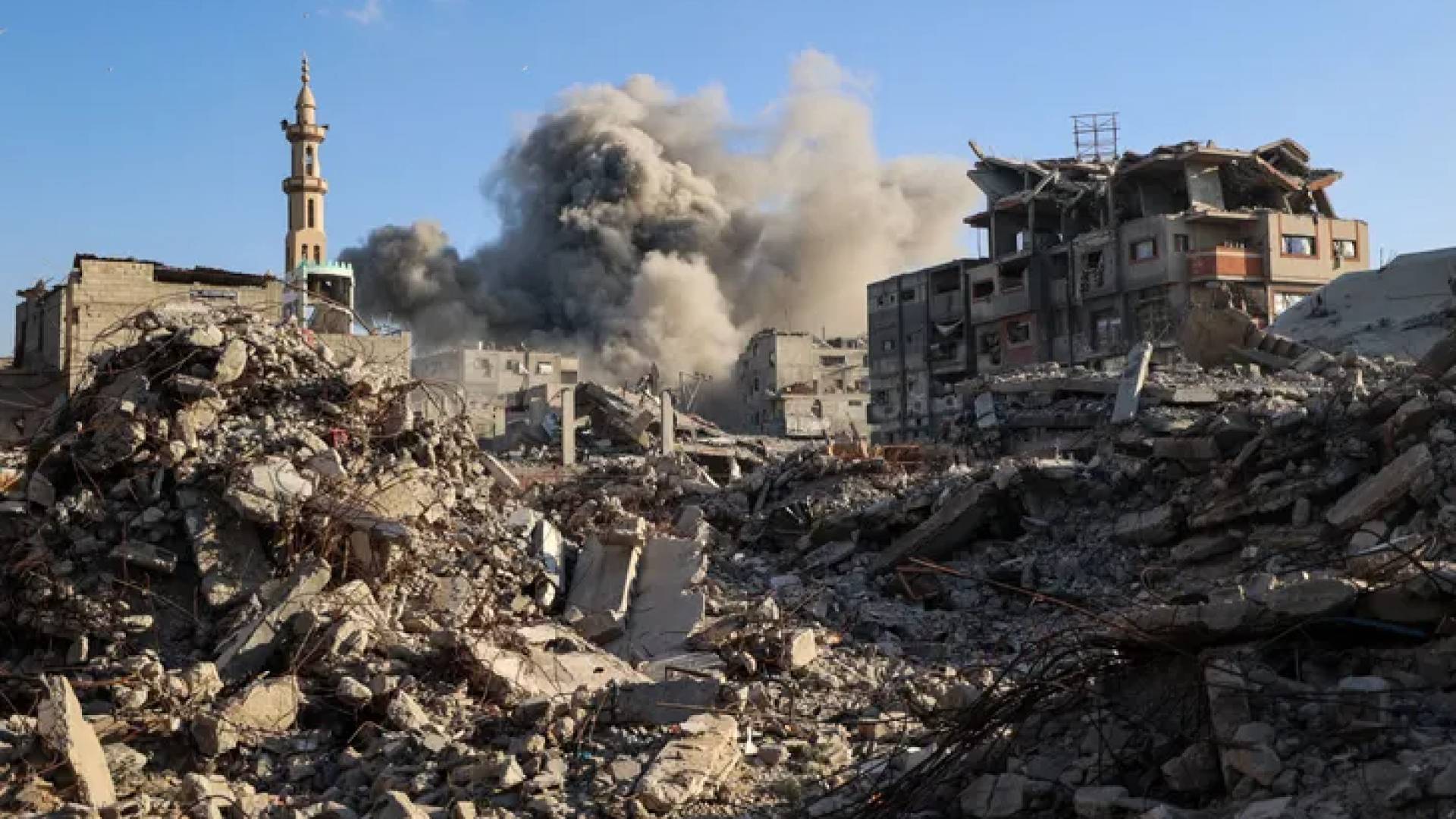
After more than seven decades, Adwan now finds himself an old man facing similar conditions to those he was born into, living with his children and grandchildren in dilapidated displacement tents. These tents have become the family's last refuge after fleeing the bombing and crimes committed by the occupation army in its continuous war that claims lives and destroys stone and people.
The seventy-year-old believes that the history of occupation crimes is repeating itself in a more brutal way, as he was forced to set up his new tent in the Al-Mawasi area west of Khan Yunis. This came after he lost his four-story home in the city of Rafah, which he was forced to leave on the eve of the ground invasion of the city in May 2024.
Adwan's family consists of an extended family including 4 sons, 5 daughters, and 17 grandchildren, all of whom lived in apartments within what is known as 'Barbarah Camp' in Rafah. This camp derived its name from their original village destroyed in 1948, with the name remaining a testament to their adherence to identity and land despite decades of long displacement.
The family's memory carries a deep wound from the martyrdom of their fifth son, 'Yasser,' in 2003 during a commando operation against an Israeli settlement, adding a dimension of sacrifice to the journey of refuge. Today, these large families are scattered among adjacent tents in a scene Adwan describes as the 'Second Nakba,' which revives the tragedies of the early ancestors.
In the Al-Mawasi area, where the tents lack the most basic necessities for a dignified life, Izzat and his neighbors live amidst harsh conditions marked by constant fear and hunger. Despite the occupation's complete destruction of Rafah city and preventing residents from returning to it, the dream of return still beats in the heart of this elderly man who refuses to surrender to reality.
Adwan asserts with confidence that the oppression he experiences has doubled his insistence on historical rights, noting that the dream of return has now become 'two dreams.' He dreams first of returning to his home in Rafah, and then the greater return to the village of Barbarah and the usurped homeland from which his ancestors were displaced decades ago.
Adwan reviewed the stages of his life, during which he moved between refugee camps and working abroad, where he received his education in international agency schools and obtained a teacher's diploma from Ramallah. Despite spending 27 years working as a teacher in Saudi Arabia, he chose to return to Gaza to be connected to his land and people despite all material temptations.
The seventy-year-old refugee lived through major wars and historical milestones, from the Tripartite Aggression in 1956 to the defeat of 1967 and the 1973 war, but he describes the current war as the deadliest. He describes what is happening today as a 'renewed Nakba,' given the unprecedented scale of destruction and systematic killings targeting the entire Palestinian existence.
For his part, his son Mohammed Adwan confirms that his father instilled in his children and grandchildren an absolute belief in the inevitability of returning to historical Palestine. Mohammed, who was born abroad and returned to Gaza in the nineties, believes that the destruction of the camps aims to assassinate the symbols of the cause, but he stresses the occupation's failure to erase the collective memory of the younger generations.
The family concludes its story by emphasizing that the policies of killing and destruction will not achieve the occupation's goals of making Palestinians forget their legitimate rights. Izzat Adwan, with his features etched by years of refuge, remains a living witness to a cause that refuses to be forgotten, affirming that Palestinian rights will remain present generation after generation until the return is achieved.
I was born in a tent, and today I live in a tent.. The dream of return has become two dreams: returning to Rafah, and returning to the entire homeland.
Share your opinion
From the 1948 Nakba to the War of Annihilation.. The Story of an Elderly Palestinian Man Whose Life Began in a Tent and Ended in One