ARAB AND WORLD

Tue 23 Jan 2024 6:59 am - Jerusalem Time

News of a deal between Israel and Hamas does not end the war

Israeli and American media reported that Israel submitted a proposal to the Islamic Resistance Movement (Hamas) to conclude a deal to release detainees in Gaza in exchange for a temporary halt to the war on the Strip, amid cautious Israeli optimism.


Israeli Channel 13 reported - yesterday evening, Monday - that Tel Aviv had finished formulating the principles of a deal consisting of 3 to 4 stages, which includes changing the army’s deployment in the Gaza Strip and withdrawing from some areas without ending the war.


The American website Axios quoted two Israeli officials as saying that the proposal presented by Tel Aviv to Hamas through Qatari and Egyptian mediators includes a two-month cessation of war during which all Israeli detainees in Gaza will be released.


According to Israeli officials, there are more than 130 detainees still in Gaza, and many of the detainees were either killed on October 7 or in the subsequent weeks of the war.


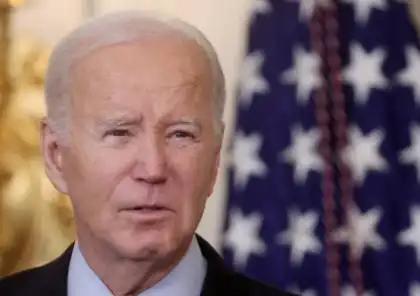
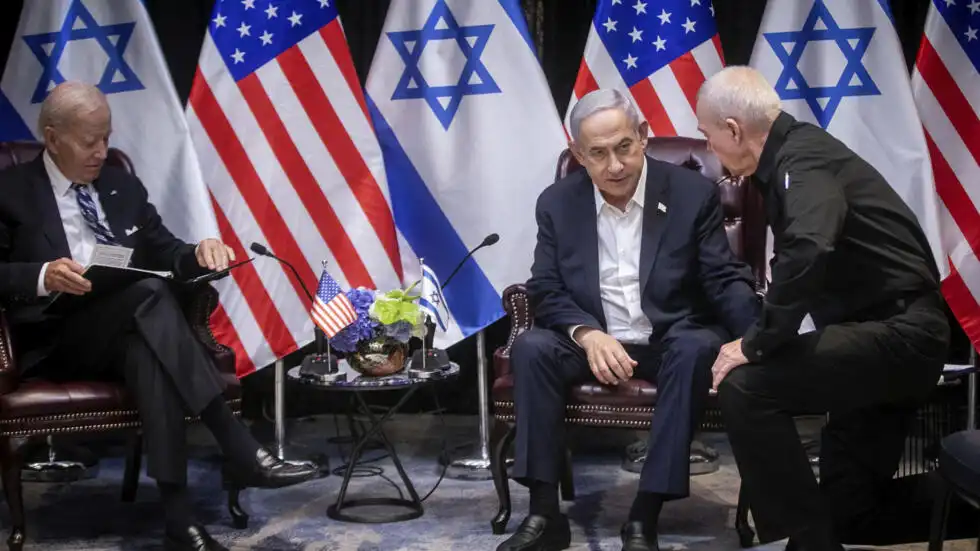
Axios said that Brett McGurk, advisor to President Joe Biden, went to Egypt on Sunday and will later move to Qatar in order to conduct negotiations to secure the release of those detained by the resistance. The site added that the Qatari and Egyptian mediators have been trying for weeks to bridge the gap between the two parties to achieve progress in concluding a deal.


American officials told Axios that reaching such an agreement may be the only way to stop the war in Gaza.


According to the website, Israeli officials said that they were awaiting Hamas' response, but stressed that they felt cautiously optimistic about achieving progress in the coming days.


Stages of the deal

Channel 13 reported that the deal includes, in the first phase, Hamas releasing its remaining women and elderly men, although it is not clear whether they will be released all at once.


The channel said that in the second phase, younger detainees and youth will be released, while the third phase includes the release of soldiers and bodies held by Hamas.


Axios quoted Israeli officials as saying that the deal includes the redeployment of Israeli forces from the main residential areas, and the gradual return of Palestinians to the areas from which they were displaced in the northern Gaza Strip.


Israeli officials confirmed that the deal confirms that Tel Aviv will not agree to end the war and will not agree to release all Palestinian prisoners as demanded by the Palestinian resistance.


According to Israeli officials, military operations will decrease in number and intensity after two months, if Hamas agrees to the deal.


The channel quoted Israeli sources - which it did not name - that Tel Aviv received during the past few days messages from mediators indicating that Hamas seemed more flexible regarding its demand that the end of the war be part of a possible deal.


Earlier Monday, Israeli Prime Minister Benjamin Netanyahu said - during a meeting with the families of detainees in Gaza - that he is working on a deal to release their relatives, but he added, “I will not go into its details,” according to the Israeli newspaper Yedioth Ahronoth.


A group of families of Israeli prisoners detained in Gaza stormed a meeting of the Finance Committee in the Knesset in Jerusalem yesterday, demanding that representatives make more efforts to try to release their relatives.


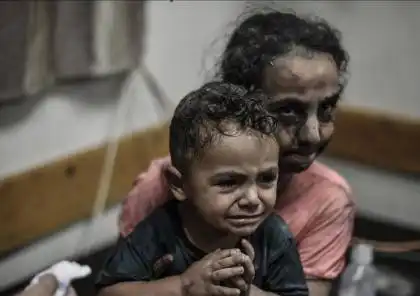
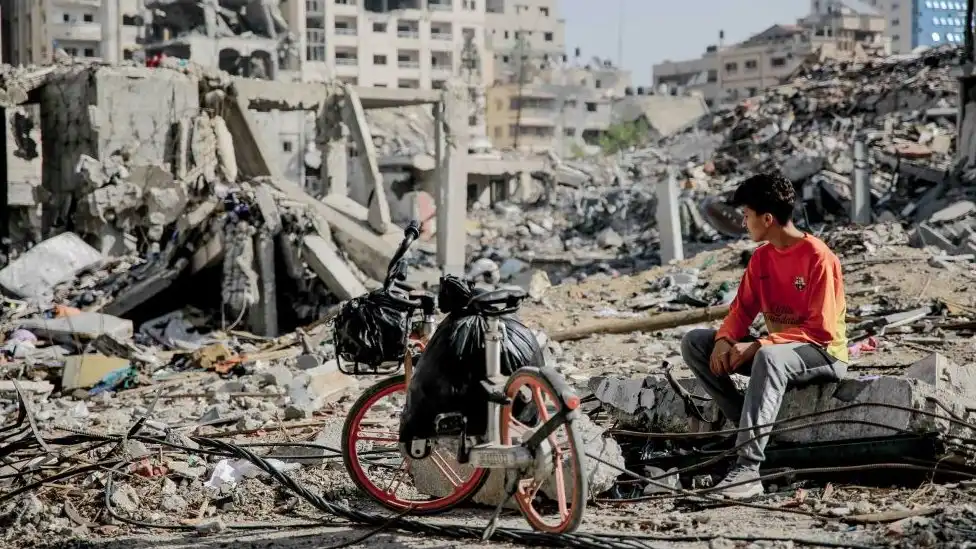
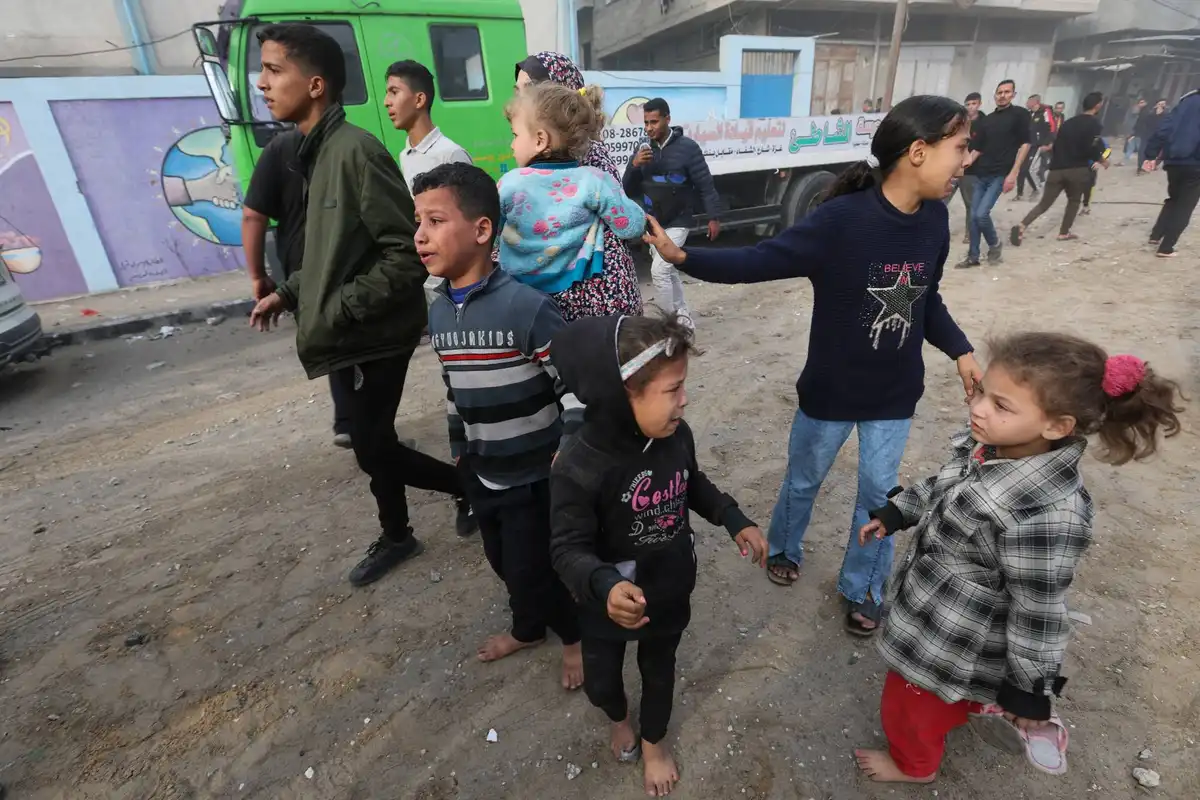
On October 7, 2023, Hamas unleashed the “Al-Aqsa Flood,” after which Israel launched a devastating war on Gaza that, as of yesterday, left 25,295 killed and 63,000 injured, most of them children and women, according to the Palestinian authorities.


During a temporary humanitarian truce that lasted for 7 days and ended in early December, Hamas released 105 civilians detained by it, including 81 Israelis, 23 Thai citizens, and one Filipino, in exchange for the release of 240 Palestinian prisoners from Israeli prisons (71 female prisoners and 169 children).


Tel Aviv estimates that there are about 136 Israelis still detained in the Gaza Strip, according to identical media reports and statements by Israeli officials.


Source: Axios + Anadolu Agency

ARAB AND WORLD

Tue 23 Jan 2024 6:44 am - Jerusalem Time

The Guardian: The West’s contempt for the lives of Palestinians will have serious repercussions

The Guardian newspaper published an article by Owen Jones, who began by asking this question: “What is the value of a Palestinian’s life?” Then he answered his question by saying: “For those who maintain illusions that have not yet been buried under the rubble of Gaza, along with entire families - such as the Zorob family, the Qashtan family, and the Atallah family - Joe Biden gave a specific answer last week...in the statement he issued on the occasion of the 100th day since the start of the war. In the current horror, he rightly showed sympathy for the plight of the hostages – whose kidnapping by Hamas represents a serious war crime – and their traumatized families. However, there was no mention of the Palestinians.”


Jones stressed that “the lack of interest by politicians and the media alike in concealing their disdain for Palestinian life will be of great importance.” The truth is that this phenomenon is not new, and these repercussions are now being felt violently. If the powerful countries of the world had not so impudently ignored three quarters of a million Palestinians who were expelled from their homes 76 years ago, accompanied by an estimated 15,000 who were violently killed, the seeds of today’s bitter harvest would not have been sown.” The writer wondered: “How many people know that last year, before the inexcusable atrocities committed by Hamas on October 7, 234 Palestinians were killed by Israeli forces in the West Bank alone, more than thirty of whom were children?” They say life is cheap. “It seems meaningless if you are Palestinian.”


He pointed out that if there had been some value attached to Palestinian life, perhaps decades of occupation, siege, illegal colonization, apartheid, violent oppression and mass massacres would not have occurred, as oppressing others becomes difficult when their humanity is accepted.


He said that even some who had succumbed to Western indifference towards Palestinian lives might have expected that after this deadly massacre, the dam would eventually collapse. Certainly, the violent killing of 10,000 children, or 10 children having one or both of their legs amputated every day, often without anesthesia, would arouse strong emotions. Certainly, the 5,500 pregnant women giving birth every month – many of them undergoing caesarean sections without anesthesia – or the deaths of newborns from hypothermia and diarrhea would arouse unstoppable revulsion.


He added that it is certain that projections that a quarter of Gaza's population may die, within one year, due to Israel's destruction of the health care system alone, would lead to urgent demands to end this obscenity. It is certain that the endless stories of aid workers, journalists and medics being slaughtered along with many of their relatives – or even their entire families – by an Israeli missile will eventually spark condemnations in Western society to stop this madness.


But this did not happen, and therefore the consequences will be dire, stresses Jones, who says that undervaluing Palestinian lives is not an assumption, but rather a statistical fact.


According to a new study of coverage in major American newspapers, for every Israeli death, Israelis are mentioned eight times — or 16 times more often than Palestinian deaths. An analysis of BBC coverage by data specialists Dana Najjar and Jan Litava found a similarly devastating disparity, and that humanitarian terms such as “mother” or “husband” were used far less often to describe Palestinians, while emotional terms such as “massacre” or “Carnage” was only used for Israeli victims of atrocities committed by Hamas.


The writer warned that all this would have a profound impact. “First, we must forget any future Western claims regarding human rights and international law,” he said. Much of the world has already viewed this self-justification with disdain, as merely the latest ploy to advance the strategic interests of countries that have grown rich at the expense of the rest of the world: centuries of often genocidal colonialism have generated lasting cynicism, as have more pigeons. Recent bloodshed such as the Iraq War, or active support for resilient authoritarian regimes across multiple continents.” He added, “After the West armed and supported Israel while imposing mass death on Gaza through bombs, bullets, hunger, thirst, and the destruction of medical facilities, no one but the naive will listen to such claims again.”


Then he said, but it is not only other countries that Western political and media elites should be terrified of. They are facing moral collapse at home as well. Younger generations in countries such as the United States and Britain have grown up taking racism much more seriously than those before them, and opinion polls show that they are more sympathetic to Palestinians than older citizens.


He points out that they are avid users of social media, watching footage of the seemingly endless atrocities in Gaza, and Israeli soldiers happily presenting war crimes as fodder for public amusement. Irish lawyer Blaine Ni Graleigh, while presenting South Africa's case against Israel at the International Court of Justice, described what happened as "the first genocide in history, with its victims broadcasting their destruction in real time amid desperate hope... that the world will do something." For the younger generations who have watched numerous videos of mothers screaming while cradling the bodies of their newborn babies, these entire events have proven to be instructive.

Then he wonders: “So what do these young people think of the media coverage, or the statements of politicians, which do not seem to treat Palestinian life as having any value at all?” What conclusions are drawn about the growing minority populations in Western countries whose media and political elites make so little effort to hide their contempt for Palestinian lives as they are exterminated on such a biblical scale?


The writer concludes that this treatment of the lives of Palestinians will certainly constitute a turning point with repercussions that will not be understood until it is too late. He says: “Yes, we have seen how the refusal to treat Palestinians as human beings has made today’s nightmare inevitable.” We can see how the moral claims used to justify Western world domination are being permanently shredded. But little thought has been given to how political and media elites in Western countries set their moral authority on fire, leaving it to fester alongside the thousands of unidentified Palestinian bodies buried under the rubble. “It is certainly a turning point, with consequences that will not be understood until it is too late.”

Source: Sama News

PALESTINE

Mon 22 Jan 2024 7:32 pm - Jerusalem Time

25,295 killed since the start of the aggression... and a real famine struck Gaza Strip

The government media office in Gaza warned today, Monday, of what it described as “a real famine in northern Gaza after the quantities of flour and rice ran out. We hold the “Israeli” occupation and its allies responsible for the death of 400,000 Palestinian citizens from hunger,” while the Ministry of Health announced that the number of martyrs since the start of the aggression had reached 25,295 martyrs.


The government journalist announced in a statement issued by him, received by the Palestinian Information Center, that the quantities of flour and its derivatives, rice and canned food that had remained in the northern Gaza Strip governorate since before the genocidal war on Gaza had run out, and this confirms the beginning of a real famine facing 400,000 citizens of our Palestinian people. They are still present in the governorate.


The statement added: Israel has forced our people in the North Gaza Governorate to grind animal feed and grains instead of the lost wheat, and they are facing real famine in light of the continued aggression and in light of the occupation tightening the siege on our Palestinian people.


The statement pointed out that both the North Gaza Governorate and the Gaza Governorate are subject to a severe siege imposed in conjunction with the continuation of the genocidal war waged by the “Israeli” occupation army, as the occupation prevents any aid from reaching those two governorates since the start of the brutal war, and dozens of cases of executions and field killings have been recorded. Which was carried out by the occupation army for dozens of martyrs who tried to obtain food in the Gaza and North Gaza governorates.


The government media office held the “Israeli” occupation fully responsible for the famine in the northern Gaza Strip governorate. We also hold the international community, the American administration, and President Biden personally responsible for this crime, which violates international law and international humanitarian law and violates all international agreements and treaties that guarantee the right to obtain food. For any human being, they gave the occupation the green light to commit these crimes, and refused to stop this brutal war on the Gaza Strip.


It also appealed to all countries of the free world and various international organizations to work seriously, immediately and urgently in order to provide food aid and food supplies to all our Palestinian people, especially in the North Gaza Governorate and the Gaza Governorate. We also call on the whole world to stop the genocidal war against our Palestinian people in the Gaza Strip, and to stop the bloodshed. Stop killing and targeting civilians, children and women.


25,295 killed since the start of the war

In a related context, the Ministry of Health in Gaza announced that the toll of the Israeli aggression had risen to 25,295 killed and 63,000 injuries since the start of the aggression on the seventh of last October.


The Ministry of Health said that the occupation committed 20 massacres against families in the Gaza Strip, leaving 190 killed and 340 injured during the past 24 hours.


It explained that there are still a number of victims under the rubble and on the roads, and that ambulance and civil defense crews are unable to reach them.


OPINIONS

Mon 22 Jan 2024 6:30 pm - Jerusalem Time

A "STATE and A HALF SOLUTION"

Ali Al-Jarbawi

Ali Al-Jarbawi

Opinion Writer

“With the escalation of the intensity of the Israeli war on the Gaza Strip, and multilateral calls for the necessity of ending it, there has been a return to square one regarding the political settlement of the conflict, represented by the re-emergence of the principle of the “two-state solution,” after it had been absent from circulation for nearly a decade. 

This principle was the basis on which the “Oslo Agreement” was built, and it is based on mutual recognition of the rights of the Palestinian and Israeli parties, and ending the conflict by establishing a Palestinian state alongside Israel. 


However, despite the Palestinian recognition of the State of Israel and the guarantee of its safe existence, the establishment of the promised and hoped-for Palestinian state has not been achieved during the past three decades. The main reason for the failure is due to the international community’s acknowledgment of subjecting the establishment of this state to the restrictive Israeli vision for it, under conditions that made Palestinian acceptance of it, result in nothing for the Palestinian people except the transformation of Israeli control over them due to the occupation, into permanent control hidden under the bright title of “the Palestinian state”, but a fat free one.


There is nothing wrong if the Palestinians consider that the strong return of the “two-state solution” project as a basis for a political settlement of the conflict, and the support of this project by various regional and international parties, most notably the current American administration and the European Union, is a positive matter. This return proves that continuing to ignore Palestinian rights and marginalizing the Palestinian issue cannot achieve stability in the region, which means that “resolving the conflict,” and not simply continuing to “manage the conflict,” has become more acceptable in influential regional and international capitals. However, it is necessary not to exaggerate the importance of this return, and to raise Palestinian expectations from it, as if a different breakthrough from what the situation was previously had occurred, and this time it will result in a real and serious effort to establish a state acceptable to Palestinians. 

Although statements about the necessity of finding a settlement according to the principle of the “two-state solution” are coming from all sides, they have not yet departed from the regulating conceptual framework (the paradigm) for implementing this principle, which has governed the actions of these parties since the beginning of its introduction and its demarcation in the “Oslo Accords.” 


This framework can be summarized in the following points:

First, the conceptual framework of the “two-state solution” by the countries of the Western coalition that guarantees the existence and security of Israel, led by America, is not based on the centrality of the necessity of direct and absolute recognition of the right of the Palestinian people to self-determination. By ending the occupation and obtaining freedom and independence, as an inherent part of the natural right that must be enjoyed like the rest of the peoples of the world. Rather, this framework is based on the centrality of Israel, and the guarantee of its existence and security, as a Jewish and democratic state, which necessitates the establishment of a “Palestinian state” that will rid it of the continuity of loss of security and the foundations of democratic rule in the future. The establishment of a Palestinian state, according to this conceptual framework, comes from achieving the Israeli interest, and not to achieve the Palestinian right.


Secondly, because the Palestinian right is subordinate to the Israeli interest, the Western coalition countries have given Israel the exclusive right to define the “Palestinian state” it wants, and have exerted pressure at times, and neglect at other times, on the Palestinian side to accept what Israel wants. Here it must be remembered that Netanyahu is not the only Israeli obstructionist of the existence of an independent and sovereign state “another one west of the river,” but rather all Israeli governments, since the “Oslo Accords” until now. Rabin, a partner in “Peace of the Braves” who was assassinated on charges of neglecting Israeli rights and interests, was not prepared to accept anything more than an “incomplete state” for the Palestinians, lacking sovereignty, space, and demilitarized. As for Netanyahu, who was and still is at the top of the political pyramid in Israel during the past quarter century, he restricted the “two-state solution” to conditions that are still in effect until now, which are: Israel maintaining full security control over the entire geographical area west of the river, and no sovereignty for any other state west of it. No return to the 1967 borders, no division of Jerusalem, no cessation of settlements, no right of return for the Palestinians to Israel, in addition to the necessity of recognizing Israel as a Jewish state. According to these conditions, Netanyahu is ready to accept expanded autonomy for the Palestinians, which he called “autonomy+” or even “autonomy++.” It is worth noting the fact that with some “cosmetic” modifications to these conditions, a broad majority in Israel, which has been moving toward the right for decades, agrees to them.


Third, as a result of the previous two points, the successive American administrations, which stand at the head of the Western coalition and monopolize the political settlement of the conflict, did not exert any effective and meaningful pressure on Israel to change its position on the desired “Palestinian state” capable of resolving the conflict. Rather, these administrations assumed the role of the agent protecting Israel’s vision, and began defending this vision on a path that focused on “conflict management,” so that it remained a disciplined and low-paced conflict. These administrations and their allies accepted Israel’s imposition of separating the West Bank from the Gaza Strip, its continuation of a systematic process of Judaizing Jerusalem and the West Bank, and the ongoing annexation of Palestinian land, and began talking about “a ‘contiguous’ Palestinian state.” Thus, the international ceiling for this “state” began to align itself not only with the Israeli conditions related to its establishment, but also with the Israeli practical steps on the ground, which actually prevented the possibility of its establishment. It should not be overlooked that the former US president’s recognition of the annexation of Jerusalem to Israel, and the deal of the century he announced that gives the Palestinians a “remnant state” consisting of confined and besieged ghettos, are an expression of submission to the Israeli position.


Fourth, the current dispute between the Biden administration and Netanyahu is a tactical dispute, not a strategic one. It is not related to differences in visions about the common goals that unite America and Israel, but rather it stops at the limits of American dissatisfaction with the methodology followed by Netanyahu and his current right-wing government. The American administration, despite its criticism of Israel due to the large number of civilian casualties as a result of its campaign on the Gaza Strip, still rejects the mounting calls for a ceasefire, and supports the continuation of the war, but at a different pace. As for its demand to activate the “two-state solution” and establish the “Palestinian state,” it is still governed by the same old and continuing conceptual framework. This is evidenced by the statements made by President Biden two days ago, after he made a phone call with Netanyahu, which took place after a break in direct communication between them that extended over a period of three weeks. It is clear from these statements that the US President lowered the ceiling of his demands and accepted Netanyahu’s vision of the expected “Palestinian state.” Biden said that “the two-state solution is not impossible with Netanyahu in power,” adding that “there are several types of solutions based on two states,” as there are “countries that are members of the United Nations that do not have their own armies.” Although he neglected to mention the reasons that led those countries to abandon the presence of an army, and whether they were forced to do so, he used an incorrect approach to justify the most important Israeli condition for the establishment of a Palestinian state, which is depriving it of sovereignty.

Finally, the American side emphasizes that it is aware that the time gap between its demand to activate the two-state solution and the implementation of this demand will take a long period of time, and will require the Palestinian side to adhere to the implementation of many conditions, required for rehabilitation as a party that is capable and acceptable to Israel and the Western coalition to undertake the task. After achieving this, there will be the possibility of moving towards implementing the “two-state solution.” Since America will from now on be engaged in the presidential election campaign, and because the possibility of Trump returning to the White House is high, the greatest thing in the American arsenal will be the “Deal of the Century.” This deal seeks to resolve the conflict not on the basis of a “two-state solution,” but rather on the basis of a “state and a half solution.”

OPINIONS

Mon 22 Jan 2024 6:26 pm - Jerusalem Time

Trigger a political move: This is the time to set an additional goal for the war

Israeli Maariv

Israeli Maariv

Opinion Writer

By Yoel Guzinsky

The government of Israel has established two central goals for ending the war - dismantling the military and governmental capabilities of Hamas; and return the hostages. It must add another goal that is no less important. Now, an American-sponsored initiative is being worked on that has not yet fully matured, but at its center is the link between Arab aid for the reconstruction of Gaza and the institutionalization of an alternative authority from Hamas, and normalization between Jerusalem and Riyadh.

In exchange for normalization, the Saudis, along with the Americans, demand the establishment of a Palestinian state alongside Israel. Even in the normalization talks that took place before October 7, the Saudis talked about a political horizon, but in a less clear way. Now, in the wake of the anti-Israel wave that is rising in the region, Riyadh has become more committed to a Palestinian state. It must be said clearly that Hamas has succeeded in putting the Palestinian issue back in the headlines.

The Saudi media, which is consistent with the approach of Mohammed bin Salman, the de facto ruler of the Kingdom, is proposing a deal that includes these frameworks. Also, the statements of the Saudi ambassador to Washington, Rima Bint Bandar, at the Davos Forum reflect support for Israel’s “integration” into the region, which is a different model from the Abraham Accords. When Saudi Foreign Minister Faisal bin Farhan was asked, during the Davos Forum, would Saudi Arabia recognize Israel within the framework of such a deal? He replied, "Of course."

Even after nearly four months of war and images of devastation in Gaza, the Saudis are leaving the door open for an agreement. The interests and motivations of theirs and of the United States remain the same, even strengthened, and the end of Hamas' rule in Gaza will be an opportunity to renew this path.

A Saudi-Israeli normalization agreement would be the appropriate answer to Hamas and Iran, which wanted to stop the path of normalization. Such an agreement would give Israel better economic profits and legitimacy in the Arab and Islamic worlds, strengthen the position of the United States in the region, and strengthen Saudi policy and security as an opposition force against Iran. Israel will appear to be opening doors to peace, reaping many fruits from the American administration, and benefiting from Arab aid and the international community for the reconstruction of Gaza.

Serious challenges remain before dialogues on normalization are renewed; First, the general regional mood is not in Israel's favor, and it appears that we will need a post-war “transition period” that includes political change in Israel. This is in addition to the start of the election year in the United States, which makes it difficult for it to focus on leading the move. To this, Saudi demands must be added, most notably the construction of infrastructure that includes uranium enrichment on its territory. If the Saudi position on enrichment changes, Israel will have to adhere strongly to the American initiative.

The Saudis are not keen on taking responsibility for the Gaza Strip. They do not want this preoccupation and headache. But they want a security agreement with the United States, and therefore, they will invest their time and their economic, religious and political weight, in cooperation with other countries, to shape the new reality in Gaza.

This goal must be part of the war goals. It will be difficult for Israel to achieve the original war goals - which are still far from being achieved - if it does not adopt complementary political goals. Adopting these goals will constitute a good response to Iran and Hamas, strengthen relations with the United States, and help integrate Israel into the regional system that curbs Iran.

ARAB AND WORLD

Mon 22 Jan 2024 6:12 pm - Jerusalem Time

Wall Street Journal: US, Egypt, and Qatar are pressuring Israel and Hamas to accept a comprehensive plan to end the war and release the kidnapped

The American Wall Street Journal reported yesterday (Sunday) that the United States, Egypt and Qatar are pressuring Israel and the Hamas movement to accept a comprehensive plan that would end the war, release the kidnapped Israelis detained in Gaza, and ultimately lead to normalization between Israel and its neighbors. , and talks to establish a Palestinian state.


According to what the newspaper reported, the plan, which will take 90 days to fully implement, requires a cessation of fighting of all kinds for a long period, and during this period, the Hamas movement will, in the first phase, liberate all kidnapped civilians, and Israel will at the same time release hundreds of Palestinian security prisoners, withdrawing from Gaza cities, allowing freedom of movement in the Strip, stopping reconnaissance drone flights, and doubling the amount of aid entering the Strip.


The next stage will see Hamas release the Israeli female soldiers and the bodies of the kidnapped Israelis, while Israel will release more Palestinian prisoners.


As for the third stage, Israel will withdraw its forces to the borders of the Gaza Strip, while Hamas will release the last of the kidnapped, who are soldiers and men of fighting age whom it considers to be soldiers.


Egyptian officials told the American newspaper that after that, talks will take place regarding a permanent ceasefire, the normalization of relations between Israel and Saudi Arabia, in addition to other Arab countries, and a new process leading to the establishment of a Palestinian state, an idea that the current Israeli government strongly opposes.


Egyptian officials added that Israeli officials are pushing for a two-week ceasefire instead, and are avoiding talk of a permanent ceasefire.


The American newspaper reported that negotiations on a ceasefire are scheduled to begin in Cairo in the coming days.


The Israeli Prime Minister's Office in Jerusalem refused to comment on this report.

It is noteworthy that the American website "Axios" reported yesterday that the White House envoy to the Middle East, Brett McGurk, will visit Egypt and Qatar this week, to talk about the war and negotiations to release the kidnapped people.


Other American reports spoke of attempts by the White House to end the fighting. According to a previous report in the Wall Street Journal, the administration of US President Joe Biden has begun to lower its expectations regarding the conflict with the Hamas movement, as it believes that removing the movement as a security threat is considered a more achievable goal than the goal of eliminating the movement, which is the goal which is Israel's declared goal.


According to the newspaper, Washington is greatly increasing the pressure on Israel, to push it to quickly reduce its military campaign and shift away from high-intensity war, but it has not asked for the fighting to stop.

ARAB AND WORLD

Mon 22 Jan 2024 6:05 pm - Jerusalem Time

Israeli bombing with phosphorus shells and raids on homes in Lebanon

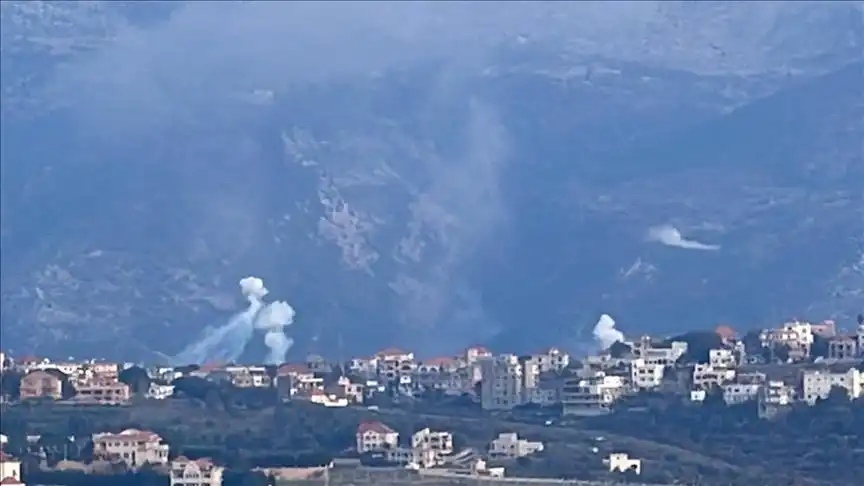
On Monday, the Israeli army targeted residential buildings in several towns and villages in southern Lebanon with air strikes and artillery shelling using phosphorous shells, while Hezbollah announced that it had targeted gatherings of Israeli soldiers near the Lebanese border.


The party said in a statement that its members targeted "a force from the Israeli military forces on the Abu Dajj heights (off the Lebanese town of Ramieh) with appropriate weapons, and they were directly hit."


The party announced earlier today that its members targeted “a gathering of Israeli soldiers in the vicinity of the Al-Raheb site opposite the town of Aita al-Shaab in southern Lebanon, with appropriate weapons and achieved a direct hit,” while there was no immediate comment from the Israeli side.


At dawn on Monday, Hezbollah reported that it had repelled an attack by Israeli forces off the southern border, “which intended to strike targets inside Lebanese territory.”


For its part, the official Lebanese News Agency reported that Israeli army artillery targeted the town of Kafr Kila with phosphorous shells, amid a sweeping operation with machine guns from Metulla towards the town.


It pointed out that "the Israeli raid on the town of Taybeh earlier today caused major damage to the town's high school, and the high school director and members of the educational staff survived the aggression."


The agency indicated that "an Israeli drone fired a missile at a residential room inside an agricultural project in the Abel al-Qamh locality in the outskirts of the town of Wazzani, without recording any casualties."


It also stated that "an Israeli drone fired a missile behind the Khiam detention center (its name dates back to the days of the Israeli occupation of the south) - Wadi Al-Asafir, and enemy artillery bombed Al-Awaida Hill from the Taybeh side."


Eyewitnesses reported to Anadolu's correspondent that an Israeli raid targeted a house in the town of Taybeh, while artillery shelling targeted the eastern outskirts of the town of Mays al-Jabal in southern Lebanon.


In the wake of a devastating war on the Gaza Strip, since October 8, the Israeli-Lebanese border has witnessed tension and intermittent exchange of fire between the Israeli army on the one hand, and Hezbollah and Palestinian factions on the other hand, which led to deaths and injuries on both sides, in addition to It led to deaths and injuries among Lebanese civilians.


For 108 days, the Israeli army has been waging a devastating war on the Gaza Strip, which as of Monday morning left “25,295 dead and 63,000 injured, most of them children and women,” according to the Palestinian authorities, and caused “massive destruction and an unprecedented humanitarian catastrophe,” according to the United Nations.

ARAB AND WORLD

Mon 22 Jan 2024 6:00 pm - Jerusalem Time

Wall Street Journal: Biden is at risk of failing to win an electorally significant term due to Gaza war

An opinion poll showed that US President Joe Biden enjoys weak support in most of the major electoral districts in the state of Michigan, especially in light of the alienation of some young voters and Arab Americans in Michigan due to his position on the Israeli war on Gaza, while his expected rival, Donald Trump, is gaining support among Black voters, according to what the American newspaper The Wall Street Journal reported on Sunday, January 21, 2024.

The newspaper said that warning signs are looming in the US state of Michigan threatening the election of President Joe Biden to a new term, and added that Biden is likely to benefit from improved economic indicators related to inflation and wage growth, the availability of abortion rights in the state, and the expansion of mail-in voting and early voting.


However, the American newspaper says that the war waged by the Israeli occupation on the Gaza Strip and the American President’s position on the war and his support for Israel have alienated some young voters and Arab Americans in Michigan from him, and opinion polls show that Trump is gaining support among black voters.

A poll conducted by The Glengariff Group for The Detroit News and WDIV-TV in early January showed Trump leading Biden by 47% to 39%. The poll shows that Joe Biden has weak support in most key Democratic constituencies.


When a question was asked about whether Biden deserves a new term, the poll found that the US president’s popularity is noticeably weak among black voters, voters between the ages of 18 and 29, and those with university degrees. The vast majority of independent voters in the poll believed that Biden did not deserve to be elected to a new term, while about a third of those surveyed saw that Trump deserved a second term.


While a poll conducted by CNN last December showed that Trump was ahead of Biden in the state by 50% to 40%. These differences are striking considering that in 2022, Michigan's Democratic governor, Gretchen Whitmer, was re-elected by 54.5%, more than 10 points behind her Republican rival, and Democrats took control of the state legislature for the first time in four decades.


As Adrian Hemond, a Democratic strategist based in Lansing, said: “The level of anxiety is increasing, and that makes sense. The problem is not the policy, it is the person himself.”


The war on Gaza affects the president's fortunes

Meanwhile, US President Joe Biden's support for Israel in the wake of the October attacks launched by Hamas aroused dissatisfaction with the Arab-American community in the state and at universities, which increases the possibility that a long-term war in Gaza will lead to a decline in the voting percentage and support for Biden among these voters.


Democratic leaders in Michigan say Biden has time to improve his image. “What I'm hearing from people dictates the need for immediate action and how dangerous this moment is in this country,” Whitmer said in an interview Sunday, January 21, with CBS' "Face the Nation."


Rep. Dan Kildee (D-Mich.) also said he is urging the White House and the campaign to do more in the state, saying the campaign is "not where it needs to be." Kildee said he spoke with Joe Biden a few weeks ago and encouraged him to visit Michigan frequently. "I told him, 'Come to Michigan. We need you there.' And he said he would," he said.

The war on Gaza caused a rift in the race for votes in the 15 electoral districts in Michigan, because the state includes large numbers of Arab and American Jewish voters in the state. More than half of the population of Dearborn, a city with a population of more than 100,000, is of Arab American or North African origin.


Even outside the state's pro-Palestinian community, Democratic Party activists point to a multi-ethnic coalition in support of the Palestinians in Gaza and fear that the continuation of the conflict will hurt Biden's chances.


“This is costing him a lot here in Michigan,” said David Heiner, a Democrat from New Boston, Michigan. “I hope he realizes that he is losing a huge demographic.”


ARAB AND WORLD

Mon 22 Jan 2024 5:53 pm - Jerusalem Time

Germany: Israel cannot live in security unless the Palestinians do

German Foreign Minister Annalena Baerbock stressed that the two-state solution is the only way to resolve the Israeli-Palestinian conflict.


Birbock said that Israel cannot “live in a safe atmosphere unless the Palestinians live a safe and dignified life,” and called for an urgent humanitarian truce in the Gaza Strip, to deliver aid to the Palestinians there.


This came in press statements she made today, Monday, before a meeting of European Union foreign ministers in Brussels, which discusses preparations for holding an international peace conference to establish the principle of a “two-state solution in the Middle East” during the coming months.


For 108 days, the Israeli occupation army has been waging a devastating war on the Gaza Strip, which has so far left 25,295 martyrs and 63,000 injured, most of them children and women, and caused massive destruction and an unprecedented humanitarian catastrophe, according to the United Nations.

PALESTINE

Mon 22 Jan 2024 5:32 pm - Jerusalem Time

Epidemic diseases kill the children of Gaza amid the absence of medicines

Epidemic diseases are spreading among children in the Gaza Strip due to the ongoing Israeli aggression and the resulting lack of medicine, food and water. The Ministry of Health in Gaza describes the health situation in the Strip as catastrophic and extremely painful.


The official spokesman for the Ministry of Health in Gaza, Ashraf Al-Qudra, confirms that epidemics, infectious diseases, and respiratory diseases are spreading among the displaced in particular, confirming that 10,000 cases of hepatitis A have been detected.


He attributed the spread of hepatitis among the displaced to severe overcrowding and lack of personal hygiene due to the lack of water and sanitary facilities.


For her part, pediatrician Rawan Al-Habbash confirmed that diseases spread among children, such as intestinal infections, hepatitis, and chest and respiratory infections, due to the overcrowding of people and displaced people in schools, the lack of hygiene, sterilization, and unhealthy food, in addition to a major shortage of medicines and the unavailability of antibiotics and vitamins.


For his part, Imad Kabaja, a Palestinian doctor, indicated that a thousand sick cases are recorded daily in the children’s department, stressing that they are losing lives due to the lack of medicines in hospitals.

ARAB AND WORLD

Mon 22 Jan 2024 4:22 pm - Jerusalem Time

Time Magazine: Global support for Israel has been declining since October 7

The American "Time" magazine said that global support for Israel has been declining continuously since October 7, 2023, in reference to the escalation of the situation in the Gaza Strip.


According to data reported by “Time” from the research company Morning Consult, 42 out of 43 countries witnessed a decline in the support previously provided to Israel.


This result was reached through an opinion poll conducted in 43 countries on 6 continents, during the period between October and December 2023, during which the company received thousands of written answers from the respondents.


As a result of the survey, many “positive” opinions about Israel turned into “negative” in China, South Africa, Brazil, and other Latin American countries.


Countries such as Japan, South Korea, and Britain also witnessed a decline in support for Israel, until “negative” opinion became dominant in these societies.


On the other hand, the United States of America alone emerged as a country that continues to support Israel despite its decline compared to before.


Speaking to TIME, Sonata Frisbie, vice president of political intelligence at Morning Consult, a research company, said that these data show “how difficult the path Israel is currently taking in the international community is.”

ARAB AND WORLD

Mon 22 Jan 2024 4:09 pm - Jerusalem Time

Families of Israeli prisoners held in Gaza storm the Knesset session

Today, Monday, the Israeli Knesset witnessed dozens of families of Israeli prisoners held by the resistance in the Gaza Strip storming a session in the Israeli Knesset, demanding the return of their children, which caused the session to be dissolved.


The families of the prisoners stormed the Finance Committee inside the Knesset and shouted at the committee members, saying: “We will not allow you to breathe until our children return... The general agenda will not continue, and you will not sit here while they are there.”


They added to the members of the Knesset: “You must listen to us. There is nothing more, no committee or Knesset, but there is one issue that you must address.” They raised banners asking them to take action to release the prisoners.


For his part, Knesset member Moshe Gaffney said - after suspending the session -: “The return of the prisoners is the most important matter, and withdrawing from the coalition will not help... so I will go and tell the prime minister that this is our position.”


In a related context, the Prime Minister of the occupation government, Benjamin Netanyahu, said during a meeting with representatives of the families of the prisoners, on Monday, that there is an Israeli initiative for an exchange deal with the Hamas movement, refraining from going into its details.


Earlier, a number of families of Israeli prisoners confirmed that they had lost confidence in the government of Benjamin Netanyahu, and that they would “make their own moves,” as they put it.


ARAB AND WORLD

Mon 22 Jan 2024 3:01 pm - Jerusalem Time

Netanyahu talks about an “Israeli initiative” to exchange prisoners

Israeli Prime Minister Benjamin Netanyahu said on Monday that there is an “Israeli initiative” to exchange detainees in the Gaza Strip for Palestinian prisoners, without revealing its details.


This came during Netanyahu’s meeting with representatives of the families of Israeli detainees in Gaza, denying that there was an initiative presented by the Hamas movement in this regard, according to a statement issued by Netanyahu’s office.


The statement stated that Netanyahu “told the families of the kidnapped Israelis held by Hamas during his meeting with them, there is no real proposal by Hamas, this is not true.”


He added: “I say this as clearly as I can, because there are many things that are not true that torment you. On the contrary, there is an initiative on our part, and I will not disclose its details.”


In recent days, no Israeli official has ever announced the existence of an “Israeli prisoner exchange initiative,” but the media reported disagreements within the government regarding ways to return detainees from Gaza, and Netanyahu’s rejection of proposals presented by various parties, due to his adherence to not a ceasefire, which is the condition. The main branch of the Hamas movement.


On Sunday, the families of the prisoners set up tents near the Prime Minister’s house in West Jerusalem to demand that the government reach a deal to return the prisoners from the Gaza Strip.

On Sunday evening, Netanyahu renewed, in a statement, his categorical rejection of the “conditions of surrender” set by Hamas.


He said: “In exchange for the release of our kidnappers, Hamas demands an end to the war, the removal of our forces from Gaza, the release of all killers and rapists belonging to the elite forces, and the keeping of Hamas in power.”


He added: “If we agree to that, our fighters will have fallen in vain. If we agree to that, we will not be able to guarantee the security of our citizens. If we agree to that, we will not be able to return the evacuated citizens safely to their homes, and the 7th of next October will only be a matter of time.” (In reference to the possibility of Hamas carrying out an attack similar to the one it carried out in the future on settlements adjacent to the Gaza Strip.)


Netanyahu continued: “I am not ready to accept such a serious violation of Israel’s security,” as he put it.


PALESTINE

Mon 22 Jan 2024 1:03 pm - Jerusalem Time

Israeli sources: The army withdraws forces from Gaza and directs them to the West Bank

The Israeli army withdrew more of its forces from Gaza and directed them to the occupied West Bank, Israeli sources said Monday.


The sources stated that "the Israeli army, despite the continuing battles in the city of Khan Yunis, south of Gaza, is withdrawing more forces from the Strip, whether from reserve forces or regular forces."


It indicated that "a portion of the forces that were withdrawn will be directed to the West Bank."


On Friday, Israeli Army Chief of Staff Herzi Halevy revealed that the army is withdrawing more reserve soldiers, knowing that they will be called up again soon.


On Thursday, the American Wall Street Journal said that Israel withdrew thousands of its soldiers from Gaza after “pressure” from the United States, to move to a less intense and more precise phase in its war against Hamas.


Israeli forces continue to carry out operations in the West Bank, after Prime Minister Benjamin Netanyahu confirmed his rejection of any “Palestinian sovereignty” in the post-war period.


Over the past few days, Israel has carried out arrest campaigns, after storming a number of towns and homes in the West Bank.


ARAB AND WORLD

Mon 22 Jan 2024 12:47 pm - Jerusalem Time

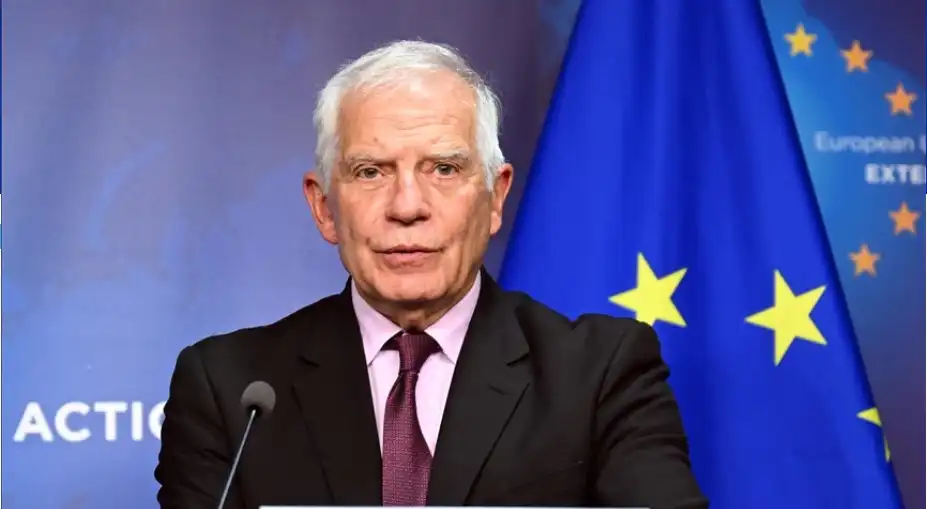
Borrell: Peace cannot be built through military means, and we must talk about concrete plans for a two-state solution

European Union foreign affairs chief Josep Borrell stressed on Monday the two-state solution to put an end to the Palestinian-Israeli conflict, stressing that Israel cannot build peace “by military means.”


Borrell repeated the United Nations' condemnation of Israeli Prime Minister Benjamin Netanyahu's "unacceptable" rejection of calls for the establishment of a Palestinian state.


"What we want is to build a solution on the basis of two states. So, let's discuss it," Borrell said in statements to reporters ahead of a meeting of European Union foreign ministers in Bruxa.


He stressed that "peace and stability cannot be built by military means alone."


He added: The humanitarian situation in Gaza could not be worse, and asked: “What other solutions are they thinking of? Pushing all the Palestinians to leave? Killing them?”


Borrell confirmed that he presented to the bloc's ministers a "comprehensive approach" to reach a lasting peace.


In an infinite toll, the number of dead since the start of the aggression on the Gaza Strip on the seventh of last October has risen to about 25,105 people, and 62,681 injured, the majority of whom are women and children, and thousands of victims are still under the rubble and on the roads and cannot be reached. .

ARAB AND WORLD

Mon 22 Jan 2024 12:45 pm - Jerusalem Time

France hopes that the European Union will impose sanctions on the colonists

French Foreign Minister Stephane Ségornet said that he hopes that the European Union will impose sanctions on the colonialists who commit acts of violence against Palestinians in the West Bank.


This came in a brief press statement by the French Foreign Minister, prior to the meeting of European Union foreign ministers in Brussels on Monday.

ARAB AND WORLD

Mon 22 Jan 2024 12:41 pm - Jerusalem Time

Australian MP: Netanyahu's statements are not surprising because he is not a partner for peace

Australian Labor Party MP Maria Vamvakinou, co-chair of the Friends of Palestine parliamentary group, said that no one should be surprised by Netanyahu’s position because he made similar statements in the past.


“Someone like Benjamin Netanyahu is not a partner for peace, and has not been for some time,” Vamvakinou told the Australian newspaper The Guardian.


She added: "I categorically reject his statements, and everyone who claims to support peace between Israelis and Palestinians must recognize the Palestinian state."


She indicated support for the Labor Party's program to recognize the Palestinian state, calling for accelerating it and moving forward towards recognizing the state of Palestine.

ARAB AND WORLD

Mon 22 Jan 2024 12:38 pm - Jerusalem Time

Irish Deputy Prime Minister: We are considering joining South Africa's complaint against Israel

Irish Deputy Prime Minister, Foreign Minister Michael Martin, said we are considering joining South Africa's complaint against Israel in the Gaza genocide case, once it has passed the initial stages.


Martin added in an interview with the RTA radio network, "We are studying South Africa's complaint with the utmost seriousness, and since these judicial procedures take years to resolve, we must in the meantime focus on achieving a ceasefire."


He continued: "What South Africa is seeking is exactly what we were seeking: an immediate ceasefire and unimpeded access for humanitarian aid to Gaza."


He pointed out that the situation is tragic in Gaza, and there is no excuse now for any delay in bringing vital aid into Gaza, and the Israeli bombing is shocking, horrific and unjustified.


He added that Ireland submitted legal documents on the occupation of parts of the West Bank to the International Court of Justice, and allocated three million euros in additional funding to this court to strengthen its investigations into war crimes.


The Deputy Prime Minister said that he intends to take measures at the European Union level with the aim of "putting stronger pressure on Israel to stop its operations."


-

ARAB AND WORLD

Mon 22 Jan 2024 12:29 pm - Jerusalem Time

EU FOREIGN MINISTERS TO MEET ISRAELI AND PALESTINIAN COUNTERPARTS

European Union foreign ministers will hold separate talks with their Israeli and Palestinian counterparts to discuss prospects for permanent peace and present a 10-point plan for peace between the two parties.

The 27 European Union ministers will meet with Israeli Foreign Minister Israel Katz, before meeting separately with Palestinian Foreign Minister Riyad al-Maliki.

Both Katz and Al-Maliki will also deliver separate speeches before the European Union Foreign Affairs Council meeting in Brussels today, which will also be attended by their counterparts from Saudi Arabia, Jordan, Egypt, and the Secretary-General of the League of Arab States.

During the meeting, European Union foreign policy chief Josep Borrell will present a ten-point plan for peace between Israel and the Palestinians.

The plan calls for holding a "preparatory conference for peace" organized by the European Union, Egypt, Jordan, Saudi Arabia and the League of Arab States, with the United States and the United Nations invited to the conference.

The conference will go ahead even if the Israelis or Palestinians refuse to participate.

But the document indicates that both sides will be consulted at every step of the talks as delegates seek to develop a peace plan.

The internal document seen by Reuters explains that one of the main goals of the peace plan must be the establishment of an independent Palestinian state “living side by side with Israel in peace and security.”

In a letter to member states, Borrell wrote that his roadmap would “address in detail, with practical proposals, the agreed-upon principle that only a sustainable and long-term political solution to the Israeli-Palestinian conflict will bring peace and stability to the two peoples and the region.”

Borrell's plan calls for full normalization between Israel and the Arab countries, and will create "an initial framework for Israeli-Palestinian peace within one year. There will be strong security guarantees for both states, and the agreement will be conditional on full mutual diplomatic recognition and integration between Israel and the Palestinians in the region."

Given the division, the 27 EU member states are unlikely to support Borrell's road map.

A senior EU official said there were no expectations of any breakthroughs, adding: “The idea is to have a full discussion with all participants, Israelis, Palestinians and Arabs, to exchange views and try to better understand where everyone is.”

OPINIONS

Mon 22 Jan 2024 10:34 am - Jerusalem Time

How the War in Gaza Revived the Axis of Resistance

Foreign Affairs

Foreign Affairs

Opinion Writer

By Narges Bajoghli and Vali Nasr

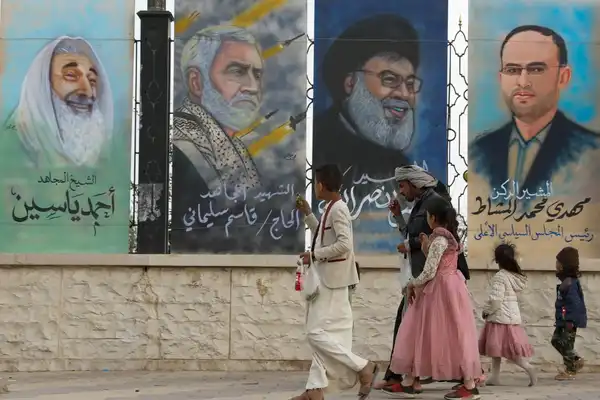
On January 12, the United Kingdom and the United States launched military strikes on Houthi targets in Yemen. These attacks were a response to the group’s assaults on commercial shipping in the Red Sea, which have disrupted global trade. The Houthis’ actions briefly made them the most prominent members of a military coalition that has become increasingly active across the region following the assassination of Saleh al-Arouri and other Hamas leaders in Beirut on January 2. For following their deaths, Hezbollah’s commander, Hassan Nasrallah vowed retribution and declared that the fight against Israel required nothing less than an “axis of resistance.” In the hours that followed Nasrallah’s pledge, his words were spliced into slickly produced videos and spread widely. Then the axis attacked. Hezbollah pounded Israel’s Meron air surveillance base with 62 rockets; the Iraq-based Islamic Resistance group sent drones to attack U.S. bases in Syria and Iraq and targeted the Israeli city of Haifa with a long-range cruise missile; the Houthis struck in the Red Sea; and Iran captured an oil tanker in the Gulf of Oman.

Although both Western and regional countries claim that they do not want the war in the Gaza Strip to become a regional conflagration, Iran, Hezbollah, the Houthis, and other members of the axis are playing a very different game. They are patiently and methodically consolidating an alliance of forces across a regional battlefield. It started with Iran and Hezbollah, but it is rapidly evolving into something larger than its parts. Its other members include the Houthis in Yemen, Hamas and Palestinian Islamic Jihad, and Shia militias in Iraq and Syria. The formation of this axis presents a direct challenge to the regional order that the West has created and defended in the Middle East for decades. It also—as Iranian and Houthi attacks on shipping in the Red Sea demonstrate—presents a threat to global trade and energy supplies.

Hamas’s attack on Israel on October 7 demonstrated the axis’s capabilities and influence, which extend beyond the Palestinian territories to encompass Iran, Iraq, Lebanon, Syria, and Yemen. The West sees Tehran as the mastermind behind this network, and there is no doubt that the axis of resistance reflects Iran’s strategic outlook. Indeed, its Revolutionary Guards have provided the axis’s members with lethal military capabilities and coordinating support. But Tehran is not the puppet master, and the axis’s coherence and regional role reflects far more than Iran’s dictates.

Instead, the axis is bound together by a shared hatred of U.S. and Israeli “colonialism.” Hezbollah believes that Washington and Tel Aviv are meddling in Lebanon, and Hamas, the Houthis, and Iraq’s Shia militias believe the same to be true in their territories. As Nasrallah has put it, the disparate groups are unified by the reality that, be they Lebanese, Palestinians, or Yemenis, they face the same issues and the same enemy. This means that what happens in one territory is directly relevant to the others. Rather than an instrument of Iran, the axis sees itself as an alliance built around common strategic goals with the spirit of “all for one and one for all.” The axis’s members believe that they are all fighting the same war against Israel and, indirectly, the United States. That means that neither U.S. warnings nor U.S. attacks will force the axis to stand down. Unless the guns in Gaza fall silent, the pressure on its population is relieved, and a credible path to Palestinian sovereignty and self-determination is plotted, the United States will not be able to extricate itself from a dangerous escalatory spiral.


TEHRAN’S GRAND DESIGN

The axis of resistance did not spring to life on October 7. Rather, it was forged in the aftermath of the 2003 U.S. invasion of Iraq. Its founder, the Quds Force of Iran’s Revolutionary Guards, and its former commander, Qasem Soleimani, built the network on the back of Iran’s close ties with Hezbollah, drawing on both Iran’s and Hezbollah’s experiences of fighting Iraq and Israel in the 1980s. From the outset, Soleimani sought to create a flexible network in which each constituent part of the axis was self-sufficient. Although the training and munitions might come from Iran, each unit was expected to master and deploy tactics, technology, and weaponry.

In its early days, the fledgling axis had the primary aim of defeating U.S. plans for the occupation of Iraq. To that end, Tehran and Hezbollah successfully created local militias that fought U.S. troops. Then, after the Islamic State, also known as ISIS, took control of large parts of Iraq and Syria in 2014, similar militias were established to fight these militantly sectarian forces that threatened both the Assad regime in Syria and Shia control of Iraq. The Syrian civil war became a turning point for the axis as Iran, Hezbollah, and Shia militias in Iraq and Syria fought against their common enemy. In doing so, these countries and groups deepened their military and intelligence capabilities and honed the strategic logic of their alliance. It was during this time that Iran strengthened its ties with Yemen’s Houthi rebels, folding them into the now burgeoning alliance, and adopting the banner of the axis of resistance.

Over the past decade, Iran and Hezbollah have deployed advanced missiles, drones, and rockets in Gaza, Iraq, Syria, and Yemen. They have also trained Hamas and the Houthis to build their own weaponry. The success of this approach is shown by Hamas’s and the Houthis’ adept development and use of missiles. Axis members have also been trained in media communications, assisted in setting up financial channels, and taught how to support civil resistance, especially in the West Bank. Soleimani’s successor, Esmail Qaani, built on this legacy and further decentralized the axis, increasingly delegating tactical and operational decision-making to local units and their commanders.

Iran, Hezbollah, the Houthis, and others are consolidating an alliance of forces across a regional battlefield.

The resulting network has helped Tehran further its enduring objective of driving the United States out of the Middle East. Since the 1979 revolution, Tehran has been focused on protecting the country from Washington, which Iranian leaders are convinced is determined to destroy the Islamic Republic. To that end, Iran has sought to flout U.S. attempts to contain it economically and militarily. It has sought to dislodge the U.S. military from countries bordering Iran and the Persian Gulf, and to compel the United States to leave the region. The axis has been valuable, then, for Tehran, for it has distracted U.S. forces away from Iran’s borders.

The strategic value of the axis to Tehran has grown over the past eight years because of Washington’s increasing belligerence. In 2018, U.S. President Donald Trump withdrew from the nuclear deal with Iran and imposed maximum sanctions on the country, and in 2020 he ordered the killing of Soleimani. These actions convinced Tehran of the need for a more powerful and coherent axis of allies, stretching from the Mediterranean to the Persian Gulf, that could increase the pressure on Washington. In this context, Iran’s nuclear program became important not only as a bargaining chip to negotiate sanctions removal but also as a deterrent that could protect the axis from U.S. attack.

The other members of the axis of resistance are aligned with Tehran’s aims across the region, which also reflect their own local interests. Hezbollah, for example, is driven by the desire to protect southern Lebanon from what it believes is Israel’s expansionist ambitions, which supposedly also extend to include territories in Syria and Jordan. Shia militias in Iraq are focused on getting U.S. forces out of the country, as well as on triumphing in what they believe is an unfinished civil war with the country’s Sunnis. The Houthis want to gain power over the whole of Yemen, and they resent the efforts of Saudi Arabia and the United Arab Emirates to get in their way.


ALL FOR ONE

Still, the axis of resistance is ultimately a military alliance, and so its members are stronger together. Although Hamas planned and executed the October 7 attack, Iran and Hezbollah were largely responsible for upgrading Hamas’s capabilities. Indeed, as a host of meetings in Beirut attended by senior leaders of Hamas, Hezbollah, Palestinian Islamic Jihad, Revolutionary Guards, and the Houthi and Iraqi militias before the attack shows, the axis’s members likely knew of Hamas’s plans and supported them. For Hamas, the attack’s main aim was to disrupt the status quo that was slowly but surely extinguishing the Palestinian cause, and to return their struggle to the forefront of Arab politics.

For Iran and Hezbollah, too, returning the Palestinian issue to center stage had the advantage of putting Israel on the back foot, thereby reducing the likelihood of further normalization of ties between Israel and Arab states. They are also intrigued by the possibility of miring Israel in a multifront war that would consume its resources. Either way, the conflict achieves a long-standing Iranian objective: Tehran has long believed that if Israel is not preoccupied with its own affairs, it will be preoccupied with Iran’s.

But the outcome of Hamas’s attack, the scale and ferocity of Israel’s response, the humanitarian catastrophe that has ensued, and the extent of world attention were unexpected. Hamas and its axis allies did not anticipate that the attack on October 7 would be so successful, instead likely envisaging a swift foray into Israel that would end quickly and with limited casualties and hostages. Israel would then have attacked Gaza but not with the abandon and destructive ferocity that it has unleashed. The success of Hamas’s attack and the scale of Israel’s reaction stunned the axis, which has, as a result, recalibrated its aims and strategy. Although neither Iran nor Hezbollah wants a wider regional war, they have nevertheless targeted both Israeli and U.S. forces with drones and missiles. The Houthis have joined the fray by disrupting shipping in the Red Sea. They have done this to show support for Palestinians but also to deter the United States and Israel from expanding the war into Lebanon by showing the axis members’ willingness to fight. They hope that this resolve will deter Israel from expanding the conflict and deny Tel Aviv the ability to expand the war on a front of its own choosing, without facing a conflict on all the axis’s fronts.

All members of the axis have taken part in the war in Gaza, and all are, consequently, implicated in the eyes of Israel and the United States. This has further strengthened bonds within the axis. Now, they all depend on one another, and on preventing a clear Israeli victory in Gaza. For if Israel triumphs, it will likely turn its attention to other members of the axis, starting with Hezbollah and ending with Iran.


THE MEDIA WARS

Cameras were just as important to Hamas’s attacks on October 7 as lethal weapons. Using GoPro cameras strapped onto militants and drones to record breaches of the Israeli security wall, Hamas started releasing social-media-ready videos within hours of the attack, seizing control of the narrative from the outset. Hamas has been equally media-savvy since then. For example, during the temporary cease-fire and exchange of hostages in November 2023, the group released its Israeli captives in the middle of Gaza City, with cameras at the ready to capture their smiles, handshakes and high-fives with their captors. This was designed to counter Israeli politicians’ narratives of “savage,” “human animal” terrorists. Public opinion across the Middle East, the global South, and even the West increasingly regards the conflict as the consequence of a decades-long occupation rather than as a response to Islamic terrorism. This implicitly validates the axis’s anticolonialist worldview, and it helps make the axis more popular across the region.

The axis hopes that its global popularity will increase, too. For the first time in many decades, the Palestinian cause is internationally prominent, which the axis’s leaders see as a boon. The rise of the Palestinian issue isolates Israel and the United States and increases global critiques of settler colonialism, occupation, and apartheid. Axis leaders welcome confrontation with the West at a time when these anti-Western ideas are gaining newfound attention. To that end, the axis’s leaders have put these concepts at the center of their messaging. Gone is the obscure religious terminology that was for so long a staple of Iran and Hezbollah’s narrative; in its place are words and phrases familiar from human rights literature and international law. An instructive example occurred recently, when the Houthis released an English-language video across social media platforms announcing a blockade of the Red Sea to all commercial vessels linked to Israel or destined for Israeli ports. The video stated that these military operations “adhere to the provisions of Article 1 of the Convention on the Prevention and Punishment of the Crime of Genocide. This article mandates that all parties to the convention are under obligation to prevent the occurrence of genocide and to punish those responsible for its commission.” The video ends with the message: “The Blockade Stops When the Genocide Stops.” On February 11, the United Kingdom and the United States bombed Yemen, on the same day that South Africa made its genocide case against Israel at the International Court of Justice. Once again, across social media platforms, the message was spread that South Africa and Yemen were taking actions to stop genocide, whereas London and Washington were once again bombing the region to uphold oppression. Throughout the past three months, the Houthis, in particular, have gained a global fandom among sectors of Gen Z, with their videos going viral on TikTok.

During the 20 years of the “war on terror,” the axis of resistance’s members were either internationally unknown or simply considered to be terrorists motivated by hatred of the West. Since October 7, the axis has been able to define itself on its own terms and successfully link its actions with global anticolonialist movements. It has already experienced previously unthinkable success: protesters in London this month chanted “Yemen, Yemen, make us proud, turn another ship around.”

Cameras were just as important to Hamas’s attacks on October 7 as lethal weapons.

The axis, then, is now fighting Israel and the United States not only on battlefields in the Middle East but also across social media—on platforms including Instagram, Telegram, TikTok, and X—for world public opinion. Indeed, Nasrallah’s and Khamenei’s statements indicate that the axis’s leaders regard international public opinion as the more important strategic long-term prize. They know that they cannot defeat the United States militarily and so they hope to create sufficient public pressure to force Washington to retreat from the Middle East and respect the sovereignty of Palestinians. It is for this reason that Nasrallah has celebrated the fact that “Israel is now seen as a child murdering terrorist state, thanks to social media.” Because of social media, Nasrallah went on, there is a global perception of Israel as a “killer of children and women, [that] displaces people, and is responsible for the largest genocide in the current century.” Nasrallah has also celebrated social media’s ability to spread the view that the United States bears responsibility. “The war on Gaza is an American one, the bombs are American, the decision is American,” he said. “The world knows this today.”

For the axis, this media campaign comes just in time. Iran and Hezbollah have long been aware of the importance of soft power but have been historically unsuccessful at influencing it. But they recognized this shortcoming, and they have spent the past decade building a strong and nimble media infrastructure—now operational in multiple languages—for exactly this kind of moment. Today, the axis of resistance puts out daily videos of battlefield operations, complete with slo-mo effects to highlight direct hits on Israeli soldiers and military installations. It posts on TikTok videos of Houthis dancing aboard ships seized in the Red Sea, and it produces memes meant to generate global fandom for key axis figures, including the Hamas spokesperson Abu Obeida. Content is also produced to celebrate Nasrallah, contrasting the Hezbollah leader with Arab heads of state who are accused of doing little for the Palestinians. This output complements content generated abroad in support of Palestine, expanding the axis’s reach in unprecedented ways.

The military and soft power campaigns that the axis has masterminded present unprecedented regional challenges for the West, and for Washington in particular. If the war does not end soon, and no clear path to a just settlement for the Palestinians is established, the United States will face a region whose politics will be shaped increasingly by the rage that has gripped the Gaza Strip. An expansion of the conflict beyond Gaza, by Israel in Lebanon or by the United States and its allies in Yemen will only feed this rage and further inflame public opinion, entrenching the axis’ influence. Washington can only reverse this trend by negotiating a cease-fire in Gaza and then shaping a credible peace process leading to a final settlement.

The axis of resistance has been long in the making. The war in Gaza has given the network its greatest opportunity so far to unleash a military and communications assault on the West. Already, it has asserted itself in the region through its arms and soldiers, and globally through its message and mission. The Israel-Hamas war has changed the Middle East: immense public anger has been stirred up, and animus toward the West could spark fresh extremism and political instability. For the region’s rulers, even those whom Washington counts as allies, the war has changed fundamental assumptions about their own security and their relations with the West. The United States can neither easily dismantle the axis nor defeat the ideas that spawned it. The only way to take the wind out of the axis’s sails is to end the war in Gaza and negotiate a real and just settlement to the Israeli-Palestinian issue. Unless this is done, the axis will be a regional reality that the United States will have to contend with for many years to come.


OPINIONS

Mon 22 Jan 2024 10:06 am - Jerusalem Time

Peace Between Israelis and Palestinians Remains Possible

Foreign Affairs

Foreign Affairs

Opinion Writer

By Natan Sachs

But to Get There, Both Sides—and America—Need to Be Realistic About What’s Achievable Now

Hamas’s horrific attack on October 7 and the devastating war that followed confirmed the calamitous failure of Hamas’s strategy of “resistance” through the slaughter of Israeli civilians, which has brought not liberation to Palestine but ruination to the Gaza Strip. But the attack has also exposed the failure of Israel’s long-pursued strategy of conflict containment with the Palestinians since the failure of the peace process in the early 2000s. The October 7 attack and today’s war have also laid bare the faulty, reckless logic of one-state proposals that wish away the extremism that feeds the conflict and the existential fear that animates it. Yet these events have also made a two-state solution any time soon even less likely than it was before October 7, with Israelis terrified of any Palestinian sovereignty and the potential repeat of that day’s massacre and Palestinians far less ready for historic compromise with Israel after its devastation of the Gaza Strip.

Seemingly out of solutions, the Biden administration and Israelis and Palestinians themselves must and can find a path toward a less terrible future. They must not revert to the same conflict-containment strategies that set the stage for October 7, nor to reckless notions now in vogue in the West of a one-state solution—essentially regime change in so-called Palestine/Israel. Instead, all sides must be clear about both the strategic objective and, no less important, the long path toward it. They must reaffirm a political horizon, distant though it likely is, of Israeli and Palestinian independence—even if it does not look exactly like the two-state solution of old—coupled with a robust policy for managing the long interim before conflict resolution might be possible. They must be clear that the choice is not between full peace and reconciliation today, which is not available, and a return to a bloody slide away from it, which would only bring further ruin.

Instead, until conflict resolution is possible, the best chance lies with a vigorous push toward dramatically more independence for Palestinians in civilian affairs, while addressing the sources of fear on both sides. This approach would take seriously deepened Israeli security concerns after October 7 and place a limit on what security authority might be transferred to Palestinian control at present. And it would require the United States to use its leverage with Israel to contain violence against Palestinian civilians in the West Bank and the expansion of settlement activity, both sources of Palestinian insecurity. Not least, it would require a massive effort in Gaza, with the United States using its influence with Israel, Egypt, the Palestinian Authority, and the Gulf states to start to rebuild and reconstitute a future for Gaza governed by secular Palestinian actors.

The current Israeli and Palestinian leaders are either hostile to or incapable of pursuing such strategies seriously. On January 18, Israeli Prime Minister Benjamin Netanyahu publicly said he rebuffed a U.S. push for a Palestinian state once the conflict in Gaza comes to an end. But that should not stop the United States or other interested parties in pushing for what is in all the parties’ interests. Although this conflict may not be resolved for the time being, the United States can still help transform reality on the ground so that Israelis and Palestinians move toward a real solution, rather than away from it.

PARADIGM FAILURE

Even as the horrific attack of October 7 in southern Israel was unfolding, shocked Israelis were trying to make sense of the intelligence failure that permitted the surprise invasion by thousands of Hamas terrorists. They turned immediately to the memory of October 6, 1973—50 years and one day earlier—when Egypt and Syria launched a surprise attack on Israel, breaking its defensive lines in the Sinai and the Golan Heights. The 1973 surprise attack is widely attributed to Israeli analysts becoming prisoners of their own conceptual framework—a vaunted Conceptzia, in Hebrew—that made them evaluate new and potentially contradictory evidence about Egyptian and Syrian intentions and capabilities as merely confirming their existing incorrect assumptions.

In 2023, Israel suffered again from a similar form of confirmation bias. Israeli leaders and intelligence analysts were convinced that Hamas was focused on improving life in Gaza and strengthening its political position in Palestinian society. This thinking was buttressed by what Israel believed was an effective carrot-and-stick approach: Hamas was deterred, Israeli officials assessed, and it was increasingly incentivized to avoid conflict by the gradual loosening of the Israeli-Egyptian blockade of Gaza. Evidence to the contrary was either reinterpreted or discarded in the face of this preconceived worldview.

Yet the October 7 massacre represents not only an operational failure for Israel but a strategic one, as well. For years, Israel has approached the Palestinian issue, and much else, with an “anti-solutionist” strategy, as I termed it in Foreign Affairs in 2015. Israelis had come to believe that there were no fundamental solutions to the conflict with the Palestinians, and it was thus better to build walls, invest in one’s own future, and learn to live with a low level of chronic violence. In a supposedly conservative manner, Israelis eschewed any grand designs to reorganize reality. Many came to believe that the “solutionism” that animated the peace process produced only the exceedingly violent second intifada, which began in 2000. And that the unilateral Israeli withdrawal from Gaza in 2005 led only to the rise of Hamas there and the decade-and-a-half bloody standoff with the terrorist group.

That is why Netanyahu and many Israelis opted instead for conflict containment: the strategy of kicking the can down the road. Under Netanyahu, Israel gave up on toppling the Hamas regime in Gaza and instead sought a modus vivendi with the group. Israel mixed deterrence (occasionally “mowing the grass” with strikes on Hamas capabilities when provoked) with a willingness to broadly accommodate Hamas’s governing of its Gaza statelet, mere miles from Israeli civilian homes. Israel was not searching for peace—which Hamas would never accept anyway—but a standoff that Israel would live with.


October 7 has exposed 

the danger of anti-solutionism.


This approach also reinforced the political and physical divide among Palestinians that had kept the West Bank–based Palestinian Authority out of Gaza. Although the Palestinians were the chief authors of their own political dysfunction, this division among Palestinians fit Netanyahu’s interest in having a weakened PA. To be sure, if he or any other Israeli leader could have made Hamas disappear with the snap of a finger, they would have: Hamas has murdered Israeli civilians for decades and has regularly launched thousands of rockets on Israeli towns since 2001. Yet its independence from the PA furthered Netanyahu’s aims, as he told his political allies explicitly in 2019: “Anyone who wants to thwart the establishment of a Palestinian state has to support bolstering Hamas and transferring money to Hamas … This is part of our strategy—to isolate the Palestinians in Gaza from the Palestinians in the West Bank.” If Hamas could not be eradicated easily, better to find a way to live with the group and even take advantage of it, he reasoned.

If this had been a genuinely conservative approach, it would not have been absurd. Avoiding risk can be wise in volatile times, and deferring tough choices may be smart if time is on one’s side. And during the decade leading up to October 2023, the Israeli strategy appeared to bear fruit. As Arab governments grew weary of waiting for an elusive solution to the Palestinian issue and became eager to pursue their own national interests, normalization between several Arab states and Israel became a welcome reality. As they pursued these deals, both sides bypassed the Palestinian issue. The Abraham Accords, which were the result of this process, seemed like proof of the success of Netanyahu’s approach. It was what the right wing in Israel had long promised: “peace for peace” instead of “land for peace.”

Israel’s approach was not truly conservative, however. Instead of genuinely adopting a cautious holding pattern that would accord it strategic flexibility in the future and arrest damaging trends in the near term, Israel was merely foreclosing its future options—and those of the Palestinians—through a creeping annexation of the West Bank and the erosion of the PA’s authority. Netanyahu was presiding over a dramatically worsening reality on the ground, even if the diplomatic gains of normalization were significant.

Meanwhile, in the Gaza Strip, rather than acclimating to the reality of Israel’s existence and superior power, Hamas dug in and armed itself, preparing for an opportunity to attack, even while a generation of Gazans grew up in an impossible reality. As Hamas pursued intermittent war with its more powerful neighbor, Gazans bore much of the brunt. They faced an Israeli-Egyptian blockade of Gaza aimed at containing Hamas but causing enormous harm to its subjects, as well. Hamas itself was the key agent in creating those conditions, but Israel’s strategy contributed to them. Hamas was growing stronger while the PA in the West Bank withered away under the weight of its own ineptitude and corruption.

Time, in other words, was on no one’s side. Rather than anyone managing the conflict, the conflict was managing Israelis and Palestinians alike.


DRIVEN BY FEAR

October 7 has exposed the danger of anti-solutionism. But in the eyes of Israelis it has also discredited most proposed solutions to the conflict. The trauma and fear that the attack has instilled are still underappreciated by many outside of Israel. Today, one thing is crystal clear to Israelis: they will never again allow such a thing to happen. Whatever international opprobrium they face, Israelis will not allow a radical group to rule next door while free to train and prepare to conquer Israeli villages and towns so that they can systematically massacre, rape, and kidnap Israeli civilians.

Even though many Israelis blame Netanyahu for the failure, they have also become even more wary of Palestinian power in any form. And although Palestinians may come to blame Hamas for what it has produced for its people, they are no more likely to forgive Israelis for today’s devastation of Gaza or to seek a fundamental, historic reconciliation with Israelis than they were on October 6.

The events of the last three months have confirmed for Israelis and Palestinians their worst fears about the other. Motivated by national, religious, and personal goals and grievances all at once, the conflict turns existential, in the literal sense. The sides believe that they cannot survive if the other has power, meaning that any concession could lead to calamity. This belief encourages preemptive action, lest the enemy gain more power over time. Such a strategy on one side makes the other side’s fear rational—it must now correctly assume it cannot afford to lose, come what may. The result is an ethnic security dilemma, where each side believes it must overpower the other to prevent being itself overpowered and decimated over time.

This fear does not produce a cycle of violence, nor a playing out of ancient hatreds. It does not represent some irrationality or tendency toward vengeance unique to these particular peoples. Instead, this is an equilibrium of rational fear, common to many ethnic conflicts but made more acute by the circumstances of this one. It was this kind of equilibrium that fueled widespread violence in the one state of Mandatory Palestine from the early 1920s until Israel’s founding in 1948. It continued to animate the conflict for decades afterward and it is far worse today than it was just three months ago.

This fear makes achieving a two-state solution far more difficult. Israelis are loath to grant Palestinian security control over one more inch of land. Israel’s concern now is that what befell southern Israel on October 7 could happen to its densely populated center, abutting the West Bank, just as it could along Israel's northern border with Hezbollah-dominated Lebanon. Before October 7, some in the Israeli leadership might have considered enlarging the territory under PA security control. That is no longer the case.

The challenges facing a two-state solution, however, have in no way created support for a one-state solution. The one state now advocated in many circles abroad is often described as a single state including all of Israel, the West Bank, and Gaza, from the Jordan River to the Mediterranean Sea. It would ostensibly include all Israelis and Palestinians and the descendants of Palestinian refugees from 1948 who choose to return. It would be governed, the argument goes, by a secular, liberal Western-style democracy, supposedly at peace.

Such a state’s chances of peace would be vanishingly small, however. One-state advocates assume that in this new state, the extremists on all sides, and the fear that motivated even many moderates to fight, will vanish in the face of a secular notion of justice. Gone will be the religious commitments of extremists and the deep-seated national dreams of so many, such that there will be no minority significant enough to spoil the peace and reignite that all-encompassing fear. Not only will the belligerents of today lay down their weapons but everyone else will have enough trust that they will not pick them up again to avoid sliding back to the ethnic security dilemma. The truth is, if reconciliation through a two-state solution is impossible, as one-staters often claim, a peaceful one state is even less feasible.

It may be that reconciliation between Israelis and Palestinians will prove impossible any time soon. The traumas that both societies have faced, and the traumas that these recent events have resurfaced, have immense power to disrupt the best diplomatic efforts. But the fact that a grand “Peace” is out of reach, does not suggest that peace, with a lowercase p, itself transformative, cannot or should not be pursued vigorously, as anti-solutionists always assumed. In fact, there are more choices between perfect reconciliation and the horrors of war. There are also outcomes that would allow both peoples to pursue their own dignity and well-being.

A horizon of political independence for both sides need never have included full reconciliation and justice. It merely had to create the conditions for people to disagree while building their own better futures, assured, at least to a degree, by a border. Similarly, conflict management was given a bad name when it was conflated with anti-solutionism, but it deserves far better consideration in the context of a path toward conflict resolution. It is time to set aside utopian visions, as the cynics have long argued, but, contra the cynics, it is also time to replace them not with kicking the can down the road or with policy passivity in the face of ongoing war and occupation. It is time, rather, to couple a political horizon with serious, transformative, solution-oriented yet hard-nosed conflict management: imperfect, messy, halting, unsatisfactory for all, and yet preferable by far to the current reality.


A LESS TERRIBLE FUTURE

Sound policy must chart a political horizon of meaningful independence for both sides down the road, even if tired language of a two-state solution helps little at this point.


There must be a clear commitment by the United States to Palestinian independence alongside Israel, even if its security aspects are deferred into the distant future. And although this horizon should be announced, the United States must set the ground rules for the long interim period before true conflict resolution might be possible and enforce these rules vigorously.

These rules would include confronting radical jihadism, rather than hoping it somehow will moderate. Hamas and the Palestinian Islamic Jihad, as organizations, cannot be allowed a significant role after the war if there is to be credible diplomacy with Israel. Tolerance toward financing of these groups or their safe havens in other countries should end. If Palestinians are to have serious authority in the future, they cannot operate through two armed factions at odds with each other.

The flip side of this policy is no less crucial: the marginalization of the PA and the rapid deterioration of conditions in the West Bank must be arrested. The PA, deeply unpopular and perceived as corrupt, is in need of reform, but it remains the only vehicle that might be used toward productive Palestinian agency over their own affairs that does not entail more devastating war with Israel. With political reform and renewal, a renewed diplomatic horizon, enlarged civilian authority, and a serious clamping down on violence toward Palestinian civilians in the West Bank, the PA has a chance to regain its relevance in Palestinian society.

Although most in the Israeli elite know that the PA, if reformed and revitalized, represents the best chance for a less violent future in Gaza, the Israeli public mood is naturally wary of the idea. Today’s fear is overpowering, and secular Palestinian forces that were central to the second intifada and those years’ long horrors are seen by Israelis as part of the problem rather than the solution. Israeli politicians, Netanyahu first among them, have read the public mood correctly and voiced their opposition to a PA role, at least for now, in Gaza. But this logic need not prevail, if confronted effectively.


Sound policy must chart 

a political horizon of meaningful 

independence for both sides.


Taking seriously the fear that dominates Israeli and Palestinian lives today, the parties must not take chances on new complex security structures. Israel will not acquiesce, in the short term, to a larger Palestinian security role in the West Bank and would only agree to one in Gaza if Israel retains considerable freedom of action. There will be no enlargement in the short term of what the Oslo II Accords labeled Area A, a section of the West Bank where there is nominally full Palestinian security authority. There could, however, be a significantly enhanced Palestinian civilian autonomy in what is known as Area B in the West Bank, where Israel retains freedom of action from a security standpoint, but where its footprint could be reduced.

Striving to grant Palestinians far greater civilian control could transform Palestinian lives, but only if it were a meaningful change. It would require not just more money or temporary jobs but real Palestinian authority over the legal zoning of land use, resources, urban planning, and economic development. To achieve this, Area B in the West Bank would have to be enlarged considerably, creating far greater contiguity of civilian Palestinian control in the West Bank, which currently consists of over 160 separate enclaves, without any change to security authority. Enlarging Area B would also exclude settlement construction, which is restricted to Area C, under full Israeli control.

Working to expand civilian Palestinian authority, the United States should steer clear of empty notions of “economic peace,” Netanyahu’s code name for bettering the welfare of Palestinians while blocking any horizon for effective Palestinian governance of their own affairs. Economic development would have to be tied to a political horizon and to genuine Palestinian civilian control over territory and resources, even if overall security authority remains Israeli.

Enlarging Area B would be very difficult, given Israeli political constraints at present, but it is a challenge worth facing in the coming years. For such a plan to gain support in Israel, the United States and Israelis and Palestinians interested in a better future must work consistently to drive a wedge in Israeli minds between Israelis’ legitimate security concerns and the logic behind the expansion of Israeli settlements, which has stronger support than in the past, but still is not the motivating rationale of the median Israeli voter.

Washington should try far more 

vigorously to counter settler violence 

against Palestinian civilians.


Although Israel has become far more hawkish on security, a trend that is not likely to abate quickly, it does not follow that Israel must become more hawkish on settlements or the ideology of the “whole land of Israel.” Israel’s turn toward hawkishness in recent decades started with the second intifada, was galvanized by the rise of Hamas after the Israeli disengagement from Gaza, and is now turbocharged by the October 7 attack. Israeli hawkishness is motivated, more than anything, by fear, not ideology.

The Israeli disengagement from Gaza in 2005 is telling in this regard. Broadly seen in Israel as a failure for opening the door to the Hamas takeover of the strip in 2007, Israel’s withdrawal from Gaza had two disparate components that should be separated in policy today, too. Israel’s military withdrawal from Gaza allowed for a Hamas-governed statelet bordering Israeli towns and villages, but the Israeli removal of settlements from Gaza was a success since it extricated Israeli civilians from Gaza, a security nightmare itself.

Taking Israel’s security concerns seriously, U.S. policy should pursue far more vigorously its efforts to counter settler violence against Palestinian civilians in the West Bank. The United States should similarly redouble its efforts to prevent the expansion of settlement land and jurisdictions. The United States should set the longer-term goal, impossible at present, of rolling back settlements in remote parts of the West Bank, even while security authority remains in Israeli hands. The United States has already considered sanctioning violent settlers, and it can use its considerable leverage with the Israeli government far more robustly to limit settlement expansion. October 7 and the war that followed demonstrated how vital U.S. support is for Israel, in materiel and diplomatic cover, and the United States can make clear that the price for such support is joining a U.S. vision for a better future.

Returning to the settlement quarrels with Israel may seem politically unappealing to an American administration, given the track record. But it would be essential to providing a political horizon for the Palestinians. U.S. pressure on this issue would also lessen Palestinians’ fear, which is exacerbated by settler violence and the apparent impunity it enjoys. Palestinian base fear is a threat to Israelis, just as Israeli fears are a threat to Palestinians, despite all the cheering to the contrary from armchair fighters.


GAZA IN RUINS

In Gaza, the challenge is especially daunting, given the death toll and devastation. The war has killed dozens of thousands of Palestinians and displaced hundreds of thousands, at least. According to The Wall Street Journal, about half its buildings have been damaged or destroyed. A path forward in Gaza would require creating a robust and meaningful governing role for the PA, without renewing the security standoff with Israel. This approach would require finding the means to secure and govern Gaza, and, no less difficult, fund its reconstruction. The task in Gaza is immense and daunting, but there are tools that offer at least some avenue forward, if seized upon early and effectively.

Before October 7, the Biden administration was heavily invested in pursuing normalization between Saudi Arabia and Israel, with controversial U.S. security commitments and support for a Saudi civilian nuclear program included in the agreement. By September 2023, a key question the administration faced was what Palestinian component might be part of the package. Would it resemble the Abraham Accords, which postponed official Israeli annexation of parts of the West Bank but did nothing else to promote Palestinian self-rule? Or would it include meaningful changes in the West Bank that would, for the first time since the Israeli withdrawal from Gaza in 2005, enhance Palestinian autonomy in a significant way?

Potential normalization between Israel and Saudi Arabia still offers an opportunity to make progress on the Israeli-Palestinian conflict, and, in a postwar Gaza, to offer at least some hope for Gaza. Saudi Arabia and the United Arab Emirates, in consort or in parallel, could support Palestinian actors in building a different future in Gaza if Hamas no longer rules there. They have the Arab and Islamic clout to support secular Palestinian players, and eventually the PA itself, entering Gaza to govern it.

If these countries saw a meaningful path toward Palestinian independence—a politically meaningful return for their investment—they may contribute to a massive reconstruction effort in return for a say on Gaza’s direction. Gaining political sway in Gaza—and providing some funding there—would allow them to counter Iranian, Qatari, and Turkish influence in Gaza and provide a genuine Palestinian gain, which would be politically important for them if Saudi Arabia joined the United Arab Emirates in normalization with Israel. Their involvement would certainly not be a panacea for the devastation of the Gaza Strip, but it offers one of the best avenues worth attempting at present.

The United States should have no illusion that Arab—or other—troops could or would engage in the kind of counterinsurgency campaign that will, unfortunately, likely be necessary in Gaza for years to come. If there is any Arab security presence, it would be limited in function and mostly symbolic. No Arab force would seek to provide a robust security role on the ground, nor would Israel trust them to pursue it in full. Yet Arab states could operate pragmatically in Gaza in a day after Hamas—if such a day came—to lessen and eventually end permanent Israeli military presence as credible Palestinian authorities enter. Solving this piece of the conflict could be far more attractive to Saudi Arabia than what would ultimately be technical changes to PA authority in the West Bank, given the global visibility and dire need for change in Gaza, and the public cache that working to save and rebuild Gaza could afford. This sort of endeavor, with all the risks involved, and all the chances of failure, would be a goal worthy of a transformational regional deal.

Rebuilding Gaza—physically and politically—would require enlisting all positive actors available. Egypt, which fears that the war could saddle it with responsibility for Gaza—a fundamental fear for a country that occupied the strip between 1948 and 1967—or with an influx of Palestinian refugees, would need assurances from Israel to play a positive role in Gaza going forward. Yet with proper assurances, Egypt could be brought into a broader Arab coalition with secular Palestinian voices, and its intelligence services could also provide unique influence over what happens in Gaza, where they still have sway, even among remnants of Hamas. A full Arab-Israeli effort cannot advance fully in the short term, as Israel is mired in its war and in sorting out its domestic political puzzle. Yet building this Gulf-Egyptian-Palestinian-Israeli understanding should start before the war ends, even if it falls well short of a full regional realignment.


EYES ON THE PRIZE

Even if a solution to the conflict is currently unavailable, aimlessly kicking the can down the road is not a reasonable strategy. That approach was not conflict management; it was a strategy that allowed the conflict to manage both sides. Effective, solution-oriented conflict management can look very different. It would set a clear horizon of political independence for both parties—something akin to a two-state solution—toward which all should work, and produce a genuine effort to steer things toward less violence and fewer grievances in the future. It would be extremely difficult, yet far easier and less bloody than any of the alternatives.

Solution-oriented conflict management would take very seriously Israelis’ fears about security, exacerbated on October 7, while taking a hard stance toward Israeli settlement activity in the West Bank that fuels Palestinian fears. The goal of this approach would be to gradually reunite Gaza and the West Bank under a constructive PA that had real civilian authority, including enhanced territorial contiguity of Area B without additional ability to threaten Israel.

For years, negotiators, including Palestinians, have discussed a demilitarized Palestinian state as a component of a two-state solution. It is time to take demilitarization more seriously, even as all sides work seriously to revive the prospect of Palestinian independence.

None of these steps would produce lofty visions of enduring peace. In fact, the United States should be wary of promising to achieve ambitious solutions any time soon, when so few people believe they are available. Yet grandiose notions of peace should not be the enemy of improvement, which is so direly needed at present. The United States is naturally, and perhaps justifiably, weary of managing this conflict. It also has genuinely more important issues and regions to contemplate. But if 2023 is any indication, it would be far better for pragmatic U.S. policymakers to use American power to shift the course of events in the Holy Land than to hand the situation over to extremists and to the bloody dynamics they encourage.


 

PALESTINE

Mon 22 Jan 2024 9:46 am - Jerusalem Time

Updated| Israel launches an arrest campaign in the West Bank

The Israeli forces continue their campaign of daily raids into cities, villages and camps in the occupied West Bank, and carry out arrest campaigns and destruction of infrastructure as part of the collective punishment policy pursued by Israel in recent years.


Ramallah

At dawn today, Israeli occupation forces stormed several areas in Ramallah and Al-Bireh Governorate. Local sources reported that a large force of the occupation army stormed several neighborhoods in the towns of Al-Mazraa Al-Sharqiya, Silwad, Deir Jarir and Al-Taybeh, east of Ramallah, and military vehicles drove through their streets.

The sources added that a foot force from the occupation army stormed the Satah Marhaba neighborhood and the Jabal Al-Tawil area in the city of Al-Bireh.

Eyewitnesses reported that several vehicles belonging to the occupation forces stormed the towns of Beit Rima, Deir Ghassana, Kafr Ain, Al-Nabi Saleh, and Qarawat Bani Zeid, northwest of Ramallah.


Jenin

Today, Monday, the Israeli forces arrested five citizens from the town of Maithalun, south of Jenin.

Security sources said that the occupation forces arrested the brothers Muhammad, Nour, Ahmed, and Iyad Rabaya, and the two brothers, Nadim and Amir Numan Nairat, after raiding their homes, tampering with their contents, and shooting bullets inside the homes.


Qalqilya

At dawn on Monday, the Israeli occupation forces attacked an elderly man and arrested two young men from the city of Qalqilya.


Local sources reported that the occupation forces beat the elderly Ghaleb Houtri after raiding and searching his home in the city of Qalqilya. They also arrested the two young men, Sharif Farraj and Moaz Zaid, after they raided and searched their homes.


Bethlehem

Today, Monday, Israeli occupation forces stormed the village of Al-Minya, southeast of Bethlehem, and seized a vehicle and a sum of money.

Security sources reported that the occupation forces stormed Al-Minya, raided the home of Yasser Khalil Abu Dayyeh, vandalized its contents, and seized his legal vehicle and a sum of money.


Hebron

Today, Monday, the Israeli occupation forces arrested six citizens in the Hebron Governorate, in the southern West Bank.


Local sources reported that the occupation forces raided the village of Al-Dawwara in the town of Sa'ir, northeast of Hebron, and arrested: Adam Abdel Qader Jabareen, and the two brothers Adham and Ayoub Issa Jabareen. They also raided Al-Fawwar camp south of Hebron and arrested Hassan Akram Zaghmot, Ismail Fayek Nassar, and Jihad Mahmoud Al-Khatib, after... Searching their homes and tampering with their contents.


The Prisoners' Club said that the Israeli occupation forces arrested at least 25 citizens from the West Bank from yesterday evening until Monday morning, including a child and former prisoners.


The arrests were concentrated in the governorates of Hebron and Jenin, while the rest of the arrests were distributed in the governorates of Tulkarm, Qalqilya, Ramallah, Jericho, Nablus, and Jerusalem.


The occupation forces continue to carry out widespread incursions during arrest campaigns, accompanied by widespread abuse, severe beatings, and threats against detainees and their families, in addition to widespread sabotage and destruction of citizens’ homes, premeditated killings, and confiscation of vehicles and funds, in addition to widespread sabotage operations targeting infrastructure. .


Thus, the total number of arrests after October 7 rose to about (6,195), and this total includes those who were arrested from homes, through military checkpoints, those who were forced to surrender themselves under pressure, and those who were held hostage.
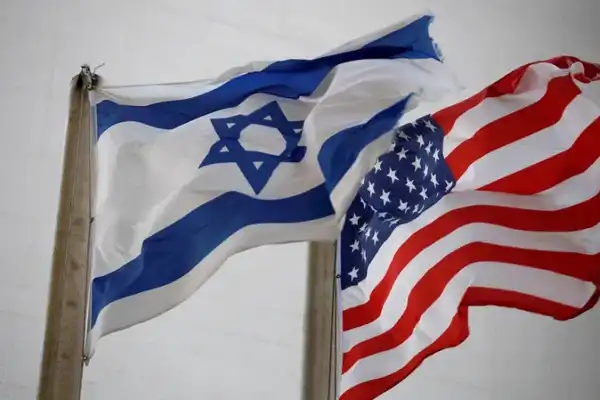

Note that the ongoing and escalating arrest campaigns in an unprecedented manner come within the framework of the comprehensive aggression against our people and the ongoing genocide in Gaza, after October 7, which targeted all groups in an unprecedented manner.


ARAB AND WORLD

Mon 22 Jan 2024 9:36 am - Jerusalem Time

The Wall Street Journal: New hostage negotiations seek to end the war in Gaza

The Wall Street Journal reported that the United States, Egypt and Qatar are pressuring Israel and Hamas to join an agreement under which the hostages would be “released and the war ended” in the Gaza Strip.


According to the newspaper, the United States, Egypt and Qatar are pushing Israel and Hamas to join a phased diplomatic process that begins with the release of the hostages and ultimately leads to the withdrawal of Israeli forces and an end to the war in Gaza, according to diplomats participating in the mediation. She said conversations.


The newspaper attributed to Taher Al-Nono, Hamas's media advisor, that no real progress had occurred. After the Wall Street Journal report, Israeli Prime Minister Benjamin Netanyahu said on Sunday that he rejects Hamas’ demands because they include stopping the war.


“If we agree to this, our warriors will have fallen in vain,” Prime Minister Netanyahu said in a statement on Sunday. “If we agree to this, we will not be able to guarantee the security of our citizens.”


But people familiar with the talks said that at least Israel and Hamas were again willing to participate in discussions after weeks of stalled talks following the end of the last ceasefire on November 30. Negotiations are scheduled to continue in Cairo in the coming days, according to what was announced by the United Nations spokesman. People said.


The willingness of the two parties to discuss the framework was a positive step, according to one person familiar with the talks, and that “the mediators are now working to bridge the gap.”


The new proposal, supported by Washington, Cairo and Doha, represents a new approach to defusing the conflict - aiming to make the release of Israeli hostages kidnapped by Hamas part of a comprehensive deal that could lead to an end to hostilities.


In November, the cessation of fighting lasted for a week, and was accompanied by the exchange of 100 Israeli hostages in Gaza for more than 300 Palestinians arrested by Israel.


Egyptian officials said that Israeli negotiators continued to press for a two-week cessation of fighting to allow the exchange of hostages and prisoners, and were reluctant to discuss plans that stipulate a permanent ceasefire.


The newspaper claims: “Hamas, on the other hand, seeks to make the most of the prisoners it holds, and only wants to exchange them for thousands of Palestinian prisoners and a permanent ceasefire. The officials said that the movement’s leader in Gaza, Yahya Sinwar, believes that the Israelis will give priority to the hostages on the battlefield.” "Hamas needs to hold out for as long as possible to exhaust Israel and maintain international pressure on it. The officials said that Sinwar is ready to release the hostages, but he wants a longer ceasefire and better conditions than last time."
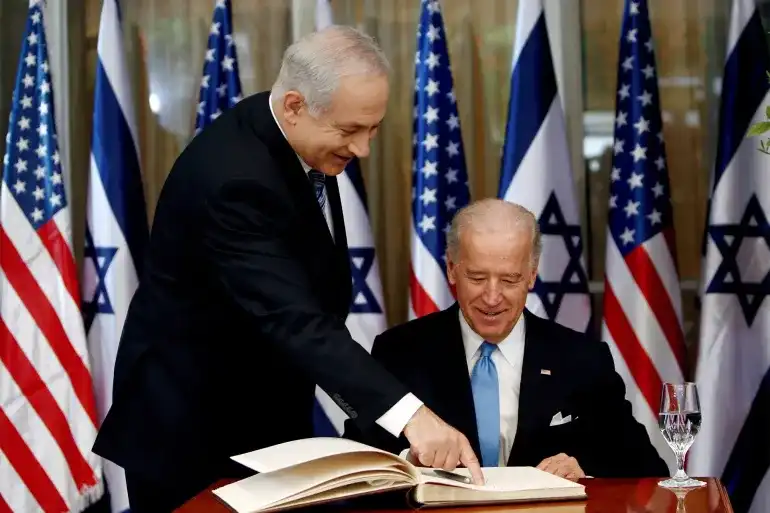

In his remarks on Sunday, Netanyahu said he rejected Hamas' demands, which he said included ending the war, withdrawing Israeli forces from Gaza, releasing Hamas activists involved in the October 7 attacks on Israel, and leaving Hamas intact.


Netanyahu said he told Biden in the phone call on Friday that Israel would only accept “complete victory” in Gaza.


“I deeply appreciate the United States’ support for Israel, and I said that to Biden,” Netanyahu said. “But I also stand firmly by our vital interest.”


Hamas took more than 200 hostages in a surprise attack on Israel on October 7, which Israel says also resulted in the killing of about 1,200 people, including 311 soldiers, according to Israeli sources, while there are reports of the killing of hundreds of Israelis at the hands of the same Israeli army that used Apache helicopter gunships. To harvest hundreds.


The United States, Egypt and Qatar see another hostage deal as the key to stopping the fighting for a long time. Egyptian officials say that while Israeli leaders take a hardline stance publicly, there are divisions within the Israeli cabinet, with some calling for prioritizing the hostages.


It is noteworthy that in a rare interview with Israeli television, Gadi Eisenkot, the former general who is now a non-voting member of the Israeli war cabinet, said: “We must say with courage that it is impossible to return the hostages alive in the near future without an agreement.”


Other senior Israeli leaders disagree, saying that only continued military pressure on Hamas will force the group to return the prisoners.


Egyptian officials said that last Tuesday in Cairo, Israeli negotiators presented another counterproposal regarding the hostages that did not include a way to end the war. They said that the chief Egyptian negotiator, the head of Egyptian intelligence, Abbas Kamel, accused the Israeli team of not being serious about the talks.


At the same time, Hamas informed Egyptian and Qatari officials that the previous short-term hostage deal was unsatisfactory, as far less aid had arrived in Gaza than the promised quantities, and Israel had detained many prisoners who were later released again.


A Qatari official told the newspaper that the Gulf state "continues to communicate with all parties with the aim of mediating an immediate end to the bloodshed, protecting the lives of innocent civilians, securing the release of hostages, and facilitating the unhindered delivery of humanitarian aid to Gaza."


The mediators proposed a 90-day plan that would first halt fighting for an unspecified number of days until Hamas first released all Israeli civilian hostages, while Israel would release hundreds of Palestinians detained by Israel, and withdraw its forces from Gaza towns and cities. Allow freedom of movement in the Gaza Strip, end drone surveillance and double the amount of aid entering the Strip, according to the plan.


In the second phase, Hamas will release the Israeli female soldiers and hand over the bodies, while Israel will release more Palestinians. The third phase includes the release of Israeli soldiers and men of fighting age considered by Hamas to be soldiers, according to Egyptian officials, while Israel will redeploy some of its forces outside the current borders of the Gaza Strip.


Egyptian officials said that among the topics on the table is also the formation of an international fund for the reconstruction of Gaza and security guarantees for Hamas’ political leaders. They said the plan then includes holding talks for a permanent ceasefire, normalizing relations between Israel and Arab countries such as Saudi Arabia, and relaunching the process of creating a Palestinian state.


The Gulf states ruled out funding the reconstruction of Gaza - as the Israelis called for - without a clear and irreversible path towards establishing a Palestinian state, according to the newspaper.


The fierce Israeli raids on the besieged Gaza Strip led to the deaths of at least 25,000 Palestinians in the Israeli attack, most of them women and children, according to the Palestinian Ministry of Health.


The death and destruction sparked criticism of Israel's conduct in the war from Arab and other governments and protesters in the West. The South African government filed a lawsuit against Israel before the International Court of Justice for crimes of genocide. Israel denied this accusation.


Israel opposes any role for Hamas in any future government in Gaza, and has expressed opposition to suggestions that the secular Palestinian Authority, which rules the West Bank, should run the Gaza Strip, as the United States envisions.

PALESTINE

Mon 22 Jan 2024 9:26 am - Jerusalem Time

War on Gaza: 190 killed during the past 24 hours in continuous bombing of the Strip

The death toll who arrived at Nasser Medical Hospital in the city of Khan Yunis, south of the Gaza Strip, rose to more than 50 persons and 100 wounded, today, Monday, as a result of the continuous Israeli bombing of shelter centers and citizens’ homes.


Medical sources reported that 50 killed and more than 100 wounded arrived at Nasser Medical Hospital, during the continuous bombing of several areas of Khan Yunis, and the condition of the injured was critical, due to their late arrival to the hospital due to the Israeli occupation forces obstructing ambulance vehicles.


It added that there are 40 beds in intensive care, all of which are occupied, and the aid that has arrived to the hospital does not cover 3% of its needs, in light of the fear of a repeat of the scenario that occurred in hospitals in the northern and central Gaza Strip.


It explained that tIsrael committed 20 massacres in the Gaza Strip, killing 190 people and injuring 340 during the past 24 hours.


Eyewitnesses confirmed that many victims are still under the rubble and on the roads, and ambulance crews cannot reach them, due to Israeli forces besieging and bombing everything that moves and approaches the bombing sites.


The Israeli forces stormed Al-Khair Hospital, west of Khan Yunis, and detained the medical staff.


The Israeli forces have launched a fierce campaign against hospitals and shelter centers west of Khan Yunis since dawn today, besieging Nasser Medical and Al-Amal Hospitals, where at least 50 dead bodies arrived at Nasser Hospital following the continuous bombing.


In the northern Gaza Strip, two citizens were killed and others were injured after the Israeli forces targeted a gathering of citizens in the Al-Zaytoun neighborhood with artillery shells.


In an infinite toll, the number of killed since the start of the aggression on the Gaza Strip on the seventh of last October has risen to about 25,295 people, 63,000 injured, the majority of whom are women and children, and thousands of victims who are still under the rubble and on roads where there is no access to them.


On the 108th day of the Israeli war on Gaza, the Ministry of Health in the Gaza Strip announced that the number of victims of the aggression had risen to 25,105 dead and 62,681 injured, at a time when the cities of Gaza, Jabalia, Al-Maghazi, and Khan Yunis were witnessing fierce clashes between the resistance and the occupation army.

The Palestinian Red Crescent confirmed that it had received reports of killed and wounded as a result of an Israeli bombing that targeted Al-Mawasi School, which houses displaced people west of Khan Yunis, in light of a severe campaign launched by the occupation army on hospitals and shelter centers west of Khan Yunis since dawn today.


It added that Israeli forces did not give it the green light to send ambulances to the school.


For its part, the Palestinian Red Crescent said that Israeli forces besieging its headquarters in Khan Yunis prevents ambulances from moving to evacuate the wounded.


The Palestinian Red Crescent monitored the presence of Israeli tanks near Al-Amal Hospital, and confirmed that it had completely lost contact with its crews in Khan Yunis.


This morning, continuous clashes and Israeli bombing broke out in the vicinity of Nasser Hospital in Khan Yunis.


OPINIONS

Mon 22 Jan 2024 9:20 am - Jerusalem Time

Christian Zionist cowboys: American and Israeli affinities laid bare

Aljazeera

Aljazeera

Opinion Writer

By Mimi Kirk

The American cowboys flocking to Israel amid its war on Gaza expose the many parallels between the two settler societies.

In early November, a photograph of four white men in cowboy hats at JFK airport was uploaded to social media with the caption, “These cowboys from Arkansas and Montana were at JFK today on their way to help out at the farms in Israel. They are not Jewish.” By the time the cowboys landed in Tel Aviv, a Jerusalem Post commentator declared, “they were already a social media sensation”.

Indeed, since then they have netted thousands of likes and comments such as “God bless Israel! I will always stand with her” and “The Jewish people are so grateful to have friends.” Israeli and American media outlets have also celebrated the cowboys through interviews and updates about their work and time in Har Bracha, a Jewish settlement in “Judea and Samaria” – the term for the West Bank used by those who believe the land belongs to the Jewish people.

Yet the cowboys are also a conduit to understanding a fundamental likeness between white American and Jewish Israeli society, namely their settler projects intent on the erasure of dehumanised “natives”.

The men volunteer through the Christian Zionist organisation HaYovel, or “The Jubilee”; according to the organisation’s website, this biblical term “looks forward to a day of worldwide redemption and a fully restored land of Israel.” As Christian Zionists, the cowboys and their sponsors believe that four millennia ago, God promised the land to the Jewish people, who will rule it until the rapture and, ultimately, the second coming of Christ. In this scenario, Christians will be saved and ascend to heaven while those adhering to other religions will be sent to hell.

While not all evangelical Christians in the United States (approximately a quarter of the population) hold these Christian Zionist convictions, polls show that a large majority believe that the modern state of Israel and the gathering of millions of Jewish people there are “fulfillments of Bible prophecy that show we are getting closer to the return of Jesus Christ”. Many Christian Zionists also believe in the “prosperity gospel,” which contends that blessing Israel results in personal and financial gain. These tenets compel Christian Zionists to support Israel’s settlements and other expansionist policies through donations, lobbying, and, as in the case of the cowboys, labour.

For two decades, HaYovel has brought hundreds of volunteers each year to work in settlement agriculture. With many foreign workers fleeing since Hamas’s attack on October 7 as well as Palestinians barred from working in settlements and Jewish Israelis called up for military duty, more Christian Zionists like the cowboys are filling in. As one American worker told Israeli channel i24, “I can’t go into Gaza and fight, so I’m gonna help here on the farm.” The Christian volunteers also speak of themselves as “boots on the ground” during Israel’s time of need, invoking their labour as a military operation.

This white, militaristic masculinity common among evangelicals was examined by scholar Kristin Du Mez in her 2020 book, Jesus and John Wayne. Du Mez explores 75 years of white evangelical history in the United States, tracing how evangelicals have replaced Jesus with an “idol of rugged masculinity and Christian nationalism,” including through such pop culture figures as Mel Gibson and John Wayne as well as politicians like George W Bush and Donald Trump, all of whom “assert white masculine power” and embody the evangelical values of patriarchy, authoritarian rule, belligerent foreign policy and fear of Islam.

While Du Mez’s study doesn’t focus on Christian Zionism, she has noted the evangelical practice of supporting Israel. “[It’s a] kind of slippage into America as a new Israel,” she said in a 2021 interview. Here Du Mez ostensibly refers to the idea of early American colonists escaping religious persecution in England as the new Jews and America the new Israel, promised to the settlers by God.

This conflation of America and Israel as God-instructed colonialism – one that depends on the replacement of savage natives with righteous settlers – is revealed in the Christian Zionist cowboys’ rhetoric. Media interviews with Montanan John Plocher in particular highlight the trope of good cowboys versus bad Indians and the dehumanisation of natives – tropes transposable on to Israeli Jews and Palestinians.

In a December conversation with Israel Now News, Plocher was asked why he thinks the Jewish population in Israel is so excited about him and his fellow cowboys. “They’ve said that seeing the cowboys is like seeing the good guys,” Plocher responded. “You think of all the Westerns and John Wayne and all these people who stand up for the right thing and so it’s just an encouragement to them.”

Despite the fact that American settlers murdered and terrorised Indigenous women, children, and other unarmed Native civilians and took the land for themselves, the narrative of good white cowboys versus bad Indians has appeared time and again in US popular culture. Scholar Michael Yellow Bird has examined this narrative “as part of the colonial cannon asserting white supremacy and Indigenous inferiority” and relates how in Western movies and television, “Not only did we spectacularly lose, but … we were also presented as screaming, grunting, unreasonable savages.”

Though Zionists and Christian Zionists may declare that Jews are Indigenous to the land, it is Palestinians – made Indigenous through Israel’s process of settler colonialism – who are often depicted as barbaric and backward, as “beasts walking on two legs,” “little snakes,” and “human animals.” Similarly, in a November interview with Israel National News, Plocher compared Hamas and Palestinians more broadly with grizzly bears and declared the need for the land to be rid of them. He recounted that grizzlies are a problem in Montana and that the “original people” who came to Montana (meaning white settlers) eliminated them. The problem now, he continued, is that people want the grizzlies “everywhere”. “Let us do what we need to do to defend ourselves,” he said, meaning kill the grizzlies. “It’s the same with you guys, it’s Hamas … We understand you guys have to go after that and eradicate that.”

As Israel commits genocide in the Gaza Strip with the support of the United States and as Israeli killings of Palestinians in the West Bank and East Jerusalem increase and settler violence against Palestinians in the West Bank becomes more commonplace and brutal, the obvious parallels between Israeli and American settler colonialism, white supremacy, and aggressive militarism must compel us to counter these tropes and trends. Let the affinities between the two states impel more and more of us to challenge the parallel systems of violence and domination and, as Yellow Bird has argued, “seek justice on behalf of those colonized”.


ARAB AND WORLD

Mon 22 Jan 2024 9:15 am - Jerusalem Time

Media Part: French public funds provided to the Israeli army

The Mediapart website said that French associations continue to propose a tax exemption for donations allocated to support Israeli soldiers involved in military operations that, according to a United Nations rapporteur, led to “ethnic cleansing” in the Gaza Strip, despite the fact that the Ministry of Economy and Finance clarified last November that this is the case. illegal.


The site indicated - in a report written by Justin Braban - that these calls for donations were in the hundreds at the end of the year and the approach of tax returns, and they are not directed to support the International Organization of Disabled People or the Red Cross, but rather to the Israeli army soldiers engaged in “ethnic cleansing” in the Gaza Strip that is about to take place. It turns into "genocide".


The website explained that donating to associations allows private individuals in France to obtain tax deductions that may reach 66%, which means that any individual can receive, in exchange for a donation of 100 euros, a deduction of 66% of his taxes, and thus he actually pays only 34% of it, which costs the state. Several billion euros annually. (3.7 billion euros in 2018, according to the Court of Accounts).


Although this system is originally a grant from the state - driven by the desire to keep the French collective fabric alive - it sometimes deviates from its goal, according to the site, and associations have offered to exempt donations from taxes to “support” Israeli soldiers since the Al-Aqsa Flood operation on October 7/ October 2023.


Media Part: “Libya France” has received 457 thousand euros in donations since October 2023 from the “Allodun” platform alone, and therefore if all donors through “Allodun” receive the reductions promised by the association, the French state will have spent - against its will. - 300 thousand euros to support Israeli soldiers.


Directly to soldiers

One of these associations, the “Libya France” association, led a particularly intense campaign in December calling for fundraising “to support our dear and courageous Hailem,” promising donors “a reduction on their taxes for 2023” on its Facebook page, and emphasizing in its letters to the authorities Its sponsor stated that “100% of their donations will be sent directly to Israeli soldiers.”


Media Part was able to obtain a SERVA form from “Libya France”, issued on January 16, 2023, and the association “certifies in its honor that the donations and payments it receives entitle us to obtain the tax reduction stipulated in Article 200 of the French General Tax Code.” Which is clearly wrong.


It is unlikely that "Libya France" was unaware that its campaign was illegal - according to the site - because the statements of the Ministry of Economy and Finance were widely published in the French press, and because Senator Nathalie Goulet directly questioned the association about its "false advertisements" regarding tax cuts in two letters. By email, she sent them from her professional address in the Senate.


Although the association did not respond to the site’s questions, Media Part concluded that “Libya France” has received 457 thousand euros in donations since October 2023 from the “Allodon” platform alone, and therefore if all donors through “Allodon” receive the discounts As promised by the association, the French state spent - against its will - 300 thousand euros to support Israeli soldiers.


The website saw this as a deviation that raises doubts given the context in the Middle East, where about 25,000 Palestinians were killed and schools, refugee camps and hospitals were destroyed by Israeli soldiers, which the United Nations Special Rapporteur Francesca Albanese considered “ethnic cleansing” on the verge of “genocide.”


Tax secrecy

The Ministry of Economy and Finance refuses to provide details about the measures taken to punish associations that provide these illegal deductions, and it does not wish to comment on the situation of specific associations such as “Libya France” in the name of “tax secrecy.”


It also refuses to specify the number of tax audits carried out each year on associations in order to verify their compliance with the rules regarding the possibility of tax deductions.


Perhaps this is the root of the problem - as the site sees it - as there is no prior oversight in France on these deductions, and therefore the associations do not need prior approval to be submitted to the donors, despite “the tax administration controls towards the beneficiary associations or donors are few in number, and the fines for failure to Compliance with the ruling is not very deterrent,” according to the Accounting Board.


The website concluded by saying Senator Nathalie Goulet, who tried to change the law on this issue, that the solution may be by “reducing” the minimum that requires the association to return to an auditor or through prior controls that require these associations to obtain approval.


Source: Mediapart + Aljazeera

ARAB AND WORLD

Mon 22 Jan 2024 9:07 am - Jerusalem Time

Le Figaro: Biden gave everything to Israel, and Netanyahu is waiting for Trump to come

A report published by the French “Le Figaro” explained that the massive military and diplomatic support provided by US President Joe Biden to Israel places him in an increasingly sensitive position locally and internationally, which may affect his political future.


Writer Adrian Golems continued that as the Israeli war on Gaza enters its fourth month, and with the death toll rising to a staggering number, the political cost of this unconditional support continues for Biden.


On the diplomatic level - the author continues - the United States has become increasingly isolated, knowing that the dangers of the conflict expanding to include all parts of the region remain. Internally, Biden is facing criticism within his party as he enters a difficult election campaign to win a second term.


According to the Le Figaro report, Joe Biden and his administration are facing increasing difficulty in concealing their frustration with the Israeli government of Benjamin Netanyahu, especially since the United States is closely linked to the consequences of the war, and realizes that it has few means of influencing the course of the war or its end.


No consideration

Note that the repeated calls made by President Biden and his Secretary of State, Anthony Blinken, to the Israeli authorities to take American concerns into account had no effect.


The writer added that Biden's relations with Netanyahu are going through a period of coolness, and Blinken has directed direct criticism at the Israeli government, and he had previously assured the Israelis - following the October 7 attacks - that the United States "supports Israel today, tomorrow and always."


According to the report, these warnings were no more effective than previous American requests to Israel. Prime Minister Benjamin Netanyahu even revealed to everyone that he “told the United States that he opposes the principle of establishing a Palestinian state in any post-war scenario,” and added: “The prime minister must be able to say no, even to our friends.”


Popular opposition

Le Figaro quoted Joel Benin, professor of Middle Eastern history at Stanford University, as saying: “This is not the first time that major tensions have arisen between the United States and Israel... Despite this, Israel has done what it wants, and this is what is happening now.”


He continued: Therefore, it is not surprising that the Netanyahu government resists all American directives and advice to do things in a different way. He said that what is new is the strong opposition of the American people to Israeli policy, which is gaining momentum for the first time in Washington, and it is an important movement among young people and even in American Jewish circles.


The writer stressed that these tensions go beyond the demonstrations of pro-Palestinian activists, and have reached within the Democratic Party, as a group of senators submitted a resolution this week demanding that American aid to Israel now be accompanied by conditions.


Vermont Senator Bernie Sanders said: “Whether we like it or not, the United States is complicit in the nightmare that millions of Palestinians are experiencing today.” As Senator Elizabeth Warren of Massachusetts asserted: “Given the way Netanyahu and his government have fought this war, we have serious questions to ask before we move forward in our support.”


The writer stated that the criticism that Biden faced for his support of the Israeli war in Gaza constitutes an increasingly worrying obstacle to his re-election.


Benin believes that it is very likely that President Biden will lose the state of Michigan next November due to the conflict in Gaza.


On the other hand, analysts close to the Democrats have now publicly expressed doubts about Netanyahu’s willingness to take into account the sensitive situation in which Biden finds himself.


According to Benin, “It is clear that his strategy is to wait until the end of Biden’s term and hope that Trump is elected. Biden does not have a strategy.”


Source: Le Figaro + Aljazeera

ARAB AND WORLD

Mon 22 Jan 2024 8:57 am - Jerusalem Time

Hostage talks continue as Israel rejects Hamas demand for full withdrawal and a permanent cease-fire

By Anna Schecter and Keir Simmons


A Hamas official told NBC News the group won't move forward until it is promised an end to the war and the withdrawal of all Israeli forces from Gaza.

Talks over the release of hostages in Gaza remain at an impasse over Hamas' demand for a permanent cease-fire, a diplomat with knowledge of the talks told NBC News. 

American, Qatari and Egyptian officials continue to push for an agreement that would free an estimated 130 captives believed to remain in Gaza, most likely hidden underground in tunnels or in private homes.

Hamas is demanding the permanent halt of fighting, a complete withdrawal of Israel forces from Gaza and the release of a large number of Palestinian prisoners, including some who carried out the Oct. 7 attack, according to Israeli officials.

A Hamas official said in an interview that the group will not move forward with anything until it has a promise that the war will stop and all Israeli troops will leave Gaza. “This is the core of the discussion,” the Hamas official said.

Israeli officials say their efforts to secure the release of the hostages have never stopped, but they balked last week at Hamas’ demands for a permanent cease-fire, according to a senior Israeli government official.

Prime Minister Benjamin Netanyahu publicly dismissed Hamas’ demands Sunday.

“I reject outright the terms of surrender of Hamas,” Netanyahu said at a news conference. “If we agree to this, we will not be able to guarantee the security of our citizens. We will not be able to return the evacuees safely to their homes, and the next Oct. 7th will only be a matter of time.”

A diplomat from a third country briefed on the talks said some of the mechanics of a potential future exchange have been agreed upon.

“A big portion of the details are agreed. The sticking point is the Israelis don’t want to agree to a permanent cease-fire,” said the diplomat, who asked not to be named. “The deal would include a halt in the fighting of over a month with hostages released in phases in exchange for Palestinian prisoners.” 

An Israeli official called that description “nonsense.”

U.S. officials said that they continue to try to move talks forward and that the White House’s Middle East coordinator, Brett McGurk, will travel to Egypt and Qatar this week.

“I wish I could tell you that there was a deal imminent, that we were right on the cusp of one," National Security Council spokesperson John Kirby said Sunday on MSNBC. "I don’t think that we are right now, but I can tell you we’re working at it every day.”

The Hamas official said the group is “receiving a lot of proposals and ideas from different mediators, mainly the Egyptians and the Qataris,” for the timing and rollout of a potential release of Israeli hostages in exchange for a significant pause in the fighting and the release of Palestinians jailed in Israel.

The mediators’ current proposal envisages releasing the hostages in three phases over 30 days, officials said. The first phase would involve the remaining civilian hostages, the second would include female soldiers of the Israel Defense Forces and the bodies of hostages who have died in Gaza, and the third would include male hostages, including IDF soldiers. Palestinian prisoners would be released in exchange for each group of Israeli hostages.

Gershon Baskin, an Israeli who has acted as a mediator with Hamas for decades, said he has been coordinating with the group through an intermediary in London. Baskin said some Hamas officials want all Palestinian prisoners jailed by Israel to be released, a number estimated at 10,000, suggesting that Hamas’ leadership may not be entirely united as it negotiates.

More than 100 of those 10,000 prisoners were involved in the Oct. 7 Hamas terrorist attack, according to Israeli officials. Around 5,000 Palestinians have been arrested since Oct. 7 in the West Bank, where support for Hamas has surged in the wake of the attack.

The talks to release the hostages and secure a cease-fire are part of a diplomatic effort to create a framework for regional stability, involve Arab countries in the rebuilding of Gaza, reach a defense treaty between the U.S. and Saudi Arabia and establish a pathway to Palestinian sovereignty, according to multiple people familiar with the talks.

The diplomat briefed on the discussions said the talks about the “day after the war” are happening on a separate track from a hostage deal.

The Hamas official said the group hopes to play a role in governing Gaza after the cease-fire it is demanding. “We are talking about the forming of a unity technocratic government with a national reference to supervise the rebuilding process, the unification of the Palestinian institutions and to prepare for elections,” he said in a WhatsApp voice message Sunday.

The idea of rewarding Palestinian in the wake of the brutal Oct. 7 attack is unpalatable to the vast majority of Israelis, opinion polls show, even though a sense of urgency about the release of the hostages is also top of mind. The attack killed 1,200 people, most of them civilians, and led to the kidnappings of 240.

“Israelis are not willing to surrender to the terms of Hamas and announce that they are acknowledging defeat,” said Nadav Eyal, a columnist for the Israeli newspaper Yedioth Ahronoth.

On Thursday, in comments that surprised many in the country, a member of Israel’s war Cabinet publicly called for prioritizing securing the release of the hostages before the destruction of Hamas.

“For me, the mission to save civilians is before killing the enemy,” Lt. Gen. Gadi Eisenkot, a former military chief of staff, said in a recorded interview with “Uvda,” an Israeli television news program.

Baskin, the Israeli mediator with Hamas, said the leader of Hamas in Gaza, Yahya Sinwar, has made it his life’s mission to free all of the Palestinian prisoners jailed by Israel following his own 22-year-stint in jail for killing Israeli soldiers and Palestinians who collaborated with Israel.

“Sinwar vowed to free all the Palestinians in Israeli prisoners, and for him that’s his mission,” Baskin said. “But I don't think Americans understand that he wants to die fighting Israelis. He believes this life is short and paradise is eternal.”

OPINIONS

Mon 22 Jan 2024 8:49 am - Jerusalem Time

The Four Horsemen of Gaza’s Apocalypse

CHRIS HEDGES

CHRIS HEDGES

Opinion Writer

Joe Biden relies on advisors who view the world through the prism of the West’s civilizing mission to the “lesser breeds” of the earth to formulate his policies towards Israel and the Middle East.


Joe Biden’s inner circle of strategists for the Middle East — Antony Blinken, Jake Sullivan and Brett McGurk — have little understanding of the Muslim world and a deep animus towards Islamic resistance movements. They see Europe, the United States and Israel as involved in a clash of civilizations between the enlightened West and a barbaric Middle East. They believe that violence can bend Palestinians and other Arabs to their will. They champion the overwhelming firepower of the U.S. and Israeli military as the key to regional stability — an illusion that fuels the flames of regional war and perpetuates the genocide in Gaza.

In short, these four men are grossly incompetent. They join the club of other clueless leaders, such as those who waltzed into the suicidal slaughter of World War One, waded into the quagmire of Vietnam or who orchestrated the series of recent military debacles in Iraq, Libya, Syria and Ukraine. They are endowed with the presumptive power vested in the Executive Branch to bypass Congress, to provide weapons to Israel and carry out military strikes in Yemen and Iraq. This inner circle of true believers dismiss the more nuanced and informed counsels in the State Department and the intelligence communities, who view the refusal of the Biden administration to pressure Israel to halt the ongoing genocide as ill-advised and dangerous. 

Biden has always been an ardent militarist — he was calling for war with Iraq five years before the U.S. invaded. He built his political career by catering to the distaste of the white middle class for the popular movements, including the anti-war and civil rights movements, that convulsed the country in the 1960s and 1970s. He is a Republican masquerading as a Democrat. He joined Southern segregationists to oppose bringing Black students into Whites-only schools. He opposed federal funding for abortions and supported a constitutional amendment allowing states to restrict abortions. He attacked President George H. W. Bush in 1989 for being too soft in the “war on drugs.” He was one of the architects of the 1994 crime bill and a raft of other draconian laws that more than doubled the U.S. prison population, militarized the police and pushed through drug laws that saw people incarcerated for life without parole. He supported the North American Free Trade Agreement, the greatest betrayal of the working class since the 1947 Taft-Hartley Act. He has always been a strident defender of Israel, bragging that he did more fundraisers for the American Israel Public Affairs Committee (AIPAC) than any other Senator. 

“As many of you heard me say before, were there no Israel, America would have to invent one.  We’d have to invent one because… you protect our interests like we protect yours,” Biden said in 2015, to an audience that included the Israeli ambassador, at the 67th Annual Israeli Independence Day Celebration in Washington D.C. During the same speech he said, “The truth of the matter is we need you.  The world needs you. Imagine what it would say about humanity and the future of the 21st century if Israel were not sustained, vibrant and free.”

The year before Biden gave a gushing eulogy for Ariel Sharon, the former Israeli prime minister and general who was implicated in massacres of Palestinians, Lebanese and others in Palestine, Jordan and Lebanon — as well as Egyptian prisoners of war — going back to the 1950s. He described Sharon as “part of one of the most remarkable founding generations in the history not of this nation, but of any nation.”

While repudiating Donald Trump and his administration, Biden has not reversed Trump’s abrogation of the Iran nuclear deal negotiated by Barack Obama, or Trump’s sanctions against Iran. He has embraced Trump’s close ties with Saudi Arabia, including the rehabilitation of Crown Prince and Prime Minister Mohammed bin Salman, following the assassination of the Saudi journalist Jamal Khashoggi in 2017 in the consulate of Saudi Arabia in Istanbul. He has not intervened to curb Israeli attacks on Palestinians and settlement expansion in the West Bank. He did not reverse Trump’s moving of the U.S. Embassy to Jerusalem, although the embassy includes land Israel illegally colonized after invading the West Bank and Gaza in 1967. 

As a seven-term senator of Delaware, Biden received more financial support from pro-Israel donors than any other senator, since 1990. Biden retains this record despite the fact that his senatorial career ended in 2009, when he became Obama’s vice president. Biden explains his commitment to Israel as “personal” and “political.” 

He has parroted back Israeli propaganda — including fabrications about beheaded babies and widespread rape of Israeli women by Hamas fighters — and asked Congress to provide $14 billion in additional aid to Israel since the Oct. 7 attack. He has twice bypassed Congress to supply Israel with thousands of bombs and munitions, including at least 100 2,000-pound bombs, used in the scorched earth campaign in Gaza. 

Israel has killed or seriously wounded close to 90,000 Palestinians in Gaza, almost one in every 20 inhabitants. It has destroyed or damaged over 60 percent of the housing. The “safe areas,” to which some 2 million Gazans were instructed to flee in southern Gaza, have been bombed, with thousands of casualties. Palestinians in Gaza now make up 80 percent of all the people facing famine or catastrophic hunger worldwide, according to the U.N. Every person in Gaza is hungry. A quarter of the population are starving and struggling to find food and drinkable water. Famine is imminent. The 335,000 children under the age of five are at high risk of malnutrition. Some 50,000 pregnant women lack healthcare and adequate nutrition.

And it could all end if the U.S. chose to intervene.

“All of our missiles, the ammunition, the precision-guided bombs, all the airplanes and bombs, it’s all from the U.S.,” retired Israeli Major General Yitzhak Brick told the Jewish News Syndicate. “The minute they turn off the tap, you can’t keep fighting. You have no capability… Everyone understands that we can’t fight this war without the United States. Period.” 

Blinken was Biden’s principal foreign policy adviser when Biden was the ranking Democrat on the Foreign Relations Committee. He, along with Biden, lobbied for the invasion of Iraq. When he was Obama’s deputy national security advisor, he advocated the 2011 overthrow of Muammar Gaddafi in Libya. He opposed withdrawing U.S. forces from Syria. He worked on the disastrous Biden Plan to partition Iraq along ethnic lines.

“Within the Obama White House, Blinken played an influential role in the imposition of sanctions against Russia over the 2014 invasion of Crimea and eastern Ukraine, and subsequently led ultimately unsuccessful calls for the U.S. to arm Ukraine,” according to the Atlantic Council, NATO’s unofficial think tank. 

When Blinken landed in Israel following the attacks by Hamas and other resistance groups on Oct. 7, he announced at a press conference with Prime Minister Benjamin Netanyahu: “I come before you not only as the United States Secretary of State, but also as a Jew.”

He attempted, on Israel’s behalf, to lobby Arab leaders to accept the 2.3 million Palestinian refugees Israel intends to ethnically cleanse from Gaza, a request that evoked outrage among Arab leaders.

Sullivan, Biden’s national security advisor, and McGurk, are consummate opportunists, Machiavellian bureaucrats who cater to the reigning centers of power, including the Israel lobby.  

Sullivan was the chief architect of Hillary Clinton’s Asia pivot. He backed the corporate and investor rights Trans-Pacific Partnership Agreement, which was sold as helping the U.S. contain China. Trump ultimately killed the trade agreement in the face of mass opposition from the U.S. public. His focus is thwarting a rising China, including through the expansion of the U.S. military. 

While not focused on the Middle East, Sullivan is a foreign policy hawk who has a knee jerk embrace of force to shape the world to U.S. demands. He embraces military Keynesianism, arguing that massive government spending on the weapons industry benefits the domestic economy.

In a 7,000-word essay for Foreign Affairs magazine published five days before the Oct. 7 attacks, which left some 1,200 Israelis dead, Sullivan exposed his lack of understanding of the dynamics of the Middle East.

“Although the Middle East remains beset with perennial challenges,” he writes in the original version of the essay, “the region is quieter than it has been for decades,” adding that in the face of “serious” frictions, “we have de-escalated crises in Gaza.”

Sullivan ignores Palestinian aspirations and Washington’s rhetorical backing for a two-state solution in the article, hastily rewritten in the online version after the Oct. 7 attacks. He writes in his original piece:

At a meeting in Jeddah, Saudi Arabia, last year, the president set forth his policy for the Middle East in an address to the leaders of members of the Gulf Cooperation Council, Egypt, Iraq, and Jordan. His approach returns discipline to US policy. It emphasizes deterring aggression, de-escalating conflicts, and integrating the region through joint infrastructure projects and new partnerships, including between Israel and its Arab neighbors.

McGurk, the deputy assistant to President Biden and the coordinator for the Middle East and North Africa at the White House National Security Council, was a chief architect of Bush’s “surge” in Iraq, which accelerated the bloodletting. He worked as a legal advisor to the Coalition Provisional Authority and the U.S. ambassador in Baghdad. He then became Trump’s anti-ISIS czar.

He does not speak Arabic — none of the four men does — and came to Iraq with no knowledge of its history, peoples or culture. Nevertheless, he helped draft Iraq’s interim constitution and oversaw the legal transition from the Coalition Provisional Authority to an Interim Iraqi Government led by Prime Minister Ayad Allawi. McGurk was an early backer of Nouri al-Maliki, who was Iraq’s prime minister between 2006 and 2014. Al-Maliki built a Shi’ite-controlled sectarian state that deeply alienated Sunni Arabs and Kurds. In 2005, McGurk transferred to the National Security Council (NSC), where he served as director for Iraq, and later as special assistant to the president and senior director for Iraq and Afghanistan. He served on the NSC staff from 2005 to 2009. In 2015, he was appointed as Obama’s Special Presidential Envoy for the Global Coalition to Counter ISIL. He was retained by Trump until his resignation in Dec. 2018. 

An article in April 2021 titled “Brett McGurk: A Hero of Our Times,” in New Lines Magazine by former BBC foreign correspondent Paul Wood, paints a scathing portrait of McGurk. Wood writes:

A senior Western diplomat who served in Baghdad told me that McGurk had been an absolute disaster for Iraq. “He is a consummate operator in Washington, but I saw no sign that he was interested in Iraqis or Iraq as a place full of real people. It was simply a bureaucratic and political challenge for him.” One critic who was in Baghdad with McGurk called him Machiavelli reincarnated. “It’s intellect plus ambition plus the utter ruthlessness to rise no matter the cost.”

A U.S. diplomat who was in the embassy when McGurk arrived found his steady advance astonishing. “Brett only meets people who speak English. … There are like four people in the government who speak English. And somehow he’s now the person who should decide the fate of Iraq? How did this happen?”

Even those who didn’t like McGurk had to admit that he had a formidable intellect — and was a hard worker. He was also a gifted writer, no surprise as he had clerked for Supreme Court Chief Justice William Rehnquist. His rise mirrored that of an Iraqi politician named Nouri al-Maliki, one careerist helping the other. That is McGurk’s tragedy — and Iraq’s.

McGurk’s critics say his lack of Arabic meant he missed the vicious, sectarian undertones of what al-Maliki was saying in meetings right from the start. Translators censored or failed to keep up. Like many Americans in Iraq, McGurk was deaf to what was happening around him.

Al-Maliki was the consequence of two mistakes by the U.S. How much McGurk had to do with them remains in dispute. The first mistake was the “80 Percent Solution” for ruling Iraq. The Sunni Arabs were mounting a bloody insurgency, but they were just 20% of the population. The theory was that you could run Iraq with the Kurds and the Shiites. The second error was to identify the Shiites with hardline, religious parties backed by Iran. Al-Maliki, a member of the religious Da’wa Party, was the beneficiary of this.

In a piece in HuffPost in May 2022 by Akbar Shahid Ahmed, titled “Biden’s Top Middle East Advisor ‘Torched the House and Showed Up With a Firehose,’” McGurk is described by a colleague, who asked not to be named, as “the most talented bureaucrat they’ve ever seen, with the worst foreign policy judgment they’ve ever seen.”

McGurk, like others in the Biden administration, is bizarrely focused on what comes after Israel’s genocidal campaign, rather than trying to halt it. McGurk proposed denying humanitarian aid and refusing to implement a pause in the fighting in Gaza until all the Israeli hostages were freed. Biden and his three closest policy advisors have called for the Palestinian Authority —  an Israeli puppet regime that is reviled by most Palestinians — to take control of Gaza once Israel finishes leveling it. They have called on Israel — since Oct. 7 — to take steps towards a two-state solution, a plan rejected in an humiliating public rebuke to the the Biden White House by Netanyahu. 

The Biden White House spends more time talking to the Israelis and Saudis, who are being lobbied to normalize relations with Israel and help rebuild Gaza, than the Palestinians, who are at best, an afterthought. It believes the key to ending Palestinian resistance is found in Riyadh, summed up in a top-secret document peddled by McGurk called the “Jerusalem-Jeddah Pact,” the HuffPost reported. It is unable or unwilling to curb Israel’s bloodlust, which included missile strikes in a residential neighborhood in Damascus, Syria, on Saturday that killed five military advisors from Iran’s Islamic Revolutionary Guard Corps, and a drone attack in South Lebanon on Sunday, which killed two senior members of Hezbollah. These Israeli provocations will not go unanswered, evidenced by the ballistic missiles and rockets launched on Sunday by militants in western Iraq that targeted U.S. personnel stationed at the al-Assad Airbase.

The Alice-in-Wonderland idea that once the slaughter in Gaza ends, a diplomatic pact between Israel and Saudi Arabia will be the key to regional stability, is stupefying. Israel’s genocide, and Washington’s complicity, is shredding U.S. credibility and influence, especially in the Global South and the Muslim world. It ensures another generation of enraged Palestinians — whose families have been obliterated and whose homes have been destroyed — seeking vengeance.  

The policies embraced by the Biden administration not only blithely ignore the realities in the Arab world, but the realities of an extremist Israeli state that, with Congress bought and paid for by the Israel lobby, couldn't care less what the Biden White House dreams up. Israel has no intention of creating a viable Palestinian state. Its goal is the ethnic cleansing of the 2.3 million Palestinians from Gaza and the annexation of Gaza by Israel. And when Israel is done with Gaza, it will turn on the West Bank, where Israeli raids now occur on an almost nightly basis and where thousands have been arrested and detained without charge since Oct. 7. 

Those running the show in the Biden White House are chasing after rainbows. The march of folly led by these four blind mice perpetuates the cataclysmic suffering of the Palestinians, stokes a regional war and presages another tragic and self-defeating chapter in the two decades of U.S. military fiascos in the Middle East.


ARAB AND WORLD

Mon 22 Jan 2024 8:36 am - Jerusalem Time

Vatican Rejects Donation from ‘Leonardo’ over Gaza – Did Italy Impose Arms Sale Boycott on Israel?

By Romana Rubeo  

The Israeli news website Walla reported on Saturday that Italy, which is responsible for nearly 5 percent of Israel’s military procurement, has decided to impose an arms sales boycott on Tel Aviv. 

Walla has cited Italy’s Foreign Minister and Deputy Prime Minister Antonio Tajani as saying, on Friday, that Rome has “decided to halt the shipments of the (weapons) systems (to Israel) since October 7.”

Walla’s report was confirmed in other news agencies as well, including Agenzia Nova, also on Saturday. 

The Italian news agency’s translation of Tajani’s comments was that Italy has stopped “all forms of sending any type of weapons to Israel since October 7,” the day of Hamas’ military operation and the first day of Israel’s genocidal war on Gaza.

Tajani’s comment was a direct response to earlier remarks by Secretary of the Italian Democratic Party Elly Schlein, who has called for an arms boycott.

Schlein “is misinformed,” the Italian Foreign Minister said, in an interview with “La Nazione”, “Il Giorno” and “Il Resto del Carlino” newspapers.

“The period when more weapons were sent to Israel was during the (Antonio) Conte government,” Tajani said.

According to Walla, citing estimates by the Swedish SIPRI Institute, Italy is responsible for 5 percent of all of Israel’s weapons over the past decade. 

Such procurement, according to the Israeli Ministry of Defense, includes “30 Alania Irmaki M-346 jet trainers .. (and) seven AW119 helicopters from the Italian company Leonardo,” in addition to the “training of the IAF’s new helicopter pilots”.


‘Peacekeeping Force’ 

Tajani also spoke about his country’s willingness to participate in any future peacekeeping force in the Strip, though he emphasized that the war must stop first. 

“If the UN requests it .. Italy could deploy the military to Gaza as part of a peacekeeping force in the Strip, led by an Arab country,” Agenzia Nova cited Tajani as saying. 

“In the meantime, we need to end the war and create a temporary administration in Gaza under the auspices of the United Nations, a mission that in my opinion should be led by an Arab country. In this context, if we are asked, we are ready to deploy our military for a peacekeeping mission.”

Despite this position, Italy has been one of the strongest European supporters of Israel since the start of the war, sharing military intelligence and directly participating in the intelligence headquarters, which involve other Western governments, in the so-called Gaza envelope region. 


Vatican Says ‘No’

Israeli media has also reported that the Italian chief of staff was one of several chiefs of staff hosted by the Israeli military in recent days to assess the war on Gaza after 100 days since its launch. 

The discussion regarding the arms boycott of Israel comes within the context of the Vatican’s rejection of a 1.5 million euro donation from the Italian weapons giant Leonardo to the Bambin Gesù Pediatric Hospital. 

According to Italian media, the hospital administrators refused the donation because it was “inappropriate in this period of wars”.

Though Leonardo has denied it is sending arms to Israel, Italian newspaper L’Unità has confirmed that Italian weapons, specifically through Leonardo, continue to find their way to the Israeli army in Gaza.