ISRAELI AFFAIRS

Wed 01 Apr 2026 7:03 am - Jerusalem Time

Israeli writer attacks society's 'bestiality': We love war and celebrate the killing of women

Israeli writer Raanan Shaked questions the nature of a society that has come to find war a means of escaping routine, noting that many Israelis have come to love this feeling. Shaked believes that this love stems from an old childhood dream of absolute control and getting rid of existential threats with a roaring sound that terrifies everyone forever.

The article points to the stark contradiction in Israeli society, which supports the continuation of the war in opinion polls, while at the same time ranking eighth in the global happiness index. The writer explains this contradiction as an attempt to hide a simple truth, which is that a wide segment of the public actually enjoys the state of alertness and unity imposed by military confrontation.

Shaked describes the 'adrenaline' state that Israelis experience when hearing the sound of explosions and identifying missile interception sites, considering it a kind of 'Russian roulette'. He adds that some are relieved simply because the shells did not hit their homes but hit others in cities like Rishon LeZion or Arad, turning the tragedy into material for television viewing.

The writer strongly criticizes the celebration of the killing of Palestinians, citing the widespread interaction with news of the killing of four women in a women's salon near Hebron. Tweets covering the news garnered thousands of likes and supportive emojis, in a scene that reflects what he described as 'absolute bestiality' and deliberate loss of humanity.

The article also paused at the role played by Hebrew media, such as Channel 14, which sarcastically asked whether the public had distributed 'baklava' to celebrate the killing of women. Shaked sees this media discourse as confirmation of the moral decline that society has reached in light of the ongoing conflict.

In the context of military operations, the writer believes that Israelis love to see assassination lists and faces crossed out with red marks, even though this does not change the security reality at all. Missile launches continue by the dozens, and the targeted regime remains in place, yet the 'love' for these illusory victories continues.

Shaked attacks the return to the 'Lebanon quagmire', considering that there is an incomprehensible desire to sink into it again without thinking about the economic or psychological consequences. He criticizes society's disregard for the financial collapses of freelancers, and the cases of depression and suicide that have begun to spread in families affected by the war.

The Israeli writer describes the new Israelis as reckless 'war mongers' who stopped extending their hands for peace a long time ago and replaced them with sticks and rifles. He believes that over-reliance on the Iron Dome has created a kind of false resilience that allows living under missiles and calling it a daily 'routine'.

Shaked directs harsh criticism at Benjamin Netanyahu's government, describing it as a government with no expiration date and no real goal, seeking only to ensure the continuation of its rule. He expresses his astonishment at the Israeli public's failure to realize how this authority manipulates their fate for narrow political interests.

The article mocks Netanyahu's fleeting visit to the city of Dimona, where he spent only two minutes under heavy, air-conditioned guard, while the city suffers widespread destruction. He criticizes the statements of the mayor of Dimona, who considered the survival of Netanyahu's picture in the destroyed buildings a 'miracle and great luck' instead of demanding compensation.

In the city of Arad, where dozens were injured and residential buildings collapsed, the writer believes that marketing suffering as a 'miracle' is the tragedy of marginalized areas in Israel. These residents, according to the article, believe the lies of Likud party activists who lead them to ruin under religious and national pretexts.

The writer accuses Netanyahu of committing unforgivable mistakes, including forming a government with 'priestly racists' and abandoning the kidnapped in captivity for political purposes. He also criticizes the prime minister's refusal to form an official investigation committee into the events of October 7, and his daily sacrifice of the country to stay in power.

Shaked evokes George Orwell's words about war, describing it as not only horrific, but also 'disgusting and boring'. He believes that war in Israel has come to satisfy many who have not yet understood the limits of power, nor how brutal and incompetent governments sacrifice their people.

The writer concludes his article by calling on Israelis to regain their senses and realize the reality they live in before it is too late. He bitterly wonders if this life full of blood and eternal wars is really what the Israeli people deserve, warning against continuing in this collective blindness.

How we love this new affirmation of absolute bestiality, and the loss of humanity whenever it suits us.

PALESTINE

Wed 01 Apr 2026 7:03 am - Jerusalem Time

Israel Legitimizes Killing: Widespread International and UN Condemnation of the Approval of the Palestinian Prisoner Execution Law

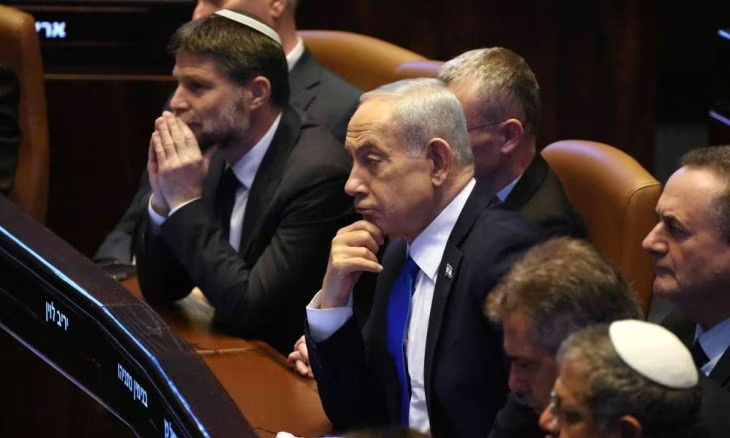
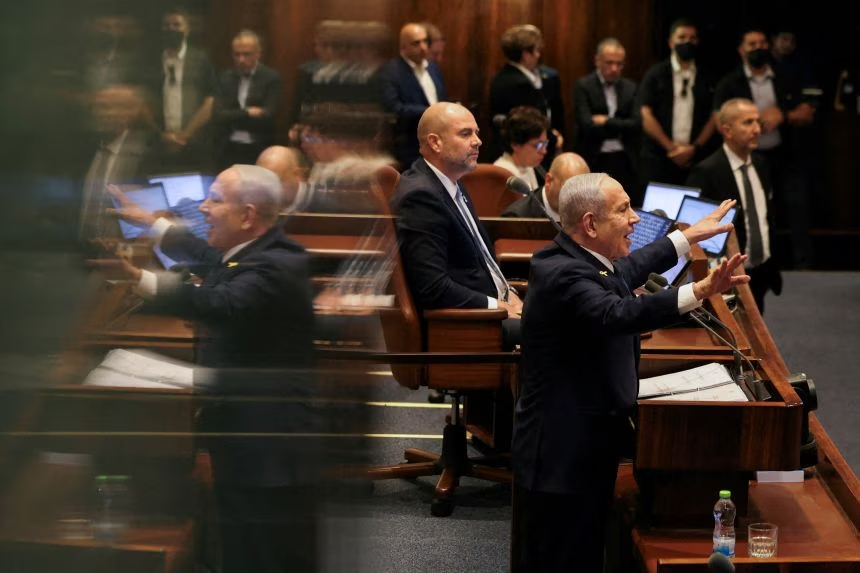
The Israeli Knesset has finally approved a law that legitimizes the execution of Palestinian prisoners accused by the occupation of carrying out deadly attacks. The law was approved by a majority of 62 members against 48, in a move described as a radical shift in the occupation's legislative system towards more extremism.

The UN High Commissioner for Human Rights, Volker Türk, urged the occupation authorities to immediately repeal this legislation, emphasizing that it flagrantly violates the principles of international humanitarian law. Türk explained that the law lacks fair trial guarantees and is characterized by blatant discrimination against Palestinians subject to military courts.

The new law stipulates the mandatory imposition of the death penalty by 'hanging' on anyone who deliberately causes the death of an Israeli in what the occupation classifies as a 'terrorist act'. The law also strips away any authority to grant pardons or commute sentences, making it an irreversible legal killing tool.

Israeli legislation has set a strict time limit for the execution of sentences, with executions to be carried out within a period not exceeding 90 days from the date of the final judgment. This urgency reflects the far-right's desire to turn prisons into arenas for carrying out systematic executions under legal cover.

The voting session saw a notable presence of Prime Minister Benjamin Netanyahu, who expressed full support for the law and voted in favor of it. Following the announcement of the results, a celebratory atmosphere prevailed within the Knesset, led by the extremist National Security Minister Itamar Ben-Gvir, who is considered the primary driver of this legislation.

Sources reported that Ben-Gvir celebrated the approval of the law in a provocative manner, appearing wearing a symbol representing a noose, a clear indication of his intention to begin carrying out executions. Observers considered this law a transition from a policy of silent killing within prisons to public and legalized killing.

On the Arab front, Egypt, Jordan, and the Palestinian Presidency expressed their strong anger, considering the law a violation of international conventions and a dangerous escalation. These parties warned that Israel is disregarding all legal and moral obligations towards prisoners and detainees.

Internationally, major capitals such as Paris, Berlin, London, and Rome expressed strong reservations about the law, hinting at the possibility of taking diplomatic measures. The European Union also hinted at the possibility of suspending the partnership agreement with Israel in response to this deterioration in the human rights file.

For its part, a statement by Amnesty International described the approval of the law as a 'public display of brutality,' emphasizing that Israel seeks to entrench an apartheid system. The organization pointed out that this legislation aims to provide legal cover for the liquidation operations that Palestinians are already subjected to.

In a related context, legal experts specializing in prisoner affairs warned that the law will be applied in military courts that lack the minimum standards of international justice. Lawyer Khaled Mahajneh affirmed that the occupation seeks to exploit global preoccupation with regional wars to carry out massacres against detainees behind bars.

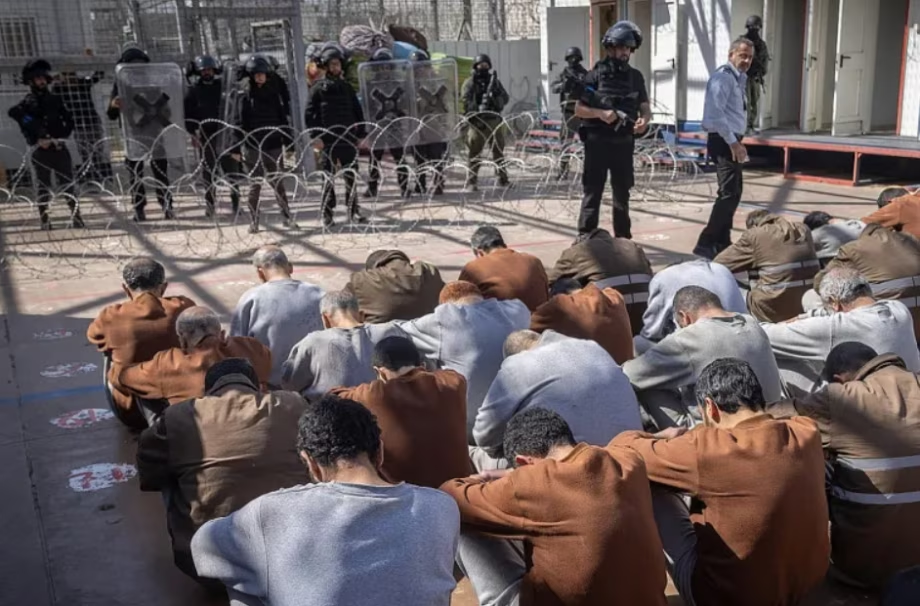
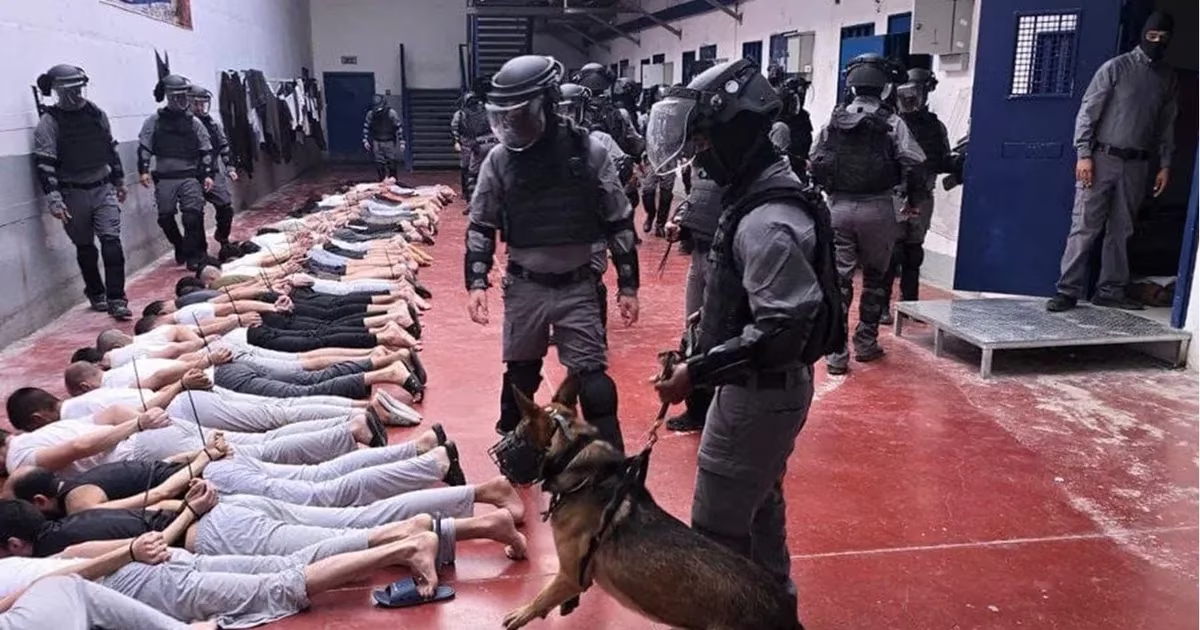
Human rights statistics indicate that there are more than 9,300 Palestinian prisoners in occupation prisons, living in very harsh detention conditions. Among these detainees are about 350 children and 66 women, who face real dangers under the new retaliatory laws.

Since October 2023, the pace of violations within prisons has escalated, with more than 100 prisoners martyred as a result of direct torture or deliberate medical negligence. This law comes to crown a series of punitive measures that included starvation and deprivation of the most basic human rights.

Social media platforms witnessed a wave of widespread anger, as Palestinian and Arab activists launched campaigns demanding urgent international intervention to save the prisoners. Activists published videos documenting the suffering of detainees, warning that international silence would encourage the occupation to proceed with executions.

Palestinian national and Islamic forces called for a broad public stance to confront this serious challenge, urging the United Nations and the Red Cross to assume their responsibilities. The factions affirmed that harming the lives of prisoners would ignite the situation uncontrollably in all occupied territories.

The law raises serious concerns about violations of due process, is highly discriminatory, and must be immediately repealed.

ARAB AND WORLD

Wed 01 Apr 2026 7:02 am - Jerusalem Time

Nabil Fahmy Unanimously Appointed Secretary-General of the Arab League: A Necessary Consensus Amidst Turbulent Regional Crises

The Arab League officially announced from its headquarters in the Egyptian capital, Cairo, the selection of diplomat and former minister Nabil Fahmy for the position of the new Secretary-General. This selection makes Fahmy the ninth in the League's history since its inception in 1945, and he is scheduled to officially assume his duties next July, succeeding the current Secretary-General Ahmed Aboul Gheit.

Fahmy's selection was unanimous and without any objection from member states, which surprised political observers. The recent period witnessed urgent Arab demands, led by countries such as Saudi Arabia, Algeria, and Qatar, for the necessity of breaking Egypt's monopoly on the position and changing the prevailing custom that links the nationality of the Secretary-General to the host country.

Analysts believe that the Arab concession on claiming the position is due to the general state of frustration with the effectiveness of the Arab League amidst escalating regional wars. Sources indicated that Arab Gulf states, which have recently been subjected to security and military pressures, now see the position of Secretary-General as a lost luster not worth the political struggle at the present time.

Gulf officials clearly expressed this trend, with former Emirati minister Anwar Gargash questioning the usefulness of the League's role in protecting regional security. In the same context, Kuwaiti Foreign Minister Jarrah Jaber Al-Ahmad affirmed that the regional organization has completely failed to play an effective role in preserving Arab national security in the face of external threats.

For his part, Ambassador Abdullah Al-Ash'al, former Assistant Egyptian Foreign Minister, described Nabil Fahmy's selection as an 'excellent choice' given his extensive diplomatic experience and professional integrity. However, Al-Ash'al warned that success in this mission depends on the ability to balance international and regional pressures, especially regarding the relationship with the Israeli occupation.

Egyptian academic Dr. Mostafa El-Gamal pointed out that the sharp Arab divisions in this difficult circumstance made the 'Egyptian solution' an available and customary option to avoid conflict. He explained that agreement on a candidate from the Gulf or the Maghreb would have required complex understandings that are not permitted by the current political conditions in the region.

In a different reading, researcher Yasser Abdel Aziz considered the acceptance of the Egyptian personality as a result of the decline in the League's role itself, where the organization's weakness coincided with the state of political decline of some active countries. He added that the Arab decision in recent years has been subject to financial and political power balances, making the Secretary-General's position more coordinative than leadership-oriented.

Historically, the position of Secretary-General has been associated with Egypt, with the exception of a short period when the headquarters moved to Tunisia after the signing of the Camp David Accords. Despite Saudi Arabia's previous attempts to propose names such as Adel Al-Jubeir for the position, Riyadh ultimately preferred to maintain coordination with Cairo to face the changing geopolitical challenges in the Middle East.

Nabil Fahmy faces thorny issues starting from the raging war in Sudan, extending to the crises in Libya, Yemen, and Somalia. The Palestinian issue and the Israeli aggression on Gaza and Lebanon also emerge as a top priority requiring action that goes beyond the traditional statements of condemnation and denunciation that the League has accustomed to issuing.

Nabil Fahmy, born in New York in 1951, has a distinguished resume, having served as Egypt's ambassador to Japan and the United States. He is the son of the late minister Ismail Fahmy, who made a historical stand by resigning in protest against Sadat's approach to peace negotiations, which places the son under the scrutiny of popular and diplomatic testing.

Fahmy's previous stances, especially during his tenure as Foreign Minister after 2013, raise some controversy in human rights and political circles. His term was associated with diplomatic statements describing Egypt's relationship with Washington as a 'legitimate marriage,' and he faced criticism due to media reports about the internal situation in Egypt at the time.

In his first statement after the selection, Fahmy expressed his gratitude to the Egyptian leadership, emphasizing the enormity of the responsibility in light of the 'flagrant violations of international law' that the nation is subjected to. He stressed the need to confront schemes aimed at dominating Arab resources and undermining the stability of member states.

Journalistic observers believe that Egypt categorically rejected the idea of rotating the position, considering it a moral and political right associated with the host country. Although the Gulf states are the largest funders of the League's activities, Cairo succeeded in mobilizing support for its candidate through intensive diplomatic tours that preceded the voting process.

The biggest challenge facing the new Secretary-General remains to revive an entity that some describe as 'in the intensive care unit.' This will not be achieved, according to experts, without a genuine political will from member states aimed at reforming the League's basic system and activating binding decision-making mechanisms.

The League has failed to play an effective role in preserving Arab security amidst current challenges.

ARAB AND WORLD

Wed 01 Apr 2026 7:02 am - Jerusalem Time

7 Martyrs in Israeli Aggression on Beirut, Occupation Claims Assassination of Leaders

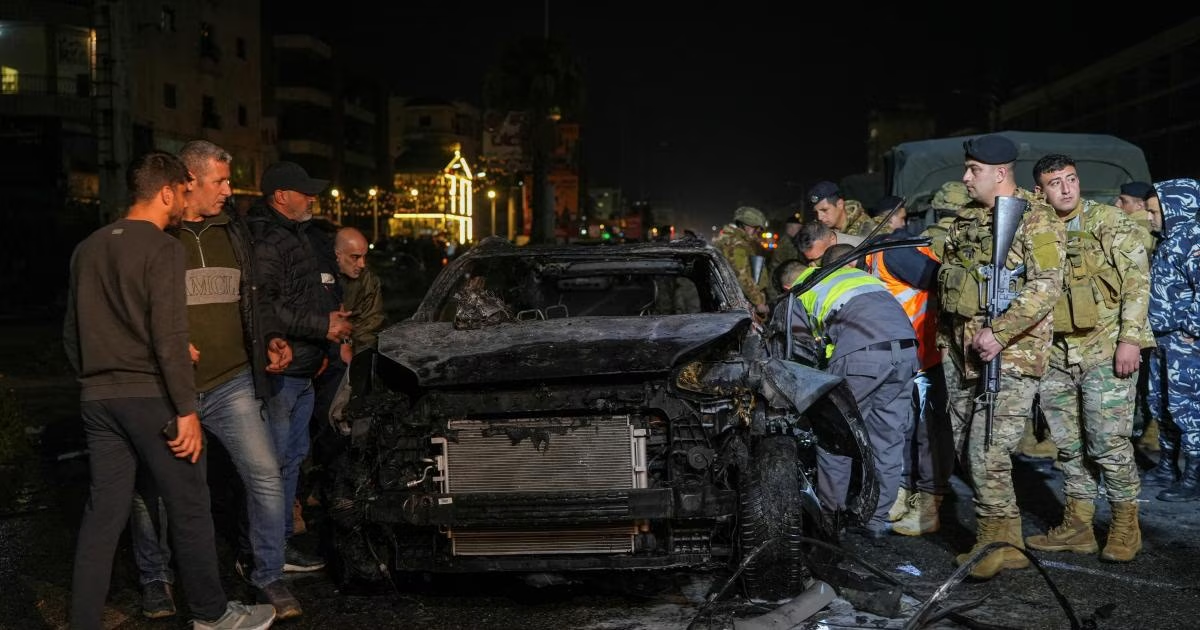
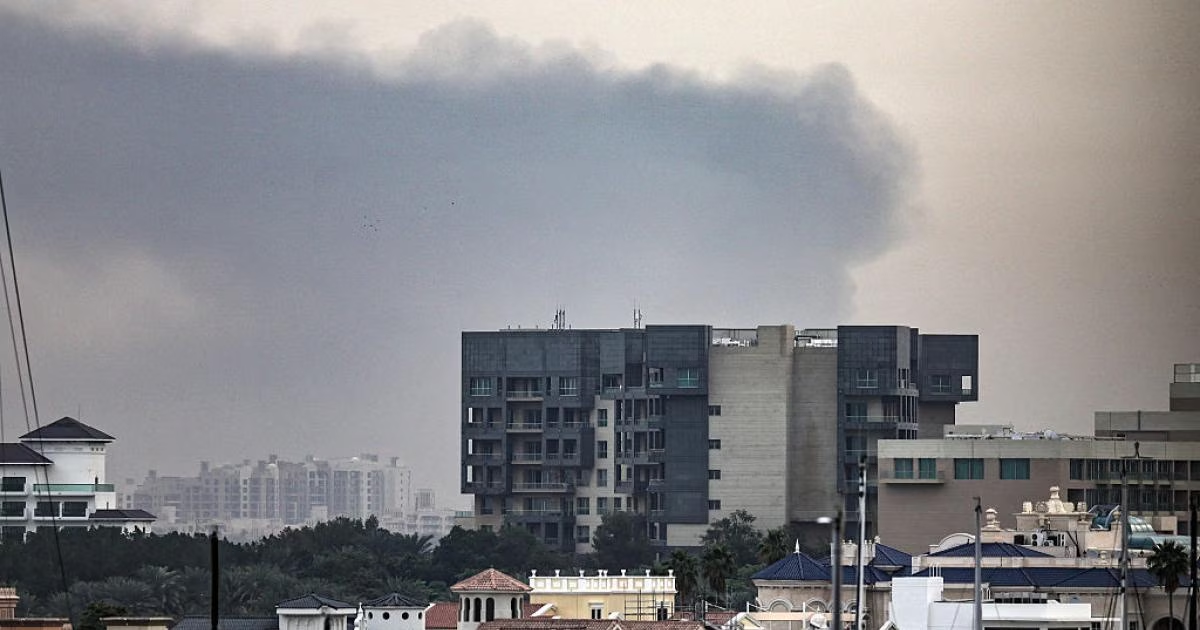
Israeli occupation forces launched a series of violent aerial and naval attacks targeting the Lebanese capital Beirut and its suburbs on Tuesday night and Wednesday morning. Field sources reported that explosions rocked the Jnah area, causing panic among residents and sending plumes of smoke into the sky.

The occupation army claimed in an official statement that it targeted a prominent Hezbollah leader, in addition to another leading figure, in two separate operations. These claims come in the context of ongoing military escalation in Lebanon since early March, despite previous ceasefire agreements.

The Lebanese Ministry of Health announced an initial toll of 5 martyrs and 21 injured with varying degrees of wounds as a result of the raid that targeted the Jnah area. Ambulance and civil defense teams rushed to the scene of the attack to recover the victims and extinguish fires that broke out in targeted properties and cars.

The National News Agency clarified that Israeli warships participated in the attack, shelling a number of cars in the Jnah area near the Raouche market. This naval shelling coincided with intensive overflights by occupation warplanes and drones in Lebanese airspace.

For its part, Al-Zahraa Hospital issued a clarifying statement denying circulating news on social media platforms about the evacuation of patients from the hospital. The hospital administration confirmed that it continues to provide its usual medical services and receive the wounded and injured as a result of the aggression, despite the difficult security conditions surrounding the area.

In a separate attack, occupation aircraft targeted a civilian car on the Khalde highway, which connects Beirut to the city of Sidon. This targeting resulted in the martyrdom of two people and the injury of three others, according to official data issued by Lebanese health authorities that followed the incident on the ground.

Lebanese security sources stated that one of the missiles launched by Israeli aircraft towards the car in Khalde did not explode upon impact. Lebanese army forces imposed a security cordon around the area, where the engineering regiment intervened to deal with the missile and dismantle it to secure the international road.

This field escalation comes amid escalating regional tensions, as Israel has expanded its aggression on Lebanese territories since March 2. Tel Aviv claims that these attacks are in response to operations carried out by Hezbollah against Israeli military sites in border areas.

Reports indicate that the ongoing Israeli aggression has left thousands dead and wounded in the region, amid repeated violations of the ceasefire agreement signed in November 2024. Israeli raids are increasingly targeting the Lebanese interior and densely populated residential areas in the capital Beirut.

A state of anticipation prevails in the Lebanese street regarding the outcomes of this new military escalation, amid continued intensive overflights by Israeli aircraft. Rescue teams continue search operations and verification of victims' identities, while fears of a wider comprehensive confrontation in the region increase.

The Israeli army announced it attacked a prominent Hezbollah leader and another in two separate attacks on the Lebanese capital Beirut.

PALESTINE

Wed 01 Apr 2026 7:02 am - Jerusalem Time

Widespread Military Escalation in Lebanon: Raids Target Khalde and the South, Hezbollah Shells Strategic Bases

The Lebanese arena witnessed a dangerous field escalation on Tuesday evening, as field sources reported that occupation aircraft targeted a civilian car in the Khalde area, located on the vital road between Beirut and Sidon. This attack comes as part of a wide wave of raids that targeted the southern suburbs of Beirut and several villages in the South and Bekaa, indicating an expansion of the scope of Israeli military operations.

Regarding human casualties, the Lebanese Ministry of Health confirmed the martyrdom of four individuals in an initial toll as a result of a raid that targeted the town of Al-Najjarieh, affiliated with the Sidon district. Medical teams also recorded the martyrdom of three citizens and the injury of nineteen others with varying degrees of wounds following a violent airstrike on the town of Srifa in South Lebanon.

Official Lebanese sources reported a humanitarian tragedy from the town of Jibshit, where a young man and his pregnant wife, along with their fetus, were martyred due to a direct shelling of their home by warplanes. This coincided with intense artillery shelling targeting the eastern neighborhood of the town of Khiam, in addition to raids that targeted the towns of Majdal Zoun, Kfardounin, Barish, and the outskirts of Naqoura.

Israeli raids extended to include the Western Bekaa region in the eastern part of the country, where the town of Mashghara was subjected to a series of airstrikes that caused extensive material damage. Ambulance and civil defense teams continue search and rescue operations in the targeted areas amidst intensive overflights by reconnaissance aircraft in Lebanese airspace.

On the other hand, Hezbollah responded by carrying out large-scale military operations targeting strategic sites in northern occupied Palestine. In successive statements, the party announced the shelling of the 'Biria' base, designated for air and missile defense north of the city of Safed, with a volley of rockets, confirming direct hits on the site.

Response operations also included targeting the 'Meron' observation and air operations management base, which is considered one of the most important intelligence centers for the occupation in the northern region. Hezbollah used qualitative missiles and kamikaze drones in its attacks, which also targeted the 'Tiffin' base located east of the occupied city of Acre, leading to the activation of sirens in the Upper and Western Galilee.

In the context of confronting ground movements, Hezbollah indicated targeting a gathering of occupation soldiers and a 'Hummer' vehicle in the town of Qantara using a kamikaze drone. Another gathering of vehicles and soldiers in the town of Deir Seryan was also targeted with appropriate weapons and artillery shells, in addition to shelling the Malkia settlement with a rocket volley.

Field reports indicate that Israeli shelling did not stop at border villages but also targeted the towns of Kafra, Srifa, Jibshit, Ayta al-Jabal, Tibnin, Harouf, Tuffahta, and Khirbet Douair. These intensive attacks reflect the occupation's desire to impose a new field reality despite international warnings of the region sliding into a comprehensive war.

This escalation comes amidst complex political circumstances, as the region had witnessed a ceasefire agreement in November 2024, but repeated Israeli violations led to renewed confrontations. Lebanese circles accuse the occupation of persisting in targeting civilians and infrastructure under the cover of continuous international support.

Amidst the continued blare of sirens in the northern settlements, political circles are awaiting the outcomes of this field escalation and its impact on regional stability. Lebanese sources confirm that the resistance continues to deter aggressions, while the occupation army continues to mobilize its forces and carry out limited ground incursions at some border points.

Lebanese Ministry of Health announced the death of 4 martyrs in an initial toll of the Israeli raid on the town of Al-Najjarieh in the Sidon district, southern Lebanon.

ARAB AND WORLD

Wed 01 Apr 2026 7:02 am - Jerusalem Time

France: Trial begins for assassination network involving intelligence officers and a Masonic lodge

French courts have opened one of the most complex security and criminal cases, as the trial began for 22 defendants accused of forming what is known as an 'assassination squad' operating for a criminal network within a Masonic lodge. This group faces serious charges including premeditated murder, systematic assassination attempts, and severe physical assaults targeting several individuals in the capital Paris and its suburbs.

The identity of those involved in this case has caused shock in public circles, as the list includes high-ranking officers from the French external intelligence service, along with police elements and prominent businessmen. The indictment also includes professionals from civilian sectors such as medicine and engineering, indicating the network's penetration into vital parts of French society and their exploitation of influence to carry out criminal agendas.

The threads of the case date back to the summer of 2020, when authorities foiled an assassination attempt targeting business coach Marie-Hélène Dini, with members of the French parachute regiment arrested near her home. According to investigations, weapons were seized from the attackers who tried to justify their actions with false claims that the victim was working for the 'Mossad' and that her elimination was in the context of protecting state security.

The victim, Marie-Hélène Dini, recounted horrific details of a series of assaults she endured, noting that the first attack occurred in October 2019 near her home in the Créteil area. Dini explained that she received a severe blow to her head that caused her to lose consciousness completely, without realizing at the time that this assault was the beginning of an elimination plot orchestrated by an organized network.

The pursuit of the victim continued for several months, with the second attempt occurring in July 2020, an operation that led to the exposure of the network after intensive security intervention around her residence. Dini stated that she did not realize the extent of the danger until she saw police reinforcements everywhere, only to learn the next day that she was the direct target of an imminent assassination planned by professionals.

The crimes of this cell did not stop at the attempt to assassinate Dini; subsequent confessions by one of the detained members revealed the group's involvement in a series of other thefts and violent assaults. Among the most prominent crimes confessed by the defendants was the murder of a race car driver, which reinforces the hypothesis that this squad acted as an executive arm for widespread score-settling operations under the guise of the Masonic lodge.

The attackers claimed they received orders to eliminate the victim for the benefit of the French state, alleging her collaboration with the Mossad.

PALESTINE

Wed 01 Apr 2026 7:02 am - Jerusalem Time

Hot Night in Israel: 4 Soldiers Killed in Southern Lebanon, Rocket Barrages Hit Jerusalem and Tel Aviv

Israeli cities and towns experienced a turbulent night under the weight of sirens that sounded four times in various areas, due to waves of rocket attacks launched from Iran and southern Lebanon. These developments come amidst unprecedented military escalation in northern Israel and the interior, amid a state of widespread security alert.

The Israeli occupation army officially announced the killing of four of its soldiers, including an officer with the rank of captain, following fierce clashes that occurred in Lebanese territory. The statement clarified that the deceased belonged to the reconnaissance unit of the 'Nahal' Brigade, and fell during direct confrontations with Hezbollah fighters in the eastern sector of the border.

Hebrew sources revealed the names of three of the deceased: Captain Noam Madmoni, Sergeant Ben Cohen, and Sergeant Maxim Antis, while the name of the fourth soldier remains undisclosed pending notification of his family. The same incident also resulted in three other soldiers being wounded to varying degrees, one of whom was described as being in serious condition, and all were transferred to hospitals for treatment.

In the early hours of dawn, Israeli monitoring systems detected a rocket barrage launched from Iranian territory targeting the city of Jerusalem and the central region. This barrage is the first of its kind in recent hours, prompting hundreds of thousands of settlers to take refuge in shelters in Jerusalem, Greater Tel Aviv, and the Jordan Valley.

Press sources reported that fragments of interceptor missiles fell in the city of Beit Shemesh, located west of occupied Jerusalem. Despite the occupation's claims that there were no direct injuries as a result of these fragments, a state of panic prevailed in the area after hearing huge explosions resulting from attempts to intercept the incoming missiles.

On the northern front, field reports confirmed that sirens did not stop in the settlements of the Upper Galilee and border areas throughout the night. This was a result of successive attacks carried out by Hezbollah using drones and guided missiles, targeting gatherings and movements of the occupation army in the area.

Hezbollah announced in separate military statements the destruction of an Israeli Merkava tank that was moving on the road connecting the towns of Qantara and Taybeh. The party confirmed that the tank was targeted with a precisely guided missile, which led to it being completely engulfed in flames and its crew being killed or wounded.

The party's operations also included targeting a military checkpoint in the 'Misgav Am' settlement with a swarm of kamikaze drones that accurately hit their targets. In a qualitative development, the party announced striking an air defense system in the 'Ma'alot-Tarshiha' settlement, as part of its response to continuous Israeli raids on Lebanese villages and towns.

With this new toll, the number of recognized casualties in the Israeli army since the start of the recent ground operations in Lebanon rises to ten soldiers. Sources indicate that the number of injuries is constantly increasing, as medical centers in the north have received dozens of wounded soldiers in the past few days.

These confrontations come in the context of an escalation that began in early March, as Israel expanded its targeting circle to include the southern suburb of Beirut. Resistance forces responded by expanding the range of rocket barrages to reach Haifa, Tel Aviv, and Jerusalem, placing the region before open scenarios of comprehensive confrontation.

On the Lebanese side, rescue teams continue to retrieve victims from under the rubble due to intense air raids targeting residential neighborhoods. The Lebanese Ministry of Health announced a tragic toll of victims, confirming that the ongoing aggression has left hundreds of martyrs and thousands wounded since the beginning of this month.

Field data indicates that the occupation army is facing fierce resistance in its limited ground incursions into Lebanese border villages. The resistance relies on a strategy of ambushes, improvised explosive devices, and anti-tank missiles, which has inflicted significant human and material losses on the attacking forces in vehicles and equipment.

For its part, the US administration continues to provide military and political support to Tel Aviv, at a time when international warnings of the region sliding into a widespread regional war are increasing. Major capitals are monitoring Iranian military movements and reciprocal Israeli responses that have begun to take a dangerous escalating turn since the end of February.

The field scene remains dominant, with events accelerating between rocket strikes in the interior and fierce clashes on the land borders. With the continued sound of sirens, anticipation remains the master of the situation for what the coming hours will bring in developments, given the insistence of all parties to continue military operations.

The Israeli occupation army officially acknowledged in a statement the killing of four military personnel, including an officer, during fierce battles in southern Lebanon.

ISRAELI AFFAIRS

Wed 01 Apr 2026 7:02 am - Jerusalem Time

Netanyahu speaks of 'strategic upheaval' and vows to continue crushing the Iranian regime

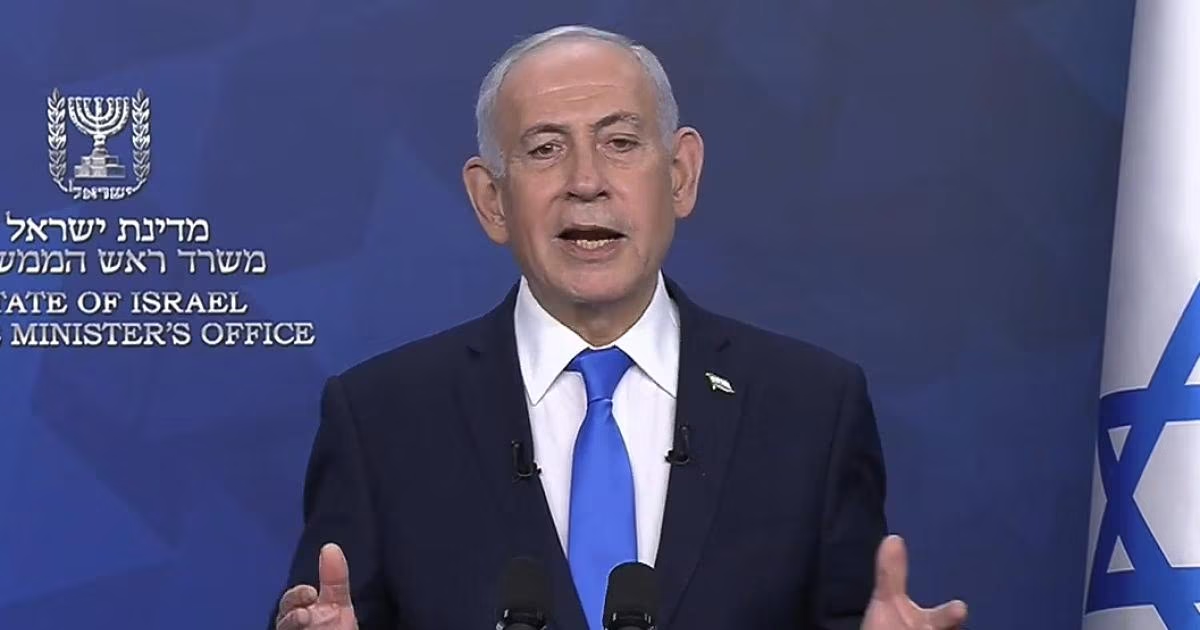
Israeli Prime Minister Benjamin Netanyahu affirmed that Tel Aviv will proceed with its military confrontation against Tehran, emphasizing that operations will not cease until what he described as the 'terrorist regime' is crushed. In a televised statement, he clarified that the current military campaign is not yet over, and the Israeli army is working to strengthen the security zones surrounding the Gaza Strip, Syria, and Lebanon to ensure the achievement of strategic objectives.

Netanyahu considered that Israel has succeeded in achieving a 'strategic upheaval' in the balance of power, indicating that the equation has fundamentally changed from what it was before the war. While Iran sought to besiege and suffocate Israel, Tel Aviv is now taking the initiative and imposing a siege on the Iranian regime and its proxies in the region.

Netanyahu's statements came at a sensitive time on the eve of the Jewish Passover, and coincided with diplomatic messages from Tehran; where Iranian President Masoud Pezeshkian stated a desire to end the state of conflict with Israel and the United States. Pezeshkian stipulated obtaining clear international guarantees that prevent the recurrence of what he described as aggression on Iranian territory.

In a show of force, Netanyahu claimed that Israel has transformed into a regional and global power thanks to recent military moves, affirming his government's commitment to changing the face of the Middle East. He indicated that the direct and indirect confrontation with Tehran has cost the Iranian treasury enormous losses exceeding one trillion dollars, as a result of supporting its allies and building its military capabilities that have been targeted.

The Israeli Prime Minister enumerated what he described as 'ten devastating blows' dealt to the Iranian axis since October 7, 2023, including extensive military operations in Gaza and Lebanon. These blows also included qualitative assassinations that targeted prominent leaders, most notably Hezbollah Secretary-General Hassan Nasrallah, and Hamas political bureau chief Ismail Haniyeh, in addition to the destruction of missile infrastructure.

Netanyahu's speech was not devoid of religious allusions, as he drew a comparison between the current war and the story of the exodus of the Children of Israel from Egypt and confronting Pharaoh. This approach comes within the framework of his increasing use of historical and religious terms to reinforce his government's political and military narrative before the Israeli public on national occasions.

Netanyahu stressed that Iran is now in its weakest historical state, while Israel is growing stronger and more resilient, criticizing the international community's disregard for previous Israeli warnings. He clarified that Tel Aviv no longer contents itself with defense, but has moved to the stage of direct attack to dismantle threats before they reach its borders.

The Prime Minister revealed that he held a series of secret discussions with leaders of countries in the Middle East and Europe, claiming a radical shift in their positions towards the Iranian threat. He indicated that some of these leaders have already begun field and practical coordination with Israel to confront the growing Iranian influence in the region.

In the context of international alliances, Netanyahu described the level of cooperation with the US administration led by Donald Trump as 'historic' and unprecedented. He affirmed that Israel, which used to fight alone in many arenas, now enjoys direct support and 'shoulder-to-shoulder' coordination with the United States in confronting the Iranian project.

The speech touched upon diplomatic and security efforts to launch new regional alliances, with Netanyahu promising to reveal their details soon to Israelis. These statements intersect with media reports indicating that Israel seeks to move beyond traditional cooperation formulas towards building a direct combat military alliance with Arab countries to confront common threats.

Netanyahu reiterated his promises to definitively end Iranian nuclear and ballistic threats, claiming that military operations carried out in June 2025 succeeded in removing the immediate danger. He affirmed that security agencies continue to pursue any Iranian attempts to rebuild these capabilities, especially those built in fortified underground facilities.

Netanyahu concluded his statement by emphasizing that Israel will not tolerate any Iranian attempts to bury its military capabilities away from surveillance or targeting. He stressed that direct field action will remain the standing option for dealing with any existential threat, regardless of international pressure or Iranian attempts at military deception.

Iran wanted to suffocate Israel before this war, while now Israel is suffocating Iran.

ARAB AND WORLD

Wed 01 Apr 2026 7:01 am - Jerusalem Time

Global Oil Prices Jump as Military Escalation Against Iran Continues

Global energy markets witnessed a sharp jump in oil prices during Wednesday's trading, with Brent crude futures reaching record levels not seen since 2022. The price per barrel rose by more than 5 percent to settle at $118.5, driven by growing concerns about disruptions to global energy supplies as a result of ongoing military operations.

In contrast, West Texas Intermediate crude experienced volatility, recording $101.5 per barrel, a slight decrease of 1.4 percent, despite the general upward trend dominating the market this March. These fluctuations come amid severe pressure on global supply chains, which have been directly affected by the ongoing American-Israeli aggression on Iranian territories.

Economic sources reported that prices approached the $120 per barrel mark during some trading periods, reflecting investors' anxiety about the continuation of the armed conflict. Forecasts point to record monthly gains by the end of March, given the lack of an immediate horizon for de-escalating the military situation that has disrupted maritime trade.

Tehran's decision to restrict navigation in the strategic Strait of Hormuz since the beginning of this month is one of the most prominent factors that led to this insane rise. Iranian authorities threatened to target any vessels crossing the strait without prior coordination, putting global energy transport in a real predicament due to the vital importance of this waterway.

Navigational data indicates that approximately 20 million barrels of oil pass daily through the Strait of Hormuz, which represents the lifeline for many major economies. The closure of the strait or the threat to the safety of navigation within it has led to an immediate increase in marine insurance costs and shipping fees, which has directly reflected on consumer prices and global inflation rates.

On the ground, military confrontations that began on February 28 continue, with American and Israeli forces launching widespread attacks that have resulted in thousands of casualties. Reports confirm that the escalation has targeted high-ranking officials in the Iranian state, prompting Tehran to respond by launching waves of ballistic missiles and drones towards targets inside Israel.

In a related context, the conflict expanded to include targeting American bases and interests in several Arab countries, with Iran claiming responsibility for attacks it described as retaliatory. The affected countries expressed their condemnation of these aggressions, which targeted civilian assets and resulted in injuries, demanding the necessity of halting military escalation to spare the region and the world a deeper economic and humanitarian catastrophe.

The closure of the Strait of Hormuz, through which about 20 million barrels pass daily, caused a sharp jump in shipping and insurance costs and raised global economic concerns.

OPINIONS

Wed 01 Apr 2026 7:01 am - Jerusalem Time

Washington supports "Israel's legislative sovereignty" amid criticism of Palestinian execution law

Said Erikat

Opinion Writer

Washington – Said Arikat – 3/31/2026

In a stance reflecting Washington's traditional approach to Israeli policies, a senior American official said on Tuesday that his country "respects Israel's sovereign right to enact its laws and determine its penalties for those convicted of terrorism," commenting on the Knesset's approval of a law allowing the imposition of the death penalty on Palestinians convicted of committing deadly attacks. The official, who requested anonymity, added in response to a question from Al-Quds newspaper correspondent that the United States "trusts that these measures will be implemented within legal frameworks that ensure fair trial and its guarantees."

It is worth noting that the official American response came via a brief email sent from the State Department to the accredited press corps at the department.

However, this statement, despite its legal language, ignores a growing debate about the nature of the law itself, which was approved by the Knesset with a majority of 62 votes to 48, with direct push from National Security Minister Itamar Ben-Gvir, and with the support of Prime Minister Benjamin Netanyahu. The legislation stipulates the application of the death penalty in specific cases defined within the framework of "terrorism," with formulations that, according to its critics, indicate targeting Palestinians almost exclusively, especially in areas under Israeli control, including the West Bank.

Ben-Gvir explicitly acknowledged this direction, considering that the law "changes the rules of the game," and that anyone who kills "Jews" will not remain alive in prisons. This rhetoric, which links justice to the national identity of the victims, reinforces fears of using the law as a deterrent tool of a political nature, rather than a neutral legal framework.

In contrast, the move sparked widespread criticism from human rights organizations, most notably "B'Tselem," which warned that the application of the death penalty would be carried out through military courts that exclusively try Palestinians, and record conviction rates of up to 96%. It also indicated that sentences could be carried out within 90 days without the possibility of pardon, and with limited discretionary powers for judges, which raises serious questions about the standards of procedural justice.

For its part, Amnesty International considered that the law represents a dangerous expansion in the use of the death penalty, at a time when the world is witnessing a growing trend towards its abolition, warning that it undermines fundamental guarantees of the right to life and fair trial, and entrenches a discriminatory legal structure against Palestinians.

_The American position raises questions about the limits of "respect for sovereignty" when it comes to legislation affecting fundamental human rights. Washington, which has long presented itself as a defender of international standards, seems hesitant here to direct any explicit criticism of a law facing serious accusations of discrimination. This contradiction reflects a deeper problem in American policy, where human rights issues are dealt with selectively, depending on geopolitical considerations and strategic alliances, which weakens its credibility on the international stage.

The new law cannot be separated from the broader context of the justice system in the occupied territories, where Palestinians are subject to military courts, while Israeli settlers enjoy civilian courts. This legal duality creates an unequal structure in terms of procedures and rights, and makes the imposition of a maximum penalty such as the death penalty a highly problematic issue. When the justice system itself is in doubt, any escalation in penalties turns into a tool of oppression, not a means of achieving justice or deterrence.

The timing of the law's approval carries political implications that cannot be ignored, especially in light of the escalating right-wing rhetoric within the Israeli government. It seems that the legislation addresses an internal political base that seeks to demonstrate firmness, even if it is at the expense of international legal standards. However, such steps may have adverse consequences, as they fuel feelings of anger and deepen the cycle of violence, rather than deterring it, which raises a fundamental question about the effectiveness of this approach in achieving long-term security.

OPINIONS

Wed 01 Apr 2026 6:52 am - Jerusalem Time

Death by Law: How Israel’s Extremist Turn and Washington’s Silence Are Redefining Justice

By: Said Arikat

April 1, 2026


News Analysis


Washington, D.C- Washington’s response to Israel’s newly enacted death penalty law is as telling for what it says as for what it avoids. A senior U.S. official, speaking on condition of anonymity, stated: “The United States respects Israel’s sovereign right to determine its own laws and penalties for individuals convicted of terrorism. We trust that any such measures will be carried out with a fair trial and respect for all applicable fair trial guarantees and protections.” The language is polished, deliberate—and deeply insufficient. It gestures toward principle while carefully sidestepping the troubling realities embedded in the law itself.


That law, passed by the Knesset with a 62–48 majority, represents a significant escalation in Israel’s legal approach toward Palestinians accused of violence. Backed by Prime Minister Benjamin Netanyahu and driven by National Security Minister Itamar Ben-Gvir, the legislation authorizes the death penalty in cases defined as “terrorism.” While framed in general terms, its application is widely expected to fall almost exclusively on Palestinians, particularly those living under Israeli military rule in the occupied West Bank.


This asymmetry is neither incidental nor ambiguous. Ben-Gvir himself has openly framed the law in identity-driven terms, declaring that those who kill “Jews” should not remain alive. Such rhetoric strips the legislation of any veneer of neutrality, exposing it instead as a tool shaped by ethno-national priorities. Justice, in this framing, is no longer blind—it is calibrated according to identity, with Palestinians facing the harshest possible penalties within a system already criticized for its structural inequities.


Those inequities are central to understanding the law’s broader implications. Palestinians in the occupied territories are tried in military courts, where conviction rates are extraordinarily high and procedural safeguards are widely questioned. Israeli settlers, by contrast, fall under civilian jurisdiction, benefiting from stronger legal protections and more robust due process. Introducing capital punishment into this bifurcated system does not simply raise the stakes—it magnifies the disparities, turning an already unequal framework into one where the ultimate penalty may be imposed without the full guarantees of justice.


Beyond its immediate legal implications, the law lays bare what many human rights observers have long described as an apartheid-like system governing Palestinians under Israeli control. Organizations including B’Tselem have explicitly concluded that the regime between the Jordan River and the Mediterranean Sea constitutes apartheid, defined not only by territorial control but by the systematic privileging of one group over another in law, movement, and political rights. The introduction of the death penalty within this framework sharpens that reality: it is not merely unequal justice, but a system in which the most severe punishment is reserved for a population already deprived of equal protection under the law, reinforcing a hierarchy that is legal, political, and existential.


Human rights organizations have warned precisely of this outcome. B’Tselem has highlighted the near-automatic nature of convictions in military courts and the limited discretion afforded to judges under the new law. It cautions that executions could be carried out swiftly, with minimal opportunity for appeal or clemency. Similarly, Amnesty International has condemned the legislation as a dangerous expansion of capital punishment in a context already marked by discrimination, noting that it undermines both the right to life and the foundational principles of a fair trial.


Against this backdrop, the U.S. statement rings hollow. The invocation of “fair trial guarantees and protections” assumes a level playing field that does not exist. It presumes that the legal system tasked with implementing the law is capable of delivering impartial justice, despite extensive evidence to the contrary. By placing its trust in these assurances without scrutiny, Washington effectively endorses a process that many credible observers view as fundamentally flawed.


This is where the language of sovereignty becomes a convenient refuge. By emphasizing Israel’s right to determine its own laws, the United States avoids confronting whether those laws meet international legal and ethical standards. Yet sovereignty has never been an absolute shield, particularly when it intersects with fundamental human rights. The global movement away from the death penalty reflects a growing consensus that such punishments are incompatible with modern standards of justice. To ignore this trend—and the specific concerns raised by this law—is to retreat from that consensus.


The contradiction is stark. The United States routinely invokes human rights as a cornerstone of its foreign policy, often criticizing adversaries for abuses that fall short of the irreversible finality of capital punishment. But when similar or more severe concerns arise in the context of an ally, the response shifts to one of deference and restraint. This inconsistency does more than undermine U.S. credibility; it signals that the application of human rights principles is contingent, shaped by political alliances rather than universal norms.


For Israel, the costs of this approach may extend beyond international criticism. Laws perceived as discriminatory do not enhance legitimacy; they erode it. In a conflict already defined by deep mistrust and recurring violence, measures that appear to target one population disproportionately are likely to inflame tensions rather than contain them. The belief that harsher penalties will produce deterrence ignores the political and social dynamics that drive the conflict. Instead, it risks reinforcing the very grievances that fuel it.


Ultimately, this law is not an isolated measure but a stark manifestation of a broader political trajectory. Its passage through the Knesset underscores the growing dominance of Israel’s extreme right, a political current that openly advocates annexation of the occupied West Bank and even Gaza, while systematically denying Palestinians the most basic human rights. In such an environment, legal frameworks are no longer instruments of justice but mechanisms of control, codifying inequality and entrenching dispossession. By embedding capital punishment within this already discriminatory system, Israel is not strengthening the rule of law—it is accelerating its erosion, with consequences that will reverberate far beyond the courtroom

ARAB AND WORLD

Tue 31 Mar 2026 5:46 pm - Jerusalem Time

Pentagon announces 'hour of decision' approaching in Iran, Trump attacks European allies

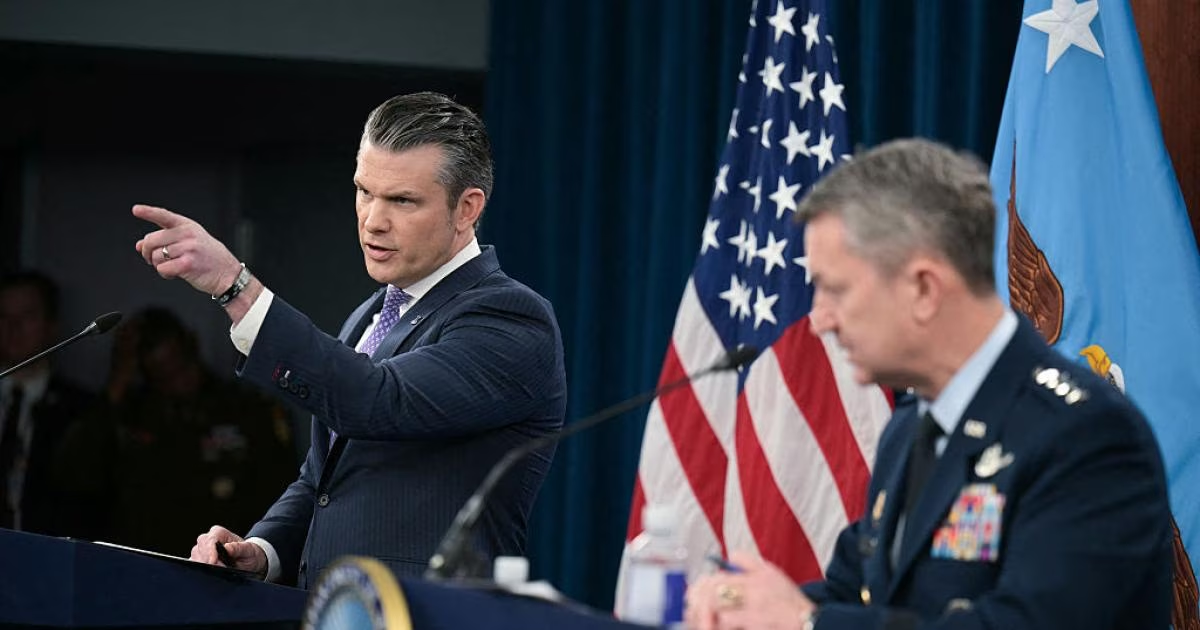
US Secretary of War, Pete Hegseth, confirmed that the military confrontation led by the United States and Israel against Iran has entered a 'decisive' phase, the features of which will become clear in the coming days. Hegseth explained at a press conference held at the Pentagon that Tehran understands the seriousness of the current situation, stressing that it now lacks effective military capability to respond to ongoing movements.

The American minister refused to rule out the option of ground intervention in Iranian territory, indicating that all military options remain on the table to ensure the achievement of the operation's objectives. He added that maintaining the element of surprise and not revealing plans to the adversary is an essential part of the US military command's strategy at this stage of the conflict.

In a related context, US Army Chief of Staff, Dan Kane, revealed the extent of the intensive air and missile operations carried out over the past month. Kane explained that US forces successfully targeted more than 11,000 sites inside Iran over the past thirty days, which significantly curtailed the Iranian regime's defensive and offensive capabilities.

For his part, US President Donald Trump launched a sharp attack on European allies, specifically Britain and France, accusing them of failing to participate in the war effort. Trump indicated via the 'Truth Social' platform that countries that refused to engage in the war should not expect American assistance to secure their oil supplies through the Strait of Hormuz.

Trump sent a strongly worded message to countries suffering from fuel shortages, demanding that they rely on themselves and head to the strait to seize their oil needs. The US President considered that Washington had completed the 'hard part' of the mission, and that it would not continue to provide free protection to those who did not stand with it in this strategic war.

Trump explained that the Iranian regime had been effectively destroyed, describing the military operations as a 'decapitation' of the regime, although the official name of the operation is 'Epic Fury'. He confirmed that the United States is now negotiating with lower leadership levels in Iran, reflecting the collapse of the highest leadership structure in Tehran.

Informed sources in Washington reported that Trump's statements reflect deep dissatisfaction with Paris's stance, which he accused of obstructing the passage of military aircraft en route to support operations. The sources indicated that France refused to open its airspace to military shipments heading to the region, forcing the US command to change flight paths.

Regarding the field situation, Defense Secretary Hegseth indicated that the past twenty-four hours witnessed a significant decrease in the number of missiles launched by Iran. He considered this decline an indicator of the success of American strikes in depleting the Iranian arsenal, stressing that talks to end the war are gaining real momentum under the pressure of continuous bombardment.

Trump warned that the United States might reconsider all its defense commitments to European allies in the future. The US President linked current military support to the willingness of European countries to participate in international crises affecting US national security, hinting at a return to a policy of isolation from NATO.

Reports indicate that Iran succeeded in closing the Strait of Hormuz to oil tanker traffic, causing widespread disruptions in global energy markets. However, Trump insists that the solution lies in buying oil from the United States, which has an abundance of production, instead of waiting for American military protection in international waterways.

Journalistic sources stated that Trump's escalating rhetoric primarily aims to address the American voter and emphasize that the current administration puts Washington's interests first. Trump seeks to hold European countries fully responsible for any shortage in energy supplies or price increases resulting from their 'reserved' stance on the war.

At the Pentagon, Hegseth confirmed that US forces deployed in the Middle East are on high alert to carry out any new orders that may include ground incursions. He explained that the adversary believes there are 15 different ways of ground attack, confirming that this belief is correct and that operational plans are ready for implementation at any moment.

These developments come at a time when the US administration is threatening to target vital infrastructure in Iran, including electricity and water networks and energy security. This threat is considered a qualitative escalation aimed at exerting maximum pressure on the remaining joints of the Iranian state to force it into complete surrender.

In conclusion, observers in Washington believe that the coming days will be a real test of the allies' ability to withstand Trump's pressure, and Iran's ability to endure successive strikes. As the pace of military operations accelerates, diplomacy 'under bombs' remains the only path the Trump administration sees to end this escalating regional conflict.

No one can lead a war and win it if they tell their adversary what they are willing to do and what they are not willing to do.

ARAB AND WORLD

Tue 31 Mar 2026 5:46 pm - Jerusalem Time

Strait of Hormuz Dilemma: Can US Forces Secure Passage and Control Kharg Island?

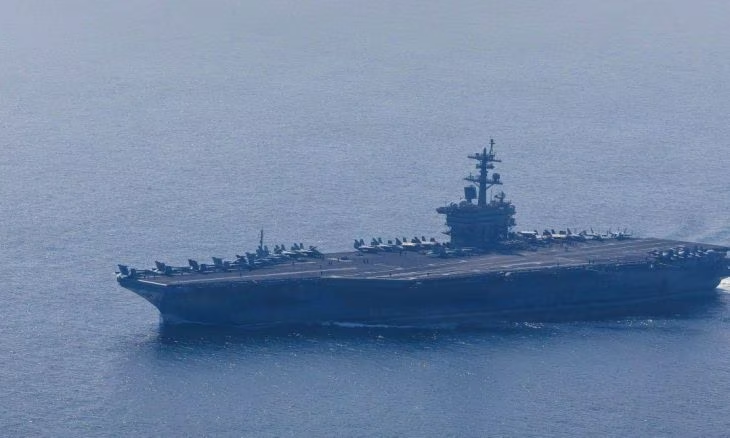
The US warship "Tripoli," carrying Marines, arrived in the Middle East from the Sea of Japan, joining military reinforcements in the region. Despite this arrival, the ship positioned itself near the aircraft carrier "Abraham Lincoln" in a location far from the Arabian Gulf and the Strait of Hormuz, raising questions about the ability of these forces to carry out missions within the strait, which faces intense Iranian defensive threats.

US Naval Institute maps indicate that the current positioning of warships reflects strategic caution, with the aircraft carrier "Abraham Lincoln" located 1500 kilometers south of the Strait of Hormuz. This distance is primarily aimed at staying out of range of Iranian missiles and drones, at a time when sources have not recorded any large US naval vessel crossing the strait since the recent confrontations erupted.

In a related context, the aircraft carrier "Gerald Ford" is undergoing maintenance in a Croatian port after being exposed to a fire while in the Red Sea, while the aircraft carrier "George Bush" is preparing to move from Norfolk port to compensate for the shortage in the Eastern Mediterranean. These movements come amid significant field pressures facing the US Central Command to secure vital shipping lanes.

Analyzes conflict regarding the actual role of the newly arrived Marine forces, with some estimates suggesting the possibility of them attempting to seize the Iranian island of "Kharg," which is the main artery for oil exports. However, experts believe that carrying out an amphibious operation on a fortified island facing a militarily closed strait represents an unprecedented logistical and security challenge for the Pentagon.

On the other hand, journalistic sources reported that US military bases in Gulf countries have seen a decline in their activity, becoming almost empty as a result of missile strikes they were subjected to. This situation has prompted some forces to move to urban areas or head towards the European continent, coinciding with restrictions imposed by host countries on using their territories to launch attacks against Tehran.

Observers believe that the goal of reinforcing amphibious forces and paratroopers may be to protect the Bab al-Mandab Strait and secure shipping lanes in the Red Sea, rather than engaging in direct confrontation within the Gulf. Moreover, the need to compensate for the military vacuum resulting from the evacuation of traditional bases has become a top priority for the current US administration to ensure the continuity of military presence in the region.

On the political front, hypotheses emerge suggesting that the US administration may be looking for solutions to end the conflict without the need to open the Strait of Hormuz by military force. This approach comes amid Washington's realization that targeting any large warship would cause severe damage to the image of the United States military, especially with Tehran's desire for revenge for the sinking of one of its frigates previously.

In light of these facts, the question remains about how US forces will reach their strategic objectives deep in the Gulf if the strait remains closed. While Washington possesses air and missile superiority through "Tomahawk" missiles, field control and amphibious operations remain contingent on the ability to overcome Iranian naval defenses and commandos ready to intervene at the entrance of the strait.

It remains likely that the increase in US forces in the Middle East is to protect Bab al-Mandab and compensate for the military vacuum resulting from the withdrawal of forces from Gulf bases.

ARAB AND WORLD

Tue 31 Mar 2026 5:45 pm - Jerusalem Time

UN estimates: $186 billion in Middle East losses during one month of military escalation

Abdullah Al Dardari, Assistant Secretary-General of the United Nations, issued strong warnings about the deep and severe economic repercussions resulting from the current military escalation in the Middle East region. The UN official confirmed that the region's countries incurred huge financial losses estimated at about $186 billion during just one month of ongoing military confrontations. Al Dardari explained that these figures reflect the extent of the direct damage that affected vital infrastructure and productive sectors in the region.

During a press conference held in the Jordanian capital, Amman, the Director of the Regional Bureau for Arab States at the United Nations Development Programme indicated that the continuation of fighting exacerbates economic damage at an accelerating pace. He pointed out that current losses represent approximately 6% of the region's total GDP, with strong indications that this value may exceed $190 billion if the conflict continues at its current pace without a horizon for a political solution.

In a geographical breakdown of the crisis, the UN official explained that the Gulf countries are at the heart of the economic storm, where their share of losses is expected to reach $168 billion. In contrast, the Levant region received a significant share of the damage, with estimates reaching $30 billion, which highlights the widening scope of negative impacts that were not limited to direct confrontation areas but extended to include the entire regional neighborhood.

Al Dardari stressed the fragility of the prevailing economic models in the region, warning that non-oil-exporting countries also suffer due to their heavy reliance on remittances from workers abroad and regional aid. In this context, he called for the need to reconsider development paths and search for alternative trade and real economic diversification, especially with the threats facing global energy corridors such as the Strait of Hormuz, through which one-fifth of the world's oil and gas production flows.

On the social level, the UN report warned of severe humanitarian consequences that may result from this economic collapse, as about 3.7 million job opportunities are expected to be lost in various sectors. Al Dardari also warned that the continuation of the conflict could push nearly 4 million additional people below the poverty line, which threatens social stability and increases the complexities of the humanitarian crisis in the region in the long term.

We hope that the fighting stops tomorrow, as every day of delay has negative effects on the global economy.

ANALYSIS

Tue 31 Mar 2026 5:45 pm - Jerusalem Time

Between Psychology and Politics: A Reading of 'The Dangerous Case of Donald Trump' and Its International Repercussions

The turbulent political scene has brought renewed attention to the book 'The Dangerous Case of Donald Trump,' a collaborative work co-authored by 27 psychiatrists and mental health experts. Edited by Dr. Bandy Lee, the book sparked widespread debate about the limits of expert intervention in public affairs and the legitimacy of analyzing leaders' personalities from a scientific perspective.

The contributors to this work do not offer a direct medical diagnosis of Trump, adhering to professional standards that prohibit diagnosis without a clinical examination. However, they relied on the ethical principle of 'duty to warn,' considering it the right of specialists to alert to dangers when it concerns a personality controlling the fate of an entire society.

The authors focus on recurring behavioral traits in Trump's public performance, most notably extreme narcissism, impulsivity, and a lack of empathy for others. Experts believe that the combination of these qualities in a person with vast authority could lead to unpredictable decisions characterized by high risk.

The book discusses what is known as 'the Trump effect,' which is the potential for polarizing and hostile discourse patterns to spread from the top to the base of society. This effect could change the general political culture and create a state of permanent tension in social and political relations within and outside the United States.

Reactions to the book varied between supporters who saw it as a responsible attempt to interpret influential leadership behavior, and opponents who considered it an unacceptable mixing of science and politics. Critics argue that using psychoanalysis as a tool in political conflict opens a dangerous door to the politicization of psychiatry and its employment against adversaries.

The true value of the book transcends diagnosing a specific man, extending to questioning the system that allows personal temperament to control the fate of nations. The central question here concerns how the keys to power are handed to a personality whose decisions rely on mirrors of admiration and a continuous search for public applause.

From a professional angle, the book draws attention to a behavioral pattern based on rapid escalation and heavy reliance on direct public influence. This pattern transforms momentary emotional reactions into official political signals, confusing international calculations and making it difficult to predict future steps.

A balanced assessment places Trump's behavior in a gray area that blends a strong presence and ability to mobilize with arrogance and constant volatility. This mixture raises legitimate questions about the extent of rationality and stability in managing major crises that require calm and wisdom away from emotional outbursts.

In the context of the ongoing confrontation with Iran, a question arises about the extent to which these personal traits reflect on the complex conflict's trajectory. Despite the role of military and diplomatic institutions, the individual leadership style remains a crucial factor in steering escalation or de-escalation in critical moments.

Sharp statements and fluctuating signals can raise the level of risks by pushing other parties towards more rigid positions due to misunderstanding. In an environment charged with nuclear and regional issues, political language carries a weight equivalent to military field movements on the ground.

On the other hand, observers believe that this ambiguity and impulsivity could act as a psychological deterrent, making adversaries fear taking escalatory steps. An adversary facing an unpredictable leader often tends to be extremely cautious to avoid unconventional reactions that might surprise their strategic calculations.

However, this type of deterrence remains a double-edged sword, as it increases the likelihood of fatal miscalculation among warring powers. When contradictory signals multiply and the tone changes rapidly, it becomes difficult for international parties to control the pace of the crisis and prevent its slide towards an all-out confrontation.

Analytical readings suggest that Iran might benefit from this contradiction by deeply analyzing Trump's statements and hedging against all possible eventualities. Prior knowledge of a leader's tendency to declare what they intend to do gives the adversary an opportunity to prepare for the worst-case scenarios and strip fiery statements of their shocking effect.

Ultimately, this case reflects an unprecedented overlap between psychology and public life in the modern era. It puts contemporary civilization to a real test on how to protect international institutions from the whims of individuals and the instincts of leaders who excel at tension more than diplomacy.

The true value of the book lies in exposing a time when personal temperament controls the fate of nations, where momentary reactions turn into official policies.

PALESTINE

Tue 31 Mar 2026 3:28 pm - Jerusalem Time

Jerusalem Governorate: The Colonial "Shami Neighborhood" Plan is a Coercive Tool for Displacing Bedouins and Emptying the Jerusalem Wilderness for the Benefit of the (E1) Project

The Jerusalem Governorate warned against colonial plan number (1627/7), known as the “Shami Neighborhood,” considering it an advanced tool for re-engineering the Bedouin presence in the wilderness of Jerusalem Governorate, within the framework of continuous Israeli policies aimed at reshaping the geographical and demographic reality east of the occupied city, to serve expansionist colonial projects.

The Governorate clarified, in a statement issued today, Tuesday, that the Israeli occupation authorities deposited the plan on March 25, 2026, through the so-called Subcommittee for Planning and Licensing of the Higher Planning Council in the “Civil Administration,” targeting lands in the town of Abu Dis within Basin No. (4), in the areas of: Dhahr al-Raghabna, Manazil Ali, Batin Bishara, Umm al-Shakhalib, and Dhahr al-Qararit, covering an area estimated at about 169.9 dunams.

The Jerusalem Governorate explained that the plan aims to transform the lands from their agricultural and open uses into an urban residential neighborhood under the classification of “Residential B,” with about 79 dunams allocated for residential construction and more than 35 dunams for the road network, and imposing a building density of up to 12 residential units per dunam, with heights reaching up to 6 floors.

The Governorate indicated that the plan directly targets a number of Bedouin communities, foremost among them the communities of Khan al-Ahmar, Abu al-Nawar, and Arab al-Jahalin, in addition to the communities of Wadi al-Jamal, Jabal al-Baba, Wadi Suneisel, and Bir al-Maskoub (1 and 2), aiming to forcibly displace them from their open pastoral environment to a closed urban community, which would lead to the dismantling of their social structure and the destruction of their economy based on grazing.

The Jerusalem Governorate noted that this plan constitutes a direct and updated extension of the forced displacement policies that began in 1997, when groups of Jahalin Bedouins were moved to the outskirts of the town of al-Eizariya for the sake of settlement expansion, emphasizing that the occupation is reproducing the same policies today.

The Governorate also stressed that the occupation’s claims of “consent” from representatives of the Bedouin communities lack credibility, in the absence of conditions for free and prior consent, and the continuation of pressures and violations practiced against these communities, which have repeatedly affirmed their categorical rejection of any transfer or resettlement plans.

The Jerusalem Governorate explained that the plan is organically linked to the E1 settlement project, which aims to connect the “Ma’ale Adumim” settlement with the city of Jerusalem, separate the northern West Bank from its south, and undermine the possibility of a geographically contiguous Palestinian state, noting that the Bedouin presence is an obstacle to the implementation of this project, which explains its targeting with policies of dismantling and removal.

The Governorate affirmed that this plan constitutes a flagrant violation of international humanitarian law, foremost among them the absolute prohibition of forced transfer of populations under occupation according to the Fourth Geneva Convention, in addition to violating the right to adequate housing and livelihoods, and breaching the rules prohibiting settlement in the occupied territories.

The Governorate explained that opening a 62-day objection period does not change the coercive nature of the plan, in the absence of procedural justice and the imposition of complex restrictions on Palestinians that hinder their ability to effectively object.

The Jerusalem Governorate called on the international community to assume its legal and humanitarian responsibilities, and to take urgent action to stop this plan, and hold the occupation authorities accountable for their policies aimed at forced displacement, while at the same time emphasizing the need to support the steadfastness of the targeted Bedouin communities, and strengthen their presence in their lands as the first line of defense against displacement and colonial projects.

ARAB AND WORLD

Tue 31 Mar 2026 3:28 pm - Jerusalem Time

Deadly Israeli escalation in southern Lebanon, Katz vows to impose a buffer zone up to the Litani

Various areas in southern Lebanon and the southern suburbs of Beirut witnessed a deadly military escalation on Tuesday, as Israeli warplanes launched a series of intense raids resulting in casualties and injuries. Field sources confirmed the martyrdom of five citizens and the injury of three others in an initial toll of these attacks, which targeted vehicles and residential gatherings deep in southern Lebanon.

In field details, an airstrike targeted a civilian car in the Qasimiya area, leading to the martyrdom of two and the injury of three others with varying degrees of wounds, who were subsequently transferred to hospitals. The shelling also hit the town of Deirkifa, where two more people were martyred, while the town of Abba recorded the fall of a young martyr due to a direct aerial targeting of the area.

The military operations were not limited to concentrated aerial bombardment but extended to include intense raids on the town of Qleileh, south of the city of Tyre, coinciding with intense artillery shelling that targeted the outskirts of the town of Mansouri. In a later development in the afternoon, a massive explosion rocked the southern suburbs of Beirut due to an Israeli raid targeting one of the neighborhoods there, which increased the pace of the escalating field tension.

On the Israeli political and military front, Security Minister Israel Katz issued extremely serious statements, revealing the occupation's intention to impose a new geographical reality in southern Lebanon. Katz clarified that Israel intends to establish what he described as a 'security zone' that will extend from the international border to the course of the Litani River, with guaranteed military control over it.

Katz indicated in a statement issued after an assessment of the security situation that the Israeli army would not be content with transient operations but would seek full control over all strategic junctions, including bridges and geographical links. He stressed that this area would remain under Israeli security control even after the cessation of hostilities to ensure that no border threats return.

Regarding the displaced persons file, the Israeli Security Minister explicitly announced that more than 600,000 Lebanese who were displaced from their areas would not be allowed to return to their homes located south of the Litani River at present. Katz linked the return of Lebanese residents to what he considered 'achieving full security' for the residents of settlements in northern Israel, which portends a long-term humanitarian crisis.

The Israeli minister also threatened to adopt a 'scorched earth' policy in Lebanese villages near the border, confirming that the army would work to demolish homes and infrastructure in those towns. Katz likened these measures to what the occupation army implemented in the Rafah and Beit Hanoun areas in the Gaza Strip, with the aim of removing any visual obstacles or fortifications that the resistance might use.

These field and political developments reflect an Israeli trend towards comprehensive demographic and geographical change in southern Lebanon, amidst international warnings of the repercussions of these plans. These statements raise widespread fears of turning southern Lebanon into a devastated buffer zone, which deepens the humanitarian tragedy of the displaced and places the region before open scenarios of confrontation.

The Israeli army will work to fully control the area up to the Litani, including bridges, and displaced persons will not be allowed to return before ensuring the security of the north.

ARAB AND WORLD

Tue 31 Mar 2026 3:28 pm - Jerusalem Time

Officer and 3 Israeli Soldiers Killed in Ambush in Southern Lebanon

The Israeli occupation army admitted to the killing of four of its servicemen, including a high-ranking officer belonging to the elite 'Nahal' Brigade, following fierce confrontations on the southern Lebanon front. Hebrew sources clarified that the Israeli force was subjected to a coordinated attack that also resulted in three other soldiers sustaining injuries of varying degrees during the recent hours.

Field reports indicated that the Israeli unit fell into a well-planned ambush set by Hezbollah fighters in the vicinity of the town of Nabatieh, where close-quarters clashes took place. The fighters extensively used guided and anti-tank missiles, which hindered the initial attempts by the occupation to evacuate the casualties from the battlefield.

Media sources reported that the occupation army was forced to deploy intensive air and ground reinforcements, including airstrikes from warplanes and artillery and tank shelling, to provide fire cover for evacuation operations. Israeli military censorship is imposing a strict blackout on the details of the incident, attempting to limit the dissemination of information about the precise circumstances of the ambush.

This new toll raises the number of officially announced deaths in the ranks of the occupation army to 6 soldiers, in addition to more than 60 injured since the start of ground operations on the Lebanese border. Data indicates that the resistance in the South is employing tactics of luring and direct engagement to inflict the greatest possible losses on the invading forces.

In a related context, Monday saw an Israeli soldier seriously injured, described by the army as a result of an 'operational incident' in the border area. Two other soldiers also sustained moderate injuries due to the explosion of a kamikaze drone that fell near their location, reflecting the diversity of combat means used to counter the incursion.

On the political and military front, international press reports quoted officials in Tel Aviv expressing their intention to keep forces inside Lebanese territory for an indefinite period. This approach, according to the 'Wall Street Journal', aims to ensure the complete elimination of infrastructure and threats posed by Hezbollah to northern settlements.

For its part, the Hebrew newspaper 'Haaretz' revealed plans adopted by the military establishment aimed at the comprehensive destruction of all homes in the 'first-line' border villages. Through this policy, the occupation authorities seek to create a buffer zone devoid of residents and prevent the residents of those villages from returning to their homes in the near future.

Confrontations continue along the front line in southern Lebanon, amidst repeated attempts by the occupation army to advance and establish new military points. In contrast, the fighting groups continue to carry out qualitative operations and target gatherings of vehicles and soldiers, making the cost of the ground incursion continuously escalate.

Soldiers were killed during close-quarters clashes, where fighters launched anti-tank missiles during attempts to evacuate the dead and wounded.

PALESTINE

Tue 31 Mar 2026 3:28 pm - Jerusalem Time

Former B'Tselem Director: 'Deir Yassin' Mentality Drives Israeli Crimes to Displace Palestinians

Hagai El-Ad, former Executive Director of the human rights organization B'Tselem, affirmed that the massacres and military operations witnessed in the occupied West Bank are not random, but rather follow a clear strategy aimed at intimidating and displacing Palestinians. El-Ad explained that this policy is encapsulated by the 'Deir Yassin' mentality, which seeks to transform the entire country to be under the sole control of Jews by eliminating the Palestinian presence.

El-Ad believes that the Zionist project has achieved a near-complete victory militarily, politically, and economically, in addition to absolute control over natural resources and water. However, the demographic factor remains the only challenge that has not yet been decided in Israel's favor, as Palestinians still constitute half of the population between the river and the sea.

The Israeli human rights advocate pointed out that the outcomes of 1967 did not replicate the Nakba of 1948 in terms of the scale of displacement, leading to a state of 'numerical parity' that causes deep concern within the Israeli establishment. This numerical equality, despite the absence of equality in rights and power, places Israel in a structural dilemma that its leaders try to solve through tools of force and legislation.

El-Ad considered that the policies of the government, army, and courts revolve around bridging this demographic gap, either by recognizing the binational reality or resorting to ethnic cleansing. Since the first option is rejected by Zionists, the trend towards 'transfer' remains the dream that the occupation seeks to achieve to get rid of the burden of the apartheid system.

El-Ad recalled historical statements by David Ben-Gurion from 1949, where the latter linked the establishment of a Jewish state in the entire country with the necessity of carrying out massacres similar to Deir Yassin. According to Ben-Gurion, controlling the land without displacing Arabs would leave the state at the mercy of a non-Jewish majority, which Zionist ideology rejects.

Analysis concludes that Israel's borders were never merely a military matter, but rather demographic borders drawn by the extent to which forced displacement operations could be carried out. In 1948, Israel succeeded in creating a majority within the Green Line, but it failed to fully replicate that after the 1967 war.

El-Ad warned that Israel is currently escaping forward by escalating regional confrontations with Iran and Lebanon, but these wars will not address the fundamental crisis of the Palestinian presence. He stressed that diplomatic paths such as the 'Abraham Accords' will not change the demographic balance on the ground, because Palestinians are steadfast in their homeland.

Human rights sources warned that major wars are often exploited as an opportunity to pass 'postponed' displacement plans during times of relative peace. What is happening today in Gaza and the West Bank revives the 'Deir Yassin' option, which has never been removed from the Israeli decision-making table for many decades.

Regarding Area C in the West Bank, El-Ad explained that the violence practiced there aims to push residents towards gradual ethnic cleansing by destroying livelihoods. This logic also explains the bulldozing of camps and the uprooting of tens of thousands of Palestinians from their homes under flimsy security pretexts.

El-Ad described what is currently happening as 'internal cleansing,' where Palestinians are gathered in narrow, overcrowded enclaves while Israeli control over open lands expands. The Israeli gamble relies on making the lives of these residents impossible, so that they become more susceptible to final displacement when suitable political conditions arise.

Analysis confirmed that the issue is essentially about how to manage an unresolved demographic dilemma, where Israeli policy oscillates between an apartheid system and the option of forced displacement. The more military pressure increases, the more international sensitivities towards cold-blooded ethnic cleansing crimes fade.

El-Ad concluded that 'Deir Yassin' is not just a historical memory, but a reality that Palestinians live daily under continuous uprooting policies. It is the narrative that Israel tries to deny while actively practicing it in every neighborhood and alley, attempting to erase the fact that this land is home to another people.

The former B'Tselem director emphasized that understanding the extent of violence and bloodshed perpetrated by the 'founding fathers' is essential to understanding what the current generation of Israeli leaders is committing. The ultimate goal remains constant: to bequeath to their children a country free of Palestinians by generalizing the 'Deir Yassin' model everywhere.

In concluding his reading, El-Ad indicated that international silence towards the apartheid system encourages Israel to move to the more dangerous stage of comprehensive displacement. Palestinian steadfastness on the land is the only obstacle preventing the completion of the Zionist project as planned by Ben-Gurion more than seven decades ago.

Establishing a Jewish state in the existing reality, throughout the country without Deir Yassin, is not possible if it is democratic, because the number of Arabs exceeds the number of Jews.

PALESTINE

Tue 31 Mar 2026 3:27 pm - Jerusalem Time

Iranian Conditions for Ending the Confrontation: Comprehensive American Withdrawal and Linking Fate to the Gaza Strip

Media sources close to decision-making circles in Tehran have revealed a list of what they described as strict conditions to end the open military confrontation that began on February 28. These moves come amid unprecedented escalation, including direct confrontations and assassinations targeting the leadership hierarchy of the Islamic Republic.

The Iranian vision included nine fundamental demands, prioritizing the complete and full withdrawal of American forces from the Middle East and the dismantling of all their military bases. Tehran believes that the foreign military presence is the primary driver of instability in the region.

On the ground, Tehran stipulated an immediate cessation of all hostile operations and attacks targeting Iranian territory, in addition to an end to the aggression against Lebanon and the forces of the Axis of Resistance. This condition reinforces the concept of collective defense adopted by Iran's allied forces in the region.

Economically, Iran demanded a comprehensive lifting of all international sanctions imposed on it without reservation or condition, with the necessity of immediate release of all frozen financial assets in global banks. This step is considered a fundamental pillar for any future political understanding aimed at ending the state of hostility.

In a move to enhance its naval influence, the conditions included imposing a new economic system for navigation through the strategic Strait of Hormuz, making it fully subject to Iranian sovereignty. This demand aims to secure waterways according to Tehran's security vision and ensure its vital interests.

Legally and politically, Tehran insists on the necessity of the international community recognizing the United States and the Israeli occupation state as 'aggressor' parties in the ongoing war. It also demanded significant financial compensation for the human and material losses it incurred as a result of recent military operations.

The list of conditions did not exclude thorny regional issues, as Iran demanded that the United Arab Emirates cease its claims regarding the three disputed islands. Tehran also hinted at the option of withdrawing from the Nuclear Non-Proliferation Treaty, considering it a sovereign right that follows its national interests.

Regarding the Gaza Strip, urgent questions arise about the extent of Tehran's commitment to linking the fate of de-escalation to an end to the aggression against the Strip. Observers indicate that the concept of 'unity of fronts' compels Iranian decision-makers not to separate fronts in any potential settlement agreement with international powers.

Specialized sources on Iranian affairs stated that any agreement that does not start with a comprehensive and complete ceasefire will be an incomplete agreement and will not lead to sustainable stability. The sources stressed that Iran views the resistance fronts from Palestine to Lebanon as a single, indivisible bloc.

The sources clarified that excluding any arena, especially Gaza, from de-escalation understandings will keep the fuse of explosion lit and threaten the collapse of any agreement in early stages. The Iranian position sees the security of the region as an indivisible unit, and that addressing the roots of tension requires a comprehensive regional vision.

Historically, the confrontation has witnessed dramatic shifts since early 2024, starting with the targeting of the Iranian consulate in Damascus and culminating in the assassination of Hamas political bureau chief Ismail Haniyeh in the heart of Tehran. These events transformed the conflict from a 'shadow war' to a direct and open confrontation with missiles and drones.

Military operations launched by the occupation and the United States have continued since last February, which, according to reports, have led to the death of hundreds of people, including Supreme Leader Ali Khamenei. In response, Tehran continues its military responses by targeting what it describes as American and Israeli sites and interests in the region.

Any de-escalation that does not include all parties of the resistance front may be considered insufficient to achieve real stability, and a ceasefire must include Gaza as an essential part.

ISRAELI AFFAIRS

Tue 31 Mar 2026 3:27 pm - Jerusalem Time

Former Israeli National Security Council Head: Iran is a Resilient State and Will Not Surrender to Military Strikes

Major General (res.) Yaakov Amidror, former head of the Israeli National Security Council, emphasized that the Iranian state possesses elements of resilience that make its surrender in the near term highly unlikely. In press statements, he explained that Iran differs fundamentally from many regional states he described as 'artificial,' given its deep political and cultural structure and well-established institutional roots.

Amidror pointed out that betting on the collapse of the Iranian regime immediately after receiving major military strikes is a mistaken assessment not based on an understanding of the nature of the state there. He considered that any retreat by the regime due to pressure would not necessarily lead to the disappearance of the state, but might open the door for limited opposition movements without affecting its core ability to threaten Israeli interests.

Regarding the American role, the former security official revealed the existence of extensive military preparations led by Washington against Tehran. He affirmed that U.S. forces have amassed a deliberate campaign that goes beyond mere transient responses, as it includes multi-stage strategic options aimed at systematically undermining Iranian influence in the region.

The scenarios presented to the American administration, according to Amidror, include the possibility of working to open the Strait of Hormuz by military force if it is closed, in addition to the option of occupying the vital Kharg Island. Plans also include targeting uranium extraction facilities to ensure the paralysis of Iranian nuclear capabilities and prevent them from reaching the military manufacturing stage.

Amidror explained that these military options would be presented to the U.S. President for final decision, stressing that the current strategy relies on the gradual destruction of capabilities. He believes that the continuation of military operations serves Israel's interests, as each day of confrontation reduces Iran's relative strength and increases the pressure on its leadership.

He also noted precise coordination between Israeli and American forces to target dozens of vital sites deep within Iranian territory. These targets include major steel factories and sensitive military installations, with the aim of weakening the infrastructure that supports the Iranian war effort and its allies in the region.

On the northern front, Amidror affirmed that the Israeli army continues its operations against Hezbollah in Lebanon with high focus, but without allowing this front to distract from the main objective. He explained that military movements are primarily aimed at pushing Hezbollah's capabilities north of the Litani River and securing border settlements from any direct threat.

The former official ruled out a large-scale ground attack in Lebanese territory at present, considering that the current strategy favors active defense in southern Lebanon. He noted that most of the rockets launched by Hezbollah currently target Israeli troop concentrations, keeping the confrontation within tactical control limits.

Amidror mentioned that refraining from expanding operations in Lebanon allows the Israeli Air Force to concentrate its full power towards Iranian targets without the need to distribute air efforts. He considered that this policy makes operations more effective and ensures not being drawn into a long war of attrition in two different places simultaneously.

He affirmed that the ultimate goal remains the elimination of threats posed by organizations he described as 'terrorist,' but according to a timing that serves supreme strategic interests. He stressed that full military force would be used at the moment that guarantees decisive action without endangering other fronts.

In the context of his analysis of the nature of the conflict, Amidror called for a deep understanding of regional complexities before making fateful decisions. He explained that dealing with Iran requires patience, continuous and cautious planning, away from optimistic expectations of a rapid collapse of the regime due to external military pressure.

He pointed out that continuous air operations contribute to the erosion of Iranian deterrence, a path that must be maintained to ensure Israeli superiority in the region. He considered that success in this mission depends on close coordination with international allies, especially the United States, to ensure political and military cover for operations.

Amidror concluded by emphasizing that Israel will not allow developments in Lebanon to divert it from its strategic path towards Tehran. He considered that protecting the eastern sector and west of the Litani River represents a current defensive priority, while the Iranian file remains the existential challenge that requires the focus of all intelligence and operational efforts.

These statements come at a time when the region is witnessing escalating tensions, with international circles awaiting the nature of mutual responses between active parties. Amidror's vision reflects a trend within the Israeli security establishment that favors measured and organized escalation rather than rushing into comprehensive confrontations with uncertain outcomes.

Iran is a real state with clear organization, academia, and institutional strength, and anyone who expects its rapid collapse after military strikes is completely mistaken.

ARAB AND WORLD

Tue 31 Mar 2026 3:27 pm - Jerusalem Time

Trump Considers Commando Operation to Extract Iranian Uranium and Accepts Hormuz Closure

International media sources have revealed new behind-the-scenes developments within the White House, where US President Donald Trump has informed his aides of his readiness to end the military campaign against Iran. The sources clarified that Trump is showing flexibility in ending the conflict even if the Strait of Hormuz remains closed, a strategic shift that reflects his desire not to be drawn into a long-term confrontation.

In recent days, the US administration concluded that attempting to open the Strait of Hormuz by military force could lead to a widespread escalation exceeding the timeframe Trump set for ending operations. The President and his advisors believe that the mission could take longer than the four weeks he specified as a timeframe for ending the war, which prompted him to look for alternative options.

In a related context, Trump is considering implementing a specialized and complex military operation aimed at extracting approximately one thousand pounds of uranium from within Iranian facilities. This mission is considered one of the most dangerous options on the table, as it may require the infiltration of US ground forces and their presence inside Iranian territory for several days to secure the transfer of sensitive materials.

Informed sources stated that Trump has not yet made a final decision regarding this operation, as he is currently weighing the serious risks that US forces might face against the strategic goal of preventing Tehran from acquiring a nuclear weapon. Nevertheless, the President remains open to the idea as a final leverage tool to extract substantial concessions.

President Trump has encouraged his advisors to exert maximum pressure on the Iranian leadership to agree to hand over the nuclear stockpile as a prerequisite for a ceasefire. Trump emphasized in discussions with his political allies that Tehran cannot retain these materials, hinting at the option of seizing them by force if diplomatic efforts fail.

On the diplomatic front, mediation efforts led by Turkey, Egypt, and Pakistan have emerged to bridge the gap between Washington and Tehran and avoid a full-scale explosion. Despite these efforts, the parties involved have not yet engaged in formal direct negotiations to end the war, leaving the military option on the table.

For her part, White House spokeswoman Karoline Leavitt affirmed that the Department of Defense's role is currently limited to preparing all possible options to give the Commander-in-Chief flexibility in decision-making. In contrast, the Pentagon and US Central Command have remained silent regarding the leaked military plans related to uranium or the Strait of Hormuz.

Technical estimates indicate that Iran possessed large quantities of highly enriched uranium before the airstrikes carried out by the United States and Israel last June. According to international reports, the stockpile includes materials enriched to 60% and 20%, percentages that allow for their rapid conversion to the 90% level required for nuclear bombs.

Rafael Grossi, Director General of the International Atomic Energy Agency, suggested that these materials are stored in fortified underground locations, specifically in the Isfahan and Natanz facilities. Experts warned that any attempt to control these sites would require specialized teams to handle the radioactive materials, which are believed to be stored in special cylinders requiring equipped trucks for transport.

In contrast, military experts warned that carrying out a ground operation to seize uranium could lead to a violent Iranian reaction that would expand the scope of the war regionally. Analysts explained that the operation would place US forces under direct threat from missiles and drones, which could undermine the timeline Trump set for ending the conflict by mid-April.

Trump warned Tehran of the consequences of non-compliance with US demands, saying: "Iran will not have a country if it doesn't, and they will give us nuclear dust."

ARAB AND WORLD

Tue 31 Mar 2026 3:27 pm - Jerusalem Time

Trump hints at ending military operations against Iran despite continued closure of the Strait of Hormuz

International media sources, quoting officials in the US administration, revealed that President Donald Trump has indicated to his aides a readiness to end military operations against Iran, even if the Strait of Hormuz remains closed. This surprising shift is set to redraw the lines of confrontation in the region, as this decision is likely to prolong Tehran's control over the vital waterway and postpone any complex operations to open it by force.

Estimates within the White House suggest that an attempt to militarily open the Strait could require a timeline of four to six weeks, which exceeds the timeframe Trump set for the military campaign. Accordingly, Washington has decided to reorder its field priorities to focus primarily on destroying Iranian naval capabilities and neutralizing missile stockpiles, rather than getting involved in a prolonged ground or naval operation.

In the context of this shift, the United States is seeking to intensify diplomatic pressure as a parallel path to restore the flow of global trade through the Strait. Should these efforts falter, Washington intends to push its allies in Europe and the Gulf region to take the lead in securing international navigation, while keeping other military options on the table without considering them an immediate priority for now.

This March has seen fluctuations in President Trump's statements regarding handling the crisis, as he previously threatened to strike Iran's energy infrastructure. However, he later downplayed the strategic importance of the Strait for the United States, considering that the countries benefiting from the oil passing through it should bear the brunt of resolving the crisis and securing its passages.

On the ground, this political direction has not prevented the continued American military reinforcements in the region, with the aircraft carrier 'USS Tripoli' arriving alongside the deployment of additional combat units. Despite Trump describing this war as 'short,' the stated objectives appear complex, especially concerning the control of Iranian nuclear sites and uranium stockpiles that continue to raise international concern.

Economically, the Strait of Hormuz represents an indispensable artery for global energy, with about one-fifth of the world's oil supplies flowing through it. Its continued closure has led to severe disruptions in global markets, with US oil prices jumping to exceed $100 per barrel for the first time since 2022, amid warnings of an economic catastrophe that could push prices towards $200.

The repercussions are not limited to fuel prices but also extend to a severe shortage of vital materials used in global industries such as fertilizers and helium gas. Many countries, including close allies of Washington, face a real crisis in securing energy supplies and supply chains, placing immense political and economic pressure on the US administration to take a decisive stance to end the navigational impasse.

For her part, Suzanne Maloney, Vice President of the Brookings Institution, criticized the move towards ending military operations before ensuring the opening of the Strait, describing the step as irresponsible. Maloney emphasized that global energy markets are organically interconnected, and any attempt to isolate the American economy from the effects of the Strait's closure will fail unless a comprehensive political settlement or military resolution guaranteeing freedom of navigation is reached.

Amid these complexities, about 40 countries have announced their commitment to contributing to an international force to secure navigation in the region, leaving all scenarios open. Expectations range from the success of diplomatic mediations in defusing the crisis to a slide towards broader military escalation if Tehran continues to close the world's most important waterway, threatening the stability of the global economy for years to come.

Ending military operations before reopening the Strait of Hormuz is irresponsible, given that the repercussions of the crisis cannot be isolated from the American economy.

PALESTINE

Tue 31 Mar 2026 3:27 pm - Jerusalem Time

The occupation demolishes 4 homes in Al-Bustan neighborhood as part of a plan to displace over 2200 Palestinians to build "City of David" and "King's Garden"

Under the guise of a purported "Biblical Garden": The occupation demolishes 4 homes in Al-Bustan neighborhood as part of a plan to displace over 2200 Palestinians to build "City of David" and "King's Garden"

- 257 families in Al-Bustan, Batn al-Hawa, and Wadi Hilweh neighborhoods are threatened with displacement

- 5 major settlement projects targeting Silwan: the suspended bridge, the Pilgrims' Tunnel, the "Kedem" project, the cable car, and the train

Jerusalem - "Al-Quds" dot com - Muhammad Abu Khdeir - Israeli occupation forces carried out extensive demolition operations yesterday morning in Al-Bustan neighborhood in Silwan, south of the blessed Al-Aqsa Mosque, affecting homes, retaining walls, and main and secondary streets, as part of major settlement plans and projects aimed at changing the historical and religious identity of Jerusalem.

Occupation forces stormed Al-Bustan neighborhood in the early hours of yesterday, reinforced by heavy machinery, municipal crews, special forces, undercover units, and settlement guards. They imposed a complete siege on all roads leading to the neighborhood, preventing residents and media crews from reaching the area. This raid resulted in the complete destruction of four homes, as follows: the homes of brothers Na'im and Ibrahim Shehadeh, the home of citizen Saleh Abu Shafea, and the home of elderly Ahmed Al-Abbasi (85 years old).

The demolition operations extended to include the destruction of retaining walls, the bulldozing of main and secondary streets, and the damage to infrastructure in the area. The occupation authorities also handed three other families in the neighborhood eviction notices for their homes by next Saturday at the latest, in preparation for their demolition.

58 homes remain out of 120

The figures monitored by the Silwan Land Defense Committees show the extent of the losses the neighborhood has suffered over the past years. Fakhri Abu Diab, a member of the Silwan Land Defense Committee and a resident of the neighborhood, explained that the number of homes in Al-Bustan neighborhood was about 120 homes a decade and a half ago, while the number decreased to only 66 homes by the end of last February, becoming 58 homes today after the recent demolition operations.

Abu Diab revealed a sharp escalation in the pace of demolition operations carried out by the occupation authorities in the neighborhood, with the number of homes demolished by the occupation since the outbreak of the war on Gaza on October 7, 2023, reaching about 37 homes.

These figures confirm that Al-Bustan neighborhood is shrinking year after year, in a systematic process aimed at emptying it of its original inhabitants in preparation for its abolition and annexation to settlement projects.

"King's Garden" as a pretext for demolishing Jerusalemites' homes

The occupation authorities, in their systematic campaign against Al-Bustan neighborhood, invoke a purported historical narrative, claiming that the area was a "garden of King David" in ancient times. According to this narrative, the occupation municipality and settlement associations seek to demolish the neighborhood's homes, with the aim of expanding the so-called "National Park" (National Garden) that extends from the adjacent Wadi Hilweh neighborhood, which has been managed since the 1990s by the extremist settlement association "Elad," with the support and assistance of the occupation government and municipality.

A report issued by the International Jerusalem Foundation indicates that this project is merely an extension of a broader plan aimed at transforming Al-Bustan neighborhood into the so-called "King's Garden." Documents reveal that the occupation has no claims of prior ownership or suspicion of settlement in the neighborhood, and that the sole pretext for displacement is based on a purely "Biblical narrative."

"Empty Land".. a misleading pretext

In a related context to the military campaign, the occupation municipality intensified its administrative and legal measures aimed at confiscating vast lands in the neighborhood. At the beginning of last January, the occupation municipality issued notices to a number of landowners in Al-Bustan neighborhood to confiscate about 7 dunams, under the pretext of "landscaping and establishing parking lots" on lands it described as "empty."

However, the Governor of Jerusalem clarified in a statement that these lands are not empty at all, but rather lands on which Palestinian homes stood, inhabited by their owners before the occupation forces demolished them and displaced them earlier. Legal experts describe this practice as the "empty land policy," which is a deceptive legal tool used by the occupation authorities to establish a new settlement reality on the ruins of demolished homes.

Theft under the guise of tourism and urban planning

In addition to field demolition operations, specialized reports monitor a more dangerous shift at the planning level, represented by changes in the official maps of the occupation municipality in Jerusalem. The Alternative Planning Center (AHC) team observed disturbing changes in the maps published on the occupation municipality's website, showing a deliberate reduction of the municipal boundaries of Silwan town, and the re-annexation of vital parts of it, particularly Wadi Hilweh neighborhood, to the so-called "City of David" settlement.

The Jerusalem Governorate warned in a report that this new classification falls within the framework of transforming parts of the town into a tourist and archaeological area subject to settlement projects, which limits the officially recognized Palestinian urban space in Silwan.

The Governorate affirmed that these divisions are unilateral and illegitimate measures, aimed at reshaping the spatial and demographic reality in East Jerusalem to serve settlement projects.

Silwan, two halves.. Arab and Jewish

In this context, Khalil Tufakji, an expert in maps and settlement affairs, explained that the new change in the maps effectively divides Silwan town into two halves: an Arab half and a Jewish-settlement half. Tufakji pointed out that the occupation municipality now considers the annexed parts of Wadi Hilweh neighborhood as part of the Jewish neighborhood whose borders are constantly expanding to be annexed and attached to West Jerusalem under the supervision of the municipality and settlement associations, especially "Elad," and there is the "Ateret Cohanim" association and smaller associations that have been fabricated to distribute roles.

This division, according to Tufakji, aims to transform the neighborhoods of Al-Bustan, Wadi al-Rababa, and Wadi Hilweh into areas with a complete Jewish character, where the annexed areas enjoy various advantages and services aimed at strengthening the settlement presence at the expense of the indigenous population who face the risk of displacement.

Sources and experts in the Palestinian Negotiations Affairs Department estimate the area of the planned Jewish neighborhood since 2005 in the heart of Silwan at approximately two square kilometers, all of which are located within the so-called "Holy Basin" surrounding the walls of the occupied Old City from the east and south completely and are subject to a special committee in the office of the Israeli Prime Minister.

Above and below ground.. major settlement projects

The demolition operations in Al-Bustan neighborhood are not isolated from a wide network of settlement projects aimed at encircling the town and linking it to the surrounding settlements. Reports from the Alternative Planning Center indicate that these movements are linked to major Judaization projects that have already been implemented, such as the planned suspended bridge, the "Kedem" settlement project, in addition to the "Pilgrims' Road" tunnel that passes under citizens' homes.

Among these projects, the so-called "King's Garden" stands out as the most dangerous project threatening the homes of Al-Bustan neighborhood, as the occupation seeks through it to establish Talmudic facilities in the area.

Tufakji believes that this redrawing of borders stems this time from religious motives that serve political expansionist goals, exploiting claims that parts of Silwan represent the historical "City of King David" as a legal cover for land confiscation and demographic change.

For the sake of settlement.. the Israeli government supports criminals and terrorists

The "Elad" settlement association has been managing the archaeological and tourist site known as "City of David" in Wadi Hilweh since the 1990s, and this association enjoys wide government support. Investigations indicate that the association has become a key partner of the official authorities - the far-right government - and enjoys the support of the Ministries of Settlement and Housing - and the Ministry of Finance - and branches of the Jewish Agency - and AIPAC in the United States and Europe, where the occupation as a state and army spends money from within and from donations from Jews around the world on projects, while profits go to the association, which employs about 650 settlers from the far-right current, some of whom are classified as "terrorists" and perpetrators of crimes - religious, moral, and embezzlement - especially followers of the "Shuvu Banim" association.

"Elad" is working to transform the area into something like an "archaeological Disneyland," according to the description of Israeli expert Talia Azrahi from the "Emek Shaveh" association, which includes critical archaeologists (who reject the falsification of history and geography and its exploitation for religious and settlement purposes). Tourist projects in the area include a 700-meter roller coaster, a 3D viewing platform, and a luxury hotel, in addition to a long suspended bridge.

In the northern part of Silwan, the "Ateret Cohanim" settlement association is active, working to seize Palestinian properties in Batn al-Hawa neighborhood.

B'Tselem reports indicate that settlement associations work in direct cooperation with the occupation authorities, and benefit from discriminatory laws such as the "Absentee Property Law" of 1950 and the "Property Law" of 1970, which effectively allow only Jews to seize Palestinian properties and claim properties inhabited or rented by Jews before the Nakba in 1948 under the pretext of protecting the tenant - absentee property in hostile countries - i.e., Arab countries.

1500 citizens threatened with immediate displacement

The figures issued by human rights organizations reflect the scale of the humanitarian catastrophe facing the residents of Al-Bustan neighborhood; according to a report issued by B'Tselem in February 2026, about 1500 residents of Al-Bustan neighborhood (about 150 families) face the risk of immediate displacement. The number of homes demolished by the occupation municipality in the neighborhood until last February reached 35 homes, in addition to 17 other demolition orders issued.

In the neighboring Batn al-Hawa neighborhood, about 700 Palestinians (90 families) face the risk of forced eviction, after Israeli courts rejected their appeals and ordered 157 residents of the neighborhood to evacuate their homes for the benefit of settlers.

The International Jerusalem Foundation indicates that success in displacing Al-Bustan neighborhood will pave the way for targeting other neighborhoods in Silwan, including Wadi Hilweh, Wadi al-Rababa, Batn al-Hawa, Ain al-Lozeh, and Wadi Yasul, all the way to Sheikh Jarrah neighborhood in northern Jerusalem.

"This is my mother's house and I will not leave"

Despite the brutality of the occupation bulldozers and demolition orders, the residents of Al-Bustan neighborhood remain steadfast on their land and in their homes. Fakhri Abu Diab, whose home was completely demolished after being partially demolished in February 2024, embodies this resilience; he now lives with his wife in a mobile home "small caravan" built on the ruins of his destroyed home, refusing to leave, saying: "This is my mother's house, I was born here and I will not leave."

Abu Diab reveals shocking details related to the mechanism of implementing demolition policies, where residents are forced to pay the costs of demolishing their homes themselves. He says: "I don't just pay for the bulldozers, I even pay for the sandwiches eaten by the policemen who were supervising the demolition of my home." Fakhri Abu Diab warns that "targeting Silwan is a direct targeting of the identity of Al-Aqsa Mosque," stressing that the occupation seeks, by changing the demographic composition of the town, to pave the way for an assault on Al-Aqsa Mosque itself.

Demolition even during Ramadan.. a political message

The timing of the escalating demolition operations in Al-Bustan neighborhood carries clear political messages. Ziad Bahis, an expert in Jerusalem and Al-Aqsa affairs, warned that the occupation carried out a "demolition massacre" in the neighborhood during the first week of the holy month of Ramadan, after previous years witnessed a "demolition truce" during the holy month, where the occupation municipality did not carry out demolition operations or violations. However, the occupation has changed this custom and no longer gives weight to religious occasions or respects the fasting of fasters.

Condemnations and appeals.. but

The Jerusalem Governorate repeatedly expressed its categorical rejection of the Israeli measures, affirming that all these measures are "null and illegal" under international law, and do not grant the occupation any right, regardless of their extent. It also warned that these policies amount to war crimes and crimes against humanity.

For its part, the International Jerusalem Foundation called for launching a popular, legal, and media campaign, Arab, Islamic, and international, under the title "Save Silwan.. Save Al-Bustan neighborhood," affirming that the neighborhood represents the "first line of defense" for the blessed Al-Aqsa Mosque from the southern and southeastern sides.

The Israeli human rights organization B'Tselem appealed to the international community to intervene urgently to stop what it described as the "forced eviction policy" pursued by the occupation authorities against the residents of Silwan, warning that more than 2200 Palestinians are at risk of immediate displacement in the neighborhoods of Al-Bustan, Batn al-Hawa, and Wadi Hilweh.

A battle of existence and identity

What is happening in Al-Bustan neighborhood is not just a passing demolition campaign, but rather a link in a long struggle over the identity of occupied Jerusalem and its Palestinian existence. While the occupation authorities and settlement associations use biblical narratives as a cover for displacing residents, Palestinians emphasize the deep Arab and Islamic roots of the area, citing Canaanite, Islamic, and Umayyad artifacts that bear witness to its authentic Arab history.

In light of this dangerous escalation, the residents of Al-Bustan neighborhood remain steadfast on their land, rejecting demolition and displacement policies, and demanding that the international community intervene urgently to provide them with protection, and stop what they consider a systematic attempt to erase the Palestinian presence in occupied Jerusalem.


OPINIONS

Tue 31 Mar 2026 3:25 pm - Jerusalem Time

Trump calls on affected countries to control the Strait of Hormuz by force

Washington – Saeed Erikat – 3/31/2026

US President Donald Trump on Tuesday called on a number of allied countries to head to the Strait of Hormuz and “simply take it,” in a statement that raised widespread questions about its realism and strategic implications. This call came in the context of Trump's criticism of countries that did not participate in the coordinated strikes against Iran, considering that they are now bearing the consequences of their inability to secure energy supplies, especially jet fuel.

In a post on the “Truth Social” platform, Trump suggested to those countries – such as the United Kingdom, which he said refused to participate in the war – two options: buy oil from the United States, or move militarily towards the strait to ensure the flow of supplies themselves. He went further when he called on these countries to “learn to fight in self-defense,” indicating that Washington might not be prepared in the future to provide support as before. He also considered that “Iran has been crushed,” a description that reflects a simplistic view of a highly complex conflict.

The Strait of Hormuz is one of the most important maritime passages in the world, as about one-fifth of the world's daily oil supplies pass through it. Iran controls a long coast on the northern side of the strait, while the Sultanate of Oman oversees the southern side, which makes any attempt to control it militarily fraught with enormous geopolitical and military risks. Historically, the strait has been a constant point of tension, especially during the “Tanker War” in the 1980s, as well as in repeated crises between Tehran and Washington.

The difficulty of controlling the strait stems from its narrow geographical nature, as its width in some areas does not exceed 33 kilometers, with specific navigation lanes not exceeding a few kilometers in each direction. This reality gives Iran a tactical advantage through the use of fast boats, naval mines, and coastal missiles, which are tools capable of disrupting navigation without the need for a large-scale conventional confrontation. Any military escalation in this region will likely lead to global disruption in energy markets and a sharp rise in prices, which will directly affect the international economy.

Trump's statements reflect a shift in American discourse from leading international alliances to adopting a more individualistic approach based on burden-sharing or even abandonment. This shift is not limited to the military dimension, but extends to redefining the role of the United States as a guarantor of global security. In this context, the call to “take” the Strait of Hormuz appears to be an attempt to redistribute responsibilities by force, but at the same time, it reveals a decline in the traditional American commitment to protecting international trade routes.

From a military perspective, the Strait of Hormuz is a classic example of “choke point warfare,” where asymmetric strategies outweigh conventional power. Even major naval powers will find it difficult to fully secure navigation in the face of low-cost, high-impact threats. This means that any attempt to “control” the strait will not be a decisive and quick operation, but will turn into a long-term attrition, raising the chances of sliding into a wider regional confrontation involving multiple parties.

Politically, the discourse carries implications beyond the current moment, as it reflects a trend towards legitimizing the use of force outside international legal frameworks. The call to control an international waterway without clear legal cover represents a dangerous precedent, which may open the door for other powers to adopt similar behavior in different regions of the world. Instead of promoting stability, this could undermine what remains of a rules-based international order, and replace it with the logic of influence and the ability to impose.

Trump's statements reveal a deep gap between political rhetoric and geostrategic reality. The Strait of Hormuz is not just a passage that can be “simply taken,” but a complex node where geography intertwines with international interests, and any attempt to deal with it with the logic of direct force may open doors that are difficult to close.

PALESTINE

Tue 31 Mar 2026 3:24 pm - Jerusalem Time

In response to its approval by the Knesset.. Al-Ahmad: The law to execute prisoners is a dangerous escalation and an assault on international laws and calls for immediate action

The Secretary of the Executive Committee of the Palestine Liberation Organization, Azzam Al-Ahmad, expressed the PLO's strong condemnation of the Israeli Knesset's approval of a law allowing the execution of Palestinian prisoners, considering this decision a crime and a blatant violation of international law and all international conventions.

Al-Ahmad affirmed that this law constitutes a dangerous escalation targeting the lives of Palestinian prisoners and directly affects the principles of justice and fair trial stipulated in the Geneva Conventions and international human rights legitimacy.

He pointed out that this step comes within a continuous series of policies and procedures pursued by the occupation authorities against our people in the West Bank, Gaza Strip, and Jerusalem, in an attempt to impose a reality by force and undermine the legitimate national rights of the Palestinian people.

He stressed that these policies will not succeed in breaking the will of our people or undermining their steadfastness, affirming that the prisoners will remain a symbol of the national struggle, and their cause will remain at the core of the Palestinian leadership's priorities until their freedom is achieved.

Al-Ahmad called on the international community to bear its legal and moral responsibilities and to take urgent action to stop this law and prevent its implementation, and to hold the occupation accountable for its continuous violations, thereby ensuring the protection of Palestinian prisoners.

He also warned of the serious repercussions of such steps, which would increase tension in the region and undermine any efforts to achieve stability, stressing that the continued international silence encourages the occupation to proceed with its policies.

Al-Ahmad concluded by stating that the Palestinian leadership will continue its movement at all political, legal, and diplomatic levels to protect prisoners and expose these measures in international forums, and to work towards ending the occupation and embodying the independent Palestinian state with Jerusalem as its capital.

ISRAELI AFFAIRS

Tue 31 Mar 2026 3:24 pm - Jerusalem Time

The Prisoners' Execution Law: Netanyahu's Maneuver to Escape Political Erosion and Dependence on the Right

The Israeli Knesset's approval of the Palestinian Prisoners' Execution Law cannot be separated from the turbulent political context currently engulfing the Israeli interior. This legislation appears, in essence, as a tool for direct political employment, far from being a security option that has undergone strategic study and scrutiny.

Occupation Prime Minister Benjamin Netanyahu is experiencing one of his most fragile political moments, as severe internal divisions and eroding public trust weigh heavily on him. These factors, in addition to ongoing judicial pressures, push him to seek quick exits to re-establish his shaky position in power.

The Prisoners' Execution Law stands out as a double-edged message Netanyahu directs to several parties simultaneously. He seeks to convince the internal front of his ability to achieve security decisiveness, while at the same time courting his allies on the far-right to prove that he is no less extreme than their radical proposals.

This legislative shift is closely linked to the rise of the far-right current led by Itamar Ben Gvir within the government. The political discourse has shifted from traditional conflict management attempts to overt bidding in the use of repressive and intimidating tools against Palestinians.

Ben Gvir and the pillars of the national right seek to completely redefine the rules of engagement to ensure the entrenchment of absolute power. Netanyahu finds himself in this framework trapped between the necessity of maintaining the cohesion of his government coalition and the fear of losing the initiative to his more extreme partners.

The law, in its current timing, seems more like a process of absorbing internal political pressure and redirecting it outwards. Instead of confronting the deep contradictions within Israeli society, the crisis is exported through a systematic escalation targeting the prisoner movement and the Palestinian people.

The authority in Tel Aviv adopts a classic political mechanism based on creating an external enemy or exaggerating existing threats to unite ranks. This strategy aims to reproduce lost legitimacy through the gateway of security and legislative escalation that satisfies the ego of the far-right.

Despite the temporary effectiveness of this approach in appeasing political partners, it carries within it the seeds of exacerbating structural crises. The exploitation of the sensitive prisoner issue does not address the roots of Israeli division but rather postpones an internal explosion and deepens societal gaps.

The polarized Israeli society will not find in this law a solution to its problems related to the state's identity or escalating social tensions. Bidding with the right puts Netanyahu in a losing equation in the long run, as he gradually loses his political distinctiveness as a pragmatic leader.

The closer Netanyahu gets to Ben Gvir's rhetoric, the more he transforms from a player who holds the strings of the game to a follower panting after the conditions of his hardline partners. This transformation reveals the weakness of the leadership position imposed by fragile coalition balances and narrow personal interests.

Regarding the conflict with the Palestinians, this escalation falls within a strategy aimed at redefining the rules of deterrence with excessive force. However, historical experiences prove that such extreme policies often lead to completely counterproductive results.

Instead of subjugating the Palestinian side, these unjust laws push towards more rigidity in positions and open new cycles of confrontation. Turning the issue of prisoners into a political bargaining chip raises the level of tension in the region to unprecedented levels.

Ultimately, the Prisoners' Execution Law is not merely a legal or security measure, but rather a reflection of a deep-rooted internal political crisis. It is an attempt to escape forward through a seemingly calculated escalation, but it carries major strategic risks that may have dire consequences.

Netanyahu finds himself today facing a complex equation that combines street pressure, the demands of the right, and the challenges of personal survival in power. The new legislation remains a mirror of a political system searching for its lost balance on the brink of the abyss, without possessing a real vision for a solution.

The law does not express the strength of the decision but rather the weakness of the position, as fragile balances impose sharper choices.

ARAB AND WORLD

Tue 31 Mar 2026 3:24 pm - Jerusalem Time

Unprecedented Military Escalation: Dead and Wounded in US-Israeli Raids Targeting Western Iran

The Iranian arena witnessed a dangerous military escalation on Tuesday, as US and Israeli forces launched a series of intense air raids targeting the Markazi and Zanjan provinces in the west of the country. These attacks resulted in the death of 14 people and the injury of 15 others with varying degrees of wounds, a field development that reflects the intensity of the direct confrontation between Tehran and its international and regional adversaries.

Official Iranian sources confirmed that the aerial bombardment in Markazi province focused on populated residential areas, leading to the complete collapse of four buildings and severe damage to four other facilities. The night strikes particularly targeted the 'Mahallat' area, where rescue teams continue to work to extract victims from under the rubble amidst a state of security alert.

In Zanjan province, the bombardment hit the historic 'Grand Mosque' dating back to the 19th century, resulting in the death of three people and the destruction of large parts of the archaeological landmark. Reports indicated that the strike directly hit the meeting hall and the library adjacent to the main courtyard, as well as causing significant structural damage to the minarets of the historic mosque.

Military observers believe that the pattern of recent operations indicates the US use of heavy munitions and bunker-buster bombs, especially in targeting ammunition depots in Isfahan. This escalatory trend clearly aims to neutralize Iranian defensive capabilities and strike infrastructure related to sensitive military industries deep within Iranian territory.

These field developments intersect with Western intelligence reports indicating that the US administration is seriously considering options to control highly enriched uranium stockpiles within Iranian facilities. The intensification of raids on ballistic missile facilities appears to be a 'fire preparation' preceding potential ground movements carried out by elite units of the US Army.

Proposed scenarios include the possibility of intervention by the 82nd Airborne Division and units of the Marine Corps to carry out specific, time- and place-limited missions. These hypothetical plans focus on two axes; the first aims to control strategic islands in the Strait of Hormuz, and the second seeks to secure or transfer sensitive nuclear materials in the event of a deterioration of field conditions.

On the political front, US President Donald Trump continues to pursue a policy of 'maximum pressure' by threatening to target vital energy, water, and electricity infrastructure. Washington aims through this escalation to force the Iranian leadership to return to the negotiating table with new conditions that ensure the security of international navigation and the dismantling of the nuclear program.

These attacks come amid a political deadlock and the failure of diplomatic efforts aimed at containing tension in the region, especially with the continued arrival of Iranian missiles at targets deep within Israel. International concerns are growing about the region sliding into an all-out war as the deadlines set by the US administration to resolve outstanding issues with Tehran approach.

In the absence of any signs of de-escalation, the Iranian front remains open to all possibilities, as experts believe that the next phase will be the most complex in the history of the conflict. With the continued aerial bombardment, international circles await the nature of the Iranian response and the extent of the parties' ability to avoid a large-scale ground confrontation that could change the map of influence in the Middle East.

The attacks directly hit three residential areas, resulting in the collapse of buildings and damage to important historical sites in the country.

PALESTINE

Tue 31 Mar 2026 3:24 pm - Jerusalem Time

New Israeli Death Penalty Law: Entrenching Systemic Discrimination and Direct Targeting of Palestinians

The Israeli Knesset has finally approved new legislation granting military courts the authority to issue death sentences against Palestinians who carry out operations against Israeli targets. This step comes amid escalating hardline right-wing trends within the Israeli legislative body and represents a radical shift in criminal policy that has been in place for decades.

The new law stipulates the adoption of execution by hanging as a primary punishment in cases heard by the military judiciary, which is the legal path exclusively applied to Palestinians in the occupied territories. Observers believe that this amendment aims to tighten security control and impose a new legal reality that bypasses international and local human rights objections that warned of the repercussions of this step.

Legal experts pointed out that the structure of the law, despite its theoretical claim of universality for all citizens, was designed to be practically applied to Palestinians only. This analysis is based on the fact that Jewish extremists who commit similar crimes are tried before civilian courts that provide extensive legal guarantees, making the chances of death sentences against them almost non-existent.

This legislation reflects what human rights activists describe as a modern 'Saxony Law,' where punishments differ based on ethnic and religious identity rather than the nature of the crime committed. This duality is evident in the law's requirement of only a simple majority of military court judges to approve a death sentence, a very lenient standard compared to judicial systems that require full consensus in murder cases.

Furthermore, the military trials in which the law will be applied lack minimum guarantees of justice, including restrictions on the right to appeal or obtain a presidential pardon. Critics assert that these procedures undermine the principle of equality before the law and entrench a dual judicial system that treats Palestinians as targets for legal and physical elimination.

This legislative move coincides with field changes made by the Israeli army to the rules of engagement in the West Bank, giving soldiers a green light to use live ammunition against Palestinians. The new rules allow soldiers to open fire merely for feeling a perceived threat, completing a cycle of targeting that began with legislation in the Knesset and extends to field practices.

The wording of this law makes it practically applicable only to Palestinians, raising accusations of systemic discrimination in the application of justice.

PALESTINE

Tue 31 Mar 2026 3:24 pm - Jerusalem Time

10 Martyrs in Gaza and the West Bank in 24 Hours, Aggression Toll Exceeds 72,000

The intensity of Israeli military attacks in the Palestinian territories escalated over the past twenty-four hours, resulting in the martyrdom of ten individuals in both the Gaza Strip and the West Bank. The targeting map included airstrikes and direct shootings, amidst the ongoing comprehensive aggression across various governorates.

In the Gaza Strip, medical and field sources reported the martyrdom of nine citizens due to a series of raids carried out by drone aircraft, in addition to fire from military vehicles targeting civilian gatherings. This morning witnessed a direct shelling of a police point, leading to the martyrdom of one officer and varying injuries to several individuals present at the scene.

In the central part of the Strip, Al-Awda Medical Complex in Nuseirat camp announced the arrival of the body of a female martyr who fell by bullets from 'quadcopter' drones. Sources explained that the aircraft randomly opened fire towards citizens' homes in Camp (5) area, causing panic and destruction to residential properties.

In the northern part of the Strip, an elderly Palestinian woman was martyred by occupation forces' bullets in Beit Lahia city, adding her name to a long list of civilian victims who fell in scattered targeting incidents. These incidents coincide with the continuation of military operations affecting residential neighborhoods and the remaining infrastructure in the northern areas.

In the West Bank, a young man was martyred in Jenin city during confrontations with occupation forces, bringing the total number of martyrs in the West Bank and Gaza to ten in one day. These field developments reflect the occupation's insistence on escalating the pace of systematic killing across all Palestinian geography without exception.

For its part, the Ministry of Health issued a comprehensive update on the number of casualties, indicating that the death toll since October 7, 2023, has reached 72,280 martyrs, while the number of injured has exceeded 172,000. The ministry affirmed that these figures reflect the unprecedented humanitarian catastrophe experienced by the Palestinian people under the weight of continuous aggression.

The total statistics since the beginning of the aggression on October 7 reached 72,280 martyrs and 172,014 injured.