PALESTINE

Thu 02 Apr 2026 8:40 am - Jerusalem Time

Ocasio-Cortez Pledges to Halt Military Funding to Israel and Supports Arms Ban

Progressive US Representative Alexandria Ocasio-Cortez, who is seen as a potential candidate for the 2028 US presidential election, announced a decisive political stance regarding military support for Israel. Ocasio-Cortez pledged to vote against any future military funding packages, emphasizing that this position includes even systems classified as defensive, such as the 'Iron Dome'.

These statements were made during a special meeting held by the Representative with the 'Democratic Socialists of America' organization in New York City, where she sought to clarify her upcoming political path. Observers considered this pledge to be aimed at strengthening her position within the progressive wing of the Democratic Party and a response to increasing demands from her electoral base to adopt stricter policies towards the occupation.

During the meeting, Ocasio-Cortez faced sharp questions from activists about her previous voting record, particularly her abstention from voting in 2021 on Iron Dome funding. Some attendees at the time described that stance as a 'betrayal' of the Palestinian cause, which prompted her to affirm her full commitment to adopting a 'no' vote in any future votes related to Israeli military spending.

In her speech, the Representative stressed the necessity for the Israeli government to bear the costs of its armaments from its own budget without relying on the American taxpayer. She clarified that her position rejecting funding would not waver, noting that US foreign policy should stop providing blank checks for military operations that have caused massive human casualties.

Ocasio-Cortez touched upon the catastrophic humanitarian conditions in the Gaza Strip, referring to reports confirming the killing of tens of thousands of Palestinians since the start of the Israeli offensive in 2023. She considered that continued military support in light of these facts constitutes indirect participation in ongoing violations, which she categorically rejects in her legislative career.

In a related context, the Representative pledged to oppose the 'International Holocaust Remembrance Alliance' definition of antisemitism, which conflates criticism of Israeli policies with hostility towards Jews. Ocasio-Cortez believes that this definition is used as a tool to silence dissent and prevent legitimate criticism of the occupation's practices or describing them as racist.

Strategic experts believe that this shift in Ocasio-Cortez's rhetoric reflects a broader change in American public sentiment towards Israel. Informed sources indicated that Israel's popularity in the United States has declined to unprecedented levels, making opposition to its funding a winning political option among youth and progressives.

Recent polls indicate that the number of Americans who hold a negative view of Israel now exceeds those who view it positively. This shift in public opinion is pressuring decision-makers in Washington to re-evaluate strategic relationships and traditional military alliances that no longer enjoy popular consensus.

This stance puts Ocasio-Cortez in direct confrontation with the traditional leadership of the Democratic Party, which continues to support Israel. This gap is clearly evident when comparing her rhetoric with the positions of figures such as Kamala Harris and Gavin Newsom, who avoid explicitly calling for an arms embargo or a halt to military funding.

Analysts link this pledge to the Representative's presidential ambitions in 2028, as she seeks to present herself as a radical alternative representing the aspirations of the new generation. It is believed that the issue of Palestine and military funding will be one of the primary criteria by which progressive voters will evaluate their candidates in upcoming election cycles.

For his part, journalist Ryan Grim pointed out that Israel may bear a large part of the public blame in the event of a financial crisis or economic recession resulting from regional wars. He added that the distancing of rising political figures from supporting Israel is a strong indicator of the declining influence of pro-occupation lobbies within the Democratic Party corridors.

Ocasio-Cortez's positions align with other members of the 'Squad' in Congress, such as Rashida Tlaib and Ilhan Omar, who lead a continuous movement to impose oversight on military aid. However, her latest pledge to also reject 'defensive' funding represents a new ceiling that this number of American lawmakers has not openly adopted before.

Palestinian solidarity activists affirm that this step represents a victory for years of popular pressure and demonstrations that have swept American cities. They believe that the arrival of this discourse at the heart of the American legislative institution paves the way for real changes in foreign policy towards the Middle East in the near future.

In conclusion, the biggest challenge for Ocasio-Cortez remains facing pressure from pro-Israel organizations that possess significant financial influence in elections. However, her supporters are betting that the shift in American voter awareness will be the protective shield for such bold positions that reflect the principles of justice and human rights.

I have never voted for funding Israel, and I never will. The Israeli government must fund its own weapons if it wants to arm itself.
ARAB AND WORLD

Thu 02 Apr 2026 8:40 am - Jerusalem Time

Iranian Military Escalation Targets Vital Facilities and Oil Tankers in Gulf States

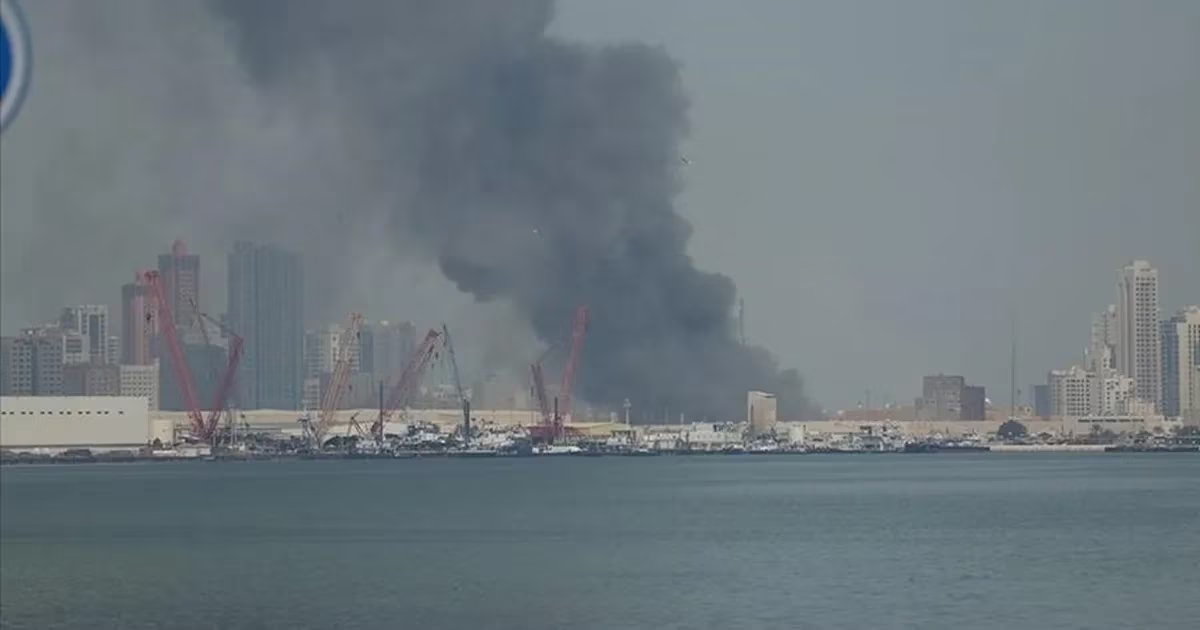
Several Gulf countries were subjected to a series of simultaneous military attacks carried out by Tehran early Wednesday morning, leading to widespread fires in vital facilities and direct targeting of maritime navigation. The escalation included drone and cruise missile strikes that hit Kuwait International Airport and industrial facilities in Bahrain, in addition to the interception of aerial attacks over Saudi territory.

In Kuwait, the Directorate General of Civil Aviation confirmed a massive fire broke out in the fuel tanks belonging to 'Kafco' company within the premises of Kuwait International Airport. Sources explained that the attack was carried out by suicide drones, causing significant material damage to the aircraft fueling infrastructure, while firefighting teams managed to control the flames without any casualties.

In Manama, the Bahraini Ministry of Interior announced it dealt with a fire that erupted in a major industrial facility as a result of what it described as direct Iranian aggression. A state of security alert prevailed in the country after sirens were activated several times during the early morning hours, with authorities urging residents to adhere to instructions and head to safe areas.

On the maritime front, the Qatari Ministry of Defense revealed that its territorial waters were subjected to an attack by three cruise missiles launched from the Iranian side, with air defenses successfully intercepting two of them. The ministry confirmed that the third missile struck the oil tanker 'Aqua 1', chartered by Qatar Energy, necessitating the urgent evacuation of its entire crew.

International shipping sources reported that the targeted tanker sustained a direct hit on its left side 17 nautical miles off the coast of Doha. The competent authorities in Qatar initiated their technical investigations to assess the damage, while Qatar Energy confirmed that the incident did not cause any oil spill or environmental damage in the surrounding maritime area.

In the same context, the Saudi Ministry of Defense announced that its forces managed to intercept and destroy two drones that were targeting areas in the Kingdom early today. The ministry did not disclose the specific locations that were targeted, but indicated that these attacks are part of a series of ongoing aggressions that have threatened the security and stability of the region for weeks.

These field developments come on the thirty-third day of the open military confrontation between Iran and the Israeli-American coalition. These attacks are considered the most violent since the conflict began last February, with civilian and economic facilities in Gulf states now within the direct targeting circle of mutual military operations.

For its part, Tehran justified these attacks as a legitimate response to military operations and assassinations that targeted its senior security and political officials, including the former Supreme Leader. Iranian sources claim that their strikes focus on bases and interests serving the American presence in the region, holding Washington and Tel Aviv responsible for the collapse of regional security.

The region is experiencing a state of international anticipation and concern regarding the safety of global energy corridors amid the targeting of oil tankers and international airports. Maritime navigation bodies have called on all vessels transiting the Gulf to exercise the utmost caution, amid expectations of further military escalation that may affect other economic sectors in the coming days.

The operations target American bases and interests in the region in response to ongoing aggression that has targeted senior leaders.

ARAB AND WORLD

Thu 02 Apr 2026 8:40 am - Jerusalem Time

Trump announces 'regime change' in Iran militarily and pledges to end the mission quickly

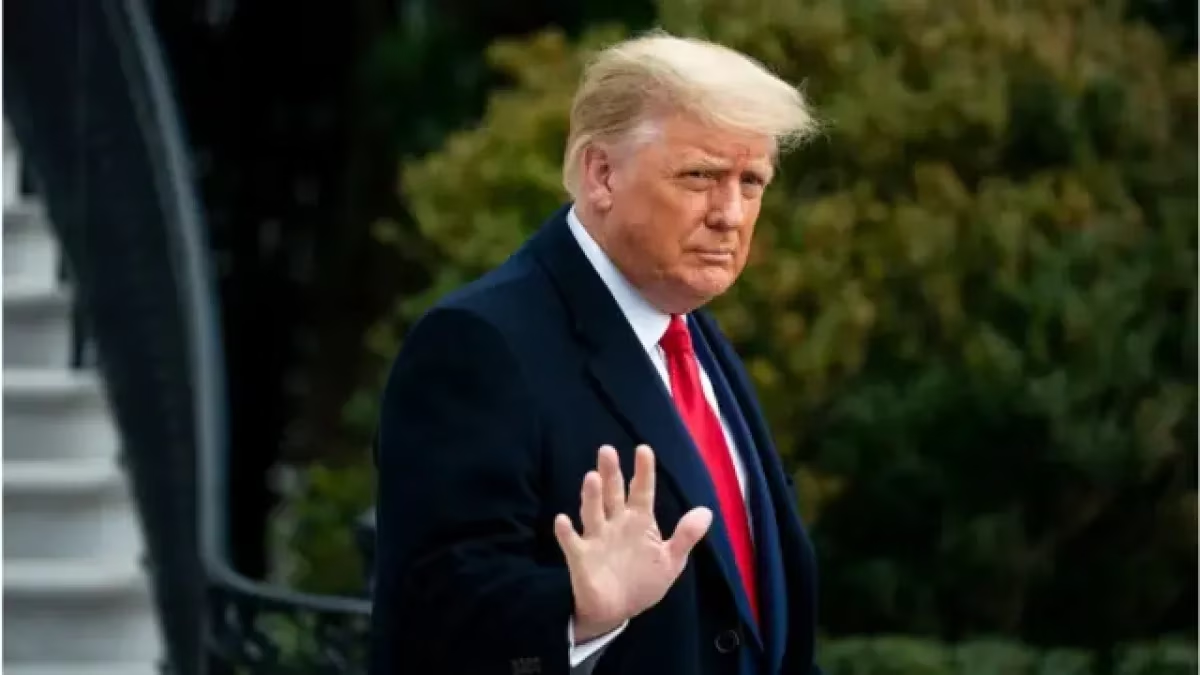
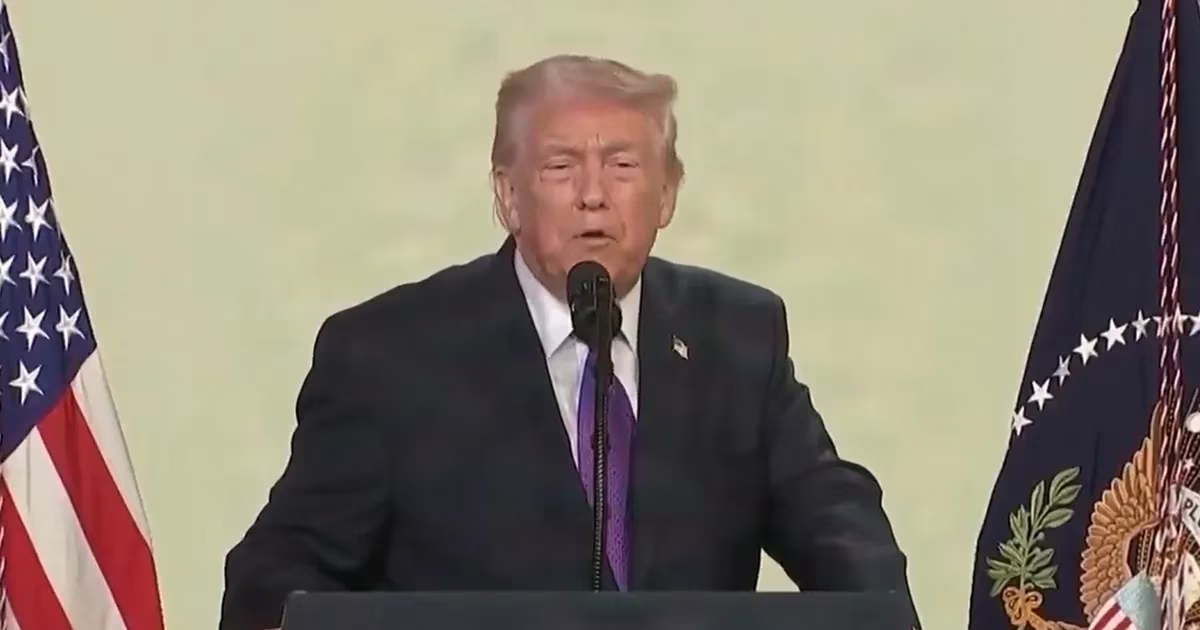
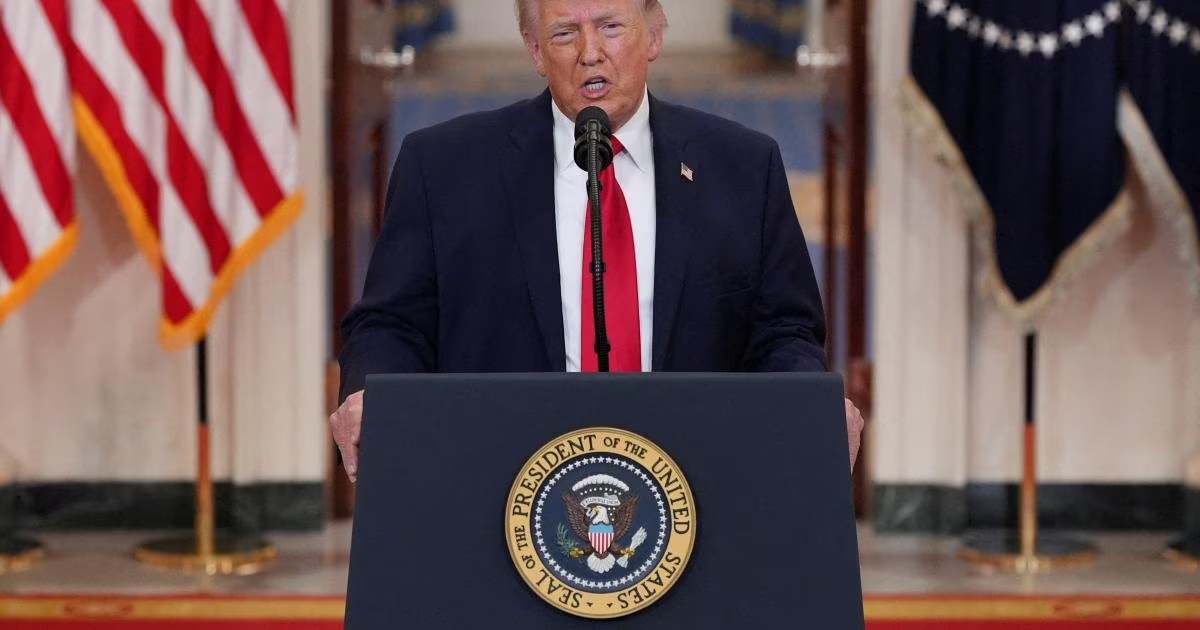
US President Donald Trump announced that the American armed forces achieved a decisive victory in their battle against the Iranian regime, describing Tehran as the world's leading state sponsor of terrorism. In a speech to the nation from the White House, Trump affirmed that military operations targeted the regime's infrastructure and succeeded in neutralizing the threats Iran posed to regional and international security.

The US President revealed that Washington managed to bring about actual change in the structure of the Iranian regime by eliminating first and second-tier leaders in the hierarchy of power. He indicated that the Iranian scene is currently witnessing the rise of leaders he described as 'more moderate,' paving the way for a new phase away from the previous confrontational policies pursued by Tehran.

Trump stressed that air and missile strikes completely destroyed ballistic missile and drone production factories, which were the weapons Iran relied on to threaten its neighbors. He clarified that the losses suffered by Tehran are severe and unprecedented, leading to a complete paralysis of its offensive and defensive capabilities alike.

In the context of his discussion about energy, the US President noted that the United States no longer needs Middle Eastern oil thanks to self-sufficiency, but it continues its military operations to protect its strategic allies. He affirmed that regional stability remains a priority for the American administration to ensure the flow of global trade and protect common interests with allied nations.

Trump reviewed his policies regarding the nuclear file, recalling that since taking office, he sought to prevent Tehran from acquiring atomic weapons by all available means. He indicated that his decision to terminate the previous nuclear agreement was necessary to stop the flow of funds that former President Barack Obama had given to the regime, which were used to finance subversive activities.

Trump reported that the Iranian naval force had been completely destroyed, indicating that the military mission there is nearing its end and will be completed very quickly. He explained that the Iranian regime rejected all opportunities to abandon its nuclear ambitions and was planning to develop long-range missiles capable of directly targeting American territory.

The US President affirmed that the primary goal of the extensive military operation is to eliminate the destructive power of the regime and prevent it from blackmailing neighboring countries. He stressed that Iran has proven to be an untrustworthy party, and that its acquisition of nuclear weapons would have represented a catastrophe whose consequences for the entire world are unimaginable.

The speech touched upon the economic situation, where Trump affirmed that Iran has ended militarily and economically due to sanctions and successive strikes that targeted the state's vital points. He sent a message to the countries benefiting from the Strait of Hormuz, indicating that the responsibility for securing the waterway primarily lies with those who benefit from it commercially.

Trump promised to reopen the Strait of Hormuz to international navigation immediately after the remaining military operations are completed, affirming that oil prices will stabilize and return to their normal levels. He explained that Washington has a clear plan to end the state of tension in vital waterways after definitively neutralizing the Iranian threat.

In a strongly worded threat, Trump said that Washington would deliver very harsh strikes over the next three weeks to return Iran to the 'Stone Age' if it attempted to resist. He affirmed that previous American wars may have taken a long time, but this war will be very short and decisive to end the Iranian threat forever.

It is worth noting that the military escalation led by the United States and Israel against Iran began in late February, resulting in the deaths of thousands of people and the assassination of Supreme Leader Ali Khamenei. In response, Tehran continues its attempts to retaliate by launching missiles towards Israeli targets and American bases in the region, leading to an unprecedented full-scale confrontation.

We have practically changed the regime in Iran by eliminating first and second-tier leaders, and now we have more moderate leaders there.

PALESTINE

Thu 02 Apr 2026 8:40 am - Jerusalem Time

Prisoner's Club warns of 'death legislation': Prisoner execution law entrenches Israeli racism

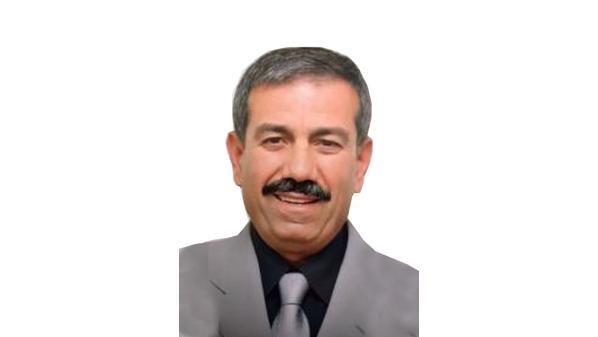
The head of the Palestinian Prisoner's Club, Abdullah Al-Zghari, warned of the serious repercussions of the prisoner execution law recently approved by the Israeli Knesset. Al-Zghari affirmed that this legislation directly threatens the lives of thousands of detainees and reflects the extent of racism that has spread throughout the political and legal systems of the occupation.

Al-Zghari explained in press statements that the approval of such laws represents official legislation for direct killing operations against Palestinians, as the law exclusively targets them. He described this step as an entrenchment of the racial discrimination practiced by the occupation authorities against prisoners in an attempt to legitimize their physical liquidation.

The head of the Prisoner's Club called on international organizations, United Nations bodies, and the Human Rights Council to take urgent action to confront these grave violations. He pointed out that continued international silence encourages the occupation to proceed with its retaliatory policies, despite the rejection of these unjust laws by some European countries.

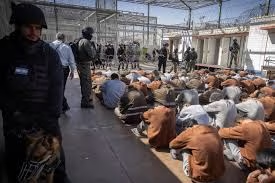
The new law approved by the Israeli parliament stipulates the execution by hanging of Palestinian prisoners, while providing full legal protection for the executors. The law also grants prison guards who carry out the sentences anonymity, which closes the door to any future legal prosecution against them.

One of the most prominent dangers of this legislation is that it allows for the issuance of death sentences without the need for a request from the public prosecution, and it does not require unanimity among judges to make the decision. The law is satisfied with a simple majority to approve the sentence, which also applies to military courts that already lack fair trial standards in the West Bank.

Al-Zghari indicated that Palestinian prisoners are currently going through the most difficult and dangerous phase in decades, especially after the radical transformations witnessed in prisons after October 8, 2023. The pace of systematic physical and psychological torture has escalated, and detention centers have turned into arenas for collective revenge against male and female prisoners.

The head of the club spoke about the widespread spread of infectious skin diseases among detainees, especially scabies, as a result of the deliberate starvation and overcrowding policy. He affirmed that the prison administration deprives prisoners of the most basic medical care, which has turned their daily lives into a real hell that threatens their physical safety.

Al-Zghari drew attention to the incitement role played by the Israeli National Security Minister Itamar Ben-Gvir, describing him as a sadistic, bloodthirsty model. He affirmed that Ben-Gvir personally supervises the repression and incursions, and seeks to impose a new reality inside prisons aimed at stripping prisoners of all their basic human rights.

Human rights statistics indicate the presence of more than 9,500 Palestinian prisoners in occupation prisons, including 350 children and 73 women living in harsh conditions. The number of administrative detainees is strategically increasing, with hundreds being held without clear charges or legal trial, in flagrant violation of international conventions.

Human rights sources confirmed that the occupation continues to deprive prisoners of family visits, and also obstructs the role of the International Committee of the Red Cross in monitoring their health and legal conditions. This systematic isolation aims to isolate prisoners away from international oversight, which facilitates daily abuse and torture against them.

Israeli figures, including former judges and Nobel laureates, had previously opposed the law, considering it a moral stain on the history of the judiciary. Despite these limited internal criticisms, the far-right government insisted on passing the law to strengthen its repressive policies against the Palestinian people.

Al-Zghari stressed that the continuation of these policies represents a flagrant violation of international humanitarian law and the Geneva Conventions concerned with the protection of prisoners and detainees. He called on the international community to take practical and urgent steps to save the lives of detainees before it is too late, stressing that silence is complicity in the crime.

These legislative developments coincide with the ongoing war of extermination in the Gaza Strip, which has left tens of thousands of martyrs and wounded and widespread destruction of infrastructure. Observers believe that the execution law is part of a comprehensive war waged by the occupation on the Palestinian presence in all its locations.

In conclusion of his statements, the head of the Prisoner's Club affirmed that the Palestinian people will not be broken by these racist laws, and that the issue of prisoners will remain at the top of national priorities. He called for escalating popular and legal activities to support prisoners in their battle against the 'death legislation' that the occupation system is trying to impose.

The approval of the execution law represents a direct death sentence for detained Palestinians, exclusively targeting them within a racist system that entrenches discrimination against them.

OPINIONS

Thu 02 Apr 2026 8:40 am - Jerusalem Time

Friedman in the New York Times: Trump is leading the US military into a 'gas chamber' in his confrontation with Iran

Ramallah - “Alquds ” dot com

Ramallah - “Alquds ” dot com

Opinion Writer

In an article in the 'New York Times,' American writer Thomas Friedman painted a bleak picture of President Donald Trump's policy towards Iran, considering that the current administration lacks strategic vision. Friedman pointed out that Trump and Israeli Prime Minister Benjamin Netanyahu had engaged in a military confrontation, believing that regime change in Tehran would be quick and easy, which reality proved wrong.

The article explained that American and Israeli estimates greatly underestimated the Iranian leadership's ability to withstand pressure, as well as its military capability to inflict severe damage on the interests of Washington's allies. The writer also noted that Tehran succeeded in threatening the most important waterways for global energy transport, which negatively impacted the global economy and the stock market in the United States.

Friedman described President Trump as floundering in his positions in a shameful manner, sometimes claiming that Iranian leaders agreed to his demands, while at other times admitting his inability to regain control of the Strait of Hormuz. This contradiction reflects, according to the article, the absence of any plan for after igniting the fuse of war in the already volatile Middle East region.

The writer strongly criticized Trump's insistence on demanding Western allies send their armies to participate in the war, even though he did not consult them before making the decision to escalate. Friedman believes that this behavior expresses a reckless mentality that places the world's most powerful army in an extremely dangerous position, similar to placing a match in a gas-filled room.

The article touched upon the figures surrounding Trump, specifically mentioning Secretary of Defense Pete Hegseth, noting reports of his adoption of extremist nationalist beliefs. Friedman stated that Hegseth held prayer sessions at the Pentagon calling for the use of 'overwhelming violence' against adversaries, which reinforces the ideological nature of the current confrontation with Iran.

In an attempt to offer a way out of the crisis, Friedman proposed simplifying the war's objectives and limiting them to two basic points to ensure stability. The proposal is for Iran to abandon its stockpile of highly enriched uranium, in exchange for American guarantees to stop efforts aimed at changing the political regime in Tehran.

The writer believes that this agreement, if achieved, would end all hostilities without the need for air strikes or extensive ground operations. It would also contribute to stopping missile attacks and securing navigation in the Strait of Hormuz, which represents a vital interest for American national security and the global economy.

The article cited the opinions of military experts who confirmed that the primary goal of the Iranian regime is to remain in power, while the American goal is to prevent Tehran from acquiring a nuclear weapon. Based on this, abandoning secondary goals by both sides could open the door to a historic settlement that spares the region an impending catastrophe.

Friedman revealed the existence of secret negotiation channels through Pakistan between Trump's team and Iranian Parliament Speaker Mohammad Bagher Ghalibaf. He indicated that these moves suggest that Trump has begun to realize the difficulty of overthrowing the regime through air power alone, and is looking for a way out that saves face.

The article compared Trump's approach with the administration of Barack Obama, which reached the 2015 agreement. Friedman considered that Obama's agreement focused on core, achievable interests. Despite Trump's criticisms of that agreement, he failed to find an effective alternative after withdrawing from it in 2018, which brought Iran closer than ever to a bomb.

Friedman warned that the current policy has reduced Iran's nuclear 'breakout time' from a full year to just a few weeks. This deterioration in the security situation is a direct result of hasty decisions made without considering the consequences or coordinating with active international powers.

The writer affirmed that Trump would be 'lucky' if the Iranian leadership accepted the nuclear swap proposal under the current circumstances. The bitter truth, as he described it, is that the American president's fate is now linked to decisions made by his adversaries in Tehran due to his administration's incompetence in managing the file.

Friedman concluded his article by emphasizing the necessity of returning to political realism and easing oil sanctions in exchange for handing over fissile materials. He stressed that continuing the approach of 'revenge' and uncontrolled decisions would lead the United States into a quagmire from which it cannot easily escape, threatening its global standing.

This analysis reflects the growing concern in American political and media circles about the repercussions of military escalation in the Middle East. Questions remain about the American administration's ability to translate these analytical insights into a diplomatic reality that ends the raging war.

Trump is like a child playing with matches, putting the world's most powerful army in a gas-filled room.

PALESTINE

Thu 02 Apr 2026 8:40 am - Jerusalem Time

Gaza Doctors Under Attack: International Testimonies in South Africa Document the Extermination of Health Personnel

Prominent doctors who participated in the 'Israeli Apartheid Week' events in South Africa affirmed that the occupation's targeting of healthcare workers in the Gaza Strip represents a systematic and deliberate policy. Participants clarified that these attacks occur within the context of an ongoing genocide, aiming to undermine the basic necessities of life for the Palestinian people by destroying their healthcare system.

The city of Johannesburg hosted the screening of the documentary film 'Gaza Doctors Under Attack' by director Marita Rivelli, which highlights the existential threats faced by medical teams since October 2023. The film chronicles how hospitals transformed from life-saving centers into direct targets for bombing and siege, starting from Al-Shifa Medical Complex to Nasser Hospital.

Statistics documented in the film indicate that 164 doctors were martyred in the Gaza Strip by April 2024, noting that more than half of these martyrs were targeted and liquidated inside their homes and among their family members. These figures reflect the extent of the dangers that pursue medical personnel even outside their official working hours in field hospitals.

The screening included a harrowing testimony from Dr. Khaled Hammouda, who works at Al-Awda Hospital, where he recounted the humiliating details of his arrest and his exposure to physical and psychological torture at the hands of the occupation forces. Hammouda described how he was stripped of his clothes and paraded in the streets in shackles, in flagrant violation of all international laws protecting medical personnel in times of conflict.

Dr. Hammouda revealed that he lost 12 family members in an airstrike that targeted their home, including three of his siblings who also work in medical professions, in addition to his daughter. This personal tragedy embodies the reality of hundreds of medical families in Gaza who have been directly and systematically subjected to genocide.

For his part, Dr. Khaled Dawas, founder of the Hanoun Foundation, stated that the film refutes Israeli narratives that attempted to justify attacks on hospitals with claims of military presence. Dawas affirmed that independent investigations were prevented from accessing the targeted sites, which reinforces the hypothesis of covering up war crimes committed against patients and medical staff.

The film touched upon the tragic conditions inside Israeli detention centers, specifically the 'Sde Teiman' center, which has become a barracks for torture and severe violations against Palestinian detainees. Medical sources reported testimonies of inhumane practices, including performing surgeries on the injured without anesthesia, and Israeli doctors refusing to provide necessary treatment to patients.

In a moving intervention, Professor Mahdi, head of the Faculty of Medicine at Wits University, compared the experience of apartheid in South Africa with what is currently happening in Palestine. He pointed out that the brutality of the Israeli occupation in dealing with the medical sector far exceeded what the former apartheid regime practiced, praising the legendary resilience of Palestinian personnel.

Dr. Omar Abdel Manan, a pediatric neurologist, explained that the health system in Gaza was on the verge of collapse even before the recent escalation due to the prolonged siege. He added that power outages and a lack of essential supplies made medical work almost impossible, yet teams continued to perform their duties under constant bombardment.

For her part, Rina King from the organization 'South African Jews for a Free Palestine' called for the international community to act to stop supporting the occupation's economy. King criticized the continued supply of coal to Israel, considering that it indirectly contributes to financing the military machine that kills doctors and civilians in Gaza and Lebanon.

King emphasized that documenting these crimes through documentaries aims to restore global human sensibility and realize that what is happening is a morally unacceptable crime. She stressed that international silence regarding the targeting of universities and medical professionals opens the door to further violations throughout the region.

In a related context, Tariq Lala, a member of the South African Students' Congress, indicated that the student movement launched a national petition calling for a complete boycott of Israeli and Zionist institutions. He affirmed that solidarity with Palestine in South African universities is witnessing unprecedented momentum, linking the struggle of the two peoples against racism and occupation.

Dr. Dawas mentioned that the film's introductory tours will move to Cape Town to spread the Palestinian narrative and keep the issue of detained and martyred doctors alive in international memory. He explained that the goal is to expose the deliberate killings of healthcare workers between 2023 and 2025, and to ensure that perpetrators do not escape punishment.

The events concluded by emphasizing that targeting the health system is part of the 'scorched earth' strategy followed by the occupation to forcibly displace the population. Participants stressed that the protection of hospitals and doctors is not just a humanitarian demand, but a fundamental pillar of international humanitarian law that the world must enforce.

What the medical sector in Palestine faces makes the former apartheid system in South Africa seem much less severe.

ARAB AND WORLD

Thu 02 Apr 2026 8:39 am - Jerusalem Time

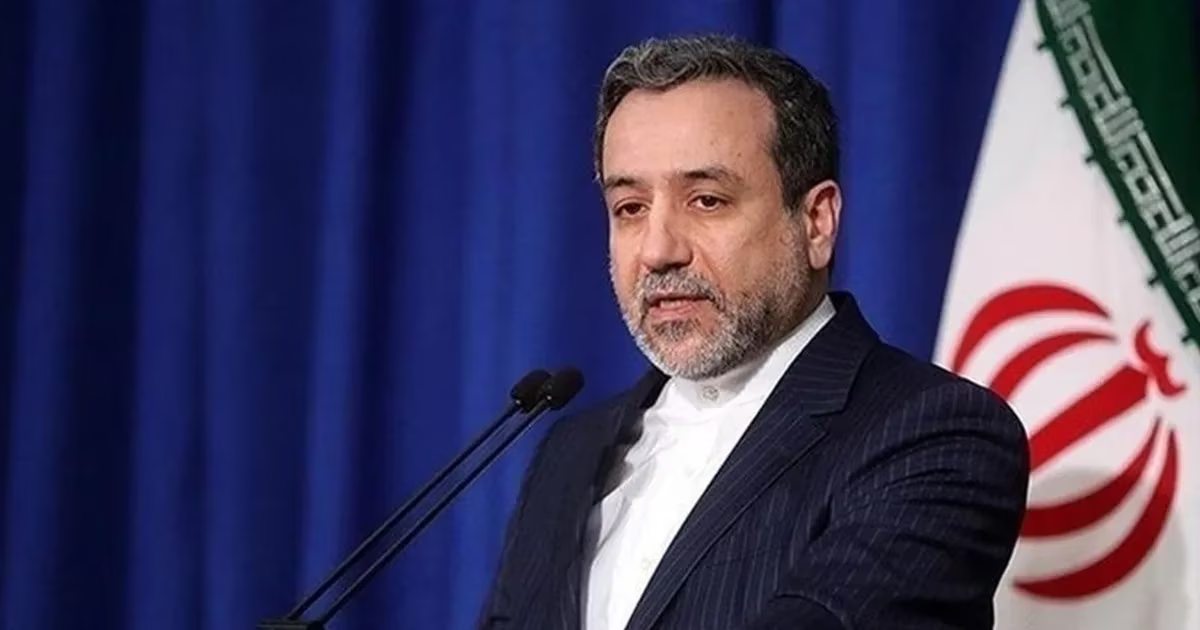
Tehran Rejects US Conditions, Adheres to Five Red Lines to End War

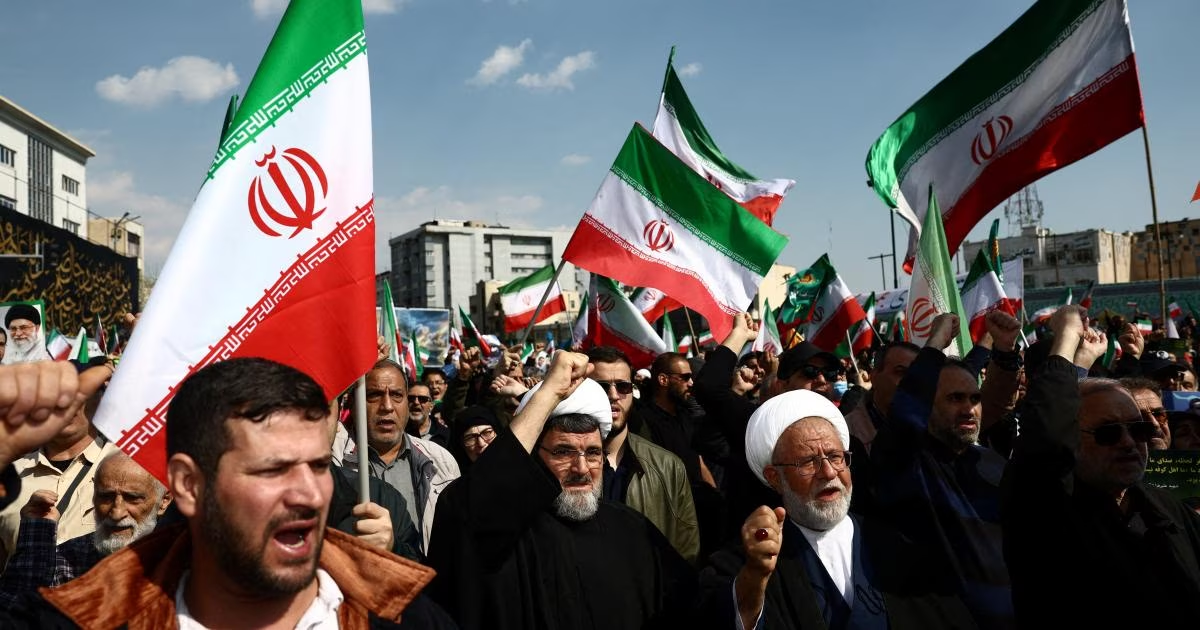
Tehran described the demands presented by the United States to end the ongoing conflict in the region as extreme and lacking a compromising logic. Official Iranian sources confirmed that Washington's current stance does not pave the way for genuine diplomatic solutions but rather complicates the already tense field and political scene.

In press statements, Iranian Foreign Ministry spokesman, Ismail Baqaei, denied the existence of any direct negotiation channels with the American side at present. Baqaei clarified that his country had indeed received messages through international mediators, including Pakistan, but these communications did not rise to the level of direct negotiations promoted by some parties.

Iran's Foreign Ministry stressed that the armed forces are on high alert and fully prepared to deal with all forms of potential military escalation. The spokesman indicated that Tehran is ready to repel any aggression, including the possibility of a ground attack, emphasizing that threats will not deter the state from protecting its sovereignty and national interests in the region.

On the other hand, media sources quoted a high-ranking Iranian official as saying that Tehran stipulates obtaining international guarantees for a comprehensive and permanent ceasefire to end the war definitively. The source confirmed that proposals for a temporary truce or partial ceasefire were not seriously discussed through mediators, as Iran insists on a radical solution that ends the causes of the conflict.

Iranian diplomacy adheres to five basic points described as red lines, which were delivered to the American side via the Pakistani mediator in response to a previous list of American demands. These points include the necessity of a complete cessation of military operations, the withdrawal of foreign forces from the region, and compensation for damages to Iranian infrastructure.

In a related context, US President Donald Trump stated that Tehran is currently seeking to reach a ceasefire agreement under the pressure of military operations. However, the Iranian vision leans towards requiring legal and political guarantees to prevent the recurrence of future targeting scenarios, which Washington considers a high bar for demands.

On the intelligence front, American reports indicated that intelligence agencies in Washington believe that the Iranian leadership is not yet ready to enter into substantive and decisive negotiations. These reports suggest that the gap between the two sides remains wide, especially given the continued mutual military operations that erupted since late February of last year.

Intense confrontations have been ongoing in the region since the outbreak of war on February 28, 2025, with Israel and Iran exchanging missile strikes and drone attacks. The attacks also targeted American positions and interests in several Arab countries, leading to civilian and military casualties, amid widespread international condemnation and fears of the conflict expanding to include new regional parties.

The United States' demands to end the war in the Middle East are extreme and illogical, and we are ready for any type of attack, including a ground attack.

LATEST NEWS

Thu 02 Apr 2026 8:39 am - Jerusalem Time

14 Israelis injured in Iranian missile attack targeting central Israel

Medical and field sources reported that 14 Israelis sustained injuries of varying degrees after wide areas in central Israel were subjected to intense missile barrages launched from Iranian territory. Ambulance teams confirmed that among the injured was an 11-year-old girl, whose condition was described as serious due to direct shrapnel injuries to her limbs, and she was immediately transported for intensive treatment.

In an official statement, Magen David Adom teams clarified that they provided first aid to a number of injured individuals before transferring them to nearby hospitals, noting that the injuries ranged from serious to moderate and minor. The list of injured included a woman in her thirties and a 13-year-old boy, who were hit by shrapnel resulting from the explosions that rocked the central region.

For its part, the Israeli police announced that it had received numerous reports of missile remnants and interceptor shrapnel falling in various locations in the center of the country, including the coastal city of Tel Aviv. This shrapnel caused material damage to some properties, while security agencies urged settlers to adhere to instructions and remain near fortified areas until new instructions are issued.

In a related context, the Israeli army confirmed that its air defenses engaged in widespread interception operations to counter the Iranian missiles that penetrated its airspace. The army spokesperson stated in a brief statement that radars detected the direct launch of missiles from Iran, which necessitated activating sirens in dozens of cities and towns to ensure the protection of civilians.

Explosions echoed across central Israel's skies, resulting from attempts by the 'Arrow' and 'David's Sling' systems to intercept the warheads of the attacking missiles. Sources reported that the attack was extensive and targeted vital facilities and areas, leading to a state of full alert among the air force and various combat units.

These field developments come amid escalating regional tension, with military sources considering this attack a significant shift in the nature of the direct confrontation between Tehran and Tel Aviv. Israeli security agencies continue to assess the damage resulting from the missile barrage, with expectations of continued maximum alert on all fronts in anticipation of further attacks.

Despite the air defense announcing the interception of a large number of missiles, the arrival of shrapnel in densely populated city centers caused this number of injuries. Rescue teams are currently sweeping the areas where debris fell to ensure there are no trapped individuals or additional injuries that were not reported in the initial moments of the attack.

Air defense systems are working to intercept missile threats detected coming from Iranian territory.

ARAB AND WORLD

Thu 02 Apr 2026 8:39 am - Jerusalem Time

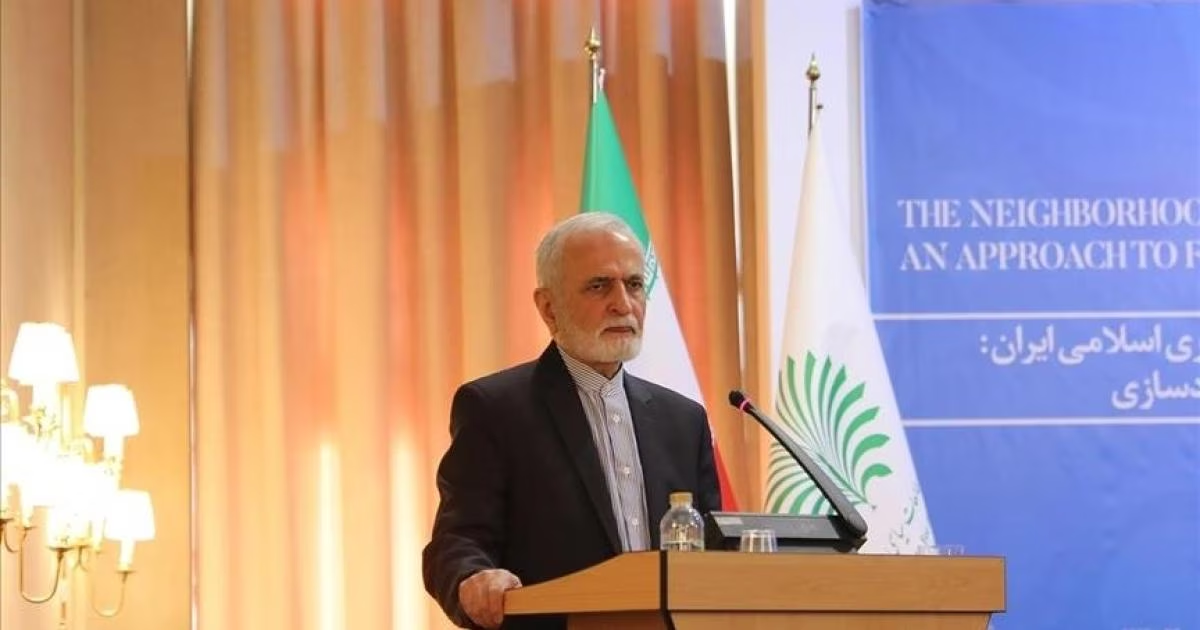
Iranian Diplomat Kamal Kharrazi Injured and His Wife Killed in Targeting of His Home in Tehran

Local media sources in Iran reported on Wednesday evening that Kamal Kharrazi, head of the Strategic Council for Foreign Relations, was injured as a result of a direct targeting of his home in the capital, Tehran. Reports confirmed that the attack resulted in the immediate death of Kharrazi's wife, while the senior diplomat was transferred to a hospital to receive urgent medical care due to injuries described as severe.

This targeting comes in the context of a widespread military escalation that began since late February, which, according to field sources, has led to thousands of casualties, including dead and wounded. This period has witnessed a series of assassinations targeting senior security and political officials in the Islamic Republic, most notably the former Supreme Leader Ali Khamenei, which reflects the seriousness of the current stage.

Kamal Kharrazi is considered one of the prominent diplomatic figures in modern Iranian history, having held the portfolio of Minister of Foreign Affairs during Mohammad Khatami's two presidential terms between 1997 and 2005. He also represented his country for many years as ambassador to the United Nations in New York, which gave him international weight and extensive experience in managing complex foreign affairs.

Kharrazi currently holds the position of head of the Strategic Council for Foreign Relations, a high-level advisory body directly affiliated with the Iranian leadership, established under the directives of the late Leader. Kharrazi continued to perform his duties as a senior advisor under the leadership of the new Leader, Mojtaba Khamenei, who decided to retain his father's advisory team to ensure the continuity of the state's high policies.

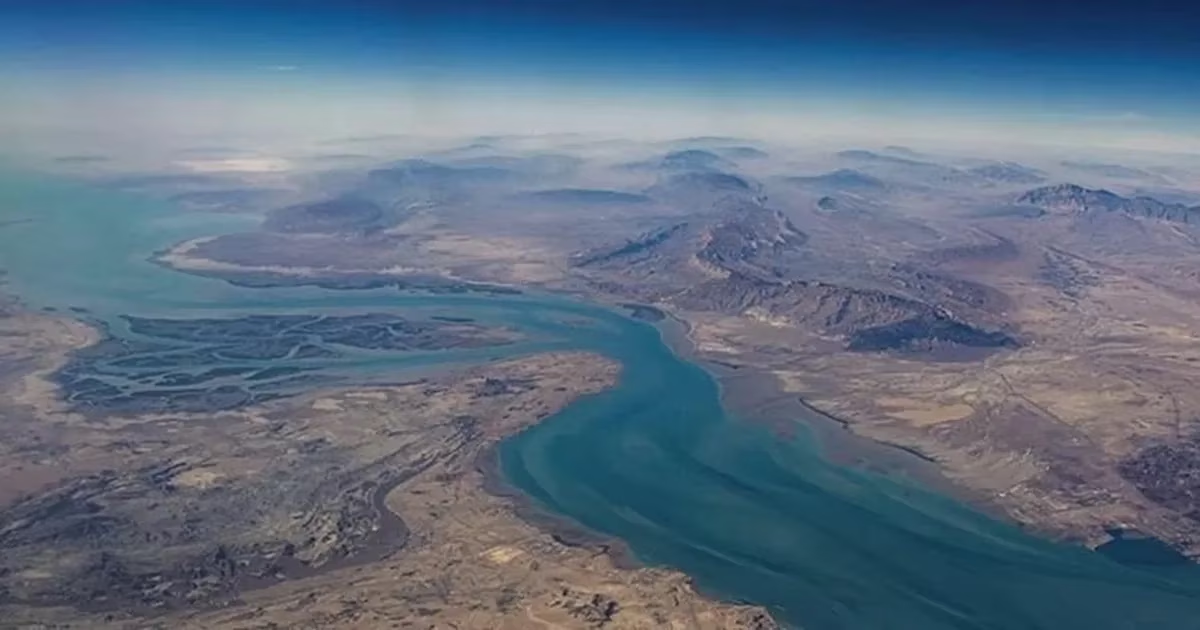
Coinciding with the attack on Kharrazi's home in Tehran, media sources indicated that a mysterious explosion occurred in the strategic port of Bandar Abbas in the south of the country. The full dimensions of this explosion or the extent of the damage caused by it are not yet clear, but it comes at a time when all vital Iranian facilities are on high alert due to successive attacks.

Kamal Kharrazi was transferred to the hospital for treatment after sustaining severe injuries, while his wife lost her life as a result of the same attack.

ARAB AND WORLD

Thu 02 Apr 2026 8:39 am - Jerusalem Time

China, the Biggest Beneficiary of the Strait of Hormuz Crisis: 7 Reasons Boosting Beijing's Global Influence

Tensions are escalating in the Strait of Hormuz, placing China in a unique strategic position that allows it to expand its economic and political influence on the international stage. International press reports indicate that Beijing is closely monitoring the movements of the United States and Iran, transforming the crisis from a potential military conflict into a geopolitical opportunity to strengthen its global standing.

Observers believe that history is repeating itself, as the current crisis in the Strait of Hormuz resembles the Suez Crisis in the 1950s, which marked a turning point in the decline of the British Empire. Just as Britain lost its military and financial superiority then, some believe that American hegemony may face a real test against China's growing rise.

Although Chinese President Xi Jinping recognizes that war could destabilize export markets, he sees it as a means to undermine Western superiority. China seeks to present itself as a balanced and responsible great power, calling for a ceasefire and criticizing what it describes as American hegemony, thereby enhancing its credibility among developing nations.

Economically, the continuous threat to traditional oil supplies contributes to accelerating the global shift towards clean energy and electric vehicles, a sector almost entirely dominated by China. This has been clearly reflected in financial markets, where shares of Chinese electric vehicle companies like 'BYD' jumped by 18%, while their Western competitors experienced a sharp decline.

Beijing holds a strategic bargaining chip in its control over approximately 80% of tungsten production and refining, a vital and indispensable element in the manufacturing of missiles and advanced weapons. China has imposed strict restrictions on the export of this metal, putting American and European military industries in a real predicament due to the increasing shortage of raw materials.

On the ground, the United States has begun moving military assets and strategic resources from the Far East towards the Arabian Gulf to counter Iranian threats. This military movement gives China more room to maneuver in its regional vicinity and alleviates the pressure that American forces were exerting on its eastern borders and the South China Sea.

Chinese academic sources confirm that any decline in the American military presence in the Asia-Pacific region directly benefits Beijing. Experts believe that Washington's preoccupation with Middle Eastern crises provides China with a golden opportunity to impose a new reality in areas it considers within its traditional sphere of influence.

China possesses a high capacity to absorb energy supply shocks thanks to its massive crude oil reserves, which have been bolstered over the past three years. Estimates suggest that these reserves, despite their secrecy, are sufficient to cover the country's consumption for six months, protecting its economy from sharp price fluctuations.

Beijing also relies on diversifying its supply sources by increasing imports from Russia and Iran, exploiting Western sanctions imposed on both countries. This energy alliance enhances China's strategic independence and makes it the only party capable of exerting real pressure on Tehran to ensure navigation security when necessary.

China's ultimate goal is to break the dominance of the US dollar in international trade of raw materials and basic commodities. Beijing seeks to enforce the use of the Chinese Yuan in oil and gas deals, an approach it has already initiated with Russia, Brazil, and Argentina, and aspires to extend it to include Gulf countries in any future settlement.

China's success in imposing its local currency as an alternative to the dollar in the energy sector would be a devastating blow to the Washington-led global financial system. If Beijing can play the role of mediator in the Hormuz crisis, it will undoubtedly stipulate the conversion of commercial transactions to the Yuan, accelerating the decline of the American currency.

Compared to Britain in 1956, the United States today possesses immense technological and military superiority, in addition to the dominance of its financial bonds in international markets. However, the Chinese challenge does not rely on direct military confrontation, but rather on economic attrition and control over vital supply chains.

The question of whether the Hormuz crisis will lead to China's rise as the sole great geopolitical power remains dependent on the outcomes of the current conflict. But current indicators confirm that Beijing is the party most prepared to capitalize on these disturbances to achieve long-term gains at the expense of traditional Western influence.

In conclusion, it seems that the 'Third Gulf War' for the Trump administration may be the moment that reshapes the global balance of power. China is not merely observing; it is actively building a parallel system that ensures its economic and political sovereignty, exploiting every loophole left by American withdrawal or preoccupation in the region.

Any decline in the American presence in the Asia-Pacific region will inevitably benefit some party, and we can well imagine who that party is.

ARAB AND WORLD

Thu 02 Apr 2026 8:39 am - Jerusalem Time

US Air Reinforcements in Europe: 'Warthog' Fighters Arrive in Preparation for Regional Deterrence Missions

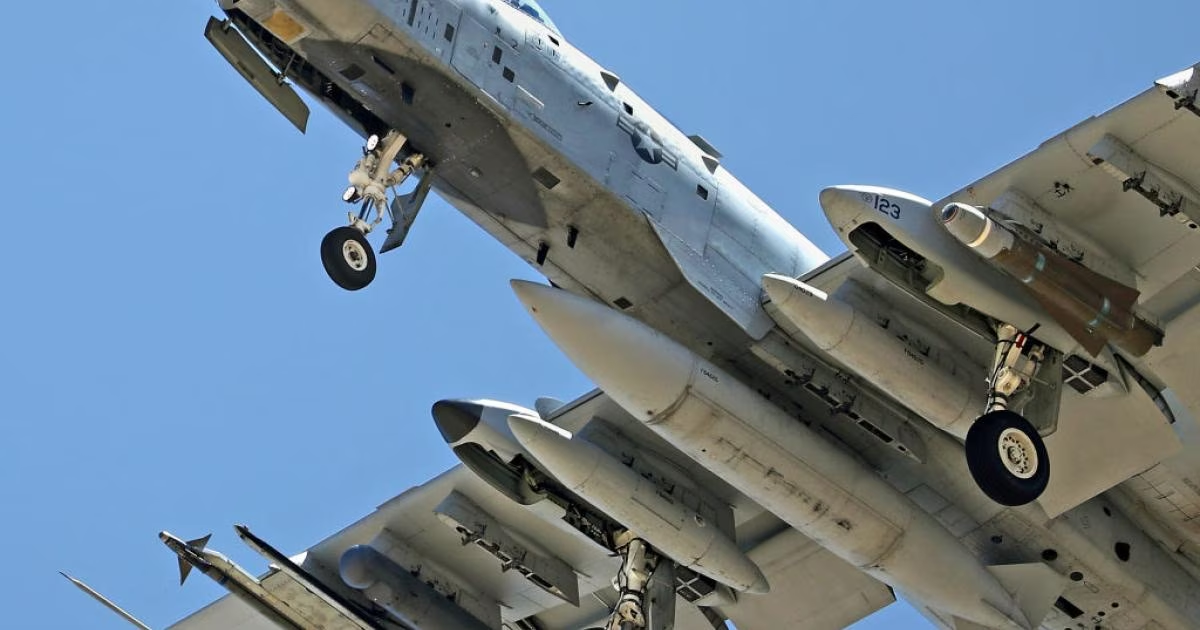
Lakenheath Air Base in the United Kingdom witnessed the arrival of significant US military reinforcements last Monday evening, consisting of 12 'A-10C Thunderbolt II' attack aircraft. Air navigation systems tracked the path of these aircraft, which departed from Pease Air National Guard Base in New Hampshire, crossing the Atlantic supported by eight dedicated aerial refueling aircraft to ensure the continuity of the journey.

Military analysts believe that deploying this type of aircraft to areas close to potential theaters of operation reflects a qualitative escalation aimed at securing international navigation in the Strait of Hormuz. This move primarily aims to neutralize threats posed by fast boats, naval mines, and suicide drones, in addition to providing dense air cover for any special operations that may be carried out on the ground in coastal areas.

The 'A-10C' aircraft is known in military circles by the nickname 'Warthog', and it represents the first aerial platform in the history of the US Air Force specifically designed to provide close air support for ground forces. This aircraft is characterized by an exceptional ability to remain in the battle sky for long periods, with the ability to land and take off in very harsh weather and field conditions, making it a deadly weapon in direct confrontations.

This fighter possesses diverse combat capabilities that enable it to destroy a wide range of targets, from heavy tanks and armored vehicles to light vehicles and enemy tactical command centers. It has also proven highly efficient in targeting light naval attack aircraft, which enhances its role in protecting vital waterways from any sudden attacks that regional powers might launch.

Technically, the aircraft is approximately 16 meters long, reaches a maximum speed of 420 miles per hour, and can fly at high altitudes of up to 14,000 meters above sea level. This aircraft entered active service in 1976, piloted by a single pilot within an engineering design that focuses on protecting the cockpit and ensuring the pilot's survival in high-risk combat environments.

'Warthog' aircraft are equipped with advanced vision and guidance technologies that allow them to operate at full efficiency in all weather conditions and around the clock. These technologies include advanced night vision systems, individual command domes designed to be compatible with pilots' protective goggles, in addition to smart guidance systems mounted directly on the pilot's helmet to facilitate the process of identifying targets with extreme precision.

The large canopy of the A-10C aircraft gives the pilot a comprehensive and wide view of the target area, which facilitates the process of distinguishing between friendly and enemy forces in the field. Experts indicate that the US Air Force still relies on a fleet of 281 aircraft of this type, due to its unique ability to direct accurate fire against moving and armored targets in crowded combat environments.

This current redeployment in the United Kingdom comes as part of a broader strategy to enhance US combat readiness on the European continent and ensure rapid intervention in active conflict zones. These movements are a clear message regarding the commitment to supporting allies and providing the necessary protection for strategic interests amid escalating tensions with Iran in the Arabian Gulf region.

In conclusion, the 'A-10C Thunderbolt II' aircraft remains a symbol of striking air power and aiming accuracy, combining durability and high resistance to damage on the battlefield. With the arrival of these reinforcements in Britain, military circles are anticipating how these capabilities will be employed to curb naval and air threats that may face international navigation in the coming period.

The participation of the A-10 aircraft in operations off the southern coast of Iran indicates a qualitative escalation aimed at securing navigation and neutralizing boats and drones.

PALESTINE

Thu 02 Apr 2026 8:38 am - Jerusalem Time

Warnings of the Death of Prisoner Akram Al-Qawasmi and the Occupation Buries a Jerusalemite Child in 'Cemeteries of Numbers'

Palestinian human rights organizations have launched an urgent appeal to save the life of the Jerusalemite prisoner Akram Al-Qawasmi, detained in the Israeli Gilboa Prison, confirming that his health condition has reached a critical stage. Sources clarified that Al-Qawasmi is subjected to a series of violent and systematic physical assaults by the jailers, which has led to a frightening decline in his motor and sensory abilities.

Field reports indicate that prisoner Al-Qawasmi is currently suffering from severe emaciation, to the extent that he is unable to move normally and his fellow prisoners are forced to carry him. These developments come after an escalation in raids on prisoners' cells since the end of Ramadan, with Al-Qawasmi being specifically targeted as one of the prominent figures in the prisoner movement.

Released prisoners conveyed harsh testimonies about Al-Qawasmi's detention conditions, noting that jailers deliberately hit him repeatedly on the head. These assaults caused internal bleeding, leading to the loss of about 80% of his hearing and sight on the right side, and 20% on the left side, amidst a complete deprivation of medical treatment.

Sources confirmed that one of the jailers directly threatened prisoner Al-Qawasmi with death, telling him: 'You will be the first person to die.' This incitement comes amid the policy of tightening restrictions led by Israeli National Security Minister Itamar Ben-Gvir, who previously objected to including Al-Qawasmi's name in any prisoner exchange deal.

Prisoner Akram Al-Qawasmi, 52 years old, hails from Hebron and his family resides in the Ras al-Amud neighborhood in occupied Jerusalem. He has been detained since 1996 for his activity in the Al-Qassam Brigades and his leadership of the 'Holy Vengeance' operations in response to the assassination of leader Yahya Ayyash, and is serving a life sentence.

Despite years of long detention and harsh conditions, Al-Qawasmi managed to continue his education behind bars. He obtained a bachelor's degree in history, then a master's degree in Israeli studies, leading to a doctorate in Jerusalem studies, which made him a constant target for the prison service.

In a related context of occupation violations, the Wadi Hilweh Information Center revealed a new crime related to the detention of martyrs' bodies. The Israeli Public Prosecution informed the Supreme Court that it had buried the body of the child martyr Wadih Shadi Aliyan in the secret 'Cemeteries of Numbers' about six months ago.

The human rights center clarified that the burial took place on October 29 last year, following an Israeli judicial decision approving the continued detention of the body. The child Aliyan, 14 years old, was martyred by occupation forces' bullets at the entrance to the town of Al-Eizariya, east of Jerusalem, in February 2024.

Human rights data indicate that the child Wadih Aliyan was extrajudicially executed, as videos showed him being shot while lying on the ground and posing no threat. Instead of handing over his body to his family for a dignified burial, the occupation authorities decided to transfer him to unidentified cemeteries known as the Cemeteries of Numbers.

Occupation authorities currently hold the bodies of 30 martyrs from occupied Jerusalem in their refrigerators or in the Cemeteries of Numbers. Among these martyrs are 10 children under the age of eighteen, with the martyr Wadih Aliyan being the youngest, in a blatant violation of international and humanitarian laws.

'Cemeteries of Numbers' are known as secret burial sites established by the occupation decades ago to bury the remains of Palestinian and Arab martyrs away from their families. Authorities replace the names of the martyrs with metal numbers placed above the graves, making identification or retrieval of their remains a complex and almost impossible process without legal and international pressure.

Prisoner institutions held the occupation authorities fully responsible for the life of prisoner Al-Qawasmi, demanding immediate intervention from the Red Cross and international organizations. They stressed that what prisoners in Gilboa Prison are subjected to represents 'slow death' that necessitates prosecuting occupation leaders in international courts.

A state of extreme tension prevails within Israeli prisons amid the continued policy of systematic abuse and deprivation of medical care. Prisoners appeal to human rights organizations to send international investigation committees to examine the extent of the crimes committed behind closed doors away from media scrutiny.

Jailers daily isolate Akram Al-Qawasmi, and he has received direct threats of physical liquidation inside his cell.

OPINIONS

Thu 02 Apr 2026 8:30 am - Jerusalem Time

When Detention Echoes Occupation

By: Said Arikat


April 2, 2026


News Analysis


Washington, D.C-In public debates about immigration, detention is often described in sterile, bureaucratic language that obscures the lived reality behind the policy. The story of Leqaa Kordia, a 33-year-old Palestinian woman recently released after a year in a Texas immigration detention center, cuts through that abstraction with unsettling clarity. Her experience forces an uncomfortable question: what does it mean when someone who grew up under military occupation draws parallels between that life and time spent in United States custody?


Kordia was arrested by Immigration and Customs Enforcement in April 2025 after attending a protest against Israel’s war in Gaza outside Columbia University the previous year. The initial charges tied to the protest had already been dropped, yet her encounter with the system was only beginning. Despite having lived in the United States for nearly a decade, having no criminal record, and actively pursuing legal residency through her United States citizen mother, she was placed in immigration detention. What followed, by her account, was not an administrative inconvenience but a prolonged ordeal marked by indignity, neglect, and isolation.


Her reflections carry particular weight because she does not present herself as a seasoned activist. She describes herself simply as someone responding to devastating personal loss. More than 200 members of her extended family were killed in Gaza. Her protest, she insists, was not ideological performance but an expression of grief and a demand for recognition. Yet it is precisely this personal lens that sharpens her critique. She draws a direct line between systems that, in different contexts, reduce human beings to numbers, deny them basic dignity, and normalize suffering.


As a child in the West Bank during the second intifada, Kordia experienced the constant pressure of military occupation: checkpoints, curfews, armed raids. One memory stands out. At nine years old, she awoke to soldiers in her bedroom, one of them laughing while pointing a rifle at her face. It is a moment that has stayed with her not only for its terror but for the casual cruelty it revealed. Years later, in a detention facility in Texas, she says she encountered echoes of that same indifference. Guards, she recalls, dismissed requests for help, told detainees to be quiet, and sometimes laughed at their distress.


The comparison is not about equivalence of scale or context, but about patterns of dehumanization. Kordia describes overcrowded dorms where women slept on thin mattresses on the floor, frigid temperatures justified as a safeguard against germs, and water that was sometimes visibly contaminated. Meals were served at odd hours and often described by detainees as inedible. Those who refused to eat risked punitive isolation under the label of suicide watch. Basic religious accommodations were disregarded. Medical care, she says, was dangerously inadequate, culminating in her hospitalization after a seizure.


Such conditions, if accurately described, should not be controversial to condemn. Yet public understanding of immigration detention remains shallow. Kordia herself believed she was informed before her incarceration. Only after experiencing it did she grasp the extent of the problem. This gap between perception and reality is sustained by distance, by language, and by a tendency to treat detainees as abstractions rather than neighbors.


One of the most striking aspects of her account, however, is not only the suffering but the solidarity that emerged within it. Women from different countries, speaking different languages, formed a community under pressure. They shared food, celebrated birthdays with whatever they could gather, and looked after one another in moments of illness or crisis. When Kordia was hospitalized, it was another detainee who ensured her family was informed and who insisted that her hijab accompany her. In a system seemingly designed to isolate, they built connections.


Kordia now speaks of having a bigger family, one that includes the women she left behind in detention. This shift in perspective has expanded her sense of responsibility. While she continues to advocate for Palestinians, she now feels compelled to speak out about what she calls the human tragedy of immigration detention in the United States. Her testimony suggests that these issues are not separate but interconnected through a broader concern with how institutions wield power over vulnerable populations.


Critics may argue that such comparisons are inflammatory or overly simplistic. But dismissing them outright risks ignoring the underlying grievances they express. When individuals who have experienced different systems of control identify similar patterns, their observations deserve scrutiny, not reflexive rejection. The question is not whether the United States is identical to any other context, but whether its practices align with its stated values.


Kordia arrived in America believing it to be a place defined by freedom of expression and opportunity. That belief has been shaken but not entirely extinguished. She still speaks, still hopes, and still insists on the possibility of change. Her uncertainty about her own future, as her deportation case continues, underscores the precariousness faced by many in similar situations.


At minimum, her story challenges complacency. It asks policymakers, citizens, and observers alike to look more closely at what is done in their name. Detention, after all, is not merely a legal status; it is a human experience. And as Kordia’s account makes clear, it is one that demands far greater attention, accountability, and ultimately, reform.

OPINIONS

Wed 01 Apr 2026 8:09 pm - Jerusalem Time

Trump threatens to withdraw from NATO amid rising tensions with allies

Said Erikat

Opinion Writer

Washington - Said Arikat - 1/4/2026

Former US President Donald Trump sparked widespread controversy after hinting at the possibility of the United States withdrawing from the North Atlantic Treaty Organization (NATO), in statements he made to a British newspaper. These hints came in the context of his repeated criticisms of what he described as the weak support of member states during the military escalation with Iran, reflecting escalating tension in the relationship between Washington and its traditional allies.

In an interview with the British newspaper "The Telegraph" on Wednesday, Trump not only questioned the usefulness of the alliance, but went further, describing it as a "paper tiger," considering that Russian President Vladimir Putin recognizes its fragility. These statements reflect an old stance of Trump, who has long criticized what he considers an imbalance in burden-sharing within the alliance, and accused European countries of over-reliance on American military capabilities.

Trump's statements came at a time when NATO countries showed reluctance to engage militarily to reopen the Strait of Hormuz, which Iran closed in response to US-Israeli attacks. The strait is a vital artery for global energy supplies, which puts the alliance to a difficult test between avoiding military escalation and protecting economic interests.

In a series of statements and posts on the "Truth Social" platform, Trump escalated his rhetoric, calling on European countries to "learn to fight for themselves," and indicating that the United States may not be willing to continue playing the traditional security guarantor role. This discourse weakens the principle of "collective defense" on which the alliance is based, especially Article Five, which historically was only activated after the September 11, 2001 attacks.

Despite the allies, including British Prime Minister Keir Starmer, emphasizing the importance of NATO as "the most effective military alliance in history," differences clearly emerged in positions on the war with Iran. Britain initially refused to use its bases for launching attacks, before later engaging in defensive operations after its assets in the region were targeted.

London also did not escape Trump's criticism, who mocked its naval capabilities and the clean energy policies adopted by the British government, in statements reflecting increasing personal and political tension between the two sides.

Trump's statements reflect a deeper shift in the American vision of its global role, as there is a growing trend towards reducing external military commitments in favor of focusing on direct national interests. This trend, if translated into actual policies, could reshape the international security system established after World War II. It also puts European allies before a strategic dilemma regarding their ability to fill the potential vacuum if the American role declines, both in terms of military capabilities and collective political will.

On the other hand, European reluctance to engage in a direct confrontation with Iran reveals a persistent gap across the Atlantic in assessing threats and national security priorities. While Washington sees military action as a means of deterrence, European capitals tend to avoid escalation, fearing its economic and security repercussions. This disparity is not limited to the current crisis, but reflects a recurring pattern in international crisis management, which weakens the cohesion of the alliance in the long run.

As for bilateral relations, Trump's direct targeting of Britain and its prime minister highlights the decline of what was known as the "special relationship" between the two countries. Instead of close coordination, the relationship has witnessed public tensions reflecting differences in visions on issues of security, energy, and sovereignty. If this trend continues, London may find itself forced to re-evaluate its position between Washington and Brussels, in an attempt to achieve a delicate balance between traditional alliances and national interests.

PALESTINE

Wed 01 Apr 2026 8:08 pm - Jerusalem Time

Rockets from Lebanon hit Kiryat Shmona, Lebanese Army redeploys in the South

The settlement of Kiryat Shmona in northern occupied Palestine witnessed a wave of violent explosions on Wednesday due to rockets launched from southern Lebanon. Field sources reported that the shelling resulted in significant damage to a number of residential buildings and burning vehicles, while columns of smoke rose from the targeted sites amid a state of security alert.

Media sources stated that air raid sirens did not stop blaring in various Upper Galilee settlements since the early morning hours. This escalation came after intensive rocket and drone launches targeting military sites and settlement gatherings were detected, forcing settlers to collectively seek refuge in shelters.

In a later development on Wednesday afternoon, defense systems detected the launch of about 10 rockets towards the city of Nahariya and its surrounding areas. While air defenses were able to intercept a number of these projectiles, others fell in open areas and populated sites, causing additional material damage and a state of panic in the northern region.

For its part, the Lebanese Army announced the implementation of a redeployment and deployment operation that included a number of its military units in the southern border areas. The military statement clarified that this step comes in light of the continuous Israeli incursions around the border towns, and aims to protect military personnel from the risk of siege and isolation imposed by the escalating aggression.

The Lebanese Army command stressed the continued presence of groups of military personnel within the border towns to stand by the residents and provide them with possible support. The statement also warned against attempts to incite and question the role of the military establishment, emphasizing that these campaigns negatively affect national cohesion and civil peace under the current circumstances.

These field developments come in the context of a wide-ranging Israeli aggression that began early last March, and included intensive airstrikes on the southern suburbs of Beirut and the Beqaa and southern regions. The occupation authorities claim that these operations come in response to Hezbollah attacks, although the latter asserts that its operations are in defense of Lebanon and in response to violations of the ceasefire agreement.

Israeli military censorship imposes strict secrecy on the extent of human and material losses resulting from Hezbollah's strikes and Iranian military responses. The occupation authorities prevent the publication of precise details about damaged military sites, contenting themselves with referring to damage to civilian property to reduce the extent of the military achievement of the resistance in Lebanon.

On the political front, observers indicate that the assassination of Iranian leader Ali Khamenei earlier may have pushed the region towards an unprecedented comprehensive confrontation. This event led to the collapse of the fragile understandings reached in November 2024, opening the door for rounds of fighting that are expanding day by day to include multiple fronts.

Amid continued airstrikes and ground incursions, humanitarian suffering is increasing in the targeted areas in Lebanon with the displacement of thousands of families. Ambulance and civil defense teams continue their work under shelling to retrieve victims, while the Lebanese resistance insists on continuing its rocket operations until the aggression on Lebanese and Palestinian territories ceases.

The redeployment of Lebanese Army units came as a result of the escalation of Israeli aggression aimed at besieging and isolating forces in border towns.

ANALYSIS

Wed 01 Apr 2026 8:08 pm - Jerusalem Time

Scenarios of Comprehensive Confrontation: How Can Arab Capitals Avoid the 'Great Holocaust' Trap?

As the military confrontation between the American-Israeli axis and Iran enters its second month, it has become clear that bets on a 'lightning war' have fallen short in the face of a complex reality on the ground. Intensive air strikes have not succeeded in crippling Iran's missile capabilities; instead, the scene has transformed into what can be described as a 'centerless war' where fronts intertwine and red lines fall.

Field realities have proven the effectiveness of mutual deterrence, as Tehran has demonstrated military flexibility by launching ballistic missile salvos and kamikaze drones. These means have managed to penetrate advanced air defense systems and reach strategic and sensitive targets, including facilities in Dimona and Beersheba.

The conflict has shifted from its traditional pattern to a cross-border 'network pattern,' where American bases and vital waterways are now within direct targeting range. This shift means that any escalation in a specific geographical point could ignite a fire in areas thousands of kilometers away, making control over escalation almost impossible.

Political readings indicate that the declared objectives of the war have begun to shift from undermining the nuclear program to attempting regime change or completely reducing its regional influence. Through this strategy, Washington and Tel Aviv seek to impose absolute security hegemony that extends for decades to come by breaking Tehran's network of alliances in the region.

The joint strategy of the attacking axis relies on eliminating Iran's regional power surplus and leaving it wounded from the conflict. Current pressures also aim to force Arab countries to abandon 'positive neutrality' and engage directly in the war effort as supporting parties.

The danger of 'managed chaos' emerges as an alternative to an elusive military decisive victory, where the region is kept in a state of continuous turmoil to drain everyone's energies. This scenario ensures the continued need for the American security umbrella and provides cover for redrawing energy routes and global economic maps.

The real trap for Arab countries lies in turning their geography into arenas for settling scores and mailboxes for exchanged military messages. Opening airspace or using military bases puts Arab sovereignty at stake and makes infrastructure legitimate targets in the calculations of reciprocal retaliation.

The regional economy faces systematic bleeding due to the continued threat to energy facilities and oil tankers in the Arabian Gulf. These crises severely impact development projects and redirect budgets towards armament and defense instead of the welfare and economic prosperity achieved over decades.

Arab capitals are forced into a sharp polarization dilemma, choosing between engaging in the American-Israeli axis or silence, which could be interpreted as submission. This forced choice deprives Arab countries of their ability to maneuver and build multi-polar strategic partnerships that protect their national interests.

To avoid this slippery slope, there is a pressing need for strict adherence to the principle of 'sovereign neutrality' and a refusal to use Arab territories or airspace as a launching point for any military actions. This stance is an authentic defense of Arab national security, not an alignment with any party to the conflict.

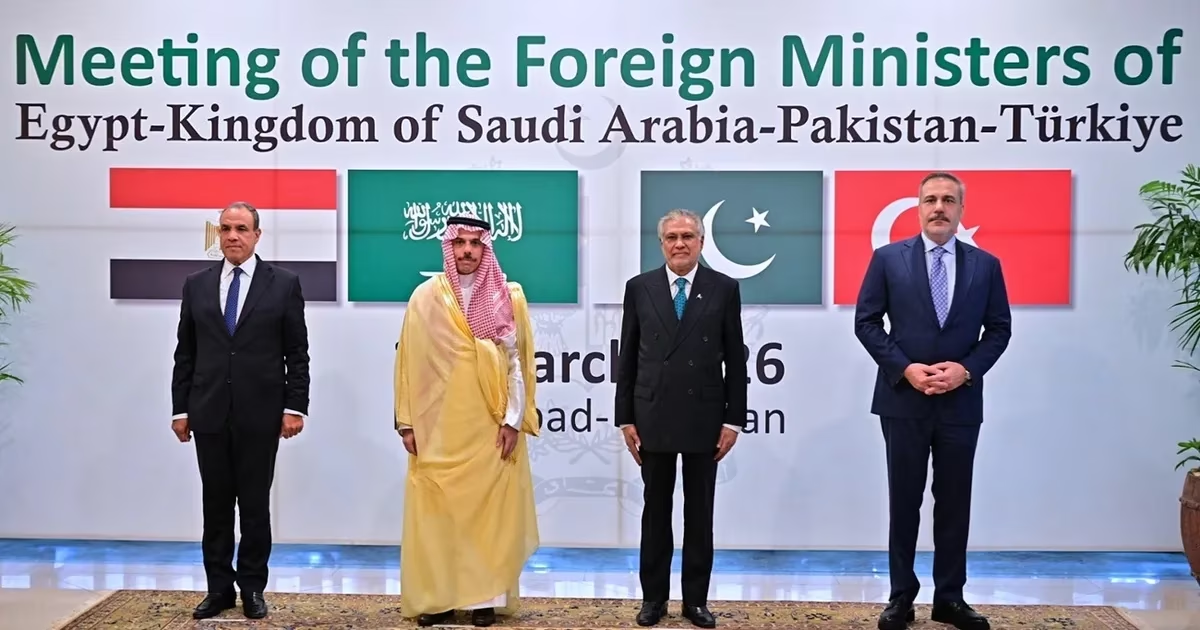
Supporting independent diplomatic tracks, such as the quadrilateral initiative involving Saudi Arabia, Egypt, Turkey, and Pakistan, is a necessary step to seize the initiative. A regional front must be formed to press for an immediate ceasefire and prevent Washington from monopolizing the decision of war and peace in the region.

Economic immunization requires activating emergency plans that go beyond monitoring energy prices to securing alternative trade routes and enhancing inter-Arab integration. Reducing reliance on volatile global markets grants Arab political decision-making greater independence in facing external pressures.

Maintaining open channels of communication with all parties, including Tehran and Washington, is a vital tool to avoid catastrophic surprises. This flexible diplomacy gives Arab capitals the ability to mediate and understand the true intentions of the warring powers in critical moments.

In conclusion, Arab countries must formulate a clear vision for the 'day after' the war to ensure that new external spheres of influence are not imposed. Sustainable stability will not be achieved through military adventures, but through a regional will that refuses to be fuel for the wars of others.

The region faces an exposed American-Israeli engineering attempt to redraw maps of influence to the beat of the drums of comprehensive confrontation.

ISRAELI AFFAIRS

Wed 01 Apr 2026 8:08 pm - Jerusalem Time

Haaretz: Israel Turns Border Expansion into a 'Sacred Security' Doctrine, Targeting Lebanon, Syria, and Gaza

An analytical report published by the Hebrew newspaper Haaretz highlighted a radical shift in Israeli political and military doctrine, moving from a concept of border defense to a permanent expansionist approach. Analyst Zvi Bar'el pointed out that Israel now treats its internationally recognized borders as temporary lines that can be crossed, seeking to impose absolute control over territories outside its legal sovereignty.

Bar'el believes that the fundamental problem begins with the state's self-definition, as Israel refuses to adhere to international rules that mandate the establishment of states within fixed borders. This approach has made geographical expansion the core of the contemporary Israeli project, transcending the traditional security pretexts that were used to justify previous military operations.

On the northern front, the analysis revealed the beginning of a gradual expansion process in southern Lebanon aimed at laying the groundwork for new settlements and imposing a permanent reality. The author warned that this path would cost the army dearly in terms of bloodshed, especially given Hezbollah's massive arsenal of rockets and landmines, which could turn soldiers' lives into a continuous hell.

Regarding Syria, the article noted Israel's insistence on remaining in strategic areas in the Quneitra governorate in the south of the country. This refusal to withdraw appears to be part of a long-term plan to officially annex these lands in the future, exploiting regional instability to establish new facts on the ground.

Moving to the Gaza Strip, the analyst confirmed that Israeli forces effectively control half of the Strip's area and are continuously working to expand this control. This move coincides with systematic policies aimed at changing the demographic and geographical nature of the Strip to serve the long-term settlement vision.

In the West Bank, the report observed the spread of what were described as violent militias, operating under the cover and direct support of the Israeli army to carry out what resembles ethnic cleansing. These groups have adopted combat and organizational methods similar to cross-border militias, imposing their political and military agenda and relying entirely on the official state budget.

Bar'el linked this shift to the personality of Prime Minister Benjamin Netanyahu, who adopts an expansionist doctrine that in some aspects resembles Donald Trump's thinking. However, the author clarified a fundamental difference: while Trump views control over land as a bargaining chip for negotiation, Netanyahu sees it as a 'sacred mission' and ideological goals that are non-negotiable and non-withdrawable.

The analysis indicates that this expansionist approach is accompanied by the construction of a parallel system within Israel that concentrates all powers in the hands of the Prime Minister. In this new system, religious forces and loyal politicians replace democratic institutions, leading to an unprecedented erosion of the rule of law and a decline in public freedoms.

The author also drew attention to the role of security and police agencies, which are sometimes used as tools to instill fear and compliance within Israeli society itself. This internal transformation serves external trends, as dissenting voices against occupation and expansion policies are silenced to ensure the continuation of the settlement project without effective internal opposition.

Bar'el strongly criticized the media's subservience to the government narrative, considering that Israeli society is being led through fear towards a bleak future. He believes that the absence of international accountability and continuous American support give Netanyahu the green light to proceed with violating international law and expanding the scope of occupation in the region.

The article concluded that Israel is heading towards long-term international isolation due to its insistence on rejecting recognized borders and adopting military force as the sole means of dealing with neighbors. It warned that the 'sacred security' sought by the government through expansion will not be achieved, but will lead to more bloody conflicts from which future generations will not escape.

The Israeli occupation of neighboring countries' territories is not a temporary tactic, but an ideological message and mission, and a permanent and sacred goal.

PALESTINE

Wed 01 Apr 2026 8:08 pm - Jerusalem Time

The Engineering of Fragmentation: How Israel Transformed the West Bank into an Archipelago of Isolated Islands?

The occupied West Bank in 2026 is witnessing the peak of a 'spatial engineering' process that began in 1967, where the map is no longer merely disputed political borders, but has transformed into a stage for dismantling the Palestinian geographical fabric. The Israeli project aims to replace Arab geographical connectivity with a connected settlement control network, which has led to the transformation of Palestinian cities and villages into what resembles an 'archipelago' isolated amidst a sea of comprehensive Israeli control.

Ma'ale Adumim settlement, established in 1975 east of Jerusalem, is the cornerstone of what is known as the 'Eastern Shield'. The surrounding E-1 settlement project poses an existential threat to the possibility of a Palestinian state, as it aims to connect the settlement to Jerusalem, effectively isolating the holy city from its surroundings and completely separating the northern West Bank from its south.

Updated field data shows that the number of settlers in the West Bank, including East Jerusalem, has exceeded 780,000. These are distributed across 192 official settlements and more than 350 settlement outposts, as part of a 'pivot points' strategy aimed at severing connections between major Palestinian urban centers and transforming them into separate cantons.

Occupation authorities currently control about 42% of the West Bank's area through the settlement system and its affiliated regional councils. Areas classified as (C) stand out as a strategic reservoir for settlement, constituting 61% of the total area, where Palestinians are prohibited from building in 99% of it, while facilities are granted to settlers to establish farms and modern road networks.

Israel uses a system of legal designations as tools for soft control, where 15% of the West Bank's land has been converted into so-called 'state lands' exclusively allocated to settlers. Closed military areas also cover about 18% of the area, and are often used to evacuate Bedouin communities in preparation for their later conversion into permanent settlement blocs.

Between 2023 and 2026, an unprecedented settlement explosion occurred, in which the occupation shifted from official government settlement to 'field privatization'. 'Pastoral settlement' emerged as an offensive tool, with more than 165 pastoral outposts established since 2023, 89 of them in 2025 alone, controlling thousands of dunams under direct army protection.

This expansion was accompanied by the legalization of thousands of housing units through the advancement of 390 structural plans, transforming random outposts into legal towns connected to Israeli infrastructure. This infrastructure includes providing settlements with water, electricity, and fiber optic services, to enhance their functional and civilian integration within the Israeli entity, away from their previous military character.

Israel moved to the stage of 'administrative annexation' by transferring broad powers from the military's civil administration to civilian ministries. This shift means that the West Bank is no longer treated as occupied territory subject to the laws of war, but as a part managed through Israeli civilian bureaucracy, facilitating confiscation and construction operations without security or international legal restrictions.

Bypass roads represent the arteries that strangle Palestinian land, consuming 3% of the West Bank's area and creating sharp spatial separation. These roads force Palestinians to use isolated tunnels and bridges to move between their villages, while providing settlers with fast and safe movement connecting settlement blocs to cities within the Green Line seamlessly.

Settler violence transformed from individual behavior into a systematic functional tool to empty the land of its owners, especially in the Jordan Valley and Masafer Yatta areas. These attacks led to the displacement of at least 79 Bedouin and Palestinian communities, and the forced displacement of more than 4,700 people, replaced by settlers in pastoral outposts that change the demographic reality.

In contrast to settlement expansion, Palestinians face a fierce policy of demolition and constriction, with 2025 alone recording the destruction of 1,400 residential and agricultural structures. Also, 925 closure points and military checkpoints are spread across the West Bank, turning citizens' lives into arduous journeys that double travel time and hinder any possibility of normal economic or social growth.

Official sources, including Defense Minister Israel Katz, stated that areas like Jenin refugee camp will not return to their former state, in reference to escalating destructive military operations. These statements reflect the occupation's intention to undermine the elements of survival in the camps and cities that constitute centers of resistance to the accelerating settlement project in the northern West Bank.

The apartheid wall continues to play its pivotal role in isolating hundreds of square kilometers of fertile land and groundwater sources. With the completion of new sections of the wall in 2026, the isolation of occupied Jerusalem deepens, and control is tightened over the strategic corridors connecting the governorates of the homeland, ending the dream of geographical connectivity.

On the fiftieth anniversary of Land Day, data shows that the conflict has transformed into a direct battle for physical existence on the land. Israeli 'fragmentation engineering' aims to prevent the emergence of any independent Palestinian entity, and to transform national political rights into mere humanitarian issues for residents living in isolated islands within an ever-expanding settlement environment.

The term 'settlement expansion' is no longer sufficient to describe the scene, as we are facing a reality of spatial resolution and the transformation of Palestinian geography into an archipelago of isolated islands.

ISRAELI AFFAIRS

Wed 01 Apr 2026 8:08 pm - Jerusalem Time

American Academic Warns of 'Escalation Trap': Military Force Won't Break Iran and May Grant It Nuclear Weapons

Robert Pape, a professor of political science at the University of Chicago and founder of the Chicago Project on Security and Threats, warned that the prevailing discourse about achieving military 'victory' conceals a dangerous path. Pape explained that the gradual slide towards an all-out war is happening without a clear exit strategy, which could ultimately lead to Iran emerging from this conflict in a stronger and more influential position.

The American academic, in an analysis published by the Israeli newspaper 'Haaretz', pointed out that manifestations of military power, such as precision strikes and assassinations, do not necessarily mean that political goals are being approached. He questioned whether these operations enhance actual security or are merely fuel driving a broad regional escalation that will be difficult to contain in the near future.

Pape based his argument on his thesis in his book 'Bombing to Win', emphasizing that air power alone is incapable of fundamentally changing adversaries' behavior. He argued that bombing might achieve temporary tactical gains, but it often fails to achieve strategic stability, and may even lead to increased resilience and determination to confront the targeted party.

The analysis considered that the occupying state and the United States are currently engaged in what he described as an 'escalation trap', where every military step appears as a major achievement but leads to dangerous consequences. The first phase of this trap, according to Pape, began with the bombing of the Fordow site in June 2025, which did not achieve its ultimate goal due to the transfer of enriched uranium before the attack.

Pape explained that the absence of international oversight over Iranian facilities led to a state of 'strategic panic' among decision-makers, pushing them towards military options aimed at regime change. He warned that this phase leads to a broader escalation, including intense missile attacks and targeting vital maritime passages that affect the global economy.

The academic believes that the Iranian regime has not shown signs of collapse under pressure; instead, it has become more hardline and dangerous as it gains increasing geoeconomic power. He pointed out that Tehran's potential control over the passage of 20% of the world's oil gives it enormous leverage that could tip the balance of power in any open conflict.

Pape warned against transitioning to the third phase, which involves ground operations, emphasizing that they might start limited but quickly expand into a long attrition. He considered that this path reinforces Iran's motives to acquire nuclear weapons as its sole guarantee of survival, rather than deterring it from this path.

The analysis noted a deep gap in decision-makers' perception between tangible military success and invisible strategic failure. While the destruction of military targets is easy to present to the public, it is difficult to measure the deep changes in the adversary's structure, which may become more complex after each strike.

Pape stressed that the Strait of Hormuz represents a trump card for Iran, through which it can achieve broad financial and political gains that burden international powers. He called on Washington to abandon the 'illusion of control' through military force, emphasizing that sustainable solutions only come through viable political and diplomatic arrangements.

Regarding a return to negotiations, Pape noted that opportunities are narrowing and that Iran may raise its demands to include international oversight of Israeli nuclear capabilities. He described Trump's withdrawal from the nuclear deal in 2018 as a grave mistake that accelerated the enrichment program and left the region without a safe alternative plan.

Pape concluded his warning by alerting to the danger of 'radiological attacks' that could cause a major strategic shock even without the use of conventional nuclear warheads. He affirmed that the policy of 'decapitation' and assassinating leaders might replace them with more radical figures, making diplomacy, despite its difficulty, the only path to avoid a catastrophic regional reality.

Tactical military successes can be easily displayed, but they often hide a deep strategic failure to change the adversary's behavior.

PALESTINE

Wed 01 Apr 2026 8:08 pm - Jerusalem Time

Escalating Diplomatic Crisis: French Air Restrictions Anger Washington and Deepen Rift with Israel

Diplomatic relations between the US administration and its Western allies have entered a new phase of tension, following sharp criticism directed at France by Donald Trump. Trump stated that Paris had shown 'very weak cooperation' in military operations against Iran, reflecting a growing gap in security coordination between the two parties.

This American dissatisfaction came against the backdrop of the French authorities' decision to ban military aircraft carrying equipment and ammunition bound for Israel from crossing its airspace. Sources reported that this decision included specific cases, among them an Israeli aircraft transporting American military shipments at the end of last March.

The French stance caused widespread logistical complications for US forces, which typically rely on French airspace as the shortest route to the Middle East. American aircraft, including strategic bombers, were forced to take alternative, longer routes through Southern Europe and the Strait of Gibraltar, increasing operating costs and flight hours.

For its part, the French presidency maintained its position, asserting that this measure is consistent with its consistent policy since the outbreak of the current conflict. Official sources clarified that Paris clearly distinguishes between providing general logistical support and direct involvement in combat operations that it does not fully endorse.

Paris indicated that it had previously allowed American planes to land at the 'Istres' base in the south of the country, but this was conditional on guarantees that they would not participate in offensive strikes. French circles expressed surprise at Trump's statements, considering them to lack accuracy in describing the true French position.

France does not appear to be alone in this approach, as Spain faced similar American criticism after closing its airspace to aircraft participating in military operations. Madrid refused the use of its bases in Andalusia, prompting Trump to threaten punitive economic measures against it, signaling a sharp division within the Western bloc.

In a related context, French-Israeli relations are experiencing an unprecedented deterioration, with the Israeli Ministry of Defense announcing a halt to all its defense purchases from France. This escalatory step reflects a radical shift in Tel Aviv's view of Paris, which it no longer classifies as a reliable partner in security matters.

At the heart of the dispute between Paris and Tel Aviv are pivotal political decisions, most notably France's official recognition of a Palestinian state in 2025. Benjamin Netanyahu's government considered this decision a hostile step aimed at exerting unacceptable international pressure on Israel under the current circumstances.

Other French measures also contributed to deepening the rift, such as preventing the passage of military shipments and demanding restrictions on arms exports to Israel. Additionally, the exclusion of Israeli companies from defense exhibitions held on French soil sparked widespread anger in Israeli political and military circles.

Despite diplomatic attempts led by French Foreign Minister Jean-Noël Barrot to mend relations, his Israeli counterpart Gideon Sa'ar showed no tangible response. Israel continues its military operations in southern Lebanon, ignoring repeated French calls for de-escalation and adherence to diplomatic channels.

In a related context, Trump's statements about the potential withdrawal of US forces from the region caused widespread concern among European allies. Trump called on other countries to take responsibility for securing their own energy supplies, indicating that protecting navigation in the Strait of Hormuz is no longer a top priority for Washington.

These developments embody a phase of reshaping international balances, where France attempts to balance its principles related to international law with its traditional alliances. Amidst the escalatory approach of Washington and Tel Aviv, the European position appears divided, weakening the Old Continent's ability to influence Middle East issues.

France showed very weak cooperation in military operations, and its decision to ban the passage of supplies is causing significant logistical complications.

PALESTINE

Wed 01 Apr 2026 8:08 pm - Jerusalem Time

Egyptian-UN discussions to implement the second phase of the Gaza agreement amidst continued Israeli violations

Egyptian Foreign Minister Badr Abdel Atty held an extensive meeting today, Wednesday, with the High Representative for Gaza in the Peace Council, Nikolay Mladenov, focusing on ways to advance the implementation of the second phase of the ceasefire agreement in the Gaza Strip. These discussions come at a sensitive time, as the Strip continues to witness field violations by Israeli occupation forces, threatening the stability of existing understandings.

Official sources clarified that the meeting discussed in detail the latest humanitarian and field developments in Gaza, and international efforts aimed at supporting the implementation of the entitlements of the second phase stemming from recent international initiatives. The Egyptian side stressed the necessity of adhering to the agreed-upon timelines and provisions to ensure a smooth transition towards a complete cessation of military operations.

During the discussions, Minister Abdel Atty emphasized the importance of not allowing regional escalation in the area to distract from the core issue in Gaza. He pointed out that completing the implementation of all provisions of the second phase is a top priority for the Egyptian state, affirming Cairo's full support for Mladenov's efforts in this complex diplomatic framework.

In a related context, the discussions stressed the necessity of keeping the Rafah crossing open in both directions to ensure the unimpeded flow of humanitarian and medical aid. Both sides considered that alleviating the humanitarian suffering of the Strip's residents requires genuine international will to remove the Israeli restrictions imposed on the entry of relief convoys and basic necessities.

The meeting also focused on the importance of a complete Israeli withdrawal from the agreed-upon areas, paving the way for the start of early recovery projects throughout the Strip. This vision aims to transition to a comprehensive reconstruction phase according to a coordinated international approach that responds to the actual needs of the population who have suffered widespread destruction of infrastructure.

On the ground, the Palestinian Ministry of Health in Gaza announced the martyrdom of four people and the injury of 12 others during the past twenty-four hours. Medical sources clarified that these injuries and deaths resulted from continued direct Israeli targeting of civilians, despite the ceasefire agreement coming into effect since mid-October last year.

Updated statistical data revealed that the total number of victims of the ongoing aggression since October 7, 2023, has risen to 72,289 martyrs and 172,040 injured. These staggering figures reflect the scale of the humanitarian catastrophe that has befallen the Strip, amidst the continued presence of thousands of missing persons under the rubble and in rugged roads.

Field reports indicated that the death toll since the announcement of the truce on October 11 last year reached 713 martyrs, in addition to the recovery of 756 bodies from under the rubble. Ambulance and civil defense crews face extreme difficulties in reaching targeted areas due to the absence of safe conditions and the continued flight of drones and targeting of movements.

In a dangerous development, sources reported that the Israeli occupation army has established its military presence by setting up 7 new sites along what is known as the 'Yellow Line'. These movements included placing concrete blocks and destroying surrounding residential buildings, displacing more families and crowding approximately 2.1 million Palestinians into very small areas.

Current Egyptian diplomatic moves seek to curb these field violations and ensure that the ceasefire agreement does not collapse. The Palestinian side demands genuine international guarantees that prevent the targeting of civilians and oblige the occupation to withdraw from vital centers and residential areas that were re-occupied during the recent ground operations.

Military escalation in the region must not distract from the full implementation of the second phase of the war cessation plan in Gaza.

OPINIONS

Wed 01 Apr 2026 11:19 am - Jerusalem Time

Legalizing Killing… The Execution of Prisoners Law at the Heart of the Fiftieth Anniversary of the Eternal Land Day

At a moment when blood mixes with history, and the voice of the land rises above all attempts at obliteration, the occupation emerges from behind its legal masks to declare it explicitly: killing is a right, execution is a policy, and the Palestinian is a legitimate target. On the fiftieth anniversary of the eternal Land Day, the usurping entity is not content with stealing land, but seeks to snatch life itself from its owners by enacting the “Prisoner Execution Law.” This is not a transient law, but a declaration of war written in the language of legislation, summarizing a complete colonial ideology that views the existence of a Palestinian as a crime punishable by death. It is a moment of great revelation, where the judiciary turns into an execution platform, the law into a bullet, and the prison into an open guillotine.

The “Prisoner Execution Law” represents a dangerous strategic shift in the nature of the conflict, as the occupation moves from managing oppression to engineering death as an official policy. It is no longer just violations committed in the shadows or practices denied by the official narrative; rather, killing is now formulated as a legal text, discussed in legislative halls, and given full institutional cover. This shift means that the occupation no longer sees a need to hide its crimes, but rather seeks to normalize them and redefine them as “sovereign” tools within its governing system.

Politically, this law reflects an unprecedented state of extremism within the Israeli governing structure, where the interests of the far-right intersect with the political survival crises of successive governments. The blood of prisoners is used as fuel to strengthen internal hegemony and project an image of power to a public that lives on a discourse of fear and hatred. Turning execution into a political card exposes the nature of this entity, which uses killing as a means to reproduce its shaky legitimacy, and turns the bodies of prisoners into tools in the equation of governance.

Legally, this legislation constitutes a blatant violation of all rules of international humanitarian law, foremost among them the Geneva Conventions, which guarantee the protection of prisoners and detainees and prevent their exposure to harsh or inhumane penalties. It also directly contradicts the basic principles of justice, which require fair and independent trials, while the military courts before which prisoners are tried are an integral part of the occupation system itself, which renders any judgment issued by them fundamentally illegitimate. We are facing an attempt to legalize a described crime, and to turn the judiciary into an enforcement tool within the machinery of oppression.

Humanely, this law opens a wide door to a complex tragedy, not limited to the prisoner alone, but extending to his family and entire community. Every Palestinian prisoner becomes threatened with a death sentence, every mother lives awaiting a call that may bring news of execution, and every child is raised with the idea that his father may be taken from him by a political decision. It is a deferred mass killing operation, targeting the Palestinian spirit and working to spread terror as a means of subjugating the entire society.

Internationally, this development reveals the extent of the collapse in the global justice system. The world that formulated human rights laws after bloody wars stands today helpless before legislation that reproduces the most heinous forms of collective punishment. International silence, or merely expressing concern, can only be interpreted as a green light for the continuation of the crime. Indeed, the absence of effective accountability has encouraged the occupation to proceed with legalizing killing, benefiting from a complex network of political and economic interests that protect it from any real accountability.

Locally Palestinian, this law poses an existential challenge that reorders the priorities of confrontation. It does not target a specific faction or segment, but affects the entire prisoner movement, which is one of the pillars of the national struggle. Therefore, the response cannot be partial or circumstantial, but requires a comprehensive engagement at the popular, political, and media levels, to overturn this law and expose its dimensions to the world. The unity of the Palestinian position in confronting this legislation becomes a national necessity, not an option.

At the heart of this scene, the prisoner movement stands as a central symbol of steadfastness. Those who fought battles of empty stomachs, and faced isolation and torture, today face a new attempt to break their will through the legal guillotine. But history testifies that prisoners have never been the weakest link; rather, they have often been the vanguard of national consciousness, and a living voice for freedom within the walls of oppression. Targeting them in this way reflects the extent of the fear they represent for the occupation, not the other way around.

As for the context of Land Day, the link between land and prisoner becomes clearer than ever. The land that was confiscated by force of arms, its usurpation is to be solidified by killing those who defended it. It is as if the occupation is saying that the battle is no longer just over geography, but over existence itself. And here the deeper truth emerges: that defending prisoners is defending the land, and confronting this law is a natural extension of the battle for Palestinian survival.

In conclusion… the “Prisoner Execution Law” is not just a transient piece of legislation, but a landmark in the course of a long conflict, revealing the true face of the occupation as a system based on organized killing and its legalization. But, at the same time, it places this occupation before a truth that cannot be changed by laws: that a people who have resisted for decades will not be subdued by guillotines, and that freedom won through struggle cannot be executed by decree.

On the fiftieth anniversary of Land Day, the compass is renewed: the land remains, the prisoners remain in its conscience, and the occupation will vanish. This law will remain a witness to a crime, and the Palestinian will remain a witness to his right… until victory.

PALESTINE

Wed 01 Apr 2026 11:18 am - Jerusalem Time

General Strike Paralyzes West Bank in Condemnation of Palestinian Prisoner Execution Law

A general strike has gripped the cities of the occupied West Bank since early Wednesday morning, with all aspects of life coming to a complete halt, expressing widespread popular rejection of the Israeli Knesset's approval of the prisoner execution law. Shops and institutions closed their doors in major city centers such as Hebron, Ramallah, and Nablus, in a protest move aimed at conveying a message of anger against legislation targeting the Palestinian presence.

These field actions came in response to calls launched by the Fatah movement, which demanded the necessity of launching a comprehensive national movement and strengthening diplomatic efforts at both Arab and international levels. In a statement, the movement stressed that the goal of this escalation is to pressure for the repeal of the law and to hold the occupation authorities accountable for their systematic and continuous crimes against the Palestinian people and their prisoners inside jails.

National forces affirmed that this legislation, which they described as 'criminal,' will not succeed in breaking the will of the prisoner movement or deterring Palestinians from demanding their legitimate rights. Field sources indicated that the streets appeared completely deserted in many governorates, reflecting the popular consensus in confronting this new legal threat that affects the lives of thousands of detainees.

Yesterday, Tuesday, West Bank cities witnessed a series of massive protest vigils organized by institutions concerned with prisoner affairs in Jenin, Tubas, Hebron, and other areas. Participants in these events raised slogans condemning Israeli racism, warning that the approval of such laws represents a green light for implementing legal liquidation operations against Palestinian freedom fighters.

The law, approved by the Knesset on Monday, stipulates the imposition of the death penalty by hanging on Palestinians convicted of killing Israelis, while exempting Israelis from the same penalty if they kill Palestinians. Human rights organizations believe that this clear discrimination entrenches the 'apartheid' system and racist legislation that grants full immunity to prison officers and executioners.

The new legislation's provisions include broad powers for military courts in the West Bank, allowing them to issue death sentences by a simple majority without requiring a unanimous decision from judges. The law also prohibits the military commander from commuting or canceling the sentence, with mandatory execution within ninety days of its issuance, along with imposing strict isolation measures on those sentenced in underground solitary confinement cells.

This dangerous development comes amid tragic conditions experienced by more than 9,300 Palestinian prisoners inside occupation prisons, where the pace of abuse and starvation has escalated since October 2023. Human rights reports indicate that dozens of prisoners have died due to medical negligence and systematic torture, making the execution law an additional tool in the slow killing policy pursued by the prison administration.

This criminal law will not break the will of the people or the determination of the prisoners; rather, it will increase their resolve to continue the struggle for their freedom and legitimate rights.

OPINIONS

Wed 01 Apr 2026 11:18 am - Jerusalem Time

"We didn't make bread"!

Dr. Ibrahim Melhem

Editor-in-Chief

The least that can be said In his book "My Years, My Memoirs", published by "Al-Farajani" publishing house, Abdel Rahman Shalgham, the Libyan Foreign Minister during Gaddafi's era, recounts the details of what he described as the "battle of weapons of mass destruction", which ended with the Jamahiriya abandoning those weapons, which were transported by a giant American aircraft to the United States. Shalgham says: "December 19, 2003, was one of the longest days of my life. It was the culmination of a journey fraught with tensions and booby-trapped with surprises, as Gaddafi rejected an American-British proposal for him to appear directly on Libyan television to announce Libya's complete abandonment of its nuclear, chemical, and long-range missile program, with US President George Bush and British Prime Minister Tony Blair then coming out to welcome what was stated in his remarks, fearing a trap set for him, saying: This is a dangerous conspiracy through which they aim to obtain an official confession from me of possessing weapons of mass destruction, so that they can then carry out military action against us." Gaddafi suggested that videos be recorded by the three presidents, to be broadcast in order on television screens in the three countries, but the Americans and British strongly rejected the proposal. Shalgham says that after strenuous communications during which we were exhausted and felt anxious about reaching a dead end, Gaddafi told us: "Tell them that we have water, flour, and fire, but we didn't make bread." Gaddafi's face brightened when Shalgham jokingly recalled what the poet Abu Nuwas said to those who arrested him while he was carrying a pot for making wine, and he was told: We will impose the punishment for drinking wine on you. He told them: I am carrying the tools for making wine, but I have not made it. Therefore, the punishment for adultery should be imposed on all of you because you are carrying its tools and have not committed adultery, considering that possessing the "tools" does not necessarily mean the occurrence of the "crime." This is an approximate picture of the behind-the-scenes of the heated negotiations that the United States conducts with its enemies, sometimes through dialogue, and sometimes through fire. While Trump announces that his negotiators have reached "good results" during negotiations they are conducting with "sane" Iranian officials, Tehran denied those negotiations, indicating that they are limited only to the exchange of messages presented to them by mediators that included "15 points", and that it responded with "5 points". However, Trump hinted at the channel of the Iranian Parliament Speaker "Baqer Qalibaf", a name that means "carpet weaver" in Persian. Amidst these confusing statements, in which promises are mixed with threats, it is leaking from the behind-the-scenes of the mediators' meetings in Islamabad that an American delegation, headed by a person of Iranian origin, will hold negotiations tomorrow with Iranian officials in Tehran, which would defuse the explosion, by carrying out a "clearing" between the messages of the two parties, during which a fragile truce similar to the Gaza truce will be reached, to avoid sliding into undesirable consequences as the April 6 deadline approaches. No one knows when the continuous "finger-biting" game will stop between the "real estate developer" who is rushing like a train off the tracks, and the "carpet weaver" who threads the threads with tense fingers. The chances of success of Islamabad's efforts, which Beijing joined yesterday, are equal to the risks of failure, but that does not prevent trying by calling on Trump to stop adventuring, as came in the appeal of the Egyptian President to him the day before yesterday, sensing the immense dangers threatening the region and the world if he continues his raging momentum.

ARAB AND WORLD

Wed 01 Apr 2026 11:18 am - Jerusalem Time

Araghchi reveals the scenes of direct American messages and determines Tehran's position on the war

Iranian Foreign Minister Abbas Araghchi announced the existence of direct communication channels with US Special Envoy Steve Witkoff, noting that these communications have not yet reached the level of official negotiations. Araghchi explained that the exchanged messages sometimes contain threatening language or an exchange of political views, some of which are conveyed through intermediaries he described as friends, stressing that Tehran deals with these correspondences cautiously and within the usual diplomatic frameworks.

The head of Iranian diplomacy stressed that his country has not given any official response to the list of 15 American proposals, nor has Tehran put forward any counter-conditions or alternative proposals at present. He indicated that no decision regarding the start of serious negotiations has been made yet, as all Iranian observations are subject to study and scrutiny, while emphasizing that the Islamic Republic's conditions for ending the conflict in the region are clear and indivisible.

Regarding the internal mechanism for managing these communications, Araghchi denied the existence of any negotiations conducted by unofficial or parallel parties within Iran, stressing that the exchange of messages takes place exclusively through the Ministry of Foreign Affairs and in full coordination with the security agencies. He added that all these movements take place under the direct supervision of the National Security Council, to ensure the unity of the official Iranian position in the face of international pressures and external proposals.

Regarding the regional de-escalation file, the Iranian minister affirmed that Tehran will not accept any formula for a temporary ceasefire, but rather stipulates a comprehensive and complete cessation of the war that includes the entire region, not just the Iranian arena. He sent a message to the US administration that the Iranian people cannot be intimidated by threats, calling on the US president to address Tehran in a language based on mutual respect and recognition of national rights.

Regarding the security of international navigation, Araghchi affirmed that the Strait of Hormuz remains an open waterway for global trade, but it will only be closed to powers that wage war against Iran. He explained that Tehran has taken all necessary measures to ensure the safe passage of ships of friendly countries, considering that the strait can turn into a passage for peace if other countries respect the interests of the littoral states and avoid military escalation.

In conclusion of his statements, Araghchi touched upon the file of relations with neighboring Arab countries, acknowledging the existence of challenges and difficulties that may face the process of rebuilding trust in the next stage. However, he expressed optimism about his country's ability to restore these relations and overcome historical obstacles, while at the same time warning against any miscalculation that adversaries might make, and affirming the readiness of Iranian forces to confront any potential ground confrontation.

The Strait of Hormuz is fully open and closed only to those who fight Iran, and we have taken all measures to ensure the safe passage of friendly ships.

OPINIONS

Wed 01 Apr 2026 11:18 am - Jerusalem Time

Iran's Sin

We are not a direct party to this raging war, we have no interest in its goals and motives, and we stand with the Iranian people, with their diverse national and sectarian components, in rejection of this war, and in confronting those who initiated it and detonated its tools. This means that we are against the treacherous Israeli-American attack that the Iranian people have been subjected to, starting from Saturday, February 28, 2026. With Iran against the colony and against its expansionist programs while it occupies the lands of three Arab countries, because the political goal of the colony is expansion and imposing control and hegemony over the Arab East region from the coasts of the Mediterranean Sea to the eastern borders of Iraq, including the Arabian Gulf region, and consolidating the occupation of the entire map of Palestine. We have no interest in Iran's defeat in the context of the American-backed colonial program, supported by the unbalanced right-wing Trump administration dedicated to serving the colony and continuing its occupation, and expanding its influence. However, we cannot accept Iran's absurd dealings in its choices, and its narrow horizons in not prioritizing, and it works to bomb our Arab countries in the Arabian Gulf countries in addition to Jordan, just as it deals with the colony and its bombing, and it harms our Arab security and infringes on the sovereignty of our countries, and directs harm to Arab institutions, and to the Arab individual, by bombing and deliberate targeting of Arab countries. Instead of directing its strikes at the American fleets deployed in the Arabian Sea and the Mediterranean Sea, and at the Israeli colony, it directs its strikes at the Arabian Gulf countries and Jordan, and deals with us as if we are part of the American-Israeli attack, and forces us, through poor choices and lack of prioritization, to be in the opposing trench, with the Israeli-American camp, its enemies, and pushes us, instead of being sympathetic to the Iranians, or at least neutral, and we are not, it deals with us and forces us reluctantly to be in the opposing front: the Israeli-American, and we are classified according to this equation. Iran has stood firm so far in the face of the American-Israeli attack despite the destruction and assassinations that its military, political, and religious leaders have been subjected to, and it is still capable of delivering painful blows to the Israeli colony, so why this political stupidity in poor choices and lack of prioritization?? Europe has so far rejected the motives for war on Iran, and politically rejected forms of dependency to be with the United States' war against Iran, just as China and Russia stand in solidarity with Iran, which indicates that the positions of these three parties are in favor of Iran, and their positions are political levers for Iran's benefit, just as the Arabian Gulf countries and Jordan are still against the war and rejected it from the beginning, and rejected any involvement and still refuse to be a partner of the American-Israeli camp, which provides Iran with positive political fronts in its favor if it handles it appropriately, and limits its defenses to confronting the attacking camp, not to act and do in its involvement to expand the front of enemies by attacking Arab countries. Iran must offer a public apology to the Arabian Gulf countries and Jordan, and declare that it will work to avoid harming Arab geography and sovereignty, because we are neighbors and our religious background is one, and our future is common, and not to be immersed in not distinguishing between black and white, between the camp of enemies and the camp of neighbors, as we are supposed to be with it, and as it should be keen on us to be non-enemy neighbors.

OPINIONS

Wed 01 Apr 2026 11:18 am - Jerusalem Time

The Prisoners' Execution Law Between Constitutional Challenge and the Test of Justice: An Open Legal Battle Before the Supreme Court

The approval of what is known as the Prisoners' Execution Law in the Knesset in its second and third readings does not represent merely an ordinary piece of legislation, but rather constitutes a dangerous shift in the structure of the legal and political system. It reflects a trend towards using the law in its current form as a harsh deterrent in the context of a complex political conflict. This arbitrary measure, with its exceptional punitive dimensions, places Israel before a real test of its commitment to the principles of constitutional justice and international humanitarian law.This law is a full-fledged crime from the perspective of international law and human rights, due to its direct threat to the right to life, which is the most sacred right in the system of fundamental rights. Furthermore, the allocation of the death penalty to a specific group, based on national or political affiliation, raises serious suspicions about the principle of equality before the law, and reinforces fears of establishing a dual legal system that subjects Palestinians (alone) to harsher rules than others.In a remarkable development, the Association for Civil Rights in Israel submitted an urgent petition to the Israeli Supreme Court challenging the Prisoners' Execution Law, considering it one of the most exceptional and extreme laws in Israeli legislation. It argues that the law exclusively imposes the harshest possible penalty—execution—on Palestinians, by creating two parallel legal systems: one military and one criminal. The Association believes that each of these systems represents a blatant violation of the right to life, dignity, due process, and equality, and that the gaps between them deepen discrimination and produce a legal reality that evokes rejection and disgust.This challenge gains particular importance in light of warnings from the Israeli government's own legal advisors that the law may be unconstitutional, which reflects deep disagreements within the legal establishment regarding its legitimacy. Politically, these warnings mean that the law may face serious obstacles in its implementation, and that the battle over it will not only be political, but also legal and constitutional.According to what was published by Maariv newspaper, the Supreme Court ordered the government and the Knesset to respond to the petitions filed against the Prisoners' Execution Law, while exploring the possibility of issuing an interim order to suspend the implementation of the law until a final decision is made on the petitions. The court also decided not to outright reject the petitions, contenting itself with demanding that the authorities clarify their position.Several human rights organizations, including Adalah – The Legal Center for Arab Minority Rights in Israel, the Public Committee Against Torture in Israel, HaMoked – Center for the Defence of the Individual, and Physicians for Human Rights – Israel, along with a number of Knesset members, also submitted urgent petitions to the Supreme Court demanding the annulment of the law. This step reflects the widening circle of opposition to it within legal and human rights circles, and indicates the transition of the battle against the legislation from the political arena to the legal and constitutional one.The current scene does not merely reflect a legal dispute over a legislative text, but rather reveals a deep conflict between the logic of power and the logic of law, and between the tendency towards collective punishment and the principles of human justice. Laws that affect the right to life cannot be treated as political tools, but rather as moral and humanitarian issues that transcend the boundaries of politics and conflict.In light of these developments, the fate of this law remains dependent on the decision of the judiciary, and on the ability of the international community and the human rights system to protect the fundamental principles of justice, because history proves that the harshest laws may fall before the voice of the law, and that justice—however delayed—remains the only option capable of protecting human beings and preserving their dignity.

ARAB AND WORLD

Wed 01 Apr 2026 11:17 am - Jerusalem Time

Trump's Personal War: A Billion-Dollar Gamble and Threats to Erase Iranian Infrastructure

Questions are escalating regarding the economic and political cost of the war waged by the administration of US President Donald Trump against Iran, especially after statements by White House spokeswoman Karoline Leavitt, in which she indicated the President's interest in inviting Arab countries to contribute to funding these operations. These statements reflect an American tendency to burden regional allies with the costs of a military confrontation whose timing or ultimate goals they were not consulted on.

Observers believe that the young spokeswoman's lack of political experience may be the reason for the spontaneity of this proposal, but the message has clearly reached wealthy Arab capitals about the need to prepare for imminent American financial demands. This step comes in the context of the 'extortion' policy previously adopted by Trump, but it has now moved from the realm of investments and military purchases to the realm of funding direct and illegal wars from the perspective of international law.

While the White House insists on proceeding with the escalation, reports indicate a sharp division within American research and security circles; 'Foreign Affairs' magazine confirmed that only 5% of experts supported launching this war. Moreover, a very small percentage, not exceeding 1%, believes that this military clash will lead to any real democratic change within Iran, which reinforces the hypothesis that it is a 'personal war' for the President.

On the ground, the repercussions were not limited to the American side but extended to Washington's allies in the region, where the UAE was subjected to more than 2300 attacks by Iranian missiles and drones. Despite this military pressure, divergent Gulf positions emerge; while Abu Dhabi and Riyadh push to ensure the complete neutralization of the Iranian nuclear program, countries like Oman and Qatar adhere to the path of diplomacy and mediation to avoid a comprehensive regional explosion.

Internationally, Trump finds himself increasingly isolated, as NATO countries and the G7 have distanced themselves from providing explicit support for this military adventure. The US Secretary of State expressed his regret for the absence of this support during the last meeting in France, which Trump met with a series of public insults to his traditional allies, deepening the rift across the Atlantic.

Trump's posts on 'Truth Social' raise international legal concerns, as he explicitly threatened to destroy power plants, oil wells, and desalination plants in Iran if a quick agreement is not reached. These threats, if implemented, constitute full-fledged war crimes targeting civilian infrastructure, which could expose the US administration to international legal accountability in the future.

Amid escalating popular discontent within the United States under the slogan 'No to Kings,' Trump faces internal pressures due to the economic repercussions of the war on citizens' daily lives. The massive demonstrations witnessed in American cities recently reflect widespread rejection of the individualistic approach to managing the country's affairs and dragging the American military into conflicts that do not serve supreme national interests as much as they serve narrow political agendas.

Sources indicate that Washington's attempts to secure the Strait of Hormuz by inviting international ships for military escort have received little response, recalling previous failed experiences in the 1980s. The lack of international enthusiasm to participate in this 'adventure' puts Trump and Netanyahu in direct confrontation with Tehran without real international cover, increasing the likelihood of the region sliding into unprecedented disasters.

In conclusion, it appears that the current US administration is betting on a brinkmanship policy to achieve quick political gains before the deadlines it has set expire, but the reality on the ground and widespread international opposition indicate greater complexities. The insistence on completing this war recklessly, and in close coordination with the Netanyahu government, puts the stability of the Middle East and the global economy at stake, in the absence of any clear vision for the post-destruction phase.

We are facing a catastrophic precedent in that Trump seeks to make the billion-dollar daily cost of this war a 'collective' effort in which others participate as if it were a tribute.

ARAB AND WORLD

Wed 01 Apr 2026 11:17 am - Jerusalem Time

Trump announces the imminent end of military operations in Iran and sets a withdrawal date

US President Donald Trump revealed the approaching end of military operations led by the United States against Iran, confirming that American forces might leave Iranian territory within two to three weeks. Trump clarified in press statements that the strategic goal of preventing Tehran from acquiring nuclear weapons has been put on the path to verification, noting that he sees no need for a long-term presence of American forces there.

The US President indicated that Washington is currently in contact with Iranian leaders whom he described as "more moderate and rational" than previous leaders, considering that there is a comprehensive change taking place in the Tehran regime. Trump added that Iran's return to the negotiating table is a positive step, but he stressed at the same time that concluding a formal agreement is not an absolute condition for ending ongoing military operations.

In a related context, Iranian Foreign Minister Abbas Araghchi confirmed the existence of direct communication channels with the American side through special envoy Steve Witkoff, but he downplayed these contacts, describing them as not rising to the level of formal negotiations. Araghchi explained that the exchanged messages sometimes include threats or an exchange of views conveyed through mediators or security agencies, confirming that Tehran has not yet responded to the 15 American proposals submitted.

The head of Iranian diplomacy stressed that his country will not accept any formula for a temporary ceasefire, but rather demands a complete and comprehensive cessation of the war in Iran and the entire region. He indicated that any decision regarding future negotiations will be subject to the supervision of the Iranian National Security Council, emphasizing the need for the US President to address the Iranian people with a language of respect, far from the language of threat that will not be effective.

Regarding international navigation, Araghchi affirmed that the Strait of Hormuz remains fully open to ship traffic, with the exception of those belonging to entities directly at war with Iran. He clarified that Tehran has taken all necessary measures to ensure the safe passage of ships from friendly countries, while warning against any miscalculations that adversaries might make if they resort to a widespread ground confrontation.

These developments come at a time when sources from the White House revealed Trump's desire to involve Arab countries in bearing the financial costs of military operations against Iran. The US administration had previously hinted at an unprecedented escalation, including targeting oil infrastructure and desalination plants, in an attempt to pressure Tehran to accept American conditions before the deadline set for the sixth of this month.

On the ground, the confrontation witnessed a significant escalation, with the UAE being subjected to more than 2,300 missile and drone attacks launched from Iranian territory, which prompted Abu Dhabi to push for a ground invasion that would permanently cripple Iranian military capabilities. In contrast, countries such as Oman and Qatar adopt positions calling for de-escalation and the activation of diplomatic channels to avoid further destruction in the region.

For its part, the Kingdom of Saudi Arabia set clear conditions for any future political settlement, focusing on the complete neutralization of the Iranian nuclear program and the destruction of the ballistic missile system that threatens regional security. These differing positions reflect the complexity of the regional scene, despite the optimistic signals expressed by Trump regarding the imminent end of hostilities.

Reports indicate that the ongoing war has resulted in human losses exceeding 3,000 dead so far, in addition to its profound repercussions on the global economy and energy market. Despite military pressure, observers believe that the lack of explicit support from NATO and the G7 for American operations may push Washington to seek a quick exit that ensures the achievement of its minimum objectives.

Anticipation remains the dominant sentiment, awaiting what the next few days will bring, especially with the approaching end of the deadline set by Trump regarding the Strait of Hormuz. While the White House speaks of an imminent withdrawal, Tehran insists that the dignity of the Iranian people and a complete cessation of aggression are the only key to any future stability in the region, which is living on a hot plate.

We will leave Iran within two to three weeks, and there is no reason for us to stay after achieving the goal of preventing Tehran from possessing nuclear weapons.

ISRAELI AFFAIRS

Wed 01 Apr 2026 7:03 am - Jerusalem Time

Signs of Collapse: Warnings of the Israeli Army's Disintegration Under the Weight of Attrition and Political Leadership's Neglect

Warnings are escalating within Israeli military circles about a real danger threatening the army's collapse, as Ayal Zamir issued an alarm cry regarding the accumulation of military burdens for more than two and a half years. Observers believe that the current government is neglecting the necessity of providing a competent army on the borders, which could, over time, lead to the collapse of the entire state due to weak military readiness.

Media sources reported that the army suffered heavy losses as a result of sending insufficiently trained units to the battlefronts under the pressure of continuous operations. The sources clarified that these units faced severe difficulties in field control, leading to a high rate of injuries and deaths among soldiers who did not comprehend the strategic objectives for which they were sacrificing their lives.

Reports indicate a sharp decline in soldiers' combat motivation in the face of a political leadership described as incapable of convincing them of the justice of the ongoing battles. Fighters feel that they are being led to their demise in absurd and dangerous missions for which they have not received adequate training, and which primarily aim to satisfy political balances within the ruling government coalition.

Military corridors frequently compare the current situation of the Israeli army to historical scenarios of the collapse of major armies such as the Soviet Army and the American Army in Vietnam. Experts criticize the presence of ministers in the government who have never served militarily and do not realize the extent of suffering experienced by armored reserve companies that lack even the minimum number of medics and equipment.

Signs of organizational collapse are evident in the refusal of some brigade commanders to carry out orders to enter complex conflict zones such as Beirut, in addition to a decline in enlistment rates. In some cases, only 200 soldiers arrive out of a battalion of 500, reflecting the growing trust gap between soldiers and their military and political leadership alike.

Soldiers suffer from severe physical and psychological exhaustion as a result of being forced to conduct patrols and combat operations extending for 20 hours a day for two consecutive years. The army urgently needs periods of fitness recovery, rest, and treatment for physical and psychological injuries, but the pressure of multiple fronts prevents this, leading to a decline in decision-making ability.

The actual collapse begins when chronic fatigue takes over units, where soldiers execute orders automatically without initiative or fighting spirit. Serious operational incidents increase, and the maintenance of vital equipment declines, endangering the lives of fighters due to the absence of distinguished competencies who have left service for psychological or social reasons.

Informed sources revealed that successive failures have caused a sharp division within the army's high command, where accusations are exchanged and responsibility is evaded. Groups within the leadership have begun to emerge, supporting and opposing certain decisions, threatening the unity of military command and making the execution of complex tasks almost impossible in the absence of cohesion.

The issue of the law exempting Haredim from military service is considered the straw that might break the camel's back, as it provokes widespread anger among reserve soldiers who bear the greatest burden. Fighters believe that lawmakers do not realize the extent of personal and family sacrifices they make, at a time when privileges are granted to other groups that evade national duty.

The burden of fighting in Gaza, Lebanon, Syria, the West Bank, and Iran falls on a small segment not exceeding 4% of the population, creating a feeling of social injustice. These soldiers return from the battlefronts to see tax money spent on groups that do not participate in defending the state, which shatters morale and pushes towards slow disintegration.

Soldiers strongly criticize the Prime Minister's statements describing Israel as a global power capable of continuing to fight 'whatever the cost' without defining clear political objectives. Fighters believe that this 'arrogance' ignores the severe shortage of manpower and pushes the army towards a long-term attrition for which it has not been prepared structurally or logistically.

Ministry of Defense data showed that about 20,000 soldiers need treatment for PTSD, a number expected to double in the coming years with ongoing operations. In addition, the army lost about 900 killed and 10,000 wounded, figures that constitute a severe moral blow to those remaining in service and who are asked to extend their military terms.

Regular soldiers face immense psychological pressures that lead them to question their future under a government that attacks the Chief of Staff merely for presenting realistic problems to decision-makers. This clash between the military and political levels reinforces an atmosphere of despair within field units and reduces the chances of achieving any real victory on the ground.

In conclusion, the government's disregard for Zamir's warnings and its preoccupation with accusing him of leaking information reflects the depth of the political and security crisis. Instead of addressing the causes of the impending collapse, the political leadership contents itself with promoting false morale, ignoring that victory is not achieved through speeches but through a cohesive and qualified army that trusts its leadership and objectives.

The army is slowly disintegrating due to an enormous and inhumane number of tasks, and soldiers feel they are being led to certain death to satisfy political ambitions.