






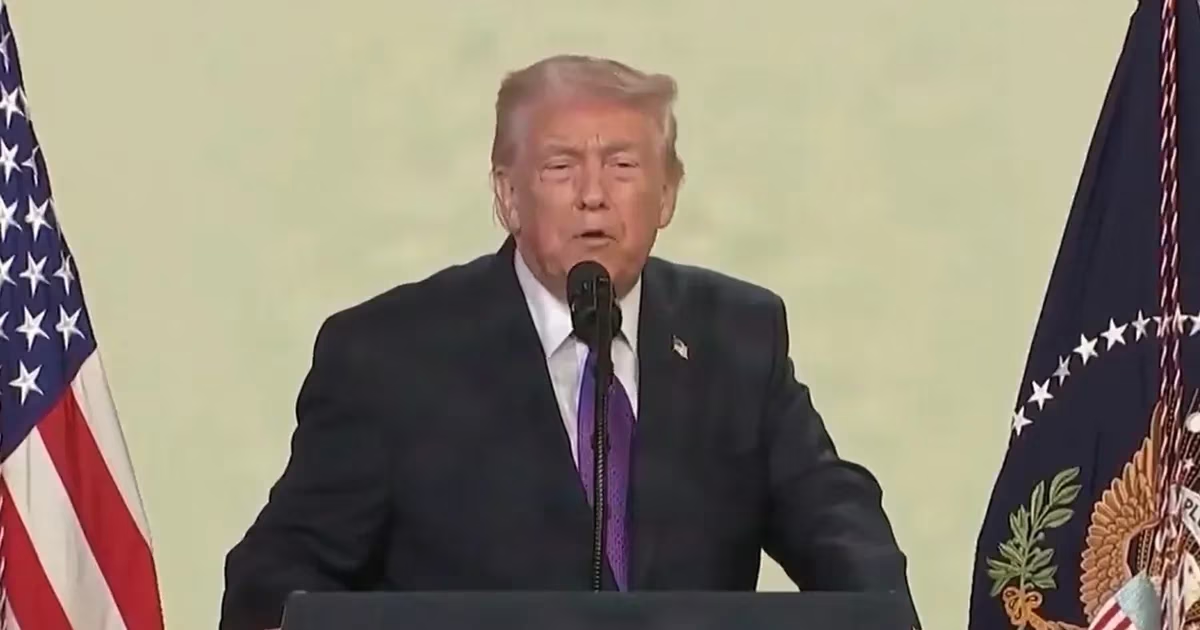
International media sources have revealed new behind-the-scenes developments within the White House, where US President Donald Trump has informed his aides of his readiness to end the military campaign against Iran. The sources clarified that Trump is showing flexibility in ending the conflict even if the Strait of Hormuz remains closed, a strategic shift that reflects his desire not to be drawn into a long-term confrontation.
In recent days, the US administration concluded that attempting to open the Strait of Hormuz by military force could lead to a widespread escalation exceeding the timeframe Trump set for ending operations. The President and his advisors believe that the mission could take longer than the four weeks he specified as a timeframe for ending the war, which prompted him to look for alternative options.
In a related context, Trump is considering implementing a specialized and complex military operation aimed at extracting approximately one thousand pounds of uranium from within Iranian facilities. This mission is considered one of the most dangerous options on the table, as it may require the infiltration of US ground forces and their presence inside Iranian territory for several days to secure the transfer of sensitive materials.
Informed sources stated that Trump has not yet made a final decision regarding this operation, as he is currently weighing the serious risks that US forces might face against the strategic goal of preventing Tehran from acquiring a nuclear weapon. Nevertheless, the President remains open to the idea as a final leverage tool to extract substantial concessions.
President Trump has encouraged his advisors to exert maximum pressure on the Iranian leadership to agree to hand over the nuclear stockpile as a prerequisite for a ceasefire. Trump emphasized in discussions with his political allies that Tehran cannot retain these materials, hinting at the option of seizing them by force if diplomatic efforts fail.
On the diplomatic front, mediation efforts led by Turkey, Egypt, and Pakistan have emerged to bridge the gap between Washington and Tehran and avoid a full-scale explosion. Despite these efforts, the parties involved have not yet engaged in formal direct negotiations to end the war, leaving the military option on the table.
For her part, White House spokeswoman Karoline Leavitt affirmed that the Department of Defense's role is currently limited to preparing all possible options to give the Commander-in-Chief flexibility in decision-making. In contrast, the Pentagon and US Central Command have remained silent regarding the leaked military plans related to uranium or the Strait of Hormuz.
Technical estimates indicate that Iran possessed large quantities of highly enriched uranium before the airstrikes carried out by the United States and Israel last June. According to international reports, the stockpile includes materials enriched to 60% and 20%, percentages that allow for their rapid conversion to the 90% level required for nuclear bombs.
Rafael Grossi, Director General of the International Atomic Energy Agency, suggested that these materials are stored in fortified underground locations, specifically in the Isfahan and Natanz facilities. Experts warned that any attempt to control these sites would require specialized teams to handle the radioactive materials, which are believed to be stored in special cylinders requiring equipped trucks for transport.
In contrast, military experts warned that carrying out a ground operation to seize uranium could lead to a violent Iranian reaction that would expand the scope of the war regionally. Analysts explained that the operation would place US forces under direct threat from missiles and drones, which could undermine the timeline Trump set for ending the conflict by mid-April.
Trump warned Tehran of the consequences of non-compliance with US demands, saying: "Iran will not have a country if it doesn't, and they will give us nuclear dust."


Share your opinion
Trump Considers Commando Operation to Extract Iranian Uranium and Accepts Hormuz Closure