







Under the guise of a purported "Biblical Garden": The occupation demolishes 4 homes in Al-Bustan neighborhood as part of a plan to displace over 2200 Palestinians to build "City of David" and "King's Garden"
- 257 families in Al-Bustan, Batn al-Hawa, and Wadi Hilweh neighborhoods are threatened with displacement
- 5 major settlement projects targeting Silwan: the suspended bridge, the Pilgrims' Tunnel, the "Kedem" project, the cable car, and the train
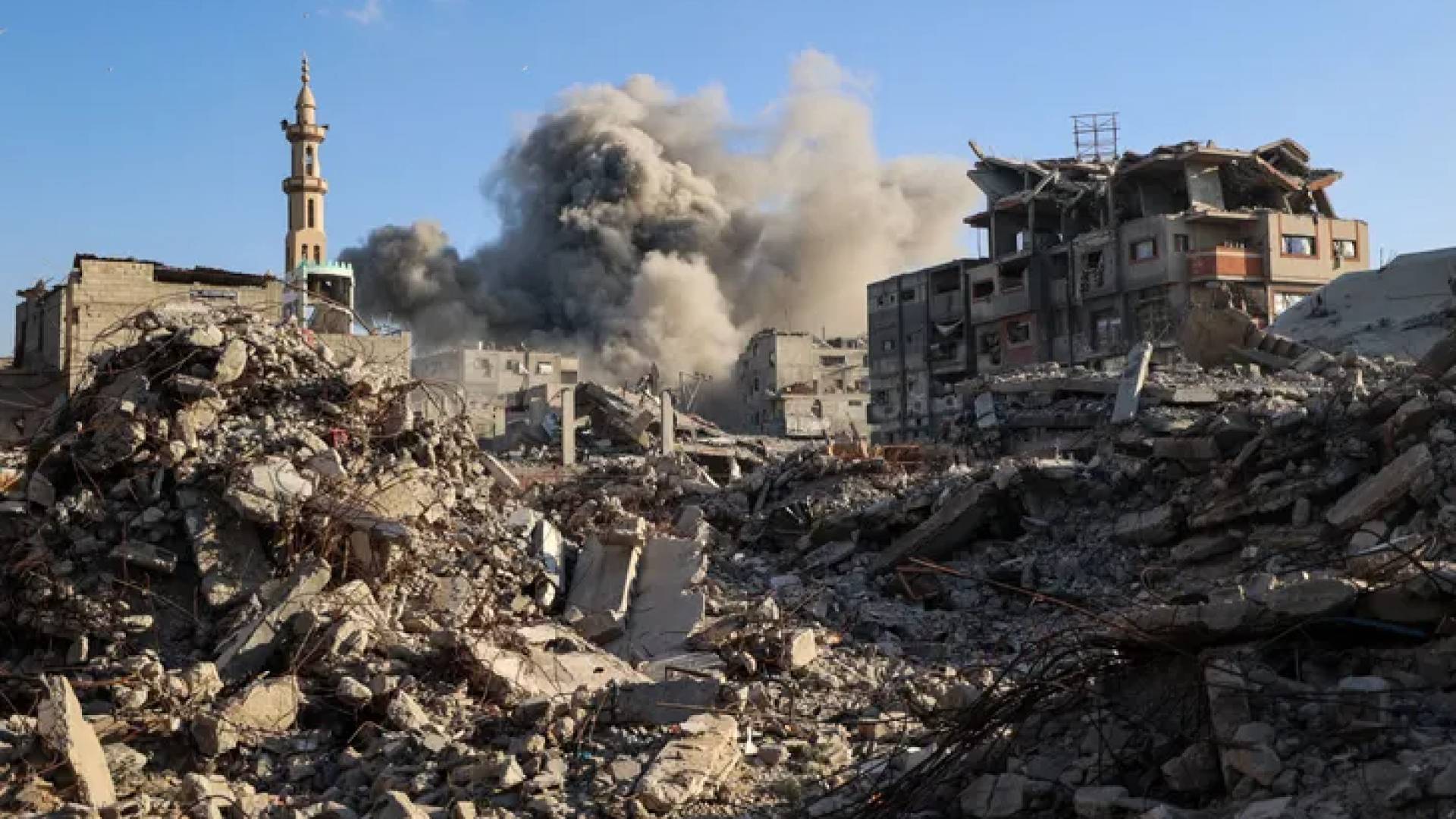
Jerusalem - "Al-Quds" dot com - Muhammad Abu Khdeir - Israeli occupation forces carried out extensive demolition operations yesterday morning in Al-Bustan neighborhood in Silwan, south of the blessed Al-Aqsa Mosque, affecting homes, retaining walls, and main and secondary streets, as part of major settlement plans and projects aimed at changing the historical and religious identity of Jerusalem.
Occupation forces stormed Al-Bustan neighborhood in the early hours of yesterday, reinforced by heavy machinery, municipal crews, special forces, undercover units, and settlement guards. They imposed a complete siege on all roads leading to the neighborhood, preventing residents and media crews from reaching the area. This raid resulted in the complete destruction of four homes, as follows: the homes of brothers Na'im and Ibrahim Shehadeh, the home of citizen Saleh Abu Shafea, and the home of elderly Ahmed Al-Abbasi (85 years old).
The demolition operations extended to include the destruction of retaining walls, the bulldozing of main and secondary streets, and the damage to infrastructure in the area. The occupation authorities also handed three other families in the neighborhood eviction notices for their homes by next Saturday at the latest, in preparation for their demolition.
58 homes remain out of 120
The figures monitored by the Silwan Land Defense Committees show the extent of the losses the neighborhood has suffered over the past years. Fakhri Abu Diab, a member of the Silwan Land Defense Committee and a resident of the neighborhood, explained that the number of homes in Al-Bustan neighborhood was about 120 homes a decade and a half ago, while the number decreased to only 66 homes by the end of last February, becoming 58 homes today after the recent demolition operations.
Abu Diab revealed a sharp escalation in the pace of demolition operations carried out by the occupation authorities in the neighborhood, with the number of homes demolished by the occupation since the outbreak of the war on Gaza on October 7, 2023, reaching about 37 homes.
These figures confirm that Al-Bustan neighborhood is shrinking year after year, in a systematic process aimed at emptying it of its original inhabitants in preparation for its abolition and annexation to settlement projects.
"King's Garden" as a pretext for demolishing Jerusalemites' homes
The occupation authorities, in their systematic campaign against Al-Bustan neighborhood, invoke a purported historical narrative, claiming that the area was a "garden of King David" in ancient times. According to this narrative, the occupation municipality and settlement associations seek to demolish the neighborhood's homes, with the aim of expanding the so-called "National Park" (National Garden) that extends from the adjacent Wadi Hilweh neighborhood, which has been managed since the 1990s by the extremist settlement association "Elad," with the support and assistance of the occupation government and municipality.
A report issued by the International Jerusalem Foundation indicates that this project is merely an extension of a broader plan aimed at transforming Al-Bustan neighborhood into the so-called "King's Garden." Documents reveal that the occupation has no claims of prior ownership or suspicion of settlement in the neighborhood, and that the sole pretext for displacement is based on a purely "Biblical narrative."
"Empty Land".. a misleading pretext
In a related context to the military campaign, the occupation municipality intensified its administrative and legal measures aimed at confiscating vast lands in the neighborhood. At the beginning of last January, the occupation municipality issued notices to a number of landowners in Al-Bustan neighborhood to confiscate about 7 dunams, under the pretext of "landscaping and establishing parking lots" on lands it described as "empty."
However, the Governor of Jerusalem clarified in a statement that these lands are not empty at all, but rather lands on which Palestinian homes stood, inhabited by their owners before the occupation forces demolished them and displaced them earlier. Legal experts describe this practice as the "empty land policy," which is a deceptive legal tool used by the occupation authorities to establish a new settlement reality on the ruins of demolished homes.
Theft under the guise of tourism and urban planning
In addition to field demolition operations, specialized reports monitor a more dangerous shift at the planning level, represented by changes in the official maps of the occupation municipality in Jerusalem. The Alternative Planning Center (AHC) team observed disturbing changes in the maps published on the occupation municipality's website, showing a deliberate reduction of the municipal boundaries of Silwan town, and the re-annexation of vital parts of it, particularly Wadi Hilweh neighborhood, to the so-called "City of David" settlement.
The Jerusalem Governorate warned in a report that this new classification falls within the framework of transforming parts of the town into a tourist and archaeological area subject to settlement projects, which limits the officially recognized Palestinian urban space in Silwan.
The Governorate affirmed that these divisions are unilateral and illegitimate measures, aimed at reshaping the spatial and demographic reality in East Jerusalem to serve settlement projects.
Silwan, two halves.. Arab and Jewish
In this context, Khalil Tufakji, an expert in maps and settlement affairs, explained that the new change in the maps effectively divides Silwan town into two halves: an Arab half and a Jewish-settlement half. Tufakji pointed out that the occupation municipality now considers the annexed parts of Wadi Hilweh neighborhood as part of the Jewish neighborhood whose borders are constantly expanding to be annexed and attached to West Jerusalem under the supervision of the municipality and settlement associations, especially "Elad," and there is the "Ateret Cohanim" association and smaller associations that have been fabricated to distribute roles.
This division, according to Tufakji, aims to transform the neighborhoods of Al-Bustan, Wadi al-Rababa, and Wadi Hilweh into areas with a complete Jewish character, where the annexed areas enjoy various advantages and services aimed at strengthening the settlement presence at the expense of the indigenous population who face the risk of displacement.
Sources and experts in the Palestinian Negotiations Affairs Department estimate the area of the planned Jewish neighborhood since 2005 in the heart of Silwan at approximately two square kilometers, all of which are located within the so-called "Holy Basin" surrounding the walls of the occupied Old City from the east and south completely and are subject to a special committee in the office of the Israeli Prime Minister.
Above and below ground.. major settlement projects
The demolition operations in Al-Bustan neighborhood are not isolated from a wide network of settlement projects aimed at encircling the town and linking it to the surrounding settlements. Reports from the Alternative Planning Center indicate that these movements are linked to major Judaization projects that have already been implemented, such as the planned suspended bridge, the "Kedem" settlement project, in addition to the "Pilgrims' Road" tunnel that passes under citizens' homes.
Among these projects, the so-called "King's Garden" stands out as the most dangerous project threatening the homes of Al-Bustan neighborhood, as the occupation seeks through it to establish Talmudic facilities in the area.
Tufakji believes that this redrawing of borders stems this time from religious motives that serve political expansionist goals, exploiting claims that parts of Silwan represent the historical "City of King David" as a legal cover for land confiscation and demographic change.
For the sake of settlement.. the Israeli government supports criminals and terrorists
The "Elad" settlement association has been managing the archaeological and tourist site known as "City of David" in Wadi Hilweh since the 1990s, and this association enjoys wide government support. Investigations indicate that the association has become a key partner of the official authorities - the far-right government - and enjoys the support of the Ministries of Settlement and Housing - and the Ministry of Finance - and branches of the Jewish Agency - and AIPAC in the United States and Europe, where the occupation as a state and army spends money from within and from donations from Jews around the world on projects, while profits go to the association, which employs about 650 settlers from the far-right current, some of whom are classified as "terrorists" and perpetrators of crimes - religious, moral, and embezzlement - especially followers of the "Shuvu Banim" association.
"Elad" is working to transform the area into something like an "archaeological Disneyland," according to the description of Israeli expert Talia Azrahi from the "Emek Shaveh" association, which includes critical archaeologists (who reject the falsification of history and geography and its exploitation for religious and settlement purposes). Tourist projects in the area include a 700-meter roller coaster, a 3D viewing platform, and a luxury hotel, in addition to a long suspended bridge.
In the northern part of Silwan, the "Ateret Cohanim" settlement association is active, working to seize Palestinian properties in Batn al-Hawa neighborhood.
B'Tselem reports indicate that settlement associations work in direct cooperation with the occupation authorities, and benefit from discriminatory laws such as the "Absentee Property Law" of 1950 and the "Property Law" of 1970, which effectively allow only Jews to seize Palestinian properties and claim properties inhabited or rented by Jews before the Nakba in 1948 under the pretext of protecting the tenant - absentee property in hostile countries - i.e., Arab countries.
1500 citizens threatened with immediate displacement
The figures issued by human rights organizations reflect the scale of the humanitarian catastrophe facing the residents of Al-Bustan neighborhood; according to a report issued by B'Tselem in February 2026, about 1500 residents of Al-Bustan neighborhood (about 150 families) face the risk of immediate displacement. The number of homes demolished by the occupation municipality in the neighborhood until last February reached 35 homes, in addition to 17 other demolition orders issued.
In the neighboring Batn al-Hawa neighborhood, about 700 Palestinians (90 families) face the risk of forced eviction, after Israeli courts rejected their appeals and ordered 157 residents of the neighborhood to evacuate their homes for the benefit of settlers.
The International Jerusalem Foundation indicates that success in displacing Al-Bustan neighborhood will pave the way for targeting other neighborhoods in Silwan, including Wadi Hilweh, Wadi al-Rababa, Batn al-Hawa, Ain al-Lozeh, and Wadi Yasul, all the way to Sheikh Jarrah neighborhood in northern Jerusalem.
"This is my mother's house and I will not leave"
Despite the brutality of the occupation bulldozers and demolition orders, the residents of Al-Bustan neighborhood remain steadfast on their land and in their homes. Fakhri Abu Diab, whose home was completely demolished after being partially demolished in February 2024, embodies this resilience; he now lives with his wife in a mobile home "small caravan" built on the ruins of his destroyed home, refusing to leave, saying: "This is my mother's house, I was born here and I will not leave."
Abu Diab reveals shocking details related to the mechanism of implementing demolition policies, where residents are forced to pay the costs of demolishing their homes themselves. He says: "I don't just pay for the bulldozers, I even pay for the sandwiches eaten by the policemen who were supervising the demolition of my home." Fakhri Abu Diab warns that "targeting Silwan is a direct targeting of the identity of Al-Aqsa Mosque," stressing that the occupation seeks, by changing the demographic composition of the town, to pave the way for an assault on Al-Aqsa Mosque itself.
Demolition even during Ramadan.. a political message
The timing of the escalating demolition operations in Al-Bustan neighborhood carries clear political messages. Ziad Bahis, an expert in Jerusalem and Al-Aqsa affairs, warned that the occupation carried out a "demolition massacre" in the neighborhood during the first week of the holy month of Ramadan, after previous years witnessed a "demolition truce" during the holy month, where the occupation municipality did not carry out demolition operations or violations. However, the occupation has changed this custom and no longer gives weight to religious occasions or respects the fasting of fasters.
Condemnations and appeals.. but
The Jerusalem Governorate repeatedly expressed its categorical rejection of the Israeli measures, affirming that all these measures are "null and illegal" under international law, and do not grant the occupation any right, regardless of their extent. It also warned that these policies amount to war crimes and crimes against humanity.
For its part, the International Jerusalem Foundation called for launching a popular, legal, and media campaign, Arab, Islamic, and international, under the title "Save Silwan.. Save Al-Bustan neighborhood," affirming that the neighborhood represents the "first line of defense" for the blessed Al-Aqsa Mosque from the southern and southeastern sides.
The Israeli human rights organization B'Tselem appealed to the international community to intervene urgently to stop what it described as the "forced eviction policy" pursued by the occupation authorities against the residents of Silwan, warning that more than 2200 Palestinians are at risk of immediate displacement in the neighborhoods of Al-Bustan, Batn al-Hawa, and Wadi Hilweh.
A battle of existence and identity
What is happening in Al-Bustan neighborhood is not just a passing demolition campaign, but rather a link in a long struggle over the identity of occupied Jerusalem and its Palestinian existence. While the occupation authorities and settlement associations use biblical narratives as a cover for displacing residents, Palestinians emphasize the deep Arab and Islamic roots of the area, citing Canaanite, Islamic, and Umayyad artifacts that bear witness to its authentic Arab history.
In light of this dangerous escalation, the residents of Al-Bustan neighborhood remain steadfast on their land, rejecting demolition and displacement policies, and demanding that the international community intervene urgently to provide them with protection, and stop what they consider a systematic attempt to erase the Palestinian presence in occupied Jerusalem.




Share your opinion
The occupation demolishes 4 homes in Al-Bustan neighborhood as part of a plan to displace over 2200 Palestinians to build "City of David" and "King's Garden"