ARAB AND WORLD

Tue 14 Jan 2025 9:42 pm - Jerusalem Time

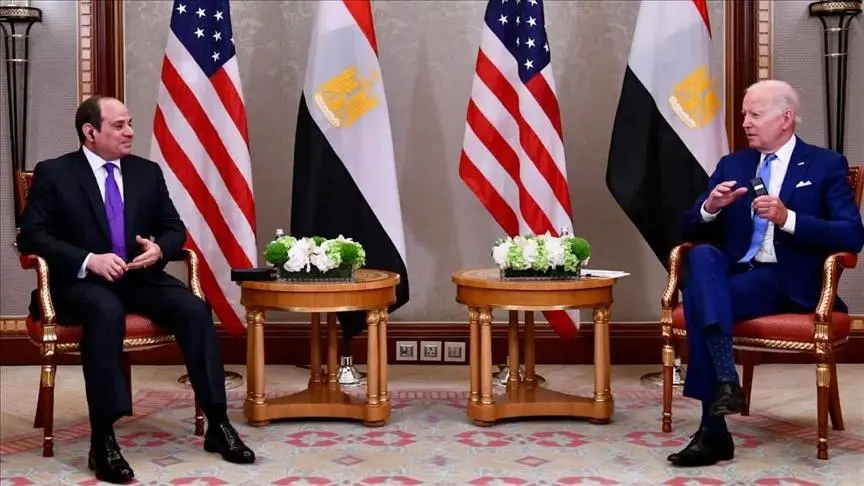
Sisi, Biden stress importance of 'showing flexibility' to reach Gaza deal

Egyptian President Abdel Fattah el-Sisi and his US counterpart Joe Biden stressed on Tuesday the "importance of the concerned parties' commitment to removing obstacles and showing the necessary flexibility to reach an agreement" on a ceasefire in the Gaza Strip and a prisoner exchange.


This came during a call that Sisi received from Biden, according to a statement by the Egyptian presidency.


The statement said, "The phone call discussed the intensive mediation efforts undertaken by Egypt, the United States and Qatar to reach an agreement to cease fire in Gaza and exchange prisoners and detainees."


In this context, the Egyptian and American presidents reviewed "the latest developments in the relevant negotiations, and stressed the importance of the concerned parties' commitment to removing obstacles and showing the necessary flexibility to reach an agreement."


Al-Sisi stressed the "necessity of reaching an immediate ceasefire agreement in order to put an end to the serious humanitarian suffering of the citizens in the Strip, to allow humanitarian aid to enter them without restrictions or obstacles, and to spare the region the consequences of expanding the scope of the conflict."


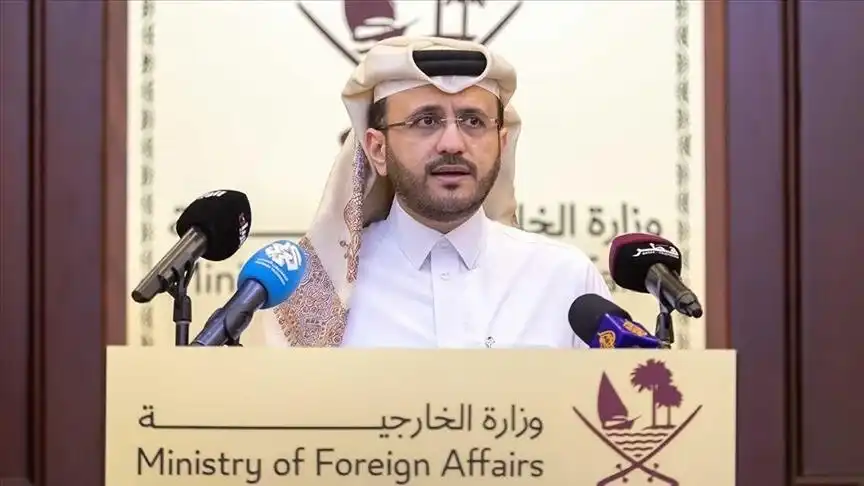
Earlier today, Qatari Foreign Ministry spokesman Majed Al-Ansari announced in a press conference that the ceasefire negotiations in Gaza and the exchange of prisoners, hosted by his country, had reached the stage of "final details," stressing that they had reached the closest point to announcing an agreement.


ARAB AND WORLD

Tue 14 Jan 2025 9:04 pm - Jerusalem Time

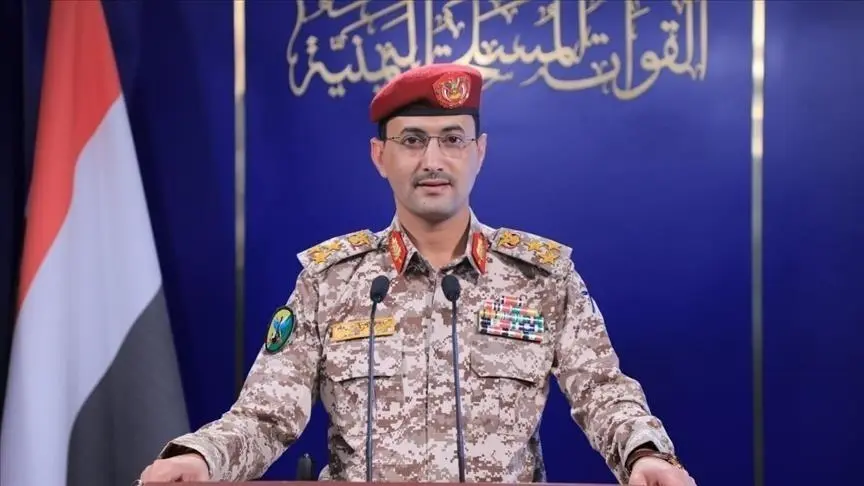
Al-Houthi announces attacking targets in Tel Aviv and a power station in Eilat

The Yemeni Houthi group announced, on Tuesday evening, that it had attacked new targets in Tel Aviv (central Israel) and a power station in the city of Eilat (south).


The military spokesman for the Houthi forces, Yahya Saree, said in a televised statement monitored by the Anadolu Agency correspondent, that "the air force (of the group's forces) carried out a qualitative military operation with a number of drones targeting targets (which he did not mention) of the Israeli enemy in the occupied Jaffa (Tel Aviv) area."


He added, "The group's missile force carried out a second military operation with a winged missile targeting the Israeli enemy's power station in the Umm al-Rashrash area (Eilat)."


He added, "The two operations achieved their goals successfully."


Saree pledged to "carry out more military operations against the Israeli enemy in support of the Palestinian resistance."


He also stressed that "these operations will not stop unless the (Israeli) aggression on Gaza stops and the siege is lifted."


Earlier on Tuesday morning, the Yemeni group announced that it had successfully bombed the Israeli Defense Ministry headquarters in Tel Aviv with a hypersonic missile, and that the interception systems had failed to intercept it.


The Israeli army claimed in a statement that it had "intercepted" this missile "before it entered the country's airspace."


While the Israeli ambulance, known as the "Red Star of David", said that "11 people were injured while trying to reach the shelters during the interception of the missile, in addition to 4 cases of panic attacks."


These developments come amid reports of progress in negotiations on a possible ceasefire and prisoner exchange deal in Gaza.

PALESTINE

Tue 14 Jan 2025 8:51 pm - Jerusalem Time

Netanyahu: Hamas has not responded yet and everything being circulated now is just speculation and Hamas clarifies

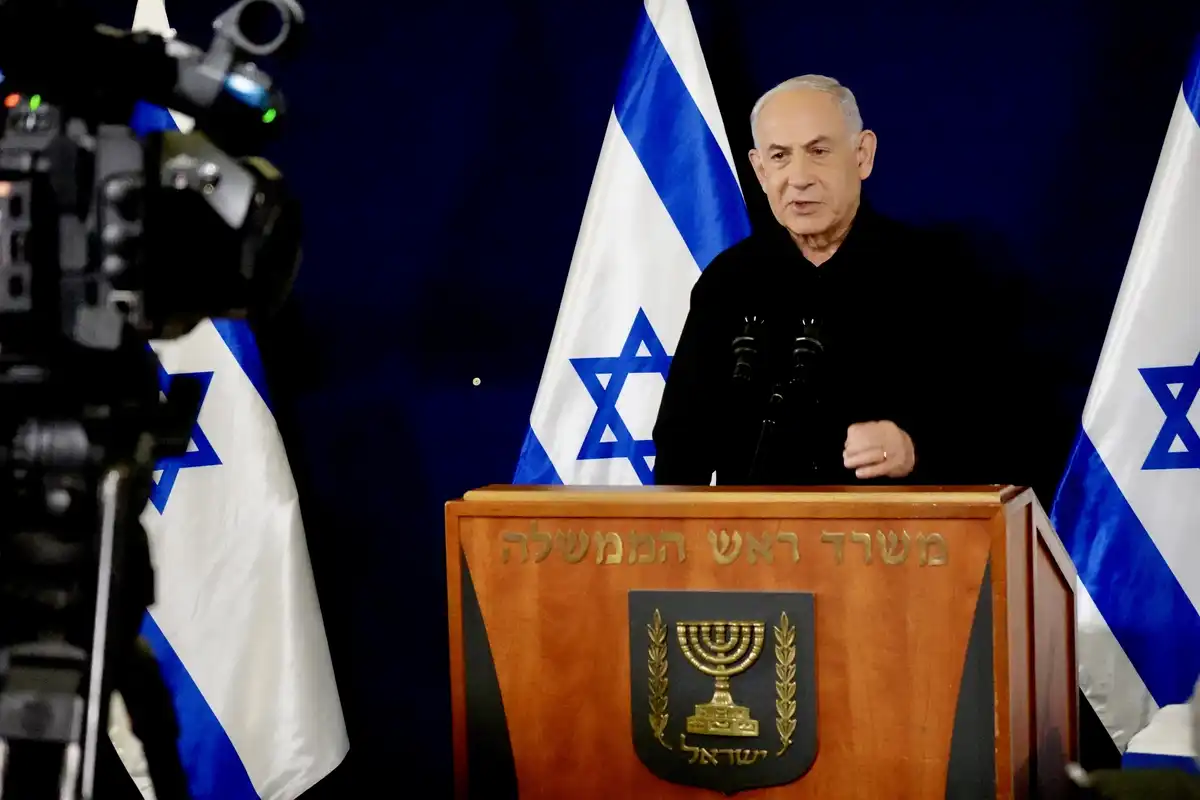
Israeli Prime Minister Benjamin Netanyahu said after meeting with the families of detainees in the Gaza Strip that he is ready for a permanent ceasefire on condition that all detainees are returned.


Netanyahu added, according to Channel 12, that the deal is a matter of days or hours.


Netanyahu continued: We are waiting for the other party's response, and then the deal will be announced immediately.


Netanyahu said that Hamas has not yet responded, and that everything being circulated now is just speculation.


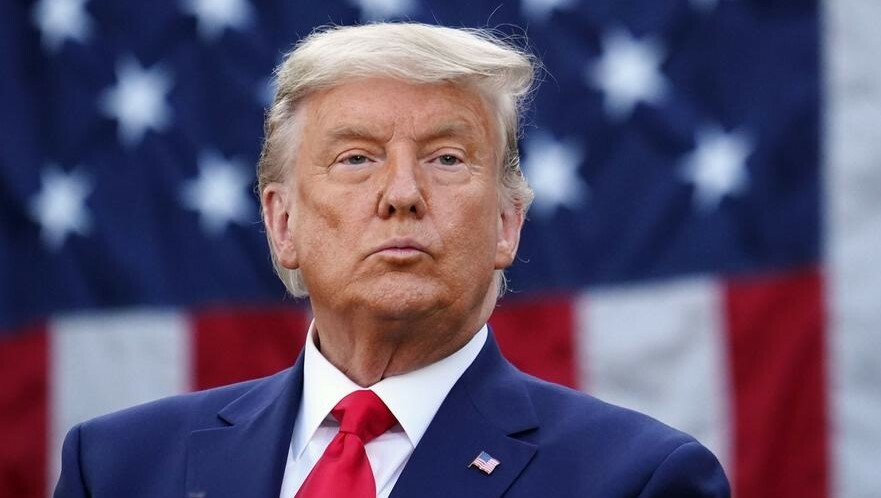
He pointed out that "once President Trump enters, the rules of the game will change fundamentally. For any breach of the ceasefire, there will be harsh and strong responses and a way of fighting that we have not seen before."


A Hamas official told Reuters that the movement has not yet submitted its response because Tel Aviv has not yet submitted the maps that will show the areas to which it will withdraw.


Read also: Blinken: We are formulating a plan that includes the day after the ceasefire in Gaza and the rule of the Strip


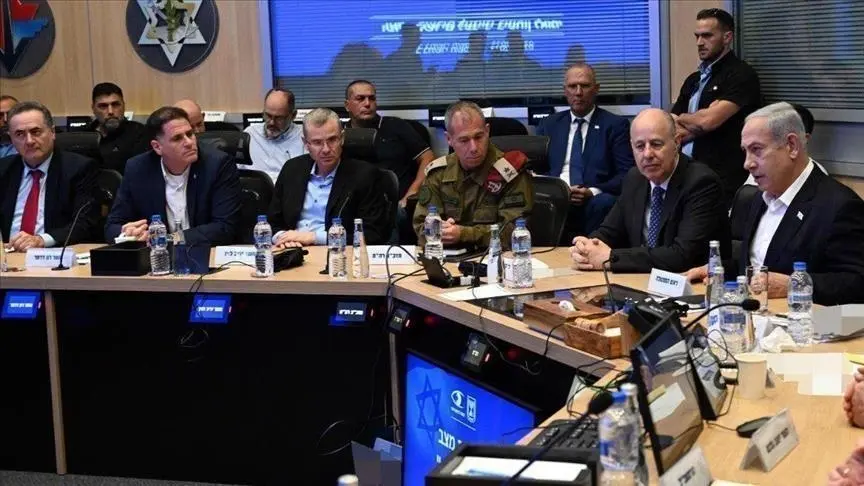
Channel 12 reported that Israeli Prime Minister Benjamin Netanyahu is holding an emergency meeting this evening with leaders of the security establishment regarding developments in the exchange deal.


Channel 13 reported that Netanyahu will hold an emergency video call with the head of Mossad in Qatar regarding the exchange deal.


Earlier, an official in the Israeli occupation entity reported that hundreds of Palestinian prisoners, including those convicted of killing settlers, would be released under the agreement, according to CNN.


Read also: Blinken: We are formulating a plan that includes the day after the ceasefire in Gaza and the rule of the Strip


The official added that Palestinian civilians will be allowed to return to the northern Gaza Strip freely under the agreement.


He added that the occupation army will begin its withdrawal from population centers during the first phase and will remain in the Philadelphia Corridor, according to the American network.


He added that a buffer zone will be maintained inside Gaza along the Strip's border with the Israeli occupation.


He added that negotiations on the second and third phases of the agreement will begin on the sixteenth day of the agreement's implementation.

ARAB AND WORLD

Tue 14 Jan 2025 8:37 pm - Jerusalem Time

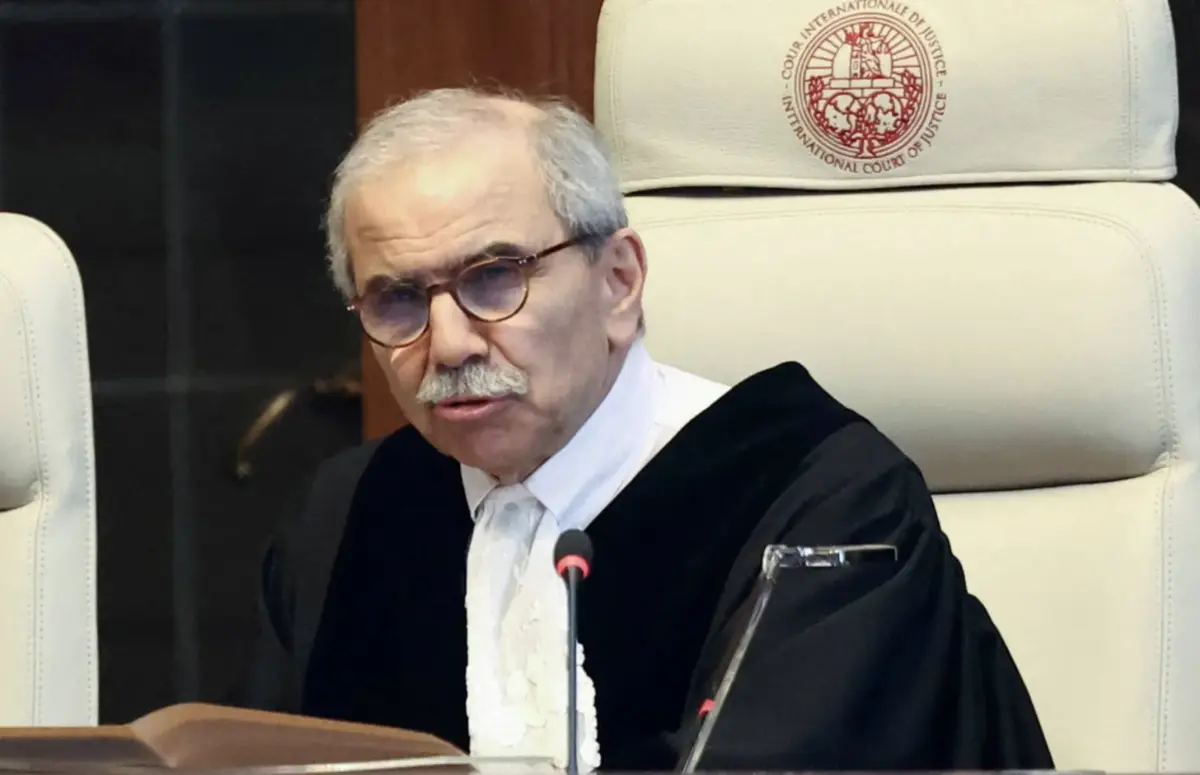
International Justice: Nawaf Salam resigns from the court

The International Court of Justice announced today (Tuesday) that Judge Nawaf Salam, who was appointed Prime Minister of Lebanon, has resigned from the court.


Salam's term as president of the court was due to end in early February 2027.


Judge Nawaf Salam, who is tasked with forming a new Lebanese government, will hold non-binding parliamentary consultations to form a government in the House of Representatives on January 15 and 16.


The General Secretariat of the House of Representatives announced that, “in reference to the statement issued by the General Directorate of the Presidency of the Republic assigning Mr. Nawaf Salam to form the government, the formation consultations will be held in the House of Representatives, Nejmeh Square, on Wednesday and Thursday, January 15 and 16.”


Earlier today, Salam said that he is not a person of exclusion, but rather a person of unity and national partnership.


Salam called for "working to extend the authority of the Lebanese state over all its territories, and for the government to develop an integrated program to build a productive economy and secure job opportunities for generations."


Yesterday, Lebanese President General Joseph Aoun tasked Salam with forming a new government, after the end of the binding parliamentary consultations and after Salam obtained 84 votes out of 128 MPs.

PALESTINE

Tue 14 Jan 2025 8:15 pm - Jerusalem Time

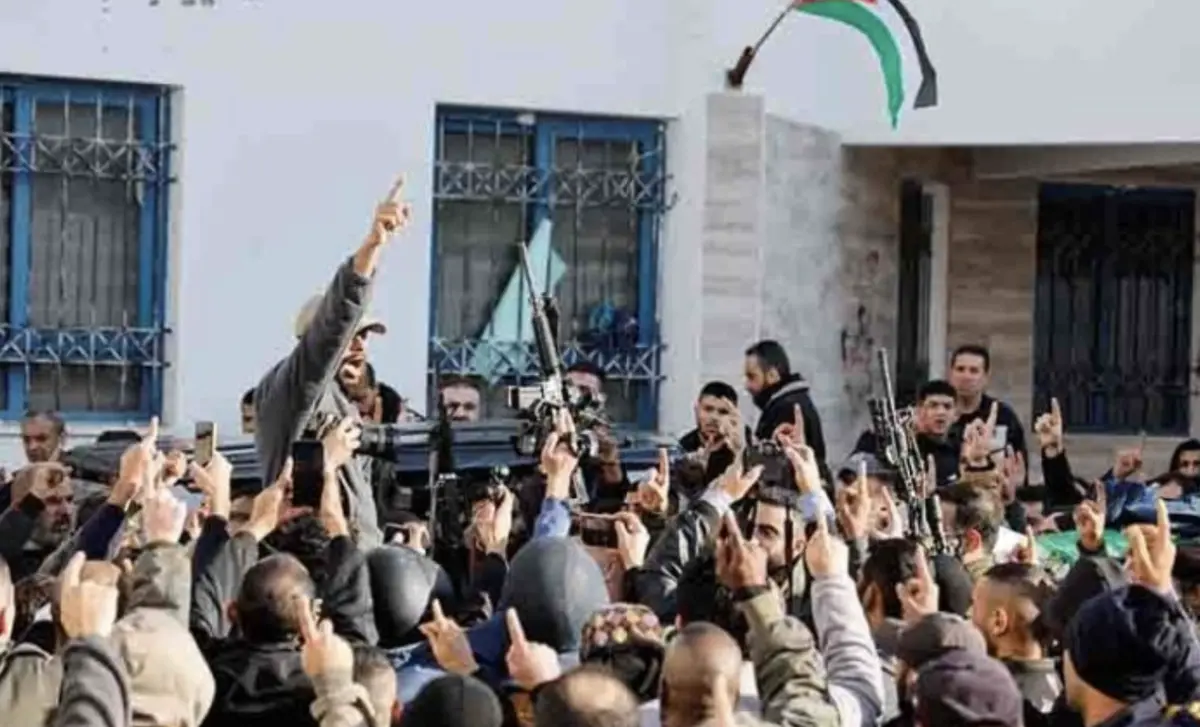
Jenin Battalion and the Resistance in Jenin Camp Agree to the National Accord Initiative

The Jenin Battalion and the resistance in Jenin camp announced today, Tuesday, their approval of the national reconciliation initiative that was approved by the national conference held in Jenin today, to end the unfortunate events that have been ongoing for 40 days.


In a statement to clarify public opinion in the city of Jenin, its camp and countryside, and to all the sons of the Palestinian people in the West Bank, Gaza and the diaspora, the Jenin Battalion and all the resistance factions in the Jenin camp explained that, based on the principle of stopping bloodshed and preserving the Palestinian national fabric, and based on the principle of strength and not weakness, they decided to approve the initiative (the national position for the unity of blood and destiny), adding, “Everyone knows that from the first day until this moment we are still in the stage of defending our camp and the capabilities and weapons of the martyrs and the resistance and our legitimate right to fight the Zionists,” and it continued, “After communicating with the reform committees, headed by Sheikh Daoud Al-Zeer and a number of reform men in Jenin and civil and local society institutions and the Chamber of Commerce, we confirmed to them that we are the most keen on the rule of law, and we approved the initiative presented by them, which aims to stop Palestinian bloodshed and our legitimate right to resist the criminal occupation that persists in Judaizing our holy places, violating our land and abusing our people.”


For his part, Salah Al-Zaid, a member of the Reform Committee, told Quds.com that the delegation of the Follow-up Committee presented the same initiative to the Palestinian Authority and the security services and is still awaiting its response.

PALESTINE

Tue 14 Jan 2025 6:48 pm - Jerusalem Time

Israeli media: Ministers complain about not being informed about the expected deal

Ministers in Israel's security cabinet are complaining that Prime Minister Benjamin Netanyahu has not informed them of the details of an upcoming prisoner swap and ceasefire deal in the Gaza Strip, according to Hebrew media.


"Cabinet ministers strongly criticized Prime Minister Netanyahu's behavior," the Israel Hayom newspaper reported Tuesday evening.


She quoted unnamed ministers as saying: “They kept us away from the details of the deal, and it is crazy for them to show it to journalists before explaining it to us.”


If things go towards signing the agreement, Netanyahu is scheduled to call the "cabinet" and then the expanded government to a meeting to approve the deal, according to the Israeli Broadcasting Authority (official).


Channel 12 Israel said that the negotiations in the Qatari capital, Doha, "are now focused on the mechanism for implementing the deal, with an emphasis on technical details."


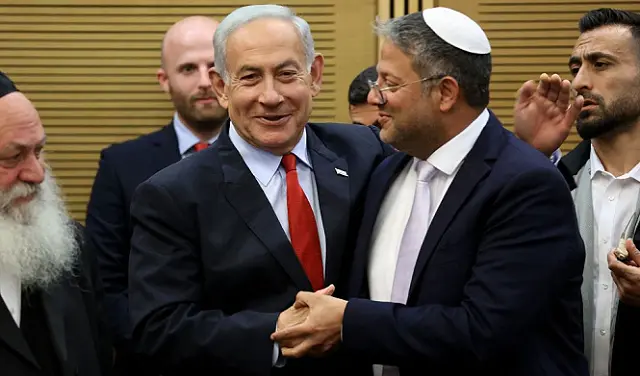
National Security Minister Itamar Ben-Gvir and Finance Minister Bezalel Smotrich, both members of the cabinet, have reiterated their opposition to the potential deal.


Ben-Gvir called on Smotrich on Tuesday morning to "resign together" from the government if the deal passes, but the latter has not yet decided whether he will respond to Ben-Gvir's request.


Later Tuesday, Netanyahu met with Smotrich to persuade him not to withdraw from the right-wing government.


Netanyahu has a majority in the cabinet to pass the deal even if Ben-Gvir and Smotrich vote against it, and he also has a majority in the expanded government to take the same step without the six ministers of their parties.


The potential agreement includes 3 stages, each lasting 42 days, and includes details of the exchange of Israeli prisoners in Gaza and Palestinians in Israeli prisons, the steps for a ceasefire, and the entry of daily aid into the Strip.


Earlier today, Qatari Foreign Ministry spokesman Majed Al-Ansari announced in a press conference that the negotiations had reached the "final details" stage, stressing that they had reached the "closest point" to announcing an agreement.


Palestinian sources revealed to Anadolu that the agreement is "almost ready and may be signed before Friday."


PALESTINE

Tue 14 Jan 2025 6:25 pm - Jerusalem Time

Urgent: Blinken: Ceasefire deal is ready if Hamas agrees


US Secretary of State Antony Blinken said on Tuesday that a ceasefire deal is very close and that its announcement is "ready to be implemented if Hamas accepts."


“I believe we will get a ceasefire in Gaza,” Blinken said in his remarks to the Atlantic Council. “Whether we get there in the remaining days of our administration or after January 20th, I believe the agreement will closely follow the terms of the agreement that President Biden put forward last May and that our administration rallied the world behind.”


His final speech as US Secretary of State was interrupted three times by activists in the hall who said, “You enabled the Israeli genocide in Gaza…the blood of innocents is on your hands and will haunt you forever,” which disconcerted the Secretary, but he was able to regain his breath and move on with his speech.


Blinken said the agreement would ensure a ceasefire and the return of the hostages, revealing that 7 Americans are still being held captive by Hamas in the Gaza Strip.


He explained that the administration of current US President Joe Biden had conveyed the plan for the future of Gaza to President-elect Donald Trump "to move forward with it."


Blinken accused Hamas of trying to "kill the two-state solution and the Oslo Accords," saying that "no one can force Israel to accept a Palestinian state ruled by Hamas or any other extremist organization," without mentioning successive Israeli governments in nullifying the long negotiations on a Palestinian state.


"We seek to end the war in Gaza in a way that will lay the foundation for lasting peace... and advance the legitimate aspirations of Israelis and a state for Palestinians," Blinken said, adding that "our principles were that Gaza under Hamas would not pose a continuing threat to Israel and that the war in Gaza would stop."


He explained that work is underway to formulate a plan that includes the day after the ceasefire in the Gaza Strip and how to govern the Strip, noting that if an agreement is reached regarding Gaza now or after January 20 (the day of the inauguration of President-elect Donald Trump), it will be an expression of the framework that Biden had set on May 31, which the world approved in the Security Council (on June 10) and “but Hamas rejected.”


Blinken revealed that there is a body that will take over the rule of the Gaza Strip the day after the war and will hand over the rule to the Palestinian Authority, stressing the need to "ensure that Hamas is unable to rule the Gaza Strip and that the Palestinian Authority, after its reform, will take over the rule of the Strip."


Blinken stressed, "No one can force Israel to accept a Palestinian state ruled by Hamas or any other extremist organization, and the new agreement must not affect Israel's security or its status," he said.


He accused the Palestinian Authority of corruption and its leadership of anti-Semitism, but demanded that Israel release the clearing funds.


"The new ceasefire agreement must not affect Israel's security or its status," he added, while saying that "the Israelis must abandon the myth that they can implement annexation de facto."


In this context, he considered that Israel is "expanding settlements in the West Bank at a rapid pace," calling on it to "accept a time-bound and conditional path to building a Palestinian state."


Blinken said that reaching an agreement to unify the West Bank with the Gaza Strip "will take effort."


Blinken also spoke about the latest developments in Lebanon, Syria and Iran, saying that President Biden "took quick steps to prevent the expansion of the conflict in the Middle East", after "Hamas wanted to ignite a regional war."


He continued, "Hamas' military capabilities and its ability to rule the Gaza Strip have been undermined, and Iran's capabilities have declined," revealing that "Iran has lost its path of support for Hezbollah."

PALESTINE

Tue 14 Jan 2025 5:44 pm - Jerusalem Time

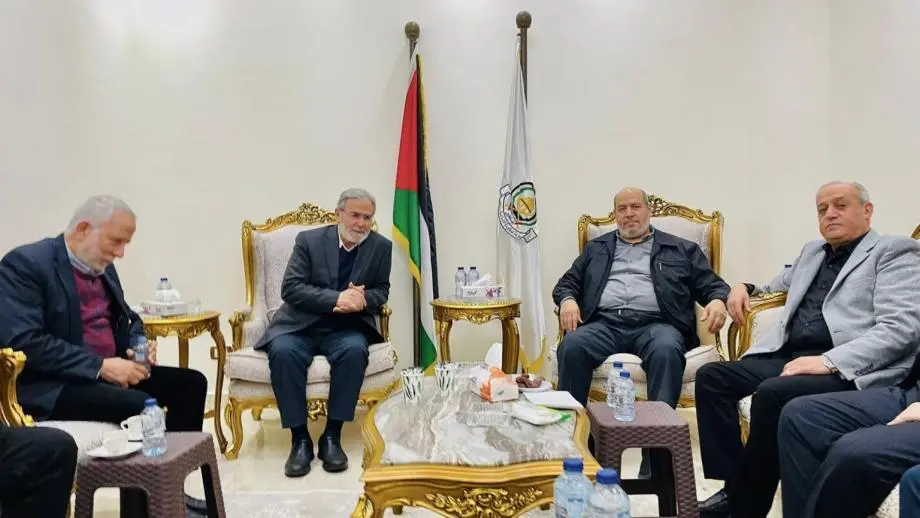
Islamic Jihad delegation arrives in Doha to participate in ceasefire agreement

The Islamic Jihad Movement said that a high-level delegation from it will arrive in Doha on Monday evening.


The Islamic Jihad movement added in a press statement that its delegation is arriving in Doha to participate in the final details of the ceasefire agreement in Gaza.


On Tuesday afternoon, Qatari Foreign Ministry spokesman Majed Al-Ansari confirmed that the ongoing talks in Doha regarding Gaza are fruitful and positive and focus on the final details, pointing to the overcoming of the main obstacles in the differences between the two parties.


Al-Ansari said in a press conference, “We are in the final stages of the Doha talks and have reached the closest point to reaching a ceasefire agreement in Gaza,” hoping that it “will result in reducing the points of disagreement between the two sides.”


He added: "We have overcome the main obstacles in the differences between the two parties to reach an agreement to cease fire in Gaza."


Coinciding with the Ansari conference, Hamas announced that the expected ceasefire agreement in the Gaza Strip and the prisoner exchange deal had reached its “final stages,” stressing the need to continue consultations with leaders of Palestinian factions “until its completion.”


Several sources confirmed that significant progress had been made in the negotiations hosted by the Qatari capital, Doha, between Hamas and Israel, which increased the chances of announcing a ceasefire agreement in Gaza and an exchange of prisoners and detainees in the coming hours.


ARAB AND WORLD

Tue 14 Jan 2025 5:10 pm - Jerusalem Time

Trump envoy presses Netanyahu to advance Gaza ceasefire deal

President-elect Donald Trump’s Middle East envoy Steve Witkoff has been pressing Israeli Prime Minister Benjamin Netanyahu hard to agree to compromises to advance a ceasefire in Gaza, media reports said Monday. Witkoff, a real estate developer, traveled to Israel from Qatar to meet with Netanyahu on Saturday. Witkoff’s pressure on Netanyahu has been credited with the progress in recent days of negotiations, with everyone now saying a deal is close.


According to the Israeli newspaper Haaretz, Witkoff “forced Israel to accept a plan that Netanyahu has repeatedly rejected over the past half-year.” Netanyahu had been pushing for an agreement that included only a temporary ceasefire, but according to reports, the new plan would include a full Israeli withdrawal.


Another report from Haaretz on Sunday said that one of the main disagreements in the negotiations was that Israel did not want to commit to ending its genocidal war forever, suggesting that Israel had not agreed to everything.


Reuters reported on Monday that mediators had presented Israel and Hamas with a final draft of the agreement after a "breakthrough" in the talks and that officials would discuss it on Tuesday.


During the genocidal war in Gaza, the Biden administration refused to put any real pressure on Israel to agree to a deal, allowing Netanyahu to sabotage talks with Hamas. The United States has significant leverage over Israel because it provides a lot of military aid, which Israel needs to support military operations.


It is unclear how Witkoff pressured Netanyahu or whether he threatened to cut off military aid. It is also unclear whether the pressure was enough to get Netanyahu to actually agree to a deal, which will not be known until the agreement is signed.


While Netanyahu is under intense domestic pressure to reach a deal, some members of his coalition government are vehemently opposed, including Finance Minister Bezalel Smotrich and National Security Minister Itamar Ben-Gvir.


Pro-Netanyahu Israeli media figures have expressed anger at the pressure from the incoming Trump administration. Israeli talk show host Yinon Magal pointed to Trump’s recent threats to Hamas that there would be “hell to pay” if the hostages were not released by the inauguration.


“He’s talking about hell,” Magal said, “and at the same time, he’s sending his envoy to sign a deal. It’s a deal that will be very difficult to effect. That’s the truth.”


Magal said the only hope was for Hamas to reject the deal. “One of the cabinet ministers told me we need to pray again that God will harden Pharaoh’s heart,” he said.


In a related matter, Axios revealed that US Secretary of State Anthony Blinken will present a plan on Tuesday to rebuild and govern Gaza after the war ends, according to three US officials.


The move comes as Blinken has just one week left in office, while intensive negotiations are underway to conclude a hostage exchange deal and a ceasefire in Gaza.


President-elect Donald Trump has said that Israel and Hamas are "very close" to a deal.


According to sources, the plan that Blinken is expected to present in his final speech as US Secretary of State at the Atlantic Council in Washington on Tuesday will be crucial to efforts to implement the second phase of the Gaza deal, which aims to reach a permanent ceasefire and end the war.


Blinken presented his plan for Gaza's security, governance and reconstruction after a ceasefire agreement was reached to several US allies.

ARAB AND WORLD

Tue 14 Jan 2025 4:55 pm - Jerusalem Time

Israel accuses Iran of trying to kidnap businessman

The Israeli National Security Council accused Iran on Tuesday morning of trying to kidnap an Israeli businessman by luring him to a third country.


The council explained in a statement that Iranian elements contacted the Israeli businessman via the Telegram application, claiming to be journalists working in the Persian section of an Arab media outlet, and expressed their desire to conduct an extensive interview with him about the economic situation in the Middle East and Iran's role in this field, and asked him to travel to a third country to achieve this goal.


The council also claimed that these people sent him malicious links and files aimed at hacking his mobile phone without his knowledge.


The Israeli businessman became suspicious of these attempts and quickly informed the police in his town, who in turn referred the case to the intelligence service. Through the initial investigation, the intelligence service concluded that the Iranian elements had tried to lure him to travel to a third country, where it was planned to target him there.


The Israeli National Security Council praised the businessman's vigilance, stressing that the behavior of the Iranian elements was suspicious, and that the content of the conversations with him was clearly aimed at luring him into harming him.


The National Security Council spokesman stressed that this is not the first time that the Iranians have tried to target Israeli businessmen and academic figures in several countries around the world with the aim of kidnapping or killing them. He expressed his belief that there are Israeli figures currently being subjected to similar attempts.


The spokesman called on all Israeli figures, regardless of their interests or professions, to be wary of similar or any other attempts to ensnare them. He also urged them to avoid communicating with figures they do not know well, and stressed the need to regulate the publication of private material about their lives and work on social media.


A senior official in the National Security Council told the Hebrew media: “This form of Iranian terrorist aggression is gaining momentum recently. They see it as an innovation in Iranian security activity. They are trying to lure Israeli figures by inviting them to participate in scientific and professional conferences, focusing on businessmen, scientists, academic researchers, and workers in medical institutions. The goal is to bring these Israelis to a third country, where the Iranians have the infrastructure to target that Israeli, or they will adapt themselves as part of the developments.”


A senior official in the National Security Council told the Hebrew media: “This type of hostile Iranian terrorist activity has witnessed a noticeable escalation recently, and they consider it an innovation in Iranian security activity.”


“They are trying to lure Israeli figures by inviting them to participate in scientific and professional conferences, with a special focus on businessmen, scientists, academic researchers and medical workers,” he continued. “The goal is to lure these Israelis to a third country, where Iran has the infrastructure to launch attacks against them, or to adapt their plans to match developments on the ground.”

PALESTINE

Tue 14 Jan 2025 4:42 pm - Jerusalem Time

Families of detainees: Netanyahu will conclude a deal that will exclude a number of our sons

The Hebrew newspaper "Israel Hayom" confirmed that the Israeli Prime Minister Benjamin Netanyahu is holding talks with representatives of the families of detainees in Gaza, and discussing the broad outlines of the deal.


For their part, some families of the detainees said that Netanyahu appeared to be striking a deal that would not include a number of their sons.


They added that the occupation government met with five families of the detainees, but did not meet the rest.


For his part, the spokesman for the Israeli occupation government stated that it was prepared to pay the price, even if it was high, in order to return the detainees, according to his statements.


The occupation government spokesman said on Tuesday evening that the matter of reaching a deal agreement has not yet been decided.

PALESTINE

Tue 14 Jan 2025 4:22 pm - Jerusalem Time

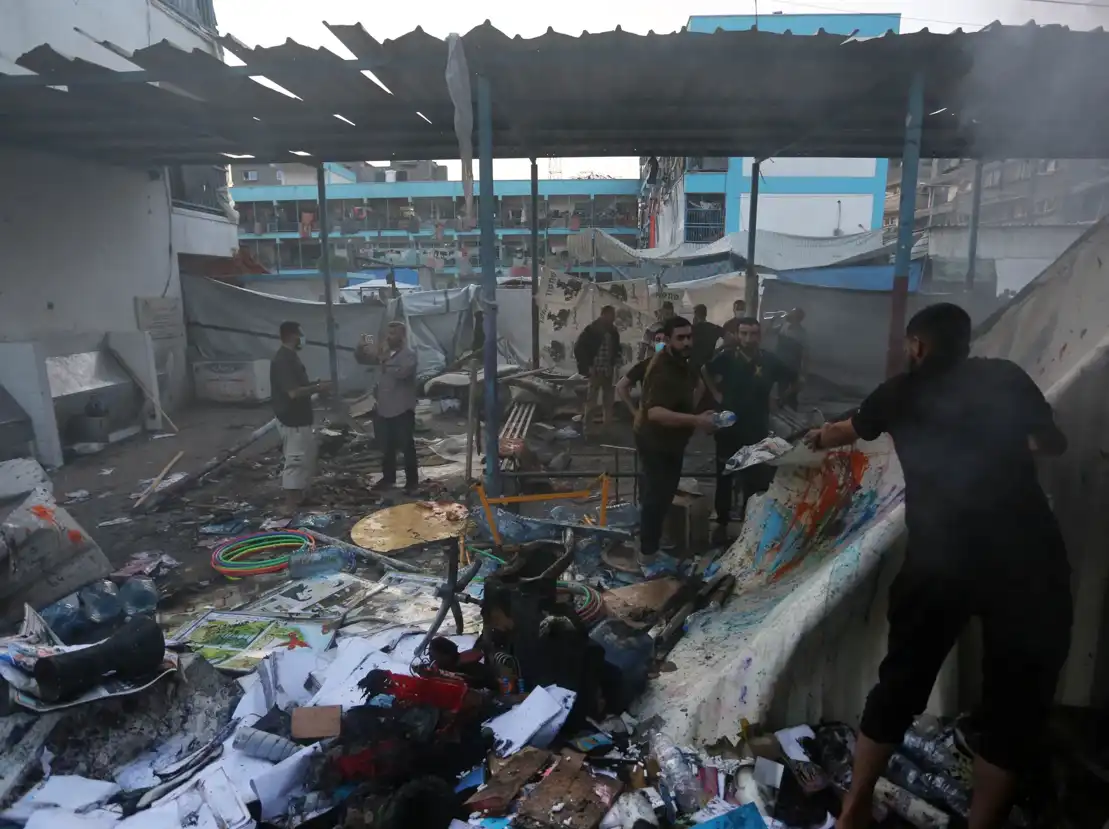
Dead and injuries as a result of the occupation bombing a tent sheltering displaced people west of Al-Nuseirat camp

Two citizens were killed on Tuesday evening, after the occupation forces bombed a tent housing displaced people in the Nuseirat camp.


Local sources reported that two citizens were killed and a woman was seriously injured after the occupation's warplanes bombed a tent housing displaced people west of the Nuseirat camp in the central Gaza Strip.


It added that the body of a dead targeted by the occupation forces was recovered near a mosque in Khirbet al-Adas, north of Rafah, in the southern Gaza Strip.


The occupation forces also bombed agricultural lands in the Qizan Rashwan area south of Khan Yunis city in the southern Gaza Strip. The occupation forces launched violent raids around Al-Farouq Mosque in Jabalia camp in the northern Gaza Strip, and the occupation forces renewed their fire north of Al-Nuseirat camp in the central Gaza Strip.


The occupation forces have continued their aggression on the Gaza Strip, by land, sea and air, since October 7, 2023, which has resulted in the death of 46,645 citizens and the injury of 110,012 others, while thousands of victims are still under the rubble and on the roads, and ambulance and rescue crews are unable to reach them.


PALESTINE

Tue 14 Jan 2025 3:12 pm - Jerusalem Time

Israeli occupation notifies the cessation of work in 16 residential and agricultural facilities in the Jordan Valley

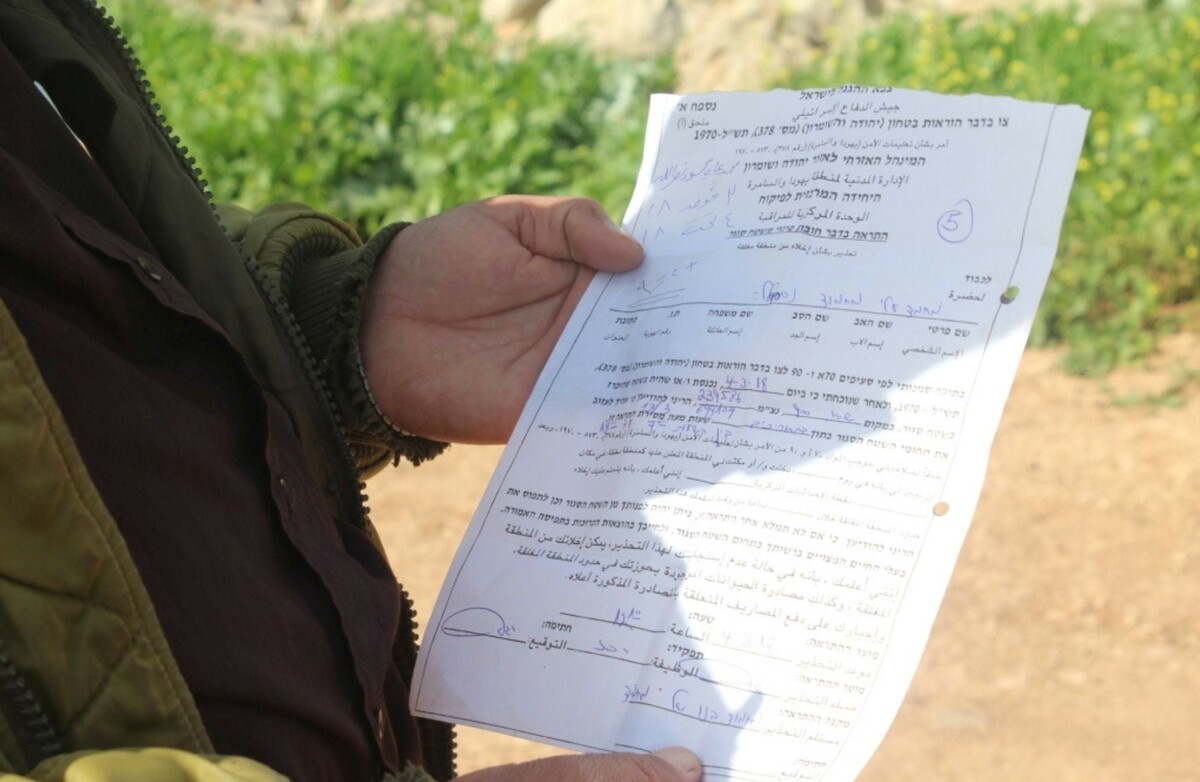
Today, Tuesday, the Israeli occupation forces notified the cessation of work in several residential and agricultural facilities in the Ras al-Ahmar area in the northern Jordan Valley.


The settlement file official in Tubas Governorate, Moataz Basharat, reported that the occupation forces notified the cessation of work on 16 residential and agricultural facilities belonging to five families in Ras al-Ahmar in the Jordan Valley, under the pretext of lack of a license.


According to the Wall and Settlement Resistance Commission, settlers carried out more than 2,971 violations against citizens and their property, resulting in the martyrdom of 10 citizens, during the past year 2024.


During the same period, the occupation authorities issued 903 demolition notices for Palestinian facilities under the pretext of lack of permits. Their distribution was concentrated in the governorates of Hebron with 180 notices, Jericho and the Jordan Valley with 140 notices, and Bethlehem with 126 notices.

PALESTINE

Tue 14 Jan 2025 1:41 pm - Jerusalem Time

A systematic medical crime committed by the occupation against the detained martyr Moataz Abu Zneid

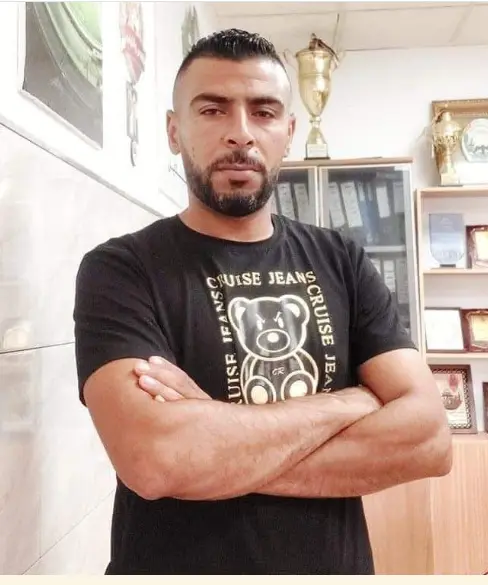
The Commission of Prisoners' Affairs and the Prisoners' Club revealed new details about the case of the martyrdom of the detainee Moataz Abu Zneid (35 years old) from Dura, south of Hebron, who died the day before yesterday in the Israeli Soroka Hospital. According to his family, he did not suffer from any health problems.


The Prisoners Authority explained, based on the testimony of one of the prisoners who was with the detainee Abu Zneid in the prison (currently Rimon-Janot), that the martyr began suffering from scabies several months ago, and with the passage of time and the refusal of the prison administration to provide him with treatment, the scabies turned into boils with a very bad smell, and swellings began to appear in the extremities, with a sharp loss in weight, and his health continued to deteriorate until he lost the ability to eat, stand, and relieve himself.


He continued in his testimony: “Parts of his skin began to fall onto his bed, and we kept asking the administration many times to transfer him to the hospital, without response. On January 4, he lost consciousness, and two days later he was transferred to the hospital, and then we learned that he had entered a coma.”


The Commission and the Prisoners Club confirmed, in a joint statement, that what happened with the detainee Abu Zneid was a systematic medical crime, the aim of which was to liquidate the detainee Abu Zneid, as happened with dozens of detainees who have been martyred since the beginning of the war of extermination, numbering (55), and only their identities are known.


They pointed out that the case of detainee Abu Zneid is not the only case that is being liquidated through systematic medical crimes, including the prison administration’s deliberate provision of factors for the spread of scabies among prisoners, and the prison system’s deliberate failure to provide cleanliness and ventilation, and its deliberate removal of clothes from prisoners, and its deprivation of the simplest cleaning tools, in addition to the weak immunity that affected the vast majority of them due to the crime of starvation, which all contributed to the exacerbation of the disease among many prisoners. They recalled the case of martyr Muhammad Munir Musa from Bethlehem, who was martyred in October 2024, as he suffered from diabetes, and after contracting scabies, his health condition deteriorated, which led to his martyrdom. There is other information about some of the detainees from Gaza who were martyred recently, indicating that scabies was a central cause of their martyrdom.


They pointed out that scabies has not stopped spreading in prisons to this day, and there were dozens of testimonies from prisoners who were infected with the disease. These testimonies reflected how the prison system had turned the disease into a tool to torture and kill them.

PALESTINE

Tue 14 Jan 2025 1:02 pm - Jerusalem Time

Settlers cut down dozens of olive trees south of Nablus

Today, Tuesday, settlers cut down dozens of olive trees in the village of Al-Lubban Al-Sharqiya, south of Nablus.


According to local sources, settlers cut down dozens of olive trees in the Saria area, southeast of the village.


According to the annual report of the Wall and Settlement Resistance Commission, the number of attacks targeting Palestinian trees during the past year 2024 amounted to a total of 451 attacks targeting 14,212 trees, including 10,459 olive trees. The Hebron Governorate recorded the highest number of damaged trees with 3,980 trees, followed by the Bethlehem Governorate with 3,791 trees damaged and uprooted, then the Nablus Governorate with 2,737 trees damaged and uprooted.

PALESTINE

Tue 14 Jan 2025 12:59 pm - Jerusalem Time

61 dead in 24 hours in Gaza, the death toll from the aggression rises to 46,645

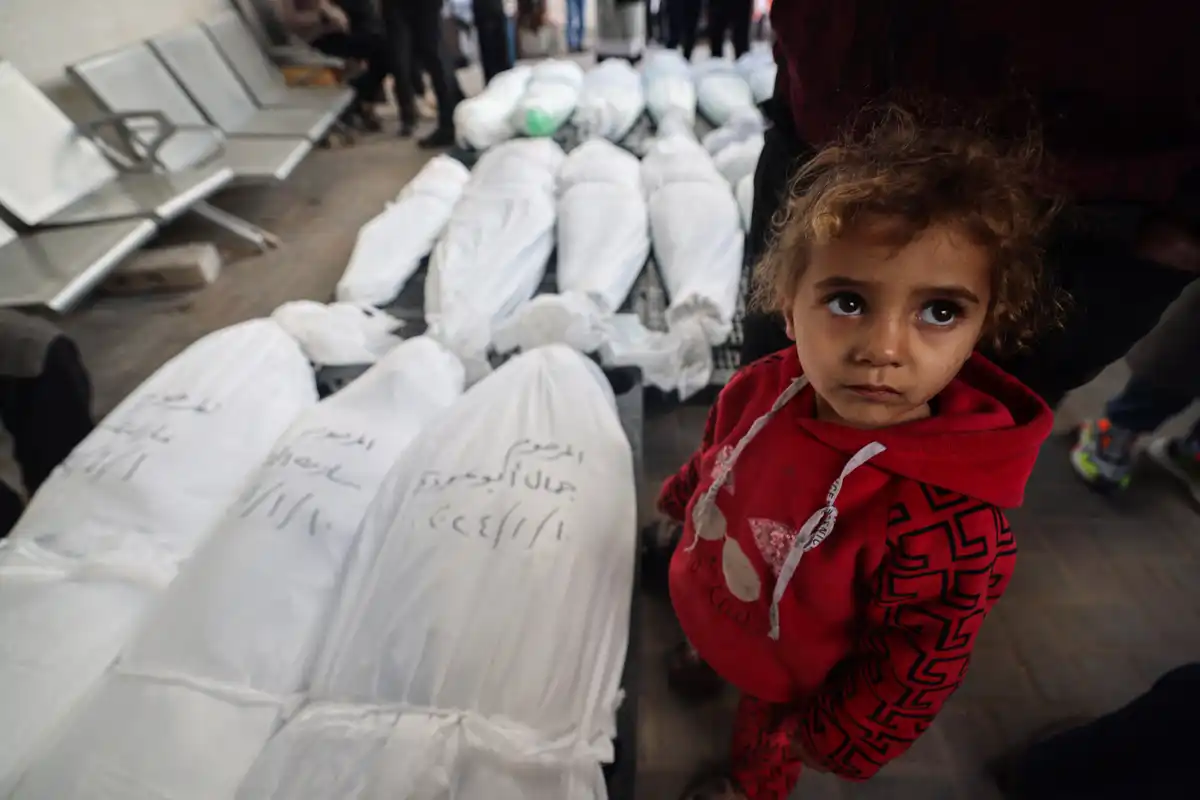
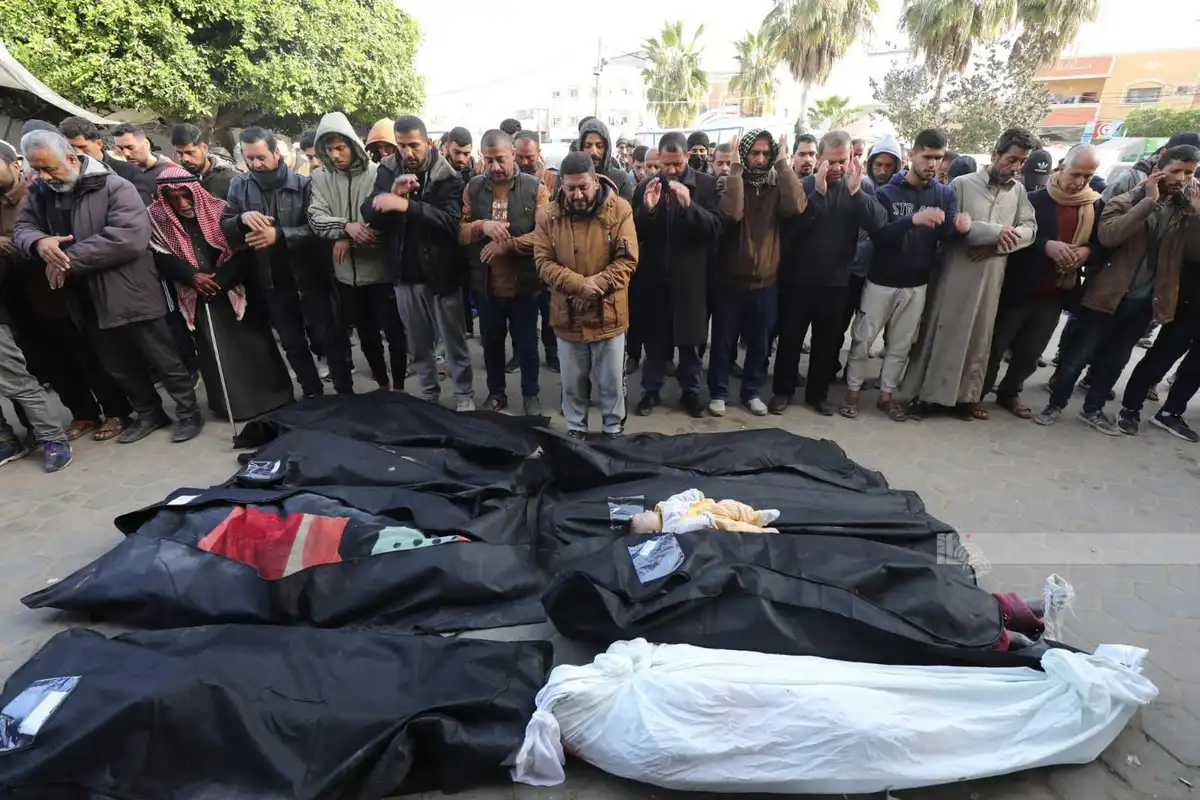
The Ministry of Health in Gaza reported today, Tuesday, that the Israeli occupation committed 4 massacres against families in the Gaza Strip, resulting in 61 martyrs and 281 injuries arriving at hospitals during the past 24 hours.


The ministry confirmed in a statement that the death toll from the Israeli aggression has risen to 46,645 martyrs and 110,012 injuries since October 7, 2023.


She pointed out that there are still a number of victims under the rubble and on the roads, and ambulance and civil defense crews cannot reach them.


PALESTINE

Tue 14 Jan 2025 12:40 pm - Jerusalem Time

Qatari Foreign Ministry: We expect the ceasefire to be announced soon

Qatari Foreign Ministry spokesman Majed Al-Ansari said, "We expect the announcement of a ceasefire in the Gaza Strip soon," noting that the negotiations have reached the final stages.


The Qatari Foreign Ministry spokesman confirmed in a statement today, Tuesday, that the two parties have reached a point today that is the closest to reaching an agreement regarding Gaza.


He also stressed that the implementation of the ceasefire agreement in Gaza will be very soon after it is reached.


He said: "We have overcome the main obstacles in the disagreements between the two parties regarding the agreement, but there are details pending between the two parties, the largest part of which is related to implementation."


He pointed out that the Qatari Foreign Ministry had delivered the draft agreement to both parties, noting that it would not go into the details of what was happening in the negotiations.


PALESTINE

Tue 14 Jan 2025 12:23 pm - Jerusalem Time

Ben Gvir calls on Smotrich to jointly threaten to withdraw from government to prevent war from stopping

The head of the Otzma Yehudit party and Israeli National Security Minister Itamar Ben-Gvir called on Finance Minister Bezalel Smotrich on Tuesday to issue a joint threat from their parties to withdraw from the government, in an attempt to prevent Prime Minister Benjamin Netanyahu from agreeing to a deal to stop the war on Gaza and exchange prisoners.


Ben Gvir considered, in a video clip, that "the deal being woven is a surrender deal for Hamas. I call on my colleague, Minister Bezalel Smotrich, to join me, and to cooperate together against a surrender deal for Hamas. Otzma Yehudit alone is not able to prevent the deal, and I suggest that we go together to the prime minister and tell him that if he passes the deal, we will withdraw from the government."


Ben Gvir added, "I stress that even if we are in the opposition, we will not bring down the prime minister, but this cooperation is our only way to prevent the surrender deal, prevent the terrible deal and ensure that the deaths of hundreds of soldiers were not in vain."


Israeli media reported that Ben-Gvir's proposal has trapped Smotrich, because if he refuses to withdraw, Ben-Gvir will be able to claim that he tried to oppose the deal and that Smotrich did not join him in order to prevent it. If Smotrich agrees to the proposal, he will appear to be being dragged along after he refrained yesterday from threatening to withdraw from the government after announcing his opposition to the deal.


Ben Gvir described the deal as "terrible", and said that he knows its details well, and that it includes the release of hundreds of Palestinian prisoners, the return of residents of the northern Gaza Strip, including thousands of militants, and that the deal stipulates the withdrawal of the Israeli army from the "Netzarim" axis, "and restores the threat to the towns of the Gaza envelope, and thus practically erases the achievements of the war so far in the Gaza Strip."


Ben Gvir claimed that "the deal does not lead to the release of all the kidnapped, and decides the fate of the remaining kidnapped who are not included in the deal with death."


“Over the past year, with our political power, we have succeeded in preventing this deal from being implemented, time after time. But since then, other parties have joined the government (Gideon Sa’ar’s party), who now support the deal, and we are no longer the deciding factor. This means that the prime minister’s refusal to sign the deal will only happen if the force opposing it is strong enough to prevent him from doing so,” he continued.


Ben Gvir added, "I call on the Prime Minister to be reasonable, and to take steps that will lead to Hamas's determination and the release of our kidnapped soldiers without abandoning Israel's security, and to completely stop the transfer of humanitarian aid, fuel, electricity and water to Gaza, in addition to continuing the military strikes until its absolute defeat."


ARAB AND WORLD

Tue 14 Jan 2025 12:04 pm - Jerusalem Time

In the first survey on China's international image, 80% of foreign participants express confidence in China's development prospects


China's influence is becoming increasingly comprehensive, profound and long-lasting as changes unseen in a century accelerate around the world. Global interest in China has never been so broad, deep and focused as it is today. How does the world view the changes in China? What are the global views on China's development? How does the rest of the world view China's image? To find answers to these questions, the Global Times launched a survey covering 51,332 respondents in 46 countries. It is the largest survey conducted by China on a global scale, with the largest sample size, and the most comprehensive and in-depth questionnaire design since the founding of the People's Republic of China.

About the poll

The Global Times Institute conducted a public opinion poll, with a sample of 14 developed countries and 32 developing countries, covering representative countries from every continent and all G20, BRICS and ASEAN countries, except China. The survey topics were selected, questionnaires were distributed and data was collected in accordance with industry standards.

The survey methods were adapted to the specific circumstances of each country, using three methods: face-to-face interviews (CAPI/PAPI), computer-assisted telephone interviews (CATI), and large-scale online surveys using member sample databases (online). Survey participants were ordinary citizens aged 18 to 70. During the data collection process, certain quota restrictions were applied to the sample composition based on the demographic characteristics of each country. The survey was conducted from August to November 2024, collecting a total of 51,332 valid samples.


Chinese power assessment

The survey reveals that China's comprehensive national strength and various other strengths are generally rated as "strong/high" by international respondents. China's economic strength has the highest positive rating at 77%, followed by science and technology strength (75%) and financial strength (72%). The survey also shows that young respondents have a higher evaluation of China's science and technology strength. More than 70% of respondents from African countries, BRICS countries, the Middle East and developing countries believe that China's comprehensive national strength is high, more than 60% in ASEAN countries and European countries, and more than half in developed countries.

In the ranking of the international status of major countries, 20%, 27% and 17% of foreign participants ranked China first, second and third, respectively. Based on a comprehensive calculation, China ranks second, the United States ranks first with 47%, and Russia, Japan and the United Kingdom rank similarly, third. A relatively large proportion of participants put Russia third and the United Kingdom and Japan fourth.

Opinions on the Prospects of Chinese Economic Development

The survey also found that the majority of international participants have a positive outlook on China's economic growth prospects and development potential. Nearly 80% of foreign participants expressed confidence in China's development. More than 90% of foreign participants believe that China's economy will continue to grow in the next decade, and nearly 60% believe that China is a major driving force for global economic growth. More than three-quarters of participants from developing countries, the Middle East and BRICS countries expect China's economy to grow faster, with the figure reaching 85% in African countries. Meanwhile, the figure exceeds 70% in Europe and ASEAN, and exceeds 60% in developed countries.

About 60% of international respondents agree that China is continuously deepening reform and opening up "in the right direction". About two-thirds of respondents believe that the future of the Chinese economy is bright and has great potential, while about 20% are neutral. 81% of African respondents believe that the prospects of the Chinese economy are bright, the highest among international respondents, while the Middle East and BRICS countries, developing countries, 60% of European countries and ASEAN countries, and 50% of developed countries think so.


Very positive impression of China

The survey included a question about respondents’ main impressions of China over the past year. The results showed that frequently used keywords included “economy,” “science and technology,” “developing/developed,” “good,” “strong country,” “advanced/innovation,” “culture/civilization,” “goods/products,” “large population,” and “Chinese food/cuisine.” The term “economy” was mentioned most frequently in developed countries, Europe, the Middle East, and ASEAN countries, while the term “technology” was mentioned most frequently in developing countries, Africa, and BRICS countries.

The survey also shows that more than 90% of foreign respondents have an interest in China and 40% have a high level of interest in China, including 14% who are “very interested” and 26% who are “very interested”. Respondents in developing countries (95%) showed greater interest in China than those in developed countries (86%). In terms of subjective feelings toward China, 63% of foreign respondents expressed a positive opinion of China, while 20% were neutral. In terms of different country groups, African countries have the highest positive view of China, reaching 84%, the figure exceeds 70% in Latin America, BRICS, and developing countries, nearly 70% in ASEAN countries, more than 60% in the Middle East, nearly half of European countries have a positive opinion of China, and about 30% are neutral.

As for the overall evaluation of China and the Chinese people, nearly 60% of the foreign participants had a "good" impression and more than 30% were neutral. 74% and 72% of the participants had a good impression of China's science and technology and economic development, respectively. More than 60% of the participants had a good impression of Chinese culture. 55% of the foreign participants had a generally positive impression of the Chinese people, while 36% were neutral. More than 70% of the foreign participants had a good impression of the Chinese people's spirit of hard work and innovation.

The survey also lists more than 10 things that represent China and asks international participants whether they like them or not. Among them, the popularity exceeds the Great Wall (67%), high-speed rail (65%), pandas (63%), and smartphones (61%). More than 57% of foreign participants choose visa-free transportation, electric cars (55%), and online shopping (55%). Nearly half of the participants prefer Chinese cuisine (48%) and TikTok (48%). Data comparisons also show that participants in developed countries show a relatively higher preference for traditional Chinese symbols such as the Great Wall, pandas, and Chinese cuisine, while participants in the Middle East, BRICS countries, and African countries express a higher preference for high-speed rail, high-speed trains, smartphones, online shopping, electric cars, and other new things in China.

China's aspirations for greater participation in international affairs and greater contributions

69% of foreign respondents expect China to participate more in international affairs and play a bigger role. 88% of respondents support China playing a more active role in relevant international organizations, mechanisms or platforms. More than 80% hope China can make more international contributions to economic and trade cooperation, education, science and technology, and culture. Nearly three-quarters of respondents expect China to play a bigger role in building the international order and maintaining peace and stability.

The recognition rate of international participants for “building a community with a shared future for mankind” is 66%, and for the three major global initiatives (the Global Development Initiative, the Global Security Initiative, and the Global Civilization Initiative) and the Belt and Road Initiative, the recognition rate is about 70%. As for China’s proposals for promoting “an equal and orderly multipolar world” and “a comprehensive and globally beneficial economic globalization,” more than half of the survey participants agreed, about 30% were neutral, and those who disagreed were in the single digits.

The rise of the Global South is of great significance to the development and change of the world. According to the survey, the majority of foreign respondents agree that China is a member of the Global South, while only 4% have the opposite opinion. A much higher proportion of respondents hope that China will push countries in the Global South to jointly safeguard world peace, protect the diversity of civilizations, enhance economic cooperation, and enhance the power of international discourse.

China's relationship with other developing countries

Survey data show that a much higher proportion of respondents agree that China is a partner to other developing countries, helping them promote industrialization and modernization, explore development opportunities, and improve economic infrastructure, rather than “practicing neocolonialism,” “creating debt traps,” “plundering resources,” and “transferring excess energy,” as some Western media sources have portrayed it. In Africa, more than 60 percent of respondents acknowledged China’s positive contributions, while those with negative views accounted for only about 10 percent.

On hot regional affairs

Survey data shows that more than 60% of foreign respondents expect China to become more involved in Middle East affairs and play a bigger role in the future. The proportion is three-quarters in Middle Eastern countries, with more than half of respondents expressing high expectations. More than half of respondents have positive views on China's call for a ceasefire between Palestine and Israel and the UN General Assembly resolution calling for a humanitarian truce in Gaza, more than 20% are neutral, and very few disagree. On the Russia-Ukraine conflict, 46% of respondents expect China to participate in coordination, and 10% hope China will "stay out of relevant affairs."

Hope for stable and improved relations between China and the United States

The state of China-US relations concerns both countries and affects the world as a whole. The survey found that international public opinion currently generally favors stable and improved China-US relations. Statistics show that more than 70% of respondents hope that China-US tensions will “ease” or “maintain the status quo” in the future, and only one in ten hope that relations will “move toward conflict.” In the United States, 38% of respondents hope that China-US tensions will “ease,” twice as many as those who chose “conflict” (18%). The survey also showed that Americans’ positive attitude toward China has improved over the past year.

The most appropriate solution to the South China Sea issue

More than 60% of the participants from ASEAN countries expressed their support for relevant countries to participate in negotiations and consultations on the South China Sea issue, put aside differences and seek common development, and 65% of the participants from the Philippines chose this.

Friendship with China is the hope of the common people.

China has established diplomatic relations with 183 countries and has become the main trading partner of more than 150 countries and regions. The survey found that more than 80 percent of foreign respondents believe their countries' relationship with China is friendly, normal and strategically cooperative, and 10 percent of respondents see China as a "competitor."

Statistics show that most respondents from African countries regard China as a "strategic cooperative partner" or a "friendly country". People in developing countries, ASEAN, the Middle East and BRICS countries have a relatively high proportion of viewing China as a "strategic cooperative partner", "friendly country" or "country with normal relations".

The proportion of respondents who consider China a “friendly country” or a “country with normal relations” in European countries is relatively high, while for developed countries as a whole, the proportion who see China as a “country with normal relations” is relatively high.

Regarding the future change in China's relationship with their countries, 62% of international respondents expressed hope for improvement, and 26% hoped for the relationship to remain unchanged. In African countries, more than 80% of respondents hope for a better relationship with China, while in developing countries, the Middle East and BRICS countries, the proportion is close to 70%, and in ASEAN countries, the proportion is more than 60%. 95% of international respondents welcome Chinese visitors to their countries, with tourism being the most preferred purpose (64%), followed by investment (50%), business (46%), and study or academic visits (45%). With China implementing its visa-free transit policy, nearly 70% of respondents expressed their willingness to visit China in the future.

The survey data also shows that young people have greater interest in, better impressions of, greater passion for, and higher approval of China. For example, in terms of interest in China and expectation of greater Chinese involvement in international affairs, respondents under the age of 40 with positive views outnumber those in the age group over 40 by more than 5 percentage points. Among the options of having a positive impression of China, being willing to visit China, and understanding China’s key initiatives/concepts, the proportion of the former group is 10 percentage points higher than that of the latter group.

PALESTINE

Tue 14 Jan 2025 12:00 pm - Jerusalem Time

The number of killed journalists in Gaza rises to 204

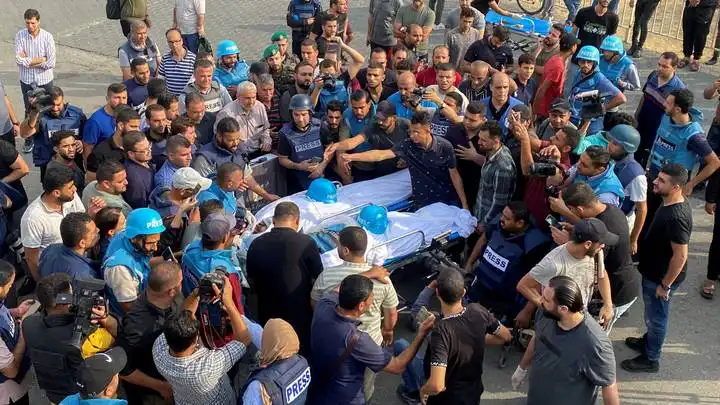
Journalist Mohammed Bashir Al-Talmis (40 years old) was killed this morning, Tuesday, due to the serious injury he sustained on Monday evening, as a result of an Israeli raid that targeted him and a group of displaced persons, bringing the number of martyred journalists to 204 since the beginning of the Israeli war on the Gaza Strip.


Al-Talmas underwent abdominal surgery in an attempt to save his life, before doctors announced his death on Tuesday morning.


The Government Media Office in the Gaza Strip announced the martyrdom of the journalist editor of the Palestinian Press Agency (Safa), Muhammad Bashir al-Talmis, who succumbed to the serious injury he sustained on Monday evening when the occupation aircraft targeted a group of displaced persons in the Sheikh Radwan neighborhood.


Since the beginning of the war on the Gaza Strip on October 7, 2023, journalists have been subjected to continuous Israeli persecution, which constitutes a clear violation of international laws, in an attempt by the occupation to silence the voices that convey the facts of what is happening in the Gaza Strip to the world.


Over the past months, human rights and international organizations and journalistic investigations have called for strict measures to be taken to prevent the ongoing attacks and deliberate targeting of journalists. They also stressed the need to criminalize such crimes and impose penalties on those responsible, but that has not happened.

PALESTINE

Tue 14 Jan 2025 11:30 am - Jerusalem Time

More than 12,000 students were killed and 574 schools and universities were bombed since the beginning of the aggression

The Ministry of Education and Higher Education said that 12,329 students were killed and 20,160 were injured since the start of the Israeli aggression on the Gaza Strip and the West Bank on October 7, 2023.


The Ministry of Education stated in a statement on Tuesday that the number of students who were martyred in the Gaza Strip since the beginning of the aggression has reached more than 13,054, and those who were injured are 21,320, while in the West Bank 123 students were martyred and 671 others were injured, in addition to 560 being arrested.


It pointed out that 657 teachers and administrators were martyred and 3,904 were injured in the Gaza Strip and the West Bank, and more than 165 were arrested in the West Bank.


It pointed out that 324 government schools, universities and their buildings, and 65 affiliated with the United Nations Relief and Works Agency for Palestine Refugees in the Near East (UNRWA), were subjected to bombing and vandalism in the Gaza Strip, 128 were completely destroyed, and 57 were partially destroyed. In addition, 109 schools and 7 universities in the West Bank were subjected to storming and vandalism.


The Ministry of Education confirmed that 788,000 students in the Gaza Strip are still deprived of attending their schools and universities since the beginning of the aggression, while most students suffer from psychological trauma and face difficult health conditions.


It pointed out that the repeated occupation raids on the Jenin and Tulkarm governorates caused terror among students in their schools.

OPINIONS

Tue 14 Jan 2025 11:27 am - Jerusalem Time

Ideal conditions for a swap deal... What about the guarantees?

op-ed "AlQuds" dot com

op-ed "AlQuds" dot com

Opinion Writer

The Doha negotiations between the mediators, Israel and Hamas have reached a very advanced stage, overcoming some of the important obstacles that prevented reaching an agreement throughout the previous consultations over more than 13 months. These days, there is talk of progress in the components of the agreement formula, and that the ideal conditions have been created for a deal that until now could not be reached.


With the progress that led to a real breakthrough, the backstage of the negotiations is no longer a secret. News of the deal, its stages, implementation mechanisms and timeframe have become the talk of the street, especially in the Gaza Strip, where the people there are eager to hear news that will restore their smile that they have lost over the course of more than 460 days, by achieving a ceasefire agreement and ending this disastrous war on Gaza, so that they can catch their breath for the first time after the massive destruction that brought them woes, difficulties and suffering.


Our great people in Gaza, the displaced, are looking forward to returning to the northern Gaza Strip in the middle of the first phase, to receiving the first prisoners and more humanitarian aid, and to preparing to monitor the occupation army as it withdraws partially but not completely. Accordingly, the ground maneuver may end quickly.


Today, all eyes are on Doha again, where the details of the exchange deal are expected to be finalized in the presence of representatives of Presidents Trump and Biden, while Israel is busy today with attempts to ratify the agreement due to the orientations of extremists led by Itamar Ben-Gvir, who is threatening to resign, and Smotrich, who opposes any agreement, but their opposition and even their resignation will not affect Netanyahu, who can pass the agreement.


Given the interconnected stages of the deal, with precise timetables and agreed-upon steps in the mechanisms for releasing prisoners, especially Palestinians, the important question here is related to the guarantees and pledges to implement the agreement, especially everything related to the methods of the Israeli army’s withdrawal from the areas that were agreed to be left. Was the United States able to bridge the gap and the controversial positions and actually provide guarantees to Hamas and the resistance to prevent Israel from returning to war and resuming it? Is the Trump administration considered capable of imposing the terms of the guarantees on Israel and forcing it to implement them, as we see the example of Lebanon daily and the Israeli army’s violations of the agreement there? The second question related to the United States is: What are the gains and advantages that Israel will benefit from in exchange for agreeing to the exchange deal?


Will the United States cooperate with it in developing plans to destroy the Iranian nuclear project, or normalize relations with Saudi Arabia, or impose sovereignty over the West Bank? And how will all these issues affect the Palestinian cause, especially since the United States is interested in drawing a new Middle East according to its mood?


The exchange deal that will bring about a ceasefire in Gaza seems to be the most important, and it must be implemented and its continuity ensured until the aggression is stopped, even partially, on the way to reaching a complete and final cessation of the war and lifting the injustice from the Gaza Strip.

OPINIONS

Tue 14 Jan 2025 11:26 am - Jerusalem Time

The deal is on the doorstep unless Netanyahu sabotages it

Hani Al Masry

Hani Al Masry

Opinion Writer

Will the deal be concluded this time? Yes, there is a great possibility. Is it certain to be completed? No, so I warn against being overly optimistic and preparing for all possibilities, because Israeli Prime Minister Benjamin Netanyahu could sabotage it. He has not completed achieving his goals, and he fears that the partial deal or the first stage will lead to a comprehensive deal, a cessation of war, and an Israeli withdrawal. This opens the door for the return of Hamas or its continued rule of Gaza, especially since the alternative to Hamas has not yet matured. The occupation army does not want to occupy Gaza and remain in it because the occupation is costly in terms of human and economic resources, and remaining in it requires the formation of a military government that undertakes the distribution of aid and the provision of water and electricity. His failure to do so has led to Hamas remaining in existence, despite the very severe blows it has received.


The formation of a local administration within a regional, international and American umbrella according to the Emirati, Egyptian or American proposal has not yet matured. President Mahmoud Abbas has not agreed to all the proposed formulas, waiting for the US President-elect Donald Trump to take office, to see what he has in store. This may be due to an understanding between him and Trump’s teams, or a token of love to facilitate the implementation of a new direction on his part that calls for weaving a Palestinian-American partnership in Trump’s second term, different from the boycott and hostility that characterized his first term, although it is possible to choose a policy of resistance that avoids boycott and avoids participation and integration in order to ensure obtaining the minimum level of Palestinian rights and interests.


The essential point on which the deal depends is the agreement to stop the war. Hamas insists on the necessity of agreeing on this at some point, and now it hopes that this will happen in the second stage after it was not possible to agree on it in the first stage, while the Netanyahu government insists on stopping the fighting or freezing the war and refuses to stop the war because it wants to keep the door open to resuming the war after the completion of the first stage, as well as after the release of all Israeli prisoners. If there is an intention to conclude a partial deal, the agreement could include general and loose formulations regarding stopping the war that each party interprets as it wishes.


Of course, if an agreement is reached to stop the war, an agreement on the withdrawal of Israeli forces will be a foregone conclusion, although the Israeli government will insist at a minimum on maintaining a safe zone (a buffer zone and areas that remain under its control, especially in the north), in addition to its “right” to enter any area in the event of a threat or if it finds it necessary.


One of the things that drives the Israeli government to insist on continuing the war is that stopping the war without a decisive victory with a knockout blow will lead to the fall of the government and open the gates of hell upon it, as official investigation committees will be formed into the historic failure on October 7, and old cases will be followed up and an investigation will be opened into the new scandals committed by Netanyahu and the ongoing failures since that date until now. It is true that the Israeli government has achieved many important accomplishments, but it has not achieved a decisive strategic political victory, and this is due to the legendary steadfastness, valiant resistance and the commission of several Israeli political and military mistakes.


For example, if the Netanyahu government had agreed to open a political horizon and return the authority to the Strip, there would have been a ready alternative to Hamas rule. If, as Haim Ramon wrote, it had launched a ground war from the north and south at the same time, the results would have been much better. If it had taken the advice of the American generals (especially Charles Brown, the senior general) who advised their Israeli counterparts to remain in the areas they occupied to cleanse them completely, because the tactic of repeated occupation and withdrawal enabled Hamas fighters and the rest of the factions to return and reorganize their ranks. In addition, the failure to form a military government to undertake the distribution of aid, water, electricity, and other matters enabled the Hamas authority to continue this work, control a certain amount of aid, and benefit from it to maintain its influence over the population.


If there is an intention to stop the war, Israel and the United States can use the Strip’s need for humanitarian aid, reconstruction, and the presence of Arab and international forces, including American forces, to impose that Hamas not remain in power and to arrange a transitional administration that Israel agrees to, as it wants an administration without Hamas or Abbas to ensure the continuation of the separation between the West Bank and the Strip and the continuation of the division; that is, it does not want Hamas’s authority to remain or the Authority to return, so the Administrative Committee, Local Administration, or Transitional Government Commission was invented until the Authority is renewed and reformed.


If the Trump administration adopts the approach of returning the Authority to the Strip, along with opening a political horizon that includes establishing a Palestinian state, to convince Riyadh to normalize relations with Israel, and this is a possible scenario because it is difficult for Riyadh to normalize relations in exchange for stopping the war only, especially if this is accompanied by the annexation of the West Bank or large parts of it, then if this happens, it will clash with the rejection of the current Israeli government, which raises the need to work to bring it down and go to early elections, or reconstitute it, whereby ministers Itamar Ben-Gvir and Bezalel Smotrich exit, and Yair Lapid or Benny Gantz or both enter.


Here, we must ask about the content of the agreement that Netanyahu concluded with Ben-Gvir and Smotrich in exchange for their not withdrawing from the government, and merely opposing it, if the deal is concluded. Does it include his approval of the annexation of the West Bank or only parts of it, where the retreat in Gaza is in exchange for progress in the West Bank? Was this agreement made under the auspices and approval of Trump or in the hope of obtaining this approval?


In this context, the Netanyahu government may be forced to accept the continued rule of Hamas, which will be weak, exposed, and subject to continuous attacks and boycotts by Arabs and the international community. This is not the best scenario for it, but it is better than others. It fears that it will be forced to return to the unified authority, even after a while, which will open the door to the unity of the West Bank and the Gaza Strip and to launching a political process that could include the establishment of a Palestinian state according to Trump’s specifications, and perhaps more or less than what was stated in the Trump deal. This, despite its badness for the Palestinians, is rejected by the Israeli extreme right, which considers the establishment of a Palestinian state an existential threat.


Trump’s readiness to re-propose his deal, which includes the establishment of a Palestinian state in name but without the components of a state, and with the deduction of 30% of the West Bank and its annexation to Israel, along with part of the Gaza Strip, may lead to acceptance or adaptation by the official Palestinian leadership, which believes that the time is different now from Trump’s first term in office, and that it is better to accept any deal that Trump proposes while trying to improve it. This is better than nothing and may encourage Saudi Arabia and a number of Arab and Islamic countries to normalize relations with Israel and integrate it into the region, to be a major step on the path to establishing the new Middle East that has been worked on for decades.


Hamas did well to agree early on after October 7 to the formation of a national unity government with a national reference without participating in it, in order to remove pretexts from the hands of the Americans, Israelis, Arab and European donor countries, and others. However, it should not deal with this issue in a formal manner and give priority to its return to power at the first available opportunity, because any quick direct return or role will give the current Israeli government, its partners, and any future government an excuse to continue the plan of the war of extermination, displacement, and annexation, and to seek to liquidate the Palestinian cause from all its aspects. This will also provide an excuse for donor countries not to fund relief, reconstruction, and reconstruction.


It is true that Israel will proceed with its plans under all circumstances and conditions if it is not deterred, but there is a difference between doing so at very high rates or at normal rates, as there is a difference between expanding settlements and displacement and annexation, and this is affected by the Palestinian position and the extent of its unity, strength, effectiveness and wisdom.


If there was an agreed upon Palestinian plan entitled the PLO, the common denominators program, a single authority, and true partnership, through a national consensus government made up of competent people, and the formation of a unified Palestinian delegation to negotiate on behalf of the PLO regarding everything, including the exchange deal, the road would be cut off to the various hostile scenarios that are being prepared for the next day, which undermine the PLO’s singular representation of the Palestinian people, infringe upon rights, and bring back the era of mandate, guardianship, and alternatives.


But as they say, if the devil's work opens up and instead of reaching an agreement and putting the Palestinian house in order after the genocide and making a comprehensive structural and political change, the old remains as it is and the division deepens, and it may turn into the beginning of fighting, as what is happening in Jenin indicates. If the strife is not nipped in the bud, the matter threatens to spread and cause great loss to the cause, the people, the land, and the national movement.


Trump’s vice president, J.D. Vance, has made clear what his boss means by opening the gates of hell on the region if the deal is not completed by his inauguration day: Hamas will pay a heavy price, the terms of the deal will be much tougher for it, the administration may give full authorization to the Israeli government to liquidate the remaining Hamas battalions and leadership, and will impose very severe sanctions on individuals who support terrorist groups in the region.


This shows that there is no room for betting on the new Trump and what he will offer, as he will in any case be bad for the Palestinians. The question is to what extent and how can he be thwarted, his damage reduced or improved?

PALESTINE

Tue 14 Jan 2025 11:17 am - Jerusalem Time

Trump's "gifts" to Israel in exchange for stopping the war on Gaza

Report: Trump pledged to Netanyahu that in exchange for his approval of the current deal, he would support the resumption of war in the future, a major expansion of settlements, and the cancellation of the Biden administration's decisions regarding sanctions on terrorist settlers and the inclusion of NSO on the blacklist


The Israeli government agreed to the prisoner exchange deal and ceasefire in the Gaza Strip, after US President-elect Donald Trump, who will take office next week, presented the Israeli government and its ministers with several "gifts", which are Israeli demands.


Trump pledged to Israeli Prime Minister Benjamin Netanyahu and Minister of Strategic Affairs Ron Dermer that if they agreed to a ceasefire and the withdrawal of Israeli army forces from the Gaza Strip, he would support Israel later if it decided to resume the war on Gaza and violate the ceasefire, according to what the intelligence analyst for the Yedioth Ahronoth newspaper, Ronen Bergman, reported today, Tuesday, from a source familiar with the details.


Other Israeli sources claimed, according to Bergman, that "everything that is happening in front of the public, including the right-wing opposition, is part of a play."


Bergman noted that Trump and his advisers have proven in the past that they can do unexpected things, such as the Abraham Accords and now the prisoner swap deal and the cessation of hostilities, not through agreements with texts that are favorable to all parties, but rather by creating “a good cause and personal benefits” elsewhere.


He added that with regard to the Abraham Accords, Trump recognized Morocco’s sovereignty over Western Sahara and awarded the UAE a contract to supply it with weapons, including advanced fighter jets, with Israel’s tacit approval.


Bergman continued that in order for Saudi Arabia to allow Israeli flights to cross its airspace, Trump pressured Netanyahu to resume the license to operate the Pegasus spyware, which is “one of the favorite tools of the Saudi ruler and Crown Prince Mohammed bin Salman.”


“Pegasus, the most advanced Israeli spyware in the world, was the link between most of the participants in the Abraham Accords, including Uganda, and also the United States in secret. Ultimately, the deal being woven now is supposed to play a role the day after (the war on Gaza) as well, with the involvement of the Saudis and the Emiratis,” he noted.


Trump is now likely to re-embrace these methods, “and it is not unlikely that he will allow Israel and NSO (the Israeli offensive spyware company that developed Pegasus and is subject to American sanctions) to return to playing a central role in international diplomacy,” according to Bergman.


He added that a number of sources indicate that Finance Minister (Bezalel Smotrich) will receive American approval in exchange for the deal with Gaza to carry out extensive settlement construction in the West Bank, “as senior officials in the future Trump administration have pledged.”


Trump’s “gift basket,” according to Bergman, also includes canceling the list of sanctions imposed by the Biden administration on terrorist settlers, and there are indications that Trump intends to wage a “fierce war” against the two international courts in The Hague, against the issuance of international arrest warrants against Netanyahu and former Defense Minister Yoav Galant, and against other steps that may be taken against other Israeli officials.

Source: Arab48

PALESTINE

Tue 14 Jan 2025 9:02 am - Jerusalem Time

Israeli forces launch a large-scale arrest campaign in the West Bank

Today, Tuesday, the Israeli occupation forces launched a large-scale arrest campaign in the West Bank.


In Nablus, the occupation forces, accompanied by a military bulldozer, stormed Balata camp amid heavy gunfire, deployed snipers on the roofs of buildings, raided a number of homes, searched them and wreaked havoc.


The occupation forces also arrested at least 13 citizens, namely: Ali Saudi, Hassan Hashash, Yazan Ishtia, Abdeen Hashash, Muhammad Khaled Hashash, Weam Qaraan, Ahmad Hashash, Omar Abu Zeitoun, Bassam Hashash, Alaa Hashash, Hamouda Hashash, Omar Abu Muslim, and Murad Abu Muslim.


A number of citizens were also subjected to field investigation, and the raid is still ongoing.


In Tulkarm, the occupation forces arrested Musab Awda from the city’s Al-Iskan neighborhood, and Muhammad Al-Issawi from the village of Kafa, after raiding and searching their homes.


In Hebron, the occupation forces arrested Muhammad Imad Al-Aqrat and Abdullah Haitham Al-Janazra from the town of Halhul, and also arrested the young man Fadi Yousef Muhammad Noufal Islimiya from the town of Idhna, west of Hebron, and took them to an unknown location after searching their homes and tampering with their contents.


The occupation forces also set up several military checkpoints at the entrances to Hebron, its towns, villages and camps, and closed a number of main and secondary roads with iron gates, cement blocks and earthen barriers.


In Salfit, the occupation forces arrested four citizens, after raiding and searching their homes in the city of Salfit. They are: Yasar Ahmed Hassan, Muhammad Mahmoud Zubeidiya, Amr Aziz Fattash, and Muhammad Alqam.


These forces also arrested Rami Suleiman from the village of Marda, Islam Jamal Salama from the town of Broqin, Walid Khaled Harb, Zaid Hussam Harb, Tariq Ali Harb, and Ayman Adnan Harb from the village of Iskaka.


Meanwhile, these forces stormed the town of Qaraweh Bani Hassan, searched a number of homes, detained citizens, and interrogated them in the field. They then arrested: Humam Mar’i, Ammar Salama, Saed Asi, and the brothers: Ayoub, Muhaib, and Mahyoub Mar’i.


In Jenin, the occupation forces arrested the young man Mustafa Khamaisa after surrounding, raiding and searching his house.


It is noteworthy that Israeli special forces infiltrated the town early this morning, and surrounded a house, before the occupation forces sent military reinforcements accompanied by a bulldozer towards Qabatiya.


PALESTINE

Tue 14 Jan 2025 9:00 am - Jerusalem Time

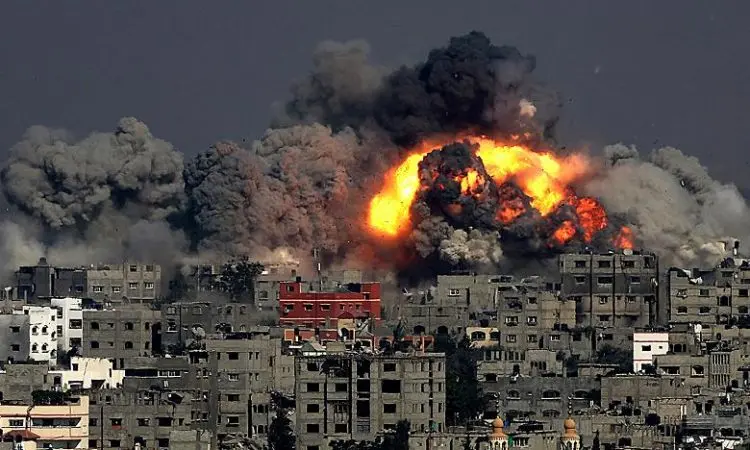
Dead and wounded in Israeli occupation's bombing of various areas of the Gaza Strip

Last night and this morning, Tuesday, a number of citizens were killed as a result of the Israeli occupation forces’ bombing of various areas in the Gaza Strip.


Local sources reported that a female citizen was killed when the occupation forces bombed the Skeik family home on Al-Wahda Street in the center of Gaza City.


It added that 9 citizens were killed and a number of others were injured as a result of the occupation's bombing of three areas in Deir al-Balah, namely: a tent in Abu Shaaban's land opposite the Palestine Technical College, Adnan al-Zari'i's house on al-Nakhil Street, and Lawrence Cafeteria. The fire also spread to the tents on the beach of Deir al-Balah as a result of the bombing.


Nine citizens were also killed in an occupation bombing of the Masmah family home near the Khalidiya clinic in the Al-Manara neighborhood, east of Khan Yunis, in the southern Gaza Strip.


A citizen was killed when a house was targeted next to Tahlia Al-Tawba in the town of Abasan, east of Khan Yunis.


Local sources reported that the daughter of journalist Ayman Al-Amriti was killed in an occupation bombing in central Gaza City.


The occupation forces continue their aggression on the Gaza Strip, by land, sea and air, since October 7, 2023, which resulted in the death of 46,584 citizens and the injury of 109,731 others, while thousands of victims are still under the rubble and on the roads, and ambulance and rescue crews cannot reach them.

PALESTINE

Tue 14 Jan 2025 8:55 am - Jerusalem Time

Israel exaggerates the strength of the resistance in the West Bank.. What is behind the hill?

Dr. Amjad Abu Al-Ezz: Israel seeks to exploit the implementation of any operation against it to eliminate the Palestinian political entity and turn the West Bank into an area unfit for living

Mohammad Hawash: Incitement and military mobilization against the West Bank reflect Israel's desire to intensify its control and expand its settlement project

Muhannad Abdul Hamid: Concluding a national agreement to stop armed resistance in the West Bank does not mean giving up rights, but rather represents a necessary tactic to disrupt the occupation’s plans

Imad Musa: The occupation may destroy the northern camps under the pretext of the "failure of the authority to perform its duties" and cause strife to be inflamed to justify its military intervention

Sari Samour: The West Bank is the most prominent front that Israel seeks to target as its aggression on Gaza draws to a close, due to its strategic importance within the settlement project.

Samir Anabtawi: Israel is promoting exaggerated claims about the capabilities of the resistance in the West Bank to justify any future military operations under the pretext of fighting an alleged threat


The West Bank is awaiting a critical phase of Israeli escalation, as the occupation government seeks to inflate the capabilities of the resistance, especially the Hamas movement, and exploit any Palestinian operations against Israel as a pretext to implement strategic plans aimed at eliminating the Palestinian political entity.


In separate interviews with “I”, writers, political analysts, specialists and university professors believe that these policies seek to transform the West Bank into an area unfit for living by escalating settlements, reducing the population, and intensifying daily military measures that deepen Palestinian suffering.


They assert that Israel is using this exaggeration of the capabilities of the resistance, especially the Hamas movement in the West Bank, to justify new repressive and settlement measures aimed at imposing complete control over the Palestinian land and turning it into areas under Israeli sovereignty, including implementing the so-called “decisive plan” supported by the extreme right in the Israeli government, and making radical changes on the ground by intensifying settlement activity, strengthening the military presence throughout the West Bank, and increasing pressure on the Palestinian Authority, which raises the need to agree on a national program in order to remove the pretexts from Israel’s hands.


Preparing the atmosphere for the implementation of a long-term Israeli plan


The writer, political analyst, and professor of international relations at the Arab American University, Dr. Amjad Abu Al-Ezz, confirms that Israel seeks to exploit any operation targeting it to justify the implementation of a strategic plan aimed at eliminating the political and legal entity of the Palestinian Authority, explaining that this plan includes transforming the West Bank into an area unfit for living and systematically reducing the number of Palestinian residents, as part of a long-term Israeli plan.


Abu Al-Ezz believes that Israel's exaggeration of the capabilities of Hamas and the armed factions in the West Bank comes in the context of preparing the atmosphere for the implementation of this plan.


Abu Al-Ezz points out that Israel relies on spreading narratives that portray the West Bank as a serious security threat, which facilitates the passage of its plans locally and internationally. He believes that media coverage of what is currently happening may indirectly contribute to amplifying the problem, as excessive media focus on military aspects overshadows political dimensions, which leads to increased escalation rather than pushing towards political solutions.


Abu Al-Ezz points out that the administration of President-elect Donald Trump has provided implicit support for these Israeli policies, as the Trump administration believes that the time is right to achieve what he described as “silent annexation,” without directly provoking the international community.


Abu Al-Ezz explains that extremist Israeli figures, such as Itamar Ben-Gvir and Bezalel Smotrich, believe that Trump’s presence in power in the United States of America will allow the annexation of more than 60% of the West Bank lands, especially those classified as Area C, to full Israeli sovereignty.


Israel uses Hamas as a scarecrow to justify its settlements and aggression


Writer and political analyst Muhammad Hawash believes that Israel is using the "scarecrow" of the Hamas movement to justify its settlement and military measures. The escalating mobilization and incitement, along with allegations that Hamas possesses weapons that break the balance, are nothing more than an attempt to justify its policies of control over the West Bank before the international community, which classifies Hamas as a terrorist movement.


Hawash explains that Israel cannot bypass international agreements with the Palestinians, and it seeks to create justifications for annexing the West Bank. The presence of 22 Israeli military battalions in the West Bank, and proposals to increase the number to 20 additional battalions, represent part of plans to intensify military control and strengthen the occupation.


He points out that these measures are in line with the policies of the extreme Israeli right, which seeks to implement the "decisive plan" proposed by Israeli Finance Minister Bezalel Smotrich, which aims to gradually nibble away at Palestinian lands, in order to strengthen the Israeli settlement project.


According to Hawash, the settlement project is the cornerstone of Israeli policies in the West Bank, as successive Israeli governments work to provide funding and legislative support for this project, including granting settlers privileges such as possessing weapons, and ensuring that the Israeli army protects them at the expense of the Palestinians.


These policies, according to Hawash, aim to reassure settlers that the Israeli government and army are committed to strengthening settlements and turning the West Bank into an entirely Jewish area, in line with the Israeli narrative that it calls “Judea and Samaria.”


Hawash points out that Israel exploits the mention of Hamas in incitement against the Palestinians to justify its oppressive policies before the world, as Hamas is classified as a terrorist movement in Western countries, and this narrative gives Israel international legitimacy to implement its settlement and military policies. However, this justification faces increasing rejection from the international community, which criticizes Israeli attacks on Palestinians, whether by the army or settlers, especially after the revenge attacks targeting Palestinian villages and rural areas following military operations.


Hawash believes that Israeli policies aim to exert more intense daily pressure on the Palestinians in the West Bank, to make them feel that sovereignty over the land belongs to the Israelis. This is evident in the military checkpoints, iron gates, control of roads, and intensive military deployment at the entrances to cities and villages. Although these measures are not new, efforts are being made to intensify them.


Hawash speaks of an internal conflict between the Israeli right wing over how to deal with the West Bank. While the extreme right calls for the complete annexation of Palestinian lands, the moderate right seeks to strengthen colonial control without significantly provoking the international community.


Hawash points out that this discussion reveals a difference in visions within Israel, but they agree on one goal: absolute control over the West Bank and emptying it of its Palestinian content.


He points out that Palestinian operations, such as the recent “hotel” operation, arouse racist hysteria within Israeli society, and Israeli extremists are calling for the erasure of Palestinian cities such as Nablus and Jenin, similar to what is happening in Gaza. However, these calls reflect the internal fragility of Israeli society, despite its enormous military power, and at the same time reveal its racist tendencies against the Palestinians.


Despite the extremist calls within Israel, Hawash asserts that the Israeli government’s decisions are subject to international restrictions. Israel is part of the Western system, and it is the West that is managing the conflict against the Palestinians, whether in the West Bank or Gaza. This factor limits Israel’s ability to take excessive measures that could lead to international isolation, but at the same time it provides it with the necessary support to continue its settlement project.


Hawash believes that Israel does not need extensive military campaigns in the West Bank, as the occupation itself constitutes a permanent campaign, but the incitement and military mobilization reflect Israel's desire to intensify control and expand the settlement project.


Hawash asserts that this situation places the Palestinians before daily challenges in the face of Israeli policies aimed at eliminating their national existence, while the international community continues to criticize these policies without taking practical steps to end them.


A systematic Israeli strategy targeting the Palestinian people


Journalist Muhannad Abdul Hamid describes the Israeli allegations that Hamas possesses destabilizing weapons in the West Bank as a “silly joke,” noting that no observer can take this claim seriously, especially since the policies of Benjamin Netanyahu’s government clearly show that its goals go beyond mere media claims. The scene on the ground reveals a systematic Israeli strategy targeting the Palestinian people through land confiscation, the spread of settlement outposts, the expansion of settlements, ethnic cleansing, siege, and starvation, in addition to daily campaigns of repression.


Abdul Hamid confirms that these policies in the West Bank are accompanied by an ongoing war of extermination in the Gaza Strip, which aims to achieve comprehensive destruction and impose new facts that serve the occupation project.


“The Netanyahu government, which does not hide its intentions, is clearly working to impose what can be described as a ‘fascist solution’ to the Palestinian-Israeli conflict, a solution that completely contradicts international solutions that call for ending the occupation and granting the Palestinian people the right to self-determination,” Abdul Hamid says.


In this context, Abdel Hamid refers to the statements of Israeli Finance Minister Bezalel Smotrich, which are a clear indication of this trend. He called for transforming cities in the West Bank into a model similar to the destruction that befell the Jabalia camp in Gaza, and he had previously called for wiping out the town of Hawara from existence.


Abdul Hamid stresses that these statements are not just words, but have been translated into actions through policies that work to bring down the Palestinian Authority and empty it of its political and administrative content by refusing to hand over tax funds and stripping it of its powers.


Abdul Hamid believes that the Israeli exaggeration in portraying an alleged security threat in the West Bank, while talking about possible opportunities to stop the war in Gaza, comes as a pretext to justify the ongoing destructive aggression in the West Bank on the one hand, and on the other hand to block the path of regional and international efforts aimed at healing the wounds of Gaza and supporting its afflicted people.


Abdul Hamid explains that since 2021, the Israeli military campaigns in the West Bank have continued without interruption, with daily raids and incursions becoming a familiar reality, and drones and heavy equipment being used, resulting in the deaths of more than 760 martyrs, thousands of wounded, and the arrest of 11,000 Palestinians since the “Al-Aqsa Flood.” This aggression was accompanied by widespread destruction of infrastructure, especially in the Jenin and Tulkarm camps, and the demolition of dozens of homes.


Despite this, Abdel Hamid explains, Netanyahu’s government has not resorted to launching a large-scale military campaign as happened in 2002, when it invaded the cities of the West Bank and besieged the late President Yasser Arafat. Instead, the government is following new tactics that rely on daily attacks with the aim of expanding settlements. It has cancelled Ariel Sharon’s decision to dismantle the settlements around the city of Jenin and rebuilt them as part of a plan aimed at annexing the West Bank and liquidating the Palestinian entity represented by the Palestinian National Authority.


Abdul Hamid believes that the ongoing military campaigns in the West Bank, even if they are on a smaller scale compared to the major invasions, have devastating effects on the economic, security and political levels. In addition to targeting the infrastructure and displacing Palestinians, these campaigns are used as a cover for settlement expansion and undermining and weakening the Palestinian Authority. This political vacuum is used to deepen the annexation and Judaization processes, in a way that serves the fascist plan adopted by Netanyahu’s government.


He stresses that in the face of this dangerous reality, there seems to be an urgent need to reach an internal Palestinian understanding that puts an end to internal clashes and unites the people with their various political spectrums and armed organizations on the basis of Palestinian legitimacy.


Abdul Hamid explains that the continuation of the internal conflict, in light of the noticeable decline of the regional resistance axis, enhances the occupation’s ability to achieve its goals.


Abdul Hamid stresses that concluding a national agreement to stop armed resistance in the West Bank, under these difficult circumstances, does not mean giving up rights, but rather represents a necessary tactic to disrupt the occupation’s plans, achieve Palestinian unity and the national project, and strengthen the steadfastness of the Palestinian people in the face of Israeli plans.


Creating a vertical and horizontal rift in internal Palestinian relations


Writer and political analyst Imad Musa warns that Benjamin Netanyahu's government may destroy the Palestinian camps in the northern West Bank under the pretext of "the failure of the Palestinian Authority to perform its duties," which will lead to a vertical and horizontal rift in internal Palestinian relations.


Musa believes that this step aims to fuel strife between the Palestinian factions on the one hand, and between them and the Palestinian Authority on the other hand, which gives Israel a justification for bloody military intervention under the cover of fighting “chaos,” which directly threatens the Palestinian state project.


Musa believes that Benjamin Netanyahu's government is proceeding with calculated steps towards achieving the "ultimate achievement" of completely eliminating the Oslo Accords, which many at the time considered the basis for achieving a political settlement between the Palestinians and the Israelis.


Musa believes that Netanyahu's government is seeking to destroy any remaining hope for the Palestinians to establish their independent state, through a systematic policy based on destroying all the elements of life, especially in the Gaza Strip.


Musa points out that Netanyahu and his government are adopting a strategy based on systematic genocide against the Palestinians, especially in Gaza, which has been returned to the "ancient ages" due to the siege and intensive bombardment, in an expression of the deterioration of the humanitarian and living conditions there.


What is more dangerous, Moussa believes, is the Netanyahu government’s complete disregard for international humanitarian law and UN resolutions that have served as the “birth certificate” of the State of Israel. This disregard is evident in his government’s attacks on the United Nations Relief and Works Agency for Palestine Refugees (UNRWA) and the International Criminal Court, reflecting Israel’s desire to obstruct any legal path that exposes its repeated violations against the Palestinians.


Musa believes that Netanyahu seeks to employ “soft power” to achieve his political goals, by offering the Palestinians two options: destruction and displacement or submission to Israel’s conditions.


Musa confirms that Netanyahu's government has its sights set on regional expansion towards Syria, especially after the decline of Iranian and Russian influence there.


Mousa expects that Israel aspires to obtain the “lion’s share” in any future political settlement regarding Syria, which will enhance its regional control and weaken any competing powers.


Musa points to the role of the US administration, specifically the Donald Trump administration, in controlling Netanyahu’s ambitions, as Washington may be forced to rein in Israel, especially in light of the major changes taking place in the Syrian situation, not all of which are in Israel’s interest.


Musa believes that the future of these transformations, and the new balances they may produce, will have a direct impact on Netanyahu's ability to implement his regional plans.


Force and violence to achieve Israel's strategic goals


Writer and political analyst Sari Samour believes that Israel relies mainly on the use of force and violence to achieve its strategic goals, explaining that the Israeli state has become “addicted” to military solutions, even if there are other means to achieve the same goals.


He points out that this approach was clear even before the October 7, 2023 war, as militarization became a major culture in Israel.


Samour explains that Israel often looks for a “new front” immediately after the end of any military confrontation, as happened after its withdrawal from southern Lebanon in 2000, when the Al-Aqsa Intifada broke out only five months later. He points out that the West Bank has become the most prominent front that Israel seeks to target as its aggression against Gaza draws to a close, given its strategic importance within the settlement project.


Samour believes that Israel is working to exaggerate the capabilities of the Palestinian resistance in the West Bank, especially Hamas, claiming that the latter possesses weapons that “break the balance,” which he described as “baseless and false,” as the resistance in the West Bank possesses cells armed with light weapons, and cannot in any way threaten the military balance, pointing out that the occupation often reaches the perpetrators of operations relatively quickly due to its absolute security control over the West Bank.


Samour believes that the occupation's exaggeration of these allegations does not have a purely security dimension, but rather comes in the context of finding pretexts to implement new settlement plans, pointing out that the next stage may include the introduction of tanks into the streets, cities, towns, and camps of the West Bank, as part of a broader military campaign.


Samour points out that the Israeli military campaign on the West Bank is not new, as it has been ongoing for a long time, but it may witness an expansion in the coming stage with an increase in the amount of weapons used.


Samour points out that the West Bank is already suffering from difficult conditions, including attacks by settlers supported by the occupation army, and geographical fragmentation due to checkpoints and repeated incursions, in addition to the stifling economic crisis that is striking cities, villages and camps, and if the targeting of the West Bank is expanded, the suffering will deepen.


Samour asserts that the future of the West Bank depends largely on the role of the new Trump administration, wondering whether this administration will push towards calming the situation in the West Bank, or will support the expansion of Israeli aggression against it, noting that Israel is subject to the American decision in many aspects.


Samour warns that Israel is exploiting international silence and Arab and Islamic impotence to implement its plans in the West Bank without deterrence, explaining that the absence of any effective international or Arab pressure encourages the occupation to continue, warning that the West Bank may face a major aggression, especially with the lack of support from any other resistance arena.


Large-scale invasions are likely to be focused on specific areas.


Writer and political analyst Samer Anabtawi asserts that the primary goal of the far-right Israeli government led by Benjamin Netanyahu is to extend full control over the West Bank, pointing out that this goal existed before the recent Israeli aggression on the Gaza Strip.


Anbatawi explains that the project to control the West Bank was part of the understandings between Netanyahu and his partners in the government, such as Itamar Ben-Gvir and Bezalel Smotrich, as their plans included eliminating the Palestinian resistance in the West Bank, supporting the settlers, and expanding their influence.


Anbatawi points out that the bloody war that Israel launched on Gaza after October 7 temporarily changed the priorities of the Israeli government, as the focus was on the Strip. However, despite this, the settlement ambitions and the settlement program in the West Bank did not stop, although they declined slightly.


Anbatawi explains that the occupation is now refocusing on the West Bank in several areas, the most important of which is targeting the resistance in the northern West Bank, especially after the resistance became more organized and effective, and succeeded in carrying out operations that inflicted tangible losses on the Israeli army and settlers. The occupation is also seeking to eradicate the resistance before it expands and becomes more influential on the ground.


Anbatawi explains that Israel sees the Palestinian camps as a symbol of the Nakba and the right of return, in addition to being a basic base for resistance. Therefore, Israel is trying to target the camps directly as part of its attempts to dismantle the social and symbolic structure of the resistance.


Anbatawi believes that Israel is promoting exaggerated claims about the capabilities of the resistance in the West Bank, and there is no clear evidence for some of these claims, as these propaganda campaigns aim to find a justification for accepting any future military operations under the pretext of fighting an alleged threat.


Regarding potential military operations, Anbatawi confirms that the occupation may resort to large-scale invasions, but these operations are likely to be focused on specific areas.


Anbatawi explains that the main goal will be to target the resistance’s infrastructure, in addition to its popular incubator, with the aim of undermining its ability to continue.


Anbatawi stresses that such military operations will have serious repercussions on the West Bank, especially economically, as they will lead to the closure of roads and the establishment of more military checkpoints, which will increase the difficulty of movement for citizens, especially employees, and complicate daily life.


Anbatawi points out that the repeated attacks by settlers supported by the occupation army on Palestinian villages and agricultural crops will increase as part of attempts to establish a "settler state" in the West Bank.


Anbatawi warns that Israel is working to annex 60% of the West Bank lands under the so-called “State of Judea and Samaria,” as this plan includes displacing Palestinians from their lands voluntarily or by force, through escalating economic and living pressures on them.


He stresses that these policies aim to implement the Israeli settlement project, which is in line with the expansionist ideology of the current government.


Anbatawi stresses that the next battle will be in the West Bank, where Israel seeks to impose a new fait accompli, including turning the West Bank into a center for complete Jewish settlement and declaring sovereignty over it.


PALESTINE

Tue 14 Jan 2025 8:48 am - Jerusalem Time

Trump's envoy accelerated overcoming obstacles... critical moments!

Ali Al-Awar: Prisoner exchange deal is close, and regional and international calculations have overcome the personal calculations of both parties

Dr. Suleiman Abu Sitta: The atmosphere seems more positive compared to previous times and there are indications of an imminent exchange deal

Adel Shedid: Netanyahu is trying to blackmail Trump to obtain a large political price, whether in Lebanon, Syria, the West Bank or Gaza

Abdul Marouf: A series of regional and international variables contributed to pushing the parties towards an agreement on the exchange deal

Hani Al-Gamal: Trump sending a special envoy despite not officially assuming power reflects his seriousness in achieving progress on sensitive files

Ismail Muslimani: The deal has a political character par excellence, contrary to Netanyahu’s desire, who tried to give it a security character


Several indicators indicate that decisive progress has been achieved in the ongoing negotiations to complete a prisoner exchange deal between Israel and Hamas. The first is the leaked draft of the terms of the deal and its three implementation stages, each of which extends to forty-two days. It includes a state of calm and the withdrawal of the occupation forces from the central Gaza Strip to the eastern border areas, the entry of relief aid, the rehabilitation of infrastructure and the return of citizens to their areas, and the implementation of exchange operations for living and dead prisoners, in stages and according to agreed-upon criteria.


There is another indicator that is no less important, and makes talk about the expected deal different this time, which is the frantic movement towards Doha, especially the sending of envoys by the incoming US President Donald Trump even before his term begins, in addition to the envoys of the current President Joe Biden.


Writers and analysts who spoke to “Y” said that the atmosphere seems more positive compared to previous times, and there are indications of an imminent exchange deal, and that regional and international calculations have overcome the personal calculations of both parties, indicating that Netanyahu is trying to blackmail Trump to obtain a large political price, whether in Lebanon, Syria, the West Bank or Gaza.


Netanyahu and Hamas seek to maintain their political existence


“It seems that we are facing a prisoner exchange deal soon, as all parties have presented the final version of the ceasefire agreement, and it has been sent to Hamas and Israel. Everyone is now waiting for the response of Israeli Prime Minister Benjamin Netanyahu,” said Ali Al-Awar, a political analyst specializing in resolving regional and international conflicts.


Al-Awar added: "In my estimation, the importance of this deal lies in the desire of all parties to maintain their existence; Netanyahu seeks to maintain his political existence, and Hamas wants to remain an essential part of the Palestinian political system, and regional and international calculations have overcome the personal calculations of both parties."


Al-Awar said, “The entry of US President Donald Trump as a major variable in this deal, and the arrival of his representative, reflects the importance of this historic moment, especially with Trump’s inauguration in the White House approaching. Everyone is seeking to participate in this historic event.”


Al-Awar pointed out that there is a new equation related to political arrangements concerning the West Bank, Gaza Strip and East Jerusalem.


He said: “Hamas seeks to maintain its existence to remain an important part of the Palestinian political system, while Netanyahu aims to maintain his presence in the international community, relying on Trump’s support, which will give him political, diplomatic and legal cover. Thus, Netanyahu may escape legal prosecution, especially since he is wanted by international justice and the International Criminal Court.”


He added: "The most important thing for Netanyahu now is to restore Israel's image internationally, after the number of Palestinian victims in the Gaza Strip reached more than one hundred and fifty thousand martyrs and wounded."


He believed that the pivotal question is: Will Netanyahu abide by the terms of the deal, including the prisoner exchange deal and not returning to war in Gaza?


Al-Awar replied: “In my estimation, yes. There is a great influence from the international community and clear pressure from US President Trump, which will push Netanyahu to commit to the deal. It is expected that the Israeli army will begin withdrawing from the Gaza Strip, to open the way for a new phase that includes reconstruction, but within new political arrangements.”


Al-Awar added: "Netanyahu will not re-launch the war on Gaza again, because his focus is now on the West Bank and new political arrangements there. The Gaza Strip is not in his strategic calculations, but he is waiting for important political gifts from Trump, most notably normalization with Saudi Arabia."


Al-Awar stressed that "full normalization with Saudi Arabia would be the greatest gift for Netanyahu, coinciding with a political initiative presented by Trump, based on recognizing a Palestinian state in exchange for normalization."


Smotrich's position on the deal and the future of Netanyahu's government


In turn, Dr. Suleiman Abu Sitta, writer and political analyst, said: Current indicators point to the possibility of the prisoner exchange deal being completed soon, noting that the atmosphere seems more positive compared to previous times.


However, he pointed out that the matter has not yet been decided due to the recent statements of Israeli Finance Minister Bezalel Smotrich, who announced his rejection of the deal, which could lead to the dismantling of Benjamin Netanyahu's government and political recalculations.


Abu Sitta explained that some of the terms related to the deal have begun to appear publicly through unconfirmed leaks, but they provide positive signals about the progress of the negotiations.


He added: "If an agreement is reached, I expect Israel to abide by it during the first period, especially since the deal will be conditional on a strict timetable that ensures its implementation in stages, which maintains the balance of interests."


Regarding the possibility of returning to war, Abu Sitta explained that this scenario remains a possibility, but he ruled out that the next war would be as strong as the one we witnessed recently.


"We may see changes in the nature of military operations, such as limited incursions or intensive airstrikes. However, international pressure and internal crises in Israel, including possible resignations in the army and expected commissions of inquiry, may limit Netanyahu's ability to make escalatory decisions," he said.


Reconstruction benefits and livelihood needs


Abu Sitta pointed out that the Palestinian resistance may have benefited from the previous experience to develop its capabilities and rebuild its military strength, pointing to the possibility of using unexploded explosive materials from the occupation’s bombing. He added: This will increase the costs of any possible Israeli invasion, especially in light of the accumulated experience of the resistance.


Regarding the repercussions of the deal, Abu Sitta explained that the occupation will face major challenges in rearranging its priorities, especially in light of the losses it suffered during the last war.


He added: "Aid and reconstruction will be a matter of continued blackmail by Israel. Reconstruction may be allowed, but at a very slow pace to ensure that the pressure on the Palestinians is maintained."


Abu Sitta stressed that the post-war period will bring great benefits, especially with regard to reconstruction and addressing the massive living crises in the Gaza Strip.


He concluded his statement to "I": "Despite everything that happened, Gaza will remain steadfast, and will once again prove its ability to overcome hardships and return to life, no matter what the challenges are."


The decisive factor in reaching the deal is Trump


In turn, political analyst Adel Shadid, who specializes in Israeli affairs, said that the possibility of reaching a deal has become an understandable matter, especially in the first stages that Benjamin Netanyahu is trying to implement in a way that ensures achieving the maximum amount of recovery of living Israeli prisoners, for many considerations.


He added: "In my estimation, the official factor and the main variable in this matter is President Trump. Trump has the impression that neither Benjamin Netanyahu nor the current US administration (the Biden administration) are interested in finding a solution to the war, a ceasefire, or completing the deal. Rather, they both want to postpone the crisis to the Trump era."


Shadid stressed that Netanyahu is trying to blackmail Trump to obtain a large political price, whether in Lebanon, Syria, the West Bank or Gaza. In contrast, Biden is seeking to thwart Trump by placing many obstacles in his way through international and regional crises.


He explained that Biden believes that Gaza was one of the reasons for his political failure, and therefore he does not see any real interest in ending the crisis, despite his presence in the negotiations and his appearance as if he is interested in completing the deal.


"This American behavior has not changed for a year, as we hear the same rhetoric about interest in a ceasefire, but the reality shows continued support for Israel and holding Hamas responsible," Shadid said.


He stressed that the issue of Israel's commitment to the ceasefire is primarily linked to its interests and the interests of the regional and international players facing it.
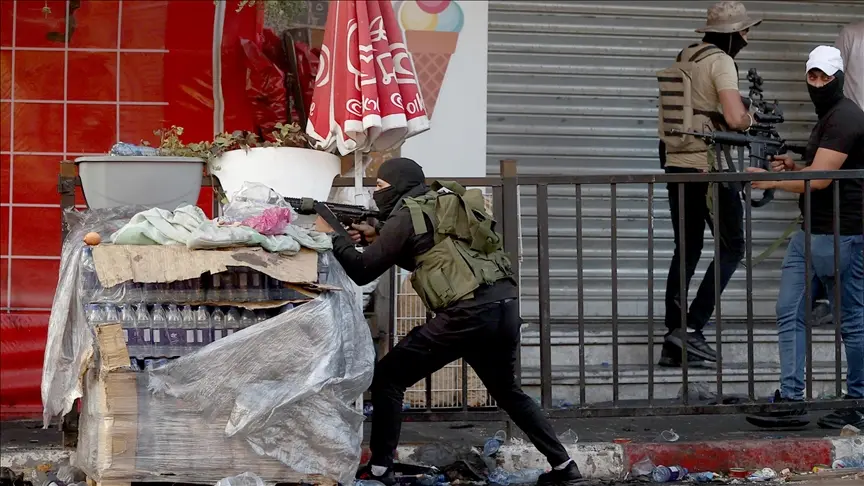

Trump wants to devote himself to other issues


He said: "I think it is not in Netanyahu's interest to appear before President Trump in the first months as if he is trying to sabotage the efforts, because Trump wants to devote himself to other issues."


Shadid believed that the nature of the current terms might open the way for Israel to take certain steps that it considers somewhat compatible with the agreement, while the Palestinian side might see them as a violation of the agreement.


He pointed out that there is now a major problem, in my estimation, regarding the issue of the buffer zone that is being negotiated in Gaza.
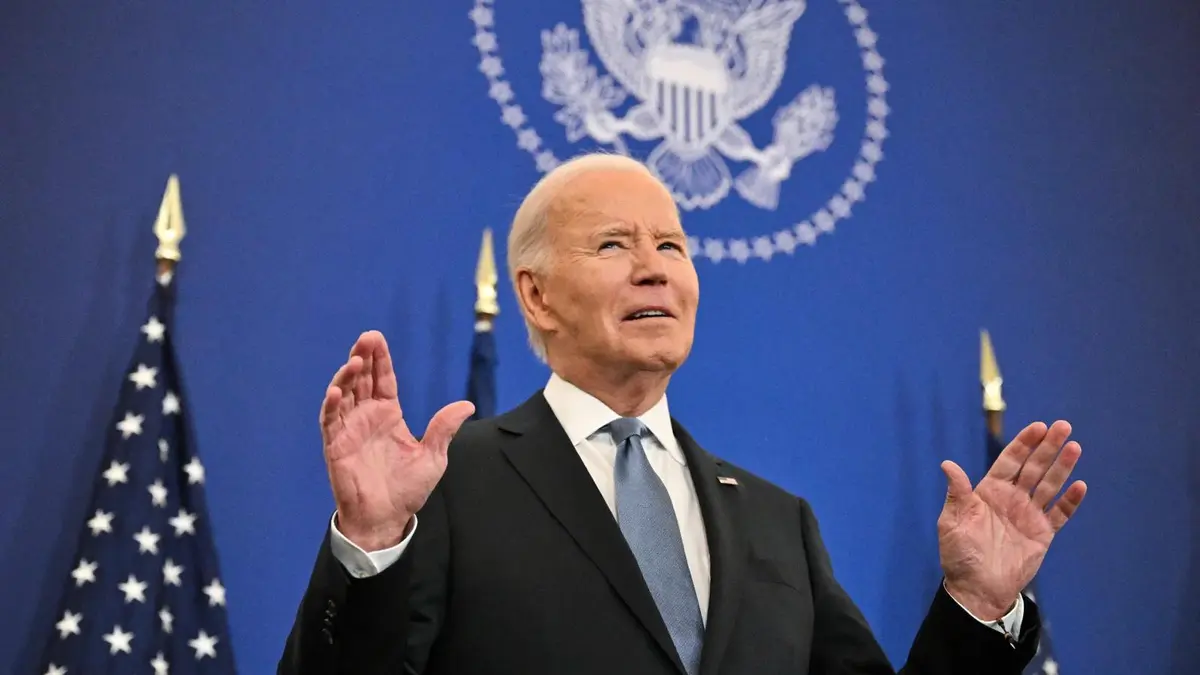

He said: "The Israeli side is demanding a buffer zone of one kilometre depth along the border, while the Palestinians are demanding a depth of only 500 metres. It seems that the mediators are moving towards a compromise of 750 metres depth."


He stressed that the agreement stipulates that there should be no military activities in the buffer zone. However, the Israelis can exploit this point as a military zone, which could raise more problems.


As for the post-war scenarios, Shadid said, “There does not seem to be anything decisive or guaranteed. Everything is possible, including the possibility of returning to war.”


The decline of Hamas and the axis of resistance in the region


For his part, the Palestinian writer residing in Lebanon, Abdul Marouf, said that the news speaks of the approaching of reaching a ceasefire agreement between Israel and Hamas through Qatari and Egyptian mediation, amidst confirmations from various reports of the existence of main provisions of the agreement, while pointing to obstacles that may hinder its implementation on the ground.


He pointed out that this development comes after a series of regional and international variables that contributed to pushing the parties towards this agreement.


Marouf believes that there are three main scenes that contributed to reaching this stage:


The first scene: the decline of the resistance axis in the region. He said: The strikes that were directed at the resistance axis in Lebanon, Syria and elsewhere, and the accompanying clear decline in the ability of this axis to withstand and survive.


Marouf added: "The second scene is the decline in the ability of Hamas and the Palestinian factions to resist Israeli attacks, with the Israeli army advancing on the ground and the escalation of massacres and destruction, in addition to the worsening of the humanitarian crisis in the Strip, represented by the rise in unemployment and prices.


He continued: The third scene is the internal Palestinian conflict, stressing that the continued division between Hamas and the Palestinian Authority, and the failure of reconciliation efforts between the Fatah and Hamas movements, increased the complexity of the internal Palestinian scene.


Tel Aviv considers itself the victor


Marouf stressed that American pressure, along with the Israeli military advance inside the Strip and the great extent of the destruction, pushed Hamas to make significant concessions to its previous demands.


He added: The possible rapprochement between Saudi Arabia and Israel, supported by the Americans, was an additional incentive for Tel Aviv to accept the ceasefire, even though it did not achieve all of its strategic goals, most notably forcing Hamas to surrender completely and release Israeli prisoners.


At the end of his interview with "I", Marouf believes that Tel Aviv considers itself in a position of victory, as the expected agreement enhances its political and military gains. However, Marouf doubted the extent of Netanyahu's government's commitment to the agreement, stressing that Netanyahu's policies depend primarily on continuing wars and destructive campaigns to achieve Israel's strategic goals.


Accomplishing regional and international files before Trump takes office


In turn, Egyptian analyst Hani Al-Gamal considered that the "hourglass" is the most important indicator of Donald Trump's return to the White House, pointing to the acceleration of regional and international issues to be resolved before Trump assumes the presidency again.


Al-Jamal explained that Trump's sending of a special envoy, despite not officially assuming power, reflects his seriousness in achieving progress on sensitive issues, including the Israeli-Palestinian conflict.


He pointed out that there are Israeli efforts led by Benjamin Netanyahu to reach agreements before January 20, as an electoral gift to Trump, which include steps such as removing some far-right ministers and conducting intensive negotiations with Qatari mediation.


He said: Netanyahu sent the head of the Shin Bet and Mossad to Qatar to accomplish this mission, which could be completed on January 20, as a gift that Netanyahu presented to Trump during his election program. This step contributes to reaching a humanitarian truce in several stages, which confirms that the Arab region falls within the framework of the economic file first and then the political.


He pointed out that these efforts aim to achieve a humanitarian truce consisting of several stages, which contributes to shifting attention towards the economic and political files in the region.


"Gaza's resources, such as gas and oil, make it a focus for the next US administration, as Trump seeks to pave the way for economic agreements in the region," Al-Jamal said.


Did Hamas accept conditions it had previously rejected?


Al-Jamal revealed that the leaks of the agreement included Hamas accepting some conditions that it had previously rejected, which surprised the Israeli side and raised questions about the future of the conflict.


He said: "One of the most notable things in the leaks is that Hamas accepted some of the terms that it was strict on, which came as a surprise to the Israeli side. Therefore, the message of the Israeli delegation carries a kind of embarrassment for the political system to which it belongs. Completing the deal is in line with regional and international desires to end the conflict that has claimed the lives of thousands of Palestinians over the past years."


He added: "Israel is seeking to establish new military bases in Gaza to ensure control, which may lead to competition between the Palestinian Authority and regional powers over the management of the Strip."


He pointed to the possibility of international or regional arrangements to manage humanitarian aid, with complications related to an imminent Israeli decision to prevent dealing with the UN Relief and Works Agency (UNRWA).


Al-Jamal warned that the absence of clear alternatives to UNRWA could lead to a major crisis, especially with regard to the distribution of aid that was agreed to enter Gaza during the humanitarian truce.


Al-Jamal stressed that the success of these efforts depends on the will of international and regional parties, pointing to the potential role of American security companies and multinational forces in implementing these plans. Al-Jamal concluded by saying that the humanitarian truce may represent an opportunity for consensus, but it carries complex details that may delay its implementation.


Decisive steps in Doha to complete the exchange deal


Israeli affairs analyst Ismail Muslimani believes that the ongoing negotiations in the Qatari capital, Doha, are witnessing great momentum and a significant presence from representatives of the US administration, whether from the team of current President Joe Biden or envoys close to former President Donald Trump.


Muslimmani pointed out that this attendance reflects the seriousness of the international and regional parties in pushing towards reaching a prisoner exchange deal, especially with the technical teams finishing discussing the details of the three stages of the deal.


Muslimani explained that the deal has a political character par excellence, contrary to the desire of Israeli Prime Minister Benjamin Netanyahu, who tried to give it a security character.


He added: The field developments and military challenges facing Israel are pushing towards accelerating the exchange process, especially in light of the losses incurred by the Israeli army on the ground, which makes the political investment in this deal necessary from the Israeli point of view.


Muslimani pointed out that the deal includes gradual stages, as it is expected to start with the release of 33 Israeli prisoners in exchange for about 1,000 Palestinian prisoners, with an emphasis on the return of the largest possible number of living prisoners. However, Israel expresses serious concerns that the majority of prisoners in the hands of the resistance may have died.


Analyst Muslimani stressed that the incoming president, Donald Trump, plays an important role in accelerating the completion of the deal before his expected inauguration on January 20, especially since he considers Gaza an important political file that can be exploited to achieve international gains. On the other hand, the Biden administration seeks to obstruct Trump’s efforts by placing political and security obstacles aimed at delaying the completion of the deal.


The deal has strategic dimensions that go beyond the borders of Gaza


Muslimani explained that the deal has strategic dimensions that go beyond the borders of the Gaza Strip, and includes regional files such as normalizing relations with Saudi Arabia, pressuring the Iranian nuclear project, and strengthening Israel's role as a regional power.


He said: "The deal is technically ready, but it needs final political approval from all parties. With the acceleration of negotiations in Doha, it is expected that the first phase of the deal will be announced within a few days, to constitute an important step towards calming the situation in the Gaza Strip and the region as a whole."


"Netanyahu began discussions with Smotrich and Ben-Gvir, who oppose the deal. However, Netanyahu succeeded in achieving two things: First, he managed to maintain the continuity of the government despite the concerns, and second, he convinced them not to dismantle the government," he added.


“The question that preoccupies Israelis now is: Is he afraid of Trump or is Netanyahu afraid of Trump more than Smotrich and Ben-Gvir? Here lies the real dilemma. In other words, will Smotrich and Ben-Gvir dismantle the government? It is clear that Netanyahu promised them a lot, referring to promises and gifts from Trump, including settlements, normalization with Saudi Arabia, and the Iranian file,” he said.


As for the possible scenarios, Muslimmani said: They are multiple, and things may return to what they were, which makes the issues of reconstruction and shelter in the Gaza Strip the main concern, in addition to the security and political arrangements for taking over the Strip.


He pointed out that there are ongoing understandings regarding the support committee that is preparing and arranging in the Gaza Strip. Things are heading towards openness, in the hope that this will be the beginning of getting out of the tunnel.


Muslimani confirmed that the talk now revolves around an international meeting expected to be held next June, with Saudi and French efforts, in order to establish a Palestinian state, with indications that the language of war may end this year in the regional area.

PALESTINE

Tue 14 Jan 2025 8:35 am - Jerusalem Time

Sources involved in the negotiations reveal to Al-Quds the details of the agreement that will be announced today

Sources involved in the negotiations between Hamas and Israel revealed details of the prisoner exchange deal that will be announced today.


The sources told Al-Quds.com: "The Doha consultations will end today and the agreement will be announced unless there is any emergency that postpones it temporarily."


It explained that 1,000 prisoners from the Gaza Strip who did not participate in the October 7 attack will be released in exchange for Israeli women, children and elderly people, noting that about 200 prisoners serving life sentences will be released.


The sources confirmed that during the night hours, more issues related to the mechanism of withdrawal from the Gaza Strip were resolved.

ARAB AND WORLD

Mon 13 Jan 2025 11:45 pm - Jerusalem Time

Biden: Palestinians have suffered a lot and deserve peace and we are close to the deal


US President Joe Biden said in his final foreign policy speech on Monday that the Palestinians have suffered greatly and that they deserve peace and a decent life.


It is noteworthy that the American president did not mention the Israeli war on the Gaza Strip, which has been ongoing for more than 15 months, except at the end of his speech. After talking about every place in the world, he took up an important part of his efforts in the past four years, giving most of his attention to the war in Ukraine, the competition with China, and the defeat of Russia and Iran in Syria.


Biden referred to his phone call with Israeli Prime Minister Benjamin Netanyahu on Sunday, in which he stressed the need to strike a deal that would “release the hostages, return them to their families, stop the fighting, and get humanitarian aid into Gaza,” stressing that his team is working diligently to complete the deal, which could happen at any time, hinting that it could be completed before he leaves the White House in seven days.


For his part, White House National Security Adviser Jake Sullivan said on Monday that negotiators on a ceasefire agreement in Gaza are close to reaching one and that the White House is in contact with President-elect Donald Trump's team regarding the talks.


Sullivan said the release of the hostages in Gaza was imminent, and the agreement could be finalized in the last week of Joe Biden's term.


"We are close to reaching an agreement and it could happen this week. I am not making promises or predictions, but the possibility exists, and we will work to translate it into reality," Sullivan told reporters.


Sullivan added that US President Joe Biden will soon speak to his Egyptian counterpart Abdel Fattah el-Sisi about the negotiations.


It is noteworthy that in a parallel context, the Egyptian state-run Cairo News Channel quoted an informed source as saying (on Monday) that intensive rounds of talks are scheduled to be held in Cairo to put the final touches on the remaining details of the ceasefire agreement in Gaza.


The Israeli Broadcasting Authority also expected, on Monday, that the security cabinet (the cabinet) would convene tomorrow, Tuesday, “to ratify the ceasefire agreement in the Gaza Strip and the prisoner exchange agreement with Hamas.”


The official body said that Israeli Prime Minister Benjamin Netanyahu wants to ensure that his "close partner" Finance Minister Bezalel Smotrich will not bring down the government over his opposition to the deal.


She stressed that the chance of this happening is "very weak," as Netanyahu has a "clear majority" within the government to pass the deal despite the opposition of Smotrich, who described it as a "disaster," as well as National Security Minister Itamar Ben-Gvir.


According to the authority: "If things move quickly today, it is likely that the cabinet will meet tomorrow afternoon (Tuesday), followed by a government meeting, to ratify the deal."


Earlier on Monday, Qatari Emir Tamim bin Hamad Al Thani discussed developments in the ceasefire negotiations in the Gaza Strip during two meetings with a delegation from Hamas and US President-elect Donald Trump's envoy to the Middle East, Steve Witkoff.


He said that Hamas launched its attack on October 7, 2023 with the support of Iran, boasting about Iran’s failure to attack Israel: “They failed twice because the United States organized a coalition of countries to stop them and ordered American planes to defend Israel.”


While Iran has come closer than ever to obtaining a nuclear weapon during his tenure, Biden says his administration has continued to squeeze the Islamic Republic with sanctions that have left Tehran's economy in "desperate straits."


Biden took office vowing to revive the 2015 Iran nuclear deal abandoned by his predecessor, Donald Trump. But that effort never got off the ground amid what Washington called Iranian intransigence.


“Overall, Iran is weaker than it has been in decades,” Biden asserts as he urges the incoming Trump administration to “move forward with the commitment that America will never allow Iran to obtain a nuclear weapon.”