PALESTINE

Sat 30 May 2026 2:21 pm - Jerusalem Time

Hebrew Reports Claim Hamas Possesses Advanced 'Fiber Optic' Drones in Gaza

Hebrew military sources have revealed intelligence assessments claiming that the Hamas movement in the Gaza Strip possesses advanced drones operating with 'fiber optic' technology. Reports indicated that these drones are very similar to those used by Hezbollah on the northern front, which have caused significant losses to occupation forces and their defense systems in recent months.

The Hebrew newspaper 'Walla' quoted a senior officer in the Southern Command of the occupation army warning of the need to prepare for complex combat scenarios involving the use of kamikaze drones in conjunction with intense rocket barrages. Despite these warnings, the officer tried to downplay the possibility of immediate escalation, considering that current assessments do not necessarily indicate an imminent intention to activate these weapons at present.

Military investigations by the occupation suggest that the Palestinian resistance may have already used this type of drone during the first wave of the October 7, 2023 attack. These investigations claim that the primary goal was to 'blind' the advanced electronic surveillance systems surrounding the Gaza Strip, and to accurately target border observation towers to disrupt the army's response.

The occupation's security establishment admitted a significant operational and technological gap in confronting this weapon, as the army still lacks a comprehensive technical solution to intercept wire-guided drones. The difficulty lies in the fact that these aircraft trail a thin fiber optic cable that transmits data directly to the operator, making them completely immune to traditional electronic warfare measures.

Fiber optic drones possess superior field capabilities, including the ability to transmit high-definition video feeds without any signal delay, giving the operator extreme precision in directing strikes. They also feature a very low radar signature, making them difficult to detect, and allowing them to penetrate buildings and target objectives hidden behind geographical or urban obstacles.

On the northern front, the occupation faces a growing dilemma due to Hezbollah's reliance on this technology, which has disrupted air defense systems and imposed an unequal attrition equation. Security sources believe that the low cost of these drones compared to expensive interceptor missiles makes it difficult to continue the current defense strategy without developing radical solutions.

Hebrew intelligence documents claimed that this technology reached the Gaza Strip through complex smuggling operations and with direct support from Iran and Hezbollah, benefiting from previous field experiences in Syria and Ukraine. Reports acknowledged that the precision demonstrated by these drones constituted a shocking 'surprise' for the security establishment, which now relies on the vigilance of field soldiers as the first and last line of defense in the absence of technological solutions.

The occupation's security establishment is under the weight of a significant operational gap; there is still no complete technological solution to intercept this type of drone.

PALESTINE

Sat 30 May 2026 2:21 pm - Jerusalem Time

Occupation claims assassination of Qassam leader, Netanyahu plans to occupy 70% of Gaza

A Palestinian citizen was martyred and at least nine others were injured with varying degrees of severity since dawn on Friday, following a series of Israeli attacks targeting various areas in the Gaza Strip. These aggressions come within the framework of ongoing daily violations of the ceasefire agreement in effect since October 10, 2025. Medical and local sources reported that the escalation included intensive airstrikes and artillery shelling.

In Gaza City, occupation aircraft targeted a gathering of civilians in Al-Shawa Square, east of the city, resulting in one martyr and several injuries. Hospitals also received seven wounded individuals whose conditions were described as moderate to serious due to an airstrike that targeted a densely populated residential area at dawn, amidst a state of panic among residents who face repeated targeting.

In the city center, a qualitative aggression occurred when an Israeli helicopter shelled commercial warehouses located beneath the 'Harz' building near Al-Yarmouk Stadium, causing a massive fire to break out at the site. Civil defense crews made strenuous efforts to control and extinguish the fire, amid continuous intensive overflights by warplanes and drones in the skies of the Strip.

On the ground in the central Strip, a Palestinian woman was shot by occupation forces near the entrance to Al-Bureij refugee camp and was transferred to the hospital in critical condition. Infiltrating military vehicles in the Salah al-Din Street area also fired their machine guns at citizens near the Gaza Valley bridge, resulting in a young Palestinian man being injured with various wounds, according to eyewitnesses.

In a related context, Israeli artillery targeted the courtyard of a house in 'Block 9' within Al-Bureij camp, coinciding with artillery shelling that hit the Al-Tuffah neighborhood east of Gaza City. The aggressions were not limited to land but also included the sea, where warships fired their shells and machine guns at fishing boats and the city's coast, in an attempt to impose a suffocating naval blockade.

On another note, the Israeli occupation army claimed to have carried out an assassination operation targeting a leader in the Al-Qassam Brigades, Imad Hassan Hussein Esleem, who holds the position of deputy commander of the Gaza City Brigade and commander of the Al-Zaytoun Battalion. A statement by the occupation army claimed that the operation was carried out last Wednesday in cooperation with the 'Shin Bet' agency, accusing Esleem of responsibility for major military operations.

The Israeli statement added that the operation also targeted another prominent leader in the Hamas movement, noting that the results are still under examination and scrutiny. While no immediate official comment was issued by the Hamas movement or its military wing regarding these claims, local sources confirmed the funeral of the martyr Esleem in Gaza City after he was targeted.

Politically, Israeli Prime Minister Benjamin Netanyahu sparked a wave of anger and international warnings after announcing his government's intention to expand the area occupied by the army in the Gaza Strip to 70%. Netanyahu had previously acknowledged that his forces controlled about 60% of the Strip's area, affirming his determination to proceed with seizing more Palestinian lands.

Hamas responded to these statements by describing them as an 'ethnic cleansing plan' aimed at forcibly displacing Palestinians and imposing a new occupation reality. Ismail Al-Thawabta, director of the government media office, affirmed that any attempts to change the geography of the Strip or impose permanent military control are null and illegitimate measures that the Palestinian people will not accept.

At the international level, the European Union Commissioner for Crisis Management, Janez Lenarčič, warned of the catastrophic humanitarian repercussions of expanding the occupation in Gaza. Lenarčič said that this policy suffocates already besieged Palestinian families and directly obstructs the delivery of essential relief aid, emphasizing the need for Israel to adhere to international law.

The European official indicated that families in Gaza are now living between 'moving borders' that change without warning, making it impossible for relief teams to perform their duties safely. She reiterated her call to the international community to pressure the occupation authorities to ensure the protection of civilians and the permanent and unconditional opening of humanitarian corridors.

Official statistics indicate that the toll of ceasefire violations since last October has reached 922 martyrs and more than 2,700 injured, putting the agreement in a state of de facto collapse. These violations continue at a time when the Strip suffers from massive destruction of infrastructure and the health system as a result of the ongoing aggression.

In a terrifying overall toll, the number of victims of the genocide war waged by the occupation since October 2023 has exceeded 72,000 martyrs and 172,000 injured and missing. These figures reflect the scale of the humanitarian tragedy experienced by the residents of the Strip amid the continuation of military operations and the expansionist plans announced by the Israeli government.

The situation in the Gaza Strip remains prone to further escalation given the Netanyahu government's insistence on expanding ground operations and imposing long-term military control. Concerns are growing that these steps will undermine any future opportunities for calm or stability, amidst popular steadfastness and resistance that refuses to succumb to displacement and occupation plans.

Any attempt to impose a new reality in Gaza will be null and illegitimate, and Netanyahu's statements represent a dangerous escalation.

PALESTINE

Sat 30 May 2026 2:20 pm - Jerusalem Time

International Warnings: Netanyahu's Orders to Control 70% of Gaza Undermine Trump's Plans and Worsen the Catastrophe

International press reports indicate that Israeli Prime Minister Benjamin Netanyahu's recent announcement regarding issuing orders to the army to control 70% of the Gaza Strip's area represents a dangerous escalation that threatens to collapse any chances for calm. Sources clarified that this extensive military move places obstacles in the way of fragile ceasefire efforts, returning the conflict to more complex and violent squares.

Experts and observers warned that this new Israeli policy could lead to a complete undermining of the plans laid out by US President Donald Trump regarding the future of the Gaza Strip and related regional arrangements. They pointed out that Israel's unilateral imposition of a new reality on the ground contradicts the American vision that seeks political solutions to the crisis that has been ongoing for months.

On the humanitarian front, reports warned that tightening military control over this vast area of the devastated Strip portends an unprecedented catastrophe that could be described as a 'death sentence' for hundreds of thousands of residents. These measures will tighten the noose on civilians and prevent the arrival of necessary aid, exacerbating famine and diseases in overcrowded areas.

On the other hand, media sources quoted Israeli analysts as saying that Netanyahu seeks, through this military escalation, to divert attention from the political and legal crises he faces domestically. They believe that escaping towards expanding military operations serves Netanyahu's electoral agenda, at a time when popular and opposition pressures against him and his right-wing government's policies are increasing.

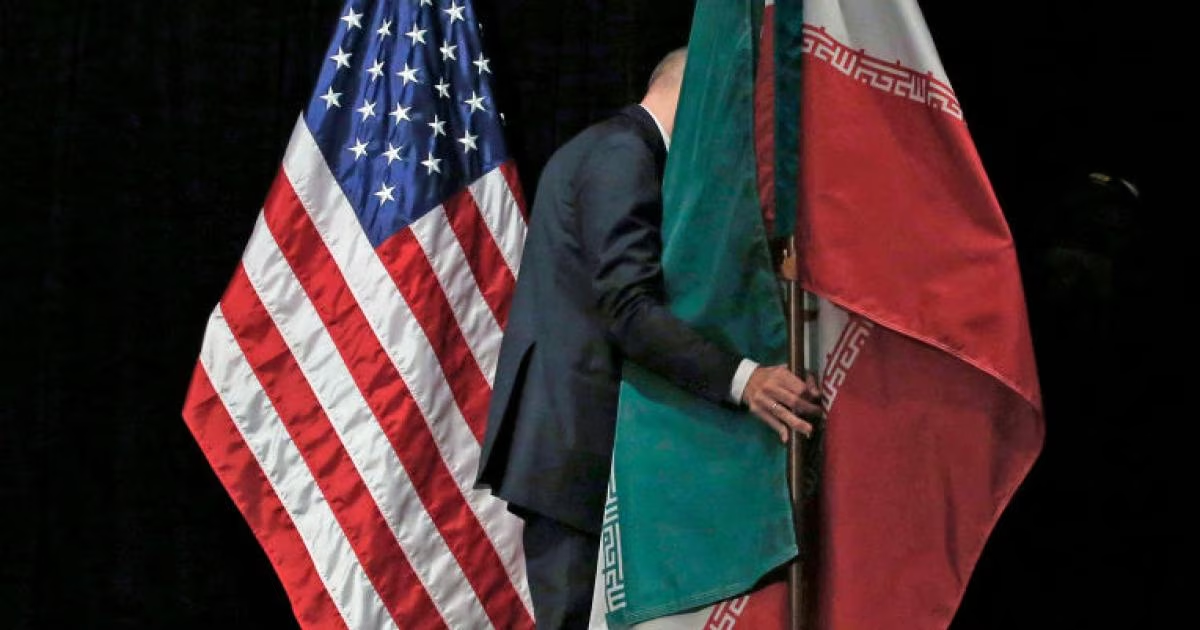
In a related context, the Israeli army faces increasing field challenges on the northern front with Lebanon, where Hezbollah's drone attacks have disrupted defense systems. These challenges coincide with deep concerns within the Israeli security establishment about the possibility of Washington and Tehran reaching a new nuclear agreement that does not meet Tel Aviv's security aspirations.

Regarding the Iranian file, former US officials doubted Tehran's seriousness in reaching a final settlement that would significantly reduce its nuclear program. Sources confirmed that the absence of mutual trust and complex decision-making mechanisms within Iran make the option of international sanctions likely amidst the confusion prevailing in Western capitals regarding the rapid development of Iranian nuclear capabilities.

In the African continent, another type of crisis emerged in the Democratic Republic of Congo, where health workers face a wave of distrust while combating the Ebola epidemic. Conspiracy theories are spreading, claiming that the disease is merely a hoax to achieve financial gains or to control mineral wealth, which has led to an escalation of violence against aid teams and complicated efforts to control the virus.

Netanyahu's announcement of controlling 70% of the Gaza Strip poses a direct threat to any fragile ceasefire and portends catastrophic humanitarian conditions.

PALESTINE

Sat 30 May 2026 2:20 pm - Jerusalem Time

Gaza's Orphans in the Grip of Loss.. An Eid Burdened by Displacement and Memories of Absent Fathers

The tragedy of childhood in the Gaza Strip is embodied in its cruelest forms within displacement camps, where Eid al-Adha passes for thousands of orphans, laden with the pain of loss and memories of scattered families. These children, who have faced a reality beyond their endurance, find themselves today without fathers to share the joy of Eid or buy them new clothes, after the war destroyed all signs of the stable life they once knew.

In the 'Dar Al-Rajaa' camp in the central Strip, eleven-year-old Yumna Abu Rahma recounts how her life changed after her father's martyrdom, as the joy of the sacrifice, which her family used to offer and distribute to the poor, disappeared. Yumna, who keeps a small video clip of her father to hear his voice whenever her longing intensifies, confirms that life has lost its taste, and amusement parks or games no longer mean anything to her in the shadow of this desolate absence.

As for the child Sana Al-Jahjouh, her story reflects the magnitude of the catastrophe that has befallen Palestinian families, as she lost not only her father but also her uncles and maternal uncles who were her support on occasions. Sana describes the vast difference between her room, which she used to decorate before the war, and the reality of crowded and chaotic tents that lack the slightest elements of privacy, in addition to the constant threat of shelling that pursues them even in their displacement areas.

In a related context, 13-year-old Muhammad Badwan faces responsibilities far beyond his age, as he has transformed from a child dreaming of becoming a professional football player to a young man tasked with securing food for his family. Muhammad spends his day in 'Tekkiyeh' queues to get food and transport water from long distances, while his mother prevents him from going out to play for fear of being targeted, leaving him confined to the camp, wondering about his guilt in being deprived like the rest of the world's children.

Statistical data issued by the Palestinian Central Bureau of Statistics indicate that the number of orphans in the Gaza Strip reached about 58,000 orphans who lost one or both parents by last April. These shocking figures come in the context of a two-year war of extermination, which left more than 72,000 martyrs, including 21,000 children, and destruction that affected about 90% of the infrastructure and civilian facilities in the besieged Strip.

Despite this rubble, some local initiatives are trying to extract joy from the heart of suffering, as an entertainment event was held in Al-Shati camp under the title 'Our Eid is Steadfastness.. And Our Victory is a Promise'. The event, organized in a school sheltering displaced people, came just hours after intense shelling targeted the surrounding residential block, in an attempt to alleviate the psychological pressure and terror experienced by children due to the continuous raids.

These activities included clown shows and simple popular games, in which the child Sally Al-Adham participated, singing for the homeland and for life despite her assertion of the absence of true happiness for many long months. The event also witnessed the recitation of poems by talented children, through which they sent messages to the Islamic world about steadfastness in the face of hunger, siege, and blood, affirming that the will to live still beats in their veins.

The continued targeting of shelters and tents places these orphans in a constant circle of danger, as there is no safe place in Gaza to protect them from the war machine. While children around the world are busy with Eid celebrations, Gaza's children remain searching for lost safety and for answers to the questions of pain left by the war, wishing every moment that the shelling would stop so they could return to what remains of their buried dreams under the rubble.

Life is very difficult without a father, we no longer have clothes for Eid or sacrifices, and all I wish is that time would go back so I could hear my father's voice again.

PALESTINE

Sat 30 May 2026 2:20 pm - Jerusalem Time

International Recognition for Gaza Journalists with "Golden Pen" Award in Appreciation of Their Courage in Documenting the War

The World Association of Newspapers and News Publishers intends to present the prestigious "Golden Pen" Award for Press Freedom next Monday, dedicating this honor to photographers and video journalists working in the Gaza Strip. This decision comes in recognition of their exceptional efforts in documenting the ongoing war, where they risked their lives to convey the truth from the heart of the field amidst extremely harsh humanitarian conditions.

The Association affirmed in its statement that journalistic teams in the Strip have experienced unprecedented levels of death, destruction, and human suffering for over two and a half years. It stressed that these professionals have not only acted as historians of the war but have themselves become victims of this bloody conflict that continues to cast its shadow over the region since its outbreak.

The Association addressed the obstacles imposed by Israeli authorities, noting the continued prevention of foreign journalists from entering the Gaza Strip since the beginning of military operations. It clarified that entry was limited to only a few dozen reporters who were allowed brief and restricted visits under military escort from the Israeli army, which placed the greater burden of coverage on local journalists.

The award ceremony is scheduled to take place in the coastal city of Marseille in southern France, where representatives of major international news agencies such as Agence France-Presse, Associated Press, and Reuters will be honored. Among those honored will be photographer Mohammed Abd, in recognition of his role and that of his colleagues in maintaining the flow of information and images from within the besieged areas.

The recognition is not limited to the living but extends to colleagues who have been injured or martyred while performing their professional duties since October 2023. This step coincides with the launch of the 77th World News Media Congress, organized by the Association in cooperation with major international media arms to discuss the challenges of journalism in conflict zones.

Statistics issued by international organizations, including Reporters Without Borders, indicate that more than 220 journalists have been killed by Israeli army fire in Gaza, including at least 70 journalists who were directly targeted while carrying out their fieldwork. These figures highlight the grave risks faced by media personnel in their endeavor to convey the Palestinian narrative to the world.

On the general humanitarian front, medical sources in the Gaza Strip reported that the death toll has exceeded 72,800 Palestinians since the start of the aggression, with more than 900 martyrs recorded since the announcement of the last ceasefire in October 2025. These data confirm the continued bloodshed in the Strip despite international attempts at de-escalation, which multiplies the importance of the role played by journalists in documenting these violations.

Journalists in Gaza are victims of the conflict as much as they are historians of a war that erupted and continues around them.

PALESTINE

Sat 30 May 2026 2:20 pm - Jerusalem Time

Hashemite Guardianship over Jerusalem's Holy Sites: A Historical Legacy in the Face of Political Undermining Attempts

Warnings have recently escalated regarding the repercussions of any attempt to change the arrangements of the Hashemite Guardianship over Al-Aqsa Mosque and the Islamic and Christian holy sites in occupied Jerusalem. This issue is considered one of the most sensitive in the Palestinian-Israeli conflict, as the Jordanian role is based on a long historical and religious legacy enshrined by international political and legal agreements.

Political circles affirm that the Hashemite Guardianship represents a fundamental stabilizing factor that enjoys broad Palestinian, Arab, and Islamic acceptance, and it is the guarantee to prevent the region from sliding into wider religious conflicts. Observers believe that any infringement on this status will open the door to unprecedented tensions affecting the future of the Holy City and its position amidst volatile regional circumstances.

Reports indicate that Washington, despite its traditional recognition of Jordanian guardianship, is witnessing moves by pro-Israel factions aimed at undermining this historical arrangement. These moves coincide with approaching elections in the United States and Israel, where political leaders seek to gain advantages by playing the holy sites card.

Within Israel, Prime Minister Benjamin Netanyahu allows extremist ministers in his government, such as Itamar Ben-Gvir, to carry out repeated incursions into Al-Aqsa Mosque in an attempt to impose a new reality. This policy is reminiscent of Ariel Sharon's provocative visit in 2000, which then led to the outbreak of the Second Palestinian Intifada and completely changed the political landscape.

The history of Hashemite patronage of the holy sites dates back to the family's roots, which undertook the protection of pilgrims in Mecca and Medina for a thousand years, before this responsibility shifted to Jerusalem in the early twentieth century. This guardianship began with a religious pledge of allegiance to Sharif Hussein bin Ali in 1917, then a political pledge in 1924, linking the family's identity to the patronage of Al-Aqsa Mosque.

King Hussein bin Talal maintained this close connection even when the administrative and legal disengagement from the West Bank was announced in 1988, explicitly excluding the holy sites and endowments. This exception was made in full coordination with the Palestinian leadership at the time, to ensure that no sovereign vacuum would be exploited by the Israeli occupation authorities.

This status was legally reinforced in the 1994 peace treaty, and then through a historic agreement signed by King Abdullah II with Palestinian President Mahmoud Abbas in 2013. This agreement granted the Jordanian monarch the right to exert all legal efforts to protect Al-Aqsa Mosque and its courtyards, considering it an indivisible and unshareable place.

On the ground, the Islamic Endowments Department, affiliated with the Jordanian Ministry of Endowments, is the primary driver for managing religious affairs in East Jerusalem. The department is the largest employer of Palestinians in the city, contributing to supporting the steadfastness of Jerusalemites and strengthening the local economic sector in the face of restrictive policies.

King Abdullah II directly funds major restoration projects in Al-Aqsa Mosque and the Dome of the Rock, in addition to the Church of the Holy Sepulchre, reflecting the comprehensiveness of the guardianship for both Islamic and Christian holy sites. This role is widely appreciated by church leaders who describe the Hashemite Guardianship as a 'safety valve' for the Christian presence in Jerusalem.

Concerns have recently emerged about plans led by Christian Zionists in the United States aimed at stripping Jordanian powers and granting them to other parties or subjecting them to full Israeli sovereignty. These extremist views ignore international laws that consider East Jerusalem occupied territory, and push towards a religious confrontation that may not be contained.

Analysts believe that attempts to link the holy sites issue to regional normalization paths, such as the Abraham Accords, clash with a firm Saudi and Arab stance that links peace to the establishment of a Palestinian state. The 2002 Arab Peace Initiative still constitutes the basic reference that rejects bypassing legitimate Palestinian rights in the Holy City.

For Jordanians, the Hashemite Guardianship is a red line and a fundamental pillar of national identity, as the people and leadership reject any compromise on this role. Palestinians also categorically reject the idea of involving other countries in the administration of the holy sites, adhering to the current arrangement as a bulwark against expansionist ambitions.

Islamic history, starting from the Pact of Umar signed by Caliph Umar ibn al-Khattab, established the values of tolerance and the protection of places of worship for all religions in Jerusalem. Today, Jordan follows this approach by promoting coexistence and protecting the existing 'status quo' that guarantees freedom of worship and prevents the Judaization of historical landmarks.

In conclusion, the Arab and Islamic world remains united behind the Jordanian role in Jerusalem, warning that any 'political fire' targeting Al-Aqsa could change the region's history forever. Guardianship is not just an honorary title, but a legal, religious, and historical responsibility that stands against attempts to liquidate the Palestinian issue.

Tampering with the Hashemite status quo in the holy sites of Jerusalem is likely to put the region and the world on a collision course instead of ushering in an era of peace and coexistence.

PALESTINE

Sat 30 May 2026 2:20 pm - Jerusalem Time

3 Martyrs in a Raid Targeting a Police Checkpoint in Khan Yunis and Escalation Affecting Displaced Persons' Tents

Three Palestinian citizens were martyred and others were injured at dawn today as a result of an airstrike carried out by occupation drones targeting a security checkpoint belonging to the Palestinian police in the city of Khan Yunis, southern Gaza Strip. Field sources reported that a drone fired two missiles directly at a police point located in the Al-Maslakh area west of the city, leading to the martyrdom of Muhammad Al-Dadda, Hussam Sharab, and a third martyr, all of whom were transferred to the medical complex in the city.

In a related context, the occupation's shelling targeted a food warehouse in the northwestern area of Khan Yunis, resulting in injuries and a massive fire that spread to nearby displaced persons' tents, leaving a state of panic and destruction among the families who were forcibly displaced to that area.

Other areas of the Strip witnessed similar escalation, as warplanes destroyed three homes in Al-Shati Camp in Gaza City, shortly after the occupation army sent forced evacuation orders for a residential block in the Al-Muntazah area. The destruction also affected a house in Deir al-Balah city located near Al-Aqsa Martyrs Hospital, causing severe damage to a nearby mosque and to public and private property in the area.

An occupation drone fired at least two missiles directly at the police point in the Al-Maslakh area.

PALESTINE

Sat 30 May 2026 2:20 pm - Jerusalem Time

Trump's efforts to link Iran negotiations to expanding 'Abraham Accords' falter

US President Donald Trump's efforts to expand the 'Abraham Accords' and link them to the path of negotiations with Iran have collided with a complex political reality, revealing the limits of the project Washington promoted for years. Sources reported that these attempts aimed to make normalization a fundamental entry point for reshaping balances in the Middle East and solidifying Israel's integration into the region.

Today, the American initiative faces unprecedented challenges amid the ongoing devastating Israeli war on the Gaza Strip, which has generated widespread popular anger in the Arab street. Observers believe that talk of new waves of normalization is far from the current political reality, especially with increasing pressure on Arab and Islamic governments regarding the Palestinian issue.

During diplomatic contacts Trump held with leaders of Arab and Islamic countries, he tried to push for new members to join the accords as part of a comprehensive regional deal linked to the Iranian file. However, these moves did not receive the hoped-for response; rather, they were mostly met with diplomatic silence or explicit rejection of the proposed quid pro quo.

Pakistan's stance was the most firm and clear in this context, as Defense Minister Khawaja Asif cut off speculation by affirming that normalization contradicts his country's constants. Asif stressed that Islamabad would not engage in any path leading to the recognition of Israel, denying any official orientation in this regard.

Analyses indicate that Trump's attempt to use negotiations with Tehran to impose a normalization agenda reflects the extent of pressure exerted by the pro-Israel lobby within the American administration. These actors seek to extract strategic gains that go beyond restricting Iran's nuclear program to include building a regional alliance led by Tel Aviv.

Despite attempts to portray the expansion of the accords as a means to form a united front against Iranian influence, the reality on the ground proves that Arab countries do not prioritize normalization. The absence of a political horizon for establishing an independent Palestinian state remains the biggest obstacle to any progress in this path promoted by Washington.

In this regard, the Saudi position stands out as a cornerstone in thwarting American ambitions that overstep Palestinian rights, as Crown Prince Mohammed bin Salman insists on linking any relationship with Israel to a credible path for a Palestinian state. This condition represents a real dilemma for Israeli governments that refuse to make any fundamental concessions on this file.

International experts believe that the 'Abraham Accords' have not succeeded in achieving their major goals of ending regional conflicts or addressing the core of the Palestinian issue. The accords were limited to official relations with a small number of countries, without touching the roots of tension in the region or achieving sustainable stability.

The war on Gaza since October 2023 has dealt a devastating blow to the normalization process, as the humanitarian tragedies and crimes committed there have brought the Palestinian issue back to the forefront of global attention. This shift has led many governments to freeze their contacts with the Israeli side or slow down the pace of existing cooperation.

As a result of this regional steadfastness, the US President later had to lower his public expectations, acknowledging the difficulty of some pivotal countries joining the normalization bandwagon at present. This retreat reflects a belated realization that diplomatic power cannot easily override the historical rights of peoples.

Informed sources confirm that the current draft for negotiations with Iran focuses exclusively on extending the ceasefire and returning to the nuclear dialogue table, away from any normalization provisions. This confirms that the 'New Middle East' project led by Washington faces a difficult test against the insistence of peoples and states on the justice of the Palestinian cause.

Joining the Abraham Accords contradicts the fundamental principles of our country's policy, and there is no official orientation towards normalization.

PALESTINE

Sat 30 May 2026 2:19 pm - Jerusalem Time

Shifts in 'Shin Bet' and US-Israeli Plans to End Jordanian Guardianship over Al-Aqsa

Media sources have revealed significant shifts within the Israeli internal security agency, the "Shin Bet," as its new head, David Zini, seeks to align with the far-right current. These moves come under direct pressure from the coalition government led by Benjamin Netanyahu, aiming to harmonize the security agency's policies with the ideological orientations of the religious right.

In a move that sparked widespread controversy, the agency, after Zini took office, changed computer screen backgrounds to display an image of Al-Aqsa Mosque under the name "Temple Mount." Although the agency retracted the move, describing it as an "accidental incident" due to angry internal reactions, it was seen as an indicator of attempts to politicize the sensitive security apparatus.

In parallel with these developments, international warnings are emerging about existential choices facing Jordan as the historical guardian of Islamic holy sites in occupied Jerusalem. Reports indicate that Israel is systematically seeking to reduce Jordanian influence within the Noble Sanctuary (Haram al-Sharif), which threatens the internationally recognized status quo.

Sources spoke of a conspiracy led by parties in the United States in cooperation with the occupation government to strip the Jordanian royal family of its historical guardianship. This plan, promoted by Jared Kushner and Ambassador Mike Huckabee, includes granting Israel the authority to appoint imams and control the content of Friday sermons inside Al-Aqsa Mosque.

These proposals are based on a precedent described as "dark," which is the division of the Ibrahimi Mosque in Hebron after the massacre committed by the extremist Baruch Goldstein in 1994. Observers fear a repeat of this model in Al-Aqsa, especially with the rise of figures like Itamar Ben-Gvir, who considers Goldstein one of his personal heroes.

On the Jordanian side, official documents and the white paper approved by King Abdullah II affirm that defending Al-Aqsa represents a sacred duty that cannot be compromised. These documents emphasize that the responsibility for protecting the 144-dunam holy compound is a "personal obligation" for every Muslim, which grants the guardian the right to take all means to defend it.

Sources indicate that Jordan possesses strategic leverage, including its long border with Israel, extending 400 kilometers and characterized by rugged terrain. In the event of a religious confrontation, the security stability currently guaranteed by Amman could vanish, placing Israel before unprecedented and difficult-to-secure border threats.

Security experts believe that tampering with the status quo in Jerusalem could drag the region into a religious war that extends beyond the borders of historical Palestine to encompass the entire Islamic world. Former Shin Bet leaders had warned that any attack on Al-Aqsa could ignite a "third world war" given the deep spiritual significance of the site for two billion Muslims.

Islamic endowments in Jerusalem are currently suffering from severe Israeli restrictions, where employees are prevented from carrying out the simplest renovation or infrastructure repair operations without prior permission. Israeli police forces are heavily deployed within the compound, in flagrant violation of international law and historical arrangements agreed upon decades ago.

King Abdullah II, who faced previous pressures from the Trump administration and Netanyahu, sent clear messages that Jordan is prepared to go to any lengths to protect its national security and holy sites. This includes threatening to reconsider security agreements if attempts to displace Palestinians or change the identity of Al-Aqsa Mosque continue.

The state of popular anger in Jordan is escalating as a result of ongoing Israeli crimes in Gaza and the West Bank, increasing pressure on the Jordanian leadership to take more decisive stances. The Jordanian street considers any aggression against Al-Aqsa a direct attack on national sovereignty and dignity, making resistance a popular and official option.

The plan led by the far-right in Israel aims to demolish the Dome of the Rock and build the "Third Temple" in its place, a step that religious Jews see as a prelude to the appearance of the Messiah. These ideological delusions clash with a complex political and military reality, as the traditional Israeli security establishment understands the catastrophic risks of such orientations.

Ultimately, King Abdullah finds himself facing a historic choice between surrendering to American-Israeli pressures or leading a defensive front for the holy sites. With the changing international balance of power, Jordan may find broader regional and international support than its adversaries expect if it decides to militarily or politically confront the liquidation plans.

Al-Aqsa Mosque remains the primary driver of conflict in the region, as the director of the Islamic Waqf, Sheikh Azzam Al-Khatib, affirmed that the Hashemite guardianship is the only guarantee to prevent full Israeli control. Al-Khatib warned that any change in the status quo would lead to a religious explosion whose cross-border and cross-continental repercussions cannot be controlled.

The guardian of these sites is the only one with the right to actually request their defense, and only he can determine the optimal way to do so.

PALESTINE

Sat 30 May 2026 2:19 pm - Jerusalem Time

Continuous Violations of the Ceasefire Agreement: Israeli Shelling Targets Displaced Persons' Tents in Khan Yunis and Rafah

Israeli forces renewed their series of violations of the ceasefire agreement in the Gaza Strip today, Saturday, launching artillery shelling and intense gunfire targeting several vital areas. This field escalation coincided with the fourth day of the blessed Eid al-Adha, exacerbating the suffering of displaced families who were trying to find peace on this occasion.

Field sources reported that Israeli artillery focused its shelling on the eastern areas of Khan Yunis city in the southern Strip, amidst active movements of military vehicles. The southern and eastern outskirts of the city also witnessed intermittent heavy machine gun fire, causing panic among local residents.

In the skies of the Strip, Israeli drones continued to fly intensely and at low altitudes, indicating ongoing aerial surveillance and tracking operations. This intense aerial activity was accompanied by artillery targeting of the northwestern areas of Rafah city, which is crowded with thousands of displaced persons fleeing previous military operations.

Gaza City was not spared from this escalation, as the southeastern neighborhoods of the city were subjected to artillery shells that fell in open areas and near residential gatherings. These developments come after a bloody day that saw two martyrs and several citizens injured as a result of scattered attacks carried out by the occupation army on Friday.

Media sources monitored the massive destruction left by an airstrike that targeted an area north of Khan Yunis, where the shelling focused on a gathering of displaced persons' tents and warehouses designated for food supplies. Field observations showed that the agricultural area that housed hundreds of families had been turned into rubble, leading to the destruction of large quantities of relief aid.

Eyewitnesses recounted that the occupation army gave residents a very short deadline, not exceeding five minutes, to evacuate the place before carrying out the airstrike. This sudden warning forced families to flee with only their clothes, leaving behind their simple belongings and what remained of their food supplies under the imminent shelling.

Displaced person Abu Tu'ma spoke of his repeated tragedy, noting that he and his family had previously been displaced from the vicinity of the European Hospital in search of safety in this agricultural area. He confirmed that the raid left nothing of the tents that sheltered his family, describing the situation as tragic as they now lack the basic necessities of life and shelter for the second time in a row.

Local reports indicated that targeting displaced persons' tents has become a recurring pattern aimed at tightening the noose on civilians and pushing them towards continuous, unending displacement. This military behavior further complicates the humanitarian situation, especially given the lack of available options for residents who have lost their sense of security in all areas of the Strip.

Statistically, data issued by medical and human rights sources indicate that the number of martyrs since the start of the ceasefire agreement last October has reached 922. These high figures reflect the fragility of the existing agreement in light of the daily targeting of civilians and infrastructure directly.

Amidst this escalation, ambiguity remains regarding the prospects for the next phase, as military operations and the expansion of Israeli field control continue. Residents of the Strip appeal to international bodies to intervene immediately to stop these violations and provide real protection for civilians who face death and displacement on a daily basis.

We were informed of the need for immediate evacuation and left the site before the raid completely destroyed the tents we were sheltering in.

ARAB AND WORLD

Sat 30 May 2026 2:19 pm - Jerusalem Time

'Impending Deal' Dilemma: Trump Faces Tehran's Intransigence and Internal Division Over Nuclear Deal

Press sources revealed a state of frustration prevailing in the White House after President Donald Trump failed to achieve a diplomatic breakthrough with Iran, despite the optimistic expectations promoted by his administration's key figures in recent days. Trump admitted during a cabinet meeting that he had no tangible results to announce, indicating that the Iranians had not yet reached the necessary point of agreement to conclude the deal.\n\nThe current discussions revolve around a brief 'memorandum of understanding' aimed at giving negotiators a 60-day grace period to find technical solutions to the issue of uranium enrichment, or what Trump describes as 'nuclear dust.' This temporary path aims to cool the conflict and avoid a comprehensive military escalation, the repercussions of which Trump fears for the global economy.\n\nDespite repeated statements by Secretary of State Marco Rubio about the imminent conclusion of the agreement, the on-the-ground and political reality has proven the complexity of the file. Rubio has retracted his time estimates several times, reflecting deep gaps in negotiations that escalating American pressure has so far failed to bridge.\n\nObservers believe that Trump's hesitation to return to the military option stems from his awareness of the extent of depletion in American ammunition stockpiles. His aides also express grave concern about Iran's ability to target energy facilities in neighboring Gulf countries, which could lead to an explosion in global fuel prices, which are already suffering from high levels.\n\nIn the context of internal pressures, Trump faced scathing criticism from his hawkish allies in the Senate, where Senator Lindsey Graham considered that any agreement granting Iran permanent influence in the Strait of Hormuz would represent a security nightmare for Israel. Graham warned that the balance of power in the region is undergoing a dangerous shift in favor of Tehran due to its ability to threaten international navigation.\n\nFor his part, Senator Roger Wicker, chairman of the Armed Services Committee, described rumors of a 60-day ceasefire as a "disaster." Wicker stressed that betting on the good intentions of the Iranian regime at this stage is a strategic mistake, which prompted Trump to change his public tone and emphasize that he would only accept a "clear victory."\n\nReports indicate that Trump tried to link the nuclear deal to the expansion of the 'Abraham Accords' in an attempt to market the deal as an unprecedented historical achievement. However, this idea seems far-fetched in light of widespread international condemnations of recent Israeli military operations and the severe damage inflicted on the region's countries due to the ongoing conflict.\n\nThe US administration is facing extreme difficulties in pushing Tehran to sit at the negotiating table directly on the nuclear program. Analysts recall the warnings of former Secretary of State John Kerry, who stressed that involving multiple issues in one file would leave the parties stuck in an endless 'deception game,' which is the dilemma Trump seems to have fallen into.\n\nThe proposed draft, circulated through Qatari mediators, includes provisions to gradually increase navigation in the Strait of Hormuz to pre-war levels. However, the sovereignty knot emerges as a major obstacle, as Tehran insists on keeping the strait under its direct supervision, which Washington rejects outright.\n\nRegarding the financial aspect, Iran demands the release of its frozen assets as a form of 'compensation' for the losses it incurred during the war. Despite Trump's public denial of discussing sanctions relief, informed sources confirm that this file represents a fundamental pillar in any potential understanding to end the current stalemate.\n\nOn the Lebanese front, the fate of military operations against Hezbollah remains ambiguous within the ceasefire proposals. While Israeli Prime Minister Benjamin Netanyahu intensifies his ground and air strikes, it is not yet clear whether the US-Iranian agreement will include a comprehensive de-escalation covering Israel's northern front.\n\nThe Trump administration faces criticism for the lack of transparency in managing this sensitive file, with information often limited to brief presidential posts on social media platforms. Negotiations are currently being led by an unconventional team comprising Steve Witkoff and Jared Kushner, who operate outside the usual diplomatic frameworks of the State Department.\n\nThe Iranian side views recent American moves, especially the missile strikes that recently targeted southern Iran, as evidence of 'bad faith.' Tehran believes that threats simultaneous with peace offers undermine the credibility of the American negotiator and make reaching a lasting solution almost impossible at present.\n\nIn conclusion, Trump finds himself facing a difficult test of his credibility before his voters who are suffering from a deteriorating economic situation and rising gasoline prices. While he seeks to declare a quick 'diplomatic victory,' the facts on the ground show that Iran has become more aware of its geopolitical influence and its ability to use the energy weapon to extract greater concessions from Washington.\n\nThey desperately want a deal, but they haven't gotten there yet.

PALESTINE

Sat 30 May 2026 2:19 pm - Jerusalem Time

Fears of new displacement... Occupation threats to expand military control pursue Gaza displaced

A state of apprehension and anticipation hangs over hundreds of thousands of displaced people in the Gaza Strip, amid continued intensive airstrikes and repeated Israeli statements threatening to expand military control. Reports indicate the occupation army's intention to increase its field control from 60% to 70% of the total area of the Strip, which puts the displaced before difficult choices and an unknown future.

In the Unknown Soldier Camp, located west of Gaza City, local sources confirmed that the recent wave of targeting affected areas previously classified as safer, such as the Rimal neighborhood. This field shift has prompted many families to seriously consider the possibilities of new displacement, despite the lack of safe alternatives and the harsh living conditions they endure.

Abu Maher, the camp director, explained that psychological pressures have significantly increased among the displaced for fear of renewed widespread ground operations. He pointed out that most families have exhausted their ability to move, and do not have the logistical or financial capabilities to leave what remains of their simple belongings and search for new shelter amid the continuous shelling.

Abu Maher expressed deep disappointment among the displaced who had hoped for a swift return to their homes in the eastern areas of Gaza City. He affirmed that talk of expanding Israeli control has made the idea of return almost impossible at present, and has even placed current displacement areas under direct threat.

In a related context, the suffering of children stands out as one of the harshest chapters of this war, as the child Yazan Talal Al-Basyouni recounts terrifying details of a raid that occurred just before Eid al-Adha. Yazan, who was preparing his Eid clothes, found himself hiding his new clothes and hugging them for fear of damage or loss amidst the roar of explosions that shook the area.

Child Yazan described the moments of shelling as resembling 'Doomsday' due to the intensity of the panic and destruction left by the rockets in his residential area. The child expressed his great fears of the continuation of the war and the recurrence of scenes of hunger and displacement, wishing for the killing to stop so he could return to his home, which he dreams of rebuilding and living in peace.

For their part, eyewitnesses from among the displaced reported that conditions inside the camps have become unbearable due to shrapnel and stones falling on the dilapidated tents with every nearby targeting. This suffering is exacerbated by the severe economic deterioration and the inability to provide the most basic necessities of life for children and women.

Field sources indicate that merely hearing the sounds of planes or explosions causes a state of collective panic, as residents rush to check on their children. This comes amid a severe shortage of medical supplies and medicines, due to the continued closure of crossings and the prevention of entry of essential relief and medical convoys for treating the wounded and sick.

Security fears have imposed strict restrictions on the movement of residents within the Strip, as fathers fear sending their children even to nearby stores for their needs. This psychological and field siege reinforces the state of isolation experienced by displaced families, and increases the complexities of their daily lives burdened with hardships.

On the humanitarian front, the crisis has worsened after the cessation of some relief programs that provided meals to the displaced, leading to a wider spread of hunger. Families face extreme difficulties in obtaining clean drinking water, at a time when the camps lack the most basic sanitation and healthy environmental conditions.

Human rights organizations warn of the spread of diseases and epidemics within displaced communities due to waste accumulation and the spread of rodents and harmful insects. These deteriorating environmental conditions increase the suffering of patients and the elderly who do not find the necessary medical care amid the collapse of the health system and most hospitals going out of service.

Media sources reported that the raids that targeted the vicinity of the Unknown Soldier Camp in the past few days were very close to the displaced people's tents. These attacks reinforced the conviction among residents that the war might return to its most violent pace, dispelling any hopes for temporary stability or a truce on the near horizon.

In conclusion, the displaced in Gaza remain cautiously watching for any political or field developments that might end their ongoing tragedy for months. While Israeli threats increase, residents cling to the dream of returning to the neighborhoods of Shuja'iyya, Beit Hanoun, and other areas from which they were forcibly displaced, despite the massive destruction that has affected all aspects of life.

We had hoped to return to the eastern areas, but now that hope is completely gone with the talk of increasing Israeli control.

ARAB AND WORLD

Sat 30 May 2026 2:19 pm - Jerusalem Time

Washington hints at military option against Tehran amid stalled 'Grand Bargain' negotiations

The United States of America has once again hinted at the military option against the Islamic Republic of Iran, as US Secretary of Defense Pete Hegseth announced his country's readiness to resume military attacks if the diplomatic path falters. These escalatory statements came during the Secretary's participation in the 'Shangri-La Dialogue' in Singapore, where he affirmed that Washington would not hesitate to use force if an agreement ensuring American interests was not reached.

Hegseth stressed that US forces possess full readiness and sufficient stockpiles of advanced weapons and high-tech ammunition to carry out large-scale operations. He explained that the balance in the distribution of military capabilities between the homeland and bases deployed around the world gives Washington high flexibility for rapid military action if necessary, noting that his country is closely monitoring developments in the situation.

In the context of diplomatic efforts, the Secretary of Defense indicated that President Donald Trump is showing strategic patience with the aim of reaching what he described as the 'Grand Bargain'. This proposed deal, from the American perspective, aims to ensure that Iran never possesses nuclear weapons, a file that tops the current administration's priorities in its ongoing negotiations with the Iranian side.

Regarding movements within the White House, media reports revealed that President Trump held a lengthy meeting in the Situation Room last Friday, lasting two hours, to discuss the draft agreement. Despite the length of the consultations, the meeting did not yield tangible results, amid reports of deep gaps between the two parties regarding implementation mechanisms and the guarantees required from each side.

For its part, informed sources in Tehran confirmed that diplomatic communication channels are still open, with messages continuing to be exchanged between the negotiating delegations until the last moments. The sources indicated that there has been slight progress in drafting some provisions of the draft understanding, but the divergence in official narratives between Washington and Tehran still hinders the announcement of any real breakthrough in the wall of the crisis.

Iran adheres to a package of fundamental demands that it considers non-negotiable, foremost among them the immediate release of frozen financial assets estimated at approximately 12 billion dollars. Tehran also stipulates a comprehensive cessation of hostilities as a mandatory prerequisite for any agreement, considering that lifting economic and military pressures is the real test of the American side's seriousness in the negotiations.

In addition to the financial file, Tehran seeks to include sensitive regional files in the final understandings, including the situation in Lebanon and the security of navigation in the Strait of Hormuz. These demands clash with a different American vision that seeks to separate the nuclear file from regional influence, which keeps the negotiations in a state of constant tug-of-war, awaiting what the coming days will bring.

We are fully capable of resuming operations if necessary, and our stockpiles are adequate for that, both domestically and elsewhere in the world.

ARAB AND WORLD

Sat 30 May 2026 2:19 pm - Jerusalem Time

Field escalation in southern Lebanon: Intense raids, targeting of a car, and rockets hitting Kiryat Shmona

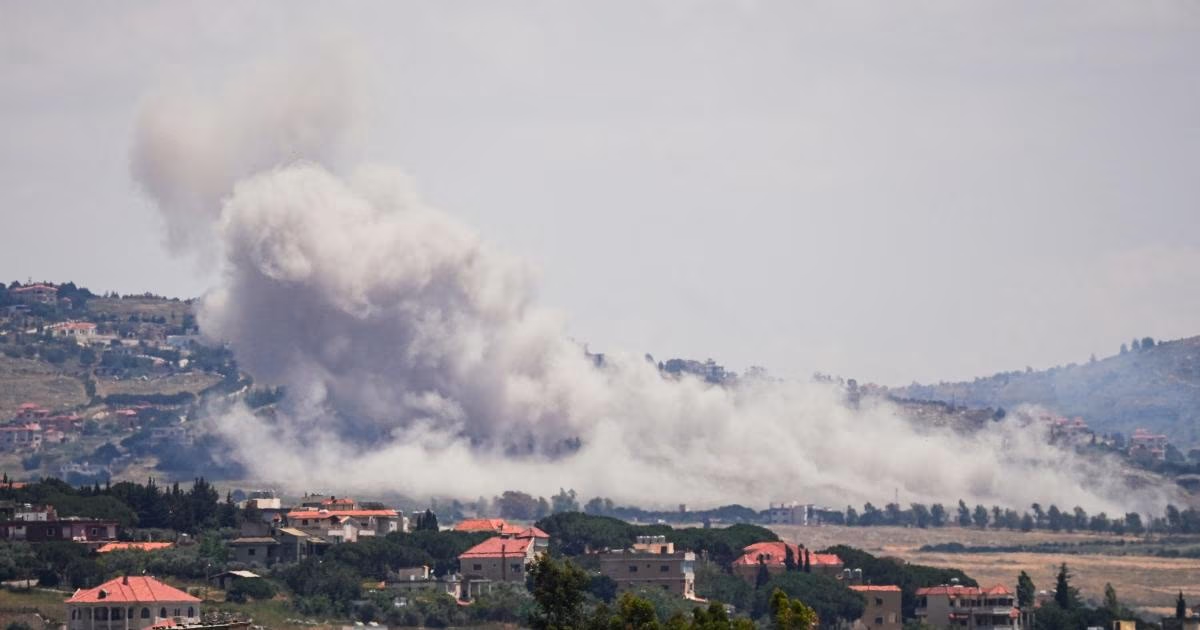
The Israeli army announced this Saturday morning that it had detected a series of rocket launches from within Lebanese territory towards areas in the north, with military sources confirming that one of these rockets directly hit the settlement of Kiryat Shmona. The military statement clarified that air defense systems managed to intercept most of the projectiles, but the rocket that evaded interception caused significant material damage at the impact site without causing any human casualties.

In a related context, Hebrew media reports stated that Hezbollah carried out a large-scale rocket attack during the night hours, including launching more than ten rockets towards the Upper Galilee. Field documentation circulated on social media platforms showed the damage caused by the explosion in Kiryat Shmona, reflecting the continued field tension along the northern border.

On the Lebanese side, Israeli warplanes intensified their aerial raids targeting several towns and villages in the south, where a drone carried out an attack targeting a civilian car on the Haboush-Zahrani highway. The shelling also targeted the vicinity of the Nabatieh Governmental Hospital, injuring three civilians with varying degrees of injuries, a step that increases pressure on vital facilities in the region.

Lebanon's Ministry of Health announced a heavy toll as a result of the recent Israeli aggressions, with 11 people martyred, including a paramedic, and eight others injured. These deadly raids focused on the towns of Abbasiyah, Maaroub, and Tyre-Daba, amidst ongoing search and rescue operations under the rubble in the targeted areas.

Jezzine witnessed continuous raids from midnight until the early hours of dawn, intensely targeting the towns of Rihan, Sijid, and Qatrani. Local sources reported that occupation forces carried out a large-scale demolition operation in the Arayd Marjayoun area at 6 AM, followed by a series of violent raids targeting the towns of Debbine, Blat, Jamayjma, Kfartabnit, and Mayfadoun.

Politically, media sources revealed a tense atmosphere that prevailed in the military meetings held in the American capital, Washington, between delegations from the Lebanese and Israeli armies. Reports indicated that the negotiations faced significant obstacles after the Israeli side categorically rejected demands for withdrawal from the positions it had advanced into in southern Lebanon.

Israel maintains its refusal to withdraw, justifying it by the continued field threats and Hezbollah's military capabilities that pose a danger to its national security. This rigid stance led to increased tension in the meeting rooms, placing international mediation efforts before complex challenges amidst the escalating military escalation on the ground.

As part of diplomatic efforts, the United States continues its role as a key mediator to try to formulate a new proposal aimed at a permanent ceasefire. The American proposal includes controversial clauses, most notably mechanisms for disarming Hezbollah in border areas, which faces widespread Lebanese rejection as it affects national sovereignty.

These field and political developments paint a complex picture in southern Lebanon, where intense military operations intertwine with stalled diplomatic paths. With the continued fall of civilian casualties and the expansion of shelling, anticipation remains the master of the situation regarding what American moves will lead to in the coming days to try to contain the situation and prevent a slide towards a comprehensive confrontation.

Israel refuses to withdraw from southern Lebanon as long as it faces field threats from Hezbollah.

ARAB AND WORLD

Sat 30 May 2026 2:18 pm - Jerusalem Time

Oman Joins the List.. 15 Countries Worldwide Affected by Trump's Military Threats

US foreign policy under President Donald Trump witnessed a remarkable shift towards military escalation, with international reports indicating an expanding list of countries threatened with the use of force, now including at least 15 nations. The Sultanate of Oman became the latest addition to this list, sparking a wave of questions about the nature of regional alliances in the Arabian Gulf.

Media sources reported that Trump directly hinted at targeting the Sultanate during an official meeting at the White House, justifying it with Washington's concerns about potential Omani-Iranian coordination to control the Strait of Hormuz. Observers considered this surprising statement to reflect a recurring pattern in the Trump administration, relying on issuing threats without clear diplomatic preambles.

Analytical data indicates that most of these threats and military operations were recorded during the first months of Trump's second presidential term. This trend reflects the US administration's desire to impose a new political reality by brandishing the military option as a primary pressure tool in its foreign affairs.

American actions were not limited to verbal threats but extended to actual military operations and airstrikes in several hot spots around the world. These operations included countries such as Iran, Iraq, Syria, and Yemen, in addition to interventions in Somalia, Nigeria, and Venezuela under the pretext of combating terrorism or protecting national interests.

In a related context, the list of countries that received stern American warnings included allied and neighboring countries to the United States, such as Canada and Mexico. The threats also encompassed countries in Latin America and the Caribbean, such as Colombia, Cuba, and Panama, extending to Greenland, a Danish territory in the Arctic.

The nature of these threats varied from case to case; some targeted armed groups classified by Washington as terrorist organizations, while in other cases, they aimed to extract political concessions. Sometimes, it was limited to hinting at not ruling out the 'military option' to ensure countries responded to White House demands.

Political analysts believe that this approach embodies the 'madman theory' in international relations, where a leader deliberately portrays himself as unpredictable. This strategy aims to confuse adversaries and push them to make strategic concessions for fear of uncalculated American military reactions.

The geographical scope of American threats extended to four different continents, placing millions of people in a state of constant anticipation and anxiety. This widespread reach reflects Washington's desire to maintain its global hegemony by demonstrating power in vital and diverse spheres of influence.

It is controversial that five countries on the list—Canada, Cuba, Greenland, Panama, and Venezuela—were mentioned in Trump's statements as potential targets for expanding direct American influence. In some cases, it went as far as hinting at the possibility of annexing territories or regions belonging to these countries under American sovereignty.

Informed sources confirmed that the repetition of these military allusions reflects a more confrontational approach in US foreign policy compared to previous administrations. This approach places immense pressure on the international system and the laws governing the use of force in disputes between nations.

Regarding the Sultanate of Oman, the latest threat represents a fundamental shift in the American perception of a country historically known for its role as a quiet mediator in regional crises. It appears that Washington has grown impatient with Oman's neutrality policy, especially concerning issues related to the Islamic Republic of Iran.

Reports indicate that this policy raises increasing questions about the limits of military power as a tool to achieve strategic goals, away from traditional diplomatic channels. It seems that the current administration prefers military decisive action or the threat of it as a shortcut to address thorny issues.

Despite Trump's electoral promises to reduce foreign military interventions, the reality on the ground and in politics proved quite the opposite. Military force has become the dominant language in dealing with international crises, whether with traditional adversaries or even with trade partners.

In conclusion, the inclusion of the Sultanate of Oman in the list of 15 countries opens the door to new escalation possibilities in the Arabian Gulf region and the Strait of Hormuz. The question remains about the seriousness of these threats and the international community's ability to curb the confrontational tendencies of the current US administration.

The United States may resort to targeting the Sultanate of Oman if it attempts, in coordination with Iran, to control the Strait of Hormuz.

ARAB AND WORLD

Sat 30 May 2026 2:18 pm - Jerusalem Time

White House Contradictions on Iran's Nuclear Program: Will Trump Yield to Uranium Remaining Underground?

The issue of Iran's highly enriched uranium stockpile stands out as one of the most complex and sensitive files in the ongoing negotiations between Washington and Tehran. It is not merely a technical dispute but has become a fundamental test of US President Donald Trump's ability to definitively fulfill his promises to end the Iranian nuclear threat.

Sources reported that statements from the White House revealed a tangible divergence in views between the President and his advisors regarding the conditions for ending the conflict. While some factions within the administration are pushing for the complete removal of the nuclear stockpile, other indications suggest the possibility of concessions on this file in exchange for political or military gains.

During a recent press conference, US Treasury Secretary Scott Besant outlined a tough official stance, considering the surrender of uranium a red line that cannot be crossed. Besant affirmed that the administration would not accept any agreement that keeps these dangerous materials under Iranian control, regardless of the guarantees offered.

In the same context, Secretary of State Marco Rubio stressed that Tehran is obligated to abandon all enriched materials as a fundamental condition for any de-escalation. Rubio clarified that this demand represents the core of President Trump's vision, who repeatedly emphasizes in his private meetings the necessity of stripping Iran of its latent nuclear capabilities.

On social media platforms, Trump initially adopted a firm tone, asserting that the United States would work in coordination with the International Atomic Energy Agency to dismantle the Iranian program. He hinted at technical plans aimed at extracting enriched uranium from fortified facilities and destroying it to ensure it cannot be used in the future.

However, this firmness did not last long, as signs of retreat began to appear in the President's statements during press interviews conducted last April. Trump hinted that uranium deep underground might not pose an imminent threat as previously thought, given advanced American monitoring capabilities.

At that stage, the President indicated that American satellites are capable of accurately monitoring any suspicious movement at Iranian nuclear sites. He considered that the presence of materials in deep locations makes it difficult for Tehran to convert them into a nuclear weapon without detection and military intervention.

The surprise was the swift return to a hardline stance just two weeks later, when Trump stated the necessity of using massive equipment to extract the buried uranium. He affirmed in statements to international media that Washington would transport this 'nuclear dust' to American soil to ensure complete control over it and prevent any party from accessing it.

By mid-May, the tone of skepticism regarding the feasibility of the extraction process once again dominated the American President's discourse. During a television interview, Trump explained that accessing these materials is technically very difficult and might require the presence of troops or technical teams for long periods inside Iran.

Trump did not express clear objection when the idea of simply burying the uranium in place instead of going through the trouble of extracting and transporting it was raised. He even went further, considering that insisting on obtaining the stockpile might have more propaganda and media objectives than being an urgent security necessity.

Despite this surprising flexibility, the President contradicted himself again before reporters on Air Force One, reaffirming his desire for actual acquisition of the uranium. This continuous fluctuation has raised deep questions among observers about the true nature of the American strategy towards the Iranian nuclear file at this critical juncture.

Analysts believe that these contradictions are not limited to the technical aspect of uranium but reflect a broader confusion in defining the ultimate goals of the war. Since the start of operations, the administration has failed to present a unified vision of what constitutes a true 'victory' in the confrontation with Tehran, which opens the door to multiple interpretations.

Critics believe that Trump entered this conflict without a clear exit plan or a coherent negotiating strategy, forcing him to change his positions based on pressure. This constant shifting of 'red lines' could weaken the American negotiating position and give the Iranian side an opportunity to maneuver and gain time.

Ultimately, the fate of Iranian uranium remains suspended between the institutional rigidity of the State and Treasury Departments and Trump's volatile pragmatism. The coming days will be decisive in determining whether Washington will insist on extracting the 'nuclear dust' or be content with guarantees of its remaining underground.

Obtaining Iranian uranium may be linked more to media aspects than to security necessities.

ARAB AND WORLD

Sat 30 May 2026 2:18 pm - Jerusalem Time

International Report Reveals Details of UAE Military Role in Targeting Iranian Depth

International press reports, citing informed sources, revealed that the United Arab Emirates carried out dozens of airstrikes inside Iranian territory during recent confrontations. The sources clarified that this military role came in close coordination with the United States and Israel, with the newspaper describing this involvement as much deeper than what was previously announced in political circles.

According to leaked information, the Emirati raids began in the early days of the war and continued until last April, targeting vital sites deep within Iran. The list of targets included the islands of Qeshm and Abu Musa in the Strait of Hormuz, in addition to facilities in Bandar Abbas and the Lavan oil refinery, all the way to the famous Assaluyeh petrochemical complex.

Sources reported that the attacks were carried out based on intelligence provided by Washington and Tel Aviv, with some strikes targeting energy facilities in response to Iranian attacks on oil and gas infrastructure in the UAE. The targeting of the Assaluyeh complex, which was carried out in cooperation with Israel, sparked international criticism that prompted the United States to demand that the Israeli side stop targeting Iranian energy facilities.

Data indicates that the UAE was one of the most exposed countries in the region to Iranian attacks during the war, with Tehran launching more than 2,800 missiles and drones towards it. This number is very large, exceeding the scale of targeting faced by any other country in the region, including direct Israeli targets.

Regionally, the scale of the Emirati response led to clear tensions within the Gulf household, especially with Saudi Arabia. Riyadh expressed explicit reservations about the Emirati retaliatory operations, expressing concerns that these attacks could expand the scope of Iranian targeting to include energy facilities throughout the region, which could cause a huge jump in global oil prices.

The report revealed deep differences in views between Abu Dhabi and Riyadh, with UAE President Sheikh Mohammed bin Zayed Al Nahyan expressing his displeasure with the Saudi position. Sources indicated that the Emirati dissatisfaction stemmed from Saudi Crown Prince Mohammed bin Salman's refusal to engage in coordinated and direct military operations against Iranian targets during the escalation period.

The Emirati move was not limited to the military aspect, but also included strict economic measures against Iranian interests, with institutions linked to Tehran being closed in Dubai. Emirati authorities also imposed strict restrictions on entry visas and transit rights for Iranian citizens, in a step aimed at tightening the noose on one of the most important economic outlets that Iran has relied on for years.

In contrast, Tehran officially accused Abu Dhabi of participating in the military campaign led by the United States and Israel against it, and responded by targeting sensitive Emirati sites. Iranian responses included striking oil facilities in Fujairah, in addition to detecting a drone launched from Iraq that fell near the Emirati nuclear power plant, reflecting the seriousness of the confrontation.

The war conditions enhanced the level of security and military cooperation between the UAE and Israel to an unprecedented extent, with Tel Aviv sending batteries of the 'Iron Dome' system to protect Emirati airspace. The report confirmed that dozens of Israeli soldiers are still stationed inside an Emirati military facility to provide continuous technical and military support in the face of missile threats.

In the context of high-level coordination, senior Israeli officials, including Benjamin Netanyahu and the heads of Mossad and Shin Bet agencies, made secret visits to the UAE during the war. Despite this escalation, Abu Dhabi has in recent weeks begun to adopt a discourse leaning towards diplomatic solutions, seeking to encourage a peace agreement that ends the direct threats facing the energy sector and its vital facilities.

The Emirati raids targeted strategic sites inside Iran, including the islands of Qeshm and Abu Musa and the Assaluyeh petrochemical complex, in coordination with Washington and Tel Aviv.

ARAB AND WORLD

Sat 30 May 2026 2:18 pm - Jerusalem Time

Former US Attorney General Refuses to Disclose Details of Trump's Connection to Epstein Case Before Congress

Democratic representatives in the US House of Representatives revealed that former Attorney General Pam Bondi refused to testify about the extent of President Donald Trump's knowledge of the late financier Jeffrey Epstein's criminal activities. This refusal came during a closed-door hearing held by the House Oversight Committee on Friday, investigating how the previous administration handled the files of Epstein, who was convicted of sex crimes.

Parliamentary sources reported that Bondi avoided answering fundamental questions regarding whether Trump had issued direct instructions to withhold certain parts of the Department of Justice files that were released to the public. She also refused to clarify the nature of coordination between the White House and the department regarding sensitive information that might affect the president or his inner circle at the time.

In a pre-prepared statement, Bondi placed the responsibility for overseeing the review and release of documents on Todd Blanche, who currently serves as Acting Attorney General. Bondi affirmed that she did not fully review the documents herself but delegated this task to her deputy, noting that the process was complex and required extensive administrative efforts.

For his part, Democratic Representative Robert Garcia stated that a Department of Justice lawyer was present alongside Bondi and repeatedly intervened to prevent her from answering questions related to Trump. Garcia considered this intervention to hinder access to the truth regarding potential involvement or attempts to protect high-ranking political figures from judicial and parliamentary scrutiny.

Democratic Representative Melanie Stansbury accused the previous administration of a systematic 'cover-up' operation, after it became clear that the department had only released half of the documents related to the Epstein case. Stansbury explained that there are approximately three million documents still withheld from parliament and the public, raising doubts about the content authorities are trying to conceal.

Despite Bondi's defense of the administration's procedures and her assertion that the department provided everything legally required, she admitted to what she described as 'redaction errors.' The former Attorney General did not provide specific details about the nature of these errors or whether they led to the concealment of vital information related to Epstein's victims or alleged associates.

Committee Chairman James Comer had affirmed before the session that the purpose of the subpoena was to understand the reasons behind the delay in releasing the remaining documents. Comer emphasized the need to know the criteria used to determine what is disclosed and what is withheld, especially in light of increasing public and political pressure to close this file clearly.

The roots of the crisis date back to Bondi's tenure, where she faced sharp criticism from both Democratic and Republican parties due to the slow pace of disclosing millions of documents related to Epstein. Critics believe that Bondi tried to balance legal requirements with the desire not to embarrass President Trump, who had a long-standing relationship with Epstein.

It is worth noting that Donald Trump dismissed Bondi from her position on April 2nd, a move observers interpreted as partly related to her handling of the controversial Epstein files. Trump had previously acknowledged a social relationship with Epstein in the 1990s but repeatedly stressed that the relationship ended many years before the sexual scandals erupted.

The case of Jeffrey Epstein, who died by suicide in his cell in 2019, remains one of the most complex cases in modern American judicial history. Parliamentary investigations continue in an attempt to unravel the connection between Epstein's sex trafficking network and the political and economic elites who frequented his private circles in New York and Florida.

I did not lead all aspects of this effort or review the documents myself, and delegated oversight of this process to Deputy Attorney General Todd Blanche.

OPINIONS

Sat 30 May 2026 9:04 am - Jerusalem Time

Kennedy, the Foreign Agents Law, and the Rise of AIPAC’s Political Power


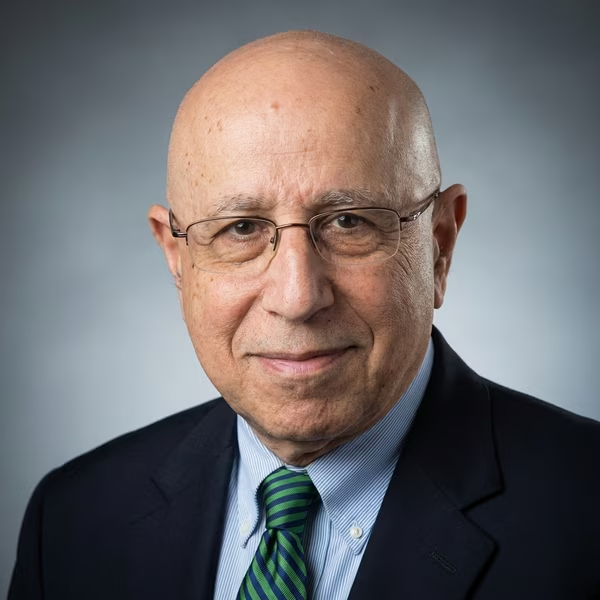
By: Said Arikat


May 30, 2026


News analysis


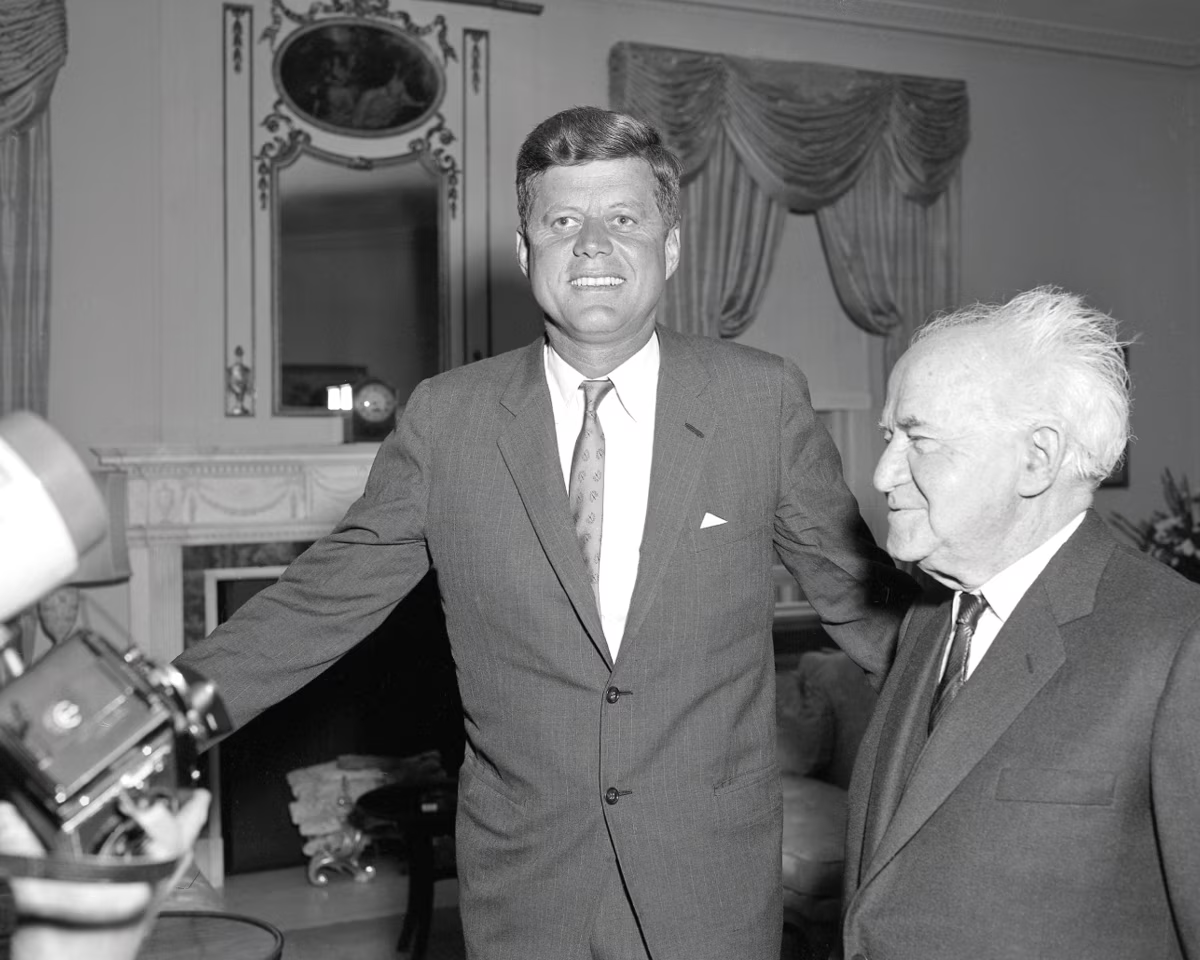
Washington, D.C- In 1962, President John F. Kennedy and Attorney General Robert F. Kennedy initiated what remains one of the most politically explosive and historically consequential legal confrontations in the history of the U.S.-Israel relationship: an effort to compel the American Zionist Council (AZC) — the organizational predecessor to today’s American Israel Public Affairs Committee (AIPAC) — to register under the Foreign Agents Registration Act (FARA).


More than six decades later, the episode has acquired renewed relevance, not merely as a historical footnote, but as an early warning about the extraordinary political influence that pro-Israel lobbying organizations would eventually wield in Washington. What began as a legal dispute over transparency and foreign funding has evolved into a much broader national debate about money, political intimidation, lobbying power, and the narrowing boundaries of acceptable discourse on Israel inside the American political system.


The Kennedy administration’s concern centered on the Foreign Agents Registration Act, a federal law enacted in 1938 requiring organizations acting on behalf of foreign governments or foreign principals to disclose their funding sources, activities, and political objectives to the U.S. government.


According to Justice Department correspondence from the period, federal officials concluded that the American Zionist Council was receiving substantial financial support from the Jewish Agency for Israel, an entity deeply intertwined with the Israeli state and the global Zionist movement. The administration argued that such funding established an “agency relationship” under FARA and therefore triggered mandatory registration requirements.


Attorney General Robert F. Kennedy pursued the matter aggressively in 1962 and 1963. Internal Justice Department communications reflected growing alarm over the scale and opacity of the AZC’s political operations inside Washington. The issue was not opposition to Israel itself; rather, it was whether an organization tied financially and operationally to foreign-linked institutions could legally influence American politics without full public disclosure.


The AZC resisted with extraordinary intensity.


Historical accounts and archived records indicate that the organization sought a 120-day delay to reorganize its structure while simultaneously mobilizing lawyers, public relations firms, influential donors, media allies, and sympathetic members of Congress in an effort to block enforcement of the law. Even at that early stage, critics argue, the pro-Israel lobbying network demonstrated a sophisticated understanding of political pressure, media management, and congressional leverage.


The confrontation unfolded during a particularly delicate period in U.S.-Israeli relations. Kennedy was simultaneously attempting to strengthen bilateral ties while also pressuring Israel over inspections of the Dimona nuclear facility amid fears that Israel was developing nuclear weapons capabilities outside international scrutiny. The White House also appeared increasingly uneasy about the growing ability of foreign-linked lobbying organizations to shape American Middle East policy from within Washington itself.


Then came November 22, 1963.


Kennedy’s assassination abruptly altered the political landscape. Under President Lyndon B. Johnson, the Justice Department’s pressure campaign against the American Zionist Council steadily lost momentum. The effort to compel registration under FARA faded quietly and was never meaningfully revived.


Out of that retreat emerged a transformed political apparatus.


The lobbying arm associated with the AZC evolved into what became the American Israel Public Affairs Committee — AIPAC — an organization that would eventually grow into one of the most powerful and feared lobbying forces in American politics.


Under Johnson, not only did the pressure for foreign-agent registration disappear, but the emerging pro-Israel lobby consolidated institutional legitimacy, financial influence, and privileged access throughout Congress and successive administrations. Over time, AIPAC became less a traditional lobbying organization and more a political enforcement mechanism capable of shaping careers, defining acceptable political language, and punishing dissent on Israel policy with remarkable efficiency.


Today, AIPAC’s influence extends far beyond ordinary lobbying.


Through affiliated political action committees and aligned donor networks, the organization and its supporters can pour tens of millions of dollars into congressional races, often targeting candidates accused of insufficient loyalty to Israeli government positions. The modern objective is frequently not persuasion but deterrence: to warn elected officials that even modest criticism of Israeli policy may carry devastating political consequences.


The recent political destruction of Republican Congressman Thomas Massie of Kentucky has become, for many critics, emblematic of this new reality. Massie — one of the few Republicans willing to publicly diverge from hardline pro-Israel orthodoxy on certain issues — became the target of an overwhelming campaign of political retaliation during the May 19 Republican primary. Vast sums of outside money flooded the race amid accusations that Massie was insufficiently supportive of Israel.


The lesson resonated far beyond Kentucky.


In today’s Washington, politicians increasingly understand that crossing AIPAC or challenging Israeli government policy can trigger a financial and political assault of extraordinary magnitude. The effect, critics argue, is not simply electoral influence but ideological discipline — a system in which debate itself becomes constrained by fear of organized political retribution.


Supporters of AIPAC reject such criticisms and argue that the organization represents the legitimate political participation of American citizens exercising constitutionally protected rights. They maintain that support for Israel remains strong among broad segments of the American public and that AIPAC’s influence merely reflects democratic organizing, donor activism, and longstanding strategic ties between the United States and Israel.


Yet critics counter that the scale of financial intervention, the aggressive targeting of dissenting voices, and the near-total bipartisan conformity surrounding Israel policy suggest something far more coercive than ordinary advocacy. To them, the issue is no longer whether AIPAC supports Israel — that is undisputed — but whether any lobby should possess the ability to effectively police political speech inside a democratic system through overwhelming financial force.


That is why the Kennedy-era confrontation continues to resonate more than sixty years later.


The historical significance lies not only in the legal effort itself, but in what it revealed: that senior officials inside the U.S. government once viewed the precursor to America’s most powerful pro-Israel lobby as sufficiently connected to foreign interests to warrant scrutiny under federal foreign-agent laws.


The attempt failed. But the underlying questions never disappeared.


Where does legitimate domestic advocacy end and foreign influence begin? How transparent should lobbying organizations be about funding and coordination? At what point does financial power begin to undermine democratic deliberation itself?


Those questions remain unresolved.


What is undeniable, however, is that John F. Kennedy’s administration undertook a serious and direct attempt to apply foreign-agent laws to the pro-Israel lobbying network in Washington — and that following Kennedy’s assassination, the effort collapsed, while the lobby itself grew into one of the most formidable political forces in modern American history.


OPINIONS

Fri 29 May 2026 8:03 pm - Jerusalem Time

Trump's Peace Council Has "Zero Dollars" Despite $17 Billion Pledges

Washington Message

Washington – Said Arikat – 29/5/2026

A report by the British newspaper "Financial Times" revealed that the "Peace Council" fund for the reconstruction of Gaza, which was launched with the support of US President Donald Trump and is officially managed by the World Bank, currently contains no money, despite financial pledges amounting to approximately $17 billion.

The newspaper quoted a senior aide in the US Congress as saying that "none of these funds have been transferred to the Council, nor are they managed through it, and the US State Department does not intend to place these funds under the Council's supervision."

In this context, Al-Quds newspaper's correspondent in Washington learned from a responsible source that there are two accounts linked to the project, one of which contains the required amounts of money, without revealing the size of those funds or the nature of their management.

According to the report, the main dispute revolves around where the funds are held, as sources indicate that the official UN-backed fund remains empty, while donations have been directed to a private bank account at "J.P. Morgan" bank, which has drawn criticism due to the absence of transparency standards and independent oversight adopted in World Bank mechanisms.

The report indicated that some limited funds, including $3 million from Morocco and $20 million from the UAE, were used to cover staff salaries, while major allocations related to security and infrastructure remained frozen or unused.

Trump personally chairs the "Peace Council," retaining ultimate authority in its management even after his presidential term ends, according to the Council's internal regulations, which require a payment of $1 billion to obtain "permanent membership."

Despite some allied countries to Washington and small countries seeking to gain Trump's support joining, major European powers such as France and Britain refrained from joining the initiative.

The report also noted criticisms from members of Congress, including Senator Brian Schatz, who compared the US State Department's description of the Council as a UN-like body to Trump's description of it as a "royal court."

Despite estimates indicating Gaza needs approximately $71 billion for reconstruction over the next decade, no funds have yet been allocated for actual reconstruction projects.

A spokesperson for the Council explained that contracts have not yet been awarded because the institution has not started operating within Gaza, accusing "Hamas" of refusing to disarm, which he considered the main obstacle to the project's launch.

The report also stated that the Palestinian technocratic committee formed to manage the sector is still unable to implement any field projects due to the lack of full funding.

In light of the significant financial deficit, the newspaper reported that Washington pressured Saudi Arabia to fund a large part of the project, after several countries that had pledged to contribute began to backtrack on their commitments due to the faltering political process and the ongoing American-Israeli war on Iran.

It added that the US administration is also considering the possibility of deducting a portion of the Palestinian tax funds held by Israel, amounting to approximately $5 billion, to finance the Council's operations, provided that the remaining funds are transferred to the Palestinian Authority only if it agrees to implement specific reforms demanded by Israel.

Observers believe that the current crisis reveals the extent of the disparity between the political ambitions that accompanied the launch of the "Peace Council" and the financial and administrative reality facing the project on the ground. The absence of actual funding, despite huge pledges, reflects international hesitation to engage in initiatives that still lack a clear legal framework and transparent oversight mechanisms. Moreover, linking reconstruction to complex political and security conditions increases the difficulty of implementing any real projects in Gaza, especially in light of continued regional tensions and differing international positions regarding the future of the sector and its political and security administration in the coming period.

Western diplomats believe that the project's heavy reliance on Gulf countries may weaken its long-term success, especially with the absence of broad international consensus on the proposed administration for Gaza after the war. The reluctance of major European countries to join the initiative also reflects growing concerns about turning the reconstruction file into a tool of political influence linked more to Trump's person than to stable international institutions. They point out that the continued ambiguity regarding fund management and disbursement mechanisms will lead to further hesitation among donors, complicating any future efforts to secure sustainable funding for humanitarian and development projects in the sector.

Economic experts warn that any attempt to use Palestinian tax funds held by Israel to finance transitional arrangements in Gaza could open the door to a wider political and financial crisis between the Palestinian Authority, Washington, and Tel Aviv. They believe that transferring these funds to alternative parties or linking their release to Israeli political conditions could weaken the fragile financial situation of the Palestinian Authority and increase internal Palestinian division. Moreover, the continued obstruction of reconstruction projects will exacerbate the humanitarian and economic crisis in Gaza, where infrastructure and basic services continue to suffer from widespread destruction and a lack of resources.

PALESTINE

Fri 29 May 2026 8:02 pm - Jerusalem Time

Surgeons' Eid in Gaza: Operating Rooms as Substitutes for Homes and Squares in Nasser Medical Complex

The scenes from Nasser Medical Complex in Khan Yunis city, south of the Gaza Strip, painted a tragic picture of the humanitarian reality during the blessed Eid al-Adha days. Hundreds of injured people are forced to spend Eid on hospital beds, enduring the pain of their wounds and a severe shortage of essential medicines and medical consumables necessary to save their lives.

Field sources reported that this Eid is the third that the residents of the Strip have experienced since the start of the genocide war, where greetings and social visits are now confined to surgical rooms and crowded corridors. The sources indicated that the overcrowding in surgical departments has reached unprecedented levels, to the extent that a single room now accommodates more than one injured person at a time.

Wounded individuals and their companions recounted horrific stories of their daily suffering. One patient spoke about the moment he was targeted by occupation bullets while sitting with his family inside a displacement tent. The attack resulted in the martyrdom of his brother's wife and the injury of an infant, not more than forty days old, with an amputation in his foot, which later led to him entering a serious state of blood poisoning.

Under the tight siege, the hospital administration follows a strict 'rationing' system in distributing available medical dressings and medicines, which puts patients before difficult choices. Many relatives of the wounded are forced to search for medicines and supplementary supplies in external pharmacies, which becomes increasingly difficult with the continued closure of crossings and the scarcity of supplies.

Among the cases monitored by the sources is the story of the injured Wasim Abu Tilakh, who waited for about five months for a second surgical operation that was scheduled for him. Due to the severe shortage of surgical tools, the medical intervention was delayed, causing health complications and swellings that significantly affected his psychological and physical condition and his ability to lead his daily life.

_The effects of the war were not limited to the physical aspect, but also extended to the educational journey of the young generations in Gaza, as families live in harsh conditions inside displacement tents. The mother of one of the outstanding students explained that her son, who aspired to perfect scores in high school, is now struggling to continue his studies in an environment lacking the most basic necessities of life.

The Abu Tilakh family embodies the tragedy of the Palestinian family, as the mother herself suffers from five shrapnel pieces in her body, one of which settled in the kidney area and causes her constant pain. The family confirms that Eid days have turned into mere numbers on the war calendar, as they spend their time in hospital corridors searching for treatment or visiting an injured person.

Official statistics indicate that the ongoing aggression since October 2023 has resulted in more than 72,000 martyrs and over 172,000 injured, amid massive destruction affecting 90% of the infrastructure. Despite talks of ceasefire agreements, the reality on the ground in Gaza continues to witness continuous targeting, increasing the toll of blood and humanitarian suffering.

Eid passed us by more harshly than ordinary days, and our relatives came to congratulate us inside the hospital corridors because they did not find us in the displacement tents.

OPINIONS

Fri 29 May 2026 7:59 pm - Jerusalem Time

Trump promotes fragile deal with Iran… Netanyahu races to thwart it fearing war cessation

Washington Message

Washington – Said Arikat - 29/5/2026

In an attempt to contain the slide towards an open regional confrontation, US President Donald Trump distributed a draft peace agreement for the war with Iran to a number of Washington's allies, including Israel, amidst accelerated efforts to stabilize the fragile ceasefire and prevent its collapse due to continuous military friction in the Gulf and the Strait of Hormuz.

This step comes at a time when political and military paths are intertwined in an unprecedented way, as the US administration seeks to market an interim understanding that eases tension with Tehran, without making strategic concessions that affect the essence of American or Israeli influence in the region. In return, Iran is trying to exploit the state of mutual attrition to extract economic and sovereign gains, especially regarding frozen funds and sanctions imposed on its oil exports.

As an indication of the complexity of the scene, Pakistani Foreign Minister Muhammad Ishaq Dar is in Washington to meet his American counterpart Marco Rubio, as part of an indirect mediation also involving Qatar, with the aim of bridging views between Washington and Tehran. However, field developments still cast a heavy shadow on any political progress, after Iran targeted a US base in Kuwait, in response to a US strike that Washington said targeted an Iranian drone operation near the Strait of Hormuz.

The draft circulating in the corridors of the Middle East indicates an understanding based on reopening the Strait of Hormuz to commercial navigation, lifting the US blockade on Iranian ports, and releasing up to $12 billion in frozen Iranian assets. It also includes the start of negotiations lasting about sixty days on the future of Iran's nuclear program, including highly enriched uranium stockpiles, and a temporary suspension of additional enrichment operations, under the supervision of the International Atomic Energy Agency, in exchange for an Iranian pledge not to use nuclear weapons.

However, the draft, despite its calming nature, seems far from meeting complex Israeli demands, as it does not impose immediate and decisive nuclear obligations on Iran, and also links the stabilization of the ceasefire to Lebanon, which Israel is trying to avoid, considering it an unacceptable expansion of the negotiation arena.

In this context, Western diplomatic sources reveal that Israeli Prime Minister Benjamin Netanyahu is leading an intense and pressing campaign within Washington and through pro-Israel lobbying groups, with the aim of obstructing any potential understanding between the US administration and Tehran. Netanyahu believes that any agreement, even if temporary, will give Iran an opportunity to rearrange its economic and military cards, and will practically cool down the regional front that he uses to justify the continuation of military operations and security escalation. Netanyahu also fears that Trump's success in concluding an agreement with Iran will reduce Israeli influence in shaping US policies for the Middle East, and revive the path of diplomacy with Tehran at the expense of the option of open confrontation pushed by the current Israeli government.

The draft promoted by Trump reveals a clear shift in US policy priorities in the Middle East, from the logic of "full deterrence" to managing balances and preventing a major explosion. The US administration realizes that the continuation of confrontation with Iran threatens the global economy through the Strait of Hormuz, increases the fragility of energy markets, and places US forces deployed in the Gulf under constant security pressure. Therefore, Washington seems to be trying to produce a "temporary settlement" that gives everyone a chance to catch their breath, without resolving fundamental issues, which makes the proposed agreement closer to a strategic truce than to lasting peace.

At the same time, Tehran is trying to use its geographical location as a negotiating leverage. The Iranian Revolutionary Guard reaffirmed its control over the Strait of Hormuz, announcing that the passage of commercial vessels requires prior permission, and warning against considering any crossing through "alternative routes" as an act disrupting navigational security. It also revealed the interception of four ships that tried to pass without operating their tracking devices.

This Iranian behavior reflects a clear desire to establish a new equation: security in the Gulf will only be achieved through understanding with Tehran, not through military pressure on it. However, this approach raises increasing Western and Gulf concern, because it gives Iran direct influence over one of the most important maritime passages in the world.

In this context, the Sultanate of Oman emerged as a key link in the ongoing contacts, after entering into discussions with Iran about the future of navigation in the Strait of Hormuz. But Trump's recent statements, in which he threatened to "destroy" Oman if it agreed to arrangements that include imposing transit fees, sparked anger within Omani diplomatic circles, according to Western reports.

Trump's tone towards Oman also reflects the nature of the approach adopted by the US President, which combines negotiation and political blackmail at the same time. The man wants a quick agreement that gives him a diplomatic achievement, but at the same time he refuses for this agreement to strengthen Iran's economic or sovereign influence in the Gulf. Therefore, his threats to Muscat seem like a double message: the first to Tehran, that Washington will not allow the Strait of Hormuz to become a source of political or financial income for Iran, and the second to Gulf allies, that any regional understandings must pass exclusively through the American umbrella, not through independent arrangements that may reshape the region's balances.

In contrast, the internal situation in Iran does not seem less complex. Iranian Supreme Leader Mojtaba Khamenei called on officials not to turn political differences into internal divisions, warning that the United States and Israel are seeking to "bring the country to its knees" by spreading chaos and division.

These statements come amidst rising criticism within Iran regarding the feasibility of negotiating with Trump, especially after the recent military strikes. Amnesty International also revealed the arrest of more than six thousand people since the start of the US-Israeli attack on February 28, including journalists, lawyers, activists, dissidents, and members of ethnic and religious minorities.

The widespread arrests within Iran show that the Iranian regime is fighting two parallel battles: one external with the United States and Israel, and another internal to control the streets and prevent any political or social cracks. Besieged regimes often resort to tightening their security grip when they feel that external pressures may turn into internal protests. But the paradox is that this approach may weaken Iran's negotiating position instead of strengthening it, because it deepens the image of Iran as a country in internal crisis. In return, Washington exploits this image to justify the continuation of pressure, so that it can obtain a deal that saves President Trump's face.

PALESTINE

Fri 29 May 2026 7:59 pm - Jerusalem Time

Israel closes Ibrahimi Mosque 'until further notice' and tightens restrictions in Jerusalem and the West Bank

Israeli occupation authorities today, Friday, completely closed the holy Ibrahimi Mosque in the city of Hebron, south of the occupied West Bank, to Palestinian worshippers until further notice. Local sources reported that army forces forced guards, custodians, employees, and worshippers present to immediately leave the mosque's corridors under threat of arms.

The acting director of the Ibrahimi Mosque, Hammam Abu Markhiya, confirmed that this sudden closure began in the early morning hours and was accompanied by unprecedented military tightening around the Old City. He explained that the occupation had tightened the closure of military checkpoints and electronic gates leading to the mosque, preventing any access for citizens to the area.

Abu Markhiya described the Israeli measures as a blatant assault on the sanctity of the Ibrahimi Mosque and a provocative transgression that affects the natural right of Muslims to practice their religious rituals. He pointed out that this step falls within the ongoing attempts by the occupation to change the religious and historical features of the place and impose absolute control over it.

For its part, the Palestinian Ministry of Awqaf and Religious Affairs condemned this closure, considering it a serious violation of freedom of worship guaranteed by international laws. The ministry warned that this policy aims to establish a new reality inside the mosque that serves settlement plans, calling on the international community to intervene immediately to stop these transgressions.

In a related context, occupied Jerusalem witnessed the arrival of about 60,000 worshippers at the blessed Al-Aqsa Mosque to perform Friday prayers, despite the tightened security measures imposed by the occupation forces. Police elements were heavily deployed at the mosque's gates and in the alleys of the Old City, where they checked the identities of young men and prevented hundreds from entering.

On the ground in Jerusalem, occupation authorities forced citizen Raafat Awadallah to self-demolish his home in the eastern area of Qalandia village, north of the city. The forced demolition came after the citizen exhausted all legal means to protect his home, as authorities threatened him with heavy fines if occupation machinery carried out the demolition.

In the West Bank, occupation forces launched a wide arrest campaign that included a child in Kafr Aqab town, north of Jerusalem, after severely beating him. The forces also stormed the city of Qalqilya and deployed their snipers on the roofs of high-rise buildings, arresting four citizens before withdrawing and leaving threatening leaflets for residents.

Nablus governorate was not immune from the escalation, as occupation forces arrested a citizen and a woman during a raid on Al-Ain camp west of the city. These raids coincided with attacks carried out by extremist settlers at dawn today, targeting Palestinian properties in the towns of Sebastia, An-Naqoura, and Beita, resulting in the smashing of a number of vehicles.

Hamas, in a statement, considered the closure of the Ibrahimi Mosque a heinous crime and a blatant assault on Islamic holy sites. The movement said that these practices come within the framework of the systematic Judaization policy pursued by the occupation government to change the Arab and Islamic identity of Hebron, calling on Palestinians to intensify their presence at the mosque.

The movement called on the United Nations and international human rights organizations to take urgent action to stop repeated Israeli violations against places of worship. It also stressed the need for the Palestinian people to confront attempts to impose Israeli control over holy sites, affirming that these measures will not change historical and religious facts.

The Ibrahimi Mosque has been subject to spatial and temporal division since 1994, following the massacre committed by settler Baruch Goldstein, which led to the martyrdom of 29 worshippers. Since then, Israel has controlled about 63% of the mosque's area and allocated it to settlers, while imposing suffocating restrictions on the remaining 37% for Muslims.

The Old City of Hebron lives under exceptional circumstances, where about 400 settlers reside in settlement outposts protected by thousands of Israeli soldiers. These outposts cause a tightening of the noose on the lives of thousands of Palestinians who face daily military checkpoints and continuous attacks aimed at displacing them from the area.

Local reports warned that the closure of the mosque 'until further notice' might be a prelude to broader Judaization steps coinciding with Jewish holidays or political occasions. Sources indicated that the occupation is exploiting current circumstances to accelerate control operations over archaeological and religious sites in the heart of Palestinian cities.

In conclusion, tension remains the master of the situation throughout the Palestinian territories, where demolition and arrest operations intertwine with restrictions on religious freedoms. These developments confirm the continuation of the escalating approach adopted by the occupation authorities in Jerusalem and the West Bank, which portends an explosion of the situation in the absence of any political horizon or international protection.

The closure of the Ibrahimi Mosque is a blatant assault on its sanctity and a provocative transgression of the right of Muslims to access places of worship.

ARAB AND WORLD

Fri 29 May 2026 7:59 pm - Jerusalem Time

Bloody Israeli Escalation in Lebanon and Difficult Military Negotiations at the Pentagon

Southern Lebanon witnessed a new wave of bloody Israeli military escalation, as six citizens were martyred in scattered raids targeting border towns and villages. Local sources reported that the shelling focused on the Deir Qanoun Al-Nahr area and the Abbasiyah intersection, leading to the martyrdom of five in an initial toll from those raids.

In a related context, the Israeli occupation army expanded its threats, issuing immediate evacuation warnings to residents of seven southern towns, claiming to be acting against Hezbollah infrastructure. These threats caused a massive displacement of residents towards areas north of the Zahrani River, amidst difficult humanitarian conditions.

Public employees were not spared from targeting, as the municipality of Abba mourned police officer Mohammed Naameh Tarhini, who was martyred due to direct artillery shelling that hit the town. The targeting also struck a motorcycle on the Abbasiyah-Tyre road, resulting in varying injuries among civilians passing through the area.

For its part, the United Nations Children's Fund (UNICEF) revealed shocking figures regarding child victims of the aggression, describing the situation as 'horrific'. The organization confirmed the martyrdom of 15 children and the injury of 62 others in the last week alone, reflecting a clear disregard for civilian lives and international law.

UNICEF spokesperson Ricardo Pires explained that the rate of child casualties reached 11 children every 24 hours, a figure that reflects the extent of the violence. He pointed out that one day alone saw the martyrdom of seven children, bringing the total number of young victims since mid-April to 55 martyrs.

On the ground, Israeli Prime Minister Benjamin Netanyahu announced that his forces had crossed the Litani River and established positions in what he described as 'strategic locations'. Netanyahu affirmed that military operations would not stop but would continue in Beirut, the Beqaa, and along the front line to ensure the achievement of Israeli security objectives.

In this context, media sources quoted the Hebrew newspaper 'Haaretz' as saying that the Israeli air force is currently carrying out about one hundred raids daily on Lebanese territory. This aerial escalation is accompanied by new ground incursions that go beyond the points reached by Israeli forces in previous stages of the confrontation.

In parallel with this field escalation, the second round of direct military negotiations between Lebanon and Israel began at the headquarters of the US Department of Defense (the Pentagon). This meeting, sponsored by Washington, aims to discuss technical arrangements for consolidating the ceasefire and preventing a slide towards a wider confrontation.

The Lebanese negotiating delegation includes five high-ranking officers from the army command, in addition to the military attaché in Washington, carrying files documenting the violations. The Lebanese file includes accurate maps of the areas occupied by the occupation army, and documents proving the Lebanese army's fulfillment of its security commitments by 80%.

Through these negotiations, Beirut seeks to extract a clear timetable for the Israeli withdrawal from all recently occupied villages and towns. The Lebanese delegation stresses the necessity of stopping all hostile acts affecting civilians, medical teams, and journalists before entering into the details of complex security arrangements.

On the other hand, the American administration in this round focuses on the disarmament of Hezbollah in the areas south of the Litani River. Washington believes that addressing 'Israeli concerns' regarding the party's military infrastructure is the key to sustaining any future ceasefire agreement.

Reports from Washington indicate the possibility of a high-level diplomatic meeting next week to complete what was discussed at the Pentagon. The upcoming meeting will focus on the technical mechanisms that the Lebanese army will adopt in dealing with Hezbollah facilities and alleged tunnels in the border area.

Political observers link the fate of these military negotiations to the broader diplomatic track between the United States and Iran, amidst leaks about understandings that include the Lebanese arena. It seems that the current field escalation aims to improve the negotiation terms for both parties before reaching a final solution formula.

Amidst this raging conflict, the southern Lebanese villages remain at the mercy of intense raids that targeted the areas of Al-Ghandouriyah, Fron, Sarafand, and Kharbet Selem. Rescue teams continue their attempts to retrieve victims from under the rubble, at a time when the occupation insists on continuing its military pressure to achieve political gains.

The toll is horrific; 15 children were martyred and 62 others injured in Lebanon in just one week, at a rate of 11 children per day.

ARAB AND WORLD

Fri 29 May 2026 7:59 pm - Jerusalem Time

Warnings of Democratic 'one-upmanship' on Trump regarding Iran and the influence of the Israeli lobby

US Congressman Ro Khanna issued an urgent appeal to his Democratic Party colleagues, urging them to stop trying to outdo President Donald Trump in adopting hawkish policies towards Iran. Khanna stressed that the party's natural role should be based on ending armed conflicts and supporting negotiation paths, rather than being drawn into escalatory rhetoric that could lead to open military confrontations in the region.

In statements to American media, Khanna emphasized the need to send a clear message to the incoming administration calling for an end to war and a commitment to diplomacy as the sole strategic option. He pointed out that the Democratic Party's grassroots base looks forward to political leadership that rejects future wars and adheres to principles that prioritize global peace above narrow partisan interests.

The Democratic representative strongly criticized some of his congressional colleagues who send signals pushing for military escalation, questioning the utility of demanding more destruction in Iran. Khanna considered that this approach does not represent the true principles of Democrats, affirming his full alignment with the negotiated settlement current that seeks to extinguish raging fires rather than fuel them.

In a practical step to reduce the likelihood of confrontation, Khanna revealed that he had introduced a joint resolution with Republican Representative Thomas Massie aimed at restricting the war powers granted to the president. This legislation seeks to prevent unauthorized military strikes against Iranian territory, in a legislative attempt to impose strict oversight on any military movements that could get out of control.

On the other hand, opposing Democratic voices emerged against this trend, with prominent lawmakers such as Senator Cory Booker and Representative Debbie Wasserman Schultz criticizing any potential ceasefire agreement. This wing believes that any current understandings may be insufficient in terms of toughness, warning that easing pressure on Tehran could give it an opportunity to strengthen its military and missile arsenal.

Reports indicate that these lawmakers opposing de-escalation receive significant financial donations from Israeli lobbying groups, raising questions about the extent of these funds' influence on their political stances. This current appears to be largely consistent with Israeli rhetoric that calls for continued maximum pressure on Iran and the rejection of any formulas for freezing the conflict that do not guarantee a complete dismantling of Iranian capabilities.

This division within the Democratic Party reflects a deeper struggle between a progressive wing pushing for diplomacy and a traditional wing trying to avoid appearing lenient on national security issues. Observers believe that some Democrats' attempt to adopt a tougher rhetoric than Trump aims to protect themselves from right-wing criticism, but at the same time weakens the party's position as a peaceful alternative.

Khanna concluded by emphasizing that the top priority must remain avoiding being drawn into new regional conflicts that could cost the United States many resources and lives. He stressed that the only sustainable solution to the Iranian issue lies at the negotiating table, warning that military escalation will only lead to more instability in the Middle East and the world.

People want a Democratic Party that adheres to its principles and is an anti-war party, and we must support the negotiation path instead of pushing for further escalation.

PALESTINE

Fri 29 May 2026 7:58 pm - Jerusalem Time

War of Terms: How International Media Contributes to Whitewashing the Occupation?

The international media system faces sharp criticism for adopting editorial language that clearly avoids using terms with legal and ethical implications when describing Israeli violations in Palestine. Major journalistic institutions resort to replacing concepts such as 'occupation' and 'war crimes' with vague expressions that mislead global public opinion and diminish the scale of human suffering.

Analytical readings of these media outlets' discourse indicate a deliberate use of words like 'military operation' and 'security measures' instead of 'aggression' or 'invasion,' reflecting an approach contrary to historical and legal truth. This style contributes to 'whitewashing' the occupation that has continued since 1948, transforming the issue from a liberation struggle into merely a 'crisis' or a 'border dispute.'

In a recent monitoring of American media trends, media sources described the escalation of attacks on the Gaza Strip as an 'expansion of military operations,' while the forced displacement of residents was portrayed as 'evacuation orders.' This verbal manipulation seeks to strip the criminal act of its coercive context and present it as a regulatory measure within a legitimate war context.

Internal reports revealed that the management of 'The New York Times' imposed strict censorship on its journalists to prevent the use of terms like 'genocide' and 'ethnic cleansing.' This editorial directive aims to protect the Israeli narrative and prevent accurate legal descriptions adopted by international human rights organizations from reaching the Western reader.

For its part, the 'BBC' continued to use expressions such as 'areas controlled by Israel' instead of 'occupied territories,' which is a circumvention of international law. In its coverage of land theft in the West Bank, the network used terms like 'acquisition' and 'seizure,' which mitigates the severity of the crime and portrays it as a property dispute.

'The Associated Press' was not far from this approach, describing the occupation's measures to strengthen its grip on the West Bank as mere 'control measures.' These formulations contribute to normalizing the presence of the occupation and transforming it into an acceptable administrative reality, far from being a blatant violation of Palestinian sovereignty and national rights.

Statistical studies highlight a huge gap in the use of the term 'retaliation,' where it is employed in nearly 80% of discussions about Israeli attacks in American and British media. In contrast, this percentage drops to less than 10% when addressing Palestinian actions, reinforcing the impression that Israel is in a constant state of self-defense.

Western media also adopts the strategy of 'equality between victim and perpetrator' by repeatedly using the phrase 'both sides' in its news coverage. This discourse suggests a balance of power and legitimacy, ignoring the structural reality of an armed military occupation force against an unarmed people demanding their freedom.

Regarding the ongoing war of extermination in Gaza, the term 'Israel-Hamas war' is intensively promoted to reduce the conflict to a single political faction. This description aims to isolate Gaza from its comprehensive Palestinian national context, and justifies targeting civilians under the pretext of fighting a specific organization, ignoring the targeting of the Palestinian existence as a whole.

Presenting Palestinian resistance movements as parties parallel to the Israeli state in power and responsibility is a deliberate distortion of the historical context. Resistance is a natural product of occupation according to international laws, but Western media insists on portraying it as a party in an 'equal war' to hide the reality of systematic oppression practiced by the occupation.

These media outlets continue to portray Israel as the 'only democracy' in the region, while describing its army as a 'defense force,' ignoring its extensive record of violations. This propaganda contradicts reports by international legal experts who describe Israeli practices as 'apartheid' and 'ethnic cleansing' in all their elements.

This biased coverage has sparked widespread waves of anger, reaching the point of painting the facades of international media headquarters red as a symbol of the victims' blood ignored by journalistic discourse. These protests reflect a growing awareness among the global public of the extent of the media machine's involvement in obscuring facts and falsifying collective consciousness.

Ignoring terms such as 'massacre,' 'siege,' and 'genocide' is not just a professional lapse, but a deliberate editorial decision aimed at protecting political interests. According to human rights sources, this media behavior makes these institutions partners in covering up crimes by depriving victims of their right to the correct naming of their suffering.

In conclusion, the 'war of terms' remains an integral part of the comprehensive battle on the land of Palestine, where the Western-backed Zionist narrative seeks to obliterate national identity. It seems that breaking this media blockade requires a counter-effort to impose correct legal and historical terms in international forums and alternative digital platforms.

Using the term 'retaliation' in 79% of Western coverage of Israeli actions aims to imply that its aggression is a legitimate and necessary response.

PALESTINE

Fri 29 May 2026 7:57 pm - Jerusalem Time

Washington reinstates UN rapporteur Francesca Albanese to sanctions list

Official data released by the US Treasury Department showed the re-listing of Francesca Albanese, the United Nations Special Rapporteur on human rights in the Palestinian territories, among individuals subject to sanctions. This move comes shortly after the administration of President Donald Trump described the decision to remove her name previously as a temporary measure, reflecting continued tension between Washington and the UN official.

This latest action is based on an administrative decision issued by the US Court of Appeals for the District of Columbia last Friday, where the judicial body ruled to halt the implementation of a previous ruling that protected Albanese from sanctions. This new judicial decision allowed the US government to resume classifying the UN rapporteur as a foreign national subject to strict financial and legal restrictions.

Federal Judge Richard Leon had previously intervened to suspend these sanctions, considering that the measures taken by the Trump administration violated constitutional rights related to freedom of expression. The judge, in his ruling, found that targeting Albanese was a result of her public criticism of Israeli policies and military operations in the Gaza Strip, which he considered an illegal restriction of opinion.

The crisis dates back to July 2025, when Washington imposed severe sanctions on the Italian lawyer, including banning her from entering US territory and freezing her ability to conduct any international banking transactions through the US financial system. The administration at the time justified these steps by Albanese's statements, which Washington considered hostile to its foreign policies regarding the conflict in the Middle East.

In a related context, Albanese's family fought a legal battle against the US administration, with her husband and American-citizen daughter filing a lawsuit last February. The family asserted in their lawsuit that the sanctions made daily life and securing basic needs impossible, given the comprehensive banking restrictions that affected all of the UN rapporteur's transactions.

It is worth noting that Francesca Albanese, who assumed her duties at the United Nations in 2022, is considered one of the most prominent international voices that have accused Israel of committing 'genocide' in the Gaza Strip. She also called in her official reports for the International Criminal Court to prosecute Israeli and American officials on charges of committing war crimes, which put her in direct confrontation with the current US administration.

The Trump administration sought, by imposing these sanctions, to restrict freedom of expression because of the idea or message expressed by Albanese.

PALESTINE

Fri 29 May 2026 7:57 pm - Jerusalem Time

Israeli warnings about the transfer of 'explosive drone' technology to Gaza and the West Bank

Colonel (res.) Oren Zini of the Israeli occupation army issued strong warnings about the growing threat of explosive drones and their transfer to new fronts. The former brigade commander in the occupation army explained that the technology used by Hezbollah in the occupied Palestinian north will not remain confined there, but will soon find its way to the resistance in the Gaza Strip and the West Bank.

Zini affirmed in statements reported by Hebrew media sources that this aerial threat represents a real and tangible danger to the Israeli interior, noting that these drones are capable of reaching vital areas such as 'Kfar Saba'. He stressed that the expansion of the use of these combat means is inevitable and a matter of time, given the rapid transfer of military expertise between fronts.

The retired officer, who had long field experience during his service in the Gaza Strip, described what is currently happening as a clear 'Lebanonization' process of the Strip from a military perspective. He pointed out that during his years of service, he observed how explosives technology and offensive tactics were transferred from the Lebanese front to Palestinian factions in Gaza, making the current threat an extension of a known historical context.

Zini warned against being deceived by the relative calm that may appear on some fronts, stressing that not fully completing the military mission means the threat remains present and capable of exploding at any moment. He called on the Israeli leadership to take proactive and decisive decisions to deal with this development, instead of waiting until these suicide drones reach the heart of settlements and occupied cities.

These statements come at a time when the northern front is witnessing a significant escalation in the use of drones, which have proven their ability to bypass Israeli air defense systems. Fears are growing among security circles in Tel Aviv of this experience being replicated in the West Bank and Gaza Strip, which could impose a complex security reality that is difficult to deal with by traditional means.

There is no doubt that the deadly drones will reach Gaza and the West Bank, and even Kfar Saba. This is only a matter of time.

PALESTINE

Fri 29 May 2026 7:56 pm - Jerusalem Time

Who is Izz al-Din al-Baik? The 'Generals' Plan Breaker' whom the occupation announced it was targeting in Gaza

The Israeli occupation army announced that it had carried out an airstrike, described as violent, targeting a residential home in the center of Gaza City, indicating that the target was the prominent military commander in the Al-Qassam Brigades, Izz al-Din al-Baik. The attack, which occurred on Wednesday evening, resulted in a massacre that killed 10 martyrs, including 4 children, in addition to injuring more than 20 citizens with varying degrees of wounds.

The occupation army's statement claimed that the airstrike did not target al-Baik alone, but also included Imad Aslim, who holds the position of deputy commander of the Gaza Brigade and commander of the Al-Zaytoun Battalion. This operation comes as part of the occupation's continuous attempts to undermine the leadership structure of the Palestinian resistance in areas witnessing intense military operations.

Izz al-Din al-Baik, born in 1981, is considered one of the most important military pillars of the Al-Qassam Brigades in the northern Gaza Strip, having risen through the leadership ranks since joining the movement in early 2000. Al-Baik grew up in a resistance environment at Al-Awda Mosque in Jabalia refugee camp, and in his early days accompanied historical leaders such as Abu Anas Al-Ghandour and Suhail Ziyada.

Al-Baik's name prominently emerged as the commander of the first special unit in the Northern Brigade, where he oversaw the implementation of qualitative operations and 'commando' missions that disrupted the occupation's calculations on the ground. He played a pivotal role in confronting the widespread Israeli attack on northern Gaza in 2004, which was then known as the Israeli 'Days of Regret' operation and was met by the resistance with 'Days of Rage'.

During his long career, Al-Baik commanded the 'Martyr Imad Aql Battalion' for a full decade, which is the battalion responsible for securing the western front of Jabalia camp. He actively participated in managing combat operations during the wars of 2008 and 2012, where he demonstrated superior capabilities in defensive planning and managing ambushes against invading forces.

Al-Baik later moved to serve as the military intelligence officer in the Northern Brigade, a position that enabled him to gather accurate information about the movements of the occupation army and its vital targets. Sources reported that Al-Baik was one of the main planners of the intelligence and operational aspects of the October 7, 2023 attack, making him a constant target for Israeli security agencies.

The occupation authorities accuse Commander Al-Baik of being behind the operation to target a military jeep with a 'Kornet' guided missile east of Gaza during the 'Sword's Edge' events. That operation came in response to the infiltration of the 'Sayeret Matkal' special unit into Khan Yunis, and at the time led to a wide military escalation that revealed the development of the resistance's missile capabilities.

Following the martyrdom of Commander Ahmed Al-Ghandour in November 2023, Al-Baik officially assumed command of the Northern Brigade, leading defensive operations in the areas of Beit Hanoun, Beit Lahia, and Jabalia camp. Under his leadership, Al-Qassam fighters succeeded in inflicting heavy losses on the occupation forces, which hindered what is known as the 'Generals' Plan' aimed at displacing the residents of the north.

Circles close to the resistance describe Izz al-Din al-Baik as the field engineer who thwarted the recent Israeli plans to control the northern sector. Despite the intensity of fire and military pressures, Al-Baik continued to manage the battle from the field until the moment the house he was in was targeted, leaving behind a long military legacy within the Al-Qassam Brigades.

Hamas describes Commander Izz al-Din al-Baik as the 'Generals' Plan Breaker', in reference to his success in thwarting plans for displacement and control over the northern sector.

PALESTINE

Fri 29 May 2026 7:56 pm - Jerusalem Time

Sister of Martyr Imad Salim Confirms Continuation of Resistance After His Assassination in Israeli Raid on Gaza

Gaza City today bid farewell to the prominent leader Imad Salim, Deputy Commander of the Northern Brigade in the Izz ad-Din al-Qassam Brigades and Commander of the Al-Zaytoun Battalion, who was martyred in an Israeli airstrike targeting a residential building. Large crowds marched in the funeral procession of the martyr amidst angry chants demanding retaliation and affirming adherence to the option of resistance. The funeral procession headed towards the Al-Zaytoun neighborhood in the eastern part of the city with wide popular participation.

In emotional statements, Souad Salim, the martyr's sister, confirmed that her brother had lost all his sons in previous battles, noting that his martyrdom represents the loss of a man who dedicated his life to raising generations on the path of struggle. She clarified that the family will not be broken by these assassinations, but will continue on the same path that the martyr paved with his blood, pointing out that his granddaughter, Sarah Rajab, is the only survivor of his family members.

For its part, the Israeli occupation army officially announced its responsibility for the attack, explaining that its warplanes carried out a violent raid targeting what it described as a 'leading target' in the heart of Gaza City. This raid resulted in a massacre that claimed the lives of 10 Palestinian citizens, including 4 children, in addition to injuring more than 20 others with varying degrees of wounds, leading to widespread destruction in the targeted area.

Media sources quoted Israeli intelligence reports claiming that the targeted meeting was intended to discuss the selection of a successor to Mohammed Awda, the Chief of Staff of the Al-Qassam Brigades who was recently assassinated. This operation comes in the context of a series of systematic assassinations targeting the leadership structure of the resistance in the Gaza Strip, in an attempt to undermine its military and organizational capabilities.

Field data indicates that the occupation is intensifying its intelligence operations to pursue individuals associated with the October 7 attack, in implementation of the threats made by Benjamin Netanyahu and his defense minister, Yoav Gallant. The assassination of Salim comes shortly after the targeting of other prominent leaders such as Izz ad-Din al-Haddad and Mohammed Awda, reflecting a significant Israeli escalation in the pace of qualitative assassinations.

Despite the successive blows, observers believe that the Palestinian resistance has the ability to quickly rebuild its leadership ranks, which was evident in the swift appointment of replacements for previous leaders. The situation in the Gaza Strip remains prone to further escalation given the occupation's insistence on the policy of assassinations, and the Palestinian factions' pledge to respond to these crimes and continue to confront the ongoing aggression.

My brother raised us to be men, not women, and his loss today is the loss of a man who sowed well, and we will continue the journey after him with steadfastness.