





In a development that caused deep sadness among many Palestinian Christians, Father Louis Salman, a priest of the Latin Patriarchate and pastor of the Latin parish in Beit Sahour, was forced to leave Palestinian territories and return to Jordan after Israeli authorities refused to renew his residency.On Sunday, Father Louis presided over his last mass in Beit Sahour, with a large and moving presence of parishioners, youth, and believers who expressed their love and gratitude for a priest whose name was associated with pastoral service, accompanying youth, and serving families and the local community.According to church sources, the decision not to renew his residency came after lengthy and unusual security procedures and investigations, in the context of Father Louis's public stances calling for justice and peace, his adherence to the dignity and freedom of the Palestinian people, his repeated description of the existing reality as an occupation, and his rejection of violence and anything that harms human dignity.Father Louis Salman hails from Jordan, born in 1989. He studied computer graphics and animation at Princess Sumaya University for Technology before joining the Major Seminary in Beit Jala in 2014, where he pursued his philosophical and theological studies, later dedicating his life to priestly service in the Holy Land.Father Louis's name became widely prominent in recent years, especially after the martyrdom of Palestinian-American journalist Shireen Abu Akleh, when he participated in the funeral prayer and farewell ceremony in Jenin, in a scene that left a deep emotional impact on Palestinians due to its humanitarian, national, and spiritual dimensions. He was also known for his close proximity to Palestinian Christian youth and his active presence in many pastoral, humanitarian, and community initiatives.In recent days, Beit Sahour transformed into a space of farewell and gratitude for a priest whose name was associated with youth service, pastoral work, and closeness to people. Christian youth organized a tribute gathering attended by a large number of young men and women from various Palestinian cities, while his last mass witnessed a wide presence from the people of the Bethlehem area who bid him farewell with a mixture of sadness, pride, and appreciation.This development comes within an increasingly difficult reality faced by churches and Christian institutions in the Holy Land, whether through complications related to residencies and visas for Arab priests, monks, and nuns, or through the broader challenges facing the Palestinian Christian presence in their historical homeland, in addition to repeated attacks on church properties and clergy, and restrictions affecting the religious and national life of believers.Many believe that what happened with Father Louis goes beyond being an individual case, to affect the reality of the entire local church, and the challenges facing its mission, presence, and witness in the Holy Land.As believers bid farewell to Father Louis with prayer and love, the Church remains steadfast in its spiritual and humanitarian mission: a witness to truth, justice, and peace, affirming that the presence of Palestinian Christians in this land is not a transient or incidental presence, but an authentic part of its history, identity, and living mission.

OPINIONS
Wed 13 May 2026 5:40 pm - Jerusalem Time
Israel Forces Father Louis Salman to Leave Palestine

PALESTINE
Wed 13 May 2026 1:10 pm - Jerusalem Time
From Palestine to the World: British Council Launches 10 New SARD Storytelling Projects Empowering Young Voices
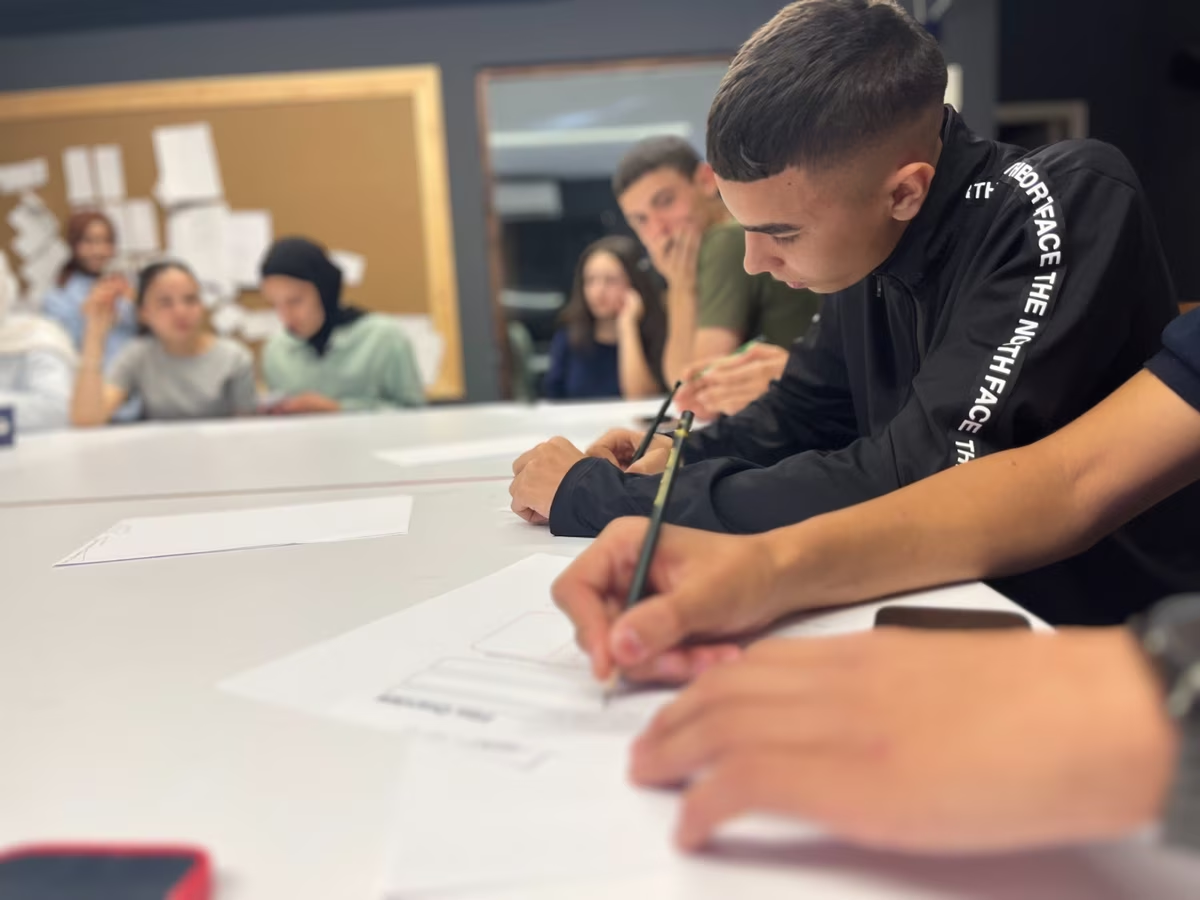
The British Council in Palestine is proud to announce a new round of 10 grants under its flagship programme Stories of Adversity, Resilience and Determination (SARD). This initiative continues to expand its English and empowerment work, responding to the growing need to support young people and communities across Palestine through storytelling, creativity, and language learning.
SARD is designed to enable Palestinians to share their stories, and the stories of their culture and heritage, with each other and with the world. Through this programme, English and storytelling come together as powerful tools for self-expression across multiple creative mediums.
By working with local and international partners, SARD will reach diverse communities across Palestine, including Gaza, East Jerusalem, the West Bank, and refugee camps. The projects will engage hundreds of children, youth, and young adults, strengthening English language skills, fostering resilience, and promoting inclusion.
Shahida MacDougall, British Council Director in Palestine, commented:
“SARD reflects the British Council’s continued commitment to supporting Palestinian communities through creative, inclusive and collaborative programmes that respond to today’s realities and aspirations. By bringing together local and international expertise, the programme creates spaces for learning, storytelling, cultural exchange and language development, while empowering participants to share their experiences, strengthen connections and inspire positive change within their communities”
The newly supported projects, running over the coming months, include:
Byline Palestine (led by Sophie Ruane)
Engaging 12–16 young men (aged 18–20) from the West Bank, this intensive journalism programme builds core reporting, interviewing, and English writing skills. Participants will produce broadcast-style journalistic content for online publication.
English StoryLab — Girls’ Digital Stories from East Jerusalem (led by AlHamawi Education Center)Working with 36 adolescent girls (aged 12–16) in East Jerusalem, this project supports participants to develop personal digital stories in English, strengthening confidence, voice, and creative expression.
Writing Through the Archive (led by Khazaaen Archive)
Supporting 10–15 young Palestinian writers (aged 19–35) in East Jerusalem, this programme transforms archival materials into contemporary narratives in English and Arabic, exploring personal and collective memory.
Storying Gaza (led by Prof Khader Khader, Islamic University of Gaza, and Dr Khawla Badwan, Manchester Metropolitan University)
Engaging 6–8 university students studying English language and linguistics in Gaza, this programme explores storytelling as a multilingual, multimodal practice reflecting lived experience, trauma, and resilience.
Siti’s Stories: Palestinian Heritage, Memory, and Lived Experience (led by Teacher Creativity Center)
Reaching 200 students (aged 13–15) across 5 schools, alongside 10 teachers and 10 media students, this project explores intergenerational storytelling centred on heritage and identity using English and media tools.
Animating Gaza’s Stories (led by Luzan Mattar and David Heathfield)
Engaging 30 young people (aged 11–16) in Gaza, this project supports participants to develop personal stories in English and transform them into short animated films shared globally.
Writing Gaza Within (led by Dr Ahmed Kamal Junina)
Supporting 25 young writers (aged 18–30), with 15–18 selected for publication, this programme develops English-language short stories culminating in a published anthology and digital outputs.
Tile Tales (led by Tashkeel – Wasan Qarman)
Working with 50 children (aged 10–13) in Askar Refugee Camp (Nablus), this initiative combines English language learning, storytelling, and ceramic art to build confidence and communication skills.
Voices That Remain: Oral Histories from Palestine (led by Nuwah)
Engaging 40–50 young Palestinians (aged 20–35) across multiple locations, this project documents lived experiences through storytelling and audio production in English.
Palestinian Stories Beyond Borders (led by Leyan Zahdeh and Esah Bannister)
Working with 40 young adults (aged 18–30) online across Gaza and the West Bank, this programme supports participants to create digital art, games, and podcasts to share their stories globally.
PALESTINE
Wed 13 May 2026 6:23 am - Jerusalem Time
Popular Struggle: Condemns the occupation's expulsion of Father Louis Suleiman to Jordan

The Palestinian Popular Struggle Front considered the expulsion of Father Louis Suleiman, the priest of the Latin Church in Beit Sahour, by the fascist occupation forces and the refusal to renew his residency, as part of the open war against our people, especially through an organized campaign against Christian and Muslim clergy. The political bureau member of the Front, secretary of the information department, stated that this measure is a dangerous escalation and is taken by a political decision of the occupation government, sending a clear message targeting the Palestinian Christian presence and aiming to limit the national role played by Palestinian churches in preserving national identity. Shilo added that repeated attacks on Christian clergy have begun to take an organized form, calling on the heads and patriarchs of churches worldwide to play their role in pressuring their governments and demanding accountability from the occupation for these attacks and racist decisions.
PALESTINE
Wed 13 May 2026 6:23 am - Jerusalem Time
Occupation launches extensive demolition campaign in Al-Eizariya, occupied Jerusalem

On Monday evening, Israeli occupation machinery carried out a large-scale demolition operation targeting dozens of commercial and industrial establishments in the town of Al-Eizariya, located southeast of occupied Jerusalem. Local sources confirmed that the campaign affected about 40 economic establishments, in addition to bulldozing three car wash stations, amid intense military reinforcements that imposed a security cordon on the targeted area.
With this decision, the occupation authorities defied a precautionary order obtained by a human rights organization to freeze demolition operations in the area until mid-May. The Jerusalem Governorate stated in a press release that the invading forces fired a barrage of tear gas and sound bombs at citizens who tried to confront the bulldozing operations, which led to clashes in the area to prevent shop owners from accessing their properties.
Earlier, the human rights organization 'Saint Yves' announced that it had obtained a decision from the Israeli Supreme Court to temporarily halt the demolition of about 50 establishments in Al-Eizariya. This legal move came after a petition submitted by the organization in defense of the rights of the owners of the threatened establishments, but the occupation army chose to proceed with the destruction before the end of the legal period granted in the judicial decision.
Official reports link these field attacks to a massive settlement plan known as 'Fabric of Life,' which aims to create alternative roads for Palestinians to isolate them from vital routes. Through this project, the occupation seeks to exclusively allocate the main roads connecting the southern West Bank to its center and north for settlers, thus entrenching the policy of apartheid in the region.
These operations also fall within the broader settlement plan known as 'E1,' which aims to confiscate thousands of dunams of Palestinian land extending between Jerusalem and the 'Ma'ale Adumim' settlement. This plan aims to close the settlement circle around occupied Jerusalem and completely isolate it from its geographical surroundings in the West Bank, which directly threatens the possibility of a contiguous Palestinian state.
Statistics issued by the Jerusalem Governorate indicate a dangerous escalation in demolition policies, with more than 180 demolition and bulldozing operations recorded in the Holy City during the last four months alone. These measures come at a time when Israeli authorities continue to pressure residents through verbal eviction notices and final warnings targeting the Palestinian presence in strategically classified areas.
Since the outbreak of aggression on the Gaza Strip in October 2023, the West Bank and Jerusalem have witnessed an unprecedented escalation in the pace of Israeli attacks. According to Palestinian data, these violations have resulted in the martyrdom of more than 1155 citizens and the arrest of about 22,000, coinciding with the destruction of thousands of establishments and the displacement of entire communities as part of a systematic policy of collective punishment.
The demolition operations come in the context of paving the way for the implementation of the 'Fabric of Life' settlement project, which aims to isolate Palestinians from vital roads and allocate them to settlers.
PALESTINE
Wed 13 May 2026 6:23 am - Jerusalem Time
Israeli Knesset definitively approves 'execution' law for October 7 detainees, prohibits their exchange

The Israeli Knesset's General Assembly, on Monday evening, definitively approved, in its second and third readings, an exceptional bill targeting the prosecution of Palestinian detainees whom the occupation accuses of involvement in the October 7, 2023 attack. The new legislation received widespread support within the Israeli parliament, with 93 members voting in favor, making it immediately effective.
The new law imposes severe penalties, including the death penalty, and establishes a legal restriction preventing the Israeli government from including these detainees in any future prisoner exchange operations. According to human rights sources, this legislation entrenches an unprecedented judicial approach through the formation of special military courts that lack the minimum standards of internationally recognized fair trials.
This legislative step comes at a time when warnings are escalating regarding the fate of approximately 1283 detainees from the Gaza Strip whom the occupation classifies as 'unlawful combatants'. Recent statistics indicate that the total number of Palestinian prisoners in occupation prisons has jumped to more than 9400 prisoners, amidst harsh detention conditions and an increase in the pace of retaliatory legislation.
The new law stipulates the imposition of penalties up to execution, with an absolute prohibition on the release of detainees within any future exchange deals.
PALESTINE
Wed 13 May 2026 6:22 am - Jerusalem Time
Shireen Abu Akleh.. The Icon of Journalism Who Exposed the Falsehood of the Occupation with Her Blood

Palestinian memory today recalls the life of colleague Shireen Abu Akleh, who rightfully earned the title of journalism icon after a career full of giving. Shireen was killed by a treacherous Israeli bullet while covering the incursion into Jenin camp on May 11, 2022, concluding a journey of more than two decades in conveying the truth.
Shireen was not just a passing correspondent; she was a voice that loudly proclaimed the Palestinian truth in the face of the misleading Israeli media machine. She moved between various fields of confrontation, challenging all the dangers facing journalists, until she became an integral part of the popular consciousness linked to the justice of the cause and the oppression of the people.
The magnificent funeral procession that Shireen received was a testament of appreciation and recognition from the Palestinian people for her prominent role. Her funeral turned into a major national demonstration, confirming that the message she carried will remain immortal in the consciences of free people and will not be erased by treacherous bullets.
The assassination of Abu Akleh represents a failed attempt to terrorize the knights of Palestinian media and deter them from performing their professional and national duty. Despite her targeting, the Palestinian narrative continued to advance in international forums, while the occupation's narrative falters in the face of the undeniable facts conveyed by journalists from the field.
This systematic targeting did not stop at Shireen; rather, it is part of a long record of Israeli crimes against free speech. Statistics indicate that the number of martyrs of the Palestinian media movement since 2000 has reached about 310 journalists, who died while performing their duty.
The Gaza Strip has witnessed since October 2023 the largest massacre in the history of world journalism at the hands of the occupation forces. Human rights and media sources reported the martyrdom of more than 260 male and female journalists during the ongoing brutal aggression, in a clear attempt to obliterate the features of the crimes committed.
The occupation forces did not content themselves with direct killing, but also widely destroyed the infrastructure of Palestinian media. The headquarters of hundreds of media institutions were targeted and destroyed during the May 2021 aggression, and the matter was repeated more violently in the current aggression on Gaza.
Despite this terrorism and intimidation, these crimes did not diminish the determination and will of Palestinian journalists who continued their mission without fear. These knights committed to their professional duty, realizing that the price of conveying the truth might be their lives, but they chose to continue the journey that Shireen and her comrades began.
The occupation's continuous attempts to evade responsibility for Shireen Abu Akleh's assassination have failed in the face of widespread international condemnation. The evidence and proofs presented by human rights organizations were too numerous to count, putting the international community to a real test to hold the killers accountable.
The love and anger that erupted after Shireen's assassination must be translated into effective legal action on the international stage. Prosecuting Israeli war criminals in criminal courts is the necessary step to ensure that these massacres against media crews are not repeated.
Shireen Abu Akleh's life story remains a beacon inspiring new generations of Palestinian journalists to continue exposing the racism of the occupation. It is a permanent call to all media knights to continue their pioneering role in serving the national cause and exposing the ugly face of the occupation to the whole world.
Loyalty to the blood of martyred journalists requires unifying union and human rights efforts to document every Israeli violation. The battle today is a battle of narrative, and Palestinian media has proven its ability to break the media blockade that the occupation has been trying to impose for decades.
In light of the clear progress of the Palestinian narrative, the importance of recalling the occupation's criminal record in all forums stands out. It is the blood of Shireen and her comrades in Gaza and the West Bank that has drawn the boundaries of truth that no oppressive power can obliterate or falsify.
In conclusion, Shireen Abu Akleh will remain a thorn in the throat of the occupation, alive in the memory of her people, and an unbreakable symbol of free journalism. Her message, sealed with blood, will remain a trust in the necks of all who carry the camera and pen in defense of Palestine and its freedom.
The assassination of Shireen Abu Akleh only increases the challenge for Palestinian media knights against the occupation and their rejection of its violations aimed at obliterating the truth.
PALESTINE
Wed 13 May 2026 6:22 am - Jerusalem Time
Amnesty: Israel's systematic destruction of residential towers in Gaza constitutes war crimes and collective punishment

Amnesty International has affirmed that the Israeli occupation's continued destruction of high-rise civilian buildings in the Gaza Strip constitutes a blatant violation of international humanitarian law. The organization clarified in a recent report that this systematic behavior causes catastrophic consequences for displaced families, amidst the ongoing war of genocide and air raids that have not stopped despite talks of de-escalation or a ceasefire last October.
The organization stressed that rebuilding what the Israeli war machine has destroyed has become a distant dream for the residents of the occupied Strip, especially with the targeting of vital infrastructure. It considered the demolition of residential towers not merely isolated military operations, but part of a broader pattern aimed at imposing forced displacement and permanently changing the demographic and geographical features of Gaza City.
The new investigation conducted by the organization's Crisis Evidence Lab documented the leveling of at least 13 residential and commercial buildings in various areas of Gaza City. Sources indicated that these attacks occurred between September and October 2025, where the Israeli army deliberately dropped heavy bombs on these facilities after forcing their residents to evacuate under threat and without giving them enough time to clear their belongings.
Amnesty International demanded an urgent international investigation into these attacks as full-fledged war crimes, including the unjustified destruction of property. It affirmed that the available evidence indicates that these operations fall under the category of collective punishment, where civilian objects are directly targeted to pressure the popular base of the Palestinian resistance and achieve political gains at the expense of civilian lives.
The report relied on public statements by Israeli Defense Minister Yisrael Katz, which the organization considered additional evidence of the absence of compelling military necessity in the destruction operations. Katz, in his posts, linked the demolition of towers to political demands related to the hostage file and disarmament, which proves the use of widespread destruction as a tool for intimidation and direct political pressure.
For her part, Erika Guevara-Rosas, the organization's research director, explained that Israel intensified its attacks on Gaza City in the period leading up to what was described as a 'so-called ceasefire.' She added that this wave of attacks resulted in one of the worst cases of forced displacement since the start of the aggression, emphasizing that the destruction of thousands of civilians' homes and surrounding camps was deliberate and premeditated.
To build this report, the organization conducted in-depth interviews with 16 residents and displaced persons who witnessed the destruction operations, in addition to a precise analysis of satellite images. The organization's experts also verified the authenticity of 25 video clips showing moments of targeting the towers and concluded that there was a horrific pattern of deliberate destruction not justified by any wartime necessities according to applicable international standards.
The organization revealed that it attempted to contact the Israeli Ministry of Defense in March 2026 to obtain clarifications regarding these raids and the accompanying inflammatory statements, but received no response. The organization recalled similar Israeli precedents documented in the town of Khuza'a and 'buffer zone' areas, where entire neighborhoods were wiped off the map as part of an expansion plan preventing Palestinians from returning to their lands.
In conclusion, the report warned that Israeli forces continue to encroach on large areas of the Gaza Strip under the name 'Yellow Line,' which now includes more than 55% of the Strip's area. The organization affirmed that the Fourth Geneva Convention strictly prohibits the destruction of property except in cases of extreme military necessity, which was not present in any of the cases documented in this human rights report.
The destruction of the 13 buildings was not necessitated by military operations and must be investigated as a war crime involving collective punishment.
PALESTINE
Wed 13 May 2026 6:22 am - Jerusalem Time
Occupation claims dismantling of 4-kilometer tunnel network south of Gaza Strip

Sources reported that the Israeli occupation army announced the implementation of a wide-ranging field military operation in the southern areas of the Gaza Strip, targeting what it described as underground infrastructure. The military statement claimed that forces were able to dismantle a group of tunnels that extend for long distances and connect strategic areas in the Strip.
According to Israeli claims, the 188th Brigade of the Gaza Division led the field movements in the area east of the 'Yellow Line'. These movements come at a sensitive time, as the occupation attempts to impose a new security reality by destroying what remains of the military capabilities of Palestinian factions in those areas.
An Israeli occupation army statement indicated that the operation was carried out in close coordination with the 'Yahalom' unit, specialized in engineering and tunnels, where four separate routes were uncovered. Military sources claimed that the total length of these routes reaches approximately four kilometers, making them among the complex networks dealt with recently.
In additional details provided by the occupation, the army claimed that one of these discovered routes was designated for holding Israeli prisoners inside the Gaza Strip. The statement claimed that forces found logistical equipment inside the tunnel indicating its long-term use for hiding and securing detainees away from public view.
Israeli claims also included the discovery of equipped living quarters and field command centers belonging to what is known as the 'Khan Yunis Brigade' in Hamas. Sources stated that these locations served as a center for managing military operations and communication between field units of the resistance in the southern region.
The occupation army considered these sites part of a wide-ranging military infrastructure, emphasizing its continued handling of them as a direct security threat to its forces. These operations come within the occupation's strategy to clear and fully secure border areas from any potential offensive threats.
The army spokesperson claimed that the forces deployed in the southern Strip adhere to the framework of the existing ceasefire agreement, but continue what he described as 'removing immediate threats'. The occupation justifies its continuous breaches of relative calm by the necessity of neutralizing the offensive capabilities of Palestinian factions, both underground and above ground.
The eastern areas of the southern Strip are witnessing continuous tensions amid ongoing bulldozing and search operations carried out by the occupation, with Palestinian accusations of exceeding understandings. Field sources confirm that the occupation seeks through these announcements to achieve moral gains before its internal public regarding the issue of prisoners and tunnels.
One of the discovered routes was part of a network used to hold hostages inside the Strip.
PALESTINE
Wed 13 May 2026 6:22 am - Jerusalem Time
UNICEF: One Palestinian Child Killed Weekly in West Bank Since Early 2025

The United Nations Children's Fund (UNICEF) reported in a recent statement that the occupied West Bank is witnessing a dangerous escalation in targeting minors, with at least one Palestinian child killed on average every week. The organization clarified that this continuous pace since January 2025 reflects a tragic reality experienced by children under the weight of intensified military operations.
James Elder, the organization's spokesperson, stated during a press conference held in Geneva that the total number of children martyred since the beginning of this year has reached 70. Elder pointed out that these children are paying a heavy price as a result of the continuous attacks affecting various cities and refugee camps in the West Bank, including occupied East Jerusalem.
According to data reviewed by the UN organization, Israeli forces are directly responsible for the killing of 93% of these children. The report also noted that most deaths and injuries resulted from the direct use of live ammunition, indicating a pattern of excessive and lethal force directed against minors.
Suffering was not limited to killings; UNICEF recorded injuries to approximately 850 Palestinian children with varying degrees of severity during the same period. These figures confirm the extent of physical and psychological risks facing the younger generation in the absence of effective international protection and the escalating pace of systematic violence in the occupied territories.
UNICEF issued an urgent appeal to the Israeli authorities to take immediate and decisive measures to stop the killing and maiming of Palestinian children. The organization stressed the importance of protecting homes, schools, and water sources, considering that these facilities must remain safe under international humanitarian law, which Israel disregards.
In a related context, the international organization urged influential member states in the international community to exert real pressure to ensure respect for international law. It affirmed that international silence contributes to the continuation of violations, emphasizing the necessity of holding those responsible for crimes committed against children in Palestine accountable.
These statistics come amid a comprehensive escalation launched by the Israeli army and settlers in the West Bank since October 2023. This ongoing aggression has resulted in the martyrdom of at least 1155 Palestinians and the injury of thousands of others, coinciding with widespread arrest campaigns targeting nearly 22,000 citizens, according to official sources.
Regarding settlement expansion, data revealed the displacement of 79 Palestinian communities, either fully or partially, due to repeated settler attacks. These communities include hundreds of families who found themselves homeless, in a clear Israeli attempt to change the demographic and geographic reality in the region through a policy of forced displacement.
Reports indicate that approximately 780,000 settlers reside in 192 settlements and 350 outposts spread across the West Bank. The United Nations considers these settlements illegal, and their residents carry out daily attacks aimed at restricting 3 million Palestinians living under occupation since 1967.
Children are paying an unbearable price due to the escalation of military operations and attacks across the occupied West Bank, including East Jerusalem.
PALESTINE
Wed 13 May 2026 6:22 am - Jerusalem Time
An octogenarian from Gaza faces the pain of loss by supporting 21 orphaned grandchildren on the rubble of his home

In the Sheikh Radwan area of Gaza City, the elderly Palestinian Khalil Salem, known as 'Abu Akram', sits on a modest chair amidst the rubble of his home, destroyed by bombing. The 85-year-old man bears a long history of catastrophes on his face, but the recent war was the harshest on his heart and exhausted body.
The night of December 11, 2023, was not just an ordinary night; it was the turning point when an entire family was extinguished. The Israeli occupation army targeted the residential block where the Salem family lived, leading to the destruction of four homes and the martyrdom of about 80 members of the extended family.
Abu Akram lost his wife and three of his four sons in that massacre, in addition to two of his sons' wives and several of his grandchildren. The elderly man miraculously survived from under the rubble, but he emerged with a body burdened by injuries, having sustained head and neck wounds that required 36 medical stitches, the effects of which still pain him.
Today, the octogenarian Haj finds himself alone facing a grave responsibility, as he is now supporting 21 grandchildren who became orphans overnight. Abu Akram moves with difficulty, relying on his cane, to monitor the needs of the little ones and secure their livelihood amidst very harsh living conditions.
Next to his small temporary room, Abu Akram placed a picture of his martyred son, Mohammed, to be his constant companion in his days burdened with worries. The elderly man performs his daily rituals in front of the picture, cooking for the children and talking to them about their fathers, trying to keep the thread of memory from breaking.
Abu Akram says that the bombing not only stole lives but also stole possessions, photos, and memories that he wished to pass on to his grandchildren. Therefore, he chose to stay by the rubble, considering that the smell of the place is the last thing that proves his family was once here.
The grandchildren's daily routine begins by gathering around their grandfather, who distributes his tender glances among them, trying to fill the emotional void left by the absence of their parents. The ages of these children vary, but the common denominator among them is the look of brokenness that the grandfather tries to mend with his patient words.
In the evening, Abu Akram's gathering turns into a school of memory, where he tells the little ones about their fathers' lives, their morals, and the details of their lives before the war. The elderly man insists that these children grow up knowing their origins and rights, protecting them from the 'second loss,' which is forgetting their legacy.
Among the grandchildren, tragic stories emerge of children who witnessed their fathers' deaths before their eyes, such as Mohammed, Uday, and Mahmoud, who lost their father during their displacement. The grandfather describes these children as 'small witnesses' to the horror of what happened, as their experiences exceed the capacity of adults to endure.
Three-year-old Uday holds a special place in his grandfather's heart, as the little one lost both his parents in the war. Abu Akram gazes at the face of his orphaned grandson and cries silently, feeling the inadequacy of words to compensate for the mother's embrace that the child lost at an early age.
The Salem family encapsulates the suffering of the Palestinian people in all its forms; it includes martyrs, wounded, and prisoners simultaneously. His only remaining son, Abdullah, went through a bitter experience of captivity in occupation prisons, and his grandson Youssef was also imprisoned for two years before being recently released.
Despite all these pains, Abu Akram refuses to leave the Sheikh Radwan neighborhood or move away from the rubble of his burnt home. He sees his presence as a humanitarian and moral stance towards the deceased, as leaving the place means for him abandoning the last material ties with his family that was annihilated.
The elderly man currently suffers from neck problems that affect his balance and movement, but he insists on getting up daily to secure firewood and light a fire for cooking. His body, burdened by years and injuries, still resists for the sake of 21 children who await safety and food from him.
Khalil Salem's story remains a testament to the Palestinian will to survive, where human weakness transforms into immense strength to protect the next generation. It is the story of a man who decided to be the bridge over which his grandchildren cross from the rubble of death to the hope of life, despite the heavy burden and the body's frailty.
My children are the apple of my eye, and their children are all that remains of their scent. I try to see the faces of my children in my grandchildren and preserve their fathers' memory for them.
PALESTINE
Wed 13 May 2026 6:21 am - Jerusalem Time
On the 78th Anniversary of the Nakba: 15.5 Million Palestinians Worldwide, More Than Half in the Diaspora

The Palestinian Central Bureau of Statistics issued a comprehensive statement on the occasion of the 78th anniversary of the Nakba, confirming that the number of Palestinians worldwide has reached approximately 15.5 million. The report clarified that the demographic distribution shows that less than half of Palestinians live within the borders of historical Palestine, numbering 7.4 million, while 8.1 million others face a life of refuge and diaspora away from their homes.
The statement addressed the tragic reality in the Gaza Strip, noting that the ongoing Israeli war of extermination has led to the displacement of nearly two million Palestinians out of the 2.2 million who resided in the Strip before the outbreak of hostilities. These displaced individuals suffer from extremely harsh living conditions, with most concentrated in tents, shelters, and schools lacking the most basic necessities of life due to systematic destruction.
In the West Bank, the situation was no less severe, as statistics recorded the displacement of approximately 40,000 citizens from northern camps due to ongoing military operations. These forced movements coincide with an unprecedented escalation in settlement expansion, with the number of Israeli settlement sites and military bases reaching 645 by the end of 2025, distributed among settlements, outposts, and military sites.
Official data revealed that the number of settlers in the occupied West Bank jumped to approximately 778,567 by the end of 2024, with a high concentration in the Jerusalem Governorate exceeding 42%. This settler population expansion is accompanied by widespread land confiscation operations, with occupation authorities seizing over 5,571 dunams in 2025 alone under various pretexts such as 'state land' or seizure orders.
The report monitored a sharp escalation in attacks by settlers and occupation forces, with over 61,000 attacks documented in the West Bank between 2022 and 2025. These systematic attacks resulted in devastating environmental and economic losses, including the uprooting and bulldozing of over 81,000 trees, the vast majority of which were olive trees, a symbol of Palestinian steadfastness and a primary source of livelihood.
Regarding human casualties, the Bureau announced that the number of martyrs since October 7, 2023, until the end of April 2026, has exceeded 73,761 in a horrifying toll reflecting the scale of the aggression. The martyrs were distributed between 72,601 in the Gaza Strip and 1,160 in the West Bank, figures that place the international community before its responsibilities regarding the continuous existential targeting of the Palestinian people.
The media sector has not been spared from this targeting, with reports indicating the martyrdom of 310 journalists since 2000, including journalist Shireen Abu Akleh, who was assassinated in Jenin refugee camp in 2022. During the recent aggression on Gaza, occupation forces killed more than 260 journalists and destroyed the headquarters of hundreds of media institutions in a clear attempt to obscure the truth and prevent the world from seeing the crimes committed.
In terms of construction, the violent Israeli bombing of the Gaza Strip caused the complete destruction of over 102,000 buildings, in addition to damage to approximately 330,000 housing units, either partially or completely. This widespread destruction was not limited to homes but also affected vital infrastructure, health, and educational facilities, rendering vast areas of the Strip uninhabitable at present.
Occupation authorities continue to impose strict restrictions on the movement of Palestinians in the West Bank through a complex network of approximately 900 military checkpoints and electronic gates. These repressive measures not only restrict freedom of movement but also prevent farmers from accessing their agricultural and pastoral lands, deepening the economic crisis and increasing the isolation of Palestinian communities from each other on the painful anniversary of the Nakba.
The number of Palestinians in the world reached approximately 15.5 million, including 7.4 million living in historical Palestine, while 8.1 million live in the diaspora.
PALESTINE
Wed 13 May 2026 6:21 am - Jerusalem Time
The Future of the Confrontation Between Hezbollah and the Occupation: Scenarios of Attrition and Withdrawal Amid Escalation

The region has entered a phase of rapid dramatic transformations following the outbreak of the major confrontation between Iran, the United States, and Israel, with Hezbollah officially announcing its involvement in the battle. This announcement came through a rocket barrage targeting northern settlements, which surprised intelligence agencies that did not anticipate the timing of this intervention.
Hezbollah's Secretary-General, Sheikh Naim Qassem, affirmed in a pivotal speech that the decision to enter the confrontation was an independent Lebanese decision aimed at protecting national sovereignty. Qassem clarified that the move came in response to a series of Israeli aggressions that had continued for over a year, resulting in hundreds of casualties, both dead and wounded.
On the ground, the southern front witnessed a remarkable development in the party's military tactics, as it shifted from limited barrages to repeatedly targeting the heart of Tel Aviv. The resistance has demonstrated a high capacity to confront ground incursions, leading to the destruction of a large number of advanced Israeli military vehicles.
Field reports indicate that Hezbollah has succeeded in destroying over 170 Israeli tanks since the start of operations, representing a severe bleeding in the armored strength of the occupation army. This success is partly attributed to the use of qualitative weapons that surpass the traditional defensive systems possessed by the enemy.
'Fiberglass drones' stand out as one of the most terrifying weapons introduced by the party in this battle, due to their superior ability to evade advanced radars. This technology allows the party to carry out precise strikes deep inside Israel, disrupting military and political calculations in Tel Aviv.
Regarding missile power, the US Central Intelligence Agency estimates that the party possesses a massive arsenal ranging from 130,000 to 150,000 rockets. This arsenal varies to include long-range missiles and others anti-ship and anti-aircraft, making any comprehensive confrontation very costly for the occupation.
In a related context, field sources revealed fierce clashes at point-blank range following a secret Israeli infiltration attempt across the Litani River. These confrontations resulted in the injury of eight Israeli soldiers from the elite Golani Brigade and Egoz Unit, after they fell into a well-laid ambush.
The occupation forces used heavy 'Namer' vehicles in the infiltration operation to reach the outskirts of the eastern village of Zawtar, with the aim of neutralizing launch platforms. However, the vigilance of the party's fighters led to the discovery of the operation and the outbreak of fierce clashes in which offensive tunnels were effectively used.
The current developments present three scenarios for the future of South Lebanon. The first is the continued occupation of border areas, which opens the door to a long war of attrition. This scenario brings back memories of the 1980s experience, but with more lethal and advanced technological tools possessed by the resistance today.
The second scenario is the possibility of reaching a political settlement through ongoing negotiations in Washington under direct American sponsorship. However, this path faces significant obstacles due to Hezbollah's absence from these meetings and its refusal to offer any free political concessions to the enemy.
The third scenario anticipates a sudden Israeli withdrawal to avoid the increasing human and material costs imposed by the field. History indicates that the occupation only withdraws under the pressure of painful blows, and when the cost of staying becomes much higher than the cost of leaving.
The region is currently experiencing a fragile truce linked to negotiations between Washington and Tehran, but it is a truce that does not mean a halt to military preparations. The party exploits periods of relative calm to develop its offensive capabilities and intensify its qualitative strikes against strategic targets.
Ultimately, the field will have the final say in determining the shape of the next phase, as the party continues to strengthen its defenses in border villages. In contrast, the occupation army is carrying out preliminary engineering operations, indicating the possibility of expanding military operations if the diplomatic path fails.
The future of South Lebanon depends on the resistance's ability to continue to drain the occupation's capabilities and inflict heavy losses on its ranks. With continued steadfastness on the ground, the occupation finds itself facing choices, the least bitter of which is bitter, between remaining in the quagmire of attrition or withdrawing under fire.
The decision to go to war was purely and independently Lebanese, and the main motive was to respond to aggressions that targeted our lands for over 13 months.
PALESTINE
Wed 13 May 2026 6:21 am - Jerusalem Time
Salha Massacre 1948: The Bleeding Wound of the Nakba Between Lebanese and Palestinian Memory

The Salha massacre, which occurred in the autumn of 1948, is considered one of the most horrific bloody episodes in the early record of the Israeli occupation. This village is located at a sensitive geographical and historical intersection between Lebanon and Palestine. While Palestinian sources classify it within the Safed district, Lebanese documents confirm that it is one of the seven villages that were detached from Lebanese territory and administratively annexed to Palestine during the British and French Mandate periods.
On October 30, 1948, forces of the Seventh Brigade of the Haganah gangs, known as 'Sheva', stormed the village as part of what was called 'Operation Hiram'. This operation aimed to establish control over the Upper Galilee region and secure the northern borders through a scorched-earth policy and forced displacement of the indigenous population.
Historical estimates indicate that the number of victims of the massacre ranged between 94 and 105 martyrs, most of whom fell in mass field executions. The tragedy began when the attacking forces ordered the villagers to gather in the mosque square under the pretext of surrendering weapons, after which a random shooting spree began, targeting unarmed civilians indiscriminately.
Survivors' testimonies recount that the Arab Liberation Army, formed to support the Palestinians, had withdrawn from the area before the arrival of Israeli forces, leaving the residents in direct confrontation with the killing machine. The attackers did not stop at shooting; they later blew up the mosque over the bodies of the martyrs and demolished homes over the heads of the remaining residents.
Historically, the residents of Salha were administratively and socially linked to the Lebanese city of Tyre, where they were registered in the 1921 census within the old population records. This connection made their tragedy a deep Lebanese wound, as some of them regained Lebanese citizenship in the 1960s, while others continued to be treated as refugees in their homeland.
After emptying the village of its inhabitants and turning it into rubble, the occupation quickly erased its geographical features by establishing agricultural and military settlements on its ruins. In 1949, the settlement of 'Yir'on' was founded, followed by the settlement of 'Avivim' in the late 1950s, to entrench a new settlement reality that obliterates the Arab identity of the place.
The Salha massacre was not an isolated incident but came as part of a series of massacres that targeted villages in Galilee and southern Lebanon during that era. Lebanese military sources documented that the Seven Villages, including Salha, Al-Malikiyah, and Hunin, were victims of international agreements that drew borders with blood and forced displacement.
Survivors of the massacre carried the memory of the killing with them to refugee camps and displacement areas in southern Lebanon, where they named neighborhoods in Tyre and Burj al-Shamali after their village. These new residential communities have become a reservoir of collective memory passed down from generation to generation, affirming the right of return that does not lapse with time.
According to the Encyclopedia of Palestinian Villages, Salha had about 1,300 inhabitants before the Nakba, and they primarily relied on agriculture and livestock farming. With the massacre, this stable life turned into a long journey of diaspora that began under the whizzing of bullets and mortar shells that targeted safe homes.
During 'Operation Hiram', Israeli violence did not spare women, children, and the elderly, as the killings were accompanied by widespread looting of property and livestock. The policy adopted aimed to terrorize neighboring villages and push their residents to flee en masse, which was partially achieved through these horrific massacres that remained without international accountability.
In Lebanese memory, Salha remains a symbol of the 'severed' villages whose people paid the price of colonial tug-of-war between Britain and France. Despite subsequent naturalization decrees in Lebanon, many residents of these villages still demand full recognition of their historical and legal rights as original landowners.
The current scene at the village site shows a sharp contrast between the ruins of old houses and the modern settlement buildings erected over them. Despite attempts to change names and landmarks, the olive and cactus trees that still stand bear witness to the identity of the land watered with the blood of more than a hundred martyrs in one night.
These documentary reports are an urgent necessity to reclaim the historical narrative from attempts at obliteration and distortion practiced by the occupation. The Salha massacre is not just a number in the record of victims; it is a story of resilience and memory resisting erasure, connecting the Nakba of Palestine with the suffering of Lebanese border villages.
In conclusion, Salha remains a living witness to the policy of replacement adopted by the Zionist gangs since 1948, a policy that targeted both land and people. Recalling these bloody episodes aims to emphasize that crimes against humanity do not lapse with the passage of time, and that memory is the first line of defense for usurped rights.
The attackers called out to the residents and ordered them to go to the mosque square, before opening fire on them in cold blood, turning the place into a mass grave.
PALESTINE
Wed 13 May 2026 6:21 am - Jerusalem Time
Bloody escalation in southern Lebanon: Army and paramedic martyrs, and qualitative resistance operations targeting occupation soldiers

The Israeli occupation army continues to escalate its military operations in Lebanese territories, committing a series of massacres that have affected civilians, relief teams, and military personnel alike. Field sources reported that Israeli Air Force helicopters were seen transporting injured soldiers from the border area towards Rambam Hospital in the occupied city of Haifa, following fierce clashes on the southern front.
In a new crime targeting humanitarian teams, the Lebanese Civil Defense announced the martyrdom of two of its members in the city of Nabatieh in the south of the country. The statement clarified that the Israeli targeting was direct against the relief team while they were attempting to aid an injured person from a previous raid, leading to the martyrdom of the paramedics and the injured person they were trying to save.
Regarding the military institution, the Lebanese Army mourned one of its soldiers who was martyred due to an airstrike carried out by occupation aircraft on the town of Jabshit. This incident comes amid repeated targeting of Lebanese Army positions and movements in the southern areas, despite its non-direct involvement in the ongoing military confrontations.
According to media sources, the town of Jabshit, part of the Nabatieh district, was subjected to a series of violent raids carried out by occupation drones. These attacks resulted in the martyrdom of three citizens and the injury of four others with varying degrees of wounds, as part of the scorched-earth policy pursued by the occupation in the border villages.
Field statistics indicate that the toll on the health and relief sectors has become very heavy since the start of the aggression. Medical sources confirmed the martyrdom of about 80 paramedics from various associations and relief organizations, as a result of the occupation deliberately bombing ambulance centers and fire trucks while performing their duties.
In the town of Arzoun, an Israeli raid completely destroyed a house located near an ambulance point belonging to the Islamic Message Scouts. The shelling caused extensive material damage to medical equipment and nearby facilities, hindering the ability of relief teams to respond to humanitarian calls in that area.
Intensive airstrikes today, Tuesday, included a long list of southern and Bekaa towns, including Haniyeh, Mansouri, Tyre Debba, Sha'itiyeh, and Qleileh. The shelling also hit the towns of Harouf, Bazourieh, Houche, and Sahmar in western Bekaa, leading to widespread destruction of property and infrastructure.
On the ground, Hezbollah announced a series of qualitative operations against gatherings and movements of the occupation army encroaching in the south. In its statements, the party confirmed targeting an Israeli force entrenched inside a house in the town of Houla using a guided missile that accurately hit its target, causing confirmed casualties among the force.
In the Naqoura area, the resistance carried out an aerial attack with a swarm of kamikaze drones targeting a gathering of occupation soldiers near the port. The attack was carried out in two consecutive waves to ensure the maximum possible losses among the enemy forces attempting to position themselves at strategic points.
Resistance operations also extended to the town of Bayada, where an Israeli force positioned inside a house was targeted by a kamikaze drone that carried out two consecutive raids. This coincided with the targeting of an Israeli soldier in the vicinity of Khirbet al-Manara opposite the town of Houla using a kamikaze drone that directly hit him.
Hezbollah concluded its operations for today by announcing the destruction of a Merkava tank in the vicinity of Khirbet al-Manara using a kamikaze drone. These operations come as part of countering Israeli ground incursions and affirming the resistance's ability to target deep and border areas with high efficiency.
About 80 paramedics from various relief agencies have been martyred due to direct Israeli targeting during the ongoing aggression on Lebanon.
PALESTINE
Wed 13 May 2026 6:21 am - Jerusalem Time
Warnings of a 'historic aggression' targeting Al-Aqsa on Nakba Friday: A plan to break the rules of engagement

Tension is escalating in the occupied city of Jerusalem with the revelation of Israeli plans described as the most dangerous since the city's occupation in 1967. Extreme Temple groups, with broad political support, are seeking to impose settler incursions into the blessed Al-Aqsa Mosque next Friday. This step gains extreme sensitivity as it coincides with the seventy-eighth anniversary of the Palestinian Nakba, and what is called the Hebrew anniversary of the occupation of the eastern part of the city, placing the mosque before an intense religious and political confrontation.
The International Jerusalem Foundation warned that the occupation authorities, in coordination with extremist organizations, aim to turn this occasion into a permanent season of aggression against the blessed Al-Aqsa Mosque. The foundation indicated that the plan goes beyond mere traditional incursions, reaching an attempt to impose unprecedented Judaization facts aimed at changing the pure Islamic identity of the place and crossing red lines that have been stable for many years.
The great danger in this move lies in the occupation's attempt to break the protocol in place since 2003, which prohibits settler incursions on Fridays and Saturdays due to the large number of Muslim worshipers. The success of settlers in entering the mosque on these days would practically mean the collapse of what remains of the historical and legal 'status quo,' which grants the Jordanian Islamic Endowments Department exclusive authority to manage the mosque's affairs.
In the context of field movements, informed sources revealed that the plan includes creating a new evening incursion period next Thursday, to be a prelude to making it a permanent reality in the future. This approach aims to extend daily incursion hours to nine hours, effectively paving the way for the temporal and spatial division project sought by the far-right government.
For his part, Jerusalem affairs researcher Ziad Abheis affirmed that the coincidence of these calls with Friday turns the issue into a direct 'sovereignty battle' within Al-Haram Al-Sharif. Abheis explained that the dense Palestinian presence on Fridays represents the biggest obstacle to the occupation's ambitions, and therefore settlers seek to break this popular will by imposing their presence during the most sacred and attended times for Muslims.
According to analytical readings of the plan, Temple groups have developed multiple incursion scenarios, starting with an attempt to enter during the usual morning period. If this is not possible due to popular steadfastness, they plan to impose a sudden incursion after Friday prayers, a step that, if it occurs, would be the first of its kind in decades, and represents a dangerous escalation that could ignite the situation throughout the Palestinian territories.
On the political level, these movements are no longer mere demands from marginal groups but have received official cover from within the Israeli government and the Knesset. Twenty-two Israeli officials, including nine ministers and 13 members of parliament, signed a letter demanding that the police secure Friday incursions, reflecting a shift in the official Israeli position towards fully adopting the agenda of the religious far-right.
The right-wing organization 'By Our Hands' is leading a wide incitement campaign to mobilize the largest number of settlers to participate in these incursions, under the slogan of restoring 'Jewish rights' in the mosque. Observers believe that this mobilization reflects a state of fierce competition within the Israeli right-wing camp, where each party seeks to prove its worth to extremist electoral bases by targeting Islamic holy sites.
In this context, the role of National Security Minister Itamar Ben-Gvir stands out, as he seeks to carry out a provocative incursion into the Dome of the Rock prayer hall or the Al-Qibli Mosque based on new religious fatwas. These provocative moves aim to undermine the role of the Islamic Endowments within the covered prayer halls, which represents an advanced stage of aggression aimed at full control over all facilities of the Al-Aqsa Mosque.
In the face of these threats, widespread Palestinian calls have been launched to intensify steadfastness and presence in Al-Aqsa Mosque starting from Thursday's noon prayer and continuing until Friday evening. Jerusalemite activists stressed the necessity of I'tikaf (seclusion for worship) inside the mosque despite strict security restrictions and checkpoints set up by occupation forces around the Old City to prevent worshipers from the West Bank and the occupied interior from reaching it.
A state of anticipation prevails regarding the position of the occupation police, who have not yet announced a final decision on whether to allow incursions, amid security fears of an explosion of the situation. This hesitation reflects the Israeli security agencies' awareness of the sensitivity of harming Al-Aqsa Mosque on Friday, and the unexpected popular and military reactions that may result.
The coincidence of these developments with the Nakba anniversary gives the confrontation a national dimension that transcends the religious dimension, as Palestinians see the defense of Al-Aqsa as a defense of their existence and national identity. Al-Aqsa Mosque represents in the Palestinian consciousness the first line of defense and the central symbol behind which all forces and activities unite in confronting liquidation and displacement projects.
Analysts believe that the coming days will be a real test of the Palestinian people's ability to protect their holy sites amidst widespread international silence and complicity from some parties. Popular resistance and steadfastness remain the last fence preventing the implementation of Judaization plans that have reached advanced stages of actual implementation on the ground with the encouragement of ministers of the extremist government.
In conclusion, what is being prepared for next Friday is not just a fleeting incursion, but part of a major strategy aimed at resolving the conflict in Jerusalem in favor of the Zionist narrative. The steadfastness of Jerusalemites and the results of this confrontation will have a significant impact on shaping the features of the next phase of the conflict over the identity of the holy city and the future of the blessed Al-Aqsa Mosque.
The coincidence of events with Friday makes any potential incursion a battle for sovereignty aimed at establishing a new reality within Al-Haram Al-Sharif.
PALESTINE
Wed 13 May 2026 6:20 am - Jerusalem Time
Pedro Sánchez: The Leader Who Challenged Trump and Transformed Spain into a Bastion of Social Democracy

Last April, the city of Barcelona witnessed a remarkable gathering of elite progressive leaders from around the world, including Brazilian President Lula da Silva and Mexican President Claudia Sheinbaum. The core objective of this meeting was to promote the values of pluralism and democracy in the face of the global rise of the far-right, and to honor the experience of Spanish Prime Minister Pedro Sánchez.\n\nToday, Sánchez is the longest-serving center-left leader in power in the Western world, and he has gained widespread international recognition as the most daring leader in confronting the policies of former US President Donald Trump. While other leaders chose to avoid confrontation with Washington, Sánchez took a completely different path characterized by assertiveness and clarity.\n\nThis assertiveness was evident in firm sovereign stances, as Madrid refused to allow its military bases to be used in any potential American confrontation against Iran, and also condemned interference in Venezuelan affairs to overthrow Nicolás Maduro. These steps positioned Sánchez as a fierce opponent of the Trumpian agenda in Europe and beyond.\n\nRegarding NATO, Sánchez emerged as a lone voice opposing Trump's demands for excessive military spending last year. Not only that, but he also confronted threats of US tariffs, emphasizing the independence of European and Spanish decision-making in managing sensitive economic issues.\n\nConcerning the Palestinian issue, Sánchez led a historic diplomatic movement within the European Union to recognize the state of Palestine, describing what is happening in the Gaza Strip as a war of extermination. This principled stance enhanced his position as a moral leader in the eyes of global progressive forces, despite significant international pressure.\n\nSánchez's critics view his policies, which they describe as 'Sanchismo,' as mere populist maneuvers aimed at staying in power at any cost. However, the economic and social reality in Spain presents a different narrative, as he succeeded in transforming his country into a strong bastion of social democracy in a turbulent European environment.\n\nSánchez's journey to power began unconventionally, as he regained leadership of the Socialist Party through grassroots tours in his own car to connect with popular bases. In 2018, he successfully orchestrated the first successful vote of no confidence in modern Spanish history, ousting the conservative government mired in corruption scandals.\n\nHis tenure was characterized by high pragmatism and an ability to forge complex alliances, most notably the amnesty deal for Catalan separatists in 2023. Despite the widespread controversy and protests that accompanied this decision, it ultimately led to political stability and a significant decline in separatist tendencies within the region.\n\nUnder the slogan of 'successful progressivism,' the Spanish government achieved remarkable economic leaps, with the minimum wage increasing by over 60% in seven years. Reforms also included labor laws that reduced unemployment and protected the rights of workers and women, creating a strong social safety net.\n\nBy 2024, international economic reports described Spain as the best-performing rich economy in the world, surpassing many of its European neighbors. This success was based on developed tourism sectors, high-value service exports, and a rapid transition to renewable energy and the automotive industry.\n\nSánchez did not overlook historical aspects, working to clear the legacy of the dictatorship by moving the remains of General Franco from the 'Valley of the Fallen.' He also enacted the Democratic Memory Law, which aims to do justice to the victims of the civil war, a move conservatives considered divisive while progressives saw it as a national entitlement.\n\n"The Iberian Miracle" also relies on a flexible and generous immigration policy, where the status of hundreds of thousands of undocumented immigrants has been legalized to fill labor market gaps. This policy prioritizes cultural and social integration, making Spain a different model from its neighbors who adopt strict policies.\n\nAs the next elections approach, opinion polls indicate that more than half of Spaniards view current US policies as a threat to Europe. This popular sentiment strengthens Sánchez's chances, as he has made confronting Trumpism a cornerstone of his political discourse and his upcoming election campaign.\n\nIn conclusion, Pedro Sánchez has managed to formulate an alternative governing philosophy that proves that the center-left can succeed economically without abandoning its social principles. He has become a role model for leaders seeking a third way that combines idealistic ambition with political realism in a world buffeted by waves of extremism.\n\nSánchez is the longest-serving center-left leader in the West, and he has recently become known for leading the global opposition to President Trump.
PALESTINE
Wed 13 May 2026 6:20 am - Jerusalem Time
Widespread Israeli Incitement Campaign Against Barcelona Star Lamine Yamal for Raising Palestinian Flag

Social media platforms and Hebrew media outlets witnessed a wave of incitement against Barcelona's young star, Lamine Yamal, following his appearance celebrating the Spanish League title while carrying the Palestinian flag. Media circles in Tel Aviv considered the player's action a deviation from sportsmanship and an intrusion of politics into the Catalan club's celebrations.
Yamal, 18, caught attention during the celebratory parade that toured the streets of Barcelona on an open-top bus, where he insisted on waving the Palestinian flag in front of thousands of fans. These celebrations came after a decisive victory by the Blaugrana over their traditional rival Real Madrid with two goals to nil, officially securing the league title.
Hebrew media sources, including Channel 12, reported that Yamal used this global football occasion to express what they considered controversial political stances. The channel claimed that the player chose to distinguish himself from his teammates who wore traditional club scarves, preferring to openly and explicitly show his solidarity with the Palestinian cause.
For its part, 'Yedioth Ahronoth' newspaper stated that this incident is not the first time the player of Moroccan origin has shown his principled stances, noting a previous record of statements reflecting his pride in his identity. The newspaper recalled the player's positions regarding chants targeting religious beliefs in sports stadiums.
Hebrew reports recalled previous statements by Yamal after a match between the Spanish and Egyptian national teams, in which he faced racist chants from some fans. At that time, the player affirmed his pride in being Muslim, emphasizing that football should be a bridge for human empathy, not an arena for spreading hatred or ridiculing religions.
In a related context, the 'Walla' news website launched a similar attack, claiming that the rising talent at 'Camp Nou' deliberately exploited public momentum to convey a political message. The website considered that the timing of raising the flag at the peak of the Spanish title celebrations reflected the player's insistence on showing his national and religious affiliation.
The Hebrew sports website 'ICE' described the scene of raising the Palestinian flag as the 'most controversial' moment of the Catalan celebrations evening. The website added in its report that Yamal directly chose to oppose Israeli policies through this symbolic act in front of photographers and international news agencies.
Hebrew media did not limit itself to political criticism; the sports website 'Sport 5' focused on the player's cultural background, pointing to his Moroccan origins as an influential factor in shaping his positions. The reports attempted to portray the player's solidarity with Palestine as a 'provocative' act that goes beyond the recognized spirit of sportsmanship in La Liga.
On the other hand, Yamal's picture wearing the Palestinian flag received tremendous interaction and widespread praise from Arab and pro-Palestinian fans around the world. Commentators considered that the young player's courage in expressing his opinion despite media pressure reflects great maturity and a leadership personality on and off the field.
This campaign comes at a time when debate is escalating about the role of athletes in humanitarian and political issues, especially with the increasing cases of solidarity with Gaza in European stadiums. Yamal is currently one of the most prominent talents in world football, which gives his stances a wide resonance beyond the green rectangle.
Observers believe that the Israeli incitement aims to pressure the Barcelona club management to deter its players from showing any future solidarity symbols. However, the Catalan club has not issued any official comment condemning its player's action, amidst the ongoing popular celebrations of the title that had been absent from the club's coffers.
It is worth noting that Lamine Yamal has quickly become a key player in Barcelona's and the Spanish national team's lineup, breaking many records as the youngest player to participate and score. Sports sources expect this incident to increase the player's popularity in the Arab and Islamic regions as a sports icon who embodies his identity's values.
In conclusion, the incident of raising the Palestinian flag in the streets of Barcelona remains a significant milestone in the young player's career, as he proved that sports stardom is inseparable from national commitment. Media outlets continue to monitor the repercussions of this step on the player's relationship with sponsors and international sports organizations amidst ongoing incitement.
As a Muslim, I believe that using religion as a subject of ridicule in football stadiums indicates ignorance and racism, as sports were created for enjoyment and empathy.
PALESTINE
Wed 13 May 2026 6:20 am - Jerusalem Time
Palestinian Artist Elyanna Releases Official 'Illuminate' Song for the 2026 World Cup

The young Palestinian artist Elyanna announced the release of her new song titled 'Illuminate,' which is part of the official music album for the 2026 FIFA World Cup. This work comes as part of an international artistic collaboration that brought her together with Canadian singer Jessie Reyez, aiming to deliver a humanitarian message that transcends geographical boundaries, relying on the language of music to promote values of communication and belonging among different peoples.
The song features a unique fusion of global musical styles such as R&B and pop, with Middle Eastern rhythms and melodies that reflect the Palestinian artist's roots. Elyanna was keen to include Arabic lyrics within the song's text, in a step aimed at addressing the global audience in her native language, and affirming the presence of Arab and Palestinian identity on one of the largest sports and cultural platforms worldwide.
Regarding the production details, sources indicated that the song was born during a musical session that brought Elyanna and her brother Firas together with international producer 'Circut,' where it was recorded in record time with the addition of special oriental touches. The lyrics were crafted by a team that included the artist's mother and brother, in addition to artist 'Massari' and a number of writers, which gave a family and emotional character to this massive artistic project.
Visually, Elyanna appeared in the song's music video with an innovative look that blends sports and heritage symbols, using a goal net as a head accessory and adorning her hands with traditional henna drawings. These artistic details reflect Elyanna's vision in transforming global symbols into expressive tools that serve her cultural cause, highlighting the aesthetics of Palestinian heritage in a modern style that keeps pace with the aspirations of the new generation.
"I am very proud to represent my culture, my country, the Middle East, North Africa, and the Arab world on this big global stage."
PALESTINE
Wed 13 May 2026 6:20 am - Jerusalem Time
Maliha Nassar.. A Palestinian woman confronts settlement expansion by cultivating medicinal herbs in Jericho

Palestinian citizen Maliha Nassar wages a daily battle for survival on her land in the city of Jericho, east of the West Bank, where she insists on continuing cultivation despite the siege imposed by three expanding settlement outposts. Nassar travels long distances and many kilometers to reach her land, defying harassment from settlers and the occupation army who try in every way to deter her from continuing her agricultural project.
Since 2020, Maliha has succeeded in transforming arid land into a productive green paradise, specializing in the cultivation of aromatic plants and medicinal herbs that now find their way to local and international markets. Nassar believes that her presence in this sensitive area represents a "thorn in the side" of settlement plans that seek to transform the region into an exclusively settlement area, devoid of Palestinian presence.
The Palestinian woman faced harsh conditions imposed by the occupation authorities, including banning access to the land at certain times and her repeated detention, in addition to closing roads leading to her farm. Sources confirmed that settlers cut off water supplies to the land for three consecutive months, which led to the drying up of large areas of crops and significant damage to palm trees.
Despite these severe material losses, Maliha did not stop working. Instead, she introduced the cultivation of strong desert plants such as "Moringa," which she describes as a miracle plant for its ability to withstand harsh climatic conditions. She also works on producing sage, thyme, and wild thyme, and through this, she seeks to preserve the authentic Palestinian plant wealth and export it as a message of steadfastness to the entire world.
Nassar endures the hardship of traveling from her home in Ramallah to Jericho via rough roads and Israeli military checkpoints where she may have to wait for long hours. Maliha describes the scorching desert climate and the continuous objections from settlers as a deserved price for protecting the land, noting that the presence of steadfast Bedouin communities in the area gives her the determination to continue her journey.
Maliha recounts provocative incidents she has faced, including settlers objecting to her wearing a shirt with the name "Palestine" and the Keffiyeh emblem, emphasizing that these symbols provoke the occupation, which seeks to erase national identity. She stressed that true resistance at this stage is actual presence on the land and cultivating it, and not succumbing to forced displacement policies.
In the absence of a comprehensive national plan to enhance the steadfastness of farmers in friction areas, Nassar indicates that citizens face the occupation machine as individuals, which exposes them to the risk of killing or direct assault at any moment. She expressed hope that the world would pay attention to the suffering of Palestinian farmers and provide the necessary legal and material support to enable them to stand firm against settlement encroachment.
Maliha's story comes in the context of terrifying figures documented by official reports, where the Wall and Settlement Resistance Commission has monitored a systematic escalation in attacks since the beginning of 2024. In April alone, more than 4,400 olive trees were vandalized, poisoned, and uprooted by occupation forces and settlers, in an attempt to undermine the economic foundations of Palestinians.
Statistical data indicates that settler attacks have exceeded 2,000 since the beginning of this year, resulting in the martyrdom of 15 citizens by direct settler gunfire. These figures reflect a state of security anarchy enjoyed by settlers under the protection of the Israeli army, with the aim of intimidating the indigenous population and forcing them to leave their lands.
Since the outbreak of the war of annihilation on the Gaza Strip in October 2023, the scope of displacement in the West Bank has expanded to include 79 Bedouin communities whose residents have been fully or partially displaced. These communities include more than 4,700 citizens who found themselves homeless after the escalation of armed attacks targeting their tents, livestock, and basic livelihoods.
According to Palestinian reports, about 42% of the West Bank's area is now subject to various settlement procedures, with about 770,000 settlers residing in more than 430 settlement sites and random outposts. These data confirm the magnitude of the challenge faced by women like Maliha Nassar, who insist that the land belongs to its original owners and that the strangers will eventually leave.
If they try to remove Palestine from the map to erase the Palestinian presence, our role is to resist in this battle and stay here, on this land.
PALESTINE
Wed 13 May 2026 6:19 am - Jerusalem Time
Wife of Leader Khalil al-Hayya Recounts Her Family's Journey of Sacrifice: The Martyrdom of 4 Sons and 5 Grandchildren

Mrs. Amal al-Hayya, wife of Khalil al-Hayya, head of the Islamic Resistance Movement (Hamas) in the Gaza Strip, embodied a model of Palestinian steadfastness as she recounted the details of losing four of her sons and five of her grandchildren due to the continuous Israeli occupation aggressions. Al-Hayya affirmed in an interview with media sources that she remains committed to staying within the Strip, rejecting all options to leave despite the immense pain and suffering endured by the residents of Gaza, noting that her remaining children, Izz al-Din, Tasneem, and Shaima, share her determination.
The chapters of sacrifice in the al-Hayya family began in 2008, when her son Hamza was martyred along with his wife and three of his children, leaving behind a son and a daughter. He was followed by his elder brother Osama in the 2014 aggression. The targeting did not stop at the borders of the Strip but extended to her son Hammam, who was killed in an Israeli attack targeting a meeting of the movement's leaders in the Qatari capital, Doha, last year, after he was chosen by lot to accompany his parents abroad.
In a recent field development, sources announced the martyrdom of her fourth son, Azzam, this May 2026, following an Israeli attack that targeted him in Gaza City, making him a martyr after a journey of pursuit and injuries. Azzam had suffered a severe injury in 2022 and received treatment in Turkey before insisting on returning to Gaza to continue his national path alongside his people, which his mother considered proof of true belonging.
Mrs. Amal spoke with a patient heart about the last moments before Azzam's martyrdom, explaining that she had not been able to see him or hear his voice since the outbreak of the war until just two weeks before his martyrdom in a call that seemed like a final farewell. She indicated that she was afraid for him from the pain of injury and physical suffering, so she prayed to God to grant him martyrdom, which he received bravely, affirming that she had also lost many of her siblings and relatives during the years of conflict.
Regarding her feelings about the loss of her sons, the wife of the Palestinian leader explained that she was unable to bid farewell to any of her martyred sons due to the difficult field conditions, but she received the news of their ascension with steadfastness, praise, and prostration in gratitude to God. She stressed that her family refuses to be distinguished from the rest of the citizens, as her children and grandchildren live under the same harsh conditions and siege imposed by the occupation on all residents of the Strip without exception.
Al-Hayya expressed her deep pride in offering her sons as a sacrifice for Palestine, considering that the children of leaders must be at the forefront of those who sacrifice and not fall behind the resisting popular movement. She believed that these sacrifices are a small part of what the Palestinian people offer, who have faced difficulties that mountains would struggle to bear, describing the people of Gaza as having become a 'beauty mark on the forehead of the nation' with their legendary steadfastness in the face of the Israeli war machine.
In conclusion, Mrs. Amal al-Hayya extended a message of salute and reverence to all families in the Gaza Strip who have given their most precious possessions, praying to God to grant them imminent victory, break the siege, and relieve their distress. She affirmed that the will to remain on the land is the strongest weapon in confronting attempts at displacement and liquidation, and that the blood of her sons and grandchildren is fuel from which the Palestinian people draw strength to continue their path towards freedom.
The children of leaders must be at the forefront and not fall behind their people as they resist the occupation, and I feel proud that I offered my children as a sacrifice for their homeland.
PALESTINE
Wed 13 May 2026 6:19 am - Jerusalem Time
Code Lobby: Will Palestinian Talents in Silicon Valley Transform into a Political Pressure Force?

As the seventy-eighth anniversary of the Nakba approaches in May 2026, discussions are escalating in research centers about the ability of the Palestinian diaspora in Silicon Valley to transform their programming excellence into a solid political lever. This comes at a time when the American administration is adopting pro-settlement policies, relying on deep alliances with cybersecurity and big data analytics companies.
Experts believe that talking about digital resistance is no longer an academic luxury, but has become a strategic necessity that requires the creation of a Palestinian tech lobby that engages with Washington in the language of interests. The goal is to move from mere traditional protest to exercising real pressure emanating from the data centers that make global strategic decisions.
Dr. Tariq Dana, a researcher in political economy, emphasizes that the current dilemma lies in the continued fragmented individual work of Palestinian talents within major technology companies. Dana describes this situation as 'technical alienation,' calling for a radical shift from the role of a professional employee to the role of an influential sovereign actor in public policies.
Dana adds that the presence of Palestinians in key semiconductor companies gives the cause a historic opportunity to technically disrupt the settlement narrative. Electronic chips are the engine of all modern technology, and possessing expertise in them raises the cost of technical complicity with the occupation and imposes new geographical realities on monitoring systems.
For his part, Raja Khalidi, director of the 'MAS' Institute, believes that Palestinian entrepreneurs in America represent a dormant economic force that has not yet been exploited to confront settlement policies. Khalidi points out that these entrepreneurs manage companies worth billions of dollars, which gives them the ability to speak the language of profit and competitiveness that American administrations understand.
Khalidi proposes building a financial-technical lobby that clearly links massive investments in the technology sector with Washington's commitment to stopping land encroachment in the West Bank. Transforming local innovation models into a cross-border global pressure network can make recognition of the Palestinian state a condition for the stability of international technical cooperation.
Despite these ambitions, this vision faces serious challenges related to job dependence and strict corporate laws in the United States. Expressing political stances against Washington's policies can lead to 'forced professional exile,' prompting many to prefer silent resistance over explicit confrontation.
The challenge of counter-infiltration emerges as a major obstacle, with sources indicating that the pro-occupation lobby is a founding partner in many Silicon Valley companies. This infiltration creates a politically hostile work environment for any emerging Palestinian bloc, making it difficult to direct wealth towards organized political action without legal risks.
Researcher Noor Arafa warns of the danger of conflict in the field of cybersecurity, where building independent monitoring tools requires direct confrontation with big data analytics giants. Arafa emphasizes that maintaining the integrity of Palestinian data requires a technical infrastructure that is not currently available collectively, necessitating a cross-continental alliance.
Arafa considers the 2026 battle to be a battle of encryption and data sovereignty par excellence, aimed at protecting the digital map from falsification. She proposes the idea of building a 'sovereign cloud' for the Palestinian diaspora that grants the national narrative digital immunity against deletion or manipulation by major social media platforms and biased companies.
Palestinian engineers' ability to develop independent computing tools is what will protect the political future of the cause from informational evaporation. A state recognized by open algorithms and documented by real-time data becomes politically impossible to bypass in any future Middle East equations.
In this context, prominent Palestinian names emerge, such as Charlie Kawas at Broadcom, Jumana Muwafi at Synopsys, and Andrew Da'doum in the healthcare sector. These represent potential parties in the presumed lobby, and the bet remains on their ability to transform their individual successes into organized collective action that serves the cause.
The reports conclude by emphasizing that time is not on the side of waiting in light of increasing technical dominance, politically supported by international parties. Building the Palestinian tech lobby in the diaspora is the remaining path to protect land and identity from digital erasure, and opportunities to impose recognition of the state as a geographically and informationally connected entity.
Ultimately, the key to return is no longer just an old metal symbol, but has transformed into a fortified software password that opens the doors of sovereignty. Drawing a map of Palestine that algorithms cannot erase begins from the heart of technology centers in California, where the digital and political future of the world is shaped.
The key to return is no longer a metal symbol carried by the refugee, but has become a fortified software password that opens the doors of sovereignty from the heart of California.
ARAB AND WORLD
Wed 13 May 2026 6:19 am - Jerusalem Time
Succession Struggle in the White House: Will Trump Choose Vance or Rubio to Lead Republicans?

Although the 2028 US presidential elections are still far off in time, the corridors of the Republican Party have begun to witness intense activity regarding the identity of the next leader. The names of Vice President J.D. Vance and Secretary of State Marco Rubio stand out as the strongest candidates to succeed Donald Trump, amidst increasing speculation about who will receive the current president's blessing.
Informed sources reported that President Trump repeatedly asks a fundamental question to his aides in the White House and at Mar-a-Lago about who is most suitable to lead the party in the future. While Vance and Rubio try to avoid direct confrontation, their recent political moves indicate that the undeclared primary race has already begun within the Republican camp.
Trump constantly tests the loyalty of those around him by polling their opinions on their preferred candidate, and he has hinted on several occasions at the possibility of forming a joint ticket combining the two men. Trump describes both Vance and Rubio as 'young,' a clear indication of his desire to inject new blood to lead the next generation of conservatives.
On the diplomatic front, Marco Rubio has significantly intensified his international presence in recent weeks, appearing in the White House briefing room to discuss tensions with Iran. He also conducted a European tour that included meeting Pope Leo XIV at the Vatican and Italian Prime Minister Giorgia Meloni, which enhanced his image as an international leadership figure.
Rubio is scheduled to accompany President Trump on an important official visit to China, a move observers see as strengthening his position as an architect of American foreign policy. His allies believe that his ability to speak both English and Spanish gives him a strategic advantage in attracting Latino and moderate voters who are hesitant to support hardline rhetoric.
In contrast, J.D. Vance is solidifying his position as the legitimate heir to the populist movement founded by Trump, relying on a solid popular base in rural states. During his recent visit to Iowa, Vance launched a sharp attack on the Democrats' cultural agenda, emphasizing that the opposing party has moved away from the concerns of the working class in favor of identity issues.
Vance greatly benefits from his current position as Vice President, which gives him extensive logistical influence and a superior ability to raise funds from major donors. His oversight of financial affairs in the Republican National Committee also makes him the person most connected to the political funding networks that will decide future battles.
Despite the implicit rivalry, both men are keen to show a friendly relationship at public events inside the White House, where they exchange conversations about family and sports issues. Rubio had previously stated that he would be among Vance's first supporters if the latter decided to run for president, in an attempt to calm fears of a party split.
Recent opinion polls issued by the 'Pew' institution indicate a relative advantage for Vance among grassroots supporters, where he enjoys an approval rating of 75% among Republicans. In contrast, Rubio received 64%, with a knowledge gap among about 19% of Republican voters who do not have sufficient information about him.
Strategic experts believe that the image of a 'sensible politician' that Rubio represents may be attractive to centrist voters in general elections, away from sharp polarization. However, the close association with Trump's policies could be a double-edged sword for Vance, especially if the administration faces major economic or military challenges in the near future.
The upcoming midterm elections are considered the real test of the two men's strength, as their results will determine the ability of each to mobilize voters and achieve field victories. If the party falters, Vance may find himself facing direct criticism as the primary partner in decision-making within the current administration.
Donald Trump remains the most important player and the main driver of all these scenarios, as he has not yet shown a real desire to relinquish his absolute leadership. Some close to the former administration believe that Trump prefers to maintain a state of competition among his aides to ensure their full loyalty to him without thinking about political independence.
The challenges associated with energy prices and regional wars may reshape the priorities of the Republican voter, which could change the balance of power between the 'populism' represented by Vance and the 'institutionalism' represented by Rubio. Each of them will have to prove their ability to provide practical solutions to livelihood crises away from ideological speeches.
Ultimately, the question Trump poses remains unanswered, awaiting what the coming years will bring in political transformations. Whether the choice is Vance or Rubio, the Republican Party is heading towards a transitional phase that will define the contours of American politics for decades to come.
It is sad for a child raised in a union Democratic family to realize that Democrats today care more about transgender issues than they do about protecting citizens' money.
PALESTINE
Wed 13 May 2026 6:19 am - Jerusalem Time
Family of Dr. Hussam Abu Safiya reveals tragic details of his detention conditions in occupation prisons

Palestinian doctor Hussam Abu Safiya, director of Kamal Adwan Hospital in the northern Gaza Strip, has been facing harsh detention conditions in Israeli occupation prisons for nearly 18 months. Family sources reported that the 52-year-old doctor is subjected to a systematic starvation policy and deliberate deprivation of basic medical care, which has led to a severe deterioration in his general health.
Abu Safiya had voluntarily surrendered to the occupation forces in December 2024, in a heroic step aimed at protecting patients and medical staff and preventing the storming of the hospital, which was the last health facility in the northern Strip. Since then, direct communication between him and his family has been cut off, and they live in constant anxiety over his unknown fate.
Elias Abu Safiya, the son of the detained doctor, explained that his father is suffering from a significant health deterioration as a result of being deprived of all his rights guaranteed by international laws for prisoners. He pointed out that the occupation authorities did not allow his father to meet his lawyer until after 90 days of complete prohibition, under intense human rights and international pressure demanding disclosure of his fate.
The family follows the doctor's news with great difficulty through lawyer Nasser Odeh, and the doctor's son confirmed that all news coming from behind bars increases their fears. Elias described the family's situation as living in continuous torment, as they await any information as if it might be the last news about their father, who was forcibly disappeared from practicing his humanitarian profession.
The family condemned the continued detention of Dr. Abu Safiya without any formal charges, stressing that his record with the Public Prosecution and the Israeli Supreme Court is free of any legal violations. Sources indicated that the only crime Abu Safiya committed was his insistence on saving the lives of children and the wounded amidst the harsh war conditions that ravaged northern Gaza.
Legal data provided by the 'Physicians for Human Rights' organization indicate that Abu Safiya is one of 375 medical personnel detained by Israel without fair trials. These personnel are held under the so-called 'unlawful combatant' law, a legislation used by the occupation to justify indefinite detention without the need to present clear evidence or indictments.
Dr. Hussam Abu Safiya has become a global symbol of professional steadfastness, especially after the scenes that documented his movement among the rubble in his white medical uniform to confront the occupation mechanisms. The doctor refused to leave the hospital throughout months of siege, preferring to stay with sick children who were facing the imminent danger of death from all sides due to lack of resources.
Abu Safiya's suffering was not limited to detention and torture; he was also heartbroken by the martyrdom of his son Ibrahim in October 2024 due to an Israeli bombing that targeted the vicinity of Kamal Adwan Hospital. The doctor himself was injured during repeated attacks on the medical facility before he was led away in shackles by occupation soldiers after the hospital was stormed and parts of it were burned.
Human rights reports indicate that the occupation transferred Abu Safiya at the beginning of his detention to the notorious 'Sde Teiman' center in the Negev desert, before he was later transferred to Ofer Prison. In the absence of justice, his detention was extended several times during 2025, the last of which was a decision issued last October to extend his detention for an additional six months.
The doctor's appearance in a leaked recording broadcast by Israeli media in February 2025 sparked a wide wave of international condemnation, as he appeared handcuffed and in a state of extreme weakness. Human rights organizations considered that publishing such images falls under 'psychological terrorism' practiced by the occupation against Palestinian medical personnel and their families with the aim of breaking their will.
Legal sources confirm that the use of emergency laws to disappear doctors aims primarily at destroying the health system in Gaza and depriving civilians of the last line of defense for their lives. Abu Safiya remains a model for hundreds of doctors who pay the price for their commitment to the medical oath amidst international silence regarding the blatant violations they are subjected to inside Israeli interrogation centers.
The Abu Safiya family appeals to the international community and global medical institutions to intervene immediately to save their father's life and ensure his release and the release of his detained colleagues. The family stresses that the continued detention of medical personnel under vague legal pretexts constitutes a war crime that requires prosecuting those responsible in international courts to ensure that these tragedies are not repeated.
My father is living in tragic circumstances and is subjected to systematic starvation, and we live in constant anxiety and treat every call as if it were the last.
ARAB AND WORLD
Wed 13 May 2026 6:19 am - Jerusalem Time
International coalition of 40 countries to secure navigation in the Strait of Hormuz under European leadership

Attention is turning towards the Gulf region with escalating tensions following the recent aggression against Iran, as preparations are underway for a large-scale international naval movement involving more than 40 countries. This mission aims to secure navigation in the Strait of Hormuz, which is considered one of the most vital waterways for global energy trade.
This anticipated naval mission is the largest of its kind in the history of dealing with the Strait of Hormuz issue, both in terms of the number of participating countries and the level of representation. For the first time, preparatory meetings are being held at the level of defense ministers, reflecting the international seriousness in addressing threats to navigation security.
Both Britain and France are leading this mission through a joint political and military management structure, aiming to coordinate international efforts. Countries from Europe, Asia, Africa, and North America are participating in this coalition, in a collective endeavor to restore stability and freedom of movement in the maritime passage.
On the ground, more than 12 countries have officially announced their readiness to provide direct military contributions to support the mission. These contributions include sending advanced warships, modern reconnaissance assets, in addition to specialized teams for naval mine clearance to ensure the safety of passing vessels.
Major countries such as Germany and Italy have expressed their desire to join this movement, provided that it is within a clear international legal framework. These steps were preceded by an extensive military meeting in the British capital, London, which included representatives from 44 countries to develop detailed plans for protecting commercial ships.
The primary tasks of the international force are to escort oil tankers and commercial vessels as they pass through sensitive areas in the Strait. The forces will also sweep the waters for naval mines, and prevent any attempts to seize ships or launch attacks that could disrupt global supply chains.
The joint command in London and Paris affirmed that the nature of the mission will be purely defensive and not offensive, emphasizing its commitment to international law. Sources clarified that the actual launch of field operations is linked to the establishment of a permanent ceasefire, despite ongoing intensive military preparations.
In a show of readiness, France deployed the aircraft carrier 'Charles de Gaulle' to the region to bolster the European naval presence. From the British side, the destroyer 'HMS Dragon' arrived at the designated locations, sending a clear message about the commitment to securing the Strait and restoring confidence in international trade.
Today, Tuesday, the British government announced an enhancement of its contribution with advanced equipment, including autonomous devices dedicated to detecting underwater mines. 'Typhoon' fighter jets will also participate in providing the necessary air cover for the defensive mission, to ensure comprehensive protection from air and sea threats.
In contrast, Tehran has expressed strong opposition to this move, as Iran rejects any foreign military presence in its territorial waters and considers it an escalation. Amidst this tug-of-war, observers believe that the presence of an independent defensive force led by Europe could help reassure global shipping companies and reduce the risks of a catastrophic closure of the Strait.
This is an opportunity for Europeans as a middle power to play a diplomatic role, and it is a message to their allies in the Gulf that we are present and support our local allies.
PALESTINE
Wed 13 May 2026 6:19 am - Jerusalem Time
Martyr and Injuries in Jerusalem, Widespread Raids Target Homes and Lands in West Bank

Palestinian medical sources announced on Tuesday evening the martyrdom of a young man and the injury of another by Israeli occupation forces' bullets in Al-Ram town, located north of occupied Jerusalem. This new crime comes amidst an escalating targeting of Palestinian civilians in areas adjacent to the racist annexation and expansion wall.
The Palestinian Red Crescent Society confirmed that its field teams received the martyr's body after he was directly shot by occupation soldiers stationed near the wall. The teams also dealt with another live bullet injury to the foot area, where the injured person was transferred to the hospital for necessary treatment and their condition was described as stable.
Occupation authorities claimed that the shooting occurred after the two young men attempted to cross the racist annexation and expansion wall built on Al-Ram town's lands, a justification that is constantly repeated to legitimize field killings. Israeli forces impose strict security measures in that area, hindering the movement of citizens and constantly endangering their lives.
In a related context, occupation forces launched a campaign of raids and incursions in various areas of the West Bank, resulting in the arrest of several citizens, including children. Local sources reported that a military force stormed Qalqilya city, north of the West Bank, and arrested a child whose identity or destination of detention is unknown until now.
Arrests also extended to Hizma town, northeast of occupied Jerusalem, where a Palestinian young man was arrested after his home was raided, searched, and its contents tampered with. These arrests are part of a daily policy adopted by the Israeli army to intimidate Palestinian residents in towns and villages surrounding the Holy City.
In Jenin Governorate, occupation authorities handed citizen Bilal Khalil Jaradat from Silat al-Harithiya town an official notice to seize his home. The military decision justified this measure on the grounds of using the house for 'military purposes,' which threatens to displace a new Palestinian family from their residence.
Violations in Silat al-Harithiya did not stop at demolition and confiscation notices; Israeli bulldozers continued extensive leveling operations of agricultural lands in the town. These operations aim to construct new settlement roads connecting settlements built on citizens' lands, leading to the encroachment of more green spaces.
In Jericho city, occupation forces, in cooperation with groups of settlers, placed concrete blocks to close a vital road southwest of the city. This closure targeted the Wadi al-Qelt intersection and the vicinity of Aqabat Jaber camp, causing traffic obstruction and restricting the movement of citizens between neighboring villages.
Sa'ir town, north of Hebron, witnessed violent confrontations between Palestinian youths and occupation forces who stormed the town amidst heavy firing of gas and sound bombs. Simultaneously, the Israeli army set up a sudden military checkpoint on the road connecting Yabroud and Silwad, east of Ramallah, where passersby were subjected to thorough searches.
Official Palestinian statistics indicate that the pace of Israeli violence in the West Bank has reached record levels since October 2023. During this period, 1155 martyrs have fallen, and about 11750 others have been injured, while the number of detainees has exceeded 22,000 Palestinians amidst unprecedented repressive campaigns.
Our teams received a martyr after he was hit by live bullets fired by the occupation forces, allegedly for attempting to cross the racist annexation and expansion wall in Al-Ram town.
ARAB AND WORLD
Wed 13 May 2026 6:18 am - Jerusalem Time
Tehran sets 5 conditions for 'building trust' before negotiating with Washington, Trump hints at force

Informed sources revealed that Tehran has informed the American side of five preconditions, which it described as necessary for building trust before engaging in the second round of negotiations. The sources confirmed that the current Iranian stance is characterized by rigidity, as the Iranian leadership refuses to enter into any diplomatic dialogue without the practical and tangible implementation of these demands on the ground.
These moves come at a time when Iran feels it possesses field power cards, especially with what it describes as the failure of the American 'Freedom Project,' which did not succeed in imposing a new reality in the Strait of Hormuz. Political circles in Tehran believe that the continued existence of its enriched uranium stockpile strengthens its negotiating position against the pressures exerted by President Donald Trump's administration.
The list of five conditions set by Tehran includes the necessity of ending the war on all raging fronts, with a clear reference to the Lebanese front as part of this demand. Iran also stipulates the complete lifting of economic sanctions imposed on it, considering these steps as the only gateway to demonstrating American good intentions towards any future settlement.
In addition to political demands, Tehran demanded the immediate release of all frozen Iranian funds abroad, as well as financial compensation for the damages it incurred as a result of the war. The condition of international and sovereign recognition of Iran's full supervision over the Strait of Hormuz also emerged as one of the fundamental, non-negotiable items from its perspective.
Sources explained that Tehran conveyed these conditions through the Pakistani mediator, expressing its dissatisfaction with the continued American naval blockade in the Arabian Sea and the Gulf of Oman. It considered that the presence of American naval vessels in those areas after the announcement of a ceasefire reinforces the state of distrust and makes sitting at the negotiating table impossible at present.
In contrast, the Iranian response came as a direct rejection of an American proposal described as 'unilateral' and aimed at achieving political gains that Washington failed to extract by military means. Tehran believes that the latest American proposal was formulated to serve partisan and electoral interests in Washington without regard for Iranian sovereign rights or new regional balances.
For his part, the American response was not delayed, as President Donald Trump hinted at the possibility of a limited military action targeting Iranian facilities to impose a new reality. Trump stated that his administration is not in a hurry to reach an agreement, emphasizing that any future deal must ensure Tehran abandons uranium enrichment by one hundred percent.
The American president concluded his statements before heading to China by asserting that the United States will only conclude a 'good deal' that permanently prevents Iran from possessing a nuclear weapon. He indicated that Washington would seek to obtain what he described as 'Iranian nuclear dust' to ensure the termination of any path that could lead to the development of military nuclear capabilities in the future.
No negotiations will take place without the practical implementation of these conditions, which represent the minimum guarantees for building trust.
OPINIONS
Wed 13 May 2026 6:12 am - Jerusalem Time
The West Bank Is Dying in Silence
By: Said Arikat
May 13, 2026
News analysis
Washington, D.C- While the world remains transfixed by the horrors unfolding in Gaza and the expanding regional confrontation involving Iran, another historic transformation is quietly accelerating in the occupied West Bank. Far from the television cameras and emergency summits, Israel is steadily reshaping the territory into a fragmented landscape of permanent control, expanding settlements, military isolation, and creeping annexation. What is emerging is not merely a harsher occupation. It is the slow destruction of the geographic, political, and economic foundations of a future Palestinian state.
That was the stark warning delivered by Max Rodenbeck, director of the Israel-Palestine project at the International Crisis Group, during a briefing before the United Nations Security Council on May 8. His assessment painted a grim picture of a territory being systematically transformed into disconnected Palestinian enclaves surrounded by Israeli military infrastructure, settlements, and settler-controlled corridors.
According to Rodenbeck, Palestinians in the West Bank now confront more than 900 checkpoints, roadblocks, military gates, and movement restrictions that have turned ordinary life into a daily ordeal. Entire villages can be sealed off without warning. Workers spend hours trapped at checkpoints trying to reach their jobs. Students miss schools and universities. Patients struggle to access hospitals. Farmers are denied entry to their lands during critical harvest seasons.
But the deeper significance of these restrictions lies beyond the immediate suffering they inflict. They are not simply temporary security arrangements imposed during a moment of instability. They are instruments of territorial fragmentation designed to break Palestinian continuity and isolate Palestinian communities from one another. Roads are cut. Towns are separated. Economic life is paralyzed. Social cohesion slowly erodes.
The result is a map increasingly resembling disconnected islands of Palestinian population centers surrounded by expanding Israeli control.
At the same time, settler violence across large parts of the West Bank has escalated dramatically, particularly in vulnerable rural areas such as the Jordan Valley and the South Hebron Hills. Rodenbeck warned that these attacks can no longer be dismissed as the actions of isolated extremists. Increasingly, they occur within an atmosphere of institutional protection and near-total impunity.
Palestinian communities face sustained intimidation campaigns aimed at forcing residents from their homes and lands. Villages are attacked. Livestock is stolen or killed. Agricultural property is burned or vandalized. In many documented incidents, Israeli soldiers are present during settler assaults and are accused either of standing aside or actively protecting the attackers.
The distinction between unofficial settler violence and state authority is becoming dangerously blurred.
This violence directly serves the rapid expansion of Israeli settlements throughout the occupied territory. New outposts continue to emerge and are quickly connected to roads, utilities, military protection, and administrative support. Meanwhile, neighboring Palestinian communities face severe restrictions on construction, land use, and development. Homes are demolished while settlements expand.
Together, these policies are producing a reality that appears increasingly irreversible.
The most consequential development may be the growing role of Israeli Finance Minister Bezalel Smotrich, one of the strongest advocates of annexation within Israel’s far-right government. Smotrich has steadily acquired powers once exercised by Israel’s military administration in the occupied territories, effectively functioning as a civilian authority over large parts of the West Bank.
On the surface, these bureaucratic changes may appear technical. In reality, they represent a profound political shift.
Under international law, military occupation is theoretically temporary. Civilian governance implies permanence. By transferring authority from military structures to Israeli civilian institutions led by annexationist politicians, Israel is gradually erasing even the formal distinction between sovereign Israeli territory and occupied Palestinian land.
This is annexation by administration rather than declaration.
Road systems, planning authorities, land registration, infrastructure management, and territorial governance are increasingly absorbed into Israeli civilian control. The process advances incrementally, often quietly, but with enormous long-term consequences. Every bureaucratic change creates new “facts on the ground” that become harder to reverse politically or diplomatically.
Meanwhile, economic pressure is intensifying the crisis. Israel’s withholding of billions of dollars in Palestinian tax revenues has severely weakened the Palestinian Authority’s ability to function. Public-sector salaries are delayed. Essential services are deteriorating. Restrictions on Palestinian labor inside Israel have deepened unemployment and poverty across the West Bank.
The cumulative effect is a society being squeezed from every direction: economically weakened, geographically fragmented, politically paralyzed, and increasingly hopeless.
What makes this moment particularly dangerous is the weakness of the international response. The United States occasionally criticizes settlement expansion and settler violence, but such criticism has remained largely rhetorical. Washington appears unwilling to impose meaningful political costs on Israel amid broader regional instability following the Gaza war and the escalating confrontation with Iran.
But this hesitation carries consequences.
For Israel’s far-right leadership, the absence of meaningful international pressure reinforces the belief that creeping annexation can proceed without serious repercussions. And with every passing month, the territorial foundations of a viable Palestinian state continue to disappear.
The tragedy is that this transformation is unfolding gradually enough to avoid the shock of a single dramatic event. There is no formal declaration announcing the end of the two-state solution. No singular moment commanding global intervention. Instead, there are checkpoints, settlement roads, administrative decrees, land confiscations, economic restrictions, armed settlers, and bureaucratic transfers of authority — each appearing manageable in isolation, yet collectively reshaping the future of the conflict.
History may ultimately record that the Palestinian state did not collapse in one decisive war or diplomatic failure. It died slowly, silently, and piece by piece, while the world was looking somewhere else.
OPINIONS
Tue 12 May 2026 9:30 am - Jerusalem Time
Netanyahu Between Acknowledgment and Evasion: How Did the October 7 Failure Transform into an Open War Project?
Washington – Said Arikat – 5/12/2026
News Analysis
In his interview with "60 Minutes," Israeli Prime Minister Benjamin Netanyahu tried to present himself as a leader who faced an "existential moment" after the October 7, 2023 attack, rather than as the primary political official responsible for the security and intelligence collapse that shook Israel. While he admitted for the first time, almost indirectly, that responsibility "lies with everyone, from the prime minister down the hierarchy," he quickly tried to shift the discussion from the question of failure to the question of "what comes after failure," meaning the wars Israel has waged since that day against Gaza, Lebanon, Yemen, and Iran.
This shift in discourse is not improvised; rather, it reflects a clear attempt to reframe Israeli and international consciousness: from holding the political and military leadership accountable for the security catastrophe, to portraying Netanyahu as a historic war leader leading a battle to "save Israel" from the "Iranian encirclement." In this sense, the limited acknowledgment of responsibility was merely a political maneuver to alleviate internal pressure, not a prelude to genuine accountability.
Most tellingly, Netanyahu again refused to form an official independent investigative committee, preferring a politically-oriented committee whose results could be controlled. This refusal reveals the core of the crisis: the man not only fears the results of the investigation but also fears that the investigation will become a moment of collapse for his entire political project, especially after many years of presenting himself as the "security master" capable of protecting Israel and deterring its adversaries.
Netanyahu's statements reveal a deep dilemma within the Israeli political system: the ruling elite wants to acknowledge failure without paying its political price. Therefore, responsibility is generalized to everyone so that true responsibility is lost. When everyone is responsible, no one is actually responsible. This formula allows Netanyahu to remain in power despite the biggest security failure in modern Israeli history. But the problem is that societies do not regain their trust by collectively distributing blame, but by clear and transparent accountability that starts from the top of authority, not from soldiers or lower-ranking employees.
In the same interview, Netanyahu also tried to justify Israel's shift towards open regional wars, considering the Hamas attack as merely part of a comprehensive Iranian project to "strangle Israel." From this, he justified expanding the war to Lebanon and Yemen, and then direct confrontation with Iran in cooperation with the United States. But this discourse ignores a fundamental truth: that Israeli policies themselves, especially in Gaza and the West Bank, contributed to creating an environment of continuous explosion.
For years, Netanyahu relied on managing the conflict rather than resolving it, and on weakening the Palestinian Authority while turning a blind eye to the growing power of Hamas, based on a concept of keeping Palestinians divided. However, the October 7 attack revealed the complete collapse of this doctrine. Nevertheless, Netanyahu refuses to acknowledge that the crisis is not only security-related but also political and moral.
One of the most striking parts of the interview was Netanyahu's demand for the United States to send special forces into Iran to extract enriched Iranian uranium, considering it the "only way" to end what he called "Iranian nuclear ambitions." This proposal reveals the extent of escalation that now governs Israeli thinking, as it is no longer limited to airstrikes or economic sanctions but has moved to calling for direct military operations inside Iranian territory, with all the possibilities of a wide regional explosion that this entails. More strikingly, the interview did not address Israel's undeclared nuclear arsenal at all, which is one of the region's most obvious and simultaneously denied secrets. Thus, the discourse seemed to demand complete nuclear exclusivity for Israel, under the guise of "non-proliferation" and "stability protection," while Israel itself is exempt from any accountability or international oversight.
What is dangerous in Netanyahu's discourse is not only the justification of war but the transformation of war into a permanent doctrine. Instead of reviewing the causes of the explosion, military escalation is presented as the only solution. This vision makes the entire region hostage to the logic of open force. The wars that began in Gaza have spread to Lebanon, Yemen, and Iran, while the United States appears to be more entangled in Israeli calculations. The result is not the restoration of stability, but the production of a more turbulent Middle East, where politics recedes in favor of security, and diplomacy recedes in favor of the logic of aggression and occupation.
In his discussion of Iran, Netanyahu appeared less confident than he tries to show publicly. When asked about his previous predictions regarding Iran's weakness and inability to threaten the Strait of Hormuz, he admitted that "no one has a complete vision." He also acknowledged the existence of "risks and uncertainties" in the joint war with Washington against Tehran. This acknowledgment is important because it reveals the limits of military power, even for Israel and the United States.
Nevertheless, Netanyahu continued to bet on the idea of the gradual collapse of the Iranian regime, considering that its fall would automatically lead to the collapse of its allies in the region, from Hezbollah to Hamas and the Houthis. But this perception reflects a simplistic understanding of the structure of regional conflicts, as it ignores that these forces are no longer mere Iranian "proxies" but have become part of a complex political and social reality shaped over decades of wars, occupation, and divisions.
In another part of the interview, Netanyahu complained about the decline of Israel's image globally, attributing the reason to "propaganda wars" and social media. However, this explanation ignores the scenes of massive destruction in Gaza, the large number of civilian casualties, and the growing international criticism of Israel's military policies. The crisis is not just a "picture" crisis, but a crisis of political and humanitarian reality that has become difficult to market even within allied Western societies.
Netanyahu's attempt to reduce the global decline in Israel's popularity to a "propaganda" problem reflects a growing disconnect between official Israeli discourse and ongoing global transformations. Young generations in the West do not rely solely on the traditional narrative coming from governments and major media outlets but directly see images of war and destruction through digital platforms. Therefore, the crisis is deeper than just a media battle; it is a crisis of moral and political legitimacy. And as long as the war continues without a political horizon, the erosion of Israel's image will increase, even within societies that were historically more sympathetic to it.
PALESTINE
Tue 12 May 2026 9:30 am - Jerusalem Time
After his deportation from Israel.. Brazilian activist Thiago Avila recounts details of his torture

Brazilian activist Thiago Avila arrived in São Paulo on Monday, following the Israeli occupation authorities' decision to deport him after a ten-day detention period. Upon his arrival at São Paulo-Guarulhos International Airport, Avila stated that he had been subjected to various forms of abuse and torture, describing what happened to him as a full-fledged kidnapping rather than a legal arrest.
Avila clarified in his statements that the violations were not limited to him alone, but also included his companion, Spanish activist Seif Abu Kishk, as they faced harsh conditions inside Israeli detention centers. The Brazilian activist also conveyed painful testimonies of what he witnessed behind bars, confirming that Palestinian prisoners in adjacent cells are subjected to more brutal and cruel treatment that exceeds all international conventions.
In the context of legal responses, the occupation authorities rejected the accusations made by the human rights center 'Adalah', which undertook the task of defending the activists before Israeli courts. Israeli sources claimed that all measures taken against international solidarity activists were in accordance with the law, which was denied by the Brazilian and Spanish governments, who considered the detention an illegal and blatant transgression.
Avila and Abu Kishk had participated in the second 'Global Freedom Flotilla', which set sail from the Spanish coast on April 12th. The flotilla aims to try to break the unjust naval blockade imposed on the Gaza Strip for years, and to deliver urgent humanitarian and relief aid to the besieged population suffering from severe living crises.
Sources reported that Israeli naval forces intercepted the flotilla at sea and prevented it from proceeding towards its destination, where Avila and Abu Kishk were arrested and transferred to the occupied territories. At the same time, the occupation authorities diverted the course of more than a hundred other international activists who were on board the ships, forcibly deporting them to the Greek island of Crete.
Both activists faced serious security charges brought against them by the Israeli prosecution, including 'aiding the enemy' and 'communicating with terrorist organizations', accusations that the activists completely denied before the court. After international and human rights pressure, the authorities decided to release them last Saturday and hand them over to immigration departments in preparation for their expulsion from the country.
A crowd of solidarity activists and campaigners welcomed Avila at the airport, raising banners demanding that the Brazilian government cut diplomatic ties with Israel in response to its crimes. For his part, Avila called on the international community to work seriously to defeat those he described as 'war criminals', specifically mentioning Israeli Prime Minister Benjamin Netanyahu and the policies supporting him.
Israel kidnapped me, and I was not a prisoner. My return today is merely a correction of a serious legal and humanitarian violation.
PALESTINE
Tue 12 May 2026 9:30 am - Jerusalem Time
Human rights report reveals severe demographic gap and discriminatory planning policies in occupied Jerusalem

A human rights report issued by the Israeli organization "Bimkom" revealed a dangerous escalation in the discriminatory planning policies pursued by the occupation authorities against Palestinian residents in the occupied city of Jerusalem. The report clarified that the year 2025 witnessed a huge gap in the approval of housing units, as only 600 Palestinian housing units were approved, compared to the approval of about 9,000 housing units for settlers and Jews in the city.
These shocking figures indicate that the Palestinians' share of approved housing plans did not exceed 7%, a figure that is absolutely inconsistent with their demographic size, as they constitute about 40% of Jerusalem's population. This reality reflects a continuous deterioration in housing rights, as Jerusalemites currently benefit from only 26% of the total existing housing units in both parts of the city.
Compared to the previous year, data shows that 2024 saw the approval of two thousand housing units in Palestinian neighborhoods, meaning that 2025 recorded a sharp decrease of approximately 70% in building rights granted to Palestinians. In contrast, Jewish neighborhoods and settlements in 2024 received approvals covering 15,700 housing units, including thousands of units on lands occupied in 1967.
The human rights organization described this situation as an exacerbated freeze of urban planning allocated to Palestinians in East Jerusalem, coupled with a widespread acceleration of settlement projects. This dual policy aims to stifle the natural growth of Jerusalemites and expand the Jewish presence throughout the city, serving clear political and demographic agendas.
Among the most prominent obstacles set by the occupation authorities is the tightening of procedures related to proving land ownership as a basic condition for approving any building plans or issuing permits. This policy is a fatal blow to the Palestinian population, given that the majority of lands in East Jerusalem are still not officially registered in the land registry known as "Tabu" for decades.
The report links the planning freeze to the resumption of "land settlement" procedures pursued by the Israeli government since 2018, a process aimed at registering land ownership whose procedures have not been completed since 1967. Although this process is marketed as a regulatory measure, field results prove that it is a tool for land confiscation and legitimizing control over it for the benefit of Zionist institutions.
The figures reveal that settlement procedures included about 9,000 dunams, but out of 2,300 dunams whose procedures were completed, only 1% was registered in the name of Palestinian owners. In contrast, about 82% of those lands were registered in the name of the occupation state, the Jerusalem municipality, and other public bodies, while the remaining percentage was allocated to private settlement entities.
Human rights sources confirmed that the majority of lands subject to this settlement are immediately allocated for the establishment of new settlements, with work currently underway to push for eight settlements comprising nearly 20,000 housing units. A large part of these massive projects is planned on lands newly registered in the name of the state after being seized from their original owners through the aforementioned settlement mechanism.
For their part, urban planning experts explained that what is happening in Jerusalem is no longer just administrative discrimination, but a systematic process of "demographic engineering" aimed at reshaping the city's identity. While obstacles are removed for thousands of settlement units behind the Green Line, impossible conditions are placed on Palestinians, preventing them from exercising their basic right to housing on their historical lands.
The occupation government had decided last February to end all procedures for settling and registering Jerusalem lands by 2029, with huge budgets allocated for this purpose. Human rights organizations warned that this step aims to entrench Israeli sovereignty over occupied East Jerusalem and facilitate the uprooting of Palestinian communities that lack official documents consistent with Israeli standards.
Jerusalemites face impossible difficulties in providing official documents, especially since registration operations that began during the Jordanian administration were forcibly stopped after the occupation of the city in 1967. Experts estimate that only 5% to 10% of the lands are officially registered, leaving the vast majority of the population vulnerable to demolition or confiscation under the pretext of unlicensed construction.
The fragmentation of ownership and the distribution of heirs between inside and outside make proving the right to land an almost impossible task before Israeli courts and committees, which the occupation authorities exploit to implement their plans. These policies continue to push Jerusalemites towards forced migration outside the city limits, as part of a silent struggle over land and identity that intensifies day by day.
Planning policies in Jerusalem have become a central tool for the city's demographic and political engineering, aiming to exclude Palestinians and dispossess them of their lands.