






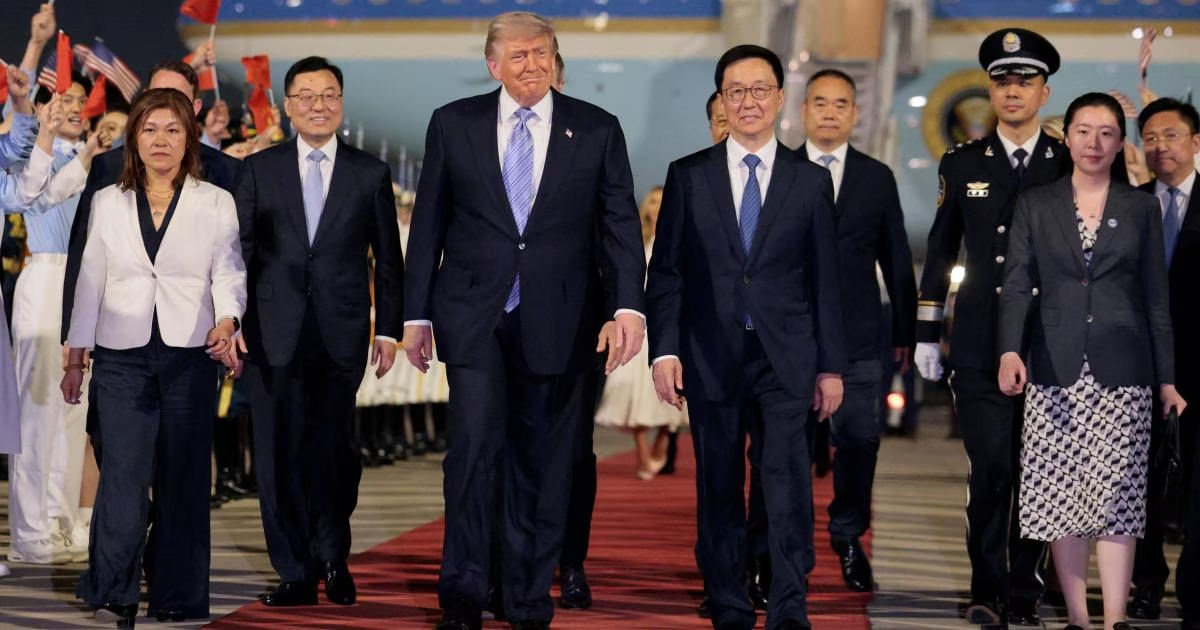
US President Donald Trump arrived in the Chinese capital, Beijing, on Wednesday, marking the beginning of an official visit described as historic, aimed at holding an anticipated summit with his Chinese counterpart, Xi Jinping. This step comes at a time when the international arena is witnessing highly sensitive political and economic complexities, topped by hot issues related to regional security and global trade.
Trump received a wide-ranging official welcome at Beijing airport, signaling the importance the Chinese government attaches to this visit. The US President is accompanied by a high-level delegation that includes leaders of the world's major technology companies, reflecting the American desire to integrate economic interests with high-level diplomatic moves.
Among those present in the accompanying delegation were Elon Musk, head of 'Tesla' and 'SpaceX', Jensen Huang, head of 'Nvidia', and Tim Cook, head of 'Apple'. This massive commercial representation indicates that Washington seeks to establish its companies' presence in the Chinese market despite the existing political tensions between the two superpowers.
This visit is the first by a US president to China since Trump's own visit during his first term in November 2017. This long hiatus gives the current summit exceptional strategic dimensions, especially with the escalation of international conflicts that require direct coordination between Washington and Beijing.
Informed sources reported that the visit is of utmost importance given its timing, coinciding with the escalation of military operations in the Middle East, specifically the war on Iran. The sources clarified that international concerns are growing about the repercussions of this war on the stability of the global economy and vital supply chains.
During his meetings with the Chinese leadership, Trump seeks to obtain direct support to pressure Tehran, with the aim of ensuring continued navigation in the Strait of Hormuz. The US administration realizes that Beijing possesses strong economic and political leverage that can contribute to containing military escalation and preventing the collapse of energy markets.
Unlike the traditional approach in previous summits, Washington this time is not focusing on extracting trade concessions from Beijing as much as it is on security cooperation. Trump is trying to leverage his personal relationship with Xi Jinping to push China towards playing a more effective role in de-escalating regional tensions that threaten common interests.
In addition to the Iranian file, the Taiwan file stands out as one of the most complex issues on the discussion table between the two presidents. Washington views any potential military escalation on the island with great concern, given its pivotal role in the electronic chip industry, on which American technology is entirely dependent.
Sources confirmed that any security disturbance in the Taiwan Strait could lead to paralysis in the global technology sector, especially in the fields of artificial intelligence. For this reason, the American delegation seeks to ensure the stability of the region and avoid any military confrontation that could disrupt the technological progress led by companies such as 'Nvidia' and 'Apple'.
The summit's agenda also includes in-depth discussions on cybersecurity and artificial intelligence, amid reports of American security concerns. Washington fears the possibility of advanced technology being used in security breaches that could affect the information infrastructure in the United States.
Intelligence reports indicated American concern about potential Chinese cooperation with Iran regarding the exchange of sensitive information about military presence in the Middle East. These thorny issues make Trump's mission in Beijing require a delicate balance between the language of economic interests and the necessities of national security.
Ultimately, Trump seeks to establish a long-term trade partnership that transcends the atmosphere of strategic competition that dominated the past decade. The accompanying economic delegation aims to conclude massive agreements that ensure the interests of both parties and open new horizons for technological cooperation in a changing world.
This time, Trump is not heading to China in search of economic concessions, but rather seeks direct Chinese support to pressure Iran and prevent the closure of the Strait of Hormuz.




Share your opinion
Trump in Beijing: An Exceptional Summit with Xi Jinping to Discuss Iran, Taiwan, and Technology Files