







The intensity of Israeli violations in southern Syria has escalated, as the occupation forces were not content with airstrikes but moved to reinforce massive ground military projects. These movements included paving military roads and establishing defensive and offensive fortifications, causing heavy losses to residents and farmers who now face daily threats to their livelihoods and personal security.
Field reports indicate that the military 'Sofa Line' project, implemented by the occupation army in the Quneitra governorate countryside, has caused a near-complete paralysis of the agriculture and livestock sectors. This project, launched by Israel in 2022 under the name 'Sofa 53' or 'Great Storm,' aims, according to Israeli claims, to prevent attacks by armed groups, but its destructive effects have directly affected unarmed civilians.
Despite the significant political changes witnessed in Syria in December 2024 and the fall of the former regime, the pace of work on this project has not stopped but has accelerated significantly. The project's path extends from the vicinity of Hader town in the north, passing through the towns of Jubata al-Khashab, Hamidiya, and Quneitra, reaching the Syrian-Jordanian-Israeli triple border point in the south.
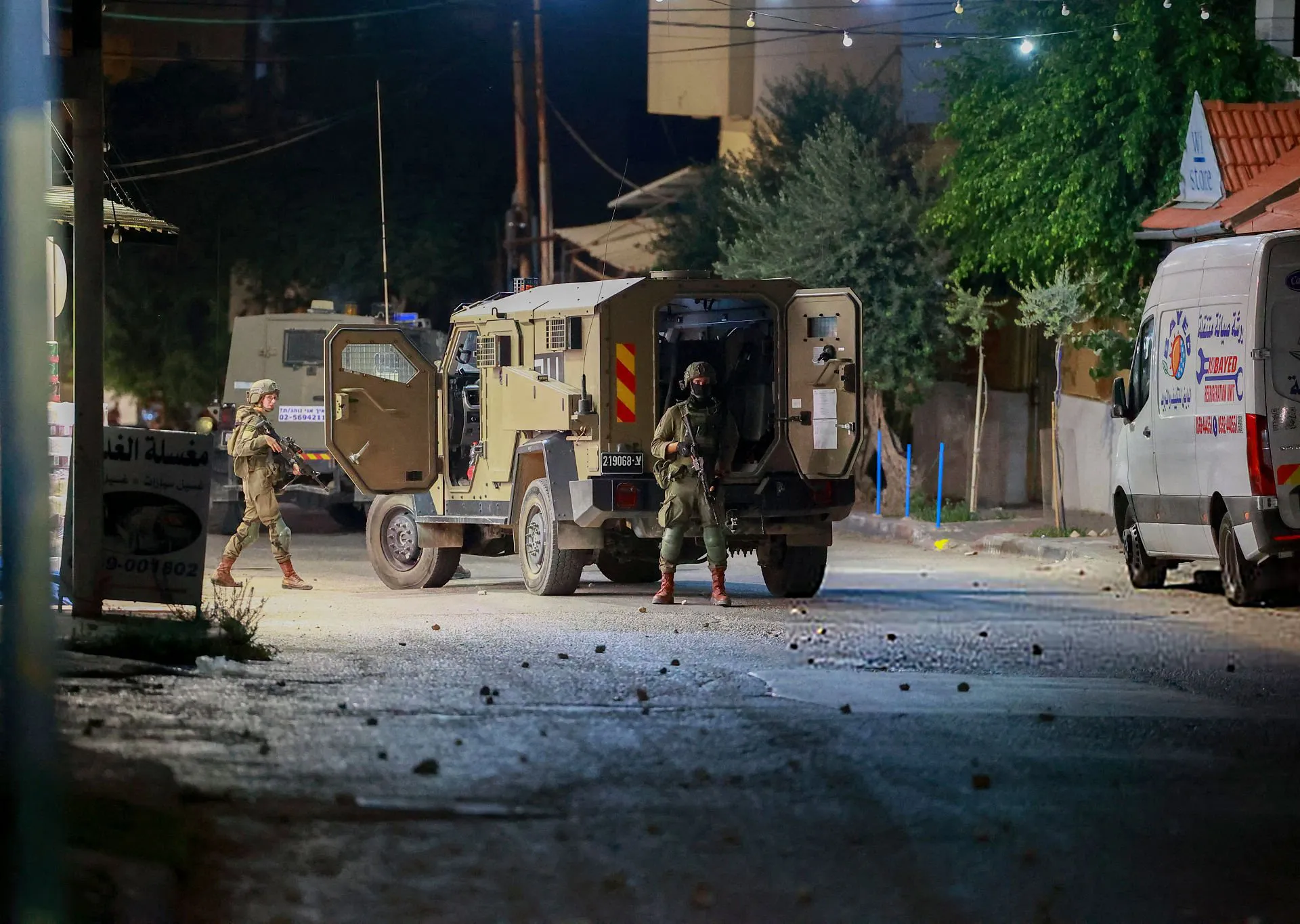
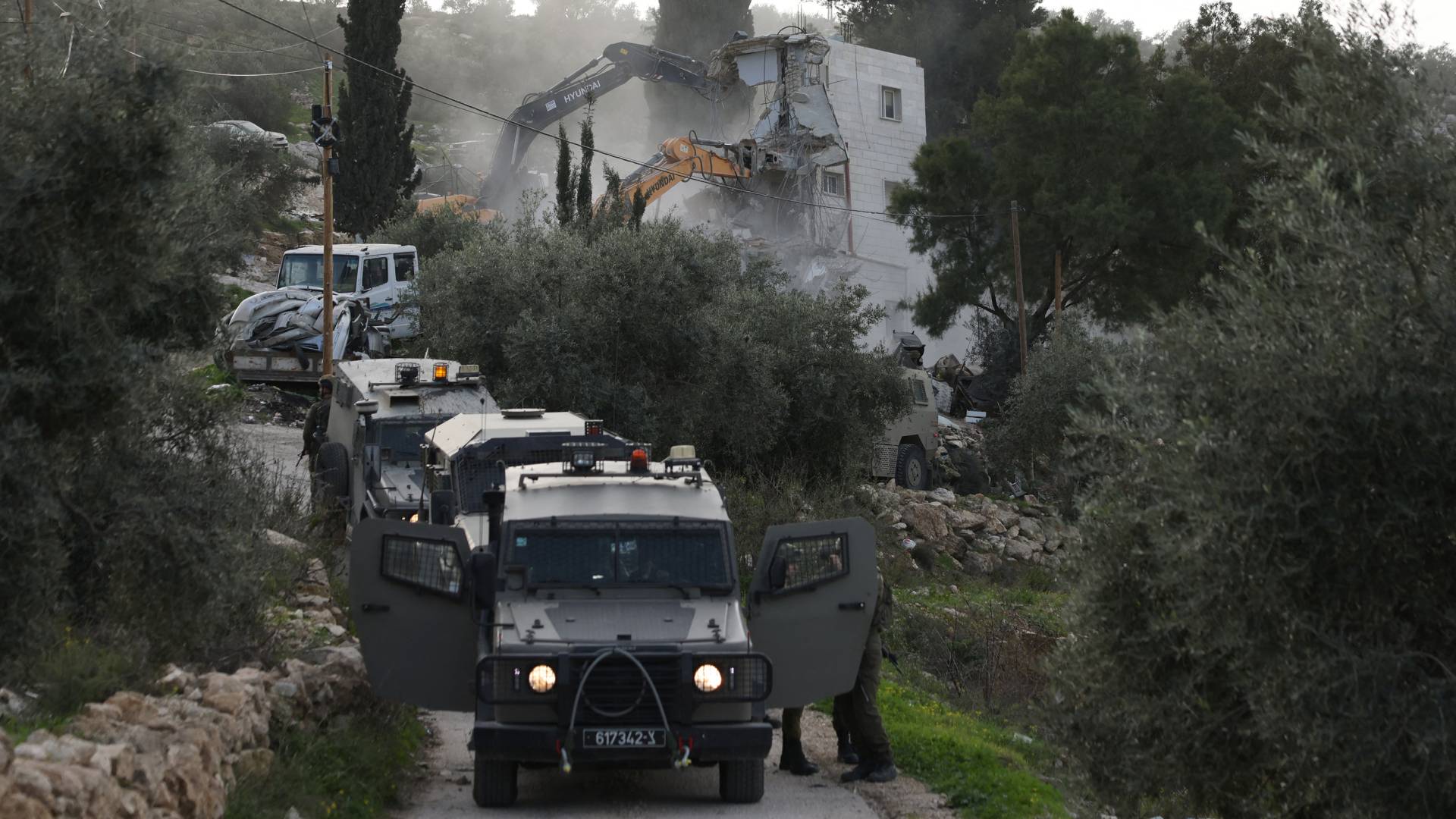
The construction work includes paving a military road up to 8 meters wide, reinforced with high earthen berms exceeding 5 meters at some points. The occupation army also established observation points and fortified military positions along the line that runs parallel to the ceasefire line in the occupied Golan Heights, completely changing the geographical features of the area.
Local sources reported that the occupation forces penetrated the ceasefire line by distances ranging between 300 and 1000 meters, exploiting the security vacuum and recent political transformations. This field expansion led to the isolation of thousands of dunams of fertile land, making them closed military zones that their owners are prevented from accessing or cultivating.
For his part, Mohammed Al-Saeed, the media official in Quneitra, confirmed that the directly affected areas in the northern and central countryside amounted to about 12,000 dunams. Al-Saeed explained that the heavy machinery of the occupation continues to dig deep trenches and build berms, destroying irrigation infrastructure and spoiling natural pastures that hundreds of families depend on.
Al-Saeed pointed out that local authorities tried to communicate with the United Nations Disengagement Observer Force (UNDOF) to inform them of these violations, but the response remained limited. He also noted strict restrictions preventing media access to the affected areas, which complicates the process of documenting environmental and agricultural crimes committed by the occupation forces.
Farmer Abu Saddam Hassan Ahmed from Jubata al-Khashab town recounts his personal tragedy, having lost 10 dunams of fruit trees that were his sole source of income. The suffering did not stop at the loss of land; his son has been detained by the occupation forces for months without knowing his fate, amidst the policy of arbitrary arrests carried out by invading Israeli patrols.
The farmer added that the occupation forces deliberately sprayed unknown chemical substances on agricultural crops in areas near the trenches, leading to the drying of trees and soil damage. These practices, according to residents, aim to create a buffer zone free of vegetation and inhabitants, to facilitate Israeli military surveillance operations and protect new fortifications.
In the same context, the mukhtar of Jubata al-Khashab town, Mohammed Mazen Marioud, warned that the depth of the trenches dug by the occupation caused a change in rainwater paths and soil erosion. Marioud explained that the town alone lost more than 7,000 dunams, noting that the Israeli project destroyed natural forests and reserves that were considered the region's lungs and an important environmental outlet.
The mukhtar affirmed that the negative impacts of the project extend to cover the entire Quneitra governorate, as raids and flying checkpoints have increased within Syrian territory. He appealed to the international community and human rights organizations to intervene immediately to stop this military encroachment that violates Syrian sovereignty and undermines the livelihoods of thousands of civilians in border villages.
These field developments come at a time when Israel officially announced the collapse of the 1974 Disengagement Agreement, citing changing field conditions on the ground. This announcement gave the occupation army a pretext to occupy the buffer zone and establish a new military reality that goes beyond previous international understandings that lasted for decades.
On the political level, Syrian President Ahmed Al-Sharaa indicated in previous statements that negotiations with the Israeli side face major obstacles and extreme difficulties. Al-Sharaa explained that Israel's insistence on military presence within Syrian territory and establishing its new points hinders any opportunities to reach understandings that ensure regional stability.
Quneitra farmers remain in direct confrontation with the occupation mechanisms that devour their lands day by day, in the absence of any effective international protection. With the continued excavation and fortification work, residents fear that these 'temporary' measures will turn into a permanent settlement and military reality that carves out new parts of Syrian geography.
The total affected areas in the northern and central countryside amounted to 12,000 dunams, and the occupation uses chemical materials to damage crops.
شارك برأيك
Israeli 'Sofa 53' project swallows 12,000 dunams of Syrian Quneitra lands