ARAB AND WORLD

Sun 26 Nov 2023 10:08 pm - Jerusalem Time

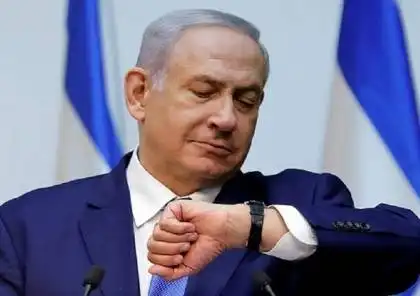
“Time is working against Israel”: Military fears about extending the truce in Gaza

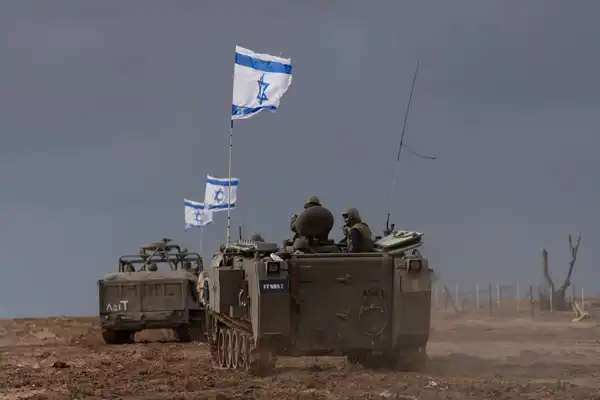
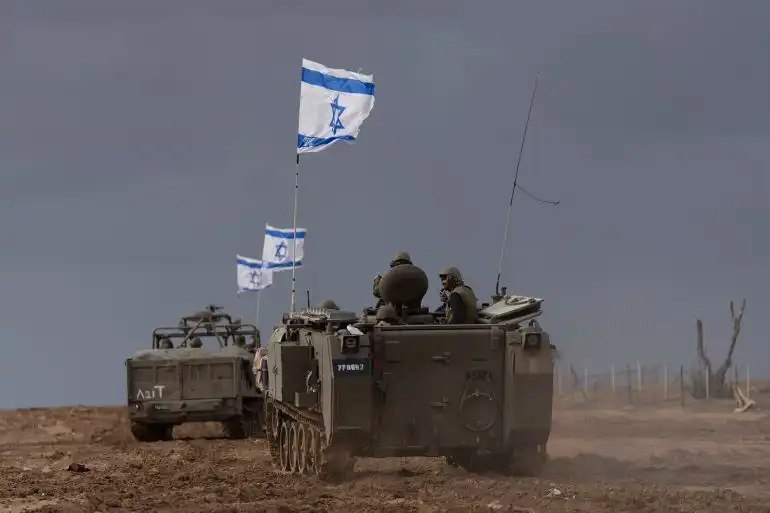
Senior officials and military leaders in the Israeli army fear that extending the truce in the besieged Gaza Strip will weaken Israeli military efforts against the Hamas movement, while Tel Aviv faces increasing pressure to extend the truce period scheduled for only four days so far as part of its war on the besieged Gaza Strip.


In total, on Friday, Saturday and Sunday, Hamas handed over 39 Israeli hostages to the International Committee of the Red Cross, some of whom hold dual nationalities in addition to Israeli citizenship, while the Israeli occupation authorities released 117 Palestinian prisoners. All those released are women and children.


Over the past three days, Hamas also released 18 non-Israeli foreigners, in a measure that was not included in the agreement, in addition to a young Israeli man who holds Russian citizenship, “by direct arrangement between the Russian representatives and Hamas,” according to what the Russian Foreign Ministry confirmed.


The agreement, which was brokered by Qatar and with the participation of the United States and Egypt, stipulates the release of fifty Hamas hostages in exchange for the release of 150 Palestinian prisoners over the four days of the extendable truce. This would increase the number of hostages that Hamas might release.


This comes as a result of mounting internal pressure in Israel to extend the truce with Hamas in exchange for the release of more hostages, in light of security circles’ fears that this may give the movement greater scope to regroup, recover, rearm, and return to fighting, according to analysts.


Increasing diplomatic pressure

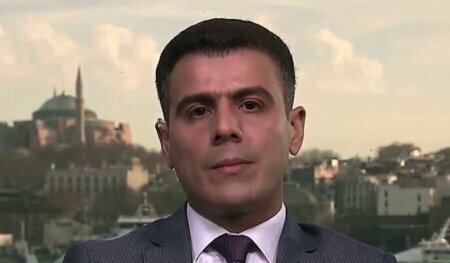
This agreement also increases diplomatic pressure on Israel from the international community, which will withdraw its support for the renewed bombing of Gaza with the resulting humanitarian crisis. Andreas Krieg, professor of defense and security studies at King's College London, says that time is working against Israel, as it always does, and against the Israeli army.


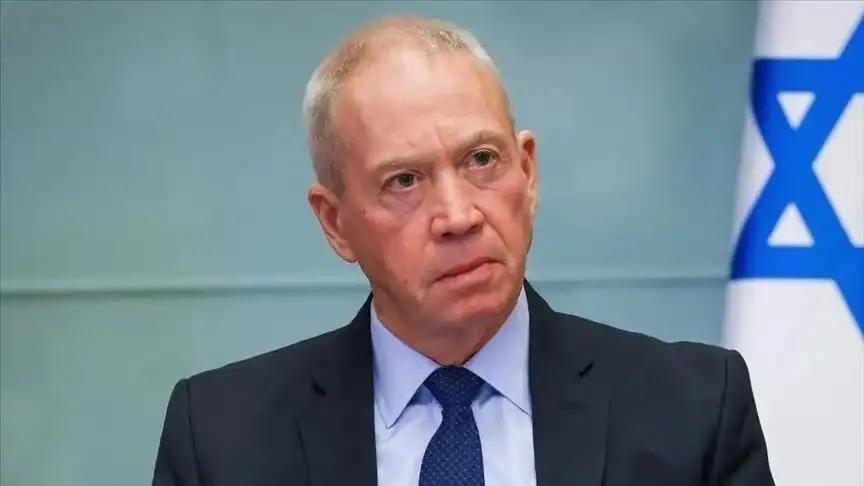
Craig added that the longer the truce continues, the more the international community becomes impatient with the continuation of the war, while the Israeli army and security circles express their determination to achieve the declared Israeli goal of “eliminating” the Hamas movement. This was expressed by the Israeli Minister of Security, Yoav Galant, during a visit to the Israeli forces in the Gaza Strip, on Saturday.


Gallant stressed that the timeline for the truce is "short," explaining, "It will not take weeks, it will take days to some extent." Surrounded by heavily armed soldiers, he added, “Any further negotiations will take place under fire.” The Israeli army, as well as Prime Minister Benjamin Netanyahu, also sought to stress during the days of the truce that the liberation of the hostages would not have been achieved without “military pressure.”


In turn, Arik Rudnitsky, a researcher at the Moshe Dayan Center for Middle East and African Studies at Tel Aviv University, said, “The real pressure (to extend the truce) comes from within Israel, from the families of the hostages.”


On Saturday evening, a massive demonstration took place in the streets of Tel Aviv in which tens of thousands participated to demand the release of the hostages, during which the protesters, who carried pictures of the hostages, chanted, “Free them now.” One of the signs read: “Get them out of hell.”


For his part, an Israeli military official said that Israel is committed to releasing the largest number of hostages, but he expressed concern that the longer the truce lasts, Hamas will have more time “to rebuild its capabilities and attack Israel again.” The military official added, speaking to Agence France-Presse, "It is a terrible dilemma."


“There is no military solution to this conflict.”

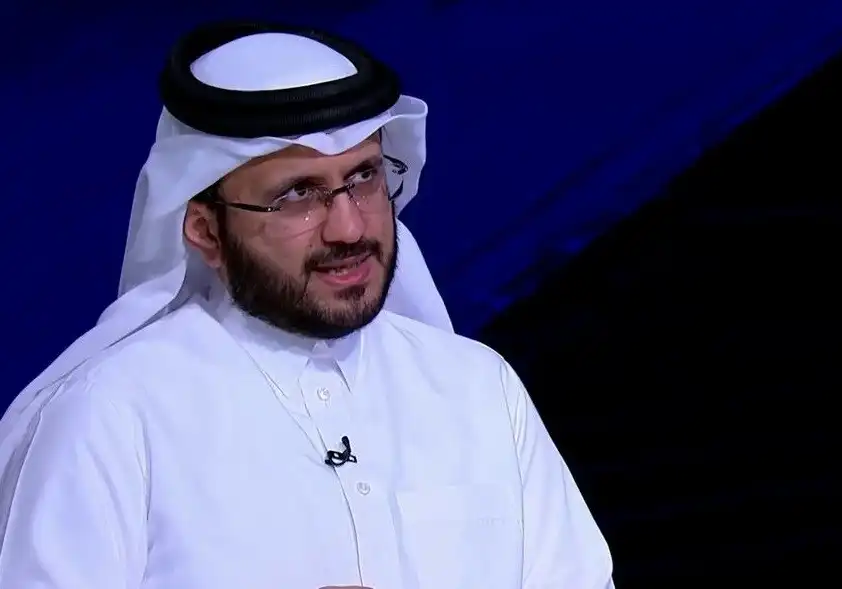
On the other hand, Qatari Foreign Ministry spokesman Majed Al-Ansari said there was a need to “maintain momentum” for a permanent ceasefire. He added, "This can only be achieved when there is political will, not only on the part of Israelis and Palestinians, but also on the part of other partners who work with us."


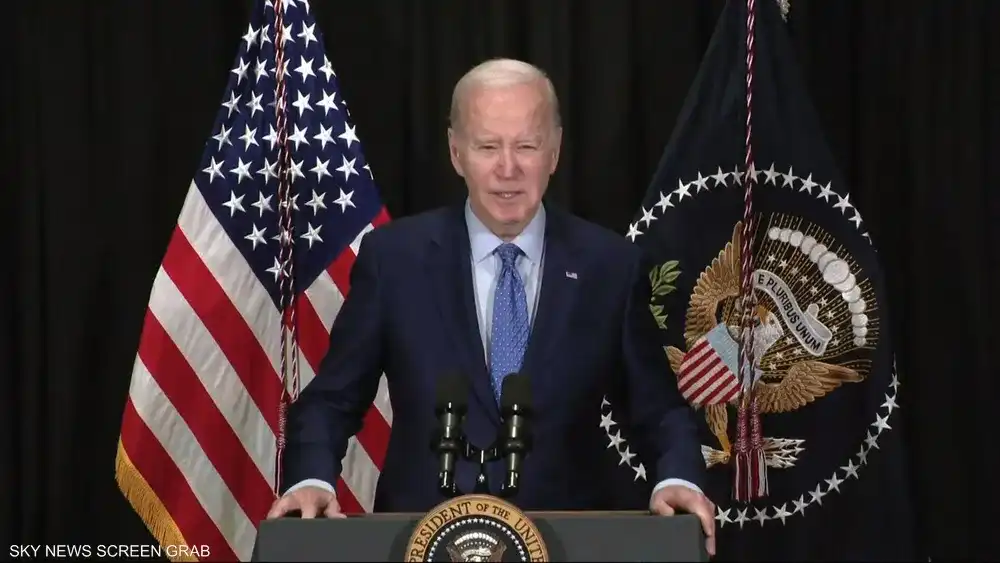
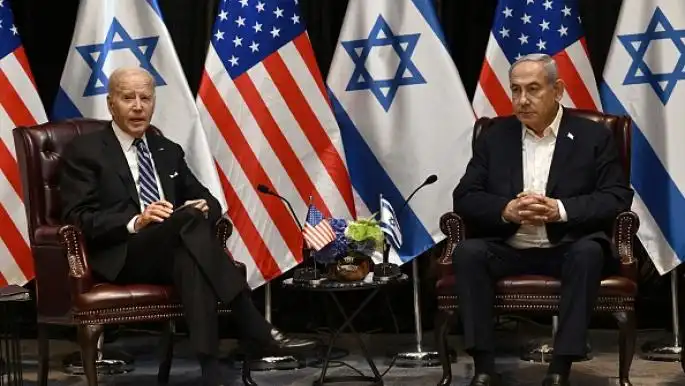
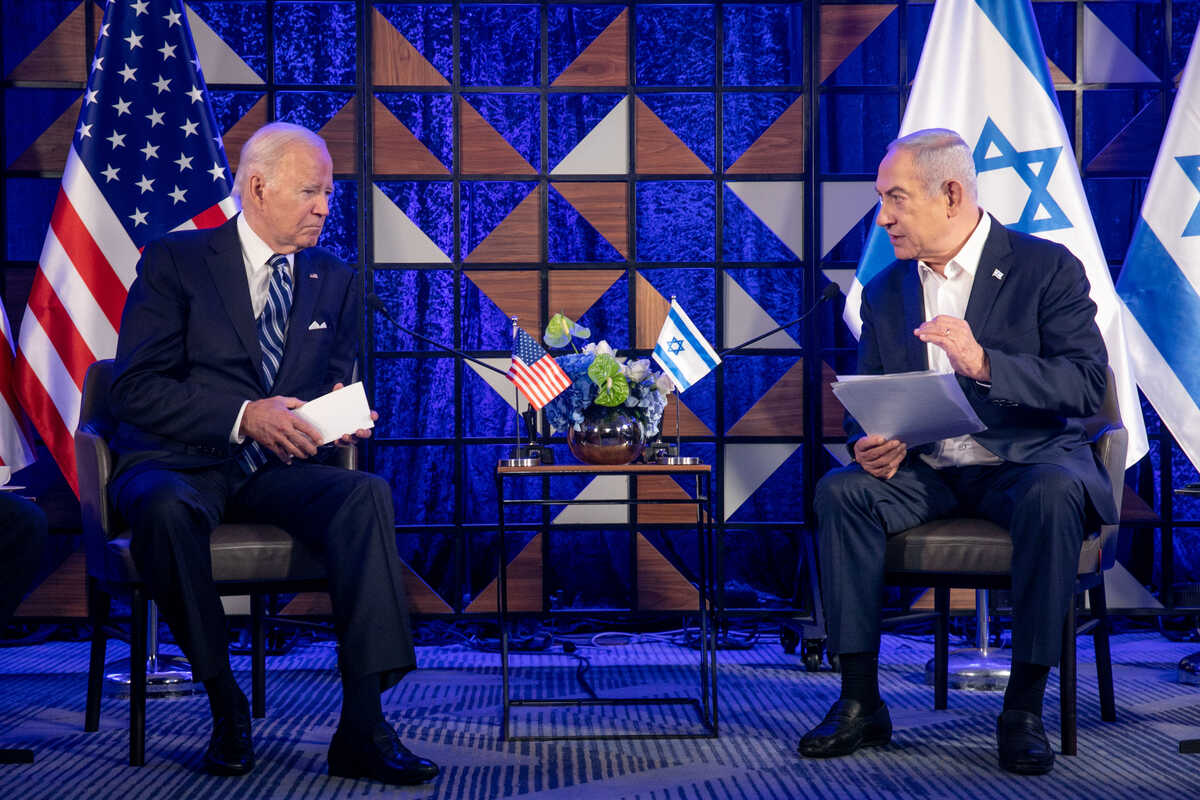
On Friday, US President Joe Biden confirmed that there were “real opportunities” to extend the four-day truce in Gaza, saying that it was time to work to “revive” the two-state solution to establish peace between Israel and the Palestinians.


Andreas Krieg, a professor of defense studies at King's College London, considered that Washington is not prepared for an intensive operation that "continues for months without interruption," especially with the US presidential elections approaching next year. He explained, "Therefore, the Biden administration needs to find a way out as well." He stressed that "there is no military solution to this conflict, and it cannot be won."


The Hamas movement announced, in a statement issued after the implementation of the third batch of prisoner exchanges, that it seeks “to extend the truce after the end of the four-day period, through serious research to increase the number of released detainees, as stated in the humanitarian truce agreement.” The movement's official, Taher Al-Nono, confirmed that Hamas is "ready to seriously discuss new deals."


For his part, former Israeli intelligence official, Avi Melamed, said that Hamas "will procrastinate with the hostages to try to exhaust this card for as long as possible and at the highest price that this may pose to Israel." He believed that Hamas was hoping that support within Israel would dissipate for the incursion into the Gaza Strip.


Melamed said that Hamas would have liked, “Ultimately, international and internal pressure on the Israeli government would create conditions in which Hamas could continue to exist and rule Gaza even after the end of this war.”


The independent researcher in Middle East affairs, Eva Koulouriotis, considered that, “For Hamas, any scenario for this war that does not lead to the end of its presence in the Gaza Strip will be considered a victory (...) regardless of its human and material losses, the extent of the destruction in Gaza, and the size of the losses among civilians.” ".

ARAB AND WORLD

Sun 26 Nov 2023 10:07 pm - Jerusalem Time

The White House hints at Netanyahu's inevitable fate once the war on Gaza ends

US National Security Advisor Jake Sullivan confirmed that there are questions facing Netanyahu that he must confront immediately after the end of the war on the Gaza Strip, indicating that the latter was working to postpone those questions.


Sullivan declined to comment on the claim that Prime Minister Benjamin Netanyahu is interested in continuing the conflict in the Gaza Strip in order to remain in office.


“I will not speculate on the course of Israeli politics,” he said in a statement to CNN when asked whether the White House believes it is in Netanyahu’s interest to end the conflict when he is in a “difficult internal political situation.” He added: "He (Netanyahu) knows that once the war with Hamas ends, he will face questions that he has been putting off."


Sullivan added: “What we will do is just work with whoever is the prime minister, which is Netanyahu, and deal with him directly on the problems that we face today.”


It is noteworthy that Politico newspaper reported earlier, citing sources, that US President Joe Biden believes that Netanyahu’s political career is “near its end.”


According to the newspaper, the White House believes that Netanyahu's days as prime minister are numbered, and he will continue for several months or until the initial phase of the Israeli military operation in the Gaza Strip is completed.


Politico indicated that Biden discussed in a personal conversation with Netanyahu his future prospects as prime minister and invited him to think about the scenario he would present to his successor.


Also according to the newspaper, representatives of the American administration are negotiating with former Israeli Prime Minister Naftali Bennett, one of the opposition leaders, former Defense Minister Benny Gantz, and the leader of the parliamentary opposition, Yair Lapid.

ARAB AND WORLD

Sun 26 Nov 2023 9:05 pm - Jerusalem Time

Hamas releases a Russian detainee as a “tribute” to Putin

The Islamic Resistance Movement (Hamas) announced on Sunday that it had released a detainee of Russian nationality and handed him over to the Red Cross as part of the third batch whose handover began today as part of the prisoner and detainee exchange agreement with Israel.


Hamas said in a statement on its official website, "In response to the efforts of Russian President Vladimir Putin and in appreciation of the Russian position in support of the Palestinian cause, we released a detainee who holds Russian citizenship."


On the 29th of last month, Israel summoned its Russian ambassador to protest Moscow’s reception of a delegation from Hamas.


The Israeli Foreign Ministry said at the time that its senior employees informed Ambassador Anatoly Viktorov that the Hamas invitation sends a message that legitimizes what it called terrorism against Israelis, describing the summons as a protest, not a rebuke.


Israel and Hamas began handing over a third batch of prisoners and detainees today, Sunday, in accordance with a truce agreement that entered into force the day before yesterday, Friday, and will continue until tomorrow, Monday.


For its part, the head of the State Information Service, Diaa Rashwan, announced in a statement that the authority “received a list of detainees in the Gaza Strip, which includes 13 Israelis. It also received a list of Palestinians scheduled to be released from Israeli prisons, which includes 39 Palestinians.”

PALESTINE

Sun 26 Nov 2023 8:42 pm - Jerusalem Time

Israel releases 39 of the Palestinian detained children

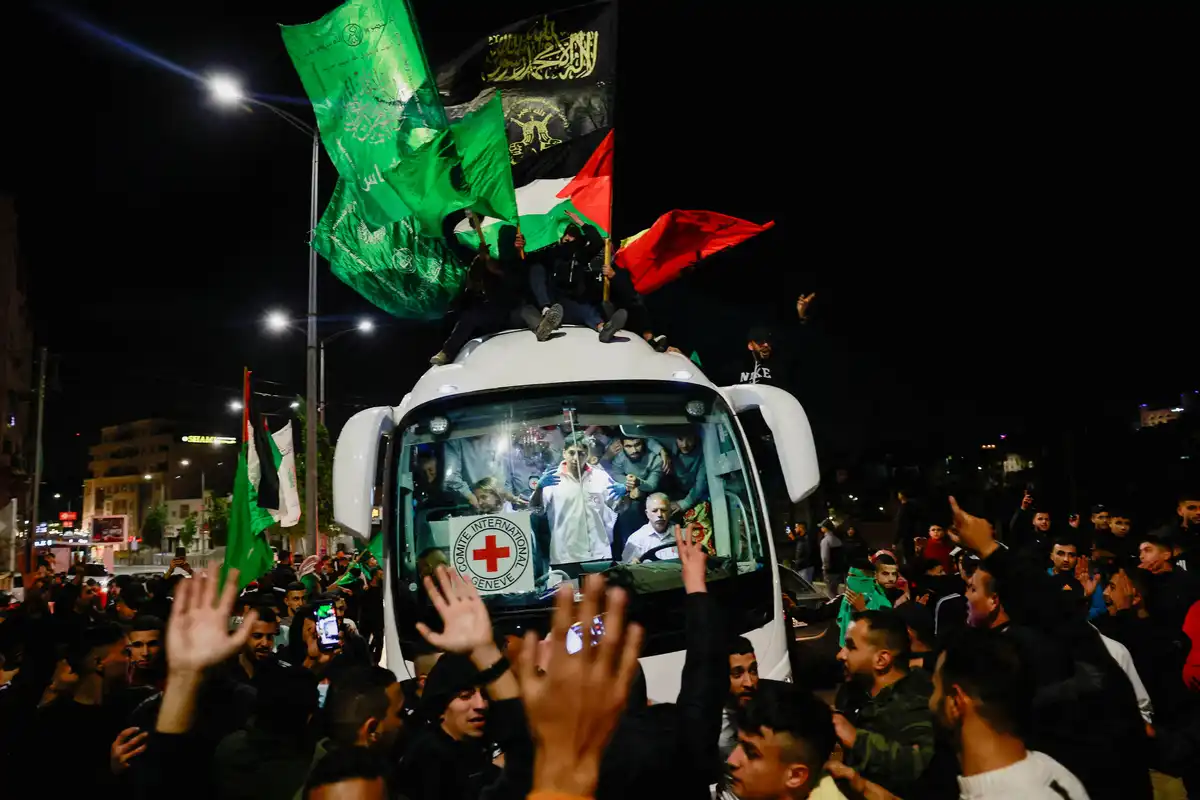
Tonight, the Israeli occupation released 39 children detained at the “Ofer” military prison, which is located on citizens’ lands in the town of Beitunia, west of Ramallah, and from the “Al-Maskobiyya” detention center in occupied Jerusalem, as part of the third batch of the “exchange deal.”


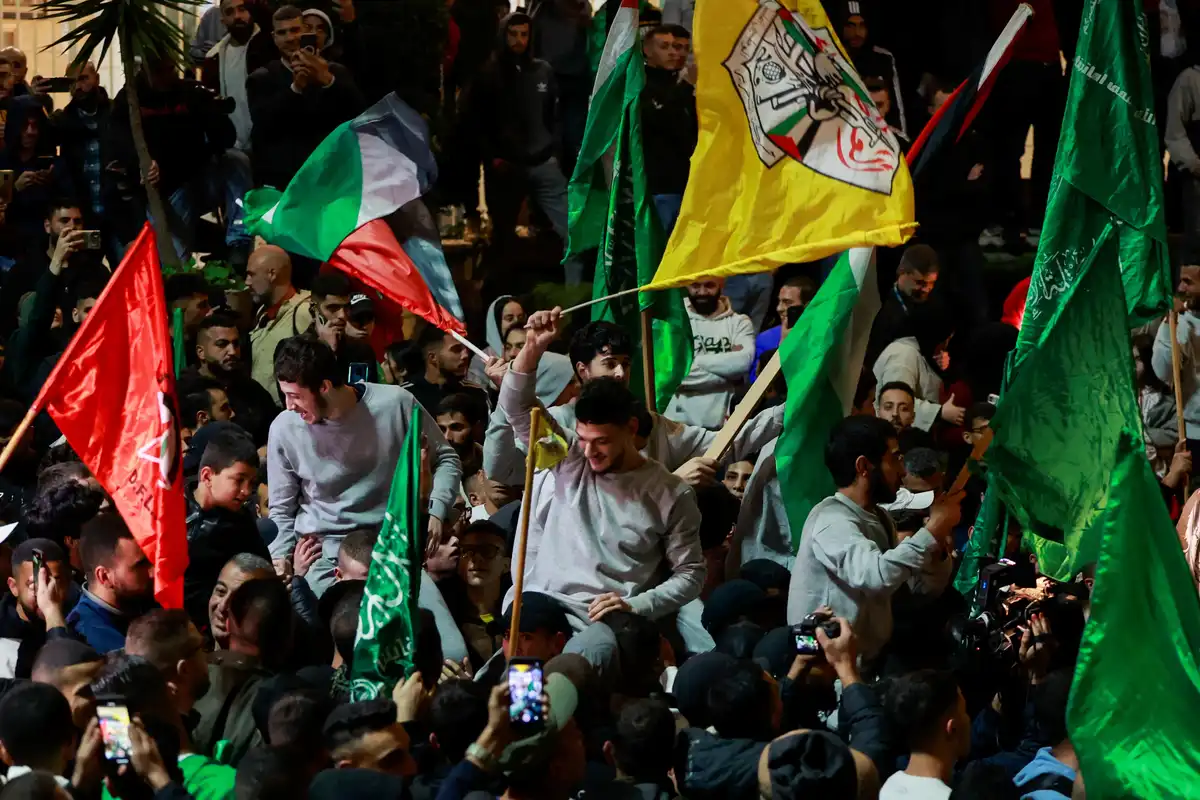
A bus and vehicles belonging to the International Committee of the Red Cross transported a number of released detainees from the "Ofer" military prison to Martyr Yasser Arafat Square in the center of Ramallah, while the 21 Jerusalemite detainees were released from the "Al-Maskobiyah" detention center, where they were held. 


Hundreds of citizens received the released detainees, chanting slogans congratulating them on their release, and others calling for the release of all detainees in Israeli occupation prisons.


Earlier on Sunday evening, the occupation forces suppressed families and journalists present in the vicinity of the Ofer military prison, west of Ramallah, while they were waiting for the child detainees scheduled to be released.


Eyewitnesses said that the occupation forces fired live and rubber-coated metal bullets, and poisonous tear gas canisters, wounding a number of citizens, including a journalist.


He added that the occupation forces attacked the journalists, forced them to move away from the place, fired gas and sound bombs at them, and seized the equipment of a number of them.


Since the early evening hours, hundreds of citizens and families of detainees flocked in succession to the entrance to the Ofer military prison and downtown Ramallah, where their children were received.


In Jerusalem, the occupation forces prevented the families of detainees from celebrating, or receiving well-wishers at home, as part of the punishment policy used by the occupation authorities against Jerusalemites.

PALESTINE

Sun 26 Nov 2023 8:02 pm - Jerusalem Time

Three Palestinian students were injured in an armed attack in a US state

Three Palestinian students in the US state of Vermont were injured with varying injuries, described as serious or moderate, on Sunday, after they were shot.


Local sources reported that three Palestinian students: Hisham Ali Awartani, Tahseen Nael Ali, and Kinan Mohsen Abdel Hamid, studying at American universities, were exposed to an armed attack while they were in the city of Burlington, Vermont, and they were admitted to the intensive care unit in the same city.


Initial reports stated that this attack was classified as a hate crime, on a racist background, due to them wearing the Palestinian keffiyeh and speaking Arabic.


On October 16, a Palestinian child and his mother were stabbed to death in the town of Plainfield, Illinois, by a 71-year-old man, which led to the child being killed and his mother seriously injured.


The police accused the man of committing a hate crime against the child (6 years old) and his mother (32 years old), saying that the two victims were targeted because of their Islamic faith.

ARAB AND WORLD

Sun 26 Nov 2023 7:16 pm - Jerusalem Time

Biden wants to extend the truce and announces the release of an American child by Hamas

US President Joe Biden said on Sunday evening that he wants to extend the humanitarian truce between Israel and Hamas, indicating that he will speak with the Israeli Prime Minister about this matter.

The US President said that his goal is “for the truce in Gaza to continue until the day after tomorrow, Monday,” and added that he will speak with Netanyahu “shortly.” Biden also announced that Hamas had released a 4-year-old American girl, as part of the third installment of the deal. He exchanged prisoners with Israel, expecting more Americans to be released.


The Israeli army announced on Sunday evening that 13 hostages had arrived in Israel, explaining that four others were on their way there within the framework of the truce agreement with the Hamas movement. Shin Bet (Internal Security) near the border fence in the central Gaza Strip,” adding, “The kidnapped have returned to Israel, and will make their way to the Hatzerim military base.”


It added that an additional hostage "was sent directly to the hospital in Israel," while "four others are returning via Egypt."


Israel and Hamas agreed to exchange 50 hostages held by the movement in Gaza for 150 Palestinian prisoners held by Israel over a period of four days ending on Monday.

PALESTINE

Sun 26 Nov 2023 7:10 pm - Jerusalem Time

The family of detained Girl, Nofoz Hammad: We fear for her fate

Arif Hammad, the grandfather of the detained child, Nofoz Hammad, said this evening, Sunday, that they do not know anything about Nofoz and fear for her fate after retracting her release yesterday, Saturday, and that the list issued today does not include her name either.


He added that lawyers informed the family that his granddaughter was beaten and assaulted after retracting her release, and that the released male and female detainees confirmed that they saw Nofoz with the detainees intended to be released before the occupation withdrew her from the waiting area for release and took her to an unknown location.


He added: "Our daughter was supposed to go out with the first batch, but it was postponed. Yesterday, her father waited for her until twelve-thirty at night, but she did not return home. Since this morning, we and the lawyers have not known her whereabouts. We received information that she was beaten and taken to the hospital."


It is noteworthy that the child Nofoz Hammad (16 years old) has been detained for two years, and was sentenced to 12 years in prison, a fine of fifty thousand shekels, and a suspension of execution for 3 years.

PALESTINE

Sun 26 Nov 2023 4:45 pm - Jerusalem Time

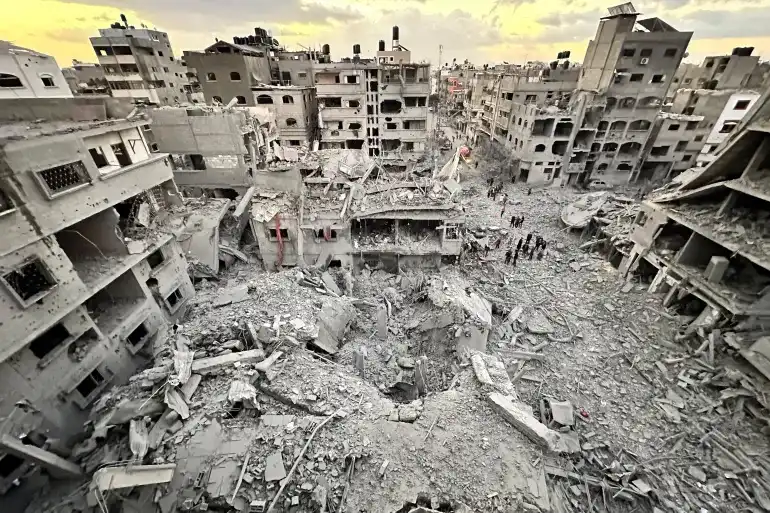
Israel has dropped 40,000 tons of explosives on Gaza since the start of war

The government media office in the Gaza Strip said on Sunday that the Israeli occupation army has dropped 40,000 tons of explosives on the Gaza Strip since October 7.

This came according to a statement by the head of the media office, Salama Maarouf, via the Telegram platform, on the third day of the temporary humanitarian truce between Israel and the Hamas movement, which entered into force on Friday morning.


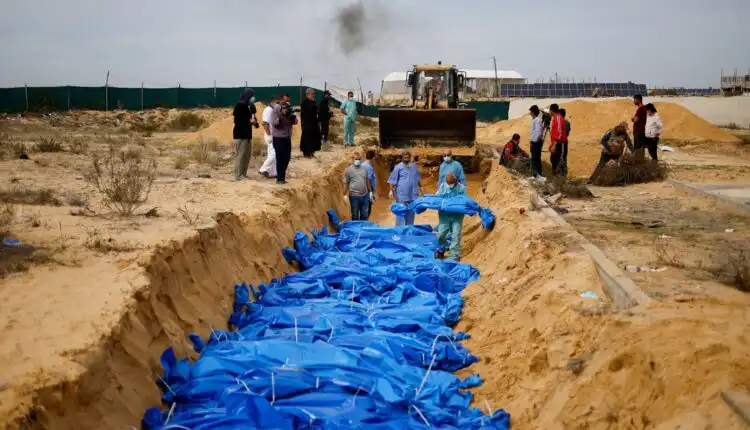
Marouf explained that the bombs dropped by the occupation recently had not been used before, and hundreds of dead were buried in the places of bombing, and the destruction left by the occupation reflects its desire to make Gaza uninhabitable.


Regarding the temporary truce, Marouf pointed out that the days of truce revealed the scale of the large massacre, which left great destruction in infrastructure and homes. He added that a third of the population of the Gaza Strip did not obtain basic supplies, all international institutions were absent, and the Gaza Strip needed to establish a large field hospital.


Regarding the situation in Al-Shifa Hospital (west of Gaza City), Marouf said that it lacks all capabilities and has become unusable, and that the occupation’s claims about it are “foolishness for the media.”


Eyewitnesses and local sources reported that the army blew up the hospital's electricity generators and medical equipment, including x-ray machines, in addition to oxygen pumps, before withdrawing from it last Friday, about 10 days after storming it and destroying parts of it.


On November 24, the humanitarian truce between Israel and the Palestinian factions entered into force and will continue for 4 days, subject to extension, under Qatari, Egyptian and American sponsorship. The agreement includes the release of 50 Israeli prisoners from Gaza, in exchange for the release of 150 Palestinian prisoners from Israeli prisons, in addition to... Hundreds of trucks loaded with aid and fuel were brought into all areas of the Strip.


For 48 days until November 23, the Israeli army launched a devastating war on Gaza that left 14,854 Palestinian dead, including 6,150 children and more than 4,000 women, and more than 36,000 wounded.


While Hamas killed 1,200 Israelis, wounded 5,431, and captured about 239, it began exchanging them with Israel, which has more than 7,000 Palestinian prisoners in its prisons.


Source: Anadolu Agency

ARAB AND WORLD

Sun 26 Nov 2023 4:09 pm - Jerusalem Time

Under the pretext of setting a war budget: Smotrich increases settlement budgets

During a meeting tomorrow, the Israeli government is expected to hold deliberations on changes to the state budget for the current year 2023, claiming that the changes come in the wake of the needs of the war on Gaza.


Although officials in the Ministry of Finance are demanding that the Minister of Finance, Bezalel Smotrich, not include large sums of money for the coalition parties, Smotrich insists on including them, with the support of Prime Minister Benjamin Netanyahu and the Haredi parties, according to what Channel 12 reported today, Sunday.


Smotrich seeks to increase the budget of the Ministry of Settlement and National Missions by an amount of more than 375 million shekels, including a budget allocated to encourage the migration of extremist Israelis to “mixed cities,” such as Lod, Ramle, and Acre.


Smotrich's plan for changes in the current year's budget stipulates an increase of hundreds of millions of shekels in the Ministry of Education's budget, with the aim of "strengthening Jewish identity and culture."


The budget changes plan also allocates 200 million shekels to expand settlements in the occupied West Bank, 35 million shekels to establish preparatory colleges for military service in the settlements and establish random settlement outposts, and budgets to prevent Palestinian construction in Area C.


This comes despite the demands of economic experts on the government to reduce the amount of “coalition funds” as much as possible, including experts from the Bank of Israel.


According to the Director of the Research Department at the Bank of Israel, Dr. Adi Bender commented on Smotrich's plan by saying, "The security situation requires great responsibility in managing the government's budget policy in order to gain the confidence of the markets, which monitor economic developments, including the budget."


Therefore, a balance must be struck between allocating large and necessary budgets to confront the security situation and the need to demonstrate financial responsibility.


The important way to ensure this balance is a necessary change in the scale of preferences in the budget, and by refraining from planning unnecessary spending.”

ARAB AND WORLD

Sun 26 Nov 2023 4:01 pm - Jerusalem Time

An Israeli ship was detained off the Yemeni coast

On Sunday, an armed group, believed to be affiliated with the Houthis, took control of the "Central Park" oil tanker linked to Israel off the Yemeni city of Aden, according to "Agence France-Presse."


According to Haaretz newspaper, the tanker is owned by the Israeli businessman Eyal Ofer, through the Zodiac Maritime company, which is based in Britain. The ship, which left Morocco and crossed the Suez Canal on November 21, sent its last location on the 22nd November from a point south of Sharm El Sheikh.


Maritime security company Embry said that communications were intercepted from a US coalition warship warning Central Park, adding that another ship in the area reported “the approach of eight people on board two boats wearing military uniforms.”


It was not immediately clear who was behind the attack. Aden is controlled by forces allied with the internationally recognized Yemeni government and the Saudi-led coalition, which has been fighting the Iran-backed Houthi rebels for years, according to the Associated Press.


There have been repeated incidents of attacks on ships linked to Israel in the Red Sea since the start of the Israeli war on the Gaza Strip, and officials in the US Department of Defense announced, yesterday, Saturday, that a container ship owned by an Israeli billionaire was attacked by a drone, believed to be Iranian, in the Indian Ocean.


The Houthis seized the “Galaxy Leader” ship, belonging to the Israeli businessman Rami Unger, in the Red Sea on November 19. At that time, the Houthis issued a warning to all “ships belonging to the Israeli enemy or dealing with it that they will become a legitimate target,” and called on “ all countries whose nationals work in the Red Sea must refrain from any work or activity with Israeli ships or ships owned by Israelis.


The Houthis confirmed in the statement that they will continue to “carry out military operations against the Israeli enemy until the aggression against the Gaza Strip stops, and the heinous crimes continuing until this moment against our Palestinian brothers in Gaza and the West Bank stop,” noting that “those who threaten the security and stability of the region and international corridors is the Zionist entity.”

Source: Alaraby Aljadeed


PALESTINE

Sun 26 Nov 2023 3:52 pm - Jerusalem Time

The dispute over the future of Gaza after the war reduces the chances of reaching a permanent ceasefire

The Hebrew newspaper "Haaretz" estimated on Sunday that the discrepancy in the positions of Israel, the United States, the Palestinian Authority and the Arab countries regarding the future of governance in the Gaza Strip after the war would negatively affect the chances of reaching a final ceasefire.


In a report prepared by its commentator on Arab affairs, Zvi Barel, the newspaper pointed out that while the United States proposes to return the Palestinian Authority to manage the rule of the Gaza Strip after the war, Israel rejects any role for the Authority in the Gaza Strip.


The newspaper pointed out that what complicates matters is “the fact that there are disagreements within the Palestinian Authority regarding its future role in the Gaza Strip, in addition to the fact that the vision presented by Egyptian President Abdel Fattah al-Sisi regarding resolving the conflict (does not seem logical).”


According to Barel, Al-Sisi’s call to establish a demilitarized Palestinian state within the borders of June 4, 1967, with Jerusalem as its capital, “cannot be achieved,” saying that his presentation of the plan indicates “the state of turmoil, frustration, and helplessness that Egypt suffers in dealing with the futureof the situation in the Gaza Strip after the war.


The newspaper pointed out that Sisi’s proposal to resolve the conflict does not answer many questions, including: “The identity of the party that will manage the situation in the Gaza Strip, and how can Hamas be disarmed? What are the borders of the Palestinian state? What are the agencies that will manage security in the Gaza Strip? What role will Hamas have in the future state? And what is the Palestinian authority that will assume governance there?


Regarding the Palestinian Authority, Barel explained that the representatives of the Authority presented different visions for the future role of the Authority in the Gaza Strip, as while Authority President Mahmoud Abbas said that he was ready for the Authority to take over the administration of the Gaza Strip only within the framework of a political solution to the conflict, his spokesman Nabil Abu Rudeina spoke about the Authority’s readiness to administer the Gaza Strip and the West Bank in accordance with what was stipulated in the Oslo Accords and international law, a position that Abu Rudeina later retracted in a television interview.


The report concluded that the discrepancy between the positions of the Palestinian Authority, Egypt, and the United States indicates the extent of the difficulties facing US President Joe Biden’s vision of the day after the war on the Gaza Strip, on the basis that Washington has no partner in its vision based on enabling the Authority to administer governance in the Strip.


On the other hand, the newspaper’s Arab affairs commentator pointed out that although the United States still supports Israel’s declaration of eliminating the Hamas movement as the goal of its war on the Gaza Strip, Washington has begun to doubt the reasonableness of achieving this goal, referring to what Biden issued at the conference. His last journalistic interview, in which he pointed out that eliminating Hamas represents a “difficult” challenge.


Bar'el considered that Biden's talk about the "difficulty" of eliminating the Hamas movement means that the United States has begun to doubt the realism of one of the main goals of the war on the Gaza Strip. He expected the Biden administration to work on developing a strategy to end the war, taking into account the future of the Gaza administration the next day.


The report quoted a diplomatic source as saying, “Biden has so far rejected a proposal put forward by the Arab countries to pass a resolution in the UN Security Council calling for a ceasefire, on the basis that passing the resolution negatively affects the chances of releasing Israeli prisoners held by the Hamas movement.” On the other hand, as Barel points out, “Biden believes that it is possible to begin discussing ways to return the Palestinian Authority to the Gaza Strip in light of the continuing war.”


Bar'el concluded his report by saying, "Biden's vision faces two fundamental challenges: Israel's insistence on eliminating the Hamas movement, and its refusal to return power to the Gaza Strip."


In a related context, the Israeli journalist specializing in Palestinian affairs, Shlomo Eldar, commented, criticizing the decision-making circles in Israel and the West, for being busy “talking about the day after Hamas’s rule in the Gaza Strip after the current war launched by Israeli army against it.”


In an analysis published by the newspaper "Haaretz", Eldar stressed that "Hamas will continue to maintain its presence in the Gaza Strip even after the end of the current war."

Source: Alaraby Aljadeed


PALESTINE

Sun 26 Nov 2023 3:32 pm - Jerusalem Time

Israeli Analysis: Israel pledged to eliminate Hamas, but did not pledge to implement it

“A prisoner exchange in which 6,000 Palestinian prisoners will be released will break the taboo that no Israeli government has approached in the past. It is now difficult to know whether such a step will gain broad public support, despite sympathy for the families of the kidnapped.”


Israeli analysts pointed out today, Sunday, that statements transmitted by the Israeli media about “senior political or military sources” without mentioning their identity should be questioned, in addition to caution against statements made by Israeli officials, even by Prime Minister Benjamin Netanyahu.


The political analyst in the Yedioth Ahronoth newspaper, Nahum Barnea, said that the delay that occurred in implementing the second batch of the prisoner exchange deal yesterday leads to “three primary lessons.” First, “Hamas is still strong on the ground and Sinwar controls it. The statements about the collapse of Hamas were premature and expressed a wish rather than a sober vision of reality.”


He added, "Hamas's strength is translated into a bargaining force in exchange for the mediators and Israel, and the presentation of demands that include not only the center and south of the Strip, but also its north, most of which is under Israeli control. During the days of the ceasefire, it will only be strengthened according to Hamas' control there."


The second lesson is that “the agreement is not complete. More disagreements and blackmail tricks will appear in the coming days, which will turn into a nerve-wracking drama at the expense of the kidnapped. The fundamental lack of trust between Israel and Hamas is completely expected. The problem is that there is no mediating body that both sides fully trust and absolutely comply to it.


The third lesson is that “it is very difficult for the Israeli government to stop a deal like this after it has committed to it. Since its implementation begins, the power of feelings overpowers public discourse.” Any pause will be interpreted as disappointment, frustration, failure, and all the feelings that the government is wary of engaging in. The threat made yesterday, that if Hamas continues to obstruct the release, Israel will resume shooting, was hasty, hollow, and devoid of substance. “More is needed than this for such a dramatic step, so complex and affecting the lives of so many people, to be breached.”


In this context, Barnea pointed out that “allegations made by a ‘senior political source’ or a ‘senior security source’ in Israel should be treated with skepticism. Government officials are engaged in a struggle for personal and political survival in parallel with the management of the war.”


As an example of this, Barnea referred to Netanyahu’s statements during a joint press conference with the Minister of Defense, Yoav Galant, and a member of the war cabinet, Benny Gantz, last Wednesday. He claimed that Hamas pledged that representatives of the Red Cross would visit the Israeli hostages and prisoners in Gaza, and he took out a paper from his pocketed and read an item talking about it. Netanyahu wanted to show that he had achieved an “achievement” in knowing their conditions.


However, Barnea reported that he had examined the matter. “It became clear to me that there is a clause like this, but there is no pledge to implement it. Rather, both sides of the negotiations assumed during their work that these were useless words, a piece of paper through which the Israeli side wanted to convince Smotrich and his bloc to support the agreement or in order to persuade "The families of the kidnapped people should lower the tone of their voices. This is similar to the coalition's pledge in the past to eliminate Hamas. They pledged, but they did not pledge to implement it."


For his part, Amos Harel, a military analyst in Haaretz newspaper, held Hamas responsible for delaying the release of the Israeli hostages yesterday, saying that it should not surprise anyone. "It was clear in advance that the movement's leader, Yahya Sinwar, would attempt to wage psychological warfare against Israel. Hamas' performance yesterday should constitute a warning for the future."


According to Harel, “the implementation of the second pulse (yesterday) among the four pulses at this stage of the deal, is very far from the end of this story. It seems that there will be no ‘closure’ to the war. Many of the liberated returned without part of their family members, who were killed” in the Hamas attack (October 7), many others are still in captivity, and there is currently no settlement that guarantees the continuation of the process of liberating the Israeli prisoners and the continuation of the ceasefire, beyond the four days that the two sides agreed upon in advance.”


He pointed out Israel's pledge during the negotiations on the exchange deal to extend the truce for another day for every ten hostages released. He believed that Hamas would implement this, "but it cannot procrastinate forever."


Harel pointed out that there is a large group of prisoners in Gaza, “apparently numbering more than a hundred, whom it is likely that Hamas and other Palestinian factions will try to detain as bargaining chips in a larger deal in the future.”


He added, "In addition to Hamas's hope of achieving a long ceasefire, its intentions are clear, which is the final liberation of all the kidnapped people and the bodies that were taken to Gaza on the day of the attack, in exchange for the liberation of more than 6,000 Palestinian prisoners imprisoned in Israel," meaning the whitewashing of the occupation prisons.


Harel described such a prisoner exchange deal as "will break the taboo that no Israeli government has approached in the past. It is now difficult to know whether such a step will gain broad public support, despite the enormous sympathy for the suffering of the families of the kidnapped."


In this context, he predicted that "within a week, they in Israel will be forced to make a decision regarding the continuation of the war, if another deal is not reached."


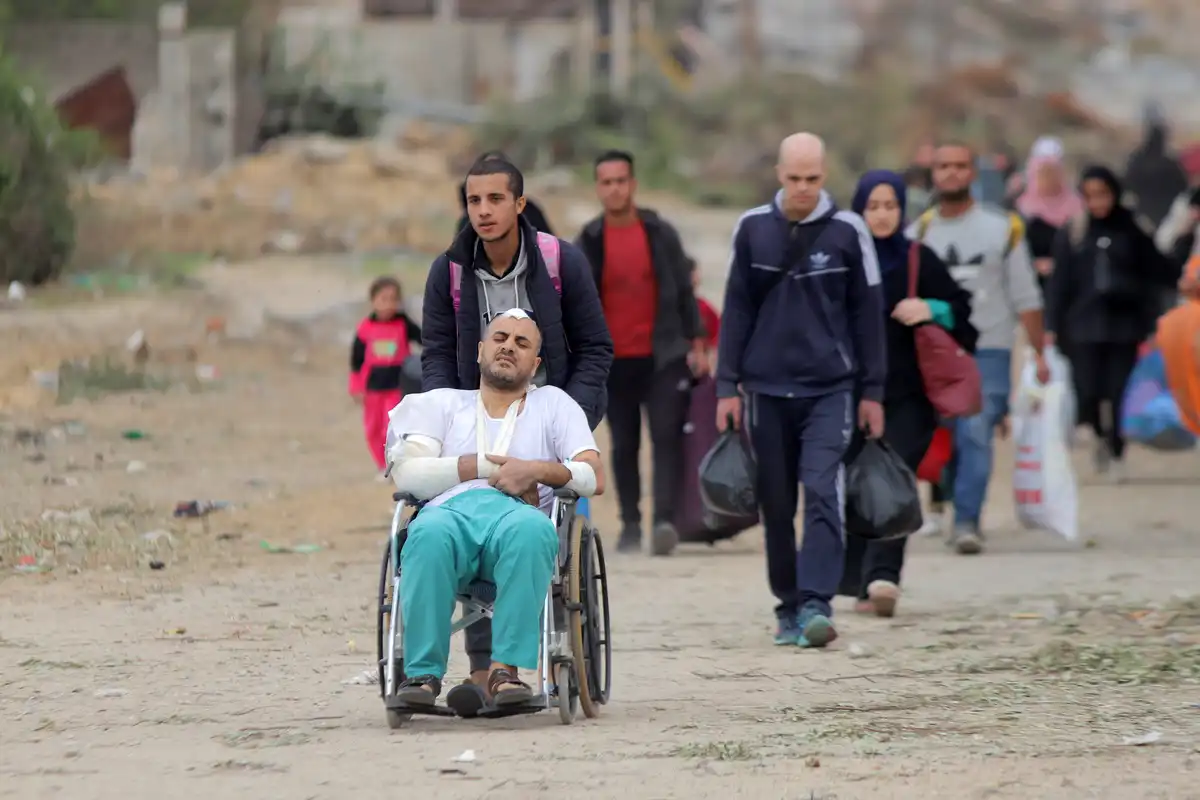
The Israeli army threatened to shoot Palestinians returning to their homes in the northern Gaza Strip, but this threat did not prevent their return. The Israeli army also threatens that after the end of the current truce, it will resume the war, especially in the center and south of the Gaza Strip, where the vast majority of the Gaza Strip’s population is concentrated with massive crowding, in light of a major health crisis.


Harel pointed out that the current prisoner exchange deal came into effect following great American pressure. He added that US President Joe Biden presented Israel with a “dilemma” regarding the continuation of the war. "He acknowledged Israel's desire to eliminate the Hamas regime, but asked it to reduce the killing of civilians. In the emerging circumstances, it is not certain that both sides of this sentence are consistent with each other."


ARAB AND WORLD

Sun 26 Nov 2023 3:00 pm - Jerusalem Time

Israel withdraws from Euro-Med meeting

Israel's absence from the Euro-Mediterranean meeting is expected to further test European diplomacy in the Middle East, as Arab and European Union countries meet amid a shaky ceasefire in the Gaza Strip.


The Union for the Mediterranean Ministerial Meeting in Barcelona on Monday (27 November) – which brings together European Union foreign ministers as well as Middle Eastern and North African countries – aims to discuss the repercussions of the war in Gaza and its consequences for the region.


Both Israel and the Palestinian Authority are members of the Mediterranean Community along with neighbors Jordan, Lebanon, Egypt and Syria (currently suspended).


Spanish Prime Minister Pedro Sanchez, whose country holds the rotating presidency of the European Union, last week described the meeting as an “ideal place” to relaunch the Israeli-Palestinian dialogue as both sides would sit as equals there.


Madrid is trying to play a leading role in shaping Europe's response to the ongoing war.


Sanchez has also been pushing for an international peace conference between Israelis and Palestinians and discussed the idea as recently as this week with Israeli Prime Minister Benjamin Netanyahu.


But while the foreign ministers of Jordan, Egypt, Palestine, Lebanon, Saudi Arabia and Tunisia are expected to participate in the meeting, Israel will not send its representative.


The Israeli mission to the European Union said: “The European Union decided to move away from the original agenda and focus only on the current conflict without consulting Israel,” adding that the decision “will undermine” the purpose of the summit.


It added: “This risks turning it into another international forum, in which Arab countries target Israel, so Israel does not intend to participate in the meeting.”


In response to a question about the Israeli complaints, an EU official said that the lack of attendance was “unfortunate,” “but since they are a full member of the forum, it is their choice that they will not come.”


They added: “It was not possible to do nothing about Gaza because the situation is dire and needs to be addressed.”


Over the past weeks, Europeans have been largely divided into two camps, with Spain, France and Portugal calling for a ceasefire in Gaza, while Germany, the Czech Republic and Austria-Hungary rejected such a move as contradictory to Israel's right to defend itself.


Arab countries are expected to present a more united front against Israel and call for a permanent ceasefire and humanitarian aid for Palestinians in Gaza.


EU top diplomat Josep Borrell, who co-chairs the forum and has just returned from a trip to the Middle East, is expected to discuss ideas for a draft EU roadmap that looks to the future after the fighting ends.


Its initial elements were widely discussed among EU foreign ministers earlier this month, but it remains uncertain how the bloc will secure participation from regional players.


Just two months ago, the European Union pushed through plans to help lead a new peace initiative focused on “incentives” in the Middle East, aimed at restarting talks between Israel and Palestine, which has received a positive response across the region.

But recent accusations of pro-Israel bias and “double standards” over the war in Gaza have raised concerns that such toughness could undermine diplomatic support for Ukraine in the Global South and the EU’s ability to insist on human rights provisions in international agreements.


“We should expect positions to remain very divergent, among us Europeans, but also with some radically anti-Israel countries in the region,” one EU diplomat said before the talks.


They added: “Then the crucial question is how much credibility we will actually leave behind.”


The meeting comes at a time when Tel Aviv has become locked in a diplomatic dispute with Spain and Belgium after it accused the two countries of supporting terrorism in response to criticism of their prime ministers for the bombing of civilians in Gaza.


The Israeli and Spanish foreign ministers exchanged harsh words and summoned each other's ambassadors for reprimands.


Speaking in Jerusalem alongside Netanyahu on Thursday (November 23), Sanchez said the number of civilians killed in Israeli attacks on Gaza was “unbearable,” and Belgium’s prime minister also expressed similar sentiments in a speech at the Rafah border crossing.


Sanchez also said that Spain would be open to unilaterally recognizing a Palestinian state even if the European Union did not do so.


The two European leaders' comments sparked a sharp response from Israeli Foreign Minister Eli Cohen, who criticized the two prime ministers' statements as "false statements" made in "support of terrorism."


Spanish Foreign Minister Jose Manuel Albarez said in a statement that the accusations were “completely false and unacceptable.”


“We categorically reject it,” Albarez said, adding that the Spanish Prime Minister had publicly and repeatedly defended Israel’s right to self-defense.

PALESTINE

Sun 26 Nov 2023 2:37 pm - Jerusalem Time

Israeli settlers uproot dozens of fruit trees south of Bethlehem

Today, Sunday, settlers uprooted dozens of olive, almond and vine trees in the town of Al-Khader, south of Bethlehem.


According to local sources, settlers, accompanied by a large bulldozer, attacked the Shushahla area, south of Al-Khader, and bulldozed 15 dunums, uprooted about 100 olive, almond and vine trees, and destroyed 15 beehives, owned by two citizens from the Salah family.


The sources added that the Shushahla area has been under attack for some time by the occupation forces and settlers, as agricultural rooms and old houses were demolished, and lands were bulldozed, while citizens were prevented from reaching their lands.

PALESTINE

Sun 26 Nov 2023 2:01 pm - Jerusalem Time

Israel has arrested 3,200 citizens of the West Bank since last October 7

The Israeli occupation forces arrested at least 20 citizens from the West Bank from yesterday evening until Sunday morning. The arrests were concentrated in Jenin and Hebron, while the rest of the arrests were distributed in the governorates of Ramallah and Tulkarm.


According to the Commission for Prisoners and Ex-Prisoners’ Affairs and the Palestinian Prisoners’ Club, the arrest campaign was accompanied by widespread raids and abuse, specifically in Jenin Governorate, in addition to sabotage and destruction of citizens’ homes, and severe beatings against citizens and their families, in addition to the ongoing crime of field executions.


Thus, the total number of arrests after the seventh of last October rose to more than (3,200), and this total includes those who were arrested from homes, through military checkpoints, those who were forced to surrender themselves under pressure, and those who were held hostage.


It is noteworthy that the data related to arrest cases includes those who were kept in detention by the occupation, and those who were later released.

ARAB AND WORLD

Sun 26 Nov 2023 1:46 pm - Jerusalem Time

Intensive Egyptian, Qatari and American communications to extend Gaza truce

An official Egyptian source announced today (Sunday) intensive Egyptian-Qatari-American contacts to extend the truce in the Gaza Strip.


The Egyptian satellite channel Cairo News quoted the source as confirming that Egypt, Qatar and the United States are conducting intensive contacts to extend the humanitarian truce in the Gaza Strip.


He added that Egypt expresses its appreciation for the Qatari efforts made to implement the second phase of the humanitarian truce, explaining that the Egyptian-Qatari coordination and efforts succeeded in completing the detainee exchange process and continuing the humanitarian truce.


Indirect negotiations between Israel and the Palestinian factions, with Egyptian, Qatari and American mediation, succeeded in reaching a humanitarian truce agreement in Gaza, which stipulates a ceasefire in the Strip for a period of four days that began last Friday, in exchange for the release of 50 detainees held by the factions, and the release of 150 women and children. Palestinians from Israeli prisons, and increasing humanitarian aid to the Strip.


In a related context, Qatari Minister of State for International Cooperation Lulwah Al Khater will visit the Palestinian side of the Rafah crossing today, with Egyptian coordination.


Cairo News Channel reported that Nevin Al-Qabbaj, Egyptian Minister of Social Solidarity and Vice President of the Egyptian Red Crescent, received the Qatari minister, earlier, regarding coordination to prepare and deliver Qatari relief supplies and aid to the Palestinians in the Gaza Strip, through the Egyptian Red Crescent.


The Qatari Ministry of Foreign Affairs announced yesterday evening (Saturday) that the Red Cross had received 13 holders of Israeli citizenship and four foreigners as part of the second phase of the truce agreement and the exchange of detainees between the Islamic Resistance Movement (Hamas) and Israel, after a delay that lasted hours.


A temporary humanitarian truce, mediated by Qatari-Egyptian mediation, entered into force on Friday in the Gaza Strip at seven in the morning local time, and will continue for four days. It includes a ceasefire between Hamas and Israel, which completed on Friday the first prisoner exchange since the war began on October 7th. .


Since October 7, Israel has launched a large-scale military operation against the Hamas movement in Gaza under the name “Iron Swords,” during which more than 14,000 Palestinians have been killed so far, according to authorities in the Strip, after the Palestinian movement launched an unprecedented attack it called “Al-Aqsa Flood” on Israel, it claimed the lives of more than 1,200 Israelis, according to the Israeli authorities.

PALESTINE

Sun 26 Nov 2023 1:20 pm - Jerusalem Time

Israel, Hamas set for more hostage-prisoner swaps

Today, Sunday, the temporary truce entered its third day, while procedures continue to complete the third installment of the prisoner exchange deal between Israel and Hamas, as the war waged by Israel on the Gaza Strip enters its 51st day.


A source in the Islamic Resistance Movement (Hamas) revealed that the Al-Qassam Brigades, the movement’s military wing, will today (Sunday) release 13 more Israeli detainees on the third day of the temporary truce with Israel.


The source told Xinhua News Agency that the movement conveyed to the Qatari and Egyptian mediators a list of the names of 13 detainees in Gaza to be released this evening unless any further development occurs.


According to the source, Qatar and Egypt are continuing to conduct intensive communications to remove the obstacles that delayed yesterday the completion of the release of the second batch of detainees and addressing the ongoing Israeli violations.


Hebrew media reported that Israel received a list of names of detainees who will be released today, and the information was transferred to their families, without providing further details.


Meanwhile, Israeli Channel 13 reported that the Israeli Prison Service received a list of the names of 39 Palestinian prisoners scheduled to be released today as part of the third batch of the prisoner exchange agreement between Israel and the Hamas movement.


The Al-Qassam Brigades announced a delay in completing the release of the second batch of detainees for several hours yesterday evening, in protest against Israel’s failure to adhere to the terms of the agreement related to the entry of relief trucks into the northern Gaza Strip, and the agreed-upon criteria for releasing prisoners.


The temporary truce in the Gaza Strip has entered its third day, under which the ceasefire continues and the flow of trucks loaded with relief materials and fuel increases at a greater rate through the Rafah land crossing.


The truce agreement in Gaza stipulates the release of 50 detained Israeli women and children in Gaza in exchange for the release of 150 Palestinian women and children from Israeli prisons, provided that the number of those released will be increased in later stages of implementing the agreement.


The office of Israeli Prime Minister Benjamin Netanyahu announced that Israel had received the list of detainees expected to be released on Sunday, and the information was conveyed to their families, while security authorities checked the list.


The United Nations announced that 61 trucks carrying medical supplies, food and water had unloaded their cargo in northern Gaza, out of 248 humanitarian aid trucks that had arrived in the besieged Strip since the truce between Hamas and Israel entered into force.


ARAB AND WORLD

Sun 26 Nov 2023 11:24 am - Jerusalem Time

Biden lifts restrictions on Israel's access to US weapons stockpiles

The White House requested the removal of restrictions on all categories of weapons and ammunition to which Israel is allowed access from US weapons stockpiles stored in Israel itself.


This move to lift restrictions was included in the supplemental budget request submitted by the White House, which was sent to the Senate on October 20. The proposed budget says: “This request would allow the transfer of all categories of defense materials (military materials).”


The request relates to unknown weapons stockpiles in Israel that were established by the Pentagon for use in regional conflicts, but which Israel has been allowed to access in limited circumstances - the same limits that US President Joe Biden is seeking to remove.


In a statement to The Intercept, John Rahming-Chappell, a legal fellow at the Center for Civilians in Conflict, said: “If approved, the amendments will create two steps to bypass restrictions imposed on the transfer of American weapons to Israel.”


The War Reserve Allies of Israel (WRSA-I) was created in the 1980s to supply the United States in the event of a regional war, and is the largest link in a complex network of caches of virtually foreign American weapons. According to American laws, stocks are subject to high security oversight and are subject to a set of stringent requirements. Under the conditions stipulated in these requirements, Israel was able to draw on the stockpile and purchase weapons at no or little cost under the guise of “effective support for US military aid.”


Through WRSA-I, Biden is looking to lift almost all significant restrictions on the stockpile and transfer of weapons to Israel, with plans to remove restrictions on obsolete or surplus weapons, waive caps on annual spending on replenishing the stockpile, and remove Gun restrictions and reduced congressional oversight. All changes in Biden's budget plan will be permanent, except for raising the spending cap, which is limited to fiscal year 2024.


The changes will come in an already secret arms trade relationship, as The Intercept recently reported. While the administration provided pages of detailed lists of weapons provided to Ukraine, for example, its disclosure of weapons provided to Israel does not warrant discussion. Last week, the American website “Bloomberg” obtained a leaked list of weapons provided to Israel, and revealed that it included thousands of Hellfire missiles - the same type that Israel widely uses in the ongoing air strikes of the Gaza Strip.


Josh Paul, a former official who served in the State Department's Bureau of Political-Military Affairs, said the impact of lifting restrictions on transfers to Israel - such as eliminating the requirement that weapons be part of surplus weapons - could harm US interests by reducing The United States' readiness for its conflicts in the region.


Paul, who resigned last October over US arms aid to Israel, told The Intercept that “by dropping the requirement to declare such material as excess as required by law, this will also increase the current pressure on American military readiness to provide more weapons to Israel.”


The US government is supposed to spend just $200 million per fiscal year to restock the WRSA-I stockpile, about half the total maximum for all US stockpiles worldwide. However, the White House request would waive the cap on US contributions to the stockpile in Israel. This would allow stock to be constantly replenished.


“The President’s additional emergency funding request would essentially create a free-flowing pipeline to provide any defense materials to Israel once they are placed in the WRSA-I stockpile, or other stockpiles designated for Israel,” Paul said.


The United States currently requires that Israel grant certain concessions in exchange for certain types of weapons aid from the Pentagon, but the White House request would eliminate that requirement as well.


Experts say the White House request would also reduce congressional oversight of US arms transfers by reducing the length of advance notice provided to Congress before arms transfers. Under current law, there must be 30 days advance notice, but Biden's budget request would allow that period to be shortened in "exceptional" circumstances.


“The Biden administration’s supplemental budget request would further undermine oversight and accountability even as it enables US support for Israeli attacks that have killed thousands of (Palestinian) children,” said Chappelle, of the Center for Civilians in Conflict.


The House already passed legislation mirroring the White House request last month, and it is now before the Senate.


“Taken as a package, it is extraordinary,” said William Hartung, an arms expert at the Quincy Institute for Responsible Statecraft. “It will make it difficult for Congress or the public to monitor US arms transfers to Israel, even as the United States monitors US arms transfers to Israel.” 

"The Israeli government has engaged in widespread attacks on civilians, some of which constitute war crimes," he added.

ARAB AND WORLD

Sun 26 Nov 2023 11:05 am - Jerusalem Time

New York Times: Civilians in Gaza are being killed at an unprecedented rate

An article in the American newspaper "The New York Times" described the Israeli bombing operations on Gaza by saying that civilians in the Strip are being killed at a historic rate, as the number of women and children victims of the Israeli aggression in less than two months has more than doubled their counterparts in Ukraine after two years of war, according to United Nations estimates.


The article published yesterday, Saturday, indicated that Israel considered the fall of civilians in Gaza to be an unfortunate but inevitable measure, and cited the heavy human losses resulting from the military campaigns launched by the United States itself in Iraq and Syria. However, a review of past conflicts and interviews with weapons experts indicate that the Israeli attack is different.


Although the numbers of deaths during wartime are not accurate, experts say that even a close reading of the numbers of casualties coming from Gaza shows that the rate of killing during the Israeli aggression has no precedents in this century.

ARAB AND WORLD

Sun 26 Nov 2023 10:25 am - Jerusalem Time

Qatar: We hope to extend the truce in Gaza for more than 4 days

Majid Al-Ansari, spokesman for the Qatari Ministry of Foreign Affairs, expressed his country’s hope to extend the truce between Israel and Hamas beyond the agreed upon four days.


Al-Ansari said in statements reported by the Arab World News Agency on the American CNN network today (Sunday): “What we hope for is that the momentum achieved by the releases during the two days and this four-day (truce) agreement will allow us to extend the truce and then entering into more serious discussions regarding the remaining hostages.”


He added that he continues to work with senior officials in Qatar, in order to address concerns on the part of both parties to the conflict, regarding the implementation of the prisoner and hostage exchange agreement.


He continued: “In this type of mediation, you always find each side saying that the other side did not adhere to the agreement.”


Al-Ansari stressed that he could not confirm whether any of the Americans would be released on the third day of the truce.


He said: “These lists (of those to be released) are delivered on a daily basis. We are now waiting for the list for the third day. Unfortunately, we cannot know in advance who will be on the list.”


Hamas leader Osama Hamdan said in a press conference yesterday (Saturday) that the movement is keen on the success of the truce agreement as long as Israel is committed to it. Pointing out that this did not happen.


Egypt, which controls the Rafah border crossing through which vital aid was resumed to the Gaza Strip under the truce agreement, announced yesterday (Saturday) that it had received “positive indicators” from all parties regarding the possibility of extending the truce in Gaza for a day or two.

PALESTINE

Sun 26 Nov 2023 9:50 am - Jerusalem Time

Dozens of Israeli settlers storm Al-Aqsa Mosque

Today, Sunday, settlers stormed the blessed Al-Aqsa Mosque, under heavy protection from the Israeli occupation police.


According to local sources, dozens of settlers stormed Al-Aqsa from the direction of the Mughariba Gate, and carried out provocative rounds in its courtyards.


In a related context, the occupation forces tightened their military measures at all gates of Al-Aqsa Mosque, preventing citizens from entering it, returning many of them and preventing them from performing prayers in the vicinity of Al-Aqsa Mosque, while allowing settlers to storm it.

OPINIONS

Sun 26 Nov 2023 9:29 am - Jerusalem Time

The temporary truce reveals Israel's weaknesses in the war

Mahmoud Alloush

Mahmoud Alloush

Opinion Writer

When Israel launched its brutal war on the Gaza Strip after last October 7, its Prime Minister Benjamin Netanyahu showed clear indifference towards the fate and lives of the Israeli prisoners held by Hamas and other factions, to the point that he believed that the lives of the prisoners were not even worthy of being given to the Israeli killing machine in Gaza a temporary pause before achieving its declared goal of eliminating Hamas.


Now, with more than a month and a half of war having passed, Netanyahu has proven that he was extremely naive, and that his bet on a scorched earth policy to force Hamas to release prisoners was simply a failure. The partial exchange deal - which was reached with Qatari mediation and included a temporary truce for only four days, and allowing shipments of humanitarian aid to enter the Strip - does not mean that Netanyahu will no longer abandon continuing the scorched earth policy in this war, but merely accepting a deal of this kind, this means that he will not be able to continue the war in Gaza the way he wants.


The fact that the deal included the release of a small number of Israeli prisoners held by the factions - (50 out of approximately 240 prisoners), in exchange for Israel's release of 150 Palestinian prisoners - indicates that Netanyahu reluctantly accepted entering into the prisoner negotiation game with Hamas, and what it entails in putting pressure on the course of Israeli military operations in the future.


It is known that the issue of prisoners constitutes the greatest weakness in Israel's strategy in the war. Because it put Netanyahu under intense pressure at home, as well as abroad; as a number of prisoners hold dual American and Western nationalities. Thus, despite his intense efforts to limit the Israeli focus to the war itself, he was ultimately unable to ignore this pressure to undertake unpalatable initiatives such as agreeing to a temporary truce and negotiating with Hamas.


It is certain that when Hamas decided to detain the largest number of prisoners in the October 7 attack, it built an essential part of its strategy in the war on this Israeli weakness. I wrote an article in Al Jazeera Net on October 7th, about how the prisoner file would hinder Israel's ability to continue its war. If the approval of a partial prisoner exchange deal - designed from Netanyahu's point of view to relieve internal pressure on him on this issue - will in fact increase pressure on him more than ever before to release all the factions' prisoners.


For Hamas, the deal is a win-win by all standards. Although it will not immediately lead to an end to the Israeli war on the Gaza Strip. On the one hand, Hamas sought to reduce international pressure on it by accepting the release of civilian prisoners, and this matter gains great importance in the media context of this war.


On the other hand, the release of fifty prisoners may help Hamas and other factions strengthen their grip on other prisoners to negotiate with them on stronger terms in the future. In addition to its success in using the prisoners’ file - as a pressure card on Israel to force it to enter into negotiations with it through back channels - the four days of stopping the war, despite its infrequency, help Hamas’ efforts to partially mitigate the scale of the massive humanitarian catastrophe caused by the Israeli war.


The issue of bringing humanitarian aid into the Gaza Strip - which Israel and the United States used as a bartering card with Hamas in the issue of prisoners in an unethical and inhumane manner - remains the main priority on which back-channel diplomacy should focus, and this is what Hamas succeeded in imposing on Israel. However, the partial breakthrough in the issue of humanitarian relief for the afflicted in the Gaza Strip should not make the world feel complacent if the partial prisoner exchange deal does not lead to the creation of a sustainable humanitarian path in the coming period. According to the deal, 300 trucks loaded with humanitarian aid will be allowed to enter Gaza daily during the ceasefire, meaning a total of 1,200 trucks during the four days of the truce, but it will not be enough in any way to deal with the large scale of the humanitarian disaster.


The biggest question in this deal revolves around its potential impact on the course of the Israeli war on the Gaza Strip after the end of the temporary truce. Israel designed the terms of the truce to allow it to continue its military operation vigorously after the end of the four days. However, resuming the war in a normal way - as if nothing had happened in the four days - will not go the way Netanyahu hopes.


Israeli officials tried to highlight some of the military benefits from this deal, on the grounds that it will help the Israeli army reorganize its forces for the next phase of the war, which they say will include the southern part of the Gaza Strip after being limited to the northern part for a month and a half. However, the fact that the Israeli army has not yet been able to completely eliminate the resistance presence in the northern Gaza Strip - and to effectively deal with the tunnels through which the resistance continues to inflict heavy military losses on Israel - does not give reason to believe that Israel is capable of significantly changing the dynamic of the War as soon as the scope of military operations expanded to the south. Indeed, expanding these operations will mean one thing, which is doubling the military challenges that Israel faces in the war, rather than reducing them.


Moreover, after the end of the four-day truce, Israel will face difficulty in avoiding major repercussions of its war on its image before the world for two basic considerations:


The first is that the resumption of the war will generate a strong international reaction as if the war had just begun.

Second: The major humanitarian repercussions of expanding military operations into the southern Gaza Strip will be greater than the ability of Israel and the United States to ignore and contain its repercussions on the international level. The expected civilian losses in this case would be more than double; Because the southern Gaza Strip has become the only refuge for Palestinians fleeing the hell of war, and there is no other place where they can take refuge.


The clear conclusion that can be drawn from the partial prisoner exchange deal is that this war will not end without a political settlement. Certainly, this settlement will not be similar to what Israel aspires to, which is to completely remove Gaza from the equation of the Palestinian-Israeli conflict.


About "Al Jazeera Net"


OPINIONS

Sun 26 Nov 2023 9:02 am - Jerusalem Time

A fraught battlespace awaits Israel after the pause

Ramallah - “Al-Quds” dot com

Ramallah - “Al-Quds” dot com

Opinion Writer

By David Ignatius

Israel faces an agonizing and probably controversial dilemma ahead: After pausing the Gaza war for humanitarian reasons, how will the Israel Defense Forces start it up again to complete its objective of destroying Hamas’s political power? Need something to talk about? Text us for thought-provoking opinions that can break any awkward silence.

Friday’s celebrations of the release of 13 Israeli women and children didn’t mask the concern among senior Israeli officials about what’s ahead in this stop-start war as Israel seeks to recover all 240 hostages and also crush the Hamas forces that hold most of them. “It’s bittersweet,” said one senior Israeli official in an interview on the eve of the hostage release. “I’m thinking of those who will not come out tomorrow.”


Israel hopes this round of trading hostages for Palestinian women and teenage prisoners can be extended until all the roughly 100 women and children held in Gaza have been freed. “At this point in time, Israel is focused on getting all 100 women and children released,” the senior official said. It will be far harder to expand the process further to include the more than 100 male civilians and soldiers. That probably means a return to battle soon.

“The next stage will be high-intensity conflict,” said the senior Israeli official. “The IDF is determined to go to the next stage of the war. We’re not at the stabilization phase yet.” Asked about the likelihood that this renewed Israeli attack will draw international criticism, he responded: “There is very strong determination on the part of the IDF and the Israeli people that we can no longer live with Hamas ruling Gaza.”


Here’s the nub of the problem: Israel will seek to resume offensive operations at a moment when international pressure will grow for a permanent cease-fire. An example is Qatar’s Foreign Ministry spokesman Majed Al-Ansari, who told reporters Thursday in Doha, “Of course, our aim is for this deal to end in a lasting truce.” Qatar has been the key mediator between Israel and Hamas in the hostage-release negotiations.

I’ve watched Israel repeatedly face similar dilemmas in past wars — of diplomatic pressure to halt fighting before the IDF believes it has completed its mission. In the 1973 Arab-Israeli War, Israel had trapped the Egyptian Third Army on the east side of the Suez Canal and was stopped only by the intervention of U.S. Secretary of State Henry A. Kissinger. In the 1982 siege of Beirut, Israel resisted repeated calls for a cease-fire before finally agreeing to a U.S. deal that allowed Palestine Liberation Organization chairman Yasser Arafat to leave the city with his forces.

Advertisement


Perhaps the most relevant example of stop-start warfare against Hamas was Operation Protective Edge in 2014. Israel invaded Gaza to destroy Hamas tunnels and stop rocket fire. Israel attacked July 7. The United States and Egypt brokered temporary, short-lived cease-fires on Aug. 1, Aug. 10, Aug. 13 and Aug. 19 before a lasting truce was reached Aug. 26.

For all the devastation this latest war has brought to Palestinian civilians, Hamas fighters remain well-entrenched underground. Clearing operations aren’t over in northern Gaza, and those in southern Gaza have barely begun. A second Israeli official said the Hamas tunnel network “is more developed than we thought” and that at least 600 tunnel shafts have been discovered and closed in the north alone.

The next phase of the war probably will include heavy assaults on Khan Younis and other Hamas strongholds in southern Gaza. But Israeli officials hope that during this stage, more international humanitarian aid will be available to ease the suffering of Palestinian civilians, reducing the horrific images that drew global protests during the first six weeks of the war.


Hamas will undoubtedly use the pause to rest and regroup, and so will the IDF. “The pause will let our fighters get better prepared for the next stage of the war,” said the first Israeli official.


After the pause, Israel must make some tough decisions about IDF force levels. After the Oct. 7 Hamas terrorist attack, Israel called up an estimated 300,000 reservists — an unprecedented number that left the Israeli economy badly depleted of young talent. Some unneeded reservists may be sent back to their civilian jobs.


But the first Israeli official stressed that destroying Hamas is an overriding concern. “There’s an understanding that from an economic perspective, we need to win the war,” he said. “The costs of war are short term, relative to the long-term benefit of people going back to living safely.”


In the political-military sphere, one of the hardest maneuvers is advancing forces against an information barrage to stop the conflict. After the joy of the hostage releases in the coming days, Israel will face that difficult challenge — of how to finish the job it started against Hamas without triggering renewed international outrage.

Source: The Washington Post

OPINIONS

Sun 26 Nov 2023 8:54 am - Jerusalem Time

This Israel has no future in the Middle East

Al Jazeera

Al Jazeera

Opinion Writer

Marwan Bishara


Israel’s sadistic war on Gaza, the culmination of a long series of criminal policies, may well prove suicidal in the long term and lead to the demise of the mighty “Jewish State”. Indeed, Israel’s deliberate, industrial-scale murder of the Palestinian people under the pretext of “self-defense” won’t enhance its security or secure its future. Rather, it will produce greater insecurity and instability, further isolate Israel and undermine its chances for long-term survival in a predominantly hostile region.


In truth, I never thought Israel could have much of a future in the Middle East without shedding its colonial regime and embracing normal statehood. For a short while in the early 1990s, it seemed as if Israel was changing direction towards some form of normalcy, albeit dependent on the United States. It engaged the Palestinians and Arab states in the region in a “peace process” that promised mutual existence under favorable American auspices. But Israel’s colonial nature dominated its behavior at each and every turn. It wasted countless opportunities to end its occupation and live in peace with its neighbors. To paraphrase Israeli diplomat Abba Eban’s infamous quip, Israel “never missed an opportunity to miss an opportunity”. Instead of ending its occupation, it doubled down on its colonization project in the occupied Palestinian territories. It has multiplied the number of illegal Jewish settlements and settlers on stolen Palestinian lands and networked them through special bypass roads and other planning projects, creating a dual system, a superior, dominating one for the Jews and an inferior one for the Palestinians. As one apartheid was dismantled in South Africa, another was erected in Palestine. In the absence of peace and in the shadow of colonization, the country has slid further towards fascism, enshrining Jewish supremacy into its laws and extending it to all of historic Palestine, from the Jordan River to the Mediterranean Sea. In no time, the fanatical and far-right parties gained momentum and took over the reins of power under the opportunistic leadership of Prime Minister Benjamin Netanyahu, undermining Israel’s own institutions, and all chances of peace based on coexistence between two peoples.

They rejected all compromise and have begun devouring the entirety of historic Palestine, expanding the illegal Jewish settlement on stolen Palestinian lands throughout the occupied West Bank in an attempt to squeeze the Palestinians out. They also tightened their siege of the Gaza Strip, the world’s largest open-air prison, and dropped all pretense of ever allowing it to unite with its Palestinian hinterland in a sovereign Palestinian state.


Then came the October 7 attack – a rude wake-up call reminding Israel that its colonial enterprise is neither tenable nor sustainable, that it could not lock in two million people and throw away the key, that it must address the root causes of the conflict with the Palestinians, namely their dispossession, occupation and siege. But the Netanyahu regime, true to its nature, turned the tragedy into a rallying cry and doubled down on its racist dehumanization of the Palestinians, paving the way for a genocidal war. It declared war on “evil”, by which it meant, not only Hamas, but also the people of Gaza. One Israeli leader after another, starting with the president himself, implicated all the Palestinians in the gruesome attack, claiming there are no innocents in Gaza.


Since then, Israel turned vengeful, tribal and adamant on destruction and expansion with total disregard for basic human decency and international law. Israel’s colonial war became a war on hospitals, schools, mosques and residential buildings, financed, armed and protected by the United States and other Western lackeys and killing thousands of Palestinian civilians – children, doctors, teachers, journalists, men and women, old and young, as if they were enemy combatants. But this foreign tribe has no chance of surviving among all the indigenous people of the region, who have coalesced more than ever before against the bloody intruder. Israel can no longer use its fanciful theological claims to justify its violent racist practices. God does not sanction the slaughter of innocent children. And nor should Israel’s American and Western patrons. 

As Western public opinion turns against Israel, its cynical leaders will also change course, if not to preserve their moral standing, then to safeguard their interests in the greater Middle East. The change in the French position, demanding Israel stop the killing of children in Gaza, is an indicator of things to come.


Israel has no good options after its bad war ends. This may be its last chance to pull away from the brink, stop the war, embrace US President Joe Biden’s vision of a two-state solution, impractical as it is today, and accept America’s red lines for Gaza: no to reoccupation, no to ethnic cleansing and no to shrinking its territories. But Netanyahu, along with his fanatic coalition, who’ve long taken America for granted, have once again ignored – read rejected – America’s advice to the detriment of both sides.

Long before the war on Gaza, a leading Israeli journalist, Ari Shavit, predicted the demise of Israel “as we know it”, if it continued on the same destructive path. And last week, Ami Ayalon, a former head of Israel’s Shin Bet secret service, warned that the government’s war and territorial expansion will lead to “the end of Israel” as we know it. Both have written books warning Israel about the dark future ahead if it continues its occupation.


Like all other violent intruders, from the ancient crusaders to the modern-day colonial powers, this last colonial entity, Israel, as we know it, is destined to vanish, regardless of how much Palestinian, Arab and Israeli blood it sheds.

The Gaza war may turn out to be the beginning of the end, but not for Palestine. Just as apartheid South Africa’s bloody supremacist regime imploded, so will Israel’s, sooner or later.

ARAB AND WORLD

Sun 26 Nov 2023 8:50 am - Jerusalem Time

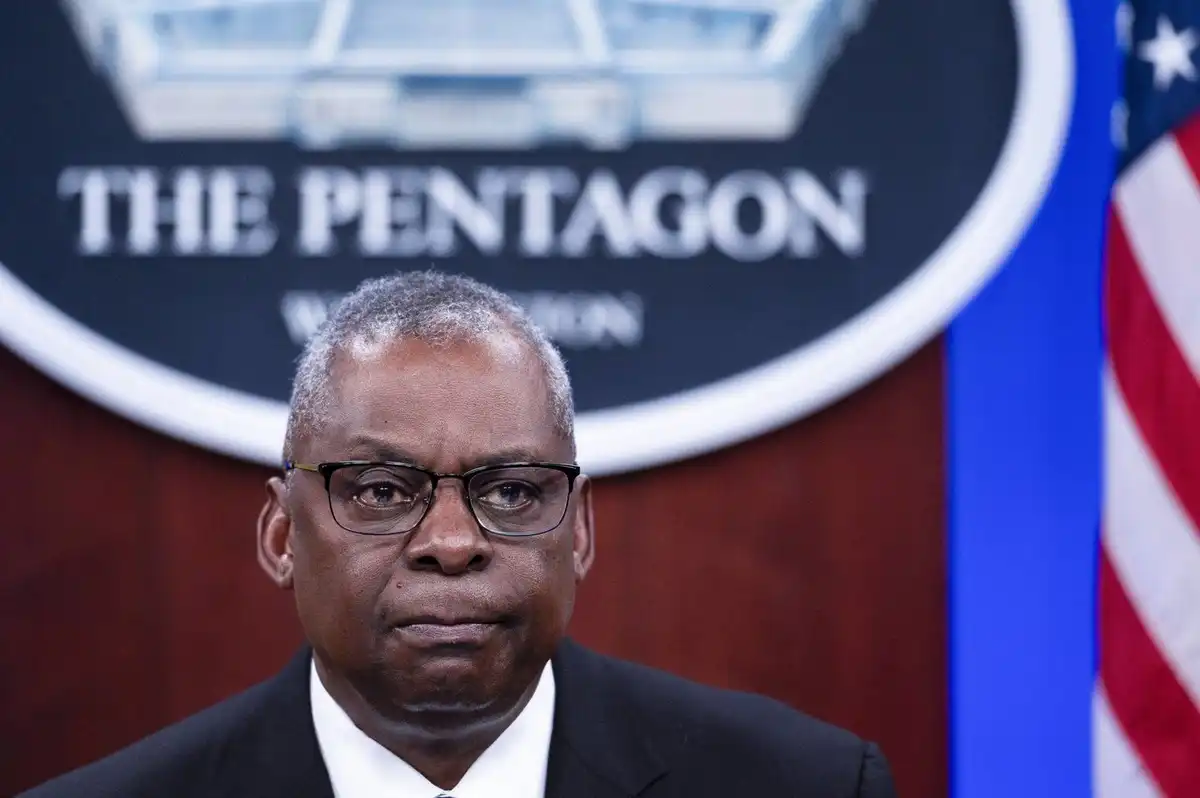
US Defense Secretary stresses to his Israeli counterpart the need to increase humanitarian aid to Gaza

The US Department of Defense (the Pentagon) said that Defense Secretary Lloyd Austin stressed to his Israeli counterpart the need to increase humanitarian aid to the Gaza Strip, and the existence of safe areas to receive aid throughout the Strip.


It explained in a statement that the minister, during a phone call with Gallant, reiterated the need to prevent the conflict from expanding to Lebanon.


The statement added that the US Secretary condemned “the continuation of cross-border attacks from Lebanon to Israel,” and expressed his support for the safe return of Israeli civilians to their homes in the north.


PALESTINE

Sun 26 Nov 2023 8:43 am - Jerusalem Time

Freed Detainee Jaabis: We were subjected to abuse and beatings in Israeli prisons

Freed Palestinian prisoner Israa Jaabis said in a press interview upon her arrival to her home in Jerusalem following her release that she and other female prisoners were subjected to abuse and beatings in the occupation prisons.


She added that "young Palestinian girls were subjected to unspeakable practices in the occupation prisons," calling for action to liberate all Palestinian prisoners.


Israa was released late last night, Saturday, among 39 captured Palestinian women and children, as part of the second batch of the prisoner exchange deal between Israel and the Islamic Resistance Movement (Hamas), which is accompanied by a truce in the Gaza Strip for a period of 4 days, subject to extension.


Regarding her feelings after her release, Israa told Al Jazeera correspondent Najwan Samri, “We are ashamed to be happy when all of Palestine is wounded.”


As for Israa’s father, he said, “My daughter is not more important than the people of Gaza.”


Israa is one of the 10 oldest female prisoners in the occupation prisons. She served 8 years of her 11-year sentence on charges of attempting to kill an Israeli soldier.


On October 11, 2015, while she was returning from the city of Jericho to Jerusalem, near Al-Za’im checkpoint, her car broke down, so the occupation forces opened fire on the car, which led to the explosion of a gas cylinder it was in and the outbreak of a large fire, according to what her family reported regarding the details of the incident.


As a result, Israa suffered burns ranging from first to third degree, affecting 50% to 60% of her body. She lost all the fingers on her hands, and her face was disfigured.


The occupation authorities prevented her from receiving the treatment she needed, and deliberately neglected her despite her need for 8 surgical operations.


Source: Al Jazeera


PALESTINE

Sun 26 Nov 2023 7:44 am - Jerusalem Time

Israel releases 39 detainees, including 6 women and 33 children

Tonight, the Israeli occupation released 39 detainees, including 6 women and 33 children, at the “Ofer” military prison, which is located on citizens’ lands in the town of Beitunia, west of Ramallah, and from the “Al-Maskobiyya” detention center in occupied Jerusalem, as part of the second batch of the “deal.” "Exchange."


A bus and vehicles belonging to the International Committee of the Red Cross transported a number of released detainees from the "Ofer" military prison to the Al-Bireh municipality, while the 5 female Jerusalemite detainees and a child were released from the "Al-Maskobiyah" detention center, where their families were receiving them.


Hundreds of citizens received the released detainees in Al-Bireh Municipality Square, chanting slogans congratulating them on their release, and others calling for the release of all detainees in Israeli occupation prisons.


Earlier on Saturday evening, four citizens were injured by live bullets, during confrontations with the Israeli occupation forces, in the vicinity of the “Ofer” military prison, located on the lands of the town of Beitunia, west of Ramallah.


The occupation forces also attacked journalists near Ofer Prison, west of Ramallah, by firing heavy poison gas bombs around the prison.


Since the early evening hours, hundreds of citizens, families of detainees have arrived in succession at the entrance to the Ofer military prison and the Al-Bireh Municipality Square, where their daughters and sons who are scheduled to be released were received.


In Jerusalem, the occupation forces prevented the families of the detainees from celebrating or receiving well-wishers at home, and obstructed the arrival of the released detainee Israa Al-Jaabis for several hours.


OPINIONS

Sun 26 Nov 2023 6:40 am - Jerusalem Time

About expulsion, displacement and migration

Dr. Ali Al-Jarbawi

Dr. Ali Al-Jarbawi

Opinion Writer

There has been much discussions since the outbreak of the Israeli war on the Gaza Strip, and anxiety and tension have risen, and Palestinian and Arab fears have escalated, regarding Israel’s intention and plan to exploit the period and horrors of the war on civilians, to forcibly expel the largest possible number of Palestinians from the Strip, and later the West Bank, abroad. This discussion did not come out of nowhere, as Israel explicitly expressed the need to empty the Gaza Strip by pushing the Palestinians into North Sinai, under the pretext of removing civilians from the battlefield. But for the Palestinians and Arabs, this pretext was nothing more than a flimsy cover for what is known about the deep Israeli desire, and the tireless pursuit, to expel the Palestinian people from their homeland. 

The Zionist project, from its beginning, was based on emptying Palestine of its people and replacing the Jews in their place, under the myth of the colonial slogan “a land without a people, for a people without a land.” Not only that, the Palestinian and Arab memory is still groaning from the weight of the systematic expulsion of Palestinians that took place in the Nakba of 1948 and the setback of 1967. 


Therefore, Palestinian and Arab apprehension about the possibility of Israel repeating what happened has a harsh practical background, as well as terrifying future repercussions. The consistency of the American position at the beginning of the current war with the declared Israeli desire, and the attempt to promote it and pass it on in the relevant Arab capitals, had a great impact in stoking that anticipation.


It is worth noting that in the actions of states, and at the international level, there is a difference and dividing boundaries between three things that have a relationship with each other, but are not necessarily identical, which are desire and ability. The state's desire relates to the goals it wants to achieve, while the ability expresses the sources of power the state possesses to achieve the desired goals. As for ability, it is an issue that is not related to the state itself, in terms of the availability of desire and ability, but rather to external circumstances and factors if they are appropriate and conducive to achieving goals. The state may have the desire to achieve a specific goal, but it lacks the ability to achieve it, unless it has an external party who, on its behalf, achieves that goal for it. The state may have the desire and ability to achieve a goal, but external circumstances and factors are an obstacle, preventing it from achieving it. If circumstances and factors continue as such, the goal will collapse and end.

Although Israel has the desire, and has sufficient internal capacity, to achieve the goal of expelling the Palestinians, this time it collided with the wall of absolute Palestinian and Arab rejection, which ended (not hindered) its ability to achieve this goal. The rapid Palestinian rejection, reinforced by the Arab position rejecting expulsion, especially the strict and categorical position of Egypt and Jordan in this regard, had a decisive impact in closing the door of possibility on Israel, not only in achieving the goal of expelling the Palestinians this time, but in completely dropping it from discussion and passage in the future too. One of the results of this position was that the American administration reviewed its strategic calculations, quickly changed its initial position facilitating the Israeli goal, and turned it into a clear public position rejecting the forced displacement of Palestinians out of the country. Rejecting positions began to come from various capitals, international bodies and institutions around the world, besieging the Israeli goal, to the extent that it stifled it. 


This war, despite its heavy cost to the Palestinians, will prove to be the fruit of Israel's goal of forcibly expelling the Palestinians from their homeland. The door has been closed on Israel's ability to achieve this.

To reach this result, Israel shifted its efforts from imposing the forced expulsion of Palestinians by force, to seeking to implement it in a soft manner, by exploiting the difficult humanitarian conditions arising from the current war to engineer an organized mass displacement campaign, in which it gets rid of hundreds of thousands of Palestinians. The outcome of this displacement is not necessarily the neighboring Arab countries that reject the issue of expulsion in principle, but rather attractive foreign countries that attract immigrants, with which attempts are apparently being made to reach an understanding to open the doors of immigration to them to accommodate large groups of Palestinians. For the success of this displacement, Israel is betting on the possibility of a latent desire among large and increasing numbers of Palestinians to change their living conditions and search for a safe and better future, especially after a war that exhausted them in the Gaza Strip, closed off their means of livelihood, and destroyed all the structures of their lives. If Israel is able to facilitate the acceptance of a number of countries to accept the organized displacement of large groups of Palestinians, it believes that the Palestinian demand for this migration will fall on the absorbing countries. To confirm this trend of thinking in Israeli circles, it is sufficient to follow the repeated statements issued in this regard so far by Israeli officials, some of which call for a collective international effort to implement it, and some of which call for the allocation of UNRWA funds to achieve it, with assurances about Israel’s readiness to contribute effectively, financially and logistically, to make this endeavor successful.

To confront its deteriorating possibility, there is an absolute necessity to confront this plan proactively, to block it from now on. This requires organized action, requiring a concerted Palestinian and Arab effort together, not only to expose this plan to the world, but also by taking practical steps to communicate with the candidate countries that might accept, for various reasons, opening their doors to receive the results of an Israeli campaign for organized mass Palestinian displacement, to discourage them from the possibility of doing so, and holding them responsible for the repercussions this will lead to. Such organized action will be able to have a positive impact and act as a check on the position of these countries, especially since many parties in the world are monitoring developments and are ready to contribute by exerting a package of moral and practical pressures on those countries, if they agree and contribute to the Israeli plan to empty Palestine of its people.

I believe that the danger of emptying Palestine of its people does not lie through forced expulsion or organized mass displacement. The possibility of Israel succeeding in either of them is very small, if not non-existent. The danger of emptying lies in voluntary individual migration, which is an open and available field that expresses a personal choice that cannot be prevented or controlled, or requiring countries that receive immigrants to prevent a Palestinian from the right to apply for immigration to them, or prevent his absorption there if his application meets the conditions. 

It is expected that the number of Palestinians wishing to emigrate from the Gaza Strip, as well as from the West Bank, although perhaps to a relatively smaller extent, will witness a significant increase after the current war ends. The loss of family members and life resources, on the one hand, and the difficulty of resuming normal life for a long period after the war, on the other hand, may lead many to choose to strive hard to start a new life in another country. Here we must not forget about those who, before the war, took the greatest risk and tried to go to Europe via dangerous boat trips across the Mediterranean, putting their lives in danger, or sacrificing them.

This voluntary migration, if it worsens, could deplete the future Palestinian presence in the country. It is expected that Palestine will lose an important part of its human capabilities, which it desperately needs. The largest category of candidates for immigration is the youth, which is the most qualified, capable and effective group, and upon whom the country's future is built. How can we limit the possibility of this potential bleeding, which will achieve an important part of Israel’s goals and deprive the country of the most important element to ensure its immunity?

Simply relying solely on nationalism as the only reason for people to remain on their land, especially those who have the capabilities to leave, will be of no use in curbing the possibility of this expected bleeding. Although this national belonging exists, it alone will not be sufficient for people to survive, especially in light of horrific conditions, and if the future continues to be bleak, without hopeful prospects. Singing slogans, and taking people's ability to endure, withstand, and sacrifice as a given, is always and constantly guaranteed, will not succeed in being a substitute for the necessity of providing the basic supplies and requirements necessary to convince people of the necessity of continuing to bear the hardships that burden their livelihood. Not only that, but it is necessary to remember that people have the right to have hopes and ambitions greater than remaining “firewood” in the furnace of battles, and to have a promising future that will achieve more than subsistence living.

For all of this, and in order to hedge in advance to stop the possibility of potential voluntary migration, it is necessary from now on to pay utmost attention to the following:

Firstly, the Palestinian situation requires, from now on, and not after the end of the war, that the utmost attention, thought and action be given towards finding the necessary lever to move the wheel of the economy, in addition to how to provide the mechanism and requirements for the reconstruction of the Strip. Reconstruction and moving the wheel of the economy, although they are interconnected, their requirements and paths are distinct. We must think about how to provide the requirements for reviving the Palestinian economy in light of developments that must be taken into account. The volume of Palestinian labor inside Israel will shrink after the war, and workers from Gaza will not enter it (this may not pose a major problem since the reconstruction of Gaza needs these workers). Also, restoring the necessary level of foreign aid, which has diminished significantly over previous years, will be fraught with many requirements. How will enough job opportunities be created to jumpstart the economy? Where will the necessary funds be provided for this? This is with the necessity of taking into account that the issue of the reconstruction of the Gaza Strip, which includes many precise and extremely important details, will enter into the circle of political tensions at various levels, and will become part of the arrangements currently being deliberated by international and regional parties regarding the Palestinian future, with clear Palestinian marginalization. Is there a Palestinian assigned to carry out the task of thinking and preparing the required economic file from a Palestinian point of view, or is the matter left for others to do and then be imposed on the Palestinian side?!

Secondly, the economic leverage, even if achieved, will not be sufficient on its own. Rather, in order for it to succeed and be sustainable, it must be accompanied by a political settlement that controls the conflict for a long period, enabling the Palestinian people to catch their breath and care about building a promising future. Voluntary migration will continue as long as the political situation remains unstable. It is clear that what was called “economic peace” cannot be an effective and successful alternative without a political settlement that fulfills the minimum Palestinian requirements, primarily ending the occupation and achieving freedom and independence. In this regard, the Palestinian side must not remain marginalized and spectators, while the various parties are busy discussing post-war arrangements. It is true that the priority is to stop this frenzied war, spare the blood of the Palestinians, and avoid further destruction of their various vital structures. But despite the loftiness of this goal, which it is clear that the Palestinian ability to achieve is weak at best, if not non-existent, the supreme national interest requires engaging ourselves, in the first place, and with various regional and international parties, secondly, in researching what the future will bring us in terms of challenges. It is not permissible to let others take over the task, and we content ourselves with complaining about the bad situation. Therefore, it is necessary that an official and organized Palestinian effort begins to prepare the future Palestinian vision, which does not stop at the main headlines, but is primarily concerned with the minute details. Has such an effort begun, or is it up to fate?

Third, in order for the Palestinian side to have an effective role, and not be the only recipient of the external demands and conditions that will be imposed on it, it is necessary to take proactive steps to arrange the internal Palestinian situation and activate the Palestinian political system that is calcified over a long-standing division, and it has become clear how important it is to overcome it. There will be no winning Palestinian side after the end of this war. Rather, all parties are under bombardment and guillotine. As for the activity and movements currently taking place between Palestinian parties, the source of most of them is still the remnants of past disputes, and their goal does not go beyond an attempt to reposition those who are engaged in searching to secure a hoped-for future position. This will not help in moving the wheel of the national issue forward. Rather, it will not deviate from turning in the same wheel of thinking that was tried in the past, and produced nothing but ruin. Therefore, is it not time for this division and fragmentation to end, as we are going through a pivotal stage that will have profound consequences and repercussions on the Palestinian future?! If this is not the time, when will it be?! Isn’t it more appropriate and more effective for all Palestinians to be busy preparing to face the repercussions of the war, instead of each party being preoccupied with trying to undermine the other party and achieve imaginary “victories” over each other?!

We are going through a critical period; In the neck of the bottle. Either we can get out of it with the least amount of losses, or we remain inside it, trapped in repeating the same pattern of thinking and performance. It is true that the circumstances we face are very difficult, and that external pressure on us is increasing, but this does not exempt us from bearing responsibility, and from the necessity of holding ourselves accountable for the mistakes we commit.

We must all work hard to remedy the repercussions of the wave of voluntary migration coming in the coming days. But this will only be effective by opening the door to delving deeply into addressing the causes and consequences for which we bear responsibility.



ARAB AND WORLD

Sat 25 Nov 2023 10:12 pm - Jerusalem Time

Gallant: Any further negotiations with Hamas in Gaza will take place under fire

Israeli Security Minister Yoav Galant said today, Saturday, November 25, 2023, that any further negotiations with Hamas in Gaza will take place under fire, and that the Israeli army will not leave the Strip until all the hostages are recovered.


Gallant conducted a field assessment of the security conditions in the besieged Gaza Strip, in light of the temporary ceasefire that began yesterday, Friday, during which he stressed that the occupation army “will not leave the Gaza Strip until all the Israeli hostages” held by the resistance factions in the Gaza Strip are recovered. 


Gallant said that the occupation army will take advantage of the truce days to "make more efforts to recover more hostages," expressing that any future negotiations that may take place through mediators with the Hamas movement to release more Israeli hostages and prisoners held by the Palestinian resistance will take place "under fire."


A statement issued by the Occupation Ministry of Security stated that Galant arrived in the northern areas of the Gaza Strip controlled by the Israeli army, via a naval ship belonging to the occupation army, accompanied by the Navy Commander, David Sa’ar Salamah. He conducted an assessment of the field situation and met with commanders and fighters from the infantry, armored and engineering forces. The navy operating in the Gaza Strip.


According to the statement, “Gallant insisted on exploiting the truce in favor of preparations for the resumption of ground operations while exhausting the broad outlines of the (agreement) to return the hostages. He also approved more offensive plans.” Gallant toured the northern coastal area (of the Gaza Strip), He reviewed the activities of the forces during the days of fighting, and their security during the days of the truce.”


Gallant claimed in his assessment of the situation in the Gaza Strip that “our ability to recover the first group of hostages is due to the pressure exerted by the army,” and said, “Once the military pressure is activated, they will seek (referring to the resistance factions) to stop, and when the pressure increases, they will want another break.” “And when you raise it more, they're willing to make an offer, and when you raise it more and more, they're willing to make an offer that they can accept, that's the whole way.”


He added, "We cannot abandon the operation and the war in Gaza until we reach a situation in which we recover all the hostages, and we have many of them." He continued, "There is a direct link between your work and eliminating the enemy, and between your work and bringing the hostages. This is the process that we are adopting."


He said, "The timetable for the truce is short. It will not take weeks, but rather days, a little more or a little less. Any further negotiations will take place under fire. That is, if they want to continue the discussion next time, it will happen while the bombs fall (on the Gaza Strip)." The forces fight, that's the basis."


ARAB AND WORLD

Sat 25 Nov 2023 10:04 pm - Jerusalem Time

World Food: Our daily aid to the people of Gaza is “not enough”

The World Food Program said on Saturday that its teams deliver food aid daily to more than 700,000 people in Gaza, but it is “not enough.”

The program added: “With the collapse of food systems in Gaza, humanitarian aid has become the only lifeline.”


He stressed "the need to expand the scope of humanitarian aid and sustain it in Gaza."


The post included a post that read: “Hunger is sweeping Gaza.”


The program concluded by saying: “Our teams deliver food aid daily to more than 700,000 people in Gaza, but it is not enough.”