
OPINIONS

Thu 18 Jan 2024 3:29 pm - Jerusalem Time

The Greater Goal in Gaza

Foreign Affairs

Foreign Affairs

Opinion Writer

By Marwan Muasher

As Israel’s war in Gaza enters its fourth month, an intensifying debate has unfolded about who should rule the territory when the fighting stops. Some have suggested an Arab force, a notion already rejected by Egypt, Jordan, and other Arab states. Others have proposed a reconstructed Palestinian Authority, ignoring the fact that less than ten percent of Palestinians would support such an outcome, according to a recent Palestinian poll. Yet a third idea is to put Gaza under international control, an approach that has already been rejected by Israel, which does not want to set such a precedent. But there is a larger reason these envisioned solutions are doomed to fail: they all treat Gaza in isolation, as if it can be addressed without regard to the broader issue of Palestinian statehood and self-determination. In this way of thinking, once Hamas is made to disappear and once the question of who rules Gaza is answered, there can be a return to the status quo ante. Both assumptions are fundamentally flawed, and any policy based on them will lead to disaster.

To be truly durable, a solution for the future of Gaza must be framed within a larger endgame for all Palestinians under Israeli control. It must finally address the root cause of unending violence: the Israeli occupation of East Jerusalem, Gaza, and the West Bank. Years of failed negotiations have also made clear what such a plan will require in order to succeed: unlike so many of its predecessors, it must be credible and time-bound, and the endgame itself must be well defined at the outset.


Establishing such a comprehensive process will require extraordinary effort. But the alternative is far worse. The current war has already led to the killing of huge numbers of civilians, the destruction of Gaza, the undermining of Israel’s security and international support, the creation of another 1.5 million Palestinian refugees, and the looming threat of a further mass transfer of Palestinians out of their ancestral lands. Any attempt to resolve the day-after problem by reverting to the old paradigms will simply invite these catastrophes to be repeated again.


THE MISSING ENDGAME

To understand the true scope of the day-after problem, it is first necessary to recognize that the current conflict did not begin with Hamas’s attack on October 7.  Nor is it limited to Gaza alone. Although the Palestinian question begins with the 1948 war, in which an estimated 750,000 were dispossessed of their homes, the best starting point for today’s crisis is the 1967 war. That conflict led to Israel’s occupation of Gaza, the West Bank, and East Jerusalem and produced an estimated 300,000 new Palestinian refugees. It also marked the beginning of decades of efforts to end the occupation and establish a viable Palestinian future.

The first such attempt was UN Security Council Resolution 242, passed in November 1967. Although the resolution referred to “the inadmissibility of the acquisition of territory by war,” it did not envisage a separate Palestinian state. Instead, Gaza was supposed to revert to Egyptian control and the West Bank to Jordanian control. Nor did the resolution define a time frame for ending the occupation, calling only for a political process that was open and not binding. Indirect negotiations among the Jordanian, Egyptian, and Israeli sides were held through a UN mediator, without any results.

Two and a half decades later, the Madrid conference—launched by U.S. President George H. W. Bush in 1991 after the first Gulf War—finally brought the Palestinians directly to the negotiating table. Once again, however, the process left the endgame unclear beyond referring to Resolution 242, which was interpreted by Israel in a drastically different way than by the international community. (Although the resolution called for Israel to withdraw from occupied territories, Israel interpreted this to mean not withdrawal from all such territories but only to so-called safe borders it never specified.) Even after the Palestinians started negotiating separately with Israel once the late Israeli Prime Minister Yitzhak Rabin came to power in June 1992, the process never defined a separate Palestinian state as the objective of negotiations.


Negotiations were often open-ended or failed to specify the objective.

Then came the Oslo accords in 1993, perhaps the most well known of all of these peace efforts. In this case, not only did the two sides mutually recognize each other and establish a Palestinian interim authority in Gaza and parts of the West Bank, they also set up a five-year negotiations process toward a durable peace. But although the process was supposed to result in a lasting solution to the conflict, the parties failed to specify what that solution is: in other words, the endgame was not clear at the outset. Moreover, the Oslo accords did not freeze settlement activity, meaning that the two sides were negotiating over the future of the occupied territories even as one of them—the Israelis—was continuing to change these territories’ geography and demographics. Indeed, Rabin, in his last speech to the Knesset in September 1995, where the parliament ratified the second part of the Oslo accords, declared that Israel’s objective was a Palestinian “entity which is less than a state.” 

In fact, the conflict’s main players did not agree on a two-state model until 2000, near the end of U.S. President Bill Clinton’s tenure. At the time, Clinton presented the two sides with an overall framework based on a Palestinian state, largely defined by the 1967 borders, that would be established alongside the state of Israel, with special arrangements for Jerusalem, refugees, and security. When last-minute negotiations over these parameters failed and the second intifada broke out, both parties became convinced that they had no partners for peace at the other end of the table. Successive efforts since then, including the 2002 Arab Peace Initiative, the Middle East Road Map of 2002–3, the 2007 Annapolis conference, and U.S. Secretary of State John Kerry’s shuttle diplomacy in 2013—the last official effort by the U.S. to help negotiate a settlement—have all failed. 

Although there are many reasons why each of these rounds of negotiations ran aground, there were larger shortcomings that were common to most of them: they were almost always either open-ended or did not specify the endgame at the outset. They also lacked a credible monitoring mechanism to make sure the parties were meeting their stepwise obligations on the road to a permanent settlement. Moreover, on numerous occasions, negotiations broke down over what the endgame should be rather than on the steps needed to reach that goal.


FROM FAILURE TO CATASTROPHE

For Palestinians, the consequences of these failures have been devastating. Israel has been able to continue settlement activity, illegal under international law, in the occupied West Bank and East Jerusalem (and, until 2005, in Gaza), absorbing Palestinian land and rendering the establishment of a viable Palestinian state increasingly difficult. Since the signing of the Oslo accords, the Israeli settler population has grown from about 250,000 to more than 750,000, almost a quarter of the population in the entire West Bank and East Jerusalem, while the relentless expansion of settlements has steadily broken up contiguous Palestinian territory.

Amid these failed negotiations, Gaza suffered a particularly harsh fate. In 2005, then Israeli Prime Minister Ariel Sharon decided to withdraw unilaterally from Gaza, ending Israel’s direct military presence. But the Israeli government built a security barrier around the territory to isolate it, and Israel continued to control who went in and out of the strip. Israel also prevented its Palestinian inhabitants from having an airport or a seaport, effectively cutting off Gaza from the world. As a result, Israel’s occupation effectively continued, with brutal consequences. After Hamas gained full control of the strip following a split with the Palestinian Authority in 2007, living conditions further deteriorated to the point where the per capita income of Gazans has been reduced to a fraction of that of Palestinians in the West Bank.

Then, when the Obama administration ended, the United States gave up on negotiations between the two sides entirely. First under President Donald Trump and then under President Joe Biden, Washington replaced peacemaking efforts with the Abraham Accords, a series of bilateral treaties among several Arab states and Israel that are not based on the “land for peace” formula derived from Resolution 242. The Palestinians had no involvement at all. The Biden administration, in particular, assumed that if it encouraged regional cooperation, peace between Israelis and Palestinians could wait for better times. In turn, the Israeli government used the accords to argue that it was no longer necessary to reach a settlement with the Palestinians, since they could forge separate agreements with Arab states in the region.

This is the context in which the October 7 attacks took place. Targeting civilians is abhorrent in any scenario, regardless of which side is the perpetrator. But it is impossible to ignore the reality that Gaza had become a giant, walled-off prison over the last ten years, with millions of inmates who no longer had any reason to think that the occupation would end.  


PREREQUISITES FOR PEACE

The Biden administration has recognized that there will need to be a political process after the war in Gaza ends. Guided by the October 1973 war, which ultimately led to peace between Egypt and Israel, and the first Gulf War of 1991, which led to the Madrid conference, the Biden administration has started to discuss plans for the day after for Gaza. But if that thinking is limited to who rules Gaza after Hamas, or if Washington commits to an open-ended process that simply repeats the mistakes of earlier ones, the prospects for success are practically nonexistent. Overwhelmingly, Palestinians today feel that they were taken for a ride, engaging in peaceful efforts to end the occupation while Israel was creating facts on the ground that make a two-state solution impossible. Thus, any political process for Gaza has to be credible, time-bound, and with a clearly defined endgame—before any negotiations start. Otherwise, it will simply be a waste of time.

As of now, it is crucial to acknowledge that the elements necessary for a serious U.S.-led process are absent. The United States is entering an election year in which the chances for launching a peace process that requires applying pressure on all sides—particularly Israel—are remote. The current right-wing Israeli government has also repeatedly and publicly declared that it has no intention of ending the occupation or helping establish a Palestinian state. And although it is true that a majority of Israelis hold the current government responsible for the security lapses on October 7—and polls indicate that the opposition would handily win new elections if they were held tomorrow—the public divide in Israel today is no longer between pro-peace and anti-peace camps, as it was decades ago. Instead, it is merely between pro- and anti-Netanyahu camps, with both sides holding a hardline, almost identical stance against a Palestinian state.

Meanwhile, the Palestinian Authority has lost much of its credibility and legitimacy. It has not held elections since 2006, and its approval rating was very low, even before October 7. In a poll conducted during the brief cease-fire in Gaza in late November, the Palestinian Center for Policy and Survey Research found that 88 percent of Palestinians in the West Bank and Gaza want Palestinian Authority President Mahmoud Abbas to resign. Only seven percent want the PA under Abbas to rule Gaza after the war. No side can claim to represent the Palestinians in any political process without elections, but the PA, Israel, and the United States will almost certainly oppose such elections in the near term, given that Hamas might get a plurality of votes, as the poll suggests. While the same poll indicates that figures like Marwan Barghouti enjoy wide support among both Fatah and Hamas publics, it is doubtful that Israel would agree to his release, precisely because the current government is not interested in a political deal.


The reconstruction of Gaza must be a step toward a final settlement.


But despite these difficulties, it is worth setting down the specific elements that a credible process would require so that Washington can avoid the pitfalls of past negotiations. First, the United States should present a political plan that would lay out a clearly defined objective of ending the occupation within a specified time frame, say three to five years. Precise borders on the basis of the 1967 lines with minor and reciprocal land swaps to accommodate the settlements along the border would be subject to negotiations. The United Nations would issue a resolution recognizing a Palestinian state on the basis of the 1967 border, with details to be worked out through negotiations. New settlement construction would be completely frozen.

Then, to carry out this plan, negotiations would be focused on the steps needed to reach the objective rather than on what the endgame looks like. Many of the necessary possible steps are already in view. Referendums on the plan should be held in Israel and the West Bank and Gaza to establish and ensure popular support: voters would go to the polls based on the plan’s clearly defined political horizon, which might break the impression on both sides that a two-state solution is no longer possible. In this framing, the issue of who rules Gaza would become a step on the road to ending the occupation rather than an endgame in itself: in questions of governance, Gaza and the West should be treated as one.

Once such a process is underway, both sides will have an incentive to reconsider solutions that were rejected in the past because of the absence of an overall political framework or a concrete timeline. For example, the reconstruction of Gaza could become a step along the road to a final settlement, with parties such as Gulf states, the European Union, and the World Bank ready to take part in ways they are not today. (The case of Syria offers a useful lesson here: although the civil war has been effectively over for nearly five years, little reconstruction has taken place in the absence of a comprehensive plan for the future of the country.) An international fund could be set up to help Palestinians in Gaza and the West Bank stay on their land to alleviate fears among Palestinians that they will be mass transferred outside of their historic territory. The Arab Peace Initiative, which offered collective peace treaties and collective security guarantees for Israel by all Arab states, could then be revived, giving Arab states a political, security, and economic role in the Palestinian territories and a strong incentive for Israelis to embrace the plan.

Although this outline may seem ambitious, it is grounded in realism: its purpose is to show what a serious political process will entail and to make clear that the failed processes of the past cannot simply be resurrected. It is worth noting that this plan leaves aside the still more difficult issue of what to do with the existing settlements. Even if the political will exists on both sides to end the occupation and adopt a two-state solution, coming up with an ingenious solution to the settlement question will still be a daunting task. If the international community decides this overall plan is too unrealistic to achieve, they should weigh the costs of the alternatives.


FROM BAD TO WORSE

If, at the end of the war in Gaza, a serious political process proves impossible to put into play, three alternative scenarios could unfold. First, the parties could revert to waiting for a quieter, better time—much as the United States did for years leading up to the October 7 attacks. This strategy, if returned to now, would certainly fail. It assumes that a two-state solution is ultimately the preferred outcome for all parties and that it is simply a matter of having the right political forces in power to make it happen. But in Israel, support in the Knesset for a peace agreement to share the land has dropped from a majority of members 30 years ago to no more than 15 members today. Moreover, the logic of waiting assumes that there is a static status quo, which is clearly not the case given Israel’s continued expansion of settlements. If the number of settlers today already makes it extremely difficult to separate the two communities into two states, the situation could become irreversibly worse in a few years, once the settler population exceeds one million.

A second alternative, in the absence of a serious political process, could be even worse: a mass transfer of Palestinians out of their historic land either through force or by making Palestinian life in the occupied territories untenable or unbearable. The reason that such a drastic outcome needs to be taken seriously is the demographic reality Israel now faces: the number of Palestinian Arabs in areas under Israel’s control is now 7.4 million—greater than the 7.2 million Israeli Jews inside Israel and the occupied territories. Given that Israel at present does not want to end the occupation and accept a two-state solution, and given that it does not want to become a minority ruling over a majority in what many human rights organizations describe as apartheid, then its preferred option will be to transfer huge numbers of Palestinians out of territories under Israeli control: from Gaza into Egypt and from the West Bank into Jordan. 

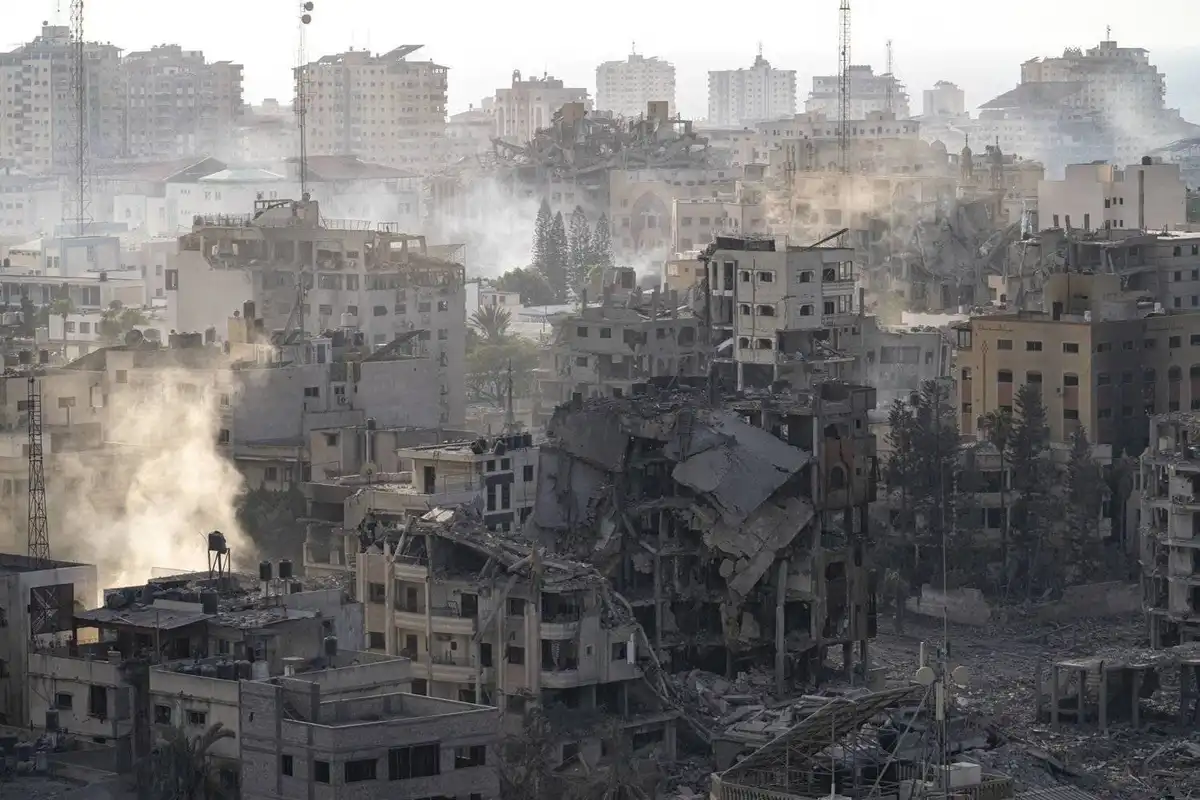
Already, the Israeli government has made clear that it is thinking along these lines. Large parts of Gaza have been rendered practically uninhabitable, and several Israeli cabinet ministers, including Prime Minister Benjamin Netanyahu himself, have directly or indirectly promoted the idea of moving Palestinians to other countries. Several Israeli and international commentators have also portrayed the Egyptian and Jordanian decisions to close their borders to Palestinians as an inhumane act, perhaps to pressure both states into letting Palestinians flee. But it is clear that the Israeli government would then bar them from coming back.


If Palestinians lose hope for a Palestinian state, the conflict could become more violent.


But any attempt at mass transfer will not be easy to implement. Jordan and Egypt have already drawn international attention to this scenario, to the point where the United States and other countries have publicly come out in strong opposition. Palestinians themselves also appear uninterested in leaving, having learned from 1948, when 750,000 were forced to leave their land and were never permitted to return.

That leaves a third and most likely alternative: continued Israeli occupation, but now under even more unsustainable conditions. Palestinians have a birth rate higher than that of Jewish Israelis, and as they increasingly lose hope for the prospect of a Palestinian state, their demands for equal rights with Israelis will grow louder and more insistent. The conflict could then become more violent. According to the Palestinian Center for Policy and Survey Research poll, 63 percent of Palestinians today say they would support armed resistance to end the occupation. In fact, such resistance had already started in the West Bank in the months before October 7, with young, leaderless youth taking up arms and shooting at Israelis.

Moreover, if it chooses to continue the occupation, Israel’s challenge won’t just be internal. The country is also confronting an emerging younger generation in the United States and many other Western countries that has shown it is far more supportive of Palestinians and the issue of equal rights than its predecessors. As this generation rises to positions of power, the world will become increasingly critical of the Israeli occupation, and the focus will shift from defining an illusory peace settlement to tackling the problem of deep injustice in indefinitely occupied lands. It is also likely to make Israel increasingly isolated on the world stage.


This is where a continuation of the status quo will likely end. The international community is certainly partly to blame for all the violence that is unfolding today. By abandoning any serious attempt to address the underlying causes of conflict in recent years, Western leaders, as well as governments in the region, have helped create the untenable situation that now exists. It is possible that another process will be initiated along the lines of many earlier ones. If that happens, it, too, will fail, and violence will continue to define the world of the Israelis and the Palestinians. Either the United States and its international partners must make a historic decision to end the conflict now and move both sides swiftly toward a viable two-state solution or the world will have to contend with an even darker future. For soon, it will no longer be a question of occupation but the more difficult issue of outright apartheid. The choice cannot be clearer.

PALESTINE

Thu 18 Jan 2024 3:22 pm - Jerusalem Time

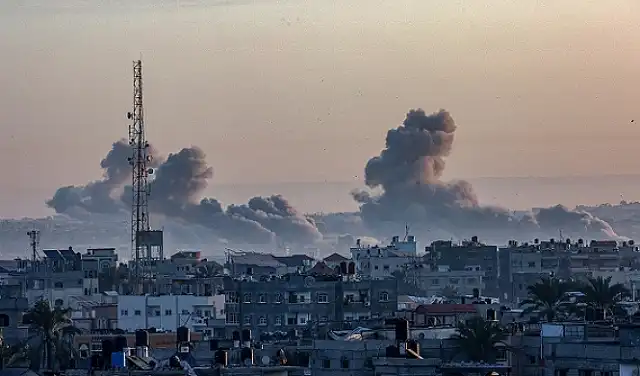
Continuing raids on Gaza: The death toll rises to 24,620, including 119 journalists

Many areas are witnessing fierce battles and violent clashes between armed resistance factions and Israeli forces, especially in Khan Younis Governorate and the central Gaza Strip. This comes despite the Israeli army announcing the withdrawal of more of its forces from the region.


The death toll from the ongoing Israeli war on Gaza has risen to 24,620, and 61,830 wounded as a result of the continuous bombing of inhabited areas and homes throughout the Strip since last October 7.


The Government Information Office announced that the number of killed journalists had risen to 119 since the start of the genocidal war, after the death of journalist Wael Rajab Abu Fununa on Thursday.


The Israeli bombing of the Gaza Strip continues for the 104th day, and Israeli artillery continues to bomb residential squares, populated areas, and the vicinity of shelter centers, while communications and the Internet continue to be cut off from the Strip for the seventh day.


On the field level, many areas are witnessing fierce battles and violent clashes between armed resistance factions and Israeli forces, especially in Khan Younis Governorate and the central Gaza Strip. This comes despite the Israeli army’s announcement of withdrawing more of its forces from the area.

ARAB AND WORLD

Thu 18 Jan 2024 3:12 pm - Jerusalem Time

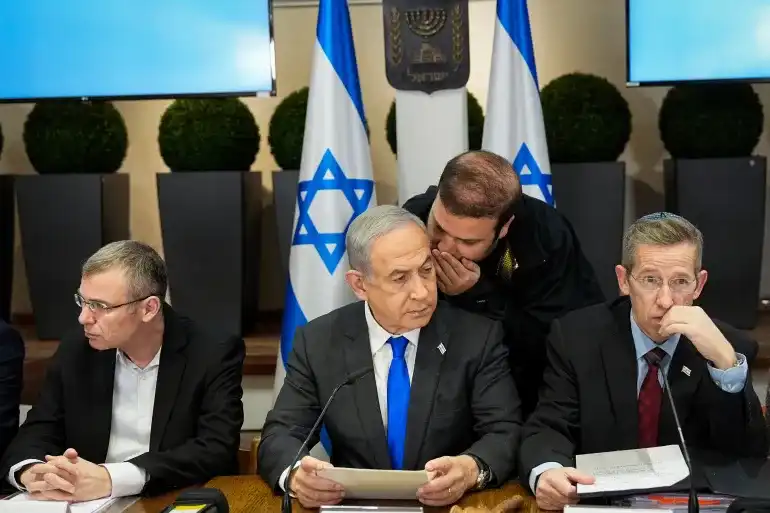
Netanyahu thwarts an initiative for a new deal with Hamas mediated by Egypt or Saudi Arabia

Hebrew Channel 13 revealed that Israeli Prime Minister Benjamin Netanyahu thwarted a new initiative to conclude a deal with Hamas in Gaza, while Occupation Army Radio revealed that Tel Aviv intended to involve Egypt or Saudi Arabia in it.

According to Channel 13, Netanyahu's rigidity in his positions is what prevented the proposal from being submitted.


The channel revealed that the political leadership in Israel decided in recent days to establish principles to guide new negotiations on an Israeli initiative, “which could have ultimately led to a deal regarding the detainees (Israeli prisoners held by the Hamas movement). It was expected that the negotiations would take place through a mediator, and now It turned out to be an Egyptian or Saudi mediator, but Prime Minister Netanyahu obstructed that and tightened the principles after agreeing on them, which led to the initiative being thwarted.


The channel explained that a few days after the aforementioned discussions, and the political leadership reached certain principles, Netanyahu "obstructed the plan, by hardening his positions regarding the principles guiding the initiative, without coordinating the step with the two ministers in the war council, Benny Gantz and Gadi Eisenkot."


The ministerial "war council" later discovered this matter, and some ministers even confronted Netanyahu over the issue and expressed their anger.


Channel 13 quoted officials in Israeli government, which it did not name, saying that “Netanyahu is hindering progress towards a deal for kidnapped persons,” while political sources in Tel Aviv said that “work is still continuing on an Israeli plan,” and that the step “has not stopped.”


Regarding this, Netanyahu’s office said, “The principle demanded by Hamas, which Prime Minister Netanyahu categorically rejected, is its demand to end the war on Gaza."

ARAB AND WORLD

Thu 18 Jan 2024 3:10 pm - Jerusalem Time

EU Parliament votes on a ceasefire resolution in Gaza

Today, the European Parliament voted on a resolution to cease fire in Gaza and accelerate the delivery of humanitarian aid to the Strip.


The decision supports the work of the International Court of Justice and stresses the importance of presenting a new European initiative aimed at resuming the political process.


It also warns of the repercussions of Israeli settler violence in the West Bank, and expresses concern about Israeli policies that lead to the forced displacement of residents, according to the text of the resolution.

ARAB AND WORLD

Thu 18 Jan 2024 3:04 pm - Jerusalem Time

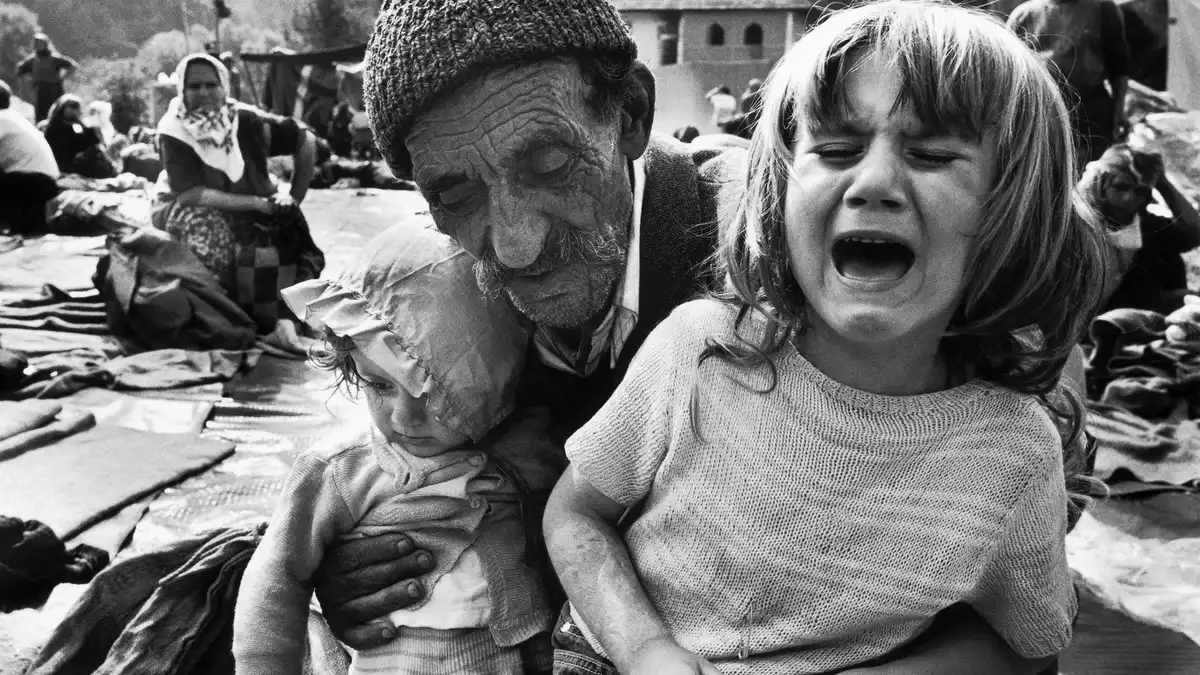
Bosnia’s Srebrenica genocide survivors urge UN court to protect Gaza

Bosnian genocide and war survivors have written an open letter to the International Court of Justice urging it to “implement necessary provisional measures swiftly to protect Palestinians in Gaza”.

The international community failed in the past to protect the Bosniak population during the 1995 Srebrenica genocide, and the court should not repeat “this grievous mistake today”, the letter said.

More than 100,000 people were killed during Bosnia’s 1992-95 war, 8,000 of them Bosniak men and boys in a massacre in what was pronounced a “safe zone” in Srebrenica. More than 2.2 million people were forcibly displaced.

ARAB AND WORLD

Thu 18 Jan 2024 3:02 pm - Jerusalem Time

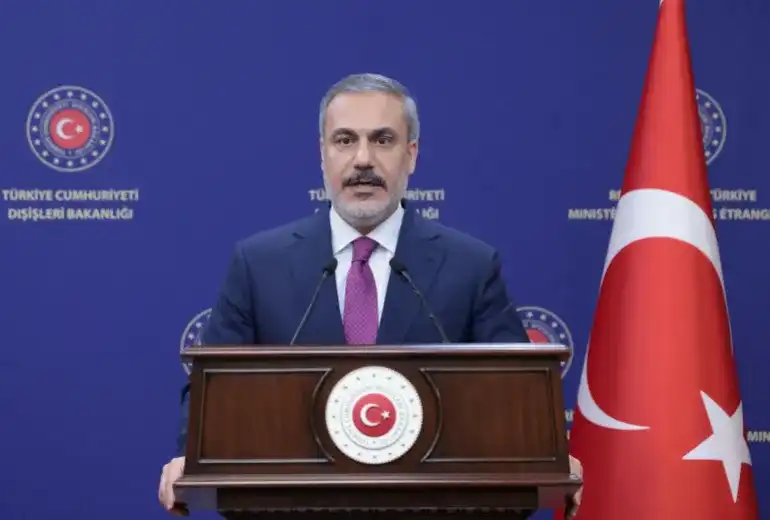
Turkey’s FM: The genocide must stop in Gaza

Turkish Foreign Minister Hakan Fidan issued a call to “stop the genocide” in the Gaza Strip. “It is absolutely unacceptable for Israel to justify its attacks [on Gaza] for security reasons,” he said.


Speaking at a news conference with his Jordanian counterpart Ayman Safadi in Amman, Hakan also said the Palestinians have the right to establish an independent state.


In November, Turkey’s Foreign Ministry recalled its ambassador to Tel Aviv, citing Israel’s refusal to accept a ceasefire, “continuing attacks against civilians”, and denying free entry to humanitarian aid. It was the culmination of a sharp dive in ties since October 7.

PALESTINE

Thu 18 Jan 2024 2:59 pm - Jerusalem Time

‘Endless chaos and growing despair’: UNRWA chief

After making his fourth trip to Gaza since the war broke out, the head of the UN’s agency for Palestinian refugees says the enclave has sunk even “further into despair” and renewed calls for an immediate ceasefire. “Everyone I met had a personal story of fear, death, loss, trauma to share,” said UNRWA Commissioner Philippe Lazzarini. 

“The people of Gaza have moved from the sheer shock of losing everything – in some cases every member of their family – to a debilitating struggle to stay alive and protect their loved ones.


“This has gone on for far too long. There are no winners in these wars. There is endless chaos and growing despair. I call once again for an immediate humanitarian ceasefire to bring some respite.”

PALESTINE

Thu 18 Jan 2024 2:57 pm - Jerusalem Time

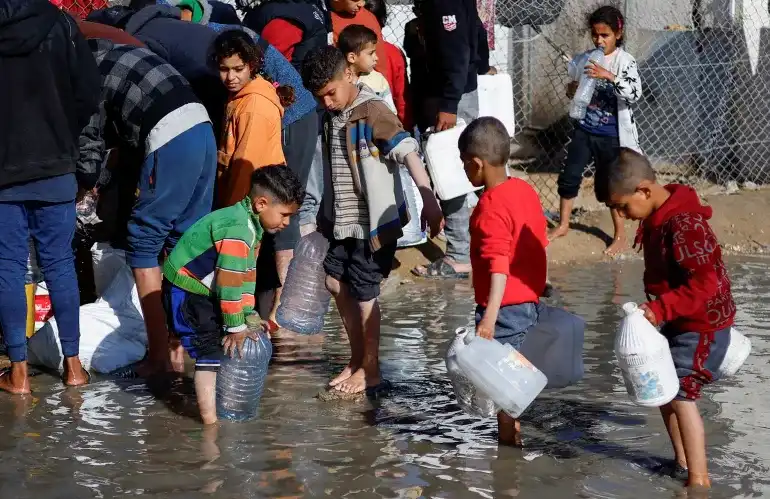
Gaza: Doctor confirms spread of hepatitis C among displaced people in Rafah

Dr Riyad Qishta of Abu Youssef Al Najjar Hospital in Rafah, southern Gaza Strip, has told Al Jazeera the disease has spread among children, adults and the elderly for the first time.


He said it was the result of overcrowding, a lack of hygiene, consumption of non-potable water, disruption in sewage networks, and the spread of wastewater.


The hospital’s capacity to deal with the spread is limited in light of the inability of health authorities to meet the needs of people displaced as a result of overcrowding in Rafah, he added.


Qishta said the epidemic is dangerous and its spread among chronic patients and children poses difficulties. Among its complications is enlargement of the liver, which may develop into cirrhosis and cause a coma in the brain.

ARAB AND WORLD

Thu 18 Jan 2024 2:52 pm - Jerusalem Time

Report: Arab leaders plan to end war and create state of Palestine

Arab states have consulted US and European governments on a plan to halt Israel’s attack on Gaza and achieve lasting peace, suggesting the creation of an independent Palestinian state in exchange for the normalization of relations. 


The Financial Times, quoting an unnamed “senior Arab official”, reports the proposal includes Saudi Arabia normalizing ties with Israel, and Palestine being given full membership at the United Nations. 

The Arab states will present the plan internationally in a few weeks. “The real issue is you need hope for Palestinians, it can’t just be economic benefits or removal of symbols of occupation,” the FT quoted the official as saying. “Given the Israeli body politic today, normalization is maybe what can bring Israelis off the cliff.”


Israeli Prime Minister Benjamin Netanyahu may be a stumbling block to the proposal, the report noted, as he recently said he is “proud” of not bowing to international pressure for Palestinian statehood.

Aljazeera

ARAB AND WORLD

Thu 18 Jan 2024 2:34 pm - Jerusalem Time

War on Gaza: List of key events, day 104

Medical aid enters Gaza while deadly Israeli strikes continue on the south of the enclave.

Five trucks carrying medical aid for hospitals and 45 Israeli captives entered Gaza on Wednesday, announced Qatar, which mediated a deal between Hamas and Israel.


The United States has re-designated Yemen’s Houthis as a “global terrorist” group in response to their attacks on shipping in the Red Sea, the White House’s National Security Advisor, Jake Sullivan, said in a statement on Wednesday.


Israel’s far-right national security minister, Itamar Ben-Gvir, called for Israel’s occupation of the Gaza Strip and said that Palestinians should be “encouraged” to leave the territory in an interview with Israel’s Channel 13 news on Wednesday night.


At least 16 Palestinians, including children, were killed in an Israeli shelling of a house east of Rafah in the Gaza Strip overnight, according to local sources and video footage verified by Al Jazeera.


An estimated $15bn will be required to rebuild just the homes in Gaza, the head of the Palestine Investment Fund, Mohammad Mustafa said at the World Economic Forum in Davos, Switzerland on Wednesday.

The US Central Command (CENTCOM) said that it targeted 14 missiles “that were loaded to be fired” in Houthi-controlled areas of Yemen on Wednesday.


Diplomacy

Australian foreign Minister Penny Wong said the country is “deeply concerned by ongoing settler violence against Palestinians in the occupied West Bank”, in a post on X after visiting the territory on Wednesday.

The United Kingdom’s Foreign Secretary David Cameron met Iran’s Foreign Minister Hossein Amirabdollahian on the sidelines of the Davos Summit on Wednesday. In a post on X, Cameron said he made “clear” to Amirabdollahian that “Iran must cease supplying the Houthis with weapons and intelligence”.


On Thursday, China’s Foreign Ministry spokesperson, Mao Ning, urged Iran and Pakistan to “avoid actions that would lead to an escalation of tension”.


Israeli raids in the West Bank

Israel arrested 46 people from one family in Tuqu village near Bethlehem overnight, according to Al Jazeera Arabic.


A military raid on the occupied West Bank’s Tulkarem continued into a second day on Thursday. Six Palestinians have been killed in Tulkarem, according to Al Jazeera correspondent, Hamdah Salhut.


On Wednesday, the Office of the United Nations High Commissioner for Human Rights called for an independent investigation into the Israeli military amid deadly Israeli air strikes on Nablus and raids in Tulkarem refugee camp.

SOURCE: AL JAZEERA AND NEWS AGENCIES


OPINIONS

Thu 18 Jan 2024 2:25 pm - Jerusalem Time

Israel’s war on Gaza triggered a war on free speech in the West

Tony Greenstein

Tony Greenstein

Opinion Writer

Last month, I was arrested over a single tweet I wrote in support of Palestinian resistance against Israel’s military.

On December 20, I was woken up at 7am by the ringing of my doorbell. At the door were two police officers.

I was told I was being arrested on suspicion of committing an offence under Section 12 (1A) of the Terrorism Act 2000 of the United Kingdom.

The relevant section of the law states: “A person commits an offence if the person – (a) expresses an opinion or belief that is supportive of a proscribed organization, and (b) in doing so is reckless as to whether a person to whom the expression is directed will be encouraged to support a proscribed organization.”

The officers explained to me that my alleged offence was related to a single tweet I posted about Hamas on November 15.

Having only just gone to bed and being somewhat sleepy, the only response I could initially manage was to tell them that my arrest was “Orwellian” and that we are clearly now living in a dystopia. I was struggling to accept that in the 21st-century UK, I was being arrested, not for something I had done, but for expressing an opinion.

I had written the tweet in question in response to a Zionist, who was baiting people online to say they “support Hamas”, which has long been proscribed as a terrorist organization in Britain, and thereby get arrested.

Identifying himself only as James, this person told me:

“Just tweet I support Hamas!’ 3 words is all you have to tweet and then we know where you stand.”

I refused to take the bait and responded “I support the Palestinians that is enough” before going on to say “and I support Hamas against the Israeli army”.

Looking back, I believe this was, especially for a social media platform like X, a carefully calibrated and accurate expression of my genuine opinion.

That day I did not say “I support Hamas politically” for the simple reason that such a statement would not be true.

As a Jewish atheist, socialist and secularist, I naturally do not support Hamas or any other Islamist or religious group. That does not mean, however, that I do not respect and admire the resistance Hamas has been conducting against Israel’s genocidal army.

I criticized Hamas often in the past. For example, in February 2011, in an article published on my personal blog titled “The lousy Hamas government”, I criticized the group for its initial refusal to support the Egyptian people’s uprising against Hosni Mubarak. Over the years, I’ve also written articles and blogposts criticizing the group for its use of torture, its support for the two-state solution, its repression of women and attacks on secular Palestinian youths demanding their freedom. My blogpost titled “We Support the Palestinian people of Gaza not Hamas” was published nearly 15 years ago, in 2009. I’ve also written extensively about how Hamas was a creation of the Israeli state – an important fact the West chooses to forget today.

Despite all this, I explained to my police interrogator, I do indeed support Hamas’s resistance against Israel’s military. This is because when it comes to resisting Israel’s murderous war on Palestinians in Gaza, I would support the devil himself – just as in the second world war I would have supported the Polish Home Army’s resistance to the Nazis, despite their anti-Semitism.

Unfortunately, my experience of being arrested merely for expressing a pro-Palestinian opinion online is not in any way unique. In the past few months, British police have doubled down on their longstanding efforts to stifle free speech on Palestine by equating all expressions of support for the Palestinians with support for Hamas. Mick Napier, the founder of the Scottish Palestine Solidarity Campaign, was arrested a few days before me, for a similar “offence”.

This is because, since the beginning of Israel’s latest war on Gaza, and the public protests against it, there has been unprecedented political pressure on the police to keep an eye on, and when necessary silence and sanction, pro-Palestinian voices.

These renewed efforts to criminalize pro-Palestinian activism and speech have not in any way been subtle.

The BBC, the voice of the British establishment, for example, casually stated in a news report in October that widespread pro-Palestinian demonstrations in the country were in fact “pro-Hamas” (the corporation had to retract this assessment after a public backlash), and Home Secretary Suella Braverman, defined them as “hate marches” attended by “sick” anti-Semites.

Prime Minister Rishi Sunak made his own feelings clear when, during a visit to a Jewish school in London, he announced that the government had handed the police “all the tools, powers and guidance” needed to police these pro-Palestinian protests, adding “anti-Semitism will not stand”.

Eventually, Braverman took things a step too far and accused London’s Metropolitan Police of favoring pro-Palestine protesters, forcing Sunak to sack her.

All this was an extension of the British political and media establishment’s longstanding efforts to portray anti-Zionism and support for the Palestinians as anti-Semitic, to protect Israel and to further Britain’s imperial foreign policy agenda.

To that end, the misnamed “Campaign Against Antisemitism” even suggested that repeated pro-Palestinian demonstrations in London had forced British Jews to “vacate their homes” and “remove their Star of David necklaces and hide their kippahs”. This, despite the Jewish bloc on the last few demonstrations in London consistently being over 1,000 strong.

I myself attended many such demonstrations over the past few months and witnessed firsthand the warm welcome extended to Jewish people in these spaces. In one protest, there was even a group of Muslim women chanting “Judaism yes, Zionism no”.

Today, the British government, with full support from the Labour opposition under Keir Starmer and much of the mainstream British media, is attempting to use smears of anti-Semitism to legitimize its relentless attacks on the most fundamental democratic freedoms of Britons. All Jews support Israel, their argument goes, thus any criticism of “the Jewish state”, including the criticism of its genocidal war on Gaza, is inherently anti-Semitic. Of course it is not  pro-Palestinian demonstrators but this argument, which implies all Jews are supportive of Israeli policies of starving Palestinian civilians, bombing hospitals, and slaughtering children merely because they are Jewish, that is truly anti-Semitic.

Meanwhile, many Jews who are vocally critical of Israel and its war on Gaza are either ignored and erased by the media and the political classes or, as in my case, subjected to bogus prosecutions and persecution. The same is true in Germany where anti-Zionist Jews are subjected to state repression because they don’t play along with the narrative that Israel is the embodiment of what it means to be Jewish.

What made my arrest over a tweet in support of Palestinian resistance possible in the first place was Hamas’s status as a proscribed terrorist organization.

The British state designated the military arm of Hamas as a terror organization in 2001 and extended this proscription to include the group’s political wing as well in 2021.

In its policy paper on the matter, the UK government justified this decision by stating Hamas “used indiscriminate rocket or mortar attacks, and raids against Israeli targets”. “During the May 2021 conflict, over 4,000 rockets were fired indiscriminately into Israel,” it added, “civilians, including 2 Israeli children, were killed as a result.”

These reasons, of course, are ludicrous and serve only to expose the British state’s hypocrisy. If firing unguided rockets towards an occupying army in possession of state-of-the-art defense systems, and killing a handful of civilians in the process, is enough for Hamas to be branded as a “terrorist” organization, then Israel, which has dropped tones of explosives on a besieged population and murdered some 24,000 people, including more than 10,000 children, in a matter of three months is undoubtedly a terrorist organization as well and should be proscribed as a terrorist organization. Yet, those supporting Israel and its attacks on the Palestinians unconditionally are not finding police officers on their doorstep.

The British state is trying to criminalize any support for and solidarity with the Palestinians, and attacking our right to freedom of speech as enshrined in the Human Rights Act 1998 and Article 10 of the European Convention of Human Rights, merely to ensure Israel can continue with its blatant violations of international law.

In the past three months, the Israeli military has bombed refugee camps, hospitals and schools. It killed more than 100 journalists, many in targeted attacks alongside their extended families, and shot at worshippers shielding in a church. Its total siege of Gaza, coupled with its relentless bombardment of civilian infrastructure, has led to the collapse of the health system and given rise to famine conditions.

I will learn on March 20 whether the police are going to charge me with an offence. Whatever happens, however, I will not be deterred from speaking out against Israel’s atrocities and in support of the Palestinian struggle for liberation and dignity. As Palestinians in Gaza face a genocidal war, their supporters in Britain and elsewhere in the West are facing an assault on their right to free speech. But we will not give up our fight – for a free Palestine and a truly democratic Britain.

OPINIONS

Thu 18 Jan 2024 2:20 pm - Jerusalem Time

Gaza will be the grave of the Western-led world order

Aljazeera

Aljazeera

Opinion Writer

By supporting Israel’s atrocities in Gaza, the West has shredded what remains of its credibility and brought the ‘rules-based’ world order it purports to lead to the point of no return.

Saul J Takahashi

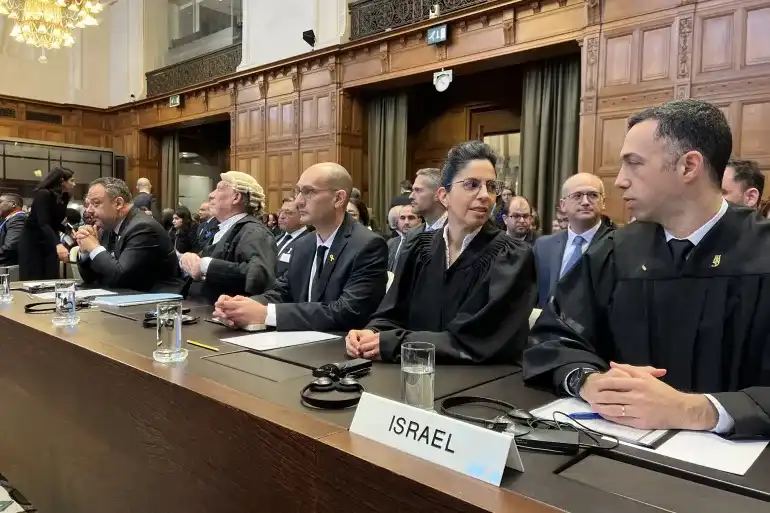
No matter how it concludes, South Africa’s lawsuit in the International Court of Justice arguing Israel has violated the Genocide Convention will go down in history. It will either be remembered as the first step towards finally holding a rogue state accountable for repeated, longstanding violations of international law; or as the last, dying breath of a dysfunctional, Western-led international system.

For the hypocrisy of Western governments (and the Western political elite as a whole) has finally brought the so-called “rules-based world order” they purport to lead to the point of no return. Full-throttled Western support for Israel’s genocidal rampage in Gaza has truly exposed the double standards of the West with regard to human rights and international law. There is no turning back, and the West has only its own arrogance to blame.

The litany of war crimes and crimes against humanity committed by Israel in Gaza are clear as the light of day for anybody who has access to a smartphone. Social media feeds are overflowing with videoclips of hospitals and schools being bombed, fathers pulling out the lifeless bodies of their children from under destroyed buildings, mothers crying over the corpses of their babies. And yet, the reaction of Western governments – besides seemingly limitless military and political support – has been to label any criticism of Israel as anti-Semitism and attempt to ban outright any expression of solidarity with the Palestinian people.

Regardless of this oppression, tens of thousands of people are coming out on the streets day after day expressing their disgust at Israeli atrocities and Western complicity. Desperate to regain some semblance of credibility, Western governments (including the US) have recently started to be marginally critical of Israeli attacks. However, it is too little, too late. Western credibility has been shredded irrevocably.

Of course, Western hypocrisy is nothing new. According to Western governments, the world should be up in arms about Russian aggression but should be perfectly happy with Israeli brutality and flouting of international norms. Ukrainians who throw Molotov cocktails at Russian occupation forces are heroes and freedom fighters, while Palestinians (and others) who dare to speak out against Israeli apartheid are terrorists. White-skinned refugees from Ukraine are more than welcome, while black and brown-skinned refugees from conflicts in the Middle East, Asia and Africa (most of which the West are behind) can sink to the bottom of the Mediterranean. The Western attitude has truly been: rules for thee, not for me.

The Western position towards China exhibits the same insincerity. China is virtually encircled by American and allied military bases, armed to the hilt. Yet it is China that is guilty of… what? Unable to point to any concrete infraction, Western governments and media can only accuse China of “increased assertiveness”, ie, not knowing its assigned subjugate place in the Western hegemonic order.

International justice has become a sick joke. Were the International Criminal Court (ICC) functioning effectively, Israeli leaders would be on trial even as we speak, and there would have been no need for South Africa to approach the ICJ. As it stands, though, the ICC only indicted Africans until 2022, when it announced an investigation into the Russian invasion of Ukraine less than a week after its start. The ICC issued indictments, including for Russia’s President Vladimir Putin, in less than a year. Conversely, it took over six years for the ICC to open an investigation into the situation in Palestine, and even now, years later, meaningful action has yet to be taken. While Israel continued its orgy of violence against the people of Gaza, Karim Khan, the British Chief Prosecutor of the ICC, visited Israel and stressed the need for Hamas’s crimes to be prosecuted, while going soft on Israeli crimes. Little wonder many civil society organizations are calling for him to be fired.

Of course, Western hypocrisy is nothing new. From the get-go, international legal norms were intended to apply only to so-called “civilized” – read white – peoples. Savages did not count, and the powerful Western states could – and did – do to them what they pleased. Natives certainly did not “own” land or natural resources, and colonial powers were free to steal and exploit those as they wished. Zionism was also founded on such racist attitudes – attitudes that remain at the core of Israeli policies to this day.

These double standards are apparent with regard to the right to national self-determination – the fundamental right of all peoples to choose their own political system and control their own natural resources. After World War I, US President Woodrow Wilson insisted that self-determination be the guiding principle of the new world order – but, of course, only for Europeans. Palestinians and other Arab peoples found out the hard way that colonialism was alive and well: They were subject to League of Nations Mandates, which justified colonial rule for “peoples not yet able to stand by themselves”. The Charter of the United Nations also included provisions for Trusteeship, essentially along similar lines as the Mandates of the League.

The wars of independence in Asia and Africa put a stop to this. The newly independent countries demanded successfully that self-determination be elevated to a right for all. The two international covenants on human rights, adopted in 1966, both stipulate the right of all peoples to self-determination in their common Article 1, making it clear that only with political and economic self-determination can any other human right be meaningful.

The discussion on the right of self-determination went further, to the chagrin of Western governments. The UN General Assembly has stated repeatedly that armed struggle (including that of the Palestinian people) against colonial rule is legitimate. And the 1977 Additional Protocol to the Geneva Conventions, on the laws of war, also stated that struggles against colonial and racist regimes are valid. International law has definitely developed in the right direction.

Still, the systems to implement international law remain weak. This is by design, and it allows powerful countries to act with impunity, and to shield its proteges – as we see with the US and Israel. Even if the ICJ issues a provisional order for Israel to halt its violence, and even if, years later, it finds Israel guilty of genocide, without any enforcement, Israel can (and probably will) simply ignore those decisions. That would surely be the end of the current world order, as any facade of fairness would collapse.

Enforcement of international law is in the hands of the UN Security Council, but with its veto rights for the five countries that happened to be on the winning side in 1945, that body has time and time again proven itself incapable of fulfilling its mandate. The General Assembly lacks any enforcement power. And the UN, the ICC, and most other international organizations are perennially underfunded, meaning they rely heavily on voluntary contributions from states. This makes them vulnerable to undue influence by the rich and powerful: in other words, the wealthy Western countries.

On a more fundamental level, these international institutions are not representative. Though civil society organizations can contribute to most of the debates, only governments have a say in the decision-making process – despite the fact that, as we see in the case of Gaza, even the governments of ostensible democracies do not necessarily represent the will of their people.

Israeli aggression and colonization must stop, and abusers of human rights in Palestine must be held accountable – including Western leaders who are complicit in genocide. However, we must not stop there. We must demand a revolutionary reform of international institutions. They must be made truly democratic and egalitarian. They must reflect the voice of the people, through civil society organizations and other democratic modes of representation – not governments that are too often in the pocket of rich and powerful interests.

Creating a world order that will ensure justice and equal rights for all will not be easy. It will require sustained efforts on the part of global citizenry, through putting pressure for change on governments and international organizations. However, it is the only way to ensure that “never again” becomes a reality.

ARAB AND WORLD

Thu 18 Jan 2024 1:26 pm - Jerusalem Time

An analysis of the position of the Arab street regarding the war on Gaza

A poll to measure Arab opinion trends regarding the Israeli aggression, conducted by the Arab Center for Research and Policy Studies via telephone on a sample of 8,000 people in the period between 12/12/2023 and 1/5/2024, revealed the great discrepancy between official and popular positions in the Arab world and in many directions regarding what is happening in Gaza.


The survey included all Arab countries except the UAE, Bahrain, Djibouti, Somalia and Syria, in addition to the Gaza Strip.


The poll showed that the overwhelming majority in the Arab street refuses to recognize Israel at a rate of up to 89%, and therefore they do not agree to the normalization that some Arab regimes are moving toward.


The Arab street also believes - according to the poll - that the negativity of Arab governments and normalization agreements are factors that encourage the occupation to continue its aggression against the Gaza Strip.


The results of the poll revealed the great confidence of the Arab street in the Palestinian resistance, its credibility, its proposals and its positions.


Defending Al-Aqsa Mosque

In response to a question about the reasons that prompted the Islamic Resistance Movement (Hamas) to carry out Operation Al-Aqsa Flood, the two reasons that topped the list, according to respondents, were the continuation of the occupation, 35%, and the defense of Al-Aqsa, 24%, and the Hamas military operation bore his name.


As for what was claimed by the anti-resistance media - whether Arab, Israeli or Western - that the Al-Aqsa flood was the implementation of a foreign agenda, specifically an Iranian one, only 2% of the respondents agreed with it.


It is noteworthy that the highest percentage that adopted the issue of defending Al-Aqsa as the most important reason for the Hamas attack was from the West Bank and amounted to 45%, which reflects its residents’ feeling of the imminent danger to Al-Aqsa, which they live with on a daily basis, and their high confidence in Hamas’s credibility.


Legitimate resistance

In assessing the legitimacy of what Hamas did in unleashing the Al-Aqsa flood, 88% of the Arab street believes that this resistance operation was legitimate, while only 5% believe that it was not.


Therefore, the condemnation of the Hamas operation by some Arab regimes was contrary to the pulse and trends of the Arab street, and it certainly reflects the absence of democracy in Arab political decisions.


Also, 82% of respondents believed that Hamas is different from ISIS, while 10% answered that they did not know or refused to answer.


As for solidarity with the people of Gaza and Hamas together, the percentage was 69%, while 23% expressed solidarity with the people of Gaza despite their differences with Hamas.


There is no peace with occupation

The Israeli aggression shook the Arab street’s convictions about the possibility of establishing peace with the Israeli occupation. 59% of the sample questioned believed that they had become certain that there would be no possibility of establishing peace with the occupation, while 14% became greatly doubtful about that, and 9% believed even before the war that there was no possibility of establishing peace with the occupation. There was no possibility of establishing peace. In brief, 82% of the Arab street did not see the possibility of achieving peace with Israel, albeit to varying degrees.


This result greatly and overwhelmingly reinforces the resistance’s theses, and necessarily shows the weakness of the Palestinian Authority’s popularity and the conviction of Arab opinion of the futility of Arab peace initiatives with Israeli occupation.


The results of the referendum also sent a clear and clear message of anger to the West - especially the United States of America - due to its support for the crimes of Israeli occupation, and demonstrated the weakness of American credibility in the Arab street. American support constitutes - according to 50% of respondents - the most important factor that contributes to Israel’s continued aggression against Gaza.


The American position

As for positions on Israel’s war on Gaza, the results showed that 94% of respondents evaluated the American position as negative, while 79%, 78%, and 75% evaluated the French, British, and German positions, respectively, as negative.


While we note that the percentage of those dissatisfied with the positions of European countries is close and high, we notice something similar to the consensus of the Arab street regarding the negativity of the American position.


The Arab street’s hatred and negative feelings towards the United States of America have greatly increased, as have feelings of distrust and lack of credibility in it. The vast majority of respondents (81%) do not trust Washington’s seriousness in working to establish a Palestinian state.


Mistrust of the United States extends to the American media's coverage of the war, which 82% of respondents rated as biased toward Israel.


What is striking and surprising is that the Arab street sees that America is the most threatening to the security and stability of the region (51%), and is ahead of Israel by a large margin (26%).


Central issue

The Al-Aqsa Flood operation restored the Palestinian issue to its prominence after it had become routine news in recent years, and returned to the forefront of issues in the Arab conscience. 92% of respondents considered that the Palestine issue is the issue of all Arabs.


An overwhelming percentage of those polled also showed keen follow-up to the war on Gaza and the psychological pressures that Arab citizens are exposed to as they follow the aggression and war of annihilation against Gaza.


It was clear that the Arab popular position was almost unified in its positions on Palestine and the resistance, despite the large discrepancies between the positions of the Arab regimes on these issues. If the people had been given freedom of choice and decision, they would have dealt with the occupation and its crimes in a different way than what is happening now.


Source: Al Jazeera

ARAB AND WORLD

Thu 18 Jan 2024 1:23 pm - Jerusalem Time

Stratfor: What Israel's war with Hezbollah could mean

Stratfor commented on the escalation in mutual retaliatory attacks on the Israeli-Lebanese border, saying that although a comprehensive invasion of Lebanon is unlikely, Israel is considering taking escalatory measures - in the coming weeks - that involve stronger action against the Hezbollah group inside Lebanon, which creates a risk The outbreak of a multi-front, long-term war for Israel.


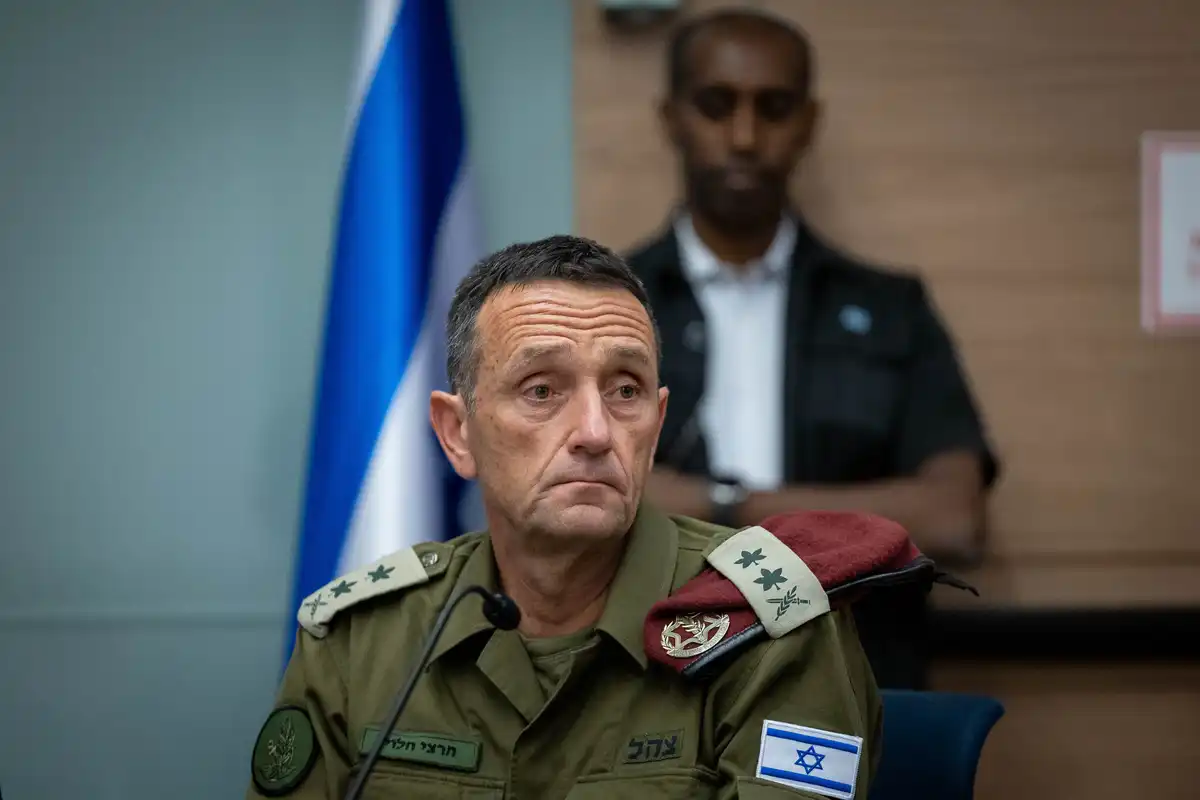
The American intelligence site pointed to the threat of Israeli politicians with broad military action against Hezbollah, and to the latest disturbing statement from military officials, in which the head of the “Israeli Defense Forces”, General Herzi Halevy, on January 10, told the Israeli forces that the government will place them in the places necessary to secure northern borders.


It also pointed out that the Israeli Ministry of Health warned hospitals in northern Israel to prepare to receive large numbers of casualties, and to plan for the possibility of interruption of medical supplies in the event of a large-scale Hezbollah attack.


Stratfor added that these comments and warnings come after the escalation between Israel and Hezbollah, which witnessed Israel targeting more of the party's prominent military leaders and assassinations of leaders of the Islamic Resistance Movement (Hamas) in Lebanon, and Hezbollah responded by attempting to strike strategic Israeli military targets.


The site believes that the ongoing Israeli military strategy is to use directed escalation to pressure Hezbollah to withdraw from the border.


If the current military strategy fails to establish a viable buffer zone, Israel will likely escalate its larger attacks on Hezbollah's military infrastructure to increase pressure on it, including the use of sustained ground raids and deeper strikes outside the southern border area.


If these broader attacks fail, Israel will use battalion-level ground incursions into southern Lebanon to “clear and control the territory of militants” and signal that Israel may escalate to a full-scale invasion.


The American website added that Israel has the option of repeating a comprehensive invasion once the combat operations in Gaza end, although doing so would likely lead to direct Iranian retaliation against Israel itself, making this unlikely.


It concluded that Israel would likely consider this option only if it received full diplomatic support from the United States, completed its main military objectives in Gaza, had internal political unity and support for the operation, and if Hezbollah escalated attacks to a level that included things like launching strikes on Israeli cities. , making its threat impossible to ignore.


Source: Stratfor +Aljazeera

OPINIONS

Thu 18 Jan 2024 1:15 pm - Jerusalem Time

War on Netanyahu and the war cabinet..

op-ed Al Quds dot com

op-ed Al Quds dot com

Opinion Writer

The gap is widening and deepening towards a major and comprehensive disagreement within Israeli war cabinet in light of the lack of clear visions and perceptions for the day after the war and the form of leadership that will take over, and the decisions that Netanyahu takes in isolation from the ministers or in coordination with the war cabinet without taking into account the opinion of the political and security cabinet, despite the strategic decisions related to the war and aggression against the Strip, it is supposed to reach everyone.

After the recent American statements about the end of the ground war and the transition to other goals, and the necessity of increasing the volume of humanitarian aid that must enter the people in the Gaza Strip, yesterday Netanyahu quickly made statements from an Israeli Air Force base in Naftim in the Negev to the effect that the war may slide into the year 2025 and that its goals are to eliminate Hamas, preventing any threat from Gaza to Israel, and releasing all those detained by the resistance.

Statements we have become accustomed to, since the beginning of the war, but this time they confirm Netanyahu’s acquiescence to the most extreme party in his government after a strong letter sent to his office by National Security Minister Itamar Ben Gvir for not involving him in the decisions, especially the decision to bring medicine into Gaza and the controversy it sparked between Ben Gvir and Netanyahu on the one hand and Gallant, the Minister of Defense, and Netanyahu, on the other hand, in addition to the pressure exerted by Benny Gantz on Netanyahu not to give up the issue of control over the Philadelphia axis, and these and other issues, as the Israeli media monitors, will be decisive and will lead to ending the cabinet’s military role as quickly as possible.

Netanyahu has not achieved any of the goals of the war, and it is clear that he is floundering and his ideas are taking him to the arms of the extreme right to save what can be saved before it is too late and before his political future is eliminated. 

Hence, it was not strange that he appeared to us yesterday with these statements that confirm that he is devoid of any real idea. All he wants is for this war to continue on Gaza and perhaps on the West Bank for the longest time, in order to postpone his trial and what awaits him from Israeli public opinion, which feels greatly disturbed by the failure of Netanyahu and his camp to release the hostages until this moment.

What we can see and what is clear from the equations on the ground is that the withdrawal of army units from the northern Gaza Strip did not come in vain, especially since it was accompanied by clear statements from Army Minister Gallant, who is no longer able to cooperate well with Netanyahu, and it has become clear that in every situation Netanyahu goes. To raise the dispute with Gallant as the inventory of accounts nears the end of the war, which we believe is approaching the finish line, but Netanyahu’s recent statements in which he prevented Gallant from seeing the details of the process of bringing the medicine into the Gaza Strip, after a long series of contact with Gallant and changing Netanyahu’s opinion regarding the exchange deal. What is scheduled to be implemented if the negotiations succeed confirms that Netanyahu is working for himself and to protect his strategic position as prime minister, away from the opinions and concerns of the ministers, but he will find an inevitable end with his removal from the political track and perhaps his trial in more than one case.

PALESTINE

Thu 18 Jan 2024 12:56 pm - Jerusalem Time

West Bank: 6 Palestinians killed and dozens detained in Tulkarm

A young man was killed today, Thursday, by Israeli soldiers, in the ongoing aggression against the city of Tulkarm and its two camps for the second day in a row, where he blew up a house, burned another, and severely beat a number of citizens, amid widespread destruction of the infrastructure.


Local sources reported that Israeli forces blew up the house of citizen Omar Hussein Amara in the schools neighborhood in Tulkarm camp, after forcing its residents to leave it, which led to its complete damage and its ignition, and the homes adjacent to it were damaged.

Thabet Thabet Governmental Hospital announced thedeath of the young man, Muhammad Faisal Dawwas Abu Awad (28 years old), after he was hit by live bullets in the abdomen, in Nour Shams camp, east of Tulkarm, which raises the death toll in the city since yesterday to 6.

The raids also affected shops and public facilities, including Al-Salam Mosque, which was stormed and vandalized, and the Abu Ghazala family home in the Al-Akasha neighborhood in the camp, which was burned.

Hundreds of citizens as young as 16 years old were arrested by the occupation forces, who took them to field investigation centers in homes inside and outside the camp.

A number of citizens who were later released told our correspondent that the occupation soldiers assaulted a large number of them with severe beatings, abuse, and threats. They were also detained for long hours, transferred from one place to another, and then released in distant places, specifically at crossings and military checkpoints.


PALESTINE

Thu 18 Jan 2024 12:53 pm - Jerusalem Time

West Bank: Israeli forces arrest 60 Palestinian citizens

From yesterday evening until Thursday morning, the occupation forces launched a massive arrest campaign that targeted at least (60) citizens from the West Bank, including the mother of killed Uday Abu Jahisha from Hebron, and former prisoners.

The arrests were concentrated in the governorates of Bethlehem and Hebron, while the rest of the arrests were distributed in the governorates of: Tulkarm, Nablus, Ramallah, and Jerusalem.


Israeli forces continue to storm Tulkarm and its camp, which is subjected to comprehensive aggression and extensive field investigations of hundreds of citizens, accompanied by severe beatings. In light of the continuation of the military operation, we have not been able to confirm the numbers of detainees and those whom the occupation has kept detaining them.


The arrest campaign was accompanied by widespread raids and abuse, severe beatings, and threats against detainees and their families, in addition to widespread sabotage and destruction of citizens’ homes, direct shooting to kill, and confiscation of vehicles, in addition to widespread sabotage operations that affected infrastructure.

Thus, the total number of arrests after October 7 rose to about (6,090), and this total includes those who were arrested from homes, through military checkpoints, those who were forced to surrender themselves under pressure, and those who were held hostage.

It is noteworthy that the arrest campaigns do not only reflect the escalation in the number of detainees, but also the level of crimes, abuse and torture to which citizens were subjected, within the framework of the comprehensive escalation processes taking place in the governorates of the West Bank.

ARAB AND WORLD

Thu 18 Jan 2024 8:40 am - Jerusalem Time

American actor John Cusack: I do not fear for my future in Hollywood because of my position on Gaza

Hollywood actor, John Cusack, reiterated his support for the Palestinians, saying that he does not fear for his future in the film industry and cinema because of his position on what is happening in Gaza.

He said in a tweet on his “X” account: “I pity those scoundrels who think that I care about my projects in Hollywood while genocide is being committed in Gaza.”

 John Paul Cusack (57 years old) works as an actor and screenwriter. He won the “Best Promised Actors” award in 1990 for his role in the movie “Say Anything.” He also won the “Best Supporting Actor” award for his role in the movie “Con Air” in 2000. His most famous films are “1408” and “Child from Mars.”


In one of his responses to some followers, Cusack expressed his feelings and how he could not eat anything after seeing a clip of a Palestinian doctor amputating his daughter’s leg without anesthesia, due to the war on Gaza.

PALESTINE

Thu 18 Jan 2024 8:19 am - Jerusalem Time

Hamas source: This is our position on the exchange of “all prisoners” and the truce

A senior source in the Islamic Resistance Movement "Hamas" told "Arabi 21" that the movement is prepared to exchange all Israeli prisoners for all Palestinian prisoners when the war stops completely.

The source added that this position is not new, “Hamas has demanded this all the time, but it was the Israeli side that was insisting on short-term truces (for one day), while the movement wants a final cessation of the war.

The source indicated that Hamas informed the mediators, Qatari and Egyptian, of the details of this, and what is related to “relief, shelter and reconstruction for our people in Gaza.”


He added, "If the Israeli government is truly interested in resolving the prisoners' issue, it must communicate with the mediators and express this frankly and not in a manipulative manner."


Last week, the Palestinian factions confirmed their position of refusing to conclude any agreement or prisoner exchange deal with Israel “except by a comprehensive cessation of the aggression against the Gaza Strip.”


This came in a statement by the factions following a meeting they held to discuss developments in light of the aggression against Gaza, and the Hamas movement published it on the Telegram platform.


The factions said in the statement: “We affirm our unified national position that there is no agreement or exchange deals without a comprehensive cessation of aggression against our Palestinian people.”

Egypt and Qatar, along with the United States, are sponsoring efforts to reach a second temporary truce in Gaza, as the first truce was reached last November and resulted in the release of 105 prisoners held by Hamas, including 81 Israelis, 23 Thais, and one Filipino, compared to 240 Palestinian prisoners. Of women and children in occupation prisons.


On October 7, 2023, Hamas launched an attack on military points and settlements adjacent to the Gaza Strip, in which about 1,200 Israelis were killed, about 5,431 were wounded, and the movement captured at least 239. It exchanged dozens of them with Israel during a temporary humanitarian truce that lasted 7 days and ended early last December.


Since that day, the Israeli army has been waging a devastating war on Gaza that, as of Wednesday, left “24,448 dead and 61,504 injured,” and caused the displacement of more than 85 percent (about 1.9 million people) of the Strip’s population, according to the Palestinian authorities and the United Nations.

ARAB AND WORLD

Thu 18 Jan 2024 7:58 am - Jerusalem Time

Richard Haass: The two-state solution is dying...

By Iman Shams

American diplomat Richard Haass, who has been close to the White House and various American administrations for four decades, saw that the two-state solution is dying and that “the situation in the Middle East region is on the cusp of a more dangerous era.”

In an interview with the Wall Street Journal, Haass stressed the seriousness of the situation in the Middle East, due to a number of failures of the American administration during the last seven years in the region, and he listed them as follows:


- The weakness of the American position in the Greater Middle East.

- The emergence of the Iranian Empire, which has influence and influence beyond its borders.

- The weakening of the Palestinian Authority and the emergence of Hamas as a major actor in Gaza.

- The Iranian and American role in the chaos in Iraq that drained American resources.


Today he believes that "the Middle East is in worse shape than it was seven years ago. It is as if chaos is the new world order."


American diplomat Richard Haass, who has been close to the White House and various American administrations for four decades, saw that the two-state solution is dying and that “the situation in the Middle East region is on the cusp of a more dangerous era.”


Pessimistic outlook

He looks at the situation pessimistically and says: “The world is in a state of chaos, but the chaos is based on solid foundations. The conflict between dictatorship and democracy, the decline in the influence of the United States in global affairs, and the rise of China, all of these factors contribute to this chaos. The rise of China, which "It does not represent the power of the status quo, it represents a shift in the balance. And a Russia that is really disaffected and able to do something, as we see in Ukraine and other places, is shifting power in different forms that are moving around the world."


Haass acknowledged that the United States of America had become “less capable and less prepared to act effectively in the world. There is a gap between global challenges and global responses,” and said: “Our relative position in the world has deteriorated, again partly due to the rise of others,” considering that “ We must realize that there is no such thing as the international community.”


Taiwan and Ukraine

Haass called on the United States to make more efforts to support Taiwan, avoid resorting to the use of force, and seek to discourage the Chinese from moving there. He said: “China knows that if it uses force on a large scale against Taiwan, it is betting on the future of the Communist Party and the current leadership. It will not "I would be surprised to see more powerful Chinese aircraft or ships. But I think they will show restraint. I think Xi will put pressure on Taiwan indirectly for the foreseeable future. The only thing that could change the situation is a radical change in the US's ability or willingness to help Taiwan." "The upcoming elections are very important. Many countries in the region are wondering what this will mean for the United States' willingness to support its allies and partners."


As for Ukraine, “although we would like Ukraine to regain all of its territory, this will not happen,” Haass said, “partly because Russia can do a lot, and in the event of a strike, North Korea can help or Iran or even China... Ukraine must move away from its current strategy. Success does not mean that Ukraine militarily liberates all of its territory, but rather that it becomes a permanent entity. It must move from an offensive strategy, which I do not think can succeed, to a defensive strategy that can succeed. “I believe that it should wait for a completely different Russia, one that is willing to make some concessions in exchange for ending its outcast political and economic status.”


“Russia could say it won, but it didn’t,” Haass added. “In addition, Ukraine will somehow be integrated into the EU and NATO. There will be a prosperous Western state, which is exactly what Putin does not want to see. His immediate successor could be worse.” "But his successor's successor may not be the same. At some point, in Russia, Vladimir Putin will be considered the one who led Russia from one precipice to another."

Haass called on the United States to do more to support Taiwan, avoid resorting to the use of force and seek to discourage the Chinese from moving there.


Can Hamas be destroyed?

In response to this question, Haass answers: “No. But it can be weakened or seriously deteriorated. But Hamas is a network as much as it is a movement. There will always be real or potential armed resistance. I do not think there is an end at the moment, because the Israelis They entered the conflict without specifying an end. There are two big issues. They can weaken Hamas, and they will. They are causing a huge number of casualties and civilian deaths in the process, but for there to be a real end, you need a subsequent ruling authority and a security guarantor. I don't see "Either one is available. The Israelis will have to do it."


He agrees that “Prime Minister Benjamin Netanyahu undermined the Palestinian Authority, which was the potential Palestinian partner. He arguably empowered Hamas by handing Gaza over to Hamas. His goal in this operation was to perpetuate a version of the status quo in Israel, and to let Gaza isolate itself Basic". But he believes that the Israelis, for the most part, do not care about Gaza. She was never part of the settlement movement in a serious way. It was a sideshow, and what the Israelis wanted to do was avoid the establishment of a Palestinian state. They want to avoid imposing restrictions on settlements. When I say the Israelis, I mean the coalition of Netanyahu and his companions, and what they basically want is not to go to a one-state solution.


Regarding the two-state solution, he said, “It is dead,” and concluded by saying: “Rather, let us say that it is on life support. Although Israeli-Palestinian relations were bad on October 6, they have become much worse now. I can present all arguments against the feasibility of the two-state solution, but it is the way "The only one I know of to respond to the legitimate aspirations of the Palestinians and to ensure that Israel remains a Jewish, democratic state."

From Assas Media

ARAB AND WORLD

Thu 18 Jan 2024 7:55 am - Jerusalem Time

Israeli Chief of Staff: The possibility of war with Lebanon is increasing

Today (Wednesday), Israeli army spokesman Avichai Adraee quoted Chief of Staff Herzi Halevy as saying that the possibility of war with Lebanon has become greater than before, and that the army is increasing its preparations for this, according to what was reported by the Arab World News Agency.


Adraee said on the “X” platform that Halevy was inspecting a military maneuver in the north when he spoke to the soldiers, saying: “The possibility of a war in the north has increased compared to the past. When we need to, we will move forward with full force.”


The Chief of Staff added: “We are working to raise readiness for war in Lebanon, and we have many lessons from the war in Gaza, many of which are also appropriate for fighting in Lebanon, and others that we must adapt.”

He continued: “In Lebanon, we want to achieve a clear goal, which is to return the population to the north - all the towns in the north. I do not know the timing of the war in the north; “But I can say that it is more likely in the coming months than in the past, but we are starting it with a lot of advantages.”


The Times of Israel reported that the maneuver during which Halevy spoke was to simulate an attack in Lebanon. It was reported that he indicated that there are about 80,000 displaced Israelis due to the Lebanese Hezbollah attacks.


ARAB AND WORLD

Thu 18 Jan 2024 7:53 am - Jerusalem Time

The US Senate is considering imposing conditions on aid to Israel

US Senate Majority Leader Chuck Schumer told reporters today (Wednesday) that Democrats in the Senate are considering imposing conditions on the aid the United States provides to Israel.


The Senate thwarted a draft resolution that sets conditions on American aid to Israel. The Council voted by a majority of 72 votes in opposition to 11 votes in support of the project proposed by independent progressive Senator Bernie Sanders.


Sanders said in a speech before the Council, addressing his colleagues: “Whatever your opinion about this terrible war, we cannot hide... Since the beginning of the conflict, we have not discussed a single project that touched on the unprecedented destruction, the humanitarian crisis, and the use of American weapons in a military campaign that left many dead and wounded.” And the displaced.”


Although the project failed to obtain the votes required for approval, which was expected, putting it up for discussion in the Council is an extremely important “exceptional step,” as it shows increasing opposition to US President Joe Biden’s policy toward Israel among his supporters.


America provides annual military aid to Israel worth $3.8 billion, and the Biden administration asked Congress to approve an amount of $14.3 billion last October, but lawmakers have not approved the amount until now due to internal disputes related to immigration reform, which It prompted the White House to seek to bypass Congress' powers through emergency law, and to send military aid worth approximately $106 million to Israel last December.

PALESTINE

Thu 18 Jan 2024 7:47 am - Jerusalem Time

Israel Escalates Gaza Strikes after Medicine-for-Aid Deal

Israel stepped up strikes Wednesday on war-torn Gaza's south, where medicines were expected to be delivered for hostages in exchange for humanitarian aid under a newly brokered deal.


But nearly 24 hours after the deal was announced, a top Hamas official set new conditions for providing the drugs, insisting Israel must not inspect the trucks carrying them.

Air strikes and artillery fire targeted Khan Younis throughout the night, said an AFP correspondent in the southern Gaza Strip's biggest city. "It was the most difficult and intense night in Khan Younis since the start of the war," said Gaza's Hamas government, whose health ministry reported 81 deaths across the Palestinian territory.

Fighting has ravaged Gaza since Hamas's unprecedented October 7 attacks on Israel that resulted in the death of about 1,140 people, mostly civilians, according to an AFP tally based on official Israeli figures.

At least 24,448 Palestinians, about 70 percent of them women, young children and adolescents, have been killed in Israeli bombardments and ground assaults, according to the Gaza health ministry's latest figures.  Hamas and other militants seized about 250 hostages during the October 7 attacks, and around 132 remain in Gaza, including at least 27 believed to have been killed.  The fate of those still in captivity has gripped Israeli society, while a broader humanitarian crisis in Gaza marked by the threat of famine and disease has fueled international calls for a ceasefire.


Medicine for hostages

The agreement announced by Qatar on Tuesday following French and Qatari mediation will allow medicines to reach the hostages and aid to enter the besieged Palestinian territory. The International Committee of the Red Cross welcomed the deal, under which 45 hostages are expected to receive medication, as "a much-needed moment of relief".

A security source in Egypt said a Qatari plane carrying medicines had arrived on Wednesday at El-Arish near the Rafah border crossing with Gaza.  France said the drugs would be sent to a hospital in Rafah, given to the Red Cross and divided into batches before being transferred to the hostages.  A top Hamas official announced new conditions for the deal on Wednesday, however.


Writing on X, formerly Twitter, Musa Abu Marzuk demanded 1,000 boxes of aid for Gaza for every one going to the hostages and that a country Hamas trusts, not France, supply the medicine.  'Why are they doing this?'  At the Abu Yussef Al-Najjar hospital in Rafah, Palestinians stood in front of bodies wrapped in shrouds, mourning the loss of loved ones killed in an overnight Israeli strike. 


"Why are they doing this? 

They are destroying us," Umm Muhammad Abu Odeh, a woman displaced from the north Gaza town of Beit Hanun, told AFP.  The Israelis "told us to go south, and we came here... but there is no safe place in Gaza".  The United Nations says the war has displaced roughly 85 percent of Gaza's 2.4 million people, many of whom have been forced to crowd into shelters and struggle to get food, water, fuel and medical care.  In Rafah, Safa Fethi Hamad has been anxiously waiting for more than a month to cross the border to Egypt.  "We are all going to die. Food is very limited, we have no protection," she told AFP.  The Israeli public has kept up intense pressure on Prime Minister Benjamin Netanyahu's government to return the hostages, with officials insisting military pressure is necessary to strike any deal.  At Nir Oz kibbutz, where about one in four residents was killed or kidnapped, Yossi Schneider is clinging to hope for his baby relative Kfir Bibas despite Hamas announcing his death.  The youngest hostage kidnapped by Hamas was less than nine months old on October 7 and would be celebrating his birthday this week.  "We are thinking about them every day, every second, every minute," Schneider said of Bibas and his missing brother and mother.


West Bank violence  

Violence has also surged in the Israeli-occupied West Bank since October 7 to a level not seen since the second Palestinian intifada, or uprising, between 2000 and 2005.  Israeli army raids and attacks by settlers have killed around 350 people in the territory, according to an AFP tally based on sources from both sides.


The Palestinian Red Crescent said an Israeli strike on Wednesday killed four people in Tulkarem refugee camp, in the north of the Palestinian territory.  The Israeli military confirmed an air strike that killed "a number of terrorists".  Al-Aqsa Martyrs' Brigades, the armed wing of Palestinian President Mahmoud Abbas's Fatah party, said five of its fighters died in a strike east of the city of Nablus.  The Israeli army said it killed a Palestinian militant to avert an "imminent terrorist attack" he had been planning.  Fears are mounting that the Israel-Hamas conflict will trigger an all-out war across the Middle East, with growing violence involving allies of the Iran-backed Hamas.  The US military said it carried out fresh strikes in Yemen on Tuesday after the country's Iran-backed Houthi militias claimed another missile attack on a cargo ship in the Red Sea.

It came just days after the United States and Britain bombed scores of targets inside Houthi-controlled Yemen in response to attacks by the militias, who say they are targeting Israeli-linked shipping in solidarity with Gaza.

Israel's army has exchanged regular cross-border fire with Lebanon's Hamas-aligned Hezbollah since the start of the war.


UN chief Antonio Guterres told the World Economic Forum in Switzerland on Wednesday that a "full-fledged confrontation" in Lebanon "would be a total disaster" to avoid at all costs.

Meanwhile, Iran -- which backs the Houthis and Hezbollah -- carried out a missile attack in Iraq's Kurdistan region against what its Revolutionary Guards alleged was an Israeli spy headquarters and a "gathering of anti-Iranian terrorist groups".

ARAB AND WORLD

Thu 18 Jan 2024 7:40 am - Jerusalem Time

American officials: Blinken informed Netanyahu that there is no military solution for Hamas

US Secretary of State, Anthony Blinken, informed Israeli Prime Minister Benjamin Netanyahu that there is no military solution regarding the fate of the Hamas movement, while there is an attempt by the administration of President Joe Biden to prepare for a post-Netanyahu government.


This came according to what NBC reported, citing American officials, who stressed that “the divisions between the Biden administration and Netanyahu have become more apparent since Blinken’s visit to Israel.”


The network reported that "During Blinken's visit, Netanyahu rejected all of Washington's requests, except not to attack Hezbollah."


American officials said, "Blinken informed Netanyahu that there is no military solution regarding the fate of Hamas, and Israel must acknowledge this."


"After Netanyahu"


The report noted that "the Biden administration is looking beyond Netanyahu to achieve its goals in the region."


Report: Netanyahu obstructed negotiations on a prisoner exchange deal without coordination with the war cabinet


The officials added, "The Biden administration is trying to prepare, with other Israeli leaders, to form a post-Netanyahu government."


The NBC report noted that Blinken obtained a pledge from the Saudi Crown Prince, Mohammed bin Salman, and four other Arab leaders to help rebuild Gaza after the war.


According to the report, the four Arab leaders agreed to support a new Palestinian government in the Gaza Strip, while the Saudi Crown Prince offered to normalize relations with Israel as part of an agreement that includes the reconstruction of the Gaza Strip, and the condition of establishing a Palestinian state.


The website quoted three American officials, whom it described as high-ranking, that the Biden administration is looking forward to “the day after Netanyahu” to try to achieve its goals in the Middle East.

The same officials told NBC that Netanyahu "will not be there forever."


ARAB AND WORLD

Thu 18 Jan 2024 7:35 am - Jerusalem Time

Two motions of no confidence in the Netanyahu government

The Yesh Atid party, led by Israeli opposition leader Yair Lapid, announced on Wednesday that it had submitted a proposal to withdraw confidence from the Israeli government due to the 2024 budget, which the party considered bad, while the Labor Party decided to put forward a proposal to withdraw confidence due to the failure to restore Israeli detainees in the Gaza Strip. .


Yesh Atid posted on his page on the “X” platform, “This government cannot continue to exist. It is a failure that costs human lives and the future of the country.”


He added: “While members of the Ministerial Council for Political and Security Affairs are busy with bickering and politics instead of managing the war, the government has approved a shameful budget. A budget that favors unnecessary ministries and coalition funds over helping evacuees and reservists and enhancing the sense of security. We call on all (parliamentary) blocs in the Knesset to vote to withdraw confidence from the worst government in the country's history. Israel needs change."


Later, the Labor Party announced that it, in turn, intends to present a motion of no confidence in the government, due to its inability to return Israeli detainees in the Gaza Strip.


The party wrote on its page on the “X” platform on Wednesday, “It has been 103 days since our daughters and sons were in captivity with the Hamas movement. 103 days and the State of Israel is torn between Israel and Gaza, and the government is not interested at all. They have no time and we do not have time.”


He continued: "There is no trust in a government that does not make every effort to return them. There is no trust in a government that does not place the return of kidnapped women and men at the top of the list of priorities. A government that cares about its own corrupt interests, not those who sacrifice their lives for it."


It is noteworthy that in practice it is difficult for both parties to recruit a majority to topple the government.


Earlier this month, Israeli opposition leader Yair Lapid attacked Prime Minister Benjamin Netanyahu, saying that he "will not remain" as head of the Israeli government through 2024.


Lapid said in a press conference in the Knesset (Parliament): “We must choose between the destruction caused by the Israeli government in 2023, and the great correction of the government that will come in 2024.”


He added: “I know what Israeli society will choose, and you know too,” referring to opinion polls that showed a significant decline in the popularity of the parties forming the government, led by “Likud” led by Netanyahu. The parties forming the government, in addition to “Likud,” include “Shas”, “Torah Judaism,” “Jewish power,” and “religious Zionism.”


Lapid continued, referring to Netanyahu: “The year 2024 will look completely different. What divided us and brought disaster upon us will not remain,” and added: “The extremists will return to their homes, and Netanyahu will return to his home. Let’s start again.”


For his part, the leader of the right-wing opposition "Israel Our Home" party, Avigdor Lieberman, said in a press conference in the Knesset: "I will enter the Israeli government only on the day Netanyahu leaves and not one second before that."

ARAB AND WORLD

Wed 17 Jan 2024 5:50 pm - Jerusalem Time

Blinken Answering Thomas Friedman: Jewish lives don’t matter more than Palestinian ones

In an interview with journalist Thomas Friedman, Blinken discusses the war in Gaza, US humanitarian aid efforts, and the two-state solution.

Palestinian lives are as important as Jewish ones, US Secretary of State Antony Blinken issued the World Economic Forum at Davos, Switzerland, when quizzed on the matter by veteran journalist Thomas Friedman.

“Do Jewish lives matter more than Palestinian and Muslim and Christian lives, given the incredible asymmetry in [civilian] casualties” in the Gaza war, Friedman said.Blinken quickly replied: “No.”

He then expanded on the answer, stressing that “for me and for so many of us, what we are seeing every single day in Gaza is gut-wrenching. The suffering we are seeing among innocent men and children breaks my heart. The question is, what is to be done.”


US efforts to provide aid to Gazans 

The Biden administration has been harshly criticized for not forcing Israel to halt the Gaza war in light of Hamas assertions that over 24,000 Palestinians have been killed in Gaza war-related violence. Israel has claimed that 9,000 of those fatalities have been combatants.


Blinken spoke of US efforts to reduce Palestinian casualties and increase humanitarian assistance to Gaza. “But that in no way, shape, or form takes away from the tragedy we have seen and continue to see. All I can tell you on a purely human level, it is devastating, but it reinforces the conviction to do everything we can in this moment to try and make a difference in the day and day out” as well as to arrive at a larger resolution for Israel’s conflict with the Palestinians the Middle East.


“There has to be another way that answers Israel’s most profound concerns and questions,” Blinken said.Israel can’t allow for another attack like the one executed against it by Hamas, Blinken said, as he referenced the incident sparked the Gaza war in which 1,200 people were killed in southern Israel, and another 250 were seized as hostages.

“It’s hard to overstate the psychological impact on the country as a whole of what happened on that day,” he said.

Outside of Israel, there are large portions of the international community that do not believe that October 7 happened, “that Hamas slaughtered men, women, and children, that it executed parents in front of their kids, that it executed kids in front of their parents, that it burned families alive. They do not believe it,” Blinken said.


Challenges in creating a two-state solution

The biggest challenge is dehumanization, “the inability to see the humanity in the other,” and when that happens, “you get so hardened that you're willing to do and accept things that you wouldn’t if the humanity of the other was front and center in your consciousness,” Blinken said.


What is needed is leaders who understand this and are prepared to act on it, he stated.

He spoke of the importance of that leadership in preparing Palestinian, Arab, and Israeli society for a regional resolution that would lead to peace, such as Israeli normalization, including with Saudi Arabia and Palestinian statehood.“When in previous times we came close to resolving the Palestinian question, getting a Palestinian state, the view then, Camp David, other places, was that Arab leaders, Palestinians leaders had not done enough to prepare their own people for this profound change,” Blinken said on Thursday.

Now, one also has to ask if “Israeli society prepared to engage on these questions, is it prepared to have that mindset, that is challenging,” Blinken explained.“It is doubly challenging when you are focused intently on Gaza and all the security questions that are the day-in and day-out life for Israelis and Palestinians alike,” he stated.

The US administration has been clear, including in Davos, that it is pursuing Israeli regional normalization, including with Saudi Arabia, alongside a pathway to Palestinian statehood.“You now have something that you did not have before, and that is, Arab countries and Muslim countries, even beyond the region, that are prepared to have a relationship with Israel in terms of its integration, its normalization, its security that they were never prepared to have before,” Blinken said. “But you have an absolute conviction by those countries, one that we share, that this has to include a pathway to a Palestinian state,” he said.

To that end as well, there has to be a stronger and reformed Palestinian Authority, Blinken stressed.The challenge is getting to the point where these opportunities can be actualized, Blinken said, adding that he believed that this new reality of Middle East regional normalization with Israel and Palestinian statehood must happen now. “We are in the midst of human tragedy in so many ways. … for Israelis and Palestinians alike, I feel the fierce urgency of now. 

Seeing if we can start the move to this different vision, to this different equation, to this different integration that has to begin as quickly possible,” Blinken said.

ARAB AND WORLD

Wed 17 Jan 2024 5:43 pm - Jerusalem Time

“Even the dead were not spared in Gaza!” Israel digs up graves in Khan Yunis and steals dead bodies

On Wednesday, January 17, 2024, the Israeli army destroyed a cemetery in the Austrian neighborhood, in Khan Yunis, in the southern Gaza Strip, before its vehicles withdrew from it.


Local sources confirmed the withdrawal of the Israeli forces penetrating the vicinity of the Nasser Medical Complex, after bulldozing and sabotage operations in the Al-Nasmawi cemetery.


Video clips on social media showed scenes of the Israeli army exhuming the cemetery in the Austrian neighborhood, west of Khan Yunis, and stealing a number of bodies.


This is not the first incident by theIsraeli forces, as this was preceded by the exhumation of graves and the theft of bodies in Gaza City and its north, during the ongoing aggression against the Gaza Strip, since October 7, 2023.


On January 8, 2024, a video clip was circulated documenting the Israeli forces’ destruction of the Al-Zalal Mosque, which is located next to the Bani Suhaila cemetery. The clip also shows the major demolition operations that the cemetery was subjected to.


On January 6, 2024, the Israeli army exhumed approximately 1,100 graves in the Al-Tuffah neighborhood cemetery, east of Gaza, and stole 150 bodies from them.

The Israeli mechanisms also trampled the bodies of the dead, and insulted their dignity, without any regard for the sanctity of the dead or the graves, according to what the Government Information Office in Gaza reported.


On December 27, 2023, the occupation returned the bodies of about 80 Palestinians to the Gaza Strip, and the government media office said in a statement: “After examining the bodies, it became clear that the features of the dead had changed greatly, in a clear indication that Israel had stolen vital organs from the bodies of these martyrs.” 


“The occupation also handed over unidentified bodies, refused to specify the names of these dead, and refused to specify the places from which they had stolen them,” according to the statement.


According to a previous analysis by the New York Times of satellite images and videos, Israel destroyed or damaged at least 6 cemeteries during its advance into the northern Gaza Strip.


ARAB AND WORLD

Wed 17 Jan 2024 5:29 pm - Jerusalem Time

Israeli Channel 13: Netanyahu evades formulating a post-war strategy for fear of the wrath of his extremist ministers

Israeli officials and analysts said that Prime Minister Benjamin Netanyahu is avoiding formulating a strategy for the aftermath of the war on Gaza, due to political matters, and for fear of the Ministers of National Security, Itamar Ben Gvir, and Finance Minister, Bezalel Smotrich, according to what was reported by the Hebrew Channel 13, on the evening of Tuesday, January 16. Second 2024.

The officials, who were not named by the channel, added that “the Prime Minister’s actions and the lack of a political strategy harm the war’s achievements,” as they put it, while the channel indicated that “it is expected that the Mini Ministerial Council for Security and Political Affairs (Cabinet) will hold deliberations at the end of this week regarding the day next to the war.


It is noteworthy that the survival of the far-right "Jewish Power" party headed by Ben Gvir, and the far-right "Religious Zionism" party headed by Smotrich, is necessary for the continuation of Netanyahu's government.


"Erosion of achievements"

Channel 13 reported on Tuesday that “Army Chief of Staff Herzi Halevy warned the government that its refusal to develop a post-war strategy for Gaza could lead to the army being drawn into new operations in areas where fighting has already ended.”


It added: “This warning mainly concerns northern Gaza, where Hamas has once again shown some signs of governance since the IDF reduced its forces there".


According to the channel, Halevy said during the closed meeting: “We are facing an erosion of the achievements we have achieved so far in the war, because no strategy has been developed for the next day” of the war, adding: “We may have to return and work in the areas where we have already ended the fighting.” In reference to the northern Gaza Strip.


It is noteworthy that in recent weeks, Ben Gvir and Smotrich have repeatedly called for the reoccupation of the Gaza Strip and the construction of settlements there.

On Monday, the 15th of this month, the Minister of Defense of the Occupation Army, Yoav Galant, said during a press conference, referring to the course of the ground war that began on October 27, 2023, that “in the northern region of the Gaza Strip, this stage will end and in southern Gaza, we will arrive.” This achievement will be completed soon.”


The Israeli minister did not reveal whether the ground operation north of the Gaza Strip had actually achieved its goals of eliminating the Hamas movement, as the Netanyahu government claimed at the beginning of the war on Gaza.


Massive frustration in the upper ranks of the army

For his part, Amos Harel, a military analyst in the Israeli newspaper Haaretz, wrote on Wednesday: “There is tremendous frustration brewing in the upper ranks of the Israeli army and the Shin Bet security service, and their fear is that Netanyahu’s political considerations are already leading to the erosion of what has been achieved.” Until now".


He added: “Netanyahu strongly refuses to say the three words that the American administration wants to hear: ‘A renewed Palestinian Authority.’ This is the renewed Palestinian Authority that Washington wants to run Gaza in the future, if Hamas’ power can be further reduced.”


Netanyahu has repeatedly announced in recent weeks his rejection of the return of the Palestinian Authority to the Gaza Strip after the war, while the United States has announced on more than one occasion during the past weeks its rejection of Israel’s reoccupation of the Gaza Strip or building settlements there.


Harel added: "But it is natural for Netanyahu to reject (the renewed Palestinian Authority), as he is under pressure from his coalition members Ben Gvir and Smotrich, and he wants to unite his right-wing base behind his claim that he is the only one capable of preventing the establishment of a Palestinian state."


He added: "It is also clear that Netanyahu wants continued friction with the US administration, assuming that he will be able to blame the Americans for the failure to achieve the war goals while waiting for Donald Trump to win the presidential elections next November."

Since October 7, 2023, the Israeli occupation army has been waging a devastating war on Gaza, which, as of Wednesday, left 24,448 dead and 61,504 injured, and caused the displacement of more than 85% (about 1.9 million people) of the Strip’s population, according to the Palestinian authorities and the United Nations.

ARAB AND WORLD

Wed 17 Jan 2024 5:20 pm - Jerusalem Time

Israeli writer: If we had connected a lie detector to our lawyer in The Hague, the electricity grid would have collapsed

South Africa may have chosen to file a case against Israel for “Gaza genocide”, although this is difficult to prove, because that is the only way to force it to appear urgently before the International Court of Justice, in the hope that it will issue some meaningful interim orders against it.


This is what writer B. Michael sees in his column in Haaretz, where he explained that Israel saw this charge as its opportunity to focus on an attempt to refute it, and thus divert the discussion from all the other atrocities it is committing in the Gaza Strip.


This is exactly what happened, when Israeli lawyers broke all possible records regarding the plea of alleged innocence, as the Israeli writer says sarcastically.


He added, "We only shot at the terrorists... We warned the residents with leaflets. We indicated for them exactly where they should go. We destroyed the neighborhoods so that they could be cleared and rebuilt, as if the terrorists were dwarves hiding behind children, or effeminate people hiding behind women, or osteoporosis people hiding behind the elderly, the sick, doctors, journalists and people with disabilities.”


To illustrate the enormous level of lying and deception by the Israeli defense team, Michael says that if an Israeli lawyer had been connected to a lie detector during his speeches, the electricity grid in The Hague would have collapsed, and the city would have remained in darkness to this day.


One nation, one occupier

Fortunately for Israel as well - the writer is sarcastic - South Africa chose for an unclear reason to focus almost entirely on what is happening in Gaza instead of talking about what is happening in all the occupied territories, Gaza, the West Bank and Jerusalem, because the matter is related to one nation whose members are being trampled under the shoes of the same occupier.


One of the signs of malice and evil is that Israel denied for years the existence of the Palestinian people, and made persistent efforts to deny their existence in public consciousness and discourse, and issued laws to legalize the theft of all their property, until it made the theft of their lands a sacred act. In fact, their lives became a fair game, to the point that any child could carry a gun and can shoot a Palestinian whenever he wants. It is enough for him to say, “I felt threatened,” for him to enjoy immunity.


Michael: If South Africa had added the situation in the West Bank and East Jerusalem to its plea, its speech would have gained additional weight, and it would have made clear an important fact, which is that no one here will enjoy peace unless each of us gets his own land.


As for the freedom of the Palestinians and their freedom of movement and expression, such as their right to self-determination and self-defense, all of this has been trampled on, and is still being trampled on every day. Almost half of the people are in a cage, and the other half is rotting under a military dictatorship and living conditions that seem as if they were specially designed to burden their lives and push them into hiding out of sight.


If South Africa had argued in this way, its speech would have gained additional weight and would have made clear an important truth: that no one here will have peace unless each of us gets our own land. But the show is not over yet. On February 19, the court will meet again to discuss Israel, as the UN General Assembly has asked it for advice regarding “the legal consequences arising from Israel’s policies and practices in the occupied Palestinian territory, including East Jerusalem.”


Source: Haaretz

OPINIONS

Wed 17 Jan 2024 5:13 pm - Jerusalem Time

Israeli writer: “Israel started the war while it was defeated...”

Antoine Shalhat

Antoine Shalhat

Opinion Writer

According to Israeli army data, thousands of Hamas members were eliminated in these areas, and thousands of them remained alive. This means that the moment the Israeli army leaves those areas, they will return to them and begin to restore their capabilities.


As the Israeli war against the Gaza Strip passed its hundredth day, a phase of free conclusions began based on pre-programmed ideas and ideology in most of the analyzes of Israeli political and security commentators, and at its core emerged the recognition of the intractability and even impossibility of eliminating the Palestinian resistance, primarily the Hamas movement. Most of them were preoccupied with explaining the Israeli government’s withdrawal, at the urging of its Prime Minister Benjamin Netanyahu, from making decisions regarding the political outcomes that the battles should lead to, towards insisting only on the continuation of the war.

According to what a former general indicated, this insistence, from a political standpoint, is the safest path for the current government coalition, and any deviation from it would threaten this coalition with a resounding fall and the end of Netanyahu’s era and perhaps the Israeli extreme right. According to this general, the former head of the Military Intelligence Division (Aman) and the current director general of the National Security Research Institute, Tamir Hayman, this path does not lead to any stable final situation, nor does it guarantee the achievement of the war goals that Israel aspires to, nor a radical change in National security balance.


Such certainty applies to some analyzes of Netanyahu’s mouthpiece newspaper, “Israel Hayom,” whose military analyst, Yoav Limor, wrote a text that could be considered parallel to the official Israeli narrative. He began by saying that from the point of view of the professional military analyst, it is necessary to pronounce the fact that Israel is still far away from achieving the goals it set for itself, and it is not clear whether it can achieve them in light of the new circumstances.


In his opinion, it is true that the Israeli army announced that it took control of the northern Gaza Strip, but what is gradually becoming clear is that the existing reality is more complex than what the military establishment is promoting. According to the Israeli army, thousands of Hamas members were eliminated in these areas, and thousands of them remained alive. This means that the moment the Israeli army leaves those areas, they will return to them and begin to restore their capabilities. The indication of this is that the threat in the northern Gaza Strip has not been removed, as was pledged when the war was declared.


The political and security leadership has made many promises since October 7, and is facing great difficulties in fulfilling them. Hamas is moving further and further away from defeat, and the return of the kidnapped persons detained in Gaza does not appear to be on the horizon, and there is no evidence that military pressure has advanced their cause, as political and military leaders claim. There is no alternative way for Israel to release the kidnapped people other than reaching an exchange deal that also includes a political settlement, for the first time in the history of such deals that were now being implemented without any political conditions. Limor asserted that Israel began the war with defeat, but despite that, it remained too boastful to the point of not admitting this at an early stage, which led to lowering expectations.


Regarding the question of defeat and victory, there are Israeli texts that are equal to, if not superior to, what was stated above, as in the text of the commentator in the newspaper “Yedioth Ahronoth”, Nahum Barnea, who affirmed that after a hundred days of failure and devastation, one should not escape from reality as it is: That Israel is the losing party. Likewise, historian Ofri Ilani wrote in the Haaretz newspaper, who saw that the failure of October 7 could lead Israel towards profound renewal and radical reforms, but this remains subject to an indispensable and unfulfilled condition, which is that Israel acknowledges that it has been defeated. It has not been achieved for several reasons, the first of which is that those responsible for the failure, led by Netanyahu, are still in power, and the second is that Israel has decided to wage a war with no end in sight. Instead of admitting failure, it was drawn into an aggression that did not limit itself to any limits and did not involve any self-restraint.