ARAB AND WORLD

Sat 20 Jan 2024 8:32 am - Jerusalem Time

EU Commissioner says: "Israel" funded the "Hamas" movement to Weaken PA

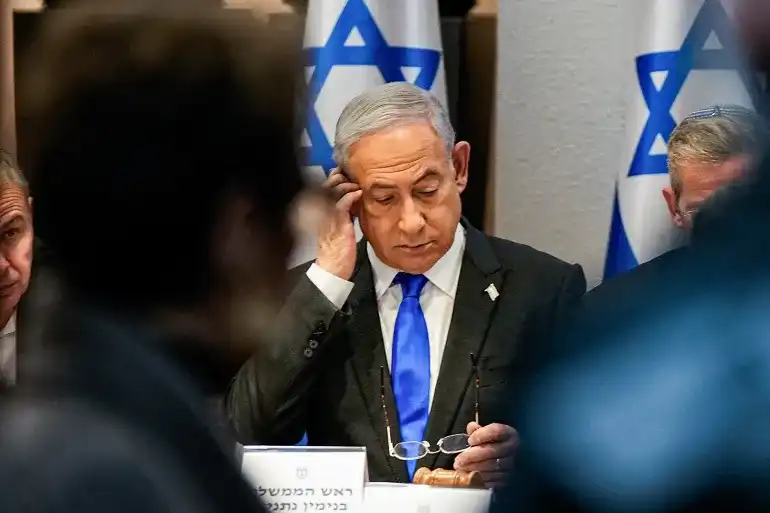
European Union foreign policy chief Josep Borrell claimed on Friday that Israel funded the creation of the Palestinian Islamic Resistance Movement (Hamas) in an attempt to weaken the Palestinian Authority.


Borrell stated in a speech at Valladolid University that "the government of Israel funded Hamas in an attempt to weaken the Fatah-led Palestinian Authority."


Israeli Prime Minister Benjamin Netanyahu denied accusations by his opponents in Israel and some international media that his government had spent years actively strengthening Hamas in Gaza.

Earlier, Borrell stressed that the military solution in the Gaza Strip would not be sufficient if it did not lead to a political project.

He explained in an article published by the French newspaper Le Monde that there are now three priorities: preventing the conflict from spreading to Lebanon at all costs, liberating the hostages, and paving the way for resolving the crisis.

Last December, the European Union's foreign policy official denounced the "gross lack of ability to discriminate", which is reflected in the Israeli army's operations in Gaza, which lead to the killing of Palestinian prisoners, worshipers and civilians.


ARAB AND WORLD

Sat 20 Jan 2024 8:28 am - Jerusalem Time

EU rejects Netanyahu's opposition to the establishment of a Palestinian state

On Friday, the High Representative of the European Union for Foreign Affairs and Security Policy, Josep Borrell, rejected Israeli Prime Minister Benjamin Netanyahu’s statements opposing the establishment of a Palestinian state.


In a speech at Valladolid University in Spain, Borrell considered that “Israel, by evading the establishment of a Palestinian state and trying to weaken it, established and financed the Hamas movement.”


He said, "Despite Israel's insistence on rejection, we believe that the two-state solution will achieve peace, under pressure from the international community," calling on the Arab world, Europe, the United States, and the United Nations to encourage the two-state solution.


He repeated his accusation of Israel of financing Hamas, and said, "Yes, Hamas has received funding for years from the Israeli government with the aim of weakening the Palestinian government led by the Fatah movement," as he claimed.


These allegations are not the first of their kind, but Hamas supporters categorically reject them, and Israeli officials also deny them.

Borrell pointed out that the current government in Israel “represents a clear obstacle to the two-state solution,” adding that “governments are temporary.”

A few days ago, Netanyahu confirmed his government's refusal to recognize the Palestinian state and the two-state solution.


In addition, on Friday, the European Union imposed an asset freeze and a travel ban on six individuals it said were linked to Hamas, as part of a new sanctions system targeting the movement.


The European Union already includes Hamas on its terrorist lists, but it moved to create a legal framework targeting the movement after its attack on October 7.


The European Council said that the list may be expanded to target "all those who provide support, materially or financially" to Hamas or Islamic Jihad.


The Council stated that the individuals subject to sanctions are the financier residing in Sudan, Abdel Basset Hamza Al-Hassan Muhammad Khair, Nabil Shoman and his son Khaled Shoman, Reda Ali Khamis, the major financier of Hamas, Musa Dudin, a senior leader in the movement, and the financier residing in Algeria, Ayman Ahmed Al-Dweik.


The Council said that among the reasons driving the sanctions were arms trafficking, support for movements that undermine Israel’s stability or security, and involvement in serious violations of humanitarian law or human rights.

The statement added, "This new system of sanctions will continue to be implemented until January 19, 2025. They will be placed under continuous review and renewed or amended when necessary."

A senior European Union official said on Friday that the first group of individuals subject to sanctions are linked to providing funding to Hamas.

The US Treasury says that Hamas has established a secret network of companies that manage investments worth $500 million in companies extending from Turkey to Saudi Arabia. The European Union and the United States classify the movement as a terrorist organization.

"Islamic Jihad" condemns European sanctions

For its part, the Islamic Jihad movement condemned, on Friday, the European Council’s decision to impose sanctions on members of the movement and Hamas.


Islamic Jihad said in a statement, “This decision is not surprising, has no value, and constitutes clear bias toward the occupying entity.”

It pointed out that "this European decision gives the Israeli occupation political cover for the holocaust it continues against our people, in addition to the cover and military and intelligence support it provides for the aggression against the Gaza Strip, ignoring the demands of its people to stop it immediately."

PALESTINE

Fri 19 Jan 2024 10:16 pm - Jerusalem Time

War on Gaza: 142 killed and dozens of injuries during past 24 hours

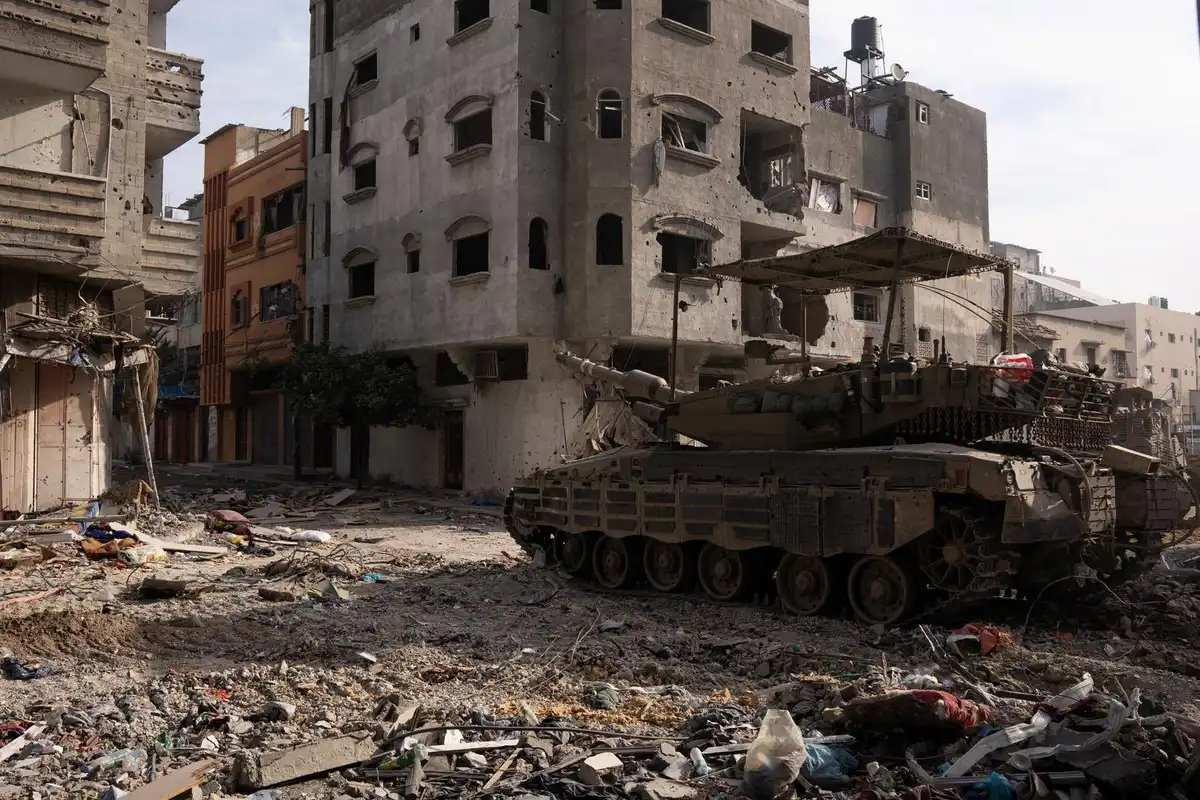
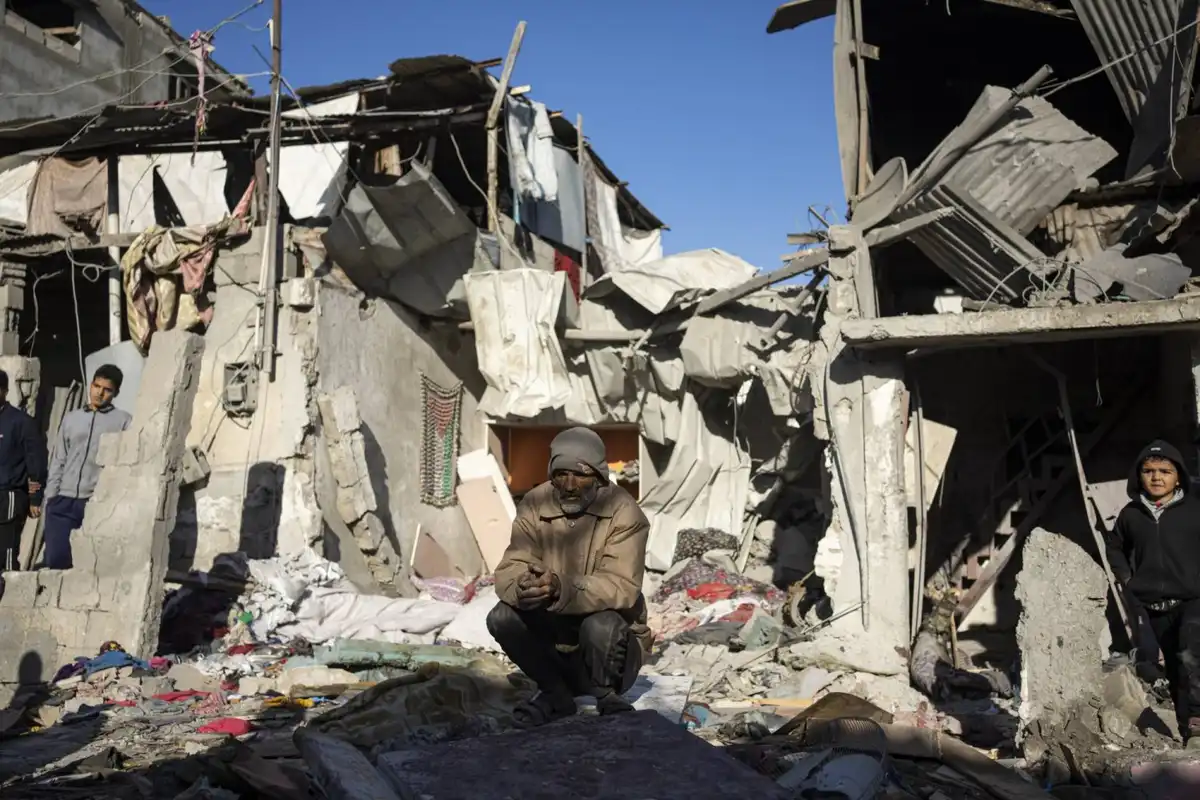
The death toll from the ongoing Israeli war on Gaza has risen to 24,762 people, while the toll of the wounded has exceeded 62,000, as a result of the continuous bombing of inhabited areas and homes across the Strip since October 7, 2023, according to what the Ministry of Health in the Strip reported.


The Ministry confirmed that 142 people were killed, while 278 were injured during the past 24 hours, noting that a number of victims are still under rubble and on the roads, and ambulance and civil defense crews are unable to reach them.


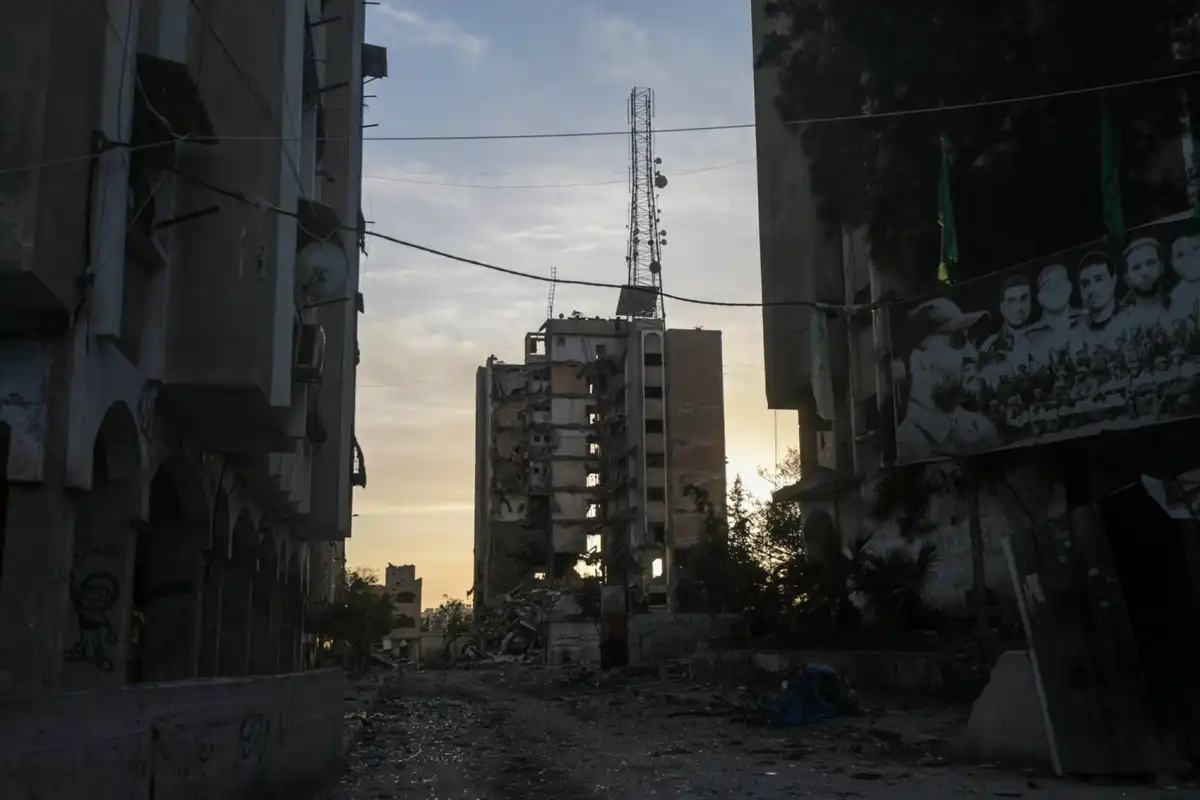
The Israeli forces continue the war on the Gaza Strip, for the 105th day in a row, by launching dozens of air strikes, artillery shelling, and fire belts, amid a tragic humanitarian situation and the displacement of more than 90% of the population.


The Israeli forces continued their intense artillery shelling in the vicinity of "Al-Amal" Hospital in Khan Yunis. The Israeli forces also targeted the city center, with several raids and artillery shelling.

ARAB AND WORLD

Fri 19 Jan 2024 9:53 pm - Jerusalem Time

UN expects Israel arrested thousands of Palestinians in Gaza in horrific conditions

The United Nations said on Friday that the Israeli forces arrested thousands of Palestinians in the Gaza Strip in conditions that may amount to torture.


The representative of the Office of the United Nations High Commissioner for Human Rights in the occupied Palestinian territories, Ajith Songhai, said during a regular UN press conference in Geneva that some of the detainees confirmed that the Israeli forces blindfolded and beat them, and when they released them, they were naked and wearing only diapers.


Songai added that the men were detained in generally appalling conditions, and in unknown locations for periods ranging from 30 to 55 days.


The UN official quoted some of the detainees as saying, "They were subjected to beatings, humiliation, and ill-treatment, and what may amount to torture. They were blindfolded for long periods, some for several days in a row."


He added, "A man said that he was only able to shower once during his 55-day detention period. There are reports that men were later released, but only while wearing diapers."


Songai said their testimonies are consistent with reports received by the UN Human Rights Office that Palestinians are being detained on a large scale, “including many civilians held in secret, often subject to ill-treatment,” without access to their families, lawyers or access to legal aid. No effective judicial protection.


Songai indicated that he could not give an accurate figure for the number of detainees, but he expressed his belief that the number was in the thousands.


He added that the detainees were later classified and some of them were interrogated, and they were not informed of their imminent release, but they were blindfolded and left at the Kerem Shalom crossing without the clothes, belongings, and money that they had when they were arrested.


Songai added that some of them were wearing prison uniforms and others in diapers, saying, "We are not sure exactly why."

ARAB AND WORLD

Fri 19 Jan 2024 5:43 pm - Jerusalem Time

Maariv weekly poll: The parties opposing Netanyahu still maintains 66 seats, compared to 44 seats for his supporters

An Israeli public opinion poll conducted by the Maariv newspaper yesterday (Thursday) showed that if the Israeli general elections were held now, each of the party camp lists supporting Prime Minister Benjamin Netanyahu would obtain 44 seats (the same number of seats they obtained in last week’s poll). While the lists of the parties camp opposing him will obtain 66 seats (the same number of seats they obtained in last week’s poll). The coalition list between Hadash [the Democratic Front for Peace and Equality] and Ta’al [the Arab Movement for Change], and the Ra’am list [the United Arab List] will each get 5 seats, and the Balad list [the National Democratic Rally] will not be able to exceed the electoral threshold (3.25%).


According to the poll, the Likud Party list headed by Prime Minister Benjamin Netanyahu will get 16 seats, the “Official Camp” list headed by Knesset member Benny Gantz will get 39 seats, and the “There is a Future” list headed by Knesset member Yair Lapid will get 13 seats.


The “Religious Zionism” party list headed by Minister Bezalel Smotrich gets 4 seats, while the “Otzma Yehudit” list [“Jewish Power”] headed by Minister Itamar Ben Gvir gets 9 seats, and the Shas party list of Haredi [religiously extremist] Eastern Jews gets 10 seats.  9 seats, the Haredi United Torah Judaism Party list gets 6 seats, the “Israel Our Home” party list headed by Knesset member Avigdor Lieberman gets 10 seats, the Meretz Party list gets 4 seats, while the Labor Party list will not be able to exceed the electoral threshold.


50% of the survey participants said that the head of the “Official Camp” coalition, Benny Gantz, is the most suitable to assume the position of Prime Minister of Israel, while 31% of them said that Prime Minister Benjamin Netanyahu is the most suitable.


The survey included a sample of 512 people, representing all categories of the adult population in Israel, with a maximum error rate of 4.3%.

OPINIONS

Fri 19 Jan 2024 5:38 pm - Jerusalem Time

Israeli writer: Israel is on its way to a secret and free ceasefire

Yedioth Ahronoth

Yedioth Ahronoth

Opinion Writer

By Shelly Yachimovich

Despite all the horrors, atrocities and terrible failures of October 7, there is no cowardice, blindness and failure greater and more dangerous than Benjamin Netanyahu's cowardice in these hours. In practice, and despite the reckless and arrogant statements, Israel is in the advanced stages of responding to Hamas' condition for the return of the kidnapped people: a ceasefire. But our leaders lack the courage to do something simple, say this publicly, return 136 kidnapped people, and put an end to this most cruel and humiliating tragedy since the establishment of the state.

We say this again: Israel is on its way to a ceasefire. Reducing the size of the forces is the first evidence in the field, reducing the fighting and confining it to the Khan Yunis area only, reducing air attacks, demobilizing the reserves, large-scale distribution of humanitarian aid, re-institutionalizing Hamas rule, and Defense Minister Yoav Galant announcing the transition to a less intense phase of combat. This all confirms that we are here. Everything Hamas wanted from the beginning, it got for free. This is crazy.

Why do we give Hamas the gift of stopping the fighting without getting anything in return that is considered the most precious to us? Kidnapped? The abandoned, the hungry, the sick, the beaten. They die, one after another, whether from disease or hunger. Some of them die at the hands of those who capture them, and others at the hands of Israeli soldiers, whether by chance or in failed operations. It must be made clear that a failed operation is one in which prisoners return as corpses, instead of returning alive, in addition to the loss of brave young soldiers, who are asked to do the same thing, over and over again, and sacrifice their lives for a war that ends in failure.

Instead of stopping at this point, and we still have remnants of momentum, we enter a stage of stagnation, and we lose on all fronts: We did not defeat Hamas, and we did not recover the kidnapped people. The Israeli army’s statement yesterday, addressed to the families of the dead kidnapped, leaves no room for illusion, and stated: “We cannot rule out, or confirm, that these soldiers were killed by suffocation, poisoning, or as a result of an attack by the Israeli army, or an operation carried out by Hamas.” .

If the release of the kidnapped people to the last of them had been set from the beginning as a goal of the war. If the Israeli government announced that it would stop the war when the last kidnapped person returned. If the government had placed the families of the kidnapped in a position of honor before the world, instead of silencing them, gagging them, and inciting against them, we would have been able to continue striking Hamas while maintaining international legitimacy, without The Hague, and without risking losing American support, which it can be said is the one that Save us from the destruction of the Third Temple.

We have not done that, but it is still possible, and it must happen through secret and public channels of dialogue as well. All that is required is for the Prime Minister to stand up without any nonsense or trickery, and to announce that we are ready for a ceasefire in exchange for all the kidnapped people. After the return of the last kidnapped person, we will have enough time to try to achieve all the goals, real and imaginary, of this rightful war, which loses its credibility every moment we abandon the kidnapped ones and leave them to face their death.

Meanwhile, childish arrogance, and the obsession with creating an “image of victory” that will never be achieved, and our blindness to seeing that we are losing in all arenas, and Netanyahu’s need to exploit time for his political survival, and adhere to the threatening, arrogant and condescending rhetoric that has no cover, which represents a disconnected and sad echo of past glories. All of this will make us expelled from Gaza City, and forced to eat all the rotten fruits that cannot be digested this time.

OPINIONS

Fri 19 Jan 2024 5:07 pm - Jerusalem Time

In Gaza, the West Is Enabling the Most Transparent Genocide in Human History

 Richard Falk

Richard Falk

Opinion Writer

This is extraordinary because the states supporting Israel, above all the United States, have claimed the high moral and legal ground and lectured the states of the Global South about the importance of the rule of law.

Recall Samuel Huntington’s controversial, yet influential, 1993 Foreign Affairs article, “The Clash of Civilizations,” which ends with the provocative phrase, “The West against the rest.” Although the article seemed far-fetched 30 years ago, it now seems prophetic in its discernment of a post-Cold War pattern of inter-civilizational rivalry. It is rather pronounced in relation to the heightened Israel/Palestine conflict initiated by the October 7 Hamas attack on Israeli territory with the killing and abusing of Israeli civilians and IDF soldiers, as well as the seizure of some 200 hostages.

Clearly this attack has been accompanied by some suspicious circumstances such as Israel’s foreknowledge, slow reaction time to the penetration of its borders, and, perhaps most problematic, the quickness with which Israeli adopted a genocidal approach with a clear ethnic cleansing message. At the very least the Hamas attack, itself including serious war crimes, served almost too conveniently as the needed pretext for the 100 days of disproportionate and indiscriminate violence, sadistic atrocities, and the enactment of a scenario that looked toward making Gaza unlivable and its Palestinian residents dispossessed and unwanted.

Despite the transparency of the Israeli tactics, partly attributable to ongoing TV coverage of the devastating and heartbreaking Palestinian ordeal, what was notable was the way external state actors aligned with the antagonists. The Global West (white settler colonial states and former European colonial powers) lined up with Israel, while the most active pro-Palestinian governments and movements were initially exclusively Muslim, with support coming more broadly from the Global South. This racialization of alignments seems to take precedence over efforts to regulate violence of this intensity by the norms and procedures of international law, often mediated through the United Nations.

Liberal democracies failed not only by their refusal to make active efforts to prevent genocide, which is a central obligation of the Genocide Convention, but more brazenly by openly facilitating continuation of the genocidal onslaught.

This pattern is quite extraordinary because the states supporting Israel, above all the United States, have claimed the high moral and legal ground for themselves and have long lectured the states of the Global South about the importance of the rule of law, human rights, and respect for international law. This is instead of urging compliance with international law and morality by both sides in the face of the most transparent genocide in all of human history. In the numerous pre-Gaza genocides, the existential horrors that occurred were largely known after the fact and through statistics and abstractions, occasionally vivified by the tales told by survivors. The events, although historically reconstructed, were not as immediately real as these events in Gaza with the daily reports from journalists on the scene for more than three months.

Liberal democracies failed not only by their refusal to make active efforts to prevent genocide, which is a central obligation of the Genocide Convention, but more brazenly by openly facilitating continuation of the genocidal onslaught. Israel’s frontline supporters have contributed weapons and munitions, as well as providing intelligence and assurance of active engagement by ground forces if requested, as well as providing diplomatic support at the U.N. and elsewhere throughout this crisis.

These performative elements that describe Israel’s recourse to genocide are undeniable, while the complicity crimes enabling Israel to continue with genocide remain indistinct, being situated in the shadowland of genocide. For instance, the complicity crimes are noted but remain on the periphery of South Africa’s laudable application to the International Court of Justice (ICJ) that includes a request for Provisional Measures crafted to stop the genocide pending a decision on the substance of the charges of genocide. The evidence of genocide is overwhelmingly documented in the 84-page South African submission, but the failure to address the organic link to the crimes of complicity is a weakness that could be reflected in what the court decides.

Even if the ICJ does impose these Provisional Measures, including ordering Israel to desist from further violence in Gaza, it may not achieve the desired result, at least not before the substantive decision is reached some three to five years from now. It seems unlikely that Israel will obey Provisional Measures. It has a record of consistently defying international law. It is likely that a favorable decision on these preliminary matters will give rise to a crisis of implementation.

The law is persuasively present, but the political will to enforce is lacking or even resistant, as here in certain parts of the Global West.

The degree to which the U.S. has supplied weaponry with U.S. taxpayer money would be an important supplement to rethinking the U.S. relationship to Israel that is so important and which is underway among the American people—even in the Washington think tanks that the foreign policy elites fund and rely upon. Proposing an arms embargo would be accepted as a timely and appropriate initiative in many sectors of U.S. public opinion. I hope that such proposals may be brought before the General Assembly and perhaps the Security Council. Even if not formally endorsed, such initiatives would have considerable symbolic and possibly even substantive impacts on further delegitimizing Israel's behavior.

A third specific initiative worth carefully considering would be timely establishment of a People’s Tribunal on the Question of Genocide initiated by global persons of conscience. Such tribunals were established in relation to many issues that the formal governance structures failed to address in satisfactory ways. Important examples are the Russell Tribunal convened in 1965-66 to assess legal responsibilities of the U.S. in the Vietnam War and the Iraq War Tribunal of 2005 in response to the U.S. and U.K. attack and occupation of Iraq commencing in 2003.

Such a tribunal on Gaza could clarify and document what happened on and subsequently to October 7. By taking testimony of witnesses, it could provide an opportunity for the people of the world to speak and to feel represented in ways that governments and international procedures are unable to given their entanglement with geopolitical hegemony in relation to international criminal law and structures of global governance.


The South African World Court Case, Pariah State, and Popular Mobilization

The South African initiative is important as a welcome effort to enlist international law and procedures for its assessment and authority in a context of severe alleged criminality. If the ICJ, the highest tribunal on a supranational level, responds favorably to South Africa’s highly reasonable and morally imperative request for Provisional Measures to stop the ongoing Gaza onslaught, it will increase pressure on Israel and its supporters to comply. And if Israel refuses to do so, it will escalate pro-Palestinian solidarity efforts throughout the world and cast Israel into the darkest regions of pariah statehood.

In such an atmosphere, nonviolent activism and pressure for the imposition of an arms embargo and trade boycotts as well as sports, culture, and touristic boycotts will become more viable policy options. This approach by way of civil society activism proved very effective in the Euro-American peace efforts during the Vietnam War and in the struggle against apartheid South Africa, and elsewhere.

Israel is becoming a pariah state due to its behavior and defiance exhibited toward legal and moral norms. It has made itself notorious by its outrageously forthright acknowledgement of genocidal intent with respect to Palestinian civilians whom they are under a special obligation to protect as the occupying power.

We know what we should be doing.to make amends, yet well-entrenched special interests preclude such rational adjustments, and the military malfunctions and accompanying geopolitical alignments persist, ignoring costly failures along the way.

Being a pariah country or rogue state makes Israel politically and economically vulnerable as never before. At this moment, a mobilized civil society can contribute to producing a new balance of forces in the world that has the potential to neutralize Western post-colonial imperial geopolitics.

It is also relevant to take note of the startling fact that the anti-colonial wars of the last century were in the end won by the weaker side militarily. This is an important lesson, as is the realization that anti-colonial struggle does not end with the attainment of political independence. It needs to continue to achieve control of national security and economic resources as the recent anti-French coups in former French colonies in sub-Saharan Africa illustrate.

In the 21st century weapons alone rarely control political outcomes. The U.S. should have learned this decades ago in Vietnam, having controlled the battlefield and dominated the military dimensions of the war, and yet having failed to achieve control over its political outcome.

The U.S. is disabled from learning lessons from such defeats. Such learning would weaken the leverage of the military-industrial-government complex, including the private sector arms industry. This would subvert the domestic balance in the U.S. and substantially discredit the global geopolitical role being played by the U.S. throughout the entire world.

So, it is a dilemma. We know what we should be doing to make amends, yet well-entrenched special interests preclude such rational adjustments, and the military malfunctions and accompanying geopolitical alignments persist, ignoring costly failures along the way.

We know what should be done, but do not have the political clout to get it done. But global public opinion is shifting, and demonstrations globally are building opposition to continuing the war.

Iran

There is a huge U.S./Israel propaganda effort to tie Iran to everything that is regarded as anti-West or anti-Israeli. It has intensified during this crisis, starting with the October 7 attack by Iran’s supposed proxy Hamas. You notice even the most influential mainstream print media as The New York Times routinely refers to what Hezbollah or the Houthis do as “Iran-backed.” Such actors are reduced misleadingly to being proxies of Iran.

This way of denying agency to pro-Palestinian actors and attributing behavior to Iran is a matter of state propaganda trying to promote belligerent attitudes toward Iran to the effect that Iran is our major enemy in the region, while Israel is our loyal friend. At the same time, it suppresses the reality that If Iran is backing countries and political movements, it obscures what the U.S. is doing more overtly and multiple times over.

It is largely unknown what Iran has been doing in the region to protect its interests. Without doubt, Iran has strong sympathies with the Palestinian struggle. Those sympathies coincide with its own political self interest in not being attacked and minimizing the U.S. role in the region. Additionally, Iran has lots of problems arising from opposition forces within its own society.

But I think dangerous state propaganda is building up this hostility toward Iran. It is highly misleading to regard Iran as the real enemy standing behind all anti-Israeli actions in the region. It is important to understand as accurately as possible the complexity and unknown elements present in this crisis situation that contains dangers of wider war in the region and beyond. As far as is publicly known, Iran has had an extremely limited degree of involvement in the direct shaping of the war and Israel’s all-out attack on the civilian population of Gaza.

Hamas and a Second Nakba

While I was special rapporteur for the U.N. on Israeli violations of human rights and international humanitarian law, I had the opportunity to meet and talk in detail with several of the Hamas leaders who are living either in Doha or Cairo and also in Gaza. In the period between 2010 and 2014, Hamas was publicly and by back channels pushing for a 50-year cease-fire with Israel. It was conditioned on Israel carrying out the unanimous 1967 Security Council mandate in SC Res 242 to withdraw its forces to the pre-war boundaries of “the green line.” Hamas had also sought a long-range cease-fire with Israel after its 2006 electoral victory for up to 50 years.

Neither Israel nor the U.S. would respond to those diplomatic initiatives. Hamas, Machel particularly who was perhaps the most intellectual of the Hamas leaders, told me that he warned Washington of the tragic consequences for both peoples if the conflict was allowed to go on without a cease-fire, which was confirmed by independent sources.


Where can Palestinians go as the population suffers from famine and continued bombing? What is Israel’s goal?

All indications are that Israel used the October 7 attack as a pretext for the preexisting master plan to get rid of the Palestinians whose presence blocks the establishment of Greater Israel with sovereign control over the West Bank and at least portions of Gaza.

I see the so-called commitment to thinning the Palestinian presence in Gaza and to a functional second Nakba. This is a criminal policy. I don’t know that it has to have a formal name. It is not a policy designed to achieve anything but the decapitation of the Palestinian population. Israel seeks to move Gazans to the Egyptian Sinai, and the Egyptians have already indicated that they don’t welcome this.

This is not a policy. This is some kind of a threat of elimination. The Israeli campaign after October 7 was not directed toward Hamas’ terrorism nearly as much as it was directed toward the forced evacuation of the Palestinians from Gaza and for the related dispossession of Palestine in the West Bank.

If Israel really wanted to deal with its security in an effective way, much more efficient and effective methods would have been relied upon. There was no reason to treat the entire civilian population of Gaza as if it were implicated in the Hamas attack, and there was certainly no justification for the genocidal response. The Israeli motivations seem more related to completing the Zionist Project than to restoring territorial security. All indications are that Israel used the October 7 attack as a pretext for the preexisting master plan to get rid of the Palestinians whose presence blocks the establishment of Greater Israel with sovereign control over the West Bank and at least portions of Gaza.

For a proper perspective we should remember that before October 7, the Netanyahu coalition government that took power at the start of 2023 was known as the most extreme government ever to govern the country since its establishment in 1948. The new Netanyahu government in Israel immediately gave a green light to settler violence in the Occupied West Bank and appointed overtly racist religious leaders to administer the parts of Palestine still occupied.

This was part of the end game of the whole Zionist project of claiming territorial sovereignty over the whole of the so-called promised land, enabling Greater Israel to come into existence.

The Need for a Different Context

We need to establish a different context than the one that exists now. That means a different outlook on the part of the Western supporters of Israel. And a different internal Israeli sense of their own interests, their own future. And it’s only when substantive pressure is brought to bear on an elite that has gone to these lengths that it can shake commitments to this orientation.

The lengths that the Israeli government has gone to are characteristic of settler colonial states. All of them, including the U.S. and Canada, have acted violently to neutralize or exterminate the resident Indigenous people. That is what this genocidal interlude is all about. It is an effort to realize the goals of maximal versions of Zionism, which can only succeed by eliminating the Palestinians as rightful claimants. It should not be forgotten that in the weeks before the Hamas attack, including at the U.N., Prime Minister Benjamin Netanyahu was waving a map of “the new Middle East” that had erased the existence of Palestine.

Undoubtedly, one of Hamas’ motivations was to negate the view that Palestine had given up its right to self-determination, and that Palestine could be erased. Recall the old delusional pre-Balfour Zionist slogan: “A people without land for a land without people.” Such utterances of this early Zionist utopian phase literally erased the Palestinians who for generations lived in Palestine as an entitled Indigenous population. With the Balfour Declaration of 1917, this settler colonial vision became a political project with the blessings of the leading European colonial power.

Given post-colonial realities, the Israeli project is historically discordant and extreme. It exposes the reality of Israel’s policies and the inevitable resistance response to Israel as a supremacist state. Israeli state propaganda and management of the public discourse has obscured the maximalist agenda of Zionism over the years, and we are yet to know whether this was a deliberate tactic or just reflected the phases of Israel’s development.

This may turn out to be a moment of clarity with respect not only to Gaza, but to the overall prospects for sustainable peace and justice between these two embattled peoples.

Source: common Dreams

ARAB AND WORLD

Fri 19 Jan 2024 4:57 pm - Jerusalem Time

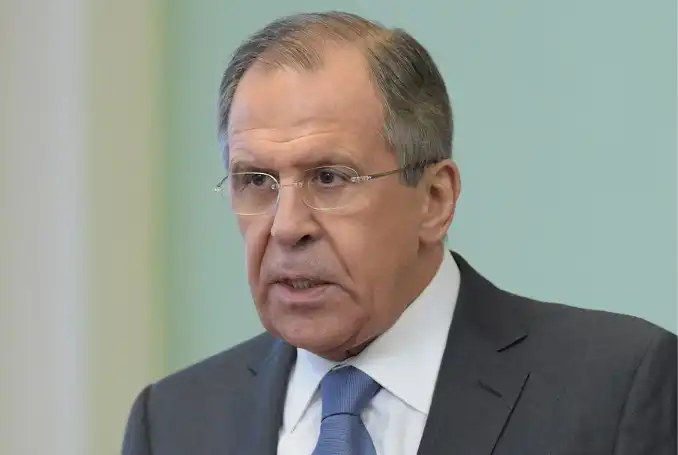
‘We Can (Not) Do Whatever We Want’ – Lavrov Says ‘Holocaust Doesn’t Give Israel Impunity’

The Soviet people were also subject to Nazi genocide, but Russia doesn’t have carte blanche in the global arena, Lavrov said in a press conference today. 

Israel should not think that the suffering of Jews during World War II gives it free rein in foreign policy, particularly when it comes to the hostilities in Gaza, Russian Foreign Minister Sergey Lavrov has said, according to Russia Today.

Speaking at a press conference on the results of Moscow’s diplomacy in 2023 on Thursday, Lavrov reiterated his support for the creation of a Palestinian state. 

The decades-long failure to do this is one of the key reasons for the current instability in the Middle East and tensions between Palestinians and Israelis, he added.

The foreign minister noted that Russia had immediately condemned the attack on Israel by Hamas on October 7. However, after the war began, some Israeli officials went so far as to call the residents of Gaza “animals” without facing any backlash from the West, he added.

“Israelis can’t… now do anything they want because they suffered during World War II. Yes, there was the Holocaust, it was a terrible crime, but there was also the genocide of all peoples in the Soviet Union.”

Lavrov added that the Soviet people had suffered no less as they were exterminated in the same Nazi concentration camps as the Jews, with both people dying from starvation side-by-side in besieged Leningrad, RT reported.

“According to this logic, we can do whatever we want. That won’t work if we want to systematically uphold international law,” he added.

According to Gaza’s Ministry of Health, 24,700 Palestinians have been killed, and 61,830 wounded in Israel’s ongoing genocide in Gaza starting on October 7. Palestinian and international estimates say that the majority of those killed and wounded are women and children.

Russia has repeatedly called for a ceasefire while urging Israel to respect the laws of war and its responsibility under international law.

RT contextualized the story by saying that “The Holocaust claimed the lives of around six million Jews in Europe. Meanwhile, the Soviet Union lost some 27 million people during the war, including many Jews, with two-thirds of those losses among the civilian population.”

(PC, RT)

ARAB AND WORLD

Fri 19 Jan 2024 4:50 pm - Jerusalem Time

Biden: The settlement in Gaza is still far away

US President Joe Biden announced that the settlement in the Gaza Strip is still far away.

Biden told reporters at the White House today, “We are still far from a settlement in the Gaza Strip,” without making further comments on the issue.

In response to a question about the decline in his popularity among voters of Arab origin due to his administration’s support for Israel, Biden pointed out that they should worry more about his potential rival in the elections, referring to Donald Trump.

Biden added that Trump "intends to ban Arabs from entering" the United States.

It should be noted that US State Department spokesman Matthew Miller made contradictory statements regarding the prospects for resolving the conflict in the Middle East, saying that Washington and the Israeli authorities “see an end” to it.

In turn, Israeli Prime Minister Benjamin Netanyahu announced that Israel intends to continue the operation in Gaza until the complete elimination of Hamas, and he expected that this may take months or perhaps years.

PALESTINE

Fri 19 Jan 2024 4:45 pm - Jerusalem Time

Palestine Higher Education" condemns Israeli bombing of Al-Isra University in Gaza

The Ministry of Higher Education and Scientific Research condemned the occupation’s bombing of Al-Isra University in the Gaza Strip, which comes as a continuation of the destructive scene targeting higher education institutions, as Israel previously targeted a large number of higher education institutions in the Gaza Strip and destroyed them completely or partially, as part of the criminal war launched against the Palestinian people.

The Ministry confirmed, in a statement, that this destruction is a clear violation of all international laws, charters and norms that guarantee the protection of educational institutions and preserve their sanctity.

Higher Education stressed the need for international humanitarian and human rights institutions to bear their responsibilities to curb this occupation, which targets the Palestinian people in general and pursues a policy of destroying educational institutions, stressing that higher education institutions in the Gaza Strip will rise again and continue their lofty mission despite the occupation’s aggression and criminality.

ARAB AND WORLD

Fri 19 Jan 2024 4:42 pm - Jerusalem Time

Israeli extremist minister Ben Gvir: The Palestinians in the West Bank must be killed, even if they do not pose a threat

Extremist Israeli National Security Minister Itamar Ben Gvir has directed Israeli police officers to shoot Palestinians even if they do not pose a threat to their lives.


The official Kan channel said: “Contrary to the instructions to open fire, Minister Ben Gvir told the Yamas fighters (a special police unit active in combating terrorism) in the West Bank: You have all my support. When you see a terrorist, even if he does not endanger you, shoot.” Fire on him."


Ben Gvir did not specify the specifications of what he called “a terrorist who does not expose Israeli forces to danger,” which may open the door to the killing of more innocent Palestinians in the West Bank, which is witnessing increasing tension.


For its part, the Hebrew newspaper "Yedioth Ahronoth" said that Ben Gvir's statements came during his inspection of the "Yamas" and "Maghav" (border guard police) base in the West Bank.

ARAB AND WORLD

Fri 19 Jan 2024 4:35 pm - Jerusalem Time

The Financial Times: Arab nations develop plan to end Israel-Hamas war and create Palestinian state

The Financial Times newspaper published a report prepared by Andor England, in which he said that the Arab countries are preparing an initiative to stop the war in Gaza and build a Palestinian state, which may lead to the establishment of official diplomatic relations between Saudi Arabia and Israel.


England said the initiative includes securing a ceasefire, releasing the hostages first, and taking irreversible steps to create a Palestinian state.

The newspaper quoted a prominent Arab official as saying that the Arab countries hope to present their plan within weeks, as part of efforts to stop the war in Gaza and prevent the outbreak of a broader war in the Middle East.


Arab officials discussed the plan with the US and European governments, and it will include Western countries agreeing to officially recognize the Palestinian state, or support the Palestinians obtaining full membership in the United Nations.


The senior official said: “The main issue is that you need to provide hope to the Palestinians, and this cannot be done through economic benefits or removing symbols of occupation.” The initiative comes at a time when Israel is facing widespread international pressure to stop its attack on besieged Gaza, at a time when the United States has increased its diplomatic efforts to prevent the spread and outbreak of war in the region, and is pushing towards a long-term resolution in the intractable Israeli-Palestinian conflict.


US Secretary of State Anthony Blinken described the war in Gaza as “painful,” adding that what we want is a Palestinian state that “gives the people what they want, and works with Israel so that it is effective.”


When the Saudi Foreign Minister was asked, at the Davos Forum, on Tuesday, whether Riyadh would recognize Israel within a broad political agreement, he replied: “Certainly,” and “We agree that regional peace includes peace with Israel, but this only happens with peace for the Palestinians through a Palestinian state.”


On the same day, National Security Advisor Jake Sullivan stressed that the United States is focused, as part of post-war plans in Gaza, on achieving a normalization agreement between Saudi Arabia and Israel, as he said: “Our approach remains focused on moving towards stability and integration in the region.” However, there are several challenges to reaching these goals, including the Hamas attack on October 7, the Israeli leaders’ warning that the war in Gaza will continue for several months, and Israeli Prime Minister Benjamin Netanyahu’s ruling out working with the National Authority and rejecting the two-state solution. He said, in December, that he was “proud” to have prevented a Palestinian state: “Everyone knows what would happen if we surrendered to international pressure and helped with a state like this.”


Netanyahu leads an extremist government in which settlers in the West Bank and Zionist nationalist parties participate.


The Arab official commented: “In light of today’s political situation in Israel, normalization is what will prevent the Israelis from falling into the abyss.”


Saudi Arabia was moving towards normalizing relations with Israel before the attacks, as it conditioned normalization on a security treaty with the United States and support in a nuclear project for civilian purposes. American officials discussed an element of normalization related to the Palestinians, such as a limited settlement freeze in the West Bank, support for the National Authority that administers parts of the occupied territories, and a path toward a Palestinian state.


Blinken was planning to visit Riyadh in mid-October to discuss the Palestinian component of the agreement, but the attacks halted the talks. But Saudi Arabia confirmed that the option is still on the table, and it wants to ensure concessions regarding the Palestinians, including Gaza. A person familiar with the talks said: “We got the broad outlines from the National Authority,” and “Now the element must be strengthened in order for it to be politically effective at any point in the future.”


Biden, who is considered one of Israel's staunchest advocates, spoke of the two-state solution as a guarantor of Israel's security. Saudi Arabia's readiness for normalization is considered a bargaining chip with Israel, which views establishing relations with the Kingdom as a major prize for its normalization efforts with Arab countries.


Although Saudi Arabia deals with normalization as part of its plans to develop the Kingdom and make it a commercial, financial and tourism center, it is now looking at the dangers emanating from the Gaza war and its expansion in the region, and the impact the destruction of Gaza will have on Arab generations.


On Wednesday, in Davos, Switzerland, Blinken said that it is up to Israel “to seize the opportunity that we believe exists,” and described the war as a “turning point” in the Middle East, requiring difficult decisions.


PALESTINE

Fri 19 Jan 2024 10:31 am - Jerusalem Time

War on Gaza: Israeli army blows up residential squares in Gaza and causes dozens of dead and wounded.. America: Death toll is very large

The Israeli occupation forces continued to target civilians in the Gaza Strip on the evening of Thursday, January 18, 2024, causing the death and injury of dozens, most of them women and children, while the United States considered that “the number of civilian deaths was very large” in the Strip.


Local sources told the Palestinian News Agency "Wafa" that at least two citizens were killed and others were injured in a bombing carried out by the Israeli occupation on a residential building west of Gaza City, while citizens transported the bodies of 4 killed to the European Hospital, who recovered after a bombing in Khan Yunis.


The sources also added that the occupation forces fired white phosphorus bombs on the Qaizan al-Najjar area, south of Khan Yunis, and carried out a bombing in the vicinity of the Martyr Abu Youssef al-Najjar Hospital, east of Rafah, in the south of the Gaza Strip, and targeted with a missile the Antar Tower on Old Gaza Street in the town of Jabalia, north of the Gaza Strip.


While Israeli forces besieged several schools housing thousands of displaced people west of the Tal Al-Hawa neighborhood in Gaza City, while the bombing of residential squares in the town of Bani Suhaila, east of Khan Yunis, continued.


Deteriorating conditions in the Gaza Strip

In addition, the Palestine Red Crescent Society warned of the deterioration of the humanitarian conditions in the Gaza and northern governorates, as a result of the continued Israeli aggression and siege, which prevent the delivery of aid.


The association said in a statement on Thursday that about 800,000 citizens suffer from food insecurity, a lack of clean water, and widespread destruction of infrastructure, in addition to a major scarcity of basic materials, including bread, vegetables, infant formula, medicines, and sanitary napkins, which has led to exacerbate the difficulties faced by citizens.


It also pointed out that citizens are resorting to grinding legumes to try to make bread due to the lack of flour, pointing out that they are suffering as the situation worsens in the winter from the extreme cold, and the scarcity of means of heating, blankets, and proper nutrition, especially after the severe damage to most of the homes and the shattering of their windows.


While the association appealed to the international community and international humanitarian institutions to intervene urgently and pressure the occupation authorities to allow the opening of a safe humanitarian corridor that guarantees the arrival of aid to the northern Gaza Strip, including medical supplies and fuel, the activation of relief programs, and the revival of the health system in the Gaza and northern governorates.


The White House comments on the number of victims

For its part, the White House said on Thursday that “the number of civilian deaths is very high” in the Gaza Strip, which has witnessed a large Israeli military operation since the Hamas attack in October.

National Security Council spokesman at the White House, John Kirby, stressed that the United States will not stop working towards achieving a two-state solution. “There will be a post-conflict Gaza that will not be reoccupied,” Kirby told reporters on Air Force One.


Earlier Thursday, the Ministry of Health in the Gaza Strip announced that the death toll from the Israeli bombing on the Gaza Strip had risen to 24,620 killed since the start of the Israeli aggression on the Gaza Strip on October 7, 2024.


In this context, Matthew Miller, spokesman for the US State Department, said on Thursday that there is “no way” to solve the long-term security challenges facing Israel in the region and the short-term challenges of rebuilding Gaza except by establishing a Palestinian state.

Miller also stated during his speech at a press briefing that Israel has an opportunity at the present time, in light of the willingness of countries in the region to provide security guarantees to Israel.


The American official added, "But there is no way to solve their long-term security challenges to provide permanent security, and there is no way to solve the short-term challenges of rebuilding Gaza, establishing governance in Gaza, and providing security for Gaza except by establishing a Palestinian state."


ARAB AND WORLD

Fri 19 Jan 2024 10:26 am - Jerusalem Time

“Our patience is running out!” Israeli website: People close to Biden advised him to disavow Netanyahu

The Israeli website Ynet reported, citing unnamed sources, that those close to US President Joe Biden advised him to announce his “loss of personal confidence” in Israeli Prime Minister Benjamin Netanyahu, because the latter is “slow in ending the war” for personal reasons, and avoids discussing the issue of managing matters in Gaza after the end of the war. the war.


The report, which was published on Thursday, January 18, 2024, indicated that Biden had begun to “get fed up” with Netanyahu’s decisions, and his “patience was about to run out,” as the latter’s behavior sparked frustration in the White House, and officials there began to see that he was not putting Prisoners are at the forefront of his war goals.


The Biden administration is also frustrated by Netanyahu's insistence on prolonging the war, and his continued refusal to discuss the situation in Gaza after the end of the Israeli military operation there.


The website quoted its sources close to the Biden administration as saying that Netanyahu does not put the release of Israeli prisoners at the top of his priorities, but rather wants the war to continue for a few more months, despite fears that the prisoners will not survive by then.


Declaration of no confidence

The sources indicated that those close to Biden advised him to announce his personal disavowal of Netanyahu, and to declare that he had lost confidence in him, and that he “only trusts the people of Israel and their state.” The sources said that Biden’s aides advised him to publicly disavow Netanyahu’s actions early next February.


Meanwhile, Biden is discussing ways to convince Netanyahu to reduce his goals and seek to end the war, as the American president needs an urgent diplomatic achievement, and the war in Gaza is harming his image in the United States during the year of the presidential elections, according to the Israeli website.


It added that the Biden administration believes that moving forward on this path may enable it to win over Saudi Arabia and revive the normalization process between it and Israel, as the Americans see that the October 7 attack was an attempt by Hamas, with the support of Iran, to block the path to normalization of relations between Israel. And Saudi Arabia, whose negotiations were at an advanced stage before the war broke out.


Biden believes that normalization with Saudi Arabia is sufficient incentive to convince Netanyahu to agree to end the war, but senior Israeli officials believe that as long as Israel does not take a serious political step to reach an agreement with the Palestinians, Saudi Arabia will not accept the path of normalization. The Saudis are not in a rush, and they believe that they can wait until After the US elections in November of this year.


"We say 'no' to our closest friends"

It is noteworthy that reports reported by the American network NBC News, on Thursday, spoke of the desire of the American administration to bypass Netanyahu and cooperate with Israeli opponents to end the war in Gaza.


In response, Netanyahu said in a press conference held yesterday: “Those who talk about (the day after Netanyahu) are actually talking about establishing a Palestinian state with the Palestinian Authority, and this is what they are actually saying. The reality is that it is not (the day after Netanyahu), but It is “the day after exceeding what the majority of Israeli citizens want.”


He added: “The State of Israel must control the entire territory of western Jordan in the near future. I say to the Americans: (The prime minister in Israel must be able to say - no - to his closest friends as well, and be able to refuse when necessary, and agree when it is necessary.”) possible).”


On the other hand, US State Department spokesman Matthew Miller said last night that there is no way to solve the security problems facing the State of Israel, and restore stability in Gaza, except by establishing a Palestinian state.

OPINIONS

Fri 19 Jan 2024 10:19 am - Jerusalem Time

Gaza war: Arab regimes ignore popular support for Palestine at their peril

Middle East Eye

Middle East Eye

Opinion Writer

By Mohamad Elmasry

Pushing ahead with these Israel normalisation deals could prove risky, amid unprecedented Arab support for the Palestinian cause

Anew survey from the Arab Center for Research and Policy Studies has found that Arabs are more pro-Palestinian than they have been at any point since 2011, the year the organisation began systematically polling Arab public opinion on Israel-Palestine and other issues. 

In the most recent survey, conducted between 12 December and 5 January, the centre polled 8,000 Arabs in 16 countries that represent more than 95 percent of the population of the Arab region. Respondents were asked a variety of questions about the Palestinian cause, the 7 October attack on Israel by Hamas, Israel’s war on Gaza, and US policy. 

The findings suggest that Israel’s war on Gaza, likely a genocide under international humanitarian law, has increased Arab support for Palestinians, and amplified anti-Israel and anti-US sentiments. 

A massive 92 percent of respondents said the Palestinian cause was an issue of concern for all Arabs, not just Palestinians. This represents a significant increase from the 76 percent reported in the centre’s 2022 poll; indeed, it is the highest figure ever recorded. 

The survey also shows strong evidence of Arab public support for Hamas, which governs Gaza but is proscribed as a terrorist organisation by the UK and other countries. 

Nearly 90 percent of Arab respondents said they considered the 7 October attack by Hamas to be a “legitimate resistance operation” or a “somewhat flawed but legitimate resistance operation”.

Importantly, a total of 89 percent of respondents said they rejected recognising Israel, the highest figure in the centre’s polling history. Only 13 percent of surveyed Arabs said they believed that peace with Israel remains possible. 


Stalled momentum

Opinions about the US also appear to have grown more negative as a result of the Gaza war. More than 90 percent of respondents said the US response to recent events has been “bad” or “very bad”, with 76 percent saying their opinion of US policy had become more negative since 7 October. 

It is worth considering the implications of these results for Israeli normalisation efforts. In 2020, four Arab countries - the United Arab Emirates, Morocco, Sudan and Bahrain - agreed to normalise relations with Israel. 

These deals were significant, in part because they bypassed Palestinians and seemed to do away with concerns about Israel’s illegal occupation of Palestinian territories. While Zionists praised the normalisation efforts, scholars and pro-Palestinian groups saw them as a betrayal of the Palestinian cause. 

Since 2020 and before 7 October, there had been momentum for more widespread normalisation, with Saudi Arabia well on its way towards making a deal. But Israel’s war on Gaza, and the negative sentiments it has engendered about Israel in the Arab world, could make future normalisation agreements less likely - or at least more difficult to execute. 

In the centre’s latest survey, 68 percent of Saudi Arabian respondents said they rejected recognising Israel - nearly double the 38 percent who said this in 2022.

Arab governments would be wise to listen to the calls of their populations. It is always difficult to predict how public anger may manifest

Moroccan and Sudanese Arabs are also more likely now to reject recognising Israel than they were in 2022. In Morocco, rejection of recognition rose to 78 percent from 67 percent, while Sudanese rejection rose to 81 percent from 72 percent. These findings underscore the daunting task faced by Arab regimes attempting to normalise with Israel going forward. 

As South Africa’s genocide case at the International Court of Justice has made clear, Israel has, since 7 October, issued numerous statements that appear to show genocidal intent, while Israeli forces have killed more than 24,000 Palestinians, including 10,000 children. 

It will be difficult to convince Arab citizens, most of whom are overwhelmingly sympathetic to the Palestinian plight, of the political, ethical and religious appropriateness of normalising relations with a state that has bombed civilian areas indiscriminately, targeted hospitals, shelters and safe routes, and systematically prevented humanitarian aid from reaching innocent civilians. 


United in anger

Going forward, the question for Arab regimes will revolve around the extent to which they are willing to ignore popular sentiments. Pushing ahead with Israel normalisation against the will of their citizens could prove risky. 

Indeed, Arab publics appear united in anger. The last time anger was this palpable on the Arab streets was during the Arab Spring era, which led to calls for democracy and widespread popular protests. Will Arab governments be willing to roll the dice on normalisation agreements that could lead to unrest? Only time will tell. 

More than anything, perhaps, the recent survey results demonstrate the massive disconnect between some Arab regimes and their citizenries. 

With rare exceptions, most Arab governments have delivered only relatively mild rebukes of Israeli atrocities, and popular calls for action against Israel - including calls for an oil embargo - have not gained traction with Arab governments. Importantly, previously agreed-upon normalisation deals have continued unabated. 

Egypt’s handling of the Rafah border crossing has perhaps best illustrated the disconnect between Arab governments and the Arab street. Egypt has not fully opened the Rafah crossing - a critical failing, since allowing essential aid into Gaza would mitigate the current humanitarian catastrophe. 

For months, the Egyptian regime has obstructed the work of aid workers and stifled Rafah-related protests, even arresting foreign activists attempting to mobilise aid. Last week, an Egyptian woman who carried out a modest street protest, waving a Palestinian flag while chanting for justice, was arrested by Egyptian authorities. 

Acts of tragic, oppressive violence can sometimes catalyse significant change. This was the case during the Arab Spring, when Arab regime violence led to unprecedented public anger, massive street protests and calls for democracy. It is possible, perhaps even likely, that the Gaza genocide could mark a substantive change in Arab politics. 

No one knows for sure what the next round of survey results will show. But unless Arab regimes do something to meaningfully check Israeli and US aggression - and to better align their policies with the desires of their citizenries, while creating better economic opportunities - anger and frustration in the Arab street will likely continue to rise. 

Arab governments would be wise to listen to the calls of their populations. It is always difficult to predict how public anger may manifest.

OPINIONS

Fri 19 Jan 2024 10:11 am - Jerusalem Time

Thanks to Gaza, European philosophy has been exposed as ethically bankrupt

Middle East Eye

Middle East Eye

Opinion Writer

By Hamid Dabashi

From Heidegger's Nazism to Habermas's Zionism, the suffering of the 'Other' is of little consequence 

Imagine if Iran, Syria, Lebanon, or Turkey - fully backed, armed and diplomatically protected by Russia and China - had the will and the wherewithal to bomb Tel Aviv for three months, day and night, murder tens of thousands of Israelis, maim countless more and make millions homeless, and turn the city into a heap of uninhabitable rubble, like Gaza today.

Just imagine it for a few seconds: Iran and its allies deliberately targeting populated parts of Tel Aviv, hospitals, synagogues, schools, universities, libraries - or indeed any populated place - to ensure maximum civilian casualties. They would tell the world they were just looking for Israeli Prime Minister Benjamin Netanyahu and his war cabinet.  

Ask yourself what the US, UK, EU, Canada, Australia and Germany in particular would do within 24 hours of the onslaught of this fictional scenario. 

Now come back to reality, and consider the fact that since 7 October (and for decades before that date), Tel Aviv’s western allies have not only witnessed what Israel has done to the Palestinian people, but have also provided it with military equipment, bombs, munitions and diplomatic coverage, while American media outlets have offered ideological justifications for the slaughter and genocide of Palestinians.  

The aforementioned fictional scenario would not be tolerated for a day by the existing world order. With the military thuggery of the US, Europe, Australia and Canada fully behind Israel, we helpless people of the world, just like Palestinians, do not count. This is not just a political reality; it is also pertinent to the moral imaginary and philosophical universe of the thing that calls itself “the West”.  

Those of us outside the European sphere of moral imagination do not exist in their philosophical universe. Arabs, Iranians and Muslims; or people in Asia, Africa and Latin America - we do not have any ontological reality for European philosophers, except as a metaphysical menace that must be conquered and quieted. 

Beginning with Immanuel Kant and Georg Wilhelm Friedrich Hegel, and continuing with Emmanuel Levinas and Slavoj Zizek, we are oddities, things, knowable objects that Orientalists were tasked with deciphering. As such, the murder of tens of thousands of us by Israel, or the US and its European allies, does not cause the slightest pause in the minds of European philosophers.  

Tribal European audiences

If you doubt that, just take a look at leading European philosopher Jurgen Habermas and a few of his colleagues, who in an astoundingly barefaced act of cruel vulgarity, have come out in support of Israel’s slaughter of Palestinians. The question is no longer what we might think of Habermas, now 94, as a human being. The question is what we might think of him as a social scientist, philosopher and critical thinker. Does what he thinks matter to the world anymore, if it ever did?  

The world has been asking similar questions about another major German philosopher, Martin Heidegger, in light of his pernicious affiliations with Nazism. In my opinion, we must now ask such questions about Habermas’s violent Zionism and the significant consequences for what we might think of his entire philosophical project?

If Habermas has not an iota of space in his moral imagination for people such as Palestinians, do we have any reason to consider his entire philosophical project as being in any way related to the rest of humanity - beyond his immediate tribal European audiences?  

In an open letter to Habermas, distinguished Iranian sociologist Asef Bayat said he “contradicts his own ideas” when it comes to the situation in Gaza. With all due respect, I beg to differ. I believe Habermas’s disregard for Palestinian lives is entirely consistent with his Zionism. It is perfectly consistent with the worldview in which non-Europeans are not completely human, or are “human animals”, as Israeli Defense Minister Yoav Gallant has openly declared.


In its disregard for Palestinian lives, Habermas’s Zionism has thus joined Heidegger’s Nazism

This utter disregard for Palestinians is deeply rooted in the German and European philosophical imagination. The common wisdom is that out of the guilt of the Holocaust, Germans have developed a solid commitment to Israel. 

But to the rest of the world, as now evidenced by the magnificent document that South Africa has presented to the International Court of Justice, there is a perfect consistency between what Germany did during its Nazi era and what it is now doing during its Zionist era.

I believe that Habermas’s position is in line with the German state policy of partaking in the Zionist slaughter of Palestinians. It is also in line with what passes for the “German left”, with their equally racist, Islamophobic and xenophobic hatred of Arabs and Muslims, and their wholesale support for the genocidal actions of the Israeli settler colony.

We must be forgiven if we thought what Germany had today was not Holocaust guilt, but genocide nostalgia, as it has vicariously indulged in Israel’s slaughter of Palestinians over the past century (not just the past 100 days).  


Moral depravity

The charge of Eurocentrism that is consistently levelled against European philosophers’ conception of the world is not based merely on an epistemic flaw in their thinking. It is a consistent sign of moral depravity. On multiple past occasions, I have pointed out the incurable racism at the heart of European philosophical thinking and its most celebrated representatives today.

This moral depravity is not just a political faux pas or an ideological blind spot. It is written deeply into their philosophical imaginations, which have remained incurably tribal.  

The world has been awoken from the false slumber of European ethno-philosophy. Today, we owe this liberation to the suffering of peoples such as the Palestinians

Here, we must recap the glorious Martinican poet Aime Cesaire’s famous statement: “Yes, it would be worthwhile to study clinically, in detail, the steps taken by Hitler and Hitlerism and to reveal to the very distinguished, very humanistic, very Christian bourgeois of the 20th century that without his being aware of it, he has a Hitler inside him, that Hitler inhabits him, that Hitler is his demon, that if he rails against him, he is being inconsistent and that, at bottom, what he cannot forgive Hitler for is not crime in itself, the crime against man, it is not the humiliation of man as such, it is the crime against the white man, the humiliation of the white man, and the fact that he applied to Europe colonialist procedures which until then had been reserved exclusively for [Arab, Indian and African peoples].” 

Palestine is today an extension of the colonial atrocities Cesaire cites in this passage. Habermas appears ignorant that his endorsement of the slaughter of Palestinians is completely consistent with what his ancestors did in Namibia during the Herero and Namaqua genocide. Like the proverbial ostrich, German philosophers have stuck their heads inside their European delusions, thinking the world does not see them for what they are.  

Ultimately, in my view, Habermas has not said or done anything surprising or contradictory; quite the contrary. He has been entirely consistent with the incurable tribalism of his philosophical pedigree, which had falsely assumed a universal posture. 

The world is now disabused of that false sense of universality. Philosophers such as VY Mudimbe in the Democratic Republic of the Congo, Walter Mignolo or Enrique Dussel in Argentina, or Kojin Karatani in Japan have far more legitimate claims to universality than Habermas and his ilk ever did.  

In my opinion, the moral bankruptcy of Habermas’s statement on Palestine marks a turning point in the colonial relationship between European philosophy and the rest of the world. The world has been awoken from the false slumber of European ethno-philosophy. Today, we owe this liberation to the global suffering of peoples such as the Palestinians, whose prolonged, historic heroism and sacrifices have finally dismantled the barefaced barbarity at the foundation of “western civilization”.  

ARAB AND WORLD

Fri 19 Jan 2024 10:07 am - Jerusalem Time

Israeli surveillance cameras captured Hamas training Days before October 7 (Al-Aqsa Flood)...!

The father of an Israeli soldier revealed that Hamas teams trained in full view of Israeli army observation posts and surveillance cameras along the border four days before the October 7 attack.

Nissan Lisha, the father of Dvir Lisha (21), a Golani Brigade soldier who was killed during a Hamas attack on October 7, told Channel 12 that his son told him about Hamas training on October 3, in a family WhatsApp group.

The soldier wrote in a letter to his family: “Anyone looking for something to do during Sukkot is welcome to come to the Gaza border. Hamas is making an amazing display of its military capabilities.” He also shared a screenshot of security footage from the Gaza border showing about 20 Hamas militants standing in formation around a jeep, with assault rifles at a 45-degree angle, and firing on command.

The father said that his son watched the training from the Zikim training base of the Israeli army, less than five kilometers from the Gaza border, and it is one of the bases that Hamas members infiltrated on October 7, noting that what his son said was, “It was not that.” "Intelligence information", but rather regular surveillance footage from cameras along the "smart fence", also known as the iron wall.

According to warning signs seen by soldiers monitoring the Gaza border, Lesha said, his son estimated that “if there was an infiltration, there would be more than 1,000 casualties,” adding, “He did not expect the October 7 massacres, but it was clear to him that it would happen.” "Because they were very close to the border and they were training. It was very clear."

According to The Times of Israel, this testimony confirms reports that previously revealed that the Israeli army had detailed and accurate intelligence information about Hamas’ attack plans during the weeks, months and years leading up to October 7, which officials largely ignored, believing it to be mere boasting. Empty. What is puzzling is that senior military officers ignored warnings from lower-ranking soldiers, that the army turned its attention away from Gaza, and that last-minute indications of an impending attack were not acted upon urgently!

Source: "The Times of Israel"

OPINIONS

Fri 19 Jan 2024 10:00 am - Jerusalem Time

Why is the real story of October 7 off-limits to western, but not Israeli, media?

Jonathan Cook

Jonathan Cook

Opinion Writer

Israeli army 'ethics' chief says crimes committed by soldiers against Israel's own civilians are 'horrifying'. How is this not newsworthy for British journalists?


The Israeli Haaretz newspaper interviewed this week the army's “ethics” chief, Asa Kasher, of Tel Aviv university, about two major incidents on October 7:  1. An Israeli commander ordered a tank to fire into a home in Kibbutz Be'eri knowing that there were 14 Israeli civilians inside, incinerating them.  2. Israeli helicopters fired missiles at dozens of cars with Israeli hostages inside, killing the inhabitants, again often by incinerating them.

In both cases, the official Israeli narrative is that Hamas was responsible for these “barbaric” acts, supposedly justifying the genocide Israel is carrying out – “in response” – against the civilian Palestinian population of Gaza.

Haaretz and Kasher ascribe these “friendly fire” incidents to Israel's classified “Hannibal directive”, which requires soldiers to stop Israelis being taken hostage at all costs. Kasher thinks – probably wrongly – that the directive was misunderstood and misapplied by commanders on the day.

Urging an immediate investigation, Kasher says of the first incident: "How is it possible that a high ranking army official would give a command that so immediately and definitely endangers the life of so many civilians? It's just horrifying."

And of the second incident, he says: "This sounds totally unacceptable from every aspect. Against orders. Against procedure. Against values. Against ethics. And possibly against the law."

Efforts to re-examine the Israeli government's October 7 narrative are all over the Israeli media. Many of the families of the Israelis killed on October 7 are demanding an investigation.

So how is it possible that the BBC and the rest of the western media keep revisiting the horrors of October 7 but never to raise these issues , even though they have been so prominent in the Israeli public space for many weeks?

The only possible answer is that western media outlets are consciously censoring this story because it directly conflicts with the West's ideological and strategic agenda. It raises disturbing questions about western complicity in genocide.

Once again, the establishment media's unwillingness to report the real story starkly gives the lie to their claim to be 'free and fearless'.

In truth, they are there to uphold a narrative of western moral and civilizational superiority. They are there to justify the West's wars – and the war industry and resource-grab portfolios that our economies, and the media corporations themselves, are so heavily invested in.


ARAB AND WORLD

Fri 19 Jan 2024 9:50 am - Jerusalem Time

The Benjamin Netanyahu era is over, sources in Likud say

By ELIAV BREUER

If the Likud will no longer be the ruling party in a future election, nearly all of its current 18 ministers (not including Netanyahu) will be relegated to serve as opposition MKs.

While the Likud's ministers and Knesset members (MKs) are projecting a united front in support of party leader Prime Minister Benjamin Netanyahu, a growing number of them believe that his days at the party's helm are numbered, sources in the party said to the Jerusalem Post.

In addition to the catastrophic events of October 7 and a growing sense amongst the party's base that the prime minister will not deliver on his promise to destroy Hamas and return all hostages, MKs have noted the party's poor performance in most polls – between 16 and 18 seats, compared to its current 32.

If the Likud will no longer be the ruling party in a future election, nearly all of its current 18 ministers (not including Netanyahu) will be relegated to serve as opposition MKs – and most of its current MKs will be out of a job. Therefore, behind the scenes MKs have begun to gravitate toward possible successors, including Economy Minister Nir Barkat, Foreign Minister Yisrael Katz, Knesset Foreign Affairs and Defense Committee Chairman Yuli Edelstein, Defense Minister Yoav Gallant, and others, according to two sources, who spoke to the Post on condition of anonymity.suffered in Gaza battle

In fact, the plurality of potential successors is partly responsible for the fact that Netanyahu is still prime minister. Knesset protocol enables a procedure called a "constructive no-confidence vote," where, instead of dispersing itself and heading to an election, a majority of the Knesset's 120 members vote to institute a new government. National Unity and opposition parties Yesh Atid and Yisrael Beytenu would presumably support such a move – but their combined 42 seats would require at least 19 MKs from the Likud. The plurality of successors in the Likud and the failure to rally behind a single candidate mean that the votes don't add up. Even if one of the potential successors managed to create a significant following within the party, 19 MKs is still unrealistically high, a source explained.

That leaves an election, which requires 61 MKs to vote in favor of the Knesset dispersing. The opposition currently numbers 56, and therefore it would be necessary for five MKs from the Likud to vote to topple the government, a more realistic number. Potential candidates are ministers Gallant, Edelstein, and Intelligence Minister Gila Gamliel, as well as MKs David Bitan, Eli Dallal, Galit Distal-Atbaryan, possibly Tally Gotliv, and others.

Rather than crowning a successor from the Likud, however, such a move essentially brings down a Likud-led government - and therefore could be a step too far for the Likud's base. This leads to a Catch-22 situation, whereby the five who vote to topple the government may no longer be welcome in the Likud – and may even join National Unity leader Benny Gantz in the next election.

Why has no one challenged Netanyahu?

In addition, no one in the Likud wants to be the first to challenge Netanyahu publicly during wartime, a source said, and therefore the timing of any political move, as well as a possible way out of the Catch-22, depends on two factors – Gantz, and protestors.

Gantz has said that his party will remain in the government only as long as it feels it is relevant in the war's decision-making processes. The central decision shortly is whether or not to open another front on the Northern border – and Gantz wants to be part of that decision. However, should a northern front be avoided or Gantz decide that he is no longer relevant, his leaving the government would likely serve as a gong to signal that the political fight is on. That, coupled with an expected wave of mass protests, could be enough for five Likud MKs to move against Netanyahu – perhaps without having to give up their seats.

Another scenario, a source said, is that Netanyahu himself precedes the wave of protests by calling for an election himself – thereby avoiding the momentum that such a wave could create for his rivals.In any case, several sources said they believed that a political eruption is closer to the surface than it seems, with one even estimating that it would happen in between two weeks to two months.


ARAB AND WORLD

Fri 19 Jan 2024 9:48 am - Jerusalem Time

Bernie Sanders: America is complicit in the Palestinian tragedy

US Senator Bernie Sanders said that the United States is complicit in the nightmare experienced by the Palestinian people, and this coincided with growing criticism within the Senate towards the positions of Israeli Prime Minister Benjamin Netanyahu.


In a speech before the Senate, Sanders stressed that he finds it difficult to understand why Congress does not act to stop the suffering of the Palestinians and address the humanitarian catastrophe they face in Gaza, and said that the United States is complicit in the tragedy that millions of Palestinians are experiencing.


For her part, Democratic Senator Elizabeth Warren described Netanyahu's refusal to establish a Palestinian state within any post-war arrangements as "dangerous." She said that this refusal contradicts American policy.


Warren stressed that Washington supports the two-state solution because it is the only way to guarantee peace, security, and dignity for Israelis and Palestinians.


Criticism of Netanyahu

Netanyahu's announcement that he informed President Joe Biden's administration of his refusal to establish a Palestinian state after the end of the war in Gaza sparked a wave of sharp criticism within Congress.


Democratic Senator Chris Murphy said that Netanyahu's opposition to the establishment of a Palestinian state may complicate the Senate's approval of the aid package for Israel.


Meanwhile, Democratic Senator Peter Welch confirmed that Netanyahu does not share the United States' concern about the loss of Palestinian lives. He added that Netanyahu's refusal to establish a Palestinian state reveals that he wants to take American money while continuing to reject its advice.


For her part, Senator Tammy Duckworth described Netanyahu's statements as alarming, and Senator Brian Schatz considered that Netanyahu is wrong and makes things difficult for Israel's future.


Biden's patience

For its part, the Israeli newspaper Yedioth Ahronoth reported that Biden's patience is beginning to run out due to Netanyahu's actions, "which raise frustration in the White House and the feeling that he does not place the return of prisoners at the top of the list of priorities."


The newspaper said that the US administration's frustration was due to the long duration of the war in Gaza and Netanyahu's refusal to discuss the day after its end.


It added that American officials advised Biden to express his lack of confidence in Netanyahu because he is prolonging the war for personal motives and is interested in extending it despite fear for the lives of the prisoners. American officials also called on Biden to publicly disavow Netanyahu and declare that he has lost confidence in him, while emphasizing confidence in Israel and its people, according to what was stated. In the newspaper.


Source: Al Jazeera + agencies

ARAB AND WORLD

Fri 19 Jan 2024 9:40 am - Jerusalem Time

A storm of criticism of Netanyahu following his statements regarding the Palestinian state

American officials directed sharp criticism at Israeli Prime Minister Benjamin Netanyahu after he announced that he had informed the administration of President Joe Biden of his refusal to establish a Palestinian state after the end of the war in Gaza.


Democratic Senator Chris Murphy said that Netanyahu's opposition to the establishment of a Palestinian state may complicate the Senate's approval of the aid package for Israel.


Meanwhile, Democratic Senator Peter Welch confirmed that Netanyahu does not share the United States' concern about the loss of Palestinian lives.


He added that Netanyahu's refusal to establish a Palestinian state reveals that he "wants to take American money while always rejecting its advice," as he put it.


For her part, Senator Tammy Duckworth described Netanyahu's statements as "shocking."


Senator Brian Schatz also considered that Netanyahu is wrong and makes things difficult for Israel's future.


In turn, US Senator Elizabeth Warren described Netanyahu's refusal to establish a Palestinian state within any post-war arrangements as "dangerous and contradictory" to American policy.


Warren added that Washington supports the two-state solution because it is the only way to guarantee peace, security, and dignity for Israelis and Palestinians, as she put it.


Netanyahu's statements

Netanyahu said that he informed the United States of his opposition to the establishment of a Palestinian state “within the framework of any post-war scenario” in Gaza, contrary to American desire.


In a press conference yesterday, Thursday, Netanyahu pledged to move forward with the attack on Gaza until Israel achieved a “decisive victory” over the Islamic Resistance Movement (Hamas) and to restore those he described as kidnapped, rejecting the idea of a Palestinian state, and saying that he “conveyed his positions to the Americans.”


Netanyahu added, "In any future arrangement, Israel needs security control over all lands west of the Jordan River." He noted that "the prime minister must be able to say 'no' to our friends," referring to the United States.


The United States called on Israel to reduce its attack on Gaza, and said that the establishment of a Palestinian state must be part of the “day after” the war.


During the past weeks, public disagreements surfaced between Biden and Netanyahu over the way to manage the war on Gaza, and the future of the Strip after the fighting stopped, but these disagreements did not reach the point of stopping or changing the nature of American support for Tel Aviv.


Last week, the Axios news website reported that the US President hung up the phone on Netanyahu during their last call, in new evidence of the expansion of the dispute as a result of the ongoing Israeli war on the Gaza Strip for 105 days.


Before that, Biden said that Israel had begun to lose global support because of what he described as its indiscriminate bombing of Gaza, but he reiterated that Tel Aviv could rely on American support and stressed that he supported “its right to defend itself.”


The US President hinted at the existence of differences in his relationship with Israeli Prime Minister Benjamin Netanyahu, stressing that the latter is in a "difficult position."


Source: Al Jazeera + agencies

ARAB AND WORLD

Fri 19 Jan 2024 9:34 am - Jerusalem Time

Netanyahu: There will be no Palestinian state as long as I remain in office

In a new escalation of his positions towards Gaza, Israeli Prime Minister Benjamin Netanyahu announced yesterday that he cannot allow the establishment of a Palestinian state as long as he remains in office, adding that “the struggle is not to establish a Palestinian state, but rather to eliminate the Jewish state.”


Netanyahu said, during a press conference in Tel Aviv, that he is committed not to end the war without absolute victory, such that Gaza becomes demilitarized, considering that “stopping the war before achieving the full goals will send a message of weakness.” He stressed that the war will continue until all goals are achieved and the detainees are returned, pointing out that achieving victory will require many months, and that Israel has “partially” accomplished some of its goals, and that “the day after the war means Israeli control and disarmament in Gaza.”


Netanyahu continued that Israel destroyed about two-thirds of the Hamas combat brigades, and attacked Iran, which he said was behind the Houthi and Hezbollah attacks. Despite Netanyahu’s statements, the American newspaper “The Wall Street Journal” reported that Israel withdrew thousands of soldiers from Gaza in order to move to a less severe stage; in implementation of Washington's desire.


Netanyahu's statements came in conjunction with statements by the spokesman for the National Security Council in the White House, John Kirby, stressing that Washington will not stop working towards achieving a two-state solution. Kirby added to reporters on board the presidential plane that “there will be Gaza after the conflict (ends), and it will not be reoccupied.”


Meanwhile, yesterday (Thursday), the United States launched its fourth strikes against Houthi missile platforms in five Yemeni governorates, the day after it classified the Houthis as a “terrorist group.” The US strikes targeted 14 Houthi missiles of Iranian origin that were loaded to be launched from the group’s areas of control in Yemen, according to US Central Command.


Meanwhile, the leader of the Houthi group insisted on escalating and continuing to attack ships, including American and British ships, as well as ships that have a relationship with Israel. He considered, in a sermon broadcast on Al-Masirah channel, that his group felt comfortable entering into a direct confrontation with America. Because this is what his group had hoped for, indicating that he did not care about the amount of sacrifices or losses, according to the content of his words.

ARAB AND WORLD

Fri 19 Jan 2024 9:31 am - Jerusalem Time

Mexico and Chile refer the conflict in Gaza to the International Criminal Court

On Thursday, Mexico and Chile expressed “increasing concern” about the escalation of violence in the Gaza Strip in light of the months-long war between Israel and Hamas, referring the conflict to the International Criminal Court to look into possible crimes, according to what Reuters reported. For news.


This announcement came in a statement by the Mexican Ministry of Foreign Affairs, which said that it was aware of the lawsuit filed by South Africa before the International Criminal Court and was following it.


Last Thursday, the International Court of Justice held its first session to hear South Africa’s case for accusing Israel of committing genocide against the Palestinians in the Gaza Strip.


Israeli Prime Minister Benjamin Netanyahu pre-empted the start of the court hearings by saying that Israel does not want to occupy the Gaza Strip and does not want to displace its civilian population. Netanyahu added that Israel is fighting Hamas, not the Palestinian population, stressing that it is doing so “in full compliance with international law.”

PALESTINE

Fri 19 Jan 2024 9:28 am - Jerusalem Time

Israel Bombs Gaza as Disagreements with US Simmer

Israel bombarded southern Gaza on Friday after it publicly sparred with its main ally the United States over the possibility of a Palestinian state, the creation of which Washington sees as the only pathway to a lasting peace.
Witnesses reported gunfire and air strikes early on Friday in Khan Yunis, the main city in the south of the Gaza Strip, where Israel says many members and leaders of the Palestinian movement Hamas are hiding.
The Palestinian Red Crescent reported "intense" artillery fire near the Al-Amal hospital, while Gaza's Hamas-run health ministry said 77 people were killed and dozens injured overnight.
The Israeli military said its Givati Brigade was fighting as far south as its troops had reached so far in the campaign.
"The soldiers eliminated dozens of terrorists in close-quarters combat and with the assistance of tank fire and air support," it said.
The United Nations says the war, which began with the unprecedented Hamas attacks on Israel on October 7, has displaced roughly 85 percent of Gaza's 2.4 million people.
Many are crowded into shelters where they struggle to get food, water, fuel and medical care. UN agencies say improved aid access is needed urgently as famine and disease loom.
The World Health Organization (WHO) said overnight it had counted 24 cases of hepatitis A and "thousands" of cases of jaundice likely linked to the spread of the viral liver infection.
"The inhumane living conditions -- almost no drinking water, clean toilets or ability to keep the surroundings clean -- will allow hepatitis A to spread further," WHO chief Tedros Adhanom Ghebreyesus said on X, formerly Twitter, describing the health crisis as "explosive".
Hamas's October 7 attacks resulted in the deaths of about 1,140 people in Israel, most of them civilians, according to an AFP tally based on official figures.
Militants also seized about 250 hostages during the attacks, around 132 of whom Israel says remain in Gaza. At least 27 hostages are believed to have been killed, according to an AFP tally based on Israeli figures.
Israel has vowed to "annihilate" Hamas in response and its relentless air and ground offensive has killed at least 24,620 Palestinians, around 70 percent of them women, children and adolescents, according to figures from the Hamas-run health ministry.
"We will not be satisfied with anything less than total victory," Israeli Prime Minister Benjamin Netanyahu told a news conference on Thursday, warning that "victory will take many months".
Total victory meant "the elimination of terrorist leaders, the destruction of Hamas's operational and military capabilities, the return of our hostages to their homes", as well as the demilitarization of Gaza, he said.
A Palestinian state?
Washington supports Israel's campaign in Gaza, but despite otherwise close ties, the two allies publicly aired differences again this week over the way forward.
US Secretary of State Antony Blinken used the World Economic Forum in Davos, Switzerland, to renew his call for a "pathway to a Palestinian state".
But Netanyahu again flatly rejected the suggestion on Thursday.
"Israel must have security control over the entire territory west of the Jordan River," he said. "This is a necessary condition, which contradicts the idea of (Palestinian) sovereignty."
Netanyahu maintained that "a prime minister in Israel should be able to say no, even to our best friends".
Washington believes that the creation and recognition of a viable Palestinian state is necessary to achieve security for Israel.
"We obviously see things differently," National Security Council spokesman John Kirby said when asked about Netanyahu's comments.
Responding to Netanyahu's remarks, the official spokesperson for Palestinian president Mahmud Abbas, said that without an independent Palestinian state "there will be no security and stability in the region".
"The entire region is on the verge of a volcanic eruption due to the aggressive policies pursued by the Israeli occupation authorities against the Palestinian people and their legitimate rights," Nabil Abu Rudeineh said, according to the official Wafa news agency.
Abbas's Palestinian Authority exercises limited rule in the occupied West Bank, where the Israeli army also carried out raids overnight, notably in Tulkarem.
The Palestinian Ministry of Health has counted at least six deaths in the city since Wednesday.
Houthi attacks
The international community already fears that the war in Gaza could spill over into the wider region, with daily exchanges of fire on the Israeli-Lebanese border, an increase in attacks by Houthi rebels on merchant ships in the waters around Yemen and the subsequent intensification of US strikes there in response.
The Iran-backed Houthis have launched attacks against what they deem Israeli-linked vessels in the vital shipping lanes of the Red Sea and Gulf of Aden in support of Palestinians in Gaza.
They have also said US- and British-linked ships were fair game since the two countries launched air strikes against targets in Yemen over the past week.
The Houthis claimed responsibility early on Friday for another attack on a US-owned and operated ship in the Gulf of Aden.
While vowing the rebels would continue such attacks, a senior Houthi official promised safe passage through the Red Sea for Russian and Chinese vessels in an interview published by the Russian outlet Izvestia on Friday.

OPINIONS

Fri 19 Jan 2024 9:23 am - Jerusalem Time

Iran: Talk Big but Wave a Small Stick

Amir Taheri

Amir Taheri

Opinion Writer


Torture at ringside! This is how Antoine Blondin, perhaps the greatest contemporary French sports writer, described the agonies of hard-core fans of combat sports. They are glued to the ringside, watch the fight, see or imagine that they see the mistakes of the adversaries in the ring, wish they were in the ring to unleash the right punches and feel frustrated that all they could do is to shout “Oh no! Oh no!”

The mood described by Blondin also reflects the feelings of armchair generals who could tell you where Cyrus the Great, Alexander, Caesar and Napoleon, not to mention Field Marshal von Paulus went wrong. Vicarious sorrow is as potent in fomenting the melancholy behind the farce as the pleasure offered by voyeurism.

That reflects the current mood in the Islamic Republic leadership in Tehran. For decades they have talked of the “final battle” against the “Zionist enemy” and the American “Great Satan”, mocking everyone around for not joining the Tehran-led “Resistance Front” or, at least deal a blow to “Global Arrogance” and its regional allies.

The “Supreme Guide” Ayatollah Ali Khamenei has missed no opportunity to mock or lambast Arabs, including Palestinians, for not waging war on “our common enemies.”

Last week, Islamic Revolutionary Guard spokesman Gen. Ramadan Sharif claimed that, had it not been for the late Gen. Qassem Soleimani and his “military genius”, ISIS would have created a second Israel in the Middle East. The first Israel was easily created because there was no Gen. Soleimani in 1948.

For four decades Tehran has hosted annual “End of Israel” and “A World Without America” conferences, spending huge sums of money by inviting professional gate-crashers from all over the world, to fly first-class, sojourn in 5-star hotels and receive gifts of caviar an Persian rugs, to make blood-curdling speeches against the Zionists and their “Great Satan” supporters.

The “Supreme Guide” published a book and asserted that Israel will “disappear” in 25 years’ time. The Tehran Municipality installed an electronic clock to count the minutes until Israel’s promised disappearance.

In 2018 a frustrated Khamenei wondered aloud why the Palestinian groups he had funded and armed did nothing against the “Zionist foe”. He also advised Palestinians in the West Bank to start an armed uprising against the Palestinian Authority.

And yet, all the time the “Zionist foe” had a free hand to assassinate regime operatives in Tehran and kill IRGC officers and their Iraqi, Syrian, Lebanese and Afghan mercenaries in Syria whenever and wherever it wished. For fear of being dragged into a bigger conflict that his regime cannot handle, the “Supreme Guide” kept his surrogates in Lebanon, Syria and North Yemen on a tight leash.

He had found his comfort zone in rhetoric-land: Bark aloud but lie low.

Then on 7 October something happened to upset the ayatollah’s comfort zone: Hamas launched the deadliest attack that Israel had suffered since its inception. At first, the ayatollah was tempted by what is called “tail-coat hanging” in politics, that is to say tag yourself to the side hat seems to be winning. The assumption was that the new round in Hamas-Israel fighting will end the same way the previous ones had ended, that is to say after a few days with both sides settling for a ceasefire.

This was why Khamenei’s top military adviser Gen. Yahya Rahim Safawi, implicitly presented the 7 October attack as an operation designed under Iranian supervision. But once it had become clear that this time things would be different and that Israel wouldn’t settle for a draw, the ayatollah ordered a quick change of tune. The new narrative went something like this: The attack by Hamas was splendid and we helped by providing training, funds and arms but were in no way involved in planning let alone executing it.

Adopting a low profile, the ayatollah also ordered that no pro-Hamas marches be organized in the Islamic Republic. Even Tabriz, Iran’s third largest city which is a sister-city to Gaza was ordered to forget the sisterhood and behave as if it had never heard of Gaza or Hamas.

The low profile tactic created another problem.

The Islamic Republic which markets itself as the “the new emerging great power” which in the words of the daily Kayhan is going to flush the US out of the Middle East, destroy Israel and offer mankind a new world order, could remain a neutral bystander in a conflict that could change the face of the region.

Pressure from radical elements in the region and their sympathizers in the West forced the ayatollah to do something. Continuing his cautious approach, he ordered his Lebanese and Iraqi mercenaries to fire a few rockets at Israel to show that Hamas hasn’t be abandoned by the “Resistance Front”. Tehran needed TV clips to show that its pawns in the region are moving without, however, provoking a major Israeli or American retaliation.

When it became clear that such gesticulations won’t deceive many, the ayatollah ordered his pawns in Sanaa and Hodeidah to open a new front by firing at ships passing through Bab al-Mandab. An IRGC editorialist even claimed that Houthi missiles had turned the Israeli port of Eilat, 2,000 kilometers away, into “piles of rubble” as all the city’s inhabitants had fled. In other words, “The Resistance Front” wasn’t the meek mouse that some assumed.

However, although it angered China and India whose trade with Europe and North America uses Bab al-Mandab, the Houthi sideshow didn’t silence voices, including some inside Iran, wondering why the Islamic Republic which, again according to Kayhan, has “mind boggling military achievements” and is now one of the five most powerful nations on earth is acting like a shy debutante.

The fact that ISIS was able to launch a carnage operation in the middle of a solemn official ceremony in honor of Gen.Solemaini who” wiped ISIS off the face of the earth” led to suspicions that, like the wizard of Oz, the ayatollah may be a good man, but a bad liberator of Palestine and redeemer of mankind.

The ayatollah took the spiral stair from tragedy to farce when he ordered a missile attack on what he said was “the headquarters of Mossad” in the Middle East. Gen Amir-Ali Hajizadeh claimed that the attack “was ordered by Imam Khamenei in person.” Within minutes, however, it was established that the target had been the home of a Kurdish Iraqi businessman and the victims were him, his 11-month-old child, his Filipino cook and a business associate.

With egg on their faces, Tehran leaders then tried to divert attention by ordering missile attacks on targets in the Pakistani Baluchistan desert.

The message is “The Resistance Front” is doing something without knowing what it is doing and to what purpose.

ARAB AND WORLD

Fri 19 Jan 2024 9:21 am - Jerusalem Time

Senior Israeli officer: Hamas cannot be eliminated, neither now nor in the future

Retired Israeli army officer Aharon Bregman said that Hamas cannot be overthrown, neither now nor in the future.


According to a report by the American newspaper "The Wall Street Journal", Israel's withdrawal of thousands of soldiers from Gaza after pressure from the United States raised concerns among Israeli officials about the "escalation of armed activities" in the country.


It pointed out that what increases these fears is that with the withdrawal of the 36th Division from the Gaza Strip earlier this week, a barrage of rockets was launched from the center of the Gaza Strip, where the division was operating.


There are currently 3 teams working in the Gaza Strip, one each in the north, center and south. According to Israeli army spokesman Daniel Hagari, the largest deployment is in the Hamas stronghold in the southern Gaza Strip, specifically in Khan Yunis.


Retired Israeli General Giora Eiland said that Israel's change in tactics "will enable more civilians, along with militants, to return to the northern Gaza Strip," adding: "We paid a heavy price for something that will be meaningless in a short time."


For his part, Aharon Bregman, a professor of political science at King's College in London and a former Israeli army officer, said, "If a comprehensive victory over Hamas is not achieved, Israel may be forced to satisfy itself with less ambitious goals of war."


He pointed out, "Although Israel will not officially acknowledge this, the goal of overthrowing Hamas cannot be achieved, neither at the present time nor in the future."

ARAB AND WORLD

Fri 19 Jan 2024 8:43 am - Jerusalem Time

NBC News: Behind the scenes of meetings to conclude a Saudi-American-Israeli agreement to end the war in Gaza

The American "NBC News" network revealed that US Senator Lindsey Graham held a series of "high-stakes" meetings with Saudi Crown Prince Mohammed bin Salman, with the aim of reviving the possibility of reaching an agreement between the Kingdom, Israel and the United States to formulate a framework to end the war on Gaza, and achieve stabilization in the Middle East, and paving the way for a form of Palestinian autonomy in the Gaza Strip.


In a lengthy report, published Thursday, NBC News indicated that Graham arrived in Saudi Arabia 11 days ago, to hold a meeting in a huge tent in Al-Ula, in the west of the Kingdom. Graham visited Saudi Arabia three times during the past 12 months, and preceded his last visit to Saudi Arabia by visiting Israel with the aim of discussing the agreement, where he held a closed meeting with Israeli Prime Minister Benjamin Netanyahu on January 4.


The network quoted Saudi, American and Israeli officials as saying that the discussions in Saudi Arabia revolve around a framework for the reconstruction of Gaza with the support of Arab countries, and the formation of a “moderate Palestinian leadership in Gaza.” In addition to ratifying a defense treaty between the United States and Saudi Arabia that would provide an alliance against Iran, they pointed out that Saudi Arabia insists that any plan include a realistic path to the establishment of a Palestinian state.


The network asked whether the Israeli government would accept the establishment of a Palestinian state in exchange for a peace treaty supported by the United States and Saudi Arabia.


A possible political victory for Netanyahu

According to six people familiar with the talks, as quoted by NBC News, normalization with Saudi Arabia would be seen as a potential political win for Netanyahu, even though the Israeli prime minister and hard-line members of his right-wing coalition have publicly rejected the idea of establishing a state for Palestinians.


In this context, Nadav Eyal, a columnist for the Israeli newspaper Yedioth Ahronoth, said that any normalization agreement with the Kingdom of Saudi Arabia at the present time “would be a major victory for Netanyahu politically and an exit strategy.”


An advisor to one of the members of the Israeli War Council, who requested to remain anonymous, said, “If the Saudis reach a good deal for Israel, of course we will vote in its favor.” But the advisor, along with other Israeli officials, warned in their interview with “NBC News” that the American move was a precedent. It is too early, indicating that the Israeli public is not ready to discuss this, in the wake of the attack launched by Hamas on Israel.


A senior Israeli government official considered that "the issue of the Palestinian state is too sensitive to be discussed in Israel at the present time... People are talking about war and hostages, not rewarding the Palestinians. It is also unclear when and how the war will end."


American efforts to reach an agreement with Saudi Arabia and Israel aim to build on the Abraham Accords, which established relations between Israel, the United Arab Emirates, Bahrain, Morocco, and Sudan in 2020.


Israeli and American officials familiar with the deal said that there are efforts to achieve the agreement while President Joe Biden is in office to secure Democratic votes for the US-Saudi agreement, pointing out that Graham will be able to obtain Republican votes to reach the 67 votes needed to ratify it in the Senate.


Israel's vision for the "day after"

Israeli Prime Minister Benjamin Netanyahu has so far taken a hardline stance publicly regarding the war. After his meeting with Graham, he reiterated Israel's war goals of destroying Hamas, freeing the hostages, and ensuring "Gaza never becomes a threat again." Netanyahu did not address the political situation in Gaza after the war.


Daniel Silverberg, a senior research associate at the Center for a New American Security, expressed his frustration with Netanyahu, saying: “From an American perspective, Bibi’s (Netanyahu) position is really frustrating.” “Bibi continues to say publicly and privately: My hands are tied and my coalition will collapse if I do anything pro-Palestinian Authority or tighten restrictions on settlers.”


The right wing of Netanyahu's coalition government remains strongly opposed to any discussion of establishing a Palestinian state. Many Likud members went beyond Netanyahu's speech.


Silverberg also questioned how realistic it was to expect Saudi Arabia and other Gulf states to participate in rebuilding Gaza.


Despite all the challenges, the agreement between the United States, Saudi Arabia, and Israel could be part of an exit strategy for the politically beleaguered Netanyahu.


A former Israeli security official said: “It is the only exit strategy that has political appeal for Bibi... and it is not clear whether that is possible.”

ARAB AND WORLD

Fri 19 Jan 2024 8:43 am - Jerusalem Time

Ehud Barak: Hamas has not been defeated and chances of recovering the hostages are declining

Former Israeli Prime Minister Ehud Barak stated that the Islamic Resistance Movement (Hamas) has not been defeated, and the chances of recovering the “hostages” are declining despite the gains achieved by the Israeli army.


Barak stressed the need for a new leadership in Israel, noting that the lack of a realistic goal will cause them to drown in Gaza, and stressing the necessity of organizing early elections in Israel before it is too late, he said.


Barak previously stated that the Israeli army has achieved significant progress in the Gaza Strip, but it is still far from achieving the goals of the war. He added that those who believe that Palestinians in Gaza can be encouraged to migrate voluntarily are delving into dreams that have no basis in reality.
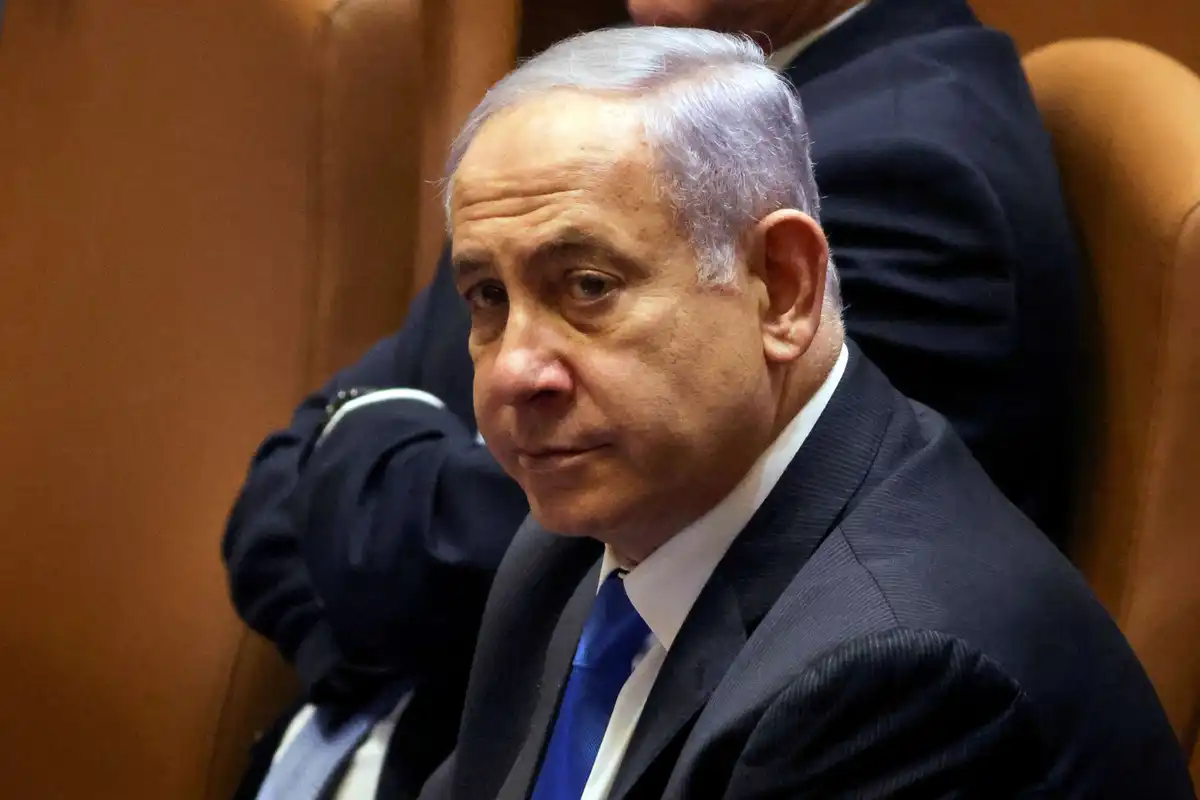

Barak's statements come three months after the beginning of the Israeli aggression on the Gaza Strip, as disagreements began to escalate between Prime Minister Benjamin Netanyahu and his government. According to the Israeli media, analysts point out that these disputes pose a security and existential threat to Israel.


The Israeli "Channel 13" discussed the crisis of Defense Minister Yoav Gallant's recent withdrawal from the War Council session, as its correspondent, Moriya Wahlberg, reported that the head of the National Security Council, Tzachi Hanegbi, had asked the head of the Defense Minister's office to leave the meeting. It pointed out that Gallant refused, according to what he said, and left the place, accompanied by his aides, after attacking Netanyahu and Hanegbi.


In the same context, Haaretz newspaper - today, Friday - quoted a source in the junior security ministerial team, saying that “there is no future for the war, and Netanyahu is stalling to buy time and escape responsibility.”


Since the "Al-Aqsa Flood", Israel has been waging a devastating war on Gaza, which, as of Thursday, resulted in the death of 24,620 Palestinians and the injury of 61,830 others, most of them children and women. This war also caused massive destruction of infrastructure, leaving an “unprecedented humanitarian catastrophe,” according to Palestinian and international reports.


Source: Al Jazeera


PALESTINE

Fri 19 Jan 2024 8:43 am - Jerusalem Time

Israeli War on Gaza: Death toll reached 24,762 killed since October 7

The Ministry of Health in Gaza reported that the number of killed had risen to 24,762 people, in addition to 62,108 injured due to the Israeli aggression against the Gaza Strip since last October 7, and pointed out that Israel committed 12 massacres that claimed the lives of 142 persons and 278 wounded during the past 24 hours.


Dozens of killed and wounded in the ongoing Israeli bombing of the Gaza Strip


At dawn today, Friday and Thursday night, dozens of citizens, including children and women, were murdered, and others were injured, in the continuous bombardment by Israeli aircraft, artillery, and gunboats on the Gaza Strip, as the aggression entered its 115th day.


Medical sources reported that 77 citizens were killed and dozens injured during the last hours, bringing the number of killed since the start of the aggression to more than 24,620 people, in addition to more than 61,830 wounded, and thousands of missing people, in an infinite toll.


At least 12 citizens were killed and others were injured after the Israeli aircraft bombed a residential apartment near Al-Shifa Medical Complex in Gaza City. A number of citizens were also injured in an Israeli raid that targeted Al-Nour Mosque in the Al-Sabra neighborhood of the city.


The Israeli warships bombed the coast of Gaza City and areas in the northern Gaza Strip. The Israeli aircraft and artillery also bombed various areas in the northern Gaza Strip, including the town and Jabalia camp.


Eight citizens were killed and others were injured when the Israeli aircraft bombed a house for the Al-Kadhimi family, west of Khan Yunis, in the southern Gaza Strip, coinciding with the area being subjected to violent bombardment by the Israeli artillery.


The Israeli tanks and military vehicles stormed the vicinity of Nasser Medical Hospital, and the Israeli artillery bombed the vicinity of the Al-Amal Hospital of the Palestinian Red Crescent Society in Khan Yunis. The Israeli forces blew up residential homes in the south of the governorate. The Israeli aircraft also launched raids on Deir al-Balah in the central Gaza Strip.


ARAB AND WORLD

Thu 18 Jan 2024 9:05 pm - Jerusalem Time

EU Parliament votes by majority on a draft resolution for a ceasefire in Gaza

The European Parliament voted by majority on a draft resolution for a ceasefire in Gaza and to accelerate the delivery of humanitarian aid to the Strip.


The decision supports the work of the International Court of Justice, and emphasizes the importance of presenting a new European initiative to resume the political path towards a two-state solution.


The European resolution also calls for the dismantling of the Islamic Resistance Movement (Hamas) and the release of Israeli prisoners. The resolution also condemned the violence of Israeli settlers in the West Bank and the forced displacement of residents.


The International Court of Justice in The Hague witnessed hearings to consider the case brought by South Africa regarding the Israeli military attack on the Gaza Strip. In the case, Israel was accused of committing genocide crimes in contravention of the 1948 United Nations Convention on the Prevention of Genocide, which South Africa and Israel had signed. 


Yesterday, Wednesday, the American Bloomberg website quoted informed sources that the European Union intends to impose sanctions on the Hamas movement due to its attack on Israel, in reference to the “Al-Aqsa Flood” operation.


The sources stated that European sanctions have been agreed upon and will be announced next Monday at the foreign ministers’ meeting, considering that the sanctions come in response to the attack launched by the Palestinian resistance, led by the Izz al-Din al-Qassam Brigades - the military wing of the Hamas movement - on Israel on October 7. the past.


Last Tuesday, European Union member states included the head of the Hamas movement in the Gaza Strip, Yahya Sinwar, on their sanctions list.


Since October 7, 2023, the Israeli occupation army has been waging a devastating war on Gaza that has, as of today, Thursday, left 24,620 killed and 61,830 injured, and caused the displacement of more than 85% (about 1.9 million people) of the Strip’s population, according to the Palestinian authorities and the United Nations. United.