PALESTINE

Mon 30 Mar 2026 7:39 am - Jerusalem Time

9 Martyrs in Khan Yunis and Warnings of a Complete Halt of Gaza Hospitals

The city of Khan Yunis, in the southern Gaza Strip, witnessed a bloody escalation today, Sunday, where nine Palestinians, including members of the local police, were martyred as a result of a series of airstrikes and intense gunfire. The attacks focused on various areas of the city, leading to varying injuries among civilians who were in the vicinity of the targets.

In field details, local sources reported that shelling targeting the vicinity of the Bani Suhaila roundabout east of the city resulted in the martyrdom of one person, while the death toll from the shelling that targeted gatherings in the 'Bir 19' area in Mawasi Khan Yunis rose to eight martyrs. Four others were also injured with various wounds due to shrapnel that flew in the densely populated area with displaced people.

The aerial bombardment coincided with intensive ground movements, as Israeli military vehicles fired their machine guns and artillery shells towards the eastern areas of Khan Yunis. These movements come within what is known as the 'Yellow Line' to which the army had previously withdrawn, indicating continuous breaches of field understandings.

On the naval and aerial fronts, Israeli warships participated in the attack by firing towards the Khan Yunis beach, causing panic among fishermen and citizens. At the same time, combat helicopters carried out sweeping operations with fire towards the eastern outskirts of the Bureij camp, coinciding with artillery shelling that targeted the eastern neighborhoods of Gaza City.

Field sources confirmed that the occupation is systematically focusing on targeting security personnel affiliated with the Ministry of Interior, who are tasked with maintaining public order and protecting aid. These attacks have been repeated in recent weeks, especially in areas near the contact lines, hindering efforts to secure the internal front and provide protection for civilians.

Hamas, for its part, considered the targeting of civilian police points in Khan Yunis as an insistence by the occupation government to spread chaos and dismantle the administrative structure in the Strip. The movement called on the international community and the guarantor states of the ceasefire agreements to act immediately to stop these aggressions and hold the occupation leaders accountable for their crimes.

In a related context concerning the humanitarian situation, the Ministry of Health in Gaza issued a strong warning about the risk of the remaining hospitals completely ceasing to operate. The ministry attributed this risk to the severe shortage of operating oils for electricity generators and spare parts necessary for maintenance, in light of the strict siege imposed on the crossings.

During a press conference held at Al-Shifa Hospital, Mazen Al-Araishi, Director General of Engineering and Maintenance, explained that about 90 electricity generators have already gone out of service due to excessive consumption and lack of maintenance. He pointed out that the remaining generators are operating at a minimum and with insufficient quantities of oils, threatening the continuity of work in vital departments.

Al-Araishi indicated that the health system needs about 2500 units of operating oils monthly, which is currently unavailable due to Israeli restrictions on the entry of supplies. He warned that the continuation of this deficit would lead to a gradual halt of medical facilities that have been operating beyond their capacity for more than two years without interruption.

The risks resulting from generator malfunctions include the cessation of intensive care units and incubators for premature babies, in addition to dialysis units that rely entirely on stable power. The power outage also threatens to spoil drug and vaccine stocks and blood bags that require specific temperatures to maintain their validity.

The Ministry of Health concluded its appeal by emphasizing that surgical operations may be limited to very urgent cases only, with the possibility of diagnostic imaging devices and laboratories breaking down. It appealed to international organizations, especially the World Health Organization, to pressure for the opening of crossings and to secure the access of fuel, oils, and medical equipment necessary to save what remains of the health sector.

The targeting of civilian police points by the occupation army is an attempt to impose chaos and a continuation of crimes against our people.

PALESTINE

Mon 30 Mar 2026 7:39 am - Jerusalem Time

Israeli warnings of an 'attrition trap' in Iran and field escalation breaking the truce in Gaza

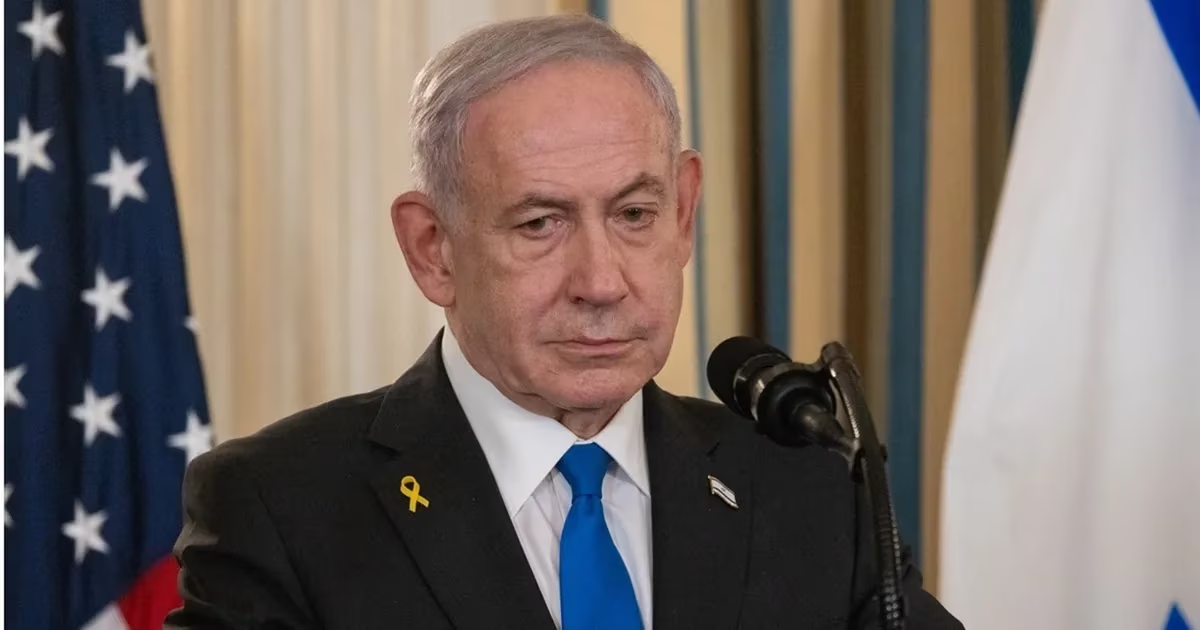
Political and security circles within the occupation state, with the completion of the first month of direct military confrontation with Iran, witnessed a wide debate about the strategic utility of joint air operations with the United States. The general Israeli mood shifted from the euphoria of initial strikes to deep concern about the ability to decisively win the battle or end the existing missile threat.\n\nIn a sharp critical reading, former National Security Advisor, General Giora Eiland, described the current situation as 'Moscow 1812 scenario'. Eiland explained that Israel and Washington fell into a classic error, which is the large gap between declared goals and available means, assuming that aerial bombardment would force Tehran to negotiate.\n\nEiland affirmed that the Iranian leadership adopted a 'long breath' strategy similar to the Russian Tsar against Napoleon, refusing to surrender to American conditions. He considered that the 'aerial hell' unleashed by the coalition did not translate into tangible political results, but rather turned into a destructive act with no clear horizon for ending the conflict.\n\nAnalysis also pointed to 'naivety' in assessing Iran's ability to choke global trade through asymmetric weapons. Despite targeting the conventional fleet, Tehran proved the effectiveness of its naval mines, suicide drones, and 'sea-to-sea' missiles in threatening international waterways.\n\nThe Iranian threat did not stop at the Strait of Hormuz but extended to Bab al-Mandab, placing the international coalition in a position of 'passive defense'. This escalation led to an unprecedented global energy crisis, prompting American strategy to retreat and become confused in the face of the economic war's repercussions.\n\nOn the ground, reports from the Institute for National Security Studies (INSS) revealed that air strikes did not touch the 'strategic nerve' of Iranian capabilities. Sources confirm that Iranian missiles are stored in fortified bases hundreds of meters deep under mountains, making their destruction from the air almost impossible.\n\nEiland criticized the absence of any ground campaign or the ability to recruit allied forces on the ground due to the 'Iraq shock' that still dominates decision-making in Washington. He believed that merely watching aerial destruction aims only to satisfy the Israeli public, without bringing about a real change in the military balance of power.\n\nIn a related context, the former advisor warned against being drawn into secondary military campaigns such as 'Northern Arrows' against Hezbollah, considering them an 'attrition trap'. While the army focuses its efforts on the Iranian interior, the Galilee regions remain under continuous fire, which refutes promises of 'absolute victory'.\n\nOn the other hand, Tzachi Hanegbi adopts a different view calling for continued military pressure until Iranian capabilities are completely destroyed. Hanegbi believes that the continuation of the American decisive approach is what will change the balance of terror in the region, despite warnings of a prolonged confrontation.\n\nIn a sociological reading, researcher Benny Sabti pointed to potential rifts between the Iranian presidency and the Revolutionary Guard. Sabti attributes this tension to economic pressures resulting from the detention of oil funds in China and Russia, which could lead to internal collapse.\n\nAway from the Iranian front, occupation forces committed a serious breach of the ceasefire agreement in the Gaza Strip at dawn on Sunday. Medical sources reported the martyrdom of 6 Palestinians, including 3 police officers and a girl, after a raid targeted the Al-Mawasi area west of Khan Yunis.\n\nThis targeting is one in a series of continuous breaches of the agreement signed in October 2025, with the number of martyrs since its entry into force reaching 691. Human suffering continues in the Strip, with the total number of aggression victims since October 2023 exceeding 72,000 martyrs.\n\nRegarding the prisoner file, it was announced on Saturday that prisoner Marwan Fathi Harzallah (54 years old) was martyred inside Megiddo prison due to medical negligence. This incident raises the number of martyrs in the prisoner movement since the start of the war to 89, amid harsh and inhumane detention conditions.\n\nThis coincided with a legal escalation in the Israeli Knesset, where the National Security Committee approved a bill for the execution of Palestinian prisoners. This law, awaiting final vote, aims to tighten penalties against resistors, threatening to ignite the situation inside and outside prisons.\n\n"The current reality resembles the Moscow 1812 scenario; where the attacking axis believed that destroying facilities would lead to negotiations, but the Iranian leadership chose a long-breath strategy.

OPINIONS

Mon 30 Mar 2026 7:32 am - Jerusalem Time

“No King”: Republican Dissent and the Democratic Test in the Trump Presidency

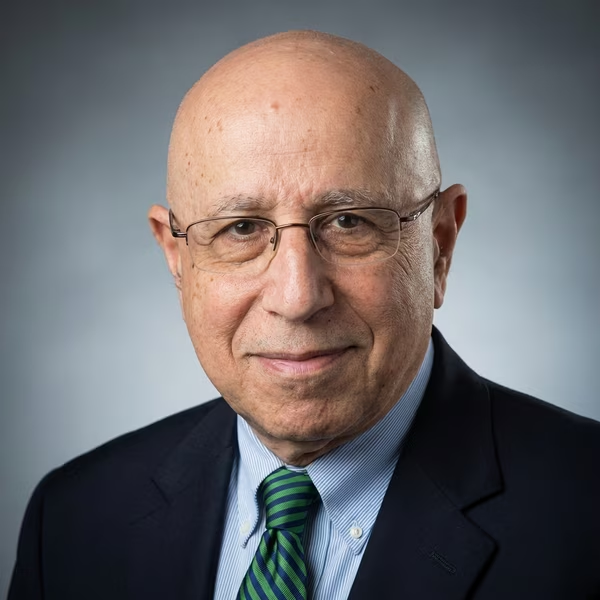
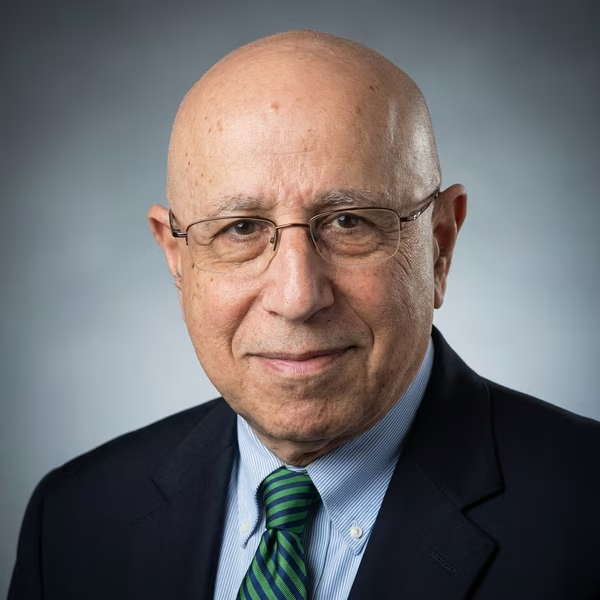
By: Said Arikat

March 30, 2026

News Analysis

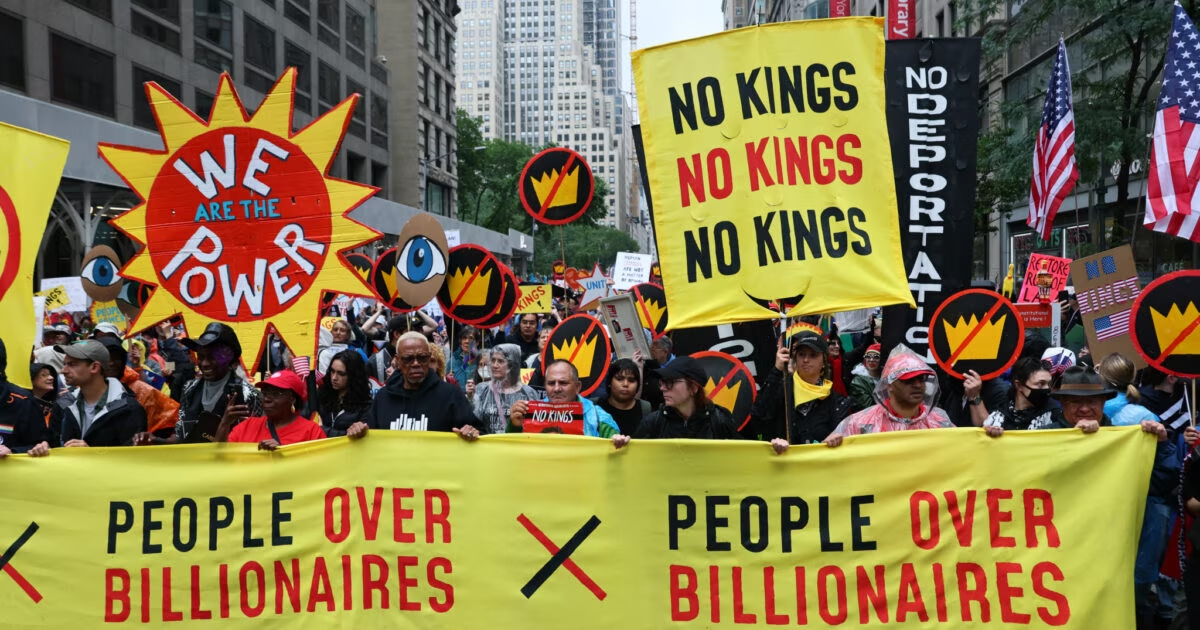
 Washington, D.C-The “No King” rallies on Saturday, March 28, culminating in the high-profile gathering in Washington, D.C., have emerged as a striking manifestation of intra-party dissent under President Donald Trump. More than mere protest, they are a vivid declaration that loyalty to a single leader cannot supersede the principles of American democracy. In a political landscape increasingly defined by personality-driven politics, these rallies serve as a collective assertion that the United States cannot function as a monarchy in all but name. The symbolism of holding such a demonstration at the nation’s political epicenter—the capital itself—underscores both the urgency and the audacity of the message.

The Washington event was meticulously orchestrated to maximize visibility and political impact. Participants ranged from grassroots activists to former Republican officials, all united under a banner rejecting authoritarian impulses and defending institutional norms. The choice of Washington, D.C., is itself an unmistakable statement: the protest does not occur on the periphery but at the very locus of power. By placing dissent literally in the corridors of authority, organizers ensure the movement cannot be ignored by media, legislators, or the public. It is a rally designed to confront the heart of Trump’s presidency and to assert the principle that no individual, however popular, is above democratic norms.

The “No King” movement emerges against a backdrop of heightened Republican tension. President Trump’s continued consolidation of influence—through public statements, endorsements, and policy direction—has created a delicate balance for traditional conservatives, who must reconcile loyalty to a widely supported president with responsibility to democratic norms. The rallies exploit this tension, making explicit the stakes of unquestioning allegiance: the potential erosion of the party’s credibility and the weakening of institutions that underpin the republic. This is a cautionary narrative, a public admonition that unchecked loyalty carries consequences beyond electoral politics.

Immediate effects of the Washington rally have been unmistakable. National media coverage has framed the event as evidence of deepening fractures within the Republican Party, highlighting that opposition to Trump is not confined to abstract criticism but extends to organized, vocal factions willing to challenge his authority publicly. Congressional leaders and state party officials are now navigating intensified pressure to define their positions clearly, a tension that may influence legislative agendas, endorsements, and the dynamics of competitive primaries in 2026. In this sense, the rally functions both as a mirror of dissent and a lever for political recalibration.

The democratic significance extends beyond party politics. In a polarized environment, public demonstrations emphasizing limits on power reaffirm the role of civic engagement as a check on executive authority. By framing opposition not as partisan obstruction but as principled resistance to authoritarianism, participants in the “No King” movement articulate a vision of democracy in which institutional integrity takes precedence over personality politics. The very act of mobilizing in the nation’s capital communicates a deeper truth: the vitality of the republic depends on active citizens willing to confront the concentration of power.

Electoral consequences are potentially profound. In Republican-leaning states with competitive primaries, candidates may now be compelled to publicly navigate Trump’s influence, risking alienation of either the loyalist base or moderate voters. Independents and swing constituencies may interpret the rallies as evidence that principled opposition exists within the GOP, a signal that the party is not monolithic and that personality-driven politics can be challenged. As such, the movement may shape voter behavior in midterms, influencing both turnout and candidate positioning.

Long-term implications for conservatism are equally significant. If sustained, the “No King” rallies could form the nucleus of a structured faction committed to resisting centralization of power and reaffirming core conservative principles: limited government, adherence to constitutional norms, and measured leadership. This emergent faction has the potential to influence candidate selection, legislative priorities, and party platforms well beyond the Trump presidency, serving as a counterweight to the populist, personality-driven impulses that have defined recent cycles. In essence, the rallies may represent the initial stages of an ideological realignment within the Republican Party.

Challenges remain. The movement’s influence will depend on translating symbolic protests into sustained political leverage, combining grassroots energy with organizational sophistication, and articulating a coherent policy agenda. Without these elements, the momentum generated by the Washington rally risks dissipating. Moreover, the movement must navigate perceptions: too aggressive a stance risks alienating moderates, while insufficient clarity may render the protest performative rather than consequential. Success lies in striking a careful balance between moral authority and strategic action.

Ultimately, the “No King” rallies represent more than political dissent—they are a democratic litmus test in the Trump era. By confronting the concentration of power in the executive and asserting the primacy of constitutional norms, these events highlight the fragility of personality-driven politics and the enduring need for civic vigilance. While the immediate electoral effects remain uncertain, the rallies have already reshaped the narrative of Republican politics and injected a potent reminder into national discourse: American democracy flourishes not under the dominion of a single leader, but when power is debated, constrained, and held accountable by engaged citizens. In this sense, the “No King” movement is both a warning and a reaffirmation: the republic endures through principled dissent as much as through popular support.

OPINIONS

Sun 29 Mar 2026 3:47 pm - Jerusalem Time

Washington Considers Expanding War to Ground Operations Inside Iran

Said Erikat

Opinion Writer

Washington – Said Erikat – 3/29/2026

In a notable development reflecting a potential escalation in the pace of confrontation, the Washington Post, citing American officials, reported that the U.S. Department of Defense is preparing for a scenario of ground operations inside Iran that could last for weeks. This move represents a qualitative shift from air and naval operations to direct ground engagement.

According to the report, the military plans under consideration include complex raids carried out by special operations forces alongside conventional infantry units, as part of what appears to be an attempt to impose rapid tactical realities on the ground. However, these plans, according to sources, are still contingent on the approval of President Donald Trump, who has not yet made a decision regarding moving to this level of escalation.

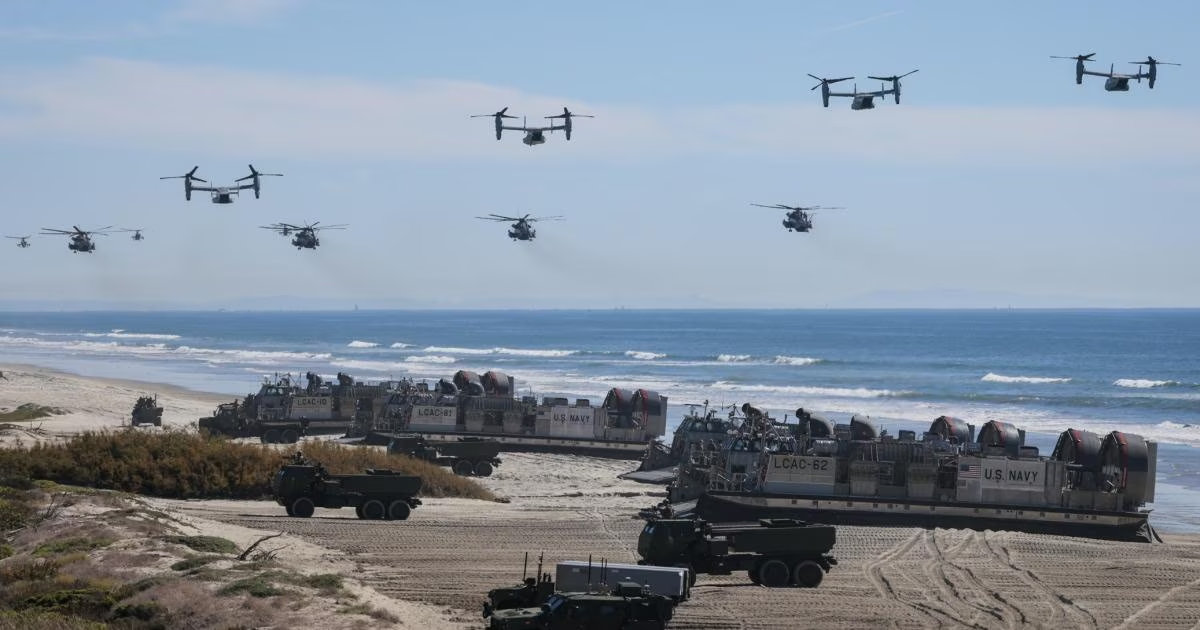
This comes as the war enters its fifth week, with Washington having reinforced its military presence in the region by deploying Marine Corps forces, and considering sending thousands of soldiers from the 82nd Airborne Division, one of the most rapidly deployable units in the U.S. Army. This increasing military buildup reflects preparation for broader options, which may go beyond deterrence to the execution of specific offensive operations.

Informed sources indicate that the debate within the U.S. administration remains heated between those pushing to expand the scope of operations to achieve deeper strategic objectives, and those warning against sliding into a complex ground quagmire in Iran, given the nature of the geography, logistical challenges, and the potential for an asymmetrical Iranian response.

The shift towards considering ground operations inside Iran reveals a growing strategic dilemma in Washington. After weeks of air strikes that have not achieved a clear decisive outcome, the U.S. administration appears to face two difficult choices: either direct military escalation with its inherent risks, or accepting a long war of attrition. This hesitation reflects the absence of a comprehensive vision for the political end of the conflict, where military tools are being dealt with in isolation from a clear diplomatic strategy, increasing the likelihood of miscalculation.

Betting on elite forces such as special operations and airborne units may give Washington the ability to carry out precise strikes, but it does not guarantee control over their repercussions. Iran possesses a complex network of allies and unconventional capabilities, making any limited ground incursion vulnerable to turning into a broader confrontation. Furthermore, American military history in the region, from Iraq to Afghanistan, highlights that rapid operations often turn into long and costly political and military commitments.

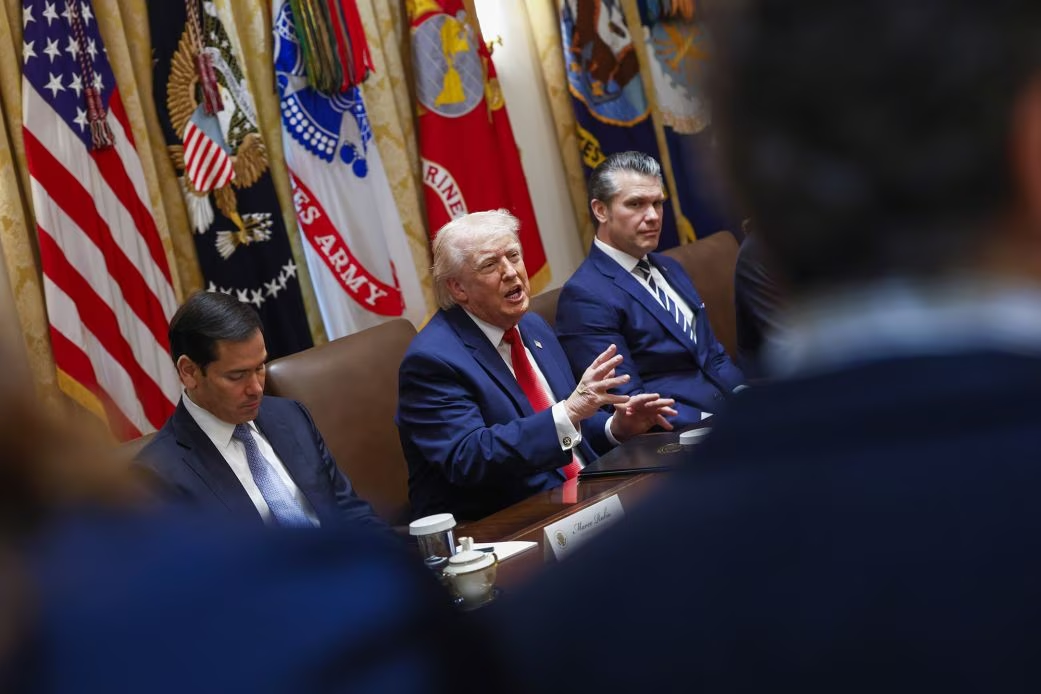
Politically, this escalation comes at a sensitive internal moment for President Donald Trump, as pressure is mounting within Congress and within his own political camp regarding the cost and objectives of the war. Any decision to proceed with ground operations could deepen internal divisions, especially if there is no clear exit strategy. Moreover, the American public, which has shown war fatigue, may not easily accept a new involvement in an open conflict in the Middle East.

In conclusion, Washington appears to be at a critical crossroads: either continue to escalate towards a broader confrontation with Iran, or re-evaluate its options within a more cautious approach that takes into account regional and international complexities. In the absence of a clear final decision, all scenarios remain open, from limited operations to a gradual slide towards a broader war, which may exceed current estimations.

LATEST NEWS

Sun 29 Mar 2026 3:47 pm - Jerusalem Time

Millions of Americans Protest 'No Kings' Against Trump's Policies

A massive wave of popular protests swept across the United States under the slogan 'No Kings,' with millions participating in coordinated marches across all fifty states. These movements aim to express widespread public rejection of President Donald Trump's policies and administration, in one of the largest protest events recorded in modern American history.

The organizers of the popular movement confirmed over 3100 field events, with expectations of total participants exceeding 9 million people. The momentum began to clearly show in the capital, Washington, where tens of thousands flocked from the early morning hours to participate in central marches that paraded through the main streets.

Minnesota leads the national protest scene, with about 100,000 people gathering in St. Paul in front of the Capitol building. This Midwestern state has become a symbol of popular resistance, especially after the bloody events it previously witnessed, which led to the killing of two people by federal agents during immigrant pursuit campaigns.

Protesters directly accuse President Trump of disregarding the fundamental democratic principles upon which the country was founded. Protesters believe that the current administration seeks to concentrate powers in the hands of the president in a manner inconsistent with the Constitution, following methods described as mimicking the approach of autocratic rulers in managing state affairs.

The protests were not limited to major cities and liberal areas but extended to rural and conservative areas traditionally known as Republican strongholds. This geographical expansion indicates a state of division or unrest even within the bases that were historically counted in favor of the president, according to field media sources.

On the international front, the spark of solidarity ignited from the French capital, Paris, where hundreds of American residents gathered in the historic Bastille Square. French labor unions and human rights organizations joined the protesters, raising banners condemning what they described as 'wars for profit' and asserting that the armed forces are not a tool for sale or political exploitation.

Ada Shin, one of the organizers of the Paris march, said that the protest comes in response to what she described as the illegal and immoral wars in which the American administration is engaged. She added that the goal of these policies is to blatantly exploit power, noting that the president is abusing the mandate given to him by the American people through 'strongman' practices.

In Minnesota, organizers explained that the choice of their state to be the center of the main national event came in appreciation of the resilience of its residents in the face of violent security campaigns. They pointed out that the number of participants this year exceeded the figures recorded in last June's protests, reflecting the escalating public anger towards the policies adopted in immigration and public freedoms.

For its part, the White House quickly downplayed these million-strong movements, describing them as 'manufactured' and backed by left-wing funding entities. The American administration stated in a brief statement that these demonstrations do not express the true pulse of the street, claiming that public support for these movements remains limited despite the large numbers observed in the squares.

These developments come at a sensitive time for the United States, where political and social polarization is escalating unprecedentedly. Observers believe that the continuation of these protests with such momentum may impose new legal and political pressures on the Trump administration, amid increasing demands for accountability for what is described as abuse of power and endangering global stability.

When injustice becomes law, resistance becomes a duty... We protest the abuse of power practiced by the elected president.

ANALYSIS

Sun 29 Mar 2026 3:46 pm - Jerusalem Time

Invisible Wars: How Does Washington Shape Conflict Equations Through Awareness and Economy?

Contemporary wars are no longer limited to direct military confrontations on battlefields but have shifted to invisible spaces managed by the United States with high professionalism. This strategy relies on shaping conflict equations through media tools and psychological warfare, making the battle for influencing perception and forming collective consciousness no less important than the movements of fleets and armies.

The American vision for managing international crises is based on a complex mix that combines hard and soft power, where media is employed as a strategic tool to redefine reality. Through international networks and digital platforms, major narratives are directed to serve political objectives, whether by exaggerating certain events or downplaying others according to supreme interests.

In the digital space, algorithms play a pivotal and hidden role in prioritizing and directing global public opinion. The ability to choose what is displayed first and what is marginalized grants major powers unprecedented authority in shaping international positions, especially during acute moments of crisis in the region.

Psychological warfare emerges as a crucial element in weakening adversaries before any real field confrontation begins, where misleading information or 'half-truths' are used to confuse the other party. These moves aim to sow doubt within hostile societies and weaken their trust in their national institutions, thereby facilitating political penetration later.

This war takes multiple forms, including carefully planned media leaks and organized campaigns via social media. It also includes military displays that are essentially aimed at achieving psychological gains and deterring adversaries, rather than seeking to achieve tangible geographical accomplishments on the ground.

The impact of these strategies is not limited to adversaries but also extends to allies by managing their expectations and adjusting their political stances. Washington always seeks to unify the media narrative and political discourse within its alliances to ensure that independent positions that might hinder the overall strategy are not formed.

On the economic front, the concept of 'war economy' stands out as an effective tool for redistributing global power balances to serve American interests. This is achieved through imposing strict sanctions and controlling vital supply chains, in addition to directly influencing global energy markets.

International crises provide major opportunities for multinational corporations to reposition themselves and open new markets in conflict zones. Thus, war transforms from merely an armed conflict into a means of reshaping the international economic order and imposing new realities that are difficult to reverse in the future.

The logic of the market intertwines with geopolitics in a way that makes it difficult to separate commercial interests from military objectives. Using crises as a means to prioritize international agendas ensures that economic dominance remains linked to the ability to manage conflicts and direct their trajectories.

Despite the apparent effectiveness of these approaches, they carry significant long-term risks and costs. Over-reliance on media as a guiding tool can lead to an erosion of credibility, especially with the rise of alternative information sources that break the monopoly of the official narrative.

Moreover, intensifying psychological warfare can sometimes lead to counterproductive results, as pressure turns into a factor of counter-mobilization among targeted populations. Instead of weakening the adversary, these pressures may contribute to strengthening internal fronts and increasing determination to confront and reject external dictates.

This new reality poses serious challenges to societies that are now required to understand the mechanisms of hidden influence through which international conflicts are managed. It is no longer enough to follow superficial news; one must delve into the backgrounds of narratives to understand how facts are manipulated and minds are directed.

Control over minds in our contemporary world has often become a prerequisite for controlling land and resources. The real battle revolves around who has the ability to define what is 'real' and what is 'fake' amidst the intertwining of facts with systematic propaganda.

In conclusion, the American role in contemporary conflicts transcends the traditional image of military power based solely on weaponry. It is a comprehensive management of psychological, economic, and media spheres of influence, making 'invisible war' the primary driver of international politics in the 21st century.

The battle today is not just about who possesses power, but about who possesses the ability to direct perception and define what is considered reality.

PALESTINE

Sun 29 Mar 2026 3:46 pm - Jerusalem Time

For the thirtieth day: The silence of the minarets in Al-Aqsa and an Israeli decision to extend the closure until mid-April

The closure of the blessed Al-Aqsa Mosque entered its thirtieth consecutive day, as the occupation authorities continue to prevent worshippers from reaching the mosque and performing their religious rituals. Israeli security agencies cite the state of emergency resulting from the ongoing military confrontation since late February as justification for this unprecedented religious siege.

Occupation authorities informed the Islamic Endowments Department in Jerusalem of their decision to keep the mosque closed until April 15, 2026. This closure is the longest and most stringent since the occupation of the holy city in 1967, raising serious concerns about the future of the status quo in the Noble Sanctuary.

Field sources reported that the occupation police imposed a tight security cordon around the Old City and deployed extensive reinforcements at all gates leading to Al-Aqsa Mosque. These measures prevented last Friday's prayer, forcing hundreds of Jerusalemites to spread out in nearby streets and roads to perform prayers amidst security restrictions and harassment.

Video clips documented distress calls from the elderly and Jerusalemites who tried to reach the mosque, warning of the dangers surrounding it in light of this absolute silence. Activists called for the necessity of setting out and acting to break the siege imposed on the first Qibla of Muslims, emphasizing that Al-Aqsa is at a dangerous historical turning point.

The policy of isolation was not limited to Al-Aqsa Mosque alone but extended to include Christian holy sites in the city, as the Church of the Holy Sepulchre remained closed to pilgrims and worshippers. These steps come within a comprehensive Israeli vision aimed at isolating occupied Jerusalem from its geographical and demographic surroundings under the guise of current military circumstances.

On the digital front, social media platforms were abuzz with a wave of anger and condemnation due to the continued silence of the minarets and the absence of the call to prayer and prayers in the mosque. Bloggers considered the continuation of the closure for a full month a stab in the conscience of the nation, especially as these measures coincided with important religious occasions that passed without their usual rituals being performed.

Followers criticized the absence of an effective Arab and Islamic stance towards what is happening in Jerusalem, affirming that this laxity encouraged the occupation to persist in its measures. They pointed out that the pretext of 'state of emergency' seems flimsy, especially since it is applied with extreme selectivity targeting the Islamic and Christian presence in the heart of the holy city exclusively.

Specialists in Jerusalem affairs warned that the occupation seeks to establish a new reality aimed at the complete temporal division of Al-Aqsa Mosque. Leaked plans include attempts to equalize the hours of incursions allocated to settlers with the hours of presence of Muslim worshippers, at nine hours for each party, in a step to end the exclusive Islamic sovereignty over the place.

Reports indicate that the Israeli government is working to permanently re-violate the Dar al-Hadith area and the eastern courtyard of the mosque. Restrictions are also concentrated in the Bab al-Rahma area, with the aim of full control over the eastern section of Al-Aqsa Mosque and transforming it into an area of settlement influence in preparation for broader Judaization operations.

The preparation for imposing temporal and spatial division includes making the Jewish presence a permanent part of the daily program within the courtyards of the Noble Sanctuary. Observers believe that these fundamental changes in the religious and historical function of the place aim to create a new reality that will be difficult to change after the current military conditions end, which requires urgent action to protect the holy sites.

Al-Aqsa calls you, Al-Aqsa is in danger, set out, oh world, to Al-Aqsa, march to Al-Aqsa.

ARAB AND WORLD

Sun 29 Mar 2026 3:46 pm - Jerusalem Time

Unprecedented Military Escalation: Tehran Announces Destruction of US 'AWACS' and Bombing of Facilities in Bahrain and UAE

The past few hours have witnessed a dramatic shift in the regional military confrontation, as Iranian authorities announced the success of their defenses or air force in destroying an American early warning and control (AWACS) aircraft. This incident is considered a significant technical and military breach given the strategic importance of this aircraft in managing air operations and radar surveillance.

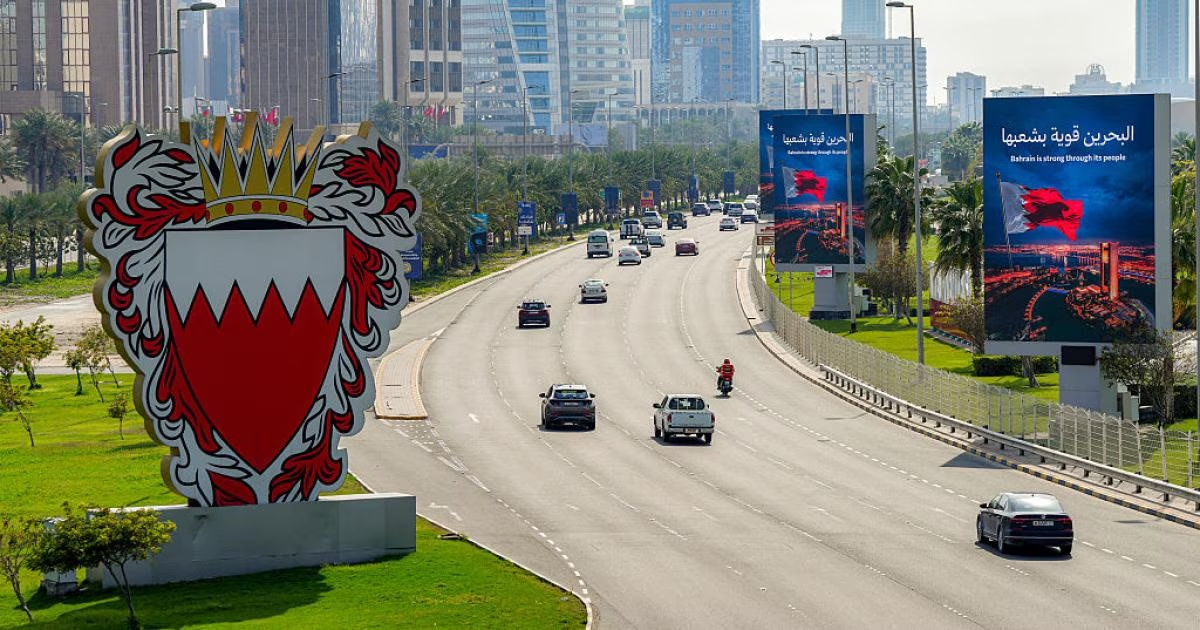
In a related context, official sources in Tehran confirmed their responsibility for carrying out a series of strikes targeting industrial facilities and factories in both the Kingdom of Bahrain and the United Arab Emirates. The sources indicated that these attacks come as part of a broader response to what they described as involvement in military operations directed against Iranian territory.

These developments raise international concerns about the region sliding into an uncontrolled, all-out war, especially with the targeting of the geographical depth of Gulf states and the downing of a pride of American military industry. Political circles are currently monitoring the nature of the expected response from Washington and its allies in the region, amidst international calls for de-escalation and avoiding a complete collapse of regional security.

Military operations targeted vital centers in response to hostile movements in the region.

ANALYSIS

Sun 29 Mar 2026 3:46 pm - Jerusalem Time

The Logic of 'No Defeat': How Iran Redefines Military Strategy in Confrontation with Major Powers?

Amidst global power balances typically measured by conventional military arsenals, the Iranian case stands out as an exceptional model that transcends classical notions of victory and defeat. Despite decades of economic sanctions and continuous military pressure, Tehran has managed to maintain its regional positioning without being drawn into a decisive confrontation that could end its political existence.

Iran's vision of conflict is based on considering war as an extended temporal process, not merely a military clash decided on a single battlefield. This perspective makes 'strategic patience' a fundamental pillar, where success is measured by the state's ability to erode the adversary's will and force them to retreat under the weight of continuous attrition.

Tehran applies a golden rule in its military movements: to move battlefields as far away from its national borders as possible. By building a complex network of allies and proxies in the region, it has succeeded in transforming any direct threat to itself into a multi-front war that exhausts adversaries politically and militarily.

This management approach makes Iran a center for decision-making and operations without necessarily being in the direct line of fire. This geographical distribution of risks gives decision-makers in Tehran high flexibility in maneuvering and pressuring adversaries' weaknesses at sensitive times.

Instead of pursuing a 'knockout blow' that might provoke a comprehensive international response, Iranian strategy prefers a policy of 'long breath'. This policy relies on delivering limited strikes and graduated military messages aimed at exhausting the other party's capabilities without reaching the point of total explosion.

'Strategic ambiguity' stands out as one of the most powerful weapons in Iran's unconventional arsenal, where major operations are often left without clear official attribution. This ambiguity confuses the response calculations of major powers and gives Tehran ample room for diplomatic maneuvering and denial when necessary.

Iranian leadership recognizes the gap in conventional military superiority separating it from its international adversaries, and therefore developed the logic of 'raising the cost'. This logic aims to make any thought of launching a comprehensive war an extremely expensive gamble, whether by threatening shipping lanes or expanding the scope of regional engagement.

In this context, the goal is not to achieve military victory in the traditional sense, but to prevent the adversary from becoming convinced of the possibility of an easy victory. It is a defensive-offensive strategy at the same time, relying on transforming military power into a tool to deter existential threats.

Military action in the Iranian strategic mind is not separate from the political and diplomatic path; rather, it is used as powerful leverage at the negotiating table. Calculated field escalation is often a prelude to improving negotiating terms or rebalancing power with major powers.

The ability to balance 'fire and diplomacy' is what has enabled Tehran to survive despite long international isolation. De-escalation, from the Iranian perspective, is not a concession, but a result of a careful re-evaluation of state interests and the cost of continuing direct confrontation.

The secret to the Iranian regime's survival lies in its ability to avoid defeat rather than betting on a quick and costly victory. It does not enter into battles whose consequences it cannot bear, nor does it escalate situations except within limits that ensure its control over the final outcomes.

Iran operates in the international arena with a 'complex networks' mentality characterized by flexibility and adaptability to sudden changes. This distributed structure makes it difficult to target a single center of gravity to end its influence, which enhances its ability to endure long-term.

Ultimately, Iran has redefined the rules of the military game in the Middle East by adopting the 'no defeat' model. In a world where the nature of wars is becoming more complex, the traditional question of who is the victor is no longer the most important, but rather who has the greater capacity for endurance.

The Iranian experience indicates that power lies not only in the number of planes and tanks, but in the ability to confuse the adversary's calculations and force them to accept an uncomfortable status quo. This strategic resilience remains the true measure of the success of its foreign policy in the face of pressure.

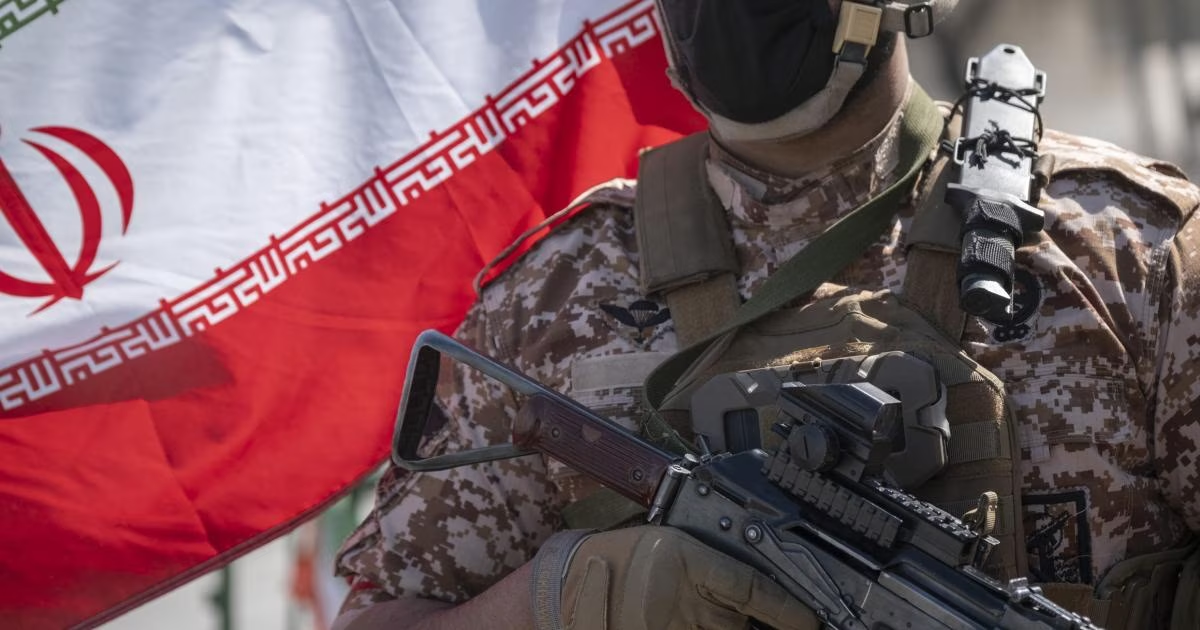
Iran does not seek complete control, but to confuse the adversary, and not overwhelming victory, but to redefine the rules of the game.

ARAB AND WORLD

Sun 29 Mar 2026 3:46 pm - Jerusalem Time

Hebrew reports: Washington considers controlling Kharg Island, Iran's oil lifeline

Hebrew media reports have revealed intensive American movements in the Middle East, indicating a field reality different from political statements about resolving the conflict with Iran. Sources explained that Washington has reinforced its military presence by deploying amphibious warships and advanced aircraft, in addition to thousands of marines and sailors in strategic locations near the Iranian coast.

Strategic assessments indicate that the US administration is seriously considering the option of controlling Kharg Island, which is considered one of the most important economic and vital assets of the Islamic Republic. The importance of this island lies in its being the main center for energy distribution in Iran, as it possesses a huge infrastructure capable of receiving giant oil tankers and storing millions of barrels.

Observers believe that any targeting or control of this island would represent a devastating blow to the Iranian economy, given that about 90% of oil exports pass through its piers and facilities. This total dependence makes the island a strategic target for Washington in its attempt to undermine Tehran's financial capabilities and force it to make major political and military concessions.

In contrast, international media sources have warned that controlling the island does not necessarily guarantee a final strategic resolution to the conflict. There are fundamental questions about whether this step would push Iran to reopen the Strait of Hormuz, or whether it would lead to a counter-reaction that would push the Iranian leadership towards further military escalation in international waterways.

US forces face grave military risks if a decision is made to carry out a ground operation to control Kharg, as this would require crossing the Strait of Hormuz under the threat of ballistic missiles. Iranian drones and naval mines also pose a significant obstacle to achieving complete air and naval superiority around the island, which could inflict heavy human and material losses on attacking forces.

In addition to military challenges, concerns arise regarding the civilians present on the island, the vast majority of whom are oil sector workers and engineers. The transformation of oil facilities into a battlefield will inevitably lead to a humanitarian and environmental catastrophe, as well as the potential depletion of advanced American weapons and missile stockpiles in a long-term confrontation.

For its part, Tehran has not stood idly by in the face of these threats. Field sources reported that the Iranian army has unprecedentedly strengthened its defenses on Kharg Island. These reinforcements included the deployment of additional air defense systems, the planting of mines and improvised explosive devices along the coasts, and the transfer of elite military units to secure vital facilities.

Iranian officials issue repeated warnings that any encroachment on Iranian islands will be met with a harsh and direct response that will affect infrastructure throughout the entire region. These warning messages aim to deter Washington and its regional allies from engaging in a military adventure that could ignite a comprehensive war whose end or repercussions on the global energy market cannot be predicted.

There is a clear division within the US administration on this issue, with one faction pushing for a decisive economic blow by controlling Kharg to end the war quickly. In contrast, another faction warns against sliding into a complex and costly conflict that could last for years, putting decision-makers in Washington before difficult strategic choices that could change the face of the region.

Kharg Island is a vital artery for the Iranian oil industry, with estimates indicating that about 90 percent of exports pass through its vital facilities.

ARAB AND WORLD

Sun 29 Mar 2026 3:46 pm - Jerusalem Time

Missile targeting Al-Araby TV office in Tehran, injuring 10 civilians in the vicinity

The Al-Araby TV office in the Iranian capital, Tehran, was severely damaged today, Sunday, by a direct missile strike that hit the building housing the headquarters. Field sources confirmed that there were no human casualties among the journalistic and technical staff, despite the intensity of the explosion that shook the residential area.

The explosion occurred at 2:45 PM local time, coinciding with the channel's correspondent being live on air. The shelling caused extensive parts of the studio to collapse and an immediate loss of communication with the staff who were performing their professional duties.

The channel's correspondent, Hazem Kallas, described the first moments of the attack, indicating that the missile directly hit the building while he was inside with fellow cameramen. He explained that divine providence prevented casualties among the employees, despite the destruction that affected the entire office facilities.

Images from the scene showed near-total destruction on the western side of the building, specifically on the second, third, and up to the fifth floors. The targeted building is located in 'Herawi' Square, northeast of Tehran, a crowded area that includes commercial complexes, medical clinics, and civilian facilities.

For its part, the Iranian Red Crescent reported 10 injured in the areas surrounding the building, most of whom were women and children who happened to be present at the scene. Rescue and firefighting teams rushed to the site to remove debris, clear closed roads, and restore vital services to the affected area.

Initial field data indicates that the attack was carried out by a missile launched by a drone that directly targeted the administrative building. This assault is the first of its kind to directly hit the headquarters of an international media outlet in Iran since the recent military escalation in the region began.

In official reactions, the Iranian Ministries of Culture and Foreign Affairs expressed their full solidarity with the work team, condemning this targeting, which they described as a blatant violation of international laws. Authorities affirmed that protecting media institutions is a duty guaranteed by international law under all circumstances.

The Deputy Minister of Culture for Media Affairs, Mohammad Reza Norouzpour, considered what happened to be a clear attempt to restrict media work and prevent the transmission of truth. He pointed out in his statements that the building is entirely civilian and does not contain any military installations, which reinforces the hypothesis of deliberate targeting of the press.

This incident comes after a series of explosions that occurred in the vicinity of offices and homes of journalists working for other international media outlets such as 'Russia Today' and additional news sources. Despite these challenges, the journalistic staff affirmed their continued commitment to performing their professional mission and conveying the picture from the heart of the Iranian capital.

The channel's correspondent concluded by confirming that the damage inside the office was 'very extensive,' with the live broadcast area completely destroyed. However, the team stressed that these targeting attempts would not deter them from continuing journalistic work and covering current events with full objectivity.

Journalism is not a crime, and we will continue to convey reality and the clearest picture, no matter the challenges.

ANALYSIS

Sun 29 Mar 2026 3:45 pm - Jerusalem Time

The Yuan and the Olive: Beijing's Strategy to Impose a 'Rough Peace' in the Middle East

The international system has been undergoing rapid structural transformations since 2022, with the Ukrainian war serving as its initial spark, followed by regional tensions in the Middle East, deepening the division between the Western system led by Washington and the rising parallel system led jointly by Russia and China. The ongoing conflict is no longer merely a regional military dispute but has transformed into a real test of the legitimacy of competing governance models between 'Western liberal rules' and the model of 'absolute sovereignty and multipolarity'.

At the heart of this equation, China stands out as the wisest and most patient actor, avoiding direct military involvement while tightening its economic and diplomatic grip on the key points of international crises. Beijing's strategy relies on drawing future spheres of influence through the digital yuan and massive reconstruction contracts, transforming the region from a traditional sphere of influence into a major economic suburb under its control.

China's role cannot be understood without comprehending Russia's burdened position. Moscow is the player fighting a proxy war on behalf of a carefully formed axis, while Beijing reaps the rewards at a much lower cost. Russia has successfully built a sanctions-resistant war economy, with its energy revenues reaching approximately $320 billion in 2025 thanks to Asian deals, reducing its historical dependence on the European continent.

Despite battlefield gains, Moscow faces losses and structural attrition in the form of a heavy human cost and suffocating financial isolation after exiting the 'SWIFT' system. This situation has transformed Moscow from an equal partner into a necessary subordinate to Beijing, with over 70 percent of Russian energy payments now settled in yuan, granting China an undeclared economic veto right over Russian sovereign decisions.

The entry of Chinese envoys into the Middle East crisis arena is no longer just a familiar diplomatic endeavor; it is an explicit declaration of the end of American unipolarity in the region. What Beijing is practicing today is known as 'silent rough diplomacy,' which involves imposing negotiation terms as a fait accompli using tools ranging from capital markets to control over global supply chains.

China is the world's largest oil importer, exceeding 11 million barrels per day, so any disruption in the Strait of Hormuz poses a direct threat to its factories and economic growth. From this perspective, Beijing uses its influence to impose 'rough negotiation' on Tehran by bartering financial and technical support for tactical concessions that ensure the stability of the Iranian regime as a strategic ally.

In return, Beijing waves the card of restricting rare earth exports to Washington and Tel Aviv, controlling about 90% of their global production, which are vital minerals for American defense industries. The threat of selling US Treasury bonds also represents a financial pressure tool that makes the cost of any military confrontation extremely high for the American economy compared to potential battlefield gains.

Beijing exploits the vacuum left by American policies to market its 'Global Security Initiative' as an institutional alternative to traditional Western alliances. China seeks to move international negotiation platforms to capitals such as Riyadh or Beijing under the umbrella of 'BRICS+', to solidify the idea that major political solutions no longer originate solely from Western capitals.

China's proposed 'Asian Marshall Plan' includes a massive reconstruction package for the region's destroyed infrastructure, but with strict sovereign conditions, including exclusive financing in digital yuan. Beijing also aims to link national networks to Chinese technical standards, including 6G networks and smart governance platforms, delivering a fatal blow to the essence of the 'petrodollar'.

Sovereignty in 2026 is no longer limited to geographical control but has shifted to what is known as 'technological sovereignty' and control over artificial intelligence and semiconductor supply chains. Whoever possesses the ability to operate transoceanic data networks possesses the actual ability to direct the paths of international politics and control the flow of information.

The United States faces an existential challenge to the 'petrodollar' system that has dominated the world since the 1970s, and with the increasing pricing of oil in yuan, Washington is accelerating towards launching the 'digital dollar'. This step aims to maintain the American currency's status as a global reserve and enhance the ability to monitor financial flows and impose sanctions with technical effectiveness.

There is a strategic debate about the nature of Chinese influence, whether it is pragmatic expansion or a new hegemonic project, and the truth is that it combines both within an institutional and normative framework. Despite this rise, there remain vulnerabilities, such as excessive reliance on the stability of some regional systems and the risks of a 'debt trap' that could arouse suspicion among local powers.

The 'Digital Silk Road' strategy makes Beijing the de facto operator of data networks in vast areas of the Middle East and Africa via fiber optic cables. This digital expansion makes geographical borders fragile in the face of Chinese technological influence and redefines the concept of economic dependence in the modern era.

In conclusion, Beijing succeeds in killing two birds with one stone: ending conflicts on terms that ensure energy flow, and establishing itself as the leader of the new international system. While leaving Washington with the bill for destruction and wars, it reserves for itself the contracts for construction and shaping the future, confirming that the yuan is the new language of peace in the region.

China does not ask for peace as a moral wish, but rather 'prices' it and makes it the only option to avoid comprehensive economic collapse for the warring parties.

ARAB AND WORLD

Sun 29 Mar 2026 2:02 pm - Jerusalem Time

Catastrophe Scenarios: Why a Potential Ground Invasion of Iran Threatens Global Stability

The world enters a dark tunnel in 2026 as chapters of a large-scale military aggression unfold, with American and Israeli forces launching a series of intense airstrikes targeting Iranian territory. Despite claims that the attacks only target military infrastructure, the reality on the ground indicates a campaign that has caused massive human casualties and destruction to schools and hospitals.

These unjustified strikes have resulted in the deaths of over 500 civilians, including children who fell victim to bombing targeting educational facilities, placing the international community before a difficult moral and legal test. Despite the intensity of the fire, the Iranian domestic front continues to show unexpected resilience in the face of increasing foreign military pressure.

US President Donald Trump now finds himself in a political and military quagmire, as air power has failed to break popular will or achieve stated strategic objectives. This failure has pushed the American administration towards considering the option of ground escalation, which represents a retreat from electoral promises to end long foreign wars.

Observers believe that the justifications put forward for launching this war, primarily stopping the nuclear program, are merely a cover for regional hegemonic ambitions and control over resources. Israeli Prime Minister Benjamin Netanyahu has played a pivotal role in pushing for this confrontation, ignoring warnings about Iran's advanced defensive capabilities.

Tehran responded to the military escalation by imposing a tight blockade on the Strait of Hormuz, a defensive move that immediately led to global energy market disruption and a frantic rise in oil prices. This blockade plunged the global economy into panic, reflecting the failure of Western estimates that assumed a rapid collapse of the Iranian government.

Instead of surrendering, the Iranian people united behind their leadership to confront what they describe as brutal aggression, with citizens fighting fiercely to protect their country's sovereignty. Field reports confirm that popular resistance has become more organized and stronger with every airstrike targeting residential and civilian areas.

Attention is now turning to Iran's Kharg Island, the main artery for oil exports, where leaked American plans indicate an intention to militarily seize it. This move aims to completely cripple the Iranian economy through direct occupation of natural resource sources, which entrenches imperialistic practices in the region.

Washington has already sent thousands of marines to the region, a move that reflects a state of strategic confusion and contradiction between the White House and military leaders. This deliberate ambiguity aims to intimidate the adversary, but in turn, it increases tension and diminishes the chances of diplomatic solutions, which have become almost non-existent.

Internationally, a sharp division emerges between Washington and its traditional allies in Europe, who refused to join this military endeavor, which they described as destructive. This refusal has led to severe diplomatic tension, reaching the point of public insults from the American administration towards countries that chose the path of wisdom and de-escalation.

Israel remains the sole and enthusiastic partner in this military campaign, deepening the international isolation of the United States and destabilizing the entire Middle East. Operating outside the framework of international legitimacy threatens to dismantle the system of laws governing the sovereignty of independent states and opens the door to comprehensive regional chaos.

Iran's geographical terrain, from towering mountains to vast deserts, presents an enormous logistical challenge for any invading force considering a ground entry. The Iranian army has spent decades developing asymmetric warfare tactics, making any ground invasion a bloody adventure fraught with risks and heavy losses.

In addition to the human cost, the financial burden of this war has become unbearable for American taxpayers, with the first weeks draining billions of dollars. Deploying ground troops into a hostile environment will require massive budgets and complex supply chains, at a time when the global economy is suffering from the consequences of the energy blockade.

Insistence on the military option reflects a moral bankruptcy, as some media outlets try to justify the attacks and portray the aggressor as a victim. The free press must expose the facts related to targeting civilians and violating state sovereignty, and warn against the consequences of returning to the dark colonial eras.

In conclusion, the international community demands an immediate halt to this unjustified violence and respect for Iranian sovereignty to avoid a global catastrophe that cannot be won. A ground invasion will not be a solution, but will lead to another decade of occupation and destruction, which must be prevented before it is too late and more lives are lost.

Deploying ground forces will inevitably ignite a much wider regional conflict, given Washington's underestimation of the deep national spirit of Iranian fighters and their country's rugged terrain.

ARAB AND WORLD

Sun 29 Mar 2026 2:02 pm - Jerusalem Time

Conflicting US Intelligence Estimates on Iran's Missile Stockpile Amid Intense Military Movements

Recent US intelligence reports have revealed significant gaps in information regarding Iran's missile capabilities, despite ongoing military operations against Tehran. Security sources in Washington admitted that current estimates on the remaining missile stockpile and the ability of Iranian facilities for rapid manufacturing lack the required accuracy, complicating military deterrence calculations in the region.

Despite the belief within US military circles that they have succeeded in destroying nearly two-thirds of Iran's missile arsenal, intelligence officials warned of 'fog' surrounding field data. This ambiguity also extends to the expected timelines for any potential Iranian reaction, which keeps the US Central Command in a constant state of alert to face unexpected scenarios.

Meanwhile, the US administration is witnessing a noticeable divergence in political and military rhetoric regarding the crisis; President Donald Trump tends towards the option of negotiation while ruling out a comprehensive ground invasion. In contrast, the State Department and the White House adopt a sharper tone, with the presidential spokesperson hinting at readiness to wage a 'fierce war' if Tehran does not back down from its nuclear ambitions and regional threats.

On the ground, press reports confirmed the monitoring of intense US military movements, including the transfer of elite units specialized in qualitative ground operations to the Middle East. These movements coincide with the arrival of approximately 10,000 additional troops to the region, amid expectations of more military reinforcements to ensure combat readiness for any imminent ground or air escalation.

For his part, Secretary of State Marco Rubio stated that the United States is capable of achieving its military objectives and war aims within a short period not exceeding two weeks. Rubio indicated that these objectives can be achieved without necessarily deploying large-scale ground forces, which partially contradicts leaks speaking of plans for a 'knockout blow' being prepared by the Pentagon.

Information leaked through international media platforms indicates that the US Department of Defense is finalizing a comprehensive offensive plan that may include an unprecedented aerial bombing campaign. This plan aims to permanently cripple Iran's defensive and offensive capabilities, while keeping the option of limited ground intervention on the table as part of the knockout blow strategy.

This escalation comes in the context of the open confrontation that began on February 28, which witnessed assassinations targeting senior leaders in the Iranian hierarchy, led by Supreme Leader Ali Khamenei. These strikes led to a radical change in the rules of engagement, as Tehran responded by launching waves of missiles and drones towards Israeli and American targets.

Regionally, Iranian attacks targeting American interests in Arab lands have caused a state of anxiety and tension among neighboring countries, especially in the Gulf region. Some of these strikes resulted in civilian casualties and damage to non-military facilities, which prompted widespread condemnations from Arab capitals that reject turning their territories into an arena for settling international scores.

Available data on Iran's stockpile, manufacturing capabilities, and speed of missile production remains inaccurate.

PALESTINE

Sun 29 Mar 2026 2:02 pm - Jerusalem Time

Fears Haunt Families of Gaza Prisoners as 'Execution' Law Nears Approval in Knesset

The intensity of anxiety is escalating in the homes of Palestinian prisoner families in the Gaza Strip, as the Israeli Knesset's General Assembly approaches a final vote on a bill to execute prisoners. This legislation, which is in its final stages, has caused increased terror among families who already suffer from a lack of news about their sons and their harsh detention conditions.

In Gaza City, the elderly 'Abu Ibrahim' embodies the tragedy of hundreds of families, as he awaits the fate of his son Mohammed, detained for two years. The grieving father says that news of the new law has intensified their suffering, especially given the occupation's refusal to disclose any official information about his son's charges or current place of detention.

Earlier, the Knesset's National Security Committee referred the bill for a vote in its second and third readings, to become effective before the Passover holiday in early April. The law specifically targets Palestinian prisoners accused of participating in killings, while exempting Israelis accused of similar crimes against Palestinians.

Testimonies from released prisoners reaching families reveal a tragic reality inside prisons, including continuous torture and deliberate medical neglect. Families believe that the occupation, which practices slow killing through deprivation of treatment, now seeks legal cover to carry out official executions in cold blood.

Israa, the wife of prisoner Ahmed, describes the moment she heard about the legislation's progress as a 'heart uprising and oppression,' affirming that she tries to hide this news from her young children to protect them from the shock. The family clings to faint threads of hope received through released prisoners, in the absence of any official communication channels with detainees for many long months.

In a related context, Alaa, the wife of prisoner (M.R.), recounts how the law became an impenetrable barrier to her desire for life, especially since her husband was arrested during the storming of Al-Shifa Hospital. She bitterly wonders how to explain this fate to her children, while the family is still healing from the wounds of her eldest son's martyrdom in previous events.

For his part, Thaer Shreiteh, spokesperson for the Commission of Detainees and Ex-Detainees Affairs, affirmed that the execution of prisoners has been an actual practice for years and is not a new one. He explained that the current attempt aims to legitimize what happens in 'human slaughterhouses' and army camps, especially since the start of the recent war on the Gaza Strip.

The Commission's data reveals the documentation of 89 execution cases inside Israeli detention centers over the past two years for prisoners whose identities were known, while the fate of dozens remains unknown. Shreiteh believes that the law aims to provide a legal loophole for killings that occurred under torture, and to later claim they were carried out according to the law.

According to human rights analyses, Israeli Prime Minister Benjamin Netanyahu seeks to appease the extremist wing of his government coalition, specifically the 'Jewish Power' party. The issue of prisoners is used as fuel for political propaganda and to ensure the survival of the ruling coalition, exploiting the international community's preoccupation with successive regional crises.

Lawyer Nadine Abu Arafa, specializing in prisoner affairs, conveyed a state of extreme anticipation inside prisons, where detainees repeatedly ask questions about the nature of the law and its implementation mechanisms. She indicated that prisoners from the Gaza Strip are the most psychologically affected by these threats, due to their exposure to exceptional and harsh patterns of isolation and classification.

The bill stipulates that the death penalty will be carried out by hanging, under the supervision of wardens who enjoy full criminal immunity and complete secrecy of their identities. This clause raises widespread human rights concerns about prisons turning into arenas for settling scores away from any real judicial or international oversight.

Currently, more than 9,500 Palestinian prisoners are held in occupation prisons, including thousands administratively detained without clear charges, and more than 1,200 classified as 'unlawful combatants.' These legislative moves come at a time when policies of repression and abuse inside prisons have escalated unprecedentedly since October 2023.

Families of prisoners have issued urgent appeals to the international community and human rights organizations to intervene immediately and stop this 'legislative madness.' These families emphasize that international silence on these laws gives the occupation a green light to commit more crimes against defenseless prisoners whose protection is guaranteed by international laws.

In conclusion, faith and steadfastness remain the last refuge for the mothers of prisoners, as expressed by the mother of prisoner Osama, who arms herself with patience in the face of Ben Gvir's threats. Families stress that these laws, despite their harshness, will not break their will to demand the freedom of their sons and their safe return despite all the grim circumstances.

Have mercy on the prisoners of Gaza... Press for their relief, we fear that these unjust laws will steal what hope we have left.

PALESTINE

Sun 29 Mar 2026 2:02 pm - Jerusalem Time

Tragedy in Shuja'iyya: A Palestinian Mother Bids Farewell to Her Two Sons Two Years After Losing Their Brother

The Shuja'iyya neighborhood, located east of Gaza City, witnessed a new human tragedy embodying the cruelty of continuous loss, as a Palestinian mother returned home to find her two sons, Fahmi and Sa'ed Qaddoum, had died from Israeli occupation forces' bullets. This shocking scene was not the first for this bereaved family, as the mother had previously lost a third son about two years ago, making this incident a symbol of the successive pains afflicting Palestinian families.

Activists circulated a video clip on social media platforms documenting the moment the mother discovered the martyrdom of her two sons, and the clip spread like wildfire amidst a state of overwhelming sadness and anger. Followers saw in the mother's screams and the details of the incident a vivid picture of the bitter reality experienced by the residents of the Gaza Strip, where war leaves no room for survivors except to deal with a memory burdened with absence and renewed pain.

Tweeters and activists expressed their shock at the cruelty of the scene, describing it as one of the most difficult moments a human can witness, as this family's story encapsulates Gaza's continuous pain. Comments affirmed that what happened was not just a fleeting incident, but a reflection of a daily reality imposed by the occupation on civilians, where homes that are supposed to be safe turn into stages of tragedy.

Observers pointed out that the recurrence of these tragedies has made the stories of bereaved mothers a constant part of the daily scene in the Strip, amidst a feeling of international helplessness to stop these violations. Every day, new mourning houses open and martyrs and wounded are recorded, deepening the sense of the weight of grief in light of the continuation of military operations and the unprecedented deterioration of living and service conditions.

The war, which has not yet subsided, continues to claim the lives of young people and leave families in direct confrontation with death and bitter waiting. Local residents believe that what is happening is no longer just news conveyed through screens, but a reality they live with all its painful details, where numbers no longer express the magnitude of the catastrophe as much as the faces of the victims and their truncated human stories do.

On the ground, this incident comes at a time when the region is witnessing continuous escalation despite repeated announcements of calm. Sources confirm that Israeli violations of the ceasefire agreement, which came into effect in mid-January of this year, have not stopped, but have taken an escalating turn targeting civilians in various areas of the Strip.

Documented statistics indicate that the number of Israeli violations since January 19, 2026, has exceeded 2000 violations, leading to the martyrdom of about 690 Palestinians and the injury of hundreds with varying degrees of wounds. These figures show that political agreements have not yet succeeded in providing the necessary protection for citizens who face the risk of death at every moment.

In light of this harsh reality, Gaza residents find themselves forced to live with pain as an integral part of their daily lives, awaiting a real end to their suffering. The story of Fahmi and Sa'ed Qaddoum's mother remains a witness to a bloody historical period, where the dreams of youth are lost under the weight of bullets, and mothers are left to face their fate with loss and loneliness.

What happened to the mother in Gaza is an unending tragedy, as she finds herself once again facing pain that repeats with every new loss.

PALESTINE

Sun 29 Mar 2026 2:01 pm - Jerusalem Time

8 Dead in Khan Yunis and Escalation of Occupation Violations of Ceasefire Agreement on its 171st Day

The occupation army escalated its bloody attacks on the city of Khan Yunis in the southern Gaza Strip, resulting in the martyrdom of eight Palestinians in a blatant violation of the standing ceasefire agreement. Medical and field sources reported that dawn on Sunday witnessed airstrikes targeting two Palestinian police checkpoints, leading to the martyrdom of six citizens, including three security personnel and three displaced persons, among them a girl, in addition to others sustaining various injuries.

In a related context, medical teams announced the martyrdom of the young man Muqbel Mohammed Barbakh, 15 years old, after he was targeted by occupation bullets at the Bani Suheila roundabout. The injured Raed Abu Harb also succumbed to his previous wounds. These deaths add to a heavy record of violations, as government agencies have documented 2,073 breaches of the ceasefire agreement since its beginning on October 11, 2025, leading to the martyrdom of approximately 692 individuals during the supposed truce period.

On the ground, the war machine did not stop at airstrikes but also included intense artillery shelling targeting the eastern areas of the Strip, coinciding with gunfire from warships towards the beaches of Khan Yunis and the tents of displaced persons. Military helicopters also carried out heavy fire sweeping operations east of Al-Bureij refugee camp, exacerbating the panic among thousands of families living in dilapidated shelters and under the rubble of destroyed homes.

On the humanitarian front, the occupation continues to tighten its suffocating siege by closing crossings and preventing the entry of essential medical and relief aid, threatening a health catastrophe and a real famine that endangers the lives of two million Palestinians. In occupation prisons, suffering continued with the announcement of the martyrdom of prisoner Marwan Fathi Harzallah in Megiddo prison, raising the number of martyrs from the prisoner movement since October 7, 2023, to 89 martyrs, amidst Israeli legislative trends to approve a law for the execution of prisoners.

The ceasefire agreement entered its 171st day burdened with field violations and a strict siege affecting more than two million Palestinians in the Gaza Strip.

ARAB AND WORLD

Sun 29 Mar 2026 2:01 pm - Jerusalem Time

"Sharpie" company refutes Trump's account of personally negotiating prices for signature pens

US President Donald Trump's narrative about his eagerness to save public money faced direct skepticism from the famous "Sharpie" company. During a cabinet meeting, Trump recounted a lengthy story about personally negotiating to obtain custom pens, claiming he succeeded in reducing their cost to about five or six dollars per pen instead of getting them for free.

Trump spent a significant portion of the official meeting boasting about his negotiation skills, displaying the black pen he was holding to those present. He noted that despite the pen's quality, he was not satisfied with the prominent display of the company's logo when signing major deals, such as fighter jet contracts worth trillions of dollars.

According to the account provided by Trump, he contacted a company official and asked him to modify the pen's appearance to be more formal and suitable for presidential status. He claimed that the official offered to paint the pen black and add a gilded drawing of the White House with the President's signature, suggesting they be provided as a free gift to the White House.

The US President claimed he rejected the free offer and insisted on paying for the pens from the government budget, asking the official about a price that would satisfy him. Trump claimed he suggested paying five dollars per pen, which the other party agreed to, according to his lengthy speech during the session dedicated to discussing administrative issues.

In contrast, "Newell Brands," the parent company of the "Sharpie" brand, quickly issued a clarifying statement refuting these claims entirely. A company spokesperson confirmed to media sources that there was no record or information supporting such a conversation between the President and any of the company's officials or representatives.

This discrepancy in narratives comes at a time when Trump is trying to highlight his austerity policies and reshape federal institutions. His speech included sharp criticism of the renovation operations of the Federal Reserve headquarters and the John F. Kennedy Center for the Arts, attempting to use the pen story as a model for his approach to managing government expenditures.

We have no information about the described conversation, and we are proud to be a beloved and trusted brand worldwide.

ISRAELI AFFAIRS

Sun 29 Mar 2026 2:01 pm - Jerusalem Time

Former Israeli National Security Advisor: Three Strategic Mistakes Preventing Iran's Defeat

The intensity of internal debate in Israel has escalated as the military confrontation with Iran enters its second month, with voices of doubt emerging regarding the ability to strategically resolve the battle. Observers believe that the euphoria that accompanied the initial strikes has begun to recede in favor of growing concern about the war's outcomes and its long-term economic and security costs.

Reserve General Giora Eiland, former National Security Advisor, stated that Israel and the United States fell into a trap of miscalculations since the start of operations. Eiland explained that the first mistake is the wide gap between the declared goals of the war and the available means to achieve them, likening the situation to Napoleon's failed campaign in Russia.

Eiland pointed out that the second mistake lies in underestimating Iran's ability to close the Strait of Hormuz, where a naive belief prevailed that destroying the conventional fleet would incapacitate Tehran. He stressed that Iran possesses a massive arsenal of drones, naval mines, and missiles that can paralyze global shipping and exacerbate international crises.

The former advisor emphasized that the third miscalculation is the complete reliance on air power without engaging in a widespread ground campaign. He explained that the absence of ground operations, and the failure of attempts to recruit regional forces like the Kurds for this purpose, limited the results to material destruction without bringing about a change in the strategic awareness of the Iranian leadership.

Security sources confirmed that Iran has been preparing for this confrontation for four decades, building missile cities and fortified military bases deep underground. This preparation makes it difficult to eliminate its military capabilities through air attacks alone, which explains the continuation of the confrontation despite the intensity of Israeli and American fire.

In a related context, Eiland warned against being drawn into the Lebanon front without a clear vision for the end, considering that Israel has fallen into a war of attrition trap in the north. He noted that Hezbollah, which possesses a massive missile arsenal, is still capable of putting large areas under fire despite the strikes that targeted its strategic capabilities.

On the other hand, Tzachi Hanegbi, the resigned National Security Advisor, adopts a more optimistic view, calling for continued military pressure to break the balance of terror. Hanegbi believes that the United States' insistence on achieving a military resolution may eventually force Tehran to make fundamental concessions that were not on the table before the outbreak of the war.

Economically, researcher Benny Sabti believes that the Iranian regime faces the risk of imminent collapse due to declining oil revenues and frozen funds abroad. He explained that Tehran suffers from a deficit in providing basic and food needs for its citizens, which could lead to a popular uprising that overthrows the ruling authority under the weight of the living crisis.

Despite these expectations, analysts believe that betting on the collapse of the regime from within may be an uncertain gamble at present. The Iranian people, according to some interpretations, may rally around their leadership in the face of external threats, especially if clear, internationally supported political alternatives are not available.

Israeli circles fear damage to relations with Washington if the war fails to achieve its desired goals against the nuclear and missile programs. A narrative prevails in some American circles that Tel Aviv was the one that lured the United States into this direct and costly confrontation.

Israel possesses a nuclear deterrent force estimated at 80 to 400 warheads, but this force remains outside the calculations of the current conventional confrontation. Its economy, with a national output of 400 billion dollars, has also begun to feel the pressures of the ongoing war on multiple fronts including Gaza, Lebanon, and the West Bank.

The Israeli military establishment considers Iran to be the mastermind behind five hostile fronts surrounding it, making the confrontation with it an existential battle. However, field control in the West Bank through hundreds of military checkpoints consumes a large part of the army's and security forces' efforts.

The question remains about how to end this war, as Iran insists that any future negotiations must be limited to the nuclear file only. Tehran refuses to include its ballistic missile program or its regional influence in any agreement, which completely contradicts Israeli and American demands.

Ultimately, it seems that the true measure of success lies in strategic outcomes, not in the number of destroyed targets. If military and economic pressures fail to change Tehran's behavior, the region may remain stuck in a long spiral of attrition that does not serve the stability of any party.

Tactical successes do not amount to a strategic gain, and air strikes do not affect the enemy's convictions and sovereign decisions.

ARAB AND WORLD

Sun 29 Mar 2026 2:01 pm - Jerusalem Time

Vance tops 'conservative' poll as preferred candidate to succeed Trump in 2028

The results of an unofficial opinion poll conducted during the annual Conservative Political Action Conference revealed that US Vice President J.D. Vance topped the list of preferred choices among the Republican Party's popular base. Vance received the support of about 53% of the more than 1,600 participants in the poll, strengthening his position as a potential successor to President Donald Trump in the next election cycle.

In second place came current Secretary of State Marco Rubio, who garnered 35% of the votes of participants in the gathering hosted in Grapevine, Texas. This conference is a vital platform for conservative representatives and activists, reflecting the pulse of the right-wing current within the Republican Party and its future directions regarding political leadership in the United States.

Although this type of poll is not a decisive or binding indicator for determining the party's final candidate, it provides an accurate reading of the trends of supporters of the 'MAGA' movement. These results gain double importance given that President Donald Trump is currently serving his second and final term, which constitutionally prevents him from running for a third term in 2028.

President Trump had previously remained silent in early February regarding the escalating debate about the identity of his political successor, refusing to favor any of the proposed names. Attention is primarily focused on the duo Vance and Rubio, who represent the new generation of leadership in the party, amidst anticipation of Trump's final stance, which could change the balance of power at any moment.

Informed sources within the Republican Party indicate that Marco Rubio, the former senator from Florida, may again seek to enter the presidential race after his previous experience in 2016. Rubio had then lost the primary competition to Donald Trump, but he later managed to build a close relationship with the current administration, enabling him to assume the sovereign foreign affairs portfolio.

The American political scene remains open to all possibilities as the end of the current term approaches, with presidential hopefuls seeking to win the favor of Trump's solid electoral base. Vance, in this context, represents the natural extension of 'America First' policies, which explains the gap he achieved in the latest poll compared to his rivals within the conservative camp.

The poll provides insight into the trends of the most important supporters of President Donald Trump's 'Make America Great Again' movement.

ARAB AND WORLD

Sun 29 Mar 2026 2:00 pm - Jerusalem Time

Million-strong protests sweep the United States condemning Trump's policies and his war in the Middle East

Major American cities and all fifty states witnessed a massive wave of protests on Saturday, with millions taking to the streets to express their categorical rejection of President Donald Trump's policies. The protesters' demands varied, ranging from condemning the current administration's authoritarian tendencies and rejecting repressive measures against immigrants, to calling for an end to the ongoing war in the Middle East.

The 'No Kings' movement, the organizer of these events, announced that the number of participants reached an unprecedented record in the history of modern American protests. The movement confirmed in an official statement that at least eight million people gathered at more than 3,300 demonstration points, reflecting the widespread public anger.

Figures released by the organizers indicate a significant increase in the pace of mobilization, with this round seeing an estimated one million more participants compared to last October's protests. The number of demonstrations also increased by about 600 additional events, while official authorities have not yet issued any estimates of the crowd size.

Participation was not limited to political activists; celebrities and stars led the front lines in cities like New York and Minneapolis. International actor Robert De Niro and singer Bruce Springsteen joined the protesters, considering that the current administration's policies threaten the country's fundamental constitutional values.

These popular movements come at a sensitive political time, as the war in the Middle East led by Trump in alliance with Israel has entered its second month. These field pressures also coincide with the approaching midterm elections scheduled for next November, putting the administration in a real predicament.

In the capital, Washington, thousands gathered near the White House, raising slogans condemning systematic lies and demanding change. An elderly participant stated that street anger is gradually increasing, emphasizing that continuing these policies will lead to an imminent social and political explosion.

In Michigan, chants focused on the slogan 'No Kings, No Immigration Administration, No War,' a clear reference to the rejection of the broad powers exercised by the president. Protesters held signs calling for peace and demanding an end to foreign military operations that drain the country's resources and fuel conflicts.

In New York City, actor Robert De Niro led a massive march, warning that Trump represents an 'existential threat' to public freedoms and national security. De Niro called in his speech for urgent action to stop what he described as constitutional overreaches that no other American president has ever committed.

Protest organizations chose Minneapolis as a main center for mobilization, given that it had previously witnessed violent government campaigns against immigrants. The neighboring city, St. Paul, saw about 200,000 demonstrators take to the streets, a scene reflecting the residents' solidarity with the victims of federal violence.

Minnesota Governor Tim Walz participated in the events, extending special thanks to the residents for standing up against what he described as the 'emerging dictator.' Walz considered that the state would remain an impregnable fortress for defending democracy in the face of policies attempting to undermine the rule of law.

For his part, Senator Bernie Sanders launched a scathing attack on the president, describing him as a 'narcissistic and corrupt' figure lacking credibility. Sanders affirmed to the crowds that the American people would not accept a president who daily works to undermine the Constitution and destroy the democratic institutions upon which the country was founded.

On the international level, the United States was not alone in this movement, as European capitals such as Rome, Athens, and Madrid witnessed solidarity marches. In contrast, President Trump chose to distance himself from these charged atmospheres, spending his day playing golf at his private club in Florida.

No president has posed such an existential threat to our freedoms and security as Trump does, and he must be stopped immediately.

ARAB AND WORLD

Sun 29 Mar 2026 2:00 pm - Jerusalem Time

Regional Escalation: Kuwait, Saudi, and UAE Defenses Repel Widespread Attacks, Revolutionary Guard Targets 'Alba'

Kuwait, the UAE, and Saudi Arabia announced today, Sunday, that their territories were subjected to a series of missile attacks and suicide drones. These rapid field developments come at a time when the Israeli-American aggression against Iran has entered its thirtieth day, leading to an expansion of military confrontations to include vital targets in the region.

Kuwaiti military sources reported that the country's air defense systems successfully intercepted and destroyed hostile targets in the sky, confirming that the sounds of explosions heard were a result of successful interception operations. The Kuwaiti army later clarified in statements that it dealt with three consecutive waves of attacks targeting different locations, emphasizing the readiness of the armed forces to protect the country's security.

In the Kingdom of Saudi Arabia, the Ministry of Defense confirmed the interception and destruction of about 10 booby-trapped drones in the past few hours, with no casualties. The competent authorities are working to monitor launch sources and fully secure Saudi airspace to ensure the safety of facilities and civilians in border and internal areas.

For its part, the UAE Ministry of Defense revealed that it had repelled missile and drone attacks described as coming from Iranian territory. The ministry indicated in an official statement that air defense systems effectively dealt with ballistic missiles and 'cruise' missiles, in addition to drones that were attempting to penetrate UAE airspace.

In the Kingdom of Bahrain, a state of alert prevailed after sirens were sounded across the country, with the Ministry of Interior calling on citizens and residents to immediately head to shelters and safe places. Although the Ministry of Interior did not directly disclose details of the attack, these measures usually coincide with the detection of imminent aerial threats targeting Bahraini depths.

Regarding material losses, Aluminium Bahrain 'Alba' announced that its industrial facilities were subjected to a direct attack, resulting in two minor injuries. The company confirmed in a statement quoted by official sources that it is currently conducting a comprehensive assessment of the extent of technical and structural damage to the smelter, which is one of the largest aluminum smelters in the world.

In a significant development, the Iranian Revolutionary Guard announced its full responsibility for the attack that targeted 'Alba' company in Bahrain, in addition to another attack on Emirates Global Aluminium 'Emal'. The Revolutionary Guard justified these targeting by stating that these companies play a pivotal role in supporting American military industries through strategic partnerships and investments.

Bahrain's 'Alba' company is already suffering from severe operational pressures, having announced in mid-March a 19% reduction in its production capacity. This decline is due to significant disruptions in supply chains and maritime transport resulting from Iran's closure of the strategic Strait of Hormuz since the outbreak of confrontations last February.

The region has been experiencing a state of open warfare since February 28, with parties exchanging missile and aerial strikes daily. Tehran asserts that it targets what it describes as American interests and sites in Arab countries in response to the attacks it is subjected to, which Gulf countries consider a blatant assault on their sovereignty and national security.

Targeted countries have condemned these repeated attacks on civilian assets and economic facilities, demanding international intervention to stop this escalation. Sources warned that continued targeting of energy and industrial infrastructure in the Gulf could lead to catastrophic repercussions for the global economy and essential metal supplies.

Alba company confirms that the Iranian attack resulted in two minor injuries, and we are currently assessing the extent of the damage to the facilities.

ARAB AND WORLD

Sun 29 Mar 2026 2:00 pm - Jerusalem Time

Pentagon Studies Plan for Ground Operation in Iran Targeting Kharg Island and Strait of Hormuz

Media sources, quoting US administration officials, revealed that the Department of Defense is finalizing plans for a potential ground operation targeting the Iranian interior. These plans primarily focus on seizing the strategic Kharg Island, the country's main oil export hub, which would give Washington immense economic and military leverage.

Military estimates indicate that this operation would not take the form of a full-scale invasion, but rather a time-limited intervention that could extend for two months. The proposed strategy relies on integrating elite special forces units with infantry brigades to carry out precise and rapid missions to paralyze Iranian defensive capabilities in coastal areas.

The anticipated military move aims to neutralize Iranian threats to international navigation in the Strait of Hormuz, as Washington seeks to destroy missile systems and weapons that threaten oil tankers. Kharg Island is considered a vital target as it is the outlet for more than 90% of Iranian oil exports, and controlling it would mean cutting off Tehran's financial lifeline.

For her part, White House spokeswoman Karoline Leavitt affirmed that the Pentagon is fulfilling its professional role in presenting all available military options to the Commander-in-Chief of the Armed Forces. Leavitt clarified that the existence of these plans on the discussion table does not mean that President Donald Trump has given the green light for implementation, but rather falls within the framework of preparing for all scenarios.

In a related context, President Trump kept the door open to all possibilities, indicating in previous statements that he prefers the element of surprise in dealing with such sensitive issues. Trump affirmed that if he decides to take the step of ground intervention, he will not announce it in advance, which increases the strategic ambiguity surrounding US movements in the region.

On the diplomatic front, Secretary of State Marco Rubio tried to calm allies' concerns during G7 meetings, affirming that Washington is not currently seeking a large-scale ground operation. However, these statements contradict the field movements represented by the arrival of the assault ship 'USS Tripoli' and the reinforcement of US forces with thousands of additional troops in the Middle East.

These plans face significant field challenges and risks, which military reports have warned about, especially regarding the safety of US soldiers in the face of Iranian coastal defenses. These developments come at a time when there is increasing talk of a widespread strike that may precede any announcement of a political victory, with the task of securing navigation in the Strait of Hormuz left to the international community at a later stage.

The ongoing preparations do not necessarily mean that the President has made a final decision on military ground action.

ARAB AND WORLD

Sun 29 Mar 2026 2:00 pm - Jerusalem Time

JD Vance Leads Negotiations to End War with Iran Amid Rising Tensions with Netanyahu

US Vice President JD Vance has emerged as a pivotal figure in Pakistan-led diplomatic efforts aimed at reaching an agreement to end the state of war with Iran. These moves come at a time when Vance's relationship with the head of the occupation government, Benjamin Netanyahu, is experiencing tangible tension, reflecting a divergence in strategic visions regarding regional issues.

Observers believe that Vance's selection for this role is a calculated tactical step by the Trump administration, aimed at sending reassuring messages to allies concerned about economic repercussions, while at the same time presenting an interlocutor with less extreme stances on military action compared to other names like Steve Witkoff or Jared Kushner.

In the context of deep disagreements, sources revealed a heated phone call between Vance and Netanyahu, during which the US Vice President sharply criticized the Prime Minister of the occupation, accusing him of presenting overly optimistic assessments about the course of the war and attempting to push the United States towards direct military involvement.

Domestically in the US, Vance faces widespread criticism due to his association with currents described as extremist. A report by 'The Telegraph' pointed to his praise for the book 'Unhumans,' which adopts exclusionary language towards political opponents. This trend has raised concerns about the rise of radical thought within the decision-making circles of the White House.

Vance's relationship with controversial media figures, such as Tucker Carlson, has also exacerbated polarization, especially after his statements that were considered appeasing to extremist views. Vance defended these positions, considering them part of a necessary dialogue within the new American right, which his critics see as crossing traditional red lines.

In response to reports indicating Tehran's preference for negotiating with Vance, Andrew Surabian, a close associate of the Vice President, described these reports as coordinated propaganda attempts aimed at weakening the US administration's position. Surabian affirmed that Vance operates according to a vision that puts American interests first, free from any external influences.

The 'MAGA' base supporting Trump is experiencing sharp divisions over how to deal with war and peace issues, with media and political figures exchanging harsh accusations regarding their stance on Israel and Iran. This internal conflict reflects a state of confusion in determining the strategic priorities of the United States in the coming phase.

The question remains about Vance's ability to balance his ambitions to lead historic negotiations with Iran with the necessity of maintaining the cohesion of the electoral base that demands certain concessions. Vance's success in this mission could reshape the map of alliances in the Middle East, or lead to further isolation for Netanyahu and his government.

If the Iranians cannot make a deal with Vance, they will never get a deal; he is the best option available to them.

OPINIONS

Sun 29 Mar 2026 7:58 am - Jerusalem Time

Israel and the Security Complex: An Existential Obsession Beyond Military and Nuclear Power

Ramallah - "Al-Quds" Dot Com

Ramallah - "Al-Quds" Dot Com

Opinion Writer

Despite seventy-five years since its establishment, and reaching advanced levels of economic and military power, Israel continues to live in a state of existential security anxiety unmatched by any other country. This obsession comes at a time when Tel Aviv enjoys strategic protection from the United States, possesses a nuclear arsenal estimated at hundreds of warheads, in addition to a national income exceeding 400 billion dollars, which makes its security justifications deeply questionable.

Israel has long invested in claims of an existential threat from neighboring countries, but this wall practically collapsed after peace and normalization agreements with several Arab countries, and the decline of the traditional military threat from the region's armies. Nevertheless, Israeli circles quickly invented new enemies or exaggerated regional rivals like Iran, to push major powers towards military confrontations that serve its expansionist interests and ensure its qualitative superiority.

In the Iranian file, Israeli contradiction is clear; while Israel possesses immense nuclear capabilities, it launches international campaigns to prevent Tehran from acquiring a peaceful program, and previously succeeded in pushing the US administration to withdraw from the nuclear agreement. This behavior reflects a desire to keep the region in a state of instability, ensuring the continuation of Israeli military intervention in the regional depth under the pretext of 'self-defense'.

On the ground, Israel exercises direct occupation of the West Bank, supported by militias of armed settlers numbering over half a million, facing an unarmed people besieged behind hundreds of military checkpoints. This reality proves that the security Israel seeks is not merely border protection, but a tool to perpetuate control over Palestinian land and prevent the establishment of an independent state, by turning cities and villages into isolated 'islands'.

Israeli security reports constantly speak of the erosion of deterrence power, pointing to five active fronts including Gaza, Lebanon, Syria, the West Bank, and Iran, in an attempt to justify repeated military operations. Its sources resort to exaggerating the capabilities of the resistance in Gaza or claiming that Hezbollah possesses chemical weapons, to create international cover that allows it to use tons of explosives in its swift and continuous wars.

This behavior, stemming from the 'psychological illness of security obsession,' has two main motives; the first is to continue politically and militarily blackmailing the Western world to achieve the dream of a regional 'superpower'. The second is an attempt to convince the international community of the impossibility of withdrawing from the occupied territories in the Golan and Palestine, by portraying the surrounding areas as permanent threats that can only be contained by military control or by turning them into buffer zones.

Ultimately, Israel remains an unnatural state in its own eyes before others, because it refuses to integrate into its surroundings by ending the occupation and adhering to international legitimacy resolutions. Instead of living as a peaceful state like its neighbors, Tel Aviv chooses to remain in a spiral of security obsession, trying to combine two irreconcilable opposites: the continued occupation of others' lands, and the expectation of achieving permanent security and peace.

Israel is trying to do the impossible by combining two opposites: continued occupation and achieving absolute security.

PALESTINE

Sun 29 Mar 2026 7:58 am - Jerusalem Time

6 killed in Israeli Raids Targeting Police Posts West of Khan Yunis

Israeli occupation forces escalated their aerial attacks at dawn today, Sunday, as intensive airstrikes targeted Palestinian police posts in the Al-Mawasi area, west of Khan Yunis city in the southern Gaza Strip. Field sources confirmed that the intense shelling led to the destruction of the targeted sites and the rise of smoke columns in the area, which is crowded with displaced people.

Medical sources reported that the attack resulted in the martyrdom of 6 people, including three members of the police force who were carrying out their duties in securing the area, in addition to a number of injuries of varying severity. The bodies of the martyrs and the injured were transferred to nearby hospitals amidst a state of panic among citizens living in displacement tents.

This field escalation comes in the context of a series of continuous Israeli violations of the ceasefire agreement that came into effect on October 10, 2025. Despite the declared calm, Israeli aircraft and artillery have not stopped carrying out localized strikes in different areas of the Strip, threatening the collapse of fragile understandings.

Saturday witnessed similar attacks, where Israeli army forces killed three Palestinians, including two brothers, in shelling and shooting operations targeting various areas. These attacks coincide with ground military movements in areas that are still under Israeli control according to the terms of the latest agreement, exacerbating the suffering of the besieged residents.

Official statistics issued by health authorities indicate that the number of victims of Israeli violations since last October 11 has risen alarmingly, reaching 691 martyrs and more than 1876 injured. These figures show the extent of field violations practiced by the occupation forces, far from adhering to the terms of international de-escalation.

It is worth noting that the Gaza Strip is living through the aftermath of a devastating war that erupted on October 7, 2023, and lasted for two years, leaving more than 72,000 martyrs and about 172,000 injured. The widespread military operations also caused the destruction of nearly 90% of the infrastructure and vital facilities, leaving the Strip facing an unprecedented humanitarian crisis in modern times.

Israeli shelling resulted in the martyrdom of 6 Palestinians, including 3 police officers, and injuries to several others.

ARAB AND WORLD

Sun 29 Mar 2026 7:58 am - Jerusalem Time

Pentagon preparations for 'limited' ground operations inside Iranian territory

International press reports have revealed intensive movements within the US Department of Defense (Pentagon) to prepare for potential ground operations inside Iranian territory. These preparations come amid escalating regional tensions and Washington's efforts to strengthen its military grip in the Middle East by deploying thousands of additional troops.

Media sources quoted US officials as saying that the current plans do not aim to launch a full-scale invasion of the Islamic Republic, but rather focus on carrying out precise raids and qualitative operations. Special operations forces and infantry units are expected to carry out these missions, which may continue for several consecutive weeks.

Military estimates indicate that any ground incursion will expose US forces to serious security risks, especially with the threats posed by Iranian drones and ballistic missiles. Improvised explosive devices and ground fire also stand out as key threat elements that field units may face if ground penetrations are carried out.

Meanwhile, positions within President Donald Trump's administration vary between hinting at military escalation and a desire to open channels for negotiation. The White House spokeswoman affirmed that the administration is ready for all scenarios, including direct confrontation, if Tehran does not respond to demands regarding its nuclear program.

For his part, Secretary of State Marco Rubio made striking statements in which he indicated the possibility of achieving US military objectives within a short period not exceeding two weeks. Despite his exclusion in those statements of the need for ground forces, other intelligence reports spoke of preparing a 'knockout blow' that includes a widespread bombing campaign.

The US administration is currently considering a proposal to deploy approximately 10,000 additional troops to the region to support existing military formations. These reinforcements aim to provide the necessary cover for potential operations and ensure the security of vital US interests in international waterways.

Discussions within decision-making circles in Washington included the possibility of controlling Kharg Island, which is the main artery for Iranian oil exports in the Arabian Gulf. The plans also included launching raids on strategic coastal areas near the Strait of Hormuz to destroy weapon platforms that threaten commercial and military navigation.

Informed sources explained that the proposed timelines for these operations are characterized by speed, as some military leaders believe they can be completed within weeks. While other estimates set a time limit of up to two months to ensure the achievement of all field objectives and the dismantling of targeted offensive capabilities.

On the ground, the US Central Command announced the arrival of the amphibious assault ship 'USS Tripoli' to the waters of the Middle East. This ship is an advanced helicopter carrier, and leads a combat group comprising approximately 3,500 Marines and sailors ready for rapid deployment.

The question remains about the extent to which President Trump will go in adopting these bold military plans or contenting himself with a part of them as a political pressure tool. International circles are awaiting the White House's final decision, at a time when military buildups are increasing, threatening a confrontation that could change the balance of power in the region.

President Trump is ready to wage a fierce war if Tehran does not back down from its nuclear program and its continuous threats.

ANALYSIS

Sun 29 Mar 2026 7:58 am - Jerusalem Time

Between Announcing Achievement and Escalation Indicators: Washington Heads for Withdrawal from Iran Amidst Rising Regional Risks

Said Erikat

Opinion Writer

Washington – Said Arikat – 29/3/2026

News Analysis

At a highly sensitive time, US Vice President JD Vance announced that the United States is on the verge of ending its military operation in Iran, confirming that "most, if not all, objectives have been achieved," and that withdrawal is imminent. Vance's statements came during a podcast interview with conservative political commentator Benny Johnson, where he sought to present a decisive and reassuring picture of the operation's progress, indicating that the US administration does not intend to engage in a long-term military presence within Iran.

Vance clarified that the US President believes the primary mission has been accomplished, adding that "there is a strong argument" to be made that all military objectives have indeed been met. He noted that the remaining period of operations would be short, aimed at ensuring that these strikes would not need to be repeated in the near future. In this context, he stressed that Washington is not seeking to remain in Iran for a year or two, but rather operates on the principle of "rapid achievement then withdrawal."

The Vice President's statements also had economic dimensions, as he linked the end of military operations to his predictions of lower fuel prices, considering the current rise as merely a "temporary reaction" to what he sees as a short-term conflict. This linkage reflects a clear awareness of the American public's sensitivity to energy prices and an attempt to preempt any internal repercussions that could negatively affect the administration.

Conversely, on the ground, indicators reveal a more complex picture than Vance attempts to portray. The Houthi group in Yemen, supported by Iran, announced the launch of a missile towards Israel early Saturday morning, a move it described as a response to the continued targeting of what it calls the "axis of resistance." While Israeli authorities confirmed no casualties, the implications of the attack extend beyond its immediate results, indicating a widening scope of regional tension.

According to the Houthi statement, the attack targeted "sensitive military sites" in southern Israel and came in response to strikes that hit infrastructure in Iran, Lebanon, Iraq, and the Palestinian territories. A prominent Houthi official, Mohammed Mansour, also hinted at the possibility of closing the Bab al-Mandab Strait, one of the world's most important maritime passages, through which about one-eighth of global trade passes, opening the door to dangerous economic and security escalation scenarios.

Vance's statements reflect a clear attempt to contain the political narrative of the war, presenting it as an operation with limited objectives and duration, despite field indicators suggesting otherwise. The recent history of US military interventions shows that "imminent withdrawal" often turns into a long-term commitment due to the complexities of reality. Moreover, talk of achieving all objectives seems closer to internal mobilization rhetoric, aimed at reassuring public opinion, rather than an accurate description of the changing situation on the ground.

The link between military operations and fuel prices reveals an internal priority no less important than the stated strategic goals. The US administration recognizes that any sustained rise in energy prices could become a heavy political burden, especially in a sensitive electoral environment. However, this gamble remains fraught with risks, as the widening scope of regional conflict, or the threat to vital maritime passages, could lead to counterproductive results, pushing prices higher instead of lower.

The Houthi threat to close the Bab al-Mandab Strait highlights the fragility of global maritime security amidst the current escalation. Such a step, if realized, would not only affect the warring parties but would extend to the entire global economy, disrupting supply chains and raising shipping and insurance costs. Furthermore, the involvement of non-state actors in the deterrence equation complicates escalation calculations, making it difficult to contain the crisis within a specific geographical or political scope.

In light of these developments, the official narrative presented by Washington about the imminent end of operations does not fully align with the facts on the ground. Mutual escalation, the widening scope of responses, and the threat to strategic passages are all factors indicating that the conflict may be in its early stages, not its end. Between the rhetoric of "achievement and withdrawal" and the reality of "escalation and entanglement," the region remains open to multiple possibilities, far exceeding what political statements declare.

Given the current data, the end of the war seems closer to a "frozen conflict" than a clear resolution. Washington may seek to establish a temporary deterrence equation through limited strikes followed by undeclared understandings, ensuring a temporary curbing of Iran's nuclear program without completely dismantling it. In contrast, Tehran may adopt a strategy of absorbing strikes while activating its regional proxies to maintain leverage. This scenario keeps tension at a low to medium level, with intermittent flare-ups, and transforms the conflict into a long war of attrition managed politically rather than militarily resolved, without a clear official end being announced.

ARAB AND WORLD

Sun 29 Mar 2026 7:57 am - Jerusalem Time

Revolutionary Guard threatens to target Israeli and American universities in the region

The Iranian Revolutionary Guard issued a strongly worded statement threatening to launch attacks targeting Israeli and American universities spread across Middle Eastern countries. This escalation came after reports confirmed that Iranian academic facilities were subjected to airstrikes described by Tehran as aggressive, indicating that the conflict has moved to a stage of targeting educational and scientific institutions.

Media sources reported that Iran University of Science and Technology in the capital Tehran was bombed on Saturday morning, causing widespread destruction to its facilities. The official statement accused American and Israeli forces of being behind this attack, considering that the repeated targeting of Iranian universities gives Tehran the full right to retaliate in kind against the academic interests of both parties in the region.

The Revolutionary Guard set a condition to avoid retaliatory operations, demanding that the American administration issue an official statement condemning the bombing of Iranian universities before noon on Monday, March 30. The statement affirmed that failure to respond to this demand would make all universities belonging to the occupation and the United States in the West Asia region legitimate military targets for Iranian forces.

In the context of field warnings, the Iranian military command issued an urgent advisory to teaching staff, students, and employees working in American universities in the region. The statement emphasized the necessity of staying at least one kilometer away from these headquarters, to ensure their safety in the event of the expected missile or air strikes being carried out.

Field data indicates that the targeted University of Science and Technology is one of the most prominent research centers in Iran, where its activities focus on advanced nuclear technology research. Observers believe that its targeting falls within attempts to undermine Iranian scientific and technical capabilities, which Washington and Tel Aviv accuse of being linked to the military program.

The escalation was not limited to facilities but also included human resources, as sources recalled the assassination of academic Saeed Shamghadri, a faculty member in the Electrical Engineering Department at the same university. Shamghadri was killed on March 23rd after an attack targeted his home, exacerbating the state of security and academic tension in the country.

The region has been witnessing an open military confrontation since late February, with Israel and the United States launching a series of intensive raids on Iranian territory. These operations have resulted in significant human losses, including high-ranking security officials, amid reports of a deteriorating leadership situation in Tehran as a result of these successive strikes.

For its part, Tehran continues to respond by launching barrages of ballistic missiles and suicide drones towards targets inside Israel. Iran has also expanded its targeting to include what it describes as vital American interests in several Arab countries, leading to civilian casualties and severe material damage that has sparked widespread international and regional condemnation.

In light of this explosive scene, the international community awaits the expiration of the deadline set by the Revolutionary Guard, amid fears of the war expanding to include unprecedented civilian and academic targets. These threats further complicate diplomatic efforts aimed at de-escalating the situation, at a time when the option of direct confrontation appears to be dominant on the ground among all parties.

All universities of the occupation regime and American universities in the West Asia region are legitimate targets for us in response to the targeting of our scientific institutions.

PALESTINE

Sun 29 Mar 2026 7:57 am - Jerusalem Time

Post-mortem extermination.. Systematic obliteration of graves and destruction of Palestinian memory in Gaza

Palestinians in the Gaza Strip are facing a new chapter of suffering that transcends the boundaries of death, as cemeteries have been subjected to widespread bulldozing and obliteration. Abdul Rahman Abu Askar from Jabalia camp recounts his shock upon returning to the Beit Lahia project cemetery, only to find that the landmarks of his loved ones' graves had completely disappeared under the tracks of Israeli tanks. No tombstones or trees remained to indicate the burial places of his brothers and uncles, which intensified the pain of loss and deprived the family of their right to honor their memory.

This forced disappearance of grave markers is not limited to Jabalia alone, but has extended to most areas of the Strip that have witnessed ground incursions. Residents stand helpless before vast areas of bulldozed land that have swallowed the remains of their relatives, turning cemeteries into empty spaces devoid of any physical evidence. Local testimonies describe the scene as an attempt to erase the historical and social presence of Palestinians even after their passing.

In Khan Yunis, sources reported shocking testimonies about the Austrian cemetery, where graves were subjected to systematic destruction, including the exhumation of bodies and their desecration. Eyewitnesses reported seeing bodies with severed limbs or disfigured faces, suggesting they were transferred for medical examination inside Israel before being returned. These practices reflect a blatant violation of the sanctity of the dead and a transgression of all international norms and laws that protect human dignity.

Sources confirmed that the Israeli army piled the recovered bodies on top of each other before reburying them collectively and haphazardly with bulldozers. This action made it impossible for families to identify their children, forcing some to establish temporary cemeteries among the displaced persons' tents. This tragedy highlights the psychological and social challenges facing the living in their search for peace for their dead.

According to data documented by the Euro-Mediterranean Human Rights Monitor, about 93.5% of Gaza Strip cemeteries have been completely or partially destroyed since the start of the aggression. The Monitor explained that this systematic targeting falls within the ongoing crime of genocide and aims to sever the historical link to the land. Statistical analysis of 62 official cemeteries revealed that most of them are completely out of service due to direct shelling and bulldozing.

Rammy Abdu, Chairman of the Euro-Mediterranean Monitor, pointed out that grave desecration operations, as happened in Al-Batsh cemetery, resulted in the mixing of the remains of hundreds of dead. Abdu considered this behavior to be deliberate destruction of the crime scene, especially in cases where their owners are suspected of having been subjected to extrajudicial executions. Concealing forensic evidence directly hinders any future international investigations aimed at holding those responsible for the violations accountable.

These actions go beyond mere direct killing to affect the elements of the group's survival and its spiritual and social identity. Human rights activists believe that the destruction of cemeteries is an attempt to erase the collective Palestinian memory and undermine the symbolic structure of society. Human rights organizations are calling on the International Criminal Court to include these incidents as independent crimes within its investigations into war crimes and crimes against humanity.

For his part, Ziad Obaid, an official in the Ministry of Endowments, explained that most of the destroyed cemeteries are located in border areas or far from city centers, making them vulnerable to direct targeting. He stressed that the loss of these cemeteries has created a severe crisis in burial places, pushing citizens to harsh choices. Burial in homes, public squares, and markets has become a recurring scene that expresses the limited options available to residents.

These violations have scattered families even in their deaths, as bodies were transferred from northern Gaza to be buried in central and southern areas. This forced displacement of the dead adds an additional burden on their relatives who find it difficult to access the graves of their loved ones due to military checkpoints. The cemetery crisis has become a humanitarian challenge that requires urgent international intervention to protect what remains of the dignity of the dead.

In the face of this destruction, civil defense teams work according to professional protocols to try to document what remains of the violated bodies. Procedures begin with field inspection, monitoring traces of exhumation, and documenting changes that have occurred to the cemetery. These efforts aim to preserve the dignity of the dead and provide a database that may help families in the future to identify their loved ones through distinguishing marks.

Mohammed Al-Mughayer, an official in the Civil Defense, explained that they follow a special coding and numbering system for bodies found in bulldozed cemeteries. Clothing and personal belongings are documented, and samples of the remains are taken before reburial in specific locations. These technical procedures are the last attempt to preserve a thin thread of hope in identifying identities in the future.

Unknown bodies are kept in forensic refrigerators for a limited period to allow families to identify them through documented photos. If this is not possible, they are transferred to the 'Cemetery of the Unknown' in Deir al-Balah, where they are buried according to Islamic law with accurate maps of their locations. This work represents a strenuous effort in light of the lack of technical and laboratory capabilities necessary for accurate forensic examination.

The 'memory obliteration' policy pursued by the Israeli army places the international community before its legal and moral responsibilities. The violation of the sanctity of graves is not merely a military act, but an assault on human dignity guaranteed by the Geneva Conventions and the Rome Statute. Human rights activists are calling for the formation of specialized international investigation committees to document these crimes on the ground before more evidence is lost.

Abdul Rahman and thousands of other Palestinians remain in a state of anticipation and pain, awaiting the moment they can place a tombstone bearing a name and a picture. The battle to preserve cemeteries in Gaza is a battle over narrative, history, and existence, where the occupation seeks to erase the trace, while Palestinians cling to every speck of dust that contains the remains of their ancestors.

These are not just graves, but memory and souls, how can they disappear like this? They have broken our hearts again as if the loss has been repeated.