ISRAELI AFFAIRS

Mon 30 Mar 2026 11:35 pm - Jerusalem Time

Israeli Assessments: Escalating Challenges on Iranian, Lebanese, and Yemeni Fronts, and Alternative Military Options

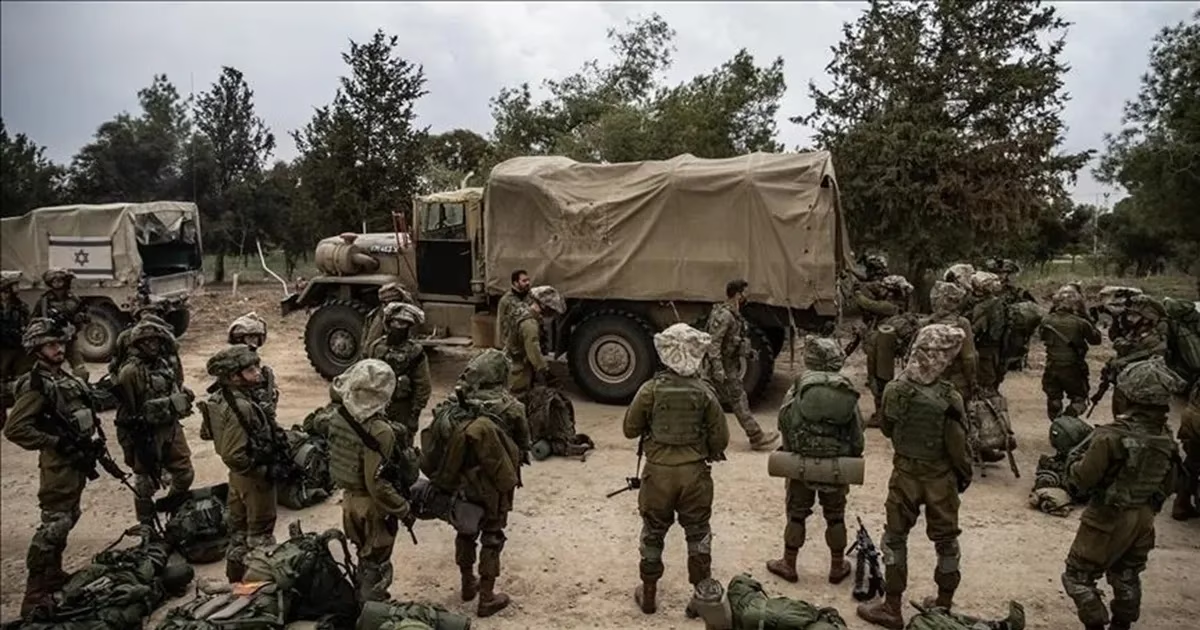
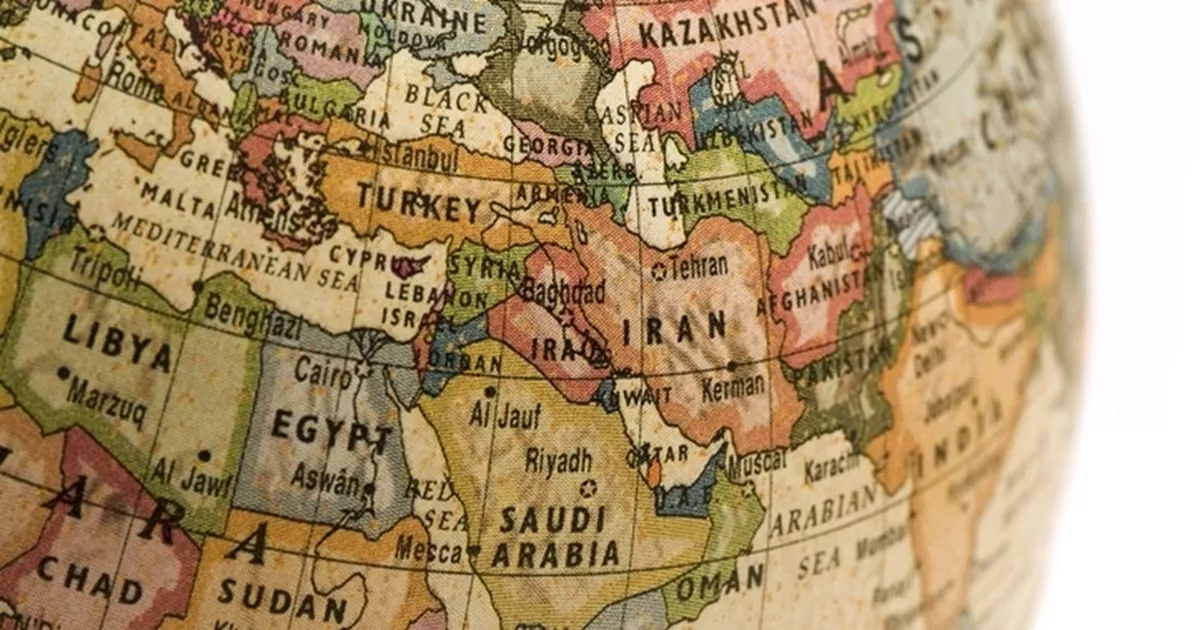
Security and political circles in the occupation state face a complex reality with the continued attrition of forces on multiple fronts, despite previous attempts to neutralize some arenas to focus on the Iranian file. Hebrew media sources reported that the arrival of US Marine reinforcements to the Gulf raises questions about the possibility of targeting Iranian oil facilities, especially Kharg Island, which represents the coronary artery of Tehran's economy with exports reaching 90% of its oil production.

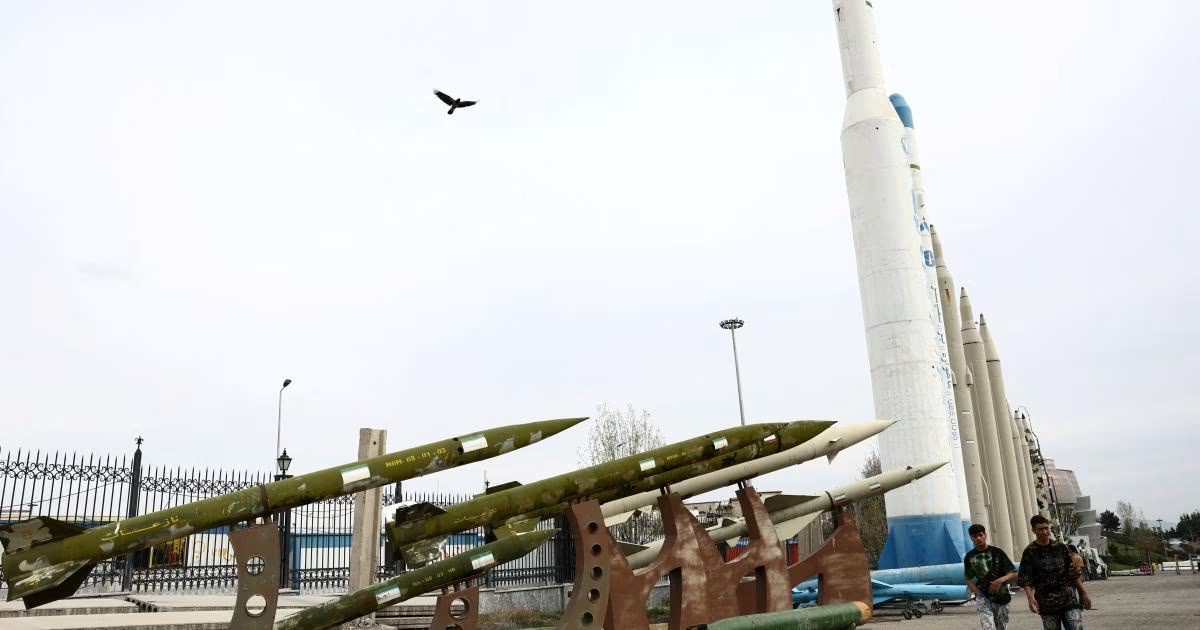
Analysts believe that crippling Iranian export traffic may not necessarily require a costly ground invasion, but can be achieved through a tight naval blockade preventing tankers from departing, or by the US Fifth Fleet planting naval mines in vital passages. However, fears remain of an Iranian reaction targeting US forces stationed in the region with drones and missiles, without regard for the safety of oil facilities given the current state of alert.

In the context of strategic alternatives, proposals emerge to control strategic islands such as Abu Musa and Greater and Lesser Tunb near the Strait of Hormuz, as political and military leverage instead of getting involved in widespread ground confrontations. These moves come at a time when anxiety prevails in Tel Aviv over the new US administration's orientations, especially with the appointment of J.D. Vance as coordinator for negotiations, who is known for his reserved stances on foreign military interventions.

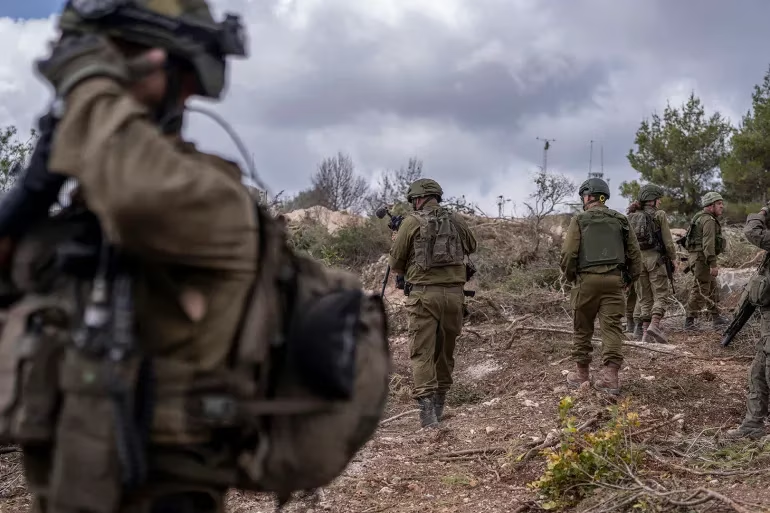
On the Lebanese front, the Israeli army continues its field attempts to create military 'pockets' aimed at isolating Hezbollah units in strategic areas such as Wadi Hujeir, Wadi Salouqi, and the town of Bint Jbeil. These moves seek to reduce the party's maneuverability, despite Hebrew sources acknowledging that the force currently used may not be sufficient to achieve a decisive outcome given the geographical and field complexities.

Israeli voices are escalating, demanding the expansion of pressure to include the political and social incubator in Lebanon, with calls emerging to place Parliament Speaker Nabih Berri within the direct targeting circle due to his continuous support for Hezbollah. These threats loom over new areas in southern Lebanon, such as the city of Tyre, to be included in evacuation and forced displacement lists, in an attempt to disengage the Amal movement from Hezbollah and deepen the internal Lebanese crisis.

Moving to the Yemeni arena, assessments indicate that the air attacks targeting Hodeidah port and Houthi infrastructure facilities have begun to bear economic fruit. Sources confirm that the extent of the damage to the regime in Sana'a has caused a shake-up in tribal alliances based on profit and benefit sharing, putting the group's leadership before difficult choices between continuing military escalation or maintaining internal stability.

In conclusion, it appears that the 'multi-front' strategy necessitates a comprehensive re-evaluation of the occupation's military capabilities and political objectives, given the intertwining regional and international files. While Tel Aviv relies on excessive military and economic pressure, the possibilities of sliding into a comprehensive confrontation remain, especially with armed factions in Yemen and Lebanon continuing to send missile messages confirming their unwavering involvement in the battle.

Israeli interests, in J.D. Vance's view, are entirely secondary, and his appointment as coordinator for negotiations with Iran does not guarantee the achievement of Tel Aviv's objectives.

ARAB AND WORLD

Mon 30 Mar 2026 4:36 pm - Jerusalem Time

The Departure of Liamine Zeroual: The Military Man Who Shunned Power and Voluntarily Left It

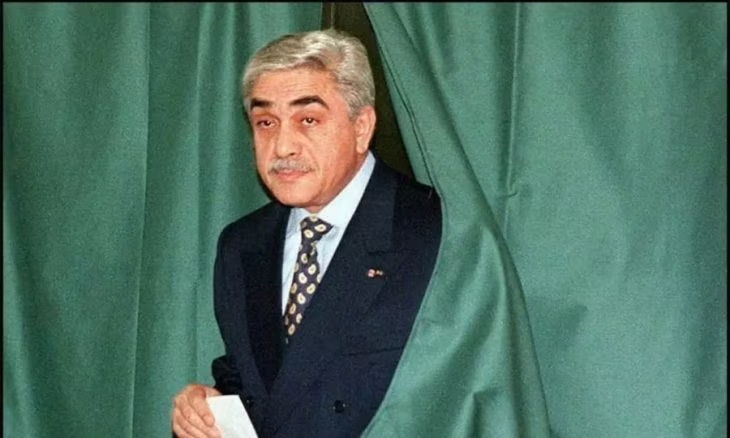
Last Saturday, Algeria lost one of its most prominent military and political figures, former President Liamine Zeroual, who passed away at the age of 84. The deceased is considered one of the professional military men who graduated from the National Liberation Army school, having joined the revolution in his early youth in 1957 on the historical territory of Wilaya I, charting a career path full of field and academic responsibilities.

Zeroual led the country in the mid-1990s, a period described as the most difficult in Algeria's modern history due to the tumultuous security and political crisis. Despite reaching the pinnacle of power from the Ministry of Defense and the Chief of Staff, he maintained his strict and aloof personality, untouched by the temptations of remaining in power, which was evident in his surprising decision to shorten his term and organize early elections.

Zeroual's relationship with the centers of power in the deep state was complex, as he clashed on many occasions with influential generals, most notably Khaled Nezzar, which led him to resign from the Chief of Staff in the late 1980s. This repeated behavior of preferring withdrawal when principles conflicted with political reality enhanced his popularity among Algerians, who saw in him a model of integrity and asceticism.

On the diplomatic front, Zeroual is remembered for his famous stance of refusing to meet French President Jacques Chirac in New York, considering the meeting arrangements inappropriate for the stature of the Algerian state. This stance, along with his supervision of the 'Mercy Law' in 1995, contributed to breaking the international isolation imposed on the country and marked the beginning of the state's regaining its prestige in international forums.

After leaving the El Mouradia Palace in 1999, Zeroual chose to return to his hometown of Batna, away from the spotlight and official political activity. Despite attempts by many popular delegations to persuade him to return to the scene during the events of the popular movement in 2019, he remained steadfast in his decision to stay away, emphasizing that the generation of the revolution had fulfilled its duty to the homeland.

The death of the deceased sparked a wave of sadness and appreciation in Algerian circles, with President Abdelmadjid Tebboune declaring three days of national mourning with flags at half-mast. This step reflects the great respect Zeroual enjoys among the current leadership, especially since President Tebboune was always keen to visit him and consult him on major national issues.

Liamine Zeroual departs, leaving behind a legacy of controversy surrounding the 'Black Decade,' but he remains in the memory of many as that 'free Chaoui' who was not tainted by factional struggles. His experience proved that leaving power with dignity is no less important than assuming it, and that history vindicates those who placed the interest of national stability above their personal ambitions.

Zeroual left the presidency in 1998 with a decision that was not surprising to those who knew his asceticism regarding the manifestations of power and prestige, and his clean hands.

PALESTINE

Mon 30 Mar 2026 4:36 pm - Jerusalem Time

Unknown Fate for Gaza's Only Joint Replacement Specialist Amid Warnings of Medical Paralysis

The Israeli occupation authorities continue to detain Palestinian doctor Ghassan Abu Zuhri, the only consultant specializing in joint surgery and replacement in the Gaza Strip, since his arrest from inside the Nasser Medical Complex. This arrest comes amidst harsh conditions experienced by the exhausted health sector due to the ongoing aggression, leaving hundreds of patients facing an unknown fate.

Local sources reported that Dr. Abu Zuhri's family is living in a state of extreme anxiety due to the complete قطع of all means of communication with him since his detention. His wife, Reem Ashour, stated that the information they receive is very scarce and limited to testimonies from some released prisoners, emphasizing the failure of all legal attempts through lawyers to reach him or ascertain his health condition.

Dr. Abu Zuhri's family appealed to human rights institutions and international medical organizations to intervene immediately to reveal his whereabouts and living conditions. His wife questioned the real reasons behind targeting a specialized medical professional who provides rare humanitarian services, demanding international pressure to ensure the protection of doctors while performing their professional duties in hospitals.

On the ground, Abu Zuhri's absence has led to a complete and comprehensive halt of joint replacement services in all hospitals in the Gaza Strip. These surgeries are considered highly specialized procedures that the detained doctor was uniquely providing, causing a disruption in the treatment journey of hundreds of injured individuals who were awaiting surgical interventions to save their limbs from disability.

For his part, Atef Al-Hout, director of the Nasser Medical Complex, stated that the absence of specialized medical staff due to the arrest has created an irreplaceable medical gap at present. He pointed out that the complex alone has over 400 urgent cases requiring joint replacement surgeries, warning that delays threaten to exacerbate the patients' health conditions.

Al-Hout explained that the crisis is deepening with the almost complete halt of medical referral systems for treatment abroad, in addition to the classification of bone injuries as 'non-emergency' cases by some international bodies. This classification deprives patients of the opportunity to travel for treatment, leaving them stranded in Gaza without hope of receiving the necessary surgery.

Health experts warn that delaying these delicate surgical operations will inevitably lead to permanent physical complications and chronic movement deformities. Fears are growing that these injuries will turn into total disabilities, increasing the humanitarian and social burden on the Palestinian community, which is already suffering from the ravages of war and displacement.

Medical reports indicate that targeting health personnel has become a systematic policy, with about 90 medical staff members held in occupation prisons since the escalation began. This deliberate depletion of medical minds deprives thousands of citizens of their basic rights to treatment and contributes to accelerating the collapse of the dilapidated health system.

In light of this reality, the injured in Gaza face bitter choices between an unknown wait that may end in disability, or attempting to find unavailable medical alternatives. Sources confirm that restrictions imposed on the entry of foreign medical delegations further complicate the situation, as the occupation prevents the arrival of specialists capable of filling the void left by the detained doctors.

The suffering of bone and joint patients in Gaza reflects one aspect of the larger tragedy experienced by the Strip, where treatable injuries turn into permanent disabilities due to the absence of specialization. Dr. Ghassan Abu Zuhri remains an example of hundreds of competencies lost to detention, leaving behind hundreds of patients facing their pain without medical support.

In conclusion, popular and medical demands continue for the necessity of neutralizing the health sector from military conflicts and ensuring the freedom of movement for doctors. With the continued lack of information about Dr. Abu Zuhri, the question remains about when vital medical services, forcibly halted behind prison bars, will resume.

The doctor's arrest has caused a complete halt to the service, and there are over 400 urgent cases requiring joint replacement surgeries that cannot be transferred abroad.

PALESTINE

Mon 30 Mar 2026 4:36 pm - Jerusalem Time

Occupation launches extensive demolition campaign in Silwan to expand settlement projects in Jerusalem

Israeli occupation forces stormed Al-Bustan neighborhood in Silwan, adjacent to Al-Aqsa Mosque in occupied Jerusalem, today, Monday, carrying out widespread demolitions. Occupation municipality bulldozers accompanied the military forces, which imposed a complete closure on the main and secondary roads leading to the neighborhood to prevent residents or media crews from accessing it.

Local sources reported that occupation machinery completely destroyed four homes, owned by brothers Naeem and Ibrahim Shehadeh, citizen Saleh Abu Shafea, in addition to the home of 85-year-old elderly Ahmed Al-Abbasi. The forces did not stop at demolishing homes but also began destroying retaining walls and bulldozing streets and infrastructure in the area.

In a related context, occupation authorities handed notices to three other families in the neighborhood, demanding them to evacuate their homes by next Saturday in preparation for their demolition. This step comes as part of the continuous pressure policy practiced by the occupation municipality to displace indigenous residents from the neighborhood, which is threatened with complete removal for Judaization projects.

Statistics issued by the Silwan Land Defense Committee indicate a sharp decline in the number of housing units in the neighborhood, as the number of homes decreased from 120 homes about a decade and a half ago to only 66 homes currently. The period following October 7, 2023, witnessed a significant escalation, with the occupation demolishing 37 homes during these few months.

The occupation authorities seek, through these operations, to level Al-Bustan neighborhood to the ground, under a historical pretext claiming that the area was 'King David's Garden.' This plan aims to expand the so-called 'National Park' managed by the extremist settlement association 'Elad,' which already controls vast areas in the adjacent Wadi Hilweh neighborhood.

Last January, the occupation municipality issued notices to confiscate about 7 dunams of the neighborhood's land, under the pretext of using it for landscaping and establishing parking lots. The municipality claims that these lands are 'empty,' while in reality, they are lands that previously contained inhabited Palestinian homes before the occupation forcibly demolished them and displaced their owners.

Al-Bustan neighborhood residents face existential risks amid the accelerating pace of demolition and confiscation during the last two years, as these measures are linked to the 'City of David' settlement project. Silwan residents appeal to international and human rights organizations for urgent intervention to stop the demolition massacre aimed at eliminating the Palestinian presence in the areas surrounding the Old City and Al-Aqsa Mosque.

The occupation continues to pressure families in Al-Bustan neighborhood to forcibly displace them and convert their lands into settlement projects.

OPINIONS

Mon 30 Mar 2026 4:10 pm - Jerusalem Time

Trump Threatens Iran Again with Destruction of All Energy Centers and Oil Wells

Washington – Said Arikat – 3/30/2026

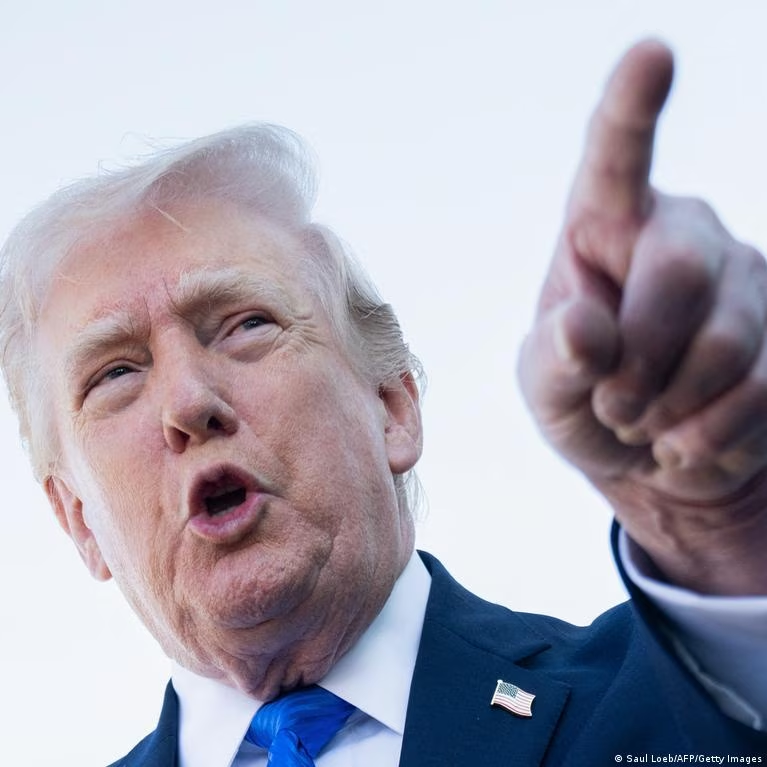
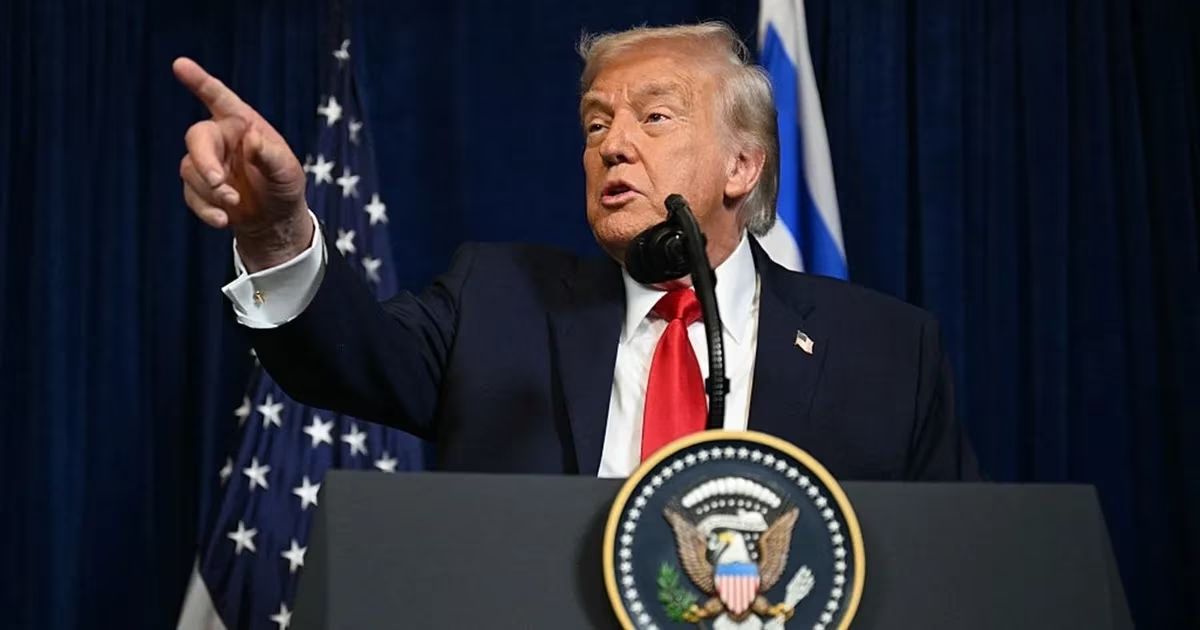
The escalation between US President Donald Trump and Iran is witnessing an unprecedented turn, with the language of threat coming from President Trump shifting from traditional deterrence to hinting at the comprehensive destruction of vital infrastructure. In a Monday morning post on the "Truth Social" platform, Trump vowed to "wipe out" power plants, oil wells, and Iran's Kharg Island if the Strait of Hormuz is not immediately reopened. This threat comes in the context of an ongoing war and stalled peace negotiations, raising international concern about the situation sliding towards a broader confrontation.

Trump wrote in his post: "Significant progress has been made, but if an agreement is not reached soon for any reason, which is likely to happen, and if the Strait of Hormuz is not 'opened' immediately, we will end our beautiful 'stay' in Iran by blowing up all power plants, oil wells, and Kharg Island, and completely wiping them out."

This escalation cannot be separated from the broader context of US-Iranian relations, which have been characterized for decades by chronic tension and oscillation between indirect confrontation and cautious de-escalation. However, the current tone reflects a higher degree of political urgency, and perhaps an attempt to impose new realities on the ground before any potential settlement. Furthermore, the use of social media platforms as a channel for issuing threats of this magnitude adds an unconventional character to crisis management, where messages directed at domestic public opinion are mixed with strategic messages for abroad, in a scene that reflects a shift in the tools of contemporary political discourse.

The danger of these developments lies in the strategic importance of the Strait of Hormuz, through which about 20% of the world's oil passes. Iran's closure of the strait to most shipping traffic has led to severe disruptions in energy markets and a significant rise in prices. This reality puts the global economy to a harsh test, as geopolitical interests intersect with energy security at a very sensitive moment, especially given the reliance of major countries in Asia and Europe on a stable flow of Gulf oil, making any long-term disruption a threat to international economic stability.

The ultimatum issued by Trump reflects a gradual escalation; it was preceded by a 48-hour threat to target power stations, starting with the “largest first.” Reports also indicate that Washington is considering the option of a ground intervention to seize Kharg Island, the main center for Iranian oil exports, as leverage to force Tehran to make concessions. In response, Iran was quick to retaliate, threatening to target US and allied energy and desalination facilities in the region, signaling an escalating scenario open to dangerous possibilities.

In their coverage of this crisis, international media outlets such as CBS News, Newsweek, and others are following the details of this escalating tension, with a focus on its economic and military implications.

This escalation reflects a shift in American doctrine from a policy of containment to a policy of direct coercion, where the goal is no longer merely to deter Iran, but to impose conditions by force. However, this approach carries serious strategic risks, as it may push Tehran to adopt more radical options, including expanding the scope of the conflict regionally. Furthermore, targeting civilian infrastructure may provoke sharp international criticism and place Washington in a legal and moral confrontation with the international community.

Closing the Strait of Hormuz represents an ultimate bargaining chip for Iran, but it is also a double-edged sword. While it gives Tehran negotiating leverage, it threatens to isolate it economically and justifies international military responses. In this context, the crisis appears closer to a game of brinkmanship, where each side seeks to extract concessions without sliding into an all-out war, but the margin of error in such strategies remains very narrow.

The threat of a ground invasion of Kharg Island opens the door to more complex scenarios, as any such intervention could turn into a long-term confrontation, especially given the nature of Iranian geography and the complexities of the regional environment. Furthermore, such a move could prompt other international powers to intervene, either directly or indirectly, threatening to transform the crisis into a multilateral international conflict whose repercussions extend beyond the Middle East.

PALESTINE

Mon 30 Mar 2026 4:09 pm - Jerusalem Time

Forced Displacement in Southern Lebanon: Fears of Gaza Scenario Repetition and Demographic Reshaping

The ongoing war in southern Lebanon is no longer limited to material destruction or direct human casualties; it has transitioned to a dangerous phase measured by the scale of population displacement. Hundreds of thousands of civilians have found themselves forced to leave their villages under intense bombardment and evacuation orders that covered vast geographical areas, presenting us with a highly complex humanitarian and legal situation.

Updated field figures indicate a real catastrophe, with the number of displaced persons within Lebanese territory exceeding one million by late March 2026. According to UN data, approximately 1,049,328 people have fled their homes, while over 134,000 of them are crowded into collective shelters lacking the most basic elements of stability, and the vast majority live in fragile conditions outside these centers.

The nature of Israeli evacuation orders raises fundamental legal questions about their legitimacy, as they were not limited to narrow engagement zones but were comprehensive and repetitive. This broadness removes the evacuation from its context as a precautionary measure to protect civilians, transforming it into a tool of collective pressure aimed at emptying entire areas of their original inhabitants.

International humanitarian law sets strict conditions for civilian evacuations, requiring them to be necessary for imperative military considerations and to be temporary in nature. The Fourth Geneva Convention also obliges the occupying power to provide adequate shelter and ensure the return of residents as soon as operations cease, which appears to be completely absent in the current Lebanese situation.

Field indicators in southern Lebanon show a clear transgression of these legal boundaries, as displacement operations lack clear guarantees of return. Furthermore, targeting the displaced areas themselves with bombardment strips evacuation orders of their stated justification of protecting lives, opening the door to the possibility of displacement becoming a permanent state serving political and demographic objectives.

Israeli statements about establishing "buffer zones" and linking the return of residents to long-term security arrangements carry dangerous implications that go beyond temporary military necessities. This approach reflects a desire to reorganize the geographical and demographic space on the border, shifting the conflict from a military confrontation to a systematic policy of demographic change.

The comparison with the Gaza Strip stands as a stark warning of the consequences of this path, where displacement began with similar evacuation orders and ended with the displacement of 85% of the population. In Gaza, displacement transformed from an incidental result of war into a structural feature and a primary tool in managing the conflict, leading to military control over approximately 70% of the Strip's area.

The massive destruction that affected over 60% of housing units in Gaza has made the idea of return complicated even if the guns fall silent. This reality creates facts on the ground that are difficult to reverse, making displacement a means to impose new political and security conditions at the expense of fundamental civilian rights.

The real danger lies in this pattern becoming an adopted strategy in contemporary conflicts, where civilians are used as part of the military pressure equation. Controlling the movement of populations and making their return conditional blatantly contradicts the Rome Statute of the International Criminal Court, which criminalizes the forced transfer of populations.

From a legal perspective, any breach of the conditions of necessity and proportionality in evacuation orders transforms them into grave violations that warrant international accountability. International law was not established merely to prevent wars, but to set limits that prevent civilians from being used as fuel for strategic plans aimed at uprooting them from their land.

Lebanon is already suffering from severe economic and social crises, making the wave of millions of displaced people a double burden that threatens to disintegrate the social fabric. The loss of livelihoods and the destruction of infrastructure in southern villages create long-term humanitarian crises that cannot be addressed merely by providing urgent relief aid.

The current situation requires a clear legal approach that goes beyond mere humanitarian description, by documenting evacuation orders and analyzing their demographic impacts. International pressure must focus on ensuring the unconditional right of return and rejecting any attempt to impose buffer zones that lead to the encroachment on Lebanese territories and the displacement of their inhabitants.

International silence or merely issuing timid warnings gives a green light to entrenching a new reality in which forced displacement becomes a common practice. The challenge today is to stop policies that make displacement a fait accompli and to affirm that the protection of civilians is a binding legal obligation, not a negotiable political option.

In conclusion, what is happening in southern Lebanon cannot be separated from the broader regional context and attempts to redraw demographic maps by force. War, no matter how fierce, does not grant any party the right to uproot peoples, and justice remains contingent on the ability to hold accountable those who use displacement as a tool to reshape geography.

Forced displacement is not measured only by the direct act, but by the outcome; if military orders force residents to leave their areas without protection or guarantees of return, then we are facing a war crime.

PALESTINE

Mon 30 Mar 2026 4:09 pm - Jerusalem Time

Fifty Years Since Land Day: Demographic Resilience and Erosion of Geography and Politics

The fiftieth anniversary of Palestinian Land Day falls on March 30, 2026, bringing with it existential questions about what remains of the land in light of a complex geopolitical reality. This day, which began in 1976 as a protest against the confiscation of Galilee lands and saw six Palestinians martyred, has transformed over the decades into a symbol of rooted Palestinian identity and existence.

Today, half a century later, the Palestinian cause faces a major paradox; while Palestine's moral and legal presence in international forums is increasing, the field faces unprecedented geographical and political fragmentation. The struggle over land has become more brutal and exposed, as land is no longer merely a negotiating file but a battleground for daily survival against attempts at erasure.

On the legal front, Palestinians have achieved historical gains, most notably the International Court of Justice's opinion in July 2024, which deemed the Israeli presence illegal. The court affirmed that the occupied territories constitute a single territorial unit, emphasizing that the right to self-determination for the Palestinian people is unconditional and not subject to bargaining.

Despite these diplomatic victories, the reality on the ground in the West Bank is witnessing a dangerous deterioration due to settlement expansion and settler violence. International reports reveal that the West Bank is no longer merely under traditional occupation but is suffering from the pressures of forced displacement and systematic evictions targeting the Palestinian presence.

The latest UN data indicates that the first three months of 2026 saw the displacement of 1,697 Palestinians due to settler attacks and movement restrictions. This shocking figure exceeds the total number of displacements recorded throughout 2025, reflecting a dangerous acceleration in policies of demographic emptying of the land.

In a related context, 38 Palestinian communities have been completely emptied since 2023, indicating a clear strategy to reduce the geographical space for Palestinians. In East Jerusalem, forced evictions continue in favor of settlement associations, making the question of actual survival on the land the most prominent challenge today.

As for the Gaza Strip, recent events have returned the issue to its bare humanitarian origin as a matter of existential survival. According to UN estimates for 2026, approximately 1.7 million displaced persons live in tragic conditions within 1,600 displacement sites lacking the minimum requirements for a dignified life.

Residents of the Strip suffer from severe water and shelter shortages, with the spread of skin diseases and a crazy rise in the prices of basic goods and fuel. Restrictions on the movement of medical teams and aid have also exacerbated the health crisis, while half of school-aged children remain without education.

Politically, the Palestinian system faces a decline in effectiveness despite maintaining the historical national narrative. The division between Gaza and the West Bank, and the multiplicity of authorities between the Authority and resistance factions, have weakened Palestinian representative institutions before the international community despite the strength of the cause in the hearts of the people.

Diplomatically, Palestine has regained broad legitimacy, with the number of states recognizing it reaching 159 by the end of 2025. Despite the UN General Assembly's support for Palestine's full membership, the American veto in the Security Council remains the main obstacle to translating this recognition into full sovereignty.

Palestine has today transformed from an elite issue into a global public opinion issue, topping universities, unions, and international human rights organizations. This global momentum prevents the obliteration of historical truth, but it faces the challenge of transforming symbolic solidarity into actual pressure that changes the imbalanced power dynamics on the ground.

Amid regional escalation between major powers, the Palestinian issue has become part of broader deterrence equations that transcend direct geographical boundaries. This shift carries the risks of reducing Palestinian national rights to a "pressure card" within escalating regional and international power struggles in the region.

The conclusion on the fiftieth anniversary of Land Day confirms that what remains of Palestine is its people, memory, and established legal right. Despite the erosion of geographical unity and the effectiveness of international politics, Palestinian steadfastness remains the rock against which projects for the gradual liquidation of the cause are shattered.

The real challenge at this historical stage is to prevent the transformation of the Palestinian right into a legal text absent from the facts on the ground. Adherence to the land in the face of demographic and geographical reshaping is the essence of the Palestinian struggle in the sixth decade following the eternal Land Day uprising.

What remains of the land is what remains of the Palestinians on it, in it, and for it; the cause has not been defeated as long as people remain attached to their memory.

PALESTINE

Mon 30 Mar 2026 4:09 pm - Jerusalem Time

Two Martyrs by Occupation Fire in Tulkarm and Hebron, and Escalation of Demolition Operations in Jerusalem

A young Palestinian man was martyred today, Monday, by the bullets of Israeli occupation forces stationed at the Anab military checkpoint, located on the eastern side of the city of Tulkarm in the northern occupied West Bank. This crime followed claims made by the occupation army through its digital platforms, alleging that the young man attempted to carry out a ramming operation targeting soldiers present at the scene, which prompted them to open direct fire at him.

Following the incident, field sources reported that the occupation forces imposed a complete closure on the Anab checkpoint, which connects the cities of Tulkarm and Nablus, leading to a complete obstruction of the movement of Palestinian citizens. Forces stationed in the area prevented the passage of vehicles in both directions, amid a widespread military alert around the checkpoint and its nearby areas.

In the Hebron Governorate, young Ramzi Abdel Hakim Al-Awawdeh was martyred at dawn today, after being subjected to intense gunfire by occupation soldiers in the village of Kharsa, affiliated with the town of Dura. Local sources confirmed that occupation soldiers targeted Al-Awawdeh at the village triangle, and left him bleeding for a long time without allowing first aid to be provided to him.

Sources mentioned that the occupation forces deliberately restricted medical teams who tried to reach the scene of Al-Awawdeh's injury, by confiscating ambulance keys and preventing paramedics from performing their duty. The situation ended with the occupation army detaining the martyr's body and transferring it to an unknown location, as part of the policy of retaining bodies.

In the context of the ongoing escalation in occupied Jerusalem, heavy occupation machinery proceeded to demolish four residential homes in the Al-Bustan neighborhood of Silwan, south of the blessed Al-Aqsa Mosque. The demolition operation took place suddenly and without prior warning, as forces stormed the neighborhood and imposed a strict security cordon to secure the bulldozing operations that affected citizens' properties.

Demolition operations in Silwan come within the occupation's plans aimed at changing the demographic and geographical character around the Old City, and imposing strict restrictions that prevent Palestinians from building or expanding. Official reports from the Jerusalem Governorate indicate an escalation in the pace of demolition and eviction notices, coinciding with systematic land seizures for settlement projects.

Regarding pursuit and arrest campaigns, occupation forces launched a series of raids in various areas of the West Bank, including the town of Beit Duqqu northwest of Jerusalem, where a young man was arrested after his home was searched. Forces also stormed the village of Faqqu'a east of Jenin city, deployed patrols in residential neighborhoods, and raided a number of homes without immediate reports of arrests.

In the city of Jericho and Aqabat Jaber camp, Israeli forces carried out incursions that included thorough searches of homes and destruction of their contents, resulting in the arrest of Palestinian citizens. This coincided with similar military movements in the city of Tulkarm and its suburbs, where two Palestinians were detained and taken to occupation interrogation centers.

These field developments reflect a state of continuous escalation adopted by the occupation authorities in various governorates of the West Bank, through a combination of field killings, arbitrary arrests, and demolition of structures. Observers believe that this policy aims to tighten the noose on Palestinians and break their will, especially in areas experiencing constant friction points.

It is worth noting that Palestinian human rights data warned of a significant increase in the pace of Israeli violations since the beginning of the year, indicating that targeting civilians at military checkpoints has become a recurring event under flimsy pretexts. National institutions demand the necessity of providing international protection for the Palestinian people in light of the continued demolition and forced displacement operations in occupied Jerusalem.

Occupation forces fired live ammunition at the young man, left him bleeding, prevented his rescue, and confiscated ambulance keys.

PALESTINE

Mon 30 Mar 2026 4:08 pm - Jerusalem Time

Transformations in the International Legal Path: Karim Khan's Acquittal and Germany's Retreat Confuse Occupation Calculations

The acquittal of the International Criminal Court's Prosecutor, Karim Khan, holds exceptional importance at this sensitive time, coinciding with a remarkable retreat in the German position regarding support for the Israeli occupation in the genocide case. These developments clearly indicate a fundamental shift in the international legal landscape and reveal a crack in the wall of absolute support that the occupation has enjoyed for decades.

Attempts by Zionist and American lobbies to isolate the Prosecutor or deter him from proceeding with his legal actions have failed, despite immense pressure and blackmail with previous accusations to obscure the main issue. This acquittal reinforces the independence of the international judicial process in the face of political narratives that sought to protect occupation leaders from accountability for crimes committed in the Gaza Strip.

Horrific figures from the field redefine the ongoing aggressive war since October 2023, with statistics indicating the martyrdom of over 70,000 Palestinians. The vast majority of these victims are women, children, and the elderly, confirming the retaliatory and aggressive nature of this war, which directly and systematically targeted civilians.

In addition to the enormous human losses, the war has left hundreds of thousands injured and tens of thousands missing under the rubble, amid systematic destruction affecting over 70% of residential infrastructure. These data are not merely humanitarian figures; they are compelling evidence that forms the solid legal basis for holding the occupation accountable for policies of forced displacement and ethnic cleansing.

UN reports confirm the displacement of approximately 1.7 million Palestinians, representing about 75% of the total population of the Gaza Strip, in one of the largest forced displacement operations in modern history. This tragic reality places the international community before its moral and legal responsibilities to stop this catastrophe that threatens the Palestinian presence in the Strip.

In contrast, Germany's retreat from supporting the occupation before the International Court of Justice represents a dramatic shift, given that Berlin has always been the primary pillar of Western support based on historical considerations. This transition from absolute support to legal caution reflects a growing awareness of the cost of aligning with a state accused of committing genocide before the eyes of the world.

There are three main implications of this German retreat. The first is the real fear of international legal responsibility that may affect German officials on charges of complicity or providing assistance in committing international crimes. The principle of aiding in crime has become a legal concern for countries that continue to supply the occupation with weapons and political cover.

The second implication is the pressure from European public opinion, which has witnessed unprecedented popular mobilization condemning the massacres committed in Gaza and demanding an immediate halt to the aggression. This movement, in which political and cultural elites and influencers participated, forced European governments to re-evaluate their positions to avoid conflict with their peoples who reject double standards.

The third implication is related to the fear of legal precedents, as major countries fear that a ruling against the occupation could become a legal rule used against them in future conflicts. This cautious legal positioning aims to protect the national interests of these countries away from traditional political alliances that have become very costly.

Persistent attempts by the occupation to obstruct the legal process stem from its realization that international courts now threaten the narrative of victimhood it has promoted for decades. Legal prosecution means revealing facts to the world and dismantling the propaganda that tried to portray the aggression as an act of self-defense, while in reality, it is an organized crime.

Karim Khan's acquittal clearly means that administrative and legal blackmail attempts have utterly failed in the face of global support for continuing the case. The Gaza issue has become a matter of international public opinion and a humanitarian demand that peoples of various affiliations have united upon, giving international justice additional momentum to move forward.

The new German position, though cautious, represents an additional achievement that can be built upon in the path of isolating the occupation internationally, as traditional allies are beginning to feel the burden of defending indefensible crimes. This retreat opens the door for other countries to review their policies towards the Palestinian-Israeli conflict and adhere to international law.

These events, from the Prosecutor's acquittal to the retreat of European positions, are not mere temporal coincidences; rather, they are signs of a new path towards justice taking shape. This path requires continued popular and human rights momentum to ensure that criminals do not escape punishment and to preserve the rights of Palestinian victims.

In conclusion, the reliance remains on continuing efforts to isolate the occupation in all international forums as a rogue entity that transcends laws and humanitarian norms. The integration of field struggle and the legal path is the only way to end the era of impunity and achieve the aspirations of the Palestinian people for freedom and justice.

Karim Khan's acquittal is not just an administrative detail; it is an announcement of the failure of blackmail attempts aimed at obstructing the accountability of the occupation for its crimes in Gaza.

LATEST NEWS

Mon 30 Mar 2026 1:32 pm - Jerusalem Time

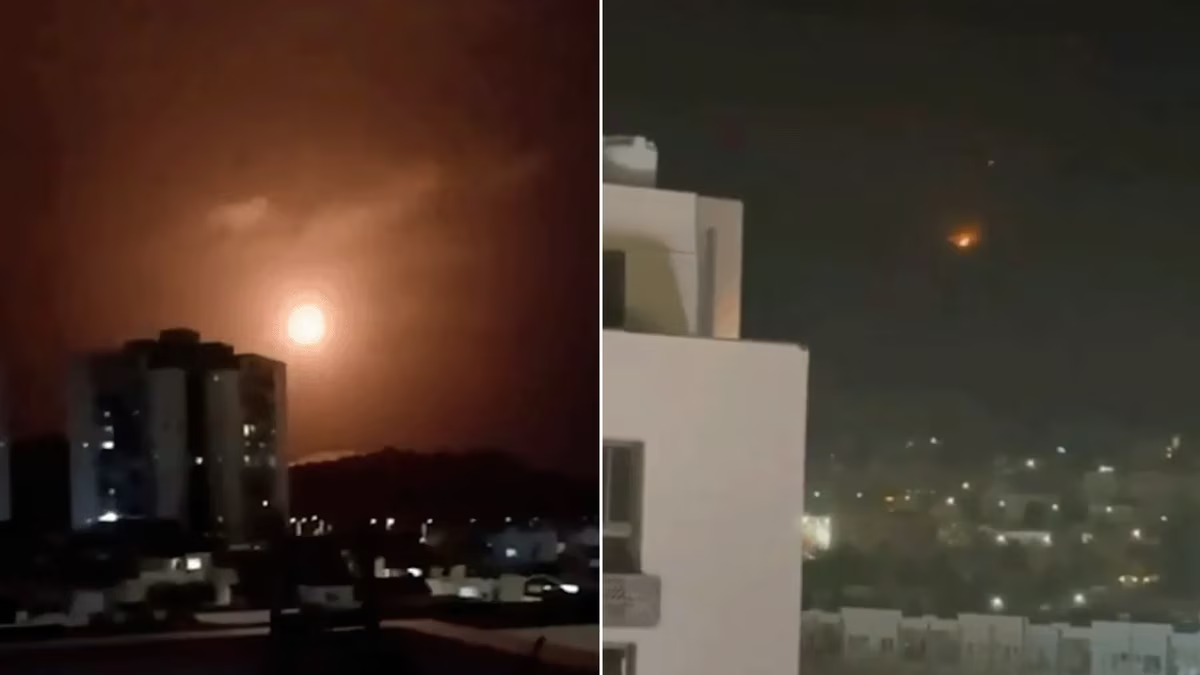
Thick smoke covers a petrochemical facility in Haifa following missile attacks

The occupied city of Haifa witnessed a state of widespread security alert after thick plumes of smoke rose from inside the strategic petrochemical facility in the north of the country. These scenes raised serious concerns among Israeli circles about the possibility of one of the most sensitive industrial areas suffering a direct hit that could lead to an environmental and economic catastrophe.

For its part, the Israeli army issued an initial statement in which it tried to downplay the incident, indicating that the fire and smoke might have resulted from the fall of shrapnel from interceptor missiles. Field sources confirmed that investigations are still underway to determine whether the projectile that fell inside the facility was a guided missile or merely remnants of aerial interception operations.

In a related context, Hezbollah in Lebanon announced the execution of a military operation targeting the Haifa naval base using a volley of advanced missiles. This announcement coincided with the monitoring of intense missile launches from Iranian territory towards vital targets deep in the northern and central Israeli areas.

Media sources reported a limited fire in the vicinity of the petrochemical complex, which necessitated the intervention of firefighting and emergency teams that deployed heavily in the area. Military helicopters were also seen flying at low altitudes over the facility to assess the damage, amid strict military censorship on the details of the incident.

Israel's Home Front Command had activated sirens over a wide area including the north, center, and south, warning of imminent missile attacks. Thousands of settlers rushed to fortified shelters, while air defense systems attempted to intercept hostile targets in the skies over Haifa Bay and neighboring cities.

Haifa Bay is considered a frequent target in the current round of escalation, as oil and industrial facilities have previously suffered material damage due to falling missile shrapnel. These previous incidents led to power outages and partial work stoppages in some industrial neighborhoods, increasing pressure on the home front.

The targeted petrochemical facility represents a cornerstone of Israel's energy and industry sector, and any major disruption to it threatens local supply chains. Observers believe that targeting these sites carries clear political and military messages related to the strategic target bank that has become exposed to advanced missile strikes.

This field development comes at a time when Israel is threatening to expand the scope of its airstrikes, which portends the regional confrontation entering a more complex phase. Ambiguity remains regarding the true extent of the losses inside the facility, amid the usual official Israeli secrecy in such sensitive security circumstances.

What fell inside the facility may have resulted from missile shrapnel or remnants of a missile that was intercepted by air defense systems.

PALESTINE

Mon 30 Mar 2026 1:32 pm - Jerusalem Time

The death of the young man Ramzi Al-Awawdeh by occupation bullets in the town of Kharsa in Hebron

The Israeli occupation army committed a new assassination crime on Monday, targeting a Palestinian young man in Kharsa village, affiliated with Dura town, southwest of Hebron city. Security and local sources reported that a military force set up a tight ambush at the village triangle, where soldiers immediately began firing a heavy barrage of live bullets directly at the young man Ramzi Abdul Hakim Al-Awawdeh, which led to him being seriously wounded before his martyrdom.

The occupation forces adopted a deliberate 'leave to bleed' policy against the injured Al-Awawdeh, as he remained lying on the ground for a long period without allowing any first aid to be provided to him. Eyewitnesses confirmed that the soldiers brandished their weapons in the faces of citizens who tried to approach to save the young man's life, threatening to shoot anyone who tried to provide assistance, in behavior aimed at ensuring his death.

In a related context, the area witnessed flagrant violations against the medical teams that rushed to the scene, as the occupation forces completely prevented ambulances from reaching the injured young man. Field sources stated that the occupation soldiers seized the keys of ambulance vehicles, abused paramedics, and expelled them from the scene, which hindered any medical intervention that could have saved Al-Awawdeh's life in his last moments.

This crime comes within the framework of the continuous escalation adopted by the occupation forces in the cities and villages of the West Bank, where incidents of executing young men in the field and preventing medical aid from reaching them have been repeated. Popular activities and human rights institutions condemned these practices that violate international and humanitarian laws, considering that what happened in Kharsa is a cold-blooded execution added to the record of daily crimes against the Palestinian people.

A state of anger and sadness prevailed in Dura town and its surroundings after the announcement of the martyrdom of the young man Ramzi Al-Awawdeh, as national forces mourned the martyr and called for participation in his funeral. The occupation forces continue to reinforce their military presence in the vicinity of the villages south of Hebron, amidst continuous restrictions on the movement of citizens and the setting up of sudden military checkpoints that impede the movement of residents between different towns.

Occupation soldiers seized the keys of ambulance vehicles and abused paramedics to prevent saving the injured.

ISRAELI AFFAIRS

Mon 30 Mar 2026 1:32 pm - Jerusalem Time

Discussions to expand US military presence and establish permanent bases in occupied Palestine

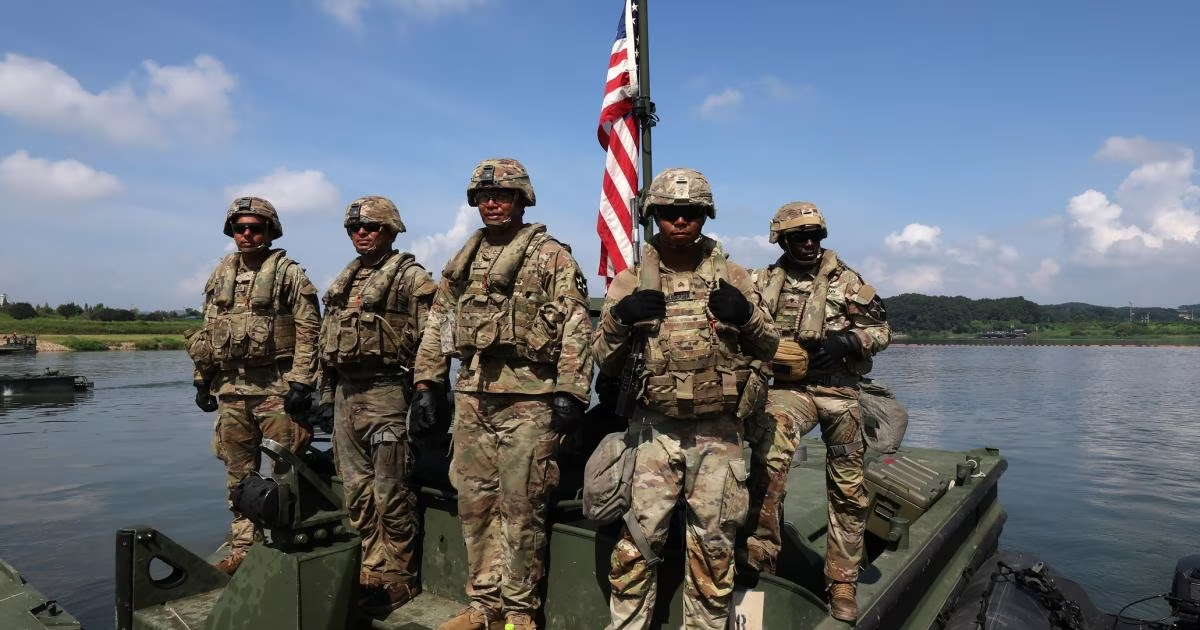
Hebrew media sources revealed intense strategic movements between the occupation authorities and the American administration aimed at studying the possibility of establishing permanent American military bases within occupied Palestine. This step comes amid rapid security developments in the region, especially with the continued direct military confrontation with Iran and the escalation of warfare.

Reports clarified that the proposed plan includes the possibility of transferring a number of American military bases currently located in various Middle Eastern countries and repositioning them within the occupied territories. This approach aims to maximize the benefit of American forces recently deployed to the region and enhance deterrence capabilities and joint operations between the two sides.

The ongoing discussions include not only the transfer of existing bases but also the establishment of entirely new military and logistical facilities capable of accommodating advanced equipment. This step is seen as part of redrawing the military map in the region, ensuring a faster response to the security challenges faced by the occupation in light of major regional changes.

Despite the seriousness of the discussions, sources confirmed that no final and decisive decision has been reached regarding these proposals yet. These discussions are taking place within high-level strategic frameworks between military and political leaders in Tel Aviv and Washington, with a focus on the logistical and legal aspects of such an unprecedented deployment.

This military movement is closely linked to the ongoing war since February 28, where the occupation, with American support, is launching widespread attacks against Iranian targets. These operations have led to the killing of high-ranking leaders, including former Supreme Leader Ali Khamenei, raising tensions to record levels.

In response, Tehran continues its military responses by launching batches of ballistic missiles and drones towards vital occupation sites. The scope of Iranian targeting has also extended to what it describes as American interests in several Arab countries, causing severe human and material losses that have drawn widespread international condemnation.

These developments bring to mind previous reports issued by specialized Palestinian research centers on Israeli affairs, which confirmed that the American military presence is not entirely new. These reports indicated the existence of secret emergency complexes and warehouses belonging to the US military distributed in strategic areas within existing Israeli bases.

One of the most prominent sites previously highlighted is 'Site 512' located in the Negev region of southern occupied Palestine, which includes an advanced American early warning radar. This facility operates in full coordination with the occupation's air defense systems, reflecting the depth of military integration between the two sides for years.

Available information also indicates that logistical cooperation extends to include the use of vital facilities such as the Port of Haifa, which is a focal point for American naval activities in the Eastern Mediterranean. The port is used for supply, provisioning, and maintenance operations for American warships, making it an integral part of the joint security system.

Observers believe that the announcement of studying the establishment of official bases represents a shift from secret or limited cooperation to an overt and direct military presence. This shift reflects Washington's desire to solidify its military presence in the heart of the region to ensure the protection of its interests and allies in the face of growing Iranian influence.

The military projects under discussion also include the construction of underground facilities and fortified bunkers for strategic weapons that American forces might need in extreme emergencies. These projects are highly secretive, with their technical details and precise locations kept confidential to avoid targeting in any future confrontation.

Intelligence and logistical integration between Washington and Tel Aviv has reached unprecedented levels, with real-time information exchanged on military movements in the region. The direct American presence contributes to enhancing the capabilities of monitoring, tracking, and intercepting missiles and drones launched from multiple fronts.

In this complex scenario, questions arise about the political and legal implications of permanent American bases on occupied territories. While the occupation sees this as an absolute security guarantee, regional parties consider it an escalation that could expand the scope of the conflict and draw more international powers into direct confrontation.

In conclusion, the issue of American bases remains subject to battlefield outcomes and developments in the war with Iran, as the future balance of power will determine the shape of foreign military presence in the region. With continued high coordination, it appears that the military partnership between the two sides is heading towards permanent institutionalization that transcends the boundaries of traditional technical cooperation.

The proposal includes transferring American bases from areas in the Middle East to within occupied Palestine, with the aim of enhancing direct military coordination.

ARAB AND WORLD

Mon 30 Mar 2026 1:31 pm - Jerusalem Time

Widespread Israeli Escalation on Lebanon: Raids Target Dahiyeh and UNIFIL Soldier Killed

Israeli occupation forces intensified their military aggression on Lebanese territory this Monday morning, launching a series of violent airstrikes targeting the southern Dahiyeh of Beirut. These attacks followed threats and warnings issued by the occupation army to residents of seven neighborhoods in the area, leading to rising plumes of thick smoke covering the sky of the Lebanese capital amidst widespread displacement of residents.

In an official statistic reflecting the extent of human losses, the occupation army admitted that 261 of its soldiers have been injured since the outbreak of confrontation with Iran, noting that among the injured, 22 soldiers are in critical condition. The military statement also confirmed that 6 additional soldiers sustained varying injuries in recent hours due to separate clashes and field incidents that occurred in southern Lebanon.

On the ground in the south, local sources reported that Israeli warplanes and artillery targeted residential homes in the town of Deir Amess. Occupation forces also set fire to a number of homes in the border town of Naqoura, in a move aimed at destroying infrastructure and residential areas near the Blue Line.

In contrast, Hezbollah announced the execution of a series of qualitative military operations against occupation positions and gatherings, with rocket barrages targeting gatherings of soldiers and vehicles in the areas of Ainata, Houla, and Deir Sirian. The party affirmed that these strikes come as a response to continuous aggressions and to protect Lebanese territories from ground incursions.

The party's operations also included targeting the 'Ein Zeitim' military base located north of the occupied city of Safed, in addition to shelling positions in the 'Katzrin' settlement in the occupied Syrian Golan. Fighters used precision missiles and kamikaze drones in their attacks, targeting the vicinity of Deir Sirian school, reflecting an evolution in the military tactics employed.

In a dangerous development, the United Nations Interim Force in Lebanon (UNIFIL) announced the killing of one of its members and the serious injury of another following a shell explosion near the town of Adaysseh al-Qusayr. The international force clarified that the incident occurred while soldiers were performing their duties, raising international concern about the safety of UN personnel in conflict zones.

For its part, the Indonesian Ministry of Foreign Affairs confirmed that the killed soldier belonged to its battalion participating in peacekeeping forces, announcing that three other soldiers of the same nationality were injured. Jakarta strongly condemned this targeting, describing the attack on international forces as an unacceptable act that violates Lebanese sovereignty and applicable international laws.

The Indonesian government called on all parties to exercise restraint and respect the sanctity of international forces, emphasizing the need to adhere to UN resolutions that ensure the security and stability of the region. It demanded an urgent investigation into the circumstances of the incident that led to casualties from the Indonesian battalion operating in the south.

In international reactions, UN Secretary-General Antonio Guterres described the attacks targeting UNIFIL as grave violations that could amount to war crimes. Guterres stressed the need to hold those responsible for these aggressions accountable, affirming that ensuring the safety and security of UN personnel is a responsibility that falls on all warring parties.

Israeli military operations continue to escalate on various fronts, amidst warnings of the region sliding into a broader, comprehensive confrontation. These developments coincide with ongoing airstrikes targeting Lebanese villages and towns, causing widespread destruction of public and private property and increasing the suffering of civilians.

Attacks on peacekeeping forces constitute a grave violation of international humanitarian law and may amount to war crimes.

OPINIONS

Mon 30 Mar 2026 1:31 pm - Jerusalem Time

Restoring and Reproducing the National Movement: Between Historical Legitimacy and Today's Reality – Fatah as a Model (2026)

The national movement, led by Fatah, is going through a critical moment that requires combining loyalty to its origins with the ability to innovate and adapt to the transformations of contemporary Palestinian reality. Fatah was not merely an organizational framework, but a deeply rooted struggle experience within a specific historical context, where the idea was linked to identity, action to struggle, and its legitimacy derived from representing the collective Palestinian consciousness at home and abroad. This historical legitimacy is not just a testament to the past, but a political and moral asset that can be utilized today to restore public trust, which constitutes a strategic priority at this stage.

Restoring the trust of the Palestinian people represents the true basis of the movement's strength, as it enables effective mobilization when needed, on clear national foundations based on understanding reality as it is, not as it is desired to be. However, this trust is not restored through slogans, but through the movement's ability to produce unified national policies, concepts, and culture regarding various issues, ensuring clarity of vision and cohesion of the national project, and restoring the movement's role as a leader of national opinion.

In this context, reviving the intellectual foundations of the movement is an essential step, as these foundations were not fleeting slogans, but a foundational spirit based on the independence of national decision, alignment with the masses, and an active spirit of initiative. Restoring these principles does not mean returning to the past in its rigid form, but rather restoring the intellectual compass that guides action in the present, in line with social and political transformations, internal division, and the rise of new generations who did not experience the founding phase.

However, despite this historical legacy, the movement faced a structural challenge represented by its incomplete understanding of the shift in the struggle context from outside to inside after the Oslo Accords. The center of gravity shifted from working in the diaspora to direct action on the homeland, which necessitated a radical change in the organizational and intellectual structure of the movement, commensurate with the requirements of the new stage.

This transformation was not merely a geographical shift, but a shift in the nature of national work itself; from a liberation movement operating in a relatively open external space, to a movement operating within a complex reality subject to the constraints of occupation, the entanglements of authority, and the pressures of daily life for Palestinian society. This was supposed to lead to a redefinition of struggle tools and the development of political and organizational mechanisms that enhance field presence and reconnect the movement with the public in the details of their daily lives.

However, the absence of this profound transformation led to a gap between the traditional structure of the movement and the requirements of the new reality, which reflected on its ability to mobilize and influence. Therefore, any real restoration process today cannot bypass this point; rather, it must start from it, by rebuilding the movement as an effective framework on the ground, capable of managing the conflict within its current conditions, directly interacting with society, and transforming its presence within the homeland into a source of strength, not an organizational or political burden.

Understanding this lesson represents a fundamental entry point for reproducing the movement, so that field action becomes the basis, and organizational structures and political discourses are built upon it, thereby restoring the balance between history and the present, and giving the movement the ability to regain its leadership role in the national project.

Amidst this transformation and the accumulated challenges, a popular question emerges that cannot be ignored: Where is Fatah today in people's lives? I, along with a wide segment of the Palestinian people, do not encounter Fatah as we should, nor do we feel its active presence in the details of daily reality as would be expected for a movement of its historical size and role. This absence does not necessarily reflect a lack of organizational existence, as much as it indicates a decline in field presence and direct interaction with the masses, which raises a real problem concerning the nature of the relationship between the movement and its popular base.

This gap between the movement and society is a dangerous indicator, as it affects the essence of the legitimacy that Fatah historically derived from representing the people and being attached to them. Therefore, restoring this relationship must be at the core of any reform process, by rebuilding real communication channels, enhancing field presence, and engaging in people's daily concerns, so that the movement returns to being a living part of the social fabric, not just a separate organizational framework.

In this context, the importance of benefiting from the experiences of global liberation movements emerges, which have shown that the success of any movement is not only linked to its history, but to its continuous ability to adapt and renew. These experiences have proven that clarity of purpose is the essential compass for any national project, and that an organic relationship with the people is the true source of legitimacy. They also showed that flexibility in tools and the ability to shift between different forms of struggle are essential conditions for continuity amidst changes.

Likewise, these experiences showed that institution-building precedes personalization, and that investing in cadres and continuous training is the guarantor of the sustainability of national action. Moreover, managing the relationship with the authority, or separating it from the movement, is a crucial factor in maintaining independence and the ability to initiate. No less important is the ability to manage internal differences within healthy organizational frameworks, preventing them from turning into destructive divisions.

Recalling these lessons is not for the purpose of replication, but to extract what is appropriate for the Palestinian situation and employ it in the rebuilding process, thereby enhancing the movement's ability to regain its historical role with a new spirit and more effective tools.

Integrated with this is the re-establishment of the concept of commitment, as a fundamental pillar in the internal structure of the movement. Commitment does not mean formal obedience or personal loyalty, but intellectual and moral belonging to the national project, so that the member becomes a true partner in action, balancing their right to criticism with their duty to work. This restores consideration to the idea that loyalty to the idea precedes loyalty to individuals or positions.

This transformation cannot be achieved without a comprehensive internal restoration of the movement, going beyond organizational restructuring to developing decision-making mechanisms, enhancing grassroots participation, and enabling youth to actively engage in political and intellectual work. It also requires adopting modern democratic party models based on gradually building cadres according to criteria of merit and commitment, away from quotas or formal endorsements that weakened the movement's credibility in previous stages. This is linked to a cumulative training approach that combines historical awareness and practical experience, enabling new leaders to understand reality and produce innovative solutions.

In the same context, the separation between the movement and the Palestinian Authority emerges as a necessary strategic option, ensuring the organizational and intellectual independence of the movement, and allowing it to participate in governance without losing its role as a national oversight and guiding framework. This separation restores to the movement its primary function of producing national principles and policies away from the pressures of the executive authority.

Reproducing the movement in a renewed form means transforming its historical experience into practical tools capable of dealing with current challenges, by formulating a modern political discourse that combines historical depth and responsiveness to contemporary changes, and developing organizational tools capable of efficiently managing crises and divisions. It also means redefining the organizational identity to be based on combining loyalty to its origins with flexibility of adaptation, while solidifying intellectual and national commitment as the basis for membership and promotion.

Ultimately, the effectiveness and continuity of Fatah depend on its ability to achieve a delicate balance between historical legitimacy and internal renewal. The former gives it credibility and national reach, while the latter gives it the ability to adapt and continue. This balance is what transforms the movement from a mere historical legacy into a living force capable of leading the national project, restoring the trust of the people, and making the masses an actual partner in shaping the future, without the movement losing its memory or ceasing to evolve in the face of contemporary challenges.


PALESTINE

Mon 30 Mar 2026 1:31 pm - Jerusalem Time

Al-Aqsa Mosque Closure Enters Second Month: Plans to Impose Full Sovereignty and Change the 'Status Quo'

The closure of the blessed Al-Aqsa Mosque by the Israeli occupation authorities enters its second consecutive month, amidst escalating warnings of the repercussions of the occupation's unilateral control over holy sites to change the existing historical and legal status. This step comes as part of persistent attempts to Judaize the site and withdraw administrative powers from the Islamic Endowments Department, exploiting current regional circumstances to impose new realities on the ground.

The occupation authorities cite the 'state of emergency' declared since the start of the military attack on Iran on February 28th as justification for the continued closure of the mosque and preventing worshippers from accessing it. Observers believe that this closure, which is the first of its kind for such a duration since the occupation of Jerusalem in 1967, aims to establish a new equation for controlling worship and testing local and international reactions.

Legally, international law experts confirm that applying a state of emergency to occupied Jerusalem is a blatant violation, as the city is not subject to the sovereignty of the occupation according to international resolutions. Specialists emphasize that Al-Aqsa Mosque is under the administration of the Jordanian Endowments, and any infringement on the existing 'status quo' represents a breach of laws enacted since the Ottoman era that have preserved the identity of the site.

Reports indicate that the occupation plans to extend the closure until mid-April, which academics and Jerusalemites describe as an 'extremely dangerous' development. This timing, coinciding with the holy month of Ramadan, reflects the occupation's desire to conduct a 'practical test' of its ability to exercise full control and prevent large Palestinian gatherings in the heart of the holy city.

Amidst the ongoing closure, sources revealed significant amendments to how the mosque's affairs are managed, with the number of endowment employees allowed to enter reduced to only 25 people. The occupation police also imposed a strict system requiring prior knowledge of the identity of every entrant and the reason for their presence, forcing employees to leave immediately after completing their specific tasks.

Through these measures, the occupation authorities seek to send a message that they have become the 'sole administrative decision-maker' in Al-Aqsa Mosque, bypassing the Islamic presence and Jordanian custodianship. Sources have observed provocative actions by occupation soldiers within the courtyards, aimed at demonstrating absolute control and solidifying the reality of Israeli sovereignty over the entire 144 dunams.

The Fourth Geneva Convention obliges the occupying power to respect the religious beliefs and practices of the population under occupation, which the current closure violates daily. Preventing access to places of worship and disrupting religious rituals constitutes collective punishment affecting the fundamental rights of Palestinians, and contradicts the advisory opinion of the International Court of Justice issued in July 2024.

Researchers in Jerusalem affairs believe that the occupation is now relying on the weakness of official Arab and international responses to push through its Judaization plans without real deterrence. The absolute silence regarding what is happening in Al-Aqsa and the Church of the Holy Sepulchre encourages the Israeli establishment to proceed with dismantling the status quo and replacing it with a direct security and military control system.

Field readings concluded that what is currently required is serious popular and official action to break the siege imposed on Al-Aqsa Mosque, especially given the fragile internal situation the occupation is experiencing due to multiple wars. The continued closure not only threatens freedom of worship but also warns of an explosion of the situation in the holy city with the ongoing provocation of the feelings of millions of Muslims around the world.

The closure of Al-Aqsa Mosque for a continuous month is not a fleeting measure, but a practical test to impose full occupation sovereignty and change the rules of the game in the holiest of holy sites.

PALESTINE

Mon 30 Mar 2026 10:16 am - Jerusalem Time

Israeli Knesset approves 'Palestinian prisoner execution' bill, paving the way for final vote

The Israeli occupation authorities have taken a new step towards legalizing the liquidation of Palestinian prisoners, as the Knesset's National Security Committee approved the 'execution of prisoners' bill. This approval came after technical amendments were introduced to the original draft, in preparation for its presentation for second and third readings before the parliament goes on Passover holiday in early April.

This legislative move is led by the extremist National Security Minister Itamar Ben-Gvir, leader of the 'Jewish Power' party, who enjoys direct support from the ruling 'Likud' party headed by Benjamin Netanyahu. The opposition 'Yisrael Beiteinu' party also joined the list of supporters of the law, reflecting a broad right-wing consensus on targeting Palestinian prisoners with unprecedented punitive measures.

The text of the bill reveals a clear discriminatory nature, as it exclusively targets Palestinians accused of killing Israelis for nationalistic motives, while exempting Israelis who commit murders against Palestinians. Observers believe that this legislation is not a judicial tool to achieve justice, but rather a retaliatory measure directed against the Palestinian people under legal cover.

The death penalty is a rare precedent in the history of Israeli judiciary, having been carried out only once in 1962 against the Nazi official Adolf Eichmann. The new bill aims to withdraw discretionary powers from judges, by making the death penalty mandatory upon conviction, while preventing the commutation or replacement of the sentence after its final issuance.

Sources reported that Prime Minister Benjamin Netanyahu's office intervened to make amendments to the wording to ensure its alignment with some international standards, fearing diplomatic prosecution. Despite these amendments, the proposed punishment remains execution by hanging, which raises serious concerns about prisons turning into arenas for carrying out unjust sentences that lack the minimum standards of a fair trial.

For its part, Amnesty International warned of the repercussions of this law, describing it as solidifying the apartheid system. The organization stressed that proceeding with this legislation puts Israel in direct confrontation with the global trend to abolish the death penalty, and its implementation could constitute a full-fledged war crime.

On the Palestinian side, forces, factions, and human rights organizations unanimously rejected the law, considering it a bloody escalation that exploits the international community's preoccupation with regional crises. Prisoner institutions issued a joint statement affirming that the occupation seeks to physically liquidate prisoners after failing to break their will inside the cells.

Official statistics indicate the presence of about 9,350 Palestinian prisoners in occupation prisons as of the beginning of this year, including hundreds of children and women, and thousands of administrative detainees. The pace of violations has escalated since last October, with more than a hundred prisoners martyred as a result of torture and deliberate medical negligence, amid a complete Israeli blackout.

This law is closely linked to the rise of the far-right and Ben-Gvir's assumption of the National Security portfolio, as he adopts an openly incitement rhetoric against Palestinians. Ben-Gvir has been known for his provocative practices inside prisons, including reducing food rations and closing bakeries, in an attempt to impose a bitter living reality on detainees.

Detained political leaders were not spared from this incitement, as the leader Marwan Barghouti was subjected to a series of documented physical assaults. Ben-Gvir appeared in videos threatening Barghouti inside his cell, in a clear message aimed at undermining Palestinian national symbols who have been detained for many years.

Human rights reports confirm that the assaults on Barghouti reached the point of severe beating that led to broken ribs and loss of consciousness on one occasion. These practices come in the context of the 'systematic humiliation' policy pursued by the occupation against prisoners, which the execution law aims to crown by officially and legally ending their lives.

The international inability to curb Israeli policies has provided cover for the Knesset to proceed with legislation that flagrantly violates the right to life. Human rights activists believe that the silence of the international community encourages the occupation authorities to turn the judiciary into a military tool that implements extremist political agendas serving the ruling right-wing.

In light of these developments, Palestinians are demanding urgent international action in international courts to stop this law before it comes into actual effect. Prisoner institutions emphasize the need to activate international protection mechanisms for detainees who today face the risk of death by a political decision wrapped in a false legislative cover.

The execution bill remains a real test for the international system and its ability to protect human rights in the occupied territories. As the Knesset prepares for the final vote, thousands of prisoners and their families await an unknown fate under a government that does not hesitate to use all means to solidify its occupation and suppress any voice demanding freedom.

The approval of the bill represents an unprecedented escalation and an absolute mandate to carry out death sentences against Palestinians, which may amount to war crimes.

PALESTINE

Mon 30 Mar 2026 10:16 am - Jerusalem Time

Two martyrs and one injured in an occupation raid on Al-Zaytoun neighborhood and widespread field escalation in Gaza

At least two Palestinian citizens were martyred and a third was seriously injured, at dawn on Monday, as a result of an airstrike launched by the Israeli occupation forces on Al-Zaytoun neighborhood, located south of Gaza City. Field sources reported that a drone belonging to the occupation army directly targeted a group of citizens while they were near the vital Asqoula intersection in the aforementioned neighborhood.

Medical sources at Al-Ma'madani Hospital confirmed the arrival of the bodies of two martyrs and one injured person in critical condition as a result of the missile targeting, noting that medical teams are trying to deal with the serious injury given the available capabilities. This raid comes in the context of the continued aerial targeting of civilian gatherings in various areas of Gaza City and its north.

In a simultaneous field development, local sources stated that the Israeli occupation army carried out widespread destruction and demolition operations of buildings and residential facilities in the eastern areas of Al-Tuffah neighborhood in Gaza City. The demolition operations were concentrated within the occupation's control areas, known as the 'Yellow Line', where huge explosions were heard resulting from the booby-trapping of residential blocks in that area.

Regarding artillery shelling, the occupation artillery continued to target the eastern areas of Deir al-Balah and Khan Yunis cities in the central and southern Gaza Strip, causing panic among the displaced. Sources explained that the shells fell in open areas and others close to tent gatherings, which increases the suffering of citizens who face harsh humanitarian conditions amid the ongoing military operations.

According to updated medical data, the number of Palestinian martyrs as a result of scattered Israeli attacks in the Strip since dawn on Sunday has risen to 11 martyrs. The largest share of victims was in the Mawasi Khan Yunis area, where 8 citizens were martyred in two raids that targeted two gatherings near Bir 19 area, which is an area crowded with displaced people who fled previous military operations.

In another incident, a Palestinian was martyred by Israeli occupation army bullets near Bani Suhaila roundabout, east of Khan Yunis city, at a time when the occupation forces continue to impose strict restrictions on the movement of citizens in the eastern areas of the city. These developments come amid an escalation of Israeli violations of the ceasefire agreement in effect since last October, with 694 Palestinians martyred since the agreement began.

It is worth noting that the ongoing Israeli aggression on the Gaza Strip since October 2023, supported by American funding and cover, has caused massive destruction affecting about 90% of the infrastructure and vital facilities. According to the latest official statistics, the number of martyrs has exceeded 72,000, while the number of injured has exceeded 172,000, amid an unprecedented humanitarian and health crisis experienced by the residents of the besieged Strip.

The shelling resulted in the martyrdom of two Palestinians and the serious injury of a third, and they were transferred to Al-Ma'madani Hospital in Gaza City.

ANALYSIS

Mon 30 Mar 2026 7:42 am - Jerusalem Time

Southern Lebanon between the "Gaza Model" and the Field Reality: A War Expanding and Fears of a Long Occupation

Washington – Said Arikat – 3/30/2026

News Analysis

The situation in southern Lebanon is witnessing an accelerating military escalation, whose nature transcends limited operations towards a pattern closer to reshaping the geography of the conflict. With the destruction of vital bridges and residential homes, and the displacement of more than a million people, indicators point to an attempt to impose a new security reality by establishing an Israeli "security zone" extending over vast areas, for an indefinite period. This trend raises increasing fears of a repeat of the Gaza Strip scenario, where military operations turned into a long-term policy to redraw field control.

Satellite images (as published by the American network NBC News) clearly show the Israeli military presence inside southern Lebanon, including the reinforcement of existing bases and the deployment of tanks at strategic points. Moreover, targeting bridges, especially on the Litani River, does not appear to be merely a military tactic, but a step aimed at isolating the south from the rest of the country, which deepens the humanitarian crisis and complicates relief efforts. In this context, field data intersects with official Israeli statements confirming the intention of military presence, which puts Lebanon in front of the possibility of facing a new occupation reality.

The humanitarian deterioration also accompanies this escalation at an alarming pace. Testimonies from relief workers indicate repeated displacement of residents amid unexpected strikes, which reinforces the feeling of complete insecurity. UN officials have expressed their fear that southern Lebanon will turn into another version of Gaza, especially with the increasing number of casualties and the widening scope of destruction. These warnings reflect international concern about the situation sliding into an open humanitarian catastrophe.

In contrast, Israel justifies its operations by targeting "Hezbollah," within the framework of protecting its national security, especially after the escalation of regional tension related to the American-Israeli war on Iran. However, this justification faces sharp criticism from human rights organizations, which believe that the pattern of operations goes beyond military objectives to include widespread destruction of civilian infrastructure, which may amount to violations of international humanitarian law. Moreover, talk of the use of white phosphorus increases the intensity of the debate about the legitimacy of these operations.

Historically, what is happening today cannot be separated from the context of the long conflict in southern Lebanon, where Israel previously occupied the region until 2000, and the borders have witnessed repeated confrontations since then. However, what distinguishes the current phase is its overlap with broader regional conflicts, which raises the possibilities of it turning into an open multi-party conflict, especially with the continued tension between Israel and Iran.

In light of this scene, Lebanon appears to be at a critical crossroads; between internal pressures to disarm "Hezbollah" and external challenges represented by Israeli military operations, the state's ability to impose its full sovereignty is eroding. With the absence of a clear political horizon, fears of the conflict's continuation and expansion remain, which portends long-term repercussions for regional stability.

The Israeli strategy in southern Lebanon goes beyond mere military response to an attempt to impose a new deterrence equation based on "land for security." The creation of a permanent security zone reflects a shift from a policy of containment to a policy of direct control, which may reproduce the previous occupation experience but with different tools. This approach carries the risks of permanent escalation, as it may push local parties, especially Hezbollah, to adopt more aggressive strategies, creating a vicious cycle of violence that is difficult to break.

On the other hand, the humanitarian dimension stands out as one of the most complex aspects of the crisis. The systematic destruction of infrastructure, along with mass displacement, not only leads to immediate suffering but also threatens to cause long-term demographic changes. With the absence of clear reconstruction plans, affected areas may turn into demographic voids, which opens the door for reshaping the geography of the south to serve long-term strategic goals.

At the international level, reactions so far appear to have limited impact, despite explicit warnings from the United Nations. This reflects a state of impotence or hesitation in dealing with a conflict in which the local, regional, and international are intertwined. If this approach continues, the international community may find itself facing a new reality imposed by force, where "security zones" become a fait accompli, with all the serious repercussions that entails for the rules of international law and the future of stability in the Middle East.

ARAB AND WORLD

Mon 30 Mar 2026 7:41 am - Jerusalem Time

The Erosion of American Deterrence: How Trump's 'Red Lines' on Iran Turned into a Credibility Crisis?

A recent report by 'Foreign Policy' magazine highlighted the accelerating erosion of American credibility, considering that President Donald Trump's threats towards Iran have become strategically worthless. The report explained that the US administration's retreat from its military threats regarding foreign policy has turned into something akin to a 'circus of chaos,' weakening Washington's prestige in front of its adversaries who now refuse to adhere to traditional rules.

The magazine recalled in its analysis the era of former President Barack Obama, noting that the 'red line' he set regarding the use of chemical weapons in Syria was considered a major blunder at the time. Although Trump and his senior aides like Marco Rubio and Lindsey Graham described Obama's retreat as a disaster that squandered Washington's standing, the current vacillation in dealing with the Iranian file appears more dangerous and impactful in the long run.

In the details of the recent escalation, Trump threatened via social media platforms to wipe out Iranian power stations, starting with major facilities, if Tehran did not fully open the Strait of Hormuz within a 48-hour deadline. However, these threats were met with a categorical Iranian rejection and a continuation of military operations and the closure of the strait, putting the US administration in an embarrassing position before the international community.

The White House's reaction was swift, retracting the direct threat, as Trump announced a five-day postponement of any military action against energy infrastructure, claiming 'fruitful talks' with Tehran to reach a comprehensive solution. This claim was met with a complete Iranian denial, which prompted Trump to extend the unilaterally declared 'truce' for an additional week and a half without achieving any tangible gains.

Observers believe that Trump's statements are no longer taken seriously in international forums, whether it concerns threatening to raise tariffs to record levels or blowing up gas fields. Official positions change overnight, as the President can declare the end of a war in the morning, then return in the evening to confirm that victory is not complete and he will not back down until the decisive defeat of the enemy.

Supporters of the 'MAGA' movement justify this stark contradiction as 'strategic genius' aimed at keeping adversaries in a constant state of anticipation, but the reality indicates that policies change based on stock market fluctuations or personal interests. The irony lies in the ability of Trump's popular base to accept these shifts, as former opponents of Middle East wars have turned into enthusiastic supporters of the current escalation.

The US administration faces a real dilemma, as Trump's desire to end hostilities clashes with the reality that Iran also has a 'vote' in the course of the war, and it is currently choosing to continue fighting. Tehran is betting on its military capability to inflict severe damage on the global economy and the United States, exploiting the state of confusion in decision-making within Washington and the contradiction of presidential statements.

The report concluded that the world now views American power as part of a 'reality show' in which the protagonist maneuvers to get out of crises he created himself through his previous statements. While Trump claims to be considering reducing military operations, he returns to assert that he does not need the help of any other country, thus squandering strategic credibility built over decades for short-term political or commercial gains.

The world no longer sees anything called American credibility, but merely a strange reality show in which the protagonist maneuvers to get out of crises caused by his words yesterday.

PALESTINE

Mon 30 Mar 2026 7:41 am - Jerusalem Time

Bloody escalation in southern Lebanon: 5 martyrs in a raid on Shaqra and Hezbollah carries out 74 operations against the occupation

The Israeli occupation forces committed a new massacre in the town of Shaqra, in the Bint Jbeil district of southern Lebanon, where an airstrike resulted in the martyrdom of 5 citizens and the injury of two others with varying degrees of wounds. This raid comes in the context of an ongoing military escalation that has led, according to Lebanese Ministry of Health data, to an increase in the total number of casualties from the aggression since the beginning of March to 1238 martyrs and more than 3500 injured.

On the ground, Lebanese Hezbollah announced the implementation of an intense day of combat that included 74 military operations targeting Israeli army positions and movements along the border and deep inside. Hezbollah clarified in its statements that these attacks varied between missile strikes and the use of drones, confirming that 55 operations took place within Lebanese territory to counter infiltration attempts, while 19 other operations targeted positions within the occupied Palestinian territories.

Israeli aggressions were not limited to civilians but also affected international peacekeeping forces (UNIFIL), as the UN force announced the killing of one of its soldiers and the injury of another after a shell fell on a military position in the south of the country. Field sources indicated that Israeli artillery shelling directly targeted the headquarters of the Indonesian unit in the town of Adsheet Al-Qusayr, which raises the level of international tension regarding the repeated targeting of UN missions.

In details of Hezbollah's military harvest, the statement revealed the targeting of 5 strategic Israeli military bases, including the Ein Shemer, Raghavim, and Mishar bases, in addition to shelling 7 cities and settlements in various areas. Hezbollah confirmed its use of qualitative weapons, including 59 missiles and 6 suicide drones, which led to the destruction and damage of 16 Merkava tanks and the destruction of 15 bunkers and military fortifications of the Israeli army.

On the Israeli side, the occupation army admitted the killing of soldier Moshe Yitzhak Hakohen Katz and the injury of 15 other soldiers in the ongoing battles at the first line of border villages. These losses coincide with Hebrew reports indicating the occupation's intention to control a wide border strip, amidst extremist statements from Finance Minister Bezalel Smotrich calling for the acquisition of vast areas of Lebanese land.

Humanitarianly, the violent raids and forced evacuation orders issued by the occupation army for the areas of Tyre, Maashouq, and Burj Al-Shamali caused a major wave of displacement, with estimates indicating that more than one million people have fled their homes. The targeted areas are experiencing harsh conditions amidst continuous artillery and aerial bombardment that does not differentiate between shelters or densely populated residential neighborhoods.
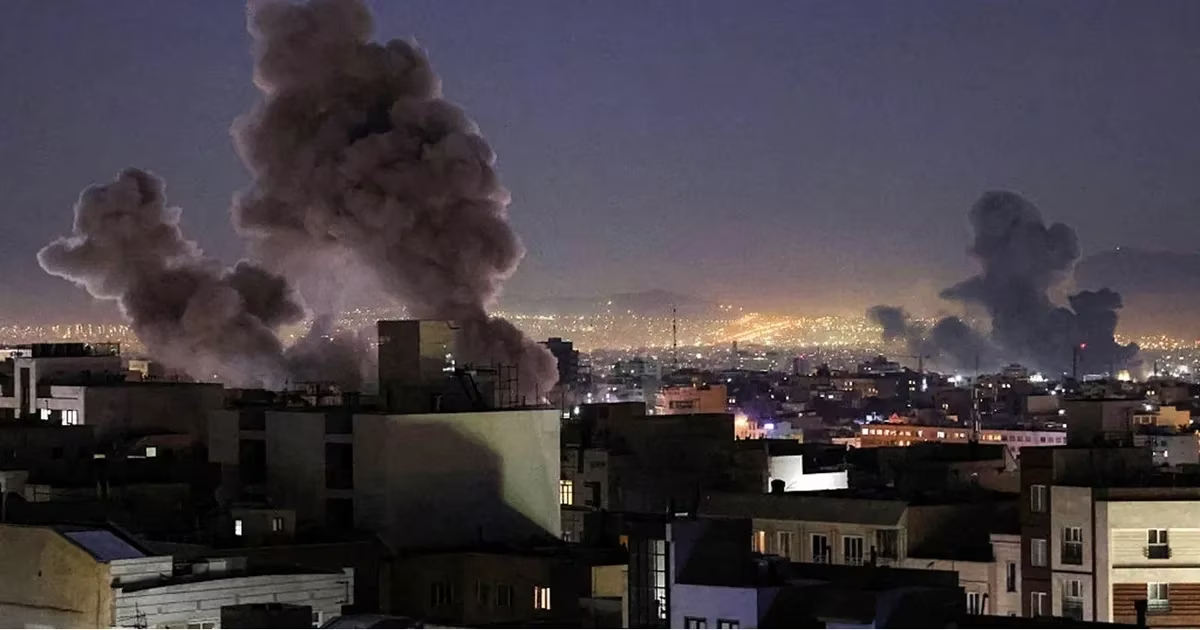
In the diplomatic context, Turkish Foreign Minister Hakan Fidan warned of the consequences of Benjamin Netanyahu's continued policies, pointing to the possibility of committing genocide in Lebanon similar to what is happening in the Gaza Strip. These warnings come at a time when Israeli planes continue to launch their raids on the towns of Al-Haniyeh and Jouaiya, steadily increasing the number of victims daily.
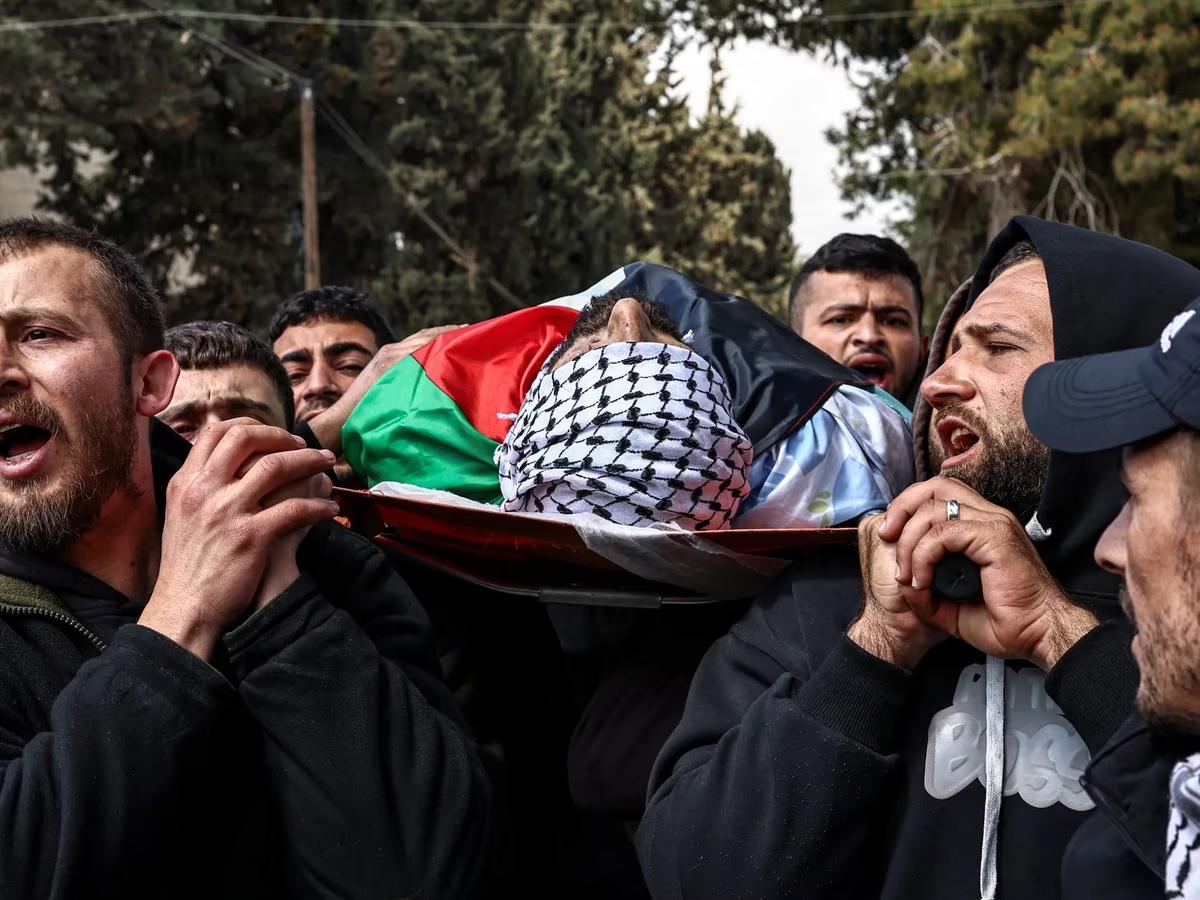
Field sources also reported that the Lebanese resistance managed to repel 53 ground advance attempts by the occupation forces, using guided missiles, artillery shells, and attack drones. These confrontations focused on the towns of Al-Qantara, Dibel, and Al-Bayada, where military vehicles of the Hummer type and Merkava tanks were directly targeted, forcing the attacking forces to retreat on several fronts.

In conclusion, the situation in southern Lebanon remains prone to further escalation amidst the occupation's insistence on expanding the scope of its ground and air operations, alongside a remarkable field steadfastness of the resistance, which continues to shell sensitive military bases such as the 'Dado' and 'Nashrim' bases. Human suffering continues with the increasing numbers of martyrs and injured, amidst international inability to curb the aggression that has been ongoing for weeks.

Our operations come in defense of Lebanon and its people, and have included targeting military bases, cities, and settlements deep within the occupied territories.

PALESTINE

Mon 30 Mar 2026 7:41 am - Jerusalem Time

Martyrs and wounded in night raids on Gaza, and the occupation demolishes residential blocks in Al-Tuffah neighborhood

Israeli occupation forces escalated their field attacks on the Gaza Strip at dawn on Monday, as an airstrike targeted a gathering of citizens in the Al-Zaytoun neighborhood, south of Gaza City. Medical and field sources reported that the shelling, which occurred near the Askoula intersection, led to the martyrdom of two Palestinians and the injury of a third with varying degrees of wounds. The victims were transferred to nearby hospitals amidst difficult humanitarian conditions.

In another field development, the occupation army carried out systematic destruction operations of residential facilities and infrastructure in the eastern areas of Gaza City. Local sources stated that Israeli forces demolished a number of buildings and facilities within the areas they control east of what is known as the 'Yellow Line' in the Al-Tuffah neighborhood, leading to rising smoke columns and the sound of massive explosions shaking parts of the city.

The attacks were not limited to Gaza City, as Israeli artillery fire extended to the eastern areas of Deir al-Balah and Khan Yunis in the central and southern parts of the Strip. This intensive artillery shelling caused a state of panic among displaced persons and residents, amidst the continued Israeli military movements along the eastern border of the Strip.

With the fall of new victims in the Al-Zaytoun neighborhood, the death toll of martyrs who have fallen by the fire of the occupation army since dawn on Sunday has risen to 11 martyrs in various areas. The most violent of these attacks targeted gatherings of citizens in the Bir 19 area in Mawasi Khan Yunis, where two airstrikes led to the martyrdom of eight Palestinians at once in that area, which is crowded with displaced persons.

In a related context, another Palestinian was martyred by the bullets of occupation forces stationed near the Bani Suhaila roundabout, east of Khan Yunis city, at a time when Israeli forces continue to target everything that moves in the border areas. These developments come amidst repeated Israeli violations of field understandings, exacerbating the suffering of civilians besieged in the Strip.

Official statistics indicate that the occupation has committed hundreds of violations since the ceasefire agreement came into effect last October, with these violations resulting in the martyrdom of 694 Palestinians and the injury of approximately 1896 others. These figures reflect the occupation's insistence on continuing military operations and aerial and artillery shelling despite international demands to de-escalate.

It is worth noting that the ongoing war on the Gaza Strip since October 8, 2023, has left unprecedented massive destruction in modern history, with more than 72,000 Palestinians martyred and approximately 172,000 others injured. The destruction also affected about 90 percent of the infrastructure and vital facilities, making large areas of the Strip uninhabitable due to a severe shortage of all basic necessities.

The death toll of martyrs by the fire of the occupation army in various areas of the Gaza Strip since dawn on Sunday has risen to 11 martyrs.

ARAB AND WORLD

Mon 30 Mar 2026 7:41 am - Jerusalem Time

'Rapid Intervention Package' Strategy: How Washington Mobilizes Its Forces for Potential Ground Operations?

Recent attention has been drawn to the accelerating American military movements in the Middle East, with reports indicating the possibility of limited ground operations. This buildup does not appear to be a prelude to an all-out war, but rather reflects a strategy based on rapid and precise intervention against specific targets.

At the forefront of these movements is the 31st Marine Expeditionary Unit (MEU), which represents a model of an integrated amphibious force. This unit comprises approximately 2,200 personnel trained to operate from warships without the need for permanent and fixed land bases in the region.

The 31st MEU relies on the USS Tripoli for its operations, giving it a high degree of maneuverability and the ability to launch swift coastal raids. These movements aim to secure ready platforms for launching immediate operations should military orders be issued by Central Command.

Alongside the 31st MEU, the 11th Marine Expeditionary Unit is moving with similar capabilities to enhance the joint operational pattern. These two units work in parallel to ensure full control over coastal targets and secure a foothold for subsequent forces in the theater of operations.

Tasks are distributed between the two units, with one undertaking the initial assault and control of the vital objective, while the other establishes military presence. This coordination ensures the expansion of field control and prevents any counterattacks that might target advancing forces in the early stages.

On the aerial front, the 82nd Airborne Division stands out as one of the fastest and most lethal deployment forces in the world. Estimates indicate the deployment of up to 4,000 soldiers from this division to the region, including combat units and logistical and command support elements.

The 82nd Division's combat doctrine relies on heavy parachute drops into enemy territory to seize vital installations. Its primary objective is to secure airports and strategic infrastructure within a record time of no more than 24 hours from the start of the operation.

When these amphibious and airborne forces are combined, what military sources describe as a 'rapid intervention package' is formed. This combat mix combines the flexibility of the Marines at sea with the power of the airborne division to penetrate the geographical depth of targeted areas.

In this operational model, Marine forces conduct coastal assaults to secure vital waterways and ports. Simultaneously, the airborne division advances into strategic depth to ensure the neutralization of the adversary's movement and control of logistical strongpoints.

International media sources reported that this pattern of deployment is usually associated with short-term operations not exceeding several weeks. The goal of these operations is not permanent occupation, but rather to deliver qualitative strikes to specific locations and then withdraw quickly after achieving objectives.

This military buildup comes as part of preparations for military options that may be implemented in the coming weeks, according to intelligence assessments. Washington, in this context, focuses on surprise and integration between different branches of the armed forces to minimize human and material losses.

Regional powers are observing these movements with great caution, especially with escalating tensions that could lead to a limited confrontation. The question remains about the extent to which these 'combat packages' can achieve their objectives without sliding into a widespread regional conflict.

This pattern of deployment is not typically used in large-scale wars, but rather is associated with limited-objective and rapidly executed operations that rely on surprise.

ANALYSIS

Mon 30 Mar 2026 7:41 am - Jerusalem Time

The Dialectic of State and Project: How Are Power Balances Managed in the Middle East?

The fundamental dilemma in the Middle East lies in the absence of a governing authority for state actions, where political behavior is not only linked to material power balances but also to the existence of a strategic project that defines direction. The pivotal question that arises today is not what states do, but who holds the authority to direct; is it the state that formulates its project, or is it the project that reshapes the state?

In the Iranian model, the state emerges as an executive tool for an ideological project that preceded its institutional existence and precisely defined its functions. The Iranian Revolution established a governing vision that makes the state a means to achieve cross-border religious and political goals, which was codified in the constitution, granting the state a role beyond its traditional national framework.

This fusion between state and project is evident in the structure of Iranian authority, where there is a supreme decision-making center that dominates all executive and legislative institutions. This structure allows for the existence of parallel bodies such as the Revolutionary Guard, which operates with independent military and economic capabilities aimed at protecting the revolution and its continuity beyond the state's geographical borders.

Tehran's willingness to bear exorbitant economic costs without changing its strategic paths confirms that decisions are not based on narrow state interests. Rather, the Iranian actor moves within a vision aimed at reshaping the entire regional order, making the state move in the orbit of the project, not the other way around.

In contrast, the Israeli model presents a different case. Although the Zionist project preceded the state, it later transformed into an element within a strong institutional system. The Hebrew state succeeded in absorbing the project and redefining it according to the requirements of reality and available capabilities, making the idea subject to institutional control.

Decision-making in Israel relies on precise assessments of cost and benefit, where security and military institutions intertwine with economic and technological sectors. This interconnectedness gives the state high flexibility in adjusting its external behavior to ensure its sustainability, without being carried away by pure ideological motives that might threaten its stability.

In this context, the regional conflict for Israel remains subject to management and is not open to suicidal possibilities. The project has transformed from an absolute supreme authority to a functional tool within the state, enhancing its ability to maneuver within international and regional power balances without compromising its institutional entity.

As for the Arab case, a third pattern emerges, characterized by the absence of an authentic project and operating in a wide conceptual vacuum. Here, the state neither struggles with a project nor leads one; instead, it transforms into a bureaucratic and security apparatus that focuses its maximum energy on a single goal: preserving the survival and continuity of the existing regime.

Political readings indicate that the Arab state, in many of its models, suffers from an inflation of internal control tools versus a sharp weakness in producing strategic decisions. This structural imbalance has made it vulnerable to external penetration and linked its movements to international balances that impose limits on its movement and margins of maneuver.

In this vacuum, decisions are not produced from the womb of supreme national interests but are managed according to pressing circumstances and priorities imposed from outside. The state here does not define its position in the region; rather, its role is defined by other active powers, turning it into an arena for the struggle of foreign projects.

The absence of a governing value framework for the Arab state does not leave a neutral vacuum; instead, it opens the door for its resources to be re-employed within regional arrangements in which it does not participate in their making. In this case, the state loses its ability to initiate and merely reacts, making it a secondary actor in the complex equations of the region.

The analysis concludes that the strength of a state is not measured solely by its military arsenal but by its ability to produce a value framework that guides its movement and protects its sovereignty. A state led by a clear project enters conflicts knowing its goals, while a state that controls its project survives the continuous depletion of its resources.

As for states that lack a governing framework, they find themselves embroiled in conflicts whose timing or location they did not choose, and they pay exorbitant prices without achieving strategic gains. The loss of sovereignty in this perspective is not merely the result of military defeat but a consequence of the inability to define an independent national role.

In conclusion, the fundamental question in the region remains pending regarding the ability to possess political will before paths are imposed. True sovereignty lies in the ability to determine directions and make sovereign decisions, before the state turns into merely a manager of crises imposed upon it by others.

Sovereignty is not seized all at once; rather, it is emptied when the state stops producing its own direction and merely manages what is imposed upon it.

PALESTINE

Mon 30 Mar 2026 7:41 am - Jerusalem Time

Ben Gvir disguises himself in military uniform to monitor the abuse of Palestinian prisoners inside prisons

Israeli National Security Minister Itamar Ben Gvir sparked a wave of widespread controversy after appearing in a recent photo wearing a soldier's uniform during a secret tour he conducted inside a prison. This step aims to directly monitor how severe punishments are implemented against Palestinian prisoners, away from administrative channels and official reports submitted to his office.

Sources reported that Ben Gvir toured the prison corridors in disguise, deliberately checking the performance of the jailers and their adherence to the extremist instructions he issued in recent months. These moves come in the context of his personal desire to ensure that prisoners' lives are turned into an environment of continuous pressure and deprivation of basic rights.

Measures that the extremist minister sought to ensure were applied include reducing family visit periods to a minimum, in addition to reducing the space available to prisoners inside rooms and cells. The instructions also included imposing additional restrictions on all details of daily life, reflecting a clear trend towards tightening security control.

Observers considered this tour to be a field test of what Ben Gvir describes as the 'new doctrine' in the administration of Israeli prisons. This doctrine is based on abolishing all gains achieved by prisoners over decades, and replacing them with a system based on repression and permanent intimidation under security cover.

After his showy tour, Ben Gvir did not hesitate to explicitly declare his goals, describing what is happening within the prison service as a real 'revolution'. He indicated in his statements that prisons have reached a state of 'ideal organization' and high operational readiness to confront any protests that prisoners might undertake.

The far-right minister affirmed that a radical change has already occurred in the policies followed, stressing the continuation of this escalatory approach. These statements reflect his vision that does not recognize the human rights of prisoners, but rather seeks to exploit their suffering as a political tool to enhance his popularity in the Israeli street.

Among the most dangerous measures that Ben Gvir pushed to accelerate is the imposition of humiliating and degrading physical searches on every Palestinian prisoner who is transferred or admitted to prisons. This measure is considered one of the most sensitive issues due to its direct impact on human dignity, and it often acts as a trigger for escalating situations inside detention centers.

Human rights activists believe that the use of strict physical searches is not merely a security measure, but rather a tool for deliberate psychological and physical pressure. This behavior aims to break the will of prisoners and systematically humiliate them, which is consistent with Ben Gvir's previous statements in which he openly called for the liquidation of prisoners.

Ben Gvir had previously sparked international and Palestinian anger when he demanded the application of the death penalty against Palestinian prisoners through video clips. These accumulated positions confirm that the minister adopts a policy aimed at escalating repression and humiliation as an official approach adopted by the current government.

Regarding reactions, social media platforms were flooded with harsh criticism of Ben Gvir's behavior, with activists describing him as seeking a false heroic display. Tweeters indicated that his disguise as a soldier reflects an obsession with pursuing Palestinians and abusing them even when they are behind bars.

Others considered these moves to be an early election campaign aimed at the far-right public in Israel. Comments affirmed that what is happening in the secrecy of prisons under Ben Gvir's supervision represents a blatant violation of all international conventions, and turns prisons into centers of systematic torture away from world oversight.

I came to follow the revolution within the prison service and achieve radical change in the policies applied against prisoners.

ISRAELI AFFAIRS

Mon 30 Mar 2026 7:40 am - Jerusalem Time

Drone and Missile Attacks Target Eilat, UN Warns of Expanding Conflict

The city of Eilat, located in the south of the occupied territories, witnessed an intense aerial attack with drones and missiles. Media sources reported that the area was directly targeted from Yemeni territory. The attack caused a widespread security alert, coinciding with unprecedented aerial movements observed in the skies of the southern region.

For its part, the Israeli occupation army announced the success of its defensive systems in intercepting two drones launched from Yemen towards Eilat within just one hour. This announcement came shortly after air raid sirens were activated in the city, amidst serious concerns about suicide drones infiltrating populated areas.

Field sources confirmed loud explosions in the Eilat Bay area, resulting from aerial interception operations against the attacking missiles and drones. Hebrew media quoted security sources as saying that the attack was coordinated and aimed at striking vital installations in the city, which has become a frequent target for attacks coming from the Red Sea.

In contrast, the Ansar Allah group (Houthis) had earlier announced the execution of qualitative military operations targeting strategic occupation sites in southern occupied Palestine. The group affirmed in its official statements the continuation of these attacks as part of a strategy to support the resistance fronts in Palestine and Lebanon, warning of a greater escalation in the coming days.

On the international level, the UN Special Envoy for Yemen, Hans Grundberg, expressed his grave concern about the Houthis' decision to directly engage in the ongoing regional conflict. Grundberg condemned this approach in an official statement, considering that it threatens to drag Yemen into a wide-ranging war that transcends its geographical borders and further complicates the humanitarian crisis.

The UN mediator indicated that this military escalation would inevitably hinder peace efforts and ongoing mediation in Yemen, prolonging the suffering of civilians and exacerbating economic crises. He stressed that no party has the right to drag the country into regional conflicts that could lead to catastrophic consequences for local and international stability.

Grundberg called on all concerned parties, especially the Houthi group, to exercise maximum restraint and resort to diplomatic channels instead of military options. He affirmed his continued contacts with regional and international powers to prevent the region from sliding into a comprehensive confrontation whose repercussions would be difficult to control.

In a related context, the spokesperson for the UN Secretary-General, Stéphane Dujarric, warned that the continuation of missile and drone attacks portends a further and dangerous escalation of the conflict. Dujarric called in a press statement for the necessity of refraining from any hostile acts that violate international law and lead to the expansion of violence in the Middle East.

These field developments come at a sensitive time, as the confrontation between Israel and Iran's allies in the region enters its second month of continuous escalation. Armed factions from Lebanon, Iraq, and Yemen are participating in this confrontation, placing the region before scenarios open to all military and political possibilities.

Observers believe that the direct involvement of the Yemeni front in targeting Israeli depth represents a strategic shift in the course of the current war. International pressure is increasing to prevent these intermittent attacks from turning into a comprehensive regional war that major international powers might participate in, amid continued tension in the Red Sea and shipping lanes.

This escalation threatens to drag Yemen into the regional war, which will make it more difficult to resolve the conflict and deepen its economic repercussions.

ARAB AND WORLD

Mon 30 Mar 2026 7:40 am - Jerusalem Time

Trump announces pursuit of control over the Strait of Hormuz, and raids target Tehran and Tabriz

Official Iranian sources reported today, Sunday, that strategic sites in the capital Tehran and the city of Tabriz were subjected to a series of aerial attacks carried out by American and Israeli forces. The targets included Mehrabad International Airport, a vital artery in the capital, as well as a major petrochemical facility in East Azerbaijan Province.

These field developments come within the framework of the open military confrontation that began on February 28th, which has resulted in significant human losses among the Iranian leadership. Among the most prominent victims of this war were the former Supreme Leader Ali Khamenei, along with an elite group of security and military leaders who perished in previous strikes.

On the political front, US President Donald Trump made what were described as decisive statements, confirming that the United States is actively working to control the strategic Strait of Hormuz. Trump explained in an interview with Hebrew media that this move comes in the context of dealing with increasing regional challenges related to Iranian activity in the region.

Trump emphasized the strength of the alliance between Washington and Tel Aviv, describing it as stronger than ever under the current circumstances. He noted that there is daily and close coordination with Israeli Prime Minister Benjamin Netanyahu to ensure the achievement of common goals in this confrontation, which has entered its second month.

On the ground in Tabriz, Majid Farshi, Director of Crisis Management in East Azerbaijan Province, confirmed that the attack targeted a sensitive petrochemical facility in the region. He explained that search and rescue teams are continuing their work at the incident site to assess the damage, confirming that the situation is under full control with no detection of any leakage of hazardous chemicals.

In the capital Tehran, a state of anticipation prevailed after Mehrabad Airport was targeted, as authorities have not yet issued a detailed statement regarding the extent of the damage or the impact of the raids on air traffic. These strikes represent a qualitative escalation deep within Iranian territory, targeting economic and military infrastructure alike.

For its part, Tehran continues to respond to these attacks by launching barrages of ballistic missiles and drones towards Israeli targets. Reports also indicate the targeting of what Iran describes as American interests in several Arab countries, leading to casualties and material damage that have prompted widespread international condemnation.

Observers believe that Trump's statement regarding the Strait of Hormuz represents a fundamental shift in the war's objectives, as it goes beyond mere airstrikes to seeking control over the most important global waterways. This step raises concerns about the expansion of the conflict to directly include global energy security and international freedom of navigation.

Despite Trump's earlier announcement of a brief postponement of targeting Iranian energy facilities, the recent raids on the Tabriz facility indicate the resumption of operations against the oil and chemical sectors. This approach reflects a desire to dry up Iranian funding sources and undermine the country's industrial capabilities amid ongoing battles.

Military operations continue in the absence of any horizon for a political solution, with both the American and Israeli sides insisting on continuing military pressure to achieve a radical change in regional power balances. In contrast, Tehran affirms its continued 'resistance' and response to any aggression against its sovereignty or leadership, portending a hot summer in the Middle East region.

We are working to effectively control the Strait of Hormuz, and our coordination with Netanyahu is close, and we have good relations.

ARAB AND WORLD

Mon 30 Mar 2026 7:40 am - Jerusalem Time

Despite intense strikes... Reports reveal Iran's ability to continue attacks with greater effectiveness

International sources and reports indicate that Iran, despite being stripped of large parts of its air and missile defenses, still retains a high capacity to launch missiles and drones that cause significant damage. These facts contradict perceptions that attempted to portray Tehran as a weak adversary whose military capabilities were completely destroyed by intense American and Israeli bombing in recent weeks.

Data from military sources indicates that the number of attacks launched by Iran has decreased by about 90% since the early days of the war, while the Israeli army confirms its interception of the majority of launch platforms. However, the recent series of attacks on Israel and Gulf countries is evidence that Tehran possesses enough weaponry to destabilize the region and inflict heavy losses on its enemies.

Last weekend saw a significant escalation, as Iran launched an airstrike on a US military base in Saudi Arabia, injuring about twenty soldiers. The attacks also targeted vital facilities in the region, including a port in Oman and Kuwait International Airport, in addition to targeting an aluminum factory in the UAE capital Abu Dhabi with missiles and drones.

Inside Israel, millions face a state of general paralysis and constant fear, forced to take refuge in shelters daily to protect themselves from Iranian fire. Medical authorities reported seven people injured in central Israel due to a missile barrage, while one person was killed in Tel Aviv by a small bomb resulting from a missile equipped with a cluster warhead.

Security experts believe that the military campaign against Iran, while effective in targeting leaders and destroying the air and naval forces, has not succeeded in neutralizing the missile threat. The true measure of success from Tehran's perspective is its continued ability to reach sensitive targets deep within Israel and US bases spread across the region.

US officials estimate that Iran may still possess thousands of 'Shahed' drones and hundreds of ballistic missiles ready for launch. Despite the strikes that targeted its facilities for a full month, the lack of accurate intelligence makes it difficult to ascertain the size of the remaining arsenal of the Revolutionary Guard.

Military analysts point out that a decrease in launch rates does not necessarily mean the destruction of capabilities, but may be due to a tactical repositioning process. It appears that Iranian forces are working to integrate new intelligence to improve targeting accuracy, which explains the increased effectiveness of strikes despite their fewer numbers compared to the beginning of the conflict.

Researcher Kelly Grecco confirms that Iran's hit rate on targets has more than doubled since mid-March, indicating an adversary that adapts and learns from the field. She adds that focusing on the percentage decrease in attacks may obscure the reality of a shift in the Iranian approach towards more qualitative and impactful strikes deep within the strategic adversaries.

The attacks were not limited to traditional targets but included attempts to strike highly sensitive locations, such as a missile falling near the Dimona nuclear reactor in the Negev Desert. This symbolic strike, which occurred only 16 kilometers from the fortified facility, raised significant concern about the ability of defense systems to provide full protection for strategic sites.

A clear loophole also emerged in Israeli air defenses, namely Iran's use of ballistic missiles with cluster warheads that explode above the ground. This technology scatters dozens of small bombs over wide areas, making their complete interception complex and extremely costly, especially since the 'Arrow 3' missiles designated for this are expensive and rare.

Reports indicate that Iran has used past periods to rapidly rebuild its capabilities beyond Israeli expectations, proving its ability to launch between 20 to 30 missiles daily. These missiles vary between those powered by liquid fuel and massive missiles emerging from underground bunkers known as 'missile cities'.

Analysts believe that maintaining the pace of attacks indicates the existence of secret missile bases and tunnels that Western intelligence agencies have not yet succeeded in detecting or destroying. This hidden presence gives Tehran the ability to maneuver and continue to threaten air and sea navigation in vital waterways and international energy facilities.

In a related context, analyst Farzan Thabet believes that Iran has begun to threaten more distant targets and has drawn attention with strikes that reached previously unexpected areas. This development in range and accuracy strengthens Iran's negotiating and military position, and places additional pressure on regional and international air defense systems attempting to contain the situation.

In conclusion, the current conflict appears to have revealed a high degree of resilience in the Iranian missile system despite concentrated air bombardment. With continued threats from allied fronts such as the Houthis, the region remains in a complex security landscape that goes beyond mere calculations of numbers and percentages of executed airstrikes.

Iran's primary measure of success is its ability to continue launching ballistic missiles and drones at Israel, US bases, and Gulf countries, and we know it is still capable of doing so.

ISRAELI AFFAIRS

Mon 30 Mar 2026 7:40 am - Jerusalem Time

Former Israeli Minister Reviews a Month of Confrontation with Iran: Mutual Achievements and Imminent Escalation

Former Israeli Minister of Regional Cooperation, Tzachi Hanegbi, presented his interpretation of the ongoing military confrontation with Iran, one month after its outbreak. Hanegbi noted that the region is awaiting April 6th, the deadline set by US President Donald Trump for his ultimatum to Tehran to comply with American conditions.

Hanegbi explained in an analysis published by the Hebrew newspaper 'Yedioth Ahronoth' that the language of the American ultimatum was decisive and presented the Iranian leadership with two choices: either accept the dictates or face violent military strikes. The former minister leaned towards escalation, considering that the political doctrine of the Iranian regime historically tends towards confrontation rather than direct submission to external demands.

In his assessment of field achievements, Hanegbi affirmed that joint military operations between Israel and the United States succeeded in carrying out a systematic attack targeting Iran's traditional security infrastructure. These strikes included air defense systems, ballistic missile production factories, as well as intelligence, communications, and cyber facilities belonging to Tehran.

The former Israeli official also pointed to severe damage to Iran's internal security structure, directly targeting the regime's powerful arms such as the Revolutionary Guard, the Basij forces, and the police. He considered that these strikes were not limited to the material aspect but also affected the political, military, and intelligence leadership, causing confusion in Iranian decision-making circles.

On the political front, Hanegbi believed that the current war pushed the alliance between Tel Aviv and Washington to unprecedented levels of coordination and rapprochement. He described the current relationship as the strongest in the history of the two countries, pointing to open and direct communication channels with senior officials of the Trump administration, including Vice President Pence and national security ministers.

The article touched upon the secret and sensitive military cooperation that has developed in recent months, considering it a multiplier of the strategic power of both countries. Hanegbi affirmed that this model of joint work could form the basic pillar for any future security alliances in the region to confront common threats.

Regarding air defense, Hanegbi praised the success achieved by Israeli and American systems in intercepting aerial threats, describing the results as record-breaking. He commended the discipline shown by the Israeli public, which effectively contributed to reducing the number of casualties despite the intensity of missile and drone attacks.

Conversely, Hanegbi did not overlook what he described as 'enemy achievements,' noting that the opening strike unexpectedly contributed to solidifying Mojtaba Khamenei's position as the new Supreme Leader. He considered that the assassination of his father Ali Khamenei and the election of the son who survived the attack strengthened the regime's legitimacy at a critical moment, despite previous expectations of internal conflicts.

On the geopolitical level, the former minister believed that Iran succeeded in exploiting its control over the Strait of Hormuz to enhance its image as a regional power capable of challenge and maneuver. He pointed to the failure of adversaries to impose heavy costs on Iranian movements in waterways, which gave Tehran additional leverage in negotiations to end the conflict.

Regarding the Lebanese issue, Hanegbi expressed his surprise at Hezbollah's ability to recover quickly despite the severe blows it suffered in Operation 'Northern Arrows.' He affirmed that the party's continued launching of missiles and drones proves that the ceasefire agreement signed in November 2024 did not achieve the desired security for the northern settlements.

The analysis also pointed to the success of Iranian repressive mechanisms in preventing any internal protests despite immense military and economic pressures. Hanegbi considered that the regime skillfully managed to turn the funerals of its leaders into massive demonstrations to renew loyalty to its policies, which thwarted external attempts to mobilize the Iranian street during the Nowruz holidays.

Hanegbi warned of Tehran's success in establishing what he described as a 'balance of terror' with its neighbors in the Gulf and European countries, where there is a state of hesitation in taking offensive stances against it. He explained that Saudi Arabia and the UAE, despite their implicit desire to weaken Iran, fear direct missile responses on their territories.

The former minister criticized the Trump administration's inability so far to rally a broad international and Arab coalition similar to the alliances led by Presidents Bush and Obama in previous campaigns. He believed that this shortcoming could lead to the international isolation of the United States, especially with increasing concerns about the impact on global energy supplies due to the ongoing conflict.

Hanegbi concluded his vision by emphasizing that the current balance of power remains mixed, and that resolution depends on Washington's determination to fulfill its promises to end the Iranian threat. He stressed that the coming weeks will be crucial in determining whether military achievements will translate into long-term strategic gains or remain just another round of conflict.

The Iranian regime has always preferred vague threats of virtual hell over complete submission to tangible dictates, so it can be assumed that escalation is inevitable.

PALESTINE

Mon 30 Mar 2026 7:40 am - Jerusalem Time

Occupation obstructs Latin Patriarch's access to Church of the Holy Sepulchre and prevents 'Palm Sunday' mass

Israeli occupation police, this Sunday morning, prevented the Latin Patriarch of Occupied Jerusalem, Cardinal Pierbattista Pizzaballa, from reaching the Church of the Holy Sepulchre. The Patriarch was scheduled to preside over the 'Palm Sunday' mass, which marks the beginning of Easter celebrations according to the Western calendar, but security restrictions prevented the completion of religious rituals at one of the holiest Christian sites in the world.

Church sources confirmed that this prevention came as a surprise despite prior coordination by the Patriarchate to secure the passage of the Patriarch's convoy through the alleys of the Old City. The sources explained that occupation forces obstructed the convoy at one of the military checkpoints leading to the church, which led to the cancellation of the mass that was scheduled to be held symbolically and very limitedly.

Field sources stated that Patriarch Pizzaballa was accompanied by only three of his assistants, in compliance with the decision to reduce celebratory manifestations and the absence of the public given the current circumstances. These restrictions come in the context of widespread security tightening imposed by the occupation on the occupied city of Jerusalem and its holy sites, coinciding with the ongoing aggression on the Gaza Strip and escalating tensions in the West Bank.

The measure came despite prior coordination announced by the Patriarchate to ensure the Patriarch's convoy reached the heart of the Old City.

ISRAELI AFFAIRS

Mon 30 Mar 2026 7:40 am - Jerusalem Time

Gideon Levy: Washington's 'concern' over settler terrorism is a cover for diplomacy and complicity in crime

Israeli writer Gideon Levy considered the recent statements by US Secretary of State, Marco Rubio, regarding 'concern' over the escalation of settler violence in the West Bank, to be nothing more than a boring repetition of old diplomatic rhetoric. Levy explained in an article for Haaretz that this American approach merely condemns verbally while Washington continues to supply Israel with the weapons and money necessary for its policies to continue.

Levy refuted Rubio's claims that the Israeli government shares Washington's concern, emphasizing that reality proves the exact opposite. The current government does not view settler attacks as lawlessness, but rather considers them an effective strategic tool that serves its political goals of imposing facts on the ground and expanding Israeli control.

The writer pointed out that the issue in the West Bank is not about extremist groups running wild, but rather a systematic policy that enjoys widespread security and military encouragement. Levy believes that the ultimate goal of this violence is to exert continuous pressure on Palestinians to force them into involuntary displacement from their lands and homes.

In the context of demonstrating military complicity, Levy drew attention to the role played by the Israeli army in providing cover and protection for settlers during their attacks. He cited international media reports that showed soldiers harassing foreign journalists and preventing them from covering events, while some of these soldiers chanted ideological slogans claiming absolute Jewish ownership of the West Bank.

Levy criticized the absence of accountability within the military establishment, noting that the commander of the Central Command, Avi Bluth, has not taken any legal action or brought soldiers to military trial despite documented repeated attacks. This military silence reflects, according to the article, a general climate of complicity that extends from the lowest soldier to the highest political echelons in Israel.

The writer described the US administration's talk of a 'concerned Israeli government' as reflecting either a deep ignorance of the nature of the current political structure in Tel Aviv, or a conscious attempt at diplomatic cover-up. In both cases, Levy believes that this stance contributes to prolonging Palestinian suffering and grants attackers undeclared immunity.

Levy stressed that settler violence is not random chaos, but a clear-cut means of uprooting the Palestinian presence from areas classified as 'C'. He held the United States directly responsible for these outcomes, considering that its failure to use its real influence and effective pressure tools makes it an actual partner in these crimes.

The article affirmed that Washington possesses all the necessary tools to curb this path immediately if it had the political will, by imposing serious economic and political sanctions. However, the continuation of the 'empty words' policy proves that the US administration prefers to maintain the status quo at the expense of human rights and justice.

Gideon Levy concluded that American 'concern' itself has become part of the problem rather than a path to a solution, because it gives the world a false impression of action while the reality on the ground continues to worsen. He concluded by emphasizing that Palestinians alone pay the price for this international complicity with their blood, their lands, and the future of their children.

American concern does not stop settler violence as long as it is without sanctions and real pressure; rather, it is part of the problem, not a prelude to its solution.