







Palestinians in the Gaza Strip are facing a new chapter of suffering that transcends the boundaries of death, as cemeteries have been subjected to widespread bulldozing and obliteration. Abdul Rahman Abu Askar from Jabalia camp recounts his shock upon returning to the Beit Lahia project cemetery, only to find that the landmarks of his loved ones' graves had completely disappeared under the tracks of Israeli tanks. No tombstones or trees remained to indicate the burial places of his brothers and uncles, which intensified the pain of loss and deprived the family of their right to honor their memory.
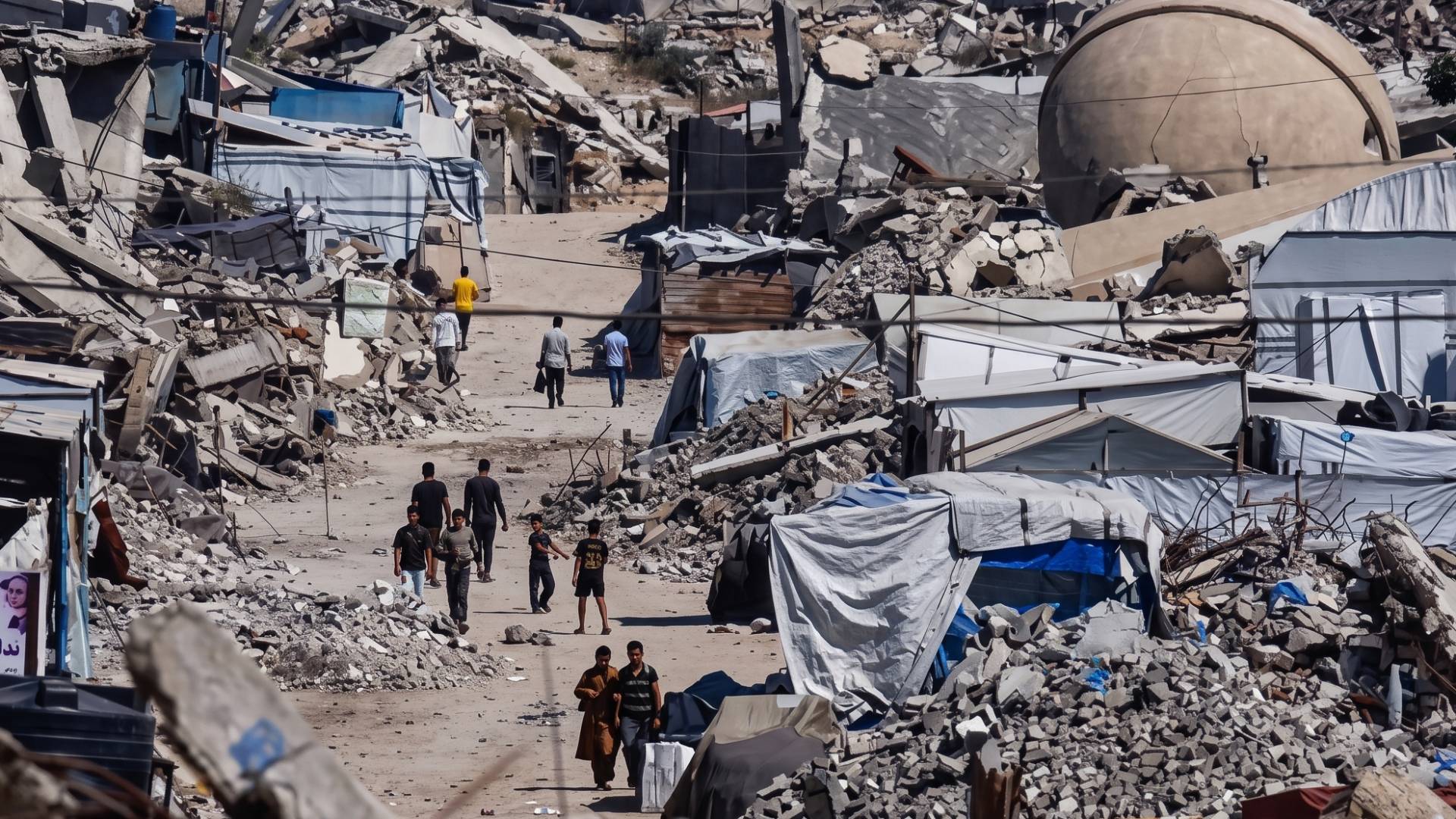
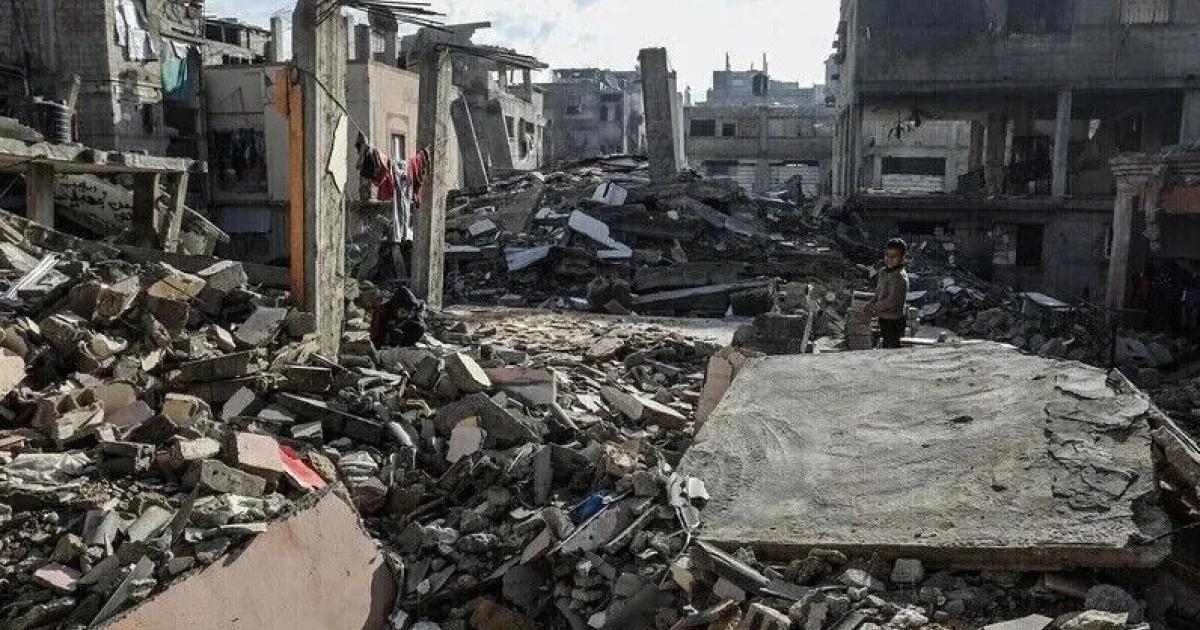
This forced disappearance of grave markers is not limited to Jabalia alone, but has extended to most areas of the Strip that have witnessed ground incursions. Residents stand helpless before vast areas of bulldozed land that have swallowed the remains of their relatives, turning cemeteries into empty spaces devoid of any physical evidence. Local testimonies describe the scene as an attempt to erase the historical and social presence of Palestinians even after their passing.
In Khan Yunis, sources reported shocking testimonies about the Austrian cemetery, where graves were subjected to systematic destruction, including the exhumation of bodies and their desecration. Eyewitnesses reported seeing bodies with severed limbs or disfigured faces, suggesting they were transferred for medical examination inside Israel before being returned. These practices reflect a blatant violation of the sanctity of the dead and a transgression of all international norms and laws that protect human dignity.
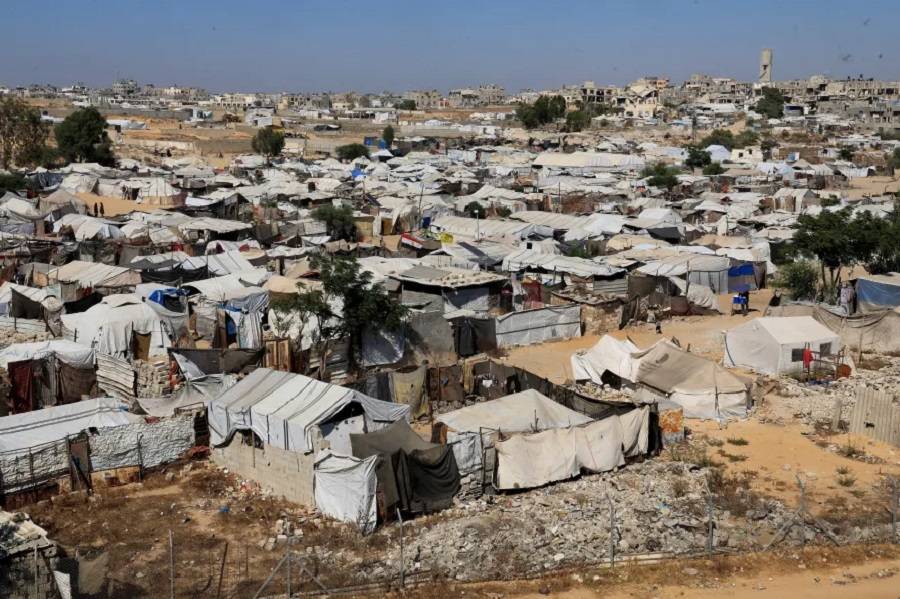
Sources confirmed that the Israeli army piled the recovered bodies on top of each other before reburying them collectively and haphazardly with bulldozers. This action made it impossible for families to identify their children, forcing some to establish temporary cemeteries among the displaced persons' tents. This tragedy highlights the psychological and social challenges facing the living in their search for peace for their dead.
According to data documented by the Euro-Mediterranean Human Rights Monitor, about 93.5% of Gaza Strip cemeteries have been completely or partially destroyed since the start of the aggression. The Monitor explained that this systematic targeting falls within the ongoing crime of genocide and aims to sever the historical link to the land. Statistical analysis of 62 official cemeteries revealed that most of them are completely out of service due to direct shelling and bulldozing.
Rammy Abdu, Chairman of the Euro-Mediterranean Monitor, pointed out that grave desecration operations, as happened in Al-Batsh cemetery, resulted in the mixing of the remains of hundreds of dead. Abdu considered this behavior to be deliberate destruction of the crime scene, especially in cases where their owners are suspected of having been subjected to extrajudicial executions. Concealing forensic evidence directly hinders any future international investigations aimed at holding those responsible for the violations accountable.
These actions go beyond mere direct killing to affect the elements of the group's survival and its spiritual and social identity. Human rights activists believe that the destruction of cemeteries is an attempt to erase the collective Palestinian memory and undermine the symbolic structure of society. Human rights organizations are calling on the International Criminal Court to include these incidents as independent crimes within its investigations into war crimes and crimes against humanity.
For his part, Ziad Obaid, an official in the Ministry of Endowments, explained that most of the destroyed cemeteries are located in border areas or far from city centers, making them vulnerable to direct targeting. He stressed that the loss of these cemeteries has created a severe crisis in burial places, pushing citizens to harsh choices. Burial in homes, public squares, and markets has become a recurring scene that expresses the limited options available to residents.
These violations have scattered families even in their deaths, as bodies were transferred from northern Gaza to be buried in central and southern areas. This forced displacement of the dead adds an additional burden on their relatives who find it difficult to access the graves of their loved ones due to military checkpoints. The cemetery crisis has become a humanitarian challenge that requires urgent international intervention to protect what remains of the dignity of the dead.
In the face of this destruction, civil defense teams work according to professional protocols to try to document what remains of the violated bodies. Procedures begin with field inspection, monitoring traces of exhumation, and documenting changes that have occurred to the cemetery. These efforts aim to preserve the dignity of the dead and provide a database that may help families in the future to identify their loved ones through distinguishing marks.
Mohammed Al-Mughayer, an official in the Civil Defense, explained that they follow a special coding and numbering system for bodies found in bulldozed cemeteries. Clothing and personal belongings are documented, and samples of the remains are taken before reburial in specific locations. These technical procedures are the last attempt to preserve a thin thread of hope in identifying identities in the future.
Unknown bodies are kept in forensic refrigerators for a limited period to allow families to identify them through documented photos. If this is not possible, they are transferred to the 'Cemetery of the Unknown' in Deir al-Balah, where they are buried according to Islamic law with accurate maps of their locations. This work represents a strenuous effort in light of the lack of technical and laboratory capabilities necessary for accurate forensic examination.
The 'memory obliteration' policy pursued by the Israeli army places the international community before its legal and moral responsibilities. The violation of the sanctity of graves is not merely a military act, but an assault on human dignity guaranteed by the Geneva Conventions and the Rome Statute. Human rights activists are calling for the formation of specialized international investigation committees to document these crimes on the ground before more evidence is lost.
Abdul Rahman and thousands of other Palestinians remain in a state of anticipation and pain, awaiting the moment they can place a tombstone bearing a name and a picture. The battle to preserve cemeteries in Gaza is a battle over narrative, history, and existence, where the occupation seeks to erase the trace, while Palestinians cling to every speck of dust that contains the remains of their ancestors.
These are not just graves, but memory and souls, how can they disappear like this? They have broken our hearts again as if the loss has been repeated.

Share your opinion
Post-mortem extermination.. Systematic obliteration of graves and destruction of Palestinian memory in Gaza