ISRAELI AFFAIRS

Sun 26 Apr 2026 8:38 am - Jerusalem Time

An Israeli Reading of Iranian Tactics: Betting on Trump Avoiding War and a Struggle Between Factions in Tehran

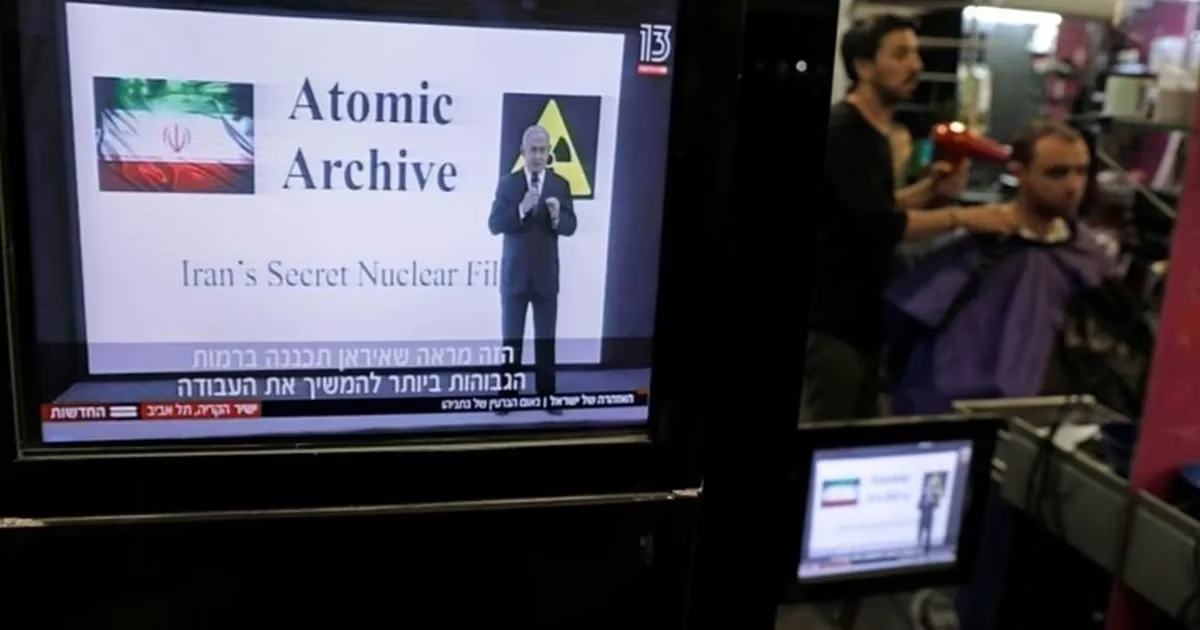
Israeli military analyst Yoav Limor believes that the current war policy has led to a loss of Israeli control on several fronts, noting that Tehran is now boasting about what it considers strategic achievements. Limor explained that Tel Aviv is still chasing an elusive concept of complete victory, the same path that led military operations in the Gaza Strip to a dead end without achieving clear ultimate goals.

In an analytical article published by Israel Hayom, Limor pointed out that the Iranian leadership has developed a firm conviction that it has overcome the most difficult stage of international pressure. This conviction is based on a mix of religious ideology and a realistic analysis of the balance of power, as Tehran believes that sanctions and internal protests have not succeeded in breaking the state's will or changing its major orientations.

The Israeli analyst believes that Tehran thinks it can withstand longer than its adversaries, betting on what it calls strategic patience, which will ultimately force the other party to surrender. This Iranian perception goes beyond direct military power to a deep understanding of the nature of political transformations in the United States, Israel, and the Gulf states, which reinforces their confidence in the current path.

The analysis touched upon the updated Western view of Iran's governance structure, where it is no longer seen as a monolithic bloc led by a single decision, but rather as a group of interconnected centers of gravity. These centers communicate and intersect in interests at times, while experiencing sharp differences in views on how to deal with hot international issues, which complicates intelligence efforts in predicting future steps.

According to Israeli and American intelligence estimates, a pragmatic current is emerging in the Iranian scene, led by Foreign Minister Abbas Araghchi and Parliament Speaker Mohammad Ghalibaf. This current clearly seeks to resume negotiation tracks with the international community, driven by a genuine fear of the country sliding into an all-out war that could lead to irreparable economic and structural damage.

In contrast, a radical hardline current appears, led by senior officials in the security apparatus, most notably leaders in the Revolutionary Guard and the Supreme National Security Council. This faction rejects making any fundamental concessions to Western powers, believing that any retreat will be understood as weakness leading to more pressure, preferring the option of indirect confrontation and strengthening regional power cards.

Between these two currents, the role of the Supreme Leader stands out, described as the safety valve and balancer between the warring powers within the corridors of power. According to Limor, the decision-making process at this level is characterized by slowness and ambiguity, with communication occurring through memos and envoys, which often makes Iranian responses to international initiatives late and indecisive.

10. The Israeli analyst believes that Iran is convinced that US President Donald Trump will do his utmost to avoid returning to direct wars in the Middle East. This perception gives Tehran a wider margin for maneuver, as it assumes that Washington will be content with economic pressure or limited strikes without entering into an open military conflict that drains its resources.

11. The article indicates that Israel's failure to resolve the conflict in Gaza has given Iran and its allies a sense of ability to challenge traditional military superiority. The continuous search for the image of victory promoted by the political level in Israel has not translated into a strategic reality that changes the rules of the game, but rather has led to a long-term attrition that serves Iranian interests in the region.

12. Limor also noted that the coordination between power centers in Iran, despite their differences, serves the interest of preserving the regime and expanding its regional influence. The disagreement between pragmatists and radicals may be in the means, not in the ultimate goals, which makes it difficult for external powers to bet on an internal split that would lead to a radical change in foreign policy.

13. The analysis concluded that Israel finds itself facing a complex reality that requires a comprehensive re-evaluation of its strategy towards Iran. The confrontation is no longer limited to military aspects, but has extended to include a war of wills and long patience, amid a growing Iranian conviction that time is on its side and that adversaries will eventually retreat in the face of Tehran's insistence.

14. Iran is convinced that it is invincible and that everything is going in its favor, and this stems from many reasons, some religious stemming from a firm belief, and others practical stemming from a precise analysis of the situation.

PALESTINE

Sun 26 Apr 2026 8:38 am - Jerusalem Time

Two martyrs and wounded in new Israeli raids targeting civilian gatherings in Gaza

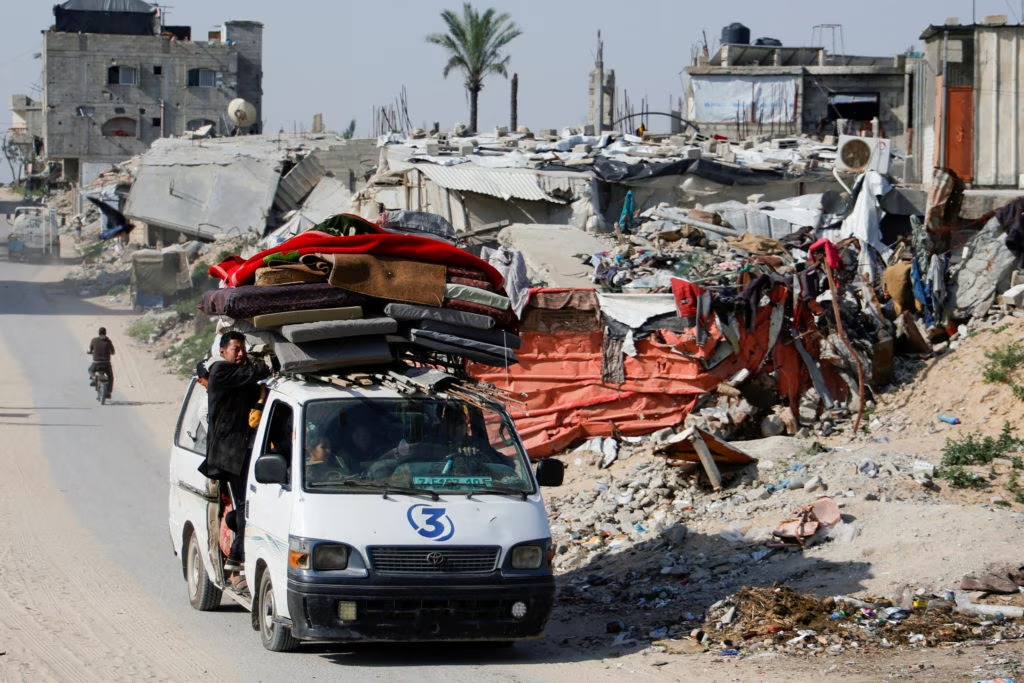
Israeli violations of the ceasefire agreement in the Gaza Strip continued, as two Palestinians were martyred and at least six others were injured today, Saturday, in three separate attacks targeting various areas. These aggressions come in the context of daily violations committed by the occupation army since the agreement came into effect last October, threatening the stability of the fragile truce.

Medical sources reported the martyrdom of a citizen and the injury of three others with varying degrees of wounds, as a result of shelling carried out by an Israeli drone targeting a gathering of civilians in the Sheikh Radwan neighborhood north of Gaza City. Eyewitnesses confirmed that the missile directly hit the vicinity of the First Street intersection, causing panic and destruction in the densely populated area.

In Jabalia refugee camp, another martyr fell after being shot in the head by a sniper from the occupation soldiers stationed in the Al-Hoja area. Medical services ambulance crews transported the martyr's body to Al-Shifa Hospital in Gaza City, amidst local condemnation of the continued targeting of unarmed civilians in their residential areas.

The attacks did not stop there, as three Palestinians, including a child, were injured with various wounds, following an airstrike carried out by an Israeli drone near the Al-Omari Mosque in Jabalia town. These repeated incidents confirm the occupation forces' insistence on targeting civilian gatherings and public facilities, disregarding international understandings that led to a cessation of hostilities.

For its part, the government media office in Gaza revealed shocking statistics regarding Israeli violations, indicating that more than 2,400 violations have been monitored since the agreement came into effect. The statement clarified that these violations were not limited to direct killing, but also included widespread arrest campaigns, tightening of the siege, and systematic starvation policies against civilians.

In a related context, Ministry of Health data showed that the death toll from these violations reached 972 martyrs and 2,235 injured as of last Friday morning. These figures reflect the scale of the field escalation practiced by the occupation army under the guise of the truce, which increases the pace of humanitarian suffering in various governorates of the afflicted Strip.

It is worth noting that the ceasefire agreement came after two years of a genocidal war launched by the occupation forces with extensive American support since October 2023. That war left a heavy toll exceeding 72,000 martyrs and 172,000 injured, in addition to the destruction of about 90 percent of the infrastructure and civilian facilities in the Gaza Strip.

The occupation committed about 2,400 violations of the ceasefire agreement, including direct killings, arrests, siege, and systematic starvation against the population.

OPINIONS

Sun 26 Apr 2026 8:37 am - Jerusalem Time

Shooting halts White House Correspondents' Dinner, Trump and senior officials evacuated from Washington Hilton

Washington – Said Arikat – 26/4/2026

The American capital witnessed a widespread security alert on Saturday evening after a shooting incident near the venue of the annual White House Correspondents' Dinner, leading to the evacuation of President Donald Trump, Vice President J.D. Vance, and a number of senior administration officials from the ballroom at the Washington Hilton hotel, and the cancellation of the event minutes before the President's speech was to begin.

US authorities confirmed that President Trump was unharmed, while security sources reported that a gunman opened fire outside the main hall, which housed hundreds of journalists, officials, and guests. Authorities have not yet announced additional details regarding the identity of the perpetrator or their motives, while initial reports indicated that a security officer wearing a bulletproof vest was injured, and their condition is stable.

According to eyewitnesses, a state of panic swept through the hall as soon as the shots were heard, with attendees taking cover under tables, while Secret Service agents rushed to the stage and quickly escorted the President out. Trump was also seen stumbling for a moment during the evacuation before security personnel helped him up and out of the venue.

National Guard and federal police forces were deployed inside and around the hotel, while security helicopters hovered over the area, and surrounding streets were temporarily closed amid strict measures.

Weijia Jiang, president of the White House Correspondents' Association, said the event was canceled and would be rescheduled for a later date, adding: "We will hold this event again."

The White House Correspondents' Dinner is one of the most prominent annual political and media events in Washington, organized by the White House Correspondents' Association for decades to raise funds for scholarships and honor freedom of the press, in addition to providing a rare space where American presidents meet with journalists in a less formal atmosphere, often interspersed with satirical speeches and political messages.

The event has gained widespread fame as an event that brings together politics, media, and celebrities, but it also repeatedly raises controversy about the limits of the relationship between journalists and the executive branch, and whether the celebratory atmosphere weakens the oversight nature of journalistic work.

Trump's attendance this year was notable, as he participated for the first time as president in his current term, after a long-strained relationship with media institutions, characterized by sharp criticism and mutual accusations. He was scheduled to deliver a speech to journalists and attendees before the incident interrupted the evening's proceedings.

The attendees also included Secretary of State Marco Rubio, Secretary of Defense Pete Hegseth, and other prominent officials, along with hundreds of journalists and public figures.

Security agencies continue to investigate the incident, and the security breach is expected to raise widespread questions about the arrangements for protecting presidential events, especially in public events that bring together political leadership with large crowds in relatively open facilities.

The incident goes beyond being a fleeting security event, as it targeted an occasion that symbolizes the complex relationship between power and the press in the United States. The cancellation of the dinner under the sound of gunfire reflects the fragility of the American public sphere, where political polarization and verbal violence now threaten the civil space. The incident will also inevitably be used to justify further security tightening, and perhaps to restrict media access to the President and his entourage, under the guise of protection and preventing future threats.

Politically, the incident comes at a very sensitive moment with upcoming elections and continued internal division. Any threat to the President gives the administration an opportunity to show resolve, but it also highlights a tense mobilization climate contributed to by confrontational rhetoric from all sides. If the facts are not revealed quickly and transparently, conflicting narratives and conspiracy theories may spread, which has become an inherent feature of major American crises in recent years.

OPINIONS

Sun 26 Apr 2026 8:36 am - Jerusalem Time

Trump Administration Weaponizes Immigration to Target Palestine Supporters, Expands Ideological Inquisition

Washington – Said Arikat – 26/4/2026

News Analysis

The New York Times revealed on Saturday that internal training materials from the US Department of Homeland Security indicate that President Donald Trump's administration has expanded the criteria for scrutinizing Green Card applications to include political stances and freedom of expression, particularly those related to the Palestinian issue and criticism of Israel. This trajectory reflects a dangerous shift in American immigration philosophy, as criteria are no longer linked to criminal records or actual security risks, but rather extend to personal ideas and positions, transforming immigration procedures into a tool of political and selective punishment.

Documents show that immigration and naturalization service employees were instructed to consider certain opinions as "highly negative factors," which could lead to the denial of permanent residency. Examples cited include a post saying: "Stop Israeli terrorism in Palestine," with an image of the Israeli flag crossed out. Examples also included maps where the name Israel was removed and replaced with Palestine, or posts expressing sympathy for civilians in Gaza and their suffering under bombardment and siege.

This reveals that the US administration is not content with merely supporting Israel politically and militarily, but also seeks to punish anyone who dares to criticize it, even if it is within the framework of freedom of expression guaranteed by the US Constitution. Thus, an applicant for residency is practically required to demonstrate alignment with US foreign policy priorities if they want a fair chance at regularizing their legal status.

This expansion of ideological control raises deep legal and constitutional questions, especially since the US Supreme Court previously considered flag burning a form of political expression protected by the First Amendment. However, the Trump administration appears determined to redefine the concept of "national loyalty," linking it to one's stance on Israel and its wars, rather than adherence to the law or respect for institutions.

The administration states that its goal is to protect national security and combat "anti-Semitism" and "anti-American ideas," but critics see this rhetoric as a cover for criminalizing political opposition, especially anyone who rejects the Israeli war on Gaza or defends Palestinian rights. Thus, the immigration file transforms from an organized legal process into an ideological screening mechanism that distinguishes between acceptable opinions and those that need to be silenced.

Figures also reveal a sharp decline in Green Card grants in recent months, with approvals falling by more than half compared to previous periods. Observers believe that the deliberate bureaucratic tightening is consistent with a broader policy of deterrence and delay, making access to permanent residency a legal and psychological war of attrition, where the state is used to exhaust applicants rather than serve them.

This was not limited to residency applicants, as the administration canceled visas for pro-Palestinian student activists and expanded the review of social media accounts for visitors. It also changed the designation of employees responsible for reviewing immigration files from "immigration service officers" to "homeland defenders," a symbolic reference to the militarization of a civilian institution historically known for its administrative and service functions.

What is happening goes beyond traditional administrative rigidity, revealing a growing tendency to link future citizenship to political obedience. When an immigrant is implicitly asked about their opinion on Israel or the Gaza war, the criterion for acceptance becomes the extent of their alignment with the authority's discourse, not their respect for the law or their contribution to society. This model revives the atmosphere of loyalty tests known in the United States during troubling periods of its history, when accusations of communism or subversion were used to exclude dissenters. The result is not the protection of democracy, but its emptying of content.

It is striking that the Trump administration deliberately conflates anti-Semitism, a morally and legally reprehensible hate crime, with criticism of the Israeli government's policies, which is a legitimate political stance adopted by broad segments within the United States itself, including academics, American Jews, and human rights organizations. This conflation allows for the expansion of the circle of accusation and its transformation into a political deterrent weapon. When demanding Palestinian rights is equated with extremism, the law becomes a selective tool to protect an external ally more than to protect internal freedoms.

Politically, the administration may be betting that the tough rhetoric on immigration satisfies its electoral base and gives it points in internal polarization battles, but the long-term cost may be high. The United States built a significant part of its soft power on its ability to attract talent, the oppressed, and those dreaming of a better life. If the impression takes root that the country punishes opinion and rewards compliance, its image as a land of opportunity will gradually erode. And then it will not only lose immigrants, but it will lose part of the myth that created its global influence.

ANALYSIS

Sun 26 Apr 2026 8:36 am - Jerusalem Time

Between the Option of Nuclear Deterrence and the Spiral of Attrition: A Reading of the Trajectory of the US-Iranian Confrontation

US-Iranian relations entered a new turning point with the expiration of the 15-day ceasefire deadline, as Tehran refused to return to direct negotiation talks called for by President Donald Trump. Despite this refusal, the White House initiated an open extension of the truce, a step indicating Washington's desire to avoid direct military confrontation for now, and instead rely on an 'economic strangulation' strategy.

The current American plan revolves around tightening the naval blockade in the Strait of Hormuz to prevent the flow of Iranian oil and dry up the country's financial resources, with the aim of forcing the Iranian leadership to submit to international conditions. Washington's current demands primarily focus on the enrichment file, calling for a halt to nuclear operations and the surrender of 60% enriched uranium stockpiles, with a relative decrease in the intensity of demands related to ballistic missiles and regional influence.

Considering historical experiences in the region, Tehran seems to recall the scenarios of Iraq and Libya as harsh lessons about the consequences of conceding strategic power cards. Libya's concession of its nuclear program in 2004 did not protect Gaddafi's regime from later falling due to NATO intervention, which reinforces the conviction among Iranian decision-makers that abandoning nuclear capabilities could open the door to comprehensive destruction of the country rather than protecting it.

Field data indicates that Iran currently possesses about 460 kilograms of highly enriched uranium, a quantity sufficient to produce about 11 atomic bombs according to technical estimates. This stockpile represents the ultimate 'deterrent shield' in the face of continuous threats, especially after the strikes on Iranian facilities in June 2025 and what was known as the Forty-Day War, which proved Tehran's need for a game-changing weapon.

Previous confrontations have shown that reliance on conventional missiles and drones, despite their effectiveness in inflicting losses on enemies, has not succeeded in stopping the spiral of intermittent wars that drain Iranian infrastructure. Warnings are escalating that continuing on this path without possessing a deterrent nuclear weapon, similar to the North Korean model, will leave the country vulnerable to successive waves of systematic destruction under various pretexts.

Ultimately, Iran finds itself facing two bitter choices; either accepting American conditions that mean stripping it of its scientific and sovereign capabilities, or moving forward in a race against time to acquire nuclear weapons. Without achieving this balance of terror, the region will remain hostage to the power and tyranny policies practiced by major powers and their allies, threatening to plunge the country into an endless spiral of wars.

Possessing nuclear weapons has become an urgent necessity to achieve deterrence and force Washington and Tel Aviv to stop the series of systematic wars against Iranian capabilities.

ARAB AND WORLD

Sun 26 Apr 2026 8:36 am - Jerusalem Time

Araghchi concludes his visit to Pakistan amidst escalating tensions in the Strait of Hormuz

Iranian Foreign Minister, Abbas Araghchi, departed from the Pakistani capital, Islamabad, today, following a series of official meetings that addressed bilateral cooperation files and regional issues of common interest. This departure comes at a sensitive time for the region, both politically and security-wise.

Coinciding with the Iranian diplomatic movement, sources reported continued tension in the Strait of Hormuz region, where security concerns still dominate international navigation. Regional and international powers are closely monitoring developments in this vital waterway, which is a major artery for global energy supplies.

Observers believe that Araghchi's visit to Pakistan falls within Tehran's efforts to enhance coordination with its neighbors in light of increasing pressures and disturbances in shipping lanes. No detailed statements have been issued yet regarding the results of the final discussions, but the focus was on regional stability and avoiding military escalation.

These diplomatic moves come amidst increasing field complexities in international waterways.

PALESTINE

Sun 26 Apr 2026 8:35 am - Jerusalem Time

With 65 ships participating... The Global Resilience Flotilla prepares to set sail from Italy to Gaza

The Global Resilience Flotilla has completed all logistical and technical arrangements in Italian ports, in preparation for setting sail on Sunday on a sea voyage aimed at breaking the Israeli blockade imposed on the Gaza Strip. This civilian initiative, which launched its first version in 2025, confirms the continuity of international popular efforts to deliver urgent humanitarian aid to the besieged population.

The current journey, named 'Spring Mission 2026', includes wide participation from civil society organizations, human rights activists, and volunteers of various nationalities. The ships began their journey from the Spanish city of Barcelona on April 12th, before arriving at the Italian island of Sicily and docking in Augusta port to complete final preparations.

Informed sources confirmed that activists spent the last hours loading the ships with essential needs, including large quantities of flour, bread, and potable water, in addition to fruits, vegetables, and the necessary fuel to complete the journey. These shipments aim to alleviate the severity of the escalating humanitarian crisis in the Strip, which suffers from a severe shortage of basic necessities.

Maria Elena D'Alia, the flotilla's spokesperson in Italy, stated that the crews and ships are in full readiness within Augusta port, awaiting the completion of administrative procedures related to visas and departure permits. She explained that the departure of the ships will begin on Sunday afternoon, noting that the large number of participating ships may require additional time to organize the sailing movement.

The number of ships participating in this mission reaches approximately 65 ships and boats, which represents a significant increase compared to previous attempts. The flotilla is scheduled to head in its first step towards Greek ports, where they will be used as a temporary stop to assess the security and field conditions in the Mediterranean basin.

The flotilla's leadership attributed the decision to stop in Greece to the geopolitical uncertainty dominating the region, especially in light of current military tensions. Organizers will closely monitor developments to ensure the safety of participants before proceeding with the sea route directly to the shores of the Gaza Strip.

For his part, activist Abdel Latif Fasli stated that preparations have been completed at all levels, emphasizing that the main goal is to reach Gaza no matter the challenges. Fasli called on the international community to provide support and assistance to this humanitarian convoy, which seeks to break the isolation imposed on more than two million Palestinians.

Fasli pointed out that the flotilla represents a global humanitarian tableau, bringing together individuals from diverse ideological and political backgrounds who have set aside their differences for a just cause. He added that the great diversity of participants reflects the growing international solidarity with the Palestinian people and the rejection of policies of starvation and siege.

This journey is the second attempt by the Global Resilience Flotilla, after a previous experience in September of last year. Organizers have benefited from the previous experience by developing new strategies and increasing the number of boats and activists to ensure the humanitarian message is delivered more strongly and effectively.

The first attempt in September 2025 saw the participation of 42 boats and 462 activists, but it faced violent military interception. Despite these risks, current participants affirm they are not afraid of any potential Israeli military intervention, considering their mission peaceful and legal under international law.

These movements recall what happened in early October 2025, when Israeli naval forces attacked the flotilla's ships in international waters. That attack resulted in the arrest of hundreds of international solidarity activists and the confiscation of the ships, before Israeli authorities began forcibly deporting them to their home countries.

This journey comes at a time when the Gaza Strip is experiencing catastrophic conditions due to a continuous siege since 2007, which has intensified during the ongoing war of extermination since October 2023. Military operations have led to massive destruction of infrastructure and residential areas, leaving nearly 1.5 million people homeless.

Field reports indicate that the Strip suffers from a near-complete collapse of the health system, with most hospitals out of service due to bombing or lack of fuel. Israeli authorities impose strict restrictions on the entry of medicines and medical equipment, threatening the lives of thousands of wounded and sick who lack necessary care.

Through this mission, the Resilience Flotilla seeks to once again highlight the humanitarian suffering in Gaza and demand that the international community take effective action to end the siege. The organizers of the initiative affirm that the continuation of sea voyages is a popular pressure tool to break the international silence regarding the crimes and systematic starvation suffered by Palestinians.

Our goal is for the people of Gaza to achieve their freedom, and people from all over the world with different ideas and political affiliations have gathered here to achieve this single goal.

ARAB AND WORLD

Sun 26 Apr 2026 8:35 am - Jerusalem Time

'Falklands' Crisis Returns to Fore: Washington Wields Sovereignty Card to Pressure London

The historical relationship between the United States and the United Kingdom has entered a new phase of tension, following reports revealing a potential review of Washington's stance on the Falkland Islands issue. This long-standing sovereign dispute between London and Buenos Aires has returned to the geopolitical forefront after leaks from within the Pentagon.

Informed sources reported that an internal email within the Pentagon indicated the possibility of using the islands' file as a political leverage tool. It appears that President Donald Trump's administration is considering punishing allies who have not shown sufficient enthusiasm to support US military actions against Iran, primarily Britain.

The Falkland Islands are a remote archipelago located in the South Atlantic Ocean, approximately 500 kilometers off the Argentine coast, while a vast distance of 13,000 kilometers separates them from British territory. The archipelago consists of two main islands and hundreds of smaller islands that have been effectively administered by London for many decades.

The documented British presence on the islands dates back to 1690, but official control began in the 18th century before becoming fully established in 1833. Since then, Britain has administered the islands, which are currently inhabited by approximately 3,600 people, most of whom are of British descent and enjoy an internal self-governing system.

In contrast, Argentina refuses to recognize British sovereignty and refers to the islands as 'Malvinas,' claiming to have inherited them from the Spanish Empire. Buenos Aires considers the British control, which began in the 19th century, to be the result of an illegitimate colonial act that should be ended through international channels.

The dispute reached its military peak in April 1982, when the Argentine military government launched a surprise invasion of the islands. This move prompted then-British Prime Minister Margaret Thatcher to dispatch a large naval force to reclaim the archipelago in a short but bloody war.

The military confrontations lasted for 74 days, ending with the surrender of Argentine forces in June 1982, which subsequently led to the collapse of the ruling military junta in Buenos Aires. The war left hundreds dead on both sides, and its memory remains a deep national wound in the Argentine psyche.

During that war, Washington initially tried to play the role of mediator, but ultimately sided with its ally, Britain. The United States provided vital intelligence and logistical support that contributed to resolving the battle in London's favor, a position that successive US administrations maintained for decades.

Currently, the British government emphasizes that the sovereignty of the islands is non-negotiable, based on the right of the inhabitants to self-determination. A spokesperson for Prime Minister Keir Starmer recently confirmed that London will not open any discussion about sovereignty without the explicit consent of the archipelago's residents.

The British position is based on the results of a referendum held in 2013, where 99.8% of voters chose to remain under the British Crown. London views this result as conclusive evidence of the legitimacy of its presence, while Argentina refuses to recognize the referendum and considers the residents 'settlers' rather than indigenous people.

Internationally, the United Nations classifies the Falkland Islands as a non-self-governing territory and consistently calls on both parties for dialogue. However, the international organization has not issued a final ruling on the entitlement of either party, leaving the file open to ongoing international political tug-of-war.

China recently entered the crisis by explicitly supporting Argentine claims, as part of strengthening its relations with Latin American countries. This Chinese support further complicates the scene, especially with Beijing's attempts to rival Western influence in strategic regions around the world.

The new American position, if confirmed, would represent a radical shift in Washington's foreign policy towards its closest allies. Wielding the review of the Falklands sovereignty file reflects the Trump administration's desire to reshape NATO alliances based on the principle of 'mutual interests' and commitment to US military directives.

The question remains about the seriousness of Washington in implementing this threat, or if it is merely a diplomatic maneuver to extract British concessions on other issues. However, what is certain is that raising the Falklands issue again will ignite a major diplomatic tension across the Atlantic, and may redraw the map of traditional alliances.

The United States may seek to punish Britain for not supporting the war with Iran by reviewing its position on London's claim to the Falkland Islands.

ARAB AND WORLD

Sun 26 Apr 2026 8:35 am - Jerusalem Time

Iranian Revolutionary Guard seizes two container ships in the Strait of Hormuz

The naval forces of the Iranian Revolutionary Guard announced the implementation of a large-scale maritime security operation in the Strait of Hormuz, which resulted in the interception of a massive container ship named 'Epaminondas'. Official sources clarified that the ship was escorted to Iranian territorial waters as part of ongoing monitoring procedures targeting vessels violating international and local laws.

In a related context, the statement issued by the Iranian Navy revealed the seizure of a second ship named 'MSC Francesca', which reports indicate has commercial ties with Israeli entities. A set of charges has been leveled against both ships, including operating within the waterway without obtaining the necessary permits and repeatedly violating the regulations in force in the region.

Iranian authorities affirmed that the two ships deliberately tampered with navigation aid systems and tracking devices, which Tehran considered a direct threat to the safety of maritime navigation in one of the world's most important waterways. Sources indicated that these actions were aimed at misleading maritime surveillance units and bypassing routine checkpoints.

According to the official account, the Revolutionary Guard's monitoring units managed to detect the two ships' attempt to secretly exit the Strait of Hormuz under the cover of darkness. Accordingly, orders were issued for immediate intervention and interception, as part of what Tehran described as defending sovereign rights and protecting national security in territorial waters.

Both ships are currently undergoing thorough inspection operations, including examining cargo, legal documents, and navigation records, to ascertain the nature of the activities they were engaged in before the seizure. The Iranian Navy stressed that these measures are taken to ensure full compliance with international and local standards governing maritime traffic in the Strait of Hormuz.

The naval forces concluded their statement by issuing a stern warning to all ships and shipping companies, emphasizing that any attempt to obstruct declared regulations or engage in activities that harm safe navigation will be met with a firm and legal response. They clarified that monitoring and evaluation operations are ongoing around the clock to ensure the stability of the strategic passage and prevent any future transgressions.

The two ships were attempting to exit the Strait of Hormuz secretly when they were discovered and intercepted in line with protecting the rights of the Iranian nation in the strategic waterway.

ISRAELI AFFAIRS

Sun 26 Apr 2026 8:35 am - Jerusalem Time

Diplomatic Opportunities and Complex Obstacles: Can Israel Succeed in Concluding a Peace Agreement with Lebanon?

Political and academic circles in Israel are increasingly focusing on the possibility of concluding a settlement agreement with Lebanon and Syria, in an attempt to exploit major regional transformations. The occupation seeks to leverage the growing internal criticism directed at Hezbollah as a political opportunity that has not been available for decades, despite the understanding that the available time may be short before forces opposing any agreement regain their influence.

Professor Eli Foda and researcher Yogev Elbaz believe that the convening of the second round of talks in Washington, coinciding with the fall of the Assad regime in Syria, represent two unexpected outcomes of the ongoing war. These developments open a new diplomatic door for Israel, especially since the decades-long Syrian dominance over Lebanon was the biggest obstacle to any previous rapprochement.

Research sources clarified that the political history of the region has proven the impossibility of reaching an agreement in Lebanon without prior arrangements with the Syrian side. With the previous Syrian withdrawal, Hezbollah, supported by Tehran and Damascus, became the strongest actor in the Lebanese arena. However, the rise of a new regime in Syria and the current weakness of the party have created a political vacuum that Israel is trying to exploit.

The first obstacle to this path is the failure to implement the exceptional decisions taken against Hezbollah's influence and the Iranian presence in Lebanon. These measures include banning the activities of the Revolutionary Guard and canceling visa exemptions for Iranians, as well as expelling the Iranian ambassador, steps that have so far remained ink on paper without real implementation mechanisms.

The second obstacle is reflected in the nature of the internal Lebanese discourse, where rejection of Hezbollah's behavior is escalating among various Christian and Sunni sects, and even within some Shiite circles. This sharp division reflects the extent of discontent with dragging the country into military confrontations that led to widespread destruction, making any official decision towards Israel fraught with the risks of internal explosion.

The crushing economic and social crisis comes as a third obstacle, further complicating the already exhausted Lebanese scene since the COVID-19 pandemic and the Beirut port explosion. These successive crises have left the Lebanese state in a state of extreme fragility, weakening its ability to make fateful decisions or enter into long-term international commitments that require internal stability.

The fourth obstacle is related to the structure built by Hezbollah as a state within a state, where it has established economic, educational, and social institutions completely independent of legitimate institutions. This parallel network, which includes schools, gas stations, and commercial chains, has made the party a de facto authority that is difficult to dismantle or replace with official state institutions in a short time.

Data indicates that financial differences played a crucial role in the loyalties of members, as the salary of a party member reached $1,500, which is ten times the salary of a Lebanese army officer. However, the party today faces a suffocating financial crisis that has made it unable to fulfill these obligations or compensate its displaced supporters, which weakens its organizational cohesion.

Naturally, Hezbollah strongly opposes any political settlement, using rhetoric that reminds Lebanese of the pains of the 15-year civil war. These veiled threats raise widespread concern among various Lebanese components, who wonder whether the price of an agreement with Israel will lead to the country sliding into a new armed sectarian conflict.

The idea of negotiating with Israel, which was previously a point of consensus on rejection, today raises fears of the disintegration of the Lebanese army along sectarian lines. The current army appears too weak to enforce government decisions to disarm the party, and there is a real fear of a repeat of the scenario of military institutions collapsing, as happened in the 1980s.

Israel realizes that the success of any diplomatic opportunity depends on dealing with the fragile political fabric in Lebanon, which requires searching for communication channels that go beyond traditional allies. While the focus was previously on the Maronites, Israeli circles see the need to open up to Sunnis, Druze, and even Shiite figures opposed to the party's approach.

Israeli sources summarize the challenges in three main dilemmas: first, identifying the party capable of actually disarming the party and dismantling its civilian system. Second, how to fortify any agreement against internal undermining attempts that may be led by parties linked to the Iranian axis, as happened in previous historical experiences that failed to endure.

The third dilemma concerns security guarantees for northern settlers, given Lebanon's demand for a complete Israeli withdrawal to the internationally recognized borders. This demand places the Israeli government before the challenge of balancing security demands with the political requirements of any lasting and comprehensive peace agreement with the Lebanese side.

In conclusion, these readings show that international promises of an imminent peace are merely a path fraught with risks and subjective and objective obstacles. With a right-wing government in Israel inclined to impose conditions by force, the question remains about the realism of achieving a real diplomatic breakthrough amidst these intertwined complexities.

Any agreement with Lebanon faces three main obstacles: who will disarm the party, how to deal with those who undermine the agreement, and ensuring the security of northern settlers.

PALESTINE

Sun 26 Apr 2026 8:35 am - Jerusalem Time

Israeli escalation targets Gaza's security system to foster chaos and obstruct de-escalation paths

The Gaza Strip has witnessed a dangerous field escalation since last Friday morning, as occupation aircraft launched intensive airstrikes targeting various locations, resulting in the martyrdom of at least 13 people. The attacks notably focused on targeting security and police personnel, in a clear attempt to undermine what remains of civilian stability within the Strip, which is exhausted by the ongoing war.

Sources in the civil defense reported the martyrdom of 8 citizens, including a child, as a result of an airstrike that targeted a police vehicle in the Al-Mawasi area of Khan Yunis city in the southern Strip. This strike comes at a time when military pressure is increasing on areas crowded with displaced people, exacerbating the suffering of civilians and threatening their personal safety in areas claimed to be safe.

In the northern Strip, Israeli artillery did not stop shelling residential neighborhoods, where a woman and her two children were martyred due to artillery shelling that hit citizens' homes near Kamal Adwan Hospital. This direct targeting of areas surrounding health facilities poses enormous challenges to the medical system amid a lack of resources and the constant threat to staff and displaced people.

Gaza City also witnessed a similar attack, where a drone targeted a second police car, leading to the martyrdom of two people and the injury of two others with varying degrees of wounds. These systematic operations confirm a political and military decision to eliminate any semblance of civilian or security administration attempting to maintain public order in Gaza.

Political analysts believe that these tactical targeting operations primarily aim to disrupt any path that could lead to a sustainable cessation of the war or the implementation of de-escalation understandings. Striking the security system opens the door to widespread chaos, which the occupation government seeks to impose a new reality that makes reconstruction or political stability difficult.

Writer and political analyst Ahmed Al-Tanani explained that the occupation is trying to normalize international public opinion with daily killings by marketing flimsy and baseless security pretexts. He added that the strategic goal is to make the Gaza Strip an uninhabitable environment, putting pressure on the population and forcibly pushing them towards displacement options under the weight of a lack of security and services.

Al-Tanani pointed out that the occupation has exploited military operations to expand its field control unprecedentedly, as it now consumes more than 60% of the Strip's area under the name of 'buffer zones'. This field control aims to dismember the Strip and turn it into isolated cantons that are easy to control militarily and securely in the future.

For his part, academic and researcher Muhannad Mustafa considered that Benjamin Netanyahu's government categorically rejects de-escalation on any front, whether in Gaza or Lebanon, due to its connection with narrow political interests. The continuation of the state of war represents the only guarantee for the survival of the ruling coalition and avoiding the legal prosecutions that pursue Netanyahu, especially since he is wanted by the International Criminal Court.

Mustafa suggested that the occupation is planning a wide and imminent military operation aimed at re-imposing absolute control over all aspects of life in the Strip. The occupation is betting at this stage on 'freezing' the current situation, so that half of the Strip remains under direct occupation with regulated entry of humanitarian aid to obstruct any political solutions.

In contrast, views from American Republican circles emerge, holding the Palestinian resistance responsible for the current stalemate due to the disarmament issue. These circles claim that stability in Gaza depends on the entry of international forces and the surrender of weapons, which Palestinian parties consider an impossible condition aimed at imposing complete surrender and emptying any agreement of its national content.

Al-Tanani responded to these claims by affirming the resistance's commitment to all provisions of previous agreements, stressing that the occupation is the one that has been committing continuous violations since the first day of the truce. He explained that Israeli manipulation is evident in the aid file, as the number of trucks that entered the Strip did not exceed 40% of the internationally agreed quantities.

The continued targeting of civilian and police personnel in Gaza reflects an Israeli desire to prolong the conflict and destroy the social and political structure of the Palestinians. With this approach continuing, Gaza remains at a dangerous crossroads that threatens to escalate the situation more broadly, in the absence of real international pressure that obliges the occupation to stop its aggression and fully open the crossings.

Targeting police personnel represents a clear Israeli desire to spread widespread chaos and undermine the system that manages the daily affairs of citizens.

PALESTINE

Sun 26 Apr 2026 8:35 am - Jerusalem Time

US Pressure to Suspend Israel Boycott Law in Lebanon: Details and Legal Ramifications

The Israel boycott law in Lebanon has once again returned to the forefront of the political scene, driven by intense American pressure aimed at suspending the legislation that criminalizes communication with the Israeli side. These moves coincide with the launch of direct negotiations between Beirut and Tel Aviv under Washington's sponsorship, in an attempt to overcome legal obstacles that prohibit any form of diplomatic or commercial dealings.

Sources reported that a group of American congressmen sent official letters to the US Ambassador in Lebanon, urging him to exert effective pressure on the Lebanese government to disable the effects of this law. The American legislators considered that the continued operation of these laws hinders the diplomatic process and negatively affects efforts to stabilize the border areas between the two sides.

The American letters claimed that Lebanese boycott laws contribute to undermining national sovereignty and limit the ability to fully implement UN Security Council Resolution 1701. Reports also indicated that these legislations increase the risk of field miscalculation, which prompted Washington and Israel to demand their abolition to facilitate the ongoing negotiation process.

In contrast, informed Lebanese sources confirmed that the issue of amending or abolishing the boycott law does not represent a priority for the Lebanese authorities at the current stage, despite the extent of external pressure exerted. Lebanese political forces adhere to the legal constants that regulate the relationship with the occupation, especially in light of continued field tensions and repeated violations.

The history of the Israel boycott law in Lebanon dates back to 1955, when it was approved by the Lebanese authorities as a comprehensive legal framework prohibiting any dealings with the occupation. When it was issued, the law bore the signatures of senior state officials at the time, led by President Camille Chamoun and Prime Minister Sami El Solh, becoming a cornerstone of Lebanese foreign policy.

Article One of this law clearly stipulates the prohibition of concluding any agreement, whether directly or through an intermediary, with bodies or persons residing in Israel or belonging to it by nationality. This prohibition includes commercial transactions, financial operations, and any type of dealing, whatever its nature, with foreign companies with Israeli branches considered within the scope of the prohibition.

As for Article Two, it strictly prohibited the entry of Israeli goods, commodities, and products of all kinds into Lebanese territory, and prohibited their exchange or trade. This prohibition extends to financial bonds and transferable securities, with any goods containing an Israeli component, regardless of its percentage, considered legally prohibited goods.

The law imposed strict control measures, as Article Three obliges importers to provide detailed certificates of origin proving that the goods are free of any Israeli components. Article Four also granted the Council of Ministers the authority to take necessary measures to prevent the export of Lebanese goods to countries that might re-export them later to the Israeli side.

The penalties stipulated in Article Seven reach temporary hard labor for a period ranging from three to ten years for anyone who violates the provisions of the commercial or financial prohibition. The court also has the authority to prevent the convicted person from practicing their profession, in addition to confiscating funds, items, and means used in committing the crime.

Regarding the judicial aspect, Article Twelve of the law specified that military courts are the competent authority to consider crimes and violations arising from the application of this law. This approach reflects the strictness with which the Lebanese state dealt with the boycott issue, considering it a matter affecting direct national security.

On the ground, talks described as the first of their kind in decades between Lebanon and Israel began on April 14 in the American capital, Washington. The first rounds resulted in an initial agreement on a temporary truce, followed by a second round at the White House to strengthen the direct negotiation process under American supervision.

Despite the announcement of extending the temporary truce for an additional three weeks, the political atmosphere in Beirut remains charged with popular rejection of any concession on the boycott laws. Periodic demonstrations take place in the Lebanese capital condemning the crimes of the occupation and affirming adherence to legitimate Palestinian and Lebanese rights.

Observers believe that the current American pressure aims to create a legal environment that allows for gradual normalization under the guise of border and economic understandings. However, the Lebanese legal structure, represented by the 1955 law, constitutes a solid constitutional and legal obstacle to any attempts to overcome the officially existing state of hostility.

In conclusion, the fate of the boycott law remains suspended between the hammer of international pressure and the anvil of internal Lebanese balances, at a time when negotiations continue amidst major field and political complexities. Political circles are awaiting the extent of the Lebanese government's ability to withstand increasing American demands to disable this historic legislation.

Boycott laws undermine Lebanese sovereignty and limit the implementation of UN Security Council Resolution 1701, and increase the risks of miscalculation on the borders.

OPINIONS

Sat 25 Apr 2026 7:29 pm - Jerusalem Time

Twenty Years of Negotiations Prove the U.S. Used Iran’s Nuclear Issue Merely as a Pretext


By: Said Arikat

April 25, 2026

News Analysis


Washington, D.C- From the outset, one factor was consistently minimized in public discussion yet central in practice: sustained Israeli pressure on Washington to confront Iran militarily. Across Republican and Democratic administrations alike, successive Israeli governments (mainly Benjamin Netanyahu) lobbied the United States to tighten sanctions, sabotage diplomacy, preserve military options, and keep the threat of war alive, then wage war on Iran. Any honest review of the last twenty years must recognize that US-Iran nuclear diplomacy unfolded not in a vacuum, but under relentless Israeli influence designed to prevent any durable US-Iran rapprochement.


The reported hesitation surrounding new contacts in Islamabad only reinforces an older truth. The crisis over Iran’s nuclear program was never solely about centrifuges, enrichment levels, or safeguards inspections. Those issues were real, but they were often secondary to a broader geopolitical objective: containing Iran, preserving Israeli regional military supremacy, and maintaining US leverage in West Asia.


The modern dispute accelerated in 2002 when Iranian facilities at Natanz and Arak became public. What could have remained a technical matter under the Nuclear Non-Proliferation Treaty rapidly became an international confrontation. Iran maintained that its program was peaceful and lawful under treaty provisions guaranteeing access to civilian nuclear technology. The United States and European allies framed the issue as a strategic threat requiring exceptional restrictions.


Israel played a decisive role in shaping that perception. For years, Israeli officials publicly warned that Iran was nearing a weapons threshold, urged punitive action, and repeatedly signaled that if Washington would not act, Israel might. Those warnings helped create a permanent atmosphere of urgency in Western capitals, where diplomacy was tolerated only if backed by coercion.


The first major diplomatic phase, involving France, Germany, and the United Kingdom, led to the 2003 Saadabad Declaration. Iran voluntarily suspended enrichment and accepted expanded inspections through the Additional Protocol. These were substantial concessions intended to build trust and avert escalation.


Yet trust never materialized. Instead, temporary Iranian steps were treated as precedents for permanent limitations. Rather than normalization, Tehran encountered fresh demands. Israeli officials simultaneously dismissed compromise as deception and continued urging Washington not to ease pressure. The message was clear: concessions by Iran should produce more pressure, not reciprocity.


By 2005, the arrangement had broken down. Iran resumed parts of its program, arguing that restraint had yielded nothing. In 2006, the file was referred to the UN Security Council, and sanctions multiplied. Restrictions targeted banking, shipping, energy, arms transfers, and strategic industries. Parallel US sanctions intensified the economic siege.


Again, Israeli pressure was central. Israeli leaders repeatedly argued that sanctions must be crippling enough to destabilize Iran internally or force strategic surrender. When sanctions alone failed to achieve those goals, the call for military strikes routinely returned. In effect, diplomacy was boxed in from both sides: if talks advanced, critics sought to sabotage them; if talks stalled, they cited failure as proof war was necessary.


The 2015 Joint Comprehensive Plan of Action (JCPOA) briefly interrupted that cycle. Iran accepted severe limits on enrichment, reduced stockpiles, redesigned facilities, and opened itself to intrusive monitoring. International inspectors repeatedly confirmed compliance.


Yet Israel fiercely opposed the agreement from the beginning. Prime Minister Benjamin Netanyahu openly campaigned against it, directly challenged the sitting US administration, and argued that no deal with Iran should stand. That opposition was not marginal rhetoric; it was a sustained campaign aimed at ensuring the agreement remained politically vulnerable in Washington.


Even while the JCPOA formally existed, businesses feared future US penalties and political reversal. Then, in 2018, President Donald Trump withdrew from the agreement and reimposed sweeping sanctions despite verified Iranian compliance. The collapse vindicated those in Tehran who had warned that Washington could not be trusted to honor commitments.


Israel welcomed the withdrawal and pushed for the “maximum pressure” strategy that followed. Once again, the pattern was unmistakable: when diplomacy produced verifiable constraints, opponents of diplomacy worked to destroy it; when the agreement collapsed, Iran was blamed for the resulting escalation.


Subsequent efforts to revive talks faced the same structural obstacle. Iran wanted guarantees that any future US commitment would survive domestic political change. Washington said no administration could fully bind the next. Meanwhile, Israeli officials continued lobbying against meaningful concessions and keeping military threats in circulation.


This is why new rounds of talks, including any Islamabad track, remain fragile before they begin. The technical questions are difficult but manageable. The political architecture is the real problem. Negotiations cannot succeed when one side doubts enforcement, the other insists on reversible promises, and a powerful regional ally continually pressures for confrontation over compromise.


Over twenty years, the nuclear issue frequently functioned less as a genuine nonproliferation file than as a vehicle for strategic pressure. Iran’s program became the language through which larger aims were pursued: weakening Tehran, limiting its regional role, and preventing normalization between Iran and the West.


The lesson is plain. If diplomacy is repeatedly subordinated to coercion, it ceases to be diplomacy. If agreements are honored only until domestic politics change, they cease to be agreements. And if Israeli pressure for war continues to shape US policy more than negotiated outcomes do, future talks will remain what many previous rounds became: delay, theater, and another missed chance to resolve a manufactured crisis.

PALESTINE

Fri 24 Apr 2026 8:13 pm - Jerusalem Time

US Federal Investigation Targets New York Schools Over Pro-Palestinian Activities

Federal authorities in the United States have launched an extensive civil rights investigation targeting the New York City Department of Education. This action comes in response to reports and complaints related to the activities of a union organization comprising public school teachers who adopt pro-Palestinian stances, which has sparked widespread legal and political controversy.

The US Department of Education stated that the investigation is based on the requirements of Title VI of the historic Civil Rights Act. This law strictly prohibits any institution or activity that benefits from federal financial funding from practicing any form of discrimination based on race, color, or national origin of citizens and students.

The investigations, led by President Donald Trump's administration, focus on a series of educational seminars organized by the group 'New York Teachers for Palestine'. These seminars addressed sensitive political and historical topics, including concepts of Zionism and Palestinian resistance, which the federal administration considered to be exceeding the permissible educational frameworks in public schools.

The department stated in an official announcement that the purpose of this investigation is to verify the possibility of the New York Department of Education systematically discriminating against Jewish students. Sources indicated that the complaints allege the provision of a 'hostile environment' within educational institutions, which could affect the safety and stability of the educational process for students belonging to the Jewish community.

In contrast, an official spokesperson for the New York City Department of Education affirmed that the relevant authorities are currently reviewing the legal notice received from Washington. The spokesperson clarified that the organization under investigation has no official or structural connection to the city's public school system, emphasizing the independence of its activities from official curricula.

For its part, the 'New York Teachers for Palestine' organization insists that its message focuses on the struggle for justice and the liberation of Palestine within the school system and society as a whole. The group works by mobilizing educational staff and collaborating with community organizations to raise awareness of human rights issues related to the Palestinian people and the challenges they face.

These moves come in the context of a broader campaign led by the Trump administration against diversity, equity, and inclusion programs in American institutions. The US President had previously threatened to freeze federal funding for schools and universities that witness pro-Palestinian movements, considering these activities to support groups classified by Washington as extremist.

These measures have raised a wave of concern among human rights defenders and activists in the academic field, who warned of their repercussions on freedom of expression. Observers believe that the use of federal laws to prosecute political activities could undermine academic freedom and impose strict restrictions on public discussions within educational institutions.

The federal investigation will determine whether the New York Department of Education discriminated against Jewish students by creating a hostile environment.

ISRAELI AFFAIRS

Fri 24 Apr 2026 8:13 pm - Jerusalem Time

Cracks in Netanyahu's 'Magic': Israeli Expert Analyzes Gap Between Military Promises and Propaganda Crisis

As the Knesset elections, scheduled six months from now, approach, deep questions arise about Prime Minister Benjamin Netanyahu's ability to maintain his political position. Observers believe that the 'charisma' that characterized Netanyahu for decades has begun to fade even among his traditional supporters, despite his continued political maneuvering.

Nevo Cohen, an expert in party affairs, explained that Netanyahu's political shrewdness is still recognized even by his fiercest opponents, as he is seen as one of the most cunning politicians globally. Cohen noted that some politicians describe him as a student who surpassed 'Machiavelli' in the arts of deception and political sarcasm, but this talent has begun to show signs of cracking.

Cohen, in an analysis published by the occupation press, considered the recent war against Iran to be an advanced model from a geopolitical and military perspective. The operation witnessed unprecedented coordination with the United States, leading to absolute air superiority and widespread destruction of Iranian military and industrial infrastructure.

Despite this military success, the expert believes that Netanyahu fell into the trap of propaganda failure, an area he historically considered his favorite playground. Instead of quietly leveraging the field results, he engaged in making overly ambitious promises that are difficult to achieve on the ground, which negatively affected his public image.

The analysis compared Netanyahu's stance to Winston Churchill's during World War II, where the latter failed to draw America into the war until after the 'Pearl Harbor' disaster. In contrast, Netanyahu managed to convince Donald Trump to engage in a direct confrontation with Tehran without the need for a shocking event, which is a remarkable tactical superiority.

The fundamental difference lies in the fact that Churchill was frank with his people when he promised them blood, sweat, and tears as the price of victory. Netanyahu, however, chose to sell illusions of 'complete victory' and regime change in Iran, goals that raised popular expectations to unrealistic levels, leading to his decline in opinion polls.

Cohen points out that historical leaders such as David Ben-Gurion and Levi Eshkol were cautious in their public statements, letting the results speak for themselves. While generals advanced in the field, leaders focused on a discourse of defense and survival rather than boasting about occupation and expansion.

Netanyahu's arrogant statements put him in a defensive position, where he is now forced to provide justifications and apologies for the failure to achieve major promises. This behavior reflects a reversal in his operational theory, which previously relied on 'doing little and making a lot of noise' to maintain the status quo.

The Prime Minister's office is suffering from a clear state of disintegration, with figures in his inner circle described as incompetent or controversial. The expert believes that Netanyahu's inability to cleanse his surroundings of these individuals when scandals occur reinforces the impression that he has lost actual control of affairs.

Criticism is escalating within the right-wing camp itself, with some believing that the extremists surrounding the Prime Minister are now dictating general policies to him. This internal pressure has made Netanyahu a hostage to specific currents, reducing the room for maneuver he once enjoyed as an absolute ruler within his party.

While Netanyahu was preoccupied with his frequent visits to Washington and meetings with Trump, there were internal movements seeking to undermine his influence from beneath his feet. These movements were led by former allies and ambitious rivals who exploited his preoccupation with foreign affairs to strengthen their positions within Israel.

Netanyahu's only remaining strength is the fragmentation within the opposition camp, where his opponents are preoccupied with internal disputes instead of uniting against him. This division gives him an opportunity to remain in power for longer, but it does not address the growing crisis of trust with a public weary of war promises.

Failure to 'shape consciousness' is the hardest blow for a politician who built his glory on propaganda, as resonant speeches are no longer enough to obscure field realities. The Israeli public has become aware of the gap between what is said in press conferences and what is actually achieved in the ongoing confrontation with enemies.

Ultimately, Netanyahu faces a fateful test in the upcoming elections, where the ballot boxes will be the judge of his strategy's effectiveness. Will 'Machiavellian cunning' succeed in saving him once again, or has the 'magic of propaganda' irrevocably ended in the face of a complex political and military reality?

Netanyahu achieved with Trump what Churchill did not achieve with Roosevelt, but he failed to shape public consciousness due to his promises that exceeded reality.

PALESTINE

Fri 24 Apr 2026 8:13 pm - Jerusalem Time

Massive settlement plan in Sheikh Jarrah and eviction notices for homes in Silwan

Official Palestinian sources revealed that the Israeli occupation authorities have approved a new settlement plan targeting the Sheikh Jarrah neighborhood in occupied Jerusalem. This decision coincided with the distribution of military notices to evacuate Palestinian homes in Silwan for the benefit of settlement associations, sparking a widespread Arab and Islamic condemnation wave.

The Jerusalem Governorate reported that the so-called 'District Planning Committee' of the occupation municipality approved the establishment of a massive religious school for ultra-Orthodox Jews ('Haredim') under the name 'Or Somayach'. This approval came despite legal and human rights objections, in a step that the Governorate considered an insistence on policies to strengthen the colonial presence within Arab neighborhoods.

The settlement project includes the construction of an 11-story building on an area of up to 5 dunams (approximately 1.25 acres) at a site opposite the historic Sheikh Jarrah Mosque. The building will include internal housing for hundreds of extremist students and residential units for the teaching staff, which portends a radical demographic and geographic change in the northern area of the Old City.

The Governorate affirmed in its statement that these Talmudic academies are used as political tools to Judaize Palestinian neighborhoods and tighten the noose on their original inhabitants to push them towards forced displacement. It indicated that the occupation is exploiting regional and international preoccupation with military escalation to pass colonial plans aimed at imposing new realities on the ground.

In a related context, teams from the Israeli 'Execution and Enforcement Department' stormed the Batn al-Hawa neighborhood in Silwan under heavy protection from the occupation police. The teams handed the head of the neighborhood committee, Zuhair al-Rajabi, eviction notices targeting seven siblings from his family, giving them a deadline until mid-May to leave their homes.

Local sources explained that these homes are threatened with confiscation for the benefit of the 'Ateret Cohanim' settlement association, which is active in seizing Palestinian properties. Zuhair al-Rajabi mentioned that his family has already lost 30 homes since 2015, and they only have 10 homes left out of 41 that the family owned in the neighborhood.

These measures come as part of a systematic campaign that recently targeted the Batn al-Hawa neighborhood, where 11 homes belonging to the al-Rajabi family were evacuated last March, displacing about 65 Jerusalemites. Settlers also previously seized homes belonging to the Basbous family, as part of a comprehensive plan to empty the neighborhood of its Palestinian residents.

The occupation authorities base their eviction decisions on the 'Legal and Administrative Matters' law issued in 1970, a discriminatory legislation that allows Jews to claim properties they allege they owned before 1948. In contrast, the same law prevents Palestinians from exercising any right to reclaim their properties and real estate from which they were displaced in the occupied interior.

On the diplomatic front, foreign ministers of eight Arab and Islamic countries issued a joint statement condemning the ongoing Israeli violations in occupied Jerusalem. The ministers stressed their categorical rejection of attempts to change the historical and legal status quo in Al-Aqsa Mosque and Islamic and Christian holy sites.

The joint statement, which included Saudi Arabia, Egypt, Qatar, Turkey, and other countries, considered the repeated incursions into Al-Aqsa and the raising of the Israeli flag in its courtyards to be a blatant violation of international law. The ministers warned that these provocative actions offend the feelings of Muslims around the world and dangerously fuel the conflict in the region.

The ministers also demanded accountability for those responsible for the escalating settler violence in the West Bank, which included attacks on schools and children. They affirmed the necessity of respecting the historical Hashemite custodianship over the holy sites, and halting all illegal settlement activities that undermine the chances of a just and comprehensive peace.

The establishment of Talmudic academies in the heart of Palestinian neighborhoods are not educational projects, but political tools to Judaize the area and pressure residents to leave.

OPINIONS

Fri 24 Apr 2026 8:12 pm - Jerusalem Time

The Engineering of Occupation: How Facts Are Made at the Expense of Palestinian Geography

In the West Bank, the map is no longer merely a geographical tool used to identify cities, villages, and roads; it has transformed into a political document that reveals the essence of the conflict on the ground. The updated settlement map until 2026 leaves little room for interpretation. It does not display scattered points here and there, but rather draws a complete structure of a settlement project that is steadily advancing, profoundly and deliberately reshaping the Palestinian reality.

It is no longer possible to read the West Bank through the traditional Oslo divisions A, B, and C, which were once established as a transitional phase towards a supposed political solution. What the map reveals today is that these divisions have lost their actual meaning, having been bypassed on the ground by a complex network of settlements, outposts, and settlement farms that are devouring land and redrawing the boundaries of actual control, far from any legal or negotiated framework.

The data indicates the establishment of 34 new settlements, a number that cannot be treated as a fleeting event. Instead, it reflects a systematic policy aimed at solidifying facts that are difficult to reverse. These settlements are not merely residential clusters; they are strategic tools carefully placed to connect major settlement blocs and fragment Palestinian communities, making any Palestinian geographical contiguity extremely complex.

As for the existing settlements, numbering 127, they represent the backbone of this project, forming demographic, military, and economic centers of gravity used to entrench the idea of "fait accompli." Over time, these settlements transform into integrated cities, served by advanced infrastructure and connected by special road networks, in contrast to the continuous constriction of surrounding Palestinian villages and cities.

In parallel, settlement outposts, numbering 122, play an extremely dangerous role. Despite being classified as "illegal" even under Israeli laws, they enjoy direct or indirect protection and often later transform into official settlements. These outposts represent the first stage of expansion, where they are planted as advanced points on the ground, in preparation for their later consolidation and expansion.

However, the most cunning and dangerous tool lies in what are known as settlement farms, which number 199. This pattern of settlement does not rely on population density but on controlling vast areas through grazing and agriculture. In this way, thousands of dunams are gradually and quietly seized, without the need for dense construction or a large human presence, making them an effective tool for imposing control with minimal cost and maximum return.

Within this system, groups like the "Hilltop Youth" emerge, playing a crucial role in implementing expansion on the ground by establishing outposts, committing violence against Palestinians, and imposing a new reality by force. Although these groups are sometimes presented as outlaws, their practical role reveals a functional integration between them and state institutions, where what they impose is later solidified through official procedures.

What this map reveals is not only about the spread of settlements but about the nature of the project itself. We are witnessing a clear transition from a traditional occupation open to political discussion to a replacement project that works to reshape land and people, aiming to close the door on any real possibility of a sovereign Palestinian state.

The most dangerous aspect of this reality is not only its expansion but its cumulative nature, where change is imposed slowly but steadily until it becomes a reality difficult to alter. With every new settlement, every outpost established, and every farm that expands, the idea of a political solution erodes and turns into a mere theoretical proposition far from reality.

Ultimately, this map does not only present a picture of the present but also draws the features of a future imposed by force—a future where geography plays a decisive role, where the land itself becomes a political tool, and the conflict is reduced to a harsh equation: whoever imposes their facts first determines the shape of the end.

ARAB AND WORLD

Fri 24 Apr 2026 8:12 pm - Jerusalem Time

'Sixty-Day' Dilemma: Three Scenarios for Trump as War Powers Act Deadline Approaches

The US administration is approaching a critical moment as the sixty-day deadline imposed by the War Powers Act expires, placing President Donald Trump before complex legal requirements regarding the continuation of military operations against Iran. Trump launched these operations on February 28, relying on his constitutional powers to protect vital American interests, which sparked a sharp division within Washington's political circles.

Despite repeated attempts by Democrats in Congress to restrict White House actions, five legislative attempts to stop the war failed due to solid Republican opposition. This parliamentary impotence reflects the difficulty of imposing actual restrictions on the Commander-in-Chief in light of the current partisan polarization, leaving the course of military operations dependent on the decisions of the executive branch in the next phase.

President Trump faces three strategic options for dealing with the expiration of the legal deadline: first, formally requesting authorization from Congress to continue combat operations. The second option is to reduce the scale of direct military involvement to avoid legal confrontation, while a third option emerges that allows for a temporary extension of thirty days, provided it is dedicated to securing troop withdrawal and not launching new attacks.

Historical data indicates that Washington has not officially declared war since World War II, but has instead relied on 'Authorization for Use of Military Force' as a practical and flexible alternative. The authorization obtained by George W. Bush in 2002 to wage war on Iraq is the most recent example of this mechanism, which grants the president legal cover without the need for a comprehensive declaration of war.

Amid political circles awaiting the results of the congressional elections scheduled for next November, the sixty-day deadline remains the primary driver of interactions between the White House and Capitol Hill. The US administration will have to balance its military ambitions with legislative restrictions and popular pressures, at a time when concerns are growing about the region sliding towards an uncontrolled escalation.

The United States has not officially declared war since World War II, replacing it with the mechanism of Authorization for Use of Military Force.

OPINIONS

Fri 24 Apr 2026 8:10 pm - Jerusalem Time

Gaza Bleeds Between Siege and Procrastination: Israel Obstructs Agreement, Washington Accommodates Its Conditions

Washington's Message

Washington – Said Arikat – 24/4/2026

News Analysis

Disagreements are escalating over the future of the ceasefire agreement in the Gaza Strip, after Hamas accused Israel of obstructing the implementation of the first phase of the agreement by linking its humanitarian and security entitlements to the disarmament of the resistance, a step the movement said contradicts the plan announced by US President Donald Trump to end the war on the Strip. This debate reflects the widening gap between the declared texts of the agreement and the realities on the ground, as Israeli occupation army attacks and the siege continue, while humanitarian conditions deteriorate rapidly within the devastated Strip.

Spokesperson for Hamas, Hazem Qassem, stated that conditioning disarmament before completing the commitments of the first phase would complicate negotiations for the second phase, emphasizing the necessity of implementing what was agreed upon first before moving to any subsequent issues. His statements followed meetings held in Cairo last week, which included the head of the movement in Gaza, Khalil al-Hayya, Egyptian officials, international representative Nikolay Mladenov, and US advisor Aryeh Lightstone, in an attempt to push the stalled negotiation process.

According to what was previously announced, the first phase stipulates a ceasefire, a partial Israeli withdrawal, the release of remaining Israeli prisoners in Gaza, and allowing the entry of six hundred aid trucks daily. Hamas states that it has fulfilled its obligations by releasing Israeli prisoners, while Israel has failed to implement its humanitarian commitments and continued its attacks, which have resulted in hundreds killed and thousands injured, in addition to ongoing restrictions on the entry of food, medicine, and fuel.

As for the second phase, it includes a broader withdrawal of the Israeli army from the Strip, the launch of a reconstruction process, and the beginning of addressing the issue of factional weapons within broader political and security arrangements. However, Israel, according to the movement, reversed the order of the clauses and insisted on making disarmament a prerequisite for any withdrawal or reconstruction, which Hamas considers an attempt to extract political gains by force, after the war failed to achieve its declared objectives.

In this context, Qassem described Israeli threats to return to war as tools of negotiating pressure, saying that the war has not actually stopped, given the continued daily killing, the occupation of large parts of the Strip, and the closure of crossings. This coincided with calls by Israeli Finance Minister Bezalel Smotrich to fully reoccupy Gaza and establish settlements there, revealing that an influential current within the government does not view the truce as a path towards settlement, but rather a temporary respite to complete the project of control.

The current crisis reveals that the core of the dispute is not only about weapons, but about the nature of the day after the war. Israel wants Gaza to be politically disempowered before it is disarmed, while Palestinians seek to link any security arrangements to ending the occupation and lifting the siege. Without addressing this structural contradiction, every truce will remain vulnerable to collapse. Security cannot be imposed by force alone, but through a settlement that recognizes national rights and provides the population with a viable political horizon and real, shared regional stability in the future.

Qassem added that Hamas and Palestinian factions held consultations with mediators and guarantor countries over the past two weeks, focusing on implementing the commitments of the first phase and stopping violations, in addition to discussing the second phase, including the weapons issue. However, he considered that the main obstacle lies in Israeli intransigence and linking all paths to this condition, which empties the agreement of its content and turns it into a tool for political and humanitarian blackmail simultaneously.

Among the unimplemented clauses are enabling the National Committee for Gaza Administration to begin its work within the Strip, introducing relief and shelter materials, supporting the health sector, and fully opening the crossings. The committee began its work in Cairo in mid-January, but has not yet been able to move to Gaza, despite the announcement of the completion of logistical and administrative arrangements. The entry of its members requires coordination through crossings under Israeli control, without official clarification of the reasons for the delay.

The obstruction of the National Committee for Gaza Administration reflects an Israeli tendency to prevent the establishment of a Palestinian civil authority capable of managing the Strip after the war. The existence of an organized local administration means a reduction in security pretexts and opens the door to international demands to end the occupation. Therefore, the obstruction appears to be part of a strategy to maintain the vacuum, so that Gaza remains between chaos and guardianship. Moreover, some international parties are content with observation, which encourages Israel to use the crossings as a tool for permanent and systematic daily political control.

On the humanitarian front, Qassem said that the situation is worsening due to the closure of crossings, restricted aid, and daily civilian killings, noting that the Rafah crossing is not operating as stipulated in the agreement. The Palestinian Red Crescent Society announced that only about seven hundred patients have been able to leave Gaza for treatment since the partial reopening of the crossing on February 2, while more than eighteen thousand patients and injured await medical evacuation amid strict Israeli restrictions.

Returnees through Rafah reported being detained and interrogated for long hours before being allowed to pass. Before the war, hundreds of Palestinians crossed daily in both directions as part of a regular mechanism managed by the Ministry of Interior in Gaza in coordination with Egypt, without direct Israeli intervention. However, this reality changed after Israel took control of the Palestinian side of the crossing during the war, imposing strict restrictions on movement, which exacerbated the suffering of patients and the injured and closed the window for external treatment.

The American position shows a stark contradiction between rhetoric and practice. Washington declares support for the truce and improving the humanitarian situation, but it does not exert real pressure to compel Israel to implement what it signed. This hesitation is not explained by inability, but by political calculations that make Israeli interests a fixed priority. The result is that American mediation loses its credibility, while Palestinian civilians pay the price for this bias through hunger, disease, continued bombing, stalled reconstruction, and the absence of effective international accountability so far.

Since launching its war of extermination on Gaza in October 2023, Israeli attacks have resulted in the killing of more than seventy-two thousand Palestinians and the injury of more than one hundred and seventy-two thousand, most of whom are women and children, in addition to the destruction of about ninety percent of the civilian infrastructure. In light of this scene, negotiations appear to be a real test: either compel Israel to implement the agreement, or leave Gaza hostage to an open war with different tools.

OPINIONS

Fri 24 Apr 2026 8:09 pm - Jerusalem Time

The Shattering of the Zionist Dream: Why 'Greater Israel' Will Not Be Realized

Ramallah - “Alquds ” dot com

Ramallah - “Alquds ” dot com

Opinion Writer

The discussion today about the impossibility of realizing the dream of 'Greater Israel' seems to be based on interconnected facts leading to a historical certainty, despite the heavy price the entity might impose before its retreat. This dream, which arose in the minds of extremist Zionists, collides with a wall of popular and geographical rejection that has not changed for decades.

Despite eighty years since the entity's establishment, its geographical borders remain mere lines on paper, incapable of actual expansion or psychological dominance over the Arab surroundings. The entity is besieged by an environment that rejects its existence, and official peace agreements have failed to break the barrier of popular animosity deeply rooted in the collective consciousness.

Experience in Egypt and Jordan has proven that paper normalization has not found its way into the hearts of the people; instead, the regimes have covered these agreements with political oppression. Arab peoples have proven their inherent resistance and will not accept the integration of the entity into the fabric of the region, no matter the international or regional pressures.

In the near vicinity, we find resistance in Lebanon continuing for half a century despite immense sacrifices, while Syrian popular unrest shows rejection of any truce. Even in the Maghreb countries, the slogan 'Liberation of Palestine' remains a universal demand reflecting a constant readiness for sacrifice for the central cause.

Despite its flaws, the Oslo Accords represented an indicator of the collapse of the expansionist dream, as the battle shifted from outside to the heart of the occupied territories. This shift enabled Palestinians to exploit every available gap to develop tools of resistance, leading to the pivotal moment on October 7th.

Events of October 7th clarified the picture for the entire world, distinguishing between the rightful victim and the brutal occupier. This moral clarity created a rift in the Zionist narrative that had dominated minds for long decades, and the world began to realize the truth of the conflict.

Today, we are witnessing a profound shift in global public opinion, as protests and new awareness have spread to the heart of major cities like New York. This escalating trajectory poses real obstacles to any project to implement 'Greater Israel,' whether through direct occupation or political dominance.

Western citizens, in Europe and America, are seriously questioning the utility of paying their taxes to support an entity that commits crimes and undermines global stability. This shock in Western consciousness represents an existential threat to the Zionist project, which historically relied on unconditional financial and military support.

Official and popular Spanish stances, and shifts in Hungary, open a historical path for the disappearance of fear of Zionist influence in the West. Western politicians will soon find themselves facing a difficult choice: either continue supporting the entity or lose the votes of their aware populations.

War against Iran clearly revealed that the entity is trying to drag the United States into battles that do not serve direct American interests. Americans have realized that they are paying heavy prices for the 'Epstein class' and Zionist lobbies that control decision-making in Washington.

The failure of American power to destroy Iran led to the collapse of reasons for fearing the 'armed giant' that no longer frightens anyone in the region. This breakdown in deterrence prestige will encourage regional countries to seek security and economic alliances away from the umbrella of declining American influence.

There is a nascent conviction forming in the Arab political mind that sheltering under the United States is no longer effective after its betrayal of its allies. Washington prioritized the entity's security over the interests of its traditional partners, creating a state of frustration and despair regarding the idea of American military protection.

The decline of Western protection for Arab regimes linked to the entity's existence will put these regimes in direct confrontation with the demands of their peoples. These regimes, which have transformed into auxiliary entities to protect the entity, will find themselves exposed to demands for freedoms, democracy, and national liberation.

In conclusion, the Arab world today stands on the brink of a major strategic transformation that may end in a popular explosion that shatters the illusions of Zionist expansion. The moment of truth is approaching, and peoples only need to arm themselves with patience and observe the collapse of the 'Greater Israel' project, which has effectively begun to fade.

The cost of Israel in the region and in the world is now being paid directly by Western citizens from their taxes and strength, and this exploding awareness represents a crushing blow to the entity's existential project.

PALESTINE

Fri 24 Apr 2026 8:09 pm - Jerusalem Time

Will from Amidst the Rubble: Displaced Women in Gaza Revive Their Destroyed Projects

In the heart of Gaza City's overcrowded displacement camps, extraordinary stories of resilience emerge from women who refuse to surrender to the devastation left by the Israeli aggression. Inside humble tents lacking the most basic necessities of life, these women are trying to piece their lives back together and relaunch small projects that once were pillars of their household economies. These individual efforts come amidst a complete absence of tools and capital, making the creation of hope a daily battle against nothingness.

This suffering is embodied in the story of Israa Abu Al-Qumsan, who insists on resuming her profession despite losing her project twice consecutively during years of conflict. Israa began her professional journey in 2012, but occupation aircraft targeted her workshop in 2014, forcing her to work from home for many years. By 2020, she succeeded in opening a new shop, but the war machine destroyed it again at the beginning of the current escalation in 2023.

Israa says from inside her tent that returning to work is no longer just a desire for success, but has become an urgent necessity for survival and providing a livelihood for her family. She emphasizes that the humanitarian aid reaching the displaced is irregular and insufficient to meet basic needs, making the revival of her own project the only available option. Despite the cramped space and lack of resources, she continues to work with the simple tools she managed to salvage.

Israa is not alone in this field; Mrs. Jihan shares the same determination after witnessing her store, which supported her family, turn to ashes. Jihan's store was completely burned and destroyed, forcing her to return to square one in a very complex environment. Jihan described losing her project as losing financial and social security, but she refuses to succumb to despair and struggles daily to restore a part of her former activity.

These women face enormous logistical challenges, most notably the continuous closure of crossings, which prevents the arrival of raw materials necessary for manufacturing or production. This suffocating blockade has led to an insane rise in the prices of available materials in local markets, if any, posing additional obstacles to the sustainability of these nascent projects. Nevertheless, women try to innovate local alternatives and use recycled materials to keep the work going.

Field sources reported that the scene inside the displacement tents reflects a Palestinian determination to restore the details of daily life that the occupation tried to erase. Between one tent and another, small professions emerge, ranging from sewing and embroidery to making simple foods, all managed by women who have lost their homes and businesses. These initiatives are not only aimed at financial gain but also represent a means of psychological relief and resistance to the psychological and social repercussions of war.

Jihan and Israa's stories are but miniature examples of thousands of women in the Gaza Strip who are fighting similar battles away from the spotlight. These women prove that will can overcome the rubble of buildings, and that necessity is the primary driver of innovation in the most difficult circumstances. Although the future remains unknown amidst the ongoing war, their steady steps towards work offer a glimmer of hope to an exhausted society.

In conclusion, the question remains about the ability of these micro-projects to withstand the war machine and harsh economic conditions. What the women of Gaza are building today in their tents is a message of resilience and defiance, confirming that life in Gaza is snatched from the jaws of death and destruction. There remains an urgent need for international and humanitarian interventions to support these women's initiatives to ensure their sustainability and protect women from the scourges of poverty and destitution.

Reliance on aid is no longer a sufficient option, and my project was and still is my only source of livelihood, and continuing it is a necessity, not an option.

ARAB AND WORLD

Fri 24 Apr 2026 8:09 pm - Jerusalem Time

Washington develops military plans for a potential confrontation in the Strait of Hormuz

Informed media sources have revealed that the US military establishment is developing initial operational plans for potential military options in the Strait of Hormuz region. These moves come amid growing fears of a collapse of the existing ceasefire agreement with Iran, which could reignite tensions in one of the world's most vital waterways.

Sources reported that military planning circles in Washington are currently working to update confrontation scenarios to include specific targets within the waters of the Arabian Gulf and the Gulf of Oman. These plans focus on neutralizing Iranian naval capabilities that could be used to disrupt international navigation or threaten commercial vessels.

The proposed options include what is known as 'dynamic targeting' of Revolutionary Guard naval units, including fast boats and naval mine-laying platforms. This strategy aims to ensure that waterways remain open for the flow of global energy supplies under all circumstances.

According to reports, the new approach represents a shift in US military thinking, which previously focused on striking targets deep inside Iran. Now, the focus appears to have shifted towards field control of the Strait of Hormuz and the destruction of naval infrastructure that could impede freedom of navigation.

Sources indicate that planning takes into account the readiness of a large part of Iran's coastal defense systems and 'shore-to-sea' missiles. This complicates any military operation and pushes planners to seek ways to reduce risks to US forces stationed in the region.

The US administration is also considering expanding the target bank to include dual-use facilities and critical infrastructure to push Tehran to the negotiating table. However, officials warned that this option could lead to an uncalculated escalation throughout the region.

Among the most sensitive options being studied is targeting prominent military leaders in the Iranian Revolutionary Guard who are believed to be obstructing the diplomatic path. This step, if approved, aims to weaken decision-making centers within the Iranian regime and undermine its ability to manage naval confrontation.

In an official comment, a US Department of Defense (Pentagon) official stated that the department does not usually disclose details of future or hypothetical plans. The official affirmed that all options remain on the table for the President to make the appropriate decision based on field developments.

The US administration is experiencing internal division between a faction advocating for avoiding military escalation and adhering to de-escalation, and another faction that sees the necessity of full preparation for the collapse of the agreement. This debate comes at a time when the Strait of Hormuz has witnessed relative calm since the ceasefire came into effect on April 7th.

Observers believe that any confrontation in the Strait will immediately impact global energy prices and the already strained international economy. Washington fears that Tehran might use the Strait as leverage to pressure the international community if sanctions are renewed or diplomatic efforts fail.

On the ground, US naval forces continue to strengthen their presence in the vicinity of the Arabian Gulf and the Indian Ocean through precise monitoring operations. These moves include redirecting some warships to ensure rapid response in the event of any security emergency threatening commercial vessels.

Sources confirm that the success of any future military plan will largely depend on assessing the level of escalation that President Donald Trump can tolerate. The final decision to use force will be subject to complex political calculations related to elections and the US domestic situation.

In contrast, Iranian capabilities in naval guerrilla warfare continue to pose a significant challenge to any regular force attempting to control the Strait. Small boats and mobile missile systems give Tehran the ability to maneuver and respond quickly in narrow waterways.

Reports concluded that the absence of a comprehensive and sustainable diplomatic solution will keep the region on the brink for a long time. The Strait of Hormuz will remain the main arena for any potential conflict, making it a focal point in the new US military strategy towards the Middle East.

All options remain open to the President, and the Department does not publicly discuss future or hypothetical plans.

PALESTINE

Fri 24 Apr 2026 8:09 pm - Jerusalem Time

'The Yellow Line' Strategy: How the Occupation is Devouring Gaza's Areas Amidst International Preoccupation?

While the international community's attention is focused on regional escalation and the Iranian file, Israeli occupation forces are imposing a new reality on the ground in the Gaza Strip. This reality involves strengthening control over what is known as 'the Yellow Line,' a changing border demarcation directly supervised by the Israeli army, which has led to the confinement of thousands of Palestinians in narrow and isolated areas.

International press sources reported that this line now controls all aspects of daily life for the Strip's residents, with its location and rules of engagement constantly changing. Despite more than six months passing since the ceasefire agreement came into effect, residents remain trapped in a complex security equation between the Israeli military presence and Hamas's armed capabilities.

UN estimates indicate that humanitarian conditions have reached unprecedented levels of deterioration, with approximately 90% of the population relying entirely on relief aid. Despite the apparent calm, hundreds of people have been killed in scattered incidents since the cessation of major operations, with no effective presence of the administrative bodies that were supposed to manage the Strip's affairs.

On the ground, Hamas still maintains control over the western part of the Strip, behind the buffer zone supervised by the occupation. Reports confirm that the movement still retains its military capabilities despite the long war whose declared goal was to completely end its armed presence, raising questions about the future political administration of the Strip.

Sources quoted Gaza citizens, including Zuhair Dawla, a father of three, as saying that talk of disarmament seems detached from the complex reality on the ground. Residents believe that the controlling powers will not easily relinquish their influence in the absence of clear political alternatives that guarantee security and stability for civilians who pay the highest price.

Israeli and American officials consider the current situation a transitional phase within a comprehensive ceasefire plan. However, facts on the ground indicate the formation of a permanent security structure, where 'the Yellow Line' has become a model for a broader Israeli strategy aimed at creating buffer zones separating population centers from potential military threats.

This pattern of control has not been limited to Gaza but has extended to other fronts in the region, particularly in southern Lebanon. Israeli forces have razed entire villages and established advanced military positions, considering anyone crossing the new buffer zone a legitimate military target, in a clear repetition of the Gaza scenario.

In Syria, too, features of this strategy emerged after recent political developments and the fall of the former regime at the end of 2024. The Israeli army quickly established buffer zones in sensitive border locations, justifying this by the need to protect its security amidst the uncertainty facing the new Syrian administration.

Security analyst Sarit Zahavi believes that this approach reflects a constant principle in current Israeli security doctrine, based on complete geographical separation. This principle aims to reduce direct friction with civilian populations while maintaining a high capacity for surveillance and rapid military intervention when necessary.

Returning to Gaza, according to international agreements, occupation forces were supposed to withdraw beyond the Yellow Line in preparation for a second phase involving reconstruction. However, this scenario did not materialize, and the 'Peace Council' previously announced remained silent regarding ongoing violations and the expansion of Israeli control within the Strip.

Amjad Al-Shawa, head of the Palestinian NGO Network, confirmed that the occupation has re-imposed its control over large areas from which forces had previously withdrawn. According to his statements, Israel currently controls about 60% of the Strip's area, suffocatingly reducing the available living space.

Currently, about 2.1 million Palestinians live in a very small area not exceeding 85 square miles, with three-quarters of them residing in dilapidated tents. These areas lack the most basic necessities for a dignified life, with accumulated waste and severe water shortages, leading to a widespread outbreak of skin and intestinal diseases among the displaced.

Concerns are growing that these buffer zones will become a permanent reality, perpetuating a state of 'no war, no peace' for long periods. Residents in Gaza, Lebanon, and Syria face harsh daily consequences as a result of this legal and political ambiguity, lacking any clear horizon for returning to their homes or beginning reconstruction efforts.

In conclusion, 'the Yellow Line' remains a symbol of Israel's policy of imposing facts on the ground in the region, exploiting international silence and the preoccupation of major powers with other crises. With intermittent raids continuing and infrastructure deteriorating, the future of millions of Palestinians remains suspended between unfulfilled political promises and an increasingly harsh reality on the ground.

The Yellow Line's location and rules are constantly changing, making it an influential and controlling element in the daily life details of the Strip.

ISRAELI AFFAIRS

Fri 24 Apr 2026 8:09 pm - Jerusalem Time

Netanyahu admits to prostate cancer, reveals details of his health condition

In an unprecedented move, Israeli Prime Minister Benjamin Netanyahu revealed details of his critical health condition, admitting for the first time that he has a malignant prostate tumor. This announcement came in a lengthy statement he published on social media platforms, coinciding with the release of his annual medical report, which he had stopped submitting for many years.

Netanyahu, 76, explained that in December 2024, he underwent a delicate surgical procedure aimed at treating a benign prostate enlargement, in addition to dealing with the discovered cancerous tumor. The statement indicated that the prime minister had been monitoring his health with a specialized medical team away from the media spotlight throughout the past period.

The right-wing prime minister justified the two-month delay in issuing the medical report with security and political reasons, claiming that the goal was to prevent Iran from exploiting his health condition in propaganda campaigns against Israel. Netanyahu considered that transparency at this time comes to preempt the rumors that have plagued him during the recent months of the war.

In a related context, informed sources in occupied Jerusalem reported that there were field indicators observed during the past two weeks that suggested an urgent health issue for Netanyahu. The sources confirmed that the prime minister was seen frequently and unusually visiting the 'Hadassah' Medical Center located in the Ein Kerem neighborhood of Jerusalem.

These suspicious movements prompted a number of Israeli journalists to demand that the medical staff at the hospital provide accurate information about the nature of the illness from which the prime minister is suffering. Public and political pressure escalated to find out whether Netanyahu was able to continue his leadership duties under these health circumstances.

Despite Netanyahu's assurances that he is making a full recovery from the tumor, the documents he provided included a notable indication that the detailed report related to the prostate would be submitted separately later. This separation between the reports raised additional doubts among observers about the true severity of the health condition he faces.

On the other hand, the general medical assessment officially published attempted to paint a positive picture of Netanyahu's health, confirming that he enjoys good physical fitness despite his advanced age. The report stated that all results of routine blood tests were within normal ranges and did not pose a risk to his functional performance.

The report also touched upon Netanyahu's cardiac condition, explaining that his heart is functioning regularly and has shown no complications since the surgery he underwent in July 2023. At that time, Netanyahu had undergone a procedure to implant a pacemaker, a step that caused widespread concern in the Israeli public then.

These health crises were not the only ones, as Netanyahu's medical history recorded him undergoing surgery to treat a 'hernia' in March 2024, coinciding with the escalation of military operations in Gaza. This series of successive surgical operations shows the extent of the physical pressures the prime minister is subjected to amidst political and security crises.

Social media platforms in Israel witnessed a massive wave of rumors last March about a severe deterioration in Netanyahu's health or even his death. These rumors came at the height of regional tensions, which prompted his office at the time to issue brief statements denying those reports without providing clear medical details.

Currently, there is a state of apprehension within Israeli political circles, as many fear that Netanyahu may have concealed essential information about his health condition for long periods. The opposition raises questions about the extent to which the medications and treatments he is receiving affect his ability to make fateful decisions regarding the future of the war and the hostages.

In conclusion, the admission of cancer remains a turning point in Netanyahu's political career, who has always been keen to project an image of strength and composure. While his office claims his health is excellent, future medical reports will be the decisive factor in determining his ability to remain in power amidst these complex health and political challenges.

He delayed the release of the medical report to prevent the Iranian regime from spreading false propaganda against Israel.

ARAB AND WORLD

Fri 24 Apr 2026 8:09 pm - Jerusalem Time

Earthquake in the Pentagon: Trump Ousts Navy Secretary Amid Stalled Iran Embargo

The US military establishment experienced a violent tremor with the dismissal of John Phelan, Secretary of the Navy and one of President Donald Trump's most prominent allies, in a surprising move that coincided with escalating naval tensions in the Strait of Hormuz. The decision came at a sensitive time when Washington is trying to impose a strict naval embargo on Iranian ships, raising deep questions about the stability of military leadership amidst current crises.

According to press reports, Phelan, who is considered a major donor to Trump's campaign and his personal neighbor in Florida, initially did not comprehend the news of his dismissal due to his absolute loyalty. The ambiguity surrounding the decision prompted Phelan to go directly to the White House to confront the President, where his removal was confirmed without clear official justifications being provided at that moment.

Informed sources indicate that the primary driver of this dismissal was the personal and administrative clash between Phelan and Secretary of Defense Pete Hegseth, who is leading a wide-ranging purge within the Pentagon. Observers believe that Hegseth seeks to remove any figures who might impede his hardline vision for restructuring the armed forces or who have direct channels of communication with the President that bypass his authority.

For his part, retired Colonel Ray Gerber explained that there is a growing sense of frustration within the White House due to the Department of Defense's inability to provide clear exit strategies from current conflicts. This tension reflects the significant gap between Trump's electoral promises to end foreign wars and the complex reality on the ground that necessitates the continuation of military operations.

These changes come as Iranian ships continue to defy the imposed embargo, placing the US Navy in a critical position with a sudden leadership vacuum. Trump recently acknowledged the difficulty of the situation, noting that there is no specific timeline for ending military operations that have exceeded the time expectations he previously set.

Phelan's dismissal was just one episode in a series of unprecedented changes made by Hegseth, which included the removal of Army Chief of Staff General Randy George and high-ranking officials such as Admiral Lisa Franchetti. These moves are described as an attempt to impose complete control over the military decision-making apparatus and to change the US Army's combat doctrine in line with the new administration's directives.

Media sources reported that tension reached its peak during closed meetings at the White House concerning shipbuilding and fleet modernization, where Phelan was accused of sluggishness in implementing the required reforms. It appears that Trump was convinced of the necessity of change to ensure the acceleration of military manufacturing to meet increasing challenges in international waterways.

Despite the severity of the decision, Trump tried to smooth things over via the 'Truth Social' platform, where he praised Phelan's efforts to fix what he described as 'Biden's ruin' in the Navy. The President left the door open for the possibility of Phelan returning to other positions in the future, in an attempt to absorb the anger of the supportive bases and donors represented by the dismissed Secretary.

The US administration feels frustrated by the Pentagon's failure to provide clear options for ending the conflict, reflecting the contradiction between promises and military reality.

ARAB AND WORLD

Fri 24 Apr 2026 8:08 pm - Jerusalem Time

Diplomatic Movement in Islamabad: Araghchi Begins Regional Tour Amid Signs of Iranian-American Negotiations

Informed sources in the Pakistani capital, Islamabad, revealed the anticipated arrival of Iranian Foreign Minister Abbas Araghchi this Friday evening, as part of a regional tour aimed at discussing pressing issues in the region. The Iranian minister is accompanied by a limited diplomatic delegation, a move that comes amidst intensive international efforts to de-escalate military and political tensions.

Coinciding with this visit, sources reported the presence of an American delegation with a logistical and security nature in Islamabad, which sparked widespread speculation about the possibility of indirect meetings or preparations for a second round of negotiations between Tehran and Washington. These movements reinforce hopes of reaching initial understandings that could contribute to calming the tense regional situation.

The visit was preceded by a series of telephone discussions held by Araghchi with his Pakistani counterpart, Muhammad Ishaq Dar, as well as with the Chief of Army Staff of Pakistan, General Asim Munir. These contacts addressed the role played by Pakistan as a mediator to bridge the views between the Iranian and American sides under the current circumstances.

The official Iranian news agency confirmed that Araghchi's tour will not be limited to Pakistan, but will also include visits to Muscat and Moscow later. This tour aims to conduct in-depth bilateral consultations and review the Iranian position on what Tehran describes as the war waged by the United States and Israel in the region.

The Pakistani capital has been witnessing logistical and security preparations for several days, in anticipation of the start of a second round of talks that Islamabad seeks to facilitate. However, it remains unclear whether Araghchi will meet directly with the American officials present there or will be content with Pakistani mediation.

For their part, field reporters indicated that the visit may focus on finalizing the agenda for the upcoming negotiations if the concerned parties agree. Through these diplomatic efforts, Pakistan seeks to prevent the region from sliding into a comprehensive confrontation, relying on broad regional and international support.

Despite the diplomatic momentum, the official Iranian position remains characterized by a degree of caution and ambiguity regarding the confirmation of a second round of negotiations. Questions are being raised in political circles as to whether Araghchi's visit is merely a briefing to the Pakistani side or if it is an actual beginning of a new negotiation path.

Reports indicate that there is a possibility of a larger Iranian delegation arriving in the coming days if Araghchi's visit achieves a breakthrough in the wall of crisis. There is also talk about the possibility of high-ranking Iranian figures, such as Parliament Speaker Mohammad Bagher Ghalibaf, participating in advanced stages of the dialogue.

Pakistani efforts face significant challenges, especially in light of the political and economic pressures imposed by Washington, which observers believe may hinder the diplomatic process. Nevertheless, Islamabad continues to rally support from major countries such as China, Saudi Arabia, and Qatar to ensure the continuity of communication channels.

These developments come at a very sensitive time, as regional powers seek to consolidate ceasefires on several active fronts. Tehran considers coordination with Islamabad, Muscat, and Moscow to be a fundamental pillar in its strategy to confront the security and political challenges imposed on it.

Field sources in Tehran confirmed that there is great anticipation for the results of this tour, especially since it comes after a period of diplomatic stagnation. The lingering question is the extent of Pakistan's mediation capacity to persuade both parties to sit down again at the negotiating table amidst mutual distrust.

In conclusion, Araghchi's visit to Islamabad represents a real test of diplomacy's ability to overcome complex field obstacles. The results of these discussions will have a direct impact on the shape of alliances and the required de-escalation in the Middle East region in the coming period.

The Pakistani capital has been preparing for days for a second round of talks between the United States and Iran, amidst intensive diplomatic efforts to prevent a renewed war.

PALESTINE

Fri 24 Apr 2026 8:08 pm - Jerusalem Time

Warnings of death threat to the life of cancer-stricken prisoner Abdul Basit Maatan

The family of Palestinian prisoner Abdul Basit Maatan, 51, has expressed serious and genuine fears for his life inside Israeli occupation prisons. Maatan, from the village of Burqa, east of Ramallah, faces harsh detention conditions that exacerbate his suffering from cancer, amid a complete absence of necessary medical care.

The occupation authorities re-arrested Maatan about two months ago and immediately transferred him to administrative detention without a specific charge or a timeframe for release. The prisoner is currently held in Ofer Prison, west of Ramallah, a prison that has witnessed an escalation in repressive measures and systematic abuse against Palestinian prisoners since the start of the recent aggression.

Zubaida Maatan, the prisoner's wife, said that the family's concern is not limited to cancer alone, but extends to include policies of torture and daily violence. She confirmed that information received from released prisoners indicates the spread of skin diseases and systematic starvation, putting the lives of sick prisoners at imminent risk.

Maatan's wife described Israeli prisons as having turned into mass graves, where the most horrific forms of brutal treatment and repression are practiced. She pointed out that this detention is the most difficult in her husband's struggle, during which he spent 11 years in captivity, given its coincidence with unprecedented retaliatory measures.

The family recalled what happened in the previous detention, where Abdul Basit lost about 40 kilograms of his weight due to deliberate medical negligence and deprivation of his specific medications. He was released then with a frail body and severe weakness in memory and vision, and he had barely recovered a small part of his health before the occupation threw him back into the cells again.

In light of the state of emergency imposed by the occupation authorities, lawyers are prevented from visiting Maatan, leaving the family in complete darkness about his precise health condition. Sources from inside the prison reported that the section he is in houses 150 detainees, 130 of whom suffer from scabies due to the lack of hygiene and health supplies.

For his part, Ibrahim, the prisoner's son, called on human rights and international organizations to intervene immediately to release his father, who is detained without a clear legal charge. He warned that the approval of arbitrary laws such as the law to execute prisoners increases the state of terror over the fate of his father and the rest of the prisoners who face slow death behind bars.

Prisons have become mass graves, and open gates of hell for the policies of repression and brutal treatment practiced by the occupation.

ARAB AND WORLD

Fri 24 Apr 2026 8:08 pm - Jerusalem Time

Iranian oil tanker breaks US restrictions and crosses Strait of Hormuz

Media sources confirmed the success of the oil tanker 'Kuba', flying the flag of Curaçao, in crossing the Strait of Hormuz and reaching Iranian territorial waters. Reports indicated that the vessel, listed under US sanctions for transporting crude oil to China, managed to dock near the strategic Kharg Island. This move comes at a time when the region is experiencing strict naval surveillance imposed by US forces on shipping traffic associated with Tehran.

In a related context, informed sources revealed that another Iranian cargo ship arrived at the country's ports via the Sea of Oman in recent hours. The sources indicated that the ship successfully completed its journey despite attempts by the US Navy to intercept its course or seize it. These incidents reflect a state of escalating field tension in vital waterways, as Tehran seeks to break the economic isolation imposed on it.

For its part, the US Central Command had previously announced a tightening of surveillance measures for ships heading to and from Iranian ports. According to military data, at least 27 ships have been instructed to return or change their course since mid-April. These moves are part of Washington's strategy to restrict Iran's export capabilities and pressure its political system by controlling shipping traffic in the strait.

These field developments come amidst a tense political climate, as US President Donald Trump approved additional restrictions related to traffic in the Strait of Hormuz. These decisions followed the failure of the first round of diplomatic negotiations between the two sides, bringing the specter of direct confrontation back to the forefront. Despite talks of extending a Pakistani-mediated truce, field violations and naval movements indicate the fragility of existing understandings.

It is worth noting that the region witnessed a bloody military escalation on February 28, which resulted in thousands of casualties due to joint military operations. Pakistani mediation led to the announcement of a temporary truce in early April to try to contain the situation and prevent a slide into an all-out war. However, the passage of Iranian tankers through the strait remains a real test of the new rules of engagement and the US ability to enforce a naval blockade.

The oil tanker 'Kuba', listed on the US sanctions list, crossed the strait and docked near Kharg Island despite the naval blockade.

PALESTINE

Fri 24 Apr 2026 8:08 pm - Jerusalem Time

Widespread Turkish Support for the 'Freedom Flotilla': 500 Organizations Back the Journey to Break the Gaza Blockade

Fatih Warol, a lawyer and member of the administrative board of the 'Global Freedom Flotilla' to break the siege on the Gaza Strip, announced a widespread Turkish movement to support the humanitarian initiative. Warol explained that more than 500 civil society associations and organizations in Turkey have declared their full involvement in supporting the flotilla, which seeks to reach the shores of Gaza.

These press statements were made from the Italian port of Syracuse, where the flotilla's boats are currently docked in preparation for the next phase of the voyage. This journey aims to challenge the Israeli blockade imposed on the Strip and deliver urgent relief aid to the besieged population suffering from harsh living conditions.

Warol emphasized that Turkish solidarity with the Palestinian cause stems from a deep sense of responsibility towards the humanitarian suffering in Gaza. He noted that the supporting organizations represent a broad popular base estimated at 30 to 40 million supporters and advocates within Turkish society.

According to sources, Turkish support was not limited to political stances but also included massive financial contributions amounting to several million dollars. These funds were allocated to equip the ships and secure the necessary logistical needs to ensure the continuity of the maritime journey towards the occupied Palestinian territories.

The 'Freedom Flotilla' ships had docked in the Italian island of Sicily last Thursday, coming from the Spanish city of Barcelona. This stop is an important focal point in the journey that began on April 12th amidst widespread international anticipation.

This attempt represents the second initiative organized by the Global Freedom Flotilla, following the previous experience in September 2025. This time, the organizers seek to overcome the obstacles they faced in previous attempts and ensure the delivery of aid to those in need in the devastated Strip.

This journey brings back memories of the previous Israeli attack in October 2025, when the boats were attacked in international waters. That attack resulted in the arrest and forced deportation of hundreds of international activists, sparking a wave of global condemnation against Israeli practices.

The flotilla's movement comes at a time when the Gaza Strip is under a suffocating blockade that has been ongoing since 2007, and which has intensified in recent months. Israeli policies have turned the Strip into an area suffering from a severe shortage of all basic necessities of life and essential services.

Statistics indicate that about 1.5 million Palestinians have become homeless as a result of the widespread destruction caused by ongoing military operations. The genocide war has destroyed entire neighborhoods, exacerbating the humanitarian catastrophe facing more than two million citizens in Gaza.

The health sector in Gaza faces a near-complete collapse due to the direct targeting of hospitals and medical care facilities since October 2023. Field reports confirm that the severe shortage of medicines and medical equipment now threatens the lives of thousands of wounded and sick who cannot find adequate treatment.

The occupation authorities impose strict restrictions on the entry of fuel and vital supplies, leading to the shutdown of power generation stations and wells. These restrictions are part of a policy of collective punishment pursued by Israel against civilians, making initiatives like the Freedom Flotilla an urgent necessity.

In conclusion of his statements, Warol called on the international community to protect the flotilla and ensure its safe arrival in Gaza in accordance with international laws. He stressed that the continued blockade constitutes a crime against humanity that requires global popular and official action to break the isolation imposed on the Palestinian people.

The Turkish people deeply feel the pain of Gaza and stand in solidarity with Palestinians there through extensive material and moral support for the initiative to break the blockade.

OPINIONS

Fri 24 Apr 2026 6:35 am - Jerusalem Time

The Ceasefire Israel Never Intended to Keep


By Said Arikat


April 24, 2026


News analysis


Washington, D.C- Six months after the October 10, 2025 Gaza ceasefire was announced with predictable diplomatic fanfare, it stands exposed as yet another arrangement designed less to end war than to manage it. What was marketed as a path to calm has instead become a mechanism for extending siege, occupation, and Palestinian suffering under the language of peace. Israel has steadily ignored major obligations under the agreement, while the United States, the Board of Peace, and envoy Nickolay Mladenov have acted less as guarantors than as enablers.


The Cairo negotiations remain deadlocked. Mediators insist the principal obstacle is Hamas’s refusal to disarm. That claim is politically convenient and fundamentally dishonest. It directs scrutiny toward Palestinian weapons while obscuring the more immediate issue: Israel has not implemented key commitments under Phase I, yet continues to demand fresh Palestinian concessions before honoring the terms it already accepted.


That is not diplomacy. It is coercion.


The Board of Peace, chaired by President Donald Trump, has promoted a phased plan requiring Hamas to surrender heavy weapons as a precondition for reconstruction. Mladenov has echoed the same formula, presenting demilitarization as the gateway to Gaza’s future. In practice, this means a shattered civilian population is told that food, shelter, medicine, and rebuilding will remain hostage until Palestinian factions comply with Israeli security demands.


Such logic turns humanitarian relief into blackmail.


Why should Palestinians disarm while Israel continues to bomb, occupy, blockade, and control Gaza’s borders? Why should the occupied surrender leverage while the occupier retains overwhelming military superiority, territorial control, and unconditional foreign backing?


The October ceasefire was supposed to be reciprocal. Israel was expected to withdraw from designated areas, dramatically expand humanitarian access, facilitate medical evacuations, and cease offensive operations. Yet reports indicate Israel still occupies roughly 53 percent of Gaza, entrenched behind the so-called Yellow Line while preserving effective control over much of the territory.


That is not a ceasefire. It is a repackaged occupation.


The death toll since the truce began exposes the fraud even more starkly. Hundreds of Palestinians—some estimates place the number between 700 and 800—have reportedly been killed by Israeli strikes, shelling, sniper fire, or near-daily attacks. Thousands of violations have been alleged, including raids beyond agreed lines and repeated bombardments.


When civilians continue to die under sustained military assault, the word ceasefire loses all meaning.


Yet Washington and its diplomatic partners have shown no comparable urgency in confronting these breaches. Instead, they recycle a familiar hierarchy: Palestinian obligations are immediate, binding, and endlessly monitored; Israeli obligations are flexible, negotiable, or excused under the broad label of security concerns.


This double standard is not a flaw in the process. It is the process.


Humanitarian aid offers another indictment. The agreement reportedly envisioned 600 aid trucks entering Gaza daily. That target has not remotely been met. Supplies remain trapped by inspections, delays, and sweeping restrictions on so-called dual-use goods, including materials essential for rebuilding homes, hospitals, and water systems.


A hungry civilian population is being used as leverage while diplomats speak of progress.


Medical evacuations reveal the same cruelty. Patients requiring urgent surgery, cancer treatment, or trauma care remain trapped by bureaucracy and closures. Transfers are sporadic, inadequate, and easily suspended. For many in Gaza, diplomacy is experienced not as hope, but as delay preceding death.


And where has the Board of Peace directed its pressure? Not at the party maintaining occupation positions or restricting aid. Reports indicate ultimatums were instead delivered to Hamas: accept the disarmament formula quickly or risk collapse of negotiations.


So Israel may retain troops, continue attacks, block assistance, and dictate movement, while Palestinians are told to surrender first and trust later.


No serious observer could mistake this for neutrality.


Hamas deserves criticism for authoritarian governance, repression, and strategies that have repeatedly deepened Gaza’s misery. But none of that erases Israel’s obligations under international law or under the ceasefire itself. Nor does it justify a mediation structure that treats Palestinian rights as conditional privileges while presenting Israeli demands as unquestionable facts.


Nickolay Mladenov’s role deserves particular scrutiny. Far from behaving as an honest broker, he has increasingly appeared aligned with Israeli priorities and dismissive of Palestinian grievances. Pressure is directed at Palestinians; patience is reserved for Israel. He speaks the language of balance while operationalizing imbalance.


That is not impartial diplomacy. It is complicity.


If Mladenov sought genuine peace, he would demand Israeli withdrawal from agreed zones, condemn civilian killings, insist on unrestricted humanitarian corridors, and oppose using starvation and reconstruction as bargaining tools. Instead, his emphasis remains centered on Palestinian disarmament, as though Gaza’s central problem were not occupation but insufficient submission.


The National Transitional Committee announced in January 2026 further illustrates the farce. A body of Palestinian technocrats was created to help govern and rebuild Gaza, yet reports suggest its members have not even been allowed into the territory. The mediators created a government barred from governing and called it progress.


The United States remains the indispensable enabler. No country has greater leverage over Israel, and none has shown less willingness to use it. Military support continues. Diplomatic shielding continues. Demands for Palestinian compliance continue. Palestinian rights to movement, sovereignty, reconstruction, and security remain indefinitely deferred.


Trump’s Board of Peace is not new architecture. It is old bias in a new suit.


If a genuine second phase is ever to emerge, accountability must come first. Israel must withdraw from agreed areas, halt attacks, allow full humanitarian access, and permit functioning Palestinian governance inside Gaza. Security discussions, including disarmament, can only occur within a credible political framework tied to ending occupation and recognizing Palestinian self-determination.


Anything else is another trap.


The past six months have made one truth unmistakable: ceasefires fail when one side may violate them with impunity while the other is ordered to capitulate. Gaza does not suffer from a shortage of proposals. It suffers from a surplus of bad-faith mediators.


Until that changes, this ceasefire will remain what it was from the outset: a cynical arrangement Israel never intended to honor, Washington never intended to enforce, and Mladenov’s conduct only helped undermine and discredit.