







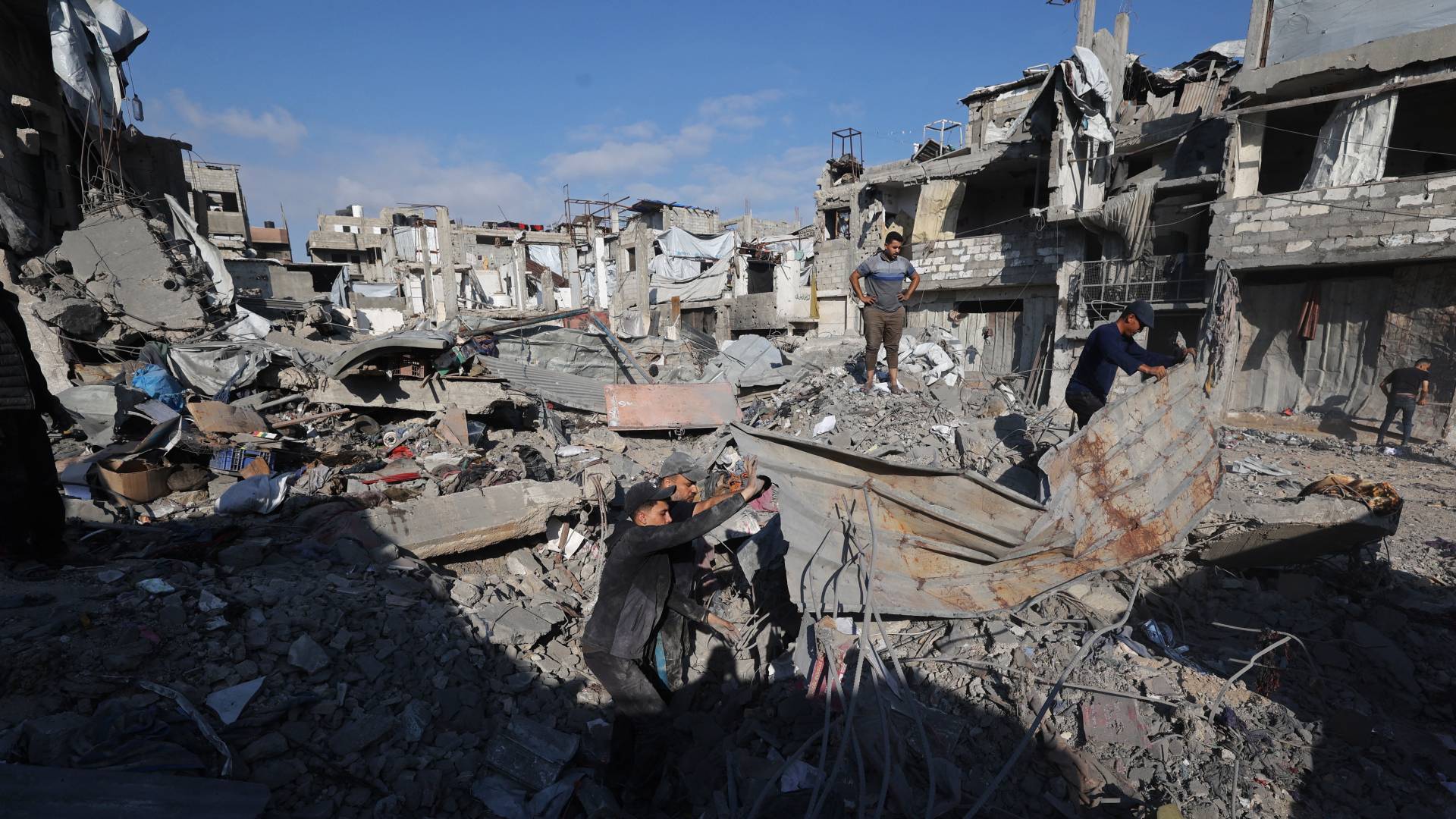
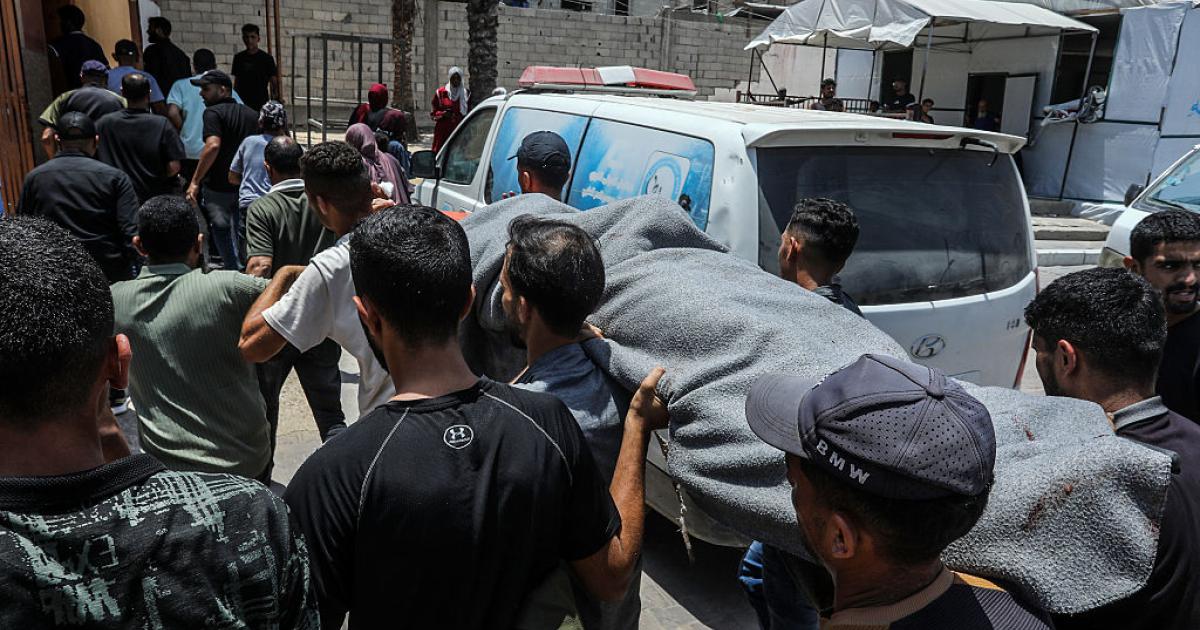
The Gaza Strip has witnessed a dangerous field escalation since last Friday morning, as occupation aircraft launched intensive airstrikes targeting various locations, resulting in the martyrdom of at least 13 people. The attacks notably focused on targeting security and police personnel, in a clear attempt to undermine what remains of civilian stability within the Strip, which is exhausted by the ongoing war.
Sources in the civil defense reported the martyrdom of 8 citizens, including a child, as a result of an airstrike that targeted a police vehicle in the Al-Mawasi area of Khan Yunis city in the southern Strip. This strike comes at a time when military pressure is increasing on areas crowded with displaced people, exacerbating the suffering of civilians and threatening their personal safety in areas claimed to be safe.
In the northern Strip, Israeli artillery did not stop shelling residential neighborhoods, where a woman and her two children were martyred due to artillery shelling that hit citizens' homes near Kamal Adwan Hospital. This direct targeting of areas surrounding health facilities poses enormous challenges to the medical system amid a lack of resources and the constant threat to staff and displaced people.
Gaza City also witnessed a similar attack, where a drone targeted a second police car, leading to the martyrdom of two people and the injury of two others with varying degrees of wounds. These systematic operations confirm a political and military decision to eliminate any semblance of civilian or security administration attempting to maintain public order in Gaza.
Political analysts believe that these tactical targeting operations primarily aim to disrupt any path that could lead to a sustainable cessation of the war or the implementation of de-escalation understandings. Striking the security system opens the door to widespread chaos, which the occupation government seeks to impose a new reality that makes reconstruction or political stability difficult.
Writer and political analyst Ahmed Al-Tanani explained that the occupation is trying to normalize international public opinion with daily killings by marketing flimsy and baseless security pretexts. He added that the strategic goal is to make the Gaza Strip an uninhabitable environment, putting pressure on the population and forcibly pushing them towards displacement options under the weight of a lack of security and services.
Al-Tanani pointed out that the occupation has exploited military operations to expand its field control unprecedentedly, as it now consumes more than 60% of the Strip's area under the name of 'buffer zones'. This field control aims to dismember the Strip and turn it into isolated cantons that are easy to control militarily and securely in the future.
For his part, academic and researcher Muhannad Mustafa considered that Benjamin Netanyahu's government categorically rejects de-escalation on any front, whether in Gaza or Lebanon, due to its connection with narrow political interests. The continuation of the state of war represents the only guarantee for the survival of the ruling coalition and avoiding the legal prosecutions that pursue Netanyahu, especially since he is wanted by the International Criminal Court.
Mustafa suggested that the occupation is planning a wide and imminent military operation aimed at re-imposing absolute control over all aspects of life in the Strip. The occupation is betting at this stage on 'freezing' the current situation, so that half of the Strip remains under direct occupation with regulated entry of humanitarian aid to obstruct any political solutions.
In contrast, views from American Republican circles emerge, holding the Palestinian resistance responsible for the current stalemate due to the disarmament issue. These circles claim that stability in Gaza depends on the entry of international forces and the surrender of weapons, which Palestinian parties consider an impossible condition aimed at imposing complete surrender and emptying any agreement of its national content.
Al-Tanani responded to these claims by affirming the resistance's commitment to all provisions of previous agreements, stressing that the occupation is the one that has been committing continuous violations since the first day of the truce. He explained that Israeli manipulation is evident in the aid file, as the number of trucks that entered the Strip did not exceed 40% of the internationally agreed quantities.
The continued targeting of civilian and police personnel in Gaza reflects an Israeli desire to prolong the conflict and destroy the social and political structure of the Palestinians. With this approach continuing, Gaza remains at a dangerous crossroads that threatens to escalate the situation more broadly, in the absence of real international pressure that obliges the occupation to stop its aggression and fully open the crossings.
Targeting police personnel represents a clear Israeli desire to spread widespread chaos and undermine the system that manages the daily affairs of citizens.


Share your opinion
Israeli escalation targets Gaza's security system to foster chaos and obstruct de-escalation paths