ARAB AND WORLD

Thu 30 Jan 2025 7:34 pm - Jerusalem Time

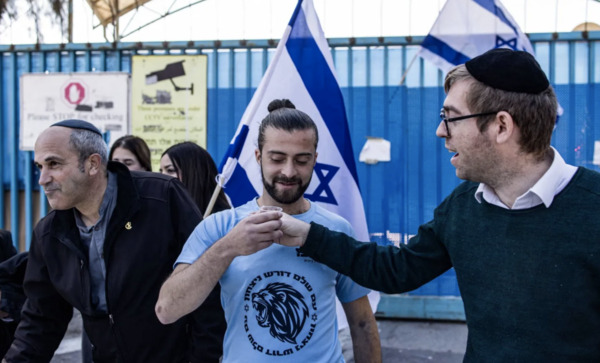
Far-right celebrates UNRWA's departure from Israel

While the far-right Deputy Mayor of West Jerusalem, Arieh King, gathered with his colleagues in front of the offices of the United Nations Relief and Works Agency for Palestine Refugees (UNRWA) to celebrate the start of the ban on the agency’s work in Israel, sources in Tel Aviv confirmed that there is confusion in the government about the decision to implement the ban and who will replace it. They have contacted the US State Department to make contacts on the issue with international bodies.


Israeli and Palestinian parties fear that a vacuum will emerge, starting in early February, that threatens the collapse of medical, educational and environmental services in the refugee camps as a result of the agency being banned and its senior staff leaving the region.


On October 28, 2024, the Israeli government passed two laws in the Knesset (parliament) to stop UNRWA’s activities. These laws received broad public support and were approved by a cross-party majority in the Knesset, despite pressure from the international community to prevent the move.


The first law prohibits UNRWA from operating branches, providing services, or engaging in any type of activity directly or indirectly on the sovereign territory of the State of Israel. This means that UNRWA will no longer be able to operate in East Jerusalem, and will be forced to cease all its activities in the city.


The second law prohibits authorities, bodies, and persons holding public office according to the law from establishing any contact with UNRWA or its representatives. This means that Israeli officials will not be able to communicate with UNRWA or any of its affiliates.


Accordingly, as of the end of January, the Ministries of Foreign Affairs and Interior will not be able to issue entry or work permits to UNRWA employees. At ports and customs, they will not be able to receive or deal with UNRWA goods; banks in Israel will have difficulty providing banking services to them, and the Israeli military will be forced to sever working relations with them and coordinate activities with Palestinian entities through UNRWA.


The two laws are supposed to come into effect, banning the agency's activities in Israel, the West Bank and the Gaza Strip, and prohibiting any relationship between it and state authorities.


However, apart from repeated statements against these laws, the international community and the countries that fund the agency have no effective means to prevent this process. On Friday, 25 international employees working for the agency in the West Bank and East Jerusalem will leave after their entry visas expire.


In the Gaza Strip, Israel is determined not to allow new UNRWA employees to enter, but those who are there have no intention of leaving, and UNRWA plans to continue working there as long as possible.


UNRWA also announced that it does not intend to evacuate the buildings in which it is located in East Jerusalem, despite an explicit request from Israel that found explicit support from the United States. This is expected to be a cause for clashes with citizens affected by the Israeli decision.


But the problem is that in Israel, there is still no clear understanding of how these laws will be implemented. In a session held this week in the Finance Committee, it became clear that the Bank of Israel does not know whether the severing of ties with UNRWA also applies to banks.


This question could roll over and reach the government's legal advisor, and the prevailing assumption is that for this matter the banks are not considered an "authority" of the state.


According to UNRWA, Israel’s Bank Leumi has frozen $2.8 million belonging to the agency. It is unclear whether and how the state will deal with UNRWA’s refusal to evacuate its buildings in East Jerusalem. This question could very well end up in court. Then it will create a trap in the spirit of the times: “Is the court, which is undoubtedly a state authority, authorized to discuss matters related to UNRWA, which – according to the new laws – it is not authorized to contact?”


Haaretz reported on Thursday that Israel is trying to replace UNRWA with other UN agencies, but the international organization rejects this for political and anti-Israel considerations.


In contrast, the UN says that UNRWA's sole mandate, which enables it, among other things, to employ tens of thousands of descendants of Palestinian refugees, is non-replaceable, and certainly not by administrative decision.


Israel's Dilemma

In order to change the regimes and replace the organization founded in 1949, a new resolution from the General Assembly is needed. In any case, neither Israel nor the United Nations seems to expect to back down from their positions anytime soon. The newspaper adds that Israel has put itself in a bind; it is now paralyzing an institution like UNRWA, which is the second largest employer in the occupied territories.


According to many in the international community and in the agency itself, the possibility of completely separating UNRWA from the “Hamas” context can only occur when its functions are transferred to a Palestinian state, or at least to the Palestinian Authority, “the state that is on the way.”


This is exactly the solution that the Netanyahu government is doing everything it can to obstruct.


From a historical-political perspective, for Israel, the thwarting of UNRWA’s activities seems to be linked to removing the refugee issue – for which the agency was established – from the agenda. But the issue is not expected to be taken off the stage without the establishment of a Palestinian state.


Therefore, the process of closing UNRWA is a kind of deception, and is only expected to increase the chaos in the West Bank and the Gaza Strip, especially during a period of dramatic historical process, when Israel is in dire need of calm and order, however fragile that may be.

PALESTINE

Thu 30 Jan 2025 6:55 pm - Jerusalem Time

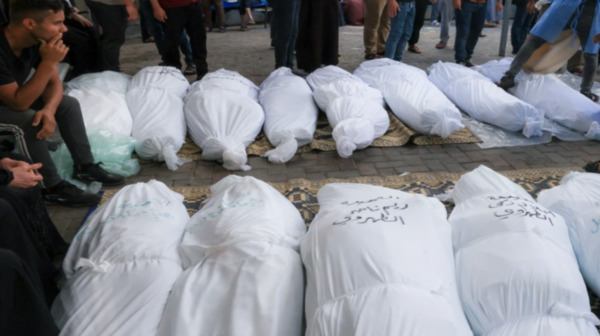
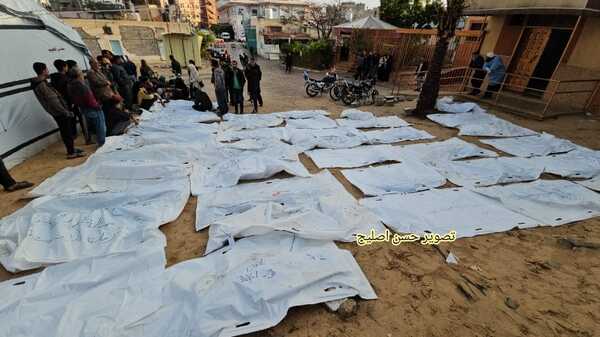
Health announces the recovery of 42 dead.. and the death toll rises to 47,460

The Ministry of Health in the Gaza Strip announced today, Thursday, the arrival of 43 martyrs to the hospitals of the Gaza Strip, including 42 martyrs whose bodies were recovered, and one martyr who succumbed to his injuries.


The Ministry of Health reported the spread of the bodies of 42 martyrs from different areas in the Gaza Strip, while 9 citizens were injured by the occupation's military remnants during the past 24 hours.


The Ministry of Health stated that the death toll from the war of extermination waged by Israel on the Gaza Strip on October 7, 2023, rose to 47,460, the majority of whom were children and women. While the total number of injuries reached 111,580.

It pointed out that thousands of victims are still under the rubble of destroyed homes and on the streets, and rescue teams are still unable to reach them.


The Ministry of Health called on the families of martyrs and missing persons from the war on Gaza to complete their data by registering, in order to complete all data through the Ministry of Health records.


PALESTINE

Thu 30 Jan 2025 6:49 pm - Jerusalem Time

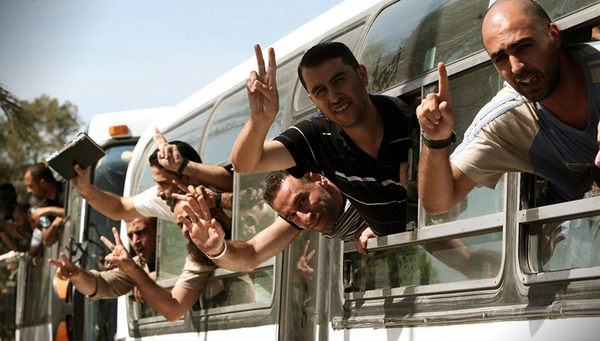
Israeli occupation releases the third batch of detainees within the ceasefire agreement

Today, Thursday, the Israeli occupation authorities released the third batch of detainees as part of the ceasefire agreement.


According to the Commission of Prisoners' Affairs and the Prisoners' Club, the batch includes 110 detainees, 32 prisoners serving life sentences, 48 prisoners with various sentences, and 30 children.


The occupation forces turned the area near Ofer prison into a closed military zone, prevented the gathering of detainees' families, and fired live ammunition and tear gas canisters at them.


It also stormed the town of Beitunia and fired tear gas bombs at citizens, which led to the injury of about 20 citizens, including 3 with live bullets, while bulldozers closed side roads to prevent citizens from using them to reach "Ofer Prison" to receive the prisoners.


Hundreds of citizens and relatives of detainees gathered at the Ramallah Recreational Complex to welcome the prisoners released from Ofer Prison.

PALESTINE

Thu 30 Jan 2025 5:36 pm - Jerusalem Time

Israeli occupation continues to displace citizens from Tulkarm camp and strengthens its presence there

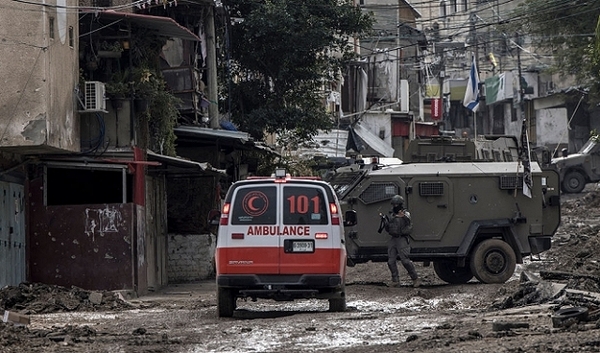
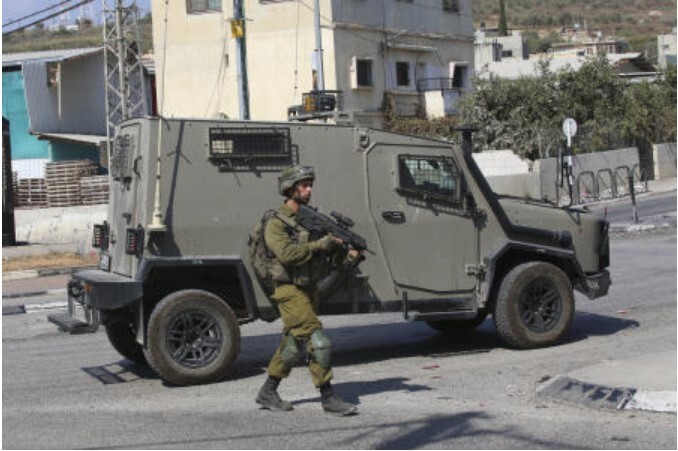
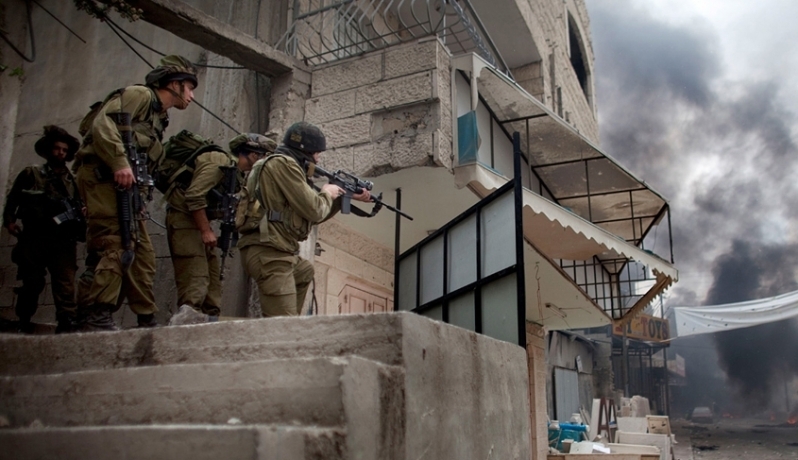
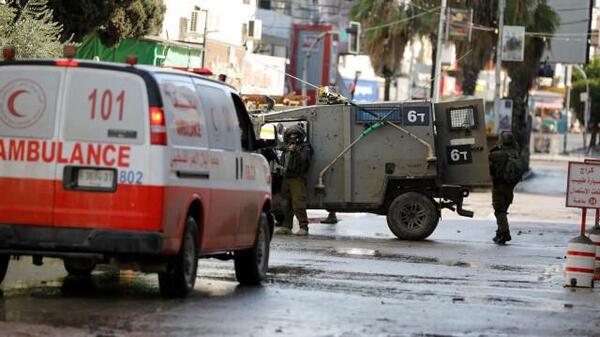
This evening, Thursday, the Israeli occupation forces sent more military reinforcements, including vehicles and bulldozers, to Tulkarm camp, coinciding with the ongoing aggression against it and the city, and the accompanying destruction of infrastructure, public and private property, and the displacement of citizens.


According to local sources, the camp is witnessing a large deployment of snipers on top of tall buildings inside and around the camp, after seizing them and forcing their residents to leave, amidst random gunfire, the bombing of a number of homes, bulldozing other entrances and closing them with dirt, and detaining their residents inside them in difficult conditions.


The occupation forces continue to force the camp residents to leave their homes and head towards the city, specifically from the neighborhoods of: Al-Akasha, Al-Ghanem, Al-Nadi and Al-Matar, which has exacerbated their suffering and humanitarian needs, especially the elderly, women and children.


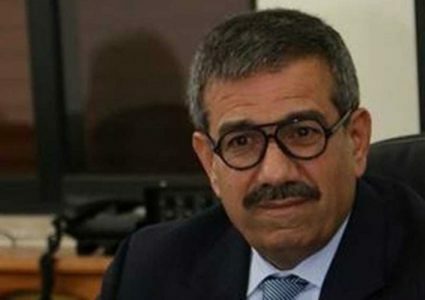
The head of the Popular Committee for Services in Tulkarm Camp, Faisal Salama, told a WAFA correspondent that the conditions in the camp are still very difficult in light of the military reinforcements of the occupation that are arriving there, and the accompanying continuous destruction of the infrastructure and citizens’ properties.


He pointed out that thousands of citizens have left the camp so far, and were forced at gunpoint to leave the camp, and they are now scattered in all the suburbs of the city, from Aktaba, Al-Rashid neighborhood in Dhenaba, Al-Azab, and Shuwaika.


He explained that the Red Crescent Society is transporting the displaced from the camp to the suburbs, and transporting the elderly, women and children to Al-Rawda Mosque in the western neighborhood of Tulkarm, while providing them with food, drink and medicine.


Salama warned of a severe shortage of milk, baby diapers, food, drinking water and medicine for chronic diseases of the elderly inside the camp, and there are urgent appeals from citizens who are still in their homes, suffering from the cutting of water and electricity lines, which poses a danger to those with chronic diseases who live on oxygen cylinders.


In turn, the director of the Palestinian Red Crescent Society, Tulkarm branch, Manal Al-Hafi, said, “We in the society, through the central operations room, receive numerous calls from citizens inside the camp and appeals to help them leave the camp, especially the elderly, people with disabilities and children, which constitutes a burden on our crews due to the difficulty of the infrastructure that was destroyed by the occupation, in addition to preventing us on many occasions from reaching some of the camp’s neighborhoods, especially the distant ones, despite being allowed to enter after coordination with the Red Cross.”


She added that the areas that the crews were able to reach were those adjacent to the entrance to the camp, despite the continuous appeals from the citizens to deliver their basic needs of milk, baby diapers, drinking water and medicines.

PALESTINE

Thu 30 Jan 2025 5:11 pm - Jerusalem Time

Israeli occupation: We received guarantees regarding the safe release of the remaining hostages

The Israeli occupation announced that it received guarantees from international mediators that the release of hostages held in the Gaza Strip will take place in the future in a safe manner, following the chaos that prevailed over the release of 7 hostages in Khan Yunis, today, Thursday.


"At the request of Prime Minister Netanyahu, the mediators have committed to ensuring the safe release of our hostages who will be released in the next stages," Israeli Prime Minister Benjamin Netanyahu's office said in a statement carried by Agence France-Presse, shortly after Netanyahu issued a decision to delay the release of Palestinian prisoners included in the exchange.


Three Israeli hostages and five Thais were released on Thursday after nearly 16 months in captivity in the Gaza Strip, in the third exchange of hostages with Palestinian prisoners under a ceasefire agreement between Israel and Hamas.


However, the process of handing over 7 of them in Khan Yunis in the southern Gaza Strip was marked by scenes of extreme chaos, which provoked Netanyahu's condemnation and prompted him to announce a delay in the release of the 110 Palestinian detainees who were supposed to be included in the exchange today.


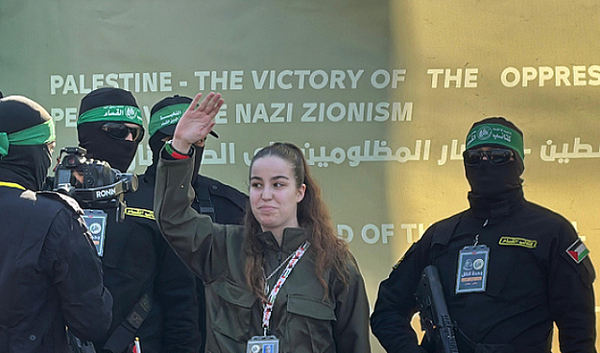
The 20-year-old Israeli soldier, Agam Berger, who was kidnapped on October 7, 2023, while performing her military service near the Gaza Strip, was released in the Jabalia camp in the northern Gaza Strip, which has witnessed fierce and destructive battles between Hamas and Israel in recent months.


Hours later, Islamic Jihad handed over Arbel Yehud, 29, who was kidnapped in a Hamas attack on Kibbutz Nir Oz, and Gadi Moses, 80, in Khan Yunis in the southern Gaza Strip. Both also hold German citizenship.


Five Thai hostages were also released outside the agreement, having also been kidnapped during Hamas's unprecedented attack on Israel, followed by a devastating war in the Gaza Strip.


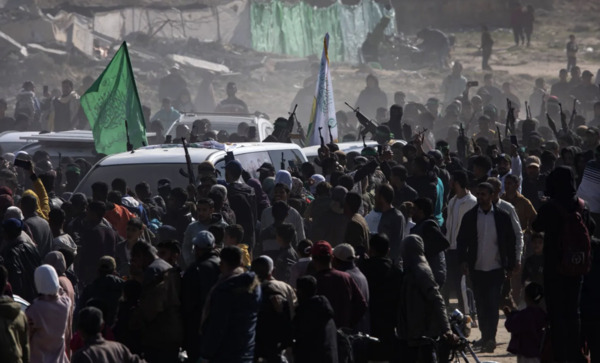
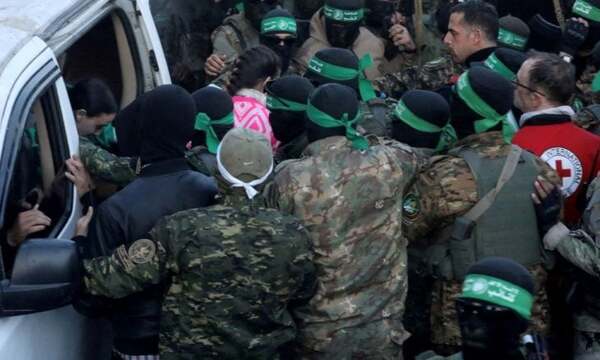
A crowd of Palestinians had gathered in Khan Younis near the destroyed home of Yahya Sinwar, the former head of Hamas who was killed by Israel in battle last October.


They were chanting, screaming and pushing to get closer to the cars that transported the hostages, amidst dozens of members of the Islamic Jihad movement that fought alongside Hamas, and of the Hamas movement. Chaos reigned, and it seemed that the operation was delayed.


After Israel received the released hostages, Netanyahu said: "I watch with great horror the shocking scenes during the release of our hostages. This is further evidence of the indescribable cruelty of the terrorist movement Hamas."


Immediately, the Israeli Prime Minister ordered the “postponement” of the release of the Palestinian detainees, “until the safe departure of our hostages is guaranteed in the coming stages.”

Israel is expected to release 110 Palestinian prisoners, according to the Palestinian Prisoners Club, which explained in a statement that 32 of them are sentenced to life in prison, 48 have been sentenced to varying prison terms, in addition to 30 minors. Twenty of them will be deported outside the Palestinian territories, similar to what happened last time.

PALESTINE

Thu 30 Jan 2025 4:28 pm - Jerusalem Time

Setting a date for the release of Palestinian prisoners in the third batch

The Prisoners' Information Office announced that the release of Palestinian prisoners will take place today at exactly 5:00 PM Jerusalem time.


This release comes within the framework of the ongoing agreements, as the families of the prisoners and the Palestinian people await the return of their sons to their arms after a period of detention.


It is expected that all eyes will be on the reception centers where the released prisoners will be received in an atmosphere of joy and welcome.


The concerned authorities continue to follow up on the implementation of the release process according to the specified timetable, while stressing the importance of this step within the framework of ongoing efforts to support the cause of Palestinian prisoners.


ARAB AND WORLD

Thu 30 Jan 2025 4:12 pm - Jerusalem Time

Trump's envoy: Hope Gaza ceasefire holds until end

Steve Witkoff, the US President's envoy to the Middle East, expressed his hope on Thursday that the ceasefire agreement in Gaza would hold until the end.


Asked by reporters upon his arrival at the gathering place for the families of the Israeli prisoners in Tel Aviv whether he hoped the ceasefire agreement in Gaza would hold until the end, he said: "I hope it will hold."


"President Trump is committed to doing everything possible to help families," he added.


Regarding efforts to return Israeli prisoners who hold American citizenship, he said: "They are at the top of the priorities."


"One of them will be released tomorrow," he added, without giving further details.


It is noteworthy that the fourth batch of prisoner exchange will take place on Saturday.


Earlier today, the Al-Qassam Brigades handed over Israeli soldier Agam Berger to the Red Cross after she was taken out of a building destroyed by Israeli shelling in the Jabalia camp in the northern Gaza Strip.


The Al-Qassam Brigades announced on Wednesday evening that it would release on Thursday the soldiers Berger, Arbel Yehud and Musa Moses, in the southern Gaza Strip, in exchange for 110 Palestinian prisoners.


This came as part of the third batch of prisoners to be released in the first phase of the ceasefire agreement in Gaza and the prisoner exchange between Israel and Hamas.


Witkov arrived in Israel yesterday, met with Prime Minister Benjamin Netanyahu and visited the Gaza Strip.


Today, Witkow met with Israeli Finance Minister and leader of the far-right Religious Zionism party, Bezalel Smotrich.


On January 19, the ceasefire agreement in Gaza and the exchange of prisoners between Hamas and Israel came into effect, with the mediation of Qatar, Egypt and the United States.


The agreement consists of 3 stages, each lasting 42 days, during which negotiations will take place to start a second and third stage, leading to the end of the war of extermination.


PALESTINE

Thu 30 Jan 2025 4:05 pm - Jerusalem Time

12 injured by bullets and suffocation after Israeli forces attacked citizens west of Ramallah

12 citizens were injured by live bullets and suffocation, after the Israeli occupation army attacked citizens in the town of Beitunia, west of Ramallah.


The Red Crescent reported that its crews dealt with 12 injuries in the vicinity of Ofer military prison, which is located on the lands of Beitunia, 2 of them with live bullets, 2 with rubber-coated metal bullets, in addition to 8 who suffocated with toxic tear gas.


Dozens of citizens gathered around the prison, awaiting the release of the third batch of detainees from Israeli occupation prisons, as part of the ceasefire agreement.

PALESTINE

Thu 30 Jan 2025 2:54 pm - Jerusalem Time

The death toll in the Gaza Strip rises to 47,460

Medical sources announced today, Thursday, that the death toll in the Gaza Strip has risen to 47,460, the majority of whom are children and women, since the start of the Israeli occupation aggression on October 7, 2023.


The sources added that the number of injuries has risen to 111,580 since the beginning of the aggression, while thousands of victims are still under the rubble.


It pointed out that 43 martyrs arrived at hospitals in the Gaza Strip, including one dead who succumbed to his injuries, and 42 dead whose bodies were recovered, and 9 injuries arrived at hospitals, as a result of the Israeli aggression on the Gaza Strip during the past 24 hours.


The sources explained that a number of victims are under the rubble and on the roads, and rescue teams are still unable to reach them.

PALESTINE

Thu 30 Jan 2025 2:48 pm - Jerusalem Time

Israeli occupation obstructs the release of prisoners and tightens the noose to prevent celebrations of their liberation

The Israeli occupation army has intensified its repressive measures in the West Bank as the date for the release of 110 Palestinian prisoners approaches as part of the third batch of the prisoner exchange deal between Israel and Hamas, under the ceasefire agreement in Gaza.


Despite the completion of the handover of Israeli prisoners in the Gaza Strip under the exchange deal, and the arrival of 3 Israeli prisoners and 5 Thai workers to Israel, the political leadership in Tel Aviv issued instructions to the security services to postpone the release of Palestinian prisoners.


The Israeli political echelon issued instructions to delay the release of Palestinian prisoners, and a security source said that the buses carrying prisoners that left Ofer prison stopped for a long time before receiving orders to turn back, indicating a decision to freeze the operation at the last minute.


"Just as the release of our captives was delayed, we are also delaying the release" of Palestinian prisoners, Army Radio quoted a senior Israeli official as saying. Kan 11 reported that the decision to suspend the release of prisoners came in response to scenes of the release of Israeli prisoners in Khan Yunis.


The Israeli army dropped warning leaflets via drones in the area where the released prisoners will be handed over in Ramallah, stating: “We will not allow demonstrations to be held in support of terrorist organizations. Anyone who participates in these activities exposes himself to arrest. We have warned you, we are watching you.”


The Commission of Prisoners' Affairs and the Palestinian Prisoners' Club announced that specialized teams and institutions from the Ramallah Governorate are waiting to receive the third batch of released prisoners today, while a local source reported that an occupation force moved from Ofer Prison towards the town of Beitunia.


The Israeli occupation army issued a statement this morning, Thursday, stating that the forces of the "Judea and Samaria Division (occupied West Bank)" are continuing their preparations to confront what it described as the expected "security disturbances."

The occupation army indicated that its forces had carried out a series of "preemptive" arrests during the past week, targeting Palestinians who were alleged to be "inciters" to "stir up riots," and they were transferred for investigation by the Israeli security services.


The statement explained that the General Security Service (Shabak) held warning talks with the families of a number of prisoners expected to be released, in an attempt to deter any celebratory manifestations or popular mobilization, while military forces were reinforced in the West Bank, especially at checkpoints and barriers.


The Israeli army added that it "continues its intensive operations to confront any possible scenarios," whether "offensive or defensive," stressing that its forces will take "immediate action" against any attempts to protest or celebrate the release of the prisoners.


Palestinian sources reported that the Israeli occupation forces stormed the homes of Jerusalemite detainees in Silwan and Shuafat in occupied Jerusalem, who are included in the lists to be released today, as part of the prisoner exchange deal.


Local sources said that the occupation forces raided a number of homes of prisoners scheduled to be released today, including the homes of: prisoner Amir Faroukh, prisoner Muhammad Al-Abbasi from the town of Silwan, south of Jerusalem, and Muab Abu Khudair in the Shuafat camp.


The occupation forces summoned a number of families of the Jerusalemite detainees who are scheduled to be released in the third batch of the prisoner exchange, noting that 18 Jerusalemite detainees are scheduled to be released today, including prisoner Muhammad Faroukh, who was sentenced to 19 years, and prisoner Abd Duyyat, who was sentenced to 18 years, and who will be excluded.


The occupation forces also stormed the homes of prisoners Mustafa Abu Rida in the town of Qasra, and Hussein Nassar in the town of Madama, south of Nablus, who are scheduled to be released today. Local sources reported that the occupation forces threatened their families and asked them not to celebrate their release.


The sources added that the occupation forces fired gas and sound bombs in Qusra during the storming operation.


These Israeli measures come within the framework of the occupation's ongoing approach to targeting any Palestinian manifestations of joy over the release of prisoners, as its forces have previously intensified their operations of repression, arrests and attacks when implementing previous batches of the deal.


For its part, the Prisoners’ Media Office announced that the occupation will release tomorrow 32 prisoners sentenced to life imprisonment, 48 prisoners with high sentences, in addition to 30 child prisoners, as part of implementing the terms of the deal. It is worth noting that this exceptional batch was approved in light of Israel’s pretext for not releasing prisoner Yehud, in the previous batch, to obstruct the return of the displaced to the northern Gaza Strip.

PALESTINE

Thu 30 Jan 2025 2:27 pm - Jerusalem Time

Israeli occupation forces injure a young man and bomb a building in Jenin

A young man was injured today, Thursday, by Israeli occupation army bullets in Jenin camp.


The Palestinian Red Crescent Society reported that a young man (40 years old) was shot by the occupation forces near the entrance to the camp, and was subsequently transferred to the hospital.


Local sources also reported that a warplane bombed a building inside Jenin camp with two missiles. It is not yet known what the bombing left behind, while the occupation aircraft are still flying in the skies of the camp.


It is noteworthy that the occupation forces have been completely besieging the camp for ten days, obstructing the arrival of ambulances inside it, and preventing press crews from entering it to cover the incident.

ARAB AND WORLD

Thu 30 Jan 2025 1:47 pm - Jerusalem Time

US Senate blocks bill to punish ICC

Democrats in the US Senate on Tuesday blocked a Republican-led effort to punish the International Criminal Court in protest over its arrest warrants for Israeli Prime Minister Benjamin Netanyahu and his former defence minister, Yoav Galant, over Israel's war of genocide in Gaza.


The House voted 54-45 in favor of the bill, meaning the measure fell short of the 60 votes needed to advance to a vote in the 100-member Senate.


The only Democratic senator who voted with Republicans to advance the measure was Senator John Fetterman of Pennsylvania, a staunch defender of Israel and a mouthpiece for Israel and the pro-Israel lobby group AIPAC. The Jewish-American Democratic senator from Georgia, Jon Ossoff, did not vote either negatively or positively.


The “Anti-Illegitimate Court Act,” introduced by right-wing evangelist Senator Tom Cotton of Arkansas, would impose sanctions on any foreigner who investigates, arrests, detains or prosecutes American citizens or citizens of an allied country, including Israel, that is not a member of the court.


The House passed the bill earlier this month by a vote of 243 to 140, with 45 Democrats joining a majority of Republicans in support. In the Senate, Democrats said they agreed with much of the bill, but it was too broad, risked alienating key U.S. allies and imposed sanctions on lower-level court staff in the Netherlands.


Sen. Jeanne Shaheen (D-N.H.), the top Democrat on the Foreign Relations Committee, said the party tried to reach a compromise with Republicans but couldn't.


Republicans said they hope the bill will pass in time for President Donald Trump to sign it into law, especially with Netanyahu due to visit him at the White House next Tuesday, February 4, 2025.


Senate Democratic Leader Chuck Schumer, the most senior Jewish American in the US political landscape, urged his colleagues to vote “no,” accusing the ICC of “anti-Israel bias that cannot be ignored.” However, he said the bill was poorly drafted and could also target American companies, such as those whose products help protect the court from foreign hackers.


It is noteworthy that the International Criminal Court is a permanent court that can prosecute individuals for war crimes, crimes against humanity, genocide and the crime of aggression in member states or by their nationals.


The court said its decision to pursue arrest warrants against Israeli officials was consistent with its approach in all cases, based on the prosecutor's assessment that there was sufficient evidence to proceed, and the view that seeking arrest warrants immediately could prevent ongoing crimes.


Republicans in Congress have condemned the ICC since it issued arrest warrants for Netanyahu and his former defense minister, Yoav Galant, on November 21, accusing them of war crimes and crimes against humanity in the Gaza conflict. Israel denies the allegations.


To urge support for the bill, Senator Jim Risch, the Republican chairman of the Foreign Relations Committee, accused the ICC of pursuing the Israeli leader for political reasons.


"It is just another example of the politicization and anti-Semitism that has become endemic among a number of international organizations," he told reporters.


The war crimes court has taken steps to protect employees from potential US sanctions, paying salaries three months in advance as it prepares for financial constraints.

PALESTINE

Thu 30 Jan 2025 1:07 pm - Jerusalem Time

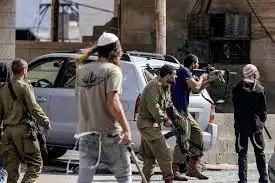
Settlers cut down olive trees west of Salfit

Today, Thursday, settlers cut down a number of olive trees west of Salfit.


Local sources reported that settlers, under the protection of the Israeli occupation forces, cut down olive trees and vandalized agricultural land located in the "Al-Takweera" area between the towns of Burqin and Kafr Al-Dik, owned by Abdullah Ali Ahmed.


The Wall and Settlement Resistance Commission monitored that settlers committed 451 violations last year, which resulted in the uprooting, damage, sabotage and poisoning of a total of 14,212 trees, including 10,459 olive trees.


Hebron topped the governorates in terms of the number of damaged trees, with 3,980 trees, followed by Bethlehem Governorate with 3,791 trees damaged and uprooted, then Nablus Governorate with 2,737 trees damaged and uprooted.

PALESTINE

Thu 30 Jan 2025 12:58 pm - Jerusalem Time

Israeli occupation forces injure and arrest a young man in Nablus

This Thursday afternoon, the Israeli occupation forces shot a young man before arresting him in the city of Nablus.


Security and local sources reported that Israeli special forces, "Musta'ribeen", infiltrated Ibn Rushd Street in the city, and fired bullets at the young man, Qassem Al-Aklik, hitting him in the head, before arresting him.

PALESTINE

Thu 30 Jan 2025 12:27 pm - Jerusalem Time

Israeli Settlers organize a provocative party in Jerusalem to stop UNRWA from working

Today, Thursday, settlers held a provocative "party" to mark the entry into force of two Israeli Knesset laws targeting the work of the United Nations Relief and Works Agency for Palestine Refugees (UNRWA) in the Palestinian territories.


Local sources reported that settlers, headed by the extremist deputy mayor of the occupation, "Ariel King", organized a celebration to close UNRWA and prevent its activities in occupied Jerusalem.


UNRWA provides services to more than 110,000 refugees in Jerusalem. The UN agency has two refugee camps: Shuafat Camp and Qalandia Camp. It runs institutions there such as the Indian Corner Clinic at the entrance to Bab al-Sahira, and schools for boys and girls in Jerusalem, Sur Baher, and the two aforementioned camps.


The Knesset’s decision to ban the work of the United Nations Relief and Works Agency for Palestine Refugees in the Near East (UNRWA) represents a violation of the United Nations Charter, the provisions of international law, international norms and agreements, and contradicts the resolutions of the United Nations General Assembly, especially Resolution No. 302, which established UNRWA in 1949 in response to the Palestinian refugee crisis, representing an international commitment to this issue after the failure to implement Security Council Resolution 194, which guarantees their right of return.

PALESTINE

Thu 30 Jan 2025 12:00 pm - Jerusalem Time

Israeli occupation forces raid the homes of detainees scheduled to be released today

Today, Thursday, the Israeli occupation forces stormed the homes of Jerusalemite detainees in Silwan and Shuafat in occupied Jerusalem.


Local sources said that the occupation forces raided a number of homes of prisoners included in the lists to be released today, as part of the ceasefire agreement in Gaza. Among them were the homes of: prisoner Amir Faroukh, prisoner Muhammad Al-Abbasi from the town of Silwan, south of Jerusalem, and Muab Abu Khudair in the Shuafat camp.


The occupation forces summoned a number of families of the Jerusalemite detainees who are scheduled to be released today in the third batch of detainees as part of the ceasefire agreement.


Today, 18 Jerusalemite detainees are scheduled to be released, including prisoner Muhammad Faroukh, who was sentenced to 19 years, and prisoner Abd Duyyat, who was sentenced to 18 years, and who will be deported outside the homeland.


In Nablus, the Israeli occupation forces stormed two homes of detainees in the villages of Madama and Qusra, who are scheduled to be released today, Thursday, as part of the ceasefire agreement in Gaza.


Local sources reported that the occupation forces stormed the two villages, raided the homes of the detainees Mustafa Abu Rida in Qasra, and Hussein Nassar in Madama, and threatened their families from celebrating their release.


The sources added that the occupation forces fired gas and sound bombs in Qusra during the raid.

PALESTINE

Thu 30 Jan 2025 11:55 am - Jerusalem Time

Tubas buries the bodies of 10 dead in a grand crowd

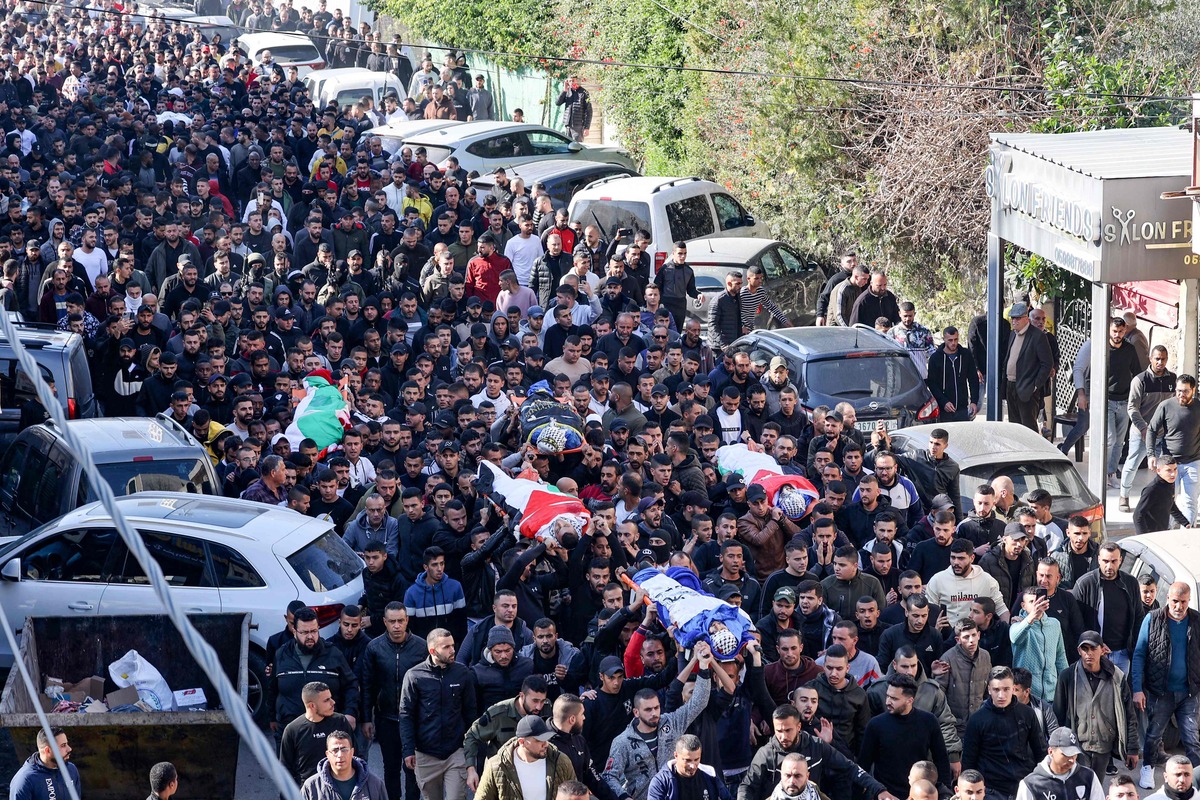
Today, Thursday, huge crowds accompanied the bodies of the ten dead to their final resting place in the town of Tamoun, south of Tubas.


The funeral procession set off from the Turkish government hospital in the city, to the town of Tamoun, where they were bid farewell by their families and loved ones.


The funeral procession toured the town's streets amid angry chants, denouncing the Israeli crime that targeted a group of young men last night.


The participants called for national unity and closing ranks in the face of all Israeli plans aimed at liquidating the Palestinian cause.


The local community was filled with grief over this crime against our people.


A general strike spread across all aspects of life in Tubas Governorate, in condemnation of the massacre committed by the occupation against the youth in Tamoun.


Shops, government and civil institutions closed their doors, in response to the call of the national forces in the governorate.


Last night, the occupation forces bombed a group of young men who were in the courtyard of a house in the center of the town, killing ten of them and seriously wounding a young man.


The victims are: Abdullah Mahmoud Mohammed Bani Odeh (22 years old), Mohammed Mithqal Fayez Bani Odeh (36 years old), Ibrahim Mithqal Fayez Bani Odeh (33 years old), Osama Marouf Dhiyab Bani Odeh (19 years old), Muntaser Ali Mohammed Bani Matar (25 years old), Abdul Rahman Mahmoud Nimer Khatib (20 years old), Omar Ali Mohammed Basharat (28 years old), Saleh Khader Yousef Bani Matar (19 years old), Suleiman Ahmed Suleiman Basharat (22 years old), and Jihad Nasser Yousef Bani Matar (18 years old).


The bombing of Tamoun comes with the aggression that the occupation has been waging on Jenin for 10 days, which has resulted in the martyrdom of 17 citizens and the wounding of dozens, in addition to the widespread destruction of property and infrastructure, as well as with the aggression that it has been waging on Tulkarm and its camps for the fourth consecutive day, leaving three martyrs and widespread destruction of infrastructure and property, and the displacement of citizens from their homes.

ARAB AND WORLD

Thu 30 Jan 2025 11:04 am - Jerusalem Time

City University of New York votes to boycott Israeli entities and institutions

The faculty union at New York City’s public university system, the City University of New York, voted last week to boycott Israeli entities and institutions, putting the 30,000-member union at odds with the American university administration and the New York state government.


The union, the professional faculty conference, has been a battleground for activism against the Israeli occupation and the settlement movement. Some Jewish professors have claimed that the boycott decision was the latest discriminatory action by the union, which represents them, and it has split the union’s Delegates Assembly, the governing body that voted on the measure.


The text of the resolution cites the number of civilian deaths in Gaza as a result of the Israeli war of extermination, and the actions of the International Criminal Court and the International Court of Justice as reasons for the boycott.


The resolution says the Professional Faculty Conference will withdraw its funds from “investment vehicles that include government stocks and Israeli companies” by the end of January.

The resolution also calls on the Teachers Retirement System, a municipal corporation in New York City, to enact “full divestment from Israel,” and the union will establish a volunteer committee to investigate further divestments. The committee will report to the union’s assembly of delegates by next month, the resolution says.

The union confirmed that the decision was approved by the Public Services Committee Delegates Assembly by a majority of 73 votes to 70 votes on January 23.

“Many PSC delegates oppose the Israeli government’s conduct of the war in Gaza and are concerned about how PSC members’ pension funds and union contributions are invested,” PSC Chairman James Davis said in a press release. “We were elected to protect the rights of PSC members, improve their pay and working conditions, and strengthen their union. It is important to focus on these core responsibilities while engaging in broader struggles for justice and peace.”

For her part, New York Governor Kathy Hochul (Democrat) condemned the measure in a press statement to the Israeli website "The Times of Israel" on Wednesday.

“In my first week as governor, I signed an executive order to withdraw public funds from institutions that participate in the harmful Boycott, Divestment, and Sanctions (BDS) movement — and that order remains in effect,” Hochul said, according to the website. “I strongly oppose the resolution that the PSC-CUNY delegates narrowly passed and will continue to stand against anti-Semitism and hate in all its forms.”
It should be noted that in 2016, Hochul’s predecessor, Andrew Cuomo, signed an executive order requiring government entities to withdraw public funds from companies or institutions that boycott Israel. Hochul confirmed this order after taking office in 2021. Hochul’s statement did not address the specific actions that might result from a PSC boycott.

In response to the governor's statement, union president Davis said, "The union (PSC) unequivocally condemns all forms of hatred, including anti-Semitism. The divestment resolution was a very close vote (73-70) on an issue on which our members deeply and sincerely disagree."

Two groups representing Jewish and pro-Israel faculty in the CUNY system criticized the decision as discriminatory.

The union's decision has drawn fire from pro-Israel groups, some of whom have filed a complaint with the New York State Division of Human Rights against the boycott, noting that New York's anti-discrimination law prohibits labor organizations from excluding or expelling members based on religion or national origin. The complaints allege that the decision discriminates against Jews and Israelis.

The CUNY Coalition for Inclusion, a front for the Israel lobby in New York, claimed the decision "discredits CUNY."

The group's statement used the routine Israeli narrative that Hamas periodically wages wars against Israel, knowing that anti-Zionists will come to its defense and portray Israel as the aggressor.

It is noteworthy that last May, the PSC rejected a similar resolution calling for a boycott of Israel over its bloody war on Gaza, and the rejection at the time was (most likely) linked to union negotiations.

It is noteworthy that last year, amid protests across CUNY, the union condemned a pro-Palestinian strike by its members, but also supported the protesting students in several statements.

The Public Service Commission says it represents 30,000 faculty and staff members at 25 CUNY colleges. CUNY is part of the fabric of New York City, with more than 230,000 students across the five boroughs of New York City.

PALESTINE

Thu 30 Jan 2025 11:03 am - Jerusalem Time

Hamas in Gaza releases 3 Israelis and 5 Thai citizens

On Thursday, the Palestinian resistance factions released the Israeli soldier, Agam Berger, near the rubble of Jabalia camp. An hour later, they released Gadi Moses and Arbel Yehud from Khan Yunis. They also released five Thai citizens without any compensation, and confirmed that the Thais were hosted by the Palestinians in the Gaza Strip.


The fighters of the "Al-Quds Brigades" and the "Al-Qassam Brigades" were deployed in the prisoner handover area in Khan Yunis, which is in front of the house of the former head of the Hamas movement, the martyr Yahya Sinwar.


The General Security Service (Shabak) warned the families of Palestinian prisoners scheduled to be released today against celebrating, amid a campaign of arrests.


On the 12th day of the ceasefire agreement in Gaza, the third batch of the prisoner exchange deal was implemented, according to which the Palestinian resistance factions will release three Israeli prisoners and five Thai workers, in exchange for Israel releasing 110 Palestinian prisoners. At the same time, the flow of thousands of displaced Palestinians continues to return to the central and northern Gaza Strip via Rashid Street.


The spokesman for the Al-Qassam Brigades, the military wing of Hamas, Abu Obeida, announced the release of the Israeli prisoners Arbel Yehud (29 years old), Agam Berger (20 years old), and Gadi Moshe Moses (80 years old), as part of the “Flood of the Free” deal.


In turn, Palestinian institutions concerned with prisoners' affairs said that the third batch of the first phase of the exchange deal includes 110 Palestinian prisoners, including 32 prisoners sentenced to life imprisonment, 48 prisoners with high sentences, in addition to 30 cub prisoners.


This exceptional batch was approved under Israel's pretext of not releasing the Israeli prisoner Yehud in the previous batch, in an attempt to obstruct the return of displaced Palestinians to the northern Gaza Strip.


With the implementation of the third batch of the exchange deal, 82 Israelis will remain in captivity with the resistance factions in the Gaza Strip, while the concerned parties continue negotiations to complete the implementation of the agreement in its three stages.


Another exchange is scheduled to take place on the specified date, next Saturday, under the ceasefire agreement reached by Qatari-Egyptian-American mediation to end the Israeli war on the Gaza Strip, which has been ongoing since October 7, 2023.


Israeli Prime Minister Benjamin Netanyahu's office said three living men held by Hamas were due to be released in a fourth round of exchange scheduled for Saturday. Families will be notified of the names of those to be released on Friday.


PALESTINE

Thu 30 Jan 2025 10:18 am - Jerusalem Time

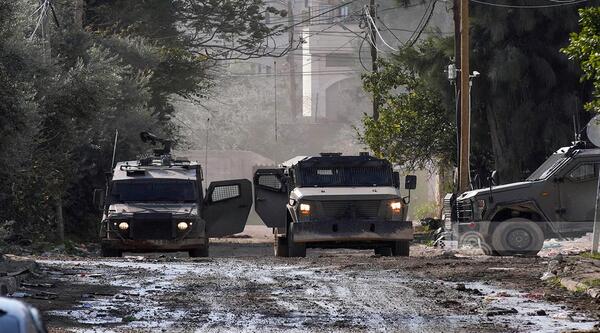
Israeli occupation continues its aggression on the city of Jenin and its camp for the tenth day

The Israeli occupation continues its aggression on the city of Jenin and its camp for the tenth consecutive day, leaving 17 martyrs, dozens of injuries, and arrests, amid widespread destruction of property and infrastructure.


The burning, demolition and bulldozing of citizens' homes and properties in the camp's alleys and neighborhoods continues.


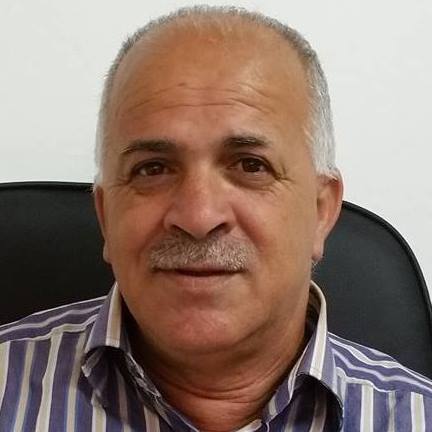
Jenin Mayor Muhammad Jarar said that the occupation demolished a large number of citizens' homes in Jenin camp and in nearby neighborhoods. The aggression on the camp and the city also caused a complete power outage in the camp, and a severe shortage of water, as water was cut off from about 35% of the city's neighborhoods and the camp due to damage to the Al-Saada well, which is the main well in the city.


He added that the occupation deliberately destroyed citizens' property and shops, and that food supplies began to run out in a number of the city's neighborhoods.


Jarar said that the occupation is still completely besieging Jenin camp and parts of the city, especially around the camp.


Citizen Yaish Rabaya was also injured after being severely beaten by the occupation forces during the raid on the town of Meithalun, east of Jenin, while the occupation forces arrested his son, Muhammad Rabaya, after raiding his home in the town.


The occupation forces stormed the village of Bir al-Basha, south of Jenin, and surrounded the house of the young man, Ihab Ghawadra, and arrested him from inside the house, as well as two other young men from the house.


The withdrawal of some occupation vehicles from neighborhoods in Jenin camp and its surroundings revealed massive destruction to citizens’ homes and properties, infrastructure, and the electricity network. Destruction was evident in the Al-Aloub, Al-Hadaf, and Al-Damj neighborhoods. The occupation also bulldozed the Jouret Al-Dhahab neighborhood and opened a street in it.


The occupation continues to obstruct the ambulance from reaching Jenin Governmental Hospital. The occupation prevented a sick woman from reaching the hospital, and the occupation soldiers interrogated her and prevented the Red Crescent crews from reaching her on the hospital street, which led to her losing consciousness.


The occupation also continues to send military reinforcements from the Jalameh checkpoint to the city and the camp's surroundings, while the occupation soldiers blew up new homes in the Al-Bashar neighborhood in the camp.


The Director of the Palestinian Post, Muhammad Al-Ahmad, said in a statement that in light of the ongoing closures in the city of Jenin, the post office continues to provide stamp services related to passports, IDs, travel permits, and postal services provided in the offices of Araba, Qabatiya, and Barta’a, in addition to providing postal services in the offices spread throughout the governorate.

PALESTINE

Thu 30 Jan 2025 10:15 am - Jerusalem Time

The occupation prevents the Red Crescent Society from being present in front of its headquarters in Tulkarm

In the early hours of Thursday morning, the Israeli occupation army prevented the management and crews of the Palestinian Red Crescent Society in Tulkarm from being present in front of the society’s headquarters, and forced them to leave immediately and not return to the place.


According to local sources, the occupation soldiers raided the association's yard and asked its crews to remove their vehicles parked in front of the headquarters, leave the place and go to their homes under threat of arms.


She added that the occupation forces refused to allow any of the association's staff to remain in the place, despite being told that inside the headquarters there is a section for orphaned children with their nannies, and it is difficult to leave them at this time while they are asleep.


The sources indicated that they were forced to leave the headquarters and close its doors, under the threat of the occupation, and its disregard for the nature of the humanitarian work carried out by the association and their need to respond to emergency situations resulting from the ongoing Israeli aggression on the city and its camp.


In addition, the occupation forces continue their aggression on the city and camp of Tulkarm for the fourth day, amidst raids on citizens’ homes and residential and commercial buildings and turning them into military barracks, accompanied by sabotage and destruction of infrastructure and public and private property.

PALESTINE

Thu 30 Jan 2025 9:19 am - Jerusalem Time

Israeli occupation's decision to ban UNRWA comes into effect today

Today, Thursday, two Israeli Knesset laws targeting the work of the United Nations Relief and Works Agency for Palestine Refugees (UNRWA) in the Palestinian territories will come into effect, meaning that tens of thousands of refugees will be deprived of services including education and health care.


Israel's ambassador to the United Nations, Danny Danon, told UN Secretary-General Antonio Guterres that the agency must cease all its activities in occupied Jerusalem and vacate its buildings by Thursday.


The first law prohibits UNRWA activity within “areas under Israeli sovereignty,” including the operation of representative offices and the provision of services, while the other law prohibits any contact with the agency.


For the agency, the severance of contact would effectively end coordination to ensure safe movement for UNRWA Palestinian staff, impose dangerous working conditions on them, and prevent its international staff from obtaining entry and work visas in the occupied Palestinian territory.


The law will also put obstacles in the way of UNRWA’s dealings with Israeli banks, obtaining financial transfers, paying salaries, and settling its dues.


For the occupation government, the term “Israeli sovereign areas” in the first law relates to occupied East Jerusalem, where the temporary headquarters of UNRWA is located, specifically in the Sheikh Jarrah neighborhood, which has been subject in recent months to a wave of terrorist acts and exclusionary decisions.


In May 2024, the agency's management was forced to close the headquarters under the pressure of attacks by settlers, which reached the point of setting fire to its buildings twice within one week.


In the same month, the Legal Advisor for the Jerusalem District of the Israel Land Authority notified UNRWA that it must vacate its headquarters in Sheikh Jarrah, on the grounds that it was being built illegally on 36 dunams of land that had been seized in 2006 and annexed as a neighborhood of the Ma'ale Dafna settlement.


The notice included a demand that the agency pay an amount exceeding 27 million shekels due to the illegal use of the land.


On October 10, 2024, the Israel Land Authority announced the seizure of the land on which the UNRWA headquarters was located in the Sheikh Jarrah neighborhood, and the transformation of the site into a settlement outpost containing 1,440 housing units.


The occupation also targeted the Qalandia Training College, with the “Israel Land Authority” issuing a decision on January 14, 2024, demanding that “UNRWA” evacuate it and pay its occupancy fees retroactively in the amount of 17 million shekels, under the pretext of constructing and using buildings without a permit.


UNRWA provides services to more than 110,000 refugees in Jerusalem. The UN agency has two refugee camps: Shuafat Camp and Qalandia Camp. It runs institutions there such as the Indian Corner Clinic at the entrance to Bab al-Sahira, and schools for boys and girls in Jerusalem, Sur Baher, and the two aforementioned camps.


The Commissioner-General of the United Nations Relief and Works Agency for Palestine Refugees, Philippe Lazzarini, had previously confirmed that there was no alternative to the agency in the occupied Palestinian territories if Israel implemented the decisions banning its activities.


He said that there is no alternative plan within the United Nations, because there is no other institution capable of providing the same activities. No other UN agency can replace UNRWA, because no UN agency is capable of providing education and health services like UNRWA, which has accumulated experience over 7 decades, enabling it to build logistical and human capabilities that cannot be matched.


The Knesset’s decision to ban the work of the United Nations Relief and Works Agency for Palestine Refugees in the Near East (UNRWA) represents a violation of the United Nations Charter, the provisions of international law, international norms and agreements, and contradicts the resolutions of the United Nations General Assembly, especially Resolution No. 302, which established UNRWA in 1949 in response to the Palestinian refugee crisis, which represents an international commitment to this issue after the failure to implement Security Council Resolution 194, which guarantees their right of return.


The cessation of UNRWA activities, and the resulting denial of essential aid to refugees, especially in Gaza, may be classified as a war crime under the Rome Statute, which criminalizes the deliberate use of starvation as a method of warfare.

OPINIONS

Thu 30 Jan 2025 9:16 am - Jerusalem Time

Israel's war on Palestinian camps... where to?

op-ed - Al-Quds dot com

op-ed - Al-Quds dot com

Opinion Writer

Israeli Defense Minister Yisrael Katz said yesterday that Israel has officially declared war on refugee camps in the West Bank, during his storming of the Jenin camp, which Israel has been attacking since January 21.


Katz's statements announcing the launch of a war on what he called Palestinian "terrorism", and his claim that the large-scale military operation in the West Bank aims to defeat activists and militants funded by Iran, are pure fabrications. The goals that Israel is monitoring are much greater than a military campaign, because we are talking here about a systematic war, waged by Israel with the motive of destroying all the components of life for Palestinians in the camps and displacing and expelling them. This is what is actually happening on the ground, through decisions to expel dozens of families from their homes, demolishing and burning about 100 homes, assassinating 20 citizens, and injuring and arresting dozens. This leads us to say that Israel's goals are moving towards more extremism in its policy of dealing with the Palestinian camps and trying to completely eliminate the right of return.


The Palestinian camps have always been centers of radiation for broadcasting and spreading national awareness, amidst feelings of belonging, despite the flames of wars waged by Israel against the pioneers of thought and struggle, who emerged from the heart of the camps and their stories and studied in the schools of the Relief Agency, and formed a thick wall that preserved the camps and their secrets, and drew pictures bearing witness to the shrines of the martyrs, amidst a modest social life in which there is much love, sacrifice, loyalty, memories and nostalgia.


This life that followed the Palestinian Nakba in 1948, and the subsequent catastrophes in 1967 and the successive Israeli wars, the last of which was the sinful aggression on the Gaza Strip, which caused successive catastrophes, in which the refugees experienced the bitterness of displacement, exclusion, evacuation and deportation, and lived in tents whose pegs were torn away by the winds and drowned in the rains of winter, and whose inhabitants were tormented by the heat in the summer, did not please Israel, which sees the camps as centers of “terrorism,” so it decided to impose displacement and loss on the people of these camps, and this is what its features began to appear in the Jenin camp for the tenth consecutive day and the Tulkarm and Nour Shams camps for the fourth consecutive day.


It seems that the Israeli campaign is targeting the entire West Bank, after last night's bombing in Tamoun, which led to the martyrdom of ten people, in a major Israeli crime that is added to its series of crimes full of horrific massacres against the Palestinians. The goals are undoubtedly topped by the goal of killing Palestinians, destroying their lives, displacing them, expelling them, and ending the Palestinian cause that is deeply rooted in people's minds forever. Evidence of this is Katz's statement in which he said that the occupation army will remain in Jenin even after the end of Operation Iron Wall, which means a new occupation of Jenin.

OPINIONS

Thu 30 Jan 2025 9:09 am - Jerusalem Time

Calm in Lebanon.. Ambiguity is the master of the situation

Rassem Obaidat

Rassem Obaidat

Opinion Writer

The truce, the 60-day period of which ended on the 27th of this month, is the truce to which the Lebanese resistance and the party committed, in compliance with the position of the Lebanese state and government, even though they did not agree with it, and which Israel continued to violate during the 60 days by killing, wounding, destroying, blowing up, exploding, penetrating, and violating Lebanese sovereignty, and which, as Sheikh Naim al-Qassem said in his speech on Monday 1-27-2025, we respected that truce despite the feeling of humiliation and acts of revenge, and those breaches reached more than 1350 breaches.


There are conflicting official Lebanese statements and statements from the Lebanese resistance regarding it. The American asked his Israeli partner to extend until the 28th of next month, and when the Lebanese rejected the request, he said the extension until the 18th of next month. When the Lebanese also rejected the request, he said that there are five overlooking hills that the Israeli army needs to remain in, and his request was also rejected. What is noteworthy is that the caretaker Prime Minister Mikati said that he accepted the extension until the 18th of next month in consultation with the American, and to negotiate the file of Lebanese prisoners held by the Israelis. He also consulted with the President of the Republic, Joseph Aoun, and with the Speaker of Parliament, Nabih Berri. Berri said that he stipulated for the extension the cessation of killing and destruction, and since the occupation did not abide by that, the truce fell. Meanwhile, the Secretary-General of the party, Sheikh Naim Qassem, said that the truce has ended and there is no extension for a single day, and the resistance determines the form, nature and timing of the confrontation, and the extension is an Israeli-American understanding that is not binding on it. It is clear that there is official Lebanese fluidity in the position on the calm, while there is a decisive position on it from the party, and this reflects the ambiguity of the Lebanese position, which is supposed to To be clear, firm and solid, the Lebanese popular masses who marched to return to their occupied border villages, and faced Israeli bullets and tanks from point zero, and paid the price of their steadfastness and march with martyrs and wounded, more than 25 martyrs and 128 wounded, their positions were more advanced than the positions of the government and the army, and those who say from the Americans and Zionists inside Lebanon, that the regional and international circumstances have changed, and that the army is now capable of defending Lebanon, and that the resistance’s weapons have become a burden on the southerners, what is happening in southern Lebanon and Israel’s procrastination and delay in implementing the terms of the truce, says what Sheikh Naim Qassem said that the trilogy of “the people, the army and the resistance” is the trilogy that protects Lebanon’s sovereignty, territorial integrity, security and stability. The return and mass march of the Palestinian and Lebanese masses to the northern Gaza Strip and to the villages of southern Lebanon, dropped the strategic goals of the Israeli war on both fronts, those goals that Netanyahu and his War Council had set. With the beginning of the ground war on the villages of southern Lebanon, in which the Israeli army used five divisions and two brigades, in order to achieve a victory that would enable it to impose its conditions and dictates on the Lebanese resistance, Israel raised the ceiling of its security and military demands, no withdrawal without disarming the resistance, maintaining a security zone in southern Lebanon decided by Israel, freedom of movement for its army in southern Lebanon, and continued violation of Lebanese airspace. However, with the deepening and expansion of the ground war, the Lebanese and Palestinian resistances called for an immediate ceasefire, and emphasized the comprehensive Israeli withdrawal, in a way that would prevent Israel from achieving any security and political gains. With the failure of the Israeli army to achieve any serious breakthrough in the villages and towns of southern Lebanon, it began to lower the ceiling of its demands, to negotiate under fire, and replace the disarmament of the resistance with its withdrawal beyond the Litani, considering this an item of Resolution (1701). On the Gaza Strip front, the Israeli response was not an absolute withdrawal, but with the resistance dragging his army into a long battle and war of attrition, and entering a phase of exhaustion, fatigue, and a decline in fighting spirit and morale, he began to talk about a withdrawal conditional on ensuring security control over strategic points and axes, as he claims, necessary for his security, the Netzarim and Philadelphi axes, and he accompanied this demand with a demand to eliminate the Palestinian resistance, and when he began to confirm the impossibility of achieving the goal, he linked the ceasefire to a prisoner exchange truce that he did not commit to ending the war in, inventing the theory of the day after the end of the war, and its axis is finding an alternative government for Hamas in Gaza, and to "bury" the scenes of the handover of Israeli prisoners in the first and second batches of the first stage of the prisoner exchange deal, Netanyahu's dreams of what is called a strategic victory and the elimination of Hamas militarily and its civil rule, and for the Israeli press, military commentators, and security leaders to make him a "mockery" by saying that these scenes speak of a strategic defeat, surrender, and strategic victory for Hamas. The ceasefire in the Gaza Strip had major repercussions on Netanyahu's government and Israeli society. The war government was threatened with collapse due to Ben Gvir and his party's withdrawal from the government and coalition. He described what happened with scenes and pictures of the exchange deals, not only as a strategic victory for Hamas and a threat to Israeli national security, but also as a "national" insult to every Israeli. The military establishment was not spared from these repercussions, as there is a "massacre" of resignations, which was opened by Aharon Haliva, the head of the internal military intelligence "Aman", as well as Herzi Halevi, the Chief of Staff and the commander of the 8200 spy unit and the commander of the Southern Division, the commander of the Northern Gaza Brigade, the commander of the Air Force and the commander of the Navy, all the way to Gonen Bar, the head of the General Security Service "Shabak". Pictures of the tears of the Israeli soldiers withdrawing from the Netzarim axis, and the statements of the head of the Metula settlement, David Azoulay, about what is known as the overwhelming victory, this victory was achieved in the popular return of the residents of the Lebanese town of Houla facing the settlements of Margaliot and Metula, and one of the leaders of the Israeli army told the Hebrew Channel 12 that the settlers in the north did not have the motivation and drive to return, as was the case with the residents of the southern Lebanese villages who returned and crawled to their villages under the fire of the Israeli army, and therefore the tears of the Israeli soldiers withdrawing from the Netzarim axis and the blood that prompted the Lebanese in Maroun al-Ras to return to the southern villages, say who won and who was defeated on The two fronts. The return of hundreds of thousands of Gazans to their destroyed homes in the north, on foot, sends a clear message to Israel that this is a rehearsal for the coming great return, and there will be no further displacement, no generals’ plan to separate the north of the Strip from its south, no return to settlement in the Gaza Strip, and no geographical “engineering” of it, as the extremist Smotrich dreams of, to reduce the population of Gaza by half in the next two years by encouraging voluntary migration as well as forced migration, and there will be no success for Trump’s project to displace our Palestinian people to many countries, most notably Egypt and Jordan, which categorically rejected Trump’s project and plan, as the land of the Gaza Strip is not a tempting commercial deal for speculation and making profits, but rather the land of a people with a cause and political national rights, and part of a future Palestinian state. These projects and plans are now behind the backs of the Palestinian people, and the crying over the reconstruction of the Gaza Strip, and saying that it has become an uninhabitable land, the goal is not to build and reconstruct Gaza, and serve the Palestinian people, but rather to have buffer zones in the Gaza Strip, and in southern Lebanon, to protect Israel’s security.

OPINIONS

Thu 30 Jan 2025 9:08 am - Jerusalem Time

Back to the North... When the Rubble Is a Homeland

Amin Al-Hajj

Amin Al-Hajj

Opinion Writer

In a scene that embodies the will to live in its most beautiful form, and after fifteen months of seeking refuge in the south, where there is no roof to protect from the rain, nor warmth to dispel the cold that devours the bones and creeps up on the little ones at night, the mothers try to cover them with what they can, while the men sit on the edges of the tents, looking to the distant north, as if they draw strength from it to endure another day, they all lived between longing and groaning, they lost many loved ones; they lost a father or mother here, a brother or sister there, families separated by an unjust war, but it could not tear apart their longing for the north, as they longed for their homeland.


When the war intensified, they had no choice. The shells were falling on their heads like “rain,” the walls were collapsing on top of them, and the ground was shaking beneath them. They were forced to leave the north, where they lived their memories, their joys and their sorrows. They knew that the occupier wanted to sever what connected them to the north, but they carried the north in their hearts, in the looks of their children and their constant longing. They settled in the south, or so it seemed. The tents were like small shelters, with no privacy or warmth.


When the news came, the road to the north was opened, none of them needed to think twice, the tents were folded, the bags were carried, and the hands were trembling, not only from the cold, but from the intensity of the longing to go “over there”. They carried their burdens on their backs, and the weight of their hearts in their chests, and ran, as if they were in a race. They knew that the north was no longer what it was, and that destruction surrounded everything, the houses were razed to the ground, and the fields became barren, but they chose the rubble over “exile”. They chose to return to their destroyed cities and neighborhoods. The return was not just a spatial transfer, but rather a journey full of pain and hope, redrawing the meanings of legendary steadfastness.


On the road, the scene was majestic, caravans of people walking as if they were returning from absence, women dressed in black, men carrying on their shoulders the burdens of loss, fathers carrying pictures of sons who had not returned, or would not return, children running barefoot, as if they were searching for the warmth of an absent embrace, the faces were pale, but the eyes shone with a glimmer of hope that would not be broken, the path was not easy, but it was the only way to dignity.


On their way north, they passed by the "Netzarim" axis, a fortress built by the occupier at night like thieves, to be a symbol of his power. He paved the roads and prepared it with "care", until the weak-willed thought it would remain, and that it had established its feet in the heart of the earth, but it fell, as fortresses and walls had fallen before it, and as always, if its beginning was linked to destruction, its end is inevitable ruin. On a night full of moons, as if it were from the repeated pages of history, he demolished everything, carried it and left, and in doing so he did nothing but confirm what the Palestinian knows well, he is only "good" at killing and displacement, but nothing can stand in the way of the Palestinian's will, the fortresses have been built, but his steadfastness is stronger.


They reached the north, there were no houses, only a few, just ruins and rubble, they did not feel defeated, they knew that the land was theirs, and that returning was the first step towards rebuilding, and the children began to play amidst the rubble, as if they were drawing a new future, while the adults were busy collecting what remained of their memories.


History will remember, as we remember now, that they returned in spite of the occupier, and that their steadfastness is unparalleled. History will write about a will that was not broken, and about a love that made them rise from under the rubble, time after time. History will immortalize in its pages that the will to live made them bring life back to a land that the occupier thought - mistakenly - had died. Running towards the rubble was not just a return, but a statement of victory, saying in its first words that the Palestinian will remain the owner of the land, cultivating it during the day, and hiding his dreams in it at night, until one day they become reality.

OPINIONS

Thu 30 Jan 2025 9:06 am - Jerusalem Time

His brothers are his killers!

Bakr Abu Bakr

Bakr Abu Bakr

Opinion Writer

Do not ask about the psychological state that the distressed Palestinian suffers from between grief and pain, lack of understanding from some relatives and many strangers! And between the calamities that surround him from all sides, whether in his personal situation, or in his surroundings and the reflections of that in his memory, soul and spirit.


Don't just ask about the lack of food and drink, friends are gone and everything is related to the lack!


Have the Palestinians achieved the miracle of patience after the great loss, or are they forced to do so?!


Don't just ask about the repeated displacement or the killing of loved ones before your eyes, and don't ask about the lack of security in the north and south of Palestine, and the lack of capabilities to the point of running daily in a miserable attempt to obtain the most basic needs that refuse to appear to you or your child with his eyes that are frozen with tears!


The daily needs of any normal life for the Palestinian in Gaza have turned into mere dreams that emerge from among piles of settled memories and lost hope!


I was thinking like this while I was riding the taxi (a seven-passenger Ford) with Brother Dr. Al-Mutawakkil Taha, on our way to a cultural event in the city of Jericho, and also about a book by Brother Muhammad Qarout, signed by the Military Training Authority headed by Brother Major General Mahmoud Haroun.


Between the overwhelming sadness, the deep anxiety, the brain’s warning signals, and the events that no one outside the rampant tragedy can comprehend, the shattered and scattered soul’s directions and decisions interact!


It is a free and constrained soul at the same time, torn between duty and possibility, between necessity and ability, between what exists and what is hoped for, and many, many contradictions that your eyes catch on the sides of the short-long road between Ramallah and Jericho, which is full of settlements that have eaten away at the meaning of splendor and light from the Palestinian West Bank, and have achieved for the Palestinian resistance by steadfastness on his land the instability of survival in the shadow of the absurdity of the miserable Palestinian scene and the helpless Arab one!


Between the tears of the eyes, the throbbing of the heart, and the suffocation of the breath, and between the destruction of the soul that no longer has anything to heal, the repercussions continue in your heart and soul like a torrent of hard stones!


The mind finds nothing among the rainless black clouds except falling into the depths of despair sometimes, then you find that with your position or understanding of your role you try to retreat from this fall, into this deep psychological abyss, so you succeed sometimes and fail at other times... To all of that, remember that you are a human being and not a stone.


You can say that, that is, you can feel others and say and think and breathe with the breath of the steadfast! Then write while sitting in an elegant chair and a comfortable desk!... May God bless you.


But what should my friend in Gaza, who I spent many years at university with and who is now between heaven and earth, say? And his entire family, huddled together from hunger, shriveled from the cold, and afraid of a Zionist bombardment whose goal is only understood by the love of death among the tents! Or the one who trained with me when he was moving between the West Bank and Gaza, or my brother whom I do not know and who is suffering physically, psychologically and mentally! It is a tragedy that no mind can bear, so how can the human soul bear it?


We are a mighty, steadfast, steadfast and very strong people?


Technically, the people of the Rabat and Jihad mean all of the Levant or all of the Muslim nation with its solidarity and jihad in all forms, and they, i.e. the ones outside Palestine, have placed the task on us alone!


Go to your inevitable fate according to the rule that they are sitting where they are! And behind their cell phones they are fighters! And even victorious!


Do we entertain ourselves - especially those away from the field - with these ideas to prove to the world and to ourselves that we are heroes? Or are we in fact ordinary people, not historical heroes, not legends, not cartoon heroes? Or like those lies and mental confusions where the (white) hero flies to save a child from the rubble or a drowning cat, or a cow whose foot slipped in the mud! Or pounces on a thousand fighters, which crowns the Hollywood (movies) tapes!


Are our brothers the ones who killed us? Like the occupier is killing us, or are we pessimistic or lost in our own misguidance?!


The crowds, excited and emotional to the point of triviality, are necessarily irrational in their instincts, in what they seek, in what they dream of, or in what they assume, as they applaud the scenes in the tapes (films) that we have described, and in addition to that they applaud their stupidity and helplessness on the one hand, and their refusal to do anything, on the other hand!


As if the role of the common people or the “followers” of the masses has settled between playing with the mobile phone, eating fatty food, the bedroom, and rosy dreams, sir!


Foreign youth in Europe and America do not stop their actual struggle for Palestine. Why don’t you follow their example and come out of your cocoon, your stupidity, your laziness, and your delicious dreams?!


We are tired and fed up with the programmed inflation that paints itself gigantic on our backs, and on the remains of our people in the biggest epic of genocide in history when time stops and turns to the color red only! Despite all the world's satellites (cameras) that monitor every bloodstain, child's cry, or young man's call who knows that no one will answer.


How can you not get angry?! How can you not be crushed by the tragedy of "brotherly" abandonment, and by the empty idea of glorification or exaggeration that surrounds you from your distant brothers who hope that you will die today before tomorrow, for what?


For the sake of an empty idea that has nested in their minds that your duty is to die!


The free death of those who only have their own hands is nothing but a departure from the idea of work, giving and succession that God has granted to humans. They work, communicate and build, and they do not die without any price or any reason for what others try to bestow upon you, not out of honor and love for you, but rather to relieve or abdicate their own responsibilities.


No, we are not death lovers, as they try to make us out to be. Rather, we love life.


Yes, we are a people who love life because living is a divine duty and a duty of creation.


Palestine is our land and it will not be developed except by our hands.


If it is necessary to sacrifice, then the sacrifice is not of the people, but for the people, the leaders and vanguards of the people from the fedayeen, that is, for the sake of the people.


Woe to me when the people are divided between what the misleading, seditious media seeks, and the opposing faction, abandoning two-thirds of the UNRWA division, and keeping all the factors of its own survival on the necks of the people who fall daily into an endless gap!


Between the contradictions of understanding and the suffering of the soul, and between the lies of the factions and the monopoly of the divine self or the monopoly of the exaggerated method of struggle in light of the current lack of actual material power in the face of the deadly American-Zionist monster, you are lost!


You cannot understand and you cannot get out of the cocoon of your endlessly overwhelming thoughts.


And back to your community, which is full of dog love and frequents cafes around Palestine, and they also do that every day, assuming that their only greatest duty is to criticize any move you make, here in Palestine! You are forbidden to complain and you are forbidden to groan, because you are a hero and you are great! You are a fighter and you are a martyr, so shut up and only say what we want!

They tell you with their mouths, their eyes, and their fooling around on Facebook: You are a constant, non-stop, combative guard?! You do not get any rest, you are forbidden from shouting or even saying “brother”, and in addition to that, the mouths of the wise are gagged because they are definitely either outside the religion or connected to the enemy!


Worrying and complaining are forbidden, but the groans of the bewildered and the bereaved are rejected in the first place!


As if your most beloved duty is to die, and their duty is to eat Mansaf daily, so they do not give up on the meat of the Italians (plural of young lamb) and the beef pulled in a McDonald's sandwich or other, which is only boycotted on "social media" virtually! And would a person who is a huge consumer with a big belly boycott his belly? God forbid.


In the Ford that took us from Ramallah to Jericho, thoughts multiply in your mind. Some grab your neck until you almost suffocate. You see scenes of the occupation checkpoints, the colonies (settlements), and the widespread image of the Israeli soldier holding his weapon, frowning or smiling. All of these are provocative manifestations, no less provocative than those who look away from supporting their brothers in Gaza with some money! They say: This is my pocket and it is only for me, and for my enjoyment!


They substitute the fact of supporting their brothers by passing on the bad before the good, and passing it on and sharing it with the courage of the great "Facebook" or "tactical" resistance fighter, and by cursing the authority and prostituting all Palestinians who disagree with them! And for those who love them, they can only pray for their quick death, so that they can boast about them that they are Palestinians?


The distance between Ramallah and Jericho, in the worst case, takes half an hour, but in our case described, it took nearly two hours of rough, winding roads between villages and destroyed streets, between checkpoints and congestion, and between the hand of the Israeli soldier who might put it in his nostril or anywhere else, but he rarely signals the vehicle to move except when he is tired of just standing still!


The soul is panting after hope, any hope, and perhaps it and the soul are two equals or enemies, intertwined with the mind that reads, sees, understands, and finds that its brothers are its killers, in addition to the eternal occupier and oppressor!


Have we reached Jericho or not yet?

OPINIONS

Thu 30 Jan 2025 9:05 am - Jerusalem Time

Is a ceasefire enough to save Gaza?

Yasser Manna

Yasser Manna

Opinion Writer

The ceasefire in Gaza represents a critical milestone, but it is no more than a temporary junction in a long path of war of extermination. The current reality in the Gaza Strip is witnessing intertwined crises resulting from an organized war of extermination, and requires a response managed with political and practical realism that goes beyond idealistic slogans and concepts. What is required now is not to stop at the state of calm, but to move forward with calculated steps aimed at achieving a somewhat permanent stability on new foundations.


The sustainability of the ceasefire must be based on arrangements that ensure a balance of power on the ground that obliges the aggressor party to refrain from repeating its actions. To achieve this, an independent international committee must be established to monitor the implementation of the ceasefire, which will document any Israeli violations. The international community, represented by the Security Council, must also adopt a resolution that internationalizes the ceasefire and makes it legally binding, which will place Israel directly responsible for any violations and prevent it from returning to war, as some on the Israeli right would like.


As for embarking on reconstruction, it is not merely a matter of rebuilding what was destroyed by the war, but rather another battle against attempts to empty the place of its human and economic content. Reconstruction must be an entry point to restoring the social and economic strength of the Palestinians, as no stability can be imagined without a solid foundation of basic services and infrastructure. What is required here is not only funding, but also conscious management that moves the sector from a state of exhaustion to a state of recovery. The reconstruction process must be accompanied by the creation of broad job opportunities that contribute to strengthening the local economy and achieving economic independence. International and local organizations must be involved in developing a comprehensive development plan that relies on building infrastructure, from water and electricity networks to schools and hospitals. This must include rehabilitating vital sectors such as agriculture, fishing, and industry in order to restore economic life to normal and prevent excessive dependence on foreign aid.


Keeping the charge of genocide alive against Israel is not an option that can be bypassed, but rather a necessity to ensure that what happened in Gaza is not forgotten in the pages of international oblivion. These crimes require systematic and accurate documentation that includes all the details of the aggression, so that this documentation can be a weapon in an open battle that extends from international courts to the arenas of world public opinion. Highlighting the crimes of genocide also means working to change the political equations that allowed them to happen, by exposing the system that manages this aggression and provides it with protection. To achieve this, teams must be established to collect evidence and conduct field investigations that document the crimes in detail and accurately. This evidence must also be used to prepare strong legal files to be submitted to the International Criminal Court and other judicial forums. In addition, media and diplomatic efforts must be intensified to keep Israeli crimes in the spotlight, which contributes to mobilizing world public opinion and pressuring governments that support Israel.


In this context, the importance of Palestinian unity emerges as an inevitable condition for managing this stage and the ones that follow. The continuation of the Palestinian division gives the occupation additional space to continue its policies without deterrence. Unity here is not a matter of slogans, but rather a necessity for political survival, as a Palestinian working system must be built that deals with the new reality without paying attention to narrow factional calculations. A national unity government with a flexible political program and strong administration will be able to lead the reconstruction process and achieve field and diplomatic achievements. There must be a comprehensive national dialogue that leads to a unified vision that strengthens the Palestinian position in international forums. This unity must focus on rebuilding trust between the factions through practical steps such as forming joint committees to oversee major national issues and unify political and field efforts.


The ceasefire in Gaza is a test, and an opportunity to reshape the rules of the game in a way that serves the interests of the Palestinians. If this opportunity is not translated into real steps that bring about change on the ground, the scene will remain stuck in a vicious cycle of escalation and temporary calm. What is required now is to work consciously and insistently to create a new reality that places Gaza in a different position, not as a recurring victim. This requires a long-term strategy based on a strong will and a realistic vision that addresses all the effects of the war, and paves the way for a future that provides the Palestinians with the elements of the decent life they deserve.


OPINIONS

Thu 30 Jan 2025 8:55 am - Jerusalem Time

Trump's plan...the deal of the century

Hamada Faraana

Hamada Faraana

Opinion Writer

The former and current US President Trump has previously provided important political services that respond to the Israeli colony’s project of expansion, annexation and annexation, namely:


1- Recognizing the united Jerusalem as the capital of the colony, 2- Transferring the American embassy from Tel Aviv to Jerusalem, 3- Recognizing the annexation of the Syrian Golan Heights to the map of the colony, 4- Stopping American financial aid to UNRWA and demonizing it, in response to Israeli incitement with the aim of eliminating the issue of Palestinian refugees, who represent half of the Palestinian people in number, with the aim of eliminating their right to return and depriving them of recovering their properties in the cities and villages from which they were previously expelled and displaced as a result of the crimes and ethnic cleansing operations carried out by the factions of the colony in 1948.


It is expected that US President Trump will respond to Netanyahu’s aspirations for annexation, annexation and expansion in the Palestinian West Bank in one of two ways:


1- Recognizing and annexing the entire Palestinian West Bank to the map of the colony, as it did with Palestinian Arab Jerusalem on 12-6-2017, when it recognized it as the unified capital of the colony.


2- That the annexation be limited to the settlements established on the land of the Palestinian West Bank with the Palestinian countryside, in response and implementation of what he called: the deal of the century that he announced on 1/28/2020, and this announced deal of the century includes a set of titles represented by the following:


1- Including the Israeli settlements in the West Bank in the expansionist colony map.


2- The Jordan Valley, which the colony says is important for its security, will be under Israeli sovereignty.


3- Jerusalem is not divided as the capital of the colony.


4- Access to the holy places in Jerusalem is allowed for all religions, and Al-Aqsa Mosque will remain under Jordanian guardianship.


5- The future capital of the Palestinians will be in an area located to the east and north of the wall surrounding parts of Jerusalem, and it can be called Jerusalem or any other name determined by the future Palestinian state.


6- Disarming Hamas and demilitarizing Gaza and the rest of the future Palestinian state.


7- Establishing a rapid transportation link between the West Bank and Gaza that passes over or under the territories under Israeli control.


8- The two parties recognize the Palestinian state as the state of the Palestinian people, and the Israeli state as the state of the Jewish people.


9- No new settlements shall be built in the areas under the control of the colony according to this plan for a period of 4 years.

The speech of the Commissioner-General of UNRWA, Philippe Lazzarini, before the Security Council on Tuesday 28-1-2025, is a document condemning the behavior of the colony against the Palestinian people, and against UNRWA services dedicated to serving Palestinian refugees, in addition to being a practical program to provide health services to millions of Palestinians, and education to hundreds of thousands of children.


Lazzarini pointed out that the colony invests large resources to vote the agency as a terrorist organization, and its employees as terrorists or sympathizers of terrorism. Recently, billboards accusing UNRWA of terrorism have appeared in major cities around the world, the costs of which were covered by the Ministry of Foreign Affairs, covered by the government budget to the tune of $150 million.


Lazzarini concludes with a very important conclusion: “The political attacks on UNRWA are motivated by the desire to strip the Palestinians of their refugee status and thus unilaterally change the established parameters of the political solution. The goal is to deny the Palestinian refugees the right to self-determination and erase their history and identity.”


The political battle after the war on Gaza, Jerusalem and the West Bank is no less heated than the fierce attack of the colony on the Palestinian people, and Lazzarini's clear positive speech in favor of the Palestinian people is a qualitative addition in confronting the positions of the United States and the Israeli colony.


PALESTINE

Thu 30 Jan 2025 8:35 am - Jerusalem Time

Third batch of swap deal implemented today amid return of displaced people to the north

On the 12th day of the ceasefire agreement in Gaza, the third batch of the prisoner exchange deal will be implemented on Thursday, according to which the Palestinian resistance factions will release three Israeli prisoners and five Thai workers, in exchange for Israel releasing 110 Palestinian prisoners.


At the same time, thousands of displaced Palestinians continue to flow back to the central and northern Gaza Strip via Rashid Street.


The spokesman for the Al-Qassam Brigades, the military wing of Hamas, Abu Obeida, announced the release of the Israeli prisoners Arbel Yehud (29 years old), Agam Berger (20 years old), and Gadi Moshe Moses (80 years old), as part of the “Flood of the Free” deal.


In turn, Palestinian institutions concerned with prisoners' affairs said that the third batch of the first phase of the exchange deal includes 110 Palestinian prisoners, including 32 prisoners sentenced to life imprisonment, 48 prisoners with high sentences, in addition to 30 cub prisoners.


This exceptional batch was approved under Israel's pretext of not releasing the Israeli prisoner Yehud in the previous batch, in an attempt to obstruct the return of displaced Palestinians to the northern Gaza Strip.


With the implementation of the third batch of the exchange deal, 82 Israelis will remain in captivity with the resistance factions in the Gaza Strip, while the concerned parties continue negotiations to complete the implementation of the agreement in its three stages.


Another exchange is scheduled to take place on the specified date, next Saturday, under the ceasefire agreement reached by Qatari-Egyptian-American mediation to end the Israeli war on the Gaza Strip, which has been ongoing since October 7, 2023.


Israeli Prime Minister Benjamin Netanyahu's office said three living men held by Hamas were due to be released in a fourth round of exchange scheduled for Saturday. Families will be notified of the names of those to be released on Friday.


PALESTINE

Thu 30 Jan 2025 8:15 am - Jerusalem Time

Trump revives the "Deal of the Century" .. Nature prevails over normalization and acculturation?

Dr. Dalal Erekat: I hope that the Palestinian position will be clear in rejecting any economic solutions proposed as an alternative to the political solution

Dr. Hassan Ayoub: Pressure is currently increasing to force the Authority to accept a political deal that cannot achieve the legitimate rights of the Palestinian people

Oraib Al-Rantawi: Any Arab retreat will lead to transferring the conflict from its Palestinian-Israeli framework to internal conflicts in each Arab country separately

Raed Al-Dabai: Sheikh Boitkov's meeting indicates that Washington has no reservations about dealing with the PLO and the Authority despite the ambiguity of the American path


The region is witnessing intensive diplomatic movements within the framework of the US administration’s attempts to revive the so-called “Deal of the Century” or push forward the path of the “Abraham Accords” in their two new versions, amid questions about the extent of the success of these efforts in achieving a diplomatic breakthrough in terms of Arab-Israeli normalization, an attempt to exploit the Palestinian issue in favor of achieving these agreements.


In separate interviews with “I,” writers, political analysts, specialists, and university professors believe that Saudi Arabia is emerging as a pivotal element in these efforts, as Washington is trying to convince it to conclude a normalization agreement with Israel, in exchange for making promises related to the Palestinian issue. However, the official Saudi position still insists on the necessity of a “clear path” to establishing a Palestinian state.


Writers, analysts, specialists and university professors believe that while pressure is increasing on the Palestinian Authority to engage in these efforts, the Palestinian leadership faces challenges by rejecting any economic solutions proposed as an alternative to a political solution to the Palestinian issue, amid concerns about the “Gaza State” scenario.


Displacement scenarios are rejected and have proven their failure on the ground


Dr. Dalal Erekat, Professor of Diplomacy and Conflict Resolution at the Arab American University, confirms that attempts to displace Palestinians from the Gaza Strip to Egypt and Jordan have not succeeded since the beginning of the war and will not succeed in the future, stressing that these scenarios are not only unacceptable, but have also proven their failure on the ground.


Erekat believes that the proposals put forward by the Donald Trump administration in this context were "trial balloons," but they were not accepted by the Arab Republic of Egypt and the Hashemite Kingdom of Jordan, which categorically rejected any project aimed at emptying the Gaza Strip of its population.


Erekat points out that despite the presence of about 1.9 million Palestinians in the southern Gaza Strip, especially in Al-Mawasi and on the border with Rafah during the first months of the war, the Egyptian borders were not opened to a scenario of forced displacement. On the contrary, Egypt sought to preserve the steadfastness of the Palestinians in their lands in service of the Palestinian cause.

In the context of talking about the recent diplomatic moves of the United States of America, Erekat considers that they come within the framework of the "second season" of what is known as the "Deal of the Century", or what can be called the "renewed Abraham Accords", through which the US administration aims to complete a normalization agreement between Saudi Arabia and Israel.


Erekat explains that Saudi Arabia has so far maintained its position in support of Palestinian rights, especially with regard to the establishment of a Palestinian state, but Erekat warns of changes in political discourse, noting that the language used recently has focused on a “roadmap to establish a Palestinian state” rather than an immediate demand for statehood as a precondition for normalization.


Erekat points out that this change may carry political implications that require careful reading by the Palestinian side, especially since any future agreement may be contingent on shifts in priorities and demands.


In this context, Erekat stresses the importance of the Palestinian role in these movements, affirming that the Palestinian issue cannot be reduced to economic or security dimensions, but must remain a political issue at its core.


"I hope that Palestinian officials who meet with American or Arab officials express the true Palestinian position, based on deep-rooted political rights, not just economic rights or improved living conditions," Erekat said.


Erekat stressed that any political track discussed with the American or regional side must first focus on ending the Israeli military occupation, defining the borders of the State of Israel, and affirming the concept of Palestinian sovereignty, stressing that security and stability in the region will not be achieved without a just and comprehensive solution to the Palestinian issue.


Warning of the danger of the scenario of establishing the "State of Gaza"


Regarding talk about the scenario of establishing a “Gaza State,” Erekat warns of the danger of this proposal, noting that “it must be completely rejected,” because it contradicts the unity of the Palestinian land, which includes the West Bank, the Gaza Strip, and Jerusalem.

It stresses that any attempts to separate Gaza from the West Bank threaten the Palestinian national project and serve the Israeli vision aimed at undermining the two-state solution.


Erekat expressed her concerns about attempts to weaken the West Bank by strengthening the economic situation separately from political solutions, explaining that there is a trend to pump more money into the institutions of the Palestinian National Authority under titles such as supporting civil society or improving economic conditions, which may reproduce previous scenarios that did not achieve any real political progress during the past decades.


She hopes that the Palestinian position will be clear in rejecting any economic solutions proposed as an alternative to the political solution.

Erekat says: “The Palestinian issue is not just a humanitarian issue, despite the priority that should be given to humanitarian aid, but it is a political issue par excellence, and no economic initiatives can compensate for Palestinian national rights.”


It stresses the importance of adopting a firm Palestinian national position in any future negotiations, so that the discussion is not reduced to issues such as clearance funds or salaries, but rather focuses on achieving the legitimate political rights of the Palestinians as an integral part of any future agreement, and that “any solution that does not guarantee justice for the Palestinians will remain temporary and vulnerable to collapse.”


The genocide continues by other means.


Dr. Hassan Ayoub, a professor of political science at An-Najah National University and a specialist in American affairs, considers the Arab position rejecting what is happening in the Gaza Strip to be a “classic” position since the beginning of the Israeli aggression, explaining that the primary Israeli goal is still to displace the residents of Gaza, and that the danger after the truce still exists, noting that “the genocide continues by other means,” indicating that this context should be the framework through which the repeated American statements regarding the future of the Strip are understood.


Ayoub believes that Arab regimes suffer from “fragility and weakness in the face of American hegemony,” especially after the Arab Spring revolutions and the political changes that followed in the region.


Ayoub points out that the collapse of the Assad regime in Syria and the open possibilities for change in the region have pushed these regimes to cling more to their alliance with the United States, seeking financial, political and diplomatic support.


Ayoub points out that the current Arab position "has not yet risen to the level of actually confronting Washington's positions," but is still within the framework of formal statements and positions.


Regarding the latest political developments, Ayoub sheds light on the meeting between the Secretary-General of the Executive Committee of the Palestine Liberation Organization, Hussein al-Sheikh, and the US President’s envoy, Steve Witkoff, in Riyadh, noting that this meeting coincides with repeated statements from the new Israeli ambassador in Washington, and the new US President’s contact with Egyptian President Abdel Fattah al-Sisi, all of which are aimed at reviving the Arab-Israeli normalization process.


He asks: "What is the meaning of justifying the continuation of normalization by the existence of a reliable path - according to the American and Saudi expression - towards a Palestinian state? This is just talk that has no real value, and states either exist or they do not exist, and therefore the pressures are currently increasing to force the Palestinian Authority to accept a political deal that cannot achieve the legitimate rights of the Palestinian people, whether in establishing an independent state or in self-determination and liberation from the occupation."


Ayoub points out that the US administration may try to push in this direction, although it will be much less than the understandings presented in the “Deal of the Century,” explaining that this scenario requires “an ethnic cleansing operation in the Gaza Strip,” where the demographic issue remains the “cornerstone” of the conflict.


Regarding the Jordanian position, Ayoub explains that the Hashemite Kingdom of Jordan paid a “heavy price” during Donald Trump’s first term in office, due to its lack of enthusiasm for the normalization agreements, as it did not participate in the signing ceremony of the “Abraham Accords,” which prompted the Trump administration to ignore Jordan and exert economic pressure on it, including reducing American aid to it.


Ayoub points out that today there are Jordanian voices saying that the kingdom "will not pay this price again," and therefore it has not expressed any objection to the continuation of the normalization agreements, as long as this guarantees the continuation of its relationship with the new American administration.


Ayoub stresses that Jordan, like Egypt, is suffering from economic crises and increasing pressures, which may make it more inclined to make concessions in order to maintain its internal stability and the continuation of American support.


Ayoub explains that Arab leaders have not yet realized that Washington is “willing to gamble with the stability of their countries and political systems if it serves Israel’s interests or serves the agenda of Christian Zionists in America, who embrace a biblical vision of the conflict.”


Ayyoub points out that the current talk about a “mini Palestinian state” is something that was not officially proposed, explaining that talk about establishing a “mini state in Gaza” that extends to the West Bank is an old idea that was proposed since the era that accompanied the establishment of the Palestinian Authority under the leadership of the late President Yasser Arafat, but that was completely rejected, because it meant establishing a “temporary state in Gaza forever.”


Ayoub points out that the current scenario is “worse than that,” as there is no longer any idea of a Palestinian state in Gaza or the West Bank, because Israel and the United States “do not want any political entity for the Palestinians,” but rather focus on “fighting the Palestinian national identity and eliminating any chance for the Palestinians to remain committed to their legitimate rights.”


Ayoub says: “In light of these facts, continuing to talk about a Palestinian state, a two-state solution, or exchanging normalization for a political path is just throwing dust in the eyes, as there is no serious project on the table that achieves Palestinian rights, most importantly ending the occupation.”


Trump administration moves toward new version of 'deal of the century'


Director of the Jerusalem Center for Political Studies, Oraib al-Rantawi, believes that the administration of US President Donald Trump has not yet completed a clear vision for the so-called “comprehensive deal” for the Middle East, but it has defined its basic features, most notably establishing a path of normalization between Israel and Arab countries, especially Saudi Arabia.


Al-Rantawi explains that Riyadh is stipulating progress on the Palestinian track as part of this deal, to ensure that any normalization steps are marketed to Saudi and Arab public opinion, while preserving its regional and international position, especially with the growth of its role in the Syrian and Lebanese arenas.


Al-Rantawi points out that the ongoing consultations led by US envoy Steve Witkoff aim to explore what is possible and impossible in the Palestinian file, explaining that his visit to Saudi Arabia, in addition to the shuttle meetings between Cairo and Doha, play a decisive role in shaping the US vision for the next deal.


He points out that the upcoming visit of Israeli Prime Minister Benjamin Netanyahu to Washington will contribute to crystallizing the final vision of this plan.


Rantawi asserts that the Trump administration is not seeking an ambitious project to resolve the conflict, but rather is moving towards a new version of the “Deal of the Century,” which is more generous in favor of Israel.


Rantawi explains that the series of steps taken by Trump since taking office show his complete bias towards the Israeli far right, as he believes that his team in the White House shares the same visions and perceptions about the conflict with his counterpart in the Kirya (the headquarters of the Israeli Ministry of War).


Al-Rantawi points out that since the first day of his term, Trump has adopted policies that are in line with the extremist Israeli approach, including removing settlers from the US sanctions lists, resuming the supply of heavy bombs to Israel, and exempting it from the decision to freeze foreign aid, considering that these steps indicate the US administration’s tendency towards escalation rather than political solutions.


Rantawi points out that Trump views Gaza as a key focus of this deal, but he is not seeking to establish an “emirate” there, but rather a solution that is consistent with what the US administration calls “the questions of the day after.”


It is believed that Trump's plan is based on an attempt to empty Gaza of its population, in light of the increasing talk about major investment projects led by the United States and Israel in cooperation with Gulf states, targeting the region after displacing a large part of its population, and keeping only those it needs as cheap labor to serve these projects.


Regarding the Arab position, Rantawi points out that Trump seems confident that the Arab countries will respond to his vision regarding the displacement of the people of Gaza, which raises questions about the source of this confidence.


Al-Rantawi points out that the issue is no longer related only to traditional support for the Palestinian cause, but extends to the effects of this deal on security and stability in Egypt and Jordan, in addition to the risks that threaten the national and political identity of the two countries.


Al-Rantawi stresses that any Arab acceptance of the proposed displacement projects and settlements will cause great harm to the interests of the countries concerned, pointing out that Jordan, for example, had previously gone through a stifling siege during the Second Gulf War, but was able to overcome it without making strategic concessions.


Al-Rantawi stresses that Arab countries should not be subject to the logic of barter, as there are sovereign issues related to national and ethnic identity that cannot be linked to financial deals or economic aid.


He warns that any Arab retreat will lead to the conflict being transferred from its Palestinian-Israeli framework to internal conflicts in each Arab country separately, which is what Washington and Tel Aviv are seeking.


At the internal Palestinian level, Rantawi asserts that the failure to build a national consensus around a Palestinian unity government or a unifying leadership reference within the framework of the PLO has led to the Egyptian “community support” initiative remaining the only option.


Al-Rantawi points out that this initiative, despite its emphasis on the unity of the West Bank and Gaza, will in fact lead to the establishment of a de facto separation, as each will be managed separately.


Rantawi asserts that Trump and Kushner view Gaza as a real estate project, not as an independent political entity, as they seek to implement huge economic projects in the region in cooperation with Israel and the Gulf states, with a focus on displacing a large number of the Strip’s residents, and keeping those who can be employed in these projects.


Despite the challenges facing the Palestinians, Rantawi stresses that Gaza and the Palestinian resistance have proven their commitment to the unity of the Palestinian land and the Palestinian people, pointing out that the recent waves of mass displacement witnessed by the Strip were a popular referendum on rejecting displacement and separation from the West Bank.


Al-Rantawi believes that the war on the Gaza Strip is not over yet, as the resistance was able to manage the military battle efficiently, despite the heavy losses, but the political battle is still ongoing, and it requires popular support and a strong Palestinian leadership capable of facing the challenges.


Al-Rantawi stresses that the priority now must be to rebuild the PLO and restore its leadership role through radical reforms in the institutional structure to enable the Palestinian leadership to deal effectively with the upcoming strategic challenges, stressing that the stage requires a real Palestinian consensus, not just formal understandings.


Sheikh-Wittkov meeting.. political implications


Raed Al-Dabai, head of the Political Science Department at An-Najah National University, believes that choosing Riyadh to host the meeting between US envoy Steve Witkoff and Secretary-General of the Executive Committee of the Palestine Liberation Organization Hussein Al-Sheikh carries clear political implications, as it reflects an American desire to grant Saudi Arabia an increasing leadership role in the region, especially in light of its potential involvement in the US project based on normalization with Israel.


Al-Dabai explains that holding this meeting in itself indicates that the United States has no reservations about dealing with the PLO and the Palestinian Authority, even though the American path towards the Palestinian Authority is still unclear.


Al-Dabai says: “At a time when US President Donald Trump is announcing his rejection of the return of Hamas to the administration of the Gaza Strip, reports indicate that Witkov met with a minister from the Hamas leadership through Qatari mediation, which reflects a new American approach based on direct interests rather than comprehensive political solutions.”


Al-Dabai points out that the absence of Ramallah from the agenda of Witkoff's visit, which began today, in contrast to his visit to Gaza and his meeting with Israeli Prime Minister Benjamin Netanyahu, and his previous visit to the Auschwitz camp in Poland, where he met with the families of Israeli detainees held by Hamas, reflects the priority of the security file in American policy, especially with regard to the release of Israeli prisoners, without a clear vision for a two-state solution.


Al-Dabai asserts that “this approach indicates a shift in American priorities, as Washington appears to be focusing on urgent security issues instead of proposing major political initiatives,” noting that the American proposals being floated to resolve the Palestinian-Israeli conflict appear disastrous and cannot be accepted by the Palestinians.


Al-Dabai explains that the Arab position is facing increasing pressures, especially after Trump’s call for Egypt and Jordan to receive the residents of the Gaza Strip, in a move that would put the two countries before major political and security challenges.


Al-Dabai says: “Accepting this step may mean placing responsibility on Egypt and Jordan for Gaza on behalf of Israel, which has serious implications for their internal stability.”


Al-Dabai points out that these pressures come in the context of the US administration’s use of the weapon of financial and political blackmail to impose its vision on the region, which increases the difficulty of maintaining a unified Arab position on the Palestinian issue.


Al-Dabai believes that regional transformations, Palestinian division, and the results of the recent war on Gaza have put the Palestinian National Authority and Hamas in a weak negotiating position.


Al-Dabai says: “It is no longer possible to manage the Palestinian division using the same mechanisms as before. The US administration seeks to reshape the centers of power in the Middle East through intense political and economic pressures, and does not hesitate to use the threat of economic sanctions, which reduces the Palestinians’ options in confronting this new reality.”


Al-Dabai asserts that talk about establishing a Palestinian state has become closer to fantasy, given the political reality on both the Israeli and American levels.


Al-Dabai says: “The Israeli government led by Benjamin Netanyahu includes extreme right-wing components that do not believe in the two-state solution, and seek to perpetuate the occupation and strengthen settlements, which makes any proposal to establish a Palestinian state unrealistic.”


Al-Dabai explains that the formation of the current American administration reflects a trend that does not support the establishment of an independent Palestinian state. Rather, it seems that American policy is moving towards resolving the conflict according to the Israeli vision based on ensuring a Jewish majority and reducing the number of Arabs in the areas under Israeli control.


Al-Dabai points out that one of the indicators of this trend is that US Defense Secretary Pete Hegseth previously stormed Al-Aqsa Mosque accompanied by a group of extremist settlers, in a move that reflects his support for the hardline right-wing positions that are in line with the Israeli vision based on Judaizing Jerusalem and strengthening control over the Palestinian territories.


He points out that the positions of the new US ambassador to Israel and the Secretary of State also reflect this trend, which confirms that the management of the conflict is proceeding according to a purely Israeli agenda.


Al-Dabai stresses that Israel is not seeking in any way to establish a Palestinian state, whether in the West Bank or Gaza, but rather is working to perpetuate the Palestinian division and destroy any foundations of national unity.


Al-Dabai says: “The Israeli strategy is based on keeping the Palestinians in a state of geographic and political division between the West Bank and Gaza, where the Palestinian Authority is kept under constant economic and security pressures, while work is underway to decide the future of the Gaza Strip with arrangements that ensure that the Palestinian political system is not unified.”


He points out that Israel may support proposals such as forming an administrative committee or any other scenario that ensures the continuation of the division, even if that is through Hamas returning to rule Gaza within understandings with the new American administration.


Al-Dabai explains that this policy aims to weaken any possibility of the emergence of a unified Palestinian leadership capable of imposing negotiating conditions or forming a cohesive political entity.


Al-Dabai believes that “the most likely scenario in the near future is not the establishment of an independent Palestinian state, but rather the strengthening of the reality of separation between Gaza and the West Bank, which perpetuates the Palestinian division and gives Israel more time to consolidate its control over the Palestinian territories.”