PALESTINE

Fri 31 Jan 2025 9:02 pm - Jerusalem Time

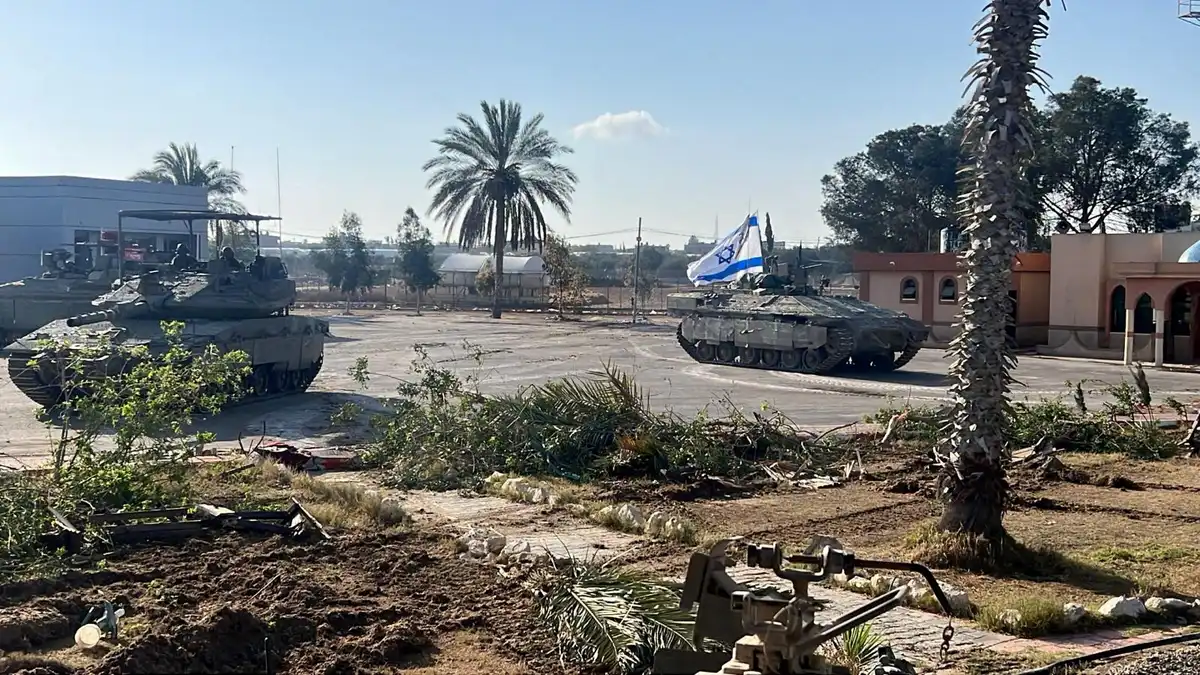
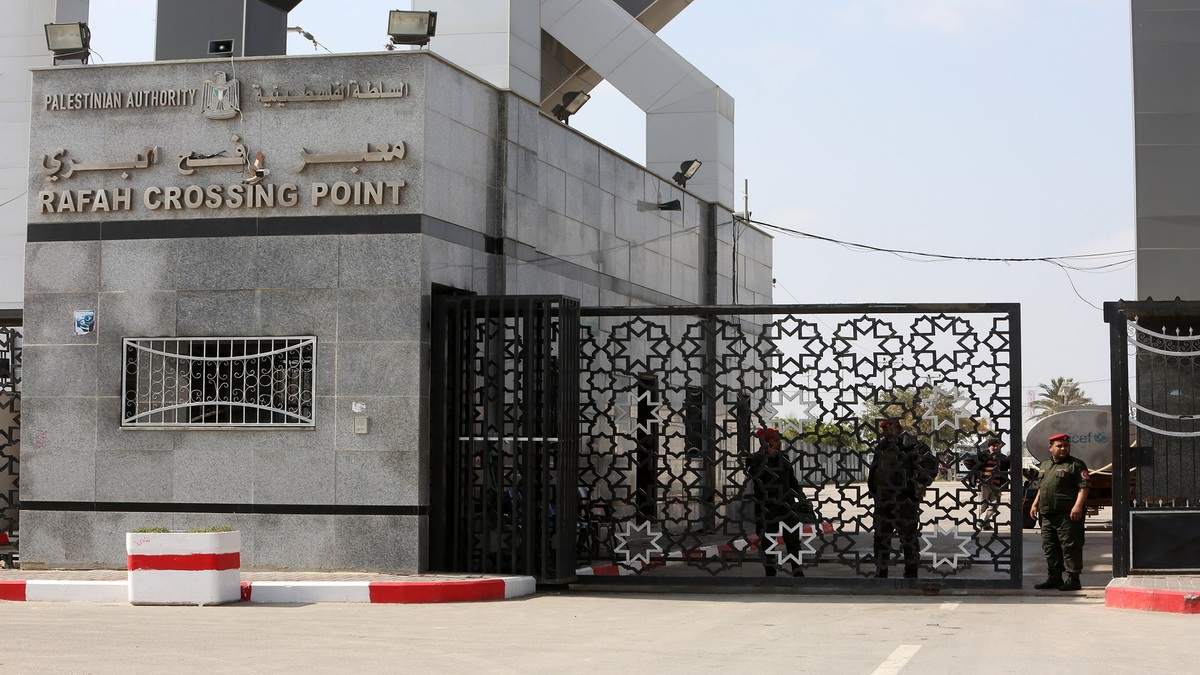
Israeli army withdraws from Rafah border crossing

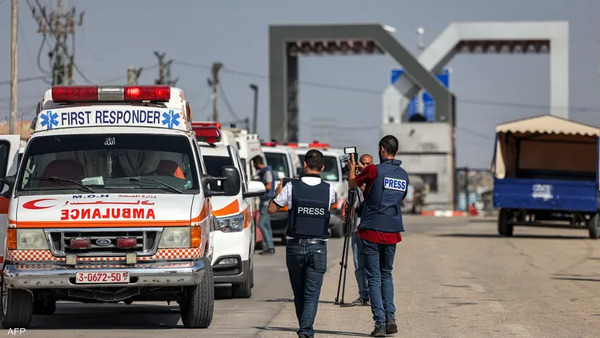
The Israeli Army Radio announced on Friday that the army forces had withdrawn from the Rafah border crossing between Egypt and the Gaza Strip, and remained in its vicinity.

The radio said, quoting an unnamed security source, that the army "withdrew from the Rafah crossing and redeployed its forces along the Philadelphi axis in Rafah between the Strip and Egypt."

The source said, "According to the ceasefire agreement (in Gaza and the prisoner exchange) between Hamas and Israel, the crossing will begin opening today, for the first time since the beginning of last May."

He pointed out that the crossing will only be opened for the exit of Palestinians from Gaza, "without any party entering the Strip," he said.

PALESTINE

Fri 31 Jan 2025 9:00 pm - Jerusalem Time

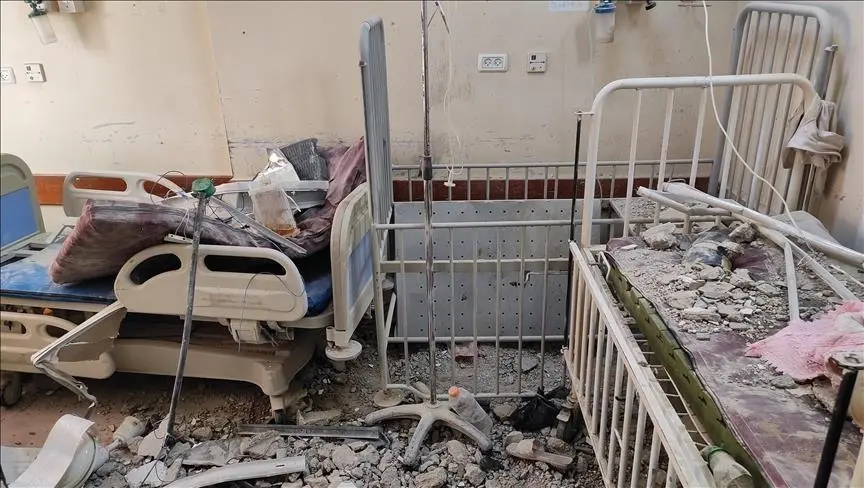
WHO calls for urgent medical evacuation from Gaza Strip

The World Health Organization called on Friday to resume urgent medical evacuation from the Gaza Strip, as up to 15,000 people need treatment outside the Strip.

The organization's representative in the Palestinian territories, Rick Peeperkorn, explained that the health needs in the Gaza Strip are enormous, and that only 18 hospitals out of 36 are partially operating, and 11 field hospitals, while the ceasefire allowed sufficient health supplies to reach about 1.6 million people.

He pointed to the burden of mental health in Gaza, while there are only two psychiatrists in the northern part of the Strip, in addition to the small number of mental health specialists, and the only mental health hospital has stopped operating since 2024.

Peppercorn added that the organization plans to expand Al-Shifa Hospital by 200 beds, while it is assessing the renovation of the Indonesian Hospital and installing a prefabricated health facility in Gaza City.

He explained that the organization deployed surgical teams to support capabilities in Al-Ahli Al-Arabi Hospital, and enhanced disease surveillance, response, and the operation of the early warning system, while hospitals in Rafah need renovation.

OPINIONS

Fri 31 Jan 2025 6:51 pm - Jerusalem Time

Trump and Forced Displacement: The New Blueprint for Hegemony

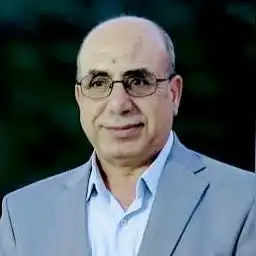
Written by: Tharwat Zaid Al-Kilani

Written by: Tharwat Zaid Al-Kilani

Opinion Writer


American policy has always played a pivotal role in shaping power equations in the Middle East. This role has not been limited to unconditional support for Israel, but has extended to include adopting a discourse that legitimizes coercive solutions that serve American and Israeli strategic interests. In this context, Donald Trump’s statement that “Egypt and Jordan will do whatever I want” when talking about displacing Palestinians from Gaza was a dangerous indication of a hegemonic approach that goes beyond merely supporting Israel to extend to imposing specific perceptions on the countries of the region. However, this discourse is not just a passing media outburst, but rather reflects deeper transformations related to major economic projects and the redrawing of the region’s political geography, including vital areas such as energy and infrastructure that Israel seeks to dominate, which increases the complexity of the regional scene and reflects the intertwined conflicts of interests.

First: The geopolitical dimension: Gaza between isolation and demographic emptying

1. The proposed channel and the final isolation of Gaza

A- According to the plan of Israeli General Giora Eiland, Israel seeks to establish the Ben Gurion Canal, a two-lane waterway that aims to form a strategic alternative to the Suez Canal. This canal is not just an economic project, but is considered an effective tool to isolate Gaza from the rest of the Palestinian and Egyptian territories, turning it into a water- and land-locked enclave. This isolation makes it difficult, if not impossible, to connect Gaza to the West Bank in the future, and reinforces the disintegration of the geographical and political fabric of the Palestinians, which exacerbates the challenges they face in their quest for independence and sovereignty.

B- This new geographical reality imposes two harsh choices on the people of Gaza: either accept the new occupation and live under its pressure, or face stifling living pressures that push them towards forced migration. This situation does not leave them room to think about other options, but rather reflects a state of despair and frustration, as the harsh conditions reinforce their desire to escape their bitter reality. Consequently, displacement becomes an imposed choice, which increases the complexity of the humanitarian dimensions of the crisis and deepens their suffering in the absence of effective political solutions.

2. The impact of the canal on the Egyptian and Jordanian role

Despite the economic gains that may appear to be for Egypt and Jordan from the Ben Gurion Canal project, the risks involved far outweigh the potential benefits. Opening a new trade route threatens the Suez Canal, which reflects a direct threat to one of Egypt’s most important sources of national income, and weakens its strategic position in global trade. In addition, the infrastructure transformations resulting from this project may impose a new reality on Jordan, where it becomes a mere transit station for new trade routes, without having a sovereign role or effective influence in shaping trade policies, as it reflects the erosion of the regional influence of both countries, and increases the complexity of political and economic relations in the region, which raises questions about the future of regional cooperation and the ability of countries to protect their interests in light of geopolitical changes.

Second: The economic dimension: Gas and trade as tools of political pressure

1. Controlling gas as a primary driver

A- The Eastern Mediterranean region has huge reserves of natural gas, estimated at about 3 trillion cubic meters, some of which are located in the waters adjacent to Gaza. Israeli control over these resources means that it has a strategic pressure card on European countries seeking to reduce their dependence on Russian gas.

B- The escalation of tensions over the gas fields is not new, but the change in the dynamics of the conflict—with the destruction of Gaza’s infrastructure and the possibility of redrawing its maritime borders—gives Israel a golden opportunity to redraw the gas exploitation lines away from any Palestinian demands.

2.Israeli Silk Road Project

A- In parallel with the Ben Gurion Canal, Israel seeks to develop land trade routes as an alternative to traditional routes. This project is in line with Israel’s vision of becoming a global trade hub linking Asia to Europe, bypassing Egyptian and Turkish influence in the region.

B- This project cannot be separated from the war on Gaza, as dismantling Hamas’s authority and emptying the Strip of its residents or subjecting it to indirect Israeli control opens the way for turning the Palestinian territories into mere transit points for goods, and not a viable political entity.

Third: The security dimension: from the threat to Israel to the threat to Egypt

1. The emergence of Hamas as a persistent force despite the war and its massive destruction, scenes of prisoner exchanges and the appearance of Hamas fighters driving modern cars and using advanced weapons have raised deep concerns in both Israel and Egypt. These phenomena reflect Hamas’s ability to adapt and persist, raising questions about the effectiveness of the military and political strategies adopted by the parties involved.

2. For Israel, the continued existence of Hamas’s armed wing, even if decentralized, means that the Israeli project has not fully achieved its goals. This reality indicates the failure of attempts to weaken Hamas and silence its voice, reflecting an ongoing challenge to Israeli security. As for Egypt, the presence of an independent armed force on its borders could constitute a factor of strategic instability, especially in light of the lack of full control over Sinai, which further complicates the security landscape and increases fears of potential repercussions on Egypt’s internal security.

Fourth: The social and psychological dimension: Distortions resulting from war, and the return of civilians to an uninhabitable land:

1. The tragic scenes of residents of northern Gaza returning on foot or in primitive animal-drawn carts reflect the massive destruction of infrastructure. These painful images embody a human tragedy that reflects the loss of hope and the absence of basic necessities of life, making the return to the homeland an unbearable and bitter experience.

2. This destruction is not limited to demolished buildings, but extends to distort the social fabric that existed. The loss of basic necessities of life prompts residents to hold Hamas responsible for the catastrophic reality, although this blame may be far from the truth, especially in light of the lack of a clear alternative beyond accepting the occupation. This feeling of disappointment reinforces the internal division and increases the complexity of the political scene.

3. In this situation, an environment is created for Israel to promote the narrative of “liberating Gaza from Hamas,” seeking to gain international support for its future projects in the region. This narrative exploits the suffering of civilians to justify military policies, raising questions about political ethics and the ability of the international community to confront these humanitarian challenges.

Future results and implications

1. Reshaping the Middle East according to an Israeli vision

A- The proposed projects are not just future plans, but actual movements that have begun to crystallize on the ground, whether through infrastructure projects or economic agreements that enhance Israeli influence in the region.

B- Achieving this vision requires either emptying Gaza of its population or subjecting it to indirect Israeli control, which explains the political and economic pressures exerted on Egypt and Jordan to accept these arrangements.

T- Neutralizing the Egyptian and Jordanian roles in managing the Palestinian issue files may lead to internal unrest in both countries, as the governments will face popular opposition to any steps that may be understood as acceptance of Israeli plans.

2. The impact of American policies on the future of the conflict

A- The United States adopts a discourse that gives Israel a wide margin of action that enhances the possibility of implementing these plans, whether through military support or through imposing economic agendas that make the countries of the region mere tools to achieve the American and Israeli strategy.

B- This approach increases the possibility of escalating the conflict in the long term, as imposing coercive solutions will not lead to stability, but will create new rounds of violence and resistance, as previous experiences have proven.

3. Possible scenarios: between resistance and forced adaptation

A- If pressure on Gaza continues without achieving a large-scale displacement, the resistance may develop into new forms, whether through regional alliances or through long-term strategies of war of attrition.

B- However, if the pressures succeed in imposing a new reality, we may witness radical transformations in the nature of the Palestinian-Israeli conflict, where the economic and security dimensions become the primary driver instead of traditional national demands.

T- In all cases, the region is heading towards a major restructuring phase, the repercussions of which will not stop at the borders of Palestine, but will extend to include the balance of power in the entire Middle East.

Trump’s speech appears to be more than just random statements, but rather a reflection of a broader strategy aimed at redrawing the political and economic geography of the region according to an Israeli vision. With the proliferation of mega-projects such as the Ben-Gurion Canal and new trade corridors, the Palestinian issue is entering a new phase that goes beyond direct military confrontation to a struggle over infrastructure and resources. However, attempts to impose this vision by force will not necessarily lead to lasting stability, but may push the region into further chaos and confrontation, making the future of the Middle East more uncertain than ever.

In light of these major challenges, the Palestinian leadership is required to take strategic steps that strengthen Palestinian steadfastness and thwart plans aimed at emptying Gaza and reshaping the political geography in Israel’s favor. Among the required steps are:

1. Building a unified national vision

A- Overcoming internal divisions between Palestinian factions, and working to form a unified political front capable of facing challenges.

B- Restructuring Palestinian institutions to be more representative and effective in decision-making.

T- Strengthening unity between the West Bank and Gaza to prevent Israel from imposing a separate geographic and political reality for each.

2. Activating international diplomacy more effectively

A- Employing international changes, especially the change in the positions of some countries towards Israel, to mobilize greater support for the Palestinian cause in international forums.

B- Pressuring Arab and Islamic countries to take stricter positions towards projects that threaten the Palestinian existence, especially with regard to forced displacement.

T- Communicating with influential international powers, such as the European Union, China, and Russia, to ensure that the United States does not monopolize shaping the future of Palestine and the region.

3. Strengthening economic and social resilience

A- Investing in projects that enhance self-reliance, especially in the agricultural, industrial and energy sectors, to reduce economic dependence on Israel.

B- Encouraging youth and economic initiatives within Palestine, to provide job opportunities and reduce migration resulting from the deterioration of living conditions.

T- Developing support programmes for Palestinian families in Gaza and the West Bank, especially in light of attempts to empty the Strip of its population.

4. Investing in political and popular resistance

A- Supporting peaceful popular resistance movements such as the economic boycott of Israel (BDS), and strengthening international campaigns that expose Israeli violations.

B- Maintaining the momentum of resistance in all its forms, while developing new strategies that make the continuation of the occupation politically and economically costly for Israel.

T- Strengthening the Palestinian presence in areas targeted by settlement and displacement, such as Area C in the West Bank and East Jerusalem.

5. Redefining the relationship with Arab countries

A- Not to be satisfied with reactions to Israeli moves, but to work on formulating Arab initiatives that enhance the Palestinian presence in the regional equation.

B- Pressuring countries that have normalized relations with Israel to prevent normalization agreements from becoming a tool for imposing Israeli agendas at the expense of Palestinian rights.

T- Strengthening the Palestinian role in regional cooperation projects, such as energy projects and trade linkage, to ensure that Palestine is not excluded from these equations.

6. Confronting Israeli plans through the media and politics

A- Establishing research and media centers specialized in exposing Israeli plans, especially with regard to projects such as the Ben Gurion Canal and plans to displace Palestinians.

B- Using international media and social media platforms to expose Israeli violations and gain the sympathy of global public opinion.

T- Developing a unified Palestinian media strategy that confronts the Israeli narrative that markets itself as the party harmed by the conflict.

In conclusion, the Palestinian leadership today faces a historic challenge that requires a unified vision, well-thought-out diplomatic and economic moves, and strengthening the steadfastness of the Palestinian people in the face of forced displacement and normalization projects. The battle is no longer just military, but has become a battle for political and economic survival, requiring new strategies that restore the initiative to the Palestinians, instead of being merely a party that receives shocks.

ARAB AND WORLD

Fri 31 Jan 2025 4:55 pm - Jerusalem Time

Trump insists that Egypt and Jordan will receive displaced Palestinians from Gaza

President Trump insisted Thursday that Jordan and Egypt will accept Palestinian refugees displaced from Gaza despite strong objections from the two Arab countries.


Trump's recent proposal to "cleanse" Gaza of its Palestinian population and send them to Jordan and Egypt raised fears that the United States might support the ethnic cleansing of the Strip, but his idea was quickly rejected by Amman, Cairo and the wider Arab world.


Asked Thursday about the Egyptian and Jordanian response to his proposal, Trump said, “They will do it. They will do it. They will do it, OK?! We do a lot for them, and they will do it.”


Trump's calls to remove Palestinians from Gaza have been welcomed by the most hardline elements in the Israeli government who openly support ethnic cleansing and the establishment of Jewish settlements, including Finance Minister Bezalel Smotrich, who said he was working to make Trump's vision a reality.


Smotrich and others see their desire for ethnic cleansing as “voluntary migration,” but the Israeli military campaign has left most of Gaza uninhabitable.


Some media reports said the Trump administration has discussed with experts and officials the idea of moving Gazans “temporarily” during reconstruction, but many are likely to be reluctant to leave for fear that Israel will not allow them to return.


Trump’s Middle East envoy, Steve Witkoff, said Thursday that “almost nothing” was left of Gaza, comments he made after visiting the Israeli-controlled Netzarim corridor and surveying the devastation from a helicopter. “People are moving north to go home and see what happened and come back and leave… There’s no water, no electricity. It’s just amazing how much damage there is,” Witkoff told Axios.


Witkoff, a New York real estate investor, said he believed it would take 10 to 15 years to rebuild Gaza. “There was a perception that we could have a solid plan for Gaza in five years. But that’s impossible,” he said. “It’s a 10- to 15-year rebuilding plan.” Witkoff added that it would take five years to demolish and remove the rubble alone. “There’s nothing left standing,” he said. “There’s a lot of unexploded ordnance. It’s not safe to walk there. It’s very dangerous. I wouldn’t know that without going there and looking.”

PALESTINE

Fri 31 Jan 2025 2:51 pm - Jerusalem Time

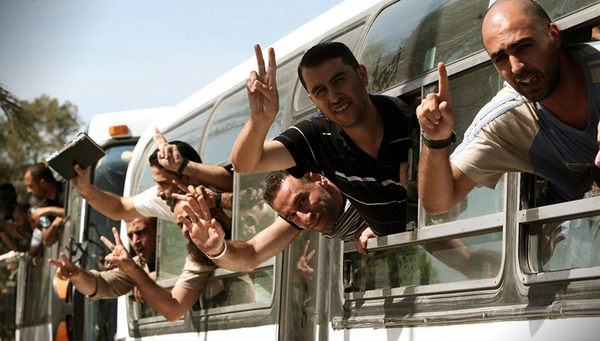
Prisoners' institutions: 90 detainees will be released tomorrow as part of the prisoner exchange deal

The Palestinian Prisoners' Affairs Authority and the Palestinian Prisoners' Club announced that 90 detainees in Israeli occupation prisons are scheduled to be released tomorrow, Saturday, as part of the fourth batch of the ceasefire agreement.


The Commission and the Prisoners Club explained in a brief statement, today, Friday, that 81 detainees with high sentences will be released, and 9 prisoners sentenced to life imprisonment.


In turn, the Ramallah and Al-Bireh Governorate decided to move the reception site for the freed prisoners from the Ramallah Recreational Complex to the open square in front of the Ramallah Cultural Palace and the Mahmoud Darwish Mausoleum.


She pointed out that this decision came in light of the large crowds and preparations coming from all governorates to receive the released prisoners, and the proximity of the new site to the city of Beitunia, which allows the buses of the released prisoners to arrive more easily and quickly, without any obstacles.


She pointed out that any editors who need medical care will be transferred directly to hospitals, while medical crews, ambulances, and emergency teams will be on standby to deal with any emergency cases.


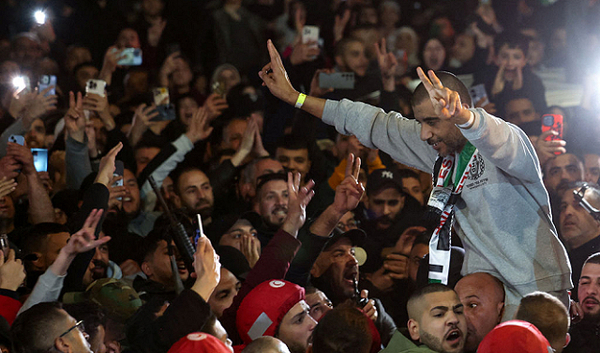
It is noteworthy that the occupation authorities released the third batch of detainees yesterday evening, as part of the ceasefire agreement. The batch included 110 detainees, 32 prisoners serving life sentences, 48 prisoners with various sentences, and 30 children.

PALESTINE

Fri 31 Jan 2025 2:39 pm - Jerusalem Time

Gaza Health: The first batch of wounded and sick people will leave tomorrow through the Rafah crossing

The Ministry of Health in Gaza confirmed today, Friday, that the first group of patients and wounded will leave to travel through the Rafah land crossing tomorrow, Saturday.


The Ministry of Health said in a statement, "The gathering of patients and their companions will be in the Al-Shifa and Nasser complexes in Gaza to move towards the crossing through the World Health Organization."

PALESTINE

Fri 31 Jan 2025 2:30 pm - Jerusalem Time

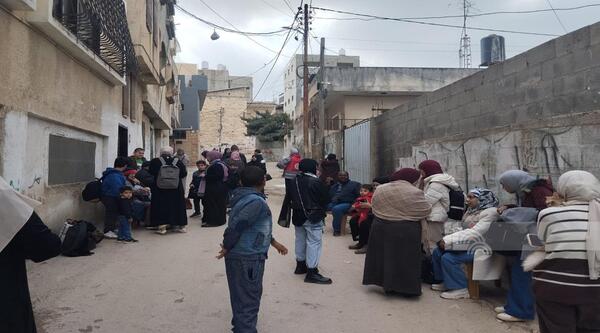
Israeli occupation continues to force citizens to evacuate their homes in Tulkarm camp

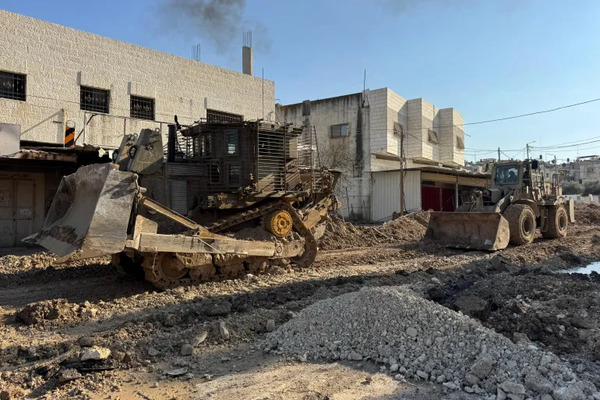
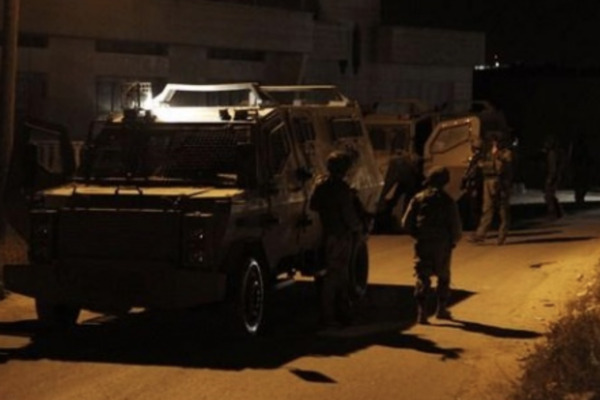
Today, Friday, the Israeli occupation forces continue to force citizens to evacuate their homes in Tulkarm camp, in light of the unprecedented escalation of aggression witnessed by the city and its camp.


Eyewitnesses reported that the occupation forces forced families to leave their homes at gunpoint, specifically in the Al-Nadi and Al-Shuhada neighborhoods, which caused a state of panic and fear, especially among children and women.


Eyewitnesses added that these operations were accompanied by the destruction of the contents of homes and the bombing of a number of them, as the occupation uses eviction as a means to terrorize and pressure citizens, under the pretext of searching for wanted persons.


This escalation, which has been ongoing for five days, comes amidst difficult humanitarian conditions in the camp, where residents are suffering from the interruption of basic services such as water, electricity and communications due to the targeting of the infrastructure by the occupation bulldozers, and a severe shortage of food, medical supplies, drinking water and baby milk.


The Palestinian Red Crescent crews in Tulkarm continue to evacuate citizens from the club area in the camp, after they received evacuation orders from the occupation.


The association said that the ambulance crews have so far evacuated a number of patients, while the association's disaster management team has evacuated 150 citizens.


In turn, Tulkarm Governor Abdullah Kamil said that the Red Crescent Society crews, in order to relieve the citizens, began distributing food parcels, bread, and basic needs of water and medicine inside Tulkarm camp, which has been subjected to the occupation’s aggression for the fifth consecutive day.


Governor Kamil added in a press statement: "There is a comprehensive and major aggression against Tulkarm Governorate, which includes systematic destruction of infrastructure in a number of locations throughout the city, re-destruction of what was previously rehabilitated in Tulkarm camp, and forcing hundreds of families from the camp to be forcibly displaced from their homes."


He explained that the Dignity and Relief Committee, in cooperation with all the governorate’s institutions, activities and volunteers, is working to support the families who were displaced from the camp as a result of this aggression, in addition to the tremendous efforts of the Health Emergency Committee and all the teams working in the field.


Kamil renewed his call to the international community and human rights institutions to stop this aggression, directing an invitation to our people in the remaining governorates and the lands of 1948 to stand by Tulkarm Governorate in view of the difficult situation and the necessity of helping to secure the needs of the families and households affected by this invasion.

PALESTINE

Fri 31 Jan 2025 2:25 pm - Jerusalem Time

Two people were shot and others suffocated in Ramallah and Nablus

Two children were shot by the Israeli occupation forces and others suffocated, today, Friday, in Ramallah and Nablus.


In Ramallah, the occupation army stormed the eastern area of the village of Al-Mughayyir, and fired live bullets at the citizens, which led to the injury of two children (11 and 12 years old), one of them was injured in the abdomen, and the other in the foot, and they were transferred to a health center in the neighboring village of Abu Falah.


In Nablus, a number of citizens suffered from suffocation, as a result of the Israeli occupation forces suppressing an anti-settlement march in the town of Beita, south of the city.


Local sources reported that the occupation forces suppressed the weekly Beita march with live bullets and tear gas canisters, which led to a number of citizens suffering from suffocation due to inhaling the toxic gas, and they were treated in the field.


The sources added that the occupation forces tried to seize the Palestinian flags raised by the participants in the march.

PALESTINE

Fri 31 Jan 2025 12:02 pm - Jerusalem Time

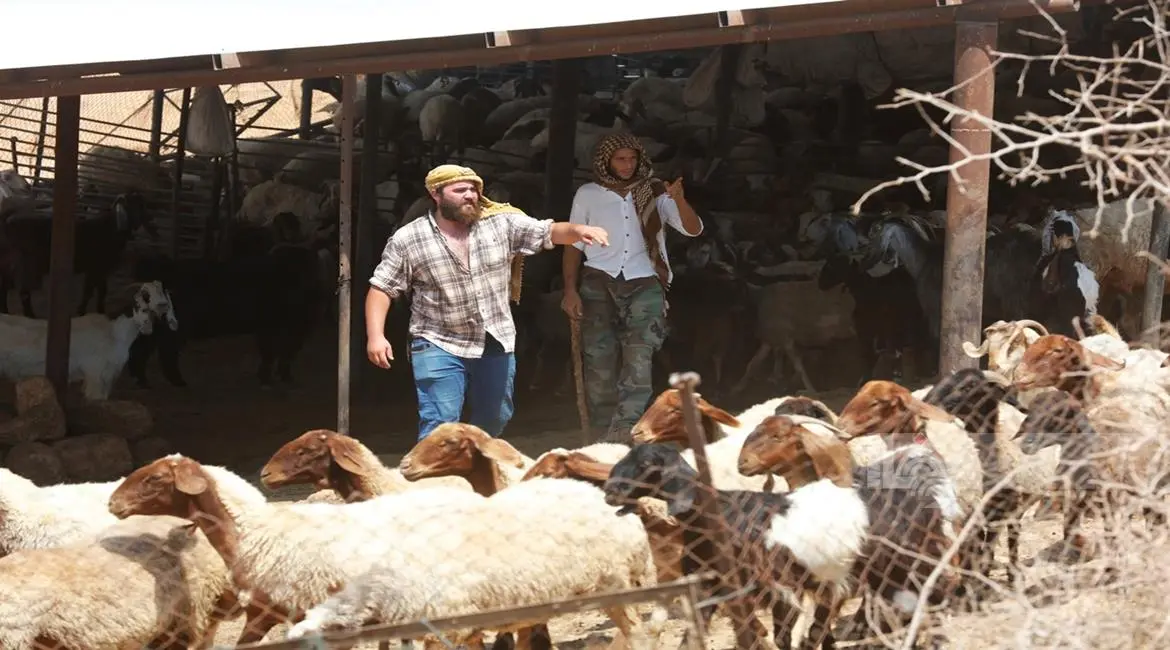
Israeli settlers graze their sheep among citizens' homes west of Jericho

Today, Friday, settlers began grazing their sheep among the homes of citizens in the Arab al-Malihat community, northwest of the city of Jericho.


According to local sources, a number of settlers from the colonial pastoral outposts in Al-Ma'rajat grazed their sheep among the homes of citizens in Arab Al-Malihat, provoking its residents.


This attack comes as part of a series of attacks aimed at displacing citizens and seizing their homes and properties.


PALESTINE

Fri 31 Jan 2025 11:58 am - Jerusalem Time

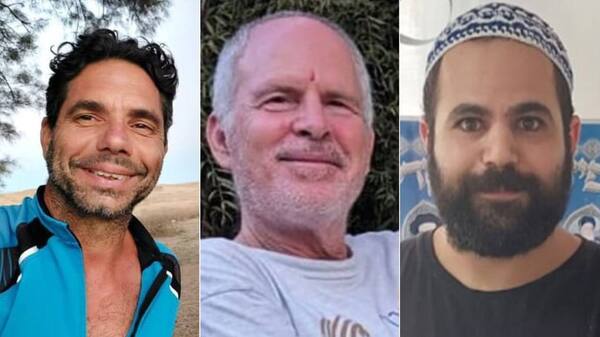
Hamas Brigades announce the names of three Israeli prisoners who will be released tomorrow

The Al-Qassam Brigades, the military wing of Hamas, announced today, Friday, the names of three Israeli prisoners who will be released tomorrow, Saturday, as part of the Al-Aqsa Flood prisoner exchange deal.


The military spokesman for the Qassam Brigades, Abu Obeida, stated that the three Israeli prisoners are: 1- Ofer Calderon

2- Keith Schmonsel Segal, 3- Yarden Peppas.


PALESTINE

Fri 31 Jan 2025 10:50 am - Jerusalem Time

Gaza: Palestinian fisherman killed off Deir al-Balah, Rafah crossing set to open today

A Palestinian fisherman was killed by Israeli gunfire off the coast of Deir al-Balah, in the central Gaza Strip, today, Friday, as Israel continues to violate the ceasefire.


The Israeli Broadcasting Authority reported that the Rafah crossing is scheduled to open for the first time today, Friday, and not next Sunday, as was initially scheduled, according to the first phase of the agreement, according to official Palestinian sources.


She pointed out that according to the agreement, the Rafah crossing was supposed to open on Sunday, but it was decided to open it early, even before the expected release of prisoners tomorrow, Saturday.


The crossing will be operated by the European Border Assistance Mission (EUBAM), the European security mission that will be responsible for the crossing, as well as by “non-Hamas” Gazans.

PALESTINE

Fri 31 Jan 2025 10:33 am - Jerusalem Time

Israeli occupation continues its aggression on Tulkarm for the fifth consecutive day

The Israeli occupation forces continue their aggression on the city and camp of Tulkarm for the fifth consecutive day, amidst widespread destruction of public and private property and infrastructure, and the bombing of homes.


On Friday morning, the occupation forces arrested five young men after besieging two houses in the city, amid heavy gunfire and intensive low-altitude reconnaissance flights.


Local sources reported that an occupation army force surrounded a house in the Engineers Housing between the Shuwaika and Iktaba suburbs east of the city, and demanded via loudspeakers that those inside the house surrender, while a special occupation army force supported by military vehicles surrounded another house in the southern neighborhood of the city.


She added that the occupation forces fired bullets and sound bombs intensively towards the two houses, amidst the outbreak of clashes in the area, without any injuries being reported.


Local sources reported that the occupation forces arrested the two young men, Ammar and Ahmed Al-Aoufi, from the house they surrounded in the east of the city. They also arrested the young men, Ayman Marai, Majd Hadaydeh, and Moamen Abu Tamam, from the house they surrounded in the southern neighborhood.


At the same time, the occupation forces deployed large-scale infantry patrols in various neighborhoods of Tulkarm city, specifically the western neighborhood and Jamal Abdel Nasser Square in the center of the city, while continuing to seize commercial buildings there and turn them into military barracks and sniper locations.


The occupation forces continue their siege of the Martyr Thabet Thabet Governmental Hospital and the Israa Specialized Hospital, and their seizure of the tall commercial buildings surrounding them, while obstructing the work of ambulances and medical crews and subjecting them to inspection and field investigation.


Meanwhile, the occupation forces are blowing up a number of houses inside the neighborhoods of the besieged Tulkarm camp for the fifth consecutive day, after forcing their residents to evacuate them at gunpoint. Every now and then, the sounds of explosions are heard in the camp as a result of the bombings and the burning of tarpaulins in its neighborhoods.

ARAB AND WORLD

Fri 31 Jan 2025 10:27 am - Jerusalem Time

Lebanon: Two dead and 9 wounded in Israeli raids on the Bekaa

Two people were killed and nine others were injured in Lebanon, following raids launched by the Israeli army on the Bekaa Valley, east of the country, on Thursday-Friday night.


The Lebanese Civil Defense confirmed that "two people were killed and nine others were injured as a result of Israeli occupation raids last night in the Bekaa Valley," east of Lebanon.


The Lebanese News Agency reported that "the Israeli Air Force launched two raids on the Wadi Khaled area late at night and at dawn," noting that "the first raid targeted a truck loaded with batteries and scrap in the Al-Wawiyat area, and the second targeted the 'Jab Al-Ward' crossing in the outskirts of the town of Hanider."


The Lebanese agency also reported this morning that "enemy warplanes raided the eastern mountain range in the Bekaa at three o'clock after midnight."


15 Israeli violations of the ceasefire on Thursday

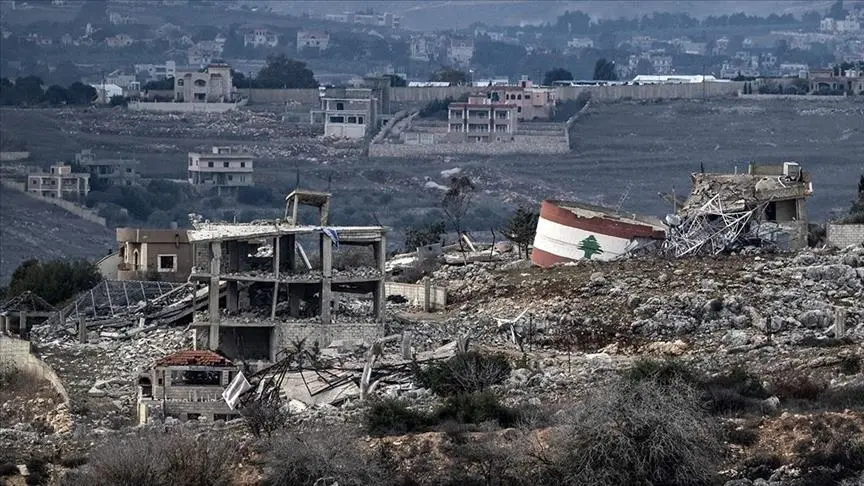
On Thursday, the Israeli army committed 15 violations of the ceasefire in Lebanon, bringing the total since the agreement came into effect 66 days ago to 823 violations.


This comes according to statistics based on announcements by the official Lebanese News Agency.


According to various news published by the agency, the Israeli violations of the agreement were concentrated on Thursday in the districts of Marjeyoun, Bint Jbeil, and Hasbaya in the Nabatieh Governorate, and the Tyre District in the South Governorate.


The violations included drone attacks, bombings and bulldozing of homes and buildings, firing artillery shells, flares and an interceptor missile, combing with machine guns, and burning a poultry farm.


In Marjeyoun district, two citizens were slightly injured when an Israeli drone threw a bomb near their motorcycle on the outskirts of Taloussa town.


An Israeli drone also targeted a rescue team from the Lebanese Civil Defense in the town of Taybeh while they were working on the excavators they were using to search for missing people under the rubble.


Civil defense personnel were forced to withdraw from the area for their own safety, while fires broke out in the drilling rigs as a result of the targeting.


Israeli forces carried out an operation to blow up houses and buildings in the towns of Kfar Kila and Taloussa, in addition to bulldozing houses and combing operations with machine guns in the town of Markaba.


An Israeli interceptor missile exploded over the town of Burj al-Muluk, and the Israeli army fired flares in the skies over the town of Adaisseh.


Israeli forces set fire to a poultry farm in the Nazlet Tal Nahas area in the town of Deir Mimas.


In Bint Jbeil district, the Israeli army carried out a bombing operation against houses and buildings in the "Al-Hariqa" area on the outskirts of the town of Aitaroun.


He also shot two citizens while they were inspecting their farm in the town of Rmeish.


In Hasbaya district, Israeli artillery launched shelling targeting the outskirts of Shebaa town.


In Tyre district, the Israeli army carried out bulldozing operations in the towns of Dhahirah and Al-Bustan.


Meanwhile, an Israeli drone threw a bomb at a drilling rig operating in the town of Yarin, without causing any injuries.


The Israeli army announced this morning, Friday, that air force fighter jets attacked a number of Hezbollah targets in the Lebanese-Syrian border area last night.


According to the Israeli military, "IAF fighter jets, based on intelligence directives from the Military Intelligence Division, carried out raids last night on a number of targets belonging to the Hezbollah terrorist organization in the Bekaa Valley in Lebanon, which posed a threat to Israeli territory and IDF forces."


He pointed out that "among the targets that were targeted: a military site that includes underground infrastructure for developing and producing combat equipment, in addition to infrastructure for crossing the Syrian-Lebanese border, which Hezbollah uses to try to smuggle weapons into it."


The army added that "the Hezbollah reconnaissance drone, which was on its way to Israeli airspace yesterday (Thursday) and was shot down by the air force, is considered a violation of the understandings between Israel and Lebanon."

PALESTINE

Fri 31 Jan 2025 9:52 am - Jerusalem Time

Two dead shot by Israeli occupation forces in Jenin camp

The General Authority of Civil Affairs announced, this Friday morning, the death of two young men by Israeli occupation bullets in Jenin camp.


According to the Commission, the two young men are Yazan Hatem Atiya Al-Hassan and Amir Ahmed Abdul Rahman Abu Hassan, noting that the occupation has detained their bodies.

PALESTINE

Fri 31 Jan 2025 9:23 am - Jerusalem Time

Guterres calls for immediate evacuation of 2,500 children from Gaza Strip for treatment

UN Secretary-General Antonio Guterres called for the immediate evacuation of 2,500 children from the Gaza Strip to receive medical treatment.


In a post on the X platform, Guterres said: “2,500 children must be evacuated immediately (from the Gaza Strip for treatment) with the assurance that they can return to their families and communities.”


He said that he was affected by the testimonies of doctors who worked in the Gaza Strip, praising their efforts and great sacrifices.


On January 19, a ceasefire came into effect in the Gaza Strip, after a 15-month Israeli war of extermination that left 47,460 martyrs, 111,580 wounded, thousands missing, and widespread destruction and a humanitarian disaster in the Strip.

PALESTINE

Fri 31 Jan 2025 9:22 am - Jerusalem Time

Updated: Israeli occupation forces arrest two brothers after besieging a house south of Jenin

This morning, Friday, the Israeli occupation forces arrested two brothers after besieging a house in the town of Qabatiya, south of Jenin.


According to local sources, a number of occupation military vehicles stormed the town from the Dotan military checkpoint, after discovering a special force from the occupation army near the Zakarneh Diwan, adding that the occupation forces surrounded the house of citizen Alaa Ahed Alawneh in the eastern neighborhood of the town, and targeted the vehicle of citizen Ayman Alaa Alawneh with an "Energa" shell, which led to its burning, before arresting the two brothers Hassan and Ayman Alawneh.

OPINIONS

Fri 31 Jan 2025 9:21 am - Jerusalem Time

A story of a homeland

op-ed - Al-Quds dot com

op-ed - Al-Quds dot com

Opinion Writer

On a day when tears of joy were mixed with the liberation of more honorable Palestinian prisoners, news came from the Gaza Strip, announcing the martyrs of the resistance and symbols of its military leaders who were announced yesterday evening by the military spokesman of the Martyr Izz ad-Din al-Qassam Brigades, coinciding with the funeral of the ten martyrs of Tamoun, and in light of the continued sinful aggression on Jenin and Tulkarm, the features of the homeland were drawn with pride on a map whose title is loyalty to the sacrifices of our great people who are still patient, steadfast, and seeking reward from God, with all the signs of loftiness, pride, and honor, the martyrs of freedom and the great jihad, the heroic leaders from the members of the General Military Council of the Martyr Izz ad-Din al-Qassam Brigades, foremost among them the martyr Muhammad al-Deif and his brave comrades. And in another painting, embracing the prisoners who conquered the darkness of prison and triumphed over the oppression and injustice of the jailer, their inner voice repeating the piece of the late national poet Darwish, which was given free rein by the committed musician Marcel Khalifeh (Oh you with bleeding eyes and hands, the night is passing… Neither the detention room nor the chains remain), until the end of the poem, the inevitability of which we affirm in absolute terms (For the grains of an ear of wheat dry up… The valley will be filled with ears of wheat), and this is the secret of our people’s plant that insists on multiplying and remaining within the range of loyalty to the noblest issues related to the prisoners.


If the voice of freedom is louder than all voices, no matter how much the nights of injustice rage over it and how far it covers all distances, then the martyrs knocked on the doors of glory with the drums of victory, to go to sleep, reassured of the protection of their dreams as they caress the homeland, to become the anthem of those who have no anthem.


On the day of liberating prisoners and bidding farewell to martyrs, feelings are mixed, but they were and still are an expression of the truth of our people who cling to their rights, believe in the justice of their cause, and continue on the path of return and freedom. From here the secret of this pride, greatness and dedication emerges, for in every location there was a story, they destroy so we build, they arrest and try so we are liberated, they kill so we are born, and thus the scene is renewed with all determination and resolve.


It is natural for Israel to be disturbed by the Palestinian scenes in all locations. The rubble and destruction in Jabalia did not prevent the resistance from releasing the Israeli soldier Agam Berger, and sending a message to the world about the need to take action to end the catastrophic situation in the northern Gaza Strip. The release of the elderly man Gadi Moses, the civilian Arbil Yehud, and the five Thais from the heart of Khan Yunis, where the home of the martyr Yahya Sinwar is located, is a symbol of loyalty to the achievements of the leader and the need for the resistance to continue on his path, in a clear message to the occupation that the will of the Palestinian people and their resistance cannot die.


Yesterday, the resistance and the people of Gaza presented a model of concern for the dignity and safety of Israeli and foreign prisoners based on international law that guarantees their dignity and the protection of them, and based on the instructions of the true Islamic religion. In the end, they arrived in Israel. Despite the slight delay caused by the large crowds in Khan Yunis, Netanyahu and his extremist ministers insisted once again on procrastinating in implementing the release of Palestinian prisoners, in addition to the malicious incitement campaigns by the Israeli media and some ministers against them, not to mention the torture practices carried out by the prison administration against them and its unjust measures that deprive them of all their rights, even in moments of freedom, when the army and police prevent their families from expressing their feelings and joy at their return to the arms of their loved ones.


Despite everything, our people yesterday presented an immortal day of memories, which will remain recorded in a story that deserves to be the story of a nation.

OPINIONS

Fri 31 Jan 2025 9:17 am - Jerusalem Time

Law allowing settlers to register land in the West Bank circumvents international law

Madhat Diba

Madhat Diba

Opinion Writer

In an article of mine a month ago, I mentioned that there are many ways and tools to annex West Bank lands, including legal and judicial amendments. This law (the law allowing settlers to register lands in the West Bank) came as a tool to accelerate the annexation of the West Bank:


1. When the West Bank was occupied, Jordanian law was and still is in effect, and according to the Jordanian Land Law of 1953, the sale and purchase of land is prohibited except for citizens residing in the West Bank.


2. Under international law, the occupying power must apply the law in force in the occupied territories on the eve of the occupation, i.e. Jordanian law.


3. In 1971, the military governor issued a military order amending Jordanian law to allow companies registered in the Israeli Civil Administration (the de facto governor of the West Bank) to own land and register it in their names, provided that they obtain a purchase permit from the Land Authority, approved by the Minister of War, so as not to give settlers free rein to impose control over the land and security.


4. This proposed law circumvents international law by explicitly stating in its first clause that the military governor is to issue a decision annulling the Jordanian law of 1953. In this case, it was formulated in this manner to prevent the claim that the government passed legislation that applies outside its sovereign borders (the West Bank), while another article of the same law stipulates that “all citizens have the right to purchase and register land in the West Bank in their names.” This means that a law issued by the Knesset by members elected by the Israelis is applicable in the West Bank to the lands of Palestinian citizens who had no role in electing the Knesset members who passed this law, meaning that a law issued by those with the right to vote is applicable to individuals without rights!


5. This law gives the opportunity to extremist settlers who do not hesitate to seize Palestinian property by force, by intimidation, by carrying out extensive fraud operations, stealing large amounts of land, registering it, and building settlement outposts on it, to obstruct the dream of a state, especially since the text of the law exempts settlers from obtaining a purchase permit, as before, and is satisfied with obtaining a real estate transaction license, which is a purely formal procedure.


6. The law in its current form violates international norms and is considered a “West Bank Annexation Law.”


7. This law allows settlers to be owners of the place, and not to be trespassers on Palestinian lands.

8. This law means privatizing sovereignty and security and granting them to settler gangs.


9. This law must be repealed, and the Palestinian Authority must announce the cancellation of the Oslo Agreement, because this law is an explicit declaration of the invalidity of the Oslo Agreement.

OPINIONS

Fri 31 Jan 2025 9:10 am - Jerusalem Time

Stockholm Syndrome: A Reading into the Reality of Palestinian and Israeli Prisoners

Amin Al-Hajj

Amin Al-Hajj

Opinion Writer

In a completely different context, the Swedish capital, Stockholm, witnessed an incident in 1973, when gunmen took four employees of a Swedish bank hostage. They were released after a period of no more than a week. The detainees showed sympathy for the gunmen and defended them before the authorities and the media. The phenomenon was interpreted at the time as a psychological condition, through which the detainees sought to form a bond with their captors as a survival strategy. The researchers added that in the context of long and complex conflicts, “Stockholm Syndrome” may appear as a controversial psychological phenomenon. Given the reality of the Israeli prisoners in Gaza, questions may be raised about the possibility of the emergence of this type of phenomenon, and its consequences on the human and political levels.


In Gaza, the issue of Israeli prisoners is one of the most interesting issues, locally and even internationally, especially for countries supporting the war on Gaza, as is evident from their public discourse. It is a new and unprecedented issue in the history of the Palestinian struggle, at least quantitatively. In contrast, the issue of Palestinian prisoners remains an ongoing situation that has accompanied the occupation since its first day, and does not receive the same attention, despite the very large and unprecedented numbers.

The Israeli prisoners, whether soldiers or otherwise, who were captured on October 7 from military sites or settlements surrounding Gaza, lived and are living a captivity experience that is completely different from the traditional cases in which “Stockholm Syndrome” may appear. However, there are several factors, psychological, social and political, that form the captivity environment, which may affect the prisoners themselves and push the possibility of its appearance to the forefront. The first is the complete dependence on their captors to meet their basic needs, such as food, drink and health care. This was evident in the video of the female prisoners who were released on Saturday, January 25, which may create a feeling of gratitude, especially if the treatment was humane, which is what it seemed to be, at least according to the scenes we saw. The second factor is the extension of the period of captivity, which is a factor that increases the possibility of the phenomenon forming, as the prisoners may stop seeing their captors as “enemies”, as they preserve their security and lives, and are exposed to many risks in order to do so. As for the third factor, it comes in the context of the battle of the narrative, and presenting a completely different narrative, in fact the opposite of what was promoted during the long months of war. Rather, as a party that deals with prisoners in accordance with the values of Islam, the rules of international humanitarian law, and finally, the fourth factor, which is due to personal communication between prisoners and their captors, which increases the opportunity for that, if there is a common language for verbal communication, which may lead to bridging the gap and open the door to the emergence of a state of sympathy.


Hence, this highlights the role of political and media considerations. From the perspective of the Palestinian resistance, the issue of prisoners is more than just a humanitarian file, and is inseparable from their values with religious, moral and legal foundations. It is a compulsion, not a choice, that comes in the context of its commitment to Palestinian prisoners, which made it a pressure card and a military and political bargain, during which it was keen to present a superior moral model in dealing with prisoners, in contrast to the other model, the occupation model, which words fail to describe. This may make this positive image formed an impregnable barrier in the face of Israeli and Western propaganda, which has tried and is trying hard to demonize it and strip it of its moral and humanitarian character. Consequently, this may create a shock within Israeli society, shaking its confidence in the political and military leadership, which is already wavering, and sweeping away with it the foundations of the “official” narrative, with evidence from within, closer, for long periods, which constitutes an additional pressure card during negotiations, due to internal and external pressure.


On the contrary, the chances of this syndrome appearing among Palestinian prisoners are completely unlikely, and the simultaneous scenes of the release of prisoners from both sides are the best evidence of that, and it is not difficult to explain that. If we look at the psychological, cultural and political factors that shape and control the experience of captivity, we find that it is far removed from any sympathy or gratitude, and hostility is still its essence, which has been and continues to be consecrated by public and private policies, which have emerged in recent months in particular. Palestinian prisoners are portrayed and treated far from being “human beings,” which is clearly evident in the intentional oppressive environment, inhumane detention conditions, in addition to physical and psychological torture, and “stripping” them of their humanity, which has reached a great extent, reaching the point of murder or less, in addition to deprivation of their basic needs at their minimum.


In addition to the above, Palestinian prisoners see themselves as part of a long struggle and an extension of a collective awareness. They are not just an individual case or cases, but rather they constitute symbols of steadfastness in the Palestinian narrative and their cultural and popular heritage, which made them more fortified against that. The religious factor also played an important role in supporting them psychologically, as they saw their suffering as part of a sacred struggle, with noble goals, tools and objectives, coupled with a firm belief in the justice of their cause and the legitimacy of their struggle. Despite the efforts of prison administrations to create divisions among them, to scatter them, silence their voice, and facilitate control over them or isolate them from their surroundings, they succeeded in building an internal support system, in addition to other practical measures, which were manifested in organizing and managing their daily affairs collectively, which strengthened their sense of belonging, which was accompanied by overwhelming popular support and consensus on their cause and demands, despite the “differences” here and there. All of this embodied the image of heroism in the popular conscience, and reduced the chances of the emergence of such tendencies, which made building any positive or humane bond with their jailers an extremely difficult, if not impossible, matter.

PALESTINE

Fri 31 Jan 2025 8:57 am - Jerusalem Time

110 Palestinian prisoners released in third batch of prisoner exchange

110 Palestinian prisoners were released in the third batch of the prisoner exchange deal between Israel and Hamas on Thursday, after the resistance factions in Gaza released 3 Israeli prisoners and 5 Thai workers under the ceasefire agreement in the Strip.


Among the released prisoners are 32 prisoners sentenced to life imprisonment, 48 prisoners with long sentences, in addition to 30 child prisoners. This exceptional batch was approved in exchange for the return of the displaced to the northern Gaza Strip, in light of Israel’s pretext of not releasing the prisoner Arbel Yehud in the previous batch.


This comes after the occupation obstructed the procedures for the release of Palestinian prisoners by a decision from the political level, and justified this "in order to ensure a safe exit for the Israeli hostages in subsequent batches." The Red Crescent Society announced that its crews dealt with 14 injuries in Beitunia, near Ofer Prison, during the occupation army's suppression of Palestinians who were awaiting the release of the prisoners, including 3 injuries from live bullets, 3 from rubber bullets, and 8 cases of suffocation from tear gas.


These Israeli measures are part of the occupation's ongoing approach to targeting any Palestinian manifestations of joy over the release of prisoners, as its forces have previously intensified their suppression, arrests, attacks, and raids on the homes of the families of released prisoners when previous batches of the deal were implemented.

PALESTINE

Fri 31 Jan 2025 8:41 am - Jerusalem Time

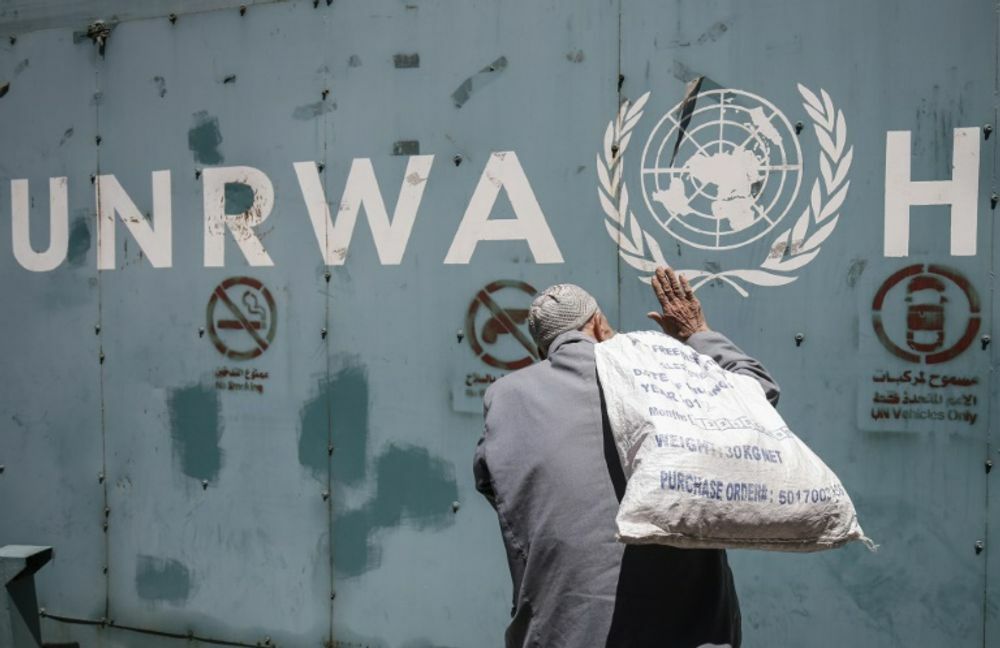
UN Committee Calls for Suspension of Implementation of Israeli Legislation on UNRWA

The Advisory Commission of the United Nations Relief and Works Agency for Palestine Refugees (UNRWA) called on the Israeli government, as the occupying power in the Palestinian territory, to suspend the implementation of Israeli legislation that limits the Agency’s operations in the occupied Palestinian territory.


The committee said in a press statement on Friday that if this legislation is implemented, it will severely impact the humanitarian response in Gaza, could jeopardize the ceasefire, and ultimately undermine prospects for regional stability.


The statement pointed out that, in the midst of collective efforts to enhance the viability and sustainability of the ceasefire, one of the most immediate and urgent tasks of the international community is to alleviate the extremely deteriorating humanitarian situation of civilians in Gaza by providing assistance with the speed and volume required.


The statement stressed that UNRWA has facilitated more than half of the emergency response in Gaza over the past 15 months, and remains vital to the successful implementation of the ceasefire in order to provide humanitarian assistance and education to hundreds of thousands of children in Gaza and 50,000 children in UNRWA schools in the West Bank, including East Jerusalem.


The statement pointed out that UNRWA plays a crucial role not only as a humanitarian agency contributing to the sustainability of the ceasefire, but also as essential to the human and economic development of the Palestinians and to the path towards a permanent political solution.


The statement explained that the committee is convinced that until a just and lasting solution to the plight of Palestinian refugees is reached in accordance with international law and relevant United Nations resolutions, UNRWA remains essential in all five fields of the agency's work.

PALESTINE

Fri 31 Jan 2025 8:26 am - Jerusalem Time

Tamoun massacre... a genocide that mimics Gaza and paves the way for annexing the West Bank

Dr. Jamal Harfoush: The Tamoun massacre is not a passing event, but rather comes within the context of a deliberate policy aimed at expanding the scope of massacres in the West Bank

Nabhan Khreisha: The nature of the aggression in Jenin, Tulkarm and Tubas shows the state of Israeli brutality as in its war on the Gaza Strip

Dr. Raed Nairat: Israel is implementing the annexation plan in the West Bank with security and military cover, amid the absence of Palestinian action to confront it

Imad Musa: What is happening in the West Bank is not just scattered military operations, but rather a war of extermination being carried out in stages to impose new demographic facts.

Dr. Raed Abu Badawiya: Israel realizes that annexation cannot be achieved without eliminating manifestations of armed resistance in the West Bank to create a safe environment for settlers

Hani Abu Al-Sabaa: The occupation practices bloody repression and soft pressure within the framework of a broader strategy to push Palestinians towards forced migration


The escalation of Israeli aggression in the West Bank reflects a dangerous shift in the occupation's policies, as the Israeli massacres, the latest of which was the massacre in the town of Tamoun, south of Tubas, which resulted in the martyrdom of ten citizens, now indicate the occupation's intention to carry out other massacres, in a development that reflects the escalation of systematic genocide operations aimed at annexation and displacement.


In separate interviews with “I”, writers, political analysts, specialists and university professors believe that the Israeli occupation is working on a comprehensive strategy aimed at weakening the Palestinian resistance and breaking the will of the Palestinian people through organized massacres, continuous restrictions, home demolitions, and widespread arrests, in addition to escalating settlement in different areas, which puts the West Bank at risk of actual annexation under a security and military cover.


They believe that Palestinian movements at the political and diplomatic levels are still insufficient to create real pressure on the occupation, which necessitates putting the internal house in order, intensifying legal, media and diplomatic efforts to reveal the extent of Israeli massacres and violations, and working to hold the occupation accountable before international courts.


Continuation of the crime of genocide


Professor Dr. Jamal Harfoush, Professor of Scientific Research Methods and Political Studies at the University of the Academic Research Center in Brazil, said that what the Palestinian people are being subjected to in the West Bank and Gaza Strip is a continuation of the crime of genocide committed by Israel, in clear defiance of all international laws and conventions.


Harfoush explains that the ongoing Israeli aggression on Gaza for more than 15 months, which has led to the martyrdom and injury of tens of thousands, coincides with a dangerous escalation in the West Bank, especially after Israeli Defense Minister Yisrael Katz declared an "open war" against the West Bank.


Harfoush believes that these statements by Katz are not just empty threats, but rather reflect an official political approach adopted by the occupation to escalate violence and mass killing, and impose a new reality by military force.


Harfoush points out that the main goal of these crimes is to try to extinguish the flame of Palestinian resistance and strike the steadfastness of the Palestinian people, through systematic massacres supervised by the extremist occupation government.


Harfoush asserts that the recent Tamoun massacre is not a passing event, but rather comes within the context of a deliberate policy aimed at expanding the scope of massacres in the West Bank, under the official cover of the occupation government.


Harfoush asserts that the link between Katz’s statements and the execution of the massacre within hours reveals that these operations are not merely “security measures,” but rather part of a strategy aimed at genocide against the Palestinians, targeting their existence and identity.


Harfoush points out that Israel is betting on breaking the will of the Palestinians through excessive violence, but it fails to realize that these massacres have not led in the past, and will not lead in the future, to achieving its goals, but rather increase the Palestinians’ adherence to their right to resist and persevere in their land.


He warns that the continuation of Israeli massacres in the West Bank could lead to the outbreak of comprehensive confrontations, especially with the escalation of field executions, house demolitions, night raids, and the siege imposed on Palestinian towns and camps.


Harfoush explains that the extremist Israeli discourse, supported by America and Europe, reflects the occupation's intention to escalate violence in an unprecedented manner, which may result in a large number of martyrs in the coming period.


Harfoush points out that this escalation may redraw the map of regional and international alliances and positions towards the occupation, especially if the international community continues to turn a blind eye to Israeli crimes.


Harfoush believes that the world, despite its double standards, may be forced to reconsider its positions if the occupation continues to commit public massacres, which have become difficult to justify.


Harfoush stresses that confronting this Israeli escalation requires action on several levels, including political, diplomatic, legal, media, popular, Arab and Islamic.


Harfoush points to the necessity of intensifying Palestinian, Arab and international diplomatic efforts to document Israeli crimes, file legal cases against the occupation before the International Criminal Court, and work to impose political and economic sanctions on Israel, stressing the importance of mobilizing international support to restore the Palestinian cause and stop attempts to marginalize it from international agendas.


The importance of systematically documenting Israeli crimes


Harfoush stresses the importance of documenting Israeli crimes systematically, exposing the occupation’s policies through international media, and the need to benefit from social media networks to reveal the truth of what is happening.


Harfoush calls for strengthening the legal role in prosecuting Israeli war criminals, and demanding that countries abide by international law in holding human rights violators accountable.


Harfoush stressed that the Palestinian people in the West Bank are required to strengthen their steadfastness and intensify popular activism through all forms of legitimate resistance guaranteed by international law. He also stressed that national unity is an absolute necessity to confront the Israeli aggression, as there is no room for division and disunity in light of the policy of genocide that targets everyone without exception.


Harfoush criticizes the fact that Arab and Islamic positions are limited to statements of condemnation, calling for Arab and Islamic countries to move to the circle of effective political and economic action, by imposing real pressure on Israel, reactivating the weapon of economic boycott, and taking practical steps to stop the aggression and prevent the occupation from isolating the Palestinian people.


Harfoush asserts that what is happening in the West Bank is not just a passing military campaign, but rather part of the ongoing war of extermination that Israel is waging against the Palestinians, with the aim of liquidating their cause and imposing a new reality that serves the settlement project.


Harfoush believes that the continued silence of the international community and its failure to take serious measures against the occupation will make it a partner in these crimes, which history will not forgive and will not be forgotten by future Palestinian generations.


A systematic military campaign aimed at destroying the foundations of life


Journalist Nabhan Khreisha asserts that the nature of the ongoing Israeli attacks in Jenin, Tulkarm and their camps, and what happened in the town of Tamoun, south of Tubas, which reached its peak with the assassination of ten Palestinians in the town of Tamoun, reflects the state of brutality practiced by Israel, similar to what it did and is doing in its war on Gaza.


Khreisha points out that these operations come in response to pressure from the extreme right on Israeli Prime Minister Benjamin Netanyahu to continue the war on the Palestinians, especially after reaching a ceasefire agreement and prisoner exchange with Hamas.


Khreisha points out that the Israeli statements, whether from Netanyahu or Defense Minister Yisrael Katz, that the military operations in the West Bank aim to "defeat the militants funded by Iran" are nothing but flimsy justifications aimed at concealing the truth.


He explains that the reality on the ground reveals a systematic military campaign aimed at destroying the foundations of Palestinian life. The current aggression has also resulted in dozens of martyrs and wounded, the arrest of large numbers of Palestinians, the displacement of families from their homes, and the demolition and burning of many houses, which reflects the occupation’s efforts to empty cities and camps of their residents.


Khreisha confirms that these attacks coincide with the entry into force of the Israeli Knesset law banning the activities of the United Nations Relief and Works Agency for Palestine Refugees (UNRWA), which stipulates the confiscation of its properties and real estate in Jerusalem, and preventing it from operating in the West Bank and Gaza Strip.


Khreisha believes that this step reinforces the belief that Israel is targeting Palestinian camps in the West Bank as part of a systematic plan to eliminate the right of return, by emptying these areas of refugees and turning them into areas unfit for habitation, which contributes to ending the legal status of refugees.


Khreisha confirms that the scope of the Israeli aggression will not be limited to the northern West Bank, but will extend to its center, south, and the Jordan Valley region, within the framework of strengthening settlements and implementing annexation plans, which may receive American approval, which may receive the approval of the Trump administration.


Khreisha believes that the scenes documented by the Israeli attacks in Tulkarm and Jenin are not much different from those occurring in Gaza, where families flee from sniper fire, and the Israeli army relies on a policy of destroying and burning homes, and bulldozing roads and infrastructure.


Khreisha points out that the occupation, instead of carrying out quick operations and withdrawing, as was the case in the past, has adopted a new strategy that relies on long-term field control, by occupying Palestinian homes after expelling their residents, which indicates the occupation’s intention to prolong the duration of military operations, which means an increase in the death toll and the continuation of destruction for longer periods.


Khreisha calls on the Authority to reconsider its policies towards the occupation, stressing the need to stop security coordination, which is no longer logical in light of the ongoing Israeli escalation, which is rolling like an increasing snowball from the top of the mountain.


He stresses that the Israeli aggression does not only target the Palestinians, but also aims to undermine the national project and transform the authority from a political entity seeking to establish an independent state into a mere administrative body with limited functions similar to municipalities.


He warns against continuing to rely on a balanced American position towards the Palestinian-Israeli conflict, considering that US President Donald Trump’s statements about displacing Palestinians from Gaza to Egypt and Jordan, which may later include the West Bank, in addition to the repeated statements about legitimizing the annexation of parts of the West Bank to Israel, confirm that any illusions about a fair American role in resolving the conflict must be dispelled.


Khreisha points out that the rapid developments in the West Bank, from military escalation and displacement operations, confirm that Israel is continuing to implement its settlement and Judaization projects, without any regard for international law, which requires a unified Palestinian position capable of confronting these plans and resisting them by all possible means.


Imposing new facts on the ground in preparation for annexation


The writer, political analyst and professor of political science, Dr. Raed Nairat, confirms that all the measures implemented by Israel in the West Bank have a security and military dimension on the surface, but in essence they are linked to strategic political orientations that aim to impose new facts on the ground in preparation for the full annexation plan, pointing out that this is taking place amid the absence of Palestinian action to confront it.


Nairat explains that the occupation uses the security and military envelope as a tool to market its political steps, citing the recent Knesset decision that allows settlers to own land in Area C of the West Bank, which is a political decision par excellence, reflecting Israel’s treatment of the West Bank as if it were part of its state.


Nairat refers to the statements of the Israeli Minister of War, Yisrael Katz, regarding the continuation of the Israeli military presence in the "Harsh al-Saada" area after the end of the military campaign on the Jenin camp, and the establishment of a permanent camp there, which proves that the military operations are only a prelude to imposing a new political reality.


Nairat points out that calling the current military operation “Iron Wall” is reminiscent of Operation “Defensive Shield” in 2002, which launched a new phase of Israeli control over the West Bank, and this current operation has its own meaning in the new reality.


Nairat stresses that there is a connection between the two processes, as each separates two different political stages, during which policies of control, annexation and settlement are formulated.


Nairat stresses that the occupation's intentions towards the West Bank are clear, as all its movements are directed towards actual annexation, and these are policies that began even before October 7, 2023.


Nairat expressed his fears that the next phase will be more bloody, as Israel may resort to carrying out larger massacres, such that the number of martyrs becomes mere numbers, which aims to normalize the massacres and continue them without any noteworthy international reactions, which threatens greater massacres in the future.


Nairat stresses that confronting the policies of genocide in the West Bank and Gaza Strip requires achieving national unity and developing a clear national political program that defines the features of the next stage.


Nairat explains that this program must be based on strengthening the steadfastness of the Palestinian citizen in his land, increasing societal cohesion, in addition to unifying the Palestinian media discourse to confront Israeli propaganda, and working to convey the Palestinian point of view to international institutions and world public opinion.


Nairat points out that there is a complete absence of the required Palestinian action on all levels, which requires holding everyone accountable.


Katz seeks to achieve two main goals through escalation


Writer and political analyst Imad Musa asserts that the Tamoun massacre, which resulted in the martyrdom of ten citizens, comes within the context of the policy of genocide, ethnic cleansing and war crimes practiced by Israel, amid American political cover in international forums.


Musa stresses that this massacre in Tamoun is part of a comprehensive plan targeting the West Bank, through escalating killings and destruction to undermine the Palestinian National Authority, which enjoys international recognition and had succeeded in bringing Palestine to the United Nations.


Mousa points out that the Israeli Minister of War, Yisrael Katz, is seeking through this escalation to achieve two main goals; the first is to present himself to Israeli and international public opinion as a victor over unarmed civilians, in an attempt to promote the idea that his army is engaged in a confrontation with organized forces, while the truth indicates a systematic targeting of the civilian population and Palestinian infrastructure.


Mousa points out that Katz's second goal is to gain the support of the extreme right-wing movement and the settlers, by presenting his credentials as a political official capable of implementing more stringent policies against the Palestinians, in light of the competition within the extremist Israeli government coalition.


Musa asserts that Benjamin Netanyahu's government is still betting on implementing a strategy of genocide and forced displacement, as a means to achieve its ultimate goal of making Palestine free of its indigenous population, considering that what is happening in the West Bank is not just scattered military operations, but rather a war of extermination carried out in stages, with the aim of imposing new demographic facts.


Musa believes that the continuation of the aggression with such brutality may lead to dangerous regional repercussions, as neighboring countries will find themselves facing new waves of forced displacement of Palestinians, as happened in the 1948 Nakba and the 1967 Setback.


Musa points out that what is required at this stage is to achieve true national unity among the various Palestinian factions, and to unite under the slogan of thwarting the Israeli plan, through escalating the political and field confrontation, and working to mobilize international positions to stop the ongoing Israeli crimes.


Security preparations for essential political decisions


Dr. Raed Abu Badawi, professor of international law and international relations at the Arab American University, believes that the escalating Israeli military campaign in the northern West Bank, especially in Jenin, is no longer just a political response to appease the Israeli right led by Bezalel Smotrich, but has become part of comprehensive Israeli security preparations aimed at implementing fundamental political decisions, most notably the annexation plan.


Abu Badawiya points out that there are clear indications that the Israeli moves come in the context of completing the Israeli right's vision for the West Bank, amid American indications from President Donald Trump, hinting at Washington's readiness to offer a "political price" that satisfies the right-wing movement in Israel, including support for measures to annex the West Bank.


Abu Badawiya asserts that Israel realizes that annexation cannot be achieved without eliminating the manifestations of armed resistance in the West Bank, as the occupation government seeks to end all forms of Palestinian armament, with the aim of creating a safe environment for settlers, at a time when these measures coincide with giving settlers a green light to carry out their attacks against Palestinians, and lifting the restrictions imposed on them in the United States, especially after the Trump administration’s decisions to cancel some sanctions on settlers involved in violations.


Abu Badawiya believes that the escalation of Israeli military repression in the West Bank reflects a multi-dimensional strategy, including security pressure and repressive practices, with the aim of pushing Palestinians to emigrate. He pointed out that the Israeli army’s declaration of the West Bank as an open military confrontation zone, as well as the declaration of Israeli Defense Minister Yisrael Katz, in which he spoke of an “open war” in the West Bank, translate into massacres against Palestinians, not only in Jenin, but also in other areas, as the army moves from one camp to another within the framework of the “preemptive deterrence” policy, which aims to terrorize citizens and deter them from even thinking about resistance.


Abu Badawiya points out that the next stage may witness additional restrictive policies, such as besieging Palestinians in major city centers, as a preliminary step to imposing annexation.


Abu Badawiya confirms that the Palestinian Authority is facing an internal crisis and Israeli pressures, warning against betting on the American or European positions, because Israel does not want a Palestinian political entity, but rather just an administrative entity to manage the affairs of the Palestinians in some areas.


Abu Badawiya stresses that the only way out for the Palestinians is to strengthen internal national unity, reorganize the Palestinian house, and review relations and agreements with Israel, in light of the clear intentions of the occupation seeking to impose a new reality on the ground.


Division weakens the ability to confront the occupation's plans


The writer and political analyst specializing in Israeli affairs, Hani Abu Al-Sabaa, believes that the Israeli escalation in the northern West Bank, the latest of which was the Tamoun massacre in which warplanes were used, falls within a systematic policy aimed at eliminating the resistance and weakening the popular incubator, within the framework of a broader strategy to pressure the Palestinians and push them toward forced migration.


Abu Al-Sabaa points out that this escalation coincided with Katz’s announcement that the occupation forces would remain in the northern West Bank even after the end of the military operations in Jenin. These statements were quickly translated into a bloody massacre in Tamoun, where the occupation forces launched an intensive air attack that led to a large number of martyrs and wounded.


Abu Al-Sabaa explains that the occupation seeks to achieve several main goals, including eliminating the resistance in the northern West Bank, punishing the Palestinians with collective punishment to deprive them of hope for steadfastness, and preventing the recurrence of what Israel calls the “October 7 scenario” in the West Bank, due to its proximity to the settlements. Israeli Prime Minister Benjamin Netanyahu also relies on an escalation strategy, doubling the use of force with every military failure, which has not yet led to ending the resistance, but rather has strengthened it.


Abu Al-Sabaa confirms that the Shin Bet and the occupation army acknowledged that the resistance in Jenin is still active despite the military strikes, pointing out that an attempt to carry out a shooting operation in Afula was thwarted, despite the strict security campaign on Jenin.


Abu Al-Sabaa believes that the Israeli campaign in the West Bank came immediately after the end of the truce in Gaza, as Israel fears that the resistance in the West Bank will draw inspiration from the momentum of the battle there. The West Bank also represents a soft underbelly for the occupation and a strategic threat to the settlements, which is pushing Netanyahu’s government, with the support of Finance Minister Bezalel Smotrich, to seek to impose complete control over it in preparation for annexation.


Abu Al-Sabaa points out that the occupation is pursuing a dual policy: on the one hand, it practices brutal military repression, and on the other hand, it uses “soft pressure” to push Palestinians to voluntarily emigrate, through economic and living restrictions. Testimonies from Israeli soldiers also revealed that they shot Palestinians when there was no real threat, which reflects that killing has become a “hobby” for some of them.


Abu Al-Sabaa warns that the number of martyrs in the West Bank will continue to rise as the occupation continues to use warplanes and target residential areas, amidst suspicious Arab and international silence. Netanyahu is also exploiting the return of former US President Donald Trump to the political scene, as he seeks to meet with him on February 4 to secure American support for his plans, especially since Trump holds a dangerous vision for the Palestinian cause, which he previously expressed by saying that "Israel is small and must be expanded," which means support for forced displacement projects.


Abu Al-Sabaa points out that the occupation was disturbed by scenes of the return of the residents of southern Gaza to the north after the truce, which showed the Palestinians’ adherence to their land despite the massacres, which is what is pushing Israel to escalate military pressure in the West Bank as a preliminary step to impose soft displacement policies in the future.


In light of these developments, Abu Al-Sabaa calls for urgent Arab and international action to curb the Israeli aggression and expose its crimes, calling on the Arab League to activate international efforts against the occupation. He also urges the Palestinian Authority to support the steadfastness of citizens by alleviating the economic and social burdens, and enhancing support for affected families in Jenin, Tulkarm and other areas.


Abu Al-Sabaa stresses that national unity is the only way to confront the ongoing Israeli aggression, warning that the continuation of division serves the occupation and weakens the ability to confront settlement projects and forced displacement. He confirms that the occupation will continue to impose a fait accompli by force, unless it is confronted with real Palestinian, Arab and international action.



PALESTINE

Fri 31 Jan 2025 8:23 am - Jerusalem Time

Between two pictures!

The eye cannot miss those very clear differences between two images: the image of the release of Israeli detainees, both male and female, and the image of the liberation of our imprisoned sons from the graves of the living.


While the faces of the Israelis appeared to be full of health and wellness, wearing “starched” clothes and with combed, flowing hair, those emerging from behind the curtains of darkness appeared to have thin bodies, ragged clothes, thick hair, and tired faces, from the effects of oppression, starvation, and torture.


Those released were those who appeared to be in a difficult psychological state, unable to respond to the overwhelming emotions that awaited them the moment they arrived.


The stark difference between the two images is the difference between two beliefs, one burning and merciless, embraced by criminal killers, and the other tolerant, just and merciful, drawing from an inexhaustible source of noble values and good morals in the school of virtue, represented by the commandments of the Master of Creation to treat prisoners well, providing them with food and clothing, in application of the Almighty’s saying: “And they give food, in spite of their love for it, to the poor, the orphan, and the captive.”


The two images, as much as they are indicative, are also revealing of the arrogance of power, and of the “Bangavari” doctrine, a companion of sadism, which enjoys torture and abuse, and seeing bodies wither and melt away from the effects of terror, intimidation, and starvation.


No matter how long injustice and darkness last, we will continue to believe in the inevitability of the victory of truth over falsehood, the homeland over occupation, the prisoner over the jailer, the eye over the awl, and the owner of values over the sword-bearer and the owner of the tank.

ARAB AND WORLD

Fri 31 Jan 2025 8:02 am - Jerusalem Time

Israeli army: We bombed Hezbollah targets in the Bekaa Valley, eastern Lebanon

The Israeli army announced this morning, Friday, that air force fighter jets attacked a number of Hezbollah targets in the Lebanese-Syrian border area last night.


According to the Israeli military, "IAF fighter jets, based on intelligence directives from the Military Intelligence Division, carried out raids last night on a number of targets belonging to the Hezbollah terrorist organization in the Bekaa Valley in Lebanon, which posed a threat to Israeli territory and IDF forces."


He pointed out that "among the targets that were targeted: a military site that includes underground infrastructure for developing and producing combat equipment, in addition to infrastructure for crossing the Syrian-Lebanese border, which Hezbollah uses to try to smuggle weapons into it."


The army added that "the Hezbollah reconnaissance drone, which was on its way to Israeli airspace yesterday (Thursday) and was shot down by the air force, is considered a violation of the understandings between Israel and Lebanon.


The IDF remains committed to the understandings reached regarding the ceasefire in Lebanon, and will not allow the implementation of terrorist plans of this kind. The IDF is deployed in the southern Lebanon area, and will continue to work to remove any threat against the State of Israel and its forces."

PALESTINE

Thu 30 Jan 2025 10:36 pm - Jerusalem Time

Two Palestinians shot dead by Israeli occupation forces in Jenin camp

The Ministry of Health announced, on Thursday evening, the death of two citizens, whose identities are not yet known, by the occupation forces’ bullets in Jenin camp.


He added that the occupation forces are holding their bodies.

PALESTINE

Thu 30 Jan 2025 10:13 pm - Jerusalem Time

Guterres calls for immediate evacuation of 2,500 children from Gaza Strip for medical reasons

UN Secretary-General Antonio Guterres wrote on Twitter today (Thursday) that he was moved by the testimonies of doctors in the Gaza Strip. He wrote: “I was impressed by the dedication of four American doctors who worked in Gaza.”


He added: "2,500 children must be evacuated immediately (from the Gaza Strip) and ensured that they are able to return to their families and communities."

ARAB AND WORLD

Thu 30 Jan 2025 9:59 pm - Jerusalem Time

Breaking: Trump administration claims $50 million sent to Gaza for contraception are baseless

US President Donald Trump bragged on Wednesday that his administration had stopped $50 million worth of “condoms used by Hamas to make bombs in Gaza.” Trump offered no evidence for his claims — that condoms were being sent to Gaza or that Hamas was using birth control to make bombs — leaving many wondering what the US president was talking about.


DropSiteNews revealed Thursday that President Trump and the administration confused the Gaza Strip in southern Mozambique, to which health aid was sent, with the Gaza Strip of Palestine.


Trump made the contraceptive claim while listing his administration's accomplishments since taking office.


“We identified and stopped $50 million going to Gaza to buy condoms for Hamas. They used them as a means to make bombs. What about that?” White House press secretary Carolyn Leavitt made a similar claim Tuesday during her first press briefing. She said the Department of Government Efficiency (DOGE) and the Office of Management and Budget (OMB) “found that there was approximately $50 million in taxpayer money going to Gaza to fund condoms.”


In her first press conference, Levitt called the alleged aid a "ridiculous waste of taxpayer money."


Jesse Watters, a right-wing talk show host on Fox News, also said that Hamas is using nonexistent U.S. shipments to make “condom bombs” and launch explosive-laden balloons into Israel, without providing any evidence.


According to experts, Trump has been accused of portraying Gaza as an example of wasteful spending of U.S. foreign aid. His administration has justified its suspension of nearly all foreign aid by highlighting examples of “egregious funding,” such as contraception and reproductive health care programs.


The administration says it is conducting a review to ensure that tens of billions of dollars in U.S. foreign aid is consistent with Trump's "America First" foreign policy and not a waste of taxpayer money.


The United States is the world’s largest donor of aid. In fiscal year 2023, it disbursed $72 billion in aid worldwide on everything from women’s health in conflict zones to access to clean water, HIV/AIDS treatments, energy security and anti-corruption efforts.


Shortly after returning to office for a second term on January 20, Trump ordered a 90-day freeze on foreign aid to ensure that the aid was consistent with his administration's policies, which oppose abortion, transgender rights and diversity programs.


For his part, Secretary of State Marco Rubio said in a memo issued last Friday, January 24, 2025, that the United States is freezing almost all aid disbursements except for emergency food aid and military aid to Egypt and Israel.


Number of condoms that can be purchased for $50 million:


Refugees International President Jeremy Konyndyk, who oversaw USAID’s COVID-19 assistance portfolio for President Joe Biden’s administration, has refuted Trump and Levitt’s claims as unrealistic.


“USAID buys condoms for about $0.05 apiece, and $50 million would buy a billion condoms,” he wrote on the X website on Wednesday. “What’s happening here isn’t a billion condoms for Gaza. What’s happening is that the guys at the State Department apparently can’t read government spreadsheets.”


Was the US really going to send $50 million worth of condoms to Gaza?


There is no publicly available evidence of plans to spend millions of taxpayer dollars to fund condoms in Gaza, and a State Department official did not respond to a request for evidence from Reuters.


However, there is a lot of evidence that seems to refute Trump's claim.


In a statement Wednesday, International Medical Corps (IMC), an organization that receives U.S. funds to provide medical care in Gaza, clarified its work in the blockaded territory. “No U.S. government funding has been used to purchase or distribute condoms, nor to provide family planning services,” it said.


The statement added that the International Medical Corps has received more than $68 million from USAID since October 7, 2023, which has been used to operate two large field hospitals in Gaza, including surgical care, treatment of malnutrition, and emergency care for mothers and newborns.


None of the reports available to ordinary researchers from the Department of Government Efficiency (DOGE), headed by billionaire Elon Musk (the world’s richest man), or the Office of Management and Budget (OMB) reflect a plan to spend $100 million on IMC operations in Gaza.


Reports for fiscal years 2007 through 2023 on contraceptives and condoms shipped by USAID to the rest of the world also show no record of condoms shipped to Gaza.


Dana Stroul, former deputy assistant secretary of defense for Middle Eastern affairs, said in a post on X on Wednesday that USAID did not spend money on Gaza in fiscal year 2023.


A USAID report from April shows that the United States delivered $60.8 million in contraceptives and condoms to four regions — the Middle East, Africa, Asia, and Latin America and the Caribbean — in the previous fiscal year.


The Middle East received just $45,681 while Africa received more than $54 million, or 89 percent, of contraceptives in FY23.


The report added that the $45,681 was provided in full to Jordan and included oral contraceptives and injectables but not condoms.


USAID reports also show deliveries to the Middle East in fiscal years 2019, 2013, 2012, 2009, 2008, and 2007, none of which mention any deliveries to Gaza.


Under the Trump administration, USAID provided $1.1 million to the Middle East in fiscal year 2019. All of the goods went to Yemen, including male and female condoms and multiple types of contraceptives.

PALESTINE

Thu 30 Jan 2025 9:51 pm - Jerusalem Time

Two Palestinians children injured by occupation bullets in Al-Khader, south of Bethlehem

Two children were injured, Thursday evening, by Israeli occupation bullets, in the town of Al-Khader, south of Bethlehem.


According to local sources, the occupation forces shot two children near the Bakoush area west of the town, which resulted in one of them (13 years old) being injured with 5 bullets in the foot and the other (15 years old) being injured with a bullet in the foot and another in the abdomen. They were transferred to Al-Yamama Hospital in the town.
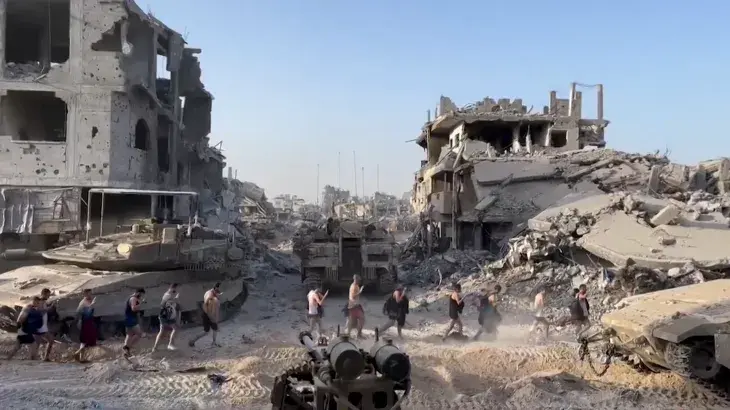

He added that the occupation forces stormed the gate area in Al-Khader and fired tear gas and sound bombs, which led to a number of citizens suffocating.

PALESTINE

Thu 30 Jan 2025 9:06 pm - Jerusalem Time

Trump's envoy: Gaza is completely destroyed and its reconstruction may take 15 years

US President Donald Trump's envoy to the Middle East said that rebuilding the Gaza Strip could take between 10 and 15 years, noting that the situation there is "uninhabitable" due to the widespread destruction and unexploded ordnance scattered throughout the Strip.


The envoy added, in statements reported by the Axios website, that humanitarian aid is entering Gaza according to the plan, and the displaced have begun to return to the northern Gaza Strip, in light of the security arrangements being made on the Netzarim and Philadelphi axes, which he described as "going better than expected."


He also stressed that his message to Prime Minister Benjamin Netanyahu and the ministers he met was clear: the deal must continue to be implemented, noting that Netanyahu remains committed to the process of returning the detainees.


Regarding the future of Gaza, the envoy explained that he did not discuss with Trump the idea of transferring Palestinians from the Strip, but he stressed that the priority now is to complete the first phase of the plan and implement it properly, before moving on to the next phases.


PALESTINE

Thu 30 Jan 2025 8:43 pm - Jerusalem Time

Two young Palestinians shot and a child arrested during the occupation's raid west of Ramallah

Two young men were injured by live bullets, and a child was arrested, Thursday evening, during the Israeli occupation forces’ storming of the town of Kobar, northwest of Ramallah.


According to local sources, the occupation forces stormed the town and fired sound bombs and tear gas, which led to the outbreak of clashes, during which the occupation soldiers fired live bullets, resulting in two young men being injured by bullets in the lower limbs.


The same sources added that the occupation forces arrested the child, Kinan Bassam Nabhan Al-Barghouthi (13 years old), during their raid on the town.


In a related context, the occupation forces stormed the town of Silwad, east of Ramallah, coinciding with the arrival of the freed prisoner, Moamen Mahmoud Hamed, who was released this evening from the occupation prisons as part of the ceasefire agreement on the Gaza Strip.