







Seventy-eight years have passed since the establishment of what is known as the occupying state, decades during which the Zionist movement adopted a strategy of genocide and forced displacement to impose a replacement Judaization reality. This entity based its existence on committing systematic massacres to expel the vast majority of Palestinians from their historical homes and seize their resources.
Historical records indicate that Zionist gangs committed no less than 44 massacres in 1948 alone, with absolute support from the British Mandate authorities. This complicity led to the uprooting of about 850,000 Palestinians from their land before mid-May of that year, as part of a carefully planned ethnic cleansing scheme.
In contrast, the Zionist machine worked to attract hundreds of thousands of Jewish settlers to replace the indigenous people, with the occupation controlling 78% of historical Palestine. The properties of refugees and the natural resources of the homeland have since become essential production elements to strengthen the occupation's economic structure and military power.
The war of ethnic cleansing effectively began in November 1947, following the issuance of the UN partition resolution, and continued fiercely until the end of the British Mandate. Although Jews controlled less than 6% of the land when Britain left, military and logistical support enabled them to expand rapidly.
Historical sources revealed that Zionist gangs managed to purchase massive military equipment from the withdrawing British army, including warplanes, in deals worth millions of pounds. These capabilities created a huge gap in the balance of power between the Palestinian revolutionaries, who possessed simple weapons, and the organized Zionist forces.
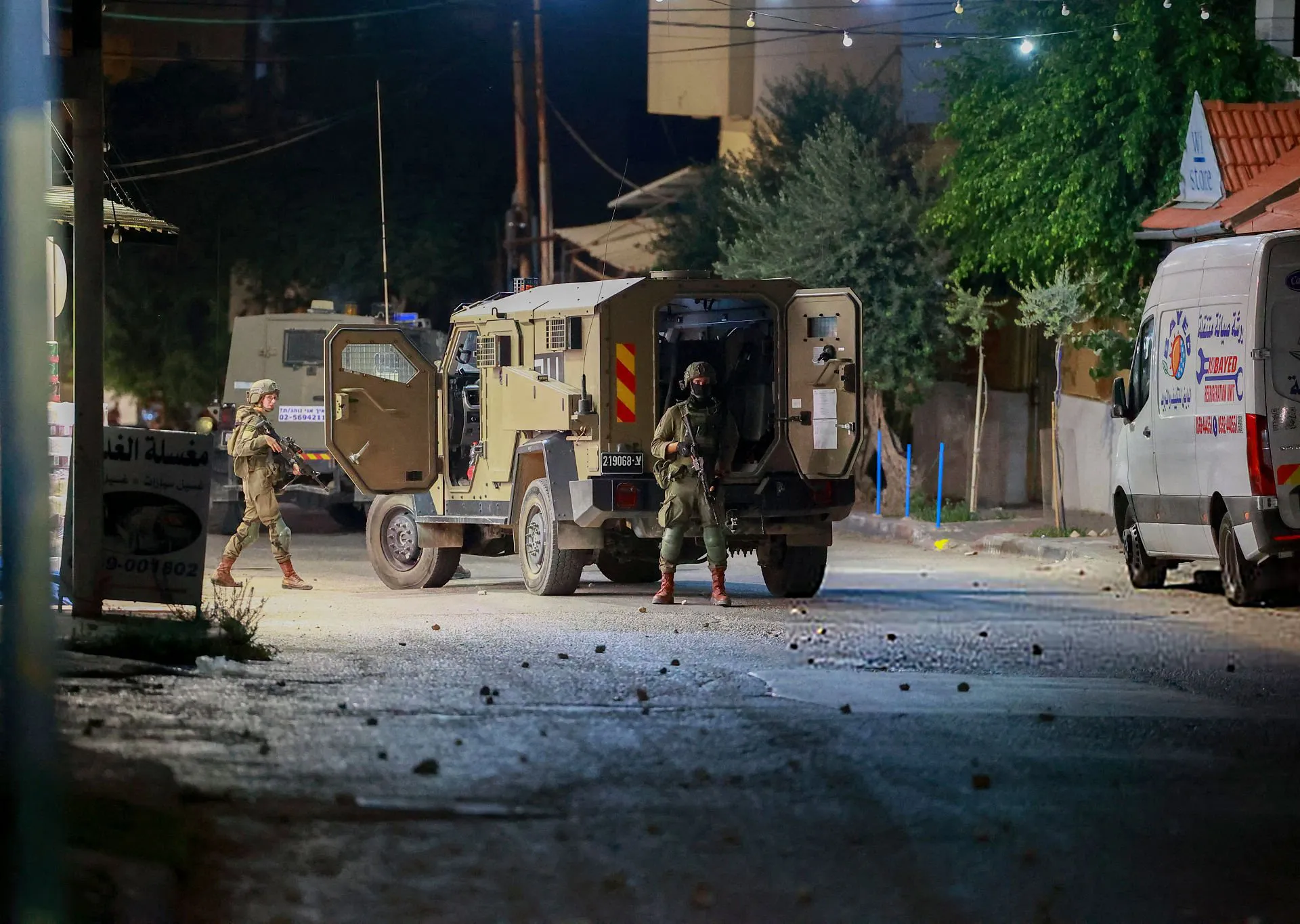
By early 1948, the Jewish Agency was managing the affairs of the militarily and administratively occupied areas through the 'Haganah' army and the 'Palmach' commando units. These forces numbered about 45,000 heavily armed fighters, facing a few thousand Arab volunteers and local revolutionaries who lacked modern equipment.
The policies of Judaization did not stop at geographical boundaries but extended to include the 'Judaization of time and place' by attracting Jews from around the world and changing the cultural landmarks of Palestine. Recent data for 2026 show that the number of Jewish settlers in occupied Palestine has reached 7.2 million, distributed between Western and Eastern origins.
On the other hand, the tragedy of Palestinian refuge has swelled to include today more than seven million refugees living in the diaspora and camps. These represent the descendants of the generation displaced in the first Nakba, who then constituted more than 60% of the total Palestinian population, which numbered 1.4 million at the time.
Palestinian refugees after the 1948 Nakba were primarily distributed in the West Bank and Gaza Strip, while large numbers were forced to flee to neighboring countries such as Jordan, Syria, and Lebanon. Difficult economic and political conditions also pushed many to migrate to Europe, the Americas, and the Arab Gulf states in search of a dignified life.
The scene of displacement was repeated again in 1967 when the occupation army expelled about 460,000 Palestinians after occupying the rest of the Palestinian land. These new 'displaced persons' joined the refugee convoys, bringing their total number currently to over two million, in addition to millions of previous refugees.
Despite nearly eight decades since the Nakba, half of the Palestinian people remain steadfast within the borders of historical Palestine, defying all policies of demographic displacement. Statistics indicate that 50% of Palestinians live internally, while the other half are distributed in nearby and distant exiles around the world.
The numbers confirm that about 80% of the total Palestinian people still reside in Palestine or in the surrounding Arab countries, which foils the occupation's bet on oblivion. This steadfastness comes despite the heavy price of sacrifices, which included the martyrdom of hundreds of thousands and the imprisonment of over one and a half million Palestinians.
Palestinian prisoners in occupation jails have suffered the most horrific forms of torture, starvation, and deliberate medical neglect, leading to the martyrdom of hundreds of them behind bars. This ongoing suffering has only increased the Palestinian people's determination to cling to their legitimate and inalienable national rights.
The eyes of Palestinians remain fixed on their only homeland, despite the long path of suffering that began in 1948 and whose chapters have not yet ended. The policies of killing and displacement pursued by the 'state of extermination' have not succeeded in breaking the will of return but have deepened the connection to the land and identity in the conscience of successive generations.
Until May 15, 1948, for every Palestinian or Arab fighter with his simple weapon, there were six Zionists equipped with all modern land and air weapons.
شارك برأيك
78 Years Since the Nakba: The Path of Ethnic Cleansing and Ongoing Judaization Schemes