






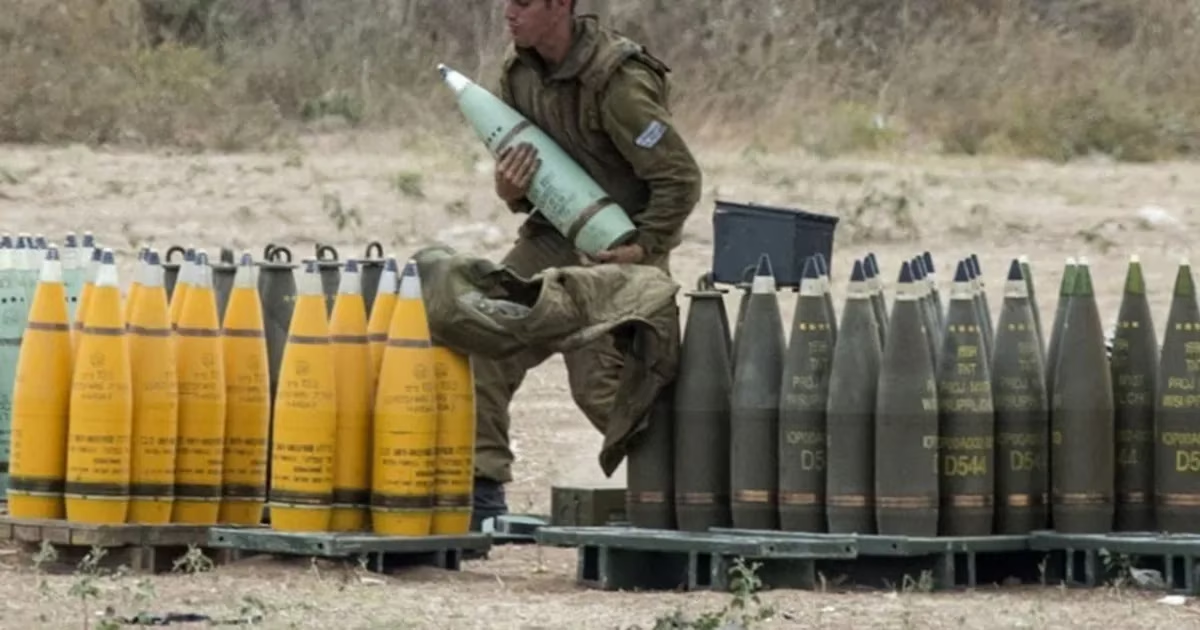
Hebrew media reports revealed that the occupation army recently resorted to using an old stock of unguided bombs, manufactured more than five decades ago, to carry out military strikes against targets inside Iranian territory. This development reflects fundamental shifts in the management of Israeli military resources amid the depletion of modern ammunition during ongoing confrontations on multiple fronts.
Journalistic sources stated that the army found warehouses containing thousands of bombs manufactured more than 50 years ago, which were originally intended for use in previous wars against Egypt before the signing of the peace agreement. However, the current field need prompted the military leadership to re-include them in the target bank directed against Iranian facilities.
These munitions are militarily classified as "dumb bombs," which are weapons that lack precise guidance systems via satellites or lasers, making their trajectory entirely dependent on the laws of gravity and the moment of launch. Reports explained that the air force currently relies on them to target military bases located in open areas far from population centers to reduce the risks of targeting errors.
For its part, official media sources reported that these munitions had been stored since the 1970s, but technical examinations showed that they were still in relatively good condition and suitable for operational use. This situation encouraged army commanders to decide to reuse them to alleviate the enormous financial pressure imposed by expensive smart weapons.
Reports quoted military sources as saying that the decision to return to the "historical stock" comes within the framework of a strategy to reduce the high financial costs of air operations. This step also aims to utilize huge quantities of explosives that have been out of service for many years without benefiting from their destructive capability.
Military analysts believe that this trend reveals increasing pressures facing Israeli military supply chains, especially with the continued high pace of air operations. Through this, the occupation is trying to achieve a difficult balance between maintaining combat efficiency in the field and reducing escalating military expenditures.
In contrast, the spokesperson for the occupation army tried to downplay these reports, indicating that the air force operates in various ways and uses different armament methods that are appropriate for the nature of the targets. He stressed that the choice of ammunition type is a purely operational decision subject to assessments of the field situation and the tactical needs of each raid individually.
The military spokesperson emphasized that the army follows strict procedures for checking the validity of any old ammunition before loading it onto aircraft, to ensure the safety of air and ground crews. These statements come in an attempt to reassure domestic public opinion about the safety of using weapons that have exceeded their lifespan by decades.
The use of this type of bomb was not entirely surprising, as there had been widespread controversy about their use during the ongoing aggression on the Gaza Strip. Earlier American intelligence reports revealed that a large percentage of the munitions dropped on the Strip were unguided, causing massive destruction and widespread human casualties.
Observers link this trend to previous American threats to stop supplies of precision bombs if military operations are expanded in certain areas such as Rafah. This possibility prompted Tel Aviv to search for local or stored alternatives to ensure the continuity of its military operations without complete reliance on external approvals.
Analysts in major Hebrew newspapers indicated that the army excessively used precision weapons at the beginning of the war, leading to the depletion of vital parts of the strategic stock. This explains the current reliance on "dumb bombs," which necessarily means reducing the level of targeting accuracy and increasing the damaged areas around the intended targets.
These field developments come at a time when the war waged by the occupation is entering a complex phase, having so far resulted in more than 72,000 Palestinian martyrs and tens of thousands injured. Amidst this widespread destruction, the use of unguided weapons emerges as an additional tool that increases the tragedy of the field scene and expands the scope of indiscriminate targeting.
The choice of ammunition type is an operational decision based on several factors, and the army does not use any ammunition until after an organized process of checking its validity.
شارك برأيك
Hebrew reports reveal the occupation army resorting to 'dumb bombs' from the seventies era to strike Iran