ARAB AND WORLD

Mon 16 Mar 2026 11:52 pm - Jerusalem Time

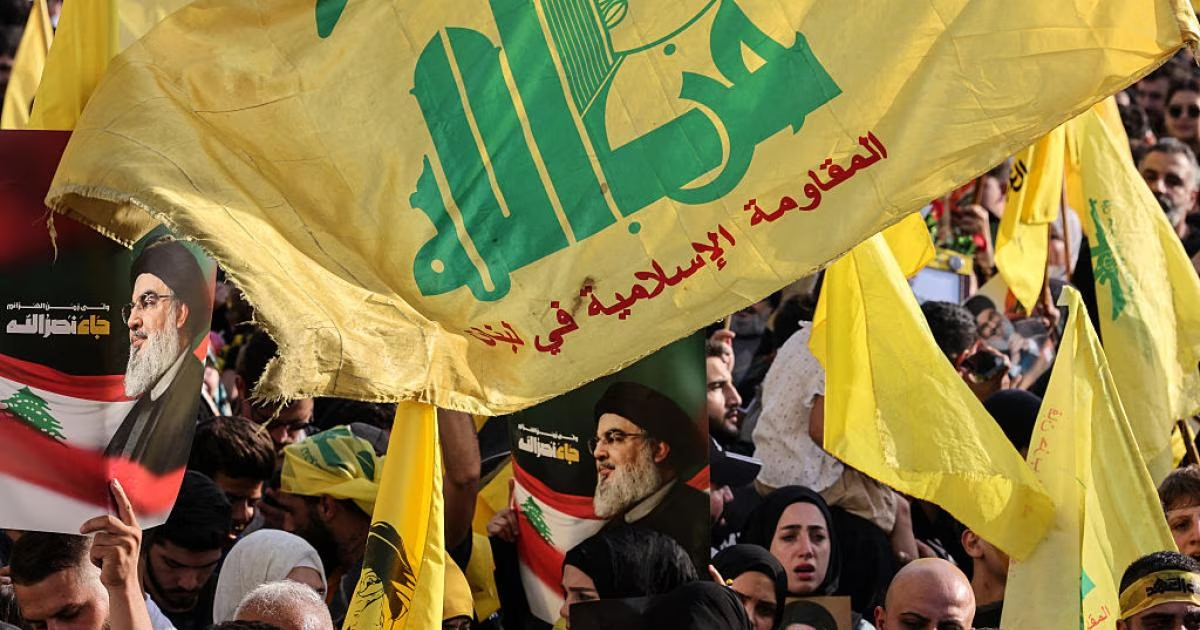
Lebanese Government Bans Describing Hezbollah as 'Resistance' and Directs to Confine its Activity Politically

The Lebanese Minister of Information, Paul Marqos, issued official directives to state media outlets to refrain from using the term 'resistance' when referring to Hezbollah in news coverage. The ministry clarified that this circular comes within the framework of following up on the implementation of recent cabinet decisions, which emphasized the necessity for concerned institutions and agencies to adhere to the state's new policies.

This decision sparked a wide wave of controversy in the Lebanese street and on social media platforms, where opinions were divided between supporters of the move, viewing it as an affirmation of state sovereignty, and opponents who saw it as undermining the party's role in confronting ongoing Israeli aggressions. This step comes at a sensitive time when Lebanon is witnessing escalating military tensions and increasing internal and international political pressures.

Lebanese Prime Minister, Nawaf Salam, had announced at the beginning of March the prohibition of all military and security activities belonging to Hezbollah, describing them as illegal. Salam affirmed that the government decided to confine the party's scope of work to the political aspect only, following rocket attacks carried out by the party towards the city of Haifa, which the government considered a violation of its sovereign decision.

The Prime Minister, in his statements after the cabinet session, emphasized the state's categorical rejection of any military movements originating from Lebanese territory outside the framework of legitimate institutions. He pointed out that the party's monopolization of the decision of war and peace contradicts constitutional principles and puts the credibility of the Lebanese state before the international community at real risk, demanding the necessity of handing over weapons to official authorities.

In the same context, the government had called on the leadership of the Lebanese army in mid-February to immediately begin implementing a security plan aimed at confining weapons to areas located north of the Litani River. The cabinet gave the green light to the military establishment to use all available means to ensure the implementation of this plan and prevent any illegal armed manifestations in those areas.

These rapid developments reflect a radical shift in the Lebanese state's handling of the Hezbollah weapons file, as the government seeks to impose its full control over security and military decisions. Observers believe that these decisions could lead to a complete reshaping of the Lebanese political scene, in light of the challenges the country faces on both security and economic fronts.

The decision of war and peace rests solely with the state, and any military actions outside legitimate institutions are a violation of the law.

PALESTINE

Mon 16 Mar 2026 11:52 pm - Jerusalem Time

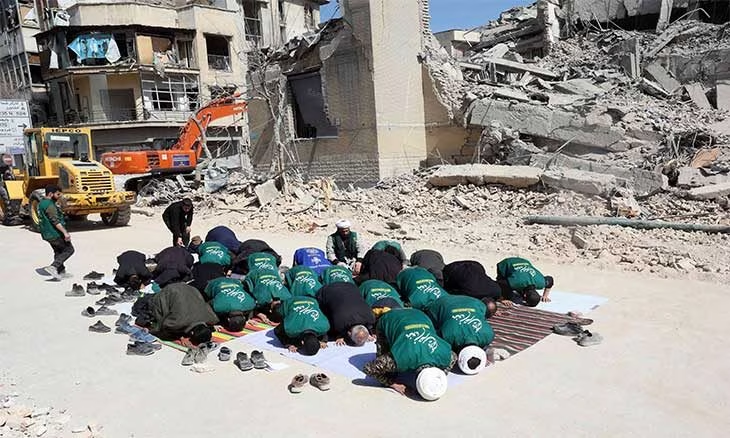
Israeli plan to continue Al-Aqsa Mosque closure during Eid al-Fitr and beyond

Informed media sources revealed that the Israeli occupation authorities intend to keep the blessed Al-Aqsa Mosque closed to worshippers during the upcoming Eid al-Fitr holiday and the days that follow. The sources clarified that this decision was officially communicated to the Islamic Waqf Department in occupied Jerusalem, which is the body responsible for managing the mosque's affairs, in the past few days.

This approach comes amid the continued closure of the mosque, which began earlier this month, with the occupation authorities citing the tense 'security situation' resulting from ongoing military confrontations. This closure is considered a dangerous precedent, especially as it coincided with the holy month of Ramadan, depriving thousands of worshippers from accessing their first Qibla.

Field sources reported that this year witnessed the first Ramadan since the occupation of Jerusalem in 1967 where Palestinians were completely prevented from performing Friday prayers inside the Al-Aqsa Mosque courtyards. This measure has sparked widespread condemnation from national and religious bodies, which considered it an attempt to impose a new reality and consolidate Israeli control.

In the context of international reactions, eight Islamic countries had earlier condemned this closure, describing it as 'unjustified,' emphasizing that the occupation has no legal sovereignty over the holy sites. These countries demanded the immediate lifting of restrictions and ensuring freedom of worship, but the occupation authorities continued their intransigence without any change in their field policies.

Reports indicate that Friday and Taraweeh prayers are still completely prohibited, with a heavy deployment of police forces and border guards in the alleys of the Old City and at the mosque's gates. The mosque compound is under strict surveillance, where no more than 25 employees from the Waqf Department are allowed to enter to carry out their administrative and service duties during each work shift.

Sources in the Waqf Department stated that the occupation authorities rejected a request to increase the number of permitted employees, including those from the manuscripts department. The occupation police threatened that if the number of employees increased, they would allow settlers to resume their daily incursions into the mosque, which Waqf officials considered political blackmail.

There is a state of concern within the Islamic Waqf circles that Israeli forces may install advanced surveillance devices and cameras inside the covered prayer halls, including the Dome of the Rock. This step, according to observers, aims to impose continuous and comprehensive electronic surveillance on everything that happens inside the historical prayer areas.

In parallel with the mosque's closure, the occupation authorities have imposed a near-complete siege on the Old City of Jerusalem, leading to widespread commercial and economic paralysis. Entry to the area has been restricted to residents whose IDs indicate they live within the walls, turning the historical markets, which were once bustling with life, into semi-deserted areas.

Despite the stagnation in the Old City, life continues normally in areas controlled by settlers or in West Jerusalem, just a few meters away. This disparity reflects the systematic policy of restriction targeting the Palestinian presence in the heart of the holy city under the guise of security necessities.

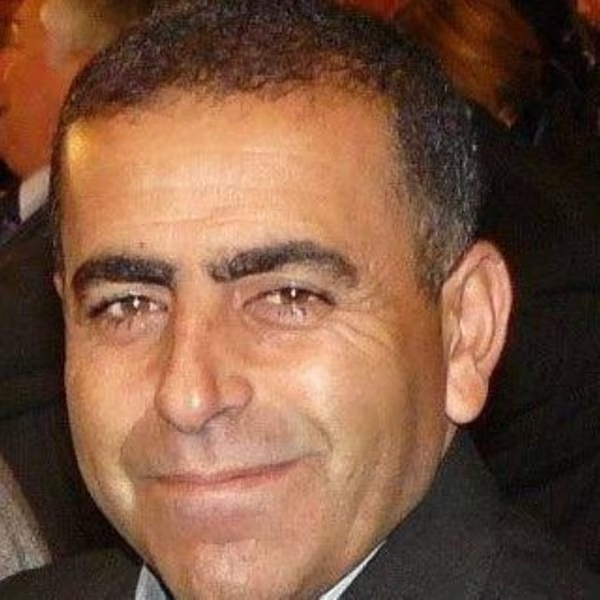
For his part, Awni Bazbaz, Director of International Relations at the Waqf Department, warned that these measures might not be temporary as the occupation claims. He expressed his fear that these restrictions could turn into permanent arrangements if the international and local community becomes accustomed to the absence of worshippers from Al-Aqsa Mosque for long periods.

Historically, Al-Aqsa Mosque is subject to what is known as the 'Status Quo,' an international arrangement that preserves the mosque's status as exclusively for Muslims under Jordanian administration. However, Palestinians assert that Israel has been working for decades to undermine this status through repeated incursions and age and time restrictions on worshippers' entry.

International laws consider Israel's control over East Jerusalem and the Old City an illegal act, as the occupying power does not have the right of sovereignty. International agreements stipulate the necessity of preserving religious and cultural landmarks in occupied territories without changing their identity or preventing their owners from accessing them.

Analysts believe that the occupation's exploitation of the current military circumstances to impose a long-term closure on Al-Aqsa aims to break the religious and national link between Palestinians and their holy sites. Fears are growing that this year's Eid al-Fitr will be a sad one for Jerusalemites due to their deprivation from praying in their captive mosque.

Amid this escalation, Islamic bodies in Jerusalem are demanding urgent Arab and international action to pressure the occupation government to reverse its decisions. Jerusalemites affirm that Al-Aqsa Mosque will remain the core of the conflict, and the occupation's measures will not change the reality of its Arab Islamic identity, no matter how severe the restrictions.

The closure raised fears that what is presented as a temporary measure could gradually turn into a permanent or semi-permanent arrangement.

ISRAELI AFFAIRS

Mon 16 Mar 2026 11:52 pm - Jerusalem Time

Hebrew Media: Israel Drowning in 'Illusory Victories' and Hezbollah Has Not Retreated

The military and political establishment in the occupation state is facing sharp criticism as the confrontation with Iran and its proxies in the region enters its third week. Media sources have revealed significant gaps between official reports and the reality on the ground. Sources indicated that the occupation army is suffering from a tangible shortage of interceptor missiles, which official bodies quickly denied for fear of eroding deterrence, despite military circles acknowledging the difficult situation and the multiplicity of active fronts.

In a critical reading of the scene, Israeli writer Nir Kipnis affirmed that Israelis are being subjected to systematic deception by their government, which he described as 'incapable.' Kipnis explained that claims promoting the decisive fate of Hezbollah and its retreat behind the borders have evaporated in the face of reality, as military reports confirm that the party has not only not retreated but has begun to re-inject and deploy its forces in border villages and towns in southern Lebanon, posing a direct and continuous threat to northern settlements.

The analysis emphasized that targeting the settlements of Shlomi, Avivim, and Kiryat Shmona with missiles proves the falsity of claims about the destruction of Hezbollah's firepower. The writer considered that politics does not recognize a vacuum, and the continued existence of armed organizations and their ability to deliver strikes after two and a half years of fighting on various fronts is in itself a victory for them, noting that the 'small victories' marketed by official spokespersons are nothing but illusory signs in a list of wrong objectives.

On the regional level, the article pointed to the growing sense of impunity of the Iranian regime, especially with the continuation of demonstrations supporting it and strategic movements in the Strait of Hormuz. Observers believe that the Israeli reliance on absolute American support may clash with the reality that American forces may withdraw at any time, while the Iranian Revolutionary Guard and its allies will remain in the region for many years, making any Israeli military achievement temporary and insufficient to change the strategic balance of power.

The writer concluded by calling on Israelis not to be swayed by the numbers and statistics presented by official spokespersons regarding the number of casualties or the extent of destruction in Gaza and Lebanon. He stressed that turning neighborhoods into rubble and assassinating leaders has not succeeded in deciding the battle, warning that continuing to 'sell myths' about regional power will only lead to imminent and more ferocious rounds of fighting, as long as the Israeli leadership remains stuck in a spiral of illusory victories.

No war ends in a draw; if Hezbollah is not completely eliminated, it means they are the victor.

PALESTINE

Mon 16 Mar 2026 11:52 pm - Jerusalem Time

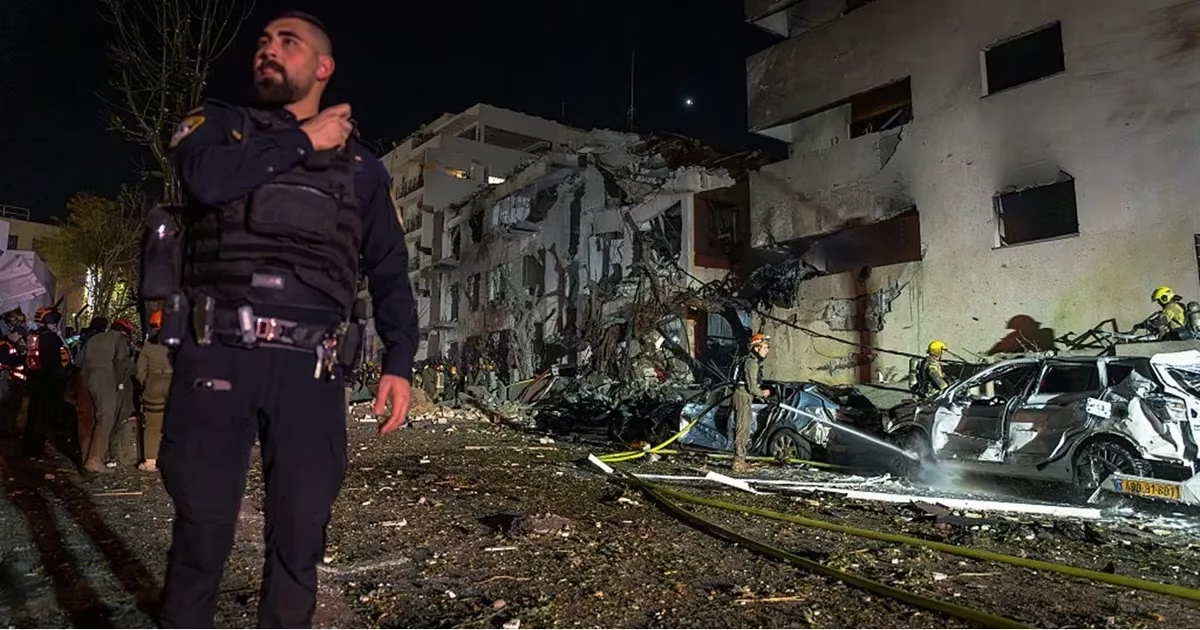
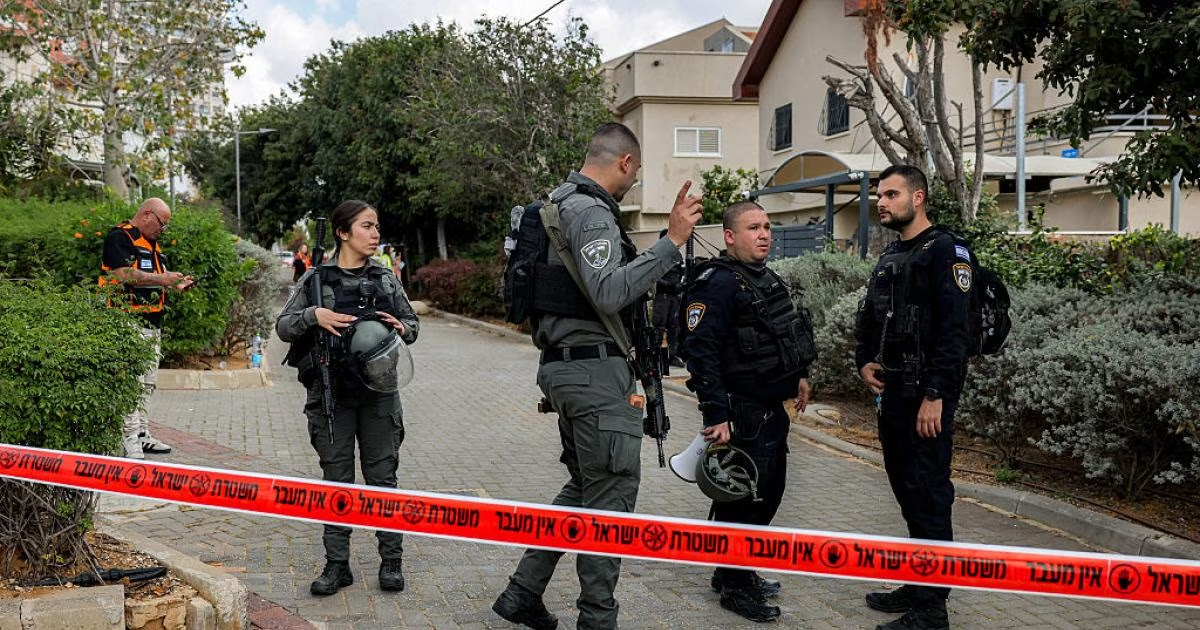
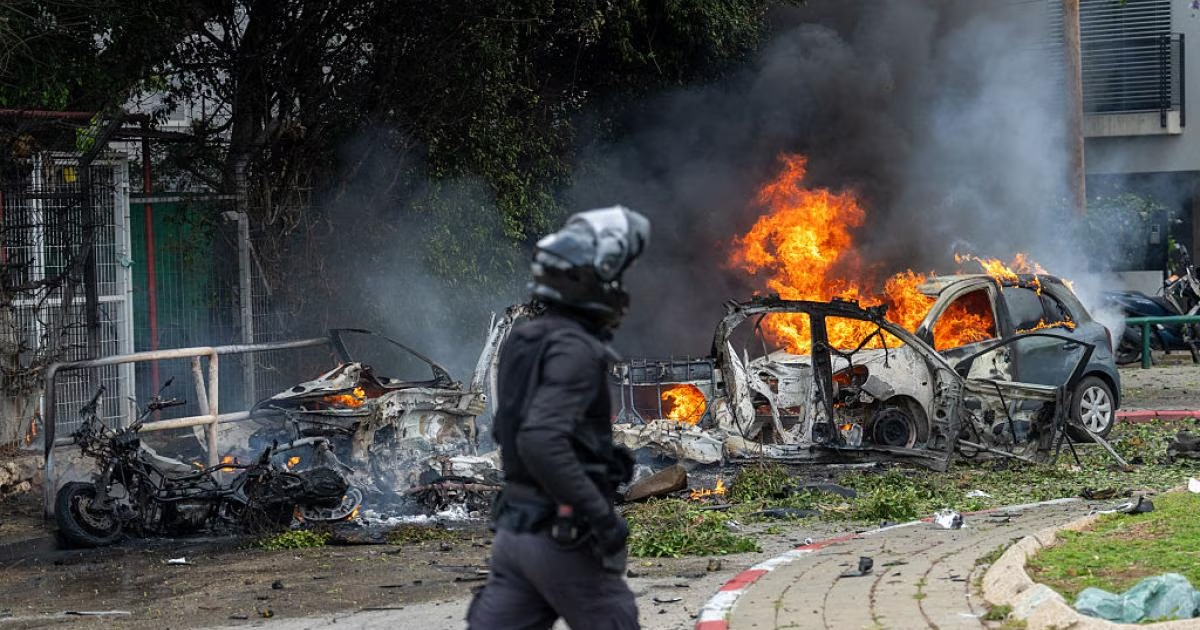
Injuries and Widespread Damage in Nahariya Following Intense Rocket Attack from Lebanon

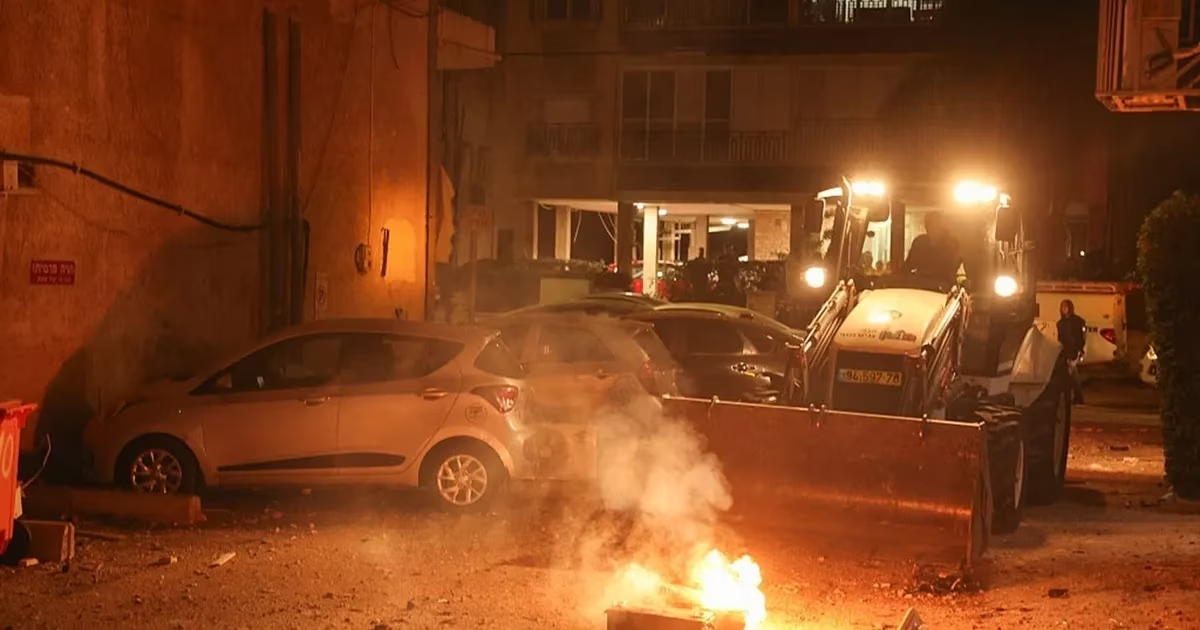
Medical and field sources reported on Monday evening that four Israelis sustained varying degrees of injuries in the coastal city of Nahariya, northern occupied Palestine, after rockets launched from Lebanese territory fell. The sources stated that one of the injured suffered moderate wounds at a vital road junction east of the city, while the other three were transferred for treatment after being injured inside the settlement.

Lebanese Hezbollah officially claimed responsibility for the operation in a statement, indicating that its fighters carried out a complex attack using an intense rocket barrage and a swarm of kamikaze drones. The group clarified that this targeting comes in fulfillment of previous warnings issued to the city of Nahariya, and as part of a series of retaliatory operations against ongoing Israeli aggressions.

Video clips broadcast by Hebrew media documented a massive fire breaking out in a residential building in Nahariya, as a direct result of one of the rockets that air defense systems failed to intercept. The footage showed thick columns of smoke rising from the site, while firefighting and rescue teams rushed to try to control the flames and prevent their spread to neighboring buildings.

For its part, the Israeli ambulance service stated that its teams dealt with a man suffering from shrapnel injuries, whose condition was described as between mild and moderate. Paramedics on the ground confirmed that the explosion occurred in a populated area between two residential buildings, causing extensive material damage and a state of panic among the settlers.

In addition to physical injuries, emergency teams revealed that they provided treatment to six other people who suffered severe suffocation due to inhaling smoke from the fire. Reports indicated that among those suffering from suffocation were two girls and four adults, some of whom were transferred to nearby medical centers for necessary examinations.

In a notable development, official military sources quoted the Israeli Broadcasting Corporation as confirming that the injuries and damage resulted directly from an offensive rocket launched from Lebanon, and not from fragments of interceptor missiles. This statement refutes initial narratives that attempted to downplay the accuracy of the hit, confirming the rockets' success in penetrating the airspace and reaching their targets.

Hebrew press reports indicate a silent crisis related to a severe shortage in the Israeli army's stock of interceptor missiles, which may explain the failure to activate the Iron Dome in some areas. Israeli military censorship imposes a strict blackout on the true extent of human and material losses, and prevents the publication of images showing the accuracy of Hezbollah's rocket hits.

It is worth noting that the pace of border confrontations has sharply escalated since the beginning of March, with Hezbollah intensifying its targeting of military sites and northern settlements. These developments come in response to ongoing Israeli aggression and the assassination of prominent leading figures, amidst an unprecedented state of security tension in the region since the end of last year.

The attack came as part of the warning issued by the Islamic Resistance to Nahariya, and fighters targeted it with a rocket barrage and a swarm of kamikaze drones.

PALESTINE

Mon 16 Mar 2026 11:51 pm - Jerusalem Time

Investigation reveals Israeli organization's involvement in displacing Palestinians from Gaza to South Africa

An extensive journalistic investigation has uncovered suspicious activities led by an Israeli organization called 'Ad Kan,' aimed at transferring hundreds of Palestinians from the Gaza Strip to countries outside the Middle East. Sources reported that the organization arranged secret flights, one of which landed in South Africa last November, carrying about 150 residents of the Strip who are suffering from the ongoing war.

Documents and financial data relied upon by the investigation showed that the organization deliberately used an intermediary company called 'Al-Majd' to carry out these operations, with the aim of concealing any direct link between Israeli authorities or right-wing organizations and these flights. This network relied on the cooperation of multiple parties, including Israelis and Palestinians, to facilitate the departure of families through strict inspection procedures before boarding the planes.

For their part, Palestinians who left the Strip via these flights confirmed that they were unaware of the true party behind arranging their travel, noting that their sole motive was to escape hunger and destruction. Travelers explained that the catastrophic humanitarian conditions left by the Israeli aggression for more than two years made staying in Gaza impossible, pushing them to seek any exit, regardless of its destination.

In contrast, these movements raised suspicions among authorities in South Africa, where Foreign Minister Ronald Lamola stated that these flights might fall under ethnic cleansing schemes for Palestinians from their lands. The government there announced the opening of official investigations to determine the circumstances of these groups' arrival, affirming its rejection of its territory being part of forced displacement projects targeting the Palestinian cause.

The investigation indicated that Gilad Ach, the founder of the 'Ad Kan' organization, is one of the most prominent supporters of proposals to resettle Palestinians in foreign countries, ideas that intersect with previous right-wing political proposals. Despite Ach's claim that these flights are purely humanitarian in nature to help those wishing to leave, the timing and mechanism used raise major questions about the political objectives behind these initiatives.

Financial details of the operation included the payment of large sums, with the cost of the trip per person amounting to about two thousand dollars, while the investigation revealed a contract with an American-Israeli businessman named Moti Kahana to arrange evacuation operations for sums up to 750 thousand dollars. These figures reflect the scale of financial investment in population transfer operations and directing them towards distant destinations such as the African continent.

Following these developments, the South African government decided to cancel the visa exemption granted to Palestinians, justifying it by the existence of 'deliberate misuse' by parties seeking to implement displacement agendas. Authorities stressed that the protection of refugees should not be a cover for emptying Palestinian land of its original inhabitants under the pressure of need and difficult living conditions.

The scene in Gaza remains a primary driver of these forced migrations, where citizens find themselves between the hammer of bombing and siege and the anvil of suspicious offers to leave. Although some confirmed that their goal was only to save their families, the discovered facts place these trips in a political context that serves the occupation's strategies aimed at changing the demographic reality in the occupied territories.

These trips may be part of an agenda to cleanse Palestinians from Gaza and the West Bank.

ARAB AND WORLD

Mon 16 Mar 2026 11:51 pm - Jerusalem Time

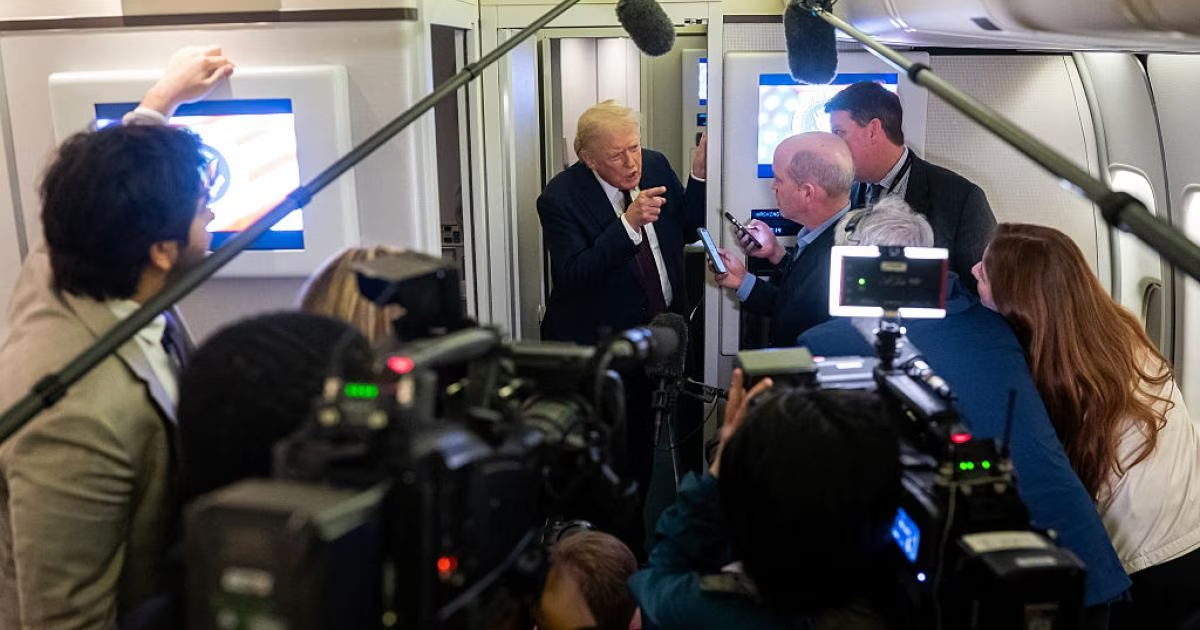
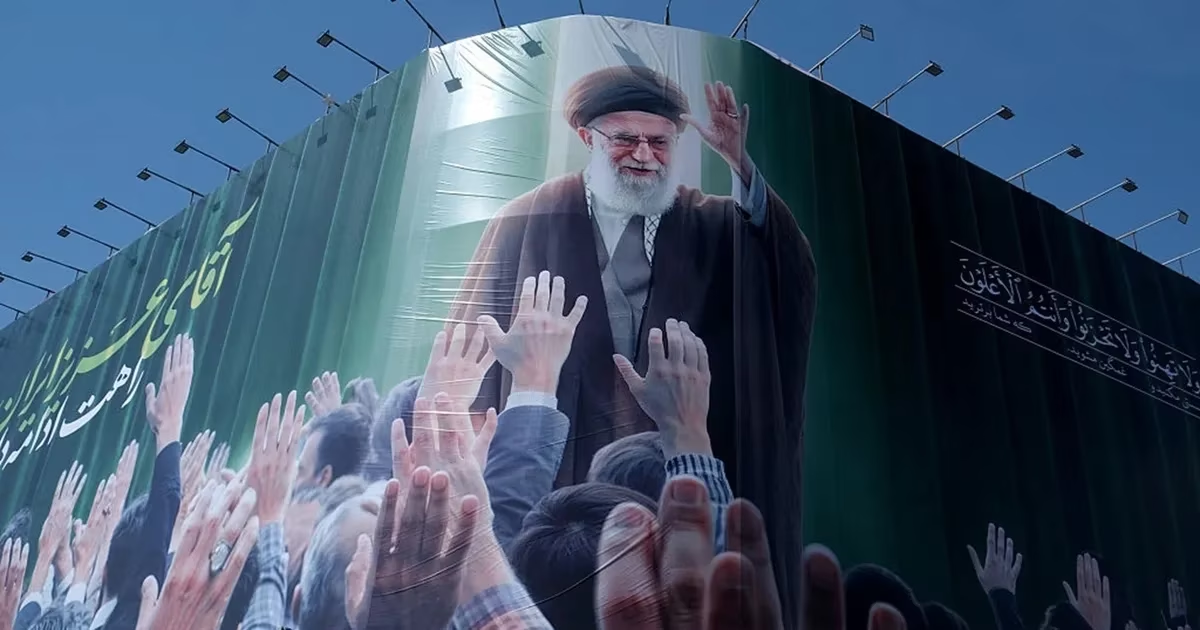
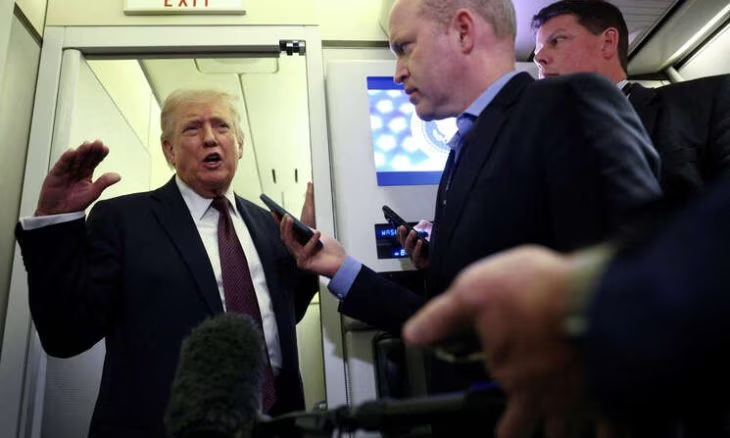
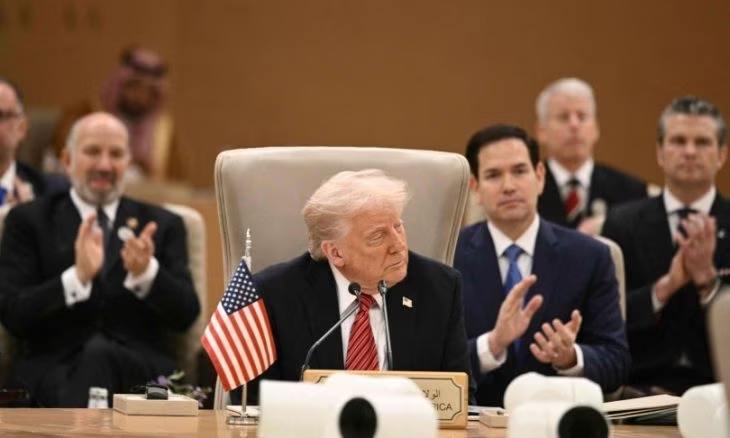
Trump reveals Iranian desire for 'deal' and questions fate of Mojtaba Khamenei

US President Donald Trump announced today, Monday, his conviction that the leadership in Tehran seeks to reach an agreement that ends the current military confrontation with the United States and Israel. Trump explained during his speech at the White House that the problem lies in the lack of clarity regarding who represents the Iranian state at present, noting that there are parties wishing to negotiate without revealing their official identity.

The US President touched upon the ambiguity surrounding the leadership structure in Iran, stressing that Washington does not know precisely who makes the final decisions. These statements come at a sensitive time when the region is witnessing dramatic transformations following the initial strikes of the war that targeted power centers in the Iranian capital.

Regarding the successor to the Supreme Leader, Trump referred to conflicting reports about the health condition of Ayatollah Mojtaba Khamenei, who was appointed successor to his late father. Trump mentioned that there are reports of him suffering severe injuries or severe deformities, while some estimates suggest the possibility of his death as a result of the airstrikes that targeted leadership positions.

US Secretary of Defense Pete Hegseth reinforced these doubts last week when he stated that the new leader has not appeared publicly since his alleged injury. Trump affirmed that the absence of any speech or official appearance by Mojtaba Khamenei fuels questions about his ability to perform his duties, or whether he is still alive.

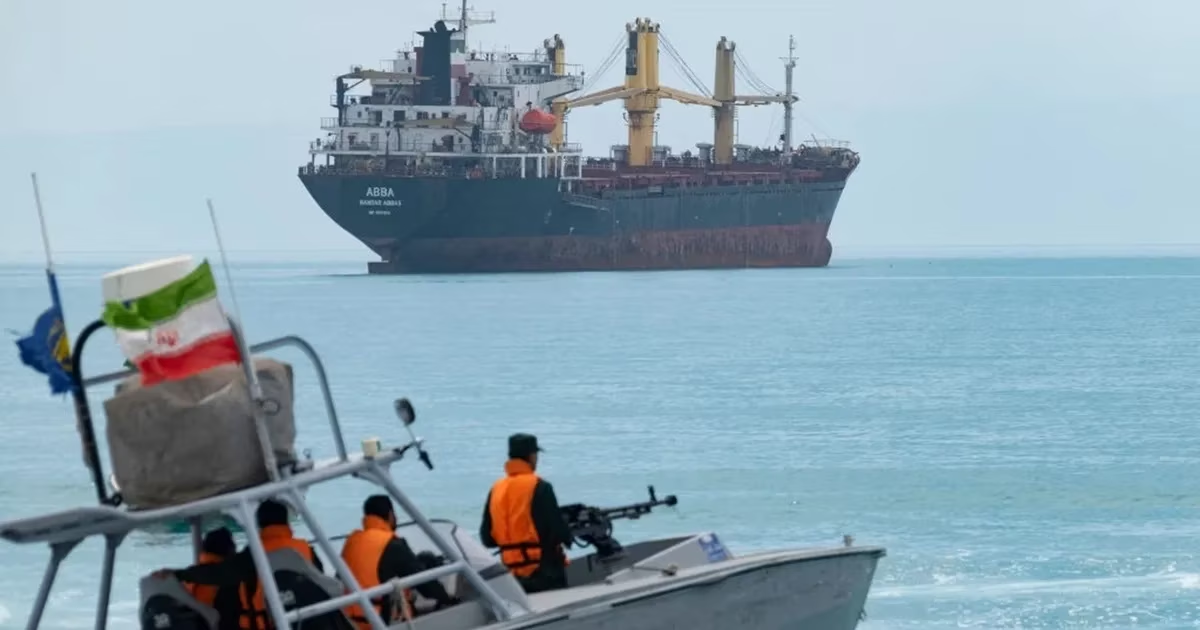
Regarding international navigation, Trump renewed his call for the international community to effectively contribute to securing and reopening the Strait of Hormuz to global shipping traffic. The US President considered that the stability of navigation in this vital waterway represents a common international interest that requires broader cooperation from regional and international powers affected by its closure.

Trump did not hide his displeasure with the stance of some allies, as he strongly criticized countries that did not show sufficient enthusiasm to support US efforts in securing the strait. He pointed out that Washington has provided protection for many years to certain countries against external threats, but found a 'coldness' in the response of those countries when their field contribution was needed.

In a related context, specialized sources monitoring maritime navigation observed the passage of the first non-Iranian oil tanker through the Strait of Hormuz, broadcasting its identification signals clearly. This development is the first of its kind since the outbreak of hostilities on February 28, which may indicate a partial breakthrough in maritime traffic.

For his part, Iranian Foreign Minister Abbas Araghchi responded to the American statements by emphasizing the steadfastness of his country's position in confronting military pressures. Araghchi said that Washington and Tel Aviv must realize that Iran will not hesitate to defend its sovereignty, and that it is prepared to continue the war to the maximum extent imposed by national necessities.

These reciprocal statements reflect a state of complexity in the political and military scene, where positions oscillate between hinting at negotiation and insisting on confrontation. While Trump seeks a clear Iranian partner to strike a deal, Tehran insists on demonstrating its resilience despite the severe blows that have affected its leadership hierarchy.

We don't know who we are dealing with... We don't know who their current Iranian leader is, and there are parties that want to negotiate but we don't know their identity.

ISRAELI AFFAIRS

Mon 16 Mar 2026 11:51 pm - Jerusalem Time

Hebrew Reports: Iran Intensifies Cluster Missile Attacks, Expands Scope of Indiscriminate Targeting

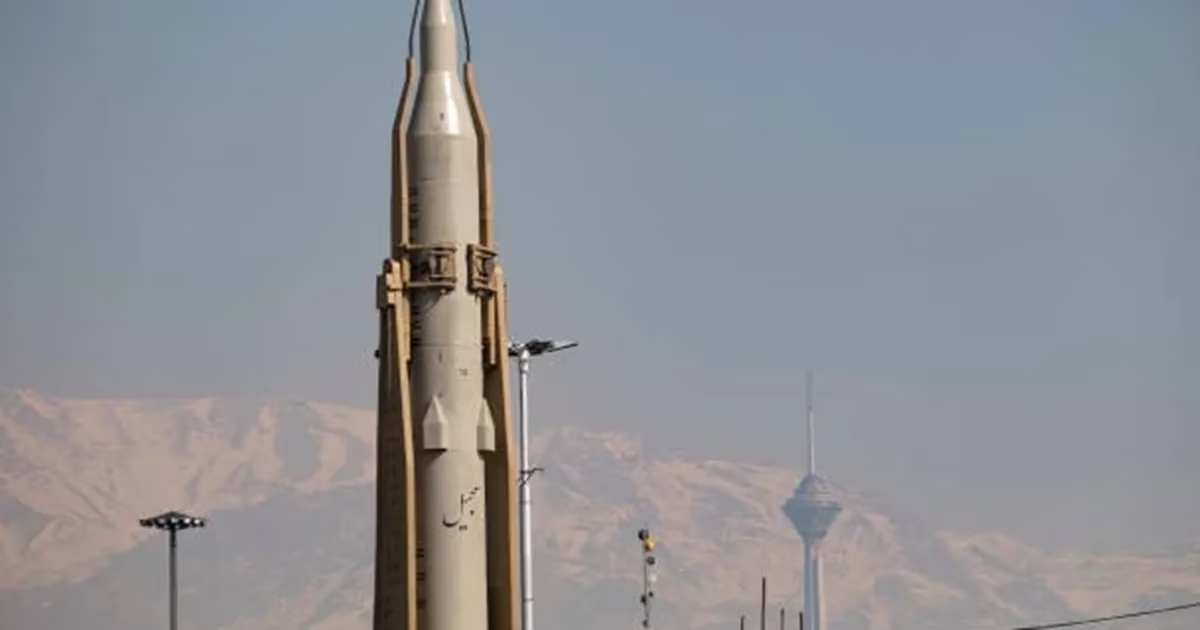
Hebrew press reports issued today, Monday, stated that Iranian forces have recently escalated the use of cluster missiles in their ongoing attacks. Sources clarified that this method relies on striking as many targets as possible indiscriminately to expand the scope of targeting.

The sources mentioned that the security establishment had detected indications of Tehran's intention to use missiles capable of carrying small, multiple munitions since the beginning of the confrontation. These developments come amidst severe warnings issued by the Home Front Command about the need for extreme caution regarding the remnants of these missiles.

Military estimates indicate that Iran has launched more than 300 missiles of various types since the outbreak of the current war. It appears that Iran's focus has significantly shifted towards missiles with split warheads, which multiply the area of surface destruction.

Media sources quoted Israeli researcher Yehoshua Kalisky as saying that the current Iranian strategy aims to cause widespread environmental and human damage. He added that these missiles do not follow the traditional point-targeting pattern but rather seek to spread panic over extended geographical areas.

Security data confirms that about half of the recent missile launches were of the split type, reflecting an Iranian awareness of their psychological and material impact. These launches occur almost daily, targeting vital and populated areas deep within.

Local authorities observed clear signs of destruction in several locations extending from the far north to the southern regions in Eilat. The scattered small bombs caused direct damage in major cities such as Tel Aviv, Lod, Ramat Gan, and Bnei Brak.

Military experts explained the mechanism of these missiles, where the warhead opens at an altitude ranging between seven and ten kilometers above the designated target. Once opened, dozens of small bombs, each weighing between two and a half to five kilograms, scatter.

The final explosion process relies on a precise trigger mechanism that activates upon impact with the ground or any solid object in the fall zone. This scattering covers a wide area, sometimes reaching a diameter of ten kilometers.

Kalisky pointed out that the distribution of these bombs does not follow a symmetrical geometric pattern but is directly affected by weather factors and prevailing winds in the upper atmospheric layers. This fluctuation in falling makes it difficult to accurately predict the exact location of each small bomb's explosion.

Sources warned that a percentage of these munitions do not explode immediately upon impact with the ground, turning them into radioactive debris and ticking time bombs. These unexploded bombs pose a grave danger to civilians, as they can explode upon human contact or movement.

Cities such as Rishon LeZion, Ness Ziona, and Be'er Ya'akov are experiencing a state of constant alert to clear sites that have seen the fall of these fragments. Engineering teams are sweeping open areas and residential buildings to ensure there are no unexploded war remnants.

Observers believe that Iran's recourse to this type of weapon represents an attempt to bypass air defense systems by overwhelming them with a large number of small targets. While the parent missile can be intercepted, the process of tracking all scattered munitions remains a significant and complex technical challenge.

In a related context, the Home Front Command confirmed that the structural damage from these bombs might be less than that of large missiles, but their danger lies in their widespread distribution. Authorities urge residents to remain in fortified areas for longer periods even after missile barrages end to ensure the stability of the field situation.

Hebrew sources concluded their report by indicating that the intensive use of this technology reflects Tehran's desire to deplete defensive resources and keep the home front on high alert. Security assessments continue to address this evolving threat that now affects most major cities.

The purpose of cluster missiles is to cause widespread environmental damage, and indiscriminate damage to a large number of targets and casualties.

ARAB AND WORLD

Mon 16 Mar 2026 11:51 pm - Jerusalem Time

UN Report Accuses Israel of War Crime Following Attack on Evin Prison in Tehran

Sarah Hussain, head of the United Nations Fact-Finding Mission on Iran, announced that the Israeli airstrike on Evin Prison in Tehran last year amounts to a war crime. The UN official explained during a session at the Human Rights Council on Monday that investigations proved the deliberate targeting of a civilian facility housing hundreds of detainees, which places the attack within the framework of grave violations of international humanitarian law.

The latest UN report revealed horrific details of the attack that occurred last June, with the mission confirming the deaths of 80 people, including one child and eight women, as a result of direct shelling. These findings were based on a comprehensive documentation process that included extensive interviews with survivors, injured individuals, and eyewitnesses, as well as a precise analysis of satellite imagery and field documents that showed the extent of the destruction at the prison, known for holding political opponents.

In a related context, the international mission warned that the continuation of current military operations and aerial bombardment exacerbates the risks of internal repression in Iran. Sarah Hussain pointed out that previous experiences have shown that external military interventions do not lead to accountability or positive change, but rather provide authorities with a pretext to escalate executions and crackdowns on the opposition, which was indeed observed after last year's strikes.

For her part, May Sato, the UN expert on human rights in Iran, expressed deep concern over the fate of detainees inside the damaged prisons, including those arrested during popular protests earlier in the year. Sato confirmed that incoming reports indicate a severe shortage of food and medical supplies, as well as a complete قطع of communication between prisoners and their families, which doubles the suffering of detainees' relatives, including foreign nationals.

The Human Rights Council witnessed a notable Israeli absence, as Israel decided to withdraw from the session and leave its seat vacant, a move that reflects its rejection of the investigations conducted by the Council regarding its violations. This stance comes at a time when international pressure is increasing to document the effects of aerial military operations on civilian infrastructure in the region and ensure the protection of the most vulnerable groups in detention centers.

In an intervention before the United Nations, Iranian Ambassador Ali Bahreini called on the international community to explicitly condemn the aerial attacks launched by international and regional powers on his country. Bahreini noted that the death toll from these operations has exceeded 1,300, considering that international silence regarding the targeting of civilian facilities encourages the continued violation of international laws without deterrence.

There is international concern about the fate of dual-national detainees, including a British couple held in Evin Prison, which suffered severe damage to its structures and roofs. Human rights organizations are demanding the provision of safe corridors for the International Red Cross to inspect the conditions of prisoners and ensure their physical safety amid ongoing military tensions that threaten the lives of civilians and detainees alike.

We found reasonable grounds to believe that Israel, by carrying out airstrikes on Evin Prison, committed a war crime by deliberately directing attacks against a civilian object.

OPINIONS

Mon 16 Mar 2026 11:49 pm - Jerusalem Time

Iran, Israel, and the United States: A Re-reading of the Roots of Enmity

The animosity between Iran and Israel, and sometimes the United States, is often presented in political discourse as a deep and entrenched conflict in the region. However, a careful reading of history reveals that this relationship is not as static as it seems, but rather has been shaped by complex political and ideological transformations, starting from Iran's cooperation with Israel before the Islamic Revolution, to the current conflict after the establishment of the Islamic Republic.

Before the Islamic Revolution, Iran was not hostile towards Israel. Under the rule of Shah Mohammad Reza Pahlavi, it maintained undeclared cooperative relations with Israel that included economic and security spheres, while the United States considered Iran a strategic ally in confronting Soviet influence and balancing power in the Middle East. This relationship was part of a shared pragmatic vision, transcending religious or ideological considerations, and focused on common strategic interests.

However, the scene changed dramatically with the victory of the Islamic Revolution and the rise of Ruhollah Khomeini's leadership. The Islamic Republic redefined the identity of the Iranian state on a Shiite religious basis, making the ideological dimension the core of domestic and foreign policy, and linking the conflict with Israel and sometimes the United States to the Iranian revolutionary project. The Palestinian issue became a symbolic and political tool to enhance the regime's legitimacy, and enmity towards Israel and the United States became part of the Islamic Republic's identity, as they are viewed as colonial powers targeting the Islamic nation and its balances.

Iran's identity, fundamentally built on Shiite religion, made the Palestinian issue a central tool in achieving the goals of its ideological project. The new Iranian regime, established under the umbrella of the Supreme Leader, links regional policies to the religious dimension, and invests in Palestine to enhance the legitimacy of its revolutionary and Shiite project. From the perspective of the Iranian leadership, this path is not merely a political choice, but a religious duty, derived from beliefs related to the fulfillment of divine promises, including the anticipation of the appearance of the awaited Mahdi.

This ideological dimension has driven Iran to pursue policies that transcend the limits of its traditional interests, including supporting Shiite forces in the region, and expanding influence in holy Islamic sites, which puts it in constant conflict with some traditional Sunni states, and makes its stance on Israel more severe. Thus, the Palestinian issue transforms into a dual tool: a symbol of religious justice and ideological conflict, and at the same time a political and strategic tool to enhance regional influence.

In the context of this project, Iran has worked to build a network of regional alliances with various forces. The alliance of Palestinian Islamic movements is one of the most prominent examples of Iran's endeavor to market its religious project beyond state borders. Support for factions such as Hamas and Islamic Jihad is not merely a political or military alliance, but a means to promote Iran's Shiite religious project in the region, and to give it political and religious capital in the Islamic world, while highlighting the Palestinian issue as both a symbol and a strategic tool.

However, a part of the political discussion puts forward a different hypothesis, which is that the enmity between Iran on the one hand, and Israel and the United States on the other, is not inherently inevitable. Recent history provides an example of the possibility of different relations between the two sides, as happened during the Shah's rule. From this perspective, some analysts believe that the religious ideological dimension of the Iranian regime played a decisive role in transforming the relationship with Israel and the United States into an open conflict. If Iran were a state acting according to purely pragmatic logic, far from the revolutionary religious dimension, relations with Israel and the United States could have developed in the pattern of the pre-Shah relations, and religious doctrine has become a fundamental element in the current conflict.

February 28, 2026, marks a new turning point, as a war on Iran began with the assassination of Supreme Leader Khamenei, opening up files of internal and regional conflict. Some suggest that the military and political strategy towards Iran carries implicit messages that go beyond mere traditional military conflict. The failure to directly target the Iranian president, while focusing on senior religious figures such as the Supreme Leader, may reflect an attempt to weaken the religious dimension in the structure of the Iranian regime, without affecting the executive structure of the state. From this perspective, it can be understood that the goal is not only to confront Iran as a state, but to confront the religious ideological project that has been formed since the Islamic Revolution, and to try to limit its influence internally and externally, including in its policies towards the region and the Palestinian issue.

In light of this, some observers raise a broader question regarding the future of this relationship: Can the nature of the conflict between Iran on the one hand, and Israel and the United States on the other, change if Iran undergoes political transformations that redefine the state's role and its ideological identity? Some believe that any deep transformation in the structure of the Iranian political system could open the door to a reformulation of regional relations, including the relationship with Israel and the United States.

However, such scenarios remain within the framework of political assumptions, because the reality of the Middle East shows that conflicts there are rarely explained by only one factor. Ideology, strategic interests, and regional balances all intertwine in shaping state policies.

Therefore, understanding the relationship between Iran, Israel, and the United States requires going beyond simplistic interpretations that reduce the conflict to a single religious or political dimension. The more likely truth is that this enmity was formed through a complex interaction between ideology and interest, between the revolutionary nature of the Iranian regime, and regional and international power balances.

At the heart of this equation, the Palestinian issue remains strongly present, as a liberation issue for many, and a political and strategic tool for the Iranian regime to enhance its regional legitimacy, making it an inseparable center from reading the roots of enmity between Iran on the one hand, and Israel and the United States on the other.


ARAB AND WORLD

Mon 16 Mar 2026 7:59 pm - Jerusalem Time

Washington's Allies Reject Trump's Request for Military Intervention in the Strait of Hormuz

The American administration's efforts to mobilize international military support in the Gulf region have faced significant obstacles, after several of Washington's most prominent allies explicitly refused to send naval vessels to the Strait of Hormuz. These stances come amidst escalating tensions that have led to the closure of the strategic waterway through which about 20% of global energy supplies pass.

Influential European countries, primarily Germany, Spain, and Italy, affirmed that they have no immediate plans to participate in any military operations aimed at forcibly opening the strait. This approach reflects the Old Continent's desire to distance itself from the White House's escalatory policies towards Tehran and avoid sliding into an all-out confrontation with uncertain outcomes.

For his part, German Defense Minister Boris Pistorius sharply criticized the American demands, questioning the military utility of sending limited European frigates compared to the immense capabilities of the US Navy. Pistorius stressed that his country would not be drawn into a conflict it did not ignite, describing the current situation as 'not our war'.

In the same context, the German government spokesman clarified that Berlin was not consulted by Washington or Tel Aviv before the outbreak of the current confrontations. He pointed out that the United States had previously stated that European assistance was unnecessary, making the current request surprising in German political circles.

In Rome, the Italian position was firm regarding the risks of military involvement, with Deputy Prime Minister Matteo Salvini stating that sending warships to an active conflict zone is an explicit declaration of entering into war. Salvini affirmed that Italy is not hostile to any party and will not risk its soldiers in a complex regional conflict.

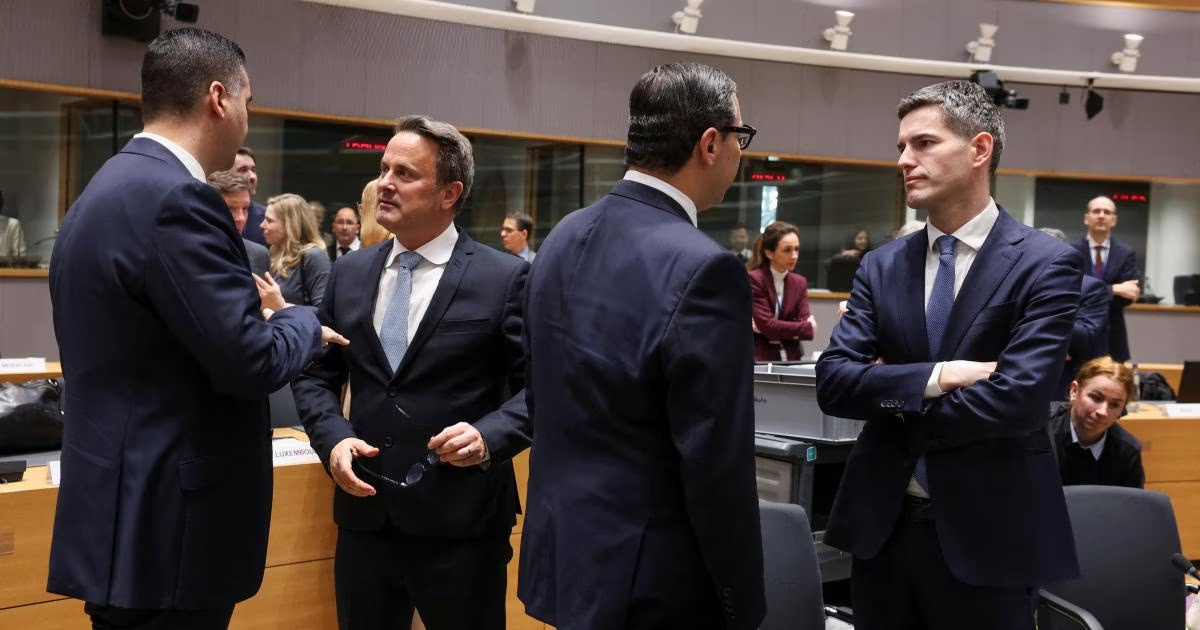
On the European diplomatic front, EU foreign policy chief Kaja Kallas revealed a desire to strengthen existing naval missions, but without expanding their geographical scope. Kallas explained that foreign ministers agreed to keep Operation 'Aspides' within its current boundaries, refusing to include the Strait of Hormuz in its mandate.

Greece, which leads the 'Aspides' mission, announced that its military activity would remain confined to the Red Sea region only. This stance confirms the European apprehension about approaching Iranian coasts, where direct confrontations and missile threats that have disrupted navigation are concentrated.

In London, British Prime Minister Keir Starmer adopted more diplomatic language, yet not without caution, indicating that his country would work on collective plans to ensure freedom of navigation. However, Starmer stressed that Britain would not be drawn into a wider war, hinting at the possibility of contributing only technical systems for mine detection.

Denmark, meanwhile, called for the necessity of keeping diplomatic channels open and working to de-escalate, despite dissatisfaction with developments on the ground. Its foreign minister considered that Europe's contribution should primarily aim to calm the situation and prevent a full-blown explosion in the vital region.

In the Netherlands, Foreign Minister Tom Berendsen considered that making decisions about military missions in the Gulf requires a precise timeframe and legal framework within NATO. Berendsen affirmed that these decisions are 'crucial' and cannot be made hastily, noting the absence of a concrete proposal for discussion at present.

On the international level, Beijing entered the crisis by holding intensive talks with all concerned parties with the aim of achieving comprehensive de-escalation. The Chinese Foreign Ministry indicated that the stability of the Strait of Hormuz represents a supreme international interest, and that dialogue is the only way to end the closure that harms the global economy.

US President Donald Trump had called on the international community to assume its responsibilities in securing navigation, after Iran succeeded in paralyzing tanker traffic. Tehran, in response to American-Israeli attacks, used a mix of drones and ballistic missiles, in addition to deploying naval mines in narrow passages.

Observers believe that the European rejection represents a blow to Washington's efforts to build a military 'maximum pressure' alliance against Iran. European capitals prefer to adhere to legal and international paths, away from engaging in alliances led solely by the United States outside the framework of the United Nations or collective consensus.

The Strait of Hormuz remains a major arena of international contention, as its effective closure has led to disruption in global energy markets and increased pressure on oil-importing countries. With continued European refusal to intervene, American options remain limited between unilateral escalation or seeking a political settlement that ensures the reopening of the waterway.

This is not our war, and we did not start it; what does Trump expect a handful of European frigates to do that the powerful US Navy cannot?

ANALYSIS

Mon 16 Mar 2026 7:59 pm - Jerusalem Time

The Crisis of Aging Leadership in Totalitarian Regimes: Why Are Youth Absent from Decision-Making Centers?

The leadership landscape in many totalitarian regimes, particularly in Iran, shows a clear dominance of the older generation, with officials under the age of sixty rarely seen in positions of influence. This phenomenon is not merely about biological age; it reflects a deliberate freezing of the leadership cycle within the regime's structure, transforming desired stability into a state of chronic stagnation.

Confining decision-making to a limited elite for decades leads to institutions becoming closed circles that exclude new generations and prevent them from having real influence. In this context, accumulated experience transforms from a tool for development into an obstacle that resists change, initiating a process of internal erosion that affects vital state joints and deprives them of their flexibility.

In contrast, vibrant nations adopt a logic of periodically renewing elites, allowing new political languages and tools to emerge that are compatible with contemporary societal transformations. Western democracies have seen leaders in their thirties and forties ascend to power, such as Rishi Sunak in Britain and Emmanuel Macron in France, reflecting these systems' capacity to inject new blood.

Looking at the Iranian experience, we find that the upper echelons of decision-making remain hostage to the generation of the revolution that rose in 1979, with a clear absence of institutional succession mechanisms. This situation has led to a noticeable slowness in adapting to international changes, resulting in defensive decisions lacking a spirit of initiative, which is clearly evident in recent tactical failures.

Totalitarian regimes inherently fear internal competition, and therefore prefer absolute loyalty over professional competence, choosing monotonous continuity instead of creative renewal. Over time, these regimes transform into entities that reproduce themselves and their crises, instead of innovating real solutions to the challenges facing their young societies.

The dilemma of aging leadership is not limited to states; it extends to traditional ideological movements that fail to seize the appropriate historical moment for change. In Jordan, Islamist leaders are preoccupied with marginal organizational and legal disputes over party names, at a time when regional realities demand deeper and more contemporary strategic visions.

In the Egyptian case, a sharp division emerges within the Muslim Brotherhood between elderly historical leaders who refuse to step down and a rising generation that possesses different tools. This fragmentation hinders the organization's ability to formulate a political narrative capable of resonating with the aspirations of a street that moves at a much faster pace than its traditional leaders.

On another note, field experiences in conflict zones such as Syria, the Gaza Strip, and Yemen have proven that the presence of youth in centers of action was a decisive factor. Young field leaders emerged, demonstrating greater boldness in decision-making and an exceptional ability to use modern technology in organization, media, and politics.

The failure of systems in institutional learning is due to the absence of real accountability that allows for acknowledging mistakes and correcting deviant paths. Moreover, the absence of power transfer deprives institutions of changing incentives and breaking the circles of narrow interests that form around historical leaders who refuse to leave the scene.

When generational renewal paths are closed, the system becomes a prisoner of its past decisions and revolves in a vicious circle of justifying failure instead of learning from it. This political deadlock inevitably leads to doubling down on the same tools that proved ineffective in the past, accelerating the collapse of popular legitimacy.

It must be emphasized that youth alone is not an automatic guarantee of success; there must be institutions that balance the enthusiasm of youth with the experience of elders. The successful equation lies in creating a true partnership between generations, where experience becomes a wise guide and the energy of youth becomes a driving force towards the future.

The fundamental question that political elites should ask is not about the age of the leader, but about the vitality of the idea and its ability to renew and keep pace with the times. Regimes that close their doors to new generations are, in fact, announcing the beginning of their end, because they lose the ability to understand the language and needs of the era.

History always proves that survival is for those most capable of adapting and transforming mistakes into cumulative knowledge that serves the public good. In light of the rapid transformations the world is witnessing, leadership renewal is no longer a political luxury that can be postponed, but has become an imperative necessity to ensure the stability of nations and protect them from erosion.

In conclusion, the growing gap between young societies and aging leaders represents a ticking time bomb that threatens the stability of totalitarian regimes. Opening up to youth and transferring leadership is the only way to overcome stagnation and ensure the building of a future based on competence and innovation instead of loyalty and rigidity.

History does not forgive regimes that fear their youth, and renewal is not a political luxury but a fundamental condition for survival and continuity.

ISRAELI AFFAIRS

Mon 16 Mar 2026 7:59 pm - Jerusalem Time

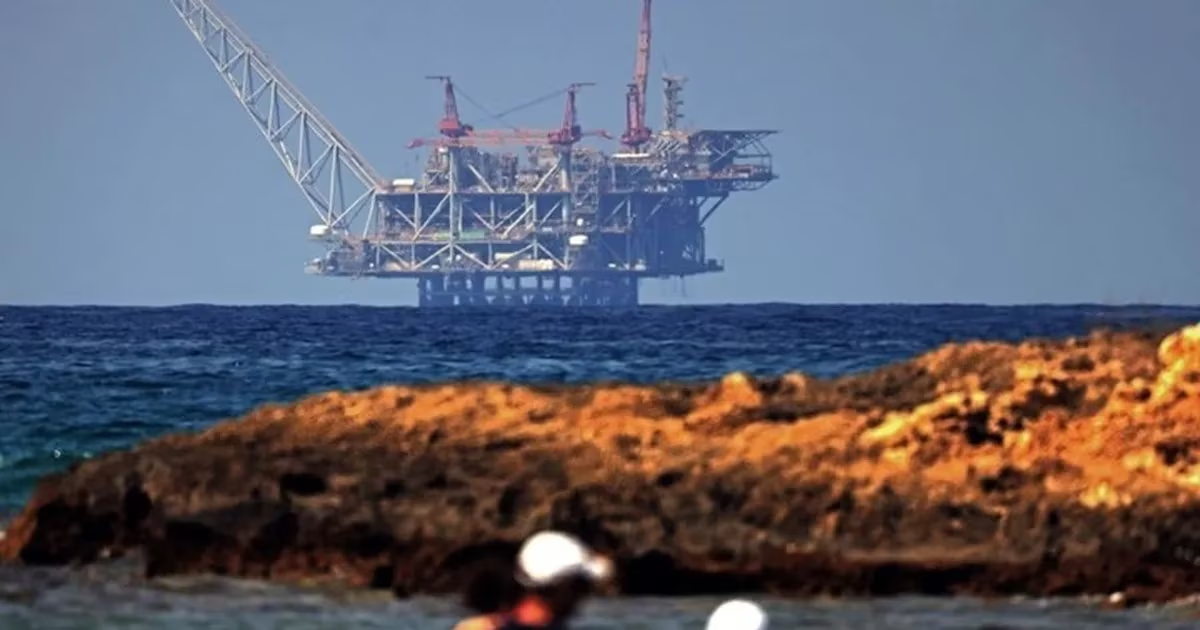
Energy Crisis in Israel: Gas Platform Closures Cost Occupation Hundreds of Millions

Media sources reported that the Israeli occupation authorities decided to continue the closure of the strategic gas platforms 'Leviathan' and 'Karish' for more than two consecutive weeks. This step comes amid escalating military tensions and direct confrontation with Iran, as the government seeks to reduce security threats that could affect vital energy facilities in the country.

Economic reports stated that the closure decision stems from serious concerns about targeting these platforms, which are considered among the most expensive national assets, with the cost of building a single platform estimated between 1 billion and 1.5 billion dollars. This precautionary measure aims to ensure that the facilities are not subjected to total destruction in the event of precise missile attacks, which could make their repair impossible.

As a result of the halt in natural gas flow, the Israeli Electric Corporation was forced to revert to using more expensive and polluting alternatives such as coal and diesel to secure energy needs. This shift has caused heavy financial burdens, with estimates indicating that the economic losses resulting from this halt amounted to approximately 300 million shekels per week.

The total losses over the past two weeks reached approximately 600 million shekels, equivalent to about 192 million US dollars. These figures reflect the extent of economic pressure facing the Israeli energy sector amid continued security uncertainty and the absence of a clear timeline for resuming operational activities.

The repercussions of the closure were not limited to the Israeli domestic market but also extended to regional gas supplies destined for both Egypt and Jordan. Observers believe that this interruption sends negative signals to international investors about the reliability of the Israeli energy sector and its ability to fulfill its contractual obligations in times of crisis.

For its part, the occupation's Ministry of Energy clarified that these measures fall within the risk management policy during wartime to reduce the level of potential threats. Experts confirmed that the damage that could be inflicted on platforms while they are shut down is limited and can be technically dealt with, unlike the catastrophic explosions that could occur if they were targeted at the peak of their production.

Despite this strategic halt, sources confirmed that domestic demand for electricity remains stable so far without widespread outages. This is due to the intensive reliance on reserve stocks of alternative fuel, despite the exorbitant costs this imposes on the state's general budget.

It is worth noting that this is the third time Israel has been forced to close gas platforms since the outbreak of confrontations on October 7th. The recurrence of these incidents raises widespread debate within Israeli political and economic circles about how to balance the protection of strategic assets with reducing the ongoing financial bleeding.

The closure of the platforms aims to reduce security risks, as their destruction during operation could lead to catastrophic consequences compared to their shutdown.

ARAB AND WORLD

Mon 16 Mar 2026 7:58 pm - Jerusalem Time

Confrontation in the Strait of Hormuz: Is Washington Sliding Towards a Ground Invasion of Iranian Islands?

Coinciding with the Pentagon's decision to send 2,500 Marines to the Strait of Hormuz, the American-Israeli coalition carried out airstrikes targeting Iran's Kharg Island, the vital artery that processes about 90% of Tehran's oil exports. These developments come amidst an international mobilization that included the European Union expanding its 'Aspides' naval mission, Britain sending thousands of interceptor drones, in addition to South Korean and Ukrainian reinforcements to the region.

Field data indicates that the US administration may move beyond an air bombardment strategy towards the option of direct ground control over strategic islands such as Kharg, Larak, Hormuz, and Qeshm, with the aim of tightening its grip on the strait and encircling Bandar Abbas port. This approach comes despite internal military warnings that controlling these islands would require thousands of soldiers and complex supply lines, as well as the risks of confronting hundreds of thousands of Revolutionary Guard elements in an open combat zone.

Media sources reported that US President Donald Trump ignored warnings from military leaders, led by Chairman of the Joint Chiefs of Staff General Dan Kin, regarding Tehran's ability to disrupt the global shipping lane using mines and drones. In contrast, Israeli Prime Minister Benjamin Netanyahu is promoting the idea of a 'quick victory,' based on the results of previous operations, which raises concerns about a gap between political ambitions and the field reality that could end in a catastrophic war of attrition for the global economy.

Amidst this escalation, varying scenarios emerge within decision-making circles in Washington; while some push for gradual involvement in a ground invasion, other advisors, such as David Sacks, propose a strategy of 'declaring victory and withdrawing' to avoid getting bogged down in a long-term conflict, which places the region at a dangerous crossroads that could reshape the map of influence in the Gulf.

The decision to call up Marines indicates that the Trump administration is preparing to transition from the idea of destroying Kharg Island through air bombardment to subjecting it to direct American occupation.

ARAB AND WORLD

Mon 16 Mar 2026 7:58 pm - Jerusalem Time

Iranian Missiles Target Jerusalem and Tel Aviv, Shrapnel Falls in Beit Shemesh and Ben Gurion Airport Vicinity

The occupied city of Jerusalem and its western suburbs experienced a state of alert following the sounding of sirens for the second time on Monday, after a wave of missiles launched from Iranian territory was detected. Field sources reported hearing loud explosions shaking the city, resulting from air defense systems attempting to intercept hostile targets in the region's sky.

In the Beit Shemesh area, west of Jerusalem, large missile shrapnel fell, causing panic among settlers. Hebrew media reports confirmed that this shrapnel was a result of aerial interception operations. Medical teams did not report any direct human casualties at this location, despite the repeated falling of missile remnants in the same area in recent days.

Israeli authorities impose strict military censorship on the extent of material and human losses resulting from these strikes, with media outlets prohibited from circulating videos documenting the exact impact locations. Observers suggest that this blackout may reflect a desire to conceal the true extent of damage to sensitive sites deep within Israeli territory.

For its part, the Iranian Revolutionary Guard officially announced that the missile attack directly targeted David Ben Gurion Airport in Lod, in addition to a group of military bases and facilities belonging to the Israeli army. These statements come at a time when journalistic sources confirmed the detection of missile parts falling in about ten different locations within the greater Tel Aviv area.

Technical reports indicated the possibility of using cluster warhead missiles in the recent attack, as parts of them fell in the vicinity of Ben Gurion Airport and other vital areas in the center. Competent authorities are conducting field investigations to examine the nature of the projectiles that managed to penetrate the atmosphere and reach their targets despite the activation of defenses.
On the medical front, sources stated that the ambulance system did not record fatal injuries in recent hours, but Israeli hospitals daily receive between 150 to 200 cases of varying injuries since the escalation began. According to Ministry of Health data, the total number of injured on the Israeli side has risen to approximately 3,400 people since the outbreak of the confrontation.

In contrast, Iran is experiencing difficult humanitarian conditions due to continuous attacks launched by Israel and the United States since late February. According to available statistics, these raids have resulted in the martyrdom of at least 1,332 people, including hundreds of children and women, amid massive destruction to infrastructure and civilian facilities.

The Iranian arena had suffered a major political and military blow with the assassination of Supreme Leader Ali Khamenei during the ongoing military operations, which prompted Tehran to escalate the pace of its missile responses. Sources confirm that the number of injured inside Iran has exceeded 15,000 people, amid a severe shortage of medical supplies and the ability to deal with the extent of the destruction.

The open confrontation between the two sides continues in the absence of any prospect for de-escalation, as both sides exchange intensive missile and aerial strikes. International circles are awaiting the outcomes of this unprecedented escalation, which has moved from shadow wars to direct confrontation affecting capitals and strategic airports.

The Iranian Revolutionary Guard confirmed that the missile attack targeted Ben Gurion Airport and vital Israeli military facilities.

ARAB AND WORLD

Mon 16 Mar 2026 7:54 pm - Jerusalem Time

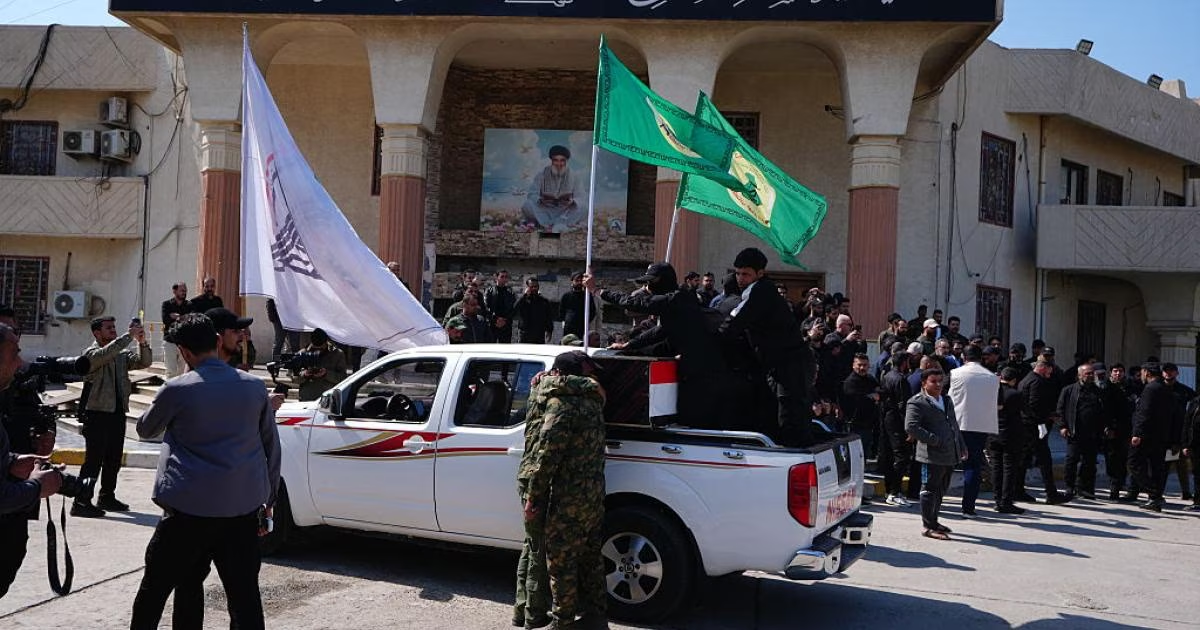
6 killed from Popular Mobilization Forces in bombing targeting security headquarters in Al-Qaim city, western Iraq

The Popular Mobilization Forces (PMF) in Iraq announced this evening that a number of its fighters were killed in an aerial attack that targeted one of its security headquarters in the western Anbar province. The PMF clarified in an official statement that the bombing targeted the 'Martyr Haider checkpoint' located in the Al-Qaim district, adjacent to the Syrian border, resulting in human and material losses at the site.

According to initial reports from official sources, the attack resulted in the death of at least six elements and the injury of four others with varying degrees of wounds. The PMF directly pointed fingers at Israel, describing the operation as a 'treacherous Zionist aggression' that targeted a regular force performing its security duties within the structure of the Iraqi armed forces.

The PMF stressed in its statement that these repeated attacks will not deter it from continuing its duties in protecting Iraqi sovereignty and defending the country's security. It affirmed that the targeting of its official headquarters represents a blatant violation of international norms, indicating its fighters' insistence on steadfastness in their positions despite increasing security challenges.

This escalation comes at a time when the PMF revealed bloody statistics of the bombings it has been subjected to since the beginning of March. Reports indicated the death of 27 and the injury of nearly 50 of its members due to a series of airstrikes previously attributed to US forces, reflecting the extent of military pressure the PMF has recently faced.

Informed sources stated that the total number of airstrikes targeting PMF headquarters reached approximately 32 since the beginning of the current month. These strikes are distributed across different regions of the country, especially in border areas witnessing intense activity by armed factions operating under the banner of the 'Islamic Resistance in Iraq'.

The region has been experiencing a state of security turmoil since late February, as Iraqi factions have been carrying out daily drone and missile attacks against what they describe as 'enemy bases'. These actions come in response to military operations launched by the United States and Israel in the region, turning the Iraqi arena into a field for settling regional scores.

It is worth noting that the Popular Mobilization Forces were established in 2014 as an auxiliary force to fight the Islamic State organization, before being officially integrated into the Iraqi military establishment. The PMF includes various factions, some of which have close ties with Iran, and operates under the command of the Commander-in-Chief of the Iraqi Armed Forces according to local law.

The Martyr Haider checkpoint in Al-Qaim district, Anbar province, was subjected to a treacherous Zionist bombing that targeted an official security site belonging to the PMF.

PALESTINE

Mon 16 Mar 2026 7:54 pm - Jerusalem Time

Ministry of Finance: The government will remain committed to disbursing salaries at rates determined by available financial capabilities

Ministry of Finance and Planning holds consultations with civil society on the 2026 cash budget

- The cash budget will not harm the poor and focuses on the sustainability of essential services

Minister of Finance and Planning, Dr. Stefan Salameh, reviewed before representatives of civil society organizations the general features of the 2026 emergency budget, which is based on spending available cash flows to the public treasury, according to priorities that will address existential risks and current regional challenges.
This came during a consultation workshop held by the Ministry of Finance and Planning today, Monday, during which Salameh stressed that the government will remain committed to disbursing a percentage of employees' salaries according to the financial capabilities available each month, with a focus on the education, health, and security sectors.

The Minister of Finance and Planning affirmed the government's approach of conducting the broadest community consultations on public policies, ensuring the preparation of a budget responsive to the current Palestinian reality, noting that the Israeli government continues for the tenth month to withhold Palestinian clearance funds, which constitute about 70% of the Palestinian government's revenues, in addition to the absence of serious international commitments – at this stage – to support the public treasury.

Salameh stressed before civil society representatives that the budget draft takes into account the poor and low-income groups, explaining that the basic pillars adopted by the Ministry of Finance and Planning in its preparation ensure the sustainability of essential services under difficult circumstances, control operational expenses, achieve tax justice, and combat evasion and smuggling.

Furthermore, the consultation workshop witnessed an in-depth discussion with civil society representatives, in order to reach a transparent budget that reflects local, regional, and international changes, and meets basic needs to enhance the steadfastness of citizens in the face of unprecedented challenges.

ARAB AND WORLD

Mon 16 Mar 2026 7:54 pm - Jerusalem Time

From Panama to Venezuela.. The History of US Military Landings and Their Strategic Objectives

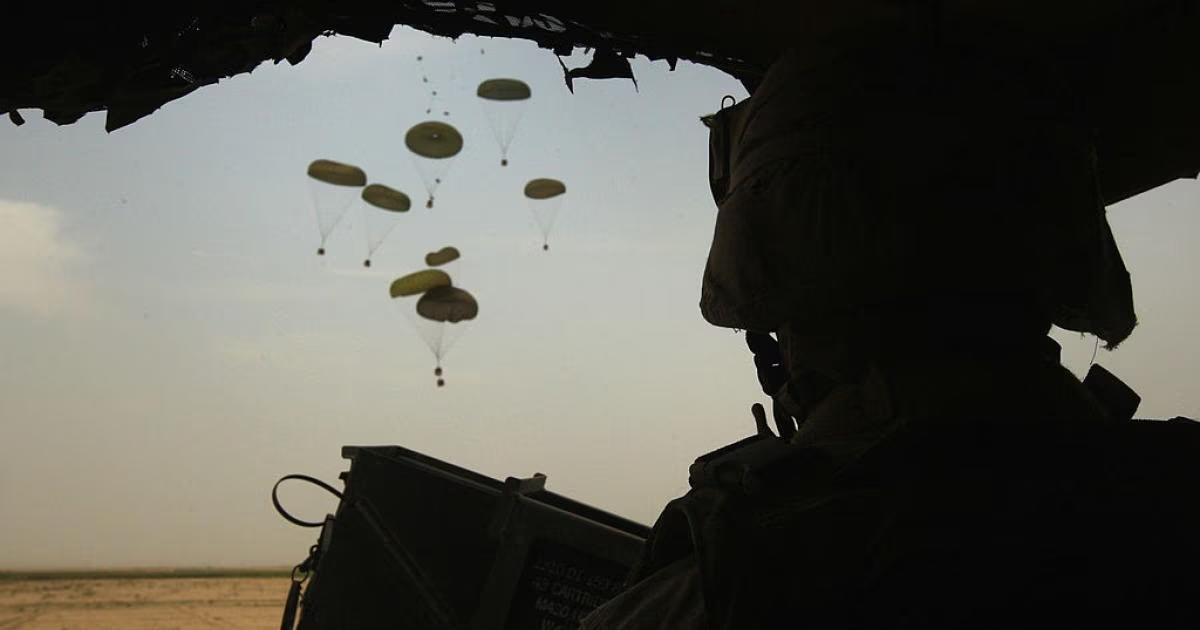
International speculation has recently escalated regarding the possibility of the United States carrying out special military operations or occupying the Iranian island of Kharg. These expectations come in the context of recalling Washington's military history, which relies heavily on airborne landings as a strategic tool to decide battles and change the balance of power in record time.

The abduction of Venezuelan President Nicolas Maduro on January 3rd is the latest controversial example in this context. A US commando force of about one hundred soldiers carried out a surprise landing in the capital Caracas under intense air cover, leading to his arrest and capture in an operation that shocked international political circles.

In the Syrian arena, US forces have adopted an airborne landing strategy since 2014 to pursue leaders of the Islamic State organization. Among the most prominent of these operations was the one that resulted in the killing of the organization's leader, Abu Ibrahim al-Qurashi, in the northwest of the country, operations that rely on extreme speed and accurate intelligence to achieve their objectives.

The operation that changed the face of the conflict with Al-Qaeda was at dawn on May 2, 2011, in the Pakistani city of Abbottabad. US commandos were able to eliminate Osama bin Laden in a special operation that did not exceed 40 minutes, reflecting Washington's ability to reach its targets deep within other countries' territories.

Returning to the invasion of Iraq in 2003, the 'Airborne Dragon' operation emerged as one of the largest preliminary landing operations for the ground invasion. Special units were deployed in strategic areas within Iraqi territory to secure roads and facilitate the advance of main ground forces towards the capital Baghdad to ensure its rapid fall.

In the aftermath of the September 11, 2001 attacks, the Afghan mountains were the scene of landings by US special units in support of local armed factions. These operations aimed to undermine the Taliban's rule at the beginning of what later became known as the longest war fought by the United States in its military history outside its borders.

However, the history of US landings has not always been fraught with easy success, as the Somali capital Mogadishu witnessed a major setback in October 1993. The operation, known as 'Black Hawk Down,' turned from a quick arrest mission into a bloody street battle that resulted in the deaths of 18 American soldiers and injuries to dozens, which constituted a major embarrassment for the US administration at the time.

In late 1989, Washington carried out the invasion of Panama through large-scale airborne landing operations that included the capital Panama City and other vital areas. The mission aimed directly at overthrowing the rule of Manuel Noriega, who was wanted by the US judiciary on charges related to drug trafficking and international extortion.

These operations are an integral part of the American military doctrine that prefers the use of special forces and airborne landings to achieve rapid political and military results. These tactics allow Washington to overcome geographical complexities and traditional fortifications of adversaries, making them the first choice in explosive international crises.

Reports indicate that reliance on this type of operation reduces human casualties among attacking forces compared to comprehensive traditional wars. However, the success of these operations remains dependent on the accuracy of intelligence information and the ability to deal with field surprises that may arise during execution.

Finally, the question remains whether the circulating scenarios regarding Iran will join the list of these historical operations. While Washington works to use these threats as political leverage, the option of military landing remains on the table for American decision-makers as a decisive tool in confronting regional challenges.

Landings have never been merely a tactical option, but rather an expression of a military doctrine aimed at neutralizing adversaries with lightning speed.

ISRAELI AFFAIRS

Mon 16 Mar 2026 5:18 pm - Jerusalem Time

Escalating Economic Losses.. Israeli Budget Deficit Jumps to 5.1% Due to War Costs

Hebrew media reports have highlighted the growing economic challenges facing Israel, warning of a state of 'escalating deficit' in the general budget. Sources indicated that the continuation of military confrontations on multiple fronts, especially with Iran, has led to an unprecedented depletion of financial resources, exceeding all previous estimates.

Military expert Ami Rochkes Dumba criticized the Israeli government's decision to increase the financial deficit for 2026 to 5.1% of the GDP. Dumba considered this approach to reflect a lack of strategic planning and responsibility towards the exorbitant economic price that the Israeli public will bear in the coming years.

Informed sources explained that the government was forced to make emergency adjustments to the budget because the ongoing military operation expenses were not included in the initial forecasts. Official documents acknowledge that the state is obligated to spend huge sums that were not hedged when previous financial laws were drafted, putting immense pressure on the public treasury.

The data indicates that the government based its budget on illusory assumptions that the current year would pass without large-scale fighting, despite the security tensions existing since October 2023. This failure in estimation shows a deep gap between the reality on the ground and financial plans that ignored years of direct and indirect conflict.

According to economic analyses, the jump in the deficit from 3.4% in 2025 to 5.1% in 2026 reflects the addition of between 20 to 25 billion shekels above what was planned. This increase is a dangerous indicator of government spending spiraling out of control in the absence of a horizon for the end of military operations.

In a related context, the public debt to GDP ratio has risen alarmingly, jumping from 60% before the outbreak of confrontations in 2023 to about 66%. Reports predict that this ratio will approach the 70% barrier soon, which represents a long-term burden on the Israeli economy and its borrowing capacity.

Sources confirm that every additional percentage point in the debt ratio increases the annual interest cost by amounts ranging from 1.5 to 2 billion shekels. These huge sums will be financed directly from the pockets of settlers through cuts in future government services or the imposition of new and burdensome tax increases.

Even if a quick calm is reached, military expenditures will not stop immediately due to the urgent need to replenish depleted weapon stockpiles. The army will have to complete deferred equipment purchases and rehabilitate defense systems that were consumed during months of long fighting.

The initial cost of rebuilding the military system alone is estimated at an additional 20 to 30 billion shekels, to be distributed over several fiscal years. This means that the defense budget will continue to drain the largest share of national resources at the expense of education, health, and social welfare sectors.

Circles within the government coalition are trying to promote optimistic scenarios claiming the ability to return to fiscal discipline within four to six years. However, economic experts confirm that these estimates lack realism, and that recovery from the effects of this war may take a full decade.

Observers believe that the widening deficit, while necessary to finance the military campaign, carries warning signs for international financial institutions and credit rating agencies. A country that enters major confrontations without sufficient reserves risks its overall financial stability and puts its economic future at stake.

The current financial policy reveals Israel's unpreparedness to face realistic scenarios, where crises and costs are deferred to future generations. The current decision to increase spending is not merely a response to an emergency, but an implicit acknowledgment of entering a conflict without a full understanding of its deep economic consequences.

The Israeli public now faces the repercussions of these policies through a decline in purchasing power and rising living costs associated with financing the war effort. Concerns are growing that the continuation of this approach will lead to a long-term economic recession that will be difficult to exit without radical and painful reforms.

In conclusion, the Israeli economy remains hostage to developments on the ground, as promises of stability evaporate in the face of escalating deficits and accumulated debts. Questions remain about the government's ability to balance increasing security requirements with maintaining the minimum financial balance needed to prevent collapse.

The gap between assumptions and reality is not just an error in judgment, but evidence of a dismal failure in financial planning to confront war scenarios.

ARAB AND WORLD

Mon 16 Mar 2026 5:18 pm - Jerusalem Time

Le Monde: Washington Faces Strategic Surprises in Iran War and Trump's Confused Objectives

French press reports confirmed that the American administration faced a state of astonishment and unpredictability regarding the scale of the Iranian response that targeted countries in the region, in addition to the strategic move of closing the Strait of Hormuz. Sources clarified that this development reflects a significant gap in the intelligence and political assessments of the White House, which had been banking on relative calm in the Middle East before events dramatically accelerated.

The reports recalled statements by former National Security Advisor Jake Sullivan at the end of September 2023, when he described the region as the calmest in two decades, assessments that completely collapsed just eight days later with the launch of 'Al-Aqsa Flood' operation. This failure in prediction also extended to the current administration led by Donald Trump, who promised a future of commercial prosperity instead of chaos during his Gulf tour in May 2025.

Despite Trump's claims in his official speeches that he succeeded in bringing peace to the region for the first time in thousands of years, the reality on the ground indicates Washington's slide into a military adventure that began last February. Analyses suggest that the US President pushed the Middle East into a deep, ill-defined abyss, severely damaging the credibility of the United States as a guarantor of global stability.

On the military front, data indicates that the United States and the occupying state achieved technical successes by destroying large parts of Iranian air and naval capabilities and air defense systems. However, the fundamental question of how to achieve 'final victory' remains unanswered, amidst fluctuating declared American objectives that ranged from destroying the nuclear program to changing the political regime in Tehran.

Sources considered Washington's attempt to replicate political models from Latin America and apply them to the complex Iranian reality reflects a deep ignorance of the regional context. This confusion in defining ultimate goals gives the White House formal flexibility to declare an end to the war at any time, but at the same time makes any claim of victory highly suspect among international political and military circles.

Regarding material costs, US Department of Defense estimates revealed that the first six days alone of military operations against Iran cost the US treasury approximately $11.3 billion. Losses were not limited to the financial aspect but also included damage to sensitive defense systems such as the 'THAAD' radar in Jordan, which raised concerns among Washington's allies in other regions such as South Korea.

The reports indicated that the assassination of Iranian Supreme Leader Ali Khamenei has turned the elimination of foreign leaders into a 'normal' occurrence in international politics, opening the door to dangerous precedents that could be exploited by other global powers such as Russia and China. This military approach has led to a massive depletion of ammunition stockpiles and advanced systems, reducing Washington's ability for military deployment on other fronts around the world.

Inside Iran, it appears that the regime has absorbed the initial shock and begun to reorganize its cards under the leadership of Mojtaba Khamenei, who succeeded his father under extremely complex circumstances. Sources believe that Tehran is now more convinced that its optimal weapon lies not only in direct military confrontation but in its ability to disrupt global energy supply chains and paralyze movement in the Strait of Hormuz.

This Iranian shift towards 'economic deterrence' has created a divergence of views between Washington and Tel Aviv; while the occupation views the conflict as an existential battle requiring the complete crushing of the adversary, the Trump administration seeks a political exit that saves face. Washington also did not anticipate the weak desire of the Iranian street to engage in attempts to overthrow the regime under the intense aerial bombardment of cities.

At the bilateral relations level, the war has deepened the division within the United States regarding unconditional support for the occupying state, where 'Israel' has transformed from a point of bipartisan consensus into a subject of sharp political debate. This is primarily due to the massive amount of aid and accusations of committing war crimes in the Gaza Strip, as well as Benjamin Netanyahu's dominance over American political discourse.

Sources close to the 'MAGA' movement quoted that Netanyahu's policies succeeded in uniting Iranians behind a Persian nationalist sentiment, after a large part of them had opposed the ruling regime. This shift represents a strategic loss for Washington, which had been banking on winning the favor of the Iranian people to isolate its leadership, which observers see as a direct result of the uncalculated military impulsiveness.

In a broader regional context, the occupation's attempts to reshape the Middle East through unilateral military force have aroused increasing resentment among regional powers, especially Turkey. Ankara today emerges as a competitor seeking to curb Israeli ambitions, while Washington finds itself hesitant to use certain pressure cards for fear of angering other regional allies, confirming the conflict of American and Israeli interests.

The reports concluded that Trump's 'imperial arrogance' may ultimately weaken American power rather than strengthen it, especially with the increasing reliance on Israeli arguments in making sovereign decisions. The absence of a clear post-war vision makes any tactical military achievement merely a step towards further instability in a region that still refuses to submit to external dictates.

The question remains about the Iranian regime's ability to endure as a 'headless duck' that continues to move automatically despite painful blows, and Washington's ability to withstand the depletion of its resources in an unpopular war domestically. The current scene places the world before a new stage of international conflict, where the rules of international law fall in favor of the logic of pure force.

The utmost illusion for Washington is the belief that Trump can end hostilities alone with just a message on the Truth Social platform.

PALESTINE

Mon 16 Mar 2026 5:18 pm - Jerusalem Time

Talks in Cairo between Hamas and Trump's 'Peace Council' to save Gaza ceasefire

The Egyptian capital, Cairo, hosted intensive discussions earlier this week between a delegation from the Hamas movement and envoys from the 'Peace Council' headed by US President Donald Trump. These moves come in a serious attempt to maintain the cohesion of the ceasefire in the Gaza Strip, which has been facing increasing pressure since the United States and Israel became involved in military operations against Iran.

This meeting is the first officially announced encounter between the movement and the new international council since the outbreak of the recent regional war. The Peace Council, personally overseen by Trump, aims to establish administrative and security arrangements for the Gaza Strip in the post-war phase, as part of a broader political vision that the American side seeks to establish.

Following these discussions, Israeli authorities announced on Sunday their decision to reopen the Rafah land crossing, which connects the Gaza Strip and the Arab Republic of Egypt, later this week. The crossing had been completely closed since the start of the military campaign against Iran on February 28, exacerbating the humanitarian crisis.

Informed sources reported that the sudden Israeli decision to open the crossing came as a direct response to the outcomes of the deliberations held in Cairo between Hamas and Trump's representatives. Through this step, mediators aim to alleviate field tensions and ensure the continued flow of basic necessities through the only exit point for individuals to the outside.

For its part, Hamas issued clear warnings during the meeting, indicating the possibility of retracting previous commitments related to the ceasefire agreement. Representatives of the movement affirmed that the continuation of strict Israeli restrictions imposed on the Strip since the start of the confrontation with Iran could lead to the collapse of existing security understandings.

Trump's 20-point plan was the cornerstone of US policy in the Middle East before the conflict with Iran erupted. However, recent military developments led to the freezing of some sensitive issues, most notably the 'disarmament' of Palestinian factions, which was supposed to be discussed in advanced stages.

Aryeh Lightstone, a senior aide to Special Envoy Steve Witkoff, represented the Peace Council in these talks and was seen in Cairo in recent days. Despite official secrecy regarding the details of the meetings, US officials confirmed continued communication with regional partners to implement the provisions of the American vision for Gaza.

Reports indicate that Israel justified the closure of the crossings in the past period by the difficulty of operating them securely amidst ongoing military operations, before backtracking and allowing limited aid entry. The reopening of the Rafah crossing is expected to undergo precise security assessments to ensure that ongoing military operations on other fronts are not affected.

Additional rounds of negotiations are expected in Cairo in the coming days to complete discussions on outstanding issues between the two parties. International parties seek to prevent the Gaza Strip from sliding into a new wave of comprehensive escalation, especially given the major powers' preoccupation with the direct conflict with Tehran and its geopolitical repercussions.

Israel's announcement of opening the Rafah crossing came as a direct result of the meeting held by the Peace Council with Hamas in Cairo.

PALESTINE

Mon 16 Mar 2026 5:18 pm - Jerusalem Time

Javier Bardem renews his cry 'Free Palestine' from the Oscars red carpet

The red carpet at this year's Academy Awards ceremony witnessed a remarkable political presence from Spanish actor Javier Bardem, who chose to use the global platform to express his principled stances. Bardem appeared wearing a pin with the phrase 'No to War' in Spanish, the same symbol he became known for nearly two decades ago during artistic protests against the invasion of Iraq in 2003.

The international star did not stop at silent symbolism but made explicit statements to the global media, affirming his full solidarity with the Palestinian people with the chant 'Free Palestine'. Bardem stressed that his voice today is an extension of his long-standing rejection of armed conflicts that claim innocent lives, considering the Palestinian issue to represent the core of the struggle for human rights at present.

In a scathing critique of international policies, Bardem compared the circumstances that led to the Iraq War with what is happening today in terms of military escalation in the region, describing current wars as lacking legal legitimacy. He clearly indicated that these conflicts are managed based on misleading claims aimed at achieving narrow political gains at the expense of global stability and civilian lives.

The Spanish actor held both Benjamin Netanyahu and Donald Trump responsible for fueling the situation, considering their horrific actions only lead to increased radicalization in the region instead of achieving stated goals. He explained that the return to using slogans from 2003 is a result of repeating the same historical mistakes for which victims in conflict zones, especially in the Palestinian territories, pay the price.

Bardem concluded his speech by emphasizing the moral role of artists, noting that being present at events followed by millions of people, such as the Oscars, imposes on them the responsibility to shed light on urgent political issues. Bardem believes that silence in the face of illegal wars is participation in them, which always drives him to use his artistic status to advocate for peace and international justice.

No to war... and Free Palestine; artists have a responsibility to express their positions on humanitarian and political issues.

ISRAELI AFFAIRS

Mon 16 Mar 2026 5:18 pm - Jerusalem Time

Iranian missiles target Ben Gurion Airport vicinity, hitting 10 locations in central Israel

The Israeli army announced today, Monday, that it had detected a new wave of missiles launched from Iranian territory towards targets deep inside Israel. Military sources confirmed that the attack triggered sirens in wide areas including Tel Aviv, Herzliya, and Ashdod, amidst loud explosions resulting from air defense systems attempting to intercept hostile targets.

Field reports indicated that cluster munitions fell in at least 10 locations in the Central District, with some of these impacts concentrated around David Ben Gurion Airport in the city of Lod. Columns of smoke rose from several points near the vital air facility, causing a state of security and technical alert within the airport and its surrounding areas.

Regarding material damage, missile fragments struck a house in the town of Shoham, located east of Tel Aviv and near the airport. Video documentation showed partial destruction of the targeted building, but Israeli authorities have not reported any human casualties from this incident so far.

For its part, Israeli media sources reported that about 5 missiles fell in open areas in the Western Galilee, coinciding with the missile barrage that targeted the center. The sources indicated that the number of confirmed locations where cluster munitions fell significantly increased to 10 different geographical points.

Military analyses suggest that this targeting of Ben Gurion Airport is the third of its kind in the last week using cluster munitions. These attacks appear to aim at testing the efficiency of air defenses in protecting the most important air facility, as well as seeking to raise the cost of securing international flights to and from Israel.

Informed sources explained that the repeated use of cluster munitions is not necessarily intended to completely destroy the airport, but rather seeks to disrupt takeoff and landing paths and waiting lounges. This strategy comes as part of attempts to impose an indirect aerial blockade and increase economic pressure on the Israeli government by paralyzing air traffic.

This escalation coincides with the continued targeting of the eastern and southern suburbs of Tel Aviv, with projectiles repeatedly falling in the Rishon LeZion and Shoham areas. These attacks reflect a determination to keep the central region under constant threat, disrupting public life and increasing the state of confusion on the home front.

On the medical front, the Israeli Ministry of Health revealed new data regarding the extent of injuries, with 142 Israelis transferred to hospitals in the past twenty-four hours. These cases vary between direct injuries from shelling or panic attacks and injuries sustained while fleeing to shelters.

According to official statistics, the total number of Israelis admitted to hospitals since the beginning of the current confrontation has reached approximately 3369 people. 81 injured individuals are still receiving treatment in various medical centers, including cases of varying severity, amid ongoing security and military tension on various fronts.

The primary Iranian goal is to disrupt navigation at the airport, impose an aerial blockade on Israel, and expand the economic cost.

ISRAELI AFFAIRS

Mon 16 Mar 2026 5:17 pm - Jerusalem Time

Widespread Internal Displacement Wave in Israel as Scope of Rocket Targeting Expands

Hebrew media sources reported that Israeli settlements and cities in the central and northern regions are experiencing an unprecedented state of internal displacement. These widespread movements come amid an escalation in rocket attacks launched from Lebanon and Iran, which have led to an expansion of direct threats on multiple fronts.

Reports indicated that thousands of Israelis have begun to flock to the city of Eilat in the far south, believing it offers protection far from the line of fire. However, this displacement reflects the growing anxiety and the clear collapse in the sense of personal safety, even in areas previously classified as far from the conflict.

In recent days, Eilat has witnessed a significant accumulation of those fleeing from northern and central Israel, seeking refuge from continuous rocket barrages. Nevertheless, the reality on the ground dashed the hopes of the displaced after air raid sirens blared in the city dozens of times in just one week, confirming that no safe zone exists.

Sources quoted one settler fleeing from Jerusalem as saying that resorting to fortified rooms is no longer an effective solution against the intensity of the shelling. Residents described the overall scene as catastrophic, with families repeatedly forced to run to shelters amidst a state of complete helplessness in confronting the constant threat of shelling.

Eilat is suffering from a suffocating overcrowding crisis in available hotels, at a time when nearly half of the hotel establishments have closed due to deteriorating security and economic conditions. This closure has exacerbated the suffering of the displaced, who now face extreme difficulties in finding temporary accommodation away from direct danger zones.

Displacement was not limited to residents of central cities but also included thousands of residents of the Kiryat Shmona settlement near the Lebanese border. These settlers found themselves forced to displace again after their areas were subjected to violent and continuous attacks, prompting them to search for alternative housing in deeper areas.

Some of those fleeing indicated that they returned to stay in hotels they were evacuated to at the beginning of the escalation more than a year ago, but this time at their own expense. They expressed their deep frustration at being pursued by rockets and air raid sirens even in the southern cities they fled to seeking tranquility.

This forced movement between cities reflects a state of collective terror that currently grips Israeli society. It has become clear that geography no longer poses an obstacle to the arrival of rockets, making the circle of fire encompass all areas without exception.

Eilat, which relies economically primarily on domestic tourism, has been severely affected by this deteriorating security situation. The number of visitors has begun to decline sharply, and many vital facilities have closed their doors, signaling a deep local economic crisis that may be difficult to remedy soon.

Sources spoke of three levels of negative impact from rocket strikes: first, the direct danger to lives; second, the transformation of tourist cities into confrontation zones. The third level is the complete collapse of livelihoods associated with the service sector, which was the backbone of life in the south.

For his part, Eli Lankri, the mayor of Eilat, affirmed that the city is still subject to strict defensive measures to confront aerial threats. Lankri clarified that local authorities are currently unable to reopen schools or restore the normal pace of life given the continued state of high alert.

In a related context, the Israeli Home Front Command maintained strict security restrictions as they were, without any significant easing. This decision reflects security assessments indicating that the risk of rocket attacks remains very high, and the potential for escalation remains at any moment.

Hebrew reports concluded by noting that recent developments regarding internal displacement reflect a transformation of fear from a localized phenomenon to a general and comprehensive state. The prevailing feeling has become that the war is expanding geographically and temporally without a clear horizon for its end or the achievement of real security stability.

Complete safety now seems out of reach for Israelis, even in cities historically described as fortified or far from the front lines. This new reality places immense pressure on the government and military establishment, which have so far failed to secure the home front.

Going to shelters is no longer effective; the rockets have followed us to areas we thought were safe havens.

ARAB AND WORLD

Mon 16 Mar 2026 5:17 pm - Jerusalem Time

Trump seeks to form "Hormuz Alliance" and considers military control of Iran's Kharg Island

Informed sources reported that US President Donald Trump is working intensively to form a new international alliance, dubbed the 'Hormuz Alliance,' aimed at forcibly reopening the strategic strait. These moves come amid escalating military tensions with Iran, which have disrupted a vital part of global energy supplies and led to rising oil and gas prices.

Reports from sources in Washington indicate that Trump hopes to officially announce this alliance later this week. This diplomatic and military endeavor aims to ensure the return of commercial navigation in the strait, which is considered the main lifeline for the global economy.

In a significant field development, the White House is considering the option of full military control over Iran's Kharg Island, which is the main center for Iranian crude oil exports. US officials believe that this step may be necessary if the detention of oil tankers and the disruption of navigation within Gulf waters continue.

Military estimates suggest that controlling the island may require deploying US ground forces, representing a significant escalation in direct confrontation. Washington accuses Tehran of imposing a blockade on the strait that prevents Gulf countries from exporting their oil, while allowing Iranian tankers bound for China to pass.

An informed source explained that the continuation of the current blockade puts the Trump administration in a difficult position, as the President will not be able to end regional conflicts as long as allied oil exports remain restricted. This reality has prompted the US administration to accelerate military and diplomatic mobilization to change the rules of engagement in the region.

Through his 'Truth Social' platform, Trump announced that the United States would lead an international effort to send warships to the Gulf to secure navigation. He called on major countries such as China, France, Japan, South Korea, and the United Kingdom to contribute to this force, considering energy security a shared international responsibility.

In remarks to reporters aboard Air Force One, Trump affirmed that he is demanding active participation from NATO countries and oil-importing nations. He noted that Washington has received mixed responses so far, with some countries agreeing while others expressed clear reservations about military involvement.

A US official revealed that Trump and his team spent the weekend in intensive contacts with allies to build political commitment towards the 'Hormuz Alliance.' These contacts included a phone call with British Prime Minister Keir Starmer, a reversal from Trump's previous statements in which he considered it too late for London to participate.

Through this alliance, the US administration aims to distribute the burden of protecting waterways among the countries benefiting from the oil passing through them. White House officials stressed that most of the oil crossing Hormuz goes to Asia and Europe, not to the United States, which necessitates the participation of those countries in the costs and risks.

In parallel with diplomatic efforts, US forces continue to strike strategic targets inside Iran, focusing on the coasts near Kharg Island. This island is a vital target as it processes about 90% of Iranian crude oil exports, making it a major economic vulnerability for the regime.

Trump had ordered precise strikes on military facilities on the island last Friday, while avoiding direct targeting of oil infrastructure so far. The US President stated in a television interview that these strikes might be repeated, indicating that all options remain on the table.

Despite the enthusiasm in some decision-making circles in Washington, controlling Kharg Island entails enormous geopolitical risks. Observers warn that such a move could prompt Tehran to launch widespread retaliatory attacks targeting oil facilities and pipelines in neighboring countries, especially Saudi Arabia.

For his part, Republican Senator Lindsey Graham supported Trump's approach, considering that taking the war to Kharg Island would be a decisive blow to the Iranian economy. Graham wrote that controlling this strategic oil hub would radically change the course of the conflict and deprive Tehran of its essential financial resources.

The final position on ground control of the island remains pending the developments of the crisis in the Strait of Hormuz and the extent of allies' response to the new alliance. Sources in the US administration confirm that the final decision will depend on the success of current pressures in forcing Iran to end its blockade of international navigation.

Whoever controls Kharg Island controls the fate of this war.

OPINIONS

Mon 16 Mar 2026 5:17 pm - Jerusalem Time

Tisdall: Trump 'World's Number One Enemy' and His Failure in Iran Threatens America's International Standing

Ramallah - "Al-Quds" Dot Com

Ramallah - "Al-Quds" Dot Com

Opinion Writer

Prominent British commentator Simon Tisdall stated that news from the fronts of confrontation with Iran clearly indicates that President Donald Trump is putting the United States on a path to losing wars again. Tisdall emphasized that a disastrous failure is looming in the near future, which will inflict severe symbolic damage on Washington's global standing and national dignity, similar to what happened previously in Afghanistan and Iraq.

The writer described Trump as having become 'the world's number one enemy' due to his continuous threat to international peace and security, noting that he is increasingly losing the illegitimate war he ignited with Iran and is unable to stop it. At the same time, his Israeli ally Benjamin Netanyahu is terrorizing Lebanon and exercising excessive violence, which places the peoples of the world before a hefty economic and security bill as a result of these follies.

The article pointed out that this war adds to Trump's record of violating democracy, appeasing Russia, imposing punitive tariffs, as well as denying the climate crisis and disregarding international law. Tisdall believed that this 'farce' in the White House has gone on for too long, calling on Americans to act decisively to rein in a person who endangers all humanity.

Tisdall believes that Trump completely lacks any strategic plan towards Tehran, as he deludes himself into controlling events while the Iranian regime's defiance increases with every American or Israeli raid. This policy has led to significant damage to American regional bases and Gulf partners due to retaliatory strikes, while Iran has succeeded in closing the vital Strait of Hormuz.

The writer warned of catastrophic economic repercussions, as the global energy shock and rising oil prices have damaged international trade and caused shortages of food and medicine, a crisis that poor countries will suffer from doubly. Tisdall described this situation as the new 'Trump pandemic' that is striking global economic and social stability with no horizon for a solution.

On the Lebanese front, the article noted that the war has unleashed Netanyahu's worst instincts, with continuous and disproportionate airstrikes targeting homes, public facilities, and heritage sites. Tisdall described what is happening in Lebanon as 'state terrorism' that repeats the tragedies of killing and displacement, coinciding with uncontrolled settler violations in the occupied West Bank.

The writer compared Trump to George W. Bush, considering that the latter at least had the courage of his convictions, despite their error in invading Iraq in 2003. Trump, however, lacks the audacity for ground confrontation and sought a quick and cheap victory from the air, but instead embroiled the world in an endless war of attrition that will continue by unequal means.

Tisdall revealed the extent of human and material losses, with the bodies of American soldiers returning in bags, and the financial cost of the war exceeding 11 billion dollars per week. He predicted that American voters would not forgive Trump for this negligence that returned America to the pace of defeat, especially with rising prices and deteriorating living conditions within the US.

Regarding the nuclear file, the article confirmed that the issue remains unresolved despite the destruction of Iranian facilities twice, as Tehran maintains a secret uranium stockpile and scientific expertise that cannot be bombed. Tisdall held Trump responsible for sabotaging peaceful negotiations, warning that the assassination of Supreme Leader Ali Khamenei could push hardliners in Iran towards acquiring a nuclear weapon to ensure the regime's survival.

The writer strongly criticized the statements of Defense Secretary Pete Hegseth, describing them as revealing a mindset that views others as 'barbarians.' He noted that Hegseth suffers from ethical and legal problems, as he claims the ability of American forces to act with impunity, which Tisdall refuted by emphasizing the need to adhere to the Geneva Conventions and international law.

The article highlighted a war crime that occurred on February 28, where more than 100 schoolgirls were killed in an American Tomahawk missile strike on the Minab region. Tisdall considered Trump's attempts to blame others for this massacre as shameful attempts, emphasizing that those responsible for this crime must be held accountable before international justice.

Regarding geopolitical consequences, the writer explained that Washington's allies, including Britain, are resentful of Trump's refusal to consult and his lack of strategic planning. This was evident in the Strait of Hormuz disaster, where Trump escalates the war 'just for fun' by bombing the Kharg oil island, then asks allies to send warships to rescue him.

Tisdall noted that the biggest beneficiaries of this chaos are Russia and China, who are exploiting Trump's disregard for global public opinion to strengthen their influence. While sanctions on Russian oil were temporarily lifted, Trump is sinking into conflicts that weaken American dominance and lead to the erosion of traditional alliances built over decades.

In conclusion of his analysis, Tisdall called for Trump's impeachment in Congress and his prosecution, along with Israeli leaders, on charges of committing war crimes and crimes against humanity. He stressed the need to pay reparations to Iran and Lebanon for the destruction inflicted upon them, emphasizing that Trump poses a clear and direct danger to the United States and the world, and must be removed to ensure the survival of global standards.

Trump is a man without a plan, threatening the world and becoming humanity's number one enemy with his reckless follies that lack the slightest strategic idea.

ARAB AND WORLD

Mon 16 Mar 2026 10:02 am - Jerusalem Time

Division in the Trump Administration: A Struggle Between Vance and Rubio Over Military Stance Against Iran

German press reports have indicated a sharp division within the American administration, stemming from differing views on how to deal with the Iranian issue. These disagreements are centered between a faction led by Vice President JD Vance and another led by Secretary of State Marco Rubio, reflecting rifts within the presidential team despite President Donald Trump's enthusiasm for ongoing military operations.\n\nPress sources stated that the hidden confrontation between Rubio and Vance stems from a fundamental difference in strategic vision towards Tehran. While Vance adopts a position that favors diplomatic solutions and avoids comprehensive military escalation, Rubio insists on a hardline rhetoric that supports direct military actions to undermine Iranian influence in the region.\n\nLeaked information suggests that this rivalry is not limited to foreign policy but extends to future political ambitions related to the US presidential elections scheduled for 2028. Both Vance and Rubio seek to strengthen their positions within the Republican Party as potential heirs to the popular base built by Donald Trump during his two presidential terms.\n\nIn the context of this internal struggle, Secretary of State Marco Rubio appears to have the upper hand with President Trump at present. Reports indicate that Trump clearly leans towards the hardline approaches proposed by Rubio, while Vice President JD Vance's role in decision-making circles related to national security has gradually diminished due to his moderation towards Tehran.\n\nSources revealed an incident described as "bitter" for the Vice President when Trump polled a group of senior Republican donors about the most suitable person to succeed him in the White House. The results were almost unanimous in favor of Marco Rubio, which reinforced the hypothesis of Vance's marginalization within the current administration's political inner circle.\n\nThis early movement towards the 2028 elections comes amidst constitutional restrictions preventing Donald Trump from running for a third term, which opens the door wide for administration figures to compete for the trust of donors and the electoral base. The issue of the war on Iran is the real test that will define the features of the next leadership within the Republican camp.\n\nDespite Trump's pride in the military progress made in operations against Iranian targets, the divergence between his Vice President and Secretary of State presents the administration with challenges in unifying political discourse. The contradiction between the diplomacy advocated by Vance and the iron fist preferred by Rubio could affect the pace of strategic decisions made in Washington.\n\nIn conclusion, political analysts are closely monitoring this division, considering that the balance of power within the White House may witness additional shifts based on the outcomes of the confrontation with Iran. The question remains whether JD Vance can regain his influence, or whether Marco Rubio will tighten his grip on US foreign policy in preparation for the upcoming presidential race.\n\nThe rivalry between Rubio and Vance is seen as a prelude to the 2028 US presidential election, where both are considered the most likely to succeed Trump.

PALESTINE

Mon 16 Mar 2026 10:02 am - Jerusalem Time

Occupation authorities decide to partially reopen Rafah crossing next Wednesday

Israeli occupation authorities revealed today, Sunday, a plan to partially resume operations at the Rafah border crossing, which separates the Gaza Strip from the Arab Republic of Egypt. This decision is scheduled to take effect starting next Wednesday, March 18, following a period of complete closure imposed by the occupation in conjunction with the recent military escalation against Iran.

Official sources affiliated with the Coordinator of Government Activities in the Occupied Territories stated that the crossing would be designated for limited movement of individuals in both directions. The statement issued by the authority clarified that this step came after a comprehensive review of field conditions and security assessments conducted by the leadership of the occupation army, which currently controls large areas of the Strip, exceeding half of its total area.

Regarding the implementation mechanism, sources confirmed that the management of the crossing would be carried out according to prior coordination protocols with the Egyptian authorities and under direct supervision from the European Union mission. Additional inspection and screening procedures will also be imposed in areas under direct Israeli military control, to ensure what the occupation described as strict security standards during the partial operation period.

On the political front, this announcement coincides with the arrival of a leading delegation from the Islamic Resistance Movement (Hamas) in the Egyptian capital, Cairo. The delegation aims, through this visit, to hold a series of discussions with Egyptian officials, complementing previous meetings held with Peace Council Coordinator Nikolay Mladenov, to discuss truce files and the deteriorating humanitarian conditions in Gaza.

Discussions in Cairo focused on the necessity of finding sustainable mechanisms to solidify the ceasefire agreement and ensure it does not collapse in light of repeated field violations. The movement's delegation stressed the need for the occupation to fully adhere to the terms of the truce and cease all forms of aggression, warning that continued military provocations would inevitably undermine diplomatic efforts aimed at stabilizing the situation.

It is worth noting that the Rafah crossing represents the only lifeline for the residents of the Gaza Strip to the outside world, away from the crossings directly controlled by the occupation. The crossing had witnessed a long closure, interspersed with a brief partial opening in early February, before being shut down again following the joint attack launched by Israel and the United States against Iranian territory on the twenty-eighth of the same month.

The operation of the crossing will be subject to prior coordination mechanisms with the Egyptian side, and under the supervision of the European Union mission, with additional scrutiny procedures.

ARAB AND WORLD

Mon 16 Mar 2026 10:02 am - Jerusalem Time

Trump threatens NATO and conditions China to protect the Strait of Hormuz to ensure the upcoming summit

US President Donald Trump has escalated his rhetoric towards US allies in NATO and the People's Republic of China, demanding immediate action to contribute to securing global oil supplies passing through the Strait of Hormuz. These moves come amid a state of near-total paralysis affecting navigation in the strategic waterway since the recent military confrontations erupted in the region.

In statements to the 'Financial Times', Trump warned that NATO could face a bleak future if its members do not provide the necessary support to open the strait and secure the passage of tankers. The US President indicated that continued stalemate in responding to US demands would inevitably lead to a comprehensive review of the nature of the relationship with the alliance and its impact on its future stability.

Trump stressed that countries benefiting from Gulf oil, primarily European countries and China, must bear their direct responsibilities in protecting these vital interests. He clarified that the United States no longer relies heavily on the region's oil as it did in the past, which places the greater burden on international powers whose economies are entirely dependent on the continuity of flows through Hormuz.

Regarding relations with Beijing, Trump directly linked the holding of the scheduled summit with his Chinese counterpart Xi Jinping to the extent of China's cooperation on the strait issue. He hinted at the possibility of postponing the summit, which was supposed to start on March 31, emphasizing his desire to see concrete steps from the Chinese side before sitting down at the negotiating table.

The US President pointed out that China imports about 90% of its oil needs through this waterway, which makes its silence or non-participation unacceptable to the US administration. He added that Washington is awaiting a clear response before the summit, noting that the economic and political consequences would be significant if supply disruptions continue.

On the ground, Trump revealed that the US Navy is preparing to begin escort operations for oil tankers through the Strait of Hormuz very soon. He called on several countries, including France, Japan, the United Kingdom, and South Korea, to send naval warships to participate in this international mission aimed at ensuring the stability of global energy markets.

In a related context regarding diplomatic solutions, Trump expressed deep skepticism about Tehran's willingness to engage in serious negotiations to end the current conflict. Despite confirming the existence of existing communication channels between Washington and Tehran, he considered that the Iranian leadership does not yet seem ready to make the necessary concessions to reach a comprehensive agreement.

For his part, Iranian Foreign Minister Abbas Araqchi responded in a firm tone, asserting that Tehran sees no reason to talk to the Americans at the present time. Araqchi clarified in a television interview that his country is in a stable and strong position, and that it exercises its legitimate right to defend its people and interests in the face of what he described as American aggression.

Araqchi pointed out that Iran was open to dialogue before the attacks began, but the current situation on the ground dictates different priorities related to defense and deterrence. He stressed that his country will not succumb to the pressures exerted by Washington through mobilizing international forces in the region, considering that these moves increase the complexity of the regional scene.

As part of Iranian diplomatic efforts, Araqchi called on world countries, during a call with his French counterpart, to exercise restraint and refrain from any steps that could lead to an expansion of the conflict. The Iranian Foreign Ministry warned that sending additional warships to the region could be understood as an escalatory step that increases the risks of direct confrontation.

To date, none of the countries Trump called upon have officially responded to sending naval forces, with the exception of South Korea, which confirmed it is carefully considering the request. Anticipation remains the order of the day, awaiting what the coming days will bring in terms of military or diplomatic moves that could change the course of the crisis in one of the world's most important waterways.

It is entirely natural for those who benefit from this strait to ensure that no unfortunate incident occurs there, otherwise the consequences will be dire for the future of NATO.

PALESTINE

Mon 16 Mar 2026 10:02 am - Jerusalem Time

From Gaza to the halls of Washington and Oscar platforms.. Hind Rajab's case turns into a global movement for accountability

The threads of politics, cinema, and international law have intertwined in a single case that shook the global conscience, with the name of the Palestinian child Hind Rajab returning to the forefront of discussion in Washington. This intersection was not a coincidence, but rather the fruit of accumulated efforts to document a murder that occurred in the Tal al-Hawa neighborhood of Gaza City in early 2024, when the five-year-old child was trapped inside her family's car under a barrage of direct fire.

In a notable legislative step, a number of Democratic members of Congress introduced a bill named 'Hind Rajab's Justice Act,' in an attempt to break the official silence surrounding the circumstances of the crime. The bill stipulates that the US State Department prepare a detailed report to be submitted to Congress on the circumstances that led to Hind's martyrdom, and to assess whether American weapons were used in that attack.

The bill, published on Senator Peter Welch's office website, seeks to determine whether the incident constitutes a grave violation of international humanitarian law or US laws of war. The roots of the case date back to the end of January 2024, when a car carrying the child's family came under intense fire as they tried to flee from combat zones, resulting in the martyrdom of her family members and her remaining alone for a cruel period of time.

During those difficult hours, Hind managed to contact Palestinian Red Crescent paramedics in a distress call that held the world's breath before the connection was completely cut off. Recordings of that call were widely circulated in international media, and have since become a stark symbol of the suffering of civilians in the Gaza Strip and the impact of war on childhood.

In parallel with the legislative movement in Washington, the dramatic documentary film 'The Voice of Hind Rajab' by director Kaouther Ben Hania emerged as an influential soft power in international forums. The film, which succeeded in reaching the short list for the 'Best Documentary Feature' category and received an official nomination for 'Best International Feature Film' at the 2026 Oscars, re-enacted the tragedy of that night in a cinematic style that blends reality with drama.

The cinematic work provides a visual document that takes the viewer directly into the heart of the Red Crescent operations room, using the actual audio recordings of the distressed child. Since its first screening at the Venice International Film Festival and its winning of the Grand Jury Prize, the film has succeeded in transforming the crime from a mere fleeting news item into a humanitarian issue that haunts decision-makers in the West.

The film has received widespread support from international figures who joined as executive producers, emphasizing the necessity that this tragedy not be buried under the rubble without accountability. This convergence between the artistic path in Hollywood and the legislative path in parliaments creates a rare state of moral and political pressure, where the crime is documented by the victim's voice and presented before the eyes of critics and politicians alike.

Ultimately, the most important truth seems to be that Hind Rajab's story has surpassed all attempts at obfuscation and marginalization that it initially faced. The child's voice, which was stifled by fire inside a burning car, now resonates strongly in legislative halls and international award platforms, forming a barrier against oblivion and attempts to escape punishment.

The child's voice, which was cut off in a call under the wreckage of a burning car, today resonates in legislative halls and international award platforms.

ARAB AND WORLD

Mon 16 Mar 2026 10:01 am - Jerusalem Time

Bloody Escalation in Lebanon: 29 Martyrs in Intense Raids and Hezbollah Strikes Strategic Bases

The Lebanese arena witnessed a bloody military escalation on Sunday evening, as the Lebanese Ministry of Health announced the martyrdom of five citizens and the injury of seven others in Israeli airstrikes targeting the towns of Majdal Zoun and Ayta ash-Shab in the south. These attacks come in the context of a wide-ranging aerial campaign launched by the occupation, coinciding with attempts at ground incursions that began early this March.

In details of the field massacres, medical sources clarified that the raid on the town of Majdal Zoun, part of the Marjayoun district, resulted in the death of two martyrs and the injury of four others. Meanwhile, the strike that targeted the town of Ayta ash-Shab in the Tyre district led to the martyrdom of three citizens and the injury of three with varying degrees of wounds, raising the level of humanitarian tension in the border areas.

According to official data issued by the Emergency Operations Center, the toll of victims from the intense Israeli raids on Sunday alone rose to 29 martyrs and 103 injured. These injuries and deaths were distributed across various regions of the country, amidst continuous shelling that did not spare residential neighborhoods and civilian infrastructure.

In the capital Beirut, field sources reported that Israeli warplanes launched a violent raid targeting the Southern Suburb, causing widespread destruction in the targeted area. This shelling was preceded by threats issued by the occupation army via social media platforms, claiming its intention to target Hezbollah facilities in that densely populated area.

For its part, Lebanese Hezbollah announced the execution of 25 qualitative military operations in recent hours, using advanced missiles and kamikaze drones. The party affirmed in its statements that these operations targeted strategic sites and gatherings of occupation soldiers in northern occupied Palestine and deep within Lebanese territories witnessing attempted incursions.

Among the most prominent operations carried out by the party was the targeting of the 'Palmachim' airbase, located south of Tel Aviv and about 140 kilometers from the Lebanese border. Missile barrages also hit the 'Meron' observation and air operations management base, in addition to targeting the military industries complex belonging to 'Rafael' company north of the Kiryat area.

Regarding ground confrontations, the party confirmed the destruction of a Merkava tank with a guided missile in the area north of the Khiam detention center, confirming a direct hit that led to its destruction. Hezbollah fighters also observed another Merkava tank burning in the Taybeh project, in addition to targeting a D9 military bulldozer that was carrying out destructive acts in the same area.

As part of targeting air defense systems, the party announced the shelling of missile launchers and defense systems in the Ma'alot-Tarshiha area with an intense missile barrage. The attacks also included military bases in the occupied Syrian Golan, including the 'Katsavia' base and the 'Tsnobar' logistical base, in addition to the 'Kela' military barracks.

Gatherings of occupation soldiers were also a direct target of the party's fire, as military movements were targeted in the 'Avivim' barracks and Khallat al-Mahafir in the outskirts of the border town of Adayssa. Fighters used artillery shells and guided missiles to strike vehicle gathering points at Khazan Hill and the Jibiya point opposite the town of Mays al-Jabal.

The party's air force actively participated through swarms of kamikaze drones, which targeted gatherings of Israeli vehicles in Khallat al-Aqsa in the town of Adayssa. Sources clarified that these drones successfully reached their targets with precision, hindering the movements of ground forces attempting to establish positions at some border points.

These rapid field developments come after Israel expanded its aggression to include areas in eastern Lebanon and Beirut's southern suburb. Observers link this escalation to the occupation's failure to achieve significant ground breakthroughs since its limited incursion began on March 3, amidst fierce resistance from fighters on the ground.

On the Israeli side, the army spokesperson admitted to carrying out extensive attacks on what she described as 'infrastructure' in Beirut, in an attempt to justify the violent shelling of civilian areas. Sirens continue to blare in northern settlements, reaching Nahariya and Kiryat Shmona, as a result of continuous missile barrages from Lebanon.

It is worth noting that this escalation comes in response to a series of Israeli aggressions that have not ceased since the ceasefire agreement was concluded in November 2024. Field data confirms that the confrontation has entered a new phase of bone-breaking, with each side seeking to impose its field equations before any potential diplomatic moves.

Military operations come in response to Israeli aggression that has affected dozens of Lebanese cities and towns, including the southern suburb of Beirut.