






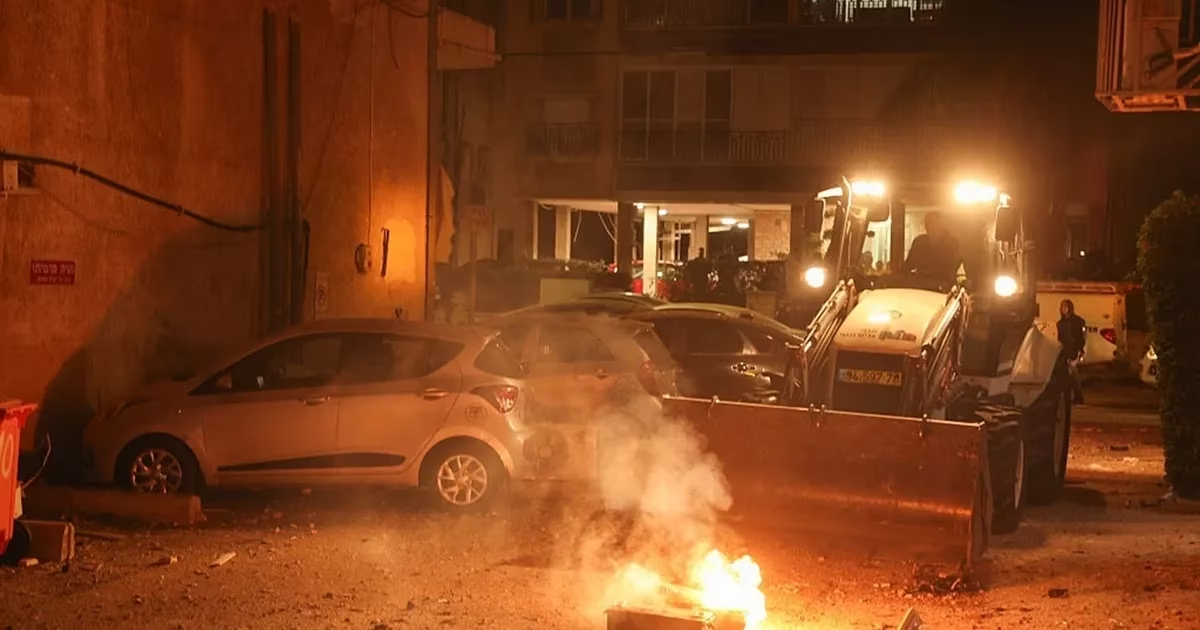
Hebrew media reports have highlighted the growing economic challenges facing Israel, warning of a state of 'escalating deficit' in the general budget. Sources indicated that the continuation of military confrontations on multiple fronts, especially with Iran, has led to an unprecedented depletion of financial resources, exceeding all previous estimates.
Military expert Ami Rochkes Dumba criticized the Israeli government's decision to increase the financial deficit for 2026 to 5.1% of the GDP. Dumba considered this approach to reflect a lack of strategic planning and responsibility towards the exorbitant economic price that the Israeli public will bear in the coming years.
Informed sources explained that the government was forced to make emergency adjustments to the budget because the ongoing military operation expenses were not included in the initial forecasts. Official documents acknowledge that the state is obligated to spend huge sums that were not hedged when previous financial laws were drafted, putting immense pressure on the public treasury.
The data indicates that the government based its budget on illusory assumptions that the current year would pass without large-scale fighting, despite the security tensions existing since October 2023. This failure in estimation shows a deep gap between the reality on the ground and financial plans that ignored years of direct and indirect conflict.
According to economic analyses, the jump in the deficit from 3.4% in 2025 to 5.1% in 2026 reflects the addition of between 20 to 25 billion shekels above what was planned. This increase is a dangerous indicator of government spending spiraling out of control in the absence of a horizon for the end of military operations.
In a related context, the public debt to GDP ratio has risen alarmingly, jumping from 60% before the outbreak of confrontations in 2023 to about 66%. Reports predict that this ratio will approach the 70% barrier soon, which represents a long-term burden on the Israeli economy and its borrowing capacity.
Sources confirm that every additional percentage point in the debt ratio increases the annual interest cost by amounts ranging from 1.5 to 2 billion shekels. These huge sums will be financed directly from the pockets of settlers through cuts in future government services or the imposition of new and burdensome tax increases.
Even if a quick calm is reached, military expenditures will not stop immediately due to the urgent need to replenish depleted weapon stockpiles. The army will have to complete deferred equipment purchases and rehabilitate defense systems that were consumed during months of long fighting.
The initial cost of rebuilding the military system alone is estimated at an additional 20 to 30 billion shekels, to be distributed over several fiscal years. This means that the defense budget will continue to drain the largest share of national resources at the expense of education, health, and social welfare sectors.
Circles within the government coalition are trying to promote optimistic scenarios claiming the ability to return to fiscal discipline within four to six years. However, economic experts confirm that these estimates lack realism, and that recovery from the effects of this war may take a full decade.
Observers believe that the widening deficit, while necessary to finance the military campaign, carries warning signs for international financial institutions and credit rating agencies. A country that enters major confrontations without sufficient reserves risks its overall financial stability and puts its economic future at stake.
The current financial policy reveals Israel's unpreparedness to face realistic scenarios, where crises and costs are deferred to future generations. The current decision to increase spending is not merely a response to an emergency, but an implicit acknowledgment of entering a conflict without a full understanding of its deep economic consequences.
The Israeli public now faces the repercussions of these policies through a decline in purchasing power and rising living costs associated with financing the war effort. Concerns are growing that the continuation of this approach will lead to a long-term economic recession that will be difficult to exit without radical and painful reforms.
In conclusion, the Israeli economy remains hostage to developments on the ground, as promises of stability evaporate in the face of escalating deficits and accumulated debts. Questions remain about the government's ability to balance increasing security requirements with maintaining the minimum financial balance needed to prevent collapse.
The gap between assumptions and reality is not just an error in judgment, but evidence of a dismal failure in financial planning to confront war scenarios.



Share your opinion
Escalating Economic Losses.. Israeli Budget Deficit Jumps to 5.1% Due to War Costs