






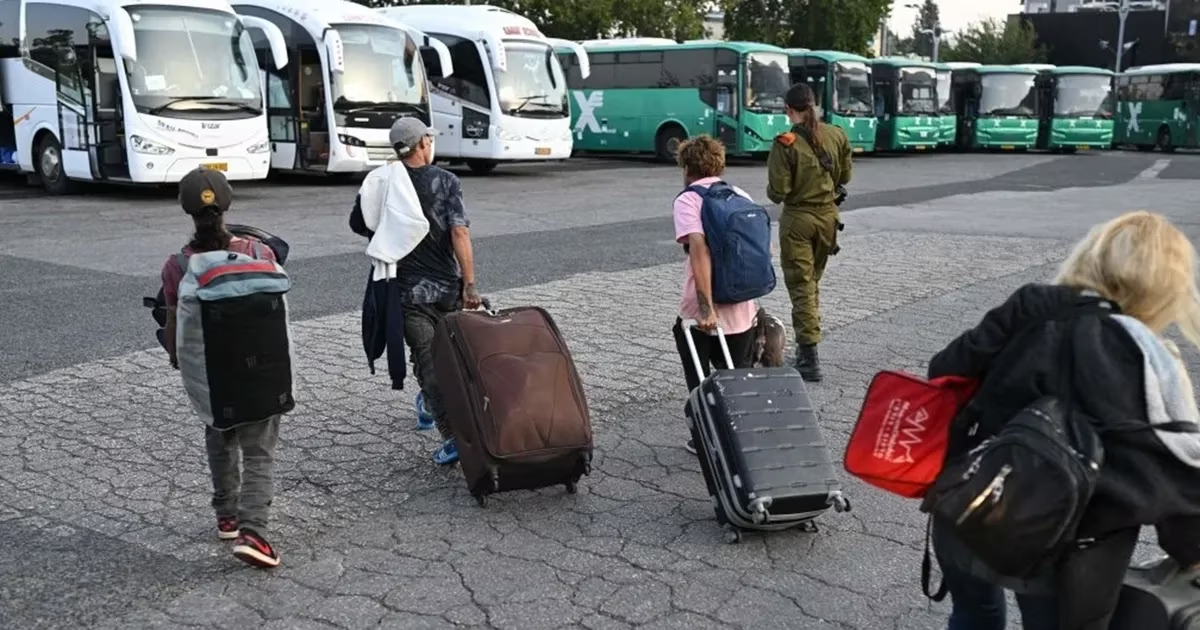
Hebrew media sources reported that Israeli settlements and cities in the central and northern regions are experiencing an unprecedented state of internal displacement. These widespread movements come amid an escalation in rocket attacks launched from Lebanon and Iran, which have led to an expansion of direct threats on multiple fronts.
Reports indicated that thousands of Israelis have begun to flock to the city of Eilat in the far south, believing it offers protection far from the line of fire. However, this displacement reflects the growing anxiety and the clear collapse in the sense of personal safety, even in areas previously classified as far from the conflict.
In recent days, Eilat has witnessed a significant accumulation of those fleeing from northern and central Israel, seeking refuge from continuous rocket barrages. Nevertheless, the reality on the ground dashed the hopes of the displaced after air raid sirens blared in the city dozens of times in just one week, confirming that no safe zone exists.
Sources quoted one settler fleeing from Jerusalem as saying that resorting to fortified rooms is no longer an effective solution against the intensity of the shelling. Residents described the overall scene as catastrophic, with families repeatedly forced to run to shelters amidst a state of complete helplessness in confronting the constant threat of shelling.
Eilat is suffering from a suffocating overcrowding crisis in available hotels, at a time when nearly half of the hotel establishments have closed due to deteriorating security and economic conditions. This closure has exacerbated the suffering of the displaced, who now face extreme difficulties in finding temporary accommodation away from direct danger zones.
Displacement was not limited to residents of central cities but also included thousands of residents of the Kiryat Shmona settlement near the Lebanese border. These settlers found themselves forced to displace again after their areas were subjected to violent and continuous attacks, prompting them to search for alternative housing in deeper areas.
Some of those fleeing indicated that they returned to stay in hotels they were evacuated to at the beginning of the escalation more than a year ago, but this time at their own expense. They expressed their deep frustration at being pursued by rockets and air raid sirens even in the southern cities they fled to seeking tranquility.
This forced movement between cities reflects a state of collective terror that currently grips Israeli society. It has become clear that geography no longer poses an obstacle to the arrival of rockets, making the circle of fire encompass all areas without exception.
Eilat, which relies economically primarily on domestic tourism, has been severely affected by this deteriorating security situation. The number of visitors has begun to decline sharply, and many vital facilities have closed their doors, signaling a deep local economic crisis that may be difficult to remedy soon.
Sources spoke of three levels of negative impact from rocket strikes: first, the direct danger to lives; second, the transformation of tourist cities into confrontation zones. The third level is the complete collapse of livelihoods associated with the service sector, which was the backbone of life in the south.
For his part, Eli Lankri, the mayor of Eilat, affirmed that the city is still subject to strict defensive measures to confront aerial threats. Lankri clarified that local authorities are currently unable to reopen schools or restore the normal pace of life given the continued state of high alert.
In a related context, the Israeli Home Front Command maintained strict security restrictions as they were, without any significant easing. This decision reflects security assessments indicating that the risk of rocket attacks remains very high, and the potential for escalation remains at any moment.
Hebrew reports concluded by noting that recent developments regarding internal displacement reflect a transformation of fear from a localized phenomenon to a general and comprehensive state. The prevailing feeling has become that the war is expanding geographically and temporally without a clear horizon for its end or the achievement of real security stability.
Complete safety now seems out of reach for Israelis, even in cities historically described as fortified or far from the front lines. This new reality places immense pressure on the government and military establishment, which have so far failed to secure the home front.
Going to shelters is no longer effective; the rockets have followed us to areas we thought were safe havens.



Share your opinion
Widespread Internal Displacement Wave in Israel as Scope of Rocket Targeting Expands