






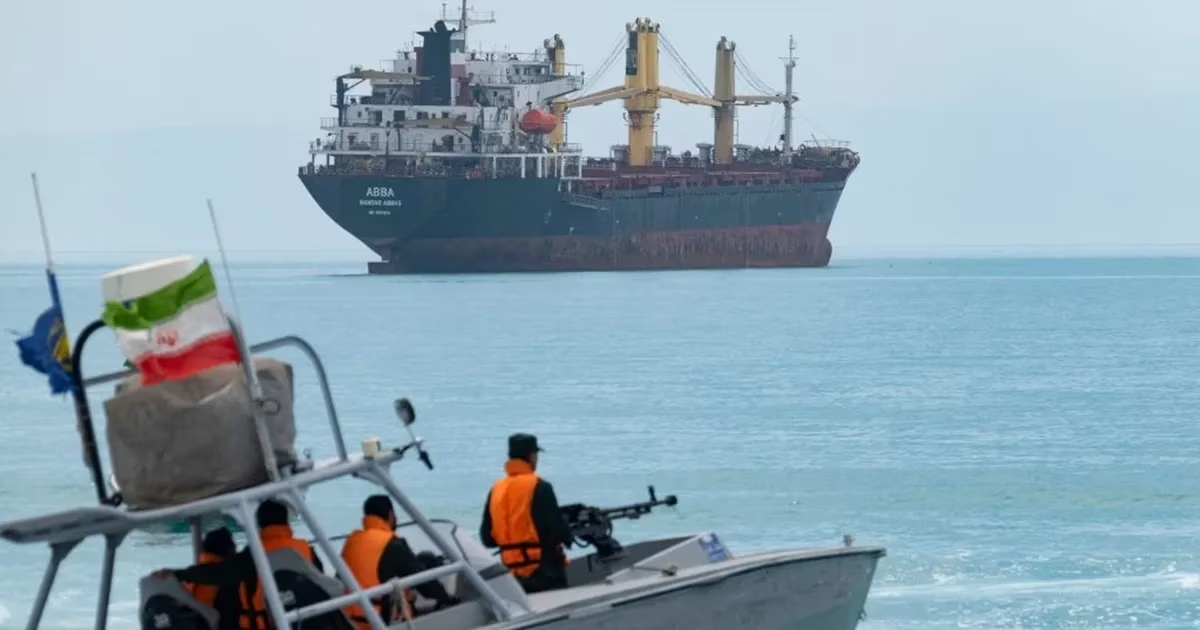
French press reports confirmed that the American administration faced a state of astonishment and unpredictability regarding the scale of the Iranian response that targeted countries in the region, in addition to the strategic move of closing the Strait of Hormuz. Sources clarified that this development reflects a significant gap in the intelligence and political assessments of the White House, which had been banking on relative calm in the Middle East before events dramatically accelerated.
The reports recalled statements by former National Security Advisor Jake Sullivan at the end of September 2023, when he described the region as the calmest in two decades, assessments that completely collapsed just eight days later with the launch of 'Al-Aqsa Flood' operation. This failure in prediction also extended to the current administration led by Donald Trump, who promised a future of commercial prosperity instead of chaos during his Gulf tour in May 2025.
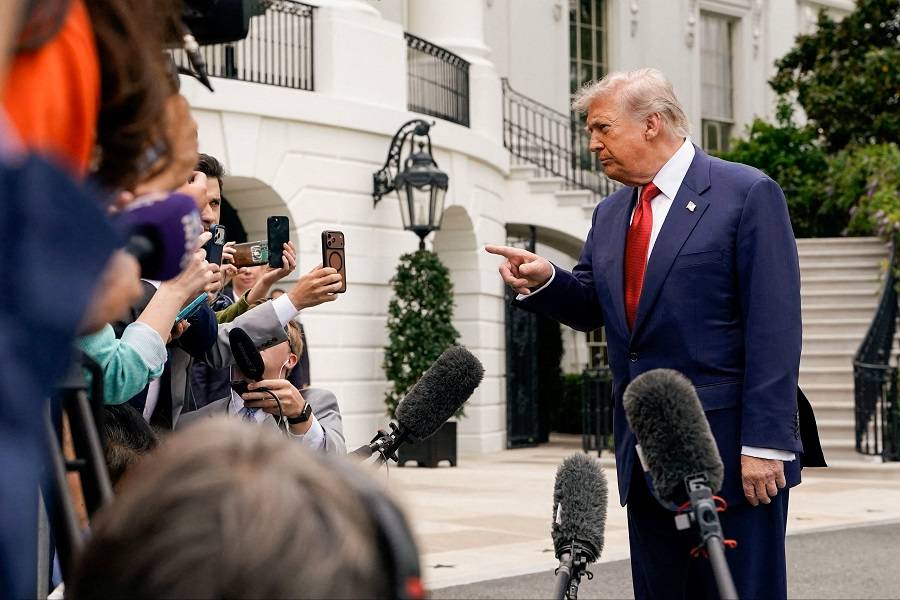
Despite Trump's claims in his official speeches that he succeeded in bringing peace to the region for the first time in thousands of years, the reality on the ground indicates Washington's slide into a military adventure that began last February. Analyses suggest that the US President pushed the Middle East into a deep, ill-defined abyss, severely damaging the credibility of the United States as a guarantor of global stability.
On the military front, data indicates that the United States and the occupying state achieved technical successes by destroying large parts of Iranian air and naval capabilities and air defense systems. However, the fundamental question of how to achieve 'final victory' remains unanswered, amidst fluctuating declared American objectives that ranged from destroying the nuclear program to changing the political regime in Tehran.
Sources considered Washington's attempt to replicate political models from Latin America and apply them to the complex Iranian reality reflects a deep ignorance of the regional context. This confusion in defining ultimate goals gives the White House formal flexibility to declare an end to the war at any time, but at the same time makes any claim of victory highly suspect among international political and military circles.
Regarding material costs, US Department of Defense estimates revealed that the first six days alone of military operations against Iran cost the US treasury approximately $11.3 billion. Losses were not limited to the financial aspect but also included damage to sensitive defense systems such as the 'THAAD' radar in Jordan, which raised concerns among Washington's allies in other regions such as South Korea.
The reports indicated that the assassination of Iranian Supreme Leader Ali Khamenei has turned the elimination of foreign leaders into a 'normal' occurrence in international politics, opening the door to dangerous precedents that could be exploited by other global powers such as Russia and China. This military approach has led to a massive depletion of ammunition stockpiles and advanced systems, reducing Washington's ability for military deployment on other fronts around the world.
Inside Iran, it appears that the regime has absorbed the initial shock and begun to reorganize its cards under the leadership of Mojtaba Khamenei, who succeeded his father under extremely complex circumstances. Sources believe that Tehran is now more convinced that its optimal weapon lies not only in direct military confrontation but in its ability to disrupt global energy supply chains and paralyze movement in the Strait of Hormuz.
This Iranian shift towards 'economic deterrence' has created a divergence of views between Washington and Tel Aviv; while the occupation views the conflict as an existential battle requiring the complete crushing of the adversary, the Trump administration seeks a political exit that saves face. Washington also did not anticipate the weak desire of the Iranian street to engage in attempts to overthrow the regime under the intense aerial bombardment of cities.
At the bilateral relations level, the war has deepened the division within the United States regarding unconditional support for the occupying state, where 'Israel' has transformed from a point of bipartisan consensus into a subject of sharp political debate. This is primarily due to the massive amount of aid and accusations of committing war crimes in the Gaza Strip, as well as Benjamin Netanyahu's dominance over American political discourse.
Sources close to the 'MAGA' movement quoted that Netanyahu's policies succeeded in uniting Iranians behind a Persian nationalist sentiment, after a large part of them had opposed the ruling regime. This shift represents a strategic loss for Washington, which had been banking on winning the favor of the Iranian people to isolate its leadership, which observers see as a direct result of the uncalculated military impulsiveness.
In a broader regional context, the occupation's attempts to reshape the Middle East through unilateral military force have aroused increasing resentment among regional powers, especially Turkey. Ankara today emerges as a competitor seeking to curb Israeli ambitions, while Washington finds itself hesitant to use certain pressure cards for fear of angering other regional allies, confirming the conflict of American and Israeli interests.
The reports concluded that Trump's 'imperial arrogance' may ultimately weaken American power rather than strengthen it, especially with the increasing reliance on Israeli arguments in making sovereign decisions. The absence of a clear post-war vision makes any tactical military achievement merely a step towards further instability in a region that still refuses to submit to external dictates.
The question remains about the Iranian regime's ability to endure as a 'headless duck' that continues to move automatically despite painful blows, and Washington's ability to withstand the depletion of its resources in an unpopular war domestically. The current scene places the world before a new stage of international conflict, where the rules of international law fall in favor of the logic of pure force.
The utmost illusion for Washington is the belief that Trump can end hostilities alone with just a message on the Truth Social platform.
Share your opinion
Le Monde: Washington Faces Strategic Surprises in Iran War and Trump's Confused Objectives