PALESTINE

Sun 22 Oct 2023 6:02 pm - Jerusalem Time

With a photo and a comment...a famous environmental activist ignites Israeli anger

All you have to do is put the name of environmental activist Greta Thunberg on Twitter to see a torrent of angry comments against the young Swedish woman.


During the past two days, the X platform (formerly Twitter) was topped with its name after it published two photos on its account, one in which she appeared next to a group of activists, holding a banner that read, “We stand with Gaza.”


While the second picture showed an octopus with the sign of Israel above it, spreading its legs on the globe.


This sparked a storm against her, amid violent accusations of anti-Semitism against her.


"ISIS terrorist"!

While Aryeh Shalikar, a spokesman for the Israeli army, described her as “ISIS,” considering that “anyone connected to Greta is in his view a supporter of terrorism.”


In the face of this angry outpouring of sympathizers with Israel, the young woman deleted the picture of the octopus, keeping the picture of solidarity with the Gaza Strip, which has been submerged for two weeks under a strict siege imposed by Israeli forces.


She also confirmed that she did not intend to offend the Israelis in any way.

But it preserved Gaza's image, stressing at the same time its rejection of targeting Israeli civilians and the attack launched by Hamas on October 7.


“It goes without saying that I am against the horrific attacks carried out by Hamas,” she wrote. “As I said, the world needs to raise its voice and call for an immediate ceasefire and justice and freedom for the Palestinians and all affected civilians.”


The famous British journalist, Piers Morgan, responded to her in a scathing and sarcastic way, writing: “It goes without saying because you did not say that in the first place.”


Since the outbreak of the conflict between Israel and the Palestinian factions following the sudden attack launched by Hamas on settlements in the Gaza Strip, social networking sites and the Internet in general have witnessed a state of sharp polarization between the two parties, amid the exchange of accusations and insults by supporters of the Palestinian and Israeli sides.


Many Palestinian sympathizers complained of attempts to “muzzle their voices” amid the major social media platforms deleting many posts and comments that they considered supportive of Hamas, or even inciting hatred or violence.

PALESTINE

Sun 22 Oct 2023 5:59 pm - Jerusalem Time

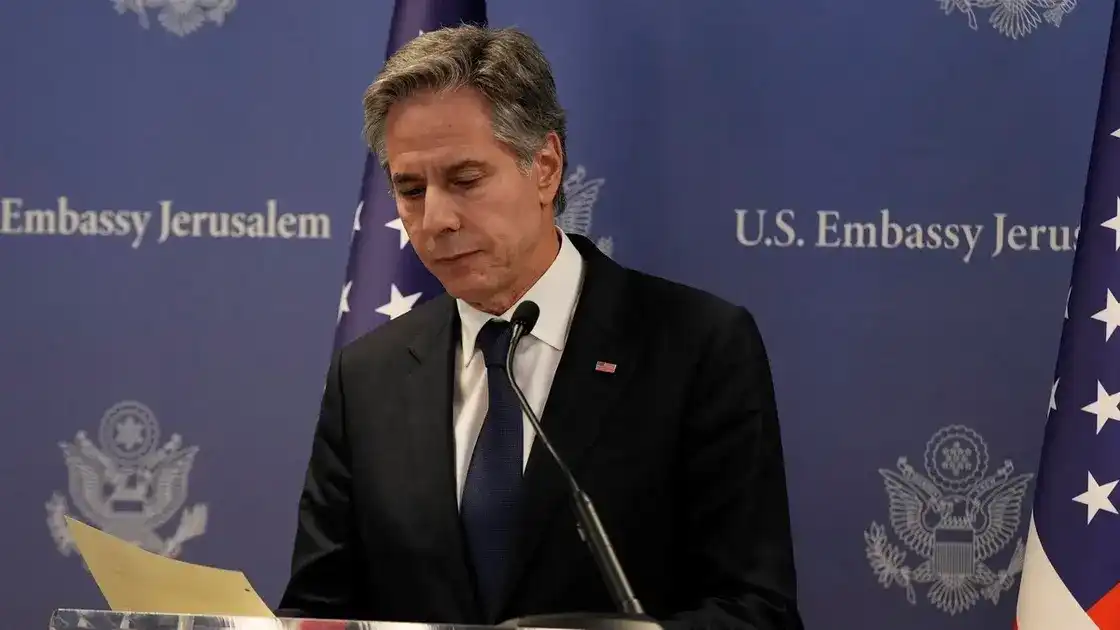
Blinken: We hope that more Hamas hostages will be released

US Secretary of State Anthony Blinken announced on Sunday that Washington sees a potential escalation of the war in the Middle East “due to the actions of Iran and its agents in the region.”


Blinken added to NBC News in an interview that the United States is not seeking escalation, and that it hopes to release more hostages held by Hamas, after the latter released two American hostages, on Friday, who were kidnapped in the attack it carried out on settlements. Israeli forces in the Gaza Strip on October 7, according to Reuters.


“Potential for major escalation”

At the same time, US Secretary of Defense Lloyd Austin renewed the warning against military escalation in the region.


He said in television statements on Sunday: “We see the possibility of a major escalation of attacks on our forces and citizens throughout the region.”


He also added that his country reserves the right to self-defense and will not hesitate to take appropriate action to protect its forces, according to ABC.


He advised any country or armed group seeking to expand the conflict or benefit from it not to do so, referring to Iranian-backed militias whether in Iraq, Lebanon or Syria.


Providing Israel with what it needs

In addition, Austin stressed that Washington is currently focusing on providing Israel with what it needs to defend itself. He acknowledged that the expected ground attack on Gaza may be more difficult because of the tunnels built by Hamas.


At the same time, he urged Israel to carry out its military operations in Gaza in a manner consistent with international law.


Iranian warning

These statements came in conjunction with Iranian Foreign Minister Hossein Amir Abdollahian, on Sunday, warning both the United States and Israel that the situation in the Middle East may become “out of control unless the crimes against humanity committed in Gaza stop,” as he put it.


Meanwhile, Iranian officials saw that Tehran faces a real dilemma regarding the Gaza issue, between confronting Israel and expanding the conflict through Hezbollah and other factions it supports, and keeping the confrontation limited to avoid heavy losses.

PALESTINE

Sun 22 Oct 2023 5:56 pm - Jerusalem Time

Clashes east of Khan Yunis in Gaza... and 4 Israeli soldiers were injured

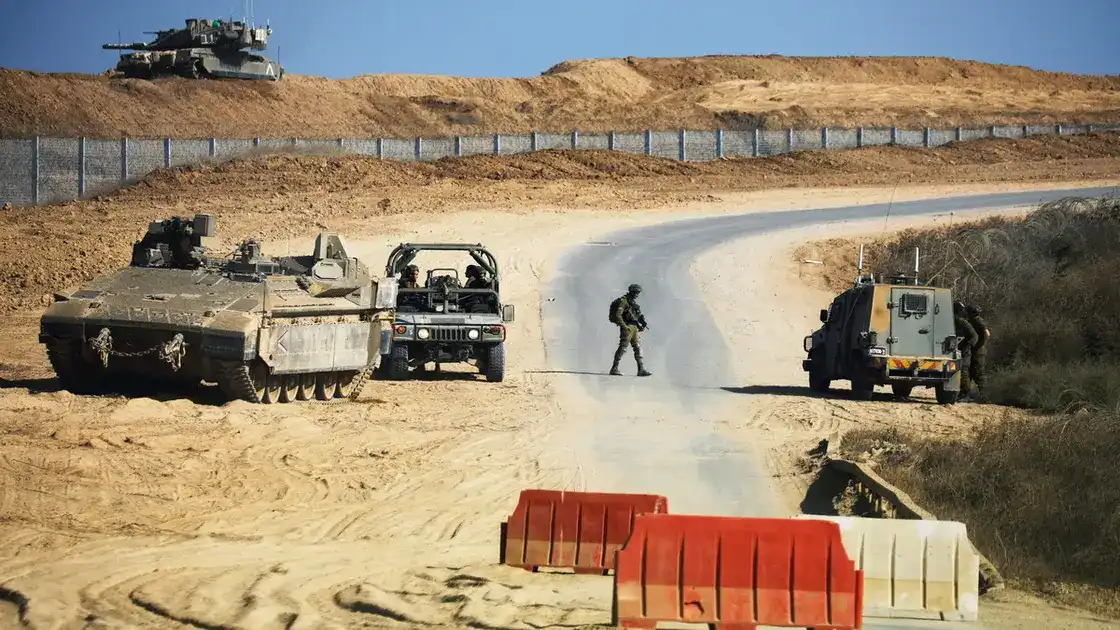
The Israeli army announced that its forces east of Khan Yunis in the Gaza Strip came under fire, indicating that it responded to targeting the attacking force.


He added in a statement on Sunday that one of his tanks bombed the source of fire in the Kissufim settlement near Gaza, confirming that 4 of his soldiers were injured, one of whom was in critical condition.


The Gaza war is life or death.. Netanyahu brandishes a crushing response to Hezbollah

Arabs and the world

The Gaza war is life or death.. Netanyahu brandishes a crushing response to Hezbollah

Al-Arabiya/Al-Hadath correspondent reported that the clashes in Kissufim, near Gaza, continued for more than two hours.


For its part, the Al-Qassam Brigades said that it destroyed two bulldozers and an Israeli tank in an ambush east of Khan Yunis after crossing the separation fence for several meters.


It added that its fighters clashed with the infiltrating Israeli forces and forced them to withdraw.


In parallel, Al-Arabiya/Al-Hadath correspondent said that the missile bombardment on Netivot and the Gaza envelope was renewed, noting that there was a direct hit on a building in Netivot in the last missile attack.


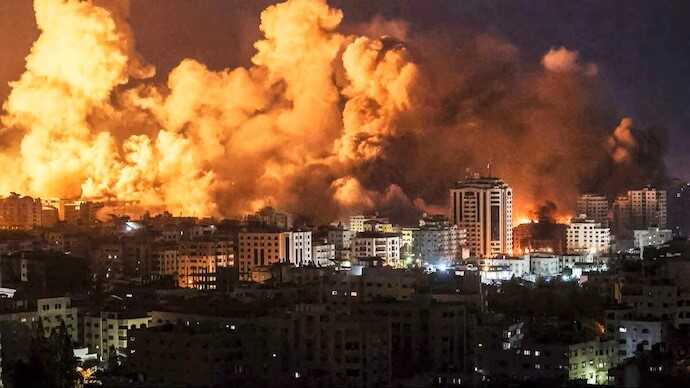
Israel violently intensified its strikes on Gaza on the night of Saturday and Sunday, targeting several areas in the south, north and centre, which led to deaths and injuries in bombing that targeted residential homes in Rafah, south of the Gaza Strip.

PALESTINE

Sun 22 Oct 2023 5:10 pm - Jerusalem Time

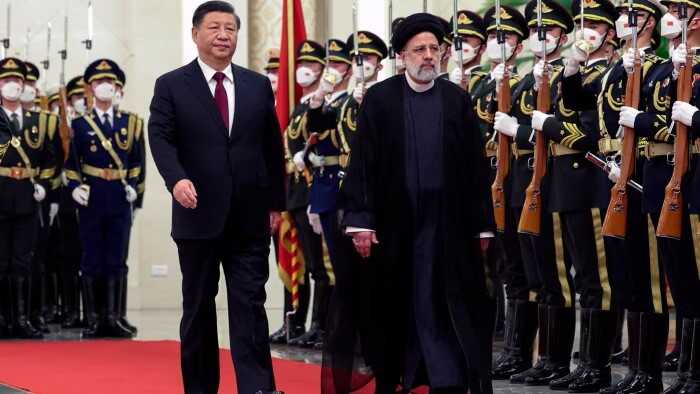
Israel-Hamas war tests China’s Middle East ambitions

The crisis in the Middle East triggered by Hamas’s attack on Israel is becoming a big test of China’s ambitions to build influence in a region traditionally dominated by the US, according to diplomats and analysts. Washington remains overwhelmingly the strongest military power in the Middle East and demonstrated its might by dispatching two carrier strike groups after the attack. It is also the main diplomatic player in the region, despite Arab concerns that it has been disengaging, and as Israel’s main ally it has leverage over the Jewish state. But China’s economic role has grown rapidly and it now trades more than the US with most regional countries. 


Beijing is also on good terms with almost all of them, including Iran — the backer of Hamas and Lebanon’s Hizbollah — prompting hopes it can use this influence to prevent a regional conflagration. During a call with China’s foreign minister Wang Yi on Saturday, US secretary of state Antony Blinken discussed “stability in the region and discouraging other parties from entering the conflict”. In recent years, Beijing has begun trying to extend its political sway in the Middle East as part of President Xi Jinping’s vision for Chinese leadership of the “Global South” of emerging and non-aligned countries. 


Beijing was instrumental in bringing four Middle Eastern countries — Egypt, Iran, Saudi Arabia and the United Arab Emirates — into the Brics grouping of emerging nations this year. It also brokered a detente between Saudi Arabia and Iran in March, a diplomatic first for China. Xi followed this up in June with an offer to help Palestinian president Mahmoud Abbas promote peace talks with Israel. 

Now analysts question how these nascent ambitions will weather the instability brought by the Israel-Hamas conflict. When Hamas unleashed its assault, Beijing struck a neutral tone that angered many Israelis and western countries, blandly calling for both sides to “remain calm” and failing to condemn the Palestinian faction’s actions. “It’s true that China can negotiate something between Saudi Arabia and Iran, but that’s not creating any great confidence on the Israeli side,” said a senior diplomat experienced in the Middle East. “Israel is not going to act in a way which would undermine the American standing of the region,” the diplomat said. “And, if you have a massacre of 1,000 people, and China is not able to say clearly what that is, then it is clear they are not able to arbitrate or mediate the conflict for both sides.” While China has been a staunch supporter of the Palestinian cause since the era of Mao Zedong, it has also, since the 1980s, built up friendly economic ties with Israel, according to Alessandro Arduino, affiliate lecturer at the Lau China Institute, King’s College London. 

The conflict with Hamas had returned China’s pro-Palestinian leanings to the fore, analysts said, with Chinese state media articles accusing the US of fueling the crisis. This has sparked frustration among some Israeli academics. Israeli China expert Tuvia Gering posted on X, formerly Twitter, that he would like to “tell these [Chinese] academics and journalists how morally depraved they appear to be by exploiting our suffering for political gain”. 

On Thursday, Israel’s foreign ministry told China’s envoy to the Middle East, Zhai Jun, that Beijing’s official reaction to Hamas’s attack was not appropriate and did not acknowledge the national right to self-defense. 

Chinese foreign minister Wang went further on Saturday, telling the Saudi foreign minister Prince Faisal bin Farhan that “Israel’s actions have gone beyond the scope of self-defense and it should listen to the calls of the international community and the United Nations secretary-general to stop collective punishment of the people of Gaza.” US ambassador to China Nicholas Burns has compared Washington’s strong backing for Israel with China’s stance. “China has taken on, I think by its own admission, a bigger role in the Middle East,” Burns said in a conversation with the National Committee on US-China Relations on Thursday. “[But] you have to be effective, you have to stand for something.” He said the “two-state” solution advocated by China — the idea of a Palestinian state alongside Israel — was not supported by Hamas, which “by its very creed wants to destroy the state of Israel and kill Israelis”. 

But others said China’s stalwart support for the Palestinians could boost its standing in the Arab world and strengthen its position in the region. “Arab states’ support of Palestine will increase. That is in China’s interest as it puts China and the Arab states back on the same side,” said Yun Sun, director of the China Program at the Stimson Center, a Washington think-tank. China’s reliance on abstract rhetoric to talk about conflicts, especially when they involve aggression by its diplomatic allies, was also a familiar strategy that allowed Beijing to avoid taking sides, at least nominally, said other analysts.


China has followed the same path in the Ukraine war, refusing to condemn Russia’s invasion and describing it instead as a “crisis”. “This is what the Chinese always try to do,” said Moritz Rudolf, fellow at Yale Law School’s Paul Tsai China Center in the US. “They [China] know they will be playing a greater role in this region, they want stability, but at the same time they don’t want to be sucked into the complexities of it,” Rudolf said. Arduino, of King’s College, said China’s ties with Iran could become an important bargaining chip in its relationship with the US. “Especially if China wants to reach some kind of common ground with the US on Middle East policy, then being one of the few actors able to pressure Tehran in some way could be an asset in China’s diplomatic arsenal,” he said.  

No matter its dealings with the US, China faces a delicate moment for its regional ambitions, said Gedaliah Afterman, an expert on China and the Middle East at the Abba Eban Institute for Diplomacy and Foreign Relations in Israel. “We’ve had a lot of rhetoric, a lot of talk about how in the region China is doing all of these new things, but when it comes to this new situation China has said nothing meaningful,” Afterman said. “So either it takes the challenge and shows that it is a real player, or it will be pretty clear that it isn’t, or much less than people thought it was.”


Source: Financial Times

ARAB AND WORLD

Sun 22 Oct 2023 4:32 pm - Jerusalem Time

Massive demos in Australia denouncing the aggression against Palestine

Thousands participated in demonstrations organized today, Sunday, in the Australian city of Sydney, denouncing the ongoing Israeli aggression against the Palestinian people.


More than 25,000 people demonstrated in Sydney, Australia, in solidarity with Gaza against the fierce Israeli attacks on women, children and the elderly, and against the demolition of churches, mosques, hospitals, schools and residential buildings.


The participants called for an immediate halt to the Israeli destruction machine, a complete withdrawal from the occupied Palestinian territories, and the provision of protection for the Palestinian people.


The capitals of Brazil, Chile, Colombia and Argentina also witnessed massive demonstrations denouncing the continued Israeli aggression against the Gaza Strip.


The demonstrators called on the international community to take serious action to stop the occupation’s crimes against the Palestinian people, the necessity of ending the occupation, and supporting the Palestinian people in their struggle to gain their freedom and independence.

PALESTINE

Sun 22 Oct 2023 4:21 pm - Jerusalem Time

Israeli occupation fires bullets at olive pickers west of Jenin

Today, Sunday, the Israeli occupation army opened fire on farmers who were harvesting olives in the village of Zabuba, west of Jenin.


Local sources reported that the occupation soldiers opened fire on the farmers while they were picking olives inside their lands adjacent to the separation and apartheid wall in the village of Zabuba, and warned them not to approach the wall, including entering their lands adjacent to it.


In a related context, the head of the Jalboun Village Council reported that the homes of citizens in the village of Jalboun, northeast of Jenin, were exposed to heavy gunfire from inside the “Merav” settlement built on their lands.


He added that the occupation soldiers prevented a citizen from the Abu Al-Rub family from picking olives from his land, threatened to shoot him, forced him to leave, and prevented all landowners from picking olives and approaching their lands adjacent to the wall.

PALESTINE

Sun 22 Oct 2023 3:59 pm - Jerusalem Time

Israeli war on Gaza: The number of killed rises to 4,741, including 3,000 children and women.

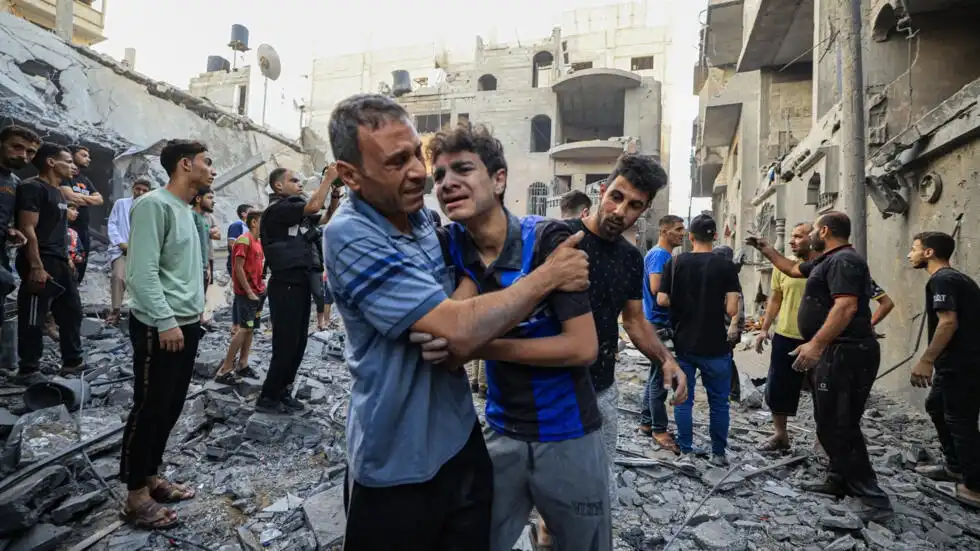
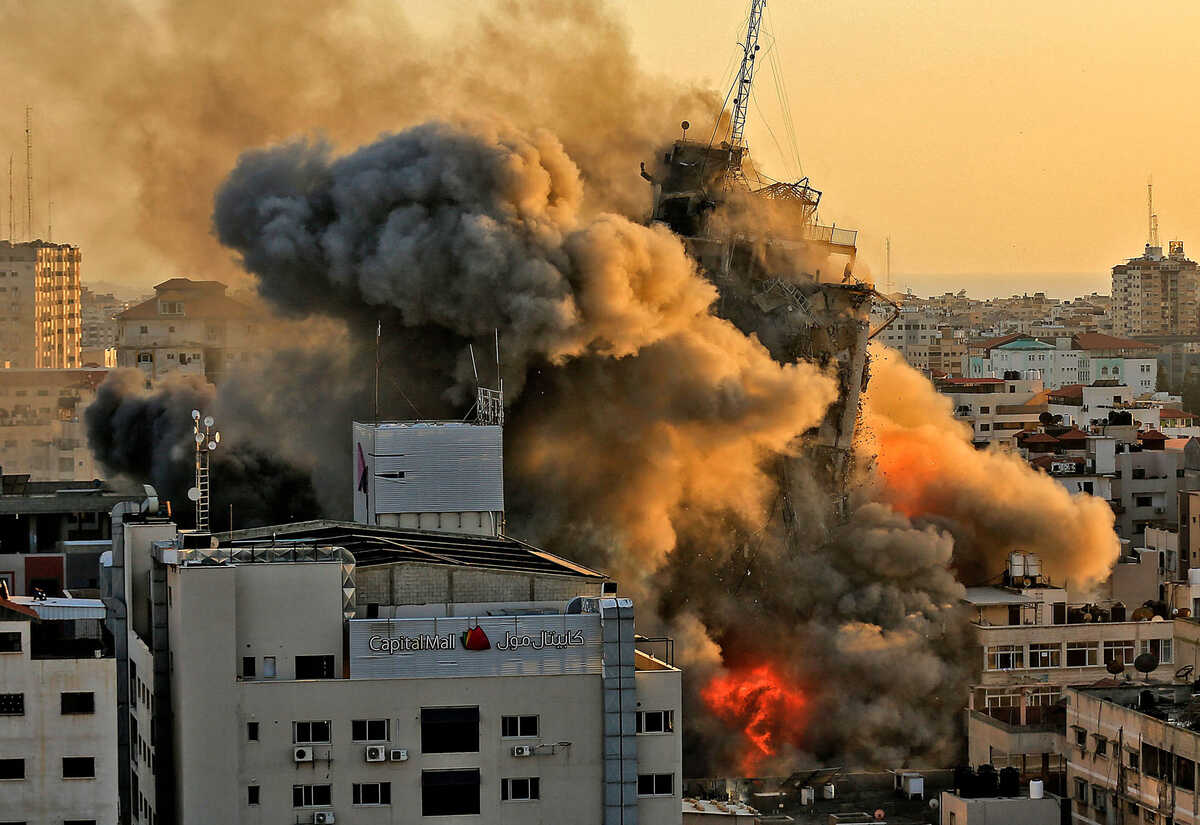
The Israeli occupation forces continue their bombardment on the Gaza Strip for the sixteenth day in a row, as the death toll rose to 4,741 killed, including 1,873 children and 1,023 women, while 50% of the residential units in the Strip were damaged as a result of the ongoing Israeli aggression.


A spokesman for the Ministry of Health in Gaza said, on Sunday, October 22, 2023, in a press conference, that the number of victims of the Israeli aggression had risen to 4,741 martyrs, including 1,873 children and 1,023 women, in addition to 15,898 injured, according to what was reported by Anadolu Agency.


The spokesman for the Ministry of Health in Gaza also explained that the Israeli occupation forces killed 266 Palestinians during the last 24 hours, including 117 children, and pointed out that the occupation commits a massacre every hour in the Gaza Strip, causing the total martyrdom of hundreds of families since the beginning of the aggression, on 7 This October.


For its part, the government media office in Gaza said, on Sunday, in a statement, that 50% of the housing units in the Strip were completely or partially damaged as a result of the Israeli aggression, which targeted civilian residential facilities, towers, mosques and hospitals within two weeks of the aggression.


Earlier on Sunday, the Israeli occupation forces announced that they were intensifying their air attacks on the Gaza Strip, with the aim of “reducing the threats that may face our forces, in preparation for the next phase of the war,” in reference to a ground war.


Noting the continued intensification of attacks, occupation forces spokesman Daniel Hagari said in a press conference: “We are not stopping our attacks on Gaza.” He added: "We are working to increase attacks in Gaza to reduce the threats that our forces may face in preparation for the next phase of the war."


Hagari also continued: “We will go to the next stage under the best conditions for the Israeli army, and in accordance with the decision of the political level.”


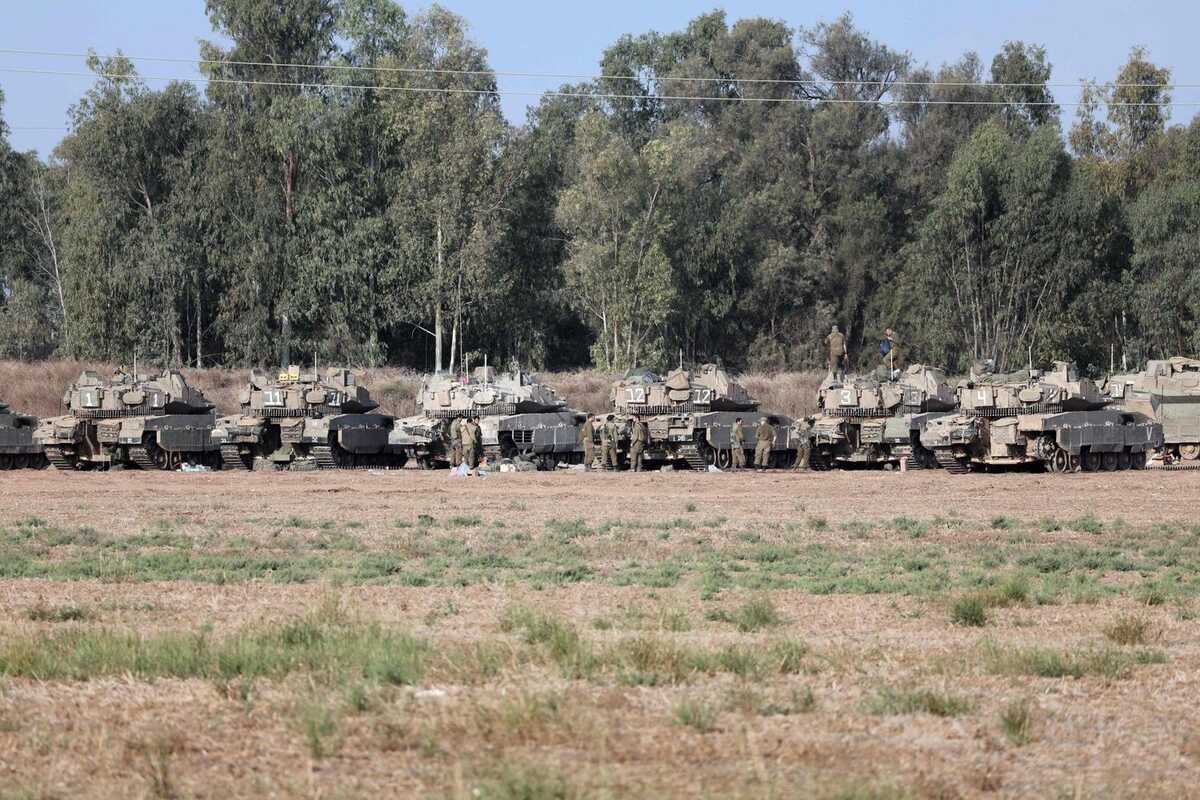
Meanwhile, the Israeli occupation has been threatening for days to launch a ground operation in Gaza, after summoning 360,000 reserve soldiers and mobilizing hundreds of tanks and military vehicles on the borders of the Strip.


While Hagari renewed his call on the Palestinians in northern Gaza to head to the southern Strip. He said: "In the attacks during the night hours, we killed dozens of militants in Gaza City and its suburbs, and the deputy commander of the Hamas rocket launching system was killed," without mentioning his name.


ARAB AND WORLD

Sun 22 Oct 2023 3:16 pm - Jerusalem Time

Iran's quandary: How to stay out of Israel's war on Hamas

Iran issued a stinging public ultimatum to its arch-enemy Israel: Halt your onslaught on Gaza or we'll be forced to take action, its foreign minister warned.

Only hours later, the country's U.N. mission softened the hawkish tone, assuring the world that its armed forces wouldn't intervene in the conflict unless Israel attacked Iranian interests or citizens.


Iran, a longtime backer of Gaza's rulers Hamas, finds itself in a quandary as it tries to manage the spiraling crisis, according to nine Iranian officials with direct knowledge of the thinking within the clerical establishment.


Standing on the sidelines in the face of an all-out Israeli invasion of Gaza would significantly set back an Iranian strategy for regional ascendancy pursued for over four decades, according to the people, who asked to remain anonymous due to the sensitivity of the discussions in Tehran.


Yet any major attack against a U.S.-backed Israel could exact a heavy toll on Iran and trigger public anger against the clerical rulers in a nation already mired in an economic crisis, said the officials who outlined the various military, diplomatic and domestic priorities being weighed by the establishment.

Three security officials said a consensus had been reached among Iran's top decision makers, for now: Give their blessing for limited cross-border raids by its Lebanese proxy group Hezbollah on Israeli military targets, over 200 km away from Gaza, as well as low-level attacks on U.S. targets by other allied groups in the region. Prevent any major escalation that would draw Iran itself into the conflict.


"We are in contact with our friends Hamas, Islamic Jihad, and Hezbollah," Vahid Jalalzadeh, the head of parliament's National Security Committee said on Wednesday, according to Iranian state media. "Their stance is that they do not expect us to carry out military operations."

Iran's foreign ministry didn't respond to a request for comment about the country's response to the unfolding crisis, while Israeli military authorities declined to comment.


It's a high-wire act for Tehran.

The loss of the power base established in the Palestinian enclave via Hamas and allied group Islamic Jihad over three decades would puncture those plans, which have seen Iran build up a network of armed proxy groups across the Middle East, from Hezbollah in Lebanon to the Houthis in Yemen, the sources said.

Iranian inaction on the ground could be perceived as a sign of weakness by those proxy forces, which have been Tehran's principal weapon of influence in the region for decades, according to three officials. They said it could also dent the standing of Iran, which has long championed the Palestinian cause against Israel, a country it refuses to recognize and casts as an evil occupier.


"The Iranians are facing this dilemma of whether they are going to send Hezbollah to the fight in order to try to save their arm in the Gaza Strip or maybe they are going to let go of this arm and give it up," said Avi Melamed, a former Israeli intelligence official and a negotiator during the first and second intifadas.

"This is the point where the Iranians are," he added. "Calculating their risks."


'SURVIVAL IS UTMOST PRIORITY'

Iran's strategic goals are countered by immediate military considerations as Israel - responding to Hamas' devastating attack on Oct. 7 that killed 1,400 Israelis - has unleashed an aerial blitz on Gaza, killing at least 4,300 people.

Israel - a major military power - is widely believed to have its own nuclear arsenal, though it will neither confirm nor deny this, and has the support of the United States, which has moved two aircraft carriers and fighter jets to the eastern Mediterranean, partly as a warning to Iran.

"For Iran's top leaders, especially the supreme leader (Ayatollah Ali Khamenei), the utmost priority is the survival of the Islamic Republic," a senior Iranian diplomat said.

"That is why Iranian authorities have used strong rhetoric against Israel since the attack started, but they have refrained from direct military involvement, at least for now."


Since Oct. 7, Hezbollah has exchanged fire with Israeli forces along the Lebanese-Israeli frontier in clashes that have killed 14 of the Islamist group's fighters.

Two sources familiar with Hezbollah's thinking said the low-level violence was designed to keep Israeli forces busy but not open a major new front, with one characterizing the tactic as waging "small wars".

Hezbollah leader Sayyed Hassan Nasrallah, who is known for issuing threats against Israel in speeches, has not given a public address since the crisis began.


Three senior Israeli security sources and a Western security source told Reuters that Israel didn't want a direct confrontation with Tehran and that while the Iranians had trained and armed Hamas, there was no indication that they had prior knowledge of the Oct. 7 attack.

Khamenei, the supreme leader, has denied Iran was involved in the attack, though he praised the damage inflicted on Israel.


The Israeli and Western security sources said Israel would only attack Iran if it was directly attacked by Iranian forces from Iran, though cautioned that the situation was volatile and an assault on Israel from Hezbollah or Iranian proxies in Syria or Iraq that caused heavy casualties could change that calculus.

A miscalculation by Iran or one of its allied groups in gauging the scale of a proxy attack could change Israel's approach, one of the Israeli sources added.


'NO U.S. BOOTS ON THE GROUND'

U.S. officials have made it clear their aim is to prevent the conflict from spreading and to deter others from attacking American interests while keeping Washington's options open.

On his way back from a visit to Israel on Wednesday, President Joe Biden bluntly denied an Israeli media report saying that his aides had indicated to Israel that if Hezbollah initiated a war, the U.S. military would join the Israeli military in fighting the group.

"Not true," Biden told reporters during a refueling stop at Germany's Ramstein Air Base

about the Israeli report. "That was never said."

White House national security council spokesman John Kirby reiterated that Washington wanted to contain the conflict.

"There's no intention to put U.S. boots on the ground in combat," he told reporters during the refueling stop.


Jon Alterman, a former State Department official who now heads the Middle East program at the CSIS think-tank in Washington, said Iranian leaders would feel pressure to show tangible, and not just rhetorical, support for Hamas but warned of the potential for events spinning out of control.

"Once you get into this environment, things happen and there are consequences that nobody wanted," he added.


"Everybody is on edge."

The crisis has also added to uncertainty in financial markets in America and beyond, boosting demand for "safe-haven" assets like gold, U.S. government bonds and the Swiss franc. The market reaction has so far been muted, though some investors warn that would change dramatically if the Gaza war escalated into a broader regional conflict.


'NEITHER GAZA NOR LEBANON'

A China-brokered reconciliation between regional rivals Iran and Saudi Arabia has further complicated matters for leaders in Tehran who want to avoid jeopardizing that "fragile progress", according to a former senior official who is close to top decision-makers in Iran.

Meanwhile, the Iranian people themselves could play a role in events unfolding across the region.

Iran's rulers can't afford a direct involvement in the conflict while struggling to quell mounting dissent at home, driven by economic woes and social restrictions, two separate officials said. The country's has seen months-long unrest triggered by the death in custody of a young woman last year and the state's persistent crackdown on dissent.


The economic woes, caused chiefly by crippling U.S. sanctions and mismanagement, have led many Iranians to criticize the decades-long policy of channeling funds to its proxies to expand the Islamic Republic's influence in the Middle East.

The slogan "Neither Gaza nor Lebanon, I sacrifice my life for Iran" has become a trademark chant in anti-government protests in Iran for years, underscoring the people's frustration with the establishment's allocation of resources.

"Iran's nuanced position emphasizes the delicate balance it must maintain between regional interests and internal stability," said the former senior Iranian official.


PALESTINE

Sun 22 Oct 2023 3:11 pm - Jerusalem Time

UN agencies: Humanitarian situation in Gaza has become catastrophic

Five United Nations agencies warned that the humanitarian situation in the Gaza Strip had become catastrophic, and confirmed that hospitals could no longer accommodate the wounded, while Turkey announced that it was considering establishing field hospitals in Al-Arish and Rafah in Egypt to treat the injured and sick from the Strip.


The five agencies - the World Health Organization, the World Food Programme, the United Nations Children's Fund (UNICEF), the United Nations Development Program and the United Nations Population Fund - said in a joint statement that the humanitarian situation in Gaza was miserable before the current war, and today it has become catastrophic.


She stressed that "children are dying at an alarming rate, (and are) deprived of their right to protection, food, water and medical care." She said that Gaza's hospitals are crowded with wounded, and that civilians face great difficulty in accessing basic food supplies.


In their statement, the five UN agencies called on the international community to make more efforts to help the residents of the Gaza Strip.


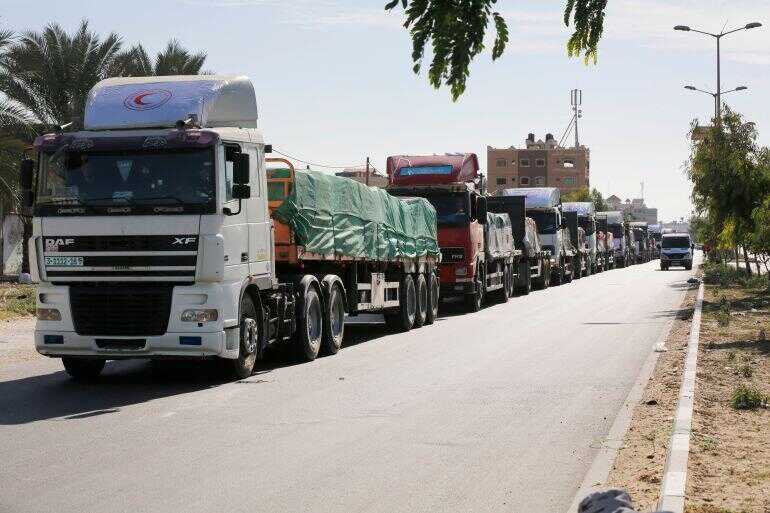
Yesterday, Saturday, the first humanitarian aid convoy entered the sector, which has been besieged by the Israeli occupation since 2007, including 20 trucks coming through the Rafah crossing. But this number is very small and is considered a drop in the ocean of humanitarian needs in Gaza, according to the United Nations, which wants 100 trucks to enter daily to provide relief to the residents of the Strip (2.2 million people), who have been subjected to continuous Israeli bombing for more than two weeks.


United Nations Secretary-General Antonio Guterres said yesterday, Saturday, during the “peace summit” in Cairo, “The people of Gaza need much more. It is necessary to deliver aid in large quantities.”


Aid and a Turkish medical team

In a related context, Turkish Health Minister Fahrettin Koca announced that his country will send a Turkish presidential plane to Egypt this Sunday morning loaded with medicines and medical supplies as part of his country’s aid to the residents of Gaza.


Koja explained in a post on the “X” platform (formerly Twitter) that the plane is loaded with medicines and medical supplies to help the residents of Gaza, and on board is a medical team consisting of 20 specialized doctors.


The Turkish minister indicated that he held the necessary discussions with his Egyptian counterpart, Khaled Abdel Ghaffar, to transfer aid directed to the residents of Gaza through Egyptian territory.


He stated that the Turkish medical team will work with Egyptian officials to inventory urgent medicines and medical supplies for the residents of Gaza.


Koca stated that the Turkish medical team will study with the Egyptian side the possibility of establishing field hospitals at Al-Arish Airport and at the Rafah border crossing to treat injured Palestinians crossing Rafah into Egypt.


He said that Turkey intends to send the necessary equipment to establish field hospitals and ambulances via a private ship to Egypt, after the necessary preparations are completed.


The Turkish medical team also plans to complete preparations for delivering medicines and medical equipment to the relevant authorities in order to deliver them to those affected in the Gaza Strip.


Indian aid

Also in the context of international aid to the besieged Gaza Strip, India announced on Sunday that it had sent about 38 tons of humanitarian aid to Sinai in Egypt, allocated for Palestinian civilians in the besieged Strip, according to the Indian Ministry of Foreign Affairs.


A source in the Indian Foreign Ministry explained that the humanitarian aid includes medicines, surgical supplies, tents, hygiene supplies, and water purification tablets, among other materials.


The Israeli occupation has imposed a stifling siege on Gaza for more than two weeks, depriving it of water, electricity, food and medicine. It is also intensifying its raids on the Strip, where 4,651 of its residents were martyred, including more than 1,800 children and 976 women, in addition to wounding more than 13,000.


Yesterday, Saturday, the first humanitarian aid convoy entered Gaza since the beginning of the war, after an Egyptian-American-Israeli agreement. The convoy included 20 trucks loaded with medicines, medical supplies, and a limited amount of food, to be distributed by the United Nations Relief and Works Agency for Palestine Refugees (UNRWA).


However, UN and Palestinian bodies stated that the aid allowed to enter only meets a small part of the needs of the Gaza Strip, and demanded that more humanitarian aid be allowed to enter.


The Secretary-General of the Palestinian National Initiative, Mustafa Barghouthi, said that the Strip needs 7,000 trucks, and added, “What will 20 trucks do for the Gaza Strip, which needs 500 trucks daily? The current deficit in food, medicine, and electricity since October 7 can only be covered by what is not needed.” "Less than 7 thousand trucks."

OPINIONS

Sun 22 Oct 2023 2:55 pm - Jerusalem Time

The Regional Part of the Gaza Tragedy

Iyad Abu Shakra

Iyad Abu Shakra

Opinion Writer

It seems to me that we actually live in a world that hates rational people and rejoices in populist bidders.


We understand that the truth is the first victim of wars, and if any of us had any remaining doubts, then the “Gaza War,” whose tragedies exceeded two weeks, confirmed what is certain.


Also, we have long been aware of the futility of trying to convince someone who has made up his mind and decided - unlike Imam Al-Shafi’i - that what he believes in is the complete, monopolized truth that does not accept debate, doubt, or review. Then, from the experience of three-quarters of a century with Israel and more than 40 years with Iran, we have become certain that any political hostility can be controlled or reconciled... except when it turns into a “war of abolition” that is forbidden to end except with the final elimination of one party over another.


There have been many figures in the history of Israel, the vast majority of whom believe in Zionism and adhere to it. However, from the beginning there was, first, a difference in understanding Zionism, and second, in the methods of implementing it. Although the majority of those who came to the land of Palestine were believers in it as a promised land and a sacred homeland for them, a fair percentage of them also came because of circumstances beyond their control, to which the “game of nations,” imperial ambitions, rampant nationalist and religious tendencies, and extremist racism contributed.


As a result, if there are Zionists who interpret the Torah as they please, there are others who were satisfied from the beginning with non-monopolistic coexistence of the land of Palestine. In contrast to the extreme right-wing parties that were founded and fragmented, and then merged and changed their names several times, the leader of which was Zeev Jabotinsky and his “disciples,” such as Menachem Begin, Yitzhak Shamir, and ending with Benjamin Netanyahu and the groups of “Kakhite” settlers, movements and personalities emerged that did not follow the same path... and did not follow the same path. One day you become convinced of the idea of “transfer” as a single strategy for which there is no alternative.


In fact, some ultra-religious people, such as the “Neturei Karta” group, reject Zionism, considering it a secular political movement that contradicts Judaism as a religion. Opposite the religious people, a large number of secular, liberal and leftist thinkers and scholars have emerged, whose radicalism and opposition to the Hebrew state varies between moderates who believe in coexistence and sharing the land, liberals who call for the secularism of the state, and radicals who reconsider the entire Zionist historical narrative.


Unfortunately, one of our misfortunes as Arabs - and also the misfortune of every sane and moderate Israeli who is not eager to eliminate us - is that the group of abolitionists and “transferists” are the ones ruling Israel. These people, with the support of complicit Western circles, confiscate Western public opinion under the pretext of protecting Israel.


During the last two weeks, in parallel with the innocent confusion between natural human sympathy for the suffering of Palestinian civilians and morally unacceptable support for the latest Hamas operation, some Western politicians have issued words that honorable and rational Jewish people would certainly be ashamed to repeat... such as historians Ilan Pappe and Avi Shlaim, and the activist and author the intellectual Naomi Klein and the brilliant journalist Amira Haas.


It was noteworthy yesterday that Haass said, during a press interview conducted with her in New York, which she ended with a trembling voice and tears in her eyes, that Israeli public opinion is now “drunk with an intense desire for revenge” against the Palestinians, “in the wake of the incitement of an exaggerated right-wing government dominated by (extremist fascist settlers).” . She added eloquently that “history did not begin on October 7, 2023” (that is, the day of the Hamas attack). The intention here is clear: an issue as complex as the Arab-Israeli conflict that has been going on for 75 years was not born yesterday.


Speaking of the Hamas attack. For some time, I followed the segments of a controversial program on one of the Lebanese television channels that gathered a wide spectrum of opinions, and perhaps one of the few positives of what remains in Lebanon - even if temporarily - is the possibility of gathering such a spectrum. But what bothered me, even if it did not surprise me, was seeing how some Palestinian activists and their “supporters” - and even their Lebanese bidders - are still prisoners of that wooden rhetoric laden with slogans since the sixties of the last century.


However, worse than the wooden rhetoric with all its “sectarianism,” “militancy,” and “utopianism,” remains the horrific disregard for people’s pain and human suffering that has caused, and continues to cause, the inhuman, disproportionate Israeli retaliation in response to every operation by Hamas and its allies.


One of the speakers reminded the viewer and listener of the lessons of history, and in his infallible lecture he stated that there is no struggle or liberation without victims. However, the speaker did not explain how resisting Israel - which has America behind it - could be an effective “resistance” if it remained confined to one front witnessing massacres and destruction, while the resistance’s “strategic ally” adhered to the “rules of engagement” and volley for volley with the enemy in selected border areas in southern Lebanon.


Also, there is no satisfactory answer regarding the issue of the expected “scenarios”, at the levels of Lebanon and the region, if Iran decides to implement its repeated “warnings” and wage the battle to end the destructive and displacing state of Israeli isolation in the Gaza Strip. Here, it is true that some polite reproaches were observed during media interviews with “enthusiastic” figures regarding the positions of Tehran and Hezbollah regarding the “Gaza War,” but the current situation in Lebanon, in particular, and in general in what was known as the “ring states” around Israel, is a dangerous situation. It will become more dangerous unless the topic of “transfer” is completely withdrawn from circulation.


What is clear so far is the intensity of Egyptian opposition to the displacement of Gazans to Sinai, the well-known historical Jordanian rejection of the “alternative homeland” plot, and the old Lebanese concern about settling Palestinian refugees first... and Syrians second.


But does Washington risk opening the door to the unknown? Are you ignoring all the “red signals” to please the Israeli right in a crucial American election year? How will Iran act and reap the fruit?

ARAB AND WORLD

Sun 22 Oct 2023 2:40 pm - Jerusalem Time

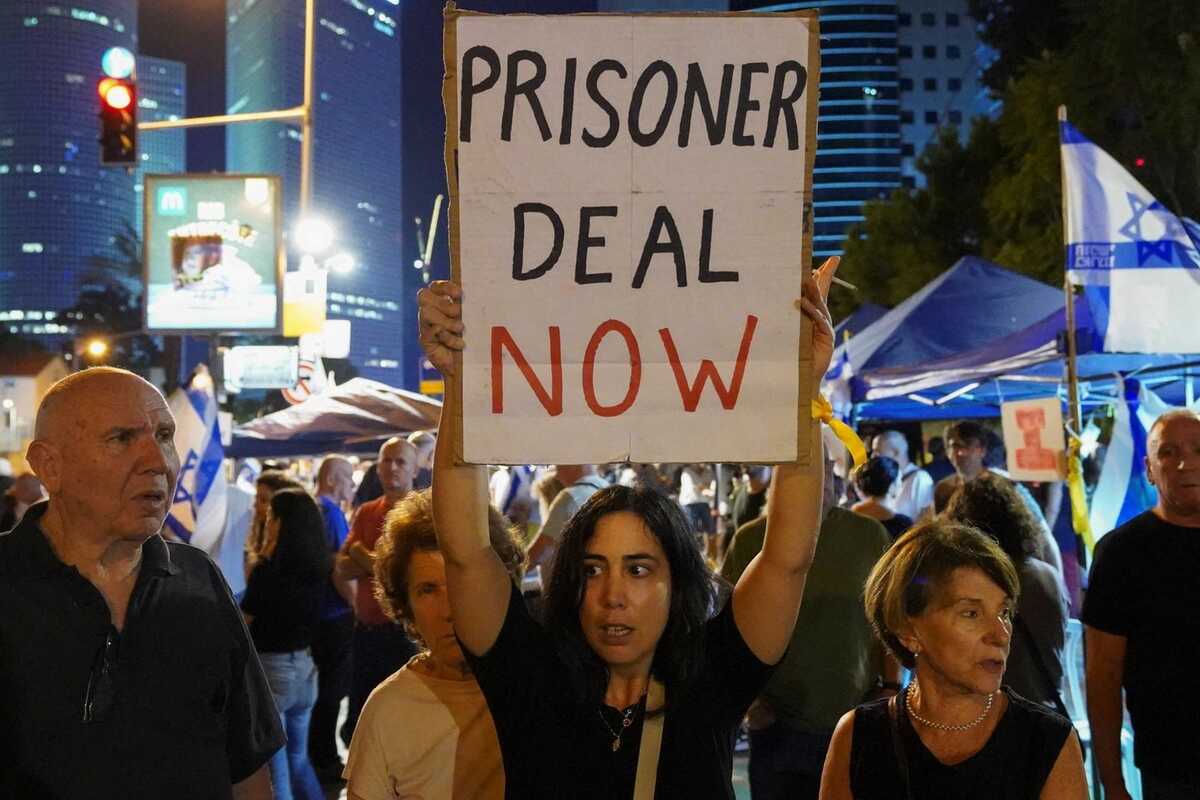
Tel Aviv: Hundreds of families of Israeli hostages demonstrate and demand Netanyahu resignation

Hundreds of families of Israeli prisoners held by Hamas continue to demonstrate in the capital, Tel Aviv, to demand the release of those kidnapped in Gaza and the resignation of Prime Minister Benjamin Netanyahu, whom they accuse of “a miserable failure.”


Hundreds of families of Israeli hostages demonstrated last night (Saturday) in front of the Ministry of Defense in Tel Aviv, carrying pictures of their relatives who were kidnapped by members of Hamas and other Palestinian factions in the attack they launched on areas surrounding Gaza on October 7 of this year.


Since the sudden attack, dozens of Israelis have carried out an ongoing sit-in in front of the headquarters of the Ministry of Defense, pledging to continue their movement until Netanyahu’s resignation, according to what Agence France-Presse reported.


An Israeli army spokesman said today (Sunday) that Israel has confirmed that 212 hostages are being held in Gaza.


The demonstrators carried banners reading, “Free the hostages...Stop shooting,” and chanted slogans calling for the hostages to be freed.


The Israeli Prime Minister had stated that his government would use any means to locate the kidnapped people and return them to their country, while the Israeli National Security Advisor, Tzachi Haneghebi, said that the hostage issue would be the core of any discussion to bring humanitarian aid into the Gaza Strip.


Last Friday, Hamas released two American hostages, a mother and her daughter, through Qatari mediation. Al-Qassam Brigades spokesman Abu Ubaida said in an audio message earlier that the number of Israeli prisoners in the Gaza Strip ranges between 200 and 250, and he indicated that 22 prisoners lost their lives in Israeli raids.


PALESTINE

Sun 22 Oct 2023 2:32 pm - Jerusalem Time

Israeli raids on Jabalia, Rafah, and Gaza City kill 32 Palestinians, including a journalist

Palestine TV reported on Sunday that 32 people, including a journalist, had been killed in Israeli raids on Jabalia, Rafah and Gaza City, according to what was reported by the Arab World News Agency.


Israel has been violently bombing the Gaza Strip since Saturday/Sunday night, after announcing the intensification of its strikes in preparation for a ground operation, with the war between the Hamas movement and the Hebrew state entering its third week, following an unprecedented attack by the Palestinian movement on Israel on the seventh of October. .


Yesterday, Saturday, Israeli army spokesman Admiral Daniel Hajari called on Gaza residents to move south, away from the bombing. He said in a briefing to Israeli journalists, addressing the residents of Gaza: “For your safety, move south... We will continue the attack in the Gaza City area and increase the attacks.”


Israel imposed an “absolute siege” on the Gaza Strip after the attack carried out by Hamas and other Palestinian factions on Israeli towns in the Gaza envelope area on October 7, which resulted in the deaths of 1,400 people in an attack that shocked Israel.


PALESTINE

Sun 22 Oct 2023 2:10 pm - Jerusalem Time

Gaza under fire: Lives of 120 premature babies are at risk due to running out of fuel

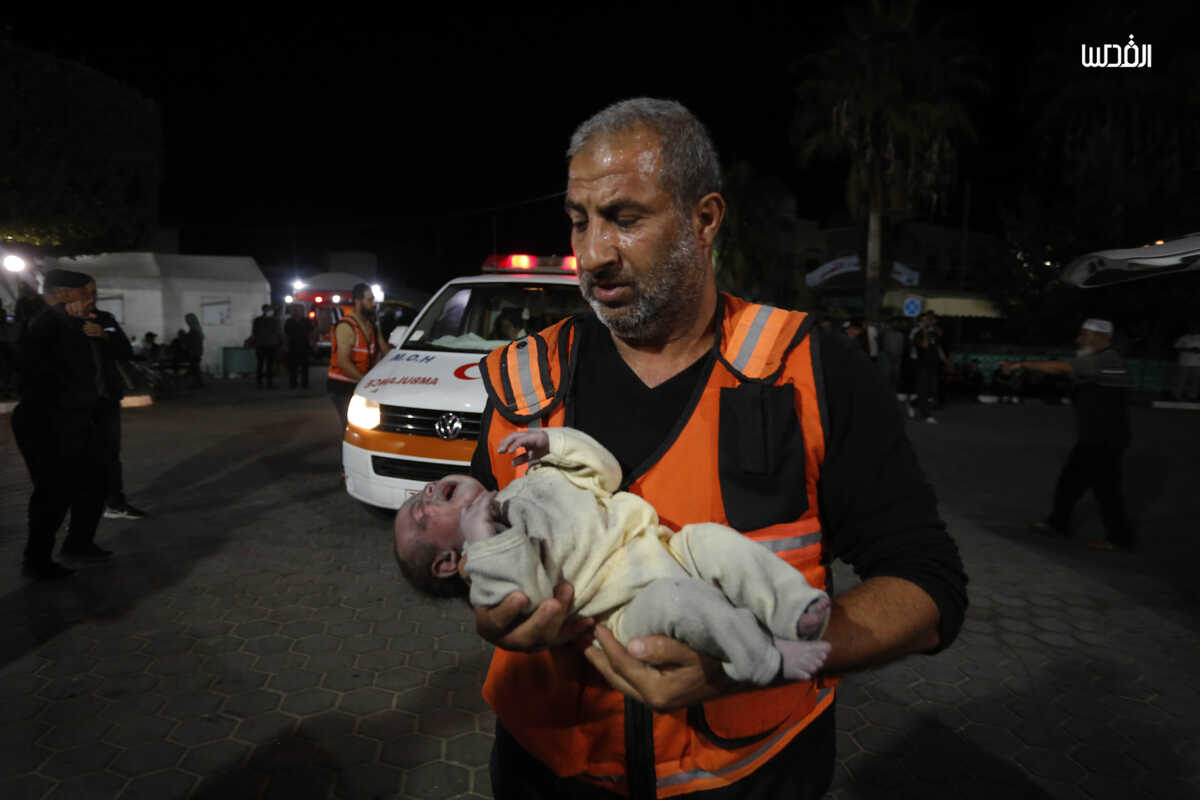
The United Nations Children's Fund (UNICEF) confirmed on Sunday that 120 newborns placed in incubators are at risk due to the severe shortage of fuel needed to operate electricity generators in hospitals.


More than 1,750 children were killed out of 4,385 martyrs in the ongoing Israeli bombing of the Gaza Strip since October 7, according to the Hamas Ministry of Health.


The Israeli bombing comes in response to an unprecedented attack in the history of the Hebrew state, carried out by the Hamas movement, which killed more than 1,400 Israelis, most of them civilians.


After the attack, Israel tightened the siege originally imposed on the Gaza Strip since 2007, and prevented supplies of fuel, water, food, and water.


Hospitals in the Gaza Strip are suffering from a severe shortage of fuel, water and medicines.


UNICEF spokesman Jonathan Krekes told AFP, "We currently have 120 newborns in incubators, including 70 on ventilators. Of course, this makes us very concerned."


Children's and maternity departments in the Gaza Strip need energy as a primary source for treating children in incubators and helping them breathe to ensure their survival in light of their incomplete growth in the mother's womb.


The World Health Organization said Thursday that hospitals had run out of fuel to operate generators.


The international organization indicated that 1,000 dialysis cases in the Gaza Strip are also at risk if the generators stop working.


"death danger"

Twenty aid trucks crossed from Egypt into the Gaza Strip on Saturday, carrying food, water and medicine, but none of them carried fuel.


"Twenty trucks are a drop in the ocean of need right now in Gaza," said Michael Ryan, director of emergencies at the World Health Organization.


Officials confirm that the limited energy sources in the Gaza Strip are being preserved for use in operating generators for medical equipment.


"If infants are placed in incubators and connected to artificial respirators as is standard practice, the power outage makes us worry about their lives," the UNICEF spokesman said.


The Ministry of Health in the Gaza Strip said on Saturday that the lives of 130 children were “at risk of death” due to running out of fuel.


According to the United Nations Population Fund, Gaza witnesses about 160 births every day, noting that there are 50,000 pregnant women in the Strip, which has a population of 2.4 million people.


Although Israel says that its raids target targets belonging to the Hamas movement, the percentage of children killed in Israeli bombing is very high.


The Israeli bombing also caused the death of entire families, in addition to pregnant women.


According to a doctor working at Al-Najjar Hospital in Rafah, an attempt took place last Thursday to save a fetus whose mother died in an Israeli bombing of the family home, while she was in the seventh month of pregnancy.


The doctor said that the baby was born dead. Hours earlier, eight children were killed while sleeping in a house in Khan Yunis in the southern Gaza Strip.


PALESTINE

Sun 22 Oct 2023 2:08 pm - Jerusalem Time

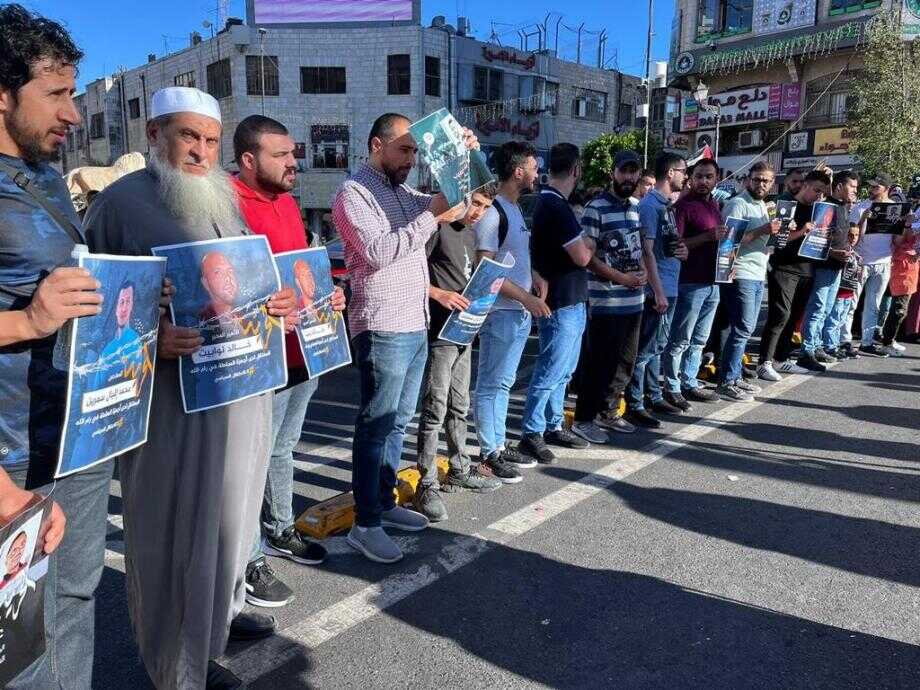
Palestinian families call on international community to protect their children in Israeli jails

The families of detainees in Israeli occupation prisons sent a message to the international community, in which they expressed their concern for the fate of their children and their fear of the occupation singling them out and doubling its systematic crimes against them in an unprecedented manner.


In a press conference held in Al-Manara Square in the city of Ramallah, today, Sunday, the families of the detainees confirmed that since the seventh of this October, the occupation authorities have announced a series of retaliatory measures against the detainees, which included depriving them of their remaining rights and achievements that they have accumulated over decades of detention. The struggle, the simplest of which is the right to visit and provide treatment.


The letter stated: “Hence, we inform the world that, within about two weeks, the occupation prisons were transformed into Guantánamo prison. The occupation deprives our children of visits, lawyers and legal teams, stops treatment, and cuts off water and electricity. Today, our children face hunger after The occupation withdrew food supplies from them and reduced their meals.”


The families of the detainees noted that since the seventh of this month, their children have been subjected to severe beatings inside their sections, while the occupation prison administration has doubled the abuse and torture against them, while the international community is content with talking about the hostages held for two weeks in the Gaza Strip, and the world has never seen thousands of detainees in prisons. The occupation, for whom they were and still are, are mere numbers.


The families of the detainees stressed that their demand is the freedom of their children, especially female detainees, children, and the sick. They called on the international community and its human rights institutions to work immediately to achieve the justice they sing of, from which the Palestinians are excluded.


The families called on human rights institutions, led by the International Committee of the Red Cross, to act immediately and reveal the fate of the detainees, in light of the cessation of visits, and the failure to disclose the fate of the detainees and their places of detention, and for work to be done to release the Gazan workers who were prevented from returning to the Strip and were detained. In occupation army camps.

PALESTINE

Sun 22 Oct 2023 2:04 pm - Jerusalem Time

5 axes of the expected Israeli attack on Gaza, no ground operation against Hezbollah in Lebanon

The more enemies fight, and the longer the war continues between them, the more similar and identified they become with each other. War usually begins, and each of the combatants has its own strategy and approach that is different from the other. Usually, the parties' goals are high at the beginning of the war. But the actual experience in the theater of war, as well as action and reaction, requires adaptation from the tactical to the strategic level.


Because of this process, and the efforts of each party to adapt to the other’s plans, the process of what is called biology (Symbiosis) appears. The war begins from non-convergence, and progresses until it reaches the line of contact, which is called the “stalemate.” At this stage, mutual exhaustion begins, and the war stops, but only after everyone realizes that victory has become impossible, and that the cost of the war has become so great that it exceeds the profits that were expected.


The origin of the word “symbiosis” is from the Greek language, which means “living together.” Do wars mean “living together”? It is possible, but in a bloody way, and under the rules of engagement that change with changing circumstances and changing generations. Therefore, it can be said that most wars usually occur between geographically neighboring powers. Does the degree and intensity of friction increase the shorter the distances? Do war and its causes have a direct relationship to distance? What about virtual digital distances?


Today, there is an internecine war between Russia and Ukraine, which are close together in geography, history, culture and civilization. Today, battles are also taking place in Palestine due to geographical and demographic proximity, and competition and conflict over the same geographical area.


Awareness of geographical distance differs between great powers and ordinary powers in the world. The reason for this difference is that the great powers have the ability and means to be present in any geographical location. It has interests in all parts of the globe. Hence its political, economic and military presence, as events threaten its supreme interests.


Gaza events

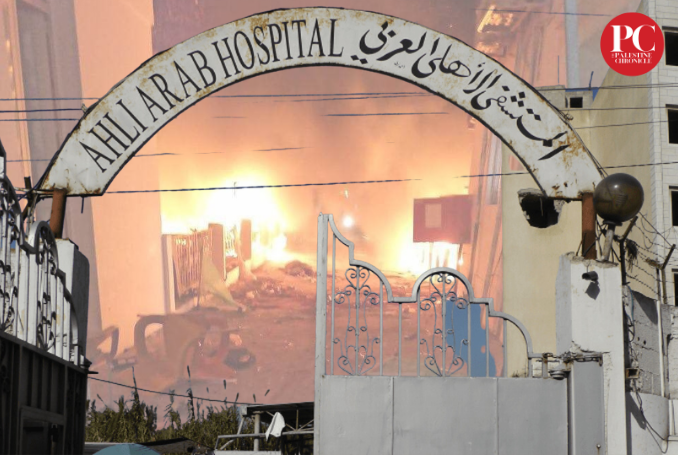
Despite the Baptist Hospital massacre in Gaza, President Joe Biden has not canceled his visit to Israel. He seems determined to provide absolute support for Israel. He adopted the Israeli version of the cause of the hospital disaster, which blames it on a missile fired by the “Islamic Jihad” organization from an area adjacent to the hospital.


Biden had previously ordered the deployment of two aircraft carriers in the Mediterranean. This is in addition to the mobilization of 2,000 Marines, and the preparation of special forces units from the “Delta” or “Team Seal-6” squad, which are forces specialized in special operations to liberate hostages. At the same time, the Commander of the Central Region, General Michael Corella, is coordinating with the Israeli military leadership on how to control the military situation, so that it does not get out of control, and to work seriously to activate deterrence, and even how to deal with it if all fronts are opened.


In return, Iran threatens a pre-emptive response. It warns of the war expanding to include the entire region. The Lebanese front has also heated up to an unusual degree since 2006, but without reaching the point of war, at least not yet. Groups linked to Iran also appear to be launching attacks on American sites in Iraq and Syria, as part of a warning to the United States against continuing to support Israel in its current war against Gaza. Thus, the management of the war has moved from the hands of local players, that is, from the strategic level, to the higher-ranking geopolitical level.


South Lebanon

Hezbollah is heating up the Lebanese front, in parallel with heating up the Gaza front. Thus, the rules of engagement have become variable and fluid, in a way that it can be said that there are no rules of engagement currently in place. What is the current state of the northern front?


* Bombing and counter-bombing by both teams. Evacuating the population from the Israeli side at a depth of 2 km inside occupied Palestine, in anticipation of any ground operation by Hezbollah.


* Israel also seeks to create a buffer zone inside Lebanese territory approximately 5 km deep, but with firepower. There is no massive Lebanese exodus from deep within the Lebanese front.


What if the Israeli ground operation begins in Gaza? Will he go to open the Lebanon front? If the front opens, how will President Biden implement his promise? What will the image of the front be like compared to the July 2006 war?


Talking about Israel fighting on two fronts is not correct now. It did not actually fight on two fronts except in the October War of 1973, on the Golan and Sinai at the same time. In the Six-Day War, Israel adopted the following principle: stabilizing one front, which is the Golan, and focusing the main effort on another front, which is the Sinai. After completing the Sinai front, Israel moved to fight on the Syrian front.


Current field facts indicate the following:


* Israel deployed most of its reserve forces on the Lebanese front. These forces were supported by armored forces, but of the third generation.


* But it deployed the most important armored forces (with the latest tanks), capable of maneuvering and striking, on the Gaza fronts in the north and east.


* Israel is preparing the ground for a ground operation that may be similar to the 2009 operation (Cast Lead), through heavy bombardment of the axes of the expected attack, which are divided into five axes as follows: from the north, through Beit Lahia and the Erez crossing. From the east, through Jabalia and Gaza City. From the far south, through the Rafah crossing.


*As for the southern Lebanese front, it will be as follows:


  1. - No ground operation similar to the July 2006 war. This makes Hezbollah lose the advantage of territory and its awareness of the place.

  2. - Accommodating Hezbollah’s bombing by responding in kind not only to its centers but also to all of Lebanon.

  3. - Disturbing everything in the area of operations to deprive Hezbollah of using drones.

  4. - Preventing the party from carrying out a ground operation, which would be preferred, after emptying the area of residents, and preparing in advance for the worst scenario, especially since the factor of surprise was in Gaza and not on the Lebanese front.

  5. - But the greatest uncertainty remains about how the American forces (aircraft carriers) will behave if the Lebanese front is opened. Will it be limited to intelligence support, electronic warfare, and providing ammunition, or will there be direct intervention? In the event of direct American intervention, how will Iran respond?


Source: Al Sharq Al awsat


PALESTINE

Sun 22 Oct 2023 1:43 pm - Jerusalem Time

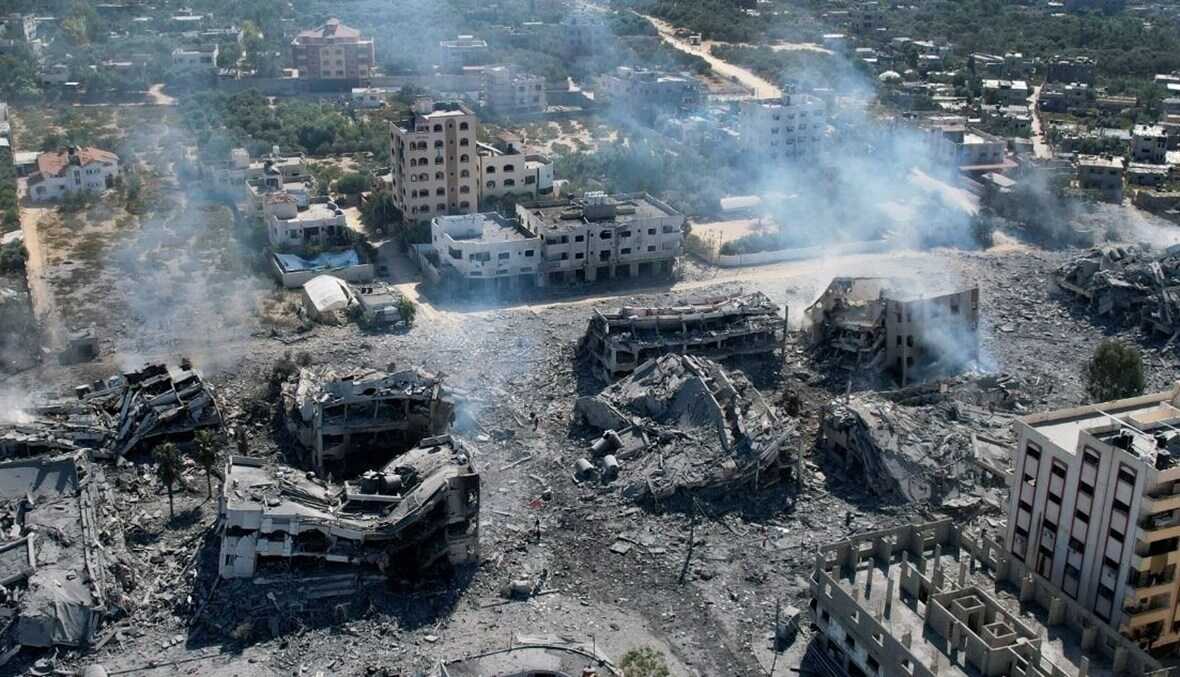
United Nations: 42% of housing units in Gaza were destroyed or damaged

The United Nations said today (Sunday) that at least 42 percent of all housing units in the Gaza Strip were destroyed or damaged as a result of Israel’s ongoing raids for the 16th day.


The United Nations Office for the Coordination of Humanitarian Affairs (OCHA) reported in a statement, a copy of which was received by Xinhua News Agency, that 15,100 housing units were destroyed, and 10,656 housing units were rendered uninhabitable.


The statement explained that another 139,000 housing units were subjected to minor to moderate damage, pointing to the destruction of entire neighborhoods, especially in Beit Hanoun, Beit Lahia, Al-Shujaiya, the area between Gaza and the Beach refugee camp, and Abasan Al-Kabira in Khan Yunis.


According to the statement, an assessment of the North Gaza Governorate area, conducted by the United Nations Satellite Center (UNOSAT), identified 927 destroyed buildings and 4,337 buildings that suffered moderate to severe damage, equivalent to about 15 percent of all buildings in that area.


The evaluation was based on comparing images collected on October 15, 2023 with those collected on May 1, 2023.


The statement highlighted the continuation of Israel's attacks on the Gaza Strip "unabated" at a time when the cumulative death toll has reached 4,385 Palestinians, of whom 62% are children and women, while more than 1,000 Palestinian people have been reported missing and are presumed to be trapped or died under the rubble.


He pointed out that according to the Ministry of Health in Gaza, 98 Palestinian families lost ten or more members, 95 Palestinian families lost between 6 and 9 members; 357 families lost between two and five members.


He stated that the number of deaths reported in Gaza in the current round of fighting is about 84 percent higher than the total number of deaths during the 50-day round of fighting in the summer of 2014 (2,251 Palestinian deaths).


The statement estimated the number of internally displaced people in Gaza at about 14 million people, with about 566,000 people living in 148 emergency shelters designated for the United Nations Relief and Works Agency for Palestine Refugees (UNRWA) under increasingly poor conditions.


According to the statement, health partners discovered cases of smallpox, scabies and diarrhea, which were attributed to poor sanitation conditions and consumption of water from unsafe sources.


He stated that infection rates of these diseases are expected to rise unless water and sanitation facilities are provided with electricity or fuel to resume their operations.


Overcrowding is increasing in UNRWA halls in the central and southern regions, with a severe shortage of basic resources such as water, food and medicine.


It is estimated that more than 15% of internally displaced people suffer from disabilities, but most shelters are not adequately equipped to meet their needs.


According to the UN statement, the shelters lack the necessary mattresses and medical beds, which causes ulcers and other medical problems that cannot be treated in non-sterile conditions, and the food distributed does not meet the needs of people who suffer from swallowing difficulties.


The total Palestinian death toll exceeded four thousand, and more than 13,000 were injured with various injuries in the Gaza Strip, as Israel's attacks on the Strip continued since October 7.


For its part, the Israeli army recently announced that it has so far notified 307 families of those killed and the families of 210 kidnapped people in Gaza, while the death toll in Israel since the beginning of the round of fighting with Hamas is about 1,400 people.

PALESTINE

Sun 22 Oct 2023 1:41 pm - Jerusalem Time

Who Bombed Al-Ahli Baptist Hospital: Three Investigations Offer Answers

Multiple investigations debunk the Israeli army’s claims regarding the massive explosion that struck the Al-Ahli Baptist Hospital in Gaza, resulting in the deaths of hundreds of Palestinians, mostly women and children.

On Tuesday, October 17, a massive airstrike hit the Al-Ahli Baptist Hospital in Gaza, resulting in the deaths of hundreds of Palestinian civilians.


Initially, a top aide for Israeli Prime Minister Benjamin Netanyahu, Hananya Naftali, took responsibility for the attack, stating in a tweet:

“Israeli Air Force struck a Hamas terrorist base inside a hospital in Gaza. A multiple number of terrorists are dead. It’s heartbreaking that Hamas is launching rockets from hospitals, Mosques, schools and using civilians as human shields.”


The tweet was quickly deleted, however, and a new Israeli version emerged.

In the following hours, Israel said that the mass killing of Palestinians in Al-Ahli was a result of a misfired rocket launched by the Palestinian group, Islamic Jihad.

Since then, many attempted to answer the question: who bombed the Christian medical center?

Below, are the summaries of three different investigations that refuted the Israeli version of events. They also prove that the Israeli narrative on the unprecedented massacre of civilians was, in fact, fabricated.


1. Forensic Architecture

A joint analysis conducted by the independent university-based research agency, Forensic Architecture, Al-Haq and Earshot.ngo “casts significant doubt” on the Israeli account. 


“3D analysis shows patterns of radial fragmentation on the southwest side of the impact crater, as well as a shallow channel leading into the crater from the northeast,” Forensic Architecture wrote in a series of posts on the social media platform X.


It added, 

“In reviewing our analysis, investigator & explosive weapons expert @CobbSmith  agrees the fragmentation patterns may indicate the projectile came from the northeast—the direction of the Israeli-controlled side of the Gaza perimeter—and not from the west, as claimed by the IOF.”

According to Forensic Architecture, the “analysis of the crater size suggests a munition larger than eg a Spike or Hellfire missile commonly used by IOF drones.”


The Israeli army’s claim that the missile that hit the hospital came from the south-west was also refuted by Earshot.ngo, which performed independent audio analysis. 

Earshot also analyzed the recording released by the Israeli army of an alleged exchange between members of Hamas implicating the Islamic Jihad in the attack. According to Earshot, “this recording was manipulated and cannot be used as a credible source of evidence”.

2. Sanad Agency

Another investigation, carried out by Sanad Agency, found out that all the rockets launched toward Israel from the besieged Gaza Strip before the attack on the Al-Ahli Baptist Hospital were intercepted by the Israeli Iron Dome system.

“The investigation reveals that Israeli statements seem to have misinterpreted the evidence to build a story that one of the flashes recorded by several sources was a rocket misfire,” Al Jazeera reported, adding:

“Based on a detailed review of all videos, Sanad’s analysts conclude that the flash Israel attributed to a misfire was in fact consistent with Israel’s Iron Dome missile defense system intercepting a missile fired from the Gaza Strip and destroying it in mid-air.” 


3. Ammunition Specialist

In an interview with the Turkish Daily Sabah newspaper, retired military officer and ammunition specialist Engin Yiğit said that,

“Bombs with proximity fuses or proximity sensors may not create craters where they explode.”

This was a response to the Israeli army’s imagery, claiming that the explosion could not have been the result of an airstrike, due to the absence of visible deep craters. 


“The hospital attack in Gaza may have been similar. How high the bomb explodes can be set by the user,” Yiğit noted.

Yiğit went as far as providing an early hypothesis, suggesting that it is strongly possible that the attack was carried out with an MK-84 guided bomb.


(The Palestine Chronicle)

PALESTINE

Sun 22 Oct 2023 1:32 pm - Jerusalem Time

Israeli army assassinates a Hamas leader in Gaza

Israeli army spokesman Jonathan Conricus announced on Sunday that Israel will confront Hamas "above and below the ground."


Conricus added, in statements he made in an interview with Fox News and published on the “X” platform: “We have prepared the necessary measures to get rid of it (Hamas),” according to the Arab World News Agency.


The Israeli army also confirmed that 212 hostages had been confirmed in Gaza, and added that the strikes carried out by Israel last night killed dozens of Palestinian resistance fighters, including the deputy commander of the Hamas missile forces.


On the northern front, spokesman Daniel Hajari said in a press briefing that Israel continues to attack militants trying to launch missiles across the Lebanese border, and that it bombed a site in Lebanon from which a missile was fired at an Israeli plane.


Yesterday, Saturday, Hamas confirmed the killing of a member of its political bureau in Gaza, Osama Al-Muzaini “Abu Hammam,” during the Israeli strikes on the Gaza Strip.


PALESTINE

Sun 22 Oct 2023 1:22 pm - Jerusalem Time

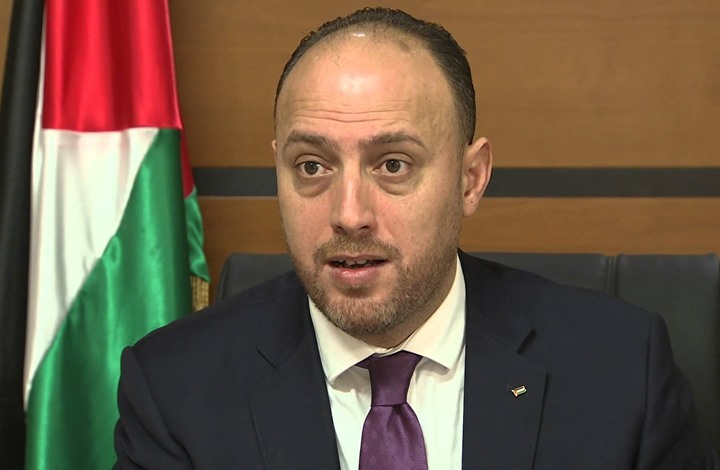
Palestinian Ambassador to UK : Israel is responsible for the “Baptist disaster”

The Palestinian Ambassador to Britain, Hossam Zomlot, said he still believes that Israel is responsible for the bloody attack on the Baptist Hospital in Gaza on Tuesday, which killed at least 500 people.


Zomlot added to the British "Sky News" network that the Baptist Hospital incident "is not the only thing that the press should focus on," pointing out that the St. Porphyrius Church was targeted one day after the hospital was targeted.


The diplomat considered, "The Palestinians feel invisible. There is massacre and horror everywhere, and the situation is unprecedented."


In his speech, Zomlot touched on the Hamas attacks that claimed the lives of Israeli civilians, offering condolences to the families of the victims, but he went on to say: “While the Palestinian authorities condemned the killing of Israeli civilians, he did not hear the same from Israel regarding the Palestinian victims.”


He added: "Our lives matter. All human beings are equal."


The National Arab Baptist Hospital, located in Gaza City, witnessed a bloody attack on Tuesday, sparking a widespread wave of condemnation.


While Hamas held Israel responsible for the attack, which the Palestinian Ministry of Health says led to the killing of hundreds of civilians, the Israeli army rejects this claim, claiming that the explosion resulted from a “failed missile launch” by Jihad movement activists.


Western reports also supported the Israeli story, accusing Palestinian factions of being behind the tragedy.


Source: Sky News


PALESTINE

Sun 22 Oct 2023 12:47 pm - Jerusalem Time

Axios discloses the Inside Biden's Gaza strategy

An analysis published on Axios focused on President Biden's dual-track approach to the Gaza crisis - with Biden standing firmly alongside Israeli Prime Minister Benjamin Netanyahu in public while trying to stymie him in private.

According to Axios, the big picture is that the United States supports Israel but does not want to be drawn into another large or long-term military operation in the Middle East. Dealing with this needle is the biggest challenge facing the Biden administration at the present time.

Zooming out: Biden set the tone for the American response in his speech on October 10, when he compared Hamas to ISIS.


Axios added that the speech was broadcast during prime time in Israel, and was one of the most watched television events in Israel's history.

According to Axios, former US Ambassador to Israel Tom Nides told Axios that the matter was well received among Israeli political leaders and the Israeli public, which gave Biden credibility at the beginning of the crisis.

“If you love Biden or hate Biden, you can't complain about his commitment to Israel,” Nides said.

ِAxios added that Biden used this credibility carefully. He and Netanyahu have a fraught history, but during their calls — which happen nearly every day — Biden avoided direct pressure on the prime minister, according to US officials. Instead, ask questions, which is a gentler way to raise the same concerns.

The Latest: About 20 trucks loaded with humanitarian aid crossed into Gaza today after Biden successfully lobbied Egypt and Israel to agree to allow aid in during his visit to Israel.

Axios emphasized that one of Biden's main goals is to prevent the conflict in Gaza from turning into a regional war. Sending aircraft carriers to the region is part of this effort, as are the messages the United States has sent to Iran and Hezbollah — both publicly and secretly.

Axios emphasized that US officials said that Biden asked Netanyahu several times about his plans to avoid escalation that would push Hezbollah into war.

Biden said he asked Netanyahu and other Israeli officials about alternatives to a ground invasion of Gaza and whether they had a plan for what to do in Gaza after the dismantling of Hamas.

They told him they didn't have one yet.


Axios reported that an American official told said that Biden tried, from a position of love and friendship, to tell the Israelis: “Think in the long term and do not make the same mistakes we made after September 11.”


Axios continued, regarding the current situation: Biden took this strategy to the next level with his trip to Israel. The visit was an unprecedented show of support on the ground in a time of war — and gave Biden a chance to reach out privately to the Israelis to get them to take the steps the United States wanted.


Israeli and American officials said that Biden and Secretary of State Anthony Blinken told the Israelis that it was in Israel's interest to allow humanitarian aid into Gaza. They said doing so would help maintain international support for the Israeli operation against Hamas.

The Israelis agreed. A senior Israeli official told Axios that after supporting Biden, in word and deed, they were unable to refuse.

Behind the scenes: Biden himself is the driving force behind much of this strategy, say people familiar with the process.


His Oct. 10 speech “was all Joe Biden,” according to a source familiar with the speech-writing process, who said Biden shot down his aides’ attempts to soften the language or balance the messaging.

Biden told reporters aboard Air Force One that many people on the president's team did not want him to go to Israel, but he decided to do so.


Between the lines: Biden is dusting off the same playbook he used to broker an 11-day ceasefire during the May 2021 Gaza war, two US officials said.

But this time the public-private sector strategy will take more time to implement. Biden's senior advisers know there will be no ceasefire anytime soon. And they don't pay for one. The direct goal is to influence Israel's movements on the ground.


What's next: Biden will not be able to stop the war, but he will likely continue to use his popularity and credibility among Israelis to influence its course.


"There's a reason there are posters of Joe Biden all over Israel," Axios concluded. "Biden has managed to take the moral high ground when it comes to the Israeli people and the Jewish community in the United States, and he will use them as he sees fit." As Nides said.

ARAB AND WORLD

Sun 22 Oct 2023 12:26 pm - Jerusalem Time

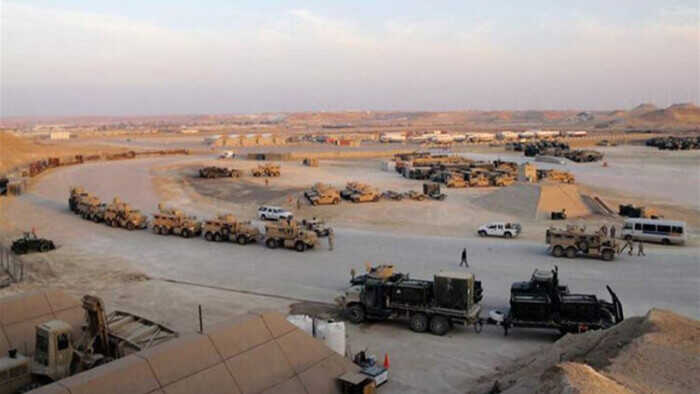
A missile attack targets stationed American forces in Ain al-Asad air base in Iraq

Al-Asad base in Anbar Governorate, western Iraq, where American forces are located, was subjected to a missile attack today (Sunday).


An officer with the rank of lieutenant colonel in the Iraqi army, who preferred to remain anonymous, told Xinhua News Agency that at least two missiles fell at the Ain al-Asad base in the town of al-Baghdadi in Anbar Governorate, western Iraq, at dawn today, resulting in minor material losses.


This is the second attack on the base. Last Thursday, it was subjected to a missile attack claimed by an armed group calling itself (Islamic Resistance in Iraq).


After the events in Gaza, the Iraqi bases where American forces were present as advisors and trainers were attacked by missiles and drones. These are the Al-Baghdadi bases in Anbar, the Victory bases near Baghdad International Airport, and the Harir bases in Erbil, the capital of the Kurdistan region in northern Iraq.

PALESTINE

Sun 22 Oct 2023 12:20 pm - Jerusalem Time

Axios: Israeli suspicions that Hamas possesses chemical weapons

The American website "Axios" said today that the Israeli army "found a USB key containing instructions for producing a cyanide dispersal device on the body of a Hamas activist who participated in the October 7 attack, according to Israeli officials and a copy from the Ministry of Foreign Affairs." Israeli secret.


According to Axios, it is unclear whether Hamas has any serious or operational plan to use crude chemical weapons, or whether the movement has attempted to produce them.


The American website reported that the “Preventing the Proliferation of Weapons of Mass Destruction” department in the Israeli Ministry of Foreign Affairs sent, on Thursday, a secret telegram to Israeli embassies in dozens of capitals around the world, including Washington, under the title: “Hamas intends to use chemical weapons.”


Axios said it was unable to independently confirm the veracity of the Hamas file, but Israeli officials have previously said they “will not share information with allies if they do not believe it is true and reliable.”


The Israeli Ministry of Foreign Affairs declined to comment on Axios' questions, while a Hamas spokesman did not immediately respond to a request for comment.


The Israeli Foreign Ministry said in the cable that Israeli intelligence traced the origin of the document to an Al-Qaeda guide issued in 2003.


“This conclusion indicates Hamas’s intention to use chemical weapons as part of its terrorist attack against civilians,” the cable claims.


The State Department sent the original file with a description in English to its embassies and in the telegram asked them to transmit it privately to the governments hosting the embassies and not to use it publicly in any way.


In the cable, the Israeli Foreign Ministry asked its diplomats to tell their counterparts that Hamas wants to “launch attacks in the same way that ISIS tried to do.”


Israel has privately and publicly shared documents it says it has found about dead Hamas attackers since October 7, including information that provided more insight into the group's planning.


According to the website, it is alleged that many of these documents, which Hamas classified as “top secret,” included operational plans to attack Israeli villages and military bases near the border with explicit orders to kill the largest possible number of people and take hostages to Gaza.


Source: Axios

PALESTINE

Sun 22 Oct 2023 12:15 pm - Jerusalem Time

400 US officials criticize Biden administration for “neglecting to support the Palestinians”

The Israeli newspaper Yedioth Ahronoth published a circulated letter signed by more than 400 American officials, both Muslims and Jews, criticizing the Biden administration for “neglecting to support the Palestinians.”


“Millions of lives are threatened,” the letter says. “Our families, our histories, and our religious traditions are deeply rooted in Jerusalem, Israel, and Palestine. As children of survivors of slavery, the Holocaust, colonialism, war, and oppression, we feel compelled to raise our voices at this moment.”


The letter continued: “We join members of Congress and the international community in condemning the horrific war crimes committed by Hamas, but at the same time we mourn the Palestinian civilians who are experiencing catastrophic suffering at the hands of the Israeli government.”


She added: “As Muslims and Jews, we are tired of reviving generational fear of genocide and ethnic cleansing. We are tired of leaders who push us to blame each other, and to exploit our pain and history to set political agendas and justify violence.”


The letter also stated: “If there is bleeding, can we direct our efforts to put an end to the status quo of occupation and violence, and find ways to achieve a sustainable peace for both Israelis and Palestinians?”


According to Yedioth Ahronoth, the officials signed the letter without revealing their identity “out of concern for our personal safety, and for fear of the risk of violence and the impact on our professional credibility.”


These words are also echoed in the Senate, where 30 of its members wrote to Secretary of State Anthony Blinken to express their support for the administration’s steps to eliminate Hamas so far, but also to “urge him to work for a ceasefire because the solution will not be achieved by military means.”


Source: Annahar al Araby + Yedioth Ahronoth

PALESTINE

Sun 22 Oct 2023 11:24 am - Jerusalem Time

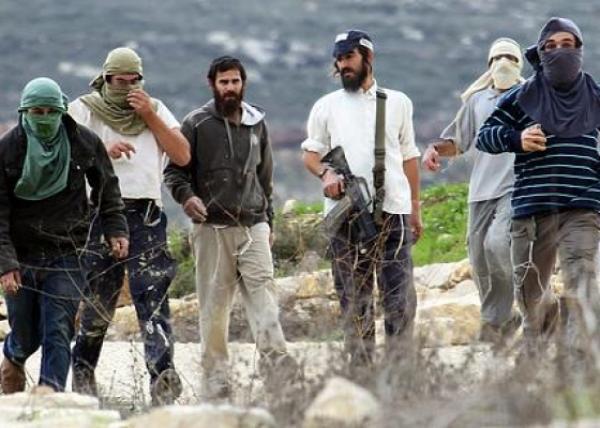
Israeli Settlers Destroy Palestinian citizens' property south of Hebron

Last night, settlers uprooted 30 olive trees and grapes, destroyed water tanks, cut off solar energy extensions, and stole other equipment, near the Shaab al-Buttam area in Masafer Yatta, south of the city of Hebron.


According to local sources, settlers from the "Avigal" settlement stormed the Bedouin community of "Umm Tarit" near Sha'ab al-Buttam, and attacked the citizens' property. They also contaminated water wells owned by the citizen Muhammad Abd al-Rahman Jabarin.


The sources indicated that the settlers threatened the citizens of Khirbet Maghayir al-Ubaid with deportation and death, after they searched caves and homes and terrorized children.


Settlers also destroyed a number of olive trees belonging to the citizen Farid Hamamda, in the Fatih Sidra area of Musafer Yatta.

PALESTINE

Sun 22 Oct 2023 10:29 am - Jerusalem Time

Israeli forces attacks on Palestinian citizens in the West Bank

Today, Sunday, Israeli occupation forces attacked citizens and their property in the West Bank.


In Nablus, the occupation forces assaulted and beat a citizen while he was picking olives in the Al-Mantara area in the village of Kafr Qalil, south of the city.


The same sources added that the citizen suffered a broken foot and bruises in various parts of his body as a result of the attack.


In Salfit, the occupation bulldozers bulldozed dozens of dunams west of the town, in order to build a colonial road.


Meanwhile, the occupation soldiers stationed in the military tower located on the outskirts of the “Arael” settlement opened fire and forced the farmers and olive pickers to leave their lands.

ARAB AND WORLD

Sun 22 Oct 2023 10:05 am - Jerusalem Time

A Syrian was killed in an Israeli air strike targeting Damascus and Aleppo airports

A Syrian civilian worker was killed today (Sunday) as a result of an Israeli air strike that targeted Damascus and Aleppo airports, causing them to be out of service, according to what Syrian official media reported.


The Syrian News Agency (SANA) quoted a military source as saying, “At approximately 5:25 a.m. today, the Israeli enemy simultaneously carried out an air aggression with bursts of missiles from the direction of the Mediterranean Sea, west of Latakia, and from the direction of the occupied Syrian Golan, targeting the international airports of Damascus and Aleppo, which led to It led to the martyrdom of a civilian worker at Damascus Airport, the injury of another worker, and the material damage to the two airports’ runways, which led to them being out of service.”


Al-Mayadeen TV had previously reported that an Israeli missile bombardment targeted the airports of the capital, Damascus, and the city of Aleppo in northern Syria early today (Sunday).


The report stated that Syrian air defenses repelled the Israeli missile attack on both airports.


Today (Sunday) is the third attack targeting Aleppo Airport and the second targeting Damascus Airport this month. This comes amid escalating tension in the region in light of the Israeli attacks on the Gaza Strip.

PALESTINE

Sun 22 Oct 2023 9:55 am - Jerusalem Time

The Reasons behind Israeli Rejection Hamas Offer to Release Two Israelis Held in Gaza

Israel reportedly rejected an offer by the Al-Qassam Brigades Resistance group to release two Israeli women “with no compensation”. But why?


Hours after the release of two American hostages held in Gaza by the Al-Qassam Brigades Resistance group, Al-Qassam offered to release two Israeli women, “with no compensation” – meaning without demanding any Israeli concession, for example allowing humanitarian aid into Gaza. 


Israel, according to Al-Qassam, the armed wing of the Palestinian group Hamas, has rejected the offer. Why?

On Friday, October 20, Israel released two US citizens, Judith Tai Raanan and Natalie Raanan. Al-Qassam, then, said in a statement that their release was a ‘humanitarian gesture’ to prove ‘the deceit’ of the Joe Biden Administration.

That reference was specifically made to tell Biden that the Resistance in Gaza are not bloodthirsty killers as the US administration and many in the mainstream media have painted it. 


Consistent with their earlier action, Al-Qassam, the following day, released this statement: 

“We informed our Qatari brothers yesterday evening that we would release all of the following: Nurit Yitzhak Card No. 001145416 (and) Yocheved Lifshitz Card No. 005236955, For compelling humanitarian reasons and without compensation; However, the occupation government refused to receive them.”


Two Questions

First, why did Israel refuse the release of the two Israelis but allowed the release of two Americans?


The release of the two US citizens simply happened because Israel could not afford the repercussions, in terms of US-Western public opinion, of refusing to save the lives of two Americans.

However, releasing two Israelis is quite problematic for the official Israeli propaganda, which is predicated on the idea that the current deadly Israeli war on Gaza is necessary to save the lives of over 200 prisoners and hostages. 

Therefore, if civilian hostages are released, one of the main pretenses of the Israeli war will lose its appeal. 


Second, why did Al-Qassam make the announcement?


Since the Resistance attack on southern Israel on October 7, Israeli society has been divided into two camps, a large one that wants to go to war for the sake of revenge, and a small one that felt compelled by the desire to free prisoners and captives, currently held by the Resistance in Gaza. 


By releasing information about the rejection by Israel of Al-Qassam’s offer, the Palestinian group wanted to deepen the divide in Israeli society, and place the focus on the release of the hostages, not the war for the sake of war.

Another reason is a strategic one: The Palestinian Resistance is aware of the massive coverage the Israeli war on Gaza is receiving on international media. 


Every time a hostage is released, the media worldwide will be compelled to cover it, thus incrementally fortifying the original message of the Resistance, that the ISIS-like image created by Israel and its allies of those fighting in Gaza is completely wrong, because ISIS did not release hostages, and certainly did not treat them humanely. 


The following statement was released by Zaher Jabareen, Hamas official in charge of the prisoners’ file, after the writing of this brief analysis. It reads as follows:


“Our offer to release the two female prisoners comes in accordance with the ethics of the resistance.“ Thousands of Palestinians are detained in Israeli prisons without charge or trial. “We are in contact with our brothers inside the prisons; more than 6000 prisoners had all their achievements withdrawn, and they are being abused.“ Civilians are not a bargaining chip, and when field conditions are available, we will release them.”


Source: The Palestine Chronicle

PALESTINE

Sun 22 Oct 2023 9:47 am - Jerusalem Time

Did the Iraqi Prime Minister Threaten to Cut Oil Supplies over Gaza?

Considering the existing fears that some Middle East nations might reduce, or even cut oil supplies to the West, al-Sudani’s statement on energy supplies received particular attention in western media. 


The Iraqi leader reportedly warned that supplies of Middle East oil to international markets could be disrupted if the war between Israel and Palestinian Resistance in Gaza escalates to the point of involving other countries in the region.

The conflict will “impact global security, escalate regional conflict, jeopardize energy supplies, exacerbate economic crises, and invite further conflicts,” the Associated Press quoted al-Sudani as saying on Saturday in Cairo.


Al-Sudani called for an immediate cease-fire and a prisoner swap to bring an end to the bloodshed. He argued against displacing Palestinian civilians out of the Gaza Strip, saying, “the Palestinians have no other place but their land.”

His position is consistent with the position of all important political actors in the region, namely Egypt, Jordan and Saudi Arabia. 

The Iraqi Prime Minister said that the current crisis could have been averted if United Nations Security Council resolutions against Israel’s illegal settlement policies in the occupied Palestinian territory had been respected. 


Al-Sudani’s warning comes amid western concerns that Middle East countries could cut off oil exports to the West in response to a possible Israeli ground offensive in besieged Gaza. 

PALESTINE

Sun 22 Oct 2023 9:25 am - Jerusalem Time

Uri Avnery Wrote 15 Years Ago: The Devil’s Hoof

I was shocked when I read the headline in Haaretz. It quoted Sari Nusseibeh as saying "There is no Room for Two", meaning two states between the Mediterranean Sea and the Jordan.

What? Has Nusseibeh abandoned his support for a solution based on coexistence between the State of Israel and the State of Palestine?

I read his long interview with Akiva Eldar and calmed down. Calmed down and immediately got angry. Because the heading was a gross distortion. It had no bearing on what was said in the interview. And since many people read only the heading and do not bother to study the text underneath, this is a deception.

How do such things happen? In Haaretz, as in most other newspapers, the rule is that the headings are not composed by the writers, but by the page editor. This may lead to utterly misleading headings – either through ignorance, negligence, or malice.

This time the matter and the person are too important to pass over in silence.

Fair disclosure: I like Sari Nusseibeh very much. We once walked arm in arm at the head of a demonstration in the Old City of Jerusalem. We shared a peace prize in Germany (the Lev Kopelev Prize of 2003, named after the exiled Russian human rights activist.)

I knew his father, Anwar Nusseibeh, a true Palestinian aristocrat, who served during the Jordanian occupation as a Jordanian Minister of Defense and ambassador to the Court of St. James. Soon after the start of the Israeli occupation, I asked him in confidence whether he would prefer to go back to Jordanian rule or have an independent Palestinian state. He told me in no uncertain terms that he preferred the latter.

Sari enjoyed a British education along with the Palestinian. Some people see him as aloof, even overbearing, but I know him as a sensitive, modest person. He is very courageous, both morally and physically, frequently voicing very unpopular views. As a result he has been beaten up several times.

Five years ago, in cooperation with the Israeli Admiral (and current minister without portfolio) Ami Ayalon, he published an unambiguous peace plan, envisioning the establishment of a Palestinian state side by side with Israel, with the border based on the Green Line and with Jerusalem as the capital of both states. The plan was not very different from the earlier Gush Shalom peace plan or the later Geneva Initiative.

Therefore I was shocked when I saw the headline. Could it be that Nusseibeh has forsaken the central plank of his outlook?

In the interview, Nusseibeh says something entirely different. Not only does he not say that "there is no room for two", but on the contrary: he lauds the Two-State Solution as the best practical solution. However, he adds a warning to the Israelis: because of the rapid expansion of the settlements, time for the realization of this solution is running out. He even fixes a time limit: the end of 2008.

This amounts to an ultimatum: If the Israelis miss this opportunity, which is still there, and if they continue to accelerate the settlement activity in East Jerusalem and the West Bank, the Palestinians will turn their backs on this solution. Instead, they will accept the annexation of the occupied Palestinian territories to Israel, i.e. Israeli rule over the entire country between the sea and the river, and struggle for equal civil rights within this state. He calls this a "default alternative".

Nusseibeh is holding the demographic pistol against the temple of the Israeli public. He is telling them, in effect: the Palestinians will be a large minority in such a state. Their struggle for equality will compel Israel, in the end, to accord them full citizenship. Within a few years the Arab citizens will constitute the majority. Exit the Zionist dream. Exit the Jewish State. (Tzipi Livni, by the way, is saying much the same thing.)

Nusseibeh knows the Israelis well. He knows that the demographic obsession drives them mad. The demographic demon pursues them in their dreams. The frantic discussion of this subject dominates the Israeli discourse. He believes, therefore, that this threat will compel the Israelis to hurry and agree to the Two-State Solution. That is the main objective of the interview.

With all due respect and friendship for Nusseibeh, I believe that this tactic of his is unwise. Very unwise.

In his eyes, and in the eyes of some intellectuals on both sides, there are only two possibilities: the "Two-State Solution" or the "One-State Solution". A Palestinian state alongside Israel or a bi-national State, where equality between all the citizens, Jews and Arabs, is assured.


That is a dangerous misconception.

The "One-State Solution" is an oxymoron, a contradiction in terms. The One-State idea is not a solution, but an anti-solution. It is a recipe for an ongoing bloody conflict. Not a dream, but a nightmare.

There is no chance at all that the Jewish public will agree, in this generation or the next, to live as a minority in a state dominated by an Arab majority. 99.99% of the Jewish population will fight against this tooth and nail. The demography will not stop haunting them, but on the contrary, it will push them to do things which are unthinkable today. Ethnic cleansing will become a practical agenda. Even moderate Israelis will be driven into the arms of the fascist right-wing. All means of oppression will become acceptable when the Jewish majority adopts the aim of causing the Arabs to leave the country before they have a chance of becoming the majority.


True believers in the bi-national state idea will say: OK, let it be. We shall have one or two generations of bloodshed, of a state of civil war, but in the end we shall persuade or compel the Jews to accord the Palestinians citizenship and equality. But what normal people would take such a risk?


The real choice is, therefore: the "Two-State Solution" or the "Ethnic Cleansing Solution".

In the best case, the bi-national state is impractical. I assume that Nusseibeh, too, knows this. In his eyes, the threat is a tactical move. He goes even further and suggests carrying out the threat at once in Jerusalem.

The Arab residents of East Jerusalem are not Israeli citizens and cannot take part in Knesset elections. However, they have the right to vote in municipal elections. Until now they have boycotted these elections, because participating would imply recognition of Israeli sovereignty over East Jerusalem.


Nusseibeh raises the possibility of the Arab residents ending the boycott and putting up an election list of their own. They amount to roughly a third of the city’s population, and the Jewish majority is divided between the orthodox and the secular, so the Arabs would be able to decide who would be the next mayor. Nusseibeh does not reject the idea of running for the job himself. He believes that this would frighten the Jews out of their wits.

The real danger inherent in this tactic is not that it would convert people into accepting the bi-national state idea. The danger is far greater and much more immediate.

The main danger is this: If the whole country is about to become a bi-national state anyway, there is no further reason to restrict Jewish settlement anywhere at all.


Nusseibeh argues that time for the Two-State Solution is running out because of Jewish settlement activity in the West Bank, and especially in East Jerusalem. But it is precisely the One-State idea that opens the floodgates to unrestricted Jewish settlement. In theory, it also allows the Palestinians to adopt this option – but even mentioning this possibility reveals its absurdity.

The real struggle today is about the settlements. It is being waged all over the country, for every settlement, every "outpost", every by-pass road, every housing project. It is a titanic struggle that is being fought out everywhere, from the "Har Homa" settlement in Jerusalem to the "Separation Wall’ (which is nothing but a means for enlarging the settlements, as even the Israeli Supreme Court now admits.)


The Nusseibeh tactic pulls the rug out from under all those of us who fight against the land grab and settlements – from the courageous activists who are daily demonstrating and being injured in the struggle against the Wall, to our friends abroad, who address public opinion in their own countries.

The "vision" of the bi-national state belongs to the far future, but the immediate result of campaigning for it is to remove all obstacles to the settlement effort.

This is also the objective which Ehud Olmert, with his devious maneuvering, has in mind. He proclaims loudly that he is in favor of the Two-State Solution, but only a fool would take him seriously, considering what he is doing on the ground.


Two weeks ago, his people leaked the peace plan which he is submitting to the Palestinian Authority. An innocent, even positive plan.

Its main ingredients: Israel will return all the occupied territories to the Palestinian state, except 7% of the area, where the settlement blocs are located. In return, Israel will turn over to the Palestinians areas of Israel proper, equal to 5.5% of the West Bank. In addition, Israel will allow the Palestinians the use of a passage to be opened between the Gaza Strip and the West Bank. That will make up for the difference between the areas of the land swap.

So where is the sting? The devil, as the saying goes, is hiding in the small details. The accord would be a "shelf agreement". It will be implemented in the future. When? Ah, well…

The occupied territories in the West Bank will be returned to the Palestinians when the Palestinian Authority proves that it is able to control them. Who will decide? We, of course.


The Israeli areas that are to be turned over to the Palestinians, in return for the areas which will be annexed to Israel, are located alongside the Gaza Strip. When will they be turned over? After the Hamas administration in the Gaza Strip has been overthrown and the Palestinian Authority asserts itself there. The same applies to the Gaza-West Bank passage. When will that happen? As the ancient Romans said: "ad calendas graecas", on the Greek Calends. (In the Roman calendar, the Calends were the first days of the month – the Greek calendar had no Calends.)

The real sting became apparent when Olmert’s "confidants" explained that immediately after the acceptance of the "shelf agreement" by the Palestinians, Israel will start to accelerate the settlement activities, since – according to the agreement – the settlement blocs will in any case become part of Israel. Even the Americans could not object to that, after the Palestinians themselves have agreed to the annexation of these areas to Israel.

Simply put: all these agreements are empty words, and only one thing is practical and immediate: the settlements will be ceaselessly expanded.

In Christian mythology, the devil has a cloven hoof. Sometimes this hoof shows under his long robe, giving him away.

Our devil’s hoof is the settlements. While scrutinizing any idea or plan, one should lift the hem of the robe and see what it is standing on.


-Uri Avnery, an Israeli writer and peace activist, founded the Gush Shalom movement. He had served three terms as an MP at the Knesset. He contributed this article to PalestineChronicle.com.


OPINIONS

Sun 22 Oct 2023 9:21 am - Jerusalem Time

Is it a war of liquidation or a settlement?

Nabil Amr

Nabil Amr

Opinion Writer

It is agreed that liquidating the Palestinian cause is impossible, and the evidence for this is demonstrated by the facts of a century of unequal power conflict between Israelis and Palestinians, as proven by all Arab-Israeli wars and settlements.


What is not agreed upon - until now - is that the impossibility of liquidation automatically leads to a settlement, which is why the terms no war, no peace, the stagnation of the political path, the absence of a horizon, and other terms that lead to the same meaning have appeared in many eras.
The current stage that is dated, with the wars on the southern and northern Lebanese fronts, the wars in Gaza and the West Bank, and what is usually described as the blockage of the horizon for settlement, especially after the collapse of Oslo, and the inability of the new normalization to open the horizon for settlement through negotiations.


The current stage has witnessed significant developments that have brought back to the picture the Palestinian-Israeli conflict at its peak, in parallel with the return of the Arab-Israeli conflict, with different titles, contents, and mechanisms, such as the possibilities of opening the northern front, leading to a regional war. If it does not ignite comprehensively, it is ignited by threats. As for the countries that have normalized ties with Israel, the most important of which in this regard are Egypt and Jordan, an existential threat has been imposed on them through mass displacement, which does not only change maps but also changes societies, and if even some of it occurs, it will not lead to just a crisis but rather to war.


The Arab Middle East has become an arena of conflict, perhaps having a stronger impact on the world than any war taking place on another arena, such as Ukraine. This is why the Mediterranean is crowded with American aircraft carriers and their satellites, and what distinguishes the Middle East is that it has one country that is an essential member of NATO - Turkey - while Israel, even if it is not a member, enjoys more privileges than that. In the Middle East as well, there is an old issue that fades for a while only to flare up again, and the “pragmatic and superficial” world did not believe us when we said that the Palestinian issue, if it remains unresolved, is the permanent reactor for producing wars, and it is also the producer of the motives for local, regional and international polarization, which if it calms down militarily, it will not calm down Politically and tactically, this made the entire region feel like wildfire lit by a match.


The impossibility of liquidating the Palestinian issue, and the failure of all settlement attempts has many reasons. In the matter of liquidation, there is no way to achieve it, with the presence of more than fifteen million Palestinians without a political identity and without a state, and in the matter of settlement, America and those within its orbit played the central, direct role in not achieving it. It continues to insist on remaining the godmother of the effort made for it, while at the same time it continues to sponsor the Israeli rejection of it, in a two-way performance that has so far only produced a series of wars for which Israel has not escaped paying.


We are now on the verge of the third week of the Gaza war, which Israel calls “Iron Swords,” confirming the Hebrew state’s embrace of the sword. On the other hand, we are facing American announcements that talk about the two-state solution being the surest recipe for removing the region from a state of turmoil and permanent combustion, and what not America realizes that talking a lot about solutions without actively and sincerely striving to achieve them is nothing but adding fuel to the fire and giving the Hebrew-speaking American power a wide range of movement to continue its wars against the Palestinians and those with them, because the Palestinians and all Arabs are no longer interchangeable. An ineffective currency, stamped with the term “two-state solution,” which, as President Biden once said, will not be achieved in the long or longer term.


And all the Arabs... the normalizers and the abstainers do not accept that their countries are islands of individual or collective displacement of the Palestinian people, which requires America to replace the word “farthest” with “closest,” as the luxury of time makes it difficult today and impossible tomorrow.
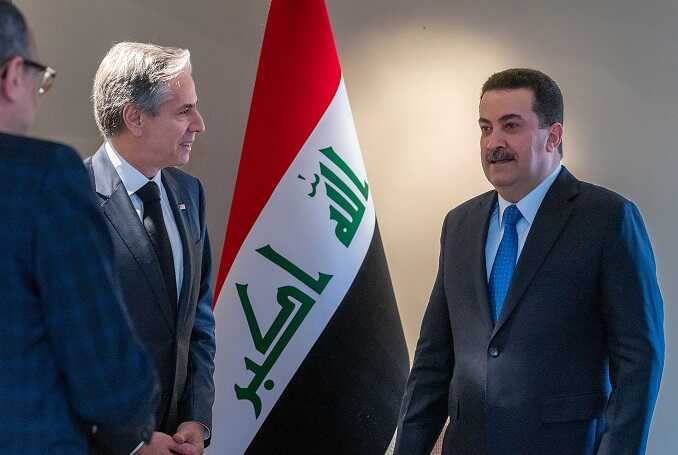

The Arabs have once again become involved in the danger resulting from the war, and they must use all the pressure cards available to them, which are many and heavy, not to annihilate anyone, but to achieve justice that is supported by international legitimacy and its decisions... Thus, it will be difficult for America to hold truth and falsehood in one grip. .