PALESTINE

Sun 22 Oct 2023 9:10 am - Jerusalem Time

Dozens of Israeli settlers storm Al-Aqsa Mosque

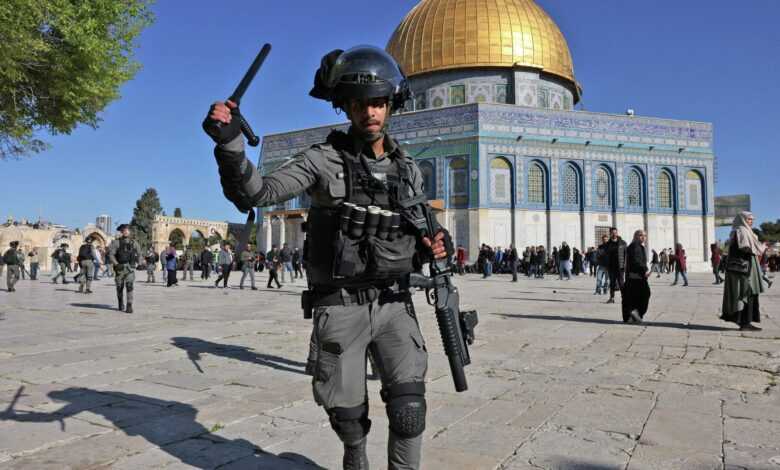
Today, Sunday, dozens of settlers stormed the courtyards of the blessed Al-Aqsa Mosque, while the Israeli occupation police prevented students studying inside Al-Aqsa schools from reaching them.


According to local sources, the settlers carried out provocative tours in the courtyards of Al-Aqsa and performed Talmudic rituals.


These sources added that the occupation forces have been refusing since the morning hours to allow students to enter the Riad Al-Aqsa schools located inside the courtyards of the mosque, and have searched them and tortured a number of them.


This coincides with dozens of settlers storming the courtyards of the mosque, in conjunction with tightening procedures at its doors, preventing worshipers from entering, and allowing only the elderly to do so.

PALESTINE

Sun 22 Oct 2023 8:58 am - Jerusalem Time

Israel launched a massive arrest campaign in the West Bank, targeting 65 Palestinians

Last night and at dawn on Sunday, the occupation forces arrested at least 65 citizens of the West Bank, including former prisoners, as part of the comprehensive aggression against our people and systematic mass revenge operations.


The arrests were concentrated in the governorates of Ramallah, Hebron, and Jerusalem, while the rest of the arrests were distributed in the governorates of Jenin, Tulkarm, Nablus, Tubas, and Salfit.


In Jenin, on Sunday, the Israeli occupation forces arrested four young men from the town of Kafr Rai, south of the city.


Thus, the number of arrest cases since the seventh of October of this year has risen to more than (1,130) cases, and this statistic does not include workers or detainees from Gaza, as institutions have not been able to date to reach accurate and clear numbers of detained workers, as well as detainees from Gaza.


PALESTINE

Sun 22 Oct 2023 8:09 am - Jerusalem Time

5 Palestinians killed in West Bank

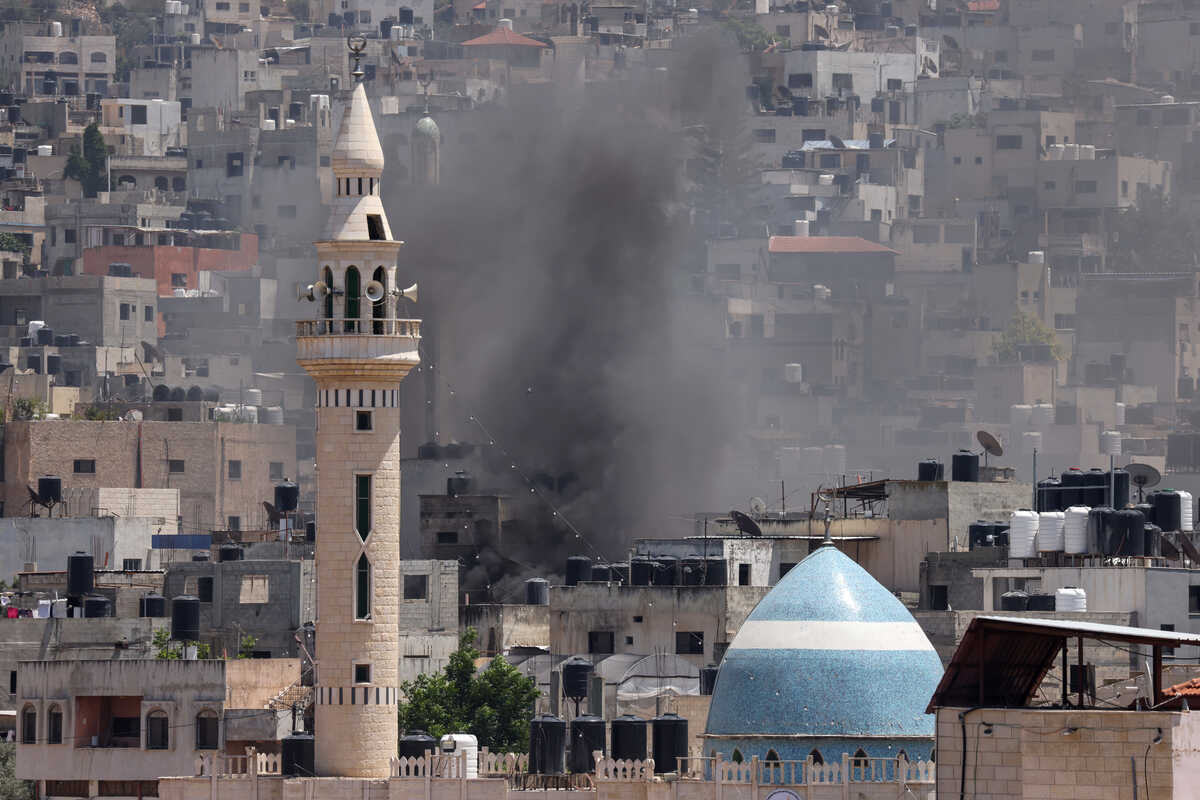
A young man was martyred and several others were injured, at dawn on Sunday, after occupation aircraft targeted a mosque in the Jenin refugee camp.


The director of the Palestinian Red Crescent Society in Jenin, Mahmoud Al-Saadi, reported that a young man, whose identity is not yet known, was killed, and 3 citizens were injured, one of them with shrapnel, after Israeli occupation aircraft targeted Al-Ansar Mosque in Al-Damj neighborhood in the camp.


A young man was killed by occupation bullets during the storming of the town of Qabatiya on Sunday morning.


In Nablus, a young man was killed, at dawn on Sunday, by Israeli occupation forces’ bullets, while seven others were injured, during confrontations that broke out in the town of Tammoun, northeast of Nablus, and in the neighboring town of Tubas.


Eyewitnesses reported that the townspeople confronted an occupation army force that stormed the town of Tammoun, amid heavy firing of live bullets, which led to the young man Adnan Abu Helmi (20 years old) being wounded by a bullet in the head, as a result of which he became a martyr.


The witnesses added that seven other young men were injured of varying degrees in clashes that broke out in the town of Tubas.


Mosques in Tubas Governorate mourned over loudspeakers the martyr Abu Helmi, and announced a strike and the closure of schools there to mourn the martyr.


The young man, Malik Jamil Sharqawi (26 years old), was killed by a bullet in the heart, this Sunday morning, and three others were injured by live bullets, during the Israeli occupation forces’ storming of the Askar camp, east of Nablus.


Local sources reported that violent confrontations broke out after the storming of the camp, which led to three others being injured by bullets, and their wounds were described as stable.


The same sources added that the occupation forces arrested the citizen, Muhammad Masimi, after they raided and searched his house during the storming of the camp.


In Jenin camp, the occupation forces threatened to assassinate the Commander-in-Chief of the Al-Aqsa Martyrs Brigades, Muhammad Abu Al-Baha, if he did not surrender himself immediately.


His father stated in an interview with the correspondent of “Al-Quds” He complies with the instructions of the army that attempted to assassinate him a month ago in an operation in the Jenin camp that resulted in the death of three Palestinians.


Abu Al-Baha, 34 years old, from Jenin camp, is a liberated prisoner who spent several years in the occupation prisons, and who assassinated his brother Muhammad, the leader of the Al-Aqsa Brigades, during the Al-Aqsa Intifada.

PALESTINE

Sun 22 Oct 2023 8:04 am - Jerusalem Time

War on Gaza: Israel intensifies its raids on Gaza, On Saturday alone 200 Palestinians killed , 400 Injured

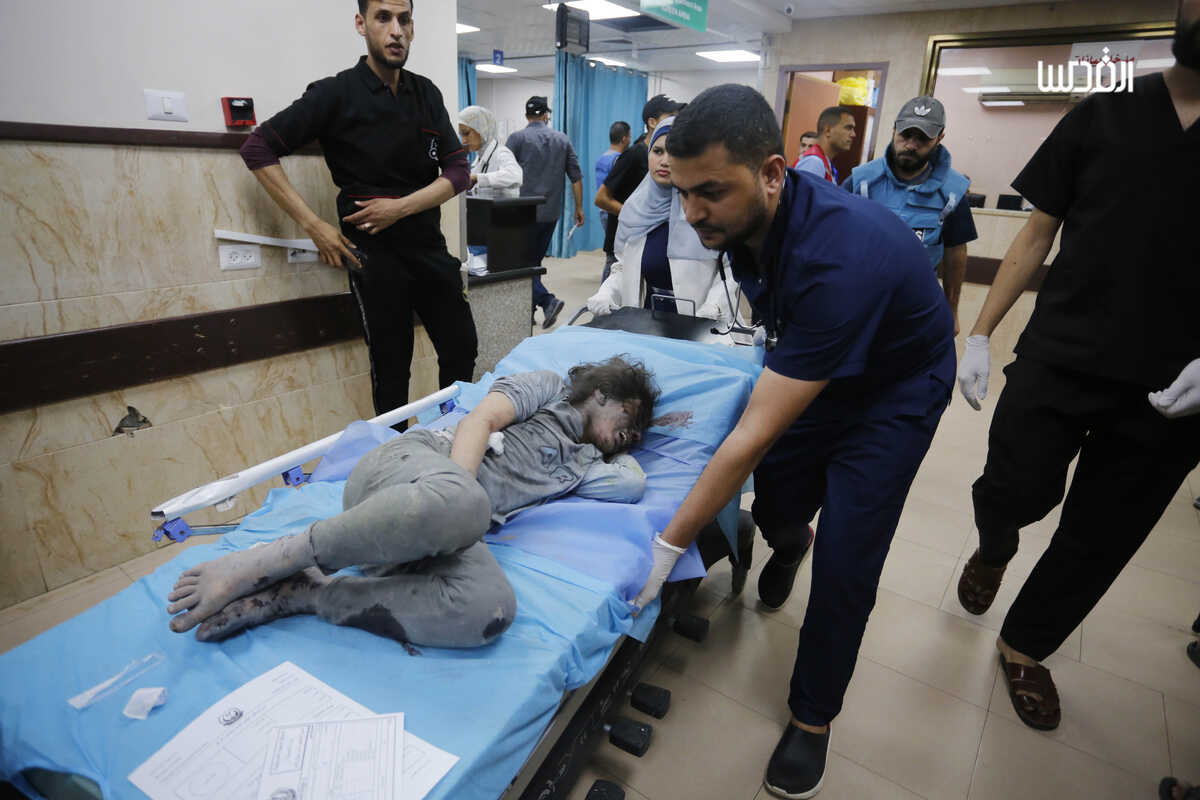
For the 16th day in a row, Israel continued to bomb residential buildings and mosques in the Gaza Strip without any regard to international and humanitarian laws that criminalize the killing of civilians. On Saturday alone, about 200 Palestinians  were killed and more than 400 other Palestinians were injured.


Medical sources said that the Israeli bombing of the Gaza Strip last night led to the death of more than 50 Palestinians.


The occupation warns Gazans to leave the northern Strip


On Saturday, the Israeli occupation army delivered a message via drones to residents of northern Gaza warning them to leave their areas and head south of the Strip, warning that whoever does not comply with these orders will be considered “an accomplice of terrorists, and may be killed.”


The warning was titled: “Urgent Warning,” and indicated that “anyone who chooses to remain in the northern Gaza Strip, and not go to the south in accordance with the evacuation order, will be considered an accomplice to the terrorists, and may be killed.”


Al-Qassam: Israel refused to receive two female prisoners without compensation


The Al-Qassam Brigades spokesman said: “We informed the Qataris, yesterday evening, that we would release two Israeli female prisoners for compelling humanitarian reasons and without compensation, but the occupation government refused to receive them.”


PALESTINE

Sun 22 Oct 2023 8:01 am - Jerusalem Time

Why do Palestinian demographics represent a threat to the Zionist project?

By Hani Al Masri


The shock of the Israelis caused by the “Al-Aqsa Flood” military operation on October 7, 2023, at the hands of the Palestinian resistance movements, is still reverberating in the diplomacy of the Israeli government.

This appeared in an attempt to impose a scenario of displacement and wage a demographic war by the occupying entity on the Palestinians, specifically in Gaza and the West Bank.


On October 8, the occupation army spokesman, Colonel Richard Hecht, called for the opening of safe corridors for civilians in Gaza towards the Egyptian Sinai.

But the most blatant call came on October 13 when the Israeli occupation army issued a statement asking all residents of Gaza to evacuate their homes and head south (towards the Egyptian border).


The Egyptian Ministry of Foreign Affairs responded by completely rejecting the displacement of the people of Gaza, as a consistent position of Cairo, which considered the conquest of Sinai tantamount to the liquidation of the Palestinian cause.

The question that arises is why Israel wants to displace the people of Gaza to Sinai? As well as the displacement of the people of the West Bank to Jordan, as reported by Hebrew media.


Are the displacement plans a product of the moment after the Al-Aqsa flood operation? Or has it been present for a long time?


“The devil of demography”

Plans to displace Palestinians, specifically in Gaza, the West Bank, and even the Old City of Jerusalem, have been in place for a long time, and are repeated by Israeli politicians and media figures on more than one occasion.


Even on May 7, 1971, the Jordanian newspaper Al-Dustour published a headline, “The Gaza Strip has begun to be emptied of its population,” and talked about an Israeli plan to transfer 300,000 residents of the Strip to Sinai.


Especially since the Gaza Strip represents a Palestinian population bomb in the face of the occupying state, and over time it has become a security and political concern for Israel.


In a famous quote, former Israeli Prime Minister Yitzhak Rabin (1992-1995) said: “I hope to wake up one day and find that the sea has swallowed Gaza.”


Palestinian Statistics stated that today Palestinians are estimated at about 14 million and 300 thousand, including about 6 million and 400 thousand refugees.


Regarding the locations of the Palestinians, the agency reported that about half of them (7 million and 100 thousand people) are in historical Palestine, including about 1 million and 700 thousand in the territories of 1948.


What is dangerous about these data is that the Palestinian people now constitute 50.1 percent of the population residing in historic Palestine, while the Jews constitute 49.9 percent of the Jews.


The loss of Israel

These data prompted the Hebrew Reichman University in Herzliya to describe this demographic change as a “Coup”


She indicated in a research paper that the Palestinians will achieve an overwhelming majority in the future, due to their high birth rates (27.7) per thousand people compared to (19.3) in Israel, according to the United Nations.


In addition to the high death rate among Israelis, 5.3 per thousand, compared to 3.4 per thousand among Palestinians, due to the large average age of the population in Israel.


It went further when it stated that “this equation indicates that the State of Israel is heading towards a reality that may undermine its project and the entire Zionist project.”


It described the current situation as a sweeping disregard for Palestinian demographic superiority, especially with other factors such as the migration of secular Israeli citizens out of the country.


It pointed out that if the matter continues at this pace, it will cause the loss of the Galilee (north), Jerusalem (center), and the Negev (south), and the result could be the complete loss of Israel. It ended up being that Muslim Arabs became the majority over time.


And stated, “With time, the Arabs will become the majority across the entire spectrum that follows the occupation, if we surrender and there are no developments that accelerate that process, which is what Israel has been well prepared for decades.”


It explained: “The current plan is to empty Gaza and the West Bank of Palestinians, part towards Jordan and part in Sinai. As for the Jerusalemites, they will be expelled from the Old City outside the walls, and they will dissolve with the rest of the other minorities, and sovereignty will remain for the Jewish majority.”


The researcher in Hebrew affairs states that the occupation laws allow the Israelis to demand the return of property in East Jerusalem that they claim was theirs before 1948.


The rise of demography

One of the main reasons for the Israeli withdrawal from Gaza in 2005 was the overwhelming “demographic” superiority of the Palestinians there.


On December 27, 2021, Israeli political analyst Yoni Ben Menachem said, “The decision of former Israeli Prime Minister Ariel Sharon to withdraw from the Gaza Strip was correct.”


He added to the Turkish Anatolia Agency: “There are now two million Palestinians, and after years the number could rise to 3 or 4 million. As for the situation in the West Bank, it is different. In the view of the right, it is the Land of Israel and cannot be dispensed with.”


He pointed out that the Israeli left and center consider that demographic concerns impose an Israeli withdrawal to the 1967 borders so that Israel remains a purely Jewish state with other minorities.


Source: Aqlam Hora


PALESTINE

Sun 22 Oct 2023 7:18 am - Jerusalem Time

Biden’s approach towards Israel, supports in public and restrains it behind the scenes

By Kadir Üstün

In President Biden's visit to Israel on Wednesday, it wouldn't be surprising if he reiterates his 'unconditional' support while also placing veiled conditions on the Gaza operation. Statements by Secretary of State Blinken during his shuttle diplomacy in the region highlighted how uncomfortable regional countries are with Israel's attacks. Biden's meetings with King Abdullah of Jordan, President Sisi of Egypt, and Palestinian leader indicate his reluctance to provide Israel with unwavering, unconditional support and his consideration of regional dynamics. Despite his initial statement of unconditional support for Israel, it could be argued that he insists on the condition that it does not escalate into a regional conflict.


THE OCCUPATION OF GAZA WOULD BE A ‘MISTAKE’

The Biden administration, which sent an aircraft carrier to the region immediately after the Hamas attack, was forced to issue a warning against Israel’s Gazza operation that left no choice for civilians. Protests in major U.S. cities were the reflections of the reaction created by Israel’s operations worldwide. Biden faced criticism from Republicans due to the lack of strong support for Israel domestically and from the progressive left within his own party for providing unconditional support. Biden, who has yet to achieve results in the evacuation of around 500-600 American citizens from Gaza and the delivery of humanitarian aid to Gaza through the Rafah border crossing, voiced concerns about Israel’s operations by stating that the occupation of Gaza would be a ‘mistake.’


The delay in Israel’s ground operation in Gaza, in addition to tactical and strategic reasons, is also influenced by U.S. pressure. It is not far-fetched for the Israeli army to suffer heavy losses in Gaza and to be stuck for a long time. If it focuses its energy on this region, it may face difficulties if Hezbollah opens a second front from the north. When looking at the statements revealed by Secretary of State Blinken’s meetings, it is understood that the United States is insistent on setting clear strategic objectives for the Gaza operation and does not want to engage in a conflict due to an Israel operation with unclear objectives.


POSSIBILITY OF REGIONAL CONFLICT AND GLOBAL POWER STRUGGLE

A regional conflict that would eventually involve Hezbollah and Iran would be a nightmare scenario for Biden, who is entering an election year. The possibility of the United States being dragged into a conflict where its goals in the Middle East are not self-determined and it is practically forced into it will also strain relations between Washington and Israel. 

In this respect, keeping Netanyahu away from an adventure that would harm U.S.-Israel relations appears to be a priority for Biden. Biden has been trying to send the message for a while that Iran and Hezbollah should not take advantage of the $6 billion given as part of the prisoner exchange. Iran, holding the cards of Hezbollah and regional conflict after Hamas’s victory, is in a position to benefit from the escalation of the conflict. Despite pressure from Republicans who are in favor of a tough response to Iran, Biden is forced to exert pressure on Israel to keep the situation under control.

The fact that major powers like Russia and China are trying to benefit from the current situation intensifies the efforts of the Biden administration. Russia has submitted a draft resolution to the UN Security Council, which is clearly aimed at recording the U.S. support for Israel. China is also trying to show that Western support for Israel is waning by stating that Israel’s operations go beyond legitimate defense. 

Russia and China are glad to see that the Ukrainian and Taiwanese issues are being pushed into the background due to Biden’s attention to Gaza. Despite their differences, Russia, China, and Iran can be said to be on the same page in thwarting Western policies led by the United States. For these three countries, the prospect of the United States being dragged into military conflict in the Middle East is a strategic gain. It is essential to remember that these global power struggles also place critical constraints on Biden’s support for Israel.


President Biden will likely reiterate the rhetoric of unconditional support during his visit to Israel, but it is important to note that this support will largely remain in the realm of rhetoric and fall behind Trump’s Israel-centered Middle East policy. 

Biden is not enthusiastic about showing commitment to Netanyahu’s promised goal of a ‘new Middle East.’ He is well aware that his support for Israel is inevitably conditional due to domestic political balances, pressure from regional allies, and the strategic moves of global powers.


Source: Turkish SETA Center for Studies

PALESTINE

Sun 22 Oct 2023 7:10 am - Jerusalem Time

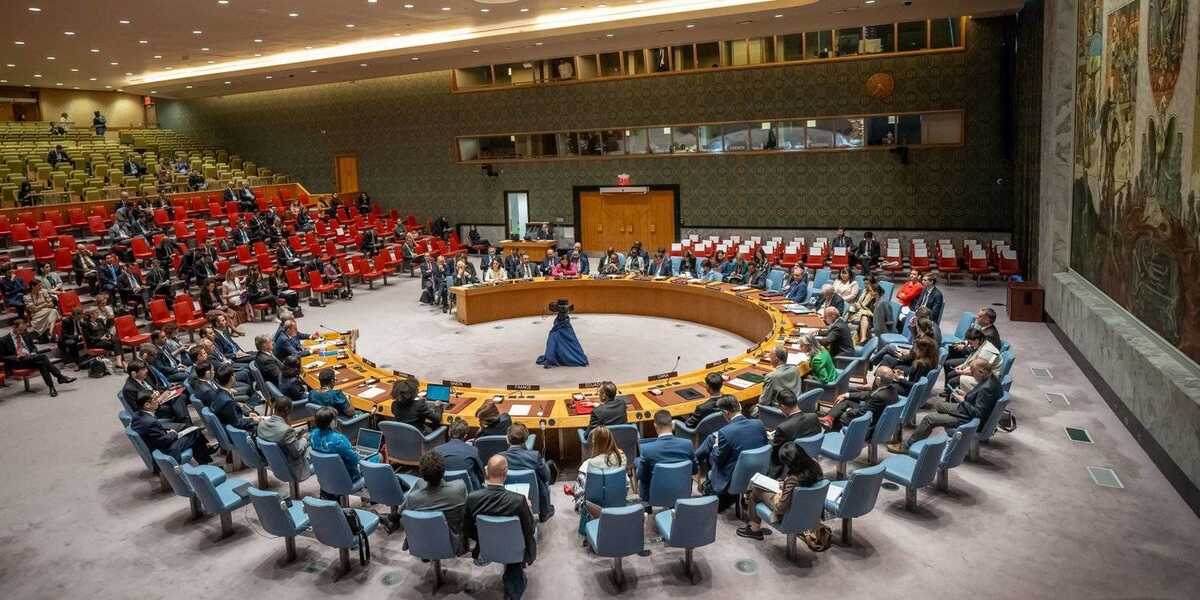
Russia will request a new Security Council meeting on the “Palestinian-Israeli conflict”

Sputnik news agency reported that Russia will request a new Security Council meeting on the Palestinian-Israeli conflict.


The agency quoted Russia's Deputy Permanent Representative to the United Nations, Dmiter Polyansky, as saying: "We will certainly hold a new session of the Security Council."


Last Tuesday, the Security Council failed to pass a Russian draft resolution that called for a humanitarian truce in the Gaza Strip, after America, Britain, and France used their veto power against the draft.

PALESTINE

Sun 22 Oct 2023 7:05 am - Jerusalem Time

Tow Palestinians killed and others injured in Israeli bombing of a mosque in Jenin refugee camp

The Palestinian Red Crescent said today (Sunday) that tow persons was killed in an Israeli bombing of a mosque in the Jenin camp in the northern West Bank.


The Arab World News Agency quoted medical sources as saying that the attack resulted in five wounded.


An Israeli army spokesman said that Israeli aircraft destroyed an underground tunnel in Al-Ansar Mosque that included a joint cell of the Hamas and Islamic Jihad movements, indicating that it planned to carry out an attack.


Avichay Adraee added, through his account on the “X” platform, that the Hamas and Islamic Jihad cell, which was targeted by a joint operation of the army and the General Security Service (Shin Bet), carried out an attack on an Israeli military force in the security fence area on October 14 of this year.


This is at least the second raid of its kind to bomb targets in the West Bank since the start of the war on the Gaza Strip on Octobe


PALESTINE

Sun 22 Oct 2023 7:00 am - Jerusalem Time

Israeli army calls on Gaza residents to leave and head south “for their safety.”

An Israeli army spokesman warned the residents of Gaza City against staying there, saying that you live “above a barrel of explosives prepared by (Hamas),” and advised them to head to the south of the Strip.


Spokesman Avichai Adraee said on his account on the “X” platform that whoever, a resident of the neighborhoods of Al-Daraj, Nasser, Sheikh Radwan, the Old City, and Al-Zaytoun, decides to stay in his home “at his own risk, and will expose himself and his family members to danger.”


Adraee advised residents to head to the south of Wadi Gaza “for your safety.”


Earlier today, Israeli media said that the War Council concluded its meeting at the Southern Command headquarters in Beersheba, in preparation for launching the expected ground attack on the Strip.

PALESTINE

Sat 21 Oct 2023 10:36 pm - Jerusalem Time

A young Palestinian died as a result of being wounded by occupation bullets in Tulkarm

A young Palestinian died this Saturday evening as a result of being shot by the Israeli occupation forces in Tulkarm.


According to the Ministry of Health, the young man, Qassam Farouk Muhammad Haj Ahmed (19 years old), died from critical injuries sustained by live occupation bullets in the head about a week ago in Tulkarm.

PALESTINE

Sat 21 Oct 2023 10:30 pm - Jerusalem Time

Letter from Legal Experts on UK Labour’s position on the commission of war crimes in Gaza

Dear Mr. Starmer,

We, the undersigned, are writing to request that the Labour party immediately clarify its position on the prohibition of collective punishment.

On 11 October, you were asked on LBC radio if Israel’s siege of Gaza, and the cutting off of power and water, was appropriate. You responded “I think Israel does have that right”, adding that “obviously everything should be done within international law.” Later that same day, the Shadow Attorney General, Emily Thornberry, was asked the following question on BBC Newsnight: “do you think cutting off food, water and electricity is within international law.” Her response was that “Israel has an absolute right to defend itself against terrorism.” When pressed on the issue of the legality of such measures, she appeared to express confusion over the precise scope of the prohibition of collective punishment and possible exceptions to it, saying “I don’t know, because at the moment we’re in the middle of a hot war, and Israel is in the middle of defending itself.”

On 15 October, you issued a statement restating that “Israel has the right, indeed the duty, to defend herself” and calling on “all parties to act in line with international law, including allowing humanitarian access of food, water, electricity and medicines to Gaza”. This statement does nothing to rescind your tacit approval of Israel’s collective punishment of the population of Gaza. Again on 15 October, on BBC One, David Lammy, Shadow Secretary of State for Foreign, Commonwealth and Development Affairs, was reminded that the forcible transfer of a population breaches international law and was asked if he supported the order. He replied “it’s not a yes or a no. This is a war situation”. 

We write to remind you that international law is very clear on these issues. The right to self-defense is not unqualified, it is bound by long-standing laws that form one of the pillars of a rules-based international order. International humanitarian law, including the Fourth Geneva Convention and Additional Protocols, prohibits collective punishment in all circumstances. The imposition of collective punishment can be considered a war crime under customary international law. The cutting off of food, water and electricity to the population of Gaza until the Israeli hostages are released is a clear cut case of collective punishment. Indiscriminate bombing of populated areas, the use of white phosphorus, as documented by Human Rights Watch on 12 October, and the forced transfer of a population are incompatible with international humanitarian law. The atrocities committed by Hamas on 7 October and its slaughter of Israeli civilians do not abrogate international humanitarian law; on the contrary, these laws were designed for precisely these circumstances.

We request that you immediately issue a public and detailed clarification of Labour’s legal position on collective punishment and on the forcible transfer of civilians. We request that you confirm that you and your party oppose the commission of war crimes, wherever and whenever they may occur. 

In that light we draw your attention to the positions of, amongst many others, the Irish government, the Scottish First Minister, the UN Secretary General, the International Committee of the Red Cross, all of whom have denounced collective punishment and breaches of international humanitarian law. 

Yours sincerely,

Professor Michelle Farrell, Professor of International Law, University of Liverpool 

Professor Donatella Alessandrini, Kent Law School

Professor Yutaka Arai-Takahashi, Professor in International Human Rights Law and Legal Philosophy, Brussels School of Int’l Studies (BSIS), University of Kent, Brussels

Dr. Judith Bueno De Mesquita, University of Essex

Dr. Michelle Burgis-Kasthala, University of Edinburgh

Dr. Luigi Daniele, Senior Lecturer in Law, Nottingham Law School, Nottingham Trent University

Dr. Lauren Dempster, School of Law, Queens University Belfast

Dr. Alice Donald, Associate Professor, School of Law and Social Sciences, Middlesex University 

Professor Máiréad Enright, Professor of Feminist Legal Studies, Birmingham Law School

Professor Neve Gordon, Professor of International Law and Human Rights, Queen Mary University of London 

Professor Penny Green, Professor of Law and Globalization, Queen Mary University of London

Dr. Alan Greene, Reader in Constitutional law and Human Rights, Birmingham Law School

Dr. Shahd Hammouri, Kent Law School

Dr. Ciara Hackett, Senior Lecturer in Law, Queens University Belfast

Dr. Kevin Hearty – Lecturer in Criminology, School of Social Sciences Education and Social Work, Queens University Belfast

Professor Christian Henderson, Professor of International Law, University of Sussex.

Dr. Erika Jiménez, School of Law, Queens University Belfast

Dr. Emily Jones, Newcastle Law School

Dr. Henry Jones, Associate Professor, Durham Law School 

Dr. Sarah Kendall, Reader in International Law, Kent Law School

Dr. Tor Krever, Assistant Professor in International Law, University of Cambridge

Professor Louise Mallinder, Professor of Law, Queen’s University Belfast

Professor Triestino Marinello, School of Law, Liverpool John Moores University

Professor Alison MacKenzie, School of Social Sciences Education and Social Work, Queen’s University Belfast

Professor Natasa Mavronicola, Professor of Human Rights Law, Birmingham Law School

Dr. Lydia Morgan, Associate Professor, Birmingham Law School 

Dr. Julie McCandless, Senior Lecturer, Kent Law School

Dr. Ben Murphy, School of Law and Social Justice, University of Liverpool

Dr. Daragh Murray, Senior Lecturer, Queen Mary University of London 

Professor Catherine O’ Rourke, Professor of Global Law, Durham Law School

Dr. A. M. Panepinto, Reader, School of Law, Queen’s University Belfast

Dr. Nicola Perugini, School of Social and Political Science, University of Edinburgh 

Professor Nicola Pratt, Professor of the International Politics of the Middle East, University of Warwick

Dr. Flora Renz, Senior Lecturer in Law, Kent Law School

Dr. Jane Rooney, Associate Professor in International Law, Durham Law School

Professor Emeritus Phil Scraton, School of Law, Queen’s University Belfast

Professor Mohammad (Shahab) Shahabuddin, Professor of International Law and Human Rights, Birmingham Law School 

Dr. Angela Sherwood, Lecturer in Law, Queen Mary University of London

Dr. Bethany Shiner, Senior Lecturer in Law, Middlesex Law School.

Dr. Rose Sydney-Parfitt, Senior Lecturer, Kent Law School 

Dr. Marina Velickovic, School of Law, University of Warwick

Professor Illan Wall, School of Law, University of Warwick

Professor David Whyte, Director, Centre for Climate Crime and Climate Justice, Queen Mary University of London




PALESTINE

Sat 21 Oct 2023 10:20 pm - Jerusalem Time

Israel occupation army arrests 8 citizens in occupied Jerusalem

Today, Saturday, the Israeli occupation forces arrested a number of citizens from the Jerusalem Governorate.


Local sources reported the arrest of Hussam Al-Sahouri from the town of Al-Ram, north of Jerusalem, and citizen Hamza Bassa from the town of Al-Eizariya, south-east of Jerusalem, and Abd al-Rahman al-Sharbati, Muhammad al-Shawish, and Issa Attoun from the occupied city of Jerusalem, and Munir al-Qaq from the town of Silwan, south of Jerusalem.


The occupation forces also arrested Ashraf Siam and Adam Siam from the town of Kafr Aqab in the north.


In a related context, the occupation forces handed summons orders to a number of young men after they stormed the Batn al-Hawa neighborhood in the town of Silwan in Jerusalem.

ARAB AND WORLD

Sat 21 Oct 2023 10:14 pm - Jerusalem Time

Public Statement: Scholars Warn of Potential Genocide in Gaza

Public Statement: Scholars Warn of Potential Genocide in Gaza15 October 2023As scholars and practitioners of international law, conflict studies and genocide studies, we are compelled to sound the alarm about the possibility of the crime of genocide being perpetrated by Israeli forces against Palestinians in the Gaza Strip. We do not do so lightly, recognizing the weight of this crime, but the gravity of the current situation demands it.


The pre-existing conditions in the Gaza Strip had already prompted discussions of genocide prior to the current escalation – such as by the National Lawyers Guild in 2014, the Russell Tribunal on Palestine in 2014, and the Center for Constitutional Rights in 2016. Scholars have warned over the years that the siege of Gaza may amount to a “prelude to genocide” or a “slow-motion genocide”. 


The prevalence of racist and dehumanizing language and hate speech in social media was also noted in a warning issued in July 2014 by the UN Special Adviser on the Prevention of Genocide and Special Adviser on the Responsibility to Protect, in response to Israel’s conduct against the protected Palestinian population. The Special Advisers noted that individual Israelis had disseminated messages that could be dehumanizing to the Palestinians and that had called for the killing of members of this group, and reiterated that incitement to commit atrocity crimes is prohibited under international law. 


Israel’s current military offensive on the Gaza Strip since 7 October 2023, however, is unprecedented in scale and severity, and consequently in its ramifications for the population of Gaza. Following the incursion by Palestinian armed groups on 7 October 2023, including criminal attacks against Israeli civilians, the Gaza Strip has been subjected to incessant and indiscriminate bombardment by Israeli forces. 


Between 7 October and 9:00 a.m. on 15 October, there have been 2,329 Palestinians killed and 9,042 Palestinians injured in Israeli attacks on Gaza, including over 724 children, huge swathes of neighborhoods and entire families across Gaza have been obliterated. Israel’s Defense Minister ordered a “complete siege” of the Gaza Strip prohibiting the supply of fuel, electricity, water and other essential necessities. This terminology itself indicates an intensification of an already illegal, potentially genocidal siege to an outright destructive assault. 


Late on 12 October, the Israeli authorities issued an order for more than 1.1million Palestinians in Gaza City and the northern Gaza Strip to leave their homes and flee to the south of Gaza within 24 hours, knowing that this would be practically impossible for many. Palestinians who did start to evacuate south reported that civilians and ambulances were targeted and hit by Israeli airstrikes on the designated “safe route”, killing at least 70 Palestinians who were fleeing to seek refuge. The ICRC stated that “the evacuation orders, coupled with the complete siege” are incompatible with international humanitarian law. Almost half a million Palestinians have already been displaced, and Israeli forces have bombed the only possible exit route that Israel does not control, the Rafah crossing to Egypt multiple times. 


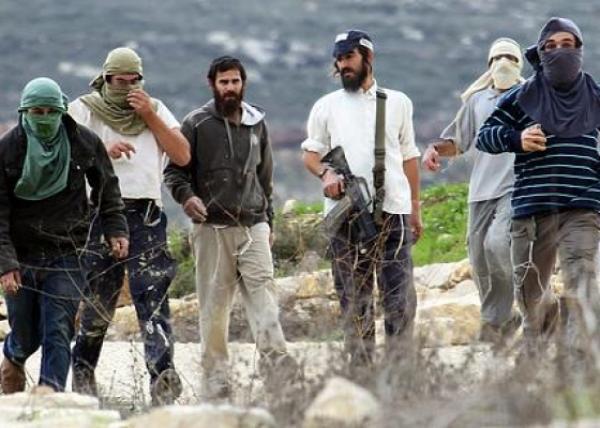
The World Health Organization published a warning that “forcing more than 2000 patients to relocate to southern Gaza, where health facilities are already running at maximum capacity and unable to absorb a dramatic rise in the number patients, could be tantamount to a death sentence”. There has also been an escalation of violence, arrests, expulsions, and destruction of whole Palestinian communities in the occupied West Bank and Jerusalem. Since 7 October, Israeli settlers, with the backing of the army and police, have attacked and shot Palestinian civilians at point blank range (as documented in the villages of a-Tuwani and Qusra), have invaded their homes and assaulted residents. A number of Palestinian communities have already been forced to abandon their homes, after which settlers arrived and destroyed their property. 


Between 7 – 15 October, Al-Haq documented the killing by Israeli military and settlers of 55 Palestinians in the West Bank, and more the injury of 1,200 Palestinians there. Statements of Israeli officials since 7 October 2023 suggest that beyond the killings and restriction of basic conditions for life perpetrated against Palestinians in Gaza, there are also indications that the ongoing and imminent Israeli attacks on the Gaza Strip are being conducted with potentially genocidal intent. Language used by Israeli political and military figures appears to reproduce rhetoric and tropes associated with genocide and incitement to genocide. Dehumanizing Palestinians have been prevalent. Israeli Defense Minister Yoav Gallant declared on 9 October that “we are fighting human animals and we act accordingly”. He subsequently announced that Israel was moving to “a full-scale response” and that he had “removed every restriction” on Israeli forces, as well as stating: “Gaza won’t return to what it was before. We will eliminate everything.” 


On 10 October, the head of the Israeli army’s Coordinator of Government Activities in the Territories (COGAT), Maj. Gen. Ghassan Alian, addressed a message directly to Gaza residents: “Human animals must be treated as such. There will be no electricity and no water, there will only be destruction. You wanted hell, you will get hell”. The same day, Israeli army spokesperson Daniel Hagari acknowledged the wanton and intentionally destructive nature of Israel’s bombing campaign in Gaza: “The emphasis is on damage and not on accuracy.” Since 2007, Israel has defined the Gaza Strip as a whole as an “enemy entity”. 


On 7 October, Prime Minister Benjamin Netanyahu said that Gazans would pay an “immense price” for the actions of Hamas fighters. He asserted that Israel will wage a prolonged offensive and will turn parts of Gaza’s densely populated urban canters “into rubble”. Israel’s President emphasized that the Israeli authorities view the entire Palestinian population of Gaza as responsible for the actions of militant groups, and subject accordingly to collective punishment and unrestricted use of force: “It is an entire nation out there that is responsible. It is not true this rhetoric about civilians not being aware, not involved. It’s absolutely not true”. 


Israeli Minister of Energy and Infrastructure Israel Katz added: “All the civilian population in Gaza is ordered to leave immediately. We will win. They will not receive a drop of water or a single battery until they leave the world.”Evidence of incitement to genocide has also been present in Israeli public discourse. This ranges from statements by elected officials – such as Knesset member Ariel Kallner’s call on 7 October for “one goal: Nakba! [catastrophe for Palestinians] A Nakba that will overshadow the Nakba of 1948” – to public banners displayed in Israeli cities calling for a “victory” signified by “zero population in Gaza” and the “annihilation of Gaza”. 


On national television, security correspondent Alon Ben David relayed the Israeli military’s plan to destroy Gaza City, Jabaliyya, Beit Lahiya, and Beit Hanun. Such statements are not new and resonate with a wider Israeli discourse showcasing the intent for elimination and genocide against the Palestinian people. Earlier in the year, for example, Israeli Minister of Finance Bezalel Smotrich called Palestinians “repugnant”, “disgusting” and called for “wiping out” the entire Palestinian village of Huwwara in the West Bank.


On 12 October 2023, a group of UN Special Rapporteurs’ condemned “Israel’s indiscriminate military attacks against the already exhausted Palestinian people of Gaza, comprising over 2.3 million people, nearly half of whom are children. They have lived under unlawful blockade for 16 years, and already gone through five major brutal wars, which remain unaccounted for”. 

The UN experts warned against “the withholding of essential supplies such as food, water, electricity and medicines. Such actions will precipitate a severe humanitarian crisis in Gaza, where its population is now at inescapable risk of starvation. Intentional starvation is a crime against humanity”. On 14 October 2023, the UN Special Rapporteur on the situation of human rights in the occupied Palestinian territory warned against “a repeat of the 1948 Nakba, and the 1967 Naksa, yet on a larger scale” as Israel carries out “mass ethnic cleansing of Palestinians under the fog of war”.


The Palestinian people constitute a national group for the purposes of the Convention on the Prevention and Punishment of the Crime of Genocide (the Genocide Convention). The Palestinians of the Gaza Strip constitute a substantial proportion of the Palestinian nation, and are being targeted by Israel because they are Palestinian. The Palestinian population of Gaza appears to be presently subjected by the Israeli forces and authorities to widespread killing, bodily and mental harm, and unviable conditions of life – against a backdrop of Israeli statements which evidence signs of intent to physically destroy the population.


Article II of the Genocide Convention provides that “genocide means any of the following acts committed with intent to destroy, in whole or in part, a national, ethnical, racial or religious group, as such: Killing members of the group; Causing serious bodily or mental harm to members of the group; Deliberately inflicting on the group conditions of life calculated to bring about its physical destruction in whole or in part;(d) Imposing measures intended to prevent births within the group;(e) Forcibly transferring children of the group to another group.” 


All states are bound as a matter of law by the principle that genocide is a crime prohibited under international law. The International Court of Justice has affirmed that the prohibition of genocide is a peremptory norm of international law from which no derogation is allowed. The Convention provides that individuals who attempt genocide or who incite to genocide “shall be punished, whether they are constitutionally responsible rulers, public officials or private individuals”.


Article I of the Convention on the Prevention and Punishment of the Crime of Genocide provides that: “The Contracting Parties confirm that genocide, whether committed in time of peace or in time of war, is a crime under international law which they undertake to prevent and to punish”. The International Court of Justice has clarified that “a State’s obligation to prevent, and the corresponding duty to act, arise at the instant that the State learns of, or should normally have learned of, the existence of a serious risk that genocide will be committed. From that moment onwards, if the State has available to it means likely to have a deterrent effect on those suspected of preparing genocide, or reasonably suspected of harbouring specific intent (dolus specialis), it is under a duty to make such use of these means as the circumstances permit”.Palestinian human rights organisations, Jewish civil society groups, Holocaust and genocide studies scholars and others have by now warned of an imminent genocide against the Palestinian population in Gaza. We emphasise the existence of a serious risk of genocide being committed in the Gaza Strip.The undersigned urgently appeal to states to take concrete and meaningful steps to individually and collectively prevent genocidal acts, in line with their legal duty to prevent the crime of genocide. They must protect the Palestinian population, and ensure that Israel refrains from any further incitement to genocide and from the perpetration of conduct prohibited by Article II of the Genocide Convention.All states should immediately act under Article VIII, and should call upon the competent organs of the United Nations, particularly the UN General Assembly, to take urgent action under the Charter of the United Nations appropriate for the prevention and suppression of acts of genocide. We note specifically the role of the General Assembly here, given that the Security Council is compromised by the United States and the United Kingdom (both permanent veto-holding members) sending military forces to the eastern Mediterranean in support of Israel.We recall that in 1982, the General Assembly condemned the massacre of Palestinian civilians in the Sabra and Shatila refugee camps as “an act of genocide”. We note also that the state of Palestine is entitled to initiate, in accordance with Article IX of the Genocide Convention, proceedings before the International Court of Justice in order to prevent the perpetration of genocidal acts.Finally, we call on all relevant UN bodies, including the Office on Genocide Prevention and the Responsibility to Protect, as well as the Office of the Prosecutor of the International Criminal Court to immediately intervene, to carry out the necessary investigations and invoke the necessary warning procedures to protect the Palestinian population from genocide.

ARAB AND WORLD

Sat 21 Oct 2023 10:10 pm - Jerusalem Time

Three Hezbollah members killed on Lebanon's border with Israel

Two Thai workers were injured on the Israeli side, and 3 members of the Lebanese Hezbollah were killed with renewed confrontations today (Saturday) between the party and the Israeli army along the border, amid fears of opening a new front, while the war between Hamas and Israel continues.


On Friday, Israel ordered the evacuation of the border town of Kiryat Shmona, inhabited by about 25,000 people in the north, after repeated confrontations with Hezbollah fighters on the border with Lebanon.


Hezbollah reported that 3 of its members were killed, while Israeli medics indicated that two Thai citizens working in agriculture in northern Israel were injured today (Saturday), due to bombing near the Margaliot area on the border with Lebanon.


Since fighting broke out along the border, at least four people have been killed in Israel; They are three soldiers and one civilian, according to Agence France-Presse. In Lebanon, the escalation has so far resulted in the killing of 24 people, the majority of whom are Hezbollah fighters, in addition to 5 fighters from Palestinian factions and four civilians, including a photographer for the Reuters news agency.


In Beirut, Deputy Secretary-General of Hezbollah, Naim Qassem, said today (Saturday): “We are concerned and we are part of this battle. Let it be clear: whenever events follow and something arises that calls for our greater intervention, we will do so.”


He added: “It is a stage that we believe is compatible with confrontation, and if matters require more than that, we will be present in the field with the resistance as an integral part of the confrontation project so that Israel does not win.”


Today's clashes coincided with Israeli Defense Minister Yoav Galant inspecting the northern border, where he called on soldiers to remain "vigilant." “Hezbollah has decided to participate in the fighting, and it is paying the price for that,” Gallant said.


We must be vigilant and prepare for every possible scenario, adding: “Great challenges await us.”


Hezbollah and Israel fought a devastating war in the summer of 2006, which left more than 1,200 dead on the Lebanese side, most of them civilians, and 160 dead on the Israeli side, most of them military. The war, which lasted 34 days, caused the displacement of about one million Lebanese from their towns.

PALESTINE

Sat 21 Oct 2023 9:44 pm - Jerusalem Time

Washington Post: Israeli Army Will Face Extreme Difficulties in Ground Operation in Gaza

The Washington Post said that the Israeli army is expected to face severe difficulties in its ground military operation that it intends to launch in the Gaza Strip, as Tel Aviv says its goal is to eliminate the Hamas movement, which controls the sector.


The newspaper indicated in a lengthy report that Israel army is expected to face difficulties in densely populated areas in Gaza, because Hamas fighters may attempt to ambush Israeli army forces from tunnels and amid the rubble, indicating that this limited space may limit the ability to maneuver.


The newspaper described the Israeli army as "one of the strongest armies in the world," but clearly indicated that Hamas was apparently preparing for a large-scale Israeli ground operation, and added that the intense Israeli bombing had turned the buildings and streets of Gaza into a maze of rubble.


An Israeli ground invasion of Gaza is likely to limit the scope of attacks that can be carried out from the air, so as not to endanger Israeli forces on the ground.


In the context of its talk about the challenges that will face the occupation army, the newspaper says that the rubble could be used as a hideout from which Hamas attacks Israeli soldiers. It added that Hamas may also try to direct Israeli army soldiers to areas where explosive devices and explosives have been planted.


The newspaper pointed out that Hamas may also use suicide drones, in addition to the quadcopters it also used, on October 7, 2023, while carrying out the “Al-Aqsa Flood” operation, and these helicopters may also be used to drop explosives from the air.


The newspaper also explained that "threats may come from any direction. For example, they may place snipers on the roofs of buildings" to target Israeli soldiers.


While the occupation army may use a tactic that combines infantry, armored vehicles, and other support elements to advance. Armored vehicles will provide cover and firepower for fighters, but - according to the newspaper - the narrow streets may restrict their movement and make them vulnerable to anti-tank fire.


The Washington Post believes that objectives in this operation can only be achieved through infantry combat, and this will require soldiers to move from area to area, and from door to door, to evacuate and “clean” buildings.


However, Hamas fighters will be able to move from one location to another through openings made in the walls, and the newspaper also mentioned “Hamas tunnels,” which may enable its fighters to hide and try to surprise Israeli soldiers.


The newspaper claimed that some of these tunnels are used to produce missiles, and others house senior Hamas officials. The newspaper highlighted that attempting to destroy the tunnels with air attacks could harm civilians, and this raises concerns about the fate of prisoners and missing persons.


For his part, Michael Eisenstadt, director of the Military and Security Studies Program at the Washington Center for Middle East Policy, said: “It appears that the major ground operation may focus on Gaza City, at least initially, and perhaps to a limited extent on other places as well, but the bombing is likely to continue.” "Artillery and air strikes targeted additional targets throughout the Gaza Strip as well."


In turn, Ghaith Al-Omari, a researcher at the Washington Institute for Middle East Policy, said: “The ground campaign will inevitably have dire consequences for civilians in the Gaza Strip, as the nature of urban construction there means that this operation will face fierce resistance.”


Al-Omari added that the operation "will require the use of massive force on the part of Israel, and what is worrying about this operation is that it may continue for an unprecedented period, and civilians will not only be at direct risk of death and injury, but will also be exposed to a severe and long-term shortage of humanitarian aid."


For the fifteenth consecutive day, the Israeli army continues, for the fifteenth day in a row, to target the Gaza Strip with intense air strikes that destroyed entire neighborhoods. According to the latest statistics from the Ministry of Health in the Gaza Strip, the Israeli bombing of the Strip, since October 7, 2023, caused the death of 4,137 people, including 1,524 children, in addition to 13,000 injured people.


PALESTINE

Sat 21 Oct 2023 9:37 pm - Jerusalem Time

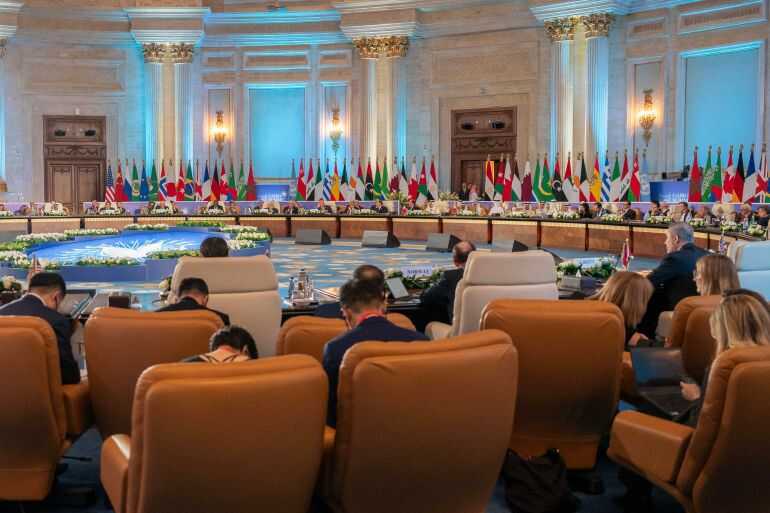
The Cairo Peace Summit concluded without a final statement

The Cairo International Peace Summit concluded - today, Saturday - without issuing a final statement, and the Egyptian presidency issued a statement instead.


The Arab countries represented at the summit agreed to the Egyptian statement, which called for an “immediate cessation” of the Israeli war on the Gaza Strip, which has entered its third week.


Agence France-Presse said that the Western countries participating in the conference demanded a clear condemnation of the Islamic Resistance Movement (Hamas) and “holding it responsible for the escalation and the release of those kidnapped by the movement,” which prevented the issuance of a final statement.


Major Western leaders were also absent from the summit, making expectations for the summit's outcomes modest.


The American side (the main supporter of Israel in its war on Gaza) was represented by the acting American ambassador to Egypt, and German Chancellor Olaf Schulz, British Prime Minister Rishi Sunak, and French President Emmanuel Macron did not attend.


PALESTINE

Sat 21 Oct 2023 8:28 pm - Jerusalem Time

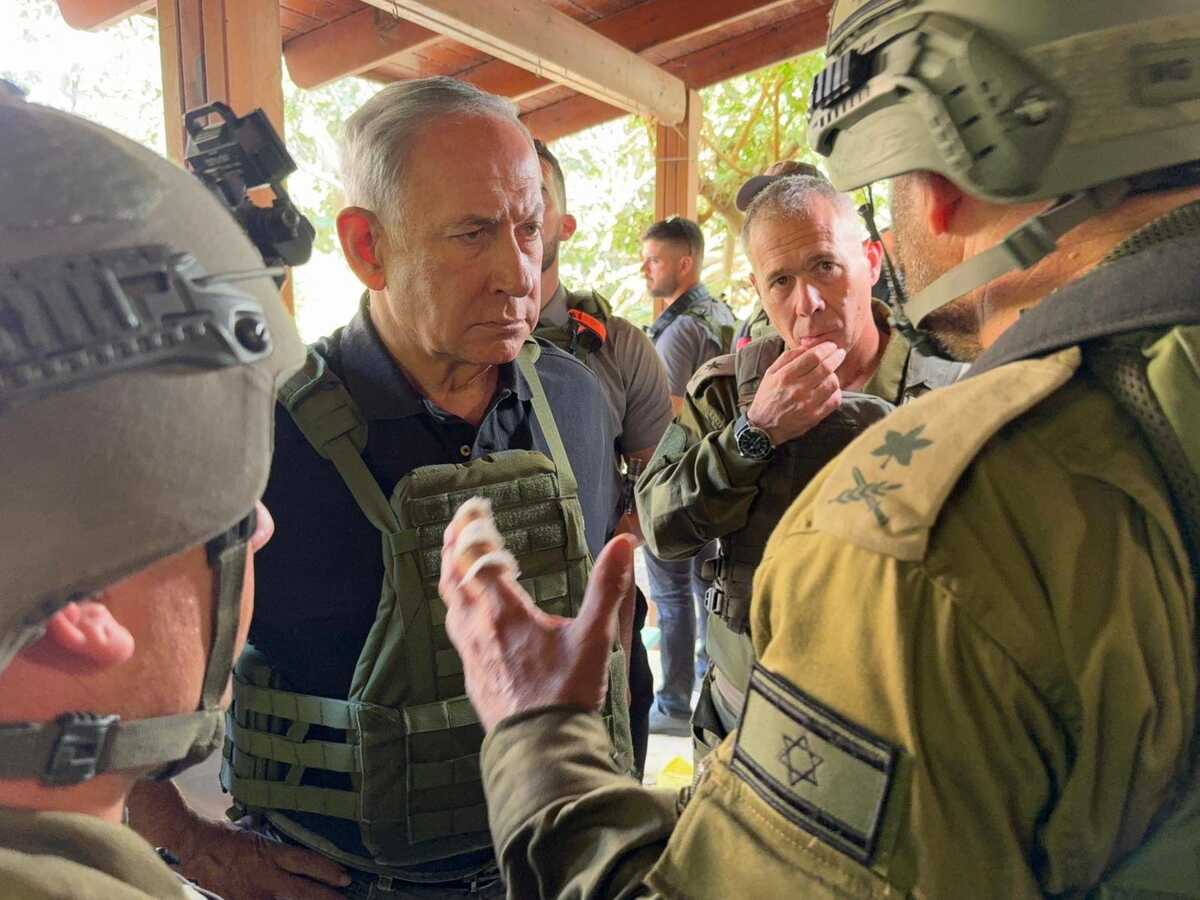
Israeli War Council meets in preparation for ground attack on Gaza

The Times of Israel reported on Saturday that Israeli Prime Minister Benjamin Netanyahu and members of the War Council toured several sites in southern Israel to check on the army’s preparations for the expected ground attack on Gaza.


The Israeli website Ynet reported on Saturday that the War Council concluded its meeting at the Southern Command headquarters in Beersheba, according to what was reported by the Arab World News Agency.


The Times of Israel newspaper quoted Israeli Air Force Commander Tomer Bar as saying that the army would strike Hamas during the ground attack “as if it were at full strength.”


He added: “We directed thousands of air strikes against Hamas and dropped thousands of bombs on it, hitting its targets accurately. Despite this, we will deal with it as if it had not been harmed. We will enter (Gaza) with all our might.”


Defense Minister Yoav Galant arrived near the Gaza Strip border late Friday night to meet with army commanders.


The Jerusalem Post newspaper added that Gallant closely followed the readiness of the Israeli forces to carry out a possible ground invasion of the Gaza Strip.


Source: agencies

PALESTINE

Sat 21 Oct 2023 8:23 pm - Jerusalem Time

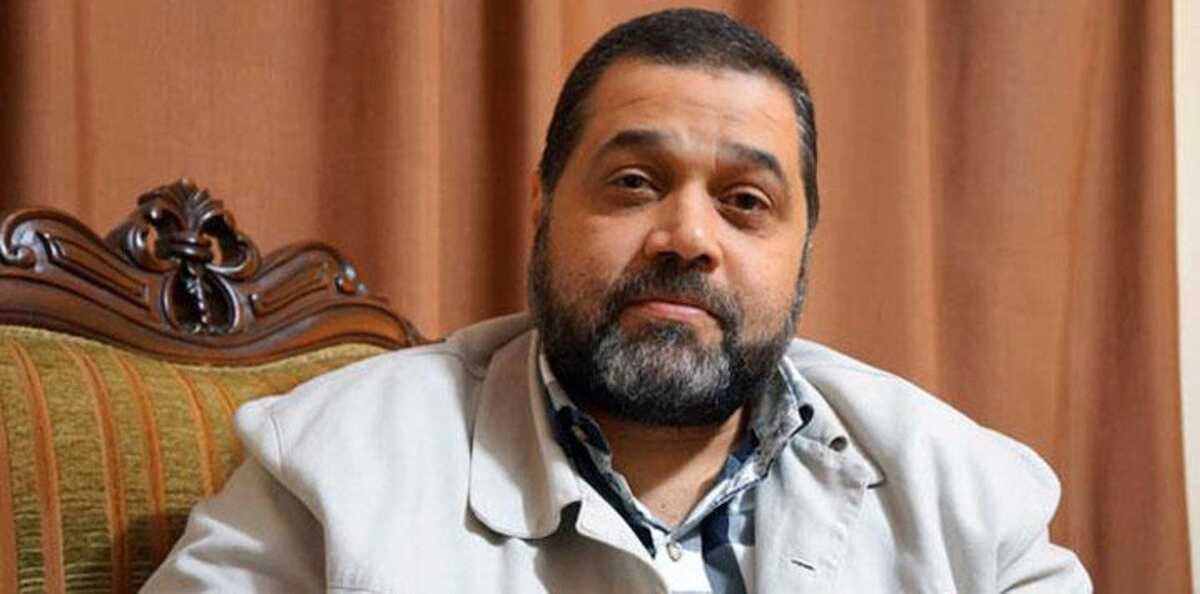
Hamas: No talks on military prisoners until Israel ends its aggression

The Hamas movement said today (Saturday) that it will not discuss the fate of Israeli army prisoners until Israel ends its “aggression” against the Gaza Strip.


Osama Hamdan, a Hamas official, speaking from Lebanon, said in a press conference broadcast on television: “Our position is clear, and it is still related to the exchange of (military) prisoners, and it will not be discussed until after the end of the aggression against Gaza,” according to Reuters. ».


He stressed "the importance of protecting hospitals and medical centers, as institutions protected under international law, so that the massacre of the National Baptist Hospital, in which about 500 martyrs and hundreds of wounded were not repeated."


Rafah crossing

He added: “Today, 20 trucks of medical aid and canned food entered through the Rafah crossing, and here we would like to point out that more than 500 trucks have entered the Gaza Strip daily under the ongoing unjust siege, for about 17 years.”


Hamdan called for the permanent and continuous opening of the Rifaat crossing. To facilitate the exit of the wounded for treatment abroad, to continue the flow of food aid around the clock, and to urgently bring fuel into the Gaza Strip to save hospitals and medical centers that are running out of fuel needed to generate electricity.


Source: Agencies

PALESTINE

Sat 21 Oct 2023 7:45 pm - Jerusalem Time

UNICEF: One million children in Gaza need protection

UNICEF Special Representative for Palestine, Lucia Elmi, said on Saturday that one million children in the Gaza Strip are in urgent need of protection.


Elmi added that the aid that entered the Gaza Strip today is insufficient, calling for a ceasefire to deliver sustainable aid to Gaza.


She pointed out that the UN team needs to immediately bring fuel into the Gaza Strip, noting that the humanitarian tragedy in the Strip continues and must stop immediately.

PALESTINE

Sat 21 Oct 2023 7:43 pm - Jerusalem Time

Updated: Israeli army abducts Palestinian youths in Jenin and Nablus

On Saturday evening, the Israeli occupation forces arrested young men in the cities of Jenin and Nablus.


According to local sources, the occupation forces arrested the two young men, Fadi Bassam al-Hindi and Bassam Raed al-Hindi, and seized a truck transporting vehicles at a surprise military checkpoint they set up near the Arraba town junction, south of Jenin.


These forces also stormed the town of Ya'bad, southwest of Jenin, and set up a military checkpoint at the entrance to the town. The soldiers began stopping and searching vehicles and checking identities.

In Nablus, the occupation forces arrested citizens from the towns of Talluza and Asira al-Shamaliya, north and east of the city.

Local sources reported that the occupation forces stormed the village of Talouza in the east, and arrested the young man, Baraa Imad Salahat.


The village witnessed confrontations between young men and the occupation forces, who fired poison gas bombs and live bullets at them, but no injuries were reported.


In the same context, the occupation forces stormed the northern town of Asira, and arrested the freed prisoner, Adham Sawalma, after raiding his family’s home.

OPINIONS

Sat 21 Oct 2023 7:10 pm - Jerusalem Time

A Major Pivot in Hamas Strategy

By DEVORAH MARGOLIN

By DEVORAH MARGOLIN

Opinion Writer

The Oct. 7 attack launched by Hamas — along with other factions including Palestinian Islamic Jihad — was unprecedented in its nature and scope, as news reports have made clear in the days since. On the Israeli side, the death toll from the initial attack passed 1,300 as of Friday, and thousands more have been injured. Hamas and Palestinian Islamic Jihad are estimated to have also kidnapped more than 199 Israelis, mostly civilians, and transported them into the coastal territory. In response, Israel has launched airstrikes in Gaza, with casualties reaching 2750. 

The Hamas-led attack, in turn a massive intelligence failure for Israel, not only was well-planned (and well-supported), but also constitutes a major deviation in Hamas strategy since the group took control of Gaza in 2007.


Built on violence, Hamas declared in its 1988 charter that “there is no solution for the Palestinian question except through Jihad.” However, for the past 16 years, Hamas has worked to present itself to the international community as a legitimate political entity. While it has never stopped espousing violence in pursuit of jihad, it has also garnered popular support through social services and governance in Gaza and has implemented a well-laid strategic communications strategy that has highlighted both its internal governance and foreign policy.  


Historically, in its violent attacks, Hamas has generally targeted adults, whom the group sees as legitimate targets. Though it has also indiscriminately targeted civilians through rocket attacks or suicide bombings, the group views these civilian casualties as collateral damage. This time, however, was different. The group’s decision to explicitly target vulnerable groups like children and the elderly last weekend seemingly represents a major pivot in Hamas’ strategy. 


This pivot will have reverberating ramifications. The Hamas attack highlights that any illusions surrounding Hamas’ legitimacy have been shattered. That being said, while the group may initially lose popular support for its cause due to the graphic nature of its actions, this attack could also play into Hamas’ desired outcome, the creation of horizontal escalation against Israel, rallying others to its side. 


Despite this, the group’s political wing has spent decades trying to portray itself as a legitimate political entity that is actively engaged in governance and puts forth a clear foreign policy. This is specifically true since Hamas took over the Gaza Strip in 2007, following an election victory and subsequent deadly conflict with Fatah, which controls the West Bank. Since wresting control of Gaza, the group has strived to portray itself as a legitimate political actor and representative of Palestinians in Gaza. The group even operated social media accounts to engage with the general public, including an official Twitter account that in 2015 Tweeted, “Hamas respects human rights; that is part of our ideology and dogma.” 

This was further highlighted by the rhetorical shift in its May 2017 “Document of General Principles and Policies,” in which Hamas dropped reference to its Brotherhood roots and presented itself as a more “centrist” alternative to global jihadist organizations like the Islamic State and secular nationalist groups like the Palestine Liberation Organization. While still reminding its supporters “resistance and jihad for the liberation of Palestine will remain a legitimate right, a duty and an honour for all the sons and daughters of our people and our Ummah,” the group also highlighted that it believes in “managing its Palestinian relations on the basis of pluralism, democracy, national partnership, acceptance of the other and the adoption of dialogue” and for the first time acknowledged the possibility of a Palestinian state drawn along the borders that existed in 1967.


Hamas’ Shift

The explicit targeted killing and kidnapping of civilians beginning on Oct. 7 – which U.S. Secretary of Defense Lloyd Austin called “worse than ISIS,” then, baldly contradicts Hamas’ articulated revised political strategy. This disjuncture may reflect an ongoing struggle between the Gaza-based military leadership, which led the attack, and the political leadership, led by the Qatar-based Ismail Haniyeh, who watched the attack on TV. This disconnect may also reflect a gross misunderstanding of the group and its goals in the West.


While the group has struck civilians over the years, those attacks have mainly targeted adults, whom the group sees as legitimate targets due to Israeli military draft laws. To Hamas, all Israeli adults are military targets. Hamas has also indiscriminately targeted civilians through rocket attacks or suicide bombings, in which they view civilian casualties as collateral damage. But in transitioning to a governance role, the group had sought to portray itself as a changed entity, one less focused on violence. One academic study (written by this author) examining the group’s Twitter account found that between 2015 and 2018, the group mostly Tweeted about its internal governance and foreign policy, with the smallest focus on “resistance.”


The recent operation obliterates any Hamas claims to legitimacy as a political actor. Over 35 years, the group has never undertaken an operation of such scale, and it has not explicitly targeted vulnerable groups like children or the elderly. Moreover, the taking of children and elderly hostages into Gaza is a first for the group, which to this point has only taken male hostages over the age of 18. Images emerging from Gaza highlight the abuse of many current detainees, and recent statements from the al-Qassam Brigades, Hamas’ military wing, highlight the potential for extrajudicial killings of civilians in response to Israeli airstrikes, once again running counter to Hamas’ attempts to gain legitimacy. 


The question is, why would Hamas decide to pivot from its status quo? Here, potential answers include a desire to thwart normalization between Arab States and Israel, especially the U.S.-brokered talks involving Saudi Arabia; to exploit U.S. deprioritization of Middle East policy, except that involving Iran, in favor of China and Russia; and to challenge the current right-wing Israeli government and its policies. 


Reports indicate that both Iran and its proxy in Lebanon, Hizballah, appear to have backed or at least supported the Hamas-led operation, highlighting the potential for second and third fronts to open in the coming weeks. Tensions along the Lebanon-Israel border already appear to be boiling over. Iran is aware that it is increasingly isolated in the face of the Abraham Accords, where the United States has pursued normalization between Arab States and Israel, and that the United States is simultaneously deprioritizing the region in terms of foreign policy. As such, Iran appears to have taken the opportunity to carry out a destabilization strategy.


While Iran’s role has not yet been confirmed, after the initial attack, an al-Qassam Brigades video from 2014 resurfaced, praising Iran for providing weapons, money, and equipment. Hamas, while acknowledging Iran’s apparent support, has also emphasized that last weekend’s attacks were primarily a homegrown initiative, with Hamas official Mahmoud Mirdawi reiterating that the group planned the attacks on its own: “This is a Palestinian and Hamas decision.” 


The Hamas-led attacks may have helped to achieve a long-term, broader goal of the group as well: mobilizing its allies against Israel. Designed to elicit a response so “disproportionate” from Israel that it would draw international condemnation and overshadow memories of Hamas’ own violence, the operation could — by Hamas’ reasoning — bring others to its side. Haniyeh’s Oct. 7 statement noted that “the battle has to do with the land of Palestine, Jerusalem, and the al-Aqsa Mosque, it is the battle of the entire ‘umma’ [world Muslim community].” Hamas, then, is hoping that its allies in the Muslim world will join this fight as well. 

Hamas is firmly aware that it cannot defeat Israel on its own — and aware of Israeli statements heralding a decapitation campaign against the group’s leadership — and thus is seeking to rally others in the hopes of achieving “horizontal escalation.” Such escalation could include a potential war with Hizballah in the north, uprisings in the West Bank, internal struggles fomented by Arab citizens of Israel, and targeting of both Israeli and Jewish targets abroad. In the immediate days after the attack, such trends appear to be surfacing. 


Moreover, despite its slightly softer rhetoric in recent years, resistance has remained a core principle for Hamas, which notes in its updated 2017 document, “Resistance and jihad for the liberation of Palestine will remain a legitimate right, a duty, and an honor for all the sons and daughters of our people and our umma.” Hamas remains committed to its original goal — leading the Palestinian people in a violent struggle against Israel by any means necessary. 

Through its recent actions, Hamas has made clear to all that lasting Middle East peace cannot happen without addressing the Israeli-Palestinian issue. The group has also made clear that the rift between Hamas and the Palestinian Authority effectively precludes the possibility of peace. “Gaza is the pillar of resistance,” Haniyeh proclaimed in a speech on Oct. 7, showing once again his view that the Gaza leadership is the true champion of the Palestinians.

While the situation in the region remains fluid, Hamas clearly wanted to demonstrate that it — not the Palestinian Authority and not Arab governments normalizing with Israel — is the most important actor on these issues in the region.


Source: Texas National Security review 


ARAB AND WORLD

Sat 21 Oct 2023 7:01 pm - Jerusalem Time

Egyptian Presidency: We will never accept the liquidation of the Palestinian issue

The Egyptian presidency confirmed on Saturday that it will never accept claims to liquidate the Palestinian cause.


The Egyptian presidency stressed in a press statement shortly after the summit called for by the Republic of Egypt with the participation of leaders, heads of government and envoys of a number of regional and international countries, to consult and consider ways to advance efforts to contain the worsening crisis in the Gaza Strip, that it will always maintain its firm position in support of Palestinian rights and belief in peace. As a strategic option, there is no neutrality or retreat from it, until the vision of a solution of two Palestinian and Israeli states, living next to each other in peace, is achieved.


It indicated that, through her invitation to this summit, she sought to stop the ongoing war that has claimed the lives of thousands of civilians, respect the rules of international law and international humanitarian law, give special priority to the access and guarantee of the flow of humanitarian and relief aid and its delivery to those who deserve it from the people of the Gaza Strip, and warn of the dangers of The extension of the current conflict to other areas in the region.


It added that the summit aimed to launch a global call for peace that emphasizes the importance of re-evaluating the pattern of international dealing with the Palestinian issue over the past decades, and emerges with a new will that paves the way for launching a real and serious peace process that will lead, in the near future, to the establishment of an independent Palestinian state on the June 4 borders. 1967, with East Jerusalem as its capital.


The Egyptian presidency said that the ongoing war has revealed a defect in the values of the international community in dealing with crises. While we see rushing and competing to quickly condemn the killing of innocent people in one place, we find an incomprehensible hesitation in condemning the same act in another place. Rather, we find attempts to justify this killing, as If the life of the Palestinian human being was less important than the life of other human beings.


It called on the international community to respond to the extent of the seriousness of the event, as Palestinian human rights are not excluded from those covered by the rules of international humanitarian law or international conventions concerned with human rights. The Palestinian people must enjoy all the rights enjoyed by other peoples, starting with the supreme right, which is the right to life, and their right to find safe housing, adequate health care, and education for their children... and to have, above all, a state that embodies their identity and to which they are proud to belong.


Egypt stressed that it will spare no effort in continuing to work with all partners in order to achieve the goals that called for holding this summit, regardless of the difficulties or the length of the conflict.


PALESTINE

Sat 21 Oct 2023 6:59 pm - Jerusalem Time

Israeli settlers attack Palestinian farmers south of Nablus

Today, Saturday, settlers attacked farmers from the town of Qabalan, south of Nablus.


Local sources reported that a group of settlers, protected by the Israeli occupation forces, attacked farmers from the town, vandalized agricultural rooms, and stole olive harvesting equipment.

PALESTINE

Sat 21 Oct 2023 6:50 pm - Jerusalem Time

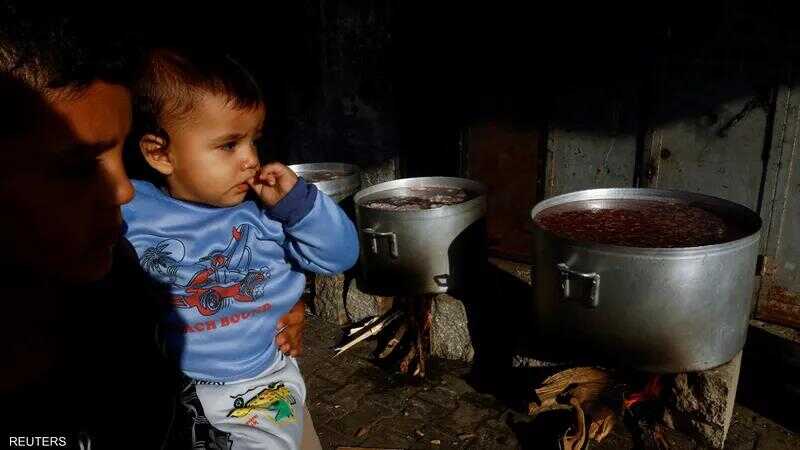
World Food Program: Gaza residents “on the verge of famine”

The World Food Program considered that the convoy of food and aid trucks that arrived in Gaza on Saturday should be the beginning of a “continuous flow” in order to “ensure that the population does not die of hunger.”


The program's executive director, Cindy McCain, told the British Sky News network that the entry of aid from Egypt into Gaza through the Rafah crossing was a "relief", but "it is not enough."


Speaking from Cairo, she added: “We hope this is not the last convoy to enter. It is very important that we get as much food aid as possible because people are on the brink of starvation.”


McCain explained, "60,000 tons of food were delivered, which is enough to feed about 40,000 people for a week."


What happened?

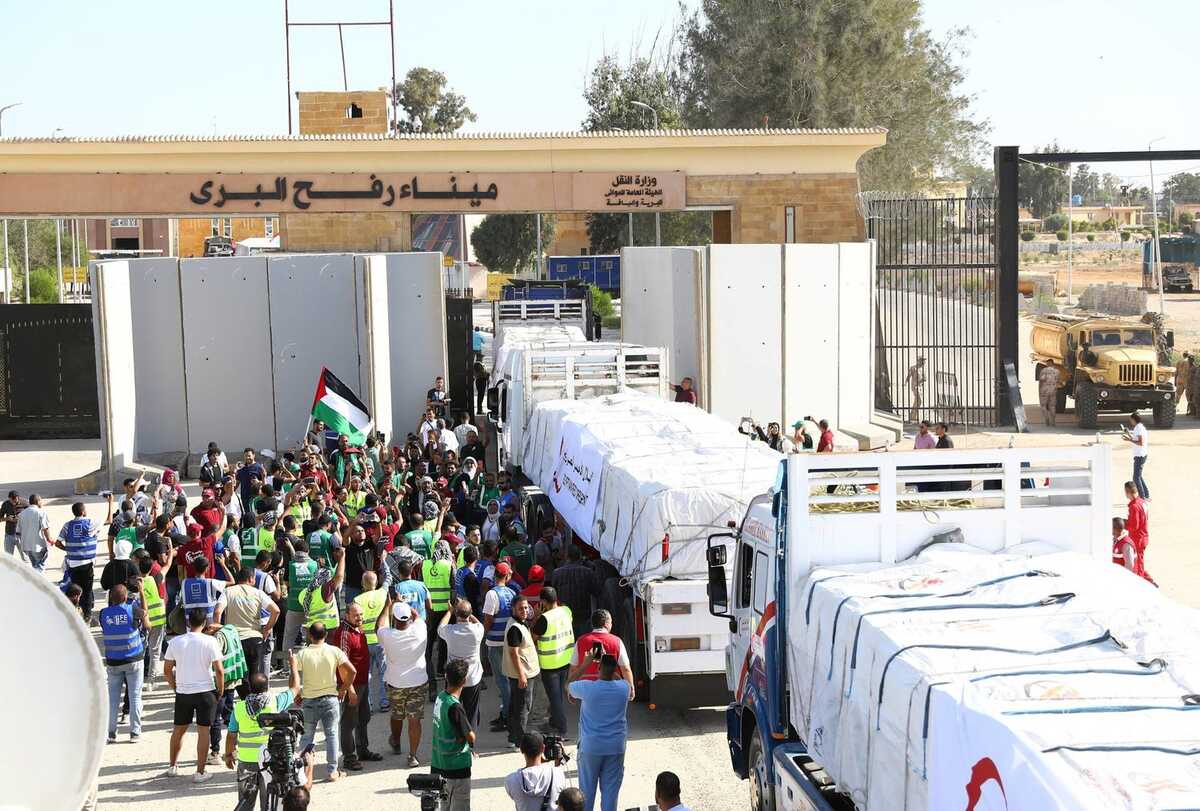
The first humanitarian aid convoys sent to the besieged Gaza Strip since the outbreak of war there arrived through the Rafah crossing, on Saturday, after the aid remained stuck in Egypt for days.


The United Nations said the convoy of 20 trucks carrying life-saving supplies will be delivered by the Palestinian Red Crescent.


But the aid represents only a small portion of the urgently needed quantities, and it is not clear how much aid will be allowed to pass in the coming days.


The Rafah crossing is the main route in and out of Gaza that is not controlled by Israel, and the focus of efforts to deliver aid to the enclave's 2.3 million residents.


UN officials say Gaza needs at least 100 trucks a day to provide essential needs, and that any aid entry must be continuous and on a large scale.


Before the outbreak of the conflict, about 450 aid trucks arrived in Gaza daily.


ARAB AND WORLD

Sat 21 Oct 2023 6:47 pm - Jerusalem Time

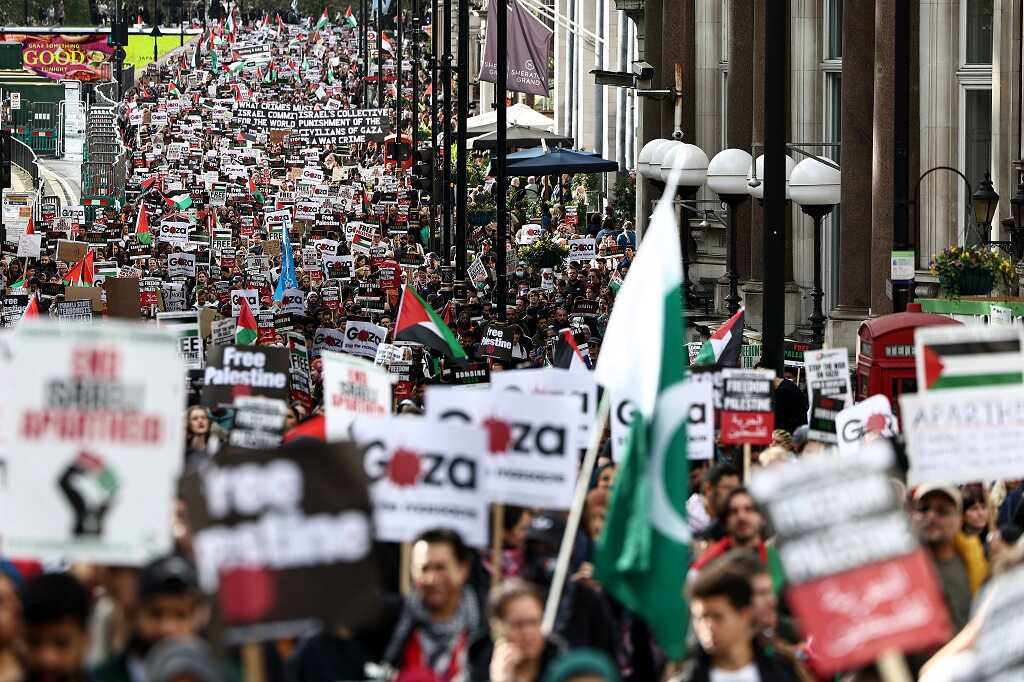
Tens of thousands are demonstrating in London in solidarity with Palestinian people

Tens of thousands of Britons demonstrated this Saturday evening in the capital, London, in solidarity with our people and denouncing the ongoing Israeli aggression against the Gaza Strip.


The demonstration began in front of the Marble Arch, reaching British Parliament Square, with the participation of more than 100,000 demonstrators, according to British police.


The demonstrators raised Palestinian flags and chanted the slogan "Freedom for Palestine." They also carried banners and banners, some of which read: “Freedom for Palestine” in Arabic and English, “Stop genocide,” and “Stop the war on Gaza.”


It is noteworthy that many capitals and cities in the world are witnessing daily demonstrations, to denounce the comprehensive aggression launched by the occupation against our people, and to demand the right of our people to freedom and to establish their independent state.

PALESTINE

Sat 21 Oct 2023 6:47 pm - Jerusalem Time

Bloomberg: Biden Sees Israel-Saudi Thaw as Motive for Hamas Attack on Israel

US President Joe Biden said Hamas attacked Israel in part to stymie its efforts to normalize relations with Saudi Arabia, his most illuminating comments yet on the impetus for the crisis in the Middle East.

“One of the reasons why they acted like they did, why Hamas moved on Israel, is because they knew I was about to sit down with the Saudis,” Biden said on Friday at a campaign fundraiser in Washington. “Because the Saudis wanted to recognize Israel and that would in fact unite the Middle East.”


Under Biden, the US and Saudis were working on a framework for the kingdom to recognize Israel in exchange for US security guarantees. Publicly, administration officials sought to play down talk of a breakthrough as the talks advanced, but Biden was keen on the initiative and in July sent National Security Advisor Jake Sullivan to the kingdom.


Israel has signed diplomatic deals with the United Arab Emirates, Bahrain, Morocco and Sudan since 2020, but normalization with Saudi Arabia, the biggest economy in the Middle East, would be a coup for Israeli Prime Minister Benjamin Netanyahu and his country.

Those efforts now are in limbo after the deadly attack by Hamas, which is designated a terrorist state by the US and European Union, on Oct. 7. The attack killed more than 1,400 people and saw over 200 taken hostage. Israel has responded with airstrikes in Gaza, which is controlled by Hamas, and is threatening a ground war to eradicate the group.


The Saudis have paused their efforts to normalize ties with Israel, according to people familiar with the matter. The people familiar, who spoke on condition of anonymity, described it however as only a pause — not an end to the diplomacy.


PALESTINE

Sat 21 Oct 2023 6:25 pm - Jerusalem Time

Soldiers and settlers tie up, beat, burn and urinate on three Palestinians and strip them of their clothes in the West Bank

A Palestinian accuses the suspects of trying to sexually assault him in the attack that occurred days after Hamas attacks; Israeli activists say they were also victims of the same group; The Israeli army expels the responsible officer and opens an investigation.

A group of Israeli soldiers and settlers were accused of carrying out a brutal attack on three Palestinians in the central West Bank last week, days after the attack carried out by Hamas on October 7 in southern Israel.


The victims told Haaretz on Thursday that they were assaulted for hours on October 12, when they were beaten, stripped, bound and photographed. The assailants urinated on two of them, and extinguished cigarettes on the body of one of them, while the other was sexually assaulted by one of the attackers.


The Israeli army said that the military police opened an investigation into the incident and the commanding officer was removed from his post.

The incident was part of a broader escalation in violence across the West Bank since the outbreak of the Gaza war.

The incident occurred in the small Palestinian community of Wadi al-Siq, about 16 kilometers east of Ramallah, which Haaretz newspaper said had been largely evacuated in recent weeks after an escalation in settler attacks on the shepherds' village.


Soldiers from the Civil Administration who later arrived at the scene released the three Palestinians in the early evening after they had been detained for approximately eight hours.


PALESTINE

Sat 21 Oct 2023 6:02 pm - Jerusalem Time

Arab and international demands to “sustain” the flow of aid to Gaza

The Rafah crossing was quickly closed shortly after it opened, on Saturday morning, and only 20 trucks passed, carrying relief aid to the Gaza Strip, which has been besieged by Israel for two weeks, amid Arab and international demands to establish mechanisms to ensure the “sustainability” of delivering humanitarian aid to Gaza on a daily basis.


The trucks carry medicines, medical supplies, and a limited amount of canned food, according to Palestinian statements. While the spokesman for the Secretary-General of the United Nations said that the trucks that passed in the first batch belonged to the “Egyptian Red Crescent” and were delivered by the “Palestinian Red Crescent.”


The Rafah crossing, which is the main entry and exit port from the Gaza Strip, was disrupted after Israel imposed a complete siege and launched air strikes on Gaza in response to the Hamas attack on Israel on October 7.


Egyptian President Abdel Fattah El-Sisi said on Saturday that Egypt “ spared no effort day and night to deliver aid to Gaza, and did not close the Rafah crossing for a day, but the Israeli bombing prevented it from working.” He added during the opening of the Cairo Peace Summit on Saturday: “Let me ask... where are the values of human civilization that we have built in relation to what is happening in Gaza?”


While Jordanian King Abdullah II, in his speech during the Cairo summit, stressed “the priority of delivering humanitarian aid, fuel, food, and medicine in a sustainable and uninterrupted manner to the Gaza Strip.”


Egyptian state television showed footage of the authorities opening the Rafah crossing in the Sinai Peninsula for humanitarian aid, days after more than 200 aid trucks waited in front of the crossing, while more relief materials were still piled up in the area. The footage showed the moment the first humanitarian aid convoy began entering, amid celebrations from volunteers on the Egyptian side with ululations and chants.


UN officials say that Gaza needs at least 100 trucks per day to provide the necessary needs, and that any introduction of aid must be continuous and on a large scale. Before the outbreak of the conflict, about 450 aid trucks arrived in Gaza daily.


The United Nations Relief Coordinator, Martin Griffiths, stressed that the humanitarian aid convoy that entered the Gaza Strip through the Rafah crossing “must not be the last.” Griffiths said, in a statement published on his official account on the “X” website on Saturday: “The people of Gaza have endured decades of suffering, and the international community cannot continue to let them down,” expressing his welcome to the announcement of the entry of the first aid convoy into Gaza.


Griffiths pointed out that the convoy of 20 trucks includes vital supplies provided by the “Egyptian Red Crescent” and the United Nations, and it was agreed that they would be crossed and received by the “Palestinian Red Crescent” with the support of the United Nations. He noted that the delivery process comes after days of intense negotiations with All parties concerned to ensure that the aid operation in Gaza resumes as quickly as possible, and under the appropriate conditions.


According to the United Nations World Food Programme, the first convoy of relief supplies to the Gaza Strip contains 60 tons of food. The program said, in a statement on Saturday, that cans of tuna, flour, pasta, beans, and other materials will be distributed to those in need as soon as possible.


Cindy McCain, the program's executive director, called in a letter issued from Cairo for "immediate, safe and sustainable access for humanitarian assistance to Gaza." She warned that this aid would only last for a few days, and then the food would run out, and the people of Gaza would face hunger again.


The program still has another 930 tons of food on the Egyptian side of the Rafah crossing with Gaza, and it aims to help 1.1 million people over the next two months.


The President of the European Commission, Ursula von der Leyen, welcomed the opening of the Rafah border crossing with Gaza to humanitarian aid, and wrote in a tweet on the “X” website: “This is an important first step that will alleviate the suffering of innocent people... I extend my thanks to all the participants.” “Who made this possible.”


German Foreign Minister Annalena Baerbock described the entry of the first humanitarian aid convoy into the Gaza Strip as “a glimmer of hope in these difficult hours.” Birbock, who returned to Egypt, said on the “X” platform: “We thank everyone who contributed and continues to work as quickly as possible to expand the scope of aid.”


While French Foreign Minister Catherine Colonna said on Saturday that “distributing aid to the civilian population, starting with the most needy, requires the establishment of a humanitarian corridor, which may lead to a ceasefire,” during the Cairo Peace Summit.


According to the World Health Organization, it sent 4 trucks carrying medicines and trauma equipment to treat up to 1,200 wounded people, in addition to medicines for 1,500 patients suffering from chronic diseases. The organization added, “The supplies currently heading to Gaza will not be sufficient to meet the escalating health needs as hostilities continue to escalate, and there is an urgent need for an expanded and protected aid operation.”


On the other hand, a number of foreign nationals are gathering at the Rafah crossing waiting to exit the Gaza Strip after it was opened for a short period for the entry of humanitarian aid, before it was closed again.


The US Embassy in Israel said, earlier to open the crossing, that “the Rafah border crossing between Egypt and the Gaza Strip may open today, Saturday, which indicates the possibility of foreign nationals being able to leave the Palestinian Strip.”


Egyptian Foreign Ministry spokesman Ahmed Abu Zeid wrote on the “X” platform on Friday that Egypt is not responsible for closing the Rafah crossing between it and the Gaza Strip, “even though Israel targeted it 4 times and refused aid to enter.” He said: “Today, it will bear the responsibility for obstructing the exit of nationals of other countries... The crossing is open and Egypt is not responsible for obstructing their exit.”

ARAB AND WORLD

Sat 21 Oct 2023 5:47 pm - Jerusalem Time

Guterres on Gaza war: It is time to act to end this horrific nightmare

The Secretary-General of the United Nations, António Guterres, affirmed today, Saturday, during the Cairo Peace Summit, that “it is time to end this horrific nightmare,” in reference to the war waged by Israel on the Gaza Strip, which has entered its third week, while the United Nations Relief and Works Agency for Palestine Refugees announced (UNRWA) 17 of its employees were killed in Gaza.


An international summit began in Egypt - today, Saturday - called by Egyptian President Abdel Fattah Al-Sisi to discuss the future of the Palestinian issue and the peace process, and stopping the escalation in the Gaza Strip, and it is attended by a number of Arab and foreign leaders and heads of governments.


Guterres said in his speech, "The two-state solution is the only realistic basis for peace and stability... It is time to work to end this horrific nightmare, and to work to build a future worthy of the dreams of the children of Palestine and Israel."


The war broke out between the two sides after an unprecedented attack, on October 7, launched by the Al-Qassam Brigades - the military wing of the Islamic Resistance Movement (Hamas) - on Israeli settlements and military sites in the Gaza Strip.


The ongoing Israeli aggression against Gaza for two weeks has left 4,385 martyrs in the Strip as a result of Israeli air and artillery bombardment since the start of the war, most of them civilians, according to the latest tally of the Ministry of Health in Gaza, while on the Israeli side, more than 1,400 people were killed on the first day of the attack, according to Israeli authorities.


Numerous UNRWA employees killed

In the same context, at least 17 UNRWA employees have been killed in the Gaza Strip since the beginning of the war, according to what its Commissioner-General, Philippe Lazzarini, said on Saturday.


Lazzarini said - in a statement - that "17 of our colleagues have been confirmed killed so far in this fierce war. Unfortunately, the actual number will likely be higher." The official explained that some of them were "killed in their homes, while sleeping among their families."


He added, "I confirm that since the outbreak of war, UNRWA has regularly provided all concerned parties with the geographical location of all its facilities in the Gaza Strip. However, at least 35 buildings have been damaged so far, some in direct strikes."


He pointed out that the ongoing air strikes and bombings, along with evacuation orders issued by Israeli forces, led to "the displacement of one million people and caused the death of a very large number of civilians," calling for "an urgent humanitarian ceasefire."


The UN official indicated that his agency's facilities "have become overcrowded", with 500,000 people taking refuge there.

PALESTINE

Sat 21 Oct 2023 5:37 pm - Jerusalem Time

Bloomberg: The US and Israel Weigh a Future for Gaza Without Hamas

- Officials have discussed an interim government with UN backing

- Arab support is no sure thing but would be key, analysts say


U.S. and Israeli officials looking to the future of the Gaza Strip after dislodging Hamas have begun discussing possibilities, including potentially installing an interim government backed by the United Nations and with the involvement of Arab governments, people familiar with US government deliberations said.

The discussions are still at an early stage and hinge on developments yet to unfold, not least of which would be success in an Israeli ground assault, according to the people, who asked not to be identified detailing private deliberations. And any such possibility would need buy-in from Arab nations around the region, which is by no means certain.


Israel Says It Plans to Disentangle From Gaza After War on Hamas

Israeli officials have said repeatedly that they don’t intend to occupy Gaza, but they’ve also said that continued rule by Hamas is unacceptable after the Oct. 7 attack in which the group killed 1,400 Israelis and took 200 people hostage.

The challenge of achieving both of those objectives has helped fuel US worries that Israel hasn’t given sufficient thought to what comes after a ground assault. The US is also worried that a Gaza attack with no clear objective beyond ousting Hamas could fan the conflict into a regional war.

President Joe Biden has urged Israel to formulate a long-term plan and expressed concern that it will make similar mistakes to the US after the Sept. 11, 2001 attacks. Following those, America invaded Afghanistan and Iraq. While it achieved some of its aims, including weakening Al Qaeda, it got bogged down for years and lost thousands of troops.

“Justice must be done,” Biden said in Israel this week. “But I caution this: While you feel that rage, don’t be consumed by it. After 9/11 we were enraged in the United States. While we sought justice and got justice, we also made mistakes.”

A spokesperson for the White House National Security Council said the focus at the moment is uniting the world against terrorists and on delivering humanitarian aid to Gaza as soon as possible. Hamas has been designated a terrorist group by the US and the European Union.


At the same time, the fate of Gaza after the likely ground invasion has become one of the most pressing worries for American officials. In the two weeks since the Hamas attack took place, Biden’s team has sought to balance support for Israel with concerns about an unfolding humanitarian crisis in Gaza.


Why Gaza Is Epicenter of Israeli-Palestinian Conflict: QuickTake

As part of the ongoing conversations, the US and its allies have sought to slow the timing of the invasion to buy time for more people to flee northern Gaza and for secret talks mediated by Qatar to win the release of hostages held by Hamas, according to people familiar with the efforts. Two US citizens — a mother and daughter from Illinois — were released on Friday.

Establishing an interim government would be incredibly difficult, and getting Arab governments’ acquiescence would be even more of a challenge, according to William Usher, a former senior Middle East analyst at the Central Intelligence Agency.

“A plan that involved Arab governments would require a major shift in how Arab states accept risk and work with one another,” Usher said. “It would also require a leap of trust by Jerusalem — a commodity in short supply.”


On Friday, Israel’s defense minister suggested that the country has no intention of running the territory after its military operations wind down. Israel aims to disentangle itself from Gaza and to create a “new security reality” in the region, Yoav Gallant said to the parliamentary foreign affairs and defense committee in Tel Aviv.


Israeli opposition leader Yair Lapid has suggested handing control of Gaza back to the Palestinian Authority, which was defeated by Hamas in elections there in 2006.

“I think in the end the best thing is that the Palestinian Authority goes back into Gaza,” Lapid said at a media briefing in Tel Aviv on Thursday.


The Palestinian Authority, which governs the West Bank, and the Palestinian diaspora in countries such as Jordan and Lebanon wouldn’t provide viable alternatives, according to Ted Singer, a former senior intelligence officer at the Central Intelligence Agency who specialized in the Middle East.


“Routed out of Gaza in 2006, the Palestinian Authority lacks credibility and barely governs the West Bank,” Singer said. “The Palestinian diaspora has lost meaningful ties to Gaza.”


Biden administration officials have so far avoided broaching possible governance arrangements for Gaza in public.

The Palestinian people in Gaza deserve a leadership that allows them to live in peace and security, Biden’s national security adviser, Jake Sullivan, said on CBS on Sunday.


“What that exactly looks like going forward, I’m not in a position to say today,” Sullivan said, “But it is the right question to be asking now, as this unfolds, because we have to think not just about the immediate term, but about the long-term, too.”


Source: Bloomberg