ARAB AND WORLD

Thu 26 Mar 2026 7:11 am - Jerusalem Time

Widespread Iranian Escalation: Missile Strikes Target 70 Sites, Parliament Threatens to Impose Fees in Strait of Hormuz

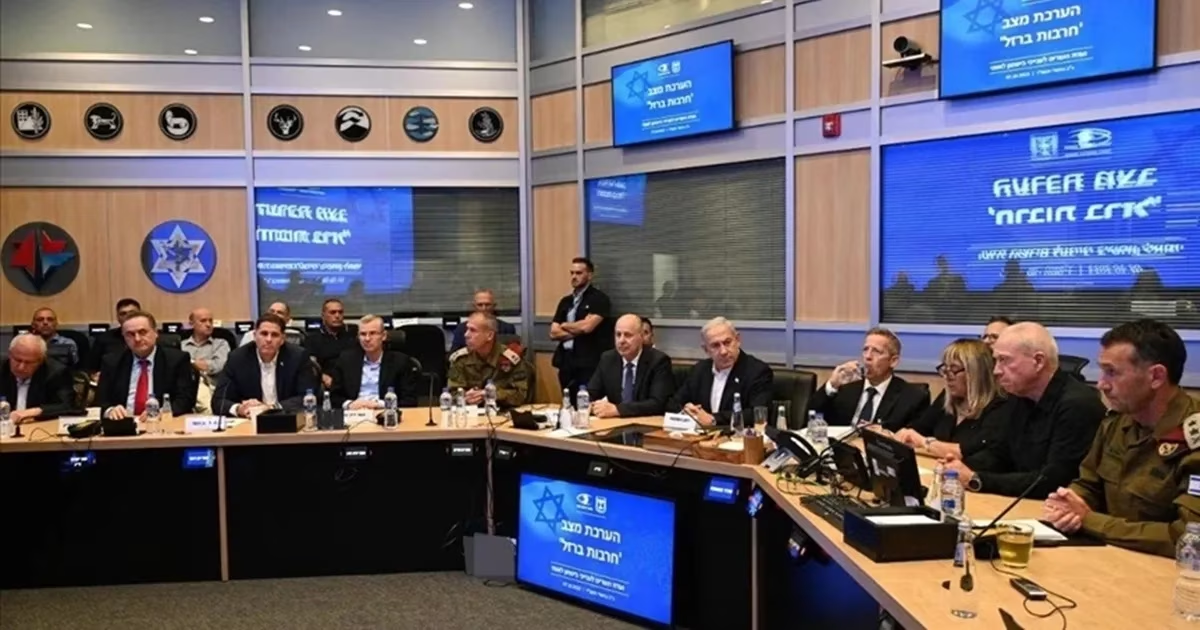
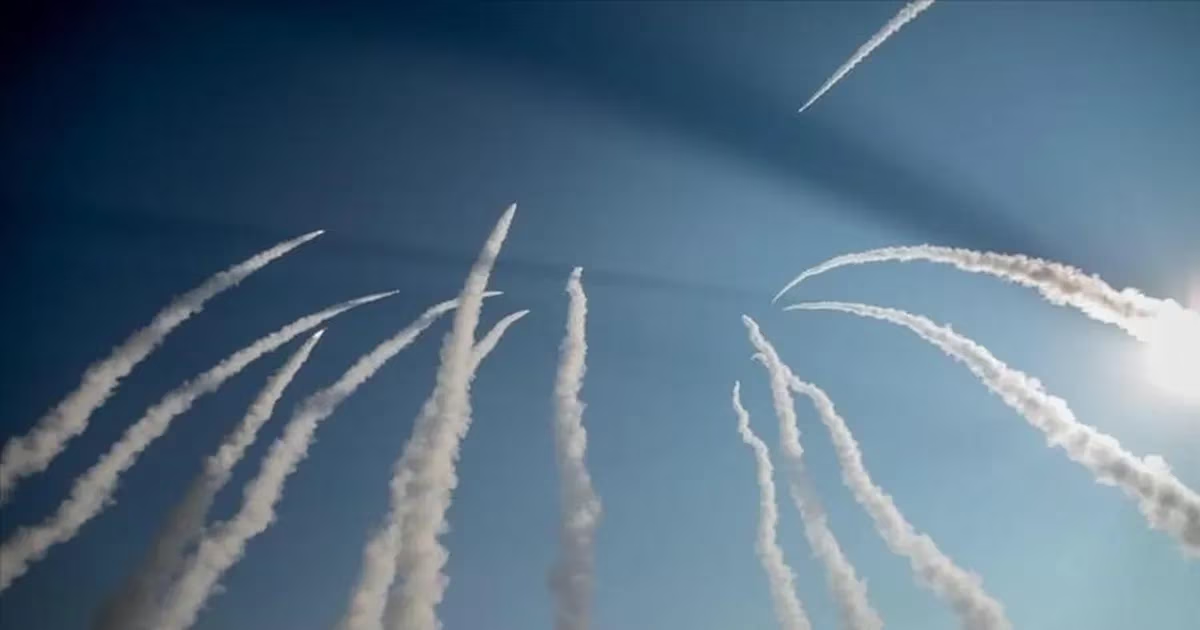
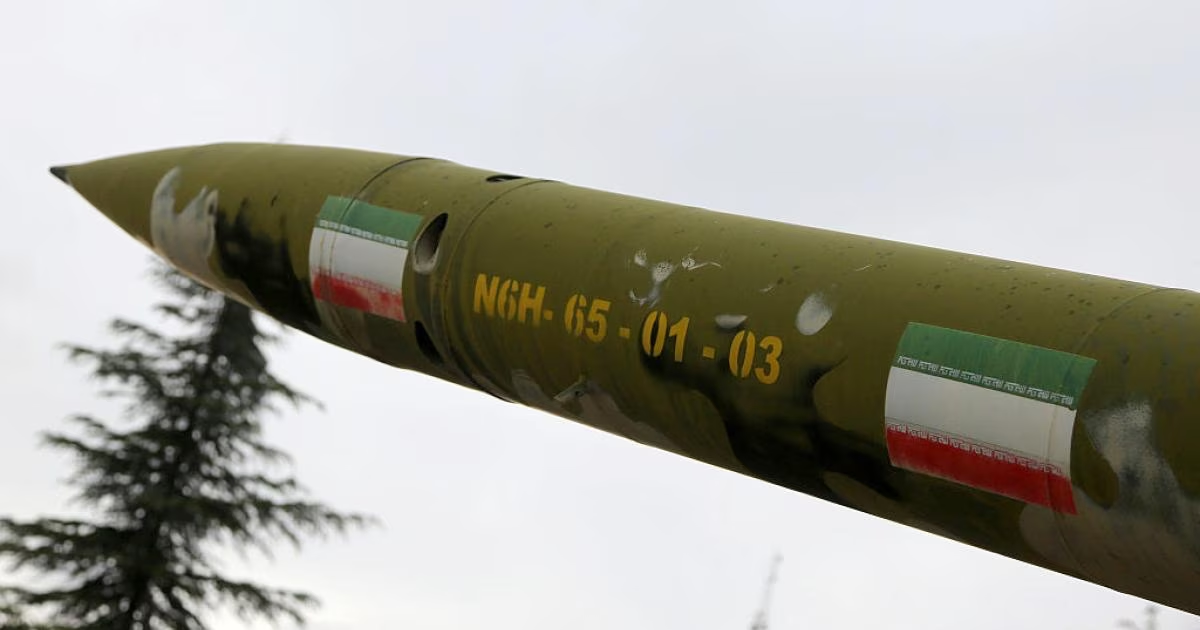
The Operations Command of the Iranian Army, known as the 'Khatam al-Anbiya' headquarters, announced the execution of a wide series of missile and aerial attacks using drones against multiple targets. Military sources clarified that this wave of bombardment was followed by additional volleys targeting deep within the occupied territories, as part of a new field escalation reflecting the tension in regional conditions.

The spokesperson for the Iranian Army affirmed that the military operations focused on striking sensitive strategic, security, and military centers, noting that the number of targets hit by the bombardment exceeded 70 sites. These attacks come in the context of ongoing Iranian reactions to military movements in the region, amidst assurances of the accuracy of the hits achieved on the targeted facilities.

In a remarkable development, Tehran claimed to have targeted a US F-18 warplane using an advanced air defense system belonging to the naval force of the Revolutionary Guard in the Chabahar region overlooking the Indian Ocean. Despite this detailed announcement, the US side quickly officially denied the incident, confirming that none of its aircraft were hit in that area.

Attacks were not limited to inside Israel but also included targeting gatherings of US forces and sites belonging to groups described by Tehran as separatist in the city of Erbil in the Iraqi Kurdistan region. Iran accuses these groups of receiving direct support from Washington and Tel Aviv and using Iraqi territory as a launchpad for subversive operations against Iranian national security.

Sources indicate that these moves fall within a comprehensive Iranian strategy aimed at pressuring international and regional powers by activating multiple fronts. This escalation coincides with intelligence reports speaking of the arrival of new US military reinforcements to the Middle East, raising concerns about the possibility of a widespread ground confrontation.

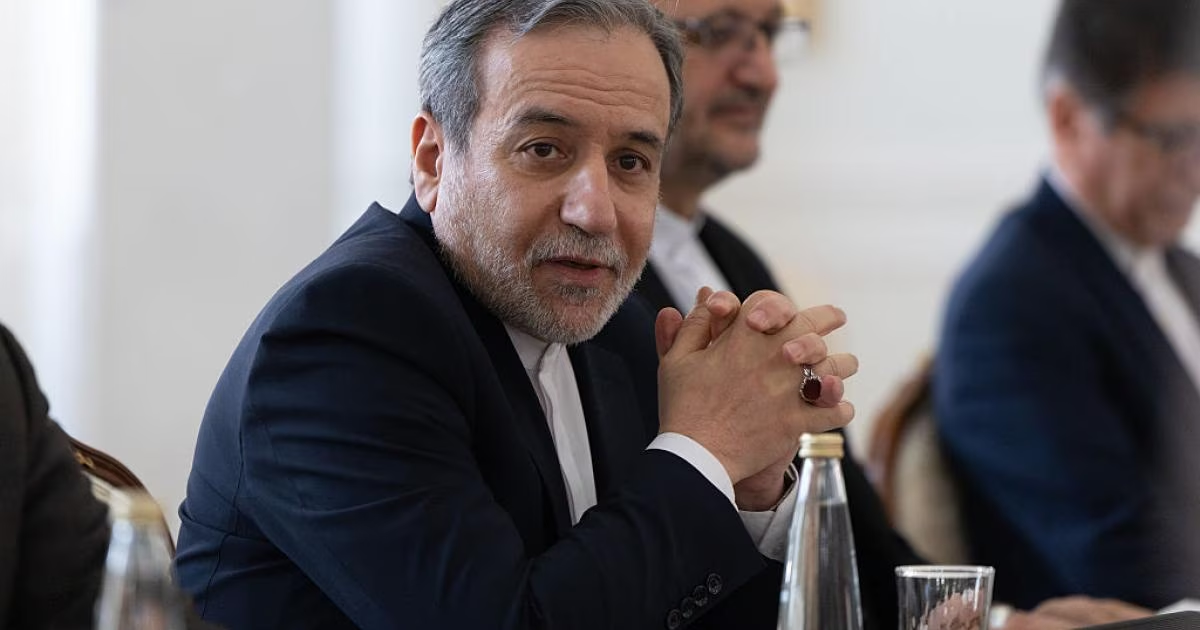
On the political front, the Strait of Hormuz issue emerged as one of the most prominent pressure cards Tehran is waving in the face of the international community. Iranian Foreign Minister, Abbas Araghchi, stated that his country demands a radical change in the mechanisms of dealing with the Strait, ensuring full international recognition of Iran's role in managing navigation traffic and securing the vital waterway.

In a step that reinforces this trend, the Iranian Parliament revealed the study of a new bill aimed at imposing financial fees on commercial ships and tankers crossing the Strait of Hormuz. The proposal aims to collect sums for insurance and protection services provided by Iranian forces, similar to systems in place in other international waterways around the world.

The bill is expected to be presented to parliamentary research centers and specialized committees next week to complete the final legal drafting. Observers believe that this legislative move represents a powerful political tool to support the decisions of the Iranian leadership in times of crisis, as happened previously when strategic laws were enacted to respond to international sanctions.

A state of skepticism prevails in political circles in Tehran regarding American intentions related to resuming negotiations, as Iran believes that Washington is trying to buy time to reposition its forces. Accordingly, Tehran rejects a set of conditions conveyed through mediators, adhering to its demands for a cessation of war, financial compensation, and binding security guarantees.

In conclusion of the statements, leaders in the Revolutionary Guard stressed that any future agreement would not be made in isolation from Iran's allies in the region, in a clear reference to resistance factions. Tehran continues to demonstrate the strength of 'unity of fronts' by publishing documentation of joint military operations, affirming that the decision of peace or war is organically linked to the interconnectedness of these fronts.

The attacks targeted strategic, military, and security centers inside Israel, hitting more than 70 targets in the occupied territories.
ARAB AND WORLD

Thu 26 Mar 2026 7:11 am - Jerusalem Time

Britain grants its army powers to intercept and seize Russian 'shadow fleet' ships

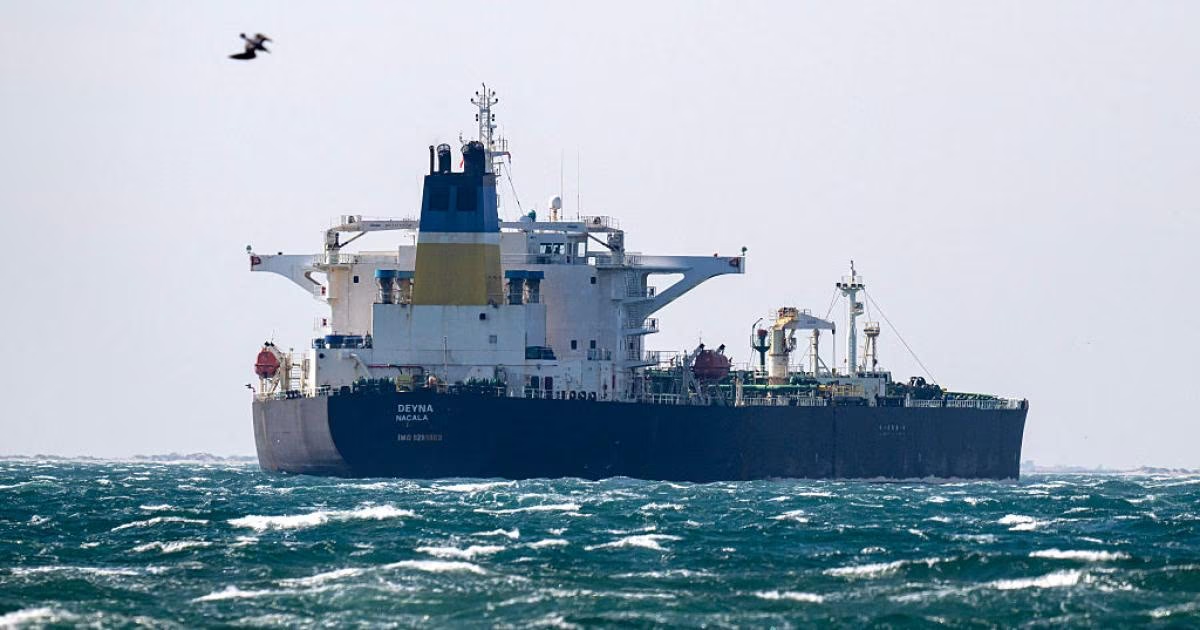
The office of British Prime Minister Keir Starmer announced that the UK armed forces and law enforcement agencies have been granted formal powers to intercept and detain vessels belonging to what is known as Russia's 'shadow fleet'. This legal and military move aims to enable authorities to deal with ships subject to British sanctions when they enter or pass through territorial waters, including the vital shipping lane in the English Channel.

Downing Street confirmed in an official statement that this decision aims to tighten the noose on Russian attempts to circumvent international restrictions imposed on its oil exports. London considers this step essential to disrupt the financial flows that Moscow relies on to fund its ongoing military operations in Ukraine, emphasizing that the pursuit of this fleet will be carried out with unprecedented strictness.

For his part, Prime Minister Keir Starmer explained that the tightening of measures against Russian tankers comes amid concerns that Russian President Vladimir Putin is exploiting the significant rise in global energy prices. Starmer pointed out that military tensions between the United States and Israel on one hand, and Iran on the other, have contributed to a jump in oil prices, which could provide Moscow with additional revenues that Britain seeks to dry up.

New British preparations include military units being ready to board Russian ships that may show resistance or refuse to surrender to maritime authorities. The government also noted that some of these ships may be armed or equipped with advanced technical monitoring systems aimed at evading detection and detention, affirming that the law will be strictly applied to owners, operators, and crews.

In a related context, official reports revealed that Britain has already included approximately 544 ships on sanction lists on suspicion of belonging to the shadow fleet, which often consists of old and dilapidated oil tankers. British sources estimate that these ships are responsible for transporting nearly three-quarters of Russia's total crude oil, making them a strategic target for undermining the Russian war economy.

Joint European efforts to pursue this fleet face complex challenges, especially after the decision by the US administration under Donald Trump to grant temporary 30-day exemptions for some Russian products stranded at sea. The US decision aims to calm disturbances in global energy markets, but it has raised questions about the consistency of Western positions in confronting the Russian war machine.

British authorities intend to convert interception operations into judicial proceedings, where criminal charges may be brought against those responsible for operating these vessels for violating national sanctions legislation. This escalation comes at a time when other European countries are seeking to enhance their maritime surveillance to prevent Russia from using the continent's waters as a platform for illegal oil trade away from international oversight.

We are pursuing the shadow fleet with greater force not only to maintain Britain's security but also to deprive Putin's war machine of dirty profits.

PALESTINE

Thu 26 Mar 2026 7:11 am - Jerusalem Time

Occupation army withdraws forces from Lebanon front to confront escalating settler terrorism in the West Bank

Hebrew media sources reported that the Israeli occupation army is facing unprecedented challenges in controlling the escalating settler attacks in the occupied West Bank. The sources confirmed that the military establishment was forced to make a sudden decision to divert an infantry battalion that was on its way to participate in combat operations in southern Lebanon, and instead direct it to contact areas in the West Bank.

This escalation comes at a time when settlers are exploiting the international community's preoccupation with the ongoing war against Iran, which has entered its fourth week. Israeli military leaders have acknowledged the difficulty of reining in extremist groups that have intensified their attacks against Palestinian villages and towns, benefiting from the political cover provided by the far-right government in Tel Aviv.

Field data revealed that six Palestinians have been killed and dozens injured since the beginning of this month due to attacks carried out by settlers belonging to the hard-line right. Statistics indicate that the rate of crimes committed by settlers has jumped to about 70 crimes per month since the beginning of 2025, reflecting a state of widespread security chaos.

Security agencies recorded a new peak in settler violence in recent days, with 20 attacks observed in a single night. Field commanders in the occupation army describe this number as a record and unprecedented for many years, warning of a complete explosion of the situation if this approach continues.

In a related context, the political disagreement within the occupation government stands out as a fundamental obstacle to stopping these violations, as Security Minister Yisrael Katz refuses to renew administrative detention orders against settler leaders. This stance has left army commanders in the field feeling that their hands are tied, unable to take deterrent measures beyond temporary deportation orders.

Prime Minister Benjamin Netanyahu's recent visit to the West Bank division, accompanied by the Ministers of Security and National Security, witnessed a highly charged atmosphere with military commanders. Regional brigade commanders demanded that they be granted broader powers, including administrative detentions, to control extremist elements that are now threatening security stability in the region.

Reports indicate that the number of settlement outposts and illegal farms has doubled alarmingly, rising from 30 outposts at the beginning of the war on Gaza to more than 140 outposts currently. These outposts, whose status is being legalized with the support of Minister Bezalel Smotrich, serve as launching pads for systematic attacks against Palestinian farmers and their property.

On the international front, the Israeli government received a rebuke from the US administration for what Washington described as procrastination in dealing with settler violence. The United States fears that this escalation could open a new front in the West Bank, further complicating the already tense regional scene due to the military confrontation with Iran.

These developments coincide with global economic and political repercussions of the war on Iran, as US President Donald Trump's popularity has fallen to low levels of 36%. This decline is mainly due to the sharp rise in fuel prices, amidst widespread American public opposition to the continuation of military operations that began last February.

As the war continues, the global economy faces serious threats due to disruptions in the Strait of Hormuz, through which about 20% of global oil trade passes. Fears are growing that oil prices could reach record levels exceeding $200 per barrel, exacerbating global inflation rates and threatening the food security of hundreds of millions.

Military sources confirm that settlers are exploiting these complex international circumstances to impose a new reality on the ground in the West Bank by confiscating more Palestinian land. The occupation army, despite its complaints about their violence, provides new settlement farms with security and defense equipment, which enhances their ability to survive and expand.

It seems that the Israeli military establishment is now afraid of losing complete control, as circles in the General Staff do not rule out sending additional permanent reinforcements to the West Bank. This trend reflects the extent of concern that settler attacks could turn into a security burden that drains the army's capabilities distributed across multiple fronts in Gaza, Lebanon, and Iran.

The legal measures taken against attacking settlers remain weak and ineffective, as the proposal to use electronic handcuffs faces major legal and political obstacles. In most cases, investigations with settlers end without real charges being filed, or are limited to penalties that observers describe as 'ridiculous' and disproportionate to the scale of the crimes committed.

The current scene in the West Bank portends a new phase of confrontation, where the political agendas of the far-right intertwine with military field impotence. As the regional war continues, Palestinians find themselves in direct confrontation with organized settler terrorism that enjoys official protection, amidst international silence and preoccupation with energy issues and major conflicts.

The Israeli army admitted for the first time the difficulty of dealing with the level of settler crimes in the West Bank, which forced it to divert forces from the northern front.

PALESTINE

Thu 26 Mar 2026 7:11 am - Jerusalem Time

Hezbollah bombs Israeli Ministry of War headquarters 'The Kirya' with qualitative missiles

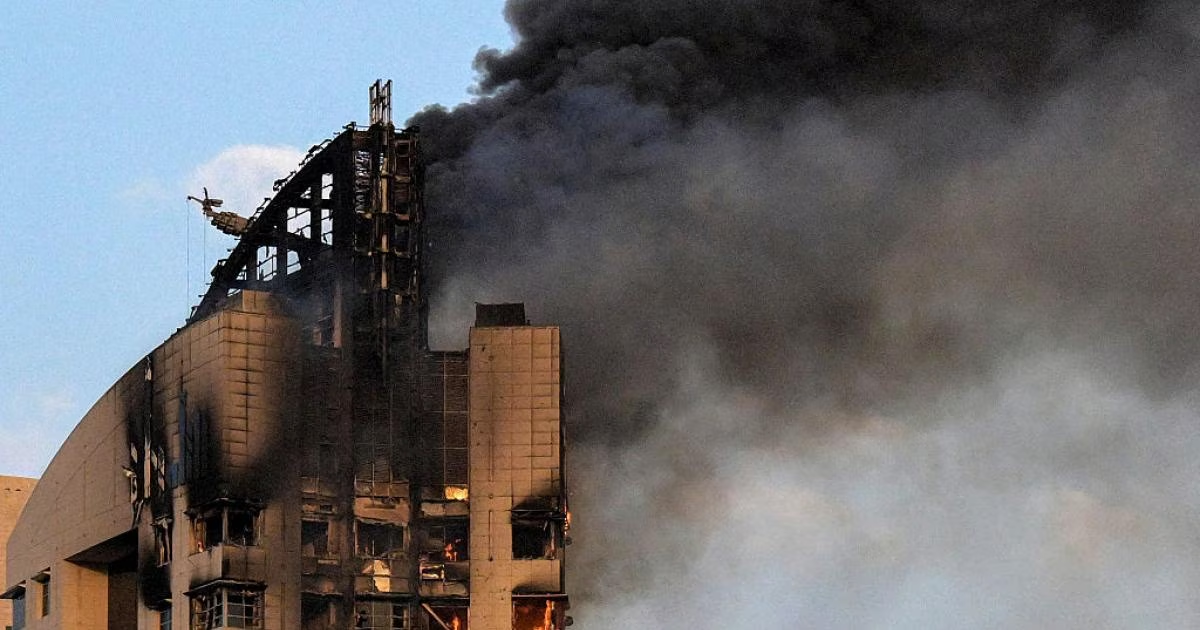
Lebanese Hezbollah announced, early Thursday, the execution of a qualitative military operation targeting the depth of the Israeli occupation in the city of Tel Aviv. The party clarified in an official statement that its fighters launched volleys of qualitative missiles towards the Israeli Ministry of War headquarters, known as 'The Kirya', located in the heart of the city, in addition to targeting the 'Dolphin' barracks belonging to the military intelligence division in the north.

The party affirmed that this attack comes within the framework of legitimate defense of Lebanon and its people, and in response to the Israeli persistence in targeting civilians and infrastructure. The statement stressed that the brutal destruction operations adopted by the occupation against residential complexes will not pass without a deterrent response that reaches vital and military sites in the depth.

Meanwhile, field sources reported the activation of sirens in a wide range covering dozens of areas and towns in the Central region 'Gush Dan'. The sources indicated that the sound of explosions was clearly heard in various areas, including settlements near the city of Qalqilya and areas in the occupied West Bank, due to the force of the missile volley.

The state of alert included more than 30 Israeli areas, where sirens sounded in the northern neighborhoods of Tel Aviv and eastern suburbs such as Ramat Petah Tikva and Ramat HaSharon. Warnings also extended to include the cities of Kfar Saba, Ra'anana, and Hod HaSharon, prompting thousands of settlers to flee en masse to shelters and fortified areas.

Media reports monitored the arrival of missile fragments or the sound of their explosions in Arab towns inside the Green Line, including the city of Tira in the Triangle region and Kafr Qasim. The sounds of explosions were also heard in the Ras al-Ain area, amid a state of security confusion among the occupation's apparatuses that tried to intercept the missiles launched from Lebanon.

For its part, Hebrew media reported that air defense systems tried to intercept at least six missiles launched from Lebanese territory towards the center of the country. Channel 12 Hebrew confirmed that ambulance and rescue teams rushed to several sites from which reports of falling fragments or injuries and panic attacks were received, without disclosing the exact extent of material losses.

The Israeli occupation authorities impose strict military censorship and media blackout on the results of these strikes, preventing the publication of any photos or details related to the targeted sites. These measures come in an attempt to reduce the psychological impact of Hezbollah's operations, and to prevent the leakage of information that might benefit the resistance in assessing the accuracy of its hits.

On the ground, the occupation continues its widespread aggression on Lebanon since the beginning of March, using a scorched-earth policy in border villages. These air and ground attacks have led to the martyrdom of more than a thousand Lebanese citizens and the injury of thousands, in addition to a major displacement wave exceeding one million people fleeing indiscriminate shelling.

In contrast, Hezbollah is intensifying the pace of its military operations using drones and ballistic and qualitative missiles to strike military bases and settlements. The Lebanese resistance confirms that these operations will not stop until the comprehensive aggression on Lebanon and Gaza ceases, stressing its ability to reach distant strategic targets.

It is worth noting that the current escalation comes amid the continued occupation of parts of southern Lebanon, and rising regional tensions since last October. Political and military circles are awaiting the repercussions of targeting 'The Kirya', given the security and political weight of this site, as it includes the offices of the occupation's supreme military command.

We targeted the Israeli Ministry of War headquarters (The Kirya) in central Tel Aviv, and the Dolphin barracks belonging to the military intelligence division north of the city with a number of qualitative missiles.

ARAB AND WORLD

Thu 26 Mar 2026 7:11 am - Jerusalem Time

Scenarios of Involvement and Neutrality: How Turkey Maneuvers to Avoid Sliding into Regional Confrontation?

The Turkish capital, Ankara, is making intensive diplomatic efforts in an attempt to contain the escalating military escalation between the United States and Israel on one hand, and Iran on the other. The Turkish leadership realizes that the path back to the negotiating table faces serious challenges, especially in light of the profound field developments witnessed in the first month of confrontations.

Political readings in Ankara indicate that precedents for negotiations between Tehran and Washington, especially under the current US administration, do not inspire great optimism. Previous experiences have shown that military operations can continue and escalate even with scheduled negotiation rounds, making the possibility of continued war strong and real.

The possibility of Turkey's involvement in the conflict is no longer a mere theoretical hypothesis discussed by analysts, but has become a serious scenario on the decision-makers' table. Ankara is primarily concerned about deliberate "entrapment" operations aimed at drawing it into confrontation, more than its fear of automatic involvement resulting from the escalation of field events.

Turkish President Recep Tayyip Erdogan and his Foreign Minister Hakan Fidan have directly expressed this concern, holding Israeli Prime Minister Benjamin Netanyahu fully responsible. Turkish officials believe that the Israeli government seeks to turn the region into a comprehensive war zone, the catastrophic consequences of which the entire world will pay for.

For his part, Suleyman Soylu, head of the Interior Committee in the Turkish Parliament, warned against continuous Israeli provocations aimed at dragging his country into the conflict. These statements come at a time when regional and international pressures on Ankara are increasing to define its position on the rapidly developing Iranian issue.

Four main scenarios could lead to unwanted Turkish involvement. The first is a direct response to targeting Turkish territory. Sources have reported the fall of three missiles in border areas, and despite Tehran's denial, NATO reports indicated targeting military bases housing alliance forces.

The second scenario relates to the expansion of the war regionally to include parties such as Greece and Cyprus, which would compel Turkey to act to protect its vital interests. This expansion could change the balance of power in the Eastern Mediterranean and force Ankara to take preemptive defensive or offensive measures.

The third scenario is intervention to protect Turkish national security in the event of widespread chaos or signs of the division of Iranian territory. Ankara fears the re-activation of the "Kurdish card" on its borders, an issue in which it has expended great efforts to close in both Syria and Iraq.

The fourth scenario is the possibility of NATO's involvement in the war, especially if the strategic Strait of Hormuz is closed. Despite Turkey's membership in the alliance, it has historically maintained a distinct distance in its positions, as was evident in the Ukrainian-Russian crisis.

In its endeavor to avoid these scenarios, Ankara has adopted an official discourse characterized by caution and firmness simultaneously, emphasizing its right to defend its people and territory. It has been noted that the Turkish discourse avoided directing direct accusations to any specific party regarding the fallen missiles, preferring to keep communication channels open.

On the ground, Turkey has strengthened its defensive capabilities by deploying additional NATO missile batteries, especially at Incirlik Air Base in the south of the country. This step aims to reduce the likelihood of direct targeting and send a clear deterrent message to any party attempting to infringe on Turkish sovereignty.

Diplomatically, Ankara is active in a collective mediation involving countries such as Oman, Pakistan, Egypt, and Qatar to bridge the views between Washington and Tehran. Turkey uses its geopolitical position and balanced relations with both parties to create suitable conditions for initiating confidence-building measures.

Despite these efforts, the Turkish presidency remains cautious about reports of its forces being positioned within Iranian territory in emergency situations, which it has officially denied. Nevertheless, Turkish concern remains about any shift that could lead to the collapse of the institutional system in the eastern neighbor.

In conclusion, Ankara realizes that the only guarantee against being drawn into the inferno of war is the immediate cessation of hostilities and the prevention of the conflict's escalation. This path requires diligent work and high-level coordination with regional and international powers to avoid the scenario of a comprehensive explosion that threatens the stability of the entire region.

Netanyahu and his government are seeking with their provocations to drag Turkey into this fireball, which directly threatens international peace.

PALESTINE

Thu 26 Mar 2026 7:11 am - Jerusalem Time

Gaza Health: 4 new injuries due to occupation violations, total casualties exceed 72,000 martyrs

Medical sources in the Gaza Strip reported today, Tuesday, that four new injuries arrived at hospitals during the past twenty-four hours, as a result of attacks carried out by the Israeli occupation forces. The Ministry of Health confirmed that these injuries come in the context of a series of continuous field violations committed by the occupation, threatening the stability of the fragile field conditions in various areas of the Strip.

The Ministry's daily statistical report clarified that the number of victims since the announcement of the ceasefire on October 11 last year has witnessed a significant increase, with 687 citizens martyred and 1,849 others injured. These figures indicate that the Israeli killing machine has not completely stopped, but has continued to target civilians by various means despite internationally sponsored agreements.

In a related context, civil defense and ambulance crews were able to retrieve the bodies of 756 martyrs from under the rubble of destroyed buildings since the start of the truce, which reveals the extent of the humanitarian catastrophe caused by aerial and artillery bombardment. Search operations are still ongoing in several areas, where hundreds of missing persons are believed to be under the rubble that affected about 90% of the Strip's infrastructure.

Regarding the cumulative toll since October 7, 2023, official sources announced that the number of martyrs has risen to 72,263 martyrs, while the number of injured reached 171,948 people. These statistics are evidence of the extent of the genocide to which the residents of the Strip have been subjected, amidst harsh health and living conditions lacking the basic necessities of life.

Politically, Hamas criticized the statements issued by the UN envoy, Nikolay Mladenov, in which he called for the disarmament of Palestinian factions during a Security Council session. The movement's spokesman, Hazem Qassem, accused the UN official of ignoring the blood of hundreds of Palestinians who fell as a result of repeated Israeli violations of the ceasefire agreement in effect since last October.

These developments coincide with international reports indicating the existence of proposals for a second phase of the security plan, which includes a gradual withdrawal of occupation forces and the deployment of an international force in contact areas. However, Palestinian factions insist that any security arrangements must ensure a comprehensive cessation of aggression and a complete lifting of the siege, away from the disarmament conditions rejected by the resistance.

In light of this escalating field reality, the United Nations estimates the cost of rebuilding what the occupation destroyed in the Gaza Strip at about 70 billion dollars, a figure that reflects the enormous extent of destruction in residential units and vital facilities. Local officials appeal to the international community for the necessity of immediate intervention to stop Israeli violations and provide the necessary support to relieve thousands of displaced and injured families.

Hospitals continue to receive wounded and injured despite previous ceasefire announcements, confirming the occupation's non-compliance with the truce.

PALESTINE

Thu 26 Mar 2026 7:10 am - Jerusalem Time

The occupation blinded her with phosphorus.. The story of Zein Al-Dalou, a girl from Gaza whose insight was illuminated by the Quran

The young Palestinian woman Zein Al-Dalou embodies the tragedy of an entire generation in the Gaza Strip, as she was born without eyes due to her mother inhaling white phosphorus released by the Israeli occupation army during its aggression on the city in 2008. This internationally prohibited substance deprived Zein of the blessing of sight before she saw the light, growing up with eyelids devoid of eyeballs, in a silent war crime that left its permanent mark on her face and life.

Zein recounts that she did not realize her difference from other children until she was seven years old, as she thought everyone lived in the same darkness that enveloped her world. With the support of her family, she tried to overcome this congenital deformity by installing artificial eyes, but the current war conditions and continuous forced displacement prevented the completion of the necessary treatment journey.

Sources explained that Zein was forced to give up one of her artificial eyes due to serious side effects, as these eyes require periodic maintenance and replacement every six months. In light of the tight siege and the lack of medical supplies in displacement centers, her eye condition deteriorated, making her in urgent need of immediate surgical intervention that is currently unavailable in the afflicted sector.

Despite this suffering, the light of the Holy Quran found its way into Zein's heart, as she began her memorization journey through recitation with the help of her mother, Rula Al-Dalou. The mother would read the verses from the Mushaf, and the daughter would repeat them after her with patience and determination, until she was able to memorize the first ten parts without the need for any assistance other than her strong memory and her mother's voice.

In appreciation of this exceptional achievement, 'Dar Al-Quran Al-Kareem Wa Al-Sunnah' presented Zein with a special Mushaf written in 'Braille', which opened new horizons for her to read and reflect independently. This Mushaf became a constant companion for her in her journey of knowledge and academic excellence, as she was always among the top students in her school despite the lack of specialized educational institutions for the blind.

Zein describes her relationship with the Quran as an eternal friendship, to which she resorts in moments of sadness to find tranquility, and in times of joy to express her gratitude. She did not stop at memorization but moved on to become a supervisor of women's courses and circles for teaching Tajweed of the Holy Quran online, where she follows students from different countries around the world despite communication difficulties in Gaza.

For her part, Zein's mother recalls the first moments of her daughter's birth, when doctors informed her that the child was born without eyeballs, which was a great shock to the family. The mother indicated that the Quran was the only way to calm Zein in her childhood, as the sound of recitation would stop her continuous crying and give her the reassurance she lacked.

During repeated displacement journeys under bombardment, the family was keen to carry Zein's special 'Braille' Mushaf despite its large size and weight, recognizing its moral and spiritual value to their daughter. However, the intensity of the bombing in the second displacement led to the loss of this only Mushaf, adding a new chapter of suffering to Zein's journey with the sacred word.

Zein confirms that the recent war changed her perspective on things, increasing the value of the Quran in her life as it is the only refuge amidst destruction and displacement. She sends a message to everyone around her about the necessity of adhering to the Quran and reflecting on its verses, emphasizing that it is the part that cannot be abandoned in a person's life, no matter how severe the surrounding circumstances.

On the medical front, statistics issued by the Ministry of Health in the Gaza Strip indicate that eye injuries constitute about 11% of the total injured, a number that reflects the occupation's deliberate use of weapons that cause permanent disabilities. The number of those who completely lost their sight during the recent aggression exceeded 3,000 injured, which places the international community before its responsibilities.

Zein today suffers from a travel ban that prevents her from obtaining new artificial eyes or undergoing the necessary corrective surgeries for her damaged eyelids. She appeals to human rights and medical institutions to intervene to save what remains of her ability to lead a normal life and provide the necessary treatment that prevents the exacerbation of inflammation around her eye.

Zein Al-Dalou's story remains a living testament to the will of the Palestinian people that is not broken by shells or white phosphorus. From the womb of darkness imposed by the occupation, she was able to become a beacon of knowledge and the Quran. It is a story that summarizes the steadfastness of the Gazans who seek light in their hearts when the paths of the earth narrow for them and the crossings close in their faces.

The war taught us a lot, and before it, the Quran was everything to me, but in the war, its preciousness increased, especially during displacement journeys.

ARAB AND WORLD

Thu 26 Mar 2026 7:10 am - Jerusalem Time

Kuwait announces dismantling of network linked to "Hezbollah" that planned to assassinate state leaders

The Kuwaiti Ministry of Interior announced today, Wednesday, the success of its security agencies in foiling a subversive plot that aimed to carry out assassinations against prominent figures and leaders in the state. The ministry affirmed that this operation comes within the context of continuous efforts to protect national security, noting that it is the third security blow directed at similar cells in less than ten days.

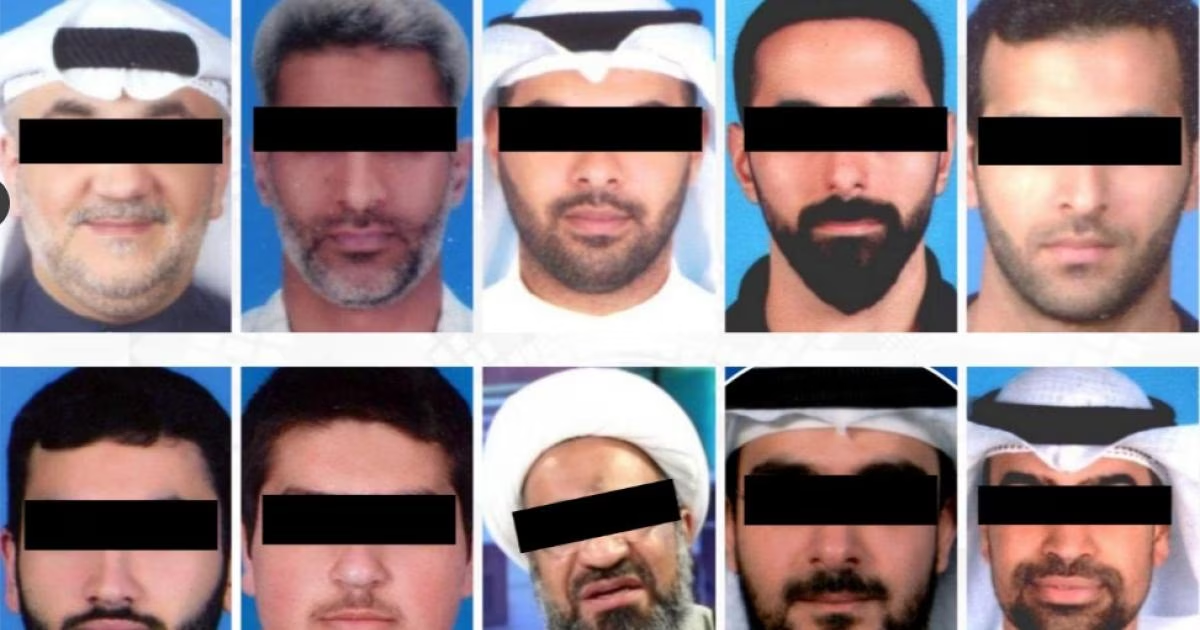
A statement issued by the ministry clarified that the State Security apparatus, after precise monitoring and follow-up operations, succeeded in dismantling a network comprising six individuals, including five Kuwaiti citizens and another person whose citizenship was revoked earlier. Sources indicated that the detainees are directly linked to the "Hezbollah" organization, which Kuwait classifies as a prohibited organization according to its local laws.

Security pursuits did not stop at the six detainees; authorities announced the identification of 14 other defendants involved in the same plot, but who are currently outside the country. The list of fugitives includes five Kuwaiti citizens, five others whose citizenship was revoked, in addition to two individuals holding Iranian nationality and two Lebanese, who are being pursued through international legal channels.

According to preliminary investigations, the detained defendants admitted to joining the prohibited organization and their continuous communication with external parties to coordinate subversive operations. They also confessed to receiving intensive military training outside the borders of the State of Kuwait at the hands of elements linked to the organization, with the aim of raising their combat efficiency to carry out assassinations and recruit new members.

The Ministry of Interior stressed that the plot primarily aimed to destabilize the country by targeting political leaders and national figures. It affirmed that security vigilance prevented the execution of these tasks, which were in advanced stages of preparation, noting that investigations are still ongoing to uncover all threads of the network and its supporting parties.

These developments come just days after Kuwaiti authorities announced the foiling of another plot that targeted vital and sensitive installations in the country. That previous operation resulted in the arrest of 10 individuals also belonging to an organization linked to "Hezbollah," indicating repeated attempts to breach Kuwaiti internal security recently.

In a related context, about ten days ago, security agencies had apprehended another group comprising 14 Kuwaiti citizens and two Lebanese, who were accused of planning acts aimed at undermining internal stability. This series of arrests reflects the state of maximum security alert that Kuwait is experiencing to confront cross-border threats and activities related to prohibited organizations.

On the regional level, no official comment has been issued so far by "Hezbollah" regarding these new accusations, despite its repeated denials on previous occasions of its involvement in any security activities within Kuwait. Lebanon had earlier expressed its concern about these accusations, affirming its commitment to fraternal relations with Gulf countries and its rejection of any practices that undermine their security.

These events coincide with a sharp escalation in regional tensions in the region, especially the ongoing confrontation between Iran on one hand, and the United States and Israel on the other. The region has been in a state of anticipation since late February, amidst an exchange of attacks and threats that targeted civilian and military installations in several Arab countries, casting a shadow over the local security scene in neighboring countries.

Investigations showed the network members' affiliation with a prohibited organization, as they were planning to carry out assassinations targeting prominent figures and leaders in the state.

OPINIONS

Thu 26 Mar 2026 7:10 am - Jerusalem Time

Psychological Warfare and the Making of Defeat: How Does the West Read the Arab Mind?

Ramallah - "Al-Quds" Dot Com

Ramallah - "Al-Quds" Dot Com

Opinion Writer

In his famous book 'The Game of Nations,' Miles Copeland reveals a deep intelligence strategy based on the psychological simulation of enemy leaders. Individuals are subjected to living and psychological conditions identical to those of the adversary to predict their reactions to various crises.\n\nThis strategy is evident in Copeland's claim that he made the decision to nationalize the Suez Canal in his imagination before the late President Gamal Abdel Nasser announced it in 1956. This type of precise study of the Arab psyche gives the West an advantage in managing conflicts and achieving political aims.\n\nAfter the 1967 defeat, Arab peoples faced a harsh shock with the loss of Jerusalem, Sinai, and the Golan, after the media had been immersed in promoting illusory victories. Attempts then emerged to redefine defeat, with the regime considering the survival of the political leadership as the true victory.\n\nWriter Mohamed Hassanein Heikal contributed to this trend by downplaying material losses, describing Sinai as merely a 'handful of sand.' The aim of this discourse was to maintain the psychological cohesion of the masses, but in return, it obscured awareness of the magnitude of the military catastrophe.\n\nThe Arab tendency to cling to feelings of victory even in the direst civilizational circumstances represents a vulnerability that enemies cleverly exploit. They give peoples doses of 'media victory' to numb their consciousness, while preparing to impose a new reality on the ground that seizes more resources.\n\nThe question arises about the extent of our surrender to the idea that the conflict with major powers is primarily a media conflict. We always await an extraordinary speech that breaks the psychological barrier, ignoring the necessity of practical work on the ground and changing the real balance of power.\n\nReturning to the Prophet's biography, we find that the Messenger, peace be upon him, did not describe what happened in the Battle of Uhud as a victory despite the initial superiority of the Muslims. Rather, he dealt with the results realistically and courageously, and led his army to 'Hamra al-Asad' to prove that the battle consists of continuous rounds.\n\nThis prophetic guidance teaches us the necessity of acknowledging shortcomings and not falsifying facts to satisfy emotions, because building nations requires sincerity in self-confrontation. The confusion between politics and ethics has sometimes led to justifying regime transgressions under the pretext of strategic necessities.\n\nIn its conflict with us, the West is keen to leave room for self-pride, so that a comprehensive defeat does not turn into an uncontrolled explosive energy. This was clearly evident in the way major crises were managed in Iraq and other Arab countries.\n\nInability to review old positions and identify flaws prevents us from changing our faltering civilizational standing. True change begins with acknowledging reality as it is, not as we wish to see it through directed media screens.\n\nPolitical elites sometimes suffer from the desire to jump directly to power through ballot boxes without real political qualification. Renaissance requires thought, scrutiny, hard work, and sacrifice, not just appearing as the best among the bad.\n\nAlthough the Messenger, peace be upon him, was supported by divine victory, he never neglected to take worldly means and consultation. It is strange that some today demand divine victory without engaging in work, scientific research, and commitment to the path of construction.\n\nThe nation must realize that the West cannot be at peace with one part of it while devouring another part at the same time. History repeats itself, and what happened in ancient Syria at the hands of the Tatars was repeated in Egypt, necessitating unity of destiny and consciousness.\n\nIn conclusion, the greatest challenge remains to free ourselves from the idea that everything that comforts us psychologically is necessarily the absolute truth. Facing bitter truths is the first step towards creating a true victory that is not shaken by the winds of psychological warfare or the falsification of political discourse.\n\n"The enemy did not win because we are still together"; this is how political discourse tried to transform the defeat of the land into a false steadfastness of the regime.

ARAB AND WORLD

Thu 26 Mar 2026 7:10 am - Jerusalem Time

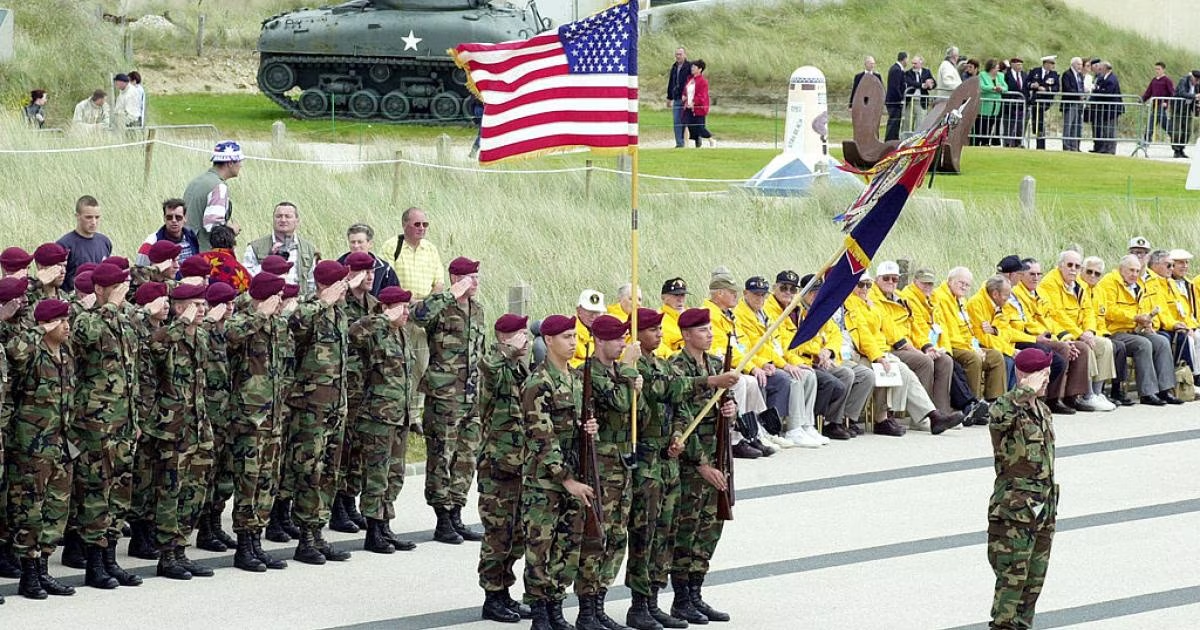
Intense US Military Movements: 82nd Airborne Division Prepares Amidst Escalation Prospects Against Iran

The Middle East region is witnessing a notable US military escalation at a time of extreme political sensitivity, with extensive field movements indicating preparations for potential offensive operations. Informed sources reported that the US Department of Defense is moving to send thousands of soldiers from the 82nd Airborne Division to reinforce combat capabilities in the region, a step that coincides with the faltering diplomatic paths.

These ground reinforcements come just days after the deployment of thousands of Marines and sailors aboard the warship 'Boxer', supported by an expeditionary marine unit and a group of accompanying combat ships. This intensive naval deployment aims to provide logistical and military cover for any ground or air movements that may be decided in the coming days against specific targets.

The 82nd Airborne Division is one of the most prominent elite units in the US Army, playing a pivotal role in rapid intervention strategies and control of vital locations. This force is distinguished by its superior ability to carry out amphibious and airborne landings, making it Washington's preferred tool for imposing field dominance over disputed strategic areas.

The division possesses an advanced military arsenal that includes 'Apache' attack helicopters and 'Black Hawk' transport and combat aircraft, designed to operate at low altitudes to support ground forces. Its equipment also includes heavy 'Howitzer' cannons and short-range 'Stinger' missiles dedicated to dealing with air threats and drones, giving it high combat independence.

Reports from the Pentagon indicated that military plans may include the movement of this division to support the Marines in a potential operation targeting Iran's Kharg Island. These plans include preparing airport runways that may be bombed to secure the landing of forces and full control of the island, with the aim of neutralizing any Iranian threats emanating from it.

In Washington, a state of anticipation prevailed after a secret and closed briefing provided by the Department of Defense to members of Congress about the nature of these military movements. Some lawmakers emerged with statements reflecting concern about the prospects of an imminent armed conflict, especially in light of the clear discrepancy between military reports and the declared political discourse by the US administration.

Representative Nancy Mace expressed her strong opposition to deploying any ground forces in Iran, stressing that the information presented in the secret briefing reinforced her fears regarding military escalation. Mace pointed to a deep gap between the goals the Pentagon seeks to achieve and what is being circulated in the media and political circles affiliated with the White House.

Observers believe that the current military movements come as a tool of maximum pressure, especially after the US President gave the Iranian side a final deadline ending on Friday to reach a political agreement. If this deadline expires without tangible results, the ground military option will be strongly on the decision-making table in Washington as an alternative to faltering diplomacy.

The 82nd Division is permanently stationed at 'Fort Bragg' in North Carolina, and is subject to strict timelines for external deployments. According to military standards, the process of transferring these massive forces and their equipment to the theater of operations in the Middle East takes about one week, meaning that field readiness may be completed coinciding with the end of the political deadline.

The scene remains open to all possibilities, as the pace of military buildups in the Gulf waters and the surrounding region accelerates, amidst warnings that any miscalculation could lead to a comprehensive confrontation. Regional and international powers are cautiously monitoring these movements, awaiting what the coming hours will bring in terms of military and diplomatic developments.

There is a clear gap between the military objectives presented by the Department of Defense to Congress and what the White House and media are promoting about the nature of the current movements.

PALESTINE

Thu 26 Mar 2026 7:10 am - Jerusalem Time

Hamas Attacks Mladenov's Statements, Accusing Him of Ignoring Occupation Violations in Gaza

Hamas spokesman Hazem Qassem criticized the recent statements by the UN Special Coordinator for the Middle East Peace Process, Nickolay Mladenov, describing them as lacking objectivity and ignoring the bitter reality on the ground in the Gaza Strip. Qassem affirmed that talk of a stable ceasefire clashes with the reality of hundreds of Palestinian martyrs and the continued systematic destruction carried out by the occupation army.

The movement's spokesman stressed that any discussion about the future of the Strip must begin by addressing the core of the crisis, which is the decades-long Israeli occupation and its settlement policies that disregard all international laws and resolutions. He clarified that attempting to bypass these facts will not lead to sustainable or just solutions for the Palestinian people.

Regarding the paths of the second phase of the agreement, Qassem indicated that the success of any understandings requires building a positive and real foundation on the ground. This foundation involves obliging the occupation to stop its repeated violations, lift the comprehensive siege on the Gaza Strip, and immediately begin reconstruction operations and withdrawal from the agreed-upon areas.

Nickolay Mladenov had sparked widespread controversy during a session of the UN Security Council when he called on member states to exert maximum pressure on Hamas to surrender its weapons. Mladenov demanded the use of all available means to urge Palestinian factions to accept disarmament without delay, considering it a necessary step to break the cycle of violence.

The UN coordinator claimed that the resistance's abandonment of its weapons would pave the way for the withdrawal of the Israeli army and the launch of a large-scale reconstruction process with international support. He also claimed that this step would open the door for foreign investments, freedom of movement, and the rebuilding of national institutions, considering that every day that passes without achieving this increases the human cost.

On the ground, data indicates that the ceasefire agreement in effect since October 2025 remains extremely fragile in light of daily Israeli violations. Despite the cessation of major combat operations that lasted for two years, intermittent shelling and targeting of civilians have not stopped, threatening the collapse of understandings aimed at ending the war of extermination.

According to the latest Ministry of Health data, 689 Palestinians have been martyred and about 1860 others injured since the agreement came into effect due to Israeli violations. Most of these targeting incidents are concentrated in areas near the security fence and what is known as the buffer zone, where farmers and civilians are subjected to direct fire and localized raids.

The second phase of the plan to end the war faces significant obstacles, as resistance factions reject conditions related to disarmament and the deployment of international forces before a complete and comprehensive withdrawal is achieved. The movement believes that these conditions aim to disarm the Palestinian people of their means of defense in light of ongoing Israeli threats.

It is worth noting that the war of extermination that erupted in October 2023 has caused unprecedented destruction, with more than 72,000 citizens martyred and 171,000 others injured. UN reports estimate that about 90% of Gaza's infrastructure has been completely destroyed, requiring a huge reconstruction budget exceeding 70 billion dollars.

Mladenov's statements ignore the reality of continuous violations and the fall of hundreds of martyrs, and one cannot bypass the core of the problem, which is the occupation and its settlement policies.

PALESTINE

Thu 26 Mar 2026 7:10 am - Jerusalem Time

Israeli Decision to Expand Ground Incursion into Lebanon and Occupy Strategic Sites 8 Kilometers Deep

Field and political indicators in Tel Aviv are escalating towards a serious move to deepen ground military operations in South Lebanon, as part of Israeli efforts aimed at redrawing the security reality on the northern border. Media sources close to the Prime Minister's office reported that the political level has taken an official decision to remove what are described as security threats by imposing broad ground control.

The new Israeli plan involves an incursion up to 8 kilometers deep into Lebanese territory along the border strip, with a focus on occupying specific geographical locations. These movements include full military control over approximately 18 strategic and commanding points, giving Israeli forces the ability to monitor and control operations up to the Litani River.

Informed sources confirmed that this approach, in its objectives and tactics, goes beyond what occurred during ground operations in previous wars, as the Israeli leadership insists on not withdrawing from these new positions. This insistence is linked to achieving a stated goal of disarming Hezbollah in those areas and ensuring that its elements do not return to the front line.

In a meeting with heads of local authorities in border areas, Israeli Prime Minister Benjamin Netanyahu stressed that expanding the buffer zone has become an urgent necessity to reduce the risk of guided missiles. Netanyahu explained that the effective range of anti-tank missiles, which ranges from 7 to 8 kilometers, compels the army to push the threat beyond this distance.

Netanyahu also called on local officials to take measures to prevent further evacuation of border towns, considering that the stability of residents in their homes is part of the current war's objectives. He indicated that the ongoing military operations primarily aim to provide sufficient security to allow the return of displaced persons and end the state of instability in the north.

In parallel with field movements, an Israeli strategy emerges aimed at completely separating the Lebanese front from the broader confrontation with Iran. Through this maneuver, Tel Aviv seeks to ensure the continuation of its military operations in South Lebanon even if understandings or ceasefire agreements are reached on other fronts.

Press sources quoted Israeli officials as saying that the US administration has become aware of this approach based on managing two separate tracks for the war, where the Lebanon file remains open for independent military settlement. This move aims to thwart any attempts to link de-escalation in Lebanon with complex regional issues involving Tehran.

In the same context, the Israeli government is trying to reassure residents of the north who have sharply criticized previous security promises that did not translate into tangible reality on the ground. Mayors demanded the creation of a real buffer zone deep inside Lebanese territory to serve as a barrier preventing any infiltration or direct targeting of settlements and border towns.

On the ground, estimates indicate that Israeli forces have already crossed what is known as the second line of the border in several sectors, with incursions and preliminary shelling continuing. Military reports speak of the possibility of expanding this control to reach a depth of 20 kilometers in some areas, especially in the western and central sectors.

This proposed geographical expansion aims to establish the Litani River as an effective security border, giving the Israeli army sufficient space for maneuver and deterrence. Observers believe that these steps reflect an Israeli desire to impose a new reality by military force before entering into any serious political negotiations about the future of the border.

These developments recall the experience of the buffer zone imposed by Israel in South Lebanon between 1985 and 2000, which ended with a unilateral withdrawal. Despite historical reviews that considered that experience a reason for the growth of resistance, the current leadership seems determined to repeat the option under different circumstances.

Israel, in its current plan, is banking on changes in political and internal data in Lebanon, as well as the military and political support it receives to carry out its operations. However, expectations still indicate that this incursion may lead the region to more complex scenarios amid continued violent confrontations on the ground.

In conclusion, the scene in South Lebanon remains open to all possibilities, with Israel continuing to strengthen its ground presence and occupy new strategic points. Sources confirm that the coming days will be crucial in determining the Israeli army's ability to consolidate its new control points in the face of ongoing field resistance.

Israel intends to expand the buffer zone in the coming period to reduce the risk of anti-tank missiles, which have a range of 8 kilometers.

PALESTINE

Thu 26 Mar 2026 7:09 am - Jerusalem Time

Martyr and wounded in targeting of displaced persons camp in Deir al-Balah and naval shelling hits Mawasi Khan Yunis

Medical and field sources reported the martyrdom of a Palestinian citizen and the injury of several others with varying degrees of wounds, today, Wednesday, following an aerial raid launched by Israeli occupation aircraft on an area sheltering displaced persons in the central Gaza Strip. Civil Defense teams confirmed that the shelling targeted agricultural land and the vicinity of tents in the southern Deir al-Balah area, leading to a state of panic and destruction among displaced families who lack the most basic means of protection.

Local sources stated that the martyr is the young man Abdul Rahman Qanbour, 22 years old, who was killed as a result of a direct targeting of the 'Sit Amira' camp located south of Deir al-Balah city. Al-Aqsa Martyrs Hospital received the body of the martyr in addition to seven other wounded, some of whom were described as having moderate injuries, due to shrapnel scattered by the massive explosion that shook the densely populated tent area.

In a field testimony, one of the displaced women from the northern Strip explained that she was forced to flee her tent after hearing warning shouts, followed by a warning explosion and then a violent raid that led to thick columns of smoke rising. She indicated that shrapnel reached far distances inside the tent gathering, causing injuries among children and women who were present in the vicinity of the targeting.

Concurrently, Israeli warships escalated their attacks at sea, firing their machine guns and shells towards the tents of displaced persons set up on the beach of the Mawasi area west of Khan Yunis. The field hospital in the area announced the arrival of four injured, including three children, one of whom is in critical condition, as a result of this targeting of an area previously classified as 'safe'.

Regarding other field developments, four citizens were martyred in a shelling carried out by an Israeli drone targeting a gathering of civilians near the Al-Sawarah cemetery south of Nuseirat camp. Medical sources also recorded the death of child Khaled Saif al-Din Arada, 13 years old, after his tent in Mawasi Khan Yunis was subjected to direct gunfire by occupation forces, which raises the pace of violations against minors in shelters.

For their part, Palestinian factions considered that this continuous escalation, including daily killings and the tightening of the suffocating siege, represents a clear Israeli desire to undermine any opportunities for reaching a ceasefire agreement. Sources explained that targeting civilians in tents falls within the policy of maximum military pressure practiced by the occupation against the popular base in the Strip.

In an update to the total toll, the Ministry of Health announced that the number of victims of the ongoing aggression since October 7, 2023, has exceeded 72,000 martyrs and more than 171,000 injured. Data indicates that the period following last October 11 alone witnessed the death of 687 martyrs, amid the continuation of aerial raids and artillery shelling that does not spare displacement centers or medical facilities.

The occupation's escalation against the Palestinian people through continued killing and tightening of the siege is a clear confirmation of the decision to sabotage the ceasefire process and peace efforts.

LATEST NEWS

Thu 26 Mar 2026 7:09 am - Jerusalem Time

Araghchi denies negotiating with Washington, White House threatens 'gates of hell'

Iranian Foreign Minister Abbas Araghchi, in official statements, denied the existence of any open negotiation channels with the United States at present. Araghchi considered American claims about ongoing negotiations to be merely an attempt to cover up their failure to impose unconditional surrender on Tehran.

The Iranian minister clarified that his country's supreme leadership is currently reviewing a set of proposals received through international mediators, but he stressed that there is no intention to hold direct meetings. He indicated that Washington continues to send messages through multiple parties in an attempt to break the current stalemate.

Araghchi affirmed that any future solution must be based on a permanent and comprehensive end to the war, with Iran receiving fair compensation for the damages and destruction it has suffered. He added that his country does not seek military escalation but insists on ending the conflict with real guarantees that preserve its rights.

In a message addressed to surrounding capitals, the Iranian Foreign Minister called on neighboring countries to distance themselves from American policies in the region. He believed that the United States has completely failed to achieve its strategic goals, whether through a swift military victory or attempts at regime change.

Meanwhile, international media sources, quoting a senior Iranian official, revealed that Pakistan has indeed delivered an American proposal to Tehran aimed at ending the conflict. The sources explained that discussions are still ongoing regarding the venue for any potential talks, given Iran's undecided final position.

Reports indicate that Turkey is playing a pivotal role in mediation and in searching for diplomatic ways to end the ongoing war. Currently, both Ankara and Islamabad are emerging as potential venues to host any rounds of negotiations that might begin if the parties agree on the initial conditions.

In contrast, the White House escalated its hostile rhetoric towards Tehran, stating that President Donald Trump is prepared to take harsher military action. The US administration affirmed that the armed forces are capable of delivering strikes more powerful than anything seen before if Iran refuses to acknowledge the reality on the ground.

Washington claimed that it has already succeeded in curbing Iran's nuclear capabilities and preventing it from threatening American interests in the region. Vice President J.D. Vance participated in a series of intensive security meetings to discuss available options for dealing with the Iranian file in the coming phase.

The White House warned the Iranian leadership against making 'miscalculations,' emphasizing that President Trump will not hesitate to make decisive decisions. The administration clarified that Iran's rejection of the reality of defeat will necessarily lead to punitive and military measures more severe than ever before.

For her part, White House spokeswoman Karoline Leavitt stated that reports of a 15-point American plan contain 'elements of truth.' She indicated that these points include specific demands that Tehran must implement to ensure a cessation of military operations and the restoration of stability.

Regarding international navigation, Leavitt affirmed that Washington has not set a specific timetable for resuming the movement of oil tankers in the Strait of Hormuz. She concluded by saying that President Trump's threats are very serious, and he is ready to 'open the gates of hell' if Iran continues its current approach.

President Trump does not threaten idly, and he is ready to open the gates of hell, and Iran should not miscalculate again.

PALESTINE

Thu 26 Mar 2026 7:09 am - Jerusalem Time

Guterres warns of 'Gaza model' in Lebanon, Netanyahu announces expansion of buffer zone

The Secretary-General of the United Nations, Antonio Guterres, issued a warning cry to the international community, stressing that the model of destruction witnessed in the Gaza Strip must not be repeated in Lebanese territories. Guterres explained in press statements that the conflict in the Middle East has spiraled out of control, especially with the regional military confrontation entering its fourth week, threatening the stability of the entire region.

The UN official pointed out that civilians are paying the heaviest price for this escalation, as residents live in a state of deep insecurity. Guterres recalled his field observations during his recent visit to Lebanon, describing the humanitarian repercussions as severe and requiring immediate intervention to prevent a slide towards a comprehensive catastrophe.

On the ground, media sources reported that Israeli warplanes carried out two airstrikes targeting the town of Taybeh in southern Lebanon. These raids come in the context of an intensive air campaign launched by the occupation forces on border villages and towns, leading to widespread destruction of property and infrastructure.

In contrast, Hezbollah announced the execution of a series of qualitative military operations against gatherings of occupation forces and their vehicles. The party explained in successive statements that it used suicide drones to target occupation soldiers near the pond of the town of Dibel, achieving direct hits among the infiltrating force.

The resistance in Lebanon also confirmed targeting the vicinity of the Khiam detention center for the fourth consecutive time using intensive rocket barrages. These attacks come in response to continuous Israeli attempts to advance terrestrially and establish military points within Lebanese territories, amidst fierce clashes on more than one front.

On the humanitarian front, the Lebanese Ministry of Health revealed shocking statistics of victims of the ongoing aggression since the beginning of March. The ministry stated that the number of martyrs has risen to 1094 people, while the number of injured has exceeded 3119, with the continuous recovery of victims from under the rubble in the targeted areas.

Politically, Hezbollah's Secretary-General, Naim Qassem, stressed the resistance's position rejecting any negotiations conducted under the pressure of Israeli fire. Qassem considered in an official statement that accepting negotiations under aggression is tantamount to surrender and a deprivation of Lebanon's sovereignty and defensive capabilities, stressing that the utmost priority is to stop the aggression first.

Qassem explained that what is happening is not 'others' war' on Lebanese soil, but a direct confrontation led by the United States and Israel against the Lebanese people. He called for comprehensive national unity aimed at liberating the land and its people, noting that the party has made the necessary preparations for a long-term confrontation and has proven its worth in the field.

For his part, Israeli Prime Minister Benjamin Netanyahu announced that his army is currently working to expand what he described as a 'buffer zone' in southern Lebanon. Netanyahu claimed that the establishment of this zone aims to prevent infiltration operations towards the Galilee and protect northern settlements from the threat of anti-tank missiles.

Netanyahu affirmed that Israel's strategic goal remains the dismantling of Hezbollah's military capabilities, linking this to the broader confrontation his country is waging with Iran. He stressed that his government is determined to bring about a radical change in the security reality on the Lebanese border, whatever the military cost.

In a further escalation, Israeli Security Minister Yisrael Katz threatened to impose full military control over large areas in the south up to the Litani River. These statements reflect an Israeli tendency to expand ground operations and turn southern Lebanon into a closed military zone under occupation control.

This escalation coincided with the occupation army shelling vital bridges over the Litani River, in a clear attempt to separate the southern regions from the rest of Lebanese territories. This military tactic aims to cut supply lines and isolate border villages in preparation for imposing a new field reality that serves the Israeli agenda.

In the Gaza Strip, the bloodshed continues, with 5 Palestinians, including a child, martyred in raids targeting the central and southern parts of the Strip. Medical sources reported the martyrdom of 4 people due to an Israeli drone shelling a gathering of citizens near the Al-Sawarah cemetery in Al-Nuseirat camp, in a new crime added to the series of daily massacres.

The total toll of the aggression on Gaza since October 2023 has reached catastrophic figures, with the Ministry of Health recording 72,263 martyrs and over 171,000 injured. These developments come at a time when occupation forces continue to target displaced persons' tents in Al-Mawasi, leading to the martyrdom of child Khaled Arada by sniper fire.

The Gaza model must not be replicated in Lebanon, and civilians across the region are suffering severe damage and living in deep insecurity.

ARAB AND WORLD

Thu 26 Mar 2026 7:09 am - Jerusalem Time

Six Arab States Demand Iraq Halt Attacks from Its Territory, Affirm Right to Self-Defense

Six Arab states, including Qatar, Kuwait, Saudi Arabia, Bahrain, the UAE, and Jordan, issued a joint final statement today, Wednesday, in which they reiterated their explicit condemnation of what they described as blatant Iranian aggressions. The condemnation included military movements and attacks launched by armed factions loyal to Tehran against facilities and countries in the region, directly threatening regional stability.

The signatory states of the statement directed an official call to the Iraqi government, emphasizing the necessity of assuming its responsibilities and taking the necessary security and political measures to stop attacks originating from its territory. The statement stressed the importance of preventing the use of Iraqi geography as a launching pad for any hostile operations targeting neighboring countries, within the framework of preserving fraternal relations and avoiding the region sliding into further military escalation.

In a related context, the six states affirmed in their statement their full and inherent right to defend their security, sovereignty, and citizens against any external threats. They clarified that attacks carried out by armed groups linked to Iran originating from Iraq necessitate a firm response to protect national interests and civilian targets that have been repeatedly targeted during the past period.

Field reports indicate that eight Arab countries, including Oman and Iraq itself, have been directly affected by attacks attributed to Iran or its proxies in the region. Despite Tehran's claims that these operations exclusively target American interests in response to ongoing tensions, the reality indicates civilian casualties and severe damage to infrastructure in several Arab capitals and cities.

This collective diplomatic move comes at a time when the region is witnessing escalating security tensions, with Iraqi armed factions claiming responsibility for targeting vital bases and facilities. The joint Arab statement seeks to put an end to these violations through political pressure on Baghdad to control its borders, and to affirm to the international community the seriousness of the continuation of these cross-border attacks.

The six states affirm their full and inherent right to self-defense against attacks carried out by armed groups loyal to Iran originating from Iraq.

ISRAELI AFFAIRS

Thu 26 Mar 2026 7:09 am - Jerusalem Time

Israeli Knesset rejects proposal to classify Qatar as an 'enemy state'

The Israeli Knesset, on Wednesday, voted against a bill proposed by opposition leader Yair Lapid aimed at including Qatar on the list of 'enemy states' to Israel. The vote resulted in 45 members rejecting the proposal versus only 28 supporting it, reflecting a state of divergence within Israeli political circles regarding Qatar's role in the region.

The session saw a notable boycott by the 'Blue and White' party led by Benny Gantz, with the party justifying its stance by stating that the current time, coinciding with war conditions, is not suitable for raising contentious political issues. Media sources indicated that this position contributed to weakening the front of supporters for the law, through which Lapid sought to intensify pressure on Doha.

Following the failure of the vote, Yair Lapid launched a sharp attack on the government, considering that there is no logical justification for not classifying Qatar as an enemy state, especially since it hosts Hamas leaders. Lapid claimed in his statements that anyone who provides assistance to those he described as 'enemies' should be treated as a direct enemy, accusing the ruling coalition of failing to take a firm stance.

The opposition leader directly accused Jonathan Urich, a senior aide to Prime Minister Benjamin Netanyahu, of being behind the failure to pass the law. Lapid claimed that Urich received huge sums of money from Qatari entities, pointing out that the presence of employees in the Prime Minister's office receiving money from external parties is unacceptable and warrants investigation.

These accusations are linked to what is known as the 'Qatargate scandal' within Israel, where Urich and former Ministry of Security spokesman Eli Feldstein faced accusations of receiving bribes. According to investigations, the accused worked with American lobbying groups to spread narratives aimed at distorting the Egyptian mediation role, in exchange for promoting the Qatari narrative in the prisoner exchange and ceasefire file.

For its part, Doha continues to deny these allegations entirely, with Qatari Prime Minister Sheikh Mohammed bin Abdulrahman Al Thani affirming on previous occasions that these accusations are nothing but political 'propaganda'. Qatar stressed that its role as an international mediator aims to achieve stability, away from the political squabbles that some Israeli parties are trying to export.

It is worth noting that relations witnessed dangerous field tension in September 2025, when occupation forces targeted headquarters in Doha, leading to the martyrdom of a Qatari security officer and five Palestinians. Despite these tensions, Qatari efforts, in cooperation with Egypt and the United States, succeeded in reaching an agreement earlier this year that led to a halt in the genocide war launched by the occupation on the Gaza Strip.

I have no logical explanation for not classifying Qatar as an enemy state of Israel, for anyone who helps our enemies is our enemy.

PALESTINE

Thu 26 Mar 2026 7:09 am - Jerusalem Time

Sanchez attacks Washington and the occupation: War on Iran 'absurd' and Lebanon faces Gaza's fate

Spanish Prime Minister Pedro Sanchez launched a scathing attack on the military policies pursued by the United States and the occupying state in the region, describing the ongoing aggression against Iran as an 'unjust and illegal' act. Sanchez affirmed in a speech before the Spanish Congress that these moves undermined the foundations of international law and reignited conflicts in Iraq and Lebanon in a way that threatens international peace and security.

The Spanish leader accused the head of the occupying government, Benjamin Netanyahu, of systematically seeking to inflict widespread destruction on Lebanon, similar to the genocide and destruction suffered by the Gaza Strip. These warnings came after statements by Israeli ministers revealing clear intentions to fully control southern Lebanon, reflecting a desire to expand the geographical scope of the conflict.

Sanchez warned that the current scenario in the Middle East carries risks 'much worse' than the repercussions of the 2003 invasion of Iraq, indicating that the impacts would be deeper and more comprehensive globally. He explained that the failure that accompanied the American invasion of Iraq is being repeated today, as civilians in Europe and the world are paying the price for these reckless military decisions.

On the economic front, the Spanish Prime Minister revealed that companies in his country incurred huge losses estimated at about 100 billion euros (116 billion dollars) within less than a month of the outbreak of the conflict. He stressed that the continuation of attacks on Iran would lead to unprecedented global inflation, as every increase in oil prices is linked to a direct rise in inflation rates that burden families.

Economic reports indicate that Iran, which produces about 3.2 million barrels of oil per day, represents a key pillar in the global energy market, and any disruption to its supplies will lead to a jump in prices. Experts expect barrel prices to range between 120 and 200 dollars if the Strait of Hormuz, through which a fifth of global oil trade and a quarter of liquefied gas trade passes, is closed.

In a move reflecting diplomatic tension, Sanchez announced his categorical rejection of Washington's request to use Spanish military bases to launch attacks against Iranian targets. The Spanish Prime Minister did not succumb to US President Donald Trump's threats to cut trade relations, affirming his country's commitment to an ethical and legal stance that rejects involvement in illegal wars.

Coinciding with these positions, the Spanish government approved an emergency aid package worth 5 billion euros to support the local economy and alleviate the burden of rising fuel prices on citizens. This step comes amid growing European opposition to the war, with German President Frank-Walter Steinmeier describing the conflict as a 'catastrophic political mistake' that could have been avoided through diplomacy.

The US administration faces increasing internal pressure, as opinion polls showed a decline in Donald Trump's popularity to 36%, while 61% of Americans oppose the military strikes that began last February. This decline reflects a state of public concern about the economic and political consequences of engaging in an open regional conflict with no end in sight.

On the humanitarian level, the Food and Agriculture Organization (FAO) warned that the ongoing conflict threatens a global hunger catastrophe that could affect 700 million people due to the disruption of supply chains. Concerns are growing about Iran's ability to close the Strait of Hormuz using its arsenal of coastal missiles, which could cut off Qatari gas supplies exceeding 77 million tons annually.

Sanchez concluded his speech by emphasizing that 'every bomb that falls in the Middle East hits our families' wallets,' referring to the close link between political stability in the region and global economic well-being. He stressed the need to return to the negotiating table and respect the sovereignty of states to prevent the world from sliding into an uncontrollable economic and humanitarian crisis.

Every bomb that falls in the Middle East hits our families' wallets and destabilizes the entire world.

PALESTINE

Thu 26 Mar 2026 7:08 am - Jerusalem Time

Historic Donation to Gaza.. Swedish Billionaire Grants UNICEF $85 Million to Support Education and Relief

The international humanitarian scene witnessed a significant shift with the announcement by UNICEF Sweden that it had received exceptional financial support earmarked for the Gaza Strip, totaling approximately $120 million. This move comes amid increasing European interest in the deteriorating humanitarian situation in the Strip, with governmental and private entities contributing to this historic support that strengthens the resilience of international relief organizations.

Prominently featured in this support is the generous donation from the foundation of Swedish billionaire Roger Akelius, valued at $85 million (800 million kronor), which is the largest individual donation UNICEF Sweden has received since its establishment. According to press sources, this amount will be primarily allocated to restoring the collapsed educational process in the Strip and providing a safe environment for children who have lost their schools due to the ongoing war.

For his part, Roger Akelius expressed his deep distress at the scenes coming from Gaza, emphasizing that the suffering of children there exceeds what the media conveys or what press reports describe. Akelius clarified in his statements that he is aware of the extent of criticism he might face because of this stance, but he stressed the necessity of human resilience in the face of what he described as 'genocide' and blatant violations against childhood.

Swedish support was not limited to private initiatives, as the Swedish government announced an additional $40 million for UNICEF, along with a contribution of $2 million from the Swedish Postcode Lottery. With these figures, Sweden ranks second globally as the largest donor to the Gaza Strip in the current phase, coming directly after the United Arab Emirates, which topped the lists of humanitarian support.

In a related context, Sweden's Minister for International Development Cooperation, Benjamin Dousa, revealed the allocation of additional funds for other UN programs operating in the Palestinian field, including 100 million kronor for the World Food Programme. Dousa indicated that the goal of announcing this aid early is to encourage other European donors to act, fearing that other international conflicts might marginalize the tragedy of Gaza's children.

Jonathan Veitch, UNICEF's Special Representative in the State of Palestine, welcomed this support, describing it as 'exceptional,' emphasizing that it will serve as a fundamental pillar in attempts to restore hope for Palestinian children. Veitch explained that the allocated amounts will effectively contribute to resuming educational activities and providing psychological and social support to thousands of children suffering from the severe traumas of war.

Sweden's government aid distribution plan includes allocating significant amounts to support healthcare, especially neonatal care in hospitals suffering from a severe shortage of resources. Multi-service educational centers will also be funded to provide recreational activities and psychological support, in an attempt to compensate children for what they missed during months of forced disconnection from normal life.

Regarding shelter and food security, the United Nations Development Programme will benefit from Swedish funding to relocate about a thousand Palestinian families to temporary emergency housing to improve their living conditions. The World Food Programme will also work to enhance the provision of school meals and fresh food, with a focus on supporting local production to ensure the sustainability of food supplies under the imposed blockade.

These massive financial movements come within Sweden's aid budget for 2026, reflecting an internal struggle in Swedish politics between international humanitarian orientations and local policies. Despite Akelius's criticisms of the government on other issues, he considered providing these funds to Gaza a 'strong stance' that expresses an awareness of the scale of the humanitarian catastrophe facing the residents of the Strip.

Even an orphaned Palestinian child is a normal child, sleepless, with crying, longing, and stomach aches... The situation in Gaza is much worse than what is seen on television.

OPINIONS

Wed 25 Mar 2026 5:26 pm - Jerusalem Time

"Enemy of the Sun": Palestinian Memory Between Pain and Hope

Book Review

By: Said Arikat - Washington

March 25, 2026

“Enemy of the Sun: Palestinian Resistance Poetry,” by academics Naseer Aruri and Edmund Ghareeb, is one of the most prominent works at the intersection of literature and politics, presenting poetry not merely as an aesthetic expression, but as a living tool of resistance, a means of preserving identity, and a platform for expressing the continuous aspiration for freedom. Since its first publication in 1970, and its expansion in subsequent editions, this work has established its place as a comprehensive anthology of multiple Palestinian poetic voices, united by the experience of occupation and exile, and bound by a steadfast insistence on dignity and the right to self-determination.

The book's title derives its symbolic meaning from the poem “Enemy of the Sun,” also known as “Speech in the Unemployment Market,” by the great Palestinian poet Samih al-Qasim, which is considered one of the most prominent texts of resistance poetry in the 1970s. This poem has become a literary and political icon, with its tone of defiance and absolute rejection of compromise, and a deep embodiment of the idea of steadfastness in the face of occupation. It is enough to recall al-Qasim's words: “O enemy of the sun… but… I will not compromise / And until the last pulse in my veins… I will resist,” to realize how the book's title intersects with its general spirit, where poetry becomes an existential declaration of adherence to land and identity.

The book does not present Palestinian suffering as a state of attrition or defeat, but rather rephrases it within a resistant cultural horizon, transforming pain into an expressive energy capable of endurance. Poetry here is not a linguistic luxury, but an act of survival, and a means of confronting attempts at symbolic and cultural erasure. Through this perspective, the anthology transcends the boundaries of documentation, becoming a living testimony to the power of the word to resist annihilation.

The importance of the work is evident in its historical scope, as it places the Palestinian experience within a broader global context of liberation movements, of which the 1970s was one of the most prominent stages. From this perspective, Palestinian poetry does not appear isolated, but rather engaged in a universal human discourse calling for justice and freedom. Furthermore, the additions in subsequent editions reflect the continuity of this voice across generations, where new generations inherit the traditions of resistance, and rephrase them to suit the transformations of reality, without losing their connection to their roots.

At the content level, resistance occupies the heart of most texts, yet it does not appear in a single form, but varies between quiet contemplation and direct expression. There are poems that internalize and deconstruct pain, and others that declare it clearly and boldly. In both cases, the human presence remains dominant, where the individual's experience intersects with the fate of the group, in a cohesive emotional unity.

The vocabulary of land, identity, memory, and return emerge as essential semantic keys in this poetry, but they are not used as mere indicators of loss, but rather transform into expressions of belonging and continuity. The land, for example, is not just a place, but a symbolic entity that transcends geography, becoming synonymous with existence itself. Hence, its evocation in poetic texts becomes an act of resistance in itself, confronting attempts at cancellation and uprooting.

One of the striking features of this anthology is its focus on the collective voice, where the editors reduce the presence of individuality in favor of highlighting a shared experience. This choice does not negate the specificity of each poet, as much as it emphasizes that what unites these voices is greater than what divides them. Resistance, in this context, is not an isolated personal experience, but a collective act extending through time, inherited by poets as it is inherited by generations.

Stylistically, the poems are characterized by a degree of clarity and directness, which makes them accessible to a wide audience, without losing their artistic value. This characteristic suggests an urgent sense of the necessity of speaking, and the desire for poetry to remain accessible and influential at the same time. At the same time, the texts are not devoid of rhetorical figures and metaphors that reflect a deep aesthetic sense, where artistic expression intersects with the political dimension in a striking harmony.

Recent additions have enriched this work, reflecting the transformations of Palestinian reality, while maintaining a close connection to the pivotal issues that formed the essence of this poetry. These texts confirm that resistance poetry is not a static discourse, but a living entity capable of renewal and absorbing new experiences, without compromising its fundamental vision.

Although the intensity of the political and emotional dimension may pose a challenge to some readers, it is at the same time a source of strength for this work, as it encourages an interactive reading that goes beyond superficial reception, towards a deeper understanding of both historical and human contexts. From this perspective, the book becomes a bridge for communication, opening a wider horizon for empathy and understanding.

In conclusion, “Enemy of the Sun: Palestinian Resistance Poetry” presents a living example of poetry's ability to transcend the boundaries of language, becoming an act of survival. It reminds us that the word, no matter how difficult the circumstances, remains capable of preserving identity, keeping hope alive, and formulating a collective vision for freedom. Thus, poetry transforms from a mere record of suffering into an active force in confronting it, and from a memory of pain into an open horizon of hope.

PALESTINE

Wed 25 Mar 2026 4:52 pm - Jerusalem Time

Merops System: Washington's New Strategy to Break Iranian Drone Superiority at Low Cost

The US Army has announced a strategic move to enhance its defensive capabilities in the Middle East, by deploying 10,000 advanced 'Merops' system drones. This move aims to counter the increasing threat of drones and change the balance of power in the ongoing conflict by adopting lower-cost technological solutions.

Through this system, the United States seeks to reduce its excessive reliance on traditional air defense systems such as 'Patriot' and 'THAAD'. This need arises due to the enormous cost disparity, where a Patriot missile costs approximately $4 million, while being used to counter drones worth only a few thousand dollars.

The 'Merops' system is known as a drone killer, specifically designed to be both highly efficient and low-cost. The system consists of the 'Surveyor' interceptor drone, a fixed-wing aircraft characterized by its small size and high maneuverability in complex airspace.

The interceptor drone reaches a speed of approximately 282 km/h and is equipped with a flexible launch platform that can be mounted on small pickup trucks. This design gives US forces superior capability for rapid deployment and movement across various terrains to pursue hostile aerial targets.

The 'Merops' technology primarily relies on artificial intelligence software and advanced thermal and radar sensors. The drone independently tracks its target, either by directly colliding with it or detonating a small warhead near it to ensure its complete neutralization.

One of the most prominent features of this system is its ability to reduce financial waste. If the drone fails to hit its target, it can deploy a special parachute and land safely. This feature allows technical teams to reuse the drone after inspection, enhancing the sustainability of defensive operations.

The system can independently search for targets by tracking the thermal signature or radar waves of hostile drones. When the 'Surveyor' approaches the target within one mile, the artificial intelligence completely locks onto the target to ensure accuracy of impact and prevent evasion.

Behind this military innovation is Eric Schmidt, the former CEO of Google, who funds the project through his 'Project Eagle' initiative. This initiative aims to develop smart weapons capable of operating in intense electronic jamming environments without the need for satellite communication.

The 'Merops' system has demonstrated remarkable field effectiveness during its use in Ukraine, with reports indicating its success in destroying over 1,900 'Shahed' drones. The recorded interception success rate reached approximately 95%, making it a preferred option for countering Iranian military technology.

Financial cost is the trump card of this system, as the interceptor drone currently costs only about $15,000. This cost is expected to decrease with the start of mass production to between $3,000 and $5,000, making defense cheaper than offense for the first time.

Military sources reported that Iran has launched more than 2,100 'Shahed' drones since the escalation began, at a total cost not exceeding $105 million. In contrast, traditional interception operations would have cost the US treasury and partners approximately $8 billion if 'THAAD' and Patriot missiles had been used.

This vast difference in costs creates a burdensome economic equation for the Iranian side, where every failed targeting attempt becomes a financial burden on the attacker instead of the defender. 'Merops' represents a decisive technological response to the 'wars of attrition' strategy adopted by regional powers through cheap drones.

In a related context, Ukrainian President Volodymyr Zelensky revealed widespread international interest in Ukrainian expertise in countering drones. Zelensky affirmed that his country has received 11 official requests from countries in the Middle East and Europe, in addition to the United States, to transfer field knowledge in this area.

It appears that the Middle East will be the main arena for testing this new technology in confronting Iranian influence. With the deployment of these thousands of interceptor drones, the region enters a new phase of technological conflict based on artificial intelligence and innovative economic solutions.

The Merops system seeks to transform the drone interception equation from expensive financial attrition to low-cost defense that is economically superior to offense.

PALESTINE

Wed 25 Mar 2026 4:51 pm - Jerusalem Time

Bloody Day in Jerusalem: Martyr in Jabal Al-Mukaber and Displacement of 13 Families in Silwan for the Benefit of Settlers

The Jerusalem Governorate announced, at dawn on Wednesday, the death of 21-year-old Qassem Amjad Shuqairat, who was shot by Israeli occupation forces in the town of Jabal Al-Mukaber, south of the occupied city. Shuqairat's martyrdom occurred during a raid carried out by special units to attempt to arrest him, where he was directly shot, resulting in fatal injuries from which he later died.

While the occupation police claimed that the young man tried to disarm one of the 'Border Police Unit' members, the martyr's family completely denied this narrative. The family confirmed that the occupation soldiers shot their son in cold blood inside his home and in front of his family, in a clear field execution operation lacking any security justification.

Coinciding with Shuqairat's martyrdom, occupation forces launched an arrest campaign in the town of Jabal Al-Mukaber, targeting three other young men on suspicion of involvement in hostile activities. The detainees were transferred to Israeli intelligence interrogation centers, amidst a state of extreme tension that prevailed in the town after the news of the martyrdom spread.

In a dangerous escalation of settlement activities, large forces of the occupation army stormed the Batn al-Hawa neighborhood in Silwan, south of Al-Aqsa Mosque, to carry out extensive forced eviction operations. The operation targeted 13 residential apartments inhabited by dozens of Jerusalemites, to hand them over to settlement associations that claim ownership of the land in that area.

The eviction operations included 11 apartments belonging to the Rajabi family and two apartments belonging to the Basbous family, leading to the displacement of about 65 individuals, including children, women, and the elderly, who are now homeless in the open. Occupation forces used police dogs and excessive force to remove residents from their homes, amidst the screams of children and protests from residents who tried to resist the unjust decision.

After taking control of the residential buildings, dozens of settlers ascended the roofs of the evacuated homes and began organizing noisy celebrations that included provocative dancing and singing. This step comes as a continuation of the plan of settlement associations, such as 'Ateret Cohanim,' which seeks to gain full control over the Batn al-Hawa neighborhood with false historical claims rejected by residents with Ottoman property documents.

Regarding night raids, occupation forces stormed the town of Kafr Aqab, north of Jerusalem, and arrested a young man, and also pressured the released prisoner Mahmoud Abu Sbeih to surrender himself by detaining his father as a hostage. This systematic policy reflects the extent of pressure exerted by the occupation authorities on Jerusalemite families to break their will and push them to leave.

In northeast Jerusalem, violent confrontations erupted in the villages of Biddu and Beit Ijza after occupation vehicles stormed the two areas, firing tear gas canisters and live bullets. These confrontations resulted in the injury of young Muhammad Rayyan, while occupation forces continued search and sabotage operations in citizens' properties before withdrawing.

In the town of Anata, occupation forces targeted commercial establishments, forcing the owner of a restaurant named 'October 8' to immediately close his shop and change its name under threat of arms. Raids also targeted citizens' homes in the town, as part of a wide intimidation campaign aimed at obliterating any national or symbolic manifestations in the area.

National symbols were not spared from aggression, as occupation soldiers destroyed and demolished the 'Shafat Camp Martyrs' Monument' after provocatively photographing themselves at the site. These simultaneous attacks confirm the escalating pace of Israeli targeting of the city of Jerusalem and its neighborhoods, in an attempt to change the demographic and geographic reality of the holy city.

The neighborhood is going through an unprecedented storm, and forced displacement threatens about 250 Palestinians in Batn al-Hawa.

PALESTINE

Wed 25 Mar 2026 4:51 pm - Jerusalem Time

Earthquake in Energy Markets: War on Iran Threatens to Close Strait of Hormuz and Historic Leap in Oil Prices

The war waged by the American-Israeli coalition against Iran has entered its fourth week, leaving an unprecedented state of panic in global energy markets. The repercussions of this escalation extend beyond the direct military dimension to strike at the heart of the global economic system, given Iran's weight as a major oil producer and its geopolitical position controlling the Strait of Hormuz, the most important artery for international trade.

Field data indicate that Iran pumps about 3.2 million barrels per day and actually exports 1.5 million barrels despite the blockade, while the region as a whole remains responsible for one-third of global supplies. With ongoing military operations, the Strait of Hormuz, through which 20% of the world's oil and 25% of liquefied natural gas passes, is under threat of effective closure, which could lead to an economic catastrophe.

Economic sources reported that oil prices have already seen sharp jumps of over 15% within a few days of the aggression's start. International expert houses are outlining grim scenarios indicating that any partial disruption of supplies could push prices to range between $120 and $150 per barrel, while the price could break the $200 barrier in the event of a full-scale confrontation that completely halts navigation.

On the political front, recent opinion polls showed a sharp decline in US President Donald Trump's popularity to 36%, his lowest level since returning to the White House. Analysts attribute this decline to widespread public rejection of the war, with 61% of Americans opposing military strikes, in addition to dissatisfaction with the insane rise in domestic fuel prices.

Domestically in the US, gasoline prices approached $4 per gallon, prompting the administration to take exceptional measures including suspending some taxes to ease the burden on families. Reports confirm that only 25% of voters support the current administration's handling of living costs, amid accusations against Trump and Netanyahu of being drawn into an ill-considered war.

For his part, former intelligence general Uri Halperin warned that the war began with insufficient planning and reliance on the adversary's capabilities. Halperin explained that Iran is pursuing an 'asymmetric warfare' strategy aimed at prolonging the conflict and exhausting the attackers, emphasizing Tehran's ability to paralyze navigation in the Gulf through its arsenal of advanced coastal missiles.

The crisis is not limited to oil but extends to the liquefied natural gas sector, as Qatar relies primarily on the Strait of Hormuz to export over 77 million tons annually. Any targeting of gas facilities or obstruction of passage would bring back memories of the European energy crisis, with expectations of record increases that could exceed 300% in global gas prices.

In a desperate attempt to contain the price explosion, Washington resorted to a dual policy of partially easing pressure on the flow of Iranian oil heading to Asian markets, especially China. This implicit step aims to maintain market balance and prevent the collapse of major economies, despite ongoing military operations and declared political pressures against Tehran.

Globally, the Food and Agriculture Organization (FAO) warned that the conflict threatens to plunge 700 million people into hunger. This warning is linked to the expected rise in transportation and fertilizer costs, as every $10 increase in the price of a barrel of oil directly leads to a 0.3 percentage point increase in global inflation rates.

Energy-importing countries, such as Egypt and Turkey, have begun to feel the danger through harsh austerity measures; in Cairo, policies emerged to rationalize electricity consumption and reduce public lighting. Every one-dollar increase in oil prices costs the Egyptian budget hundreds of millions of dollars, placing immense pressure on foreign exchange reserves and citizens' purchasing power.

As for Turkey, which imports more than 90% of its energy needs, it found itself facing an annual bill exceeding $90 billion. The Turkish government resorted to tax cuts on fuel to try to curb inflation related to transportation costs, but the continuation of the war threatens to collapse these fragile financial balances and widen the trade deficit.

In Europe, which relies 90% on imported oil, energy rationing policies have returned to the forefront with electricity bills rising by 50%. European leaders fear a repeat of previous crisis scenarios that led to economic recession and social unrest, especially with the absence of immediate alternatives to supplies coming from the Gulf region.

Military experts believe that controlling the situation requires complex ground operations to deprive Iran of its economic leverage, which seems far-fetched under current circumstances. The Iranian strategy of 'preventing the adversary from winning' remains the biggest obstacle to the ambitions of the American-Israeli coalition to change the regime or control energy resources.

In conclusion, the world faces a zero-sum equation where geopolitics intertwines with energy security in a highly complex scene. Military escalation in the Gulf not only threatens political systems but also extends its impact to every factory and home in the world, making the cessation of aggression a global economic necessity before the international economy slides into a comprehensive recession whose end cannot be predicted.

Iran is capable of closing the strategic Strait of Hormuz via advanced coastal missiles, even if its naval fleet is completely destroyed, putting global energy supplies at risk.

LATEST NEWS

Wed 25 Mar 2026 4:51 pm - Jerusalem Time

The 200-Word Language: Is Trump Addressing the World with a Child's Vocabulary?

A unique linguistic phenomenon stands out in the public speeches of former US President Donald Trump, where he radically deviates from traditional, sober political language. Trump relies on a very limited vocabulary and constant repetition of certain phrases in his communication with the public, within rhetorical rhythms characterized by speed and high spontaneity.

Academic analyses from the Paris Institute of Political Studies indicate that this style is not merely spontaneous, but a specific communication pattern. This pattern relies on extreme simplification and recycling of words in different contexts, with an emphasis on tone of voice and facial expressions to convey the desired messages.

According to a study conducted by researcher Frédérique Sandretto, Trump uses only about 200 words in most of his public speeches. This finding was based on 'logometria' techniques, which perform a precise quantitative analysis of the vocabulary used in contemporary political discourse.

This low number reflects a high level of linguistic simplification, which experts believe is equivalent to the linguistic comprehension level of an 18-month-old child. This extreme simplification aims to make the political message quickly consumable without requiring significant mental effort from the recipient.

When comparing this performance with other American presidents, a wide gap in linguistic richness and expressive variety emerges. While Trump settles for this limited dictionary, President Joe Biden uses between 1200 and 2000 words in his speeches, which represents ten times Trump's linguistic output.

The comparison becomes sharper when recalling Barack Obama's style, who was known for his high eloquence and ability to adapt complex language. These differences place Trump's discourse in a completely separate category from the rhetorical traditions that characterized the White House for many decades, where the average citizen's vocabulary ranges between 5000 and 10000 words.

Analysts believe that this apparent linguistic deficiency may be a carefully considered communication strategy to target broad electoral bases. Using direct and simple language is easily understood by all social groups, away from the complexities of the political elites in Washington.

This pattern is classified as 'populist discourse,' which relies on dividing the world into sharp and clear binaries such as 'good guys' and 'bad guys.' In this context, Trump uses harsh descriptions of his political opponents, such as Hillary Clinton and Joe Biden, to solidify these divisions in the minds of his supporters.

Interpretations of the nature of this style vary, with debate oscillating between it being a clever tactic for mass influence or an indicator of cognitive limitations. Some hypotheses also link this decline in vocabulary diversity to possibilities related to cognitive decline associated with aging.

On social media platforms, the public is divided on the effectiveness of this style; while some see it as one of the secrets of his success in reaching people, others consider it a lack of political maturity. Ultimately, Trump's style remains a clear departure from traditional rules, relying on repetition as a primary tool for dominating public discourse.

The range of vocabulary used in Trump's speeches is equivalent to the linguistic comprehension level of a child around 18 months old, reflecting extreme and excessive simplification.

PALESTINE

Wed 25 Mar 2026 4:51 pm - Jerusalem Time

Two dead and injuries in occupation raids in the central sector, and the number of victims of violations rises

Medical and field sources reported the martyrdom of two Palestinians and the injury of four others, including children, as a result of targeting carried out by Israeli occupation forces on Wednesday in various areas in the central and southern Gaza Strip. The sources stated that an occupation drone targeted a group of citizens near the Al-Sawarah cemetery in Nuseirat camp, leading to the martyrdom of two who were immediately transferred to Al-Awda Hospital for necessary procedures.

In a related context, the Palestinian Ministry of Health in Gaza announced a new update on casualty statistics, confirming that the past twenty-four hours witnessed an escalation in Israeli violations of the existing ceasefire agreement. The ministry stated in an official statement that the number of martyrs who fell as a result of these violations since October has risen to 689 martyrs, in addition to the injury of about 1860 people with various injuries.

Official data also revealed the total toll of victims of the genocide war waged by the occupation, reaching 77,265 martyrs, while the number of injured exceeded 171,959. These figures come amid ongoing field attacks that undermine de-escalation efforts and increase the suffering of the besieged population who face extremely harsh humanitarian and health conditions as a result of direct targeting of civilians.

It is worth noting that the current ceasefire agreement came after two years of intensive military operations that received widespread American support and resulted in the destruction of nearly 90% of the infrastructure and civilian facilities in the sector. According to United Nations estimates, the enormous scale of destruction requires tremendous international efforts for reconstruction, with an initial financial cost estimated at about 70 billion dollars, amid a complete disruption of basic services and public life.

The toll of victims of Israeli violations of the agreement has risen to 689 martyrs and 1860 injured since last October.

PALESTINE

Wed 25 Mar 2026 4:51 pm - Jerusalem Time

The Future of Gulf Alliances Amidst Regional Escalation: A Reading of Confrontation Outcomes

International concerns are escalating regarding the current aggression turning into an unprecedented global energy crisis, especially with the possibilities of regional conflict remaining open to all scenarios. Observers believe that targeting Iranian energy facilities could be met with reactions affecting vital interests in Gulf countries, thereby achieving strategic goals for some parties seeking to change the map of the Middle East.

Attention is drawn to the necessity of confining the confrontation to external powers and avoiding targeting facilities that directly or indirectly affect the lives of Gulf peoples. Foiling plans aimed at tearing the region apart requires awareness of the need to preserve the social ties of the nation, away from the volatile political tensions between regimes.

A real danger emerges in the attempt to isolate Iran from its geographical surroundings and portray it as a permanent enemy of the Arab peoples, a path that has begun to resonate in some circles. Analysts warn against being drawn into claims of targeting civilian objectives, pointing to previous incidents where regional parties were blamed for deepening popular division.

Maintaining positive popular trends among the components of the region is a top priority, as changing people's convictions requires many years of hard work. Hence, the importance of not sliding into historical animosity between neighbors emerges, especially since the sole beneficiary is the colonial powers that feed on ethnic and sectarian conflicts.

Historically, most former colonial areas have turned into continuous hotbeds of tension, as is the case in the Indian subcontinent, Southeast Asia, and Africa. In our region, the presence of occupation is the main driver of unrest, as it always seeks to stir up sectarian and doctrinal strife to dismantle the cultural fabric that connects the peoples of the region.

The Middle East possesses enormous wealth and strategic trade routes capable of decisively influencing the global economy and international communication networks. This geopolitical weight has made the region a target for continuous dismantling operations under national or sectarian pretexts, which facilitates control over its resources and independent political decision.

Amidst the ongoing aggression, there is an urgent need to review the economic cost of war and avoid targeting the strategic facilities of neighboring countries. Although some reports indicate limited human losses in regional operations, the loss of any human life leaves a deep impact on the popular psyche and turns into general discontent.

On the diplomatic front, official Gulf statements reflect a state of increasing tension, as Saudi sources confirmed that restoring trust with Tehran is linked to stopping aggressions. Officials in the Kingdom believe that building a strategic partnership requires abandoning ideas of regional hegemony and the use of force in resolving disputes.

For its part, the language of official statements in some Gulf countries has begun to take a sharper turn through the use of political descriptions that reflect alignment with the international vision of some powers. The absence of these descriptions when talking about crimes committed in the Gaza Strip is noted, indicating political connotations that go beyond the nature of field attacks.

The diplomatic arena witnessed escalatory steps including the expulsion of ambassadors and the withdrawal of missions, which could deepen internal division in countries like Lebanon. Expectations are increasing that other Arab countries will join these measures, which could turn political disagreement into full official and popular animosity that will be difficult to remedy in the near future.

Analysts recall lessons from history, specifically the period before the invasion of Kuwait in 1990, when international powers gave misleading signals that led to changing the face of the region. The spread of foreign military bases was a direct result of those mistakes, which calls for caution against repeating scenarios that place Arab decision-making in foreign hands.

Today, the countries of the region face two choices; either relying on external protection, which experience has proven aims to protect the interests and expansion of the occupation, or building a common security system. The occupation does not hide its expansionist ambitions targeting vast Arab territories, which represents the real existential threat that must be addressed.

Prominent political figures, including high-ranking Qatari sources, have called for a reassessment of the feasibility of American protection and the resulting depletion of sovereign wealth. Investing in self-strength and enhancing internal military and political capabilities is the only guarantee for achieving independent national decision-making away from international blackmail.

The current stage represents a historic opportunity to establish strong Gulf and Arab alliances based on common economic and security integration. Directing funds spent as the price of external protection towards internal development and enhancing popular welfare will strengthen governance stability and increase people's satisfaction with their leaders' directions.

The basis of the external axis's victory lies in deepening Iran's isolation from its surroundings and describing it as an entity hostile to the Arab peoples.

PALESTINE

Wed 25 Mar 2026 4:50 pm - Jerusalem Time

Volkswagen Returns to Military Industries Through the Israeli 'Iron Dome' Gateway

The giant German car company 'Volkswagen' is moving towards reclaiming its historical role as a manufacturer of military equipment, through an anticipated strategic partnership with the Israeli defense industries company 'Rafael'. This step aims to involve German factories in the production of vital components for the air defense system known as the 'Iron Dome', a shift that raises many questions about industrial ethics and the repetition of historical scenarios.

Leaked plans indicate that the cooperation will include the manufacturing of heavy trucks designed to carry missiles, in addition to launch platforms and power generators needed to operate the batteries. This trend comes at a time when the company is facing severe economic pressures, which has prompted management to seek profitable alternatives in the defense sector to compensate for losses recorded in the civilian car market.

Observers believe that this decision represents a return of the company to its 'first biography' in the manufacture of war engines, as Volkswagen's name was historically associated with the Nazi army during World War II. While it was previously accused of supporting the 'Wehrmacht' in crimes of genocide, today it finds itself facing criticism for supporting a military system belonging to a state facing international accusations of committing genocide in Gaza.

Economic motivation appears to be the primary driver of this transformation, as the German automotive industry is suffering from a sharp decline in profits due to fierce competition from Chinese companies and the global shift towards electric cars. Accordingly, the company seeks to enter the military industries sector, which is experiencing increasing demand, considering it a lifeline to maintain the continuity of its factories and protect jobs.

Returning to its historical roots, Volkswagen was founded in 1937 by direct order from Adolf Hitler to produce the inexpensive 'people's car', but it quickly transformed into a military arsenal with the outbreak of war in 1939. During that era, the company produced the famous military 'Jeep' vehicles and 'V-1' missiles that targeted the British capital London, relying on the famous 'Beetle' engine technologies.

The company's historical record is also burdened with the issue of 'forced labor', as documents indicate that thousands of prisoners of war and detainees in Nazi camps were forced to work on its production lines. These forced laborers constituted about 60% of the company's workforce at the time, which later prompted it in 1998 to acknowledge these violations and pay huge financial compensation to the victims.

According to international press reports, the timeline for the start of this military transformation may range from 12 to 18 months, provided that the company's labor unions approve. This transition requires the rehabilitation of production lines and the training of human resources to deal with weapons technology instead of the mechanical components of traditional cars.

Volkswagen's involvement in the production of the 'Iron Dome' once again places it under the scrutiny of human rights organizations and political forces that oppose the export of weapons to the Israeli occupation. These pressures are exacerbated by the company's historical symbolism, which is trying to wash away its Nazi past by engaging in contemporary conflicts that provoke widespread controversy in international circles.

In conclusion, the question remains about the company's ability to balance its financial needs and its stated ethical obligations, especially since the shift towards military manufacturing may change the brand's identity forever. If the company proceeds on this path, it will confirm that the language of economic interests ultimately outweighs the lessons learned from history.

The German company plans to work on producing components for the Iron Dome air defense system, including heavy trucks and launch platforms.

PALESTINE

Wed 25 Mar 2026 1:21 pm - Jerusalem Time

Occupation Violations Undermine Gaza Ceasefire: 2000 Breaches and Use of 'Local Militias' in Assassinations

The ceasefire agreement in the Gaza Strip is facing a rapid collapse on the ground, having been reduced to a mere symbolic title emptied of its content by Israeli shells. Field data confirms that air raids and artillery shelling have not ceased, causing civilians to pay the highest price under a declared calm that finds no resonance on the ground.

Medical and governmental sources reported that the number of Israeli violations since the agreement came into effect on January 19, 2026, has exceeded 2000. These continuous aggressions have resulted in the martyrdom of approximately 690 Palestinians and the injury of hundreds, most of whom are women and children, placing the dilapidated health system under immense pressure that doctors are unable to cope with.

Violations take multiple forms, ranging from direct targeting of residential areas to pursuing police officers and civilian cars on the roads. Residents describe the situation as a continuous war under different names, where not a day passes without recording killings and targeting operations, coinciding with the closure of crossings which has caused a severe shortage of food supplies and an insane rise in prices.

For his part, Tayseer Muhaysen, advisor to the Government Media Office, revealed that the occupation is deliberately moving what is known as the 'Yellow Line' towards populated areas to reduce the remaining safe spaces. He explained that these movements are accompanied by the occupation deploying local collaborators tasked with carrying out precise assassinations within cities, in an attempt to destabilize internal security and deny any actual calm.

Field reports indicate that these collaborating groups act as an alternative tool for Israeli special units, such as the 'Mista'arvim,' which find it difficult to move in areas under resistance control. These elements undertake tasks ranging from intelligence gathering to creating security chaos, further complicating the maintenance of security in the Strip.

The role of these militias was not limited to the military aspect but extended to include sensitive administrative and organizational roles under the direct supervision of the occupation army. Sources indicate that these elements participate in managing the Rafah crossing and control the classification of lists of Palestinians entering and exiting, making them a 'shadow government' aimed at weakening the existing local authority.

These groups' movements are concentrated in the 'Yellow Areas,' which are the most security-sensitive, where they move freely to carry out preemptive strikes against specific targets. This intensive security presence of collaborators has forced resistance factions to change their field priorities and increased the difficulty of securing the internal front amid continuous aerial bombardment.

In light of this grim scene, international and local bodies warn of the catastrophic repercussions of the continuation of these violations on the already deteriorating humanitarian situation. With continued displacement and living in tents, Palestinians believe that the war has not actually ended, as long as the Israeli killing machine continues to claim lives under the guise of a fragile calm that protects no one.

There is no ceasefire... The car is moving and is being shelled, and those inside and around it are killed. Where is the calm?

ISRAELI AFFAIRS

Wed 25 Mar 2026 1:21 pm - Jerusalem Time

Israeli General Warns of Long War of Attrition with Iran, Admits Initial Planning Failure

General Uri Halperin, who spent more than three decades in the corridors of the Israeli security establishment, confirmed that the military confrontation between Tel Aviv and Washington against Iran has entered a critical phase, having exceeded its fourth week. Halperin explained that this war fundamentally differs from previous combat rounds the Israeli army was accustomed to, characterized by increasing field and political complexity.

Halperin, who previously served as the military attaché to NATO, indicated that military operations were launched based on intelligence assessments and planning that were not up to the required standard. He considered that underestimating Iran's capabilities and methods of operation led to the necessity for military planners in Washington and Tel Aviv to review the basic war objectives and their feasibility on the ground.

The Israeli general stressed that Iran has proven its seriousness in seeking to acquire nuclear weapons by raising uranium enrichment levels to 60%. He believed that this shift was not merely a threat of a race towards the bomb, but an actual intention to arm itself with it, placing the region before a new and highly dangerous security reality if the regime there acquires these capabilities.

In his reading of the internal Iranian scene, Halperin mentioned that the Revolutionary Guard's control over decision-making centers pushes towards an open war of attrition with no time limits. He added that this trend reflects the magnitude of the existential threat posed by the regime if coupled with nuclear capability, making planning to confront it require clear objectives that go beyond mere fleeting airstrikes.

Halperin warned of Tehran's ability to close the strategic Strait of Hormuz, emphasizing that this scenario should not surprise military circles in the Pentagon or Tel Aviv. He explained that Iran possesses the most advanced coastal missile systems in the world, positioned in rugged geographical areas that make it difficult to neutralize them completely through aerial bombardment alone.

The former general suggested that controlling shipping lanes and depriving Iran of its economic influence might require extensive ground operations to control areas dominating the Gulf. He considered that the focus on ground forces at this stage reflects how far the course of battles has deviated from the original plans laid out before the outbreak of the confrontation.

According to the analysis published by Halperin, targeting energy facilities in countries neighboring Iran is a reasonable scenario in Tehran's calculations and not an extreme step. He affirmed that planners should have taken into account the necessity of stocking huge quantities of interceptor missiles to counter a long-term war of attrition that the entire region might be drawn into.

Halperin explained that the comprehensive Iranian strategy relies on the principle of asymmetric warfare, which does not necessarily aim to militarily defeat the opponent as much as it aims to prevent them from achieving victory. Through this approach, Tehran seeks to make the conflict costly and unpredictable, ensuring the regime's survival and its freedom in strategic maneuvering away from international pressures.

The general touched upon the role of the previous US administration, indicating that Trump's moves, encouraged by Netanyahu, ostensibly aimed to address the nuclear file. However, Halperin believes that the hidden objectives were to attempt to change the Iranian regime and seize energy reserves to control global oil prices and their flows towards China.

Halperin considered that the gap between declared and hidden objectives is often the main reason behind the failure of major military campaigns, citing the US experiences in Vietnam, Afghanistan, and Iraq. He stressed that attempting to achieve multiple and disparate objectives simultaneously disperses resources and prevents reaching decisive results in confronting the adversary.

Regarding future scenarios, Halperin predicted that US Marine forces would resort to targeted landing operations to control strategic islands such as 'Kharg' Island. This move aims to cripple the Iranian regime's ability to exert economic pressure on the West, which might force Tehran to seek a ceasefire agreement.

The general believes that Washington and Tel Aviv's success in crippling the leadership in Tehran's ability to drag the region into a war of attrition is key to ending the campaign in a reasonable time. He added that weakening the influence of the Revolutionary Guard, as the main driver of the decision-making process, might open the door for internal changes led by the Iranian people as a result of deteriorating conditions.

Halperin concluded that the field reality compels military and political leadership to acknowledge the gap between aspirations and the results achieved so far. He stressed that continuing the war without a clear strategy to deal with Iranian missile and ground capabilities will lead to a long-term attrition that ultimately serves Tehran's interests.

In conclusion, Halperin affirmed that the current confrontation is one of the most important wars in recent decades due to its repercussions on global power balances. He stressed that the lessons learned from the first four weeks necessitate a shift towards militarily achievable goals instead of drifting behind political dreams that may not resonate on the battlefronts.

The current war with Iran and Hezbollah is not a short round as we are accustomed to, but a conflict of a different kind that began with insufficient planning and a clear underestimation of the opponent's capabilities.

ARAB AND WORLD

Wed 25 Mar 2026 1:21 pm - Jerusalem Time

Trump's Popularity Plummets Amid Growing Anger Over Iran War and Fuel Crisis

US President Donald Trump's popularity has sharply declined in recent days, reaching its lowest levels since his re-election and return to the White House. Informed sources, based on a recent opinion poll, reported that this drop is driven by growing public discontent with the current administration's foreign and economic policies.

The results of the four-day poll, which concluded early this week, showed that approval for Trump's performance in office settled at just 36%. This figure represents a significant decrease compared to the 40% recorded in last week's poll, indicating a gradual erosion of the president's support base.

Analysts attribute this decline primarily to the skyrocketing fuel prices that have recently hit American markets. The energy crisis began to worsen since the United States, in cooperation with Israel, launched coordinated military strikes targeting sites in Iran on February 28th.

The pressures were not limited to gasoline prices but extended to the cost of living in general, an issue that was a cornerstone of Trump's election campaign. Only 25% of poll participants expressed satisfaction with how the White House is managing inflation and the financial burdens of living.

Although Trump's standing remains relatively strong within the Republican Party, signs of unease have begun to clearly emerge among his supporters. The percentage of Republicans who disapprove of his handling of living costs has risen to 34%, compared to about 27% earlier this month.

The current war with Iran represents a fundamental turning point in the presidency's trajectory, especially since Trump came to power with explicit promises to end foreign military interventions. Engagement in a new armed conflict appears to have shaken the confidence of a segment of voters who had hoped to avoid what the president previously described as 'stupid wars'.

According to statistical data, 61% of Americans now oppose military strikes against Iran, a significant increase from last week. In contrast, the percentage of supporters of these military operations has fallen to 35%, reflecting a widening gap in public rejection of the escalatory policy in the Middle East.

Regarding the congressional midterm elections scheduled for next November, the picture remains complex for both major parties. Despite the president's declining popularity, 38% of registered voters still believe that Republicans are better equipped to manage the economy than Democrats.

This poll was conducted online with the participation of over 1,200 American citizens from various states and political affiliations. Experts confirm that the three-percentage-point margin of error strongly indicates the accuracy of the results, which reflect a general mood of concern about the economic and security future.

The biggest challenge facing the Trump administration is how to balance its military ambitions in the region with domestic stability threatened by rising prices. If energy costs continue to climb, Republican allies may face significant difficulties in maintaining their parliamentary majority in the upcoming elections.

The war in Iran changes the situation for a president who took office promising to avoid stupid wars.