ANALYSIS

Wed 25 Mar 2026 1:21 pm - Jerusalem Time

Washington's "Points" Under Scrutiny: A Legacy of Deception Undermines Any Negotiating Horizon with Tehran

Washington – Said Arikat – 25/3/2026

News Analysis

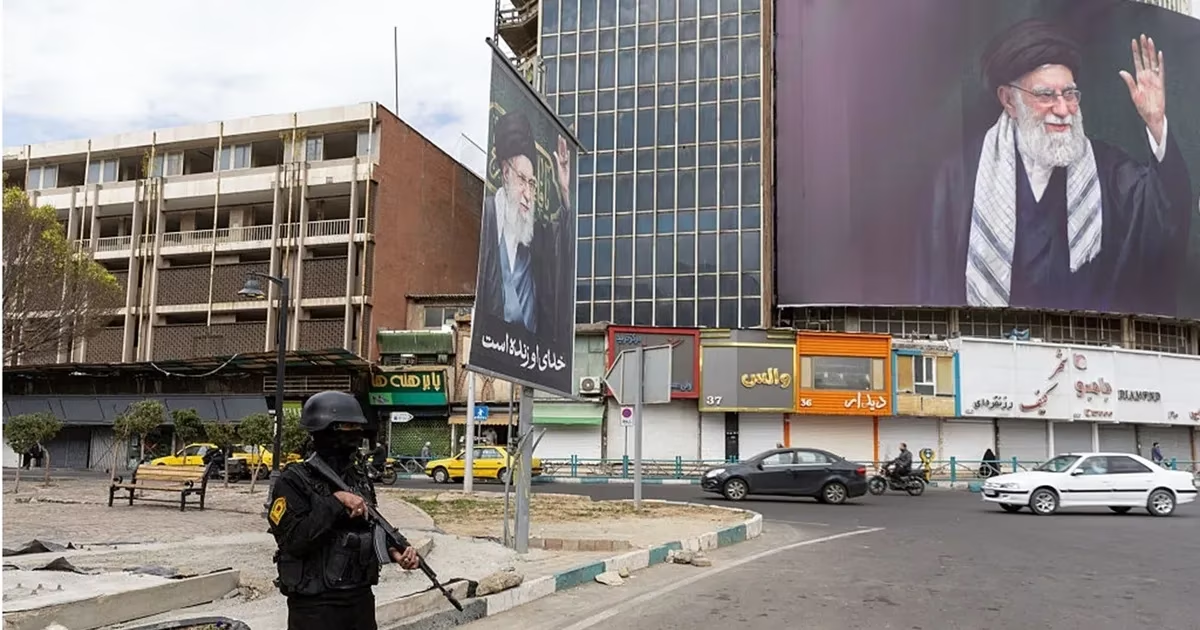
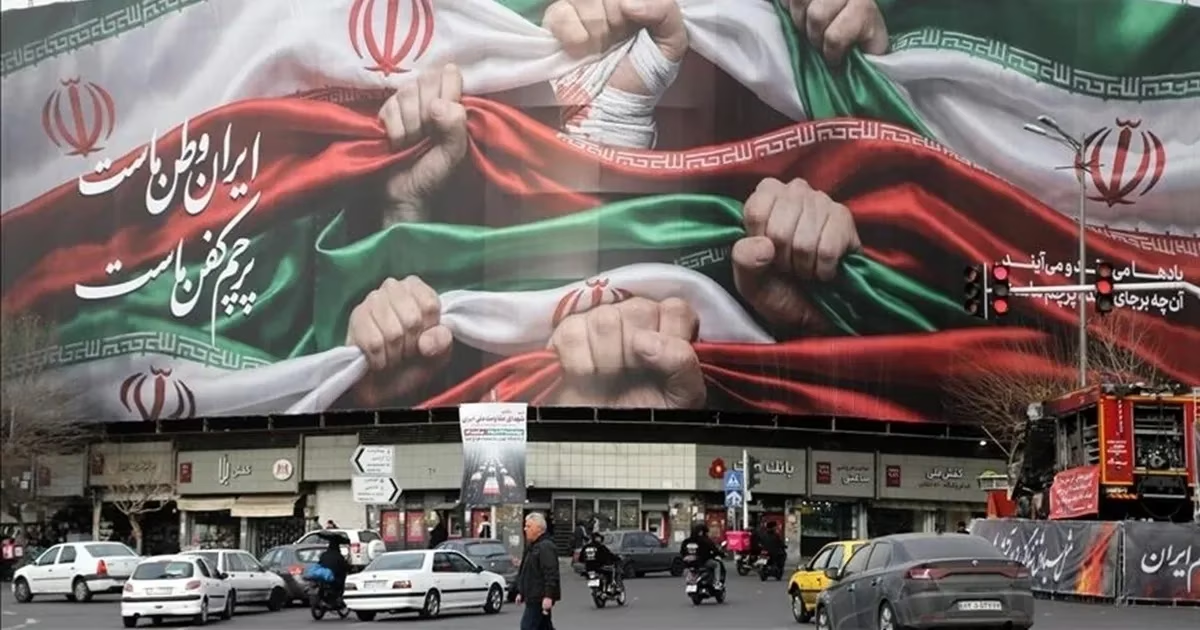
Recent Iranian statements regarding American calls to resume negotiations reflect an unprecedented level of distrust, based on what Tehran considers a repeated record of "deception" in American behavior. The assertion by Iranian officials that they were "deceived twice" by US President Donald Trump is not presented as a casual accusation, but as the culmination of an experience in which Tehran believes Washington used negotiation as a cover for military actions and unilateral pressures.

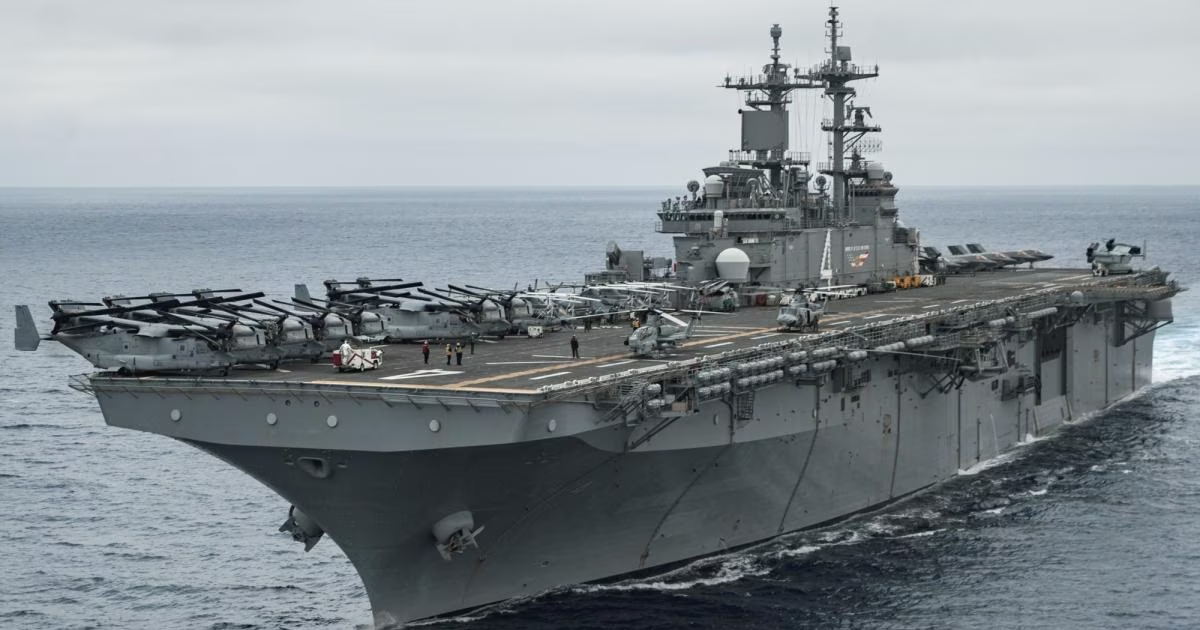
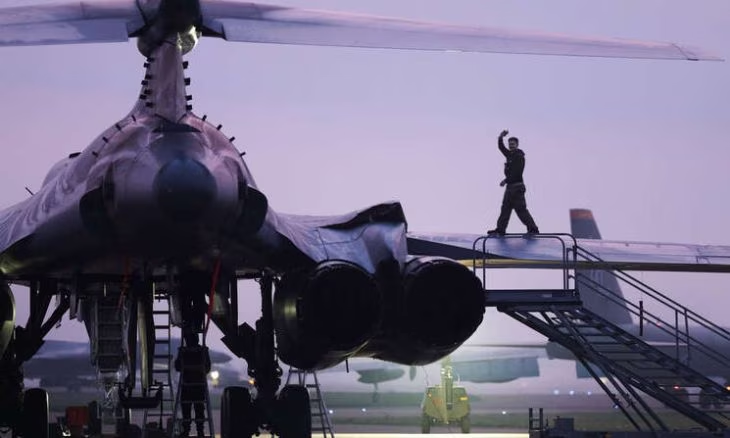
In this context, the American call for direct talks, despite its apparent diplomatic nature, is surrounded by deep skepticism, especially as it coincides with military reinforcements and field movements. Iran has informed regional mediators, including Pakistan, Egypt, and Turkey, that this timing reinforces the hypothesis that negotiation may again be used as a tool of deception, rather than as a serious path to conflict resolution.

This Iranian approach is based on a pivotal experience, namely the American withdrawal from the nuclear agreement in 2018, a step that is still considered in Tehran as stark evidence of the fragility of American commitments. From an Iranian perspective, it was not limited to violating an international agreement, but also included the re-imposition of harsh sanctions under the slogan of "maximum pressure," which solidified the conviction that Washington does not hesitate to use agreements as temporary tools, subject to reversal when political calculations change.

This legacy makes it difficult for Tehran to treat any new initiative as a genuine opportunity, as American behavior is viewed as based on systematic duplicity: diplomatic rhetoric on the one hand, and escalatory measures on the other. In this context, current military movements are not read merely as a means of negotiating pressure, but as an extension of a previous pattern that Iran considers closer to "strategic deception" than to traditional diplomacy.

In contrast, the US administration continues to promote the concept of "negotiating from a position of strength," where military buildup is seen as a tool to impose better terms at the negotiating table. A statement by one of Trump's advisors that the President "extends a hand for an agreement, while the other hand is a fist ready to strike" clearly reflects this approach. However, this approach, which falls under coercive diplomacy, appears in the Iranian case to be a double-edged sword, as it deepens suspicions rather than reducing them.

Indeed, this method, from a critical perspective, not only weakens the chances of understanding but undermines the very basis of the negotiation process. When negotiation is seen as a tool of pressure or a tactical trick, it loses its meaning as a path based on mutual trust and stable commitments. In the Iranian case, it seems that this perception has become so entrenched that any American initiative is subject to interpretation as a new attempt to reproduce the same method.

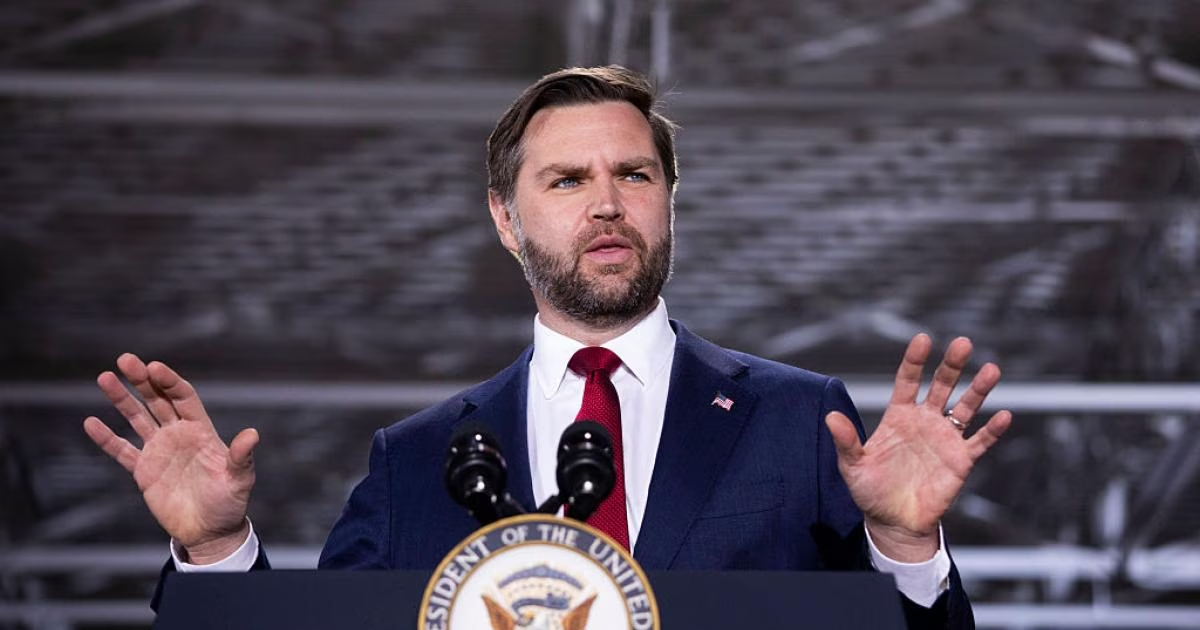
Despite attempts at de-escalation, including the possibility of Vice President J.D. Vance's participation, these steps are still insufficient to dispel doubts. Reports of continued military preparations and Secretary of Defense Pete Hegseth's directives to continue pressure reinforce the impression that Washington has not changed the essence of its approach, but is re-presenting it in a different form.

These developments coincide with the continuation of military operations since late February, alongside the presentation of a 15-point American plan that includes sensitive issues such as Iran's nuclear program and ballistic missiles, in addition to vital maritime corridors, especially the Strait of Hormuz. However, this initiative, instead of being seen as a gesture of breakthrough, is met with extreme caution in Tehran, amid a conviction that the American "points" may be merely a fragile negotiating framework, subject to change or withdrawal at the first political test.

In conclusion, the current crisis does not appear to be merely a dispute over agreement terms or security arrangements, but an expression of a deep-rooted crisis of trust. For Iran, the problem is no longer in the content of American proposals as much as it is in the credibility of the party presenting them. With this perception persisting, any negotiating path will remain threatened with collapse, unless Washington shows a real shift in its behavior, going beyond what Tehran considers a long record of maneuvering and deception.
ARAB AND WORLD

Wed 25 Mar 2026 12:29 pm - Jerusalem Time

20 Iraqi soldiers killed and wounded in an airstrike targeting a medical site in Anbar

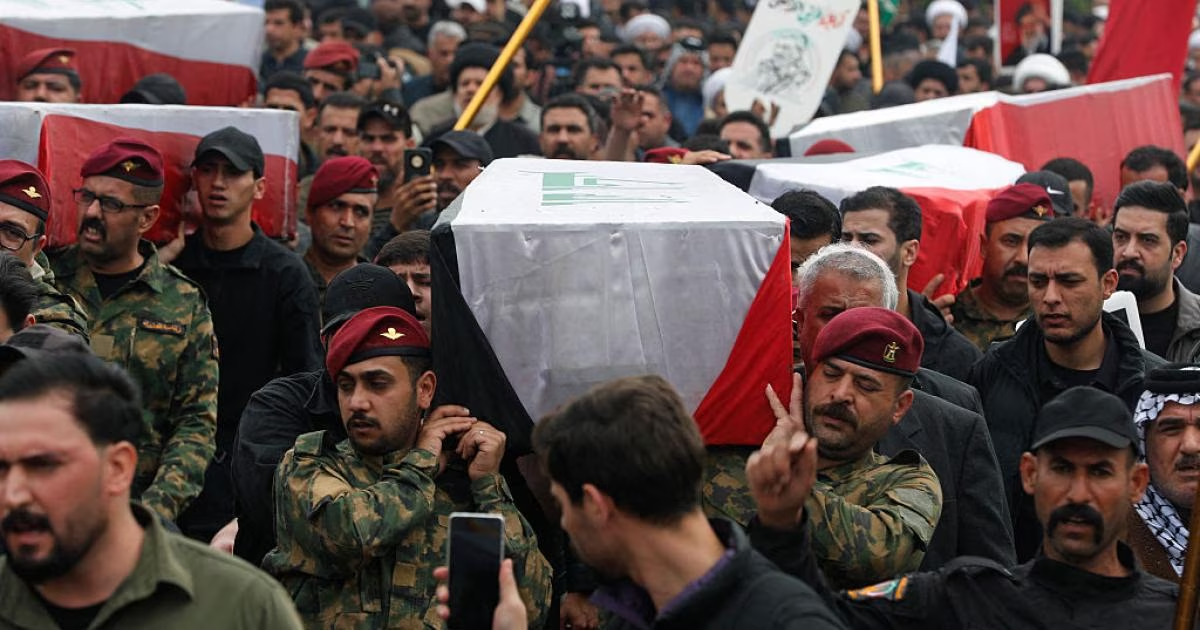
The Iraqi Ministry of Defense announced today, Wednesday, an aerial attack targeting military and medical facilities in the Anbar province, located in the west of the country. The raid resulted in the death of seven armed forces personnel and the injury of thirteen others with varying degrees of wounds, while rescue teams continue search and sweep operations at the incident site.

In an official statement, the ministry confirmed that the bombing hit the Habbaniyah military clinic and an administrative site belonging to it, considering this act a dangerous escalation that crosses all red lines. The authorities stressed that targeting medical facilities is a violation of international conventions that protect health workers and humanitarian facilities in conflict zones.

For its part, security sources reported that the attacking aircraft targeted a vital headquarters inside Al-Habbaniyah Air Base, located east of Ramadi city. The targeted site includes joint units from the Iraqi army and the Popular Mobilization Forces, which led to severe human and material losses among the two parties present there.

According to sources, civil defense teams rushed to the scene of the explosions to control the widespread fires that erupted as a result of the concentrated aerial bombardment. The military hospital inside the base suffered significant structural damage, which hampered the provision of first aid to the injured in the first moments of the attack.

Iraqi airspace is witnessing a state of severe tension, with intense military aircraft activity observed over Anbar province, and the sound of sonic booms heard over the capital Baghdad. This attack comes just two days after Al-Habbaniyah Air Base was subjected to similar raids, indicating a continuous wave of escalation in the region.

In the context of official responses, the spokesperson for the Commander-in-Chief of the Armed Forces affirmed that all security formations, including the Popular Mobilization Forces, are authorized to respond to any external aggression. He clarified that the principle of self-defense has become the primary driver for upcoming military movements to ensure the protection of national sovereignty and armed forces headquarters.

It is worth noting that the Ministerial Council for National Security, headed by Prime Minister Mohammed Shia' Al-Sudani, had issued a decision granting security forces broad powers to respond to attacks. These developments follow previous strikes that led to the killing of prominent Popular Mobilization Forces leaders, placing Iraq at the heart of regional and international tensions.

This targeting is a blatant and dangerous violation of all international laws and norms that prohibit targeting medical facilities and their staff.

PALESTINE

Wed 25 Mar 2026 12:29 pm - Jerusalem Time

Two dead and wounded in Gaza.. Israeli violations affect Nuseirat and Khan Yunis, and international pressure to disarm

The early hours of Wednesday morning witnessed a new field escalation in the Gaza Strip, as two Palestinian citizens were martyred by Israeli army fire in the Nuseirat refugee camp in the central Strip. Medical sources at Al-Awda Hospital reported the arrival of the bodies of the two martyrs after they were directly targeted in the vicinity of the Al-Sawarah cemetery area, amid continued military operations despite existing understandings.

In the city of Khan Yunis, south of the Strip, Israeli forces launched an attack targeting tents sheltering displaced people in the western part of the city, resulting in injuries among civilians. The assault resulted in the injury of four citizens, including three children, who were rushed to nearby hospitals for treatment amid a state of panic among displaced families.

Medical reports from the field indicated that the health condition of the injured varied, with one child's injuries described as serious, while two girls suffered moderate injuries. A man also sustained various injuries from shrapnel, raising the death toll amid continued repeated violations of the ceasefire agreement that came into effect last October.

Field data indicates that the recent targeting occurred in areas outside the direct military control of the occupation army, which still dominates large areas of the Strip. These developments come at a time when residents are suffering from a severe blockade and a sharp deterioration in humanitarian conditions as a result of the massive destruction that has affected infrastructure and vital facilities.

On the political and diplomatic front, Nikolay Mladenov, coordinator of the Peace Council of the US administration, called on member states of the UN Security Council to take firm stances towards Palestinian factions. Mladenov demanded effective pressure on Hamas to force it to surrender its weapons, considering this step necessary to achieve stability in the region.

The Bulgarian diplomat stressed in his briefing the need to use all available tools to push the factions towards accepting disarmament without any further delay. These calls come amid political complexities surrounding the negotiation process and efforts to end the ongoing conflict since October 2023, which has left tens of thousands of victims.

On the other hand, British Foreign Secretary Yvette Cooper expressed London's grave concern about the possibility of the conflict expanding in the Middle East region. Cooper warned during a session in the British Parliament that regional escalation could marginalize the proposed peace plan for the Gaza Strip and divert attention from fundamental issues related to a political solution.

The British minister also expressed her deep concern about the escalating violence in the West Bank, especially the attacks carried out by settlers against Palestinian citizens. She affirmed that these developments constitute a major obstacle to diplomatic efforts, pointing to the need to protect the political path from collapse under the weight of continuous military operations.

We urge Security Council members to use all available means to push Palestinian factions to accept disarmament without delay.

PALESTINE

Wed 25 Mar 2026 12:29 pm - Jerusalem Time

5 Dead in Gaza and Continuous Truce Violations Raise Death Toll

Israeli occupation forces committed new aggressions in the Gaza Strip, resulting in the martyrdom of 5 Palestinian citizens, including a child, in various areas in the central and southern parts of the Strip. These attacks come amidst the occupation's continued violations of the ceasefire agreement that came into effect on October 11th, escalating the rising field tension.

Field sources reported that an occupation drone targeted a gathering of citizens near the Al-Sawarah cemetery, south of the Nuseirat camp, leading to the martyrdom of 4 and injuring others with varying degrees of wounds. In another development in Khan Yunis, the martyrdom of 13-year-old child Khaled Saif El-Din Arada was announced, succumbing to his injuries from Israeli army gunfire that targeted him inside his tent in the densely populated Al-Mawasi area.

In a related context, occupation vehicles and soldiers continued to target civilians in the Sheikh Nasser neighborhood, east of Khan Yunis, where a citizen was shot with live ammunition while in the area. Official statistics indicate that the number of martyrs since the actual start of the truce has exceeded 687, while the number of injured has surpassed 1800, amidst catastrophic health and humanitarian conditions experienced by the residents of the Strip.

On the Lebanese front, occupation forces escalated their military operations, with 33 people martyred and 90 others injured in the past twenty-four hours, raising the total toll since early March to 1072 martyrs. The raids included targeting a residential apartment in the Sahel Alma area in the Keserwan district for the first time, in addition to a series of violent raids that struck the city of Tyre and gas stations in Nabatieh and Kafrtibnit.

For its part, Hezbollah responded by carrying out 34 rocket and drone attacks targeting barracks and gatherings of the occupation army, with fierce ground confrontations erupting in the Al-Qawzah area during an Israeli infiltration attempt. These developments come at a time when the total toll of the aggression on Gaza since October 7, 2023, has reached over 72,000 martyrs and more than 171,000 injured, in one of the largest humanitarian disasters in modern history.

The number of martyrs since the actual start of the truce has reached approximately 687 martyrs and over 1800 injured due to continuous violations.

OPINIONS

Wed 25 Mar 2026 12:29 pm - Jerusalem Time

Released Prisoners: Do They Hold the Key to Saving the Palestinian Political Entity?

The Palestinian National Authority (PNA) was not created, neither in the consciousness of its founders nor in the hearts of its people, as an administrative body to manage the details of daily life; rather, it was conceived as a political lever for the national liberation project, a crossing point from the geography of refuge to the horizon of a state. The idea was for this authority to be a solid nucleus for an independent political entity, whose features were shaped by the blood of martyrs, the steadfastness of prisoners, and the pain of the wounded who redefined national meaning on their bodies. However, this vision gradually eroded, almost turning into its opposite.

The Illusion of Statehood and the Squandering of Power Elements Under the burden of relying on a sterile negotiation path, the Authority treated agreements as fate, not choice, excessively committing while gradually losing its tools of power. The Authority ceased to be a pressing political actor; instead, it transformed – due to international and regional pressures – into a service structure that alleviates the occupation's burdens, rather than increasing its costs. This transformation not only weakened its negotiating position but also deepened the trust gap between it and the street, and eroded the core of the national project.

From Potential Partner to “Greater Enemy” In contrast, the occupation did not reward this functional slippage; instead, it escalated its aggression. Far-right figures like Smotrich and Ben Gvir no longer see the Authority as a weak partner, but as a “greater enemy” that must be dismantled. The incitement discourse that links it to scenarios of an upcoming security explosion and another October 7th, which will be undermined by security apparatus commandos, is merely a political prelude to overthrowing the Palestinian entity and replacing it with fragile structures: local administrations or tribal frameworks stripped of their national dimension. This plan has already begun to be officially implemented, with significant successes for settler gangs in this regard, and there are a number of decisions taken by the Israeli government to implement it, including the decision taken today to grant tax exemptions to settlements. Here, the danger becomes existential: either a silent, gradual disintegration, or a confrontation that forces self-redefinition.

The Solid Nucleus: The Last Chance for Salvation Despite this bleak picture, the window for salvation remains open—but it is narrowing. Its key lies not in reproducing the same elites, but in forming a new “historical bloc,” or what can be called the “solid nucleus,” based on the convergence of three streams:

* Released prisoners: with the legitimacy of their struggle and credibility deeply rooted in the people's consciousness. * Palestinian youth: as untamed energy, capable of breaking patterns of helplessness and innovating tools of confrontation. * Civil society: with its institutional expertise and ability to formulate modern programs that move beyond slogans to policies.

This is not a theoretical call, but an objective condition for rebuilding national action on more solid foundations.

Fatah Conference: The Test of the Last Chance The upcoming pivotal moment is embodied in the Fatah movement's conference, which could turn into a turning point—or another station for reproducing the crisis. Its success depends on its ability to produce a leadership that combines the experience of the past with the pulse of the field, a leadership that restores dignity to the competencies that were marginalized, and integrates them with a new generation of actors, with released prisoners at their heart.

The pivotal role of leaders inside prisons, foremost among them Marwan Barghouti, cannot be overlooked, as he is a unifying figure with the ability to re-unite the national mood, bridge the gaps between the street and its institutions, and redefine the Authority and the Organization as instruments of struggle, not merely functional frameworks.

Conclusion: The Moment of Decision In existential moments, neutrality is not a stance, but a disguised withdrawal. The response to Israeli right-wing incitement is not by relying on external forces, but by repositioning internally: by uniting with the street, and building a national salvation program led by a solid nucleus that possesses both legitimacy and capability.

History does not wait for the hesitant, and entities that do not redefine themselves are reshaped by their adversaries. Between annihilation and renewal, the "secret key" remains in the hands of those who paid the price for freedom—if they succeed in transforming sacrifices into a project.

ISRAELI AFFAIRS

Wed 25 Mar 2026 12:28 pm - Jerusalem Time

British analyst: Netanyahu's policies are leading Israel towards 'strategic catastrophe' and erosion of American support

British analyst Gideon Rachman, in an article published by the 'Financial Times', considered that the military orientations of the occupation prime minister Benjamin Netanyahu are putting Israel's long-term security at risk. He pointed out that the decision to wage war on Iran, despite enjoying widespread support within Israeli society, exceeding 80%, lacks the required popularity in the United States, creating a dangerous strategic gap.

Rachman explained that Netanyahu has invested decades of his political life in portraying Tehran as an existential threat, considering the recent raids as the fulfillment of an ambition he pursued for forty years. However, the analyst believes that these wars have not brought the desired security, but rather contributed to weakening bipartisan support from both the Democratic and Republican parties, support that historically represented the primary pillar of Israel's survival.

The article touched upon the course of confrontation with Iran, emphasizing that it is heading in unexpected directions, far from the promises of 'quick victory' promoted by Netanyahu and Donald Trump. This was evident in the field escalation, which included Iran's closure of the Strait of Hormuz, affecting navigation and the global economy, and increasing the complexities of the regional conflict.

The writer cited the recent Iranian missile attacks on areas in the southern occupied territories as evidence that a long war has become a direct threat to both Israeli civilians and soldiers. He warned that the continuation of this military bleeding would deepen the crisis with the American ally, which has begun to feel the burden of being dragged into costly conflicts that do not serve its direct interests.

Citing Danny Citrinowicz, a former official in the occupation intelligence, the article conveyed his skepticism about the official narrative regarding the 'imminent nuclear threat'. Citrinowicz indicated that the Iranian leadership had shown flexibility in negotiations to reduce uranium stockpiles, but the desire for military escalation overshadowed possible diplomatic solutions.

Strategic analysts believe that the real danger to Israel lies not only in Iran's military capabilities but also in the radical shift in American public opinion. Gallup Institute data showed that sympathy for Palestinians surpassed that for Israelis for the first time, as a result of scenes from the Gaza Strip and the fall of thousands of civilian casualties.

This popular shift has begun to translate into firm political stances within the Democratic Party, where voices have emerged describing Israel as an 'apartheid state'. Rachman points out that potential candidates for the 2028 presidential elections, such as Gavin Newsom, are now adopting more critical language towards the occupation's policies, signaling a change in the nature of the future relationship.

On the Republican side, the alliance with the 'MAGA' movement led by Trump is no longer fully guaranteed, as feelings of isolationism and rejection of foreign wars are escalating. This was evident in the resignation of prominent officials in the former Trump administration, such as Joe Kent, who explicitly accused Tel Aviv of trying to drag Washington into a wide regional war.

Although Trump responded to Netanyahu's pressures at certain stages, the failure to achieve a quick military decisive victory could turn the tables. Involvement in a long and costly war, both humanly and economically, will inevitably lead to negative reactions within the American electoral base, which has begun to reject the policy of 'blank checks' for foreign wars.

The article predicted that the 2028 elections would see explicit calls from both parties to reduce military and political aid provided to the occupation. This shift would be a 'strategic catastrophe', especially since Israel has received more than $16 billion in direct aid since the start of the war in October 2023 to secure its defensive and offensive needs.

Rachman criticized Netanyahu's narrative that security is achieved only through pure military force, pointing out that facts prove the opposite. Despite assassinations and airstrikes, Hamas still exists, and Hezbollah has regained its ability to engage in confrontation, meaning that the declared 'historical victories' are merely temporary palliatives.

In conclusion, the British analyst stressed that political and diplomatic solutions with Palestinians and regional powers are the only sustainable path. He considered that Netanyahu's insistence on prioritizing the language of war, amid the erosion of international legitimacy and American support, represents a sure recipe for a comprehensive strategic collapse that threatens the entity's future.

The war Netanyahu sought has not made the occupation state more secure, but rather endangered its long-term security as a result of losing American support.

ARAB AND WORLD

Wed 25 Mar 2026 12:28 pm - Jerusalem Time

From Escalation to Negotiation: The Inside Story of Trump's Sudden Shift in Strategy Towards Iran

The foreign policy of the US administration, led by President Donald Trump, has witnessed a dramatic shift regarding the Iranian issue in recent days. After a period of rigidity and ruling out any chance of an agreement, Trump showed a surprising openness to dialogue, indicating that the Iranian leadership is now looking for a way out of the current crisis.

Informed sources reported that this change was not accidental, but rather the result of a series of indirect contacts and intense pressure exerted by Washington's allies in the Gulf region. These allies warned that continuing the military escalation approach could lead to dire consequences affecting the stability of the entire region.

In a speech delivered to a crowd in Memphis, Tennessee, Trump affirmed that Tehran has shown a genuine desire to reach a political settlement. The US President said confidently: 'They want a settlement, and we will get it done,' signaling the beginning of a new phase of active diplomacy.

Before leaving the White House on Friday, Trump reinforced this direction with striking statements emphasizing the need to preserve the other party to ensure the success of any agreement. He clarified that a sustainable ceasefire cannot be achieved under a policy of complete annihilation of the adversary, reflecting a change in the administration's negotiating philosophy.

Leaked information indicates that the US administration is currently working through multilateral diplomatic channels to ensure its messages are accurately conveyed to Tehran. Names of countries such as Pakistan, Turkey, Egypt, and Oman emerge as key mediators in this complex process aimed at de-escalation.

US proposals circulated behind the scenes include a list of 15 basic points aimed at addressing the security concerns of Washington and its allies. These points include strict restrictions on Iran's nuclear program, an end to support for pro-Tehran factions in the region, and recognition of Israel's right to exist.

Despite this diplomatic openness, US field movements still reflect a state of extreme caution and anticipation. Washington continued to send additional Marine units to the Middle East, as a precautionary measure to confront any potential escalation that might occur during the negotiation period.

For its part, Tehran maintained a cautious stance, officially denying any direct negotiations with the US side at present. However, Iranian Parliament Speaker Mohammad Bagher Ghalibaf did not deny the possibility of exploring negotiation paths through mediators, which opens the door to possibilities of de-escalation.

Observers believe that economic pressures played a decisive role in pushing Trump towards this new diplomatic path. The announcement of potential talks led to an immediate rebound in the Wall Street stock market and a significant drop in global oil prices, which serves the administration's economic agenda.

US allies in the Gulf warned that any targeting of Iranian energy facilities would lead to catastrophic reactions affecting civilian infrastructure in the region. These warnings prompted Trump's advisors to re-evaluate the strategic risks of a direct military option against Tehran.

As part of international coordination, senior officials in the Trump administration, led by Vice President J.D. Vance, were keen to keep Israel informed of developments. High-level contacts also took place with British Prime Minister Keir Starmer to ensure a unified international front towards the new proposals.

Regional mediation efforts aim to secure international navigation lanes, especially in the Strait of Hormuz, as part of confidence-building measures. Washington considers ensuring the safe passage of ships a top priority that cannot be compromised in any future agreement with the Iranian side.

Trump stressed in his recent statements that his long experience in the world of negotiations makes him capable of assessing the seriousness of the other party. He affirmed that the Iranians this time appear 'serious' in their desire to end international isolation, provided a formula is reached that preserves the interests of all concerned parties.

Questions remain about the extent to which the two sides can overcome decades of hostility and mutual suspicion to reach a comprehensive agreement. Although the path is still fraught with risks, the current shift represents a rare opportunity for diplomacy to avoid a widespread regional conflict in the Middle East.

A ceasefire cannot be achieved when you are completely annihilating the other side.

OPINIONS

Wed 25 Mar 2026 12:28 pm - Jerusalem Time

The Covered by Days…!

Dr. Ibrahim Melhem

Editor-in-Chief

These are five decisive days according to Trump's timing, and the decisive days that come in March are characterized by volatile weather mixed with strong winds and severe cold. They were called decisive because they separate the cold of winter from the moderation of spring. And in the Holy Quran, it is "seven nights and eight decisive days" of strong winds that God Almighty singled out the people of Aad for, and no one else.

However, Trump's five days raise more questions than they provide convincing answers; such as: Why five, and not three? which has long been circulated in the literature of deadlines given to resolve disputes or conclude reconciliations. Trump's days seem like a strange and wondrous tradition, resembling his saying of one thing and its opposite, and his changing face in the skies of crises that plague the universe, just as his call to Americans during the pandemic to drink chlorine instead of getting vaccinated.

Certainty is absent, and clouds of doubt hang over everything that spills from the mouth of the White House master, whether it be timings, or promises and threats, as his hours become days, and his days become months, and his six months that he set for forming the peace council and deploying forces in Gaza during them have become in the realm of the unseen, while between six and ten patients die daily due to the closure of the crossing that he said would be opened in both directions.

What Trump offers Tehran in terms of conditions according to the fifteen-point list seems to be with the intention of rejection, so that the five-day negotiations become merely a smoke screen covering the arrival of thousands of Marine forces, which are now at the same distance from Hormuz.

No one can be certain of what is going on in the mind of the man with the volatile moods, as there are expectations that the man of surprises will initiate the occupation of soft areas, or the stray oil island in the geography of the vast Persian plateau, driven by the same erroneous calculations that led him into war by deceit… We have nothing but anticipation and waiting before "he who has not been supplied brings you news".. And here the popular proverb comes to mind: "He who is covered by the days is naked"!

PALESTINE

Wed 25 Mar 2026 12:27 pm - Jerusalem Time

Israeli Academic and Diplomatic Circles Warn: Jewish Terrorism in the West Bank Threatens the Foundations of the State

The Israeli Ambassador to Washington, Yehiel Leiter, expressed serious concerns about the negative consequences of what he described as the 'rise of national crime' in the occupied West Bank. Leiter indicated that the continuation of these attacks by settlers contributes to alienating Israel's true friends in the United States, thereby weakening the state's diplomatic position at a sensitive time.

These statements come at a time when media sources have revealed growing anger within the American administration over the state of security chaos in the Palestinian territories. According to Hebrew reports, Washington believes that Israel is acting as a failed state in confronting settler chaos, and has demanded an immediate end to these practices that occur under the guise of war.

In a related context, sources revealed that US Vice President J.D. Vance contacted the head of the occupation government, Benjamin Netanyahu, inquiring about the reasons for allowing these attacks to continue. Vance questioned how the government could overlook these actions at the height of ongoing military operations, reflecting the extent of American concern over the deteriorating field conditions.

Domestically, Israeli academic circles launched a sharp attack on the government's policies towards settlers, with the academic organization 'Sha'ar' condemning the escalation of 'Jewish terrorism'. In public statements, the organization described what is happening in the West Bank as acts of killing, looting, and plunder aimed at achieving ethnic cleansing and forced displacement of the Palestinian population.

The academic organization affirmed that these practices blatantly contradict international law and local Israeli laws, holding the government fully responsible for protecting all residents. The organization called on security forces and the judiciary to use all available means to combat these criminal phenomena that tarnish Israel's reputation as a responsible state.

Academics stressed that even in times of war, human values and human rights, which represent the essence of a liberal democratic entity, cannot be compromised. They called on all educational institutions in Israel to take clear and courageous ethical stances, similar to the position recently announced by Tel Aviv University in the face of extremist violence.

For its part, Tel Aviv University published an official announcement expressing its deep shame at the manifestations of rampant Jewish terrorism against Palestinian civilians. The university affirmed that these attacks, which include intimidation, humiliation, and horrific killings, have significantly worsened over the past month under the cover of regional tensions and the ongoing war.

The university strongly criticized what it described as the 'government's helplessness' and the security forces' insufficient action to stop this dangerous phenomenon. It clarified in its statement that terrorism remains terrorism regardless of the identity of the perpetrator or the victim, and that the state's moral and legal duty requires it to protect the safety of everyone without discrimination.

The academic statement warned against sliding into a 'racist abyss', reminding that history teaches us that marginalizing human rights in the name of emergency leads to moral catastrophes. The university added that Israel's true immunity is not measured solely by the strength of its weapons, but by the purity of the values the state adopts in its dealings with civilians under its control.

Amidst these warnings, field violations continue in the West Bank and Gaza Strip, with systematic destruction and displacement operations ongoing. Recent press reports also revealed the martyrdom of a Palestinian prisoner inside 'Megiddo' prison as a result of the starvation policy, reflecting the deterioration of humanitarian conditions inside Israeli detention centers.

In a striking paradox, a parliamentary committee in the Knesset is preparing to approve a bill to execute Palestinian prisoners, a project led by National Security Minister Itamar Ben-Gvir. This legislative move comes at a time when international and local criticism of government policies, which some see as inciting further violence and extremism, is escalating.

Jewish terrorism serves no legitimate purpose; rather, it erodes the foundations of our being, and silence towards it is a moral stain that will not be erased.

OPINIONS

Wed 25 Mar 2026 12:27 pm - Jerusalem Time

Karim Khan's Acquittal: Can International Justice Survive the Gaza Test?

The acquittal of Karim Khan, the Prosecutor of the International Criminal Court, from accusations described as unproven or politicized, marks a pivotal moment in the history of contemporary international justice. The issue is not about a person or a position, but rather represents a real test of the international legal system's ability to maintain its independence in the face of political pressures, especially when justice intersects with the world's most sensitive conflicts, foremost among them the situation in Palestine, particularly in Gaza.International Justice Between Text and PoliticizationThe international criminal law system is based on a fundamental principle of non-impunity, as stipulated by the Rome Statute, which affirms the Court's jurisdiction to prosecute the most serious crimes, including war crimes and crimes against humanity.However, the practical application of this principle has always been subject to political balances. Herein lies the danger of targeting the Prosecutor himself, as directing accusations against him—even if unproven—could turn into an indirect tool to influence the course of justice, or to weaken public trust in the judicial institution.Gaza: Where the Credibility of Justice is TestedIn the Gaza Strip, the crisis of international justice is most clearly manifested. The repeated reports of targeting health and educational infrastructure, universities, roads, and attacks on health workers, journalists, and academics, and the high rates of civilian casualties, especially children and women, who constitute 70% of the deliberate aggression and the near-complete collapse of the health and educational system, raise urgent questions about the extent of respect for the rules of international humanitarian law, especially regarding the protection of medical facilities and health workers. A prime example of this is the reports of Ms. Francesca Albanese, the Special Rapporteur on the situation of human rights in the occupied Palestinian territories.Any shake in the credibility of the Prosecutor's office at the Court, whether through accusations or smear campaigns, directly reflects on the trust of victims and the international community in the possibility of achieving justice. For Palestinians in general and for the residents of Gaza in particular, the Court represents not just a legal institution, but a last hope for international accountability in the absence of effective redress mechanisms at the international level.Between Accountability and Protection: The Dilemma of International LawKarim Khan's acquittal—if carried out according to transparent and independent procedures—reinforces the principle of the rule of law, but at the same time reveals a structural gap in the international system: the absence of adequate mechanisms to protect judicial officials from political pressures and defamation, without immunizing them from accountability.Here arises the need to develop a legal framework that balances:• Ensuring the independence of international prosecution• Enhancing accountability and transparency mechanisms• Protecting officials from the political instrumentalization of accusationsWider Implications for the International SystemThe repercussions of this issue are not limited to the Court but extend to the future of international justice as a whole. If the system fails to protect itself from politicization, it risks losing its legitimacy, especially in the eyes of communities affected by conflicts.However, if it succeeds in passing this test, it could be an opportunity to rebuild trust, not only in the Court but in the very idea of international justice.Conclusion: Gaza as a Mirror of Global JusticeIn the end, Gaza remains a mirror reflecting the reality of the international system: Is it capable of doing justice to the weakest, or does it remain governed by power balances? Karim Khan's acquittal may be a step towards strengthening the independence of justice, but at the same time, it is a stark reminder that this justice is still under continuous test.Between legal texts and political reality, the victims remain the ultimate judge of this system's credibility.

OPINIONS

Wed 25 Mar 2026 10:35 am - Jerusalem Time

Drifting into Quagmire: America’s War of Attrition with Iran

By: Said Arikat

March 25, 2026

News Analysis

Washington, D.C- The question may appear provocative, but it reflects a growing concern in strategic circles: is the United States drifting into another prolonged and costly conflict, this time alongside Israel against Iran, where success is elusive and the burden is measured in endurance, disruption, and global consequences rather than decisive victories?

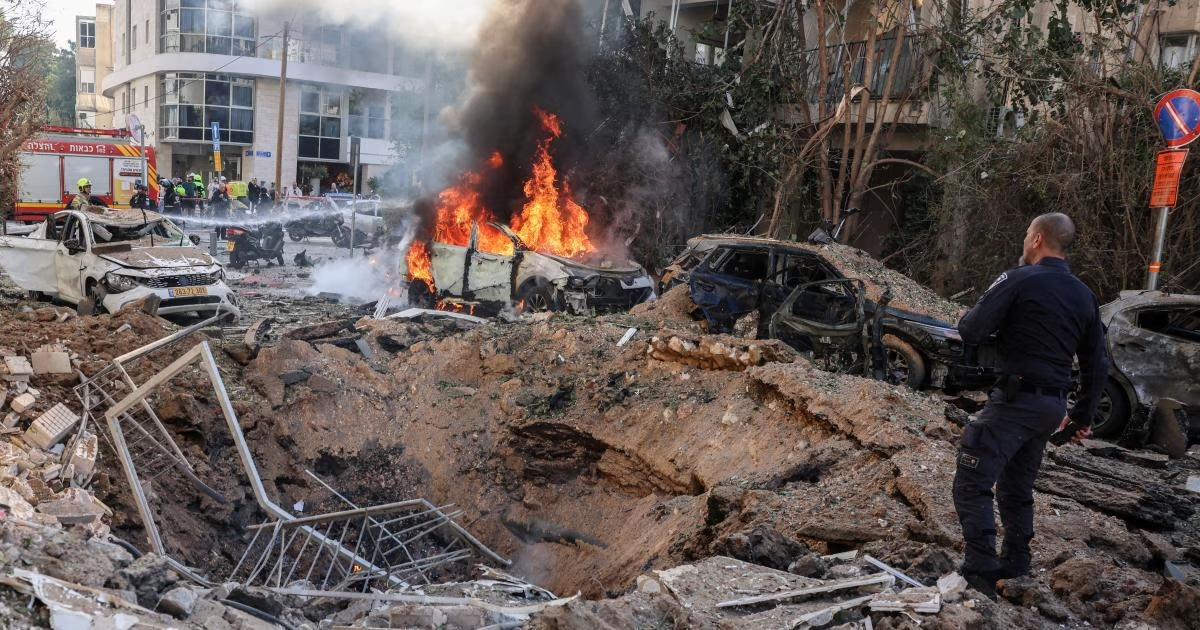
Since February 28, when U.S. and Israeli forces launched coordinated strikes on Iranian targets, what began as a direct military campaign has rapidly evolved into a broader and more dangerous confrontation. Iran’s response was immediate and expansive, targeting not only Israeli positions but also American assets and allied infrastructure across the Gulf. Within hours, missile and drone strikes reached multiple Gulf Cooperation Council states, including Saudi Arabia, the United Arab Emirates, Qatar, Bahrain, and Kuwait, effectively transforming the conflict into a regional war with far-reaching implications. 

At first glance, comparisons to the war in Ukraine remain compelling. In both cases, warfare extends beyond conventional battlefields into the economic systems that sustain modern states. In Ukraine, the conflict evolved into a sustained campaign against infrastructure—power grids, fuel depots, and logistics networks—aimed at weakening the country’s capacity to function. Similarly, in the current war with Iran, energy infrastructure has become a central target rather than a secondary objective.

This emphasis is not incidental. Iran occupies a critical position in the global energy system, and its proximity to the Strait of Hormuz gives it significant leverage over the flow of oil and gas. As the conflict has intensified, retaliatory strikes have increasingly focused on energy facilities and shipping routes across the Gulf, amplifying the economic stakes. Iranian attacks on key energy sites in the region have already disrupted supply chains and driven up global prices, underscoring how quickly localized conflict can trigger worldwide consequences. 

Yet the analogy to Ukraine begins to break down under closer examination. The war in Ukraine is fundamentally indirect for the United States, which provides military and financial support without engaging directly in combat against Russia. By contrast, the conflict with Iran involves direct participation. American forces are not operating from a distance but are embedded in an active and highly volatile theater, where escalation can occur rapidly and unpredictably.

This distinction significantly raises the stakes. Direct engagement compresses decision-making timelines and increases the likelihood of miscalculation. In Ukraine, escalation has been managed, however imperfectly, through careful calibration. In the case of Iran, the margin for error is much narrower, particularly given the speed and scale of retaliatory actions that have already unfolded across multiple fronts.


Geography further compounds the risk. Ukraine’s war, despite its devastation, has remained largely confined within its borders. In contrast, Iran’s influence extends across a network of regional actors and strategic partnerships. The events since February 28 demonstrate how quickly a bilateral confrontation can expand into a multi-front conflict. Iranian strikes across GCC nations illustrate both the reach of its capabilities and the vulnerability of a region densely packed with critical infrastructure and foreign military assets.

What most closely links the two conflicts, however, is the shift toward attritional warfare. This form of conflict prioritizes endurance over speed and resilience over decisive force. Success depends on the ability to absorb damage, adapt, and continue operating under sustained pressure. Iran has spent decades preparing for precisely this kind of confrontation, developing asymmetric capabilities such as drones, ballistic-missiles, and decentralized networks designed to offset conventional military disadvantages.

For the United States and its allies, this presents a strategic dilemma. Superior military power does not necessarily translate into decisive outcomes in an attritional environment. Strikes on infrastructure may yield temporary gains, but they rarely produce lasting results. Facilities can be rebuilt, supply routes rerouted, and tactics adjusted. Meanwhile, the cumulative costs—financial, political, and strategic—continue to mount.

This dynamic raises the specter of a quagmire. History offers numerous examples of conflicts where initial objectives were clear but became increasingly ambiguous over time, leading to prolonged engagements without resolution. The danger in the current war is not a sudden defeat but a gradual erosion of position—a slow drain on resources, attention, and credibility.

The centrality of energy further amplifies these risks. Unlike Ukraine, where economic consequences have been significant but regionally concentrated, the war involving Iran directly affects the global energy system. Disruptions in the Strait of Hormuz and attacks on Gulf infrastructure have already demonstrated the potential for systemic shocks. Rising oil and gas prices, strained supply chains, and broader economic instability are no longer hypothetical risks but emerging realities.

None of this suggests that the situation is identical to Ukraine. The differences are substantial and must be acknowledged. However, the comparison serves as a warning. It highlights a pattern in modern conflict: a drift toward wars that are difficult to win, costly to sustain, and prone to expansion beyond their original scope.

The more pressing question, therefore, is not whether Iran is becoming America’s Ukraine. It is whether the United States is allowing itself to be drawn into a familiar strategic trap—one defined by unclear objectives, insufficient tools for decisive victory, and an open-ended timeline that invites escalation.

Avoiding such an outcome requires clarity: clear goals, defined limits, and a realistic understanding of consequences. It requires recognizing that military force alone cannot resolve a conflict embedded in complex regional dynamics and global economic interdependence.

Without that clarity, the risk is not simply another prolonged war. It is a broader and more destabilizing crisis—one in which the lessons of recent conflicts are not applied, but repeated on a far more dangerous and interconnected stage.

ANALYSIS

Wed 25 Mar 2026 3:28 am - Jerusalem Time

Controversy Escalates in Washington After Republican Congressman Posts AI Video Depicting 'Crusades'

Said Erikat

Opinion Writer

Washington – Said Arikat – 3/25/2026

Republican Congressman Andy Ogles of Tennessee sparked widespread criticism after posting an AI-generated video depicting him alongside allies of US President Donald Trump as medieval warriors, in a scene evoking the symbolism of the Crusades.

The video, which quickly spread on social media platforms, featured a dramatic portrayal mimicking historical religious battles. Ogles accompanied it with a message asserting that the United States is "a nation founded on Christian principles." This proposition brought back to the forefront an old debate in American political and intellectual circles about the nature of the country's constitutional identity, and whether it has religious or civil roots based on the separation of religion and state.

The use of Crusades symbolism, in particular, drew sharp criticism from human rights and religious organizations, which considered this discourse to carry exclusionary connotations and potentially be understood as directed against Muslims. This comes in the context of Congressman Ogles' previous record, where he faced accusations of making statements described as anti-Islam, which intensified the reaction to the latest video.

In contrast, Ogles' supporters defended the move, considering it part of political freedom of expression, and that referring to the "Christian heritage" of the United States reflects an intellectual conviction among a segment of conservatives. Some also saw the criticisms directed at the congressman as political in nature, falling within the sharp polarization between the Republican and Democratic parties.

The incident also raises broader questions about the use of artificial intelligence technologies in political discourse, especially with the increasing ability of these technologies to produce impactful visual content that can amplify political messages or reframe them in a powerful symbolic way. Experts warn that this type of content could contribute to deepening societal divisions if not used cautiously and responsibly.

For their part, civil society organizations called for elected officials to adhere to inclusive discourse that does not fuel religious or cultural tensions, emphasizing that religious diversity in the United States represents one of its pillars of strength, not a source of division.

This incident reflects the escalating use of religious symbols in American political discourse, especially within the conservative movement that seeks to redefine national identity on cultural and religious foundations. However, evoking the symbolism of the Crusades goes beyond merely affirming religious roots, reaching to the invocation of historical conflicts of a bloody nature. This use could reinforce feelings of polarization and make religious minorities feel marginalized, threatening the social fabric and undermining the pluralistic discourse upon which the United States was founded.

The use of artificial intelligence in this context raises fundamental questions about the ethics of political communication in the digital age. These technologies do not merely convey messages, but visually and emotionally amplify them, increasing their impact on the audience. In the absence of clear regulatory frameworks, it becomes easy to use these tools to reproduce historical narratives in a way that may be misleading or biased, which requires a serious discussion about the controls and standards governing their use in the public sphere.

The varied reactions to the video reveal the depth of political division in the United States, where issues related to religion and identity have become a fundamental part of partisan conflict. While some see these messages as expressing legitimate convictions, others consider them a threat to the values of pluralism and equal citizenship. This disparity reflects the difficulty of reaching common ground amid escalating sharp symbolic discourse, and raises questions about the future of coexistence in a multicultural and multi-religious society.

PALESTINE

Wed 25 Mar 2026 3:28 am - Jerusalem Time

Knesset paves the way for execution law for Palestinian prisoners after controversial amendments

The Israeli occupation authorities have taken an advanced step towards legalizing the execution of Palestinian prisoners, as the Knesset's National Security Committee approved the draft bill after introducing substantial amendments. The bill is scheduled to be presented to the Knesset's General Assembly next week for a vote in the second and third readings, which are the final stages for it to become an enforceable law.

Sources reported that National Security Minister Itamar Ben-Gvir is the primary driver of this legislation through his 'Otzma Yehudit' party. Ben-Gvir affirmed that the current formulation of the law ensures the withdrawal of powers from the government's legal advisor, which will accelerate its implementation against prisoners accused of carrying out operations against Israeli targets.

The bill carries a clear discriminatory character, as its application is limited to Palestinians accused of murder for motives described as 'national or security'. In contrast, the law exempts Jewish prisoners who may commit murder against Palestinians, which reinforces international and local criticisms describing it as racist legislation.

Reports revealed that Prime Minister Benjamin Netanyahu's office directly intervened to introduce amendments to the original draft to ostensibly soften its severity. This intervention came out of fear that Israel would face legal or diplomatic repercussions in international forums, especially since previous standards were more severe than the death penalty laws in force in the United States.

Under the new text, judges have the authority to issue a death sentence by a majority only, without the need for a full consensus of the judicial body. The law also grants the court the right to impose the penalty even in cases where the public prosecution does not formally request the death penalty for the prisoner.

The law specified the method of execution to be 'hanging', with the task to be carried out by a warden chosen directly by the Commissioner of the Prison Service. To ensure the protection of those carrying out the executions, the legislation stipulated that their identities remain completely confidential and granted them full legal and criminal immunity protecting them from any future prosecution.

The provisions of the law include strict procedures related to the detention conditions of those sentenced, as they will be isolated in special facilities separate from other prisoners. They will also be deprived of direct meetings with their lawyers, as legal consultations will be limited to visual communication 'remotely', with visits restricted to specific and authorized parties only.

Regarding the timeline, the law stipulates that the death sentence must be carried out within a period not exceeding 90 days from the date of its final issuance. The execution process must take place in the presence of the prison director and official observers, in addition to a representative of the judicial authority and a representative of the condemned's family.

The proposed legislation differentiates in application mechanisms between different regions, where the penalty will be mandatory in military courts in the occupied West Bank. In this case, the prisoner is allowed to appeal the conviction itself, but does not have the right to appeal the death penalty if the charges are proven against him.

In other areas, the law allows courts the option of imposing the death penalty or life imprisonment, which prohibits the release of the prisoner in any future exchange deals. This clause aims to close the door on the possibility of Palestinian prisoners being released within the framework of political understandings or exchange operations.

It is worth noting that Israel has not resorted to the death penalty through its civil judiciary since its establishment except in one case in 1962 against Nazi officer Adolf Eichmann. This legislative move comes amid harsh conditions experienced by Palestinian prisoners, with human rights reports documenting the escalation of torture and systematic abuse inside prisons.

The new law does not leave the decision-making authority in the hands of the government's legal advisor, and will proceed towards final approval.

ARAB AND WORLD

Wed 25 Mar 2026 3:28 am - Jerusalem Time

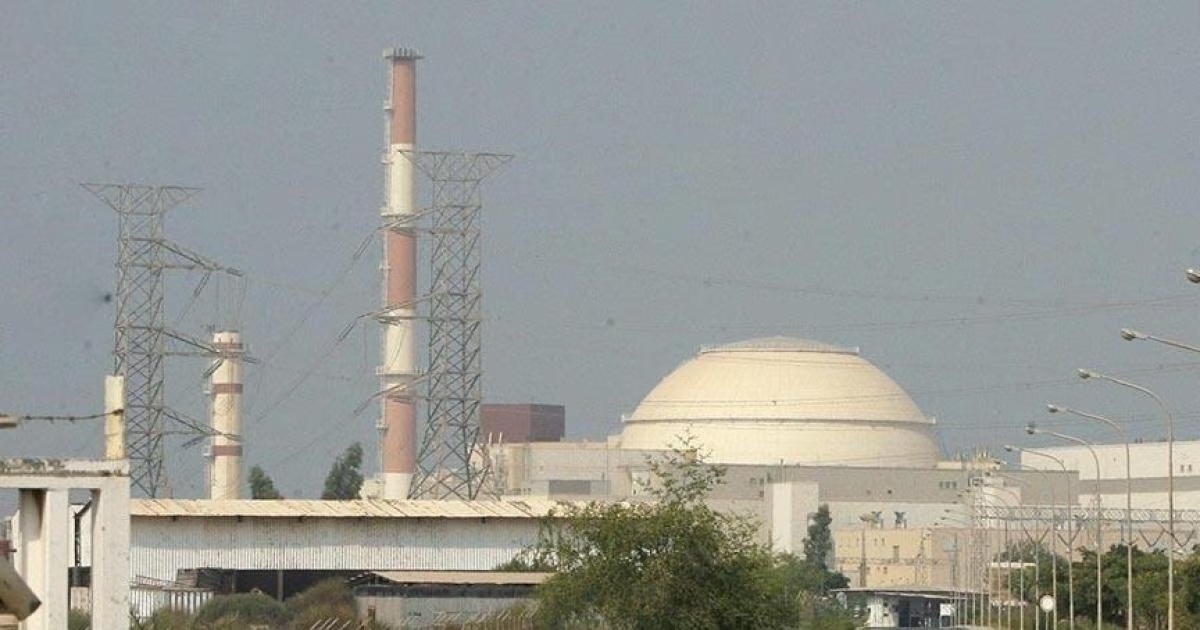
Iran confirms Bushehr nuclear plant site hit by missile during US-Israeli attack

The Atomic Energy Organization of Iran revealed that the Bushehr nuclear power plant site was directly hit by a missile, as part of a series of attacks launched by American and Israeli forces. The organization clarified in an official statement that initial examinations confirmed no technical damage to the plant's infrastructure, and no human casualties were recorded among the staff working at the facility.

Iranian authorities stressed through their official accounts that targeting peaceful nuclear facilities represents a serious violation of international conventions that protect such sites. Tehran considered this escalation to put regional security at severe risk, holding the attacking parties fully responsible for the environmental and security repercussions that may result from these military operations.

For its part, the International Atomic Energy Agency confirmed receiving an official notification from the Iranian side stating that a projectile had fallen in the area surrounding the Bushehr plant. The agency indicated in an update that the information received confirms that conditions inside the plant remain within the normal range, as safety systems or personnel were not affected by the explosion that occurred in the outer perimeter of the nuclear facility.

In the context of international reactions, the Director-General of the International Atomic Energy Agency, Rafael Grossi, issued an urgent appeal to all parties to exercise the utmost restraint. Grossi warned that continued military operations near nuclear sites increase the likelihood of catastrophic radiological incidents, calling for these facilities to be spared from any armed conflicts to ensure public safety.

On the political front, Russia entered the crisis through statements by Kremlin spokesman Dmitry Peskov, who described the targeting of nuclear facilities in Iran as extremely dangerous. Peskov stressed that such steps could lead to dire and irreversible consequences at the regional and global levels, pointing to the need to immediately halt military escalation to avoid catastrophic scenarios.

These developments come amidst a widespread war that erupted since late February, with Israel and the United States launching intensive raids that resulted in the deaths of hundreds of people, including Supreme Leader Ali Khamenei and high-ranking security leaders. These strikes have brought about a radical shift in the nature of the conflict, prompting Tehran to respond with missile and drone attacks targeting various sites.

Field confrontations continue amidst mutual accusations, as Iran continues to target what it describes as American interests in the region, which has led to civilian casualties in several Arab countries. The affected countries demand a halt to these attacks that have targeted civilian objects, while all parties insist on their field positions, which threatens to prolong the conflict and expand its scope.

Targeting peaceful nuclear facilities is a blatant violation of international law and a serious threat to regional security.

ARAB AND WORLD

Wed 25 Mar 2026 3:28 am - Jerusalem Time

Mystery shrouds US-Iranian negotiations: Vance's surprising involvement and anticipated military movements

US President Donald Trump confirmed the existence of open negotiation channels with Iran, noting the involvement of his deputy, JD Vance, in these diplomatic efforts. This move is unusual in the corridors of American foreign policy, where sensitive files are typically handled by close advisors like Jared Kushner, raising questions about the nature of the role Vance will play in shaping future understandings.

Despite Trump's assurances, the outlines of his deputy's role still lack clear leadership, with the President describing him as 'involved like others.' Vance's participation gains particular importance given his stated positions against long wars and his strong reservations about any direct military escalation with Tehran, especially the plans discussed in Washington under the name '12-day war.'

In the context of seeking official communication channels, Pakistan emerged as a strong candidate to play a mediating role between the two parties. Trump held a phone call with Pakistani Army Chief Asim Munir, who has a close relationship with the US administration, to strengthen this path aimed at finding common ground away from direct confrontation in the region.

Trump stirred a wave of mystery with his statements about a 'gift' from the Iranians related to the energy sector and the Strait of Hormuz, without disclosing its nature. The US President went further by stating that 'the regime has changed' in Tehran, which contradicts prevailing intelligence and political assessments that do not see a radical shift in the structure of Iranian power so far.

In contrast, there is a state of skepticism in American political and media circles regarding the seriousness of these negotiations. Observers, including Democratic Senator Chris Murphy, believe that Trump's statements may be merely a media tool aimed at calming global energy markets and lowering prices, rather than an expression of a genuine desire to reach a comprehensive nuclear or political agreement.

On the ground, the diplomatic atmosphere contradicts military leaks indicating a potential imminent escalation in the Middle East. Reports from the US Department of Defense speak of the possibility of transferring the 82nd Airborne Division, an elite unit specializing in rapid ground operations, to carry out specific missions aimed at securing airfields and establishing a pressing military presence on the ground.

The data indicates that Washington may form a joint force of five thousand soldiers to strengthen its negotiating position through field power. While the US administration tries to show that it holds the initiative, Tehran insists that it holds the keys to escalation and de-escalation on the ground, leaving the scene open to all possibilities between a comprehensive settlement or military explosion.

Trump: The regime has changed in Iran, and they gave us a gift related to oil, gas, and the Strait of Hormuz.

ARAB AND WORLD

Wed 25 Mar 2026 3:28 am - Jerusalem Time

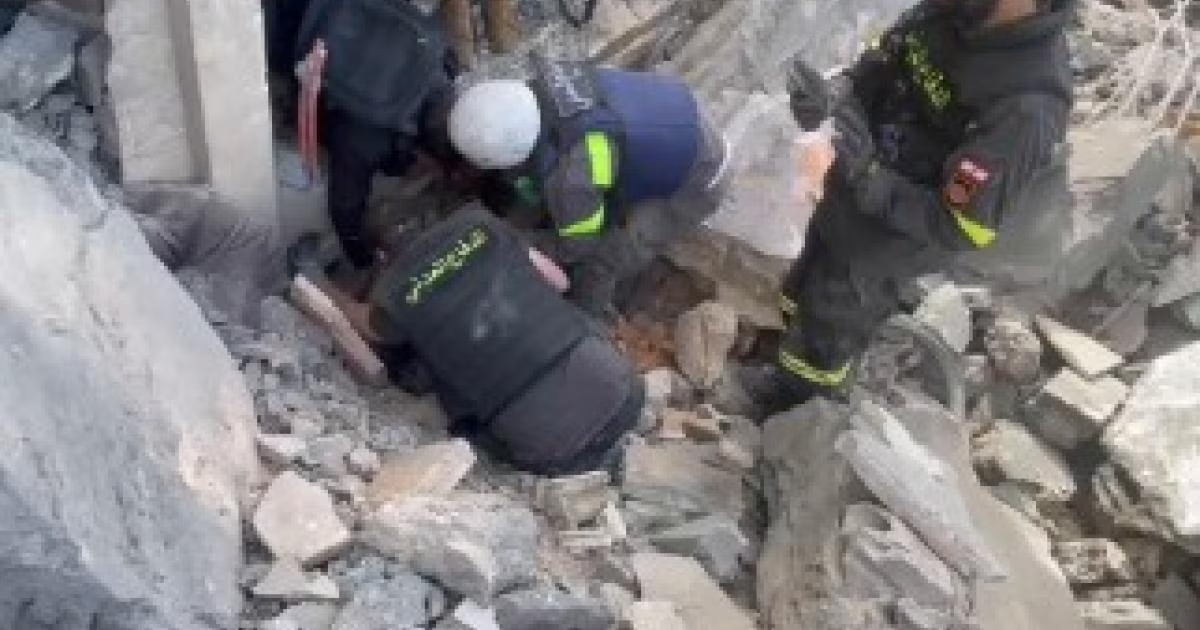
After 24 hours under the rubble.. Lebanese elderly woman rescued from the ruins of a house destroyed by the occupation in Arnoun

Civil Defense teams in southern Lebanon managed to complete a complex rescue operation for an elderly woman, after the Israeli air force targeted her home in the town of Arnoun Al-Shaqif. Video clips documented the moments the woman emerged from the rubble after strenuous efforts by relief teams to reach her under difficult field conditions.

Field sources explained that the woman, in her fifties, remained trapped under the rubble of a two-story residential building for about 24 continuous hours. The extraction operation was carried out in close coordination between the Civil Defense and units of the Lebanese Army, which imposed a security cordon around the site to ensure the safety of the paramedics and the targeted location.

Immediately after the teams successfully pulled the woman from under the shattered concrete blocks, she was provided with the necessary first aid on site before being quickly transferred to a nearby hospital. The survivor is currently under intensive medical observation to assess her health condition after the long period she spent under the rubble without food or water.

This incident comes in the context of a wide military escalation launched by the Israeli occupation on Lebanese villages and towns since the beginning of March. The intense airstrikes have resulted in the destruction of hundreds of residential units over the heads of their residents, which doubles the challenges for rescue teams trying to search for survivors under the rubble.

According to official data issued by the Lebanese authorities, the ongoing aggression since March 2 has resulted in the martyrdom of 1072 people and the injury of about 2966 others with varying degrees of injuries. The military operations also led to a major displacement wave exceeding one million people who fled from the bombing areas towards shelters and safer areas.

The teams carried out a rescue operation in coordination with units of the Lebanese Army, which took charge of providing protection around the site.

PALESTINE

Wed 25 Mar 2026 3:28 am - Jerusalem Time

Under the guise of confrontation with Iran.. Israel accelerates 'legislative coup' to annex the West Bank and Jerusalem

While the clamor of military confrontation between Israel and Iran dominates the international media scene, the Israeli demographic and legal change machine in the occupied West Bank is operating at an unprecedented speed. The far-right government is exploiting the current security conditions as a cover to pass a series of legislative and administrative changes aimed at reshaping the reality on the ground and obliterating any horizon for the establishment of a future Palestinian state.

Observers believe that the confrontation with Tehran has turned for Tel Aviv into a 'geopolitical opportunity' that allows for the reformulation of regional reality away from the eyes of the world. This 'silent legislative coup' practically aims to end the Palestinian legal and administrative presence in vast areas, and to transform the West Bank into an integral part of the Israeli administrative system under the thick smoke of regional battles.

February 2026 witnessed a historic step represented by the Israeli government's approval, for the first time since 1967, of registering vast areas of West Bank land as 'state land'. This step paves the way for changing administrative law and restricting legal protection for Palestinian lands, which is a practical prelude to large-scale annexation operations with new legal coverage that undermines the historical property rights of Palestinians.

Measures did not stop there, but also included decisions by the Ministerial Committee 'the Cabinet' to cancel the law that had been in force since the Jordanian era, which prevented settlers from buying land in the West Bank. This fundamental amendment opens the door wide for settlement associations to directly and legally control Palestinian properties and lands according to the new Israeli system.

In a related context, the powers of the civil administration were transferred directly to the occupation authorities, which contributed to dismantling the existing legal structures that regulated Palestinian affairs. Human rights organizations, including 'Peace Now', considered these steps to be a 'window of opportunity' exploited by settlers to strengthen their administrative and political influence in the heart of Palestinian communities.

On the ground, settler violence escalated remarkably, with thousands of armed individuals in military uniform carrying out daily attacks including shooting and land confiscation. These movements reflect official complicity by the occupation security apparatus to enhance settler control, according to reports by 'B'Tselem' which monitored an increase in the pace of organized attacks against Palestinian villages and towns.

As part of what is called the 'Capital Shield' operation, the occupation authorities demolished more than 35 Palestinian structures in the Qalandia and Kafr Aqab areas to reinforce the settlement contact line. This dual strategy reveals an Israeli desire to establish solid settlement facts within the West Bank and Jerusalem, benefiting from the major powers' preoccupation with the outcomes of the war in the region.

For his part, political analyst Oreib Al-Rantawi confirmed that recent measures, such as the closure of Al-Aqsa Mosque during the month of Ramadan, were carried out without much fanfare to reduce the cost of popular reaction. Al-Rantawi explained that the Israeli right is betting on the absence of an official and popular Palestinian reaction to impose fundamental changes in the structure of the Holy City and its geographical surroundings.

Al-Rantawi pointed out in statements to media sources that Israel is carrying out a daily 'de facto annexation' that includes land registration, the cancellation of old Jordanian laws, and the construction of settlements in sensitive locations. He added that the ultimate goal is to encircle Jerusalem and completely isolate its neighborhoods, in addition to emptying Area C and the Jordan Valley of their Palestinian residents to formally annex them to Israeli sovereignty.

At the international level, the UN High Commissioner for Human Rights, Volker Türk, warned that Israel has exploited security conditions to accelerate 'illegal annexation'. Türk confirmed in a recent report that more than 36,000 Palestinians have been displaced in the West Bank since the beginning of this year, which amounts to a dangerous and continuous demographic change that threatens international peace.

In the context of regional pressures, King Abdullah II of Jordan warned against any attempts to displace Palestinians or annex lands in Gaza and the West Bank. The King stressed during international contacts that these measures provoke political and strategic earthquakes that affect the security of the entire region, emphasizing the need to keep Palestinians on their land and prevent the liquidation of their cause.

Human rights reports indicate that the Israeli government has imposed strict restrictions on the work of international organizations within the West Bank, which facilitates demolition and displacement operations away from oversight. According to 'Human Rights Watch', these restrictions aim to conceal facts on the ground from the international community and prevent the documentation of systematic violations against Palestinian civilians.

The official Palestinian scene, according to observers, appears unable to provide a political response that rises to the level of existential challenges imposed by the occupation's measures. While the 'Israelization' processes in Jerusalem and the West Bank are accelerating, the Palestinian Authority in Ramallah remains absent from effective influence, leaving the field open for rapid settlement expansion.

What is happening today in the West Bank is not merely transient security measures, but a comprehensive redrawing of the political and geographical map of occupied Palestine. With the continued smoke of regional battles, Israel continues to seize land and dismantle rights, exploiting the world's silence and preoccupation with other issues to implement its final settlement project.

While eyes are watching the clamor of battles in the region, Israel is advancing in the West Bank and Jerusalem with steady steps to redraw maps on the ground.

ANALYSIS

Tue 24 Mar 2026 9:52 pm - Jerusalem Time

Tehran's Resilience and the Dilemma of Attrition: Why Did Bets on the Collapse of the Iranian Leadership Fail?

Field readings, weeks after the direct military confrontation, indicate that the bet on isolating the Iranian regime by targeting its leaders did not achieve the desired results. Tehran's organizational structure proved to possess an alternative command chain, pre-prepared to deal with emergencies and assassinations, drawing inspiration from Hezbollah's experience in rapid recovery.

The United States and Israel have so far failed to extract fundamental concessions regarding the nuclear program or to halt the production of long-range ballistic missiles. Despite intense bombardment, Tehran remains steadfast in its political and military stances, putting war planners in Washington in a predicament of a continuing war with no clear prospect of victory.

On the Lebanese front, resistance sources succeeded in drawing the occupation into significant land and air attrition to relieve military pressure on the Iranian interior. This was evident in the qualitative ambushes that targeted Merkava vehicles in the south, in addition to continuous rocket barrages that paralyzed movement in the Galilee settlements.

Iranian missiles demonstrated their superior ability to penetrate the most advanced defense systems in the world, including Iron Domes and modern American systems. These missiles reached sensitive strategic points near the Dimona reactor, prompting the Israeli leadership to admit the difficulty of the situation and describe the past nights as 'arduous'.

Official Israeli and American narratives starkly contradict the reality on the ground, as Netanyahu and Trump had previously announced the destruction of Iran's nuclear capabilities in previous rounds. However, the recurrence of war and the return to targeting the same facilities reveal the falsity of those claims and clarify that the true goal goes beyond the nuclear file to an attempt to break political will.

The issue of defending the existence of the Zionist entity emerged as a primary driver for the current American administration in this war, with Trump considering Iran an existential threat that cannot be overlooked. Nevertheless, the justifications put forward by the White House spokeswoman remained vague and undefined, reflecting confusion in determining the ultimate goals of the military operation.

For Benjamin Netanyahu, this confrontation is a fateful and personal battle, through which he seeks to escape his legal prosecutions and consolidate his political legitimacy. Netanyahu used the rhetoric of 'existential war' to justify the massive destruction and strikes that hit the Iranian interior, despite the significant risks of adverse reactions.

In contrast, Iran was able to inflict painful blows on American bases in the region, and its missiles reached the heart of Tel Aviv and vital oil facilities. The confrontation also saw a remarkable development with the withdrawal of the aircraft carrier 'Gerald Ford' from service after sustaining damage, which weakened the naval offensive capability of the coalition.

The closure of the Strait of Hormuz remains Tehran's most potent weapon, as it caused a suffocating global energy crisis that led to a crazy rise in fuel prices. Despite Washington's attempts to use its strategic reserves, the halt in the flow of Gulf oil paralyzed the major industrial countries allied with America economically.

The Strait became a political fulcrum that prompted countries such as Japan, South Korea, and Pakistan to review their positions on joining the American military alliance. These countries preferred to distance themselves from the conflict to avoid further collateral damage to their economies as a result of the cessation of navigation in this vital passage.

American rhetoric gradually began to retreat from the 'regime change' square to seeking diplomatic exits through international mediators. Trump appeared in his recent statements more inclined to talk about agreements that guarantee Iran does not possess nuclear weapons, which represents a retreat from the high demands set at the beginning of the war.

Sultanate of Oman played a pivotal role in revealing the scenes of secret negotiations, as its Foreign Minister Badr Al Busaidi confirmed that Tehran had already agreed to technical terms before the outbreak of the war. This statement embarrassed Western propaganda and showed that the military escalation was a purely Israeli desire to disrupt any potential rapprochement.

Reports indicate the involvement of Mossad in attempts to sabotage any potential de-escalation between Washington and Tehran, including the mysterious explosions that targeted oil facilities inside America. This behavior aims to keep the United States engaged in the war and prevent Trump from reaching an agreement that ends military operations before Netanyahu's goals are achieved.

The question remains about the fate of the region's countries that found themselves caught in a conflict in which they have no stake, without being part of the agreement formulation. While the major powers negotiate, these countries remain vulnerable to the economic and security consequences of the war, awaiting the outcome of the 'war of words' in upcoming diplomatic rounds.

An Iranian regime armed with long-range missiles and nuclear weapons would pose an intolerable threat to the Middle East and also to the American people.

PALESTINE

Tue 24 Mar 2026 9:52 pm - Jerusalem Time

Child martyred in Khan Yunis, and the occupation rearrests 100 freed in exchange deals

The city of Khan Yunis, in the southern Gaza Strip, recorded a new crime added to the series of Israeli violations of the ceasefire agreement, as 13-year-old child Khaled Saif al-Din Suleiman Arada was martyred. Medical sources reported that Israeli bullets targeted the displaced persons' tent where the child was located, leading to his immediate death before being transferred to Nasser Hospital.

In a related context, the Ministry of Health in the Gaza Strip announced a new update to the cumulative toll of victims of the ongoing aggression since October 7, 2023. According to the official statement, the number of martyrs has risen to 72,263, while the number of injured and wounded reached approximately 171,948 people in various areas of the Strip.

The ministry clarified that hospitals received only four injuries during the past twenty-four hours, amidst a decrease in the pace of direct shelling compared to previous periods. However, medical sources stressed that a large number of victims are still under the rubble and in rugged roads that are difficult to access.

Field reports indicated the inability of ambulance and civil defense crews to retrieve the bodies of martyrs in several areas due to security restrictions and the destruction of infrastructure. These numbers are expected to increase as search and investigation operations continue in areas from which occupation forces have partially withdrawn.

Regarding the prisoners' file, the Palestinian Prisoner's Club revealed a systematic Israeli escalation campaign targeting prisoners who were released as part of recent exchange deals with Hamas. The club confirmed that the occupation authorities have re-arrested approximately 100 freed prisoners since the comprehensive ceasefire agreement came into effect in October 2025.

The statement clarified that the arrest operations were not limited to prisons but also included harsh field investigations and night raids on the homes of the freed prisoners and their families. The Prisoner's Club considered these measures a blatant violation of the guarantees of the exchange deals that were sponsored internationally and regionally in recent months.

Under the agreement in effect since October 10, 2025, Israel had released 3,985 Palestinian prisoners in successive batches. This step came in exchange for Palestinian factions in Gaza releasing all Israeli prisoners and the bodies of those killed who were held by the resistance.

The Prisoner's Club monitored the names of several new detainees in Qalqilya Governorate, north of the West Bank, including Sameh and Ammar Al-Shobaki, Saeed Diab, Saed Al-Fayed, and Hadi Jadoua. These arrests confirm the occupation's insistence on pursuing the freed prisoners and sending direct threats to them and their families to revoke the effects of their release.

Human rights sources stated that the occupation has introduced new laws and military orders that provide legal cover for security agencies to pursue freed prisoners without clear reasons. These violations included severe physical assaults on prisoners before and after their release, in an attempt to intimidate them and prevent them from living normal lives.

Finally, the Prisoner's Club concluded its statement by warning of the danger of this policy, which aims to empty exchange deals of their humanitarian and political content. It called on international institutions to intervene immediately to stop these persecutions and ensure the protection of freed prisoners from the brutality of the occupation, which disregards all signed agreements.

The occupation authorities continue their escalation in targeting freed prisoners in exchange deals, through repeated arrests and field investigations.

ARAB AND WORLD

Tue 24 Mar 2026 9:52 pm - Jerusalem Time

German President attacks Trump's policies: War on Iran 'catastrophic mistake' and violation of international law

German President Frank-Walter Steinmeier launched a sharp and unprecedented diplomatic attack on US President Donald Trump's foreign policy, describing the ongoing war against Iran as a 'catastrophic mistake'. Steinmeier affirmed in official statements that these military actions represent a blatant violation of international law, reflecting a significant deterioration in the understandings between Berlin and Washington that have lasted for decades since the end of World War II.

The German President explained during a speech at the Ministry of Foreign Affairs headquarters that the justifications put forward by the American administration regarding imminent threats against US targets lack logic and realism. He pointed out that silence in the face of international rule-breaking does not serve the credibility of German foreign policy, emphasizing the need to call things by their true names, even when it concerns the largest strategic allies.

These frank positions from Steinmeier reveal a clear divergence in views within the German leadership, as his statements were sharper than the stance of Chancellor Friedrich Merz, who preferred caution and avoided answering questions regarding the legitimacy of military operations. Steinmeier benefits from the honorary nature of his position, which grants him a wider margin to express the ethical and legal principles of the German state, away from daily political constraints.

In a striking comparison, the German President considered that Trump's second term created an earthquake in international relations, similar in its impact to the Russian invasion of Ukraine in 2022. He believed that just as it became impossible for relations with Moscow to return to their former state, transatlantic ties would never return to what they were before January 20, 2025, signaling a new phase of European autonomy or Western division.

On the ground and regional level, these criticisms coincide with continued American pressure that conditions Iran's surrender of hundreds of kilograms of enriched uranium and the opening of the Strait of Hormuz for international navigation under strict supervision. While major powers are preoccupied with this regional conflict, the Palestinian arena continues to suffer from the consequences of the confrontation, as field sources have monitored massive destruction in Gaza and its transformation into rubble amidst the spread of torn tents for displaced persons.

In a related context, Israeli Prime Minister Benjamin Netanyahu's philosophy of power emerges as an exacerbating factor in the conflict, coinciding with proposals from Trump's 'Peace Council' that pressure resistance factions to surrender their weapons. While raids and threats continue, Palestinian women in Gaza insist on staying and refusing forced displacement despite hunger and the loss of providers, in a scene that embodies the humanitarian tragedy resulting from the intertwining of regional and international wars.

Our foreign policy will not become more convincing simply because we refrain from calling a violation of international law a violation of international law.

ISRAELI AFFAIRS

Tue 24 Mar 2026 9:51 pm - Jerusalem Time

Two Haredi Brothers Accused of Espionage for Iran and Impersonating Soldiers in Unit 8200

Israeli judicial and security authorities revealed today, Tuesday, the filing of a serious indictment against two brothers from the Haredi Jewish community in occupied Jerusalem. The indictment includes charges of espionage for a foreign agent and providing intelligence information to a hostile entity, in addition to impersonating military personnel with the aim of misleading security agencies and obtaining illicit financial gains.

Media sources reported that the main defendant in the case successfully impersonated a soldier serving in the famous military intelligence Unit '8200', using a digital identity he obtained via the 'Telegram' platform. The two brothers worked in coordination to use advanced artificial intelligence techniques to draft reports and forge military documents that appeared to be issued by high-level security agencies.

According to the investigations, the two brothers received cash sums exceeding 100,000 shekels in exchange for the information sent to the Iranian side. This data included claims about joint military preparations between Tel Aviv and Washington to launch a large-scale attack on Iranian facilities, with hypothetical dates set for these operations at the beginning of this year.

Among the forged documents presented by the defendants was a document falsely attributed to Unit '8200' claiming Israel's direct involvement in the helicopter crash of former Iranian President Ebrahim Raisi, which occurred in 2024. The correspondence also included personal data of an Iranian citizen with claims of his involvement in internal assassinations, information described by sources as entirely fabricated and intended to enhance the value of the 'information' they provided.

In a related context, the Israeli court decided to impose strict censorship and a publication ban on the names and identities of the two brothers based on a request submitted by the defense team. This case comes amid escalating Israeli security warnings about repeated attempts by Iranian intelligence to recruit local citizens through social media in exchange for financial inducements, which has been repeated in several similar cases recently.

On the other side of the security confrontation, Iranian authorities announced the implementation of a widespread arrest campaign targeting about 466 people on charges of engaging in electronic activities aimed at destabilizing national security. Official reports in Tehran indicated that the number of detainees during the current month exceeded one thousand people, as part of the pursuit of what it describes as networks linked to hostile entities seeking to collect sensitive information.

Tehran accuses the detainees of cooperating with the 'enemy', photographing strategic sites, and publishing content inciting against the government, asserting that these actions are based on accurate intelligence monitoring. These simultaneous developments in both Jerusalem and Tehran reflect the intensity of the intelligence conflict between the two parties, which has clearly shifted to the digital space and the use of modern technology in deception and information gathering operations.

The main defendant impersonated a soldier in Unit 8200, using an identity obtained via Telegram, and with the help of his brother, resorted to artificial intelligence to forge documents that were transferred to an Iranian entity.

ISRAELI AFFAIRS

Tue 24 Mar 2026 9:51 pm - Jerusalem Time

Intense Iranian Missile Attacks Hit Tel Aviv, Forcing Dozens of Families to Flee

Iranian forces launched a series of intense missile attacks today, Tuesday, targeting strategic and civilian sites deep within Israel. This wave has been described as the most violent since the escalation began. Sources reported that the missile barrages, numbering 11 attacks, were heavily concentrated in the greater Tel Aviv area, causing extensive material damage and injuries among settlers.

Air raid sirens blared across a wide area, including the north, center, and south of the country, reaching sensitive areas such as Dimona and Beersheba, while millions of Israelis rushed to fortified shelters. Loud explosions were heard in the skies of major cities, resulting from attempts by air defense systems to intercept ballistic missiles coming from the east.

In the Negev region in the south of the country, medical sources confirmed that four people sustained varying injuries in the village of Al-Jarf after direct missile shrapnel fell. This coincided with reports of missiles falling in open and populated areas, causing a state of extreme panic among residents who remained in shelters for long periods.

In the city of 'Rosh HaAyin', near Tel Aviv, at least two residential apartments were directly damaged as a result of the Iranian missile bombardment. The city's municipality announced the discovery of unexploded ordnance that fell on a main road, necessitating the intervention of engineering and explosives teams to dismantle them and secure the area for traffic.

In another field development, a missile described as a 'cluster' missile directly hit a building in the city of Nesher, near Haifa, resulting in one person sustaining minor injuries. This strike caused extensive damage to the targeted building and a number of vehicles parked in the vicinity, while fire brigades responded to several fires that broke out at the impact sites.

Reports from the Tel Aviv municipality indicated that the recent attacks led to the displacement of 93 families from their homes after their apartments were damaged, rendering them uninhabitable. Sources explained that the destruction affected 12 residential buildings to varying degrees, in addition to the destruction of nine cars that were parked in the city streets subjected to the morning bombardment.

This new displacement raises the number of displaced persons within Tel Aviv alone to about 1,500 since the beginning of the current military confrontations. Local authorities are facing severe difficulties in repairing previous damages, as the destruction caused by ballistic missiles requires complete demolition operations and engineering redesign of the affected areas.

Regarding overall human casualties, the Israeli Ministry of Health revealed that the number of injured since the outbreak of the war has reached 4,829 people, including 122 injuries recorded in the past twenty-four hours alone. These figures reflect the significant pressure faced by the health sector amid continuous missile barrages from multiple fronts.

For its part, the Israeli Institute for National Security Studies, in its latest statements, indicated that 18 Israelis have been killed since the beginning of the war, a toll subject to strict military censorship. The Israeli security establishment is trying to maintain the morale of the home front by regulating published information about the number of casualties and military sites that have suffered precise hits.

Military censorship in Israel imposes a strict blackout on the results of the Iranian response and Hezbollah's attacks, warning Israelis against circulating videos documenting the losses. These measures aim to prevent intelligence information from reaching attacking parties about the accuracy of the hits, at a time when internal criticism of the effectiveness of air defense systems is increasing.

The destruction caused by Iranian ballistic missiles is enormous and requires the demolition of damaged buildings and the complete redesign of the area.

ISRAELI AFFAIRS

Tue 24 Mar 2026 9:51 pm - Jerusalem Time

Scenarios for the End of the Confrontation with Iran: A Reading of Israeli and American Calculations

Questions are escalating in Israeli political and security circles regarding the final outcomes of the direct military confrontation with Iran, which began on February 28th. These readings coincide with leaks indicating active negotiation channels between Washington and Tehran aimed at reaching a formula that ensures a ceasefire.

Hebrew press reports warned against the security establishment falling into the trap of underestimating Iranian will, noting that Tehran has proven its ability to withstand and achieve qualitative accomplishments during recent rounds of escalation. It appears that initial assessments aimed at regime change have begun to recede in favor of more realistic goals.

Current data indicates that Israel and the United States have effectively begun to lower their expectations regarding the results of this military campaign. After comprehensive military decisive action was discussed, the focus is now on how to exit the confrontation with the least strategic losses.

Analysts believe that the most likely scenario is a quick political deal, marketed by all concerned parties as a historic achievement. This outcome will allow Americans, Israelis, and Iranians alike to claim that they have achieved their main objectives from this round.

This vision is based on the principle of sharing gains and losses, as everyone realizes that no party can achieve an overwhelming victory that definitively ends the conflict. Parties usually reach this conviction when the cost of continuing military operations exceeds the desired benefits of continuing them.

In this context, questions arise about who will be able to extract the best terms in the final moments before signing. The real battle now is no longer about breaking bones, but about improving negotiating positions to ensure a better strategic situation in the post-war phase.

A state of concern prevails within the Israeli defense establishment that ending the campaign at the present time may be premature. Security leaders believe that the army needs more time to inflict substantial damage on Iran's military infrastructure to ensure it does not recover quickly.

The biggest fear is that stopping military operations before achieving their full objectives will give Tehran a golden opportunity to rehabilitate its capabilities. The Iranian side is expected to have a greater incentive than ever before to proceed with the nuclear bomb project to provide future immunity for its regime.

Reports emphasize the necessity for Washington and Tel Aviv to insist on addressing the enriched uranium file, as Iran currently possesses about 440 kilograms at an enrichment level of up to 60%. This quantity, distributed across several secret sites, is considered a red line that cannot be overlooked in any future agreement.

Despite the decline in rhetoric about overthrowing the Iranian regime as an immediate goal, security sources confirm that this option has not been completely dropped from strategic calculations. However, the prevailing term currently in decision-making circles indicates that this path may take many years and will not be a direct result of the current campaign.

Informed sources believe that international and economic pressures will play a decisive role in shaping the final agreement. Iran seeks to lift sanctions and alleviate isolation, while Israel seeks to ensure the removal of the missile and nuclear threat from its borders for a long period.

It appears that the US administration is pushing for a diplomatic solution that prevents the region from sliding into a comprehensive regional war whose outcomes cannot be predicted. This American approach forces decision-makers in Tel Aviv to balance their military ambitions with the requirements of the strategic alliance with Washington.

Any upcoming deal will be a temporary truce to reposition forces in the Middle East, not an end to the existential conflict between the two parties. Recent history proves that direct confrontations often end with fragile understandings that are broken by successive field developments and regional expansion ambitions.

Ultimately, the field remains the judge in determining the ceiling of demands, as Israel tries to intensify its strikes in the final hours to impose a new reality. While everyone awaits the announcement of the deal's details, eyes remain fixed on Iran's nuclear facilities, which constitute the core of the conflict and the driver of escalation.

The most likely end to this confrontation is a quick deal, which everyone will present as a victory, as there will be no decisive victory for any of the parties.

LATEST NEWS

Tue 24 Mar 2026 9:51 pm - Jerusalem Time

Washington Boosts Military Presence in Middle East with Amphibious Assault Ship 'Boxer'

Informed sources revealed the US Department of Defense's intention to send the amphibious assault ship 'USS Boxer' (LHD-4) to the Middle East region, a move that reflects the United States' increased military readiness. This ship is part of an integrated amphibious group accompanied by Marine units, indicating Washington's desire to strengthen its direct field presence amid escalating tensions.

This military deployment is linked to reports suggesting that the administration of US President Donald Trump is considering more severe strategic options towards Tehran, including the possibility of imposing a naval blockade or seizing Iran's Kharg Island. This island is of utmost importance as it is the main artery for Iranian oil exports, making the US military movement in its vicinity a clear operational pressure message.

In addition to the 'Boxer', the naval force heading to the region includes the 'USS Portland' warship of the San Antonio class, and the 'USS Comstock' ship of the Whidbey Island class. The group also integrates the Eleventh Marine Expeditionary Unit, which includes about 2,500 personnel, a force equipped with air and land components that enable it to carry out complex and rapid landing operations in coastal theaters of operation.

The 'USS Boxer' is a multi-mission combat platform belonging to the 'Wasp' class, specifically designed to support large-scale landing operations and transport troops and heavy equipment. The ship has a superior ability to operate vertical take-off 'Harrier' aircraft and hovercraft landing craft, in addition to accommodating more than 2,000 elite Marine soldiers.

In addition to its offensive capabilities, the 'Boxer' serves as an advanced naval base thanks to its sophisticated infrastructure, which includes a large field hospital with 600 beds and six equipped operating rooms. With a crew of more than a thousand personnel and more than 20 helicopters and attack aircraft on board, the ship provides high flexibility to ensure a sustainable and rapid military presence in the world's most sensitive regions.

The movement of the Boxer amphibious group indicates Washington's transition to a phase of strengthening its operational tools in the vicinity of tension in the Middle East.

ISRAELI AFFAIRS

Tue 24 Mar 2026 9:51 pm - Jerusalem Time

Mossad's Estimates Behind the Scenes: A Year to Topple the Tehran Regime and Accusations of Misleading Barnea

Hebrew press reports revealed the behind-the-scenes security discussions within the Israeli occupation, where the head of the 'Mossad' agency, David Barnea, estimated that the process of regime change in Iran could take a full year. These estimates came on the eve of escalating military tensions, sparking widespread debate in political circles about the feasibility and realism of these predictions.

Sources reported that Barnea presented several time-based scenarios to the cabinet for dealing with the Iranian file, ranging from a few months to a full year. Despite the varying probabilities, the head of the Mossad favored the longer-term scenario, considering that radical transformations in Tehran require a long breath and intensive intelligence work.

In contrast, Barnea faced a wave of indirect attacks through leaks from anonymous sources accusing him of misleading the Israeli and American leaderships. These leaks claimed that the head of the Mossad presented an overly optimistic picture regarding the chances of toppling the Iranian regime, leading to the construction of strategies based on inaccurate foundations.

International reports indicated that this campaign against Barnea might be driven by attempts to tarnish his reputation, especially with the increasing likelihood of failure in efforts to achieve a quick breakthrough. Sources suggested that circles close to Benjamin Netanyahu or the American administration might be behind these leaks to justify the lack of tangible results.

Political leadership offices in Tel Aviv and Washington face daily questions from the public about the reasons for the stalled progress in regime change in Iran. It appears there is an attempt to hold the security establishment, particularly the Mossad, responsible for raising expectations without real guarantees on the ground.

David Barnea is known for his tendency to provide cautious and conditional estimates, usually avoiding presenting inevitable scenarios of imminent collapse. Those close to him describe him as an 'establishment man' who adheres to the political leadership's directives and formulates intelligence briefings based directly on the Prime Minister's requests and orientations.

In the context of coordination with Washington, sources confirmed that the briefings presented by Barnea to Trump administration officials were under direct supervision from Netanyahu. These moves were not independent initiatives from the agency but rather part of a comprehensive political vision aimed at mobilizing American support for the military and security option.

Press investigations reported that Barnea had previously informed Netanyahu of the possibility of motivating the Iranian opposition to cause widespread unrest. The bet was that these disturbances would lead to the collapse of the regime from within within days of any direct military confrontation, which did not materialize.

Some reports held Netanyahu and Trump responsible for adopting an 'overly optimistic' approach to the Iranian file, ignoring warnings from other intelligence agencies. Leaked documents showed that Netanyahu expressed impatience with the slow pace of achieving results, especially with his concerns about the decline of international momentum supporting his operations.

On the other hand, there is no concrete evidence that the Mossad presented estimates fundamentally different from the Israeli army's position. The army believes that military force can only create suitable conditions for political change, but it does not automatically guarantee the fall of the ruling regime in Tehran without supporting internal factors.

The leaked Mossad plans included support for the movements of opposing Kurdish groups from northern Iraq to destabilize internal stability in Iran. However, these plans faced skepticism from the previous American administration, which downplayed the effectiveness of relying on armed factions with limited influence in changing the balance of power.

Barnea's name is associated with the 'death by a thousand cuts' strategy, which aims to exhaust the Iranian regime through qualitative operations and non-military tools. This strategy, developed during the previous government's tenure, relies on striking Iranian interests on several fronts simultaneously to gradually weaken the regime's structure.

Observers criticized the current debate's disregard for crucial factors, such as the lack of international intervention to protect Iranian protesters during previous waves of demonstrations. They believe that betting on the Iranian internal situation without providing effective international cover was one of the reasons for the failure of the Israeli intelligence strategy.

In conclusion of the leaked data, silence remains the master of the situation in the Prime Minister's office and the Mossad agency, as both parties refrained from commenting. This state of confusion reflects the depth of the crisis within the decision-making institutions of the occupation regarding how to deal with the complex Iranian file.

Regime change in Tehran could take about a full year, and cautious estimates are a characteristic of responsible intelligence work.

ARAB AND WORLD

Tue 24 Mar 2026 9:51 pm - Jerusalem Time

Arab Mediation Leads Trump to Back Down from Striking Iran, 5-Day Truce Looms

International press reports revealed intensive diplomatic activity led by Arab and regional capitals, where the foreign ministers of Egypt, Saudi Arabia, Turkey, and Pakistan met in Riyadh to find a way out of the escalating military crisis in Iran. Sources indicated that these moves came at a critical time, aiming to prevent the region from sliding into a comprehensive confrontation, despite the challenges posed by the absence of direct communication channels with the Iranian side.

The mediation efforts faced a major obstacle with the assassination of Ali Larijani, head of Iran's Supreme National Security Council, by the occupation state, who was seen as a party capable of dialogue with Western powers. This field development briefly disrupted diplomatic calculations, before Egyptian intelligence succeeded in breaking the deadlock and opening a direct communication channel with leaders in the Iranian Revolutionary Guard Corps.

Egyptian mediators proposed a five-day cessation of hostilities as a confidence-building measure, which paved the way for a surprising shift in the White House's stance. According to sources, US President Donald Trump decided to suspend military strikes targeting Iranian power stations after being briefed on the results of the Riyadh deliberations, preferring to give diplomacy a last chance.

Trump had issued a stern warning to Tehran to open the Strait of Hormuz within 48 hours, threatening to destroy the country's energy infrastructure. However, the messages conveyed by Arab mediators about the possibility of reaching an agreement changed the course of the decision in Washington, reflecting a desire by the US administration to avoid the economic and political repercussions of a long-term war.

For her part, White House spokeswoman Caroline Leavitt affirmed that the United States is engaged in extremely sensitive diplomatic discussions, emphasizing that the administration will not negotiate through the media. She clarified that the field and political situation remains unstable, calling for not adopting press speculations as final facts before official announcements from the competent authorities.

This news immediately reflected on global markets, with US stock indices on 'Wall Street' recording record gains, the highest since last February. Oil prices also saw a sharp decline, with Brent crude falling by 11% to below $100 per barrel, driven by hopes of de-escalation and avoiding the closure of vital energy passages.

Despite this optimism, Arab mediators expressed caution regarding the possibility of reaching a quick agreement, given the deep gap in the demands of both parties. While Tehran stipulates financial compensation and American and Israeli pledges to stop future attacks, Washington insists on dismantling the nuclear program, halting ballistic missile development, and ending the influence of pro-Iranian militias.

Inside Iran, a kind of caution and skepticism prevailed, as Parliament Speaker Mohammad Bagher Ghalibaf denied the existence of any direct negotiations with Washington at present. Ghalibaf considered that American statements about the progress of the diplomatic path are primarily aimed at manipulating global financial markets and alleviating economic pressures, stressing that his country is not prepared to concede under threat.

The technical discussions led by Arab leaders focused on the issue of the Strait of Hormuz, through which five global oil supplies pass, where the formation of a neutral international committee to ensure navigation was proposed. In contrast, the Revolutionary Guard Corps put forward the idea of imposing transit fees on ships passing through the strait, similar to the Suez Canal, a proposal that was met with outright Gulf rejection as it would give Tehran excessive control.

Information indicates that back channels are still active with the participation of Qatar, Oman, France, and Britain, with a proposal emerging for a high-level meeting in Pakistan or Turkey. The US side in these discussions is likely to be represented by Steve Witkoff and Jared Kushner, with the possibility of Vice President J.D. Vance joining if a draft agreement matures.

These developments come amid a sensitive transitional phase within Iran, where Washington is dealing with a regime led by the new Supreme Leader Mojtaba Khamenei, who is described as hardline. Despite this, Trump showed unexpected flexibility, hinting at the existence of Iranian leaders he respects and with whom a new era of relations can be reached, away from the language of military threat.

Finally, military analysts believe that the United States continues to strengthen its field presence by sending Marine units, to ensure pressure on Tehran during negotiations. The question remains about the extent of the Iranian regime's ability to make fundamental concessions regarding its nuclear program in exchange for political survival and the lifting of sanctions, in light of the widespread destruction of its military capabilities during recent confrontations.

The situation is unstable, and speculations should not be considered final before the official announcement of the results of the sensitive diplomatic discussions.

LATEST NEWS

Tue 24 Mar 2026 9:50 pm - Jerusalem Time

Lebanon Expels Iranian Ambassador, Revokes Credentials Amid Accusations of Sovereignty Violation

The Lebanese Ministry of Foreign Affairs and Emigrants took an escalating diplomatic step by summoning the Iranian Chargé d'Affaires in Beirut, Toufiq Samadi Khoshkhou, to inform him of an official decision to withdraw approval for the accreditation of the designated Iranian Ambassador, Mohammad Reza Shibani. The decision included declaring Shibani persona non grata, with a deadline set for next Sunday, the twenty-ninth of this month, for him to permanently leave Lebanese territory.

These rapid developments come amidst accusations by Lebanese officials that the Iranian Revolutionary Guard is directly involved in managing the military operations Hezbollah is waging against Israel. Beirut considered these actions a crossing of red lines and an interference in the sovereign affairs of the state, especially given the current circumstances the country is experiencing.

In parallel with the expulsion decision, Lebanese authorities recalled their ambassador in Tehran, Ahmed Suwaidan, for consultations and to assess the repercussions of the current diplomatic crisis. The Lebanese Foreign Ministry justified these measures by the existence of clear violations by Tehran of diplomatic norms and established international principles governing relations between states, emphasizing the necessity of respecting national sovereignty.

Informed sources reported that the Lebanese government had taken a firm decision since the outbreak of military confrontations, prohibiting any potential security or military activity by the Iranian Revolutionary Guard on its territory. It appears that the latest measure came as a result of monitoring activities that Beirut considered a violation of this explicit government decision, necessitating a decisive diplomatic response.

Sources indicated that the Lebanese Foreign Ministry had previously requested written clarifications from the Iranian side regarding a number of objections, but the responses were not sufficient or convincing. These objections focused on official Iranian statements hinting at direct operational coordination and joint operations rooms between the Revolutionary Guard and Hezbollah, especially after the synchronized missile launches.

The points of contention also included statements made by the Iranian Ambassador to the United Nations following the targeting of a hotel apartment in the Raouche area of Beirut, where he claimed that the targets were Iranian diplomats present with the knowledge of Lebanese authorities. The Lebanese Foreign Ministry quickly denied these claims outright, asserting that it had no records proving the diplomatic status of these individuals or knowledge of their missions.

This crisis reflects the depth of the current rift between Beirut and Tehran, as official Lebanon insists on distancing itself from any external interference that affects its sovereign decision or puts it in confrontation with the international community. This step is expected to provoke widespread reactions regionally and internationally, given the sensitivity of the timing and the nature of the historical relations between the two parties.

The Lebanese state considers what happened a violation by Tehran of diplomatic conduct norms and established principles between the two countries.

ARAB AND WORLD

Tue 24 Mar 2026 9:50 pm - Jerusalem Time

Former American Colonel: Egypt Faces Complex Crises and a Test of Its Regional Role After the War on Iran

Reserve Colonel Amir Noi, former commander of the Operational Coordination Cell in the US Army, painted a bleak picture of the future challenges facing the Egyptian state in the wake of the military confrontation between Iran on one hand, and the United States and the occupation state on the other. Noi explained in an analysis published by media sources that Cairo finds itself today facing three simultaneous crises affecting the economic, political, and media sectors, which places its foreign policy under the scrutiny of regional criticism.

The economic crisis topped the list of challenges, as the war led to widespread disruptions in international trade routes passing through the Red Sea and the Bab al-Mandab Strait. This tension prompted major global shipping companies to change their routes towards the Cape of Good Hope around Africa, causing a sharp and direct decline in the revenues of the Suez Canal, which represents the main lifeline for hard currency in the country.

The analysis indicated that the Egyptian tourism sector, which is highly sensitive to any security tensions in the region, was not spared from the negative repercussions. These circumstances created a harsh paradox for the Egyptian state, which, despite its commitment to a policy of caution and non-direct involvement in military operations, is bearing the largest economic cost of the escalating regional conflict.

In a related context, the American colonel raised questions about Cairo's continued allocation of huge budgets for arms deals and military capability development despite the suffocating financial crisis. He considered that these systems, ostensibly directed towards the occupation, raise the astonishment of observers in light of an existing peace treaty, attributing this to the regime's desire to maintain the army as a fundamental pillar of state stability and its Arab standing.

On the internal political front, the report noted that President Abdel Fattah el-Sisi's regime faces increasing pressure to maintain a balance between security control and providing a minimum level of living stability. Noi warned that widening social disparities and exacerbating economic crises could turn any sudden regional shock into a fuse for internal unrest, especially with the threat of some opposition forces remaining dormant.

The analysis touched upon Egyptian-Gulf relations, indicating that Cairo relies heavily on remittances from hundreds of thousands of its workers in Gulf countries. With these countries facing direct threats from Iran and its proxies during the military campaign, Egypt's cautious stance raised questions among Gulf elites about the absence of a clear defensive position, which could in the future turn into a political pressure tool on Cairo.

Strategic experts in Cairo believe that the danger lies not only in the continued existence of the Iranian regime but also in the possibilities of its sudden collapse, which could lead to widespread chaos. Egypt fears the rise of new regional leaders who may seek to seize legitimacy by instigating additional conflicts, making the preservation of the status quo, despite its drawbacks, an Egyptian option to avoid unforeseen geopolitical shifts.

This official approach was reflected in the local media discourse, where editorials in national newspapers such as Al-Ahram focused on the need for self-restraint and preventing the region from sliding into a comprehensive war. Media messages held major powers responsible for curbing 'military adventures,' while sharply criticizing Israeli policies that contribute to expanding the scope of the conflict and threatening Arab national security.

While the world is preoccupied with the conflict between major powers and Iran, Gaza continues to suffer from the effects of widespread destruction and the spread of torn tents amidst the legendary steadfastness of Palestinian women. These analyses come at a time when Washington insists on harsh conditions towards Tehran, including the surrender of enriched uranium stockpiles and the opening of the Strait of Hormuz for international navigation under strict supervision.

The report also indicated that the Egyptian position will undergo a historical evaluation in the post-war phase, where the policy of 'caution' will be judged either as responsible diplomacy that spared the country the ravages of war, or as evidence of the decline of Cairo's regional leadership role. The balance of cost and benefit remains the primary driver for decision-makers in facing accumulated economic losses.

On the other hand, the contradiction in international positions stands out, where Trump's 'Peace Council' demands that resistance factions surrender their weapons in exchange for reconstruction, while Benjamin Netanyahu adopts an extremist discourse that sanctifies power. This complex atmosphere increases the difficulty of Egypt's task in maintaining its strategic balance between American pressures and Arab popular demands.

In conclusion, Colonel Noi affirmed that Egypt will continue to face a real test of its mental image in the Arab world, where arms deals intertwine with economic setbacks and political risks. Cairo's ability to overcome these three crises will determine its position in the new regional order currently forming amidst the explosions in the region.

Egypt did not participate directly in the war but bears its heavy economic cost as a result of the disruption of global trade routes.

ISRAELI AFFAIRS

Tue 24 Mar 2026 9:50 pm - Jerusalem Time

Anxiety in Tel Aviv over Trump's intentions to quickly reach an agreement with Tehran

Official and security circles in Israel are showing increasing anxiety over the dramatic shifts in the stance of US President Donald Trump, who has openly declared his desire to reach an agreement with Iran. Estimates in Tel Aviv vary regarding the seriousness of this approach, especially after Trump's surprising statements that disrupted the calculations of the Israeli government, which had been banking on continued maximum military pressure.

Benjamin Netanyahu, the head of the occupation government, commented on these developments by indicating that he had held talks with the US President, explaining that the latter sees a golden opportunity to capitalize on what he described as the 'significant achievements' of the Israeli and American armies in the region. Netanyahu tried to reassure his audience that any future agreement must preserve Israel's vital security interests, despite clear gaps in visions between the two parties.

In the context of accelerated diplomatic moves, informed sources revealed that US Vice President, J.D. Vance, discussed details related to the initiation of negotiations with Tehran with Netanyahu in a phone call. The discussions covered potential clauses to end direct military confrontation, reflecting the Trump administration's desire to close this thorny file early in its term.

For its part, media reports indicated the existence of a 'secret message' sent by Iranian Foreign Minister, Abbas Araqchi, to US Special Envoy Steve Witkoff. The message included indications of the new Supreme Leader, Mojtaba Khamenei's, approval to quickly end the current crisis, provided that fundamental Iranian demands are met, suggesting a shift in Tehran's political stance.

Leaked information suggests that Araqchi made a phone call to Witkoff in the presence of the US President's son-in-law, Jared Kushner, to ensure the message reached Trump's inner circle. The Iranian side's objective with this move is to demonstrate a smooth and organized transfer of power in Tehran, contrary to Israeli expectations that had been banking on internal unrest hindering political decision-making.

On the ground, sources reported that Washington has already begun taking practical steps to set the stage for negotiations, with Trump directing the Department of Defense to postpone scheduled airstrikes on Iranian energy facilities. This five-day postponement aims to provide an opportunity for diplomatic efforts, coinciding with news of a round of negotiations starting in Pakistan later this week.

In an attempt to minimize damage and ensure that red lines are not crossed, Netanyahu dispatched Minister Ron Dermer to Washington to clearly present Israeli demands to the US administration. Through this visit, Israel seeks to emphasize the necessity for any agreement to include a complete dismantling of the nuclear program and prevent Iran from acquiring any future enrichment capabilities.

Israeli newspapers, including 'Haaretz,' warned against the Netanyahu government obstructing the new negotiation process, as happened in previous experiences. The newspaper called for the US to be enabled to manage the diplomatic dialogue, noting that continuous military escalation may not achieve the long-term strategic goals desired by the international community.

There is confusion within the Israeli security establishment regarding Trump's true intentions, with former officials fearing the conclusion of a 'bad deal' that would grant Iran international legitimacy without fundamentally addressing the ballistic missile issue. These officials believe that merely reducing the range of missiles might avert danger from Europe but would keep Israel and the Gulf states under direct threat.

Military analysts in Tel Aviv indicate that Trump fears entanglement in a wide regional war that could drain American resources, and therefore prefers quick settlements. This approach puts Netanyahu in a political dilemma, as his desire to continue the war to achieve 'absolute victory' conflicts with his biggest ally's desire in Washington to end armed conflicts.

Observers believe that Netanyahu, who strongly pushed for Washington's withdrawal from the nuclear agreement in 2018, now finds himself facing a complex reality after the acceleration of Iranian enrichment. Voices are rising within Israel demanding a review of the effectiveness of previous policies that led Iran to the brink of nuclear capability, considering diplomacy as the only remaining way out.

Amidst this atmosphere, Israel continues its military operations in Lebanon and against Iranian targets, in an attempt to impose facts on the ground before any political agreement matures. Israeli officials publicly assert that military pressure is what pushed Tehran to the negotiating table, in an attempt to save face before the domestic public.

In conclusion, anticipation remains the dominant sentiment in the region, awaiting the outcome of upcoming meetings in Pakistan or Washington. While Trump aims for a quick diplomatic achievement, Israel remains apprehensive that this achievement might come at the expense of its national security, potentially opening the door to a silent confrontation between the allies on how to deal with Iranian ambitions.

Trump believes there is an opportunity to reach an agreement with Iran, leveraging military achievements, but we will work to ensure Israel's vital interests.

ARAB AND WORLD

Tue 24 Mar 2026 9:50 pm - Jerusalem Time

Military and Financial Drain.. Washington Faces Readiness Crisis Due to Conflict with Iran

Warnings have escalated in the US capital, Washington, regarding the repercussions of continued military operations against Iran, as data indicates a significant drain on the US Army's capabilities. These concerns arise just three weeks after the outbreak of the conflict, amidst reports confirming a decline in vital ammunition stockpiles and unprecedented damage to strategic military equipment.

Field sources revealed the killing of at least 13 American soldiers and the injury of approximately 232 others since the start of military operations on February 28th. These figures reflect the scale of field pressure faced by US forces in the region, amid confrontations characterized by intensity and technological and military complexity.

In terms of material losses, the Air Force and its associated services recorded the crash or downing of approximately 16 various aircraft, including modern fighter jets, drones, and refueling aircraft. An advanced 'F-35' fighter jet was also forced to make an emergency landing due to technical malfunctions or damage during combat missions.

The damage was not limited to the Air Force but extended to the naval strike force, as the aircraft carrier 'USS Gerald R. Ford' sustained damage after a fire broke out on board recently. The US Navy faces immense operational pressures due to dedicating a large part of its fleet to monitoring and securing operations related to the Iranian file.

In a related context, a report published by 'The Hill' warned that the Pentagon's plans to deploy ground troops inside Iranian territory could rapidly multiply human and material losses. The report indicated that this escalation could weaken the United States' ability to respond to crises in other regions, particularly in the Indo-Pacific.

Former defense officials believe that engaging in a long-term conflict in the Middle East drains maintenance and readiness resources for essential military assets. They fear that this drain could undermine American deterrence against other major powers such as China, especially amid ongoing tensions over Taiwan.

Politically, President Donald Trump announced the resumption of negotiations with Tehran regarding its nuclear program, a step aimed at de-escalation after previous threats to target energy facilities. However, military movements on the ground continue, as Washington considers sending a combat brigade from the 82nd Airborne Division to reinforce its presence.

Financial estimates indicate that the cost of this war could reach one billion dollars daily, which puts the defense budget under immense pressure. The US administration is expected to request an additional emergency funding of up to 200 billion dollars from Congress to cover the expenses of ongoing military operations and compensate for equipment shortages.

Air defense and long-range missile stockpiles are suffering from a sharp decline, as 'Patriot,' 'THAAD,' and 'Tomahawk' missiles are being consumed at rates exceeding the production lines' ability to compensate. Experts confirm that rebuilding these stockpiles will take many years, putting the US military in a critical position if simultaneous conflicts erupt.

Analysts link the current crisis to the extensive military support Washington provided to Ukraine in its war against Russia, which has already consumed a significant portion of strategic reserves. This accumulation of military commitments limits the maneuvering options available to decision-makers in both the White House and the Pentagon.

On the ground, Washington continues to accelerate the deployment of thousands of Marines and additional warships to the region to enhance deterrence and protect vital interests. Despite these reinforcements, observers believe that the arrival of some of these forces may take weeks, leaving currently deployed forces under constant pressure to confront increasing threats.

In conclusion, questions remain about the extent of the United States' ability to bear the cost of continuing this conflict without compromising its global standing. While the administration tries to downplay the extent of losses, field and economic realities indicate that the war with Iran has become a strategic burden that transcends regional boundaries.

Engaging in a theater that is not a top priority leads to a drain on the readiness of military assets that could be crucial in confronting China.