PALESTINE

Fri 27 Mar 2026 5:31 am - Jerusalem Time

Dead and Injuries in Pursuit by Occupation and Settlers of Workers South of Hebron

The journey to earn a living turned into a bloody tragedy for the young Palestinian man Yousri Abu Qubaita and his companions, after they were subjected to a violent chase by the occupation army and groups of settlers in an open area south of the West Bank. The incident, which occurred on Wednesday evening in an empty area south of Hebron city, ended with the overturning of driver Abu Qubaita's vehicle and his martyrdom, while eight other workers were injured by occupation bullets and varying bruises.

Eyewitnesses and close relatives of the martyr recounted that the workers used to cross that area to reach their workplaces inside the Green Line, but this time they were surprised by an ambush set by occupation soldiers and settlers who began firing and chasing the vehicles. Diaa Fanash, a friend of the martyr, explained that the bad weather conditions prompted them to try to return, but the settlers' and army's bullets caught them, causing their vehicle to get stuck in a valley and overturn on Yousri as he tried to secure the escape of his companions.

In the family home in Yatta, an atmosphere of sadness and farewell prevailed, where the martyr's father confirmed that his son was striving to provide for his young daughter's daily sustenance amidst the lack of job opportunities in the West Bank. The father pointed out that the risk his son took was a direct result of the economic blockade policy imposed by the occupation authorities on Palestinian workers for many months.

This incident comes in the context of an ongoing Israeli escalation since the start of the aggression on Gaza in October 2023, where the occupation authorities prevent tens of thousands of workers from returning to their jobs. This forced prevention has pushed many to venture through rugged bypass routes, only to find themselves in direct confrontation with live ammunition and systematic abuse by both occupation forces and settlers.

Suffering does not stop at the pursuit in the mountains but extends to workers who succeed in reaching their workplaces, where they are subjected to brutal raid campaigns. Raed Essam, a young man from Salfit, conveyed a harsh testimony about being severely beaten with batons and iron chains by the occupation police in the city of Lod, along with 40 other workers, before being tied up and detained for long hours in humiliating conditions.

Raed described the journey to work as a 'journey of humiliation,' starting with climbing the apartheid wall via ladders placed by brokers for exorbitant sums of money reaching 2000 shekels. He added that workers are forced to pass through water culverts and muddy lands under threat of arms, on a journey that could end with a soldier's bullet at any moment, all to secure their families' future.

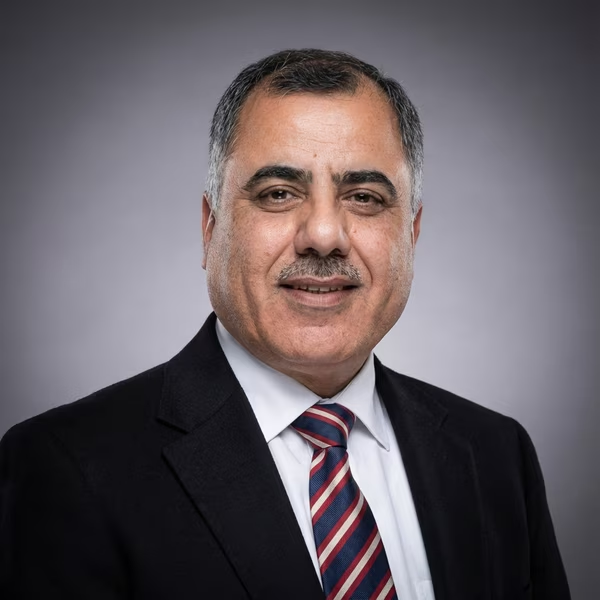
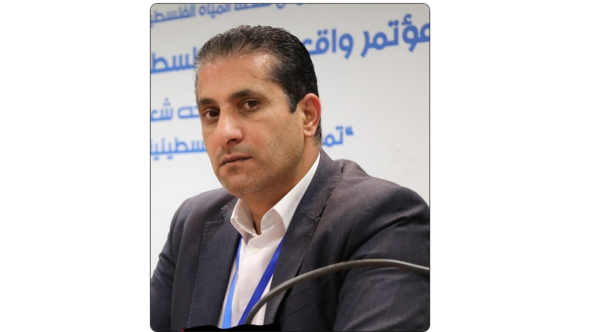
For his part, Shaher Saad, Secretary-General of the Palestinian General Federation of Trade Unions, described the targeting of workers as a 'full-fledged crime' aimed at fighting Palestinians in their sole source of livelihood. Saad affirmed that the occupation deliberately pursues workers and shoots at them daily, documenting the injury of thousands and the arrest of hundreds since the tightening of military measures at crossings and the wall.

Union statistics indicate that the number of Palestinian workers inside Israel was about 240,000 before October 2023, while currently about 70,000 are forced to risk entering without permits. This bitter reality has led to the martyrdom of nearly 68 workers and the injury of about 5,000 others by occupation bullets in recent months, in the complete absence of social protection funds.

Economically, Saad revealed that preventing workers from reaching their workplaces for more than 30 months has caused enormous losses estimated at about 27 billion dollars. This huge loss not only affects families but also negatively impacts the overall Palestinian economy, with the monthly loss for the labor sector alone estimated at about 1.35 billion shekels.

Observers and unionists believe that Israel uses 'impoverishment policy' as a political tool to pressure Palestinian society and push young people towards considering emigration. This policy aligns with annexation and expansion plans in the West Bank, where livelihoods are being squeezed to force residents to leave their lands under the weight of need, poverty, and security pursuit.

Regarding the permit system, Israel imposes strict restrictions including 'security checks' and biometric cards, in addition to conditions related to age and social status. This system, updated in 2020 through electronic platforms, primarily aims to tighten absolute security control over the movement of workers and turn them into hostages of political and military decisions.

Data from the Palestinian Central Bureau of Statistics shows that the construction sector attracts the largest proportion of these workers, followed by the agricultural and industrial sectors. Most of these workers come from rural areas and refugee camps in the West Bank, which are the areas most affected by closure policies and checkpoints that cut off Palestinian cities.

The continued targeting of Palestinian workers with bullets and abuse reflects the occupation's mentality that does not differentiate between a civilian seeking work and any other military target. The stories of Yousri, Raed, and thousands of other workers remain a living testament to the sacrifices Palestinians make to stay on their land and provide a decent life for their children under an occupation that does not stop killing.

At the conclusion of the funeral, human rights and union organizations demanded the necessity of providing international protection for Palestinian workers and stopping the crimes of the occupation and settlers against them. Mourners in Yatta stressed that the blood of martyr Yousri Abu Qubaita will remain a curse haunting the killers, affirming that a livelihood stained with blood is the title of the difficult stage the Palestinian people are living through.

My son is an ordinary young man seeking to earn a living for himself and his family, and the difficult circumstances and lack of job opportunities in the West Bank pushed him to take risks in search of work.

ARAB AND WORLD

Fri 27 Mar 2026 5:31 am - Jerusalem Time

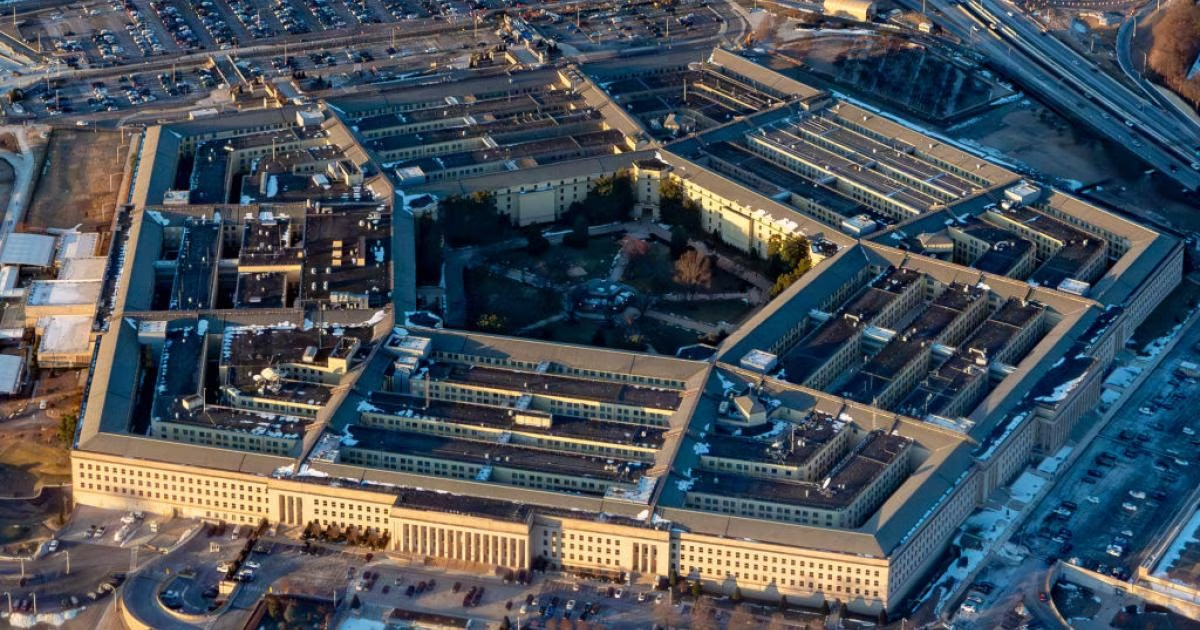
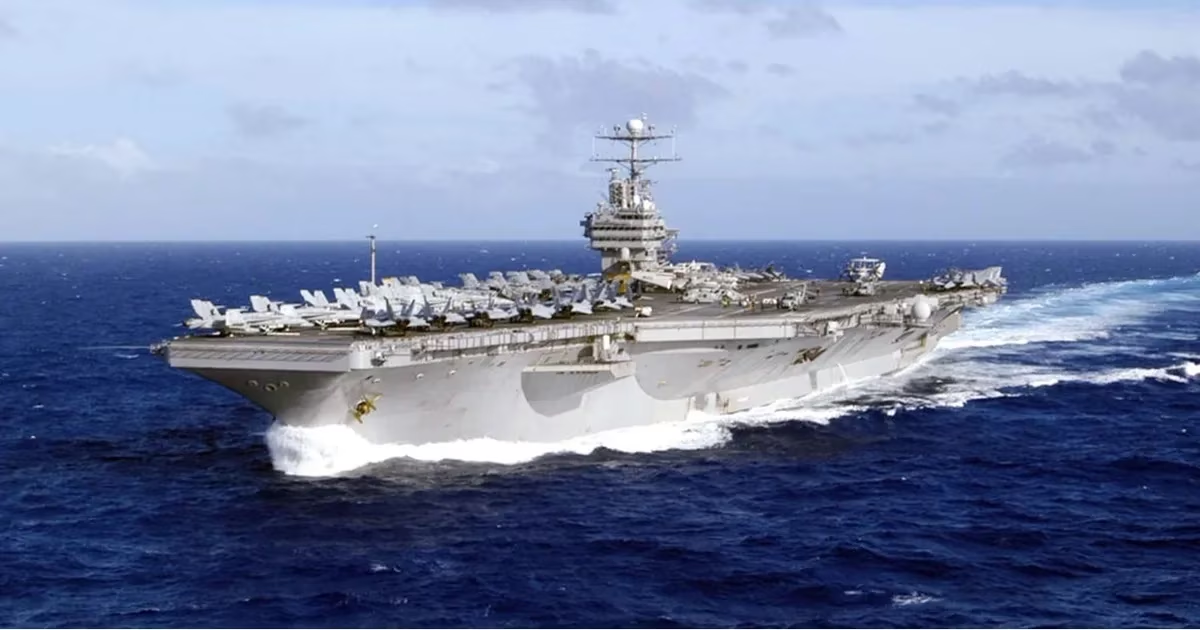
Pentagon Considers Diverting Military Supplies from Ukraine to Middle East to Counter Ammunition Depletion

The U.S. Department of Defense is considering a strategic option to redirect shipments of weapons and ammunition, originally intended to support Ukrainian forces, towards the Middle East. These moves come amid reports indicating a severe depletion in U.S. stockpiles of vital ammunition due to the ongoing military escalation with Iran. Informed sources stated that this shift reflects increasing pressure on the American supply chain to balance needs across multiple battlefronts.

The list of weapons slated for transfer includes advanced interceptor missiles designated for air defense systems, which were previously purchased as part of an initiative launched by NATO to support Kyiv. According to press reports, these missiles were part of a program funded by partner nations to enhance Ukraine's defensive capabilities, but the urgent need in the Middle East has prompted military planners in Washington to reconsider distribution priorities.

In a related context, Admiral Brad Cooper, commander of U.S. Central Command, revealed the scale of military operations carried out against Iranian targets, confirming that over 10,000 sites within Iranian territory have been targeted. Cooper explained that these intensive strikes fall within a clear strategy aimed at undermining Tehran's ability to expand its military influence beyond its regional borders. These extensive operations have consumed massive quantities of interceptor missiles and precision munitions.

For his part, a Pentagon spokesperson emphasized the department's commitment to providing all combat requirements for U.S. forces and their allies to ensure superiority in the field and achieve desired victories. Despite these new directions, NATO officials affirmed that the flow of military equipment to Ukraine continues through existing funding programs. Officials noted that Kyiv's 'Priority Requirements List' program has attracted billions of dollars in investments to ensure continued support.

These developments raise questions about the ability of American defense industries to meet the increasing demand on two active fronts simultaneously. While Washington tries to maintain the pace of military support for Ukraine in its confrontation with Russia, it finds itself compelled to bolster its arsenal in the Middle East to counter escalating Iranian threats. The coming period is expected to witness further international contributions to compensate for shortages in strategic stockpiles and ensure the stability of military supply chains.

We will ensure that U.S. forces and the forces of our allies and partners are provided with what they need to fight and achieve victory.

PALESTINE

Fri 27 Mar 2026 5:31 am - Jerusalem Time

3 Dead and Wounded in Occupation Raids on Deir al-Balah and Nuseirat

Israeli occupation forces escalated their field violations in the Gaza Strip, where three citizens were martyred and others sustained various injuries, including children, as a result of a series of raids targeting the central and southern areas on Wednesday. These developments come amidst the fragility of the ceasefire agreement in effect since last October, which has witnessed repeated violations by the occupation army, leading to hundreds of casualties.

In the city of Deir al-Balah in the central Strip, local sources reported that occupation warplanes launched a violent raid targeting the 'Sit Amira' camp in the southern part of the city. The attack resulted in the martyrdom of 22-year-old young man Abdul Rahman Qanbour, in addition to the injury of seven other citizens who were transferred to nearby hospitals for necessary treatment.

Concurrently, an Israeli drone targeted a group of citizens near the Al-Sawarah cemetery in Nuseirat camp, leading to the immediate martyrdom of two individuals. Medical sources at Al-Awda Hospital confirmed the arrival of the martyrs' bodies, noting that direct targeting of civilians has become almost a daily occurrence despite existing understandings.

For its part, the Palestinian Ministry of Health in Gaza issued a new statistical report documenting the victims of Israeli violations during the past 24 hours, confirming the rise in the number of martyrs from violations since last October to 689. The statement clarified that the total number of injured as a result of these aggressions reached 1860, placing the health system under continuous pressure amidst a shortage of capabilities.

Regarding the overall toll since the start of the genocide war in October 2023, the ministry revealed that the number of martyrs exceeded 77,000, while the number of injured surpassed 171,000. These alarming figures coincide with international reports indicating massive destruction affecting 90% of vital facilities in the Strip, with UN estimates suggesting that reconstruction requires a huge budget of up to 70 billion dollars.

The toll of victims from Israeli violations of the ceasefire agreement has risen to 689 martyrs and 1860 injured since last October.

PALESTINE

Fri 27 Mar 2026 5:30 am - Jerusalem Time

The Guardian warns: Netanyahu must be prevented from replicating the criminal 'Gaza model' in Lebanon

The British newspaper The Guardian issued a warning cry in its latest editorial, calling on the international community to take urgent action to prevent the head of the occupation government, Benjamin Netanyahu, from repeating the series of crimes he committed in the Gaza Strip within Lebanese territory. The newspaper pointed out that the international focus on the conflict with Iran has led to the neglect of the escalating humanitarian catastrophe in Lebanon, where air raids have claimed the lives of about 1,100 people and caused the displacement of a fifth of the population.

The newspaper explained that the military operations, which began under the slogan of 'precision strikes,' quickly turned into a widespread aggression, especially after the statements of Israeli War Minister Israel Katz, in which he revealed new occupation intentions. The occupation aims to impose a so-called 'buffer zone' extending to the Litani River, 30 kilometers deep into Lebanese territory, a measure the newspaper described as illegal and a blatant violation of Lebanese sovereignty.

The editorial linked the extremist tendencies in the Israeli government to what is happening on the ground, where ministers like Bezalel Smotrich openly call for the annexation of Gaza, while the military establishment seeks to apply the same policy in the north. The newspaper stated that the International Court of Justice had settled the legal debate by confirming that the right to self-defense cannot be used as a pretext for occupying territories or committing crimes of forced displacement.

Political circles in Tel Aviv believe that the current situation represents an opportunity to eliminate Hezbollah given its state of attrition and the assassination of its senior leaders in September 2024. However, the newspaper noted that historical experiences have proven the failure of this approach, as Hamas endured despite the destruction of Gaza, and Hezbollah itself was born out of the Israeli occupation of southern Lebanon, which lasted until 2000, meaning that a new occupation would strengthen its popular base.

In the context of diplomatic moves, the Lebanese government took steps that the newspaper described as an attempt to curb external influence, including expelling the Iranian ambassador, but the Lebanese state's ability to enforce disarmament remains very limited. The editorial asserts that Netanyahu, who is facing corruption charges domestically, finds in the continuation of the conflict the only way to restore his faltering political influence and maintain his far-right coalition.

The newspaper quoted human rights and field sources as saying that the occupation army has already begun implementing a scorched-earth policy, with Katz threatening to destroy Lebanese border homes and villages just as Israeli forces did in Rafah and Beit Hanoun. The scenes coming from Lebanon are consistent with the tragedy of Gaza, in terms of forcing civilians to flee en masse and targeting vital infrastructure, including bridges and water and sewage networks.

Lebanese health sector officials accused the occupation authorities of deliberately targeting medical facilities and ambulances to disrupt the emergency response system. In this regard, Human Rights Watch documented the occupation army's use of internationally prohibited white phosphorus shells in populated areas, raising concerns about the systematic commission of war crimes away from effective international oversight.

Internationally, The Guardian criticized the American stance, noting that the Trump administration may not show genuine interest in mediating to end the war in Lebanon, but may instead merely request the protection of certain communities, which the newspaper considered a veiled recipe for ethnic cleansing. Amidst the decline of the French role, which is seeking a way out of the crisis, the occupation government appears to feel complete immunity from any real international prosecution or pressure.

The editorial stressed that international inaction in taking deterrent measures against Israel for its atrocities in Gaza is what gave Netanyahu the green light to expand the killing. Since the last ceasefire announcement, the occupation army has continued to kill hundreds of Palestinians in Gaza, at a time when the humanitarian crisis and famine continue to plague the besieged Strip's residents without any fundamental change in international policies towards the occupation.

The newspaper concluded by calling on Israel's Western allies, especially the United Kingdom, to exert real and effective pressure, including halting arms supplies and imposing diplomatic sanctions. It warned that continuing the policy of 'silent complicity' would lead to a bleak future for Lebanon and would make the international community a partner in crimes committed in cold blood under the guise of defending security.

The current scene in southern Lebanon, according to the newspaper, brings back the worst chapters of the Arab-Israeli conflict, where the language of dialogue is replaced by the language of total destruction and displacement. The ball is now in the court of the major powers to prove the extent of their commitment to international law, or to continue granting the occupation an exception that allows it to violate all humanitarian conventions without fear of punishment.

The widespread inaction in taking effective measures against Israel for its atrocities in Gaza has encouraged the Netanyahu government and its supporters to proceed in Lebanon.

OPINIONS

Thu 26 Mar 2026 1:37 pm - Jerusalem Time

Achieving Palestinian Reconciliation and Unity and Building the State: Drawing Inspiration from the Moroccan Equity and Reconciliation Commission as a Model

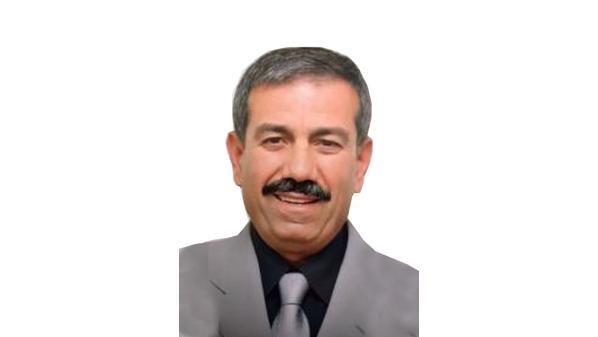
Dr. Ibrahim Nueirat

Palestine today is going through a critical phase as a result of the accumulation of internal divisions and the impact of the ongoing occupation, which has made addressing the effects of the past an urgent national necessity. The division between the West Bank and the Gaza Strip was not merely political disagreements between factions, but its impact extended to the entire Palestinian people. Citizens were affected in their daily lives, whether in terms of individual and social rights, or in employment opportunities, education, and basic services, and the level of trust in national institutions declined. Moreover, the entire Palestinian cause was affected, as the division weakened unified national representation and reduced the Palestinian community's ability to confront internal and external challenges, including Israeli policies, creating a double barrier to national unity and effective international action. In this context, it is clear that the Palestinian people are the real victims of division and political and social accumulations, not one party of the factions, which makes transitional justice a comprehensive national necessity to restore national unity and trust between society and the state.

Theoretical Framework: Transitional Justice

Lessons can be learned from transitional justice experiences implemented by other countries. In Morocco, the Equity and Reconciliation Commission successfully achieved a balance between uncovering the truth, redressing harm, and reforming institutions, without resorting to widespread judicial trials, which enhanced political stability and symbolic justice for victims. As for South Africa, the Truth and Reconciliation Commission's experience demonstrated the importance of the principle of “amnesty for truth” to overcome the legacy of apartheid and build a cohesive society based on reconciliation and mutual recognition. Tunisia's experience showed the necessity of a clear legal and institutional framework to address past violations, while Rwanda focused on community justice and local reconciliation after the genocide, benefiting from community traditions to ensure the rebuilding of the social fabric. These models confirm that the balance between acknowledging wrongdoing, redressing harm, reforming institutions, and collective reconciliation is a key factor in building sustainable national unity, and these lessons can be adapted to the specificity of the Palestinian reality to enhance their positive impact.

Specificity of the Palestinian Case: Obstacles to Implementing Transitional Justice

The Palestinian case differs from traditional models of transitional justice, given the complexity of its political structure and the continuation of external conflict, which poses complex challenges to any path of national reconciliation. While transitional justice experiences in other countries were associated with the “post-conflict” or “post-authoritarian” phase, Palestine still lives in a dual reality that combines internal division and ongoing occupation, making the application of this model more complex.

One of these obstacles is the continued Israeli occupation, which limits the Palestinian political system's ability to exercise full sovereignty, restricts the work of institutions, and directly affects any efforts to reform or rebuild them. The occupation also objectively benefits from the state of division, which creates an unstable environment that hinders the implementation of a comprehensive national path for reconciliation and justice.

Secondly, the Palestinian arena suffers from a duality of political and institutional legitimacy between the West Bank and the Gaza Strip, where power is contested between major political forces, which weakens the possibility of agreeing on a unified framework for transitional justice, and raises questions about the body authorized to manage and oversee this path.

Thirdly, the absence of a unified national narrative about the events of the division stands out, as narratives differ between political parties, and even within society itself, which complicates the process of uncovering the truth and building a shared collective memory. In light of this disparity, transitional justice mechanisms may turn into a new arena for conflict instead of being a tool to overcome it.

Fourthly, the weakness of trust between political actors constitutes a fundamental obstacle, as different parties fear that the transitional justice path may be used to settle political scores or redistribute influence, which reduces the willingness to make real concessions or acknowledge mistakes.

Fifthly, regional and international interventions play an influential role in complicating the scene, as some Palestinian parties are linked to different regional axes, which may affect their positions on reconciliation and make national decisions vulnerable to external tug-of-war.

Sixthly, economic fragility and reliance on external aid are added to this, which may limit the ability of the authority and institutions to implement effective and sustainable harm redress programs or institutional reform.

Finally, the weakness of the legal and institutional structure stands out as an additional obstacle, as judicial and administrative institutions suffer from the effects of the division, which weakens their ability to play a pivotal role in enforcing justice and ensuring the non-repetition of violations.

Based on this, the application of transitional justice in Palestine requires a realistic and flexible approach that takes these challenges into account, and is based on gradual implementation, building trust between parties, and separating the path of internal reconciliation from external complexities as much as possible. This also calls for an active role for civil society in creating a common space for dialogue, thereby contributing to creating the necessary political and social environment for the success of this path.

Potential for Adaptation and Inspiration from the Moroccan Experience

Despite these challenges, the possibility of benefiting from comparative experiences remains by adapting them to the Palestinian reality.

Palestinian national reconciliation presents itself as a fundamental entry point for overcoming political and institutional division, and rebuilding the national project on inclusive foundations. In light of the failure of traditional reconciliation attempts based on power-sharing or temporary agreements, the option of transitional justice emerges as an alternative framework capable of addressing the roots of the crisis, not just its manifestations.

The Moroccan experience, represented by the Equity and Reconciliation Commission, gains special importance in this context, as it is an Arab model that succeeded in balancing the requirements of justice and stability through a comprehensive approach to addressing the past of violations. The Moroccan experience was based on fundamental pillars that can be considered a reference for any reconciliation path, the most important of which are: official recognition of violations, uncovering the truth, redressing harm, and institutional reform. The goal of these mechanisms was not merely to settle the past, but to rebuild the relationship between the state and society on the foundations of trust and citizenship, which is a transformative dimension that can be benefited from in the context of the Palestinian situation, despite the difference in political and historical conditions.

Palestinian reconciliation faces fundamental challenges, most notably the absence of a unified national narrative about the events of the division, especially in light of the conflict between Fatah and Hamas, where narratives are numerous and sometimes contradictory, which hinders the building of a shared collective memory. Here, the role of the truth-finding mechanism, as implemented by the Equity and Reconciliation Commission, emerges, not only in documenting violations, but in creating a public space for discussion and recognition, which contributes to dismantling the remnants of the past and paving the way for reconciliation based on transparency and clarity.

Palestinian Proposal (Applied Model)

Lessons from the Moroccan Experience and Potential for Palestinian Adaptation

The approach of redressing harm is a pivotal element that can be drawn upon in Palestine, especially given the human suffering resulting from internal division, both at the individual and collective levels. The Moroccan experience has shown that compensation is not limited to the material dimension, but includes symbolic and developmental dimensions that enhance victims' sense of fairness. This dimension can be adapted in Palestine through compensation and integration programs targeting those affected by the division, thereby contributing to strengthening trust between political actors and civil society.

Institutional reform emerges as another essential lesson, as true reconciliation cannot be discussed without restructuring the structures that contributed to or fueled violations. In the Palestinian context, this requires reforming political and security institutions on inclusive national foundations, away from partisan division, to ensure their neutrality and effectiveness in serving the national project.

However, it should be noted that drawing inspiration from the Moroccan experience does not mean a literal transfer of its tools, but rather requires adapting them within a Palestinian framework that takes into account the specificities of the context, including the nature of the conflict, the structure of political actors, and the impact of external factors, such as the ongoing occupation. Success in this path primarily depends on a genuine political will among Palestinian parties that goes beyond competition for power towards a strategic partnership based on national unity. The Moroccan experience embodied a genuine political will to turn the page on the past and open horizons for reform, which is a necessary element for any successful Palestinian model.

The integration of Palestinian civil society is also a fundamental element, similar to the widespread participation of human rights actors in the Moroccan experience, as reconciliation cannot remain merely an agreement between political elites, but must transform into a comprehensive societal project that rebuilds trust and promotes a culture of tolerance.

Based on this, drawing inspiration from the experience of the Equity and Reconciliation Commission represents a strategic option that can contribute to overcoming the Palestinian division, provided it is adopted within a flexible approach based on adaptation and creativity, not on literal imitation. What is required is to build an authentic Palestinian experience that benefits from comparative lessons and responds to the requirements of the political and social reality, thereby paving the way for rethinking the path of reconciliation as a strategic project for rebuilding the state and society on the foundations of justice, fairness, and national unity, and enhancing the ability to confront internal and external challenges.

Palestinian transitional justice emerges as a vital national path that allows all political parties to acknowledge their mistakes and learn from past experiences, and to transform past mistakes into a basis for building an inclusive political and social future. What is required is for the factions to take responsibility for acknowledging wrongdoing, not only at the individual level, but at the level of institutions and society as a whole, to ensure the non-repetition of violations and excesses, and to create an environment in which political and social differences can be managed within the bounds of law and institutions, away from violence or exclusion. Palestinian transitional justice acquires an additional strategic dimension, as it represents a tool to thwart the occupation's attempts to exploit division and weaken national cohesion, and it also represents a response to a widespread popular demand, pressuring the factions to deal positively with the national reconciliation path. Returning to the people through elections alone is not enough to address divisions or restore trust between parties, and if it is not based on comprehensive national reconciliation, it will fail to achieve the desired change. However, if this proposal is agreed upon and seriously implemented, elections become an effective step, based on unity, accountability, and transparency, and establish a stable and sustainable democratic path.

Detailed Proposal for Palestinian Transitional Justice consists of a set of integrated measures:

Building Political Consensus: Through a comprehensive national agreement between all parties to address the past and acknowledge mistakes, with oversight by an independent body representing civil society and national forces to ensure the neutrality of the path, and the involvement of all factions in drafting the roadmap for reconciliation. Here, political challenges can be addressed by developing flexible scenarios to confront resistance, such as establishing initial bilateral and factional dialogues between the most conservative parties to ensure their participation, then expanding the scope of consensus to include everyone, with guarantees that the path will not be used to settle political scores.

Establishing a Palestinian Truth and Equity Commission: An independent body comprising judicial, human rights, and community figures, tasked with documenting violations and listening to victims from all over Palestine, and preparing a comprehensive report that builds a collective national memory reflecting the recognition that the entire Palestinian people are the victims, and ensuring the acknowledgment of wrongdoing at the individual and collective levels, with transparent dissemination of its work results to promote collective recognition. Indicators can be developed to measure the commission's success, such as: number of beneficiaries, their satisfaction with the process, number of initiatives taken based on the commission's recommendations.

A National Program for Redressing Harm: Includes providing material, social, and psychological compensation to all those affected by the division, both individually and collectively, and reintegrating those affected into national institutions and jobs, in addition to rehabilitation and training programs, with official recognition of those affected to restore their dignity and enhance their sense of justice.

A Flexible Approach to Accountability: Adopting the principle of “acknowledgment for mitigation,” with a focus on moral and political responsibility, and avoiding widespread judicial trials that may hinder national reconciliation, to ensure that acknowledging wrongdoing becomes part of collective learning and not a tool for division. To emphasize the balance between justice and reconciliation, a framework can be established that clarifies that the path integrates symbolic justice, acknowledgment of harm, and limited legal responsibility, thereby preventing the repetition of violations without politicizing justice.

Reforming and Unifying Institutions: Includes reforming judicial, administrative, and security agencies to ensure transparency and justice, strengthening judicial independence and professionalism in administration, and establishing clear controls to prevent the repetition of violations.

Involving Society in Reconciliation: By supporting local and community reconciliation initiatives, and involving civil society and local frameworks in managing national dialogue, to promote a culture of acknowledgment, reconciliation, and community participation, ensuring that the path includes all affected segments of society, including youth, women, and marginalized groups. This can be enhanced through continuous media and community communication mechanisms, such as open dialogue programs, online forums, and interactive media campaigns that allow citizens to participate in formulating solutions.

Managing the Occupation File in Parallel: By systematically documenting Israeli violations through legal and international channels, while separating this file from the internal reconciliation path to ensure that efforts are focused on addressing internal divisions and national reconciliation.

Integrating Memory into Education and Media: By including concepts of transitional justice, acknowledgment of mistakes, and reconciliation in curricula, and producing media programs aimed at promoting a culture of acknowledgment, accountability, and tolerance among all components of society, which contributes to educating new generations about the value of reconciliation and national unity.

Monitoring and Implementation Mechanisms: To ensure the continuity of the path and prevent deviation, including monitoring the implementation of the recommendations of the Truth and Equity Commission, independent mechanisms for evaluating progress, and ensuring the separation between political and judicial authority. Interim evaluation indicators can be added to periodically measure the progress and effectiveness of the path.

Time Flexibility and Gradual Implementation: With a clear timeline for each stage of reconciliation, allowing for periodic evaluation and adjustment based on results on the ground.

Practical Vision for Implementing Palestinian Transitional Justice

In light of the preceding analysis of challenges and the Palestinian proposal, a practical vision for implementing Palestinian transitional justice can be developed, based on gradualism and flexibility, and aimed at transforming theoretical principles into applicable steps on the ground, through an integrated phased path that includes:

Creating a Political and Social Environment and Building Trust: The path begins by creating a political and social environment through confidence-building measures between parties, such as launching informal dialogues mediated by independent figures, taking reciprocal steps to reduce tension, and stopping inflammatory media campaigns, thereby creating a suitable climate for initiating the process.

Launching the Path of Truth and Acknowledgment: Moving to the stage of launching the path of truth and acknowledgment by forming an independent preparatory framework that gradually collects testimonies and encourages voluntary acknowledgment within guarantees that prevent political exploitation, thereby contributing to building a shared national narrative.

Activating Harm Redress Programs: Activating harm redress programs by establishing mechanisms for material and moral compensation, providing psychological and social support to those affected, and reintegrating them into society and institutions, thereby enhancing the sense of fairness and rebuilding social trust.

Institutional Reform and Ensuring Non-Repetition: In a later stage, the focus will be on institutional reform through restructuring security and administrative agencies and strengthening judicial independence, thereby ensuring the non-repetition of violations in the future.

Role of Civil Society (Cross-Cutting Element): Throughout all these stages, civil society plays an active role in mediation, monitoring implementation, and promoting a culture of dialogue and reconciliation, thereby transforming this path from a political agreement into a comprehensive societal process.

Relative Separation of Paths: This vision is based on the principle of relative separation between the path of internal reconciliation and the complexities of the conflict with the occupation, allowing for focus on addressing internal division without disruption, while continuing to document external violations through legal and international channels.

Expected Outcomes and Recommendations

This path is expected to have a multi-dimensional impact; politically, by strengthening national unity, reducing division, and increasing the legitimacy of institutions; socially, by restoring trust among citizens, enhancing civic participation, and spreading a culture of reconciliation and tolerance throughout society; legally and institutionally, by developing the justice system, strengthening judicial independence, and improving the performance of security and administrative agencies; internationally, by enhancing Palestine's image as a society striving for good governance and respect for human rights, and attracting technical and human rights support; and in the long term, by building a strong and stable rule of law, reducing the likelihood of internal conflicts, and enabling Palestinian society to work unitedly towards an inclusive political and social future that ensures everyone's participation without exclusion.

This Palestinian model of transitional justice represents a path for political acknowledgment of mistakes and learning from them by all factions, placing differences within the bounds of law and institutions, and addressing the harm that has affected the entire Palestinian people and the national cause as a whole. It also provides a solid foundation that makes any future elections meaningful and effective, because it ensures that political competition will be based on unity, accountability, and transparency, not on division or exploitation of past divisions. Through this path, painful experiences are transformed into a basis for building an inclusive future, where political differences are managed constructively, and differences become a means of dialogue, not a tool for conflict or division, so that Palestinian society can regain its unity and strength, and launch its national project cohesively and sustainably, benefiting from the lessons of international models such as Morocco in acknowledging the past, redressing harm, and reforming institutions as a basis for any true national reconciliation.


PALESTINE

Thu 26 Mar 2026 1:25 pm - Jerusalem Time

Renewed Nakba in Silwan: Occupation Seizes 13 Apartments, Displacing Dozens of Jerusalemites

Dozens of settlers stormed the Batan al-Hawa neighborhood in Silwan, south of Al-Aqsa Mosque, carrying out a widespread seizure operation that simultaneously affected 13 residential apartments. This operation took place under tight military protection from the occupation forces, which imposed a security cordon to secure the transfer of properties and hand over homes to the settlers.

This escalatory step comes as part of a systematic policy aimed at emptying Palestinian neighborhoods surrounding the Old City of their original inhabitants. Settlement associations, supported by occupation authorities, seek to change the demographic map through biased legal tools and brutal field force that imposes forced displacement.

Human rights and field sources documented occupation soldiers raiding the targeted homes and delivering immediate eviction notices to their residents within a few hours. Teams from the Israeli Execution and Enforcement Department were seen emptying the contents of the residential apartments and throwing them into the open, in preparation for replacing the landowners with settlers.

Jerusalemite Raafat Basbous recounted painful details of the moment his home and his father's home were stormed, where they were given only 24 hours to leave the place they had lived in for decades. Basbous affirmed that his family has resided in this neighborhood since before the occupation of Jerusalem in 1967, specifically for 63 years, considering what is happening an extension of his ancestors' Nakba.

In a harsh human scene, elderly Yousef Basbous expressed his heartbreak at losing his home, which he built 'stone by stone' since 1963. He pointed out that the occupation authorities prevent the rightful owners from entering their homes while opening the doors wide for settlers, emphasizing that this is the second time he has been displaced after the 1948 Nakba.

Eviction operations also affected 11 residential apartments belonging to the Rajabi family, with settlement associations claiming ownership of the land for Jews of Yemeni origin decades ago. Immediately after the families were removed, settlers raised Israeli flags over the rooftops of the buildings in a provocative move reflecting the extent of control.

With this new escalation, the number of apartments seized in the Batan al-Hawa neighborhood in the last four days has risen to 15 residential apartments. This frantic campaign has led to the displacement of about 80 Palestinians, including children, women, and the elderly, who are now homeless under difficult weather and political conditions.

These developments sparked a wave of widespread anger on social media platforms, where activists circulated videos documenting the cries of women and the suffering of children during their expulsion. Observers described what is happening as 'open ethnic cleansing' carried out in cold blood and in plain sight of a silent international community.

Jerusalemite activists warned that displacement operations in Silwan are no longer just individual incidents or legal disputes, but rather an accelerating path to ending the Palestinian presence. They pointed out that the occupation exploits discriminatory laws to legitimize the theft of properties and transform the area around Al-Aqsa Mosque into interconnected settlement outposts.

For its part, the human rights center 'B'Tselem' issued serious warnings about the danger of widespread displacement threatening more than 2,200 Palestinians in the Batan al-Hawa neighborhood alone. The center clarified that hundreds of children face an unknown future amid the occupation's insistence on implementing eviction decisions in favor of settlers and extremist associations.

The danger does not stop at Batan al-Hawa but extends to the adjacent Al-Bustan neighborhood, where about 1,550 people face the risk of their homes being demolished or evacuated. The occupation municipality plans to establish the so-called 'King's Garden' tourist park on the ruins of these historic homes, as part of a comprehensive Judaization project.

Field statistics indicate that the Batan al-Hawa neighborhood has lost about 15 families since the start of the aggression on Gaza on October 7, 2023. Among the families forcibly displaced are the Shahada, Ghaith, Awda, and Shuwaiki families, joining a long list of victims of continuous settlement expansion for years.

Local sources confirmed that the occupation authorities have carried out the demolition of 35 homes in the Silwan area by February 2026, with dozens of other orders pending execution. This acceleration in demolition and seizure operations reflects an Israeli desire to resolve the demographic conflict in occupied Jerusalem as quickly as possible.

Despite the pain and displacement, the residents of Silwan emphasize their right to return to their homes, asserting that the policy of uprooting people from their roots will not succeed. The cries and living testimonies of Jerusalemites remain a historical document exposing the falsehood of the occupation's legal claims and affirming the city's Arab and Islamic identity.

Indeed, the eye sheds tears and the heart grieves for our home and the home of our ancestors. We will leave under threat, but we will surely return.

PALESTINE

Thu 26 Mar 2026 1:25 pm - Jerusalem Time

Escalation of Settler Attacks in the West Bank: Injuries in Tubas and Jerusalem, and Land Seizure with Tents

Local sources reported that a number of Palestinian citizens were injured early Thursday morning, following an attack by settlers in the Safah Tayasir area, northeast of Tubas. The injured were transferred to nearby hospitals for necessary treatment, amidst the recurrence of these attacks, which have targeted the same area intensively recently.

In the context of field settlement expansion, groups of settlers set up tents this morning on lands in the village of Ammarin, northwest of Nablus. This step comes as part of attempts to impose a new settlement reality in the area, as settlers stormed the village under security protection and deployed their equipment on private citizens' lands.

The tent-setting operations were not limited to Nablus but extended to include the Khalayel al-Loz area southeast of Bethlehem, in addition to another tent in the Ayoun area in the southern part of Tubas. Sources stated that this latter area is inhabited by Palestinian families who were forcibly displaced from the northern Jordan Valley due to previous attacks.

Regarding injuries in occupied Jerusalem, ambulance crews confirmed the transfer of 5 injured people to the hospital yesterday, Wednesday, as a result of being severely beaten by settlers in the town of Mikhmas. These attacks occurred specifically in the Al-Mukabira area on the outskirts of the town, causing varying injuries and bruises to citizens.

In Hebron Governorate, early Wednesday witnessed an attack targeting economic facilities, where settlers set fire to a bulldozer and work equipment inside a quarry located in the southern area of the city. These attacks are part of targeting the livelihoods of Palestinians and destroying their private property to intimidate them and push them to leave their lands.

Official data issued by the Wall and Settlement Resistance Commission indicates that last February witnessed an unprecedented escalation, with more than 511 attacks carried out in various governorates of the West Bank. The commission also recorded the martyrdom of 7 Palestinians by settler bullets since the end of last month until the beginning of this week.

Since October 7, 2023, the death toll from attacks by the occupation army and settlers in the West Bank has reached about 1134 martyrs, while approximately 11,700 citizens have sustained varying injuries. These figures show the extent of violence against Palestinian civilians in various villages, towns, and cities.

Regarding arrest campaigns, reports indicate that the occupation forces have arrested nearly 22,000 Palestinians since the beginning of the recent escalation last October. These arrests are accompanied by widespread destruction of homes and facilities, exacerbating the humanitarian and economic conditions of the population in the occupied territories.

Policies of forced displacement and home demolition continue as essential tools in settlement expansion, with Bedouin and agricultural communities being directly targeted. This plan aims to empty the land of its original owners in favor of building and expanding illegal settlements that devour vast areas of the West Bank.

Settlers carried out 511 attacks in the West Bank last February, leading to an increase in the number of casualties and field violations.

PALESTINE

Thu 26 Mar 2026 1:25 pm - Jerusalem Time

Injuries and hundreds of tents submerged.. The low-pressure system exacerbates the tragedy of displaced people in Gaza

Gaza City witnessed a tragic incident today, Thursday, resulting in varying injuries to three displaced people, following the collapse of a wall of a building that had been previously subjected to Israeli shelling. Field sources clarified that the dilapidated wall could not withstand the strong winds and heavy rains accompanying the current low-pressure system, leading to its collapse on the displaced people who were sheltering next to it. The injured were immediately transferred to the hospital to receive the necessary medical care.

In the central part of the Strip, specifically in Deir al-Balah city, local sources reported the submersion of hundreds of tents housing thousands of displaced families, after accumulated rainwater turned the displacement areas into pools of mud. Water leaked into temporary shelters, causing damage to blankets, clothes, and essential supplies, amid a complete lack of sewage networks and infrastructure capable of accommodating these quantities of rain.

Displaced families in the western areas of Gaza City face extremely harsh conditions, as the dilapidated tents are unable to provide even minimal protection from the bitter cold and strong winds. These deteriorating weather conditions have increased the suffering of citizens who have lost their homes and are now facing the risk of death not only due to military operations but also as a result of difficult environmental and climatic conditions and a lack of shelter and heating materials.

For their part, civil defense specialists and engineers issued urgent warnings about the danger of staying near facilities and buildings at risk of collapse, emphasizing that the saturation of cracked walls with rainwater increases the likelihood of their sudden collapse. The specialists called on the displaced to exercise the utmost caution and to stay away from rubble and buildings that have been previously hit by airstrikes, to preserve their lives amid the continued low-pressure system.

It is worth noting that the Gaza Strip has been experiencing an unprecedented humanitarian catastrophe since the outbreak of the war in October 2023, with statistics indicating that about 1.9 million Palestinians are now displaced and lack safe shelter. This wave of bad weather reveals the extent of the massive destruction that has affected residential areas and places the international community before its responsibilities towards hundreds of thousands of families living in tents that do not meet the minimum standards of human safety.

Continued impact of the low-pressure system may lead to further collapses in damaged buildings and double the risks threatening the lives of displaced people.

ARAB AND WORLD

Thu 26 Mar 2026 1:24 pm - Jerusalem Time

Israeli claims of IRGC Navy commander assassination and Trump seeks to end war

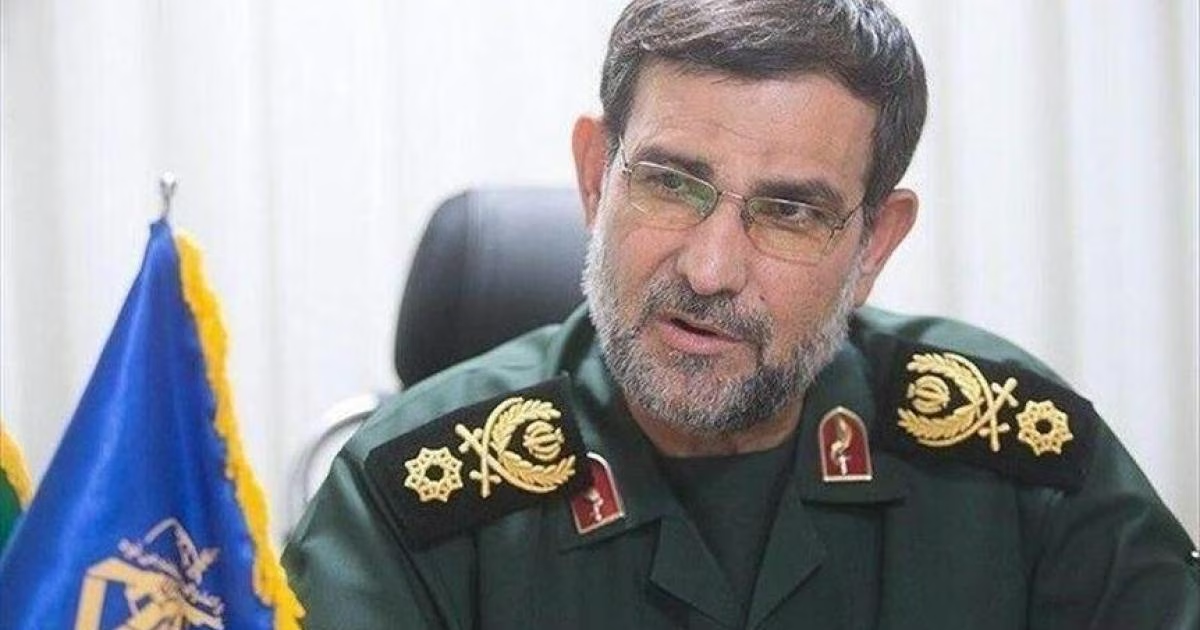
Hebrew media sources, quoting officials in Tel Aviv, reported the assassination of the commander of the Iranian Revolutionary Guard Corps (IRGC) Navy, Ali Reza Tangsiri, during an attack in the coastal area of Bandar Abbas. Tangsiri is considered one of Iran's most prominent military leaders, having been responsible for strategic and sensitive files, most notably the threat to close the Strait of Hormuz to international navigation.

The reports circulating in the Hebrew media did not specify the exact timing of the attack targeting the Iranian commander, amidst conflicting news about the party responsible for the operation. While some analyses suggest that the US military is targeting Iranian coastal areas, other sources confirm that Israel is leading qualitative assassination operations deep inside Iran.

In a related context, diplomatic sources revealed that Israel has backed down from plans to target high-ranking Iranian political figures, including Foreign Minister Abbas Araghchi and Parliament Speaker Mohammad Bagher Ghalibaf. This retreat came after pressure exerted by Pakistan on the US administration, warning that the elimination of these leaders would lead to the absence of any party with whom to negotiate to end the conflict.

American press reports confirmed that the removal of Araghchi and Ghalibaf's names from the Israeli targeting list is a temporary measure that may last only a few days. This step, according to US officials, aims to test the possibility of opening political communication channels leading to a comprehensive de-escalation in the region, away from the language of direct military escalation.

For his part, US President Donald Trump expressed his explicit desire to end military operations against Iran as soon as possible. Informed sources reported that Trump set a timeline of four to six weeks to complete this mission, indicating that the current attacks should enter their final stages according to the pre-established plan.

The US President believes that the continued aggression against Iran represents a political drain that distracts the administration from pressing domestic issues. Irregular migration files and preparations for the upcoming midterm elections are at the top of the White House's priorities, pushing Trump to press for a resolution of the Iranian file through a mix of military force and diplomacy.

On the diplomatic front, Pakistan emerged as a pivotal player in mediating between Tehran and Washington, alongside supporting roles from Egypt and Turkey. Islamabad maintains direct and effective communication channels with both parties, making it the most prominent candidate to host any potential peace talks aimed at stopping the bleeding of war in the Middle East.

As part of these efforts, Washington sent a 15-point proposal to the Iranian leadership via the Pakistani mediator, including conditions for ending the confrontation. The US administration claimed that the Iranian side is showing a desire to reach an agreement that would end the state of isolation and successive military strikes that the country's infrastructure and leadership have been subjected to.

Despite these moves, Tehran maintained a cautious stance, with Foreign Minister Abbas Araghchi stating that his country is carefully studying the US proposal but has not yet decided to enter into direct negotiations. Araghchi denied any current dialogue with Washington, stressing that Iran does not intend to make concessions under the weight of continuous military threats.

Sources indicate that predicting Trump's final decisions remains difficult, especially given the overlap between political statements and field operations. While the White House talks about a desire for peace, airstrikes continue to target strategic locations, leaving the region facing open scenarios between comprehensive de-escalation or a major explosion.

Regional and international capitals are cautiously monitoring the outcomes of these developments, especially with the approaching deadline set by Trump to end the war. Fears are growing that any miscalculation in the field, such as the confirmation of Tangsiri's assassination, could lead to a widespread Iranian reaction that could derail all current Pakistani and American mediation efforts.

The assassination file remains the primary driver of the escalation level, as Tehran considers targeting IRGC leaders a red line that requires a response. If the death of the naval commander is confirmed, this could push the IRGC to carry out retaliatory operations in international waterways, which would complicate Trump's mission to end the war in the next six weeks.

The Israelis had the coordinates of Araghchi and Ghalibaf and wanted to eliminate them, but Washington asked them to back down to ensure there was a party they could talk to.

OPINIONS

Thu 26 Mar 2026 10:13 am - Jerusalem Time

Before the First Shot: Know The Political Endgame

By Gershon Baskin

Over many years of engaging in unofficial dialogue with Palestinians, Israelis, and regional actors, I have come to a simple but critical conclusion: Before starting a war, responsible leaders must ask themselves how it will end. And the answer must ultimately be political and achieved through diplomacy.Wars are easy to begin. They are much harder to end.History repeatedly demonstrates that military campaigns launched without a clear political endgame rarely produce stability. Instead, they leave destruction, trauma, and unresolved grievances that eventually force the same political conversations that could have taken place before the fighting began.Today’s confrontation between Israel and Iran, together with the ongoing conflict with Hezbollah, raises exactly this question. Military operations can achieve tactical successes. Missiles can be intercepted. Infrastructure can be destroyed. Commanders can be eliminated.But none of these actions answer the most important strategic question: What political reality will exist after the guns fall silent? If the political situation after the war looks exactly like it did before the war, or worse, the region will have paid an enormous price for very little strategic gain.Wars sometimes create moments of strategic transformation. When the dust settles, they can open political doors that previously seemed locked. The challenge for Israel, the United States, and the Arab world today is to recognize that such a moment may now be emerging.The confrontation with Iran and its network of regional proxies has accelerated a significant shift in the Middle East. A growing number of Arab states increasingly see their security interests aligning with Israel’s in confronting Iran’s regional ambitions, missile capabilities, and the destabilizing influence of armed proxy organizations such as Hezbollah, Hamas, and other militias.Countries such as Saudi Arabia, the United Arab Emirates, Bahrain, Jordan, Egypt, and others are confronting the same strategic reality: The region cannot achieve long-term stability while Iran projects power through armed non-state actors and destabilizing military capabilities.This shared concern has already led to unprecedented levels of quiet security coordination and intelligence cooperation. It has also strengthened the logic behind an emerging regional security architecture linking Israel, moderate Arab states, and the US in a cooperative defense framework.But regional defense cooperation cannot be built on military logic alone. For Arab governments, normalization with Israel and participation in a regional security framework is not only a strategic calculation; it is also a political issue connected to the Palestinian question. Arab leaders understand that their ability to deepen relations with Israel in a visible and durable way depends on credible progress toward resolving the Israeli-Palestinian conflict. This is the reality Israeli leaders must confront.For more than a decade, Prime Minister Benjamin Netanyahu has consistently acted in ways that weaken the possibility of a two-state solution. Settlement expansion, the political marginalization of moderate Palestinian leadership, and the absence of any serious diplomatic initiative have all contributed to the erosion of the political horizon necessary for peace. In doing so, Israel has undermined not only prospects for resolving the conflict but also its own ability to build broader strategic partnerships in the region.The wars with Iran and Hezbollah have nonetheless created a potential strategic opening for Israel that could fundamentally transform its place in the Middle East. Israel could move from a position of partial regional isolation to full integration within a cooperative regional security and economic system. But that transformation will not occur without addressing the Palestinian issue.For many Israelis today, the idea of a Palestinian state seems remote or unrealistic. Years of violence, failed negotiations, and deep mistrust have eroded confidence in the peace process. The trauma of the October 7 attacks and the devastating war that followed in Gaza have further hardened public attitudes.Yet the absence of a political solution does not produce stability. The alternative to a negotiated political framework is not the disappearance of the conflict. It is its permanent continuation. As long as millions of Palestinians live without political sovereignty and national self-determination, the conflict will continue to generate cycles of violence, radicalization, and instability that ultimately undermine Israel’s long-term security and international standing.The two-state solution remains the only framework capable of reconciling Israel’s legitimate need for security and national self-determination with the Palestinians’ equally legitimate aspiration for independence and dignity.Even in the midst of the current war, voices from the region are warning about the dangers of allowing military escalation to replace political strategy. In a recent joint statement, Iranian and Israeli peace activists condemned the war and warned that escalating military confrontation will deepen insecurity across the region. They pointed to the ideological hostility of the Iranian regime toward Israel and the US as a major driver of confrontation, while also criticizing the decision by Israeli and American leaders to resort to war without exhausting diplomatic options or clearly defining political objectives.Their message was simple: Wars justified by claims of imminent threats often deepen instability rather than resolve it, and political transformation within Iran cannot be imposed from outside but must come from Iranian society itself. Their call was for an immediate end to hostilities and a renewed commitment to diplomacy, international law, and political solutions. The US and key Arab states possess considerable leverage in shaping Israel’s strategic choices. Security guarantees, regional defense integration, normalization agreements, and large-scale economic cooperation initiatives could dramatically reshape Israel’s regional position. Israel could become a central pillar of a new Middle Eastern security and economic architecture.But those incentives will not materialize without a credible political commitment regarding the future of Palestine. This is something Israeli political parties in the opposition need to pay attention to: Israel is not required to reach an immediate final-status agreement. It does require establishing a clear political horizon: a credible, internationally supported pathway toward the emergence of a demilitarized Palestinian state living peacefully alongside Israel.Such a framework would require strong security arrangements, phased implementation, and international guarantees. It would also demand serious reforms within Palestinian political institutions and a determined effort to ensure that armed groups committed to violence do not control Palestinian governance.None of this will be easy. But the alternative is far worse.The Middle East has seen too many wars begin without serious thinking about the political order that must follow them. Lebanon’s civil war, the Iraq War, the Syrian catastrophe, and repeated Gaza wars all demonstrate the same painful lesson: Military victories without political frameworks rarely produce lasting stability.Israel’s confrontation with Iran and Hezbollah should not follow that pattern. Instead, it could become the catalyst for a broader regional transformation – one that includes collective defense cooperation, expanded normalization between Israel and Arab states, and a genuine political process leading toward Israeli-Palestinian peace.During the decades that I have sat in quiet rooms with Palestinians, Israelis, and others in the region discussing how this conflict might finally end, I have seen that even bitter enemies often understand the outlines of the solution long before their leaders are ready to act.The parameters of Israeli-Palestinian peace have been known for many years. The real question has never been what the solution looks like. The question has always been whether leaders have the courage to move toward it. Wars should never begin without a vision of the peace that must follow them.That vision is long overdue.

OPINIONS

Thu 26 Mar 2026 10:03 am - Jerusalem Time

Thoughts on the wars in Iran, Lebanon, and Gaza

Gershon Baskin

The war in IranPresident Donald Trump’s sudden turnaround from his threat to obliterate Iran’s energy infrastructure if the Strait of Hormuz was not opened within 48 hours should not have surprised anyone. Trump is the most unpredictable leader in the world. His self-image as a dominant dealmaker is closely tied to power and money.When the war in Iran began to impact oil prices and shake Wall Street, it became clear that escalation had limits. Trump can always justify stepping back by presenting himself as the ultimate negotiator. In his worldview, deals are the product of strength. “Peace through strength” is not just a slogan, it is his modus operandi.Is Israel pleased that the United States is negotiating an end to the war with Iran? Clearly not. But when Trump signals his intentions, Prime Minister Benjamin Netanyahu has little room to resist. Even under conditions of Israeli military dominance, US diplomatic channels remain open – as evidenced by the Iranian aircraft that left for Pakistan to continue negotiations without being intercepted.We must ask some fundamental questions. Was this a war of necessity? I believe not. Is Iran a real threat to Israel and the region? Absolutely. Does the Iranian regime endanger its own people? I believe it does. Would the world benefit from a democratic Iran? Without doubt. But will this war produce regime change? Highly unlikely.Can the war remove Iran’s stockpile of highly enriched uranium? Possibly, but only if the United States sustains pressure. Can military force alone guarantee safe passage of oil through the Strait of Hormuz? No. That requires Iranian consent. Ultimately, Trump will decide when enough has been achieved and declare victory.For Israel, a “victory” might mean removing enriched uranium and securing limits on Iran’s missile program. Yet the regime will likely remain, possibly even more radicalized. That would represent a strategic failure mostly for Israel, but also for the United States, and the Iranian people.Is there a diplomatic end? There was certainly a diplomatic path to prevent the war. Ending it diplomatically is more complex but still essential. Trump alone may be able to secure that outcome. What influenced his shift? Oil markets, Wall Street, and key regional actors: Saudi Arabia, the UAE, and Qatar – whose influence also ended the war in Gaza.The war with HezbollahThere is a clear diplomatic path to ending the war with Hezbollah, but Israel’s government has so far resisted it. That path is embodied in the French proposal, which is gradually evolving into what could become a joint US-French initiative – perhaps ultimately branded as a Trump proposal.The framework begins with an immediate ceasefire, recognizing that no meaningful political process can proceed under active hostilities. France argues, correctly, that Hezbollah cannot be disarmed while Lebanon is under attack. The proposal envisions a phased process: negotiations between Israel and Lebanon, potentially hosted in Paris or the United States, leading to a non-aggression understanding and a robust version of UN Security Council Resolution 1701 from 2006.A key component is the deployment of the Lebanese Armed Forces in southern Lebanon, replacing Hezbollah’s military presence. This would be supported by an international effort, led by the United States, to strengthen Lebanon’s government under President Joseph Aoun and Prime Minister Nawaf Salam, both seen as anti-Hezbollah figures. The plan also assumes a full Israeli withdrawal from southern Lebanon.Over a limited time period, Hezbollah would be expected to relinquish its weapons as Lebanese state institutions grow stronger, mainly the Lebanese army. The proposal opens the real possibility of eventual normalization between Israel and Lebanon, after a military-security pact has been agreed to.This is a pivotal test for Trump. If he adopts this framework, he could compel Israel to end its military operations and accept a negotiated border arrangement. Yet the obstacles are significant: Israeli resistance, Hezbollah’s refusal to disarm, and the limited capacity of the Lebanese state.Still, the proposal offers a structured alternative to endless war. It reinforces a simple truth: Lasting stability can only be achieved through political agreement.Netanyahu and Trump’s peacemakingNetanyahu’s government remains convinced that military force can achieve decisive victories against Iran, Hezbollah, and Hamas. This belief has shaped Israel’s strategy across all fronts. Yet in none of these cases has the enemy surrendered. Iran, Hezbollah, and Hamas have all absorbed heavy blows while continuing to fight back.There are also voices in the region urging Trump not to settle for partial outcomes. Anwar Gargash, senior adviser to the UAE president, recently argued that the war must end not with another ceasefire but with the containment of Iran’s nuclear program, missile capabilities, and regional aggression. If Trump could achieve all of this, he would gain broad regional support, perhaps with the exception of Netanyahu. But Netanyahu ultimately cannot defy Trump’s decisions.GazaDespite appearances, Gaza remains central to US strategy. Washington intends to move forward with the second phase of its peace plan, including disarmament arrangements for Hamas. A proposal for Hamas’s disarmament was recently presented to Hamas leaders in Cairo by High Commissioner for Gaza Nickolay Mladenov. While US representatives did not meet Hamas directly, they engaged with mediators from Qatar, Egypt, and Turkey.But time is running out. Gaza cannot wait. Hamas has filled the vacuum of governance despite widespread public discontent in Gaza. The external Hamas leadership is becoming increasingly irrelevant, while decision-making power is shifting to leaders inside Gaza. The United States must engage directly with those leaders on the ground. From what I understand, they are open to this dialogue.If conditions in Gaza do not improve soon, Israel may seize the opportunity to resume full-scale military operations. Should the wars in Iran and Lebanon come to an end under US pressure, Israel may receive a green light from Trump to return to Gaza with overwhelming force.The limits of military powerAcross all three arenas – Iran, Lebanon, and Gaza – the limits of military power are becoming increasingly clear. Force can weaken enemies, but it does not eliminate them nor resolve the underlying conflicts. Political solutions remain the only viable path to long-term stability.Trump’s approach, rooted in power and transactional dealmaking, may yet produce diplomatic outcomes. But those outcomes will depend on whether he is willing to translate military leverage into sustainable political agreements. The alternative is clear: continued cycles of war with no decisive end. Trump wants to be the peacemaker president, and he has the power to translate military force into effective diplomacy.


OPINIONS

Thu 26 Mar 2026 9:58 am - Jerusalem Time

Do the United States and Iran share influence in the Strait of Hormuz?

https://www.youtube.com/watch?v=1zHw6Bnh3kk

Dr. Ali Al-Jarbawi, Professor of Political Science at Birzeit University, believes that the current war is a struggle over the future of the international system, in which major powers interact, each in its own way. He says that the war will continue and that the high ceiling for mutual conditions is usually at the beginning of any negotiation process, as each party claims to be the victorious party.

https://youtu.be/1zHw6Bnh3kk

ARAB AND WORLD

Thu 26 Mar 2026 9:58 am - Jerusalem Time

Former British Intelligence Chief: Tehran Strategically Superior, Washington Lost Initiative

Alex Younger, the former head of the British Secret Intelligence Service, made striking statements in which he affirmed that Iran now holds the 'upper hand' in direct military confrontation with the United States and Israel. Younger indicated that the American administration significantly underestimated the challenge posed by Tehran, leading to Washington losing the initiative on the ground and politically over the past two weeks in favor of the Iranian regime.

The former intelligence official considered that the regime in Tehran showed an unexpected ability to withstand and surpass Western estimates, explaining that the Iranian leadership has made smart strategic decisions since last summer. These decisions included distributing military capabilities and delegating broad field powers to use weapons, which gave Iranian forces superior flexibility in confronting the intensive air campaigns that targeted them.

In an analysis of the nature of the conflict, Younger believed that US President Donald Trump's statements contributed to strengthening the combat doctrine among Iranians, as they now view the confrontation as an existential and civilizational war that cannot be divided. In contrast, the United States appears to be fighting a 'war of choice,' a divergence in motives that gives Tehran longer breath and greater ability to continue fighting compared to its adversaries.

Younger touched upon the 'horizontal escalation' strategy adopted by Tehran, by expanding the targeting circle to include vital interests in Gulf countries hosting American military bases. He stated that these moves aim to exert indirect pressure on Washington and internationalize the conflict, especially with Tehran's early realization of the importance of the energy weapon in influencing international decision-making.

The British expert stressed that Iranian control over the Strait of Hormuz, through which about a fifth of global oil supplies flow, gave Tehran a clear advantage in the ongoing war. Younger described the Iranian performance as highly skilled in managing 'weak cards' and transforming them into strategic strengths that confused the calculations of military planners in Tel Aviv and Washington.

This analytical reading comes amidst the continuation of military operations led by the United States and the Israeli occupation against Iranian targets since late February, which resulted in the assassination of prominent leading figures. Despite these strikes, Tehran continues to respond by targeting American interests in the region, while maintaining its naval and political influence in vital waterways.

On the domestic political front in Washington, sources quoted members of the Senate as sharply criticizing the Trump administration for the absence of a clear vision for the post-military operations period. Lawmakers affirmed that the war's objectives remain vague, especially since intelligence reports indicated that Tehran was not close to developing a nuclear weapon before the outbreak of the confrontation, which weakens the justifications given for starting the fighting.

In conclusion of his assessment, Younger linked the current confusion to a previous intelligence failure represented by the events of October 7, 2023, emphasizing that Benjamin Netanyahu's government made a grave mistake by ignoring prior warnings. He explained that the intelligence mindset that underestimated the capabilities of the Palestinian resistance is the same one that today leads to flawed assessments regarding Iranian capabilities and the cohesion of its internal front.

The reality is that the United States underestimated the task, and I believe it has lost the initiative to Iran for about two weeks.

OPINIONS

Thu 26 Mar 2026 9:58 am - Jerusalem Time

Rural residents suffer from the savagery of settlers!

Dr. Ibrahim Melhem

Editor-in-Chief

The least that can be said is that behind the rising smoke curtains in the region, terrorist settlers commit incessant crimes, day and night, against villages, towns, ruins, and Bedouin communities throughout the West Bank. During these crimes, they reproduce the atrocities committed by their ancestors from the "Irgun, Stern, Lehi, and Haganah" gangs in the villages and towns in '48. "I never expected that my only concern would be to save my children from the fire whose flames surrounded them inside the house, and almost killed them all," a father described with trembling words and dazed eyes, what his family endured in Deir al-Hatab, on one of the most difficult nights for his children, as he suffered with them the crimes of the settlers, before he miraculously managed to get them to the roof of the house, which turned from a place of residence into a "trap" of fire, while dozens of settlers surrounded it with fire that reached cars and trees. In Qaryut, as in Deir al-Hatab, Sinjil, Turmus Ayya, Al-Mughayyir, Mikhmas, Beit Furik, Kafr Qaddum, Beit Imrin, Nahalin, and the Bedouin communities and villages of Masafer Yatta, Al-Maleh in the Jordan Valley, and other villages and towns surrounded by settlement belts, life has become an unbearable hell, where people sleep with open eyes, in anticipation of sudden night attacks targeting homes, especially those built on the outskirts, where it is easy to isolate them to terrorize their residents to force them to leave, after burning their homes, stealing their livestock, uprooting their trees, and confiscating thousands of dunams of their land. It is ironic that Netanyahu's decision, in an attempt to absorb international criticism, including American, condemning the crimes of the settlers, to approve a special budget to deal with the crimes of those terrorists whom the wolf describes as "children's mischief," even though they wear the uniform of old gangs, and that they will be dealt with within the framework of educational treatment and behavior modification, for groups of villains who practice their terrorism under the eyes of the occupation soldiers and with their help. The condemnation statements issued by foreign missions in Palestine, despite their importance and our appreciation for them, are no longer "the appropriate article for the occasion," as terrorism is organized, sponsored by a government steeped in extremism, and supported by an army that resembles it, and there must be measures to curb the lust for extermination that possesses the perpetrators. The heads of these missions conducting a field tour in the areas targeted by terrorism, listening to the throbbing of grieving hearts, and seeing the daily suffering of the residents of those areas, would send a message of reassurance to them that the world will not leave them alone, and another to the occupation to stop the blatant functional sharing game that its army plays with its settler army counterpart.

PALESTINE

Thu 26 Mar 2026 9:58 am - Jerusalem Time

70 homes in Al-Bustan neighborhood face imminent demolition, 1000 Jerusalemites threatened with displacement... 65 individuals from 11 apartments in Batan al-Hawa displaced for the benefit of settlers

Jerusalem - Muhammad Abu Khdeir - "Al-Quds" dot com - The town of Silwan, located south of the blessed Al-Aqsa Mosque, is witnessing a dangerous escalation in forced displacement operations carried out by the occupation authorities and settler groups. These operations come within the framework of a comprehensive plan officially approved by the occupation government, aiming to empty this sensitive, strategic, and archaeological area of its citizens and replace them with settlers, exploiting regional and international circumstances. In an operation described as coordinated and systematic, Jerusalemite citizen Yaqoub Al-Rajabi described what happened yesterday, stating that occupation forces stormed his home in the Batan al-Hawa neighborhood and began emptying its contents in preparation for settlers to seize it. He added that the occupation forces evacuated 11 homes belonging to the Al-Rajabi family, comprising about 65 individuals, including 4 apartments belonging to him and his brothers, with the aim of seizing them and forcibly expelling them. Al-Rajabi pointed out that his family has been fighting legal battles in the occupation courts for 11 years, after receiving eviction orders under the false claim of land ownership by Jews of Yemeni origin since 1881. He continued: "Over the past years, we tried to present official documents and ownership papers, but the Israeli courts continued to issue decisions in favor of settlement associations without any evidence or proof." "We are not guests in our city." In statements to "Al-Quds," Zuhair Al-Rajabi, head of the Batan al-Hawa neighborhood committee, said: "These decisions are purely political, not judicial, as the occupation tries to portray them. The goal is to control the neighborhood and replace its original inhabitants with settlers. We have been here for hundreds of years and are not strangers or guests; this is our land and our homes." Al-Rajabi expressed that there is a state of great concern among the residents, but on the other hand, there is a greater determination to remain steadfast. He added: "The residents live under immense psychological pressure, but everyone agrees that we will not leave, no matter the cost." Al-Rajabi affirmed that "the Israeli courts are completely biased in favor of the settlers, but we resort to them to assert our rights and keep our cause alive before public opinion." He said: "Our cause is just, and even if these courts do not issue a decision in our favor, history and international law are on our side." Basbous family: Displacement after 63 years. As for the Basbous family, they have been subjected to successive seizure operations. On Sunday, March 22, 2026, settlers seized two apartments belonging to citizens Raed and Muhammad Basbous. Then, on March 25, 2026, this was followed by the seizure of two additional apartments belonging to a citizen and his father, where the family was forcibly evicted and the young man Anas Raafat Basbous was arrested after the eviction. In a moving testimony, the elderly Youssef Basbous, who spent 63 years in his home, said: "I have lived in this house since 1963, and today I am being expelled from it so that settlers can live in it, and we do not know where we will go, after we have become homeless. I built this house stone by stone, I put everything I own in it, it contains our memories and our lives, how can we be expelled from it and displaced to allow settlers to live in it?" Basbous affirmed that his family bought the land in 1963 and possesses all documents and papers proving its ownership, but the courts rejected these documents, stating that the courts classify the land as property belonging to Jews of Yemeni origin "without any evidence." 80 apartments under eviction orders. In a statement issued by the Wadi Hilweh Information Center and according to the Ir Amim association, the center explained that the number of residential apartments that have been seized or for which eviction orders have been issued in the Batan al-Hawa neighborhood alone has exceeded 80 apartments, belonging to dozens of Jerusalemite families. The center pointed out that these policies have led to the displacement of dozens of Palestinian families from their homes in Silwan, with direct support from the occupation authorities who provide security protection for settlement organizations during seizure operations. Ir Amim: This is part of a plan to consolidate settlement control around the Old City. In a statement, the Ir Amim organization said: "The settlement in Batan al-Hawa, which the Ateret Cohanim association is working to develop, is an integral part of the efforts of settlement organizations and Israeli authorities to consolidate Jewish control over the Old City and its surrounding Palestinian neighborhoods, and to create an irreversible reality in the Holy Basin around the Old City, which deliberately undermines efforts to reach an agreed political settlement on Jerusalem." The organization added in another statement: "Settlement organizations, under the auspices of a discriminatory system, are working to strip the Palestinian community of its homes and uproot it from them, and to strip Israel of any chance for a future diplomatic solution." More than 2200 Jerusalemites threatened with displacement. For its part, the Israeli human rights organization B'Tselem warned that Silwan residents face a "real danger" of displacement and land seizure. The organization said in a statement that evictions in Batan al-Hawa and Wadi Hilweh, along with home demolitions in Al-Bustan, have led to the displacement of hundreds of people over the past two years. B'Tselem explained that more than 2200 people (about 90 families) in Batan al-Hawa are threatened with displacement, including about 200 children, in addition to about 1500 residents from 150 families in the Al-Bustan neighborhood. The organization revealed that more than 30 Palestinian families have been displaced from Batan al-Hawa since 2015, with settlers seizing their homes. It added that the courts rejected multiple appeals before ordering 157 residents to leave their homes in rulings issued in late 2025. Mechanism of displacement: Making life unbearable. B'Tselem pointed out that settlers in the neighborhood, supported by private security guards funded by the Israeli Ministry of Housing, harass citizens and incite violent confrontations, frequently leading to the arrest of Palestinians by the police on various pretexts. It added that with the settlers moving into the neighborhood, the presence of Israeli police and border guards has significantly increased. Officers also use violence against Palestinians, issue threats, detain minors, and disrupt daily life. B'Tselem concluded: "Thus, even before they are physically expelled from their homes, the residents of Batan al-Hawa suffer from relentless abuse, fully supported by Israeli state institutions and security forces, making their lives unbearable and aiming to push them to leave 'voluntarily'." New settlement classification divides Silwan into two parts. Within the framework of the comprehensive Israeli plan, the Alternative Planning Center team stated that there are "disturbing" technical and field changes to the official maps of the occupation municipality in occupied Jerusalem. The center explained that these changes show a deliberate reduction of the municipal boundaries of Silwan town, with the re-annexation of vital areas to the so-called "City of David" settlement. In this context, the expert in maps and settlement affairs, Khalil Tafakji, explained that this change effectively divides Silwan town into two parts; an Arab part and a Jewish-settlement part. Tafakji pointed out that the occupation municipality now considers the annexed parts of Wadi Hilweh neighborhood as part of the (Jewish neighborhood) whose borders are constantly expanding westward and eastward. Objectives of the plan: Comprehensive demographic change. National and religious authorities and the Jerusalem Governorate stated that these measures are null and illegitimate, and aim primarily to restructure the spatial and political landscape of the Holy City. They added that this step aims to dismember Palestinian neighborhoods and villages adjacent to the Old City and link Palestinian neighborhoods to a false heritage framework that serves the Zionist narrative in the areas surrounding the Old City. Through this demarcation, the occupation authorities seek to transform the Al-Bustan, Wadi al-Rababa, and Wadi Hilweh neighborhoods into areas of a complete Jewish character. These annexed areas enjoy various privileges and services aimed at strengthening the settlement presence at the expense of the indigenous Palestinian population who face the risk of displacement. Area of the planned Jewish neighborhood in the heart of Silwan. Jerusalemite experts estimate the area of the planned Jewish neighborhood in the heart of Silwan at about two square kilometers, all located within the so-called "Holy Basin." This plan aims to strengthen control over occupied East Jerusalem and link it to the western part of the city within a comprehensive Judaization vision that cancels the 1967-1948 armistice line. Tafakji believes that this redrawing of borders stems this time from religious-biblical motives that serve expansionist political goals, as the occupation authorities claim that parts of Silwan represent the historical "City of King David." These religious narratives are used as a legal cover for land confiscation and changing the demographic reality in the area adjacent to the blessed Al-Aqsa Mosque. "King's Garden" project - the most dangerous projects. The "King's Garden" project stands out as one of the most dangerous projects that threatens to displace more than 1000 Palestinians from the Al-Bustan neighborhood in Silwan. In this context, the Israeli human rights organization Ir Amim explained that this plan aims to establish a tourist and archaeological park (Plan 18000) extending from the "City of David" south to include the entire Al-Bustan neighborhood, reaching the settlement outpost in Batan al-Hawa where the Ateret Cohanim settlement association is active. The Ir Amim human rights association says that this plan represents a smooth extension of the tourist attractions in the "City of David," leading to the erosion of the neighborhood's character and living fabric, leading to the forced displacement of an entire community. The occupation municipality presented this plan in 2010, but reactivated it in recent years (2025-2030) after feeling emboldened by supportive American policies after the transfer of the American embassy from Tel Aviv to occupied Jerusalem and after the return of US President Trump to the White House. In a dangerous field development, the Israeli human rights organization B'Tselem reported that in early February 2026, four bulldozers belonging to the occupation municipality entered the Al-Bustan neighborhood and began demolishing walls, fences, storage structures, gates, and commercial properties belonging to the residents of the neighborhood, Palestinian citizens, without prior notice. This demolition was justified through the manipulative use of an Israeli municipal regulation supporting settlement and settlers, ostensibly aimed at "removing obstacles from the street," although the targeted structures had been standing for years on land never designated as a street. Mass displacement. B'Tselem warned that about 70 homes in the Al-Bustan neighborhood face imminent demolition, threatening more than 1000 individuals from one community with the risk of mass displacement. The organization pointed out that the occupation municipality submitted an objection to the court in late February 2026 against the residents' request to extend the demolition freeze, indicating its intention to fully revive the plan and collectively expel Palestinian citizens from their homes. "Pilgrims' Path" project and heritage projects. These moves are linked to major Judaization projects previously implemented, such as the suspended bridge that was temporarily frozen, the "Kidem" settlement project, in addition to the "Pilgrims' Path" tunnel. All these projects aim to create a settlement strip that cuts off the connection of Palestinian neighborhoods in occupied East Jerusalem and separates them from the rest of the West Bank. "Wadi Hilweh" project and expansion of "City of David." In the Wadi Hilweh neighborhood, settlers, through the Elad association, which has managed the "City of David" archaeological settlement site since the 1990s, aim to Judaize the neighborhood and expel its Palestinian residents. B'Tselem revealed that these settlement associations work in close cooperation with the occupation authorities, receiving special security guards funded by the Israeli Ministry of Housing with hundreds of millions of shekels annually. Plan to expand the "National Park" at the expense of Palestinian lands. The new plan aims to transform 334 dunams of the town's land into a "national park" that Palestinians are prohibited from using or building on. This comes within efforts to impose the alleged "historical sovereignty" of the occupation, and to transform the area into an open museum that promotes Talmudic myths and erases Arab and Islamic identity. Absentee Property Law and the General Custodian mechanism. B'Tselem documents the (allegedly legal) mechanisms used by the occupation authorities to implement the displacement plan, most notably the Absentee Property Law of 1950, which applies to Palestinian properties in occupied Jerusalem, and the Legal and Administrative Matters Law of 1970, which effectively allows only Jews to claim ownership of properties owned before 1948, knowing that Jerusalemites own 97% of West and East Jerusalem. B'Tselem adds that another mechanism used by settlement organizations to seize properties operates through the office of the "General Custodian," a government agency established after the Absentee Property Law, which has the authority to manage "Jewish trusts" (hekdesh) in occupied East Jerusalem. The General Custodian often allows far-right organizations to purchase properties managed by that settlement custodian where Palestinian families live without title or documents. Seizure of Al-Rajabi family lands. In this context, B'Tselem explained that in 2002, the lands on which the buildings inhabited by most of the families threatened with displacement are located were transferred to this trust by the General Custodian - under the pretext that they were absentee properties, and an additional three-dunam plot of land, including 10 other Palestinian families, was sold to the trust in 2005. Racial discrimination in planning and services. B'Tselem affirmed that the blatant discrimination between Jews and Palestinians within the Israeli apartheid system is not limited to discriminatory laws, but is also manifested in planning, budgets, and service provision. While Palestinian residents in Silwan suffer from deliberate neglect supported by systematic violence from the Israeli government, police, and municipality, settlers in the settlement outposts in the neighborhood enjoy round-the-clock security facilities and modern services and infrastructure, including paved roads, wider and better-lit streets, partially funded by taxpayers' money and exempt from all taxes. United Nations confirms: Forced displacement violates international law. In a press statement, the United Nations Office of Human Rights in the Occupied Palestinian Territory confirmed that the pace of forced displacement of Palestinians in East Jerusalem is accelerating, with demolitions and evictions in the Silwan neighborhood south of the Old City. The statement read: "As confirmed by the International Court of Justice in July 2024, Israel's policies in the Occupied Palestinian Territory, including forced evictions and widespread home demolitions, are contrary to the prohibition of forced transfer under the Fourth Geneva Convention. The Court called on Israel to end its illegal presence in the Occupied Palestinian Territory, including immediately halting all new settlement activities and evacuating all settlers from the territory." The future of Batan al-Hawa neighborhood and Silwan in general remains suspended between the will of the Jerusalemite residents to remain steadfast on their land, and the will of the occupation to end the Palestinian presence in the area adjacent to the blessed Al-Aqsa Mosque, in a race against time to impose a new demographic and geographical reality in occupied East Jerusalem.

OPINIONS

Thu 26 Mar 2026 9:58 am - Jerusalem Time

Ceasefire: Between Rejection and Acceptance

Every party involved in the conflict and war, and affected by the American-Israeli aggression on Iran starting Saturday, 28/2/2026, and by the confrontation, clashes, bombing, and the still raging war, has an interest in stopping it in one way or another. We Arabs are paying the price and suffering the harm caused by the two parties to the conflict: 1- The American with the colony, 2- The Iranian, through war and mutual bombing. We have no interest in this war, its idea, its cause, or its repercussions. The only beneficiary is the Israeli colony, which seeks to achieve two goals: first, complete control in its occupation of the entire map of Palestine, and second, its dominance, control, and imposition of its influence over the entire Arab East, from the Jordan River to the borders of eastern Iraq. The different parties have interests, visions, and positions: First, the United States believes it has achieved what it wanted by destroying Iran's military capabilities for its land, air, and naval weapons and its nuclear sites, and it no longer sees anything else to do after bombing five to seven thousand Iranian sites. Iran has been seeking, since the third round of negotiations on 26/2/2026 in Geneva, to reach understandings and agreements with the United States, and these undeclared negotiations are heading in this direction. However, the harm has begun to affect American society through rising fuel prices, as gasoline prices for cars have increased by a third, causing inconvenience to the American citizen who has no interest in this war. Therefore, due to this high cost of fuel and American food commodities, the Republican Party, which holds the majority in both the House and Senate, will pay the price, and it is likely that it will lose this majority in the upcoming elections on 2/11/2026, due to the unprofitable war. For this reason, President Trump will work to expedite a ceasefire agreement. Second, Iran, which suffered harm, bombing, destruction, and the assassination of its main leaders: political, military, and security, managed to withstand despite the human and material losses it incurred. Despite this, it is still capable of delivering painful blows to the Israeli colony, and therefore has an interest in a ceasefire, from a position of strength. Third, the Arab Gulf countries, which suffered harm, along with: Jordan, Iraq, and Lebanon, and which originally have no interest in this war and were harmed by it, have a primary interest before others in a ceasefire. Fourth, the three international parties: China, Russia, and Europe, have an interest in a ceasefire, and are making efforts, mediations, and interventions through Turkey, Egypt, Oman, and Pakistan to lay the groundwork for a ceasefire and the successful conclusion of an agreement, especially by Europe with China, which is the most affected. Fifth, as for the Israeli colony, which is the instigator, planner, and driver of this war, it is the only party that seeks to continue the war and complete the destruction of Iran's remaining capabilities. There is an Israeli similarity between the forces of the government coalition: the extremist political and hardline Jewish religious with the opposition party forces due to the existence of a "common enemy" for them, but they will split if a ceasefire occurs, especially with upcoming elections. Therefore, Netanyahu has no interest in a ceasefire until he achieves his full program and declares Iran's defeat and the victory of the colony's plan in planning and attacking Iran. A ceasefire will most likely be achieved in the coming days because the majority of the affected parties have an interest in reaching such a decision.

OPINIONS

Thu 26 Mar 2026 9:57 am - Jerusalem Time

The Gulf in the Energy Equation: From Production to Influence

Before it became a reservoir of global energy, the Gulf was relatively calm. Its importance was more geographical than strategic, and its borders were drawn according to local and regional balances. It was not a center of international conflict, but rather a space where coexistence was possible. At a historical moment, everything changed. It was no longer just a geographical spot, but became functional in the international system, a function primarily linked to the flow of energy and regulating the rhythm of the global economy. With that, it came to be viewed as a system of resources that must be secured, or at least managed. This major shift made the Gulf pivotal in the current scene, and it does not seem to the observer that the ongoing conflicts there aim for geographical resolution as much as reshaping the environment surrounding energy reserves. Instead of directly threatening resources, pressure is exerted on them through security tensions and political polarization, which keeps these issues open and the region in a state of constant preoccupation, meaning an environment preoccupied with itself and its crises, and thus less ability to formulate independent choices, and perhaps more inclined to rely on external arrangements to ensure its stability. Here, another aspect of the crisis emerges, beyond ensuring the flow of energy to controlling the conditions of that flow, because whoever holds the key to that, in reality, holds a leverage that extends beyond the region, making energy a tool of conflict in what appears to be an unconventional confrontation, and in a frantic race to control the arteries of energy more than for geographical control. The Gulf, by virtue of its location and resources, lies at the heart of this equation, whether it likes it or not. Consequently, maintaining a state of permanent tension or below total collapse serves to ensure the continued flow of energy on the one hand, and prevents the formation of independent powers capable of redefining the conditions of that on the other hand. In this scene, some conflicts appear to be local, but in reality, they are far beyond that, because every internal tension or regional division means adding new determinants to control energy decisions. Despite all the above, this does not mean that the Gulf is devoid of options, but quite the opposite. Its possession of these resources gives it a weight that cannot be ignored, but the fundamental difference or the real challenge remains between those who own the resources and those who possess the real ability to manage them. That is, the equation for the Gulf states is not easy. On the one hand, ensuring a stable flow that serves the global economy, and on the other hand, not becoming merely a tool in the conflict of others? In other words, how can they benefit from their position? And that is not through direct confrontation, nor through withdrawal, but by building a wider decision-making space, based primarily on diversifying partnerships and strengthening capabilities, as well as wisely and thoughtfully reading international transformations. Although the Gulf is no longer marginal, it has not yet reached the stage of full control over the rules of its game. Between this and that, a battle rages alongside the sounds of cannons, a battle over who has the right to set these rules. In such battles, not only those who lack power lose, but also those who fail to read and benefit from the historical moment.

PALESTINE

Thu 26 Mar 2026 9:57 am - Jerusalem Time

Torture of Infant Jawad: A Sadistic and Racist System Without Limits

Abdullah Al-Zaghari: The torture operations that affected thousands of detainees, especially children, reveal the absence of any limits to the level of savagery and killing practiced by the occupation. Amin Shoman: What happened to infant Jawad and his father reflects the failure of all international institutions to protect Palestinian children, which requires the intervention of human rights organizations. Khaled Qazmar: The crime transcended the context of war and genocide, during which killing and destruction are practiced, to reach the level of "enjoying torturing a child of this age." Issam Baker: What infant Abu Nassar was subjected to constitutes a shock that highlights the extent of the occupation army's sadism within an ideological vision that considers Palestinians outside the circle of humanity. Wissam Sahwil: The torture of infant Jawad Abu Nassar is consistent with the definition of Article One of the Convention Against Torture and was a means to break his father's morale and intimidate him. Muhammad Al-Taj: The goal of this violence is to break the Palestinian human being, and when an infant is tortured, the question is not only about what happened to him, but about what happened to humanity as a whole. Ramallah – Exclusive to "Al-Quds" – The incident of torturing infant Jawad Osama Abu Nassar from Al-Maghazi camp in Gaza, who is less than two years old, reveals an unprecedented level of violations committed against him after he and his father were detained by the Israeli occupation forces. Human rights activists, specialists, and officials, in separate interviews with "Al-Quds", agree that the torture of the infant came in the context of a systematic policy targeting Palestinians of all ages, and constitutes an extension of a wide range of abuses against detainees and citizens. They confirm that what happened amounts to a crime against humanity, and reveals the extent of sadism and impunity practiced by the occupation in light of absolute international silence. They believe that the incident rings the alarm bell about the seriousness of the stage, and calls for urgent human rights action to document the crime and prosecute its perpetrators in international forums, considering that targeting an infant in this way does not represent merely an assault, but raises a fundamental question about what remains of human values in a world that stands helpless in the face of this level of brutality. According to testimonies and press reports, infant Jawad Osama Abu Nassar from Al-Maghazi camp in Gaza was subjected to clear physical torture by the Israeli occupation forces after being detained with his father with the aim of pressuring him to obtain confessions. A medical report showed injuries, including burns caused by cigarette butts on infant Jawad Abu Nassar's legs, and traces of a sharp instrument on one of his legs, after he was handed over by the International Committee of the Red Cross on the evening of the twenty-first of this month, hours after the incident. The family says that infant Jawad was being carried by his father Osama when the occupation army shot at them at the yellow line before separating the man from his son and arresting him, and the father is still detained, after being injured in his shoulder. Structural Brutality The head of the Prisoners' Club, Abdullah Al-Zaghari, confirms that the crimes committed by the occupation against the Palestinian people are no longer surprising in light of the "structural brutality" that constitutes a collective doctrine of the occupation system since the beginning of the genocide war. Al-Zaghari explains that what infant Jawad Osama Abu Nassar was subjected to comes in the context of organized sadism targeting everything Palestinian, regardless of age or gender, stressing that this crime cannot be considered an individual act but rather part of a systematic torture system. Al-Zaghari points out that the torture operations that affected thousands of detainees, especially children, reveal the absence of any limits to the level of savagery and killing practiced by the occupation. Green Light for All Forms of Torture Al-Zaghari confirms that the international community's impotence and complicity, after the war of genocide, gave the occupation a green light to practice all forms of torture without fear of accountability or legal prosecution. He considers that what infant Jawad Abu Nassar was subjected to amounts to a crime against humanity, pointing out that if this crime had occurred in a European country or even within Israel itself, "the world would have risen up and not sat down, and human rights and international institutions would have moved immediately." Al-Zaghari calls on international organizations to stop their complicity and put an end to the occupation's practices and crimes. Al-Zaghari confirms that the Palestinian people are facing a racist occupation system that has escalated daily acts of revenge through arrests, prisons, and abuses, in addition to settler terrorism and occupation military decisions. Al-Zaghari stresses that Palestinians have no choice but to confront this reality by steadfastness on their land, continuously documenting crimes and violations, and working at the international human rights and legal level to create pressure that forces international and human rights institutions to restore their role in protecting human values and the principles on which they were founded, leading to the prosecution of the occupation for its crimes. Loss of All Humanitarian and Legal Controls The head of the High Commission for Prisoners' Affairs, Amin Shoman, confirms that the incident of the detention and torture of infant Jawad Abu Nassar and the arrest of his father Osama after his injury, by the Israeli occupation forces in Gaza, represents a dangerous extension of the occupation's disregard for all humanitarian and legal controls. Shoman points out that infant Jawad Abu Nassar, who is less than two years old, was subjected with his father to physical and psychological torture in full view and hearing of the world, which is contrary to all international norms and conventions related to child rights, and an indicator of the sadism of the occupation forces in dealing with Palestinians. Harsh Practices Affecting Children Shoman explains that this heinous crime comes in the context of the continuation of the policy of arbitrary detention and harsh practices affecting Palestinian children inside Israeli prisons, where there are currently more than 365 detained children who are subjected to intimidation and the absence of any privacy or protection for them, which indicates that the occupation has crossed all red lines in dealing with Palestinian childhood. Shoman confirms that these violations are no longer limited to older children, but have reached infants, in a dangerous indicator of the escalation of savagery in Israeli policies towards Palestinians, specifically children and their families. Shoman points out that this violation is not an isolated incident, but represents a continuation of a systematic approach characterized by violence and abuse, as merely being Palestinian makes one vulnerable to arrest, assassination, torture, and various forms of violations, without any respect for international laws or conventions that guarantee human and child rights. Failure of International Institutions to Protect Children Shoman believes that what happened to infant Jawad and his father reflects the failure of all international institutions to protect Palestinian children, stressing the need for local and international human rights institutions to intervene to expose these violations to global public opinion. Shoman notes that current Israeli laws and legislation, in addition to continuous violations, disregard all international agreements, including the Third and Fourth Geneva Conventions related to the rights of Palestinian prisoners and detainees, which makes the issue of Palestinian childhood in urgent need of careful follow-up and raising related files before the International Court of Justice, the International Criminal Court, and the Human Rights Council in Geneva. Shoman points out that the occupation's continued arbitrary detention and abuse of Palestinian children and prisoners coincides with the Israeli government's attempts to pass a death penalty law against Palestinian prisoners, stressing that this step increases the seriousness of the situation and places Palestinian children and female prisoners under direct threat, calling on all human rights and international institutions not to remain silent in the face of these violations, and to pressure the occupation to stop arbitrary practices against Palestinian childhood. Shoman confirms that what happens to Palestinian children, including arrests, torture, abuse, and deprivation of their rights to a dignified life, represents a complete crime that requires an urgent and effective response from all international human rights bodies. Shoman stresses that defending Palestinian children is a shared responsibility that requires immediate action to stop violations and ensure their legitimate rights to life, freedom, and dignity. One of the Most Heinous Crimes The Director-General of the International Movement for the Defense of Children – Palestine, Khaled Qazmar, confirms that what happened to infant Jawad Osama Abu Nassar represents one of the most heinous crimes he has witnessed during more than 35 years of work in child protection. Qazmar indicates that what he read about the details of what infant Jawad Abu Nassar was subjected to "sends shivers down the spine" and does not come from people who have any connection to humanity. Crime Beyond the Context of War Qazmar believes that the crime transcended the context of war and genocide, during which killing and destruction are practiced, to reach the level of "enjoying torturing a child of this age," which he considers evidence of clear sadism and Nazism in the mindset of its perpetrators. Qazmar explains that this crime is not an isolated incident, but a clear expression of the essence of the colonial-settler mentality that governs the occupation's behavior. Qazmar points out that the Israeli army knows full well what happened, without taking any action, which reflects a systematic policy based on impunity and giving a free hand to soldiers and settlers to commit whatever they wish against Palestinians with the aim of eradicating their existence. Failure to Apply International Law to Israel Qazmar confirms that the international system has failed miserably in applying international law to the occupying state, even though the law was established after World War II to protect humanity from major crimes. Qazmar believes that this failure is a result of the absence of political will, especially among Western countries, led by the United States, which not only provides protection for the occupation, but has also become an obstacle to any attempt to hold it accountable, whether by targeting international human rights institutions, as happened with pressure on the International Criminal Court and imposing sanctions on its judges. Qazmar confirms that the perpetrators of the crime of torturing infant Jawad Abu Nassar violated international law and even Israeli law, but he is sure that they will escape punishment in light of the prevailing "law of the jungle," warning that continued impunity will lead to a repetition of crimes against Palestinian children and civilians in the coming period. A Small Part of the Impunity Issam Baker, coordinator of the National and Islamic Forces and secretary of foreign relations and media in the High Commission for Prisoners' Affairs, confirms that what was published about the torture of infant Jawad Osama Abu Nassar and his father represents a small part of what has been happening for 28 months of the occupation's disregard for all human values inside prisons and detention centers. Baker explains that what infant Abu Nassar was subjected to constitutes a real shock that highlights the extent of sadism and deep hostility practiced by the occupation army against male and female prisoners, and its violation of the most basic child and human rights, within an ideological vision that considers Palestinians outside the circle of humanity. Systematic Attempts to Erase Identity Baker confirms that this crime is not an isolated case, but a link in a series of ongoing violations committed by settlers and occupation forces in the occupied Palestinian territories, in the context of systematic attempts to erase identity and impose control through practices that fall within ethnic cleansing efforts. Baker points out that prisoners' testimonies and what is documented daily reveal facts that go beyond what appears in the media, and constitute conclusive legal evidence of the extent of ongoing violations. Baker stresses the need for urgent action to launch international legal procedures that ensure accountability for the occupation and prevent its impunity, emphasizing the importance of providing immediate protection for Palestinian childhood, as guaranteed by international laws and treaties. Baker calls for widespread popular and official action to convey this tragedy to international institutions and platforms, and to build alliances that pressure for accountability for the occupying state, considering that justice for victims and redress for harm is an essential part of upholding justice and enforcing compliance with international law. Breaking His Father's Morale and Intimidating Him Wissam Sahwil, director of the Research and Documentation Department at the Treatment and Rehabilitation Center for Victims of Torture, confirms that what infant Jawad Osama Abu Nassar (one year and 10 months old) was subjected to after his arrest with his father in Gaza constitutes "a blatant example of a systematic policy practiced by Israeli forces towards detainees, including infants." According to Sahwil, infant Jawad Abu Nassar was returned to his family with "clear bruises and scars indicating that he was subjected to torture methods, some of which resemble cigarette burn marks." Sahwil explains that this pattern of torture is consistent with the definition of Article One of the Convention Against Torture, which includes physical and psychological harm, whether inflicted on the person himself or on a third party with the aim of pressure or intimidation. He points out that the torture of infant Abu Nassar was partly a means to "break his father's morale and intimidate him, especially since the child is completely unable to defend himself, which makes assaulting him a direct means of pressure on the family." Sahwil notes that infant Jawad's father was already suffering from psychological disorders after losing his livelihood after the Israeli army killed his horse, which he relied on to support his family, which led him to stages of sadness and depression. Sahwil believes that the International Red Cross is responsible for clarifying the health condition in which infant Jawad Abu Nassar was received, the medical explanation for the visible effects on him, and the reason for not transferring him directly to a health center to assess his injuries. War Crimes and Crimes Against Humanity Sahwil confirms that what happened to Jawad "is not an isolated incident," but reflects a wide pattern of violations, pointing out that there are more than 500 children detained in Israeli prisons, in addition to hundreds of missing people from Gaza whose fate is unknown. Sahwil considers that these practices amount to war crimes and crimes against humanity according to the Rome Statute of the International Criminal Court, especially since they are carried out on a wide scale and with clear intent, as happened with the assassination of the Bani Odeh family in the town of Tammun, south of Tubas, about two weeks ago. He explains that these crimes "do not expire by statute of limitations," calling for the documentation of all medical and field evidence related to infant Jawad Abu Nassar. Sahwil points out that the international community has opened the door to prosecuting perpetrators of torture in countries that have signed international agreements, even if justice cannot be achieved within the occupying state, stressing that "the documentary and daily work of human rights organizations will form the basis for holding the perpetrators of these violations accountable, no matter how long it takes." A Shocking Moment Muhammad Al-Taj, head of the founding body of the "Shams" Foundation for the Support of Prisoners and Human Rights, confirms that what infant Jawad Osama Abu Nassar from Gaza was subjected to after leaving detention centers with the occupation, accompanied by his father, bearing the marks of pain on his body before the world knew, represents a shocking moment that reveals an unprecedented moral collapse. Al-Taj believes that the issue does not stop at the limits of an individual incident, but reflects how violence, when accountability is absent, turns into habitual behavior that does not distinguish between a child and a fighter. Al-Taj points out that harming an infant in this way exposes an entire system that produces cruelty and protects it, based on excessive militarization and rhetoric that dehumanizes Palestinians, and redefines the human in the eyes of the soldier to become merely a target. Absence of Accountability Opens the Door to the Unbelievable Al-Taj believes that the near-total absence of accountability opens the door to the unbelievable, stressing that what happened is a revealing moment of limits that have been crossed and of a world that stands silent in the face of a scene that cannot be interpreted. Al-Taj confirms that confronting this crime cannot be emotional, but must turn into organized action that begins by transforming pain into evidence by documenting every wound and every incident with conclusive means, because accurate truth is stronger than any attempt at denial. Al-Taj stresses that breaking isolation and conveying the narrative to the world as a human story, not mere numbers, is a fundamental step in embarrassing international silence and awakening global conscience. Al-Taj emphasizes the necessity of continuous legal prosecution through international institutions, foremost among them the United Nations, to ensure that perpetrators cannot escape responsibility. Al-Taj believes that the real goal of this violence is to break the Palestinian human being, but the strength and cohesion of society and its ability to transform pain into a force of resistance is the deepest response to these practices, saying: "When an infant is tortured, the question is not only about what happened to him, but about what happened to humanity as a whole."

OPINIONS

Thu 26 Mar 2026 9:57 am - Jerusalem Time

Economic Strangulation: From a Public Financial Crisis to an Existential Threat

About a year ago, the Israeli government stopped transferring all clearing revenues to the Palestinian Authority, which deprived the public treasury of about two-thirds of its due revenues, amounting to more than (10) billion shekels annually. The “zeroing out” of all clearing revenues came without any justification, not even within an Israeli Knesset law or an official government decision, but rather a decision by the extremist Finance Minister “Smotrich,” with the support of key figures in the Israeli government, and within the context of a clear and even declared Israeli strategy towards the economic strangulation of Palestinians, in order to undermine Palestinian entity, dry up the financial resources of the Palestinian Authority, and portray it as incapable of meeting basic services for citizens, especially the salaries of government employees, retirees, and other entities that depend on government salaries, leading to the irregular provision of public services to Palestinian citizens, most notably health, education, and social protection services, among others. Israeli measures were not limited to “zeroing out” clearing revenues and cutting off the most important public treasury resources, but also coincided with a series of other Israeli measures to strike at the joints of the national economy, such as the banking sector, the private sector, and even civil society organizations. Moreover, it went beyond that to preventing Palestinians from their most basic rights to employment opportunities. These measures included creating a shekel accumulation crisis, which now threatens the banking sector, the private sector, and citizens alike, closing the Israeli market to about (205) thousand Palestinian workers for two and a half years, the continuous threat of severing banking relations between Palestinian and Israeli banks, and the complete siege on all Palestinian villages and cities through the policy of gates and checkpoints, which numbered more than a thousand gates, checkpoints, and earth mounds, and obstacles to import and export movement, and raising costs on supply chains, in addition to the increasing tightening and strangulation of the work of the United Nations Relief and Works Agency for Palestine Refugees (UNRWA), as well as restricting the work of international institutions in the Palestinian territories, and creating restrictions on the work of civil society organizations in Palestine, in addition to settler violence in the West Bank, which has become a threat to the lives and livelihoods of Palestinian citizens. It is no coincidence that these escalating measures coincide with the report of the extremist settler organization “Regavim,” or the statements of Israeli leaders and officials, most notably Finance Minister “Smotrich” and the head of the Religious Zionist Party, and Economy Minister “Barkat” from the Likud Party, and even former Israeli Defense Minister “Lieberman” from the opposition and head of the Yisrael Beiteinu Party, all of which converged on the necessity of ending the Palestinian entity, especially in the West Bank, preventing the establishment of a Palestinian state, stripping Palestinian citizens of their national rights, and creating an environment hostile to life or investment in Palestine through both hard and soft power. The economy has become a primary strategy for achieving this vision, and creating a popular state – under economic pressure and systematic impoverishment – towards accepting any other solutions at the expense of the Palestinian entity and national rights, and through working to re-engineer Palestinian collective consciousness, and employing economic pressure tools to create structural and social collapses, and creating a state of “creative chaos,” which makes Palestinians search for individual solutions to their livelihood crises, panting after their daily needs, at the expense of their national issues. Through an analysis of the time series of Israeli measures, especially in terms of economic strangulation, they are constantly escalating, applied to the breath of Palestinians, and constitute an existential threat to the Palestinian people, which requires the solidarity and integration of all Palestinians to devise and formulate a national strategy to confront this existential threat, before it is too late. The crisis is not just a “salary” crisis, and it is not a technical issue in the shekel mass in the Palestinian economy, and minimizing the crisis to a public financial crisis is an escape from reality. The technical measures of the Ministry of Finance, despite all its efforts to adapt to the crisis, will not end the crisis because its root is political par excellence, and stems from a comprehensive Israeli strategy. Moreover, waiting for the date of the Israeli elections, or the US midterm congressional elections, in the hope of change, is relying on the unknown. Once again, there may still be time to remedy the situation, through a comprehensive Palestinian national strategy, but waiting for “Godot,” who will never come, in the hope of finding solutions in the future, will make the cost of any future solutions higher, especially since Israel is racing against time to effectively control the West Bank, create an environment hostile to life, and create facts on the ground that “Smotrich” described as changes similar to changing the DNA of the system, so that they are slow, sustainable, and irreversible.

OPINIONS

Thu 26 Mar 2026 9:57 am - Jerusalem Time

A Legal and Psychological Reading of the Draft Law to Execute Palestinian Prisoners

At a moment when law is supposed to be a fortress of justice, a regulator of violence, and a protector of human dignity, in some contexts, it transforms into a tool for reproducing killing under a legitimate guise. This is clearly evident in the draft law to execute Palestinian prisoners, which cannot be read as a mere legal text, but rather as a complex structure where legal, political, and psychological dimensions intertwine, revealing a deep crisis in the very concept of justice. From a legal perspective, this project raises fundamental problems related to its explicit contradiction with the principles of international humanitarian law, especially the Geneva Conventions, which impose strict restrictions on the treatment of prisoners and emphasize the guarantee of their basic rights, including the right to life and a fair trial. The approval of the death penalty in the context of a conflict of a political and colonial nature cannot be separated from the will to transform law into a tool of collective deterrence, targeting identity as much as it targets the act itself. Here, law ceases to be a standard of justice, but rather becomes an extension of coercive sovereignty, where it is employed to legitimize what is, in essence, an act of revenge. The danger lies not only in the punishment itself, but in the logic that establishes it; a logic based on dehumanizing the prisoner, transforming them into an cancellable entity that does not deserve full legal protection. From a psychological angle, this law reveals a troubled psychological structure, nourished by a deep fear of the other, and a desire for absolute control. Execution here is not merely a punishment, but a psychological message directed at an entire society, implying that resistance will be met with annihilation, and that life itself can become hostage to a sovereign decision. However, this message carries an inherent contradiction; the excessive use of legal violence essentially reflects internal fragility and a chronic feeling of threat. The authority that resorts to the utmost degrees of punishment indirectly declares its inability to manage the conflict by balanced political or legal means. Here, law transforms into a mirror reflecting existential anxiety, not confidence in justice. At the level of Palestinian collective consciousness, this law can only deepen the feeling of injustice and reproduce the narrative of oppression, thereby strengthening the cohesion of the resistant identity, rather than dismantling it. History teaches us that extreme punishments, when applied in colonial contexts, do not extinguish resistance, but rather reshape it into more solid and complex forms. What is happening is a redefinition of justice, making it subject to power balances, not to standards of right. This shift carries long-term risks, not only for Palestinians, but for the entire international legal system, which loses its credibility whenever its blatant violations are overlooked. In essence, we are facing a philosophical question that transcends the limits of the legal text: Can law remain law when it loses its moral essence? And can justice that ends in execution in an unequal context be called justice? The answer to these questions concerns not only the fate of Palestinian prisoners, but the fate of the idea of law itself. If law can transform into a tool of killing, then there is an urgent need to rethink its foundations and the guarantees that prevent its deviation from its original purpose. In conclusion, the draft law to execute Palestinian prisoners cannot be viewed in isolation from its broader context; it is an expression of a complex crisis, legal, political, and psychological, revealing a deep flaw in the structure of justice under occupation. Between the text of the law and the spirit of justice, the chasm widens, leaving the question hanging: Who judges whom, when the law itself is in the dock?

OPINIONS

Thu 26 Mar 2026 9:57 am - Jerusalem Time

The people of Gaza are still living inside the square of death..!

The Palestinian people in Gaza are still going through a dark phase in their national history, despite the existence of an American plan to end the war, a plan whose second phase was frozen due to the American-Israeli-Iranian war. They are still living through a phase of clear contradictions and soft synonyms, a phase of honor and patience, and a phase of dignity, pride, steadfastness, and resistance to injustice. It is a phase where people believe that everything has become mixed: honor with shame, collaboration with patriotism, and thievery with honesty. However, our people are skilled at classifying people and sifting the bad from the good, the honorable from the traitor, the merchant who exploits people's needs from the merchant who fulfills people's needs. They know that each group adheres to its characteristics: whoever has no patriotism is a child of shame, and whoever dies for the homeland is patient and defends his honor and the honor of the homeland. Whoever starves and is patient preserves their dignity and keeps their head held high with pride, ultimately earning the title of Palestinian. Most of the people of Gaza today live in camps that are nothing more than a horrific square of death, multiplying suffering and perpetuating tragedy. Death there is either from hunger, oppression, or killing. Therefore, Gaza today is a body being torn apart in various ways. Its people die either by burning from incendiary bombs dropped by the planes of the Zionist occupation over the heads of children, charring their bodies, or they die by being shot by "quadcopters" that pursue them whenever any of them try to cross the yellow line. Hunger may return to cause new deaths, but death by burning is still much more merciful than death by hunger or oppression. This people no longer owns anything that has not been looted, to the extent that some of its dignity has been violated by a group outside the homeland that does not belong to the people, nor to the land, nor to history, nor to religion, nor to the tribe, nor even to a pack of stray dogs. We do not know to whom these groups belong; they are certainly not from the Palestinian people. They are people created by money and lived for money...! They were created and raised in the corridors of betrayal and blood trade, belonging to the lust for control, illicit trade, accumulating wealth, and living a luxurious life at a time when people and children were dying of hunger. They believe that their towers are high and fortified, inaccessible to any human or non-human except those they wish to reach, but they are towers of straw that will not protect them from a scorching sun or an angry rain. O readers, forgive my anger that has reached the sky, for I can no longer bear to see children starving again, screaming for a piece of bread, and I cannot bear to see a mother going around the tents asking for a blanket for her children or a tent instead of the one that flew away with the storm. Forgive my anger out of love for my people and belonging to my history, beliefs, and the path of my homeland, which has never been this horrific, and I do not believe that a phase more horrific than the one we are living today will come. Yes, the lessons may be harsh, but in the end, they are successful despite the pain, and I do not believe that the war will pass without unmasking all those hiding behind false national principles, corrupt thrones, or usurious money. I do not believe that every meddler with the unity of the homeland, every meddler with the strength of the people, and every meddler with the safety of the people will not be exposed. I do not believe that the war will end and these people will remain, nor do I believe that the situation will remain as it is, and policies will not change, and those who followed will disavow those who were followed. I do not believe that hunger and death will continue forever, for a morning will come when the fire will cease, the planes will return to their hiding places, and the thieves, money changers, and merchants will flee to their dens, which their mothers and their money will soon cast out for the people to hold them accountable. Surely, the bill will be heavy, and these people have slandered without fear of a day when deeds will be reviewed, and the scales will be set to hold accountable everyone who transgressed the boundaries of ethics, religion, conscience, and humanity. No matter how horrific the war and how terrible the hunger, no matter how insane the occupation becomes, and no matter how many massacres and crimes it commits, and no matter how skilled it is at weaving intrigues and recruiting spies, agents, and militias, dawn will inevitably come, and the people will one day emerge from the square of death and know who were the hands that conspired to oppress them and starve their children, intentionally or unintentionally, and who were the faces that traded in the blood of their children and caused so much killing. The people will know how to swallow the bitterness of the past and how to gather their strength to be able to reshape the present and the future, and thus take a very strong stance against all those who tamper with the future of their children, their education, and their food. But at the same time, I fear that the dignitaries will wear the clothes of victors and parade in the streets cheering and beating drums, and some naive people will believe them, and I fear that merchants and money changers will come out boasting of their patriotism and their support for the people during the war and spread false stories about alleviating people's suffering and supporting the poor with charitable acts and the like, when they are nothing more than thieves. Perhaps this war is a revealing war that will expose every infiltrator and every one hiding behind any national or non-national, humanitarian or non-humanitarian curtain. It is also a great lesson to awaken the heedless from their negligence and make them realize that the liberation of homelands does not come all at once, nor does it come through an uncalculated adventure, nor does it come from those who are victorious for their parties or those who boast of their banners and ignore the banner of the homeland and tamper with its unity and those who boast of struggle, steadfastness, and steadfastness. The people's emergence and liberation from the square of death is not the end of the road, for I believe that death will stop, but suffering will remain and deprivation will continue because the aftermath of the scene is long and needs time for the consequences of the war to fade and the nation to recover, and the suffering of the people of Gaza to end. Yes, the war will end and a new war will begin, not between the people of Gaza, but a war for survival, and the revival of cities, neighborhoods, and streets. This takes us to the path of President Trump's plan, and the phase of the technocrat committee taking over the rule and the beginning of reconstruction, which will witness a path under conditions for the political scene in Gaza to change, and Hamas, the main cause of its suffering, will not remain. I believe that everyone agrees that the day after the war must be different from before it, especially since there is an agreement between the factions for Hamas to hand over power to an independent national committee that will manage the sector during a certain period determined by the sponsoring parties, and there is Arab, European, and American approval for that. Israel will not escape its actions and its destruction of the sector, for it will be responsible forever for what it did to Gaza, and this responsibility will not fade even if solutions to the conflict are found, and the international community must continue to prosecute the leaders of the occupation for committing genocide in the sector, so that they do not escape their actions and the world forgives them in exchange for stopping the war on Gaza, for crimes do not die by statute of limitations but remain preserved in the records of nations and in the minds of the victims whose homes were destroyed without fault and whose children were killed under the rubble of their homes and do not know where they were buried and who were deprived of food, drink, and shelter. There may be attempts to displace people voluntarily under the pretext of the impossibility of life in Gaza because life is non-existent in Gaza, as there are no schools, no hospitals, no universities, no homes, no bakeries, and no infrastructure of water, electricity, and sanitation, as if Palestinians need to build new cities, and this requires time that will not come with the push of a button or through an electronic application. Minds will not fail to find solutions to the housing problem in Gaza and remove the rubble and use it to expand the area of the sector by reclaiming seawater, and establish new cities there that can be converted in the future to establish tourist cities until the sector is fully rebuilt, and minds will not fail to find alternative places for people in Gaza until new cities are established and large homes are built to accommodate all those whose homes were destroyed by the war and have become homeless, and I believe that their percentage exceeds 99%, meaning that we are talking about the entire population of the Gaza Strip, which numbers more than 2.5 million people. The responsibility for providing all aid, money, equipment, and preparing early recovery plans for Gaza to be implemented immediately with the start of the second phase, and accelerating the steps of its implementation, is the responsibility of the mediators and guarantors, led by the United States of America and the entire world, including Israel, which is still implementing military plans to demolish the remaining civilian buildings despite President Trump's plan calling for an end to the war. [email protected]

ARAB AND WORLD

Thu 26 Mar 2026 9:57 am - Jerusalem Time

Turkish moves to prevent the Gulf from sliding into military confrontation with Iran

Turkish diplomacy is making strenuous efforts in an attempt to contain regional escalation and prevent Arab Gulf states from engaging in open military confrontation between the United States and Israel on one hand, and Iran on the other. These moves come amid Ankara's fears of the conflict expanding and turning into a comprehensive confrontation that threatens the stability of the entire region and leads to the destruction of vital infrastructure.

Turkish President Recep Tayyip Erdoğan warned against the current conflict turning into a long-term war of attrition that drains the resources of the region's countries, noting that any retaliatory actions that might affect Gulf states would pose an imminent danger to regional security. Erdoğan's statements came after a cabinet meeting, emphasizing his country's desire to de-escalate and spare Gulf capitals the consequences of direct military confrontation.

In the context of this movement, Turkish Foreign Minister Hakan Fidan conducted a tour that included Saudi Arabia, the UAE, and Qatar, which involved in-depth discussions with his counterparts in those countries to explore ways of de-escalation. These intensive contacts aim to build a diplomatic barrier to prevent the region from sliding into scenarios with unknown outcomes, especially with increasing international and field pressures.

For its part, international press reports indicated a gradual shift in the positions of Riyadh and Abu Dhabi towards engaging in the conflict, following a series of attacks targeting oil facilities and strategic infrastructure. Sources explained that the repeated Iranian targeting of Gulf interests has prompted these countries to radically re-evaluate their defensive and political strategies towards Tehran.

Informed sources stated that Saudi Arabia has taken practical steps reflecting this shift, including approving the use of King Fahd Air Base in the western region by US forces. This decision represents a remarkable change in the Saudi position, which previously tended to refuse the use of its territory or airspace for direct military attacks against Iranian targets.

In the UAE, authorities began taking strict financial and administrative measures targeting assets and institutions linked to the Iranian Revolutionary Guard, including the closure of health and social facilities in Dubai. These steps aim to tighten the financial noose on Tehran and reduce its ability to access global markets, as part of a strategy to weaken Iranian military funding.

Field data indicates that Iran has already launched missile and drone attacks targeting energy facilities in several Gulf countries, in response to Israeli strikes targeting Iranian oil facilities. This mutual escalation has placed Gulf economic interests in the eye of the storm, reinforcing the conviction among leaders of the need to restore deterrence to protect global energy security.

Saudi Foreign Minister Prince Faisal bin Farhan stated that the Kingdom's patience with Iranian transgressions and attacks has limits, warning against any misjudgment of the Gulf states' ability to respond. These statements reflect a firm tone indicating that the option of participating in military operations is strongly on the table for political decision-making in Gulf capitals.

Despite these escalatory moves, caution still hangs over the general Gulf position, fearing being drawn into a comprehensive war that could lead to widespread destruction of vital facilities. Leaders in the region feel they are part of a broader international coalition led by Washington, but they are carefully balancing the need for military response with the long-term political and security consequences of any direct involvement.

We do not want the war to turn into a war of attrition between the countries of the region, as retaliatory actions, especially against Gulf countries, entail such a danger.

ARAB AND WORLD

Thu 26 Mar 2026 9:56 am - Jerusalem Time

Le Monde: Trump's Miscalculation in Confronting Iran Ignores Obama's Historic Warnings

French press reports indicate that US President Donald Trump fell into a trap of miscalculation regarding the Iranian issue, as a result of his deliberate disregard for the experiences of his predecessors in the White House. Le Monde pointed out that Trump, who has always shown disdain for Barack Obama's policies, preferred to proceed with the military confrontation option, the outlines of which began last February in cooperation with Israeli Prime Minister Benjamin Netanyahu.

According to the analysis, Trump was convinced that the regime in Tehran was nothing more than a Middle Eastern version of Nicolas Maduro's regime in Venezuela, where he believed that a show of military force would lead to a rapid collapse of the regime. This perception led him to believe that victory was guaranteed, and that intense pressure would end with Iran's surrender, the dismantling of its nuclear and ballistic programs, and the end of its militias' influence in the region.

However, events on the ground contradicted the US administration's expectations, as Washington found itself in the midst of a military escalation that did not achieve the desired swift results. Sources explained that Trump, at the height of military operations, tried to reopen negotiation channels, but Tehran considered these calls merely a cover for deeper strikes targeting its senior leadership.

Data indicates that the war, which was launched based on claims of an imminent threat, has not been definitively proven by US intelligence to be true so far. With operations continuing, the prevailing logic has become continuous escalation, where Iranian reactions are used as a pretext for further attacks in a vicious cycle of violence.

In light of this political stalemate, discussions in Washington have begun to escalate regarding the possibility of sending ground troops, which was previously a red line. It seems that this option is now strongly on the table with the continuation of military operations and increasing pressure from the hardline wing of the Republican Party, which is pushing for a decisive resolution of the conflict by force.

In this context, statements by Senator Lindsey Graham, close to the White House, emerged, explicitly calling for control of vital Iranian oil facilities, specifically on Kharg Island. Graham invoked historical examples from World War II, pointing to the necessity of fighting decisive battles to secure vital American interests in the region.

Le Monde believes that if Trump had been able to overcome his personal rivalry with Obama, he would have learned lessons from Obama's famous speech in 2015. In that speech, Obama defended diplomacy as the only alternative to avoid a new war in the Middle East, warning that military action would only lead to temporary and uncertain results.

Obama had clearly warned that striking Iranian facilities would not be a quick or painless picnic, as some promoted. He affirmed then that any military intervention would undermine international consensus on nuclear non-proliferation, and would inevitably lead to the expulsion of international inspectors, making monitoring Tehran's nuclear ambitions impossible.

Despite Trump's 2016 election promises to withdraw from the nuclear deal and impose harsher conditions, reality has proven the failure of this strategy to achieve its goals. The White House belatedly discovered that the Iranian regime possesses a resilience that exceeds initial expectations, especially given its reliance on a 'chaos' strategy to confront pressures.

Trump's administration is currently facing increasing internal pressure with the upcoming midterm elections in November, as observers fear the impact of the war on fuel prices in the United States. Tensions in the Strait of Hormuz and threats to global energy supplies could lead to an economic crisis that directly affects American voters.

Analysis also revealed deep divisions within the US administration regarding how to deal with the Iranian issue. Prominent experts, such as Nate Swanson, who had a proactive vision for Tehran's moves, were removed due to internal conflicts and the influence of controversial figures on the President's decisions.

The absence of a unified vision and political favoritism within the White House has contributed to complicating the current military and political landscape. Instead of relying on sober analyses from research centers, it appears that American decisions have become hostage to partisan tug-of-war and the desire to settle scores with previous administrations.

In conclusion, the region remains open to all possibilities, in the absence of any horizon for a diplomatic solution currently. With the continued escalation, it seems that the warnings issued by Obama years ago are now turning into a tangible reality that threatens to drag the region and the world into a long-term and inconclusive conflict.

The choice before us is ultimately between diplomacy or some kind of war... perhaps not tomorrow, but soon.

PALESTINE

Thu 26 Mar 2026 9:56 am - Jerusalem Time

Iran sets 5 conditions to end war, rejects initial US proposal

High-level Iranian sources revealed Tehran's initial stance on the American proposal aimed at ending the ongoing war in the region, describing the Iranian response as not positive so far. The sources explained that Tehran is still studying the details of the proposal in depth, noting that it has delivered its initial response to the Pakistani side as a mediator to convey it to the American administration in Washington.

In a related context, officials in Tehran affirmed that the Iranian state will determine the timing of ending military operations based on achieving its interests and specific conditions. Official statements emphasized the rejection of succumbing to any time pressures that US President Donald Trump might try to impose, asserting that the priority lies in the complete cessation of aggression and the end of all assassination operations targeting cadres and officials.

Iran's five conditions for ending the war revolve around obtaining tangible international guarantees to prevent the recurrence of aggressions in the future, in addition to establishing a clear and guaranteed mechanism for paying compensation for the severe damages caused by the war. Tehran also demands a comprehensive end to combat operations on all fronts, ensuring the protection of its allied resistance factions in the region from any future targeting.

Among the sovereign demands put forward by Tehran is the necessity of explicit international recognition of its full sovereignty over the Strait of Hormuz, considering it a natural and legal right that is not open to negotiation. These demands come at a time when previous reports indicate that the American proposal includes 15 points, most notably the cessation of uranium enrichment operations and the handover of nuclear materials in exchange for the lifting of economic sanctions imposed on the country.

For his part, Iranian Foreign Minister Abbas Araghchi denied the existence of any direct or ongoing negotiations with the United States at present. Araghchi clarified that the exchange of messages through international mediators cannot be classified as a round of negotiations, but rather as communication channels to convey positions only, emphasizing that his country has succeeded in thwarting plans to divide it or achieve a quick victory against it.

On the ground, these political moves coincide with the continuation of Israeli aggression against Lebanon, which has resulted in more than a thousand martyrs and thousands injured since the beginning of March, in addition to the displacement of one million people. Despite the Israeli ground incursion into southern Lebanon, Tehran insists that any solution must be comprehensive and not exclude any front of the open confrontation.
Iranian sources concluded by affirming that the war constituted a turning point in the country's history, as Tehran was able to prevent major nuclear powers from achieving their strategic goals. They stressed that internal unity and continuous popular support are the fundamental pillars on which the Iranian leadership relies in managing the current confrontation file and imposing its conditions on the international community.

We will not allow a timeline for ending the war to be imposed, and what is required is a complete cessation of aggression and an end to the policy of assassinations.

ARAB AND WORLD

Thu 26 Mar 2026 9:56 am - Jerusalem Time

Widespread Regional Escalation: Iranian Missile and Drone Attacks Target 4 Gulf States

The Arabian Gulf region witnessed a dangerous military escalation early this Thursday, as Saudi Arabia, the UAE, Kuwait, and Bahrain all announced that their territories had been subjected to simultaneous attacks by Iranian missiles and drones. This field development comes as the direct military confrontation between Iran, on one hand, and the United States and Israel, on the other, enters its twenty-seventh day, amidst a state of maximum alert throughout the region.

In the Kingdom of Saudi Arabia, the Ministry of Defense revealed that its forces successfully intercepted and destroyed 33 drones launched in batches towards the Eastern Province. Official sources confirmed that air defenses dealt with the aerial threats with high efficiency, while media reports indicated that the attacks primarily focused on American bases and interests located in those vital areas.

As for the Kingdom of Bahrain, the Ministry of Interior announced that civil defense teams managed to control a fire that broke out in a facility in the Muharraq Governorate as a result of a direct Iranian attack. Although no human casualties were recorded, authorities activated sirens twice in a row, issuing urgent calls to residents to adhere to security instructions and immediately proceed to shelters and safe places to ensure their safety.

In the United Arab Emirates, the Ministry of Defense confirmed that air defense systems effectively repelled missile and drone attacks coming from Iranian airspace. The ministry explained that the sound of explosions heard in various parts of the country was the result of successful interception operations of hostile targets, emphasizing the readiness of the armed forces to deal with any threats to the security and stability of the state.

On the Kuwaiti front, the Ministry of Defense announced that its air defenses dealt with similar attacks targeting different areas, where sounds of explosions resulting from the interception of missiles and drones were heard. Kuwaiti authorities called on citizens and residents to follow safety guidelines issued by the competent authorities, stressing that the situation is under full security control despite the intensity of the aerial attacks.

For his part, the spokesman for the Kuwaiti National Guard, Brigadier General Jad'an Fadel Jad'an, stated that the forces managed to shoot down two drones within their security responsibility. Brigadier General Jad'an explained that these operations come within the framework of a comprehensive plan to protect vital sites in the country and enhance combat readiness to confront any potential external threats under the current circumstances in the region.

This wave of attacks comes in the context of a widespread regional war that began late last February, during which Israel and the United States launched intensive military operations against Iranian targets. These operations resulted in the deaths of hundreds of people, most notably Iranian Supreme Leader Ali Khamenei and a number of senior security officials, which prompted Tehran to respond by targeting Washington's allies and interests in neighboring Arab countries.

Reports indicate that Iran is adopting a strategy of targeting civilian facilities and American interests in the region as a tool to pressure and stop military operations directed against it. These attacks have caused material damage to some facilities, sparking a wave of international condemnations and demands for an immediate cessation of military escalation to avoid the region sliding into a full-scale war with dire consequences.

Our forces intercepted and destroyed 33 drones in batches in the Eastern Province, as part of efforts to protect airspace and vital facilities.

ARAB AND WORLD

Thu 26 Mar 2026 9:56 am - Jerusalem Time

Tehran announces targeting of aircraft carrier 'Abraham Lincoln' with cruise missiles, Washington denies

The command of the naval force of the Iranian army announced the implementation of a missile targeting operation that struck the American aircraft carrier 'Abraham Lincoln' stationed in the region. Military sources confirmed that the attack was carried out using cruise missiles, which forced the massive naval vessel to change its position and move away from the direct threat range.

Admiral Shahram Irani, commander of the naval force, explained that American movements in the region are subject to precise and continuous monitoring by Iranian surveillance units. He pointed out that any further approach to the country's vital space would be met with harsh military responses, stressing that the American fleet is now within the range of advanced missile systems.

For its part, the US Department of Defense quickly denied these reports, confirming that the aircraft carrier 'Abraham Lincoln' had not been subjected to any attack or direct targeting. American sources clarified that the carrier continues its routine missions in the Arabian Sea region, denying any material or human damage among its crews.

In a related context, the spokesman for the Iranian General Staff, Abu al-Fadl Shakarji, revealed additional details related to previous operations that took place in mid-March. Shakarji claimed that the American carrier was forced to withdraw from the operational range after being subjected to field military pressure resulting from Iranian surveillance and targeting operations.

These developments come amid previous Iranian reports that spoke of the aircraft carrier 'Gerald Ford' being taken out of operational service last week as a result of a similar targeting. Tehran insists that its naval defense capabilities are now capable of neutralizing the largest naval vessels belonging to the United States in the region's waters.

On the other hand, the US Navy presented a completely different account of the 'Gerald Ford' carrier being taken out of service, attributing the reason to a fire in the laundry section. American sources confirmed that the fire caused severe technical malfunctions that necessitated the withdrawal of the carrier from the theater of operations for urgent and comprehensive maintenance.

International media reported that the 'Ford' carrier was indeed transferred to Cypriot ports to begin repair operations, amid doubts about the speed of its return to service. Reports indicate significant technical complexities related to the jet aircraft systems on board the carrier, which increases its period of absence from actual service.

The region is witnessing a state of escalating tension between Tehran and Washington, as Iran seeks to prove its ability to impose new engagement equations in vital waterways. Iranian news agencies use these announcements to reinforce the official narrative about the decline of American military influence in the waters of the Gulf and the Arabian Sea.

Observers believe that the conflicting narratives between the two sides reflect a media and psychological war parallel to military movements on the ground. While Iran confirms the success of its missile strikes, Washington insists that the movements of its naval vessels are part of strategic repositioning and not a result of direct military threats.

Once this hostile fleet enters the range of our missile systems, it will become a target for powerful strikes from the Iranian Navy.

OPINIONS

Thu 26 Mar 2026 7:12 am - Jerusalem Time

Between the Illusion of Conflict and the Illusion of Accord: A Reading of Fahmy Howeidy's Vision for Arab-Iranian Relations

Ramallah - "Al-Quds" Dot Com

Ramallah - "Al-Quds" Dot Com

Opinion Writer

Fahmy Howeidy's book, 'The Gulf Crisis, Arabs and Iran: The Illusion of Conflict and the Illusion of Accord,' is an important reference for understanding the complexities of the relationship between the two sides of the Gulf. The book, whose first edition was published in the early nineties, was the result of a precise monitoring of major conflict stations, attempting to deconstruct prevailing narratives about historical and geographical animosity.

Howeidy's analysis is based on the premise that the Middle East region rests on three main pillars: Egypt, Turkey, and Iran, while the balance of power in the Gulf is formed by the triangle of Saudi Arabia, Iraq, and Iran. This description makes Tehran a common denominator that cannot be overlooked when discussing any security or political arrangements in the region.
The author argues that the essence of the existing dispute is not sectarian between Sunnis and Shiites, as some promote, but rather a political struggle par excellence over influence and interests. He believes that political regimes often invoke history and dress it in religious garb to mobilize the masses and justify military clashes, citing the use of terms such as 'Qadisiyah' and 'Majus'.

In the concept of 'the illusion of conflict,' Howeidy warns of the danger of believing in the inevitability of perpetual war, considering that this perception serves the interests of external powers and the Zionist project. The depletion of the region's resources in zero-sum wars prevents its peoples from achieving the sustainable development and stability that future generations seek.

Conversely, the author introduces the concept of 'the illusion of accord' to criticize the superficial emotional view that ignores unresolved strategic issues. True reconciliation is not achieved by overlooking issues such as the occupation of islands or interference in internal affairs through proxies, but by confronting them clearly at the negotiating table.

The book also addresses the historical depth of Egyptian-Iranian relations, noting that they extend for many centuries before Christ, through various Islamic eras. He emphasizes that this relationship witnessed periods of intellectual convergence, the most prominent of which was the decision of the former Grand Imam of Al-Azhar, Mahmoud Shaltout, to recognize the Ja'fari school of thought.

Howeidy stresses a fixed geographical reality: Iran is a neighboring country whose existence in the region cannot be canceled or bypassed. Therefore, any attempt to achieve security in the Gulf by excluding Iran or allying against it with strange international powers will only lead to further tension.
The Iranian Revolution in 1979 constituted a radical turning point, as the state transitioned from the role of a 'policeman' allied with the West to a revolutionary force seeking to change the regional map. This transformation raised deep concerns among the Arab side, leading to a widening gap and a deepening state of mutual suspicion between the two parties.

Although the book did not keep pace with recent events in Syria, Yemen, and Iraq, its analytical framework remains valid for understanding Iran's national and Islamic motives. Each facet of the Iranian state has its own project that requires Arabs to have a precise understanding to deal with its field and political repercussions.

The author believes that the solution lies in adopting an approach of 'interest-based coexistence,' a necessity imposed by geography and shared history. This path requires courage to move from a mindset of continuous conflict management to a mindset of managing mutual interests that guarantee the rights of all parties.

Reducing the sectarian dimension is a fundamental step in this direction, by ceasing to inflame sectarian sentiments and focusing on legal and political issues. Disputes over borders and influence are negotiable and resolvable matters, unlike doctrinal conflicts that are endless.

Howeidy emphasizes the necessity of possessing an independent political will, away from international interventions that feed on the continuation of the Arab-Iranian conflict. Major powers often find in this conflict a market for weapons and a pretext for imposing guardianship over the region's resources and peoples.

Fahmy Howeidy's style in this book is characterized by diligent effort in collecting and organizing information, far from randomness or blind bias. He respects the reader's intellect and presents rich intellectual material that requires reading and contemplation, even if some disagree with some of his final conclusions.

In conclusion, the book remains a cry in the wilderness, calling for rationality and political realism in a region exhausted by wars. Building a comprehensive regional security system in which everyone participates is the only way to ensure stability in the Middle East, away from the illusions of conflict and false accord.

The acceptance of perpetual zero-sum conflict and the inevitability of war is a dangerous idea that serves the Zionist project more than it serves the peoples of the region.

OPINIONS

Thu 26 Mar 2026 7:12 am - Jerusalem Time

Blinken and Gaza: A Belated Acknowledgment… and an Unchanged Policy

Washington – Said Arikat – 26/3/2026

News Analysis

In a scene that reflects the confusion of legacy more than the clarity of review, Antony Blinken returned to the forefront from Harvard University, where he was asked the question that has haunted him for months: What if Washington had acted differently in Gaza?

It is noteworthy that the one who brought this conversation back into the spotlight was not a major media institution, but rather the journalist Jonathan Guyer, who published a summary of the discussion on the "X" platform, reminding that the issue has not been closed, and that the legacy account is still open.
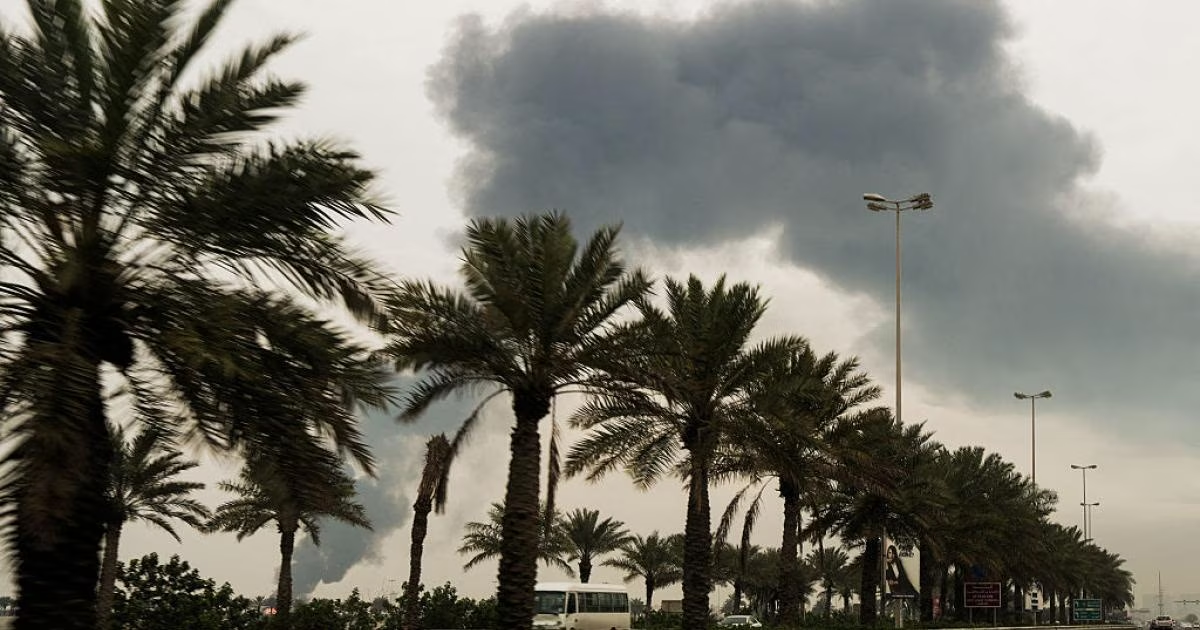
In that conversation at the Harvard Kennedy School, moderated by New York Times journalist David Sanger, Blinken was confronted with a harsh description: Gaza as the "weakest point" in his career. The description was not an exaggeration, but rather reflected a growing realization that American policy there had not only failed to limit the catastrophe, but had contributed to its perpetuation.

Blinken, for his part, did not deny the tragedy. He spoke of "immense human suffering" and "horrific losses," and admitted that the question "could something have been done differently?" would continue to haunt him. But this acknowledgment, despite its human weight, seemed devoid of any political commitment to an actual review. How can an official admit the possibility of error, and then continue to defend the very policies that produced it?

The most intense confrontation came from a student who cited reports from the United States Agency for International Development (USAID) that indicated obstruction of aid delivery, contradicting Blinken's statements before Congress. The question was direct: Why did Washington continue to arm Israel despite all the indicators? And why were expert assessments ignored?

Blinken's answer—"Perhaps yes"—reduced the tragedy to a possibility, not a responsibility.

The former Secretary defended himself by speaking of "daily pressures" to bring in aid. But this defense, in essence, is an indirect indictment: If Washington was able to pressure for more trucks, why was it unable—or did not try—to pressure for a halt to the bombing? And why did American policy remain confined to managing the consequences of the catastrophe, not preventing it?

The most problematic aspect is his justification that Israel would have continued the war regardless of the American position, and that stopping arms supplies could lead to regional escalation. This argument does not justify the decision, but rather empties it of its content. It presupposes the failure of pressure to justify not exercising it. That is, it transforms American influence from a tool of impact into a pretext for abstention.

Despite his references to Hamas's role, Blinken's speech seemed closer to redistributing blame than to confronting the core question: What did the United States do when it had the power to influence? Rather, what did it choose not to do?

Blinken made eight visits to Israel during the war—a number reflecting unprecedented diplomatic intensity—but in the end, they did not produce a clear American demand for a ceasefire at critical moments. These were visits to manage the crisis, not to end it. Presence without pressure, and action without decisive results.

Here the contradiction intensifies: diplomacy active in form, limited in effect. Repeated moral acknowledgment, met with striking political steadfastness. The result is that Blinken is not being held accountable today for what he did not know, but for what he knew and did not change.

In the end, the problem is not that the former Secretary of State did not see the tragedy in Gaza, but that he saw it—and acknowledged it—and then chose to continue on the same path. This, more than anything else, is what will define his legacy.

The text clearly shows the gap between moral acknowledgment and political action, a gap that is not new in American behavior, but in the case of Gaza, it appeared sharper and more exposed. The acknowledgment of a tragedy only acquires its meaning if it is accompanied by a tangible change in tools and policies. What is striking here is that Blinken did not lack information or warnings, but rather the political will to employ American influence differently. This reinforces the impression that Washington preferred to manage the crisis instead of solving it, to avoid the cost of confrontation with a strategic ally.

The article raises a deeper question related to the nature of decision-making in American foreign policy, where strategic considerations are often prioritized over stated principles. The argument of fearing regional escalation appears, in this context, closer to a post-hoc justification than to an accurate proactive assessment. The failure to actually test pressure tools undermines the credibility of this assessment. Moreover, ignoring reports from government institutions such as USAID reflects a defect in the mechanism of information absorption within the administration, and raises questions about the independence of humanitarian assessments versus political calculations.

Also noteworthy is the dimension related to "legacy management," where the discussion shifts from accountability for policies to an attempt to frame them narratively after they have occurred. Blinken's return to answer these questions in an academic setting reflects a belated recognition of the importance of elite public opinion in shaping historical judgment. However, limiting oneself to acknowledgment without practical review may deepen criticism instead of containing it. Political history is not written only by what was said later, but by what was done—or not done—at decisive moments, which leaves this file open to more rigorous future evaluations.

OPINIONS

Thu 26 Mar 2026 7:12 am - Jerusalem Time

Transformations of the Global Order: Do 'System Wars' Impose New Regional Alliances?

Ramallah - "Al-Quds" Dot Com

Ramallah - "Al-Quds" Dot Com

Opinion Writer

Current political readings indicate that the escalating conflicts in the region cannot be understood through traditional Cold War frameworks, but rather are an expression of a new era in which the language of power and interests prevails over international law and principles. What the world is witnessing today is a difficult birth of a new global order, where maps are being redrawn and history rewritten according to field power balances, amidst growing anxiety extending from European capitals to the depths of the Asian continent.

In this context, European voices have emerged reflecting the extent of the coming breakdown, with German President Frank-Walter Steinmeier describing the ongoing war as a catastrophic political mistake. This description goes beyond diplomatic criticism to indicate a loss of confidence in the international system and agreements that no longer provide real protection for states, prompting many capitals to seek independent security alternatives.

Many countries, from Japan to Africa, have realized the necessity of self-reliance in building advanced defense industries instead of being dependent on the weapons of major powers. This new trend towards military sovereignty will inevitably lead the world to a nuclear arms race, with a growing conviction that military power is the only guarantee of survival in a turbulent international system that does not respect written laws.

Questions about the true objectives of the escalation in the region go beyond the idea of targeting a specific country like Iran, reaching a broader project to completely reshape geopolitics. The circulating term 'New Middle East' suggests that the issue is about changing regimes and demolishing existing borders, which represents an existential challenge requiring a different strategic vision to deal with these radical transformations.

For his part, Turkish politician Devlet Bahçeli presented a striking perspective when he indicated that the real change required to ensure regional stability must begin with Israel and the policies of the Netanyahu government, which destabilize the security of the region. This argument highlights the true source of the unrest and confirms that the current path not only threatens the borders of one state but also strikes deep fault lines in the balances of the entire region.

In the face of these multi-dimensional security crises, the urgent need arises to form realistic and strong regional alliances capable of influencing global power balances. Any strategic bloc that brings together powers such as Turkey, Saudi Arabia, Egypt, Pakistan, and Qatar would serve as a bulwark against economic and political attrition projects aimed at weakening and re-subjugating the countries of the region.

In conclusion, it seems that the world understands the dimensions of the ongoing game, but understanding alone is not enough without a common will capable of confronting the destructive system. As Turkish President Recep Tayyip Erdoğan emphasized, the region has once again become an arena of conflict for the new world order, as it was a century ago, which necessitates full preparedness to ensure that we do not emerge from this phase among the losers.

This fire that started in the Middle East is not just a regional crisis; rather, it is a painful birth of a new global order in which history is written by the victors.

OPINIONS

Thu 26 Mar 2026 7:12 am - Jerusalem Time

Regional Escalation and Targeting the Gulf: A Reading of the Repercussions of the Iranian Conflict with International Powers

Ramallah - "Al-Quds" Dot Com

Ramallah - "Al-Quds" Dot Com

Opinion Writer

Arab-Iranian relations are no longer merely a political file subject to interpretation; rather, they have transformed into a complex arena for the struggle of wills and an imbalance of trust. This comes as a result of policies that have chosen an approach of expansion and intervention at the expense of the principles of good neighborliness and respect for the sovereignty of national states in the region.

The current reality reveals a prioritization of the logic of influence over the logic of partnership, where disputes are managed through pressure and escalation tools instead of dialogue. It was hoped that Iran's civilizational weight would contribute to enhancing stability, but practical actions have led to deepening divisions in several Arab arenas.

Iran's targeting of the Arab Gulf states, under the pretext of responding to American-Israeli aggression, represents a grave error from both strategic and ethical perspectives. This step reflects a flaw in assessing situations by directing weapons towards neighbors who did not participate in the ongoing conflict.

The Arab Gulf states are a space for stability in a turbulent environment, not an arena for open military conflicts. They also play a pivotal role in supporting Arab causes, foremost among them the Palestinian cause, through continuous humanitarian and developmental aid to affected populations.

Targeting these states opens the doors to discord and deepens divisions within the Islamic nation, transforming the conflict from confronting external aggression into an internal dispute. This path squanders the potential of peoples and drains their energies in battles that serve only the powers lurking in the region.

Observers recall the heavy record of Iranian interventions in countries such as Syria, Lebanon, Iraq, and Yemen, where these policies contributed to weakening national institutions. These interventions have led to major humanitarian tragedies from which the peoples of those countries still suffer the catastrophic effects to this day.

Repeating this approach at a highly sensitive regional moment reinforces the state of distrust among neighbors. Historical experiences confirm that expansionist policies cannot form the basis for a secure future or healthy relations between states.

Divine laws, foremost among them Islam, emphasize the sanctity of human life and make its preservation paramount over narrow political interests. Dialogue based on understanding and common interests remains the only way to ensure international peace and security, away from the language of violence.

The decision by the United States and Israel to wage war against Iran comes at a surprising time, coinciding with the holy month of Ramadan. This choice represents a blatant disregard for Muslim sentiments and an unjustified provocation at a time when the world was looking forward to diplomatic de-escalation.

This war lacks legal and moral legitimacy, as it came outside the frameworks of international law and United Nations institutions. The return to the logic of force and hegemony brings to mind the dark eras that preceded World War II.

Although international law guarantees the right to self-defense, this right should not be turned into a pretext for striking innocent countries. Expanding the circle of confrontation undermines opportunities for a political solution and makes the region hostage to an open escalation whose end cannot be predicted.

Amidst this escalation, Benjamin Netanyahu is exploiting regional preoccupation to continue violations against the Palestinian people in Gaza and Jerusalem. These violations have reached the point of preventing worshippers from entering Al-Aqsa Mosque, a dangerous precedent not witnessed in the city since 1967.

The double standards of international treatment of the Palestinian issue contribute to exacerbating instability. True peace cannot be achieved without respecting human rights and adhering to international laws that protect peoples under occupation.

In conclusion, security and stability in Arab countries require a comprehensive deterrent force that includes military, political, and faith aspects. Peace will only be achieved by holding aggressors accountable and preserving human dignity, for justice is the only pillar that creates sustainable security.

Directing weapons at peaceful neighbors who had no role in the conflict represents a deep flaw in assessing strategic situations.