PALESTINE

Fri 27 Mar 2026 2:30 pm - Jerusalem Time

Displaced Persons' Tents Drown in Gaza: Low Pressure System Worsens Humanitarian Catastrophe Amidst Municipal Paralysis

A wave of heavy rains caused widespread flooding in the displaced persons' camps in the Gaza Strip, doubling the scale of humanitarian suffering experienced by residents for many months. Field sources reported that the Al-Mawasi area west of Khan Yunis city witnessed the drowning of hundreds of tents, as water infiltrated dilapidated shelters, leaving families exposed without cover or shelter to protect them from the bitter cold.

Under these difficult weather conditions, municipalities in the southern sector face an almost complete inability to provide urgent assistance to those affected due to severe damage to infrastructure. Emergency teams are using old and worn-out machinery in desperate attempts to drain water from roads and tents, but the scale of the disaster far exceeds the available capabilities, which have been depleted by the ongoing Israeli war of extermination on the Strip.

Saeb Laqan, the spokesperson for Khan Yunis Municipality, confirmed that the systematic targeting by the occupation of rainwater drainage networks and sewage lines has made crisis management an impossible task. Laqan explained that the severe shortage of essential equipment and tools limits the ability of rescue teams to intervene effectively, noting that the destruction of main roads has hindered the access of machinery to the most affected areas in the displaced persons' camps.

For their part, displaced persons in the Al-Mawasi area described the situation as tragic, as water submerged their tents all night and damaged their simple belongings and what remained of their blankets and clothes. Citizens indicated that attempts to appeal to civil defense and municipalities did not yield tangible results, given the lack of the minimum necessary capabilities for these entities to deal with the floods caused by the heavy rains.

Despite the ceasefire agreement coming into effect last October, the living conditions of approximately 1.9 million displaced persons have not seen any significant improvement. The Israeli occupation continues to obstruct the entry of relief aid, shelter materials, and new tents, forcing hundreds of thousands of families to remain in dilapidated tents that do not protect from the summer heat or winter cold, amidst a complete absence of basic services.

Official statistics indicate that the Israeli war has caused damage to about 90% of the civilian infrastructure in the Gaza Strip, in addition to the martyrdom and injury of hundreds of thousands. This massive destruction has made facing weather fluctuations an existential challenge for residents who have lost their homes and now rely on canvas tents in open areas lacking sewage networks or protection from floods.

"The continuation of the war and the targeting of rainwater drainage networks have exacerbated the difficulty of crisis management, and the lack of equipment limits our ability to mitigate the effects of the low pressure system."

OPINIONS

Fri 27 Mar 2026 2:30 pm - Jerusalem Time

The Disintegration of the 'Ummah' Concept: Why is Collective Islamic Action Absent in Major Crises?

Ramallah - "Al-Quds" Dot Com

Ramallah - "Al-Quds" Dot Com

Opinion Writer

The Islamic world today is at a historical turning point, most in need of a unified stance, in light of a brutal aggression targeting Islamic countries and holy sites, foremost among them Al-Aqsa Mosque. Although Al-Aqsa was the primary catalyst for the establishment of the Organization of Islamic Cooperation, the current reality reveals a complete inability to even convene an emergency meeting to confront the ongoing violations.

Last Ramadan and the subsequent Eid al-Fitr witnessed a dangerous precedent with the prohibition of prayer and the call to prayer (adhan) in Al-Aqsa Mosque, without any movement from official systems. In contrast, we see swift international and regional action from the Arab League and the European Union when certain geopolitical interests are affected, highlighting a clear double standard in dealing with crises.

The deafening silence regarding statements by occupation leaders and the US Department of Defense about targeting all Islamic components reflects a state of political anesthesia that has afflicted the body of the Ummah. This behavior is no longer a mere coincidence; it has become a recurring pattern that reveals a deep structural imbalance in the nature of the regional system, which has replaced the idea of the Ummah with the narrow nation-state.

The first pillar of this impotence lies in the political decision-making of some countries being held hostage by international and security alliance systems led by major powers. These arrangements restrict the positions of states to a specific ceiling that cannot be exceeded, for fear of collision with Western allies who define the limits of permissible action in the region.

Sharp regional polarization also plays a destructive role in fragmenting any collective effort, as conflicts are read from the perspective of influence and interests, not from the perspective of civilizational belonging. Instead of considering aggressions a common threat, they are categorized within axis conflicts, which deprives the issue of its unifying dimension and turns it into material for political polarization.

There is also a deep fear among many regimes of sliding into open confrontations whose economic or political consequences they may not be able to bear. This logic, based on 'risk management' rather than 'conflict leadership,' leads to a preference for silence or gray positions at the expense of principled solidarity with the Ummah's existential issues.

Regional institutions, especially the Organization of Islamic Cooperation and the Arab League, have transformed into ceremonial structures that merely issue declarative statements that do not translate into actions. This institutional weakness has led to an erosion of people's trust in the ability of these entities to protect common interests or influence international decisions.

What we are witnessing today is a gradual disintegration of the idea of collective action, where a large gap emerges between international blocs that move quickly to protect their interests and an Islamic world that lives in individual reactions. This transformation from an 'Ummah' to 'functional units' within the international system makes states act only when asked to, and remain silent when international necessities dictate.

Sectarian factors and the division among major powers in the region have further complicated the scene, as internal animosity has become a priority over confronting external threats. This fragmentation has made shared identity a burden to be ignored rather than a source of strength and pressure in international forums, thus depriving the Islamic bloc of its strategic weight.

Since the fall of the Ottoman Caliphate, the idea of a 'political Ummah' has faded, replaced by disparate states governed by calculations of survival and internal legitimacy. Many of these regimes face economic and social challenges that make them retreat into themselves, avoiding involvement in external issues that might open new fronts they cannot manage.

The shocking truth is that the world does not respect entities that do not respect the foundations of their existence or seriously defend their holy sites. The speed with which international conferences are convened to protect trade routes or military bases, compared to the slowness in supporting the oppressed, reflects a severe imbalance in the compass of Islamic political decision-making.

This bitter reality is not just a transient 'failure'; it is a logical consequence of profound transformations in the structure of the political system, which has shifted from a logic of solidarity to a logic of numerical calculations. The nation-state has become the sole actor, while the 'Ummah' remains merely an emotional slogan used in speeches without real substance on the ground.

The continuation of this approach will inevitably lead to further weakness and loss of ability to influence the future of the region, opening the door for unofficial forces to fill the void. The absence of will and a shared vision is the real problem, not the lack of resources or capabilities that the Islamic world possesses in various fields.

In conclusion, restoring the civilizational role of the Ummah requires rebuilding the concept of common interests, away from being held hostage by external forces or drowning in internal conflicts. The upcoming challenge lies in how to transform emotional rhetoric into institutional political action that restores the Ummah's prestige and protects its holy sites from continuous encroachment.

What we see today is not just a temporary dereliction; it is a declaration of the death of the idea of joint Islamic action and the transformation of the Ummah into separate islands.

PALESTINE

Fri 27 Mar 2026 2:30 pm - Jerusalem Time

Between the restrictions of the crossing and the specter of death.. Thousands of wounded in Gaza face an unknown fate

The tragedy of the wounded in the Gaza Strip is embodied in the story of fifty-year-old Alaa Muhammad Hussein, who transformed from a breadwinner for a large family of 25 individuals into a wounded invalid dependent on a wheelchair and walker. Hussein, who was injured by 50 shrapnel fragments from a bomb launched by an Israeli drone in the Tal al-Hawa neighborhood, now lives in a dilapidated tent in Deir al-Balah, battling exacerbated pain in his lungs and neck with no immediate hope of recovery.

Despite Hussein having medical permission to travel to Belgium nine months ago, strict Israeli restrictions at the Rafah crossing prevented him from reaching his treatment destination. This suffering is not limited to him alone; more than 20,000 wounded and sick individuals share it, facing the risk of death amidst the near-complete collapse of the healthcare system within the besieged Strip.

Inside the same tent, his daughter Maisaa (31 years old) is battling breast cancer, which she discovered before the outbreak of the war. However, forced displacement and the destruction of the Turkish-Palestinian Friendship Hospital deprived her of receiving chemotherapy doses. Maisaa, a mother of four children, now lives without a clear treatment destination, relying on charitable soup kitchens to secure food for her children after her husband's injury and inability to work.

Official data from the Ministry of Health indicates a catastrophic reality, where only 490 patients have traveled since the reopening of the Rafah crossing last February. These numbers reflect the occupation's failure to adhere to the ceasefire agreement, as the actual implementation rate of provisions related to the travel of humanitarian cases does not exceed 19% of what was agreed upon.

The current ceasefire agreement stipulates allowing 150 patients to travel daily, but the reality on the ground shows deliberate Israeli procrastination that has caused the deaths of 6 to 10 patients daily while on waiting lists. Since the invasion of Rafah city in May 2024, approximately 1,400 patients have lost their lives as a result of being deprived of their basic right to treatment abroad.

Engineer Zaher Al-Wahidi, Director of the Health Information Systems Unit, warned of 195 very serious cases classified as being in 'the end of life,' threatened with death at any moment. The long waiting lists also include approximately 4,000 children and 4,000 cancer patients who need surgical and therapeutic interventions not available in Gaza's exhausted hospitals.

Al-Wahidi explained that the occupation currently allows only 24 cases to travel daily with their companions, a very small number compared to the actual need, which requires the evacuation of 200 to 400 cases daily. This deliberate slowness in procedures means that resolving the current file of the wounded may take years, while patients do not have the luxury of time.

The medical evacuation process involves complex procedures starting with local medical evaluation in Gaza hospitals, where specialized committees sort and classify cases into emergency, urgent, and routine. These lists are uploaded through the electronic 'Sehati' system to ensure the enumeration of numbers and continuous updating of patient data for follow-up with international bodies.

The World Health Organization plays the role of international coordinator in this process, receiving approved lists and presenting them to host countries such as Qatar, the UAE, Turkey, and European countries. Once the patient receives medical approval from the host country, the most complex stage begins: obtaining 'security coordination' from the occupation authorities.

Israeli security approval represents the biggest obstacle, as patients and their companions undergo strict security scrutiny, often leading to the rejection of companions or long delays in travel. This intransigence prevents hundreds of patients from benefiting from medical visas they have already obtained from Arab and foreign countries.

Amidst the continued closure or rationing of work at the crossings, the health condition of the injured worsens, as new repercussions of old injuries such as herniated discs and acute lung infections appear. Doctors confirm that many delicate surgical operations require technical capabilities and equipped operating rooms that are currently not available in the Gaza Strip.

The occupation authorities exploit regional tensions to tighten the noose on the Strip, which directly reflects on the movement of travelers through the Rafah crossing, which is the only outlet for two million Palestinians. This reality has made travel for treatment a distant 'dream,' even for those who have received official medical referrals for more than a year.

The continuation of this systematic policy of obstructing medical evacuation places the international community and human rights organizations before a historical responsibility to stop what human rights activists describe as the 'slow execution' of the wounded. Every day of delay in fully opening the crossing means the loss of lives that could have been saved with simple medical intervention abroad.

The wounded Alaa Hussein and his family, like thousands of others, remain suspended between the hope of travel and the reality of pain, awaiting the moment the crossing opens without security restrictions that kill their dreams of recovery. It is a cry of pain emanating from the tents of the displaced, demanding a simple human right guaranteed by all international laws: the right to treatment and life.

I wish for death instead of being in a wheelchair.. Our lives are unbearable, and every day I feel death approaching me.

PALESTINE

Fri 27 Mar 2026 2:30 pm - Jerusalem Time

Martyr in Qalandia and widespread arrest campaign targeting West Bank cities

Medical sources at Palestine Medical Complex in Ramallah city announced today, Friday, the martyrdom of young man Mustafa Hamad, who succumbed to critical injuries sustained by Israeli occupation army bullets. The fatal injury occurred during the occupation forces' raid on Qalandia refugee camp, located north of occupied Jerusalem, where he was transferred to the emergency department before he breathed his last.

Hundreds of citizens marched in the funeral procession of martyr Hamad from the hospital in an angry procession, during which participants chanted slogans condemning the continuous Israeli crimes against Palestinian camps. Eyewitnesses confirmed that confrontations erupted at the camp entrance immediately after the raid, where Israeli forces used live and rubber bullets and tear gas heavily against the youths.

For its part, the Palestinian Red Crescent Society reported that its teams dealt with two other live bullet injuries to two young men during the violent confrontations in Qalandia camp. Local sources clarified that the occupation deliberately fired directly at the demonstrators who tried to confront the raid targeting the camp's neighborhoods.

In a related context, occupation forces launched a widespread raid campaign in Bethlehem Governorate, targeting Nahalin village, where citizen Raed Ahmed Al-Nis was arrested after searching his home and tampering with its contents. The forces also raided Kisan village east of the city and stormed a number of citizens' homes without any additional arrests being reported there.

Nablus Governorate also witnessed a significant escalation on the ground, as occupation vehicles stormed several residential neighborhoods and the old Askar and Ein camps. The operation resulted in the arrest of Jamal Al-Samhan, Iyad Joudeh, and Moawiya Kamal Rashid, amidst deliberate acts of vandalism targeting citizens' vehicles and private property inside the raided homes.

In Qalqilya city, sources reported that occupation forces raided Kafr Saba neighborhood and arrested citizen Yasser Hammad and his daughter after a thorough search of their home. This coincided with occupation soldiers severely beating a citizen in Duma village south of Nablus, which led to him sustaining injuries and bruises that required his immediate transfer to the hospital for treatment.

The attacks were not limited to the occupation army; groups of settlers attacked a Bedouin gathering in Wadi Al-Awar area south of Hebron. The settlers physically assaulted Palestinian residents in the area and stole a number of sheep, under the protection and security of army forces present at the scene.

Human rights reports indicate a dangerous escalation in settler attacks in the West Bank, where their attacks have caused the death of 8 Palestinians since the end of last February. These attacks come within the framework of a systematic policy aimed at pressuring Palestinians and pushing them towards forced displacement from their lands for the sake of settlement expansion.

Since October 8, 2023, the West Bank has recorded the martyrdom of 1136 Palestinians and the injury of about 11,700 others by occupation and settler bullets. The number of arrests has also reached record figures, exceeding 22,000 cases, including all age groups under harsh detention conditions and international warnings of a deteriorating humanitarian situation.

Political and international circles warn of the Israeli government's intention to proceed with plans to officially annex the West Bank, exploiting global preoccupation with the war on the Gaza Strip. West Bank cities are currently experiencing the worst humanitarian and security crisis since 1967, with the continuation of demolition and settlement policies that undermine any chances for stability in the region.

The West Bank is experiencing an unprecedented escalation, including direct targeting, killing, and widespread arrests since the start of the aggression on the Gaza Strip.

ARAB AND WORLD

Fri 27 Mar 2026 2:29 pm - Jerusalem Time

Movements of the US 82nd Airborne Division: Scenarios for a Potential Ground Confrontation with Iran

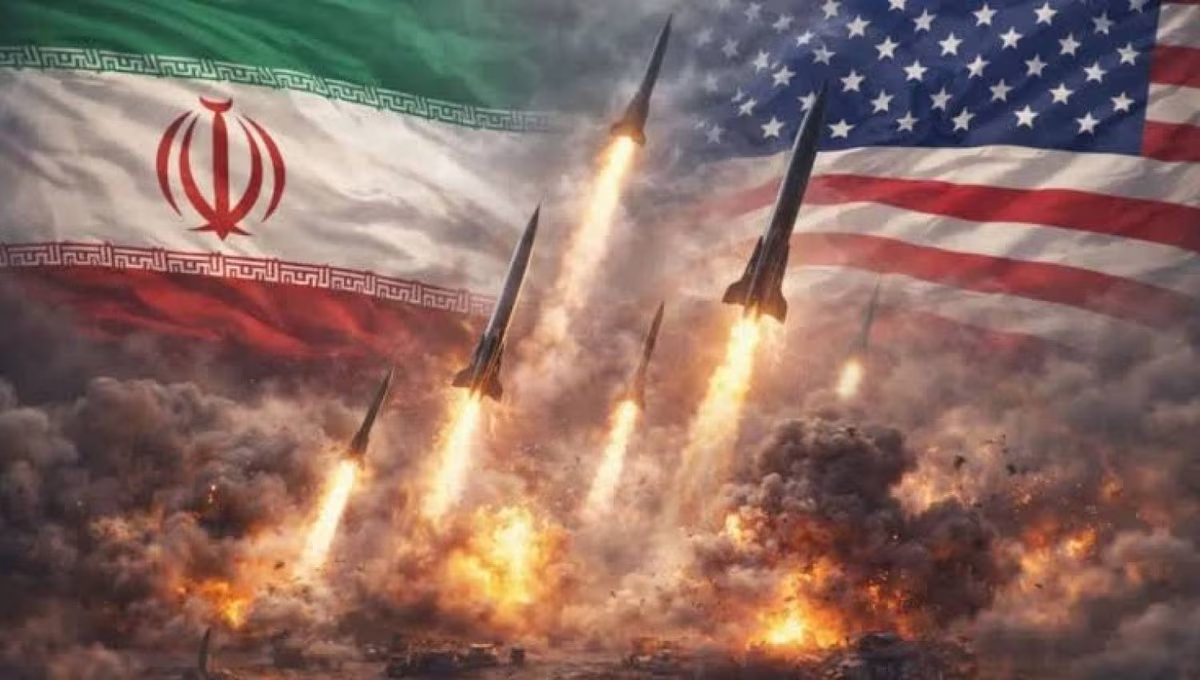
The Middle East region is witnessing a sharp escalation in military tensions, as the United States has begun taking practical steps to deploy elite forces to the Gulf region. These movements come at a time when the Donald Trump administration is seriously considering options for ground intervention against Iran, especially if diplomatic channels reach a dead end.

Informed sources reported that approximately two thousand soldiers from the 82nd Airborne Division, one of the most prominent elite units in the US Army, have received official orders to prepare and deploy to the region. This step reflects a fundamental shift in US strategy, from complete reliance on air strikes to preparing for the possibilities of direct ground confrontation.

In a related context, press reports, citing officials in the US Department of Defense (the Pentagon), revealed that studies are underway to send massive reinforcements that could amount to an additional 10,000 ground troops. These reinforcements aim to strengthen the US military presence in hot spots and provide the necessary logistical and combat support for any upcoming scenario.

The 82nd Airborne Division is characterized by exceptional capabilities for rapid deployment anywhere in the world in less than 24 hours. These forces have extensive experience in carrying out airborne operations behind enemy lines, and seizing vital locations such as strategic airports and ports to ensure the superiority of subsequent forces.

This division has earned a distinguished military reputation since its participation in World War II, through the wars in Iraq and Afghanistan, and its recent deployment in Europe. Official statements from the White House confirm that all military options remain on the table, which reinforces the hypothesis of imminent military action.

In parallel with the paratroopers' movement, two amphibious groups comprising approximately 5,000 Marines are moving towards the region. This coordination between air, ground, and naval forces gives military command in Washington high flexibility to carry out ground operations, whether limited in objectives or large-scale.

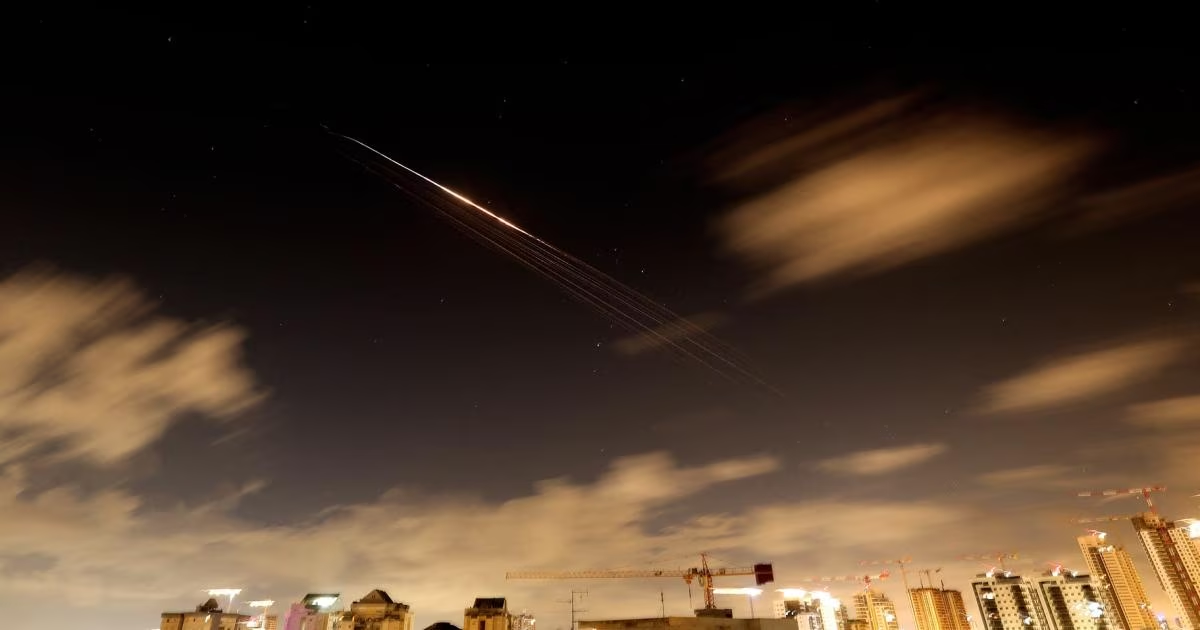
The Strait of Hormuz stands out as one of the most important strategic targets in any potential confrontation, given that it is a major artery through which about a fifth of the world's oil supplies pass. Concerns are growing that Iran may plant naval mines or threaten navigation, which could lead to wild jumps in global energy prices.

Military estimates indicate that the Iranian island of Qeshm represents a primary target for US forces, as it is believed to contain fortified underground missile bases. Tehran uses these bases and complex tunnel networks to threaten warships and commercial vessels in the Strait, making their control a military necessity.

According to defense sources, any ground operation could begin with intense preparatory fire and precise air strikes using fifth-generation F-35 fighter jets. These strikes would be followed by intensive airborne landings of paratroopers aimed at destroying Iranian military infrastructure and seizing command and control centers.

Experts also expect ground forces to be supported by advanced Apache AH-64 attack helicopters, in addition to A-10 close air support aircraft known for their ability to destroy armor. Despite the clarity of these scenarios, analysts warn that the confrontation will be extremely complex and costly in terms of human lives and material resources.

Among the options also being considered is the seizure of Kharg Island, which is considered the main center for Iranian oil exports in the Gulf. Control of this island would represent a devastating economic blow to the regime in Tehran, as the 82nd Division would secure the island's airport to pave the way for the arrival of heavy ground forces.

However, the biggest challenge facing US forces lies in crossing the Strait of Hormuz and penetrating deep into the territory, where forces would be vulnerable to intense missile attacks. Iranian suicide drones also pose a constant threat to naval vessels and troop concentrations, requiring sophisticated and continuous air defense systems.

The most dangerous and complex scenario involves attempting to seize enriched uranium stockpiles within Iranian nuclear facilities. Such operations require penetrating hundreds of kilometers into Iranian territory to reach sites such as Isfahan or fortified mountain facilities, which carries enormous risks.

Ultimately, the call-up of the 82nd Airborne Division reflects the seriousness of US threats and their transformation into a tangible reality on the ground. Between securing waterways and targeting the nuclear program, the entire region remains on a hot plate, awaiting a political decision that could change the face of the Middle East forever.

The President retains all military options, and the deployment of paratroopers gives Washington flexibility to carry out limited or large-scale ground operations.

ARAB AND WORLD

Fri 27 Mar 2026 2:29 pm - Jerusalem Time

Tehran threatens to target hotels and energy facilities in the UAE and Bahrain

Informed sources revealed that Tehran has issued decisive warnings to hotel owners in the region, specifically in the UAE and Bahrain. This move comes amid ongoing military confrontations and Iranian reactions to what it describes as continuous American-Israeli aggression against its sites and interests in the region.

Media reports, citing responsible sources, stated that the missile strikes and complex operations carried out by Iran and its allies have led to a large number of US military bases being put out of service. The sources claimed that the destruction of military infrastructure forced the remaining US forces to seek alternative shelters in civilian hotels.

Based on these developments, Iranian authorities informed hotel management in Manama and Abu Dhabi of the absolute necessity to refrain from hosting or sheltering any US military personnel. The warning emphasized that any facility that violates these instructions will automatically become a legitimate military target for the Iranian armed forces and will not be immune from direct targeting.

In a related context, the Iranian Revolutionary Guard urged civilians in the region to stay away from areas where US forces are stationed to ensure their safety. Statements indicated that the list of potential targets has expanded to include civilian and vital sites used for military or logistical purposes by the United States.

The threats were not limited to hotels but also included a detailed map of the energy infrastructure in the United Arab Emirates. Media outlets close to Iranian decision-making circles published reports showing power generation plants, peaceful nuclear facilities, and solar energy centers as monitored targets.

Military experts warned that any attack targeting the energy lifeline in the UAE would lead to a complete paralysis of the global economic supply chain. Such potential strikes could halt commercial activity in the Gulf region and cause widespread power outages extending beyond the geographical borders of the targeted country.

Official statistics indicate that Iran has targeted seven Arab countries, mostly GCC states, with thousands of missiles and drones. The number of projectiles used since the end of last February reached approximately 4903 missiles and drones, in an unprecedented escalation in the region.

Tehran justifies these intensive attacks as self-defense and a response to attacks on its territory and interests. Despite its assertion that it does not target Arab countries themselves, the reality on the ground indicates significant human and material losses in vital civilian facilities.

The UAE topped the list of countries most exposed to these missile attacks, followed by Kuwait, then the Kingdom of Bahrain and Qatar. Military operations also included targets in Saudi Arabia and Jordan, while Oman recorded the lowest targeting rate since the start of operations.

For his part, Jasem Al-Budaiwi, Secretary-General of the Gulf Cooperation Council, stated that the scale of Iranian aggression against GCC countries now poses an existential threat to regional security. Al-Budaiwi clarified that 85 percent of the total missiles launched by Iran during this war were directed towards the Arab Gulf states.

Sources confirmed that Iranian attacks often did not differentiate between military targets and civilian facilities such as airports and ports. These operations caused severe damage to residential buildings and public facilities, prompting a wave of international condemnation and calls for an immediate de-escalation.

Political circles are closely monitoring with great concern the repercussions of including hotels and economic facilities in Iran's target bank, due to its devastating impact on the tourism and investment sectors. Observers fear that this shift could expand the conflict to include direct confrontations within densely populated cities.

Amid this tension, countries in the region are seeking to strengthen their air defense systems to counter increasing missile threats. Intensive diplomatic and military consultations continue between Gulf capitals and their international allies to discuss deterrence methods and protect sensitive infrastructure from any future attacks.

The regional scene remains open to all possibilities, with Tehran insisting on linking regional stability to the complete withdrawal of US forces. Reports confirm that the next phase may witness a qualitative escalation if Iran decides to carry out its threats against the civilian and economic targets it recently identified.

Hotels sheltering US military personnel will be considered legitimate military targets and will be included in the target bank list.

ARAB AND WORLD

Fri 27 Mar 2026 2:29 pm - Jerusalem Time

Widespread Air Attacks Target Iranian Cities, Hundreds of Casualties Under Rubble

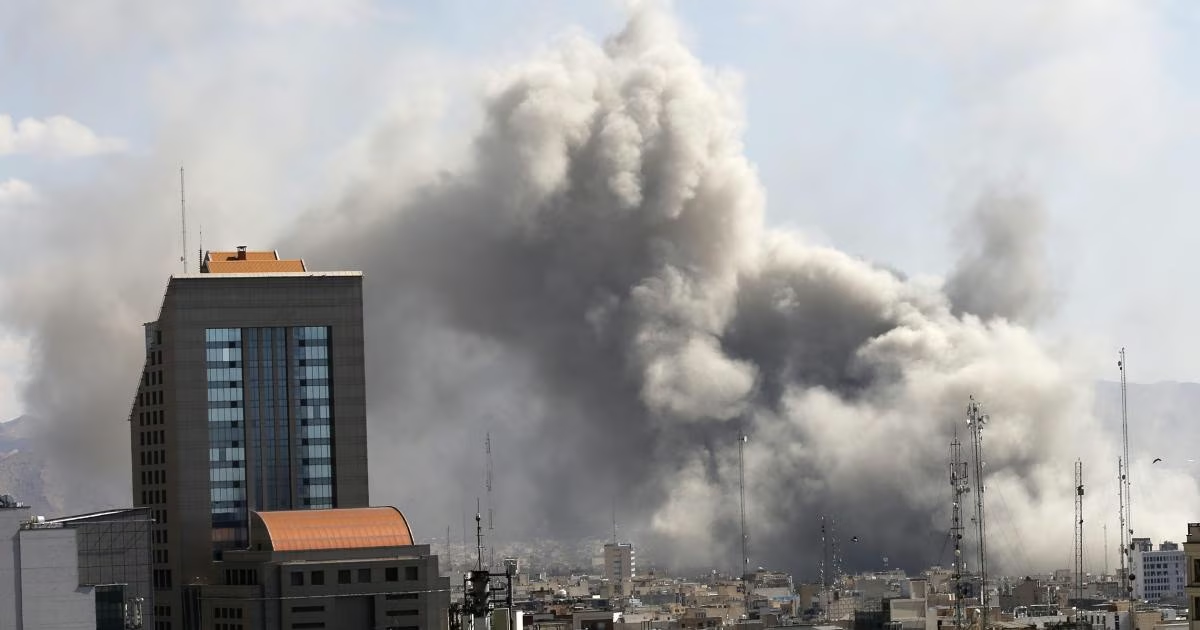
Iranian territories were subjected early this Friday to a series of violent air raids carried out by joint American and Israeli forces, targeting the capital Tehran and a wide range of major cities. Field sources reported that the bombing caused massive destruction to populated residential areas, leading to deaths and missing persons who are still under the rubble in several provinces.

The offensive wave included strategic cities such as Qom, Tabriz, Urmia, and Kashan, in addition to the city of Karaj adjacent to the capital, in an escalation described as the widest since the start of the direct confrontation. Media sources confirmed that the bombing was not limited to military targets but also hit civilian facilities and homes deep within Iranian cities, causing panic among the population.

In Qom province, Tasnim news agency confirmed the death of at least six citizens following a raid targeting the Pardisan residential area, where missiles completely destroyed three homes. The Deputy Governor of Qom, Morteza Heidari, stated that rescue teams are working hard to retrieve victims from under the debris, noting that the number of injuries is likely to rise due to the severity of cases transferred to hospitals.

In the south of the country, the official news agency mourned two siblings who died in a bombing that targeted a residential neighborhood in Shiraz, while others sustained various injuries. The coastal city of Bandar Abbas, overlooking the Gulf, also witnessed the complete destruction of a residential building, reflecting the expansion of the geographical targeting to include vital waterways and border areas.

For his part, the Director of Crisis Management in West Azerbaijan province, Hamid Safari, announced that at least four civilian buildings were directly targeted in the city of Urmia. The Iranian Red Crescent broadcast footage showing civil defense teams racing against time to reach survivors under the rubble of destroyed buildings, confirming severe injuries among unarmed civilians.

Official statistics issued by Iranian officials indicate a very heavy toll, with the number of deaths since the start of the military campaign exceeding 1,348 people, while the number of injured has surpassed 17,000. These figures reflect the magnitude of the firepower used in the attacks, which also targeted the cities of Isfahan, Yazd, and Ahvaz in recent hours.

In contrast, the Israeli army issued an official statement confirming the execution of what it described as 'a wide wave of precise strikes' against targets belonging to the Iranian regime. The statement claimed that the attacks focused on military infrastructure and sites designated for the production of ballistic missiles, in addition to neutralizing air defense systems that posed a threat to the attacking aircraft.

The Israeli army spokesperson clarified that the raids targeted a site described as central and most important for the production of missiles and naval mines in the city of Yazd in central Iran. These statements come at a time when reports of targeting hundreds of vital sites are increasing, amidst conflicting news regarding the true extent of losses in Iranian military capabilities.

On the international level, a state of extreme concern prevailed in the corridors of the United Nations and Western capitals, which warned of catastrophic repercussions of this escalation on regional stability. International reports indicated that the continuation of the confrontation could lead to the closure of international shipping lanes, especially the Strait of Hormuz, which would directly affect global energy supplies and oil prices.

With the continued sound of explosions in several areas, the scene remains open to all possibilities in light of mutual threats of retaliation and counter-retaliation. Political circles are awaiting the nature of the next Iranian move, while ambulance teams in various targeted cities continue to retrieve victims and document the severe damage to civilian infrastructure.

The strikes included residential areas and resulted in deaths and injuries, amidst warnings of the region sliding into an open military escalation.

OPINIONS

Fri 27 Mar 2026 2:29 pm - Jerusalem Time

Between Execution and the Execution Law

Ramallah - "Al-Quds" Dot Com

Ramallah - "Al-Quds" Dot Com

Opinion Writer

By: Issam Bakr Secretary of Foreign Relations and Media High Commission for Prisoners' Affairs and Liberated Detainees

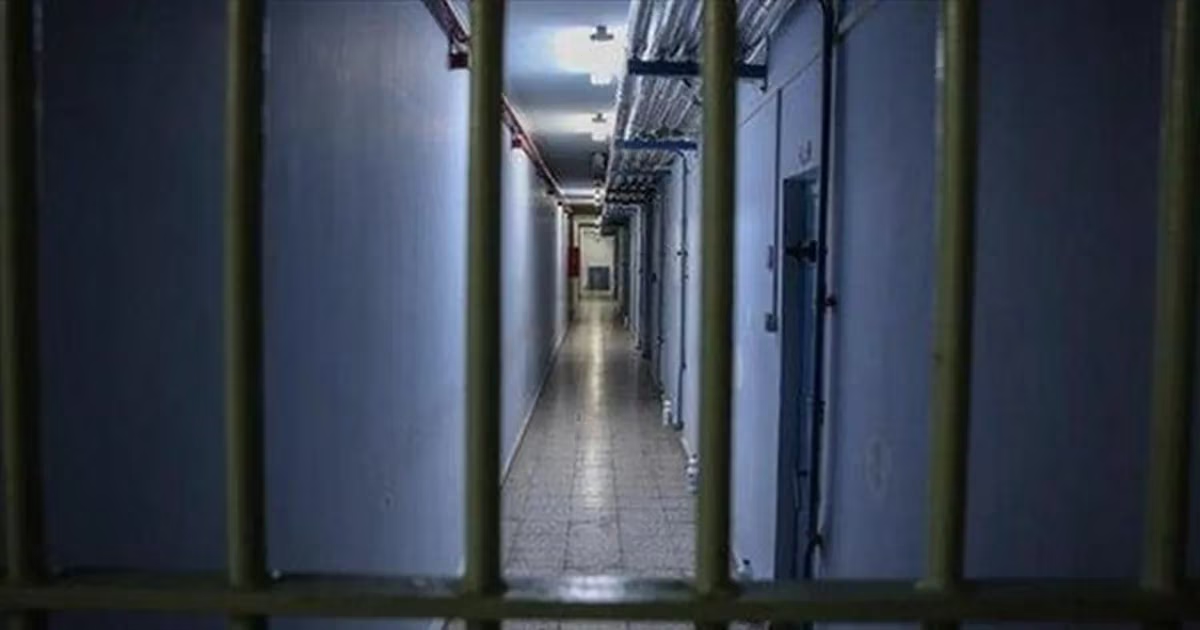
The approval of the prisoners' execution law is expected after its ratification by the Knesset's General Assembly ("occupation parliament") in the coming days, following its passage in the preliminary and first readings, and the approval of the so-called National Security Committee. This comes amidst threats and warnings from the so-called Minister of National Security, Ben Gvir, who adopted the law after it was introduced by Knesset member Limor Ben Har-Melech from his own party (Jewish Power). This law officially allows for the execution of prisoners on the grounds of "carrying out acts" that led to the killing of "Jews."

In a simplified and concise manner, this law raises many questions in legal and political circles, with escalating warnings against its imminent implementation in a short period, amid escalating conditions inside prisons and the daily practices and violations committed by the occupying state, which constitute grave transgressions of the most basic provisions of international law and international humanitarian law.

Regarding this law, it does not require "wailing and lamenting," but rather much more than that. Over 28 months of genocide, specifically in the Gaza Strip, the occupying state has carried out extrajudicial executions, including 84 prisoners whose deaths have been confirmed, and the numbers are likely to rise much higher than what has been revealed. Other numbers remain undisclosed in secret prisons or in cases of enforced disappearance, without official disclosure, and require significant efforts to uncover them.

It is noteworthy in this context that the methodology of torture and ill-treatment leading to death has been expanded unprecedentedly in recent months. The death of this number of martyrs in a short period reveals only a small part of what is happening inside prisons, which have effectively turned into fields of daily execution, torture, and continuous abuse, with broad powers granted to prison administrations without any oversight, to practice policies of humiliation and relentless oppression.

Hence, framing execution with an official decision and legislating it raises a fundamental question: Why now? And why at this specific time? If executions were carried out previously, under what legal framework will they be included? And do they represent condemnations of the occupying state?

In this context, the war, i.e., the genocide in the Gaza Strip, and the world's preoccupation with the atrocities committed against unarmed civilians (about 300,000 martyrs and wounded), will be invoked. This provides a golden opportunity not only to escape punishment but also to approve more of these fascist laws.

According to numerous international reports, including the report of the Special Rapporteur on Human Rights in the Occupied Palestinian Territories, international human rights organizations have firmly confirmed the commission of practices amounting to war crimes inside prisons and detention centers, including sexual assaults, beatings, torture, and ill-treatment, in addition to deliberate medical neglect and starvation. Not only that, but the lowest provisions of the 1949 Geneva Conventions and international charters have been violated, in a clear defiance of international will.

Therefore, without the need to approve the execution law, the documentation of the occupation authorities carrying out executions of citizens after their live arrest in many areas, or under the pretext of "unlawful combatant," before television screens in recent months, is a well-known fact that cannot be denied or overlooked.

However, what is new this time is that execution will be presented under a "legitimate" cover, meaning with a parliamentary and legislative system behind it, adopting it, and defending it before international bodies as "the implementation of a law against criminals," in an attempt to undermine the legitimacy of the entire Palestinian national struggle, even though this struggle is protected by international resolutions, the United Nations, and international legitimacy, within the right of peoples to defend themselves and liberate their occupied territories, in addition to their right to choose and practice various forms of struggle to achieve independence, self-determination, and national sovereignty.

As for this law, without delving into its flaws and provisions, or the official intent it carries to take the lives of prisoners, or even the details of the numbers it includes, or the deceptive time limits for objection, or the method of "fabricating" the presentation of the prisoner before courts and the judiciary involved in covering up many of the occupation's crimes, it came to achieve several goals.

Foremost among these goals are: striking the legitimacy of the national struggle, and creating an additional deterrent factor to limit it, similar to policies of house demolitions, collective punishments, closures, and other repressive tools. It also seeks to break the will of the Palestinian people with brute force, and to prove that the occupation is capable of carrying out executions, massacres, and displacement without regard for international laws or conventions.

Among its goals is also to cover up previous execution crimes, and to provide protection for soldiers and prison administrations, who may be included in international sanctions lists in the future, even if after some time.

It is perhaps only a few days separating us from the entry into force of this law, although it has already been applied to dozens of citizens before its approval, and its official implementation will not take long.

However, in return, it is now necessary to develop an effective, unified, comprehensive, and wide-ranging action plan at various levels, involving political forces, human rights, humanitarian, and civil society organizations, bodies and committees, in addition to embassies, representations, and missions, and to work on including it on the international agenda, as an anti-humanity law, amidst global preoccupation with the raging war in the region and escalating economic crises.

Despite all this, there remains an urgent need that compels everyone not to overlook this issue, which requires initiating a serious and persistent effort, official and popular, local and international, leading to a clear international stance that prevents the implementation of this law and forces the occupying state to stop it.

It is not limited to that, but also requires working to apply international law to hold the occupying power accountable for its crimes that do not lapse with time, and to open the file of executions and field assassinations, the series of killings, and the extermination of families, as happened in Tammoun a few days ago.

It is of utmost importance to launch a wide-ranging campaign at the level of international parliaments, to push them to take effective action to boycott the occupation Knesset under the far-right government, and to work on imposing deterrent international sanctions.

Without serious, balanced, and broad action, this law will remain subject to a fundamentally formal discussion, without significant objection, to be approved and become effective.

We do not want to see the bodies of prisoners hanging on gallows, but we want to see them among us, enjoying life among their families and loved ones, and embracing their children; for this is what the prisoner who spent his life clinging to the dream of independence and liberation awaits.

OPINIONS

Fri 27 Mar 2026 2:29 pm - Jerusalem Time

The Palestinian Dress ( Thobe..) An Identity That Cannot Be Distorted in the Age of Globalization

Amidst accelerating cultural transformations and the global intermingling of fashion styles, the Palestinian thobe stands out as a deeply rooted expression of identity and belonging, carrying a visual memory that documents the human connection to its land and history. This thobe is present as one of the most prominent features of Palestinian cultural distinctiveness, reflecting a rich diversity in its forms, ornaments, and connotations. The importance of preserving it in its authentic form emerges as part of protecting cultural meaning and safeguarding identity in a rapidly changing global context.

The Palestinian thobe is an integrated visual system, with each region having its own distinct language. The dense embroidery of Hebron with its deep colors reflects the steadfastness of the place, while the Bethlehem thobe appears with the precision of its ornaments and its artistic richness, and in the Gaza thobe, the simplicity and fluidity of lines stand out. The map of Palestine is embodied on the fabric through these details that express a deep cultural and geographical diversity, making any ill-considered change a direct affront to the Palestinian visual identity.

The world's openness to new design patterns has led to attempts to reintroduce the Palestinian thobe in contemporary forms. Some of these attempts achieved a conscious balance between authenticity and renewal, by preserving embroidery patterns and their connotations, while introducing thoughtful modifications to cuts or fabrics to suit modern life. These models confirm that modernity can be an extension of heritage when managed with awareness and respect.

In contrast, practices that strip the thobe of its content are increasing through the introduction of random ornaments or changing the locations of embroidery, which deprives it of its connotations, or presenting it as a commercial product separate from its cultural context. These practices affect the essence of the thobe and weaken its presence as a symbol of identity. Any tampering with the structure of the Palestinian thobe is not development, but a direct distortion of a visual memory that has endured through time.

Preserving the Palestinian thobe requires conscious management of development processes. Introducing new materials or additional colors remains possible within limits that preserve the original spirit of the embroidery, its location, and its connotations. Every stitch carries meaning, and every pattern belongs to a context, and any change outside this framework causes the thobe to lose the language it speaks.

Leading Palestinian experiences have emerged that presented the thobe in modern forms without compromising its essential elements. Palestinian designers have been able to bring this attire to international platforms, while preserving its authenticity as a cultural product that carries a message. These experiences confirm that the strength of the thobe lies in its commitment to its roots, and that its global presence increases the more it is true to its identity.

The Palestinian's connection to their thobe goes beyond the aesthetic dimension to a deep emotional relationship. On national and social occasions, the thobe transforms into a silent declaration of identity and an affirmation of presence and continuity. When a Palestinian woman wears her thobe, she carries a history of steadfastness, and expresses a deeply rooted belonging connected to the land and memory.

Amidst attempts to erase identity, preserving the thobe takes on a cultural dimension that reflects adherence to distinctiveness and enhances cultural presence. Supporting this heritage through documentation, education, and empowering craftswomen forms a basis for its continuity as a living part of culture, not just an element preserved in memory.

On an international level, the Palestinian thobe is one of the most prominent symbols of cultural identity, which necessitates its presentation in its accurate and authentic form. Any distortion in its features reflects on the image of identity itself, and weakens its presence as a coherent cultural symbol. Commitment to its authenticity represents a cultural responsibility that goes beyond taste to a stance.

In conclusion, the Palestinian thobe is a living identity that renews itself without losing its essence. The challenge lies in achieving a conscious balance between development and preserving authenticity, in a way that maintains the symbolism of this attire as one of the most important expressions of Palestinian identity. In the age of globalization, a clear identity remains a source of strength, and the Palestinian thobe remains a witness to a people who preserve their history in its details, and wear it with confidence and awareness.

PALESTINE

Fri 27 Mar 2026 2:28 pm - Jerusalem Time

Behind the Smoke of War: Gaza Faces a Slow Death Amidst Ambiguous Scenarios

Mustafa Ibrahim: Future scenarios are unclear amidst Israeli reports of a US proposal to disarm "Hamas," which has not yet been agreed upon.

Dr. Rifaat Sayed Ahmed: Attention is currently focused on the war on Iran, but any future agreements, if they do not do justice to the Palestinian people, will be nothing more than temporary solutions.

Dr. Riyad Ali Al-Aila: The Gaza Strip is "less of a media priority" due to intertwined crises, but what is happening there is inseparable from regional tensions, including those related to Iran.

Emad Abu Awwad: The absence of the Palestinian issue from the general scene, and no indications of real solutions for the current situation within the Strip in the near future.

Dr. Mukhaimer Abu Saada: What is happening in Gaza is a slow death for more than two million people facing siege, disease, and loss of hope amidst declining international and regional attention.

Exclusive to Al-Quds-

Israel is exploiting the international preoccupation with the ongoing war on Iran, continuing its violations of the ceasefire agreement in the Gaza Strip, while failing to commit to opening the Rafah crossing as expected from the first phase. It imposed strict restrictions and closed the crossing, which only opened for a limited period not exceeding two or three weeks, before being re-closed with the advent of Eid al-Fitr.

Writers and observers warn in interviews with "Y" that what is happening in the Gaza Strip is a slow death for more than two million people facing siege, disease, and loss of hope, amidst declining regional and international attention due to the ongoing war on Iran. They emphasize the need for international and American intervention to pressure Israel to enable the National Committee for Gaza Administration to carry out its duties and responsibilities towards the Gaza Strip, as well as to increase the number of travelers through the Rafah crossing, increase the number of trucks through the Kerem Shalom crossing, and also to begin the reconstruction process of the Strip.

They pointed out that without a just and comprehensive solution to the Palestinian issue, guaranteeing the establishment of a real and viable Palestinian state, the region's crises will remain unresolved, and any agreements that do not place the Palestinian issue at their core will be temporary and unable to end the conflict.

Complete absence of the picture from the Strip

Writer and political analyst Mustafa Ibrahim confirms that what is happening in the Gaza Strip, in light of the American-Israeli war on Iran, has led to the complete absence of the picture from the Strip, as the world has been preoccupied with the developments in this war.

Ibrahim points out that the United States of America has been preoccupied with the arrangements of what is known as the Peace Council and its various bodies, including the administrative committee for managing the Gaza Strip, all of whose members are still in the Arab Republic of Egypt awaiting permission to enter. In contrast, Israel did not commit to opening the Rafah crossing as expected from the first phase, as it imposed strict restrictions and closed the crossing, and it only opened for a limited period not exceeding two or three weeks, before being re-closed with the advent of Eid al-Fitr.

The number of travelers through the crossing was very limited

Ibrahim explains that the number of travelers through the crossing was very limited, not exceeding about one hundred people daily, most of whom were sick and wounded who are in dire need of treatment abroad, especially cancer patients and those with chronic diseases, accompanied by escorts.

He adds: Between six and ten patients lose their lives daily in Gaza while waiting to travel for treatment, and the actual number may be higher, given that some deaths are not accurately recorded or are classified as natural deaths.

Ibrahim also points out that not all of these deaths reach hospitals, as some cases occur in homes without sufficient documentation, while official figures only show a part of the catastrophe's scale, especially among patients on waiting lists for treatment outside the Strip.

He confirms that the war on Iran and the accompanying international media momentum contributed to obscuring what is happening in Gaza, at a time when Israeli violations have not stopped daily.

Ibrahim stresses that what is happening cannot be considered mere breaches, but rather a continuation of the policy of assassinations and bombing of homes, pointing to the death of nine martyrs during the Eid period as a result of various targeting that affected civilians and police officers.

Israel did not commit to a ceasefire

Ibrahim believes that these developments come in the context of an extended war, despite the announcement of a ceasefire on October 10th last year. However, Israel did not adhere to the stages of the agreement, as the first stage continued for more than one hundred days under the pretext of searching for the body of an Israeli soldier, before announcing the transition to the second stage related to disarmament, contrary to what was stipulated in the international understandings that link this stage to Israeli withdrawal and reconstruction.

Ibrahim adds: The Israeli Prime Minister is placing obstacles to the implementation of these understandings, with American support, which allows for the continuation of military operations and daily violations.

The volume of aid entering is much less than required

In the humanitarian context, Ibrahim points out that the volume of aid entering the Strip is much less than required, as about 600 trucks are supposed to enter daily, while the actual number does not exceed between 150 and 200 trucks, most of which are food aid.

Ibrahim also points to a severe shortage of medicines, especially for chronic diseases such as high blood pressure and diabetes, in addition to their high prices if available. He indicates the absence of fuel entry except in limited quantities allocated to international organizations and essential services, such as operating water and sanitation stations, amidst a severe shortage of drinking water, especially in Gaza City, due to damage to infrastructure.

Regarding cooking gas, Ibrahim explains that the quantities entering do not exceed four to five trucks daily since Ramadan, which led to a reduction in the citizen's share from 12 kilograms to only 8 kilograms per cylinder, which exacerbated the suffering of the residents.

Ibrahim warns that the absence of real international pressure to alleviate the crisis will lead to a worsening of the situation, pointing out that the last ten days of Ramadan witnessed a severe shortage of goods and vegetables due to Israeli restrictions.

Future scenarios are still unclear

On the political front, writer Ibrahim confirms that future scenarios are still unclear, amidst Israeli media reports of an American proposal to disarm the Hamas movement within six months, which the movement has not yet agreed to, meaning the continuation of the siege and restrictions, and the continued division of the Strip, where Israeli forces control between 53% to 60% of its area.

Regarding the administration of the Strip, he explains that the administrative committee has not yet started its work, despite talk of Hamas's readiness to hand over power under conditions related to the fate of about 40 to 50 thousand employees working in the Strip.

Ibrahim also touches upon security arrangements, pointing to talk of forming a multinational force under the name of "Stability Authority," to replace Israeli forces if they withdraw, but the tasks of this force are still unclear, both in terms of its deployment and its role in disarmament.

Ibrahim adds: There is talk of forming a Palestinian police force of about 3000 elements, without clarity on the mechanism of its formation or training, which reflects the complexity of the scene.

Ibrahim concludes his talk to "Y" by saying: The continued absence of international pressure, especially on the United States and Israel, will lead to a more dangerous worsening of the humanitarian and political situation in the Gaza Strip than it is currently.

Shift in the compass of attention

Egyptian strategic expert Dr. Rifaat Sayed Ahmed says: All attention is currently directed towards the bullets and bombs targeting Tehran, which is one of Israel's goals of occupying the region with its internal crises; so that each party is preoccupied with its own issues, whether in Lebanon or Iran, which leads to the gradual isolation of the Palestinian people and the targeting of their infrastructure.

Sayed Ahmed adds: This shift in the compass of attention primarily serves an Israeli goal, not an Arab or Islamic one.

Regarding the conditions presented by Iran for negotiations, Sayed Ahmed points out that they are based on the principle of a comprehensive deal that includes all fronts in one package, including Iran's allies in the region, which was supposed to be discussed in negotiations expected to be held in Pakistan.

Israel is working to deal with each front separately

In contrast, Sayed Ahmed believes that Israel is working to deal with each front separately, as has been the case since 2023, which necessitates not forgetting the Gaza Strip amidst this conflict imposed by Israel and the United States, especially with public opinion preoccupied with Iranian missiles and Israeli and American responses.

The Egyptian expert confirms that putting Gaza back at the heart of attention is essential, considering that the injustice of the people of the Strip and the Palestinian people in general is the core of the issue.

He believes that without a just and comprehensive solution to the Palestinian issue, guaranteeing the establishment of a real and viable Palestinian state, the region's crises will remain unresolved, and any agreements that do not place the Palestinian issue at their core will be temporary and unable to end the conflict.

Sayed Ahmed expresses his concern that any future agreements, whether from allies or adversaries, if they do not do justice to the Palestinian people, will be nothing more than temporary solutions, because the roots of the crisis have existed since 1948.

Israel may turn back to the Gaza Strip

In a related context, expert Sayed Ahmed warns that Israel, after finishing with the Iran and Hezbollah files, may turn back to the Gaza Strip, which could lead to a dangerous escalation reaching the point of committing new massacres. He also points to fears of displacement scenarios towards Sinai, stressing that these hypotheses require attention and caution.

Sayed Ahmed concludes by saying: The core of the crisis in the region is linked to the Palestinian issue, and any solution that does not address this issue radically will remain a temporary solution, and will not achieve lasting stability.

What is happening in Gaza is inseparable from regional tensions

Dr. Riyad Ali Al-Aila, Professor of Political Science at Al-Azhar University, says: What is happening in Gaza is inseparable from regional tensions, including those related to Iran, for several reasons.

He confirms that Gaza has not disappeared from global media, but its coverage has declined, due to escalating tensions with Iran, and even with the US and Israel launching a war on it 24 days ago. At the same time, the media usually tends to shift focus to the latest, which leads to:

First: Reduced spotlight on daily humanitarian crises in the Gaza Strip.

Second: Decline in related international pressure, with a growing feeling among people that the suffering may have "become forgotten." But on the ground, the crisis continues and even worsens, especially regarding patients.

Third: Restrictions on travel and external treatment, in addition to a shortage of medicines and equipment.

Fourth: Slow and complex medical coordination, leading to avoidable deaths.

Fifth: Why do patients die? The reasons are often a combination of: closure or restriction of crossings, lengthy procedures for issuing permits, in addition to the weak health system in the Gaza Strip under pressure, and delayed medical transfers.

Al-Aila points out that "all of the above leads us to say that it is not a medical problem, but primarily a political and logistical one."

Possible scenarios

In light of this, Al-Aila presents a number of possible scenarios to end or alleviate the suffering, but they are not quick solutions due to the war on Iran, and the freezing of the peace plan proposed by US President Trump until the end of the war. The possible paths are:

Scenario One: Partial de-escalation, through temporary agreements to halt escalation, with limited opening of crossings for humanitarian cases, and increased entry of aid.

This scenario is the most realistic in the short term, but it does not solve the problem from its roots, which are essentially political.

Al-Aila adds that Scenario Two: International humanitarian pressure, which relies on stronger intervention from international organizations, leading to the establishment of "safe medical corridors," and accelerating the transfer of patients for treatment abroad.

This scenario could quickly reduce deaths, especially in critical cases.

Al-Aila confirms that Scenario Three: Linking the humanitarian file to political deals, by including the patient and aid file within broader negotiations, and using it as a bargaining chip between parties.

This scenario can achieve results, but it remains fragile and depends on political balances.

Scenario Four: A comprehensive political solution (which is the furthest but most impactful), leading to a broader settlement of the conflict, resulting in a radical lifting of restrictions, with the reconstruction of the health system and infrastructure.

I believe this scenario represents the real solution, but it is the least likely in the short term.

Al-Aila concluded by saying: The Gaza Strip has not and will not disappear, but it has become "less of a media priority" due to intertwined crises, and specifically the war launched by the United States and Israel on Iran, which is still ongoing. The suffering of patients has increased, which is a direct result of this complex political reality. However, the closest practical hope currently is to improve humanitarian access, especially medical, through international pressure and partial agreements, even if the crisis is not fully resolved.

Absence of the Palestinian issue from the general scene

Emad Abu Awwad, an analyst specializing in Israeli affairs, believes that the Palestinian issue, and not just Gaza, has been absent from the general scene.

He says if we focus specifically on the Gaza Strip, it is suffering from increasing problems related to travel and the entry of goods, in addition to its absence from public discussion, and the continuation of a stalemate in the situation.

Abu Awwad adds: The series of assassinations witnessed last month, along with the major regional event of the war with Iran, contributed to covering up the Palestinian issue, especially what is happening in the Gaza Strip, as well as the attacks on Palestinians in the West Bank by settlers.

Analyst Abu Awwad believes that even if the war with Iran stops in the coming period, Israel may escalate the confrontation with Lebanon, given its discomfort with stopping the war under current circumstances. Therefore, it may seek to cover that up by opening another front.

Abu Awwad warns that this trend means the Gaza Strip will remain in a state of stagnation and stalemate, with a gradual decline in various aspects of life.

He explains that we may witness a complete ban on travel from the Strip abroad, and a decline in the entry of goods, in addition to a decrease in their quality, which will exacerbate the suffering of the residents amidst the ongoing regional war.

Abu Awwad also points out that the Gaza Strip is even absent from media coverage in major media outlets.

Abu Awwad confirms that he does not currently see any immediate scenarios that would alleviate the suffering of the residents, as long as the regional war continues.

Abu Awwad adds that there is one scenario that might open the door to solutions, which is Israel entering a state of attrition on the Iranian and Lebanese fronts, leading to its retreat, and then opportunities may arise to address a number of issues, including the situation in the Gaza Strip.

However, Abu Awwad confirms that in the short term there are no indications of real solutions for the current situation within the Strip.

Worsening suffering in the Strip

Dr. Mukhaimer Abu Saada, Professor of Political Science at Al-Azhar University in Gaza, says: Since the American-Israeli attack on Iran on February 28th last year, international and regional attention to the Gaza file and the daily humanitarian suffering in the Strip, which worsened after October 7, 2023, has declined.

He adds: Israel closed the Rafah crossing, which was agreed to be opened after the formation of the Peace Council and the establishment of the National Committee for Gaza Administration in January of this year.

Abu Saada believes that the closure of the crossing caused the death of some patients who are in dire need of medical service outside the Gaza Strip, such as cancer patients, as well as war wounded, whose numbers were estimated by the World Health Organization at about 18,500 patients and injured.

Abu Saada also points to a decrease in the number of trucks entering from the Kerem Shalom crossing to supply the Strip with food, medicine, fuel, and cooking gas. He notes that all of this has led to a worsening of the daily humanitarian suffering of Palestinians.

Abu Saada confirms that despite the recent reopening of the Rafah crossing, the numbers are still very small compared to the number of people who need treatment or to return to the Strip.

Abu Saada expresses regret that Gaza is no longer making international and regional headlines due to the war on Iran and the ongoing confrontations in Lebanon between Israel and Hezbollah.

He says: What is required is international and American intervention to pressure Israel to enable the National Committee for Gaza Administration to carry out its duties and responsibilities towards the Gaza Strip, as well as to increase the number of travelers through the Rafah crossing, and to increase the number of trucks through the Kerem Shalom crossing, and also to begin the process of rebuilding and reconstructing the Strip.

Abu Saada believes that what is happening in Gaza is a slow death for more than two million people facing siege, disease, and hopelessness.


OPINIONS

Fri 27 Mar 2026 2:28 pm - Jerusalem Time

Bleeding Earth... When Drama Becomes a Living Testimony and a Philosophical Question

The series Bleeding Earth, directed by Bashar Al-Najjar, is one of those rare dramatic works that did not merely narrate the Palestinian cause but sought to embody it from within, through a lived rather than imagined experience. When compared with prominent Arab works such as The Palestinian Exodus by director Hatem Ali, "Bleeding Earth" appears to move in a more intimate and realistic direction, almost touching the boundaries of a living testimony, and even surpassing them to raise profound questions about the meaning of representation itself.

The series presents an accumulated narrative of the suffering of the Palestinian people under occupation, not only from the perspective of major events but from the details of daily life: anxiety, loss, waiting, and clinging to the land. However, the characters here do not appear as traditional dramatic archetypes, but as living extensions of a collective memory, carrying within them the intersection of the private and the public, the individual and the national.

What distinguishes the work is its reliance on Palestinian actors who have lived the same experience, which gave the performance exceptional authenticity. The viewer does not see "acting" as much as they witness a re-enactment of reality, where autobiography intertwines with dramatic construction, transforming the work into a living mirror of Palestinian suffering.

This authenticity extends to the level of acting performance, clearly manifested in the character of "Umm Bilal" played by Munira Zuraiqi. Zuraiqi was able to convey to the viewer a wide spectrum of human emotions—from anger to sadness to moments of joy mixed with pain—with a high emotional intensity that is difficult to achieve through traditional acting. The reason for this is not only due to her performing skill but because the role is an extension of a lived experience burdened with loss; she lost her brother Munir in Lebanon in 1982, her uncle was martyred in Syrian regime prisons, and she also lost her husband Bassam Shahrouri in the Hammam al-Shatt massacre in Tunisia in 1985.

In this context, the performance does not seem to be mere acting, but a summoning of a personal memory laden with losses, where the self merged with the character until the distance between the "actor" and the "role" disappeared. Here, we do not watch the acting of grief, but its actual presence, as if drama has lost its mediation and transformed into a direct human outpouring.

This identification is not limited to Zuraiqi alone but extends to most of the cast, who were not so much performing roles as they were reliving their personal and collective memories in front of the camera. From this, the series becomes closer to an act of collective outpouring, where drama transforms into a space for summoning real pain, not re-enacting it, which gives the work an exceptional impact that directly reaches the viewer's conscience.

The role of the director himself, Bashar Al-Najjar, cannot be overlooked. He not only directed but also participated as an actor, embodying the character of "Dr. Abdullah" with remarkable skill, reflecting a deep understanding of the character and its human dimensions. He is known for his belief in cultural action and his insistence on completing works despite scarce resources, to the extent that, in one experience, he sold his private car to be able to complete the production of one of his series. This dedication is not read as a fleeting incident but as part of the spirit of the work itself, where the insistence on production becomes a form of cultural resistance.

On a deeper level, Bleeding Earth does not present itself as a traditional dramatic work but raises a philosophical problem related to the limits of representation: when does art stop being an imitation and begin to transform into a parallel reality? The characters here are not built according to a purely dramatic logic but emerge from a living memory, making them closer to "embodied testimonies" than to written roles.

Within this context, Munira Zuraiqi's experience in the role of "Umm Bilal" becomes an example of the fading distance between the self and the role, where emotions are no longer a performable technique but an expression of a personal memory that explodes in front of the camera. Here, the recipient does not watch the acting of pain but confronts its presence, in an experience that almost touches what can be called "existential authenticity" in performance.

This transformation also extends to Bashar Al-Najjar's vision, who does not treat directing as merely an artistic craft but as an act of cultural resistance. His insistence on producing the work despite scarce resources reflects a conception of art as an existential necessity, not an aesthetic luxury. In this sense, the work itself becomes an extension of the idea of steadfastness, not only in its subject matter but also in its production conditions.

From this, the series can be read as part of the "archive of Palestinian pain," where the story is not told merely for impact but for preservation—preserving memory from erosion and transforming it into a lasting image. And it is precisely here that the fundamental difference between it and The Palestinian Exodus lies; the latter presented an epic historical narrative, while "Bleeding Earth" presents an immediate, raw experience, pulsating with a reality that has not yet turned into the past.

Bleeding Earth is not just a dramatic work, but an artistic document and a human testimony that transcends the boundaries of traditional art. Its strength lies not only in its subject matter but in its authenticity, and in giving a voice to those who lived the experience, not to those who imagined it. It is a work to be watched with the heart, read with the mind, and preserved in memory—as an example of how art, when it stems from real pain, can transform into an act of survival, and a form of resistance that cannot be erased.

PALESTINE

Fri 27 Mar 2026 2:28 pm - Jerusalem Time

The passing of Lebanese artist Ahmed Kaabour.. the voice of 'Anadeekum' that immortalized the struggle of Palestine and Beirut

The Arab and Lebanese art scene lost the esteemed artist Ahmed Kaabour, who passed away after a bitter struggle with illness, leaving behind a rare musical legacy in which he always sided with human and national causes. Kaabour was known for his warm voice that expressed the pains and hopes of peoples, and he remained committed to his artistic message even in his darkest health conditions, emphasizing the role of art in the battles for liberation and social justice.

The deceased is considered one of the most prominent figures associated with the Palestinian cause, as his famous song 'Anadeekum' became a national anthem recited in every Palestinian and Arab home since the Israeli invasion of Lebanon in 1982. This song was not just a fleeting work, but a cry of steadfastness inspired by the words of the poet Tawfiq Ziad, to remain etched in the conscience of successive generations who chanted it in squares and public spaces.

Ahmed Kaabour was born in the heart of the capital Beirut in 1955, and grew up in a cultural environment that enabled him to hone his talent at the Institute of Fine Arts at the Lebanese University. The features of his artistic personality began to crystallize in the seventies, a period that witnessed major political transformations in the region, which led him to engage in committed artistic work that integrates music with political and social concerns.

His first spark of fame came through the 'Popular Chorus' band, where he toured with his colleagues fighting camps, refugee camps, and hospitals to sing for the wounded and afflicted. This field experience made his voice close to the pulse of the street, and contributed to the spread of his works, which were not seeking the spotlight as much as they were seeking the truth and standing by the oppressed.

In addition to his clear Palestinian affiliation in works such as 'Ya Nabdh Al-Daffa' (Oh Pulse of the West Bank) and 'Samouni Lajee' (They Called Me a Refugee), Kaabour was a loyal son of Beirut, carrying the legacy of the popular artist Omar Al-Zaani. He succeeded in updating this legacy through social and Ramadan songs that became part of the Lebanese popular heritage, including the song 'Allou Al-Bayariq' (Raise the Banners) which is still broadcast on occasions and holidays.

Kaabour's creative journey diversified to include theater and cinema, where he collaborated with the great artist Ziad Rahbani in several works that left a clear mark on contemporary Lebanese art. He also made a remarkable appearance in cinema through his participation in a film about the life of the late Palestinian cartoonist Naji Al-Ali, which reflected the depth of his connection with Palestinian struggle symbols.

In his final years, despite the burden of illness that weighed on his body, Kaabour did not stop singing for the people he had always addressed in his song 'Nahna Al-Nas' (We Are the People). He saw standing on stage and facing the audience as an antidote to his pains, insisting that his voice remain a bridge connecting community issues with purposeful art that seeks to change reality for the better.

The deceased's style was characterized by an elusive simplicity and the ability to reach the hearts of different social classes without complexity, as he worked to develop political songs to become more humane and closer to simple daily life. He also made great efforts to integrate music into educational and cultural curricula, believing that art is the most powerful tool for building the awareness of new generations.

Ahmed Kaabour passed away, leaving a great void in the committed art scene, but the echo of his voice will continue to resonate in the alleys of Beirut, the streets of Jerusalem, and the camps of the diaspora. His passing represents the end of a chapter of resistance art, but the impact he left on the collective Arab memory will remain alive, reminding everyone that true art always sides with humanity and its just cause.

I call upon you.. and I shake your hands.. and I kiss the ground beneath your shoes.. and I say I sacrifice myself for you.

OPINIONS

Fri 27 Mar 2026 2:28 pm - Jerusalem Time

Freedom as the Sole Compass Amidst Regional and Sectarian Conflicts

Ramallah - "Al-Quds" Dot Com

Ramallah - "Al-Quds" Dot Com

Opinion Writer

Amidst the raging wars in the Middle East, another equally dangerous war emerges: the sectarian-doctrinal war that drains minds and entrenches deep divisions among the people of the same nation. This confrontation, fueled by regional sectarian behavior, now threatens the future of the region and imposes a reality that requires re-reading outside the traditional frameworks of conflict.

The true compass that should guide peoples is the compass of freedom, as it is the only guarantee for building strong international and popular relations. From this perspective, it appears that there is an objective commonality among disparate regional powers in sabotaging the dream of the 'Arab Spring of Freedoms,' which is a historical crime against peoples yearning for change.

Iran has worked to transform the Arab sphere in Iraq, Syria, Lebanon, and Yemen into a defensive wall for its national center, using clear sectarian and ethnic agendas. This approach has led to a direct clash with the aspirations of the peoples, especially when the weapon of resistance shifted from its original direction to become a tool in internal sectarian wars.

The Sunni public, which had viewed the resistance experience with great appreciation, was shocked by Iran's bias against popular revolutions, particularly in the Syrian case. This emotional and political estrangement revealed the prioritization of doctrinal interests over the principles of liberation advocated by the Iranian Revolution in its early stages, which scattered popular sympathy for it.

The responsibility for aborting the Arab Spring cannot be confined to one party, as official Arab regimes led operations to finance military coups to ensure the return of repression. This intersection between 'Sunni' regimes and 'Shiite' Iran proved that the common hostility to the freedom of peoples is stronger than the declared doctrinal differences between these parties.

An undeclared consensus occurred between seemingly contradictory forces to thwart the democratic experiment in Egypt and other Arab Spring countries. This betrayal did not stop at the limits of internal politics but extended to affect the fronts of resistance, where true support for Gaza was absent at critical moments as a result of these narrow calculations.

Iran, as a state and a regime, deviated from the path of its first revolution to become an expansionist power that places its national interest above any unifying Islamic consideration. This political behavior has not changed even in the most difficult circumstances, as it continued to tamper with the Syrian social fabric and ally with the remnants of oppressive regimes without review or apology.

An objective assessment indicates that the Iranian regime did not differ much from Arab authoritarian regimes in its hostility to the aspirations of peoples for dignity. For this reason, we find that understandings between these regimes and Iran were sometimes easier than their understandings with the popular and democratic forces that emerged from the revolutions.

There is a state of fragmentation in the Arab street between the necessity of standing against external aggression and the bitterness of regional policies that suppressed freedoms. This fragmentation results from the absence of a freedom agenda among the warring parties, which treat the masses as subordinate tools, not as partners in destiny.

We reject political sectarianism that hides behind fatwas to justify betrayal or facilitate aggression against any regional party. At the same time, we affirm that self-defense is a legitimate right for any state, but this right does not grant immunity against criticism of its oppressive practices towards neighboring peoples.

The fundamental issue that separates us from any regime, whether Arab or regional, is the issue of freedom and the extent of its respect for the will of the people. Whoever is with human freedom is a natural ally, and whoever works to sabotage it cannot be relied upon for support, no matter how dazzling their slogans.

Authoritarian regimes have drained the energies of peoples for decades under the pretext of liberating Palestine, and in the end, we lost freedom and did not liberate the land. This historical lesson must be present today; human dignity cannot be bartered for any political or military promises that do not prioritize human beings.

The current war acts as a 'sieve' that exposes the falsity of claims and shatters the illusions promoted by authoritarian regimes for many years. Peoples today are more aware of the necessity of liberation from blind dependence and the search for an independent path that preserves their rights away from emotional blackmail.

In conclusion, freedom remains the criterion and the goal, and we will not sign 'blank checks' for any party that practices oppression under any name. The future will only be built by the hands of liberated peoples who reject internal tyranny and external aggression alike, believing that their dignity is the key to true victory.

Freedom is the starting point, the pillar of construction, and the guarantee of historical victory, and from it, we proceed and to it, we refer in evaluating conflicts.

PALESTINE

Fri 27 Mar 2026 2:28 pm - Jerusalem Time

The Demographic Conflict in Palestine: A Reading of Displacement Policies and the Re-engineering of Human Reality

The book 'The Demographic Conflict in Palestine from the Nakba to the War of Annihilation' by researchers Jamal Al-Baba and Hani Talib reviews the forced transformations witnessed in the Palestinian territories, especially after the events of October 7, 2023. The authors believe that demography has become a central arena of conflict used by Israel as a tool to re-engineer human and geographical reality to serve long-term strategic goals.\n\nThe study confirms that the recent war resulted in unprecedented waves of displacement and widespread destruction of infrastructure, leading to a sharp decline in natural growth indicators and a radical change in the geographical distribution of the population. Despite these pressures, Palestinian society maintained dynamics of social resilience that contributed to solidifying its historical presence, leaving the demographic balance as a crucial element in the equation of future political solutions.\n\nReturning to historical roots, sources indicate that the 1948 war led to the displacement of 780,000 Palestinians, while Israel controlled 78% of historical Palestine. 150,000 Palestinians remained within the territories occupied in '48, who later formed a demographic dilemma for the occupation, which tried to politically and socially marginalize them despite granting them nominal citizenship.\n\nAccording to statistics in the book, the number of Palestinians in the occupied interior was estimated at approximately 1.809 million people by the end of 2024, representing 18% of the total population. Jerusalem leads the population centers in terms of the number of Muslims, with 386,000 inhabitants, constituting about 37% of the total population of the holy city, despite continuous restrictive policies.\n\nRegarding the Gaza Strip, the study clarifies that the Strip, with an area not exceeding 365 km2, received 190,000 refugees after the Nakba, creating immense pressure on limited resources. Over the past decades, the Strip has witnessed migration rates in search of work, but the human mass has remained a constant demographic challenge to Israeli plans aimed at liquidating the issue.\n\nThe book paints a grim demographic map for the period after October 2023, where more than 85% of Gaza's population was forcibly displaced multiple times due to military operations. The occupation authorities currently control about 58% of the Strip's area, while two million Palestinians are crammed into the remaining area, not exceeding 42%, amidst humanitarian conditions described by sources as extremely difficult.\n\nThe study revealed Israeli intelligence documents indicating that the "optimal solution" from the occupation's perspective is to evacuate Gaza residents to Sinai, which faced firm Arab and international rejection. Due to this failure in comprehensive forced displacement, Israeli policy shifted towards promoting what is called "voluntary migration" by creating an uninhabitable environment within the Strip.\n\nPopulation growth in Gaza was severely affected, recording a 6% decrease in 2024 and about 10% in 2025 due to the rising number of martyrs and missing persons and a decline in births. The Israeli army deliberately targeted young people and children, causing a clear distortion in the population pyramid and a change in the age and gender composition of Gazan society.\n\nDespite this systematic targeting, Palestinian youth in the (18-29 years) age group still constitute about 21% of the total population by mid-2025. The study considers this group to be the main pillar for any future development or national response to crises, and the real guarantee for the continuation of Palestinian existence in the face of replacement attempts.\n\nThe book compares the drivers of population growth for both sides, where Jewish population growth receives full logistical and legal support from the state to facilitate spatial expansion. In contrast, Palestinian population policies are subject to occupation restrictions on geography, forcing Palestinians to combine limited development with defensive resilience against settlement expansion.\n\nIsrael pursues a settlement policy aimed at preventing geographical connectivity between Palestinian communities, while promoting unhindered connectivity between settlements. These policies force Palestinians to build vertically due to the prevention of horizontal expansion, especially in Jerusalem and the Jordan Valley, areas subject to security and military planning aimed at absolute control over resources.\n\nThe number of settlers in the West Bank doubled alarmingly between 2005 and 2023, jumping from 256,000 to about 501,000 settlers. With the addition of Jerusalem settlers, the total reaches 746,000, under Israeli legislation approved in 2025 to establish 22 new settlements to legitimize settlement outposts and impose permanent sovereignty.\n\nThe study concludes by emphasizing the necessity of developing a conscious Palestinian strategy to confront the demographic repercussions of the war, by strengthening the population's ability to remain and expanding humanitarian aid. The authors propose protecting the most vulnerable groups and investing in the young age structure as a tool to confront the plans of emptying and demographic weakening pursued by the colonizer.\n\nThe concluding recommendations include encouraging investment in Area C and developing housing projects in areas with limited sovereignty, in addition to strengthening social networking with Palestinians in the diaspora and within. The book affirms that current demographic transformations are not natural, but rather the result of replacement policies that require a comprehensive national response to ensure the stability of threatened communities.\n\nThe conflict is no longer limited to political or military competition over land and resources; rather, at its core, it has become a conflict over the human being itself; their existence, number, and ability to survive.

PALESTINE

Fri 27 Mar 2026 2:28 pm - Jerusalem Time

London: Palestinian Doctor Rahma Al-Adwan Arrested on Charges Related to Her Digital Activity

Elements of the British police raided the home of Palestinian doctor Rahma Al-Adwan in the capital, London, where video clips documented the moment her hands were tied and she was taken away by a group of security personnel. Al-Adwan appeared in the video asking the security force if this measure was related to her declared positions and her digital activity supporting the Palestinian cause, which sparked widespread interaction across social media platforms.

The British Metropolitan Police clarified in an official statement that the arrest of the 31-year-old doctor came as a result of her violating the bail conditions imposed on her following previous arrests. Al-Adwan faces charges described by the authorities as serious, including allegations of supporting an organization classified as 'terrorist' under British law, in addition to charges related to violating counter-terrorism legislation in force in the United Kingdom.

The case brought against the Palestinian doctor is based on a series of posts and comments shared online during the second half of 2025, specifically between July and December. The authorities claim that these published materials include incitement to hatred or the distribution of content supporting the Hamas movement, which London lists among its prohibited organizations.

Following the arrest, Al-Adwan was transferred to a detention center in central London to complete the necessary investigations and legal procedures. The doctor is scheduled to appear before Westminster Magistrates' Court today, Friday, to consider the charges against her, amid anticipation from human rights and legal organizations monitoring freedom of expression cases in Britain.

Rahma Al-Adwan is considered an active figure in defending Palestinian rights, having been arrested four previous times due to her political stances. She also faced professional pressure that led to her suspension from practicing medicine by the British General Medical Council at the end of 2025, due to her sharp criticism of Western governments' complicity with Israeli military operations in the Gaza Strip.

This incident has sparked a wave of concern in media and political circles, with observers warning of increasing restrictions on voices opposing British foreign policies towards the Palestinian issue. Human rights defenders believe that the use of counter-terrorism laws to prosecute activists for their posts represents a direct threat to the essence of freedom of expression and the right to peaceful protest.

Is the reason for my detention related to my social media posts?

OPINIONS

Fri 27 Mar 2026 2:23 pm - Jerusalem Time

Beyond the Litani: Israel’s Expansionist War in Lebanon


By: Said Arikat


March 27, 2026


News Analysis


Washington, D.C- As bombs fall on Lebanese villages and bridges across the Litani River collapse, one fact becomes impossible to ignore: Israel’s military operations are not merely defensive measures. They reflect a calculated, expansionist strategy rooted in decades-old ambitions for a “Greater Israel” that stretches beyond its recognized borders into southern Lebanon and even parts of Syria. When civilians are uprooted en masse and infrastructure is deliberately destroyed, the goal is not only to neutralize armed groups—but to reshape the map itself. Forced displacement, village destruction, and rhetoric of occupation reveal a long-standing strategy to extend Israeli control well beyond its internationally recognized territory.


History offers sobering context. Documents submitted by the World Zionist Organization to the Paris Peace Conference after World War I reveal proposed Jewish state boundaries stretching northward to the Litani River. While never ratified, these early maps illuminate a persistent territorial imagination in which military conquest, demographic engineering, and ideological vision were deeply intertwined. Today’s military operations, coupled with explicit political statements, suggest that these ambitions remain influential, guiding contemporary strategies and shaping regional perceptions of Israel’s goals.


The scale and targets of current military operations are profoundly significant. The systematic destruction of villages and infrastructure—roads, bridges, and essential utilities—is not merely tactical. It isolates communities, cripples local economies, and makes civilian return increasingly difficult. By uprooting populations, Israel is employing a method historically associated with demographic transformation: removing inhabitants to facilitate long-term territorial control. When displacement becomes normalized as a tool of war, the line between defense and expansion blurs, raising profound moral and political questions.


Strategically, southern Lebanon and the Litani River hold multiple forms of value. The Litani is more than a geographic marker; it represents water resources, natural defensive boundaries, and a corridor of strategic depth. Its recurring presence in both historical proposals and contemporary military planning is no accident. Similarly, the occasional discussion of extending operations into parts of Syria underscores the wider regional ambitions embedded within Israel’s security doctrine. These are not merely reactions to immediate threats—they are components of a vision of regional dominance that traces back to the earliest Zionist territorial aspirations.


This expansionist logic is reinforced by rhetoric that frames displacement as a security necessity. Such framing obscures the broader intent: to assert control over territories beyond Israel’s recognized borders. The historical resonance is striking. Early Zionist planners envisioned demographic and territorial consolidation as essential to state survival. Today, large-scale forced exiles, infrastructure destruction, and sustained military occupation suggest continuity with that logic. Military action is not only about neutralizing armed groups but about shaping a territorial reality conducive to ideological ambitions.


International law is explicit in condemning collective punishment, forced displacement, and attempts to annex territory by force. Yet beyond legal frameworks, the strategic consequences are equally stark. Displacement fosters enduring hostility, deepens sectarian fault lines, and creates conditions ripe for future conflict. Expansionist war does not secure peace; it ensures resistance. Every demolished village, every uprooted community, compounds historical grievances, making reconciliation far more difficult.


The implications extend beyond immediate borders. Actions along the Litani and in southern Lebanon send signals to the wider Middle East, reinforcing perceptions that Israel’s military campaigns are guided by long-term expansionist objectives. Even without formal annexation declarations, the cumulative effect on the ground is clear: certain territories are being incorporated into the vision of a Greater Israel. This perception, whether accurate or exaggerated, shapes the political calculations of Lebanon, Syria, and regional actors, complicating diplomacy and reinforcing cycles of militarization.


The contemporary iteration of this strategy also underscores a disturbing normalization of demographic engineering as an instrument of policy. When civilian populations are treated as obstacles to territorial control rather than stakeholders in political solutions, the consequences are immediate and generational. Forced displacement is not merely a temporary inconvenience; it transforms social, economic, and political landscapes, hardening conflicts in ways that cannot be undone once military operations conclude.


Critically, the expansionist dimension is inseparable from historical memory. Maps from the early Zionist period, strategic discussions about the Litani, and contemporary military planning together form a continuum: a vision of territorial depth and demographic transformation that persists over decades. Recognizing this continuity does not suggest inevitability, but it does demand scrutiny. The current military logic is not neutral; it is the operational expression of long-standing ideological goals, rendered in the language of security and defense.


Policy choices in the present can still alter the trajectory. Adherence to international humanitarian law, targeted diplomacy, and external pressure could constrain the momentum of expansionist ambitions. Without these interventions, however, displacement, destruction, and occupation risk embedding a reality on the ground that mirrors historical maps—reifying ambitions that were once merely aspirational into tangible territorial change.


The conflict along the Litani is thus not merely a military confrontation; it is a test of whether historical expansionist ideologies will dictate the future of the region. Israel’s current operations serve as both a warning and a blueprint: for civilians, for neighboring states, and for the international community. The question is not only how the war is fought, but why—whether it is about immediate security or about advancing a long-standing project to reshape borders and demographics in pursuit of Greater Israel. Understanding this distinction is critical to analyzing the present and preparing for the post-war landscape.

ARAB AND WORLD

Fri 27 Mar 2026 5:33 am - Jerusalem Time

Unprecedented Escalation: Revolutionary Guard Launches 83rd Wave of Attacks Against Israel, Explosions Rock Tehran

The Iranian capital, Tehran, witnessed violent explosions shaking the northern neighborhoods of the city early this Friday morning, amidst a state of security and military alert. Field sources confirmed that the sounds of explosions coincided with reports of intense aerial activity in the region's skies, causing concern among local residents.

In a related development, official Iranian media reported that the airstrikes were not limited to the capital but also extended to targets in the city of Kashan, part of Isfahan province. The strikes also hit the cities of Tabriz and Urmia in the northwest of the country, indicating an expansion of Israeli targeting within Iranian territory.

For its part, the Israeli army issued an official statement announcing the conclusion of a wave of concentrated airstrikes targeting what it described as 'infrastructure belonging to the Iranian regime.' The statement clarified that the operations focused on the vicinity of Tehran, confirming that the aircraft returned safely to their bases after accurately executing their assigned missions.

In response to these raids, the Iranian Revolutionary Guard announced the launch of the eighty-third wave of 'Operation True Promise 4' against Israeli targets. The Revolutionary Guard clarified that this operation comes as part of a continuous response to Israeli and American military movements targeting Iranian sovereignty and vital facilities.

Sources from Tehran indicated that the new wave of attacks used a diverse arsenal of weapons, including long and medium-range missile systems. Suicide drones and multiple, precise warheads were also integrated into the attack to ensure bypassing air defense systems and reaching designated targets.

According to the Revolutionary Guard's statement, the Iranian strikes focused on sensitive economic and military facilities, including oil tanks and depots in various areas. The shelling also targeted a strategic military site in the coastal city of Ashdod, in addition to shelling the city of Modi'in in central Israel.

On the Israeli side, sirens blared continuously in greater Tel Aviv and surrounding areas, following the detection of a barrage of missiles launched from Iranian territory. Sources confirmed that a state of panic prevailed at Ben Gurion Airport and the city of Lod, where settlers rushed to shelters immediately after warning systems were activated.

Israeli military sources stated that air defenses launched interceptor missiles in an attempt to counter the widespread Iranian attack. Despite interception attempts, the exact extent of these systems' success in shooting down all targets is not yet clear, amidst reports of shrapnel and missiles falling in populated areas.

Preliminary reports indicate that Iran may have used cluster munitions in its latest attack, a type of weapon that Tehran has intensified its use of recently. Hebrew Channel 12 confirmed that a cluster missile fell in the central region, while the official broadcasting authority indicated the detection of shrapnel falling in three different locations.

This escalation comes in the context of an open confrontation that began in late February and has so far resulted in hundreds of deaths and injuries on both sides. The region is experiencing a state of high alert amidst the continued exchange of missile strikes that have targeted prominent leaders, threatening to slide the situation towards a comprehensive regional war.

We have begun the 83rd wave of Operation True Promise 4 to include attacks on Israeli military sites and facilities.

ANALYSIS

Fri 27 Mar 2026 5:33 am - Jerusalem Time

When Escalation Precedes Calculation: US Confusion in Managing the Confrontation with Iran

Said Erikat

Opinion Writer

Washington - Said Arikat - 27/3/2026

News Analysis

US President Donald Trump's statements on Thursday reveal structural contradictions in managing the confrontation with Iran, where the rhetoric of military decisiveness intersects with a tendency to keep the door to negotiation ajar, without a coherent strategy linking the two paths. His announcement that military operations are progressing at a "very advanced" pace not only attempts to market a quick achievement but also raises questions about the accuracy of initial assessments and the limits of declared objectives.

Trump's talk of exceeding the timeline for the operation, estimated between four and six weeks, cannot be separated from the political need to demonstrate superiority, especially given domestic sensitivities towards long wars. However, this rhetoric deliberately ignores the complexities of the field, where progress is not measured solely by time, but by the extent to which sustainable strategic goals are achieved. In this context, it appears that the US administration is confusing tactical achievement with strategic success, a confusion that has often led to prolonged crises in previous experiences.

More problematic is Trump's hesitation regarding concluding an agreement with Iran, despite acknowledging the Iranians' negotiating skill. This hesitation does not reflect calculated caution as much as it reveals the absence of a clear vision for the end of the conflict: Is the goal to change Iran's behavior, weaken it militarily, or impose a settlement on American terms? Leaving these questions open weakens the credibility of American discourse and gives Tehran wider room for maneuver.

Regarding the references to Iranian "signs of goodwill," such as allowing oil tankers to pass through the Strait of Hormuz, Trump's presentation of them seems closer to propaganda than to a realistic reading. Such steps, if true, might be part of an Iranian tactic to buy time or relieve pressure, and not necessarily evidence of a strategic shift. However, the US administration is quick to present them as proof of the success of military pressure, in an attempt to bolster its domestic narrative.

The vague talk of an Iranian "gift" in the energy sector reflects a recurring pattern in Trump's rhetoric of making grand statements without providing details, which opens the door to interpretations and undermines transparency. This ambiguity not only serves the negotiating tactic but also confuses allies and weakens confidence in the credibility of the American position, especially when coupled with a controversial proposal about the possibility of controlling Iranian oil.

This latter proposal clearly reveals the economic dimension of the American approach and raises questions about whether the war is also being driven by resource-related motives, and not just security or stability. Moreover, invoking the Venezuela model in this context reflects an oversimplification of fundamental differences between the two cases, reinforcing the impression that foreign policy is sometimes formulated with a transactional logic rather than a comprehensive strategic vision.

In contrast, the negotiating track, as presented by US envoy Steve Witkoff, appears to operate relatively independently of the President's political rhetoric. The reference to a "working list of 15 items" and the existence of "strong indications" of a potential settlement reflects a more traditional diplomatic effort, based on a mix of pressure and incentives. However, the success of this track remains contingent on its consistency with messages emanating from the White House, a consistency that seems to be missing so far.

The role of mediators, especially Pakistan, gains double importance in light of this disparity, as it constitutes a necessary channel to avoid misunderstandings between the two parties. But the increasing reliance on mediators also reflects a lack of direct trust and confirms that the crisis has not yet reached a stage of true negotiating maturity.

In this context, Trump's decision to extend the deadline for striking Iranian energy facilities by ten days, ending on April 6, can be read as additional evidence of a lack of decisiveness in decision-making. The move, presented as a response to an Iranian request, may in fact reflect hesitation to bear the consequences of escalation, especially if things get out of control. It also reveals a pattern of crisis management based on tactical retreat without a comprehensive reassessment of strategy.

Ultimately, the current American approach seems closer to daily crisis management than to a long-term strategy. The combination of military escalation, optimistic rhetoric, and the hint of negotiation, without a clear framework linking these elements, creates a state of ambiguity that could increase the risks of miscalculation. In an incendiary regional environment, such an approach not only threatens to prolong the conflict but also raises the probabilities of it sliding into a wider confrontation that would be difficult to contain.

ARAB AND WORLD

Fri 27 Mar 2026 5:33 am - Jerusalem Time

Divergence in Positions Between Tel Aviv and Washington on a Proposal to End the War with Iran

Media sources reported a clear divergence in viewpoints between the Israeli government and the American administration, following a 15-point proposal submitted by Washington aimed at ending the ongoing military operations against Iran. These developments come at a sensitive time in the regional confrontation, as the United States seeks to impose a de-escalation that opens the door to a long-term diplomatic path.

Reports indicated that the American proposal was conveyed to the Iranian capital, Tehran, through Pakistani diplomatic channels, as part of international efforts to contain the escalation. The American plan includes a vision for declaring a temporary ceasefire lasting a full month, to serve as a confidence-building period before engaging in direct negotiations between the parties involved in the crisis.

For its part, official Iranian sources confirmed that Tehran had submitted its final response to the American proposal through intermediaries, emphasizing the necessity of meeting a set of sovereign conditions. The Iranian response included explicit demands for an end to all forms of attacks and assassinations on various fronts, in addition to obtaining international guarantees against the recurrence of military aggression in the future.

Tehran also insisted in its response on the necessity of obtaining financial and legal compensation for the damages it incurred as a result of recent military operations. Iranian officials affirmed the condition of full recognition of their country's sovereignty over the Strait of Hormuz, considering it a red line that cannot be compromised in any future political settlement with the international community.

Within Israel, political sources revealed that objections are primarily focused on three strategic issues that Tel Aviv considers vital to its national security. These issues relate to the future formulation of Iran's ballistic missile program, the mechanism for transferring enriched uranium to the custody of the International Atomic Energy Agency, as well as the pace of economic sanctions relief.

Data indicates that discussions between the Israeli and American sides are still ongoing and intensive, as Tel Aviv attempts to introduce fundamental amendments to the proposed American formula. There is concern in Israeli circles that American flexibility could strengthen Tehran's regional standing without obtaining sufficient concessions on the nuclear and military files.

Sources quoted Israeli officials as saying that Iran has already begun to use language suggesting the imminent end of the war, but at the same time, it is raising its demands to an unprecedented level. These officials believe that Tehran is trying to exploit the American desire for de-escalation to achieve political and economic gains that exceed the current reality on the ground.

There are growing Israeli fears regarding the intentions of US President Donald Trump, who may seek to impose a temporary ceasefire as a fait accompli to advance negotiations with Tehran. Israel fears that this approach could restrict its freedom of military action against Iranian targets before achieving the strategic objectives for which the war began.

On the diplomatic front, no official date has yet been set for a direct meeting between the American and Iranian delegations, despite the noticeable activity of Pakistani mediation. Meanwhile, intelligence assessments suggested that Iran might resort to carrying out large-scale missile attacks as 'final strikes' to strengthen its negotiating position before signing any agreement.

It is worth noting that this direct military confrontation erupted on February 28th, and witnessed an intensive exchange of missile shelling and drone attacks. While international efforts for de-escalation continue, tension remains dominant due to mutual distrust, especially with Tehran's indication of being deceived in previous negotiation experiences.

Iran is indeed speaking the language of the final phase of the war, but it is still putting forward significant demands during ongoing communications.

ARAB AND WORLD

Fri 27 Mar 2026 5:33 am - Jerusalem Time

Intensive Iranian Fortifications on Kharg Island to Counter US Landing Scenarios

Iran's Kharg Island stands out as one of the most strategically sensitive points in the Middle East, representing the lifeblood of the Iranian economy. Approximately 95% of crude oil exports pass through this island, making it a primary target in any potential military confrontation between Tehran and Washington.

Military analyses indicate that the administration of US President Donald Trump may not seek to destroy the island, but rather considers the option of controlling it to impose a new political and economic reality. This approach is based on the idea of acquiring resources instead of destroying them, which places the island at the heart of a strategic battle of wills.

In contrast, Tehran has not stood idly by in the face of these threats. Intelligence reports have revealed actual movements to strengthen defenses within the island. These measures included deploying additional forces and developing air defense systems to repel any aerial or ground infiltration attempts.

Iranian forces have taken advanced field steps by planting extensive anti-personnel and anti-armor minefields in the coastal areas of the island. This step aims to impede any amphibious landing operations that US forces might carry out in the most vulnerable areas.

Iran has reinforced its defensive arsenal on the island with shoulder-fired surface-to-air missiles, posing a direct threat to helicopters and close air support aircraft. This step aims to make the island's skies a no-fly zone for any aerial intervention that paves the way for ground forces.

Leaked reports circulating speak of the Pentagon studying plans involving Marine forces and specialized landing units, in addition to elements of the 82nd Airborne Division. These hypothetical plans aim to tighten control over oil facilities and turn them into a tool of maximum political pressure.

Military experts warn that any attempt to control Kharg Island would be extremely costly in terms of human lives and material resources. The island is located only 25 kilometers from the Iranian coast, placing attacking forces within range of ballistic missiles and suicide drones.

The island boasts dense natural and artificial fortifications that make an assault operation an uncertain venture. Despite US technological superiority, the geographical proximity to the Iranian mainland gives Tehran the advantage of a rapid and intensive response to any hostile force.

Kharg Island's great importance lies in its enormous loading capacity, reaching 7 million barrels of oil per day. The island is one of the largest oil export terminals in the world, with an area about one-third the size of Manhattan, making its control a complete command over the energy market.

These developments have sparked a wave of widespread debate on social media platforms, with observers considering any military action to be a strategic suicide. Commentators noted that Washington might try to repeat previous scenarios for controlling resources, but Kharg's geographical nature is completely different.

Media sources reported that the preparation of American public opinion for a ground war scenario has already begun through news channels close to the administration. Analysts believe that the goal may be to force Tehran to negotiate under the pressure of occupying Iran's oil "crown jewel."

Activists recalled bitter historical experiences of US forces in amphibious landing operations, likening Kharg Island to Japan's Iwo Jima Island in World War II. They emphasize that the high human cost may prevent Washington from making a decision for a direct ground attack.

Anticipation remains the order of the day in the Gulf, as Kharg Island turns into a powder keg that could explode at any moment. Between Iranian defensive preparations and American offensive plans, global energy security remains dependent on the fate of this strategic island.

Control over Kharg Island means direct influence on the global energy market and control over 95% of Iranian oil exports.

PALESTINE

Fri 27 Mar 2026 5:33 am - Jerusalem Time

Settlers' Fires Pursue Al-Fandaqumiya Residents: Displacement Plans Under the Guise of Arson

Settler groups turned the atmosphere of Eid al-Fitr in the town of Al-Fandaqumiya, south of Jenin city, into a real nightmare, following a widespread attack targeting the southern area of the town. More than 200 settlers launched from the 'Homesh' settlement, which is built on citizens' lands, to carry out organized attacks that targeted stone and people under the cover of darkness.

The home of citizen Hassan Al-Zaabi was subjected to a deliberate arson attack that almost claimed the lives of his family members who were on a family visit at the moment of the attack. The assailants removed parts of the tiled roof and threw flammable materials inside the rooms, leading to the complete charring of the house and the explosion of its windows due to the intense heat from the fire.

Al-Zaabi described what happened as a full-fledged murder attempt, noting that the timing of the attack just before midnight reflects a premeditated intention to cause casualties among those sleeping. The family is now living in a state of dispersion and loss after losing their only shelter, as its members were forced to seek refuge in relatives' homes amidst a complete lack of security.

Ibrahim Al-Zaabi's home was not far from the targeting, as settlers surprised his family while they were sitting inside the house by smashing windows and throwing Molotov cocktails. The attack resulted in the burning of his private vehicle and damage to household furniture, while his wife was taken to the hospital due to severe suffocation from the thick smoke.

Local sources reported that the distance between the 'Homesh' settlement and Palestinian homes has significantly diminished in recent months. After the settlement was about three kilometers away, mobile homes (caravans) crept closer to become less than one kilometer away, making residents easy targets for daily attacks.

Rafat Qarariya, head of the local council in Al-Fandaqumiya, confirmed that the attacks aim to terrorize peaceful residents and force them to leave their lands near the settlement. He explained that the latest damage statistics included the complete burning of one house and partial burning of three houses, in addition to the destruction of four vehicles and widespread damage to property.

Qarariya pointed out that the residents were forced to confront the settlers with their bare chests in the absence of any official protection, as hundreds of young men rushed to repel the attack and prevent a massacre. These attacks are part of a escalating series of assaults that have intensified sharply since October 2023.

The 'Homesh' settlement has witnessed a frightening settlement expansion, with its area doubling to about 2000 dunams after it was no more than 700 dunams. This expansion comes at the expense of the lands of the villages of Burqa, Jaba, and Beit Imrin, benefiting from occupation decisions that legalized the return to previously evacuated settlements.

In an attempt to strengthen popular steadfastness, the village council announced the formation of 'local protection committees' to monitor settler movements and confront their attacks. Practical measures have also begun to distribute manual fire extinguishers and install iron barriers on the windows of threatened homes to reduce the effects of Molotov cocktails.

For his part, Salah Al-Khawaja, an official in the Wall and Settlement Resistance Commission, explained that the occupation completely disavows its responsibilities to compensate affected Palestinians. He affirmed that the commission is trying to provide possible assistance to restore burned homes in coordination with international organizations, despite the financial blockade imposed on official institutions.

Data from the Wall and Settlement Resistance Commission indicates that the West Bank has witnessed about 7700 attacks since the start of the war on Gaza, reflecting a systematic policy to impose a new reality. The commission recorded more than 680 direct arson attacks on properties during the current and past two years, indicating the seriousness of the stage.

The events in Al-Fandaqumiya coincided with a wave of attacks that included 21 Palestinian towns in just two days, resulting in injuries to dozens of citizens. Observers believe that these attacks are not spontaneous but are carried out with coordination and protection from occupation forces that provide cover for settlers while they commit their crimes.

Residents of areas adjacent to settlements suffer from immense psychological and social pressures due to the lack of stability and constant fear for their children's lives. Residents confirm that repairing burned walls does not heal the psychological scars left by the terror, especially with the continued threats of returning again.

Palestinian steadfastness in these villages remains the last line of defense against the ambitions of settlement expansion that devours Palestinian land day by day. Residents demand the urgent provision of international protection to stop the encroachment of settlers who have become a second army targeting the Palestinian presence in the West Bank.

Settlers set fire knowing the possibility of sleeping residents inside; what happened was a deliberate murder attempt.

ISRAELI AFFAIRS

Fri 27 Mar 2026 5:32 am - Jerusalem Time

Warnings of internal collapse in the occupation army due to recruitment crises and field burden

Eyal Zamir, a senior commander in the occupation army, issued a resounding warning to the mini-cabinet, confirming that the military establishment is on the verge of internal collapse. Zamir explained that the continuation of wars on multiple fronts, coupled with the increasing security tasks to protect settlers, has led to an unprecedented depletion of manpower.

Zamir indicated in his statement, reported by media sources, that current government policies have radically changed the face of the region, imposing burdens that exceed the capacity of current soldiers. He stressed that he is presenting ministers with ten strategic warnings that must be addressed immediately before the military system loses its ability to cohere and operate.

For his part, Major General Avi Bluth, commander of the Central Command, supported these concerns by pointing out that the intensive settlement expansion in the Jordan Valley and the West Bank over the past year has created a complex security reality. Bluth confirmed that the establishment of dozens of new farms and settlement areas requires a huge defensive package and additional manpower that the army currently does not have.

These warnings come at a sensitive time, as the mandatory service period is scheduled to be reduced to only thirty months early next year, a decision strongly opposed by army leaders. Observers believe that the absence of a fair conscription law that includes all groups, including the Haredim, places the burden of service on a limited segment of Israeli society.

In the context of political reactions, opposition leader Yair Lapid launched a sharp attack on the government, holding it fully responsible for any future security catastrophe that may occur. Lapid pledged to take strict financial measures against service evaders, stressing that the next government will work to mobilize everyone to end the state of discrimination in bearing burdens.

In turn, former Prime Minister Naftali Bennett criticized the government's inability to provide security, pointing to a severe shortage of up to twenty thousand soldiers in the ranks of combat forces. Bennett considered that the political decision being held hostage to the interests of religious parties prevents victory and weakens the state's military readiness in the face of threats.

Yair Golan, head of the Democratic Party, described the government's stance as 'obtuse' and detached from the field reality experienced by reserve soldiers and their families. Golan affirmed that ignoring the cries of military leaders represents a direct attack on national security, warning of the consequences of mocking the demands of the security establishment.

Gadi Eisenkot, former Chief of Staff, stressed that the political and military leadership cannot claim ignorance after these explicit and clear warnings. Eisenkot called for the necessity of applying the mandatory service law to everyone without exception, considering it a national and conscientious duty to ensure the continued survival of the state and its defensive capabilities.

These developments reflect the depth of the internal crisis experienced by the occupation, where political issues intertwine with field military needs amid ongoing confrontations. Leaked reports reveal a state of frustration among senior leaders as a result of the political level's disregard for repeated professional warnings regarding the erosion of manpower.

The Israeli army will collapse on itself, as you have approved the establishment of an escalating number of settlements, and the region has completely changed.

PALESTINE

Fri 27 Mar 2026 5:32 am - Jerusalem Time

Who is the 'Earthquake Faction'? Details of the attack on a drone factory in the Czech Republic and the arrest of an Egyptian student

Security agencies in the Czech Republic are conducting extensive investigations into the arson incident that targeted facilities belonging to LPP Holding in the city of Pardubice, a company specializing in drone technology. The incident, which occurred about a week ago, garnered widespread attention after an enigmatic group calling itself the 'Earthquake Faction' claimed full responsibility for the operation.

The group stated in an official statement issued recently that the attack directly targeted the 'Center of Excellence' operated by the company in cooperation with the Israeli military industry giant 'Elbit Systems'. The statement accused the Czech company of contributing to the development of combat technologies used by the Israeli occupation army in its military operations against civilians in the Gaza Strip and Lebanon.

According to the group's claim, the attack was not limited to causing material damage to the factory and warehouses, but also included the seizure of a set of documents described as 'highly confidential'. The 'Earthquake Faction' threatened to publish these documents publicly if the company did not comply with its demands to cut all forms of cooperation with the Israeli side by no later than April 20th.

The group identifies itself as a 'secret international network' operating independently and aiming to strike vital interests and companies that support the Israeli war machine from within. It affirmed in its published literature that its strategy relies on 'direct action' to disrupt the flow of weapons and technologies that are tested on the bodies of Palestinians before being exported to the world.

For its part, the Czech police announced progress in the investigations by arresting three individuals suspected of direct involvement in the attack, including an Egyptian young man holding American citizenship named Youssef Morsi. The detainees are currently undergoing intensive interrogations on charges related to terrorism and belonging to an illegal organization aiming to destabilize security and public order.

Youssef Morsi, one of the main detainees, is a student at the Faculty of Humanities at the prestigious Charles University in Prague, and is known for his extensive human rights activism. Local reports indicate that Morsi is active in supporting the Palestinian cause and minority rights, and works as a photographer documenting humanitarian and social issues in Europe.

Security sources reported that the arrest operation was coordinated between Czech and Slovak authorities, where one of the suspects was apprehended outside Czech borders while attempting to travel. The Public Prosecutor's Office in Prague considers this case a serious threat to national security, given the nature of the chosen targets and their connection to sensitive defense industries.

In contrast, LPP Holding quickly denied the accusations of producing drones for Israel, noting that its activity is currently focused on supporting Ukrainian forces. The company clarified that it has supplied Kyiv with hundreds of drones equipped with artificial intelligence technologies to counter the Russian invasion, affirming its commitment to international laws.

Despite the company's denial, the 'Earthquake Faction' insisted in its escalating statement that the partnership between LPP and 'Elbit Systems' is a partnership based on 'genocide'. The statement indicated that the collapse of the factory roof due to the fire is a symbol of the collapse of military partnerships that profit from the blood of children in the occupied Palestinian territories.

Czech media sources confirmed that the fire caused the suspension of production lines at Archer-LPP, a subsidiary of the group, which is responsible for supplying night vision devices and thermal imaging. This suspension may directly affect contracts for the supply of this sensitive equipment to international entities, thus multiplying the company's economic losses.

The group emphasized in its warning messages that all companies cooperating with 'Elbit Systems' around the world are legitimate targets for its upcoming operations. It stated that it would not waste its time 'pleading with complicit governments', but would continue to shake the ground under the feet of those it described as 'patrons of the colonizers' everywhere.

The Public Prosecutor in Prague, Zdeněk Štěpánek, stated that the authorities would not tolerate such subversive acts targeting industrial facilities on its territory. He added that investigations would reveal whether there are other partners or dormant cells of this international network within Czech territory or in neighboring European countries.

Industrial military circles in Europe are experiencing a state of anxiety after this attack, fearing a repeat of similar operations targeting suppliers and technical partners of the Israeli army. Human rights organizations are monitoring the course of Youssef Morsi and his companions' trial, amid fears of politicizing the case or using anti-terrorism laws to silence political activists.

Anticipation remains high as the deadline set by the 'Earthquake Faction' approaches on the twentieth of next month, with everyone waiting to see if the group will carry out its threat to publish the documents. This incident raises profound questions about the extent of independent groups' ability to influence global military supply chains through direct field operations.

As long as the land bleeds under the bombs of the Israeli occupation in Palestine, the ground must shake under the feet of its patrons.

ISRAELI AFFAIRS

Fri 27 Mar 2026 5:32 am - Jerusalem Time

The Nightmare of Exhaustion: How Psychological Crises and Constant Pressures Are Eroding the Body of the Israeli Economy?

The repercussions of the ongoing military confrontation extend beyond the security field, striking at the core of psychological and social stability within Israeli society, which has begun to directly reflect on economic indicators. Experts believe that the state of uncertainty and constant tension has become a hidden front of attrition, draining the human and financial resources of the Hebrew state unprecedentedly.

Professor Itamar Grotto, a former official at the Israeli Ministry of Health, confirmed that the current reality is not characterized by a transient shocking event but by cumulative and continuous psychological pressure. He explained that repeated alerts, disruption of daily routines, and a constant sense of threat have become crucial factors in the decline of macroeconomic performance and the efficiency of the workforce.

Medical data indicate a steady and alarming increase in the consumption of antidepressants and anxiety medications among Israelis since the outbreak of fighting. This shift not only reflects an increase in demand for treatment but also points to a structural change in workers' ability to maintain stable performance levels, exacerbating the productivity crisis.

Economic repercussions are clearly manifested in increased absenteeism and the spread of professional burnout among employees in various sectors. Companies and employers bear exorbitant costs, whether direct through healthcare or indirect through the decline in the quality of overall economic output.

The mental health system in Israel is under immense pressure, exceeding its capacity, as it faces a severe shortage of specialists and wide gaps in access to services. Experts warn that the absence of comprehensive solutions to this medical crisis poses an imminent economic danger threatening the country's future growth.

The deterioration in the psychological conditions of Israelis directly affects workforce participation, the stability of the educational system, and family cohesion. These elements, which are fundamental pillars of any prosperous economy, are now at stake due to continuous psychological pressures that prevent individuals from realizing their potential.

Long-term costs of continuous treatment and lost workdays add to the burden of debt and financial obligations resulting from military operations. Observers believe that this accumulated burden may lead to large segments of the population permanently leaving the workforce, reducing growth rates for years to come.

The psychological reactions witnessed in Israeli society are not abnormal individual cases but a natural human response to a reality characterized by constant pressure and uncertainty. This situation requires a comprehensive governmental response that goes beyond security solutions to include massive investments in social and psychological infrastructure.

Even if military operations cease, the psychological repercussions will not disappear overnight but will continue to haunt the economy for long periods. Signs of recession are already appearing on the horizon, amidst serious questions about the public budget's ability to bear the cost of recovery from these side effects.

For his part, writer Kobi Arieli points out that self-employed individuals are experiencing continuous anguish due to successive financial losses and fear of the future. These individuals, who have learned from bitter experiences over the past two years, find themselves today unable to plan or act in the charged atmosphere.

The state of uncertainty accompanying workers is one of the most dangerous manifestations of economic consequences, as production and sales cycles that require temporal stability are disrupted. Under continuous missile alerts, the possibility of preparing for sales or advancing commercial projects is non-existent, leading to a state of partial paralysis in the market.

Israel is currently facing what is described as its fourth economic crisis in recent years, starting from the coronavirus pandemic to multi-front wars. A major question mark hangs over the private sector's ability to withstand, especially with the repeated scenario of 'one step forward and two steps back' imposed by the security reality.

Investing in mental health is no longer a social luxury but has become an urgent economic necessity to ensure the productive system remains capable of functioning. Without radical intervention, the invisible costs of war may exceed the destructive impact of the direct costs of weapons and military equipment.

Ultimately, the Israeli economy finds itself trapped between the hammer of massive military expenditures and the anvil of the psychological collapse of its human resources. Reports confirm that failure to address psychological aspects will inevitably lead to a deep recession that will be difficult to emerge from even after the guns fall silent.

Repeated alerts and routine disruption are not just a personal challenge but a factor with a devastating cumulative impact on macroeconomic performance.

PALESTINE

Fri 27 Mar 2026 5:32 am - Jerusalem Time

Blinken admits moral responsibility: We could have avoided some of the suffering of Gaza's people

Former US Secretary of State, Antony Blinken, made striking statements in which he acknowledged that parts of the humanitarian suffering experienced by Palestinians during the war on the Gaza Strip could have been avoided. Blinken indicated that the final judgment on the decisions made by his administration during that period would be left to history and the assessment of global public opinion, implicitly acknowledging the extent of the controversy sparked by US foreign policy.

The former US official explained that Israeli society experienced a deep shock that led to the emergence of a strong will to continue military operations in the Strip. According to his estimates, this determination was so strong that the war would have continued and taken its course even if the United States had decided to intervene directly or reduce its military support, reflecting the complexity of the field and political landscape at the time.

In response to questions regarding the continued supply of weapons to Israel despite accusations of genocide by human rights organizations and researchers, Blinken described this issue as one of the most difficult challenges he faced. Blinken openly questioned whether the administration should have acted differently to protect thousands of children and civilians, answering his own question with the phrase 'perhaps yes,' which opens the door for belated policy reviews.

Blinken revealed that the option of cutting military supplies to Israel was indeed on the table for discussion within the US administration, but it was ruled out for several strategic considerations. Sources indicated that the administration believed this measure would not be sufficient to change the course of the war in the short term, and might instead cause a wider regional explosion as a result of hostile parties seeking to exploit the situation.

The former Secretary stressed that the American vision was based on the belief that the optimal and only solution to ensure the protection of civilians lay in reaching a comprehensive ceasefire agreement. This path, he said, aimed to ensure the release of hostages and the sustainable flow of humanitarian aid to the residents of the Strip who faced catastrophic living and health conditions.

Blinken concluded his remarks by emphasizing that ending the conflict and protecting lives required a diplomatic path leading to a comprehensive de-escalation rather than taking steps that could lead to an escalation of the confrontation. He believed that US efforts focused on trying to balance military support with humanitarian pressure, despite widespread criticism directed at Washington for ignoring the scale of the humanitarian catastrophe in Gaza.

Could we or should we have acted differently to avoid civilian suffering and the loss of thousands of children? The short answer: perhaps yes.

PALESTINE

Fri 27 Mar 2026 5:32 am - Jerusalem Time

Bloody escalation in Lebanon: 22 martyrs and expansion of Israeli ground operations amidst intense missile response

The intensity of military confrontations in South Lebanon escalated today, Thursday, as Israeli occupation forces committed new massacres, resulting in the martyrdom of 22 citizens and the injury of 110 others. With this bloody toll, the total number of victims of the ongoing Israeli aggression since the beginning of March has risen to 1116 martyrs and more than 3200 injured, amidst continued air raids and intense artillery shelling.

On the ground, Hezbollah announced the implementation of a series of qualitative operations against gatherings and vehicles of the occupation army, most notably targeting a 'Merkava' tank in the border town of Al-Qantara using a kamikaze drone, confirming a direct hit. The resistance also targeted gatherings of Israeli soldiers and vehicles with missiles in the vicinity of the municipality of Khiam, as part of confronting attempts at ground infiltration.

In contrast, the Israeli occupation army admitted the killing of one of its soldiers and the injury of two officers and two soldiers with varying degrees of wounds, after their force was hit by an anti-tank missile during the ongoing battles in the South. These admissions coincide with the announcement by the Northern Command of the Israeli army of a decision to expand ground operations, in an attempt to impose what it called a new 'security zone' within Lebanese territory.

Regarding the missile response, media sources reported that Hezbollah launched a large missile barrage exceeding 30 missiles, targeting the city of Nahariya and wide areas in the Western Galilee and Haifa Bay. Sirens repeatedly sounded in those areas, while loud explosions were heard resulting from the fall of missiles and Israeli aerial interception attempts.

Field sources confirmed that the occupation is currently seeking to expand the fighting front to include the axis extending from the town of Taybeh to Deir Seryan and Al-Qantara, areas located deep within the second and third defensive lines. These Israeli movements aim to reach sensitive strategic points such as Wadi Al-Hujeir and Wadi Al-Salouqi, which are of great importance in the military geography of the region.

In a related context, Hebrew reports stated that two people were injured in northern Israel due to the crash of a drone launched from Lebanon, reflecting the resistance's ability to penetrate defensive systems despite the intensity of fire. The occupation army also claimed to have assassinated a prominent commander in Hezbollah's anti-tank missile system in an airstrike carried out yesterday.

Military analysis of recent developments indicates that the occupation is trying to bypass the towns of Al-Qantara and Deir Seryan to reach the banks of the Litani River, which explains the ferocity of the ground confrontations in those axes. The invading forces face fierce resistance that prevents them from consolidating their positions, as supply lines and vehicles are continuously targeted with appropriate weapons.

Politically and socially, Lebanon is experiencing harsh humanitarian conditions with the continued displacement of thousands from border villages and the destruction of infrastructure due to indiscriminate shelling. International warnings are increasing about the situation sliding into an uncontrollable comprehensive war, given the occupation's insistence on expanding the scope of its military operations and its rejection of ceasefire initiatives.

At the internal Lebanese level, these developments coincided with a state of popular and political anger, as ministers representing key political forces boycotted a government session in protest against some diplomatic decisions. Meanwhile, cultural circles mourned the committed artist Ahmed Kaabour, who passed away leaving an artistic legacy associated with the resistance and the Palestinian and Lebanese causes.

The field scene remains dominant, with attention focused on the resistance's ability to deplete the occupation forces in the rugged areas of South Lebanon. With the continued missile barrages reaching Haifa and Tel Aviv, it seems that the deterrence equation remains in place despite the Israeli army's attempts to change the geographical reality on the border.

The occupation is trying to reach Wadi Al-Hujeir and Wadi Al-Salouqi, which are strategic points that may pave the way for its arrival at the Litani River.

ISRAELI AFFAIRS

Fri 27 Mar 2026 5:32 am - Jerusalem Time

Israeli Warnings: Palestinian Prisoner Execution Law Will Not Achieve Deterrence and Will Backfire on the Occupation

Recently, a state of rampant desire for bloody revenge has escalated within Israeli circles, paving the way for the Knesset to vote on a law allowing the execution of Palestinian prisoners. These moves come amid a charged public atmosphere demanding maximum penalties against perpetrators of operations, without considering the long-term strategic consequences of this decision.

In this context, Ariel Mari, a researcher at the Institute for Counter-Terrorism Policy at Reichman University, warned that succumbing to emotions could harm Israeli security. He explained in an analysis published by Maariv newspaper that the shock resulting from major operations evokes a desire for severe punishment, but public policies require prioritizing rationality over momentary emotional reactions.

Research sources indicated that the death penalty for Palestinian prisoners will not only fail to deter Palestinian organizations but may also cause real damage to ongoing security efforts. Scientific studies in criminology do not provide conclusive evidence that execution reduces ordinary crime rates, let alone operations with national ideological motives.

Observers believe that Palestinian resistance fighters act based on a sense of mission and a complete readiness for sacrifice, which makes the threat of execution an ineffective means. Organizations that send their members to carry out attacks, knowing in advance the possibility of their death, will not back down from the possibility of their execution after capture.

Furthermore, the death penalty could turn into a powerful propaganda tool in the hands of Palestinian factions, as those executed will be portrayed as national symbols and martyrs. This would encourage the recruitment of more young people into the ranks of the resistance, leading to results completely contrary to what the law aims for.

Strategically, serious concerns arise that the issuance of death sentences could lead to a wave of kidnappings of Israelis or Jews around the world. Palestinian organizations would seek, through these operations, to pressure the Israeli government to revoke the sentences or exchange hostages for convicted prisoners.

The Israeli government faces a real dilemma if this law is implemented, especially since it has a long history of succumbing to exchange operations. It is difficult to imagine any government being able to proceed with an execution while the lives of Israeli hostages hang on a decision to halt the execution.

Implementing the death penalty will put Israel in a political and public predicament. Retreating from the sentence under pressure will be interpreted as surrender to Palestinian organizations. Conversely, insisting on implementation despite threats could lead to the death of hostages, which would ignite internal public anger against the political leadership.

Analyses confirm that combating armed operations requires a calm and deliberate policy, far from reactions driven by anger and pain. The pursuit of a temporary feeling of retributive justice may undermine the foundations of real security and create international and local crises that the occupation cannot easily contain.

In conclusion, it appears that the Knesset's vote on the law reflects purely vengeful motives lacking sound legal or political depth. Instead of contributing to reducing resistance, the law may give it new momentum and additional means of pressure, ultimately leading to 'the magic turning against the magician'.

The real question is not what achieves a temporary feeling of justice, but what actually contributes to achieving security away from emotional impulses.

LATEST NEWS

Fri 27 Mar 2026 5:31 am - Jerusalem Time

Iranian media: Army places strategic and oil sites in Saudi Arabia and Kuwait within its target bank

Iranian media reports revealed today, Wednesday, a new escalation in the language of military threat towards neighboring countries, as "Hamshahri" newspaper confirmed that the armed forces have established a target bank that includes strategic and vital sites in the Kingdom of Saudi Arabia and the State of Kuwait on its military table. This step comes amid the ongoing intense military confrontations between Iran on the one hand, and the United States and Israel on the other, which have escalated unprecedentedly recently.

The newspaper quoted a high-ranking Iranian official, who preferred to remain anonymous, as saying that any move described as "hostile" against the Islamic Republic would be met with a direct and decisive military response. The official explained that the military leadership no longer rules out any options in defending its sovereignty, noting that operational plans are ready for implementation if Iranian interests are subjected to further direct targeting by international powers.

According to media sources, the list of potential targets mainly includes the joint oil region between Kuwait and Saudi Arabia, in addition to the major oil fields in the Wafra and Burgan areas. These facilities are considered essential pillars of the global economy and energy, making the threat to target them a dangerous development that threatens the stability of international oil supplies and regional security in the Arabian Gulf region.

The threats were not limited to oil facilities but extended to the energy and electricity sector, as reports stated that the power stations in "Al-Zour" and "Al-Shuaiba" are included in the list of military responses. The list also included other strategic infrastructures that were not detailed but were described as vital and influential, reflecting Tehran's desire to create a new deterrence equation that includes interests associated with the American presence in the region.

The region has been experiencing a continuous war since February 28, during which Israel and the United States launched a series of intense military raids and operations inside Iranian territory. These attacks resulted in hundreds of deaths, including high-ranking leaders in the power hierarchy, most notably Supreme Leader Ali Khamenei, which prompted Tehran to respond by launching waves of missiles and drones towards Israeli targets.

In a related context, sources reported that Tehran has already begun targeting what it describes as American sites and interests within the territories of Arab countries, considering them a starting point for hostile operations against it. However, these attacks were met with widespread condemnation from the targeted countries, especially after civilian casualties occurred and severe damage was inflicted on civilian facilities, amid international demands for the necessity of sparing Arab countries the repercussions of the direct conflict between major powers.

For their part, political circles in the Gulf states expressed their deep concern about these threats, stressing that the countries of the region have made intensive diplomatic efforts to prevent the situation from sliding into an all-out war. These circles emphasized that neighboring countries categorically rejected the use of their lands or airspace to launch attacks against Iran, warning that targeting Gulf economic facilities would harm all peoples of the region without exception.

Observers believe that the current Iranian threats aim to pressure Washington through its regional allies to stop the ongoing military operations against military and nuclear infrastructure in Iran. However, experts warn that targeting oil fields and power stations could lead to broader international intervention and perhaps accelerate the pace of military operations aimed at undermining the capabilities of the Iranian Revolutionary Guard and preventing it from threatening navigation and global trade.

Amid this escalating tension, world capitals are awaiting the seriousness of these threats, especially with the continued air raids targeting Iranian depth almost daily. Concerns remain about the conflict turning into a comprehensive regional war that destroys everything, at a time when major powers are calling for restraint and a return to diplomatic channels to avoid an economic and security catastrophe that could destabilize the Middle East for many years.

Any hostile step against Iran will lead to a military response that includes strategic infrastructure in the region.

PALESTINE

Fri 27 Mar 2026 5:31 am - Jerusalem Time

Foreign Affairs: Trump's Military Adventure in Iran Undermines Principles of Political Realism

An analysis published by 'Foreign Affairs' magazine revealed a deep gap between the pragmatic claims of US President Donald Trump's administration and the reality of its foreign policy implementation on the ground. Researchers Rebecca Lissner and Mira Rapp-Hooper pointed out that the current war against Iran demonstrated an approach based on excessive force and coercion, far from the strategic discipline imposed by the realist school.

Despite attempts by Trump's team to portray its global moves as part of a 'flexible realism' inspired by classical intellectual traditions, the facts on the ground indicate the exact opposite. The realist school, which rejects idealism and focuses on protecting strict national interests, now finds itself in contradiction with the administration's decisions that have drawn Washington into an unresolved regional conflict.

Data indicates that this war, which entered its twenty-sixth day, has cost the US Treasury at least $20 billion by the end of March. This massive spending comes at a time when the administration suffers from a lack of a clear vision on how to translate this military power into tangible political gains or sustainable stability in the region.

Continuous strikes have led to the depletion of vital ammunition and the transfer of strategic assets, such as missile defense systems and radars, from other vital areas. Observers believe that this trend weakens the US military's readiness to confront larger challenges in the Indo-Pacific, undermining strategic deterrence against major powers like China and Russia.

In stark contrast to his electoral promises to end 'endless wars,' Trump adopted the goal of 'regime change' in Tehran as a central pillar of his military campaign. This approach is rejected by realist thinkers who believe that the costs of changing the internal nature of states are often exorbitant and lead to geopolitical chaos that does not serve national interests.

On the ground, the war has caused a near-complete paralysis of navigation in the Strait of Hormuz, with shipping traffic declining by up to 97%. This disruption has not only affected global energy supplies but has also led to severe economic losses for the Arab region, estimated at approximately $63 billion within just two weeks of fighting.

Diplomatically, sources reported that Trump showed a surprising willingness to negotiate by announcing a five-day halt to attacks on Iranian energy facilities. This signal came after his envoy, Steve Witkoff, received approval from Iranian Supreme Leader Mojtaba Khamenei to begin talks, in an attempt to contain the escalating situation that had spiraled out of control.

Domestically, Trump faces increasing public pressure as his approval rating has fallen to 36%, with 61% of Americans opposing the continuation of military operations. It appears that the American voter who cast their ballot for Trump based on promises of 'America First' and avoiding foreign interventions now feels deceived by the engagement in a new Middle Eastern conflict.

Reports confirm that the US administration rushed into the conflict without an accurate assessment of escalation dynamics, as the evacuation of diplomats from the region was delayed until hostilities actually began. The President also expressed surprise at the sharp rise in global oil prices, reflecting a lack of coordination between military objectives and macroeconomic repercussions.

The regional aviation sector also suffered losses, with over 18,400 flights canceled at nine major airports in the region. These losses, amounting to $1.9 billion, reflect the extent of damage to civilian and economic infrastructure resulting from the war decision, which was described as reckless and ill-considered.

In a related context, sources revealed that Mossad Director David Barnea presented plans to Netanyahu claiming that targeting Iranian leaders would lead to a popular uprising and the collapse of the regime. It appears that these intelligence estimates, adopted by circles close to Trump such as Jared Kushner, were what pushed for the current military escalation and bypassed diplomatic options.

The concept of 'flexible realism' promoted by the 2025 National Security Strategy seems to be a cover to justify the use of force without legal or international constraints. Statements describing the world as governed only by 'laws of force and coercion' ignore the importance of alliances and international law in maintaining long-term American hegemony.

Instead of focusing on strategic competition with China, Washington found itself bogged down in the sands of the Middle East once again, giving Beijing an opportunity to strengthen its economic and political influence. This strategic distraction is precisely what true realists warned against, advocating for avoiding 'overextension' that drains the state's resources and power.

In conclusion, Trump's war on Iran represents an opportunity for American political forces to re-evaluate the course of foreign policy and return to a more disciplined approach. The popular demand for a practical foreign policy that respects financial and political constraints has become an urgent necessity to restore the United States' respect and position in an increasingly complex international system.

Igniting a regional war in the Middle East without convincing justification or a clear theory to advance US interests starkly contradicts the fundamental principles of political realism.

PALESTINE

Fri 27 Mar 2026 5:31 am - Jerusalem Time

Factional and Tribal Consensus in Gaza Rejects Mladenov's Disarmament Plan

Palestinian factions, national forces, and tribal gatherings in the Gaza Strip expressed their strong condemnation of the plan proposed by former UN envoy Nikolay Mladenov, which aims to disarm the Strip through a gradual, multi-stage process. The proposed plan is based on the principle of parallel implementation between Hamas's commitments and Israeli measures within a specific timeline, which Palestinian forces considered an attempt to extract political and security gains for the occupation.
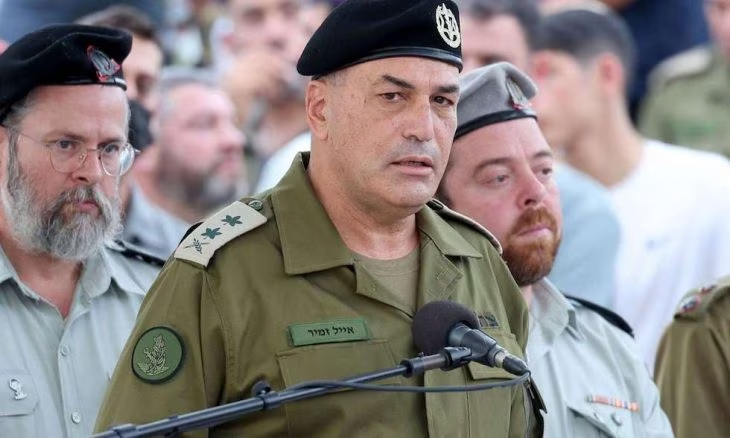
The Islamic Jihad movement affirmed that the resistance's weapons represent public property of the Palestinian people and a legitimate tool for self-defense and achieving major national goals. The movement stressed that the priority must be to end the occupation of Palestinian land and establish an independent state, considering any talk of disarmament while aggression continues as a distortion of facts and a disregard for the roots of the conflict.
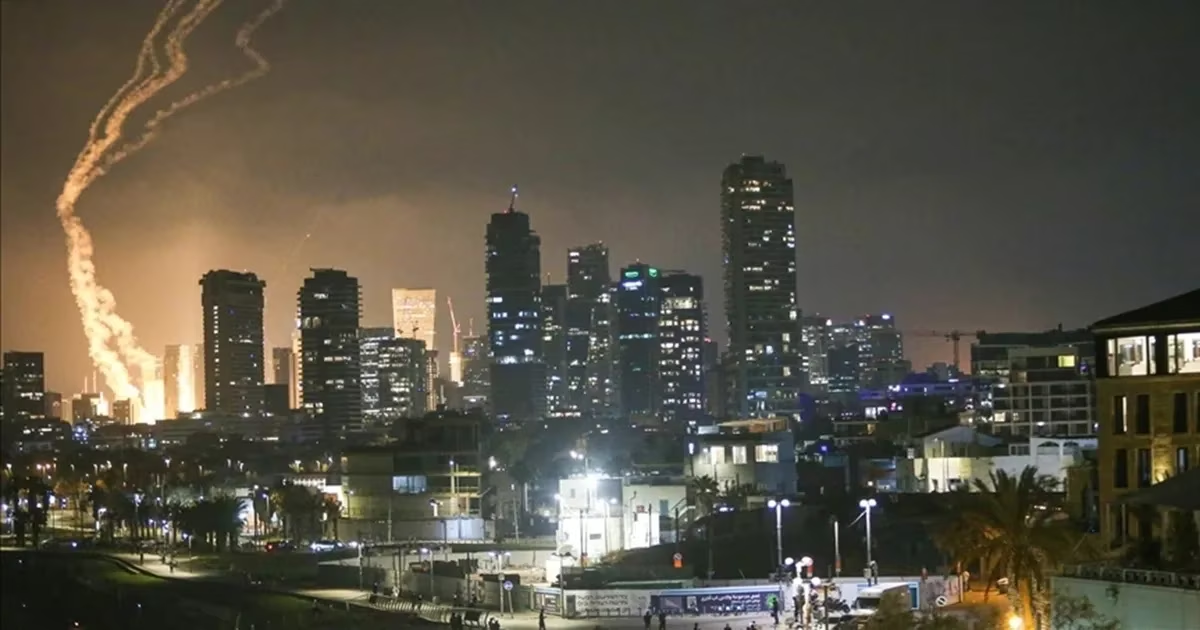
For its part, the Popular Front for the Liberation of Palestine warned against succumbing to calls for surrendering weapons without guaranteeing legitimate national rights. The Front clarified that resistance is a right guaranteed by international laws in the face of occupation and continuous violations, noting that the absence of international protection is what drives the Palestinian people to adhere to their defensive options to protect their existence from genocidal policies.

In the same context, the Democratic Front for the Liberation of Palestine emphasized its rejection of any distortion in international settlement plans that serves the Israeli agenda. The Front affirmed that any arrangements related to the security situation or weapons must stem from a unified Palestinian stance that places the interests of the people above all other considerations, warning against the occupation's attempts to achieve what it failed to achieve militarily through diplomatic channels.

On the popular level, gatherings of Palestinian clans and tribes announced that the resistance's weapons represent a collective guarantee that cannot be relinquished before the complete disappearance of the occupation. The tribes clarified in separate statements that the utmost priority at the present time must be to stop the war and provide urgent relief to citizens, instead of being preoccupied with schemes aimed at weakening the Palestinian internal front.

Ismail Al-Sindawi, a leader in Islamic Jihad, explained that the core of the crisis lies in the existence of the occupation itself, not in the weapons, which are a natural result of confronting this occupation. Al-Sindawi pointed out that the United States plays a negative role by providing military and political cover for the occupation's crimes, making it a direct partner in the suffering of Palestinians, calling on the international community to compel Israel to abide by signed agreements.

In turn, the Public Relations Department of the Islamic Jihad movement called for international efforts to focus on establishing a ceasefire, ending the war of extermination, and lifting the unjust siege on the Gaza Strip. It affirmed that Mladenov's plan should have included clear mechanisms to enable the Palestinian people to exercise their basic rights to shelter and reconstruction, instead of proposing suggestions that affect the defensive capabilities of the resistance.

In a political reading of the situation, Omar Murad, a member of the Political Bureau of the Popular Front, considered that the Palestinians' resort to arms is a natural reaction to the continuous crimes in the face of absolute international silence. Murad affirmed that any proposal that bypasses the people's right to resistance contributes to opening the way for the occupation to escalate its policies of killing and displacement, stressing that this historical right does not lapse with time, no matter how great the pressures.

Murad called for strengthening national unity as a fundamental pillar to confront schemes aimed at liquidating the Palestinian cause or distorting the resistance project. He called on the international community to take serious steps to stop Israeli violations and enable Palestinians to exercise their sovereignty, affirming that the Palestinian people will remain steadfast in their principles until the establishment of their state on all their national soil.

For his part, Qais Abdul Karim, a member of the Political Bureau of the Democratic Front, pointed out fundamental differences between the current proposals and what was previously circulated in international political circles. Abdul Karim affirmed that attempts to adapt international plans to suit Israeli demands are completely rejected, calling for the formulation of a unified national strategy to deal with all proposed political initiatives.

The National Gathering of Tribes and Clans criticized the performance of international envoy Nikolay Mladenov, considering that he failed in carrying out his humanitarian and political duties. Alaa El-Din Al-Aklouk, a member of the Gathering's leadership, affirmed that weapons are not exclusive to a particular faction but belong to the people, and there can be no talk of surrendering them before the establishment of a fully sovereign Palestinian state that ends the last occupation in the contemporary world.

Al-Aklouk questioned the international community's ability to provide genuine guarantees for Palestinian security, at a time when it has so far failed to deliver food and medicine to those besieged. He stressed that the tribes support political endeavors aimed at de-escalating the situation, but not on the basis of withdrawing weapons, but on the basis of extracting national rights and stopping the ongoing aggression.

In a firm stance, Sheikh Salem Al-Soufi, head of the Bedouin Tribes Gathering, said that weapons represent the 'soul' of the Palestinian people who were left alone to face the war of extermination. Al-Soufi recalled the history of Israeli massacres from Deir Yassin until today, affirming that the absence of international protection for decades is what made the possession of weapons an existential necessity to defend dignity and land.

The tribal and factional events concluded their positions by affirming that the popular base of the resistance will not allow any infringement on its weapons under any pretext. Speakers stressed that the only path to security and stability in the region passes through ending the occupation and enabling the Palestinian people to live freely and safely in their independent state with Jerusalem as its capital.

The resistance's weapons are the property of the Palestinian people and a means to achieve their goals, foremost among them ending the occupation and establishing an independent state.