







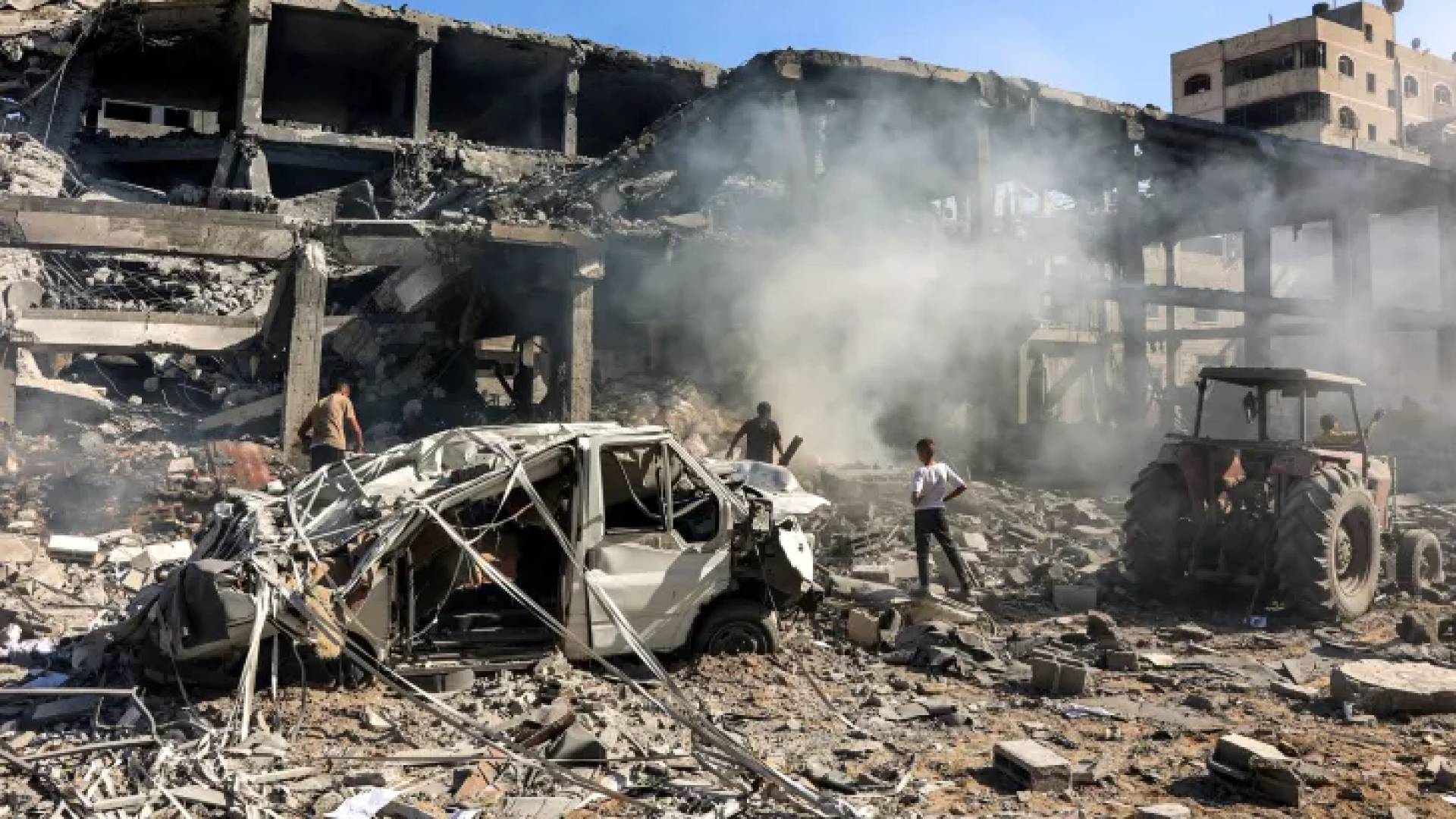
The tragedy of the wounded in the Gaza Strip is embodied in the story of fifty-year-old Alaa Muhammad Hussein, who transformed from a breadwinner for a large family of 25 individuals into a wounded invalid dependent on a wheelchair and walker. Hussein, who was injured by 50 shrapnel fragments from a bomb launched by an Israeli drone in the Tal al-Hawa neighborhood, now lives in a dilapidated tent in Deir al-Balah, battling exacerbated pain in his lungs and neck with no immediate hope of recovery.
Despite Hussein having medical permission to travel to Belgium nine months ago, strict Israeli restrictions at the Rafah crossing prevented him from reaching his treatment destination. This suffering is not limited to him alone; more than 20,000 wounded and sick individuals share it, facing the risk of death amidst the near-complete collapse of the healthcare system within the besieged Strip.
Inside the same tent, his daughter Maisaa (31 years old) is battling breast cancer, which she discovered before the outbreak of the war. However, forced displacement and the destruction of the Turkish-Palestinian Friendship Hospital deprived her of receiving chemotherapy doses. Maisaa, a mother of four children, now lives without a clear treatment destination, relying on charitable soup kitchens to secure food for her children after her husband's injury and inability to work.
Official data from the Ministry of Health indicates a catastrophic reality, where only 490 patients have traveled since the reopening of the Rafah crossing last February. These numbers reflect the occupation's failure to adhere to the ceasefire agreement, as the actual implementation rate of provisions related to the travel of humanitarian cases does not exceed 19% of what was agreed upon.
The current ceasefire agreement stipulates allowing 150 patients to travel daily, but the reality on the ground shows deliberate Israeli procrastination that has caused the deaths of 6 to 10 patients daily while on waiting lists. Since the invasion of Rafah city in May 2024, approximately 1,400 patients have lost their lives as a result of being deprived of their basic right to treatment abroad.
Engineer Zaher Al-Wahidi, Director of the Health Information Systems Unit, warned of 195 very serious cases classified as being in 'the end of life,' threatened with death at any moment. The long waiting lists also include approximately 4,000 children and 4,000 cancer patients who need surgical and therapeutic interventions not available in Gaza's exhausted hospitals.
Al-Wahidi explained that the occupation currently allows only 24 cases to travel daily with their companions, a very small number compared to the actual need, which requires the evacuation of 200 to 400 cases daily. This deliberate slowness in procedures means that resolving the current file of the wounded may take years, while patients do not have the luxury of time.
The medical evacuation process involves complex procedures starting with local medical evaluation in Gaza hospitals, where specialized committees sort and classify cases into emergency, urgent, and routine. These lists are uploaded through the electronic 'Sehati' system to ensure the enumeration of numbers and continuous updating of patient data for follow-up with international bodies.
The World Health Organization plays the role of international coordinator in this process, receiving approved lists and presenting them to host countries such as Qatar, the UAE, Turkey, and European countries. Once the patient receives medical approval from the host country, the most complex stage begins: obtaining 'security coordination' from the occupation authorities.
Israeli security approval represents the biggest obstacle, as patients and their companions undergo strict security scrutiny, often leading to the rejection of companions or long delays in travel. This intransigence prevents hundreds of patients from benefiting from medical visas they have already obtained from Arab and foreign countries.
Amidst the continued closure or rationing of work at the crossings, the health condition of the injured worsens, as new repercussions of old injuries such as herniated discs and acute lung infections appear. Doctors confirm that many delicate surgical operations require technical capabilities and equipped operating rooms that are currently not available in the Gaza Strip.
The occupation authorities exploit regional tensions to tighten the noose on the Strip, which directly reflects on the movement of travelers through the Rafah crossing, which is the only outlet for two million Palestinians. This reality has made travel for treatment a distant 'dream,' even for those who have received official medical referrals for more than a year.
The continuation of this systematic policy of obstructing medical evacuation places the international community and human rights organizations before a historical responsibility to stop what human rights activists describe as the 'slow execution' of the wounded. Every day of delay in fully opening the crossing means the loss of lives that could have been saved with simple medical intervention abroad.
The wounded Alaa Hussein and his family, like thousands of others, remain suspended between the hope of travel and the reality of pain, awaiting the moment the crossing opens without security restrictions that kill their dreams of recovery. It is a cry of pain emanating from the tents of the displaced, demanding a simple human right guaranteed by all international laws: the right to treatment and life.
I wish for death instead of being in a wheelchair.. Our lives are unbearable, and every day I feel death approaching me.
Share your opinion
Between the restrictions of the crossing and the specter of death.. Thousands of wounded in Gaza face an unknown fate