






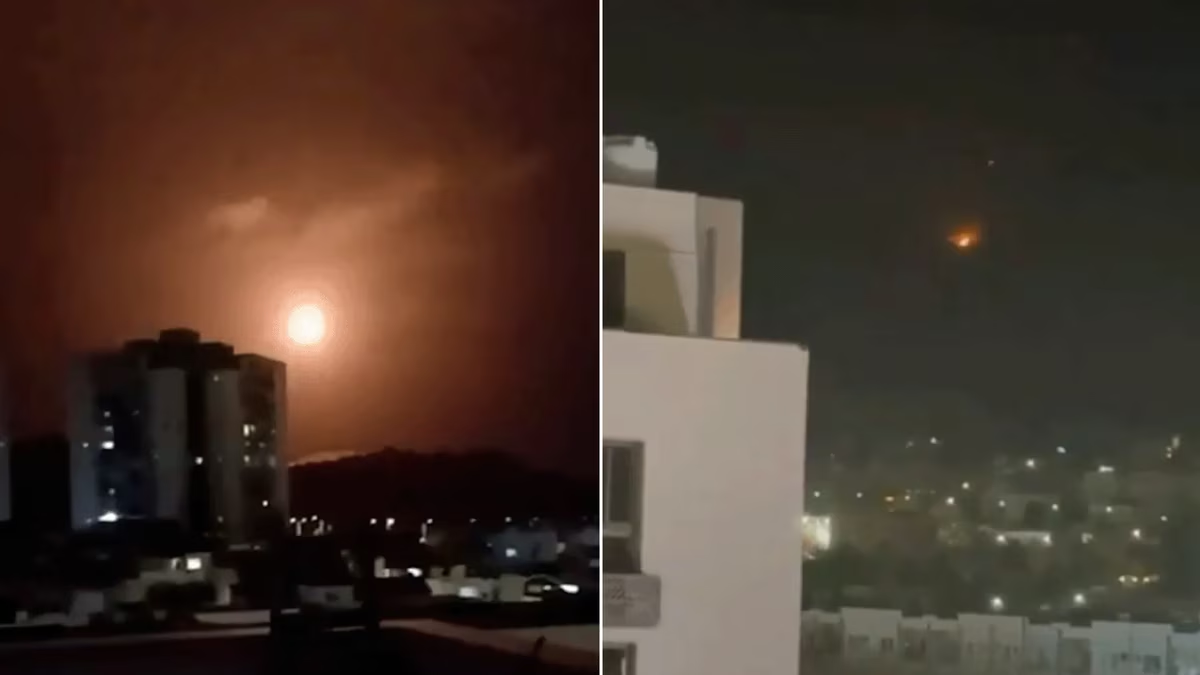
The city of Eilat, located in the south of the occupied territories, witnessed an intense aerial attack with drones and missiles. Media sources reported that the area was directly targeted from Yemeni territory. The attack caused a widespread security alert, coinciding with unprecedented aerial movements observed in the skies of the southern region.
For its part, the Israeli occupation army announced the success of its defensive systems in intercepting two drones launched from Yemen towards Eilat within just one hour. This announcement came shortly after air raid sirens were activated in the city, amidst serious concerns about suicide drones infiltrating populated areas.
Field sources confirmed loud explosions in the Eilat Bay area, resulting from aerial interception operations against the attacking missiles and drones. Hebrew media quoted security sources as saying that the attack was coordinated and aimed at striking vital installations in the city, which has become a frequent target for attacks coming from the Red Sea.
In contrast, the Ansar Allah group (Houthis) had earlier announced the execution of qualitative military operations targeting strategic occupation sites in southern occupied Palestine. The group affirmed in its official statements the continuation of these attacks as part of a strategy to support the resistance fronts in Palestine and Lebanon, warning of a greater escalation in the coming days.
On the international level, the UN Special Envoy for Yemen, Hans Grundberg, expressed his grave concern about the Houthis' decision to directly engage in the ongoing regional conflict. Grundberg condemned this approach in an official statement, considering that it threatens to drag Yemen into a wide-ranging war that transcends its geographical borders and further complicates the humanitarian crisis.
The UN mediator indicated that this military escalation would inevitably hinder peace efforts and ongoing mediation in Yemen, prolonging the suffering of civilians and exacerbating economic crises. He stressed that no party has the right to drag the country into regional conflicts that could lead to catastrophic consequences for local and international stability.
Grundberg called on all concerned parties, especially the Houthi group, to exercise maximum restraint and resort to diplomatic channels instead of military options. He affirmed his continued contacts with regional and international powers to prevent the region from sliding into a comprehensive confrontation whose repercussions would be difficult to control.
In a related context, the spokesperson for the UN Secretary-General, Stéphane Dujarric, warned that the continuation of missile and drone attacks portends a further and dangerous escalation of the conflict. Dujarric called in a press statement for the necessity of refraining from any hostile acts that violate international law and lead to the expansion of violence in the Middle East.
These field developments come at a sensitive time, as the confrontation between Israel and Iran's allies in the region enters its second month of continuous escalation. Armed factions from Lebanon, Iraq, and Yemen are participating in this confrontation, placing the region before scenarios open to all military and political possibilities.
Observers believe that the direct involvement of the Yemeni front in targeting Israeli depth represents a strategic shift in the course of the current war. International pressure is increasing to prevent these intermittent attacks from turning into a comprehensive regional war that major international powers might participate in, amid continued tension in the Red Sea and shipping lanes.
This escalation threatens to drag Yemen into the regional war, which will make it more difficult to resolve the conflict and deepen its economic repercussions.



Share your opinion
Drone and Missile Attacks Target Eilat, UN Warns of Expanding Conflict