ARAB AND WORLD

Tue 13 Feb 2024 9:12 am - Jerusalem Time

War on Gaza: ICC prosecutor threatens Israel with potential action over military activity in Rafah

Chief prosecutor Karim Khan had previously led a UN probe into crimes by the Islamic State militant group in Iraq

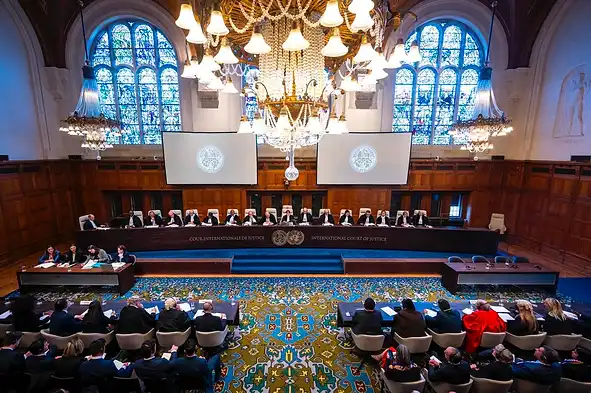
International Criminal Court (ICC) prosecutor Karim Khan said he was “deeply concerned” about reports of the bombardment and potential entry of Israeli troops into Rafah in Gaza, saying that his office may be pushed to take action against Israel.

“All wars have rules and the laws applicable to armed conflict cannot be interpreted so as to render them hollow or devoid of meaning. This has been my consistent message, including from Ramallah last year,” he wrote.

“Since that time, I have not seen any discernible change in conduct by Israel. As I have repeatedly emphasised, those who do not comply with the law should not complain later when my Office takes action pursuant to its mandate.”

Khan posted the statement on the social media platform X on Monday, adding that his office has an ongoing and active investigation “into the situation in the State of Palestine”.

Agnes Callamard, the secretary general at Amnesty International, also took to X to say that there is nowhere safe for Palestinians to go following the air strikes in Rafah.

“The Israeli incursion will have devastating consequences. Mass killings, forced transfers, more war crimes. The carnage must stop,” Callamard said. 

Khan has been a vocal critic of Israel's military assault in Gaza since the war on Gaza started on 7 October after the Hamas-led attacks on southern Israel. In late October, Israel said it would not allow Khan to enter the country, according to reports in the Israeli press. 

Khan, speaking from the Rafah crossing at the time, expressed his desire to enter Gaza and Israel to investigate potential crimes. 

Israel is not a signatory to the Rome Statute, which established the ICC, and is not a member of the Hague-based court. 

However, the ICC can investigate nationals of non-member states in some circumstances, including when alleged crimes are committed in the territories of member states.

The Palestinian Authority is a member of the court. However, Israel refuses to allow members of the ICC to enter the occupied Palestinian territories in the West Bank and Gaza.

In December, Khan called on Israel to respect the international rules of war and said he was accelerating his investigation into violence by Israeli settlers against Palestinians in the occupied West Bank, issuing a statement similar to the one made on Monday.

"I was crystal clear, that this is the time to comply with the law. If Israel doesn't comply now, they shouldn't complain later."

Concerns about looming ground assault

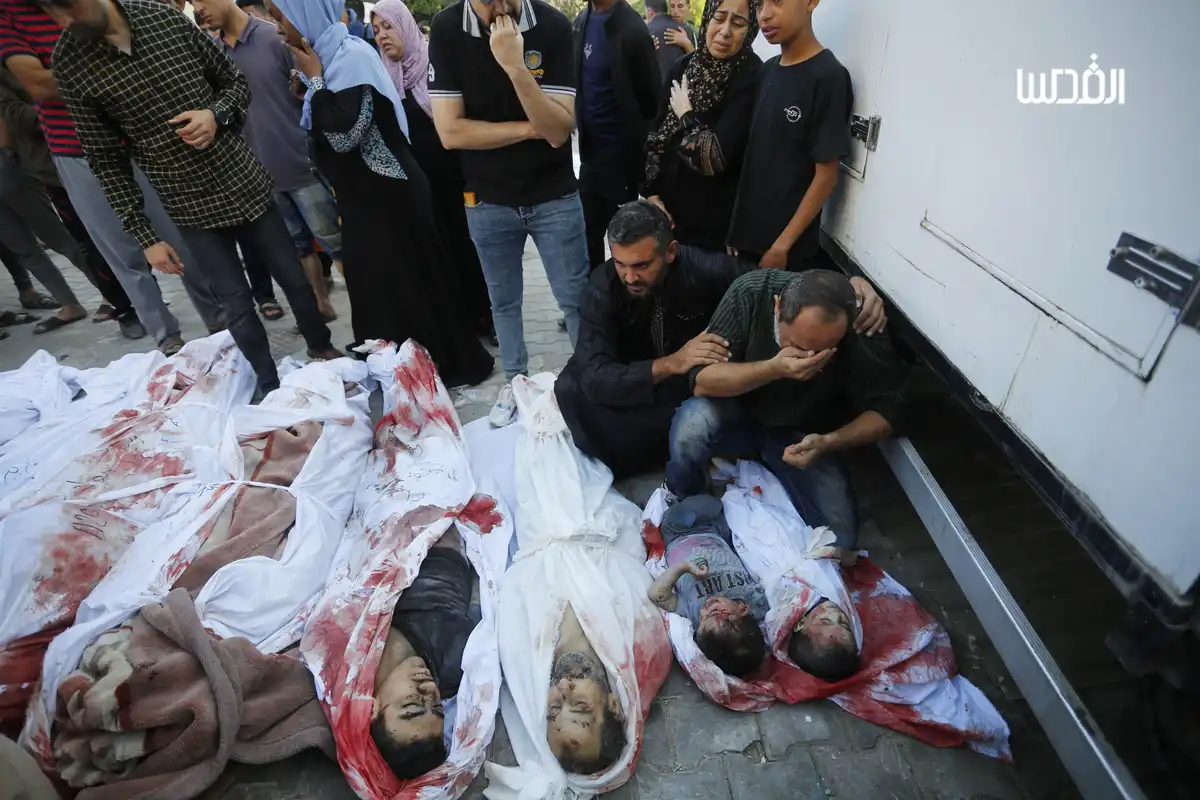
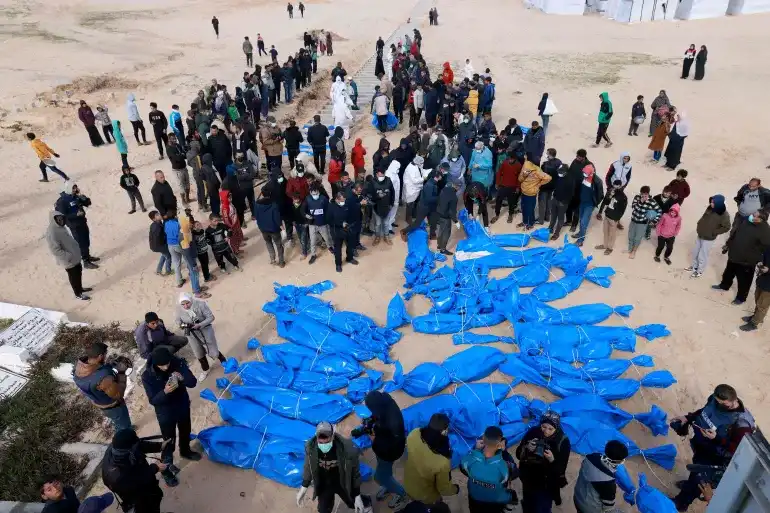
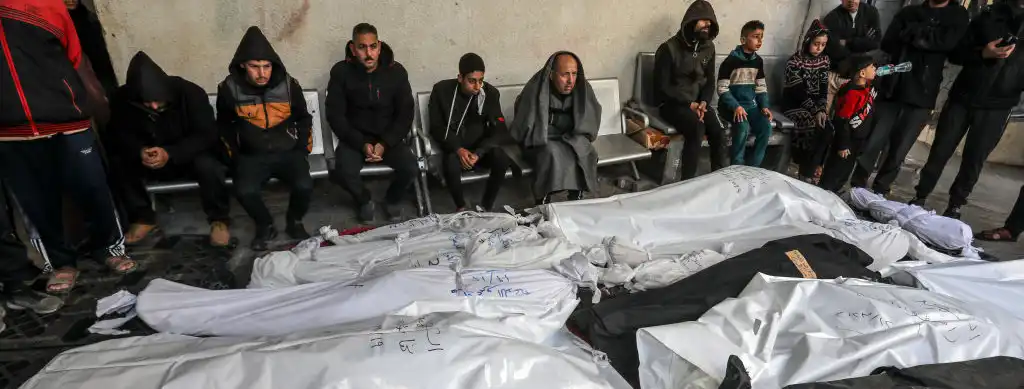
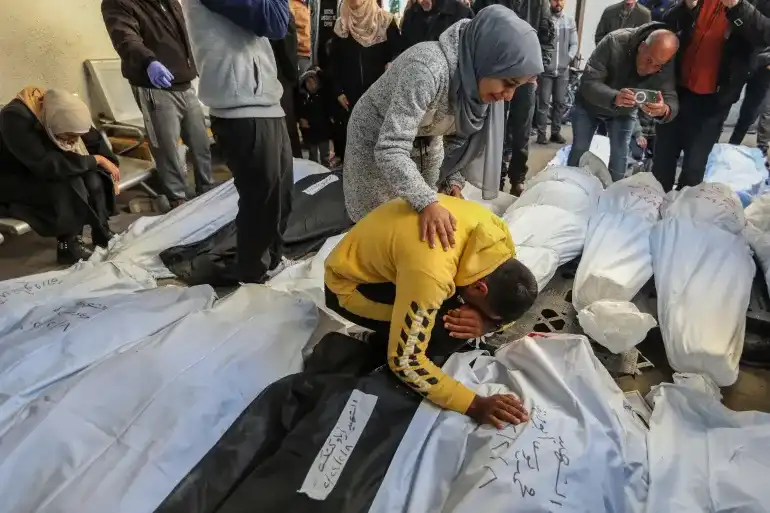
In the early hours of Monday, Israel carried out air strikes on Rafah, resulting in the deaths of numerous Palestinians who were taking refuge in homes and tents. 

The attacks targeted 14 homes and three mosques in Rafah, Palestinian officials said. The Palestinian health ministry said at least 67 people were killed.

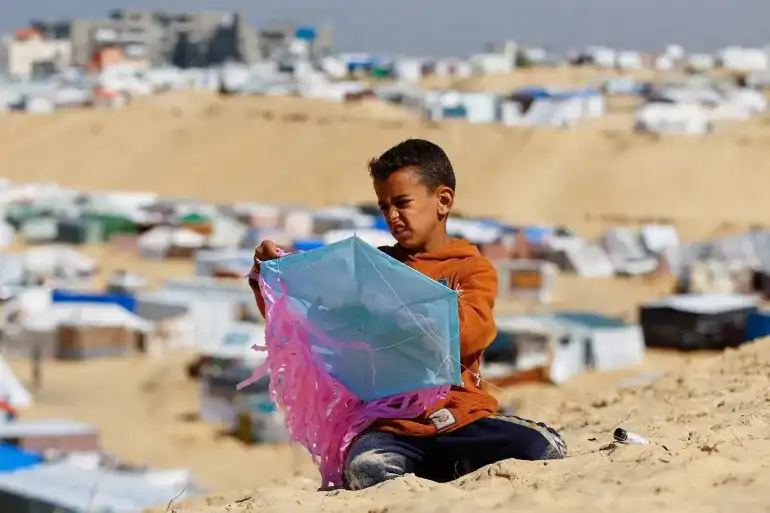
This action has heightened concerns about a looming ground assault on the region, which is heavily populated with displaced individuals who had fled there during the war, in addition to the people who normally live there.

The war on Gaza, which came in response to the 7 October Hamas-led attacks on southern Israel that killed 1,139 people and saw over 200 taken as captives back to Gaza, has resulted in Israel's military killing more than 28,000 Palestinians - the majority being women and children - while at least 65,000 have been wounded. 

Khan, the chief prosecutor, had previously led a UN probe into crimes by the Islamic State militant group in Iraq. He was elected by secret ballot in 2021 after ICC member states failed to come to a consensus on a replacement for his predecessor, Fatou Bensouda.

Since 2021, the ICC has been conducting an investigation into potential war crimes and crimes against humanity in the occupied Palestinian territories.


OPINIONS

Tue 13 Feb 2024 9:02 am - Jerusalem Time

Hind’s Corpse and the Battle for the State

Ghassan Charbel

Ghassan Charbel

Opinion Writer


I tried to run away from the small corpses. We have grown tired of laments. We have spent a lifetime going from one funeral to another. Anger and tears do nothing to heal the wounds. No sooner do we send off a victim than we are confronted with an uglier massacre. It is as though this terrible Middle East is addicted to the blood of the innocent.

I tried to turn away to another scene. I wrote about the latest chapter in the conflict in Iraq. America avenged its three soldiers and is seeking to withdraw from the country it invaded in 2003. It is obvious that Tehran lured Washington into a battle it cannot win and that it washed its hands clean from the practices of its proxies deployed in the maps of the “resistance.”

I was reminded that yesterday was the anniversary of the victory of the Khomeini revolution in Iran on February 11, 1979. One can’t review the past decades in the region without pausing at this date. The scene doesn’t need much explanation. Iran in Iraq is more powerful than the Iraqi state. It is more powerful in Syria than the Syrian state. It is more powerful in Lebanon than the Lebanese state and more powerful than the Houthis in Yemen. It is smarter and power powerful than its allies or proxies. It arranges the feast, but doesn’t leave any of its marks behind.

The tour of Iranian Foreign Minister Hossein Amir-Abdollahian to the capitals of the “resistance” reveals the new features of this part of the region. He spoke innocently, as if he were the foreign minister of Austria. He stressed the need for stability and avoiding slipping into the abyss. He revealed that his country had exchanged message with the United States in recent weeks. He said Washington had asked Tehran to intervene with Hezbollah in Lebanon to prevent the eruption of a widescale war. It is not easy to plan wars in parallel to the one raging in Gaza.

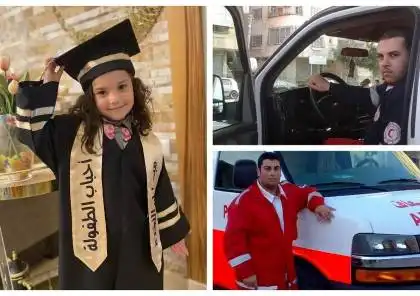
I tried and failed to escape the tale of Hind Rajab. She threw the story of her six years in the face of the modern world and the age of artificial intelligence and Elon Musk’s chips. She threw it in the face of the international jungle and Benjamin Netanyahu. Her story has become attached to the world’s conscience. The great authors never wrote a more harrowing and painful story.

Hind was deluded into believing that there are areas in Gaza that are less dangerous than others. She fled with her relatives from the Tal al-Hawa neighborhood to escape or postpone death. Death has no right to visit her. She is not a “terrorist” and has nothing to do with the tunnels. She did not take part in the Al-Aqsa Flood operation or any other operation.

She was just like any other child who dreamed of a day without planes and artillery. She was content with the meagerest of toys and of sleeping on the best pillow, which was her mother’s arm. She wanted to go to school and play games. She was unaware of the decision taken by the one who sparked the second Nakba. Gaza is no place to live. Gaza is where everything that moves is killed. Gaza is the place where children are killed so they don’t learn about the nation.

Her story has become well known. The passengers of a car are killed in a hail of bullets. Only Hind and another child survive. They begged for someone to come rescue them. The Red Crescent sent two of its paramedics to rescue them, but they were killed on the way. Hind’s relative died while she lived among the corpses for days. No one came and her fate was sealed. When the occupation forces withdrew from the area, her small corpse was retrieved from among the others.

Netanyahu’s war on Gaza has produced thousands of small corpses. The war he launched on October 7 has killed children in their homes, shelters and on the streets. The refugees fled from one death trap to another. Netanyahu speaks of “total victory” and is bent on waging a battle on Rafah as the world holds its breath that it would turn into an endless sea of corpses.

Almost 30,000 people have been killed in Gaza. The number of people killed per day has surpassed that of other conflicts. This war has set itself apart by the number of children it has claimed. Stopping the war has become more pressing than ever. Committing a horrific massacre in Rafah will plant in the region the seeds of future unprecedented conflicts. A political process must be launched. The war on Gaza must be the last one to erupt in the Palestinian-Israeli conflict and it must pave the way for the establishment of an independent Palestinian state.

Ending the war will be difficult with the fighters so deep in it and when it is now bordering on a fight for existence. It will be difficult when many involved find it impossible to live under the same roof or in two adjacent houses. But experience has shown that attempts to eliminate the other are impossible.

Netanyahu did not launch this destructive war so that he would one day surrender to a Palestinian state whose foundations he has spent his life trying to destroy. Yehya al-Sinwar did not fire the first shot to be later asked to abandon Gaza in return for the establishment of a Palestinian state, whose existence would hinge on the recognition of Israel.

The battle for an independent state is the only way to stop the cycle of Palestinian-Israeli wars. The establishment of an independent Palestinian state is necessary for the Palestinians and the region, which has been unstable since the rise of the Jewish state. Joe Biden’s administration must move on from condemning Israel’s excessive response to openly recognizing the Palestinian state and approving a path that would lead to its establishment.

The Arabs must also wage this battle by harnessing energies and addressing the world in a united voice which was sought by the Arab-Islamic summit that was hosted by Riyadh soon after the eruption of the war in Gaza.

Israel must be confronted with the inescapable truth that was put forth by the historic statement issued by Saudi Arabia in which it stressed the need to recognize a Palestinian state above all else before establishing permanent peace that would include the normalization of relations. The Arab and Islamic world must throw its weight in the balance, taking advantage of the several factors in its favor, including Saudi Arabia’s Arab, Islamic and international influence. The Palestinian state would return the Palestinian card to its people and land. The Palestinian state would ease instability in the region.

The best way to honor Hind’s small corpse would be for her to be buried in the soil of an independent Palestinian state. This state alone can stop the flow of corpses and give hope to the children of Gaza, the West Bank and beyond.

From Alsharq Alawsat


OPINIONS

Tue 13 Feb 2024 9:00 am - Jerusalem Time

Fear: A Shared and Taboo Sentiment in Our Region

Hazem Saghieh

Hazem Saghieh

Opinion Writer

Decades of occupation, oppression, and conflict over land and victimhood are the background to the heart-wrenching scenes in Gaza. However, so are other elements that have resulted from occupation, and resistance to it, to the same extent that they have shaped them.

Fear, one of those elements, has played a key role in leading us to this miserable state of affairs and aggravating it, not only in the main stage in Gaza, but also in several other countries and regions of the Middle East. Having said that, the concept of fear has only rarely been integrated into our understanding of what is happening and has thus not been given the same analytical significance that other conflict terms have.

Indeed, this neglect of fear, which is shared by the warring parties, is reinforced by the patriarchal, nationalist, and religious cultures of all parties. The fearful do not show their fear; even when presenting themselves as the sole victims, they must blend that image with one of strength. For instance, while Palestinians fear the Israeli war machine that has killed and continues to kill them, they affirm their strength by underlining their insistence on remaining steadfast and stressing the support of Arabs, Muslims, and allies. As for the righteousness of their cause and struggle, it is sufficient for ensuring victory.

Similarly, while the Israelis - on whom the memory of the Holocaust and pogroms weigh heavily - fear neighbors they consider hostile, they are confident of victory due to their strong army, international alliances, and their claims to righteousness.

Everyone who lives in the Middle East understands the fear common to its communities, and that each of these communities has an almost epic history replete with battles, expulsion, and displacement. Political thought, on the other hand, exposes the lengths that are taken to circumvent fear and replace it with claims to strength.

Both Palestinians and Israelis have a right to be afraid. Palestinians, who have lost the prospect of a state since 1948 - as every country in the area was emerging or gaining independence - are indeed afraid of a vicious and technologically advanced army that has previously defeated several Arab armies that had been thought to be strong; and that was before settlers became an additional armed force instilling fear and encroaching on their territory.

Recalling how readily the security-obsessed Israelis resort to violence in response to the slightest challenge by Palestinians, and how easily their response turns into collective punishment, helps us grasp aspects of this fear. Recent Palestinian history is brimming with reasons to be fearful, including forced expulsion, statelessness, and difficult living and working conditions, especially for those who have ended up in refugee camps and were subsequently left with no choice but to reside in neighboring countries among communities that are plagued, for their part, by demographic fears.

Haunted by their painful history in Europe and apprehensions of its recurrence, the Israelis find themselves in a region in which they are a different and unliked minority. Openly or implicitly, most of them operate under the assumption that peace and normalization are not sufficient guarantees against hatred and rejection. Their peace with Egypt, which dates back to 1978, only established a "cold peace," and the same is true for their peace deal with Jordan, which is now three decades old.

Nothing amplifies this fear like the increasing attachment to identities and the compulsion to dig up historical grievances that come with it. We know that recent decades have turned Muslims more Islamic and Jews more Jewish, making it more difficult to build bridges than ever. Diplomatic reconciliations from above between governments do little to change that.

There is no single template for alleviating the fears of the fearful in the Levant, especially after the collapse of the Lebanese model, which had often been described as an incubator of Muslim-Christian coexistence. Recently, we saw mass revolutions degenerate into sectarian and ethnic conflicts, giving rise to massive waves of refugees, as well as ISIS and the plight of the Yazidis and others who were subjected to its rule. As the long-standing and transnational question of injustice against the Kurds remains unresolved, and Türkiye continues to refuse to apologize to the Armenians, calls for federalism or secession are growing among the Christians of Lebanon.

It is difficult to leap over the major role that the Iranian revolution has played in this regard, laying the most robust groundwork for the transition toward the era of closed identities. Meanwhile, the figures most associated with peace, Anwar Sadat and Yitzhak Rabin, met their ends at the hands of extremists from their own peoples. As for Yasser Arafat, whom the Israelis directly humiliated at several junctures, Hamas took control of Gaza after his death, expelling the Palestinian Authority he had established.

Fear explains the Israeli obsession with security, as well as Israel’s outright rejection of a return of the Palestinians and the establishment of a single state, especially since there is no geographic buffer separating them from the Palestinians like that separating the French and the Algerians or the Portuguese and the Angolans. The Israelis have ultimately shown no appetite for embarking on the adventure of peace, and peace does remain an adventure in some sense.

Similarly, it is not reassuring to Palestinians that the Israelis who sympathize with their rights are too weak to influence the zeitgeist in their country or the policies of their state. After the "peace camp" had once been vigorous and robust, and the principle of withdrawing from occupied territories had held sway, this camp has disintegrated and eroded. The withdrawals from Lebanon and Gaza in 2000 and 2005 afforded those who had been saying that withdrawal would not bring peace with arguments to reinforce their claim, and that was before Hamas, which does not recognize Israel and the Oslo Accords in the first place, took over Gaza.

The frightened tend to instill fear in the other that lives in fear, driven by the illusion that by doing so, he dispels his own fear. This was multiplied a hundred times over by the Al-Aqsa Flood and Israel’s collective punishment.

There seems to be little reason to doubt that fear and the attempt to dispel it by scaring the other will become the norm in our region unless a third party, one that has the strength and capacity to impose a feasible settlement, intervenes to reassure both fearful sides.

From Alsarq Alawsat

ARAB AND WORLD

Tue 13 Feb 2024 8:58 am - Jerusalem Time

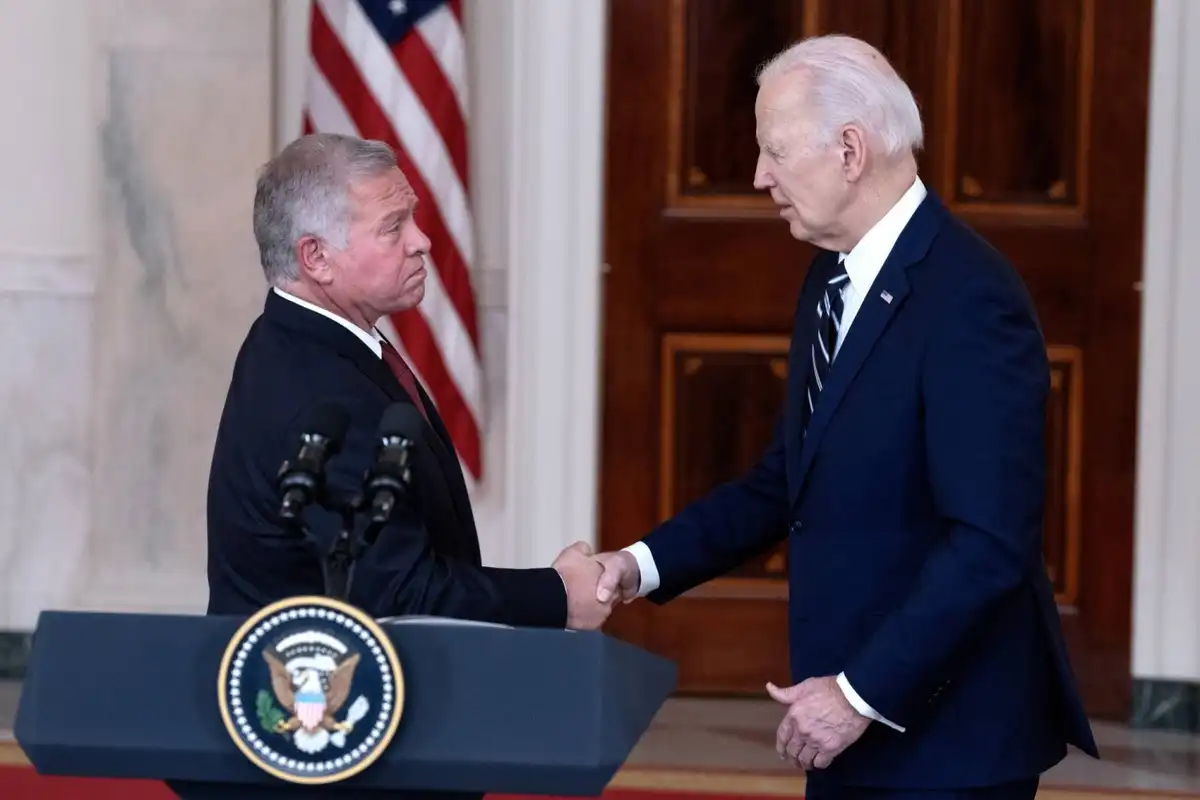
Biden, Jordan King Discuss Need for Stability in the Region

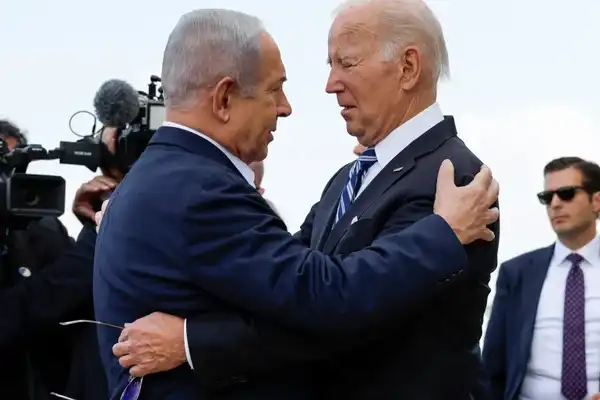
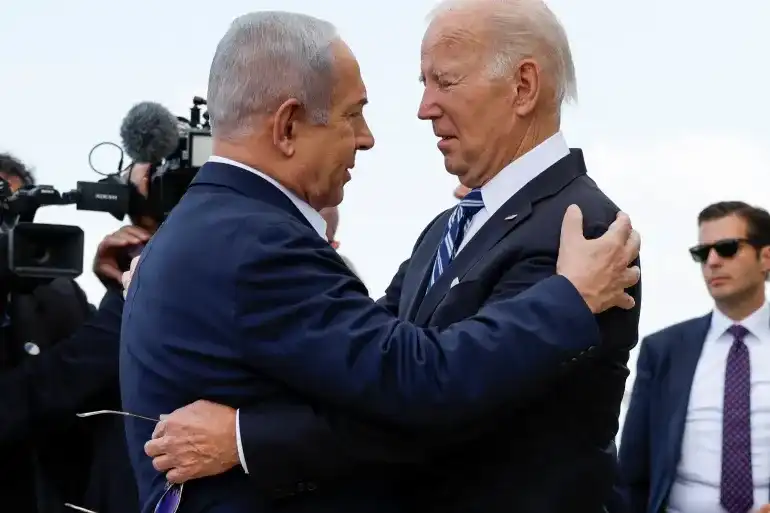
Declaring that "every innocent life lost in Gaza is a tragedy,” President Joe Biden welcomed Jordan’s King Abdullah II to the White House Monday for talks on how to end the months-long war and plan for what comes afterward. The meeting with Abdullah comes as Biden and his aides are working to broker another pause in Israel's war against Hamas in order to send humanitarian aid and supplies into the region and get hostages out. 

The White House faces growing criticism from Arab Americans over the administration's continued support for Israel in the face of rising casualties in Gaza since Hamas launched its Oct 7 attack on Israel, The Associated Press said. “The key elements of the deal are on the table,” Biden said alongside the king, though "there are gaps that remain.” He said the US would do “everything possible” to make an agreement happen: a pause to fighting for at least six weeks and the release of the remaining hostages held by Hamas. A senior US administration official said Sunday that after weeks of shuttle diplomacy and phone conversations, a framework was essentially in place for a deal. 

The official said Israeli military pressure on Hamas in Khan Younis over the last several weeks has helped bring the group closer to accepting an agreement. Abdullah said Biden's leadership was “key to addressing this conflict,” as he raised the plight of the tens of thousands of civilians killed and wounded in the fighting. “We need a lasting cease-fire now," the king said. “This war must end.” Jordan and other Arab states have been highly critical of Israel’s actions and have eschewed public support for long-term planning over what happens next, arguing that the fighting must end before such discussions can begin. 


They have been demanding a cease-fire since mid-October as civilian casualties began to skyrocket. Biden's stance marks a subtle but notable break for the president, who has continued to oppose a permanent cease-fire. His administration has insisted that Hamas not retain political or military control over Gaza after the war — a key objective of the Israeli operation to prevent a repeat of the Oct. 7 attack that killed more than 1,200 Israelis and saw about 250 taken hostage. Israel’s offensive has killed more than 28,000 Palestinians in the territory, displaced over 80% of the population and set off a massive humanitarian crisis. Gaza’s Health Ministry, which does not distinguish between combatants and civilians, has said the majority of those killed are women and children. Israel claims to have killed about 10,000 Hamas fighters but has not provided evidence. Biden repeated his warning that Israel must not launch a full-scale attack on Rafah, the last major holdout of Hamas where more than 1.3 million people are sheltering unless it devises plans to safeguard the civilians there from harm's way. 

Earlier Monday, National Security Council spokesman John Kirby acknowledged there were “legitimate military targets” for Israel in Rafah, but said the Israelis must ensure their operations are designed to protect the lives of innocent civilians. Officials have said the US is not sure there is a feasible plan to relocate civilians out of Rafah to allow military operations to take place. Biden, who has held out hope for a two-state solution to the Israeli-Palestinian conflict, added that he and the king discussed the need for the Palestinian Authority, which has some control over parts of the West Bank, to “urgently reform” to be ready to assume some authorities in Gaza if Hamas is removed from power. 

Abdullah insisted that “Separation of the West Bank and Gaza cannot be accepted.” Earlier Monday, Biden, joined by his wife, Jill, welcomed the king, Queen Rania, and crown prince Hussein at the White House before the leaders met. It was the first meeting between the allies since three American troops were killed last month in a drone strike against a US base in Jordan. Biden blamed Iran-backed militias for the deaths, the first for the US after months of strikes by such groups against American forces across the Middle East since the start of the Israel-Hamas war. 

Biden had planned to visit Jordan during his trip to Israel in October shortly after the Oct. 7 attack by Hamas, but the trip was scrapped. On his way home from Israel, Biden announced he'd helped broker the first deal to pause fighting temporarily and to open the crossing in Rafah to humanitarian aid. In the months since, members of his administration have made repeated trips to the region to engage with leaders there.


PALESTINE

Tue 13 Feb 2024 8:56 am - Jerusalem Time

West Bank: Israeli forces bomb a house and launches an arrest campaign

At dawn and early Tuesday morning, the Israeli forces launched a massive arrest campaign in various areas in the West Bank and occupied Jerusalem.


In Jenin, the occupation forces bombed a house after it was besieged in the village of Sir, belonging to a citizen of the Irshid family, and targeted it with “energa” shells, which led to a fire igniting, and demanded that a young man inside it surrender himself.


The brothers: Salah, Hamza, Abdul Qader, Khaled Suleiman Irshid, and the young man Ahmed Shihab Irshid were also arrested from the village, while the two young men, Karim Nasser Amin Marhi, from the town of Kafr Dan, and Ahmed Ibrahim Abu Al-Hassan, from the town of Al-Yamoun, west of Jenin, were arrested after storming the two towns, raiding their families’ homes, and destroying their contents.


In Qalqilya, the Israeli forces arrested the young man, Walid Shuraim, after raiding and searching his house, noting that Israel is still spreading in various neighborhoods of the city, especially “Iskan Street, Nablus Street, and Al-Nafaq Street.”


In Bethlehem, Omar Muhammad Zaoul (31 years old) and Khalil Ahmed (29 years old) were arrested during the storming of the village and raiding a number of homes in the village of Husan.


In occupied Jerusalem, the Israeli forces arrested the young man, Muhammad Akram Al-Khatib, after raiding his house in the village of Beit Iksa, while they arrested a citizen, whose identity was not known, after raiding a house in the town of Anata.


In Hebron, the young man, Jaber Bassam Arziqat, was arrested after his house was raided, searched, and tampered with its contents in the town of Tafuah.


In Salfit, the Israeli forces arrested the citizen, Muhammad Omar Matar, after raiding and searching his house.

ARAB AND WORLD

Tue 13 Feb 2024 8:54 am - Jerusalem Time

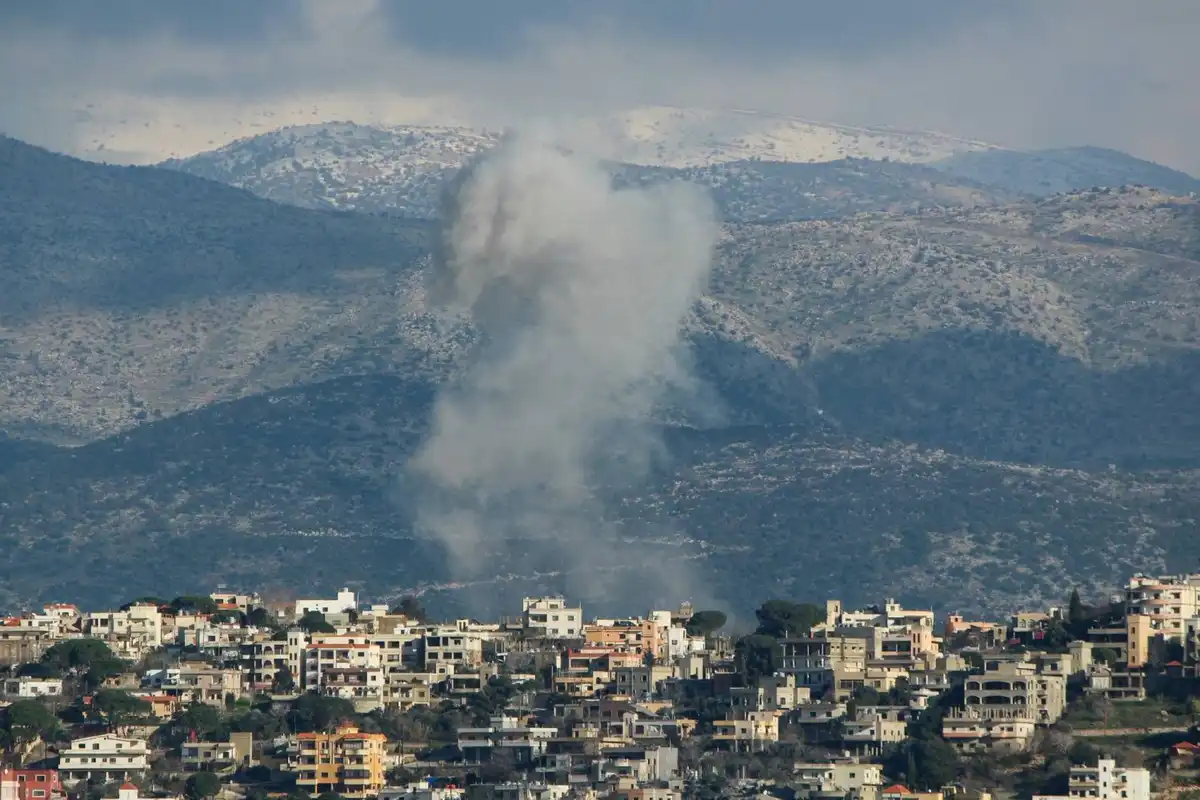
France Proposes Hezbollah Withdrawal, Border Talks for Israel-Lebanon Truce

France has delivered a written proposal to Beirut aimed at ending hostilities with Israel and settling the disputed Lebanon-Israel frontier, according to a document seen by Reuters that calls for fighters including Hezbollah's elite unit to withdraw 10 km (6 miles) from the border. 

The plan aims to end fighting between the Iran-backed Hezbollah and Israel at the border. The hostilities have run in parallel to the Gaza war and are fueling concern of a ruinous, all-out confrontation. The document, the first written proposal brought to Beirut during weeks of Western mediation, was delivered to top Lebanese state officials including Prime Minister Najib Mikati by French Foreign Minister Stephane Sejourne last week, four senior Lebanese and three French officials said. 

It declares the aim of preventing a conflict "that risks spiraling out of control" and enforcing "a potential ceasefire, when the conditions are right" and ultimately envisions negotiations on delineation of the contentious land border between Lebanon and Israel. Hezbollah rejects formally negotiating a de-escalation until the war in Gaza ends, a position reiterated by a Hezbollah politician in response to questions for this story. While some details of similar mediation efforts by US Middle East envoy Amos Hochstein have been circulating in recent weeks, the full details of the French written proposal delivered to Lebanon have not previously been reported. 

The three-step plan envisages a 10-day process of de-escalation ending with the border negotiations. One French diplomatic source said the proposal had been put to the governments of Israel, Lebanon and Hezbollah. France has historical ties with Lebanon. It has 20,000 citizens in the country and some 800 troops as part of a UN peacekeeping force. "We made proposals. 

We are in contact with the Americans and it's important that we bring together all initiatives and build peace," Sejourne told a news conference on Monday. The plan proposes Lebanese armed groups and Israel would cease military operations against each other, including Israeli airstrikes in Lebanon. Several non-state groups, including Palestinian factions, have mounted attacks on Israel from south Lebanon during the latest hostilities, though Hezbollah is the dominant power in the area with a fighting force widely seen to outgun the Lebanese army. 

The Lebanese armed groups would dismantle all premises and facilities close to the frontier, and withdraw combat forces - including Hezbollah's elite Radwan fighters and military capabilities such as antitank systems - at least 10 km north of the frontier, the document proposes. Any such withdrawal could still leave Hezbollah fighters much closer to the border than the 30 km (19 mile) withdrawal to Lebanon's Litani River, stipulated in a UN resolution that ended a war with Israel in 2006. The shorter withdrawal would help ensure rockets did not reach villages in northern Israel that have been targeted with anti-tank missiles and was a compromise seen as more palatable to Hezbollah than a retreat to the Litani, one Western diplomat with knowledge of the two-page proposal said. Up to 15,000 Lebanese army troops would be deployed in the border region of south Lebanon, a Hezbollah political stronghold where the group's fighters have long melted into society at times of calm. Asked about the proposal, senior Hezbollah politician Hassan Fadlallah told Reuters that the group would not discuss "any matter related to the situation in the south before the halt of the aggression on Gaza". "The enemy is not in the position to impose conditions," added Fadlallah, declining to comment on details of the proposal or whether Hezbollah had received it. 

One of the Lebanese officials said the document brings together ideas discussed in contacts with Western envoys and had been passed on to Hezbollah. French officials told the Lebanese it was not a final paper, after Beirut raised objections to parts of it, the Lebanese official said. 

An Israeli official said such a proposal had been received and was being discussed by the government. Reuters reported last month that Hezbollah had rebuffed ideas suggested by Hochstein, who has been at the heart of the efforts, but that it had also kept the door ajar to diplomacy. Asked for comment for this story, a State Department spokesperson said the United States "continues to explore all diplomatic options with our Israeli and Lebanese counterparts to restore calm and avoid escalation." 

The White House did not immediately respond to a request for comment. The Lebanese official said several elements prompted concern in Beirut, including the demand armed groups dismantle premises and facilities close to the border, which the official said was vaguely worded and could be used to demand moves against Hezbollah-affiliated civilian institutions. 


'UNCLEAR' ELEMENTS 

Tens of thousands of people have fled homes on both sides of the border since the fighting began on Oct. 8. Israeli strikes have killed nearly 200 people in Lebanon, 170 of them Hezbollah fighters. Attacks from Lebanon have killed 10 soldiers and five civilians in Israel. 

But the strikes have mostly been contained to areas near the border and both sides have said they want to avoid all-out war. Numerous Western envoys have visited Beirut to discuss ways to de-escalate the fighting, mostly meeting with Lebanese state officials rather than Hezbollah, which is designated a terrorist organization by the United States. One of the Lebanese officials said a French technical delegation returned to Beirut two days after Sejourne's visit to discuss details, following the Lebanese objections. Another of the Lebanese officials said Beirut had not responded to the proposal, adding that it was neither signed nor dated and was therefore not deemed official enough to warrant a response. 

THREE-STEP APPROACH 

The proposal recalls a ceasefire which ended a war between Hezbollah and Israel in 1996, and also UN Security Council resolution 1701 that ended the 2006 war. It maps out three steps over 10 days. The two sides would cease military operations in step one. Within three days, step two would see Lebanese armed groups withdrawing combat forces at least 10 km north of the frontier and Lebanon would initiate the deployment of soldiers in the south. Israel would cease overflights into Lebanese territory. As the third step, within 10 days, Lebanon and Israel would resume negotiations on delimiting the land border "in a gradual way" and with the support of the UN peacekeeping force UNIFIL. 

They would also engage in negotiations on a roadmap to ensure the establishment of an area free of any non-state armed groups between the border and the Litani river. Hezbollah has previously signaled it could support the state negotiating a deal with Israel to settle the status of disputed areas at the border to Lebanon's benefit. One of the issues to address is financing for the Lebanese army, severely weakened by a severe financial crisis in Lebanon. The proposal calls for an international effort to support the deployment of the Lebanese army with "financing, equipment, training".

It also called for "the socio-economic development of southern Lebanon".


PALESTINE

Tue 13 Feb 2024 8:53 am - Jerusalem Time

West Bank: A young man was killed by Israeli forces in Qalqilya

This Tuesday morning, the young man, Muhammad Sharif Salmi, was martyred by bullets from the Israeli forces, during their storming of the city of Qalqilya.


Local sources reported that the Israeli forces stormed the city of Qalqilya and shot the young man Salma (20 years old) while he was in his vehicle in the “Al-Bireen” area. As a result, he was injured in the chest, shoulders and head.


The Israeli forces arrested the young man, Walid Shreim, after raiding and searching his house, after they spread out in various neighborhoods of the city, such as Al-Iskan Street, Nablus Street, and Al-Nafaq Street.


The city's Directorate of Education decided to shift school hours electronically due to the political situation on the ground.

ARAB AND WORLD

Tue 13 Feb 2024 8:52 am - Jerusalem Time

Pressure Mounts on Israel for Gaza Ceasefire

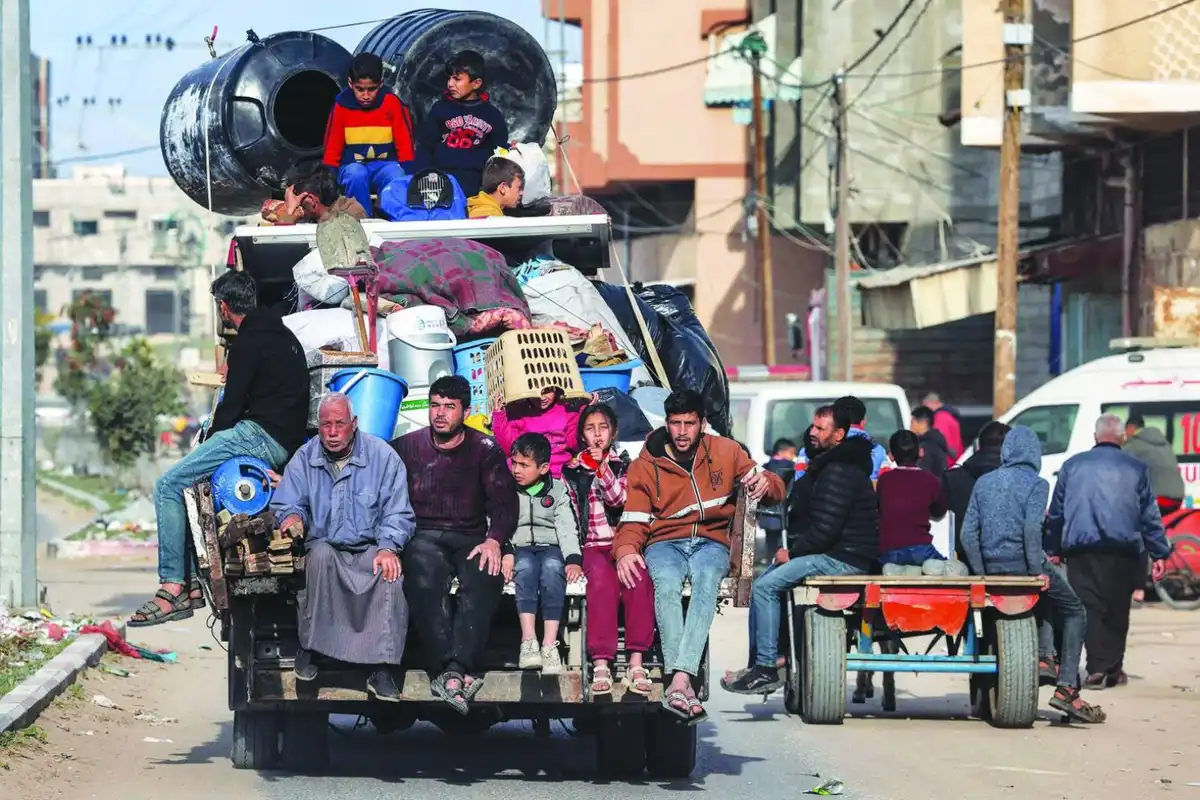
Israel faced growing international pressure on Tuesday to agree to a ceasefire with Hamas, as it planned an incursion into the southern Gaza city Rafah where more than a million Palestinians are trapped. 

CIA Director William Burns was due in Cairo on Tuesday for a new round of talks on a Qatari-mediated ceasefire that would temporarily halt fighting in exchange for Hamas freeing hostages. His planned visit comes after Washington and the United Nations warned Israel against carrying out a ground offensive into Rafah without a plan to protect civilians, who say they have nowhere left to go. "Wherever we go there's bombing, martyrs and wounded," said Iman Dergham, a displaced Palestinian woman. 


On a visit to the White House Monday, Jordan's King Abdullah II pushed for a full ceasefire to end the four-month-old war. "We cannot stand by and let this continue. We need a lasting ceasefire now. This war must end”, said the monarch whose country hosts a large number of Palestinian refugees. After rejecting Hamas's terms for a truce last week, Israel conducted a predawn raid in Rafah on Monday that freed two hostages and killed around 100 people. 


Netanyahu hailed the overnight operation freeing Fernando Simon Marman, 60, and Luis Har, 70, as "perfect", while the Palestinian foreign ministry said the deaths of dozens of Gazans amounted to a "massacre". The rare rescue mission under heavy air strikes came hours after Netanyahu spoke with US President Joe Biden, who reiterated his opposition to a major assault on Rafah. But Netanyahu has defied pressure from key ally and military backer Washington, insisting that "complete victory" cannot be achieved until the elimination of the Hamas’ last battalions in Rafah. While meeting with the units that freed the two hostages, Israeli Defense Minister Yoav Gallant on Monday said there would be "more operations" soon and pledged to see "Gaza destroyed". "In my opinion, the day is not far." 

The United States has angered some Middle East allies by consistently refusing to back a full ceasefire, with Washington saying it supports Israel's drive to eradicate Hamas and calling for shorter pauses with hostage-prisoner swaps instead. Biden said Monday his administration was trying to broker a six-week truce and that while key elements were in place, "gaps" remained. Once the warring parties agree to the ceasefire, "something more enduring" could be broached, Biden said. While weeks of talks have yet to bear fruit, a source close to the negotiations told AFP that CIA director Burns was expected in Egypt for more high-level negotiations on Tuesday. 


Burns was part of the team that thrashed out the proposed truce in Paris last month. No safe place Rafah has become a last refuge for over half of Gaza's population, who are pressed up against the Egypt border in makeshift encampments where they face outbreaks of hepatitis and diarrhoea, and a scarcity of food and water. Netanyahu has said Israel would provide "safe passage" to civilians trying to leave, but foreign governments and aid groups -- as well as Gazans -- wondered where they could go. "As it is, there is no place that is currently safe in Gaza," said United Nations spokesperson Stephane Dujarric. When asked about an evacuation mission, he said the UN would "not be party to forced displacement of people". 

The UN's human rights chief Volker Turk warned that "an extremely high number of civilians" would likely be killed or injured in a full Israeli incursion into Rafah, which could also spell the end of the "meager" humanitarian aid entering Gaza. "It's almost famine here, we're almost out of flour in the north region," said a man in northern Gaza's Beit Lahia. "We can't even find food and drinks for the children." - 'Time is running out'- Israel's operation to free the two hostages left Rafah with bomb craters and piles of rubble. The United States said it was deeply concerned by the reports that around 100 Palestinians, including women and children, were killed in the early Monday raid. 

The State Department also called for Israel to investigate the "heartbreaking" death of six-year-old Gazan Hind Rajab. Her body was recovered on Saturday along with two relatives and two Red Crescent workers who went to find her after her family's car came under fire while trying to flee an Israeli advance on Gaza City. "I will question before God on Judgment Day those who heard my daughter's cries for help and did not save her," Hind's mother Wissam Hamada told AFP. At least 28,340 people, mostly women and children, have died in Israel's relentless bombardment and ground offensive in Gaza, according to the Hamas-run health ministry. 


Hamas also seized about 250 foreign and Israeli captives from southern Israel, around 130 of whom Israel says are still held in Gaza including 29 who are presumed dead. The Hostages and Missing Families Forum campaign group warned that "time is running out for the remaining hostages", urging the Israeli government to "exhaust every option on the table to release them".


PALESTINE

Tue 13 Feb 2024 8:52 am - Jerusalem Time

War on Gaza: Dozens of Palestinians killed and wounded in Israeli raids and artillery shelling in various areas of Gaza Strip

A number of citizens were killed and injured, at dawn on Tuesday, in Israeli raids and artillery shelling that targeted various areas of the Gaza Strip.


In the dawn hours of the 130th day of the ongoing Israeli aggression on the Gaza Strip, health sources reported that 5 citizens were killed and others were injured as a result of the Israeli warplanes bombing a house for the Qadoha family in the Nuseirat camp in the central Gaza Strip.


A child was murdered and at least 4 other citizens were injured as a result of the Israeli bombing of the Brazil neighborhood in Rafah.


Local sources reported hearing violent explosions in the western areas of the city of Rafah, south of the Gaza Strip.


The Israeli artillery also targeted the eastern and western areas of Khan Yunis in the southern Gaza Strip, and citizens said that the electricity supply was completely cut off from the Nasser Medical Complex in the city.


Yesterday, Monday, 7 citizens were killed, and 14 medical staff and displaced persons were injured by Israeli sniper fire in the courtyards of the Nasser Medical Complex, in the city of Khan Yunis, south of the Gaza Strip.


In Al-Maghazi camp in the middle of the Gaza Strip, a number of citizens were injured by bombing by Israeli warplanes.


In an infinite toll, the number of killed has risen to 28,340 citizens and 67,984 wounded since the start of the aggression on the Gaza Strip on the seventh of last October.

ARAB AND WORLD

Tue 13 Feb 2024 8:42 am - Jerusalem Time

Analysts: The Rafah operation has not yet begun, and Washington fears Israel's drowning in Gaza

Experts and analysts say that the expected Israeli operation in the city of Rafah, south of the Gaza Strip, has not yet begun, and will require that the United States avoid massacres that may exceed all that history has witnessed, stressing that Washington is still concerned about the next day of the war and fears that Israel will drown in Gaza. .


During his participation in the program “Gaza... What Next?”, the expert and political analyst Muhammad Al-Akhras said that the United States is trying to build on what Israel has achieved on the ground, because it has become confident that Prime Minister Benjamin Netanyahu is working from a personal standpoint.


According to Al-Akhras, the American position is linked to the post-war period, and “there are major differences between Washington and Tel Aviv, because the decision to enter Gaza is a political matter, not a military one, because it is linked to control of the crossings and the Philadelphia axis.”


Disagreement over the mechanism of war

Therefore, Washington does not differ with Tel Aviv on the major goals of the war, but rather on how to invest in achievements on the ground, according to Al-Akhras, who believes that America realizes the danger of leading a war without a plan, and knows very well the possibility that it could turn into a strategic defeat, as US Secretary of Defense Lloyd Austin warned in the first Operations, and “therefore it is trying to exert force with all its might to guide Israel’s behavior and prevent its sinking in Gaza.”


Also, as Al-Akhras says, America, which fought major wars in Iraq and Afghanistan, “knows that the first months are the easiest in the war and that continuing means disaster for Israel and the region, which is on a hot plate, and therefore it is monitoring the matter with a geopolitical perspective and knows that Netanyahu is working for himself.”


In turn, expert on Israeli affairs, Ihab Jabarin, pointed out that there is a state of rejection and mistrust on the part of Israeli politicians regarding the results of the military operation in Rafah, but he explained that civilians and military personnel are trying at the same time to build a collective contract with the army.


Jabareen added that this matter may push towards the operation to restore confidence, especially since they called it Golden Hands instead of Iron Swords to emphasize its specificity.


Military expert Major General Fayez Al-Duwairi believes that the Rafah operation has not yet begun, and that the violent bombing that killed 70 people at dawn on Monday does not mean its beginning, noting that the operation “will be complex and require the evacuation of more than a million displaced people before it begins.”


Al-Duwairi said that starting the operation before the evacuation of the displaced means that America is required to overlook massacres that will exceed those recorded in history, because it is impossible to carry out a military operation in the city of Rafah in its current state without committing massacres that are shameful to history, as he put it.


Source: Al Jazeera

ARAB AND WORLD

Tue 13 Feb 2024 8:39 am - Jerusalem Time

Guardian: Condemning Israel's critics as anti-Semites is a distortion of history

A report published by the British newspaper The Guardian confirmed that the exclusion of voices critical of Israel as “non-Jewish” and even anti-Semitic has deep roots, and described this as a distortion of history.


The report talked about the story of Dr. William Zuckerman (born in 1885 in Russia), whose family was able to immigrate to the United States in 1900 to escape the attacks to which Jews were exposed, as well as poverty.


The author of the report, Kenan Malik, stated that during World War I, Zuckerman returned to Europe to work with a charitable foundation to help American Jewish soldiers. He settled in London and established the European office of The Jewish Morning Journal.


In 1948, he returned to the United States and founded the Jewish Newsletter, coinciding with the establishment of the new State of Israel. Zuckerman's articles were published in dozens of Jewish newspapers and he became a correspondent for a British Jewish newspaper in New York.


Don't criticize Israel

The writer explained that it was possible for the Jewish establishment to embrace Zuckerman as a model public figure, but there was one problem preventing that, which was his constant criticism of the policies of the newly established State of Israel.


Zuckerman's defense of Palestinian refugees alarmed Israeli diplomats, who succeeded in organizing a behind-the-scenes campaign to prevent his work from being published in the Jewish press.


The writer stated that Zuckerman’s story is one of many stories told by Jeffrey Levin in his new book, “Our Palestinian Question,” about the forgotten history of Jewish opposition in the United States in the decades following the establishment of Israel, and it is one of several novels that will be published this year to explore the history of American Jewish opposition to Zionism. And support the Palestinian cause.


Malek explained that while some Jews see that the fact that the Hamas movement is a threat to Israel’s existence gives it the right to take any necessary measures to eliminate it, others see that whatever the “atrocities” left behind by the attacks of last October 7, the destruction of Gaza and the killing of More than 25,000 Palestinians and the displacement of almost the entire population is unreasonable and contrary to Jewish moral traditions.


He said this division led to intense debates about what it means to be Jewish and the meaning of anti-Semitism.


"non-Jews"

In 2021, an article in the Jewish magazine “Tablet” described Jews who criticize Israel or Zionism as “non-Jews.” Three years later, this description seems to have found greater resonance, and perhaps the official rejection of the term “non-Jews” is not found in any country more established. from Germany.


Susan Neiman, the American Jewish philosopher and director of the Einstein Forum in Potsdam for the past quarter century, said: “To be a left-wing Jew in Germany today means to live in a state of permanent cognitive dissonance. German politicians and the media constantly talk about protecting Jews from anti-Semitism, but many people Those who criticize the Israeli government and the war on Gaza have certainly been ostracized and attacked. I am an Israeli citizen and have been accused of being a supporter of Hamas and even Nazism in the mainstream media. Should I add that I am not?


According to researcher Emily Desch-Becker, about a third of those ostracized in Germany for supposed anti-Semitism were Jews.


Kenan Malik stated that for many supporters of Israel, the history of Jewish suffering - which culminated in the Holocaust - made it necessary to defend the nation and maintain its security at all costs, and for critics of Israel, it is precisely this history that creates the moral necessity to defend Palestinian rights.


Source: Guardian+ Aljazeera

ARAB AND WORLD

Tue 13 Feb 2024 8:39 am - Jerusalem Time

Italian Jews stand in solidarity with Gaza and disavow Netanyahu

54 Italian Jews called on Israeli Prime Minister Benjamin Netanyahu to stop the war on the Gaza Strip, and they also urged Jews around the world to consider the dire effects of the current tragedy on the future, in an open letter published by Italian newspapers, including “Il Fatto Quotidiano,” on the occasion of International Holocaust Remembrance Day ( Holocaust).


In the letter titled “What is the value of memory if it does not stop death in Gaza and the West Bank?”, the signatories wrote that the attack of last October 7 shook them violently, just as they were violently shaken by the crimes overseen in Gaza and the occupied West Bank by Netanyahu, who wants - According to them - prolonging the war to stay in power.


The letter's authors - who describe themselves as secular Jews who are involved in the "Jewish Voices for Peace" organization - accused Netanyahu of lacking a political way out for the war, and expressed their regret that part of Israeli society and many Jews around the world realize the tragedy of what is happening and its effects on the future.


Futile discussion

According to the signatories, discussing whether the war crimes committed by Israel in Gaza are classified as genocide will not help in alleviating the suffering of the Palestinian victims, hostages, and their families.


At a time when the Jews of the world commemorate “International Holocaust Remembrance Day” (January 27), this occasion cannot be transformed into a mere ritual, the signatories wrote.


They also called for this day to be restored to its true spirit, which was intended - when its founding was announced 24 years ago - to be an occasion “to reflect on what happened to prevent it from happening again, not only to the Jewish people, but to all peoples,” to ask “what use is memory?” Today, if you do not succeed in stopping the production of death in Gaza and the West Bank?


The signatories criticized Israel's use of victim rhetoric and the use of anti-Semitism to justify crimes, and wrote that the resistance attack "cannot be an excuse used to ignore the pain of others, dehumanize the weak, and practice violence against them."


The signatories also distanced themselves from the references contained in a statement by the Union of Jewish Communities in Italy, which classified any criticism of Israel as anti-Semitism, saying: “We know very well the meaning of anti-Semitism, and we will not tolerate its use.”


Source: Italian press+ Aljazeera

ARAB AND WORLD

Tue 13 Feb 2024 8:38 am - Jerusalem Time

CNN: The rescue of two Israeli detainees in Rafah may have caused the death of 100 Palestinians

The American CNN network quoted a senior official in President Joe Biden's administration as saying that the rescue operation of two Israeli detainees in Rafah, south of the Gaza Strip, yesterday, Sunday, may have led to the death of about 100 Palestinians, "and we are concerned about it."


The Israeli Broadcasting Corporation said that Tel Aviv informed Cairo during the liberation of the two detainees in Rafah, south of the Gaza Strip, and assured it that the matter was an isolated event, and not the beginning of a comprehensive process.


For its part, the White House expressed its happiness with the success of the Israeli army in releasing the two Israeli detainees, and added that the crisis will not end in the Gaza Strip until the Islamic Resistance Movement (Hamas) releases all detainees.


The White House confirmed that US President Joe Biden and members of his team continue to work around the clock to ensure and secure the release of detainees.


Regarding the military operation in Rafah, he indicated that they do not want to start it without an implementable plan and ensuring the security of civilians.


He said, "We cannot confirm the killing of civilians in Rafah, but we do not want to see any civilian deaths, whether Palestinians or Israelis, and President Biden was clear about this. We want the war in Gaza to stop, and the first steps for that are an extended truce, the removal of all detainees, and the entry of aid." ".


Freeing detainees

Today, Monday, the Israeli occupation army announced the liberation of two Israeli detainees held by the Palestinian resistance in Rafah (south of the Gaza Strip) in a night military operation, coinciding with a violent bombardment on the city that resulted in the death of at least 74 Palestinians and the injury of dozens of others, according to the Palestinian authorities.


Israeli Defense Minister Yoav Gallant said that the operation was carried out with the participation of the army, police special forces, and the General Security Service (Shin Bet), and with the follow-up of Prime Minister Benjamin Netanyahu, and succeeded in returning the two captives, Fernando Simon Marman (60 years old) and Louis Haar (70 years old).


Gallant confirmed that the two prisoners are in good health, and were transferred for a medical examination to Sheba Tel Hashomer Hospital.


At the same time, the Air Force launched an intense wave of raids targeting the Hamas Shaboura Brigade, in order to enable the force to move to the site. There has been no response yet from the Palestinian resistance to the Israeli announcement.


In this context, Israeli army spokesman Daniel Hagari said that the army had prepared for the operation to liberate the two captives for a long time based on intelligence information, stressing that the executing forces arrived at the place undercover, and then received great support from other forces from the Air Force.


For its part, the Israeli Prisoners' Authority said - in statements reported by Yedioth Ahronoth newspaper - that the time of the remaining detainees in the Gaza Strip is running out.


Israel announced that the total number of prisoners that the army was able to recover in exchange deals and through military operations is 126 people, including 91 Israelis, 11 bodies, and 24 foreign workers.


Source: Al Jazeera

ARAB AND WORLD

Tue 13 Feb 2024 8:36 am - Jerusalem Time

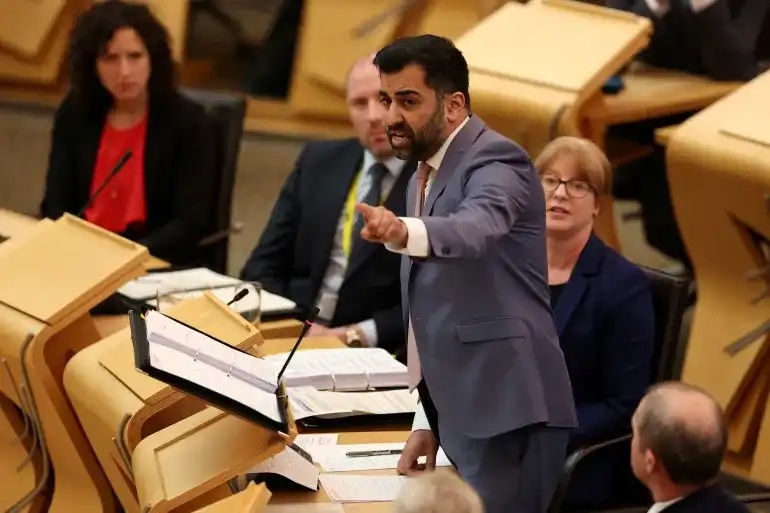
Prime Minister of Scotland: Britain must keep its head down in the face of the Gaza massacres

Scottish Prime Minister Hamza Yousef, on Monday, attacked the government and opposition in Britain for refusing to call for a ceasefire in Gaza, where more than 28,000 Palestinians, most of them women and children, were martyred as a result of the ongoing Israeli aggression since the seventh of last October.


Youssef called on the British government and opposition to "hang their heads in shame as we witness a massacre in which thousands of women and children are killed in Gaza."


This came in a post he made on the “X” platform, which he attached to quotes from a letter sent by Scottish National Party leader Stephen Flynn to British Prime Minister Rishi Sunak and opposition Labor Party leader Keir Starmer, urging them to support calls for an immediate ceasefire in Gaza.


Youssef said - in the post - that the reluctance of Starmer and Sunak to call for an immediate ceasefire will never be forgotten or forgiven.


Since the seventh of last October, Israel has been waging a devastating war on Gaza, which has so far led to the death of more than 28,000 martyrs and 70,000 wounded, most of whom are women and children.


The war in northern Gaza led to the displacement of most of the population towards the city of Rafah in the southern Gaza Strip, but Israel insists on carrying out a ground operation in Rafah, where more than a million Palestinians are gathered.


Last night, Israel launched intense air strikes on Rafah, killing more than 100 Palestinians, and said that it was able to free two of its more than 130 prisoners detained in the Gaza Strip, according to its army data.


Source: Al Jazeera + Anatolia

OPINIONS

Tue 13 Feb 2024 8:29 am - Jerusalem Time

Why recognizing Palestine is the key to ending the war in Gaza

Daoud Kuttab

Daoud Kuttab

Opinion Writer

President Biden recently declared his desire to see a “revitalized” Palestinian government that could bring together Gaza and the West Bank under “a single governance structure.” That is a worthy aim, and Biden certainly deserves points for declaring it.


But Palestinians can be forgiven for wondering: Was the U.S. president really serious about this statement? If so, there’s one step that he can take right now toward achieving his goal: Recognize Palestine as a member state in the United Nations.

In 2012, the U.N. General Assembly recognized Palestine as a nonmember observer state. By now, 139 countries have recognized the state of Palestine within the borders of June 4, 1967. The United States and most European countries have repeatedly called for a two-state solution but have refused to recognize Palestinian statehood. The Biden administration even refused to recognize Palestine’s status as a state under occupation. Over the past decade or so, senior Israeli officials, understanding these signals from Washington, have refused to engage with the Palestinian leadership.

Washington’s refusal to recognize a Palestinian state deprives Israel of any reason to take the Palestinians seriously. It is this egregious lack of political imagination on the Americans’ part that has helped bring us to the catastrophe that is now engulfing the region.


Recognizing Palestine as a full member state would have a number of positive effects. It would demonstrate that Biden is truly serious about his professed aim of a two-state solution. And it would undermine the positions of radicals on both sides — the Palestinian extremists who refuse to recognize Israel, as well as those on Israel’s far right, who want to annex all the Palestinian territory west of the River Jordan.

Biden is right to say Palestinians urgently need a “revitalized” political structure — presumably based on the will of the Palestinian people as expressed through free elections. But such elections will be almost impossible to conduct unless Palestinian voters can be sure that their votes will bring them closer to freedom from occupation and endless violence. In this sense, recognition and new elections are two indispensable components of the same strategy.

Parallel to U.S. recognition of Palestine, the international community should supervise elections for a new Palestinian leadership that will negotiate with Israel on all issues that would need to be agreed upon by the two neighboring states. Here, too, Biden and current Palestinian leaders can start by acknowledging the mistakes they’ve made in this respect.

In 2021, the Palestinian authorities announced the dates for parliamentary and presidential elections. The prospect of a free vote produced a genuine sense of excitement in the West Bank and Gaza, where Palestinians had spent 15 years without a chance to pick their leaders.

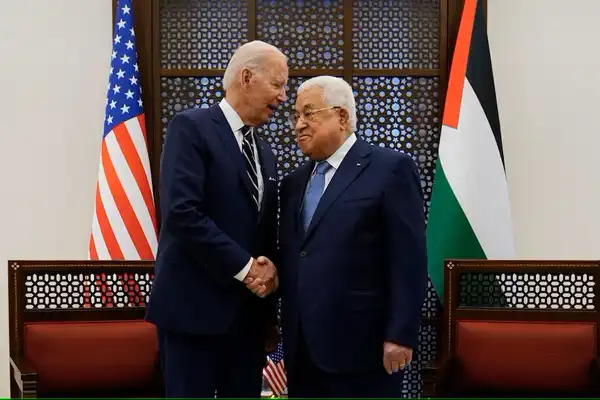
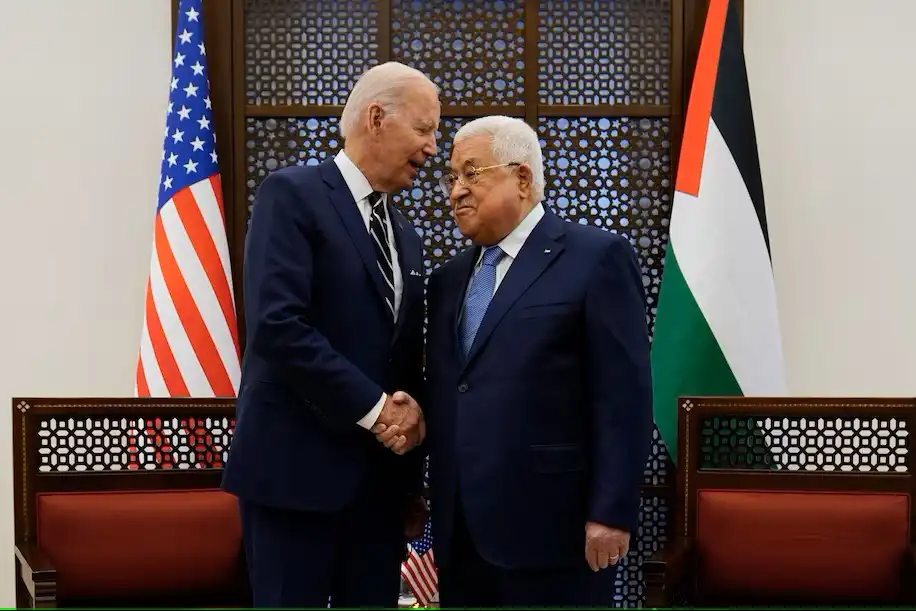
But Mahmoud Abbas, president of the Palestinian Authority, got cold feet, fearing competition from a new generation of younger and more popular figures, such as the imprisoned leader Marwan Barghouti. Abbas canceled the elections — and Biden did not object. In July 2022, during a visit to Bethlehem in the West Bank, Biden told Abbas that the time was “not ripe” for peace talks.

With Abbas unable to produce results even as Israel was increasing its pressure on the Palestinians, the military wing of Hamas argued that Israel and the world understood only force. Given the circumstances, many Palestinians found it hard to disagree. In light of everything that has happened since, it should be clear that the United States missed a huge opportunity to undermine the extremists. Now, Washington must demonstrate that it is serious about giving Palestinians a chance to determine their own future.

The prospect of negotiations toward the establishment of a Palestinian state might seem far-fetched in the wake of the brutal Hamas attacks on Oct. 7 and Israel’s horrific retaliation in Gaza. But just as diplomacy has shown success on the hostage issue, Biden’s recognition of Palestine — which he could achieve simply by directing his U.N. ambassador not to veto a Security Council resolution — could be a game changer. Last week, Spain said it might recognize Palestine on its own if the European Union fails to do so. While such gestures by individual countries are welcome, a Security Council vote affirming Palestinian statehood, which is binding in international law, would send a powerful message to all parties about the seriousness of the international community.

Such a step would offer Palestinians hope that they can still achieve freedom from occupation and would reinforce the cease-fire process by providing a clear political road map.

Domestically, recognizing Palestine would also help Biden reestablish his credentials with the young Americans, progressives, Muslim Americans and Arab Americans in his party who are deeply disillusioned by the one-sidedness of his Israel policies.

Any serious effort to find an end to the Palestinian-Israeli conflict needs to dispense with the piecemeal solutions that have been tried so far. The strategic aim should be the creation of an independent and democratic Palestinian state. Once this goal has been firmly established, Palestinians and Israelis can then work to fill out the details regarding borders, Jerusalem, refugees, settlers, security and future Israel-Palestine relations.

This is the only path that offers a viable way out of the current crisis. This opportunity should not be missed.

ARAB AND WORLD

Tue 13 Feb 2024 8:26 am - Jerusalem Time

Israeli right wing Minister: Egypt bears great responsibility for what happened on October 7th

Today, Monday, Israeli Finance Minister Bezalel Smotrich pointed the finger at Egypt for what happened on October 7.

The Israeli minister said that Hamas's ammunition supplies largely pass through Egypt, saying that Cairo bears great responsibility for what happened on October 7th.


Finance Minister Bezalel Smotrich called on Prime Minister Benjamin Netanyahu at the religious Zionist bloc meeting to refrain from sending a delegation to Cairo tomorrow to complete negotiations on the exchange deal.


He said: “The head of the Mossad should be sent to eliminate Hamas leaders around the world, instead of sending him to Qatar, and the head of the Shin Bet should be sent to Rafah to destroy and kill all Hamas terrorists instead of sending him to talk to the enemy.”


According to him, "Our response to Hamas and its imaginary demands will be in Rafah with Air Force planes, tanks, infantry and paratroopers."


He added: "American pressure or fear of harming civilians should not deter us from occupying Rafah and destroying Hamas."


It is noteworthy that Smotrich also directed sharp criticism at Egypt in December for allowing huge amounts of ammunition to enter Gaza in the past.


The Israeli minister said at the time that Egypt must allow Gazans to pass through the Egyptian border so that they can immigrate to other countries.


Smotrich rejected the recent proposal put forward by Egypt and Qatar to end the war in Gaza and establish a technocratic government to rule the region, along with the West Bank.


The controversial minister, who heads the far-right Religious Zionism Party, stressed that the war government does not have a mandate to approve such a plan before achieving all the goals of the war, and says that his party will not be a partner in a government that agrees to end the war. He explained that Qatar and Egypt will not have a role in the future in what will take place in the Gaza Strip, in light of discussions held in Cairo with officials from the Palestinian factions.

ARAB AND WORLD

Tue 13 Feb 2024 8:24 am - Jerusalem Time

Euro-Med: The Israeli army committed two crimes against the child Hind and the ambulance crew

The Euro-Mediterranean Human Rights Monitor reported that preliminary investigations indicate that the child Hind Rajab and her relatives died as victims of a deliberate execution carried out by the Israeli army against them in Gaza City.

In an official statement, the Observatory reviewed the facts found at the scene of the incident, saying: “The child Hind and five members of her family were subjected to direct and repeated gunfire while they were riding in a civilian car in the Tal al-Hawa neighborhood, southwest of Gaza, on Monday, January 29, at approximately five o’clock.” evening


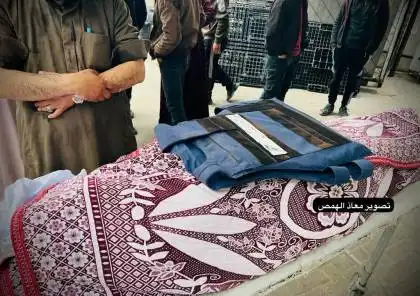
The statement indicated that "the child Hind was found on Saturday, February 10, and she died among the bodies of her relatives who were immediately martyred inside the car that was carrying them, 12 days after she issued the distress call. The Palestinian Red Crescent also found on the same day the bodies of the two paramedics, Yousef Zaino." and Ahmed Al-Madhoun, who went to rescue the girl, after coordination with the Israeli side.”


The statement pointed out that the car in which Hind was inside was found to be full of bullet holes, shattered glass, and heavy traces of bullets that were fired directly at her. The field examination also showed that traces of Israeli tanks were clearly visible on the road leading towards the car.


According to the statement, “satellite images hours before the crime showed that Israeli military vehicles were 200 meters away from the location of the car,” noting that the victims were subjected to intense fire and fragments of artillery shelling, and fragments of an American-made M830A1 HEAT shell were found in the area. A Red Crescent ambulance was targeted by the army.


The statement concluded, "All the facts indicate that both crimes occurred during the day and before dark, which means that the vision was clear in front of the Israeli army, and that they were able to identify and distinguish that those who were in the car were a group of civilians consisting of a family with its children."


On Saturday, the body of the child Hind Rajab (6 years old) and five members of her family (her uncle and his family) were found after their car, which they were traveling in, was surrounded 12 days ago, in the Tal Al-Hawa area, southwest of Gaza City.

PALESTINE

Mon 12 Feb 2024 9:07 pm - Jerusalem Time

West Bank: Israeli Settlers shoot a young man and child south of Nablus

A young man and a child were injured by settlers’ bullets, Monday evening, during an attack on the village of Asira al-Qibliya, south of Nablus.


According to local sources, settlers from the "Yitzhar" settlement attacked the eastern area of the village, amid heavy gunfire, which led to a young man (20 years old) being injured by live bullets in his stomach and a child (16 years old) in his hand, after which they were taken to the hospital.


The sources added that the settlers burned a vehicle that was parked in front of a citizen's house, then targeted another citizen's house with Molotov cocktails, which led to it catching fire.

PALESTINE

Mon 12 Feb 2024 7:38 pm - Jerusalem Time

Hamas: 3 Israeli prisoners were killed after being injured in Israeli raids in Gaza

Abu Ubaida, spokesman for the Al-Qassam Brigades, the military wing of the Hamas movement, announced today, Monday, the killing of 3 Israeli prisoners held by the brigades, after they were injured earlier in occupation raids on the Gaza Strip.


Abu Ubaida explained in a brief statement on the “Telegram” platform that the three prisoners are among eight prisoners whom the Brigades announced yesterday, Monday, who were seriously injured in the raids on the Gaza Strip.


The Israeli army continued aggression against Gaza led to the death of 28,340 citizens and the injury of 67,984 people, in addition to the displacement of more than 85 percent (about 1.9 million people) of the Strip's population, according to the Strip's authorities and international bodies and organizations.


ARAB AND WORLD

Mon 12 Feb 2024 6:19 pm - Jerusalem Time

Axios: An Israeli delegation to Cairo to follow up on the exchange agreement negotiations

The American news site Axios, citing Israeli officials, reported that an Israeli delegation will head to Egypt tomorrow in an attempt to support negotiations regarding prisoners held by Palestinian resistance factions in the Gaza Strip.


The sources said that the Israeli delegation is expected to include the head of the Israeli Foreign Intelligence Service (Mossad), David Barnea, the director of the Internal Security Service (Shin Bet), Ronen Bar, and the Israeli army representative in the negotiations, General Nitzan Alon.


According to the same sources, the Director of the CIA, William Burns, the head of the Egyptian Intelligence Service, Abbas Kamel, and the Qatari mediator, are also expected to participate in the negotiations.


It is noteworthy that the Islamic Resistance Movement (Hamas) and Israel reached a temporary truce with Qatari-Egyptian-American mediation last November 24, which lasted for a week, during which prisoners were exchanged and limited humanitarian aid was brought into Gaza.


Efforts to reach a new deal were renewed late last month, as meetings were held in Paris that resulted in proposals for a ceasefire and prisoner exchange, which were handed over to Hamas for study.


Hamas responded

The movement responded to the proposal of the framework of the truce agreement, as it agreed to a framework that leads to reaching a complete and sustainable truce in 3 stages, each stage lasting 45 days, and including agreement on the exchange of prisoners and the bodies of the dead, ending the siege, and reconstruction.


It also demanded that the complete truce talks be completed before the start of the second phase, and that Israeli forces be ensured outside the borders of the Strip, and that the reconstruction process begin.


ARAB AND WORLD

Mon 12 Feb 2024 5:18 pm - Jerusalem Time

UN rights chief calls Israel's actions in Gaza Strip as 'disproportionate'

UN Human Rights Commissioner Volker Turk has strongly condemned Israel's actions in the Gaza Strip, calling them "disproportionate."

In a short interview with the Austrian public broadcaster ORF on Monday morning, Turk described the situation in Gaza as "terrible."


The UN has become a pawn in the conflict, he said.

Criticizing Western nations for suspending funds for the UN agency for Palestinian refugees (UNRWA), Turk said UNRWA is indispensable for the people in Gaza.


Turk will take part in an informal meeting of EU development ministers in Brussels on Monday. UNRWA head Philippe Lazzarini will also be present at the meeting.

As far as the situation of the Palestinian civilians in Gaza is concerned, "I can't really think of any more words", Turk told ORF.


In the meantime, 1.4 million Palestinians have sought refuge from the Israeli attacks but according to Turk, "without sufficient food, without sufficient humanitarian support."


Stating there was clear evidence of Israeli war crimes, he said 100,000 people were seriously affected and 27,000 killed, mostly  were women and children.

In addition, there are 60,000 to 70,000 injured, Turk said.

ARAB AND WORLD

Mon 12 Feb 2024 5:03 pm - Jerusalem Time

Eleven rights groups urge EU countries to publicly support ICJ provisional measures

The human rights organisations have penned a letter to 16 EU countries urging them to ensure that Israel complies with the International Court of Justice’s provisional measures against genocide.

“The EU and member states’ answer has been unsatisfactory. Not enough European states have declared their intention to adhere to the legal obligations instituted by the provisional measures or ensure that Israel applies them,” the organisations said.

On January 26 the ICJ determined the plausibility that Israel is committing genocide against the Palestinian people in Gaza.

The provisional measures include that Israel will take measures to prevent genocidal acts, and ensure the provision of immediate humanitarian aid to Gaza. Additionally, Israel was ordered to report back to the Court within a month on its implementation of the provisional measures.

The groups further said: “The comparison with the wide support given by EU member states to the preliminary rulings of the ICJ in the context of the wars in Ukraine and in Myanmar have not escaped Palestinian eyes. The difference in treatment between Ukraine and Palestine has led many to note that Europe is operating with a clear double standard concerning the application of the Genocide Convention.”

OPINIONS

Mon 12 Feb 2024 4:55 pm - Jerusalem Time

Israeli Writer: Netanyahu is preparing the pretext to maintain Hamas' rule in the Gaza Strip as it is

Haaretz

Haaretz

Opinion Writer

By Amos Harel

In recent days, the statements of the Israeli leadership have become more severe regarding a possible operation carried out by the army in Rafah. This is happening despite many obstacles - the density of the Palestinian population in the city, the tension with Egypt, which opposes this move, American criticism, the fact that the army liberated the majority of the reserve army units that operated in the Gaza Strip, and the arrival of the month of Ramadan in about a month. It is true that the military operation is on the table, but there are suspicions that whoever is accelerating the discussion about it is doing so with different motives and agendas.

The first person to start talking about an expected attack on Rafah was Defense Minister Yoav Galant. Prime Minister Benjamin Netanyahu then quickly published a statement, in which he said that he had instructed the army to prepare the move (Chief of Staff Herzi Halevy said yesterday in the government session that the plan had been ready for a long time). Netanyahu has other calculations, more than the fact that without a military or non-military solution to the Rafah issue, the tunnels in Sinai could allow Hamas, in the future, to restore some of its military capabilities.

The threat of an operation in the southern Gaza Strip could be used as a pressure tool on Hamas, in the hope that this will allow negotiations to free the hostages. It also helps shift the media debate through which it appears that the negotiations are now suspended, not only because of Hamas' extremist demands, but also because Netanyahu does not show any willingness to rescue the vehicle stuck in the mud.

As is the case with many decisions taken by the prime minister in the war, this is also a policy that is researched through polls, and aims to serve the shrinking popular base, which would like to see Netanyahu clash with the American administration. Not only that, but it seems that there is preparation for something else. Netanyahu has been talking for weeks about achieving absolute victory over Hamas. Despite the tightening siege on the movement's leaders' hiding places, there are still no indications that Israel is close to this goal. But there is the possibility of accusing someone else of not fulfilling promises. They are the Americans who impose restrictions, for example, or the leftists who annoy us, or the generals who are unable to carry out the mission, and this will not be the first time that Netanyahu has acted in this way.

Over the weekend, conversations from the cabinet meeting were leaked, showing that Netanyahu was surprised that the army freed the majority of the reserve units that participated in the fighting in Gaza. Every operation in Rafah, especially if it is in parallel with the fighting in Khan Yunis, will require the reinforcement of forces again and the invitation of combat units from other places. Therefore, the army prefers to focus on the refugee camps in the center of the Strip, where there is still a Hamas battalion and a half that has not yet been defeated.

After two weeks of chaos at the Kerem Shalom crossing, the police and army yesterday began to impose order. The Chief of Staff spoke with the Commissioner General of Police, Kobi Shabtai, and asked him to intervene in order to stop the disturbance that prevents trucks from entering Gaza. In turn, Shabtai sent 500 policemen who evacuated about 40 right-wing demonstrators. This, of course, as expected, led to the anger of National Security Minister Itamar Ben Gvir, who demanded that Halevy not speak with Shabtai except through him.

Netanyahu strengthened his provocative approach, during his visit yesterday to the “Yalom” unit, where he stated there that “Israel will make the Strip demilitarized, through its security control over the west of the Jordan River, including the Gaza Strip. It seems that there is no alternative to this in the foreseeable future. This “What we say to the international community, and also to the president of the United States: there will always be our own security control, and if there is a need for our presence inside the sector, then, we will be there.”

In other words, not only is Netanyahu postponing any “day after” settlement in the Strip, but he also states that the army will remain there for the foreseeable future. If we deal with things as they are, this fundamentally contradicts American policy - and thus could close the door on normalization efforts with Saudi Arabia. The question is whether the Biden administration decides to act decisively this time. Yesterday, Netanyahu and Biden spoke by phone, and Biden asked him to ensure the evacuation of the civilian population from Rafah, as a condition for the army’s entry into the region.

These matters could become clearer in Cairo, where negotiations on a hostage exchange deal are supposed to be renewed tomorrow, with the participation of representatives from the United States, Qatar, and Egypt. The American delegation will be led by CIA Director William Burns. Until yesterday, Israel had not announced that it would send a delegation to the negotiations, after Netanyahu considered Hamas’ demands unacceptable.

Americans are shocked by what Israel is doing, and so are the mediators. It is true that Hamas's demands are extreme, as Netanyahu said, but this was not surprising to him. Moreover, the plan of the deal as agreed upon two weeks ago in Paris - the liberation of prisoners and hostages through three stages, in exchange for the liberation of a large number of Palestinian prisoners and a continuous ceasefire - took place on the Israeli initiative at a time when the mediators were pushing it forward, and in In the end, they discovered that Netanyahu was not interested, and he backed down.

Netanyahu's position on the deal is a direct continuation of his statements regarding continued control in the Gaza Strip and Rafah. On all issues, the Prime Minister leans towards the right and adopts an aggressive approach. According to his statements so far, he is not interested in a hostage-free deal that could expose his coalition to the risk of disintegration. His government will not withstand a ceasefire for a few months in the Strip, which will also include Hezbollah on the northern border, and raises difficult questions - Why did we not win? What really happened on October 7? The deal will not serve the political survival associated with far-right partners. The leaders of the "official camp", Benny Gantz and Gadi Eisenkot, will have to reconsider their steps soon.

They approach the Sinwar


The process of pursuing Hamas leader in the Gaza Strip, Yahya Sinwar, is not fake news. Apparently, there are many indications that Israel is close to arresting him, or killing whoever planned the “massacre” in “The Cover.” Al-Sinwar has been present in the tunnels and bunkers that Hamas has dug under Khan Yunis, since the war began, it seems, and considering that he surrounds himself with helpers, protection, and family members, and possibly also with some Israeli hostages, it is difficult to believe that he will move freely from his place of hiding to another place. Without leaving any evidence.

Over the past two weeks, contact with him has been cut off, and in his absence, it is difficult for the Hamas leadership abroad to formulate a position on the negotiations. This does not mean that he died, but rather it seems that he chose to adopt a more calm approach, in order to avoid harm. Currently, the army and Shin Bet are approaching him.

Recently, rooms and tunnels were found in which Al-Sinwar was present after the war began. Basically, a booklet written by him was found (the last note was written on January 14 this year). The army’s control over a technological infrastructure belonging to Hamas, and the major breach that took place in revealing the movement’s communications networks, exposed it more to Israeli intelligence. The army even systematically blew up the tunnels linking Khan Yunis to other sites.

Israel wants to reinforce the narrative that it is close to Sinwar. Over the weekend, Chief of Staff Herzi Halevy and Shin Bet head Ronen Bar visited the tunnels in Khan Yunis. When Bar talked about wanted people hiding underground, he meant the leader of Hamas. During the start of the ground maneuver in the Strip, the army activated a large force, accompanied by an air strike, which was described as a “mill.” Hamas was unable to withstand it, and it left great devastation in the northern Gaza Strip. The process now in Khan Yunis is more precise, and is based on working methods that have been developed over the past months.

Over time, serious damage could be done to Hamas' military and civilian capabilities. However, this plan suffers from a central weakness: it requires months of effort. And it's not just that the United States and Egypt don't have the time or patience for this - the hostages simply don't have much time either.

PALESTINE

Mon 12 Feb 2024 4:46 pm - Jerusalem Time

War on Gaza: Two Palestinian female journalists were killed in Israeli bombing of Rafah and Jabalia

The government media office in the Gaza Strip announced, on Monday, the death of two Palestinian journalists as a result of Israeli bombing on the city of Rafah and the town of Jabalia, south and north of the Strip, bringing the death toll of journalist martyrs to 126 since last October 7.


The office said in a statement: “The number of journalist killed has risen to 126 male and female journalists since the start of the genocidal war on the Gaza Strip, after the death of two female journalist colleagues: Alaa Hassan Al-Hams, a journalist at Sanad News Agency and other media sites, and Angham Ahmed Adwan, a journalist at the Libyan February Channel.”


The statement confirmed that the two journalists, Al-Hams and Adwan, “were killed as a result of the continuous bombing and targeting by the Israeli army of citizens’ homes in the Rafah and Jabalia areas.”

Palestinian and international media have repeatedly warned that the Israeli army is targeting media crews, and called for protection for them, while Israel ignores these calls.


On Sunday evening and Monday morning, the Israeli army launched a series of violent raids on various areas in Rafah, which led to the death and injury of dozens of Palestinians, including children and women, in clear Israeli disregard for international warnings of the consequences of targeting the city, which is crowded with displaced people.


Rafah is the last refuge for the displaced in the stricken sector, and it includes more than 1,400,000 Palestinians, including 1,300,000 displaced people from other governorates.

Since the start of its ground operation in the Gaza Strip on October 27, the Israeli forces have been asking residents to go from the north and center of the Strip to the south, claiming that they are “safe areas,” but they were not spared from bombing homes, cars, and hospitals.


Following the ongoing military operation in the Gaza Strip since last October 7, which left tens of thousands of civilian casualties, Israel faces accusations of committing “genocide” before the International Court of Justice, for the first time in its history.

ARAB AND WORLD

Mon 12 Feb 2024 4:37 pm - Jerusalem Time

Britain also imposes sanctions on four settlers

Imposing British sanctions on settlers who "violently attacked Palestinians in the West Bank." British Foreign Secretary: “We will place responsibility on those who undermine the chances of peace.”


The British government announced today (Monday) that it will impose sanctions on four settlers for “practicing violence against Palestinians in the West Bank.”


The official announcement issued on behalf of British Foreign Secretary David Cameron stated that the sanctions include economic and travel restrictions, aimed at combating the ongoing settler violence that threatens stability in the West Bank.


The announcement also included the names of the four Israelis who will be subjected to sanctions, along with details of their “actions, such as threatening and harassing Palestinian shepherds and their women in the Jordan Valley region.”


In October 2023, a Palestinian group of 20 families fled, after one of the four punishers attacked the residents and told them they had five hours to evacuate.


While another of the four punished, “a settler who commands the Havat Zvi settlement outpost, has used violence since its establishment in 2018 and threats against local Palestinian residents, including threats with a gun, against young families who were on a picnic.” As for the third punisher, according to the British, “he was involved in a large number of incidents against Palestinian shepherds in the hills of the southern Hebron Hills,” and he was a soldier in the IDF who was injured by an RPG shell in Khan Yunis.


The last of them is the one on whom the United States previously imposed sanctions. The United Kingdom stated in the official announcement that the aforementioned “is the leader of a settlement outpost established in 2021, and the settlers who live there are using physical violence, sabotage, and destruction of property to displace Palestinian communities, including the gathering in Khirbet Zanuta in October 2023.”


British Foreign Secretary David Cameron said: “Today’s sanctions impose restrictions on those involved in some of the most horrific human rights violations. We must be clear about what is happening here. Extremist settlers are threatening Palestinians, sometimes with weapons, and forcibly expelling them from lands they legally own.” "This is illegal and unacceptable behavior."


In his words, Cameron addressed Israel and said that it must move more effectively to stop settler violence. “Too often we see that the commitments made and the tasks given are not fulfilled and are not implemented to the end. Extremist settlers who consider Palestinian citizens as targets and attack them undermine security and stability in the region, both for Israelis and for Palestinians,” the Foreign Minister said. British.


It is noteworthy that at the beginning of this month, US President Joe Biden signed a presidential order imposing sanctions on extremist settlers involved in acts of violence against Palestinians in the West Bank. In the first round, sanctions will be imposed on four settlers, who participated in actions that include setting fire to property that led to the death of a Palestinian, and violent threats to the Palestinian Bedouin population. Threatening them to leave their homes, and violent attacks on Palestinian farmers and Israeli peace activists.

OPINIONS

Mon 12 Feb 2024 4:20 pm - Jerusalem Time

South Africa/Israel: First lessons from a historic decision

YAANI.fr

YAANI.fr

Opinion Writer

By Johann Soufi, 

Fourteen key elements to understand the decision of the International Court of Justice in the case of South Africa against Israel.

1. On January 26, 2024, the International Court of Justice (“The Court” or “the ICJ”) issued its Order pronouncing provisional measures in the case of South Africa v. Israel introduced by Pretoria under the 1948 Genocide Convention. Not since its creation in June 1945 has the principal judicial body of the United Nations attracted such attention. The hearings on January 11 and 12, broadcast live on social networks and certain television channels, aroused unprecedented interest in all four corners of the world. The order of January 26, 2024 was widely commented on in the media, with extremely variable precision and rigor. While many experts in international law have stressed the importance of this decision, other “toutologists” (previously self-proclaimed experts on Covid-19 and the war in Ukraine, and now on the Middle East and justice international) rushed onto television sets to distort its meaning or reduce its scope. This sudden enthusiasm of the media and the public for international justice, in the cemetery of international law represented by the Israeli-Palestinian conflict, nevertheless constitutes, undeniably, progress. It also carries significant risks of exploitation and politicization of international justice that is often misunderstood and criticized. In the current political and media tumult, this article aims to provide some analytical keys to understand a decision which, in many respects, is already historic.


Recognition of the risk of genocide: a legal victory for South Africa.


2. The order of January 26 undoubtedly constitutes a legal success for South Africa. While Israel, several of its allies (notably the United States and Germany) and certain political leaders, including French Foreign Minister Stéphane Séjourné, criticized the allegedly frivolous, even slanderous, nature of the South's action. African, the Court confirms its merits (paras. 19 to 32 of the order). In continuation of its jurisprudence in the Gambia v. Myanmar, the judges recognize in particular the capacity of Pretoria to act as erga omnes partes, that is to say its possibility of seizing the Court for the alleged violation by Israel of the Genocide Convention, even if the South African population is not directly threatened.


3. The Court's order also validates the relevance of the use of the terms "genocide" or "risk of genocide", used by South Africa, several States, and numerous human rights defenders (such as independent experts from the UN, or the former prosecutor of the International Criminal Court Luis Moreno Ocampo) and specialized organizations (such as the Lemkin Institute for Genocide Prevention, the International Commission of Jurists, or the FIDH) to describe the crimes perpetrated by Israel and the catastrophic humanitarian situation in Gaza. The judges in The Hague recognize the potentially genocidal nature of some of the Israeli acts in the Gaza Strip, in particular the intentional subjection of the Gazan population to conditions of existence likely to lead to their physical destruction (Article 6 c of the Statute of Rome). Drawing on reports from UNRWA, OCHA, and other United Nations agencies present on the ground, which have been warning for months about the disastrous humanitarian effects of the Israeli siege depriving water, food , medicine, and electricity to an exhausted, sick, and hungry population, the judges confirm the reliability of the testimonies of these humanitarian organizations in an area otherwise prohibited to journalists and international investigators (paras. 33 to 49, and 67 to 72 of the order). Israeli efforts to discredit UNRWA, immediately after the order was issued, must also be interpreted in this context.

4. In its order, the Court also recognizes the possibly genocidal intention of certain senior Israeli political and military officials, that is to say their desire to destroy, in whole or in part, the Palestinians of Gaza. Citing in particular the Minister of Defense Yoav Gallant, who claimed to fight "human animals", President Isaac Herzog who promised to "break the spine" of "Gaza terrorists", and the Minister of Infrastructure at the time , Israel Katz who wanted to deprive the inhabitants of Gaza of water and electricity "as long as they are in this world", (para. 52 of the order), the Court recognizes the "plausible" nature of the violation by Israel of the 1948 Genocide Convention, and the existence of a real and imminent risk of irreparable harm, which constitute the criteria for triggering provisional measures (paras. 54, 58, 61 and 74 of the order).


Partial, but significant, precautionary measures


5. The six provisional measures ordered in their vast majority (15 to 2 for the majority, and even 16 to 1 for two of the measures) by the judges of the Court have given rise to important debates, notably concerning the absence of cease -fire.


6. The absence, in the order, of a measure relating to the end of the fighting constitutes the main disappointment for the Palestinians and their supporters. The Court having not justified, in its decision, the reasons for the absence of such a measure, any analysis on this subject will therefore necessarily be speculative. Several elements can explain this decision. First, it is necessary to recall that the maintenance of international peace and security is primarily the responsibility of the Security Council and not of its judicial organ, the ICJ (Article 24 of the United Nations Charter). If the Court had indeed ordered a ceasefire in the Case between Ukraine and Russia in 2022, it should however be remembered that the context of this case was very different, Russia having invoked the 1948 Convention on genocide to justify its invasion of Ukraine in order to prevent a “risk of genocide in Donbass”. The Court having considered that this argument was a pretext for the Russian invasion, it naturally ordered the latter to “immediately suspend its military operations which began on February 24, 2022 on the territory of Ukraine” (ICJ , Russia v. Ukraine, Order of March 16, 2022 on precautionary measures). The reasons for launching the Israeli military operation in Gaza were different. Furthermore, it would have been difficult for the judges to order a ceasefire to only one of the belligerents (Israel), the other, Hamas, not being a State and therefore not a party to the procedure (see in this sense paragraph 16 of the separate opinion of Israeli judge Aharon Barak). It nevertheless remains obvious, for many jurists, diplomats and humanitarian actors, that stopping the fighting constitutes the only way to implement the precautionary measures ordered by the Court.


7. Despite the notable absence of a ceasefire, this decision constitutes a significant legal defeat for Israel. Not only did the judges recognize the plausibility of the genocide, but the precautionary measures taken against the Jewish state are strict. The Court orders Israel to take, without delay, all measures in its power to prevent the commission of any act falling under the 1948 Convention; to ensure, with immediate effect, that its army does not commit any potentially genocidal acts; to prevent and punish direct and public incitement to commit genocide; to adopt effective measures to enable the provision of basic services and emergency humanitarian assistance and to take effective measures to prevent the destruction and ensure the preservation of evidence. The Israeli government has one month to submit to the Court a report on all the measures taken to implement these provisional measures effectively. (paras. 83-86 of the order).


Important legal consequences


8. Although this decision does not concern the merits of the case, it already has important consequences for the Israelis, the Palestinians, and for the entire “international community”.

9. From a symbolic point of view first, the simple fact that the hypothesis of a new genocide in the 21st century is “plausible” should shake our human conscience. As Israeli judge Aharon Barak points out in his separate opinion, this accusation, however, acquires a particularly infamous symbolism for Israel, a state created to offer refuge to Jewish victims of genocide in Europe and centuries-old persecution (paras. 3-8 of the separate opinion of Israeli judge Aharon Barak). By being the subject of provisional measures from the ICJ under the Genocide Convention of 1948, the Jewish State finds itself in the history of international justice, alongside the Serbia of Milošević (April 1993) and the Burmese regime in Myanmar (January 2020), subsequently becoming pariahs of the international community. Whatever the outcome of this affair, this decision will also inevitably have a significant impact on Israeli politics. It will intensify criticism of Benjamin Netanyahu and his far-right allies, and strengthen protesters demanding a ceasefire in the country and elsewhere. It is also likely to strengthen the Israeli judiciary (target of numerous attacks by the Netanyahu government), which is asked to take measures against leaders suspected of inciting genocide. For Palestinians, this decision is a symbol of recognition of the “national, ethnic, and racial” group that constitutes the Palestinian people – protected by the 1948 Convention (para. 45 of the order; declaration by Chinese judge Xue, para. 2). This existence, sometimes denied by certain Israeli extremist leaders, such as Bezalel Smotrich in France in March 2023, can no longer be contested. To use the terms of the Court's advisory opinion on the legality of the wall in the West Bank in 2004, "the existence of this Palestinian people and the rights conferred on them, in particular their right to self-determination, are now indisputable" (para. 118 of the Advisory Opinion on the West Bank Wall, July 9, 2004). The Court's order also symbolizes recognition of the suffering of the Palestinian population and the forced displacement of which they are victims, which constitutes a war crime (Art. 2 a. iv and 2. A vii of the Rome Statute) and potentially a crime against humanity (Art. 7 d. of the Rome Statute) - (para. 46 of the order).

10. From a legal point of view then, as the Court recalled, the decision is obligatory for Israel (para. 83 of the order), which can no longer wage its war in Gaza as in the past and claim act in accordance with international law. The Court demands that the Jewish State immediately change its potentially genocidal behavior. For the rest of the international community, this decision also has important legal consequences. As the Court recalled in its judgment of February 26, 2007 in the case of Bosnia and Herzegovina v. Serbia and Montenegro, “States now have the obligation to implement all means that are reasonably at their disposal to prevent genocide”. (para. 430 of the Judgment of February 26, 2007). This obligation falls particularly on States which “have means likely to have a deterrent effect against persons suspected of preparing genocide, or who may reasonably be feared to harbor specific genocidal intent”. (para. 431 of the Judgment of February 26, 2007). It should also be recalled that, in this judgment, the Court considered that “the provision of means intended to enable or facilitate the commission of the crime” could constitute complicity in genocide (para. 419 of the judgment of February 26, 2007) . The decision of the United States and other Western states to continue their military support for Israel, or to suspend funding for UNRWA, could thus engage their international responsibility.


The future of the international order in question

11. The ICJ, like all international courts, does not have a constraint mechanism to impose its decisions. For this, it depends on the cooperation of States, in particular the permanent members of the UN Security Council. Although the Secretary-General of the United Nations quickly transmitted the Court's order to the Security Council for its implementation, it is likely, however, that the latter remains powerless, blocked by its internal divisions and by the American veto against any resolution perceived as excessively restrictive for Israel. Initial reactions from other Western nations also appear to reflect a reluctance to compel Israel to comply with its international obligations and the Court's order.

12. The most immediate consequence of Western powers' continued support for Israel will likely be continued Israeli hostilities and crimes in the Gaza Strip. While the population is starving in Gaza, the obstacles to humanitarian aid and the intensification of bombings on Khan Younis and Rafah are further increasing the suffering of a bruised and breathless Gazan population. The risk of regionalization of the conflict is increasing. The duplicity of the West, when it comes to respect for international law by Israel, also deeply undermines the rhetorical and legal edifice that it itself forged at the end of the Second World War. On the contrary, it strengthens the influence of authoritarian regimes and all those who attack human rights throughout the world.


An opportunity to seize: a new lease of life for international law

13. In this particularly dark context, this unprecedented crisis in the world order also reveals some glimmers of hope for the Israeli and Palestinian people, and for the rest of the “international community”. Never in the history of this historic conflict has the situation seemed so desperate. This dramatic situation is, however, the result of more than two decades of inertia during which the world gradually lost interest in a conflict whose main victim is the Palestinian people, colonized in the West Bank and walled in Gaza. The blood and tears shed by the two peoples since October 7 have tragically put the resolution of this conflict and the Palestinian question at the heart of international concerns. More and more voices are being raised, including among supporters of Israel, to finally recognize the Palestinians' right to a state and self-determination. Such a development will inevitably require a decolonization process, the only one capable of bringing peace and security to both peoples.


 14. The other source of hope lies in the symbolic significance of South Africa's action before the International Court of Justice. The fact that a southern democracy having defeated apartheid has generated such global enthusiasm for its judicial approach in favor of the Palestinian people underlines a deep global aspiration for greater justice and respect for universal values. In fact, criticism of the West's posture should not be seen as a questioning of the values it claims to defend. It constitutes, on the contrary, a vigorous call in favor of democracy, justice, and law on an international scale, without double standards. The profound deconstruction of the world that we are witnessing calls for a reconstruction, for a revolution: that of a true “global rule of law” based on universal values, on respect for international law and on greater equality between peoples. . The decision of January 26, 2024 could also constitute one of the first stones in the construction of this new world.


Johann Soufi, international lawyer, former head of the UNRWA Legal Office in Gaza and associate researcher at the Thucydides Center (Paris II Panthéon-Assas).



PALESTINE

Mon 12 Feb 2024 4:12 pm - Jerusalem Time

EXPLAINER| What’s happening in Gaza’s Rafah as Israel threatens to attack?

Over a million Palestinians are trapped at Gaza’s southernmost point, with the Israeli army preparing a ground attack.

Rafah, a looming Israeli ground “operation”, and the impact on more than a million trapped civilians are top headlines.

But what is Rafah and what are the details around this announced Israeli “operation”?

What is Rafah?

Rafah straddles the border between the Gaza Strip and Egypt.

On the Palestinian side, it is the name of Gaza’s southernmost governorate and its capital city, as well as of the crossing into Egypt’s Sinai. On the Egyptian side, it is a city in the North Sinai governorate.

Palestinian Rafah is 64sq km (25sq miles) and, as Israel assaulted Gaza these past four months, more and more people have been herded into it by Israeli forces who keep promising safety “further south” – which never materialised.

Approximately 1.4 million Palestinians have now been pushed into Rafah by relentless Israeli bombing that has killed nearly 30,000 Palestinians.

People are in dense clusters in the limited space not filled with debris or being bombed by Israel. Conditions are dire, with severe shortages.

INTERACTIVE - Israeli attacks on Rafah intensify-1707724888


What is the Israeli ‘operation’?

Tel Aviv claims four Hamas brigades are present within Rafah, using their presence there to justify the ongoing attacks by air as well as a planned land assault.

Israel also claims plans for the evacuation of the city – to where is unclear – are being prepared, leaving those sheltering in Rafah paralysed.

Why is Egypt involved?

Because the trapped civilians are pressed up against the border with Egypt, analysts say it seems likely Israel wants to push them into Sinai.

This raises concerns over Egypt’s internal security and the prospect of having more than a million traumatised Palestinians forced into its territory.

What has Egypt done so far?

Egypt has reportedly moved 40 tanks and armoured personnel carriers to the Gaza border to halt any potential spillover from an Israeli land assault.

Egypt has warned that any Israeli ground assault on Rafah would have “disastrous consequences” and that Israel’s aim to force the Palestinians out of their land would threaten the 40-year-old Camp David peace accord between the two countries.

Cairo has beefed up border security since October 7.

Why don’t Palestinians want to leave Gaza?

Palestinians have faced mass displacement in the not-too-distant past: the Nakba.

In 1948, some 750,000 Palestinians were ethnically cleansed from their homes and lands to make way for the establishment of the state of Israel.

Many in Gaza are the descendants of Nakba refugees and do not want to leave Palestine because they know it will be impossible to return – Israel won’t let them.

Arab countries, like Egypt, also object to any displacement as the Palestinian Right of Return has been a main demand since 1948.

So, is it safe in Rafah for now?

No.

Israel is already killing more than 100 people a day in air attacks on Rafah.

Those who survive the attacks live in unspeakable conditions in tents that fill with water whenever it rains, or under whatever scraps they find to make a shelter.

Many Palestinians in Rafah have been displaced many times over and say they will not move again, no matter what. Like Jihan al-Hawajri who told US broadcaster PBS that she would stay in her tent, come what may.

“There is nowhere left… to flee to,” said Angelita Caredda, Middle East and North Africa director for the Norwegian Refugee Council.

What are conditions like in Rafah now?

Satellite images obtained by Al Jazeera show an area already at breaking point. Some 22,000 people are crowded into each of Rafah’s 64sq km.


Before the war, 275,000 people lived in those 64sq km, making Rafah one of the most densely populated parts of Gaza, itself among the world’s most overcrowded parts.

The displaced crowd into UNRWA facilities, hoping the agency that was set up to help them would be able to. But nearly 150 of UNRWA’s staff were killed in Israeli attacks, aid is being stopped by Israel, and Western governments withdrew funding when Israel alleged – with no proof yet – that 12 UNRWA staff participated in the October 7 attack.

Overcrowding has resulted in the spread of disease, with health officials reporting an outbreak of hepatitis A – which flourishes in close contact.

With isolating patients impossible, there is little hope of stopping this outbreak or others, like scabies and lice, worsened by a lack of showers or hygienic toilets.

What does Israel want?

When the October 7 attack happened – killing 1,139 people in Israel – and Palestinian armed fighters took 240 people into Gaza as captives, Israel’s declared aims were to return the captives and “eradicate Hamas”.

Since then, the narrative has shifted back and forth.

First claiming to only be targeting armed fighters, Israel soon imposed a complete starvation siege on Gaza, killing civilians with every passing minute.

Then, it became apparent that when Israel said “avoiding civilian casualties”, it meant its secret calculus with an increased “acceptable loss margin”, or the number of people it felt it could kill to eliminate one target.


A massive attack on Jabalia refugee camp in October killed 50 people to eliminate one “Hamas commander”, a designation Israel has not presented proof of.

It also started targeting hospitals, with a horrifying attack on al-Shifa Hospital in Gaza City endangering more than 30 premature babies whose incubators stopped when Israel cut electricity. The declared aim to uncover “hidden Hamas command bunkers” under al-Shifa was never realised.

More followed as Israel surrounded one hospital after another, killing and starving people inside, to “unearth Hamas command centres”. None have been uncovered.

Will attacking Rafah help Israel achieve anything?

Not likely, as Israel’s claims about “dismantling terrorist battalions”, referring to armed Palestinian factions, appear as ephemeral as the claims of underground command centres.

It had declared Palestinian fighting factions “neutralised” in north Gaza, only to admit later that that was not the case.

Israeli Prime Minister Benjamin Netanyahu has been under pressure – including from the UK and the US – to call off the land assault but he insists this will be the operation to “dismantle Hamas”.

The US made its most pointed wartime criticism of Tel Aviv, saying Israel should “put civilians first and foremost”, but did not threaten to cut aid or support.

The EU and the UK have followed suit with the US.

 SOURCE: AL JAZEERA AND NEWS AGENCIES

OPINIONS

Mon 12 Feb 2024 4:09 pm - Jerusalem Time

Western narcissism and support for genocidal Israel go hand in hand

Aljazeera

Aljazeera

Opinion Writer

By Donald Earl Collins

Delusional beliefs of civilisational superiority help the West claim it is on the right side of history while supporting genocide in Gaza.

United States President Joe Biden is welcomed by Israeli Prime Minister Benjamin Netanyahu in Tel Aviv on October 18, 2023 [File: Reuters/Evelyn Hockstein]

For more than four months now, the United States, the United Kingdom, and other Western countries have been staunchly supporting Israel’s war on Gaza. As of now, the Israeli army has killed more than 28,000 Palestinians, including more than 12,000 children.

On January 26, the International Court of Justice ruled that “at least some of the acts and omissions alleged by South Africa to have been committed by Israel in Gaza appear to be capable of falling within the provisions of the [Genocide] Convention,” and that South Africa’s claim that Israel is committing genocidal acts is “plausible”. Nevertheless, the West continued to stand by Israel.

Then when Israel alleged that employees of the United Nations Relief and Works Agency for Palestine Refugees in the Near East (UNRWA) were linked to Hamas, the US, the UK, Germany, and more than a dozen other countries suspended their funding, as Palestinians in Gaza faced starvation.

Despite Western complicity in actions the world’s top court is recognising as genocidal, the West still assigns itself all manner of superiority in civilised societal behaviour. Western countries still honour themselves as “the good guys”.

“I got in trouble many times for saying you don’t have to be a Jew to be a Zionist, and I am a Zionist. I make no apologies for that. That’s a reality,” President Joe Biden said in a speech at a private campaign reception in Massachusetts in early December, when the death toll in Gaza already stood at 16,200. “We’ve [Americans] never thought anything is beyond our capacity, from curing cancer this time around to everything we’ve ever done. I really mean it,” he added.

It takes a special kind of narcissism for a world leader to declare himself a 50-year-long adherent to a white supremacist ideology that excuses apartheid, settler-colonialism, and genocide and then to turn to the greatness of the US and all its “possibilities”, as if the US has only been sprinkling pixie dust around the world and not intervening with brutal military and economic power over the past 130 years.

But the US president is not alone in his self-delusion. At the Conservative Friends of Israel gathering in London last month, UK Prime Minister Rishi Sunak showed unwavering support for Israeli attacks on Gaza and the West Bank. “There is a horrific irony in Israel, of all countries being accused of genocide,” Sunak said, labelling South Africa’s case against Israel “completely unjustified”.

The “horrific irony” is that Israel, as a Western ally, cannot be accused of genocide because it is one of “the good guys”. The “bad guys” can only be non-Western (really, non-white) nations, such as South Africa.

Biden, Sunak et al still believe that as the leaders of the developed world, they are making understandable rational choices when they are fighting wars and killing people in the name of self-defence or under the guise of fighting “terrorism”.

Despite the protest of tens of millions people around the world and the deaths of tens of thousands of Palestinians, the razing of Gaza and other crimes against humanity, the disregard for the ongoing war in Sudan and the conflict in the Democratic Republic of the Congo, Western leaders still believe Western capitalism and democratic institutions will save the world.

In his book The Clash of Civilizations (1996), the late political scientist Samuel Huntington warned about the dangers of the Western delusion that the rest of the world should embrace its purported values. “The survival of the West depends on Americans reaffirming their Western identity and Westerners accepting their civilization as unique not universal,” he wrote.

But what Huntington didn’t understand about the West’s quest for a one-world civilisation is that today’s resentments toward it didn’t start in the post-Cold War era of the 1990s. They are a response to the trail of death, destruction, and devouring of resources that Westerners have left behind ever since Christopher Columbus made his way to the Western Hemisphere and Vasco da Gama found a route around Africa to South Asia, both in the 1490s.

The rest of the world has been the West’s source of plunder, first through the pillage of gold, silver, and gems from newly invaded lands, then through the enslavement of millions of Indigenous, African, and Asian peoples, and finally through the conquest of the old empires of the East.

This belief in Western civilisation as superior and righteous because of its whiteness is so ingrained in its culture that young people in the West grow up without anyone in their lives ever questioning it. That is, until someone like me as a history professor comes along and confronts this fundamental belief.

In my many years of teaching history, my own students have often gotten into it with me over my supposition that “Western civilisation” is a contradictory term.

“But the Aztecs practiced human sacrifice!” one student yelped, while a calmer student, with a raised hand, said, “It’s unfortunate that atrocities happened to the natives, but it’s insulting to compare what the Spanish did to what happened to Rome.”

That was the strong pushback I received from a few students in one of my world history courses a few years back when I spoke of the barbarity of the Spanish conquests of the Aztecs and the Inca in the 16th century and the similarities between those invasions and the Vandal and Visigoth tribes who helped end the Western Roman Empire.

I pointed out the achievements of the civilisations destroyed and the conquistadors and the Spanish priests burning nearly all Mayan writings, desecrating Mexica, Mayan, and Inca temples, and forcing the population into slavery and Christianity.

I have also endured vitriol from students unwilling to even consider the possibility that the US and the West, having engaged in barbaric behaviour with their own populations and across the globe, might do so in the near future.

“It isn’t possible, because…no civilised society wants it happening to them,” one student said years ago. “Americans would never take up arms against the government, especially with our military, it isn’t rational. We wouldn’t be stupid enough to make this mistake again. Our military would crush any insurrection,” is what another student blurted out in the past year, despite evidence of the opposite with the insurrection at the US Capitol Building on January 6, 2021.

Some students were too deep in the belief of the West as a positive force to consider the apocalypse it visited upon 60 million Indigenous people, wiping out up to 90 percent of the population within 100 years of Columbus’s first contact.

We couldn’t even discuss the other genocides wrought in the name of empire, colonialism, and capitalism: the 165 million South Asians the British starved, murdered, or worked to death between 1880 and 1920; or the estimated 10 million Congolese who Belgians exterminated; or the genocide of up to 100,000 Herero and Nama people by German forces in Namibia between 1904 and 1908.

My students’ belief in Western rationality remained strong even when the carnage of World Wars I and II was brought up. In those conflicts, as many as 90 million civilians and service members were killed – among them more than 200,000 annihilated in the US nuclear bombing of Hiroshima and Nagasaki.

Western narcissism is exactly why my students have difficulty accepting that Western civilisation contradicts itself at every turn. As the late post-colonial scholar Edward Said wrote in Orientalism (1978), “It can be argued that the major component in European culture is precisely what made [Western civilisation] hegemonic both in and outside Europe: the idea of European identity as a superior one in comparison with all the non-European peoples and cultures.”

This belief in Western superiority means always being on the right side of history, even though there are plenty of examples of Western irrationality, barbarism, and brutality in its interventions in the Middle East and the rest of the world. Western narcissism means the US and West will only lift a finger to support the Palestinians if forced to by the world and by their own citizens.

That roughly half of Americans ages 18-29 believe that Israel is committing genocide in Gaza is encouraging, but by itself not enough to end US and Western complicity in Israel’s crimes.


PALESTINE

Mon 12 Feb 2024 4:05 pm - Jerusalem Time

Amnesty International: New evidence of Israeli raids causing mass killing of civilians in Gaza

Amnesty International said that new evidence it collected of deadly unlawful attacks in the Gaza Strip shows that the Israeli occupation forces continue to flout international humanitarian law and annihilate entire families with complete impunity.


Amnesty International explained in a press statement today, Monday, that it investigated four Israeli raids on Rafah Governorate, three of which were launched in December 2023, after the end of the humanitarian truce, and one in January 2024, which resulted in the death of at least 95. Civilians, including 42 children.


The organization added that Rafah Governorate, located in the far south of Gaza, is supposed to be the “safest” area in the Strip, but the occupation forces are currently preparing to carry out a ground operation there, and such an operation is likely to have serious consequences for more than a million people confined to an area. It is 63 square kilometers following successive waves of mass displacement.


Amnesty International confirmed that it did not find in the four raids any indication that the targeted residential buildings could be considered legitimate military targets or that people in the targeted buildings were military targets, which raises concerns that these raids were direct attacks on civilians or civilian objects, they should therefore be investigated as war crimes.


Amnesty continued: Even if the Israeli forces intended to target military targets in the vicinity of these buildings, these attacks failed to distinguish between military targets and civilian objects, and are therefore considered indiscriminate attacks, noting that indiscriminate attacks that kill and injure civilians are considered war crimes.


Amnesty International stated that the evidence it collected also indicates that the Israeli army failed to provide effective warning, or any form of warning, at least to people living in the sites that were bombed, before launching the attacks.


Entire families have been wiped out in Israeli attacks even after taking refuge in areas promoted as safe and without warning from the Israeli authorities, said Amnesty International's Director of Research, Advocacy and Policy, Erika Guevara-Rosas.


Amnesty added that these attacks demonstrate an ongoing pattern of flagrant violations of international law by the Israeli forces, which contradicts claims by the Israeli authorities that their forces are taking strict precautions to minimize harm to civilians.


Amnesty pointed out that among the victims in these illegal attacks was a baby girl who had not yet reached three weeks of age, a prominent 69-year-old retired doctor, a journalist who received displaced families in his home, and a mother who was lying in the same bed with her 23-year-old daughter.


Amnesty International visited the sites of the four attacks, took photos and videos of the devastation and interviewed a total of 18 people, including 14 survivors and four relatives who participated in the rescue operations. Amnesty International's Crisis Evidence Laboratory also analyzed satellite images, photos and videos to determine and verify the geographical location of the attacks and the resulting destruction. In addition, the organization reviewed the “War Diary” published by the official page of the Israeli army and found no reference to any of the strikes. quarter to.


Amnesty International said: “Following the important interim ruling of the International Court of Justice that the risk of genocide is real and imminent, the horrific details of these cases reinforce the urgent need for all states to press for an immediate and sustainable ceasefire, which is the most effective way to implement the interim measures ordered by the Court.” “It also stresses the importance of imposing a comprehensive embargo on the supply of weapons to all parties to the conflict.”

ARAB AND WORLD

Mon 12 Feb 2024 4:02 pm - Jerusalem Time

In Gaza, hope is a fantasy

  •          By Andrew Mitrovica

I wanted to be wrong, but it turns out that I was right. Since early October, I have been sure that Israeli Prime Minister Benjamin Netanyahu has had one aim all along: to erase Gaza.

Spurred on by a rabid cabinet that believes that Palestinians are worthless “vermin”, Netanyahu has done what I suspect he has always wanted to do: dispense with the incremental destruction of a people and a strip of land and, instead, engineer a genocide in Gaza with ruthless and oh so satisfying efficiency.

By now, this fact should be clear. That is the “victory” Netanyahu has and will continue to pursue until he has achieved it – to turn Gaza into dust and memory permanently.

There will be no “pause in fighting”, no “lasting” ceasefire, no truce, no end to the genocide because Netanyahu has no reason or incentive to stop.

And Netanyahu knows that no one inside or outside Israel is prepared, willing or able to stop him.

Hope has been extinguished.

Every day, Palestinians hope, in vain, that the horrors and outrages will end. Every day, we hope, in vain, for a faint sign that the murderous madness will end, that reason and diplomacy will prevail, that the captives – on both sides – will be reunited with their aching families.

Hope is a fantasy, snuffed out by men and forces who thrive on causing chaos and despair in their “killing rage”.

Netanyahu may be unpopular. Still, what he is doing and how he is going about doing it in defiance of proportionate scale, decency, and international law has the overwhelming support of Israelis who, apparently, would also be content to see Gaza reduced to dust and memory – permanently.

Polls show that most Israelis want Netanyahu to use more force, more “firepower” in Gaza and beyond. Damn decency, international law, and the mushrooming number of casualties day after dreadful day.

The pain and suffering of Palestinians is irrelevant. The right and duty of Israel to defend itself is the only thing that counts.

It’s hardly surprising then that polls show, as well, that despite the rampant hunger, disease, and desperate need, most Israelis want fellow Israelis to continue blocking trucks carrying food, water, and medicine from reaching Gaza until the Hamas-held captives are released.

Palestinians are expendable. Israelis are not.

As for the “future” of Gaza, 93 percent of Israelis reportedly agree with Netanyahu: the two-state “solution” is dead on arrival since all of the land between the Mediterranean Sea and the Jordan River belongs to them. The intent is to have Israeli settlers take the place of Palestinians in Gaza. Another Nakba is already afoot – literally.

I am convinced most of Israel’s confederates abroad – whether they admit it publicly or not – also embrace these egregious beliefs and subscribe, wholeheartedly, to Netanyahu’s modus operandi and definition of “victory”.

So, far from being “damaged” or “weakened”, Netanyahu has been emboldened as a “wartime” prime minister and by an “international community” that has encouraged him to do what he has done in Gaza and the occupied West Bank without remorse or restraint.

Netanyahu will survive as prime minister for as long as Israel goes about doing what it is doing in Gaza and perhaps longer. Ever the calculating Machiavellian, he has rebuffed predictions of his imminent political demise or forced exit by wishful-thinking columnists, “experts”, and former presidential candidates.

Again and again, the “international community” has said it is “concerned” by what their man in Tel Aviv is doing in Gaza and the occupied West Bank. Again and again, these expressions of “concern” have proven to be hollow bits of performative nonsense.

On reliable cue, US President Joe Biden described what Israel is doing in Gaza as being “over the top”.

“I’ve been pushing really hard, really hard, to get humanitarian assistance into Gaza. There are a lot of innocent people who are starving, a lot of innocent people who are in trouble and dying, and it’s gotta stop. Number one,” Biden told reporters earlier this week.

It won’t stop. How can it stop when Biden and his complicit allies in London, Paris, Berlin, and Ottawa keep arming Israel to the brim and refusing – even in the blatant face of Israel’s “over the top” onslaught and the deepening humanitarian catastrophe in Gaza – to demand an immediate ceasefire?

The calamitous course was set when Biden and the other presidents, chancellors, and prime ministers rushed to Tel Aviv in “solidarity” pilgrimages to “stand firmly” by Netanyahu’s side.

It’s too late to apply the stock, talking-point-ephemeral brake since Netanyahu isn’t listening.

He isn’t abiding by the International Court of Justice’s damning ruling which called on the Israeli government to stop what it is doing in Gaza after South African lawyers and diplomats made a persuasive and “plausible” case that Palestinians are victims of genocide and Israel is the perpetrator.

Rafah is in Netanyahu’s crosshairs. The so-called “safe haven” and the more than a million Palestinians who have taken refuge there in tents and makeshift “homes” will endure the inevitable lethal consequences of the major Western powers’ unconditional backing of Israel.

Exhausted and petrified Palestinians, including mothers, wives, and their sons and daughters, will not be spared Israel’s wrath. Their already precarious lives hang on the precipice of Netanyahu’s – for the moment and only for the moment – delayed designs.

Biden et al may claim, at least publicly, to ask Israel to stop the looming carnage. Netanyahu will not be deterred by their empty, delivered-behind-a-lectern “warnings”. He is calling the geopolitical shots, not Biden et al.

While America was preoccupied with a football game on Sunday night, Netanyahu gave Palestinians in Rafah a taste of the terror to come –  firing a shower of shells that killed and dismembered dozens of sleeping children, women and men.

Finally, a cocksure Netanyahu understands the value of patience. Biden looks and sounds like an old man who is poised to become yesterday’s man – gone, inconsequential and forgotten.

The November presidential election approaches just on the horizon. Another doddering old man, Donald Trump, has a better than even chance of returning to the Oval Office.

If that happens, Trump will enshrine Israel’s licence to commit genocide without his predecessor’s meaningless rhetorical “reservations”.

Either way, America has morphed, in effect, into Israel’s proxy. The dynamic has shifted.

Israel will decide what will happen in Gaza today and tomorrow and America will salute in approval and help pay for the pleasure of doing its captain’s bidding – happily, willingly, and enthusiastically.