OPINIONS

Mon 27 Jan 2025 9:16 am - Jerusalem Time

In the hands of fragrant memory

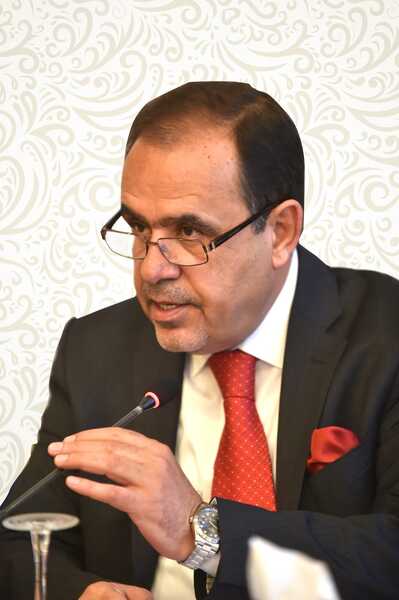
Ibrahim Melhem

Ibrahim Melhem

Opinion Writer

With feelings overflowing with reverence, and filled with faith and patience in the face of hardships and tribulations, Arabs and Muslims celebrate today the anniversary of the Isra and Mi'raj, while the defenders in the courtyards of Al-Aqsa offer the most precious of hearts and the sap of souls in defense of its sanctity, which the extremists of biblical fundamentalism have been targeting to Judaize it and impose temporal and spatial division in this mosque that is specific to Muslims, and in which they have no partner.


The fragrant occasion comes while blood is still flowing, wounds are still open, and hearts are trembling, due to the gloom of the scene and the bad turn of events in the Gaza Strip, amidst the Arabs and Muslims’ abandonment of supporting the defenders and establishing them in the vicinity of the place of the Isra and Mi’raj.


At this critical moment, the parties have no choice but to reach a common path that resolves the differences that have arisen between them and opens the door to a matrix of formulations and compromises that rely on the virtue of reviews and recalculations, and adherence to unity under the tent of the organization, the sole legitimate representative of the Palestinian people, far from the language of treason, and keenness not to provide pretexts to undermine the authority in the West Bank, which is the last bulwark against advocates of resolving the conflict, by spreading creative chaos to accelerate the implementation of plans for exile and displacement, taking advantage of Trump’s fluctuations and impulses, like a car without brakes on slippery ground.


Digging under the authority, hastening its collapse and dismantling its apparatuses in the West Bank, motivated by personal rivalry and factional enmity, constitutes a free service to biblical fundamentalism, which is rubbing its hands together, licking its lips and waiting to seize the opportune moment. Asking the authority’s apparatuses to confront brute force is contrary to wisdom, and presents a recipe for murder and genocide, and continuing the demonization in order to lift international cover from the authority in order to overthrow it and undermine the dreams of a state, while we recall how all the security headquarters in the West Bank and Gaza were destroyed, and hundreds of its members were killed in 2002.


How can it be right to accept a ceasefire in Gaza, while calling for igniting it in the West Bank, without national agreements, during which the Authority is being disrupted, to bring about reactions from a savage enemy that has reached the peak of madness, devoid of morals and laws, to inflict on the West Bank what it inflicted on Gaza, drawing encouragement from American natural breastfeeding, the features of which were revealed through Trump’s statements yesterday about displacement under the pretext of reconstruction?!


This is not a call to stop resistance, but rather a call to all factions of national action to search for other forms that enable the owners of the land to stand firm and lighten their burdens, forms that remove the pretexts and do not deprive the benefits.

PALESTINE

Mon 27 Jan 2025 9:13 am - Jerusalem Time

Hamas celebrates the return of Gaza's displaced... and Israel: "Whoever threatens us will pay the price"

Coinciding with the start of the return of displaced Palestinians to the northern Gaza Strip, today, Monday, Israel launched new threats.


Israeli Defense Minister Yisrael Katz warned that Tel Aviv will not allow a return to before October 7, 2023.


"high price"

He also stressed that the ministry will continue to strictly implement the ceasefire in the north and south of Gaza.


He also stressed in a statement that anyone who "threatens the Israeli army forces will pay a heavy price," as he put it.


"Displacement failure"

For its part, Hamas considered that "the return of the displaced to their homes proves once again the failure of the occupation to achieve its aggressive goals of displacing and breaking the will of steadfastness among the Palestinians."


It also stated in a statement that "the scenes of the crowds returning to the areas from which they were forced to flee, despite their destroyed homes, confirm the Palestinians' steadfastness in their land."


She called for intensifying the delivery of all aid and relief supplies to all areas of the Gaza Strip.


Thousands of displaced Palestinians began returning to the north after an agreement between Hamas and Israel, some of them dragging carts loaded with luggage towards the Netzarim checkpoint on Rashid Street, which runs along the Gaza coast.


This influx of crowds came after Israel prevented tens of thousands of Palestinians from returning from the south to the north through the crossing that divides the Strip into two parts, citing the failure to release prisoner Arbel Yehud, whose release it considered a priority, and Hamas’ failure to provide a list of prisoners, both living and dead.

PALESTINE

Mon 27 Jan 2025 9:02 am - Jerusalem Time

A young Palestinian was killed and two others were injured by tIsraeli army's bullets north of Jerusalem

A young man was killed on Sunday evening, and two others were injured by Israeli occupation forces’ bullets north of Jerusalem.


The Palestinian Ministry of Health announced in a statement that "one person was killed and two others were moderately injured by the occupation forces' bullets near Qalandia camp," without further clarification.


According to local sources, the shooting of the three young men took place near the Qalandia military checkpoint used to cross to and from Jerusalem.


Earlier on Sunday, Israeli forces stormed the Palestinian town of Al-Ram, north of occupied East Jerusalem, and fired tear gas bombs heavily at Palestinians.


The Jerusalem Governorate said in a statement that "the occupation forces are firing tear gas bombs intensively around the apartheid wall in the town of Al-Ram."

PALESTINE

Mon 27 Jan 2025 8:56 am - Jerusalem Time

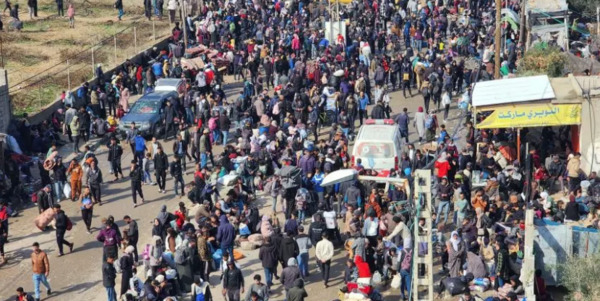
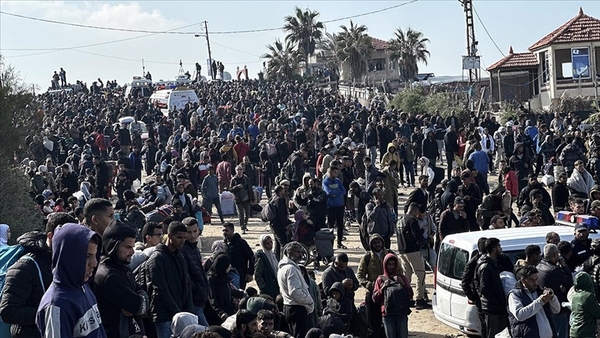
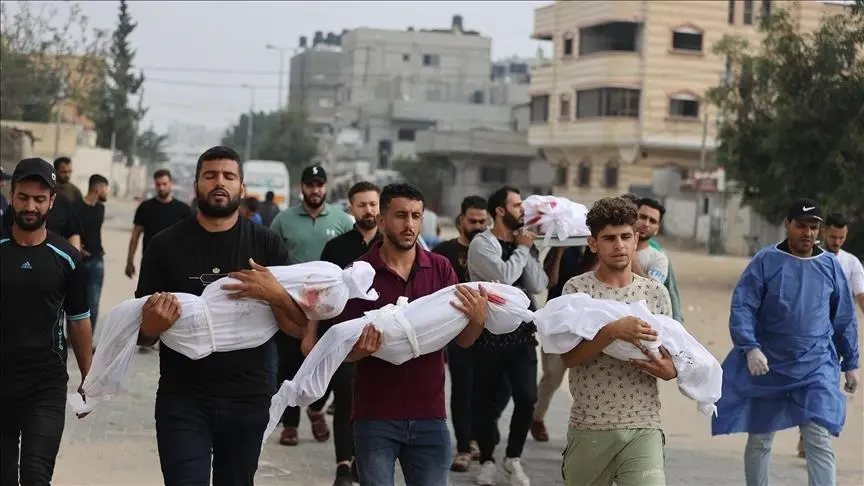
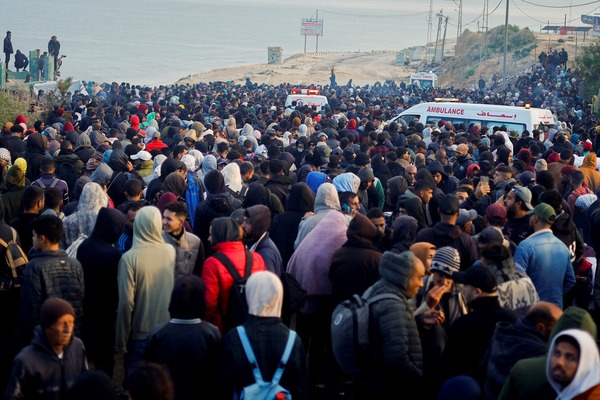
Thousands of displaced people begin returning to northern Gaza via Rashid Street

Thousands of displaced people began returning to Gaza City and the northern Gaza Strip on Monday, via Rashid Coastal Street in the central Gaza Strip.


At exactly 9:00 am, the displaced will be allowed to move in vehicles to the north of the Strip, after subjecting them to inspection, through Salah al-Din Street.


Thousands spent the past two nights in the open on Rashid and Salah al-Din streets, despite the bitter cold, waiting for the occupation forces to allow them to return to their homes after forcing them to leave and move to the south.


Most of the displaced people walk back via Rashid Street, a distance of at least 7 kilometers.


Al-Rashid Coastal Street extends from the north of the Strip to its south, and during the 470-day war of extermination, it witnessed dozens of massacres committed by the occupation forces against citizens who were on their way to flee from the north to the south.


Between October 7, 2023 and January 19, 2025, the Israeli occupation forces launched an aggression on the Gaza Strip, which resulted in the martyrdom and injury of more than 158,000 people, most of whom were children and women, and left more than 14,000 missing.


The Israeli occupation aggression has caused the displacement of more than 85% of the citizens of the Gaza Strip, i.e. more than 1.93 million citizens out of 2.2 million, from their homes after their destruction. About 100,000 citizens have left the Strip since the beginning of the aggression.


About 1.6 million Gazans currently live in shelters and tents that lack the minimum requirements for human life, amidst massive and unprecedented destruction of infrastructure and citizens’ property.


PALESTINE

Mon 27 Jan 2025 8:53 am - Jerusalem Time

Israel continues its aggression on Jenin and its camp for the seventh consecutive day

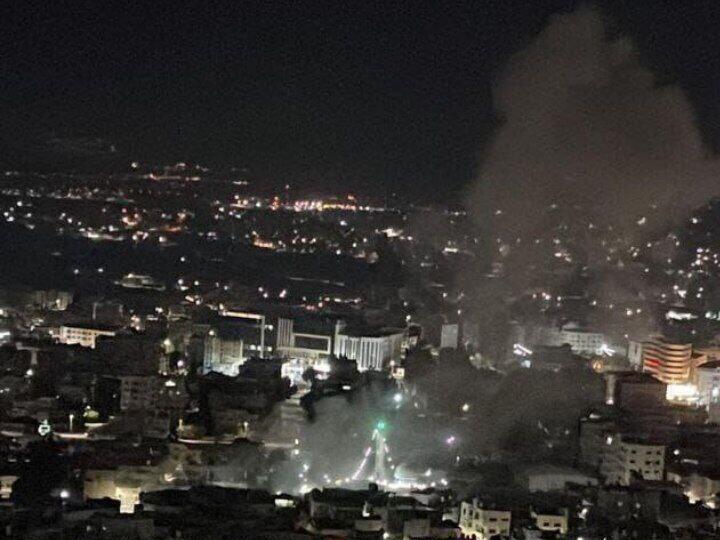
The Israeli occupation continues its aggression on the city of Jenin and its camp for the seventh consecutive day, leaving 16 martyrs, dozens of injuries, and dozens of destroyed homes.


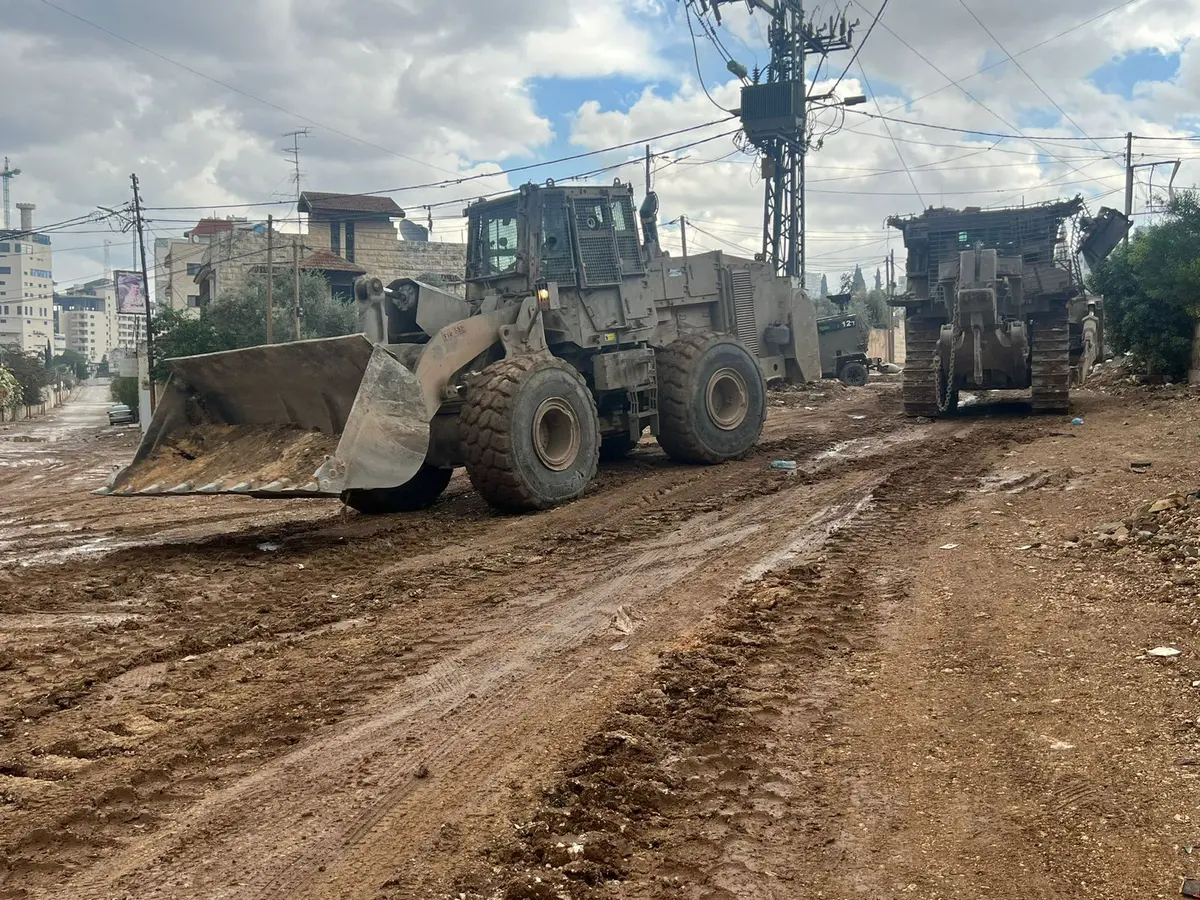
Last night, Israeli occupation bulldozers destroyed the Cinema Roundabout and its surroundings in the center of Jenin.


Local sources said that the occupation bulldozers destroyed citizens' commercial stalls around the roundabout and razed the street.


Yesterday, Sunday, the young man Abdul Jawad Al-Ghoul (26 years old) was martyred as a result of his injury by the occupation forces’ bullets last Tuesday.


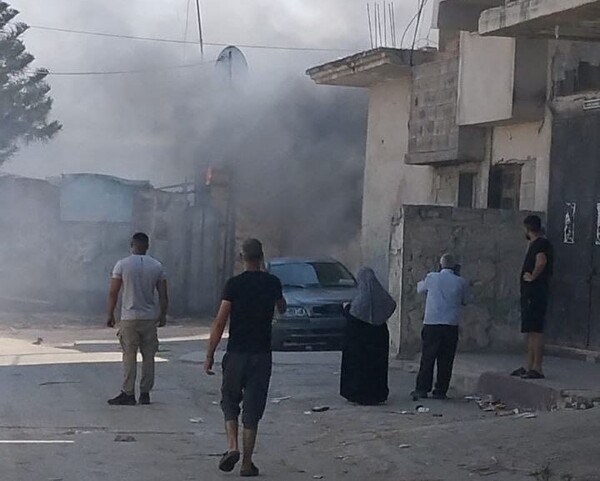
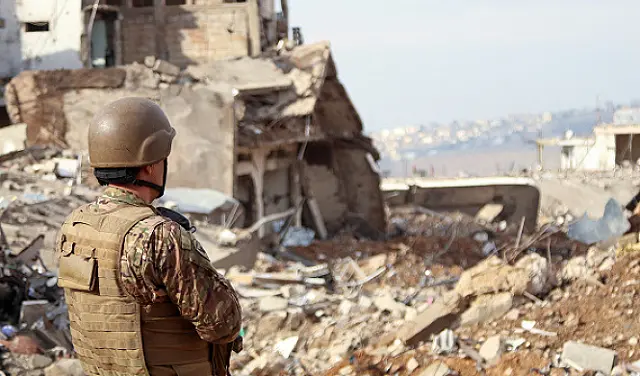
The occupation forces continue to destroy, blow up and burn homes in Jenin camp, where they destroyed large parts of the Al-Damj neighborhood and Al-Bishr neighborhood, in addition to the Abdullah Azzam neighborhood and Talat Al-Ghabz, amid rising smoke due to the burning of a number of homes in parallel with the demolition operations. The occupation forces blew up two homes in the camp, one of which belongs to the Tawalbeh family.

The occupation army continues to send military reinforcements supported by bulldozers to the city of Jenin, with military vehicles positioned in front of Jenin Governmental Hospital, amid warplanes and drones flying in the sky of the city and the camp.


Director of Jenin Governmental Hospital, Dr. Wissam Abu Bakr, said that the destruction of the main street and the positioning of vehicles by the occupation forces makes it difficult for the medical staff to work.


He added that on the second day of the raid, the occupation bulldozed the hospital entrance and closed its entrances with dirt barriers, which hindered entry and exit. On the third day, we began working to remove the barriers and open the closure.


Abu Bakr stressed that the hospital staff is working with all their might to get through these difficult days, and to provide everything necessary for patients and those who want treatment, despite the difficulty of reaching them and the danger.


Jenin Governor Kamal Abu al-Rab confirmed yesterday that the occupation had blown up about 20 homes inside Jenin camp, and was working to divide the camp into four parts, by destroying streets, blowing up homes, and burning them.


The occupation army began an unprecedented aggression on the city and its camp since last Tuesday evening.

PALESTINE

Sun 26 Jan 2025 10:58 pm - Jerusalem Time

Al-Safadi: The Palestinians' stability on their land is a Jordanian constant that has not and will not change

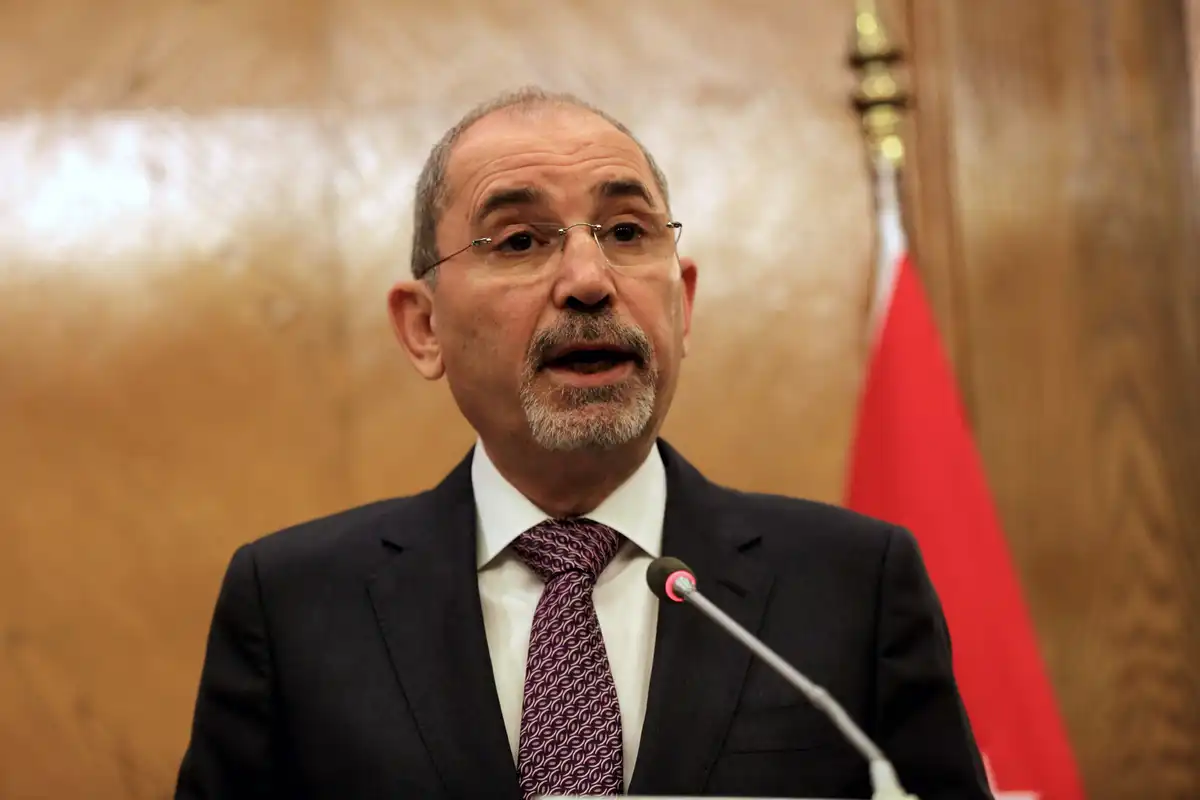
Jordanian Deputy Prime Minister and Minister of Foreign Affairs and Expatriates Ayman Safadi stressed today, Sunday, that the stability of the Palestinians on their land is a Jordanian constant that has not changed and will not change.


This came in press statements, after his meeting with the Acting Special Coordinator for the Middle East Peace Process, Senior Coordinator for Humanitarian Affairs and Reconstruction in Gaza, Sigrid Kaag.


Safadi and Kach discussed efforts to consolidate the ceasefire in Gaza and bring in immediate and sufficient aid to confront the humanitarian disaster caused by the Israeli aggression on the Strip.


Safadi stressed the need to combine all efforts to establish a ceasefire and ensure the delivery of aid to all parts of the Gaza Strip.


Safadi also stressed that Jordan is continuing its efforts in coordination with its brothers and partners in the region, the United States, Europe and the rest of the influential countries in the international community, in order to launch a plan to implement the two-state solution that embodies the independent, sovereign Palestinian state on the lines of June 4, 1967, with East Jerusalem as its capital, to live in security and peace alongside Israel as the only way to achieve a just and comprehensive peace.


Safadi and Kach stressed the continuation of cooperation between Jordan and the United Nations in bringing aid into Gaza and achieving just peace, in accordance with the approved references, international law and international legitimacy resolutions.


In press statements after the meeting, Safadi said that he and the UN envoy held extensive talks that focused on joint efforts to consolidate the ceasefire in Gaza and to ensure the entry of immediate and sufficient humanitarian aid into the Strip, and that Jordan and the United Nations agree that this aid must flow sufficiently, immediately and permanently to confront the humanitarian catastrophe in Gaza.


Safadi pointed out that the talks also focused on efforts to achieve a just and comprehensive peace, the only way to which is the embodiment of an independent, sovereign Palestinian state on Palestinian national soil based on the two-state solution on the lines of June 4, 1967, with occupied Jerusalem as its capital.


He added: "I look forward to working with Kaag, who has just assumed her new duties, in addition to her previous duties as Humanitarian Coordinator. We agreed to activate our cooperation to bring in aid, including through Jordan, which we are proud to have played a role in and will continue to do, under the directives of King Abdullah II, to bring in the greatest amount of aid."


He added: "We are now in the stage of confirmation and work to ensure the stability of the ceasefire, and we will work with all our brothers in the region and our partners in the international community to advance with clear steps, and according to effective mechanisms to achieve a just and lasting peace."


Safadi said: "We in the Kingdom continue our engagement with everyone in order to achieve this peace, which constitutes a strategic Jordanian choice and a necessity for security and stability in the region."


He stressed that Jordan works "according to our constants that everyone knows: that the solution to the Palestinian issue is in Palestine; that Jordan is for Jordanians, and that Palestine is for the Palestinians; and that we all want to achieve security, stability, and peace in the region, and that the path to this security, stability, and peace is to fulfill the rights of the Palestinian people, so that the independent, sovereign Palestinian state can live in security and peace alongside Israel according to the two-state solution and based on international law, international legitimacy resolutions, and approved references."


Safadi stressed that "our constants in the Kingdom are clear. Keeping the Palestinians on their land is a Jordanian constant that has not changed and will not change. Hence our ongoing efforts to rebuild Gaza as well, until the living conditions that the Palestinian people deserve are provided after all this suffering, after all this destruction, and after all this killing."


He continued: “Our position that the two-state solution is the way to achieve peace is fixed and unchangeable. Our rejection of displacement is fixed and unchangeable. This is not only a fixed and steadfast position from which the Kingdom cannot deviate, but it is also a necessity in order to achieve the security, stability and peace that we all want, because resolving the Palestinian issue on just foundations that guarantee the rights of the Palestinian people is the way to achieve the security and stability that the region has been deprived of and which constitutes a right for all the peoples of the region.”


He stressed that "the peace that we want, that the region deserves, and that guarantees security and stability is the peace that peoples accept, that fulfills peoples' rights, and that specifically fulfills the right of the Palestinian people to live in freedom and dignity on their Palestinian national soil."


Safadi said: "The priority now is to consolidate the ceasefire, bring in aid, alleviate the suffering of our people in Gaza, and then launch a joint effort to achieve peace that guarantees the rights of the Palestinian people and embodies the independent Palestinian state that lives in security and peace alongside Israel, so that the entire region can enjoy security and peace."


He stressed the importance of cooperation with the United Nations, pointing to the joint efforts to bring in aid and the continuity of these efforts, so that aid enters Gaza without interruption, and so that "we begin, God willing, the reconstruction process, which is necessary to establish the Palestinian people on their land, and this is a Jordanian priority historically, presently, and continuously."


For her part, Kaag stressed that the United Nations is looking forward to enhancing joint cooperation with Jordan, especially in intensifying the delivery of humanitarian aid to the Gaza Strip, praising Jordan's role, led by King Abdullah II, in sending aid to the Strip through the Jordanian aid corridor.


She explained that the United Nations was able, through the Jordanian aid corridor and the constant support and commitments of the Jordanian government, to continue supporting Palestinian civilians in Gaza.


She stressed the need to establish a ceasefire in Gaza, in order to maintain the continuous delivery of humanitarian aid to civilians in the Strip.


Kach stressed that the United Nations is committed to facilitating the empowerment of all parties to find clear prospects and the political will necessary to achieve an independent and viable Palestinian state alongside Israel, despite the depth of the current crisis and humanitarian suffering in Gaza.

PALESTINE

Sun 26 Jan 2025 10:20 pm - Jerusalem Time

Suffocation injuries after Israeli occupation forces stormed southern Nablus

A number of citizens suffered from suffocation, Sunday evening, after the Israeli occupation forces stormed the town of Qablan, south of Nablus.


Deputy Mayor of Qablan, Abdul Rahman Abed, said that the occupation forces stormed the town and fired live bullets, sound bombs and toxic gas intensively, which led to a number of citizens suffering from suffocation.

ARAB AND WORLD

Sun 26 Jan 2025 10:08 pm - Jerusalem Time

After Trump's call, the Egyptian embassy in Washington confirms its rejection of the displacement of Palestinians to Sinai

The Egyptian Embassy in Washington reiterated, on Sunday evening, Cairo's rejection of the displacement of Palestinians to the Egyptian Sinai Peninsula.


This came hours after US President Donald Trump called on Egypt and Jordan to receive Palestinians from the Gaza Strip.


In a post on Facebook, the embassy quoted the title of an article by the Egyptian Ambassador to Washington, Moataz Zahran, published in the American newspaper The Hill on October 20, 2023.


"Egypt cannot be part of any solution that includes transferring Palestinians to Sinai," the embassy said. Opinion article by Ambassador Moataz Zahran published in The Hill.


The embassy was satisfied with this title in its publication, which it attached with a link to the article on the newspaper’s website.


The article was published on the 13th day of a genocidal war waged by Israel, with US support, against the Palestinians in the Gaza Strip on October 7, 2023.


Zahran said in his article: “There are voices calling on Egypt to open its borders and allow Palestinian refugees to seek safe haven in Sinai.”


He added: "Egypt's position is clear: it cannot be part of any solution that includes transferring Palestinians to Sinai."


Zahran stressed that "such a move would lead to a second Nakba, an unimaginable tragedy for a steadfast people (the Palestinians) who have an inseparable bond with the land of their ancestors."


The Nakba refers to the seizure of Palestinian lands by armed Zionist gangs, the displacement of about 700,000 Palestinians, and the establishment of the State of Israel on these lands in 1948.


The Egyptian embassy's post is the first official Egyptian response to Trump's call.


On Saturday, Trump called for the displacement of Palestinians from the Gaza Strip to neighboring countries such as Egypt and Jordan, claiming that “there are no suitable places to live in the Gaza Strip” as a result of the Israeli genocide.


Jordanian Foreign Minister Ayman Safadi confirmed, on Sunday, his country's rejection of any attempt to displace Palestinians.


Al-Safadi said, "Our constants are clear, and the stability of the Palestinians on their land is a Jordanian constant that has not and will not change."


He stressed that "the solution to the Palestinian issue is in Palestine, Jordan is for Jordanians, and Palestine is for Palestinians."


The Israeli war of extermination on Gaza left about 159 thousand Palestinians dead and wounded, most of them children and women, and more than 14 thousand missing, amidst massive destruction and deadly famine.


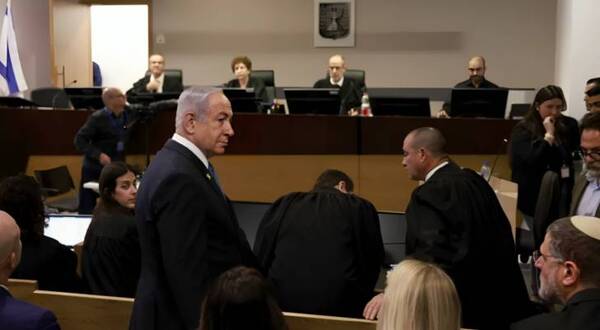
On November 21, the International Criminal Court issued arrest warrants for Israeli Prime Minister Benjamin Netanyahu and former Defense Minister Yoav Galant, on charges of committing war crimes and crimes against humanity against Palestinians in Gaza.


On January 19, a ceasefire and prisoner exchange agreement between Hamas and Israel began to be implemented, with the mediation of Qatar and Egypt and the support of the United States.


The first phase of the agreement is scheduled to last for 42 days, during which negotiations will take place to begin a second and then a third phase, leading to the end of the Israeli genocide and the withdrawal of the Israeli army from Gaza.


Israel has turned Gaza into the world's largest prison, besieging it for the 18th year, and the war of extermination has forced about two million of its citizens, numbering about 2.3 million Palestinians, to flee in tragic conditions with a deliberate severe shortage of food, water and medicine.


For decades, Israel has occupied lands in Palestine, Syria and Lebanon, and refuses to withdraw from them and establish an independent Palestinian state, with East Jerusalem as its capital, on the borders before the 1967 war.

ARAB AND WORLD

Sun 26 Jan 2025 10:02 pm - Jerusalem Time

Complaint demands arrest of Israeli minister visiting Poland

A complaint filed with Polish authorities has called for the arrest of Israeli Education Minister Yoav Kisch, who is visiting the country to participate in the International Holocaust Remembrance Day ceremony.


The Israeli Broadcasting Corporation said on Sunday that a number of Palestinians who hold Polish citizenship, with the support of local human rights organizations, filed a complaint with the Public Prosecution Office in Warsaw against the Israeli minister, demanding his arrest.


The agency added that Minister Kisch arrived in Poland over the weekend to attend “the 80th anniversary celebration of the liberation of Auschwitz,” after Israeli Prime Minister Benjamin Netanyahu decided not to attend.


The complaint said that Kish, who was a fighter pilot, bears responsibility for war crimes as a member of the Israeli government.


The Palestinians also filed a complaint against Netanyahu and his former Defense Minister Yoav Galant, against the backdrop of the International Criminal Court’s decision to issue arrest warrants against them.


This complaint comes as part of the protest against the Polish government's announcement that it will not arrest senior Israeli officials wanted by the International Criminal Court.


Last December, the Broadcasting Authority said that Netanyahu would not attend the commemoration of the liberation of the Auschwitz camp in Poland, for fear of being arrested.


The main ceremony is scheduled to take place at Auschwitz camp tomorrow, Monday.


On November 21, the International Criminal Court issued two international arrest warrants against Netanyahu and Galant on charges of committing war crimes and crimes against humanity during the war of extermination on the Strip since October 7, 2023.


PALESTINE

Sun 26 Jan 2025 9:18 pm - Jerusalem Time

Saraya Al-Quds: We have provided what is necessary to remove Israel's pretexts to obstruct the return of Gaza's displaced people

The Secretary of the Military Council of the Al-Quds Brigades, the armed wing of the Islamic Jihad Movement, Abu Hamad, confirmed on Sunday that they had provided what was necessary to remove the pretexts that Israel was fabricating to obstruct the return of the forcibly displaced Palestinians from the southern Gaza Strip to its northern part.


In recent days, the debate has intensified over the issue of the return of displaced Palestinians from the southern Gaza Strip to the northern Gaza Strip after Tel Aviv linked allowing their return to the release of the Israeli prisoner in the Gaza Strip, "Arbel Yehud."


During the Israeli war of extermination on Gaza, the Israeli army forced Palestinians in the Gaza and North governorates to head towards the south of the Strip, and set up a checkpoint in the Netzarim area in the middle of the Strip to prevent them from returning to their areas after being displaced.


Abu Ahmed said, in a post on the Al-Quds Brigades’ account on Telegram, that “the enemy is deliberately trying to spoil the lives of our people and take away their joy, and we have provided what is necessary to remove the pretexts that the enemy is fabricating to obstruct the return of our people to the northern Gaza Strip.”


He added: "The mediators (Egypt and Qatar) received guarantees confirming that the Zionist prisoner, Arbil Yehud, is alive and in good health."


He continued: "The date and agreement that the movement's political leadership decides with the mediators and adheres to regarding the release of the Arbil Jews will be implemented."


On Sunday, the government media office in the Gaza Strip said that tens of thousands of displaced Palestinians in the southern Gaza Strip are waiting for the opening of the "Netzarim" axis, to be able to return to their areas of residence, according to the ceasefire agreement that Israel is accused of evading commitment to.


Israeli Prime Minister Benjamin Netanyahu linked the return of hundreds of thousands of Palestinians in Gaza to the northern part of the Strip to the release of prisoner Arbel Yehud, according to a statement issued by his office on Saturday.


The main dispute lies in the classification of the prisoner. While the Palestinian factions insist that she is considered a "military" prisoner, Israel insists that she is a "civilian" prisoner, according to Hebrew media.


The Hebrew website Walla (exclusive) says that the prisoner, Arbel Yehud, is being held by the military wing of the Islamic Jihad, and has been classified as a soldier because she trained within the Israeli military space program.


For its part, Hamas confirmed through mediators that Arbel Yehud (29 years old) is alive and in good health, indicating that she will be released next Saturday, but Israel was quick to question this promise.


On January 19, a ceasefire between Hamas and Israel came into effect. Its first phase will last for 42 days, during which negotiations will begin to begin a second and then a third phase, mediated by Egypt, Qatar, and the United States.

PALESTINE

Sun 26 Jan 2025 8:30 pm - Jerusalem Time

Palestinian Presidency expresses its strong rejection and condemnation of any projects aimed at displacing our people from the Gaza Strip

The Palestinian presidency expressed its strong rejection and condemnation of any projects aimed at displacing our people from the Gaza Strip, "which constitutes a violation of the red lines that we have repeatedly warned against," stressing that the Palestinian people will not abandon their land and holy sites, and "we will not allow the repetition of the catastrophes that befell our people in the years 1948 and 1967, and that our people will not leave."


The presidency renewed its thanks to the Arab Republic of Egypt and the Hashemite Kingdom of Jordan for their decisive positions rejecting the displacement of the Palestinian people outside their homeland, and "thanks to all the brotherly and friendly countries that supported us in this position."


The presidency added that the Palestinian people and their leadership will absolutely not accept any policy that undermines the unity of the Palestinian land in the Gaza Strip and the West Bank, including East Jerusalem, stressing that any attempt to undermine Palestinian, Arab and international constants is completely rejected and unacceptable, calling on President Trump to continue his efforts to support efforts to establish and sustain a ceasefire, the complete withdrawal of Israeli occupation forces, the Palestinian Authority assuming its duties in the Gaza Strip, and focusing on achieving peace and establishing an independent Palestinian state.


The presidency said that the State of Palestine calls for focusing at this stage on consolidating and sustaining the ceasefire, continuing to provide humanitarian aid and helping our displaced people to return to their homes, providing shelter, electricity and water, rehabilitating educational and health facilities, and preparing for reconstruction, and "we are all confident that brotherly and friendly countries will do their duty to provide the necessary support for these noble humanitarian goals."


The Presidency stressed that the State of Palestine is ready to assume its full duties in the Gaza Strip, and to continue its efforts to achieve just peace in accordance with the vision of the two-state solution, based on international legitimacy resolutions and the Arab Peace Initiative.


The presidency said: "We warn of the repercussions of such a dangerous Israeli policy that contributes to severing the ties of the Gaza Strip and displacing its people, which will lead to destabilization and security, and affect the sovereignty of the State of Palestine and the sovereignty of neighboring Arab countries."


She added: "We reiterate once again that the Palestinian people and their legitimate leadership represented by the Palestine Liberation Organization are the ones who have the decision, destiny and future in order to preserve the national project and Palestinian identity."


The presidency indicated that President Mahmoud Abbas is making urgent contacts with the leaders of Arab and European countries and the United States of America in this regard, due to the seriousness of its repercussions on Palestine and the national security of the countries of the region.

ARAB AND WORLD

Sun 26 Jan 2025 8:18 pm - Jerusalem Time

Hezbollah: The countries sponsoring the agreement are required to assume their responsibilities towards Israel’s violations

Hezbollah issued a statement describing the recent events as “a glorious day of God,” praising the steadfastness of the resistance people who once again proved their commitment to their land and the sovereignty of their homeland, and stressing that they are “a people rooted in their land who do not bow down to any threat or aggression.”


The statement stressed that the Lebanese people, with their heroic resistance, have renewed their defeat of the occupation since 2000 until today, stressing that "there is no place for an occupier in this blessed land that was watered with the blood of martyrs." It also pointed out that the scene of citizens returning to their villages, carrying pictures of martyrs and banners of resistance, embodies the highest meanings of steadfastness, endurance and victory.


The statement added: "The equation of the army, the people and the resistance that protects Lebanon is not just words, but a reality that the Lebanese live daily and embody through their steadfastness and sacrifices," calling on the Lebanese to stand as one with their people in the south to strengthen national solidarity and build true sovereignty whose title is liberation and victory.


Hezbollah called on the international community, especially the countries sponsoring the agreements, to assume their responsibilities regarding the Israeli violations and pressure the occupation to withdraw completely from Lebanese territory.


The party concluded its statement with a salute to the souls of the martyrs and wounded, whom it described as having "drawn with their blood the path to liberation and victory," stressing that these moments prove that Lebanon will remain a country of pride and dignity thanks to its people, resistance, and free sons.


ARAB AND WORLD

Sun 26 Jan 2025 8:06 pm - Jerusalem Time

Netanyahu: Macron stressed the importance of our participation in the Paris Air Show

Israeli Prime Minister Benjamin Netanyahu announced on Sunday that French President Emmanuel Macron stressed the importance of Tel Aviv's participation in the Paris Air Show next June.


Last year, France banned Israel from participating in a naval arms exhibition, as a result of its war on Lebanon and the genocide against Palestinians in the Gaza Strip.


The Israeli Prime Minister's Office said in a statement on Sunday that "Netanyahu spoke this afternoon (Sunday) with French President Emmanuel Macron, and the latter stressed the importance of Israel's participation in the 55th Paris Air Show."


The exhibition will be held between June 16 and 22.


Netanyahu and Macron also discussed the latest developments in Gaza and Lebanon, the statement said.


As of 15:30 GMT, no official French statement was available on this matter.


Earlier, Macron called for an arms embargo on Israel due to the massacres it committed in Gaza, which created a crisis at the time between Paris and Tel Aviv.


Months ago, Israeli media reports said that Macron was forced to make concessions to Tel Aviv in order to allow Paris to play a role in reaching a ceasefire agreement in Lebanon.


Last October, Spain also announced that it would ban Israel from participating in the fourth edition of the International Defence and Security Exhibition (FEINDEF) scheduled to be held in Madrid in May 2025.


Israel's participation in international events faces popular and human rights protests, in light of the crimes it has committed in the Gaza Strip and Lebanon.


In Gaza, a ceasefire has been in place since January 19, after a war of extermination waged by Israel with American support since October 7, 2023.


The Israeli genocide in Gaza resulted in about 159,000 Palestinian deaths and injuries, most of them children and women, and more than 14,000 missing, amidst massive destruction and deadly famine.


On November 21, the International Criminal Court issued two arrest warrants for Prime Minister Netanyahu and former Defense Minister Yoav Galant, on charges of committing war crimes and crimes against humanity against Palestinians in Gaza.


A ceasefire agreement has also prevailed in Lebanon since November 27, 2024, which Israel has violated hundreds of times, leaving dozens dead and wounded.


This agreement ended the mutual shelling between the Israeli army and Hezbollah, which began on October 8, 2023, and then turned into a large-scale war on September 23.


The Israeli aggression on Lebanon resulted in 4,080 deaths and 16,753 injuries, including a large number of children and women, in addition to the displacement of about 1,400,000 people.


For decades, Israel has occupied lands in Palestine, Syria and Lebanon, and refuses to withdraw from them and establish an independent Palestinian state, with East Jerusalem as its capital, on the borders before the 1967 war.

PALESTINE

Sun 26 Jan 2025 7:21 pm - Jerusalem Time

A Palestinian citizen was injured in a settler attack in the Jordan Valley

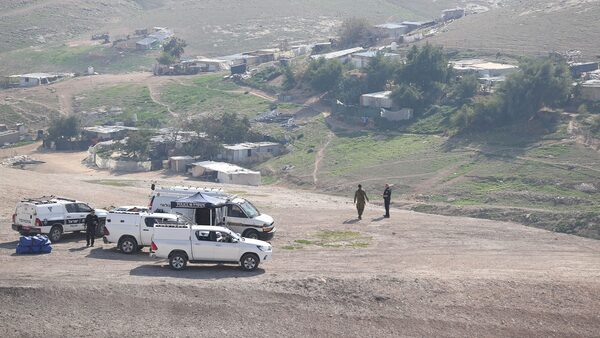
A citizen was injured after a number of settlers attacked him, Sunday evening, in Ein al-Hilweh in the northern Jordan Valley.


According to local sources, citizen Sati Alian Daraghmeh sustained bruises as a result of a number of settlers assaulting him and attempting to strangle him, after they raided his tents in Ein al-Hilweh, noting that a force from the occupation army and police arrived in the area.

PALESTINE

Sun 26 Jan 2025 6:18 pm - Jerusalem Time

Maariv: Agreement reached regarding Israeli prisoner "Arbel Yehud"

The Hebrew newspaper "Maariv" revealed that an agreement was reached regarding the Israeli prisoner "Arbel Yehud", so that she will be released next Friday in exchange for Israel releasing 30 Palestinian prisoners sentenced to life imprisonment.


PALESTINE

Sun 26 Jan 2025 5:46 pm - Jerusalem Time

Israeli forces continue to blow up, destroy and burn homes in Jenin camp

The Israeli occupation forces continue to destroy, blow up and burn homes in Jenin camp.


According to local sources, the occupation forces destroyed large parts of Al-Damj neighborhood and Al-Bishr neighborhood, in addition to Abdullah Azzam neighborhood and Talat Al-Ghabz, amid rising smoke due to the burning of a number of homes in parallel with the demolition operations.


The occupation army continues to send military reinforcements supported by bulldozers to the city of Jenin, with military vehicles positioned in front of Jenin Governmental Hospital, amid warplanes and drones flying in the sky of the city and the camp.


Jenin Governor Kamal Abu al-Rab said this morning that the occupation has so far blown up 20 homes inside Jenin camp, and is working to divide the camp into four parts, by destroying streets, blowing up homes, and burning them.


The governor expressed his concern about the possibility of there being martyrs and wounded inside the Jenin camp, as the ambulance crews were unable to reach them, in addition to preventing journalists from entering the camp.


Abu al-Rab confirmed the arrival of 6 relief trucks from the Ministries of Social Development and Local Government to the city of Jenin, and that they will be distributed to families.

ARAB AND WORLD

Sun 26 Jan 2025 5:38 pm - Jerusalem Time

Netanyahu thanks Trump for lifting ban on bombs ordered by Tel Aviv

Israeli Prime Minister Benjamin Netanyahu thanked US President Donald Trump on Sunday for lifting the ban on the supply of bombs that Israel had requested.


“Thank you for keeping your promise to give Israel the tools it needs to defend itself, confront our common enemies, and secure a future of peace and prosperity,” Netanyahu said in a post on Twitter.


For his part, French President Emmanuel Macron informed Netanyahu that Israeli companies would be allowed to participate in the Paris Air Show, Netanyahu's office said after a phone call between the two leaders today.


The Israeli Prime Minister's Office said in a statement that "the French president assured the prime minister that Israeli companies will be able to participate in the Paris Air Show."


The statement added that Macron and Netanyahu also discussed "various topics, including the latest developments in Lebanon and Gaza," without adding further details.


The Elysee did not immediately comment on this conversation.


Disagreements arose between the two parties last year, against the backdrop of Macron imposing restrictions on the participation of Israeli companies in the exhibition held in the city of Le Bourget in the suburbs of Paris, and his call to impose restrictions on arms to Israel due to the war in the Gaza Strip.


Last May, the participation of Israeli arms manufacturers in the Eurosatory exhibition was cancelled based on a decision by the French government in the midst of the war in the Gaza Strip.


A ruling issued by the Commercial Court, which was upheld on appeal, overturned this decision.


In October, the courts overturned the decision of the organizers of the Euronaval exhibition, who were forced to reverse their decision to ban the participation of some Israeli companies that display weapons and military equipment.


The organizers said their decision came at the request of the French government.


The French government confirmed that Israeli companies are welcome, but without being able to display offensive weapons used in the Gaza Strip and Lebanon.

PALESTINE

Sun 26 Jan 2025 5:21 pm - Jerusalem Time

The death toll in the Gaza Strip has risen to 47,306 and the number of injuries to 111,483 since the beginning of the aggression

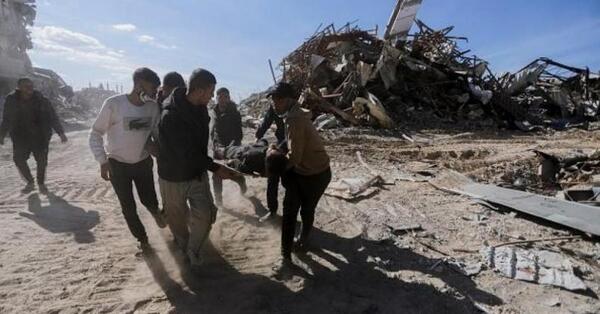
Medical sources announced today, Sunday, that the death toll in the Gaza Strip has risen to 47,306, the majority of whom are children and women, since the start of the Israeli occupation aggression on October 7, 2023.


The sources added that the number of injuries has risen to 111,483 since the beginning of the aggression, while thousands of victims are still under the rubble.


It pointed out that 23 dead arrived at hospitals in the Gaza Strip, including 14 dead whose bodies were recovered, 5 dead who succumbed to their wounds, and 4 new dead, while 11 injuries arrived at hospitals, as a result of the Israeli aggression on the Gaza Strip during the past 72 hours.


The sources explained that a number of victims are under the rubble and on the roads, and the ambulance and civil defense crews are still unable to reach them.

ARAB AND WORLD

Sun 26 Jan 2025 4:47 pm - Jerusalem Time

Hebrew Broadcast: A lawsuit by the Polish Public Prosecution Service demanding the arrest of a minister in Netanyahu's government

The Israeli Broadcasting Corporation reported that a complaint was filed with the Polish Public Prosecution Office demanding the arrest of the Minister of Education in the Israeli occupation government while attending the Holocaust memorial ceremony.


Soldiers and officers in the Israeli occupation army are facing lawsuits in several countries around the world, due to their involvement in committing war crimes in the Gaza Strip, which analysts considered an important step towards deterring the occupation and subjecting it to legal accountability.


Earlier, the judicial authorities in Brazil issued an urgent decision requiring the police to arrest an Israeli soldier and investigate him on charges related to committing crimes against civilians in Gaza, in response to a criminal complaint filed by a human rights organization.


It is noteworthy that on November 22, the International Criminal Court issued an arrest warrant against the Prime Minister of the occupation, Benjamin Netanyahu, and his former Defense Minister, Yoav Galant, on charges of committing war crimes and crimes against humanity.

ARAB AND WORLD

Sun 26 Jan 2025 4:33 pm - Jerusalem Time

Washington urges continued implementation of ceasefire in Gaza, Trump urges displacement of Palestinians

The US government said on Saturday it was "critical" that a ceasefire in Gaza hold, after Hamas militants released four Israeli female soldiers in exchange for 200 Palestinian prisoners.


"It is critical that the ceasefire holds and that all hostages held by Hamas are released and returned safely to their families," the US State Department said in a statement on Saturday.


Statements from the State Department and the White House welcomed the release of the Israeli hostages and did not mention the Palestinian prisoners released by Israel.


"The United States celebrates the release of the four Israeli hostages who had been held captive for 477 days," the State Department added.


The week-long ceasefire in Gaza began last weekend ahead of the inauguration of U.S. President Donald Trump on December 20. Both Republican Trump and former Democratic President Joe Biden have been strong supporters of Israel.


Trump praised his Middle East envoy Steve Witkoff for brokering a ceasefire after months of talks brokered by the United States, Egypt and Qatar. Before his inauguration, Trump warned there would be "hell to pay" if hostages held by Hamas in Gaza were not released.


Hamas fighters and others captured about 250 Israelis during the October 7, 2023, attack on Israel, which killed about 1,200 people, including 311 soldiers in active service, according to Israeli statistics.


The Israeli war on Gaza has killed more than 47,000 people, according to the Gaza health ministry, and has led to accusations of genocide and war crimes that Israel denies. It has also displaced nearly the entire population of Gaza and caused a hunger crisis.


Meanwhile, US President Donald Trump said on Saturday he would like to see Jordan, Egypt and other Arab countries increase the number of Palestinian refugees they accept from the Gaza Strip - potentially transferring enough residents to "cleanse" the war-torn territory and create a virtual clean slate.


The proposal has so far been a red line for Arab states, particularly Jordan and Egypt, which view the mass exodus of Palestinians to their countries as a potential existential threat. They have pointed to Israel’s refusal to publicly commit to allowing any Palestinians who leave the Strip to return later, and they do not want to be seen as complicit in the Palestinians’ exile.


The fear of not being able to return has also deterred many Palestinians from leaving, and more than 100,000 Gazans have entered Egypt since October 7, 2023, although they were forced to pay exorbitant fees to do so and received largely no assistance upon arrival, as Cairo refuses to recognize them as refugees.


The Biden administration also considered the idea of temporarily transferring some residents early in the war, seeking to remove Palestinians, but Jordan and Egypt were so adamant in their opposition that it quickly abandoned the idea.


But Trump, known for his frequent rejection of traditional foreign policy norms, sought to revive the idea of a mass exodus of Palestinians to neighboring countries on Saturday as his new administration tries to maintain a nascent ceasefire in Gaza and plan for the reconstruction of the territory, with more than 2 million people remaining in an area that has been devastatingly devastated in the past 15 months of war.


During a 20-minute question-and-answer session with reporters aboard Air Force One, Trump described Gaza as a “demolition site” after the Israel-Hamas war. He said he had spoken to Jordan’s King Abdullah II about the issue and expected to speak to Egyptian President Abdel Fattah el-Sisi on Sunday.


The White House statement on the call with the Jordanian king was light on details, saying the two leaders "discussed the importance of regional peace, security and stability."


Trump elaborated on some of the details on Air Force One, saying he told Abdullah, “I would like you to take over more because I look at the whole Gaza Strip right now and it’s a mess, it’s a real mess. I would like people to take over.”

ARAB AND WORLD

Sun 26 Jan 2025 4:01 pm - Jerusalem Time

Lebanese Health: 15 dead by Israeli occupation bullets in southern Lebanon

The Lebanese Ministry of Health announced that the death toll from the Israeli occupation's attacks on citizens who tried to enter their villages in the south of the country after the deadline for the occupation's withdrawal had expired has risen to 15 dead and 83 wounded.


The ministry said in a statement on Sunday that 15 citizens, including a soldier, were killed and 83 others were injured by the occupation forces' fire while trying to return to their occupied towns in the south of the country, after the 60-day deadline for the Israeli army to withdraw from the south expired under the ceasefire agreement between Tel Aviv and Beirut.


At dawn on Sunday, the 60-day deadline for the withdrawal of the occupation army that had penetrated southern Lebanon ended, according to the ceasefire agreement that entered into force on November 27, 2024, while Israeli forces continued their presence in some border areas in southern Lebanon, in clear violation of the agreement.


Since the early hours of today, the entrances to the border villages have witnessed gatherings of hundreds of residents, who were confronted by the Israeli occupation forces with bullets while trying to return to their villages.


According to a statement by the Ministry of Health that reached Anadolu Agency, the victims were distributed in the following areas: “Two martyrs, one female martyr, and 12 wounded in Aitaroun, one martyr and two wounded in Blida, 3 martyrs and 14 wounded in Houla, one female martyr, two martyrs, and 12 wounded in Markaba, one martyr and 15 wounded in Kfar Kela, one martyr and 6 wounded in Adaisseh, one soldier martyr in Dahra, and one male martyr and 7 wounded in Mays al-Jabal.”


In addition to "two wounded in Bani Hayyan, one wounded in Maroun al-Ras, one wounded in Shaqra, one wounded in Deir Mimas, one wounded in Rab Talatin, two wounded in Taybeh, and 7 wounded in Yaroun."


Anadolu Agency correspondent reported that the occupation forces are still present in some border areas in southern Lebanon, in a clear violation of the agreement.


On Saturday, the Lebanese army called on residents to wait before heading towards the southern border areas, in anticipation of the presence of mines and suspicious objects left behind by the Israeli army, accusing Israel of procrastinating in withdrawing from those areas.


PALESTINE

Sun 26 Jan 2025 2:59 pm - Jerusalem Time

Israeli drone bombs Balata camp during the funeral of martyr Hashash

Today, Sunday, an occupation drone bombed the Martyrs' Cemetery in Balata Camp with a warning missile, during the funeral of Ahmed Mahmoud Hashash.


Local and security sources reported to WAFA that a drone fired a warning missile towards the cemetery during the funeral procession, but it did not explode, which led to the immediate evacuation of the cemetery.


It pointed out that the Palestinian Explosives Engineering Police headed to the site to investigate the incident, and asked not to approach the site.

ARAB AND WORLD

Sun 26 Jan 2025 2:56 pm - Jerusalem Time

A Lebanese soldier was killed and another was injured by the occupation forces' bullets

The Lebanese army announced, today, Sunday, the death of a soldier and the injury of another by Israeli occupation army fire in the south of the country.

The army said in a statement on the "X" platform: "One soldier was killed on the Marouhin-Dahra-Tyre road, and another was injured in the town of Mays al-Jabal-Marjeyoun, as a result of being targeted by gunfire from the Israeli enemy."

The army explained that the Israeli shooting comes "in the context of its ongoing attacks on citizens and army personnel in the southern border areas."

Earlier, the United Nations said that the deadline stipulated in the November ceasefire agreement between Israel and Hezbollah had not been met.

This came in a joint statement by the United Nations Special Coordinator for Lebanon, Jeanine Hennis-Plasschaert, and the Head of the UNIFIL Mission and its Commander-in-Chief, General Aroldo Lazaro.

The UN statement said: "We saw tragically this morning that conditions are not yet in place for the safe return of citizens to their villages located along the Blue Line."

At dawn on Sunday, the 60-day deadline for the withdrawal of the occupation army that had penetrated southern Lebanon ended, according to the ceasefire agreement that entered into force on November 27, 2024, while Israeli forces continued to be present in some border areas in southern Lebanon, in clear violation of the agreement.

PALESTINE

Sun 26 Jan 2025 1:46 pm - Jerusalem Time

UNRWA: The humanitarian situation in the northern West Bank has seriously deteriorated

The Director of UNRWA Affairs in the West Bank confirmed that the humanitarian situation in the northern West Bank has seriously deteriorated in recent weeks, prompting citizens to leave Jenin camp almost completely.

The Israeli occupation forces continue their aggression on the city of Jenin and its camp for the sixth consecutive day, which resulted in the martyrdom of 15 citizens, the injury and arrest of dozens, in addition to the widespread destruction of citizens’ property, public and private facilities, and infrastructure, including the water and electricity networks.

He added that the military escalation and deterioration of the security situation had caused a mass displacement of families in Jenin camp, which had a direct impact on daily life.

In this context, the UNRWA Director explained that the suspension of educational activities in UNRWA schools in the region was inevitable as a result of the military escalation, noting that this also led to the suspension of the provision of health services in the camps, due to the difficulty of accessing them under the current situation.

PALESTINE

Sun 26 Jan 2025 1:45 pm - Jerusalem Time

Hamas: We are following up with mediators the occupation’s prevention of the return of the displaced to northern Gaza


Hamas said on Sunday that the Israeli occupation's prevention of displaced persons from returning to the northern Gaza Strip constitutes a violation and breach of the ceasefire agreement, and that it is following up on the matter with mediators, noting at the same time that "the occupation is stalling under the pretext of prisoner Arbel Yehud, despite the fact that the movement informed the mediators that she is alive and gave all the necessary guarantees for her release."

In a statement, the movement held the Israeli occupation responsible for the disruption of the implementation of the agreement, adding: "We are following up with the mediators with full responsibility to reach a solution that leads to the return of the displaced."

Hamas spokesman Jihad Taha told Al-Araby Al-Jadeed that the Israeli occupation army’s prevention of the displaced from returning to their homes in the northern Gaza Strip is a clear violation of the ceasefire agreement that was recently agreed upon under the auspices of the mediators. Taha added that “this violation demonstrates the occupation’s hesitation and procrastination in implementing what was agreed upon. Accordingly, the occupation bears responsibility for any delay in implementing the agreement.” He called on the mediators to “take action and pressure the occupation to implement its obligations and allow our people to return to the homes from which they were forcibly displaced in the northern Gaza Strip.”


The Israeli occupation army continues to prevent the forcibly displaced persons in the southern Gaza Strip from returning to their homes in the northern Gaza Strip, by continuing to close the Netzarim axis. Israel claims that it is not committed to the agreement that stipulates opening the way for the return of the displaced persons on the seventh day of the ceasefire agreement, because the Palestinian resistance has not released the Israeli civilian detainee, Arbel Yehud.

The spokesman for the occupation army warned the residents of the Gaza Strip against approaching the Netzarim axis until it is declared open, and said in a statement: “In light of Hamas’s violation of the ceasefire agreement, and in order to prevent friction and misunderstandings, all existing instructions remain in effect, especially the prohibition on approaching the Netzarim axis until it is declared open,” stressing that the axis “will not be opened for movement until the issue of the release of the Israeli Arbel Yehud is settled between the mediators and Israel.”


Palestinians spread out on Rashid Street and slept in the open last night, despite the bitter cold, despite their awareness that their hoped-for return would be to homes that had been reduced to rubble, after Israeli warplanes had bombed and leveled them to the ground for a year and three months.


PALESTINE

Sun 26 Jan 2025 1:14 pm - Jerusalem Time

Israeli occupation threatens to demolish 45 inhabited homes in the village of Al-Nu'man, east of Bethlehem

Today, Sunday, the Israeli occupation authorities notified the demolition of 45 homes in the village of Al-Nu'man, east of Bethlehem.


The head of the Al-Nu'man village council, Jamal Al-Dar'awi, told the "Wafa" agency that the occupation forces, accompanied by employees from the occupation municipality in Jerusalem, stormed the village and posted notices on the facades of 45 inhabited houses, including their demolition under the pretext of lacking a license, noting that they were built before 1948, and the last house was built in 1993.


Al-Darawi added that the occupation policy aims to displace the village’s residents and annex it to the borders of the occupation municipality in Jerusalem, pointing out that a year and a half ago, the occupation military court decided to impose the “Arnona” property tax on all the houses in the village, which had been notified of demolition 6 times previously, while between 30-60 thousand shekels were paid for each house.

According to the Wall and Settlement Resistance Commission, the occupation authorities issued 903 demolition notices against Palestinian facilities last year under the pretext of lack of permits, distributed in the Hebron governorate with 180 notices, the Jericho and Jordan Valley governorate with 140 notices, and then the Bethlehem governorate with 126 notices, during which 20 notices were issued targeting the eastern Bethlehem wilderness.

She noted that the occupation authorities carried out a total of 684 demolition operations during the year 2024, during which 903 facilities were demolished in the West Bank, including the city of Jerusalem, and 4,332 people were affected as a result, including 2,320 children.

The demolitions were concentrated in the Jerusalem governorates with 190 demolitions, then the Hebron governorate with 172 demolitions, and the Bethlehem governorate with 68 demolitions.

OPINIONS

Sun 26 Jan 2025 1:12 pm - Jerusalem Time

Between two agreements... the temptation and seduction of comparison

Written by: Oraib Al-Rantawi, Director General of the Jerusalem Center for Political Studies

Written by: Oraib Al-Rantawi, Director General of the Jerusalem Center for Political Studies

Opinion Writer


Fifty days separated the conclusion of the ceasefire agreement in Lebanon (November 27, 2024) and the signing of a similar agreement on the Gaza front (January 17, 2025), which were enough to fall into the temptation of comparing and enticing the two agreements, and to pass judgments, and sometimes, to shoot down the first agreement, based on the merits of the second.

Some of what was said and written was objective and serious, and brought to mind the diversity and similarity of contexts, but some of it went in the direction of settling scores, and plotting against opponents and competitors, and in a few cases, it revealed an effort to “present credentials” for the next stage, and fill “leadership vacancies,” existing and potential.

The temptation to compare is completely legitimate, and even falls within the context of “human nature” and cognitive curiosity driven by a sustained instinctive tendency to make comparisons, projections, and analogies. However, if comparisons go beyond their contexts and cognitive aims, they fall into the forbidden and into the trap of “temptation”: “Your companion has neither strayed nor has he gone astray.” I think that the silence of the cannons, even though the possibility of them breaking the walls of sound and silence is still present, tempts us to open some pages of review and re-evaluate the position and assessment.

I begin by acknowledging, with the “reviewers,” that the Gaza agreement came with the scent of victory, more than the Lebanon agreement did. I do not want to reach what others have gone to, such as saying, for example, that the Lebanon agreement came with the taste of defeat. I will suffice here by repeating what the godfather of the agreement, who no one can accuse of sympathizing with Hezbollah and the Lebanese resistance, Amos Hochstein, said in his description of the November 27 agreement: Hezbollah has not been defeated, but it no longer poses a “strategic threat” to “Israel,” nor is it capable of providing “strategic support” to the Assad regime.

This was just before the fall of the regime on December 8. This is perhaps a more accurate assessment of the outcome of the support front and the battle to defend Lebanon: Hezbollah did not win, but it was not defeated.

Comparing the two agreements requires noting a number of fundamental differences in the environments, context, and circumstances surrounding the signing of each of them. We will suffice here to talk about some of them:

First: Unlike Hezbollah, Hamas launched the flood on October 7, on its own offensive initiative, even if it described it as a defensive-preemptive battle. It was the one who decided to fire the first bullet, it was the one who chose its timing, and it was the one who benefited from the element of “strategic surprise” and employed it to the fullest extent, before things got out of hand and developments in the field and politics went beyond control and beyond the limits of expectation and imagination.

Hezbollah opened the support front willingly, not under duress, but it was not consulted about the timing, and perhaps it was not fully prepared. Before and after, it lacked the element of surprise, and it did not have the opportunity to prepare its incubators and bases for the repercussions and shocks that awaited it.

Here we open parentheses and ask, as a call for review and evaluation, whether the decision of “gradual support”, governed by previous and established rules of engagement, was a sound decision, or whether it was necessary to open the front wide open, to avoid the scenario of “the white bull that was eaten on the day the black bull was eaten”, or - and this is something that is being strongly raised these days, especially in Lebanon - to be satisfied with support, politically, morally and logistically, as much as possible, and not to go to open fire?

In the context of the review, it is necessary to take into account the consequences and repercussions of each of these three options, and how they would have been reflected on the party’s position, image and status, and its leadership role in Lebanon and the region, and what effects would have been received by its incubating environment in particular, and Lebanon and Lebanese society in general. This article is not intended to address this topic, but pointing it out seems unavoidable.

Second: Hezbollah opened the support front in an unfavorable Lebanese and regional political and social environment. The decision to open fire was not “popular,” at least among other Lebanese components, and perhaps among some popular circles of the Shiite component. What made matters worse was that prolonging the war played against the interests of the resistance, not only in Lebanon, but also in Palestine and in various support axes as well. Moreover, the Israeli barbarism, supported and covered by the United States and Europe, doubled the bills of the war and its humanitarian cost, so the party and its leadership were suffering under a torrent of pressures.

Here too, we open parentheses to point out, in the context of review and re-evaluation, the question: The impact of Hezbollah’s involvement in the Syrian crisis on the party’s status, popularity, cohesion, and the strength of its security defenses in the face of breaches and targeting, especially after all the information that was revealed following the fall of the regime in Damascus, specifically in terms of the extent of the intelligence breaches, Western, Arab, Turkish, Russian (and others), at the top of the security-military-political pyramid in Syria.

Hamas did not face such a situation. It fought among its people, with the support of its social environment, and with overwhelming support from the Palestinian people in all places where they live. Even its local opponents were swept away by the flood into the narrowest corners.

Hamas fought an unjust occupation and siege that weighed heavily on its people. As for Lebanon, the battle was a battle to support a brother, and not a war to liberate an occupied homeland or parts of it. This explains, at least in part, the party’s behavior on the ground, and its tendency to avoid escalation and adhere to the rules of engagement that “Israel” has violated time and time again.

Third: Hamas lost a group of its influential political and field leaders; it lost them over separate stages, unlike the party, which lost most of its first and second-tier leaders, both political and military, in a short period of time, which left a huge leadership vacuum.

Hamas's leadership is distributed between inside and outside, while the party's leadership is centered in Beirut and its suburbs. "Israel" has been preparing for war on the party since the end of the last round in 2006, as it is the greatest strategic threat, in contrast to a view of Hamas and Gaza that is blinded by arrogance and haughtiness, and misled by the greatest strategic deception, which Hamas managed with all efficiency and competence. The leadership gaps in Hamas were quickly bridged and filled, despite the enormity of the loss. The leadership gaps in the party still exist, and the matter has not been resolved by filling the gaps in the chain of command, control and command, as it is unlikely that anyone will fill the void left by the absence of Sayyed Hassan Nasrallah.

Fourth: Hamas had the opportunity to seize a card that would have the greatest impact in determining the course of the battles, the direction of the war, and its outcomes. It would also have a strong presence at the negotiating and mediation tables for a ceasefire, and I mean the card of prisoners and detainees, which the party did not have in this war.

Despite some attempts to downplay the importance of this paper, the Hamas leadership was the most aware of its importance. And here we see the impact of this factor, not with regard to the terms of the agreement and the details of its stages, but with regard to the structure of Israeli society and its cohesion, and the “social contract” that has regulated the relationship of the settlers with their “state” since its establishment, and even before its establishment. Comparing the two agreements, while ignoring the impact of this pressing paper, is an unfair comparison, and not objective.

Fifth: Hamas managed the negotiations on its own behalf and on behalf of all the Palestinian resistance factions. This situation was not available to the party, which negotiated on behalf of others, including its allies and rivals, as well as the official Lebanese establishment. The party’s priorities were not necessarily identical to those of the mediators and negotiators. It is true that the party accepted, under the circumstances we know, the agreement, and its ministers in the government ratified it, and it cannot evade responsibility for it. However, it is also true that the outcome will inevitably be determined if the negotiator is the resistance fighter himself, or if someone else volunteers or is asked to play the role on his behalf, even if he is one of the closest associates.

Sixth: The enormity of the humanitarian catastrophe in Gaza, the historical status of the Palestinian “injustice,” and the strength of the Palestinian “narrative” generated a regional and international momentum pushing toward an agreement.

As for the Lebanese support front, sympathy, both internationally and Arab, was directed towards Lebanon, the “victim of its resistance,” as they say, and not towards Hezbollah. It is true that part of the global solidarity movement with the Palestinians was not directed towards Hamas and Jihad, but it is also true that the chapters of heroism written by the resistance were always in its interest, as a liberation movement and fighters for freedom, at least at the level of peoples and some governments. This situation was not available for Lebanon, nor for Hezbollah, where sympathy was conditional on the party’s compliance with the requirements of the state. As for Palestine, sympathy was focused on the demand to enable the Palestinians to have their own state, and none other than “Israel” stands as a major obstacle in the way of its embodiment.

Comparing the two agreements is permissible, and even necessary, to understand the differences and similarities in the contexts. However, it becomes fishing in troubled waters, settling scores and settling disputes, if it ignores the differences in the circumstances surrounding each of them. It becomes “dipping out of the box” or a case of “necessitating what is not necessary.”


PALESTINE

Sun 26 Jan 2025 11:00 am - Jerusalem Time

A Palestinian shot dead by Israeli occupation forces in the middle of Rafah city

A citizen was killed this morning, Sunday, by the bullets of the occupation army near the Martyrs Square in the center of Rafah city, south of the Gaza Strip.


The official WAFA news agency reported that a citizen was killed by the occupation forces' bullets after being shot by the occupation forces' snipers stationed on the Salah al-Din axis.


Since yesterday, dozens of citizens have been injured while waiting to return to the northern Gaza Strip, which was scheduled for yesterday, but the occupation continues to obstruct their return.


OPINIONS

Sun 26 Jan 2025 9:59 am - Jerusalem Time

On Losing and Costly Bets

Dr. Ali Al Jarbawi

Dr. Ali Al Jarbawi

Opinion Writer

Within the framework of the traditional concept of imposing a transfer of power engineered by external parties, leading to the replacement of an undesirable party with another desirable party, many parties, Israeli, regional and international, are active in the process of searching for an acceptable alternative to replace the Hamas movement in ruling the Gaza Strip after the war ends, or more accurately, for the war to end. The positions of all these parties intersect, for reasons and goals that are not necessarily identical, in rejecting the return of the ruling system in the Gaza Strip to its previous state, i.e. for the Hamas movement’s control over it and its monopolization of it. Therefore, and in order to launch the “day after” phase of the war, which comes after the implementation of the stages of the temporary ceasefire, these parties are currently busy searching for possible alternatives to rule the Strip. While Netanyahu and his right-wing government insist on dismantling Hamas’s military and authoritarian capabilities, and refuse to replace it with the Palestinian Authority, regional parties find it an objective necessity to involve the Authority in governing the Strip to cover their contribution to the equation of governing and reconstructing the Strip during the transitional period. However, these parties stipulate that in order to move forward in this direction, the Palestinian Authority must rehabilitate itself by introducing deep structural changes to its structure and methods of operation. In the meantime, these parties propose either forming a Palestinian national consensus government or an autonomous committee to manage the Strip. It seems that the Trump administration will not oppose the regional approach if the appropriate conditions are met. So far, the Palestinian Authority does not agree to either proposal: It does not want to move towards a national consensus government, most likely because it may provide an outlet for Hamas to participate in governing, not only in the Gaza Strip, but also in the West Bank. It also does not want to agree to the formation of a committee to manage Gaza, even for a transitional period, because that may lead to the permanent separation of the Strip from the rest of the occupied territory, and end the possibility of establishing a Palestinian state. Moreover, the Authority refuses to comply with the external conditions imposed on it, considering that they are considered blatant interference in its internal affairs, and insists that it is carrying out a process of self-reform.


With the urgency of the matter, and the continued efforts of external parties to agree on the most appropriate equation for governing the Strip during the next phase, an important question arises: What is the Authority counting on if it continues to refuse to deal with external demands? Will it not be excluded, or circumvented, in the upcoming arrangements?


Contrary to all opposing estimates, it seems that the Authority is betting on the impossibility of being bypassed in this matter, and believes that its adherence to its position will ultimately lead to others fulfilling its demand to extend its rule over the Strip. In this regard, it relies on basic assumptions. First, there is an external consensus that the rule in Gaza will not return to what it was before the outbreak of the war. Second, any future arrangement for governing Gaza cannot succeed without the presence of a Palestinian party that is, for various reasons, at the center of the scene. Third, there is no current or future acceptance of Hamas regionally or internationally, which means that, with the results of the war, it will be and remain outside the future political scene. Fourth, the Palestinian Authority is the original legitimate authority to govern the occupied territory according to the agreements signed with Israel, and reinforced by the testimony of regional and international parties. The conclusion based on these assumptions may be what dispels the Authority’s concerns and gives it confidence that there is no alternative to it to be the appropriate Palestinian party to fill the governance vacuum in Gaza. If this conclusion is reinforced by sending a direct message expressing full and open readiness to deal positively with whatever proposal the Trump administration will come up with to resolve the conflict, the Authority will be able to feel comfortable and neglect the need to quickly respond to the external demands pouring in on it, especially from Arab parties, and rely on the fact that its presence in the upcoming political scene in Gaza is a foregone conclusion. Therefore, the Authority has nothing to do but stand firm and be patient, as there is no alternative to it, and the ball will eventually fall into its court.

The Palestinian Authority can rely on this conclusion, as it is the most likely to be drawn from the set of assumptions mentioned above, in order to cling to its position of rejecting the two proposed proposals for the future governance arrangement in Gaza. But can it be asserted that this is the only set of assumptions that can be deduced from the facts surrounding the current Palestinian situation, and that there is no other set of assumptions that could lead to a different conclusion? For the purposes of analysis, another set of assumptions can be cited that should be examined, as they are no less reliable than those included in the first set, and could produce a different result from the one on which the Authority bases its position. First, if the Trump administration adopts the “two-state solution,” it will most likely be in a version consisting of stages, the first stages of which are limited to a promise to establish a Palestinian state in the Gaza Strip. Second, Israel’s continued rejection of the extension of the Palestinian Authority’s authority to Gaza could support this Trumpian version of the “two-state solution,” which means the importance of having a different governing authority in the Strip than the one in the West Bank. Third, Israel’s use of massively destructive military force has not been able to end Hamas’s control of Gaza, and conventional wisdom says that excluding the force on the ground is much more difficult than simply expressing a desire for this to happen. It is true that Hamas cannot return to governing Gaza as it was before all the changes brought about by the war, but it is also true that its existence as a force that still controls the situation in the Strip, and its possession of the “disruptive power” of any ruling equation that attempts to exclude it, makes the possibility of excluding it from the arrangements for the future governance of Gaza a nearly impossible task. Fourth, political movements constantly aim to maintain the continuity of their existence, and therefore are always ready to adapt their goals and adjust their situations to the changes that befall them. Being targeted by a devastating war that negatively affected not only its structure and military capabilities, but also its supporting forces in the entire region, Hamas may pick up on the requirements of the next stage and carry out the required transformation towards focusing on the political sphere, which could open the horizon for it to open the doors of Western capitals that have been closed to it until now, and qualify it from the point of view of these capitals, after a transitional period, to participate in the next authority in the Strip, if not to return to take it over. This may seem like an impossibility, but one must not only consider what is currently happening in the region, specifically in Syria, but also what happened in the past in terms of transformation that led to the Palestine Liberation Organization’s recognition of Israel and the signing of the Oslo Accords with it. Often, ambiguous wars impose results, meaning that one party does not win overwhelmingly over the other, a “moment” in which the interests of parties that have fought but have not yet reconciled converge, which opens the door for them to the possibility of making transformations that lead to approaches that end in reaching agreements. In the current state of the Palestinian-Israeli conflict, divergent interests may converge on encouraging Hamas to quickly transition to the political track and integrate it in some way into the ruling authority in Gaza, especially if the Strip will be the center of the future Palestinian state. Although it may seem out of the context of the current expectations, the production of a “renewed Hamas” may be faster than the Authority’s ability to present its renewed version, which could limit the process of transferring power in the Strip to changing the nature of Hamas, not replacing it with another. In this case, the Authority’s bet on the inevitability of the conclusion drawn from the first set of assumptions will not only be wrong, but will also lead to losing results.

In this context, it is worth noting that there are no permanent constants or continuous guarantees in politics, because its factors are constantly moving and changing. Today's enemy can easily become tomorrow's friend, and vice versa. Therefore, it is not permissible to build positions and adopt policies based on considering the positions and orientations of others as fixed and unchanging axioms. Rather, attention must be paid, and care must be taken to take into account that political positions and orientations are not beliefs that cannot be changed, but rather they change with the direction of the winds of constantly shifting interests. Therefore, there are no permanent enemies or permanent friends. What can be concluded from the previous review is that relying on a set of "appropriate" assumptions in building a political position may not be useful in the face of the possibility of achieving another set of opposing assumptions. It is also worth noting that if each party to the internal Palestinian conflict goes towards achieving its own interests, it will lead to disastrous results for the Palestinian national cause. The best way to overcome the difficult phase ahead of us is the shortest, and it can be summed up by achieving the minimum level of immunity necessary to support the Palestinian position, by reaching the necessary internal understandings that allow for the formation of a national salvation government whose mission revolves around paralyzing the Palestinian situation from the state of internal fragmentation and external targeting it is facing. This is the minimum required, and if we fail to achieve it, then there is no one to blame but ourselves.

ARAB AND WORLD

Sun 26 Jan 2025 9:26 am - Jerusalem Time

Trump: Jordan, Egypt should take more Palestinian refugees

US President Donald Trump said he is pressuring Jordan, Egypt and other Arab countries to take in more Palestinian refugees from Gaza, after Israel's war on the territory caused a humanitarian crisis.


Trump told reporters aboard Air Force One about his call yesterday with Jordan's King Abdullah II that he praised Jordan for successfully accepting Palestinian refugees, adding, "I told him I would like you to take more Palestinians because I look at the entire Gaza Strip right now and it's in chaos, it's a real mess. I would like him to take people."


"I would like Egypt to receive people as well," he added, saying he would speak to Egyptian President Abdel Fattah el-Sisi today.


The Israeli war on Gaza has killed more than 47,000 Palestinians, according to the Gaza Health Ministry, and has led to accusations of genocide and war crimes, which Israel denies. The war has also displaced almost all of the Strip's population and created a food crisis.


In a related matter, Trump indicated that his first foreign visit might be to Saudi Arabia, despite the tradition of American presidents visiting Britain first.


He explained that the last time he traveled to Saudi Arabia was because the kingdom agreed to buy billions of dollars worth of American goods.


"If the offer was right, I would do it again," he continued.

Source: Agencies