PALESTINE

Thu 03 Apr 2025 5:19 pm - Jerusalem Time

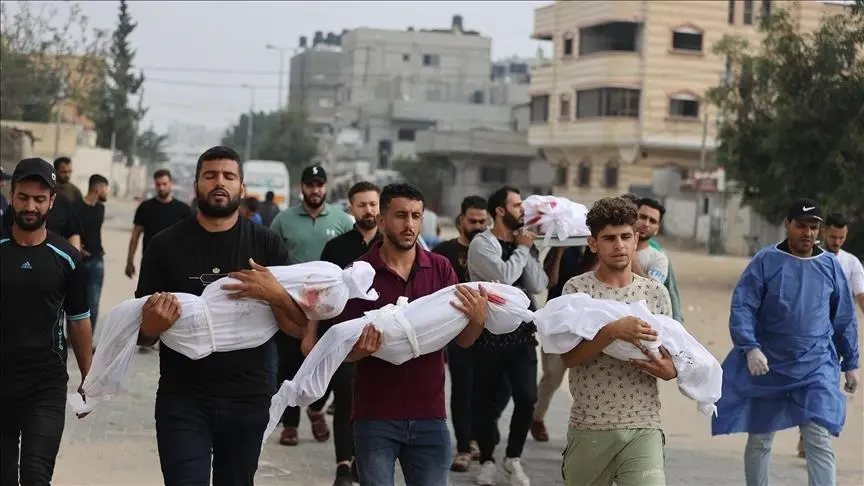
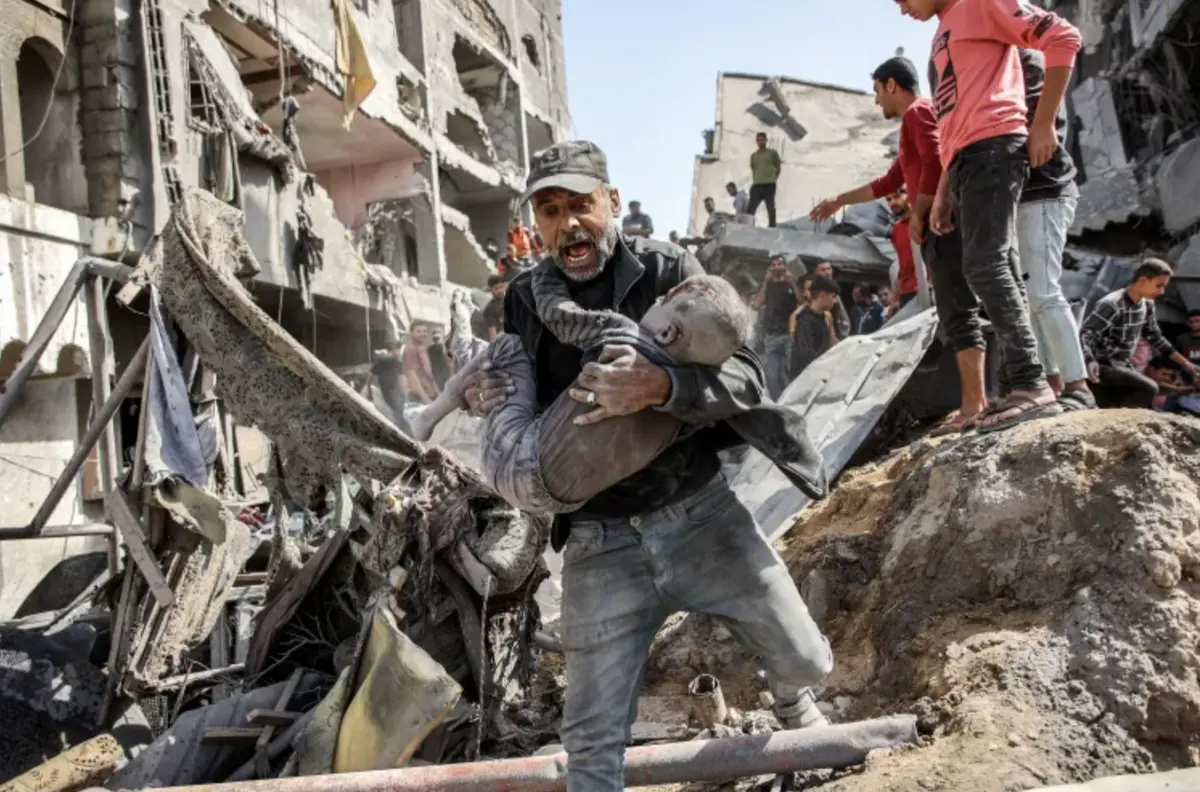
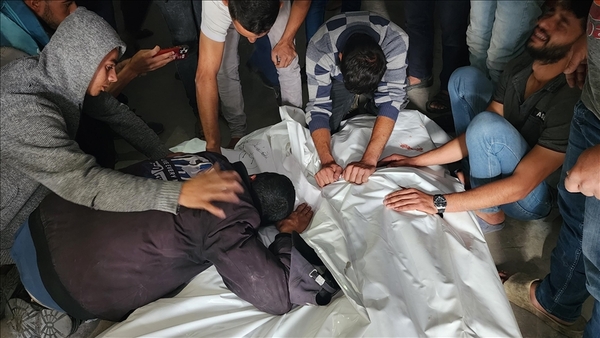
Dead and wounded in Israeli occupation's bombing of a school sheltering displaced people in the Al-Tuffah neighborhood.

A number of civilians were killed and injured when the Israeli occupation forces bombed a school housing displaced persons in the Al-Tuffah neighborhood, northeast of Gaza City.


According to local sources, Israeli aircraft bombed the Dar al-Arqam school, which was sheltering displaced persons, with three missiles, killing and wounding a number of civilians.


The death toll in the Gaza Strip has risen to 50,523, and the number of injuries to 114,776, since the start of the aggression on October 7, 2023.

PALESTINE

Thu 03 Apr 2025 5:11 pm - Jerusalem Time

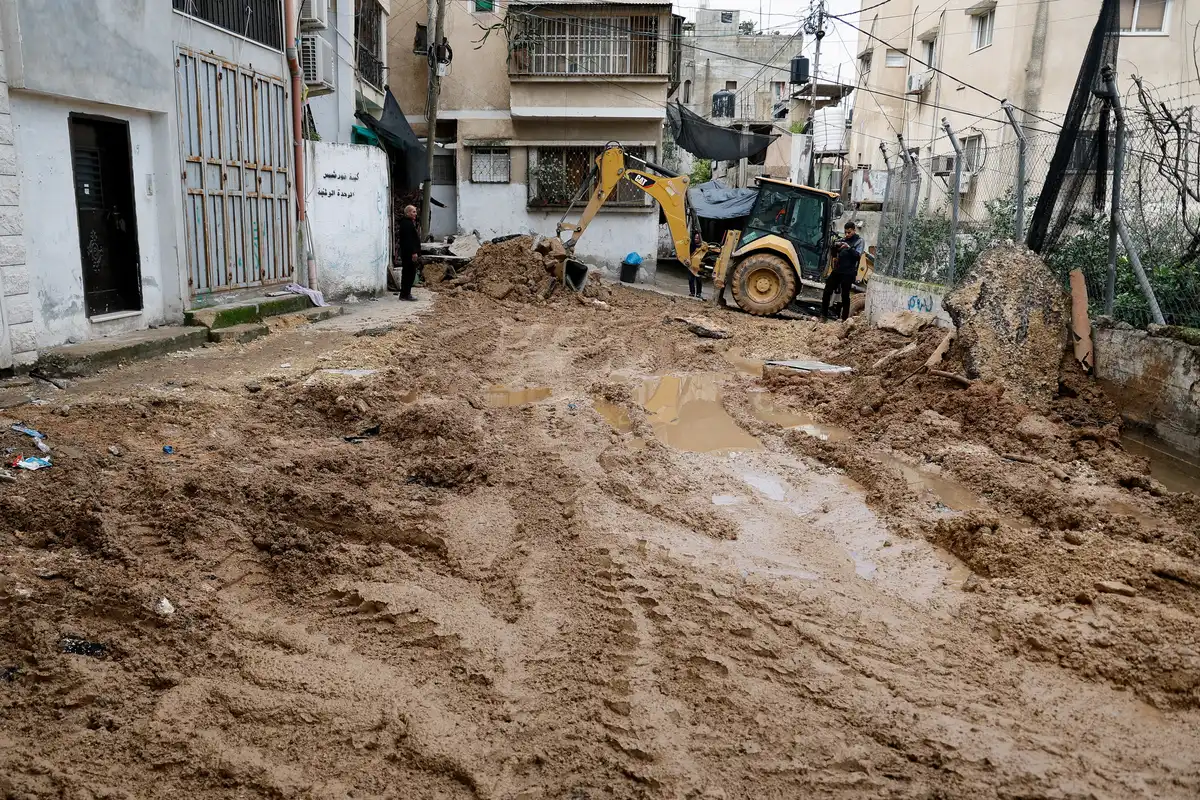
Israeli occupation forces bulldozed streets in the Aktaba suburb of Tulkarm, causing destruction to the infrastructure.

Israeli occupation bulldozers began leveling streets in the Aktaba suburb, east of Tulkarm, on Thursday afternoon.


According to local sources, two Israeli bulldozers, backed by a number of vehicles and infantry units, stormed the suburb and began bulldozing sections of the street adjacent to the Iktaba roundabout, extending 800 meters toward the Employees' Housing District.


The sources added that the bulldozing caused destruction and devastation to the infrastructure, particularly the water and sewage networks, while occupation soldiers raided a building and began firing live ammunition indiscriminately.


The occupation forces stopped vehicles heading to the Al-Iskan neighborhood and prevented them from passing, causing a severe traffic jam in the area.


In the same context, the occupation forces continue their aggression on the city of Tulkarm and its camp for the 67th consecutive day, and on the Nur Shams camp for the 54th day, amidst a tight siege on the two camps, accompanied by military reinforcements and attacks on citizens, forcing them to leave their homes by force and preventing them from returning to them, coinciding with the massive destruction of infrastructure and property.

PALESTINE

Thu 03 Apr 2025 2:37 pm - Jerusalem Time

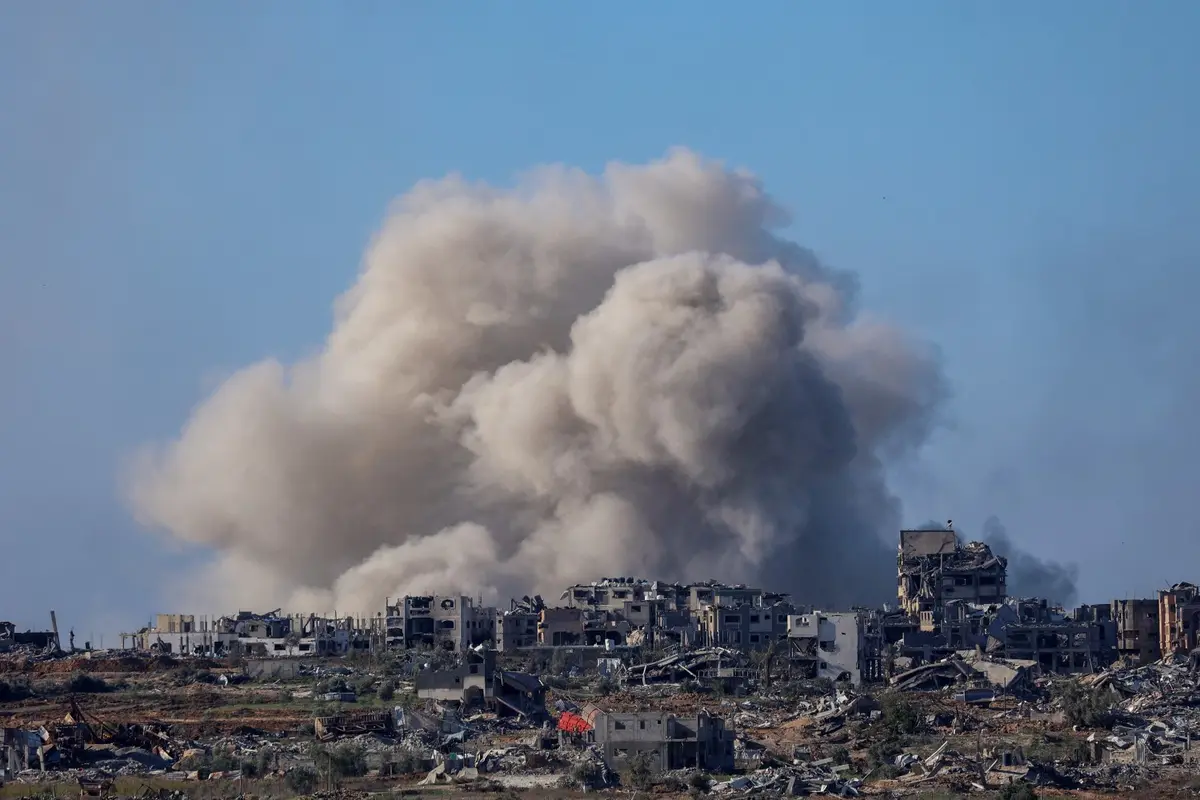
8 Palestinians dead in Israeli bombing of a home and tents of displaced people west of Khan Yunis

Tonight, 8 citizens were killed and others were injured when the occupation forces targeted a home and tents of displaced people west of Khan Yunis, south of the Gaza Strip.


Local sources confirmed that eight members of the Al-Aqqad family were killed when Israeli forces targeted a house and tents housing displaced persons in the Al-Katiba area, west of Khan Yunis.


A short while ago, a citizen, his wife, and three of his children were killed, along with another citizen, and others were injured in an Israeli bombardment of Khan Yunis in the southern Gaza Strip.


Medical sources announced on Wednesday that the death toll from the Israeli aggression on the Gaza Strip had risen to 50,423, and the number of injuries to 114,638, since October 7, 2023.

ARAB AND WORLD

Thu 03 Apr 2025 2:20 pm - Jerusalem Time

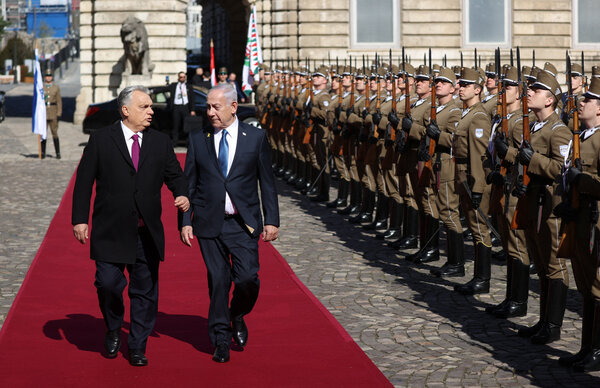
During Netanyahu's visit, Hungary withdraws from the International Criminal Court.

The Hungarian government said Thursday it has decided to withdraw from the International Criminal Court, a move that came shortly after Israeli Prime Minister Benjamin Netanyahu arrived in the country on an official visit.


There is an arrest warrant for Netanyahu from the International Criminal Court.


Viktor Orbán, Hungary's right-wing prime minister, invited his Israeli counterpart to Budapest last November, a day after a court issued an arrest warrant for Netanyahu on charges of war crimes in the Gaza Strip, where Israel has been waging a military operation in response to a Hamas attack on southern Israel.


Israel has rejected the charges, calling them politically motivated and anti-Semitic. It also argues that the court has lost all legitimacy by issuing an arrest warrant for the democratically elected leader of a state exercising its right to self-defense.


Hungary is a founding member of the International Criminal Court and is theoretically obliged to arrest and surrender anyone against whom a warrant is issued by the court.


But Orbán made it clear when he issued the invitation that Budapest would not implement the decision, which he described as "blatant, ridiculous and completely unacceptable."


Hungary signed the Statute of the International Criminal Court in 1999 and ratified it in 2001, but the law has not been formally promulgated.

Gergely Gulyás, Viktor Orbán's chief of staff, said in November that although Hungary had ratified the Rome Statute of the International Criminal Court, it "has never been incorporated into Hungarian law," meaning none of the court's proceedings could be implemented within Hungary.


The Hungarian government will begin withdrawal procedures later today, the official MTI news agency quoted Gulyas as saying on Thursday.


Orbán hinted at the possibility of Hungary withdrawing after US President Donald Trump imposed sanctions on International Criminal Court Prosecutor Karim Khan in February.


"It's time for Hungary to review what it is doing in an international organization that is subject to US sanctions," Orbán said on Twitter in February.

The Hungarian parliament, dominated by Orbán's Fidesz coalition of young democrats, is likely to pass a bill to begin the process of withdrawing from the court. The withdrawal process will last for a year.


Netanyahu has enjoyed strong support for years from Orban, a key ally who has been willing to block EU statements and actions critical of Israel in the past.


In issuing the arrest warrants, ICC judges said there were reasonable legal grounds to believe Netanyahu and the former Israeli defense minister bore criminal responsibility for crimes including murder, persecution, and the use of starvation as a weapon of war as part of a "widespread and systematic attack against the civilian population in Gaza."


The court also issued an arrest warrant for Hamas leader Mohammed Diab Ibrahim al-Masri, known as Mohammed al-Deif, whose death the movement announced in January.


PALESTINE

Thu 03 Apr 2025 2:15 pm - Jerusalem Time

Prisoners' Club: The conditions of detainees in occupation prisons have returned to square one.

Prisoners' Club spokesman Amjad al-Najjar said that the conditions of detainees in Israeli prisons have returned to square one, following the end of the first phase of the ceasefire agreement.

Speaking to Voice of Palestine Radio, Al-Najjar pointed out that the decisions issued by the extremist Israeli Minister of National Security, Itamar Ben-Gvir, which included more than 32 military orders and 77 repressive directives and regulations, led to an unprecedented escalation in violations against detainees and resulted in the deaths of more than 63 detainees in prisons since October 7, 2023.

Al-Najjar pointed to the widespread prevalence of scabies among detainees as a result of the denial of cleaning and bathing supplies and the entry of clothing. He also noted that prison authorities deliberately transferred those infected to empty cells, thereby spreading the infection without providing treatment.

PALESTINE

Thu 03 Apr 2025 1:09 pm - Jerusalem Time

Water Authority: Israeli Mekorot reduces water quantities allocated to the Hebron Governorate

The Water Authority reported on Thursday that the Israeli company Mekorot has reduced the amount of water supplied from the Deir Sha'ar water connection to the southern West Bank governorates, specifically the Hebron governorate, by a recent rate of more than 5,500 cubic meters per day.

The Water Authority explained in a statement that this connection previously supplied the area with 32,000 cubic meters of water per day, and after the reduction, it now supplies an average of 26,500 cubic meters per day. The authority noted that the reduction in water quantities is ongoing, which will impact the approved distribution program for the areas supplied by this connection.

She noted that after communicating with Mekorot, the company explained that the reduction in quantities was a result of the company carrying out maintenance and upgrades to the pumps in the Deir Shaar system, with the aim of ensuring a more stable situation during the coming summer.

She added, "The technical team is continuing to follow up with Mekorot to restore pumping volumes to previous levels, and service providers will be informed of any subsequent developments."

The Water Authority called on municipalities and water supply entities to take the necessary measures to ensure the continued supply of water to citizens, based on available quantities, and to reschedule distribution operations to accommodate the current emergency.

PALESTINE

Thu 03 Apr 2025 1:06 pm - Jerusalem Time

"Statistics" on Children's Day: 39,000 orphans in the Gaza Strip... the largest orphan crisis in modern history

- More than 1,055 cases of arrest of children since October 7

Famine and malnutrition threaten the lives of children in the Gaza Strip.

The Israeli aggression destroyed the right to education for an entire Palestinian generation.


The Palestinian Central Bureau of Statistics said Thursday that children constitute 43% of the Palestinian population, and that there are 39,000 orphans in the Gaza Strip, describing it as the largest orphan crisis in modern history.

On the eve of Palestinian Children's Day, the statistics revealed that famine and malnutrition threaten the lives of children in the Gaza Strip, with an expected 60,000 cases of acute malnutrition. The statistics also confirmed the return of polio to the Gaza Strip.

It pointed out that the occupation forces have arrested more than 1,055 children since October 7, in a systematic violation of children's rights and a flagrant breach of international law.

Children constitute 43% of the Palestinian population, with the Gaza Strip leading at 47%.

Demographic estimates indicate that the population of the State of Palestine will reach approximately 5.5 million by the end of 2024, distributed as follows: 3.4 million in the West Bank and 2.1 million in the Gaza Strip. Palestinian society is characterized by a young population, with children under 18 years of age constituting 43% of the total population, approximately 2.38 million children, including 1.39 million in the West Bank and 0.98 million in the Gaza Strip. The under-15 age group constituted 37% of the total population, equivalent to approximately 2.03 million children, including 1.18 million in the West Bank and 0.9 million in the Gaza Strip. The under-18 age group constituted approximately 47% of the population in Gaza, compared to 41% in the West Bank, while the percentage of children under 15 in the Gaza Strip reached 40.3% compared to 34.8% in the West Bank.

The Gaza Strip is bleeding childhood: 534 days of aggression rob children of their dreams and destroy their innocence under the rubble.

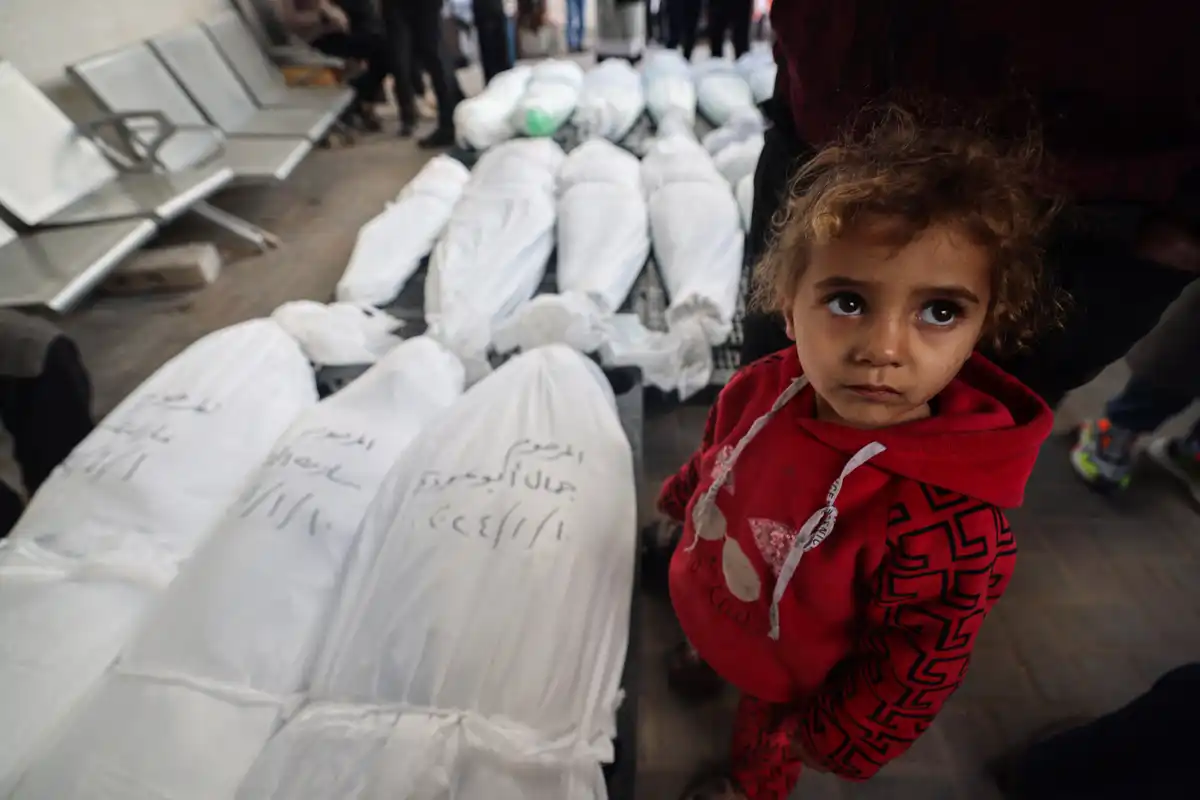
During the 534 days of the Israeli aggression on the Gaza Strip (October 7, 2023 – March 23, 2025), Palestinian children faced an unprecedented humanitarian catastrophe, as they, along with women, constituted more than 60% of the total victims.

The aggression resulted in the death of 50,021 Palestinians, including 17,954 children, including 274 infants born and killed by shelling, 876 children under the age of one, 17 children who died of cold in displacement camps, and 52 children who died of starvation and systematic malnutrition. 113,274 were injured, 69% of whom were children and women, while more than 11,200 citizens remain missing, 70% of whom are children and women.

In the West Bank, 923 citizens, including 188 children, have been killed and 660 children have been injured since the beginning of the Israeli aggression until the date of this statement.

More than 1,055 cases of arrest of children: a systematic violation of children's rights and a flagrant breach of international law.

A report issued by prisoners' rights organizations revealed an unprecedented escalation in the Israeli occupation's arrests of Palestinian children. During 2024 alone, the report documented the arrest of at least 700 children, bringing the total number of children detained since the outbreak of the war to more than 1,055. These children were deprived of their childhood and their right to education, and were subjected to serious violations during their arrests, including nighttime raids on their homes, beatings in front of their families, and shooting at them. They were also handcuffed, blindfolded, and denied legal assistance, in clear violation of international law and the Convention on the Rights of the Child. As of early March 2025, the occupation continued to hold more than 350 child prisoners. Under the January 2025 ceasefire agreement, 51 children from the West Bank, Jerusalem, and the Green Line were released, in addition to 44 children from the Gaza Strip who had been arrested after October 7, as part of the first phase of the prisoner exchange deal.

39,000 orphans in the Gaza Strip: the largest orphan crisis in modern history.

Estimates reveal that 39,384 children in the Gaza Strip have lost one or both parents after 534 days of Israeli aggression. This includes approximately 17,000 children who were deprived of both parents, leaving them facing a harsh life without support or care. These children live in tragic conditions, with many forced to take refuge in torn tents or destroyed homes, with virtually no access to social care or psychological support.

However, the suffering is not limited to the loss of family and shelter; it extends to severe psychological and social crises. They suffer from profound psychological disorders, such as depression, isolation, and chronic fear, lacking security and proper guidance. Furthermore, they suffer from impaired learning and social development, which can lead them to fall prey to child labor or exploitation in a harsh and unforgiving environment.

Gaza's children caught between the bombing and the collapse of the health system: an ongoing tragedy.

A report issued by the United Nations Office for the Coordination of Humanitarian Affairs (OCHA) revealed a catastrophic reality experienced by children with disabilities in the Gaza Strip as a result of the Israeli aggression. Fifteen children were permanently disabled every day due to the use of internationally banned explosive weapons, bringing the total number of injuries to 7,065 children, including hundreds who lost limbs, sight, or hearing. 4,700 amputations were recorded, 18% (equivalent to 846 cases) of which were among children, further compounding the tragedy. These children face a double catastrophe due to physical and psychological disabilities, in addition to the collapse of the health system due to the destruction of hospitals and the prevention of the entry of medical supplies and prosthetic limbs. The spread of malnutrition has exacerbated bone deformities and hindered wound healing.

In addition, approximately 7,700 newborns are at risk of death due to a lack of medical care, as the remaining hospitals operate at very limited capacity, endangering the lives of children. With incubators, ventilators, and essential medicines in short supply, health conditions have deteriorated, increasing the likelihood of their deaths.

Polio returns to the Gaza Strip after 25 years: Vaccination campaigns face major challenges amid a stifling health crisis.

The Gaza Strip experienced its first polio outbreak in 25 years in July 2024, due to a drop in vaccination rates from 99% to 86% due to the difficult health conditions. In response, the World Health Organization, in collaboration with other UN agencies and the Palestinian Ministry of Health, implemented three vaccination rounds to combat the spread of the disease. During the first round, 559,161 children aged 0-10 years were vaccinated with the new oral polio vaccine type 2 (nOPV2), followed by 556,774 children in the second round, and 602,795 children in the third round. These efforts have contributed to limiting the spread of the virus despite ongoing challenges.

Famine and malnutrition threaten the lives of children in the Gaza Strip: 60,000 cases of acute malnutrition expected.

The Integrated Food Security Phase Classification (IPC) report for the period from November 2024 to April 2025 shows that approximately 1.95 million people across the Gaza Strip are expected to suffer from high levels of acute food insecurity, classified as Phase 3 or higher (Crisis or worse). This includes approximately 345,000 people who are likely to face catastrophic food insecurity (IPC Phase 5). Approximately 60,000 cases of acute malnutrition are expected to be recorded among children aged 6 to 59 months between September 2024 and August 2025. This means that these children suffer from a severe shortage of essential nutrients that significantly impacts their health and growth. Among these, 12,000 cases of severe acute malnutrition, the worst form of malnutrition, can lead to serious health complications, including organ failure or death. 16,500 pregnant and breastfeeding women will also require treatment for severe malnutrition, which significantly impacts their health and that of their children and may lead to health complications during pregnancy and childbirth.

From bombing to arrest: How the Israeli aggression destroyed the right to education for an entire Palestinian generation.

Education in the Gaza Strip has been a major victim of the ongoing Israeli aggression, which has lasted for 471 days. The occupying forces have completely destroyed 111 public schools, severely damaged 241 others, and bombed and vandalized 89 UNRWA schools. As a result, 700,000 students have been deprived of their basic right to education for the 2024/2025 academic year, while approximately 39,000 students have been deprived of their right to take the General Secondary Certificate Examination for the 2023/2024 academic year.

The destruction was not limited to buildings; lives were also affected: 12,441 students and 519 teachers were killed under the bombardment, while 19,819 students and 2,703 teachers were injured with varying degrees of severity. There is still no accurate information on the number of school students and teaching staff arrested by the Israeli occupation forces during ground operations in various areas of the Gaza Strip.

The aggression disrupted regular education for two consecutive academic years, with classes suspended for 300 school days until January 28, 2025. Although the Ministry of Education has adopted alternative educational paths such as synchronous and asynchronous e-learning and temporary schools, data from the Ministry of Education and Higher Education indicates that more than 298,000 students in the Gaza Strip are enrolled in virtual schools. However, many of these students have been unable to receive their education effectively throughout this period due to the lack of safe areas, in addition to power and internet outages, and the scarcity of necessary equipment. This threatens an educational gap that threatens the future of an entire generation.

In the West Bank, the situation was no better, with 90 students killed and 555 others injured, in addition to 301 students and 163 teaching staff arrested, as part of a systematic policy to dismantle the educational infrastructure.

A recent report by the Education Cluster indicated a sharp deterioration in access to education for hundreds of thousands of Palestinian children in the West Bank, including East Jerusalem, during 2024, due to a complex set of obstacles including Israeli movement restrictions, home demolitions, settler violence, and intensive military operations.

The Palestinian Ministry of Education recorded 2,274 incidents of violence targeting the education system, including 109 attacks targeting schools through vandalism or direct assault, where armed settlers stormed classrooms, detained students and teachers, or harassed students on their way to school.

The report indicated that more than half of students in the most affected areas were subjected to harassment or forced delays on their way to school, depriving approximately 806,000 students of safe access to education. Since the occupation's large-scale aggression in the northern West Bank on January 21, 2025, the educational process has been disrupted in approximately 100 schools.


PALESTINE

Thu 03 Apr 2025 12:18 pm - Jerusalem Time

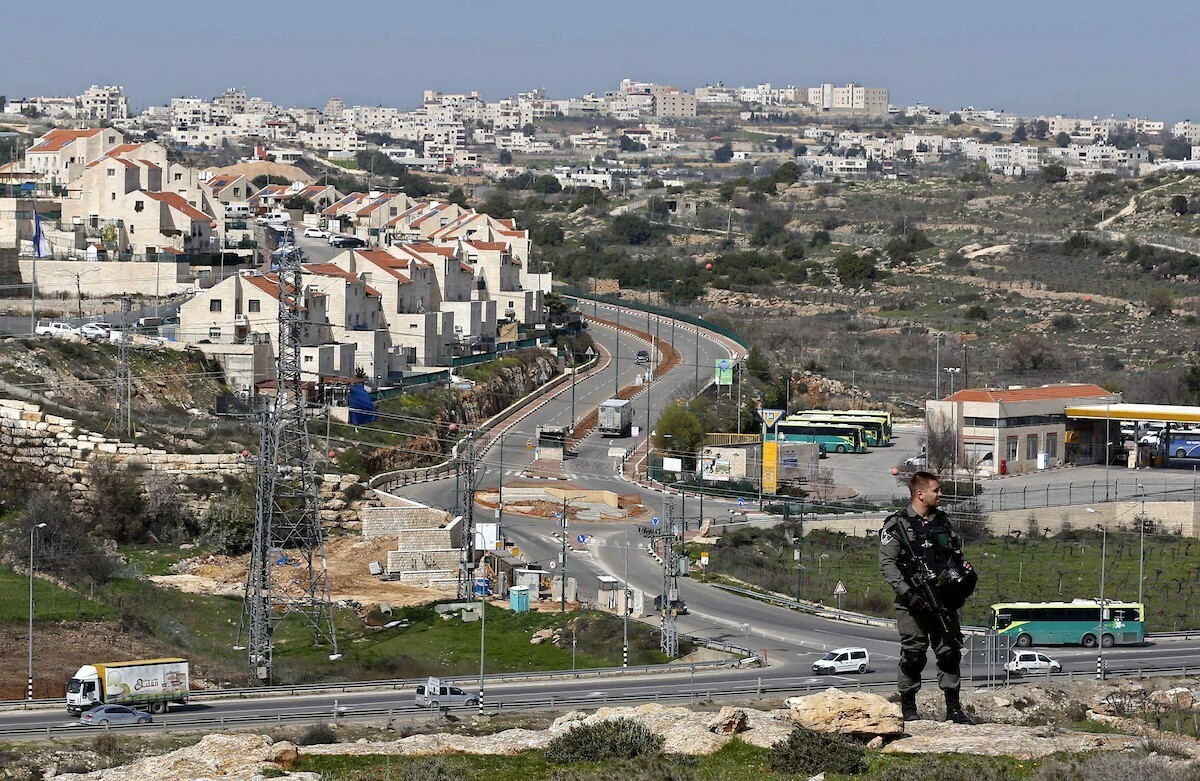
Israeli occupation approves the "fabric of life" project for settlement expansion and connectivity.

Al-Tafakji to (i): A tool to strengthen Israeli control and undermine the chances of a two-state solution, the economy, and the social and geographical fabric... The occupation approves the "fabric of life" project for settlement expansion and connection.

The Israeli cabinet approved the implementation of the "Fabric of Life" settlement road project on Sunday, pre-dawn, before Eid al-Fitr. The road connects the northern West Bank to its southern part via a tunnel east of occupied Jerusalem, and includes large areas in the central West Bank and the Jordan Valley.


The occupation government, through Israeli Finance Minister Bezalel Smotrich, said: "The project aims to improve the infrastructure of Israeli settlements and connect them to each other."


But in reality, it reinforces the de facto annexation of the settlements surrounding Jerusalem within the Zionist concept of "Greater Jerusalem," imposes greater restrictions on the Palestinians, and deprives them of large areas of the West Bank, especially Areas B and C, according to the Oslo Accords.


Settlement expert Khalil Al-Tafakji told Al-Quds that the project is being implemented in successive sections and rings, and that this part of the project is the final link in separating the Palestinians from the Jordan Valley and the northern and southern Badia of Jerusalem. It is a prelude to implementing the settlement project (i.e. 1) the eastern gate of Jerusalem to close off Jerusalem from the West Bank in the final circle.


Al-Tafkaji pointed out the most significant dangers of this road or tunnel, which will connect the north of the West Bank to its south without entering occupied Jerusalem and without severing the connection between the outposts and settlements in the east of the city and the Jordan Valley. This road separates the West Bank from the Jerusalem desert in the center of the West Bank and consolidates the Palestinian presence in two separate blocs in the south and north, with no geographical connection except through this tunnel, which is controlled by the occupation and the settlers.


Al-Tafakji said: “The most prominent goals and dangers of this tunnel, which represents a bottleneck for the Palestinians, are:


1. Strengthening the de facto annexation of the West Bank: The project includes the construction of roads, tunnels, and bridges aimed at connecting Jewish settlements, separate from Palestinian communities, thus deepening the occupation's control over the region. It contributes to the separation of Palestinian cities and villages from one another and reinforces the division of the West Bank into isolated cantons.


2. Enforcing the apartheid system: Palestinians are allowed to use specific roads that are different from those designated for settlers, which deepens the policy of segregation and confirms the existence of a racist system of transportation.


It deprives Palestinians of freedom of movement and travel within their lands, which harms economic and social life.


3. Expanding and legalizing settlements: The project aims to provide advanced infrastructure for settlements, facilitating their expansion and attracting more settlers, with the goal of reaching one million settlers in the West Bank by 2030. It also contributes to legalizing illegal settlements by connecting them to an integrated Israeli road network.


4. Destruction of the Palestinian environment: Implementing the project requires the confiscation of vast areas of Palestinian land, leading to the uprooting of trees, the destruction of agricultural land, and the demolition of homes. It also threatens Palestinian water resources, exposing groundwater sources to Israeli exploitation.


5. Stifling the Palestinian economy: It hinders the movement of goods and internal trade between Palestinian cities, harming economic sectors such as agriculture and industry. It increases Palestinians' dependence on the Israeli economy by reducing their ability to move freely between production and distribution centers.


6. Complicating the two-state solution by consecrating the fragmentation of the West Bank into separate cantons and population blocs, by imposing new facts on the ground, makes it difficult to discuss the possibility of establishing a geographically contiguous Palestinian state. It also reinforces the imposition of Israeli sovereignty over large parts of the West Bank, weakening any future possibility of negotiations.


Al-Tafakji explained that the "fabric of life" project is not merely an infrastructure development, but rather a new colonial tool to consolidate Israeli control and undermine the chances of establishing an independent Palestinian state. It directly impacts the lives of Palestinians through increased isolation, settlement expansion, and economic destruction, making it a long-term strategic threat.


For his part, Jerusalem affairs researcher Ziad Abhais reviewed the repercussions of the construction of the "Fabric of Life Road" designated exclusively for Palestinians, saying: "It is an underground tunnel designated for Palestinians only, starting from the south of Al-Eizariya and extending to the north of the town of Al-Za'im. This means that Palestinian passage between the southern and northern parts of the West Bank is restricted to this tunnel, thus preventing their passage from the current Bethlehem-Ramallah road, which connects to Route 1 at the Ma'ale Adumim junction." He added, "The approval of this road was initially supported by Naftali Bennett, leader of the Jewish Home party, which formed a coalition of religious Zionist forces when he served as Minister of Defense in Netanyahu's government in 2020. It is proposed that it be fully funded from the clearance revenues confiscated from the Palestinian Authority, noting that its cost is $92 million."


"It was called the 'fabric of life' road because the Israeli army is trying to market it as a road that enhances the 'Palestinian lifestyle' and creates a 'fabric of life' between the northern and southern West Bank," Buhais explained. "The actual goal of its construction is the complete opposite: allowing direct communication between Israeli settlements, removing security barriers from the roads that connect them, and designating them exclusively for Israelis."


Buhais explained that this road will consume hundreds of dunams of Palestinian land, and its construction will require the demolition of structures in the towns of al-Eizariya, which are classified as "Area B" according to the Oslo Accords. According to the agreement, the Palestinian Authority is supposed to regulate construction and housing there.


It is noteworthy that according to the Oslo Accords and the subsequent Wye River Agreement, the West Bank was supposed to be divided into three areas: the first (A), which constitutes 18% of the West Bank and where security and administrative powers are vested in the Palestinian Authority; the second (B), which constitutes 21% of the West Bank and where administrative powers are vested in the Palestinian Authority and security powers are shared; and the third (C), which is completely outside the jurisdiction of the Palestinian Authority and constitutes 61% of the West Bank.


“To pave the way for the establishment of this road and the annexation of the Adumim settlement bloc, the Israeli government had previously withdrawn the building and planning powers in the Jerusalem wilderness from the Palestinian Authority in June 2024, thus removing its authority over approximately 3% of the area of Area B of the West Bank and transferring it to the occupation army through the “Civil Administration,” meaning that the authority’s powers in its two parts, Areas A and B, now extend over 2,110 square kilometers, which constitutes 7.8% of the original area of Palestine, cut off by approximately 700 checkpoints,” Buhais said.


Building on its predecessor, the "Fabric of Life" road is actually divided into two sections: the northern section, which was completed between 2017 and 2020, and the southern section, which has now been referred for implementation. The northern section connects the towns of Az-Zayyim and Anata to the north, and consists of two parallel roads separated by the wall. The first is for Palestinians and allows passage from Az-Zayyim to Anata and then continuing north toward Ramallah. The second is for Israelis and provides a northern entrance to Jerusalem, linking it to the Adumim settlement bloc.


He concluded by saying, "If work is completed on this section of the underground tunnel, it will be connected to the northern section adjacent to the wall, making it the only road designated for Palestinians between the north and south of the West Bank, while the settlers' roads connecting them to Jerusalem will be free of barriers."

PALESTINE

Thu 03 Apr 2025 11:30 am - Jerusalem Time

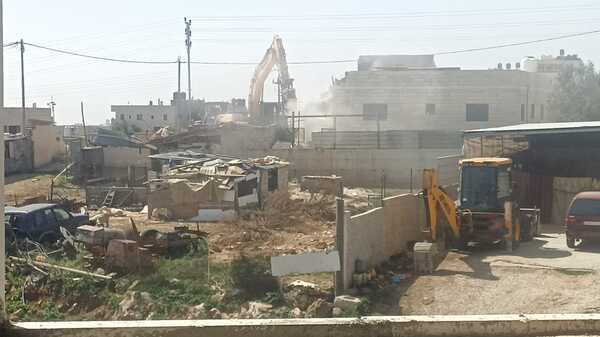
Israeli occupation forces begin demolishing a house in Jaba'

Today, Thursday, the Israeli occupation forces began demolishing a house in the town of Jaba, north of occupied Jerusalem.


The Jerusalem Governorate reported that Israeli bulldozers stormed the town and began demolishing a 40-year-old home belonging to Jerusalemite Atta al-Obeidi.


A citizen was injured by live bullets from the town of Jaba', north of occupied Jerusalem, during clashes with occupation forces.


The Red Crescent Society reported that a citizen was shot in the thigh by live Israeli occupation forces in the town of Jaba', north of occupied Jerusalem, and was transferred to a hospital in Ramallah.


She added that the occupation forces stormed the town of Qatana, northwest of Jerusalem, and raided a commercial store.

PALESTINE

Thu 03 Apr 2025 11:01 am - Jerusalem Time

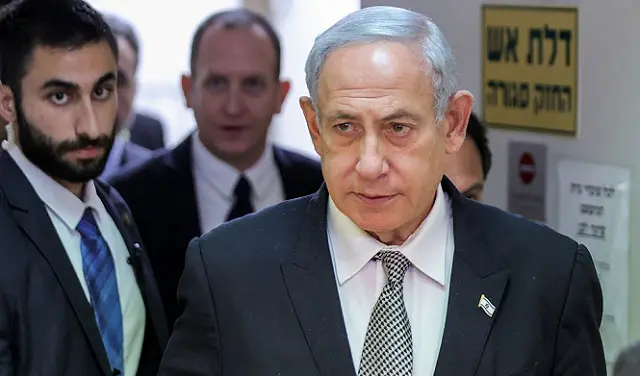
Netanyahu visits Hungary today in defiance of ICC arrest warrant

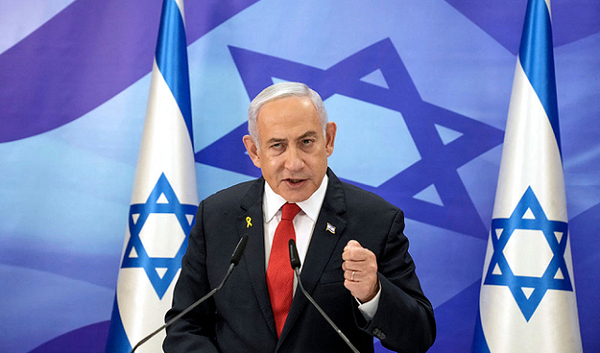
Israeli Prime Minister Benjamin Netanyahu begins a four-day visit to Hungary on Thursday, defying an arrest warrant issued by the International Criminal Court for his alleged war crimes in Gaza.

The Israeli Prime Minister is scheduled to meet with his Hungarian counterpart, Viktor Orban, before a press conference at approximately 10:00 a.m. GMT.

Hungary is a founding member of the International Criminal Court and is legally obligated to arrest and surrender anyone subject to a warrant issued by the court, but the Hungarian Prime Minister made it clear when he issued the invitation that Budapest would not implement the decision.

Orban reiterated Israel's condemnation of the court, describing its decision to issue the warrants as "blatant, cynical, and completely unacceptable."

In Budapest, workers were busy Wednesday constructing a platform at Buda Castle, where Orban is scheduled to receive Netanyahu with military honors on Thursday morning. Security forces were seen near the hotel in the center of the capital where Netanyahu will stay.


Second trip abroad..

This visit will mark Netanyahu's second foreign trip since the International Criminal Court issued arrest warrants for him and former Defense Minister Yoav Gallant last November, but details of the agenda are unclear, except for a planned visit to a Holocaust memorial.

Netanyahu visited Washington last February to meet with his close ally, US President Donald Trump.

Israel and the United States have not joined the International Criminal Court, as Washington argues that the court could be used for politically motivated prosecutions.

Orban extended the invitation to Netanyahu a day after a court issued an arrest warrant for him on charges of war crimes in the Gaza Strip, where Israel is waging a military operation.


The targeting of Gaza resulted in the deaths of more than 50,000 Palestinians and the destruction of the Strip, sparking protests around the world and prompting South Africa to file a separate lawsuit at the International Court of Justice, accusing Israel of committing genocide.

OPINIONS

Thu 03 Apr 2025 10:09 am - Jerusalem Time

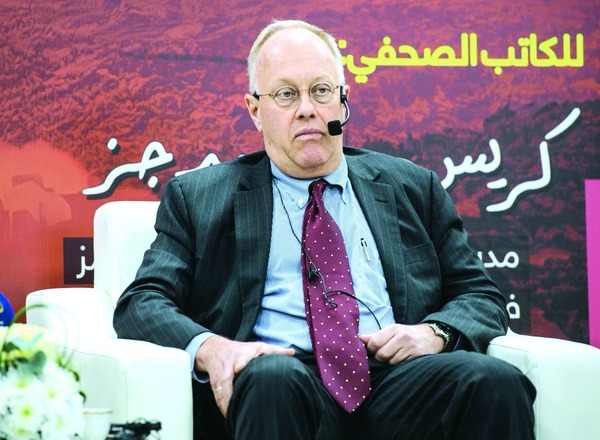
Are Netanyahu and Trump writing the final chapter?

Chris Hedges is an American author and military correspondent.

Chris Hedges is an American author and military correspondent.

Opinion Writer

This is the final chapter of genocide. It is the final, bloody push to expel Palestinians from Gaza. No food, no medicine, no shelter, no clean water, no electricity.

Israel is rapidly turning Gaza into a site of human misery, where Palestinians are being killed by the hundreds, and soon again by the thousands and tens of thousands, or forced to leave never to return.

This final chapter marks the end of the Israeli lies: the lie of the two-state solution. The lie that Israel respects the laws of war that protect civilians. The lie that Israel bombs hospitals and schools only because they are used by Hamas. The lie that Hamas uses civilians as human shields, while Israel forces Palestinian captives into tunnels and buildings that are likely to be booby-trapped ahead of its forces.

The lie that Hamas or Palestinian Islamic Jihad are responsible—often allegedly due to errant Palestinian rockets—for the destruction of hospitals, UN buildings, or Palestinian casualties.

The lie that humanitarian aid to Gaza is being blocked because Hamas seizes trucks or smuggles weapons. The lie that Israeli children were beheaded, or that Palestinians committed gang rape against Israeli women.

The lie that 75% of the tens of thousands killed in Gaza were Hamas "terrorists." The lie that Hamas, because it was rearming and recruiting fighters, bears responsibility for the collapse of the ceasefire agreement.


The naked face of genocidal Israel is now exposed. It has ordered the evacuation of the residents of northern Gaza, where desperate Palestinians are camped out amid the rubble of their homes.

What is coming now is mass starvation—the UN Relief and Works Agency for Palestine Refugees (UNRWA) said on March 21 that it had only six days of flour supplies—death from diseases caused by contaminated water and food, and dozens of people killed and wounded daily under a barrage of rockets, shells, and bullets.

Nothing will function: bakeries, water and sewage treatment plants, hospitals—Israel bombed the damaged Turkish Palestine Hospital on March 21—schools, aid distribution centers, or clinics. Fewer than half of the 53 ambulances operated by the Palestinian Red Crescent Society are operational due to fuel shortages. Soon, there will be nothing left.

Israel's message is clear: Gaza will not be livable. Leave or die.

Since Tuesday, when Israel violated the ceasefire with intense bombing, more than 700 Palestinians, including 200 children, have been killed. In just 24 hours, 400 Palestinians have been killed. And this is just the beginning. None of the Western powers, including the United States, which supplies Israel with weapons, intends to stop these massacres.

The images from Gaza during the nearly 16 months of devastating attacks were horrific. But what's to come will be even worse. It will rival the worst war crimes of the 20th century, including mass starvation, massacres, and the Nazis' razing of Warsaw Ghetto in 1943.

October 7 marked a dividing line between an Israeli policy aimed at subjugating and oppressing Palestinians, and a policy calling for their extermination and displacement from historic Palestine.

What we are witnessing now parallels a historical moment similar to what happened after the deaths of some 200 soldiers under George Armstrong Custer at the Battle of Little Bighorn in 1876. After that humiliating defeat, it was decided to exterminate the Native Americans or to herd the survivors into prison camps, later called "reservations," where thousands died of disease and lived in misery and despair under the watchful eyes of armed occupiers. Expect the same for the Palestinians in Gaza, where they will likely be buried in one of the hells on earth and then forgotten.

"Residents of Gaza, this is your final warning," threatened Israeli Defense Minister Yoav Galant. "The first Sinwar destroyed Gaza, and the second Sinwar will destroy it completely. The air force's strikes against Hamas terrorists were just the first step. Things will get more difficult, and you will pay the full price. The evacuation of residents from combat zones will soon begin again. Return the hostages and get rid of Hamas, and another path will open for you, including evacuation to other parts of the world for those who wish. The alternative is complete destruction."

The ceasefire agreement between Israel and Hamas was designed to be implemented in three phases. The first, a 42-day cessation of hostilities, stipulates that Hamas will release 33 Israeli hostages captured on October 7, 2023—including women, the elderly, and the sick—in exchange for approximately 21,000 Palestinian men, women, and children held by Israel (Israel had released approximately 1,900 Palestinians as of March 18).

Hamas has released 147 hostages so far, including eight who are deceased. Israel says 59 Israelis are still being held by Hamas, 35 of whom it believes are dead.


Under the agreement, Israeli forces will withdraw from populated areas in Gaza on the first day of the truce. On the seventh day, displaced Palestinians will be allowed to return to northern Gaza. Israel will allow the entry of 600 aid trucks daily carrying food and medicine.

The second phase, which was supposed to be negotiated on the sixteenth day of the ceasefire, included the release of the remaining Israeli hostages. Israel would complete its withdrawal from Gaza, while maintaining a presence in some areas of the Philadelphi Corridor, which runs along the Gaza-Egypt border. It would also hand over control of the Rafah border crossing to Egypt.

The third phase was devoted to negotiating a permanent end to the war and the reconstruction of Gaza.

But Israel has consistently signed agreements—such as the Camp David Accords and the Oslo Accords—that include phases and timetables, only to violate them after achieving what it wanted in the first phase. This pattern has never changed.

Israel refused to abide by the second phase. It blocked the entry of humanitarian aid into Gaza two weeks ago, a violation of the agreement. It also killed 137 Palestinians during the first phase of the truce, including nine people—three of them journalists—when Israeli drones attacked a relief team on March 15 in Beit Lahiya, northern Gaza.

Israel resumed its heavy bombardment of Gaza on March 18, while most Palestinians were asleep or preparing for the pre-dawn meal of Ramadan. Israel will not cease its attacks even if all hostages are released—the stated reason for resuming the bombing and blockade.

The Trump administration, along with Democratic Party leaders like Senate Minority Leader Chuck Schumer, is encouraging these massacres. They attack critics of the genocide as "anti-Semites" who must be silenced, criminalized, or deported, while they pour billions of dollars in arms into Israel.

Israel's genocidal assault on Gaza is the culmination of its colonial settlement project and its apartheid state. The seizure of all of historic Palestine—including the West Bank, which Israel is soon expected to annex—and the displacement of all Palestinians has always been the goal of the Zionist movement.

Israel's worst atrocities occurred during the 1948 and 1967 wars, when it seized vast swaths of historic Palestine, killed thousands of Palestinians, and forcibly displaced hundreds of thousands. Between these wars, the slow-motion theft of land, settlement expansion, bloody attacks, and ongoing ethnic cleansing continued in the West Bank, including East Jerusalem.

That calculated dance is over. This is the end. What we are witnessing now eclipses all historical attacks on Palestinians. Israel’s insane genocidal dream—the Palestinians’ nightmare—is about to come true. It will forever shatter the myth that we, or any Western country, respect the rule of law or defend human rights, democracy, and the “virtues” of Western civilization. Israel’s barbarism is a reflection of us. We may not realize it, but the rest of the world does.


About Al Jazeera


...........

The images from Gaza during the nearly 16 months of devastating attacks were horrific. But what's to come will be even worse. It will rival the worst war crimes of the 20th century, including mass starvation, massacres, and the Nazis' razing of Warsaw Ghetto in 1943.

OPINIONS

Thu 03 Apr 2025 10:06 am - Jerusalem Time

The national and societal fabric must be protected.

 Rasim Obeidat

Rasim Obeidat

Opinion Writer

The war against our people is intensifying and expanding, against their cause, their rights, their existence and their awareness, not to mention the internal devastation. There is a fear that the rift will widen beyond repair, and this is what we see and feel from the extent of the devastation, as there are tools and militias pushing towards the dismantling and fragmentation of Palestinian society, and penetrating the walls of its societal and national protection, by igniting tribal and clan disputes, based on "frights", and transforming any personal dispute between two people and dressing it in the garb of tribalism, regionalism and sectarianism. We also find those working to encroach on people's rights, property and possessions, imposing tributes and protection money on them, spreading a culture of despair and frustration among the people, and pushing them towards unpatriotic choices that serve hostile projects. It seems that suspicious weapons, "shocking" weapons, bullying and thuggery are spreading like wildfire, and through them threats are spread to people, terror and fear are spread among them, and through them shootings and killings are also facilitated. The incubators of these militias and gangs that benefit from the state of chaos are found in the tribes and even have security and political incubators.

The disintegration and collapse of the home front is more dangerous than the occupation and its continued existence. This front is tearing us down from within, causing us to lose our cohesion and unity, and disintegrating nationally and as a society.

Therefore, the battle to protect existence and the social fabric is a fundamental battle, in which everyone must be mobilized, and in which great energies and capabilities must be employed. It is necessary to question, hold accountable, and remove the cover from these groups. Wherever it is possible to apply the law, its implementation should be a priority. In areas where it is impossible to apply the law, assistance is sought from tribal and national symbols and religious and national figures known for their competence and financial integrity. Unfortunately, people motivated by their own interests have infiltrated the institution of loyal reformers, and they have turned the process of reform and suppressing sedition into a “livelihood” business, where they support the oppressor and aggressor at the expense of the oppressed and the aggressed, if they pay them money and “honor” them.

If we lose our internal resilience and our social fabric disintegrates, as the Israeli orientalist and academic Mordechai Kedar suggests, it is necessary to work to end and dismantle the Palestinian Authority and replace it with the authority of the "seven regions" of the tribes. This means dividing the West Bank into seven governorates, each controlled by the major tribes and linked to the Israeli Civil Administration, whose authority has been stripped away in favor of a military government in the West Bank led by the extremist Israeli Finance Minister Smotrich.

Yes, we will face serious and real dangers if these groups are able to impose their influence and dominance over society. Therefore, we must work to besiege such individuals and groups, and dismantle their structures and frameworks. Everyone is required to enlist in this battle, as it is one of the battles for existence and the protection of the national project.

Our people are going through their most critical and dangerous phase, and the dangers facing them are so great that efforts are being made to completely uproot them from their land and existence. The hostile alliance does not hesitate to use all means and methods to implement its projects and schemes in this regard.

There are those who say that there is no Palestinian people, and that this is an invention less than a hundred years old. There are those who display maps of their state, whether on the Israeli Foreign Ministry website in Arabic, or during the 78th and 79th sessions of the United Nations General Assembly, stripping us of all our rights, and turning us into population centers that lack any national political rights and are devoid of their identity and nationality. The borders of the occupying state do not only include historical Palestine, but also parts of Jordan, Syria, Lebanon, Iraq, and all the way to Egypt and Saudi Arabia.

Perhaps the initiative launched by the Jerusalem Governorate to strengthen, protect and fortify the community structure and civil peace constitutes an important initiative in this direction, requiring care, follow-up and diligent work. We realize that the roads are impassable and that the energies, capabilities and capacities that are being pumped, expended and mobilized in this mission are hindered by many obstacles from the occupation, whose primary concern is to keep our society disintegrated, "eaten" and torn apart by family, clan and tribal disputes, and drowning in the swamp of societal diseases, such as drugs and the collapse of values and morals, and giving priority to personal concerns over public concerns. Likewise, those who benefit and are benefited from such disintegration and clan and tribal strife inside the country will put spokes in the wheels, so that such initiatives do not succeed, and so that society remains in a cycle of violence and internal strife, without paying attention to its national and political rights.

There are many who benefit from falsehood, each with his own goals and plans. Therefore, they will not extend their hands to strengthen the cohesion and fabric of society, and prevent its fragmentation, disintegration and division. However, when all good people are mobilized and there are loyal and trustworthy tools, they will inevitably succeed in creating a new reality, in which our people, regardless of their components, feel safe, secure and reassured. In the words of the great thinker and revolutionary leader Mao Zedong, “A journey of a thousand miles begins with a single step.” We also repeat and say, “It is better to light a candle than to curse the darkness.”

Everyone is required to fulfill their responsibility to protect the social fabric and civil peace through an integrated process that extends from the home and family to schools, universities, religious, civil, and community institutions, as well as political forces, parties, and official authorities in the governorate, ministries, security and police agencies, and others.


................

Perhaps the initiative launched by the Jerusalem Governorate to strengthen, protect, and fortify the community structure and civil peace constitutes a significant initiative in this direction, requiring careful attention, follow-up, and diligent work.

OPINIONS

Thu 03 Apr 2025 10:05 am - Jerusalem Time

Mosquito Protocol

 Amin Al-Hajj

Amin Al-Hajj

Opinion Writer

The use of Palestinian civilians as human shields by the Israeli occupation army in its current war on Gaza has returned to the forefront after being exposed by press reports last October. This time, however, the report was revealed by the Hebrew newspaper Haaretz, which relies on the testimonies of soldiers who participated in the war on Gaza. This crime is being carried out under the pseudonym "Mosquito Protocol."

This protocol, according to the soldiers' own testimonies, is based on forcing Palestinian prisoners and civilians into areas deemed "dangerous" or buildings that the soldiers suspect are booby-trapped, or to explore tunnels before the soldiers advance, under the pretext of preserving the soldiers' lives first. One soldier explicitly stated this by saying, "Our lives are more important than theirs."

The use of civilians as human shields is a grave breach of international humanitarian law. The Fourth Geneva Convention criminalizes this practice, deeming it a complete crime. Stepping back a little, the Israeli Supreme Court explicitly prohibited this practice in 2005, following a legal petition filed by human rights organizations during the Second Intifada in 2002, most notably Adalah. The court deemed the use of Palestinian civilians in what was then known as the "neighbor procedure," a similar crime, whereby soldiers force neighbors or relatives of "wanted" Palestinians to knock on doors and persuade them to surrender. The presiding judge at the time, Justice Aharon Barak, described this practice as "cruel and barbaric."

Ironically, Justice Barak himself was among the International Court of Justice judges who heard the genocide case brought by South Africa. He was among two of the fifteen judges who dissented from the Court’s decision, along with Ugandan Judge Sibutinde. This confirms that the Israeli judicial system is a functional component and an integral part of an integrated colonial system when it comes to Palestinian rights. It is worth remembering that last week, the Israeli Supreme Court justices unanimously rejected petitions by human rights organizations demanding the entry of humanitarian aid into Gaza. This is a clear violation of the established rules of international law, internationally recognized as applicable to the occupied Palestinian territories, a serious violation of the International Court of Justice’s decisions in the genocide case, and a clear contradiction of its advisory opinion.

These practices cannot be understood without considering the psychological and social aspects that drive soldiers and commanders to commit these crimes. According to psychoanalysts, these crimes stem from a logic of "superiority and superiority" that is constantly nurtured within soldiers, making them see themselves as "of higher value" than Palestinian civilians. This leads them to make inhumane decisions without the slightest sense of guilt or moral responsibility towards the victims. This reinforces an integrated system of human indifference and justifies all forms of violence against Palestinians. Psychological analyses go further, pointing to the state of "dehumanization" that is constantly practiced against Palestinians, causing soldiers to view Palestinians as beings "devoid" of human feelings and value. This leads them to commit these crimes without feeling hesitation or guilt, justifying these crimes to themselves and minimizing their enormity in their eyes.

Historically, this was not the first time that Palestinian civilians were used as human shields. However, what "distincts" the current phase is the documentation of crimes through direct confessions and the complete absence of serious international legal deterrence. This requires human rights organizations to re-evaluate their approach to dealing with this level of war crimes. Verbal statements and condemnations are not enough. Rather, real steps must be taken to ensure that these crimes are prevented from recurring, that "justice" is achieved for the victims, and that Palestinian civilians are protected. This also raises difficult moral questions about the meaning of justice, the reality of the international community's commitment to humanitarian values, and its role in protecting the rights of Palestinians, which are guaranteed and protected by international law in its three generations, in accordance with what is stipulated in international charters, covenants, declarations, and agreements, which are not subject to negotiation.


.............


This was not the first time Palestinian civilians were used as human shields, but what "distincts" the current phase is the documentation of crimes through direct confessions and the complete absence of serious international legal deterrence.

OPINIONS

Thu 03 Apr 2025 10:04 am - Jerusalem Time

A holiday of sadness and blood

Baha Rahal

Baha Rahal

Opinion Writer

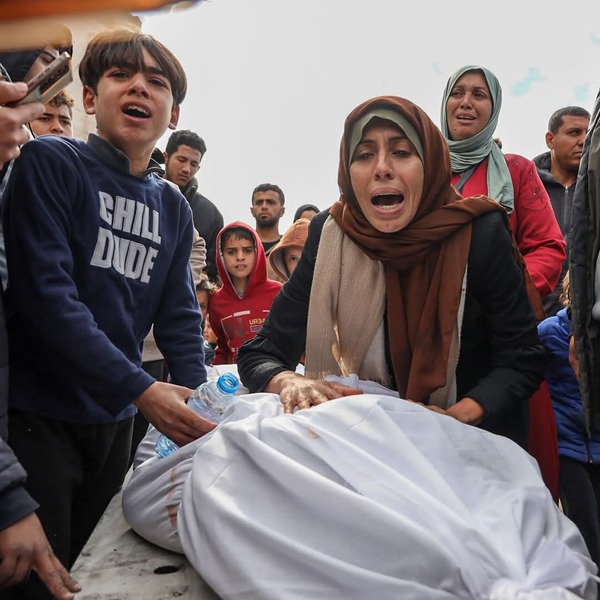
The war of extermination did not stop during the Eid holidays. Aircraft targeted the tents of the displaced, ambulance crews, and crowds of worshippers performing the Eid prayer, as part of the Eid al-Fitr rituals that brought people to their senses, including the missing, the displaced, and the dead.

The holiday that was supposed to bring people a temporary halt to the barbaric war machine and the madness of genocide, brought more killing and massacres. The bombing continued as usual, and the sounds of explosions replaced the Eid takbeers. The squares of joy that were supposed to be filled with children’s laughter turned into scenes of terror, destruction, body parts, and blood. A woman, whose grief, loss, and sobbing were captured on camera, said, “Those who visited me on Eid have died.”

Eid is no longer an occasion for joy, but rather a new memory added to the list of sorrows, as family tables have disappeared and been replaced by queues searching for a piece of bread or a sip of water amidst the rubble of homes and houses that have been razed to the ground.

On the streets, the scene was nothing but silence, broken by the wailing of the bereaved and the cries of children searching for their parents amid the rubble. Survivors bore pale faces weighed down by fatigue and fear. Even those who tried to cling to the simple manifestations of Eid had only broken hope for the return of those who had passed away or for an end to this ongoing hell. Their voices were sad, their innermost plea: Save us, O Lord, from this hell.

Eid in Gaza was nothing but a meaningless name, another day of killing and bloodshed, where the war spared no one, leaving no room for life to breathe as people fled from one displacement to another in search of a way out of death. Death is in the south, center, and north, and planes fill the skies of the Strip, dropping their inferno of fire, while people are left homeless and out in the open.

Another Eid has come to Gaza, while people are under bombardment, genocide, and ethnic cleansing attempts. The bombing, killing, and horrific massacres have deliberately and premeditatedly increased, targeting mosques, gatherings of worshippers and displaced persons, ambulances and their crews, tents, and shelters. The crossings have not been opened for aid to enter, and people in Gaza have broken their fast with even half a date. So, the Eid in Gaza was one of blood, pain, and suffering, and people have no power except patience, prayer, and hope.


.........


Eid is no longer an occasion for joy, but rather a new memory added to the list of sorrows, as family tables have disappeared and been replaced by queues searching for a piece of bread or a sip of water amidst the rubble of homes and houses that have been razed to the ground.

OPINIONS

Thu 03 Apr 2025 10:04 am - Jerusalem Time

What is required of Hamas?

Hani Al-Masry

Hani Al-Masry

Opinion Writer

It is only natural for those suffering from the crime of genocide, displacement, and total destruction to demonstrate, especially since most of the Gaza Strip has become uninhabitable due to the unprecedented and stifling siege.

It is only natural that Hamas, not as a resistance movement, but as the ruling authority in the Gaza Strip, will receive its share of popular anger. It embodies a repressive, factional rule devoid of oversight, accountability, or popular participation. Hamas must understand the motives behind the demonstrations against it and respond to whatever demands the angry demonstrators can meet.

The range of demands presented to Hamas is broad, and they come from a large segment of the population, not all or most of the population. This reflects Palestinian pluralism, a source of strength, resilience, and the continuity of the Palestinian cause. There is also a large segment of the population that supports Hamas, beginning with the demand of some Hamas demonstrators who started in Beit Lahia and later spread to several areas. They demanded that Hamas demonstrate a serious willingness to relinquish control of the Gaza Strip. This is to remove the pretexts and justifications from the occupation, which claims through its government that ending Hamas rule will lead to the cessation of genocide if accompanied by the release of Israeli prisoners, and will ensure that the Gaza Strip no longer remains a source of threat. However, the real goals are much greater, as Netanyahu made clear last Sunday when he set impossible conditions for a ceasefire agreement, including continuing the displacement of the people of the Strip. In other words, the Israeli conditions extend to displacement and annexation. Furthermore, Hamas's relinquishment of power has become necessary in order to remove the pretexts from regional and international parties that have declared their unwillingness to fund reconstruction if Hamas continues to be the de facto authority in the Gaza Strip, because this could lead to a new Israeli aggression that would destroy what is being rebuilt and reconstructed.

The question that arises is whether the demand to end Hamas rule without comprehensive national consensus or without holding elections in which the Palestinian people choose their representatives is just. Of course not. Rather, it is a continuation and reflection of the abdication of Arab, regional, and international parties, as well as the international community, of their responsibilities, which require the occupying state to halt the genocide and enable the Palestinian people to exercise their right to self-determination in accordance with international law and UN resolutions. Despite its injustice, however, it must be fulfilled because wisdom dictates so that the resistance does not bear any responsibility for the continuation of the crime of genocide.

Based on the above, and although Hamas has the right to participate in government since it won the last elections with a majority, it was not able to rule alone when it formed its government, and it was not able to rule after its participation in the national unity government, which prompted it to carry out a coup in which it seized control of the government in the Gaza Strip. This is an unforgivable crime despite its mitigating conditions stemming from the fact that it had won the elections but was not able to rule by the occupation and internal and external parties.

In all fairness, Hamas has shown a willingness to share power with others through a national unity government, having been unable to govern alone and facing significant difficulties in doing so under the blockade and boycott. It also agreed to resort to popular elections, particularly in 2021, when elections were on the horizon before they were canceled by a unilateral decision by President Mahmoud Abbas.

Had elections been held then, we very well wouldn't have reached the point we're in now. Hamas's continuing mistake is that it prioritized its continued unilateral control over the Gaza Strip, and failed to pay the necessary attention to the unity of the West Bank and the Gaza Strip and the establishment of an independent state therein. Although it agreed to this, there is a fundamental and decisive difference between agreeing to the establishment of a state and considering this the central goal of this stage. One of its mistakes was that it believed it alone could liberate the Strip, or—and this is a contradiction—that it could at least gain Arab and international recognition of its authority, leading to recognition of the state over the Gaza Strip as a stage on the path to liberation.

In this context, one of Hamas’s mistakes was that, since the outbreak of the war, it did not realize its actual results and repercussions. Rather, it was a prisoner of wishes and false assessments. Therefore, it did not show a willingness to take a step back, which is completely different from surrender. It did not seriously and practically agree to leave power, although it showed its formal readiness to do so through its agreement in the Beijing Declaration, in July 2024, to form a national unity government in which the factions would not participate, and its subsequent agreement to form a community support committee composed of independent figures. The evidence of this lack of seriousness is that it said during the exchanges that it would be the next day. After reaching a ceasefire, it reorganized its government and the committees emanating from it. It could have done so in partnership with others. This is different from its call for surrender, as it is different from its call to hand over power to the Palestinian Authority or the Arab League, because the occupying state occupied the Gaza Strip and does not hide its intentions to remain there. It rejects the return of power to Gaza, just as it refuses to take over the Arab League. Statements and signals were issued indicating that Hamas is not serious about relinquishing power, and that the most it could agree to is to leave the government and remain in power, embodying a formula that is closest to the formula of Hezbollah in Lebanon before the last war.

Before we conclude this paragraph, we must complete it by saying that if President Abbas had the will to form a national unity government in which Hamas and the other factions did not participate, we would not have reached this point.

I do not downplay the president's concerns about the risks of a partnership with Hamas, with its head under the guillotine. However, the risks of not forming a unity government—for Hamas, Fatah, Abbas, the PA, the PLO, the entire political system, the Palestinian cause, and the people—are far greater and more significant. The evidence is that what is being proposed now is the liquidation of the Palestinian cause in all its dimensions through displacement, annexation, and the liquidation of the refugee issue. It also calls for the formation of new frameworks in the Gaza Strip that are truly independent of the two authorities for a "transitional" period during which the PA will be stripped of its remaining political and national role under the guise of "reform." This includes "renewing" the PA to enable it to meet the demands of the new phase, which entails stripping the president of his powers for the remainder of his life. This will be accomplished by appointing a vice president illegally, illegitimately, and without national consensus, to whom the president's powers will be transferred during his lifetime. All of this is proceeding in parallel with the return of a kind of regional and international guardianship over the Palestinians, one that enjoys at least the approval of Israel, if not its supervision.

The Palestinian leadership could have, and still can, agree to the formation of a unity government, linking this to the adoption of a Palestinian program and strategy, and the formation of a unified Palestinian leadership responsible for decisions on resistance and negotiations, subject to which all the military wings of the resistance factions would be subject. It could also be integrated into a unified national army. However, insisting on including Hamas in the leadership if it wants to join the PLO is based on imposing the eight conditions repeatedly stated by the president, including continued commitment to the Oslo Accords, which Israel killed long ago and did not formally bury and abolish in order to preserve Palestinian commitments thereto.

It is unnatural for Hamas and all Palestinian factions to be asked to disarm or leave their leadership, cadres, and fighters, because this cannot happen until the end of the occupation and the independence of the State of Palestine, and because disarming will encourage the occupation forces to commit more massacres and begin the displacement of Palestinians. We have a lesson from our experiences since the handover of Palestinian weapons to the Arab armies before the Nakba, and what happened with the Sabra and Shatila massacre after the withdrawal of the leadership and fighters of the PLO from Lebanon, and the killing of the Israeli governments of the Oslo Accords and ending with the failure to commit to continuing to implement the last armistice agreement. The formation of a special administration by the Israeli government to encourage displacement is nothing but damning evidence that the handover of weapons and the departure of Hamas from the Gaza Strip does not end the implementation of the plan to liquidate the cause and displace its people. And because disarming and expelling the resistance fighters is tantamount to surrender, which is the most dangerous thing that can happen, as it confiscates the possibility of resuming resistance in the future. This is different from the defeat that could befall the resistance, but refusing to accept defeat is necessary and very important because it establishes a new Palestinian launch that absorbs the lessons and mistakes of the revolutions. And previous uprisings are on the road to victory.

However, if surrender actually leads to stopping the genocide, displacement, annexation, Israeli withdrawal, lifting the siege, and starting reconstruction, then it is welcome. There is nothing more precious than the human being. However, no one can guarantee this due to the existence of a government in Israel that believes in its ability to establish “Greater Israel” and resolve the conflict with the Palestinians by liquidating the Palestinian issue and creating a new Middle East under Israeli hegemony. This government is encouraged by the existence of an American administration that is no less extremist, and the margin of disagreement between them is limited to differences in priorities while maintaining the unity of the greater goals.
Palestine is at a historic turning point in which the Palestinian cause and its various components, including the PLO, will be completely erased, transcending its sole representation of the Palestinians and the authority that embodies the identity and unity of the West Bank and Gaza Strip. The situation will be restored to what it was after the Nakba, when it was a refugee issue, a humanitarian issue whose people are fragmented and lack a national identity, unity, a comprehensive framework, a shared program, or a single leadership.

Or the beginning of adopting a new approach that focuses on the priority of consensus and unity in the face of common dangers, and on gathering cards of strength, and relying on oneself first, and doing what is required of Palestine, and then working for the broadest Arab, regional and international support and solidarity that can provide the factors of steadfastness and survival for the cause and for the people on their homeland, as steadfastness is the highest form of resistance at this stage, in addition to thwarting the plan of liquidation, genocide, annexation and displacement on the path to achieving the rights of the Palestinian people and their national goals.

.....

In all fairness, Hamas has shown a willingness to share power with others through a national unity government, having been unable to govern alone and facing significant difficulties in governing under the blockade and boycott. It has also agreed to resort to popular elections, particularly in 2021.

OPINIONS

Thu 03 Apr 2025 10:02 am - Jerusalem Time

From death comes life

Father Ibrahim Faltas... Vicar Custos of the Holy Land

Father Ibrahim Faltas... Vicar Custos of the Holy Land

Opinion Writer

The years pass by, changing in their circumstances and events, their hopes and pains. This is a natural part of life and everywhere on earth. But this land is not like any other place on earth. In the final days of Lent and Great Lent, coinciding with Eid al-Fitr and the end of Ramadan, this land reaffirms that it is the land of heaven, the home of the pure, and the cradle of the messages. It reaffirms that the Resurrection is coming, and that it is the divine end of fasting, worship, sacrifice, and redemption. On the eve of Easter this year, we remember the following: Each feast has its city: Bethlehem for the Nativity, Nazareth for the Annunciation, Jericho for the trial, and the surrounding areas of Tiberias for teaching, miracles, and the call of the apostles. As for the suffering, death, and resurrection, they are for Jerusalem and for Jerusalem alone. Without it, everything is in vain. It is the focus and focus of the world's attention on Easter, and the center of all prayers, rituals, and activities. This year, we must distinguish between two things: the first is spirituality and message, and the second is religious celebrations and rituals.

This year's Eid comes while blood is still flowing everywhere, and the siege and oppression intensify on people in every inch of this holy land. No one can imagine the extent of the people's suffering. We live among them and for them. We see the despair and hopelessness in their hearts and eyes. We see the pain and the fading of all reasons for survival. We see the death of the body once and the death of the soul and hope a thousand times over. This is no less dangerous than killing the body. What is happening lays the foundation for a dark future filled with blind and ideological hatred. The ceremonies on Fridays and Saturdays during the forty days and the walk through the alleys of the streets of Old Jerusalem among and with the people. The Stations of the Cross, following the path of the Passion of our Lord Jesus Christ, the parish then becomes a microcosm of society. It gathers all the data and sees and studies what they live and suffer. You can only know the results of this reality. Unfortunately, the spirit of the people is extinguished, souls are sad, hope is lost, and the suffering continues at an escalating pace. This reality is also reflected in the restrictions imposed on Muslims during the month of Ramadan, where every Friday brings special rituals, ceremonies, and prayers, with Jerusalem at its heart. We have all experienced unprecedented restrictions on age groups entering, along with limited permits and many other abhorrent measures. Yet, despite all this, we raise our voices, asking: What is our suffering compared to the suffering of Jesus Christ on such days and on this land? What is the suffering of mothers compared to the suffering of our Mother, the Virgin Mary, as she watched and followed the arrest, torture, and killing of her innocent only son? What is the suffering of the disciples and the people compared to the suffering of Christ's disciples and the simple, tormented people he loved, as they saw their only hope led to the slaughter like an innocent lamb that would not open its mouth? We will preserve the spirit and message of this holiday despite all the pain and suffering, for this holiday teaches us that there is no resurrection except after death, no new covenant except after suffering and pain, and no killing of evil except through goodness, redemption, sacrifice, and patience. This is not just empty talk, but a proven testimony in history books, and Easter is the best proof: Everyone who rejoiced in torture, murder, and crucifixion, as well as everyone who conspired and called for them, was shocked by the resurrection and subsequently faltered before the emergence of new life, new hope, and a new covenant that declared the end of their era forever and irrevocably. This is the spirituality, message, and reality of Easter this year.

As for religious celebrations and rituals, I will first focus on Eid al-Fitr, where children's joy at the holiday and the holiday gifts, new clothes and toys used to fill us with spirit, hope and happiness. However, this year's Eid, on its first day, fifty-one children from Gaza wore shrouds instead of new clothes. Fifty-one child martyrs were martyred on the first day of Eid alone. Innocent children who had no guilt. We used to look forward to Eid to host the children of Gaza, Muslims and Christians, but this year's Eid has opened graves for them instead of chests. Returning to the celebrations and rituals of Easter this year, the entire world knows and stands silently in the face of the reality of its complete submission to the measures of oppression and siege: In past years, Jerusalem was crowded every Friday with the Stations of the Cross, in addition to the huge crowds of pilgrims and tourists who are absent this year and the next year in a row. On Easter, in terms of celebrations and ceremonies, there are three major popular events: Palm Sunday, the Stations of the Cross on Good Friday and every Friday during the forty days, and Holy Saturday. It is worth noting and contemplating that this year, our people, Christians and Muslims, observed Lent together, and Christians will celebrate the glorious Easter together. All churches will celebrate together. If circumstances were better, we would find Jerusalem in a different state. As for these main events, they consist of three human constituencies in addition to the clergy: the people of Jerusalem and the interior, the people of the West Bank, and the pilgrims. The people of Jerusalem and the interior are exhausted, subject to and suffering from strict regulations that limit entry and participation, in addition to the violent clashes we witness every year. The people of the West Bank are absent due to the lack of permits, exhausted and crushed under the yoke of daily suffering and economic oppression, while the pilgrims are missing due to the circumstances of war. It's as if it's a well-thought-out plan to strangle Jerusalem, kill it, and kill everything it represents to us. It's as if it's the foundation of a new phase that isn't meant to bring goodness. It's as if it's one of a series of attempts to consolidate a new reality that carries within it the message: no immunity, no status, and nothing sacred. A complete abolition of existence, so that the celebrations will fade away of their own accord and their absence will become a foregone conclusion that its owners and the world must get used to and accept.

Today is so similar to yesterday. Herod killed the children, and Caiaphas, the high priest, conspired to kill Christ. They also wanted the future to be tailored to their own needs and whims. But God's will and fatherly love brought peace and hope to all those suffering, and a new era for them and the whole world. We ask God Almighty to hasten the relief of the resurrection from the dead, and to inspire the leaders of the world to stop this madness, and to know that justice and justice alone achieves peace, and to take a lesson from history and the holy books: Jerusalem has never been, and never will be, the monopoly of one person over another. And that the thorn of evil can only be broken by good, and that pain and sacrifice are but the rebirth of a new life.


................

The children's joy of Eid and Eid gifts, new clothes and toys, used to fill us with spirit, hope and happiness, but this year's Eid, on its first day, fifty-one children from Gaza wore shrouds instead of new clothes.


OPINIONS

Thu 03 Apr 2025 10:00 am - Jerusalem Time

How will Iran confront the American bulldozer?

Oraib Al-Rantawi

Oraib Al-Rantawi

Opinion Writer

US-Iranian relations are approaching a moment of truth. The two countries are on a collision course, and the war of accusations and threats is reaching an unprecedented peak. Estimates regarding the outcome of these relations range from a new agreement that would deduct Iran's credit from the 2015 Vienna Agreement, to the "hellish scenario" promised by Donald Trump to the Iranian leadership, along with a range of options that may combine the two possibilities.

War with Iran is not inevitable, but it would be "foolish" to rule out its likely possibility, according to many observers. This assessment is not based on the Pentagon's preparations and "building the necessary force," but rather on a context that has worsened over the past two years of the "flood," with the advantage favoring a pro-war camp that enjoys positions of influence in both Washington and Tel Aviv. Naftali Bennett's theory is being forcefully invoked these days, stating that it is a priority to hit the octopus's head, rather than simply chopping off its many, extended arms.

The pile of American statements, some of which may contradict each other, suggests that there is a "difference" within this administration, and I would not say a division, between those who want to give diplomacy an additional chance, accompanied by "maximum pressure," and those who want to move directly to the ultimate solution, "burning with fire": talks of additional sanctions, drying up resources, and economic strangulation, accompanied by an intensification of "indirect" negotiation channels, and perhaps direct ones, God knows, in exchange for the mobilization and buildup of hard power elements, including carriers, bombers, and giant bombs, which are being mobilized for the promised day, when Trump decides to open the gates of hell on Iran and its leadership.

While observers and regional and international political circles are betting that the "waving of hell" is nothing more than a negotiating tactic and a form of negotiation under fire, given that the Trump administration does not want wars, and that the man came to the White House promising to make a "peace of power," others believe that the flood of brutality and economic warfare that the administration has unleashed and has swept into on all fronts, and with friends before enemies, makes it difficult to rule out an explosion scenario. The minimum that Washington wants may not meet the maximum concessions that the Iranian leadership is willing to offer, or rather, is able to offer.


The height of weakness and brutality


Iran is entering this heated confrontation with Washington at a peak of weakness, a level it has not reached for a quarter of a century, if not since the victory of its Islamic Revolution. The “flood” and its aftermath have destroyed many of the strengths it had patiently and costly built up over more than twenty years, culminating in the transformation of the region extending from the Caspian Sea to the eastern Mediterranean into a “vital sphere” for its influence and regional role. This has provided it with a rare opportunity for defense and attack, to defend its national interests, or to amplify them, outside its borders and on land that is not its own.

Proxy and authentic wars, fought using non-Iranian tools, until recently occupied a prominent position in power calculations, rules of engagement, and the theory of "mutual deterrence."

All of this has ended, or is nearing its end point after the deluge. Hezbollah is no longer a nightmare haunting Israel, nor has Syria maintained its position as the "crown jewel" of the Shiite axis and crescent. Hamas and the Palestinian resistance are in a "saving what can be saved" position, the Houthis are finding it difficult to protect their capabilities and the heads of their leaders, while Iraq is gradually creeping away from the role that Tehran and its local allies have drawn for it.

There is an “early reading” that suggests that Iran would not have reached this level of contraction and decline had it acted differently in the first year of the flood, proving that the harvest of “strategic patience” may not always benefit the “patient and steadfast,” but may even come back to haunt them with a “strategic defeat” of the heaviest caliber. The saying that “the right decision” loses much of its validity if it comes late and after much hesitation (if it comes at all) is true.

Here are some of what observers—some of them from within the axis—believe are missed opportunities for Iran to build a balance of deterrence with Israel, opportunities that could have been avoided and can no longer be revived.

Among them, its reluctance - or inability - to direct deterrent responses to Israel when it struck its consulate in Damascus, affecting its depths within, and killed Ismail Haniyeh in the heart of the fortified square of its capital. After that, chapters of "self-restraint" and "strategic patience" followed, which were not read in Tel Aviv and Washington as anything other than an expression of "deterrence," weakness, and the continued failed bets on the ability of Iranian "reformists" and "moderates" to spare the country the scourge of greed and brutality that deeply pierce the Netanyahu government and the Trump administration.

Here, we open parentheses to emphasize the urgent need to revisit the investigation into the helicopter incident that claimed the lives of President Raisi and Foreign Minister Hossein Abdollahian, particularly in light of the pager and radio incident, which dealt a devastating blow to Hezbollah and nearly caused it to lose its balance.

We say this because we believe that history is not a conspiracy, even if it is replete with conspiracies, especially since we live in an era of "artificial intelligence," sixth-generation warfare, and multi-purpose "cybernets."

We add to the above that Iran experienced the flood, amid internal divisions and disagreements, and preoccupations with the conflicts between reformists and hardliners, while on the opposing front, the position was unified and firm, regarding everything that affected Iran and its allies. This is true during the Biden administration, and it has become even more true with the winds of "Trumpism" blowing over the decision-making institutions in Washington. Iran's enemies quarreled over everything except targeting it, and they were united.

Iranian discourse has remained divided between voices calling for calm, "self-preservation," and "not being dragged into the abyss," on the one hand, and others threatening woe, destruction, and dire consequences, on the other. Neither the former has been effective in curbing the aggressive appetite of Israel and its ally, nor the latter has succeeded in establishing the foundations of mutual deterrence.

Iranian hesitation enabled Israel and the United States to isolate the Gaza front and the support fronts, one after the other. The concept of "unity of arenas" fell and was replaced by the concept of their succession and succession, which evolved according to the requirements of the war and the fronts on the other side. Its proponents got what they wanted, starting with Gaza and not ending with Lebanon, passing through the "reversal of the scene" in Syria, and the exchange of roles in targeting Ansar Allah between the two strategic allies, ending with Tehran being placed in the tightest corners.

Even when Iran was certain that opening support fronts did not stop the barbaric advance on Gaza and its resistance, which was the goal for which the fronts were opened, Tehran adopted the "tactic of saving what could be saved" instead of resorting to what some of its allies were betting on: opening the fronts in their entirety, simultaneously and in parallel, not to eliminate Israel as the overly optimistic ones thought, but at the very least, to reach a "comprehensive deal" that is more just to Palestine and Lebanon, based on an interpretation of the Al-Aqsa flood, not as an end to the road, but rather as a round followed by rounds.

Another indication of this "hesitation" is Iran's behavior regarding its nuclear program, which currently holds a central place in American (say Israeli) strategic thinking. In the context of the "flood," and after voices were issued in the Knesset and Congress calling for the use of "nuclear" against Gaza, it appeared that Tehran was in the process of reviewing its "nuclear doctrine" and had decided to cross the "threshold" and enter the nuclear deterrence club.

Several statements by Foreign Minister Abdollahian, his successor Araghchi, and others have contributed to the belief that Tehran has decided to protect itself by possessing the bomb. As Araghchi stated in the latest edition of the Arab-Iranian dialogue, the doctrine in effect for a quarter century has not deterred enemies, lifted sanctions, or pushed the West to rid the Middle East of weapons of mass destruction. Nor has it convinced influential circles there of Iran's right to possess a peaceful nuclear program, with a full enrichment cycle, under Iranian sovereignty.

These positions created an impression, not dispelled by the hesitant positions of another Iranian faction, that Tehran would conduct its first nuclear detonation before the Biden administration departs, and perhaps during the "soft" period between two administrations. But that did not happen. Iran lost its nuclear umbrella, and its program lost its defensive umbrella after the painful strikes it suffered at the hands of the Israeli Air Force, facilitated by US bases and aircraft carriers deployed in the region.

Today, Iran faces a highly sensitive and complex situation, and is in a weaker position than it was at the time of the Vienna agreement negotiations. The United States is not enthusiastic about negotiations under the P5+1 umbrella, and will not be satisfied with guarantees that its nuclear program will not be weaponized or militarized. Rather, there are voices calling for the dismantling of the peaceful program, stripping Iran of its right to possess an enrichment cycle, and for strict American guarantees and oversight.

It is true that Washington does not treat Iran as a second Ukraine, nor its leadership as "Zelensky 2." However, the truth is that the new administration's approach is pushing it, and Tel Aviv behind it, to go the furthest in stripping Iran of its most potent elements, not only military, but also scientific and technological.

While the Iranian negotiator has succeeded over the past twenty years in separating the nuclear issue from other contentious issues with the West, including the "missile program" and "Iran's destabilizing role," Washington today, under the leadership of President Trump, who "isn't kidding" about his ambition for a third term, wants to place all of these issues on the table for compromise, under the threat of economic strangulation and military hell.

As we have said, this does not mean for a single moment, and should not mean that Washington's dictates to Tehran have become an unavoidable fate, that American pressure will succeed in extracting the gains it and its ally seek, or that it will facilitate the outbreak of a new war in the region, the sparks of which could expand and reach valuable American and "ally" interests. However, the truth is that Tehran is entering its confrontation with Washington today from the lowest point it has reached in the last quarter century, while its rival, in a moment of "deception by power," and Tel Aviv's appetite for rampant violence and the closing of all files until it achieves "absolute victory," not only over Hamas, but also over Tehran itself.

This situation, partly "objective," relates to the balance of power and the critical moment in the system of international relations. However, it is, at least in part, "subjective," and relates to the Iranian regime's performance in the post-October 7 period, where some bets failed, many arrows went astray, and with them, numerous opportunities were lost.


About Al Jazeera

................


There is an urgent need to revisit the investigation into the helicopter incident that claimed the lives of President Raisi and Foreign Minister Hossein Abdollahian, particularly in light of the pager and radio incident, which dealt a devastating blow to Hezbollah and nearly caused it to lose its balance.

PALESTINE

Thu 03 Apr 2025 9:56 am - Jerusalem Time

With all bakeries in the south closed and fuel running out...Gaza is facing severe hunger.

Oxfam: Famine risks increasing amid obstacles facing humanitarian operations

Tom Fletcher: Gaza has become the most dangerous place in the world for humanitarian workers.


UN organizations have warned of the growing threat of famine in the Gaza Strip, with all bakeries in the southern part of the Strip closing due to a shortage of fuel and essential supplies. This comes amid warnings that the Strip could enter a new phase of famine.


In a related context, UN reports indicate that 140,000 people have been displaced since the resumption of the war on Gaza, while tens of thousands more fled their homes last week.


The UN Special Rapporteur on the right to food, Michael Fakhri, also condemned Israel's starvation campaign against civilians in the Gaza Strip and urged states to exert pressure and impose sanctions on Israel to compel it to cease its practices that contravene international humanitarian law.


For its part, the International Federation of Charitable Organizations (Oxfam) stated that humanitarian operations in Gaza are severely hampered and the risk of famine is increasing.


In turn, Tom Fletcher, the UN Under-Secretary-General for Humanitarian Affairs, said in a statement that Gaza is the most dangerous place ever for humanitarian workers, stressing the need to end attacks on aid workers in the Strip and hold perpetrators accountable.

PALESTINE

Thu 03 Apr 2025 9:55 am - Jerusalem Time

Israeli occupation forces stormed Bethlehem in preparation for the demolition of three apartments, a commercial store, and a car wash.

Israeli occupation forces stormed the town of Al-Khader, south of Bethlehem, on Thursday, in preparation for the demolition of three residential apartments, a commercial store, and a car wash.


Al-Khader Mayor Ahmed Salah reported that an Israeli occupation army force stormed Al-Khader and took up positions in the Umm Rakba area to the south, in preparation for the demolition of a house owned by Ibrahim Al-Sarfandi and his two sons. The house has an area of 400 square meters (three apartments), in addition to a car wash and a building materials store.


Salah added that the occupation authorities notified the home's owners of the demolition a year ago, noting that the residents were removing some of the furniture and belongings from the house prior to the demolition.

PALESTINE

Thu 03 Apr 2025 9:50 am - Jerusalem Time

Dozens of dead in massacres in Gaza and Khan Yunis, and the occupation warns Jabalia to evacuate.

Forty-one Palestinians have been killed in ongoing Israeli airstrikes on Khan Yunis and Gaza City since dawn on Thursday, while the Israeli occupation army warned of evacuations from new areas in Jabalia and Beit Hanoun in the North Gaza Governorate.


In Gaza City, Al-Aqsa TV reported that 15 dead arrived at the Baptist Hospital as a result of the targeting of an entire residential block on Mansoura Street in the Shuja'iyya neighborhood, east of the city.


Local sources reported that three people were killed and others injured in an Israeli airstrike that targeted a house in the Yarmouk area in central Gaza City.


In Deir al-Balah, central Gaza Strip, four Palestinians were killed and others injured in an airstrike on a police patrol in the city center.


The victims included three police officers and a child passerby. The bodies of the victims and the wounded were transferred to Al-Aqsa Martyrs Hospital in Deir al-Balah.


In Khan Yunis, south of the Gaza Strip, 10 people were killed and others injured in an attack on a house and tents housing displaced people in the Al-Katiba area north of the city.


On Wednesday, Israeli shelling claimed the lives of 22 people, including nine children, who had been displaced from a UNRWA health center in the Jabalia camp. Exclusive footage obtained by Al Jazeera shows the first moments after the bombing.


In a related development, the Israeli occupation army issued evacuation orders for new areas in the North Gaza Governorate, including Jabalia camp and nine neighborhoods in the towns of Jabalia and Beit Hanoun.


In a statement via the X platform, Israeli army spokesman Avichay Adraee said, "Residents of the neighborhoods of Tel al-Zaatar, al-Nour, al-Rawda, al-Salam, al-Nahda, al-Tuffah, al-Zuhur, Sheikh Zayed, al-Manshiya, and Jabalia camp must evacuate immediately."


"This is a final advance warning" before the attack on these neighborhoods and areas belonging to the towns of Beit Hanoun and Jabalia, he added.


Adraee claimed that "for your safety, you must move immediately to the shelters in Gaza City," while there are no shelters in Gaza.


Israeli evacuation warnings continued to be issued from various areas in the Gaza Strip. On Tuesday, the Israeli army ordered the evacuation of several neighborhoods in the towns of Beit Hanoun and Beit Lahia in the northern Gaza Strip, including the Beit Lahia Project and the neighborhoods of Sheikh Zayed, Al-Manshiya, and Tel al-Zaatar.

This was followed by another warning to evacuate the entire Rafah Governorate and three towns in Khan Yunis, south of the Gaza Strip.


PALESTINE

Wed 02 Apr 2025 11:04 pm - Jerusalem Time

Hamas informs mediators of its official rejection of Netanyahu's terms for a Gaza truce.

Informed sources have revealed details of a proposal submitted by mediators regarding a prisoner exchange agreement between Israel and Hamas. The proposal calls for Hamas to release five Israeli soldiers held captive within 50 days, including American soldier Idan Alexander.


According to the sources, before the agreement began to be implemented, the occupation demanded that Hamas release the soldier Alexander as a goodwill gesture without compensation. It also stipulated the release of 10 soldiers on the first day of the agreement in exchange for the release of 120 prisoners serving life sentences and 1,111 prisoners from the Gaza Strip. The Israeli conditions also included Hamas releasing 16 Israeli bodies on the tenth day in exchange for the occupation handing over 160 Palestinian bodies.


The proposal sets a ceiling for the agreement at 40 days, with negotiations to begin on the second day on new principles. The occupation has introduced conditions related to disarming the resistance and rejecting a complete withdrawal of its forces from the Gaza Strip, with their redeployment as part of the parameters proposed for negotiation.


In return, the mediators pledged to restore the situation to what it was before March 2, open the crossings, and implement the humanitarian protocol. The proposal also stipulated that both Israel and Hamas would provide details on the status of prisoners held by both sides, both living and dead, on the tenth day of the agreement.


The proposal also included a commitment by the mediators to begin immediate negotiations within 50 days regarding a permanent ceasefire, a full Israeli withdrawal, and post-agreement arrangements, making the agreement a first step toward a broader settlement.


Sources explained that Hamas decided not to respond to the occupation's latest proposal, which it presented to the mediators.

She added that Hamas informed the mediators that the occupation had undermined their proposal, which the movement had approved a few days ago.

ARAB AND WORLD

Wed 02 Apr 2025 10:09 pm - Jerusalem Time

11 Israeli raids on Damascus and Hama

Israeli warplanes launched more than 11 airstrikes on the capital, Damascus, and the city of Hama (central Syria), on Wednesday evening, in the latest violation of Syrian sovereignty.


The official Syrian Arab News Agency (SANA) said: "An Israeli air raid targeted the vicinity of the Scientific Research Building in the Masaken Barzeh neighborhood in Damascus."


She continued: "An Israeli air raid targeted the outskirts of Hama city."


Meanwhile, Hama Governorate's channel said on Telegram: "Israeli occupation aircraft are targeting Hama Military Airport and its surroundings with more than 10 airstrikes."


No information was immediately available regarding any casualties resulting from the raids.


There was no immediate official statement from either the Syrian or Israeli sides on this matter.


Since 1967, Israel has occupied most of the Syrian Golan Heights. Taking advantage of the new situation in the country following the overthrow of Bashar al-Assad's regime, Israel occupied the Syrian buffer zone and declared the collapse of the 1974 disengagement agreement between the two sides.


Although the new Syrian administration, headed by Ahmad al-Sharaa, has not threatened Israel in any way, Tel Aviv has been launching almost daily airstrikes on Syria for months, killing civilians and destroying Syrian military sites, vehicles, and ammunition.

ARAB AND WORLD

Wed 02 Apr 2025 9:22 pm - Jerusalem Time

Egypt and Jordan discuss efforts to consolidate the ceasefire in Gaza.

Egyptian Foreign Minister Badr Abdel Aty discussed with his Jordanian counterpart Ayman Safadi on Wednesday the Egyptian-Qatari efforts to calm the situation and consolidate the ceasefire in the Gaza Strip.


This came during a phone call between Abdel-Ati and Safadi regarding the Palestinian issue and the situation in the West Bank, Gaza Strip, and East Jerusalem, according to a statement from the Egyptian Ministry of Foreign Affairs.


The statement said the call came "in light of the ongoing Israeli escalation and flagrant violations of international law in the West Bank, Gaza Strip, and East Jerusalem."


He added that the call "witnessed a discussion between the two ministers about Egyptian-Qatari efforts to calm the situation and consolidate the ceasefire in the Gaza Strip, particularly in light of the deteriorating humanitarian conditions there."


On March 18, Israel reneged on the ceasefire and prisoner exchange agreement with Hamas, which had entered into force on January 19, 2025, through Egyptian and Qatari mediation and US support, and resumed its genocidal war on the Gaza Strip, which began on October 7, 2023.


Discussions also addressed "the escalating negative developments in the West Bank in light of the dangerous Israeli escalation and policy of repeated incursions into Palestinian cities, land confiscation, and increased settlement activity, as well as the continued Israeli provocations, most recently in East Jerusalem and the storming of the Al-Aqsa Mosque by Israeli National Security Minister Itamar Ben-Gvir (Wednesday morning)."


Earlier on Wednesday, Ben-Gvir stormed the Al-Aqsa Mosque in occupied East Jerusalem under heavy guard.


An official at the Jerusalem Islamic Waqf Department, who declined to be named, said that the far-right extremist Ben Gvir stormed the Al-Aqsa Mosque accompanied by more than 24 Israeli settlers.


Ben-Gvir's intention to storm Al-Aqsa Mosque on Wednesday was not announced in advance, just days before the Jewish Passover holiday, which begins on April 12 and lasts for 10 days.


This is the fifth time Ben-Gvir has stormed Al-Aqsa Mosque since the start of the war on the Gaza Strip on October 7, 2023, and the eighth time since he assumed his position as minister in late 2022.


Abdel-Ati and Al-Safadi also discussed the work of the Arab-Islamic Ministerial Committee and ways to activate its role in supporting the Palestinian people and implementing the outcomes of the emergency Arab summit in Cairo, held on March 4.


The statement noted that the call "reflected the two countries' identical visions on developments in the Palestinian territories, as both sides stressed that there will be no stability in the region without the Palestinian people obtaining their full legitimate rights, foremost among them their right to self-determination and the establishment of their independent state on the June 4, 1967, lines with East Jerusalem as its capital."


Since October 7, 2023, Israel, with US support, has been committing genocide in Gaza, leaving more than 165,000 Palestinians dead and wounded, most of them children and women, and more than 14,000 missing.


Since the start of its war of extermination in the Gaza Strip, the Israeli army and settlers have escalated their attacks in the West Bank, including East Jerusalem, resulting in the deaths of more than 942 Palestinians, the injury of nearly 7,000 people, and the arrest of 15,700 others, according to official Palestinian data.

ARAB AND WORLD

Wed 02 Apr 2025 8:50 pm - Jerusalem Time

An emergency meeting of the Security Council on Palestine will be held tomorrow, Thursday.

Algeria requested an emergency meeting of the UN Security Council on Wednesday regarding the situation in Palestine. The meeting is expected to be held tomorrow, Thursday.


This comes as Israel continues its aggression in the Gaza Strip and continues its military aggression in the occupied West Bank.


The official Algerian News Agency reported: "Algeria requested, on Wednesday, an emergency meeting of the Security Council on the situation in Palestine, and the session is expected to be held tomorrow afternoon, Thursday."


She attributed the request to "the dangerous Israeli escalation in the situation in the occupied Palestinian territories, particularly in Gaza, which has been under siege for more than a month, accompanied by indiscriminate killings, including of aid workers."


She continued: "This also comes after the announcement that the bodies of 15 emergency and relief workers from the Palestinian Red Crescent, Palestinian Civil Defense, and the United Nations were found in Gaza."


The Algerian request also comes "after the unprecedented surge in violence by settlers in the West Bank."


PALESTINE

Wed 02 Apr 2025 8:24 pm - Jerusalem Time

18 dead have arrived at the European Gaza Hospital in Khan Yunis since this morning.

Medical sources confirmed that 18 dead including women and children, have arrived at the Gaza European Hospital in Khan Yunis, south of the Gaza Strip, since Wednesday morning.


A female citizen was killed and others were injured in an Israeli bombardment of a tent housing displaced persons in the Al-Mawasi area near Khan Yunis. At least eight citizens were also killed and others were injured in an Israeli army bombardment of the Al-Salam neighborhood in Khan Yunis.


Medical sources announced that the death toll from the Israeli aggression on the Gaza Strip has risen to 50,423, and the number of injuries has risen to 114,638, since October 7, 2023.

PALESTINE

Wed 02 Apr 2025 7:29 pm - Jerusalem Time

Netanyahu: We are intensifying operations in Gaza and seeking to impose a "new Philadelphi"

Israeli Prime Minister Benjamin Netanyahu announced an escalation of military operations in the Gaza Strip, stating that Israeli forces were seizing territory, targeting militants, and destroying infrastructure.


He stressed that the occupation is working to control the "Morag Axis," which he described as the "Second Philadelphi," in an attempt to impose a new division within the Gaza Strip and increase military pressure.


Netanyahu said, "We will continue to apply pressure gradually until our prisoners are returned, and if that does not happen, we will increase the pressure even more," stressing that the occupation forces are working "with a clear line and with a long breath" to achieve the war's goals.


The Morag Axis: An Attempt to Divide Southern Gaza. According to Israeli Army Radio, the "Morag Axis" separates Khan Yunis from Rafah and passes through the site of the former Morag settlement, which was part of the Gush Katif bloc.


She explained that the occupation army is seeking to control this axis to impose a de facto division between the southern Gaza Strip, which Netanyahu has dubbed "Philadelphi B" to distinguish it from the original "Philadelphi Axis" located to its south.

ARAB AND WORLD

Wed 02 Apr 2025 6:56 pm - Jerusalem Time

The Arab Parliament condemns Ben-Gvir's storming of Al-Aqsa Mosque and calls for an end to the massacres of civilians in Gaza.

Arab Parliament Speaker Mohammed Al-Yamahi strongly condemned the storming of Al-Aqsa Mosque by extremist Israeli Security Minister Ben-Gvir under heavy guard from the occupation forces. He described this act as provocative and incitement against the feelings of millions of Muslims around the world, and a clear disregard for the international community, international law, and international legitimacy resolutions.


In a statement issued Wednesday, Al-Yamahi affirmed that any attempts to undermine the historical and legal status of Islamic and Christian holy sites in Jerusalem are unacceptable and invalid, representing a flagrant violation of international law and relevant UN resolutions, and contributing to increased escalation, tension, and instability in the region.


The Speaker of the Arab Parliament also strongly condemned the Israeli occupation army's bombing of the UNRWA clinic in Jabalia camp in the Gaza Strip, which led to the martyrdom and injury of dozens of displaced persons, most of them children and women, and the expansion of the occupation's military operations throughout the Strip and the policy of systematic starvation against civilians, which constitutes a crime and a catastrophe against humanity and a flagrant violation of all international conventions that guarantee human rights and the right of peoples to live in dignity.


Al-Yamahi called on the international community, the Security Council, international and regional parliaments, and the peoples of the free world to take strict and immediate measures against the occupation to stop these provocative practices against Islamic and Christian holy sites in the city of Jerusalem, and to stop the genocide and ethnic cleansing it is committing against our people in the Gaza Strip, the West Bank, and Jerusalem. He stressed that the inaction of the international community encourages the occupation government to deepen its violent isolation of the Palestinian people, and pushes it to continue its war of genocide, displacement, and annexation.

PALESTINE

Wed 02 Apr 2025 6:45 pm - Jerusalem Time

A Palestinian child was killed and others were injured by Israeli occupation forces' bullets west of Jenin.

A child was killed and several others were injured by live bullets from the Israeli occupation forces during their raid on the town of Silat al-Harithiya, west of Jenin, on Wednesday evening.


Local sources said that the occupation forces stormed the town with several armored vehicles, and positioned themselves at the entrance to the town and deployed their forces in its streets, and fired live bullets at the citizens, which led to the martyrdom of the child Omar Amer Zioud (15 years old), after being shot in the chest, and he was transferred to Ibn Sina Hospital in Jenin, which announced his martyrdom, and a number of them were injured, amid the outbreak of clashes.


The Red Crescent Society said that its crews transported an 18-year-old man who was injured by live bullets in his hand, and another 17-year-old boy who was injured by live bullet shrapnel in his foot. It confirmed that it was informed of a serious injury and that they were transported in a private vehicle.


With the death of Zayoud, the number of martyrs in Jenin Governorate since the beginning of the Israeli aggression on the city and camp of Jenin 72 days ago has risen to 35 dead and dozens of injuries.

PALESTINE

Wed 02 Apr 2025 6:33 pm - Jerusalem Time

The Popular National Conference for Jerusalem: Storming Al-Aqsa Mosque is a provocation to the feelings of 2 billion Muslims around the world.

The General Secretariat of the Popular National Conference for Jerusalem condemned the brazen storming of the blessed Al-Aqsa Mosque on Wednesday by the extremist Itamar Ben-Gvir, Israel's so-called Minister of National Security.


The General Secretariat said: This behavior is likely to ignite a serious crisis in Jerusalem because these incursions offend Muslims' feelings and violate the sanctity of the mosque, which belongs exclusively to Muslims and is undisputed by anyone, by divine decree.


The General Secretariat said in a statement: "Ben Gvir and the extremist settlers who stormed the blessed Al-Aqsa Mosque live on air are fully aware that this move is provocative to the feelings of the people of Jerusalem who sacrifice their lives and souls for Al-Aqsa." The Secretariat stressed that this incursion constitutes a disregard for the feelings of the entire Islamic nation.


The General Secretariat called for urgent Arab, Islamic, and international action to prevent a recurrence of these incursions, which portend an outbreak of religious conflict in the region, with dire consequences for all Arab and Islamic peoples, as well as for Israeli society.


She said the Organization of Islamic Cooperation must take a firm stance in this regard, and that Arabs and Muslims must organize protests across all their countries to protest this unprecedented challenge to the feelings of more than two billion Muslims worldwide.

PALESTINE

Wed 02 Apr 2025 6:14 pm - Jerusalem Time

Dead and injuries as a result of the occupation targeting police officers and personnel in Deir al-Balah.

The General Directorate of Police announced the deaths of several people and injuries as a result of Israeli airstrikes targeting a force of police officers and personnel in the city of Deir al-Balah in the central Gaza Strip on Wednesday evening.


The directorate explained that the bombing targeted the force while it was performing its duties, resulting in deaths and injuries. Medical crews are still working to transport the victims to hospitals.


This targeting comes as part of the ongoing escalation by the occupation against security and civilian institutions in the Gaza Strip, amid calls for the protection of personnel working in the field.