PALESTINE

Tue 08 Apr 2025 2:20 pm - Jerusalem Time

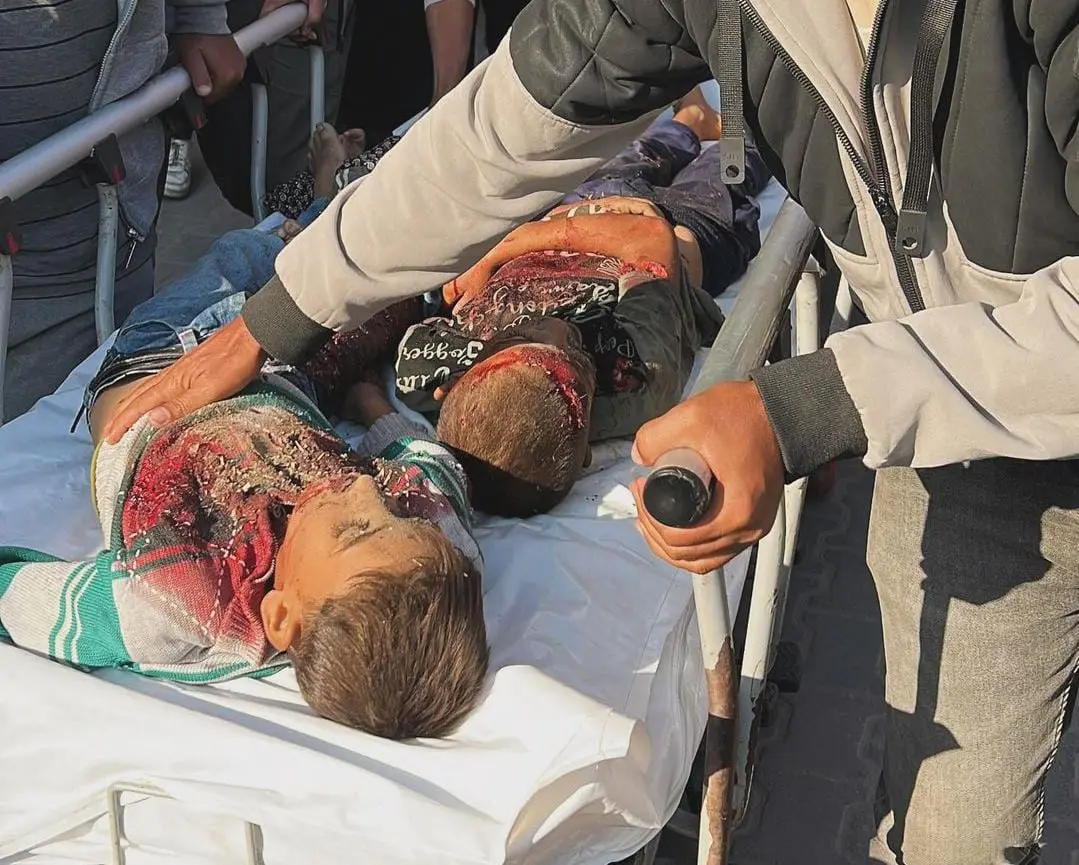
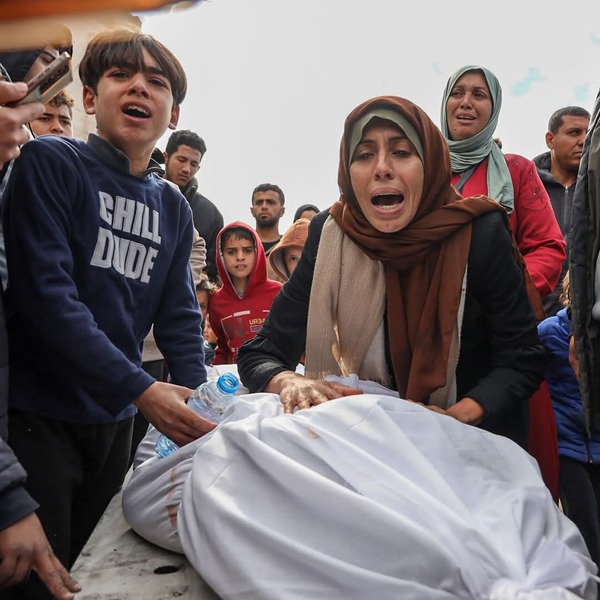
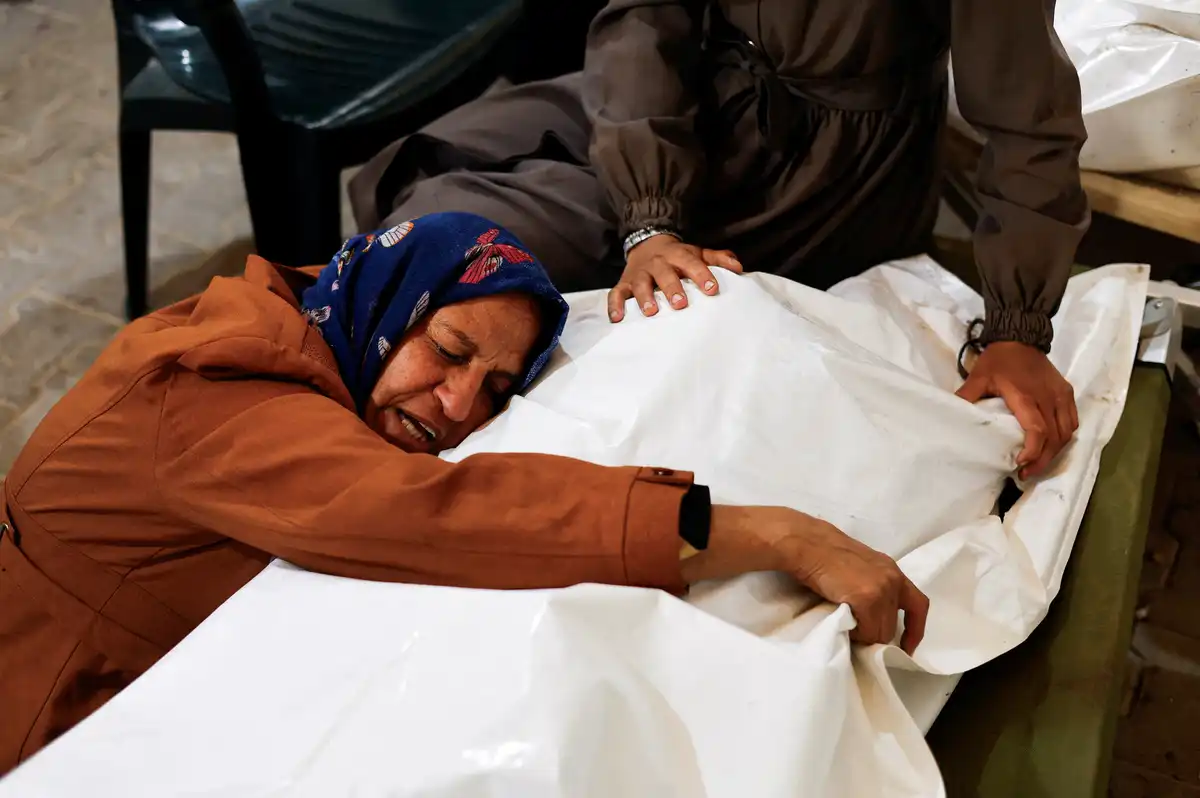
The death toll in the Gaza Strip has risen to 50,810 since the start of the war.

The Ministry of Health in Gaza announced on Tuesday that the death toll in the Gaza Strip has risen to 50,810, the majority of whom are children and women, since the start of the Israeli occupation's aggression on October 7, 2023.

It added that the death toll has risen to 115,688 since the start of the aggression, while a number of victims remain under the rubble, unable to be reached by ambulances and civil defense teams.


It noted that 58 dead and 213 injuries arrived at Gaza Strip hospitals over the past 24 hours, while the death toll and injuries since March 18, when the occupation violated the ceasefire agreement, has reached 1,449 dead and 3,647 injuries.


It pointed out that a number of victims are still under the rubble and on the streets, and that ambulance and civil defense crews are unable to reach them.

PALESTINE

Tue 08 Apr 2025 2:03 pm - Jerusalem Time

23 Palestinians injured during Israeli occupation's storming of Al-Quds University

Twenty-three citizens were injured on Tuesday during an Israeli occupation forces' raid on Al-Quds University in Abu Dis, southeast of occupied Jerusalem.


Local sources reported that an Israeli occupation army force stormed the university campus ahead of a march in support of the Gaza Strip, which resulted in clashes between students and Israeli occupation soldiers. Twenty-two citizens suffered suffocation and another suffered burns that were treated on the spot, as a result of the heavy use of tear gas canisters towards the students. The Israeli occupation forces continue to besiege students and staff inside the university campus.

PALESTINE

Tue 08 Apr 2025 1:54 pm - Jerusalem Time

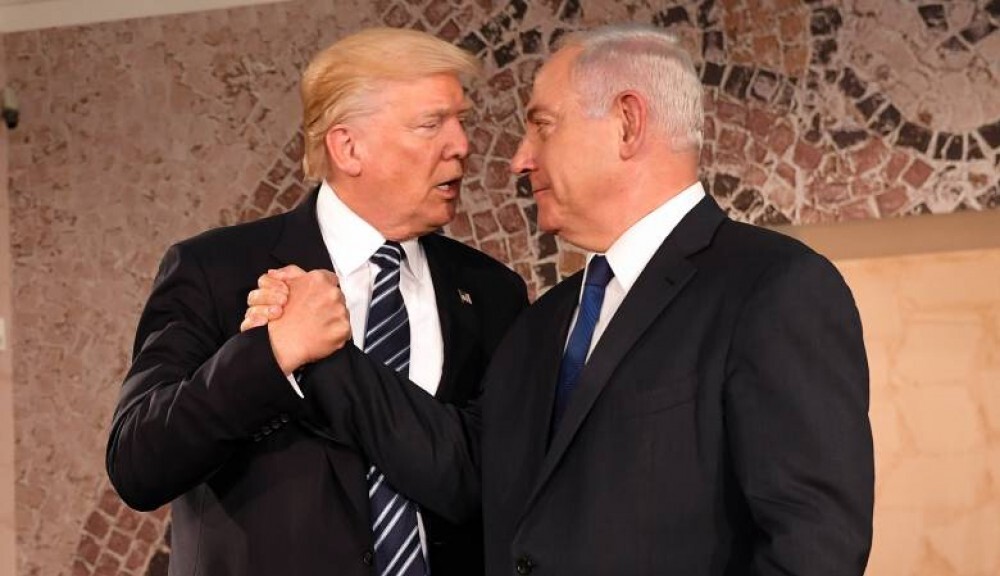
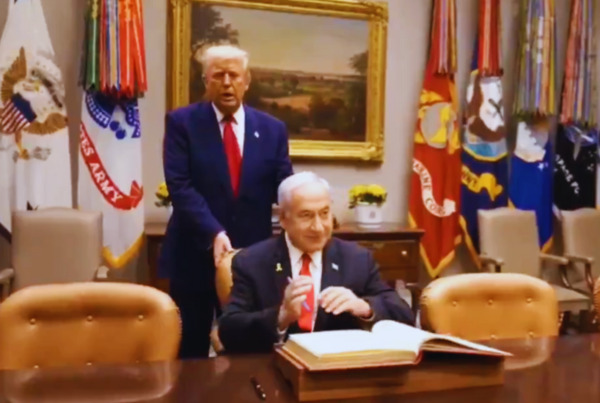
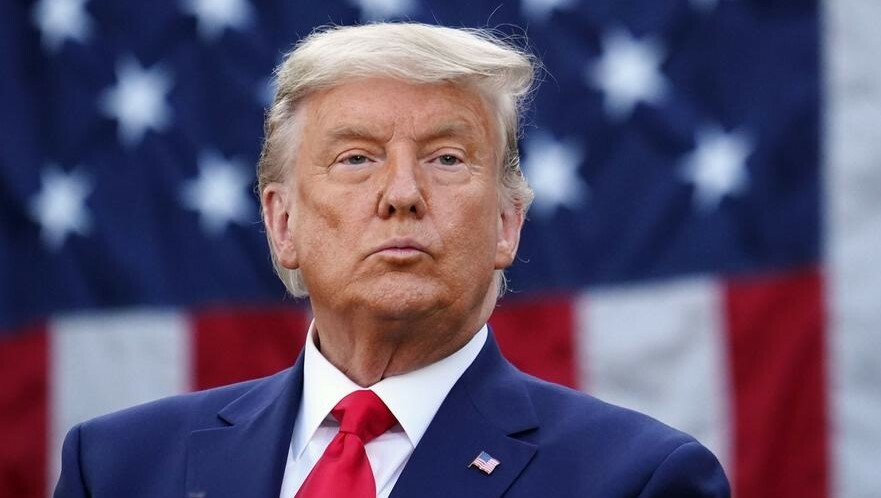
Trump and Netanyahu affirm their vision of ethnic cleansing in Gaza.


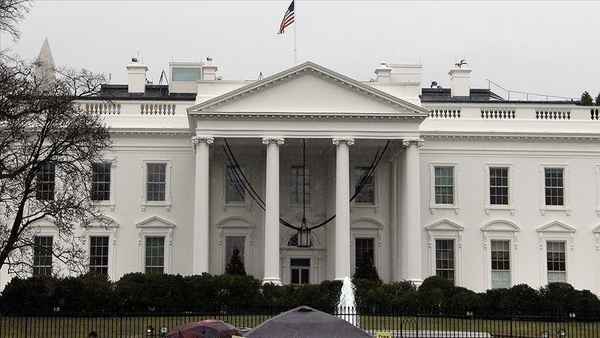
President Trump and Israeli Prime Minister Benjamin Netanyahu met at the White House on Monday, reiterating their desire to ethnically cleanse Gaza and claiming that other countries would be willing to accept the Palestinian population.


As Trump said, it would be a "good thing" for the United States to control Gaza. "Well, you know how I feel about Gaza. I think it's a very important piece of real estate," he told reporters in the Oval Office. "I think we're going to be involved in this, you know, having a peacekeeping force like the United States there, controlling and owning Gaza, would be a good thing."


The president said that if "Palestinians were transferred to different countries," it would create a "freedom zone" in Gaza. He said, "You can call it a freedom zone, a free zone, a zone where people won't be killed every day."


For his part, Netanyahu described the idea of expelling Palestinians from Gaza as voluntary. He said, "We are committed to releasing all hostages, but also to eliminating the evil tyranny of Hamas in Gaza and enabling the people of Gaza to freely choose to go wherever they want."


Netanyahu said he and President Trump discussed countries willing to accept Palestinians from Gaza, but he did not name any. He said, "I think this is the right thing to do. It will take years to rebuild Gaza; in the meantime, people can have a choice. The president has a vision. Countries respond to this vision, and we are working on it."


Netanyahu's visit to the United States came amid Israel's ongoing attacks on the Gaza Strip, which have killed more than 1,300 Palestinians since the genocidal war resumed on March 18. Since March 2, Israel has imposed a comprehensive blockade on Gaza, cutting off the entry of humanitarian aid and all other goods.


The Israeli occupation army also expanded its ground offensive and seized control of more territory in Gaza as part of Netanyahu's plans for a complete Israeli military occupation.

The Israel Defense Forces now controls more than 50% of Gaza. President Trump has fully supported the Israeli escalation in Gaza, and on Monday claimed that Netanyahu is working to free the Israeli hostages despite his refusal to fully implement the January ceasefire agreement that would have achieved this goal. Israel has also rejected Hamas's offer to release all Israeli prisoners in exchange for a permanent truce.

OPINIONS

Tue 08 Apr 2025 1:50 pm - Jerusalem Time

Palestinians at a Crossroads

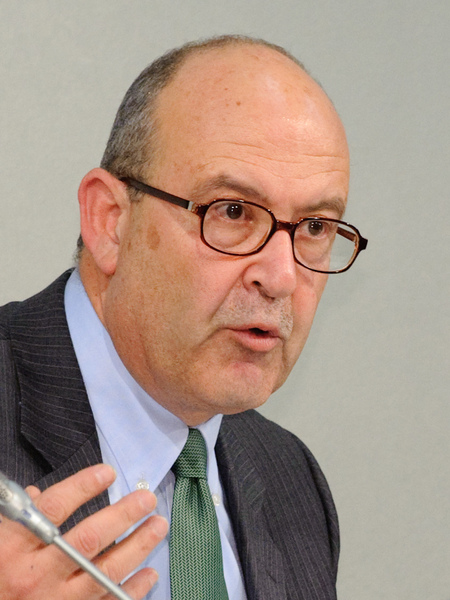
Dr. Ali Al-Jarbawi

Dr. Ali Al-Jarbawi

Opinion Writer

Discussion of the post-Israeli war on the Gaza Strip is not a trivial matter. Rather, it is a foundational step toward a future that signals the demise of the Palestinian national project, especially with US President Donald Trump escaping any constraints. This will be the case unless the Palestinians rectify the situation and begin a comprehensive critical review to learn from mistakes and rebuild this system on new foundations, the primary goal of which is to dedicate all its resources and capabilities to ensuring the entrenchment of Palestinians in their country.

Historical experience teaches us that the most important outcome of wars is not the massacres and horrors they cause. These matters, despite their gravity, are quickly overcome after the wars end, and the focus shifts to addressing their repercussions and coping with their memories. The most important outcomes of wars always result from the shift in the balance of power between the warring parties, which allows the victorious parties to impose settlements that achieve their goals on the losing parties. A study of the history of wars tells us that these settlements are important, because each time they lead to the formation of a new reality. This reality is not limited to the possibility of changing political maps, by altering the borders of countries and completely eliminating others, or by moving groups of people from one region to another, which results in changing the demographic nature of multiple countries. Rather, wars lead to fundamental shifts in political orientations and undermine the national aspirations of many peoples and ethnic groups.

Over the past fifteen months, the attention of various parties has been focused on monitoring the course of the war waged by Israel on the Gaza Strip. This follow-up has been intense, given the severity of the war, its vast scope, the comprehensiveness of its targeting, the high number of civilian casualties, and the magnitude of the destruction it has inflicted on all aspects of life in that limited area, which Israel intended to inflict a major catastrophe on. Israel's goal in this war was not only to avenge Operation Protective Edge, but also to achieve a much more far-reaching strategic goal, one that is always present in Zionist ideology: emptying the land of its Palestinian inhabitants. An opportunity it had always longed for presented itself, and it transformed its revenge into a war of extermination, employing all its foreign alliances and destructive capabilities to transform the Gaza Strip into an area unfit for human habitation, in order to force the greatest number of Palestinians to leave and evacuate the area. Shortly after the war began, discussions began in regional and Western capitals regarding the "day after," i.e., post-war arrangements. Most of these discussions focused on finding an acceptable alternative to govern the Gaza Strip after the elimination of Hamas, which was considered a foregone conclusion. The focus was also on the Israeli government's efforts to prolong the war and its presence in Gaza, the Palestinian Authority's demands to regain control of the Strip, calls from here and there for a regional and international presence, even for a transitional period, and Hamas's efforts to ensure it is not excluded from consideration. Furthermore, the root cause of the conflict, the continued occupation, and the need to find a final and permanent settlement were not addressed. This issue was not given the seriousness it deserved. Were it not for Saudi Arabia's stipulation that normalizing its relations with Israel be coupled with a credible path to establishing a Palestinian state, and others' clichéd appeals and demands for the necessity of establishing such a state, the need to address the conflict's root causes would have been completely absent from the agenda. The course of the war and the future of governance in Gaza have dominated the scene.

Now that a temporary ceasefire "deal" has been reached, it is hoped that if its three phases are implemented, it will lead to an end to the fighting. However, for the war to finally end, it is worth monitoring not only how the future situation in the Gaza Strip will be "arranged"—important as that may be—but also what the war will lead to in terms of an anticipated settlement of the conflict. Wars, not fighting, only end when settlements are reached.

The Difficult Confrontation

Palestinians currently face an extremely complex and difficult reality, which presents them with an exceptional challenge far greater in importance than any they have experienced in the past. Although the costs of their long history of resistance to the British Mandate and the Israeli colonial occupation have been enormous, at every stage of their confrontation, they have been blessed with an effective pillar, or pillars, of support that have helped them persevere, resist, and keep their national cause alive. Now, however, they are facing a series of negative external factors, already in a state of extreme weakness, indicating the loss of any effective external support and their vulnerability to the challenge of imposing a "minimal" settlement that would lead to the liquidation of their cause.

On the Israeli front, the Palestinians now face an Israel that is completely different from what they have experienced in the past. It is no longer left-wing, or even liberal right-wing, after the far right, followers of religious Zionism, whose biblical doctrine centers around the necessity of fulfilling the prophecy of "Greater Israel," gradually infiltrated its political fabric. In 2022, they joined the ruling coalition and controlled its viability. This shift reflected a continued shift in Israeli political orientations to the right and led to a steady shrinkage of the left's electoral base, which is now approaching the point of disappearance. The political weight in Israel is no longer solely right-wing; rather, it is ingrained in a fundamentalist, extremist, and ferocious tendency toward the Palestinians. Within this shift in the political landscape in Israel, a consensual settlement with the Palestinian people leading to a "two-state solution," in the traditional sense of the term, which calls for the establishment of a Palestinian state on the land occupied since 1967, is no longer realistically achievable. Regarding Jerusalem, there is an Israeli consensus not to relinquish it. As for the West Bank, which has been fragmented by the settlement enterprise and transformed the Palestinian presence into narrow, disconnected enclaves, an absolute Israeli majority demands the annexation of large parts of it to Israel. Meanwhile, the extreme right-wing parties are desperately seeking, using all political and brute force, to implement what they consider a biblical-ideological mission to complete its full annexation as quickly as possible. The Gaza Strip, which Ariel Sharon abandoned but which Israel continues to blockade, was the only geographical area where Israel could potentially allow the establishment of a Palestinian state. Its concern there was focused on ensuring security, which, if measures were agreed upon to ensure this, would enable Israel to rid itself of the Strip and the demographic burden it represents. However, Hamas's control of the Strip since 2007, and its recent "Operation Breaking Dawn" (Al-Aqsa Flood), have reduced this possibility to a minimum, though it has not eliminated it entirely.

On the regional level, it is worth considering that the traditional incubator status the Palestinian cause previously enjoyed within official Arab circles has now declined. The successive conflicts plaguing the Arab world have not only led to the withdrawal of the regional state in pursuit of self-preservation and the pursuit of private interests, but also to the fragmentation of collective Arab solidarity, and the loss of the Arab system's standing and influence in the region to the benefit of non-Arab powers: Iran, Turkey, and Israel. In addition, there has been an escalation of complaints from many Arab capitals about the continued burden of the Palestinian issue, the labyrinth of Palestinian division, and the alliance of Palestinian factions with non-Arab regional powers, particularly Iran. As a result, official circles in most Arab countries have, at best, reduced their approach to the Palestinian issue to risk mitigation. This is achieved through a dual approach: providing the necessary moral support to avoid embarrassment before various internal and external parties, while avoiding actual engagement in a serious defense of Palestinian rights as an Arab nationalist cause.

In addition to undermining Hamas's authoritarian power and exhausting its military capabilities, Israel's interventions in the region following Operation Protective Edge led to the dismantling of the resistance axis, upon which the movement had relied to support its existence and its confrontation with Israel. With the resulting shift in the regional balance of power, the process of shaping a new order in the region has become easier. Since closing the Palestinian issue has become necessary, in order to remove a "chronic obstacle" to restructuring it, any settlement that appears to guarantee the "minimum" of Palestinian rights will fulfill the purpose of Arab capitals. Trump's return to the US presidency is the most significant change at the international level currently, and it will have far-reaching implications for reshaping the region and permanently closing the Palestinian issue. Palestinian and Arab parties have welcomed Trump's active intervention in imposing a temporary ceasefire "deal" in Gaza, seeing it as an early indication of a possible positive shift in his approach to and approach to the anticipated settlement. But optimists should be patient. Trump has a narcissistic personality, and any changes he may have undergone as he enters his second term will be limited to liberation from any restrictions that may have curbed his impulsiveness, even slightly, during his first term, as he aspires to secure a second term. Now, in his final term, Trump will act as he pleases: an absolute ruler who rules by orders and dictates, without restraint or regard for rules. His foreign policy will be governed by "America First," which he will practice with brazen, showy threats and blackmail, issuing accusations and insults, declaring demands and expecting compliance, and imposing sanctions on "disobedient" individuals. Trump is a proven supporter of Israel, though not to the same extent as Netanyahu and his governing coalition. He shows little concern for the Palestinian people and their ongoing plight, nor does he hold much regard for the official Arab regimes, which he considers subservient and guaranteed to be loyal. An exception to this is his appreciation for the Kingdom of Saudi Arabia, not only for its status as a center of beneficial wealth, but also for its prestige, which qualifies it to play a fundamental and prominent leadership role in the Arab and Islamic worlds. Because he wants to divert attention from the Middle East while he pursues his own central issues, both domestically and elsewhere, this region will receive only brief attention from him, which he will devote to quickly stabilizing it and removing it from his agenda, allowing him to devote himself to more important matters. He believes that the foundation of this stability lies in normalizing Saudi Arabia's relations with Israel, which will lead to the normalization of relations between many Arab and Islamic countries, leading to a fundamental change in the region's reality. Beyond addressing the issue of Iran and its nuclear program, achieving this normalization requires closing the Palestinian issue with a balanced settlement between the Saudi demand for a credible path to establishing a Palestinian state and fulfilling Israel's interest in expanding its territory, which Trump has declared insufficient. Despite the limited content of the Palestinian "Deal of the Century," Trump will not re-present it in its previous form, as it has clearly been diminished by Operation Protective Edge, if not completely eliminated. If he deems it necessary to accommodate the Saudi demand, the best approach Trump can dictate will likely be a scaled-down one, in the form of a promise that could be fulfilled after a long transitional period filled with rehabilitation, passing tests, and obtaining commitments from the Palestinians. This will limit the possibility of establishing a Palestinian entity with some of the trappings of a sovereign state in the Gaza Strip, with the possibility of establishing a future relationship with the remaining Palestinian enclaves in the West Bank. In return, Trump will provide cover for Israel's annexation of a large portion of the West Bank. Since he is dealing with the relevant official Arab parties with a dictated mentality and expects them to comply, Trump's focus will be largely on securing Tel Aviv's approval, which will likely refuse to do so. To "convince" Tel Aviv, Israel will receive a generous package of "incentives," the first of which may be Trump's demand to empty the Gaza Strip of the majority of its Palestinian population. While this demand may seem to some as conclusive evidence that Trump has finally closed the door on the "two-state solution," it may be the wrong pretext for imposing a bad settlement based on that solution.

If a settlement is looming after the war on Gaza ends, these are the most extreme aspects of its features, and everyone whose position in the balance of power has been weakened by the war must pay the price for the resulting settlement.

The State of Palestinian Weakness

For some time now, the Palestinian situation has been steadily increasing in its severity due to a worsening state of exhaustion resulting from the spread of weakness that has become widespread and is eating away at the various structures of the Palestinian system. This situation has led to a continuous decline in Palestinian resilience, reducing to a minimum the possibility of self-sufficiency, after the traditional external support base has evaporated, to effectively and influentially confront the torrent of pressures pouring down on the Palestinian side. Quite the contrary, the current level of deterioration in the Palestinian situation may lead to its vulnerability to these pressures, which could facilitate the passage of a "minimal" settlement for the Palestinian issue by others.

The political system, already constrained by the restrictions of the occupation, suffers from a chronic, intractable condition of calcification that has stripped it of most of its political power and effectiveness. For nearly two decades, this system has been based on a division reinforced by a geographic separation that has rendered it a permanent state of affairs: the Fatah movement governs the West Bank, and Hamas governs the Gaza Strip. Due to the deep-rooted hostility between the two sides, each side's apprehension of the other's intentions, and their mutual opposition to each other regarding the means of confronting the occupation (armed resistance versus peaceful means), each side has tightened its grip on the reins of government in its region and expanded the penetration and control of this regime's system over its citizens. As the level of authoritarianism of both sides of the political system has increased, the elements and tools of political action have been absent: there are no effective parties, no elections, no legislative authority, no independent and effective judiciary, no free media, and no independent means of oversight, accountability, and review. Political life has been completely extinguished, as the political community has been reduced to a mere sliver of space, excluding many segments of society. This has led to widespread public frustration, and the community has dwindled to a mere embrace of supporters of both sides. This has fractured it, leading to a state of extreme polarization and fanaticism. Political debate has become a mere sterile polemical debate that quickly descends into squabbling, filled with mutual accusations and denunciations that reach the level of accusations of treason. Political participation has transformed from an open space for influence and change into a mere means of mobilizing a superficial sense of allegiance and support, on the one hand, and marginalization and exclusion, on the other. As the regime's sustainability has become the primary priority that drives the awareness, direction, and actions of its officials, whether in the West Bank or the Gaza Strip, political discourse has become populist, burdened with the repetition of clichés and traditional slogans that slide from top to bottom, with a narrative programmed to inflate a sense of self-importance and achievement, satisfy the desires of the masses of supporters by telling them what they want to hear, rather than what they should hear, and provide them with ammunition to confront the "others." The internal Palestinian political scene has become increasingly entrenched, with those "for" and those "against" being closed off, after the process of closing off any space for serious discussions and meaningful revisions of political goals and paths was completed.

The political system is stuck in an intractable crisis, exacerbated by the ongoing Israeli targeting of it and the decline in international and regional financial support. As a result of Israel's destructive war, the Gaza Strip has become a disaster area, requiring everything to be rehabilitated and rebuilt. This will not only place pressure on whoever will govern it in the coming days, but will also determine the nature of the "minimal" settlement for the Palestinian issue, which the United States is preparing to negotiate. In the West Bank, external circumstances have conspired against the already troubled regime, which is now struggling to ensure its continued survival, having become increasingly unable to fulfill its internal obligations. The worsening financial crisis has led to collapses in vital areas of life, such as education, health, social services, and economic life. It is imperative to note that the collapse of Palestinian society's resilience under occupation, albeit to varying degrees between the Gaza Strip and the West Bank, will have profound repercussions for the Palestinians' ability to endure and persevere, and to avoid emigrating from the country. What can be done? Perhaps one of the most important conclusions drawn from Operation Protective Edge and the devastating war on Gaza that followed is that the conflict will continue for a long time and will not be resolved by a knockout blow, but rather by an accumulation of points, at the core of which lies strengthening the Palestinians' ability to remain on their land, after the risks of emigration from the country increased due to Israel's systematic destruction of livelihoods, particularly in the Gaza Strip. The goal of keeping Palestinians in their country, with the cumulative interventions it requires to improve various aspects of life, is the most important Palestinian strategic goal in the coming period. Over more than half a century of occupation, Israel has pursued a systematic policy, reinforced by various repressive means, to prevent Palestinian escalation and replace it with an Israeli escalation to establish an alternative reality in the occupied territory. It has achieved undeniable successes. It is necessary and important to recognize that these successes have been aided by Palestinian engagement in a long and bitter internal conflict that has consumed, and continues to consume, a substantial portion of the energy and self-reliance that should have been directed toward confronting Israeli schemes. Now, with the mounting and intensifying external pressures on the Palestinians, and the growing likelihood of their success in tampering with their fate, the Palestinian situation has reached a critical crossroads: either to continue the same current path of conflict, the negative consequences of which are evident, with both sides of the internal conflict, each in its own way, seeking to achieve its own survival interests, slipping into a race to accommodate the anticipated "minimal" settlement proposals, ensuring continued existence at the expense of the other; or to change course and move toward the necessity of rectifying and addressing the internal situation to restore what is possible of self-resilience before it is too late.

Recovery will only be effective if the Palestinians confront a fundamental reality they have often avoided: the minimum ability to repair the collapsed internal situation will not be restored, and an acceptable response to the intensifying external pressures will not be possible if the Palestinian political system persists in its current state. If national considerations are to prevail over factional interests, a fundamental and profound change in the nature of its structure and working methods is necessary. This change goes beyond the previous superficial and formal amendments, which were primarily intended to conceal its continued existence. It is essential that change come through two interconnected and interconnected interventions: one immediate and focused, focused on stopping the bleeding, and the other more comprehensive and far-reaching, targeting a radical treatment of the disease and rehabilitation. Achieving this immediate intervention requires reinstating the amended Basic Law of 2003 and forming a non-factional national salvation government that will block foreign interference in the arrangements for the "day after" the war on Gaza, end the division, and restore the geographical unity of the political regime's jurisdiction over the West Bank and Gaza Strip. This government, which must be formed and whose composition determined by Palestinians, is an absolute necessity to ward off the risks of intervention currently facing the Palestinian situation. It is also a fundamental requirement for mobilizing the necessary regional and international support to meet the demands and requirements of the difficult phase ahead, foremost among which is withdrawing the pretexts used to obstruct the rapid commencement of the reconstruction process in the Gaza Strip and effectively confronting calls to displace the majority of its population.

Although it would be better for Palestinians to take the initiative to form and empower this government, rather than procrastinate and then succumb to external pressures, which would further weaken Palestinian resilience and capacity, achieving this goal, if achieved, should not mean the end of the road to reforming the Palestinian situation, but rather its beginning. Strengthening the Palestinians' survival on their land now requires more than simply forming a government based on new principles, as important and necessary as that is. It also requires a serious review that breaks the factions' monopoly on the political sphere and reaches a general Palestinian agreement related not only to the requirements for improving the performance of the political system, but also to the feasibility of its existence. It has become clear that it is no longer feasible to continue accepting many hypothetical wishes as established facts upon which to build a surplus of exaggerated expectations. It is time to stop self-deception and undertake a profound Palestinian self-examination to clarify the limits of the acceptable goal, not the hoped-for one, and to develop an appropriate political program to pursue it. To clarify, Palestinians are sharply divided over the means of achieving the goal of resolving the conflict. They have recently agreed that this goal is the implementation of the "two-state solution" and the establishment of an independent and sovereign Palestinian state along the 1967 borders. However, they recognize that the possibility of achieving this goal has ceased, as the "two-state solution" no longer means dividing Mandatory Palestine into two states, but rather dividing the West Bank into two parts. However, is this solution still acceptable and pursued with sustained determination? If the answer is yes, then the leaders of this regime must not continue to evade the people, but rather confront them with the truth, accept that a possible settlement will be at the "minimum level," devote efforts to improving its terms, and reduce the portion of the West Bank that will be annexed by Israel. If this expected outcome of the "two-state solution" is not acceptable, then it is necessary to oppose this option and move in a different direction that seeks the establishment of a single state. This does not require the continued existence of a Palestinian Authority, whose existence would hinder the possibility of achieving this path. However, if continued adherence to the "two-state solution," knowing that it will not lead to the outcome consistently promoted in slogans, but rather to a reduced form of it at best, is merely a pretext for ensuring the regime's continuation, in the unlikely event that a regional or international shift occurs and shifts the balance, then the regime's continuation as it is, even in this case, is no longer feasible. It is incapable of achieving the promised statehood or fulfilling the basic obligations necessary to enable the continued steadfastness of the people in the country. Therefore, while the regime must remain, its current version is no longer useful except for the continued realization of factional interests. This requires a comprehensive critical review to learn from mistakes and rebuild this regime on new foundations, the primary goal of which is to dedicate all its resources and capabilities to ensuring the Palestinians' stability in their country. This will not be achieved if the regime remains monopolized by factional polarization, which has been the cause of its continued ossification and diminished resilience. For the Palestinian political system to begin its recovery, it must become more effective, more participatory, and more representative. It must also maintain an organic and positive relationship with society, rather than one of superiority and authoritarianism that robs the majority of Palestinians of the positive energy needed to contribute to protecting the national project. This system must shift from focusing on internal disputes that alienate external parties essential to supporting the Palestinian cause, to a serious effort to return to the path of accumulating friends, both regionally and internationally. This requires a clear political program, credibility in political engagement, utmost transparency in managing financial affairs, an unwavering fight against the roots of corruption and administrative laxity, and a dedicate effort to halting the collapse of essential aspects and sectors of society, most notably health and education.

However, this system will not change itself on its own, as this would harm the interests of the groups that control it and benefit from it. Therefore, it needs to transform the whispered discontent within society regarding its failures into organized pressure demanding change. Although this transformation is difficult to achieve, given the closed political tools and the demise of political life in the country, the resurgence of a pressing political movement is not impossible. Indeed, it has become a necessity, dictated by the gravity of the enormous dangers facing the Palestinians and their cause. While the objective of the current external pressures on the two poles of the Palestinian political system is to weaken it and push it to make concessions, the objective of the internal pressures is to strengthen it to confront these pressures and resist the concessions demanded of it.


Ali Jarbawi: Professor of Political Science and International Studies at Birzeit University.

PALESTINE

Tue 08 Apr 2025 1:19 pm - Jerusalem Time

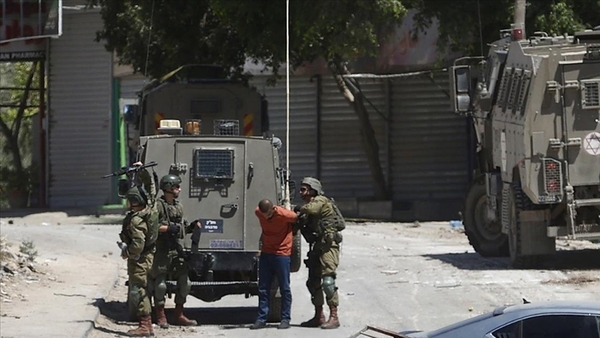
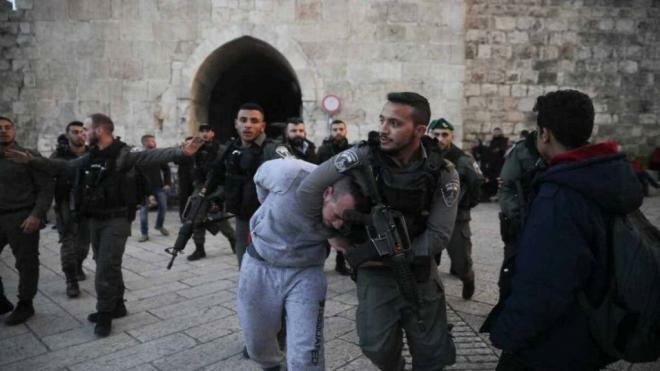
Occupation forces arrest a young man in Tubas

Israeli occupation forces arrested a young man from Tubas today, Tuesday, after summoning him for interrogation at Salem camp.


The director of the Prisoners Club in Tubas, Kamal Bani Odeh, reported that the occupation forces arrested the young man, Muhammad Khair al-Din Daraghmeh (31 years old), after summoning him for investigation at Salem camp.


Last night, Israeli occupation forces launched a large-scale assault on Tubas, with dozens of patrols, armored vehicles, and bulldozers participating. They arrested 25 citizens and destroyed parts of the infrastructure and civilian property before withdrawing from the city.

PALESTINE

Tue 08 Apr 2025 1:06 pm - Jerusalem Time

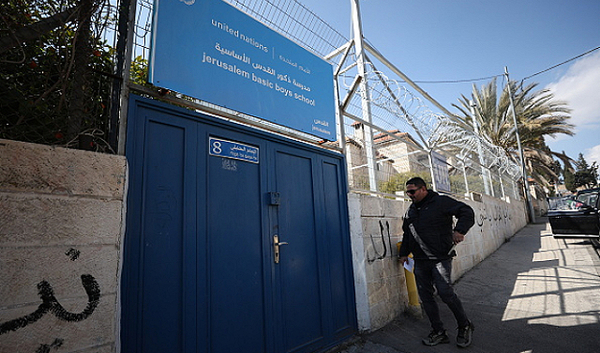
Israeli occupation authorities threaten to close all UNRWA schools in Jerusalem.

On Tuesday, the Israeli occupation police served all schools run by the United Nations Relief and Works Agency for Palestine Refugees (UNRWA) with orders to close within 30 days, while arrangements are made to transfer students to schools run by the Israeli municipality in Jerusalem.


Israeli occupation forces stormed the Shuafat refugee camp, north of occupied Jerusalem, and carried out a large-scale raid that included UNRWA schools and several homes. According to local sources, a large force of Israeli occupation forces raided the schools and checked the IDs of staff.


Local sources indicated that the schools targeted by the decision are four UNRWA schools in Shuafat camp, including primary and basic schools for boys and girls.


UNRWA operates three schools in Shuafat camp—two for girls and one for boys—serving more than 110,000 refugees in occupied Jerusalem. Reports indicate that Israeli soldiers issued tickets to several vehicles during the raid.


The decision to close the Shuafat refugee camp schools follows a similar Israeli decision to close a private school in occupied Jerusalem. The Jerusalem Municipality's Arab Education Department announced last Thursday that it had decided to close Al-Furqan School, claiming it was "operating without a license and in violation of the law."


The Jerusalem Municipal Schools Parents Association held the fate of 1,200 students at Al-Furqan School responsible "for the closure decision, which has resulted in them being confined to their homes and streets, away from their classrooms."


These developments come in light of two laws passed by the Knesset in late October 2024, which aim to ban UNRWA activities within "Israel's borders." The first law stipulates the cessation of the agency's operations within Israel's sovereign territory and prohibits the provision of any services or activities from those areas.

It is worth noting that UNRWA administers the Shuafat and Qalandia refugee camps, in addition to a number of institutions, such as the Indian Corner Clinic and other schools in the Jerusalem and Sur Baher areas.

OPINIONS

Tue 08 Apr 2025 12:55 pm - Jerusalem Time

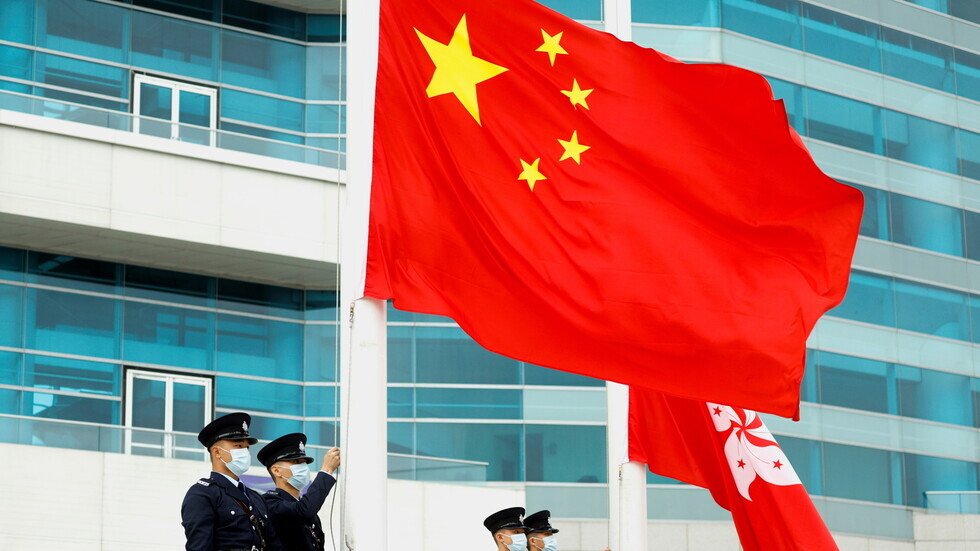
No to bullying and economic domination

Written by Ambassador Zeng Jixin, Director of the Office of the People's Republic of China to the State of Palestine

Written by Ambassador Zeng Jixin, Director of the Office of the People's Republic of China to the State of Palestine

Opinion Writer

The United States recently announced the arbitrary imposition of tariffs on all its trading partners, including China, under various pretexts, launching a new round of the global trade war, sparking widespread concern in the international community.
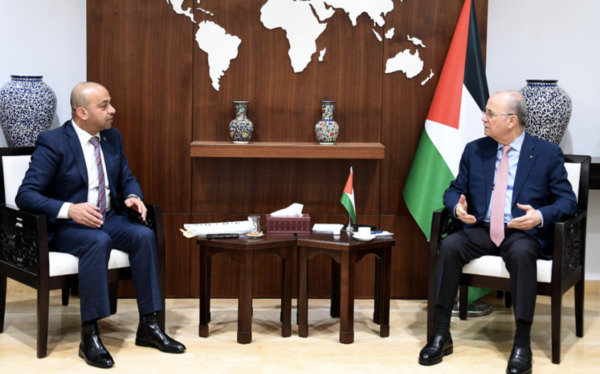

Accordingly, the Chinese government issued its position on April 5th rejecting the US's misimposition of tariffs, stressing that it seriously infringes on the legitimate rights and interests of all countries, seriously violates WTO rules, seriously undermines the rules-based multilateral trading system, and poses a serious shock to the stability of the global economic system. The Chinese government expresses its strong condemnation and firm rejection of this.


The above-mentioned US actions violate basic economic rules and market principles, disregard the balance of interests reached in multilateral trade negotiations, and ignore the fact that the United States has long gained significantly from international trade. They use tariffs as a weapon to exert maximum pressure and advance selfish interests. These actions are pure unilateralism, protectionism, and economic bullying. The zero-sum game the US has been pursuing under the pretext of pursuing "reciprocity" and "parity" is, by its very nature, a pursuit of "America First" and "American exceptionalism." They aim to overthrow the existing international economic and trade order through tariffs. They place US interests above the overall interests of the international community, and serve US hegemony at the expense of the legitimate interests of other countries. They will inevitably be widely rejected by the international community.


China is a country with a long-standing civilization and a reputation for etiquette. The Chinese people treat others with honesty and sincerity. We neither stir up trouble nor are we afraid of trouble. Imposing pressure and threats is not the right way to deal with China. China has taken and will continue to take resolute measures to safeguard its sovereignty, security, and development interests. In 2024, China's GDP exceeded 130 trillion yuan for the first time, a 5% increase over the previous year. The Chinese economy is a major contributor to and a pillar of stability for global economic growth. As the world's second-largest economy and the second-largest consumer market of goods, China will open its doors to the outside world wider and wider regardless of changes in the international situation.


Economic globalization is an inevitable path for human development. The multilateral trading system, centered on the World Trade Organization (WTO), has made significant contributions to strengthening global trade and promoting economic growth and sustainable development.


Openness and cooperation represent the trend of history, and the world will not, and must not, return to a state of isolation and closure. Mutual benefit and shared gains are in line with the aspirations of all peoples. Those who engage in economic bullying at the expense of others will ultimately suffer. Promoting economic globalization toward a more open, inclusive, balanced, and mutually beneficial direction is a shared responsibility of the international community.


Dimming others' lights won't make yours shine brighter, and obstructing others' paths will only ultimately obstruct your own. Development is an inalienable right of all countries, not the exclusive preserve of a few.

International affairs should be addressed through consultation among all, and all countries should jointly control the world's future and destiny. No one emerges as a winner from trade and tariff wars, and there is no way out from protectionism. We are confident that the majority of countries in the world, which believe in justice and fairness, will choose to stand on the right side of history and make a choice that serves their national interests. The world must embrace justice and reject hegemony!

PALESTINE

Tue 08 Apr 2025 11:49 am - Jerusalem Time

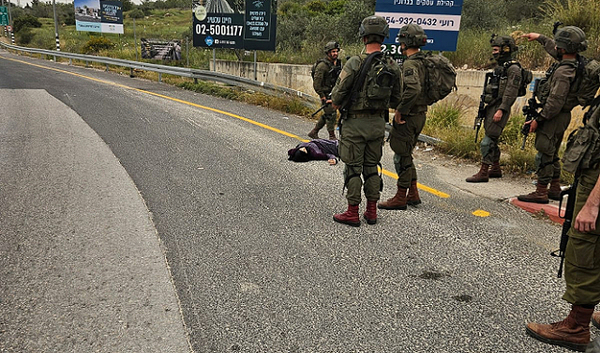
A Palestinian woman was killed by Israeli occupation forces after allegedly carrying out a stabbing attack near Salfit.

A Palestinian woman was shot dead by Israeli forces on Tuesday near the settlement of Ariel in the northern occupied West Bank, after allegedly attempting to carry out a stabbing attack.


Israeli occupation forces shot a Palestinian girl near the settlement of Ariel, claiming she had attempted a stabbing attack. She was pronounced dead from her critical injuries.


Israeli media reported that the woman was armed with a knife and attempted to carry out an attack at the Jit Junction near Salfit, but was neutralized without any injuries to soldiers or settlers.

ARAB AND WORLD

Tue 08 Apr 2025 11:39 am - Jerusalem Time

American student journalists are disappearing, fearing Trump's vicious campaign against pro-Palestinian speech.

Fearing legal repercussions, online harassment, and professional consequences, student journalists are withdrawing their names from published articles amid an escalating crackdown by the Trump administration on students believed to be linked to the pro-Palestinian movement, The Guardian reported on Monday.


According to reports, college newspaper editors say concern among writers has grown since the arrest of Tufts University graduate student Rumeysa Ozturk, currently in ICE custody, while attempting to resist deportation efforts. While the government has not cited evidence to support its decision to revoke her visa, she wrote an opinion piece last year in a student newspaper critical of Israel, raising concerns that simply expressing opinions in writing is now considered sufficient grounds for deportation.


Ozturk is one of nearly a dozen students or researchers detained by immigration authorities since March 8, when Mahmoud Khalil, a Columbia University graduate student and green card holder, was arrested and placed under deportation proceedings for his role in pro-Palestinian protests. Student editors report particularly acute concerns among international students who have contributed to their newspapers, but they say requests to remove stories for fear of retaliation are also coming from US citizens.


At Columbia University, Adam Kinder, editor of the Columbia Political Review, said the university newspaper was asked to remove nearly a dozen articles and halt publication of more than a dozen others in response to mounting pressure in recent weeks. His team complied with those requests. "For students who disagree with the Trump administration's position, they fear real retaliation," Kinder said.


At Stanford University, one of the most prestigious universities in the United States, the Stanford Daily has also seen an increase in takedown requests in recent weeks, according to its editor-in-chief, Greta Reich. “I got one, then two, then five, then 10—and the requests started piling up pretty quickly,” Reich said. She added that the requests ranged from sources requesting anonymity, to opinion writers wanting their names removed, to even demands to blur identifying photos. According to Reich, one former editor, a foreign student, resigned rather than face a potential confrontation. “They didn’t want to be associated with any publication or article that might get them into trouble,” she said.


Three Kinder (Columbia Review) writers also resigned, and four others stopped working for fear that their association with certain articles could jeopardize their safety or careers.


This growing threat prompted a coalition of national student press organizations to issue an alert on Friday calling on student newspapers to reconsider long-standing editorial standards regarding story non-printing and anonymity.


The alert states: "What we are proposing today goes against the teaching and guidance we, as journalism educators, have provided to our students over the years. These are not easy editorial decisions, but these are not normal times."


Content removal requests present familiar ethical dilemmas in any newsroom, and student newspapers are no exception, as young editors must balance high-stakes safety concerns with the journalistic value of transparency. Some are exploring alternatives to outright deletion, such as de-indexing controversial articles—removing them from search results while keeping them published on their websites.


An editor at an Ivy League university, who requested anonymity due to the sensitivity of the issue, said their newspaper is currently considering this approach. “It’s becoming clear that there’s no perfect solution,” they added. “If you delete an article or leave it full of holes, it’s clear something’s happened. That could attract more attention.” They also noted that removing articles entirely could backfire, as the content often remains available through web archives, including the Wayback Machine.


At the University of Virginia, the Cavalier Daily has historically rejected removal requests, but its editor, Naima Sawaya, acknowledged that the current situation is different. She said, "One of our staff members, an immigrant, was forced to resign from the editorial board after we published articles about Trump's policies toward universities, specifically regarding immigrants and pro-Palestinian activism." She added that the university's Office of International Studies informed the student that publicly affiliating with these articles could jeopardize his visa status.


Sawaya has always viewed the newspaper as an archive. "We try to assure our staff when they join that what they write becomes part of the historical record," she said. Recent concerns about student safety have begun to call into question this view. "If a staff member today asked for a past article to be removed for their own safety, I would delete it," she admitted.


At New York University's Washington Square News, editor Yazan Saadeh said that although his paper does not publish anonymous articles, staff are finding ways to respond to at-risk contributors. "Some staff have withdrawn from reporting roles due to safety concerns, but they still contribute to other editorial tasks," he said. An editor at California State University (who also spoke to the Guardian on condition of anonymity) said their newsroom had seen a significant increase in anonymity requests since US Immigration and Customs Enforcement (ICE) began detaining international students—from opinion writers seeking to remove their names from articles critical of Israel or Trump, to sources seeking to anonymize their quotes. They said international students were now willing to speak to journalists on condition of anonymity. "Most of the requests come from international students, though domestic students have also expressed concerns," they said.


Last February, the Purdue Exponent, a student newspaper at Purdue University in Indiana, removed the names and photos of student protesters advocating for Palestinian human rights from its website, citing safety concerns and the Society of Professional Journalists' code of ethics, which prioritizes harm reduction. The newspaper declared in an editorial: "Pro-Palestine students are under attack, so we're removing their names." The newspaper immediately found itself at the center of a heated debate about journalistic ethics, and its editor reportedly received more than 7,000 emails, including death threats.


Mike Hiestand, an attorney with the Student Press Law Center, told the newspaper that while student media outlets have traditionally resisted takedown requests, the current climate has forced a reassessment. "The reluctance to comply with takedown requests stems from a world that existed before January 2025," Hiestand added.


Lindsay Rank, director of campus advocacy at the Foundation for Individual Rights and Expression, also emphasized how much the risk environment has changed. “If one of these cases had called our hotline six months ago, our response would have been, ‘This isn’t really a legal issue. It’s more of a moral issue.’ But that has changed,” she said.


Sawaya, of the Cavalier Daily, hasn't deleted any articles yet. But like other editors, Helen is grappling with the impact of the new political reality on the field she hopes to enter after graduating. "One of the hardest things right now is getting people to talk to us—even those who are supposed to talk to us, like university communications officers," she says. "I feel like there's a real fear."

ARAB AND WORLD

Tue 08 Apr 2025 11:29 am - Jerusalem Time

China vows to fight US tariffs to the end

China's Ministry of Commerce vowed on Tuesday to fight US tariffs "to the end," responding to US President Donald Trump's threat to impose new 50% tariffs on imports from the world's second-largest economy.


"The US threat to increase tariffs on China is a double mistake that once again reveals the blackmailing nature of the US," a ministry spokesman said.


"China will never accept this. If the United States insists on pursuing its own path, China will fight it to the end," he stressed.


"If the United States escalates its tariff measures, China will take firm countermeasures to protect its rights and interests," he added.


Trump's decision to impose comprehensive tariffs has destabilized the global economy and raised fears of an international recession.


Beijing, Washington's main economic rival, announced a decision to impose retaliatory tariffs of 34% on US goods, scheduled to take effect on Thursday.


But China's Ministry of Commerce also urged the United States to engage in "equal dialogue" to find a solution to the escalating trade war, noting that "there are no winners in a trade war."


"China urges the United States to... cancel all unilaterally imposed tariffs on China, stop economic and trade oppression against China, and properly resolve disputes with China through equal dialogue on the basis of mutual respect," a ministry spokesperson said.

ARAB AND WORLD

Tue 08 Apr 2025 11:09 am - Jerusalem Time

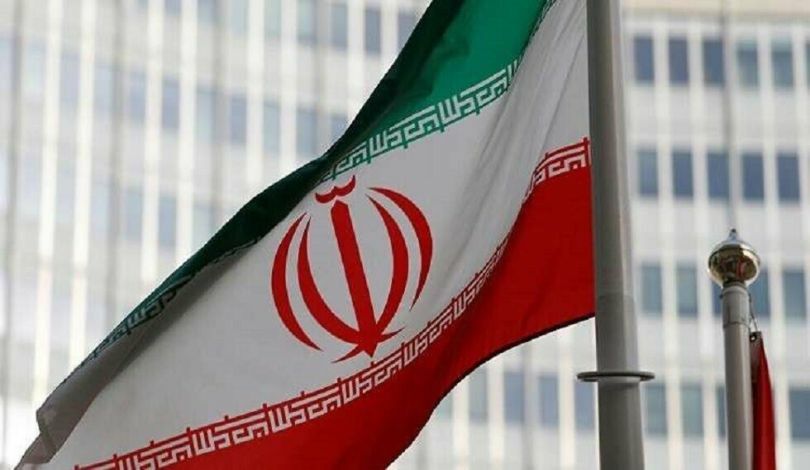
Hosted by Amman... Iran announces high-level talks with the US

Iranian Foreign Minister Abbas Araghchi announced that his country will hold high-level indirect talks with the United States in Oman next Saturday, just hours after US President Donald Trump spoke of direct negotiations between the two sides.


"Iran and the United States will meet in Oman on Saturday for indirect high-level talks," Araghchi said in a post on the X platform early Tuesday morning.

"It's as much an opportunity as it is a test. The ball is in America's court," he added.


This came after Trump announced, during his reception of Israeli Prime Minister Benjamin Netanyahu at the White House on Monday evening, that the United States would hold direct talks with Iran, and that, as he put it, "the talks have already begun."


"Maybe an agreement will be reached, and that would be great. We'll have a very important meeting on Saturday, almost at the highest level," he continued.


Trump stressed that "everyone agrees that making a deal would be preferable to doing what is obvious, and what is obvious is something I frankly don't want to be involved in, and frankly Israel doesn't want to be involved in if it can be avoided."


Meanwhile, the New York Times quoted Iranian officials as saying that Iran is open to direct negotiations with Washington if indirect negotiations go well.


Iranian officials explained that Tehran "understands the talks somewhat differently than Trump described them."


Last month, Trump sent a letter to Tehran calling for talks on its nuclear program, while warning that it would be "bombed" if negotiations between the two countries failed.

ARAB AND WORLD

Tue 08 Apr 2025 11:07 am - Jerusalem Time

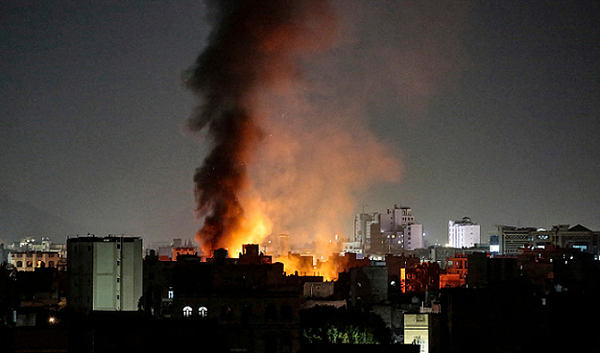
A series of US raids targeting Sana'a and Ma'rib

US aircraft launched a series of raids early Tuesday morning, totaling 22 strikes targeting various areas in the governorates of Sana'a, Ma'rib, and Hodeidah, according to media outlets affiliated with the Ansar Allah group (Houthis).


Al Masirah TV reported that 11 airstrikes targeted the Jarban area in Sanhan District and Al Jumaimah in Bani Hushaish District, northeast of Sana'a.


The channel added that US aircraft launched two raids on Kamaran Island in Al Hudaydah Governorate, western Yemen, and nine raids on Ma'rib Governorate, northeastern Yemen, including five raids on Majzar District, two raids on the Kofal area in Sirwah, and two raids on Al Juba District.


US Central Command (CENTCOM) broadcast footage on its X platform account of its fighter jets being armed aboard the aircraft carrier Harry S. Truman to launch attacks on what it called the Iranian-backed Houthis.


For his part, US President Donald Trump said, "US forces have succeeded in launching powerful and effective military strikes against the Houthi group," adding that the United States has been resolute and successful in its operations.


During his meeting with Israeli Prime Minister Benjamin Netanyahu at the White House, Trump explained that these operations had inflicted significant damage on the Houthis.


On March 15, Trump announced that he had ordered his country's military to launch a "major offensive" against the Houthi group, later threatening to "completely eliminate the Houthis."


In "solidarity with Gaza" in the face of Israeli genocide, the Houthis have been targeting Israeli-owned or -linked cargo ships in the Red Sea or anywhere they may reach with missiles and drones since November 2023.

PALESTINE

Tue 08 Apr 2025 10:55 am - Jerusalem Time

West Bank: Israeli occupation forces continue their aggression on Tulkarm for the 72nd day.

The Israeli occupation forces continued their aggression on the city of Tulkarm and its camp for the 72nd consecutive day, and on the Nour Shams camp for the 59th day, amid raids and attacks targeting several areas inside and around the city.


The occupation forces dispatched military reinforcements to the city and its two refugee camps, Tulkarm and Nur Shams, and deployed infantry units inside their neighborhoods. They stormed and vandalized homes, converting several into military barracks. Live ammunition was also fired, and explosions were heard from time to time in Tulkarm camp, especially after midnight.


A military bulldozer stormed the Abu al-Foul neighborhood inside Tulkarm refugee camp, coinciding with a widespread deployment of occupation vehicles in the camp's streets, which were now emptied of its residents after they were forcibly expelled from their homes. Meanwhile, occupation forces deployed a number of bulldozers to Nour Shams camp, where soldiers pursued residents as they tried to reach their homes to inspect them. Several residents were detained for extended periods, and they were subjected to abuse and threats.


A military force also stormed the Dhenaba suburb east of the city, raiding the home of the Al-Zubaidi family, searching it and interrogating its residents. No arrests were reported.


Military vehicles continued to patrol the city's streets throughout the night, including the vegetable market and Muqata'a Street, while occupation forces deployed in the eastern neighborhood, firing sound bombs before heading toward Tulkarm refugee camp.


The occupation forces continue to seize homes and residential buildings on Nablus Street and the city's northern neighborhood, transforming them into military barracks with heavy machinery stationed around them. Meanwhile, they restrict citizens' movement on the street, sections of which have been closed off with earth mounds in both directions.


Late last night, occupation forces set up a flying checkpoint under the Jabara Bridge, at the southern entrance to the city. They stopped vehicles, obstructed their movement, and subjected them to searches and inspections of their passengers' IDs.


The raids extended to the towns of Qaffin, Baqa al-Sharqiya, al-Nazlat, and Zeita, north of Tulkarm, where occupation forces patrolled the streets and neighborhoods, conducting combing operations.


The ongoing aggression on the city and its two camps has resulted in the deaths of 13 citizens, including a child and two women, one of whom was eight months pregnant. Dozens have also been injured and arrested, and more than 4,000 families have been forcibly displaced from the Tulkarm and Nur Shams camps, along with dozens of families from the city's northern neighborhood after their homes were seized and a number of them converted into military barracks.


The aggression also caused widespread destruction to infrastructure, including homes, shops, and vehicles, which were completely and partially demolished, burned, vandalized, looted, and stolen. 396 homes were completely destroyed and 2,573 partially destroyed in the Tulkarm and Nur Shams refugee camps, in addition to closing their entrances and alleys with earth mounds.

PALESTINE

Tue 08 Apr 2025 10:44 am - Jerusalem Time

Trump Pushes Ceasefire, Iran Talks, Gaza Ownership in Meeting with Netanyahu

Trump proposed US control of Gaza, revealed direct Iran talks, and discussed aid to Israel during a meeting with Netanyahu.

US President Donald Trump articulated his strong desire for an immediate cessation of the war in the Gaza Strip, underscoring the United States’ active pursuit of a renewed ceasefire accord. 

Speaking at a joint press conference in the Oval Office alongside Israeli Prime Minister Benjamin Netanyahu, Trump ventured that Israeli control and ownership of the Gaza Strip could potentially yield positive outcomes.

Trump also highlighted the substantial US financial support to Israel. Now, don’t forget we help Israel a lot. You know, we give Israel $4 billion a year. That’s a lot,” he said.

Trump’s statements about Gaza included his assertion that controlling and owning the Gaza Strip would be a positive step. He reiterated his claim about the Ansarallah drone capabilities and the US response.

Trump reiterated his vision for the Gaza Strip, describing it as “important real estate” and suggesting the US should exert control over the territory. He proposed that an American “peace force” should govern Gaza after the ethnic cleansing of Palestinians.

Additionally, he addressed the escalating tensions in the Red Sea, claiming that the US military has taken decisive action against Ansarallah’s development of advanced drone technology, inflicting significant damage.

A pivotal aspect of Trump’s address centered on the US engagement with Iran. He said that the United States has initiated direct diplomatic channels with Tehran, raising the prospect of a high-level meeting between the two nations. 

Trump emphasized that a negotiated agreement with Iran would be the preferred course of action, asserting that such an accord would ultimately serve Iran’s interests. 

“We’re having direct talks with Iran, and they’ve started. It’ll go on Saturday. We have a very big meeting, and we’ll see what can happen. And I think everybody agrees that doing a deal would be preferable to doing the obvious. And the obvious is not something that I want to be involved with,” the president told reporters as he hosted Israeli Prime Minister Benjamin Netanyahu at the White House.

“Now we’re dealing with them directly. And maybe a deal is going to be made, that’d be great, it’ll be really great for Iran,” he added.

Israeli Prime Minister Netanyahu, in his remarks, disclosed Israel’s ongoing efforts to secure the release of captives held in the Gaza Strip. He credited US envoy Steven Witkoff with playing a crucial role in brokering a previous agreement that resulted in the release of 25 detainees. Netanyahu reiterated Israel’s commitment to securing the freedom of all captives.

Addressing the contentious issue of Iran’s nuclear ambitions, Netanyahu advocated for a diplomatic strategy reminiscent of the Libyan model, wherein Tripoli relinquished its nuclear program in exchange for international assurances. 

He underscored Israel’s unwavering alignment with the United States in preventing Iran from acquiring nuclear weapons, expressing a preference for effective diplomatic solutions. He stated that a diplomatic agreement would be a good thing if it could be reached.


OPINIONS

Tue 08 Apr 2025 10:18 am - Jerusalem Time

How to Achieve Israeli-Palestinian Peace

Dr. Gershon Baskin

Dr. Gershon Baskin

Opinion Writer

In 2007, I conducted in-depth research on the public opinion of Israelis regarding the two-states solution and peace with the Palestinians. The results were quite dramatic and pointed to very clear steps that need to be taken to change the opinion of the majority of Israelis to support peace with the Palestinians based on two states.  Today the overwhelming majority of Israelis are even more against the idea of a Palestinian state than they were in 2007. Obviously, October 7 heightened the fear of Israelis from any form of Palestinian independence. Yet, none of those who oppose the two-states solution has any other formula that has the potential to end the Israeli-Palestinian conflict and the possibility of more attacks by Palestinians against Israel.  Even when this horrible war in Gaza will come to an end, there will remain more than seven million Israeli Jews and more than seven million Palestinian Arabs on the small piece of land between the River and the Sea.  Eventually, we always come back to the idea of partition and two states for two peoples. There is no other logical possibility. 


Whether Israelis like it or not, whether they agree or not, the Palestinian people have legitimate claims for self-determination on part of the land where they have been living for generations. Just as Israeli Jews relate to the Land of Israel as their homeland, the Palestinians relate to the Land of Palestine as their homeland. That is not going to change. In fact, the more the Palestinians are oppressed and abused by Israeli control, land grabs, settlement building, imprisonment, military and settler violence, checkpoints, control on movement, and the strangling of their economy, the more resolved they become in their demand for national recognition and legitimacy. The Palestinian strategy to achieve independence over the past 76 plus years has been to pressure Israel, either through violence or through the international community and international courts. This strategy has not led to their liberation, independence, dignity nor security. The Palestinian strategy has led to a hardening of positions in Israel against the Palestinians and a strengthening of the right-wing and the general public in Israel against a Palestinian state. This has been a failed strategy.  Even as the Palestinians claim that international law gives them the right to resist occupation by all mean, being “right” as they say, is not always the same thing as being smart. The Palestinian strategy has failed and they are trapped in their failure. Israel has had no peace strategy since the time that Ehud Olmert was Prime Minister and Israel is trapped in its failed “no-strategy” vis-à-vis the most existential issue facing it – the Palestinian issue. 


Even if the Palestinians are successful in getting 191 member states of the United Nations to recognize the State of Palestine (leaving only the USA and Israel out), the Israeli occupation over the territories that the Palestinians claim as their state will not change. Essentially, the Palestinians really only need the recognition of the State of Israel in order to achieve their freedom, liberation, security and dignity. It should be in the national interests of the State of Israel to see the creation of the State of Palestine in the lands occupied by Israel in 1967 (with agreed territorial swaps to deal with realities created since 1967). This is not only the best solution for Israel in terms of real security and Israel’s international relations, it is also the most Zionist solution there is. Israel describes itself as the democratic nation-state of the Jewish people, but in reality, between the River and the Sea, Israel is neither democratic nor Jewish. With 50% of the population under its control being Palestinian, Israel does not have a clear Jewish majority nor does democracy exist for all those living on this small piece of land. Even within the city of Jerusalem, the eternal, undivided capital of the State of Israel and the Jewish people, 40% of the residents of Jerusalem are Palestinians who are not citizens of Israel, not Jewish and do not enjoy full equal rights. 


The research that we conducted in 2007 showed that up to 70% of Israelis were ready to make significant concessions to enable the establishment of a Palestinian state next to Israel (in the territories occupied by Israel in 1967) if they believed that the Palestinians were truly partners for genuine peace. I believe that if the same research was conducted today, we would find similar results.  We asked the Israelis then what would convince them that the Palestinians were truly willing to live in peace with Israel, the answers were the same across all population groups: if the Palestinians taught peace in the classrooms, and if Imams in the Mosques in Palestine preached peace and did not incite against Jews and Israel. Education is the truest reflection of the values of any society and religion in this land has a key role to play in our identities and in our understanding of our connection to this land and our connection with “the others” living in the land. Palestinians and Israelis do not teach even about the possibility of one day living in peace. We don’t learn each other’s language and we don’t learn anything positive about the other people living in this land. From an objective look at both Israeli and Palestinian educational systems, we – both Israelis and Palestinians do not value peace between the two peoples. 


We Israelis who understand the urgency of returning to the genuine possibility of Israeli-Palestinian peace have the responsibility and the obligation to speak directly to our Palestinian neighbors with clear messages about our desire to see Palestine liberated from Israeli occupation, but for that to happen, we must be convinced that they are truly willing to live in peace with us. We need to tell our Palestinian neighbors that we too want to live in peace but we don’t believe that the Palestinians are prepared to live in peace. From my personal experience over decades, and especially during the worst times, such as during the second intifada and from October 7 onwards, what I hear from Israelis is similar to what I hear from Palestinians. Both sides claim that they want to live in peace but that they don’t have partners for peace on the other side.  The daily reality of both peoples provides both sides with concrete evidence of the lack of partners for peace in both communities. 


If we (on both sides) had real leaders, they would know that the most important thing they could do is to decide that they must have a real partner on the other side and they would work day and night to create and build that partnership. Partnership is first and foremost a decision.  Once decided, even then it is hard work to develop the partnership and to sustain it. Much of international relations, at the end of the day, is about human relations. It’s about relationships.  It’s about building partnerships of shared visions. It’s about working together with respect. It’s about knowing how to listen, how to express empathy that does threaten but compels to demonstrate one’s own humanity. From partnership comes to commitment to work together, in national interests of each side, to create the kind of future that will benefit their own side but also the other side as well.   It is only through this kind of relationship that it will be possible to overcome the pains of traumas of yesteryears. Both sides are suffering from the pains of war. Both sides have no promise of a good future unless the other side has the same promise. Both sides must understand that mutual recriminations and arguments over narratives, over who is right and who is wrong will get us nowhere.  Eventually, some day in the future we will have the ability and the desire to engage in truth and reconciliation. For now, it is enough to develop the partnership of a joint vision for a peace future. For that to happen, we need new leaders in Israel and in Palestine.


I would like to conclude by quoting the wise words of the Palestinian scholar Rashid Khalidi (taken from several articles that he authored):

 Christian and Muslim Palestinians believe in the Jewish people’s connection to this land. Does that give them a real estate deed?...You need to ask yourself: Is there an Israeli people, and do they have rights? …Today there is an Israeli people. The terrible injustices that were inherent in the dispossession of the Palestinians and the denial of their national existence have to be remedied. There’s no way around it….There has to be a fundamental reorganization of the Palestinian national movement. And there has to be a unified consensus among Palestinians. This is a Palestinian problem. Israel, on the other hand, has to overcome its obsession with force when dealing with the Palestinians. It has to overcome the idea that there’s only one people with a right to self-determination in Israel…Hamas rose because the PLO [Palestine Liberation Organization] moved away from armed struggle when it formally renounced violence, recognized Israel, and accepted to negotiate with it on the basis of the United Nations Security Council Resolution 242 beginning in the late 1980s. Hamas took up, in other words, the torch of armed struggle. If the PLO had achieved what it was trying to achieve, which was a Palestinian state on a tiny fraction of about 20 percent of Palestine, Hamas would not be with us today. Hamas opposed this process, and it was successful in doing so, partly because under no circumstances could a fully independent, sovereign Palestinian state be realized under the Oslo process. This process led to a strengthening of Israeli occupation and colonization, an immiseration of the Palestinian people, a chopping of the West Bank into tiny little Bantustans. That’s what turned Hamas into a popular movement… Continued occupation and continued colonization will inevitably produce continued resistance. Whether it’s armed and violent, whether it produces these kinds of atrocities that we’ve seen on October 7 or not, occupation and colonization will inevitably produce resistance. If this conflict is to be resolved, it will have to be resolved between whoever is in power on each side. I don’t get to say that I will not sit down with this Israeli government because this general or that minister have blood on their hands. 

This is the elected government of the state of Israel. Whoever the Palestinians end up deciding is their representative, hopefully democratically, are the ones that Israel and the world are going to have to deal with.


PALESTINE

Tue 08 Apr 2025 10:17 am - Jerusalem Time

Israeli occupation begins demolitions and notifications in the West Bank.

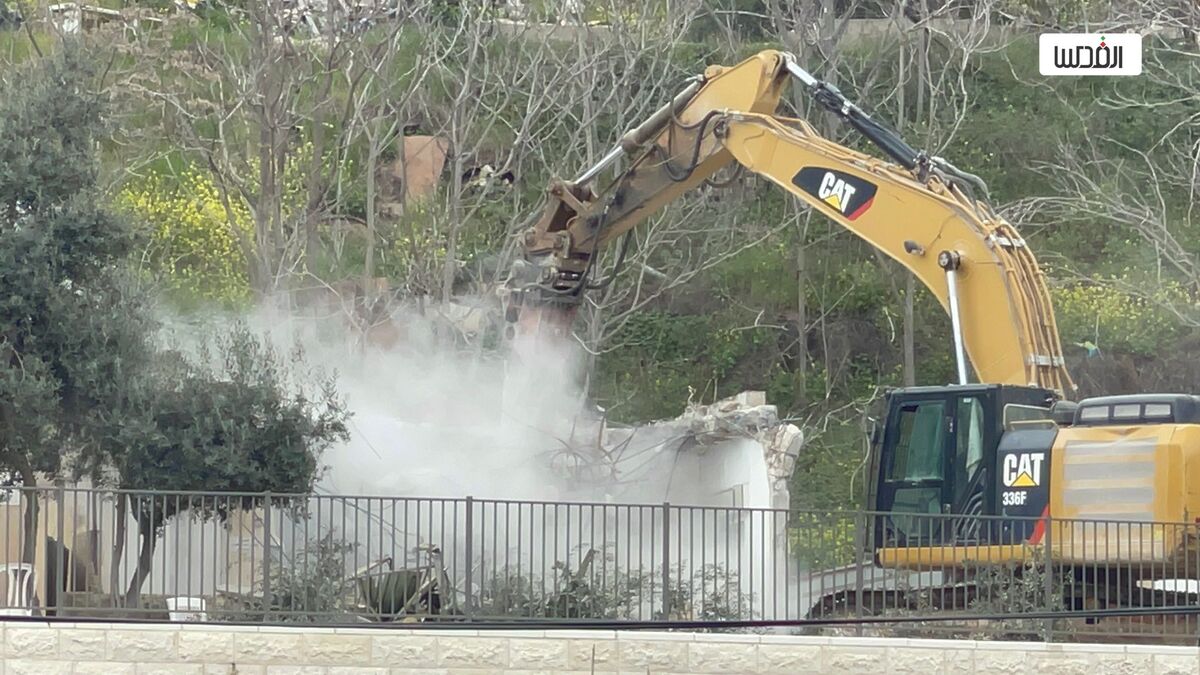
Today, Tuesday, the Israeli occupation forces began demolitions and issuing warnings in the West Bank.


In Salfit, Israeli bulldozers demolished two homes owned by citizens Muhammad Khaled Sabra and Alaa Mahmoud Barakat in the area known as "Al-Buq'an," despite the fact that the two homes had been inhabited for approximately seven years.


The occupation authorities had delivered notices to dozens of citizens in the town to demolish their homes during the past period, as part of an ongoing policy targeting the Palestinian presence in Area C.


In Bethlehem, the occupation forces demolished a 150-square-meter home belonging to Issam Bassem Manasra, and prevented him from removing some of his furniture and contents.


The Israeli occupation forces stormed the village and took up positions in the "Sarbala" area on the western side, in preparation for demolishing the house.


In Ramallah, occupation bulldozers demolished a wedding hall located south of the town of Beit Liqya, owned by Khaldoun Asi.


This morning, Tuesday, the occupation forces delivered two demolition notices to two residential buildings in the village of Deir Ibzi', west of Ramallah.


Local sources reported that the two facilities that were notified of demolition belong to Faisal Wajeeh Tanib and Mohammed Sarhan Mansour Karajah.


She added that the Tanib facility is a five-story residential building inhabited by several families and contains several shops, while the Karaja building consists of two floors and several shops.

PALESTINE

Tue 08 Apr 2025 10:09 am - Jerusalem Time

A large-scale arrest campaign in the West Bank

Israeli occupation forces launched a massive arrest campaign in the West Bank at dawn on Tuesday morning.


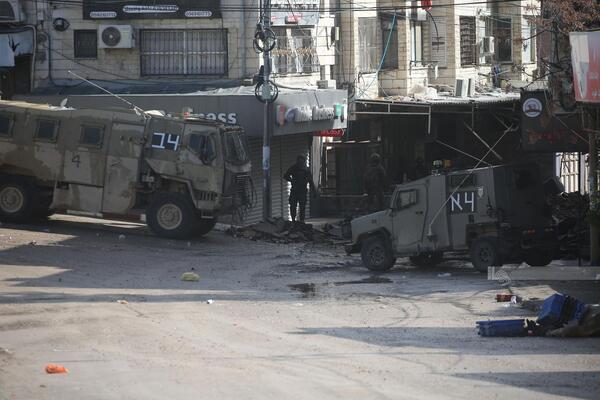
In Tubas, occupation forces stormed the city with several military patrols, followed by reinforcements accompanied by two bulldozers, one of which was a tracked vehicle.


Infantry and sniper forces were also deployed in several neighborhoods of the city, amid intense low-altitude reconnaissance drone flights.


The director of the Prisoners Club in Tubas, Kamal Bani Odeh, reported that occupation forces began raiding several citizens' homes and ransacking their contents, arresting 25 citizens from their homes in the city.


In Nablus, armored occupation forces stormed the central area of the city and surrounded a house near the Evangelical Hospital.


Later, an explosion was heard and fires were seen raging inside the besieged house. Fire engines were prevented from approaching to extinguish the blaze.


At dawn today, the occupation forces stormed the eastern part of the city, raided homes in Balata al-Balad to the east, and arrested citizens Izz al-Din Dweikat and Nour Dweikat.


The occupation forces also raided the village of Rujeib, evacuated a house of its residents, and arrested three brothers: Rami, Nour, and Amir Muhammad Salman, after searching their home.


In Bethlehem, the occupation forces arrested Ayoub Adnan Subaih (19 years old) from Harmalah, Taha Saeed Al-Arouj (23 years old), Abdul Rahman Saeed Al-Arouj (24 years old), Muntaser Salman Al-Arouj (23 years old), Ahmed Muhammad Al-Arouj (25 years old), Issa Yassin Al-Arouj (26 years old), and Jaafar Abdullah Al-Arouj (38 years old), after raiding and searching their families’ homes.


In Ramallah, the occupation forces arrested the young man, Muhammad Marwan Khudair, after raiding his home in the town of Beitunia.


In the same context, occupation forces raided several homes during their raids on the towns and villages of Ein Arik, Deir Bazi', Kharbatha Bani Harith, Bil'in, and Beit Liqya, west of Ramallah.


In Hebron, occupation forces raided the town of Beit Awa and arrested three citizens: Diaa Ismail Masalma, Yousef Abdel Hadi Masalma, and Qasim Osama Masalma, after searching their homes and ransacking their contents, before taking them to an unknown location.


The occupation forces also raided the Qaa al-Hara and Abu Hashem neighborhoods in the town, searched a number of homes, ransacked their contents, and arrested former prisoner Muhammad Ghazi Issa Zaqeq (23 years old), taking him to an occupation army camp inside the so-called "Karmei Tzur" settlement, north of Hebron.


Clashes erupted in the town of Beit Ummar, during which Israeli occupation forces fired live and rubber-coated metal bullets, sound bombs, and tear gas, causing a number of civilians to suffer from suffocation and were treated on the spot.


The occupation forces also set up several military checkpoints at the entrances to the city of Hebron, its towns, villages, and camps, obstructing the movement of citizens.

PALESTINE

Tue 08 Apr 2025 10:05 am - Jerusalem Time

7 Palestinians killed, including a journalist, in the Gaza Strip

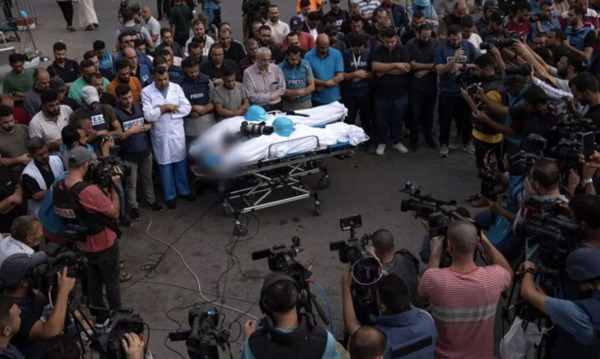
Journalist Ahmed Mansour was killed, along with six other civilians, early Tuesday morning, as a result of an Israeli bombardment that targeted their home in the Beit Lahia project in the northern Gaza Strip.


Medical sources announced the death of fellow journalist Ahmed Mansour, who succumbed to his severe wounds and burns after Israeli aircraft targeted a journalists' tent near Nasser Medical Complex the night before last.


In the same context, local sources reported the martyrdom of six citizens from the Ayesh family, as a result of an Israeli bombardment that targeted their home in the Beit Lahia project. They are:

  • Youssef Abdel Rahim Ayesh
  • Abdul Rahman Abdul Rahim Ayesh
  • Abdul Rahim Muhammad Ayish
  • Masa Abdel Rahim Ayesh
  • Musk Abdul Rahim Ayesh
  • Maha Abdel Rahman Ayesh

It's worth noting that the occupation forces have continued their aggression on the Gaza Strip since October 7, 2023, resulting in the deaths of 50,752 citizens, the majority of whom are children and women, and the injury of 115,475 others, according to a preliminary toll. Ambulance and rescue crews remain unable to reach a large number of victims trapped under the rubble and in the streets.

PALESTINE

Mon 07 Apr 2025 11:54 pm - Jerusalem Time

Hamas: Smotrich's statement is an explicit declaration of starvation on the Palestinians of Gaza.

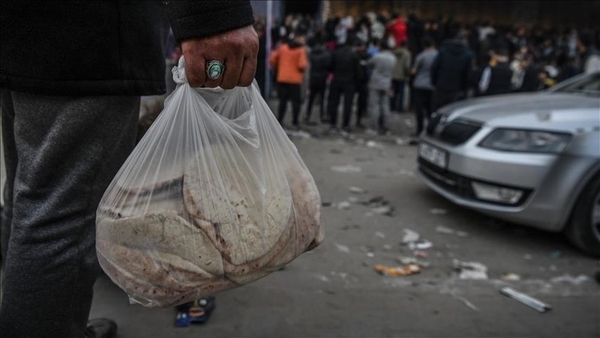
Hamas on Monday considered Israeli Finance Minister Smotrich's statement that Tel Aviv would not allow "a single grain of wheat" into the Gaza Strip "an explicit declaration of a starvation policy against more than two million Palestinians in the Strip."


Hamas said in a statement that Smotrich's statement "represents an explicit declaration by the extremist occupation government to impose a policy of starvation on more than two million Palestinians in the Gaza Strip, in a full-fledged war crime being committed before the eyes and ears of the world."


Commenting on a Hebrew press report claiming that the Israeli military was preparing to resume aid deliveries to Gaza even without a prisoner exchange agreement, Smotrich acknowledged earlier Monday that Tel Aviv was using starvation as a weapon against the Palestinians, asserting, "Not even a single grain of wheat will enter the Gaza Strip."


Hamas added in its statement, "This is accompanied by brutal crimes and behavior that reflect the official directions announced by the occupation government, the latest of which was the bombing of a food distribution center for displaced people in Khan Yunis, which resulted in the deaths of seven of them, in a new crime added to the series of massacres against innocent civilians."


She said, "This statement comes more than a month after the Gaza Strip was completely closed to all basic supplies, including food, water, medicine, fuel, and medical supplies, while the occupying army continues to commit daily massacres against defenseless civilians, whether in residential neighborhoods, tents, hospitals, or displacement centers."


On March 2, Israel closed the Gaza Strip's crossings to all vital supplies, preventing the entry of humanitarian, relief, and medical aid into the Strip. This has led to an unprecedented deterioration in the humanitarian situation, according to local government and human rights reports.


In its statement, Hamas called on the leaders of Arab and Islamic countries, the United Nations, and its agencies to "take serious steps to halt the starvation and blockade imposed on the Gaza Strip, activate international accountability mechanisms, and prosecute the criminal occupation leaders who openly commit blatant violations of international law day and night."


She stressed the need to heed the warnings of international humanitarian organizations, most notably the joint statement by six UN agencies, "which warned of an unprecedented humanitarian catastrophe facing the population of the Gaza Strip, who are facing bombardment and starvation, and emphasized the need to deliver humanitarian aid into the Strip immediately."


Earlier on Monday, the Hebrew newspaper Yedioth Ahronoth reported that the Israeli military was preparing "within weeks" to resume allowing aid into Gaza even without a prisoner exchange agreement with Hamas. This is due to fears that leaders could face legal action for genocide against Palestinians.


Smotrich commented: "If this is true, it is surprising that the Israeli army is speaking to us through the press, and not even a single grain of wheat will enter the Strip."


The Israeli occupation army responded to the report in a statement, saying that it "operates in accordance with the instructions of the political echelon," adding, "Israel does not and will not transfer any type of aid to Hamas."


In early March, the first phase of a ceasefire and prisoner exchange agreement between Hamas and Israel concluded. The agreement, which took effect on January 19, 2025, was brokered by Egypt and Qatar and supported by the United States.


While Hamas has adhered to the terms of the first phase, Israeli Prime Minister Benjamin Netanyahu, who is wanted by the International Criminal Court, has reneged on the start of the second phase in deference to extremists in his ruling coalition, according to Hebrew media.

PALESTINE

Mon 07 Apr 2025 11:35 pm - Jerusalem Time

Palestinian Ministry of Foreign Affairs welcomes the convening of the Egyptian-Jordanian-French tripartite summit and its outcomes in support of the rights of our people.

The Ministry of Foreign Affairs and Expatriates welcomed the tripartite summit held in Cairo at the invitation of Egyptian President Abdel Fattah el-Sisi, with the participation of Jordanian King Abdullah II and French President Emmanuel Macron. The summit discussed the dangerous developments facing the Palestinian cause, particularly the genocidal war being waged in the Gaza Strip.


The Ministry commended the outcomes of the summit and the positions taken at the press conference, which called for an end to the war of genocide and displacement, an immediate ceasefire, the opening of the crossings, and the resumption of sustainable aid flows to our people in the Gaza Strip. The Ministry emphasized the danger of continued Israeli aggression to regional stability and the need to work towards a political horizon to resolve the conflict based on the principle of a two-state solution.


The Foreign Ministry said in its statement: “While we appreciate the positions of the two sister countries, Egypt and Jordan, and the friendly country, France, in adopting and supporting the outcomes of the recent Arab Summit and the Arab Palestinian Reconstruction Plan, rejecting the displacement and annexation plans in the Gaza Strip and the West Bank, including Jerusalem, condemning the resumption of the brutal Israeli bombing, and calling for enabling the institutions of the State of Palestine to carry out their duties in the Gaza Strip and unify the Palestinian geography, we affirm our full support for the French-Saudi efforts aimed at organizing a UN conference on the two-state solution next June, and the reconstruction conference in Cairo.”


The Ministry also welcomed the upcoming field visit by the Egyptian and French presidents to the city of Arish, near Rafah, stressing the importance of opening the crossings and allowing the entry of humanitarian aid.


At the conclusion of its statement, the Foreign Ministry called on France to translate these positions into collective or individual European recognition of the State of Palestine and to support Palestinian and Arab efforts to achieve full membership for the State of Palestine in the United Nations.

ARAB AND WORLD

Mon 07 Apr 2025 11:30 pm - Jerusalem Time

Trump acknowledges US-Iranian talks, says Gaza war will end soon

US President Donald Trump announced on Monday that the United States has begun direct talks with Iran regarding its nuclear program, noting that these talks will continue next Saturday.


Trump emphasized that reaching an agreement with Iran is a favorable option for everyone, saying, "We are having direct talks with Iran, and they have begun. They will continue on Saturday. We have a very important meeting, and we will see what happens. I think everyone agrees that reaching an agreement would be better."


Netanyahu said that if there is a diplomatic solution with Iran to end its nuclear efforts, that would be a good thing.


He added that he spoke with Trump about Gaza and Syria, noting that they discussed ways to avoid conflict in the region.


Netanyahu, who is visiting the White House today for the second time since President Trump's inauguration, added, "We don't want Türkiye to exploit the situation in Syria," stressing that work on another agreement is continuing.


Trump also announced that the Gaza war would end "in the near future." He said, "I would like to see the war end, and I think it will end sometime, not in the distant future. We have a hostage problem right now. We're trying to get them released... It's a long process. It shouldn't be too long."


Speaking to reporters after meeting with US President Donald Trump, Prime Minister Benjamin Netanyahu said Israel was working on a new deal for the release of hostages and a ceasefire in Gaza. "We hope it will succeed," he said.


Netanyahu affirmed their commitment to releasing all hostages and eliminating Hamas in Gaza.


He added that he also spoke with Trump about the US president's plan to transfer displaced Palestinians from Gaza during its reconstruction, which Netanyahu described as a "bold" vision, claiming that many Israelis are willing to accept Gazans.

PALESTINE

Mon 07 Apr 2025 9:32 pm - Jerusalem Time

6 UN organizations: What is happening in Gaza is a war that ignores human life

Six UN agencies have confirmed that what is happening in the Gaza Strip constitutes "warfare with complete disregard for human life."


This came in a joint statement on Monday by the United Nations Office for the Coordination of Humanitarian Affairs (OCHA), the United Nations Children's Fund (UNICEF), the World Food Programme (WFP), the World Health Organization (WHO), the United Nations Relief and Works Agency for Palestine Refugees (UNRWA), and the United Nations Office for Project Services (UNOPS).


In a joint statement, the six UN agencies explained that the new Israeli "evacuation orders" have once again displaced hundreds of thousands of Palestinians, and that there is no longer a safe place for people to seek refuge.


The statement added that at least 408 humanitarian workers have lost their lives since October 2023, including 280 UNRWA staff.


The statement continued: "We are witnessing acts of war in Gaza that demonstrate a complete disregard for human life."


The statement called on world leaders to take urgent, decisive, and effective action to ensure the implementation of the principles of international humanitarian law.


The organizations also called for the protection of civilians, the release of prisoners, the provision of aid, and the re-establishment of a ceasefire.


On March 1, the first phase of a ceasefire and prisoner exchange agreement between Hamas and Israel, which had been in effect since January 19, ended. Israeli Prime Minister Benjamin Netanyahu disavowed the start of the second phase.


Since resuming its genocide in Gaza on March 18, 2025, Israel has killed 1,391 Palestinians and injured 3,434 others, most of them children and women, as of Sunday morning, according to the Gaza Ministry of Health.


With full American support, Israel has been committing genocide in Gaza since October 7, 2023, leaving more than 166,000 Palestinians dead and wounded, most of them children and women, and more than 11,000 missing.

PALESTINE

Mon 07 Apr 2025 9:21 pm - Jerusalem Time

A young man was injured by Israeli occupation forces' bullets in Shuqba, west of Ramallah.

A young man was shot by Israeli occupation forces on Monday evening in the village of Shuqba, west of Ramallah.


According to local sources, Israeli occupation forces stormed the village, raided a house, positioned snipers on its roof, and fired live and rubber-coated metal bullets at residents. A young man was injured in the leg by live bullets, and was taken to hospital for treatment.

ARAB AND WORLD

Mon 07 Apr 2025 9:02 pm - Jerusalem Time

The White House announced the cancellation of a press conference between Trump and Netanyahu.

The White House announced the cancellation of a joint press conference scheduled for today between US President Donald Trump and Israeli Prime Minister Benjamin Netanyahu in Washington, DC.


He added in a statement on Monday that the joint press conference scheduled for President Trump for today "will not take place," and instead the two sides will answer journalists' questions inside the Oval Office.


The White House did not provide any explanation for the cancellation of the joint press conference between Trump and Netanyahu.

On Sunday, Netanyahu traveled from Hungary to the United States to meet with Trump.

PALESTINE

Mon 07 Apr 2025 8:37 pm - Jerusalem Time

Four injured, including an elderly woman and a child, in a settler attack on a village south of Hebron.

Four citizens, including an elderly woman and a child, were injured on Monday in an attack carried out by settlers in the village of Umm al-Khair in the Masafer Yatta area, south of Hebron, in the southern West Bank.


According to local sources, settlers from the Karmiel settlement and the Shimon outpost, built on private land in Masafer Yatta, attacked village residents while they were in their homes and lands, using clubs and stones, under the protection of occupation soldiers.


He explained that the attack resulted in injuries to young man Alaa Shaib Al-Hathalin, child Rashid Al-Hathalin, elderly woman Khadra Al-Hathalin, and another woman whose identity has not yet been determined. They were all transported to the hospital by Red Crescent crews for treatment, and their injuries were described as ranging from moderate to minor.


It should be noted that the village of Umm al-Khair is frequently subjected to attacks by settlers, as part of attempts to displace the indigenous population and expand the settlements built on their lands.

PALESTINE

Mon 07 Apr 2025 8:10 pm - Jerusalem Time

Journalists Syndicate: 209 journalists have been killed since the beginning of the aggression on Gaza and Jerusalem in March.

The Palestinian Journalists Syndicate condemned the heinous massacre committed by the occupation forces at dawn on Monday, targeting a tent designated for journalists near Nasser Hospital in Khan Yunis, south of the Gaza Strip. This resulted in the martyrdom of journalists Ahmed Mansour and Hilmi Al-Faqawi, and the serious injury of journalists Ahmed Al-Agha, Mahmoud Awad, Mohammed Fayeq, Abdullah Al-Attar, Majed Qudaih, and Ihab Al-Bardini.


The Syndicate clarified, in a statement issued by the Freedoms Committee, that with the deaths of Mansour and Al-Faqawi, the number of journalists killed since the beginning of the Israeli aggression on October 7, 2023, has risen to 209, according to what the committee documented.


The statement noted that last March witnessed a dangerous escalation against journalists, with seven journalists killed in the Gaza Strip, including six during field coverage and one inside his home. Eight members of journalists' families were also killed in direct attacks on their journalist children.


In occupied Jerusalem, the Syndicate documented 11 summonses for investigation against journalists, in addition to 11 bans issued against journalists from the vicinity of Al-Aqsa Mosque and the Old City, as part of a systematic policy of restrictions aimed at preventing press coverage of Israeli violations.


The report indicated that violations during March included approximately 102 crimes and attacks against journalists and media personnel in the West Bank and Gaza Strip, including 40 cases of detention and denial of coverage, 12 cases of direct shooting resulting in two injuries, and 7 cases of arrest, some of which were released, while others remain in detention.


The statement also documented seven cases of physical assault, the destruction of three homes belonging to journalists, raids on their homes, confiscation of their equipment, the imposition of house arrest on some, and the banning of newspapers from entering Jerusalem, in addition to repeated incitement and threats.


At the end of its statement, the Syndicate affirmed its continued efforts, along with international human rights and trade union organizations, to ensure the protection of Palestinian journalists, hold the occupation accountable for its crimes, and ensure that perpetrators do not escape punishment.

ARAB AND WORLD

Mon 07 Apr 2025 7:46 pm - Jerusalem Time

The Israeli ambassador to Ethiopia was expelled from the African Union summit amid widespread protests.

In a remarkable diplomatic incident, the Israeli ambassador to Ethiopia was expelled from the African Union headquarters in Addis Ababa during the union's annual meeting, following strong objections from several African countries refusing his attendance.


This expulsion came against the backdrop of mounting African anger over Israeli occupation policies, particularly in light of the ongoing aggression on the Gaza Strip.


The Israeli ambassador attempted to attend one of the sessions, but was met with categorical refusal from representatives of member states, which led to his removal from the hall under heavy security.


This incident reflects the continuing tensions between Tel Aviv and the African Union, which condemned the war on Gaza at its last summit and supported South Africa's lawsuit against the occupation before the International Court of Justice, amid growing African support for Palestinian rights.

PALESTINE

Mon 07 Apr 2025 7:29 pm - Jerusalem Time

Dead in Israeli airstrikes on Khan Yunis and Rafah

Four civilians were killed and others injured Monday evening in sporadic Israeli airstrikes on areas in the cities of Khan Yunis and Rafah in the southern Gaza Strip. This brings the death toll since dawn today to more than 45, including children and women.


According to local sources, citizen Mamdouh Kamel Shurab was killed after being targeted by a drone near the car market south of Khan Yunis, while citizen Muhammad Saeed Abdul Shafaq Al-Abadlah was killed in another drone strike in the Al-Iqlimiya area southwest of the city.


Citizen Nashat Ahmed also died of wounds he sustained last night in a bombing that targeted a house in the Al-Amal neighborhood in Khan Yunis. Medical sources reported that the body of martyr Mohammed Al-Abadlah arrived at Nasser Medical Complex after he was targeted by Israeli aircraft in the Al-Shakoush area northwest of Rafah.


In a related development, two civilians sustained varying degrees of injuries in a drone strike targeting a motorcycle east of Jabalia, north of the Gaza Strip.


According to medical sources, the death toll in the Gaza Strip has risen to more than 45 since dawn today, amid escalating Israeli aggression.


It's worth noting that the occupation forces have continued their aggression on the Gaza Strip since October 7, 2023, resulting in the deaths of 50,752 citizens, the majority of whom are children and women, and the injury of 115,475 others, according to a preliminary toll. Ambulance and rescue crews remain unable to reach a large number of victims trapped under the rubble and in the streets.

ARAB AND WORLD

Mon 07 Apr 2025 6:26 pm - Jerusalem Time

Bashar al-Masri sued in Washington for aiding Hamas

Nearly 200 family members of the victims of the October 7, 2023, attack filed a lawsuit in federal court in Washington, D.C., on Monday against Bashar al-Masri, a Palestinian-American billionaire "linked to the Trump administration," whom they allege aided and encouraged Hamas to carry out the attack.


The lawsuit accuses Al-Masry of intentionally cooperating with Hamas to develop commercial properties in Gaza that concealed Hamas's complex network of military tunnels and provided them with electricity. The lawsuit seeks damages under the Anti-Terrorism Act.


It is noteworthy that Al-Masry provided advice and traveled by private plane to meet with Adam Boehler, US President Donald Trump's former nominee for special presidential envoy for hostage affairs and the current special envoy at the US State Department. He conducted unprecedented direct negotiations with Hamas last March, according to a US statement issued by the White House on March 6, after Israeli media reports revealed the meeting.


The lawsuit alleges that "as chairman of the Palestine Development and Investment Company, Al-Masri made deals to develop and operate hotels, an industrial zone, and other businesses in Gaza, including directly with Hamas officials, according to the lawsuit and data from the company's website. These businesses included the Al-Mashtal Hotel, which the IDF identified in 2014 as a Hamas rocket launching site, and which the lawsuit alleges was renovated by Al-Masri's company under a contract with a Hamas-affiliated construction company." The lawsuit also alleges that Hamas used the hotel for terrorist operations before, during, and after the October 7 attack.


According to the Jewish Press Service (JNS), Gary Ossen, one of the lead attorneys representing the families against Masri, told the agency that this cycle of repeated reinvestment in properties used by Hamas represents a “continuing pattern” of complicity with the terrorist group on the part of Masri and the other defendants.


“When hotels are damaged by Israeli airstrikes or the Gaza industrial zone is damaged, they not only stop investing, but they continue to rebuild the infrastructure,” Ossen said. “If someone doesn’t want to engage with or support Hamas, they’re supposed to say, ‘Well, they’re firing rockets out of the tunnels at the Al-Mashtal Hotel, maybe we should get out of that investment.’ But no, according to the lawsuit, not only do they go back and renovate and invest more money and more of other people’s money, but they help Hamas with its tunnels again.” “Nothing changes.”


Al-Masry's office denied the allegations in a statement sent to the right-wing Jewish News Agency (JNS), saying it would strive to have them dismissed in court.


The statement said: "Bashar Masri is a successful and respected Palestinian-American businessman and leader. He was shocked to learn through the media of the baseless complaint filed today, alleging false allegations against him and some of the companies with which he is associated. Neither he nor these entities have ever engaged in illegal activities or provided support for violence and extremism."


"Bashar al-Masri has been involved in development and humanitarian work for decades," the statement added. "His continued efforts to promote regional peace and stability have been widely appreciated by the United States and all stakeholders in the region. He categorically opposes violence in all its forms."


It's worth noting that Bashar Masri was born in Nablus to a prominent and wealthy Palestinian business family. He was educated in Egypt and the United States, graduating from Virginia Tech and eventually becoming a US citizen. In the mid-1990s, he returned to Ramallah and established a variety of business ventures.


Through his company, investments, or control of other entities, Al-Masri manages or owns stakes in some of the largest Palestinian companies, with a market capitalization of hundreds of millions of dollars on the Palestine Stock Exchange in Nablus.


In 2018, Fortune magazine ranked him 38th on its list of the world's greatest business leaders, and he is a member of the Harvard Kennedy School's Dean's Council.


The lead attorney in the lawsuit, Ossen, told JNS that Masri's dealings with Hamas officials in the period leading up to October 7, 2023, are inconsistent with how he presents himself to the world as a legitimate Palestinian businessman.


“It’s hard to believe the extent of the property owners’ complicity,” Ossen said. “The fact that Masri was in Gaza three weeks before October 7, promoting his green technology at the hotel, presenting himself and his companies as saving the environment and helping Palestinians get regular electricity—while at the same time, some of the solar electricity was being diverted to Hamas tunnels.” He added, “In my opinion, there’s a level of duplicity in all of this that’s irreconcilable with that moderate outward appearance.”


According to the case, Al-Masry's alleged direct dealings with Hamas include a $60 million solar energy project in Gaza announced by his company in September 2023, and a 2022 agreement with Abdel Fattah Al-Zarii, the deputy minister of economy in the Hamas government.


The Israeli occupation army assassinated Al-Zarii in an airstrike in 2024, saying he served in Hamas's weapons manufacturing division and played a role in the seizure of humanitarian aid.


It is unclear how Masri became associated with Trump's envoy, Buehler, although Masri has extensive business dealings with Qatar, including a Qatari investment of approximately $1 billion in one of Masri's real estate development projects north of Ramallah.


Before filing the lawsuit, JNS said it had asked the State Department for details about al-Masry's connections to Boehler, including travel by private plane and whether he had advised any other administration officials. A State Department spokesperson told the agency, "We work closely with our partners and external intermediaries in our efforts to secure the release of Americans detained abroad." He added, "We have no additional details to share about Special Envoy Boehler's travel."


US President Donald Trump nominated Boehler as special presidential envoy for hostage affairs last January, but Boehler's nomination was withdrawn following direct negotiations with Hamas in March. Boehler remains a special envoy at the State Department.


In a social media post in December, before taking office, Trump described Boehler as a key negotiator in the Abraham Accords, which normalized relations between Israel and several Arab countries.


It's worth noting that Boehler was also a college roommate of Trump's son-in-law, Jared Kushner, and served as CEO of the U.S. International Development Finance Corporation, a federal agency, during the first Trump administration. In 2020, Boehler announced that Masri would serve on the DFC's advisory board, a position he held until 2023.

PALESTINE

Mon 07 Apr 2025 5:43 pm - Jerusalem Time

Mustafa discusses with a number of economic experts ways to overcome the occupation's deductions from clearance funds.

Prime Minister Mohamed Mustafa discussed with a number of economic experts, in the presence of relevant ministers, ways to overcome Israeli deductions from Palestinian tax revenues (clearance), and to consider solutions to address the stifling crisis facing public finances.


Discussions focused on exploring economic alternatives, ways to improve and develop the financial system, and reducing reliance on the Israeli side due to the relationship imposed by the occupation, in light of escalating Israeli deductions from Palestinian tax revenues.


The attendees also discussed practical steps with international partners to address the imbalances in the Paris Economic Protocol, stressing the need to combat smuggling and tax evasion, which cost the national economy losses exceeding one billion shekels annually.