OPINIONS

Wed 16 Apr 2025 10:58 am - Jerusalem Time

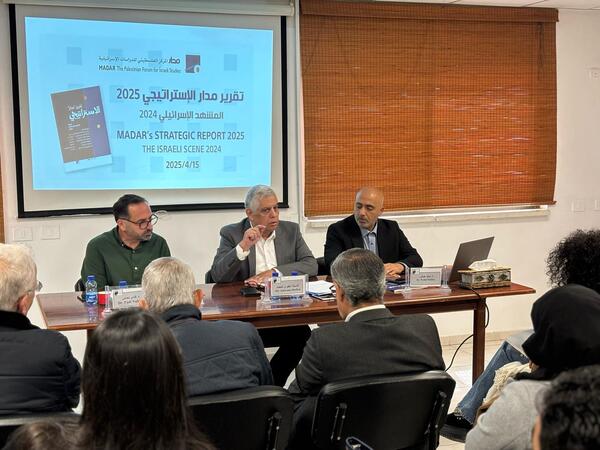
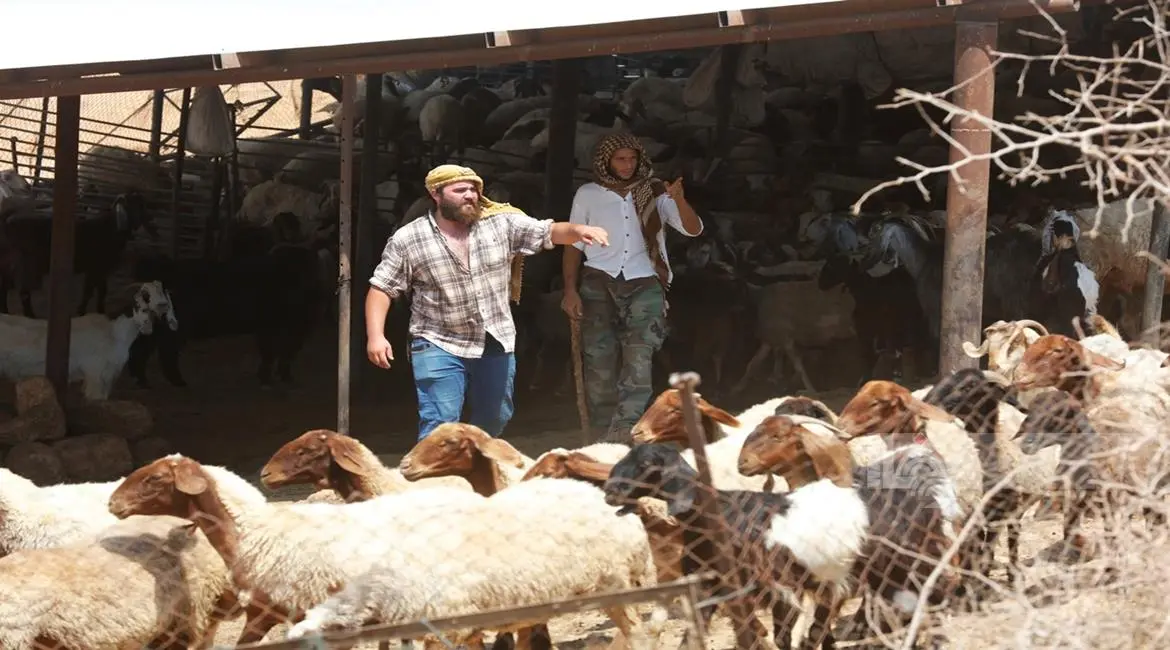
Rabbis: How Do They Control Israel's Fate?

Translation for "Alquds" dot com

Translation for "Alquds" dot com

Opinion Writer

By Muhammad Shaaban Ayoub


In March 2024, Rabbi Eliyahu Mali, head of the Shirat Moshe religious school in Jaffa, called for "the killing of all residents of Gaza, including women and children," considering it a response to the teachings of Jewish law. He also considered the war on Gaza "religious," demanding that no one be left alive in the Strip.

This fatwa, which Eliyahu considered consistent with Jewish law, and other fatwas shed light on the history of rabbis and the rabbinate institution in Israel, and how, over the course of more than 100 years, they have formed an extreme right-wing movement that has, over time, become a real force controlling Israel from behind the scenes!

How has the rabbinate exploited secular Zionist movements to achieve its goals? How did it emerge? What are the most prominent events of this religious Zionist movement in Israel's past and present?

Religious Zionism Exploits Secular Zionism!

During the second half of the nineteenth century, amidst the rise of movements seeking to persecute Jews on the European continent, a group of Jewish religious leaders known as "rabbis" emerged to establish intellectual movements aimed at inspiring Jews in Europe to envision a new future by seeking a safe haven.

These efforts extended over decades well beyond the mid-twentieth century, marking a turning point in the collective thinking of European Jews.

In this context, individual visions crystallized from prominent thinkers and rabbis, led by Zvi Hirsch Kalischer, Yehuda Alkalai, and Moshe Hess. With the contributions of these and others, they laid the foundations for projects that reshaped the concept of Jewish identity in the face of the existential challenges facing them in Europe. Rabbi Zvi Hirsch Kalischer (1795-1874), a German Orthodox Jew, is considered a pioneer of thought, predating the founder of political Zionism, Theodor Herzl, with his bold ideas. He presented a deeply rooted religious vision calling for Jewish settlement in Palestine, emphasizing that immigration to this land was not merely a practical option, but a spiritual duty that carried within it a divine mission. It is noteworthy that Kalischer adopted a syncretic vision that brought together the religious foundations and practical principles of the secular Zionist movement. This prompted him to join it, along with a group of religious Jews, such as Rabbi Moshe Hess and a number of pioneers of the "Lovers of Zion" movement, founded in 1881 in Tsarist Russia. These leaders were influenced by the millennium doctrine, which believes in the coming of the Messiah, the Savior, and his rule over the earth for a thousand years. At the same time, they refused to be content with passively awaiting the fulfillment of this prophecy. Instead, they proposed a revolutionary vision based on the establishment of a political entity in Palestine, which, as they envisioned it, would pave the way for the fulfillment of the divine promise through the power of the army and the state. This was an intellectual shift that changed the course of traditional Jewish thought.

In the context of the development of these ideas, 1898 witnessed the convening of a prominent Zionist conference in Russia, attended by 14 rabbis among the 140 delegates. Rabbi Isaac Jacob Reines united them under the umbrella of the "Mizrahi" bloc, which formed the nucleus of the first political party expressing religious Zionism.

This party called for active action to achieve Jewish sovereignty and establish "Israel" without being bound by the expectation of a Messiah, in stark contrast to the Orthodox Haredi vision, which linked the establishment of the state to a divine event coinciding with the end of history.

Thus, in Eastern Europe during the nineteenth century, where the ultra-Orthodox Jewish tradition dominated, linking the return to the "Promised Land" with the coming of the Messiah, religious Zionism emerged as an innovative, centrist movement seeking to reconcile religious faith and Zionist ambition. This movement, based on the concepts of the "Chosen People" and the "Promised Land," gained momentum among the "New Orthodox," driven by the vision of rabbis like Abraham Kook, considered the spiritual father of religious Zionism, who linked settlement in Palestine to repentance and divine salvation. The rabbis of religious Zionism, led by Kook (1865–1935), led intellectual efforts to stimulate Jewish immigration to Palestine, emphasizing that a Zionist could be religious, and a religious person a Zionist, without Zionism being purely religious in nature. Contrary to the traditional Jewish view that awaits divine intervention, Kook championed the idea that secularists are divine instruments for fulfilling the divine promise, even if they are unaware of it. This contributed to five major waves of immigration to Palestine before the establishment of "Israel."


Religious Zionism in the Shadow of the State of Israel

Following the establishment of Israel, religious Zionism strengthened its influence by penetrating official and popular institutions, such as the Chief Rabbinate, the Ministry of Religious Affairs, and the army. Every city or settlement had its own rabbi, and the military had its own.

Despite the initial reluctance of religious Jews to serve in the military for religious reasons, the 1965 settlement, supported by a religious edict by Rabbi Zvi Kook, which made military service a religious obligation, led to the integration of Torah study with military training in private schools, paving the way for religious Jews to integrate into the social and military fabric of the state. The 1967 war—which resulted in the occupation of Jerusalem, Hebron, the West Bank, the Golan Heights, and Sinai—marked a major turning point. Rabbi Zvi Kook, son of Rabbi Abraham Kook, viewed it as a divine victory that reinforced the religious value of the Holy Land. This vision led to the strengthening of settlements in the occupied territories.

Through this intellectual and historical development, religious Zionism, led by Abraham and Zvi Kook, was able to exploit secular Zionism as a tool to achieve religious goals, while strengthening its presence in military colleges and settlements. However, Israel's defeat in 1973 revealed new challenges.

The role of religious Zionism escalated with the founding of the Gush Emunim movement in 1974. In its founding document, it declared its commitment to "the salvation of the people of Israel and the world," becoming a primary driver of religious Zionism, transcending traditional Jewish trends. It strengthened its insistence on establishing settlements as a pillar for achieving the vision of religious Zionism, declaring in its founding document its commitment to "the salvation of the people of Israel and the world," becoming a primary driver of religious Zionism, transcending traditional Jewish trends. This movement led the settlements in the West Bank and Gaza with the support of prominent political figures such as Ariel Sharon. The movement gained the support of the Likud government after 1977, enabling it to establish settlements close to Palestinian communities.


However, as Gush Emunim's momentum declined in the 1980s, other settlement groups emerged, such as Elad and Lehava, which continued to Judaize Jerusalem and the West Bank, based on a religious-nationalist ideology that viewed settlement as a fulfillment of the biblical promise. However, the role of the rabbinate in the military and settlement spheres has become prominent. In 1948, Shlomo Goren established the "Military Rabbinate" as an institution that justified military operations against the Palestinians on religious grounds. Meanwhile, Mercaz HaRav, founded by Abraham Kook in 1924 and later run by his son, Zvi, is considered a stronghold of religious Zionism, fueling the settlement movement in the West Bank after 1967.

Growing Influence

In his article "Rabbinishing Authority in Israel and the Abyss of Holy War," British author Jonathan Kook argues that David Ben-Gurion granted Orthodox Jewish rabbis broad authority over personal status and the public sphere, strengthening their role in mobilizing youth through religious military schools supervised by the army to revive religious fervor. Indeed, religious schools (yishivot) play a crucial role in disseminating Talmudic values, influencing the Israeli social and political fabric through their graduates. He also demonstrates the educational role of these institutions and their impact on the political, military, and settlement spheres. The Sanhedrin movement is considered one of the most dangerous movements sponsored by the rabbinates in Israel, because it serves as the authority for Temple organizations and because of its calls for and public support for Jewish incursions into the Al-Aqsa Mosque.

The movement issued a judicial ruling in 2003 permitting these incursions, paving the way for its expansion from an individual movement to a collective one by 2006, leading to the performance of public rituals in the Al-Aqsa Mosque compound.

As author Maha Shahwan argues in her study "Rabbis, Kingmakers in Israel," if we want to understand how religious Zionism infiltrates and the role of rabbis as a dominant and entrenched force in Israel today, we can see it through its control of politics, the media, the judicial, and security institutions.

According to the author, this influence reflects a major shift in the orientation of religious Zionism, shifting from a focus on religious law to nationalism and the practice of politics. This is evident in prominent figures such as Naftali Bennett previously, and today with Bezalel Smotrich, Itamar Ben-Gvir, and others like them. As Saleh al-Naami points out in an article for Al Jazeera Net, in the military sphere, adherents of Religious Zionism command elite units such as Sayeret Matkal and Egoz, and constitute a significant percentage of combat unit and Shin Bet officers, representing 60% of Shin Bet officers and 40% of combat units.

This influence undoubtedly reflects the power of the rabbis, their roles, and their fatwas, which sometimes override government decisions. A study by Israel's Bar-Ilan University revealed that 90% of religious recruits prefer to obey the rabbis and give them precedence if they conflict with government policy.

For this reason, Israel is witnessing a significant rise in the influence of Religious Zionism, which has become the backbone of coalition governments, exploiting political divisions to strengthen its dominance over security, economic, and legislative decisions. Therefore, religious parties such as Shas and United Torah Judaism strongly influence the formation of governments and elections through rabbinic edicts, as happened when Rabbi Aharon Yehuda Steinman ordered the ultra-Orthodox parties to boycott Benjamin Netanyahu's government in 2014, leading to its collapse. Remarkably, these parties have the ability to impose significant financial and political demands, including funding for religious schools and social institutions, enabling them to bring down governments if their demands are not met, as happened with Ehud Barak's government in 1999 when Shas withdrew due to disagreements over powers and financial support.

This influence reflects the transformation of religious Zionism into a central political force, capable of influencing the stability of governments and directing Israeli policies.

The most prominent example of this is Netanyahu's current alliance with Smotrich and Ben-Gvir, two pillars of the religious Zionist movement and followers of rabbis in Israel. Their continued pressure to displace and reoccupy Gaza, in the process leading to one of Israel's longest-running wars on the Strip, which has lasted more than a year and a half.

The repeated incursions into Al-Aqsa Mosque, the accelerated arming of Israelis under Ben-Gvir's auspices in settlement areas in the West Bank, and their public discourse, especially that of Smotrich, about Israel's greater dreams of making Damascus part of Jerusalem, the necessity of annexing Jordan to Israel, and the imminent construction of the Temple on the ruins of Al-Aqsa Mosque, as he explicitly declared in a television interview with Israel's Channel 2. For all these reasons, rabbinic authorities in Israel, such as the Chief Rabbinate, established by Isaac Kook in 1921 under the British Mandate, constitute a dominant spiritual and legal force. They issue religious edicts (halakha) and define Jewish identity according to the Orthodox Jewish vision.

Israeli personal status law has adopted the rabbinic vision; for example, it refuses to recognize the Jewishness of those who convert outside the framework of Orthodox Judaism through civil conversions, as is the case in other countries. Recognition by the Chief Rabbinate is required first.

Deadly Fatwas!

For this reason, rabbinic edicts in Israel are gaining increasing influence, transcending the spiritual framework to influence political and military decisions, relying on inflammatory rhetoric that justifies violence against Palestinians. These edicts are often based on biblical or religious texts and enjoy legal protection that prevents them from being considered incitement, thus strengthening the rabbis' influence in decision-making. An investigation published by the Israeli newspaper Haaretz on December 19, 2015, indicates American support for rabbinic institutions calling for the destruction of Al-Aqsa Mosque and the killing of Arabs. This support is provided by tax exemptions to American Jewish organizations that fund these activities.

The rabbis' influence is centered on their control over religious and educational institutions financially supported by the Israeli government, along with the generous salaries they receive. Through these means, their fatwas (religious edicts) are widely disseminated among Israeli public opinion.

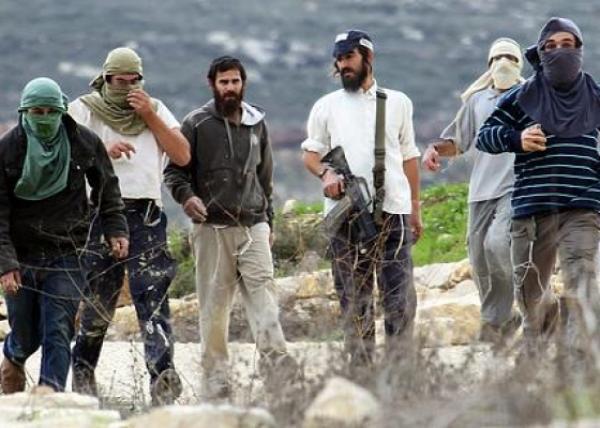
The rabbis' growing influence undoubtedly reflects the transformation of religious Zionism into a major political and social force, as rabbis exploit their role in mobilizing society and justifying the policies of the occupation. Remarkably, the previous investigation published in Haaretz also reveals the connection of these fatwas to schools such as the Rabbi Ginzenberg School, which incites violence. This profound influence is evident in the transformation of fatwas from individual directives into systematic actions that support extremism. In the 2009 book "The King's Doctrine," by Rabbis Yitzhak Shapira and Yossi Elitzur, we see the justification for the killing of "gentiles," including children, under the pretext of protecting Jews. The book asserts that such actions are not subject to state authority. These fatwas, which are disseminated through religious schools in West Bank settlements, have fueled extremist Israeli groups such as the "Hilltop Youth," who carry out organized attacks against Palestinians. Their influence is also evident in other organizations such as Lehava and Elad.


Rabbinical edicts have contributed to the intensification of raids on Al-Aqsa since the Sanhedrin decided to issue this order in 2003, paving the way for public Talmudic prayers by 2006, supported by groups such as the Temple Mount Faithful, which seek to impose Jewish sovereignty over the site.

This shift, described by Haaretz as having an impact on the mechanisms and systems of extremism, reflects the growing role of rabbis in mobilizing religious youth through institutions such as the Od Yossi Vehai seminary in Yitzhar, a hub for highly extremist Israeli organizations.

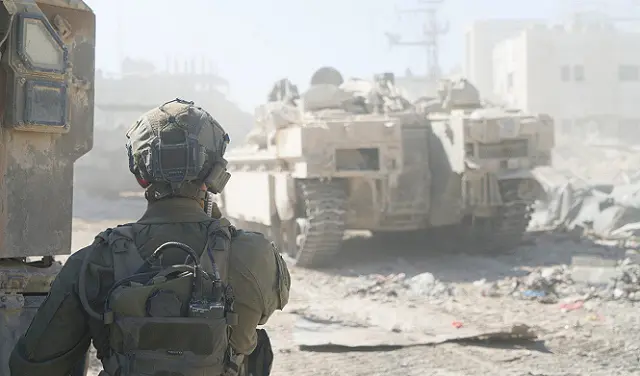
The extremist positions of many rabbis have been evident in the Gaza War since October 2023, such as the call by Rabbi Eliyahu Mali, head of the Shirat Moshe yeshiva in Jaffa, to kill all residents of Gaza, as we saw. Rabbi Shmuel Eliyahu issued a fatwa permitting the killing of women and children in Gaza, arguing that "Jewish law and morality do not prohibit it," as part of what he described as "the extermination of the enemy." Source: Al Jazeera

ARAB AND WORLD

Wed 16 Apr 2025 10:08 am - Jerusalem Time

The US military is preparing to reduce its forces in Syria.

Two US officials confirmed to Reuters that the US military intends to integrate its forces in Syria in the coming weeks and months, a move that could reduce the number of troops deployed there by about half.


Approximately 2,000 US troops are currently stationed in Syria, distributed across several bases, most of which are located in the country's northeast. These forces are participating in supporting local partners with the aim of preventing the resurgence of ISIS, which seized large areas of Syria and Iraq in 2014 before being subsequently defeated.


An official, who preferred to remain anonymous, indicated that this merger could result in a reduction in the number of US forces to only about 1,000.


For his part, another official confirmed the existence of a plan to reduce forces, but expressed doubts about such a large reduction, especially in light of the Trump administration's negotiations with Iran and regional tensions that have seen a US military buildup in the region.


The United States has recently sent aircraft, including B-2 bombers, warships, and air defense systems to bolster its forces in the Middle East.


Meanwhile, US Defense Secretary Pete Hegseth is conducting a global review of US military forces around the world.


The Israeli Broadcasting Authority revealed last January that senior White House officials conveyed a message to their Israeli counterparts indicating Trump's desire to withdraw some of his forces from Syria.


The commission explained that the withdrawal of US forces from Syria would raise grave concerns in Israel and would also impact Kurdish units in Syria.


For years, the United States had said it had approximately 900 troops in Syria, but last December, the Pentagon admitted that the number of these forces had risen to approximately 2,000, concentrated in eastern Syria.


The Washington Post reported that US soldiers are cooperating with Syrian Kurdish forces in a mission aimed at preventing the resurgence of ISIS and limiting Iranian influence in Syria. However, the future of this presence is in doubt because the new Syrian government has expressed its desire to see all foreign forces leave.


It's worth noting that Trump attempted to withdraw all troops from Syria in 2018 during his first term, prompting then-Secretary of Defense Jim Mattis to resign.

ARAB AND WORLD

Wed 16 Apr 2025 9:49 am - Jerusalem Time

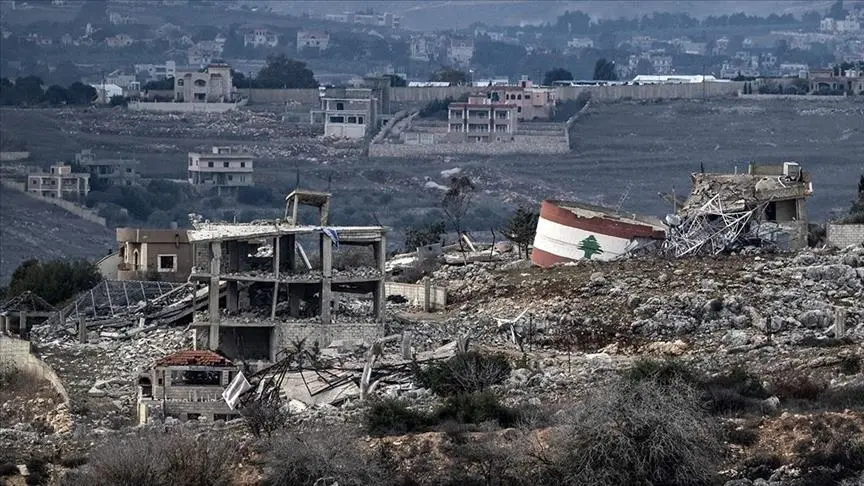
UN: Israel has killed about 71 civilians in Lebanon since the ceasefire last November.

The Office of the United Nations High Commissioner for Human Rights said that Israeli occupation forces have killed at least 71 civilians in Lebanon since the ceasefire came into effect on November 27 of last year.


UNHCR spokesperson Thamin Al-Khaitan said in a statement last night that the victims included 14 women and nine children, and that more than 92,000 people remain displaced.


Al-Khaitan said, "Israeli airstrikes hit a newly constructed medical center in Naqoura, completely destroying it and damaging two ambulances." He added that Israeli airstrikes have also hit several other towns in southern Lebanon this month, killing at least six Lebanese citizens.

PALESTINE

Wed 16 Apr 2025 9:38 am - Jerusalem Time

The Israeli army announces the assassination of the most prominent aide to the commander of Hamas's Gaza Brigade.

The Israeli army announced this morning, Wednesday, the assassination of Mahmoud Abu Hasira, the most prominent aide to the commander of the Hamas Gaza Brigade.

An Israeli military spokesman claimed that Abu Hasira served in an elite unit and participated in the infiltration of the Nahal Oz site during Operation Protective Edge in 2014, which resulted in the deaths of five soldiers.


"Over the past years, throughout the war and also during the preparations for October 7, Abu Hasira served as the personal assistant and right-hand man to the commander of the Gaza Brigade, Izz al-Din al-Haddad," the statement said.


OPINIONS

Wed 16 Apr 2025 9:35 am - Jerusalem Time

No to a renewed authority in the Israeli-American sense...and for the Palestinian people it means an independent state.

  Fawzi Ali Al-Samhouri

Fawzi Ali Al-Samhouri

Opinion Writer

Reform, which signifies progress and development that achieves strength, power, prosperity, well-being, and a free and dignified life, is a demand and a historical tradition for individuals, nations, and peoples. Whoever lags behind in the path of reform condemns himself, his society, and his country to backwardness and weakness. Therefore, reform, in our understanding, is part of human nature, and therefore requires confronting the challenges that stand, or may stand, as an obstacle to achieving our goals as peoples and governments.

In the previous article, I spoke about the lack of concern for the goals and meanings of the reform required from the Palestinian leadership and about the concept of renewed authority by the United States of America, its tool, the Israeli colonial entity, and their axis.

Despite the above, and by nature, this does not mean in any way hesitation, slowness, indolence, fighting corruption if it exists, or betting on others in addressing the challenges and obstacles that hinder the progress of the reform process that leads to achieving the goals of the Palestinian people’s struggle, the vanguard of the Arab people, at the forefront of which are freedom, independence, and the establishment of an independent Palestinian state with Jerusalem as its capital, and enabling the Palestinian refugees to return to their cities and villages from which they were forcibly expelled in 1948, after a series of brutal, bloody massacres and the destruction of hundreds of Palestinian villages and towns committed by Zionist Jewish gangs with the support, empowerment, and participation of the British colonial forces.

In the Palestinian case, the desired and self-required reforms differ from the challenges facing any country’s reform process. Among the challenges are:

First: The Palestinian people are threatened by their very existence on their homeland. The Israeli-American goal, the title of the colonial powers, is to uproot the Palestinian people from their historical homeland. The continuation of the Israeli colonial occupation authorities and their refusal to end their occupation of the occupied territories of the State of Palestine, which is internationally recognized by virtue of UN General Assembly Resolutions 181 and 19/67/2012, in implementation of dozens of resolutions issued by the Security Council, the General Assembly, and the International Court of Justice, is nothing but the most important title.

Second: Israeli control over the joints of Palestinian sovereign decisions (elections, air, land, and sea crossings, natural and non-natural resources, water, movement, security, the economy, and others).

Third: The interventions of Arab and regional regimes in the Palestinian issue, directly or through proxies, either to exploit the Palestinian issue as a card that serves their regime and justifies their oppression of their people, or to serve the Israeli-American project that aims to liquidate the Palestinian issue by undermining the Palestinian people’s right to freedom, independence, self-determination and the establishment of their independent state, and by abolishing the right of return for Palestinian refugees, as it represents a fundamental pillar in the conflict with the global Zionist movement.

Fourth: Transforming the Palestinian issue from the issue of a people struggling for freedom, independence and the establishment of their independent state by all internationally guaranteed means into a humanitarian and livelihood issue. The collusion, under various pretexts that lack logic, in an attempt to undermine the Palestinian legitimacy that holds onto the Palestinian constants represented by the Palestine Liberation Organization, the sole legitimate representative of the Palestinian people, which it has seized at all regional and international levels with the support and rallying of the Palestinian people inside and outside the occupied territories around its national struggle strategy, which was and still is a major obstacle to moving to the next aggressive expansionist phase of the Israeli-American project to subject the Arab region to its hegemony for decades to come, starting with Palestine and by exerting pressure on Arab countries to push them to practically abandon their support for the struggle and steadfastness of the Palestinian people in their homeland. The drying up of the financial capabilities of the Palestine Liberation Organization and the Palestinian Authority, the civil executive body concerned with managing the civil affairs of the Palestinian people inside the occupied territories, and participating with good or bad intentions, is nothing but an example of targeting and pressure to subjugate the Palestinian national will to steadfastness and push them to leave their homeland in the context of the ethnic cleansing war that we are currently witnessing in the Gaza Strip.

In light of the Palestinian strategy approved by the Palestinian National Council with the participation of all Palestinian forces within the framework of the Palestine Liberation Organization and approved implicitly and practically by forces outside the framework of the Organization and the institutions of the Palestine Liberation Organization to establish an independent Palestinian state with Jerusalem as its capital on the borders of June 4, 1967, Palestinian reform, that is, taking all measures and procedures to put the Palestinian house in order in a way that strengthens the unity and struggle of the Palestinian people, “taking into account the large gaps in the balance of power with the Israeli enemy,” by all available legal, popular and political means, with Arab, Islamic and African support, and from the Non-Aligned Movement and all friendly countries of the world that believe in the values of justice, freedom and equality and in the right of all peoples of the world to self-determination and decolonization, has become urgent in confronting and confronting the Israeli-American conspiracy that targets all Palestinians as a prelude to targeting Arab and Islamic national security in its comprehensive concept:

▪︎ Strengthening the independent Palestinian decision, and what this requires in terms of rejecting all forms of political, financial and economic pressures, regardless of their source or objectives, that undermine the rights of the Palestinian people, their struggle, their determination and their will to pursue their national project towards freedom, independence and the establishment of their independent state with Jerusalem as its capital.

▪︎ Strengthening Palestinian legitimacy represented by the Palestine Liberation Organization to remove the pretexts of the artificial Israeli entity and those who support it for not ending its occupation of the Palestinian territories in implementation of international resolutions related to the Palestinian issue. The political and geographical division that followed the military decision carried out by Hamas in the Gaza Strip has become an urgent national demand to end the political and geographical divisions, freeze all forms of internal disputes, and unite around the interim goal approved by the Palestinian National Council in 1974, and confirmed by the rest of the sessions to establish the Palestinian state in accordance with international resolutions.

▪︎ Developing an action strategy that can be implemented immediately. This requires all factions and forces to assume their executive responsibilities in accordance with the comprehensive strategic vision by mobilizing all forms of political and economic capabilities to confront the forced displacement conspiracy and confront the crimes of settlers by forming popular committees throughout cities, villages, and neighborhoods to protect civilians and their property, strengthening their steadfastness.

▪︎ Forming a working group to communicate with global and regional powers and blocs to exert all forms of pressure on the Security Council to carry out its duties and compel the Israeli colonial occupation authorities to implement the resolutions issued by the General Assembly, noting that the General Assembly’s resolutions are binding and not merely decorative, and in accordance with the United Nations Charter, which stipulates that the Security Council acts as an agent for the General Assembly in implementing its resolutions and recommendations without duplication or selectivity.

The reform we seek is one based on strengthening the steadfastness and struggle of the Palestinian people and the free choice of their leaders in accordance with the Charter of the Palestine Liberation Organization until the end of the Israeli colonial occupation of the territories of the occupied and internationally recognized Palestinian state. Then, free democratic elections will be held in an independent state that will produce, by popular will, the leadership of the independent Palestinian state with Jerusalem as its capital.

As for the renewed authority, it does not mean anything to the Palestinian people inside and outside the occupied territories except an independent state, and it is not the renewed authority that means to the Americans and Israelis acceptance of the Israeli-American plan to deprive the Palestinian people of establishing their independent state and liquidate the right of Palestinian refugees to return to their cities and villages from which they were forcibly expelled in 1948.

As for good governance, its first components are freedom, independence, and liberation from the yoke of the racist, terrorist Israeli colonizer.

The first thing America should do, from its position as a world leader and a country that claims to be committed to consolidating international peace and security and upholding the values of democracy and human rights, is to compel Israel to end its occupation of the occupied Palestinian and Arab territories and to take punitive measures against the leaders of the artificial Israeli entity for threatening international peace and security. It should also end relations with a government some of whose ministers call for bombing the Palestinian people with nuclear weapons and support a government headed by a person who is being tried on charges of corruption, war crimes and genocide before the International Criminal Court. This is because of the repercussions this has on America’s standing on the international stage, leading to the international isolation of its policy.

The Palestine Liberation Organization will remain the sole legitimate representative of the Palestinian people, who refuse to have their will confiscated or placed under tutelage, regardless of the names and titles they bear.

OPINIONS

Wed 16 Apr 2025 9:34 am - Jerusalem Time

When the world promotes hope for Mars and ignores the genocide of Palestine

Fadi Abu Bakr

Fadi Abu Bakr

Opinion Writer

As scientists race to expand the boundaries of life beyond Earth, and companies like Estonian UP Catalyst are converting carbon dioxide into useful materials on Mars, one would think that humanity is confidently moving toward a brighter future. New technologies have recently been announced that promise the possibility of building life in space, as if the world is beginning to confidently move toward the dream of cosmic colonization.

However, on this same planet, and in a small patch of land called Palestine, it seems that the land no longer holds its inhabitants. There, science is not being invented to protect life, but rather the war machine is adept at ending it. In light of the ongoing war of extermination targeting the Palestinian people, Palestinians are bitterly wondering: Will Mars be the next place of exile? While American and Israeli statements toss around "solutions" such as displacement to Jordan, Egypt, or even African countries, it may not be unlikely that tomorrow we will hear about a plan to deport Palestinians into space.

Yes, perhaps this is the next step in their quest to transform barbarism into a policy that not only violates terrestrial law but also extends beyond the planet's borders. While the world promotes settlement projects on Mars, the Palestinians continue to fight for existence on their land, the land they have inhabited for centuries and where they are crushed daily in the name of the "right to self-defense."

In Gaza, even the pillow is not spared from the war of extermination. It is snatched from under a child's head before he dreams. In the West Bank, the scene of the settler who cuts off livelihoods, and the occupation soldier who slits throats, has become a familiar reality that is met with nothing but complicit silence. As for Jerusalem, the heart of the story and the cradle of pain, sanctities are raped, stones are Judaized, and people are oppressed in their religion, livelihood, and affiliation, amid shameful global disregard, or a blatant bias toward the narrative of the strong. It is as if the world has decided to make daily killing a normal, even legitimate, scene under the pretext of the "right to self-defense," even if this "defender" possesses planes and tanks, while the victim has nothing but his voice and his dreams, which are threatened every day.

The world—or whoever controls its destinies—has decided to make murder a normal, even legitimate, spectacle, justified in the name of "security," even if the aggressor wields tanks and aircraft, and the victim has nothing but his voice and his threatened dreams. In this inverted reality, talk of "human rights" becomes hollow rhetoric, invoked only when it serves the interests of the powerful, while justice is frozen when the victim is Palestinian.

Today, the world is governed by the logic of power; the strong possess the right, while the weak are stripped even of the right to survive. Power is no longer a means of maintaining security; it has become a standard of justice and a condition for survival. Here, the Palestinian question becomes an eternal one:

How long will we carry our shrouds on our way to life?

How long do we wait for justice that never comes, and for a tomorrow that never comes?

Despite this prolonged oppression, the Palestinian has only one weapon: the word.

The word that testifies, documents, and exposes.

The word that keeps truth alive in the face of falsehood, and protects hope from extinction.

The word that says to the world:

The world may be silent today, but history has no mercy on killers... nor does it erase the memory of victims.

OPINIONS

Wed 16 Apr 2025 9:33 am - Jerusalem Time

Where are the morals of the world? A year and a half of hunger and death!

Ismail Muslimmani

Ismail Muslimmani

Opinion Writer

Gaza, that tiny speck on the map, holds within it stories of pain and resilience. In every corner, you can find scenes that embody the suffering of a people living under a stifling siege. Children play among the rubble, smiling despite the destruction, as if declaring to the world that life is stronger than death. Mothers bear their sorrows in silence, while fathers search for a living amid empty markets and long lines for water and food.

At night, Gaza turns into a canvas of horror, as the sound of aircraft and bombing dominates the scene. Children do not sleep, and fear becomes a constant companion. Yet, in Gaza, you find indomitable strength, as its people build new dreams from the rubble of their homes and plant hope in the hearts of their children.

Gaza is not just a place, but a symbol of resilience and dignity. It teaches us that hope can be born from suffering, and that dignity is not measured by circumstances, but by an unbreakable will. Gaza will always and forever remain a beacon of resilience and a symbol of honor and dignity.

Where are the morals of the world? A year and a half of hunger and death!

A year and a half has passed, and the bloodshed continues. Children are dying of hunger, mothers are screaming in darkness without electricity, and cities are being bombed until they are wiped off the maps. Every day a new question is born, but the biggest one remains unanswered: Where are the morals of the world?

Where are those resonant slogans about "human rights," "international justice," and "global conscience"? Why does the world remain silent in the face of massacres, watch famines, and do nothing in the face of the siege and slow strangulation of an entire people?

Why this silence? Why this blind bias?

Is a person's humanity now measured by their passport, their skin color, or the direction of their political compass?

The world doesn't suffer from a lack of data, but rather a lack of compassion. Organizations know, see, and document, but action is absent.

The global media has its lenses, but it chooses the angle that serves its interests. When murder becomes a common sight, people lose their humanity. When moral values are measured on the scale of profit and loss, silence becomes a crime.

Here, talking about "poor conditions" is not enough, nor are "statements of concern" exonerating anyone. A year and a half of international silence on the starvation of civilians, the bombing of hospitals, and the deprivation of people from electricity and medicine... This is not just a political failure, but a moral downfall. We are not waiting for pity... We demand justice. A person dying of hunger does not need the tears of conferences, but rather a piece of bread.

Those buried under the rubble are not concerned with unimplemented decisions; they just need a safe life. How long will the global conscience remain postponed?

How long will the world remain civilized in appearance, yet savage in its silence? History will never forget this disgrace. And living peoples, even if they starve... will never forgive those who colluded through their silence.

Gaza is not just a place on the world map; it is a story written with the blood of its sons, the dreams of its children, and the patience of its women and men. It is a symbol of unbreakable resilience, even in the face of the most harsh conditions. In every corner of Gaza, you find stories that pulsate with life despite death, telling of a people who refuse to be defeated. Scenes of resilience and tragedy in Gaza

Endless Destruction: The destroyed buildings are not just structures; they represent the history, dreams, and future their inhabitants were supposed to build. Among the rubble, you will find torn school books, broken children's toys, and shattered family photos.

The faces of grieving mothers: Every mother carries in her eyes stories of loss and pain, yet she perseveres to be a source of hope for her children. The strength of Gaza's mothers is a testament to a will that cannot be crushed.

Children between life and death: Children in Gaza are not just numbers in war reports; they are heroes, carrying dreams greater than the reality they face. You will find them playing amidst the rubble, making toys out of nothing, and smiling despite fear and hunger.

Night in Gaza is not a time for rest, but rather a new chapter of horror. The sounds of aircraft and bombing make sleep impossible, and fear becomes a part of every family's daily routine. Yet, families gather in dark rooms, talking about hope and a possible better tomorrow.


OPINIONS

Wed 16 Apr 2025 9:32 am - Jerusalem Time

Destroy the destroyer and bomb the bombed

Baha Rahal

Baha Rahal

Opinion Writer

The planes returned to bomb the Baptist Hospital in Gaza for a second time, to confirm the approach of terrorism, genocide and the crushing of everything, from people, trees and stones. After the occupation forces bombed the Baptist Hospital, committing a major, hideous massacre on October 17, 2023, which resulted in more than 500 martyrs and hundreds of wounded and injured, they returned and bombed it a second time to erase the features of the oldest hospital in the Gaza Strip, which was founded in 1882.

The annihilation of everything in Gaza, the erasure of landmarks and sites in a complete purification of geography, the erasure of history, and the continuation of mass killing, not only as a war crime, but as a systematic policy, implemented by the occupation machine with the highest levels of brutality according to racist Nazi plans, without accountability or deterrence, and in full view of the world that sees and witnesses the most horrific massacres and does not move to stop the ongoing slaughter, while the people of Gaza are subjected to continuous bombing, and death by bombing and starvation.

The Baptist Hospital, this venerable medical facility that has served the people of Gaza for more than a century, was not a military site, nor did it pose any threat. Rather, it was a shelter for the wounded, for children, women, and the elderly who fled the flames of war in search of a safe haven. But the killing machine, merciless and persistent, confirmed at every moment that "there is no safe place in Gaza."

The second bombing of the hospital wasn't just a targeting of the building itself. It was an attack on people's memories, obliterating the place and all its vestiges of hope in an attempt to rebuild the ruins. The repeated targeting exposes the ongoing genocidal intent and confirms that this aggression is not a reaction or a military operation to free hostages, as the government of murder and terror claims. Rather, it is a systematic cleansing aimed at perpetuating the genocide, obstructing all understandings brokered by mediators.

Amidst this bloody scene, the world stands helpless, complicit, or content with cold diplomatic statements, while children die under the rubble, women and the elderly lie in the open, and the wounded bleed to death for lack of hospitals or doctors.

The genocide in Gaza continues, and people are homeless, without food, and without hospitals capable of providing treatment. The blockade continues and the suffering intensifies. Who will lift this injustice, this death and killing? Who will stop the genocide? It is a vile world, and its silence is a stain on humanity. How long will this silence continue? This blindness that ignores the massacres, slaughter, genocide, and ethnic cleansing?

OPINIONS

Wed 16 Apr 2025 9:31 am - Jerusalem Time

The battle of Gaza was not decided by victory or defeat.

Hamada Faraana

Hamada Faraana

Opinion Writer

Despite the nearing of a new Palestinian-Israeli prisoner exchange deal, due to Egyptian-Qatari mediation, American pressure and desire, and the needs of both sides of the conflict: Hamas versus the colony, due to internal pressures on their decision-makers:


Hamas: 1- Its need to stop the liquidation, assassination and persecution of its military and political leaders, 2- The suffering of its people and its popular base that has endured the unbearable, and the inability of Arabic vocabulary to describe the suffering of the people of Gaza from: ethnic cleansing, genocide, human liquidation, making the Gaza Strip unfit for life, Nakba, tragedy, catastrophe, 3- Its need and desire to remain in the leadership position in the Palestinian political scene, and to remain the decision maker in the Gaza Strip towards confrontation or towards calm, or towards settlement and management.


The Israeli colony has: 1- Demonstrations and protests by the families of prisoners, which find solidarity and support from various segments, and are expanding to include other segments, even if they have not yet reached the point of creating a dangerous situation for the government’s survival and the continuity of its work. 2- Signed petitions announced by influential leaders, demanding an agreement to release prisoners, whatever the price, through a ceasefire and its procedural repercussions, especially by pilots, retired security chiefs, workers in the army’s medical health system, and other segments, indicating a shift from an issue related to the families of prisoners to a broader issue that includes: 1- The families of soldiers who were killed in the war, without political benefits. 2- The families of soldiers who have been in compulsory reserve service for a year and a half, and others.


The Israeli hesitation and lack of urgency that led to the decision not to agree to a ceasefire are due to:

1- Netanyahu's personal interest in prolonging the war because he has not achieved its goals so far, and is consolidating the preliminaries of his failure and failure, may lead to his defeat, and then the formation of an investigation committee that will end with his trial on the basis of "negligence." Therefore, he has been working and hoping since the beginning of the second phase of launching his reckless and insane war on 3/18/2025, in the hope of changing the picture and the results from a state of failure and failure to a state of success and victory.


2- The position of his allies, the leaders of the parties participating in the government, especially Ben-Gvir and Smotrich, is driven by extremist ideological motives, firstly to end any bet on Palestinian survival that would lead to a Palestinian state in the West Bank, Jerusalem, and the Gaza Strip. This explains the attack on the West Bank camps and Al-Aqsa Mosque, and the war of killing and destruction in the Gaza Strip. It is also driven by motives to prevent the failure of the government coalition leading the battle, the results and repercussions of which will affect the parliamentary elections and their entitlements next year, 2026.


The results of the battle, the attack, and the confrontations did not decide one party's fate over the other. The failure and failure were the colonizer's, despite their reoccupation of the entire Gaza Strip. However, they were unable to locate the Israeli prisoners and release them without a prisoner exchange. They were also unable to end and eliminate the Palestinian resistance, despite the scale of the killing and assassination of important military and political leaders.


The resistance has held out so far, but it has been unable to deliver painful blows to the enemy that would force it to cease fire and withdraw from the Gaza Strip. This would mean its defeat and the victory of the resistance, and this has not yet been achieved.

Therefore, the political battle has not been resolved with victory or defeat for either side, because the confrontation and war on the ground and in the field have not yet settled their results and are still ongoing. This explains the intensity and ferocity of the Israeli attack, so that it does not end in the defeat of the enemy, which is still facing failure and setback.

OPINIONS

Wed 16 Apr 2025 9:26 am - Jerusalem Time

Trump is heading toward a national disaster.

Alon Ben-Meir

Alon Ben-Meir

Opinion Writer

Trump's shortsightedness and cruelty have caused more damage to the United States, both domestically and internationally, than all his predecessors combined. The Republican Party has lost its moral compass and its bedrock and will pay a heavy price for enabling Trump, who has brought America to the brink of national disaster.


America is at a historic crossroads. Disaster lurks in the shadows. There is no doubt of any benefit, no salvation in wishful thinking, and no escape from the danger that awaits America unless Trump is reined in. His vicious assault on our institutions is unparalleled, his alienation of our allies is unfathomable, and his betrayal of his oath of office and abuse of power is ominous. Trump must be stopped. The Republican Party must be held accountable for enabling a criminal to destroy America as we know it.


The presidency has granted Trump the greatest power, exceeding that of any other person on earth. But that's not enough to quell his excessive arrogance, as his thirst for more power is insatiable. Tyranny runs in his blood, and bullying is what satisfies his fantasy of absolute power, which he delights in exercising with ferocity and vengeance.


Despite its many mistakes, America has remained a beacon of hope with its human resources and limitless wealth, a destination for dreamers who aspire to freedom, peace, growth, prosperity, and the promise of a better and brighter tomorrow.


Imagine what Trump could do with America's immense power for the good of the American people and humanity. He could build on America's greatness, but that's not in his DNA. Instead, he's digging up everything that makes America unique, what made it the undisputed global leader, without any plan or idea for improving things, something he claims he alone can achieve.


He violates the sacred constitutional right to free speech by punishing universities that allow their students to demonstrate against the Gaza massacre, and he violates the constitutional rights of students legally residing in the United States. He also punishes the law firms whose lawyers represented the government in lawsuits against him by barring them from entering federal buildings, thereby violating the law and denouncing justice. At the same time, he challenges the constitutional authority of the court, ignoring the principle of the separation of powers, which is the foundation of American democracy.


The Republicans' silence in the face of Trump's blatant abuses will not be forgotten, even by those who put them in power.

Trump appears to be planning to cut Social Security, Medicaid, and Medicare, which provide a lifeline to millions of Americans. By what measure can one measure the monstrousness and cruelty of these illegal and contemptible cuts? Denying health care and cutting Social Security to the elderly, who desperately need it, and giving it to the wealthy is not only a grave mistake,

Rather, it is a complete moral bankruptcy for the Republican Party to remain silent in the face of this farce.


Trump has frozen funding for dozens of scientific and research institutions, disrupting vital medical, environmental, and social research while simultaneously undermining academic freedom and innovation in the American scientific community, forcing many young scientists to consider leaving and continue their research abroad. America's world-class scientific leadership will be irreparably damaged while Republicans do nothing.


In addition to the general deportation of thousands of undocumented immigrants, Trump deported 238 Venezuelan immigrants, some of whom were legal residents with protected status in the United States, to a notorious prison in El Salvador, accusing them of gang membership without due process and without allowing them to challenge the charges against them. Many of the allegations are based on flimsy or dubious evidence, leading to their detention in a prison where they are subjected to systematic abuse, torture, and inhumane conditions.


No courageous Republican leader rose to question the illegality and inhumanity of these brazen acts.

Exploiting political polarization, Trump uses every sinister means to sow division among the American people. He promotes ideological purity within the Republican Party while demonizing Democrats as existential threats. He amplifies white nationalist rhetoric and targets minorities, particularly Muslims, Latinos, and African Americans.


Moreover, Trump blames immigrants for economic and social problems, reinforcing an "us versus them" rhetoric. He incites working-class groups to fight each other based on race or legal status. He undermines democratic norms by supporting actions such as the January 6 attack on the Capitol to deepen distrust in electoral systems. He also attacks traditional media outlets to undermine trust by labeling them "fake news" while promoting conspiracy theories.


No Republican of any stature warned that Trump was causing irreparable damage to the American social fabric and tearing the country apart.


How can one explain Trump's shameful act of canceling one of the most successful trade agreements between the United States, Mexico, and Canada (USMCA), which he signed in January 2020, and then imposing a 25% tariff on both countries, citing concerns about illegal immigration and drug trafficking?


In an unprecedented move, Trump imposed unilateral tariffs on approximately 90 countries, clearly representing an additional tax on American consumers. Furthermore, this is disrupting the global economy in an unprecedented way, as tariffs reduce trade and investment, causing economic growth to decline. They also raise production costs, weaken consumer demand, and increase the likelihood of a global recession due to the escalating trade war. This will impact all sectors of the economy, forcing companies to restructure their operations. Reciprocal tariffs on American goods by most countries will alarmingly exacerbate trade tensions and harm American exports.


Trump shamelessly backed down on Wednesday, suspending his original plan for 90 days and reducing tariffs on all affected countries to 10% after several countries, including his allies, planned to impose retaliatory tariffs (with the exception of China, which he imposed a 125% tariff on). For him, the global turmoil he had recklessly precipitated was nothing more than a game that led to a disturbing loss of confidence in the United States and sowed uncertainty and chaos in the global market.


But Republicans who once cheered for free trade are now cheering Trump's disastrous trade war and destroying America's economic leadership.

Trump's treatment of European allies has crossed all boundaries and been marked by divisive actions. He has questioned the effectiveness of NATO's collective defense, alienated European leaders with public criticism, and happily aligned himself with Russia—America's arch-rival—to weaken the transatlantic alliance, all while promoting far-right nationalist movements in Europe.


Where are the Republicans who stood shoulder to shoulder with our European allies, with whom we have flourished and formed the bedrock of Western security?


One of the most disturbing steps is Trump's disgraceful treatment of our European neighbors and allies. How else can we explain Trump's shameful pleasure in humiliating Ukrainian President Zelensky before the eyes of the entire world? The leader of a country invaded by Trump's friend, Putin, who inflicted hundreds of thousands of deaths and massive destruction on an American ally.

But let the brave Republicans, who have previously overwhelmingly supported American political and military support for our allies, remain silent.


Alas, how despicable is it to even think, let alone declare, that Canada should become the 51st state? Or to seize Greenland, the Panama Canal, Gaza, and anything else on Trump's shopping list as if they were mere real estate transactions? Do the majority of Republicans—who support this ludicrous land grab—realize the horrific implications for America's image and global standing?


The moral decay of the Republican Party has now seeped into every layer of its ranks. No Republican leader, whether at the federal, state, or local level, will escape accountability for their betrayal of America's moral values and the undermining of its cherished democracy. They are sacrificing America's greatness to serve a selfish criminal who has sold out the country on the altar of his own ego and unbridled lust for power.

Judgment day is near and the Republicans who enabled Trump will pay the price.

OPINIONS

Wed 16 Apr 2025 9:24 am - Jerusalem Time

Palestinian camps and the Israeli-American war on UNRWA

Dr. Hassan Brijia

Dr. Hassan Brijia

Opinion Writer

The issue of Palestinian camps and the Israeli and American war on UNRWA is considered one of the most dangerous issues discussed in the Palestinian-Israeli conflict throughout the history of contemporary struggle, not only in terms of the humanitarian and living dimensions, but also in terms of political and strategic exploitation, as the Palestinian camps, as a political and national symbol:

Since the Nakba of 1948, Palestinian camps have been a symbol of refuge and deprivation. At the same time, they have also become a permanent historical witness to the crime of forced displacement perpetrated against the Palestinian people. Their presence in the West Bank, Gaza, Lebanon, Syria, and Jordan represents a constant reminder of the right of return, making them a strategic burden on the falsified Israeli historical narrative, which seeks to permanently close the refugee file and cement it in the political memory of the international community.


UNRWA is not just a relief agency; it is the only international entity that legally recognizes the existence of Palestinian refugees and their right of return. Israel and the United States view UNRWA's continued operations as a long-term political and existential threat to Israel, as it undermines its attempts to impose the narrative that the "refugee issue has ended." Both have waged a systematic campaign against it for years, including funding cuts, diplomatic incitement, and repeated accusations of supporting "terrorism."


In security and political contexts, Israel uses the camps as a pretext for military operations under the pretext of "fighting the resistance's infrastructure." It also exploits the conditions of overcrowding and poverty to justify its actions before the international community. More importantly, however, in a broader sense, is its political exploitation of the war against UNRWA in particular, in order to redefine the identity of the Palestinian refugee. This is achieved through political and economic pressure on host countries to integrate refugees into their societies and revoke their legal status as Palestinian refugees.


Weakening or dismantling UNRWA would not only deprive millions of Palestinians of education, healthcare, and basic aid, but it would also be a step in a systematic process to revoke Resolution 194 on the right of return. It would also constitute a flagrant violation of international humanitarian law, which obligates the occupying power to protect civilians in the occupied territories, especially in the absence of an effective international alternative to UNRWA.


The international community is called upon to fortify UNRWA politically and financially and reject Israeli attempts to liquidate it. At the Palestinian level, a strategic vision is needed to transform the camps from weak points into elements of resistance to erasure, by strengthening national identity and creating a documented and convincing legal discourse on the international stage.


Therefore, the Israeli attack on UNRWA and targeting of the camps is not merely a security endeavor, but rather a political project to liquidate the right of return and dismantle one of the last legal constants and pillars of the Palestinian cause. The required response must be a combination of national legal fortification, media documentation, active diplomacy, and broad public diplomacy.

PALESTINE

Wed 16 Apr 2025 9:16 am - Jerusalem Time

A French initiative to stop the war on Gaza in exchange for that..!

France is leading diplomatic efforts to formulate a comprehensive agreement that includes a ceasefire in the Gaza Strip, the release of Israeli prisoners, and a full Israeli withdrawal from the Strip, in exchange for normalizing relations between Israel and Saudi Arabia. This agreement does not require Israel to explicitly declare its support for the establishment of a Palestinian state.


This came according to what Haaretz reported on Tuesday evening, which stated that the French vision also includes the establishment of a mechanism that guarantees Israel the ability to carry out military operations in Gaza "when necessary," similar to the US-French monitoring mechanism in place in Lebanon following the war.


In this context, the newspaper reported that France and "other international parties" are holding talks with Egypt about the possibility of the latter receiving a number of Gaza Strip residents for a "limited" period during the reconstruction phase. In exchange, Cairo would receive economic incentives, including a partial write-off of its foreign debt and an expanded role in the Gaza Strip's reconstruction process.


According to the report, Paris aims to formulate an understanding that satisfies Saudi Arabia on the one hand, and allows the current Israeli government to engage in the process without a clear obligation to establish a Palestinian state. France is working "through public and secret diplomatic channels" with countries such as Turkey, Iran, and Egypt to advance the issue of prisoner release, which Paris considers a "top priority," as a first step within the initiative.


According to the newspaper, France views the release of prisoners and the expansion of humanitarian aid as a prerequisite for a comprehensive ceasefire. The newspaper quoted Macron's advisor on Israeli-Palestinian affairs, Ofer Bronstein, as saying that the French president is in almost daily contact with regional leaders, including Saudi Crown Prince Mohammed bin Salman, Qatari Emir Tamim bin Hamad, and UAE President Mohammed bin Zayed.


He stated that Paris is also working through direct and indirect channels in Egypt, Turkey, and Iran to help complete a prisoner exchange deal, which France considers a necessary first step to calm the situation and open the door to political progress.


Bronstein also emphasized that his country seeks to reach a formula that reconciles Saudi interests on the one hand and the positions of the current Israeli government on the other, particularly regarding the possibility of normalization without Tel Aviv making any actual concessions regarding recognition of a Palestinian state.


The French president's advisor said that Paris' vision includes recognition of a Palestinian state by a number of countries, along with recognition of Israel by Saudi Arabia and other Islamic countries.


He declined to disclose the names of the countries with which France is in contact on this matter, but listed a number of countries that he said "have approached this in the past and could be pushed further in the future," including, he said, "Mauritania, Qatar, Indonesia, and Malaysia."


Earlier on Tuesday, French President Emmanuel Macron and Israeli Prime Minister Benjamin Netanyahu held a phone call, during which Macron expressed hope for a decision within the "nearing hours" allowing the resumption of humanitarian aid into the Gaza Strip.


Macron urged Netanyahu to "release more hostages," according to a post on his official Twitter account. Paris plans to hold an international conference in New York next June, in partnership with Saudi Arabia, to advance this proposal based on "progress towards a two-state solution."

PALESTINE

Wed 16 Apr 2025 9:09 am - Jerusalem Time

Jenin: Israeli special forces storm Qabatiya and surround a house.

Israeli occupation forces stormed the town of Qabatiya, south of Jenin, on Wednesday morning and surrounded a house.


According to Al-Quds' correspondent in Jenin, Israeli special forces infiltrated the town in Palestinian vehicles and surrounded a house near the Engineers' Housing.


Local sources reported that these forces fired sound bombs at the besieged house, amid intense air traffic in the airspace.

In this context, Al-Quds' correspondent in Jenin reported that other Israeli special forces infiltrated the village of Masla, south of Jenin, coinciding with the shooting.

PALESTINE

Wed 16 Apr 2025 8:59 am - Jerusalem Time

Israel escalates its bombing of the Gaza Strip, and Netanyahu confirms the continuation of military operations.

The Israeli aggression on the Gaza Strip has been ongoing since March 18, following the collapse of a fragile truce that Israeli Prime Minister Benjamin Netanyahu quickly reneged on. He then resumed a policy of all-out war, including genocide, displacement, the suspension of humanitarian aid, and the closure of crossings. This comes in the context of an ongoing aggression that has lasted for nearly 17 months.


On Wednesday, the Israeli army expanded its military operations in the central Gaza Strip, bombing a number of residential homes east of Gaza City. It also issued warnings to displaced Palestinians at the Fatima Bint Asad School in the town of Jabalia, north of the Strip, urging them to evacuate the building ahead of its bombing.


On the 30th day of the resumption of military operations, the Qassam Brigades announced the loss of contact with the group responsible for capturing American soldier Idan Alexander, following a bombardment carried out by the Israeli army. For its part, the US administration affirmed that finding Alexander was a top priority for President Donald Trump.


Regarding political efforts, a Hamas leader stated that the recent negotiations in Cairo had yielded no results, stressing that the proposal put forward during the round was completely rejected by all factions.


He added that the proposal included unacceptable conditions, most notably the disarmament of the resistance, without any real guarantees for ending the war or withdrawing the occupation forces from the Gaza Strip.


In the same context, during his visit to the northern Gaza Strip accompanied by Defense Minister Yisrael Katz and Chief of Staff Eyal Zamir, Netanyahu vowed to continue strikes against Hamas, stressing that the military campaign would continue.


On the humanitarian front, the director of Gaza's hospitals warned of a severe fuel crisis, noting that the available supplies are not sufficient for more than two weeks. The Ministry of Health in Gaza explained that health services are being provided amid a severe shortage of medicines and medical supplies, which is hindering medical teams from performing emergency interventions to treat the wounded.


Meanwhile, reactions continued within Israel regarding popular petitions opposing the continuation of the war and demanding the completion of the exchange deal and the return of all abductees, with the number of signatories exceeding 100,000.


Haaretz reported that the Israeli army has reduced the number of reserve forces and their call-ups, amid indications of a real crisis within the reserve ranks, one that exceeds what is officially announced. In this context, Chief of Staff Eyal Zamir stressed that he would not allow disagreements to infiltrate the army.

PALESTINE

Wed 16 Apr 2025 8:49 am - Jerusalem Time

Our workers after October 7... uninterrupted bleeding causing an economic crisis.

Shaher Saad: More than half a million Palestinian workers are unemployed after October 7, with losses exceeding 25 billion shekels.

Mohamed Al-Balidi: Domestic workers enjoyed a degree of economic stability and believed that their work would continue without interruption.

Mahmoud Ziyada: The absence of a national social protection system exacerbated workers' suffering after October 7 and threatens social protection.

Jihad Aql: A worker who is unable to provide for his family suffers a psychological and social breakdown, which increases social crises within the family and society.


Since October 7, 2023, nearly a quarter of a million Palestinian workers who worked within the Green Line have faced a harsh living reality after their sources of income were suddenly cut off.


According to workers and union officials interviewed by Al-Quds, the ongoing war and Israeli restrictions on work permits have brought this vital sector, once considered a pillar of the Palestinian economy, to a near-complete standstill. This has exacerbated the suffering of workers, who find themselves trapped between unemployment and poverty, without any real social protection.


In heartbreaking testimonies from several Palestinian governorates, workers recount how their lives collapsed in just a few months. They lost their jobs, their source of income, and even their savings, and were forced to borrow or sell essential assets to secure their families' needs. Many confirmed that the crisis has affected every aspect of their lives, from education and health to housing, amid a lack of an effective response from official bodies and trade unions.


Figures released by trade unions reflect the scale of the disaster, with the number of unemployed exceeding half a million, and economic losses amounting to more than 25 billion shekels.


Despite some limited initiatives, the vast majority of affected workers have not received any tangible support, at a time when calls are growing for a comprehensive social protection system that guarantees a minimum level of human dignity for this group, which was once the backbone of the national economy, according to union officials.


Domestic workers... great suffering


Alaa al-Ghoul, a displaced person from Nour Shams camp, recounts his suffering since October 7, 2023. Alaa, who spent 14 years working in painting, decorating, and construction work within the Green Line, suddenly found himself unemployed, homeless, and without any source of income.


Alaa says, "I had a regular job at a company. My job was specialized in painting and decorating. I would go every day with a permit from the company and return in the evening. My daily income was 350 shekels, which allowed me to cover the basic necessities of life, such as building a house, educating my children, and buying a car. We lived a stable life like everyone else."


But according to Alaa, everything changed after the war. Work came to a complete standstill, and unemployment became a collective fate, causing great suffering for workers and increasing the suffering of workers who were displaced from their camps.


Alaa, whose home in Nour Shams camp was destroyed by the occupation forces, now lives in a shelter. He says, "I'm unemployed and have no income. We spent what we had saved, and we even borrowed money, accumulating debts. The situation has caused us significant psychological stress."


Lack of support from the Ministry of Labor and unions


Despite promises from official authorities, neither Alaa nor any other affected workers received any tangible support, according to Alaa. "We contacted the former minister and the current minister, but we received no response. They withdrew our workers' insurance and granted us unemployment insurance, but we were not compensated for the damages."


Alaa confirms that street stalls have increased, and finding work has become almost impossible. He says, "The economy now relies solely on employees. There are no salaries paid, and no work is done domestically. We, as workers, used to provide support to the economy and provide for our own basic needs. But now we've lost everything."


Alaa calls on the Ministry of Labor and labor unions to take immediate action, saying, "We have been appealing for a year and eight months without any response. They must assume their responsibilities. Even if the assistance is small, it makes a difference. If they cannot support us financially, let them help us by coordinating with institutions to postpone university payments or health, water, and electricity bills."


Alaa adds, "Why aren't displaced workers supported and assisted? Why aren't they provided with urgent aid? This is a humanitarian and moral duty before it is a national responsibility."


From the town of Yatta, south of Hebron, Suleiman Harizat, a worker who worked inside the Green Line, recounts the harsh transformation in his life after October 7, 2023. Suleiman, who used to work in construction,


"The minimum monthly income for any worker inside was 10,000 shekels," Harizat says. "Today, a worker cannot bring in even 10 shekels!"


"I was paid 500 shekels a day, but we had huge obligations, from permit costs to building a house or buying an apartment, to household expenses and transportation to get us to work, which is expensive," Harizat adds.


With work halted, many workers were forced to make difficult choices. “Some workers climbed the wall in a dangerous attempt to enter,” Suleiman said. “Others sold their wives’ jewelry to buy cars, even if they were illegal. Some collected iron to sell, and others sold their home furniture.”


The worker was the engine of the Palestinian economy.


Suleiman himself was forced to give up part of his savings to cover his basic expenses. He asserts, "The worker was a fundamental driver of the Palestinian economy, but when he became unemployed, no one asked about him."


Harizat points out that some workers are now threatened with imprisonment for bounced checks, asking, "Why are the workers' conditions not being taken into account? Why is this group, which used to be the country's economic lifeline, being neglected?"


Ali Thawabat, a worker from the town of Beit Fajjar, south of Bethlehem, recounts his suffering after being suspended from work within the Green Line, where he had been working in construction for six years.


Thawabteh says: “I used to get 300 shekels a day, but it wasn’t enough. My daily expenses were high, and I had obligations like university fees and construction.”


Ali Thawabta confirms that many workers in Bethlehem rely on donations from charitable people to meet their basic needs. He says, "The worker has become poor. There is no work, and the situation is tragic."


Thawabteh adds, "We demand that the government and unions provide us with aid or job opportunities. Many workers in the West Bank have been laid off, and many businesses have closed due to the difficult economic conditions."


The Palestinian labor market is experiencing an unprecedented crisis.


Shaher Saad, Secretary-General of the Palestinian General Federation of Trade Unions, asserts that the Palestinian labor market has been experiencing an unprecedented crisis since October 7, 2023, following the escalation of security incidents and the outbreak of war on the Gaza Strip. This has led to hundreds of thousands of Palestinian workers losing their jobs, both inside occupied Palestine and in the West Bank and Gaza Strip.


Saad explains that the number of Palestinian workers working within the 1948 territories before October 7th amounted to approximately 248,000, of whom 200,000 held official work permits, while approximately 48,000 were working illegally without permits.


According to Saad, these workers were a vital backbone of the Palestinian economy, with the Bank of Israel estimating that their monthly salaries totaled 1.35 billion shekels.


Saad asserts that the disaster was not limited to the cessation of work inside Israel, but also extended to broad sectors within the West Bank and Gaza Strip. Estimates indicate that the number of unemployed currently stands at approximately 507,000 workers, including 248,000 who lost their jobs in the 1948 territories, and approximately 100,000 who lost their jobs from the West Bank, while the remaining numbers are distributed across the Gaza Strip.


The Secretary-General of the Workers' Unions stresses that what happened after October 7, 2023, was completely unexpected. Initial estimates indicated that the work stoppage would be temporary and would last for a few months, but the war dragged on, and workers have not yet been allowed to return.


The occupation did not commit to compensating the affected workers.


Saad asserts that the Israeli occupation has not complied with any agreements related to compensating affected workers, leaving tens of thousands of Palestinian families without a source of income or savings, triggering a serious economic and social crisis.


Saad points out that Palestinian workers' losses since October 7, 2023, have exceeded 25 billion shekels, directly impacting the decline in Palestinian GDP and causing poverty rates among workers to rise to 38%, a significantly higher rate compared to the period preceding 2023.


"When a Palestinian worker loses a large amount of income at once, it creates major economic, social, and psychological problems," Saad says.


Saad asserts that Palestinian workers are currently experiencing the worst possible economic and social conditions. There are no new job opportunities and no imminent hope of legally returning to work within the 1948 territories.


The amount of support does not match the amount of damage.


Despite numerous initiatives to try to mitigate the crisis, Saad asserts that the amount of support provided so far does not match the extent of the damage, describing it as "meager and insufficient to meet the needs of the workers." He noted that the aid has been limited to a very small percentage of workers, most of whom are from Gaza who lost their jobs and remain stranded in the West Bank.


Saad warns of the repercussions of this continuing situation, emphasizing that tens of thousands of workers remain unemployed to this day, in the absence of any real and comprehensive solutions. This further exacerbates the crisis affecting the national economy and Palestinian society as a whole. He emphasizes that these workers, in addition to losing their jobs, lack any social protection, social security, or even health insurance.


October 7 is a major turning point in the lives of thousands of workers.


For his part, the Secretary-General of the New Federation of Trade Unions, Muhammad al-Balidi, says that the events of October 7, 2023, marked a major turning point in the lives of thousands of Palestinian workers, particularly those employed in Israeli facilities within the 1948 territories or in the settlements.


Al-Balidi asserts that workers inside Israel enjoyed a degree of economic stability, as their salaries were relatively high, sometimes reaching multiples of, or even ten times, the average wage in the West Bank and Gaza Strip.


Al-Balidi points out that many of them were building their homes or had financial obligations to building contractors and workers in the West Bank, and they believed their work would continue uninterrupted.


However, according to Al-Balidi, the surprise of October 7th disrupted this stability. More than 200,000 Palestinian workers lost their jobs directly, both inside Israel and in the settlements. Despite the subsequent partial return of some workers to the settlements, the majority remain prohibited from working within the Green Line to this day.


Al-Balidi points out that the conditions of these workers have deteriorated significantly, with many forced to sell their property and cars to secure their basic needs, in the absence of any effective support from the Palestinian government due to its financial crisis.


Al-Balidi asserts that many workers have attempted to find alternatives to secure their livelihoods, such as opening stalls or small businesses. However, economic challenges have prevented many of these attempts from succeeding, and crises have worsened, particularly in areas of the northern West Bank, such as Jenin and Tulkarm, which have suffered widespread destruction, home demolitions, and forced displacement due to the ongoing Israeli escalation.


Collecting workers' rights, especially savings


Al-Balidi explains that the new labor unions began working from the first day after October 7 to recover workers' rights, particularly the financial savings owed to them. Through legal teams and lawyers, they were able to recover approximately 70 million shekels for the affected workers.


Al-Balidi emphasizes that there is a shared union and societal responsibility that must be shouldered by all parties, especially given that thousands of workers were paying monthly union dues amounting to 8 or 10 percent of their salaries, amounting to hundreds of millions of shekels. This makes it imperative for these unions to stand by them during this difficult time.


Al-Balidi asserts that the failure to pass the Social Security Law years ago was a severe blow to Palestinian workers.


Al-Balidi said, "Had this law been passed and implemented, we wouldn't have reached this state of helplessness and loss. Social security would have provided an economic and social safety net. We hope it will be re-introduced and worked on in a fair manner that serves the interests of workers and all citizens."


Absence of any national social protection system


Mahmoud Ziada, a member of the General Federation of Independent Trade Unions and a union activist in the social protection sector, explained that the loss of jobs for thousands of Palestinian workers after October 7, 2023, has plunged them and their families into a severe livelihood crisis due to the lack of income and the absence of any national social protection system in the West Bank and Gaza Strip, threatening social protection.


Ziyada points out that the majority of these workers supported their families through income from work, whether within the 1948 territories or in local facilities, which made them vulnerable to poverty and destitution once they lost their sole source of income.


Ziada asserts that the problem is not limited to the cessation of operations in Israeli facilities, but also includes the decline in job opportunities in the local Palestinian market, which was already suffering from high unemployment even before the outbreak of the war.


Ziyada points out that living conditions have worsened in light of the sharp rise in the prices of basic consumer goods and commodities, exacerbating the economic and social suffering of workers and their families. He explains that this crisis, which has been ongoing for more than a year and a half, is beginning to have negative repercussions on social life unless radical solutions are quickly found.


Ziada stresses that the absence of a comprehensive national social protection system is one of the most significant shortcomings in dealing with crises, asserting that this absence renders society unable to protect its members during crises and provide the minimum requirements for a decent living.


The principle of solidarity, mutual support and burden sharing


"We are in dire need of such a system, not only as a means of alleviating poverty, but as an existential necessity linked to the ability to persevere and continue the struggle for national liberation," Ziada says.


Ziada believes that establishing a national social protection system must be built on the principles of solidarity, mutual support, and burden-sharing, with citizens contributing to its financing in proportion to their income levels. This will enable it to intervene in emergencies and disasters, as is the practice in many countries around the world.


Ziada asserts that this project is not merely economic, but also carries political, social, legal, and moral dimensions, and expresses Palestinian society's commitment to the values of solidarity in the face of occupation and colonialism.


Ziada calls for the need for unions and relevant authorities to provide guidance and direction to workers, especially during difficult times, noting that the responsibility falls on all components of Palestinian society to achieve a "historic achievement" that achieves social justice and guarantees human dignity.


Ziada says, "All Palestinian national movements agree on the necessity of building this system as a realistic alternative that contributes to burden-sharing and enhances the Palestinian people's ability to withstand ongoing challenges. This system is supposed to see the light of day, strengthening social solidarity in difficult circumstances."


The conditions of Palestinian workers are "extremely painful"


For his part, trade unionist Jihad Aql describes the conditions of Palestinian workers in the West Bank and Gaza Strip as "extremely painful," noting that the working class is at the forefront of those affected by the repercussions of the ongoing war since October 7, 2023, whether economically, psychologically, or socially.


"What is happening in the Gaza Strip is a war of extermination that does not differentiate between a child, a worker, or a civilian," Aql said, stressing that many workers have been martyred or seriously injured, losing their jobs and livelihoods. He emphasized that "the situation is not just suffering, but a tragedy in every sense of the word."


In the West Bank, Aqel notes that the Israeli occupation authorities have imposed a stifling siege on workers and revoked all work permits since October 7, 2023. This has prevented thousands of workers from entering their workplaces within the Green Line, and their conditions have deteriorated to an unprecedented degree.


Aql says, "Workers are now living in extremely dire conditions, especially in areas subject to continuous raids, particularly in Jenin camp, Tulkarm camp, and Nour Shams, where the occupation forces target every Palestinian without discrimination."


Aql asserts that the Israeli occupation makes no distinction between workers and ordinary citizens. Rather, it continues its policies of starvation and siege, forcing some workers to risk their lives in order to earn a living by attempting to infiltrate the occupied territories to work despite the grave security risks.


stifling social and living disturbances


Aql points out the profound psychological impact workers experience, noting that being deprived of the ability to support their families and purchase basic necessities creates intense psychological stress and causes stifling social and economic unrest.


Aql says, "A worker who is unable to provide for his family is exposed to psychological and social collapse, which increases social crises within the family and society."


Aql believes that the occupation authorities' actions against Palestinian workers are part of a systematic displacement policy aimed at undermining the resilience of the Palestinian people and dismantling their social fabric. He asserts that the occupation seeks to influence the psychology of Palestinian workers, driving them to despair of the possibility of remaining in their homeland.


Aql explains that the working class has always been at the forefront of the Palestinian struggle and a pillar of popular uprisings, but today it faces repression, arrests, and abuse and is at the forefront of the ongoing tragic scene.


Regarding the means of obtaining rights, Aql says: "What the Israeli government has done constitutes a flagrant violation of international law, which stipulates that an occupying power must guarantee a decent living for the population under its occupation."


Aql continues: "There are workers who turn to lawyers or labor unions to collect their entitlements, such as savings and work compensation. However, this process is painful, as lawyers deduct a percentage of these savings, in addition to a 30% deduction from the original amount by Israeli authorities, which represents a huge loss for the workers."


Aql points out that the Palestinian Ministry of Labor, along with international organizations expressing solidarity, has filed official complaints with the International Labor Organization and relevant authorities regarding these violations. He expresses hope that these efforts will yield positive results that will ensure workers are compensated for the significant losses they have suffered and that some of their stolen rights are restored.

PALESTINE

Wed 16 Apr 2025 8:47 am - Jerusalem Time

Aggression on Tulkarm: Raids, Arrests, and Forced Displacement

The ongoing Israeli aggression on the city of Tulkarm and its camp has entered its 80th day, and the 67th day on the Nur Shams camp, amid ongoing escalation on the ground, raids, and arrests.


Tulkarm city, its refugee camps, and its suburbs witnessed a heavy deployment of Israeli occupation forces and infantry units at dawn on Wednesday, accompanied by raids and searches in several neighborhoods, amid heavy gunfire and sound bombs.


Local sources reported that infantry units were deployed after midnight on the Mount Employee Housing in the Aktaba suburb, opposite the Nour Shams camp, amid extensive combing operations. A massive explosion and heavy gunfire were heard.


Late last night, Israeli occupation forces raided the Al-Qaisi and Al-Huda gas station in the Al-Salam neighborhood east of the city, detaining a number of young men there. They searched them, checked their IDs, and abused them. No arrests were reported.


The military deployment extended to the suburb of Dhnaba and the road connecting it to the town of Kafr al-Labad to the east, where the forces fired sound bombs and arrested Osama al-Ali, the brother of the martyr Moatasem al-Ali, and subjected him to field investigation before releasing him later this morning.


Occupation forces patrolled several neighborhoods in the city, most notably: Thabet Thabet Governmental Hospital Street, the center of the vegetable market, the eastern neighborhood, Nablus Street, and Courts Street, where they obstructed vehicle traffic and prevented them from passing on many occasions.


In recent days, the occupation forces have escalated their forced displacement campaigns against residents of the Tulkarm and Nur Shams refugee camps, Nablus Street, and the traffic circle surrounding the city's northern neighborhood. After threats and intimidation, residents were forced to evacuate their homes, given a short period of time to take their belongings with them, and then turned the homes into military barracks.


Meanwhile, Nablus Road, which connects the Tulkarm and Nur Shams refugee camps, has witnessed a heavy deployment of occupation forces, harassing residents and obstructing their movement on the road, which has been closed off with earth mounds in both directions. Roadblocks are being erected along the road, preventing vehicles from passing.


In a related development, in-person classes resumed this morning at five girls' secondary and elementary schools in the city's eastern neighborhood: Al-Adawiya, Abu Salma Al-Karmi, Khawla Bint Al-Azwar, and Ishbiliya. These schools were closed for more than two and a half months due to the aggression.


The resumption of classes at these schools comes days after the resumption of in-person education at the rest of the city's schools and its suburbs, which began on the 6th of this month. However, these five schools were delayed due to the security situation in the region.


The ongoing Israeli aggression and escalation against the city of Tulkarm and its two camps resulted in the deaths of 13 civilians, including a child and two women, one of whom was eight months pregnant. Dozens more were injured and arrested.


It also resulted in the forced displacement of more than 4,000 families from the Tulkarm and Nur Shams camps, along with hundreds of citizens from the city's northern neighborhood after their homes were seized and a number of them converted into military barracks.


The aggression caused widespread destruction to the infrastructure, including homes, shops, and vehicles, which were completely and partially demolished, burned, vandalized, looted, and stolen. 396 homes were completely destroyed and 2,573 partially destroyed in the Tulkarm and Nur Shams refugee camps, in addition to closing their entrances and alleys with earth mounds.

PALESTINE

Wed 16 Apr 2025 8:41 am - Jerusalem Time

Hundreds of settlers storm Joseph's Tomb east of Nablus

Hundreds of settlers stormed Joseph's Tomb east of Nablus last night.


Local sources reported that several buses carrying settlers stormed the shrine under heavy protection from the occupation army and performed Talmudic rituals.


Hebrew media reported that hundreds of settlers, accompanied by Knesset Member Zvi Sukkot and head of the Northern West Bank Settlement Council Yossi Dagan, stormed the shrine and performed Talmudic prayers.


Large forces of the occupation army, accompanied by several military bulldozers, stormed the eastern part of the city of Nablus, deployed on the roofs of buildings surrounding the shrine, and razed the surrounding streets before the settlers stormed in.

PALESTINE

Wed 16 Apr 2025 8:36 am - Jerusalem Time

Raids and arrests in the West Bank

Israeli occupation forces launched a campaign of raids and arrests in the West Bank at dawn and early Wednesday morning.


In Qalqilya, the occupation forces stormed the town of Azzun and arrested Nasser Salama and his son Amr, Ashraf Salim and his son Muhammad, Saeed Mazid, and Ibrahim Badwan, after raiding and searching their homes.


At dawn, the occupation forces stormed the city of Qalqilya from its eastern entrance, and deployed in several neighborhoods, including: "Al-Iskan, Al-Masakwa, and Al-Wad," and searched a number of homes, without any arrests being reported.


In Ramallah, the occupation forces arrested journalist Ibrahim Abu Safia after raiding his home in Beit Sira.


The occupation forces also raided the home of the freed prisoner, Salama Al-Qattawi, in the town of Birzeit, north of Ramallah, and handed him a notice to report to their intelligence services.


Meanwhile, the occupation army raided a number of homes during raids on the towns of Birzeit, north of Ramallah, and Beit Liqya, as well as the villages of Budrus, west of Ramallah, and Beit Lilo, northwest of Ramallah, without reporting any arrests.


In Bethlehem, occupation forces stormed the village of Husan, stationed themselves in several neighborhoods, and raided and searched a number of homes. The owners were identified as Firas Ibrahim Hamamra and Muhammad Mahmoud Hamamra, but no arrests were reported.

PALESTINE

Tue 15 Apr 2025 9:59 pm - Jerusalem Time

Israeli occupation forces stormed Anabta, Bal'a, and Kafr al-Labad, east of Tulkarm.

Israeli occupation forces stormed the towns of Anabta, Bal'a, and Kafr al-Labad, east of Tulkarm, on Tuesday evening.


Local sources reported that the occupation forces, backed by two Eitan armored vehicles, stormed the town of Anabta, coming from the Anab military checkpoint at its eastern entrance. They patrolled its main streets and deployed infantry units, which pursued young men, arrested a number of them, and interrogated them on the spot.


The same sources added that occupation forces then stormed the town of Bal'a, set up a checkpoint at its main entrance, and blocked vehicle traffic. They also stormed the town of Kafr al-Labad, firing sound bombs, but no arrests were reported.

PALESTINE

Tue 15 Apr 2025 9:21 pm - Jerusalem Time

UNRWA: Food stocks that entered Gaza during the ceasefire period have run out.

The United Nations Relief and Works Agency for Palestine Refugees (UNRWA) announced on Tuesday that food stocks that entered the Gaza Strip during the ceasefire period have run out.


UNRWA Deputy Director of Operations in Gaza, John White, said in a statement published by the agency on the X platform that the stocks that entered Gaza during the ceasefire have run out.


In early March, the first phase of a ceasefire and prisoner exchange agreement between Hamas and Israel concluded. The agreement, which went into effect on January 19, 2025, was brokered by Egypt and Qatar and supported by the United States.


While Hamas has adhered to the terms of the first phase, Israeli Prime Minister Benjamin Netanyahu, who is wanted by the International Criminal Court, has reneged on the start of the second phase in deference to extremists in his ruling coalition, according to Hebrew media.


White noted that Gaza has been under siege since last March, and that Israel has not allowed any food, non-food items, or anything else into the Strip.


"We are facing the risk of famine again, as happened last year," he warned.


With full American support, Israel has continued its genocide in Gaza since October 7, 2023, leaving approximately 167,000 Palestinians dead and wounded, most of them women and children, in addition to more than 11,000 missing.


Israel has been blockading Gaza for the 18th year, leaving approximately 1.5 million of its 2.4 million Palestinian citizens homeless after their homes were destroyed in the war of extermination. The Strip has entered a state of famine due to Tel Aviv's closure of the crossings to humanitarian aid.

PALESTINE

Tue 15 Apr 2025 9:06 pm - Jerusalem Time

Two dead and others injured after the occupation forces bombed a tent for displaced people in Mawasi al-Qarara in Khan Yunis.

Two citizens were killed and others were injured on Tuesday evening, as a result of Israeli occupation forces' shelling of the Mawasi al-Qarara area, northwest of Khan Yunis, in the southern Gaza Strip.


According to local sources, citizens Fathi Abdul Qader Abu Shaar (56 years old) and Yahya Fathi Abu Shaar (33 years old) were killed after the occupation targeted a tent housing displaced people in the Mawasi Al-Qarara area.


In the same context, fires broke out in citizens' homes east of Gaza City as a result of Israeli artillery shelling.


Since October 7, 2023, the Israeli occupation forces have launched an aggression against the Gaza Strip, resulting in the deaths of 51,000 civilians, the majority of whom were children and women, and the injury of 116,343 others. This is a preliminary toll, with a number of victims still buried under the rubble and on the streets, unable to be reached by ambulances and rescue teams.

ARAB AND WORLD

Tue 15 Apr 2025 8:11 pm - Jerusalem Time

Manufacturing missiles and drones... Jordan thwarts plans to sow chaos

Jordan's General Intelligence Department (GID) has thwarted plots "aimed at undermining national security and inciting chaos and physical destruction within the country."


The General Intelligence Department revealed in a statement on Tuesday that 16 individuals involved in the plots had been arrested, which the department had been closely monitoring since 2021, according to the Jordan News Agency (Petra).


The plots included manufacturing missiles using local tools and others imported from abroad for illegal purposes, possessing explosives and firearms, concealing a missile ready for use, a drone manufacturing project, and recruiting and training individuals within the Kingdom and subjecting them to training abroad.


The General Intelligence Department announced that it had referred all cases to the State Security Court for legal action.


It is noteworthy that in May of last year (2024), Jordan thwarted an "Iranian plot" to smuggle weapons into the country in order to carry out acts of sabotage.


Sources revealed at the time that the weapons were sent by Iranian-backed factions in Syria to a Muslim Brotherhood cell in Jordan with ties to the military wing of the Palestinian Hamas movement.


It's not shameful for them

It's also worth noting that King Abdullah II, during his meeting with a group of military retirees at the Royal Hashemite Court last February, pointed out that there are individuals within Jordan who take orders from abroad, asking, "Isn't that shameful?"


Thwarting smuggling attempts

It's worth noting that Jordan has repeatedly announced the thwarting of numerous attempts to smuggle weapons and drugs by infiltrators linked to Iranian militias in Syria.


While some shipments were able to enter undetected.


However, last year witnessed significant tensions between Oman and Tehran, which had previously denied involvement in these smuggling operations, following the attack launched by hundreds of missiles and drones against Israel, and the latter's subsequent response.

ARAB AND WORLD

Tue 15 Apr 2025 7:38 pm - Jerusalem Time

Netanyahu's office: The Prime Minister visited northern Gaza today.

Israeli Prime Minister Benjamin Netanyahu's office said he visited the northern Gaza Strip on Tuesday, without providing further details, according to Reuters.


This comes as the Israeli attack on the Gaza Strip continues.


The number of Israeli soldiers protesting the ongoing war in Gaza is also increasing, with calls for an end to the war continuing. Discontent is mounting over the continued presence of detainees in the Strip, prompting the army to change its policy toward protesting soldiers, subsequently conducting a dialogue with them during the Passover holiday.


Yedioth Ahronoth reported on Tuesday that the army command will hold talks with soldiers who signed protest letters demanding a resolution to the detainees' issue, even if it means ending the war.

PALESTINE

Tue 15 Apr 2025 6:00 pm - Jerusalem Time

WHO: Israeli blockade prevents maintenance of the Baptist Church in Gaza

World Health Organization spokeswoman Margaret Harris said that the Israeli blockade is preventing the maintenance of Al-Ahli Baptist Hospital in the Gaza Strip, which has been rendered out of service due to the recent bombing.


This came in a written response to Harris on Monday regarding developments at the hospital and the condition of patients and medical staff.


Harris reported that 40 patients were in "critical" condition and could not be transferred to another hospital, noting that some medical staff remained there to care for them.


"The damage to the hospital is so extensive that it can no longer provide any services or admit new patients," she added.


She explained that the laboratory and radiology departments had sustained severe damage, and that the Israeli blockade was preventing the entry of any equipment or spare parts for maintenance.


On Sunday morning, Israeli warplanes bombed the Baptist Hospital, destroying one of its buildings and damaging and setting fire to several of its departments, putting it out of service.


World Health Organization Director-General Tedros Adhanom Ghebreyesus said that Al-Ahli Baptist Hospital in Gaza City was out of service after being bombed by the Israeli army.


With full American support, Israel has continued its genocide in Gaza since October 7, 2023, resulting in approximately 167,000 Palestinian deaths and injuries, most of them women and children, in addition to more than 11,000 missing persons.


Israel has been blockading Gaza for the 18th year, leaving approximately 1.5 million of its 2.4 million Palestinian citizens homeless after their homes were destroyed in the war of extermination. The Strip has entered a state of famine due to Tel Aviv's closure of the crossings to humanitarian aid.

PALESTINE

Tue 15 Apr 2025 5:27 pm - Jerusalem Time

Baptist bombing /// A message in blood to all concerned

Fadwa Khader: What is happening has exceeded the mind's ability to bear, and there must be a unified position from all churches and Islamic endowments.

Johnny Mansour: The bombing of the Baptist Church is part of the final destruction of what is of supreme value in human life.

Bishop Atallah Hanna: They celebrate our holiday with bombing, and we respond by adhering to our humanitarian and national message and our deep belonging to our land and our people.

Wadih Abu Nassar: We pray that the war will end, peace will prevail, and that we will not have to request permits to access our holy sites.

Hatem Abdel Qader: The international community and the World Council of Churches must break the wall of silence and take immediate action to protect the Christian presence and freedom of worship for Christians and Muslims.

Rev. Munther Ishaq: The bombing of the Baptist Church is a clear message to all residents: either leave or die, as part of a clear plan for ethnic cleansing.

Dimitri Diliani: The occupation authorities are trying to impose a coercive reality that isolates people from their land, their churches, their mosques, and their fundamental right to worship.

Youssef Daher: Israel's targeting of these headquarters is inseparable from the international silence regarding the genocide being committed against the Palestinians.

The occupying state deliberately chose the day when Christians celebrate one of their most important religious holidays, Palm Sunday, and bombed the Baptist Hospital in Gaza, which belongs to the Evangelical Episcopal Archdiocese of Jerusalem. This comes as part of the war of extermination it has been waging against the Gaza Strip for eighteen months. It is a clear message to all Christians in Palestine, to all churches, and to the Christian world in general, that it has no regard for anyone in this world, and that it is continuing with its plans aimed at uprooting Palestinians from their land, Muslims and Christians alike, as long as it enjoys open support from the colonial West, led by the United States.


Although this is not the first time the Baptist Hospital has been bombed since the beginning of the war, as the first of the most horrific massacres committed by the occupying state in the Gaza Strip was in the Baptist Hospital itself, where nearly five hundred citizens were martyred and hundreds were injured, this time it included deliberate political and bloody messages that it is above the law, and that it does not care about religious occasions or places with religious or humanitarian immunity, nor about any of the Palestinian people, Muslims and Christians, who are living the same pain and oppression and facing the same dangers and threats of deportation and displacement from their land.


On the other side of the country, specifically in Jerusalem, home to the Church of the Holy Sepulchre, Christian citizens were unable to reach the city to participate in the Palm Sunday celebrations due to the restrictions, checkpoints, and strict measures imposed by the occupation authorities in the city and its surroundings.


Activists, politicians, and religious figures who spoke to Al-Quds.com considered the bombing of the Baptist Hospital a clear message to all residents, presenting them with two options: either leave or die, as part of a clear plan for ethnic cleansing. They emphasized that Israel's targeting of these facilities is inseparable from the global silence regarding the crimes of genocide committed against the Palestinians.


They emphasized that what is happening has exceeded the capacity of reason to bear, and that there must be a unified stance from all churches and Islamic endowments. They called on the international community and the World Council of Churches to break the wall of silence and take immediate action to protect the Christian presence and freedom of worship for both Christians and Muslims.

The strict lockdown prevents Christians from reaching their churches.

Fadwa Khader, a member of the Political Bureau of the Palestinian People's Party, said that what is happening daily in our Palestinian society, through the occupation's aggression and the fierce Israeli assault, is evident in the assassinations and daily violations to which our people are subjected. She noted that this is happening at a time when we are experiencing Holy Week, which holds special sanctity for Christians.


She explained that the measures taken by the occupation government have no connection to any kind of humanity or wisdom, and do not reflect any feeling or acceptance of others. Rather, it practices all forms of violence that violate international law and international legitimacy, in complete disregard for international humanitarian law, the International Criminal Court, and all international institutions. She stressed that Israel has become above international law, and unfortunately, there is no one to put an end to this barbaric rule against our Palestinian people wherever they are.


She added: "During Holy Week, Christians head to the Church of the Holy Sepulchre in Jerusalem and the Church of Bethphage on the Mount of Olives to complete Palm Sunday rites. However, the strict closure around Jerusalem and the Palestinian territories—between villages, cities, and governorates—prevents freedom of movement and worship, rights guaranteed by international humanitarian law."


She continued: "The deadly situation we are experiencing aims to drive us to despair and leave this land and our country. This is unacceptable despite all the oppression and violations we are subjected to. Our people still possess a strong will that strengthens our presence."


She recalled how Palm Sunday in Jerusalem was an occasion that brought together all the Palestinian people, with the participation of Muslim and Christian scout groups in a wonderful display of Muslim-Christian integration and brotherhood. However, today, the occupation is pursuing a policy of "divide and conquer," and continues to practice racial discrimination and closures against Jerusalemites and Palestinians.

The Baptist Church in Gaza was bombed on Palm Sunday!

In a related context, Khader expressed her strong condemnation of the bombing of the Baptist Hospital in Gaza on Palm Sunday morning, describing it as a fascist crime that has no connection to any human or moral values. She said, "Al-Ahli Hospital, which is supervised by the Evangelical Episcopal Church in Jerusalem, was bombed at a time when the Palestinian people should have been celebrating Palm Sunday.


"Israel was given only 20 minutes to evacuate a hospital containing hundreds of sick and wounded! This is an unimaginable scene. Even in world wars, we have never witnessed what we are witnessing today."


She asked, "Where is the international community? How can it remain silent in the face of these violations? How can the sanctity of churches and mosques be violated, and our peoples be denied freedom of worship?"


She emphasized that what is happening has exceeded the mind's capacity to bear, and that simply raising one's voice is no longer sufficient. Rather, there must be a unified stance from all churches, Islamic endowments, and all mosques. Together, we must put an end to this bloodshed.


She stressed that continued silence and division will lead to further weakening, explaining that the Ahli Hospital has been targeted numerous times, but its bombing on Palm Sunday morning carries messages that are unacceptable on religious, humanitarian, and civilized grounds.


Khader concluded her remarks to Al-Quds by saying: “The slogan they used to say – the old die and the young forget – no longer applies. Rather, history has proven that we do not forget, and that we remain despite everything. I extend my congratulations to our people from all Christian sects on the occasion of Palm Sunday. With all the pain and suffering, we wish a speedy recovery for our wounded, freedom for our prisoners, the reunification of our people everywhere, and the establishment of our state with Jerusalem as its capital. We must raise our voices in international forums and continue to recruit supporters around the world to pressure their countries to stop the aggression and recognize the establishment of our state with Jerusalem as its capital.”

Israel is committing genocide without international deterrence or accountability.

For his part, historian and Middle East researcher Johnny Mansour said that Israel continues its crimes against Palestinians in Gaza by destroying all aspects of life, including the remaining health services, by bombing the Baptist Hospital.


He added: "By bombing this hospital, Israel is sending a message to the world that it is against life and for death. The act of genocide, without any international or Arab deterrent or accountability, is extremely dangerous for the future of understanding the presence of human and moral values in the world. There has already been a total collapse and near-total disappearance of the entire system of human, moral, and social values that the enlightened world boasts about."


Mansour asserted that Israel has won two permits to liquidate life in the Gaza Strip: the first from Joe Biden, who granted it the right to self-defense. The second from Trump, who opened the door to the deportation and displacement of Palestinians from Gaza because nothing is left in it fit for life. Nothing is left in it fit for life, thanks to the Israeli killing machine supported by the US administration.


He pointed out that the bombing of the Baptist Church is part of the final destruction of what is of supreme value in human life. There is no cure after the noes of water, electricity, and food.

Palestinian Christians are prevented from performing their religious rituals.

Mansour stated that Israel uses the same methodology to impose restrictions and deny Palestinian Christians the right to practice their religious rituals, especially since Palm Sunday is one of Jerusalem's most important holidays. He explained that preventing Christians from reaching Jerusalem and celebrating this celebration is equivalent to denying Palestinians their right to life and access to medical treatment, medicine, and water.

Mansour believes that the occupation's policy of uprooting the Palestinian people is being implemented through increasing sieges, restrictions, surveillance, punishment, and cover-up of the crimes of settler gangs who burn and attack everything Palestinian.


He said: "Israel's claims that it respects international law by preserving freedom of worship and the right of access to Christian and Islamic holy sites have been completely disproven. These claims have been completely disproven by the unprecedented age restrictions imposed on Muslim worshippers entering the blessed Al-Aqsa Mosque, and now by Christians entering Jerusalem and practicing their religious rituals related to Palm Sunday."


Mansour noted that there are growing concerns that Israel will adopt the same tactics regarding Holy Saturday celebrations this weekend, in preparation for Easter.


Historian Mansour concluded by saying, "The policies of the Netanyahu government and its fascist right-wing coalition have become exposed to everyone, and we believe that it has become imperative for whatever remains of human values in the world to prevent the criminal from escaping accountability and punishment."

Palestinian Christians are being systematically targeted.

In turn, the Greek Orthodox Archbishop of Sebastia, Archbishop Atallah Hanna, affirmed that Palestinian Christians are being systematically targeted, as is the case with all Palestinian citizens, particularly in Jerusalem, where attacks and violations against the Christian community are increasing at an alarming rate.


He said, "We see the Christian presence being targeted not only during religious holidays and occasions, but throughout the year, through restrictions on Christian endowments and properties, alongside growing racism, as Christians are subjected to insults and spitting by some extremist settlers in their churches and in the alleys and streets of the Old City of Jerusalem."


Bishop Hanna addressed the bombing of the Baptist (Ahli) Hospital in Gaza, a long-established Christian healthcare institution that has served the Palestinian people for over 150 years. He described the attack on Palm Sunday as "an Israeli message to Christians on the occasion of the holidays, but a harsh and painful message."


He added: "They are returning us with bombardment, and we, as Palestinian Christians, respond by affirming our commitment to our humanitarian and national message, our deep sense of belonging to our land and our people, and our continued defense of their rights."


The Greek Orthodox Archbishop of Sebastia concluded his statement to Al-Quds by calling on the international community to take immediate action to stop the "war of extermination" targeting Palestinians in the Gaza Strip and the West Bank, stressing that "the first and most fundamental demand in these difficult times is to stop this war."

The Episcopal Diocese of Jerusalem condemns the bombing of the Baptist Church

Wadih Abu Nassar, coordinator of the Holy Land Christians Forum, commented on the Israeli bombing of the Al-Ahli Baptist Hospital in Gaza, saying that he joins the Church in condemning this attack.


He pointed out that the Church, specifically the Evangelical Episcopal Archdiocese of Jerusalem, which is directly responsible for the hospital, issued a strongly worded statement the day before yesterday condemning the Israeli bombing. He stated that this was the fifth time the hospital had been bombed by the Israeli military, stressing that targeting hospitals is completely unacceptable and unacceptable.


Regarding the permit issue, Abu Nassar said: "I understand that the Israeli side said that approximately 5,000 permits were issued, while other sources spoke of 6,000. However, what was clear during the Palm Sunday March in Jerusalem the day before yesterday was that the number of Palestinian Christian participants did not exceed a few hundred, which raises questions about the announced numbers."

Obstacles at checkpoints

He explained that there are two possible explanations for this disparity: "The first is that permits were not granted to all family members. Perhaps a permit was granted to the father without the wife or children, which prompted families not to come.


He added: "The second explanation is the presence of obstacles at checkpoints, as some sources in Bethlehem informed me of harassment and insults during passage."


Abu Nassar continued: "In any case, we hope that citizens will be allowed to enter Jerusalem during the holidays without the need for permits. It is important that people be given the opportunity to practice their religious rituals freely, without restrictions or insults, and that all families be allowed to enter, rather than selecting some and preventing others, and then saying that permits have been granted."


Abu Nassar concluded his interview with Al-Quds by saying, "We pray that the war will end and peace will prevail, and that we will not have to request permits in the future to access our holy sites."

A clear Israeli message to the Christian world

For his part, Hatem Abdel Qader, Secretary-General of the Islamic Christian Committee for the Defense of Jerusalem and Al-Aqsa, condemned the ongoing attacks against the Palestinian Christian presence, which culminated on Sunday in the Israeli occupation authorities preventing thousands of Palestinian Christians from reaching Jerusalem to participate in Palm Sunday celebrations.


He pointed out that these violations are in addition to the heinous crime committed by the occupation army when it bombed the Baptist Hospital in the Gaza Strip, which resulted in dozens of martyrs and wounded, most of whom were women, children, and the elderly.


Abdul Qader emphasized that targeting Christian holy sites, denying religious freedoms, and bombing religious humanitarian institutions reveals the true face of the occupation and exposes the falsity of its claims to protect religious freedoms and respect holy sites.


Abdul Qader believes that these violations carry a clear message to the international community, particularly the Christian world, that the occupation respects no religious or human sanctity and does not hesitate to transform places of worship and hospitals into military targets in blatant defiance of all international values and norms.


The Secretary-General of the Islamic Christian Commission called on the international community and the World Council of Churches to break the wall of silence and take immediate action to protect the Christian presence and freedom of worship for Christians and Muslims in the Holy Land, to halt the occupation's crimes against the Palestinian people, and to open an international investigation into the bombing of the Baptist Hospital as a war crime.

A flagrant violation of religious freedoms

For his part, Rev. Dr. Munther Ishaq, pastor of the Evangelical Lutheran Church in Bethlehem and Beit Sahour, condemned the ban on Palestinian Christians from reaching Jerusalem to celebrate Palm Sunday. He considered this measure a flagrant violation of religious freedoms and a further entrenchment of the separation of Jerusalem from Bethlehem, with its profound religious and national dimensions.


"We are now experiencing a tragedy and a real catastrophe on all levels," said Father Isaac. "Jerusalem is completely separated from Bethlehem for the first time in human history. Jerusalem and Bethlehem hold great spiritual and moral significance for us as Palestinian Christians, and being denied access to them causes us immense pain. This is not the first holiday during which we have been deprived of prayer in Jerusalem."


Father Isaac emphasized the steadfastness of Christians in the face of these policies, noting that "Prayers on Palm Sunday were held in all Palestinian cities, including Gaza, in a clear message of our commitment to our land, our faith in God, and the principles of truth, justice, and peace."


In a related context, Father Isaac commented on the Israeli occupation's bombing of the Baptist Hospital (Al-Ahli) in Gaza City, describing the incident as "a clear message to all residents of the Strip: either leave or die, as part of a clear plan for ethnic cleansing that Israel continues to implement."


He added, "This is a dangerous message: No place in Gaza is safe, and no church or church hospital will be immune from bombardment. I believe the ultimate goal is forced displacement."

An Israeli policy to obliterate the authentic spiritual component of Jerusalem

For his part, Dimitri Diliani, head of the National Christian Gathering in the Holy Land, emphasized that closing roads, setting up checkpoints, and preventing worshippers from reaching their churches on one of the holiest days in the Christian calendar is just one aspect of a systematic policy pursued by the occupation authorities to obliterate Jerusalem's authentic spiritual component and empty the city of its cultural depth rooted in its diverse faiths.


"This is not just a security issue," Diliani added. "It's an existential battle waged by the occupation authorities against Palestinian history in Jerusalem, where they are trying to impose a coercive reality that isolates people from their land, their churches, their mosques, and their fundamental right to worship."


Diliani continued: This occupation policy, which besieges churches and prevents prayer, aims to redefine the Palestinian presence as an exception, subject to surveillance and restrictions, when in reality it is an authentic, permanent presence, and the foundation of the identity of the Holy City and its religious and cultural landscape.


Diliani concluded by emphasizing that the Palestinian insistence on going to churches despite the ban, and carrying palm branches despite the repression, is an expression of adherence to the right not as a slogan, but as a daily practice, and of faith not only as a belief, but also as an act of survival and steadfastness. Jerusalem, despite all the occupation's attempts to isolate it from its people, will remain a city of unending prayer, an irreducible identity, and an unquenchable light.

The final stage of the ethnic cleansing plan

Youssef Daher, an activist specializing in church affairs, believes that the Israeli occupation's targeting of the Baptist Hospital and the Zeitoun neighborhood, where churches and Christian institutions are located in Gaza, is part of the final phase of an ethnic cleansing plan aimed at emptying the Strip of its population.


Daher explained that "Christian institutions in Gaza are virtually the last remaining strongholds held by residents who refuse to leave their city despite the bombing and destruction."


He pointed out that these institutions have become a powerful symbol of steadfastness and determination to survive.


He added that Israel's targeting of these headquarters is inseparable from the global silence surrounding the genocide being perpetrated against the Palestinians, as there is no international accountability or genuine questioning, which encourages the occupation to continue its crimes without deterrence.


Zahir considered the Israeli message clear and shocking: There is no safe place, even inside churches, and evacuation is the only option available to residents, paving the way for the reoccupation of Gaza after its complete evacuation.

PALESTINE

Tue 15 Apr 2025 5:16 pm - Jerusalem Time

Settlers vandalize agricultural rooms in Kafr ad-Dik, west of Salfit.

Today, Tuesday, settlers vandalized agricultural rooms in the town of Kafr ad-Dik, west of Salfit.


According to local sources, settlers completely destroyed agricultural rooms in the "Khalat al-Shanara" area, north of Kafr ad-Dik, owned by citizens Muslih Saleh Qaoud and Bashir Taher Mustafa Ahmed.

PALESTINE

Tue 15 Apr 2025 4:57 pm - Jerusalem Time

Two dead and six wounded in an Israeli bombing of Deir al-Balah

Two civilians were killed and six others injured Tuesday afternoon when an Israeli drone bombed a house near Al-Aqsa Martyrs Hospital in Deir al-Balah, central Gaza Strip.


A citizen was killed and others were injured in an Israeli drone strike on the Shuja'iyya neighborhood east of Gaza City.


According to medical sources, the number of martyrs in the Gaza Strip has risen to 51,000, and the number of injured to 116,343 since October 7, 2023.

PALESTINE

Tue 15 Apr 2025 4:04 pm - Jerusalem Time

Madar Strategic Report 2025: Israel Adopts an Approach of Genocide and Displacement to Restore Deterrence and Liquidate the Palestinian Issue

The Madar Strategic Report 2025 concluded that in 2024, Israel was able to contain the shock caused by the October 7 attacks and restore its strategic balance, with unprecedented American support and backing from major international powers. This allowed it to regain the initiative on the ground, adopt genocide to restore its deterrence, and direct the course of events towards an attempt to finally resolve the Palestinian issue. This was achieved by “legitimizing” the discourse of displacement and preparing for it in Gaza, replicating the form of harsh military intervention in the West Bank, alongside silent annexation, reshaping the relationship with the Palestinian Authority, and directly handing over the keys to managing the occupation to the settlers. This was in addition to adopting a broad regional bullying approach that expresses a new concept of deterrence that seeks to reshape the map of powers in the region.


The report, which was launched by Madar at a symposium held at its headquarters in Ramallah yesterday, added: “On the other hand, two counter-processes have deepened, with far-reaching, counterproductive repercussions. The first is external, represented by the acceleration of Israel’s transformation into a “pariah state,” whose name is globally associated with apartheid, neo-McCarthyism, and the global rise of neo-fascist movements. The second is an internal process, in which the political and societal division between the various Israeli movements and groups has intensified, and the conflicting groups have entered into a state resembling a “cold civil war,” open to the possibility of confrontation.


The report considered that the return of Donald Trump to power in the United States, with his entourage representing the far right, neoconservatives, and Christian Zionism, constitutes a strategic variable that will have profound effects on internal Israeli dynamics and on the Palestinian issue. His presence will strengthen Netanyahu's boldness in dismantling the "deep state," which is similar to Trump's own strategy in the United States. On the other hand, his presence may constitute a "golden opportunity" for the Israeli government to "liquidate the Palestinian issue" and transform the ideological projects proposed by Bezalel Smotrich in his "decisive plan" from theoretical projects into achievable projects.


Domino effect

The report focused on what it called the "domino effect" of the October 7 attack and the reshaping of the regional map, as Israel launched a multi-front war, characterized by an exceptional and unprecedented nature in terms of intensity, force, and timescale. The military operations extended to include Gaza, Lebanon, Syria, Iran, and Yemen, coinciding with the ongoing military escalation in the West Bank, and the intensification of surveillance policies and collective punishment against Palestinians inside Israel. This resulted in the destruction of Gaza, then the strategic weakening of Hezbollah, and ultimately the dismantling of the Iranian-backed axis of resistance.


Regarding the genocidal war on Gaza, the report considers that this war, with its apocalyptic spectacle and destructive images, aimed to achieve two goals: first, to transform Gaza into a deterrent means of demonstration against the region in general, and against countries and organizations it considers hostile in particular; and second, to transform it into a tool for achieving the "final resolution" of what it calls the "Gaza problem," by transforming the Strip into an uninhabitable area, with the aim of forcing the population into mass forced migration.


On the Lebanese front, the report analyzes the consequences of the battle with Hezbollah and the outcomes of the controlled support front in Gaza. The Israeli attacks resulted in thousands of fighters being harmed by the detonation of pagers and pagers, the assassination of Hezbollah leaders and its Secretary-General, Hassan Nasrallah, the disengagement between the northern and southern fronts, and the strategic damage inflicted on the party, exacerbated by the changes in Syria.


The report states that with the collapse of Bashar al-Assad's regime—although there is no direct causal link between its downfall and the multi-front war—Iran and its axis lost a crucial strategic ally in the region, and vital supply lines that fed Lebanese Hezbollah, already exhausted by Israeli strikes, were cut off. Ultimately, the transformations directly impacted the Lebanese domestic political landscape, altering the balance of power between the various political factions.


Geo-regional transformations

The report focused on a set of radical strategic shifts in the geo-regional landscape, given their potential profound impact on future regional geo-strategic balances and Israel's status and role. It considered these shifts to be in a state of fluctuating dynamics, linked to the ambiguity and fluidity of the Syrian situation, and the potential for the conflict to revert to a regular Arab-Israeli conflict in light of the erosion of relations between Israel, Egypt, and Jordan, and the rising role of Saudi Arabia.


In Syria, the report believes it is too early to make a final judgment on the direction of field and political developments in Syria, given the fragility of the new regime and the risk of sliding into a new civil war. It is also not yet clear what form this transformation will take in future alliances, and whether it will lead, for example, to the emergence of a new Turkish-Sunni axis to replace the declining Iranian axis. This would have potential repercussions for regional conflicts and a potential Turkish-Israeli escalation involving Syria.

The report added: In the face of this uncertainty, Israel is actively preemptively intervening in the Syrian arena to control developments on the military (destroying the Syrian army) and field levels (establishing buffer zones) and attempting to win over non-Sunni sects.


Regarding the chances of reframing the conflict as an Arab-Israeli conflict, the report focuses on two strategic developments with significant future implications in the near term: First, the erosion of Egyptian and Jordanian relations with Israel, as Israel's repeated proposals to relocate Gaza's population to Sinai have provoked a sharp Egyptian-Jordanian reaction. Second, the shift in the Saudi role, as the kingdom is witnessing a significant strategic shift reflecting a broad ambition to reposition itself regionally, evident in its growing role in Syria, Lebanon, and Gaza, and its strengthening position as a central regional power amid the decline of Iran's role.


Trump's Return... and Three Arms of "Liquidation"

The report devotes space to examining Donald Trump's return to power in the United States, coinciding with the rise of the right-wing Israeli government headed by Benjamin Netanyahu.


The report predicts that, with Trump in power, Israeli right-wing settler movements will redouble their efforts to ensure the continuation of Netanyahu's government until the end of its term in late 2026, exploiting the limited "time window" available to Netanyahu's government to liquidate the Palestinian cause through several means:


First: The arm of war for the purpose of displacement by intensifying the war on Gaza to force the population to emigrate. This is the optimal scenario for the Israeli government, and can be achieved by combining firepower, siege, and starvation, while opening an exit for the population through an Israeli gate. However, this scenario can be stopped with serious and genuine Arab intervention.


Second: The aggression against the West Bank by reshaping the map of the West Bank and undermining the role of the Palestinian Authority. In this context, several Israeli practices combine, including escalating military operations, the systematic destruction and displacement of the northern camps in Tulkarm and Jenin, and the expected gradual expansion of these camps into new areas, targeting UNRWA, hollowing out the West Bank economy, undermining the authority's powers and violating its presence, thus transforming it into an authority with very limited civil powers and no strategic significance.

Third: Annexation by law, as Israel moves towards transitioning from a policy of de facto annexation of Palestinian lands to a policy of formal legal annexation of part of the West Bank.


Internal recruitment developments

On the domestic Israeli front, the Madar report continues to examine the intractable, organic, and dual crisis created by the structure of the colonial-settler regime. This crisis is linked to the persistence, stubbornness, and escalation of the conflict with the Palestinian people on the one hand, and to the raging internal conflict between groups with opposing visions, particularly regarding religion-state relations, governance, and democratic values in the Jewish state on the other. Although the intensity of the internal conflict subsided after the October 7 attack, it has since deepened.


In this context, the report argues that this conflict is heading toward further escalation in light of Netanyahu's war against the state's professional institutions, including the judicial, security, and military institutions. The opposition believes that undermining these institutions would undermine the foundations of Israel's democratic system and lead to Netanyahu becoming an authoritarian ruler.


The report asserts: The dynamics of the internal conflict and the structural relationship between the alignments and the ethnic, social, and ideological identities of the warring camps indicate that the conflict will not be resolvable in the foreseeable future and is likely to escalate. Some believe that Israel has entered a state of cold civil war, resulting in a significant exodus among educated, secular youth groups. If this continues, this will weaken the liberal secular groups while increasing the power of religious, nationalist, and conservative settler groups. It also carries the seeds of a weakening of Israel's economic standing.


Israel's international isolation

The Madar report tracks international developments surrounding the war on Palestine during 2024, including attempts to dismantle international court rulings and a clear decline in the strength and breadth of the global popular movement against the war and in support of the Palestinian cause. This movement, which began with unprecedented scale and spread to American and European universities, quickly lost momentum and subsided despite the ongoing crimes.


The report states: This decline is primarily due to the fierce campaigns launched by official and unofficial entities, particularly in the United States and Europe, against the movement's focal points. These campaigns include threats to cut funding to universities and research centers that host pro-Palestine student movements, as well as harassment, defamation campaigns, and the personal targeting of activists.


The report concludes that, despite this, the popular, legal, and international movement, its cumulative impact, and the often brutal suppression efforts, will, in the medium term, further intensify Israel's international isolation and push it toward becoming a broader pariah state, which Israel considers an existential threat.


It's worth noting that the annual Madar report, edited by Dr. Hanida Ghanem and featuring a group of experts in Israeli affairs, includes seven main axes: the Israel and Palestinian issue axis, the internal political/party axis, the foreign relations axis, the security/military axis, the economic axis, the social axis, and finally the Palestinians in Israel axis.


The following participated in preparing the chapters of the report for this year (according to the chapter order): Walid Habbas, Antoine Shalhat, Azar Dakour, Fadi Nahhas, Asaad Atrash, Raymonda Mansour, Areen Hawari, and Ahmed Amara.


PALESTINE

Tue 15 Apr 2025 11:29 am - Jerusalem Time

Israeli settlers seize sheep and injure citizens in Bethlehem

Today, Tuesday, settlers seized a flock of sheep and severely assaulted the owner in Kisan, east of Bethlehem, injuring a number of citizens.


Local sources reported that settlers attacked Mustafa Ibrahim Abayat, in his fifties, and severely beat him, causing bruises and wounds. They also seized a number of his sheep.


The sources added that citizens tried to confront the settlers, but were beaten and a number of them sustained bruises and wounds.

PALESTINE

Tue 15 Apr 2025 11:25 am - Jerusalem Time

Gaza death toll: 51,000 dead since October 7, 2023

The Ministry of Health in Gaza announced on Tuesday that the death toll from the Israeli aggression has risen to 51,000 dead and 116,343 injuries since October 7, 2023.


According to the ministry, 17 dead and 69 injuries were admitted to Gaza Strip hospitals in the past 24 hours.


It pointed out that the death toll and injuries since March 18, 2025 amounted to (1,630 dead, 4,302 injuries).