OPINIONS

Tue 15 Apr 2025 11:24 am - Jerusalem Time

The U.S. tariff tantrum: A self-defeating trade war

CGTN - "Al Quds dot com)

CGTN - "Al Quds dot com)

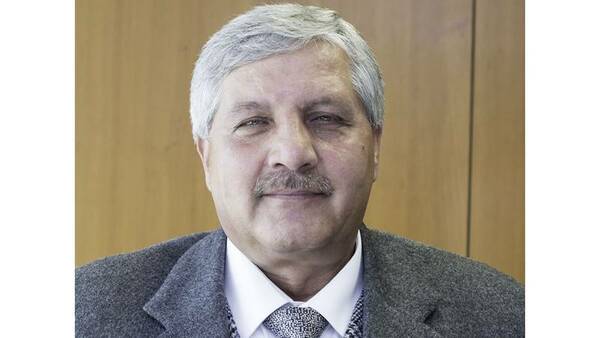
Opinion Writer

By Xin Ping

Washington's latest tariff blitzkrieg – slapping "universal" levies on over 180 nations and regions – is setting things on fire at home.

The moment the executive order was signed, U.S. markets went into freefall: the Dow plunged nearly 4 percent, Apple and Nike stocks nosedived, and $6.4 trillion vanished from Wall Street in two days.

This isn't economic policy. It's economic arson.


The art of self-sabotage

Will tariffs bring manufacturing home? Despite years of arm-twisting, American tech giant Apple still works with 94.5 percent of its suppliers being overseas.

Apple isn't an outlier. The semiconductor industry is facing obstacles in reshoring back to the U.S. as well. Intel has paused its Arizona factory. TSMC is delaying U.S. production. The problems hindering "made in America" are systemic and may only be addressed through a broad and profound economic restructuring. Tariffs won't magically resurrect dead industries; they only inflate prices for already-struggling consumers.

The U.S. tariff spree, unleashed in the name of "America First," is in fact a masterclass in shooting oneself in the foot. U.S. farmers will be hard hit. In the aftermath of the 2018 China tariff, while U.S. soybean exports eventually rebounded, the farming community suffered irreparable damages: Midwest farm bankruptcies spiked 30 percent, wiping out generations of family farms. Today's "Tariff 2.0" risks repeating history – but with higher stakes.


China's counterpunch

Beijing has been defending itself with precise actions, hitting back with matching levies. But its market remains open to others. Germany's automakers, for instance, now sell more cars in China than at home. ASEAN's durians and lobsters enter Chinese markets tariff-free under RCEP – a stark contrast to America's "walled garden" approach.

As China's commerce ministry stated: "Bullying tactics won't work. We defend rules, not whims." Similar tactics have failed before. When the U.S. tried weaponizing small-parcel exemptions to target Chinese goods, U.S. retailers revolted, as 60 percent of affected imports are everyday essentials for low-income households.


Allies: from partners to prey

American allies are not spared either, and their response has also been strong. The EU is poised to approve retaliatory measures. France is warning against "suicidal trade wars." German industries are lobbying Brussels to hit back harder. Japan is calling the moves "deeply regrettable."


In Southeast Asia, the irony is thicker than durian pulp as countries like Vietnam face 46 percent tariffs but remain trapped supplying components to U.S. tech giants. An economist in Hanoi reveals the reality: "Trump wants us to be his factory, but not his competitor.


 That math doesn't add up."

The U.S. tariff crusade isn't just failing – it's uniting the Global South against Washington. The U.S. only accounts for around 15 percent of global trade. The remaining 85 percent is made up by the rest of the world – including China – and it will not stand idly by and watch the international trade system, the very thing that fostered global prosperity for decades, destroyed by self-serving political motivations.


The ghost of Smoot-Hawley


History has long given its verdict on tariffs. The 1930 Smoot-Hawley tariffs turned a recession into the Great Depression. The déjà vu is uncanny: U.S. steel tariffs briefly boosted producers but killed 75,000 downstream jobs. American icon motorcycle manufacturer Harley-Davidson was forced to shift production overseas to avoid costs. "Made in America" has become "priced out of America."


Those in Washington are preaching "short-term pain for long-term gain." Tell that to the 27 U.S. textile mills shut down in the past 20 months, or the single mom paying 17 percent more for Walmart clothes. Some on Reddit have put it quite well: "Tariffs are taxes on the poor."


Epilogue: The unlearned lesson


The White House insists this is "historic" – and they're right. Not since the 1930s has the U.S. so recklessly weaponized trade. But the world has changed: China is deeply integrated into global supply chains, the EU makes its own decisions, and ASEAN won't ditch prosperity for geopolitics.


The clock is ticking. Every tariff tweet coming from Washington is shredding U.S. credibility. Every market plunge erodes the White House's "strong economy" narrative. And America's isolation deepens with every trade deal other countries make on lowered tariffs, such as those between China and ASEAN and European countries.


In the end, it's not just about the economy. America is turning its back on the world. The path it has chosen is a solitary one.

PALESTINE

Tue 15 Apr 2025 11:08 am - Jerusalem Time

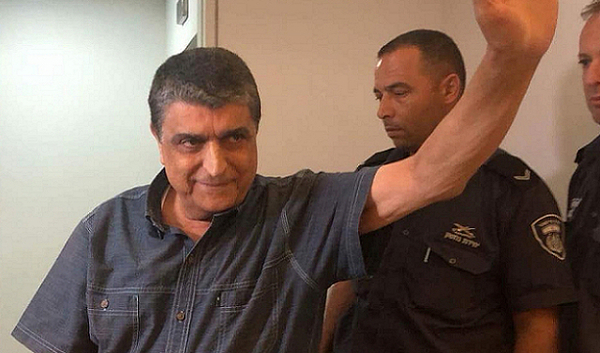
Raja Ighbaria, a leader in the "Sons of the Country" movement, was transferred to administrative detention.

Israeli Defense Minister Yisrael Katz on Tuesday imposed an administrative detention order on Raja Ighbaria, 74, a leader in the Abnaa al-Balad movement, for six months. This comes about a week after his arrest and the failure of the intelligence and police to file an indictment against him.


The administrative detention order came hours before Ighbariya was scheduled to appear in the Hadera Magistrate's Court today, where he was expected to be released, according to his defense team.


Ighbariya was arrested last Wednesday from his family's home in Umm al-Fahm, following a raid by police, Border Guard, and intelligence agents. He was then transferred to the Jalameh detention center.


Ighbaria is being represented by attorney Badr Ighbaria. A court session was held last week to consider extending his detention. The court agreed to extend his detention until today, before the Minister of Security issued the administrative detention order.


Available statistics and information indicate that approximately 27 young men from the Arab community in the country are under administrative detention, the majority of whom have been subjected to administrative detention for six months.

OPINIONS

Tue 15 Apr 2025 10:14 am - Jerusalem Time

Negotiations in Muscat… Calculations in Tel Aviv

Al Sharq Al Awsat- "Al Quds" dot com

Al Sharq Al Awsat- "Al Quds" dot com

Opinion Writer

Eyad Abu Shakra

It is an absurdity of Middle Eastern politics that many politicians and analysts are still betting on the complete elimination of Iran’s role in the region. Even more absurd is the expectation that Israel will drag Washington into this "war of elimination." True, this is the most right-wing US administration since the end of World War II, and no American administration has ever been as closely aligned with Israel as President Donald Trump.

It is also true that, since its founding in 1948, Israel has never been governed by a more fanatical, racist, and fascist government than that of Benjamin Netanyahu and his two “transferist” partners, Itamar Ben-Gvir and Bezalel Smotrich.

It is just as true that the Iranian leadership never showed the kind of hostility to Arab "neighbors" that we are now seeing from the regime of Supreme Leader Ali Khamenei and his Iranian Revolutionary Guards Corps (IRGC), which boasted about their control over four Arab capitals until very recently!

Nevertheless, we Arabs remain reluctant to wrap our heads around the realities underpinning Washington, Tel Aviv, and Tehran’s approach to the region’s existential political issues, including the question of whether Arabs will retain any presence or say in it in the foreseeable future.

On the other hand, those of us with strong memories still clearly recall the first “secret” rounds of negotiations between the US and Iran under Democratic President Barack Obama... that culminated in the famous 2015 nuclear deal.

At the time, the talks were held behind closed doors in the Omani capital, Muscat, hidden from the eyes of the Arabs and the world. As for the new round of negotiations that began on Saturday (also in Muscat), they have been public and are being led by Republican President Donald Trump, the same man who suspended the deal in 2018, during his first term.

And while the American negotiating team may have changed, the same figures remain in power in Tehran and its negotiating team has not been altered; indeed, one of the most prominent negotiators, Abbas Araghchi, is now foreign minister.

The fact is that in the ten years between “yesterday’s agreement” and the current attempt to broker a new one, things have changed considerably on the ground.

Things have changed in the region’s “theater of operations.”

The region’s violated, fragmented, and broken polities have been shaken, paving the way for new facts on the ground that facilitate Israel’s “transfer” plan. This plan is sponsored, promoted, and supported by Washington, which has sought to remove the obstacles that stood (or once stood) in the way of achieving it.

To begin with, the Palestinian cause has been pushed to the top of the “taboo” list, as the world waits for investments to begin along the now depopulated shores of the Gaza Strip.

The “transfer” plan is gaining regional momentum. To the north, in Lebanon, the Israeli war machine has clipped the wings of Iran’s leverage. In Syria, the Assad regime collapsed after 54 years of double-dealing and double-speak, once it outlived its utility to most of its patrons and handlers.

To the east, in Jordan, the leadership has long been pressured to accept the “alternative homeland” project, and the Trump administration, chose not to empathize with Jordan’s chronic economic hardship, imposing some of the highest tariffs on the country of any in the Middle East as Trump announced his broader tariff wars against both adversaries and allies.

And to the west, we find the most populous Arab state, Egypt. It was targeted by Netanyahu’s government early on, with pressure and blackmail to facilitate the displacement from Gaza. Neither the peace treaty with Israel, nor full normalization, nor the years Egypt has spent mediating between the parties to the conflict (despite the criticism from both domestic and international opponents) have spared it from such coercion.

Even in the Gulf region, where some countries have adapted to normalization, Netanyahu’s government has shown no good faith, refusing to engage with any genuine regional peace deal founded on respect for UN resolutions and the proposals of Arab Summits.

What we are now seeing, as Washington and Tehran hold negotiations over the heads of the region’s concerned and suffering nations, is the Israeli right’s forward escape, its expansion of targets and mobilization.

With its military machine and security apparatus, this right-wing bloc continues to occupy positions in Lebanon and tamper with Syria’s fragile domestic stability. It is now escalating its threats against Türkiye. Meanwhile, in Washington, the master of the White House is threatening to destroy and ruin Iran if it insists on moving forward with developing nuclear military capabilities.

Trump’s threats undoubtedly amount to pressure that leaves the Iranian leadership in an awkward position both domestically and vis-a-vis the regional forces and non-state actors that are continuing to bet on it, in Iraq, Yemen... and even Lebanon.

Moreover, the US envoys currently managing this pressure campaign against Iran, such as Steve Witkoff and Morgan Ortagus, are considered part of the “Israeli lobby” in the United States. They understand that Washington’s objective with Iran, which essentially doesn’t change, is to curb its ambitions, excesses, and blackmail, without necessarily leading to a decisive confrontation.

Accordingly, one could say that, thanks to Washington’s unconditional support, Netanyahu has, for the time being, achieved his aim.

But the lingering question remains: Will he be content with the outcomes of this new round of negotiations with Tehran, or (as is his habit) will he choose to push his politics of blackmail and entrapment further?

PALESTINE

Tue 15 Apr 2025 10:11 am - Jerusalem Time

A Palestinian source told Asharq Al-Awsat: The Palestinian Authority is engaged in crucial discussions about its future.

A senior Palestinian source told Asharq Al-Awsat that the Palestinian Authority is "engaged in serious and decisive discussions with all parties regarding its future and its ability to govern the West Bank and Gaza in the post-war phase."

The source, close to the decision-making circle of the Authority, led by President Mahmoud Abbas, stated that "the Palestinian leadership is engaged in discussions with the Americans, Europeans, Arab countries, Hamas, and Israel, both directly and indirectly (through Arab countries), regarding the day after the war."

The source emphasized: "We are not only discussing the issue of governing Gaza; this is part of the whole... The Authority wants to advance a path that leads to a Palestinian state in the West Bank, Gaza Strip, and East Jerusalem."

He stated that "there are discussions with influential Arab countries and Hamas." The United States is at the heart of these discussions," expressing his hope that "a ceasefire agreement in Gaza will lead the United States to adopt a political path (satisfied by the Arabs) that will ultimately lead to the establishment of a state and an end to the conflict."

"For the sake of statehood"

The source said that for the sake of establishing a state, "we (the PA) are prepared, and we have made major changes, and even Hamas is prepared to go the furthest point, not only to hand over the Strip and relinquish power, but also to hand over its weapons," he said.

Abu Mazen has begun making unprecedented changes to the structure of the Palestinian Authority since its inception, calling on the Central Council to create and appoint a deputy.

Appointing a deputy for the 90-year-old Abbas would be a clear message indicating a desire for profound changes within the Authority. The deputy, who is expected to have broad powers, serving as a "de facto president," would also head new security agencies and a relatively new government. The positions of the concerned parties regarding the governance of Gaza after the war reveal wide disagreements. Israeli Prime Minister Benjamin Netanyahu rejects any Palestinian Authority presence in the Gaza Strip, considering it "weak and unqualified." Meanwhile, the Americans are discussing somewhat contradictory plans, while Arab countries are seeking to form forces and committees in which the Authority would initially participate before taking control of the Strip at a later date.

The recent increase in the activity of Palestinian forces and police on the ground in the West Bank has been notable. This includes, in addition to pursuing armed and wanted individuals, settling issues related to civilian life, such as conducting security campaigns, arrests, and campaigns to remove encroachments on roads. A security source told Asharq Al-Awsat that the Authority is "regaining its presence and re-emerging its prestige."

European Support

While there appears to be a response to the significant change initiated by the Authority toward a new political phase, the European Commissioner for Middle East Affairs announced that the European Union intends to increase financial support to the Palestinian Authority with a package amounting to approximately 1.6 billion euros ($1.8 billion) over three years. Dubravka Suica, the EU's commissioner for the Mediterranean, told Reuters that the financial support would go hand in hand with reforms by the Palestinian Authority, which faces accusations of corruption and mismanagement from its critics. "We want them to reform themselves, because without reform, they won't be strong enough or trustworthy enough for dialogue, not only for us, but also for Israel," Suica said.

PALESTINE

Tue 15 Apr 2025 9:31 am - Jerusalem Time

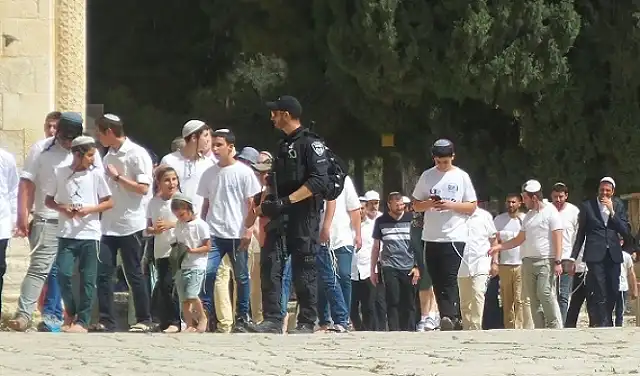
On the third day of Passover, hundreds of settlers storm Al-Aqsa Mosque.

Hundreds of settlers stormed the Al-Aqsa Mosque compound on Tuesday morning, marking the third consecutive day of the Jewish Passover holiday, under heavy protection from Israeli police.


These raids were carried out from the Maghariba Gate, in successive groups, and included provocative tours and rituals within the mosque courtyards, including public dancing.


Meanwhile, the occupation forces imposed strict security measures, transforming Al-Aqsa Mosque and its surroundings into a military barracks, preventing the entry of many Palestinians, and confiscating their ID cards at the external gates. They also reinforced the presence of their special forces units throughout Jerusalem's streets, coinciding with the Jewish Passover holiday.


Al-Aqsa Mosque witnessed a massive storming yesterday morning, Monday, involving 1,149 settlers who entered in coordinated groups under tight security protection, amid heavy reinforcements in the Old City, which appeared to resemble a closed military zone.


During the raids, a number of settlers performed the "priestly blessings" ritual inside Al-Aqsa Mosque, a traditional biblical ritual that usually accompanies the offering of "sacrifices."


In a related development, the extremist group "Temple Mount in Our Hands" launched promotional campaigns to encourage raids on the mosque. These campaigns included providing "subsidized transportation" and free tours for settlers, as part of what it called "central raid days" during the holiday. The group called on settlers to reserve and participate extensively in the raids.


The Passover holiday, which began Saturday evening, is considered one of the most important Jewish holidays and is considered one of the most dangerous periods for Al-Aqsa Mosque due to the Judaization rituals and ceremonies it entails.


The holiday will last for a week, until sunset next Saturday, and includes five days of raids, taking place from Sunday to Thursday, while the gates will be closed on Friday and Saturday.


The rituals performed by settlers during these incursions include public prayers in the courtyards of Al-Aqsa Mosque, facing the Dome of the Rock, during which they recite the so-called "Book of Exodus." Some of the intruders, who are members of the "priestly" class, also wear white "repentance" robes, in an attempt to demonstrate symbolic leadership of the biblical rituals within Al-Aqsa Mosque, which they claim is a center of Jewish worship.


Meanwhile, Palestinian calls for increased security and presence in the Al-Aqsa Mosque compound from the early hours of dawn continue to confront settler plots and prevent attempts to bring "sacrifices" or perform Talmudic rituals inside the Noble Sanctuary.

ARAB AND WORLD

Tue 15 Apr 2025 9:27 am - Jerusalem Time

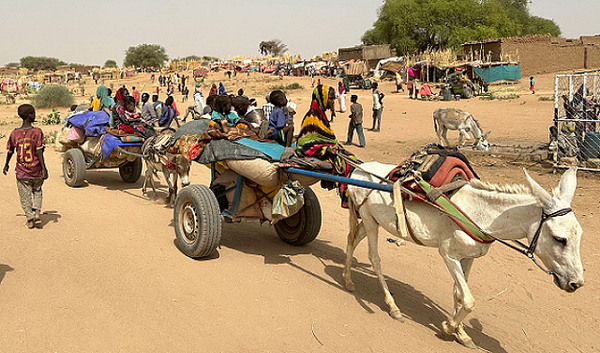
Sudan: More than 60,000 families displaced from Zamzam camp in El Fasher

The International Organization for Migration announced that more than 60,000 families were displaced from the Zamzam camp for internally displaced persons in El Fasher, North Darfur, over the course of two days.


"The Displacement Tracking Organization received multiple reports of large-scale displacement from the Zamzam camp for internally displaced persons on Sunday and Monday," the international organization said in a statement.


The statement added: "Based on initial estimates, field teams reported that between 60,000 and 80,000 families have been displaced from Zamzam camp due to worsening insecurity."


The majority of families remain displaced within El Fasher, while others have been displaced to sites in the towns of Tawila and Dar al-Salam in North Darfur, according to the same statement.


Clashes erupted on the outskirts and inside Zamzam camp for the third consecutive day between the army and its supporting forces from Darfur's armed movements, who confronted the Rapid Support Forces.


The El Fasher Resistance Committees Coordination (Popular) announced on Sunday that more than 320 people were killed and injured, and thousands displaced, as a result of the Rapid Support Forces' attacks on El Fasher and the Zamzam and Abu Shouk camps.


Since May 10, 2024, El Fasher, the capital of North Darfur state, has witnessed clashes between army forces and the Rapid Support Forces, despite international warnings of fighting in the city, which serves as the center of humanitarian operations for the five Darfur states.


The two sides have been waging a war since April 2023, leaving more than 20,000 dead and nearly 15 million displaced and refugees, according to the United Nations and local authorities. Research by American universities estimates the death toll at around 130,000.


Recently, the Rapid Support Forces' control over Sudan's states has been rapidly declining in favor of the army.

OPINIONS

Tue 15 Apr 2025 9:21 am - Jerusalem Time

The Psychology of Gates: The Engineering of Oppression in the Palestinian Geography

Amin Al-Hajj

Amin Al-Hajj

Opinion Writer

In what appears to be an attempt to raise awareness, I watched a short clip on the pages of official media figures and dozens of posts on social media, all explaining the meanings of the colors of the gates spread at the entrances to Palestinian cities and villages. The stated goal was to raise “awareness” about the significance of the color used, thus helping people act accordingly. However, what was absent from this or any other discourse is that explaining the tools of oppression does not lead to dismantling them. Rather, it contributes – unintentionally – to entrenching them in the collective consciousness, as a component of a system that appears to be “normal” in daily life under occupation. Color is presented as if it were a neutral symbol, and the rules are explained as if they were simple traffic instructions, as if these gates did not belong to a comprehensive colonial system that reshapes the public and private space of Palestinians and “engineers” the movement of individuals and consciousness simultaneously. Thus, official and community media are unintentionally transformed into an indirect mediator that “reproduces” the logic of control.


In the heart of Palestinian geography, despite its limitations, the gate is no longer just a colorful piece of iron separating two places. It has become a central symbol of the systematic system of control exercised over Palestinians on a daily basis. For years, the West Bank has been witnessing, and has intensified significantly in recent months, an unprecedented and widespread deployment of gates. There is no precise number for this, perhaps a thousand, more or less, but - despite their different colors - they conceal a single logic: the consolidation of settler superiority at the expense of Palestinians, psychologically, spatially, and temporally.


The gate is not just a physical barrier, but a tool for producing psychological helplessness and collapse. It is intended to instill in the Palestinian consciousness a constant sense of isolation from their surroundings, of weakness and dependence. It closes and opens according to a vague "security logic" determined by the occupation, subjecting Palestinians to a constant state of waiting and suspicion, amid what can be described as the "certainty of uncertainty." They are certain that something uncertain will happen: Will they be able to reach work? Will they be allowed to cross to attend a family event or the opening ceremony of a shopping mall? Will they arrive at the hospital in time? This chronic anxiety generates a state of collective tension and psychological exhaustion, fueling a "psychology of oppression" that contributes to the fragmentation of collective will.


The philosophy behind these gates is based on a right-wing assumption that the settler has "exclusive priority" or the "first right" to move around, without having his sight and hearing "polluted" by the sight of "others." Accordingly, the gates are managed to serve this logic, even if the "price" is the isolation of entire Palestinian cities and villages and the re-demarcation of "public space." In this way, the "shared" space is transformed into a temporal and geographical colony, reshaped to serve the supremacy of the settler minority at the expense of the indigenous majority.


When a gate closes, it doesn't just close a road, it closes an entire social fabric. Family ties are severed, students are prevented from reaching their universities, farmers are isolated from their lands, and families are separated from one another. Thus, the gate is used not only to isolate a person from a place, but also to isolate him from himself, and to dismantle the link between geography and identity.


Although some may think that the different colors of the gates are random, this visual multiplicity is part of the colonial symbol system and an additional means of psychological control. Each color has an unspoken "security" significance. This ambiguity adds an additional layer of confusion and uncertainty, in an attempt to force Palestinians to deal with the reality of confinement as part of their daily lives. This ambiguity is imprinted on the consciousness over time, and oppression is reproduced as "normal."


The "psychology of gates" reveals a "renewed" face of the occupation, one that is not satisfied with military control, but rather seeks to program the Palestinian consciousness to accept and coexist with the constraints. In this context, the occupation is not merely a brutal force, but rather becomes an "engineer" of geography and the psyche, "reshaping" time, place, and the self.


Faced with this reality, it is imperative to examine these practices, which may seem simple or "technical," but which, in essence, embody the deepest and most dangerous forms of domination: domination of being. Therefore, we must not limit ourselves to understanding the significance of colors, but rather go further and ask: Who and why? What messages does he want to convey to the mind of the Palestinian before he shackles his body?

OPINIONS

Tue 15 Apr 2025 9:19 am - Jerusalem Time

PLO: Protection Before Reform

Issam Bakr

Issam Bakr

Opinion Writer

On the eve of the 32nd session, "No to displacement, no to annexation, steadfastness in the homeland, saving our people in Gaza, stopping the war, protecting Jerusalem and the West Bank, yes to comprehensive national unity," scheduled for April 23 and 24, preparations are underway in Ramallah, and numerous meetings and dialogues will begin, which will continue intensively over the remaining few days, with the President of the National Council extending an invitation to the members and the specialized teams starting work on completing the technical and logistical preparations, and completing the preparations for an emergency session held under extremely dangerous circumstances and challenges that have begun to threaten the national cause, in light of the occupation's efforts to eliminate it, whether through the decisive plan or the termination of the agency, the Relief Agency, or what is happening in Jerusalem, and not the least of these measures is what is also being witnessed in the prisons. The Central Council is convening amid an acceleration in the pace of urgent questions that haunt the vast majority of the sons and daughters of the Palestinian people everywhere after the ongoing war of extermination on Gaza, the violation of the West Bank, and attempts to consolidate the reality of colonial settlement and forced displacement plans. Difficult and weighty questions about what is required and what can be done in a bitter reality characterized by an unprecedented situation in the history of the Palestinian people and the stages of their struggle in the past, i.e. a state of internal fragmentation, so to speak. And what is meant is not only the state of political division, but the situation in all its manifestations and details, from successive crises and structures, frameworks and bodies whose role is gradually weakening. A situation that not only delights the occupation, but also provides it with complete comfort to implement what it wants without difficulty!! These questions intersect with the current debate that occupies wide circles around what President Mahmoud Abbas announced in his speech at the Arab Summit of March 4th regarding the creation of a vice president position. Is the intention a vice president of the Authority or a vice president of the PLO? Or the election of a vice president for both?! And what this issue leaves behind in terms of interaction, widespread discussion and expectations raised in public places, political salons and the media amid reluctance to provide clear and definitive answers about it.


The issue is undoubtedly important and relates to the top of the political pyramid and what the PLO represents, beyond the revolving door and the conundrum. The more important question remains: How can the current situation be overcome by preserving the PLO, the unifying home and moral entity, and protecting it before reforming it? In other words, what is required is to row side by side on a clearly defined path with measured steps toward both protection and reform, but protection must come first, and everyone must agree on this. It is not permissible to expose the organization to attempts to overthrow or overthrow it, because any threat to the organization’s position and role would further harm the situation as a whole, despite the importance of reform, which no one can deny, if it aims to develop and improve the performance of the organization’s institutions and activate them. However, the most important thing in this regard is to protect the component, because the organization is not a faction or a party among the parties, and the rule that says that disagreement with it is acceptable, but not against it, remains correct and existing. It is the moral political expression of the goals of the Palestinian people and the broad front framework for achieving national liberation, which enjoys undisputed world recognition as the sole and only representative of the Palestinian people, which grants it the legitimacy of the title and the legitimacy of work for national convergence and addressing differences, whatever they may be, and the ability to move with political discourse around the world. Protection is also a mandate and means preserving the capabilities of the Palestinian people, and it is the guardian of its interests and goals, that is, more clearly, protecting the national program represented by the PLO, which, by the way, has become the program of national consensus since the nineteenth session of the National Council, the “Intifada session,” held in Algeria in 1988, as there is no political disagreement today about the independent state with full sovereignty over all The territories occupied in 1967 and the right to self-determination and return in accordance with Resolution 194. This national program of the PLO is unanimously agreed upon and supported by everyone, far from the turmoil of emotions, academic analyses and exaggerated dazzle, as is the custom with political rhetoric with a "revolutionary flavor." Strengthening this program is the basic advanced step for protection and not accepting any formulas to change it or diminish its ceiling, far from phrases decorated with reform and recording positions, nothing more!! Except to serve the supreme national interest of the Palestinian people, no one is allowed to exceed the agreement and national custom that has been strengthened by long years of joint work despite the differences and disagreements that remained under the ceiling of preserving unity and its continuity.


The broad national workshop that the Central Council session must open must not accept hesitation, stammering, or half-answers. Its foundations are agreement to protect the PLO from dissolution, internalization, or regional axes and alignments, restoring the prestige of its institutions and their role, regularity and periodicity of meetings, resolving the overlap between the PLO and the PA, and establishing a broad, solid foundation for everyone’s involvement. It is clearly and without ambiguity required to stop the PLO’s seizure by the PA, which is one of the institutions established by its decision on December 10, 1993, shortly after the signing of the Oslo Accords. So that no one is deceived by the talk and continued regurgitation about reforming the PLO, it is likely that there is no disagreement about reform and its importance, but an PLO without protecting its program, institutions, representative capacity, and the essence of its work will inevitably be exposed to further erosion and instability and at the mercy of the wind. This is what the enemies of the Palestinian people want, and we must work to seize the opportunity, prevent it from happening, and block the road to all attempts aimed at this.


Today, in this session and the preparations underway for its convening, the most difficult task is not electing or agreeing on a vice president, which can be postponed or postponed, as it is not a sword hanging over the necks of the Palestinian leadership. What is more important is initiating an in-depth and comprehensive political discussion about the means to confront challenges, including urgent ones that cannot be postponed. These include the so-called day after the war of extermination on Gaza, or the annexation plans and the status quo in the West Bank. Linking this to the future of the Palestinian national struggle and the forms of struggle practiced with the least expected losses? How can we prevent a major deterioration in the internal situation, given the tremendous changes taking place in the region, which is teeming with developments whose future directions and imminent dangers to the Palestinian cause can be predicted, as well as the imposition of conditions on the Palestinian people, given the golden opportunity currently available to the extreme right-wing camp in Israel? All of this may lead to an important question: What is the best formula that suits the current reality, capable of maintaining adherence to the right to national struggle, while at the same time being able to overcome the major dangers facing the fate of the national cause? Especially if everyone realizes that we are engaged in an existential war aimed at uprooting the Palestinian people and liquidating the national cause, what are the most realistic ways to build approaches that minimize losses while simultaneously restoring confidence among the expectant public, who want to see something that reinforces a culture of steadfastness and survival on this land in the face of hostile policies, including forced displacement and deportation?


A very important session begins in the next few days, and a glimmer of hope looms on the horizon, carrying within it the possibility of restoring unity and strengthening the unified popular stance in the face of the occupation’s aggression on Gaza, the West Bank, Jerusalem, the interior, and everywhere. An unrelenting war on UNRWA on the land, borders, and Jerusalem, and with it, of course, there is no room for discussion for the sake of discussion. The state of heated debate is over the superficial and leaving the core. The margins are no longer the basis, as the challenges relate to the continuation of existence. Rising to the level of blood spilled in an ongoing holocaust requires courage, not only in decisions, but also in the extent of the ability and potential to implement them and derive what is possible from what exists. The decisions taken in previous sessions of the Central and National Councils, as a reminder, were correct and realistic. Ending the relationship with the occupation and dissolving the agreements was met with broad popular and national consensus, but they have not been implemented today. The occupation has restored the “Civil Administration” and no agreements remain to govern the relationship with it. The confiscation of the clearance revenues, the attack on prisoners, the daily plundering of land, and the ongoing war of extermination are evidence of what the occupation wants, and it does not hide its ambitions. Publicly and officially, while we must not enter into the game of distraction in the labyrinths of getting out of the current impasse in a state of debate over the basic details, laying the foundations for confrontation, the path to salvation is to end the occupation, even if we are facing a moment of making fateful decisions and surgical treatment of reality, we must go for it without hesitation.


The lesson is what the coming days hold, whether they will be a starting point for construction and establish a new phase of joint action and unification of efforts and energies, including protecting the PLO before reforming it, considering it a national achievement and a legacy of struggle far from glorifying the past, but also for the future, as the PLO is the identity of the Palestinian people, of which we are all members. Or will the situation continue and stagnate in the same place, perhaps with more erosion and perhaps withdrawal? In the midst of all this debate and struggle for influence and interests, we must not forget that there is an enemy lurking around us, targeting everyone without exception. Therefore, the capabilities should be put in place for a national program of popular steadfastness and confrontation, and a state of political steadfastness and struggle that establishes the protection of the PLO, because protecting the homeland protects the PLO, and vice versa. This is the measure of success for the session of the PLO Central Council and one of the most important indicators for reading the near future in order to overcome the situation riddled with wounds, so that it may carry a touch of healing and the revival of hope and life.

OPINIONS

Tue 15 Apr 2025 9:18 am - Jerusalem Time

In the name of the Father, Gaza, and the six murdered brothers

New poem: Al-Mutawakkil Taha

New poem: Al-Mutawakkil Taha

Opinion Writer

They were to him as the sun was to the earth, when they reached his throne, he felt reassured.. But it is war; it takes the air from us, so the sobs are suffocated, and no time returns, and no crying restores.

They grew up between a ram and sadness, a vow, a long night, and a feast.

He remained on his way, plowing the mud, watering the fireflies from his spring, and he built a house other than that for the birds and the reassured down to dwell in, and a fiery bow might ascend, that might repel the flames from a light sleep, caressing him with a return to the country they had stolen, so he was like the refugees who sleep to dream of returning, and there are no promises and no threats.

Wars broke out, so he carried his grandchildren in his arms, and secluded himself under his trees, and called upon God to protect his children, and he choked a lot, because the waters of the seasons are blood, and the bread of the feast is the charcoal of porridge.

He would trot here and there, finding those who had been displaced in the paths, and he would weep over them! He remained in this state for ten thousand massacres on the way... dragging tents and some mattresses, and he kept praying. It would be okay if he died, but he did not want his children to die, for the heart of a father is fragile and cannot bear iron.

And they died! So what do we say and what do we add?

He stood up, prayed and saluted, then performed ablution again with dirt and said: To Him be praise in every situation and at all times. To You be praise, O Lord. You have honored me with a vast honor. For them is Paradise, eternal. This is a great reward. We will all go to the grave, no matter how old we are. The winner is he who wins both Paradises, so much praise. And I hope, O Lord, that I will not remain alone, so leave my little one, my only grandson, for me.

He said: Come, let us pray for them, for I am satisfied. So the men wept and the homeless man was terrified.

And when they finished and walked to the graves, the sound of their trees came from behind the rubble; rattling, like bereaved women over a dried corpse.

They have reached the hour of revelation, the eldest firstborn resembles his father in features and walk. He married him off twenty years ago, so he became his metaphorical brother in height, and laughs up to the molars. He loves stove tea, while he is on the field dam, facing the sky, and may return home alone in the afternoon, so the old father stays with the branch until the night lights up for him, then he prays the evening prayer and walks back.. In the courtyard they gather to play with him, before they go to the cradles, and he spends whatever is easy for them, until the butterflies fly from their tomorrow to schools, so the classroom is candy, a drawing book, and a happy face.

The second man works in his laboratory, analyzing the veins of the tired, and spends his days busy with bottles, until he married the most beautiful bottle that awakened his perfume, then brought him swings, so his chest expanded, until when the war broke out, he went to work as a backup doctor. He remained there in the heart of the clinic, day and night, and did not sleep, because they bombed everything, so only two rooms remained, for the emergency room and examination. He remained, and did not return to the house when they bombed it, so he flew away with everyone in it, I mean Al-Waleed and Umm Al-Waleed.

The third is the master of the waves and the fish, he knows the moods of the water and the wind, he rides his lantern, then goes far away to return, at sunrise full of his pulsating fish, and in mind a mermaid who tormented him, so he did not leave the flute, but wounded the sea with the Nahawand, and asked it about the barrier of tears and the return of youth, and the young man, behind its weeping waves, revolves and searches for a star in the distance.

The fourth one engraves the perishing cities on the soul, until their foundations are restored as they were created. So demolish as much as you can! He dug out the gate, the market, and the wall. He kept the minarets and the golden beach, and lined the houses with roses. Then he brought all the stars to pave the paths, and said: It has a moon that never sets, It will remain with all its weddings in Upper Egypt.

The fifth of his brothers is he who sings when the storms intensify, and sends the handkerchief of a lover to the galaxies, when they have lost their sun, or returns to her with hell, so that she seizes it on the right, and walks with it to the barricades, until when the fire blows, it throws its hellfire upon the soldiers, and returns, patting the fetus that will come, to cut off their roots once again.

The sixth is a calm moon, who knows God without words, and spends nights with his sheikh, or says to him: I am not like you. The obligations are nothing if my house remains under bitter siege. What are prayers if they are not a cry in existence? What is fasting, when people are hungry? What is the Hajj if the shackles remain on the hand? Does God care about people if they do not revolt against the tyrannical ruler, and do not send fire into the army? Be hell in the face of an invader's tank, and say: Here is Gaza of fire. Is there more!

And the seventh of them is a thousand thousand martyrs who have gone to paradise, but they did not die, and they remained on the balconies of heaven, and they left our land for the light, and left our skies for the anthem.

PALESTINE

Tue 15 Apr 2025 9:04 am - Jerusalem Time

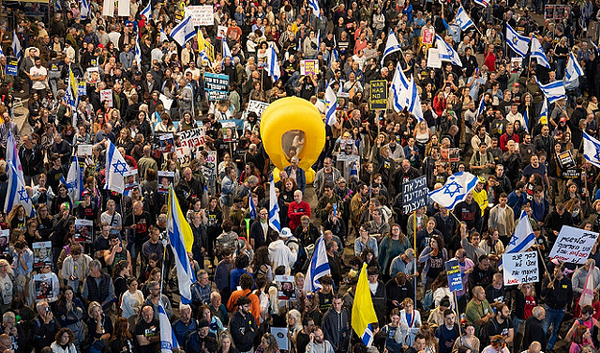
Protests escalate in Israel demanding an end to the war and the return of prisoners.

Thousands of Israelis from various sectors, including some 3,500 academics, 3,000 education professionals, 1,000 parents, and some 1,500 armored corps soldiers, as well as dozens of ambassadors and former senior Foreign Ministry officials, signed petitions calling for an immediate end to the war on Gaza in exchange for the release of prisoners. This joined the pilots' protest and a new escalation of civilian protests against the ongoing military operations in the Gaza Strip.


Just before midnight on Monday, hundreds of members and officers from the IDF's offensive cyber units, the Shin Bet, and the Mossad, along with hundreds of reserve officers and fighters from the Military Intelligence Special Operations Unit, issued two strongly worded protest petitions against the ongoing war in Gaza. They called for an immediate end to the war and a prisoner exchange deal, and demanded the resignation of Prime Minister Benjamin Netanyahu.


The petitions included direct support for a petition issued by reserve Israeli Air Force officers and pilots, who demanded an end to the war as a condition for the return of the prisoners. Signatories to the petition, including former Foreign Ministry employees, ambassadors, and retired Supreme Court Justice Elyakim Rubinstein, a former attaché at the Israeli Embassy in Washington.


The petition by former Israeli Foreign Ministry employees stated, "The resumption of fighting has not resulted in the release of any prisoners. We demand immediate action to release all prisoners at once, even if the price is to stop the war" that Israel has been waging on the Gaza Strip since October 7, 2023.


The signatories of the petition, composed by members of the Military Intelligence Special Unit, strongly attacked the Netanyahu government, writing in the petition: "Netanyahu's crimes are countless, but the conclusion is clear – Netanyahu poses a danger to the lives of prisoners, to the security of the state, and to its democracy." They emphasized that the ongoing war only serves the political interests of the "criminally indicted" prime minister and leads to "the establishment of a reality of perpetual war" without achieving its goals.


They called for "an immediate investigation into the failures of October 7, the conscription of hundreds of thousands of religious school students who refuse to serve, an end to attempts to politicize the judiciary," and "an end to incitement against anyone calling for an end to the war."


In a separate petition signed by former officers and soldiers in the army's offensive cyber units, the Shin Bet, and the Mossad, it stated: "We, who served the country in sensitive technological positions, believe that Netanyahu has reignited the war solely to protect his political survival." They added: "The continuation of the war threatens the lives of the prisoners, many of whom have already been killed, while Netanyahu continues to ignore their daily suffering in captivity, including torture and starvation."


The signatories noted that Netanyahu "abandons values and chooses his narrow political interests over human lives." They accused him of attempting to "obstruct the investigation into the 'Qatar Gate' affair." At the end of the petition, they called for "an immediate end to the war and action to release the prisoners," followed by "Netanyahu's resignation, the dissolution of the Knesset, and the setting of a date for general elections."


While the Israeli military has yet to issue an official comment, the process of collecting signatures for various petitions continues, while protests against the war's leadership and government policies are growing within the ranks of reserve soldiers and the Israeli security establishment.


In a petition signed by academics from Israeli higher education institutions, universities, and colleges, it stated: "We join the call of the air force personnel and demand that the prisoners be returned to their homes without delay, even if this requires an immediate cessation of hostilities."


The signatories added that the current war "serves political and personal interests more than it serves national security," warning that its continuation "will lead to the deaths of more prisoners, soldiers, and innocent civilians, and will deplete reserve forces."


Education system workers wrote in a similar statement, "This is not a call for disobedience, but a call to save lives." Teacher Avital Masterman, from a school in Tel Aviv, said the thousands of teachers signing the petition reflect civic courage.


She added, "In these difficult times, with the escalation of rhetoric of treason and persecution, we raise a clear moral and educational voice: Human lives must not be sacrificed for unattainable goals."


Hundreds of parents (about 1,000 of the students' parents) also signed a petition that read: "For the sake of our children's future, and for the sake of our neighbors as well, we refuse to raise them in an eternal war. We refuse to turn a blind eye to the killing of children, and we will not cooperate with the idea that there are no innocents in Gaza, nor with abandoning prisoners or dehumanizing others."


Likewise, some 170 graduates of the elite Talpiot military program, both reserve and retired, issued a statement in support of the pilots' petition, saying, "The call to rescue civilian and military prisoners is a fundamental moral call stemming from the values upon which we were raised and served. We condemn attempts to silence the voices of our colleagues, who are active citizens, have served the state, and are expressing their concerns."


As for the 1,500 armored soldiers, they signed a petition that stated: "The continuation of the fighting does not serve the goals set for the army, and work must be done immediately to return the prisoners to their homes," according to what Haaretz reported today.


Rami Matan, the initiator of the initiative and former deputy commander of the Yiftach Brigade, said, "The Chief of Staff himself openly admitted today that not all of the objectives in Gaza can be achieved. If that's the case, why do we continue to sacrifice lives for impossible goals?"


Haaretz revealed that the Air Force leadership attempted to prevent the pilots' petition from being published, with commanders with the rank of brigadier general personally contacting the signatory reservists, demanding they withdraw their signatures and threatening them with sanctions.


According to the newspaper, only 25 of the signatories responded. Later, IDF Chief of Staff Eyal Zamir and Air Force Commander Tomer Bar announced their decision to dismiss the reservists who signed. Prime Minister Benjamin Netanyahu commented on the measure, saying they were "an extremist group trying to undermine Israeli society from within" and that their goal was "to bring down the government."


PALESTINE

Tue 15 Apr 2025 8:50 am - Jerusalem Time

A conditional 45-day truce: Israel proposes a prisoner exchange with Hamas

An informed Palestinian source reported Monday evening that Israel had presented a new proposal for a temporary ceasefire in the Gaza Strip for 45 days. The proposal includes field, humanitarian, and security arrangements, as well as a phased prisoner exchange, as part of mediators' efforts to resume stalled negotiations.


According to the source, "the proposal Egypt conveyed to Hamas stipulates the handover of living and dead prisoners by the end of 45 days in order to extend the truce and allow aid into the area. The proposal Egypt presented on behalf of Israel also includes the release of half of the occupation's prisoners within the first week of the agreement."


According to the source who spoke to Al-Araby Al-Jadeed, the proposal stipulates that Israel will begin, on the second day of the agreement's entry into force, redeploying its military forces to the locations they were stationed in on March 2, 2025, in the Rafah and northern Gaza Strip areas, while resuming the entry of humanitarian aid in accordance with an agreed-upon protocol.


He added that the Israeli proposal also includes the release of five living Israelis on the second day, in exchange for the release of 66 Palestinian prisoners serving life sentences and 611 detainees from the Gaza Strip.


The source indicated that the proposal also includes the commencement of negotiations on a permanent ceasefire on the third day of the agreement, including arrangements related to Israeli redeployment and disarmament, an item that Hamas and the resistance factions in Gaza categorically refuse to discuss.


The Israeli proposal stipulates that Hamas release four living hostages on the seventh day in exchange for 54 prisoners serving life sentences and 500 detainees held after October 7. Hamas is to provide full information on all living hostages on the tenth day, and the bodies of 16 Israelis are to be released on the twentieth day.


Hamas: We are studying the proposal we received from the mediators and will respond soon.

In a statement issued shortly before midnight on Monday, the group affirmed that it was "studying, with great national responsibility, the proposal it received from the mediating brothers," noting that it "will submit its response to it as soon as possible, once the necessary consultations are completed."


The movement reiterated its "firm position that any future agreement must achieve a permanent ceasefire, a complete withdrawal of occupation forces from the Gaza Strip, a genuine prisoner exchange deal, the start of a serious process to rebuild what the occupation has destroyed, and the lifting of the siege on the Gaza Strip."


Netanyahu: Intensive negotiations are underway to return the prisoners.

In a related development, Israeli Prime Minister Benjamin Netanyahu said during a meeting with the family of one of the prisoners on Monday that "the ongoing negotiations are focused on the release of 10 prisoners, and we are not prepared to make any concessions."


He added, "As I have previously pledged, we will work to release everyone, and we will continue the fight until Hamas is eliminated." Netanyahu indicated that there are "solutions that no one has ever imagined," without revealing further details.


A statement issued by Netanyahu's office said he had phone calls with the mothers of three prisoners held in the Gaza Strip: Tamir Nimrodi, Avinatan Or, and Eitan Horn.


During the talks, Netanyahu, according to the statement, presented details about what he described as "ongoing efforts" to return the prisoners, and said that "intensive negotiating efforts are underway these days" with the aim of reaching an agreement.


Netanyahu's office reiterated its commitment to "returning all prisoners, living or dead," according to a statement issued by the Israeli Prime Minister's Office.


The dispute lies in ending the war and disarming the resistance.

In this context, Yedioth Ahronoth reported that Hamas has expressed a willingness to increase the number of live hostages it might release compared to its previous offer, but the central issue now is obtaining clear guarantees for an end to the war, a position the movement insists upon.


The newspaper noted that relevant Israeli authorities are awaiting Hamas's response to the amended proposal within days, and that if a basis for negotiations is found, Israel will send a negotiating delegation to Doha or Cairo to resume dialogue, and is prepared to do so whenever necessary.


For its part, the Israeli Broadcasting Corporation, Kan 11, reported that Hamas is prepared to release a larger number of living prisoners than it had previously proposed, and that its current position seeks to ensure Israel's full commitment to the terms of the agreement, particularly those related to ending the war.


On Monday evening, the channel quoted an informed source as saying that Israel had expressed a willingness to make "certain concessions," but refused to make any commitment that might be interpreted as a waiver of the goal of "eliminating Hamas."


Kan 11 reported that the mood among Israeli professionals is currently pessimistic about the possibility of reaching an agreement soon. However, these sources stress the need to reach a deal, as time is running out to save the lives of the hostages, as they put it.


Hamas also reportedly expressed its dissatisfaction during the Cairo talks with the inclusion of a clause relating to the disarmament of the Palestinian resistance. Hamas informed the Egyptian mediator that it categorically refuses to discuss this issue at this stage, and considers the basic condition for any agreement to be a cessation of hostilities and the withdrawal of Israeli forces from the Gaza Strip.


A leading Hamas source denied the movement's willingness to relinquish its weapons. The source explained that, "In general, numerous proposals have recently been put forward to meet Israeli conditions regarding the weapons of the resistance and its leaders. These are proposals that all resistance factions unanimously rejected, not just Hamas."


Agence France-Presse quoted Taher al-Nunu, media advisor to the head of Hamas's political bureau, on Monday as saying that the movement is prepared to release all Israeli detainees in exchange for a ceasefire and an Israeli withdrawal from the Gaza Strip.


Al-Nunu added, "We are ready to release all Israeli prisoners in exchange for a serious exchange deal, an end to the war, an Israeli withdrawal from the Gaza Strip, and the entry of aid." He accused the Israeli occupation of obstructing the agreement.


He said, "The problem is not the number of prisoners, but rather that the occupation is shirking its commitments, obstructing the implementation of the ceasefire agreement, and continuing the war." He emphasized that Hamas "confirmed to the mediators the need for guarantees to compel the occupation to implement the agreement."


He explained that "Hamas responded positively and with great flexibility to the ideas presented in the negotiations, regarding a ceasefire and prisoner exchange." He added that "the occupation wants to release its prisoners without moving to the second-stage issues related to a permanent ceasefire and a complete Israeli withdrawal from the Gaza Strip."


An Egyptian source told Al-Araby Al-Jadeed that the talks in Cairo, from which the Hamas delegation departed on Monday morning, included contacts with representatives of the US mediator. The source said that Hamas expressed its willingness to agree to the release of nine prisoners, while US administration officials demanded an increase in the number, with pledges that if Hamas agreed to the agreed-upon increase, it would push Israel toward negotiations to enter the second phase of the ceasefire agreement signed on January 17.


The source explained that the formula proposed by the US side was not accepted by the Hamas delegation, which considered it evasive, as it did not explicitly stipulate direct entry into the second phase of the agreement, which includes an end to the war and an Israeli withdrawal. The US proposal was limited to initiating negotiations regarding the transition to the second phase.

PALESTINE

Tue 15 Apr 2025 8:45 am - Jerusalem Time

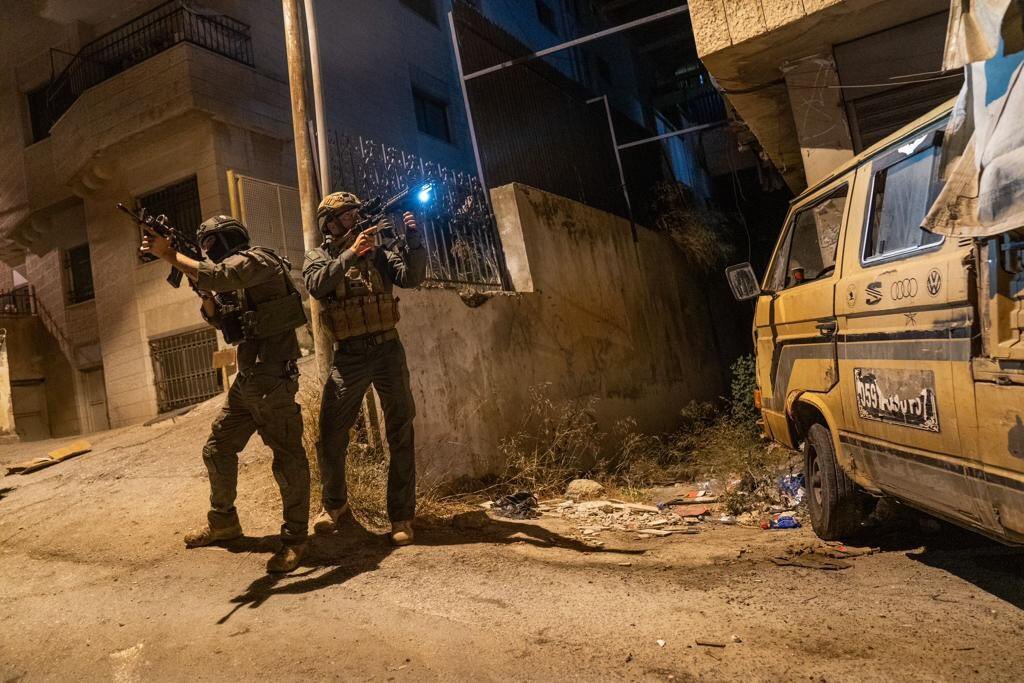
Siege, raids and arrests in the West Bank

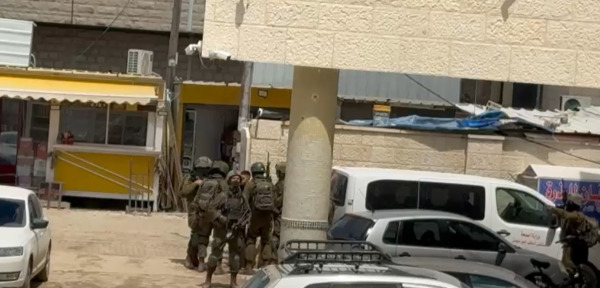
Israeli occupation forces launched raids and arrests in the West Bank on Tuesday.


In Jericho, Israeli occupation forces have continued to tighten their military measures around the Jericho Governorate, besieging it since last night.


Local sources reported that the occupation forces continue to tighten their military measures at the main and secondary entrances to Jericho.


The sources said that the occupation soldiers closed the iron barriers (gates) erected at the city's four entrances, preventing citizens from entering or leaving the city, causing severe traffic jams and obstructing the movement of travelers to and from Jericho.


In Nablus, occupation forces stormed the town of Qablan, raiding and searching a number of homes, but no arrests were reported.


Israeli special forces also surrounded a home belonging to the Odeh family on Al-Taawun Street, shot and arrested Yazan Odeh.


Local sources reported that the occupation forces sent more reinforcements from the Al-Murabba'a checkpoint and the Al-Tur area, amid widespread deployment in the area and the closure of roads leading to the area.


She said that the occupation forces stormed Tal Al-Taawun Street and assaulted an 86-year-old man, who was then transported by Red Crescent ambulance to Rafidia Hospital.


In Ramallah, the occupation forces arrested three young men from the eastern farm: the brothers Muhammad and Mahmoud Saeed Hijaz, and the young man Amir Alqam Zaban. They also arrested the young man Hadi Bashar Mustafa Barghouti from the village of Kobar, after raiding their homes and ransacking their contents.


In the same context, occupation forces stormed Al-Manara Roundabout in the center of Ramallah and the village of Deir Nizam, northwest of the city, without any reported raids or arrests.

PALESTINE

Tue 15 Apr 2025 8:43 am - Jerusalem Time

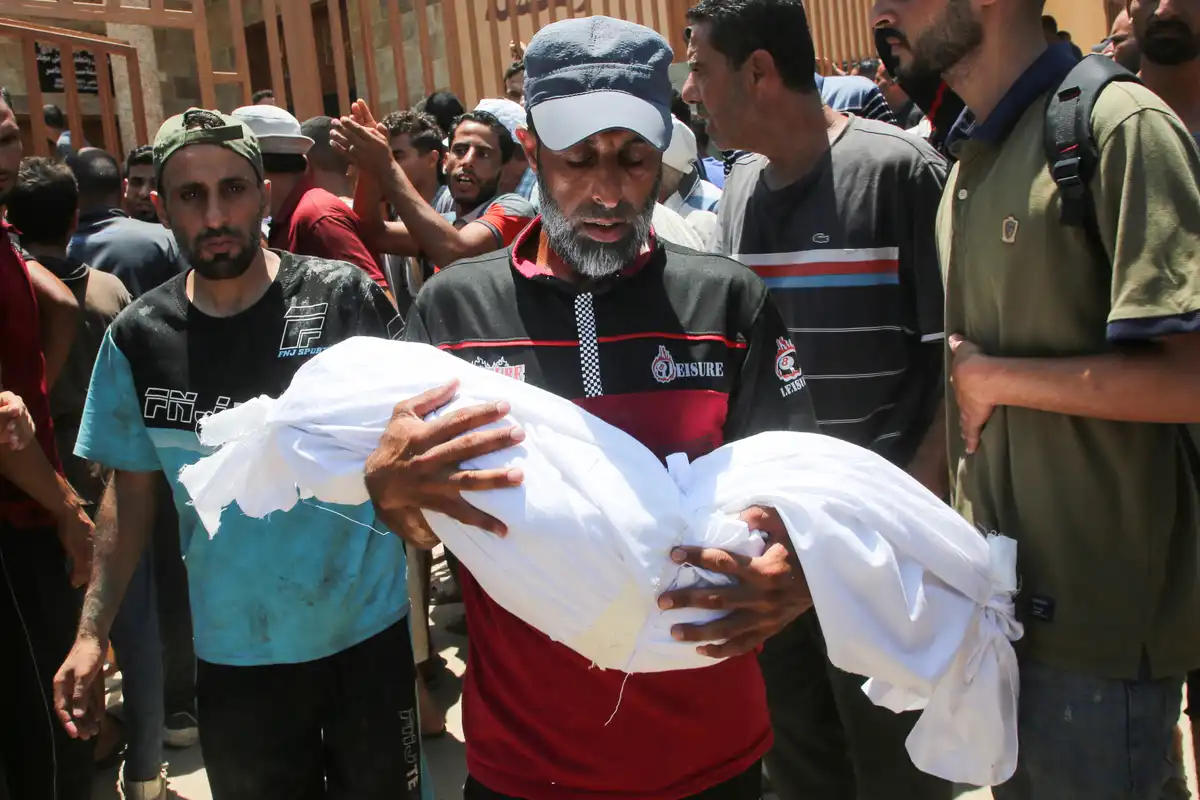
5 Palestinians dead and wounded in Israeli bombing of the Gaza Strip

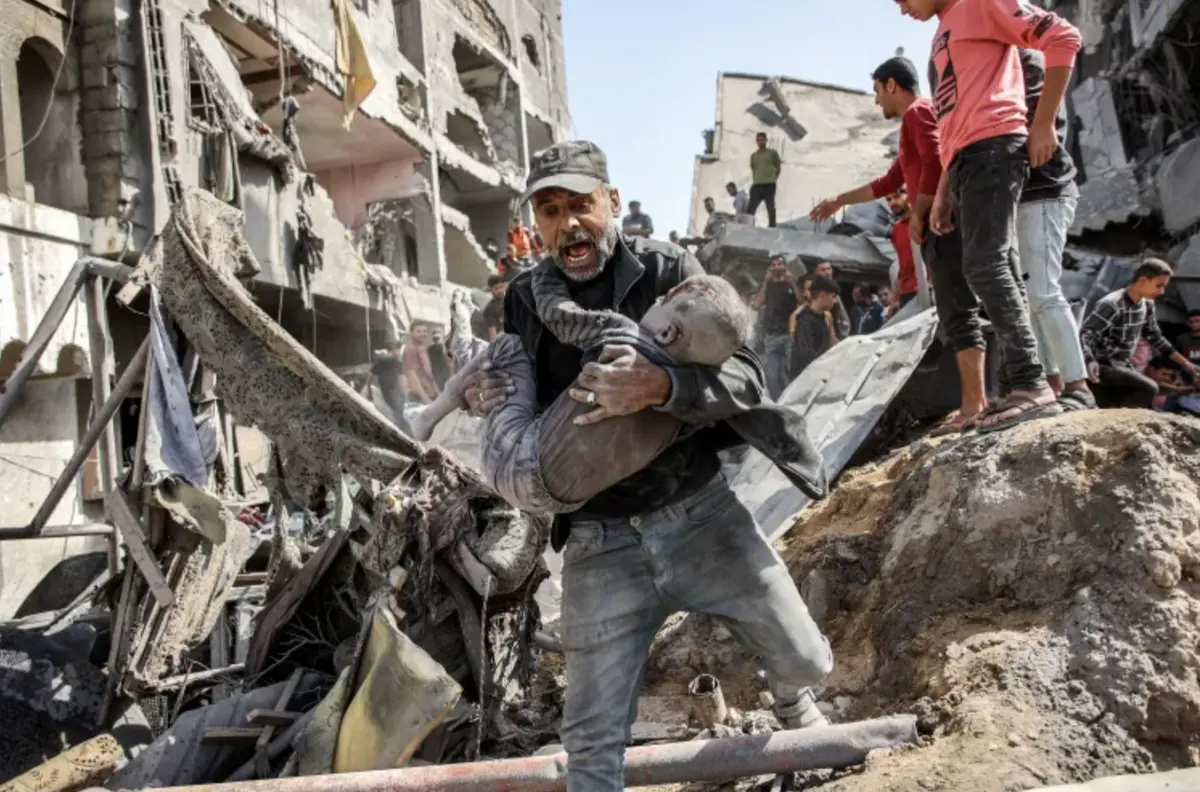
Five civilians were killed and others injured early Tuesday morning when the occupation forces bombed the tents of displaced people in the Gaza Strip.

In the Al-Mawasi area, west of Khan Yunis, three citizens were martyred and others were injured when a tent was targeted. The dead were: Muhammad Ibrahim Al-Tahrawi from Rafah, Khalil Mahmoud Hassouna, and Mamdouh Attia Al-Qadi.


In Beit Lahia, two citizens were killed in the bombing of a tent belonging to the Hamdan family near a playground opposite the village of Canaan. They were: Haitham Hamdan and Mahmoud Hamdan.


The number of dead since the beginning of the war of extermination on the Gaza Strip has risen to 50,983.

PALESTINE

Mon 14 Apr 2025 10:51 pm - Jerusalem Time

Israeli occupation forces shot and wounded a child south of Nablus.

A child was shot by Israeli occupation forces during a raid on the town of Awarta on Monday evening, forcing shopkeepers to close their stores in Hawara, south of Nablus.


The director of the Red Crescent's emergency and ambulance center in Nablus, Amid Ahmed, reported that ambulance crews transported a child to the hospital who had been shot in the back by the occupation forces following the raid on the town of Awarta.


In the same context, occupation forces forced shop owners to close their stores in the town of Hawara, amid a widespread deployment of occupation soldiers conducting searches in the area.

PALESTINE

Mon 14 Apr 2025 10:16 pm - Jerusalem Time

EU: There is no military solution in Gaza, and negotiations are the way.

The European Union's foreign policy chief affirmed the bloc's solidarity with the Palestinian people as they face the devastating loss of life and widespread destruction caused by the ongoing aggression on the Gaza Strip.


The European official condemned the complete blockade on humanitarian aid to Gaza, stressing the need to allow it to enter without delay.


The occupation authorities also called for the resumption of humanitarian aid into the Gaza Strip as part of the first phase of the agreement, stressing that urgent humanitarian needs cannot tolerate any further delay.


She stressed that the war on Gaza will not be resolved militarily, believing that negotiations are the only way to end the ongoing suffering and pave the way for a comprehensive and sustainable solution.

PALESTINE

Mon 14 Apr 2025 9:44 pm - Jerusalem Time

Injuries in Israeli shelling of Khan Yunis

A number of civilians were injured on Monday evening in an Israeli airstrike on Khan Yunis, south of the Gaza Strip.


According to local sources, a number of civilians were injured when Israeli warplanes bombed a tent housing displaced persons in the Mawasi area of Khan Yunis, while others were injured in an Israeli airstrike on the vicinity of the Japanese Quarter, west of Khan Yunis.


Since October 7, 2023, the Israeli occupation forces have launched an aggression against the Gaza Strip, resulting in the deaths of 50,983 civilians, the majority of whom were children and women, and the injury of 116,274 others. This is a preliminary toll, with a number of victims still under the rubble and on the streets, unable to be reached by ambulances and rescue teams.

PALESTINE

Mon 14 Apr 2025 9:20 pm - Jerusalem Time

Palestinian Foreign Ministry: Israel continues to kidnap and strangle our people due to the absence of an international force to compel it to implement international legitimacy resolutions.

The Ministry of Foreign Affairs and Expatriates stressed that the continued crimes perpetrated by the occupation and its settlers against the Palestinian people are due to the absence of an international force capable of compelling Israel to implement international legitimacy resolutions and protect Palestinian rights.


The ministry said in a statement on Monday evening, "The occupation continues to kidnap our people and stifle all aspects of their lives and its components, in an extension of the genocidal crimes led by the occupation government against our people in the Gaza Strip, the latest of which was the escalation of settler incursions into the blessed Al-Aqsa Mosque to perform Talmudic rituals in the eastern part of its courtyards with the participation of Knesset members and rabbis under the protection of the occupation forces. The cities of Jenin and Tulkarm and their camps are also being subjected to an expansion of aggression, the demolition of homes, the destruction of infrastructure, and the deepening of forced displacement among citizens in the areas surrounding the camps. In addition to the crimes of settlements and settlers and their terrorism, as happened in Masafer Yatta this morning, and the occupation bulldozers paving a colonial road in the town of Al-Khader in Bethlehem, and the uprooting of olive trees by terrorist settlers in the town of Deir Ballut in Salfit, the theft of livestock in the northern Jordan Valley, and the storming of the archaeological site of Sebastia."


The ministry affirmed that while it "is monitoring the violations and crimes of genocide, displacement, and annexation committed by the occupation, with countries and components of the international community, it holds the international community responsible for the impunity enjoyed by the occupation and its leaders. It calls on countries to link the level of their relations with the Israeli government to the extent of its commitment to an immediate end to the genocide and its illegal unilateral steps that threaten the chances of reviving the peace process."

PALESTINE

Mon 14 Apr 2025 9:03 pm - Jerusalem Time

A dead succumbed to his wounds from the occupation's bullets in Jalazone camp.

- The young man, Malik Ali Al-Hattab (19 years old), died this evening, Monday, from wounds he sustained from Israeli occupation forces’ bullets in Jalazone camp, north of Ramallah.


The Ministry of Health announced, in a brief statement, the death of young man Al-Hattab, who succumbed to a live bullet wound to the abdomen he sustained during the Israeli occupation forces' raid on the camp.


Al-Hattab was shot by the occupation forces, along with two other young men who were injured in the knee and hand, during the occupation forces' raid on Jalazone camp at dawn today.

PALESTINE

Mon 14 Apr 2025 8:56 pm - Jerusalem Time

Gaza government: Israeli occupation is blocking aid and trying to implement suspicious plans in the Strip.

The Government Media Office in the Gaza Strip warned on Monday of Israeli attempts to implement schemes by establishing or using security companies and suspicious entities linked to them to distribute humanitarian aid in the Strip.


The office said in a statement: "We affirm that these plans will not pass. We are monitoring them closely and will take the necessary measures to prevent them from being imposed on our Palestinian people."

IT added, "We will not allow the occupation's plans to control aid and impose starvation to proceed. We will confront them by all means and refuse to circumvent international law."


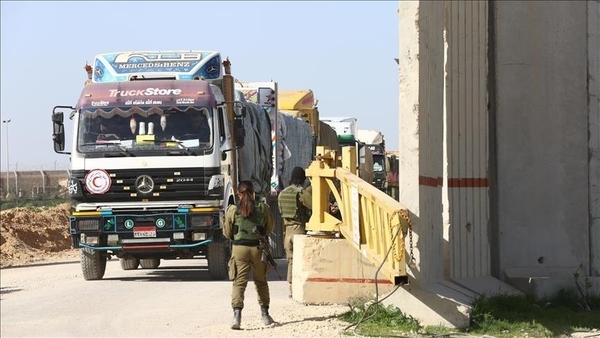
It continued: "In light of the ongoing war of genocide and ethnic cleansing being waged against our Palestinian people in the Gaza Strip, and within the framework of the systematic policy of blockade and starvation, the occupation continues to completely close the crossings."


It added that Israel has been preventing the entry of humanitarian aid for more than a month and a half, "in flagrant violation of international humanitarian law."


The office called on the United Nations to "provide relief to Palestinian refugees and those living under occupation, and to fulfill its responsibilities in managing and distributing humanitarian aid with impartiality and transparency."


It stressed that "any interference in the humanitarian aid file by illegitimate or suspicious parties outside of international legitimacy will not be permitted, and we will confront it by all available means, based on our national, moral, and humanitarian responsibility toward our people in the Gaza Strip."


Early last week, the Hebrew newspaper Yedioth Ahronoth reported that the Israeli army "is preparing a pilot program to distribute food supplies to Palestinians without Hamas, and this will likely take place in Rafah in the southern Gaza Strip." The newspaper noted that the program's implementation "is subject to the approval of the political leadership in Israel."


The newspaper explained that the Israeli army intends to engage international relief organizations to distribute food under the supervision of its soldiers and at centers under its control in the Gaza Strip.


For its part, Israeli Prime Minister Benjamin Netanyahu's office said in a statement that the report published by Yedioth Ahronoth regarding the proposed mechanism for distributing aid in Gaza was "incorrect."


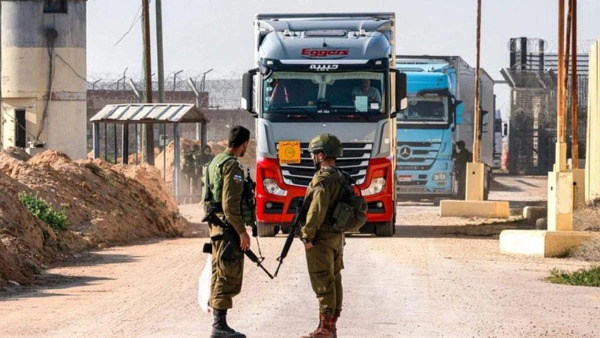
Since March 2, the Israeli military has been preventing the entry of essential supplies, including food and water, into the Gaza Strip after closing the crossings, causing a humanitarian disaster and worsening famine.


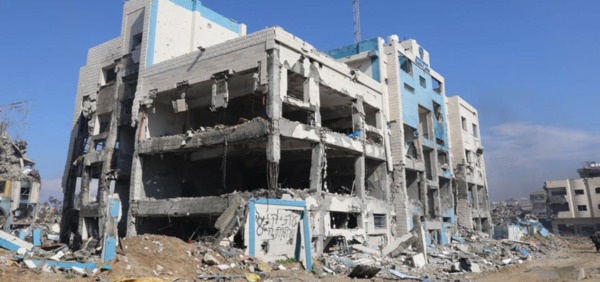
Israel has been blockading Gaza for the 18th year, leaving approximately 1.5 million of its 2.4 million Palestinian citizens homeless after their homes were destroyed in the war of extermination. The Strip has entered a state of famine due to Tel Aviv's closure of the crossings to humanitarian aid.


PALESTINE

Mon 14 Apr 2025 8:03 pm - Jerusalem Time

Hamas: We reject the conditions included in the proposal conveyed by Egypt regarding the disarmament of the resistance.

A Hamas leader revealed details of a proposal submitted by Egyptian authorities during the ongoing mediation efforts to reach a ceasefire in the Gaza Strip, stressing the movement's rejection of clauses related to disarming the resistance.


The leader said that the Egyptian proposal includes a temporary truce for 45 days in exchange for the entry of food and shelter aid into the Gaza Strip. He noted that the first clause of the proposal includes the release of half of the occupation's prisoners in the first week of the agreement.


He added that the Hamas negotiating delegation was surprised to find an explicit provision in the proposal requiring the disarmament of the resistance, and that Egypt informed the delegation that "there will be no agreement to cease the war without negotiating this clause," a proposal met with a categorical rejection from the movement.


The source confirmed that Hamas informed Egypt that "the entry point for any agreement must be a cessation of aggression and the withdrawal of occupation forces, not a discussion of the resistance's weapons," explaining that weapons are a legitimate right of the Palestinian people and are not subject to discussion or negotiation.


The leader also pointed out that the Egyptian proposal stipulates that the handover of detainees, both living and dead, must be made by the end of the 45-day ceasefire period as a condition for extending the truce and continuing the flow of aid into the Gaza Strip.

ARAB AND WORLD

Mon 14 Apr 2025 6:13 pm - Jerusalem Time

Qatari-Egyptian call for an international conference for the reconstruction of Gaza to be hosted by Cairo

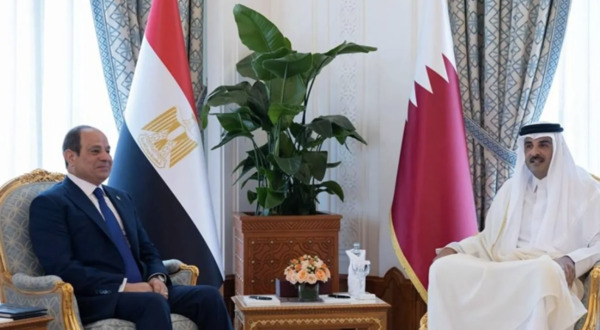
Qatar and Egypt affirmed their full support for the Gaza reconstruction plan. In a joint statement issued after joint talks held by visiting Egyptian President Abdel Fattah el-Sisi and Qatari Emir Sheikh Tamim bin Hamad Al Thani in Doha on Monday, the two countries expressed their aspiration for an international conference on the matter, hosted by Egypt in Cairo, in cooperation with regional and international partners, to coordinate humanitarian and development efforts to ensure the improvement of living conditions for the Palestinian people in the Strip.


The two sides also stressed the centrality of the Palestinian issue as the Arabs' primary cause, and affirmed their firm and supportive stance towards the legitimate rights of the Palestinian people, foremost among which is their right to establish their independent state on the June 4, 1967, lines, with East Jerusalem as its capital, in accordance with peace initiatives and relevant international resolutions.


The two sides affirmed their support for efforts to achieve Palestinian national reconciliation and the need to unify Palestinian ranks to ensure the activation of Palestinian state institutions and the fulfillment of the aspirations of the brotherly Palestinian people.


The two sides also expressed their deep concern over the continuing escalation in the Gaza Strip and emphasized the importance of continuing joint efforts to achieve an immediate and sustainable ceasefire, ensure the delivery of urgent humanitarian aid to civilians, support reconstruction efforts, and alleviate the suffering of the Palestinian people.


"Continuing joint efforts to support our brothers in the Gaza Strip and occupied Palestine, with the aim of establishing sustainable security and peace," Emir of Qatar Sheikh Tamim bin Hamad Al Thani tweeted during his talks with President Sisi.


The Emir of Qatar said: “Today, I discussed with the President of Egypt, my brother Abdel Fattah el-Sisi, prospects for strengthening the solid fraternal relations between our two brotherly countries, given their great potential to advance bilateral cooperation and expand its scope in several areas. Through these, we jointly look forward to deepening our economic ties and supporting them with more mutual trade and investment activities, serving the goals of the two countries and their common interests.”


He added, "We also exchanged views on ongoing developments in the region, and we will continue our joint efforts to support our brothers in the Gaza Strip and occupied Palestine, with the aim of establishing sustainable security and peace."


economic partnership

The joint statement indicated that President Sisi and Sheikh Tamim bin Hamad held talks "in an atmosphere of brotherhood and understanding," reflecting "the depth of bilateral relations and their solid foundations and mutual trust." The talks addressed ways to develop cooperation in various fields to enhance common interests and open new horizons for integration and partnership.


Both sides emphasized the importance of enhancing economic cooperation between the two countries, and agreed to continue joint efforts to promote investment and economic exchange in a way that reflects the political will of both countries and contributes to supporting sustainable economic development that serves the aspirations of both peoples.


In this context, both sides affirmed their commitment to supporting the economic partnership between the two countries. They agreed to work toward a package of direct Qatari investments totaling $7.5 billion, to be implemented over the next phase. This reflects the strength of the relationship between the two countries and contributes to achieving sustainable economic development that serves the interests of both peoples.


Regional issues

The two sides also expressed "deep concern over the ongoing armed conflict in Sudan," and emphasized the importance of an immediate cessation of military operations and a return to the path of comprehensive national dialogue, which would preserve Sudan's unity and sovereignty and end the suffering of its brotherly people. Both sides affirmed their full support for all regional and international initiatives aimed at ending the conflict.


The two sides welcomed the continuation of indirect negotiations between the United States and the Islamic Republic of Iran and affirmed their support for any peaceful efforts aimed at reducing tensions in the region and enhancing security and stability. They also commended the diplomatic efforts exerted by the sisterly Sultanate of Oman in this regard.


The two sides also stressed the importance of enabling regional and international efforts aimed at calming the situation and achieving peaceful solutions, most notably the mediation efforts led by the two countries in partnership with the United States, to achieve a ceasefire and end the war in the Gaza Strip. They condemned all attempts to undermine the negotiating process or target mediators, as these only aim to sabotage mediation efforts.


The State of Qatar also expressed its support for the nomination of Dr. Khaled El-Enany, Egypt's candidate, for the position of Director-General of the United Nations Educational, Scientific and Cultural Organization (UNESCO), in recognition of his academic and cultural career and confidence in his ability to make a positive contribution to the organization's work.


Both sides also expressed satisfaction with the progress made in bilateral relations over the past period, stressing the importance of building on these achievements and advancing relations to broader levels, within a framework of mutual respect and a shared vision for a future of security, stability, and prosperity.


Discussions

The Emir of Qatar and the Egyptian President held an official meeting today (Monday) at the Emiri Diwan.


Qatar News Agency reported that Sheikh Tamim affirmed during the talks "the strong fraternal relations between the two countries," expressing hope that this visit would contribute to strengthening bilateral cooperation and elevating it to broader horizons that achieve the aspirations and interests of both peoples.


For his part, the Egyptian President affirmed his keenness to enhance all aspects of joint cooperation in various fields.


During the talks, bilateral relations between the two countries and ways to strengthen and develop them in various fields were also discussed. The two sides also discussed key regional and international issues and developments of mutual interest, particularly developments in the Gaza Strip and the occupied Palestinian territories, as well as the two countries' joint efforts to end the war on the Gaza Strip and deliver relief aid to the Strip's residents.

PALESTINE

Mon 14 Apr 2025 4:25 pm - Jerusalem Time

The Israeli occupation targeted more than 400 schools in Gaza.


The United Nations Relief and Works Agency for Palestine Refugees (UNRWA) said that the Israeli occupation army has directly targeted more than 400 schools in the Gaza Strip, since it began its genocidal war on October 7, 2023.


The agency noted in a post on the X platform on Monday that most schools in the Gaza Strip were damaged by Israeli attacks.


She added that more than 70 percent of schools, most of which were shelters for displaced Palestinians, were directly targeted by the Israeli army.


She pointed out that 88 percent of schools in Gaza need complete renovation or rehabilitation.


She explained that 162 of the schools damaged by Israeli attacks belong to her.


She stated that children in Gaza have been displaced, killed, injured, and deprived of education for a year and a half due to Israeli attacks.


On October 28, 2024, the Knesset (Israeli parliament) finally approved, by a large majority, two laws prohibiting UNRWA from conducting any activities within Israel, revoking its privileges and facilities, and prohibiting any official contact with it. The decisions entered into force at the end of last January.


The Israeli occupation claims that UNRWA employees participated in the October 7, 2023, attack on military posts and settlements adjacent to the Gaza Strip, a claim the agency denied, and the United Nations affirmed UNRWA's commitment to neutrality.


With American support, Israel has been committing genocide in Gaza since October 7, 2023, leaving more than 167,000 Palestinians dead and wounded, most of them children and women, and more than 11,000 missing.


PALESTINE

Mon 14 Apr 2025 2:51 pm - Jerusalem Time

Red Cross: The situation in Gaza is hell on earth and our offices have been directly targeted.

The Director-General of the International Committee of the Red Cross, Pierre Krähenbühl, said that the situation in Gaza, where Israel is committing genocide, is "hell on earth."


During his participation in the Antalya Diplomatic Forum, held from April 11 to 13 in southern Türkiye, Krähenbühl indicated that the current conditions in the Gaza Strip are "absolutely unbearable."


He pointed out that humanitarian officials had lost their lives, and that their offices had been directly targeted in a tank attack on March 24.


He called for greater efforts to protect humanitarian workers and all civilians in the Gaza Strip.


"Now there is no hope for people. We hear civilians in Gaza saying they would rather die with their families because they see no future," he added.


He pointed out that everyone should feel anxious and fearful, considering that what is happening in the Gaza Strip could be a harbinger of a future war.

PALESTINE

Mon 14 Apr 2025 2:17 pm - Jerusalem Time

A young man was injured by live bullets during an Israeli raid south of Bethlehem.

A young man was shot with live ammunition on Monday during an Israeli raid on the town of Al-Khader, south of Bethlehem.


Local sources reported that an occupation army force stormed the town of Al-Khader and stationed itself in the "Umm Rakba" area, and fired live bullets at citizens while paving a colonial road, which resulted in an 18-year-old young man being injured by a live bullet in the chest. He was transferred to Beit Jala Governmental Hospital for treatment.

OPINIONS

Mon 14 Apr 2025 1:34 pm - Jerusalem Time

"So Trump Doesn't Make Obama's Mistakes"

Maariv

Maariv

Opinion Writer

By Yaakov Nagal

In his article published in Maariv under the title "So Trump Doesn't Make Obama's Mistakes," reserve brigadier general and strategic affairs expert Yaakov Nagal strongly warns US President Donald Trump against entering into new nuclear negotiations with Iran without requiring a comprehensive and complete dismantling of its nuclear program infrastructure.


Nagal believes that Netanyahu's recent visit to Washington took place amidst the potential for disagreements between him and Trump, most notably the nuclear agreement with Tehran, which, in the author's view, poses the most serious threat.


Nagal specifically criticizes Trump's announcement of his intention to enter into direct and rapid negotiations with Iran before resorting to "other options." He believes this approach recalls the steps taken by President Obama in 2012-2013, which later led to the signing of the nuclear agreement known as the Joint Comprehensive Plan of Action (JCPOA), an agreement that Nagal considers disastrous.


He points out that the Obama administration began with valid demands based on Security Council resolutions, but ended with an agreement that granted Iran a shortcut to developing a nuclear weapon and hundreds of billions in sanctions relief.


Yaacov Nagal emphasizes that any attempt to improve the previous agreement without completely dismantling the Iranian nuclear project infrastructure is a sure recipe for another catastrophe. He lists three main pillars that must be eliminated beforehand: the production of fissile material, the development of a nuclear weapons system, and the development of delivery vehicles.


He believes that Iran must destroy its stockpile of enriched uranium, shut down its enrichment facilities, and completely cease the development of nuclear warheads and long-range missiles, all under strict American supervision, before entering into any negotiating process.


Nagal believes that the Iranians will again attempt, as in the past, to drag out negotiations without actually implementing any concessions, with the aim of lifting sanctions, buying time, and even preventing Israel from launching military attacks against their facilities.


In this context, the author emphasizes that Israel must prepare for a large-scale military action against the Iranian nuclear program, preferably in cooperation with the United States. However, he also insists that Israel must be prepared to act alone if necessary.


The author warns that focusing solely on destroying enrichment facilities such as Natanz and Fordo without first addressing the development of nuclear weapons and the existing stockpile of enriched uranium will render any strike ineffective. Iran may possess the ability to manufacture a nuclear bomb in small, secret facilities even after the bombing, and may even demand "international legitimacy" in response to the strikes.


In the conclusion of his article, Yaakov Negal asserts that the era of diplomacy is over due to Iran's behavior and repeated violations of agreements, and that Trump absolutely does not want to be compared to Obama on this issue. He emphasizes that the lesson to be learned from the experience of 2015 is that mere good intentions are not enough, and that there can be no negotiations before the Iranian nuclear program is completely dismantled.

PALESTINE

Mon 14 Apr 2025 1:28 pm - Jerusalem Time

European official: Food is rotting at Gaza's gates due to Israeli ban

EU Commissioner for Preparedness, Crisis Management and Equality, Hadja Lahbib, said that Israel's blocking of humanitarian aid into Gaza has caused a humanitarian crisis in the Strip, with aid piling up outside and food rotting.


This came in a statement on the situation in Gaza and the West Bank, issued on Monday, ahead of a meeting of European Union foreign ministers in Luxembourg.


Lahbib pointed out that there are three urgent priorities in Gaza, where Israel continues its genocide: resuming the ceasefire and facilitating the entry of humanitarian aid. She emphasized that Gaza is experiencing a humanitarian crisis due to the blockade of aid.


She continued: "For more than a month, no aid, no food, no electricity, not even a single morsel of bread has arrived."


"While warehouses outside Gaza are filling up with food, food inside Gaza is running out and rotting outside because we cannot enter the area. At least 100 children are killed or injured every day," Habib added.


She noted that Israel has not approved humanitarian aid missions wishing to operate in the region for some time, and that there are no longer any international staff in Gaza and the West Bank.


She confirmed to Habib that the situation in the occupied West Bank is also deteriorating, saying: "Forced displacement and violence have become normal.


"That's why we need decisive political action."

She noted that the first meeting of the high-level political dialogue between the European Union and Palestine will be held with the participation of Palestinian Prime Minister Mohammad Mustafa following the foreign ministers' meeting.


Lahbib said that the meeting participants will discuss opportunities for cooperation, bilateral relations, and meeting the needs of the Palestinian people.

PALESTINE

Mon 14 Apr 2025 1:14 pm - Jerusalem Time

Israeli occupation forces storm Jenin Governmental Hospital and arrest a boy

Israeli occupation forces stormed Jenin Governmental Hospital today, Monday.


Eyewitnesses reported that a number of Israeli occupation soldiers stormed the hospital's emergency and registration departments while a number of citizens and patients were present, causing fear and panic among them. They arrested a young man whose identity is unknown and detained a staff member for a period of time.


The occupation's aggression on the city of Jenin and its camp continues for the 84th day, leaving 36 martyrs and dozens of wounded and detained.

ARAB AND WORLD

Mon 14 Apr 2025 1:12 pm - Jerusalem Time

Barak: Netanyahu is leading Israel to destruction

Channel 12 published an article by Ehud Barak, former Prime Minister, Minister of Defense, Minister of Foreign Affairs, and Chief of Staff of the IDF, in which he stated: “Israel stands on the edge of an abyss, facing clear and immediate dangers to its national security. The independence of the guardians of the law and the courts is at risk, as are democracy, the separation of powers, systems of authority, the people’s army, internal solidarity, international standing, national identity, its values, and its future. Netanyahu is the one who put Israel on the edge of the abyss, and he is insisting on pushing it toward it in order to save himself from the consequences of his mistakes: from losing power, from the investigations in the Qatargate affair, from the court’s ruling in his cases, and from the judgment of history against him.”


You'd have to be blind, unbalanced, or a coward to fail to see this obvious truth. This may be a painful truth: Over the past two and a quarter years, Netanyahu has lost his compass and destroyed what the country has built with the effort and blood of Israelis over the past 140 years.


Massive efforts are being made to transform Israel into a dictatorship under the guise of wedges, media, and empty statements about governance and reforms "by agreement," majority rights, and the correction of injustice, all while the war continues. The status of the legislative and judicial branches has been undermined. They have worked to undermine the opposition and hollow out the meaning of "law-abiding" and public service leaders.


A corrupt police force and secret services headed by "royal loyalists" guarantee a government free from oversight, adherence to the law, and citizen rights, without opposition or public accountability. The rule of a single individual and a powerful clique, with money that commands respect and political support from sectors, some of which live off the public's pockets, without bearing any burdens, and some of which are racist. These individuals can do whatever they please, leading to a dark, corrupt, and degenerate dictatorial state, infiltrated by fascism, weak, isolated, and internationally plagued by epilepsy.

Netanyahu returned from the United States humiliated and disappointed, and Washington began negotiations with Iran and Erdogan. Trump told Netanyahu, "You guys apparently get $4 billion a year." Trump appears to be recovering from Netanyahu's influence. He will visit the region in about a month and is expected to raise about $1 trillion from Saudi Arabia and the UAE. He will likely bring news of his intention to end the war on Gaza, even if this entails putting pressure on Israel. So he is leaving the matter in Netanyahu's hands for now, but it does signal that the war will soon end.

Continuing the war cannot achieve real strategic results. It is doubtful that military pressure will compel Hamas to release the Israeli captives, and the use of excessive force will almost certainly result in the death penalty for an unknown number of captives.

This is Netanyahu's "war for his safety," a war devoid of strategic or political thinking, and focused solely on Netanyahu's own political needs. He continues to wage war to prevent the fall of his government and to advance his positions in the investigations into his trial and in the official commission of inquiry. Netanyahu spoke ravingly at the cabinet meeting about 12 days ago about the collapse of Hamas, the disarmament of its weapons, and the displacement of its leaders through "voluntary transfer" and the implementation of the "Trump plan." But it is clear to anyone with insight that Trump is no longer thinking about the "Riviera" in Gaza and is living in a completely different world. Netanyahu will discover this belatedly, and in a cruel way.

The correct approach for any rational government is to return all detainees, even if the price is a ceasefire, which Israel can resume if necessary. The only way to ensure that Hamas does not control the Gaza Strip and threaten Israel is to replace it with another legitimate institution, an Arab force that would control the Gaza Strip for a long period of time, with the support of the Arab League and the United States, and with Saudi and Emirati funding for the Gaza reconstruction project.

PALESTINE

Mon 14 Apr 2025 12:29 pm - Jerusalem Time

Israeli occupation releases 10 Palestinian prisoners from Gaza in poor health.

On Monday, the occupation released 10 Palestinian prisoners from the Gaza Strip in poor health. They had been arrested six months ago during the devastating war on the Strip, which has been ongoing since October 7, 2023.


The Prisoners' Media Office reported in a post on Telegram that 10 prisoners had arrived at Al-Aqsa Martyrs Hospital in Deir al-Balah, central Gaza, in poor health due to the torture they had been subjected to in Israeli prisons.


The office stated that the released prisoners were arrested by the Israeli army about six months ago during its siege of the Jabalia camp in the northern Gaza Strip.


The prisoners were reportedly released through the Kissufim Gate in the separation fence east of Khan Yunis and arrived at the hospital in Red Cross vehicles at Al-Aqsa Martyrs Hospital.


Medical teams conducted the necessary medical examinations for the released prisoners.


On Thursday, the occupation forces released 80 Palestinian prisoners from various areas of Gaza, all of whom were in dire health and psychological conditions.


The occupation previously released hundreds of prisoners from the Gaza Strip, the West Bank, and Jerusalem as part of the first phase of the Gaza ceasefire and prisoner exchange agreement, which entered into force on January 19.


In exchange for the Palestinian prisoners, Palestinian factions in Gaza released dozens of living and dead Israeli prisoners in stages during the first phase of the ceasefire agreement.


On March 18, Israel reneged on the 58-day ceasefire and prisoner exchange agreement and resumed its genocidal war on the Gaza Strip.

PALESTINE

Mon 14 Apr 2025 12:27 pm - Jerusalem Time

Israeli occupation forces arrest a young Palestinian in Tubas

Israeli occupation forces arrested a young man from Tubas on Monday after summoning him for interrogation at Salem camp.


The director of the Prisoners Club in Tubas, Kamal Bani Odeh, reported that the occupation forces arrested the young man, Muammar Ibrahim Mahmoud Fuqaha (35 years old), after summoning him for investigation at the Salem occupation camp.