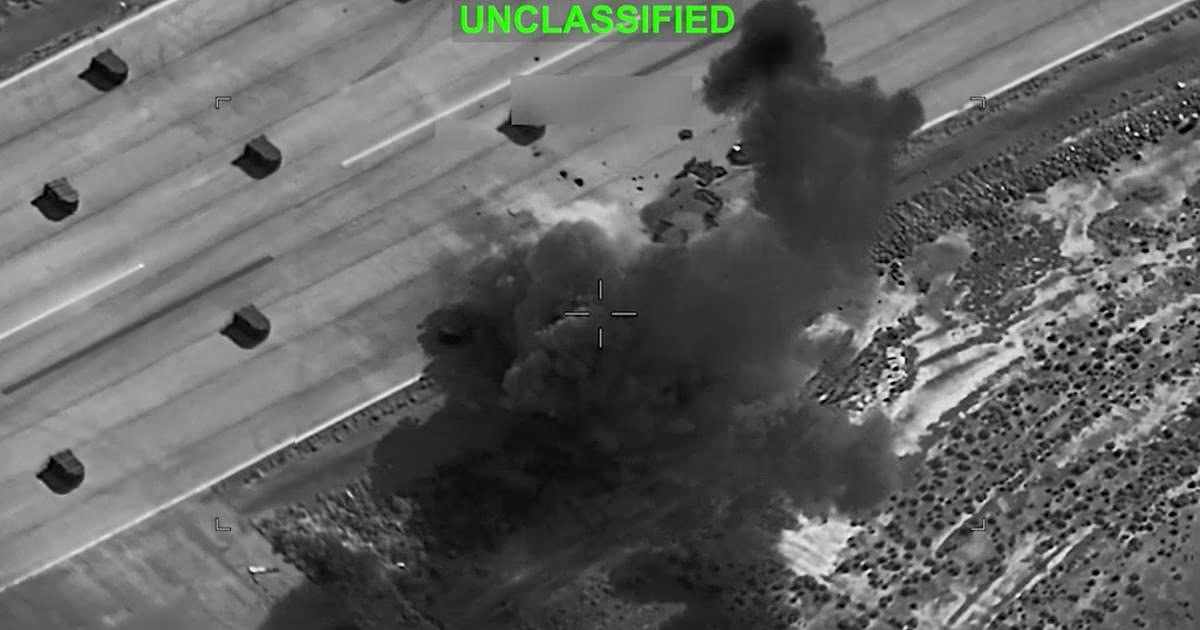







The US Central Command (CENTCOM) announced a new and extensive round of air and missile strikes against military targets belonging to Iran. Military sources clarified that these operations are part of a strategy aimed at curbing Tehran's offensive capabilities that threaten the security of maritime navigation in the strategic Strait of Hormuz region.
The American target bank included approximately 90 military sites precisely distributed across the map of Iranian capabilities, with strikes focusing on neutralizing air defense systems and coastal surveillance devices. The attacks also targeted warehouses designated for storing ballistic missiles and drones, in addition to destroying logistical infrastructure and naval capabilities deployed along the coast.
Informed sources confirmed that Washington seeks, through this escalation, to weaken the Iranian Revolutionary Guard's ability to intercept commercial vessels or threaten the safety of civilian sailors. The US administration considers these military moves necessary to ensure the flow of global trade through international waterways that have recently witnessed escalating tensions.
In a field reading of the operations' trajectory, media sources from Washington reported that talk of de-escalation or an end to the escalation round is still premature given the current data. The sources indicated that US forces are prepared to resume strikes if Tehran undertakes any new hostile action targeting shipping lanes near the Omani coasts.
Military data issued by 'CENTCOM' indicates a significant development in the size and intensity of operations, with the number of targets increasing from 80 sites the previous day to 90 targets in the latest strike. This quantitative escalation reflects an American desire to send strong deterrence messages by prolonging the duration of air operations and expanding the geographical scope of targeting.
The recent strikes were not limited to disputed Iranian islands or limited sites as usual, but extended to include the logistical depth along the entire Iranian coast. Activists and media outlets circulated footage showing massive fires breaking out and successive explosions heard in various Iranian regions, confirming the accuracy and wide scope of the American attack.
CENTCOM justifies this widespread military action by defending freedom of navigation, holding Tehran responsible for disrupting global trade. International circles are cautiously monitoring Iran's potential reaction, amid fears of the region sliding into a comprehensive confrontation if the exchange of military strikes continues at this escalating pace.
The operation comes as part of efforts to undermine Iran's ability to target commercial vessels and civilian sailors in one of the most important international maritime passages.
شارك برأيك
Widespread American Escalation Against Iran: Targeting 90 Military Sites Along the Coast