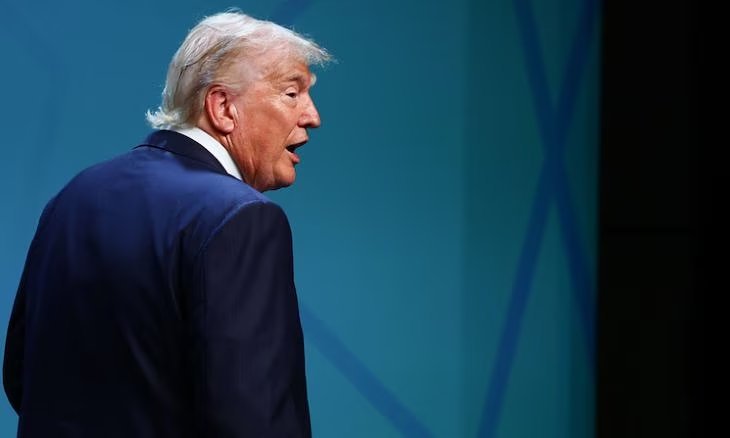







US President Donald Trump's efforts to end the conflict with Iran faced substantial obstacles following a new exchange of military attacks between the two sides. The White House found itself with limited options as the ceasefire agreement, which did not last long against escalating field tensions, crumbled.
Trump officially announced that the temporary agreement to end the conflict had reached its end, directing US forces to launch new strikes last Wednesday. This move came in response to Iran targeting US military sites in Bahrain and Kuwait, in a new episode of mutual escalation.
The latest spark ignited after an American bombing of Iranian targets, in response to attacks targeting oil tankers in the strategic Strait of Hormuz. This escalation highlighted the deep gap between the two parties, despite less than a month passing since the signing of a memorandum of understanding aimed at establishing a permanent truce.
Observers believe that the current US administration's options appear complex and difficult, as any additional escalation carries the risk of returning to a full-scale war. Nevertheless, Trump stressed that the ongoing events would end quickly, in an attempt to calm international concerns that immediately reflected on the markets.
Global oil prices reacted sharply to these developments, recording a rise of about seven percent immediately after the announcement of the new strikes. Economic experts fear that continued tension in the Strait of Hormuz could lead to a global energy crisis, given the strategic importance of this waterway.
Washington aims, through military pressure, to force Tehran to return to the negotiating table to make concessions on its nuclear program. However, the Iranian leadership shows no signs of backing down, but rather shows readiness to endure more military strikes in order to maintain its regional influence.
In a related context, Trump faces increasing internal pressure with the upcoming midterm elections scheduled for next November. The latest opinion polls showed a significant decline in the president's popularity, reaching 34 percent, which threatens the Republican Party's control of Congress.
These developments cast a heavy shadow over the recent NATO summit held in Turkey, where the Iranian file dominated discussions. Hopes of transforming the memorandum of understanding signed in June into a final peace agreement are gradually fading in the face of the explosive military reality.
Reports indicate that fundamental issues in the conflict, such as control over the Strait of Hormuz, remain unresolved between the two parties. While Tehran demands a leading role in managing the waterway, Washington and its allies in the Gulf insist on ensuring unrestricted international navigation.
Informed sources reported that Washington's cancellation of oil waivers granted to Iran further complicated the diplomatic scene. This measure deprived Tehran of huge financial revenues it was counting on, pushing the hardline current there to adopt more stringent positions in the face of US pressure.
Strategic analysts believe that the current pattern of conflict may continue for a long time without reaching a military or diplomatic resolution. Experts described the current situation as a state of 'controlled instability,' where violence recurs without a clear exit that satisfies all concerned parties.
Trump had marketed the temporary truce agreement as a major political achievement serving his electoral promises to avoid costly foreign interventions. But the reality on the ground proved that achieving the 'unconditional surrender' that Washington previously demanded remains a distant goal given the current circumstances.
Serious concerns arise that rising gasoline prices resulting from the war could further weaken the Republicans' electoral position. The White House realizes that American voters prioritize the economic situation, making prolonging the conflict a major political risk.
Ultimately, the Strait of Hormuz remains the most prominent knot in this conflict, through which five global oil shipments pass daily. As long as interpretations of sovereignty and administration in this passage remain divergent, the possibilities of military explosion will remain and threaten the stability of the entire region.
Trump has put himself in a predicament, and it does not seem that he will achieve significant gains from Iran either by military or diplomatic means.
شارك برأيك
Truce Collapses Between Washington and Tehran: Trump Orders New Strikes and Tensions Escalate in the Strait of Hormuz