






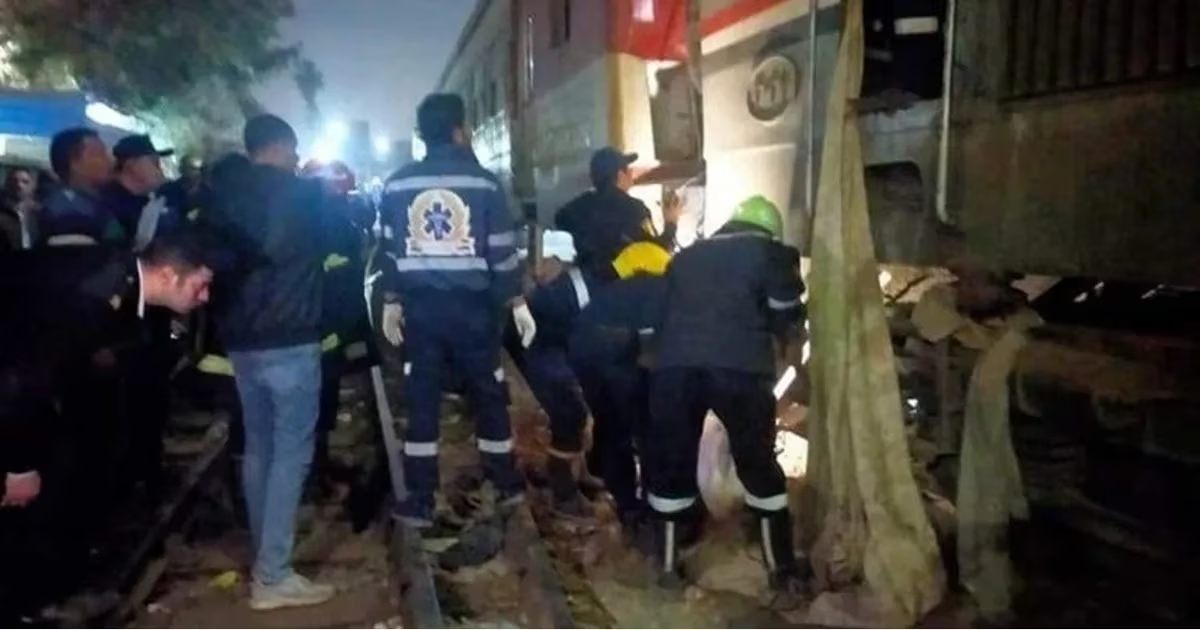
In the ethical charter of nations, paying the train ticket price twice cannot be accepted; once from citizens' pockets through billions in loans, and again from their lives under the wheels of silent machines. The transformation of railway tracks from a lifeline for development into a guillotine that devours bodies places the current administration before a difficult ethical and constitutional test.
When the Ministry of Transport, with its full financial arsenal, fails to provide the minimum level of safety for citizens, we are not talking about a mere minor technical flaw. This horrific administrative failure necessitates immediate accountability and makes the continued leadership of the current facility a grave danger threatening the safety and security of passengers daily.
The station platform in Egypt has transformed from a space for human interaction into something akin to 'Russian roulette,' where citizens await their unknown fate with every journey. The recurring scene of bodies crushed by wheels is not just a fleeting human error; it is an embodiment of an administrative crisis that treats human blood as a marginal number.
The question that imposes itself today, above the groans of the injured, is not merely an engineering question about the quality of the tracks, but a political and legal question par excellence. This question is directed directly to the top of the executive pyramid and to the people's representatives who were entrusted with monitoring government performance and protecting citizens' rights.
Returning to the reports of the Central Agency for Public Mobilization and Statistics and human rights documentation, we find a terrifying record of intermittent tragedies over the past decade. Thousands of varied accidents, including collisions, carriage detachments, and run-overs at level crossings, have claimed hundreds of lives and left thousands injured with permanent disabilities.
The real tragedy lies in the stark paradox between the ministry's announcements of technological revolutions and massive upgrades, and the continued primitive bleeding of lives. This contradiction is conclusive evidence of a deep chasm between media spectacle and the bloody reality that citizens experience on the tracks.
The House of Representatives has approved packages of international loans and billions in allocations specifically for developing the railway network and securing human resources. Nevertheless, the legitimate question remains: where is the tangible protective impact of these massive funds on the ordinary citizen's body?
The administrative success of any service facility is not measured by the luxurious external design of trains or the glitter of new stations that have burdened the simple with their prices. The only constant global criterion is a zero accident rate and the preservation of lives, which the current administration has failed to achieve so far.
The delay in the security return of borrowed funds raises major questions about the poor prioritization of administrative matters in the Ministry of Transport. It appears that presenting superficial and aesthetic aspects came at the expense of the fundamental structural effort that protects passengers from repeated fatal accidents and run-overs.
Political and criminal responsibility falls directly on the shoulders of General Kamel El-Wazir, based on the golden rule that links absolute authority with absolute responsibility. Attempts to evade responsibility by blaming the 'switchman' or 'citizen behavior' are flimsy excuses that no longer deceive anyone.
The minister, who was granted all powers and unprecedented financial support, is primarily responsible for creating a safe 'system' that prevents human error from turning into a massacre. Preserving human life is the highest constitutional oath, and failure to do so necessitates dismissal and accountability without delay.
The House of Representatives cannot be exempted from its historical responsibility, as its lax oversight position places Parliament in question before voters. Contenting oneself with forming fact-finding committees whose reports are filed away is a clear dereliction of the oversight trust held by the representatives.
Popular demands today are focused on two crucial points: the immediate dismissal of the Minister of Transport for his failure to achieve the desired safety, and the opening of a broad judicial investigation. The paths of all loans and financial allocations must be traced to determine responsibility for every drop of blood shed on those tracks.
In conclusion, railways must be a lifeline of life and dignity, not an execution ground or a guillotine that harvests the lives of grieving families. Building the future cannot stand on tracks soaked in the blood of innocents, and a government position is a mandate and service, not immunity from criticism and accountability.
Absolute authority means absolute responsibility, and when an official fails to fulfill their constitutional oath to protect human life, their dismissal and accountability become a national duty that cannot be postponed.
شارك برأيك
Billions of Tracks and Tickets of Death: Demands for Political and Criminal Accountability for Railway Disasters in Egypt